Tag Archive | TULIP

Pelagius has been falsely judged by his critics

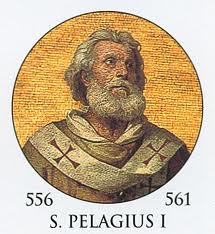
Unlike Augustine, Pelagius knew Greek. Pelagius did not teach that man can save himself. He only taught that a man can live a righteous life via free will choice. The idea that man can save himself is what came from Augustine’s accusations against him, as Calvinists do with Arminians today when they accuse them of teaching “works salvation”. True Pelagianism is truth according to what the early Church taught, not as Augustine described it. What Augustine described is without a doubt heresy, but it’s not what Pelagius actually taught. This is evident in the writings of Pelagius, as well as in the fact that the councils could find no fault in his teachings 2 times that he appeared before them in his own defense. When he was finally marked as a heretic the third time around, it was when he could not be present to defend himself (in Tunisia where Augustine resided) and Augustine and Jerome were present to misrepresent his position.

Most of the information we have about Pelagius rests in the hands of his enemies. That is not enough for a righteous judgment. If God judged us by the words of our enemies, we would be outraged at the injustice. It is unfair for us to condemn a man based on the evidence presented by his enemies, and not from the man himself. We would also be guilty of slander if we continue to claim that an innocent person is an “heretic” even though he might not be. Let’s be careful so God won’t judge us one day for slander, false accusations and causing division.

Pelagianism teaches only that man can choose to do right and choose not to sin. It does not teach that a person can be holy without God or His grace. This is a lie given through the heretic Augustine. Augustine was a liar seeking to have him condemned, as he was offended by his preaching against his teachings to the people. Augustine was teaching a “sinning religion”, and people were following it and living it. Pelagius could not stand for this heresy, so he began to teach against it. In his efforts he brought out the a man CAN choose to not sin, because he is not so spiritually dead that he could not make such a choice. Augustine turned this around with false accusations against him, misrepresenting him as if he was teaching that man could save himself. This is not what he was teaching at all. And his own writings prove it – which were not even discovered until this past century. Augustine tried to make sure of that by having them burned or destroyed, but a few slipped through the cracks. Now Augustine is exposed for the liar and gospel pervert that he is.

Calvinism began with Gnosticism – which is very clearly shown by many quotes given by the early Church. Tertullian and Hippolytus and Irenaeus all wrote extensively against the Gnostic groups, telling of the things they believed and how the Church has always disagreed with them, calling them heretics. Augustine was infested with Gnosticism, which Calvin also adopted.

Here is a quote from an article below on the Letter to Demetrius:

“The moral life of purity, for Pelagius, can only be achieved by drawing upon both “the good of nature and the good of grace” (9:1); this will be the dominant theme of his exhortation. Pelagius’s reflections on the human person are not unlike those of the Eastern Fathers. They share the same starting point of moral reflection, that is, the innate goodness of man because God has created him in His image and likeness. Pelagius writes, “you ought to measure the good of human nature by reference to its Creator” (2:2).”

The above quote shows the balanced thought of Pelagius teaching. His accusers only point out that he taught “the good of nature” and the “innate goodness of man”, and completely leave out the blanche of his teaching that tells of the “good of grace” and “because GOD has created him in His image and likeness”. Pelagius thought was in giving glory to God in His creation, in that men have a mind and free will to choose that has been given by the creator, which makes them able to choose to do right. Of course man has to know right and wrong first, but the ability is with him once he knows the difference.

Prior to Pelagius being ‘found’ guilty of heresy, he was cleared by two synods of bishops. These synods were provoked by Augustine’s influence. Then the council of Carthage, where Augustine was bishop, declared Pelgius a heretic. A few years later, Augustine and two others brought heresy charges against Pelagius to the bishop of Rome. Pelagius was cleared again, a third time. The bishop of Rome declared Pelagius a heretic a few years later under pressure from Imperial Rome and not before that time. It was perceived that the effects of Pelagius’ doctrine would undermine Imperial rule and so political pressure was then applied and the bishop of Rome declared Pelagius a heretic. Another interesting note is that Pelagius was well received and there was generally no problem with his teaching. The charges against him only arose when some one else, Caelestius, who was building on Pelagian teaching denounced infant baptism. Then and only then the problem arose. Infant baptism was under assault – if they were not born guilty and therefore did not need to be baptized to be saved then ecclesiastical power structure was going to be undermined. That kick started the whole controversy against Pelagius: they synods and councils did not occur until the implications of his teaching threatened infant baptism. See Peter Brown’s “Augustine of Hippo” there are 3 chapters that deal with Augustine-Pelagian controversy that document everything posted.

Pelagius is often ascribed views he doesn’t have

From Jesse Morell:

Matt Slick of CARM wrote that “Pelagianism…. taught that people had the ability to fulfill the commands of God by exercising the freedom of human will apart from the grace of God.  In other words, a person’s free will is totally capable of choosing God and/or to do good or bad without the aid of Divine intervention.”[29] This is an example, not of Pelagian heresy, but of Pelagian hearsay.

I would suspect that Matt Slick learned about Pelagianism from its opponents, and not from actually reading the writings of the Pelagians. This is a common practice for Calvinists, but what if that is how their doctrine was treated? What if someone stated what Calvinism teaches, by stating the opponents? Augustine accused Pelagius of denying the grace of God, but this was an accusation not a fact.

Had Matt Slick actually read some of the few writings that still exist today from the original Pelagians, he would have read in Julian of Eclanum’s Pelagian Statement of Faith: “We [Pelagians] maintain that men are the work of God, and that no one is forced unwillingly by His power either into evil or good, but that man does either good or ill of his own will; but that in a good work he is always assisted by God’s grace, while in evil he is incited by the suggestions of the devil.”[30]

Pelagius himself said, “I anathematize the man who either thinks or says that the grace of God, whereby ‘Christ Jesus came into the world to save sinners,’ is not necessary not only for ever hour and for every moment, but also for every act of our lives: and those who endeavor to dis-annul it deserve everlasting punishment.”[31]

Pelagius said, “This grace we do not allow to consist only in the law but also in the help of God. God helps us through His teaching and revelation by opening the eyes of our heart, by pointing out to us the future so that we may not be preoccupied with the present, by uncovering the snares of the devil, by enlightening us with the manifold and ineffable gift of heavenly grace.”[32]

Pelagius said, “God always aids by the help of his grace. God aids us by his doctrine and revelation, while he opens the eyes of our heart; while he shows us the future, that we may not be engrossed with the present; while he discloses the snares of the devil; while he illuminates us by the multiform and ineffable gift of heavenly grace. Does he who says this, appear to you to deny grace? Or does he appear to confess both divine grace and the freewill of man?”[33]

Pelagius said in a letter to Innocent, “Behold, before your blessedness, this epistle clears me, in which we directly and simply say, that we have entire freewill to sin and not to sin, which, in all good works, is always assisted by divine aid. Let them read the letter which we wrote to that holy man, bishop Paulinus, nearly twelve years ago, which perhaps in three hundred lines supports nothing else but the grace and aid of God, and that we can do nothing at all of good without God. Let them also read the one we wrote to that sacred virgin of Christ, Demetrias, in the east, and they will find us so praising the nature of man, as that we may always add the aid of God’s grace. Let them likewise read my recent tract which we were lately compelled to put forth on freewill, and they will see how unjustly they glory in defaming us for denial of grace, who, through nearly the whole text of that work, perfectly and entirely profess both free will and grace.”[34]

Pelagius taught that the freedom of the human will was not lost by the original sin of Adam, but that grace was necessary for man to rightly use his free will. He also taught that free will itself was a gracious gift given to us at Creation. He did not deny grace as necessary or as an aid for free will. The only grace he denied was Augustinian grace, which said that free will was lost by original sin and therefore man’s ability to obey needed to be restored by grace. However, one of the best Greek-English Lexicons, Thayer’s, defined grace as “divine influence upon the heart” which is precisely how Pelagius viewed grace in contradiction to Augustine.

It was Augustine’s view of grace that was inconsistent with free will, not Pelagius’. As Augustine said, “I have tried hard to maintain the free choice of the human will, but the grace of God prevailed.”[35] Pelagius affirmed both the freedom of the will and the necessity for the grace of God, while Augustine denied the freedom of the will because of His mistaken view of grace.

This is why John Wesley said, “I verily believe, the real heresy of Pelagius was neither more nor less than this: The holding that Christians may, by the grace of God, (not without it; that I take to be a mere slander,) ‘go on to perfection;’ or, in other words, ‘fulfill the law of Christ.’”[36] And also “Who was Pelagius? By all I can pick up from ancient authors, I guess he was both a wise and a holy man.”[37]

John Wesley said, “Augustine himself. (A wonderful saint! As full of pride, passion, bitterness, censoriousness, and as foul-mouthed to all that contradicted him… When Augustine’s passions were heated, his word is not worth a rush. And here is the secret: St. Augustine was angry at Pelagius: Hence he slandered and abused him, (as his manner was,) without either fear or shame. And St. Augustine was then in the Christian world, what Aristotle was afterwards: There needed no other proof of any assertion, than Ipse dixit: “St. Augustine said it.”[38]

On the issue of the freedom of the will, Pelagius was in perfect agreement with the Early Church while Augustine was in agreement with the heretical Gnostics:

Dr Wiggers said, “All the fathers…agreed with the Pelagians, in attributing freedom of will to man in his present state.”[39]

Episcopius said, “What is plainer than that the ancient divines, for three hundred years after Christ, those at least who flourished before St. Augustine, maintained the liberty of our will, or an indifference to two contrary things, free from all internal and external necessity!”[40]

Catholic councils that calvinists appeal to

There were three councils that condemned Pelagianism; the Council of Ephesus in the year 431; the Council of Carthage in the year 418; and the Council of Orange in the year 529. This is because Pelagius was not invited nor present to defend himself but his opponents and adversaries stated his doctrine for him. When Pelagius was able to defend himself, the Council of Diospolis in 415 declared Pelagius orthodox. And Pope Zosimus also declared Pelagius’ orthodoxy in 417. He was always acquitted when present to clarify and defend his views. If these are our authorities to determine orthodoxy, do we accept the ones in favor of Pelagius or the ones against him?

In addition, the Council of Orange and the Council of Carthage were not ecumenical councils. They did not consist of Bishops from the entire church, which mean that the rulings of the Councils were not universally affirmed by the Eastern and Western churches.

If heresy is heresy because a council says so, or because of majority vote, Calvinism must be more heretical than Pelagianism was because there were more councils that condemned Calvinism than condemned Pelagianism. The Calvinist doctrines of predestination, limited atonement, and irresistible grace were condemned throughout history. Lucidus was condemned by the Council of Oral in 473, Council of Arles in 475, and Council of Orange in 529. And Gottschalk (Gotteschalcus) was condemned by the Council at Mentz in 848 and the Council of Chiersey (Quiercy) in 849. And what do Calvinists think of the Council of Constance in 1414 for John Huss, or the Council of Worms in 1521 for Martin Luther, or the Council of Trent in 1561 for the Protestants? Are these Councils not the voice of Orthodoxy as Ephesus and Carthage supposedly were?

In fact, the Council of Orange that condemned Pelagianism also condemned the doctrines of Calvinism. If the council is authoritative in the former case, it must be equally authoritative in the latter as well. But if it was mistaken in the latter case, maybe it was mistaken in the former as well. Tony Miano essential condemns his own theology by appealing to church councils and assuming their authority.

Many thanks to Lyndon Conn, Joshua Harris and Jesse Morell

Augustinus introducerade irrläror till kyrkan, såsom läran om den syndfulla naturen

Augustinus levde mellan 354-430 e.Kr och var en f.d. gnostiker. Han introducerade många falska läror till Kyrkan som ingen bland de gamla kyrkofäderna före honom lärde ut.

1. Predestinationsläran (Gud bestämmer vem som ska bli frälst/förlorad) 

2. Omöjligheten att avfalla från sin frälsning (en gång frälst, alltid frälst) 

3. Människan har ingen fri vilja (monergism) 

4. Man kan inte veta om man är frälst (eftersom även de som lever i köttet kan vara frälsta) 

5. Människan är född med en syndfull natur som får henne att synda

6. Den katolska kyrkans övergripande makt 

7. Skärselden 

8. Böner för döda 

9. Evig förbannelse för odöpta barn och vuxna 

10. Sex är syndigt även inom äktenskap eftersom det köttsliga fördärvet är ärftligt (därav munksystemet) 

11. Maria syndade aldrig, och han tillbad henne 

12. Han var även den första att påstå att Andens gåvor såsom helande, profetior, och tungotal har upphört

13. Menade att Skriften inkluderar apokryferna

14. Bokstavlig närvaro av Jesu kött i Nattvarden (Herrens måltid)

15. Nattvarden är nödvändig för frälsning

16. Salighetsförklaringar

Augustinus, som till skillnad mot Pelagius into kunde grekiska, förföljde även teologiskt oliktänkande i Katolska kyrkan. Historikern Neander sade att Augustinus lära “innehåller grogrunden för hela systemet av despotism, intolerans och förföljelse, t o m Inkvisition.” Han är känd för att ha förföljt Bibeltroende Donatister som strävade efter att behålla renläriga kyrkor efter en apostolisk anda. Augustinus var en av fäderna till “a-millennialism”, tolkade Bibelprofetior allegoriskt; lärde att den katolska kyrkan är Guds rike. Han var en av grundarna till läran om barndop, menade att odöpta barn är fördömda, och kallade de som var emot läran för “otrogna” och “förbannade”. Han upphöjde kyrkotradition före Bibeln. Han var en av de första som lärde ut att “nephilim” inte var avkomma mellan änglar och människor som 1 Mosebok säger, utan var ättlingar till Kain.

Kalvinister påstår att läran om människans oförmåga att välja eller rata Gud är en historisk åsikt, men det stämmer inte alls. Historien visar att läran om Fri vilja var den universella åsikten i urkyrkan utan undantag de första 300-400 åren. Urkyrkan vederlade gnostikerna som trodde på totalt fördärv, predestinationslära och fatalism.

Gnostikerna, som ansåg att de var sanna kristna, hade en fatalistisk mentalitet och de trodde att människans natur var så fördärvad att hon inte hade ett fritt val mellan gott och ont, till skillnad mot vad urkyrkan trodde. Det finns troende idag som anser att människans totala fördärv är en så fundamental lära att de fördömer de som vågar sätta sig emot den, men urkyrkan ansåg att den var en irrlära. Urkyrkan menade att endast gnostiker förnekar människans fria vilja, men idag säger många olika kyrkor att endast irrlärare tror på den. Beausobre sade, “those ancient writers, in general, say that Manichaeans denied free-will. The reason is, that the Fathers believed, and maintained, against the Manichaeans, that whatever state man is in he has the command over his own actions, and has equally power to do good or evil.”

Det fanns många andra gnostiska grupper vid tiden för urkyrkan som också förnekade människans fria vilja, såsom Marcionism som startades av Marcion. Men en av de största hoten till urkyrkan var Manichaeans som startades av Manes, en perisk filosof, som också kallades Mani. Urkyrkan debatterade grundaren för denna gnostiska grupp i Acta Archela,som också är känd för “The Disputation with Manes”. Biskopen Archelaus representerade urkyrkan genom dess lära att Gud inte skapades oss med en fördärvad natur utan att Gud gett oss en fri vilja. Mani tog den gnostiska positionen att människan till sin natur är totalt oförmögen och fördärvad och att människan inte har fri vilja. Domarna för debatten dömde Archelaeus som vinnare och emot Mani. Urkyrkans position är beskriven på det här sättet “All the creatures that God made, He made very good. And He gave to every individual the sense of free will, by which standard He also instituted the law of judgment” our will is constituted to choose either to sin or not to sin? And certainly whoever will, may keep the commandments. Whoever despises them and turns aside to what is contrary to them, shall yet without doubt have to face this law of judgment? There can be no doubt that every individual, in using his own proper power of will, may shape his course in whatever direction he pleases.”

Urkyrkans ledare var oroade över att de gnostiska idéerna skulle infiltrera Kyrkan. Gnostikerna lärde till exempel att köttet var syndigt i sig själv. Eftersom gnostikerna såg köttet som syndigt i sitt ämne så nekade de till att Jesus är kommen i kött, och detta är skälet att skrifterna kallar dem “antikrist” (1 Joh. 4:3, 2 Jn. 1:7). Gnostisism lär att synd är kroppens ämne, och ärvs vid befruktningen, så att människan är född syndig eller med an syndfull natur. Urkyrkan å andra sidan lärde att synd är ett fritt val av människans vilja, vilket har ursprung hos människan själv. Gnostikerna lärde att människan är syndfull i sin natur, medan urkyrkan lärde att människan är syndfull av eget val. Det var om dessa gnostiska grupper som Johannes sade: “Från oss har de gått ut, men de var inte av oss. Ty om de hade varit av oss, då hade de ju blivit kvar hos oss. Men detta skedde för att det skulle bli uppenbart, att inte alla är av oss.” (1 John 2:19) 

The moral law is still valid today and is NOT optional to obey

We are no longer under the Jewish ceremonial law concerning clothes, food, etc BUT the moral law has always been valid ever since Adam and Eve and it’s still applicable for us today. It has ALWAYS been prohibited to murder, steal, lie and commit adultery.  These laws did not start with Moses even if he wrote down also these very foundational laws on stone tables. We can never EARN our salvation by keeping the law and be good (because then we must keep it to 100% which no one has chosen to do) but this does NOT mean that it’s ok to continue to break the law and believe that grace will always cover our sins. If we are cleansed from our sins in the blood of Jesus, it does NOT make sense to return back to breaking the law and become filthy once again. Sins will ALWAYS separate us from God. Obeying the law won’t save you but breaking it will send you to hell. Repentance is the only cure, but if we sin, repent, sin, repent, then we have not truly repented. 

Here are some verses which show that the moral law is still in force:

1 Cor.7:19Circumcision is nothing, and uncircumcision is nothing, BUT KEEPING THE COMMANDMENTS of God.

Gal.5:18BUT IF YE BE LED OF THE SPIRIT , YE ARE NOT UNDER THE LAW. 19Now the works of the flesh are manifest, which are these; Adultery, fornication, uncleanness, lasciviousness, 20Idolatry, witchcraft, hatred, variance, emulations, wrath, strife, seditions, heresies, 21Envyings, murders, drunkenness, revellings, and such like: of the which I tell you before, as I have also told you in time past, that they which do such things shall not inherit the kingdom of God.

Matt. 22:37Jesus said unto him, Thou shalt love the Lord thy God with all thy heart, and with all thy soul, and with all thy mind.38This is the first and great commandment.39And the second is like unto it, Thou shalt love thy neighbour as thyself.40On these two commandments hang all the law and the prophets.

Rom.3:30Seeing it is one God, which shall justify the circumcision by faith, and uncircumcision through faith.31Do we then make void the law through faith? God forbid: yea, We ESTABLISH THE LAW.

Matt.5:17Think not that I am come to destroy the law, or the prophets: I am NOT come to destroy, but to fulfil18For verily I say unto you, Till heaven and earth pass, one jot or one tittle shall in no wise pass from the law, till all be fulfilled. 19Whosoever therefore shall break one of these least commandments, AND SHALL TEACH MEN SO, he shall be called the least in the kingdom of heaven: but whosoever shall do and teach them, the same shall be called great in the kingdom of heaven.

Hebr.10:16This is the covenant that I will make with them after those days, saith the Lord,I WILL PUT MY LAWS INTO THEIR HEARTS, and in their minds will I write them;

Romans 2:12For as many as have sinned without law shall also perish without law: and as many as have sinned in the law shall be judged by the law;13(For not the hearers of the law are just before God, but the doers of the law shall be justified.14For when the Gentiles, which have not the law, do by nature the things contained in the law, these, having not the law, are a law unto themselves:15Which shew the work of the law written in their hearts, their conscience also bearing witness, and their thoughts the mean while accusing or else excusing one another;)

Can a person regret anything in hell if CALVINISM is true?

If calvinism is true, no one who ends up in hell has any reasons to regret anything about his previous life on earth. How could he? God predestined him to be non-elect before the world began (according to calvinism) and that means he had no option but to BE a non-elect and thereby doing the will of God by being exactly what God intended him to be. And how does a non-elect person behave? Well, among other things he rejects God, he is rebellious and he is a non-repentant sinner. So this means that God WANTS him to have these attributes. Most calvinists believe that “God predestines whatever comes to pass” so to be consistent this must include predestining people to sin. Yes, many calvinists say that “God predestines everything, but man is still responsible for his sins”, but this is an oxymoron. And when they are told they believe in an oxymoron they say “God’s ways are higher than our ways” or similar. If I say that I believe in the trinity but not that Jesus is God, this too is an oxymoron.

If calvinism is true, then SIN has nothing to do with why a person ends up in hell. Always remember that a person (if calvinism is true) is predestined to be elect/non-elect before the world began, and before he was even born. So by the time he gets born he is already doomed and he WILL grow up to be elect OR non-elect depending on whatever God chooses, and he WILL act accordingly. Calvinists often say “No, God didn’t predestine them to be do evil, because left to themselves they would never choose him anyway and they would only want to do evil”,but is this the whole truth? WHY don’t they want to choose him and why do they only desire to do evil? That’s because they are non-elect, right? And who chooses that they shall be non-elect? GOD does, according to them! Those who are not chosen to be elect are by default chosen to be non-elect. Man himself is therefore totally innocent for his actions in my view, and some are just unfortunate enough to be chosen to be non-elect which inevidably will lead them to be and to do evil.

If calvinism is true, then Jesus did not even die for some people but their God will apparently send them to hell just the same, due to that they reject Jesus. (Or was it because he predestined them to be non-elect and Jesus-deniars before the world began?) Why is it a sin to deny that Jesus died for you if Jesus did not die for you?!

The Bible is loaded with examples of people rebelling against God and suppressing the truth. Do they do this out of their own choice OR according to the will of God? It’s one or the other. The most obvious answer should be that people have the choice to obey but sometimes choose to disobey. God doesn’t want people to disobey and rebel against him, but due to his decision to create man with free will, we are able to make our own choices. Most importantly we will be judged based on our decisions and actions since we are response-able. If God predestines people to rebel against him and to suppress the truth, it wouldn’t make sense for Him to punish them for doing what he forces them to do.

God did not hate Esau before he was born – Romans 9:13

As it is written, Jacob have I loved, but Esau have I hated (Rom 9:13)

The question then becomes, did Esau behave the way he did because God hated him, or did God hate him because of the way Esau chose to behave?

Jacob and Esau are not only individuals but they are also PEOPLE and/or NATIONS. This is important to remember in order to not read things into Romans 9 which are not stated. Romans 9 is not about individuals being elected TO BELIEVE, but it’s about a people who has sprung up from individuals, and it’s the line of Jacob which is chosen (for good reasons) to bring forth the Messiah. Most importantly it’s about a person who rejected his birthright and still expected to get it when it was time to receive the blessing. Paul made the comparison with the jews – which Romans 9 is about – who expected to inherit the Kingdom because they are born jews. We can also read from the context that God did NOT arbitrarily hate one of the twin brothers for no reason at all.

The LORD said to her, “Two nations are in your womb, and two peoples from within you will be separated; one people will be stronger than the other, and the older will serve the younger.” (Gen. 25:23)

There is no indication of anything good or bad about either of the children at this point. The nations arising from each will be separated, and one of these nations will be stronger than the other. The nation arising from the older of the two children will at some point end up serving the nation arising from the younger. The individual Esau never served the younger. Also note that God did not hate Esau before he was born, or while he was a child. Children are neutral and they can’t choose between good and bad. Paul says that they are not all Israel which are Israel, and by that he means that children of Abraham are those who BELIEVE like he did and who don’t live as the children of the flesh, and it was also the seed of Abraham which would bring forth the Messiah through Isaac. A person is not saved just because he is born a jew and has the law, but due to his choice to trust God and show fruit.

Rom 9:6Not as though the word of God hath taken none effect. For they are not all Israel, which are of Israel: 7Neither, because they are the seed of Abraham, are they all children: but, In Isaac shall thy seed be called. 8That is, They which are the children of the flesh, these are not the children of God: but the children of the promise are counted for the seed.

According to Paul, babies are neutral and can’t do either good or bad, and Paul speaks about “election” (which is not an election “to believe”) and highlights that the jews should not believe that the law (works) can save them since they in that case must never break one single commandment. It’s accepting the call of God that saves a person.

Rom 9:11(For the children being not yet born, neither having done any good or evil, that the purpose of God according to election might stand, not of works, but of him that calleth;) 12It was said unto her, The elder shall serve the younger.

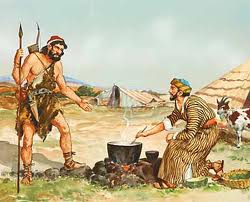
Gen. 25:27 And the boys grew: and Esau was a cunning hunter, a man of the field; and Jacob was a plain man, dwelling in tents. 28 And Isaac loved Esau, because he did eat of his venison: but Rebekah loved Jacob.

Hebrews 12 15Looking diligently lest any man fail of the grace of God; lest any root of bitterness springing up trouble you, and thereby many be defiled; 16Lest there be any fornicator, or profane person, as Esau, who for one morsel of meat sold his birthright17For ye know how that afterward, when he would have inherited the blessing, he was rejected: for he found no place of repentance, though he sought it carefully with tears.

Above in Hebrews we can see that Paul is warning people for not making the right decision when it comes to their lives styles, LEST they might fail of the grace of God, LEST they might be defiled and LEST they might end up like Esau who made a VERY bad choice to, among other things sold his birthright for a meal. We can see why Esau was rejected, and that is because “he found no place of repentance”, indicating that something wasn’t right in his heart, and maybe he didn’t regret his choice to sell his birthright until he realized what was at stake and that it would slip out of his hands. Esau knew better than that but he had to accept the consequences of his actions. Esau was also known as Edom. There is a book called Obadiah and the focus of Obadiah is on Edom/Esau, and the reason God hated Esau is stated here:

Pride of heart, v. 3
Because of the violence against Jacob, v. 10
For not intervening on behalf of Jacob when that people was under attack, v. 11
For looking down on his brother in the day of his misfortune, v. 12
For entering the destroyed city and participating in the ransacking, v. 13
For ambushing their fugitives, v. 14

Obadiah 1: 8Shall I not in that day, saith the LORD, even destroy the wise men out of Edom, and understanding out of the mount of Esau? 9And thy mighty men, O Teman, shall be dismayed, to the end that every one of the mount of Esau may be cut off by slaughter. 10For thy violence against thy brother Jacob shame shall cover thee, and thou shalt be cut off for ever.

Romans 9:13 refers back to Malachi and there we can read:

Mal 1:2I have loved you, saith the LORD. Yet ye say, Wherein hast thou loved us? Was not Esau Jacob’s brother? saith the LORD: yet I loved Jacob, 3And I hated Esau, and laid his mountains and his heritage waste for the dragons of the wilderness. 4Whereas Edom saith, We are impoverished, but we will return and build the desolate places; thus saith the LORD of hosts, They shall build, but I will throw down; and they shall call them, The border of wickedness, and, The people against whom the LORD hath indignation for ever.5And your eyes shall see, and ye shall say, The LORD will be magnified from the border of Israel.

“They”. The entire people that came from Esau are being spoken of as being hated. Thus, when Paul quotes Malachi in Romans 9, he is referring to what happened to the people, not to the individual sons. The quote “Jacob I have loved but Esau have I hated” has to do with the nations that came from the brothers. In Obadiah, the reasons for this hatred from God are clearly shown. Did God hate Esau personally? He very well may have, and the despising of the birthright is used in Hebrews as evidence of his godlessness. This godlessness, and his marriage to pagan wives, would have affected not only his children, but their children and the children after them as well, in agreement with what we read in

Ex. 20:5 Thou shalt not bow down thyself to them [idols], nor serve them: for I the Lord thy God am a jealous God, visiting the iniquity of the fathers upon the children unto the third and fourth generation of them that hate me

Amos 6:8 The Lord GOD has sworn by himself, says the LORD the God of hosts, I abhor the excellency of Jacob, and hate his palaces: therefore will I deliver up the city with all that is in it.

Hebr. 10:14 PERFECTED FOREVER are those who abide in Jesus

perfectedFor by one offering he hath perfected for ever them that are sanctified (Hebrews 10:14)

The “perfected forever” part does not refer to an unconditional eternal security, but refers to the “once for all” sacrifice of CHRIST that saves us – without the need of any repeated future sacrifice for sins. As long as we abide in Him, no more sacrifice has to be made, and we are “perfected forever” through His work- as long as we continue in Him. Nothing can take his offer away or remove us from his love other than our own free will. As for His (Jesus) part in salvation, it has been done ONCE and for all. “Those who are being sanctified” are simply those who are in Christ and abide in Him. It’s all about HIS work in us which WE must allow. We can see that Paul is referring to the number of times Jesus must die on the cross (one) if we read the rest of the context. Paul says:

4For it is not possible that the blood of bulls and of goats should take away sins.–6In burnt offerings and sacrifices for sin thou hast had no pleasure. —9Then said he, Lo, I come to do thy will, O God. He taketh away the first, that he may establish the second.10By the which will we are sanctified through the offering of the body of Jesus Christ once for all.11And every priest standeth daily ministering and offering oftentimes the same sacrifices, which can never take away sins: 12But this man, after he had offered one sacrifice for sins for ever, sat down on the right hand of God;

If we willfully sin, the only thing left is damnation, unless we repent of course:

18Now where remission of these is, there is no more offering for sin.–23Let US HOLD FAST the profession of our faith without wavering; (for he is faithful that promised;)—26-27 For if we sin wilfully after that we have received the knowledge of the truth, there remaineth no more sacrifice for sins, But a fearful expectation of judgment and fiery indignation, which shall devour the adversaries.

Since Jesus did his part on the cross, no more sacrifice remains which could save a person. If the sin offering of the son of God was not enough, what other sources are available to save a person? None! So if we despise this offer, only a fearful judgement awaits us.

28He that despised Moses’ law died without mercy under two or three witnesses: 29Of how much sorer punishment, suppose ye, shall he be thought worthy, who hath trodden under foot the Son of God, and hath counted the blood of the covenant, wherewith HE WAS SANCTIFIED, an unholy thing, and hath done despite unto the Spirit of grace?35CAST NOT AWAY therefore your confidence, which hath great recompence of reward.36For ye have need of patience, that, after ye have done the will of God, ye might receive the promise.–38Now the just shall live by faith: but IF ANY MAN DRAW BACK, my soul shall have no pleasure in him.

Read about Hebr. 6:6 here.

John MacArthur och hans felaktiga påståenden

John MacArthur och John MacArthur’s ministry:

“Yes, someone says, but can’t Christians put themselves outside God’s grace? What about those who commit ABOMINABLE SINS? Don’t they nullify the work of redemption in themselves? Don’t they forfeit the love of God? CERTAINLY NOT …. it’s preposterous to think that we can forfeit it [salvation] BY ANYTHING WE DO” [emphasis ours].John MacArthur, Jr., The Love of God, Word Publishing, 1996, p. 159.

“Secondly, you asked about occasional SEXUAL SIN or getting drunk. Again, THESE SINS CANNOT CAUSE A TRUE BELIEVER TO LOSE HIS SALVATION” [emphasis ours]. Personal letter dated 1/10/94 sent by Bryan Johnson, a counselor from John MacArthur’s ministry.


Jesus sade:

Mark 7:21 Ty inifrån, från människornas hjärtan, utgå deras onda tankar, otukt, tjuveri, mord,22 äktenskapsbrott, girighet, ondska, svek, lösaktighet, avund, hädelse, övermod, oförsynt väsende. 23 Allt detta onda går inifrån ut, och det orenar människan.»

Paulus sade:

1 Kor 6:9 Veten I då icke att de orättfärdiga icke skola få Guds rike till arvedel? Faren icke vilse. Varken otuktiga människor eller avgudadyrkare eller äktenskapsbrytare, varken de som låta bruka sig till synd mot naturen eller de som själva öva sådan synd,  10varken tjuvar eller giriga eller drinkare eller smädare eller roffare skola få Guds rike till arvedel.

Gal 5: 19Men köttets gärningar äro uppenbara: de äro otukt, orenhet, lösaktighet,  20avgudadyrkan, trolldom, ovänskap, kiv, avund, vrede, genstridighet, tvedräkt, partisöndring, 21missunnsamhet, mord, dryckenskap, vilt leverne och annat sådant, varom jag säger eder i förväg, såsom jag redan förut har sagt, att de som göra sådant, de skola icke få Guds rike till arvedel.

Ef. 5:3Men otukt och orenhet, av vad slag det vara må, och girighet skolen I, såsom det anstår heliga, icke ens låta nämnas bland eder,  4ej heller ohöviskt väsende och dåraktigt tal och gyckel; sådant är otillbörligt. Låten fastmer tacksägelse höras.  5Ty det bören I veta, och det insen I också själva, att ingen otuktig eller oren människa har arvedel i Kristi och Guds rike, ej heller någon girig, ty en sådan är en avgudadyrkare. 6Låten ingen bedraga eder med tomma ord; ty för sådana synder kommer Guds vrede över de ohörsamma.

Paul Washer är en populär predikant MEN, han är kalvinist…

När Paul Washer talar låter det som att han tror att Jesus död på korset gjorde så att alla människor kan bli frälsta, att människan har fri vilja, att människan kan fritt komma till Gud för att bli renade och att alla människor kan och bör  omvända sig. MEN hur många vet att Paul Washer är kalvinist? Och vad innebär det?

Det innebär att han tror på TULIP som andra kalvinister och det innebär i sin tur att han tror:

  • Jesus dog inte för ALLA människor utan bara några få.
  • Människor kan inte omvända sig såvida inte GUD ser till att de omvänder sig, och då omvänder de sig vare sig de vill eller inte.
  • De “utvalda” kan aldrig gå förlorade, och de “icke-utvalda” kan aldrig omvända sig så “Repent or perish” är bara en skröna eftersom Gud redan förutbestämt vår destination.
  • Människor har ingen fri vilja.
  • Gud valde INNAN världen skapades vem som skulle blir frälst. De allra flesta är alltså födda fördömda från start och de har ingen chans att kunna söka Gud.
  • Gud har förutbestämt allt som sker. Många kalvinister (som White, Piper, etc) säger öppet att detta inkluderar SYND, medan andra försöker komma runt motsägelsen hur Gud kan förutbestämma allt utom synd. Ett vanligt svar är  “om vi lämnar människor till dem själva så VILL de synda efter sin egen natur och det är inte Guds fel”, men vem är det som ger dem denna “natur” enligt samma lära? Jo han som förutbestämmer allt – GUD! Eller hade de något val enligt kalvinismen? Nej, det finns inget val. De som inte är utvalda kommer att födas som icke utvalda och de kommer att ha sin onda natur vare sig de vill eller inte. Gud bestämmer.
  • Evangelisation och bön kan inte påverka ett jota eftersom allting ju redan är bestämt från början, men man kan identifiera vem som är “utvald” genom att evangelisera, och evangelisation och bön görs enkom för att Gud sagt att vi ska göra det. Osäkert varför detta är Guds “verktyg” eftersom ju allt redan är bestämt men “Guds vägar är högre än våra vägar”. Ett annat svar är “Det är ett mysterium”.
  • Vi kan aldrig på måfå gå till en människa och säga “Gud älskade dig så mycket att han lät sin son dö för DIG”, eftersom de i själva verket tror att Gud med allra största säkerhet INTE älskade dem och INTE lät sin son dö för dem. De allra flesta människor kommer ju att gå förlorade, och det innebär för en kalvinist att Jesus inte dog för dem. Jesus dog inte för hela världen.
  • Alla människor är födda onda. Det betyder att Gud måste gripa in och väcka dem för att kunna komma till honom och tro på honom. Väckning är därmed = frälsning. De som inte väcks har ingen chans. Gud vill inte att alla människor ska komma till himmelen. Hade han velat det så hade han förutbestämt att så skulle ske. Tro är en gåva som ges åt vissa.
  • Människor hamnar inte i helvetet pga synd, eftersom de ju var utvalda att hamna i helvetet innan världen skapades, och långt innan de föddes och därmed långt innan de syndade. För en person i helvetet finns alltså inga skäl att ångra sig, för hur skulle han kunna göra det? Hade han något val att i stället födas som en utvald och därmed kunna söka Gud? Nej, det tror inte någon kalvinist. Få kalvinister tänker på denna motsägelse, men många är så fast i sin idé att människan är helt oförmögen att nalkas Gud utan att GUD väckt dem, att de inte har förmåga att ändra på sin ståndpunkt.

De flesta kalvinister tror att människan ständigt syndar “i tanke ord och gärning”. Det underminerar allvaret i synd eftersom vi tydligen aldrig kan bli befriade från den, och det underminerar även behovet att omvända sig eftersom vi ju syndar inom en kvart i alla fall. Detta är precis vad Satan vill; få oss att känna oss antingen bekväma i vår synd eller så uppgivna över att vi alltid måste gå omkring med synd att vi inte anstränger oss att få någon ändring. Men kalvinisterna har ju en lösning; Jesus gjorde allt åt dig! Han tar din synd och du får hans rättfärdighet och på så sätt kan du vara positionellt rättfärdig samtidigt som du syndar. Du kan alltså tjäna två herrar samtidigt och du kan ha din synd och din frälsning också! Du behöver alltså inte välja och du behöver inte bära ditt kors varje dag eftersom Jesus alltid bär det åt dig.

Ibland blir man förbluffad när man får veta att vissa predikanter är kalvinister eftersom de talar som om fri vilja verkligen fanns och att alla har en möjlighet att se ljuset, men jag tror att många av dessa predikanter väljer att uttrycka sig rätt i offentliga sammanhang för att kunna vara tilltalande för ännu fler. Men tar man bort allt “fluff” så kan man ändå se dessa kalvinistiska tankar. Var på din vakt!

Visst ska man tänka sig för innan man kritiserar människor, men det är är också en synd att blunda och låta predikanter lägga ut texten i fred trots att de förvränger Bibeln. Många beundrar ju Paul Washer och kanske sväljer allt han lär ut med hull och hår. Jag är rädd för att kalvinistiska åsikter sprids allt mer, och populära och duktiga evangelister kan vara de allra farligaste om de blandar 95% sanning med 5% gift. Då är det lätt hänt att man inte upptäcker all gift som serveras mellan raderna, och man riskerar att sakta men säkert svepas med i kalvinismens fängsel och undan för undan acceptera mer och mer av kalvinismen. Jag vill gärna be för människor som blivit lurade själva och som fortsätter att lura andra.

 2 Tim 4:2Predika ordet, träd upp i tid och otid, bestraffa tillrättavisa, förmana med allt tålamod och med undervisning i alla stycken.  3Ty den tid kommer, då de icke längre skola fördraga den sunda läran, utan efter sina egna begärelser skola samla åt sig lärare hoptals, alltefter som det kliar dem i öronen, 4en tid då de skola vända sina öron från sanningen, och i stället vända sig till fabler.

Apg. 20:28Så haven nu akt på eder själva och på hela den hjord i vilken den helige Ande har satt eder till föreståndare, till att vara herdar för Guds församling, som han har vunnit med sitt eget blod.  29Jag vet, att sedan jag har skilts från eder svåra ulvar skola komma in bland eder, och att de icke skola skona hjorden. 30Ja, bland eder själva skola män uppträda, som tala vad förvänt är, för att locka lärjungarna att följa sig. 31Vaken därför, och kommen ihåg att jag i tre års tid, natt och dag, oavlåtligen under tårar har förmanat var och en särskild av eder. 

Här nedan bekänner Paul Washer att människan är född “fallen/fördärvad”, och det innebär att hon inte kan söka och tro Gud såvida inte Gud aktivt “väcker” henne. Kalvinisternas Gud väcker inte ALLA (och gör dem till uvalda), utan bara VISSA, och övriga har alltså ingen chans att bli frälsta. Jesus dog inte ens för dem enligt kalvinismen, så frälsningen var inte tänkt för alla.

A christian can LOSE HIS FAITH by shipwrecking it in various ways

Phrases that the Bible use

1. Shipwrecked faith: have to have sound faith 1st to even become shipwrecked – imagine a ship, then see it wrecked. Some claim – ‘no seaworthy ship to begin with’? Clearly this interpretatio…n of the analogy does not ‘hold water’!

2. Falling from grace: – so they were in grace to begin with – the very means of salvation – I thought Calvinists thought only the elect experience saving grace. And if you say ‘it wasnt SAVING faith – they were “justified” by grace but now sought to be justified by Law so Christ needsd to be formed in them AGAIN – clearly he was 1st time round but they lost it…

3. Twice dead : you get the picture – dead then born again to new life – then spiritually dead again – x2

4. Plucked up by the roots: obviously they were a living plant.

5. Reprobate – Paul said he could become this having preached to others if he did not keep his body in subjection to the Holy Spirit

6. Entangled in former sins: clearly the word former indicates they had become free from the earlier sins, and gone back to them – there is as you well know only one way to be free from sin! – true regeneration – true faith in Christ – HIS work in us!

7. Apostasy: check the root of the word – to leave one’s good standing.

8. Latter end worse than beginning – described here as having been set free then gone back, so worse than had they been unsaved in the 1st place

9. Cut out of the vine – well clearly JEsus describes these people as having been a part of himself – the vine is Jesus – how do you become part of Christ? only one way – living faith – being born of the Spirit…

10. Cut out of the Olive tree: Paul addresses these people as real Christians – he even says God has had mercy on them, and they are IN his goodness but must continue or they will be ct out of their place of faith – clearly all in the Olive Tree are REAL genuine Christians. IT is absurd to say otherwise, as the faithless Jews had been cut out of the tree, and they had been GRAFTED IN by God!!!

11. Christ has become of no effect to the Galatians: well he was of some efect to them then to have had this status reversed – BECOME of no effect – clearly an unsaved nonChristian never did enjoy the benefits of the effects of Christ

12. Err from the truth: again – must be in it to err from it – and the only ones in the truth are those who have been enlightened and rescued from darkness by JEsus Christ.

13. Wander away – away from what?

14. Treat the blood of the covenant wherewith they WERE SANCTIFIIED a common thing and despised the Spirit of Grace: these people were ACTUALLY sanctified by Christ’s blood – but went back and were lost – by deliberate choice to rebel against Christ who had cleaned them from their sins.

Varning för reformerta läror – kalvinism (TULIP)

Jag känner mig verkligen betryckt över att reformerta läror (såsom KALVINISMoch TULIP tar över mark i Sverige.

TULIP – som kalvinismen är baserad på – lär att Jesus endast dog för några få människor och att dessa människor kommer att bli frälsta vare sig de vill eller inte. De övriga har ingen chans att bli frälsta och om kalvinismen är sann så VILL inte ens Gud att de övriga ska komma in i hans rike. Hade han velat det så hade han enväldigt gjort så att de sökt honom och funnit honom. Läran säger alltså att alla andra människor valdes ut att hamna i helvetet redan innan jorden ens skapades. De är därför födda fördömda och utan chans till frälsning. Notera att dessa människor inte kommer att hamna i helvetet pga någon synd de gjort sig skyldiga till,  utan för att de är utvalda av Gud att hamna där av en anledning som är okänd för oss. De är alltså oskyldiga i min mening eftersom de ju tvingats bli de olydiga människor som Gud skapat dem till att vara – alltså onda. Man kan också säga att de skapades just för att en gång hamna i helvetet. Synd har som sagt ingenting med saken att göra.

TULIP lär att Gud förutbestämt allt, men kalvinister gör vad de kan för att komma runt problemet med att Gud då ju skulle ha förutbestämt synd och tvingat människor att synda. Antingen är människor förutbestämda att synda ELLER så syndar de emot Guds vilja. Det sistnämnda går ju inte ihop för en TULIP-troende, men de vill sällan medge att detta innebär att Gud tvingar människor att synda.  Men många reformerta medger att de tror att även synd är förutbestämt av Gud. Jag tycker då inte att de har någon rätt att klaga på höga abortantal, våld eller dylikt eftersom varje fall av abort är förutbestämt av Gud om deras lära nu stämmer.

Det finns ingen kalvinist som är konsekvent med sin egen lära. När man påpekar paradoxer inom kalvinismen – såsom den vanliga idén att Gud förutbestämmer precis ALLT under och ovan solen samtidigt som människaor ändå är skyldiga för sina egna synder – så säger kalvinistenra ofta att vi missförstått deras lära. Men det är de själva som inte är konsekventa med sin egen tro. Om Gud förutbestämmer varje händelse, och om ingenting sker emot hans vilja, ja då blir det enda slutresultatet att människor TVINGAS att synda. Hur kan de då vara ansvariga för sina handlingar? Har de valet att inte synda?

Gud är “suverän” och kan skapa oss hur han vill – även med fri vilja. Det är han fullt kapabel till och det förminskar inte hans storhet på något sätt. Han har den övergripande kontrollen.

Läs gärna mer på min Blogg om reformerta läror.