Tag Archive | predestination

Såldes JOSEF som SLAV av hans bröder enligt Guds vilja?

Joseph slave

Finns det en mening med allt som sker?

Jag tror personligen inte att det finns en mening med precis ALLT som sker och inte heller att det inte finns något ont som inte har något gott med sig. De må vara vackra klichéer men de stämmer inte alltid, för om det ständigt skulle stämma att allting som sker har ett syfte så resulterar det i att även aborter, våldtäkter och mord alltid tillför något positivt för någon/några och detta har jag väldigt svårt att ta till mig. Bibeln talar om dessa företeelser som SYND och synd är alltid till 100% emot Guds vilja vid varje enskilt tillfälle. Allting på jorden sker helt enkelt inte som Gud hade önskat och detta förminskar inte hans storhet på minsta vis. Är Gud inte allsmäktig nog för att ge människan en fri vilja och därmed ansvarig för sina egna handlingar? Om det är Gud som orsakar så att människor gör ont och syndar så är det i själva verket Gud som syndar, och då handlar det inte längre om Bibelns Gud.

Det FINNS dock en handfull exempel i Bibeln där människors onda handlingar faktiskt fört med sig något positivt, men vi måste akta oss noga för att inte dra felaktiga slutsatser vad gäller dessa händelser. Låt oss ha nedanstående i minnet

  • En handfull Bibelexempel på onda handlingar som tillfört något positivt betyder inte att ALLA onda handlingar som någonsing skett på jorden tillfört något positivt
  • Bara för att Gud vid några tillfällen utnyttjat människors onda handlingar till något positivt betyder inte att HAN är den som orsakar vare sig människornas attityd eller deras handlingar (han tillåter dock människorna att båda lyda/inte lyda honom)
  • Bibeln säger att det inte finns något mörker i Gud och att han inte frestar NÅGON – än mindre får han någon att synda!
  • Att tillåta onda handlingar är inte detsamma som att orsaka onda handlingar

Josef RÄDDADES till livet när han i stället för att dödas kastades i brunnen

Historien om Josef (Jakobs son) används ibland av reformerta för att försöka ge stöd åt idén att precis allting sker enligt Guds vilja. De andra exemplen som brukar användas är 1) Judas förräderi gentemot Jesus, och 2) den assyriske kungens agerande i Jesaja 10:6. I inget av de exemplen (eller andra exempel) är det Gud som orsakar så att någon överträder hans bud och syndar, men återigen så har Gud i DESSA fall använt sig utav de uppkomna situationerna och fått till ett önskat resultat i slutänden. Hade personerna i fråga agerat annorlunda och valt att inte utföra dessa onda handlingar så hade förstås Gud kunnat utnyttja andra situationer eller fått till ett önskat slutresultat på andra sätt. Tyvärr är det sällan brist på människor som vill utföra onda gärningar, och Gud har vid några tillfällen indirekt hjälpt Israels fiender att vara lyckosamma i sina kamper mot Israel för att straffa de sistnämnda och få dem att inse en större sanning. Bara genom att ta bort sin skyddande hand ifrån Israel så kan Gud assistera fienderna så att de blir lyckosamma.

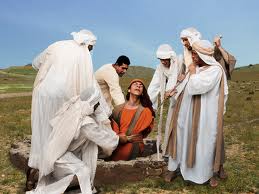
Här kan vi hur som helst läsa om vad som hände med Josef i Bibeln när Josefs bröder kastade honom i brunnen och sedan sålde honom till förbipasserande köpmän. Om man tänker efter så är det faktiskt så att Josefs liv RÄDDADES av Gud (eller hans bröder?), eftersom den ursprungliga tanken bland Josefs bröder var att DÖDA honom. Om de hade dödat honom så hade historien i Egypten och Kanaan fått skrivas om helt och hållet.

1 Mos. 37:24 Och de tog honom och kastade honom i brunnen. Den var tom, det fanns inget vatten i den. 25 Sedan satte de sig ner för att äta och fick då se en karavan med ismaeliter som kom från Gilead, och deras kameler var lastade med dragantgummi, balsam och ladanum. De var på väg ner till Egypten. 26 Då sade Juda till sina bröder: “Vad har vi för nytta av att döda vår bror och dölja hans blod? 27 Kom, så säljer vi honom till ismaeliterna! Låt inte vår hand komma vid honom, han är i alla fall vår bror, vårt eget kött och blod.” Och bröderna följde hans råd. 28 När de midjanitiska köpmännen kom förbi, drog de upp Josef ur brunnen. De sålde honom för tjugo siklar silver till ismaeliterna, som förde Josef till Egypten.29 När Ruben kom tillbaka till brunnen, se, då fanns inte Josef där. Då rev han sönder sina kläder

Det finns en hel del detaljer i det här stycket att ha i minnet.  Här kommer resten av historien.

1 Mos. 50:15 När Josefs bröder såg att deras far var död, sade de: “Tänk om Josef börjar hata oss och låter allt det onda vi gjort mot honom komma över oss.”16 Därför sände de detta bud till Josef: “Din far sade till oss före sin död:17 Så skall ni säga till Josef: Vi ber dig, förlåt dina bröder vad de har brutit och SYNDAT genom att handla så illa mot dig. Så förlåt nu DEN SYND som din fars Guds tjänare har begått.” Och Josef grät när han fick deras hälsning.18 Sedan kom också hans bröder och föll ner för honom och sade: “Vi är dina slavar.” 19 Men Josef sade till dem: “Var inte rädda. Håller ni mig för Gud?20 Ni tänkte ont mot mig, men Gud har tänkt det till godo genom det som nu har skett för att bevara många människors liv21 Var inte rädda. Jag skall sörja för er och era små barn.” Och han tröstade dem och talade vänligt till dem.

Josefs bröder ansåg att de syndade när de behandlade Josef illa

Att vara avundsjuk, hata, mörda och ljuga är synder, så det är inte undra på att Josefs bröder till slut ansåg att de varit onda och syndat mot sin medmänniska Josef. Bröderna vill be om förlåtelse, och Josef korrigerar inte sina bröder när de menar att de syndat utan konfirmerar t o m att det som de tänkte faktiskt var ONT –  men han låter dem också veta att Gud använt vad som hänt till någonting gott. Att Josefs bröder kastade Josef i brunnen och behandlade honom illa var helt emot Guds vilja och ingenting annat än en stor synd, men Gud utnyttjade alltså den uppkomna situationen och fick till ett pampigt slut flera år senare. Man skulle också kunna tänka sig att Gud åstadkom att köpmän passerade området just i det rätta ögonblicket och fick på det sättet Josefs bröder att komma på lite bättre tankar. I stället för att döda Josef, som de inledningsvis tänkte göra baserat på majoritetsbeslut, så SÅLDE de honom! Detta var ju helt klart ett mycket bättre alternativ, och Josefs fortsatta liv blev som bekant till stor välsignelse inte bara för hans familj utan för tiotusentals människor i Egypten och bland de angränsande länderna! Gud kan absolut inverka/påverka och få till en bra logistik för att ändra på situationer. Är det inte därför vi t ex ber till Gud?

För att ge exempel på “bra logistik” så berättade Jesus vid ett tillfälle för ett par av sina lärljungar i Matt. 21 att så fort de skulle komma in i en viss by skulle de träffa på en åsna med ett föl som de skulle lösa, och exakt så skedde. Vi kan ibland själva påverka andra människor till ett visst agerande med hjälp av BÖN – bara vi inte tror att allting som sker är orsakat av Gud, för det är inte vad Bibeln lär! Bibeln är full av berättelser om människor som trilskas och är upproriska mot Gud, som i sin tur varnar dem om och om igen.

Josefs öde kan också läsas i The book of Jasher (KJV) eller The book of the just som Septuaginta har översatt samma hebreiska titel till  (“Den redliges bok” på svenska) och som är en översättning från hebreiskans sēfer ha yāšār. Den boken står omnämnd i 2 Sam. 1:8 och Joshua 10:13. Den här hebreiska boken är inte bland de bibelkanoniska böckerna och därför inte helt pålitlig. Den kan bäst betraktas som en judisk sekulär historiebeskrivning och som en sådan kan den ju stämma med verkligheten trots att den inte är nerskriven genom inspiration av Gud. Precis som de flesta av oss vågar läsa historieböcker om vikingar, Alexander den store och om Julius Ceasar – trots att dessa historier inte är nerskrivna genom inspiration av Gud – så kanske vi vågar läsa en sekulär judisk historiebeskrivning? (Det finns dock minst en förfalskning så läs inte den version som kom ut 1750.) Eftersom det finns ganska många detaljer i boken som trots detta aldrig motsäger Bibeln, så känns det som den här boken är ganska tillförlitlig trots allt, och den erbjuder ännu mer beskrivningar som faktiskt kan fylla i Bibelns kortare versioner av en viss händelse. OM vi skulle hitta motsättningar så vet vi förstås att det är Bibelns information som gäller för där hittar vi ju de sanna inspirerade Gudsorden. Här kommer Jashers version i alla fall. Jag har tagit med det mest väsentliga: Joseph slave 2

Jasher 41:9 And Joseph was seventeen years old, and he was still magnifying himself above his brethren, and thought of raising himself above them.—21 And Jacob sent his son Joseph to the valley of Hebron, and Joseph came for his brothers to Shechem, and could not find them, and Joseph went about the field which was near Shechem, to see where his brothers had turned, and he missed his road in the wilderness, and knew not which way he should go.—25 And Simeon said to his brethren, Behold the man of dreams is coming unto us this day, and now therefore come and let us kill him and cast him in one of the pits that are in the wilderness, and when his father shall seek him from us, we will say an evil beast has devoured him.—28 And they took him and cast him into a pit, and in the pit there was no water, but serpents and scorpions. And Joseph was afraid of the serpents and scorpions that were in the pit. And Joseph cried out with a loud voice, and the Lord hid the serpents and scorpions in the sides of the pit, and they did no harm unto Joseph.

Här nedan kan vi läsa att just när de tar en matrast och diskuterar Josefs öde så kommer köpmän förbi, och tack vare detta så beslutar de sig för att sälja Josef i stället för att döda honom. Det kan ha varit Guds inverkan för att rädda livet på Josef, och alltså enligt hans vilja att han i stället såldes. Det står t o m en notering om att det gladde Herren att bröderna sålde Josef eftersom han inte ville att Josef skulle dö. Det “slumpade sig” så att det var Juda av alla bröder som faktiskt var den som räddade livet på Josef genom sitt förslag att inte döda honom och i stället sälja honom som slav. Det ursäktar förstås inte hans synd på minsta vis men det är en intressant detalj med tanke på att Jesus sedan skulle komma att födas från just Juda släkt och erbjuda liv till alla människor. Vi kan också läsa lite mer detaljer om att det faktiskt var två olika slags karavaner med i bilden – ismaeliter och midjaniter.

42:1 And they went and sat on the opposite side, about the distance of a bow-shot, and they sat there to eat bread, and whilst they were eating, they held counsel together what was to be done with him, whether to slay him or to bring him back to his father. 2 They were holding the counsel, when they lifted up their eyes, and saw, and behold there was a company of Ishmaelites coming at a distance by the road of Gilead, going down to Egypt.3 And Judah said unto them, What gain will it be to us if we slay our brother? peradventure God will require him from us; this then is the counsel proposed concerning him, which you shall do unto him: Behold this company of Ishmaelites going down to Egypt, 4 Now therefore, come let us dispose of him to them, and let not our hand be upon him, and they will lead him along with them, and he will be lost amongst the people of the land, and we will not put him to death with our own hands. And the proposal pleased his brethren and they did according to the word of Judah. 5 And whilst they were discoursing about this matter, and before the company of Ishmaelites had come up to them, seven trading men of Midian passed by them, and as they passed they were thirsty, and they lifted up their eyes and saw the pit in which Joseph was immured, and they looked, and behold every species of bird was upon him. 6 And these Midianites ran to the pit to drink water, for they thought that it contained water, and on coming before the pit they heard the voice of Joseph crying and weeping in the pit, and they looked down into the pit, and they saw and behold there was a youth of comely appearance and well favored. 7 And they called unto him and said, Who art thou and who brought thee hither, and who placed thee in this pit, in the wilderness? and they all assisted to raise up Joseph and they drew him out, and brought him up from the pit, and took him and went away on their journey and passed by his brethren. 8 And these said unto them, Why do you do this, to take our servant from us and to go away? surely we placed this youth in the pit because he rebelled against us, and you come and bring him up and lead him away; now then give us back our servant. 9 And the Midianites answered and said unto the sons of Jacob, Is this your servant, or does this man attend you? peradventure you are all his servants, for he is more comely and well favored than any of you, and why do you all speak falsely unto us? 10 Now therefore we will not listen to your words, nor attend to you, for we found the youth in the pit in the wilderness, and we took him; we will therefore go on. 11 And all the sons of Jacob approached them and rose up to them and said unto them, Give us back our servant, and why will you all die by the edge of the sword? And the Midianites cried out against them, and they drew their swords, and approached to fight with the sons of Jacob. — 17 Surely you have said that the young man is your servant, and that he rebelled against you, and therefore you placed him in the pit; what then will you do with a servant who rebels against his master? Now therefore sell him unto us, and we will give you all that you require for him; and the Lord was pleased to do this in order that the sons of Jacob should not slay their brother18 And the Midianites saw that Joseph was of a comely appearance and well-favored; they desired him in their hearts and were urgent to purchase him from his brethren. 19 And the sons of Jacob hearkened to the Midianites and they sold their brother Joseph to them for twenty pieces of silver, and Reuben their brother was not with them, and the Midianites took Joseph and continued their journey to Gilead. 20 They were going along the road, and the Midianites repented of what they had done, in having purchased the young man, and one said to the other, What is this thing that we have done, in taking this youth from the Hebrews, who is of comely appearance and well favored.

Josef såldes sedan vidare en gång till, till det första gänget som reste förbi.

42: 23 And whilst they were thus discoursing together, they looked, and behold the company of Ishmaelites which was coming at first, and which the sons of Jacob saw, was advancing toward the Midianites, and the Midianites said to each other, Come let us sell this youth to the company of Ishmaelites who are coming toward us, and we will take for him the little that we gave for him, and we will be delivered from his evil. 24 And they did so, and they reached the Ishmaelites, and the Midianites sold Joseph to the Ishmaelites for twenty pieces of silver which they had given for him to his brethren. 25 And the Midianites went on their road to Gilead, and the Ishmaelites took Joseph and they let him ride upon one of the camels, and they were leading him to Egypt.


Are some of us CHOSEN to salvation from the beginning? (2 Thess. 2:13)

2 Thess. 2:13 But we are bound to give thanks alway to God for you, brethren beloved of the Lord, because God hath from the beginning chosen you to salvation THROUGH sanctification of the Spirit and belief of the truth

Some people get confused about this verse because if read in a vacuum, it looks like God is choosing certain individuals to believe from the foundation of the world, contrary to what the rest of the Bible says (whosoever can be saved if they choose to believe), but look what happens if we highlight another passage in the verse:

2 Thess. 2:13 But we are bound to give thanks alway to God for you, brethren beloved of the Lord, because God hath from the beginning chosen you to salvation THROUGH sanctification of the Spirit and BELIEF OF THE TRUTH

As you can see the CONDITIONS for being saved can be seen in the verse, and they are the same old conditions which can be seen throughout the whole Bible. We are constantly reminded of that we must REPENT from our sins so that we can be cleansed/righteous/justified/sanctified, and that we must BELIEVE in Jesus Christ. When we are led by the Holy Spirit we can get sanctification, and it’s THROUGH belief in the TRUTH that we are saved. The rest of this chapter confirms our free will.

Let no man deceive you by any means: for that day shall not come, except there come a falling away first, and that man of sin be revealed, the son of perdition;Who opposeth and exalteth himself above all that is called God, or that is worshipped; so that he as God sitteth in the temple of God, shewing himself that he is God.—And then shall that Wicked be revealed, whom the Lord shall consume with the spirit of his mouth, and shall destroy with the brightness of his coming:

Paul is writing to christians and he warns them to not be DECEIVED, which of course would be an unnecessary warning unless it could potentially happen. He is also informing them that there will be a falling away (christians leaving Christ) before the Antichrist will appear (the son of perdition). The Lord will later consume Antichrist with the spirit of his mouth and that will be at his second coming (hence the pretribulation theory could not be true since there will be christians around during the time of Antichrist).

10 And with all deceivableness of unrighteousness in them that perish; because they received not the love of the truth, that they might be saved.

Here Paul confirms that those who perish do so BECAUSE of their unrighteousness and because they received not the love of the truth. Had they done so, this WOULD have saved them! It certainly looks like the same story as in Romans 1, where people hardened their heart to the extent that God gave them over to a reprobate mind.

11 And for this cause God shall send them strong delusion, that they should believe a lie:12 That they all might be damned who believed not the truth, but had pleasure in unrighteousness.

Due to their own refusal to believe the truth and due to their wickedness, God will send them confusion (just like he did in Romans 1), resulting in that they believe in a lie (or rather that they will believe in this lie with even more power than before). This will eventually lead to damnation and that is their own fault because they preferred to live in unrighteousness rather than seeking the only true God who could save them.

13 But we are bound to give thanks alway to God for you, brethren beloved of the Lord, because God hath from the beginning chosen you to salvation through sanctification of the Spirit and belief of the truth:14 Whereunto he called you by our gospel, to the obtaining of the glory of our Lord Jesus Christ.

We are saved through FAITH (belief in the truth) and we get sanctification through the Holy Spirit when we repent and walk in the light. We are called to do so by the gospel (faith comes from hearing the Word) and we obtain all the richness that can be found in our Lord Jesus Christ. When God calls us, the idea is that we accept the calling and come to him in order to get saved.

15 Therefore, brethren, stand fast, and hold the traditions which ye have been taught, whether by word, or our epistle.

Paul tells the christians to STAND FAST and to HOLD the traditions that they have been taught (something THEY must do because God certainly isn’t going to do this for them), implying that they are not predestined to do this by any means. He encourages them to walk this path, knowing there is always a possibility they won’t. Paul wouldn’t spend valuable time encouraging people and warning them about dangerous scenarios unless there was a chance they could stray away.

Gud DRAR oss och väljer vi att komma kan vi också uppstå med honom (Joh. 6:44)

Ingen kan komma till mig, om inte Fadern som har sänt mig drar honom, och jag skall låta honom uppstå på den yttersta dagen.(Joh. 6:44)

Det är svårt att alltid fylla varenda mening/vers i Bibeln med varje detalj som har med frälsningen att göra. En del verser innehåller VILLKOR för frälsningen och andra inte. Betyder det att vi kan stryka de verserna där villkoren står listade för att i stället fokusera på verserna UTAN villkor?

Ingen kan komma till min fest såvida inte jag (eller min pappa om ni så vill) skickar en inbjudan och välkomnar folk att komma (och jag välkomnar ALLA i mitt kvarter). Kommer de ska jag låta dem ta del av god mat, dryck och underhållning. Om någon inte väljer att komma går han förstås miste om festen, och likaså om någon kommer till mitt hus och vänder på klacken trots att jag öppnar dörren och hälsar välkommen. Om någon kommer och är klädd helt fel och i en stinkande kostym så kastar jag ut honom eftersom villkoret i inbjudan är att vara propert klädd. 

Versen ovan i Joh. 6:44 säger att de som kommer till Jesus kommer han att låta uppstå och alltså inte de som INTE kommer till honom. De som dras KAN (dynamai) komma men det är inte säkert att de accepterar inbjudan och faktiskt kommer. Om man läser denna vers i ett vacuum utan andra verser kanske man får ett helt annat intryck av den, men SAMMA KAPITEL upplyser oss om att det finns villkor som VI måste uppnå för att bli Guds barn. Vi vet att ALLA människor fått tillräckligt med ljus för att komma till Gud och i Joh. 6 kan vi läsa att vi måste TRO, LYSSNA, KOMMA, ÄTA av hans bröd, osv för att bli frälsta. Dessutom kan vi läsa att Jesus drar ALLA människor till sig efter sin död på korset. Det står inte att han drar ett fåtal människor från olika samhällsgrupper till sig, utan ALLA människor. I stället för att ignorera vissa verser för att rädda en viss lära så är det bättre att acceptera ALLA verser men att förstå dem rätt så att de inte motsäger varandra. Samma Johannes som skrev det sjätte kapitlet skrev också detta:

Joh. 12:32 Och när jag har blivit upphöjd från jorden skall jag dra ALLA till mig

Joh. 1:Det sanna ljuset, som ger ljus åt alla människor, skulle nu komma till världen. —11 Han kom till sitt eget, och hans egna tog inte emot honom. 12 Men åt alla som tog emot honom gav han rätt att bli Guds barn, åt dem som tror på hans namn.

Joh. 3: 19 Och detta är domen: ljuset kom till världen och människorna älskade mörkret och inte ljuset, eftersom deras gärningar var onda. 20 Ty var och en som gör det onda hatar ljuset och kommer inte till ljuset, för att hans gärningar inte skall avslöjas. 21 Men den som lyder sanningen kommer till ljuset, för att det skall bli uppenbart att hans gärningar är gjorda i Gud.

Låt oss gå igenom Johannes 6

Joh. 6:27 Arbeta inte för den mat som tar slut utan för den mat som varar och ger evigt liv och som Människosonen skall ge er. På honom har Gud, hans Fader, satt sitt sigill.” 28 De frågade honom: “Vad skall VI GÖRA för att utföra Guds gärningar?” 29 Jesus svarade: “Detta är Guds gärning, att ni TROR på den som han har sänt.”

Texten säger INTE att Gud är den som gör arbetet med att få människor att tro. Jesus ber ju sina lärljungar att ARBETA för den mat som ger evigt liv, och arbeta är något som VI gör. Gud gör det inte åt oss för då hade Jesus informerat sina lärljungar att Gud arbetar åt eller i stället för DEM och att de kan ta det lugnt och syssla med annat. Sammanhanget är att Jesus ber sina lärljungar att inte arbeta för mat som försvinner utan för mat som varar för evigt. Lärljungarna är de som frågar vad de måste GÖRA för att utföra Guds gärningar och Jesus svarar INTE  “Ni kan inte göra någonting eftersom det är Gud som gör sitt arbete i er” utan han säger vad de faktiskt måste GÖRA och det är “att ni TROR på den som han har sänt” Den grekiska texten gör det klart att “Guds gärningar” är att TRO som svar på vad som måste GÖRAS av dem.

Vi kan också läsa att Jesus är Livets Bröd som gett sitt liv för VÄRLDEN och inte bara några lyckligt utvalda. Villkoren för att aldrig behöva vara hungrig/törstig är att vi måste KOMMA och TRO , och detta är skrivet i presensform:

John 6:33 Guds bröd är det bröd som kommer ner från himlen och ger världen liv.”  35 Jesus svarade: “Jag är livets bröd. Den som KOMMER till mig skall aldrig hungra, och den som TROR på mig skall aldrig någonsin törsta. — 37 Alla som Fadern ger mig kommer till mig, och den som KOMMER till mig skall jag aldrig någonsin kasta ut.

Jesus lovar att han aldrig ska kasta ut den som kommer till honom. Frågan är förstås om vi väljer att komma och om vi väljer att stanna. Jag tror att Gud Fader på förhand vet att en grupp människor kommer att hålla ut till slutet, och dessa är förmodligen de som han “ger” till Jesus. Jesus måste ha vetat att hans död faktiskt skulle bli till välsignelse för alla de som väljer att acceptera hans offer och tro på honom, och håller de ut till slutet så kommer de att finnas med i den slutgiltiga utgåvan av Livets Bok. Jesus visste på förhand vilka som skulle komma till honom:

Joh. 6:64 Men det är några bland er som inte tror.” – Jesus visste från början, vilka som inte trodde och vem det var som skulle förråda honom. – 65 Han sade vidare: “DÄRFÖR har jag sagt er att ingen kan komma till mig om det inte blir honom givet av Fadern.”

Joh. 6:39 här under är vanligtvis mer citerat än versen som kommer precis efter vilken är Joh. 6:40.  Förmodligen beror det på de obekväma VILLKOREN som står listade i den senare versen:

Joh. 6:39 Och detta är hans vilja som har sänt mig att jag inte skall förlora någon enda av alla dem som han har gett mig, utan att jag skall låta dem uppstå på den yttersta dagen. 

Samma sak men med detaljer om villkoren:

Joh. 6:40 Ty detta är min Faders vilja, att var och en som SER SONEN och TROR på honom skall ha evigt liv, och jag skall låta honom uppstå på den yttersta dagen.

“this is the will of Him who sent me, that every one who IS BEHOLDING the Son, and IS BELIEVING in him, may have life age-during, and I will raise him up in the last day.” (Young’s Literal Translation).

Så VILLKOREN för frälsning är att vi SER sonen och TROR på honom, och detta är en bra bild på de israeler som under Exodus blev ombedda att stiga fram till en upphängd gyllene orm och SE på den för att bli renade från sina ormbett. De släpades inte fram dit av någon och tvingades inte att titta på den, utan DE SJÄLVA var tvungna att göra detta. Det är också Faderns vilja att ingen gör förlorad enl. 2 Peter. 3:9. Går folk förlorade? JA, så Guds vilja sker inte alltid.

Det grekiska ordet för “inte förlora någon” är apolesw. “Subjunctive mood” används vanligtvis för att förmedla en viss grad av osäkerhet, som att något för förmodat men inte säkert. Likaså är “och jag ska LÅTA dem uppstå” uttryck för en intention och ett visst mål. Faderns vilja är att Jesus ska låta dem uppstå som tror på honom och kommer till honom. Ingenting säger att det är en garanti att människor kommer och ens stannar. Ett annat exempel kan ses i Joh. 1:6-7 

En man trädde fram, sänd av Gud. Hans namn var Johannes. Han kom som ett vittne för att vittna om ljuset, för att alla skulle komma till tro genom honomSjälv var han inte ljuset, men han kom för att vittna om ljuset.

Sammanhanget visar att Gud sände ut Johannes Döparen för att  “alla skulle komma ttill tro genom honom”. Men alla trodde inte utan faktiskt endast en minoritet. Och “alla” här kan inte läsas som endast de utvalda eftersom vi också kan läsa

8–han kom för att vittna om ljuset Det sanna ljuset, som ger ljus åt ALLA människor, skulle nu komma till världen.

Precis efter v. 44 can vi läsa att de som kommer är också de som  LÄRT av Fadern. Det är upp till oss att lyssna noga till Guds budskap och söka kunskap. Två personer kan lyssna på samma budskap, och ändå kan en välja att stänga sina öron (eller att låta det gå in i ett öra och ut i det andra) medan den andre kanske väljer att ta till sig det han hör och lagra det i sitt hjärta:

Joh. 6:45 Det står skrivet hos profeterna: De skall alla ha blivit undervisade av Gud. Var och en som har LYSSNAT till Fadern och LÄRT av honom kommer till mig.— 47 Amen, amen säger jag er: Den som TROR har evigt liv. — 50 Men det bröd som kommer ner från himlen är sådant att den som ÄTER av det inte skall dö51 Jag är det bröd som ger liv, det bröd som har kommit ner från himlen. Den som äter av det brödet skall leva i evighet. Och brödet jag ger är mitt kött, för att VÄRLDEN skall leva.

Lyssna, lära, äta, dricka, tro, se och komma är saker vi måste GÖRA. Gud tänker inte göra dessa saker åt oss, men han har lovat att inte kasta ut oss om vi lyssnar och kommer till honom. Vi kan läsa att “den som äter” skall leva i evighet, och det är en universell inbjudan. Vi vet redan att Jesus dog för hela VÄRLDEN, och självklart är vi även fria att lämna om vi är fria att komma. Alla blir undervisade om evangeliet men det är endast de som också lyssnar och tar till sig budskapet som kommer och låter sig dras.

Joh. 6:53 Jesus svarade: “Amen, amen säger jag er: Om ni inte ÄTER Människosonens kött och DRICKER hans blod, har ni inte liv i er. 54 Den som ÄTER mitt kött och DRICKER mitt blod har evigt liv, och jag skall låta honom uppstå på den yttersta dagen.  56 Den som ÄTER mitt kött och DRICKER mitt blod FÖRBLIR i mig och jag i honom57 Liksom den levande Fadern har sänt mig, och jag lever därför att Fadern lever, så skall också den som äter mig leva därför att jag lever. 58 Detta är det bröd som har kommit ner från himlen. Det är inte som det bröd fäderna åt och sedan dog. Den som äter detta bröd skall leva i evighet.” 

Notera villkoren igen om du missat dem “den som ÄTER mitt kött och DRICKER mitt blod FÖRBLIR i mig och jag i honom”. Detta står i presens och är en pågående form. Det är något vi måste fortsätt att göra, och det står inte att det räcker med en tugga bröd och en klunk vatten och att vi sedan är för evigt Guds barn och aldrig mer behöver äta hans kött och dricka hans blod.

Jesus hade lärljungar som valde att inte längre följa honom:

Joh. 6:66 Efter detta drog sig många av hans lärjungar tillbaka, så att de inte längre följde honom67 Jesus sade därför till de tolv: “Inte vill väl också ni gå bort?”

Här nedan kan vi läsa att “utvalda” inte nödvändigtvis likställs med att vara frälst. Människor kan vara utvalda för en viss tjänst och de kan även välja att inte samarbeta. Israel var också en gång i tiden “utvald” men alla israeler är inte frälsta.

Joh. 6:70 Jesus svarade dem: “Har jag inte själv valt ut er tolv? Och en av er är en djävul!” 

Gal 1:Jag är förvånad över att ni så hastigt avfaller från honom som har kallat er genom Kristi nåd och vänder er till ett annat evangelium

Jämför vad vi läst ovan med liknelsen om Kungen som förberedde en bröllopsfest för sin son i Matt. 22

Människor som fanns med på gästlistan valde trots detta att inte komma, medan andra tackade ja till inbjudan. Det verkar som alla kom förberedda och hade bröllopskläder på sig förutom en person som därför blev utkastad. De som kom (förberedda) till festen kallades UTVALDA eftersom de tackade ja till inbjudan, kom till festen och var propert klädda. Några försöker göra denna liknelse till en fråga om judar och hedningar men vi blir inte frälsta i grupper utan som individer.

Matt 22:Han sände ut sina tjänare för att kalla de inbjudna till bröllopet, men de ville inte komma. Då sände han ut andra tjänare och befallde dem att säga till de inbjudna: Jag har gjort i ordning min måltid. Mina oxar och min gödboskap är slaktade och allt är färdigt. Kom till bröllopet! Men de brydde sig inte om det utan gick sin väg, en till sitt jordbruk, en annan till sina affärer. Sedan sade han till sina tjänare: Allt är klart för bröllopet, men de inbjudna var inte värdigaGå därför till vägskälen och bjud till bröllopet alla som ni träffar på. 10 Tjänarna gick då ut på vägarna och samlade alla de mötte, både onda och goda, och bröllopssalen fylldes med gäster.11 När kungen kom in för att se sina gäster, lade han märke till en man som inte var klädd i bröllopskläder. 12 Han sade till honom: Min vän, hur har du kommit in utan bröllopskläder? Mannen teg. 13 Då sade kungen till tjänarna: Bind honom till händer och fötter och kasta ut honom i mörkret här utanför! Där skall man gråta och skära tänder.14 Ty många är kallade, men få är utvalda.”

Här är några exempel på att Guds vilja inte alltid sker

1 Thess. 4:3 Detta är Guds VILJA: att ni helgas, att ni avhåller er från otukt, och att var och en av er vet att skaffa sig hustru på ett helgat och hedervärt sätt. —så att någon i denna sak går för långt och förorättar sin broder. Herren straffar allt sådant, det har vi redan sagt och betygat för er. Gud har inte kallat oss till orenhet utan till ett liv i helgelse. Därför, den som nu avvisar detta, AVVISAR inte en människa utan Gud, som har gett er sin helige Ande.

1 Tim. 2:Sådant är rätt och behagar Gud, vår Frälsare,4 som VILL att alla människor skall bli frälsta och komma till insikt om sanningen. Ty Gud är en, och en är medlare mellan Gud och människor, en människa, Kristus Jesus, som gav sig själv till lösen i ALLAS ställe.

2 Petrus 3:Herren dröjer inte med att uppfylla sitt löfte, så som en del menar. Nej, han har tålamod med er, eftersom han INTE VILL att någon skall gå förlorad utan att alla skall få tid att omvända sig.

Apostlagärningarna 17:30 Gud har länge haft överseende med okunnighetens tider, men nu befaller han människorna att de ALLA och överallt skall omvända sig.

Markus 3:35 Den som gör GUDS VILJA är min bror och min syster och min mor

Efesierbrevet 6:6 Var inte ögontjänare som försöker ställa sig in hos människor, utan var Kristi slavar som helhjärtat gör GUDS VILJA.

Hebreerbrevet 10:36 Ni behöver uthållighet för att göra GUDS VILJA och få vad han har lovat.

1 Petrus 4:1 Då nu Kristus har lidit till kroppen, skall också ni beväpna er med samma sinne. Ty den som får lida till kroppen har slutat synda, 2 så att han den tid som är kvar inte längre lever efter människors begär utan efter GUDS VILJA. Det är nog med att ni förr levde på hedningarnas vis – i utsvävningar och begär, i fylleri och supkalas, i vilda fester och förbjudna avgudakulter.

1 Johannesbrevet 2:17 Och världen och dess begär förgår, men DEN SOM GÖR GUDS VILJA förblir i evighet.

1 Petrus 5:var herdar för Guds hjord som finns hos er och vaka över den, inte av tvång utan av FRI VILJA, så som Gud vill, inte för egen vinning utan med hängivet hjärta.

1 Petrusbrevet 2:15 Ty det är GUDS VILJA att ni genom att göra gott skall tysta munnen på oförståndiga och okunniga människor.

En Guds dragning som kan motstås stämmer överens med vad vi kan läsa i Johannes 3

Joh. 3: 14 Och liksom Mose upphöjde ormen i öknen, så måste Människosonen bli upphöjd 15 för att var och en som tror på honom skall ha evigt liv16 Ty så älskade Gud världen att han utgav sin enfödde Son, för att den som tror på honom inte skall gå förlorad utan ha evigt liv17 Inte sände Gud sin Son till världen för att döma världen utan för att världen skulle bli frälst genom honom18 Den som tror på honom blir inte dömd, men den som inte tror är redan dömd, eftersom han inte tror på Guds enfödde Sons namn.

Vi måste inte se ordet helko (dra) i betydelse att det inte går att motstå dragningen. Fadern släpar inte människor till sig i någon andlig mening. Joh. 6 säger inte att dragningen garanterar att vi kommer men att vi inte kan komma såvida han inte drar.  Vi förstår också att om någon kommer så är det ett resultat av dragningen och han tillåts uppstå den yttersta dagen. Ingenstans står det att alla som dras också kommer, men den som tillåts uppstå är den som både dras och kommer.

Ni har inte utvalt mig, utan jag har utvalt er? – Joh. 15:16

Ni har inte UTVALT mig, utan jag har UTVALT er och bestämt (ordained, KJV) om er att ni skall gå ut och bära frukt, sådan frukt som består, för att Fadern må ge er vad ni än ber honom om i mitt namn. (Joh. 15:16)

Står det uttryckligen i ovan vers att Jesus utvalt vissa individer till att tro på honom och till ett evigt liv i hans rike? Om denna mening är det enda vi har till vårt förfogande så KAN den förstås tolkas så, men läser vi hela sammanhanget så ser vi att detta handlar om Jesus ord till sina ELVA LÄRLJUNGAR och det handlar inte om val mellan frälst/ofrälst och himmel och helvete. Jesus utvalde en gång i tiden även Judas Iskariot men som bekant så förrådde Judas Jesus och övergav honom, så val behöver inte röra sig om val till frälsning. Valet den gången handlade om att utnämna Judas – en av Jesus efterföljare – till lärljunge och senare även apostel. Judas valdes inte av det skälet att profetior måste gå i uppfyllelse – för det skulle ju innebära att Jesus i princip välkomnade både syndare och SYND in i världen – men helt klart innebar valet av Judas ATT profetior skulle komma att uppfyllas.

Joh. 13:18. Inte talar jag om er alla. Jag vet vilka jag har UTVALT. Men skriften måste bli fullbordad: Den som åt brödet med mig, han lyfte mot mig sin häl.— 21. När Jesus hade sagt detta, blev han upprörd i sin ande och vittnade: Sannerligen, sannerligen säger jag er: En av er skall förråda mig. 

Johannes 17:12 Medan jag var hos dem, bevarade jag i ditt namn dem som du har gett mig. Jag vakade över dem, och ingen av dem gick förlorad, ingen utom fördärvets man, för att Skriften skulle uppfyllas

Även Israel var ju VALT av Gud, och han bestämde även att de skulle tåga in i Kanaans land. Trots det så var det endast generationen efter som fick fullfölja löftet och inte de vuxna som löftet gavs till (pga deras rebelliskhet).

Uppenbarligen handlar det inte om tro och frälsning i Bibeln så fort vi läser om Jesus VÄLJER UT någon. Vad är det då lärljungarna är utvalda för eller till? I verserna strax innan visar Jesus att det inte är säkert att hans lärljungar kommer att utföra det som han BEFALLER dem att göra. Det står OM de gör vad han befaller så är de hans vänner, så avgörandet är alltså i deras händer. Lärljungarna har gått från att vara tjänare till att vara vänner eftersom han låtit dem veta allt som finns att veta från Fadern, men om de sedan antar utnämningen och utmaningen är alltså upp till dem.

Joh. 15:14. Ni är mina vänner, OM ni gör vad jag BEFALLER er. 15. Jag kallar er inte längre tjänare. Ty tjänaren vet inte vad hans herre gör, men vänner har jag kallat er, eftersom jag låtit er veta allt vad jag har hört av min Fader.

Joh, 15:16 fortsätter med dessa rader:

Joh. 15:16—jag har bestämt om er (”ordained” i KJV) att ni skall gå ut och bära frukt och er frukt skall bestå, för att Fadern må ge er vad ni ber honom om i mitt namn.  

Det var inte säkert att det som Jesus bestämde absolut skulle komma att gå i uppfyllelse, men nog fanns det stora chanser till det eftersom ju Jesus lärt sina lärljungar ALLT och eftersom de ju levt nära honom en lång tid och sett honom göra många och stora mirakel och andra gärningar. Även Judas Iskariot borde ha varit en bra kandidat till att bära frukt, men så blev det alltså inte.

I Gamla Testamentet utvalde Gud Saul till att vara Kung över Israel – även om Gud endast gav efter för israelernas egen önskan om att få en kung över sig – och tanken var förstås att han skulle vara en rättfärdig och gudfruktig Kung som tog kloka beslut till gagn för hela folket. Det gick bra till en början men sedan grusades förhoppningarna om att Saul skulle omvända sig från sina grova överträdelser och Gud ångrade t o m att han valt honom som kung.

1 Samuelsboken 15:35 Samuel ville inte mer se Saul, så länge han levde, ty Samuel sörjde över Saul. Och HERREN ångrade att han hade gjort Saul till kung över Israel.

Även apostlen Paulus blev “utvald” av Jesus, men inte heller här handlar det om att välja en person på måfå för att frälsa honom. Det handlar om val till en tjänst eller uppgift, och tack och lov var Paulus samarbetsvillig. Självklart kan man tänka sig att Jesus valde ut en person som visat upp en hängiven karaktär och som troligen skulle låta sig omvändas och styras. Det handlar om en mycket unik situation och om ett enormt viktigt arbete eftersom rollen Paulus skulle komma att få var att predika för hedningarna om frälsningen i Jesus. Paulus ansåg att han hade förmågan att VÄLJA mellan olika alternativ i sin tjänst.

Apg. 26:19 Därför, konung Agrippa, blev jag inte olydig mot den himmelska synen, 20. utan började förkunna först för dem som var i Damaskus och Jerusalem, och över hela judéens land och sedan för hedningarna, så att de skulle ångra sig och omvända sig till Gud, och göra sådana gärningar, som tillhör omvändelsen.

Fil. 1:22 Men om det att leva i köttet för mig innebär frukt i mitt arbete, så vet jag inte vilket jag skall välja. 23. Ty jag dras åt båda hållen. Jag längtar efter att få bryta upp och vara hos Kristus, vilket skulle vara mycket bättre. 24. Men att bli kvar i köttet är mer nödvändigt för er skull.

Jesus fortsätter i Johannesbrevet:

Joh. 15:19. Om ni vore av världen, skulle världen älska sitt eget. Men eftersom ni inte är av världen, utan jag har UTVALT er ur världen, därför hatar världen er.20 —”Har de förföljt mig, så skall de också förfölja er. Har de hållit mitt ord, så skall de också hålla ert”

Så Jesus UTVALDE sina lärljungar ur världen på det sätt att de skulle gå ut och evangelisera och bära frukt. De skulle alltså agera tvärt emot hur världen betedde sig, för ”världen” i det här sammanhanget ville inte veta av Jesus utan hatade honom.

Joh. 15:21 ”Men allt detta skall de göra mot er för mitt namns skull, därför att de inte känner honom som har sänt mig.22 Hade jag inte kommit och talat till dem, så hade de inte synd, men nu har de ingen ursäkt för sin synd.” 

Varje gång som någon hatar Gud så är det självklart emot Guds vilja, för han vill att vi alla ska älska honom och att ingen ska gå förlorad. Eftersom Jesus gjorde många gärningar bland människor och samtalat med dem så menar han att dessa är tillräckliga bevis för att kunna tro att han är den som han utgett sig för att vara och att därför älska och lyda honom. Men trots alla uppenbara tecken så kvarstår deras hat gentemot honom och de har då ingen ursäkt för sin synd.

Joh. 15:23. Den som hatar mig hatar också min Fader. 24. Hade jag inte gjort sådana gärningar bland dem som ingen annan har gjort, så hade de inte synd. Men nu har de sett dem och har hatat både mig och min Fader.

Jesus ansåg alltså att människorna åtminstone skulle tro honom för gärningarns skull

Joh. 15:11. Tro mig att jag är i Fadern och Fadern i mig. Om inte, så tro mig för själva gärningarnas skull

Joh. 20:29 Jesus sade till honom: “Därför att du har sett mig, tror du. Saliga är de som tror, fastän de inte ser.”

Psalmerna 35:19 och  69:5 profeterar om en dag då människor ska hata sonen utan orsak, och detta menar Jesus fullbordades i honom. Att ha kännedom om profetior som slår in, och att känna till framtida händelser betyder inte att dessa händelser nödvändigtvis är förutbestämda med däremot handlar det om förhandskännedom. 

Joh. 15:25. Men detta har skett, för att det ordet skulle gå i fullbordan som står skrivet i deras lag: De har hatat mig utan orsak. 

Vinträdet

Johannes 15 inleds förresten med Jesus berömda analogi omvinträdet där han mycket tydligt visar att det är upp till oss att hålla oss kvar i vinträdet (honom själv) om vi vill hålla oss kvar i det livgivande trädet (frälsningen). 

Joh 15:1 Jag är det sanna vinträdet, och min Fader är vingårdsmannen. Var och en gren i mig, som inte bär frukt den tar han bort, och var och en, som bär frukt, den rensar han, för att den skall bära mer frukt. 3. Redan nu är ni rena på grund av det ord som jag har talat till er. 4. Förbli i mig, och jag i er. Såsom grenen inte kan bära frukt av sig själv, om den inte förblir i vinträdet, så kan inte heller ni det, OM ni inte förblir i mig. 5. Jag är vinträdet, ni är grenarna. Den som förblir i mig, och jag i honom, han bär mycket frukt. Ty utan mig kan ni ingenting göra. 6. Den (IF anyone KJV) som inte förblir i mig kastas ut såsom en gren och förtorkas, och man samlar ihop dem och kastar dem i elden, och de brinner. 7. OM ni förblir i mig, och mina ord förblir i er, så kan ni be om vad ni vill, och ni skall få det. 8. Min Fader blir förhärligad genom att ni bär mycket frukt och blir mina lärjungar. 9. Såsom Fadern har älskat mig, så har jag också älskat er. Förbli i min kärlek. 10. OM ni håller mina bud, förblir ni i min kärlek, så som jag har hållit min Faders bud och förblir i hans kärlek. (SFB)

Jesus talar till sina frälsta lärljungar och det han säger gäller även oss. Jesus säger “redan nu är ni RENA” till lärljungarna, och han uppmanar dem att FÖRBLI i honom för de kan inte bära frukt om de inte gör det. Jesus varnar de utvalda apostlarna att OM de inte förblir i honom så kommer de att tas bort utav Fadern och de kastas ut och förtorkas, vilket visar att de åtminstone hade liv vid en tidigare tidpunkt för annars kan de inte förtorkas. De kastas sedan i elden där de brinner vilket är en klar bild av helvetet. Jesus säger “OM ni håller mina bud, så förblir ni i min kärlek” vilket är ett tydligt VILLKOR för hans kärlek och för det eviga livet. Risken finns att kristna inte håller buden och därmed mister sin plats i Livets träd. Vi kan få hjälp av den Helige Ande att leva ett heligt liv och bära mycket frukt men det är vårt ansvar att se till att hålla oss i vinträdet. Gud gör det sannerligen inte åt oss. Om det hade varit upp till GUD att se till att vi bär mycket frukt så hade han givetvis gjort detta med bravur och han hade sett till att vi ALDRIG misslyckades på den fronten. Men faktum är att inte alla kristna alltid visar god frukt utan lever kortare eller längre tid i synd, vilket visar på vår fria vilja och att vi inte alltid lever som Gud hade önskat att vi levt.

5 Mosebok 30:19 Jag tar i dag himmel och jord till vittne mot er att jag har förelagt dig liv och död, välsignelse och förbannelse. Välj då livet, för att du och dina efterkommande må leva

/NT-Text från Reformationsbibeln och SFB

Bergsjöbloggen och kalvinismen

Detta skrevs som svar på en bloggartikel från BERGSJÖBLOGGEN. 
Min bloggartikel har kraftigt justerats idag 2020-07-31 eftersom Bergsjöbloggen tagits ner av skaparen som inte längre hyser reformerta/kalvinistiska åsikter.

******************

Jag kan börja med att poängtera att jag ingalunda fokuserade enbart på John Kalvins lära i min bloggartikel om TULIP utan fokuserade på just TULIP. 

Läs nedan hur Kalvin menar att ALLT sker enligt Guds vilja, inklusive Adam och Evas fall. T o m DJÄVULEN agerar precis så som Gud planerat enligt Kalvin:

CITAT FRÅN KALVIN 

“God NOT ONLY foresaw the FALL of the first man, and in him the RUIN of his posterity; but also at his own pleasure ARRANGED it” .(John Calvin (Institutes of Christian Religion, Book 3, XXIII)

“The first man fell because the Lord deemed it meet that he should.” (John Calvin, Institutes of Christian Religion, Book 3, Chapter 23, Paragraph 8)

“Creatures are so governed by the secret counsel of God, that nothing happens but what he has knowingly and willingly DECREED” (John Calvin, Institutes of Christian Religion, Book 1, Chapter 16, Paragraph 3)

“We hold that God is the disposer and ruler of all things, –that from the remotest eternity, according to his own wisdom, He decreed what he was to do, and now by his power executes what he decreed. Hence we maintain, that by His providence, not heaven and earth and inanimate creatures only, but also THE COUNSELS AND WILLS OF MEN are so governed as to move exactly in the course which he has destined.” (John Calvin, Institutes of Christian Religion, Book 1, Chapter 16, Paragraph 8)

“thieves and murderers, and other evildoers, are instruments of divine providence, being employed by the Lord himself to execute judgments which HE has resolved to inflict.” (John Calvin, Institutes of Christian Religion, Book 1, Chapter 17, Paragraph 5)

“The devil, and the whole train of the ungodly, are in all directions, held in by the hand of God as with a bridle, so that they can neither conceive any mischief, nor plan what they have conceived, nor how muchsoever they may have planned, move a single finger to perpetrate, unless in so far as he permits, nay unless in so far as HE COMMANDS, that they are not only bound by his fetters but are even forced to do him service” (John Calvin, Institutes of Christian Religion, Book 1, Chapter 17, Paragraph 11)

“But since he foresees future events only by reason of the fact that he decreed that they take place, they vainly raise a quarrel over foreknowledge, then it is clear that all things take place rather by his determination and bidding.“ (John Calvin, Institutes of Christian Religion, Book 3, Chapter 23, Paragraph 6)

Läs mer citat från Kalvin i min tidigare bloggartikel här 

Kalvin trodde att t o m syndafallet var förutbestämt av Gud. Sen kan det naturligtvis vara så att Kalvin precis som alla kalvinister ibland uttryckte sig som om han INTE trodde detta trots allt, men då talar han i så fall emot sin egen lära. Läran är i grunden att INGENTING sker emot Guds vilja och att ALLT sker precis som Gud vill ha det, för annars är inte Gud allsmäktig. 

Poängen med TULIP är att INGENTING sker enligt Guds vilja och detta innebär att människans NATUR (viljan att göra det onda) OCKSÅ är förutbestämd av Gud. Det är precis detta dilemma jag inleder min bloggartikel med, och jag nämnde också att ingen kalvinist kan lösa detta problem utan att slå knut på sig själv. Kalvinister vill på något sätt äta kakan och ha kakan kvar när man försöker skuldbelägga MÄNNISKAN trots den egna lära som säger att det är GUD som orsakat så att människan inte vill komma till ljuset. 

Nu har jag som sagt  inte fokuserat på vad John Kalvin trodde i min artikel utan vad TULIP lär och vad KALVINISTER tror (och det är inte säkert att kalvinister anammar alla John Kalvins läror), MEN som man kan se i citaten ovan så trodde faktiskt Kalvin att t o m syndafallet var förutbestämd av Gud. Reformerta tror inte på fri vilja som andra människor ser på fri vilja. För att människan “av fri vilja” ska komma till ljuset måste Gud först manipulera hennes vilja så att den blir “fri” att kunna söka och finna honom. Låter det som fri vilja? För att vara konsekventa med sin egen lära (TULIP) så måste reformerta tro att det var GUD som såg till att människan föddes ond, och att de inte vill komma till ljuset. Människan har då ingenting med saken att göra och är endast en nickedocka i Guds hand. Vill människan vara kvar i mörkret och göra ont så är detta ENBART för att Gud VILL att hon ska bete sig så, och Gud FÖRUTBESTÄMDE detta (enligt kalvinismen)

Jag har genom åren diskuterat med hur många kalvinister som helst och noterat att de är experter på att dra verser ur sitt sammanhang för att tvinga dessa verser att konformeras med deras egna åsikter. Det första misstaget kalvinisten ofta gör är att anta att frivilja-troende är arminians. Detta avslöjar kalvinistens brist på studier av sina motståndares åsikter. Friviljaren måste då börja med att berätta om sina åsikter eftersom kalvinisten bevisligen missat detta.

Gud skulle aldrig på måfå förhärda att neutralt hjärta och göra det ont, men Gud har vid några tillfällen använt sig av onda människors planer för att åstadkomma någonting gott. Vi kan som bekant läsa att Farao förhärdade sitt hjärta ett flertal gånger innan Gud gjorde det. Ett hårt hjärta kan göras hårdare, och vi kan även läsa om detta i Rom. 1. Ett hårt/förhärdat hjärta är ALLTID emot Guds vilja eftersom Gud mycket hellre hade önskat ett ljust hjärta som är öppet för kunskapen om Gud.

Bibelns Gud skickar inga oskyldiga människor till helvetet, men kalvinismens Gud gör det GARANTERAT. Kalvinismens Gud såg till att människor föddes onda och chanslösa. Deras Gud VILLE att dessa människor skulle välja ondska och mörker och såg endast till att några få uppväcktes från dvalan. De övriga var alltså fördömda från start, och notera att Gud förutbestämde innan världens begynnelse att dessa människor skulle hamna i helvetet! Således bestämdes det och orkestrerades att dessa människor skulle hamna i den eviga elden utan någon som helst anledning, och utan att SYND har någonting med saken att göra. De var ju inte ens födda när beslutet om evig förtappelse gjordes!

Kalvinister verkar ha väldigt lågt intresse för att läsa icke-reformerta böcker, men självklart inte alla.

Om vi är födda med en syndig natur så betyder detta att vi är födda i synd. Människan bad inte själv om att få bli född med en syndig natur. Så om denna idé är sann så har människan utmärkta ursäkter för sin synd på domedagen när Gud frågar henne varför hon syndat. “För att vi är födda med en syndfull natur förstås” kan vi svara. Bebisar som är en månad gamla kan inte ljuga eller synda på något sätt! Framför allt inte ofödda bebisar. Bebisar har ingen syndfull natur och de är oförmögna att synda.

Inte heller lär Westminster Confession of Faith ut att alla människor har möjlighet att vända om till Gud. Nej, återigen är läran att INGENTING sker emot Guds vilja, och att ALLTING är förutbestämt av Gud. Således kan människan aldrig i livet välja en väg som inte Gud vill att hon ska välja. Den kalvinistiska läran är alltså inte att människan frivilligt föll i synd eftersom hon ju inte hade något val! Gud FÖRUTBESTÄMDE ju att vissa skulle födas ej utvalda, och att andra skulle födas utvalda. Jesus dog inte ens för de ej utvalda! Varför skulle han göra det när Gud ju förutbestämt att de ska hamna i helvetet? 

Ett vanligt bedrövligt kalvinistiskt argument är att Gud (trots att han tvingade på människan en syndig natur) är så ödmjukt god att han ändå valde några som skulle bli frälsta trots att han inte behövde det. Gud KAN allså möjliggöra så att ALLA blir frälsta, men väljer i stället att tvinga de flesta människor att vara icke-utvalda, och orsakade därmed att de lever i mörker och oförmögna att söka och finna honom. Tack och lov så är denna monstergud inte Bibelns Gud.

En brottsling har valet att INTE utföra brott. Enligt TULIP så har däremot människor inte detta val. De MÅSTE vandra i mörkret och synda eftersom Gud förutbestämt det och eftersom INGENTING sker emot Guds vilja.

barn3Först förutbestämmer kalvinismens Gud människan att synda, sen blir han förgrymmad över att de syndar och kastar dem i helvetet. Där har du kalvinismen i ett nötskal. Kan en människa i helvetet ångra någonting om kalvinismen är sann? Kan de tänka “Jag borde verkligen ha sökt Gud och levt rätt för då hade jag inte hamnat här”? Nej, de kan inte tänka så eftersom det var GUD som ville att de skulle bli födda som icke-utvalda och helt utan chans att bli frälsta. Gud predestinerade dem till helvetet innan jorden ens fanns! De har absolut ingenting att ångra, utan de har all rätt att förbanna en sådan monstergud som orsakat deras plåga. Återigen; tack och lov är detta inte Bibelns kärleksfulla Gud! Bibelns Gud sänder människor till helvetet för att de SYNDAT av fri vilja trots att de hade valet att INTE synda.

Har människan denna onda natur ENLIGT Guds vilja eller EMOT Guds vilja? Båda svaren utgör problem för kalvinismen. Om man säger att den onda naturen är ENLIGT Guds vilja så är alltså Gud orsaken till vår synd och vi kan klandra honom för allt ont. Säger man att vi har den onda naturen EMOT Guds vilja måste man överge TULIP och kalvinismen eftersom läran är att INGENTING sker emot Guds vilja.

BIBELN säger att vi kan veta om vi är frälsta, men enligt kalvinismen så kan man aldrig veta det förrän på dödsbädden (eftersom man under sitt liv kan ändra kurs och därmed visa att man inte var frälst från första början). Även Kalvin lät väldigt osäker i slutet av sitt liv, och det kan man förstå eftersom han var en mördare, och vi har hittills inte hittat stöd för att han någonsin ångrade detta. Däremot så vet vi att Kalvin skrev sin Institutes när han var en oomvänd mördare. Enligt kalvinismen så kan en människa leva helt rätt och gudfruktigt hela sitt liv, men om han sedan väljer att leva i synd så heter det “han var inte frälst från första början för då skulle han fortsatt på den vägen”. Om samma person omvänder sig så heter det “ja, ett tydligt bevis för att han är en av de utvalda frälsta eftersom han ju omvände sig till slut vilket var väntat”. Man kan alltså aldrig veta.

Människan får inte välja, enligt kalvinismen. Hon är född i mörker endast för att Gud vill det, och hon stannar i mörker endast för att Gud vill det.

Lyssna inte på predikanter som lär ut att Jesus inte dog för alla människor utan endast vissa utvalda, att Gud förutbestämmer att vi ska synda, och att mord, våldsamheter, stöld, lögn, aborter, våldtäkt, små barn som blir lemlästade inträffar endast eftersom Gud vill det. 

Frågan du ska ställa dig är “Är människan fallen ENLIGT Guds vilja eller EMOT Guds vilja?” Kalvinismen lär oss glasklart att INGENTING sker emot Guds vilja , och detta betyder att Kalvinismens Gud är regissör av SYNDEN. Vi kan alltså klandra Gud för att vi syndar. Återigen, goda skäl att fly allting som luktar reformert. Det handlar endast om gnosticism i en ny förpackning. INGEN av de gamla kyrkofäderna lärde någonting som liknade kalvinism de första 300 åren e Kr. Endast gnostikerna.

God does not have a secret will

Is God the author of sin? (Thanks to Britt Williams)

Some may be surprised to learn that Calvinism, by implication, actually makes God the Author of sin. Calvinism (also known as Reformed theology) advocates, among other things, an unscriptural and perverted view of the sovereignty of God, election, and the atonement. It asserts God, as sovereign Ruler of the Universe, either directly or indirectly causes all events, including sin?

“Creatures are so governed by the secret counsel of God, that nothing happens but what he has knowingly and willingly DECREED.” 
John Calvin (Institutes of Christian Religion, Book 1, XVI)

“the counsels and wills of men are so governed as to move exactly in the course which he has DESTINED.” 
John Calvin (Institutes of Christian Religion, Book 1, XVI)

“God is the only proper author and fountain; we only are the proper actors”
Jonathan Edwards

“God controls not only natural events, but he also controls all human affairs and decisions”
Vincent Cheung (The Problem of Evil)

Calvinists also attribute the fall of Adam to God’s decree, teaching that God not only foreknew Adam would sin, but orchestrated it as well. John Calvin affirms this belief in the Institutes of Christian Religion

“God not only foresaw the fall of the first man, and in him the ruin of his posterity; but also at his own pleasure ARRANGED it.” 
John Calvin (Institutes of Christian Religion, Book 3, XXIII)

Some Calvinists teach that God is the originating cause of sin but not the proximate cause of sin. However, if Calvinists consistently follow their theology to its logical end, especially the doctrine of God’s sovereignty and predestination, they must attribute to God every act of sin, including murder, rape, sodomy, incest, child molestation, etc. Calvinists affirm the exhaustive foreknowledge of God, but hold to a determinist view of the future. They believe if the future is known then the future must be determined, thereby denying the possibility of libertarian free will and causing all moral choices, including sin.

“Thieves and murderers, and other evildoers, are instruments of divine providence, being employed by the Lord himself to execute judgments which he has resolved to inflict.” 
John Calvin (Institutes of Christian Religion, Book 1, XVII)

“Whatever things are done wrongly and unjustly by man, these very things are the right and just works of God” 
John Calvin (Concerning the Eternal Predestination of God, p.169)

“But where it is a matter of men’s counsels, wills, endeavours, and exertions, there is greater difficulty in seeing how the providence of God rules here too, so that nothing happens but by His assent and that men can deliberately do nothing unless He inspire it” 
John Calvin (Concerning the Eternal Predestination of God, pp.171-172)

“Does God work in the hearts of men, directing their plans and moving their wills this way and that, so that they do nothing but what He has ordained?” 
John Calvin (Concerning the Eternal Predestination of God, p.174)

“For the man who honestly and soberly reflects on these things, there can be no doubt that the will of God is the chief and principal cause of ALL THINGS” 
John Calvin (Concerning the Eternal Predestination of God, p.177)

“Everything is controlled by God?s secret purpose, and nothing can happen except by his knowledge and will” 
John Calvin (The Institutes of Christian Religion, Bk. 1, Ch. 16, Sect. 3)

“Since, therefore, God moves and does all in all, He necessarily moves and does all in Satan and the wicked man” 
Martin Luther (The Bondage of the Will, Sovereign Grace Publishers, p. 87)

Calvinist theologian James White, in a debate with Hank Hannegraaf and George Bryson, was asked,”When a child is raped, is God responsible and did He decree that rape?” To which Mr. White replied…

“Yes, because if not then it’s meaningless and purposeless and though God knew it was going to happen he created without a purpose and God is responsible for the creation of despair. If [God] didn’t [decree child rape] then that rape is an (sic) element of meaningless evil that has no purpose”
James White.

Hence, since ultimately, all moral choices, past, present, and future, are subject to God’s sovereign dictate, all sin can be traced to God Himself. Some Calvinists, usually referred to as “hard determinists” or “hyper-Calvinists”, will readily admit this, while others often deny it or use theological and philosophical gymnastics (i.e., compatibilism) in an attempt to cloak the implications of their theology. As Vincent Cheung, a popular Calvinist apologist boldly declares?

“God controls everything that is and everything that happens. There is not one thing that happens that he has not actively decreed – not even a single thought in the mind of man. Since this is true, it follows that God has decreed the existence of evil, he has not merely permitted it, as if anything can originate and happen apart from his will and power”
Vincent Cheung (The Problem of Evil)

Ironically, Calvinists tend to theoretically believe concepts they deny in practice. If a child molester boldly proclaimed God caused him to molest little children, Calvinists would rightfully conclude he was a deluded liar and demon possessed. However, when the theologian essentially declares the same concept, they applaud him as orthodox. Such reasoning is not only inconsistent but absurd. According to Calvinists, God commands men to abstain from what He has decreed that they do, causes them to do, yea, in what they have absolutely no choice but to do, and then He utterly condemns them for doing it. This is not the God of the Scriptures.

Behold, God will not cast away a perfect man, neither will he help the evil doers Job 8:20

James 1:13-17 clearly challenges the Calvinist concept of God as the Author of sin

Let no man say when he is tempted, I am tempted of God: for God cannot be tempted with evil, neither tempteth he any man: But every man is tempted, when he is drawn away of his own lust, and enticed. Then when lust hath conceived, it bringeth forth sin: and sin, when it is finished, bringeth forth death. Do not err, my beloved brethren. Every good gift and every perfect gift is from above, and cometh down from the Father of lights, with whom is no variableness, neither shadow of turning. James 1:13-17

If God, being holy, is above tempting men to do evil, who can dare believe He would cause them to do evil? And yet some Calvinists insist James 1:13 is misapplied when used metaphysically.

“James is pointing out what the Christian should consider and address in his struggles as a Christian; he is not dealing with metaphysics”
Vincent Cheung (The Author Of Sin)

Mr. Cheung, of course, is merely offering his biased opinion. We must realize that metaphysics can be very subjective, especially when applied through the presuppositions of our theological bents. In my estimation, James 1:13-17 holds significant and profound metaphysical relevance: “God cannot be tempted with evil, neither tempteth he any man”, offers me two ethical absolutes that undermine the doctrine of determinism as taught by Calvinists.

Indeed, God can, through His providence, turn what men meant for evil for good (Gen 50:20). Likewise, He can use the worst of situations to sovereignly chastise, teach, and conform His people to His Son, Jesus Christ (Rom 8:28), but God never initiates, causes, or otherwise induces sin or evil. God is not the Author of sin. Yet, Calvinists teach that God, in His sovereign plan, introduced evil for His glory and did so ultimately to bring about “good”. However, the Scriptures teach such a concept, for God or man, has never been part of true, Apostolic theology. In fact, such carnal reasoning is condemned as dangerous indeed. The Apostle Paul, inspired by God’s Spirit, declared…

And not rather, (as we be slanderously reported, and as some affirm that we say,) Let us do evil, that good may come? whose damnation is just. Romans 3:8

DID GOD CREATE EVIL?

Some Calvinists even assert God created evil. Calvinists often cite Isaiah 45:7 as a proof text for this false and blasphemous doctrine. Notice how the verse reads?

I form the light, and create darkness: I make peace, and create evil: I the LORD do all these things. Isaiah 45:7

The evil spoken of in this verse is obviously not moral evil, but natural evil. The Hebrew word literally means “calamity”, which is physical evil. Notice, the text in Isaiah 45:7 does not read, “I make righteousness and create evil”. No, the evil spoken of here is contrasted with peace because the evil referred to is calamity. Likewise, there are other Scriptural references pointing to God bringing natural evil or calamity on a nation, city, or people as judgment for sin (Neh. 13:18; Jer. 21:10; 25:29; Amos 3:6). God hates evil (Prov 6:16-19; Isa 61:8; Jer 44:4; Am 5:21; 6:8; Heb 1:9; Rev 2:6, 15), therefore, it is illogical to suggest God is the Author of sin.

True, God created everything in the physical or material world. However, God did not create moral evil. Evil is not material, but volitional. It is a moral disposition of free moral agents and involves, by nature, choice. Thus, evil is merely the absence of conformity to God’s law in moral agents.

“…(even) Augustine maintained that evil was only ‘privatio boni’, or an absence of good, much like darkness is an absence of light. An evil thing can only be referred to as a negative form of a good thing, such as discord, injustice, and loss of life or of liberty.”
Wikipedia (Theodicy)

We cannot deny that God created the potential for evil by creating free-moral agents endowed with a free-will who have the ability to resist God and violate His law. Nevertheless, God did not create moral evil or disobedience. Thus, man, as a free moral agent choosing to reject God and disobey His law, is the source of moral evil (Mark 7:21-23).

CAN THE AUTHOR OF SIN BE EXEMPT FROM MORAL RESPONSIBILITY?

Calvinism, with its skewed view of the sovereignty of God, philosophically funnels everything back to God, even sin itself. Hence, “God is the Author of sin” is an inescapable deduction of Reformed theology. However, the next logical step creates increased philosophical and moral tension: if God causes men to sin is He not then responsible and morally culpable? Not surprisingly, with conscience and reason raging, most Calvinists are uncomfortable making God a “sinner”. Waxing irrational, some Calvinists cling to God as Author of sin while unashamedly attempting to blame man?

“Man is a responsible moral agent, though he is also divinely controlled; man is divinely controlled, though he is also a responsible moral agent.”
J.I. Packer

Mr. Packer’s statement is a glaring theological contradiction. How can God justly hold men accountable for sin He has, either directly or indirectly, decreed they commit?

Others employ theological and philosophical smoke and mirrors seeking to obscure, cloak, and explain away the obvious ethical problems such a hypothesis presents. Mr. Cheung, in his article “The Author of Sin”, bluntly states?

“…if God directly causes you to sin, it does make him the “author”of sin (at least in the sense that people usually use the expression), but the “sinner” or “wrong-doer” is still you. Since sin is the transgression of divine law, for God to be a sinner or wrong-doer in this case, he must decree a moral law that forbids himself to be the Author of sin, and then when he acts as the author of sin anyway, he becomes a sinner or wrong-doer.”
Vincent Cheung (The Author Of Sin)

It is absurd to suggest that God can be cosmically behind all sin and yet be expunged from all moral responsibility for sin. Can the turn-coat FBI agent who masterminds a spy ring actually expose, apprehend, indict, testify against, and help convict spies he facilitated without implicating himself? I think not. Neither can the Calvinist God, who unquestionably governs all the affairs of men, hold men who are predestined to reprobation accountable for their sins without making Himself culpable.

That be far from thee to do after this manner, to slay the righteous with the wicked: and that the righteous should be as the wicked, that be far from thee: Shall not the Judge of all the earth do right? Genesis 18:25

Doth God pervert judgment? or doth the Almighty pervert justice? Job 8:3

Yea, surely God will not do wickedly, neither will the Almighty pervert judgment. Job 34:12

And he shall judge the world in righteousness, he shall minister judgment to the people in uprightness.Psalms 9:8

God forbid: for then how shall God judge the world? Romans 3:6

Moreover, how can men be responsible for actions they do not have the will to perform or ultimately the freedom to resist? If the Scriptures teach that law and the knowledge of the law are both prerequisites for culpability, which it does (Lev 4:13-14; Deut 1:39; Rom 3:20, 4:15), how much more the will and ability to obey the command? Granted, though the Bible teaches men can resist specific acts of sin, no man can fully obey God apart from divine grace (Rom 7:18; Phil 2:13; Heb 13:21). However, from a Calvinistic perspective, men have no real choice in the matter. God governs and controls all. Can we, based on Scripture, logically establish moral “responsibility” apart from “respond-ability”? The answer is a resounding “no”. This is a Scriptural and philosophical absolute. Hence, if God is the author of sin, God is accountable for sin.

Calvinists say those who question God do so because His ways violate their carnal concept of justice. All agree that fallen humanity can have unusual ideas about justice, but God reveals Himself as just and defines His justice via the Scriptures. Calvinists often say that if we understood divine justice, it would no longer be divine, or some similar tautology. What strange reasoning. If we can understand God’s Word will it cease to be God’s Word? Surely, God’s people, filled, led, and taught by God’s Spirit, can comprehend, at least to some degree, God’s justice? Without the revelation of true justice, (which is displayed by God and His Word) men could not walk righteously or fulfill God’s plan in the earth.

Furthermore, for the Calvinist, a theological contradiction arises when God shows indignation toward those who, by living in sin, are only fulfilling their divine destiny inaccordance with God’s predetermined decree?

Let no man deceive you with vain words: for because of these things cometh the wrath of God upon the children of disobedience. Ephesians 5:6

It is amazing that Calvinists vehemently deny that God works at cross purposes with Himself. If reprobates disobey God, harden themselves in sin, and ultimately shun the gospel because God sovereignly predetermined they do so in His secret will, why then does God not agree with what He decreed?

IS GOD CONSISTENT WITH HIS OWN LAW?

for thy truth: for thou hast magnified thy word above all thy name. Psalms 138:2

Amazingly, many Calvinists believe God, as Sovereign Ruler of the Universe, cannot be expected to honor the standard of His own law. Is this true? Calvinist apologist, Vincent Cheung, in his blog article entitled “The Author of Sin”, boldly stated?

“Whether or not God is the author of sin, there is no Biblical or rational problem with Him being the author of sin”

Really, Mr. Cheung? If God is responsible for every act of evil then He has broken His own law. Such an assertion, according to the Word of God, is impossible, not because God is above His own law, but because such behavior is contrary to His holy nature.

Know therefore that the LORD thy God, he is God, the faithful God, which keepeth covenant? Deuteronomy 7:9

He is the Rock, his work is perfect: for all his ways are judgment: a God of truth and without iniquity, just and right is he. Deuteronomy 32:4

Which made heaven, and earth, the sea, and all that therein is: which keepeth truth for ever? Psalms 146:6

I propose that God could never violate His own law nor compel others to do so. I base this absolute on several Biblical principles, namely:

1. God is holy. Holiness, as defined by Scripture, is to be conformed to God’s moral law. Granted, there are some areas where God’s moral law applies only to man, nevertheless, to cause men, in any way, to violate His law is against God’s nature (James 1:13).

2. God and His Word are synonymous. If God cannot deny Himself (2 Tim 2:13) how could He breach His own character by violating His Word or causing men to do so?

3. God the Father and Jesus Christ, both being part of the triune Godhead, are the same in essence (Col 2:9). Jesus Christ, the eternal Son, never broke the law of God but fulfilled the law. This being true, it is reasonable to assume God cannot break His own law.

4. God’s Spirit inspires holiness and conformity to moral law (Rom 8:4; Gal 5:16, 22-23). Would the same Spirit who effectually restrains sin in redeemed man in time inspire sin in our holy God in eternity? Again, I think not.

5. God is love (1 Jn 4:8). Love is conformity to moral law (Rom 13:10). Moreover, God’s character is immutable; He cannot change. Therefore, how could God violate His law and be consistent with His revealed nature?

6. God is not the Author of confusion (1 Cor 14:33). Nothing is more disorderly and confusing than sin. Thus, God cannot be the cause of sin.

Therefore, we conclude that God cannot be the Author of sin and remain true to His revealed nature throughout the Scriptures.

This then is the message which we have heard of him, and declare unto you, that God is light, and in him is no darkness at all. 1 John 1:5

Foreknowledge does not constitute predestination. Case in point:

FIRST: David was being pursued by Saul. So, David asked the Lord that, if he goes down to Keilah, will Saul also come down there, and will they deliver David into Saul’s hand? The Lord answered yes.

So, what did David do? “Then David and his men, which were about six hundred, arose and departed out of Keilah, and went whithersoever they could go..” (1 Sam. 23:13).

So what we find here is that God knew WHAT WOULD happen IF David went to Keilah – he would meet Saul there, for God foreknew that Saul would be there, and that those in Keilah would hand him over to Saul. BUT THIS DID NOT HAPPEN. David left the area of Keilah. God knew WHAT WOULD happen, even that which DID NOT happen. God foreknows future contingencies, and is not directing every event by a strict necessity or predetermined decree.

SECOND: God left a matter in David’s own hands. “And the men of David said unto him, Behold the day of which the LORD said unto thee, ‘Behold, I will deliver thine enemy into thine hand, that thou mayest do to him as it shall seem good unto thee….'” (1 Sam. 24:4).

So, what did David do? He spared Paul’s life. But God PERMITTED David to do whatever he wanted to do. David had more than one option before him. God did not tell David what to do, as though it was already predetermined by decree, but allowed David to choose.

Why do calvinists erroneously call all Free-willers ARMINIANS?

All arminians are free-willers, but not all free-willers are arminians

Calvinists often reveal that they have studied too much calvinism and too little from non-calvinists, by making the mistake to automatically call us arminians as soon as we tell them that we are not calvinists (and the next step is to call us semi-pelagians). Since there may be issues within arminianism (which some people call “calvinism light”) that we disagree with, it’s wrong to automatically assume that we are arminians – because that would be like ascribing views to us that we may not have.  It’s wrong to make a person who believes in synergism an arminian by default. Strangely enough, some calvinists are reluctant to rephrase themselves even when corrected!

I still remember the first time I heard the phrase “arminian” (it’s a word not found in the Bible), and it was the first time someone assured me that I was one! (Funny to be an arminian your whole life without even knowing it…) I had not heard of James Arminius (1560-1609) either, and compared with all the books that I’d like to read, I feel no motivation to study up on what this particular person believed and to check whether I agree with him or not. I know loads of christians in real life and online, but I only know a couple who call themselves arminians.  This tells me that arminians are very rare. There are no arminians in Sweden which I’m aware of, but I can certainly see that people constantly make free will choices in the Bible and often act against the will of God, so it’s not hard to find the concept of free will.

I can understand if people would like to call themselves calvinists if they agree with John Calvin and also believe that he was first with his doctrines/theology (even if they don’t necessarily agree with everything he taught). Calvin was the one who started calvinism, even if he got many of his ideas from Augustine. It’s also a good way to show one’s basic principles by saying one single word “calvinist”. Calling oneself an arminian on the other hand, doesn’t make much sense if you have the same views as people who lived several hundred years before he did. (I do respect those who prefer to call themselvesarminians” – maybe for the sake of convenience when having dialogues with calvinists, or for other reasons.)

ALL the early church fathers  the first 300 years AD believed in free will without exception (see quotes here) and none of them taught that man was born with a sinful nature. This means that Mr Arminius was hardly the first person with his theology views, and it would make more sense to call oneself  after Ignatius, Justin Martyr, Clement, Irenaeus, Tertullian, Eusebius, Origen, or some other church father who lived shortly after the death of Jesus.  The disadvantage with calling oneself after a person, is that you are then expected to study the views of this person, in case someone asks you why you call yourself the way you do. If your claim is “I call myself an irenaeusian, because I believe in free will just like he did”, then the follow-up question is why you don’t call yourself after another theologian who also believes the same. This places an unnecessary burden on you to be forced to study books outside the Bible, and it takes valuable time from Bible reading. It’s of great value to study the views from the early church fathers (or reading books from other authors) and it’s sometimes I can recommend, but it’s wrong to make it a requirement.  I personally feel no obligation to study up on what arminians believe due to the expectations from others. 

If I have an uncle who believes in free will, would it make sense to call myself after him, instead of a person who lived in the end of the 1500’s? If I lived prior to the year 1590 (when James Arminius was 30 years old and still sided with the calvininist Theodore Beza) what would I call myself?

If a person doesn’t side with Mr Brown, does it follow that he absolutely HAS TO side with Mr Green? It’s one or the other and no other options?  Let’s say that in the future a Mr White becomes a well-known christian and a man who believes in free will and who also writes famous books about it. Must I know change labels and call myself after HIM? I’m not against the idea to label oneself after a person per se, if the views in question originated with him.   

The Synod of Dort

The synod of Dort was a Dutch regional conference (with a political context) which plays a big role for calvinists, but christians believed in free will long before this local meeting as well as afterwards. This synod was not a council of the Protestant churches of Europe, but a Dutch national synod to which some Reformed theologians were invited from various parts of Europe.  It was not a free assembly for the discussion of the Bible, but a national ecclesiastical court for the trial of alleged heretics. Theodore Beza was John Calvin’s direct successor and he sent his disciple Arminius to Holland in 1589 to put down the arguments against his theology views. Beza believed that if God was absolutely sovereign and man helpless in sin and that men are saved/damned by predestination, then it followed that God causes men to sin just as he causes men to be saved. This position existed also in various degrees in Augustine and Calvin’s theology. The opponents argued that if God causes sin then God is in point of fact the author of sin. Arminius changed his position (against Beza) when starting to research the topic deeper and comparing with the Bible.

Whenever Arminius was given a chance to publicly defend his theology, his sound scholarship won the argument and nobody wanted to publicly debate against him. Nobody suggested that the Remonstrants mishandled Scripture but only that they failed to use Scripture to defend a predetermined position. Ironically nearly all of those who opposed Arminius wanted him to quit preaching the Bible as the final authority, because they felt such a message undermined their own authority. To settle this, Arminius sought after a synod to publicly debate and settle the theological and political rift that had occurred in Holland about these issues but he was denied a synod during his lifetime. Instead a synod was made after his death under conditions all together different from what he and his followers expected.  Free debate was denied and the Remonstrants were treated as criminals. They were present only as defenders, and the calvinists were the accusers, and never the other way around. Four days after the Synod’s closure, those same leaders beheaded Johan van Oldenbarnevelt for the crime of general perturbation (treason) for his support of the Remonstrants. About the synod we can read:

“Whosoever casts his eye over the list of the foreign divines that composed this last of Protestant councils will find scarcely one man who had not distinguished himself by his decided opposition to the doctrine of conditional predestination, and who was not consequently disqualified from acting the part of an impartial judge of the existing religious differences, or that of a peace-maker.”

William Birch: “Arminianism was condemned at the Synod of Dort (1618-19). And what of it? A group of supralapsarian Calvinists joined theological and political forces, calling on foreign political allies, to ruin the reputation, ministry, and systematic theology of some theologians who disagreed with their doctrines on soteriology. And this local phenomenon is supposed to carry weight in thwarting Arminianism? History itself is a witness to the sham of an operation under which the Calvinists instigated the hearings of the Synod of Dort.”

Read more about the unfair and horrible events concerning the Synod of Dort and the aftermath here

As many as were ordained to eternal life believed, but they were not FORCED Acts 13:48


ArkenAnd when the Gentiles heard this, they were glad, and glorified the word of the Lord: and as many as were ordained to eternal life believed (Acts 13:48)
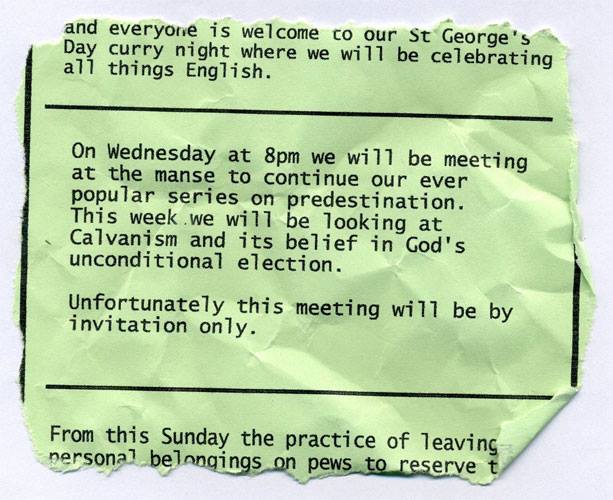
This verse alone  doesn’t mention the criteria for God’s choice to ordain individuals, unlike many other verses which clarify that it’s our FAITH that is the criteria – which is something that is requested from us. Neither does this verse suggest that God’s appointing is the CAUSE for people’s faith. IF God is the one who chooses who will believe, then he is also the one we should blame each time a person does NOT believe – because lack of faith wouldn’t be anyone’s fault but God’s. If people are not able to believe unless God makes them believe, then God is guilty of preventing people from believing, and also for being in the same team as the devil – who is overjoyed when people don’t believe in God.

The word “ordain” is a translation from the Greek verb tasso (Strong’s 5021) – and the middle voice of this word is tetagmenoi (it’s not necessary to view this word as a perfect passive participle) – and “includes no idea of preordination or predestination of any kind” according to Adam Clark (Commentary on Acts 13:48). The word simply means “disposed” (to set in position), and therefore the verse could be translated “as many as were disposed (or who set themselves in such a disposition)to eternal life believed”.  Their disposition to receive the gospel is contrasted with the disposition of the Jews just two verse before, and the Jews had chosen another path.

Acts 13:46Then Paul and Barnabas waxed bold, and said, It was necessary that the word of God should first have been spoken to you: but seeing ye put it from you, and judge yourselves unworthy of everlasting life, lo, we turn to the Gentiles.

So those who judge themselves unworthy of everlasting life did not believe, but those who disposed themselves to eternal life believed, and whether they believed or not depended on whether their heart rejected or accepted the Gospel which was preached to them. Those who hardened their hearts did not believe, but those who softened their hearts did believe, and what made the difference was the disposition which they choose to have to the good tidings. If we won’t accept the offer of salvation, we are sending ourselves to hell and that is of course a very bad choice. God himself doesn’t want anyone to perish and he would like that we ALL should repent. This is the same story that we can read in Romans 1 and in the rest of the Bible.

Below we can read about a sorcerer who WITHSTOOD Paul and Barnabas and who apparently perverted the right ways of the Lord. With other words; God’s will doesn’t always happen.  

Acts 13:8But Elyma the sorcerer (for so is his name by interpretation) withstood them, seeking to turn away the deputy from the faith. 9Then Saul, (who also is called Paul,) filled with the Holy Ghost, set his eyes on him. 10And said, O full of all subtilty and all mischief, thou child of the devil, thou enemy of all righteousness, wilt thou not cease to pervert the right ways of the Lord?— 12Then the deputy, when he saw what was done, believed, being astonished at the doctrine of the Lord.

What would have happened if Paul and Barnabas would not be present to prevent the sorcerer from perverting God’s ways? Paul’s statements make is sound like this wasn’t the first time this sorcerer had perverted the right ways of the Lord. We can also read that the deputy started to believe due to what he saw. If men are elected to believe before the creation of the world, why did the deputy’s faith coincide with what he heard and saw? The Bible says faith comes from hearing the Word of God and we are expected to believe – particularly if we can see God’s works in actions.

Joh. 14:11Believe me that I am in the Father, and the Father in me: or else believe me for the very works’ sake.

We can read that the Word is sent to men and brethren, children of the stock of Abraham., and we can read that the Word is sent to “WHOSOEVER among you feareth God”. To fear is something we do and if God would have chosen a lucky few to believe in him, wouldn’t we rather be reading something like “And God will make sure he places godly fear in you so that you can believe”?

Acts 13:26Men and brethren, children of the stock of Abraham, and whosoever among you feareth God, to you is the word of this salvation sent.

GLAD TIDINGS are declared “unto you” and why would not “you” be those mentioned in the verse above and in the rest of verses in the same chapter?

Acts 13:32And we declare unto you glad tidings, how that the promise which was made unto the fathers33God hath fulfilled the same unto us their children, in that he hath raised up Jesus again; as it is also written in the second psalm, Thou art my Son, this day have I begotten thee.

Paul continues to address “men and brethren” and that the forgiveness of sins is preached unto them. We can also read that “ALL THAT BELIEVE are justified from all things”. This is an offer to all who believe. We are also warned “BEWARE THEREFORE, lest that come UPON YOU, which is spoken of in the prophets”. So even if Paul is making a wonderful promise to his listeners, there is also a condition for this promise because the risk is always that we can fall away if we don’t walk in the light:

Acts 13:38Be it known unto you therefore, men and brethren, that through this man is preached unto you the forgiveness of sins:39And by him all that believe are justified from all things, from which ye could not be justified by the law of Moses. 40Beware therefore, lest that come upon you, which is spoken of in the prophets;

Paul is telling us about despisers, who are those that perish. Does God want people to despise Him and to NOT believe in Him? No of course God wouldn’t want anyone to reject him or rebel against Him.  Moreover, we can read about further warnings from Paul and Barnabas who persuaded people to CONTINUE in the grace of God, which is not so certain they will:

Acts 13:41Behold, ye despisers, and wonder, and perish: for I work a work in your days, a work which ye shall in no wise believe, though a man declare it unto you.—43Now when the congregation was broken up, many of the Jews and religious proselytes followed Paul and Barnabas: who, speaking to them, persuaded them to continue in the grace of God.

Here again we can read that salvation is offered also to the gentiles and unto the ends of the earth. Not just a limited amount of people:

Acts 13:47For so hath the Lord commanded us, saying, I have set thee to be a light of the Gentiles, that thou shouldest be for salvation unto the ends of the earth.

Comments from various Bible scholars/teachers

The phrase “as many as were ordained to eternal life believed “can be compared with a statement such as “As many as were set for the test passed it”.  Friberg’s lexicon suggests it could mean “as many as had become disposed toward eternal life” , and Max Zerwick  “who had been set (in the way)” in Zerwick and Grosvenor’s  A Grammatical Analysis of the Greek New Testament. The NT lexicon BDAG suggests it means “to put in place”, and Henry Alford suggests it means “as many as were disposed” in  The Greek Testament. Thayer’s and Strong’s defines “τάσσω” as determined or disposed and not predetermined or predisposed.  Also John Wesley agrees with this idea.

Adam Clarke:calvinism2

“Acts 13:48: As many as were ordained to eternal life believed – This text has been most pitifully misunderstood. Many suppose that it simply means that those in that assembly who were fore-ordained; or predestinated by God’s decree, to eternal life, believed under the influence of that decree. Now, we should be careful to examine what a word means, before we attempt to fix its meaning. Whatever τεταγμενοι may mean, which is the word we translate ordained, it is neither προτεταγμενοι nor προορισμενοι which the apostle uses, but simply τεταγμενοι, which includes no idea of pre-ordination or pre-destination of any kind. And if it even did, it would be rather hazardous to say that all those who believed at this time were such as actually persevered unto the end, and were saved unto eternal life. But, leaving all these precarious matters, what does the word τεταγμενος mean? The verb ταττω or τασσω signifies to place, set, order, appoint, dispose; hence it has been considered here as implying the disposition or readiness of mind of several persons in the congregation, such as the religious proselytes mentioned Acts 13:43, who possessed the reverse of the disposition of those Jews who spake against those things, contradicting and blaspheming, Acts 13:45. Though the word in this place has been variously translated, yet, of all the meanings ever put on it, none agrees worse with its nature and known signification than that which represents it as intending those who were predestinated to eternal life: this is no meaning of the term, and should never be applied to it. Let us, without prejudice, consider the scope of the place: the Jews contradicted and blasphemed; the religious proselytes heard attentively, and received the word of life: the one party were utterly indisposed, through their own stubbornness, to receive the Gospel; the others, destitute of prejudice and prepossession, were glad to hear that, in the order of God, the Gentiles were included in the covenant of salvation through Christ Jesus; they, therefore, in this good state and order of mind, believed. Those who seek for the plain meaning of the word will find it here: those who wish to make out a sense, not from the Greek word, its use among the best Greek writers, and the obvious sense of the evangelist, but from their own creed, may continue to puzzle themselves and others; kindle their own fire, compass themselves with sparks, and walk in the light of their own fire, and of the sparks which they have kindled; and, in consequence, lie down in sorrow, having bidden adieu to the true meaning of a passage so very simple, taken in its connection, that one must wonder how it ever came to be misunderstood and misapplied. Those who wish to see more on this verse may consult Hammond, Whitby, Schoettgen, Rosenmuller, Pearce, Sir Norton Knatchbull, and Dodd.”

A question that calvinists cannot answer – because it’s a paradox

CHALLENGE to CALVINISTS to please explain the contradiction of Westminster Confession of Faith 3.1:

A Calvinist writes:  “[God] does not actively work unbelief into the non-elect. All are already under sin. God is not responsible for the sin of Adam, or the fall of mankind. God is not the author of evil. “

Q. Who then *is* the author of evil? Who did work unbelief into the heart of men? If all men are under sin, what was God doing when it happened – did it occur behind his back / outside his sovereign causality? Calvin wrote: (quote): 

“..the will of God is the supreme and primary cause of everything…” (The Institutes of Christian Religion, Book I, Ch. 16, Sect.

 “We also note that we should consider the creation of the world so that we may realise that everything is subject to God and ruled by his will and that when the world has done what it may, nothing happens other than what God decrees.” (Acts: Calvin, The Crossway Classic Commentaries, p.66)

“…the devil and all the ungodly are reined in by God, so that they cannot conceive, plan or carry out any crime, unless God allows it, indeed commands it. They are not only in bondage to him, but are forced to serve him. It is the Lord’s prerogative to enable the enemy’s rage and to control it at will, and it is in his power to decide how far and how long it may last, so that wicked men cannot break free and do exactly what they want….” (The Institutes of Christian Religion, Book I, Ch.17, Sect. 10)

= And again. WCF3.1 says God ordains EVERYTHING that happens.

Q. How then, having asserted this position, can Calvinism claim God is not authoring these things – THAT’S WHAT AUTHORING MEANS – (to conceive a plot, and via third parties cause a narrative to come into being, and then to publish it via secondary agents, for the world to experience it’s reality.) i.e. by the normal definition of the words, Authoring IS ordaining / decreeing / causing / predetermining, by creative design.

I really hope you guys can take this challenge on – because it lies at the heart of Calvinism’s claims of sovereignty. These are not complex questions, and are based on what Calvinism clearly states. I’m not pulling a clever trick on you here, but asking how you reconcile this contradiction: To quote Calvin again:

“First, it must be observed that the will of God is the cause of all things that happen in the world; and yet God is not the author of evil.” (Concerning the Eternal Predestination of God, p.169)

“Whatever things are done wrongly and unjustly by man, these very things are the right and just works of God. This may seem paradoxical at first sight to some….” (Concerning the Eternal Predestination of God, p.169)

Too right it seems paradoxical!….. It IS. Again. My questions have not been answered -I’ve received lots of references to God being “passive” while people go do things that God is not *actively* in control of, whilst simultaneously claiming God is in control of everything.

PROBLEM 1.) If God stands back and lets a man do something that God himself has not actively caused to be, then you are opening up space *outside his sovereign will* by claiming he stands by and lets things happen he did not cause.

PROBLEM 2.) Calvinists seem to also be claiming God IS in fact in TOTAL control of every atom in this universe etc. Thus you cannot claim God is in total control and at the same time shelve the effective causailty onto someone else… This question is normally responded to by Calvinists by stating “you do not understand Calvinism – go back and relearn”. I am – I have – I am taking you at your word and asking questions about it – please dont refer to charts or other material – I need to know how you square this circle personally. Or do you switch your mind off and accept mutually exclusive opposites as compatible truth… ie ‘A = NotA’

Sovereignty = total control / causality (predestination = ordination).
Soveriengty = active causality to salvation
Sovereignty does not = active causality to sin
Sovereignty does not = total control / causality

(Thanks to Stephen Thomas. Also read his long list of verses which show that TULIP is incorrect here)

Tvingade Gud Judas att förråda Jesus, eller agerade Judas EMOT Guds vilja?

Jordens kungar trädde fram och furstarna församlade sig mot Herren och mot hans Smorde. Ja, sannerligen församlade sig både Herodes och Pontius Pilatus tillsammans med hedningarna och Israels folk mot din helige son Jesus, den du har smort, till att utföra vad din hand och ditt rådslut FÖRUT BESTÄMT SKULLE SKE (Apg 4:26-28)

Detta är ord från en gemensam bön av Petrus och Johannes och dessa verser används ibland som stöd för att Gud förutbestämmer allting, inklusive förutbestämmer att människor utför onda handlingar (och detta skulle i sin tur betyda att dessa onda handlingar då inte kan vara “onda” eftersom Gud ju alltid är god och aldrig orsakar något ont). Men Bibeln lär att Kristus död är ett heligt och gott offer inför Fadern och denna unika händelse (där Kristus till och med säger “Fader, förlåt dem för de vet icke vad de göra”) kan inte användas som ett generellt agerande genom hela skriften för att visa att Gud är den som orsakar att människor utför onda handlingar.

Vi kan läsa i Joh. 10:17-18 att Jesus ger sitt eget liv:

Fadern älskar mig därför att jag ger mitt liv, för att jag skall ta det tillbaka. Ingen tar det ifrån mig, utan jag ger det av mig själv. Jag har makt att ge det, och jag har makt att ta det tillbaka. Det budet fick jag av min Fader.

och i Apg 2:23:

Honom som blev utlämnad åt er genom Guds bestämda rådslut och försyn, har ni tagit och med laglösa (wicked, KJV) händer korsfäst och dödat

“Laglösa händer”. Detta låter inte här som att Gud tvingar människor att förråda och döda Jesus, för Gud använder sig naturligtvis inte av laglösa händer för att utföra sina gärningar. De med laglösa händer planerade att förråda och döda Jesus emot Guds vilja. Gud TILLÄT att det skulle ske och han använde i just detta fallet människors agerande till något bra (det finns även några andra bibelexempel för detta även om de inte är många). Gud tvingar ingen att utföra onda gärningar eller att synda. Om Judas var tvingad av Gud att förråda Jesus så borde han haft en hedersplats i himlen för att ha lytt Gud. I stället kan vi läsa om Judas att det hade varit bättre för honom om han aldrig blivit född och att han gick förlorad.

Aposteln Paulus hade “beslutat” att segla till Efesos (Apg 20:16). Betyder det att sjömännen  på skeppet han beslutat sig för att resa med agerade under Paulus enväldiga kontroll? Nej. Paulus beslutade sig för att segla med ett visst skepp till en viss destination men det betyder inte att skeppet som han bestämt sig för att resa med var under hans inflytande och kontroll. När Paulus seglade till Efesos så skulle han kunna sagt att vad som hände var “förutbestämt” sedan tidigare eftersom vad som hände inte var oväntat eller inträffade av en slump. Men den förutbestämda händelsen exkluderar inte den fria vljan av de inblandade.

På samma sätt så förutbestämde Gud att Kristus skulle korsfästas, men det betyder alltså inte att de som var inblandade i hans korsfästelse inte var fria att agera som de ville.  Vad de valde att göra var ingen överraskning för Gud som är allvetande. Vad de gjorde var något som var känt av Gud och eftersom Gud också planerade att använda sig utav deras brott så var denna händelse “förutbestämd”. För att uppnå syftet att låta Kristus bli ett syndoffer för oss så tillät Fadern att Jesus hamnade i händerna hos människor som ville döda Jesus av egen fri vilja.

Det var sannerligen ingen brist på människor som ville döda Jesus pga hur han predikade. Jesus sade att världen hatade honom “eftersom jag vittnar om att dess gärningar är ONDA” (Jn. 7:7). (Att världens gärningar är ONDA visar även detta på att saker och ting sker emot Guds vilja eftersom Gud själv inte skulle påtvinga världen att vara OND.) Men Jesus motståndare kunde inte döda honom så länge som Fadern beskyddade honom (Matt. 4:6; Lk. 4:11; Jn. 7:30; 10:31; 10:39). Bibeln säger, “Då försökte de gripa honom. Dock kom ingen med sina händer vid honom, ty hans stund var ännu inte kommen.” (Jn. 7:30). Fadern lämnade Kristus i händerna på “syndiga män”(Lk. 24:7) och alltså INTE hos människor som gjorde Guds vilja genom att söka att döda Jesus.

Gud bestämde sig för att låta Jesus hamna i händerna hos onda människor och Gud förutsåg också vad de skulle göra med honom. Detta för att Fadern redan kände till det hat som redan fanns i deras hjärtan. Gud hade möjligheten att använda deras frivilliga ondska in i hans egna planer och även att vända detta onda till något bra genom att låta Jesus dö för våra synder. Detta verkar också vara vad Gud gjorde vad gäller Josefs bröder (1 Mos.50:20). Detta betyder inte att Gud orsakade deras onda planer. Det är en sak att säga att Gud “verkar allt efter sin viljas råd” (Eph. 1:11), och en helt annan att säga “Gud ORSAKAR allt efter sin viljas råd”. Gud kan arbeta med människors fria val för att utföra sina syften utan att påtvinga människor andras val än deras egna.

Pilatus sade “jag har makt att korsfästa dig och makt att frige dig” (Jn. 19:10). Pilatus verkar ha varit medveten om han själv hade en egen vilja att fatta sitt eget beslut i frågan. Han insåg att det var hans eget agerande utifrån sin egen vilja. Ansvar och skyldighet förutser fri vilja. Människor kommer att bli dömda för sina egna fria val baserade på egna fria viljor. Eftersom dessa män var ansvariga för att gripa Jesus och döda honom, även om Gud sedan tidigare förutsåg och att så skulle ske, så var det ändå de själva som valt att gripa och döda honom.

Bibeln säger också “36 Så skall nu hela Israels hus säkert veta, att denne Jesus som ni har korsfäst, honom har Gud gjort både till Herre och till Kristus.37. Då de hörde detta, fick de ett styng i hjärtat och de sade till Petrus och till de andra apostlarna: Män och bröder, vad skall vi göra?” (Acts 2:36-37)

Uppenbarligen så ansåg inte Peters åhörare att Peters tidigare ord, om Guds förutbestämda rådslut, skulle betyda att de själva inte hade någon fri vilja i frågan eller att de bara agerade under Guds enväldiga kontroll. Då skulle de inte ha haft ett styng i sina hjärtan för ett agerande som var utanför deras egen kontroll eller sett något skäl till att de behövde bli räddade för att ha agerat felaktigt. Men nu hade de styng i sina hjärtan och sökte en väg till frälsning för de insåg att vad de gjort var orsakat av deras eget fria agerande och därför var de med rätta ansvariga för sina handlingar.