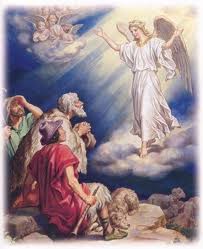
 The Hebrew word for angel is “malak” (Strong’s 4397) but this word can also mean “messenger” or “one who is sent”, so the messenger in question doesn’t necessarily have to be in the form of a created angel. (When it comes to Jesus Christ we know he was not created since he is the Creator himself and nothing/no one existed before him.) We must determine from context whether the word refers to the office of the sent one or to the nature of angels. We must also check if it says “AN angel of the Lord or “THE angel of the Lord” to determine whether there is a particular angel spoken about. The angel of the Lord seems to be a preincarnate form of Jesus (who is God and part of the trinity), and that could explain why people have in fact seen God without dying. That’s also why verses like this makes much sense:
John 17:5 And now, O Father, glorify thou me with thine own self with the glory which I had with thee BEFORE the world was.
No man can see God face to face and live
Exodus 33:20 And he said, Thou canst not see my face: for there shall no man see me, and live.
1 Tim. 6:16 Who only hath immortality, dwelling in the light which no man can approach unto; whom no man hath seen, nor can see: to whom be honour and power everlasting. Amen.
John 1:18 No man hath seen God at any time, the only begotten Son, which is in the bosom of the Father, he hath declared him. John. 5:37 And the Father himself, which hath sent me, hath borne witness of me. Ye have neither heard his voice at any time, nor seen his shape.
Jesus can be seen despite being God, while being in the flesh or in another manifestation (like the angel of the Lord)
God can be seen (without causing death) in other forms, such as when he appeared in the bush to Moses, as God in flesh in the form of Jesus Christ and also in the form of an angel of the Lord. The Bible tells us that no one can see GOD and live, and yet the verses below show us that we CAN do this IF we can see a reincarnated form of God. Jesus is God, and when he walked on earth he was in human form in the flesh and that’s why we can see him and still live.
2 Cor. 4:4 In whom the god of this world hath blinded the minds of them which believe not, lest the light of the glorious gospel of Christ, who is the IMAGE of God (theou), should shine unto them.5 For we preach not ourselves, but Christ Jesus the Lord; and ourselves your servants for Jesus’ sake.6 For God, who commanded the light to shine out of darkness, hath shined in our hearts, to give the light of the knowledge of the glory of God in the FACE OF Jesus Christ.
Phil. 2:5 Let this mind be in you, which was also in Christ Jesus:6 Who, being in the FORM of God (theou), thought it not robbery to be equal with God (theo):7 But made himself of no reputation, and took upon him the form of a servant, and was made in the likeness of men:8 And being found in fashion as a man, he humbled himself, and became obedient unto death, even the death of the cross.9 Wherefore God (theos) also hath highly exalted him, and given him a name which is above every name
Hebr 1:1 God (theos), who at sundry times and in divers manners spake in time past unto the fathers by the prophets,2 Hath in these last days spoken unto us by his Son, whom he hath appointed heir of all things, by whom also he made the worlds;3 Who being the brightness of his glory, and THE EXPRESS IMAGE OF HIS PERSON, and upholding all things by the word of his power, when he had by himself purged our sins, sat down on the right hand of the Majesty on high
Col. 2:8 Beware lest any man spoil you through philosophy and vain deceit, after the tradition of men, after the rudiments of the world, and not after Christ.9 For in him dwelleth all the fulness of the Godhead (theotés) BODILY.10 And ye are complete in him, which is the head of all principality and power
John 1:1 In the beginning was the Word, and the Word was with God (theon), and the Word was God (theos).2 The same was in the beginning with God (theon).3 All things were made by him; and without him was not any thing made that was made.4 In him was life; and the life was the light of men.—14 And the Word WAS MADE FLESH, and dwelt among us, (and we beheld his glory, the glory as of the only begotten of the Father) full of grace and truth.15 John bare witness of him, and cried, saying, This was he of whom I spake, He that cometh after me is preferred before me: for he was before me.
1 Tim. 3:15 But if I tarry long, that thou mayest know how thou oughtest to behave thyself in the house of God (theou), which is the church of the LIVING GOD (theou), the pillar and ground of the truth.16 And without controversy great is the mystery of godliness (eusebeias): God was MANIFEST IN THE FLESH, justified in the Spirit, seen of angels, preached unto the Gentiles, believed on in the world, received up into glory. Acts 20:28 Take heed therefore unto yourselves, and to all the flock, over the which the Holy Ghost hath made you overseers, to feed the church of God (theou), which he hath purchased with his own blood.
Col. 1: 12 Giving thanks unto the Father, which hath made us meet to be partakers of the inheritance of the saints in light:13 Who hath delivered us from the power of darkness, and hath translated us into the kingdom of his dear Son:14 In whom we have redemption through his blood, even the forgiveness of sins:15 Who is the IMAGE of the invisible God, the firstborn*) of every creature:16 For BY HIM were all things created, that are in heaven, and that are in earth, visible and invisible, whether they be thrones, or dominions, or principalities, or powers: all things were created by him, and for him:17 And he is BEFORE all things, and by him all things consist.18 And he is the head of the body, the church: who is the beginning, the firstborn from the dead; that in all things he might have the preeminence.19 For it pleased the Father that in him should all fulness dwell;20 And, having made peace through the blood of his cross, by him to reconcile all things unto himself; by him, I say, whether they be things in earth, or things in heaven.
*) Firstborn: pre-eminence in rank as opposed to priority in time. This definition can be seen in passages where the term “firstborn” is used of the pre-eminent son who was not the eldest, e.g. Psalm 89:27, where David is called “firstborn” although he was actually the youngest son.
An apostle is defined as one who is sent out on missions and who has the authority of the one who sent him:
Hebr. 3:1 Wherefore, holy brethren, partakers of the heavenly calling, consider the Apostle and High Priest of our profession, Christ Jesus;2 Who was faithful to him that appointed him, as also Moses was faithful in all his house.
Mal. 3: 1 Behold, I will send my messenger [John the Baptiste], and he shall prepare the way before me: and the Lord, whom ye seek, shall suddenly come to his temple, even the messenger of the covenant [Malak = Angel, thus “Angel of the Covenant”], whom ye delight in: behold, he shall come, saith the Lord of hosts.
1) HAGAR meets the Angel of the Lord and he promised to multiply Hagar’s descendents, which is something that only God could promise and fulfill. Hagar referred to the Angel of the Lord as El Roi (el = God ) the-God-Who-Sees 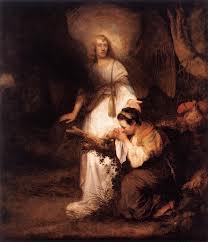
Gen. 16:6 But Abram said unto Sarai, Behold, thy maid is in thine hand; do to her as it pleaseth thee. And when Sarai dealt hardly with her, she fled from her face.7 And the angel of the Lord found her by a fountain of water in the wilderness, by the fountain in the way to Shur.8 And he said, Hagar, Sarai’s maid, whence camest thou? and whither wilt thou go? And she said, I flee from the face of my mistress Sarai.9 And the angel of the Lord said unto her, Return to thy mistress, and submit thyself under her hands.10 And the angel of the Lord said unto her, I will multiply thy seed exceedingly, that it shall not be numbered for multitude.11 And the angel of the Lord said unto her, Behold, thou art with child and shalt bear a son, and shalt call his name Ishmael; because the Lord hath heard thy affliction.12 And he will be a wild man; his hand will be against every man, and every man’s hand against him; and he shall dwell in the presence of all his brethren.13 And she called the name of the LORD that spake unto her, THOU GOD seest me: for she said, Have I also here looked after him that seeth me?
Note below he plays on Ishmael’s name “God hears”, and twice in the verses below can we read “God heard” and “God has heard”:
Gen. 21:16 And she went, and sat her down over against him a good way off, as it were a bow shot: for she said, Let me not see the death of the child. And she sat over against him, and lift up her voice, and wept.17 And God heard the voice of the lad; and the angel of God called to Hagar out of heaven, and said unto her, What aileth thee, Hagar? fear not; for God hath heard the voice of the lad where he is.18 Arise, lift up the lad, and hold him in thine hand; for I will make him a great nation.19 And God opened her eyes, and she saw a well of water; and she went, and filled the bottle with water, and gave the lad drink.
2) Abraham and his visit by JAHVE (Jahve/God), in the form of an angel
Abraham had an interesting visit one hot day outside his tent. Three men visited him and he called at least one of them for “my Lord” (adonai) and he addressed him as God (Jehovah). He offered the three men water to wash their feet and food to eat, and they also ate with him. It appears as though only two men (angels) continued on to Sodom after their stay with Abraham, because when Gen.19 begins we can read that only two of them arrived at Lot’s house, and once again these angels decided to eat – but now in the company of Lot. (We can see further down below that the angel of the Lord who visited Manoah chose not to eat.) It looks like one of the three men (the Lord) remained with Abraham after the other two had left, since Abraham and the Lord continued to have a dialogue about sparing righteous individuals in Sodom – if there were any.
Gen. 18:1 And the Lord (Jehova) appeared unto him in the plains of Mamre: and he sat in the tent door in the heat of the day;2 And he lift up his eyes and looked, and, lo, three men stood by him: and when he saw them, he ran to meet them from the tent door, and bowed himself toward the ground,3 And said, My Lord (adonai), if now I have found favour in thy sight, pass not away, I pray thee, from thy servant:4 Let a little water, I pray you, be fetched, and wash your feet, and rest yourselves under the tree:5 And I will fetch a morsel of bread, and comfort ye your hearts; after that ye shall pass on: for therefore are ye come to your servant. And they said, So do, as thou hast said.—8 And he took butter, and milk, and the calf which he had dressed, and set it before them; and he stood by them under the tree, and they did eat.—13 And the Lord said unto Abraham, Wherefore did Sarah laugh, saying, Shall I of a surety bear a child, which am old?14 Is any thing too hard for the Lord (Jehova)? At the time appointed I will return unto thee, according to the time of life, and Sarah shall have a son.15 Then Sarah denied, saying, I laughed not; for she was afraid. And he said, Nay; but thou didst laugh.16 And the men rose up from thence, and looked toward Sodom: and Abraham went with them to bring them on the way.17 And the Lord (Jehova) said, Shall I hide from Abraham that thing which I do;18 Seeing that Abraham shall surely become a great and mighty nation, and all the nations of the earth shall be blessed in him?19 For I know him, that he will command his children and his household after him, and they shall keep the way of the Lord (Jehova), to do justice and judgment; that the Lord (Jehova) may bring upon Abraham that which he hath spoken of him.20 And the Lord (Jehova) said, Because the cry of Sodom and Gomorrah is great, and because their sin is very grievous;21 I will go down now, and see whether they have done altogether according to the cry of it, which is come unto me; and if not, I will know.22 And the men turned their faces from thence, and went toward Sodom: but Abraham stood yet before the Lord (Jehova).23 And Abraham drew near, and said, Wilt thou also destroy the righteous with the wicked?24 Peradventure there be fifty righteous within the city: wilt thou also destroy and not spare the place for the fifty righteous that are therein?—33 And the Lord (Jehovah) went his way, as soon as he had left communing with Abraham: and Abraham returned unto his place.
Only two angels continued on to Sodom. The third angel (the Angel of the Lord) remained with Abraham for a short while.
Gen. 19: 1 And there came two angels to Sodom at even; and Lot sat in the gate of Sodom: and Lot seeing them rose up to meet them; and he bowed himself with his face toward the ground;2 And he said, Behold now, my lords, turn in, I pray you, into your servant’s house, and tarry all night, and wash your feet, and ye shall rise up early, and go on your ways. And they said, Nay; but we will abide in the street all night.3 And he pressed upon them greatly; and they turned in unto him, and entered into his house; and he made them a feast, and did bake unleavened bread, and they did eat.4 But before they lay down, the men of the city, even the men of Sodom, compassed the house round, both old and young, all the people from every quarter
Question: Jesus claims that Abraham rejoiced for having seen his (Jesus) day and was glad when he saw it. If the above is not the occurrence when this happened, then WHEN did this extraordinary event take place? Surely Moses wouldn’t neglect to mention such an important meeting in his texts?:
John 8:56 Your father Abraham rejoiced to see my day: and HE SAW IT, AND WAS GLAD
It further seems as though God acted in two different locations at the same time:
1 Mos. 19:24 Then the Lord (Jahve) rained upon Sodom and upon Gomorrah brimstone and fire from the Lord (Jahve) out of heaven
You can read more quotes from the old church fathers in this article, which shows that they too understood these exact verses as though it’s about God himself in the form of Jesus who dines with Abraham. You will be overwhelmed by the strong evidence for Jesus deity if you read the quotes in that article and follow the link to even more quotes.
Later, on Mt Moriah, where Abraham was to offer up his son Isaac, the Angel of the Lord identifies himself as the LORD GOD. The Lord (the Angel of the Lord) says “By myself have I sworn”, and he notices that Abraham has not withheld his son from HIM (the Angel of the Lord).
Gen. 22: 10 And Abraham stretched forth his hand, and took the knife to slay his son.11 And the angel of the Lord called unto him out of heaven, and said, Abraham, Abraham: and he said, Here am I.12 And he said, Lay not thine hand upon the lad, neither do thou any thing unto him: for now I know that thou fearest God, seeing thou hast not withheld thy son, thine only son from ME.—.14 And Abraham called the name of that place Jehovahjireh: as it is said to this day, In the mount of the Lord it shall be seen.15 And the angel of the Lord called unto Abraham out of heaven the second time,16 And said, By myself have I sworn, saith the LORD, for because thou hast done this thing, and hast not withheld thy son, thine only son;17 That in blessing I will bless thee, and in multiplying I will multiply thy seed as the stars of the heaven, and as the sand which is upon the sea shore; and thy seed shall possess the gate of his enemies;18 And in thy seed shall all the nations of the earth be blessed; because thou hast obeyed MY VOICE
3) Jacob had a dream where the angel of the Lord spake to him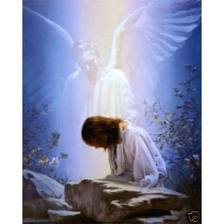
This angel of the Lord referred to himself as the Lord God, and when the same angel of the Lord approached Jacob many years later, he referred to himself as the God of Bethel to give him a reminder of who he was:
Gen. 28:13 And, behold, the Lord stood above it, and said, I am the Lord God of Abraham thy father, and the God of Isaac: the land whereon thou liest, to thee will I give it, and to thy seed; 14 And thy seed shall be as the dust of the earth, and thou shalt spread abroad to the west, and to the east, and to the north, and to the south: and in thee and in thy seed shall all the families of the earth be blessed..15 And, behold, I am with thee, and will keep thee in all places whither thou goest, and will bring thee again into this land; for I will not leave thee, until I have done that which I have spoken to thee of.16 And Jacob awaked out of his sleep, and he said, Surely the Lord is in this place; and I knew it not.17 And he was afraid, and said, How dreadful is this place! this is none other but the house of God, and this is the gate of heaven.18 And Jacob rose up early in the morning, and took the stone that he had put for his pillows, and set it up for a pillar, and poured oil upon the top of it.19 And he called the name of that place Bethel: but the name of that city was called Luz at the first.
Gen. 31:11 And the angel of God spake unto me in a dream, saying, Jacob: And I said, Here am I.12 And he said, Lift up now thine eyes, and see, all the rams which leap upon the cattle are ringstraked, speckled, and grisled: for I have seen all that Laban doeth unto thee.13 I am the God of Bethel, where thou anointedst the pillar, and where thou vowedst a vow unto ME: now arise, get thee out from this land, and return unto the land of thy kindred.
Below a very old Jacob (Israel) on his deathbed, identifies this angel with the God in whose presence his fathers Abraham and Isaac had lived. This is the same angel that appeared to him earlier in the dream.
Gen. 48:14 And Israel stretched out his right hand, and laid it upon Ephraim’s head, who was the younger, and his left hand upon Manasseh’s head, guiding his hands wittingly; for Manasseh was the firstborn.15 And he blessed Joseph, and said, God, before whom my fathers Abraham and Isaac did walk, the GOD which fed me all my life long unto this day,16 The Angel which redeemed me from all evil, bless the lads; and let my name be named on them, and the name of my fathers Abraham and Isaac; and let them grow into a multitude in the midst of the earth
Hosea 12:2 The Lord hath also a controversy with Judah, and will punish Jacob according to his ways; according to his doings will he recompense him.3 He took his brother by the heel in the womb, and by his strength he had power with God:4 Yea, he had power over the angel, and prevailed: he wept, and made supplication unto him: he found him in Bethel, and there he spake with us;5 Even the Lord God of hosts; the Lord is his memorial.
Also Abraham had an encounter with the Lord in Bethel, long before Jacob did.
Gen. 12:7 And the Lord appeared unto Abram, and said, Unto thy seed will I give this land: and there builded he an altar unto theLord, who appeared unto him.8 And he removed from thence unto a mountain on the east of Bethel, and pitched his tent, having Bethel on the west, and Hai on the east: and there he builded an altar unto the Lord, and called upon the name of the Lord.
Jacob wrestles with a man who is identified as God – and Jacob saw God FACE TO FACE and asks for his NAME
A strange wrestling match with a prophetic meaning was made between Jacob and a man who he identifies as GOD. Hosea describes Jacob (jaqob = wrestler) as an example of an Israelite who won victories through turning to God.
Gen. 32:1 And Jacob went on his way, and the angels of God met him.2 And when Jacob saw them, he said, This is God’s host: and he called the name of that place Mahanaim.—22 And he rose up that night, and took his two wives, and his two womenservants, and his eleven sons, and passed over the ford Jabbok.23 And he took them, and sent them over the brook, and sent over that he had.24 And Jacob was left alone; and there wrestled a man with him until the breaking of the day.25 And when he saw that he prevailed not against him, he touched the hollow of his thigh; and the hollow of Jacob’s thigh was out of joint, as he wrestled with him.26 And he said, Let me go, for the day breaketh. And he said, I will not let thee go, except thou bless me.27 And he said unto him, What is thy name? And he said, Jacob.28 And he said, Thy name shall be called no more Jacob, but Israel: for as a prince hast thou power with God and with men, and hast prevailed.29 And Jacob asked him, and said, Tell me, I pray thee, thy name. And he said, Wherefore is it that thou dost ask after my name? And he blessed him there.30 And Jacob called the name of the place Peniel: for I have seen GOD face to face, and my life is preserved.31 And as he passed over Penuel the sun rose upon him, and he halted upon his thigh.32 Therefore the children of Israel eat not of the sinew which shrank, which is upon the hollow of the thigh, unto this day: because he touched the hollow of Jacob’s thigh in the sinew that shrank.
Hosea 12:2 The Lord hath also a controversy with Judah, and will punish Jacob according to his ways; according to his doings will he recompense him.3 He took his brother by the heel in the womb, and by his strength he had power with God:4 Yea, he had power over the ANGEL, and prevailed: he wept, and made supplication unto him: he found him in Bethel, and there he spake with us;5 Even the Lord God of hosts; the Lord is his memorial.6 Therefore turn thou to thy God: keep mercy and judgment and wait on thy God continually.
Proverbs. 30:4 Who hath ascended up into heaven, or descended? who hath gathered the wind in his fists? who hath bound the waters in a garment? who hath established all the ends of the earth? WHAT IS HIS NAME, AND WHAT IS HIS SONS’S NAME, if thou canst tell?
Rev. 3:12 Him that overcometh will I make a pillar in the temple of my God, and he shall go no more out: and I will write upon him the name of my God, and the name of the city of my God, which is new Jerusalem, which cometh down out of heaven from my God: and I will write upon him MY NEW NAME.
Rev. 19:11 And I saw heaven opened, and behold a white horse; and he that sat upon him was called Faithful and True, and in righteousness he doth judge and make war.12 His eyes were as a flame of fire, and on his head were many crowns; and he had a NAME WRITTEN, THAT NO MAN KNEW, BUT HE HIMSELF.13 And he was clothed with a vesture dipped in blood: and his name is called THE WORD OF GOD (logos tou theou).
John 1:1 In the beginning was the Word, and the Word was with God, and THE WORD (logos) WAS GOD (theos).2 The same was in the beginning with God.3 All things were made by him; and without him was not any thing made that was made.
Judges. 13:6 Then the woman came and told her husband, saying, A man of God came unto me, and his countenance was like the countenance of an angel of God, very terrible: but I asked him not whence he was, neither told he me his name:—16 And the angel of the Lord said unto Manoah, Though thou detain me, I will not eat of thy bread: and if thou wilt offer a burnt offering, thou must offer it unto the Lord. For Manoah knew not that he was an angel of the Lord.17 And Manoah said unto the angel of the Lord, What is thy name, that when thy sayings come to pass we may do thee honour?18 And the angel of the Lord said unto him, Why askest thou thus after my name, seeing it is SECRET? (wonderful, Strong’s 6383)
The Lord’s name is WONDERFUL (marvellous), and this is in relation to Jesus. Jesus is the corner stone which the jews rejected, and most of them still refuse to accept Jesus as the promised Messiah and God who has come in the flesh.
Jesaja 9:6 For unto us a child is born, unto us a son is given: and the government shall be upon his shoulder: and his name shall be called WONDERFUL (Strong’s 6383), Counsellor, The mighty God, The everlasting Father, The Prince of Peace.
Matt. 21:42 Jesus saith unto them, Did ye never read in the scriptures, The STONE which the builders rejected, the same is become the head of the corner: this is the Lord’s doing, and it is MARVELLOUS in our eyes?
4) Moses saw God face to face (and a few other people)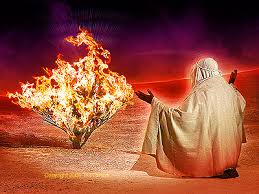
The angel of the Lord below claimed “I am the God of thy father, the God of Abraham, the God of Isaac, and the God of Jacob“ and Moses hid his face for he was afraid to look upon GOD.
Exodus 3:1 Now Moses kept the flock of Jethro his father in law, the priest of Midian: and he led the flock to the backside of the desert, and came to the mountain of God, even to Horeb.2 And the angel of the Lord appeared unto him in a flame of fire out of the midst of a bush: and he looked, and, behold, the bush burned with fire, and the bush was not consumed.3 And Moses said, I will now turn aside, and see this great sight, why the bush is not burnt.4 And when the Lord saw that he turned aside to see, GOD called unto him out of the midst of the bush, and said, Moses, Moses. And he said, Here am I.5 And he said, Draw not nigh hither: put off thy shoes from off thy feet, for the place whereon thou standest is holy ground.6 Moreover he said, I AM THE GOD of thy father, the God of Abraham, the God of Isaac, and the God of Jacob. And Moses hid his face; for he was afraid to look upon GOD.7 And the LORD said, I have surely seen the affliction of my people which are in Egypt, and have heard their cry by reason of their taskmasters; for I know their sorrows;8 And I am come down to deliver them out of the hand of the Egyptians, and to bring them up out of that land unto a good land and a large, unto a land flowing with milk and honey; unto the place of the Canaanites, and the Hittites, and the Amorites, and the Perizzites, and the Hivites, and the Jebusites.
Exodus. 249 Then went up Moses, and Aaron, Nadab, and Abihu, and seventy of the elders of Israel:10 And they saw the GOD of Israel: and there was under his feet as it were a paved work of a sapphire stone, and as it were the body of heaven in his clearness.11 And upon the nobles of the children of Israel he laid not his hand: also they saw God, and did eat and drink
Num. 12:4 And the LORD spake suddenly unto Moses, and unto Aaron, and unto Miriam, Come out ye three unto the tabernacle of the congregation. And they three came out.5 And the LORD came down in the pillar of the cloud, and stood in the door of the tabernacle, and called Aaron and Miriam: and they both came forth.6 And he said, Hear now my words: If there be a prophet among you, I the Lord will make myself known unto him in a vision, and will speak unto him in a dream.7 My servant Moses is not so, who is faithful in all mine house.8 With him will I speak mouth to mouth, even apparently, and not in dark speeches; and the similitude of the Lord shall he behold: wherefore then were ye not afraid to speak against my servant Moses?
Acts 7:38 This is he, that was in the church in the wilderness with the angel which spake to him in the mount Sina, and with our fathers: who received the lively oracles to give unto us
5) Joshua and his meeting with the captain of the Lord’s host
When John attempted to worship an angel in Revelation 19:10; 22:8-9, he was told not to do it. Yet, Joshua, as seen below, worshiped “the captain of the Lord’s host“. Notice that the captain of the Lord’s host told Joshua – just like the angel of the Lord told Moses in Exodus 3:5 – to take off his shoes because of the holy ground.
Joshua 5:13 And it came to pass, when Joshua was by Jericho, that he lifted up his eyes and looked, and, behold, there stood a man over against him with his sword drawn in his hand: and Joshua went unto him, and said unto him, Art thou for us, or for our adversaries?14 And he said, Nay; but as captain of the host of the Lord am I now come. And Joshua fell on his face to the earth, and did worship, and said unto him, What saith my Lord unto his servant?15 And the captain of the Lord’s host said unto Joshua, Loose thy shoe from off thy foot; for the place whereon thou standest is holy. And Joshua did so.
Compare with the Angel of the ord who is standing with a sword drawn in his hand:
Num. 22:23 And the ass saw THE ANGEL OF THE LORD standing in the way, and HIS SWORD DRAWN IN HIS HAND: and the ass turned aside out of the way, and went into the field: and Balaam smote the ass, to turn her into the way.
1 Chron. 21:16 And David lifted up his eyes, and saw THE ANGEL OF THE LORD stand between the earth and the heaven, HAVING A DRAWN SWORD IN HIS HAND stretched out over Jerusalem.
The word of God through Zechariah, who saw Joshua in a vision:
Zech. 3:1 And he shewed me Joshua the high priest standing before the angel of the Lord, and Satan standing at his right hand to resist him.2 And the Lord said unto Satan, The Lord rebuke thee, O Satan; even the Lord that hath chosen Jerusalem rebuke thee: is not this a brand plucked out of the fire?3 Now Joshua was clothed with filthy garments, and stood before the angel.4 And he answered and spake unto those that stood before him, saying, Take away the filthy garments from him. And unto him he said, Behold, I have caused thine iniquity to pass from thee, and I will clothe thee with change of raiment.5 And I said, Let them set a fair mitre upon his head. So they set a fair mitre upon his head, and clothed him with garments. And the angel of the Lord stood by.6 And the angel of the Lord protested unto Joshua, saying,7 Thus saith the Lord of hosts; If thou wilt walk in my ways, and if thou wilt keep my charge, then thou shalt also judge my house, and shalt also keep my courts, and I will give thee places to walk among these that stand by.8 Hear now, O Joshua the high priest, thou, and thy fellows that sit before thee: for they are men wondered at: for, behold, I will bring forth my servant the Branch.9 For behold the stone that I have laid before Joshua; upon one stone shall be seven eyes: behold, I will ENGRAVE the graving thereof, saith the Lord of hosts, and I will remove the iniquity of that land in one day.
6) ZECHARIAH’s meeting with the Angel of the Lord in a vision – a man on a red horse among myrtle trees
The above vision comes shortly after the below one. An ordinary angel revealed a message for Zechariah, and the man among the myrtle trees is the same as the Angel of the Lord. He in his turn is communicating with the Lord of Hosts (God the Father) so they are not exactly the same.
Zech. 1:7 Upon the four and twentieth day of the eleventh month, which is the month Sebat, in the second year of Darius, came the word of the Lord unto Zechariah, the son of Berechiah, the son of Iddo the prophet, saying,8 I saw by night, and behold a man riding upon a red horse, and he stood among the myrtle trees that were in the bottom; and behind him were there red horses, speckled, and white.9 Then said I, O my lord, what are these? And the angel that talked with me said unto me, I will shew thee what these be.10 And the man that stood among the myrtle trees answered and said, These are they whom the Lord hath sent to walk to and fro through the earth.11 And they answered the angel of the Lord that stood among the myrtle trees, and said, We have walked to and fro through the earth, and, behold, all the earth sitteth still, and is at rest.12 Then the angel of the Lord answered and said, O Lord of hosts, how long wilt thou not have mercy on Jerusalem and on the cities of Judah, against which thou hast had indignation these threescore and ten years?13 And the Lord answered the angel that talked with me with good words and comfortable words.14 So the angel that communed with me said unto me, Cry thou, saying, Thus saith the Lord of hosts; I am jealous for Jerusalem and for Zion with a great jealousy.15 And I am very sore displeased with the heathen that are at ease: for I was but a little displeased, and they helped forward the affliction.16 Therefore thus saith the Lord; I am returned to Jerusalem with mercies: my house shall be built in it, saith the Lord of hosts, and a line shall be stretched forth upon Jerusalem.
7) Gideon mentions that he has seen the Lord face to face, and “the angel of the LORD“ is used interchangeably with “the LORD“ and “God”
Judg 6:19 And Gideon went in, and made ready a kid, and unleavened cakes of an ephah of flour: the flesh he put in a basket, and he put the broth in a pot, and brought it out unto him under the oak, and presented it.20 And the angel of God said unto him, Take the flesh and the unleavened cakes, and lay them upon this rock, and pour out the broth. And he did so.21 Then the angel of the Lord put forth the end of the staff that was in his hand, and touched the flesh and the unleavened cakes; and there rose up fire out of the rock, and consumed the flesh and the unleavened cakes. Then the angel of the Lord departed out of his sight.22 And when Gideon perceived that he was an angel of the Lord, Gideon said, Alas, O Lord God! for because I have seen an angel of the Lord face to face.23 And the Lord said unto him, Peace be unto thee; fear not: thou shalt not die.24 Then Gideon built an altar there unto the Lord, and called it Jehovahshalom: unto this day it is yet in Ophrah of the Abiezrites.
8) Manoah and his wife encounter the angel of the Lord, and Manoah fears that he will DIE for having seen GOD
The Bible doesn’t say that we will die for having seen an angel face to face, but it does say that we will die if we see GOD face to face. Manoa and his wife knew this too, and that’s why they were prepared to die once they realized who they had been having a conversation with.
Judg 13:2 And there was a certain man of Zorah, of the family of the Danites, whose name was Manoah; and his wife was barren, and bare not.3 And the angel of the Lord appeared unto the woman, and said unto her, Behold now, thou art barren, and bearest not: but thou shalt conceive, and bear a son.4 Now therefore beware, I pray thee, and drink not wine nor strong drink, and eat not any unclean thing:5 For, lo, thou shalt conceive, and bear a son; and no razor shall come on his head: for the child shall be a Nazarite unto God from the womb: and he shall begin to deliver Israel out of the hand of the Philistines.6 Then the woman came and told her husband, saying, A man of God came unto me, and his countenance was like the countenance of an angel of God, very terrible: but I asked him not whence he was, neither told he me his name:—8 Then Manoah intreated the Lord, and said, O my Lord, let the man of God which thou didst send come again unto us, and teach us what we shall do unto the child that shall be born.9 And God hearkened to the voice of Manoah; and the angel of God came again unto the woman as she sat in the field: but Manoah her husband was not with her.10 And the woman made haste, and ran, and shewed her husband, and said unto him, Behold, the man hath appeared unto me, that came unto me the other day.—13 And the angel of the Lord said unto Manoah, Of all that I said unto the woman let her beware.14 She may not eat of any thing that cometh of the vine, neither let her drink wine or strong drink, nor eat any unclean thing: all that I commanded her let her observe.15 And Manoah said unto the angel of the Lord, I pray thee, let us detain thee, until we shall have made ready a kid for thee.16 And the angel of the Lord said unto Manoah, Though thou detain me, I will not eat of thy bread: and if thou wilt offer a burnt offering, thou must offer it unto the Lord. For Manoah knew not that he was an angel of the Lord.17 And Manoah said unto the angel of the Lord, What is thy name, that when thy sayings come to pass we may do thee honour?18 And the angel of the Lord said unto him, Why askest thou thus after my name, seeing it is secret?19 So Manoah took a kid with a meat offering, and offered it upon a rock unto the Lord: and the angel did wonderously; and Manoah and his wife looked on.20 For it came to pass, when the flame went up toward heaven from off the altar, that the angel of the Lord ascended in the flame of the altar. And Manoah and his wife looked on it, and fell on their faces to the ground.21 But the angel of the Lord did no more appear to Manoah and to his wife. Then Manoah knew that he was an angel of theLord.22 And Manoah said unto his wife, We shall surely die, because we have seen God.23 But his wife said unto him, If the Lord were pleased to kill us, he would not have received a burnt offering and a meat offering at our hands, neither would he have shewed us all these things, nor would as at this time have told us such things as these.
9) ISAIAH experiences that he has seen the King, the Lord of hosts before his eyes, and for this reason he fears that he is undone
Isaiah 6:1 In the year that king Uzziah died I saw also the Lord sitting upon a throne, high and lifted up, and his train filled the temple.—5 Then said I, Woe is me! for I am undone; because I am a man of unclean lips, and I dwell in the midst of a people of unclean lips: for mine eyes have seen the King, the Lord of hosts.—8 Also I heard the voice of the Lord, saying, Whom shall I send, and who will go for us? Then said I, Here am I; send me.
10) BILEAM meets the Angel of the Lord, or can asses speak and have wisdom?
God says ”the word which I shall say unto thee, that shalt thou do”, and the exact same thing says the Angel of the Lord – in first person. It would have been so easy for the Angel of the Lord to say (at any time during his encounter with people) that he is speaking ON BEHALF OF God, but he does just the opposite when he continuously speaks as though he is God himself. (Does he do this to fool people into believing that the Angel of the Lord is GOD, and therefore another manifestation of GOD – namely Jesus?). Note that the Angel of the Lord stands with a drawn sward, just like the captain of the host of the Lord, in Joshua 5.
Num. 22:20 And God came unto Balaam at night, and said unto him, If the men come to call thee, rise up, and go with them; but yet the word which I shall say unto thee, that shalt thou do.21 And Balaam rose up in the morning, and saddled his ass, and went with the princes of Moab.22 And God’s anger was kindled because he went: and the angel of the Lord stood in the way for an adversary against him. Now he was riding upon his ass, and his two servants were with him.23 And the ass saw the angel of the Lord standing in the way, and his sword drawn in his hand: and the ass turned aside out of the way, and went into the field: and Balaam smote the ass, to turn her into the way.24 But the angel of the Lord stood in a path of the vineyards, a wall being on this side, and a wall on that side.25 And when the ass saw the angel of the Lord, she thrust herself unto the wall, and crushed Balaam’s foot against the wall: and he smote her again.26 And the angel of the Lord went further, and stood in a narrow place, where was no way to turn either to the right hand or to the left.27 And when the ass saw the angel of the Lord, she fell down under Balaam: and Balaam’s anger was kindled, and he smote the ass with a staff.28 And the Lord opened the mouth of the ass, and she said unto Balaam, What have I done unto thee, that thou hast smitten me these three times?29 And Balaam said unto the ass, Because thou hast mocked me: I would there were a sword in mine hand, for now would I kill thee.30 And the ass said unto Balaam, Am not I thine ass, upon which thou hast ridden ever since I was thine unto this day? was I ever wont to do so unto thee? and he said, Nay.31 Then the Lord opened the eyes of Balaam, and he saw the angel of the Lord standing in the way, and his sword drawn in his hand: and he bowed down his head, and fell flat on his face.32 And the angel of the Lord said unto him, Wherefore hast thou smitten thine ass these three times? behold, I went out to withstand thee, because thy way is perverse before me:33 And the ass saw me, and turned from me these three times: unless she had turned from me, surely now also I had slain thee, and saved her alive.34 And Balaam said unto the angel of the Lord, I have sinned; for I knew not that thou stoodest in the way against me: now therefore, if it displease thee, I will get me back again.35 And the angel of the Lord said unto Balaam, Go with the men: but only the word that I shall speak unto thee, that thou shalt speak. So Balaam went with the princes of Balak.
11) DANIEL and the Angel of the Lord in the burning furnace
Dan. 3:24 Then Nebuchadnezzar the king was astonished, and rose up in haste, and spake, and said unto his counsellors, Did not we cast three men bound into the midst of the fire? They answered and said unto the king, True, O king.25 He answered and said, Lo, I see four men loose, walking in the midst of the fire, and they have no hurt; and the form of the fourth is like the Son of God.—28 Then Nebuchadnezzar spake, and said, Blessed be the God of Shadrach, Meshach, and Abednego, who hath sent his angel, and delivered his servants that trusted in him, and have changed the king’s word, and yielded their bodies, that they might not serve nor worship any god, except their own God.
Dan. 6:20 And when he came to the den, he cried with a lamentable voice unto Daniel: and the king spake and said to Daniel, O Daniel, servant of the living God, is thy God, whom thou servest continually, able to deliver thee from the lions?21 Then said Daniel unto the king, O king, live for ever.22 My God hath sent his angel, and hath shut the lions’ mouths, that they have not hurt me: forasmuch as before him innocency was found in me; and also before thee, O king, have I done no hurt.
Below it seems like the Angel of the Lord/Jesus is speaking to Daniel, based on the description of his person that we recognize from the book of Revelations. The angel Gabriel didn’t start speaking to Daniel until v. 10 in the same chapter.
Dan. 10:5 Then I lifted up mine eyes, and looked, and behold a certain man clothed in linen, whose loins were girded with fine gold of Uphaz:6 His body also was like the beryl, and his face as the appearance of lightning, and his eyes as lamps of fire, and his arms and his feet like in colour to polished brass, and the voice of his words like the voice of a multitude.
The Ancient of days looks just like Jesus based on his description, and thousand thousands ministered to him. No one is supposed to worship and angel. Moreover, he has the power to judge people, and this is a right that is only given to God. Notice the sword again.
Dan 7:9 I beheld till the thrones were cast down, and the Ancient of days did sit, whose garment was white as snow, and the hair of his head like the pure wool: his throne was like the fiery flame, and his wheels as burning fire.10 A fiery stream issued and came forth from before him: thousand thousands ministered unto him, and ten thousand times ten thousand stood before him: the judgment was set, and the books were opened.
Rev. 1:12 And I turned to see the voice that spake with me. And being turned, I saw seven golden candlesticks;13 And in the midst of the seven candlesticks one like unto the Son of man, clothed with a garment down to the foot, and girt about the paps with a golden girdle.14 His head and his hairs were white like wool, as white as snow; and his eyes were as a flame of fire;15 And his feet like unto fine brass, as if they burned in a furnace; and his voice as the sound of many waters.16 And he had in his right hand seven stars: and out of his mouth went a sharp twoedged SWORD: and his countenance was as the sun shineth in his strength.
12) ELIJAH meets the Angel of the Lord
1 King. 19:2 Then Jezebel sent a messenger unto Elijah, saying, So let the gods do to me, and more also, if I make not thy life as the life of one of them by to morrow about this time.—5 And as he lay and slept under a juniper tree, behold, then an angel touched him, and said unto him, Arise and eat.6 And he looked, and, behold, there was a cake baken on the coals, and a cruse of water at his head. And he did eat and drink, and laid him down again.7 And the angel of the Lord came again the second time, and touched him, and said, Arise and eat; because the journey is too great for thee.
2 King. 1:2 And Ahaziah fell down through a lattice in his upper chamber that was in Samaria, and was sick: and he sent messengers, and said unto them, Go, enquire of Baalzebub the god of Ekron whether I shall recover of this disease.3 But the angel of the Lord said to Elijah the Tishbite, Arise, go up to meet the messengers of the king of Samaria, and say unto them, Is it not because there is not a God in Israel, that ye go to enquire of Baalzebub the god of Ekron?4 Now therefore thus saith the Lord, Thou shalt not come down from that bed on which thou art gone up, but shalt surely die. And Elijah departed—14 Behold, there came fire down from heaven, and burnt up the two captains of the former fifties with their fifties: therefore let my life now be precious in thy sight.15 And the angel of the Lord said unto Elijah, Go down with him: be not afraid of him. And he arose, and went down with him unto the king.16 And he said unto him, Thus saith the Lord, Forasmuch as thou hast sent messengers to enquire of Baalzebub the god of Ekron, is it not because there is no God in Israel to enquire of his word? therefore thou shalt not come down off that bed on which thou art gone up, but shalt surely die.17 So he died according to the word of the Lord which Elijah had spoken. And Jehoram reigned in his stead in the second year of Jehoram the son of Jehoshaphat king of Judah; because he had no son.
13) KING DAVID meets the Angel of the Lord, who has a conversation with GOD (so separate but yet the same)
Also King David had a visit by the Angel of the Lord who again had a sword. Here God is communicating with the Angel of the Lord and he asks him to cease with his destruction of Jerusalem that he had asked him to do. This proves that God and the Angel of the Lord cannot be synonymous, but they could of course both be members of the same trinity (if for instance the Angel of the Lord is a manifestation of Jesus Christ.)
1 Chron. 21:14 So the Lord sent pestilence upon Israel: and there fell of Israel seventy thousand men.15 And God sent an angel unto Jerusalem to destroy it: and as he was destroying, the Lord beheld, and he repented him of the evil, and said to the angel that destroyed, It is enough, stay now thine hand. And the angel of the Lord stood by the threshingfloor of Ornan the Jebusite.16 And David lifted up his eyes, and saw the angel of the Lord stand between the earth and the heaven, having a drawn sword in his hand stretched out over Jerusalem. Then David and the elders of Israel, who were clothed in sackcloth, fell upon their faces.17 And David said unto God, Is it not I that commanded the people to be numbered? even I it is that have sinned and done evil indeed; but as for these sheep, what have they done? let thine hand, I pray thee, O Lord my God, be on me, and on my father’s house; but not on thy people, that they should be plagued.18 Then the angel of the Lord commanded Gad to say to David, that David should go up, and set up an altar unto the Lord in the threshingfloor of Ornan the Jebusite.—20 And Ornan turned back, and saw the angel; and his four sons with him hid themselves. Now Ornan was threshing wheat.—27 And the Lord commanded the angel; and he put up his sword again into the sheath thereof.—30 But David could not go before it to enquire of God: for he was afraid because of the sword of the angel of the Lord.
Psalm 34:6 This poor man cried, and the Lord heard him, and saved him out of all his troubles.7 The angel of the Lord encampeth round about them that fear him, and delivereth them.8 O taste and see that the Lord is good: blessed is the man that trusteth in him.
Psalm 35:4 Let them be confounded and put to shame that seek after my soul: let them be turned back and brought to confusion that devise my hurt.5 Let them be as chaff before the wind: and let the angel of the Lord chase them.6 Let their way be dark and slippery: and let the angel of theLord persecute them.
14) Ezekiel sees a human figure whom he identifies as the glory of the Lord coming to speak to him, and the man identifies himself as the sovereign Yahweh or Lord
Ez. 1:26 And above the firmament that was over their heads was the likeness of a throne, as the appearance of a sapphire stone: and upon the likeness of the throne was the likeness as the appearance of a man above upon it.27 And I saw as the colour of amber, as the appearance of fire round about within it, from the appearance of his loins even upward, and from the appearance of his loins even downward, I saw as it were the appearance of fire, and it had brightness round about.28 As the appearance of the bow that is in the cloud in the day of rain, so was the appearance of the brightness round about. This was the appearance of the likeness of the glory of the Lord. And when I saw it, I fell upon my face, and I heard a voice of one that spake.
Ez. 2:3 And he said unto me, Son of man, I send thee to the children of Israel, to a rebellious nation that hath rebelled against me: they and their fathers have transgressed against me, even unto this very day.4 For they are impudent children and stiffhearted. I do send thee unto them; and thou shalt say unto them, Thus saith the Lord God.5 And they, whether they will hear, or whether they will forbear, (for they are a rebellious house,) yet shall know that there hath been a prophet among them.—.7 And thou shalt speak my words unto them, whether they will hear, or whether they will forbear: for they are most rebellious.8 But thou, son of man, hear what I say unto thee; Be not thou rebellious like that rebellious house: open thy mouth, and eat that I give thee.9 And when I looked, behold, an hand was sent unto me; and, lo, a roll of a book was therein;10 And he spread it before me; and it was written within and without: and there was written therein lamentations, and mourning, and woe.
15) 1) The Lord, and 2) The angel of God (the angel of the Lord), and 3) Jesus Christ, went before the Israelites in the desert in a pillar of a cloud and in a pillar of fire
God promises to send his angel ahead of the children of Israel as they go through the desert and the Israelites were told to obey this angel “since my Name is in him”. God would never share his name with anyone else, or share his glory (especially not with a created angel), so this indicates the angel of the Lord here is no one but God. Only God can forgive sin yet the angel of the Lord had this capacity.
Exodus 3:7 And the LORD said, I have surely seen the affliction of my people which are in Egypt, and have heard their cry by reason of their taskmasters; for I know their sorrows;8 And I am come down to deliver them out of the hand of the Egyptians, and to bring them up out of that land unto a good land and a large, unto a land flowing with milk and honey; unto the place of the Canaanites, and the Hittites, and the Amorites, and the Perizzites, and the Hivites, and the Jebusites.
Exodus 13:21 And the Lord went before them by day in a pillar of a cloud, to lead them the way; and by night in a pillar of fire, to give them light; to go by day and night:22 He took not away the pillar of the cloud by day, nor the pillar of fire by night, from before the people.
Exodus 14:19 And the angel of God, which went before the camp of Israel, removed and went behind them; and the pillar of the cloud went from before their face, and stood behind them:20 And it came between the camp of the Egyptians and the camp of Israel; and it was a cloud and darkness to them, but it gave light by night to these: so that the one came not near the other all the night.—24 And it came to pass, that in the morning watch the Lord looked unto the host of the Egyptians through the pillar of fire and of the cloud, and troubled the host of the Egyptians,25 And took off their chariot wheels, that they drave them heavily: so that the Egyptians said, Let us flee from the face of Israel; for the Lord fighteth for them against the Egyptians.26 And the Lord said unto Moses, Stretch out thine hand over the sea, that the waters may come again upon the Egyptians, upon their chariots, and upon their horsemen.
Exodus 19:9 And the Lord said unto Moses, Lo, I come unto thee in a thick cloud, that the people may hear when I speak with thee, and believe thee for ever. And Moses told the words of the people unto the Lord.—16 And it came to pass on the third day in the morning, that there were thunders and lightnings, and a thick cloud upon the mount, and the voice of the trumpet exceeding loud; so that all the people that was in the camp trembled.17 And Moses brought forth the people out of the camp to meet with God; and they stood at the nether part of the mount.18 And mount Sinai was altogether on a smoke, because the Lord descended upon it in fire: and the smoke thereof ascended as the smoke of a furnace, and the whole mount quaked greatly.19 And when the voice of the trumpet sounded long, and waxed louder and louder, Moses spake, and God answered him by a voice.20 And the Lord came down upon mount Sinai, on the top of the mount: and the Lord called Moses up to the top of the mount; and Moses went up.
Exodus 20:1 And God spake all these words, saying,2 I am the Lord thy God, which have brought thee out of the land of Egypt, out of the house of bondage.
Exodus 23:19 The first of the firstfruits of thy land thou shalt bring into the house of the Lord thy God. Thou shalt not seethe a kid in his mother’s milk.20 Behold, I send an Angel before thee, to keep thee in the way, and to bring thee into the place which I have prepared.21 Beware of him, and obey his voice, provoke him not; for he will not PARDON your transgressions: for my name is in him.22 But if thou shalt indeed obey his voice, and do all that I speak; then I will be an enemy unto thine enemies, and an adversary unto thine adversaries.23 For mine Angel shall go before thee, and bring thee in unto the Amorites, and the Hittites, and the Perizzites, and the Canaanites, the Hivites, and the Jebusites: and I will cut them off.
Exodus 24:1 And he said unto Moses, Come up unto the Lord, thou, and Aaron, Nadab, and Abihu, and seventy of the elders of Israel; and worship ye afar off.—–10 And they saw the God of Israel: and there was under his feet as it were a paved work of a sapphire stone, and as it were the body of heaven in his clearness.11 And upon the nobles of the children of Israel he laid not his hand: also they saw God, and did eat and drink.—15 And Moses went up into the mount, and a cloud covered the mount.16 And the glory of the Lord abode upon mount Sinai, and the cloud covered it six days: and the seventh day he called unto Moses out of the midst of the cloud.17 And the sight of the glory of the Lord was like devouring fire on the top of the mount in the eyes of the children of Israel.18 And Moses went into the midst of the cloud, and gat him up into the mount: and Moses was in the mount forty days and forty nights.
Exodus 32:34 Therefore now go, lead the people unto the place of which I have spoken unto thee: behold, mine Angel shall go before thee: nevertheless in the day when I visit I will visit their sin upon them.
Exodus 33:2 And I will send an angel before thee; and I will drive out the Canaanite, the Amorite, and the Hittite, and the Perizzite, the Hivite, and the Jebusite:
Exodus 33:12 And Moses said unto the Lord, See, thou sayest unto me, Bring up this people: and thou hast not let me know whom thou wilt send with me. Yet thou hast said, I know thee by name, and thou hast also found grace in my sight.13 Now therefore, I pray thee, if I have found grace in thy sight, shew me now thy way, that I may know thee, that I may find grace in thy sight: and consider that this nation is thy people.14 And he said, MY PRESENCE SHALL GO WITH THEE, and I will give thee rest.15 And he said unto him, If thy presence go not with me, carry us not up hence.16 For wherein shall it be known here that I and thy people have found grace in thy sight? is it not in that thou GOEST WITH US? so shall we be separated, I and thy people, from all the people that are upon the face of the earth.
Isaiah 63:7 I will mention the lovingkindnesses of the Lord, and the praises of the Lord, according to all that the Lord hath bestowed on us, and the great goodness toward the house of Israel, which he hath bestowed on them according to his mercies, and according to the multitude of his lovingkindnesses.8 For he said, Surely they are my people, children that will not lie: so he was their Saviour.9 In all their affliction he was afflicted, and THE ANGEL OF HIS PRESENCE SAVED THEM: in his love and in his pity he redeemed them; and he bare them, and carried them all the days of old.10 But they rebelled, and vexed his holy Spirit: therefore he was turned to be their enemy, and he fought against them.11 Then he remembered the days of old, Moses, and his people, saying, Where is he that brought them up out of the sea with the shepherd of his flock? where is he that put his holy Spirit within him?12 That led them by the right hand of Moses with his glorious arm, dividing the water before them, to make himself an everlasting name?13 That led them through the deep, as an horse in the wilderness, that they should not stumble?14 As a beast goeth down into the valley, the Spirit of the Lord caused him to rest: so didst thou lead thy people, to make thyself a glorious name
Num. 12:4 And the Lord spake suddenly unto Moses, and unto Aaron, and unto Miriam, Come out ye three unto the tabernacle of the congregation. And they three came out.5 And the Lord came down in the pillar of the cloud, and stood in the door of the tabernacle, and called Aaron and Miriam: and they both came forth.
Num. 20:15 How our fathers went down into Egypt, and we have dwelt in Egypt a long time; and the Egyptians vexed us, and our fathers:16 And when we cried unto the Lord, he heard our voice, and sent an angel, and hath brought us forth out of Egypt: and, behold, we are in Kadesh, a city in the uttermost of thy border
Deut. 5:4 The Lord talked with you face to face in the mount out of the midst of the fire,5 (I stood between the Lord and you at that time, to shew you the word of the Lord: for ye were afraid by reason of the fire, and went not up into the mount;) saying,6 I am the Lord thy God, which brought thee out of the land of Egypt, from the house of bondage.
Nehemia 9:7 Thou art the Lord the God, who didst choose Abram, and broughtest him forth out of Ur of the Chaldees, and gavest him the name of Abraham;—9 And didst see the affliction of our fathers in Egypt, and heardest their cry by the Red sea;10 And shewedst signs and wonders upon Pharaoh, and on all his servants, and on all the people of his land: for thou knewest that they dealt proudly against them. So didst thou get thee a name, as it is this day.11 And thou didst divide the sea before them, so that they went through the midst of the sea on the dry land; and their persecutors thou threwest into the deeps, as a stone into the mighty waters.12 Moreover thou leddest them in the day by a cloudy pillar; and in the night by a pillar of fire, to give them light in the way wherein they should go.13 Thou camest down also upon mount Sinai, and spakest with them from heaven, and gavest them right judgments, and true laws, good statutes and commandments:
Judg 2:1 And an angel of the Lord came up from Gilgal to Bochim, and said, I made you to go up out of Egypt, and have brought you unto the land which I sware unto your fathers; and I said, I will never break my covenant with you.2 And ye shall make no league with the inhabitants of this land; ye shall throw down their altars: but ye have not obeyed my voice: why have ye done this?3 Wherefore I also said, I will not drive them out from before you; but they shall be as thorns in your sides, and their gods shall be a snare unto you.4 And it came to pass, when the angel of the Lord spake these words unto all the children of Israel, that the people lifted up their voice, and wept.
1 Cor. 10:1 Moreover, brethren, I would not that ye should be ignorant, how that all our fathers were under the cloud, and all passed through the sea;2 And were all baptized unto Moses in the cloud and in the sea;3 And did all eat the same spiritual meat;4 And did all drink the same spiritual drink: for they drank of that spiritual Rock that followed them: and THAT ROCK WAS CHRIST.—9 Neither let us tempt Christ, as some of them also tempted, and were destroyed of serpents.
Acts 7:30 And when forty years were expired, there appeared to him in the wilderness of mount Sina an angel of the Lord in a flame of fire in a bush.31 When Moses saw it, he wondered at the sight: and as he drew near to behold it, the voice of the Lord came unto him,32 Saying, I am the God of thy fathers, the God of Abraham, and the God of Isaac, and the God of Jacob. Then Moses trembled, and durst not behold.—35 This Moses whom they refused, saying, Who made thee a ruler and a judge? the same did God send to be a ruler and a deliverer by the hand of the angel which appeared to him in the bush.36 He brought them out, after that he had shewed wonders and signs in the land of Egypt, and in the Red sea, and in the wilderness forty years.—38 This is he, that was in the church in the wilderness with the angel which spake to him in the mount Sina, and with our fathers: who received the lively oracles to give unto us:39 To whom our fathers would not obey, but thrust him from them, and in their hearts turned back again into Egypt
Other verses
Zechariah 12:8 In that day shall the Lord defend the inhabitants of Jerusalem; and he that is feeble among them at that day shall be as David; and the house of David shall be as God, as the angel of the Lord before them.9 And it shall come to pass in that day, that I will seek to destroy all the nations that come against Jerusalem.10 And I will pour upon the house of David, and upon the inhabitants of Jerusalem, the spirit of grace and of supplications: and they shall look upon me whom they have PIERCED, and they shall mourn for him, as one mourneth for his only son, and shall be in bitterness for him, as one that is in bitterness for his firstborn.
Psaltaren 22:16 For dogs have compassed me: the assembly of the wicked have inclosed me: they PIERCED MY HANDS AND MY FEET.17 I may tell all my bones: they look and stare upon me.18 They part my garments among them, and cast lots upon my vesture.
Isaiah 53:5 But he was wounded for our transgressions, he was bruised for our iniquities: the chastisement of our peace was upon him; and with his stripes we are healed.
Isaiah 37:36 Then the angel of the Lord went forth, and smote in the camp of the Assyrians a hundred and fourscore and five thousand: and when they arose early in the morning, behold, they were all dead corpses (2 King. 19:25)
2 Chron. 32:21 And the Lord sent an angel, which cut off all the mighty men of valour, and the leaders and captains in the camp of the king of Assyria. So he returned with shame of face to his own land. And when he was come into the house of his god, they that came forth of his own bowels slew him there with the sword.
John 19:33 But when they came to Jesus, and saw that he was dead already, they brake not his legs:34 But one of the soldiers with a spear pierced his side, and forthwith came there out blood and water.—36 For these things were done, that the scripture should be fulfilled, A bone of him shall not be broken.37 And again another scripture saith, They shall look on him whom they PIERCED. (Zech. 12:10)
Rev. 1:5 And from Jesus Christ, who is the faithful witness, and the first begotten of the dead, and the prince of the kings of the earth. Unto him that loved us, and washed us from our sins in his own blood,6 And hath made us kings and priests unto God and his Father; to him be glory and dominion for ever and ever. Amen.7 Behold, he cometh with clouds; and every eye shall see him, and they also which PIERCED him: and all kindreds of the earth shall wail because of him. Even so, Amen.8 I am Alpha and Omega, the beginning and the ending, saith the Lord, which is, and which was, and which is to come, the Almighty.
Deut. 4:35 Unto thee it was shewed, that thou mightest know that the Lord he is God; there is none else beside him.— 39 Know therefore this day, and consider it in thine heart, that the Lord he is God in heaven above, and upon the earth beneath: there is none else.
New Testament

The phrase the Angel of the Lord is present 12 times in the NT.
John the Baptiste prepared the way for the Lord JESUS, who is the same LORD (Jahve) as Isaiah spoke about.
Mal. 3:1 Behold, I will send my messenger, and he shall prepare the way before me: and the Lord, whom ye seek, shall suddenly come to his temple, even the messenger of the covenant, whom ye delight in: behold, he shall come, saith the Lord of hosts.
Isa. 40:3 The voice of him that crieth in the wilderness, Prepare ye the way of the Lord (Yahve) make straight in the desert a highway for our God.
Mt. 3:1 In those days came John the Baptist, preaching in the wilderness of Judaea,2 And saying, Repent ye: for the kingdom of heaven is at hand.3 For this is he that was spoken of by the prophet Esaias, saying, The voice of one crying in the wilderness, Prepare ye the way of the Lord, make his paths straight.
Acts. 19:4 Then said Paul, John verily baptized with the baptism of repentance, saying unto the people, that they should believe on him which should come after him, that is, on Christ Jesus




 Bjorkbloggen