Har Gud gett människor ögon som inte ser och öron som inte hör? (Rom. 11:8)

ögaDet står skrivet: Gud har gett dem en likgiltighetens ande, ögon som inte ser och öron som inte hör, och detta ända till denna dag (Rom. 11:8)

Gud är verkligen inte den som orsakar så att vissa stackars människor blir så pass andligt blinda och döva så att de inte kan söka eller finna honom, och sedan STRAFFAR dem på domedagen för att de har mage att inte söka honom eller tro på honom (som han själv förhindrade). Men om däremot MÄNNISKOR vänder honom ryggen och gör sina hjärtan stenhårda så kan Gud till slut utlämna dem till ett ovärdigt sinnelag – som de hela tiden själva varit ute efter. OM Gud nu var tvungen att göra människor andligt blinda och döva så borde ju det betyda att de INTE var andligt blinda och döva från början, eller hur? (Det är framför allt en fråga för de som har en reformert/kalvinistisk inriktning och som tror att Gud först måste “väcka” människor så att de ska kunna tro på honom och göra gott.)  När vi går igenom de avsnitt i Bibeln som handlar om människor som är andligt blinda och döva så kan vi se att i samtliga fall så är det de själva som orsakat deras tragiska belägenhet. Vi kan också se att Gud FÖRVÄNTADE sig att Israel skulle söka honom och lyda honom eftersom han tydligt visat sig för dem och uppvisat många mirakel. Men eftersom de genom historien visat sig vara motsträviga och rebelliska så har han med rätta varit vred på sitt folk som vägrat ge upp sina falska gudar och sina djupa synder. I Rom 11:7-11 så refererar Paulus till Jesaja, så det är viktigt att vi studerar sammanhanget i Jesaja för att förstå varför människors ögon och öron tillsluts. Gör vi det ser vi att det är deras eget fel.

Rom 11:Vad följer då av detta? Jo, vad Israel strävar efter har det inte uppnått. De utvalda har nått det, men de andra har blivit förstockade. Det står skrivet: Gud har gett dem en likgiltighetens ande, ögon som inte ser och öron som inte hör, och detta ända till denna dagOch David säger: Må deras bord bli en snara och ett nät, en fälla och ett straff för dem. 10 Må deras ögon bli förmörkade, så att de inte ser, och böj deras rygg för alltid.11 Jag frågar nu: Inte har de väl snubblat för att de skulle falla? Visst inte. Men genom deras fall har frälsningen kommit till hedningarna, för att detta skulle väcka deras avund.

Jesaja 29:9 Häpna och förundras,  stirra er blinda, ja, var blinda. De är druckna, men inte av vin, de raglar, men inte av starka drycker.10 Ty Herren har utgjutit över er en ande med djup sömn och tillslutit era ögon.  Han har höljt mörker över profeterna och över siarna, era ledare.11 All uppenbarelse har för er blivit som orden i en förseglad bok. Räcker man en sådan bok åt någon som kan läsa och säger: “Läs detta,” så svarar han: “Jag kan det inte, den är ju förseglad.” 12 Och räcker man den åt någon som inte kan läsa och säger: “Läs detta”, så svarar han: “Jag kan inte läsa.”13 Herren har sagt:  Eftersom detta folk nalkas mig med sin mun och ärar mig med sina läppar  men låter sitt hjärta vara långt ifrån mig, är fruktan för mig  bara ett inlärt människobud.14 Se, DÄRFÖR skall jag ännu en gång  göra underbara ting med detta folk, ja, underbara och förunderliga. De visas vishet skall förgå, de förståndigas förstånd skall förmörkas.

Jesaja 44:9 De som tillverkar avgudar är alla idel tomhet, deras kära gudar kan inte hjälpa. Deras egna vittnen ser inget och förstår inget. Därför måste de komma på skam.—17 Men av det som är kvar gör man en gud, en avgudabild. För den faller man ner och tillber.  Man bönfaller inför den och säger: “Rädda mig, för du är min gud.” 18 Dessa människor vet ingenting och förstår ingenting, ty deras ögon är tillslutna, så att de inte ser, och deras hjärtan, så att de ingenting begriper.19 Ingen har så mycken eftertanke, så mycket vett eller förstånd att han säger: “En del av det har jag bränt upp i eld, på kolen har jag bakat bröd och stekt kött och har nu ätit. Skulle jag då av resten göra en avskyvärd avgud? Skulle jag falla ner för ett stycke trä?” 20 Den som lever av aska  är förledd av ett vilselett hjärta, så att han inte kan rädda sin själ eller tänka: “Är det inte lögn det jag håller i min högra hand?”

Ps. 69:22 De gav mig galla att äta och ättika att dricka i min törst.23 Låt deras bord framför dem bli en snara och en fälla för de säkra. 24 Låt deras ögon bli förmörkade så att de ej ser, låt deras höfter ständigt vackla. 25 Utgjut din vrede över dem, låt din vredesglöd hinna upp dem.

Jesus uppmanar här nedan folket att TRO PÅ LJUSET så att inte mörkret övervinner dem. OM vi väljer att tro på honom så kan vi bli ljusets barn. Eftersom Jesus uppmanar oss till detta så betyder det att vi har chans att uppnå det han utlovar, och det gäller oss alla. Trots att Jesus gjorde många mirakel så trodde fariséerna inte på honom, och det beror på att de inte ville komma till ljuset för att få liv. Då blir de i stället förblindade när de är kvar  mörkret.

Joh. 12:35 Jesus sade till dem: “Ännu en kort tid är ljuset ibland er. Vandra medan ni har ljuset, så att mörkret inte övervinner er. Den som vandrar i mörkret vet inte vart han går. 36 Tro på ljuset, medan ni har ljuset, så att ni blir ljusets barn.” När Jesus hade sagt detta drog han sig tillbaka och dolde sig för dem.37 Fastän han hade gjort så många tecken inför dem, trodde de inte på honom. 38 Så uppfylldes profeten Jesajas ord: Herre, vem trodde vad som predikades för oss, och för vem var Herrens arm uppenbarad? 39 Alltså kunde de inte tro. Jesaja har också sagt40 Han har förblindat deras ögon och förstockat deras hjärtan, så att de inte ser med sina ögon och förstår med sina hjärtan och vänder om och blir botade av mig.

Joh. 3:19 Och detta är domen: ljuset kom till världen och människorna älskade mörkret och inte ljuset, eftersom deras gärningar var onda. 20 Ty var och en som gör det onda hatar ljuset och kommer inte till ljuset, för att hans gärningar inte skall avslöjas. 21 Men den som lyder sanningen kommer till ljuset, för att det skall bli uppenbart att hans gärningar är gjorda i Gud.”

Joh. 12:38 är en referens till bland annat detta avsnitt:

Jesaja 6:9  Och jag hörde Herrens röst. Han sade: “Vem skall jag sända och vem vill vara vår budbärare?” Då sade jag: “Här är jag, sänd mig!” Han sade: “Gå och säg till detta folk: Ni skall höra och höra, men inte förstå, och ni skall se och se, men inte begripa.10 Förhärda detta folks hjärta, gör deras öron döva och deras ögon blinda, så att de inte ser med sina ögon, hör med sina öron  eller förstår med sitt hjärta och vänder om och blir helade.“Då frågade jag: “Hur länge, Herre?” Han svarade: “Till dess städerna blir öde och ingen bor i dem, husen blir utan folk och landet ligger öde och övergivet.12 Herren skall sända folket långt bort, och ödsligheten skall bli stor i landet. 13 När bara en tiondel är kvar i det, skall även den ödeläggas som en terebint eller en ek, av vilken en stubbe lämnas kvar när den fälls. Den stubben skall vara en helig säd.”

Jämför också med nedan parti där vi kan se att Paulus beskyller människorna själva för sin blindhet och dövhet:

Apg 28:23 De bestämde en dag för honom, och då kom ännu fler till hans bostad. För dem förkunnade han Guds rike och vittnade om det, och han försökte övertyga dem om Jesus, både utifrån Mose lag och profeterna. Och det höll han på med från morgonen ända till kvällen.24 Somliga lät sig övertygas av hans ord, men andra ville inte tro. 25 Eftersom de inte kunde komma överens skildes de åt, sedan Paulus hade sagt detta enda ord: “Den helige Ande talade rätt genom profeten Jesaja till era fäder 26 när han sade: Gå till detta folk och säg: Även om ni hör, skall ni inte förstå, och även om ni ser, skall ni inte inse. 27 TY detta folks hjärta är förstockat. De hör illa med sina öron, och DE SLUTER sina ögon, SÅ ATT de inte ser med ögonen eller hör med öronen eller förstår med hjärtat och vänder om, så att jag får bota dem. 28 Därför skall ni veta att denna Guds frälsning är sänd till hedningarna, och de kommer att lyssna.”

Andra verser i Joh. 12 visar på människans fria vilja och ansvar att söka och komma till Gud. Självfallet skulle Gud aldrig stänga dörren för människor för att sedan fråga dem varför de aldrig sökt honom. Vi kan läsa att det finns ett alternativ att faktiskt förkasta Jesus, och självfallet är detta emot Guds vilja.

Joh. 12:25 Den som älskar sitt liv förlorar det, och den som hatar sitt liv i den här världen, han skall bevara det och vinna evigt liv. 26 Om någon vill tjäna mig, skall han följa mig, och där jag är kommer också min tjänare att vara. Om någon tjänar mig, skall min Fader ära honom.—42 Ändå var det många, även bland medlemmarna i Stora rådet, som trodde på honom. Men för fariseernas skull ville de inte bekänna det, för att de inte skulle bli uteslutna ur synagogan. 43 De ville hellre bli ärade av människor än av Gud.—46 Jag är ljuset som har kommit till världen, för att ingen som tror på mig skall bli kvar i mörkret.—48 Den som förkastar mig och inte tar emot mina ord, han har en domare över sig: det ord som jag har talat skall döma honom på den yttersta dagen.

Nedan kan vi läsa om människor som inte vill ha något med Gud att göra, och som har ögon som inte ser och öron som inte hör. De anses vara dåraktiga i Guds ögon för att de försatt sig i en sådan situation. Självfallet skulle aldrig Gud orsaka så att människor gör uppror mot honom, och vi kan läsa att det är deras MISSGÄRNINGAR som får dem att bli separerade från Gud och gå miste om allt det goda.

Jer 5:19 Om ni då frågar: “Varför har Herren, vår Gud, gjort oss allt detta?” skall du svara dem: “Liksom ni har övergivit mig och tjänat främmande gudar i ert eget land, skall ni nu få tjäna främlingar i ett land som inte är ert.”—21 Hör detta, du dåraktiga folk utan förstånd! Ni har ögon och ser inte,  ni har öron och hör inte.23 Men detta folk har ett motsträvigt och upproriskt hjärta. De har vänt sig bort och gått sin egen väg. 24 De säger inte i sina hjärtan:”Låt oss frukta Herren, vår Gud, honom som ger regn i rätt tid både höst och vår och som ger oss de bestämda skördeveckorna.”25 Era missgärningar har nu bringat detta i olag, era synder håller detta goda borta från er26 Ty bland mitt folk finns ogudaktiga människor. De ligger i bakhåll liksom fågelfängaren ligger på lur, de sätter ut snaror och fångar människor.27 Som en bur full av fåglar så är deras hus fulla av svek. Därför har de blivit stora och rika, de har blivit feta och skinande.28 Deras onda gärningar vet inte av någon gräns, de dömer inte rättvist,  de verkar inte för den faderlöses sak och hjälper inte den fattige att få sin rätt. 29 Skulle jag inte straffa dem för sådant? säger Herren. Skulle jag inte hämnas på ett hednafolk som detta? 30 Förfärliga och fruktansvärda ting sker i landet.31 Profeterna profeterar lögn, och prästerna styr efter deras råd. Så vill mitt folk ha det. Men vad skall ni göra när slutet på detta kommer?

Ännu fler verser som visar att människor har ögon som inte ser och öron som inte hör – pga att de själva gjort sina hjärtan hårdaöga2

Hes. 12:“Du människobarn, du bor mitt ibland ett upproriskt folk. De har ögon att se med, men ser inte. De har öron att höra med, men hör inte, EFTERSOM de är ett upproriskt folk. Du människobarn, gör dig i ordning för att gå i landsflykt. Gå i landsflykt inför deras ögon på ljusa dagen, vandra bort från din plats till en annan ort inför dem. Kanske skall de då inse att de är ett upproriskt folk.

Sakaria 7:10 Förtryck inte änkan och den faderlöse, främlingen och den fattige  och tänk inte ut ont mot varandra i era hjärtan.”11 Men de ville inte ge akt på detta utan var upproriska och stängde till sina öron så att de inte hörde. 12 De gjorde sina hjärtan hårda som diamant så att de inte hörde den undervisning och de ord som Herren Sebaot genom sin Ande hade sänt genom gångna tiders profeter. Därför kom stor vrede från Herren Sebaot. 13 Och liksom de inte ville höra när han ropade, vill jag inte höra när de ropar, sade Herren Sebaot.

Ps 135:15 Hednafolkens avgudar är silver och guld, verk av människohänder. 16 De har mun men talar inte, ögon men ser inte,17 de har öron men hör inte,  ingen andedräkt finns i deras mun.18 De som har gjort dem kommer att likna dem, ja, alla som förtröstar på dem.

5 Mos. 29:Mose kallade samman hela Israel och sade till dem: Ni har sett allt vad Herren har gjort inför era ögon i Egyptens land med farao och alla hans tjänare och hela hans land, de stora prövningar som du med egna ögon har sett, de stora tecknen och undren. Men ännu till denna dag har Herren inte gett er hjärtan till att förstå, ögon till att se och öron till att höra.18 Men bland er får det inte finnas någon man eller kvinna, någon släkt eller stam som i sitt hjärta i dag vänder sig bort ifrån Herren, vår Gud, för att gå bort och tjäna dessa hednafolks gudar. Bland er får det inte finnas någon rot som frambringar gift och malört, 19 så att någon som hör detta edsförbunds ord välsignar sig i sitt hjärta och tänker att det skall gå honom väl, där han vandrar i sitt hjärtas hårdhet. Ty då skall hela landet, både vått och torrt, förgås.20 Herren skall inte vara villig att förlåta honom. Herrens vrede och nitälskan skall då vara som en rykande eld mot den mannen, och varje förbannelse som är uppskriven i denna bok kommer att vila på honom, och Herren skall utplåna hans namn under himlen. —24 ja, alla folk skall då säga: “Varför har Herren gjort så mot detta land? Varför brinner hans vrede så starkt?”25 Och man skall svara: “Därför att de övergav det förbund som Herren, deras fäders Gud, slöt med dem när han förde dem ut ur Egyptens land. 26 De gick bort och tjänade andra gudar och tillbad dem, gudar som de inte kände och som han inte hade tilldelat dem.

Markus 8:17 Jesus märkte det och frågade dem: “Varför säger ni att ni inte har bröd? Begriper och förstår ni ännu ingenting? Har ni ett hjärta som är så hårt? 18 Har ni ögon och ser inte och öron och hör inte? Kommer ni inte ihåg 19 när jag bröt de fem bröden åt de fem tusen? Hur många korgar fulla med brödstycken fick ni då?” De svarade: “Tolv.”

Verser som visar att människor kan och bör söka Gud så att de kan finna honom och få liv

Jeremia 29:13 Ni skall söka mig, och ni skall också finna mig om ni sökermig av hela ert hjärta.

Jesaja 55:6 Sök Herren medan han låter sig finnas, åkalla honom medan han är nära.

1 Krönikeboken 28:9 Du, min son Salomo, må lära känna din fars Gud och tjäna honom med hängivet hjärta och med villig själ, ty Herren rannsakar alla hjärtan och förstår alla uppsåt och tankar. Om du söker honom, låter han sig finnas av dig, men om du överger honom, då förkastar han dig för evigt.

2 Krönikeboken 15:2 Han gick ut mot Asa och sade till honom: “Hör mig, du Asa, och ni hela Juda och Benjamin. Herren är med er när ni är med honom, och om ni söker honom låter han sig finnas av er. Men om ni överger honom kommer han att överge er

Rom. 10:16 Men alla ville inte lyda evangeliet. Jesaja säger:Herre, vem trodde vår predikan? 17 Alltså kommer tron av predikan och predikan i kraft av Kristi ord. 18 Men nu frågar jag: Har de kanske inte hört? Jo, mer än så: Deras röst har gått ut över hela jorden och deras ord till världens ändar. 19 Jag frågar också: Har Israel kanske inte förstått? Först säger Mose: Jag skall väcka er avund mot ett folk som inte är ett folk, mot ett folk utan förstånd skall jag väcka er vrede. 20 Och Jesaja går så långt att han säger: Jag lät mig finnas av dem som inte sökte mig, jag uppenbarade mig för dem som inte frågade efter mig. 21 Men om Israel säger han: Hela dagen har jag räckt ut mina händer mot ett olydigt och trotsigt folk.

Jesaja 65:1 Jag låter mig sökas av dem som inte frågade efter mig, jag låter mig finnas av dem som inte sökte migTill ett folk som inte åkallade mitt namn sade jag: “Här är jag, här är jag.Hela dagen har jag räckt ut mina händer mot ett trotsigt folk,  som vandrar på den väg som inte är god, som följer sina egna tankar, ett folk som ständigt kränker mig rakt i ansiktet. De bär fram offer i trädgårdar och tänder offereld på tegelaltaren

Jesaja 45:19 I hemlighet har jag inte talat på en mörk plats på jorden. Jag har inte sagt till Jakobs avkomlingar: “Förgäves skall ni söka mig.”  – Jag är Herren, som talar sanning och förkunnar vad som är rätt.—Vänd er till mig och bli frälsta, ni jordens alla ändar, ty jag är Gud och det finns ingen annan.

Fariséerna gjorde det dåliga valet att inte följa efter Jesus, lyssna på honom och försöka förstå honom och evangeliet. I stället försökte de att hitta fel så att de skulle kunna få skäl att sätta dit Jesus inför Stora Rådet.  Därför talade Jesus i liknelser. Ville man förstå honom så hade man möjligheter till det, men om man beslutat sig för att i stället söka efter fel och göra sitt hjärta hårt så fanns även detta alternativ. Om människor varit förutbestämda till himmel eller helvete redan innan jordens början så hade förstås Jesus inte behövt tala i liknelser för att dölja något som redan är dolt. Om vissa människor är utvalda till frälsning så skulle det inte spela någon som helst roll om Jesus talade i liknelser eller inte eftersom människors kunskap och förutbestämda slutdestination inte skulle kunna ändras på minsta vis.

Lukas 8:10 Han svarade: “Ni har fått nåden att förstå Guds rikes hemligheter, men de andra får dem i liknelser, för att de skall se och ändå inte se och höra och ändå inte förstå.

 Jesus varnar sina lärljungar i samma kapitel att de måste ta sig i akt på vad de hör och att de måste handla efter vad de hörsammat, vilket betyder att det finns en risk för motsatsen:

Lukas 8:Ge därför akt på vad ni hör. Ty den som har skall få, men den som inte har, från honom skall tas också det han tror sig ha.—21 Han svarade dem: “Min mor och mina bröder är de som hör Guds ord och handlar efter det.”

Vi kan komma till Gud och lära känna honom, och Bibeln säger inte att vi först måste “väckas” på något sätt för att kunna komma. Gud kallar oss och vi måste välja att komma eller inte. Kommer vi till honom så måste vi först tro att han är, och då har vi även möjlighet att få vet mer om DJUPEN i Gud. Vi kan alltså få ännu mer vishet och ledning.

Hebr. 11:Men utan tro är det omöjligt att behaga Gud. Ty den som kommer till Gud måste tro att han är till och belönar dem som söker honom.

1 Kor. 2:Men vi känner, som Skriften säger, vad ögat inte har sett och örat inte hört och människohjärtat inte kunnat ana, vad Gud har berett åt dem som älskar honom10 Ty för oss har Gud uppenbarat det genom sin Ande. Anden utforskar allt, också djupen i Gud.

Romarbrevet 1

Det finns inget bättre avsnitt än Rom 1:18-32 för att visa på hur människor tar avstånd från Gud trots att de vet bättre. DÄRFÖR utlämnade Gud dem till ett ovärdigt sinnelag.

Rom. 1:18 Guds vrede uppenbaras från himlen över all ogudaktighet och orättfärdighet hos människor som i orättfärdighet undertrycker sanningen19 Det man kan veta om Gud är uppenbart bland dem, Gud har ju uppenbarat det för dem.20 Ända från världens skapelse ses och uppfattas hans osynliga egenskaper, hans eviga makt och gudomliga natur genom de verk som han har skapat. Därför är de utan ursäkt.21 Fastän de kände till Gud, prisade de honom inte som Gud eller tackade honom, utan förblindades av sina falska föreställningar, så att mörkret sänkte sig över deras oförståndiga hjärtan22 De påstod att de var visa, men de blev dårar. 23 De bytte ut den odödlige Gudens härlighet mot bilder av dödliga människor, av fåglar, fyrfotadjur och kräldjur. 24 Därför utlämnade Gud dem så att de följde sina egna begär och bedrev allt slags otukt och förnedrade sina kroppar. 25 De bytte ut Guds sanning mot lögnen och tog sig för att dyrka och tjäna det skapade i stället för Skaparen, han som är välsignad i evigheter, amen.26 Därför utlämnade Gud dem till skamliga lidelser. Deras kvinnor bytte ut det naturliga umgänget mot det onaturliga. 27 På samma sätt övergav männen det naturliga umgänget med kvinnan och upptändes av begär till varandra. Män bedrev otukt med män och fick själva ta det rättvisa straffet för sin förvillelse. 28 Och eftersom de inte ansåg det vara något värt att ha kunskap om Gud, utlämnade Gud dem åt ett ovärdigt sinnelag, så att de gjorde sådant som är mot naturen. 29 De har blivit uppfyllda av allt slags orättfärdighet, ondska, girighet och elakhet, de är fulla av avund, mordlust, stridslystnad, svek och illvilja. 30 De skvallrar och förtalar, de hatar Gud och brukar våld. De skrävlar och skryter och tänker ut allt ont. De lyder inte sina föräldrar, 31 är oförståndiga och trolösa, kärlekslösa och hjärtlösa. 32 Sådant gör de, fastän de mycket väl känner till Guds rättvisa dom, att de som handlar så är värda döden. Ja, de samtycker också till att andra gör det.


Straffar Gud barnen genom att låta fäders synder och missgärningar drabba dem?

ljus

2 Mos 20:Du skall inte göra dig någon bildstod eller någon avbild av det som är uppe i himlen eller nere på jorden eller av det som är i vattnet under jorden. Du skall inte tillbe dem eller tjäna dem. Ty jag, Herren, din Gud, är en nitälskande Gud, som låter straffet för fädernas missgärning drabba barnen, ja, tredje och fjärde släktledet, när man hatar mig, men som visar nåd mot tusen släktled, när man älskar mig och håller mina bud. (även 5 Mos. 5:9)

2 Mosebok 34:7 som bevarar nåd mot tusenden och förlåter överträdelse, synd och skuld, men som inte låter någon bli ostraffad utan låter straffet för fädernas missgärning drabba barnen och barnbarnen, ja, tredje och fjärde släktledet.

Säger verkligen Gud här att han ska straffa oskyldiga människor genom att låta barn bli delansvariga för sina förfäders synd? Och är detta stöd för att vi alla är födda med en syndfull natur och ärvt Adams synd? Nej, det är inte vad Gud uttrycker i verserna ovan, och vi kan direkt se att var och en ska dömas efter sin egen synd:

Hesekiel 18: 20 Den som syndar skall dö. En son skall inte bära sin fars missgärning, och en far skall inte bära sin sons missgärning. Den rättfärdiges rättfärdighet skall vara hans egen, och den ogudaktiges ogudaktighet skall vara hans egen.

5 Mosebok 24:16 Föräldrar skall inte dödas för sina barns skull, och barn skall inte dödas för sina föräldrars skull. Var och en skall lida döden genom sin egen synd.

Men varför låter det då som Gud säger motsatsen i 2 Mos. 20:5?

Det är skillnad på att ansvara för sin egen synd (och bli straffad för den) och att lida för föräldrars synd. Om föräldrar har en livsstil med exempelvis alkohol, droger, spelmissbruk och våld så kommer garanterat barnen i kläm och de växer förmodligen upp och tar till sig samma sorts attityd vilket i sin tur påverkar deras egna barn. När föräldrar tar felaktiga beslut i livet så kan det påverka barnen negativt och de “straffas” då för föräldrarnas beslut här på jorden – eller får lida – även om de själva inte är medansvariga. Men tyvärr är det som sagt ofta så att barn växer upp och gör lika illa som sina föräldrar och kanske värre, men det MÅSTE inte gå den vägen. Vi kan läsa i Bibeln om ledare som “gjorde vad ont var i Herrens ögon” ibland med tillägget “som sina fäder hade gjort” men ibland kan vi läsa om kungar som “gjorde vad gott var i Herrens ögon” trots att personen i fråga hade en far som handlade ont.

Om tre eller fyra släktled i rad hatade Gud kanske han såg det för gott att åstadkomma straff och umbäranden i hopp om att detta kan leda till bättring bland folket – om alltså framtida generationer fortsätter att vända ryggen till Gud och syssla med diverse avgudadyrkan och olydnad.

Situationen med Akan och hans familj i Joshua 7 är intressant. Trots att det var Akan som var skyldig till (grovt) övertramp så drabbades hela hans familj. Inte på så sätt att hans familj var tvungna att vara delansvariga för hans synd och måste dö andligt och hamna i helvetet pga sin fars synd, men de drabbades av en fysisk död. Är detta grymt av Gud? Sanningen är att vi alla måste dö så det kommer vi aldrig ifrån. I Akans fall så dog barnen fysiskt pga faderns synd, och i andra fall så händer det att barn dör för att de smittats av en förälders aids, brist på mat eller något annat. Människor är inte utlovade ett liv på jorden som exakt motsvarar deras goda gärningar och deras nivå av oskyldighet. Se på Paulus som t o m valde att leva ensam och utan familj för evangeliets skull, och som gick igenom ett svårt liv fullt med umbäranden och motstånd. Det är inte alls säkert att jordelivet upplevs som rättvist och det har vi inte heller rätt att kräva. Det är nästa liv som kommer att bli vårt permanenta liv och som kommer att motsvara vad vi förtjänar efter våra egna samveten (därmed inte sagt att vi kan förtjäna vår frälsning). På den här jorden är vi mer eller mindre påverkade av det liv som människor runtomkring oss lever, och på så sätt kan man säga att vi “straffas” för förfäders synder. Så barn kommer ofta i kläm och får sota för föräldrars liv, men de ärver inte deras synd och därför inte heller straffet för deras synd på domedagen.

Guds varningar i nedan verser är också intressanta, för han vill väldigt gärna undvika så att det går den väg som han varnar för, men OM israelerna inte lyder hans ord så kommer de garanterat att få lida för sina egna dåliga val, liksom barnen. Barnen är oskyldiga så länge som de är barn och inte kan skilja mellan gott och ont, men om de växer upp och gör lika illa som föräldrarna så har de också ett ansvar.

Jeremiah 16:1 Herrens ord kom till mig. Han sade: Du skall inte ta dig hustru eller ha söner och döttrar på denna plats. Ty så säger Herren om de söner och döttrar som föds på denna plats, om mödrarna som har fött dem och om fäderna som har avlat dem i detta land: Av svåra sjukdomar skall de dö. Man skall inte sörja dem eller begrava dem, utan de skall bli gödsel på marken. Genom svärd och hunger skall de gå under, och deras döda kroppar skall bli mat åt himlens fåglar och markens djur.Ty så säger Herren: Du skall inte gå in i något sorgehus, inte gå för att sörja med dem och inte heller trösta dem. Ty jag har tagit bort min frid ifrån detta folk, säger Herren, och även min nåd och barmhärtighet. Både stora och små skall dö i detta land utan att bli begravda och man skall inte hålla dödsklagan över dem. Ingen skall för deras skull rista sig eller raka sitt huvud.—10 När du tillkännager allt detta för folket och de frågar dig: “Varför har Herren uttalat denna stora olycka över oss? Och vilken missgärning och synd har vi begått mot Herren, vår Gud?” 11 då skall du svara dem: “Era fäder övergav mig, säger Herren, och följde andra gudar och tjänade och tillbad dem. De övergav mig och höll inte min lag. 12 Och ni har själva gjort ännu mer ont än era fäder. Ty se, ni följer var och en sitt onda och hårda hjärta, och ni vill inte lyssna på mig.

Några andra intressanta verser i ämnet

4 Mosebok 32:14 Och se, ni har trätt i era fäders ställe, ni syndiga mäns avkomma, och ökar än mer Herrens glödande vrede mot Israel!

1 Kungaboken 14:22 Juda gjorde det som var ont i Herrens ögon. Med de synder de begick uppväckte de hans vrede långt mer än deras fäder hade gjort

2 Kungaboken 15:9 Han gjorde det som var ont i Herrens ögon, så som hans fäder hade gjort. Han vände sig inte bort från de synder genom vilka Jerobeam, Nebats son, hade kommit Israel att synda.

Psaltaren 106:6 Vi har syndat liksom våra fäder, vi har gjort illa, vi har varit ogudaktiga.

Jeremia 3:25 Låt oss nu ligga här i vår skam, och låt vanära täcka oss. För vi har syndat mot Herren, vår Gud, vi och våra fäder, från vår ungdom ända till denna dag. Vi har inte lyssnat till Herrens, vår Guds, röst.

Klagovisorna 5:7 Våra fäder har syndat, de finns inte mer. Vi måste bära deras missgärningar

Hesekiel 2:3 han sade: “Du människobarn, jag sänder dig till Israels barn, till de avfälliga folken som har gjort uppror mot mig. De och deras fäder har syndat mot mig ända till denna dag.

Hesekiel 18:4 Se, varje levande själ tillhör mig, fadern såväl som sonen. De är mina. Den som syndar skall dö.

Daniel 9:16 Men Herre, för all din rättfärdighets skull, vänd din vrede och förbittring från din stad Jerusalem, ditt heliga berg. På grund av våra synder och våra fäders missgärningar har Jerusalem och ditt folk blivit till smälek för alla som bor omkring oss.

Om det hade varit den syndfulla naturen som beskrivs i verserna så borde det dels inte ha funnits med några restriktioner för hur länge föräldrars synd drabbar barn såsom “tredje eller fjärde släktled” utan det borde gälla ALLTID och utan tidsbegränsningar, och dels låter det som “fädernas synd” (eller föräldrars) kan vara vilka fäder som helst – vilket inte kan stämma. Det är ju endast EN fader (en förälder) som kan ha orsakat den syndfulla naturen och det är ADAM och ingen annan. Så oavsett hur andra fäder beter sig så skulle den syndfulla naturen göra sig påmind i vilket fall, vare sig fäderna lever i synd eller i total rättfärdighet. Men den syndfulla naturen är en gnostisk idé och ingenting som Bibeln lär ut. (Se fler artiklar i ämnet.)

Vi är skyldiga pga vår egen synd; 1 Joh. 3:4; Jak. 1:14,15; Rom. 1:32; 2:6-11; 6:16,19

Vi snubblar, begår många fel och tungan kan ingen tämja? Jak. 3:2 + Jak. 3:8

Vi begår alla många fel – snubblar – säger Jakob, och det är ju verkligen en generell sanning om människan! Men han säger direkt efteråt att om vi INTE felar i vårt tal så är vi fullkomliga och kan även tygla vår kropp. Han säger inte att det är omöjligt. Men visst är det allra svårast att tygla just tungan, eftersom vi kanske frestas att förtala och ljuga – och vår tunga har ofta sårat andra människor helt i onödan. Ett av buden är att INTE ljuga, och det vore inte logiskt att ha ett bud som vi omöjligt (aldrig) kan lyda. 

Den här versen används ibland för att försöka hitta stöd för att vi aldrig kan sluta synda och att vi inte ens kan tygla vår tunga, men om vi ser till hela sammanhanget så kan vi se att vi visst kan tygla vår tunga även om det är svårt. Tyglar vi vår tunga så kan vi i många fall tygla hela kroppen.

Jak. 3:Vi begår alla många fel. Om någon inte felar i sitt tal, är han en fullkomlig man som också kan tygla hela sin kropp.

Vad betyder ”begå fel”? Det kommer från grekiskans ”ptaiomen”/”ptaió” (Strongs 4417) som beroende på sammanhang kan översättas med snubbla, falla, synda, ha fel, göra misstag, överträda, etc. Detta ord skulle kunna användas när vi av misstag förolämpat en person pga något som vi sagt trots att vi inte alls menade det, och trots att vi själva inte skulle bli förolämpade om vi fått höra samma kommentar om oss själva. I andra fall kanske vi i efterhand inser att det vi sagt eller gjort faktiskt var ganska onödigt eftersom det skulle kunna tolkas fel, och ibland kanske det handlar om ofina övertramp som vi försent inser att vi gjort oss skyldiga till. Det måste alltså inte handla om att bryta tio Guds bud, utan det kan handla om att vi kan vara smidigare i det sättet vi uttrycker oss på. Vi kan få en bild av vad Jakob kan tänkas mena i Jak. 3:2 genom att studera övriga fall där detta ord används:

James 2:10 Ty den som håller hela lagen men bryter mot ett enda bud är skyldig till allt.

Rom. 11:11 Jag frågar nu: Inte har de väl snubblat för att de skulle falla? Visst inte. Men genom deras fall har frälsningen kommit till hedningarna, för att detta skulle väcka deras avund.

2 Peter 1:10 Var desto ivrigare, mina bröder, att göra er kallelse och utkorelse fast. GÖR NI DET, SKALL NI ALDRIG NÅGONSIN SNUBBLA OCH FALLA. 

Vi kan alltså se att det inte alls är omöjligt att undvika att “snubbla“, och Petrus ger till och med ett löfte att vi inte kommer att snubbla om vi håller fast vid vår kallelse. Det finns andra grekiska ord som översatts med “synda” eller “falla” men då handlar det som sagt om andra grekiska ord (såsom ”pipto” och “ekpipto”) och inte “ptaió som används i Jak. 3:2. Ett annat intressant ord är ”skandalizo”, som ofta översätts till “falla” och detta ord används när Jesus berättar för sina lärljungar “denna natt skall ni alla överge mig” (Matt. 26:31). Skandalizo används också i Matt. 24:10 där Jesus berättar om att många ska “komma på fall” i den sista tiden. ”Skandalizo” används också i Markus 4:17 där Jesus återger liknelsen om säden på stenig mark och om människor som ska “komma på fall” i tider av umbäranden. När det gäller Lukas parallell till denna liknelse så används det grekiska ordet ”aphistemi” för att “komma på fall” – och det är roten till det grekiska ordet för apostasy/avfall. Det finns alltså andra grekiska ord som innehåller en mycket allvarligare form av “att falla” än det som används i Jak. 3:2. När Jesus sa “Synda inte mer” så använder han ett annat grekiskt ord än i Jak. 3:2, och det gäller även många andra verser i Bibeln där vi uppmanas att undvika synd, såsom när Paulus säger ”Nyktra till på allvar och synda inte”. Att snubbla/snava är inte lika allvarligt som att totalt avfalla.

Uppenbarelseboken 2: Tänk därför på varifrån du har fallit, och omvänd dig och gör dina första gärningar. Annars, om du inte omvänder dig, skall jag komma över dig och flytta din ljusstake från dess plats.

Men tungan kan ingen människa tämja Jak. 3:8

Jakob förklarar att djur faktiskt har blivit tämjda av människor och vi kan t o m få hästar att lyda oss genom betsel i deras munnar, och skepp kan lyda oss genom rodret som vi styr. När det kommer till våra tunga så verkar det rent generellt helt omöjligt att tämja den, för se bara hur ord i alla tider har sårat människor och orsakat mycket trassel och långvariga komplikationer. Även kristna har klantat till det med skvaller, lögner och rent förtal, men Jakob drar för den skull inte slutsatsen att det därför är något som vi måste acceptera att även kristna måste sysselsätta sig med och att det är ett helt normalt beteende. Skulle verkligen Jakob mena att det är helt normalt för en kristen att vara demonisk och hela tiden göra det som är ont – som han menar orsakas av en hal tunga? Självfallet inte, och han säger själv “Så får det inte vara, mina bröder”. Självfallet skulle Jakob aldrig vara av den åsikten att något som orsakar strider och avund är något som vi måste se som helt normalt beteende hos kristna. Synder separerar oss från Gud.

Hela sammanhanget i Jakobsbrevet 3 där våra två kluriga verser ingår:

Jak. 3:1 Mina bröder, inte många bör bli lärare. Ni vet ju att vi skall få en strängare dom. Vi begår alla många fel. Om någon inte felar i sitt tal, är han en fullkomlig man som också kan tygla hela sin kropp3 När vi lägger betsel i munnen på en häst för att han skall lyda oss, styr vi också hela hans kropp.Se också på fartygen som är så stora och drivs av hårda vindar. Ändå styrs de dit rorsmannen vill med ett mycket litet roder. Så är också tungan en liten lem men kan skryta över stora ting. Tänk på hur en liten eld kan antända en stor skog. 6 En sådan eld är tungan, en värld av ondska bland våra lemmar. Den smutsar ner hela vår kropp och sätter tillvarons hjul i brand och är själv antänd av Gehenna.Alla slags fyrfotadjur, fåglar, kräldjur och vattendjur låter sig tämjas och har blivit tämjda av människanMen tungan kan ingen människa tämja, ostyrig och ond som den är och full av dödligt gift. Med den välsignar vi Herren och Fadern, och med den förbannar vi människorna, som är skapade till Guds avbild. 10 Från samma mun kommer välsignelse och förbannelse. SÅ FÅR DET INTE VARA, mina bröder11 Inte kan väl en källa från samma åder ge både sött och bittert vatten? 12 Mina bröder, inte kan väl ett fikonträd bära oliver eller en vinstock fikon? Inte heller kan en salt källa ge sött vatten.13 Är någon bland er vis och förståndig, då skall han visa sina gärningar genom ett klokt och vänligt uppträdande. 14 Men bär ni på bitter avund och stridslystnad i ert hjärta, skall ni inte skryta och tala emot sanningen. 15 En sådan vishet kommer inte ovanifrån utan är jordisk, oandlig, ja, DEMONISK.16 Ty där avund och stridslystnad råder, där råder också oordning och allt som är ONT17 Men visheten ovanifrån är först och främst ren, vidare fredlig, mild, foglig, fylld av barmhärtighet och goda frukter, opartisk och uppriktig.18 Rättfärdighetens frukt sås i frid och ges åt dem som skapar frid.

Om “tungan kan ingen tämja” skulle betyda att det är helt omöjligt att någonsin undvika skvaller, förtal och lögner, så motsäger Jakob sig själv.  Han säger några verser senare ”Men bär ni på bitter avund och stridslystnad i ert hjärta, skall ni inte skryta och tala emot sanningen”. Så vi ska inte tala emot sanningen och vi ska undvika skryt? Men sa inte Jakob nyss att vi inte kan tämja vår tunga och att det därför är helt omöjligt för oss att undvika skryt, lögner och förtal? Nej, uppenbarligen är det INTE vad Jakob någonsin sagt eller menat. Han säger ju att en sådan ovishet – som en otyglad tunga orsakar – är DEMONISK. Det finns ett berömt bud bland tio Guds bud som heter “Du skall icke ljuga” och det budet kommer från Gud själv. Skulle Jakob argumentera emot Gud och mena att vi lika gärna kan glömma det budet eftersom ingen människa kan tämja sin tunga? Aldrig i livet. Jakob säger själv:

Jak. 1:26 OM NÅGON MENAR SIG TJÄNA GUD MEN INTE TYGLAR SIN TUNGA BEDRAR SITT HJÄRTA, SÅ ÄR HANS GUDSTJÄNST INGENTING VÄRD. 

Jakob motsäger alltså inte sig själv och det är uppenbart att han inte menar att vi INTE KAN tygla vår tunga samtidigt som han  menar att vi SKA tygla vår tunga.

Psaltaren. 34:13 Är du en människa som älskar livet och vill se goda dagar? 14 Avhåll då din tunga från det som är ont, dina läppar från att tala svek.

1 Petrusbrevet 3:10 Ty den som älskar livet och vill se goda dagar SKALL AVHÅLLA SIN TUNGA FRÅN DET SOM ÄR ONT och sina läppar från att tala svek.

Ordspråksboken 13:3 Den som vaktar sin tunga bevarar sitt liv, den lösmynte råkar i olycka.

Är vår rättfärdighet som en smutsig klädsel eller fläckad klädnad? (Jesaja 64:6)

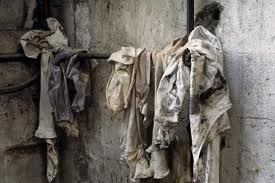
filthy ragsVi är alla orena, alla våra rättfärdiga gärningar är som en SMUTSIG KLÄDSEL (Isaiah 64:6)

eller “fläckad klädnad som i 1917, eller “filthy rags” som i KJV

Det här är den välkända “fläckade klädnad-versen” som är så vanlig när man vill uttrycka att vi människor alltid är som små fula trasor inför Gud oavsett vad vi gör – vare sig vi är ateister eller kristna – och att t o m våra allra bästa gärningar ändå är som smutsiga klädnader i Guds ögon. Men det är INTE vad versen förmedlar om vi ska läsa hela sammanhanget. I samma kapitel kan vi läsa om människor som väntar på Gud och tänker på honom, och vi kan läsa om människor som övade (gjorde) rättfärdighet. Vi kan framför allt läsa skälet till att vissa människors rättfärdighet är som en smutsig klädnad inför Gud och det är pga MISSGÄRNINGAR. Synd separerar oss alltid från Gud och gör honom vred, och det gäller även om vi blandar onda och goda gärningar. Det är givet att vi anses som smutsiga inför Gud när vi syndar och inte anstränger oss för att göra bättring, och se på trasorna i bilden. Visst kan vi skymta olika grader av vita ytor, men vad spelar det för roll när det är så mycket smuts på dem? De betraktas ändå som smutsiga trasor även om det finns rena partier, och likadant är det med oss människor om vi blandar synd och goda gärningar. Här är hela sammanhanget:

Jesaja 64:4 Aldrig någonsin har man hört, aldrig har något öra uppfattat, aldrig har något öga sett en annan Gud än dig handla så mot dem som väntar på honom.Du kom för att hjälpa dem som ÖVADE RÄTTFÄRDIGHET med fröjd, dem som på dina vägar tänkte på dig. Men se, du blev vred, TY VI SYNDADEVi har gjort så länge; skall vi någonsin bli frälsta?Vi är alla orena, alla våra rättfärdiga gärningar är som en smutsig klädsel.Vi kommer alla att vissna som löv. Som löv förs bort av vinden kommer vi att föras bort av våra MISSGÄRNINGARDet finns ingen som åkallar ditt namn, ingen som vaknar upp för att hålla sig till dig. Ty du har dolt ditt ansikte för oss, du låter oss gå under GENOM VÅR MISSGÄRNING.Men Herre, du är vår Fader.Vi är leret, och du är den som danat oss, vi är alla verk av din hand. Var då inte måttligt vred, Herre, tänk inte för alltid på vår missgärning. Tänk på att vi alla är ditt folk.

I kapitlet direkt efter kan vi se ytterligare stöd för att det är MISSGÄRNINGAR och TROTS som orsakar så att Gud ser oss som orättfärdiga och smutsiga, och det bättre alternativet är förstås att upphöra med missgärningar. Gud vill inte att människor ska vara rebelliska och vandra på ett sätt som gör oss oheliga. Vi kan läsa nedan om människor som trotsar honom, som vandrar på den väg som inte är god, som följer sina egna tankar, som ständigt kränker honom som bär fram falska offer, som har oren mat på sina tallrikar, som utövar missgärningar, som hånar honom, som överger honom, som tillber falska gudar, som inte svarar när han ropar, som gör det som är ont, som misshagar honom, etc. Om sådana människor emellanåt slänger in några goda gärningar så skulle de ändå betraktas som rakt igenom onda:

Jesaja 65:1 Jag låter mig sökas av dem som inte frågade efter mig,jag låter mig finnas av dem som inte sökte mig. Till ett folk som inte åkallade mitt namn sade jag: “Här är jag, här är jag.”Hela dagen har jag räckt ut mina händer mot ett trotsigt folk,  som vandrar på den väg som inte är god, som följer sina egna tankarett folk som ständigt kränker mig rakt i ansiktet. De bär fram offer i trädgårdar och tänder offereld på tegelaltaren,de har sitt tillhåll bland gravar och tillbringar nätter i undangömda nästen, äter svinkött och har oren mat i sina kärl. —6 Se, det står skrivet inför mig: Jag skall inte tiga, förrän jag har givit vedergällning,
ja, vedergällning i deras famn,både för deras egna missgärningar och för deras fäders, säger Herren. De som tände offereld på bergen och hånade mig på höjderna. Jag skall mäta upp i deras famn lönen för vad de tidigare har gjort.—11 Men ni som överger Herren och glömmer mitt heliga berg, ni som dukar bord åt Gad och häller upp blandat vin åt Meni,12 er har jag bestämt åt svärdet. Ni skall alla få böja er ner för att slaktas, DÄRFÖR att ni inte svarade när jag kallade, inte hörde när jag talade. Ni gjorde det som var ont i mina ögon och valde det som misshagade mig.13 Därför säger Herren Herren så: Se, mina tjänare skall äta, men ni skall hungra, mina tjänare skall dricka, men ni skall törsta, mina tjänare skall jubla, men ni skall stå med skam

Gud är således inte alls imponerad av några enstaka goda gärningar om vi för det mesta utövar synd. Som vi vet så är lydnad bättre än syndoffer. Om vi däremot bekänner våra synder och omvänder oss så renas vi från våra synder och betraktade som rättfärdiga inför Gud, eftersom vi inte längre har några synder på vårt syndkonto. Men skulle vi därefter återigen synda så är vi återigen betraktade som smutsiga inför Gud.

Vårt arbete anses som GOTT inför Gud OM vi lever rättfärdigt, och då betraktas vi INTE som en smutsig klädnad

Matt. 25:21 Hans herre sade till honom: Bra, du gode och trogne tjänare. Du har varit trogen i det lilla. Jag skall sätta dig över mycket. Gå in i din herres glädje!

Apg 10:34 Då började Petrus tala: “Nu förstår jag verkligen att Gud inte gör skillnad på människor, 35 utan tar emot den som fruktar honom och gör det som är rätt, vilket folk han än tillhör

Rom. 2:Han skall ge var och en efter hans gärningar: evigt liv åt dem som uthålligt gör det goda och söker härlighet, ära och odödlighet,

Luke 6:45 En god människa bär fram det som är gott ur sitt hjärtas goda förråd, och en ond människa bär fram det som är ont ur sitt hjärtas onda förråd. Ty vad hjärtat är fullt av, det talar munnen.

2 Pet 2:Men han frälste den rättfärdige Lot, som plågades av de ogudaktigas utsvävande liv.

Predikaren 2:26 Åt den människa som är god i hans ögon ger han vishet och kunskap och glädje. Men åt syndaren ger han besväret att samla in och lägga på hög för att det skall ges åt den som är god i Guds ögon. Också detta är fåfänglighet och ett jagande efter vind.

Varför straffade Gud en man som samlade ved på sabbaten? (4 Mos. 15:35)

ved

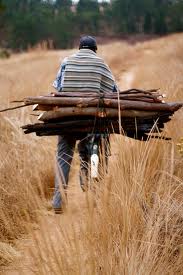
Medan Israels barn var i öknen, ertappades en man med att samla ihop ved på sabbatsdagen. —Och Herren sade till Mose: “Mannen skall straffas med döden (4 Mos. 15:32+35)

Är inte Gud lite blodtörstig som straffar en man som samlar ihop lite ved på Sabbaten? Nej, inte om det handlar om en öppen rebelliskhet från mannens sida och där själva vedinsamlingen bara är ett ytligt resultat av mannens rebelliska hjärta. Det handlar inte om ett oskyldigt misstag från mannens sida.

I sammanhanget här nedan kan vi notera att Gud först noga går igenom skillnaden mellan att synda medvetet och att synda “av misstag”. Även de som syndar av misstag är väl medvetna om att de faktiskt syndat, för annars skulle det inte finnas skäl att ta upp saken och offra djur (som man gjorde under gamla testamentet) för en synd som de inte ens är medvetna om att de begått. Det kan då handla om att de för sent insett att de faktiskt brutit mot Guds lag genom sitt handlande, och då handlar det oftast (eller alltid) om en mindre förseelse om nu Guds lag i övrigt är väl inpräntad i människors sinnen. Man mördar inte, stjäl inte, begår inte äktenskapsbrott och tillber inte andra gudar av misstag. Idag har vi den Heliga Ande till hjälp och han uppmärksammar oss på synd och varnar för att göra felaktiga beslut. Synd är ju både i Gamla och Nya testamentet att bryta mot Guds lag, och för det krävs en egen fri vilja och ett alternativ vid varje tillfälle att INTE synda.

Hur som helst är det intressant att Gud först går igenom det här med att synda medvetet och omedvetet, och sedan går direkt till det exemplet med mannan som måste stenas för att han samlar ihop ved. Gud förklarade att man kan offra en årsgammal get om man syndar av misstag, men något sådant alternativ erbjuder inte Gud till den här mannen, vilket måste betyda att mannen syndar med berått mod trots att han visste att det var emot Guds vilja och beslut.

4 Mosebok 15:27 Om en enskild person av misstag syndar, skall han som syndoffer föra fram en årsgammal get. 28 Prästen skall bringa försoning för den som har felat genom att av misstag synda inför Herrens ansikte. Så blir han försonad och får förlåtelse. 29 Både för den infödde bland Israels barn och för främlingen som bor ibland dem skall samma lag gälla när någon begår en synd av misstag.30 Men den som begår något med berått mod, vare sig han är infödd eller främling, han hånar Herren och skall utrotas ur sitt folk31 Eftersom han har föraktat Herrens ord och brutit mot hans bud, måste han utrotas. Hans missgärning vilar på honom.” 32 Medan Israels barn var i öknen, ertappades en man med att samla ihop ved på sabbatsdagen33 De som ertappade honom med att samla ihop ved förde honom till Mose och Aron och hela menigheten. 34 Då det inte var klart utsagt vad som borde göras med honom, satte de honom i förvar. 35 Och Herren sade till Mose: “Mannen skall straffas med döden. Hela menigheten skall stena honom utanför lägret.” 36 Då förde hela menigheten ut honom utanför lägret och stenade honom till döds, så som Herren hade befallt Mose.

Syftet med ved är att göra upp eld, och göra upp eld gör man vanligtvis för att baka och laga mat. Problemet är att Gud gav israelerna ett bud att inte baka och koka något på sabbatsdagen, och det var ett bud för deras egen skull. Det kunde helt enkelt göra extra stora portioner dagen innan och skulle slippa samla ved och förbereda mat en dag i veckan som de i stället skulle kunna använda för att vila från sin vardag och sina rutiner.

2 Mos. 16:23 Då sade han till dem: “Detta är vad Herren sagt. I morgon är det sabbatsvila, en Herrens heliga sabbat. Baka nu det ni vill baka och koka det ni vill koka. Men allt som blir över skall ni spara åt er till i morgon.”

I stället samlade alltså mannen ved och hånade i och med detta både sin skapare och hans lagar, trots att det är vår Herre som har våra liv i sina händer och vill leda oss rätt. Männen som ertappade mannen med ved var osäkra på hur de skulle behandla honom och väntade in Guds rådslut, och budet var alltså dödsstraff. Med det ville Gud visa hela israel att det är viktigt att hörsamma honom i alla frågor – återigen för deras egen skull. Om Gud skulle börja se mellan fingrarna på att det förekom trollkonster, avgudadyrkan, rebelliskhet och omoral bland hans egendomsfolk så skulle detta vara dålig reklam för honom själv vilket skulle leda till att andra folkslag skulle förakta judarnas Gud i stället för att ansluta sig till honom för att få liv. Tanken var ju att israel skulle vara ett gott föredöme för andra folk – som en storebror som kan leda andra rätt. Om de då skulle visa sig vara likadana rebelliska syndare som alla andra så skulle det inte tjäna något syfte och skulle orsaka att många människor avvisade deras Gud. Det var alltså av yttersta vikt för israelerna att hålla sig till Guds lagar. Sen kan man tillägga att det visserligen är allvarligt med en fysisk död, men det är ännu allvarligare med en andlig död eftersom det handlar om evigheten.

Det förekommer en annan välkänd bibelpassage som handlar om att samla ved emot Guds vilja, och här handlar det om mycket allvarliga saker eftersom det rör hela familjers ansträngning för att offra till andra gudar. Gud menar att de faktiskt kränker sig själva med sådana handlingar, eftersom det är de själva som går förlorade genom avgudadyrkan. De barn som det handlar om måste ha varit stora nog för att hugga ner träd för ved och också kunna bära hem grenarna.

Jer. 7:17 Ser du inte vad de gör i Juda städer och på Jerusalems gator? 18 Barnen samlar ihop ved, fäderna gör upp eld och kvinnorna knådar deg för att baka offerkakor åt himlens drottning. För att kränka mig utgjuter de drickoffer åt andra gudar.19 Men är det mig de kränker med detta? säger Herren. Är det inte snarare sig själva, så att de kommer på skam? 20 Därför säger Herren, Herren så: Se, min vrede och förbittring skall jag utgjuta över denna plats, över både människor och djur, över åkerns träd och markens gröda, och den skall brinna utan att slockna.

Amos 5:25 Bar ni fram åt mig slaktoffer och matoffer under de fyrtio åren i öknen, ni av Israels hus?26 Bar ni då Sickut, er kung och Kijjun, er guds stjärna, era gudabilder som ni gjort åt er?27 Jag skall föra er i fångenskap bortom Damaskus, säger han vilkens namn är Herren, härskarornas Gud.

De assyrisk-babyloniska gudarna Sakkut och Kewan uttalas här med vokalerna från det hebreiska ordet shiqquts (vederstygglighet) för att ange det vederstyggliga med avgudar. Här är några andra verser om att offra till himlens härskara, inkl. himlens drottning:

Apg 7:42 Men Gud vände sig bort från dem och utlämnade dem till att dyrka himlens här, så som det står skrivet i profeternas bok: Bar ni väl fram åt mig slaktoffer och andra offer under de fyrtio åren i öknen, ni av Israels hus? 43 Nej, ni bar med er Moloks tält och guden Romfas stjärna, de bilder som ni hade gjort för att tillbe. Men jag skall föra er bortom Babylon.

5 Mos 4:19 Och när du lyfter dina ögon upp till himlen och ser solen, månen och stjärnorna, himlens hela härskara, låt dig då inte förledas att tillbe dem och tjäna dem.

2 Kung. 23:4 Därefter befallde kungen översteprästen Hilkia och prästerna under honom liksom dem som höll vakt vid ingången, att de ur Herrens tempel skulle föra bort alla de föremål som var gjorda åt Baal och Aseran och åt himlens hela härskara. Och han brände upp dem utanför Jerusalem på Kidrons fält, men askan efter dem lät han föra till Betel. Han avsatte också de avgudapräster som Juda kungar hade tillsatt för att tända offereld på offerhöjderna i Juda städer och runt omkring Jerusalem, liksom dem som tände offereld åt Baal, åt solen, åt månen, åt stjärnbilderna och åt himlens hela härskaraOch han förde Aseran ut ur Herrens hus till Kidrons dal utanför Jerusalem och brände upp den där. Han stötte sönder den till stoft och kastade stoftet på den allmänna begravningsplatsen.

Jer. 44:17 utan vi kommer att göra allt vad vår mun har lovat, att tända rökelse åt himlens drottning och utgjuta drickoffer åt henne, så som vi och våra fäder, våra kungar och furstar gjorde i Juda städer och på Jerusalems gator. Då hade vi tillräckligt med bröd och det gick bra för oss, och vi såg inte till någon olycka. 18 Men sedan vi slutat att tända rökelse åt himlens drottning och utgjuta drickoffer åt henne, har vi lidit brist på allt och går under genom svärd och hunger. 19 Och när vi tände rökelse åt himlens drottning och utgöt drickoffer åt henne, så var det inte utan våra mäns samtycke som vi gjorde offerkakor åt henne, kakor som bar hennes bild, och utgöt drickoffer åt henne.”

Jer. 19:13 Och husen i Jerusalem och Juda kungars hus skall bli lika orena som Tofetplatsen, ja, alla de hus där man har tänt rökelse på taken åt himlens hela härskara och utgjutit drickoffer åt andra gudar.

Hitlers plan att utrota kristendomen

Johannes Axelsson's avatarnewtonbloggen

Somliga har påstått att Hitler var kristen, även om de flesta själva inser att han i så fall bara var det till namnet. I sin bok Mein Kampf och i många av sina tal till folket uttryckte han sig ofta på ett sätt som uppenbarligen tilltalade åhörarna, varav en majoritet bekände sig till kristendomen. Därför kan man lätt få intrycket av att Hitler själv var kristen. Men om vi vill veta vad Hitler egentligen trodde på bör vi (som jag skrev i ett tidigare inlägg) inte förlita oss på vad han sa i det offentliga rummet. Då riskerar vi att bli lika bedragna som det tyska folket. Istället måste vi se efter vad han sa i det slutna rummet – till sina allra närmaste.

Hur ska vi kunna ta reda på det? Jo, dessa konversationer finns faktiskt mycket väl dokumenterade från och med sommaren 1941. Hitlers sekreterare Martin Bormann övertalade…

View original post 1,221 more words

Gud hatade inte Esau innan han föddes, och utvalde inte Jakob till frälsning

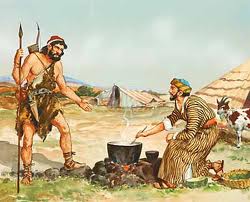
jacob esauDet står ju skrivet: Jakob älskade jag, men Esau hatade jag (Rom 9:13)

Gud hatade Esau, men inte innan han föddes, och vi måste fundera på om det fanns en orsak till att Gud hatade Esau och om det handlar om PERSONEN Esau eller om FOLKET /LANDET som härstammar från Esau.

Jakob och Essau är inte bara individer utan också folk och länder. Rom. 9 handlar inte om individer utvalda till frälsning utan om folk som har sitt ursprung i dessa två personer, om att Jakob är utvald till att föra Messias in i världen och framför allt om Guds rättighet att  frälsa människor på det sättet som han själv bestämt – nämligen genom människors TRO och inte pga att vara född jude. Esau var en person som sålde sin förstfödslorätt men som fortfarande förväntade sig att behålla den när det var dags för sin Fars välsignelse, vilket förstås visar på ett kortsiktigt tänkande och ett kallt hjärta. Romarbrevet handlar Paulus försök att få judarna att förstå att de ingalunda bör förvänta sig en självklar plats i himmelriket bara för att de är födda judar och för att lagen gavs till dem, och de bör ta noga akt på det som hände Esau. Han hade visserligen förstahandsvalet att få välsignelsen i egenskap att vara förstfödd, men sumpade ändå chansen när han sålde den rätten till förmån för sin yngre bror. Det är en bra jämförelse vad gäller judar och hedningar, där judarna än idag visar ifrån sig Jesus som Messias och där hedningarna i stället tog emot evangeliet. Vi har alla en chans till frälsning, och kravet är då TRO och inte att ha rätt nationalitet och föräldrar. 1 Mosebok säger att två folk fanns i Rebeckas moderliv

1 Mos. 25:23 Herren svarade henne:Två FOLK finns i ditt moderliv, två folkstammar skall ur ditt sköte gå skilda vägar. Det ena folket skall bli starkare än det andra, och den äldre skall tjäna den yngre.”24 När tiden var inne att hon skulle föda, se, då fanns det tvillingar i hennes moderliv. 25 Den som kom fram först var rödhårig och hade som en hårmantel över hela kroppen. De gav honom namnet Esau.26 Sedan kom hans bror fram och han höll handen om Esaus häl. Därför fick han namnet Jakob. Isak var sextio år när de föddes.

Det finns inga indikationer att Gud skulle hata någotdera av barnen vid denna tidpunkt, vilket är ganska naturligt eftersom det handlar om bebisar som inte kan skilja på gott och ont. Det står att den äldre skall tjäna den yngre och det är värt att notera att personen Esau aldrig tjänade personen Jakob vid något tillfälle. Däremot är det en annan femma vad gäller nationerna som kom från dessa individer.

Paulus säger att Israel inte är alla som kommer från Israel, och med det menar han att sanna Abrahams barn i andlig mening är de som visar sin TRO såsom han gjorde, och inte de som nödvändigtvis är fysiskt släkt med personen Abraham. Det var också från Abrahams säd som Messias skulle komma. En person är alltså inte frälst för att ha den rätta härkomsten utan genom TRO, vilket är hans eget val och ansvar. Alla ges möjlighet att söka och finna Gud.

Rom. 9:Detta inte sagt som om Guds ord skulle ha blivit om intet. Ty Israel är inte alla som kommer från Israel, och inte heller är alla Abrahams efterkommande hans barn. Nej, Isaks efterkommande skall räknas som dina barn.Det vill säga: Guds barn är inte de som är barn genom naturlig härkomst, men löftets barn räknas som hans efterkommande. (SFB)

Rom. 9:Ej heller äro de alla »barn», därför att de äro Abrahams säd. Nej, det heter: »Genom Isak är det som säd skall uppkallas efter dig.»Detta vill säga: Icke de äro Guds barn, som äro barn efter köttet, men de som äro barn efter löftet, de räknas för säd. (1917)

Enligt Paulus här nedan är barn neutrala och kan inte göra vare sig gott eller ont, och han talar om Guds “beslut att välja“, men detta ska INTE tas som att Gud väljer ut några personer på måfå som han beslutar sig för att frälsa, utan det handlar om Guds rättighet att sätta vilka villkor som han själv vill för frälsningen. Om nu Gud väljer att människor ska bli frälsta av TRO och inte för att vara född jude så har Gud all rätt att göra detta, och han väljer helt på egen hand att det inte ska vara en viss härkomst, lag eller gärningar som ska stå som grund för frälsningen, för då hade ingen blivit frälst. Goda gärningar och laglydnad kan inte åtgärda de lagförbrytelser som människor redan gjort sig skyldiga till – men därmed inte sagt att gärningar och laglydnad inte har någonting med frälsningen att göra och att vi kan bli frälsta dem förutan. De som accepterar Guds kallelse, och som visar sin tro med gärningar såsom Abraham, är i sanning Abrahams barn och har rätt till Guds rike. Återigen, frälsning via tro och inte genom att ha rätt sorts släkt och/eller att kunna förtjäna sin frälsning med något vi gör (eller tror). Vi är frälsta genom Guds nåd (barmhärtighet) och inte för att vi förtjänar det.

Rom. 9:11 Innan barnen ännu var födda och innan de hade gjort vare sig gott eller ont, sades det till henne: Den äldre skall tjäna den yngre. Det blev sagt för att Guds beslut att välja vem han vill skulle stå fast och inte bero på gärningar utan på honom som kallar. 12  13 Det står ju skrivet: Jakob älskade jag, men Esau hatade jag.

Rom 9:11(For the children being not yet born, neither having done any good or evil, that the purpose of God according to election might stand, not of works, but of him that calleth;) 12It was said unto her, The elder shall serve the younger. (KJV)

1 Mos. 25:27 Pojkarna växte upp, och Esau blev en skicklig jägare som höll till ute i markerna. Jakob däremot blev en stillsam man som höll till vid tälten. 28 Isak älskade Esau eftersom han hade smak för vilt. Men Rebecka älskade Jakob.

Nedan i Hebreerbrevet varnar Paulus människor för att inte ta de rätta besluten vad gäller sin livsstil. De riskerar att gå miste om Guds nåd, och det finns en risk att bitter rot vållar skada. Paulus gör en liknelse med Esau som gjorde ett mycket dåligt val när han lämnade sin förstfödslorätt för ett mål mat.

Hebr. 12:15 Se till att ingen går miste om Guds nåd och att ingen bitter rot skjuter skott och vållar skada och många smittas16 Se till att ingen av er är otuktig eller oandlig som Esau. I utbyte mot ett enda mål mat lämnade han ifrån sig sin förstfödslorätt. 17 Ni vet att han avvisades, när han sedan ville ärva välsignelsen. Isak såg nämligen inte någon möjlighet att ändra sig, fastän Esau under tårar sökte få välsignelsen.

Hebrews 1217For ye know how that afterward, when he would have inherited the blessing, he was rejected: for he found no place of repentance, though he sought it carefully with tears. (KJV)

Det finns en bok i Bibeln som heter Obadja och fokus där är Edom/Esau. Skälet för Guds hat gentemot Esau handlar om detta:

Hjärtats övermod, v. 3
Våld mot sin broder Jakob, v. 10
För att han inte ingrep när Jakob attackerades, v. 11
För att han såg ner på sin broder när han drabbades av olycka, v. 12
För att han drog in i staden och deltog i plundringen, v. 13
För att ha slagit ner och överlämnat deras flyktingar, v. 14

Obadja 1:6 Hur genomsökt skall inte Esau bli! Hans dolda skatter skall letas fram!Till gränsen skall de driva dig ut, alla de som stod i förbund med dig.8 Skall jag inte på den dagen, säger Herren, förgöra de visa i Edom och allt förstånd på Esaus bergDina hjältar, Teman, skall slås av förfäran, och var man på Esaus berg skall bli utrotad och dräpt.10 För våld mot din broder Jakob skall du höljas med skam och bli utrotad till evig tid.—14 Se inte med lust på din broders dag, på hans olyckas dag. Gläd dig inte över Juda barn på deras undergångs dag. Spärra inte upp munnen så stort på nödens dag.

Romarbrevet 9:13 är en referens till Malaki där vi liksom i Obadja kan läsa om “Esaus berg” osv:

Rom. 2: 1 Jag har älskat er, säger Herren. Och ni frågar: “På vilket sätt har du älskat oss?” Var inte Esau bror till Jakob? säger Herren. Jakob älskade jag,men Esau hatade jagJag gjorde hans berg till en ödemark och gav hans arvedel åt öknens  schakaler.Om Edom säger: “Vi är krossade, men vi skall åter bygga upp ruinerna”, så säger Herren Sebaot: De bygger upp, men jag skall riva ner. De skall kallas “ogudaktighetens land” och “det folk som Herren är vred på för evigt”. Era ögon skall se det,    och ni skall säga: ” Herren är upphöjd utöver Israels gränser”.

”De” är hatade. Det handlar om allt det folk som kommer från Esau. Så Paulus syftar på folket från Esau och inte på individerna Esau och Jakob.  “Jakob älskade jag men Esau hatade jag” handlar alltså om folk och nationer.  Gud hade skäl att hata både personen Esau och folket som kom från honom. Esaus beslut (emot Guds vilja) att gifta sig med hedniska kvinnor och avgudadyrkare påverkade hans direkta avkomma och även hans barnbarn, barnbarnsbarn, osv. Traditioner och kulturer påverkar oss och det kan vara svårt att klippa trådarna gentemot det onda runtomkring.

Ex. 20:Du skall inte tillbe dem eller tjäna dem. Ty jag, Herren, din Gud, är en nitälskande Gud, som låter straffet för fädernas missgärning drabba barnen, ja, tredje och fjärde släktledet, när man hatar mig, men som visar nåd mot tusen släktled, när man älskar mig och håller mina bud.

Men även Jakobs släktingar kunde förstås handla emot Guds vilja.

Amos 6: 8 Herren, Herren har svurit vid sig själv, säger Herren, härskarornas Gud:  Jag avskyr Jakobs stolthet och hatar hans palatsJag skall utlämna staden med allt som finns i den.

The Bible shows that christians are not exempted from the great TRIBULATION

tribulation“Rapture” is a word which is not in the Bible, but the word tribulation can be found several times and is translated from the Greek word thlipsis (2347 Strongs), and can mean tribulation, persecution, affliction, trouble and/or distress. Below you can find each case where this word is used in the New Testament, and note that there is no mention anywhere that born again christians will be exempted from any tribulations. On the contrary, christians have always been the target of various persecutions throughout history and there is no reason to why we should be exempted from any future tribulations – especially if you think about that christians are constantly warned in the Bible about future persecutions.

The pretribulation rapture is actually a very modern idea and was not taught before 1830 AD. We can blame Edward Irving and John Nelson Darby for the advent of this false teaching, and later on also Scofield. See more here. Today most churches have sadly been deceived to believe in the pretrib rapture, and preachers continue to keep listeners in a steady grip in this area. Yet, the Bible is very clear that Jesus will not return until the Antichrist has places himself on the throne, and the elect will be gathered AFTER that the sun and moon have been darkened. We are exempted from the wrath of God and the tribulations related to it, but not from other tribulations which occur before then. God is not the God of confusion. If all christians will be exempted from the tribulation, this could easily have been stated somewhere in the Bible, but it’s not.

Matthew 24:29 IMMEDIATELY AFTER the tribulation of those days shall the sun be darkened, and the moon shall not give her light, —: 30And THEN shall appear the sign of the Son of man in heaven: — 31And he shall send his angels with a great sound of a trumpet, and they shall gather together his elect from the four winds, from one end of heaven to the other.

1 Cor. 15:52 In a moment, in the twinkling of an eye, at the last trump: for the trumpet shall sound, and the dead shall be raised incorruptible, and we shall be changed.

2 Thessalonians 2:1 Now we beseech you, brethren, by the  coming of our Lord Jesus Christ, and by our gathering together unto him, 2 That ye be not soon shaken in mind, or be troubled, neither by spirit, nor by word, nor by letter as from us, as that the day of Christ is at hand.3 Let no man deceive you by any means: for that day shall not come, except there come a falling away FIRST, and that man of sin be revealed, the son of perdition4 Who opposeth and exalteth himself above all that is called God, or that is worshipped; so that he as God sitteth in the temple of God, shewing himself that he is God.

1 Thessalonians 4:16 For the Lord himself shall descend from heaven with a shout, with the voice of the archangel, and with the trump of God: and the dead in Christ shall rise first:17THEN we which are ALIVE and REMAIN  shall be caught up together with them in the clouds, to meet the Lord in the air: and so shall we ever be with the Lord.

Revelation 20:4 And I saw thrones, and they sat upon them, and judgment was given unto them: and I saw the souls of them that were beheaded for the witness of Jesus, and for the word of God, and which had not worshipped the beast, neither his image, neither had received his mark upon their foreheads, or in their hands; and they lived and reigned with Christ a thousand years.

Here are the Biblical cases with the word thlipsis

It’s true that we don’t know the day of the hour of the return of Jesus, but we can still see some signs when it’s getting close and which events that must precede this event. For those who are not prepared, the day will come as a thief in the night. Also born again christians are warned that they must endure tribulations, meaning it’s a risk some won’t. The Bible says the second coming will be as in the days of Noah, and the people who lived during that time had all chances to get saved along with Noah and his family if they only adhered to his preaching and believed him, which they didn’t. For them the end came very sudden and unexpected.

tribulation2

Matt. 13:20 But he that received the seed into stony places, the same is he that heareth the word, and anon with joy receiveth it;21 Yet hath he not root in himself, but dureth for a while: for when TRIBULATION or persecution ariseth because of the word, by and by he is offended.

Matt. 24:And as he sat upon the mount of Olives, the disciples came unto him privately, saying, Tell us, when shall these things be? and what shall be the sign of thy coming, and of the end of the world?And Jesus answered and said unto them, Take heed that no man deceive you.For many shall come in my name, saying, I am Christ; and shall deceive many.And ye shall hear of wars and rumours of wars: see that ye be not troubled: for all these things must come to pass, but the end is not yet.For nation shall rise against nation, and kingdom against kingdom: and there shall be famines, and pestilences, and earthquakes, in divers places.All these are the beginning of sorrows.Then shall they deliver you up to be AFFLICTED, and shall kill you: and ye shall be hated of all nations for my name’s sake.10 And then shall many be offended, and shall betray one another, and shall hate one another.11 And many false prophets shall rise, and shall deceive many.12 And because iniquity shall abound, the love of many shall wax cold.13 But he that shall endure unto the end, the same shall be saved.14 And this gospel of the kingdom shall be preached in all the world for a witness unto all nations; and then shall the end come.15 When ye therefore shall see the abomination of desolation, spoken of by Daniel the prophet, stand in the holy place, (whoso readeth, let him understand:)16 Then let them which be in Judaea flee into the mountains:—20 But pray ye that your flight be not in the winter, neither on the sabbath day:21 For then shall be great TRIBULATION, such as was not since the beginning of the world to this time, no, nor ever shall be.22 And except those days should be shortened, there should no flesh be saved: but for the elect’s sake those days shall be shortened.23 Then if any man shall say unto you, Lo, here is Christ, or there; believe it not.24 For there shall arise false Christs, and false prophets, and shall shew great signs and wonders; insomuch that, if it were possible, they shall deceive the very elect.27 For as the lightning cometh out of the east, and shineth even unto the west; so shall also the coming of the Son of man be.28 For wheresoever the carcase is, there will the eagles be gathered together.29 IMMEDIATELY AFTER THE TRIBULATION of those days shall the sun be darkened, and the moon shall not give her light, and the stars shall fall from heaven, and the powers of the heavens shall be shaken:30 And THEN shall appear the sign of the Son of man in heaven: and then shall all the tribes of the earth mourn, and they shall see the Son of man coming in the clouds of heaven with power and great glory.31 And he shall send his angels with a great sound of a trumpet, and they shall gather together his elect from the four winds, from one end of heaven to the other.32 Now learn a parable of the fig tree; When his branch is yet tender, and putteth forth leaves, ye know that summer is nigh:33 So likewise ye, when ye shall see all these things, know that it is near, even at the doors.34 Verily I say unto you, This generation shall not pass, till all these things be fulfilled.35 Heaven and earth shall pass away, but my words shall not pass away.36 But of that day and hour knoweth no man, no, not the angels of heaven, but my Father only.37 But as the days of Noah were, so shall also the coming of the Son of man be.38 For as in the days that were before the flood they were eating and drinking, marrying and giving in marriage, until the day that Noe entered into the ark,39 And knew not until the flood came, and took them all away; so shall also the coming of the Son of man be.40 Then shall two be in the field; the one shall be taken, and the other left.41 Two women shall be grinding at the mill; the one shall be taken, and the other left.42 Watch therefore: for ye know not what hour your Lord doth come.43 But know this, that if the goodman of the house had known in what watch the thief would come, he would have watched, and would not have suffered his house to be broken up.44 Therefore be ye also ready: for in such an hour as ye think not the Son of man cometh.45 Who then is a faithful and wise servant, whom his lord hath made ruler over his household, to give them meat in due season?46 Blessed is that servant, whom his lord when he cometh shall find so doing.

Mark 4:16 And these are they likewise which are sown on stony ground; who, when they have heard the word, immediately receive it with gladness;17 And have no root in themselves, and so endure but for a time: afterward, when AFFLICTION or persecution ariseth for the word’s sake, immediately they are offended.

Mark 13:13 And ye shall be hated of all men for my name’s sake: but he that shall endure unto the end, the same shall be saved.14 But when ye shall see the abomination of desolation, spoken of by Daniel the prophet, standing where it ought not, (let him that readeth understand,) then let them that be in Judaea flee to the mountains:—19 For in those days shall be AFFLICTION, such as was not from the beginning of the creation which God created unto this time, neither shall be.20 And except that the Lord had shortened those days, no flesh should be saved: but for the elect’s sake, whom he hath chosen, he hath shortened the days.21 And then if any man shall say to you, Lo, here is Christ; or, lo, he is there; believe him not:22 For false Christs and false prophets shall rise, and shall shew signs and wonders, to seduce, if it were possible, even the elect.23 But take ye heed: behold, I have foretold you all things.24 But in those days, AFTER THE TRIBULATION, the sun shall be darkened, and the moon shall not give her light,25 And the stars of heaven shall fall, and the powers that are in heaven shall be shaken.26 And THEN shall they see the Son of man coming in the clouds with great power and glory.27 And then shall he send his angels, and shall gather together his elect from the four winds, from the uttermost part of the earth to the uttermost part of heaven.

John 16:21 A woman when she is in travail hath sorrow, because her hour is come: but as soon as she is delivered of the child, she remembereth no more the anguish, for joy that a man is born into the world.21 A woman when she is in travail hath sorrow, because her hour is come: but as soon as she is delivered of the child, she remembereth no more the ANGUISH, for joy that a man is born into the world.—31 Jesus answered them, Do ye now believe?32 Behold, the hour cometh, yea, is now come, that ye shall be scattered, every man to his own, and shall leave me alone: and yet I am not alone, because the Father is with me.33 These things I have spoken unto you, that in me ye might have peace. In the world ye shall have TRIBULATION: but be of good cheer; I have overcome the world.

Acts 7:10 And delivered him out of all his AFFLICTIONS, and gave him favour and wisdom in the sight of Pharaoh king of Egypt; and he made him governor over Egypt and all his house.11 Now there came a dearth over all the land of Egypt and Chanaan, and great AFFLICTION: and our fathers found no sustenance.

Acts 11:19 Now they which were scattered abroad upon the PERSECUTION that arose about Stephen travelled as far as Phenice, and Cyprus, and Antioch, preaching the word to none but unto the Jews only.

Acts 14:22 Confirming the souls of the disciples, and exhorting them to continue in the faith, and that we must through much TRIBULATION enter into the kingdom of God.

Acts 20:22 And now, behold, I go bound in the spirit unto Jerusalem, not knowing the things that shall befall me there:23 Save that the Holy Ghost witnesseth in every city, saying that bonds and AFFLICTIONS abide me.

Rom. 2:But after thy hardness and impenitent heart treasurest up unto thyself wrath against the day of wrath and revelation of the righteous judgment of God;Who will render to every man according to his deeds:To them who by patient continuance in well doing seek for glory and honour and immortality, eternal life:But unto them that are contentious, and do not obey the truth, but obey unrighteousness, indignation and wrath,TRIBULATION and anguish, upon every soul of man that doeth evil, of the Jew first, and also of the Gentile;10 But glory, honour, and peace, to every man that worketh good, to the Jew first, and also to the Gentile

Romans 5:3 And not only so, but we glory in TRIBULATIONS also: knowing that TRIBULATION worketh patience

Rom. 8:8 There is therefore now no condemnation to them which are in Christ Jesus, who walk not after the flesh, but after the Spirit.—35 Who shall separate us from the love of Christ? shall TRIBULATION, or distress, or persecution, or famine, or nakedness, or peril, or sword?

Romans 12:12 Rejoicing in hope; patient in TRIBULATION; continuing instant in prayer;

2 Corinthians 1:4 Who comforteth us in all our TRIBULATION, that we may be able to comfort them which are in any TROUBLE, by the comfort wherewith we ourselves are comforted of God.—And our hope of you is stedfast, knowing, that as ye are partakers of the sufferings, so shall ye be also of the consolation.For we would not, brethren, have you ignorant of our trouble which came to us in Asia, that we were pressed out of measure, above strength, insomuch that we despaired even of life:

1 Cor. 7:28 But and if thou marry, thou hast not sinned; and if a virgin marry, she hath not sinned. Nevertheless such shall have TROUBLE in the flesh: but I spare you.

2 Cor. 2:For out of much AFFLICTION and anguish of heart I wrote unto you with many tears; not that ye should be grieved, but that ye might know the love which I have more abundantly unto you.

2 Cor. 4:17 For our light AFFLICTION, which is but for a moment, worketh for us a far more exceeding and eternal weight of glory

2 Cor. 6:But in all things approving ourselves as the ministers of God, in much patience, in AFFLICTIONS, in necessities, in distresses,In stripes, in imprisonments, in tumults, in labours, in watchings, in fastings;

2 Cor. 7:Great is my boldness of speech toward you, great is my glorying of you: I am filled with comfort, I am exceeding joyful in all our TRIBULATION.

2 Cor. 8:1  Moreover, brethren, we do you to wit of the grace of God bestowed on the churches of Macedonia;How that in a great trial of AFFLICTION the abundance of their joy and their deep poverty abounded unto the riches of their liberality—13 For I mean not that other men be eased, and ye BURDENED:

Ephesians 3:13 Wherefore I desire that ye faint not at my TRIBULATIONS for you, which is your glory.

Phil 1:17 (word not in the KJV)

Phil 4:13 I can do all things through Christ which strengtheneth me.14 Notwithstanding ye have well done, that ye did communicate with my AFFLICTION.

Col. 1:24 Who now rejoice in my sufferings for you, and fill up that which is behind of the AFFLICTIONS of Christ in my flesh for his body’s sake, which is the church:

1 Thess. 1:And ye became followers of us, and of the Lord, having received the word in much AFFLICTION, with joy of the Holy Ghost.

1 Thess. 3:That no man should be moved by these AFFLICTIONS: for yourselves know that we are appointed thereunto.For verily, when we were with you, we told you before that we should suffer tribulation; even as it came to pass, and ye know.—Therefore, brethren, we were comforted over you in all our AFFLICTION and distress by your faith:

2 Thessalonians 1:4 So that we ourselves glory in you in the churches of God for your patience and faith in all your persecutions and TRIBULATIONS that ye endure:—6 Seeing it is a righteous thing with God to recompense TRIBULATION to them that trouble you;

Hebr. 10:32 But call to remembrance the former days, in which, after ye were illuminated, ye endured a great fight of afflictions;33 Partly, whilst ye were made a gazingstock both by reproaches and AFFLICTIONS; and partly, whilst ye became companions of them that were so used.

James 1:27 Pure religion and undefiled before God and the Father is this, To visit the fatherless and widows in their AFFLICTION, and to keep himself unspotted from the world.

Revelation 1:9 I John, who also am your brother, and companion in TRIBULATION, and in the kingdom and patience of Jesus Christ, was in the isle that is called Patmos, for the word of God, and for the testimony of Jesus Christ.

Revelation 2:9 I know thy works, and TRIBULATION, and poverty, (but thou art rich) and I know the blasphemy of them which say they are Jews, and are not, but are the synagogue of Satan.

Revelation 2:10 Fear none of those things which thou shalt suffer: behold, the devil shall cast some of you into prison, that ye may be tried; and ye shall have TRIBULATION ten days: be thou faithful unto death, and I will give thee a crown of life. —22 Behold, I will cast her into a bed, and them that commit adultery with her into great TRIBULATION, except they repent of their deeds.

Rev. 7:13 And one of the elders answered, saying unto me, What are these which are arrayed in white robes? and whence came they?14 And I said unto him, Sir, thou knowest. And he said to me, These are they which came out of GREAT TRIBULATION, and have washed their robes, and made them white in the blood of the Lamb. 

SPANKING KIDS with a rod – supported in the Bible?

spank kidDo you spank your kids thinking “science” and the Bible support this kind of treatment? Science investigations are at best “inconclusive” whether spanking will increase good behavior in a child (apart from an immediate obedience) and at worst it can affect the child in a very destructive way and harm him for life. The problem with having no laws against spanking kids, is that parents could get away with beating their kids really hard by suggesting in court that “I only meant to spank him softly but ended up spanking him harder than I intended”, and they could win the case despite severe bruises and even injuries on the child. Having laws against spanking doesn’t mean you can’t even touch the child or grab him hard around the arm and pull him away from some activity. There are also other ways to discipline a child than physical abuse.

Does the Bible say anything about giving a child a little spank on his behind by using a hand? No, IF you would like to obey Proverbs literally you should beat him with a ROD and not stop even if he cries! Do you?

We can read about disciplining a child (or rather a youngster) physically in Proverbs, and Proverbs is a book well-known for its poetry, similes, metaphors and hyperboles. So how can we be certain of that those few cases should be read literally? Do you obey these verses literally if this is your true aim? Proverbs doesn’t say anything about spanking a child gently (or not gently) on his behind but that you should BEAT HIM WITH A ROD! Do you also believe that it’s OK to not stop beating the child even if he is crying (as in “let not thy soul spare for his crying“) and do you also do this to a five-year old child? Do you also do this even if the child doesn’t deserve to be beaten, only because you’re afraid of disobeying the words “Thou shalt beat him with the rod, and shalt deliver his soul from hell“? Meaning that if you realize that your child is approaching his/her teenage years and you have so far not found any reason to beat your child, you must hurry up to do this for no reason at all in order to be obedient to this verse in Proverbs that you understand as literal – just to be on the safe side. All this because you interpret a verse to say that the child can risk hell if you don’t?

If we don’t pay attention to words, context and in which book in the Bible we are reading, things can go very wrong. The truth is that a good shepherd does not beat his sheep with his rod. He uses his rod to show authority over his sheep and his aim is to keep them safe and sound. This goes together well with the saying “Thy rod and thy staff they comfort me“. The fright of sudden noise can induce a shock in the sheep that suppresses fertility, so beating sheep with a rod wouldn’t serve any purpose. Dog experts advise against beating dogs for very good reasons, and they can become very aggressive if treated in the wrong way. Can we really say that it’s improper to beat sheep and dogs but perfectly fine to beat children? A rod could be as symbol for authority and correction. We can read in James that we put bits in the horses mouths so that they may obey us, and no mentioning of using physical punishment to make horses obey us. A shepherd could use a rod/crook to move a sheep should it be necessary, and something like this could be used for horses as well – but not as in a punishment but as in steering the animal and making him move.

James 3:For in many things we offend all. If any man offend not in word, the same is a perfect man, and able also to bridle the whole body.Behold, we put bits in the horses’ mouths, that they may obey us; and we turn about their whole body.Behold also the ships, which though they be so great, and are driven of fierce winds, yet are they turned about with a very small helm, whithersoever the governor listeth.Even so the tongue is a little member, and boasteth great things. Behold, how great a matter a little fire kindleth!

What the Bible says about spanking

Proverbs says we should use a ROD, which would be a shebet, which during this time could be a large walking stick, a shepherd’s crook or a king’s scepter. So it does not say that a parent should use his HAND but a ROD, as in a stick, bat or cane. If you want to take these verses literally, then you should not give yourself the right to switch the rod to a little twig, wooden spoon or your hand. If you can amend the verses to make them say “spank with your hand” instead of “beat with a rod“, then perhaps it’s an even better alternative to NOT change the verses but to understand them metaphorically as in “discipline your kids and don’t spoil them”. Even if we don’t want to spank or beat our children, it’s oftentimes necessary to take hold of an arm and say “NO, be careful!” or similar. Not being allowed to spank your children doesn’t mean you can’t touch them! To grab an arm can also be felt physically and it gives less humiliation than spanking the kid on his behind.

Here are the verses in Proverbs that speak about chastening youth. We should absolutely use discipline as a method to bring the children up, and “rod of correction” could simply be symbolism for correction made by an authority. If you have found no reason to beat you kid, simply because he has done nothing to deserve it, does this mean you hate him? Must you then hurry up to beat him just to show that you don’t hate him?

Prov 22:15: Foolishness is bound in the heart of a child; but the rod of correction shall drive it far from him.

Prov. 29:15: The rod and reproof give wisdom: but a child left to himself bringeth his mother to shame.

Prov 19:18: Chasten thy son while there is hope, and let not thy soul spare for his crying 

Prov 13:24: He that spareth his rod hateth his son: but he that loveth him chasteneth him betimes (diligently).

Prov. 23:12 Apply thine heart unto instruction, and thine ears to the words of knowledge.13 Withhold not correction from the child: for if thou beatest him with the rod, he shall not die.14 Thou shalt beat him with the rod, and shalt deliver his soul from hell.15 My son, if thine heart be wise, my heart shall rejoice, even mine.

“Chastening” doesn’t have to mean a physical punishment, and if we also understand the “the rod of correction” and “the rod of reproof” to be a figure of speech, we actually don’t have many verses left in Proverbs which might encourage literal spanking/beating children with a real rod. We only have one passage left that could possibly be used as support and that is Proverbs 23:13-14 above (highlighted with purple) where we can read that we should BEAT a son with the rod, and also a promise that he will not die from it. A sad fact is that children indeed have been killed by parents beating them to death with a rod, and it’s actually enough to beat a child a couple of times in the wrong place and too hard, and he can die from it. Could the “the rod” spoken about in Prov. 23:12-14 (and also in Proverbs 13:24 and all other verses) be the same type of rod spoken about earlier – the rod of correction? This term could be figure of speech for correction, chastening and discipline, something that children will indeed NOT die from (unless we’re talking about a physical punishment) and it could also place him on the right path away from hell.

These passages presumably reflect Solomo’s parenting beliefs with respect to his son, Rehoboam. Solomo says:

Prov. 22:Train up a child in the way he should go: and when he is old, he will not depart from it.

The problem is that Solomo, in all his wisdom and knowledge about how to bring up a child, ended up getting a son who became a very hated ruler due to his evil deeds. This shows that Proverbs cannot always be taken literally but oftentimes as a “general” truth and at other times as metaphors or hyperboles. The Father of the prodigal son is considered to be a wise Father (and he is compared with God), but this still doesn’t mean that there were no risks involved for getting a rebellious son, which he ended up getting. So Prov. 22:6 is clearly not true in all cases. As an adult, Rehoboam was vicious, inconsiderate to his subjects, had no regard for human rights, and was widely hated. He barely escaped assassination at the hands of his own people.

1 Kings 12:12 So Jeroboam and all the people came to Rehoboam the third day, as the king had appointed, saying, Come to me again the third day.13 And the king answered the people roughly, and forsook the old men’s counsel that they gave him;14 And spake to them after the counsel of the young men, saying, My father made your yoke heavy, and I will add to your yoke: my father also chastised you with whips, but I will chastise you with scorpions.

There is a mention here that Solomo whipped his servants (and his son did this even more), so is this too a procedure that you would like to use on your employees? I’d rather believe that both “chastised you with whips” and “chastise you with scorpions” are just metaphors or figure of speech and that there were no actual whips or scorpions involved – and no literal yokes either for that matter.

God explained to King David that his son Solomon would be chastened by him (God) by using the rod of men and with the stripes of the children of men. Did God do this literally? No, he never used a literal rod against him but he did chasten him in various other ways. 

2 Samuel 7:13 He shall build an house for my name, and I will stablish the throne of his kingdom for ever.14 I will be his father, and he shall be my son. If he commit iniquity, I will chasten him with the rod of men, and with the stripes of the children of men

Proverbs also mentions some other things that we would hesitate to understand literally:

Proverbs 22:He that soweth iniquity shall reap vanity: and the rod of his anger shall fail.He that hath a bountiful eye shall be blessed; for he giveth of his bread to the poor.10 Cast out the scorner, and contention shall go out; yea, strife and reproach shall cease.

Is this always true? And here too we can read “rod of his anger“, as in a figure of speech.

Proverbs. 23:1 When thou sittest to eat with a ruler, consider diligently what is before thee:And put a knife to thy throat, if thou be a man given to appetite.—Labour not to be rich: cease from thine own wisdom.For as he thinketh in his heart, so is he: Eat and drink, saith he to thee; but his heart is not with thee.The morsel which thou hast eaten shalt thou vomit up, and lose thy sweet words.

This is a command to not eat too much and not to slit your throat. Likewise, when reading that you should beat your child with a rod, it could be a command to discipline and have authority over your child.

The Hebrew word Naár can mean  youth (young and unmarried), or literally he who shakes off or shakes himself free. Not necessarily a child under 12. But baby Moses was also described as naár and baby Samuel when weaned and taken to the temple – so as in the meaning of “shaken off”. The word for beat is the same as for “the sun beat down on Jonah“, as in a constant presence. We should have a constant presence of authority in our children’s lives.

If it was so important to beat a child (rather than using other forms of discipline), wouldn’t it be a good idea to state this in the law of Moses or elsewhere, instead of a book well-known for its poetry? Instead we can read instructions how to handle a son who does not “obey the VOICE of his father or mother“, and what to do with a rebellious son with no hope for improvement (that you actually wouldn’t risk getting in the first place if Prov. 22:6 was literally true). There is no mention of beating or spanking children in the Mosaic law, but we can read about VOICE of the parents, which could make the reader believe that we ought to discuss and reason with our children and to apply various means of chastisement, but this doesn’t have to mean a physical punishment. We can read that if the rebellious son despite much chastening from his parents still refuses to obey and hearken (to their voices) THEN his parents may lay hold of him and bring him to the elders of the city. A valid reason for taking this route would be if their son was a glutton and a drunkard – so clearly not a young child but rather a teenager/youth – and it’s of course up to the parents to decide when there is no hope to ever get their son back on track. The punishment was then stoning. There is no known recording of parents who have ever taken this severe step, and that’s rather understandable knowing the outcome would be a sure DEATH for their own loved child.

Deut. 21:18 If a man have a stubborn and rebellious son, which will not obey the voice of his father, or the voice of his mother, and that, when they have chastened him, will not hearken unto them:19 Then shall his father and his mother lay hold on him, and bring him out unto the elders of his city, and unto the gate of his place;20 And they shall say unto the elders of his city, This our son is stubborn and rebellious, he will not obey our voice; he is a glutton, and a drunkard.21 And all the men of his city shall stone him with stones, that he die: so shalt thou put evil away from among you; and all Israel shall hear, and fear.

In the New Testament there is no mention of spanking or beating children, but we can read about chastening and disciplining them. The point being made is that we should not question chastening from our Lord because this is a sign of love and not hate. Normally fathers chasten their sons in one way or the other – because of love for them.

Hebrews 12:6-7: “…the Lord disciplines those he loves, and he punishes everyone he accepts as a son. Endure hardship as discipline; God is treating you as sons. For what son is not disciplined by his father?”

Moreover, Paul tells us that children must obey their parents in ALL THINGS. What about parents who teach their children to participate in theft, drug use and bullying? Clearly Paul is speaking about a situation where both parties – parents and children – obey his recommendations, and maybe that is why he says “parents IN THE LORD“. Paul is also asking Fathers to not provoke their children to anger, and it’s common that children who get spanked/beaten feel anger and resentment, and an urge to make a revenge towards someone. Children who get beaten, often end up beating their own children when they grow up.

Col. 3:20 Children, obey your parents in all things: for this is well pleasing unto the Lord.21 Fathers, provoke not your children to anger, lest they be discouraged.

Eph. 6:1 Children, obey your parents in the Lord: for this is right.Honour thy father and mother; which is the first commandment with promise;That it may be well with thee, and thou mayest live long on the earth.And, ye fathers, provoke not your children to wrath: but bring them up in the nurture and admonition of the Lord.

According to science, spanking/beating children can cause many negative side effectsspank kid2

That spanking/beating children is not a good idea can be seen in this document from “phoenoixchildrens.com”

meta study from 2002 with an analysis of 60 years of scientific studies about spanking/beating children draws the conclusion that such treatments are correlated to several disadvantages and give no advantages other than an immediate obedience in the situation at hand. The experience of getting spanked/beaten could be very traumatic  for the child and something that he will never forget. It’s absolutely possible that he will not repeat the particular offence that he was spanked/beaten for, but it could lead to that he will hold a grudge against his parents for a very long time which would affect the relationship negatively in the long run, and it’s a risk that he will subconsciously like to make a revenge by pouring out his anger and feeling of humiliation on others (siblings or friends).

It’s not possible to make a law where parents must sit down to discuss and reason with their children in love, but it IS possible to make a law where spanking/beating children is prohibited. This is done in many countries and means that parents are at risk of getting reported by others if they are detected to transgress the law. In Sweden there is an organization that encourages children, through ads in media and in schools, to call them if their parents spank/beat them.

If you compare Sweden with a country where spanking/beating children is NOT prohibited, do you think that perhaps people tend to REPORT spanking/beating to a greater degree in Sweden than in this other country?

I would think that you would say YES to this question! Why would anyone bother report spanking/beating children in a country where this is legal? And who would you report this legal procedure to in the first place? Yes, ABUSE is hopefully illegal also in countries where spanking is legal, but you would still find a LESS degree of reports of “spanking/beating children” in a country where it’s a legal method. Would you therefore be surprised if you found out that Sweden has a higher degree of reported cases of “spanking/beating children” (which based on Swedish terms would be filed under CHILD ABUSE) than in for instance the USA?

I ask this since this entire blog post is written under the inspiration of a podcast sermon that I listened to the other day, where an American pastor claimed before his congregation and for his listeners, that science supports that spanking kids was a good way to treat children and that it was likewise bad to NOT spank children. The truth is that science does NOT say that at all. Moreover, he claimed that crime reports among the youth increased with 430% (I think he said) in Sweden the year after Sweden made it unlawful to spank/beat children. THAT IS A FALSE CLAIM! Of course I don’t believe that this pastor purposely lied, because I prefer to believe that he read this claim somewhere and chose to believe it (perhaps because it went well with his own belief) without checking the source. Sometimes we simply don’t have time to check sources but we must try to be as truthful as we can we retell stories, and particularly if we stand behind a pulpit in a church. Anyone can make a mistake, but try to place yourself in my shoes. I wouldn’t mind if I someone claimed that Sweden is the country where the inhabitants are most negative towards Israel among all the countries in Europe, because that is the truth according to a major poll! Certainly not a fact that I’m proud of but it’s nevertheless a true statement. European countries have always considered to be negative towards Israel (unlike the US who has a much better approach), but Sweden takes the prize, which isn’t that surprising considering how Swedish mainstream media has chosen to display the conflict in the Middle East. But it’s annoying to listen to a sermon where the pastor makes such a tremendous incorrect statement about the country I live in, and it makes me wonder what else he is wrong about when he speaks? There are so many sermon podcasts to listen to so I can listen to someone else. It would also be correct to say that children/teenagers are not disciplined in Sweden, because that’s often the case. I oftentimes find that children show no respect for their parents. I don’t believe this is due to the lack of spanking, but due to that atheism is such a leading star and that discipline and correction are simply lacking. Sadly this is not a problem only for Sweden.

There is actually a DUTY to report violation of the law of child abuse (which spanking/beating children is considered to be) in Sweden and since also children are encouraged to call in if their children are abusive, this will NATURALLY be seen in statistics! Based on this self-evident fact, an honest person therefore do not draw the conclusion that there must be more child abuse in Sweden than in other countries, and neither that the law against child abuse which came 1979 (Sweden was first in the world to prohibit spanking/beating children) has been seen to increase child abuse and violence among youth, because this simply is not true.

“Children have the right to proper care, a safe environment and a good upbringing. A child must be treated with respect for his/her person and may not be affected by physical punishment or other types of humiliating treatments. ” (Sweden 1979)

The good thing with this law is that it will prevent a parent to use the excuse “I didn’t mean to spank my kid so hard, but it ended up being much more severe than I intended“, whereupon his defense attorney could use this argument as an attempt to show the prosecutor that the parent didn’t have bad intentions and didn’t purposely harm the child – meaning the parent might get away with it. With this law the truth is that the parent shouldn’t spank/beat the child at all, so no excuses are valid. Pulling a child abruptly in his arm/ shirt, grabbing his arm, or pulling him back from a situation where he harms someone/something is not considered “physical abuse“, unless you do this with such force that he gets harmed.

According to a study by the UN, 80 % of the children of the world have at one point been affected by spanking/beating. The USA is the only country in the world – among all the members of UN – together with Somalia and South Sudan that has not ratified the Convention on the rights of the child from 1989. (USA has signed it but not ratified it.) Somalia has plans to be a party of this treaty, leaving only the USA and South Sudan as the only countries that are not party of this treaty!

The following are excerpts from a study from 2011 and can be found in this article from Karlstad Universityspank kid3 

The 2011 national Swedish studies on corporal punishment and other humiliating behavior towards children are a follow-up of earlier studies performed in 1980, 2000 and 2006. The purpose of the studies is to describe the current situation for Swedish children and trends over time concerning various forms of humiliation, with special emphasis on events at home, but also those occurring at school.

A number of smaller investigations concerning child abuse have been performed in Sweden since the 1960s, but the first representative national investigation was carried out in 1980, the year after corporal punishment was banned through the Swedish Parental Act of 1979. The investigation in 1980 was an interview of 1105 families, where the parents responded to questions about their upbringing practices with respect to a specific child during the past year

National Swedish parental studies using the same methodology have been performed in 1980, 2000, 2006 and 2011 (current study). In 1980 and 2000 the studies were performed through telephone interviews, but in 2006 and 2011 postal questionnaires were used, mainly for economic reasons .

To our knowledge no other country had been able to perform regular national studies of this kind, where both parental behavior and children’s experiences of punishment have been recorded. For this reason the studies have been of interest not only in Sweden but also at an international level.

Since the mid-1980s, suspicion of child abuse has gradually become more frequently reported to the police forces in Sweden. Due to the substantial increase in reports during the 1990s the Governmental Committee on Child Abuse and Related Issues commissioned BRÅ to study this in detail. It was shown that the increase depended on a greater tendency to report abuse and there were no indications whatsoever that severe abuse of children had increased in Sweden. 

After the great decrease from fifty percent in 1980 to twelve percent I 2000 with respect to pushing and shaking children it has gradually increased to twenty six percent in 2006 and to thirty percent in 2011. This behavior is most prominent towards children between two and nine years of age. No parent admitted to have shaken an infant. This may hopefully be a result of the intense information campaign against shaking small children carried out in the interim since the 2006 year study.

Parents born abroad state that they have beaten their child more often. Since the very substantial decrease of parents beating their children (during the preceding year) from 1980 (28 %) to 2000 (1.1 %), there has been a slight and gradual increase to three percent in 2011. It should be noted in this context that the study in 2000 was performed using interviews and that the studies in 2006 and 2011 were performed using non-identifiable postal questionnaires

Children born abroad, particularly boys, state that they have been beaten more frequently.

The outstanding risk factor for corporal punishment is, however, violence between the adults in the family. This gives a ten-fold risk increase compared to families where there is no inter-adult violence. This risk decreases insignificantly when adjusted for other risk factors such as single parenthood, weak family economy or immigrant status. If parents were affected by alcohol or drugs when the conflict with the child occurred, there was a significant risk (60 %) that the child was beaten.

As in the former studies in 2000 and 2006, children with chronic diseases and disabilities state that they have been beaten twice as often as the healthy children. They also live to a greater extent in families where family violence occurs.

Beaten children have a much greater tendency to be involved in bullying than other children. They perform less well at school, have substantially more physical and psychological symptoms and have been involved in accidents more often. There have been speculations that Swedish parents, who no longer beat their children, instead are insulting them. The statements from the pupils point to the contrary. There is indeed a very strong connection between humiliation and corporal punishment.

Parents who claimed to have spanked/beaten their children were reduced from 28% 1980 to about 1 % the year 2000. Since then there has been a slight increase to 2,4% the year 2006 and 2,9% 2011 (figure 5.1. Brottsförebyggande rådet). (Compare this with the number for “suspicion of spanking/beating a child”.)

Brottsförebyggande rådet says that two well-known MYTHS that are common in other countries are that “Swedish prisons are filled with parents who have spanked their kids” and “The juvenile crime rate in Sweden sky-rocketed immediately after the law against physical punishment started to be in force 1979”. It’s particularly common to hear these myths in countries such as the USA where spanking is allowed and where individuals seek to find support for that laws against physical punishment of children are bad. This misunderstanding has been sorted out in the scientific world thanks to international cooperations between Swedish scientists and other scientists (Gilbert et al. 2009). Studies show that the rate for child abuse and violent death among children is considerably lower in Sweden than in other countries. There has always been a great focus on Sweden due to the law against physical punishment which was enforced 1979, as first in the world, and the duty to report evident child abuse. The development in Sweden has been described in detail in other international literature (Janson, Långberg & Svensson 2011) and Sweden can lean on all the national studies that have been made in Sweden ever since 1980. There are no similar studies made in other countries and that is one of the reason that Sweden has been so much in focus. Literature from Regeringskansliet, Rädda Barnen and Allmänna Barnhuset (Regeringskansliet 2010) have been of great value and translated into many languages.  More countries have enforced laws against physical punishment. Most children live outside of Europe and that means that 95% of the children of the world are not protected by any such laws.

Just like when it comes to gun control, it’s a risk that people read and accept articles/film clips if they happen to say what fits a certain agenda. You can read my views about gun control here. (I have no reason to mistrust all world charts that show that countries with gun control also have a low homicide rate.)

I’ve been spanked and it did me much good?

Other children have said the contrary, and some can never forget the humiliation they had to go through. Children of course handle physical punishments to various degrees. For some children it’s enough to realize they are doing something unwise if a parent only raises an eye brow, whereas it takes a lot more than that to change the behavior in other children.

Once when my son was about 7 and playing with a friend, he had apparently driven a toy car too close to her so that she got hurt – which he didn’t do with purpose but he was nevertheless not cautious. I know that his friend was a rather “confident” little girl (for instance she didn’t feel too concerned at one time when I made it known to her that I didn’t approve of her taking one of my skirts to smear in an expensive face cream into a mirror in our house) and it’s possible that her Father expected my son to be just as “unconcerned” whenever he gets criticized. That could be why he upbraided him just as severely as he would do his own daughter. This father was rather surprised when I later told him that the very first thing that my son said when he came back home was  “Mom, I’m dumb!“. I asked my son what he meant and if he felt that he had been dumb with purpose, and he said this wasn’t the case but continued to say he was dumb because this is what he had been told. He eventually explained that he had hurt his friend during the play with those toy cars. He is not normally clumsy at all and treats his friends with care, so I said that I hoped he said “I’m sorry“, and if this is what he did he wasn’t dumb at all but just had to be more careful as he normally is. The girl’s father probably didn’t realize just how much his words affected my son, and was very surprised that my son commented on this situation as soon as he stepped into the door. Had he known this he would of course have used another tone, and he was probably just used to his own daughter who might just have shrugged her shoulders and move on right away. It’s quite possible that my son didn’t enjoy the rest of the stay with his friend at all but just longed to go back home. 

This story has of course nothing to do with the question of parents’ right to spank their children, but my point was only to show that children have various degrees of sensitivity towards punishment. For some “No!” is enough whereas other children wouldn’t even stay corrected even if spanked. I wouldn’t be surprised if Solomo’s son was a pain in the neck as a child, because he grew up to be a very cruel leader for his people, with no regard for their well-being. Maybe this is why Solomon expressed the need to use the rod of correction (as in using authority and not necessarily spanking his son) instead of spoiling his son, because this could lead to that the son will perish in the end.

The problem with allowing parents to spank their children is that they might not always combine this with explanations and good reasons, but rather with verbal abuse. They might just lose their temper and start to spank their children and if this is not prohibited no one can do anything about it. If you say that you spank your children and they love you anyway, it’s actually not a good argument. I saw a documentary where a girl expressly said that she loved her father even though he had done despicable things to her. Children tend to love their parents.

While I’m at it, I think I will take the chance to write down a couple of other examples in my own life.spank kid4

Once when I was very little, perhaps 3 1/2, I was with my older brothers who were throwing small pebbles on my grandfather’s car. He saw it and came running towards us and we all got scared and started to run – including myself who did not participate. My oldest brother run passed by a shed, and my other brother and I ran into the shed where my brother squeezed himself through an opening in the window where the window pane was gone. He was quick but not quick enough to give me the time to do the same, and the only one that my grandfather therefore managed to get hold of was me and he gave me a physical punishment. Maybe he just pulled my hair or something together with shouting and verbal abuse, but enough to make me sad and deeply upset. I don’t have that many memories from this early age in my life but I do remember this episode because it affected me very much, and I wonder if I would have let my anger spill over on a younger sibling if I had one. I can easily understand that children who get physically punished start to build up a stock of “anger” and irritation that they consciously or subconsciously pour out on younger siblings. This could in turn cause the younger siblings to give revenge on others that they have power over, and if parents detect this they might react with yet more spanking. A vicious circle. Anyway, many years later my grandmother reminded me of what happened afterwards and it was something that surprised her and my mother. Later that evening when I met my grandfather again for a meal in our kitchen, I told him “Grandfather, it’s time for a talk“, and I pursued to tell him how unfair I felt that he treated me. I don’t remember exactly what he replied back, but I seem to recall it was something like “How could I have known that you didn’t participate in that mischief?” as though it wasn’t his fault,

That would have been a similar response as the one I received from my other grandfather about the year after. I’ve had a couple of  similar encounters with him too.

Once when I was close to 5 years old I was staying in my grandparents’ house and I wanted to go to their neighbors to play with their kids. My grandparents said that it was fine but instructed me to not go anywhere because we were later going away somewhere and they made plans to pick me up at our neighbors’ house when it was time. So the last thing they reminded me of was to not go anywhere but to remain in the house with my friends. I didn’t think that would be hard to obey at all because each time I had gone over to their place, someone had always been at home and I certainly didn’t expect to go anywhere else. When I got there they were all making themselves ready to go for a walk and they asked me to join them. I told them that I was not allowed to go anywhere but to remain in their house. Unfortunately I was not wise enough to tell them WHY I had to remain in their house, and if  I had explained the reason to them, they would surely have either asked me to go back home or they would have waited with their walk until I had left. Instead they told me “But you can join us because we will only go for a little walk near our house. We won’t be long at all”. I once again told them “But they told me to not leave the house“, and was again assured that they would take care of me and that we wouldn’t be long at all and that there was not necessary for me to go back to my grandparents because they liked my visit. I was not mature enough and old enough to realize that I could have made a better decision, and I felt uncomfortable arguing with adults. So I felt there was no better alternative for me but to do as they said, but it was rather hard to know which adult to obey. So we left, and it didn’t take long before we saw my grandfather’s dark car on the dirt road behind us. As soon as he stepped out of the car he went straight up to me and pulled my hair, and he said something like “Did I not tell you to not go anywhere?!“. His angry words were worse than his treatment of me, and I was told to sit back in the car. I was humiliated and I cried, maybe all the way into town. I’m sure none of my grandparents could ever understand how I could be so disobedient and unable to obey a simple rule, and I had no good answer.

At another time when I was about 4 years old I was in my grandparents house together with my brothers. They were investigating a large lamp (rather carelessly if you ask me) and I think they were among other things trying to see how they could turn the light on. I don’t remember if I joined them by free will to see if I could find the button, or if they tricked me to join them and purposely asked me to press a certain button instead of them so that I would take the blame if something went wrong. There was a button that caught my attention and it certainly looked like it could be the right one. Pressing it didn’t work, but I tried to turn it and that made the whole lamp head sink down half a meter because I had reached a button that adjusted the length of the lamp pole. I didn’t destroy the lamp in any way, but of course one should be more careful when adjusting a large lamp. As soon as this happened by brothers ran as fast as they could down the stairs in order to tell my grandfather what happened, and I remember hearing one of them whining when he realized that he wouldn’t be the first to disclose the news, for our grandfather, that would definitely get me in trouble. My oldest brother won the competition down the stairs and was the first to tell my grandfather that I had played with the lamp and damaged it (but I don’t think it was damaged), whereupon my grandfather became very angry and irritated. He found me wherever I was hiding and pulled my hair and told me some angry comments about disobedient children who played with his lamp with the risk of ruining it. I could not defend myself because I knew I was the one who had turned the button.

At another occasion, my grandparents asked me who I liked the most of the two of them, and I refused to answer. I didn’t feel it would be polite if I would favor one over the other. But they insisted, and I therefore felt forced to answer, and I of course said “grandmother”. They wanted to know why, and I said that it’s because my grandfather had pulled my hair unlike my grandmother. They explained that this is needed when a child is disobedient. It’s possible that I responded here that there had been occasions where I’ve been innocent, and that the response to this comment from my grandfather was “I couldn’t possibly have known that you were not involved“, or similar. It’s a good chance it’s true because I regret that I didn’t respond “But shouldn’t you have made sure I’m guilty before you punish me?”.

I’m NOT saying here that it’s always bad to pull a child’s hair or grab a child’s arm, and I don’t think anyone would report a parent who did. My point is that angry words are often (but not always) more than enough for a child to understand, and spanking would do no good.

Maybe many who are for the right to spank their kids feel it’s fine because they follow a perfect “dream scenario” where the child is first warned, and if no progress the child is spanked a little in his behind together with a clear explanation about what transgression he is guilty of, and when it’s all sorted out the parent and the child part with a hug. The problem is that this is just that; a dream scenario which sadly is hard to force parents to follow. It’s a LOT more likely that a child is just spanked in the heat of the situation and perhaps doesn’t even realize what he did wrong. He will then inadvertently be taught “When a person gets irritated it’s fine to lose the temper and spank another person”. 

I’ve heard Americans say that “It’s none people’s business if I spank my kids, or how much I spank my kids”. A Swede would normally not reason like that! I feel the responsibility to react if I saw someone spanking a DOG. Luckily I’ve never seen this happening, but I do react if I’m in a country where dogs are running around loose. A normal Swedish reaction would be to either find a home for the dogs, or shoot them! Anything but to let them running around on the streets with no food. I would also feel the obligation to report a farmer who mistreats his animals, or if I have found evidence for that someone has loads of cats which are not treated well. If we would do this when it comes to mistreatment of animals, of course we would react if we saw someone spanking/beating a child.

Woe to those who call evil good and good evil (Isaiah 5:20)

woe

Woe to those who call evil good and good evil, who put darkness for light and light for darkness, who put bitter for sweet and sweet for bitter! Isaiah 5:20

Something in this world that is considered evil must surely be SIN, and sins are committed by individuals. SINS are related to darkness, and darkness is the opposite of light. If we try to teach others that sinners are still considered righteous in the eyes of God – as long as they are born again believers – because he can only see the blood of Jesus and not their sins, then the woe above is actually addressed to us. Then we are in fact saying that sin is not evil enough to make us lose our salvation over it and that we are still labeled righteous (because “Jesus paid for our sins and we are already forgiven” or “once saved always saved” – or some other unbiblical terms).

The best example of someone calling evil “good” is when Satan managed to fool Eve into believing that eating of the tree of the knowledge of good and evil would be a GOOD and wise thing to do even though GOD had declared that it was BAD to eat of this tree and against his commandment.  Satan suggested that Eve could be as GOD if she ate of this tree and Eve decided to give it a try thanks to the assurance from Satan that she would NOT DIE if she DISOBEYED GOD! So what God declared wrong – and therefore EVIL – Satan declared GOOD. God prohibited Adam and Eve from eating of this tree and this means that acting to the contrary of his command would be a SIN. God assured Adam and Eve that they would DIE if they ate from it and Satan said the exact opposite. Isn’t it rather common today that pastors and evangelists repeat Satan’s lie and teach others that sins will NOT separate us from God (as long as we are christians)? Satan’s lie can be presented in many forms so be on your guard!

Genesis 2:17 [God says] But of the tree of the knowledge of good and evil, thou shalt not eat of it: for in the day that thou eatest thereof THOU SHALT SURELY DIE.

Genesis 3:4 [Satan says] —YE SHALL NOT SURELY DIE: 5 For God doth know that in the day ye eat thereof, then your eyes shall be opened, and ye shall be as gods, knowing good and evil.

It was of course not the fruit in itself that was bad. The reason why eating of this fruit was bad was because God forbade it, likely because this rule would actually force Adam and Eve to make a stance on whether or not trust and obey God each time they passed this tree – just like a simple test which wasn’t difficult to obey at all. This means that the sin they ended up being guilty of was that they DISOBEYED GOD and by doing so REBELLED against him. So it was DISOBEDIENCE that was the SIN, and God said that SIN leads to DEATH. In Adam and Eve’s case it was both a physical death (no longer access to the tree of life) as well as a spiritual death, and we will all die spiritually if we sin. Teaching the opposite (for instance trying to exempt christians from this rule) is to repeat Satan’s lie.

Perhaps you have been in a church where the pastor in a similar way assures you that you shall NOT DIE if you SIN because you are eternally and unconditionally secure in your salvation once you’ve become a child of God (+ if you sin “habitually” it shows that you’re “not saved to begin with”). Have you ever heard someone declaring to you that “sinning will only make a true christian lose his RELATIONSHIP with God but will never risk his soul” and “God will not see a true christian’s sins but only the blood of Jesus”? Then this pastor is deceived and at risk for being a person who calls evil “good”. Malachi 2:17 tells us that we can dissatisfy our Lord by suggesting that a person who sins is still GOOD in the sight of God and that God still delights in him and that he will not judge him for his sins. The opposite is true:

Malachi 2:17 Ye have wearied the Lord with your words. Yet ye say, Wherein have we wearied him? When ye say, Every one that doeth evil is good in the sight of the Lord, and he delighteth in them; or, Where is the God of judgment?

It’s actually rather common for pastors to declare that a christian is fine and off the hook (from the risk of being judged and punished) as long as he is a born again christian. There is of course FORGIVENESS to get for a person with a truly repentant heart – because our Lord is mighty and always ready to take us back into his arms – but it’s dangerous for the soul to be told that sins will not separate us from God. Instead we should encourage each other to not give into temptations, and to not stray from the road to Heaven by sinning. Temptations can be hard enough as they are and we don’t need anyone patting us on our backs, assuring us that everything is well with our soul despite our sins:

James 5:20 Let him know, that he which converteth the sinner from the error of his way SHALL SAVE A SOUL FROM DEATH, and shall hide a multitude of sins.

I’m aware of that pastors could have been fooled about this (major) issue just like Eve was, and just because a pastor is wrong about this he could still be right in many other areas and even lead many people to God (praise God for that), BUT the fact remains that this pastor needs to be taught about the true ways of God so that he can repent from his false teachings and be an even more useful tool to spread the gospel. Many of us (like myself) have incorrectly believed all kinds of false teachings and even taught them to others, but we have also chosen to stay corrected by scripture and amended our ways. Unfortunately, there are pastors who are not willing to listen and learn but they prefer to close their ears and continue to deceive people into believing that we can have our sins and our salvation too, because this is what people out there would like to hear.

Example of a person who teaches that evil is good

If someone claims that what Satan did to Eve (fooling her to sin by assuring her that she would not die) was actually something GOOD and even predestined by God, then this person is definitely a person who calls evil “good“. To claim that an activity that God calls wrong and evil for something “good” is simply dangerous. John Calvin taught that Adam and Eve were predestined BY GOD to fall and that means that in order to be consistent with his own teaching he must call EVIL for “GOOD” since God’s own actions couldn’t be evil. I’m sorry if you dislike that I bring him up, but we are told to expose false teachers now when souls are at stake.

“God NOT ONLY foresaw the FALL of the first man, and in him the RUIN of his posterity; but also at his own pleasure ARRANGED it” .(John Calvin (Institutes of Christian Religion, Book 3, XXIII)

“The first man fell because the Lord deemed it meet that he should.” (John Calvin, Institutes of Christian Religion, Book 3, Chapter 23, Paragraph 8)

“Creatures are so governed by the secret counsel of God, that nothing happens but what he has knowingly and willingly DECREED” (John Calvin, Institutes of Christian Religion, Book 1, Chapter 16, Paragraph 3)

“We hold that God is the disposer and ruler of all things, –that from the remotest eternity, according to his own wisdom, He decreed what he was to do, and now by his power executes what he decreed. Hence we maintain, that by His providence, not heaven and earth and inanimate creatures only, but also THE COUNSELS AND WILLS OF MEN are so governed as to move exactly in the course which he has destined.” (John Calvin, Institutes of Christian Religion, Book 1, Chapter 16, Paragraph 8)

thieves and murderers, and other evildoers, are instruments of divine providence, being employed by the Lord himself to execute judgments which HE has resolved to inflict.” (John Calvin, Institutes of Christian Religion, Book 1, Chapter 17, Paragraph 5)

The devil, and the whole train of the ungodly, are in all directions, held in by the hand of God as with a bridle, so that they can neither conceive any mischief, nor plan what they have conceived, nor how muchsoever they may have planned, move a single finger to perpetrate, unless in so far as he permits, nay unless in so far as HE COMMANDS, that they are not only bound by his fetters but are even forced to do him service (John Calvin, Institutes of Christian Religion, Book 1, Chapter 17, Paragraph 11)

“But since he foresees future events only by reason of the fact that he decreed that they take place, they vainly raise a quarrel over foreknowledge, then it is clear that all things take place rather by his determination and bidding.“ (John Calvin, Institutes of Christian Religion, Book 3, Chapter 23, Paragraph 6)

King David says:

Psalm 38:18 For I will declare mine iniquity; I will be sorry for my sin.19 But mine enemies are lively, and they are strong: and they that hate me wrongfully are multiplied.20 They also that render evil for GOOD are mine adversaries; because I follow the thing that good is. 

Who will be greatest in heaven?

Those who say that it’s impossible to obey the ten commandments and that we have no option but to sin once in a while until we die? Those who say that a person can only be righteous if God declares him righteous in the midst of his unrighteousness? Those who claim that too much obedience to Jesus is legalism, pharisaism and salvation by deeds and something to flee from? Those who teach that we are saved by faith ALONE? Those who teach that we should not expose false doctrines but compromise with the scriptures in order to not cause division? No, those who DO (obey) the commandments and who also teach others to do the same will be called GREAT in the kingdom of heaven.

Matt. 5:19 Whosoever therefore shall break one of these least commandments, and shall teach men so, he shall be called the least in the kingdom of heaven: but whosoever shall do and teach them, the same shall be called great in the kingdom of heaven.20 For I say unto you, That except your righteousness shall exceed the righteousness of the scribes and Pharisees, ye shall in no case enter into the kingdom of heaven.

Those who do the opposite – teach men that it’s hard or impossible to obey God’s commandments – will be called least in the kingdom of heaven. Note that Jesus doesn’t teach here that sinners will at least GET IN to God’s kingdom despite their sins. He continues to say that our righteousness must EXCEED the righteousness of the scribes and the pharisees in order to get into the kingdom of heaven. So why does it appear as though we can enter the kingdom of heaven in v. 19 (albeit being called LEAST) despite acting in the wrong way? There might be evangelists who are deceived and who teach the wrong doctrines once in a while without being aware of it, and they might NOT live as they teach. A deceived pastor might for instance teach that we are born with a sinful nature and “once saved always saved” without being a filthy sinner himself, and he might do a lot of good deeds for the kingdom of God through evangelism and hard work. The question is how interested he will be to change his doctrines once being shown from the Bible that he is in error? Will he be open for correction or will he close his ears and continue to spread errors? God can see our hearts and our intentions. Just pray that God will show you the truth and that you live your life so that you won’t risk to be called LEAST in the kingdom of God, or even worse; that you won’t enter the kingdom at all due to sin.

I can add that it’s just as bad (or worse) to know the right doctrines and still be very lazy when it comes to sharing the gospel to others and rather sit at home and complain about the failures of other christians.