Hade Mose två fruar – Sippora och en nubisk kvinna?

Mose hade endast ett fullbordat äktenskap (Sippora)

Nedan kan vi läsa att Mirjam och Aron kritiserade Mose för att han tagit en nubisk kvinna till hustru. Exakt när detta giftermål skett får vi inte veta, förutom att det handlar om en förfluten tid.

4 Mos. 12:1 Mirjam och Aron talade illa om Mose på grund av den nubiska kvinna som han hade tagit till hustru, ty han hade tagit en nubisk kvinna till hustru.

KJV beskriver kvinnan som “Ethiopian woman”, vilket också är korrekt eftersom det Bibliska området Kush också går under namnen Etiopien, äldre Numibien och Sudan. Kvinnans etniska ursprung, snarare än det geografiska, verkar däremot vara kananeiskt. Se mer nedan.

Vi kan också läsa att Mose tagit Sippora till hustru, och hon var dotter till den midjanitiska prästen Reguel.

Även prästen Reguel går under flera namn och titlar. Han kallas Reguel i 2 Mos. 2:18, och Jetro (förmodligen en titel) i 2 Mos. 3:1, och Den redliges bok (The book of Jasher, som refereras till tre gånger i Bibeln) stödjer att det handlar om samma person. I den sistnämnda skildringen beskrivs han med båda dessa namn/titlar under ett och samma samtal med Pharao. I Dom. 4:11 beskrivs Hobab som Moses svärfar, medan 4 Mos. 10:29 säger att Hobab var son till Reguel som är det namn som oftast används som namn på Moses svärfar. Namnet Hobab kan ha nämnts med tanke på släktnamnet som kanske även Reguel använde sig utav, då sammanhanget syftar på ättlingarna till Hobab.

2 Mos. 2:18 När de kom hem till sin fader Reguel, sade han: “Varför kommer ni hem så tidigt i dag?”—21 Mose beslöt sig för att stanna hos mannen, som gav honom sin dotter Sippora till hustru. 

Dom. 4:11 Men keniten Heber hade skilt sig från de övriga keniterna, från ättlingarna till Moses svärfar Hobab, och han hade sina tältplatser ända till terebinten i Saannim vid Kedesh.

4 Mos. 10:29 Mose sade till Hobab, som var son till midjaniten Reguel, Moses svärfar: “Vi bryter nu upp och går till det land om vilket Herren har sagt: Jag skall ge det till er. Följ med oss, så skall vi göra gott mot dig, ty Herren har lovat Israel allt gott.”

2 Mos. 4:20 nämner endast en hustru, och v. 18 nämner svärfadern Jetro. Vi vet alltså att det handlar om Sippora i kontexten:

2 Mos. 4:18 Mose återvände till sin svärfar Jetro och sade till honom: “Låt mig vända tillbaka till mina bröder i Egypten för att se om de lever än.” Jetro sade till Mose: “Gå i frid!” 19 Och när Mose var i Midjan sade Herren till honom: “Vänd åter till Egypten, ty alla de män som stod efter ditt liv är döda.” 20 Då tog Mose sin hustru och sina söner och satte dem på sin åsna och vände tillbaka till Egyptens land. Och Mose tog Guds stav i handen.

Jasher 67:24 And the king sent and called his two counsellors Reuel the Midianite and Job the Uzite, and they came and sat before the king.25 And the king said to them, Behold you have both heard the dream which I have dreamed, and the interpretation thereof; now therefore give counsel and know and see what is to be done to the children of Israel, whereby we may prevail over them, before their evil shall spring up against us.26 And Reuel the Midianite answered the king and said, May the king live, may the king live forever.27 If it seem good to the king, let him desist from the Hebrews and leave them, and let him not stretch forth his hand against them. —40 Now therefore if it seem good in thine eyes, cease from destroying the children of Israel, but if it be not thy will that they shall dwell in Egypt, send them forth from here, that they may go to the land of Canaan, the land where their ancestors sojourned.41 And when Pharaoh heard the words of Jethro he was very angry with him, so that he rose with shame from the king’s presence, and went to Midian, his land, and took Joseph’s stick with him.

Den nubiska/etiopiska kvinnan

Var Mose först gift med den nubiska kvinnan och blev sedan änkling? Eller var han polygamist och gifte sig men en främmande kananeisk kvinna helt emot Guds bud? Nej, Den rättrådiges bok (som stödjer Bibeln) kan lösa knuten.

Det var snarare den nubiska kvinnan Adoniah som var änka efter sin make kung Kikianus, och hon var inte bara hans hustru utan även drottning. Enligt Jasher  73:31-32 så utvalde Kushs invånare Mose som Kikianus efterträdare på tronen, och på köpet fick han alltså drottningen Adoniah. Hon var dock kananeiska till ursprunget, och Mose visste mycket väl att Gud förbjudit Israelerna att gifta sig med sådana främmande kvinnor pga de stora riskerna. Den rättfärdige mannen Mose vägrade därför att ha något som helst intimt umgänge med henne, och han tittade inte ens åt hennes håll. Hon verkar därför endast ha rollen som drottning över Kushs folk, och var endast officiellt “Kung Moses” hustru. Adoniah hade flera barn ihop med sin tidigare make Kikianus, och när den äldste sonen växte upp så övertog han tronen efter Mose. Medan Kikianus levde så kämpade han och Moses på samma sida för Israels folk. Läs gärna mer om Kerma och området vid Sudan/Nubien här.

Moses hade därför endast en enda hustru, Sippora om man endast räknar fullbordade äktenskap. Nedan kan du läsa mer i Jashers bok om händelserna:

Adoniah:

Jasher 73:30 So Moses took the city by his wisdom, and the children of Cush placed him on the throne instead of Kikianus king of Cush.31 And they placed the royal crown upon his head, and they gave him for a wife Adoniah the Cushite queen, wife of Kikianus.32 And Moses feared the Lord God of his fathers, so that he came not to her, nor did he turn his eyes to her.33 For Moses remembered how Abraham had made his servant Eliezer swear, saying unto him, Thou shalt not take a woman from the daughters of  Canaan for my son Isaac.34 Also what Isaac did when Jacob had fled from his brother, when he commanded him, saying, Thou shalt not take a wife from the daughters of Canaan, nor make alliance with any of the children of Ham. 35 For the Lord our God gave Ham the son of Noah, and his children and all his seed, as slaves to the children of Shem and to the children of Japheth, and unto their seed after them for slaves, forever.36 Therefore Moses turned not his heart nor his eyes to the wife of Kikianus all the days that he reigned over Cush.37 And Moses feared the Lord his God all his life, and Moses walked before the Lord in truth, with all his heart and soul, he turned not from the right way all the days of his life; he declined not from the way either to the right or to the left, in which Abraham, Isaac and Jacob had walked.

76:2 And all the children of Cush loved Moses all the days that he reigned over them, and all the inhabitants of the land of Cush were greatly afraid of him.3 And in the fortieth year of the reign of Moses over Cush, Moses was sitting on the royal throne whilst Adoniah the queen was before him, and all the nobles were sitting around him.4 And Adoniah the queen said before the king and the princes, What is this thing which you, the children of Cush, have done for this long time?5 Surely you know that for forty years that this man has reigned over Cush he has not approached me, nor has he served the gods of the children of Cush.6 Now therefore hear, O ye children of Cush, and let this man no more reign over you as he is not of our flesh.7 Behold Menacrus my son is grown up, let him reign over you, for it is better for you to serve the son of your lord, than to serve a stranger, slave of the king of Egypt.8 And all the people and nobles of the children of Cush heard the words which Adoniah the queen had spoken in their ears.9 And all the people were preparing until the evening, and in the morning they rose up early and made Menacrus, son of Kikianus, king over them.10 And all the children of Cush were afraid to stretch forth their hand against Moses, for the Lord was with Moses, and the children of Cush remembered the oath which they swore unto Moses, therefore they did no harm to him.11 But the children of Cush gave many presents to Moses, and sent him from them with great honor.12 So Moses went forth from the land of Cush, and went home and ceased to reign over Cush, and Moses was sixty-six years old when he went out of the land of Cush, for the thing was from the Lord, for the period had arrived which he had appointed in the days of old, to bring forth Israel from the affliction of the children of Ham.13 So Moses went to Midian, for he was afraid to return to Egypt on account of Pharaoh, and he went and sat at a well of water in Midian.

Sippora:

76:22 And when Reuel had heard the words of Moses, Reuel said within himself, I will put this man into the prison house, whereby I shall conciliate the children of Cush, for he has fled from them.23 And they took and put him into the prison house, and Moses was in prison ten years, and whilst Moses was in the prison house, Zipporah the daughter of Reuel took pity over him, and supported him with bread and water all the time.

77:26 And Moses the son of Amram was still confined in the dungeon in those days, in the house of Reuel the Midianite, and Zipporah the daughter of Reuel did support him with food secretly day by day.27 And Moses was confined in the dungeon in the house of Reuel for ten years.28 And at the end of ten years which was the first year of the reign of Pharaoh over Egypt, in the place of his father,29 Zipporah said to her father Reuel, No person inquires or seeks after the Hebrew man, whom thou didst bind in prison now ten years.30 Now therefore, if it seem good in thy sight, let us send and see whether he is living or dead, but her father knew not that she had supported him.31 And Reuel her father answered and said to her, Has ever such a thing happened that a man should be shut up in a prison without food for ten years, and that he should live?32 And Zipporah answered her father, saying, Surely thou hast heard that the God of the Hebrews is great and awful, and does wonders for them at all times. —  35 And the thing seemed good in the sight of Reuel, and he did according to the word of his daughter, and sent to the dungeon to ascertain what became of Moses.36 And he saw, and behold the man Moses was living in the dungeon, standing upon his feet, praising and praying to the God of his ancestors.37 And Reuel commanded Moses to be brought out of the dungeon, so they shaved him and he changed his prison garments and ate bread. —  48 And after the death of Joseph, the nobles of Egypt came into the house of Joseph, and the stick came into the hand of Reuel the Midianite, and when he went out of Egypt, he took it in his hand and planted it in his garden.49 And all the mighty men of the Kinites tried to pluck it when they endeavored to get Zipporah his daughter, but they were unsuccessful.50 So that stick remained planted in the garden of Reuel, until he came who had a right to it and took it.51 And when Reuel saw the stick in the hand of Moses, he wondered at it, and he gave him his daughter Zipporah for a wife.

79:6 And the Lord showed him to do signs and wonders in Egypt before the eyes of Pharaoh and the eyes of his subjects, in order that they might believe that the Lord had sent him.7 And Moses hearkened to all that the Lord had commanded him, and he returned to his father-in-law and told him the thing, and Reuel said to him, Go in peace.8 And Moses rose up to go to Egypt, and he took his wife and sons with him, and he was at an inn in the road, and an angel of God came down, and sought an occasion against him.9 And he wished to kill him on account of his first born son, because he had not circumcised him, and had transgressed the covenant which the Lord had made with Abraham.

Vi känner endast till några detaljer om Kush, Kikianus, Mose samt deras kamp mot den gemensamma fienden, men det finns inget klart stöd för att Moses syndade. Den rättrådighets bok säger snarare att det som hände var enligt Guds vilja. Det kan vara så att Mose rådgjorde med Gud innan han valde att tacka ja till erbjudandet att vara kushiternas ledare (som han var i fyrtio år) och det kanske ansågs respektfullt att ansvara även för änkedrottningens trygghet och framtid genom att ta henne till hustru trots att de båda visste att de aldrig skulle bli man och hustru i praktiken. I sin iver att lyda Gud så hade Mose aldrig för avsikt att fullborda äktenskapet med Adoniah, vilket hon förmodligen också var införstådd med.

Bibeln berättar också att Mose, trots att han var en ytterst rättfärdig man, inte alltid betedde sig exakt som Gud ville. Han dödade som bekant en egyptisk vakt och 2 Mos. 4:24-26 visar att Moses var motsträvig till att låta sin son omskäras. Ett annat exempel:

2 Mos. 4:13 Men Mose sade: “Herre, jag ber dig: Sänd ditt budskap med vilken annan du vill.” 14Då upptändes Herrens vrede mot Mose och han sade: “Har du inte din bror Aron, leviten? Jag vet att han är en man som kan tala. Och se, han är på väg för att möta dig, och när han får se dig skall han känna glädje i sitt hjärta.

Poängen är att Moses fall svårligen kan användas som stöd för att Gud skulle uppmuntra till kristna polygama äktenskap. Dels finns, som vi kan se ovan, inga bevis för att Moses fullbordade mer än ett äktenskap och dels brukar inte människor som idag stödjer polygama äktenskap vara anhängare av sådana utan några sexuella förbindelser. Tvärt om brukar de sexuella förbindelserna vara en central orsak för att ha polygama äktenskap. Bibeln däremot stödjer inte polygama äktenskap som du kan läsa mer om här.

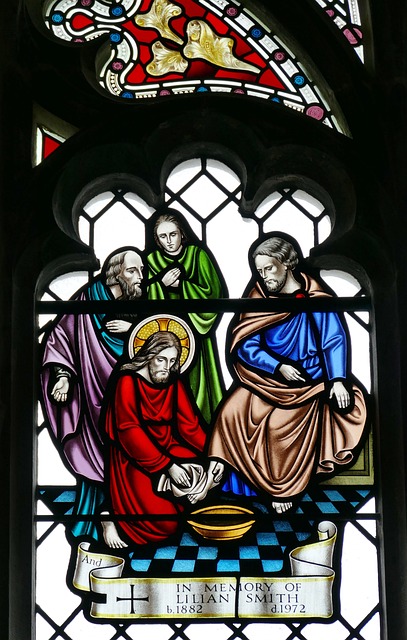
Should we wash each other’s feet like Jesus did to his disciples? John 13

Jesus washed the feet of his disciples to illustrate a point and to be an example

The story about Jesus washing the feet of his disciples should not be used as support for the idea that a few daily sins in a Christian person’s life is absolutely normal and something that can be washed away on a daily basis. Here is the story from John 13, and the time is just before the Passover when Jesus knew his hour was come:

John 13:5 After that he poureth water into a bason, and began to wash the disciples’ feet, and to wipe them with the towel wherewith he was girded.6 Then cometh he to Simon Peter: and Peter saith unto him, Lord, dost thou wash my feet?7 Jesus answered and said unto him, What I do thou knowest not now; but thou shalt know hereafter.8 Peter saith unto him, Thou shalt never wash my feet. Jesus answered him, If I wash thee not, thou hast no part with me.9 Simon Peter saith unto him, Lord, not my feet only, but also my hands and my head.10 Jesus saith to him, He that is washed needeth not save to wash his feet, but is clean every whit: and ye are clean, but not all.11 For he knew who should betray him; therefore said he, Ye are not all clean.12 So after he had washed their feet, and had taken his garments, and was set down again, he said unto them, Know ye what I have done to you?13 Ye call me Master and Lord: and ye say well; for so I am.14 If I then, your Lord and Master, have washed your feet; ye also ought to wash one another’s feet.15 For I have given you an example, that ye should do as I have done to you.16 Verily, verily, I say unto you, The servant is not greater than his lord; neither he that is sent greater than he that sent him.17 If ye know these things, happy are ye if ye do them.

Jesus does not express above that we constantly walk around with dirty feet (as in always walking around with minor sins) and that it is enough to get those symbolic feet washed once in a while in order to continue staying clean, holy and saved. Jesus has very high expectations on us, and he even told us to be perfect (Matt. 5:48). This “perfect” condition does not equal “to never ever having sinned, and to continue staying totally free of sin” because Jesus said this statement to his disciples and they had already sinned previously in their lives. However, it does mean that we can successfully refrain from sinning – for days, months, years and for ever. If we sin, it is never because we did not have power enough to avoid those sins. If we spend our days sinning and “repenting”, we clearly do not love Jesus since he told us “if ye love me, keep my commandments” (John 14:15).

Jesus expectations on us:

Mat. 5:48 Be ye therefore perfect, even as your Father which is in heaven is perfect.

Mark 9:45 And if thy foot offend thee, cut it off: it is better for thee to enter halt into life, than having two feet to be cast into hell, into the fire that never shall be quenched

John 5:14 Afterward Jesus findeth him in the temple, and said unto him, Behold, thou art made whole: SIN NO MORE, lest a worse thing come unto thee.

John 8:11 She said, No man, Lord. And Jesus said unto her, Neither do I condemn thee: go, and SIN NO MORE.

John 14:21 He that hath my commandments, and keepeth them, he it is that loveth me: and he that loveth me shall be loved of my Father, and I will love him, and will manifest myself to him.— 23 Jesus answered and said unto him, If a man love me, he will keep my words: and my Father will love him, and we will come unto him, and make our abode with him.24 He that loveth me not keepeth not my sayings: and the word which ye hear is not mine, but the Father’s which sent me.

Luke 14:26 If any man come to me, and hate not his father, and mother, and wife, and children, and brethren, and sisters, yea, and his own life also, he cannot be my disciple.27 And whosoever doth not bear his cross, and come after me, cannot be my disciple.

Matt 10:22 And ye shall be hated of all men for my name’s sake: but he that endureth to the end shall be saved.

1 John 1:If we say that we have fellowship with him, and walk in darkness, we lie, and do not the truth:7 But if we walk in the light, as he is in the light, we have fellowship one with another, and the blood of Jesus Christ his Son cleanseth us from all sin.8 If we say that we have no sin, we deceive ourselves, and the truth is not in us.If we confess our sins, he is faithful and just to forgive us our sins, and to cleanse us from all unrighteousness.

Rev. 22:14 Blessed are they that do his commandments, that they may have right to the tree of life, and may enter in through the gates into the city.15 For without are dogs, and sorcerers, and whoremongers, and murderers, and idolaters, and whosoever loveth and maketh a lie.

Before Jesus washed the feet of his disciples he said ye are clean, but not all” (John 13:10-11). The reason he said Ye are not all clean” was because he knew that Judas would betray him, so clearly he could not have been clean. Sin always makes one unclean, and sin is what separates us from God. This is evidence enough that Jesus does not expect us to walk around semi-dirty but to stay clean. Also in John 15 Jesus declares that his disciples were clean, but he still warned them (and all of us) that they must make sure to abide in him like a branch in the vine, and that lack of fruit might result in being cut off from the vine. Jesus says If ye keep my commandments, ye shall abide in my love”.

John 15:Now ye are CLEAN through the word which I have spoken unto you.Abide in me, and I in you. As the branch cannot bear fruit of itself, except it abide in the vine; no more can ye, except ye abide in me.5 I am the vine, ye are the branches: He that abideth in me, and I in him, the same bringeth forth much fruit: for without me ye can do nothing.6 If a man abide not in me, he is cast forth as a branch, and is withered; and men gather them, and cast them into the fire, and they are burned.7 If ye abide in me, and my words abide in you, ye shall ask what ye will, and it shall be done unto you.8 Herein is my Father glorified, that ye bear much fruit; so shall ye be my disciples.9 As the Father hath loved me, so have I loved you: continue ye in my love.10 If ye keep my commandments, ye shall abide in my love; even as I have kept my Father’s commandments, and abide in his love.— 14 Ye are my friends, if ye do whatsoever I command you.

A little leaven leaveneth the whole lump

Jesus does not say that we only get one single chance to stay clean, but it is also true that we cannot have both our sins and our salvation too. A couple of verses to keep in mind:

1 Cor. 5:6 Your glorying is not good. Know ye not that a little leaven leaveneth the whole lump?

Gal. 5:9 A little leaven leaveneth the whole lump.

Washing feet is an example of a good deed that we can do to another 

Jesus provided a good example when he washed the feet of his disciples, because it might be a distant idea that a Master will purposely “go down to the level” of his disciples and perform such a basic and dirty task. The more common idea is likely that it is the “low and poor” people who perform such tasks to the rich and famous, but in Jesus world it is often the other way around. The one who humbles himself is the greatest. If Jesus, who is God in flesh, is humble enough to wash the feet of his disciples, we too should follow his example. It does not have to be about washing feet, but what Jesus did was a great example and illustration. Jesus explains: “15 If I then, your Lord and Master, have washed your feet; ye also ought to wash one another’s feet.15 For I have given you an example, that ye should do as I have done to you.16 Verily, verily, I say unto you, The servant is not greater than his lord; neither he that is sent greater than he that sent him.17 If ye know these things, happy are ye if ye do them.” He also says: 

Matt.23:11 But he that is greatest among you shall be your servant.12 And whosoever shall exalt himself shall be abased; and he that shall humble himself shall be exalted.

In the time of Jesus, in the Middle East, people used sandals and walked around on dry and dirt roads, resulting in dirty feet. Not so where I live in Sweden where it is not uncommon with snow and ice, as well as the existence of asphalt on the major roads where you go by car and not by feet. It is doubtful we would even consider it to be a pleasant and comfortable situation if someone would wash our warm and sweaty feet (and it would be so much easier if we did that ourselves in the shower), but during Biblical times it was common to wash ones feet (and hands) separately (sandals + dust/dirt = dirty feet) due to the necessity and to show respect.

Peter asks Jesus why he (Jesus) would not also wash his (Peter’s) hands and head, but that would have been losing the point of the illustration. If someone washes himself in the morning and goes out for an errand, it is usually not the hands and the head that become dirty and in need of a wash, but the feet – at least during this time and place. It is of more value to help someone in an area or situation where it is needed, rather than trying to improve something that needs no improvement. That would just be a waste of time.

Jesus says: He that is washed needeth not save to wash his feet, but is clean every whit: and ye are clean, but not all, and this can be understood literally and/or symbolically.  Just like the interpretation ”thou art Peter, and upon this rock I will build my church” – which can be understood literally and/or symbolically. What Jesus said was also factual, because washing the feet would be enough.

Another way to look at it is that it is not necessary to get rebaptized each time we sin. It is enough to confess our sins and repent – which means that we leave our old sinful man behind. Still, the story of John 13 tells us that Jesus washed the feet of his clean disciples. Besides, also clean people have a need to humble themselves and do good deeds to others.

The sinning woman in Luke 7 was forgiven and cleansed from her sins when she humbled herself, repented (a requirement for forgiveness) and showed her faith by doing good deeds:

Luke 7:37 And, behold, a woman in the city, which was a sinner, when she knew that Jesus sat at meat in the Pharisee’s house, brought an alabaster box of ointment,38 And stood at his feet behind him weeping, and began to wash his feet with tears, and did wipe them with the hairs of her head, and kissed his feet, and anointed them with the ointment.39 Now when the Pharisee which had bidden him saw it, he spake within himself, saying, This man, if he were a prophet, would have known who and what manner of woman this is that toucheth him: for she is a sinner.40 And Jesus answering said unto him, Simon, I have somewhat to say unto thee. And he saith, Master, say on.41 There was a certain creditor which had two debtors: the one owed five hundred pence, and the other fifty.42 And when they had nothing to pay, he frankly forgave them both. Tell me therefore, which of them will love him most?43 Simon answered and said, I suppose that he, to whom he forgave most. And he said unto him, Thou hast rightly judged.44 And he turned to the woman, and said unto Simon, Seest thou this woman? I entered into thine house, thou gavest me no water for my feet: but she hath washed my feet with tears, and wiped them with the hairs of her head.45 Thou gavest me no kiss: but this woman since the time I came in hath not ceased to kiss my feet.46 My head with oil thou didst not anoint: but this woman hath anointed my feet with ointment.47 Wherefore I say unto thee, Her sins, which are many, are forgiven; for she loved much: but to whom little is forgiven, the same loveth little.48 And he said unto her, Thy sins are forgiven.49 And they that sat at meat with him began to say within themselves, Who is this that forgiveth sins also?50 And he said to the woman, Thy faith hath saved thee; go in peace.

Acts 2:38 Then Peter said unto them, Repent, and be baptized every one of you in the name of Jesus Christ for the remission of sins, and ye shall receive the gift of the Holy Ghost.

Another example of washing feet:

1 Tim. 5:9 Let not a widow be taken into the number under threescore years old, having been the wife of one man.10 Well reported of for good works; if she have brought up children, if she have lodged strangers, if she have washed the saints’ feet, if she have relieved the afflicted, if she have diligently followed every good work.11 But the younger widows refuse: for when they have begun to wax wanton against Christ, they will marry;12 Having damnation, because they have cast off their first faith.13 And withal they learn to be idle, wandering about from house to house; and not only idle, but tattlers also and busybodies, speaking things which they ought not.14 I will therefore that the younger women marry, bear children, guide the house, give none occasion to the adversary to speak reproachfully.15 For some are already turned aside after Satan.

An unclean heart produces sin  

Jesus explains that things that come out of someone might defile him, and he provides examples of things that make us unclean. From within, out of the heart of men, proceed evil thoughts …

Mark. 7:15 There is nothing from without a man, that entering into him can defile him: but the things which come out of him, those are they that defile the man.1—18 And he saith unto them, Are ye so without understanding also? Do ye not perceive, that whatsoever thing from without entereth into the man, it cannot defile him;19 Because it entereth not into his heart, but into the belly, and goeth out into the draught, purging all meats?20 And he said, That which cometh out of the man, that defileth the man.21 For from within, out of the heart of men, proceed evil thoughts, adulteries, fornications, murders,22 Thefts, covetousness, wickedness, deceit, lasciviousness, an evil eye, blasphemy, pride, foolishness:23 All these evil things come from within, and defile the man.

The tradition of washing feet 

Here are some verses which show the Biblical tradition of washing feet.

Gen. 18:4 Let a little water, I pray you, be fetched, and wash your feet, and rest yourselves under the tree (Abraham)

Gen. 19:2 And he said, Behold now, my lords, turn in, I pray you, into your servant’s house, and tarry all night, and wash your feet, and ye shall rise up early, and go on your ways. And they said, Nay; but we will abide in the street all night. (Lot)

Gen. 24:29 And Rebekah had a brother, and his name was Laban: and Laban ran out unto the man, unto the well.30 And it came to pass, when he saw the earring and bracelets upon his sister’s hands, and when he heard the words of Rebekah his sister, saying, Thus spake the man unto me; that he came unto the man; and, behold, he stood by the camels at the well.31 And he said, Come in, thou blessed of the Lord; wherefore standest thou without? for I have prepared the house, and room for the camels.32 And the man came into the house: and he ungirded his camels, and gave straw and provender for the camels, and water to wash his feet, and the men’s feet that were with him. (Laban and his household)

Gen. 43:24 And the man brought the men into Joseph’s house, and gave them water, and they washed their feet; and he gave their asses provender.

Ex. 30:17 And the Lord spake unto Moses, saying,18 Thou shalt also make a laver of brass, and his foot also of brass, to wash withal: and thou shalt put it between the tabernacle of the congregation and the altar, and thou shalt put water therein.19 For Aaron and his sons shall wash their hands and their feet thereat:20 When they go into the tabernacle of the congregation, they shall wash with water, that they die not; or when they come near to the altar to minister, to burn offering made by fire unto the Lord:21 So they shall wash their hands and their feet, that they die not: and it shall be a statute for ever to them, even to him and to his seed throughout their generations.

Ex. 40:31 And Moses and Aaron and his sons washed their hands and their feet thereat

Deut. 1:9 But his inwards and his legs shall he wash in water: and the priest shall burn all on the altar, to be a burnt sacrifice, an offering made by fire, of a sweet savour unto the Lord.—13 But he shall wash the inwards and the legs with water: and the priest shall bring it all, and burn it upon the altar: it is a burnt sacrifice, an offering made by fire, of a sweet savour unto the Lord.

Judg. 19:20 And the old man said, Peace be with thee; howsoever let all thy wants lie upon me; only lodge not in the street.21 So he brought him into his house, and gave provender unto the asses: and they washed their feet, and did eat and drink.

1 Sam. 25:40 And when the servants of David were come to Abigail to Carmel, they spake unto her, saying, David sent us unto thee, to take thee to him to wife.41 And she arose, and bowed herself on her face to the earth, and said, Behold, let thine handmaid be a servant to wash the feet of the servants of my lord.42 And Abigail hasted, and arose and rode upon an ass, with five damsels of hers that went after her; and she went after the messengers of David, and became his wife.

2 Sam. 11:8 And David said to Uriah, Go down to thy house, and wash thy feet. And Uriah departed out of the king’s house, and there followed him a mess of meat from the king.

2 Sam. 19:24 And Mephibosheth the son of Saul came down to meet the king, and had neither dressed his feet, nor trimmed his beard, nor washed his clothes, from the day the king departed until the day he came again in peace.

Ps. 58:10 The righteous shall rejoice when he seeth the vengeance: he shall wash his feet in the blood of the wicked.

Song of Solomon 5:3 I have put off my coat; how shall I put it on? I have washed my feet; how shall I defile them?

Offrade Jefta sin egen dotter till döden som ett brännoffer? Dom. 11:31

Jeftas dotter begrät sin frivilliga jungfrudom – inte sin död

Bakgrundshistorien är att Jefta var son till Gilead och en prostituerad kvinna. Hans halvbröder förvägrade honom att dela farsarvet med dem själva just eftersom han var son till en främmande kvinna, och Jefta valde då att bosätta sig på ett annat ställe. Det verkade inte som han levde särskilt gudfruktigt vid den tidpunkten eftersom löst folk anslöt sig till honom för att utföra plundringståg. Men kanhända att han senare omvände sig, framför allt vid tidpunkten när de äldste i orten Gilead bad honom om hjälp i kampen mot ammoniterna. De äldste i Gilead bad stridsmannen Jefta att vara deras anförare och Jefta föreslog själv att han skulle ta på sig rollen som ledare och huvud om Gud gav honom (och Israel) segern mot ammoniterna. För hans del så handlade det alltså inte om att bara vara en temporär anförare i det förestående kriget, utan att ha en permanent roll som Israels huvud, ledare och domare.

Sedan kommer vi till det berömda löftet “vem som än kommer ut mot mig genom dörrarna i mitt hus, när jag välbehållen kommer tillbaka från ammoniterna, skall tillhöra Herren. Jag skall offra honom till brännoffer”. I KJV är formuleringen “I will offer it up for a burnt offering”. Det kan även läsas som “shall be offered by me as a burnt offering”.  

Dom. 11:29 Då kom Herrens Ande över Jefta. Han drog genom Gilead och Manasse och vidare genom Mispe i Gilead, och från Mispe i Gilead ryckte han fram mot ammoniterna. 30 Jefta gav ett löfte till Herren och sade: “Om du ger ammoniterna i min hand, 31 lovar jag att vem som än kommer ut mot mig genom dörrarna i mitt hus, när jag välbehållen kommer tillbaka från ammoniterna, skall tillhöra Herren. Jag skall offra honom till brännoffer.” 32 Så drog Jefta bort mot ammoniterna för att strida mot dem, och Herren gav dem i hans hand33 Han tillfogade dem ett mycket stort nederlag, från Aroer ända fram emot Minnit, tjugo städer, och ända till Abel-Keramim. Så blev ammoniterna kuvade under Israels barn. 

fortsättning:

Dom. 11:34 När sedan Jefta kom till sitt hus i Mispa, se, då gick hans dotter ut för att möta honom med pukor och dans. Hon var hans enda barn, och utom henne hade han varken son eller dotter. 35 När han fick se henne, rev han sönder sina kläder och ropade: “O, min dotter, du gör mig helt förkrossad, du drar elände över mig! Jag har öppnat min mun inför Herren till ett löfte och kan inte ta tillbaka mitt ord.”36 Hon svarade honom: “Min far, har du öppnat din mun inför Herren, så gör med mig enligt dina ord, eftersom Herren nu har gett dig hämnd på dina fiender, ammoniterna.” 37 Hon sade vidare till sin far: “Men uppfyll en begäran: Ge mig två månader, så att jag kan gå upp i bergen och begråta min jungfrudom med mina väninnor.” 38 Han svarade henne: “Du får gå.” Och han lät henne vara borta i två månader. Då gick hon med sina väninnor och begrät sin jungfrudom på bergen. 39 Men efter två månader återvände hon till sin far, och han gjorde då med henne efter löftet han hade givit. Och hon hade aldrig känt någon man. Sedan blev det en sed i Israel, 40 att Israels döttrar gick för att fira minnet av gileaditen Jeftas dotter under fyra dagar varje år.

Några fakta som vi kan få ut ifrån historien:

  1. Jefta utgav ett heligt löfte till Gud.
  2. Löftet var rimligtvis inte bara något positivt och eftersträvansvärt i Jeftas ögon (om än en uppoffring) utan även i Guds ögon. I versen precis innan löftet får vi veta att Guds ande var över Jefta när han inledde kampen mot ammoniterna, och när Jefta lovade Gud ett brännoffer (en person från Jeftas eget hus) på villkoret att Gud skulle hjälpa honom med en vinst, så blev resultatet att Gud faktiskt hjälpte honom med just detta. Med tanke på informationen att Guds Ande var över Jefta, och att Gud valde att ge ammoniterna i Jeftas hand, så tyder detta på att Gud såg med glädje på Jeftas löfte.
  3. Jefta (och författaren) ansåg att löftet senare blev fullbordat.
  4. Efter att Jeftas dotter förstått bakgrunden till löftet (det heliga löftet i sig samt att Gud hjälpt dem att eliminera hotet från ammoniterna som gisslat Israel en längre tid) så ansåg även hon att löftet måste infrias.
  5. Vi får aldrig läsa om Jeftas dotters död, men däremot beskriver texten två gånger att hon gått iväg för att begråta sin jungfrudom innan löftet skulle fullbordas. Borde hon inte snarare begråta sin snara död där inte bara jungfruodomen stod på spel utan allt som har med ett framtida liv att göra? Precis efter att vi får veta att Jeftas löfte uppfyllts så nämner författare att dottern aldrig känt någon man. Denna information vore ytterst ologisk och förbryllande om den unga kvinnan faktiskt dog. Det är självklart att ung.
  6. Jefta fortsatte som Domare i sex år även efter fullbordandet av löftet, och det verkar inte ha blivit några reaktioner i grannskapet om att han överträtt Guds lag eller betraktades som en mördare.
  7. Mose lag beskriver människooffer som något avskyvärt, men i Hebr. 11 listas Jefta som en heroisk person som gick i tro, som skipade rätt, fick löften uppfyllda, etc.

Det är viktigt att ha i åtanke att människooffer var en styggelse för Gud. Den ende som får släcka liv på ett sådant sätt är Skaparen själv, som ju är den som orsakat allt liv på jorden:

Jer. 7:31 De har byggt upp Tofethöjderna i Hinnoms sons dal för att där bränna upp sina söner och döttrar i eld, fastän jag aldrig har befallt eller ens tänkt mig något sådant.

Hes. 16:20 Du tog dina söner och döttrar, som du hade fött åt mig, och offrade dem till mat åt bilderna. Var det inte nog att du bedrev hor? 21 Du slaktade mina barn och offrade dem åt dessa bilder. 22 Och medan du höll på med sådana vidriga ting och bedrev hor, tänkte du inte på din ungdoms dagar, då du låg naken och blottad och sprattlade i ditt blod.

Ps. 106:36 De tjänade deras avgudar, och dessa blev en snara för dem.37 De offrade sina söner och döttrar åt onda andar.38 De utgöt oskyldigt blod, sina söners och döttrars blod, som de offrade åt Kanaans avgudar, och landet blev vanhelgat genom blodet.

Hellre lydnad än offer:

Mika 6:7 Gläds Herren åt bockar i tusental, åt oljeströmmar i tiotusental? Skall jag ge min förstfödde till offer för min överträdelse min livsfrukt till syndoffer för min själ?8 Han har kungjort för dig, o människa, vad gott är. Vad begär väl Herren av dig annat än att du gör det som är rätt, att du älskar barmhärtighet och vandrar i ödmjukhet med din Gud?

Att offra den förstfödda 

Förmodligen tänkte sig inte Jefta att ett djur skulle möta honom i dörrarna, för hur  skulle han i så fall undvika att det inte var ett orent djur och därmed odugligt som offer? Man får därför anta att han inte syftade på ett djur utan snarare en människa och allra troligast att det skulle vara någon från hans eget hushåll eftersom det var hans eget hus.

Men var det verkligen så att Jefta emot allt sunt förnuft dödade en människa (från sitt eget hus) genom att offra denna som ett brännoffer? Nej, det är inte troligt med tanke på vad som står i Guds lagar, men kanske det i stället handlade om ett liknande offer som för Hanna vad gäller hennes efterlängtade son Samuel?:

1 Sam. 1:11 Hon gav ett löfte och sade: “Herre Sebaot, om du vill se till din tjänarinnas lidande och komma ihåg mig och inte glömma din tjänarinna utan ge henne en son, då skall jag ge honom åt Herren för hela hans liv, och ingen rakkniv skall komma på hans huvud.”

Pred. 5:4 Det är bättre att du inte lovar något än att du lovar och inte håller det.

Hannas offer handlade också om ett människooffer, men verkligen inte i form av ett fysiskt brännoffer. Däremot så “offrade” hon sin sons liv till Gud för att han för alltid skulle tjäna honom – vilket sonen Samuel själv växte upp med som en självklarhet och med en innerlig dedikation. Allra lättast att få ihop historien om Jefta (med tanke på att löftet anses vara uppfyllt och hans dotter verkade leva vidare) är om vi förstår hans ord endast som en hänsyftning till ett brännoffer – i en ren symbolisk mening – och med en tanke på Guds bud vad gäller offrandet av “det förstfödda”.

Vi förstår mer om vi läser om Guds lagar gällande offrandet av allt det förstfödda, inklusive alla förstfödda söner. Det var nämligen så att allt som öppnade moderlivet, som var av hankön, skulle offras till Gud. Detta benämndes som en gåva, och när det gäller leviterna så handlade det också om människors offergåvor som tillföll leviterna (som fått sin tjänstgöring direkt av Gud och som heller inte hade några inkomstkällor på samma sätt som de övriga av Jakobs söner). Men även om det inte står omnämnt på alla ställen där vi kan läsa om offrandet av det förstfödda, så gällde också budet att man skulle lösa ut varje förstfödd son. Guds tanke var självfallet aldrig att söner skulle offras som fysiska brännoffer men att de däremot skulle lösas ut efter ett visst mönster. Skälet till lagen om det förstfödda var att Israel alltid skulle ha i minnet vad som hände i Egypten, där Farao vägrade att släppa de slavande israelerna men att Gud på ett mäktigt sätt ingrep och räddade dem. Läs mer om det förstfödda för att förstå bättre varifrån Jefta fått sin inspiration till ett sådant löfte:

2 Mos. 22:29 Du skall inte dröja att bära fram som gåva av det som fyller din lada och av det som kommer från din vinpress. Den förstfödde av dina söner skall du ge åt mig.30 På samma sätt skall du göra med din nötboskap och din småboskap. I sju dagar skall de stanna hos sina mödrar, men på åttonde dagen skall du ge dem åt mig.

2 Mos. 13:11 När Herren låter dig komma in i och ger dig kananeernas land, som han med ed har lovat dig och dina fäder, 12 då skall du överlämna till Herren allt som öppnar moderlivet. Allt förstfött bland din boskap som är av hankön skall tillhöra Herren13 Men allt som öppnar moderlivet bland åsnor skall du lösa ut med ett får, och om du inte vill lösa det skall du krossa nacken på det. Varje förstfödd son skall du lösa ut.14 När din son i framtiden frågar dig vad detta betyder, skall du svara honom: Med stark hand förde Herren oss ut ur Egypten, ur träldomshuset. 15 Eftersom farao hårdnackat vägrade att släppa oss, dödade Herren allt förstfött i Egyptens land, från det förstfödda bland människor till det förstfödda bland boskap. Därför offrar jag åt Herren allt som öppnar moderlivet och är av hankön, och varje förstfödd son löser jag ut.16 Detta skall vara som ett tecken på din hand och som ett band till påminnelse på din panna, ty med stark hand förde Herren oss ut ur Egypten.”

4 Mos. 3:8 Och de skall ha vården om uppenbarelsetältets alla tillbehör och iaktta vad som åligger Israels barn genom att tjänstgöra vid tabernaklet. 9 Du skall ge leviterna åt Aron och hans söner. De skall ges åt honom som en gåva från Israels barn 10 Men Aron och hans söner skall du ålägga ansvaret för prästtjänsten. Om någon annan inkräktar på den, skall han dödas.”11 Herren sade till Mose: 12 “Se, jag har själv bland Israels barn tagit ut leviterna i stället för alla förstfödda bland Israels barn, alla som öppnar moderlivet. Leviterna skall tillhöra mig, 13 ty alla förstfödda tillhör mig. På den dag då jag slog allt förstfött i Egyptens land helgade jag åt mig allt förstfött i Israel, både bland människor och boskap. De tillhör mig. Jag är Herren.” — 41 Och tag ut åt mig leviterna – ty jag är Herren – i stället för alla förstfödda bland Israels barn, och leviternas boskap i stället för allt förstfött bland Israels barns boskap.” — 44 Och Herren sade till Mose: 45 “Tag ut leviterna i stället för allt förstfött bland Israels barn och leviternas boskap i stället för deras boskap. Leviterna skall tillhöra mig. Jag är Herren46 Men för att lösa de 273 personer av Israels barns förstfödda som överstiger leviternas antal, 47 skall du ta fem siklar silver för varje person. Du skall ta upp dem efter helgedomssikelns vikt, sikeln räknad till tjugo gera. 

4 Mos. 18:6 Det är jag som har utvalt era bröder, leviterna, bland Israels barn. De är en gåva åt er, givna åt Herren till att förrätta tjänsten vid uppenbarelsetältet.— 15 Allt som öppnar moderlivet, varje varelse, människa eller djur, som de för fram till Herren skall tillhöra dig. Men det förstfödda bland människor skall du friköpa. Även det förstfödda bland orena djur skall du friköpa. 16 När de är en månad gamla skall du friköpa dem med den lösensumma som är bestämd till fem siklar silver, efter helgedomssikelns vikt, som är tjugo gera. 17 Men det förstfödda bland nötboskap eller det förstfödda bland får eller det förstfödda bland getter skall du inte friköpa. Det är heligt. Deras blod skall du stänka på altaret, och deras fett skall du förbränna som ett eldsoffer till en ljuvlig doft för Herren. 

Neh. 10:34 Vi, prästerna, leviterna och folket, kastade lott om vedoffret, hur man varje år skulle föra det till vår Guds hus på bestämda tider, efter våra familjer, och bränna det på Herrens, vår Guds, altare så som det är skrivet i lagen.35 Till Herrens hus skulle vi varje år föra förstlingen av markens gröda och förstlingen av all frukt på alla slags träd. 36 Så som det är skrivet i lagen skulle vi också föra till Guds hus, till prästerna som gjorde tjänst i vår Guds hus, de förstfödda av våra söner och av vår boskap, och de förstfödda av vår nötboskap och vår småboskap. 

5 Mos. 12:17 Du får inte inom dina portar äta tionden av din säd, ditt vin och din olja och inte heller det förstfödda av din nötboskap och din småboskap eller något av de löftesoffer som du gett löfte om eller av dina frivilliga offer eller av dina händers bidrag.

5 Mos. 14:23 Du skall äta ditt tionde inför Herrens, din Guds, ansikte på den plats som han utväljer till boning åt sitt namn: tiondet av din säd, ditt vin och din olja, liksom det förstfödda av din nötboskap och småboskap, så att du lär dig att alltid frukta Herren, din Gud.

Att de förstfödda sönerna skulle lösas ut (friköpas) är en viktig ledtråd vad gäller Jeftas agerande, för detta skulle kunna varit även hans plan från början till slut. Även det friköpta betraktades symboliskt som ett brännoffer, även om det ersattes med ett friköp. Nu var inte Jeftas förstfödda någon son, men hela hans löfte var ytterst unikt. Han kunde heller inte veta säkert att den som först skulle möta honom i dörrarna till sitt hus skulle vara “förstfött”, men däremot var ju hela löftet baserat på premissen att personen åtminstone skulle vara först ut genom husdörrarna: vem som än kommer ut mot mig genom dörrarna i mitt hus”. Alltså den första som kommer ut. Inte först ut genom moderlivet, men väl ut genom dörrarna. 

Jeftas dotter – utvald att tjäna Gud

Även om Jefta rev sönder sina kläder i upprördhet över att få se sin dotter som den första genom dörrarna, så kan detta inte ha varit oväntat för honom. Det kan självfallet ha varit så att han hoppades att den första genom dörrarna skulle vara någon annan, men hans löfte innebar verkligen ett mycket stort uppoffrande med tanke på vad som stod på spel. Texten säger också att dottern var fast besluten att fullfölja och infria faderns löfte. Däremot får vi inte veta exakt hur hennes tjänstgöring för Gud såg ut, och hur hennes vardag blev.

Man kanske kan tycka att Jeftas dotter gick en mycket tragisk framtid till mötes genom att behöva dedikera hela sin framtid till att tjäna Gud i stället för att skaffa familj, men man bör även fundera på hur hennes, och hela Israels, framtid skulle sett ut om inte Jefta hade accepterat uppdraget att gå emot ammoniterna med hjälp av Gud, och om ammoniterna skulle blivit herrar över Israel? Då hade förmodligen framtiden sett ännu värre ut, och hon skulle med största säkerhet också ha förlorat sin far.

I livets uppförsbackar får vi försöka tänka på att livet på jorden är en kort parentes, och att det bästa ligger framför oss i Guds permanenta rike.

Det talas om en tradition som följde efter händelsen med Jeftas dotter: Sedan blev det en sed i Israel, 40 att Israels döttrar gick för att fira minnet av gileaditen Jeftas dotter under fyra dagar varje år”. Denna sed pågick förmodligen så länge som Jeftas dotter levde, genom att hennes väninnor, och kanske andra människor, gjorde pilgrimsresor till henne varje år. Hennes beslut att gå med på faderns löfte mottogs alltså med stor tacksamhet och respekt. Man kan jämföra den årliga seden med 1 Sam. 1:3; 2:19, där Hanna gjorde årliga besök hos sin son Samuel så länge han levde. 

Jefta utförde en heroisk insats:

Hebr. 11:31 Genom tron undgick skökan Rahab att gå under tillsammans med dem som inte trodde, eftersom hon hade tagit emot spejarna som vänner.32 Vad skall jag säga mer? Jag skulle inte hinna med att berätta om Gideon, Barak, Simson och Jefta, om David, Samuel och profeterna. 33 Genom tron besegrade de kungariken, skipade rätt, fick löften uppfyllda, täppte till lejons gap, 34 släckte rasande eld och undkom svärdsegg. De var svaga men blev starka, de blev väldiga i strid och drev främmande härar på flykten.

1 Sam. 12:11 beskriver det som att det var Herren som sände Jefta att rädda folket från sina fiender.

1 Sam. 12:10 Men de ropade till Herren och sade: Vi har syndat, för vi har övergett Herren och tjänat baalerna och astarterna. Men rädda oss nu från våra fienders hand, så skall vi tjäna dig. 11 Herren sände då Jerubbaal, Bedan, Jefta och Samuel och räddade er från era fiender runt omkring, och ni fick bo i trygghet.

Historien om Jefta är en av flera berättelser om en person som inte är mycket värd i andra ögon (t. ex hans bröders), men som slutar med att han blir en person av stor betydelse. Även om hans egen släkt på jorden slutade med hans dotter, som ju inte fick några barn.

Lech Walesa, polsk kommunist, globalist och förrädare – FILM

Lech Walesa ses inte som en hjälte i Polen

Inte alla i västvärlden känner till att Lech Walesa inte ses som en hjälte bland polacker i Polen (förutom bland liknande kamrater), utan snarare som en kommunist, globalist och förrädare. Kommunismen fortsatte även efter hans tid vid makten och enligt numera öppna arkiv så stod han på lönelistan som kommunistagent – vilket kan förklara hans motstånd till allt vad polsk nationalism hette. Den bild som förmedlas i västvärlden är däremot en helt annan.

Här nedan följer två intressanta filmer, dels om Lech Walesa och dels om nuvarande politiska system i Polen. Det går att se filmerna i omvänd ordning.

Blodröda synder som scharlakan kan bli vita som snö – Jes. 1:18

Synder försvinner vid omvändelse

Oavsett kvantiteten och kvaliteten på våra synder så blir vi helt igenom rena och “snövita” (helt oskyldiga) när vi omvänder oss från våra synder och startar ett nytt liv med Skaparen. Idag skulle vi säga att vi blivit renade i Jesu blod (det slutgiltiga offret) men under alla tider så har kravet för rening alltid varit kombinerat med vår omvändelse – oavsett djuroffersystemet under Mose tid eller Jesu offerdöd på korset. Jesus dog för hela världens synder, men det innebär inte att hela världen därför blivit renat och kan förvänta sig frälsning.

Jes. 1:18 Kom, låt oss gå till rätta med varandra, säger Herren. Om era synder än är blodröda, skall de bli snövita, om de än är röda som scharlakan, skall de bli vita som ull.

Verkligen goda nyheter! Hoppet är alltså inte förlorat hos någon enda av oss! Det är glädje i himlen för varje person som omvänder sig, för Gud vill inte att någon ska gå förlorad:

2 Pet. 3:9 Herren dröjer inte med att uppfylla sitt löfte, så som en del menar. Nej, han har tålamod med er, eftersom han inte vill att någon skall gå förlorad utan att alla skall få tid att omvända sig.

Luk. 15:7 Jag säger er: På samma sätt blir det glädje i himlen över en enda syndare som omvänder sig – inte över nittionio rättfärdiga som ingen omvändelse behöver.

Apg. 17:30 Gud har länge haft överseende med okunnighetens tider, men nu befaller han människorna att de alla och överallt skall omvända sig.

Hes. 18:23 Skulle jag finna någon glädje i den ogudaktiges död? säger Herren, Herren. Nej, jag vill att han vänder om från sin väg och får leva.

Löftet är alltså total rening där alla våra synder raderas, och kravet för det är omvändelse. Omvändelse kommer an på oss själva. Det är vårt eget ansvar och inte Guds ansvar. Det kanske låter som en självklarhet, men det finns en del kristna som menar att det är Gud som leder oss fram till målet när vi en gång blivit Guds barn – såsom i tankegången att en gång frälst alltid frälst. Den helige Ande kan visserligen leda oss rätt, men inte utan vår medverkan och påverkan. När vi omvänt oss och blivit renade så blir vi faktiskt även “perfekta” eftersom ingen synd finns kvar i oss. Vi blir inte renade till 80% utan till 100%, och detta perfekta och rättfärdiga tillstånd kan räcka hur länge som helst om vi avhåller oss från synd – vilket vi alla kan göra. Den som bor i oss (den helige Ande) är större än den som bor i världen (1 Joh. 4:4).

När vi omvänder oss så är det våra tidigare synder som tas bort. Definitivt inte våra framtida synder. Våra synder är inte förlåtna innan vi ens utför dem. Om en person blir anhållen och dömd för ett eller flera brott så kan denne inte förvänta sig att han/hon sedan blir immun från framtida straff för eventuella framtida brott:

1 Pet. 1:9 Men den som saknar detta är närsynt, ja, blind, eftersom han har glömt att han blev renad från sina tidigare synder.

Nedan kan vi se att omvändelse handlar om att undvika det onda och göra det goda. Utöver omvändelse så får vi några exempel på goda gärningar som förväntas av oss, även om goda gärningar individuellt kan se olika ut. Även i Jak. 2 kan vi se liknande exempel, eftersom tro utan gärningar är död.

Jes. 1:16 Tvätta er och gör er rena. Tag bort era onda gärningar från mina ögon.
Sluta att göra det som är ont.17 Lär er att göra det som är gott, sök det rätta.
Tillrättavisa förtryckaren, försvara den faderlöses rätt, stöd änkan i hennes sak.

Jesaja har visserligen fokus på Israel och sin egen tid, men Gud har liknande krav och löften till alla människor. Vår framtid är beroende av om vi är villiga att höra från vår Skapare, eller om vi vägrar och är motsträviga. I det senare fallet så har vi alltså valt att stå utanför gudomlig hjälp och  måste därför klara oss själva. Det är förstås viktigare att tänka på vår permanenta framtid (livet efter detta) än den temporära trivseln och lyckan i den nuvarande, men vi kan få hjälp med båda fallen – och framför allt bli uppmuntrade mitt i våra motgångar.

Jes. 1:19 Om ni är villiga att höra, skall ni få äta landets goda.20 Men om ni vägrar och är motsträviga, skall ni förtäras av svärd, ty så har Herrens mun talat.

Att leva i alltför stor komfort kan innebära en risk att vi inte söker Gud utan snarare har fokus på nöjen och våra tillgångar. På det sättet kan faktiskt en del motgångar och sorg faktiskt hjälpa oss att få ett stadigare fokus på det som borde vara det allra viktigaste i våra liv. Våra personliga tillgångar och vänskapsband är ytterst temporära och varar bara en kort tid:

Ord. 30:8 Håll falskhet och lögn fjärran ifrån mig. Ge mig varken fattigdom eller rikedom, men låt mig få den mat jag behöver. Annars kan jag bli så mätt att jag förnekar dig och säger: “Vem är Herren?” eller så fattig att jag stjäl och vanhelgar min Guds namn.

Ps. 103:15 En människas dagar är som gräset, hon blomstrar som markens blommor.16 Vinden drar fram över dem och de är borta, deras plats känner dem inte längre.17 Men Herrens nåd varar från evighet till evighet över dem som fruktar honom och hans rättfärdighet intill barnbarn, 18 när man håller hans förbund och tänker på hans befallningar och följer dem. 19 Herren har ställt sin tron i himlen, hans konungavälde omfattar allt.

2 Kor. 5:1 Vi vet att om vårt jordiska tält rivs ner, så har vi en byggnad från Gud, en boning som inte är gjord med händer, en evig boning i himlen.2 Så länge vi bor i detta tält, suckar vi därför och längtar att få ikläda oss vår himmelska boning,

I samma kapitel som Jes. 1:18 kan vi läsa här nedan att vi inte automatiskt kan förlita oss på tidigare perioder av rättfärdighet. Det heter inte “en gång rättfärdig alltid rättfärdig”, och Gud skulle aldrig kalla en människa rättfärdig om hon inte faktiskt levde upp till det epitetet. Det finns en risk att människor väljer att överge Herren:

Jes. 1:21 Hur har inte den trogna staden blivit en hora! Den var full av rätt. Då bodde rättfärdighet därinne, men nu mördare.22 Ditt silver har blivit slagg, ditt ädla vin är utspätt med vatten.— 27 Genom rätt skall Sion friköpas, genom rättfärdighet de som vänder tillbaka.28 Men fördärv skall drabba alla överträdare och syndare, de som överger Herren skall gå under.

Nedan vers handlar visserligen om Israel, men passar även in på Sverige på det sättet landet totalomvandlats de senaste åren:

Is. 1:7 Your country is desolate, your cities are burned with fire: your land, strangers devour it in your presence, and it is desolate, as overthrown by strangers. KJV

Does the Bible teach that a raped woman must marry her rapist? Deut. 22:28-29

God makes laws to secure the woman’s rights and protection  

The Hebrew laws in Deuteronomy no longer apply today, but back in the old days they did apply for the people of Israel who lived in a theocracy where God was the direct source of authority. God had certainly showed his divine powers to the Israelites during many occasions, and when the Israelites traveled through the desert to the land of Canaan during the Exodus, he manifested himself to them as a pillar of cloud during the day and a pillar of fire during the night in order to guide them and comfort them.

If the Bible is right (which I believe it is), the laws were truly from God the Creator himself and not from man, which means that the laws were both righteous and divine. This did not give the Israelites the right to force their laws on other people, but the Israelites themselves were bound by these laws for their own well-being. The laws were made for their own benefit in order to eliminate as much pain and sorrow as possible, but also to make the Israelites a blessed and special people suitable for being a role model to others. God was and is the God of all people and not just for the Israelites. This means that God would certainly not look away if people transgressed his laws, because this would signify the slippery slope of downplaying the wisdom of God altogether. Rather than being a role model for others, the other people would rather think that the Israelites were just as sinful as all others and their God (the true God of Israel) would be scoffed at.

Risks and consequences always arise if people deviate from God’s laws and plans. This is why he made laws in order to either 1) eliminate transgression of the laws in the first place – due to the severe punishment for the offender, OR 2) if the laws were still  transgressed, the weaker part would still be legally protected and the woman’s name would be free from defamation. In a culture where a woman’s marriage equated to her financial provision, God provided laws to ensure her future security.

The different cases of violation in Deuteronomy 22

Unlike the case in Deut. 23-27, Deut. 28-29 does not concern a situation of rape, but rather something consensual.

Firstly, the below case concerns a case where a man and a woman marry (with consent from their parents) and the man lies with his wife and later despises her. Can the man just walk away with no consequences, leaving the woman behind with an insecure future? How would the woman be able to support herself for the rest of her life, and possibly also a baby? Can the man just walk away and tell the whole community that the baby is not even his, and that the woman is both a liar and a whore? No, God provided a law to prevent such cases. The severe consequences were hopefully enough to prevent all (or most) of these types of scenarios.

Deut. 22:13 If any man take a wife, and go in unto her, and hate her,14 And give occasions of speech against her, and bring up an evil name upon her, and say, I took this woman, and when I came to her, I found her not a maid:15 Then shall the father of the damsel, and her mother, take and bring forth the tokens of the damsel’s virginity unto the elders of the city in the gate:16 And the damsel’s father shall say unto the elders, I gave my daughter unto this man to wife, and he hateth her;17 And, lo, he hath given occasions of speech against her, saying, I found not thy daughter a maid; and yet these are the tokens of my daughter’s virginity. And they shall spread the cloth before the elders of the city.18 And the elders of that city shall take that man and chastise him;19 And they shall amerce him in an hundred shekels of silver, and give them unto the father of the damsel, because he hath brought up an evil name upon a virgin of Israel: and she shall be his wife; he may not put her away all his days.

People might suggest that blood on a sheet is not a watertight proof of virginity, but not only would this be an expected outcome, and therefore good evidence, but what better evidence could possibly be provided during this time in our past? An innocent woman would be interested in being provided an opportunity to clear her name and reputation. Moreover, due to the severe law in itself, this type of scenario was likely almost unheard of in Israel. The case could be that the law in itself was enough for most men to not even consider doing something so shameful to her, to himself, to their families and to the community.

20 But if this thing be true, and the tokens of virginity be not found for the damsel:21 Then they shall bring out the damsel to the door of her father’s house, and the men of her city shall stone her with stones that she die: because she hath wrought folly in Israel, to play the whore in her father’s house: so shalt thou put evil away from among you.

Another scenario would be if the young woman was not a virgin after all but instead was lying to an innocent man (maybe together with her parents) and ended up being married on false grounds. In Israel during this time, it would be a very serious offense which would affect two families and all of Israel. Hopefully this scenario was therefore almost unheard of, especially since the woman would also have to take into consideration that the man would find out about the truth during their very first night together, which means that the woman would not gain anything with such a deception. Such a lie would therefore not get her anywhere, but straight to the death penalty.

Below is yet another scenario concerning adultery. This does not concern a rape situation but something consensual between the man and the woman. Adultery requires the death penalty.

Deut. 22:22 If a man be found lying with a woman married to an husband, then they shall both of them die, both the man that lay with the woman, and the woman: so shalt thou put away evil from Israel.

Below concerns a scenario close to adultery, but where the woman is not yet married but betrothed (engaged to be married). This means that someone else (the man she is engaged to) would be affected negatively if the woman would choose to be with another man. This scenario is equated with adultery (the woman belongs to someone else) and the punishment is the death penalty for both since both are guilty.

23 If a damsel that is a virgin be betrothed unto an husband, and a man find her in the city, and lie with her;24 Then ye shall bring them both out unto the gate of that city, and ye shall stone them with stones that they die; the damsel, because she cried not, being in the city; and the man, because he hath humbled his neighbour’s wife: so thou shalt put away evil from among you.

But what if the woman was raped, which would make her totally innocent? We must go to v. 25-27 below to see this scenario. The situation below concerns rape, and this scenario includes a bethrothed woman (a woman belonging to someone else) as an example just like the previous verses. Here we find a focus on the place and her actions (screaming or not), in order to make a proper judgment of her case. Naturally a woman is totally innocent if she is raped, and it is only the rapist that must die. The question is if someone was there to hear her and save her. If she was out in the field, with no one around to possibly hear her, then she should not be charged. She must be declared  innocent until proven guilty.

Someone might interject and suggest that it is not a huge difference between being attacked out in the field or in a city because there might not be anyone around to help irregardless of place,  and what if she was gang raped and what if she was mute, and what if this and that, etc. During the time of Moses the place of an attack would make all the difference in the world. Either you were at home and then you always had people around you (family members, relatives, servants, etc) or you were out in the field which is the only place where you might be alone. It cannot be compared with a situation today where a woman might live alone with her cat in an apartment on 4th floor in a building with lots of isolation in the walls. Moreover, remember that the Hebrew laws in themselves were often serious enough to make men refrain from transgressing them in the first place. There would not be a need to write four pages of details and exemptions to the rule if the law in itself was clear enough and hardly ever transgressed.

The Hebrew word for “force” below is chazaq (Strong’s 2388) and therefore it holds the meaning of rape in this context. Another verb is used in v. 28 (see further down below).

25 But if a man find a betrothed damsel in the field, and the man force her, and lie with her: then the man only that lay with her shall die.26 But unto the damsel thou shalt do nothing; there is in the damsel no sin worthy of death: for as when a man riseth against his neighbour, and slayeth him, even so is this matter:27 For he found her in the field, and the betrothed damsel cried, and there was none to save her.

In the scenario below it concerns a virgin, and not an engaged woman or married to someone else. The below verses therefore do not concern adultery (which requires the death penalty). The verb “lay hold” below is a translation from Hebrew taphas (Strong’s 8610) and does not in and of itself infer assault. The word means “to hold” or “to wield”  but not necessarily “force” or “attack”. The case could be that the young woman was seduced, which would be the wrong conduct particularly for the man seducing her, but also to a lesser degree also for the woman giving into temptations. Still, the verse below places a higher burden on the man by the explanation that he lays hold on her (even if she might be a willing participant). This law would ensure that young women are not treated as temporary conquests just for pleasure, and also ensures that a baby will have a father who is responsible for its protection and well-being.

Unlike the two laws just before it, the verses 28-29 do not name a specific location to determine the woman’s consent, nor mentions her cries for help. The couple is described as having been found/caught in the act, and none of them will be sentenced to death since the case does not concern either rape or adultery (they have not hurt anyone else but themselves in their sin). This does not exclude the possibility that the woman was taken advantage of and/or dishonored, even if the matter concerned mutual consent.

28 If a man find a damsel that is a virgin, which is not betrothed, and lay hold on her, and lie with her, and they be found;29 Then the man that lay with her shall give unto the damsel’s father fifty shekels of silver, and she shall be his wife; because he hath humbled her, he may not put her away all his days

The Hebrew law was there to prevent a man from carelessly seduce or exploit women (regardless of consent) and walk away from the situation like nothing happened.
If he did so anyway, despite the severe law, he would be held accountable publicly and also be held responsible for her future well-being. Far from oppressing women, this law shows that men were accountable for their sexual behavior, because the law ensured that a young Israeli woman would not be objectified and discarded. The woman faced no punishments for being seduced, and she was not ostracized or shamed, whereas the man must fulfill all the marital duties that come with the rights to lye with a woman, and in so doing guarantee the security of the woman. She would not be forced to marry a rapist, but rather a man who she had accepted to sleep with (or accepted to be seduced by).

Women seducing men

Taphas also appears in Gen, 39:12 when Potiphar’s wife tried to seduce Joseph. She did not rape or overpower him, but she certainly tried to tempt him and seduce him. Had Joseph not been such a righteous man she might have succeeded to “lay hold” of him. In that case, both would have been guilty, and the crime would have been adultery (under Hebrew law) since she was already married.

Gen. 39:7 And it came to pass after these things, that his master’s wife cast her eyes upon Joseph; and she said, Lie with me.8 But he refused, and said unto his master’s wife, Behold, my master wotteth not what is with me in the house, and he hath committed all that he hath to my hand;9 There is none greater in this house than I; neither hath he kept back any thing from me but thee, because thou art his wife: how then can I do this great wickedness, and sin against God?10 And it came to pass, as she spake to Joseph day by day, that he hearkened not unto her, to lie by her, or to be with her.11 And it came to pass about this time, that Joseph went into the house to do his business; and there was none of the men of the house there within.12 And she caught him by his garment, saying, Lie with me: and he left his garment in her hand, and fled, and got him out.

Women can be guilty of seduction as well, even if force/rape would not be the case:

Prov. 7:4 Say unto wisdom, Thou art my sister; and call understanding thy kinswoman:That they may keep thee from the strange woman, from the stranger which flattereth with her words.6 For at the window of my house I looked through my casement,7 And beheld among the simple ones, I discerned among the youths, a young man void of understanding,8 Passing through the street near her corner; and he went the way to her house,9 In the twilight, in the evening, in the black and dark night:10 And, behold, there met him a woman with the attire of an harlot, and subtil of heart.11 (She is loud and stubborn; her feet abide not in her house:12 Now is she without, now in the streets, and lieth in wait at every corner.)13 So she caught him, and kissed him, and with an impudent face said unto him,14 I have peace offerings with me; this day have I payed my vows.15 Therefore came I forth to meet thee, diligently to seek thy face, and I have found thee.16 I have decked my bed with coverings of tapestry, with carved works, with fine linen of Egypt.17 I have perfumed my bed with myrrh, aloes, and cinnamon.18 Come, let us take our fill of love until the morning: let us solace ourselves with loves.19 For the goodman is not at home, he is gone a long journey:20 He hath taken a bag of money with him, and will come home at the day appointed.21 With her much fair speech she caused him to yield, with the flattering of her lips she forced him.22 He goeth after her straightway, as an ox goeth to the slaughter, or as a fool to the correction of the stocks;23 Till a dart strike through his liver; as a bird hasteth to the snare, and knoweth not that it is for his life.24 Hearken unto me now therefore, O ye children, and attend to the words of my mouth.25 Let not thine heart decline to her ways, go not astray in her paths.26 For she hath cast down many wounded: yea, many strong men have been slain by her.27 Her house is the way to hell, going down to the chambers of death.

Sex / sju ting som Gud hatar och saker som han älskar – Ordspråksboken

Vad Gud hatar respektive älskar

Ordspråksboken innehåller många goda råd och varningar för människorna som han skapat. Där kan vi få veta vad som smärtar Gud allra mest, vilket är kopplat till människornas brist på kärlek och respekt till varandra. Det som är en synd inför Gud är att inte älska Gud över allting, och att inte älska sin nästa som sig själv. En del av detta innebär att vi också måste älska Gud av hela vårt förstånd, vilket innebär att vi måste lära oss hur Gud är logisk, tydlig och fullständigt rättvis när han dömer våra hjärtan. Om det är något vi inte förstår vad gäller Guds ord och handlingar så kan vi be om vishet och studera i skriften. Den helige Ande kan leda oss rätt om vår vilja finns.

Matt. 22:37 Han svarade: “Du skall älska Herren din Gud av hela ditt hjärta och av hela din själ och av hela ditt förstånd.38 Detta är det största och främsta budet. 39 Sedan kommer ett som liknar det: Du skall älska din nästa som dig själv.40 På dessa två bud hänger hela lagen och profeterna.”

Sex-sju saker som Gud hatar/avskyr

Ord. 6:16 Sex ting är det som Herren hatar, ja, sju som han avskyr:17 stolta ögon, en lögnaktig tunga, händer som utgjuter oskyldigt blod18 ett hjärta som smider onda planer, fötter som skyndar till det som är ont,19 den som främjar lögn genom att vittna falskt och den som vållar trätor mellan bröder.

Summerat vad Gud hatar med andra ord:

  1. Ha stolta ögon – som avspeglar t ex falsk skrytsamhet, hån, arrogans
  2. Sprida lögner, halvsanningar och falska rykten
  3. Utgjuta oskyldigt blod – såsom att låta oskyldiga få skulden
  4. Smida och utföra onda planer, som kan drabba medmänniskor negativt
  5. Uppsöka ondska – såsom att orsaka problem för andra, leva i synd, etc
  6. Sprida lögn och förtal genom att vittna falskt om medmänniskor
  7. Orsaka trätor och kiv bland människor som annars skulle kunna leva i frid

Här gäller det verkligen att rannsaka sig själv, för jag tror vi alla gjort oss skyldiga till en del av de ovan nämnda överträdelserna, inte bara en gång, utan flera.

För att ge ett exempel på även kristna människors blindhet till sin egen inblandning i  ryktesspridning och förtal så skulle man kunna nämna sverigedemokraten Björn Söder. Människor kanske omedvetet utsett honom till en person som det är ok att hata och mobba. För att rättfärdiga mobbningen krävs det först att man tillskriver honom åsikter han inte har (upprätta en halmgubbe) och även det kanske görs mer eller mindre omedvetet. I Björn Söders fall handar det vanligtvis om idén att han inte skulle anse att man kan vara jude/same samtidigt som man är svensk, vilket är det totalt motsatta till det han faktiskt sagt både 2014 och 2018 samt åren innan och däremellan. Förtalarna känner sig förmodligen trygga med att i princip hela gammelmedia hävdar samma sak, liksom många politiker, kulturpersonligheter, liksom vänner och bekanta. Så många kan väl inte ha fel? Ett sådant argument kallas för argumentum ad populum (eller på engelska “an appeal to consensus”).

En del ryktesspridare är dessutom helt ointresserade av att få Björn Söders försvar och citat från honom själv (direkt från källan) där han tydligt strider för minoriteters rätt att just få behålla sina minoritetsidentiter i kombination med sina svenska medborgarskap, samt att de självklart också kan identifiera sig som svenskar och/eller sin minoritet. (Om jag skulle flytta till Spanien så skulle jag förmodligen identifiera mig mest som svensk resten av livet, även om jag skulle respektera och efterfölja spanska lagar.) Men att läsa längre citat direkt från Björn Söder (inte bara enstaka citat utan att ens veta hur frågan löd) skulle ju ikullkasta den populära lögnen om honom som man trivts med att sprida, och kanske de omedvetet även tänker “han är ju bara en sverigedemokrat och då kan det kan väl inte vara så noga med sanningen?” Hur skulle vi kristna själva uppleva det om vi blev förtalade på falska grunder, och där mobbarna dessutom var helt ointresserade av att gå till oss (de förtalade) för att höra vår version? Är det inte tryggast att gå till källan direkt för att minimera risken för missförstånd? Skulle vi vilja att Gud bedömde oss baserat på omdömen från människor som avskyr oss? Låt oss inte glömma Paulus äventyr i Efesus där han hade problem med att “alla” trodde på falsk ryktespridning om honom och hans följeslagare.

Apg. 19:29 Hela staden kom i uppror, och folk rusade alla på en gång till teatern och släpade med sig Gajus och Aristarkus, två makedonier som var Paulus följeslagare. — 32 Där skrek några ett, andra något annat. Folkmassan var i uppror, och de flesta visste inte ens varför de hade samlats

Ett klokt visdomsord om skvaller:

Ord. 16:28 En falsk människa vållar trätor, den som skvallrar skiljer vänner åt.

Döma med olika måttstockar

Att döma människor med olika måttstockar är något som Gud alltid avskytt. Det handlar nämligen om en orättvisa som drabbar människor, och om det är kristna som dömer orättfärdigt så är hyckleri involverat. Det skulle kunna handla om politiker,  hotellägare, fackpampar, rektorer, pastorer, etc som ivrigt förklarar att de inte vill ha något att göra med sverigedemokrater pga “värdegrunden” samtidigt som de dels misslyckas med att bevisa det hemska de förfasas över, och dels visat sig vara öppna för människor som uttryckt sig antisemitiskt, upphöjt kommunism, diktaturer, etc. Sverige är som land tyvärr skyldigt för att döma med olika måttstockar och att ha olika lagar/förmåner för olika människor. Motsatsen till “allas lika värde” lärs ut av vår regering om man ser till deras handlande.

Exempel på bibelverser om att döma med olika måttstockar:

5 Mos. 25:13 Du skall inte ha två slags vikt i din börs, en stor och en liten, 14 och i ditt hem skall du inte ha två slags efamått, ett stort och ett litet. 15 Full och rätt vikt skall du ha. Fullt och rätt efamått skall du också ha, för att du må leva länge i det land som Herren, din Gud, ger dig. 16 För Herren, din Gud, avskyr alla som gör orätt på detta sätt.

Ord. 11:1 Herren avskyr falsk våg, full vikt behagar honom.

Ord. 20:10 Två slags vikt och två slags mått, Herren avskyr bådadera. —Herren avskyr två slags vikter, falsk våg är av ondo.

Sak. 8:16 Men detta är vad ni skall göra: Tala sanning med varandra, döm i era portar rätta domar som ger frid.17 Tänk inte ut ont mot varandra i era hjärtan och ha inte kärlek till falska eder, ty allt sådant hatar jag, säger Herren.

Gud sägs avsky människor som tillber falska gudar eftersom ju dessa gudar inte kan hjälpa dem till vare sig ett gott liv eller till deras själars frälsning. Gud vore inte en rättfärdig Gud om han inte avskydde det onda och älskade det goda. Fler verser om det Gud hatar/avskyr:

Ord. 3:32 Ty Herren avskyr den som är falsk, men han är förtrogen med de rättrådiga.33 Herrens förbannelse vilar över den ogudaktiges hus, men de rättfärdigas hem välsignar han.34 Bespottare bespottar han, men de ödmjuka ger han nåd.35 De visa får ära till arvedel, de dåraktiga får skam.

Ord. 8:13 Att frukta Herren är att hata det onda. Högfärd, högmod, ett ont leverne och en falsk mun, det hatar jag. — 36 Men den som syndar mot mig skadar sin själ, alla de som hatar mig älskar döden.

Ord. 15:9 Herren avskyr den ogudaktiges väg, men den som far efter rättfärdighet älskar han.

Ord. 16:5 Herren avskyr de högmodiga, de blir förvisso inte ostraffade.

Ps. 5:5 Du är inte en Gud som älskar ogudaktighet, den som är ond får ej bo hos dig.
6 De övermodiga består inte inför dina ögon, du hatar alla ogärningsmän.7 Du förgör dem som talar lögn, Herren avskyr de blodtörstiga och falska.

5 Mos. 12:31 Så skall inte du göra när du tillber Herren, din Gud, ty allt som är avskyvärt för Herren och som han hatar, det har de gjort till sina gudars ära. Ja, till och med sina söner och döttrar bränner de upp i eld åt sina gudar.

Ja, Gud hatar av naturliga skäl orättfärdighet, eftersom han älskar det motsatta:

Ps. 11:5 Herren prövar den rättfärdige, men den ogudaktige och den som älskar våld, dem hatar hans själ.

Hebr. 1:8 Men om Sonen säger han: Gud, din tron står i evigheters evighet, och rättens spira är ditt rikes spira. 9 Du älskar rättfärdighet och hatar orättfärdighet. Därför, Gud, har din Gud smort dig med glädjens oljamer än dina medbröder.

1 Joh. 2:5 Men hos den som håller fast vid hans ord har Guds kärlek verkligen nått sitt mål. Så vet vi att vi är i honom. 6 Den som säger sig förbli i honom är skyldig att själv leva så som han levde. Den som säger sig vara i ljuset och hatar sin broder är ännu kvar i mörkret10 Den som älskar sin broder förblir i ljuset, och i honom finns inget som leder till fall. 11 Men den som hatar sin broder är i mörkret och vandrar i mörkret. Han vet inte vart han går, ty mörkret har förblindat hans ögon.

1 Joh. 3:15 Den som hatar sin broder är en mördare, och ni vet att ingen mördare har evigt liv i sig.

Gud är kärlek!

En del ateister får för sig, att om Gud är kärlek och verkligen älskar människor på djupet så accepterar han, eller åtminstone förlåter, deras livsstilar oavsett vilka de är. Så fungerar dock inte en kärleksfull Gud, och himmelriket vore heller inget eftersträvansvärt om det fanns synd och sorg även där. Gud förlåter dock vid sann omvändelse, vilket betyder att man vänder sig bort från att överträda Guds bud.

Paulus förklarar främst i Korintierbrevet hur grundläggande kärleken är för både livet och gemenskapen.

1 Kor. 13:1 Om jag talade både människors och änglars språk men inte hade kärlek, vore jag endast en ljudande malm eller en skrällande cymbal.2 Och om jag ägde profetisk gåva och kände alla hemligheter och hade all kunskap, och om jag hade all tro så att jag kunde flytta berg men inte hade kärlek,
så vore jag ingenting.3 Och om jag delade utallt vad jag ägde och om jag offrade min kropp till att brännas, men inte hade kärlek, så skulle jag ingenting vinna.
Kärleken är tålig och mild, kärleken avundas inte, den skryter inte, den är inte uppblåst,5 den uppför sig inte illa, den söker inte sitt, den brusar inte upp, den tillräknar inte det onda.6 Den gläder sig inte över orättfärdigheten
men har sin glädje i sanningen.7 Den fördrar allting, den tror allting, den hoppas allting, den uthärdar allting. 

I ett sammanhang så kan man säga att Gud älskar ALLA människor eftersom Jesus dog för hela världen och VAR OCH EN som tror på honom kan få evigt liv. Gud sände sin son för att världen skulle bli frälst genom honom. Om Gud fått bestämma så hade detta inneburit alla människor eftersom Gud vill att alla ska bli frälsta, men kärlek är inte tvingande för då vore det inte en sann och fri kärlek. Vi har en fri vilja och är inte förprogrammerade marionetter som bara kan välja en väg. Jesus mål var inte att döma världen, utan snarare att frälsa världen (och alla har erbjudits ljuset), men människor dömer sig själva genom att kasta sig utför stupet.

På ett annat sätt, som vi sett i flera verser ovan, så “avskyr/hatar” Gud sina motståndare som lever i synd. Det går alltså att älska och hata samtidigt, beroende på sammanhang.

Joh. 3:16 Ty så älskade Gud världen att han utgav sin enfödde Son, för att den som tror på honom inte skall gå förlorad utan ha evigt liv. 17 Inte sände Gud sin Son till världen för att döma världen utan för att världen skulle bli frälst genom honom. 18 Den som tror på honom blir inte dömd, men den som inte tror är redan dömd, eftersom han inte tror på Guds enfödde Sons namn. 19 Och detta är domen: ljuset kom till världen och människorna älskade mörkret och inte ljuset, eftersom deras gärningar var onda. 20 Ty var och en som gör det onda hatar ljuset och kommer inte till ljuset, för att hans gärningar inte skall avslöjas. 21 Men den som lyder sanningen kommer till ljuset, för att det skall bli uppenbart att hans gärningar är gjorda i Gud.”

Johannes evangelium 14-16 förklarar kärleken till Gud och hans bud. Älskar vi Herren så är det naturliga att vi lyder honom då vi håller oss kvar i vinträdet. Men något tvång finns inte.

Joh. 14:15 Om ni älskar mig, håller ni fast vid mina bud.16 Och jag skall be Fadern, och han skall ge er en annan Hjälpare, som alltid skall vara hos er, — 21 Den som har mina bud och håller fast vid dem, han är den som älskar mig. Den som älskar mig skall bli älskad av min Fader, och jag skall älska honom och uppenbara mig för honom.”22 Judas – inte Judas Iskariot – frågade: “Herre, hur kommer det sig att du vill uppenbara dig för oss och inte för världen?” 23 Jesus svarade: “Om någon älskar mig, håller han fast vid mitt ord, och min Fader skall älska honom, och vi skall komma till honom och ta vår boning hos honom. 24 Den som inte älskar mig håller inte fast vid mina ord. Det ord som ni hör är inte mitt utan kommer från Fadern som har sänt mig.  

Joh. 15:Liksom Fadern har älskat mig, så har jag älskat er. Bli kvar i min kärlek. 10 Om ni håller mina bud, förblir ni i min kärlek, liksom jag har hållit min Faders bud och förblir i hans kärlek.11 Detta har jag talat till er, för att min glädje skall vara i er och för att er glädje skall bli fullkomlig. 12 Detta är mitt bud att ni skall älska varandra så som jag har älskat er.13 Ingen har större kärlek än att han ger sitt liv för sina vänner.14 Ni är mina vänner, om ni gör vad jag befaller er.—17 Och det befaller jag er att ni skall älska varandra.

Joh. 16:26 Den dagen skall ni be i mitt namn, och jag säger inte att jag skall be till Fadern för er, 27 ty Fadern själv älskar er, eftersom ni har älskat mig och tror att jag har utgått från Gud.

Man kan inte älska Gud och hata sin kristna broder. Ja, vi får “hata” synden och syndaren på det sättet som vi sett Gud göra i flera verser ovan, men kärlek består i en önskan att även vår värsta fiender omvänder sig och får liv – så de kommer med i den kristna gemenskapen tillsammans med oss. Skadeglädje, illvilja och ondska får inte plats i kärleken. Vi bör be för våra fiender, och inte önska att de går under.

1 Joh. 4:7 Mina älskade, låt oss älska varandra, ty kärleken är av Gud, och var och en som älskar är född av Gud och känner Gud.8 Den som inte älskar har inte lärt känna Gud, ty Gud är kärlekSå uppenbarades Guds kärlek till oss: han sände sin enfödde Son till världen för att vi skulle leva genom honom. 10 Kärleken består inte i att vi har älskat Gud utan i att han har älskat oss och sänt sin Son till försoning för våra synder. 11 Mina älskade, om Gud älskade oss så högt, är också vi skyldiga att älska varandra. 12 Ingen har någonsin sett Gud. Om vi älskar varandra förblir Gud i oss, och hans kärlek har nått sitt mål i oss. 13 Vi vet att vi förblir i honom och han i oss, därför att han har gett oss av sin Ande. 14 Vi har sett och vittnar om att Fadern har sänt sin Son som världens Frälsare. 15 Den som bekänner att Jesus är Guds Son, i honom förblir Gud och han själv förblir i Gud. 16 Och vi har lärt känna den kärlek som Gud har till oss och tror på den. Gud är kärlek och den som förblir i kärleken förblir i Gud, och Gud förblir i honom.17 I detta har kärleken nått sitt mål hos oss: att vi är frimodiga på domens dag. Ty sådan han är, sådana är också vi i den här världen. 18 Rädsla finns inte i kärleken, utan den fullkomliga kärleken driver ut rädslan. Rädslan hör ju samman med straff, och den som är rädd är inte fullkomnad i kärleken. 19 Vi älskar därför att han först har älskat oss. 20 Om någon säger att han älskar Gud och hatar sin broder, så är han en lögnare. Ty den som inte älskar sin broder som han har sett, kan inte älska Gud som han inte har sett. 21 Och detta är det bud som vi har från honom, att den som älskar Gud också skall älska sin broder.

1 Joh. 5:2 När vi älskar Gud och håller hans bud, då vet vi att vi älskar Guds barn. Detta är kärleken till Gud: att vi håller hans bud. Och hans bud är inte tunga.4 Ty allt som är fött av Gud besegrar världen, och detta är den seger som har besegrat världen: vår tro. 5 Vem kan besegra världen utom den som tror att Jesus är Guds Son? 

Ps. 97:10 Ni som älskar Herren, hata det ondaHan bevarar sina frommas själar, ur de ogudaktigas hand räddar han dem. 

Trots att vi kan läsa att Gud avskyr de orättfärdiga syndarna som orsakar plåga bland sina medmänniskor, så kan man ändå säga att Gud ändå älskar dem eftersom hans son dog för dem. Det är glädje i himlen för var och en som omvänder sig, eftersom det innebär ytterligare en person som vänt synden ryggen och fått evigt liv.

Rom. 5:6 Medan vi ännu var svaga dog Kristus i ogudaktigas ställe, när tiden var inne. 7 Knappast vill någon dö för en hederlig människa – kanske vågar någon gå i döden för den som är god. 8 Men Gud bevisar sin kärlek till oss genom att Kristus dog i vårt ställe, medan vi ännu var syndare

2 Kor. 5:14 Ty Kristi kärlek driver oss, eftersom vi är övertygade om att en har dött i allas ställe, och därför har alla dött. 15 Och han dog för alla, för att de som lever inte längre skall leva för sig själva utan för honom som har dött och uppstått för dem.

Ef. 2:4 Men Gud som är rik på barmhärtighet har älskat oss med så stor kärlek, 5 också när vi ännu var döda genom våra överträdelser, att han har gjort oss levande tillsammans med Kristus. Av nåd är ni frälsta.  

Att “hata” kan användas som nedan i en hyperbol, där Jesus menar att i jämförelse med honom själv – som är den ende som kan ge oss livgivande vatten och evigt liv – så måste man “hata” alla andra, som i sammanhanget helt enkelt betyder att allting och alla andra måste komma i andra hand. Inte ens nära familjemedlemmar bör vi älska mer än Skaparen. Familjemedlemmar är temporära i en temporär värld, men Gud och hans rike varar i evighet. Detta betyder inte att vi kan behandla familjemedlemmar med en axelryckning, utan återigen bara att prioritera rätt i våra liv. Skaparen måste komma före det skapade.

Luk 14:26 “Om någon kommer till mig och inte hatar sin far och sin mor, sin hustru och sina barn, sina bröder och systrar, ja, även sitt eget liv, så kan han inte vara min lärjunge.

Antikrists rike via globalisering och förakt för nationalism – Agenda 2030 – se film!

Hotet för länders överlevnad 

Det finns livsfarliga politiker inom bl. a. Bilderberggruppen (makteliten) som har som mål att orsaka kaos och fruktan hos jordens befolkning (gärna via false flag attacker och psy-ops), för att sedan träda in som en räddande ängel och erbjuda ordning och reda – via ett samhälle som är byggd på Big Brother och begränsad yttrandefrihet. Detta måste ske via upphörande av nationsgränser och länders suveränitet (så att de inte kan sätta sig till motvärn) för att i stället ha en centralt styrd förvaltning i globalismens anda via förslagsvis FN och underorganisationer. Därför gör gammelmedia – som alltid går globalisternas ärenden – vad de kan för att demonisera allt vad nationalism och patriotism heter, som om det vore något fult med gränser. Det är mångkulturens lov som i stället sjungs, och de många tragiska konsekvenserna som kommer i massinvandringens kölvatten förtigs. Ökad kriminalitet, ökat antal våldtäkter, skjutningar, rån, etc anses vara smällar man får ta för att uppnå diktatursamhället, liksom försämrad välfärd vad gäller sjukvård, äldrevård, LSS, skola, polis, infrastruktur, etc. Något försvar finns inte kvar, förutom NATO som ju ingår i det globalistiska styret.

Tyvärr finns många lurade “nyttiga idioter” (ett vedertaget uttryck som betyder “personer som löper andras ärenden utan att vara medveten om det”) som inte inser att de banar vägen för Antikrists globalistiska världsregering genom att kritisera nationalism. Även Alf Svensson, före detta KD-ledare förfasar sig över all form av nationalism när han kallar den generellt “den unkna nationalismen”. Det är möjligt att folk har försökt att kidnappa begreppet och få det till något fult och t o m fascistiskt, men det behöver inte betyda mer än kärlek till sitt land, sin egen kultur, historia och traditioner, utan att för den skull hävda att den är bättre än andras och måste påtvingas andra. Om judar, samer, finlandssvenskar, kurder och spanjorer finns som folk/folkgrupper, så finns väl också svenskar med sin egen historia och kultur?

Men även lurade människor, som löper den globalistiska maktelitens ärenden, är farliga människor eftersom de försöker få fler att ansluta sig till den grupp som likt en fårskock vandrar mot undergången. Eftersom Sverigedemokraterna är det enda regeringsparti som insett allvaret och för länge sedan insett vartåt det barkar, så gör förstås gammelmedia vad de kan för att demonisera partiet. Poletten har visserligen ramlar ner för fler än för fyra år sedan, men fortfarande finns verklighetsfrånvända människor som behöver vakna och inse att massinvandring av unga män, som av ekonomiska skäl söker sig till Sverige (vilket de inte kan klandras för) är det sämsta sättet att hjälpa – och det sker självfallet på bekostnad av andra i behov av större hjälp.

Någon som verkligen inte var emot vare sig nationsgränser eller folkgrupper var Herren Gud. I Bibeln kan vi ofta läsa om olika etniska folkgrupper, och ibland även olika karaktärdrag dem emellan. Ingenstans kan vi läsa att vissa människor har rätt att flytta till andra nationer/folkgrupper och förtjäna att bli försörjda resten av sina liv på andras bekostnad.

1 Mos. 11:8 Så spred Herren ut dem därifrån över hela jorden, och de måste upphöra att bygga på staden. 9 Den fick namnet Babel, eftersom Herren där förbistrade hela jordens språk, och därifrån spred han ut dem över hela jorden.

Se Lars Enarsons  berättigade varningar för Sverige, Europa och världen. Antikrist rike är i antågande.

List of Bible verses that show a flat earth with a firmament

Bible verses showing that the earth is flat and immovable

“Yea, hath God said — ?” (comment from Satan in Gen. 3:1)

If we are to be really honest with ourselves, the Bible is a geocentric flat earth book and there is no question about it. If we also add the book of Enoch, the matter is completely settled. This is not proof of a flat earth, but it is evidence that the Bible teaches it. It is therefore not a sin to believe that the earth is in the center of God’s creation and that it is immovable, standing on four pillars, has four corners, is likened to a footstool, has a firmament above it containing the stars, the sun and the moon, etc.

footstool

A footstool under God’s feet or a constantly moving BALL? /Rob Skiba

Some of the verses below are poetic in nature but this does not mean that we can pretend that they do not hold any type of message to us and are meaningless. They might express the reality in a figurative sense. In the Bible we will find poetry, visions, dreams, parables, analogies, figurative speech, prophesies, psalms, hyperboles, etc, and naturally we must read the text with this in mind. Still, authors might like to express a point with this type of text usage which often mirrors the reality. It is also important that we do not pick and choose by taking certain verses out of context and read them literally (for example “in sin did my mother conceive me” by king David in Ps. 51:7), but dismissing other verses in the same book by suggesting “it’s only poetry so it doesn’t mean anything!” when the message does not fit the same agenda.

For instance, the Bible says that the earth is like a footstool to God, so this is an analogy for us to consider. Do we picture God sitting with a constantly moving and rotating ball under his feet, or do we picture him with his feet on something that really looks like a FOOTSTOOL, like the one in the above picture? A footstool looks like an exact copy of the flat earth model. A footstool is also interesting in the way that it is actually not even needed. A chair (or in God’s case a throne) is higher in importance than a footstool, and it is not even certain that a person in the chair will bother putting up his feet on a footstool. To use a footstool as a picture of the earth is not to show God as an arrogant Majesty who looks down on us with disdain, but to give us some perspective between the Creator and his creation. Compare with his speech to Job, where God’s mighty power is highlighted and his message that Job and his friends were hardly equipped to give the Creator neither advice nor criticism.

Apart from the list below, Christian flat earthers believe that one of the very best argument for a geocentric world picture is the total absence of Bible verses which say something to the effect that the earth is shaped as a ball, constantly moving/rotating, speeding around the sun, is placed in a vast universe with stars and galaxies several trillion miles away, etc.

Many creationists say that it would have been so easy for God to say that a “day” (Hebrew yom) in the creation account means something else than what we consider a day (but that a day can last millions of years), but God never says this. This is likely due to the fact that a day was, and still is, a normal 24 hour day or else God would have clarified this for us. Similarly, flat earthers believe that if God wanted to reveal a heliocentric model for us, he could easily have explained this to avoid a misunderstanding, but he never does. We are told the exact opposite. Therefore we should have respect for those Christians who believe in the geocentric model, because they are convinced that they get this model straight from the Bible.

BIBLE VERSES (KJV) in chronological order (i. e. Bible order)

1)

Gen. 1:2 And the earth was without form, and void; and darkness was upon the face of the deep. And the Spirit of God moved upon the face of the waters.—5 And God called the light Day, and the darkness he called Night. And the evening and the morning were the first day.6 And God said, Let there be a firmament in the midst of the waters, and let it divide the waters from the waters.7 And God made the firmament, and divided the waters which were under the firmament from the waters which were above the firmament: and it was so.8 And God called the firmament Heaven. And the evening and the morning were the second day.9 And God said, Let the waters under the heaven be gathered together unto one place, and let the dry land appear: and it was so.10 And God called the dry land Earth; and the gathering together of the waters called he Seas: and God saw that it was good.—14 And God said, Let there be lights in the firmament of the heaven to divide the day from the night; and let them be for signs, and for seasons, and for days, and years:15 And let them be for lights in the firmament of the heaven to give light upon the earth: and it was so.16 And God made two great lights; the greater light to rule the day, and the lesser light to rule the night: he made the stars also.17 And God set them in the firmament of the heaven to give light upon the earth,18 And to rule over the day and over the night, and to divide the light from the darkness: and God saw that it was good.

Comment: Based on the Bible’s creation account, we learn that the earth was created before the sun, there was a firmament with water both under it and over it, the sun, moon and the stars were placed IN the firmament (not above) and their purpose was to give light from the perspective of the earth. They were also created to be signs for seasons, days, and years (which for example sun och moon eclipses can offer). Interestingly, when we zoom in on stars through a telescope, they appear as though they are behind a layer of water. The sun and the moon are presented as though they both give light (with no indication that one of them only reflects the other ones light). The greater light was to rule the day and the lesser light to rule the night.

2)

Gen.7:11 In the six hundredth year of Noah’s life, in the second month, the seventeenth day of the month, the same day were all the fountains of the great deep broken up, and the windows of heaven were opened. 12 And the rain was upon the earth forty days and forty nights.

Gen. 8:2 The fountains also of the deep and the windows of heaven were stopped, and the rain from heaven was restrained

Comment: Naturally we are not to assume that real windows were situated in heaven, but something was opened up in heaven and an enormous amount of rain fell on earth. Normally it does not rain for that long, so where did all the water from above come from? It could be explained by openings in the firmament.

3)

Gen. 11:4 They said, “Come, let us build for ourselves a city, and a tower whose top will reach into heaven, and let us make for ourselves a name, otherwise we will be scattered abroad over the face of the whole earth.” 5 The Lord came down to see the city and the tower which the sons of men had built.6 The Lord said, “Behold, they are one people, and they all have the same language. And this is what they began to do, and now nothing which they purpose to do will be impossible for them. 7 Come, let Us go down and there confuse their language, so that they will not understand one another’s speech.” 8 So the Lord scattered them abroad from there over the face of the whole earth; and they stopped building the city.

Comment: A story which would be impossible on a globe but more feasible on a flat earth model with a firmament as the maximum limit, and especially if there were giants around like Goliath who could participate in the construction. Still, to be able to build a tower up to an altitude near a firmament (they did not reach all the way) would mean that the tower would have reached an altitude where eventually moving and even breathing would be hard. God prevented them from building any further, but it seems like he was of the view that they would have succeeded to reach far enough had they continued: nothing which they purpose to do will be impossible for them”. About the tower of Babel here (Swedish). 

4) 
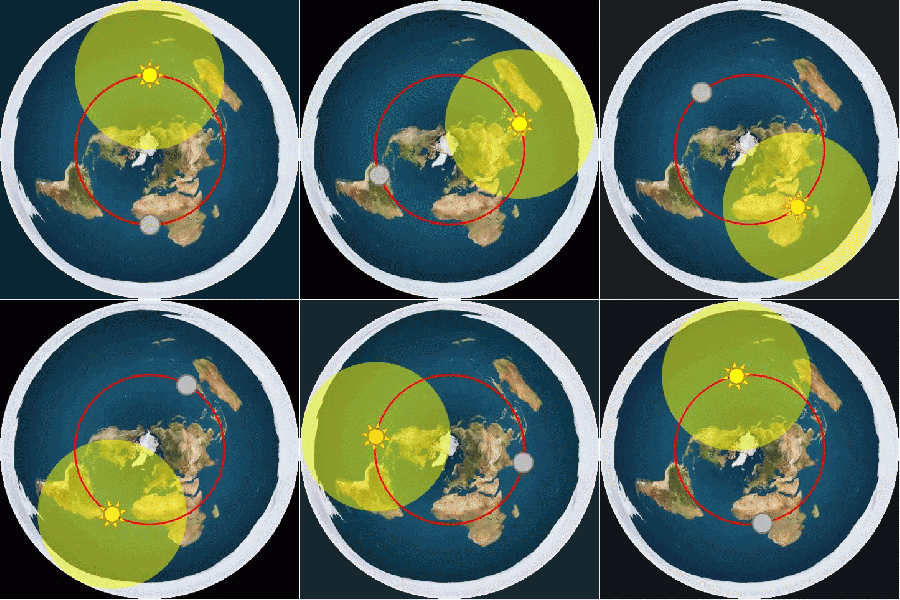
earth

The paths cause seasons by moving closer to the center and back again

Joshua 10:11 And it came to pass, as they fled from before Israel, and were in the going down to Bethhoron, that the Lord cast down great stones from heaven upon them unto Azekah, and they died: they were more which died with hailstones than they whom the children of Israel slew with the sword.12 Then spake Joshua to the Lord in the day when the Lord delivered up the Amorites before the children of Israel, and he said in the sight of Israel, Sun, stand thou still upon Gibeon; and thou, Moon, in the valley of Ajalon.13 And the sun stood still, and the moon stayed, until the people had avenged themselves upon their enemies. Is not this written in the book of Jasher? So THE SUN stood still in the midst of heaven, and hasted not to go down about a whole day.14 And there was no day like that before it or after it, that the Lord hearkened unto the voice of a man: for the Lord fought for Israel.

Comment: The author could easily have said that the earth stood still if that was the case, but it says that the sun and the moon stood still, and that the sun took action by delaying going down (the sun goes down both in the globe model and the flat earth model). If the earth had to make a halt and stopped its rotating and its path across the sun, people on earth would have died. Joshua seemed to have viewed the sun and the moon as a couple that needed to slow down together in order for the project to work. According to the book of Enoch, the moon moves slightly slower than the sun, and it is interesting that the text in Joshua confirms it by two different verbs “the sun stood still, and the moon stayed, as though the sun indeed made a complete halt while the moon almost did the same thing by slowing down considerably. The rocks thrown by God seem to confirm that his throne is placed rather close right above the vault since the rocks were thrown with such a precision. Had God’s throne been placed billions of light years away out in the universe, the rocks would fall all over the place and not in a certain valley on earth. God is almighty and can perform any miracle he likes? Absolutely, but looking at it that way, God does not need any rocks in the first place but can kill whoever he wants whenever he wants. (The book of Jasher is referred to 2 times in the Bible so it cannot easily be brushed off.)

Some might suggest that God (through Moses) just expressed himself in a way that the people would understand because the Bible is written from their perspective, but how hard would it be to say “the earth stood still”? They knew what “earth” and “still” signified, and this story is a piece of history and not poetry. Can we trust God’s claims or must we make some amendments? According to this story (confirmed in the book of Jasher and in Hab. 3:11) it was the sun and the moon that moved. If we cannot trust that God is able to express himself properly in this story (but that he means something entirely different) what other stories can we not trust because we find them impossible? The story of the cross? Is God the author of confusion? Was he not able to anticipate that honest Christian Bible readers would take him at his word and believe what he says?
stjärnor5)

Judges 5:20 They fought from heaven; the stars in their courses fought against Sisera.

Comment: Stars are viewed as living beings.

6)

1 Sam. 2:8 He raiseth up the poor out of the dust, and lifteth up the beggar from the dunghill, to set them among princes, and to make them inherit the throne of glory: for the pillars of the earth are the Lord’s, and HE HATH SET THE WORLD UPON THEM.  

Comment: The oft mentioned pillars are placed as support for the world since the world is placed ON these pillars. Since the earth is elsewhere described as having four corners, it makes sense to place one pillar in each corner. Together with a vault, the outcome looks like a FOOTSTOOL

7)

2 Sam. 22:8 Then the earth shook and trembled; the foundations of heaven moved and shook, because he was wroth. — 16 And the channels of the sea appeared, the foundations of the world were discovered, at the rebuking of the Lord, at the blast of the breath of his nostrils.

Comment: The earth is often described as standing still which is the normality, but king David describes God’s wrath in such a way that the foundations of heaven will move and shake. This sounds like something out of the ordinary, but if the  normality is that the earth always moves and shakes due to the earth’s rotation and high-speed, what would be the difference?

8)

1 Chron. 16:30 Fear before him, all the earth: the world also shall be stable, that it be not moved. 

Comment: The ideal situation seems to be a stable world that is not moved. In the heliocentric model, the world (and/or the earth) is constantly moving without stop.

9)

Job 9:6 Which shaketh the earth out of her place, and the pillars thereof tremble.7 Which commandeth the sun, and it riseth not; and sealeth up the stars. 8 Which alone spreadeth out the heavens, and treadeth upon the waves of the sea.

Comment: The ordinary scenario for the earth is to stand still (in the flat earth model), but here we can read the description of God’s power that can shake the earth “out of her place”, and the pillars under it might tremble. If the earth would normally be rotating and travelling faster than a bullet around the sun, it would be illogical to suggest that the pillars under it can tremble and that the earth might be shaken out of its place. We can also read about commanding the sun to not rise, indicating that it is the sun that moves in such a way that it rises (instead of the earth’s movement). Sealing up the stars, might be a description how they are sealed into the firmament.

10)

Job 22:14 Thick clouds are a covering to him, that he seeth not; and he walketh in the circuit of heaven. (“the vault of heaven” – ASV)

Comment: God’s position is just above the vault and since the clouds are right under it, they might also “cover” him.

11)

Job 26:7 He stretcheth out the north over the empty place, and hangeth the earth upon nothing.8 He bindeth up the waters in his thick clouds; and the cloud is not rent under them.9 He holdeth back the face of his throne, and spreadeth his cloud upon it.10 He hath compassed the waters with bounds, until the day and night come to an end.11 The pillars of heaven tremble and are astonished at his reproof.12 He divideth the sea with his power, and by his understanding he smiteth through the proud. 

Comment: “Stretching out the north”, might refer to the whole construction of the pole star in the north and the stretched out firmament surrounding it. “Hanging the earth upon nothing”? Is this a good description of an earth standing steady on pillars? Well, it is at least a closer description of a flat earth model rather than a globe model with an earth which constantly both rotates and travels at a high-speed around the sun. If you hang something up, like a picture on the wall, you expect it to remain still where it is hanged. You do not expect it to move around on the wall. A flat earth model, shaped as a footstool, could still be described as “hanging on nothing”. The waters (like the oceans) are apparently compassed with bounds which they cannot transgress, and this might be a reference to Antarctica which is the outer ring on a flat earth model. The pillars of heaven tremble, which might be a reference to the pillars in each corner of the earth which are also connected to the firmament.

12)

Job 28:24 For he looketh to the ends of the earth, and seeth under the whole heaven;

Comment: Apparently the earth has ends, which works well on the flat earth model, but not on the globe model. God can see under the whole heaven, and that is true whether the earth is flat or a globe. If someone is high enough he can also see the whole earth (everything) under him, which could very well be the point that is being made here – in order to describe God’s majesty.

13)

Job 37:3 He directeth it under the whole heaven, and his lightning unto the ends of the earth. — 18 Hast thou with him spread out the sky, which is strong, and as a molten looking glass?

Comment: The earth has “ends”, and in the Bible the sky can also be translated “expanse” as in YLT, where instead of “molten looking-glass” we can read “a hard mirror”. It is translated “a cast metal mirror” in NKJV. This could be referred to the firmament of the sky, which apparently is strong and more or less solid. You can read more about a solid firmament here.

14)

Job 38:4 Where wast thou when I laid the foundations of the earth? declare, if thou hast understanding.Who hath laid the measures thereof, if thou knowest? or who hath stretched the line upon it?6 Whereupon are the foundations thereof fastened? or who laid the corner stone thereof;7 When the morning stars sang together, and all the sons of God shouted for joy?8 Or who shut up the sea with doors, when it brake forth, as if it had issued out of the womb?9 When I made the cloud the garment thereof, and thick darkness a swaddlingband for it,10 And brake up for it my decreed place, and set bars and doors,11 And said, Hitherto shalt thou come, but no further: and here shall thy proud waves be stayed?

Comment: A fastened foundation and a corner-stone work better as descriptions for a flat earth model, and especially if it is possible to stretch out a line over it. It is harder to stretch out a line tightly on a ball, if Mount Everest and other mountains must be under this line. If the line is imagined to be stretched out a bit over Mount Everest and around the ball (maintaining the same space between the line and the surface), the measurements of the ball would not be correct. If a line in stretched out over a flat surface, however, the measurements of the surface would be correct even if the line would be placed a bit over the surface.

The stars are again described as living beings, just as much as the sons of God (angels) are, since they can sing. The sea (the oceans) are  described as being shut up with doors (bars and doors). Naturally not real doors, but it could be a description of Antarctica. Especially since we can read: Hitherto shalt thou come, but no further: and here shall thy proud waves be stayed”. A comparison is made with the womb (compare also with Jonah in the womb of the fish in Jon. 2:6), which has its outer bounds as well. It is not a big deal that boats and waves are restricted by large and small land masses (both continents and little islands), but we are reading here about an outer bound which is the maximum outer limit.

The above passage, as well as other passages in the Bible, explain that the earth has bounds, doors, bars, etc. In NASA:s heliocentric globe model the earth does not have any real bounds since you would be able to circumnavigate it in all directions on water and on land without facing any restrictions wherever you go (provided you travel with proper techniques). Not so in the flat earth geocentric model where Antarctica successfully restricts travels horizontally and the vault restricts travels vertically. There is no way for man to find any loop holes through these bounds/bars according to the flat earth model. According to NASA, not even the earth itself can be described as having bounds since it is constantly travelling around the sun in the universe. Neither are people restricted from travelling outside of the globe earth since man can travel to the moon, and based on words from spokespersons from NASA it would also be possible to travel to Mars and other places.

15)

Job 38:12 Hast thou commanded the morning since thy days; and caused the dayspring to know his place;13 That it might take hold of the ends of the EARTH, that the wicked might be shaken out of it?14 It is turned AS A CLAY TO THE SEAL; and they stand as a garment. — 18 Hast thou perceived the breadth of the earth? declare if thou knowest it all19 Where is the way where light dwelleth? and as for darkness, where is the place thereof, 20 That thou shouldest take it to the bound thereof, and that thou shouldest know the paths to the house thereof?

Comment: Again, we can read about the ends of the earth. We also get the picture of God being able to hold the ends of the earth and shake the wicked out of it. This is easy to imagine if a blanket or a sheet are used, and they have four corners. Like in this verse “Acts 10: 11 And saw heaven opened, and a certain vessel descending upon him, as it had been a great sheet knit at the four corners, and let down to the earth” + Acts 11:5. Turning the earth “as a clay to seal”, is difficult to imagine on a ball, but works well on a flat surface. In fact, if we do make a seal out of clay, it will turn out like the above which is a good picture of the flat earth model with an outer bound. 

16)

Psalm 18:15 Then the channels of waters were seen, and the foundations of the world were discovered at thy rebuke, O Lord, at the blast of the breath of thy nostrils.

17)

Psalm 19:1 The heavens declare the glory of God; and the firmament sheweth his handywork.2 Day unto day uttereth speech, and night unto night sheweth knowledge.3 There is no speech nor language, where their voice is not heard.
4 Their line is gone out through all the earth, and their words to the end of the world. In them hath he set a tabernacle for the sun,Which is as a bridegroom coming out of his chamber, and rejoiceth as a strong man TO RUN A RACE.  
His going forth is from the end of the heaven, and his CIRCUIT unto the ends of it: and there is nothing hid from the heat thereof.

Comment: If the firmament is nothing more than air or space, it is hard to see why precisely this air would be a glorious example of God’s handiwork. If, however, the firmament is something solid, bright and stretched out over the entire earth then it is easier to understand why this object is used as an example of God’s magnificent creation. We can read about the end of the world, and (just like in the book of Enoch) we can see that the sun has a tabernacle and likened to a bridegroom. This sun runs a race by going forth from the end of heaven and his circuit (a circle) unto the ends of it. This means that it is the sun that does the job around the earth, and not the earth travelling around the sun.

18)

Psalm 74:17 Thou hast set all the borders of the earth: thou hast made summer and winter.

Comment: What kind of borders are God responsible for having set on earth? According to the Bible,”borders” are usually used to describe the physical outer borders of nations (or the outer borders of physical objects) and those are normally made by man and can change with time. (Example of usage: Is 60:18, Jer 15:13, Ez. 27:4, Ez. 45:1, Mic. 5:6, Matt. 4:13). When God “scattered” the people abroad after the incident on Babel, he did not prearrange any new borders for them to dwell within. They arranged this themselves depending on where they settled down. A globe does not really have any other type of borders (apart from the man made ones just described) since man can travel both on land and on sea, and even up to Mount Everest, through the Sahara desert and to the moon and further. Based on Job 38, these borders work as bars and doors, and would restrict man from go any further. Naturally people cross borders of nations every day, so which restricting borders could be referred to in the psalm? In the flat earth model  Antarctic around the earth would work as an outer border which man would absolutely not be able to cross, and the firmament would restrict man from travelling upwards and beyond. The psalm goes on to talk about summer and winter which God has made, which is further support that the author views the borders as something else that God has made and cannot be crossed (Job 38).

19)

Psalm 75:3 The earth and all the inhabitants thereof are dissolved: I bear up the pillars of it. Selah.

Comment: The inhabitants of the earth are real, so it is likely that the pillars are real as well.

20)

Psalm 78:23 Though he had commanded the clouds from above, and opened the doors of heaven

Comment: Windows and doors are viewed as something that can be opened up – and maybe also the firmament is solid and able to have openings which God might choose to open up.
21)

Psalm 93:1 The Lord reigneth, he is clothed with majesty; the Lord is clothed with strength, wherewith he hath girded himself: the world also is stablished, that it cannot be moved.

Comment: The oft mentioned phrase “cannot be moved” does not work well on a heliocentric model where the globe rotates around its axis about 1675 km/h (approx. 1,000 miles/h) with an orbital velocity around the sun of about 28,000 km/hour. A suitable quote: “For every second you’re moving almost half a kilometer through space and you don’t even feel it”. With other words; the earth in the heliocentric model is constantly moving and is the opposite of immovable.

22)

Psalm 96:10 Say among the heathen that the Lord reigneth: the world also shall be established that it SHALL NOT BE MOVED: he shall judge the people righteously.  

Comment: It shall not be moved. This is often repeated, as though it is important information.

23)

Psalm 102:25 Of old hast thou laid the foundation of the earth: and the heavens are the work of thy hands.

Comment: If “heaven” is nothing more than air or space, it is not a good example of impressing things that God can create with his hands.

24)

Where is the sun?

Psalm 104:1 Bless the Lord, O my soul. O Lord my God, thou art very great; thou art clothed with honour and majesty. Who coverest thyself with light as with a garment: who stretchest out the heavens like a curtain:3 Who layeth the BEAMS of his chambers in the WATERS: who maketh the clouds his chariot: who walketh upon the wings of the wind:5 Who laid the foundations of the earth, that it should not be removed for ever.6 Thou coveredst it with the deep as with a garment: the waters stood above the mountains.7 At thy rebuke they fled; at the voice of thy thunder they hasted away.8 They go up by the mountains; they go down by the valleys unto the place which thou hast founded for them.9 Thou hast set a bound that they may not pass over; that they turn not again to cover the earth. (NASB: 2:— Stretching out heaven like a tent curtain.)

Comment: A curtain that is stretched out around a ball does not even sound like a curtain.  On a flat earth model, however, the analogy works perfectly. We can read about beams of his chambers in the waters. (If you check the picture above, where does the sun seem to be? Right behind that cloud, producing a beam in the water all the way to the watcher, or billions of light years away?). God apparently laid the foundation of the earth with the aim that it should not be removed for ever. V. 5-9 seems to describe the creation and the division between land and water. We can again read about a boundary for the oceans which could be a reference to Antarctica. “Thou hast set a bound that they may not pass over; that they turn not again to cover the earth”. It sounds like the waters were once above the whole earth, including the mountains, since we can read that the bound is there to not again make them cover the earth. 

25)

Psalm 136:6 To him that stretched out the earth above the waters: for his mercy endureth for ever.7 To him that made great lights: for his mercy endureth for ever:The sun to rule by day: for his mercy endureth for ever:The moon and stars to rule by night: for his mercy endureth for ever.

Comment: Water finds its level, and it cannot bend around a ball. In the beginning God stretched out the earth (the land masses) above the waters. The sun rules by the day, and the moon and stars at night. This is confirmation of the description in Gen. 1 that these heavenly objects are created for the sake of the earth, and to perform their duties from the perspective of the earth. In the heliocentric model the earth is far away from the center and the earth plays no role for the objects in the universe.

26)

Psalm 147:4 He telleth the number of the stars; he calleth them all by their names.

Comment: Stars are not dead objects, but they are alive and have names.

27)

Psalm 148:3 Praise ye him, sun and moon: praise him, all ye stars of light.4 Praise him, ye heavens of heavens, and ye waters that be above the heavens.

Comment: When this psalm was written (long after the flood), it appears that waters were still above the heavens.

28)

Prov. 8:27 When he prepared the heavens, I was there: when he set a compass upon the face of the depth(ESV —When He inscribed a circle on the face of the deep.)

Comment: If the heaven is nothing more than air or space, it would not be much to “prepare”. Drawing a circle on a ball sounds weird and illogical, but drawing a circle on a flat surface is easier to imagine.

29)

Eccl. 1:5 The sun also ariseth, and the sun goeth down, and hasteth to HIS PLACE where HE AROSE.

Comment: The sun is the one that performs the job of “going down” and “arising”, rather than the earth. The sun (called HE) returns back to the same place as he came from. This description does not fit a globe model.

30)

Isaiah 11:12 And he shall set up an ensign for the nations, and shall assemble the outcasts of Israel, and gather together the dispersed of Judah from the four corners of the earth.

Comment: If the earth has four corners and also has ends, it is a good guess that the pillars under it are four in number.

31)

Isaiah 13:10 For the stars of heaven and the constellations thereof shall not give their light: the sun shall be darkened in his going forth, and the moon shall not cause her light to shine. — 13 Therefore I will shake the heavens, and the earth shall remove out of her place, in the wrath of the Lord of hosts, and in the day of his fierce anger.

Comment: In the end of days things will change dramatically. Among other things, the moon shall no longer call her (a she) light to shine. The moon has its own light. The heavens will shake and the earth shall be removed out of her place. In a heliocentric model, this happens every day.

32)

Isaiah 38:8 Behold, I will bring again the shadow of the degrees, which is gone down in the sun dial of Ahaz, ten degrees backward. So the sun RETURNED ten degrees, by which degrees it was gone down.

Comment: This does not work on a globe model. We can read that it was the sun that returned ten degrees. If the earth would have halted to go backwards, people on earth would have died. A sun halting or going backwards a few degrees would not be harmful in a flat earth model.

33)

tent

Rob Skiba

Isaiah 40:22 It is he that sitteth upon the circle of the earth, and the inhabitants thereof are as grasshoppers; that stretcheth out the heavens as a curtain, and spreadeth them out as a tent to dwell in:

Comment: ”Circle” in the above verse is a translation from the Hebrew noun chug (Strong’s 2329) which means circle, vault or horizon.(Note that it is not translated as ball or sphere.) Apart from the above verse, it is found twice more in the Bible. In Job 22:14 we can read about God walking on the circle/vault of heaven (walking on the firmament of heaven), and in Proverbs 8:27 we can read that this circle was inscribed into the face of the deep. NKJV phrases it as ”When He drew a circle on the face of the deep”. It is hard (or rather impossible) to draw a sphere or a globe into something, but it is definitely possible to draw/inscribe a circle into something. While chug is not a translation for ball, there is however a word for ”ball” that Isaiah could have used if this is what he wanted to express, but he did not use it in the above verse. He did, however, use it in Is. 22:18 where ball is a translation from dur (Strong’s 1754). An analogy is used of the heavens stretched out as a curtain and spread out as a TENT to dwell in – for the inhabitants who look like grasshoppers. It is almost impossible to imagine the picture of a tent placed on a globe where all the inhabitants live in. It is a perfect analogy if we imagine a flat earth with a firmament over it, and especially if we also imagine the tabernacle during the Exodus. Read more here.

34)

Isaiah 43:6 I’ll say to the north, ‘Give them up’! and to the south, ‘Don’t keep them back!’ Bring my sons from far away and my daughters from the ends of the earth

35)

Isaiah 44:24 Thus saith the Lord, thy redeemer, and he that formed thee from the womb, I am the Lord that maketh all things; that stretcheth forth the heavens alone; that spreadeth abroad the earth by myself;

Comment: If the heaven is nothing more than air or space, it is nothing impressive about spreading this air out, either alone or with some help.

36)

Isaiah 45:12 I have made the earth, and created man upon it: I, even my hands, have stretched out the heavens, and all their host have I commanded.

37)

Isaiah 48:13 Mine hand also hath laid the foundation of the earth, and my right hand hath spanned the heavens: when I call unto them, they stand up together.

Comment: Again, much ado about the spreading out the heavens with one single hand. If the heaven is only air or space, it is not impressive. If we are including the whole firmament/vault however, it is very impressive and even breathtaking.

38)

Isaiah 60:19 The sun shall be no more thy light by day; neither for brightness shall the moon give light unto thee: but the Lord shall be unto thee an everlasting light, and thy God thy glory.20 Thy sun shall no more go down; neither shall thy moon withdraw itself: for the Lord shall be thine everlasting light, and the days of thy mourning shall be ended.

Comment: Once again the moon is stated to give light, and once again the sun is stated to cause the movements on earth – here going down.

39)

Isaiah 66:1 Thus saith the Lord, The heaven is my throne, and THE EARTH IS MY FOOTSTOOL: where is the house that ye build unto me? and where is the place of my rest?

Comment: The earth is God’s footstool. Does it really look like a footstool standing firm on four legs, or does it look like a constantly moving ball?

40)

Ez. 1:22 And the likeness of the firmament upon the heads of the living creature was as the colour of the terrible crystal, stretched forth over their heads above.23 And under the firmament were their wings straight, the one toward the other: every one had two, which covered on this side, and every one had two, which covered on that side, their bodies.24 And when they went, I heard the noise of their wings, like the noise of great waters, as the voice of the Almighty, the voice of speech, as the noise of an host: when they stood, they let down their wings.25 And there was a voice from the firmament that was over their heads, when they stood, and had let down their wings.26 And above the firmament that was over their heads was the likeness of a throne, as the appearance of a sapphire stone: and upon the likeness of the throne was the likeness as the appearance of a man above upon it.27 And I saw as the colour of amber, as the appearance of fire round about within it, from the appearance of his loins even upward, and from the appearance of his loins even downward, I saw as it were the appearance of fire, and it had brightness round about.28 As the appearance of the bow that is in the cloud in the day of rain, so was the appearance of the brightness round about. This was the appearance of the likeness of the glory of the Lord. And when I saw it, I fell upon my face, and I heard a voice of one that spake.

Comment: The firmament looked like crystal and the strange beings, which the text talks about, were right under this firmament. Ezekiel could still both hear them and see them in his vision. Just above the firmament is where Ezekiel could see the throne and someone who looked like a man upon it.

41)

Ez. 32:7 And when I shall put thee out, I will cover the heaven, and make the stars thereof dark; I will cover the sun with a cloud, and the moon shall not give her light.All the bright lights of heaven will I make dark over thee, and set darkness upon thy land, saith the Lord God.

Comment: Again we can read that the moon has its own light. The stars will be dark, but it does not say that they will therefore cease to be stars. We know from Revelations that stars will eventually fall down unto the earth.

42)

Dan. 4:10 Thus were the visions of mine head in my bed; I saw, and behold a tree in the midst of the earth, and the height thereof was great.11 The tree grew, and was strong, and the height thereof reached unto heaven, and the sight thereof to the end of all the earth —20 The tree that thou sawest, which grew, and was strong, whose height reached unto the heaven, and the sight thereof to all the earth;21 Whose leaves were fair, and the fruit thereof much, and in it was meat for all; under which the beasts of the field dwelt, and upon whose branches the fowls of the heaven had their habitation:22 It is thou, O king, that art grown and become strong: for thy greatness is grown, and reacheth unto heaven, and thy dominion to the end of the earth.

Comment: A tree in the midst of the earth, high enough to reach heaven and visible to the entire earth? Someone might suggest that this is only a dream and we can even read in v. 22 that the tree was king Belteshazzar, but dreams do not have to be illogical just because they are dreams. It would make more sense for a divine dream to be somewhat logical in order to work as a reasonable comparison with the king. Daniel had several other dreams and visions, and while none of them were therefore “real” they still made perfect sense.

43)

Dan. 8:10 And it waxed great, even to the host of heaven; and it cast down some of the host and of the stars to the ground, and stamped upon them.

Comment: Stars are cast down to earth and stamped on. Still, life on earth continues. Even if this is only a dream, it is a confirmation of Jesus own words in the New Testament and the prophesies in Revelations.

44)

Joel 2:10 The earth shall quake before them; the heavens shall tremble: the sun and the moon shall be dark, and the stars shall withdraw their shining:

Comment: Air and/or space will tremble? Or the whole construction with the firmament?

45)

Joel 3:15 The sun and the moon shall be darkened, and the stars shall withdraw their shining.

Comment: The moon is again claimed to have its own light.

46)

Amos 5:26 But ye have borne the tabernacle of your Moloch and Chiun your images, the star of your god, which ye made to yourselves.

Comment: Stars can apparently be idols, as though they were people.

Faced up?

47)

Amos 9:6 It is he that buildeth his stories in the heaven, and hath founded his troop in the earth; he that calleth for the waters of the sea, and poureth them out upon the face of the earth: The LORD is his name.

Amos 9:6 (NASB)The One who builds His upper chambers in the heavens And has founded His vaulted dome over the earth—

Comment: “The face of the earth” could signify a certain side up, and there are numerous verses which speak about the face of the earth. A troop or a vaulted dome is over the earth.

Moses is said to have spoken to the Lord face to face (Ex. 33:11). The word paniym (Strong’s 6440) which is here translated “face”, could also be translated “presence” “being before someone”, etc, but in. v. 11 Moses emphasizes that he spoke to God “face to face, as a man speaketh unto his friend”. Friends who speak to each other (not counting modern technique) are situated in the same place and they do not speak to each other back to back. If they were sitting down beside each other, they would turn their faces toward each other during their talk, trying to be somewhat “in front” of the other person. Despite that God and Moses spoke face to face, we can read in v. 20 that it is not possible to see God’s face and remain alive. God said: “Thou canst not see my face: for there shall no man see me, and live”. God does not contradict himself, but it is possible that God’s face was somehow hidden from Moses when they were speaking opposite each other unless it was a manifestation of the Angel of the Lord. Their positions were still “in front of” each other since they were speaking face to face (which could be front to front). In v. 23 the problem is resolved by God letting Moses see part of his (God’s) back, rather than his face. “And I will take away mine hand, and thou shalt see my back parts: but my face shall not be seen. It is clear that God describes himself (at least in this particular manifestation) as having both a back and a front with a face.

So when we read aboutthe face of the earth”, one particular side of the earth appears to be described. Which one could that be on a ball? There are no sides on a ball. Once again, it is the flat earthers who have no need to change what the Bible says.

48)

Jonah 2:6 I went down to the bottoms of the mountains; the earth with her bars was about me for ever: yet hast thou brought up my life from corruption, O Lord my God. 

Comment: Jonah compares his situation within the bounds of the great fish (the belly), with the bars of the earth – which might be a reference to the restrictions of the vault of the earth and the outer ring.

49)

Hab. 3:11 The sun and moon stood still in their habitation: at the light of thine arrows they went, and at the shining of thy glittering spear.

Comment: The sun and the moon stood still. Can we choose to not believe it because it does not fit a certain model?

50)

Matt. 4:8 Again, the devil taketh him up into an exceeding high mountain, and sheweth him all the kingdoms of the world, and the glory of them;9 And saith unto him, All these things will I give thee, if thou wilt fall down and worship me.

Comment: Why the need to take Jesus up to a high mountain, if he would not be able to see more than a small region anyway? In the flat earth model, if he would be taken close to the firmament, he would be able to see the entire earth.

51)

Matt. 24:29 Immediately after the tribulation of those days shall the sun be darkened, and the moon shall not give her light, and the stars shall fall from heaven,and the powers of the heavens shall be shaken:—31 And he shall send his angels with a great sound of a trumpet, and they shall gather together his elect from the four winds, from one end of heaven to the other.

also:

Mark 13:25 And the stars of heaven shall fall, and the powers that are in heaven shall be shaken.26 And then shall they see the Son of man coming in the clouds with great power and glory.27 And then shall he send his angels, and shall gather together his elect from the four winds, from the uttermost part of the earth to the uttermost part of heaven.  

Comment: Stars will fall on earth, and life will still continue. Every one shall see the son in the clouds, which is easier if the earth was flat. The elect will be collected from the four winds, from one end of heaven to the other. Seems like the heaven starts and ends at certain places.

52)

1 Cor.15:41 There is one glory of the sun, and another glory of the moon, and another glory of the stars: for one star differeth from another star in glory.

Comment: Again it is hinted that the moon has its own light.

 53)

Jude 13 Raging waves of the sea, foaming out their own shame; WANDERING STARS, to whom is reserved the blackness of darkness for ever 

Comment: See more here about wandering stars. Planets are not mentioned in the Bible, but stars are mentioned – including wandering stars like Venus.

54)

Rev. 1:7 Behold, he cometh with clouds; and every eye shall see him, and they also which pierced him: and all kindreds of the earth shall wail because of him. Even so, Amen.—20 The mystery of the seven stars which thou sawest in my right hand, and the seven golden candlesticks. The seven stars are the angels of the seven churches: and the seven candlesticks which thou sawest are the seven churches.

 55)

Rev. 6:13 And the stars of heaven fell unto the earth, even as a fig tree casteth her untimely figs, when she is shaken of a mighty wind.

Comment: The stars of heaven will fall on the earth, but the life on earth continues on also after this moment. The process is compared with figs being shaken off a fig tree, and figs land under the tree on a flat surface.

56)

Rev. 7:1 And after these things I saw four angels standing on the four corners of the earth, holding the four winds of the earth, that the wind should not blow on the earth, nor on the sea, nor on any tree.

Comment: This is part of a prophesy, and since prophesies are real future events it makes sense to believe there will in fact be four angels on a mission which includes standing on the four corners of the earth holding the four winds. It is true that it is hard to take hold of a wind but we are not told exactly how these winds are being held. Real angels can accomplish real things which human beings cannot do.

57)

Rev. 8:10 And the third angel sounded, and there fell a great star from heaven, burning as it were a lamp, and it fell upon the third part of the rivers, and upon the fountains of waters;11 And the name of the star is called Wormwood: and the third part of the waters became wormwood; and many men died of the waters, because they were made bitter. 

Comment: People survived despite of this star landing on earth, and the water did not burn up because of it but became bitter.

58)

Rev. 9:1 And the fifth angel sounded, and I saw a star fall from heaven unto the earth: and to him was given the key of the bottomless pit.

Comment: A star fell unto the heaven, and apparently the bottomless pit (which some believe to be in Antarctica) remained intact without burning up.

59)

Rev. 12:4 And his tail drew the third part of the stars of heaven, and did cast them to the earth: and the dragon stood before the woman which was ready to be delivered, for to devour her child as soon as it was born.

Comment. A third part of the stars of heaven were cast to earth, but life continued on earth also after this moment.

60)

Rev. 20:8 And shall go out to deceive the nations which are in the four quarters of the earth, Gog, and Magog, to gather them together to battle: the number of whom is as the sand of the sea.9 And they went up on the BREADTH of the earth, and compassed the camp of the saints about, and the beloved city: and fire came down from God out of heaven, and devoured them.

Comment: “The nations at the four corners of the earth” could be a way to express “all nations”,  but this does not exclude the possibility that it is also literally true that the nations are within four corners of the earth – especially if we also add the information that there will be four angels standing at these corners holding the winds of the earth. The word ”breadth” above describes the surface of the earth, and not parts of the earth. The word is a translation from the noun πλάτος/platos (Strong’s 4114) and can be translated as width or broad plain. The corresponding adjective is πλατύς/platus (Strong’s 4116) which can be used as a description of a street as in Matt. 7:13 (flat and stretched out). The corresponding verb is πλάσσω/plassó (Strong’s 4111), which can be translated as form/mould. The French word ”plateau” signifies a level portion (or nearly level) of the earth’s surface. The French word derives from platel, which is a description of a flat object, like a plateIn Swedish the word for”flat” is ”platt” (similar in other Germanic languages).

Compare with Eph. 3:18 “what is the breadth, and length, and depth, and height”, which includes all possible measures, where “breadth” is directly followed by “length” indicating a natural contrast between the words and measurements.

Compare also with Rev. 21:16, which concerns measuring of the city of Jerusalem. Once again the breadth is contrasted with the length, and it would not be possible to measure the gates and the walls in this manner unless they were flat. Notice “the length is as large as the breadth” and the length and the breadth and the height of it are equal. 

Rev. 21:15 And he that talked with me had a golden reed to measure the city, and the gates thereof, and the wall thereof.16 And the city lieth foursquare, and the length is as large as the breadth: and he measured the city with the reed, twelve thousand furlongs. The length and the breadth and the height of it are equal.17 And he measured the wall thereof, an hundred and forty and four cubits, according to the measure of a man, that is, of the angel.

***

Moreover, there are about 35 verses each that mention the end/ends of the earth. Naturally it is impossible to find any “ends” on a ball, and it is just as impossible to figure out which side of a ball that is considered “the face” (a front of something)Needless to say that the existence of ends and a face of the earth work perfectly on a flat earth model.

I can also recommend reading the book of Enoch and the book of Jasher (both referred to in the Bible) and always compare everything with the Bible.

Satan would like to hide God’s creation from us (in order to hide God), and he is pleased with the teaching of Evolution in combination with billions of years in a heliocentric model – which minimize God and our significance in his creation:

John 3:12 If I have told you earthly things, and ye believe not, how shall ye believe, if I tell you of heavenly things?

Rom. 1:19 Because that which may be known of God is manifest in them; for God hath shewed it unto them.20 For the invisible things of him from the creation of the world are clearly seen, being understood by the things that are made, even his eternal power and Godhead; so that they are without excuse

I went to the extreme ends of the earth and saw there huge beasts, each different from the other and different birds (also) differing from one another in appearance, beauty, and voice. And to the east of those beasts, I saw the ultimate ends of the earth which rests on the heaven. And the gates of heaven were open, and I saw how the stars of heaven come out…(1 Enoch 33:1-2).

Fake moon landing: A funny thing happened on the way to the moon

If you want to learn more WHY people believe in a flat earth from their own sources:  Mark Sargent’s Flat earth clues. Eric Dubay’s 200 reasons the earth is not a spinning ball. The youtube channel My perspective.

(Note, that I do not necessarily agree with all statements in the links I recommend here or elsewhere on my Blog.)
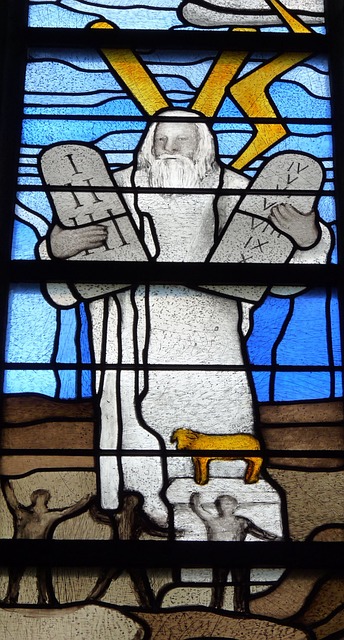
Dokumentär film om platt jord från ett kristet bibliskt perspektiv

Plattjordtro sprider sig

Med tanke på den falska bild av plattjordmodellen som sprids av internetsidor såsom answersingenesis och creation (som mestadels slår ner halmgubbar genom att kritisera vanställda åsikter som ingen har), så kommer här nedan en bättre förklaring av modellen – främst för att den kommer direkt från källan. Visserligen så har de vanliga plattjordtroende olika åsikter sinsimellan, men de delar åtminstone själva grundkonceptet av modellen (och tror inte att vi bor på en snurrande boll) samt ogillar  den organisationen som kallar sig “Flat earth society” som de ser som sina motståndare. Av det skälet ska man alltså inte göra misstaget att citera från denna organisation om man vill debattera med en plattjordtroende, eftersom denne förmodligen inte håller med.

Med tanke på den snabba spridningen av plattjordtro anser jag nästan att det är ett krav att sätta sig in i hur detta kan vara möjligt. Det kan vi endast göra genom att studera  argumenten – från deras material, och inte från deras motståndares material. Det finns inga andra sätt. Detta leder förhoppningsvis till att man kan få mer respekt för människor som har en annan åsikt om jorden, utan att man nödvändigtvis håller med. Annars så kan det gå som i fallet med pastorn som fick sparken efter över 8 år i sin tjänst, trots att han inte ens yppat sin tro i kyrkan! Hur kan detta ämne splittra kristna på det sättet? Bibeln beskriver det inte som en synd att tro på en jord som inte rör sig och som står på fyra pelare med ett himlavalv över sig.

Själv välkomnar jag denna stora plattjordtro eftersom fokus sätts på Guds skapelse (och därför på det faktum att det finns en Skapare) och vår unika centralt placerade jord. Så skulle inte Satan agera, eftersom han snarare hoppas att så många som möjligt tror på evolutionsteorin, slumpen, en mycket gammal jord som inte ens är en liten prick i universum och där människorna är helt betydelselösa och oälskade.

Oavsett vilken sida man står på så kan jag rekommendera en videokanal som heter My perspective, pga den imponerande grafiken. Det är sällan man håller med om allt som sägs ens i imponerande videomaterial, men då får man spotta ut benen och behålla resten. Missa heller inte Flat earth man’s videokanal Conspiracy music guru, med underhållande musikvideor (även om han ibland använder ovårdat språk).