Tag Archive | faith alone

What is The Law of Christ?

Paul said,  “Bear one another’s burden, and so fulfill the law of Christ.  (Gal. 6:2)

What is the law of Christ?  The law of Christ is the body of commands and teachings He taught to His disciples and they in turn were to teach every new disciple.  (Matt. 28:20)

Paul equated Christ’s law to God’s law.  (1 Cor. 9:21)

“To them that are without law, as without law, (being not without law to God, but under the law to Christ,) that I might gain them that are without law.”

Paul told the Christians in Galatia to carry each other’s burdens, and in doing so they would fulfill the law of Christ.  (Gal. 6:2)

Paul also said such things as “Let the word of Christ dwell in you richly in all wisdom; teaching and admonishing one another in psalms and hymns and spiritual songs, singing with grace in your hearts to the Lord.”  (Col. 3:16)

What is the word of Christ?  

It has to do with everything Jesus taught and commanded! I have heard people try to get away with what Jesus taught by claiming it belongs to another dispensation in the future; that what Christ taught cannot be applied doctrinally to the Christians in the Church Age.

The word “doctrine” simply means “teaching or instruction.”  It is not some mystical word that is hard to grasp.  Whatever Jesus taught applied to the apostles, to those at that time, and to us!  If one does not abide in the doctrine of Christ, he does not have God.

2 John 1:9 says,
“Whoever transgresses and does not abide in the doctrine of Christ does not have God. He who abides in the doctrine of Christ has both the Father and the Son.”

As one author has well stated,

“It seems strange that men should forbid Jesus the privilege of teaching, during His earthly ministry, and great principles governing man’s relation to God – not only during the few remaining days of His brief earthly ministry, but throughout the age to follow, for which He was even then preparing His disciples.  It seems even stranger that men who so easily reject much of our Lord’s later teaching as ‘not applicable to the present dispensation’ do not hesitate to accept much of His earliest teaching (to Nicodemus, for example) as being fully applicable to the present age.  (One friend, in conversation with the author, even denied that our Lord’s words in John 15 have any bearing on the question of our relation to Christ today, since they were spoken ‘before Calvary’ – a few hours!  What delicate, fragile hairs skilled ‘rightly dividers’ can sometimes neatly split with one swift, sure stroke of their hermeneutical broadaxe!)

It is true that Jesus made reference to certain legal and ceremonial aspects of the Mosaic economy which are not applicable today.  But it is also true that He enunciated cardinal principles governing man’s spiritual relation to God which are as valid today as the moment of utterance.  One of these principles, according to His teaching in the Parable of the Law of Forgiveness, is that true repentance toward God is inseparably associated with our attitude toward our fellow men and cannot exist apart from a charitable, forgiving spirit toward others.

Such true repentance, like sincere faith and the faithful retention of the saving word of the Gospel, is necessary, not merely for a fleeting moment at the occasion of one’s conversion, but continually and habitually, as an essential condition of forgiveness and salvation.  ‘So likewise shall my heavenly Father do also unto you,’ warned Jesus, ‘if ye from your hearts forgive not every one his brother their trespasses.’  It is possible, warned Jesus, that Peter and others who have known the forgiving grace of God might forfeit that forgiveness.  The forgiving grace of God cannot dwell in bitter, unforgiving hearts.  He who refuses to forgive his brother has no real sense of need for the forgiveness of God and no just claim on His gracious forgiveness.  ‘Forgive us our debts, as we forgive our debtors.’”

What does Jesus expect from us? 

Jesus expects us to obey Him.  He was not suggesting it, nor did He say it was for another dispensation.  Jesus said true believers are those who obey Him.  Jesus said if you love Him, keep His commandments (John 14:15).

We are to abide in the doctrine of Christ.  When we abide in the doctrine of Christ, we are fulfilling the law of Christ and it shows that we have both the Father and the Son.   (2 John 1:9)

God’s will is expressed in the Law of Christ. 

The law of Christ is anything Jesus taught in Matthew, Mark, Luke, and John, and is considered the will of the Father.  (Matt. 12:50)

Jesus said whoever hears these sayings (of Jesus), and DOES THEM, is likened to a wise man who built his house on the rock. (Matt. 7:24)

The teachings of Jesus come from the Father. 

Jesus said His teaching were not His own, but came from the Father.  (John 7:16-17)  Everything Jesus taught and commanded came from God. (John 8:28; John 12:49-50; John 14:10; John 14:24; John 14:31)  Jesus obeyed the Father perfectly. Everything Jesus did was the will of God.

Jesus said to His disciples, “Teach them to obey all that I commanded you”.  By teaching others to obey all that Jesus commanded, is teaching the will of God.

The law of Christ is a law of the heart and mind. 

When one starts talking about how we should obey Jesus, immediately the cry is, “You are teaching a works salvation!”  Nothing could be further from the truth.  The Bible never says one can earn his salvation, but what the Bible does say iS to WORK OUT your own salvation (Php. 2:12).  You can’t work out what you don’t have!  On the other hand, all they teach is that one can’t help but sin every single day in thought, word, and deed.  Throughout both Testaments God wants people to forsake wickedness.  Jesus told people to “go and sin no more,” and Paul said, “Awake to righteouness and sin not!”  But on every side we are attacked by Satan’s followers who say you can keep sinning and never die (the same lie from the Garden).  Just listen to this clip ”Today’s Gospel”  of what is being taught out there, and hear how God’s word refutes them!

The secret to living a holy life, free from the bondage of sin, is LOVE.  The purity of your actions is not only from the mind, but from the heart. What is in your heart will fill your mind as well. Jesus called the teachers of the law and Pharisees hypocrites.  They were beautiful on the outside, but inside were full of dead men’s bones.  People, from the outside, can appear as righteous but inside are full of hypocrisy and wickedness. (Matt. 23:28)  It is from out of the heart that proceed evil thoughts, murders, adulteries, fornication, thefts, false witness, blasphemies (Matt. 15:19).  Jesus is not looking just for external actions to be pure, but his desire is for us to be pure in heart and mind as well.

 Will the Holy Spirit be given to those who do not obey Jesus – who claim to continually sin everyday in thought, word, and deed?

Jesus said the Holy Spirit will only be given to those who obey Him.

If you love Me, keep My commandments. And I will pray the Father, and He will give you another Helper, that He may abide with you forever.”  (John 14:15-16)

This is corroborated by Peter.

And we are His witnesses to these things, and so also is the Holy Spirit whom God has given to those who obey Him.”  (Acts 5:32) 

John tells us,

“And he that keepeth his commandments dwelleth in him, and he in him.  And hereby we know that he abideth in us, by the Spirit which he hath given us.” (1 John 3:24)

The Holy Spirit whom God has given abides in those who keep the commandments of Jesus!  For those who claim to sin everyday in thought, word, and deed cannot have the Holy Spirit, for they do not obey God.  They even write off what Jesus said as for another dispensation and therefore it doesn’t apply to them doctrinally!  Why?  Because it will knock down the wall of a false teaching called Unconditional Eternal Security!  When you listen to all these false teachers, and get rid of all the fluff in their sermons, it all boils down to one thing…..you can keep on sinning and you won’t die!  It’s the same lie the Serpent told Eve in the Garden.

The Bible is clear that if you don’t obey and abide in the doctrine of Christ, you do not belong to Christ, nor do you have the Holy Spirit. (2 John 1:9; Rom. 8:9)

Jesus said whoever obeys His commands, he is the one who loves Him.  And He who loves Jesus loves the Father.  Again, if anyone loves Jesus, he will obey His teachings. (John 14:21; John 14:23)

The reverse side is true just as well.  Jesus said those who do not love him do not keep His words. (John 14:24)

Jesus’ love is conditional as long as we continue to obey. 

Jesus’ love is NOT unconditional.  Note the condition in the words of Jesus,

If ye keep my commandments, ye shall abide in my love; even as I have kept my Father’s commandments, and abide in his love.   (John 15:10)

Being friends with Jesus is also conditioned upon our obedience.

“Ye are my friends, if ye do whatsoever I command you.”  (John 15:14)

If we hold to the teachings of Christ, we are the real disciples of His. 

“Then Jesus said to those Jews who believed Him, “If you abide in My word, you are My disciples indeed.  And you shall know the truth, and the truth shall make you free.” (John 8:31-32)

We are assured by Jesus we will never see death if we keep His word.

“Most assuredly, I say to you, if anyone keeps My word he shall never see death.” (John 8:51)

It is obedience to the teachings (keeping His word) that causes the blessings.  Just as blessings were promised for obedience to the law of Moses, so are the blessings promised to us based on our obedience to Christ.

One cannot have salvation without repentance followed with obedience.

The Scripture says,

“And having been perfected, He (Jesus) became the author of eternal salvation to all who obey Him,”  (Heb. 5:9)

It doesn’t say salvation is given to those who sin every day in thought, word, and deed.  God does not want people to sin.  He tells people to forsake their sins and follow Him.  Jesus commanded that all men to repent, but modern man will tell you repentance is not part of the Gospel. It’s a lie.  God wants repentance preached (Luke 5:32; Luke 24:47; Acts 20:21, etc. etc.).

There is a “godly sorrow.”  “For godly sorrow worketh repentance TO SALVATION not to be repented of;”  (2 Cor. 7:10)

Jesus said of the Holy Spirit,

“And when he is come, he will reprove the world of sin, and of righteousness, and of judgment:” (John 16:8)

And as we read above, God gives the Holy Spirit to those who obey Him. (Acts 5:32)  When a person feels the conviction of the Holy Spirit about his sinful condition, he can shrug it off, or he’ll come to God to forgive him of such a sinful life style.  He will want pardon through the mercy of God.  He knows his only hope is through Jesus who provided a way for his salvation and freedom from sin.  He will hate his sin because he can see what it has done to him and where it will send him.  He will not have a desire to do it anymore.  At that point of repentance, he wants to give up sin and not do it again.  Some people may be bothered for weeks under the conviction of the Holy Spirit, some may be a few days, and for some it may be on the very day (process of repentance).  He will not have rest until he comes to that crucial point of “godly sorrow” that leads to salvation.  He has to believe (faith) that God is able to forgive him of all the sins he has committed up to that point in his life, and his heart must be dead set against sinning again, which it would be if he is truly under godly sorrow.  Jesus came to set us free from sin, that it no longer has to have dominion over us.  His repentance will be proven by his deeds (Acts 20:26).  One’s deeds (obedience – NOT disobedience) will prove his repentance!  God will give that person strength if he will obey Him.  He gives the Holy Spirit to those who obey Him.  From there, as he reads the Scriptures (needs to grow in the faith), he will be warned not to go back to the way he once walked.  He can quench the Holy Spirit (1 Thess. 5:19).  The Scripture shows us certain sins will not let one inherit the kingdom of God, but instead lead one to eternal doom (Gal.5:19-21; 1 Cor. 6:9-10; Eph. 5:3-6; Rev. 21:8, etc.).  The Bible doesn’t say we work FOR our salvation, but it does say to WORK OUT our own salvation, and that with fear and trembling! (Php. 2:12).

Salvation is conditional upon the fact that we continue to abide in Jesus.  One who abides in Jesus will not sin.  Remember, Jesus said if you love Him you will obey Him and His teachings.  The Scriptures tell us,

“For this is the love of God, that we keep His commandments.  And His commandments are not burdensome.”  (1 John 5:3)

The Scriptures also say,

“He that saith, I know him, and keepeth not his commandments, is a liar, and the truth is not in him.” (1 John 2:4)”

In flaming fire taking vengeance on them that know not God, and that obey not the gospel of our Lord Jesus Christ:”  (2 Thess. 1:8) 
And you want to claim that you SIN everyday in thought, word and deed? This is simply being disobedient!

Which one is it – believing or obeying? 

Some Scripture passages say salvation is a result of obedience while other texts say salvation is through faith.  Is this a contradiction?  No.  Paul said,

“By whom we have received grace and apostleship, for obedience to the faith among all nations, for his name:  (Rom. 1:5)

“For by grace you have been saved through faith, and that not of yourselves; it is the gift of God,” (Eph. 2:8)

Faith comes first and obedience is the evidence of the faith.  The Gospel is to be obeyed for salvation sake.

“In flaming fire taking vengeance on them that know not God, and that obey not the gospel of our Lord Jesus Christ:”  (2 Thess. 1:8)

Disobedience is manifested in unbelief.

“He that believeth on the Son hath everlasting life: and he that believeth not the Son shall not see life; but the wrath of God abideth on him.” (John 3:36)

“And to whom sware he that they should not enter into his rest, but to them thatbelieved not?  So we see that they could not enter in because of unbelief. (Heb. 3:18-19)

So if you are disobedient, sinning everyday in thought, word, and deed, you are walking in unbelief. Among the sins that will send one into the Lake of Fire, the “unbelieving” is one of them.

“But the fearful, and unbelieving, and the abominable, and murderers, and whoremongers, and sorcerers, and idolaters, and all liars, shall have their part in the lake which burneth with fire and brimstone: which is the second death.”
(Rev. 21:8)

The Bible is clear that a past moment of acceptance of Christ does not guarantee anyone eternal salvation regardless how they live afterward.  If they don’t continue in the faith they will suffer the consequences in Hell for all eternity.

Scriptures say that there will be Christians who will depart from the faith (departing from the faith doesn’t happen to lost people!) (1 Tim. 4:1).  The widows turned from Christ and started following Satan (1 Tim. 5:11-15). Demas is another example. He was a traveling companion of Paul (Col. 4:14; Phm. 1:24). They worked together and endured various troubles and persecutions preaching the kingdom of God. But what happened to Demas? Paul said, “For Demas hath forsaken me, having loved this present world, and is departed unto Thessalonica;…”  (2 Tim. 4:10). Demas, a saved man, fell away and went back to loving this present world.  He loved the world more than God. The god of this world is Satan! (2 Cor. 4:4). Demas got deceived and it affected his behavior. In his unrepentant state, he lost his salvation for he did not endure! (1 John 2:15; James 4:4)

Those who obey Jesus’s commands live in him.  Paul said to examine yourselves to see whether you are in the faith (2 Cor. 13:5).  John corroborates Paul by saying, “And he that keepeth his commandments dwelleth in him, and he in him. And hereby we know that he abideth in us, by the Spirit which he hath given us.” (1 John 3:24)

Those who have a true saving faith in Christ will obey His teachings and commands.  Obedience is natural evidence of saving faith.  Those who are disobedient display their lack of saving faith.  Jesus NEVER asks us to do something we cannot do. If you love Jesus, you will obey Him, and to obey Him is fulfilling the law of Christ.

(Thanks to Sandra)

John Burke säger i princip att vi kan tjäna två herrar och att vi kan ha vår synd och vår frälsning samtidigt

Nyhet  i Dagen från 31 mars som jag vill belysa,  gällande församlingsplanteringskonferens och John Burke, pastor i Gateway Community Church i Austin. Det handlar om läran att vi kan tjäna två herrar och att vi inte behöver göra oss av med vår synd för att vara frälsta. Dagen skriver:

”Det är okomplicerat men svårt att plantera församlingar i en ny okänd kultur”, menarJohn Burke. Han föreläste hos nätverket Stockholm 2020 och gav också tio goda råd för ett församlingsbygge. Nätverket Stockholm 2020:s andra konferens har fördubblats sitt deltagarantal, från förra årets 60 till årets 120. I år handlar det om John Burkes erfarenheter av att plantera församling. Han och Craig Whitney, som leder ”Emerging Leadership Inititative”, ELI (initiativ för växande ledarskap), är huvudtalare. Ska människor som inte är vana att gå i en kyrka känna sig hemma i en församling, måste murar rivas och broar byggas, förklarar Burke:

– Det måste börja med nåd. Men själva ordet är det få som begriper idag, så vi säger i stället ”kom som du är” eller ”inga perfekta människor tillåtna”. Ingen blir hjälpt av att höra hur fel man lever. Alla vet ändå att man lever under fördömelse även om få tillstår det, förklarar Burke. Vad människor behöver är att förstå att det finns frihet från fördömelse genom Kristus. Människor beöver höra detta med ord som de förstår.

Inga perfekta människor tillåtna?! Man kan gissa sig till att Burke kanske försöker skoja till det lite här, men vi kan ändå förstå vad det är han försöker förmedla och det är ganska skrämmande. Burke verkar anse att synd är HELT NORMALT bland kristna och inte ens något som vi borde haka upp oss på eftersom vi ändå alltid kommer att fortsätta att synda. Så ingen blir hjälpt av att höra hur fel man lever? Vi borde alltså inte säga till våra medsystrar och medbröder som lever i uppenbar synd att de måste OMVÄNDA sig och lämna synden bakom sig för att kunna komma in i Guds rike? Vi ska klappa alla medhårs och säga ”Allt är väl med din själ” trots att de är på väg till helvetet? Lyder vi Burke kan vi få blod på våra händer eftersom vi uppmuntrar människor indirekt att inte göra något åt sin synd. Vi kan bli medskyldiga till att de går för evigt förlorade.

Burke talar helt emot vad Bibeln säger. Bibeln är full av varningar till kristna att de måste OMVÄNDA sig för att få evigt liv. Vi kan absolut inte komma till himlen ”som vi är” om detta innebär att vi har synd i våra liv. Ingenting oheligt kan komma in i gudsriket och synd gör oss oheliga.

Om du menar att du inte är befriad från synden utan endast undan STRAFFET från synden då har du lurat dig själv. Gud kräver att vi lever heligt och rättfärdigt. Matt 1:21 säger att Jesus ska frälsa folket FRÅN deras synder. Inte frälsa dem I dears synder.  Enligt Titus 2 innebär nåden att vi kan avhålla oss från synd. Inte att vi kan ha kvar vår synd och att nåden täcker upp för den.

Titus 11. Ty Guds nåd har uppenbarats till frälsning för alla människor. 12. Den lär oss att AVSÄGA OSS all ogudaktighet och världsliga begär och att leva anständigt, rättfärdigt och gudfruktigt i denna världen

1 Pet 4:1 Då nu Kristus har lidit i köttet för oss, så skall ni väpna er med samma sinnelag, ty den som lider i köttet har brutit med synden, 2. för att han under den återstående tiden i köttet inte längre skall leva efter människors begär utan efter Guds vilja.

Rom 6:14 Ty synden skall inte härska över er, eftersom ni inte är under lagen, utan under nåden.

Rom 6:6 för vi vet detta, att vår gamla människa är korsfäst med honom, för att syndens kropp skall bli tillintetgjord, så att vi inte mer skall tjäna synden.

1 John 3:4. Var och en som gör synd bryter också mot lagen, ty synd är brott mot lagen. 5. och ni vet att han uppenbarades för att han skulle ta bort våra synder, och synd finns inte i honom. 6. Var och en som förblir i honom syndar inte. Var och en som syndar har inte sett honom och inte lärt känna honom. 7. Kära barn, låt ingen bedra er. Den som gör rätt är rättfärdig, liksom han är rättfärdig. 8. Den som gör synd är av djävulen, ty djävulen har syndat från begynnelsen. Och därför uppenbarades Guds Son, för att han skulle göra om intet djävulens gärningar. 9. Var och en som är född av Gud gör inte synd, ty Guds säd förblir i honom. Och han kan inte synda, eftersom han är född av Gud. 10. På detta känns Guds barn och djävulens barn igen: Var och en som inte gör rättfärdighet är inte av Gud, och inte heller den som inte älskar sin broder.

Jesus had the same kind of flesh as us, and FLESH is not sinful in itself

The greek word sarx (sárks) means flesh, body, human nature, materiality; kindred

We can read in Strong’s lexicon: sárks is not always evil in Scripture. Indeed, it is used positively in relation to sexual intercourse in marriage (Eph 5:31) – as well as for the sinless human body of Jesus (Jn 1:14; 1 Jn 4:2,3). Indeed, flesh (what is physical) is necessary for the body to live out the faith the Lord works in (Gal 2:20).]

We are tempted in our flesh but since Jesus too was tempted (for example when he had an encounter with Satan in the desert) we can’t suggest that flesh in itself is sinful.  The only time in the Bible (KJV) where we can read about “sinful flesh” is in the below verse, and the reason why it says that Jesus came in the likeness of “sinful flesh” is because it’s our flesh which we could potentially use to sin. Flesh is not sinful in itself but we can use it to sin by application. Christians don’t walk “according” to the flesh but walk “in” the flesh, and we do have options. Also Jesus had the option to walk according to his flesh or not, and as we know; he chose to NOT walk after his flesh. God is the author of our flesh (Exodus 4:11, Isaiah 44:2, Jer. 1:5) and our flesh is made out of dirt (Gen. 2:7, Gen. 3:19).  If we give heed for temptation and choose to sin, then we have “sinful flesh“. Jesus was made in the likeness of men in the flesh (Philippians 2:7) and “flesh” is at times is synonymous with men (Gen. 6:12, Matt. 16:17).

Romans 8:3 For what the law could not do, in that it was weak through the flesh, God sending his own Son in the likeness of sinful flesh, and for sin, condemned sin in the flesh:

We would better watch out for false doctrines that might sneak into our Bible translations and/or churches. The idea that flesh is sinful in itself is nothing but GNOSTICISM, and this was considered heresy among all the old church fathers the first 300 years AD. It was Augustine, a former gnostic, who introduced a number of gnostic doctrines into the Church, and both Calvin and Luther continued to spread some of those ideas. That’s why some of us still believe in some false doctrines, such as the idea that we are born with a sinful nature, that flesh is sinful in itself, that we constantly sin in thoughts, words and deeds, infant baptism, once saved always saved, and that we’re saved by faith alone. 

Nowhere in the Bible does it say that we are born with a sinful nature (not even in Romans 5). We die physically due to Adam (we can’t reach the tree of life due to him, and the ground is cursed due to him) but we die spiritually when WE sin.  Sinning is something we DO, and it can’t be inherited. If we were able to inherit sin, then also Jesus would have inherited it, because also Mary had male ancestors. Some suggest that Jesus was born by a virgin in order to avoid “the sinful nature”, but according to Isaiah the virgin birth was supposed to be a SIGN. Nowhere in the Bible does it say that Jesus was born by a virgin in order to avoid some kind of mysterious genes which could cause us to get sinful bodies.

Jes. 7:14Therefore the Lord himself shall give you a sign; Behold, a virgin shall conceive, and bear a son, and shall call his name Immanuel

If all people apart from Jesus would be born in sin, this would DIMINISH what Jesus did for us because he wouldn’t have had the same sort of “disability” as the rest of us. We could then rightfully defend our sin with, ”It’s not that strange that Jesus managed to live a life free of sin unlike us, because he was not born with a sinful nature like the rest of us poor victims”.  Jesus was not given a single advantage over us! He did not come to this earth as some kind of a superman with an immunity to sin, or with a reduced ability to sin. He was tempted like us in all points but chose to not give in for sin:

Hebr. 4:15For we have not an high priest which cannot be touched with the feeling of our infirmities; but was in all points tempted like as we are, yet without sin.

Our flesh can absolutely be used as a tool for sin, but most of us believe that Jesus managed to live a completely sinless life for our sake:

Matt. 5: 29And if thy right eye offend thee, pluck it out, and cast it from thee: for it is profitable for thee that one of thy members should perish, and not that thy whole body should be cast into hell. 30And if thy right hand offend thee, cut it off, and cast it from thee: for it is profitable for thee that one of thy members should perish, and not that thy whole body should be cast into hell.

Examples where the Greek word sarx (flesh) is used

We can see below that when the works of the flesh are listed, it’s obvious that you have to be an adult in order to be guilty of such sins, and you also have to be an adult in order to choose to live after the spirit and not after the flesh. Babies are not evil and they don’t have sinful bodies!

John 3:3Jesus answered and said unto him, Verily, verily, I say unto thee, Except a man be born again, he cannot see the kingdom of God. 4Nicodemus saith unto him, How can a man be born when he is old? can he enter the second time into his mother’s womb, and be born? 5Jesus answered, Verily, verily, I say unto thee, Except a man be born of water and of the Spirit, he cannot enter into the kingdom of God. 6That which is born of the flesh is flesh; and that which is born of the Spirit is spirit. 7Marvel not that I said unto thee, Ye must be born again.

Matthew 19:5And said, For this cause shall a man leave father and mother, and shall cleave to his wife: and they twain shall be one flesh6Wherefore they are no more twain, but one flesh. What therefore God hath joined together, let not man put asunder.

Matthew 24:22And except those days should be shortened, there should no flesh be saved: but for the elect’s sake those days shall be shortened.

Matthew 26: 41Watch and pray, that ye enter not into temptation: the spirit indeed is willing, but the flesh is weak

Luke 3: 5Every valley shall be filled, and every mountain and hill shall be brought low; and the crooked shall be made straight, and the rough ways shall be made smooth;6And all flesh shall see the salvation of God.

John 6: 51I am the living bread which came down from heaven: if any man eat of this bread, he shall live for ever: and the bread that I will give is my flesh, which I will give for the life of the world. 52The Jews therefore strove among themselves, saying, How can this man give us his flesh to eat? 53Then Jesus said unto them, Verily, verily, I say unto you, Except ye eat the flesh of the Son of man, and drink his blood, ye have no life in you54Whoso eateth my flesh, and drinketh my blood, hath eternal life; and I will raise him up at the last day. 55For my flesh is meat indeed, and my blood is drink indeed. 56He that eateth my flesh, and drinketh my blood, dwelleth in me, and I in him. 57As the living Father hath sent me, and I live by the Father: so he that eateth me, even he shall live by me. 58This is that bread which came down from heaven: not as your fathers did eat manna, and are dead: he that eateth of this bread shall live for ever.— 63It is the spirit that quickeneth; the flesh profiteth nothing: the words that I speak unto you, they are spirit, and they are life.

Acts 2:26Therefore did my heart rejoice, and my tongue was glad; moreover also my flesh shall rest in hope: 27Because thou wilt not leave my soul in hell, neither wilt thou suffer thine Holy One to see corruption.— 31He seeing this before spake of the resurrection of Christ, that his soul was not left in hell, neither his flesh did see corruption.

Romans 7: 4Wherefore, my brethren, ye also are become dead to the law by the body of Christ; that ye should be married to another, even to him who is raised from the dead, that we should bring forth fruit unto God. 5For when we were in the flesh, the motions of sins, which were by the law, did work in our members to bring forth fruit unto death. 6But now we are delivered from the law, that being dead wherein we were held; that we should serve in newness of spirit, and not in the oldness of the letter.

Romans 3: 19Now we know that what things soever the law saith, it saith to them who are under the law: that every mouth may be stopped, and all the world may become guilty before God. 20Therefore by the deeds of the law there shall no flesh be justified in his sight: for by the law is the knowledge of sin. (circumcision and the jewish ceremonial law is in focus)

Romans 8:2For the law of the Spirit of life in Christ Jesus hath made me free from the law of sin and death. 3For what the law could not do, in that it was weak through the flesh, God sending his own Son in the likeness of sinful flesh, and for sin, condemned sin in the flesh4That the righteousness of the law might be fulfilled in us, who walk not after the flesh, but after the Spirit. 5For they that are after the flesh do mind the things of the flesh; but they that are after the Spirit the things of the Spirit6For to be carnally minded is death; but to be spiritually minded is life and peace. 7Because the carnal mind is enmity against God: for it is not subject to the law of God, neither indeed can be. 8So then they that are in the flesh cannot please God. 9But ye are not in the flesh, but in the Spirit, if so be that the Spirit of God dwell in you. Now if any man have not the Spirit of Christ, he is none of his. 10And if Christ be in you, the body is dead because of sin; but the Spirit is life because of righteousness. 11But if the Spirit of him that raised up Jesus from the dead dwell in you, he that raised up Christ from the dead shall also quicken your mortal bodies by his Spirit that dwelleth in you. 12Therefore, brethren, we are debtors, not to the flesh, to live after the flesh. 13For if ye live after the flesh, ye shall die: but if ye through the Spirit do mortify the deeds of the body, ye shall live.

Hebr. 2:14Forasmuch then as the children are partakers of flesh and blood, he also himself likewise took part of the same; that through death he might destroy him that had the power of death, that is, the devil; 15And deliver them who through fear of death were all their lifetime subject to bondage. 16For verily he took not on him the nature of angels; but he took on him the seed of Abraham.

Galatians 3:2This only would I learn of you, Received ye the Spirit by the works of the law, or by the hearing of faith? 3Are ye so foolish? having begun in the Spirit, are ye now made perfect by the flesh(circumcision and the jewish ceremonial law is in focus)

Galatians 2:  19For I through the law am dead to the law, that I might live unto God. 20I am crucified with Christ: nevertheless I live; yet not I, but Christ liveth in me: and the life which I now live in the flesh I live by the faith of the Son of God, who loved me, and gave himself for me.

1 Corinthians 1:28And base things of the world, and things which are despised, hath God chosen, yea, and things which are not, to bring to nought things that are: 29That no flesh should glory in his presence.

1 Corinthians 15:39All flesh is not the same flesh: but there is one kind of flesh of men, another flesh of beasts, another of fishes, and another of birds. 40There are also celestial bodies, and bodies terrestrial: but the glory of the celestial is one, and the glory of the terrestrial is another.— 45And so it is written, The first man Adam was made a living soul; the last Adam was made a quickening spirit. 46Howbeit that was not first which is spiritual, but that which is natural; and afterward that which is spiritual. 47The first man is of the earth, earthy; the second man is the Lord from heaven. 48As is the earthy, such are they also that are earthy: and as is the heavenly, such are they also that are heavenly. 49And as we have borne the image of the earthy, we shall also bear the image of the heavenly. 50Now this I say, brethren, that flesh and blood cannot inherit the kingdom of God; neither doth corruption inherit incorruption.

2 Corinthians 7: 5For, when we were come into Macedonia, our flesh had no rest, but we were troubled on every side; without were fightings, within were fears.

2 Corinthians 101Now I Paul myself beseech you by the meekness and gentleness of Christ, who in presence am base among you, but being absent am bold toward you: 2But I beseech you, that I may not be bold when I am present with that confidence, wherewith I think to be bold against some, which think of us as if we walked according to the flesh3For though we walk in the flesh, we do not war after the flesh4(For the weapons of our warfare are not carnal, but mighty through God to the pulling down of strong holds;) 5Casting down imaginations, and every high thing that exalteth itself against the knowledge of God, and bringing into captivity every thought to the obedience of Christ;

Galatians 5: 16This I say then, Walk in the Spirit, and ye shall not fulfil the lust of the flesh17For the flesh lusteth against the Spirit, and the Spirit against the flesh: and these are contrary the one to the other: so that ye cannot do the things that ye would. 18But if ye be led of the Spirit, ye are not under the law. 19Now the works of the flesh are manifest, which are these; Adultery, fornication, uncleanness, lasciviousness, 20Idolatry, witchcraft, hatred, variance, emulations, wrath, strife, seditions, heresies, 21Envyings, murders, drunkenness, revellings, and such like: of the which I tell you before, as I have also told you in time past, that they which do such things shall not inherit the kingdom of God. 22But the fruit of the Spirit is love, joy, peace, longsuffering, gentleness, goodness, faith,

Philippians 1:22But if I live in the flesh, this is the fruit of my labour: yet what I shall choose I wot not. 23For I am in a strait betwixt two, having a desire to depart, and to be with Christ; which is far better: 24Nevertheless to abide in the flesh is more needful for you.

Philippians 3:3For we are the circumcision, which worship God in the spirit, and rejoice in Christ Jesus, and have no confidence in the flesh4Though I might also have confidence in the flesh. If any other man thinketh that he hath whereof he might trust in the flesh, I more: 5Circumcised the eighth day, of the stock of Israel, of the tribe of Benjamin, an Hebrew of the Hebrews; as touching the law, a Pharisee;

Philemon 116Not now as a servant, but above a servant, a brother beloved, specially to me, but how much more unto thee, both in the flesh, and in the Lord?

1 Timothy 3:16And without controversy great is the mystery of godliness: God was manifest in the flesh, justified in the Spirit, seen of angels, preached unto the Gentiles, believed on in the world, received up into glory.

1 Peter 3: 18For Christ also hath once suffered for sins, the just for the unjust, that he might bring us to God, being put to death in the flesh, but quickened by the Spirit:

1 Peter 4:1Forasmuch then as Christ hath suffered for us in the flesh, arm yourselves likewise with the same mind: for he that hath suffered in the flesh hath ceased from sin; 2That he no longer should live the rest of his time in the flesh to the lusts of men, but to the will of God. 3For the time past of our life may suffice us to have wrought the will of the Gentiles, when we walked in lasciviousness, lusts, excess of wine, revellings, banquetings, and abominable idolatries: 4Wherein they think it strange that ye run not with them to the same excess of riot, speaking evil of you: 5Who shall give account to him that is ready to judge the quick and the dead. 6For for this cause was the gospel preached also to them that are dead, that they might be judged according to men in the flesh, but live according to God in the spirit.

1 John 4:2Hereby know ye the Spirit of God: Every spirit that confesseth that Jesus Christ is come in the flesh is of God: 3And every spirit that confesseth not that Jesus Christ is come in the flesh is not of God: and this is that spirit of antichrist, whereof ye have heard that it should come; and even now already is it in the world

2 John 1: 7For many deceivers are entered into the world, who confess not that Jesus Christ is come in the flesh. This is a deceiver and an antichrist.

We are no longer under the Law (torah) but we are still under the moral law

The Early Church had a controversy with a group called “the Judaizers” who were teaching justification by works of the law.

And certain men which came down from Judaea taught the brethren, and said, except ye be circumcised after themanner of Moses, ye cannot be saved. (Acts 15:1)

In other words, they taught that Gentiles need to obey the law (the Torah) and perform the works of the law (circumcision) in order to be justified. Since Paul’s ministry was to the Gentiles, he dedicated a large portion of his writings in Romans and Galatians, which were to Gentile Churches, to write against the Judaizers.

You will notice that Paul continually mentioned circumcision when discussing justification by works of the law in both Romans and Galatians.

Therefore we conclude that a man is justified by faith without the deeds of the law. Is he the God of the Jews only? (Those who had the Torah) Is he not also of the Gentiles? (Those who did not have the Torah) Yes, of the Gentiles also. Seeing it is one God, which shall justify the circumcision by faith, and the uncircumcision through faith. (Rom. 3:28-30)

Cometh this blessedness then upon the circumcision only or upon the uncircumcision also? For we say that faith was reckoned to Abraham for righteousness. How was it then reckoned? When he was in the circumcision, or in uncircumcision? Not in circumcision, but in uncircumcision. (Rom. 4:9-10)

Paul is arguing that Abraham was justified before circumcision, before the law of circumcision was given, and therefore the Gentiles too can be justified by faith without the work of the law of circumcision.

For in Christ Jesus neither circumcision availeth any thing, nor uncircumcision, but a new creature. (Gal. 6:15)

For in Jesus Christ neither circumcision availeth anything, nor uncircumcision; but faith which worketh by love. (Gal. 5:6)

Circumcision is nothing and uncircumcision is nothing, but the keeping of the commandments of God (1 Cor. 7:19).

Paul continually and repeated referred to circumcision when discussing justification “by works of the law” and said that circumcision does not “availeth anything” and is “nothing” but what matters is “a new creature” “faith which worketh by love” and “keeping of the commandments”.

It needs to be understood that Paul was not coming against the preaching of repentance in his epistles when he discussed justification by works of the law. In Galatia the Judaizers came and convinced the Gentile Church there that they needed to be circumcised in order to be saved. Paul wrote his epistle to the Galatians to correct this error of the Judaizers. It was not that the Galatians were repenting of their sins and Paul thought, “I better put a stop to this”. Paul certainly would not have any problem with Gentiles repenting of their sins since his God given ministry was to bring the Gentiles to repentance (Acts 26:20). When Paul preached to the Gentiles in Athens, he told them that God was calling all of them to repent (Acts 17:30). Paul said that we needed to be circumcised, not in our flesh, but in our hearts (Rom. 2:28-29). The circumcision of the heart is putting off your sins (Col. 2:11). Paul bemoaned those Gentiles in Corinth who had not repented of their uncleanness and fornication (2 Cor. 12:21). Paul explicitly said that we should not continue in our sins (Rom. 6:1-2) but that we should awake to righteousness and stop sinning (1 Cor. 15:34). Paul even warned the Galatians that if they lived sinful lives, they would not inherit the kingdom of God (Gal. 5:19-21). It was the Apostle Paul who said “after thy hardness and impenitent heart treasurest up unto thyself wrath” (Rom. 2:5), and that “repentance” leads “to salvation” (2 Cor. 7:10). Clearly Paul would not have had any problems with Gentiles repenting of their sins. Rather, Paul was upset that the Gentile Church in Galatia started to believe falsehoods from the Judaizers about how to be saved.

A good example of how Gentiles find the forgiveness of sins is the story of Nineveh. The narrative records that the people believed God (Jonah 3:5) and turned from their sins (Jonah 3:8). When God saw this, He changed His plans and decided not to destroy them as He said He would (Jonah 3:10). These Gentiles did not need to adopt the Jewish customs, obey the Torah, or be circumcised in order to be pardoned. They were saved, or found the mercy of God, through simple repentance from sin and faith in God. Jesus even said that sinners will be condemned if they do not repent the way Nineveh did (Matt. 12:41). Therefore the way that Gentiles were saved through repentance and faith in the Old Testament is the same way that they are saved in the New Testament, according to Jesus. Repenting of sin is required in both the Old and New Testament as Jesus said and therefore repentance is not the works of the law Paul preached against.

We know that Jesus Christ taught repentance (Lk. 13:3) and Paul certainly would not have contradicted Jesus Christ since Paul was an Apostle of Jesus Christ (Eph. 1:1; Col. 1:1). Paul explicitly said that men ought to listen to the wholesome words of Jesus (1 Tim. 6:3). Paul was by no means attacking the preaching of repentance when he wrote against justification by works of the law. Paul was attacking the Judaizers and their false gospel that Gentiles must convert to Judaism, be circumcised, and obey the Torah.

Thanks to Jesse Morell

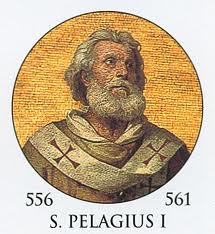
Pelagius has been falsely judged by his critics

Unlike Augustine, Pelagius knew Greek. Pelagius did not teach that man can save himself. He only taught that a man can live a righteous life via free will choice. The idea that man can save himself is what came from Augustine’s accusations against him, as Calvinists do with Arminians today when they accuse them of teaching “works salvation”. True Pelagianism is truth according to what the early Church taught, not as Augustine described it. What Augustine described is without a doubt heresy, but it’s not what Pelagius actually taught. This is evident in the writings of Pelagius, as well as in the fact that the councils could find no fault in his teachings 2 times that he appeared before them in his own defense. When he was finally marked as a heretic the third time around, it was when he could not be present to defend himself (in Tunisia where Augustine resided) and Augustine and Jerome were present to misrepresent his position.

Most of the information we have about Pelagius rests in the hands of his enemies. That is not enough for a righteous judgment. If God judged us by the words of our enemies, we would be outraged at the injustice. It is unfair for us to condemn a man based on the evidence presented by his enemies, and not from the man himself. We would also be guilty of slander if we continue to claim that an innocent person is an “heretic” even though he might not be. Let’s be careful so God won’t judge us one day for slander, false accusations and causing division.

Pelagianism teaches only that man can choose to do right and choose not to sin. It does not teach that a person can be holy without God or His grace. This is a lie given through the heretic Augustine. Augustine was a liar seeking to have him condemned, as he was offended by his preaching against his teachings to the people. Augustine was teaching a “sinning religion”, and people were following it and living it. Pelagius could not stand for this heresy, so he began to teach against it. In his efforts he brought out the a man CAN choose to not sin, because he is not so spiritually dead that he could not make such a choice. Augustine turned this around with false accusations against him, misrepresenting him as if he was teaching that man could save himself. This is not what he was teaching at all. And his own writings prove it – which were not even discovered until this past century. Augustine tried to make sure of that by having them burned or destroyed, but a few slipped through the cracks. Now Augustine is exposed for the liar and gospel pervert that he is.

Calvinism began with Gnosticism – which is very clearly shown by many quotes given by the early Church. Tertullian and Hippolytus and Irenaeus all wrote extensively against the Gnostic groups, telling of the things they believed and how the Church has always disagreed with them, calling them heretics. Augustine was infested with Gnosticism, which Calvin also adopted.

Here is a quote from an article below on the Letter to Demetrius:

“The moral life of purity, for Pelagius, can only be achieved by drawing upon both “the good of nature and the good of grace” (9:1); this will be the dominant theme of his exhortation. Pelagius’s reflections on the human person are not unlike those of the Eastern Fathers. They share the same starting point of moral reflection, that is, the innate goodness of man because God has created him in His image and likeness. Pelagius writes, “you ought to measure the good of human nature by reference to its Creator” (2:2).”

The above quote shows the balanced thought of Pelagius teaching. His accusers only point out that he taught “the good of nature” and the “innate goodness of man”, and completely leave out the blanche of his teaching that tells of the “good of grace” and “because GOD has created him in His image and likeness”. Pelagius thought was in giving glory to God in His creation, in that men have a mind and free will to choose that has been given by the creator, which makes them able to choose to do right. Of course man has to know right and wrong first, but the ability is with him once he knows the difference.

Prior to Pelagius being ‘found’ guilty of heresy, he was cleared by two synods of bishops. These synods were provoked by Augustine’s influence. Then the council of Carthage, where Augustine was bishop, declared Pelgius a heretic. A few years later, Augustine and two others brought heresy charges against Pelagius to the bishop of Rome. Pelagius was cleared again, a third time. The bishop of Rome declared Pelagius a heretic a few years later under pressure from Imperial Rome and not before that time. It was perceived that the effects of Pelagius’ doctrine would undermine Imperial rule and so political pressure was then applied and the bishop of Rome declared Pelagius a heretic. Another interesting note is that Pelagius was well received and there was generally no problem with his teaching. The charges against him only arose when some one else, Caelestius, who was building on Pelagian teaching denounced infant baptism. Then and only then the problem arose. Infant baptism was under assault – if they were not born guilty and therefore did not need to be baptized to be saved then ecclesiastical power structure was going to be undermined. That kick started the whole controversy against Pelagius: they synods and councils did not occur until the implications of his teaching threatened infant baptism. See Peter Brown’s “Augustine of Hippo” there are 3 chapters that deal with Augustine-Pelagian controversy that document everything posted.

Pelagius is often ascribed views he doesn’t have

From Jesse Morell:

Matt Slick of CARM wrote that “Pelagianism…. taught that people had the ability to fulfill the commands of God by exercising the freedom of human will apart from the grace of God.  In other words, a person’s free will is totally capable of choosing God and/or to do good or bad without the aid of Divine intervention.”[29] This is an example, not of Pelagian heresy, but of Pelagian hearsay.

I would suspect that Matt Slick learned about Pelagianism from its opponents, and not from actually reading the writings of the Pelagians. This is a common practice for Calvinists, but what if that is how their doctrine was treated? What if someone stated what Calvinism teaches, by stating the opponents? Augustine accused Pelagius of denying the grace of God, but this was an accusation not a fact.

Had Matt Slick actually read some of the few writings that still exist today from the original Pelagians, he would have read in Julian of Eclanum’s Pelagian Statement of Faith: “We [Pelagians] maintain that men are the work of God, and that no one is forced unwillingly by His power either into evil or good, but that man does either good or ill of his own will; but that in a good work he is always assisted by God’s grace, while in evil he is incited by the suggestions of the devil.”[30]

Pelagius himself said, “I anathematize the man who either thinks or says that the grace of God, whereby ‘Christ Jesus came into the world to save sinners,’ is not necessary not only for ever hour and for every moment, but also for every act of our lives: and those who endeavor to dis-annul it deserve everlasting punishment.”[31]

Pelagius said, “This grace we do not allow to consist only in the law but also in the help of God. God helps us through His teaching and revelation by opening the eyes of our heart, by pointing out to us the future so that we may not be preoccupied with the present, by uncovering the snares of the devil, by enlightening us with the manifold and ineffable gift of heavenly grace.”[32]

Pelagius said, “God always aids by the help of his grace. God aids us by his doctrine and revelation, while he opens the eyes of our heart; while he shows us the future, that we may not be engrossed with the present; while he discloses the snares of the devil; while he illuminates us by the multiform and ineffable gift of heavenly grace. Does he who says this, appear to you to deny grace? Or does he appear to confess both divine grace and the freewill of man?”[33]

Pelagius said in a letter to Innocent, “Behold, before your blessedness, this epistle clears me, in which we directly and simply say, that we have entire freewill to sin and not to sin, which, in all good works, is always assisted by divine aid. Let them read the letter which we wrote to that holy man, bishop Paulinus, nearly twelve years ago, which perhaps in three hundred lines supports nothing else but the grace and aid of God, and that we can do nothing at all of good without God. Let them also read the one we wrote to that sacred virgin of Christ, Demetrias, in the east, and they will find us so praising the nature of man, as that we may always add the aid of God’s grace. Let them likewise read my recent tract which we were lately compelled to put forth on freewill, and they will see how unjustly they glory in defaming us for denial of grace, who, through nearly the whole text of that work, perfectly and entirely profess both free will and grace.”[34]

Pelagius taught that the freedom of the human will was not lost by the original sin of Adam, but that grace was necessary for man to rightly use his free will. He also taught that free will itself was a gracious gift given to us at Creation. He did not deny grace as necessary or as an aid for free will. The only grace he denied was Augustinian grace, which said that free will was lost by original sin and therefore man’s ability to obey needed to be restored by grace. However, one of the best Greek-English Lexicons, Thayer’s, defined grace as “divine influence upon the heart” which is precisely how Pelagius viewed grace in contradiction to Augustine.

It was Augustine’s view of grace that was inconsistent with free will, not Pelagius’. As Augustine said, “I have tried hard to maintain the free choice of the human will, but the grace of God prevailed.”[35] Pelagius affirmed both the freedom of the will and the necessity for the grace of God, while Augustine denied the freedom of the will because of His mistaken view of grace.

This is why John Wesley said, “I verily believe, the real heresy of Pelagius was neither more nor less than this: The holding that Christians may, by the grace of God, (not without it; that I take to be a mere slander,) ‘go on to perfection;’ or, in other words, ‘fulfill the law of Christ.’”[36] And also “Who was Pelagius? By all I can pick up from ancient authors, I guess he was both a wise and a holy man.”[37]

John Wesley said, “Augustine himself. (A wonderful saint! As full of pride, passion, bitterness, censoriousness, and as foul-mouthed to all that contradicted him… When Augustine’s passions were heated, his word is not worth a rush. And here is the secret: St. Augustine was angry at Pelagius: Hence he slandered and abused him, (as his manner was,) without either fear or shame. And St. Augustine was then in the Christian world, what Aristotle was afterwards: There needed no other proof of any assertion, than Ipse dixit: “St. Augustine said it.”[38]

On the issue of the freedom of the will, Pelagius was in perfect agreement with the Early Church while Augustine was in agreement with the heretical Gnostics:

Dr Wiggers said, “All the fathers…agreed with the Pelagians, in attributing freedom of will to man in his present state.”[39]

Episcopius said, “What is plainer than that the ancient divines, for three hundred years after Christ, those at least who flourished before St. Augustine, maintained the liberty of our will, or an indifference to two contrary things, free from all internal and external necessity!”[40]

Catholic councils that calvinists appeal to

There were three councils that condemned Pelagianism; the Council of Ephesus in the year 431; the Council of Carthage in the year 418; and the Council of Orange in the year 529. This is because Pelagius was not invited nor present to defend himself but his opponents and adversaries stated his doctrine for him. When Pelagius was able to defend himself, the Council of Diospolis in 415 declared Pelagius orthodox. And Pope Zosimus also declared Pelagius’ orthodoxy in 417. He was always acquitted when present to clarify and defend his views. If these are our authorities to determine orthodoxy, do we accept the ones in favor of Pelagius or the ones against him?

In addition, the Council of Orange and the Council of Carthage were not ecumenical councils. They did not consist of Bishops from the entire church, which mean that the rulings of the Councils were not universally affirmed by the Eastern and Western churches.

If heresy is heresy because a council says so, or because of majority vote, Calvinism must be more heretical than Pelagianism was because there were more councils that condemned Calvinism than condemned Pelagianism. The Calvinist doctrines of predestination, limited atonement, and irresistible grace were condemned throughout history. Lucidus was condemned by the Council of Oral in 473, Council of Arles in 475, and Council of Orange in 529. And Gottschalk (Gotteschalcus) was condemned by the Council at Mentz in 848 and the Council of Chiersey (Quiercy) in 849. And what do Calvinists think of the Council of Constance in 1414 for John Huss, or the Council of Worms in 1521 for Martin Luther, or the Council of Trent in 1561 for the Protestants? Are these Councils not the voice of Orthodoxy as Ephesus and Carthage supposedly were?

In fact, the Council of Orange that condemned Pelagianism also condemned the doctrines of Calvinism. If the council is authoritative in the former case, it must be equally authoritative in the latter as well. But if it was mistaken in the latter case, maybe it was mistaken in the former as well. Tony Miano essential condemns his own theology by appealing to church councils and assuming their authority.

Many thanks to Lyndon Conn, Joshua Harris and Jesse Morell

The moral law is still valid today and is NOT optional to obey

We are no longer under the Jewish ceremonial law concerning clothes, food, etc BUT the moral law has always been valid ever since Adam and Eve and it’s still applicable for us today. It has ALWAYS been prohibited to murder, steal, lie and commit adultery.  These laws did not start with Moses even if he wrote down also these very foundational laws on stone tables. We can never EARN our salvation by keeping the law and be good (because then we must keep it to 100% which no one has chosen to do) but this does NOT mean that it’s ok to continue to break the law and believe that grace will always cover our sins. If we are cleansed from our sins in the blood of Jesus, it does NOT make sense to return back to breaking the law and become filthy once again. Sins will ALWAYS separate us from God. Obeying the law won’t save you but breaking it will send you to hell. Repentance is the only cure, but if we sin, repent, sin, repent, then we have not truly repented. 

Here are some verses which show that the moral law is still in force:

1 Cor.7:19Circumcision is nothing, and uncircumcision is nothing, BUT KEEPING THE COMMANDMENTS of God.

Gal.5:18BUT IF YE BE LED OF THE SPIRIT , YE ARE NOT UNDER THE LAW. 19Now the works of the flesh are manifest, which are these; Adultery, fornication, uncleanness, lasciviousness, 20Idolatry, witchcraft, hatred, variance, emulations, wrath, strife, seditions, heresies, 21Envyings, murders, drunkenness, revellings, and such like: of the which I tell you before, as I have also told you in time past, that they which do such things shall not inherit the kingdom of God.

Matt. 22:37Jesus said unto him, Thou shalt love the Lord thy God with all thy heart, and with all thy soul, and with all thy mind.38This is the first and great commandment.39And the second is like unto it, Thou shalt love thy neighbour as thyself.40On these two commandments hang all the law and the prophets.

Rom.3:30Seeing it is one God, which shall justify the circumcision by faith, and uncircumcision through faith.31Do we then make void the law through faith? God forbid: yea, We ESTABLISH THE LAW.

Matt.5:17Think not that I am come to destroy the law, or the prophets: I am NOT come to destroy, but to fulfil18For verily I say unto you, Till heaven and earth pass, one jot or one tittle shall in no wise pass from the law, till all be fulfilled. 19Whosoever therefore shall break one of these least commandments, AND SHALL TEACH MEN SO, he shall be called the least in the kingdom of heaven: but whosoever shall do and teach them, the same shall be called great in the kingdom of heaven.

Hebr.10:16This is the covenant that I will make with them after those days, saith the Lord,I WILL PUT MY LAWS INTO THEIR HEARTS, and in their minds will I write them;

Romans 2:12For as many as have sinned without law shall also perish without law: and as many as have sinned in the law shall be judged by the law;13(For not the hearers of the law are just before God, but the doers of the law shall be justified.14For when the Gentiles, which have not the law, do by nature the things contained in the law, these, having not the law, are a law unto themselves:15Which shew the work of the law written in their hearts, their conscience also bearing witness, and their thoughts the mean while accusing or else excusing one another;)

Does 1 John 1:8 tell us that it is perfectly normal for christians to SIN?

If we say that we have no sin, we deceive ourselves, and the truth is not in us. (1 John 1:8)

This verse is often used as an attempt to support the idea that we can never stop sinning, but it must be viewed in its proper context. 1 John 1:8 seems to be way more popular to quote than 1 John 1:6 which says:

1 John 1:6 If we say that we have fellowship with him, and walk in darkness, we lie, and do not the truth

The reason why 1 John 1:6 has fallen into oblivion is likely due to the serious matter – that our souls are in great trouble if we sin. People’s ears might be more tickled by the message that they can afford to sin on a daily basis and still be saved. Here is the entire context surrounding the famous 1 John 1:8, which people often misuse to support the idea that it is perfectly normal for Christians to sin (and abnormal if they do not):

1 John 1:5This then is the message which we have heard of him, and declare unto you, that God is light, and in him is no darkness at all. 6If we say that we have fellowship with him, and walk in darkness, we lie, and do not the truth: 7But if we walk in the light, as he is in the light, we have fellowship one with another, and the blood of Jesus Christ his Son cleanseth us from all sin8If we say that we have no sin, we deceive ourselves, and the truth is not in us. 9If we confess our sins, he is faithful and just to forgive us our sins, and to cleanse us from all unrighteousness. 10If we say that we have not sinned, we make him a liar, and his word is not in us.

If John would suggest that 1 John 1:8 means that we can never say “I have no sin” at ANY TIME in our lives, not even for one second, then the only outcome is that we sin around the clock. It would even mean that we still have sins in our system one second after that we have repented! What is the big idea with repenting if we always sin and can never stop?

We can read in the same passage that we can be cleansed from our sins IF we confess our sins, but if we would confess sins and continue to commit those sins then we are only fooling ourselves. Surely we are free of sins when we are cleansed from sins, or can we be cleansed from our sins at the same time as we still sin? That does not make much sense. It is those who walk in darkness who are the liars if they claim to know God, and not those who walk in the light.

The significance of 1 John 1:8 is that none of us can say “I don’t have any sin on my record so I don’t need to repent and I don’t need a Savior” because the truth is that we have all sinned. “If we say that we have not SINNED, we make him a liar, and his word is not in us.” However, after that we have confessed those sins, repented, become cleansed and born again (become a new person), then the idea is that we should avoid getting dirty again. We will accomplish this goal by maintaining a few sins and hide behind Jesus, pretending that God the Father does not detect our sins. Jesus did not die so that we can sin in peace and be saved IN our sins. WE have to carry our own cross, but we have a great help by the holy Spirit who can guide us on our path – and we must choose to obey.

John also tells us elsewhere in his writings that we can indeed obey the commandments and live holy lives. John does not contradict himself by saying in one verse that we constantly sin and cannot stop, only to give the exact opposite message in other verses.

What else does John say?

1 John 3:Whosoever abideth in him sinneth not: whosoever sinneth hath not seen him, neither known him.Little children, let no man deceive you: he that DOETH righteousness is righteous, even as he is righteous.He that committeth sin is of the devil; for the devil sinneth from the beginning. For this purpose the Son of God was manifested, that he might destroy the works of the devil.Whosoever is born of God doth not commit sin; for his seed remaineth in him: and he cannot sin, because he is born of God.10 In this the children of God are manifest, and the children of the devil: WHOSOEVER DOETH NOT RIGHTEOUSNESS IS NOT OF GOD, neither he that loveth not his brother.—22 And whatsoever we ask, we receive of him, because we keep his commandments, and do those things that are pleasing in his sight.23 And this is his commandment, That we should believe on the name of his Son Jesus Christ, and love one another, as he gave us commandment.24 And he that keepeth his commandments dwelleth in him, and he in him. And hereby we know that he abideth in us, by the Spirit which he hath given us.

1 John. 5:2 By this we know that we love the children of God, when we love God, and keep his commandments.For this is the love of God, that we keep his commandments: and his commandments are not grievous.4 For whatsoever is born of God overcometh the world: and this is the victory that overcometh the world, even our faith.

2 John. 1:6 And this is love, that we walk after his commandments. This is the commandment, That, as ye have heard from the beginning, ye should walk in it.

3 John 1:11 Beloved, follow not that which is evil, but that which is good. HE THAT DOETH GOOD IS OF GOD: but he that doeth evil hath not seen God.

John 14:21 He that hath my commandments, and keepeth them, he it is that loveth me: and he that loveth me shall be loved of my Father, and I will love him, and will manifest myself to him.23 Jesus answered and said unto him, IF A MAN LOVE ME, HE WILL KEEP MY WORDS: and my Father will love him, and we will come unto him, and make our abode with him.24 He that loveth me not keepeth not my sayings: and the word which ye hear is not mine, but the Father’s which sent me.

John 15:2 Every branch in me that beareth not fruit he taketh away: and every branch that beareth fruit, he purgeth it, that it may bring forth more fruit.—If a man abide not in me, he is cast forth as a branch, and is withered; and men gather them, and cast them into the fire, and they are burned.If ye abide in me, and my words abide in you, ye shall ask what ye will, and it shall be done unto you.8 Herein is my Father glorified, that ye bear much fruit; so shall ye be my disciples.9 As the Father hath loved me, so have I loved you: continue ye in my love.10 IF YE KEEP MY COMMANDMENTS, YE SHALL ABIDE IN MY LOVE; even as I have kept my Father’s commandments, and abide in his love.

If we would embrace the faulty understanding of 1 John 1:8 (that we sin around the clock), are we also willing to blame the apostle John for having no truth in him – since he here suggests that he has won a complete victory over sin? Read about the false idea that we can get JESUS’ righteousness imputed into us in this blog article.

Can a person regret anything in hell if CALVINISM is true?

If calvinism is true, no one who ends up in hell has any reasons to regret anything about his previous life on earth. How could he? God predestined him to be non-elect before the world began (according to calvinism) and that means he had no option but to BE a non-elect and thereby doing the will of God by being exactly what God intended him to be. And how does a non-elect person behave? Well, among other things he rejects God, he is rebellious and he is a non-repentant sinner. So this means that God WANTS him to have these attributes. Most calvinists believe that “God predestines whatever comes to pass” so to be consistent this must include predestining people to sin. Yes, many calvinists say that “God predestines everything, but man is still responsible for his sins”, but this is an oxymoron. And when they are told they believe in an oxymoron they say “God’s ways are higher than our ways” or similar. If I say that I believe in the trinity but not that Jesus is God, this too is an oxymoron.

If calvinism is true, then SIN has nothing to do with why a person ends up in hell. Always remember that a person (if calvinism is true) is predestined to be elect/non-elect before the world began, and before he was even born. So by the time he gets born he is already doomed and he WILL grow up to be elect OR non-elect depending on whatever God chooses, and he WILL act accordingly. Calvinists often say “No, God didn’t predestine them to be do evil, because left to themselves they would never choose him anyway and they would only want to do evil”,but is this the whole truth? WHY don’t they want to choose him and why do they only desire to do evil? That’s because they are non-elect, right? And who chooses that they shall be non-elect? GOD does, according to them! Those who are not chosen to be elect are by default chosen to be non-elect. Man himself is therefore totally innocent for his actions in my view, and some are just unfortunate enough to be chosen to be non-elect which inevidably will lead them to be and to do evil.

If calvinism is true, then Jesus did not even die for some people but their God will apparently send them to hell just the same, due to that they reject Jesus. (Or was it because he predestined them to be non-elect and Jesus-deniars before the world began?) Why is it a sin to deny that Jesus died for you if Jesus did not die for you?!

The Bible is loaded with examples of people rebelling against God and suppressing the truth. Do they do this out of their own choice OR according to the will of God? It’s one or the other. The most obvious answer should be that people have the choice to obey but sometimes choose to disobey. God doesn’t want people to disobey and rebel against him, but due to his decision to create man with free will, we are able to make our own choices. Most importantly we will be judged based on our decisions and actions since we are response-able. If God predestines people to rebel against him and to suppress the truth, it wouldn’t make sense for Him to punish them for doing what he forces them to do.

A SINLESS PERFECTIONIST because you say you can obey Jesus?

Ever been accused for believing in SINLESS PERFECTIONISM when you say you can obey Jesus?

When we say that it is possible to live a life free of sin, as Jesus commands, the cry is that we are teaching“sinless perfectionism.” What is ironic is that these people who cry this false charge do not discern that they are teaching the very thing they condemn!

They make the false assumption that when a soul is converted, he will NEVER, ever sin again. After convincing you of this false assumption, they then try to disprove the claim, which we never made in the first place!  Then they will quote such passages as Heb. 12:6. They like the “chastise” passage, for this is their ‘proof’ that if a child of God never sins after being born again, then they can’t be chastised.  They like to talk about sin, being saved in sin, stay in sin, and defend sin.  They hope that you, the reader, will fall for their assumptions, and then try to convince you that you can’t be anything but a low down sinner for the rest of your life.

Now, let’s see who is really teaching ‘sinless perfectionism’.  By pronouncing condemnation on us (claiming what we do not teach), they reprobate themselves.  According to them:

  1. When you ‘accept’ Jesus, you are justified (forgiven).
  2. There was a magnificent transfer that took place, meaning Christ becomes your perfection because his ‘obedience’ was ‘transferred’ to you by faith.
  3. Because of number 2, your past, present AND ‘future’ sins are all covered once and for all.
  4. Because Jesus’ tract record is imputed to you, God is now blind to your conduct because of the blood of Christ.  God can no longer see you who sins.
  5. All this is ‘positional,’ NEVER  ’practical.’

It is interesting that Christ’s righteousness (“obedience imputed to you,” which the Bible does NOT teach) was magically transferred to you once you trusted in Him.  You are now considered ‘sinless’ because all your past, present, and FUTURE sins are all forgiven. This means that your sins, even future ones you have not yet committed, can NEVER be charged against you no matter what your conduct afterwards.

PROBLEM 1: If this were true, THERE IS NO NEED FOR CHASTISEMENT!  How can you be chastised over sins that the blood was supposed to have covered and God became morally blind to your conduct and future conduct when you accepted His Son?  If all your FUTURE sins are already forgiven, what purpose would there be in any type of correction since God does not see you anymore, just His Son Jesus?  Remember?  God can’t see you sinning, He only sees Jesus!  How can they accuse us of teaching ‘sinless perfectionism” since Christ is their PROXY? Does their teaching not EQUATE TO SINLESS PERFECTION?  Isn’t this calling the kettle black?

These people teach that you sin every day in thought, word, and deed! They even go so far to say that temptation is sin to make sure you get it – that you were saved from nothing. What they are really telling you is that sinning is proof that you are saved and in the faith! How ludicrous! This kind of Gospel is nothing but a hoax coming from frauds and liars.

Let’s clear some things up.  Those who believe we can live holy lives, as God commands, have never said:

1.  That a Christian never sinned in his life time (“For all have sinned”:)
2.  That a Christian doesn’t have the ability to sin after he is saved.
3.  And that once a person is converted that he will be forced not to sin.

What is taught is that a person cannot have salvation without repentance (forsaking all sins).  2 Cor. 7:10-11.

Scripture also says,

“No one who abides in him [Jesus] keeps on sinning; no one who keeps on sinning has either seen him or known him.”  1 John 3:6

We are also told how we can know who is a child of God and who is a child of the devil.

“In this the children of God are manifest, and the children of the devil: whosoever doeth not righteousness is not of God, neither he that loveth not his brother.In this the children of God are manifest, and the children of the devil: whosoever doeth not righteousness is not of God, neither he that loveth not his brother.” 1 John 3:10

A ‘saint’ is characterized by walking a life of holiness.  A ‘child of the devil’ is characterized by walking a life of sin.

IF a child of God should give into temptation and act upon it (sin), God’s word tells us we have an Advocate with the Father (1 John 2:1).  Notice it says IF.  Sinning is not a foregone conclusion in John’s mind, nor was it in Jesus’ mind as well. (“Go and sin no more”).  Paul says, “Awake to righteousness and sin not.”  

PROBLEM 2:  NOWHERE is Jesus said to be our PROXY.  Where it concerns righteousness, we are told NOT TO BE DECEIVED in this matter.

“Little children, let no man deceive you: he that doeth righteousness is righteous, even as he [Jesus] is righteous.” 1 John 3:7

So much for the fake proxy.  One is considered righteous WHEN he does what is right, and when he does, he is considered righteous as Jesus is righteous.  There was no magical transfer that took place.

The false gospel preached today is missing the element of REPENTANCE. Jesus told the disciples to preach REPENTANCE.  Some would go so far to say that repentance is not part of the gospel!  Jesus said,

“And that repentance and remission of sins should be preached in his name among ALL nations, beginning at Jerusalem.” Luke 24:47

Repentance is commanded by God to ALL men everywhere. (Acts 5:31; 11:18; 17:30-31; 20:21; 26:20; Ro. 2:4; 2 Ti. 2:25; 2 Pet. 3:9). (Repentance is NOT an apology for being sinful, nor being born with a ‘sinful nature,’ as they falsely teach!)  What is repentance? Repentance is to sweep, scrape, scrub and cast out of doors all defilement of the heart IN ORDER to make it clean for the reception of the holy Spirit. (Matt. 12:43-45; Lk. 11:24-26; Acts 5:32).  The holy Spirit is only given to those whoobey Him (Acts 5:32), not to those who continue in sin and hope God cleans them up later (as some suggest), which later never seems to come about until the day of physical death!  Repentance can take a process of time (a season of “godly sorrow” until there is full repentance) or instantaneously.  Repentance is not sorrow alone, it also involves a change of mind, inclinations and desires, which translates into a total change in character and conduct. (Mt. 3:8; Mk. 4:12; Lk. 8:15; Jn. 8:34; 8:36; Lk. 19:1-10; Acts 26:20; 2 Co. 6:1; 5:17; 1 Thess. 1:9; 2 Tim. 2:19; Titus. 2:11-12).

Repentance that is genuine is initiated by God through a crisis of conviction leading to a season of godly sorrow for sin. (Jn. 16:8; Acts 2:37; 4:8-10; 5:31; 11:18; 2 Co. 7:10). Biblical repentance from Genesis to Revelation is to “forsake” our wickedness, “purge” our heart of evil and SEEK the mercy of God. (Isa. 55:7; Jer. 26:13; Pro. 28:13; Jon. 3:8-10; Matt. 12:41; Lk. 15:11-32; Acts 3:19; 2 Co. 7:10-11; 2 Tim. 2:19; Jas. 3:7-10; 1 Pe. 4:1; Rev. 2:5; 2:16; 2:20-22; 3:3; 3:19)!

To dismiss repentance as not part of the gospel is very serious, for it nullifies reconciliation with God, and thus no conversion and no forgiveness. (Lk. 13:3; 24:47; Mk. 4:12; Acts 3:19; 2 Co. 7:10).

True repentance is a condition for salvation. (Mk. 1:15; Lk. 13:3; Acts 5:31; 11:18; 17:30; 20:21; Ro. 2:4; 2 Co. 7:10; 2 Pe. 3:9).

(Thanks to Sandra)

God did not hate Esau before he was born – Romans 9:13

As it is written, Jacob have I loved, but Esau have I hated (Rom 9:13)

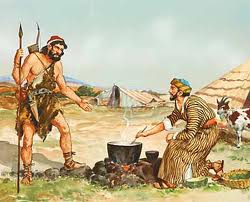
The question then becomes, did Esau behave the way he did because God hated him, or did God hate him because of the way Esau chose to behave?

Jacob and Esau are not only individuals but they are also PEOPLE and/or NATIONS. This is important to remember in order to not read things into Romans 9 which are not stated. Romans 9 is not about individuals being elected TO BELIEVE, but it’s about a people who has sprung up from individuals, and it’s the line of Jacob which is chosen (for good reasons) to bring forth the Messiah. Most importantly it’s about a person who rejected his birthright and still expected to get it when it was time to receive the blessing. Paul made the comparison with the jews – which Romans 9 is about – who expected to inherit the Kingdom because they are born jews. We can also read from the context that God did NOT arbitrarily hate one of the twin brothers for no reason at all.

The LORD said to her, “Two nations are in your womb, and two peoples from within you will be separated; one people will be stronger than the other, and the older will serve the younger.” (Gen. 25:23)

There is no indication of anything good or bad about either of the children at this point. The nations arising from each will be separated, and one of these nations will be stronger than the other. The nation arising from the older of the two children will at some point end up serving the nation arising from the younger. The individual Esau never served the younger. Also note that God did not hate Esau before he was born, or while he was a child. Children are neutral and they can’t choose between good and bad. Paul says that they are not all Israel which are Israel, and by that he means that children of Abraham are those who BELIEVE like he did and who don’t live as the children of the flesh, and it was also the seed of Abraham which would bring forth the Messiah through Isaac. A person is not saved just because he is born a jew and has the law, but due to his choice to trust God and show fruit.

Rom 9:6Not as though the word of God hath taken none effect. For they are not all Israel, which are of Israel: 7Neither, because they are the seed of Abraham, are they all children: but, In Isaac shall thy seed be called. 8That is, They which are the children of the flesh, these are not the children of God: but the children of the promise are counted for the seed.

According to Paul, babies are neutral and can’t do either good or bad, and Paul speaks about “election” (which is not an election “to believe”) and highlights that the jews should not believe that the law (works) can save them since they in that case must never break one single commandment. It’s accepting the call of God that saves a person.

Rom 9:11(For the children being not yet born, neither having done any good or evil, that the purpose of God according to election might stand, not of works, but of him that calleth;) 12It was said unto her, The elder shall serve the younger.

Gen. 25:27 And the boys grew: and Esau was a cunning hunter, a man of the field; and Jacob was a plain man, dwelling in tents. 28 And Isaac loved Esau, because he did eat of his venison: but Rebekah loved Jacob.

Hebrews 12 15Looking diligently lest any man fail of the grace of God; lest any root of bitterness springing up trouble you, and thereby many be defiled; 16Lest there be any fornicator, or profane person, as Esau, who for one morsel of meat sold his birthright17For ye know how that afterward, when he would have inherited the blessing, he was rejected: for he found no place of repentance, though he sought it carefully with tears.

Above in Hebrews we can see that Paul is warning people for not making the right decision when it comes to their lives styles, LEST they might fail of the grace of God, LEST they might be defiled and LEST they might end up like Esau who made a VERY bad choice to, among other things sold his birthright for a meal. We can see why Esau was rejected, and that is because “he found no place of repentance”, indicating that something wasn’t right in his heart, and maybe he didn’t regret his choice to sell his birthright until he realized what was at stake and that it would slip out of his hands. Esau knew better than that but he had to accept the consequences of his actions. Esau was also known as Edom. There is a book called Obadiah and the focus of Obadiah is on Edom/Esau, and the reason God hated Esau is stated here:

Pride of heart, v. 3
Because of the violence against Jacob, v. 10
For not intervening on behalf of Jacob when that people was under attack, v. 11
For looking down on his brother in the day of his misfortune, v. 12
For entering the destroyed city and participating in the ransacking, v. 13
For ambushing their fugitives, v. 14

Obadiah 1: 8Shall I not in that day, saith the LORD, even destroy the wise men out of Edom, and understanding out of the mount of Esau? 9And thy mighty men, O Teman, shall be dismayed, to the end that every one of the mount of Esau may be cut off by slaughter. 10For thy violence against thy brother Jacob shame shall cover thee, and thou shalt be cut off for ever.

Romans 9:13 refers back to Malachi and there we can read:

Mal 1:2I have loved you, saith the LORD. Yet ye say, Wherein hast thou loved us? Was not Esau Jacob’s brother? saith the LORD: yet I loved Jacob, 3And I hated Esau, and laid his mountains and his heritage waste for the dragons of the wilderness. 4Whereas Edom saith, We are impoverished, but we will return and build the desolate places; thus saith the LORD of hosts, They shall build, but I will throw down; and they shall call them, The border of wickedness, and, The people against whom the LORD hath indignation for ever.5And your eyes shall see, and ye shall say, The LORD will be magnified from the border of Israel.

“They”. The entire people that came from Esau are being spoken of as being hated. Thus, when Paul quotes Malachi in Romans 9, he is referring to what happened to the people, not to the individual sons. The quote “Jacob I have loved but Esau have I hated” has to do with the nations that came from the brothers. In Obadiah, the reasons for this hatred from God are clearly shown. Did God hate Esau personally? He very well may have, and the despising of the birthright is used in Hebrews as evidence of his godlessness. This godlessness, and his marriage to pagan wives, would have affected not only his children, but their children and the children after them as well, in agreement with what we read in

Ex. 20:5 Thou shalt not bow down thyself to them [idols], nor serve them: for I the Lord thy God am a jealous God, visiting the iniquity of the fathers upon the children unto the third and fourth generation of them that hate me

Amos 6:8 The Lord GOD has sworn by himself, says the LORD the God of hosts, I abhor the excellency of Jacob, and hate his palaces: therefore will I deliver up the city with all that is in it.