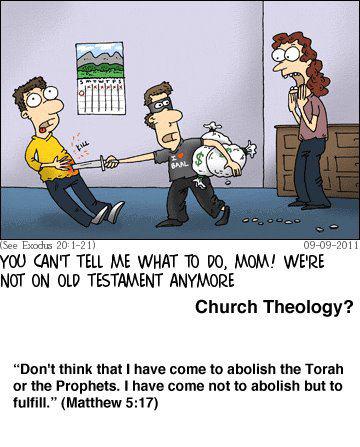
Vi ska inte bara VILA i Herren Gud utan också KÄMPA och arbeta i helig fruktan

fight the good fight

Filipperbrevet 2:12 Därför, mina älskade, liksom ni alltid har varit lydiga, så ARBETA MED FRUKTAN OCH BÄVAN PÅ ER FRÄLSNING, inte bara som när jag var hos er, utan ännu mycket mer nu när jag inte är hos er—16 när ni håller fast vid livets ord. Då kan jag BERÖMMA MIG av er på Kristi dag. Jag har alltså inte sprungit förgäves eller ARBETAT förgäves.

Att frukta och bäva inför Gud är någonting positivt, vilket du kan läsa mer om här, för det kan ju leda till att vi accepterar hans tuktan och lever ett heligare liv. Jag skriver det här inlägget med tanke på de kristna som menar att vi ska “vila” i Herren, och med det verkar mena att vi absolut inte ska kämpa i vår tro eller få för oss att vi måste göra goda gärningar för att bli frälsta. Sanningen är ju att goda gärningar VISST behövs för vår frälsning och att Bibelns skribenter tryckte ganska mycket på hur viktigt det är att vi lever rättfärdigt – både i gamla och nya testamentet. Det är inte gratis att vara frälst, men vi har förstås en underbar Hjälpare som kan ge oss mycket stöd och kraft på vägen.

Studera exempelvis följande liknelse där Jesus försöker få oss att förstå hur viktigt det är att vi beräknar kostnaden och ser till att vi kan slutföra vårt bygge. Att bara BÖRJA en husyggnation hjälper oss inte utan vi måste också se till att vi kan SLUTFÖRA byggnationen, för annars kan vi ju inte BO i huset eller använda det till någonting nyttigt alls. Frälsningen är alltså inte gratis utan det kostar och vi måste vara villiga att uppoffra oss. Om vi däremot tror att det räcker med “tro allena”, och att vi har råd att tjäna två herrar ibland och varva vår tro med synd, ja då säger Jesus att vi inte kan vara hans lärljungar. Inte så att vi måste skriva under ett kontrakt att vi aldrig mer kommer att synda, men vi ska inte tro att vi kan vara frälsta I vår synd. Det finns hur många kristna som helst som är övertygade om att det är fullständigt naturligt för kristna att synda (t o m dagligen), och även att det är onaturligt att INTE göra det. De har gått vilse och de lär även andra att gå vilse pga en skräck för “gärningslära” – som om det vore en synd att vara Jesus trogen och lyda hans bud. Omvändelse är lösningen, och att sedan fortsätta att följa den helige Ande. OM vi syndar (inte “när” vi syndar) måste vi bekänna vår synd och omvända oss.

Lukas 14:25 Stora skaror följde honom, och han vände sig om och sade till dem: 26 “Om någon kommer till mig och inte hatar bygga hussin far och sin mor, sin hustru och sina barn, sina bröder och systrar, ja, även sitt eget liv, så kan han inte vara min lärjunge27 Den som inte bär sitt kors och följer mig kan inte vara min lärjunge28 Om någon av er vill bygga ett torn, sätter han sig då inte först ner och beräknar kostnaden för att se om han har råd att slutföra bygget?29 Annars, om han har lagt grunden men inte kan bygga färdigt, är det fara värt att alla som ser det kommer att håna honom 30 och säga: Den mannen började bygga men kunde inte slutföra bygget. 31 Eller vilken kung går ut i krig mot en annan kung utan att först sätta sig ner och överväga, om han med tio tusen man kan möta den som kommer emot honom med tjugo tusen?32 Om han inte kan det, skickar han sändebud och ber om fred, medan den andre ännu är långt borta. 33 På samma sätt kan ingen av er vara min lärjunge, om han inte avstår från allt han äger.34 Salt är bra, men om saltet mister sin sälta, hur skall man då göra det salt igen? 35 Varken för jorden eller gödselhögen duger det. Man kastar bort det. Hör, du som har öron att höra med.”

Exempel på verser som säger att vi måste KÄMPA för vår TRO, för att nå SEGER

Lukas 13:24 KÄMPA FÖR ATT KOMMA IN GENOM DEN TRÅNGA PORTEN. Ty många, säger jag er, skall försöka komma in men inte kunna det.

1 Timotheosbrevet 6:12 KÄMPA TRONS GODA KAMP, SÖK ATT VINNA DET EVIGA LIVET som du blev kallad till och som du bekände dig till genom att inför många vittnen avlägga den goda bekännelsen.

2 Tim. 2:15 GÖR ALLT DU KAN FÖR ATT BESTÅ PROVET INFÖR GUD, LIKT EN ARBETARE som inte behöver skämmas utan rätt delar sanningens ord.

Hebr. 12:1 När vi alltså har en så stor sky av vittnen omkring oss, låt oss då lägga bort allt som tynger, och särskilt synden som snärjer oss så hårt, och löpa uthålligt i det lopp som vi har framför oss.—Ännu har ni inte gjort MOTSTÅND ÄNDA TILL BLODS I ER KAMP MOT SYNDEN.

1 Tim. 1:18 Detta uppdrag att förmana anförtror jag åt dig, mitt barn Timoteus, i enlighet med de profetord som en gång uttalades över dig, för att du i kraft av dem skall KÄMPA DEN GODA KAMPEN, 19 i tro och med ett RENT SAMVETE. Detta har somliga stött ifrån sig och lidit skeppsbrott i tron. 20 Bland dem är Hymeneus och Alexander, som jag har överlämnat åt Satan för att de skall tuktas så att de inte hädar.

1 Tim. 4:Men det gudlösa, gamla struntpratet skall du visa ifrån dig. ÖVA DIG I STÄLLET I GUDSFRUKTANTy kroppsövning är i någon mån nyttig, men gudsfruktan är på allt sätt nyttig, eftersom den har LÖFTE OM LIV, både för den här tiden och den kommande —.10 Det är därför vi arbetar och kämpar, ty vi har satt vårt hopp till Gud, som ger liv och är Frälsaren för alla människor, först och främst för de troende11 Detta skall du inskärpa och lära ut.

2 Tim. 4:Men var du sund och förnuftig i allt, bär ditt lidande, utför en evangelists gärning och fullgör din tjänst. 7 Jag har KÄMPAT DEN GODA KAMPEN, jag har fullbordat loppet, JAG HAR BEVARAT TRON.

Johannes 6:27 Arbeta inte för den mat som tar slut utan för den mat som varar och ger EVIGT LIV och som Människosonen skall ge er. På honom har Gud, hans Fader, satt sitt sigill.”

Rom. 15:30 Jag uppmanar er, bröder, för vår Herre Jesu Kristi skull och för den kärlek som Anden väcker, att kämpa tillsammans med mig genom att be till Gud för mig.

Exempel på verser där det står att vi även ska kämpa för att andra ska bevara sin tro och nå segerfight the good fight2

Filipperbrevet 1:27 Lev nu bara på ett sätt som är värdigt Kristi evangelium, så att jag, vare sig jag besöker er eller inte, får höra att ni står fasta i en och samme ande och i ett och samma sinne kämpar för tron på evangelium

Kol. 1:24 Nu gläder jag mig mitt under mina lidanden för er. Och det som fattas av Kristuslidanden uppfyller jag i mitt liv för hans kropp, som är församlingen.—28 Honom predikar vi genom att förmana varje människa och undervisa varje människa med all vishet, för att ställa fram varje människa som fullkomlig i Kristus. 29 För det målet arbetar och kämpar jag i hans kraft, som verkar mäktigt i mig.

Kolosserbrevet 4:12 Epafras, som är en av er, hälsar. Han är en Kristi Jesu tjänare som alltid kämpar för er i sina böner, för att ni skall stå fasta, fullkomliga och helt övertygade om allt vad Gud vill.

Matteus 9:37 Och han sade till sina lärjungar: “Skörden är stor, men arbetarna är få.38 Be därför skördens Herre att han sänder ut arbetare till sin skörd.”

Johannes 9:4 Så länge det är dag måste vi göra hans gärningar som har sänt mig. Natten kommer, då ingen kan arbeta.

Men självklart finns en slags vila i Jesus, och med hans hjälp så blir hans bud INTE tunga.

Matteus 11:28 Kom till mig, alla ni som arbetar och bär på tunga bördor, så skall jag ge er vila.

1 Johannesbrevet 5:3 Detta är kärleken till Gud: att vi håller hans bud. Och hans bud är inte tunga.

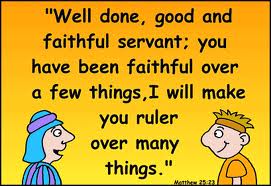
BRA, du gode och trogne tjänare Matt. 25:21

faithful servant

BRA, du gode och trogne tjänare. Du har varit trogen i det lilla. Jag skall sätta dig över mycket. Gå in i din herres glädje! (Matt. 25:21)

Ovan är ett beröm till någon som gjort något BRA för Guds rike. Att vara trogen och lydig Jesus och hans bud betyder alltså frälsning – att kunna få gå in i Herrens glädje.

Hebr. 5:Och när han hade fullkomnats, blev han upphovet till evig frälsning för alla som lyder honom

Det finns kristna som säger att vi människor aldrig i livet kan göra något som är gott, som kommer från oss själva, inför Gud och OM vi ändå skulle lyckas göra något gott så är det endast för att Gud är den som gör det genom oss och med oss som verktyg. Det är inte säkert att denna idé bottnar i jantelagen eftersom denna idé frodas inom kristenheten även i andra länder och framför allt i de reformerta lägrena, men det handlar om en onödig falsk blygsamhet eftersom vi på felaktiga grunder fått för oss att det nästan är något FULT att säga att vi gjort något gott och bra inför Gud. Kan det bero på  att vi är så förtvivlat rädda för att vi ska uppfattas som självrättfärdiga så att vi hellre nästan skryter med att vi är syndare snarare än att vi är heliga kristna? Men bara för att vi påstår att vi kan göra gott och utöva rättfärdighet så betyder det ju inte att vi därmed kan bli frälsta utan Jesu blod som renar oss och därmed gör oss rättfärdiga (en rättfärdighet som varar så länge som vi lever rättfärdigt). Är det inte märkligt att vi verkar skämmas så mycket för det goda som vi kan göra inför Gud, och som vi faktiskt förväntas göra?

Vi har ofta blivit itutade att det inte finns NÅGONTING som vi troende kan göra eller lägga till det som Jesus redan gjort klart på korset där det påstås att han betalade för våra synder, tog vårt straff på sig själv, dog i stället för oss, förlät alla synder ovillorligt och innan de ens hinner utföras, tog Guds vrede på sig själv och i stället för oss, lovade NÅD och frikännande oavsett vad vi ämnar göra, och med dessa ovillkorliga löften och försäkringar slutligen utbrast “det är fullbordat” och därmed låste denna löfteskista med hundra varv, spikade igen den och kastade bort nyckeln en gång för alla. Möjligen upplever folk att det finns det EN fruktansvärd och horribel synd som faktiskt skulle få Jesus att leta redan på nyckeln igen och låsa upp kistan med alla löften/försäkringar, och det är om någon skulle påstå att OMVÄNDELSE skulle krävas, och framför allt… GÄRNINGAR! Hu vale! Det kan få folk att spärra upp ögonen av skräck och riktigt rysa!

“Gärningslära” – som många uppfattar betyder “lydnad av Guds bud” verkar vara den största synden av alla och den enda synd som möjligen inte riktigt fastnat i den härva av synder som Jesus dog för. En del kanske resonerar: Stölder, otrohet, lögner…inte så jättebra att utöva kanske, men ändå ingen fara på taket för våra själar, men att däremot påstå att GÄRNINGAR skulle behövas för frälsningen? Där går gränsen! Då har vi hamnat i en livsfarlig villolära från Satan, och då är man för evigt förlorad. Däremot är man fri och frälst om man medger att man är en vanlig hederlig syndare frälst av nåd och ödmjukt säger “Ingen är perfekt” och “Jag är inte god i mig själv och kan inte göra någonting som behagar Gud”. Bara man inte lär ut att vi måste vara Jesus trogna och lyda honom för att vara frälsta, så ordnar sig resten för den som “tror på Gud”.

Det kanske låter som jag överdriver men jag har talar med såpass många kristna personer och så många predikningar från olika kyrkor, att jag vet vilken fullkomlig SKRÄCK som folk i allmänhet verkar ha för något som luktar “gärningslära“. Inte så att jag någonsin hört någon kristen person säga “synda hur mycket du vill för Gud bryr sig inte” eller säga någonting annat än att synd är fel, MEN om de lär ut att synd INTE leder till (själslig) död så uppmuntrar de ju likaväl synd även om det är mer indirekt!

Låt ingen lura dig att tro att du inte kan göra gott inför Gud, för det kan du! Även en del ateister kan emellanåt (eller t o m ofta) göra gott, men de är inte frälsta eftersom de inte är i vinträdet och bygger sina liv på Jesus Kristus. Vi måste vara i vinträdet (Jesus) för att kunna producera god och varande andlig frukt, men det är VI (inte Gud) som bär frukten i våra grenar. Är våra grenar inte i trädet kan vi inte producera någon andligt god frukt och det är VÅRT ansvar. Inte Guds ansvar! Hade det hängt på Gud så hade han förstås sett till att vi aldrig någonsin syndade och att vi visade god frukt ständigt och jämt, men i stället varnar Jesus oss att vi måste visa god frukt så att vi inte huggs av vinträdet och bränns upp.

Så återigen, DU kan göra gott inför både Gud och människor och glädja honom med goda gärningar som du GÖR. Det är t o m stor glädje i hela himlen när en enda syndare omvänder sig – vilket innebär att hissa vit flagg och ha som målsättning att aldrig synda igen – och det handlar återigen om någon som denna person GÖR. Att undvika synd (i princip att undvika att handla illa mot sin nästa) är att GÖRA något GOTT.  Så att undvika att synda, och att visa barmhärtighet mot sin nästa är den segrande livsstilen som Gud förväntar sig av oss.

Lukas 15:7 Jag säger er: På samma sätt blir det glädje ihimlen över en enda syndare som omvänder sig – inte över nittionio rättfärdiga som ingen omvändelse behöver.

Det är inte gärningslärare som är farliga – om vi med det menar kristna som lär ut att vi måste lyda Jesus och hans bud för att vara frälsta – utan de som lär ut att vi inte behöver göra NÅGONTING för att bli frälsta förutom att tro på ett färdigt frälsningspaket. Frälsningen är inte billig. Vi måste vara villiga att ge upp ALLT, och vi måste beräkna kostnaden och vara beredda att förneka oss själva och ta vårt kors på oss dagligen. Att inte behöva göra någonting, och att ha råd med att tjäna två herrar är en BILLIG frälsning, och det är ingenting som Bibeln lär.

Här nedan kan du läsa några exempel på verser som tydligt visar att vi kan göra gott inför Gud, och behaga och glädja honom med att göra goda gärningar. Den helige Ande kan leda oss rätt och han är den store Hjälparen i våra liv. Läs gärna mer om nåd, lag och synder, exempelvis i denna artikel.

Nya testamentetapplauds

De första två avsnitten handlar om två liknelser i Mattheus 25 där vi kan se att goda/dåliga gärningar är avgörande för om vi hamnar i Guds rike eller i helvetet.

Matt. 25:19 En lång tid därefter kom tjänarnas herre och krävde redovisning av dem.20 Den som hade fått fem talenter kom då och lämnade fram fem talenter till och sade: Herre, fem talenter överlämnade du åt mig. Nu har jag tjänat fem till.21 Hans herre sade till honom: Bra, du gode och trogne tjänare. Du har varit trogen i det lilla. Jag skall sätta dig över mycket. Gå in i din herres glädje!

Matt. 25:31 När Människosonen kommer i sin härlighet och alla änglar med honom, då skall han sätta sig på sin härlighets tron.—. 34 Då skall konungen säga till dem som står på hans högra sida: Kom, ni min Faders välsignade, och ta i besittning det rike som stått färdigt åt er från världens begynnelse. —37 Då skall de rättfärdiga svara honom: Herre, när såg vi dig hungrig och gav dig att äta, eller törstig och gav dig att dricka?— 40 Då skall konungen svara dem: Amen säger jag er: Allt vad ni har GJORT för en av dessa mina minsta bröder, det har ni GJORT mot mig.41 Sedan skall han säga till dem som står på den vänstra sidan: Gå bort ifrån mig, ni förbannade, till den eviga elden som är beredd åt djävulen och hans änglar.  44 Då skall de svara: Herre, när såg vi dig hungrig eller törstig eller som främling eller naken eller sjuk eller i fängelse och tjänade dig inte? 45 Då skall han svara dem: Amen säger jag er: Allt vad ni INTE HAR GJORT för en av dessa minsta, det har ni INTE HELLER GJORT för mig46 Och dessa skall gå bort till evigt straff, men de rättfärdiga till evigt liv.”

Apg 10:34 Då började Petrus tala: ”Nu förstår jag verkligen att Gud inte gör skillnad på människor, 35 utan tar emot den som fruktar honom och gör det som är rätt,vilket folk han än tillhör

Luke 6:45 En god människa bär fram det som är gott ur sitt hjärtas goda förråd, och en ond människa bär fram det som är ont ur sitt hjärtas onda förråd. Ty vad hjärtat är fullt av, det talar munnen.

Rom. 2:Han skall ge var och en efter hans gärningar: evigt liv åt dem som uthålligt gör det goda och söker härlighet, ära och odödlighet,

Rom. 8:Men de som äro i ett köttsligt väsende kunna icke behaga Gud.9 I åter ären icke i ett köttsligt väsende, utan i ett andligt, om eljest Guds Ande bor i eder; men den som icke har Kristi Ande, han hör icke honom till. (1917)

Rom. 12: Så förmanar jag nu er, bröder, vid Guds barmhärtighet, att frambära era kroppar som ett levande och heligt offer som behagar Gud – er andliga gudstjänst. Och anpassa er inte efter den här världen, utan låt er förvandlas genom sinnets förnyelse, så att ni kan pröva vad som är Guds vilja, det som är gott och fullkomligt och som behagar honom.—21 Låt dig inte besegras av det onda utan besegra det onda med det goda.

Rom. 14: 17 Ty Guds rike består inte i mat och dryck utan i rättfärdighet och frid och glädje i den helige Ande. 18 Den som tjänar Kristus på det sättet behagar Gud och håller provet inför människor. 19 Låt oss därför sträva efter det som tjänar friden och den ömsesidiga uppbyggelsen

Kol. 1:Från den dag vi hörde om det, har vi därför inte upphört att be för er. Vår bön är att ni skall uppfyllas av kunskap om hans vilja, med all andlig vishet och insikt, 10 så att ni kan leva värdigt Herren och i allt behaga honom, när ni bär frukt i alla slags goda gärningar och växer till i kunskapen om Gud.11 Hans härlighets makt skall då styrka er och ge er all kraft till att vara uthålliga och tåliga i allt12 Med glädje skall ni då tacka Fadern, som har gjort er värda att få del i det arv som de heliga har i ljuset.

1 Thess. 2:Eftersom Gud har ansett oss värdiga att anförtros evangeliet talar vi som vi gör, inte för att vara människor till lags utan för att behaga Gud, som prövar våra hjärtan.10 Ni är vittnen, ja, Gud själv är vittne till hur heligt, rätt och oförvitligt vi uppträdde bland er som tror.—

1 Thess. 4:1 För övrigt, bröder, ni har lärt av oss hur ni skall leva för att behaga Gud, och det är ju så ni lever. Nu ber och uppmanar vi er i Herren Jesus att låta ert liv ännu mer överflöda i detta. 2 Ni vet vilka föreskrifter vi har gett er från HerrenDetta är Guds vilja: att ni helgas, att ni avhåller er från otukt,  Därför, den som nu avvisar detta, avvisar inte en människa utan Gud, som har gett er sin helige Ande.

1 Tim. 2:1 Först av allt uppmanar jag till bön och åkallan, förbön och tacksägelse för alla människor, för kungar och alla i ledande ställning, så att vi kan föra ett lugnt och stilla liv på allt sätt gudfruktigt och värdigt. 3 Sådant är rätt och behagar Gud, vår Frälsare

Hebr. 11:Men utan tro är det omöjligt att behaga Gud. Ty den som kommer till Gud måste tro att han är till och belönar dem som söker honom.—I tron LYDDE Abraham, när han blev kallad att dra ut till det land som han skulle få i arv, och han begav sig i väg utan att veta vart han skulle komma.

Hebr. 13:16 Och glöm inte att göra gott och dela med er, ty sådana offer har Gud behag till.

2 Pet 2:7 Men han frälste den rättfärdige Lot, som plågades av de ogudaktigas utsvävande liv.

Rom. 15:17 Det är alltså i min tjänst inför Gud som jag kan berömma mig i Kristus Jesus.

2 Korinthierbrevet 1:12 Vi kan med gott samvete berömma oss av att vi här i världen, och särskilt mot er, har uppträtt i helighet och renhet inför Gud och inte varit ledda av världslig visdom utan av Guds nåd.

Filipperbrevet 2:16 när ni håller fast vid livets ord. Då kan jag berömma mig av er på Kristi dag. Jag har alltså inte sprungit förgäves eller arbetat förgäves.

Gamla testamentetfaithful servant

Predikaren 2:26 Åt den människa som är god i hans ögon ger han vishet och kunskap och glädje. Men åt syndaren ger han besväret att samla in och lägga på högför att det skall ges åt den som är god i Guds ögon. Också detta är fåfänglighet och ett jagande efter vind.

Ordspråksboken 16:6 Genom nåd och sanning sonas skuld, genom Herrens fruktan undflyr man det onda.Om någons vägar behagar Herren, gör han även hans fiender till vänner.

Ordspråksboken 11:1 Herren avskyr falsk våg, full vikt behagar honom.

Ordspråksboken 11:20 De som har förvända hjärtan är en styggelse för Herren, de som lever ostraffligt behagar honom.

Ordspråksboken 12:22 Lögnaktiga läppar är en styggelse för Herren, de som handlar rättfärdigt behagar honom.

Ordspråksboken 15:8 De ogudaktigas offer är avskyvärda för Herren, de rättsinnigas bön behagar honom.

4 Mosebok 24:1 När Bileam såg att det behagade Herren att välsigna Israel, gick han inte som förut bort och såg efter spåtecken, utan vände sig mot öknen.

1 Kung. 3:Ge din tjänare ett lydigt hjärta, så att han kan vara domare för ditt folk och skilja mellan gott och ont. För vem kan annars vara domare för detta ditt stora folk?”10 Det behagade Herren att Salomo bad om sådant. 

Psaltaren 69:31 Jag vill prisa Guds namn med sång och upphöja honom med tacksägelse. 32 Det skall behaga Herren mer än någon tjur eller något offerdjur med horn och klövar.

Malaki 3:4 Då skall offergåvorna från Juda och Jerusalem behaga Herren som i forna dagar och gångna år.

Jeremia 9:24 Den som vill berömma sig, han skall berömma sig av att han har insikt och känner mig: Att jag är Herren, som verkar med nåd, rätt och rättfärdighet på jorden. Ty däri har jag min glädje, säger Herren.

Proverbs 21:1 The king’s heart is turned wherever God wants?

king's heart2Proverbs 21:1 The king’s heart is in the hand of the Lord, as the rivers of water: he turneth it whithersoever he will

It’s never a good idea to use a psalm or a proverb as a filter to read the rest of the Bible through, because poetic text might obviously not always be the literal truth. It’s shaky to start a new doctrine based on poetry and analogies, and you can reach almost any conclusion you want if you single out a verse out of context in Psalms or Proverbs (or anywhere) and use it as a foundation for a certain theology view.

The above verse is sometimes used by our reformed friends (calvinists) as an attempt to support the idea that God has an exhaustive control over all decisions of men – i.e. God predestines every step that a man makes and nothing happens against the will of God. There may be calvinists who disagree with this view, but then they are not consistent with their own doctrines – as in TULIP

It’s true that God may occasionally and in rare situations choose to override the will of man, but calvinists believe God acts in such way at all times and that he constantly steers our steps and wills so that we will always act and think according to his exact will with no exception. They believe that God is no longer sovereign if man has any independent control separate from his own will. Sovereign and sovereignty are not Biblical words (KJV), but also freewillers believe God is “sovereign”, but obviously not the way calvinists understand this term. A sovereign and an all powerful God is mighty enough to create man with a free will and to be responsible for his (not God’s) own actions. If God is the one who causes us to think and act the way he wants, then of course he is the one to be responsible for our thoughts and actions, but that is not the God of the Bible because it would make him the author of sin.

Prior to the flood the people were purely evil (with an exception of Noah and his family):

Gen. 5:And God saw that the wickedness of man was great in the earth, and that every imagination of the thoughts of his heart was only evil continually.And it repented the Lord that he had made man on the earth, and it grieved him at his heart.And the Lord said, I will destroy man whom I have created from the face of the earth; both man, and beast, and the creeping thing, and the fowls of the air; for it repenteth me that I have made them.

It wouldn’t make any sense at all if God first caused people to have wicked thoughts and constantly perform evil, and then bring a global flood on everyone due to their wickedness that he himself predestined. The wickedness culminated after the nephilim were being born by the sons of God (fallen angels, as per other Bible verses) and female human beings, and wickedness is always against God’s will.

Proverbs 21:1  doesn’t speak about all the people in the whole world but about “the king”,  and this verse might have been written by King Solomon concerning himself. The passage also doesn’t tell us that God controls the king’s heart irresistibly. It’s possible that Solomon is proclaiming that he is fulfilling his appointed role by allowing God to control his decision-making so that his decisions would essentially be the decisions of God, and it is not a statement that God is irresistibly controlling his heart but that the king has fully surrendered his heart and will to the will of God.

A good king was to represent God to his people in his judgments and decisions, and we can see this in Psalm 82 quoted by Jesus to the Pharisees in John 10:34-38.  In the psalm, the rulers of the people were called “gods” because they were to represent God to His people in their leadership and judgments.  In Psalm 82 God is seen to stand in judgment of the judges and rebuke them for their failure to represent God as they were called by God to do. If the Scripture could call wicked judges “gods”, how much more does Jesus deserve to be equated with God since He is sent into the world by God himself?

The wicked make plans and those plans seldom include their own destruction or judgment nor the many calamities that might result from their rebellion, but such is their future according to the Lord. Nothing can ultimately thwart God’s overall sovereign plan, and his ultimate control over the universe is in no way threatened by the free will decisions of his creatures. That is the gist of Proverbs 21.

What else does Proverbs 21 say?
king's heart

21:Every way of a man is right in his own eyes: but the Lord pondereth the hearts.3 To do justice and judgment is more acceptable to the Lord than sacrifice.

It wouldn’t make sense if God irresistibly controls the heart at the same time as he ponders/weighs/judges the heart that he alone controls with no interference or involvement by man. Solomon is concerned about pleasing the Lord in righteousness and justice, and a sacrifice is usually made when a person has transgressed the law of God and needs to be forgiven through the blood of an animal sacrifice. Of course it’s better to be obedient to start with because then a sacrifice isn’t even needed, and we can read that this option is more acceptable to God. Solomon contrasts the desires and actions of men surrendered to God with those who are in rebellion to God and refusing to submit to Him. Solomon himself fell away from the Lord in his later years but when he wrote this Proverb Solomon was committed to the Lord.

21:4 An high look, and a proud heart, and the plowing of the wicked, is sin.

Is it really possible that God would want people to have a high look, a proud heart and being wicked sinners? It’s absurd to suggest that God could cause people to be evil because in God there is no darkness at all and he doesn’t even tempt anyone – much less cause anyone to sin.

21:The thoughts of the diligent tend only to plenteousness; but of every one that is hasty only to want.The getting of treasures by a lying tongue is a vanity tossed to and fro of them that seek death.7 The robbery of the wicked shall destroy them; because they refuse to do judgment.

A lying tongue would also be something that God doesn’t want anyone to have, and we can read that the robbery of the wicked shall destroy them because they REFUSE to do judgment. It’s not God who leads them in that direction, but they do it to themselves.

21:The way of man is froward and strange: but as for the pure, his work is right.It is better to dwell in a corner of the housetop, than with a brawling woman in a wide house.10 The soul of the wicked desireth evil: his neighbour findeth no favour in his eyes.

Solomon compares “man” with “the pure”. The work of the pure is RIGHT unlike the way of man, and this must mean that some people do NOT do what is right before God since all men are not pure. The soul of the wicked desire EVIL, and does it sound plausible that God causes certain men to be wicked and evil?

21:11 When the scorner is punished, the simple is made wise: and when the wise is instructed, he receiveth knowledge.12 The righteous man wisely considereth the house of the wicked: but God overthroweth the wicked for their wickedness.

A scorner is not showing a good conduct and that’s why he is punished. The righteous man is contrasted with the wicked man, and we can read that God overthrows the wicked for the reason that he is performing wickedness. Why would God overthrow and punish people for the reason that they are being wicked, if he himself caused them to be wicked in the first place? Instead of being punished they should get praise and applauds for doing the will of God – by being evildoers – if this is what God truly wanted them to be.

21:13 Whoso stoppeth his ears at the cry of the poor, he also shall cry himself, but shall not be heard.14 A gift in secret pacifieth anger: and a reward in the bosom strong wrath.15 It is joy to the just to do judgment: but destruction shall be to the workers of iniquity.

Does God want people to “stop their ears” at the cry of the poor? Surely not, since God repeatedly tells us to be merciful and help those in need. Whosoever is a worker of iniquity must surely be acting against God’s will? The Bible says that God hates the workers of iniquity (psalm 5:5) so it wouldn’t make sense if he would be causing people to be just that, and then turn around and pretend to be angry at the same workers of iniquity.

21:16 The man that wandereth out of the way of understanding shall remain in the congregation of the dead.17 He that loveth pleasure shall be a poor man: he that loveth wine and oil shall not be rich.18 The wicked shall be a ransom for the righteous, and the transgressor for the upright.

Here we can read about man wandering out-of-the-way of understanding. It doesn’t say God pushed him out-of-the-way of understanding or prevented him in any way to reach a better understanding, but that the man himself is guilty of this – and the dire consequence for this unfortunate choice is death. Does God want people to love pleasure and wine, and does he want them to be wicked transgressors? Again, I hope all will say NO WAY. Sinning is always against God’s will.

21:19 It is better to dwell in the wilderness, than with a contentious and an angry woman.20 There is treasure to be desired and oil in the dwelling of the wise; but a foolish man spendeth it up.21 He that followeth after righteousness and mercy findeth life, righteousness, and honour.22 A wise man scaleth the city of the mighty, and casteth down the strength of the confidence thereof.23 Whoso keepeth his mouth and his tongue keepeth his soul from troubles.

God surely wouldn’t cause people to be foolish and waste expensive oil. The wise man is again contrasted with the foolish man, and it’s up to us to follow after righteousness in order to find life and honor, and it’s up to us to keep our tongue to save our SOUL from trouble.

24 Proud and haughty scorner is his name, who dealeth in proud wrath.25 The desire of the slothful killeth him; for his hands refuse to labour.26 He coveteth greedily all the day long: but the righteous giveth and spareth not.27 The sacrifice of the wicked is abomination: how much more, when he bringeth it with a wicked mind?28 A false witness shall perish: but the man that heareth speaketh constantly.29 A wicked man hardeneth his face: but as for the upright, he directeth his way.30 There is no wisdom nor understanding nor counsel against the Lord.31 The horse is prepared against the day of battle: but safety is of the Lord.

Read this passage again about proud, haughty scorners who refuse to labor and who are greedy and covet things that don’t belong to them. The sacrifice of the wicked is an ABOMINATION before God, and the only reason they would even think about doing something like that would be due to a wicked mind. Would God cause people to be wicked and act in such a way? God directs the way of the upright, but the wicked hardens himself. Bad choice on their part.

Proverbs 15:26 The thoughts of the wicked are an abomination to the Lord: but the words of the pure are pleasant words.—28 The heart of the righteous studieth to answer: but the mouth of the wicked poureth out evil things.29 The Lord is far from the wicked: but he heareth the prayer of the righteous.

The thoughts of the wicked are an ABOMINATION to the Lord, and he is far from the wicked. Would God cause people to be so wicked that they were an abomination before him? That would not be the God of the Bible, but this type of God can unfortunately be seen in books authored by calvinists. Flee to another direction.

Declaring the end from the beginning – Isaiah 46:9-10 – does not mean God predestines sin

CreationIsaiah 46:9 Remember the former things of old: for I am God, and there is none else; I am God, and there is none like me, 10 Declaring the end from the beginning, and from ancient times the things that are not yet done, saying, My counsel shall stand, and I will do all my pleasure (KJV)

Isaiah 46:10 DECLARING FROM THE BEGINNING THE LATTER END, And from of old that which hath not been done, Saying, `My counsel doth stand, And all My delight I do.’ (Young’s Literal)

So, from the very beginning of time God has declared something that will take place in the latter end, and we can continue on to v. 11 and v. 12-13 to see exactly what this is. It’s about the coming of a “ravenous bird“, but most importantly about the fact that salvation will come from Zion.  God is able to tell us through his prophets what will happen in the future whether God himself wants these things to happen or not. In this case it looks like what he is telling us through Isaiah is something that God himself has decreed will happen. See further down below. Also, if God delights in a world where man has free will and able to obey/disobey and where he is responsible for his own actions, can God make such a world? Yes! God can do anything he wants.

Some of our reformed friends translate “declaring the end from the beginning” to “I decide and predestine every step that a man makes and he has no choice but to act exactly as I have caused him to act “, and they translate “my counsel shall stand, and I will do all my pleasure to “my counsel is to unconditionally cause a certain elect group of people to believe in me, and my pleasure is to orchestrate everything that happens, including causing people to sin – and I will also punish them for this sin by sending them to hell for it “. 

But if that interpretation is true, then of course God has always wanted people to be born depraved and with a sinful nature that causes them all to sin, and that would absolutely make God the author of sin and the one we must blame for all wickedness in the world. We would have no other choice but to trace each case of murder, violence, abortion and rape back to GOD and we must even conclude that he caused Satan to rebel against him. Some reformed believers object to the notion that God is the author of sin, which their doctrine necessitates, but there are numerous calvinists who admit that they believe in a God who makes people sin for his glory.

What does the rest of the chapter Isaiah 46 say?

1 Bel boweth down, Nebo stoopeth, their idols were upon the beasts, and upon the cattle: your carriages were heavy loaden; they are a burden to the weary beast.

It’s really interesting that God would want his people to make use of IDOLS, despite that the first commandment that God gave Moses is:

“You shall have no other gods before me”

Could God really be angry at his people for making idols, if he is the one who predestines them to make them? Will people risk their souls for making these idols and for worshiping them, despite that it’s according to God’s will? Will people end up in hell despite obeying God to 100%?

Hearken unto me, O house of Jacob, and all the remnant of the house of Israel, which are borne by me from the belly, which are carried from the womb:

It’s strange that God would say “hearken unto me...” just like people could choose to NOT hearken unto him. It’s also interesting that God suggests that the house of Jacob and the remnant of the house of Israel were “borne by me from the belly” because this sounds like they were not born depraved, and yet not all individuals from this group will always be good and obedient people.

6 They lavish gold out of the bag, and weigh silver in the balance, and hire a goldsmith; and he maketh it a god: they fall down, yea, they worship.7 They bear him upon the shoulder, they carry him, and set him in his place, and he standeth; from his place shall he not remove: yea, one shall cry unto him, yet can he not answer, nor save him out of his trouble.8 Remember this, and shew yourselves men: bring it again to mind, O ye transgressors.

Again, it’s very interesting that God would cause his people to make an idol to bow down for and to worship, despite that God also tells them multiple times that they should have no other God before him. What would be his reason for predestining them to do something horrible like that? Does he want us to obey his commandments or not? We can also read that they were transgressors, and that would be people who transgress the divine commandments in violation to the one who gave those commandments. But how could this be, if God is the one who directs every single one of their steps and that nothing that comes to pass happens against his will? If God is the one who causes people to make idols, can we really say that they “transgress” his command to not make idols? If God is the one who wants them to make idols and cause them to make idols, then it’s hard to see how this could be a “transgression” of any kind. So it seems like God causes his people to act in a way that goes against his own principles, as though God is battling with some schizophrenic problems. The best way to solve it is of course to flee from calvinism, because that would at once take care of all Bible contradiction that this gnostic theology has caused AND God’s holy nature and reputation would be intact.

Remember the former things of old: for I am God, and there is none else; I am God, and there is none like me,10 Declaring the end from the beginning, and from ancient times the things that are not yet done, saying, My counsel shall stand, and I will do all my pleasure:

Here comes our famous quote. Couldn’t “declaring the end from the beginning” mean that God has foreknowledge of certain events and has taken measures to both punish people who transgress his laws, as well as helping those people out who seek him and turn to him for his aid? The context is about the deliverance of his people from Babylon by the hand of Cyrus, which he purposed and prophesied about. The terms “my counsel” and “my pleasure” don’t necessarily mean that God alone micro manages every single step that people make –  against their will and without conditions. Each person is responsible for his own actions, and we can often see God acting based on the premise “if you do this, I will do that“. If God is the one who directs our steps unconditionally, then the blame for all evil darkness must be placed on God alone – and God should ask us for forgiveness for causing so much wickedness and evil.

11 Calling a ravenous bird from the east, the man that executeth my counsel from a far country: yea, I have spoken it, I will also bring it to pass; I have purposed it, I will also do it.

Aha, this is the verse right after v. 10, and here we can see exactly what his “pleasure” might be and what it is that he has declared according to his counsel. He has apparently called “a ravenous bird from the east – a man of his counsel”. It’s not certain who this is, but it might be a reference to Cyrus who God indirectly might have involved in his plans for Israel. All God has to do is to remove his protective hands from a certain leader among his people, resulting in that the enemy would get sufficient help needed to be victorious. God doesn’t always interfere in such manner, but it looks like this is a rare case where he did. It’s inconceivable to believe that a holy God places evil desires in someone’s heart, because there is no darkness in God and he doesn’t tempt anyone – much less cause people to sin. Even if Israel will initially be shaken, there is also a plan for SALVATION – which is purposed by God. So the ultimate purpose by God, and what he will execute according to the counsel of his will, is to bring salvation from Zion. Read on.

12 Hearken unto me, ye stouthearted, that are far from righteousness:

Isn’t it interesting that God would consider making people stouthearted and unrighteous? Yet, this is what he must have done if we must interpret v. 9-10 as though God predestines everything. And why continuously asking people to hearken unto him, if he knows that they can do nothing BUT hearken to him? People are not able to listen to God if God has prevented them from doing so. Things always pan out the way God wants in the calvinistic world.

13 I bring near my righteousness; it shall not be far off, and my salvation shall not tarry: and I will place salvation in Zion for Israel my glory.

“Salvation in Zion” sounds like a promise about the upcoming Messiah who will come forth in the future in Zion, and he will be of the blood of Jacob and King David. This is something that happens according to the council of his will, and nowhere in the chapter does it say that God causes people to think and to act in a certain way. “I bring near my righteousness”, God says, and that doesn’t sound like there is much room for wickedness and unrighteousness – which is something abominable in God’s eyes.

“I will have mercy on who I will have mercy”, but not unconditionally – Rom. 9:15

moses

Rom. 9:15 FOR HE SAITH TO MOSES, I will have mercy on whom I will have mercy, and I will have compassion on whom I will have compassion

This is a very famous and popular verse, and there are some (reformed) christians who translate this verse into “God says to us all; I will elect certain individuals for salvation, and I will place no conditions whatsoever on those that I choose…”. Just because God shows mercy to individuals, groups of people and entire nations, it doesn’t mean that they will be saved, and neither does it say anywhere in Romans. 9:15 that God shows mercy unconditionally. Paul is here making a reference to Exodus 33:19 where God is speaking to Moses, so in order to get Paul’s point we should both read both the context in Romans 9 (which is about God’s right to make the offer of salvation also to the gentiles and under the conditions that he himself chooses) as well as checking the passage that Paul is referring to in order to understand his full point.

Ex 33:2 (God) And I will send an angel before thee; and I will drive out the Canaanite, the Amorite, and the Hittite, and the Perizzite, the Hivite, and the Jebusite:Unto a land flowing with milk and honey: for I will not go up in the midst of thee; for thou art a stiffnecked people: lest I consume thee in the way.And when the people heard these evil tidings, they mourned: and no man did put on him his ornaments.For the Lord had said unto Moses, Say unto the children of Israel, Ye are a stiffnecked people: I will come up into the midst of thee in a moment, and consume thee: therefore now put off thy ornaments from thee, that I may know what to do unto thee.—(Mose starts out)16 For wherein shall it be known here that I and thy people have found grace in thy sight? is it not in that thou goest with us? so shall we be separated, I and thy people, from all the people that are upon the face of the earth.17 And the Lord said unto Moses, I will do this thing also that thou hast spoken: for thou hast found grace in my sight, and I know thee by name.18 And he said, I beseech thee, shew me thy glory.19 And he said, I will make all my goodness pass before thee, and I will proclaim the name of the Lord before thee; and will be gracious to whom I will be gracious, and will shew mercy on whom I will shew mercy.

As we can see, Moses is having a huge problem with the people that he was a leader for, and that’s because they were stiff-necked and rebellious against the God who Moses was a true servant of. Man’s free will is fully displayed in this passage (and throughout the entire Bible) because naturally God doesn’t want people to be disobedient to him and to walk on their own evil ways. The only reason God is threatening to consume them, is due to their sinfulness and stubborn hearts. Moses is pleading with God to show mercy on his people and he is successful because God has indeed seen Moses’ heart and therefore decided to show him grace and listen to his requests.

As we can see, the phrase that he “will shew mercy on whom I will shew mercy” is not in reference to God unconditionally electing people to salvation, and neither can this phrase be understood that way in Romans 9. Moreover, just because God decides to show mercy on a person, it doesn’t mean this person will necessarily be saved because mercy (or kindness or grace) might not even be in relation to the person’s soul. And even if it is in relation to the person’s soul, it doesn’t say “Once God has shown mercy on a person, this person forever remains in his mercy and is forever saved”. Just like we people can choose to be kind or not to others depending on their actions, so can God.

That people are being stiff-necked in the Bible can be seen here with many examples.

Compare with the words of David, who claims that God will be merciful to those who are merciful – which is how God has chosen to treat people:

2 Sam. 22:25 Therefore the Lord hath recompensed me according to my righteousness; according to my cleanness in his eye sight.26 With the merciful thou wilt shew thyself merciful, and with the upright man thou wilt shew thyself upright.27 With the pure thou wilt shew thyself pure; and with the froward thou wilt shew thyself unsavoury.28 And the afflicted people thou wilt save: but thine eyes are upon the haughty, that thou mayest bring them down.

We are told to be merciful as our Father is merciful

If the idea is that God has a certain lucky and elect elite that he has decided to show mercy on while he turns his back on all others, can we act in the same way by showing mercy (being kind) to only SOME? Not according to the Bible that says we are to be good to all. If we show mercy to others, we can be expected to get mercy ourselves, and God expects us to show mercy to others.

Luke:35 But love ye your enemies, and do good, and lend, hoping for nothing again; and your reward shall be great, and ye shall be the children of the Highest: for he is kind unto the unthankful and to the evil.36 Be ye therefore merciful, as your Father also is merciful.

Hosea 4:1 Hear the word of the Lord, ye children of Israel: for the Lord hath a controversy with the inhabitants of the land, because there is no truth, nor mercy, nor knowledge of God in the land.

Hosea 6:6 For I desired mercy, and not sacrifice; and the knowledge of God more than burnt offerings.

Hosea 10:12 Sow to yourselves in righteousness, reap in mercy; break up your fallow ground: for it is time to seek the Lord, till he come and rain righteousness upon you.

Matthew 5:7 Blessed are the merciful: for they shall obtain mercy.

Matthew 9:13 But go ye and learn what that meaneth, I will have mercy, and not sacrifice: for I am not come to call the righteous, but sinners to repentance.

Matthew 23:23 Woe unto you, scribes and Pharisees, hypocrites! for ye pay tithe of mint and anise and cummin, and have omitted the weightier matters of the law, judgment, mercy, and faith: these ought ye to have done, and not to leave the other undone.

1 Timothy 1:13 Who was before a blasphemer, and a persecutor, and injurious: but I obtained mercy, because I did it ignorantly in unbelief.

Ja. 2:12 So speak ye, and so do, as they that shall be judged by the law of liberty.13 For he shall have judgment without mercy, that hath shewed no mercy; and mercy rejoiceth against judgment.14 What doth it profit, my brethren, though a man say he hath faith, and have not works? can faith save him?

Broader context from Romans 9. Read more about Romans 9 in this article.

Rom. 9:14 What shall we say then? Is there unrighteousness with God? God forbid.15 For he saith to Moses, I will have mercy on whom I will have mercy, and I will have compassion on whom I will have compassion.16 So then it is not of him that willeth, nor of him that runneth, but of God that sheweth mercy.17 For the scripture saith unto Pharaoh, Even for this same purpose have I raised thee up, that I might shew my power in thee, and that my name might be declared throughout all the earth.18 Therefore hath he mercy on whom he will have mercy, and whom he will he hardeneth.23And that he might make known the riches of his glory on the vessels of mercy, which he had afore prepared unto glory

Mercy is often in relation to individuals who are being righteous

It makes sense that kind-hearted and obedient people are prone to receive mercy themselves.

Genesis. 19:18 And Lot said unto them, Oh, not so, my Lord:19 Behold now, thy servant hath found grace in thy sight, and thou hast magnified thy mercy, which thou hast shewed unto me in saving my life; and I cannot escape to the mountain, lest some evil take me, and I die:

Genesis 24:27 And he said, Blessed be the Lord God of my master Abrahamwho hath not left destitute my master of his mercy and his truth: I being in the way, the Lord led me to the house of my master’s brethren.

Genesis 39:21 But the Lord was with Joseph, and shewed him mercy, and gave him favour in the sight of the keeper of the prison.

1 Kings 3:6 And Solomon said, Thou hast shewed unto thy servant David my father great mercy, according as he walked before thee in truth, and in righteousness, and in uprightness of heart with thee; and thou hast kept for him this great kindness, that thou hast given him a son to sit on his throne, as it is this day.

Isaiah 14:1 For the Lord will have mercy on Jacob, and will yet choose Israel, and set them in their own land: and the strangers shall be joined with them, and they shall cleave to the house of Jacob.

Conditions that are required for getting mercy, and when God does NOT show mercyKärlek

It looks like God is keen to show mercy on people who LOVE HIM AND KEEP HIS COMMANDMENTS. We can see this requirement throughout the below verses.

Ex. 20:5 Thou shalt not bow down thyself to them, nor serve them: for I the Lord thy God am a jealous God, visiting the iniquity of the fathers upon the children unto the third and fourth generation of them that hate me;And shewing mercy unto thousands of them that love me, and keep my commandments.

Deut. 5:Thou shalt not bow down thyself unto them, nor serve them: for I the Lord thy God am a jealous God, visiting the iniquity of the fathers upon the children unto the third and fourth generation of them that hate me,10 And shewing mercy unto thousands of them that love me and keep my commandments.

Deut. 7:9 Know therefore that the Lord thy God, he is God, the faithful God, which keepeth covenant and mercy with them that love him and keep his commandments to a thousand generations;10 And repayeth them that hate him to their face, to destroy them: he will not be slack to him that hateth him, he will repay him to his face.11 Thou shalt therefore keep the commandments, and the statutes, and the judgments, which I command thee this day, to do them.12 Wherefore it shall come to pass, if ye hearken to these judgments, and keep, and do them, that the Lord thy God shall keep unto thee the covenant and the mercy which he sware unto thy fathers 

1 Kings 8:23 And he said, Lord God of Israel, there is no God like thee, in heaven above, or on earth beneath, who keepest covenant and mercy with thy servants that walk before thee with all their heart

2 Chronicles 6:14 And said, O Lord God of Israel, there is no God like thee in the heaven, nor in the earth; which keepest covenant, and shewest mercy unto thy servants, that walk before thee with all their hearts

Nehemiah 1:5 And said, I beseech thee, O Lord God of heaven, the great and terrible God, that keepeth covenant and mercy for them that love him and observe his commandments:

Isaiah 9:16 For the leaders of this people cause them to err; and they that are led of them are destroyed.17 Therefore the Lord shall have no joy in their young men, neither shall have mercy on their fatherless and widows: for every one is an hypocrite and an evildoer, and every mouth speaketh folly. For all this his anger is not turned away, but his hand is stretched out still.

Isaiah 27:11 When the boughs thereof are withered, they shall be broken off: the women come, and set them on fire: for it is a people of no understanding: therefore he that made them will not have mercy on them, and he that formed them will shew them no favour.

Isaiah 30:18 And therefore will the Lord wait, that he may be gracious unto you, and therefore will he be exalted, that he may have mercy upon you: for the Lord is a God of judgment: blessed are all they that wait for him.

Isaiah 47:6 I was wroth with my people, I have polluted mine inheritance, and given them into thine hand: thou didst shew them no mercy; upon the ancient hast thou very heavily laid thy yoke.

Isaiah 55:7 Let the wicked forsake his way, and the unrighteous man his thoughts: and let him return unto the Lord, and he will have mercy upon him; and to our God, for he will abundantly pardon.

Daniel 9:4 And I prayed unto the Lord my God, and made my confession, and said, O Lord, the great and dreadful God, keeping the covenant and mercy to them that love him, and to them that keep his commandments;

Hosea 2:4 And I will not have mercy upon her children; for they be the children of whoredoms.

Jonah 2:8 They that observe lying vanities forsake their own mercy.

Luke 1:50 And his mercy is on them that fear him from generation to generation.

Luke 10:29 But he, willing to justify himself, said unto Jesus, And who is my neighbour?30 And Jesus answering said, A certain man went down from Jerusalem to Jericho, and fell among thieves, which stripped him of his raiment, and wounded him, and departed, leaving him half dead.31 And by chance there came down a certain priest that way: and when he saw him, he passed by on the other side.32 And likewise a Levite, when he was at the place, came and looked on him, and passed by on the other side.33 But a certain Samaritan, as he journeyed, came where he was: and when he saw him, he had compassion on him,34 And went to him, and bound up his wounds, pouring in oil and wine, and set him on his own beast, and brought him to an inn, and took care of him.35 And on the morrow when he departed, he took out two pence, and gave them to the host, and said unto him, Take care of him; and whatsoever thou spendest more, when I come again, I will repay thee.36 Which now of these three, thinkest thou, was neighbour unto him that fell among the thieves?37 And he said, He that shewed mercy on him. Then said Jesus unto him, Go, and do thou likewise.

Romans 11:32 For God hath concluded them all in unbelief, that he might have mercy upon all.

Gal. 6 15 For in Christ Jesus neither circumcision availeth any thing, nor uncircumcision, but a new creature.16 And as many as walk according to this rule, peace be on them, and mercy, and upon the Israel of God.

Hebrews 4:16 Let us therefore come boldly unto the throne of grace, that we may obtain mercy, and find grace to help in time of need.

Hebrews 10:28 He that despised Moses’ law died without mercy under two or three witnesses:

Jude 1:21 Keep yourselves in the love of God, looking for the mercy of our Lord Jesus Christ unto eternal life.

Psalms and Proverbs about mercy

In Psalms and Proverbs we can see the conditions for getting mercy, and they are the same as above.

Psalm 32:10 Many sorrows shall be to the wicked: but he that trusteth in the Lord, mercy shall compass him about.

Psalm 33:18 Behold, the eye of the Lord is upon them that fear him, upon them that hope in his mercy;

Psalm 37:21 The wicked borroweth, and payeth not again: but the righteous sheweth mercy, and giveth.

Psalm 62:12 Also unto thee, O Lord, belongeth mercy: for thou renderest to every man according to his work

Psalm 86:5 For thou, Lord, art good, and ready to forgive; and plenteous in mercy unto all them that call upon thee.

Psalm 103:11 For as the heaven is high above the earth, so great is his mercy toward them that fear him.

Psalm 103:17 But the mercy of the Lord is from everlasting to everlasting upon them that fear him, and his righteousness unto children’s children;

Psalm 118:4 Let them now that fear the Lord say, that his mercy endureth for ever.

Psalm 130:7 Let Israel hope in the Lord: for with the Lord there is mercy, and with him is plenteous redemption.

Psalm 147:11 The Lord taketh pleasure in them that fear him, in those that hope in his mercy.

Psalm 145:The Lord is gracious, and full of compassion; slow to anger, and of great mercy.The Lord is good to all: and his tender mercies are over all his works.

Proverbs 14:22 Do they not err that devise evil? but mercy and truth shall be to them that devise good.

Proverbs 14:31 He that oppresseth the poor reproacheth his Maker: but he that honoureth him hath mercy on the poor.

Proverbs 16:6 By mercy and truth iniquity is purged: and by the fear of the Lord men depart from evil.

Proverbs 21:21 He that followeth after righteousness and mercy findeth life, righteousness, and honour.

Proverbs 28:13 He that covereth his sins shall not prosper: but whoso confesseth and forsaketh them shall have mercy.

We are not saved because we have always done the right thing, but because we are able to be cleansed in the blood of Jesus upon our repentance and faith in his holy name.

Titus. 3:For we ourselves also WERE sometimes foolish, disobedient, deceived, serving divers lusts and pleasures, living in malice and envy, hateful, and hating one another.But after that the kindness and love of God our Saviour toward man appeared,Not by works of righteousness which we have done, but according to his mercy he saved us, by the washing of regeneration, and renewing of the Holy Ghost

Are you stiff-necked and resist the Holy Ghost against the will of God? – Acts 7:51

stiff-necked

Acts 7:51 Ye STIFFNECKED and uncircumcised in heart and ears, ye do always RESIST THE HOLY GHOST: as your fathers did, so do ye.

sklérotrachélos (Greek): stiff-necked, stubborn, obstinate (Strong’s 4644)

oreph (Hebrew): back of the neck, neck (Strong’s 6203)

It’s apparent that we can resist the Holy Ghost by being stiff-necked and walking our own way, and if we take this route it’s obviously against God’s will. Still, there are some of our reformed friends who feel the need to stick to the notion that “nothing that comes to pass happens against the will of God” so they are reluctant to accept the clear meaning of Acts 7:51 and prefer to believe that God has either predestined people to be stiff-necked and/or suggest they are born stiff-necked and will continue to be so until God perhaps decides to open their eyes to bring them out of this spell. If the idea is that nothing happens against God’s will, then people who are born stiff-necked are born that way according to God’s will, but then we are no longer talking about the God of the Bible. 

Stephen (who is talking in Acts 7) is making a reference to the fathers of the pharisees and claimed they too were stiff-necked and resisted the Holy Ghost, and we can see in the verses below how painfully true this statement has proven to be. The Bible is a book that describes how people throughout all of our history have turned their backs on God. Not every single individual of course, because there are also examples of some very righteous and just people who have lived in obedience to God, like Enoch, Noah, Abraham, Lot and Job.

Most cases in the Bible where “stiff-necked” people are mentioned can be seen below.

Examples of stiff-necked people during the Exodus

People even made a golden calf to worship and this provoked God to anger, naturally because it was against his will. Israel didn’t get the promised land because they were particularly good people, but rather because the inhabitants were very evil, and because of the promise that God had given to Abraham before them.

Ex. 32:They have turned aside quickly out of the way which I commanded them: they have made them a molten calf, and have worshipped it, and have sacrificed thereunto, and said, These be thy gods, O Israel, which have brought thee up out of the land of Egypt.And the Lord said unto Moses, I have seen this people, and, behold, it is a stiffnecked people:10 Now therefore let me alone, that my wrath may wax hot against them, and that I may consume them: and I will make of thee a great nation

Ex. 33:1 And the Lord said unto Moses, Depart, and go up hence, thou and the people which thou hast brought up out of the land of Egypt, unto the land which I sware unto Abraham, to Isaac, and to Jacob, saying, Unto thy seed will I give it:Unto a land flowing with milk and honey: for I will not go up in the midst of thee; for thou art a stiffnecked people: lest I consume thee in the way.For the Lord had said unto Moses, Say unto the children of Israel, Ye are a stiffnecked people: I will come up into the midst of thee in a moment, and consume thee: therefore now put off thy ornaments from thee, that I may know what to do unto thee.

Ex. 34:And Moses made haste, and bowed his head toward the earth, and worshipped.And he said, If now I have found grace in thy sight, O Lord, let my Lord, I pray thee, go among us; for it is a stiffnecked people; and pardon our iniquity and our sin, and take us for thine inheritance.

Deuteronomy 9:Not for thy righteousness, or for the uprightness of thine heart, dost thou go to possess their land: but for the wickedness of these nations the Lord thy God doth drive them out from before thee, and that he may perform the word which the Lord sware unto thy fathers, Abraham, Isaac, and Jacob.Understand therefore, that the Lord thy God giveth thee not this good land to possess it for thy righteousness; for thou art a stiffnecked people.Remember, and forget not, how thou provokedst the Lord thy God to wrath in the wilderness: from the day that thou didst depart out of the land of Egypt, until ye came unto this place, ye have been rebellious against the Lord.Also in Horeb ye provoked the Lord to wrath, so that the Lord was angry with you to have destroyed you.

2 Kings 17:12 For they served idols, whereof the Lord had said unto them, Ye shall not do this thing.13 Yet the Lord testified against Israel, and against Judah, by all the prophets, and by all the seers, saying, Turn ye from your evil ways, and keep my commandments and my statutes, according to all the law which I commanded your fathers, and which I sent to you by my servants the prophets.14 Notwithstanding they would not hear, but hardened their necks, like to the neck of their fathers, that did not believe in the Lord their God.15 And they rejected his statutes, and his covenant that he made with their fathers, and his testimonies which he testified against them; and they followed vanity, and became vain, and went after the heathen that were round about them, concerning whom the Lord had charged them, that they should not do like them.16 And they left all the commandments of the Lord their God, and made them molten images, even two calves, and made a grove, and worshipped all the host of heaven, and served Baal.17 And they caused their sons and their daughters to pass through the fire, and used divination and enchantments, and sold themselves to do evil in the sight of the Lord, to provoke him to anger.

Neh. 15 And gavest them bread from heaven for their hunger, and broughtest forth water for them out of the rock for their thirst, and promisedst them that they should go in to possess the land which thou hadst sworn to give them.16 But they and our fathers dealt proudly, and hardened their necks, and hearkened not to thy commandments,17 And refused to obey, neither were mindful of thy wonders that thou didst among them; but hardened their necks, and in their rebellion appointed a captain to return to their bondage: but thou art a God ready to pardon, gracious and merciful, slow to anger, and of great kindness, and forsookest them not.18 Yea, when they had made them a molten calf, and said, This is thy God that brought thee up out of Egypt, and had wrought great provocations

Jer. 7:22 For I spake not unto your fathers, nor commanded them in the day that I brought them out of the land of Egypt, concerning burnt offerings or sacrifices:23 But this thing commanded I them, saying, Obey my voice, and I will be your God, and ye shall be my people: and walk ye in all the ways that I have commanded you, that it may be well unto you.24 But they hearkened not, nor inclined their ear, but walked in the counsels and in the imagination of their evil heart, and went backward, and not forward.25 Since the day that your fathers came forth out of the land of Egypt unto this day I have even sent unto you all my servants the prophets, daily rising up early and sending them:26 Yet they hearkened not unto me, nor inclined their ear, but hardened their neck: they did worse than their fathers.27 Therefore thou shalt speak all these words unto them; but they will not hearken to thee: thou shalt also call unto them; but they will not answer thee.28 But thou shalt say unto them, This is a nation that obeyeth not the voice of the Lord their God, nor receiveth correction: truth is perished, and is cut off from their mouth.

Being stiff-necked is something negative, and God tells his people to cease being stiff-neckedstiff-necked2

Clearly God wouldn’t want his people (or anyone) to rebel against him, refuse to hearken to him, turn their backs on him, transgress his laws, do evil, become corrupted, provoke him to anger, worship idols, harden their hearts, neglect to receive corrections, etc, but this is exactly what his people often did due to their stubborn and evil hearts. God’s will does not always happen and that is because he has given us free will – resulting in that we are responsible for our own actions and will be judged accordingly.

Deuteronomy 10:16 Circumcise therefore the foreskin of your heart, and be no more stiffnecked.

Deut. 31:27 For I know thy rebellion, and thy stiff neck: behold, while I am yet alive with you this day, ye have been rebellious against the Lord; and how much more after my death?28 Gather unto me all the elders of your tribes, and your officers, that I may speak these words in their ears, and call heaven and earth to record against them.29 For I know that after my death ye will utterly corrupt yourselves, and turn aside from the way which I have commanded you; and evil will befall you in the latter days; because ye will do evil in the sight of the Lord, to provoke him to anger through the work of your hands.

Isaiah. 48:I have declared the former things from the beginning; and they went forth out of my mouth, and I shewed them; I did them suddenly, and they came to pass.4 Because I knew that thou art obstinate, and thy neck is an iron sinew, and thy brow brass;I have even from the beginning declared it to thee; before it came to pass I shewed it thee: lest thou shouldest say, Mine idol hath done them, and my graven image, and my molten image, hath commanded them.

2 Chronicles 29:And said unto them, Hear me, ye Levites, sanctify now yourselves, and sanctify the house of the Lord God of your fathers, and carry forth the filthiness out of the holy place.For our fathers have trespassed, and done that which was evil in the eyes of the Lord our God, and have forsaken him, and have turned away their faces from the habitation of the Lord, and turned their backs.—.Wherefore the wrath of the Lord was upon Judah and Jerusalem, and he hath delivered them to trouble, to astonishment, and to hissing, as ye see with your eyes.

2 Chronicles 30:8 Now be ye not stiffnecked, as your fathers were, but yield yourselves unto the Lord, and enter into his sanctuary, which he hath sanctified for ever: and serve the Lord your God, that the fierceness of his wrath may turn away from you.

2 Chronicles 36:11 Zedekiah was one and twenty years old when he began to reign, and reigned eleven years in Jerusalem.12 And he did that which was evil in the sight of the Lord his God, and humbled not himself before Jeremiah the prophet speaking from the mouth of the Lord.13 And he also rebelled against king Nebuchadnezzar, who had made him swear by God: but he stiffened his neck, and hardened his heart from turning unto the Lord God of Israel.14 Moreover all the chief of the priests, and the people, transgressed very much after all the abominations of the heathen; and polluted the house of the Lord which he had hallowed in Jerusalem.

Neh. 9:28 But after they had rest, they did evil again before thee: therefore leftest thou them in the land of their enemies, so that they had the dominion over them: yet when they returned, and cried unto thee, thou heardest them from heaven; and many times didst thou deliver them according to thy mercies;29 And testifiedst against them, that thou mightest bring them again unto thy law: yet they dealt proudly, and hearkened not unto thy commandments, but sinned against thy judgments, (which if a man do, he shall live in them;) and withdrew the shoulder, and hardened their neck, and would not hear.30 Yet many years didst thou forbear them, and testifiedst against them by thy spirit in thy prophets: yet would they not give ear: therefore gavest thou them into the hand of the people of the lands.31 Nevertheless for thy great mercies’ sake thou didst not utterly consume them, nor forsake them; for thou art a gracious and merciful God.

Jer. 2:26 As the thief is ashamed when he is found, so is the house of Israel ashamed; they, their kings, their princes, and their priests, and their prophets.27 Saying to a stock, Thou art my father; and to a stone, Thou hast brought me forth: for they have turned their back unto me, and not their face: but in the time of their trouble they will say, Arise, and save us.28 But where are thy gods that thou hast made thee? let them arise, if they can save thee in the time of thy trouble: for according to the number of thy cities are thy gods, O Judah.29 Wherefore will ye plead with me? ye all have transgressed against me, saith the Lord.30 In vain have I smitten your children; they received no correction: your own sword hath devoured your prophets, like a destroying lion.

Jer. 17:22 Neither carry forth a burden out of your houses on the sabbath day, neither do ye any work, but hallow ye the sabbath day, as I commanded your fathers.23 But they obeyed not, neither inclined their ear, but made their neck stiff, that they might not hear, nor receive instruction.24 And it shall come to pass, if ye diligently hearken unto me, saith the Lord, to bring in no burden through the gates of this city on the sabbath day, but hallow the sabbath day, to do no work therein

Jer. 19:15 Thus saith the Lord of hosts, the God of Israel; Behold, I will bring upon this city and upon all her towns all the evil that I have pronounced against it, because they have hardened their necks, that they might not hear my words.

Jer. 32:31 For this city hath been to me as a provocation of mine anger and of my fury from the day that they built it even unto this day; that I should remove it from before my face,32 Because of all the evil of the children of Israel and of the children of Judah, which they have done to provoke me to anger, they, their kings, their princes, their priests, and their prophets, and the men of Judah, and the inhabitants of Jerusalem.33 And they have turned unto me the back, and not the face: though I taught them, rising up early and teaching them, yet they have not hearkened to receive instruction.34 But they set their abominations in the house, which is called by my name, to defile it.35 And they built the high places of Baal, which are in the valley of the son of Hinnom, to cause their sons and their daughters to pass through the fire unto Molech; which I commanded them not, neither came it into my mind, that they should do this abomination, to cause Judah to sin.

Proverbs. 29:1 He, that being often reproved hardeneth his neck, shall suddenly be destroyed, and that without remedy.When the righteous are in authority, the people rejoice: but when the wicked beareth rule, the people mourn.

Read, Isaiah 5:1-7, Isaiah 63:10, Matthew 23:37, Luke 13:34, Romans 13:2 and Ephesians 4:30, for further examples of people who are stiff-necked and act against the will of God. 

Var Abraham rättfärdig av tro, eller av GÄRNINGAR som Jakobsbrevet säger? Jak. 2:21

abrahamAbraham – rättfärdig av TRO eller GÄRNINGAR, eller TRO OCH GÄRNINGAR?

Paulus i Romarbrevet verkar säga att Abraham var rättfärdig genom TRO och inte av gärningar, medan Jakob i Jakobsbrevet verkar säga precis tvärt om – att han blev rättfärdig genom gärningar och INTE bara genom tro. Hur hänger det ihop? Är inte Paulus och Jakob överens? Det är inte helt ovanligt att det blir Jakob som får stryka på foten när man ska försöka anpassa två ståndpunkter som till synes verka vara motstridiga, och man försöker då läsa Jakobsbrevet genom ljuset av det man tror Paulus säger. Det kan då bli så att man tillskriver Jakob åsikter som han inte har och menar att han “också” tror att vi blir frälsta av “tro allena” trots att han mycket tydligt säger precis tvärt om. Vi kan notera att vare sig Paulus eller Jakob någonsin säger att vi blir frälsta av tro “allena“, om vi med det menar en tro som  inte visar sig i gärningar. Tro utan gärningar är död och det går inte att komma runt det.

Det fanns regler att följa innan Lagen kom

Det Paulus försöker åstadkomma genom Romarbrevet – och även Galaterbrevet och Hebreerbrevet – är att få judarna att förstå att de INTE är frälsta och Abrahams barn bara för att de är födda som judar och släkt med Abraham, och inte heller för att lagen gavs till dem, utan det är snarare så att Abrahams barn (de som är frälsta) är de som TROR och älskar Jesus – vilket är öppet för ALLA människor och inte bara judarna. Här kan vi se hur bekymret som Paulus försöker hantera i Rom. 4  egentligen börjar:

Apg.15:15 Några som hade kommit ner från Judeen började lära bröderna att de inte kunde bli frälsta, om de inte lät omskära sig enligt seden från MoseNär det nu uppstod oenighet och Paulus och Barnabas kom i allvarlig tvist med dem, beslöt man att dessa två och några andra av dem skulle fara upp till apostlarna och de äldste i Jerusalem för att överlägga med dem om denna stridsfråga.

Detta problem är utgångspunkten för Paulus kamp mot dessa judar som vill kompromissa och kämpa sig kvar i det gamla testamentet och de judiska ceremoniella lagarna. “Lagen” som vi så ofta läser om i Bibeln kom med Mose, och den innehåller 613 olika lagar/bud som det var tänkt att judarna skulle efterleva – och de flesta lagar endast under en viss tid. Bland dessa bud finns de tio budorden och de var de första buden att skrivas ner av Gud på stentavlor. Nu är det så att dessa tio bud faktiskt inte hade sin början med Mose trots att det var under hans möte med Gud som de först skrevs ner, för sanningen är ju att de har gällt ända sedan Adams tid och fortsätter att gälla ända till Domedagen! Jag säger detta eftersom väldigt många kristna tror att  vi på något sätt är befriade från att lyda NÅGOT av Guds bud, även om de också tror att det är “eftersträvansvärt” att lyda tio Guds bud även om de är övertygade om att vår frälsning inte hänger på graden av lydnad. Men är det verkligen så? Visst var det väl förbjudet att mörda, stjäla, ljuga och begå äktenskapsbrott även under Adams tid? Annars hade det ju inte varit någon synd för Kain att mörda sin bror, och det skulle inte funnits något skäl  för Gud att säga:

1 Mosebok 4:7 Är det inte så att om du gör det som är gott, ser du frimodigt upp, men om du inte gör det som är gott, då lurar synden vid dörren. Den har begär till dig, men du skall råda över den.”

Det fanns alltså SYND som människorna potentiellt skulle kunna begå långt INNAN Mose tid trots att Lagen ännu inte fanns, och det handlar om mycket logiska bud som kort och gott handlar om KÄRLEK. Dessa tio kärleksbud (eller “moraliska bud” om man så vill) är precis lika viktiga att lyda 1) tiden mellan Adam och Mose, 2) tiden under Mose levnad, och 3) tiden mellan Mose och  idag och så länge jorden snurrar. Jesus summerar dessa bud i “det dubbla kärleksbudet“, och om vi i sanning älskar Gud och våra medmänniskor med hela vårt hjärta så lyder vi per automatik alla de tio budorden! Älskar vi våra medmänniskor så vill vi ju inte skada dem, såra dem eller behandla dem illa på minsta vis, och man kan också säga att vi lyder ANDEN om vi lyder kärlekens lag som ska finns i våra hjärtan.

Galaterbrevet 5:18 Men om ni leds av Anden, står ni inte under lagen.

1 Korinthierbrevet 7:19 Det har ingen betydelse om någon är omskuren eller oomskuren. Vad som betyder något är att man håller Guds bud.

Om vår synd var ett så stort problem att Jesus dog för oss för att rädda våra själar, inte innebär väl hans död att det plötsligt är fritt fram att synda utan att riskera några konsekvenser vad gäller vår själar? Inte dog väl Jesus för att möjliggöra att vi kan synda under lite mer avslappnande former? Här är lite mer verser om Abrahams liv långt innan Mose levde, och innan Lagen som kom med Mose.

1 Mos. 18:17 Då sade Herren: “Kan jag dölja för Abraham vad jag tänker göra?  19 Ty jag har utvalt honom för att han skall befalla sina barn och efterkommande att hålla sig till Herrens väg och HANDLA rättfärdigt och rätt, så att Herren kan uppfylla sina löften till Abraham.”20 Sedan sade Herren: “Ropet över Sodom och Gomorra är starkt och deras synd är mycket svår.21 Därför vill jag gå ner och se om de i allt har gjort efter det rop som har nått mig. Om det inte är så, vill jag veta det.22 Männen vände sig därifrån och gick mot Sodom, men Abraham stod kvar inför Herren. 23 Och Abraham gick närmare och sade: “Vill du förgöra den rättfärdige tillsammans med den ogudaktige? 24 Kanske finns det femtio rättfärdiga i staden. Vill du då förgöra den och inte skona platsen för de femtio rättfärdigas skull som finns där?25 Det vare dig fjärran att göra något sådant, att låta den rättfärdige dö med den ogudaktige. Det skulle då gå med den rättfärdige som med den ogudaktige. Det vare dig fjärran! Skulle inte han som är hela jordens domare göra det som är rätt?”

Ovan avsnitt är mycket intressant eftersom den ger oss en rad spännande sanningar som man kanske inte alltid reflekterat över.  Vi kan lära oss att:

  1. Det fanns SYND under denna tid, trots att Lagen ännu inte kommit
  2. Synd sker emot Guds vilja (kanske en självklarhet men jag säger detta med tanke på kalvinisterna)
  3. Det fanns RÄTTFÄRDIGA under denna tid även om det var sparsamt med rättfärdiga just i Sodom. Abraham och Lot är ju ett par exempel på rättfärdiga personer, och Enoch, Noa, Job är andra exempel på berömda rättfärdiga personer.
  4. Rättfärdig” är den som handlar RÄTT – alltså i sitt eget agerande.
  5. Gud valde ut Abraham för att han skulle lära framtida generationer att hålla sig på Herrens väg och att få människor att HANDLA RÄTTFÄRDIGT.
  6. Guds löfte till Abraham gällande framtida rika välsignelser i hans säd är var avhängigt om Abraham skulle välja att lyda Gud eller inte.
  7. Det låter faktiskt i v. 21 som Gud måste komma ner till jorden för att ta reda på hur exakt saker och ting förelåg vad gäller den synd som Sodom gjort sig skyldig till.

Här nedan kommer ytterligare ett avsnitt gällande en händelse som inträffade innan Lagen kom:

1 Mos. 20:Men Gud kom till Abimelek i en dröm om natten och sade till honom: “Du måste dö för den kvinnas skull som du har tagit till dig, ty hon är en annan mans hustru.” Men Abimelek hade inte rört henne och han svarade: “Herre, vill du döda också rättfärdiga människor?Har han inte själv sagt till mig: Hon är min syster? Och hon sade själv: Han är min bror. Med uppriktigt hjärta och rena händer har jag gjort detta.” Då sade Gud till honom i drömmen: “Ja, jag vet att du har gjort detta med uppriktigt hjärta, och det var också jag som hindrade dig från att synda mot mig. Därför lät jag dig inte röra henneMen ge nu mannen hans hustru tillbaka, ty han är en profet. Han skall be för dig så att du får leva. Men om du inte ger henne tillbaka, skall du veta att du själv och alla som tillhör dig måste döden dö.”Tidigt nästa morgon steg Abimelek upp och kallade till sig alla sina tjänare och berättade allt detta för dem. Männen blev mycket förskräckta. Abimelek kallade på Abraham och sade till honom: “Vad har du gjort mot oss? Och vad har jag gjort för synd mot dig, eftersom du har dragit denna stora synd över mig och mitt rike? Du har gjort sådant mot mig som ingen bör göra.”

Här kan vi lära oss följande:

  1. Även människor som inte var släkt med Abraham kände till konceptet av SYND – trots att detta var innan Lagen kom.
  2. Abimelek hade inga problem med att “tro på Gud” eftersom han ju kommunicerade med honom, och även hans tjänare blev förskräckta när de insåg vad Gud skulle kunna göra med dem.
  3. Abimelek förväntade sig att Gud är av en natur som agerar rättvist och inte straffar rättfärdiga människor genom att förkorta deras liv utan orsak.
  4. Abimelek ansåg att han själv agerade rättvist i frågan vad gäller Abrahams hustru, och Gud håller med honom om att han (Abimelek) agerat med ett uppriktigt hjärta. Gud var inte den som orsakade detta uppriktiga hjärta i Abimelek, men han hjälpte däremot till i situationen och hindrade Abimelek i detta fallet från att synda med Abrahams hustru.
  5. Huruvida Abimelek och hans tjänare skulle få fortsätta att leva eller inte var avhängigt Abimeleks agerande, beroende på om han skulle ge Sara tillbaka till Abraham eller inte.
  6. Abimelek ansåg att Abraham syndade. I själva verket stämde det ju att Sara faktiskt var Abrahams syster, men hon var även hans hustru vilket han valt att inte avslöja.

Så kommer vi till situationen när Gud verkligen satte Abraham på prov.

1 Mos. 1:1 En tid därefter satte Gud Abraham på prov. Han sade till honom: “Abraham!” Han svarade: “Ja, här är jag.” Då sade han: “Tag din son Isak, din ende son, som du älskar, och gå till Moria land och offra honom där som bränn-offer på ett berg som jag skall visa dig.”Tidigt nästa morgon sadlade Abraham sin åsna och tog med sig två av sina tjänare och sin son Isak. Sedan han huggit ved till brännoffer, gav han sig i väg mot den plats som Gud hade sagt åt honom att gå till. Han sade då till sina tjänare: “Stanna här med åsnan. Jag och pojken går dit bort för att tillbe, och sedan kommer vi tillbaka till er.“—-11 Då ropade Herrens ängel till honom från himlen: “Abraham! Abraham!” Han svarade: “Här är jag.”12 Då sade han: “Lyft inte din hand mot pojken och gör honom ingenting. Nu vet jag att du fruktar Gud, då du inte ens har undanhållit mig din ende son.”—15 Herrens ängel ropade ännu en gång till Abraham från himlen: 16 “Jag svär vid mig själv, säger Herren: Eftersom du har gjort detta och inte undanhållit mig din ende son, 17 skall jag rikligen välsigna dig och göra dina efterkommande talrika som stjärnorna på himlen och som sanden på havets strand, och din avkomma skall inta sina fienders portar.19 Sedan vände Abraham tillbaka till sina tjänare, och de bröt upp och gick tillsammans till Beer-Sheba. Och Abraham bodde i Beer-Sheba.

Nu var ju detta stora prov på fullständig lydnad inte Abrahams första rättfärdiga agerande i sitt liv, men att vara villig att offra sin egen son i lydnad inför Gud visar förstås på hur långt Abraham var villig att gå för sin skapares skull och denna händelse blev    förstås den rättfärdiga handlingen som allra mest blev ihågkommet gällande Abraham.

  1. Gud satte Abraham på prov för att se Abrahams agerande, och det visar på människans fria vilja och möjlighet att agera separat från Guds egen vilja. Det finns ingen anledning att testa något som man vet utgången på och t o m en utgång som man själv styrt.
  2. Abraham var ENSAM när han höjde kniven för att offra sin son. Hans agerande i rättfärdighet (lydnad) var alltså enkom INFÖR GUD och INTE inför människor.
  3. Vi kan återigen se att den enorma välsignelsen vad gäller hans talrika efterkommande var avhängigt hans agerande, huruvida han skulle lyda Gud i  allt eller inte.

Om Abraham bara skulle sitta under en buske och bara “tro” på Gud så hade detta inte resulterat i en sådan världsberömd beundran inför honom, och saken är den att han aldrig var frälst av “tro allena“.

Paulus i Romarbrevet  romans

Så tillbaka till Romarbrevet. Notera att det var stort fokus på det här med omskärelse eftersom det var detta som dessa judar (se vers från Apg ovan) menade var ett frälsningsvillkor trots att en sådan lära är i strid med sanningen. Paulus intygar att judar inte är förmer än andra människorr – och heller inte underlägsna andra människor eftersom både judar och greker gjort sig skyldiga till synd är är i behov av en frälsare.

Rom. 3:1Vilket företräde hava då judarna, eller vad gagn hava de av omskärelsen??—Huru är det alltså? Äro vi då något förmer än de andra? Ingalunda. Redan härförut har jag ju måst anklaga både judar och greker för att allasammans vara under synd. (1917)

Paulus ville få judarna att förstå att Abraham faktiskt förklarades rättfärdig INNAN någon omskärelse, så alltså kan det här med omskärelse inte vara något krav för frälsningen – och inte någon av de andra ceremoniella lagbuden heller. Paulus berömmer inte människor som har en tro utan gärningar, eftersom det är en KRAV, men han vill få judarna att förstå att det INTE är gärningar som frälser i sig och framför allt inte lydnad av de ceremoniella lagarna som inte gäller längre överhuvudtaget. Abraham var frälst och rättfärdig UTAN att ha lytt TORAH (613 bud inalles).

Vidare är vi antingen frälsta av 1) av gärningar såsom att ha lytt lagen till 100%, av egna meriter, för att vi förtjänar det, osv, ELLER 2) genom NÅD vilket innebär Guds barmhärtighet. De flesta är överens om att det är alternativ 2 som gäller eftersom vi inte klarar villkoren i alternativ 1. Men det betyder inte att lydnad/gärningar inte längre är nödvändiga för det är de. Man kan jämföra det med en brottsling som gjort sig skyldig till överträdelse av lagen och fått livstid i fängelse, och som senare blir benådad av en behörig person med makt. Brottslingen har ingen rätt att säga “En gång benådad, alltid benådad!. Nu vet jag att jag aldrig någonsin riskerar att hamna i fängelse igen även om jag skulle utföra ytterligare lagöverträdelser för jag har ju blivit benådad! Jag är nu IMMUN mot risken att bli fängslad igen!”. Men visst är det så att brottslingen inte kan slippa ifrån sitt rättmätiga straff genom något som han GÖR även om han skulle leva resten av sitt liv i fullständig lydnad av lagen, för det ändrar ju inte på att han tidigare gjort sig skyldig till lagöverträdelser som på något sätt måste sonas (eller förlåtas).

Inte heller Abraham levde ett helt prickfritt liv (fast det är möjligt att det var näst intill fullkomligt), så även han behövde Guds förbarmanade i sitt liv eftersom inte heller han “förtjänade” någon frälsning. Det gäller att tolka Romarbrevet 4 rätt så att man exempelvis inte tolkar v. 6 som att målsättningen är att inte ha några gärningar överhuvudtaget eftersom det verkar vara något eftersträvansvärt att räknas som rättfärdig utan några gärningar som helst. Men detta är givetvis inte vad Paulus säger, och han argumenterar självfallet inte emot Jesus som säger att vi kan huggas av vinträdet pga brist på frukt (gärningar). Vidare är Paulus poäng att frälsningen är öppen för ALLA – omskurna eller oomskurna. Paulus säger här nedan att vi måste VANDRA i Abrahams spår, och detta är något som vi gör.

Rom. 4:1 Vad kan vi nu säga att vår stamfader Abraham har vunnit genom gärningar? Om Abraham förklarades rättfärdig på grund av gärningar, då har han något att berömma sig av – men inte inför Gud. Ty vad säger Skriften? Abraham trodde Gud, och det räknades honom till rättfärdighet.Den som har gärningar att peka på får sin lön, inte av nåd utan som något han har förtjänatMen den som utan att bygga på gärningar tror på honom som förklarar den ogudaktige rättfärdig, honom räknas hans tro till rättfärdighet. Därför prisar också David den människa salig, som Gud tillräknar rättfärdighet utan gärningar: Saliga är de, vilkas överträdelser är förlåtna och vilkas synder är överskylda.Salig är den man som Herren inte tillräknar synd.Gäller denna saligprisning endast de omskurna eller även de oomskurna? Vi säger ju att tron räknades Abraham till rättfärdighet. 10 När blev den tillräknad honom? Sedan han blivit omskuren? Nej, det skedde medan han ännu var oomskuren. 11 Han tog emot omskärelsens tecken som bekräftelse på rättfärdigheten genom tron, och den ägde han redan som oomskuren. Så skulle han vara fader till alla oomskurna som tror, och så skulle rättfärdighet tillräknas dem. 12 Han skulle även vara fader till omskurna, till sådana som inte endast hör till de omskurna utan också VANDRAR i spåren av den tro som vår fader Abraham hade som oomskuren.13 Det var inte genom lagen som Abraham och hans efterkommande fick löftet att ärva världen, utan genom den rättfärdighet som kommer av tro14 Om de som håller sig till lagen blir arvingar, då är tron utan innehåll och löftet satt ur kraft. 15 Lagen åstadkommer ju vrede. Men där ingen lag finns, där finns inte heller någon överträdelse. 16 Därför heter det “av tro”, för att det skulle vara av nåd och löftet stå fast för alla hans avkomlingar, inte bara för dem som hör till lagens folk utan också för dem som har Abrahams tro, han som är allas vår fader. —19 Han sviktade inte i tron då han tänkte på att hans egen kropp saknade livskraft – han var då omkring hundra år – och att Saras moderliv var dött. 20 Han tvivlade inte i otro på Guds löfte utan blev i stället starkare i tron och gav Gud äran. 21 Han var övertygad om att vad Gud hade lovat, det var han också mäktig att hålla.22 Därför “räknades det honom till rättfärdighet.23 Men dessa ord “det räknades honom till rättfärdighet” skrevs inte bara för hans skull 24 utan även med tanke på oss. Rättfärdighet kommer att tillräknas oss som tror på honom som från de döda uppväckte Jesus, vår Herre, 25 han som utlämnades för våra synders skull och uppväcktes för vår rättfärdiggörelses skull.

Tror vi på Gud och älskar honom så lyder vi honom, och det visade Abraham med sitt liv. Summerat så blev inte Abraham frälst pga att vara jude eller för att ha lytt en lång rad med ceremoniella bud, utan han blev frälst av TRO som han visade i LYDNAD. Paulus ger exempel på att Abraham visade sin tro i LYDNAD, och det är därför han var rättfärdig:

Hebr. 11:I tron LYDDE Abraham, när han blev kallad att dra ut till det land som han skulle få i arv, och han begav sig i väg utan att veta vart han skulle komma.9 I tron LEVDE han som främling i det utlovade landet. Han bodde i tält tillsammans med Isak och Jakob, som var medarvingar till samma löfte.—17 I tron BAR Abraham fram Isak som offer, när han blev satt på prov. Ja, sin ende son bar han fram som offer, fastän han hade fått löftena.

Paulus försäkrar oss mycket tydligt att synd separerar oss från Gud, och han talar givetvis inte emot sig själv i Romarbrevet.

1 Korinthierbrevet 6:9 Vet ni inte att inga orättfärdiga skall få ärva Guds rike? Bedra inte er själva! Varken otuktiga eller avgudadyrkare, varken äktenskapsbrytare eller de som utövar homosexualitet eller de som låter sig utnyttjas för sådant

Gal. 5:19 Köttets gärningar är uppenbara: de är otukt, orenhet, lösaktighet, 20 avgudadyrkan, svartkonst, fiendskap, kiv, avund, vredesutbrott, gräl, splittringar, villoläror,21 illvilja, fylleri, utsvävningar och annat sådant. Jag säger er i förväg vad jag redan har sagt: de som lever så skall inte ärva Guds rike.

Jakob i Jakobsbrevet – utan gärningar är vi inte frälstajames

Sedan till Jakob som inte skriver sitt brev med fokus på judarna som Paulus gjorde, och alltså inte har samma mål med sitt brev som Paulus. Jakob är mycket tydlig med att Abraham var rättfärdig genom gärningar och INTE av tro allena. Han ger i  samma kapitel 2 exempel på diverse gärningar som vi förväntas göra för att vara frälsta, så det han skriver går inte att misstolka. Tro utan gärningar är död, så utan gärningar kan vi inte vara frälsta.

Jak. 2:21 Blev inte vår fader Abraham erkänd som RÄTTFÄRDIG GENOM GÄRNINGAR, när han bar fram sin son Isak på altaret? 22 Du ser att hans tro samverkade med hans gärningar och att det var genom gärningarna som tron blev fullbordad. 23 Så uppfylldes Skriften som säger: Abraham trodde Gud, och det räknades honom till rättfärdighet, och han kallades Guds vän. (SFB)

Jak. 2:21 Blev icke Abraham, vår fader, rättfärdig av gärningar, när han frambar sin son Isak på altaret?22 Du ser alltså att tron samverkade med hans gärningar, och av gärningarna blev tron fullkomnad,23 och så fullbordades det skriftens ord som säger: »Abraham trodde Gud, och det räknades honom till rättfärdighet»; och han blev kallad »Guds vän». (1917)

Och ännu ett exempel på att det är vad vi GÖR – självfallet ihop med tron – som gör oss rättfärdiga:

Jak. 2:25 Blev inte skökan Rahab på samma sätt erkänd som rättfärdig genom gärningar, när hon tog emot sändebuden och förde ut dem en annan väg? 26 Liksom kroppen utan ande är död, så är tron utan gärningar död.

Vem är Abrahams barn?

Även Johannes förklarar att man inte är Abrahams barn för att vi är födda som judar och/eller för att vi har lagen, utan Abrahams barn är de som förblir i Jesus och som inte lyder synd (eftersom vi då blir syndens slavar). Johannes säger att om vi verkligen är Abrahams barn så GÖR vi gärningar såsom Abraham gjorde. Abraham var ju rättfärdig för att han var en riktig Gudsman som levde i lydnad av Gud och därmed räknades som rättfärdig.

Joh. 8:31 Jesus sade till de judar som hade satt tro till honom: “Om ni förblir i mitt ord, är ni verkligen mina lärjungar, 32 och ni skall förstå sanningen, och sanningen skall göra er fria.” 33 De svarade honom: “Vi är Abrahams barn och har aldrig varit slavar under någon. Hur kan du säga att vi skall bli fria?”34 Jesus svarade: “Amen, amen säger jag er: Var och en som gör synd är syndens slav35 Slaven bor inte kvar i huset för alltid, men sonen stannar där för alltid. 36 Om nu Sonen gör er fria, blir ni verkligen fria. 37 Jag vet att ni är Abrahams barn, men ni vill döda mig därför att ni inte förstår mitt ord. 38 Jag talar vad jag har sett hos min Fader. Ni gör vad ni har hört av er fader.”39 De svarade honom: “Vår fader är Abraham.” Jesus sade: “OM NI VORE ABRAHAMS BARN, SKULLE NI GÖRA ABRAHAMS GÄRNINGAR40 Men nu vill ni döda mig, en man som har sagt er sanningen, som jag har hört av Gud. Så handlade inte Abraham

Läs mer om synd/lag/nåd bland mina övriga artiklar, t ex denna.

The TRINITY – Jesus in the Godhead, who shared the glory with the Father

trinity

The Bible teaches that Jesus is God

These are just some of the evidence for that Jesus is God who once came in the form of flesh to live as man here on earth. Between Genesis and Revelations there are numerous verses which tell us about the deity of Jesus – for instance prophesies in the old testament which prophesy about the upcoming Messiah and savior Jesus Christ (and NOTHING existed before him) who shares the glory with God the Father, despite that the Bible also says that God alone created the earth and doesn’t share his glory with anyone. If we refuse to accept that our King Jesus is the one he says he is – equal with God the Father, one with God the Father and has always coexisted with God the Father – then we are left with a long list of Bible inconsistencies that are impossible to get around. God the Father is usually called just GOD (in English), and he calls his son GOD in Hebr. 1.

John 17:21 That they all may be one; as thou, Father, art in me, and I in thee, that they also may be one in us: that the world may believe that thou hast sent me.22 And the glory which thou gavest me I have given them; that they may be one, even as we are one

The context for John 10:30 “I and the Father are one” is totally different from the context of John 17:21-22. In the latter verses it’s about having the same goal/approach/attitude, whereas John 10 is about being one with God as in the same authority and spirit. This is especially obvious when we consider that the jews picked up stones to stone Jesus to death for blasphemy when he claimed to be one with God. Why would they do this unless they felt Jesus was truly guilty of this crime? There is no Jewish death penalty for stating that we are to share the same goal as God, but there is a death penalty for claiming to be of the same authority as God and to be equal with him.

God the Father ONLY does wondrous things, but Jesus does too…

Ps. 72:18 Blessed be the Lord God, the God of Israel, who ONLY doeth wondrous things.

John 3:2 The same came to Jesus by night, and said unto him, Rabbi, we know that thou art a teacher come from God: for no man can do these miracles that thou doest, except God be with him.

The First and The Last – both God the Father AND God Jesus Christ

The first words of the Book of Revelation begin “The revelation of Jesus Christ” and the last things that Jesus says are “I, JESUS have sent mine angel to testify unto you all these things”. We can clearly see that both God the Father and Jesus Christ used the names/terms “I am the first and the last” and “alpha and omega”. Either Jesus is not God and only wants to confuse us by constantly taking God’s name on himself, letting himself be worshiped, making himself equal with God, not correcting people who call him God, etc, OR he really IS God. Only the latter option eliminates Bible contradictions.

Isa 44:Thus saith the Lord the King of Israeland his redeemer the Lord of hosts; I am the first, and I am the last; and beside me there is no God.

Isa. 48:10 Behold, I have refined thee, but not with silver; I have chosen thee in the furnace of affliction.11 For mine own sake, even for mine own sake, will I do it: for how should my name be polluted? and I will not give my glory unto another.12 Hearken unto me, O Jacob and Israel, my called; I am he; I am the first, I also am the last.13 Mine hand also hath laid the foundation of the earth, and my right hand hath spanned the heavens: when I call unto them, they stand up together.

Rev. 1:And from Jesus Christ, who is the faithful witness, and the first begotten of the dead, and the prince of the kings of the earth. Unto him that loved us, and washed us from our sins in his own blood,And hath made us kings and priests unto God and his Father; to him be glory and dominion for ever and ever. Amen.Behold, he cometh with clouds; and every eye shall see him, and they also which pierced him: and all kindreds of the earth shall wail because of him. Even so, Amen.I am Alpha and Omega, the beginning and the ending, saith the Lord, which is, and which was, and which is to come, the Almighty.I John, who also am your brother, and companion in tribulation, and in the kingdom and patience of Jesus Christ, was in the isle that is called Patmos, for the word of God, and for the testimony of Jesus Christ.10 I was in the Spirit on the Lord’s day, and heard behind me a great voice, as of a trumpet,11 Saying, I am Alpha and Omega, the first and the last: and, What thou seest, write in a book, and send it unto the seven churches which are in Asia; unto Ephesus, and unto Smyrna, and unto Pergamos, and unto Thyatira, and unto Sardis, and unto Philadelphia, and unto Laodicea.12 And I turned to see the voice that spake with me. And being turned, I saw seven golden candlesticks;13 And in the midst of the seven candlesticks one like unto the Son of man, clothed with a garment down to the foot, and girt about the paps with a golden girdle.14 His head and his hairs were white like wool, as white as snow; and his eyes were as a flame of fire;15 And his feet like unto fine brass, as if they burned in a furnace; and his voice as the sound of many waters.16 And he had in his right hand seven stars: and out of his mouth went a sharp twoedged sword: and his countenance was as the sun shineth in his strength.17 And when I saw him, I fell at his feet as dead. And he laid his right hand upon me, saying unto me, Fear not; I am the first and the last:18 I am he that liveth, and was dead; and, behold, I am alive for evermore, Amen; and have the keys of hell and of death.

Rev 21:And he that sat upon the throne said, Behold, I make all things new. And he said unto me, Write: for these words are true and faithful.And he said unto me, It is done. I am Alpha and Omega, the beginning and the end. I will give unto him that is athirst of the fountain of the water of life freely.

Rev 22:12 And, behold, I come quickly; and my reward is with me, to give every man according as his work shall be.13 I am Alpha and Omega, the beginning and the end, the first and the last.—16 I Jesus have sent mine angel to testify unto you these things in the churches. I am the root and the offspring of David, and the bright and morning star.

Rev. 22:And I John saw these things, and heard them. And when I had heard and seen, I fell down to worship before the feet of the angel which shewed me these things.Then saith he unto me, See thou do it not: for I am thy fellowservant, and of thy brethren the prophets, and of them which keep the sayings of this book: worship God.

Rev. 19:And he saith unto me, Write, Blessed are they which are called unto the marriage supper of the Lamb. And he saith unto me, These are the true sayings of God.10 And I fell at his feet to worship him. And he said unto me, See thou do it not: I am thy fellowservant, and of thy brethren that have the testimony of Jesus: worship God: for the testimony of Jesus is the spirit of prophecy.

Acts. 10:25 And as Peter was coming in, Cornelius met him, and fell down at his feet, and worshipped him.26 But Peter took him up, saying, Stand up; I myself also am a man.

Both God the Father AND God the son are the Lord of LordsJesus4
Isaiah 42:8 I am the Lord: that is my name: and my glory will I not give to another, neither my praise to graven images.

Deut. 10:17 For the Lord your God is God of gods, and Lord of lords, a great God, a mighty, and a terrible, which regardeth not persons, nor taketh reward

Ps. 136:O give thanks to the Lord of lords: for his mercy endureth for ever.

Phil. 2:11 And that every tongue should confess that Jesus Christ is Lord, to the glory of God the Father.

1 Tim. 6:14 That thou keep this commandment without spot, unrebukable, until the appearing of our Lord Jesus Christ:15 Which in his times he shall shew, who is the blessed and only Potentate, the King of kings, and Lord of lords

Rev. 17:14 These shall make war with the Lamb, and the Lamb shall overcome them: for he is Lord of lords, and King of kings: and they that are with him are called, and chosen, and faithful.

Rev. 19:13 And he was clothed with a vesture dipped in blood: and his name is called The Word of God.—15 And out of his mouth goeth a sharp sword, that with it he should smite the nations: and he shall rule them with a rod of iron: and he treadeth the winepress of the fierceness and wrath of Almighty God.16 And he hath on his vesture and on his thigh a name written, King Of Kings, And Lord Of Lords.

Who raised Jesus from the dead?

GOD raised him from the dead

Acts 10:39 And we are witnesses of all things which he did both in the land of the Jews, and in Jerusalem; whom they slew and hanged on a tree:40 Him GOD raised up the third day, and shewed him openly

Acts 2:23 Him, being delivered by the determinate counsel and foreknowledge of God, ye have taken, and by wicked hands have crucified and slain:24 Whom GOD hath raised up, having loosed the pains of death: because it was not possible that he should be holden of it.—32 This Jesus hath GOD raised up, whereof we all are witnesses.

Acts. 3:26 Unto you first God, having raised up his Son Jesus, sent him to bless you, in turning away every one of you from his iniquities.

Acts. 4:10 Be it known unto you all, and to all the people of Israel, that by the name of Jesus Christ of Nazareth, whom ye crucified, whom GOD raised from the dead, even by him doth this man stand here before you whole.

Acts.5:30 The God of our fathers raised up Jesus, whom ye slew and hanged on a tree.

Acts. 13:23 Of this man’s seed hath God according to his promise raised unto Israel a Saviour, Jesus—33 God hath fulfilled the same unto us their children, in that he hath raised up Jesus again; as it is also written in the second psalm, Thou art my Son, this day have I begotten thee.

Romans 10:9 That if thou shalt confess with thy mouth the Lord Jesus, and shalt believe in thine heart that God hath raised him from the dead, thou shalt be saved.

Galatians 1:1 Paul, an apostle, (not of men, neither by man, but by Jesus Christ, and God the Father, who raised him from the dead

1 Thessalonians 1:10 And to wait for his Son from heaven, whom he raised from the dead, even Jesus, which delivered us from the wrath to come.

2 Corinthians 4:14 Knowing that he which raised up the Lord Jesus shall raise up us also BY JESUS, and shall present us with you.

The HOLY SPIRIT (who dwells in us) raised him from the dead

Romans 8:11 But if THE SPIRIT of him that raised up Jesus from the dead dwell in youhe that raised up Christ from the dead shall also quicken your mortal bodies by his Spirit that dwelleth in you.

JESUS raised himself up from the dead

John 10:17 Therefore doth my Father love me, because I lay down my life, that I might take it again.18 No man taketh it from me, but I lay it down of myself. I have power to lay it down, and I have power to take it again. This commandment have I received of my Father.

The Holy Spirit is given by God:  Isaiah 48:16, 63:11, Acts 5:32, 15:8, 1 Cor. 2:12, 2 Cor. 1:22, 3:3, 5:5 Gal. 3:5, 4:6, 1 Thess. 4:8, 1 John 3:24

The Holy Spirit is given by Jesus:  Zechariah 12:10, Matthew 3:11, Mark 1:8, John 3:34, John 15:26, John 16:7, John 20:22

If the Holy Spirit is said to be given by GOD, and also by JESUS, could this mean that Jesus is GOD? Yes!

We are cursed if we trust in man instead of the Lord, yet we are told to put our trust in the son

Jer. 17:Thus saith the Lord; Cursed be the man that trusteth in man, and maketh flesh his arm, and whose heart departeth from the Lord.—Blessed is the man that trusteth in the Lord, and whose hope the Lord is.

Psa 2:12 Kiss the Son, lest he be angry, and ye perish from the way, when his wrath is kindled but a little. Blessed are all they that put their trust in him.

If this verse is not about Jesus Christ – WHO is it about?Jesus birth
Isaiah 9: For unto us a child is born, unto us a son is given: and the government shall be upon his shoulder: and his name shall be called Wonderful, Counsellor, The mighty GodThe everlasting Father, The Prince of Peace.Of the increase of his government and peace there shall be no end, upon the throne of David, and upon his kingdom, to order it, and to establish it with judgment and with justice from henceforth even for ever. The zeal of the Lord of hosts will perform this.

God the Father created everything all by himself – and the son Jesus Christ too…

Prov 30:Who hath ascended up into heaven, or descended? who hath gathered the wind in his fists? who hath bound the waters in a garment? who hath established all the ends of the earth? what is his name, and what is his son’s name, if thou canst tell?

Psalm 8:When I consider thy heavens, the work of thy fingers, the moon and the stars, which thou hast ordained;What is man, that thou art mindful of him? and the son of man, that thou visitest him?For thou hast made him a little lower than the angels, and hast crowned him with glory and honour.Thou madest him to have dominion over the works of thy hands; thou hast put all things under his feet

Isaiah 45:18 For thus saith the Lord that created the heavens; God himself that formed the earth and made it; he hath established it, he created it not in vain, he formed it to be inhabited: I am the Lord; and there is none else.

John 1:1 In the beginning was the Word, and the Word was with God, and the Word was God.The same was in the beginning with God.3 All things were made by him; and without him was not any thing made that was made.In him was life; and the life was the light of men.And the light shineth in darkness; and the darkness comprehended it not.There was a man sent from God, whose name was John.The same came for a witness, to bear witness of the Light, that all men through him might believe.He was not that Light, but was sent to bear witness of that Light.That was the true Light, which lighteth every man that cometh into the world.—14 And the Word was made flesh, and dwelt among us, (and we beheld his glory, the glory as of the only begotten of the Father,) full of grace and truth.15 John bare witness of him, and cried, saying, This was he of whom I spake, He that cometh after me is preferred before me: for he was before me.16 And of his fulness have all we received, and grace for grace.17 For the law was given by Moses, but grace and truth came by Jesus Christ.18 No man hath seen God at any time, the only begotten Son, which is in the bosom of the Father, he hath declared him.

John 17:And now, O Father, glorify thou me with thine own self with the glory which I had with thee before the world was.

John 8:40, 58 I tell you the truth, before Abraham was born, I am!

Hebr. 1:Hath in these last days spoken unto us by his Son, whom he hath appointed heir of all things, by whom also he made the worlds;—10 And, Thou, Lord, in the beginning hast laid the foundation of the earth; and the heavens are the works of thine hands:

Hebr. 2:But one in a certain place testified, saying, What is man, that thou art mindful of him? or the son of man that thou visitest him?Thou madest him a little lower than the angels; thou crownedst him with glory and honour, and didst set him over the works of thy hands:Thou hast put all things in subjection under his feet. For in that he put all in subjection under him, he left nothing that is not put under him. But now we see not yet all things put under him.But we see Jesus, who was made a little lower than the angels for the suffering of death, crowned with glory and honour; that he by the grace of God should taste death for every man.10 For it became him, for whom are all things, and by whom are all things, in bringing many sons unto glory, to make the captain of their salvation perfect through sufferings.

Col. 1:13 Who hath delivered us from the power of darkness, and hath translated us into the kingdom of his dear Son:14 In whom we have redemption through his blood, even the forgiveness of sins:15 Who is the image of the invisible God, the firstborn of every creature:16 For by him were all things created, that are in heaven, and that are in earth, visible and invisible, whether they be thrones, or dominions, or principalities, or powers: all things were created by him, and for him:17 And he is before all things, and by him all things consist.

There is only ONE that you shall worship, and JESUS allowed himself to be worshiped

It would have been so easy to quench the idea that Jesus is God by showing Jesus correcting those who worshiped him, but not once did he do that. John was corrected by the angel who he bowed down to in Revelations, and Cornelius was immediately corrected by Peter when he was worshiped in Acts. To Jesus will every knee bow and every tongue confess:

Isaiah 45:21 Tell ye, and bring them near; yea, let them take counsel together: who hath declared this from ancient time? who hath told it from that time? have not I the Lord? and there is no God else beside me; a just God and a Saviour; there is none beside me.22 Look unto me, and be ye saved, all the ends of the earth: for I am God, and there is none else.23 I have sworn by myself, the word is gone out of my mouth in righteousness, and shall not return, That unto me every knee shall bow, every tongue shall swear.

Zech. 12:10 And I will pour upon the house of David, and upon the inhabitants of Jerusalem, the spirit of grace and of supplications: and they shall look upon ME WHOM THEY HAVE PIERCED, and they shall mourn for him, as one mourneth for his only son, and shall be in bitterness for him, as one that is in bitterness for his firstborn.”

Phi 2:Wherefore God also hath highly exalted him, and given him a name which is above every name:10 That at the name of Jesus every knee should bow, of things in heaven, and things in earth, and things under the earth;11 And that every tongue should confess that Jesus Christ is Lord, to the glory of God the Father.

Matthew 4:10 Then saith Jesus unto him, Get thee hence, Satan: for it is written, Thou shalt worship the Lord thy God, and him only shalt thou serve.

Acts. 4:10 Be it known unto you all, and to all the people of Israel, that by the name of Jesus Christ of Nazareth, whom ye crucified, whom God raised from the dead, even by him doth this man stand here before you whole.11 This is the stone which was set at nought of you builders, which is become the head of the corner.12 Neither is there salvation in any other: for there is none other name under heaven given among men, whereby we must be saved.

Daniel 7:13 I saw in the night visions, and, behold, one like the Son of man came with the clouds of heaven, and came to the Ancient of days, and they brought him near before him.14 And there was given him dominion, and glory, and a kingdom, that all people, nations, and languages, should serve him: his dominion is an everlasting dominion, which shall not pass away, and his kingdom that which shall not be destroyed.

John 9:35-39 Jesus heard that they had cast him out, and having found him he said, ‘Do you believe in the Son of man?’ He answered, ‘And who is he, sir, that I may believe in him?’ Jesus said to him, ‘You have seen him, and it is he who speaks to you.’ He said, ‘Lord, I believe’; and he WORSHIPED HIM 

Hebr. 1:And again, when he bringeth in the firstbegotten into the world, he saith, And let all the angels of God worship him.—But unto the Son he saith, THY THRONE; O GOD, is for ever and ever: a sceptre of righteousness is the sceptre of thy kingdom.

God doesn’t share his glory with anyone, but shares it with Jesusjesus 4
Isaiah 42:Thus saith God the Lord, he that created the heavens, and stretched them out; he that spread forth the earth, and that which cometh out of it; he that giveth breath unto the people upon it, and spirit to them that walk therein—8 I am the Lord: that is my name: and my glory will I not give to another, neither my praise to graven images.

Isaiah 48:11 For mine own sake, even for mine own sake, will I do it: for how should my name be polluted? and I will not give my glory unto another.

Matthew 16:27 For the Son of man shall come in the glory of his Father with his angels; and then he shall reward every man according to his works.28 Verily I say unto you, There be some standing here, which shall not taste of death, till they see the Son of man coming in his kingdom.

John 5:21 For as the Father raiseth up the dead, and quickeneth them; even so the Son quickeneth whom he will.22 For the Father judgeth no man, but hath committed all judgment unto the Son:23 That all men should honour the Son, even as they honour the Father. He that honoureth not the Son honoureth not the Father which hath sent him.

John 17:And now, O Father, glorify thou me with thine own self with the glory which I had with thee before the world was.

Phil. 2:Let this mind be in you, which was also in Christ Jesus:Who, being in the form of God, thought it not robbery to be equal with God:But made himself of no reputation, and took upon him the form of a servant, and was made in the likeness of men:And being found in fashion as a man, he humbled himself, and became obedient unto death, even the death of the cross.Wherefore God also hath highly exalted him, and given him a name which is above every name:10 That at the name of Jesus every knee should bow, of things in heaven, and things in earth, and things under the earth;11 And that every tongue should confess that Jesus Christ is Lord, to the glory of God the Father.

Col. 2:Beware lest any man spoil you through philosophy and vain deceit, after the tradition of men, after the rudiments of the world, and not after Christ.For in him dwelleth all the fulness of the Godhead bodily.10 And ye are complete in him, which is the head of all principality and power

Hebr. 2:7 Thou madest him a little lower than the angels; thou crownedst him with glory and honour, and didst set him over the works of thy hands

30 pieces of silver

Zech 11:10 And I took my staff, even Beauty, and cut it asunder, that I might break my covenant which I had made with all the people.11 And it was broken in that day: and so the poor of the flock that waited upon me knew that it was the word of the Lord.12 And I said unto them, If ye think good, give me my price; and if not, forbear. So they weighed for my price thirty pieces of silver.13 And the Lord said unto me, Cast it unto the potter: a goodly price that I was prised at of them. And I took the thirty pieces of silver, and cast them to the potter in the house of the Lord—17 Woe to the idol shepherd that leaveth the flock! the sword shall be upon his arm, and upon his right eye: his arm shall be clean dried up, and his right eye shall be utterly darkened.

Matt 26:14 Then one of the twelve, called Judas Iscariot, went unto the chief priests, 15 And said unto them, What will ye give me, and I will deliver Him unto you? And they covenanted with him for thirty pieces of silver. 

Jesus is God!

John 20:24 But Thomas, one of the twelve, called Didymus, was not with them when Jesus came.25 The other disciples therefore said unto him, We have seen the Lord. But he said unto them, Except I shall see in his hands the print of the nails, and put my finger into the print of the nails, and thrust my hand into his side, I will not believe.26 And after eight days again his disciples were within, and Thomas with them: then came Jesus, the doors being shut, and stood in the midst, and said, Peace be unto you.27 Then saith he to Thomas, Reach hither thy finger, and behold my hands; and reach hither thy hand, and thrust it into my side: and be not faithless, but believing.28 And Thomas answered and said unto him, My Lord and my God.29 Jesus saith unto him, Thomas, because thou hast seen me, thou hast believed: blessed are they that have not seen, and yet have believed.

Mark 2:When Jesus saw their faith, he said unto the sick of the palsy, Son, thy sins be forgiven thee.But there was certain of the scribes sitting there, and reasoning in their hearts,Why doth this man thus speak blasphemies? who can forgive sins but God only?

Do read this article about; if we can also be called gods
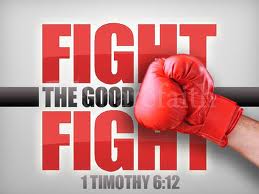
ETAL, Peter Ljunggren och deras missförstånd vad gäller NÅD

lawBladet Missions Visionen damp ner i brevlådan ihop med tidningen Dagen, och hela bladet är en annons från ETAL som Peter Ljunggren är ansvarig för. Jag hört sedan tidigare att Peter Ljungren är en stor “nådaförkunnare“, och med det menar jag en predikant som fokuserar mycket på nåden vilket kan vara både på gott och ont, och efter att ha läst bladet tycker jag det mest är “på ont”.

Men till att börja med vill jag förstås säga att ETAL förstås gör precis som det Jesus bad oss göra, nämligen att gå ut i hela världen för att göra folk till lärljungar, och det är inte alla kristna som gör. Jag kan bara glädja mig över alla som fått höra budskapet om Jesus Kristus och fått chans till ett nytt liv – och hoppas förstås att de håller ut till slutet så att de kan ta emot livets krona. Dessutom är andens gåvor med i bilden, såsom helande, och det är många kristna som inte tror att dessa andliga gåvor gäller för oss idag.

Mark. 16:Och han sade till dem: “Gå ut i hela världen och predika evangelium för hela skapelsen16 Den som tror och blir döpt skall bli frälst, men den som inte tror skall bli fördömd. 17 Tecken skall följa dem som tror detta. I mitt namn skall de driva ut onda andar. De skall tala med nya tungor. 18 De skall ta ormar i händerna, och om de dricker något dödligt gift skall det inte skada dem. De skall lägga händerna på sjuka, och de skall bli friska.

Kan det bli bättre? Ja, om det inte var så mycket missförståndet vad gäller synd/lag/nåd – och det är ganska allvarliga saker eftersom det handlar om själen.

Det är framför allt artikeln “Nådens fostrande verkan” av Johan Olehäll som jag reagerade negativt på

Det var mer än nog att läsa den artikeln eftersom den innehöll så mycket tokigheter. Johan lär ju ut att Jesus fixade allt på korset och att vi aldrig mer behöver riskera vare sig straff eller vrede för nåden täcker allt. Det innebär en “license to sin” även om han också säger att vi inte borde synda. Om han å ena sidan säger att vi inte borde synda, och å andra sidan säger att vi är frälsta i vilket fall som helst oavsett om vi lever rättfärdigt eller inte, ja då ÄR det ju likaväl en license to sin. Vi HAR ju då råd att tjäna två herrar och att varva tro och synd, för Johan försäkrar ju oss att vi ändå är frälsta och att ingenting kan ändra på det.

Nedan ser du några citat i grönt och mina kommentarer i svart och bibelverser i lila.

Genom hela historien fram till Jesus födelse hade Gud med jämna mellanrum haft uppgörelser med synden. Detta trots att Han i sin godhet och nåd i långa perioder haft överseende med människans felsteg och brister. Vi läser till exempel om denna uppgörelse mot synden i Guds domslut mot det judiska folket i perioder av avfall och avgudadyrkan.

Ja, problemet var SYNDEN och problemet var så stort så att Jesus dog för oss för sakens skull. Därför kan det inte vara så att vi inte längre riskerar straff eller Guds vrede om vi skulle synda, för det gör vi. Vi är inte frälsta I vår synd utan FRÅN vår synd och det betyder inte att vi kan vara frälsta om vi samtidigt syndar för det innebär att tjäna två herrar. Om det var synden som var problemet så är inte lösningen att Jesus dör på korset för oss så att vi kan fortsätta synda utan några som helst risker, för det vore ju som en bekräftelse från Guds sida att det är ok med synd och att han anordnade ett fiffigt sätt för att vi ska kunna fortsätta utan risk för några konsekvenser. Vad gör den helige Ande i oss om det ändå inte spelar så stor roll om vi lyder honom eller inte, och om vi kommer till himmelriket oavsett lydnad?

Syndaproblemet blev löst en gång för alla då Jesus blev gjord till synd för vår skull så att vi i Kristus skulle bli gjorda till Guds rättfärdighet (2 Kor. 5:21). Världen är försonad med Gud och på grund av Jesu offer på korset håller Gud inte människors synder emot dem. Guds välbehag och välvilja strömmar nu ut mot alla människor på jorden!

Ja, Jesus ordnade ett nytt förbund och han dog för oss en gång för alla, men om vi fortsätter att synda är syndaproblemet inte löst. Problemet är inte löst förrän vi bekänner våra synder, omvänder oss och vandrar ett liv i lydnad till Jesus. Om Gud inte längre håller människors synder emot dem, då är ALLA frälsta och t o m FÖDDA frälsta om nu alla är förlåtna helt villkorslöst. Men evigt liv ges till de som LYDER Jesus (Hebr. 5:9).

2 Kor. 5:21 Den som icke visste av någon synd, honom har han FÖR OSS gjort till synd (syndoffer), på det att vi i honom må bliva rättfärdighet från Gud.

Notera att ordet för “synd” ovan också kan översättas till “syndoffer” som det gjorts på andra ställen. Jesus har alltså FÖR OSS (inte i stället för oss) gjorts till ett SYNDOFFER. Och hur kan vi bli rättfärdiga i honom? Jo genom att vi genom hans syndfria offer kan bli renade i hans blod. Då blir vi renade och rättfärdiga, och hur länge räcker det? Så länge som vi LEVER rättfärdigt! Smutsar vi ner oss igen med synd är vi inte längre rättfärdiga. Jesus levde inte rättfärdigt i stället för oss, så att vi skulle slippa för det skulle faktiskt utmynna i “frälst pga gärningar” (Jesus gärningar).

Vårt uppdrag är att förmedla dessa alldeles ofattbart goda nyheter till världen. Gud håller inte människors synder emot dem och var och en som åkallar Herren Jesu Kristi namn ska blir frälst.

Varför är det så viktigt att berätta att människor är frälsta oavsett vad de gör? Då är de ju frälsta oavsett om vi berättar det för dem eller ej. För vad är det värsta som kan hända? Evigt liv eller evigt liv är ju de enda valen om det Johan säger är sant.

Profeterna i det gamla förbundet fokuserade på problemet, människans synd. Genom att visa folket på dess brister, försökte man få dem att följa och älska Gud. Detta misslyckades i princip hela tiden—-

Så Johan menar att Gud var väldigt klantig som fick sina profeter att använda helt fel taktik?

—eftersom människan drogs med sin syndanatur och ännu inte kunde bli född på nytt.

Det här med syndanaturen är det många som tror på, men läran är gnostisk till grunden och INGEN av de gamla kyrkofäderna lärde ut något sådant de första 300-400 åren (det finns INGET känt undantag). Det var i princip Augustinus (en före detta gnostiker) som introducerade denna hemska lära till kyrkan och Kalvin och Luther fortsatte att förvilla världen. Framför allt lär inte Bibeln ut någon arvsynd (läs mer här) och OM vi hade varit födda med en sådan arvsynd så hade det inte varit VÅRT fel att vi syndar utan indirekt Guds fel.

Domsbudskapet, som visserligen var rätt i den tidsepok som existerade före korset, gav inget bra resultat, vilket hela gamla testamentet vittnar om genom det judiska folkets historia. 

Det finns MASSOR av exempel på motsatsen så jag vill försvara Gud emot din anklagelse att hans profeter var ute och cyklade och inte åstadkom någonting gott som varade. Det bästa exemplet på ett fantastiskt gott resultat är Jona som fick hela Nineve att omvända sig för att få liv, men även de andra var för det mesta lyckosamma genom att varna människor för synden. Synd separerar alltid människor från Gud och det är en sanning som gäller än idag, vilket betyder att det är av STÖRSTA VIKT att varna för syndaktigt liv. Gud tjatade, varnade, hotade, bönade och bad sitt folk genom hela testamentet att leva rättfärdigt och även hans profeter. I nya testamentet så fortsatte Johannes Döparen, Jesus och alla hans lärljungar att göra samma sak.

I Jesaja bok kapitel 53 läser vi om hur Jesus en gång för alla löste syndproblemet. Han blev “genomborrad för våra överträdelsers skull, slagen för våra missgärningars skull. Straffet var lagt på honom för att vi skulle få frid, och genom hans sår är vi helade” (Jes. 53:5).

Detta måste vi tolka rätt.

5. –the chastisement of our peace was upon him (KJV)

5. —The chastisement FOR our peace was upon Him (NKJV)

5. —The chastisement of our peace [is] on him (Young’s literal)

5. —Upon him was the chastisement that brought us peace (ESV)

Det betyder inte att Jesus bokstavligt talat tog vår synd på sig, och inte heller att vi själva slipper straff för vår eventuella synd i framtiden. Det betyder att Jesus dog som ett syndoffer för våra synder för att kunna ge oss frid, men den friden kommer inte ovillkorligt och helt separat från vårt eget agerande. Läs mer här.

Många kristna tror att Gud straffar dem så fort de gör ett litet fel. Jesaja 54 visar oss att Gud lovat att aldrig mer vredgas eller bestraffa dem som är delaktiga i fridsförbundet – det nya förbundet. Om än Kebnekaise eller självaste Mount Everest skulle vika bort så kommer detta faktum att kvarstå! Gud bestraffar oss inte när vi misslyckas! Han blir inte heller vred. Detta är goda nyheter för oss kristna!

Jesaja 54 säger INTE att Gud aldrig mer kommer att vredgas och straffa oss. Jesaja gör en liknelse med Noas flod, men även om det aldrig kom någon ytterligare flod i den klassen så är det fortfarande så att folk hela tiden riskerar att gå förlorade om de är olydiga mot Gud, och det gäller än idag. Inte heller Noa och hans söner var immuna mot ytterligare synd och straff, och det är det ingen som är. Läser vi vidare från v. 11 så ser vi att Jesaja snarare adresserar Jerusalem och inte individer. Vi kan även läsa “Dina barn skall alla bli Herrens lärjungar”. Låter det som något som inträffat? Är alla Jerusalems invånare Herrens lärljungar? Knappast, så vi måste på vad/vem som adresseras och när det som sägs kan tänkas inträffa.

Johan lär tyvärr ut att vi kan tjäna två herrar och fortfarande vara frälsta, för han säger ju att Gud aldrig kommer att vara vred på oss även om vi skulle synda. Varför är inte detta en license to sin? Då kanske han svarar “Men sant kristna skulle aldrig resonera så! Kristna vill inte synda och känner stor sorg när de gör det och syndar inte på nåden!“. Innebär det att Johan då menar att det är fullständigt onaturligt för en kristen att synda och att vi faktiskt aldrig någonsin behöver synda igen? Då kanske han svarar “Nej, nej, vi kan aldrig sluta synda, men kristna syndar inte regelbundet och lever inte i en livsstil av synd“. Men detta är ingenting som Bibeln lär – att kristna skulle ha en gräddfil till himlen även om de syndar – medan ateister som syndar precis lika mycket/litet och visar exakt samma sorts frukt INTE kommer in i himlen. Kan vi inte gå segrande ur kampen mot synden, eller är Satans makt starkare än den helige Ande som bor i oss? Är läran att vi aldrig kan undvika synd en längre  tid, men att vi är garanterade att slippa STRAFFET För synden? Det är inte vad Bibeln lär.

Att Gud är vred när vi är olydiga är Bibeln mycket klar över, och det gäller oavsett om vi är agnostiker eller kristna:

Rom. 1:18 Guds vrede uppenbaras från himlen över all ogudaktighet och orättfärdighet hos människor som i orättfärdighet undertrycker sanningen.

Joh. 3:36 Den som tror på Sonen har evigt liv. Den som inte lyder Sonen skall inte se livet, utan Guds vrede blir kvar över honom.”

Läs mer här om Guds vrede.

Guds eviga nåd strömmar mot oss på grund av vår återlösare – Jesus Kristus. Att nåden är evig betyder att den inte kommer och går beroende på vår prestation. Den är konstant!

Nej att nåden är evig betyder att vi har erbjudandet om nåden för evigt och att Gud inte plötsligt stänger dörren och säger att han nu tröttnat och inte tänker ge oss nåd längre. Vår egen prestation är absolut livsavgörande. Inte så att vi kan frälsa oss själva, inte så att vi förtjänar nåden och inte så att vi kan bli frälst av gärningar, men frälsningen och förlåtelsen är inte villkorslösa. Du citerade Titus 2.11-12 och den lär oss att nåden hjälper oss att sluta synda i den tid som nu är.

Förbundet med Noa var villkorslöst – oberoende av Noas prestation eller framtida lydnad av Gud – och hade föregåtts av Guds dom (syndafloden). Det nya förbudet är på samma sätt villkorslöst för oss som tror på Jesus Kristus, och föregicks av Guds dom genom att Gud bestraffade världens synder i Jesu kropp på korset!

Noa var aldrig frälst helt villorslöst och inte heller de som var med honom på arken. Förbund betyder inte att de som ingår i förbundet är ovillkorligt frälsta, och sanningen är ju att förbund (även om de kallas eviga) faktiskt kan brytas och HAR brutits. Inte för att Gud initierade det utan för att människorna bröt sin del av pakten.

Om Gud bestraffade världens synder i Jesu kropp, ja då slipper ju vi straffet oavsett vad vi gör. Detta leder till universalism där alla blir frälsta. Jesus dog ju för allas synder, och det måste innebära att vi alla är födda frälsta och aldrig någonsin riskerar att bli ofrälsta i framtiden. Även att vara“otroende” är ju en synd bland alla, och även den synden straffades alltså Jesus för om försoningsläran är sann. Nu är dock inte den läran sann (för det skulle ju innebära att vi måste samsas med syndare i himlen) utan den introducerades av Anselm på 1100-talet.

När jag var yngre trodde jag att Gud vaktade på varje liten sak jag gjorde och bestraffade mig så fort jag gjorde något som var fel. Tack och lov så har jag upptäckt att så inte är fallet! Straffet föll på Jesus!

Det är inte tänkt att vi ska straffas här på jorden utan vi ska få vår dom i himlen. Återigen så tog inte Jesus det straffet som vi skulle ha i stället för oss. Vårt tilltänkta straff är ju en evighet i helvetet, och det straffet tog inte Jesus på sig. Ingen kan heller straffas två gånger för samma straff, och ingen betalar en skuld/faktura två gånger. Om Jesus tog mitt straff och betalade för alla mina framtida synder, ja då är de helt förlåtna och jag har faktiskt råd att förneka Jesus, vägra att förlåta en broder, hata människor och ta vildjurets märke, och jag kan hela tiden komma undan med att Jesus redan förlåtit mig innan jag ens utförde synderna. Även kristna kan välja en sådan  väg, och det är större risk för detta om vi sprider läran att synd faktiskt inte leder till döden. Det var den läran som Satan försökte med i Eden, så låt oss inte hjälpa honom på vägen. SATAN LJÖG!

Matt. 12: 36 Men jag säger er att för varje onyttigt ord som människor talar, skall de stå till svars på domens dag. 37 Efter dina ord skall du frias, och efter dina ord skall du fällas.”

Lagiskhet leder till mer synd

Vad menas med lagiskhet? Vi hedningar krävs aldrig att lyda alla de 613 judiska lagarna som gavs till Mose och framför allt inte de ceremoniella lagarna bland dem. Men är det lagiskhet att vara Jesus trogna och att lyda tio Guds bud?

Men, kanske du säger, finns det inte en risk att kristna missuppfattar budskapet och använder nåden som en täckmantel för synd?—Visst finns det en risk för detta. Paulus mötte ofta denna problematik och i Romarbrevet fick han tre gånger tillbakavisa att det skulle vara okej att ”synda på nåden”.

Ja Paulus var inte bara tydligt med att vi inte skulle synda på nåden utan han listade på många håll en hel rad med synder som garanterat förhindrar oss att komma in i Guds rike om vi skulle utföra dem. Så att “synda på nåden” betyder enligt Paulus ANDLIG DÖD eftersom han tydligt säger att vi är just andligt döda om vi låter våra lemmar brukas till synd. För en person som Johan borde “synda på nåden” inte vara särskilt allvarligt alls för han tror ju att vi är brandförsäkrade bara vi är kristna. Han håller ju med Satan som säger “Ingalunda skall ni dö”, som han sa till den Gudstroende Eva när hon manades att synda.

Predikanter som är rädda för att missförstås försöker ofta balansera nåd med lag och dom. Problemet med detta är att det inte leder till att folk syndar mindre utan snarare mer! ”Syndens styrka kommer av lagen” (1 Kor. 15:56). Om vi tror att vi får folk att leva rätt genom att förkunna lagar och paragrafer så bedrar vi oss själva. Hela gamla testamentet är som sagt ett vittnesbörd om att detta inte fungerar!

Så rådet är att vi ska upphöra att varna systrar och bröder från att synda? Vi ska klappa dem på axeln och säga “Gud älskar dig precis som du är och mitt i din synd?” 1 Kor 15:56 handlar om uppståndelsen när vi till slut ska få nya himmelska kroppar.

1 Kor. 15:56 Dödens udd är synden, och syndens makt kommer av lagen. 57 Men Gud vare tack, som ger oss segern genom vår Herre Jesus Kristus. 58 Var därför fasta och orubbliga, mina älskade bröder, och arbeta alltid hängivet för Herren, eftersom ni vet att ert arbete i Herren inte är förgäves.

Vi har alltså en SEGER genom Jesus och det betyder en seger över synd. Den helige Andes makt är så stark att vi kan säga NEJ till synd! Vilken synd kan vi inte säga nej till för Jesus skull? En duktig predikant gör precis som Jesus gjorde, nämligen att predika “OMVÄND ER FÖR HIMMELRIKET ÄR NÄRA”. Nu vet inte jag om “omvändelse” är ett vanligt ord i Johans vokabulär eller om han tror att det är en farlig gärningslära som endast en bortkollrad farisé skulle använda sig utav, men faktum är att det är CENTRALT i Bibeln och GRUNDEN till vad både Johannes Döparen och Jesus byggde evangeliet på. Om du har en pastor i din kyrka som inte lär ut att omvändelse är nödvändigt för frälsningen så FLY! Fly så fort du kan i en annan riktning! Fly från predikanter som minimerar behovet av omvändelse och att leva rättfärdigt inför Gud!

Apostlagärningarna 17:30 Gud har länge haft överseende med okunnighetens tider, men nu befaller han människorna att de alla och överallt skallomvända sig

“Synden skall inte vara herre över er, ty ni står inte under lagen utan under nåden” (Rom. 6:14).

Paulus försöker få judarna att förstå att de inte är frälsta för att de är födda judar och för att de följer sina 613 lagar. Det är stort fokus på det här med omskärelse. När säger Paulus att vi inte är under lagen? Jo, när vi följer den helige Ande – som leder oss BORT från synd:

Galaterbrevet 5:18 Men OM ni leds av Anden, står ni inte under lagen.

Paulus säger att vi är slavar under den vi lyder, så är vi slavar under synden är vi syndens slav och INTE fria. Han säger MYCKET TYDLIGT i Rom. 6 att slutet för en person som syndar är DÖDEN:

Rom. 6:Vi vet att vår gamla människa har blivit korsfäst med Kristus, för att syndens kropp skall berövas sin makt, så att vi inte längre är slavar under synden.—12 Synden skall därför inte härska i er dödliga kropp, så att ni lyder dess begär. 13 Ställ inte era lemmar i syndens tjänst, som vapen åt orättfärdigheten, utan ställ er själva i Guds tjänst. Ni som var döda men nu lever, ställ era lemmar i Guds tjänst som vapen åt rättfärdigheten. —15 Hur är det alltså? Skall vi synda, eftersom vi inte står under lagen utan under nåden? Naturligtvis inte! 16 Vet ni inte att om ni gör er till slavar under någon och lyder honom, då är ni hans slavar och det är honom ni lyder, antingen under synden, vilket leder till DÖD, eller under lydnaden, vilket leder till rättfärdighet? — 21 Men vad skördade ni då för frukt? Jo, det som ni nu skäms för. Slutet på sådant är DÖDEN22 Men nu, då ni befriats från synden och blivit Guds slavar, blir frukten att ni helgas och till slut får evigt liv. 23 Ty syndens lön är döden, men Guds gåva är evigt liv i Kristus Jesus, vår Herre.

Syndens lön är döden säger alltså Paulus, och Johan verkar säga att det inte alls stämmer eftersom Jesus fixat allt på korset.

Paulus är väldigt tydlig i Romarbrevet: Ju mer lag desto mer synd. Ju mer nåd desto mindre synd. Han visar också tydligt hur man som troende kan övervinna synd. Det handlar först och främst om att få en uppenbarelse om vad som verkligen skedde på korset. När Kristus korsfästes så blev jag korsfäst med Honom. Jag har dött från synden. Synden har inte längre någon makt över mig. Jag är en ny skapelse i Kristus Jesus. Jag har en ny, rättfärdig och helig natur på insidan. Genom att fokusera på Jesus och vem jag är i Honom – vad Paulus kallar att ”vandra i Anden” – kommer jag inte längre att göra vad köttet har begärelse till.

Det är Guds godhet, inte hot om dom eller straff, som leder oss till omvändelse (Rom. 2:4).

Varför slösade då Paulus och  Co tid på att skriva brev efter brev som varnar för synd och dålig frukt? Johannes Döparen vägrade att döpa vissa fariséer som kom för att döpa sig av honom just för att de inte visade den frukt som krävs för ett omvändelsens dop. Även Jesu dop är ju kopplat till omvändelsen. Bibeln säger också:

Fil. 2:12 Därför, mina älskade, liksom ni alltid har varit lydiga, så arbeta med fruktan och bävan på er frälsning, inte bara som när jag var hos er, utan ännu mycket mer nu när jag inte är hos er.

2 Kor. 7:Men nu gläder jag mig, inte därför att ni blev sorgsna utan därför att er sorg ledde till att ni ångrade er. Det var ju efter Guds vilja som ni blev bedrövade, och därför har ni inte lidit någon skada genom oss.10 Ty en sorg efter Guds vilja för med sig en ånger som man inte ångrar och som leder till frälsning. Men världens sorg leder till död. 11 Se, just detta att ni greps av sorg efter Guds vilja, vilken hängivenhet har inte det fört med sig bland er, vilka ursäkter, vilken upprördhet, vilken fruktan, vilken längtan, vilken iver och vilken bestraffning! På allt sätt har ni visat att ni är oskyldiga i den här saken.

Guds nåd ger mig styrka att övervinna synd. En person som får höra att Gud inte bestraffar våra felsteg i det nya förbundet och därför väljer att ”synda på nåden” har visat vad som hela tiden fanns i hjärtat. — Det faktum att vissa misstolkar nådens evangelium får inte göra att vi undviker att predika det som det verkligen är!  

Men det är väl självklart att en lära som säger att Gud inte bestraffar synd (jag kallar det för SYND i stället för FELSTEG) leder till att människor väljer att lättare ge in för frestelser och synda. Frestelser är ju svåra som de är och om vi dessutom får höra att det inte finns någon som helst risk med att vi syndar – förutom reducerade gåvor i himen – ja då kanske vi emellanåt väljer att synda i några svaga situationer? En sådan lära är alltså livsfarlig eftersom den lära ut vad folk vill höra – nämligen att de faktiskt inte behöver ge upp alla sina synder eftersom Gud accepterar dem som de är. Men samtidigt är jag glad att du emellanåt verkar hålla med mig om att det är helt onaturligt för kristna att synda och att vi kan sluta synda. Eller är detta kanske inte vad du säger trots allt när du hävdar att nåd ger dig styrka att övervinna synd? Om du säger att vi aldrig kan sluta synda, då stödjer du å andra sidan tanken att synd är naturligt för en kristen person.

En känd bibellärare har sagt följande: ”Vill du ha snabba resultat i församlingen, predika lag. Befall människor att lyfta händerna, vittna, offra etc. Nåden däremot tar längre tid.” Han vidareutvecklar sin tanke: ”Det gick snabbt för Abraham att få barn med Hagar (en bild lagen) men med Sara (en bild på nåden) tog det längre tid.”

Paulus lärde aldrig ut att det måste ta lång tid att bli av med den gamla människan. Var står det att “lag” ger snabba resultat och “nåd” långsamma resultat? Om “resultat” är något positivt så är det väl i så fall bra att vi lär ut “lag”, och om det är negativt så borde det inte ens kallas för  “resulat”.

Medan lagisk förkunnelse endast polerar utsidan, och får oss att bli kristna fariséer med dömande åsikter om allt och alla, går nåden på djupet. Den fostrar oss att säga nej till ogudaktighet. Borta är samtidigt alla fasader. Man blir mer avslappnad och ärlig – gentemot sig själv och andra människor. Man har inte längre samma behov av att försöka framställa sig själv i bättre dager än vad som verkligen är fallet. Det kristna livet blir en vila som föder fram en iver att tjäna Gud – inte för att man MÅSTE utan för att man VILL.

Det låter ju väldigt vackert och harmoniskt, men stämmer det i verkligheten? Om vi avböjer oss från att predika omvändelse och det viktiga i att lyda tio Guds bud (för vi har som sagt inte kravet på oss att lyda de hundratals ceremoniella buden som judarna fick), och i stället “Gud älskar dig som du är pga NÅDEN” så menar du alltså att det blir ett bättre resultat? Varför förstod inte Paulus, Petrus, Johannes, Jakob, Juda detta? För att inte tala om Jesus? Allihop spenderade de massor av tid för att varna för synden, kravet på omvändelse och att vi kan förlora vår frälsning.

Det kan mycket väl hända att kristna som tidigare levt under lagen och nu fått en uppenbarelse om Guds nåd kan ta en paus från alla religiösa aktiviteter under en period. Detta ska inte misstolkas som avfällighet.

Jag vet inte vad du menar med att “leva under lagen”, för det är som sagt inte tänkt att vi ska leva under 613 olika Mosebud. Vi kommer dock inte från ANDENS lag som täcker upp tio Guds bud vilka alla täcks i det dubbla kärleksbudet. Dessa moraliska bud SKALL vi leva under och vi ska aldrig i livet ta en paus ifrån dem. Vi ska aldrig ta en paus från att inte mörda, ljuga, stjäla och begå äktenskapsbrott. Om vi syndar mot tio Guds bud så separeras vi från Gud. Såvida vi inte omvänder oss förstås.

 Men ju mer uppenbarelse om nåden man får desto mer motiverad blir man i slutändan att be, läsa bibeln och vittna. Man får en inre iver att göra goda gärningar!

Jag tror det är totalt tvärtom. Läran om att nåden täcker allt och att det inte finns några måsten kan leda till lojhet och en vilja att leva av världen. En sådan lära narrar fler att synda, för de tror att de är brandförsäkrade.

Istället för budord skrivna på tavlor av sten så har Gud skrivit sin lag i våra hjärtan. — Vi behöver inte försöka leva Kristuslikt i egen kraft. Det kristna livet handlar om att låta Kristus få leva och uttrycka sig i och genom oss!

Ja, skillnaden är alltså att buden ska finnas i våra hjärtan. Lyder vi alltså de moraliska buden i våra hjärtan så är vi INTE under lagen. Men om vi väljer att INTE lyda den helige Ande så är vi faktiskt under lagen och under förbannelsen.

Vi behöver inte mer lagisk ”omvändelseförkunnelse” för att få kristna att ”leva rätt” idag.

Ja, då har ju Jesus totalt klantat till det eftersom det var just en sådan predikan som han stod för. “OMVÄND ER FÖR HIMMELRIKET ÄR NÄRA” är det han inledde sin predikotur med. Han bad oss också att hugga av oss kroppsdelar om de får oss att synda så att vi inte ska hamna i helvetet, men det menar du är helt fel av honom? Du menar att det är fel att lära folk att de måste anstränga sig för att lyda den helige Ande och inte mörda, stjäla, ljuga, fuska, baktala, begå äktenskapsbrott, osv?

Vad vi alla behöver är att personligen få lära känna Guds kärlek – bredden, längden, höjden och djupet och så ”bli uppfyllda av all Guds fullhet” (Ef. 3:18-20). Kärlek är en betydligt starkare drivkraft när det gäller att få människor att leva ett helgat liv än lagparagrafer och syndakataloger.

Ja, det fattade inte Jesus och hans apostlar eftersom de ständigt varnade och förebrådde människor och olika församlingar för deras livsstil. Ärligt talat är det bättre att vi gör som Jesus och Co lär ut och inte som Johan och ETAL lär ut. Det säger sig självt att vi inte försöker korrigera våra barn som knuffar andra, går över vägen utan att titta, fuskar, ritar på väggarna, etc med “jag älskar dig“. Nej, vi förklarar för barnet vad de gör fel och hur de ska göra i stället. Älskar vi varandra så försöker vi korrigera varandra, men självfallet finns det olika sätt att göra det på.

Josef visste instinktivt vad som var rätt och fel därför att han hade en kärleksrelation med Gud. Han behövde inte lagar och paragrafer för att förstå detta.

Låt oss inse faktum: Vad vi ofta kallat radikal omvändelseförkunnelse” har i själva verket varit ren och skär syndamedvetenhet. Så kallade ”väckelsepredikanter” har gjort kristna mer medvetna om sina brister än om sin rättfärdighet i Kristus Jesus. Trots goda intentioner har man ofta satt vagnen före hästen. Detta har i sin tur lett till att många kristna befunnit sig på ett andligt barnstadium livet igenom.

Jag upplever att det är du själv som satt vagnen före hästen och du predikar ett motsatt budskap än det Jesus och hans lärljungar predikade. Vi kan inte gå omkring och vara rättfärdiga i Kristus om vi lever i synd. Det falska “saliga bytet” kan du läsa om här. Det är väl jättebra om predikanter kan få människor att bli medvetna om sina brister och synder så att de omvänder sig och därmed kommer ur barnstadiet. Det är ju hela poängen! Du verkar mena att vi ska akta oss för att predika omvändelse och att synd separerar oss från Gud, men att resultatet ändå blir bra eftersom vi predikar nåd och kärlek. Hur kan det bli en syndanöd och behov att ändra sin livsstil om vi predikar att ingen egentligen behöver ändra sig?

Jakobsbrevet 5:20 så skall denne veta att den som återför en syndare från hans villoväg frälser hans själ från DÖDEN och överskyler många synder.

Sann omvändelse handlar om att förnya sinnet gentemot vad Jesus har gjort på korset – att ändra sitt sätt att tänka från syndamedvetenhet till rättfärdighetsmedvetenhet! Rätt leverne är en frukt av att man ”tror rätt” och inte ett resultat av att man i egen kraft försöker ”leva rätt”. När vi får en uppenbarelse om Guds nåd så fostrar denna nåd oss att leva på ett sätt som behagar Gud.

Nej, omvändelse betyder inte att nöja sig med att TRO rätt. Även demoner kan TRO rätt som du kan se här. Vi ska LEVA rätt också! Och om nåden är som du säger – att den fostrar oss att leva rätt – då blir väl resultatet detsamma? Eller menar du att nåden får oss att leva rätt även om det faktiskt inte var helt nödvändigt att leva rätt?

Lagens förbund – även kallat ”fördömelsens ämbete” – har haft sin glansperiod. Vi lever nu nådens tidsepok, i resultatet av vad Jesus gjorde på korset.

Det är precis lika viktigt att lyda Gud idag som det alltid varit. Det blir aldrig omodernt att undvika mord, lögn, stölder och otrohet.

Bibelverser som visar att Jesus dog för ALLA människor i hela världen

händer

Om monergism är sann (vilket bland annat kalvinister ansluter sig till) så dog inte Jesus för alla människor och det är Gud som väljer ut vem han vill ska bli frälst oberoende vad vi tror och gör (han vill alltså inte att alla ska bli frälsta för då hade han utvalt alla). Synergism betyder att människan har ansvar att reagera på frälsningserbjudandet och att välja mellan att tacka ja (tro och omvända sig) eller tacka nej.

I 1, 2 och 3 Johannesbrevet så används ordet “världen” inte i relation till endast troende människor utan hela den skapade världen, och i Joh. 6 kan vi läsa följande:

Johannes 6:45 Det står skrivet hos profeterna: De skall alla ha blivit undervisade av Gud. Var och en som har lyssnat till Fadern och lärt av honom kommer till mig.

Det är precis som i ett klassrum där ALLA undervisas om en och samma sak medan alla inte tar till sig det som lärs ut – vilket alltså beror på åhörarna och deras egen vilja och  ansvar (synergism). Om Jesus inte dog för alla och därmed inte erbjöd ALLA en chans till frälsning, så kan det bara innebära att han inte vill att alla ska bli frälsta utan föredrar att vissa av oss hamnar i helvetet. Fast då handlar det inte om Bibelns Gud längre! Om inte Jesus dog för alla så innebär det ju att vissa människor är fördömda från start och aldrig fått en ärlig chans att söka och finna honom, men de sanna och goda nyheterna är ju att Gud är fullständigt rättvis och hans son dog för ALLA människor! Alla har vi fått en nyckel till himmelriket och vi måste se till att ta hand om den och inte slarva bort den. Under gamla testamentets tid kunde människorna förstås inte ta del av Jesu försoningsoffer på korset eftersom det ännu låg i framtiden, men de levde under det s. k. djuroffersystemet vilket innebar temporära blodsoffer. Både i gamla och nya testamentet så gäller det att 1) det finns ingen förlåtelse för synder utan utgjutet blod (djuren var felfria och Jesus levde ett felfritt liv för oss), och 2) vi måste leva rättfärdigt för att vara frälsta. Ingen kan bli frälst i sina synder, och detta har gällt i alla tider.

Bebisar och små barn behöver ingen som dog för dem eftersom de inte har kapacitet att synda (se denna bloggartikel), och de riskerar därmed inte att hamna i helvetet, men vi andra behöver blodsoffer för att täcka våra synder – och få förlåtelse för dem – och Jesus fantastiska blodsoffer gjordes en gång för alla. På sätt och vis kan man säga att försoningsoffret är begränsat eftersom det endast är de som väljer att omvända sig och ta emot offret som kan bli frälsta.  De är de “många” som Jesus dog för, och han kände till att hans död skulle innebära frälsning för dem. En del försöker göra gällande att Jesus endast dog för sina får eftersom det står:

Joh. 10:14 Jag är den gode herden, och jag känner mina får, och mina får känner mig, 15 liksom Fadern känner mig och jag känner Fadern, och jag ger mitt liv för fåren.

Om vi ska tro att Jesus gett sitt liv endast för sina får eftersom det står så, varför då inte tro att Jesus gett sitt liv endast för PAULUS eftersom det står så?:

Gal. 2:19 Ty jag har genom lagen dött bort från lagen för att jag skall leva för Gud. Jag är korsfäst med Kristus, 20 och nu lever inte längre jag, utan Kristus lever i mig. Och det liv jag nu lever i min kropp, det lever jag i tron på Guds Son, som har älskat MIG och UTGIVIT SIG FÖR MIG

Verser som visar att Jesus dog för ALLA människor och vill att ALLA ska bli frälsta

Det finns många fler verser än dessa men de är ett axplock.

Rom. 11:32 Ty Gud har gjort alla till fångar under olydnaden för att sedan förbarma sig över alla.

Apg 17:30 Gud har länge haft överseende med okunnighetens tider, men nu befaller han människorna att de alla och överallt skall omvända sig. 31 Ty han har fastställt en dag då han skall döma världen med rättfärdighet genom den man som han har bestämt till det, sedan han erbjudit tron åt alla genom att uppväcka honom från de döda.”

2 Petrus 3:Herren dröjer inte med att uppfylla sitt löfte, så som en del menar. Nej, han har tålamod med er, eftersom han inte vill att någon skall gå förlorad utan att alla skall få tid att omvända sig.

1 Tim. 2:Sådant är gott och välbehagligt inför Gud, vår Frälsare,4 som vill att alla människor skola bliva frälsta och komma till kunskap om sanningen.Ty en enda är Gud, och en enda är medlare emellan Gud och människor: en människa, Kristus Jesus,han som gav sig själv till lösen för alla, varom ock vittnesbördet skulle frambäras, när tiden var inne. (1917)

1 Tim 4:10 Det är därför vi arbetar och kämpar, ty vi har satt vårt hopp till Gud, som ger liv och är Frälsaren för alla människor, först och främst för de troende.

Joh. 1:9 Det sanna ljuset, som ger ljus åt alla människor, skulle nu komma till världen.

Lukas 19:10 Ty Människosonen har kommit för att uppsöka och frälsa det som var förlorat.”

Rom. 5:Ty medan vi ännu voro svaga, led Kristus, när tiden var inne, döden för oss ogudaktiga.Näppeligen vill ju eljest någon dö ens för en rättfärdig man — om nu ock till äventyrs någon kan hava mod att dö för den som har gjort honom gott —men Gud bevisar sin kärlek till oss däri att Kristus dog för oss, medan vi ännu voro syndare. (1917)

John 12:46 Jag är ljuset som har kommit till världen, för att ingen som tror på mig skall bli kvar i mörkret. 47 Om någon hör mina ord och inte håller dem, så dömer inte jag honom. Ty jag har inte kommit för att döma världen utan för att frälsa världen48 Den som förkastar mig och inte tar emot mina ord, han har en domare över sig: det ord som jag har talat skall döma honom på den yttersta dagen.

John 3:14 Och liksom Mose upphöjde ormen i öknen, så måste Människosonen bli upphöjd,15 för att var och en som tror på honom skall ha evigt liv16 Ty så älskade Gud världen att han utgav sin enfödde Son, för att den som tror på honom inte skall gå förlorad utan ha evigt liv. 17 Inte sände Gud sin Son till världen för att döma världen utan för att världen skulle bli frälst genom honom18 Den som tror på honom blir inte dömd, men den som inte tror är redan dömd, eftersom han inte tror på Guds enfödde Sons namn.

1 Joh. 2:Han är försoningen för våra synder, och inte bara för våra utan också för hela världens.

Joh. 12:32 Och när jag har blivit upphöjd från jorden skall jag dra alla till mig.

Rom 1:20 Ända från världens skapelse ses och uppfattas hans osynliga egenskaper, hans eviga makt och gudomliga natur genom de verk som han har skapat. Därför är de utan ursäkt.21 Fastän de kände till Gud, prisade de honom inte som Gud eller tackade honom, utan förblindades av sina falska föreställningar, så att mörkret sänkte sig över deras oförståndiga hjärtan.

Joh. 6:33 Guds bröd är det bröd som kommer ner från himlen och ger världen liv.“— 35 Jesus svarade: “Jag är livets bröd. Den som kommer till mig skall aldrig hungra, och den som tror på mig skall aldrig någonsin törsta.— .  —  51 Jag är det bröd som ger liv, det bröd som har kommit ner från himlen. Den som äter av det brödet skall leva i evighet. Och brödet jag ger är mitt kött, för att världen skall leva.”

Joh. 11:49 Men en av dem, Kaifas, som var överstepräst för det året, sade till dem: »I förstån intet,50 och I besinnen icke huru mycket bättre det är för eder att en man dör för folket, än att hela folket förgås51 Detta sade han icke av sig själv, utan genom profetisk ingivelse, eftersom han var överstepräst för det året; ty Jesus skulle dö för folket. (1917)

Jesaja 53:6 Vi gick alla vilse som får, var och en gick sin egen väg, men all vår skuld lade Herren på honom. (egentligen “all vår skuld hamnade/föll på honom”)

2 Kor. 5:14 Ty Kristi kärlek tvingar oss, eftersom vi tänka så: en har dött för alla, alltså hava de alla dött.15 Och han har dött för alla, på det att de som leva icke mer må leva för sig själva, utan leva för honom som har dött och uppstått för dem. (1917)

Heb. 2:Men honom som en liten tid hade blivit gjord »ringare än änglarna», honom, Jesus, se vi för sitt dödslidandes skull hava blivit krönt med härlighet och ära, för att det genom Guds nåd skulle komma alla till godo att han smakade döden. (1917)

Hes. 18:32 Jag finner ingen glädje i någons död, säger Herren, Herren. Vänd därför om, så får ni leva.

Han dog för ALLA (1 Tim. 2:6).
Han dog för ALLA MÄNNISKOR (Rom. 5:18; 1 Tim. 4:10).
Han dog för OSS ALLA (Jesaja 53:6).
Han dog för DE OGUDAKTIGA (Rom. 5:6).
Han dog för KRISTUS-FÖRNEKARE (2 Petrus 2:1).
Han dog för SYNDARE (Rom. 5:8).
Han dog för MÅNGA (Matt. 20:28).
Han dog för VÄRLDEN (Joh. 6:33,51; Joh. 1:29 och Joh. 3:16).
Han dog för HELA VÄRLDEN (1 Joh. 2:2).
Han dog för HELA ISRAEL (Joh. 11:50-51).
Han dog för FÖRSAMLINGEN (Ef. 5:25).
Han dog för SINA FÅR (Joh. 10:11).
Han dog för MIG (Gal. 2:20)