Jag håller inte med William Lane Craig vad gäller hans syn på skapelseveckan och jordens ålder eftersom jag är “ung jord kreationist” (och förmodligen finns det annat jag inte håller med om), men här är en hel del bra material i form av debatter och stöd för Jesus existens och uppståndelse.
Tag Archive | jesus
CONSTANTINE did not start the TRINITY doctrine at the Council of Nicaea
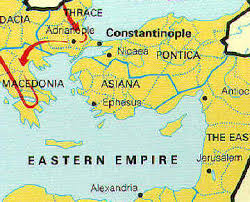 The First Council of Nicaea was a council of Christian bishops in Nicaea initiated by the Roman Emperor Constantine I in AD 325, and this was the first effort to reach a consensus in the church concerning some of new teachings that had emerged by this time. Its main accomplishments were settlement of the issue of the nature of Jesus Christ and the observance of the date of Easter.
Doctrines and ideas that Constantine did NOT start
Easter, the biblical canon, worship on a Sunday, worshiping of the sun, the trinity…Constantine did not start any new ideas at the council at Nicaea!
When it comes to Easter many get confused due to this English term and fear that this is a pagan holiday. Some even think that Constantine is guilty of introducing this pagan holiday into church, but that is not the case. The English-speaking countries might use the word “Easter” for the holiday which is celebrated right after Good Friday, but other countries rather use the word Passover – or the equivalent in their languages. Passover is certainly not a pagan holiday (and it’s of course not a requirement to celebrate this holiday by decorating the house with chickens, hens, rabbits, eggs, etc), and you can read more about this controversy here. The council at Nicaea was used (among other things) to come to a consensus when it comes to selecting a proper date for the celebration of Easter (Passover), but that is not the same thing as introducing a pagan holiday into church.
There is no record of any discussion of the biblical canon at the council. Constantine commissioned fifty Bibles for the Church of Constantinople the year 331, but it’s not certain whether his request was for fifty copies of the entire Old and New Testaments or not. He did not commission any Bibles at the council itself. No historical evidence points to involvement on his part in selecting books for inclusion in commissioned Bibles. (The books that ended up in the Biblical canon were those who had always been regarded as valid testimonies of Jesus Christ, due to the witnesses that wrote them and due to the time when they were written. So it’s not that a group of people gathered together a few hundred years after the death of Jesus and started the book selection by using a blank sheet of paper and voted about it.)
Constantine cannot be blamed for starting the tradition to celebrate Sabbath on Sunday, since the early christians had already started to do this soon after the death of Jesus. See more here.
Constantine did not introduce the idea to perform sun worship rather than son worship. Sun and son might sound similar in English, but that’s certainly not the case in other languages. Constantine did not even speak English, and the council was not held in English.
The council of Nicaea dealt primarily with the issue of the deity of Christ. Over a century earlier the use of the term “trinity” (Τριάςin Greek; trinitas in Latin) could be found in the writings of Origen (185-254) and Tertullian (160-220), and a general notion of a “divine three” was expressed in the second century writings of Polycarp, Ignatius, and Justin Martyr. See some quotes below. The concept of the deity of Christ and the trinity can be found in numerous places in the Bible, as well as in the writings of the early church fathers – before the council at Nicaea took place.
It’s unfortunate that some christians get the wrong idea that certain doctrines started at Nicaea just because they were discussed there and just because a consensus was reached. If for instance the concept of the trinity (and/or deity of Christ) had its roots in the council at Nicaea, it shouldn’t have been taught prior to it – and particularly not in the Bible – but we can see that the contrary is the case. If both the Bible and the early church fathers (before the council at Nicaea) teach the same thing, it’s good evidence for that it can be trusted. One new idea which was introduced into church several hundred years after the death of Christ (around the time of Augustine), is the doctrine of the original sin – which only the gnostics taught. Augustine made this doctrine popular also in church, despite that the early church fathers before him fought against this gnostic doctrine. The doctrine of the trinity, however, has always been taught in the Bible and among the first church fathers. You can read more about the evidence for the trinity here.
Arianism (with its Trinitarian controversy) must not be looked upon as an isolated theory by its founder Arius
The council did triumph over Arianism but confusion in theological terminology was the main reasons for a long drawn out battle. Arius regarded the Logos (word) as no more than a power of the Father, and he believed that before time began the Father had created the Son by the power of the Word to be His agent in creation. The Son was therefore not to be identified with the Godhead, and he was only God in a derivative sense. Since there was once a time when he did not exist, he could not be eternal, and he was actually neither proper God (since God the Father was before him and created him) nor proper man (since he was above all men due to his direct creation by God). Arius’ views began to spread among the people and Alexander the Bishop called a meeting of his priests and deacons to discuss the matter. The Bishop insisted on the unity of the Godhead, but Arius continued to argue that since the Son was begotten of the Father then at some point he began to exist. The argument ended up dividing the church. Athanasius and friends insisted that the Son was as truly God as the Father.
Emperor Constantine was upset by this division so he summoned a conference of all the bishops of the church – but few representatives from the western churches made it to the meeting in Nicaea. There were still around 300 bishops, and the council agreed that Jesus is truly God, so it published a creed stating the Christian faith in a way that condemned Arianism. One account from the meeting is from History of the Church by Socrates Scholasticus (who wrote 100 years after Eusebius). Much of his account consists of direct quotations from Eusebius’s Life of the Constantine and from a letter of the earlier historian – and Eusebius was present at the council. Eusebius, bishop of Nicomedia (not to be confused with Eusebius Pamphilus, Bishop of Caesarea) supported the opinion of Arius. These were opposed by Athanasius, a deacon of the Alexandrian church. This creed was agreed to by 318 members, and there were only five who refused to sign – objecting to the term homoousios, “of the same substance”. The Emperor sent Arius into exile, along with Eusebius and Theognis and their followers. Eusebius and Theognis, however, wrote a declaration that they had changed their opinion and now agreed that the Son and the Father are of the same substance.
Quotes from old church fathers about the deity of Christ and the trinity
Jesus is not only the son of God, but also GOD IN FLESH.
For OUR GOD JESUS CHRIST, was, according to the appointment of God, conceived in the womb by Mary, of the seed of David, but by the Holy Ghost.” (Epistle of Ignatius to the Ephesians 4:9)
”…GOD HIMSELF appearing in the form of a man, for the renewal of eternal life.” (Epistle of Ignatius to the Ephesians 4:13)
”Continue inseparable from JESUS CHRIST OUR GOD.” (Epistle of Ignatius to the Trallians 2:4)
”For even OUR GOD; JESUS CHRIST, know that He is in the Father”. (Epistle of Ignatius to the Romans 1:13)
Brethren, WE OUGHT SO TO THINK OF JESUS CHRIST AS OF GOD : as of the judge of the living and the dead”. (2nd Epistle of Clement to the Corinthians 1:1)
”For Christ is King, and Priest, and GOD and Lord…” (Justin Martyr, Dialogue With Trypho, 34)
”…He preexisted as the Son of the Creator of things, BEING GOD, and that He was born a man by the Virgin.” (Justin Martyr, Dialogue With Trypho, 48)
”Now may the God and Father of our Lord Jesus Christ, and the eternal High Priest Himself, THE GOD JESUS CHRIST, build you up in the faith…” (The Epistle of Polycarp to the Church at Philippi, 12)
”In order that to Christ Jesus, our Lord, and GOD, and Savior, and King…” (Irenaeus Against Heresies, 1.10.1)
”But he Jesus is himself in his own right, beyond all men who ever lived, GOD, Lord, and king eternal, and THE INCARNATE WORD, proclaimed by all the prophets, the apostles …The Scriptures would not have borne witness to these things concerning Him, if, like everyone else, He were mere man.” (Irenaeus Against Heresies 3:19.1-2)
”For with Him were always present the Word and Wisdom, the Son and the Spirit, by whom and in whom, freely and spontaneously, He made all things, to whom also He speaks, saying, ‘Let us make man after our image and likeness’”.(Irenaeus Against Heresies, 4:10)
Irenaeus, 115-190 ”The Church, though dispersed throughout the whole world, even to the ends of the earth, has received from the apostles and their disciples this faith: …one God, the Father Almighty, Maker of heaven, and earth, and the sea, and all things that are in them; and in one Christ Jesus, the Son of God, who became incarnate for our salvation; and in the Holy Spirit, who proclaimed through the prophets the dispensations of God, and the advents, and the birth from a virgin, and the passion, and the resurrection from the dead, and the ascension into heaven in the flesh of the beloved Christ Jesus, our Lord, and His manifestation from heaven in the glory of the Father ‘to gather all things in one,’ and to raise up anew all flesh of the whole human race, in order that to Christ Jesus, our Lord, and GOD, and Savior, and King, according to the will of the invisible Father, ‘every knee should bow, of things in heaven, and things in earth, and things under the earth, and that every tongue should confess; to him, and that He should execute just judgment towards all…’” (Against Heresies X.l)
Tertullian, 160-225 ”We define that there are two, the Father and the Son, and three with the Holy Spirit, and this number is made by the pattern of salvation… [which] brings about unity in trinity, interrelating the three, the Father, the Son, and the Holy Spirit. They are three, not in dignity, but in degree, not in substance but in form, not in power but in kind. They are of one substance and power, because there is one God from whom these degrees, forms and kinds devolve in the name of Father, Son and Holy Spirit.” (Adv. Prax. 23; PL 2.156-7).
”We have also as a Physician the Lord OUR GOD JESUS THE CHRIST the only-begotten Son and Word, before time began, but who afterwards became also man, of Mary the virgin. For ‘the Word was made flesh.’ Being incorporeal, He was in the body; being impassible, He was in a passable body; being immortal, He was in a mortal body; being life, He became subject to corruption, that He might free our souls from death and corruption, and heal them, and might restore them to health, when they were diseased with ungodliness and wicked lusts.” (Alexander Roberts and James Donaldson, eds., The ante-Nicene Fathers, Grand Rapids: Eerdmans, 1975 rpt., Vol. 1, p. 52, Ephesians 7.)
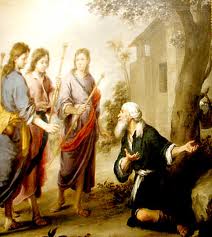
Abraham’s meeting with GOD and two angels
Justin Martyr, 100-165 AD
” I [Justin] inquired. And Trypho said, ”Certainly; but you have not proved from this that there is another God besides Him who appeared to Abraham, and who also appeared to the other patriarchs and prophets. YOU HAVE PROVED, however, that we [the Jews] were WRONG in believing that the three who were in the tent with Abraham were all angels.” I [Justin] replied again, ”If I could not have proved to you from the Scriptures that ONE OF THOSE THREE IS GOD, because, as I already said, He brings messages to those to whom God the Maker of all things wishes [messages to be brought], then in regard to Him who appeared to Abraham on earth IN HUMAN FORM IN LIKE MANNER AS THE TWO ANGELS who came with Him, and WHO AS GOD EVEN BEFORE THE CREATION OF THE WORLD, it were reasonable for you to entertain the same belief as is entertained by THE WHOLE OF YOUR NATION.” ”Assuredly,” he said, ”for up to this moment this has been our [the Jews] belief.” … ”And now have you not perceived, my friends, that one of the three, WHO IS BOTH GOD AND LORD, and ministers to Him who is in the heavens, is Lord of the two angels? For when [the angels] proceeded to Sodom, HE REMAINED BEHIND, and COMMUNED WITH ABRAHAMin the words recorded by Moses; and when He departed after the conversation, Abraham went back to his place. And when he came [to Sodom], the two angels no longer conversed with Lot, but Himself, as the Scripture makes evident; and He is the LORD who received commission from the LORD who [remains] in the heavens, i.e., the Maker of all things, to inflict upon Sodom and Gomorrah the [judgments] which the Scripture describes in these terms: ‘The Lord rained down upon Sodom and Gomorrah sulphur and fire from the Lord out of heaven.’ ”(Dialogue of Justin Martyr, with Trypho, a Jew, Chapter LVI.—God Who Appeared to Moses is Distinguished from God the Father.)
Irenaeus, 115-190 AD
”Therefore neither would the Lord, nor the Holy Spirit, nor the apostles, have ever named as God, definitely and absolutely, him who was not God, unless he were truly God; nor would they have named any one in his own person Lord, except God the Father ruling over all, and His Son who has received dominion from His Father over all creation, as this passage has it: ”The LORD said unto my Lord, Sit Thou at my right hand, until I make Thine enemies Thy footstool.” Here the [Scripture] represents to us the Father addressing the Son; He who gave Him the inheritance of the heathen, and subjected to Him all His enemies. Since, therefore, the Father is truly Lord, and the Son truly Lord, the Holy Spirit has fitly designated them by the title of Lord. And again, referring to the destruction of the Sodomites, the Scripture says, ”Then the LORD rained upon Sodom and upon Gomorrah fire and brimstone from the LORD out of heaven.” For it here points out that the Son, who had also been talking with Abraham, had received power to judge the Sodomites for their wickedness. And this [text following] does declare the same truth:”Thy throne, O GOD; is for ever and ever; the scepter of Thy kingdom is a right scepter. Thou hast loved righteousness, and hated iniquity: therefore GOD, Thy God, hath anointed Thee.” Forthe Spirit designates both [of them] BY THE NAME; OF GOD — both Him who is anointed as Son, and Him who does anoint, that is, the Father.” (Irenaeus, Book 3, ch 6)
Tertullian, 160-225 AD
”That is a still grander statement [of Christ’s deity] which you will find expressly made in the Gospel: ”In the beginning was the Word, and the Word was with God, and the Word was God.” There was One ”who was,” and there was another ”with whom” He was. But I find in Scripture the name Lord also applied to them Both: ”The Lord said unto my Lord, Sit Thou on my right hand.” And Isaiah says this: ”Lord, who hath believed our report, and to whom is the arm of the Lord revealed? ” Now he would most certainly have said Thine Arm, if he had not wished us to understand that the Father is Lord, and the Son also is Lord. A much more ancient testimony [of Christ’s deity] we have also in Genesis: ”Then the Lord rained upon Sodom and upon Gomorrah brimstone and fire from the Lord out of heaven.” Now, either deny that this is Scripture; or else (let me ask) what sort of man you are, that you do not think words ought to be taken and understood in the sense in which they are written, especially when they are not expressed in allegories and parables, but in determinate and simple declarations?” (Tertullian, Against Praxeas, Chapter XIII.
Ignatius, 30-117 AD
”For Moses, the faithful servant of God, when he said, ”The Lord thy God is one Lord,” and thus proclaimed that there was only one God, did yet forthwith confess also our Lord [Jesus] when he said, ”The Lord [Jesus] rained upon Sodom and Gomorrah fire and brimstone from the Lord.” And again [he confessed a second time our Lord Jesus by saying], ”And God said, Let Us make man after our image: and so God made man, after the image of God made He him.”” (The Epistle of Ignatius to the Antiochians, Chapter II.—The True Doctrine Respecting God and Christ.)
Cyprian, 200-258 AD
”In the Gospel according to John: ”The Father judgeth nothing, but hath given all judgment unto the Son, that all may honour the Son as they honour the Father. He who honoureth not the Son, honoureth not the Father who hath sent Him.” Also in the seventy-first Psalm: ”O GOD, give the king Thy judgment, and Thy righteousness to the king’s son, to judge Thy people in righteousness.”Also in Genesis: ”And the LORD rained upon Sodom and Gomorrah sulphur, and fire from heaven from the LORD.”” (The Treatises of Cyprian, Treatise XII. Three Books of Testimonies Against the Jews. Third Book., Testimonies., 33. That the Father judgeth nothing, but the Son; and that the Father is not glorified by him by whom the Son is not glorified.)
Novatian, 200–258 AD
”For who does not acknowledge that the person of the Son is second after the Father, when he reads that it was said by the Father, consequently to the Son, ”Let us make man in our image and OUR likeness; ” and that after this it was related, ”And God made man, in the image of God made He him? ”Or when he holds in his hands: ”The LORD rained upon Sodom and Gomorrah fire and brimstone from the LORD from heaven? ” (A Treatise of Novatian Concerning the Trinity, Chapter XXVI. Argument.—Moreover, Against the Sabellians He Proves that the Father is One, the Son Another.)
”Therefore the Lord overturned Sodom, that is, GOD overturned Sodom; but in the overturning of Sodom, the LORD rained fire from the LORD. And this Lord was the God seen by Abraham; and this God was the guest of Abraham, certainly seen because He was also touched. But although the Father, being invisible, was assuredly not at that time seen, He who was accustomed to be touched and seen was seen and received to hospitality. BUT THIS THE SON OF GOD,”The LORD rained from the LORD upon Sodom and Gomorrha brimstone and fire.”And this is the Word of God. And THE WORD OF GOD WAS MADE FLESH, AND DWLTH AMNG US; AND THIS IS CHRIST. IT WAS NOT THE FATHER, THEN WHO WAS A GUEST WITH ABRAHAM, BUT CHRIST. NOR WAS IT THE FATHER WHO WAS SEEN THEN; , BUT THE SON; AND CHRIST WAS SEEN. Rightly, therefore, CHRIST IS BOTH LORD AND GOD, who was not otherwise seen by Abraham, EXCEPT THAT AS GOD THE WORD He was begotten of God the Father before Abraham himself.” (A Treatise of Novatian Concerning the Trinity, Chapter XVIII. Argument.—Moreover Also, from the Fact that He Who Was Seen of Abraham is Called God; Which Cannot Be Understood of the Father, Whom No Man Hath Seen at Any Time; But of the Son in the Likeness of an Angel.)
Constitutions of the Holy Apostles
”To Him did Moses bear witness, and said: ”The LORD received fire from the LORD, and rained it down.” HIM DID JACOB SEE AS A MAN, and said: ”I have seen God face to face, and my soul is preserved.”HIM DID ABRAHAM ENTERTAIN, and acknowledge to be the Judge, and HIS LORD.” (Constitutions of the Holy Apostles, Book V. XX. A Prophetic Prediction Concerning Christ Jesus.)
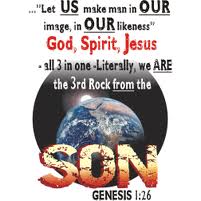
1 Mos. 1:26 Gud sade: ”Låt oss göra människor till VÅR AVBILD, till att vara lika OSS. De skall råda över fiskarna i havet och över fåglarna under himlen, över boskapsdjuren och över hela jorden och över alla kräldjur som rör sig på jorden.” 27 Och Gud skapade MÄNNISKAN till sin avbild, till GUDS AVBILD skapade han henne, till man och kvinna skapade han dem.
Epistle of Barnabas, 74 AD
”For the Scripture says concerning US, while He speaks to the SON, ”Let Us make man after Our image, and after Our likeness” (Epistle of Barnabas, Chapter VI.—The Sufferings of Christ, and the New Covenant, Were Announced by the Prophets.)
The Letter of Barnabas 74 AD
”And further, my brethren, if the Lord [Jesus] endured to suffer for our soul, he being the Lord of all the world, to whom God said at the foundation of the world, ‘Let us make man after our image, and after our likeness,’ understand how it was that he endured to suffer at the hand of men” (Letter of Barnabas 5)
Justin Martyr, 100-165 AD
Idén att Moses skulle mena att det var änglar som åsyftades med ”till vår avbild”, är en villolära, säger Justin
”In saying, therefore, ‘as one of us, ‘[Moses] has declared that [there is a certain] number of persons associated with one another, and that they are at least two. For I would not say that the dogma of that heresy which is said to be among you (The Jews had their own heresies which supplied many things to the Christian heresies) is true, or that the teachers of it can prove that [God] spoke to angels, or that the human frame was the workmanship of angels. But this Offspring, which was truly brought forth from the Father, was with the Father before all the creatures.” (Dialogue of Justin Martyr, with Trypho, a Jew: Chapter LXII.—The Words ”Let Us Make Man”)
Irenaeus, 115-190 AD
”It was not angels, therefore, who made us, nor who formed us, neither had angels power to make an image of God, nor any one else, except the Word of the Lord, nor any Power remotely distant from the Father of all things. For God did not stand in need of these [beings], in order to the accomplishing of what He had Himself determined with Himself beforehand should be done, as if He did not possess His own hands. For with Him were always present the Word and Wisdom,the Son and the Spirit, by whom and in whom, freely and spontaneously, He made all things, to whom also He speaks, saying, ”Let Us make man after Our image and likeness; ” [Gen. 1:26]” (Against Heresies 4:20:1).
Tertullian, 160-225 AD
”If the number of the Trinity also offends you, as if it were not connected in the simple Unity, I ask you how it is possible for a Being who is merely and absolutely One and Singular, to speak in plural phrase, saying, ”Let us make man in our own image, and after our own likeness; ” whereas He ought to have said, ”Let me make man in my own image, and after my own likeness,” as being a unique and singular Being?In the following passage, however, ”Behold the man is become as one of us,” He is either deceiving or amusing us in speaking plurally, if He is One only and singular. Or was it to the angels that He spoke, as the Jews interpret the passage, because these also acknowledge not the Son? Or was it because He was at once the Father, the Son, and the Spirit, that He spoke to Himself in plural terms, making Himself plural on that very account? Nay, it was because He had already His Son close at His side, as a second Person, His own Word, and a third Person also, the Spirit in the Word, that He purposely adopted the plural phrase, ”Let us make; ”and, ”in our image; ”and, ”become as one of us.” (Tertullian, Against Praxeas, Chapter XII. Other Quotations from Holy Scripture Adduced in Proof of the Plurality of Persons in the Godhead.)
”Since then he is the image of the Creator (for He, when looking on Christ His Word, who was to become man, said, ”Let us make man in our own image, after our likeness”), how can I possibly have another head but Him whose image I am? For if I am the image of the Creator there is no room in me for another head” (Tertullian, Book V, Elucidations, Chapter VIII.—Man the Image of the Creator, and Christ the Head of the Man.)
”In the first place, because all things were made by the Word of God, and without Him was nothing made. Now the flesh, too, had its existence from the Word of God, because of the principle, that here should be nothing without that Word. ”Let us make man,” said He, before He created him, and added, ”with our hand,” for the sake of his pre-eminence, that so he might not be compared with the rest of creation.” (Tertullian: On the Resurrection of the Flesh, Elucidations, Chapter V.—Some Considerations in Reply Eulogistic of the Flesh. It Was Created by God.)
Origen, 184-254 AD
”it was to Him that God said regarding the creation of man, ”Let Us make man in Our image, after Our likeness.” (Origen Against Celsus, Book V, Chapter XXXVII)
Novatian, 200–258 AD
”For who does not acknowledge that the person of the Son is second after the Father, when he reads that it was said by the Father, consequently to the Son, ”Let us make man in our image and our likeness; ” and that after this it was related, ”And God made man, in the image of God made He him? ”Or when he holds in his hands: ”The Lord rained upon Sodom and Gomorrah fire and brimstone from the Lord from heaven? ” (A Treatise of Novatian Concerning the Trinity, Chapter XXVI. Argument.—Moreover, Against the Sabellians He Proves that the Father is One, the Son Another.)
Constitutions of the Holy Apostles
”the divine Scripture testifies that God said to Christ, His only-begotten, ”Let us make man after our image, and after our likeness. And God made man: after the image of God made He him; male and female made He them.”(Constitutions of the Holy Apostles, Book V., VII)
You can read many more quotes in this article
KRISTI BRUD är det nya Jerusalem, eller Jesus Kristus församling/kropp
 Kristi Brud är inte från Knutby
Upp. 21:2 Och jag såg den heliga staden, det nya Jerusalem, komma ner från himlen, från Gud, redo som en BRUD, som är smyckad för sin brudgum.
Brud är översatt från det grekiska ordet numphé (Strong’s 3565), och förekommer 8 gånger i Bibeln (självfallet i Nya Testamentet). Bl. a i Luk. 12:53, Matt. 10:35 och Upp. 18:23.
Bruden i Uppenbarelseboken handlar inte om en EN speciell individ, utan flera individer – alla de kristna som utgör Kristi församling och som ska ärva Guds rike. Brudgummen ses däremot i ental, och brudgummen är Jesus Kristus. Det nya Jerusalem är visserligen en plats, men även om det handlar om en stad i singular så handlar det ändå om Guds rike och de individer som en dag ska befinna sig i det riket och vara brudgummens BRUD. Jesus är vidare beskriven som huvudet för kroppen, men vi kristna är lemmarna i den kroppen – och lemmarna är i plural.
Det nya Jerusalem liknas vid en vackert utsmyckad brud. Det handlar om en SYN från aposteln Johannes perspektiv, och synen och beskrivningen av bruden slutar inte med att staden kommer ner från himlen, utan vi får en fortsatt beskrivning och förklaring av bruden med hjälp av detaljen att det är tänkt att det ska bo människor i staden. Varken staden eller människorna i Johannes syn finns på plats idag, men inom en snar framtid så blir alltihop en sanning. En stad utan människor är öde även om den är bländande vacker, och en brudgum skulle inte nöja sig med vackra saker – oavsett kvalitet och kvantitet. Om däremot de vackra sakerna finns runtomkring en människa (eller människor som i Jesus fall), så kan det bli en passande brud för en brudgum.
Upp. 21:1 Och jag såg en ny himmel och en ny jord. Ty den första himlen och den första jorden hade försvunnit, och havet fanns inte mer. 2 Och jag såg den heliga staden, det nya Jerusalem, komma ner från himlen, från Gud, redo SOM en brud, som är smyckad för sin brudgum. 3 Och jag hörde en stark röst från tronen säga: “Se, nu står Guds tabernakel bland människorna, och han skall bo hos dem och de skall vara hans folk, och Gud själv skall vara hos dem. 4 Och han skall torka alla tårar från deras ögon. Döden skall inte finnas mer och ingen sorg och ingen gråt och ingen plåga. Ty det som förr var är borta.”5 Han som satt på tronen sade: “Se, jag gör allting nytt.” Och han sade: “Skriv, ty dessa ord är trovärdiga och sanna.” 6 Han sade också till mig: “Det har skett. Jag är A och O, begynnelsen och änden. Åt den som törstar skall jag ge att dricka fritt och för intet ur källan med livets vatten. 7 Den som segrar skall få detta i arv, och jag skall vara hans Gud, och han skall vara min son. 8 Men de fega, de otroende och de skändliga, mördarna, de otuktiga, trollkarlarna, avgudadyrkarna och alla lögnare skall få sin del i sjön som brinner av eld och svavel. Detta är den andra döden.”9 En av de sju änglarna med de sju skålarna, som var fyllda med de sju sista plågorna, kom och talade till mig och sade: “Kom, jag skall visa dig BRUDEN, Lammets hustru.” 10 Och han förde mig i anden upp på ett stort och högt berg och visade mig den heliga staden Jerusalem, som kom ner från himlen, från Gud, 11 och som ägde Guds härlighet. Dess strålglans var som den dyrbaraste ädelsten, som en kristallklar jaspis.
Om det nya Jerusalem, som Johannes såg komma ner från himlen, var befolkad eller inte vid just det ögonblicket ändrar inte på det faktum att staden är vad som väntar de kristna efter tidens slut, och den stad där de ska bo i. Det är alltså staden med all dess glans och människornan i den, som är brudgummens brud. Om det endast skulle handla om en häpnadsväckande vacker men tom stad vad gäller människor, så hade staden inte varit en passande brud för Jesus Kristus. Jesus är ju Gud själv och kan få precis vad han vill, så att ärva vackra saker vore inget anmärkningsvärt i sig, för det hade han kunnat skaffa vare sig det funnits människor på jorden eller ej. Om vi däremot tänker oss att själva syftet med det nya Jerusalem är att det ska bebos av de som verkligen valt att älska Jesus av hela sitt hjärta och hela sin själ – inklusive de som blivit martyrer för hans skull – så vet vi också att det är en mycket passande BRUD för brudgummen Jesus. Jesus har visat sin kärlek för sin brud, och bruden har visat sin kärlek till brudgummen. Jesus har visserligen visat sin kärlek och dött för alla människor, men det blir inget bröllop för de som inte är intresserade av att komma till bröllopet och/eller inte gjort sig förberedda med bröllopskläder. Ett bröllop handlar om två parter som älskar varandra, och det finns heller inget tvång vad gäller kärleken i ett sunt äktenskap. Här kommer fortsättningen om det nya Jerusalem och att det är tänkt att bebos:
24 Och folken skall vandra i dess ljus, och jordens kungar skall föra in sin härlighet i den.25 Stadens portar skall aldrig stängas om dagen – natt skall inte finnas där – 26 och folkens härlighet och ära skall föras in i staden. 27 Aldrig någonsin skall något orent komma in i den, och inte heller någon som handlar skändligt och lögnaktigt, utan endast de som är skrivna i livets bok som tillhör Lammet.
Upp. 22:16 Jag, Jesus, har sänt min ängel för att vittna för er om allt detta i församlingarna. Jag är Davids rotskott och hans ättling, den klara morgonstjärnan.”17 Och Anden och BRUDEN säger: “Kom!” Och den som hör det må säga: “Kom!” Och den som törstar må komma. Ja, den som vill, må ta emot livets vatten för intet.
Ett annat ord för “brud” är guné (Strong’s 1135), vilket förekommer 217 gånger i NT. Förutom brud kan det betyda kvinna och fru.
Här nedan handlar bruden om “henne”, men även om det står i singular så läser vi vidare att linnetyget är de heligas (plural) rättfärdighet. “Bruden” är alltså symbol för de kristna som utgör Kristi församling, och återigen är det endast de som får komma till bröllopet.
Upp. 19:6 Och jag hörde liksom rösten från en stor skara, lik bruset av stora vatten och dånet av kraftig åska, och de sade: “Halleluja! Herren vår Gud, den Allsmäktige, har blivit konung. 7 Låt oss vara glada och jubla och ge honom äran. Ty Lammets bröllop har kommit, och hans brud har gjort sig redo. 8 Åt henne har givits att klä sig i skinande, rent linnetyg.” Linnetyget är de heligas rättfärdighet. 9 Och ängeln sade till mig: “Skriv! Saliga är de som är bjudna till Lammets bröllopsmåltid.” Och han tillade: “Dessa Guds ord är sanna.”
Brudgummen är Jesus
Johannes Döparen kallade sig för “brudgummens vän”, som gläder sig åt att ha hört brudgummens röst (Jesus).
Joh. 3:27 Johannes svarade: “Ingen människa kan ta emot något utan att det ges henne från himlen. 28 Ni kan själva vittna om att jag sade: Jag är inte Messias. Jag är sänd framför honom. 29 Brudgum är den som har BRUDEN. Men brudgummens vän, som står där och hör honom, gläder sig innerligt över brudgummens röst. Den glädjen har jag nu helt och fullt. 30 Han måste bli större och jag mindre.
Matt. 9:14 Sedan kom Johannes lärjungar fram till honom och frågade: “Varför fastar inte dina lärjungar, när både vi och fariseerna fastar?” 15 Jesus svarade dem: “Inte kan väl brudgummens vänner sörja, så länge brudgummen är hos dem? Men det skall komma dagar när brudgummen tas ifrån dem, och då skall de fasta. (se även Mark. 2:19-20, och Lukas 5:34-35)
I liknelsen med de tio jungfrurna så kallas de i och för sig inte “brudar”, men de väntar ändå på BRUDGUMMEN så indirekt är dessa jungfrur ändå tänkta som brudar. Var och en av de tio tjejerna väntade på brudgummen som verkar ha varit deras fokus och stora mål, men endast de som stod färdiga (deras eget ansvar) gick sedan med honom in till bröllopsfesten. De övriga var inte välkomna trots att de hade chansen.
Matt. 25:10 Men när de hade gått för att köpa kom brudgummen. Och de som stod färdiga gick med honom in till bröllopsfesten, och dörren stängdes.
Även liknelsen med bröllopsfesten för kungens son handlar om att många är kallade (precis som jungfrurna ovan) men få är utvalda. De som är utvalda är de som tackat ja till festen och även gjort sig förberedda. Kallelsen går dock ut till många.
Matt. 22:2 “Himmelriket är likt en kung som höll bröllop för sin son. 3 Han sände ut sina tjänare för att kalla de inbjudna till bröllopet, men de ville inte komma. 3 Han sände ut sina tjänare för att kalla de inbjudna till bröllopet, men de ville inte komma. 4 Då sände han ut andra tjänare och befallde dem att säga till de inbjudna: Jag har gjort i ordning min måltid. Mina oxar och min gödboskap är slaktade och allt är färdigt. Kom till bröllopet! 5 Men de brydde sig inte om det utan gick sin väg, en till sitt jordbruk, en annan till sina affärer. 6 De andra grep hans tjänare och misshandlade och dödade dem. 7 Då blev kungen vred och skickade ut sina trupper och lät döda mördarna och brände ner deras stad. 8 Sedan sade han till sina tjänare: Allt är klart för bröllopet, men de inbjudna var inte värdiga. 9 Gå därför till vägskälen och bjud till bröllopet alla som ni träffar på. 10 Tjänarna gick då ut på vägarna och samlade alla de mötte, både onda och goda, och bröllopssalen fylldes med gäster.11 När kungen kom in för att se sina gäster, lade han märke till en man som inte var klädd i bröllopskläder. 12 Han sade till honom: Min vän, hur har du kommit in utan bröllopskläder? Mannen teg. 13 Då sade kungen till tjänarna: Bind honom till händer och fötter och kasta ut honom i mörkret här utanför! Där skall man gråta och skära tänder. 14 Ty många är kallade, men få är utvalda.”
Att Kristi brud skulle vara EN speciell människa (som den berömda Kristi Brud i Knutby) – som inte ingår i en större grupp – finns det inget som helst stöd för i Bibeln, och en sådan idé är dessutom hädisk. Det skulle leda till att det finns en speciell upphöjd kristen som står över andra kristna, och det kan i sin tur leda till att han/hon blir en slags medlare mellan Gud och människor, samt utgör en stor risk för att bli fokus för tillbedjan och glorifiering/idolskap. Jesus Kristus är den vi ska ha våra blickar på, och den vi ska ära. De kristna – Kristi församling – är systrar och bröder, och ingen stör över den andra.
The IMPUTED righteousness of CHRIST – is not Biblical
And the scripture was fulfilled which saith, Abraham believed God, and it [believing God] was IMPUTED UNTO HIM FOR RIGHTEOUSNESS: and he was called the Friend of God. James. 2:23
 The word “imputed” comes from the Greek word “logizomai” (Strong’s 3049) which could be translated as “reckon, count, charge with; reason, decide, conclude; think or suppose”. Notice that it doesn’t mean “transfer”, but rather “reckoned” or “counted as“.
The word is found 41 times in the New Testament, and 4 of those times the word is translated as “impute” in the KJV. Rom 4:6-11 and 22-24 have the same Greek word (logizomai) as in James 2:23, and it doesn’t mean “transfer” there either. These verses use the same word even if they are translated differently:
For what saith the scripture? Abraham believed God, and it [believing God] was counted unto him for righteousness. Rom. 4:3
Even as Abraham believed God, and it [believing God] was accounted to him for righteousness. Gal. 3:6
And therefore it [faith] was imputed to him for righteousness. Rom. 4:22
Counted = Rom 2:26, Rom 4:3, Rom 4:5, Rom 9:8, Reckoned = Luk 22:37, Rom 4:4, Rom 4:9-10 and Rom 6:11, Rom 8:18, Accounted = Rom 8:36, Gal 3:6
We are asked to be righteous just like Jesus is righteous
This doesn’t mean that the only means to get saved is to have lived a life free of sins just like Jesus did, but neither is the promise“If you only believe in Jesus, he will confirm you as righteous even if you’re not”. First we must be cleansed in the blood of Jesus – upon repentance – and then the idea is to be led by the Spirit and not by the flesh, which no one else will do for us. We are not able to go piggybacking on Jesus.
1 John 3:4 Whosoever committeth sin transgresseth also the law: for sin is the transgression of the law.5 And ye know that he was manifested to take away our sins; and in him is no sin.6 Whosoever abideth in him sinneth not: whosoever sinneth hath not seen him, neither known him.7 Little children, let no man deceive you: HE THAT DOETH RIGHTEOUSNESS IS RIGHTEOUS, EVEN AS HE IS RIGHTEOUS.8 He that committeth sin is of the devil; for the devil sinneth from the beginning. For this purpose the Son of God was manifested, that he might destroy the works of the devil.9 Whosoever is born of God doth not commit sin; for his seed remaineth in him: and he cannot sin, because he is born of God.10 In this the children of God are manifest, and the children of the devil: whosoever doeth not righteousness is not of God, neither he that loveth not his brother.
God’s wrath is still upon us if we sin, and if we are under God’s wrath we are not saved.
John 3:36 He who believes in the Son has eternal life; but he who does not obey the Son will not see life, but the wrath of God abides on him.” (NASB)
Romans 1:18 For the wrath of God is revealed from heaven against all ungodliness and unrighteousness of men, who hold the truth in unrighteousness;
Romans 2:5 But after thy hardness and impenitent heart treasurest up unto thyself wrath against the day of wrath and revelation of the righteous judgment of God;
Jesus righteousness cannot be transferred/injected into us and we are not righteous unless we LIVE righteously
Our righteousness does not depend on being injected another person’s righteousness, but our righteousness depends on how we live our lives.
Jesus lived a perfect life (always being obedient to God the Father) and died on the cross for us, and in THAT WAY he is our righteousness. Had Jesus not lived an obedient life for us, he could not have been our righteousness, because the atonement wouldn’t have been perfect. He is NOT our righteousness because he has transferred his righteousness into us (and neither did he literally take our sins on himself as in some kind of an exchange) to make us righteous in position despite that we still live in sin. It’s important to understand that Jesus did NOT obey our moral obligations for us and instead of us! The Bible talks about imputed righteousness but NEVER the imputed righteousness “of Christ“. We can read about the righteousness of GOD throughout the Bible (and that Jesus is righteous), but the idea that God looks upon us and sees the righteousness of Christ in us (or the blood of Jesus) instead of our sin, will result in a license to sin. When God looked at the churches in Revelation, he DID notice their sins and asked them to repent.
We are not justified by the works of the law but by God’s grace, so to say that we need perfect obedience to the Torah to be credited to our account in order to be justified is justification by works instead of justification by grace/mercy. God cannot declare the guilty to be innocent – like in a forensic justification – as that would be a lie, but God can PARDON the guilty and he does so if the guilty person repents from his sins.
Abraham is given as an example when it comes to being righteous/justified through faith, because he was counted as righteous BEFORE the law of Moses started to apply. Not all who have Abraham as a forefather are the children of Abraham and saved, but only those who are spiritually circumcised (in their hearts) and BELIEVE the way he did – and he showed his faith with some amazing deeds (work). Those who WALK as he did and obey God as he did (which is something we DO) are circumcised in heart and the true children of Abraham. We do not deserve salvation by anything we do (or believe) but faith without deeds is dead. We can read “blessed is the man to whom the Lord will not impute sin”, which shows that all people apparently don’t have sin – namely those whom the Lord do not impute sin. Who are they? They are the ones who have confessed their sins, repented and who walk with Jesus. So when we read “God imputeth righteousness without works”, it means the works of the law (the Torah and the 613 laws in it), and naturally God wouldn’t impute righteousness to Abraham if he only sat under a tree and “believed” without showing his faith by OBEDIENCE. Not obedience to the law of Moses (which didn’t exist at the time) but obedience to GOD.
When it comes to Rom. 4:6, it doesn’t say that a person is especially appreciated and blessed if he doesn’t have any works to show up at all and that he only has “faith alone”. If that were true, it would mean that the less works we have, the more blessed we are and the better it is. No, Paul’s point is to get the jews to understand that they are not saved due to being born Jews and/or for obeying the Torah (613 laws), but a person is blessed/saved if he repents from his sins, believes in Jesus and through this procedure becomes cleansed from his sins. Those are blessed whose trespasses are FORGIVEN, because then God will not impute sin to them. Does this wonderful promise only apply to the Jews? No, Paul wants them to understand that also the uncircumcised (the gentiles) have his promise which is by faith and not by law. Notice how many times we can read about “circumcision“, so this is what is in focus (the ceremonial law) because the Jews were so concerned about it.
Rom. 4:3 For what saith the scripture? Abraham believed God, and it was counted unto him for righteousness.4 Now to him that worketh is the reward not reckoned of grace, but of debt.5 But to him that worketh not, but believeth on him that justifieth the ungodly, his faith is counted for righteousness.6 Even as David also describeth the blessedness of the man, unto whom God imputeth righteousness without works,7 Saying, Blessed are they whose iniquities are forgiven, and whose sins are covered.8 Blessed is the man to whom the Lord will not impute sin.9 Cometh this blessedness then upon the circumcision only, or upon the uncircumcision also? for we say that faith was reckoned to Abraham for righteousness.10 How was it then reckoned? when he was in circumcision, or in uncircumcision? Not in circumcision, but in uncircumcision.11 And he received the sign of circumcision, a seal of the righteousness of the faith which he had yet being uncircumcised: that he might be the father of all them that believe, though they be not circumcised; that righteousness might be imputed unto them also:12 And the father of circumcision to them who are not of the circumcision only, but who also walk in the steps of that faith of our father Abraham, which he had being yet uncircumcised.—20 He staggered not at the promise of God through unbelief; but was strong in faith, giving glory to God;21 And being fully persuaded that, what he had promised, he was able also to perform.22 And therefore it was imputed to him for righteousness.23 Now it was not written for his sake alone, that it was imputed to him;24 But for us also, to whom it shall be imputed, if we believe on him that raised up Jesus our Lord from the dead;
James doesn’t contradict what Paul is saying. James says that Abraham was justified BY WORKS, and not faith alone. Are we perhaps teaching salvation by works if we choose to quote James?
James 2:18 Yea, a man may say, Thou hast faith, and I have works: shew me thy faith without thy works, and I will shew thee my faith by my works.19 Thou believest that there is one God; thou doest well: the devils also believe, and tremble.20 But wilt thou know, O vain man, that faith without works is dead?21 Was not Abraham our father justified by works, when he had offered Isaac his son upon the altar?22 Seest thou how faith wrought with his works, and by works was faith made perfect?23 And the scripture was fulfilled which saith, Abraham believed God, and it was imputed unto him for righteousness: and he was called the Friend of God.24 Ye see then how that by works a man is justified, and not by faith only.25 Likewise also was not Rahab the harlot justified by works, when she had received the messengers, and had sent them out another way?26 For as the body without the spirit is dead, so faith without works is dead also.
Paul is not disappointed with the Galatians for their suggestion that it’s still necessary to obey the ten commandments 
In the letter to the Galatians, the reason for Paul’s objection to Galatians’s attitude is NOT because they wanted to return to silly old laws such as the ten commandments – just like “Do not kill, steal, lie or commit adultery”. Why would he be disappointed or upset about that? Those commandments have been in use ever since the days of Adam, and they never cease to apply. No, Paul was disappointed with their teaching that circumcision – which is a ceremonial law in the Torah – was still necessary for salvation. The ceremonial laws are not necessary for salvation, but the law of love certainly is (and the ten commandments provide details of how the law of love works). Paul makes a different between the works of the law (Torah), and the obedience of the holy Spirit. The Torah was our schoolmaster to keep us in order until the arrival of Jesus – after Jesus death the holy Spirit took over as our guide – and we’re supposed to have the law of love in our hearts. We will never be “free” from the requirement to love God and our neighbor as ourselves, and as long we are slaves to sin (obey sin) we are definitely not free.
Acts. 15:1 And certain men which came down from Judaea taught the brethren, and said, Except ye be circumcised after the manner of Moses, ye cannot be saved.2 When therefore Paul and Barnabas had no small dissension and disputation with them, they determined that Paul and Barnabas, and certain other of them, should go up to Jerusalem unto the apostles and elders about this question.
Gal. 3:5 He therefore that ministereth to you the Spirit, and worketh miracles among you, doeth he it by the works of the law, or by the hearing of faith?6 Even as Abraham believed God, and it was accounted to him for righteousness.7 Know ye therefore that they which are of faith, the same are the children of Abraham.8 And the scripture, foreseeing that God would justify the heathen through faith, preached before the gospel unto Abraham, saying, In thee shall all nations be blessed.9 So then they which be of faith are blessed with faithful Abraham.10 For as many as are of the works of the law are under the curse: for it is written, Cursed is every one that continueth not in all things which are written in the book of the law to do them.11 But that no man is justified by the law in the sight of God, it is evident: for, The just shall live by faith.12 And the law is not of faith: but, The man that doeth them shall live in them.— 19 Wherefore then serveth the law? It was added because of transgressions, till the seed should come to whom the promise was made; and it was ordained by angels in the hand of a mediator.—22 But the scripture hath concluded all under sin, that the promise by faith of Jesus Christ might be given to them that believe.23 But before faith came, we were kept under the law, shut up unto the faith which should afterwards be revealed.24 Wherefore the law was our schoolmaster to bring us unto Christ, that we might be justified by faith.25 But after that faith is come, we are no longer under a schoolmaster.
Paul makes it clear that sinning = spiritual death (also for christians).
Gal. 5:16 This I say then, Walk in the Spirit, and ye shall not fulfil the lust of the flesh.17 For the flesh lusteth against the Spirit, and the Spirit against the flesh: and these are contrary the one to the other: so that ye cannot do the things that ye would.18 But if ye be led of the Spirit, ye are not under the law.19 Now the works of the flesh are manifest, which are these; Adultery, fornication, uncleanness, lasciviousness,20 Idolatry, witchcraft, hatred, variance, emulations, wrath, strife, seditions, heresies,21 Envyings, murders, drunkenness, revellings, and such like: of the which I tell you before, as I have also told you in time past, that they which do such things shall not inherit the kingdom of God.
The significance of having our faith “imputed” as righteousness, is that God forgives us our transgressions and treats us as though we have never sinned. This means that our sins disappears (without taking a detour in the body of Jesus) and God doesn’t have to LIE to declare us not guilty. We are 100% cleansed when we are forgiven and free from our sins, but it doesn’t say “once cleansed always cleansed”. If we become dirty once again, we’re back at square one.
2 Cor. 5:19 To wit, that God was in Christ, reconciling the world unto himself, not imputing their trespasses unto them; and hath committed unto us the word of reconciliation.
2 Pet. 2: 18 For when they speak great swelling words of vanity, they allure through the lusts of the flesh, through much wantonness, those that were clean escaped from them who live in error.19 While they promise them liberty, they themselves are the servants of corruption: for of whom a man is overcome, of the same is he brought in bondage.20 For if after they have escaped the pollutions of the world through the knowledge of the Lord and Saviour Jesus Christ, they are again entangled therein, and overcome, the latter end is worse with them than the beginning.21 For it had been better for them not to have known the way of righteousness, than, after they have known it, to turn from the holy commandment delivered unto them.22 But it is happened unto them according to the true proverb, The dog is turned to his own vomit again; and the sow that was washed to her wallowing in the mire.

God’s EVERLASTING (or eternal) COVENANT with Israel was broken
 Isaiah 24:5 The earth also is defiled under the inhabitants thereof; because they have transgressed the laws, changed the ordinance, BROKEN THE EVERLASTING COVENANT
The KJV doesn’t describe God’s covenants as “eternal” covenants, but rather as “everlasting” covenants (16 times in KJV), and this is a translation from the Hebrew word “olam”, which apart from “eternal” can mean “forever“, and many compound this with the phrase “throughout their generations”.
With Abraham, the sign of the covenant between him and God was circumcision. Salvation would not continue if at some point men decided they did not need to circumcise their male children. Under Moses, the sign of the covenant was the Sabbath day, with the 10 commands being the covenant written out and placed in the Ark – representing the presence of God with them. Salvation would not continue if the Israelites broke those important commandments – without repenting or making an animal sacrifice. Water baptism is the sign of the new covenant, and the signs in the old covenants were completed in Christ. We are to be circumcised in heart and our Sabbath rest is in him, but we must hold to the commitment we made in the new covenant. The significance of the water baptism is our agreeing with God to keep the old man buried and to walk in the newness of life. If we still have sin that we are aware of and refuse to deal with, then sins are not taken away at all and we are in trouble. Modern false teachings have removed all fear of God and eternal judgment of those with sin, by teaching a false hope, a false gospel, and a false sense of security for those with unrepentant sins.
Ex. 31:12 And the Lord spake unto Moses, saying,13 Speak thou also unto the children of Israel, saying, Verily my sabbaths ye shall keep: for it is a sign between me and you throughout your generations; that ye may know that I am the Lord that doth sanctify you.14 Ye shall keep the sabbath therefore; for it is holy unto you: every one that defileth it shall surely be put to death: for whosoever doeth any work therein, that soul shall be cut off from among his people.15 Six days may work be done; but in the seventh is the sabbath of rest, holy to the Lord: whosoever doeth any work in the sabbath day, he shall surely be put to death.16 Wherefore the children of Israel shall keep the sabbath, to observe the sabbath throughout their generations, for a perpetual covenant.17 It is a sign between me and the children of Israel for ever: for in six days the Lord made heaven and earth, and on the seventh day he rested, and was refreshed.
An everlasting covenant?
Genesis 17:7 And I will establish my covenant between me and thee and thy seed after thee in their generations for an everlasting covenant, to be a God unto thee, and to thy seed after thee.—13 He that is born in thy house, and he that is bought with thy money, must needs be circumcised: and my covenant shall be in your flesh for an everlasting covenant.—19 And God said, Sarah thy wife shall bear thee a son indeed; and thou shalt call his name Isaac: and I will establish my covenant with him for an everlasting covenant, and with his seed after him.
Leviticus 24:8 Every sabbath he shall set it in order before the Lord continually, being taken from the children of Israel by an everlasting covenant
Numbers 25:13 And he shall have it, and his seed after him, even the covenant of an everlasting priesthood; because he was zealous for his God, and made an atonement for the children of Israel
1 Chronicles 16:17 And hath confirmed the same to Jacob for a law, and to Israel for an everlasting covenant,
Isaiah 55:3 Incline your ear, and come unto me: hear, and your soul shall live; and I will make an everlasting covenant with you, even the sure mercies of David.
Isaiah 61:8 For I the Lord love judgment, I hate robbery for burnt offering; and I will direct their work in truth, and I will make an everlasting covenant with them.
Jeremiah 32:40 And I will make an everlasting covenant with them, that I will not turn away from them, to do them good; but I will put my fear in their hearts, that they shall not depart from me.
Ezekiel 16:60 Nevertheless I will remember my covenant with thee in the days of thy youth, and I will establish unto thee an everlasting covenant.
Ezekiel 37:26 Moreover I will make a covenant of peace with them; it shall be an everlasting covenant with them: and I will place them, and multiply them, and will set my sanctuary in the midst of them for evermore.
Hebrews 13:20 Now the God of peace, that brought again from the dead our Lord Jesus, that great shepherd of the sheep, through the blood of the everlasting (aiónios Strong’s 166) covenant (diathéké Strong’s 1242)
Greek Aiónios. Definition: age-long, and therefore practically eternal, unending; partaking of the character of that which lasts for an age, as contrasted with that which is brief and fleeting.
An everlasting covenant can be broken
God’s covenant has shown to be broken through rebellion – contrary to God’s will.
Genesis 17:14 And the uncircumcised man child whose flesh of his foreskin is not circumcised, that soul shall be cut off from his people; he hath broken my covenant.
Leviticus 26:15 And if ye shall despise my statutes, or if your soul abhor my judgments, so that ye will not do all my commandments, but that ye break my covenant:—44 And yet for all that, when they be in the land of their enemies, I will not cast them away, neither will I abhor them, to destroy them utterly, and to break my covenant with them: for I am the Lord their God.
Psalm 55:20 He hath put forth his hands against such as be at peace with him: he hath broken his covenant.
Deuteronomy 31:16 And the Lord said unto Moses, Behold, thou shalt sleep with thy fathers; and this people will rise up, and go a whoring after the gods of the strangers of the land, whither they go to be among them, and will forsake me, and break my covenant which I have made with them.—20 For when I shall have brought them into the land which I sware unto their fathers, that floweth with milk and honey; and they shall have eaten and filled themselves, and waxen fat; then will they turn unto other gods, and serve them, and provoke me, and break my covenant.
Isaiah 33:8 The highways lie waste, the wayfaring man ceaseth: he hath broken the covenant, he hath despised the cities, he regardeth no man.
Jeremiah 11:10 They are turned back to the iniquities of their forefathers, which refused to hear my words; and they went after other gods to serve them: the house of Israel and the house of Judah have broken my covenant which I made with their fathers.
Jeremiah 33:20 Thus saith the Lord; If ye can break my covenant of the day, and my covenant of the night, and that there should not be day and night in their season;21 Then may also my covenant be broken with David my servant, that he should not have a son to reign upon his throne; and with the Levites the priests, my ministers
Ezekiel 16:59 For thus saith the Lord God; I will even deal with thee as thou hast done, which hast despised the oath in breaking the covenant.
Ezekiel 17:15 But he rebelled against him in sending his ambassadors into Egypt, that they might give him horses and much people. Shall he prosper? shall he escape that doeth such things? or shall he break the covenant, and be delivered?—18Seeing he despised the oath by breaking the covenant, when, lo, he had given his hand, and hath done all these things, he shall not escape.19 Therefore thus saith the Lord God; As I live, surely mine oath that he hath despised, and my covenant that he hath broken, even it will I recompense upon his own head.
Ezekiel 44:7 In that ye have brought into my sanctuary strangers, uncircumcised in heart, and uncircumcised in flesh, to be in my sanctuary, to pollute it, even my house, when ye offer my bread, the fat and the blood, and they have broken my covenant because of all your abominations.
Judges 2:1 And an angel of the Lord came up from Gilgal to Bochim, and said, I made you to go up out of Egypt, and have brought you unto the land which I sware unto your fathers; and I said, I will never break my covenant with you.
Zechariah 11:10 And I took my staff, even Beauty, and cut it asunder, that I might break my covenant which I had made with all the people.
The Hebrew Festivals were often referred to as being eternal: The Sabbath is called an “eternal covenant” in Exodus 31:16-17. Passover is called eternal in Exodus 12:13,17, and 13:10. Shavuot or “Pentecost” is identified as such in Leviticus 23:21, Yom Kippur (Day of Atonement) in Leviticus 16:29, 31, 34 and 23:31. And Succot or “booths” is likewise identified as such in Leviticus 23:41. The Levitical Priesthood and sacrificial system is identified as eternal in the Hebrew Scriptures. The Priesthood itself is described as an eternal covenant in Numbers 25:12,13, see also Exodus 29:9 and 40:15. Likewise of the Priestly vestments in Exodus 28:29,43. Regarding Temple vessels we see the basin being commanded forever in Exodus 30:21 the Menorah in Leviticus 24:3 and the trumpets in Numbers 10:8. The Shewbread is described as eternal in Leviticus 24:8 and scattered indications of eternal sacrifices such as in Leviticus 7:36 (and those sacrifices implicitly included in the festivals).
Lexical/Biblical data concerning OLAM

Olam doesn’t mean “continually in force throughout infinite time, no matter what happens to the world” and nor is it irreversible or something God cannot put to an end, should conditions change as to warrant such a change. Meaning:
“Long duration, antiquity, futurity: a. indefinite futurity , c. prep. for ever , always (= during the lifetime ); slave for ever ; serve for ever ; redemption at any time; ever pregnant (womb); of persecutors of Jeremiah; always at ease; may the king live always ; so of the pious; I will sing for ever (as long as I live); other emotions and activities continuous through life. b. = continuous existence , (1) of things: the earth; other phr., heavens and contents, ruined cities, ruined lands or a witness for ever , in a book; (2) of nations: Babylon, of Judah; (3) families; the dynasty of Saul; house of Eli; (4) national relations: continual enmity ; of exclusion from; various relations; perpetual reproach , of dynasty of David, families ; of God’s covenant: everlasting covenant ; covenant with Noah ; God remembers it; will not break it, e. of God’s laws;temple to bear God’s name; consecrated; its ceremonies; Levit. priesthood; Aaronic priesthood. f. of God’s promises: his word; promised dynasty of David; of holy land; given, inherited; dwelt in; other blessings; Jerus. to abide” [BDB]
2 King. 17:37 And the statutes, and the ordinances, and the law, and the commandment, which he wrote for you, ye shall observe to do for evermore; and ye shall not fear other gods.
“For evermore” could be viewed as “every day” or an idiom for eternal/always.
Ps. 112:3 Wealth and riches shall be in his house: and his righteousness endureth for ever.
That neither the Hebrew nor the Greek word in itself contains the idea of endlessness is shown both by the fact that they sometimes refer to events or conditions that occurred at a definite point in the past, and also by the fact that sometimes it is thought desirable to repeat the word, not merely saying “forever” but “forever and ever”. In Gen 6:4 it points to the time shortly before the flood. None of these past references has in it the idea of endlessness or limitlessness, but each points to a time long before the immediate knowledge of those living. (THAT II, p. 230) J. Barr (Biblical Words for Time (’1969), p. 73) says, “We might therefore best state the “basic meaning” as a kind of range between ‘remotest time’ and ‘perpetuity’”.
The NEW covenant that is prophesied about in Ezekiel, Isaiah and Jeremiah
The New Covenant of Jeremiah 31 was seen as a covenant superseding the Mosaic covenant. The Hebrew Bible sees these two covenants as being in contrast (this New covenant related to the “Old” Covenant of Sinai), and one major difference is that ONLY the Newer Covenant is “olam”. The Mosaic covenant is never called an “olam berith” in the Hebrew Bible (unlike other covenants).
Ezekiel and second Isaiah look forward to an everlasting covenant between God and the nation ( Ezek 16:60 ; Isa 55:3 ; 61:8) which they describe elsewhere as a covenant in which God’s Spirit will indwell the people ( Ezek 36:27–28 ; Isa 59:21 ). Malachi’s “messenger of the covenant” is cast as a priestly figure ( Mal 3:1 ; cf. 2:1–9 ). Ezekiel 37 again speaks of the great blessings to be enjoyed by the people of God, including cleansing, walking in God’s statutes, recognition as God’s people, and he says of this era of blessings: “I will make a covenant of peace with them; it shall be an everlasting covenant with them” ( v 26). Other important foreshadowings of the new covenant are found in Isa. 54:10 ; 55:3 ; 59:21 ; 61:8 ; Hos. 2:18–23 ; Mal. 3:1–4. Jeremiah’s words imply the receiving of a new heart by the people, as is expressly promised in the parallel prophecy of Ezek. 11: 19 and 36:26.
The text doesn’t suggest that God will close his eyes and randomly give people a new heart regardless of their own actions, and even if they haven’t even sought him or repented for their sins. Neither does it say that those who are given new hearts will be programmed to do God’s will without any effort of their own and with no failure to do so. It’s rather clear that there are no people living today who are programmed to always do God’s will and who therefore are not affected by any temptations since they are predestined to never sin again. However, if we consider that the holy Spirit is viewed as our guide and Helper, and someone who can lead us on the right path provided that we allow ourselves to be led by Him, then the prophesies in Jeremiah, Ezekiel and Isaiah, about the future everlasting covenant might rather be a reference to the new covenant with Jesus Christ – whose death enabled us to get the holy Spirit as a sign/mark/seal and to be placed within us (which is what Hebr. 8-10 suggests). We will be sealed “unto (FOR) the day of redemption”, so the seal is the initial phase on our journey to finally enter the eternal kingdom of God. A guarantee note or a seal can of course be broken if the conditions are not met, but if we allow ourselves to walk in the Spirit, we will not fulfill the lust of our flesh. Especially the book of Hebrews talk a lot about the new covenant in Jesus Christ, which concerns the idea that we can have the law in our hearts.

Romans 8:1 There is therefore now no condemnation to them which are in Christ Jesus, who walk not after the flesh, but after the Spirit.
Galatians 5:16 This I say then, Walk in the Spirit, and ye shall not fulfil the lust of the flesh.
Hebrews 8:8 For finding fault with them, he saith, Behold, the days come, saith the Lord, when I will make a new covenant with the house of Israel and with the house of Judah:9 Not according to the covenant that I made with their fathers in the day when I took them by the hand to lead them out of the land of Egypt; because they continued not in my covenant, and I regarded them not, saith the Lord.10 For this is the covenant that I will make with the house of Israel after those days, saith the Lord; I will put my laws into their mind, and write them in their hearts: and I will be to them a God, and they shall be to me a people
Hebrews 9:8 The Holy Ghost this signifying, that the way into the holiest of all was not yet made manifest, while as the first tabernacle was yet standing: 9 Which was a figure for the time then present, in which were offered both gifts and sacrifices, that could not make him that did the service perfect, as pertaining to the conscience;—11 But Christ being come an high priest of good things to come, by a greater and more perfect tabernacle, not made with hands, that is to say, not of this building;—15 And for this cause he is the mediator of the new testament, that by means of death, for the redemption of the transgressions that were under the first testament, they which are called might receive the promise of eternal inheritance.16 For where a testament is, there must also of necessity be the death of the testator.17 For a testament is of force after men are dead: otherwise it is of no strength at all while the testator liveth.
Hebrews 10:7 Then said I, Lo, I come (in the volume of the book it is written of me,) to do thy will, O God.—15 Whereof the Holy Ghost also is a witness to us: for after that he had said before,16 This is the covenant that I will make with them after those days, saith the Lord, I will put my laws into their hearts, and in their minds will I write them;—19 Having therefore, brethren, boldness to enter into the holiest by the blood of Jesus,20 By a new and living way, which he hath consecrated for us, through the veil, that is to say, his flesh;21 And having an high priest over the house of God;22 Let us draw near with a true heart in full assurance of faith, having our hearts sprinkled from an evil conscience, and our bodies washed with pure water.-–28 He that despised Moses’ law died without mercy under two or three witnesses:29 Of how much sorer punishment, suppose ye, shall he be thought worthy, who hath trodden under foot the Son of God, and hath counted the blood of the covenant, wherewith he was sanctified, an unholy thing, and hath done despite unto the Spirit of grace?
Read more about the prophesies which are fulfilled by means of Jesus Christ and the holy Ghost.
Isa. 55:3 Incline your ear, and come unto me: hear, and your soul shall live; and I will make an everlasting covenant with you, even the sure mercies of David.
Ezek.36:25 Then will I sprinkle clean water upon you, and ye shall be clean: from all your filthiness, and from all your idols, will I cleanse you.26 A new heart also will I give you, and a new spirit will I put within you: and I will take away the stony heart out of your flesh, and I will give you an heart of flesh.27 And I will put my spirit within you, and cause you to walk in my statutes, and ye shall keep my judgments, and do them.
Jeremiah31:31 Behold, the days come, saith the Lord, that I will make a new covenant with the house of Israel, and with the house of Judah:32 Not according to the covenant that I made with their fathers in the day that I took them by the hand to bring them out of the land of Egypt; which my covenant they brake, although I was an husband unto them, saith the Lord:33 But this shall be the covenant that I will make with the house of Israel; After those days, saith the Lord, I will put my law in their inward parts, and write it in their hearts; and will be their God, and they shall be my people.
Jeremiah 50:4 In those days, and in that time, saith the Lord, the children of Israel shall come, they and the children of Judah together, going and weeping: they shall go, and seek the Lord their God.5 They shall ask the way to Zion with their faces thitherward, saying, Come, and let us join ourselves to the Lord in a perpetual covenant that shall not be forgotten.6 My people hath been lost sheep: their shepherds have caused them to go astray, they have turned them away on the mountains: they have gone from mountain to hill, they have forgotten their restingplace.
Ezek 16.57 Before thy wickedness was discovered, as at the time of thy reproach of the daughters of Syria, and all that are round about her, the daughters of the Philistines, which despise thee round about.58 Thou hast borne thy lewdness and thine abominations, saith the Lord.59 For thus saith the Lord God; I will even deal with thee as thou hast done, which hast despised the oath in breaking the covenant.60 Nevertheless I will remember my covenant with thee in the days of thy youth, and I will establish unto thee an everlasting covenant.61 Then thou shalt remember thy ways, and be ashamed, when thou shalt receive thy sisters, thine elder and thy younger: and I will give them unto thee for daughters, but not by thy covenant.62 And I will establish my covenant with thee; and thou shalt know that I am the Lord:63 That thou mayest remember, and be confounded, and never open thy mouth any more because of thy shame, when I am pacified toward thee for all that thou hast done, saith the Lord God.
Isa. 42: 6 I the Lord have called thee in righteousness, and will hold thine hand, and will keep thee, and give thee for a covenant of the people, for a light of the Gentiles;7 To open the blind eyes, to bring out the prisoners from the prison, and them that sit in darkness out of the prison house.
Jesus applied this to Himself, early in His ministry to Israel.
You can read further in this article from christian thinktank
Det är skillnad på att lyda Mose LAG (tora) och att lyda Guds BUD (Anden)
 Mose lag innehåller 613 olika bud, och det har aldrig varit tänkt att vi hedningar ska behöva lyda de judiska ceremoniella buden som ingår i den lagen. Man skulle därför kunna säga att den här lagen uppfyllts i Jesus, och att vi nu lever under ett helt nytt testamente där vi inte är under Mose lag överhuvudtaget – oavsett vilken av lagarna vi talar om. DÄREMOT är vi under “Andens” lag, på så sätt att det är tänkt att vi ska ha Guds bud i våra hjärtan och vandra efter dem (vilket är något som man GÖR), och då menar jag inte Mose 613 bud utan Guds grundbud som gällt allt sedan Adams dagar. Det har alltid varit fel att mörda, ljuga, stjäla och begå äktenskapsbrott (långt innan Mose föddes) och så kommer det alltid förbli.
Nu innehåller givtevis även Mose lag de moraliska buden/det dubbla kärleksbudet, så borde inte det betyda att vi slipper att lyda dem också eftersom vi är befriade från hela Mose lag? Nej, för sanningen är ju den att det dubbla kärleksbudet gäller även separat från Mose lag. Att dessa bud dessutom finns med i Mose lag är dock ganska naturligt, för de är ju de allra viktigaste buden och delgavs Mose allra först. Så även om man säger att “Mose lag gäller inte längre”, så blir vi aldrig befriade från de bud som gällt redan INNAN Mose lag fanns och som hela tiden gäller separat from Mose lag. Att det därför är skillnad på Mose lag och Guds bud (eller lag och lag, för Guds bud är ju lag), kan vi se i nedan exempel).
Exempel på att det är skillnad på att lyda Mose lag (en lag som gällt fram till Jesus), och att lyda Guds bud
1) Till att börja med så kan vi starta med verserna som visar själva grunden till problemet som Paulus och Petrus hade gällande judarnas missförstånd vad gäller lagen, och orsaken till att framför allt Paulus skrev ganska många brev där han berörde innebörden av lagen och behovet av att lyda Anden. Det var nämligen så att några fariseer lärde ut att judekristna fortfarande måste omskära sig, som ju var en del av Mose lag (men som inte är ett bud utanför Mose lag i det nya testamentet som vi lever under idag). DETTA är vad Paulus blev besviken på vad gäller romare, galater och hebreer – och INTE för att de ville “återvända” till bud såsom “du skall icke döda, stjäla, ljuga eller begå äktenskapsbrott”. Självfallet skulle inte Paulus ens komma på tänken att läxa upp människor för att de menar att det är livsviktigt för frälsningens skull att inte döda, stjäla, ljuga eller begå äktenskapsbrott! Dessa bud gäller ju separat från Mose lag. Här börjar Paulus bekymmer:
Apg: 15:1 Några som hade kommit ner från Judeen började lära bröderna att de inte kunde bli frälsta, om de inte lät omskära sig enligt seden från Mose. 2 När det nu uppstod oenighet och Paulus och Barnabas kom i allvarlig tvist med dem, beslöt man att dessa två och några andra av dem skulle fara upp till apostlarna och de äldste i Jerusalem för att överlägga med dem om denna stridsfråga.—4 När de kom till Jerusalem, togs de emot av församlingen och av apostlarna och de äldste, och de berättade om allt vad Gud hade gjort med dem. 5 Några från fariseernas parti hade kommit till tro, och de steg nu fram och sade att man måste omskära hedningarna och BEFALLA DEM ATT LYDA MOSE LAG6 Apostlarna och de äldste samlades då för att behandla frågan. — 10 Varför vill ni då fresta Gud och på lärjungarnas axlar lägga ett ok, som varken våra fäder eller vi själva har kunnat bära? 11 Nej, vi tror att vi på samma sätt som de blir frälsta genom Herren Jesu nåd.”
2) Ett par kapitel innan kan vi läsa om Mose lag, och att det görs en skillnad på lydnad av den och lydnad av Guds bud. Paulus konverserar ju med BRÖDER, och även om de inte är under Mose lag så VARNAR han dem att de måste se till att inte drabbas av det som profeterna varnade om – vilket handlar om andlig död genom otro/olydnad. Vi vet ju att vi kan få syndernas förlåtelse om vi omvänder oss och TROR (till skillnad från att lyda Mose lag med alla dess bud).
Apg. 13:37 När David på sin tid hade tjänat Guds vilja, insomnade han och blev lagd till vila hos sina fäder och såg förgängelsen.37 Men den som Gud uppväckte har inte sett förgängelsen. 38 Därför skall ni veta, mina bröder, att det är genom honom som syndernas förlåtelse predikas för er, 39 och att var och en som tror förklaras rättfärdig i honom och fri från allt som ni inte kunde frias från genom Mose lag. 40 Se därför till att det som är sagt hos profeterna inte drabbar er:41 Se, ni föraktare, häpna och gå under: en gärning utför jag i era dagar, en gärning som ni aldrig kommer att tro, när man berättar den för er”.
3) Här nedan ansåg Jakob att de inte borde lägga på ok på hedningarna vad gäller vilka lagar de ska hålla för frälsningens skull, och han menade att de ENDAST skulle behöva “avhålla sig från sådant som orenats genom avgudadyrkan, från otukt, från köttet av kvävda djur och från blod”. That’s it! Inte ett ord om att de borde lyda buden “Du skall icke döda, stjäla, ljuga och begå äktenskapsbrott”! Så betyder det att Jakob inte ansåg att hedningarna skulle behöva lyda de lagarna eftersom han inte nämner dem? Nej, det betyder det självklart INTE, utan Jakob syftade ju bara på Mose lag vad gäller de ceremoniella buden, och INTE de självklara buden som gällt allt sedan Adams dagar! De anses ju som fullständigt självklara och behöver inte ens nämnas.
Apg. 15:13 När de hade slutat tala, sade Jakob: “Bröder, hör på mig. 14 Simeon har berättat om hur Gud först såg till att han vann ett folk åt sitt namn bland hedningarna. 15 Det stämmer överens med profeternas ord, där det heter:16 Därefter skall jag vända tillbaka och åter bygga upp Davids fallna boning. Dess ruiner skall jag bygga upp och jag skall upprätta den igen,17 för att alla andra människor skall söka Herren, alla hedningar, över vilka mitt namn har nämnts. Så säger Herren, som gör detta,18 det som är känt från evighet.19 Därför anser jag att vi inte skall göra det svårt för de hedningar som vänder sig till Gud 20 utan endast skriva till dem att de skall avhålla sig från sådant som orenats genom avgudadyrkan, från otukt, från köttet av kvävda djur och från blod. 21 Ty Mose har i tidigare släktled haft sina förkunnare i alla städer, då han föreläses i synagogorna varje sabbat.”
4) Här nedan ser vi att Paulus lovar att vi INTE gör vad köttet begär OM vi vandrar efter Anden – och Anden leder oss som bekant bort från  synd. Löftet är också att OM vi leds av Anden står vi INTE under lagen. Det innebär att om vi ser till att lyda Jesus, så står vi inte under lagen och blir heller inte fördömda. Den helige Ande är vår store Hjälpare! Om vi däremot inte vandrar i Anden så vandrar vi ju efter köttet, och då säger Paulus att vi är andligt döda eftersom vi inte kan tjäna två herrar och fortfarande vara frälsta. Men Gud vill inte att någon ska gå förlorad och är mer än villig att förlåta våra överträdelser om vi i hjärtat omvänder oss!
Gal. 5:16 Vad jag vill säga är detta: vandra i Anden, så kommer ni inte att göra vad köttet begär. 17 Ty köttet söker det som är emot Anden och Anden söker det som är emot köttet. De två strider mot varandra för att hindra er att göra det ni vill. 18 Men om ni leds av Anden, står ni inte under lagen.
Rom 8:1 Så finns nu ingen fördömelse för dem som är i Kristus Jesus, de som inte vandrar efter köttet, utan efter Anden.—13. Ty om ni lever efter köttet, så skall ni dö, men om ni dödar kroppens gärningar genom Anden, så skall ni leva. 14. Ty alla de som drivs av Guds Ande, de är Guds barn.
Rom. 8:2 Ty livets Andes lag har i Kristus Jesus gjort mig fri ifrån syndens och dödens lag.3 Ty det som lagen icke kunde åstadkomma, i det den var försvagad genom köttet, det gjorde Gud, då han, för att borttaga synden, sände sin Son i syndigt kötts gestalt och fördömde synden i köttet.4 Så skulle lagens krav uppfyllas i oss, som vandra icke efter köttet, utan efter Anden (1917)
1 Pet 2:11 Mina älskade, jag förmanar er såsom gäster och främlingar, att ni aktar er för de köttsliga begärelserna, som strider mot SJÄLEN.
Paulus talar om ynkliga “människostadgar” och frågar galaterna hur de ens kan tänka sig att vända tillbaka till dem (omskärelse). Skulle han kalla “Du skall icke döda, stjäla, ljuga och begå äktenskapsbrott” för “ynkliga människostadgar” och banna galaterna för att återvända till sådana stadgar? Aldrig i livet!
Gal. 4:9 Men nu, då ni känner Gud, ja, än mer, har blivit kända av Gud, hur kan ni då vända tillbaka till dessa svaga och ynkliga människostadgar som ni på nytt vill bli slavar under?
Lyder vi köttet och syndar så säger Paulus att vi inte får ärva Guds rike, och han listar synder som alla inkluderas i tio Guds bud/det dubbla kärleksbudet:
Gal. 5:19 Köttets gärningar är uppenbara: de är otukt, orenhet, lösaktighet, 20 avgudadyrkan, svartkonst, fiendskap, kiv, avund, vredesutbrott, gräl, splittringar, villoläror,21 illvilja, fylleri, utsvävningar och annat sådant. Jag säger er i förväg vad jag redan har sagt: de som lever så skall inte ärva Guds rike.
5) 1 Kor. 7:19 visar tydligt att det är en skillnad på Lagen inkl. de ceremoniella buden vs lydnad av Guds bud (lyda Anden). Övriga verser säger samma sak, och att det handlar om en tro som är verksam i kärlek, och älskar vi Gud och vår nästa så behandlar vi varandra med kärlek och lyder alltså tio Guds bud (som ju handlar om att visa kärlek till vår nästa).
1 Kor. 7.19 Det har ingen betydelse om någon är omskuren eller oomskuren. VAD SOM BETYDER NÅGOT ÄR ATT MAN HÅLLER GUDS BUD.
Gal. 5:6 Ty i Kristus Jesus beror det inte på om vi är omskurna eller oomskurna, utan om vi har en tro som är verksam i KÄRLEK.
Gal. 6:15 Det har ingen betydelse om man är omskuren eller oomskuren. Det som verkligen betyder något är en NY SKAPELSE.
2 Kor. 5:17 Alltså, om någon är I KRISTUS är han en ny skapelse. Det gamla är förbi, se, det nya har kommit.
Gal. 5:14 Ty hela lagen är uppfylld i detta enda budord: Du skall älska din nästa som dig själv. —18 Men om ni leds av Anden, står ni inte under lagen.
Rom 6: 16. Vet ni inte, att när ni ställer er i någons tjänst för att lyda honom, så är ni tjänare under den som ni lyder, antingen det är synden till död, eller lydnaden till rättfärdighet?
6) Att Mose lag gäller endast fram till Jesus tid (och det nya testamentet) är tydligt. Men sen ser vi ju att vi ideligen varnas för att vi riskerar att huggas av vinstocken pga brist på frukt, så bara för att Mose lag endast gällt t o m Jesus betyder det alltså inte att det numera inte finns några bud/lagar att följa. Tio Guds bud fortsätter att gälla, och vi fortsätter att riskera andlig död om vi vägrar att lyda dem.
Gal. 3:19 Varför gavs då lagen? DEN BLEV TILLAGD FÖR ÖVERTRÄDELSERNAS SKULL för att gälla TILLS avkomlingen skulle träda fram, han som löftet gällde. Den utfärdades genom änglar och lades i en medlares hand.— 23 Innan tron kom hölls vi i fängsligt förvar och var BEVAKADE AV LAGEN, tills tron skulle uppenbaras. 24 Så blev lagen vår övervakare FRAM TILL Kristus, för att vi skall förklaras rättfärdiga av tro. 25 Men SEDAN TRON HAR KOMMIT, står vi inte längre under någon övervakare.
Paulus säger inte att det numera är fritt att lyda/inte lyda Guds bud, och att vår frälsning inte är avhängigt något som vi gör/inte gör. Han säger inte att lydnad av Gud bara är något som är “eftersträvansvärt”, och inget som har något med vår frälsning att göra – utan högst gäller gåvor i himlen. Nej, han talar ju om Mose lag här ovan – om ceremoniella bud, kostlagar, osv. Han menar självfallet inte att de moraliska buden/tio Guds bud/det dubbla kärleksbudet endast gällt fram till Jesus död på korset och inte en dag längre! Vi läste ju nyss denna vers:
Gal. 5:19 Köttets gärningar är uppenbara: de är otukt, orenhet, lösaktighet, 20 avgudadyrkan, svartkonst, fiendskap, kiv, avund, vredesutbrott, gräl, splittringar, villoläror,21 illvilja, fylleri, utsvävningar och annat sådant. Jag säger er i förväg vad jag redan har sagt: DE SOM LEVER SÅ SKAL INTE ÄRVA GUDS RIKE.
Paulus säger samma sak i resten av sina brev. Exempel:
Ef. 5:3 Men otukt och allt slags orenhet eller girighet skall inte ens nämnas bland er, det anstår inte de heliga. 4 Inte heller passar sig fräckt och oförnuftigt prat eller tvetydigt skämt. Tacka i stället Gud. 5 Ni skall veta att INGEN OTUKTIG ELLER OREN ELLER GIRIG – en sådan är en avgudadyrkare – SKALL ÄRVA KRISTI OCH GUDSRIKE. 6 LÅT INGEN BEDRA ER MED TOMT PRAT. Allt sådant nedkallar Guds vrede över olydnadens barn.
1 Kor 6:9 Vet ni då inte att de orättfärdiga inte skall ärva Guds rike? LÅT INTELURA ER. VARKEN otuktiga eller avgudadyrkare eller äktenskapsbrytare eller de som utövar homosexualitet eller de som låter sig utnyttjas för sådant, 10. eller tjuvar eller giriga eller drinkare eller hädare eller rövare SKALL ÄRVA GUDS RIKE.
1 Thess 4:3 Ni vet ju, vilka bud vi gav er genom Herren Jesus. 3. Ty detta är Guds vilja, er helgelse, att ni avhåller er från otukt, 4. och att var och en av er vet att ha sitt eget kärl i helgelse och ära, 5. inte i begärelses lusta så som hedningarna, som inte känner Gud, 6. och att ingen förgår sig eller bedrar sin broder i någon sak, ty Herren är en hämnare över allt detta, vilket vi också tidigare har sagt och betygat för er. Ty Gud har inte kallat oss till orenhet, utan till helgelse. 8. DEN SOM FÖRAKTAR DETTA, FÖRAKTAR INTE NÅGON MÄNNISKA UTAN GUD, som har gett oss sin Helige Ande.
7) Här nedan gör Paulus igen skillnad på Mose lag och att Guds bud. Han menar att det är ett hårdare straff om vi till skillnad mot olydnad av Mose lag (som ju var allvarligt) smädar den helige Ande genom vår olydnad och synd.
Hebr 10:26. För om vi syndar med vett och vilja sedan vi har fått kunskap om sanningen, återstår för oss inte mer något offer för synderna, 27. utan en förskräcklig väntan på domen, och hetta av en eld som skall förtära motståndarna. 28. Den som bryter Mose lag måste dö utan barmhärtighet, efter två eller tre vittnesmål. 29. Hur mycket hårdare straff tror ni då inte att den förtjänar som förtrampar Guds Son och håller för orent förbundets blod, genom vilket han är helgad, och som smädar nådens Ande?
8) När Jesus fick frågan vilka bud som vi måste följa för att få evigt liv, så rabblar inte Jesus upp 613 judiska bud (Gamla Testamentet), och inte heller säger han “Unge man, numera finns inget du kan GÖRA för att få evigt liv, för nu räcker det med tro allena för att få evigt liv” (Nya Testamentet?). Nej, han nämner innehållet i de moraliska buden/tio Guds bud/det dubbla kärleksbudet – de som gällt sedan tidernas begynnelse. De gäller alltjämt, och Jesus själv säger att vi inte kan få evigt liv såvida vi inte lyder dem. Denna ståndpunkt ändras inte i och med Jesu död på korset, för då hade inte hans apostlar fortsatt att predika precis samma budskap.
Matt 19:16. Och se, en man gick fram och sade till honom: Gode mästare, vad gott skall jag göra, för att få evigt liv? 17. Då sade han till honom: Varför kallar du mig god? Ingen är god utom Gud allena. Men vill du gå in i livet, så HÅLL BUDORDEN. 18. Han sade till honom: Vilka? Jesus sade: Du skall inte dräpa, du skall inte göra hor, du skall inte stjäla, du skall inte bära falskt vittnesbörd. 19. Hedra din far och din mor och: Du skall älska din nästa såsom dig själv.
9) Uppenbarligen kan människor AV NATUREN fullgöra lagen, och då kan han döma en jude som har lagens bokstav men INTE fullgör lagen eftersom han är en lagbrytare och faktiskt andligt oomskuren trots sin fysiska omskärelse. Om man bor ute i djungeln och inte har vetskap om Mose lag, så kan man inte av naturen förstå att man inte ska blanda vissa tygsorter, stena en trollpacka om det finns ett visst antal vittnet, etc men man kan däremot fullgöra lagen av naturen genom att lyda sitt samvete som ju är skänkt av Gud. Alla människor vet i grunden att det är fel att mörda, stjäla, ljuga och begå äktenskapsbrott, eftersom vi inser att vi skulle såra andra människor om vi utför dessa handlingar. En oomskuren (alltså en hedning) kan uppfylla lagens krav, säger Paulus, men det gör han inte genom att lyda de 613 buden i Mose lag. Så det faktum att Paulus menar att man kan hålla lagen trots att man inte lyder Mose lag som inkluderar lagen om omskärelsen, visar med all tydlighet att det är skillnad på Mose lag och att lyda Guds bud. Vi är frälsta om vi är omskurna till vårt INRE, och inte bara till det YTTRE som exempelvis fariseerna var. De var duktiga på att lyda de ceremoniella buden (och lade till och med till ytterligare bud som var hårdare), men Jesus gjorde klart medan han levde att de INTE var rena till det inre eftersom de inte lydde de viktigaste budet – det dubbla kärleksbudet. Det var därför som Jesus sa att vår rättfärdighet måste övergå deras rättfärdighet om vi ska ärva Guds rike.
Rom 2:12 Alla som har syndat utan lagen kommer också att bli förtappade utan lagen, och alla som har syndat under lagen kommer att fördömas av lagen.13 Det är inte lagens hörare som blir rättfärdiga inför Gud, utan lagens görare skall förklaras rättfärdiga. 14 Ty när hedningar som saknar lagen, av naturen gör vad lagen befaller, då är de sin egen lag, fastän de inte har lagen. 15 De visar att det som lagen kräver är skrivet i deras hjärtan. Om det vittnar också deras samveten och, när de är tillsammans, deras tankar, som anklagar eller försvarar dem. 16 Det skall visa sig på den dag då Gud dömer det som är fördolt hos människorna, allt enligt det evangelium som jag predikar på Jesu Kristi uppdrag.17 Du kallar dig jude och finner vila i lagen och berömmer dig av Gud. 18 Du känner hans vilja och kan avgöra vad som är rätt, du som är undervisad av lagen. 19 Du tror dig vara en vägvisare för blinda, ett ljus för dem som vandrar i mörker,20 en uppfostrare för oförnuftiga och en lärare för omogna, eftersom du har kunskapen och sanningen förkroppsligad i lagen. 21 Du som undervisar andra, du lär inte dig själv. Du som predikar att man inte skall stjäla, du stjäl. 22 Du som säger att man inte skall begå äktenskapsbrott, du begår äktenskapsbrott. Du som avskyr avgudarna, du plundrar templen. 23 Du som berömmer dig av lagen, du vanärar Gud genom att bryta mot lagen. 24 Ty Skriften säger: För er skull smädas Guds namn bland hedningarna.25 Omskärelsen är visserligen till nytta, om du håller lagen. Men bryter du mot lagen har du trots din omskärelse blivit oomskuren. 26 Om nu en oomskuren UPPFYLLER LAGENS KRAV, skall han då inte räknas som omskuren?27 En sådan som till kroppen är oomskuren MEN HÅLLER LAGEN skall döma dig som bryter mot lagen, du som har lagens bokstav och omskärelsen. 28 Den är inte jude som är det till det yttre, och omskärelse är inte något som sker utvärtes på kroppen. 29 Den är jude som är det i sitt inre, och hjärtats omskärelse sker genom Anden och inte genom bokstaven. En sådan får sitt beröm, inte av människor utan av Gud.
10) När Jesus levde på jorden hade han ju chansen att förklara mer utförligt om det nya testamentet som skulle träda i kraft genom sin död på korset, men han lärde aldrig att det skulle innebära slutet på behovet att vara lydiga mot Gud. Tvärtom menar han att den som håller buden (vilket innebär att vi kan) och lär andra människor att göra likadant, skall kallas stor i himmelriket. Han säger inte att vi åtminstone slinker in bakvägen i hans rike även om vi syndar – bara vi tror på honom – utan han menar att vår rättfärdighet måste övergå fariséernas om vi ska få tillträde till hans rike.
Matt. 5:17 Tro inte att jag har kommit för att upphäva lagen eller profeterna. Jag har inte kommit för att upphäva utan för att fullborda. 18 Amen säger jag er: Innan himmel och jord förgår, skall inte en enda bokstav, inte en prick i lagen förgå, förrän allt har skett.19 DEN SOM DÄRFÖR UPPHÄVER ETT AV DESSA BUD och lär människorna så, han skall kallas den MINSTE i himmelriket. Men den som håller dem och lär människorna dem, han skall kallas stor i himmelriket. 20 Jag säger er att om er rättfärdighet inte går långt utöver de skriftlärdas och fariseernas, skall ni inte komma in i himmelriket.
1 Petrusbrevet 4:18 Och om den rättfärdige med knapp nöd blir frälst, vad blir det då av den ogudaktige och syndaren?
Rom. 3:31 Sätter vi då lagen ur kraft genom tron? Nej, inte alls! Vi upprätthåller lagen.
Hebr. 5:9 Och när han hade fullkomnats, blev han upphovet till evig frälsning för alla som LYDER honom
11) Enligt nedan verser har vi uppfyllt lagen OM vi älskar vår nästa och visar det i våra handlingar (lydnad av Anden och inte köttet). Alltså är  det skillnad på Mose lag med dess 613 bud (som gällt tills Jesus) och att lyda Guds bud. Den som älskar Gud lyder honom, och evigt liv ges till den som LYDER Gud (Hebr. 5:9).
Rom 13:8 Stå inte i skuld till någon utom i kärlek till varandra. Ty den som älskar sin nästa har uppfyllt lagen.
1 John 5:3. Ty detta är kärleken till Gud, att vi håller hans bud. Och hans bud är INTE tunga
John 14:21 Den som har mina bud och håller dem, han är den som älskar mig. Den som älskar mig, han skall bli älskad av min Fader, och jag skall älska honom, och skall uppenbara mig för honom. — 23. Jesus svarade och sade till honom: Om någon älskar mig, skall han hålla mitt ord. Och min Fader skall älska honom, och vi skall komma till honom och ta vår boning hos honom. 24. Men den som inte älskar mig, han håller inte mina ord. Och det ord ni hör är inte mitt, utan Faderns, som har sänt mig.
Apg 5:32. Vi är hans vittnen till detta, och likaså den Helige Ande, som Gud har gett dem som LYDER honom.
Joh 3:36 Den som tror på Sonen har evigt liv. Den som inte LYDER Sonen skall inte se livet, utan Guds vrede blir kvar över honom.”
1 Joh 2:3 Och av det VET vi att vi känner honom: OM vi håller hans bud. 4. Den som säger: Jag känner honom, och inte håller hans bud, han är en lögnare, och sanningen är inte i honom. 5. Men den som håller hans ord, i honom är sannerligen Guds kärlek fullkomnad. Av det vet vi att vi är i honom. 6. Den som säger sig förbli i honom är också skyldig att vandra så som han vandrade.
Mark 9:45. Och om din fot är dig till förförelse, så hugg av den. Det är bättre för dig att ingå i livet halt än att ha två fötter och bli kastad till helvetet, till den outsläckliga elden, 46. där deras mask inte dör, och elden inte släcks.
1 John 3:4. Var och en som gör synd bryter också mot lagen, ty synd är brott mot lagen. 5. och ni vet att han uppenbarades för att han skulle ta bort våra synder, och synd finns inte i honom. 6. Var och en som förblir i honom syndar inte. Var och en som syndar har inte sett honom och inte lärt känna honom. 7. Kära barn, låt ingen bedra er. Den som GÖR rätt är rättfärdig, liksom han är rättfärdig. 8. Den som gör synd är av djävulen, ty djävulen har syndat från begynnelsen. Och därför uppenbarades Guds Son, för att han skulle göra om intet djävulens gärningar. 9. Var och en som är född av Gud gör inte synd, ty Guds säd förblir i honom. Och han kan inte synda, eftersom han är född av Gud. 10. På detta känns Guds barn och djävulens barn igen: Var och en som inte gör rättfärdighet är inte av Gud, och inte heller den som inte älskar sin broder.
Matt.22:36 ”Mästare, vilket är det största budet i lagen?” 37 Han svarade: ”Du skall älska Herren din Gud av hela ditt hjärta och av hela din själ och av hela ditt förstånd.38 Detta är det största och främsta budet. 39 Sedan kommer ett som liknar det: Du skall älska din nästa som dig själv. 40 På dessa två bud hänger hela lagen och profeterna.”
Johannes 15:12 Detta är mitt bud att ni skall älska varandra så som jag har älskat er.
Läs vidare om syftet med lagen i den här artikeln
Vi TILLRÄKNAS inte JESUS rättfärdighet – utan vi är rättfärdiga via VÅR TRO som visas i gärningar

Vi ombeds att vara rena LIKSOM JESUS ÄR REN
Löftet är inte: “Om ni bara tror på Jesus så lovar han att konfirmera er som positionellt rena och rättfärdiga oavsett om ni verkligen är det eller ej”.
1 John 3:4. Var och en som gör synd bryter också mot lagen, ty synd är brott mot lagen. — 6. Var och en som förblir i honom syndar inte. Var och en som syndar har inte sett honom och inte lärt känna honom. 7. Kära barn, låt ingen bedra er. Den som GÖR RÄTT är rättfärdig, LIKSOM han är rättfärdig. 8. Den som gör synd är av djävulen, ty djävulen har syndat från begynnelsen. Och därför uppenbarades Guds Son, för att han skulle göra om intet djävulens gärningar. 9. Var och en som är född av Gud gör inte synd, ty Guds säd förblir i honom. Och han kan inte synda, eftersom han är född av Gud. 10. På detta känns Guds barn och djävulens barn igen: Var och en som inte gör rättfärdighet är inte av Gud, och inte heller den som inte älskar sin broder.
Omvändelse handlar inte bara om att säga förlåt för att man syndat, utan omvändelse är att vara såpass störd av synd att man väljer att göra allt i sin makt för att inte synda igen. Bibeln säger inte att de som lär ut att man kan och borde sluta synda är villolärare, utan i Bibeln kallas de för “rättfärdiga”, som dessutom ska bli störst i himmelriket – om de lever som de lär (Matt. 5).
Jesus kom inte för att befria oss från Guds straff. Han kom för att befria oss från SYND så att vi därmed slipper Guds straff – OM vi ser till att hålla ut till slutet i vår kamp mot synden. Guds fantastiska nåd hjälper oss! Inte så att vi kan använda nåden som ett slags skydd att dölja vår synd under, utan den hjälper oss att verkligen säga nej till synden:
Titus. 2:11 Ty Guds nåd har uppenbarats till frälsning för alla människor. 12 Den fostrar oss att säga NEJ till ogudaktighet och världsliga begär och att leva anständigt, rättfärdigt och gudfruktigt i den tid som nu är
Tack och lov så har Jesus också sagt “Ty mitt ok är milt, och min börda är lätt” (Matt. 11:30), men om vi fortfarande inte vill spendera tid med Jesus och att inte vill oss ledas av Anden utan köttet, så gör vi saker och ting svårare för oss. Om vi fortfarande syndar är vi fortfarande under Guds vrede och riskerar fortfarande hans straff – och detta gäller både otroende och troende.
Johannes 3:36 Den som tror på Sonen har evigt liv. Den som inte lyder Sonen skall inte se livet, utan Guds vrede blir kvar över honom.”
Romarbrevet 1:18 Guds vrede uppenbaras från himlen över all ogudaktighet och orättfärdighet hos människor som i orättfärdighet undertrycker sanningen.
Romarbrevet 2:5 Genom ditt hårda och obotfärdiga hjärta samlar du på dig vrede till vredens dag, när Guds rättfärdiga dom uppenbaras.
Jesus rättfärdighet kan INTE transfereras/injiceras in i oss, och vi kan INTE anses som rättffärdiga SÅVIDA VI INTE LEVER RÄTTFÄRDIGT
Vår rättfärdighet beror inte på att en annan människas rättfärdighet injicerats i oss, utan vår rättfärdighet beror på hur vi väljer att leva våra liv!
Det svenska ordet som översatts till “tillräknas” här nedan i Rom. 4 kommer från det grekiska ordet logizomai (Strong’s 3049) och översätts helst med “anses”, “betraktas”, “tillskrivs” eller “tillräknas”.
På engelska är definitionen TO RECKON eller TO CONSIDER, men kan också betyda count, charge with; reason, decide, conclude; think, suppose. Det grekiska ordet härrörs från det grekiska ordet “logos” – in the sense of an account or reckoning. Ordet förekommer 41 gånger i Nya Testamentet, och 4 av de gångerna har KJV översatt med “impute”. Tyvärr har den översättningen missförståtts och tolkats som en slags transferering av Jesus rättfärdighet in i oss, men så är inte fallet eftersom vi vet att ordet snarare betyder “anses som”.
Vi borde aldrig lura oss själva (eller andra) med idén att vi kan gömma oss bakom Jesus rättfärdighet och tro att Gud inte ser vår synd, eller att Jesus rättfärdighet kan komma oss tillgodo på så sätt att det kan injiceras eller tillräknas oss så att vi kan vara positionellt rättfärdiga i Jesus samtidigt som vi rent praktiskt lever orättfärdigt. Det är VI som själva måste leva rättfärdigt, och vi kan aldrig rida rygg på en annan människa och tro att vi kan glida in i himmelriket tack vare en annan människas rättfärdighet. Däremot måste vi till att börja med förstås omvända oss och bli renade i Jesu rättfärdiga blod, men SEDAN är det tänkt att VI ska fortsätta att hålla oss rena genom att leva rättfärdigt.
Det är vanligt att Rom. 4 citeras vad gäller rättfärdighet, och där vi kan se logizomai översatt med “tillräknad”. Notera att det inte är JESUS RÄTTFÄRDIGHET som “tillräknas” oss! Däremot kan vår TRO tillräknas oss som rättfärdighet, och vi vet också att om vi tror och älskar Jesus så vet vi också att vi lyder honom. Vidare är Jakob noga med att säga att tro utan gärningar är död. Paulus uttrycker det med att vi är slavar under den vi lyder – så lyder vi synd är vi slavar under synden och därmed döda.
När det kommer till Rom. 4:6, så är det inte så att en människa blir extra uppskattad och prisad om hon ser till att INTE ha några gärningar att komma med, utan endast blir rättfärdig av tro. Det skulle ju betyda att ju färre gärningar en människa har desto saligare är hon, och desto bättre är det. Nej, Paulus poäng är att få judarna att förstå att de inte är frälsta pga lydnad av TORAHN (613 bud), utan en människa är ju faktiskt salig om hon i stället omvänder sig från sina synder, tror på Jesus och bestämmer sig för att älska honom av hela sitt hjärta. För saliga är ju de vilkas överträdelser är FÖRLÅTNA, för det betyder ju frihet och frälsning. Den människan är ju lycklig eftersom synden inte längre tillräknas henne, eftersom de är strukna från syndakontot! Gäller detta underbara löfte endast judarna? Nej, både de omskurna (judar som fått torahn) och hedningar (oomskurna och som inte fått torahn), har ju detta löfte! Det är ju TRON som frälser och inte om man är född jude och har lagen i sina händer!
Abraham ges som ett exempel, för han räknades ju som rättfärdig INNAN Mose lag ens kom. Inte alla som har Abraham som förfader är frälsta, utan de är andligt omskurna de som TROR såsom han gjorde – och han visade upp en makalös tro eftersom han inte ens undanhöll sin egen son. De människorna som VANDRAR (något som man GÖR) som Abraham vandrade (Abraham lydde Gud), är andligt omskurna och sanna Abrahams barn. Vi kan absolut inte FÖRTJÄNA vår frälsning genom något vi gör (har vi syndat så är det loppet kört) så det enda andra alternativet är att vi är frälsta av NÅD genom TRO. Bara vi ser till att inte lägga till “och alltså spelar inte längre gärningar någon roll för vår frälsning”, för så står det inte. Det är bara det att vi inte kan bli frälsta av att plötsligt göra en massa goda gärningar (om det finns synd med i bilden), och/eller genom att vara födda judar och mena sig ha lagen.
Rom. 4:3 Ty vad säger Skriften? Abraham trodde Gud, och det RÄKNADES honom till rättfärdighet.4 Den som har gärningar att peka på får sin lön, inte av nåd utan som något han har förtjänat. 5 Men den som utan att bygga på gärningar tror på honom som förklarar den ogudaktige rättfärdig, honom räknas hans tro till rättfärdighet.6 Därför prisar också David den människa salig, som Gud TILLRÄKNAR rättfärdighet utan gärningar: 7 Saliga är de, vilkas överträdelser är förlåtna och vilkas synder är överskylda. 8 Salig är den man som Herren inte TILLRÄKNAR synd.9 Gäller denna saligprisning endast de omskurna eller även de oomskurna? Vi säger ju att tron RÄKNADES Abraham till rättfärdighet. 10 När blev den TILLRÄKNAD honom? Sedan han blivit omskuren? Nej, det skedde medan han ännu var oomskuren. 11 Han tog emot omskärelsens tecken som bekräftelse på rättfärdigheten genom tron, och den ägde han redan som oomskuren. Så skulle han vara fader till alla oomskurna som tror, och så skulle rättfärdighet TILLRÄKNAS dem.12 Han skulle även vara fader till omskurna, till sådana som inte endast hör till de omskurna utan också VANDRAR i spåren av den tro som vår fader Abraham hade som oomskuren.—22 Därför “RÄKNADES det honom till rättfärdighet.”23 Men dessa ord “det RÄKNADES honom till rättfärdighet” skrevs inte bara för hans skull 24 utan även med tanke på oss. Rättfärdighet kommer att TILLRÄKNAS oss som tror på honom som från de döda uppväckte Jesus, vår Herre,
Jämför med Jakob som säger att Abrahams tro visade sig i GÄRNINGAR, och utan dessa gärningar är man DÖD. Alltså kan vi inte bli och förbli frälsta utan gärningar, och därför säger Jakob att “en människa erkänns som rättfärdig genom GÄRNINGAR och INTE bara genom tro”. Om Jakob kan uttrycka sig så, så kan vi göra det också. 1917 års översättning är här bättre, och där läser vi “I sen alltså att det är av gärningar som en människa bliver rättfärdig, och ICKE AV TRO ALLENAST”. Paulus talade om att man inte blir frälst av laggärningar (lydnad av de 613 buden i torahn, varav de flesta är ceremoniella lagar) eftersom det räcker med en enda synd för att den vägen är stängd, men däremot är vi frälsta av tro och lydnad av den helige Ande. Om vi leds av Anden (som leder oss bort från synd) så är vi INTE under lagen.
Jak. 2: 18 Nu säger kanske någon: “Du har tro.” – Ja, men jag har också gärningar. Visa mig din tro utan gärningar, så skall jag visa dig min tro genom mina gärningar. 19 Du tror att Gud är en. Det gör du rätt i. Också de onda andarna tror det, och bävar. 20 Men vill du inte inse, du tanklösa människa, att tron utan gärningar är död? 21 Blev inte vår fader Abraham erkänd som rättfärdig genom gärningar, när han bar fram sin son Isak på altaret? 22 Du ser att hans tro samverkade med hans gärningar och att det var genom gärningarna som tron blev fullbordad. 23 Så uppfylldes Skriften som säger: Abraham trodde Gud, och det RÄKNADES honom till rättfärdighet, och han kallades Guds vän.24 Ni ser alltså att en människa erkänns som rättfärdig GENOM GÄRNINGAR OCH INTE BARA GENOM TRO. 25 Blev inte skökan Rahab på samma sätt erkänd som rättfärdig genom gärningar, när hon tog emot sändebuden och förde ut dem en annan väg? 26 Liksom kroppen utan ande är död, så är tron utan gärningar död.
Paulus är inte besviken på galaterna för att de menar att det fortfarande är ett krav att lyda tio Guds bud
Paulus är i Galaterbrevet inte förgrymmad över att galaterna återvänt till gamla utgångna lagar såsom du skall icke döda, stjäla, begå äktenskapsbrott, ljuga, etc. De buden har ju alltid gällt och kommer alltid att gälla. Han var besviken över att galaterna fortfarande ville hålla sig fast vid omskärelsens lag som ju är en ceremoniell lag i torahn. Även här jämför Paulus med Abraham som ju visade sin tro med sina handlingar. Så när Paulus använder sig av ordet “lagen” här nedan så menar han torahn, och han gör en skillnad på laggärningar och att lyda Anden som ju leder oss bort från synd. De ceremoniella lagarna i torahn gäller dock inte i dag, så det är inte synd att bryta emot dem. Paulus fokuserar på att det är TRO (som självfallet visar sig i en Abrahams-lydnad) som frälser, och inte att lyda omskärelsens lag eller andra torah-lagar. Rättfärdighet kan inte komma av lagen för att vi brutit den minst en gång. Torah var vår övervakare (hjälpte oss att hålla oss i schack) tills Jesus kom, och numera är det tänkt att vi ska låta oss ledas av Anden och ha de moraliska buden i våra hjärtan, och de ingår i tio Guds bud. Att älska Gud och vår nästa är ett bud som A L L T I D har gällt och alltid kommer att gälla, och det är ett grundbud som vi aldrig blir befriade från. Det är snarare SYND som vi kan bli befriade från, och det blir vi om vi omvänder oss, tror på Jesus Kristus och lyder kärleksbudet.
Gal. 3:5 Han som ger er Anden och gör underverk bland er, gör han det för att ni håller lagen eller för att ni lyssnar i tro, liksom Abraham? 6 Han trodde Gud, och det RÄKNADES honom till rättfärdighet.7 Därför skall ni veta att de som håller sig till tron, de är Abrahams barn.8 Och då Skriften förutsåg att Gud skulle förklara hedningarna rättfärdiga av tro, förkunnade den i förväg detta glada budskap för Abraham: I dig skall alla folk bli välsignade. 9 Alltså blir de som tror välsignade tillsammans med Abraham som trodde.10 Men alla som håller sig till laggärningar är under förbannelse. Det står skrivet: Under förbannelse står den som inte håller fast vid allt som är skrivet i lagens bok och gör därefter.11 Att ingen förklaras rättfärdig inför Gud genom lagen är uppenbart, eftersom den rättfärdige skall leva av tro.12 Men lagen säger inte “av tro”, utan den som håller dessa bud skall leva genom dem. — 9 Varför gavs då lagen? Den blev tillagd för överträdelsernas skull för att gälla TILLS avkomlingen skulle träda fram, han som löftet gällde. Den utfärdades genom änglar och lades i en medlares hand.— 22 Men nu har Skriften inneslutit allt under synd, för att det som var utlovat skulle ges genom tron på Jesus Kristus åt dem som tror. 23 Innan tron kom hölls vi i fängsligt förvar och var bevakade av lagen, tills tron skulle uppenbaras. 24 Så blev lagen vår övervakare fram till Kristus, för att vi skall förklaras rättfärdiga av tro. 25 Men sedan tron har kommit, står vi inte längre under någon övervakare.
Att Paulus inte är av uppfattningen att synd (bryta mot Guds bud) inte längre separerar oss från Gud är väldigt uppenbart i samma kapitel eftersom han menar att synd fortfarande leder till döden. Alternativen för oss är att vandra i Anden (då lyder vi de moraliska buden), eller vandra efter köttet (synd och andlig död).
Gal. 5:16 Vad jag vill säga är detta: vandra i Anden, så kommer ni inte att göra vad köttet begär. 17 Ty köttet söker det som är emot Anden och Anden söker det som är emot köttet. De två strider mot varandra för att hindra er att göra det ni vill. 18 Men om ni leds av Anden, står ni inte under lagen. 19 Köttets gärningar är uppenbara: de är otukt, orenhet, lösaktighet, 20 avgudadyrkan, svartkonst, fiendskap, kiv, avund, vredesutbrott, gräl, splittringar, villoläror,21 illvilja, fylleri, utsvävningar och annat sådant. Jag säger er i förväg vad jag redan har sagt: de som lever så skall inte ärva Guds rike.
Att Gud inte tillräknar oss våra överträdelser betyder att han – när vi omvänder oss – FÖRLÅTER OSS vilket innebär att vår synd försvinner och att vi betraktas SOM OM vi aldrig syndat, och vi räknas alltså som rättfärdiga. Inte för att vi fått Jesus rättfärdighet, utan för att VI blivit renade i hans rättfärdiga blod och eftersom VI sedan lever rättfärdigt och GÖR rättfärdighet (om vi nu leds av Anden). Gud behöver alltså inte fuska och se mellan fingrarna på vår synd, för synden är ju bokstavligen BORTA, och vi är verkligen 100% helt RENA. Men det innebär inte “en gång förlåten och renad, alltid förlåten och renad”, för smutsar vi ner oss igen så är vi ju tillbaka till samma utgångsläge.
2 Kor. 5:19 Ty Gud var i Kristus och försonade världen med sig själv. Han TILLRÄKNADE inte människorna deras överträdelser, och han har anförtrott åt oss försoningens ord.
2 Pet. 2: 18 De talar stora och tomma ord, och i sina köttsliga begär lockar de med utsvävningar till sig människor som med knapp nöd har kommit undan sådana som lever i villfarelse. 19 De lovar dem frihet men är själva slavar under fördärvet, ty det man besegras av är man slav under. 20 Ty när de har lärt känna vår Herre och Frälsare Jesus Kristus och undkommit världens smitta, men sedan åter blir snärjda och besegrade av den, då har det sista blivit värre för dem än det första. 21 Det hade varit bättre om de aldrig hade lärt känna RÄTTFÄRDIGHETENS VÄG än att lära känna den och vända sig bort från det heliga budskap som överlämnats till dem.22 Det har gått med dem som det så sant heter i ordspråket: En hund vänder om till sina spyor, och ett rentvättat svin vältrar sig i smutsen.
Att vi inte är frälsta av tro allena (tro utan gärningar) och att vi inte är frälsta såvida vi inte visar vår tro med att GÖRA RÄTTFÄRDIGHET, kan du läsa om i den här artikeln. Du kan läsa mer om Abraham i den här artikeln.
YHWH ALONE knows the hearts of the children of men, and JESUS too!
 YHWH, or God, or God the Father (or the entire trinity) ALONE knows the hearts of the children of men according to 1 King. 8:39, but the very same attributes are mentioned in relation to Jesus Christ in Rev. 2:23. So is it a lie that God ALONE possesses such incredible knowledge? The only way to solve this and avoid making God a liar, is to accept that Jesus is God and the trinity is valid. Or else God is NOT alone knowing the hearts of the children of men, as he claims he is.
This is about God in the old testament
1 King 8:39 Then hear thou in heaven thy dwelling place, and forgive, and do, and give to every man according to his ways, whose heart thou knowest; (for thou, even THOU ONLY, KNOWEST THE HEARTS OF ALL THE CHILDREN OF MEN;)
Jer. 11:20 But, O Lord of hosts, that judgest righteously, that triest the reins and the heart, let me see thy vengeance on them: for unto thee have I revealed my cause.
Jer. 20:12 But, O Lord of hosts, that triest the righteous, and seest the reins and the heart, let me see thy vengeance on them: for unto thee have I opened my cause.
Ps. 7:9 Oh let the wickedness of the wicked come to an end; but establish the just: for the righteous God trieth the hearts and reins.
Ps. 26:2 Examine me, O Lord, and prove me; try my reins and my heart.
Pro. 24:12 If thou sayest, Behold, we knew it not; doth not he that pondereth the heart consider it? and he that keepeth thy soul, doth not he know it? and shall not he render to every man according to his works?
1 Chronicles 28:9 And thou, Solomon my son, know thou the God of thy father, and serve him with a perfect heart and with a willing mind: for the Lord searcheth all hearts, and understandeth all the imaginations of the thoughts: if thou seek him, he will be found of thee; but if thou forsake him, he will cast thee off for ever.
Jer. 17:10 I THE LORD SEARCH THE HEART, I TRY THE REINS, even to give every man according to his ways, and according to the fruit of his doings.
This is about Jesus in the new testament
Notice that Rev. 2:23 contains almost the exact same phrase and wordings as Jer. 17:10. Is God the author of confusion, or does he maybe wants us to understand that Jesus is God, and that he shares the same trinity as God the Father?
Rev. 2:18 And unto the angel of the church in Thyatira write; These things saith THE SON OF GOD, who hath his eyes like unto a flame of fire, and his feet are like fine brass;23 And I will kill her children with death; and all the churches shall know that I AM HE (ego eimi) WHICH SEARCHETH THE REINS AND HEARTS: and I will give unto every one of you according to your works.
The Spirit makes intercession for us, and we can read about “he that searcheth the hearts knoweth what is the mind of the Spirit”. Who is this referred to? Could it be Jesus, since we know that he too makes intercessions for us before God (God the Father)? We can read that the REASON why he searches the hearts of the saints, is due to the plan to make an intercession for them, and it’s not possible to make an intercession before God (God the Father) for someone unless you know what’s in this person’s heart and can see his true motives.
Rom. 8:26 Likewise the Spirit also helpeth our infirmities: for we know not what we should pray for as we ought: but the Spirit itself maketh intercession for us with groanings which cannot be uttered.27 And he that searcheth the hearts knoweth what is the mind of the Spirit, because he maketh intercession for the saints according to the will of God.
Hebr. 7:22 By so much was Jesus made a surety of a better testament.—24 But this man, because he continueth ever, hath an unchangeable priesthood.25 Wherefore he is able also to save them to the uttermost that come unto God by him, seeing he ever liveth to make intercession for them.26 For such an high priest became us, who is holy, harmless, undefiled, separate from sinners, and made higher than the heavens
So we can see that God the Father, Jesus the son, and the holy Spirit, are linked together in the same unity – even if they are not one and the same.
Ska vi TVÄTTA VARANDRAS FÖTTER som Jesus gjorde med sina lärljungar?

Jesus tvättade symboliskt lärljungarnas fötter
Här är hela historien.
Joh. 13:1 Det var strax före påskhögtiden, och Jesus visste att stunden hade kommit, då han skulle lämna denna värld och gå till Fadern. Han hade älskat sina egna här i världen, och han älskade dem in i det sista.2 De åt kvällsmål, och djävulen hade redan ingett Judas, Simon Iskariots son, den tanken att han skulle förråda honom. 3 Jesus visste att Fadern hade gett allt i hans händer och att han hade utgått från Gud och skulle gå till Gud.4 Han reste sig från bordet, lade av sig manteln och tog en linneduk och band den om sig. 5 Sedan hällde han vatten i ett fat och började tvätta lärjungarnas fötter och torka dem med linneduken som han hade bundit om sig. 6 När han kom till Simon Petrus, sade denne till honom: “Herre, skall du tvätta mina fötter?” 7 Jesus svarade: “Vad jag gör förstår du inte nu, men längre fram skall du förstå det.” 8 Petrus sade: “Aldrig någonsin skall du tvätta mina fötter.” Jesus svarade: “Om jag inte tvättar dig, har du ingen del i mig.” 9 Simon Petrus sade: “Herre, inte bara mina fötter, utan också mina händer och mitt huvud!” 10 Jesus svarade: “Den som har badat, behöver sedan bara tvätta fötterna. Han är helt och hållet ren. Så är också ni rena, DOCK INTE ALLA.” 11 Han visste vem som skulle förråda honom. Därför sade han att de inte alla var rena.12 När han nu hade tvättat deras fötter och tagit på sig manteln och lagt sig till bords igen, sade han till dem: “Förstår ni vad jag har gjort med er? 13 Ni kallar mig Mästare och Herre och det med rätta, ty det är jag. 14 Om nu jag, er Herre och Mästare, har tvättat era fötter, är också ni skyldiga att tvätta varandras fötter. 15 Jag har gett er ett exempel, för att ni skall göra som jag har gjort mot er. 16 Amen, amen säger jag er: Tjänaren är inte förmer än sin herre, och budbäraren är inte förmer än den som har sänt honom. 17 När ni vet detta, saliga är ni om ni också gör det.
Kanske det allra viktigaste att påpeka vad gäller denna text, är att Jesus på inga sätt försöker uttrycka att vi alltid går omkring smålortiga (småsyndiga), och att det räcker att då och då under dagen tvätta fötterna (be om förlåtelse/rena sig) för att fortsätta vara rentvättade, heliga och frälsta. En sådan syn hade gått emot många andra verser där vi kan se Jesus höga förväntningar på oss, och där vi kan se att vi t o m måste vara beredda att förneka oss själva för att kunna vara värdiga som hans lärljungar:
Mark 9:45. Och om din fot är dig till förförelse, så HUGG AV DEN. Det är bättre för dig att ingå i livet halt än att ha två fötter och bli kastad till HELVETET, till den outsläckliga elden, 46. där deras mask inte dör, och elden inte släcks.
Joh 3:36 Den som tror på Sonen har evigt liv. Den som inte LYDER Sonen skall inte se livet, utan Guds vrede blir KVAR över honom.”
Joh. 5:14 Senare träffade Jesus honom på tempelplatsen och sade till honom: “Se, du har blivit frisk. Synda inte mer, så att inte något värre drabbar dig.”
Joh. 8:11 Hon svarade: “Nej, Herre, ingen.” Då sade Jesus: “Inte heller jag dömer dig. Gå, och synda inte mer!”
John 14:21 Den som har mina bud och håller dem, han är den som älskar mig. Den som älskar mig, han skall bli älskad av min Fader, och jag skall älska honom, och skall uppenbara mig för honom. —23. Jesus svarade och sade till honom: Om någon älskar mig, skall han hålla mitt ord. Och min Fader skall älska honom, och vi skall komma till honom och ta vår boning hos honom. 24. Men den som inte älskar mig, han håller inte mina ord. Och det ord ni hör är inte mitt, utan Faderns, som har sänt mig.
Joh. 15:3 Ni är redan nu RENA i kraft av det ord som jag har talat till er. 4 Förbli i mig, så förblir jag i er. Liksom grenen inte kan bära frukt av sig själv, utan endast om den förblir i vinstocken, så kan inte heller ni det, om ni inte förblir i mig.5 Jag är vinstocken, ni är grenarna. Om någon förblir i mig och jag i honom, bär han rik frukt, ty utan mig kan ni ingenting göra. 6 Om någon inte förblir i mig, kastas han ut som en gren och torkar bort, och man samlar ihop sådana grenar och kastar dem i elden, och de bränns upp.—10 Om ni håller mina bud, förblir ni i min kärlek, liksom jag har hållit min Faders bud och förblir i hans kärlek.
Luk. 14:26 “Om någon kommer till mig och inte hatar sin far och sin mor, sin hustru och sina barn, sina bröder och systrar, ja, även sitt eget liv, så kan han inte vara min lärjunge. 27 Den som inte bär sitt kors och följer mig kan inte vara min lärjunge
Matt 10:22. Och ni skall bli hatade av alla, för mitt namns skull. Men den som står fast intill ÄNDEN skall bli frälst.
Upp 22:14. Saliga är de som håller hans bud, för att de skall få rätt till livets träd och få gå in genom portarna i staden.
Syftet med fottvagningen var att använda det som ett EXEMPEL, för att vi skall göra som det som Jesus gjort mot oss
Det måste alltså inte handla om att just tvätta andras fötter, utan det kan vara en annan handling som vi skulle kunna hjälpa en medmänniska med. Just fottvagning var ett lysande exempel, för det är verkligen en omvänd tanke att en Mästare “sänker sig” till nivån där han utför en sådan enkel tjänst gentemot andra som kanske borde utföra sådana tjänster gentemot honom själv? Men i Jesus värld är man störst om man ödmjukar sig och är de andras tjänare. “Tjänaren är inte förmer än sin herre, och budbäraren är inte förmer än den som har sänt honom”, säger Jesus, och han säger även:
Matt.23:11 Den som är störst bland er skall vara de andras tjänare. 12 Var och en som upphöjer sig skall bli förödmjukad, och var och en som ödmjukar sig skall bli upphöjd.
Vi svenskar kanske har svårt att förstå det här tänket med att tvätta våra fötter såvida vi faktiskt inte ändå planerat att bada eller duscha, men så bor vi också i ett land där man vanligtvis inte går med sandaler på torra och dammiga vägar, utan snarare på asfalt och med skor eller stövlar på underlag som kan vara både blöt och kall. Om vi sedan tar av oss våra varma skor inomhus kanske vi inte ens skulle se det som en ynnest om någon annan tar sig an våra svettiga fötter för att tvätta dem, utan något vi i så fall hellre gör själva privat (och givetvis då vi ändå tänkt bada/duscha). Under Bibelns tid var det vanligare att man tvättade sina fötter (och händer), dels för att det faktiskt behövdes (sandaler + damm = smutsiga fötter), och dels för att det handlar om både vördnad och tradition.
Petrus frågar Jesus varför han inte kan tvätta även hans händer och hans huvud, men det skulle krångla till det som Jesus försökte undervisa om. Om man badat på morgonen och sedan går ut på ett ärende, så är det förmodligen inte huvud och händer som man känner är nersölade och behöver tvättas, men ganska naturligt FÖTTERNA om man nu vandrar med sandaler. Därför kände nog Jesus att det inte fanns ett syfte med att tvätta även andra kroppsdelar helt i onödan, utan vi hjälper ju våra medmänniskor just genom att hjälpa till i något område där det verkligen behövs. Att hjälpa någon att kratta hans uppfart trots att uppfarten är ganska nykrattad, är ju ingen stor hjälp – utan snarare tvärt om. Man är förmodligen bara i vägen och slösar bort sin tid.
Jesus säger “Den som har badat, behöver sedan bara tvätta fötterna”, och det går att tolka både bokstavligt och andligt. (Ungefär som att det går att tolka “Du är Petrus, och på denna klippa skall jag bygga min församling” både bokstavligt och andligt.) Dels så stämmer ju det som Jesus säger rent bokstavligt. Det räcker med fötterna! Man skulle också kunna se det på så sätt att vi inte behöver döpa oss i vatten varje gång som vi syndar, och att det räcker med att bekänna våra synder och omvända oss om vi syndar efter vårt dop och pånyttfödelse. Men Jesus säger i Joh. 13 att hans lärljungar var “rena”, och det skulle han inte säga om de varit skyldiga för synd under det tillfället. Ändå tvättade Jesus (som förstås också var ren) deras “rena” fötter – trots att de alltså redan benämndes som rena och faktiskt inte hade någon synd (eftersom de blivit renade och därför rättfärdiga) – för även rena människor har ju behov av att ödmjuka sig och tvätta andras fötter – eller utföra andra goda gärningar gentemot sina medmänniskor. Rena människor borde vilja utföra goda gärningar.
Jesus sa dock “Så är också ni rena, DOCK INTE ALLA” och syftade på Judas, för han var INTE ren – just pga sin synd. Synd orenar ALLTID en människa, och därför kallade Jesus alla lärljungar för rena, utom just syndaren Judas – trots att han tvättat allas fötter. Regelbunden och daglig synd = ingen sann omvändelse. Jesus tvättade sina lärljungars fötter för att ge dem ett exempel att följa, och jag tror inte exemplet bokstavligen och av ren nödvändighet måste innebära att just tvätta andras fötter. Om nu Jesus som är GUD är ödmjuk nog att tvätta sina lärljungars fötter, så borde vi ta efter hans exempel genom att tjäna och göra goda gärningar gentemot våra medsyskon. Det gjorde exempelvis denna berömda kvinna som var en känd synderska i sin stad, och som fick sina synder renade av Jesus (när hon ödmjukade sig inför honom, omvände sig och visade sin tro med goda gärningar):
Lukas 7: 37 Nu fanns i staden en kvinna som var en synderska. När hon fick veta att han låg till bords i fariséns hus, kom hon dit med en alabasterflaska med olja 38 och ställde sig bakom honom vid hans fötter och grät. Med sina tårar började hon väta hans fötter och torkade dem med sitt hår. Och hon kysste hans fötter och smorde dem med oljan.—44 Sedan vände han sig mot kvinnan och sade till Simon: “Ser du den här kvinnan? När jag kom in i ditt hus, gav du mig inget vatten till mina fötter. Men hon har vätt mina fötter med sina tårar och torkat dem med sitt hår. 45 Du gav mig inte någon hälsningskyss, men sedan jag kom in har hon inte upphört att kyssa mina fötter. 46 Du smorde inte mitt huvud med olja, men hon har smort mina fötter med balsam. 47 Därför säger jag dig: Hon har fått förlåtelse för sina många synder. Det är därför hon visar så stor kärlek. Men den som har fått litet förlåtet älskar litet.” 48 Sedan sade han till henne: “Dina synder är förlåtna.” 49 Då började de andra bordsgästerna fråga sig: “Vem är den här mannen, som till och med förlåter synder?” 50 Men Jesus sade till kvinnan: “Din tro har frälst dig. Gå i frid.“
Annat exempel:
1 Tim. 5:9 Till ‘församlingsänka’ skall den utses som är minst sextio år och har varit en enda mans kvinna. 10 Hon skall vara känd för att ha gjort mycket gott: uppfostrat barn, visat gästfrihet, tvättat de heligas fötter, hjälpt nödlidande och sökt varje tillfälle att göra gott.11 Yngre änkor skall du däremot avvisa. Ty när de drivs av begär och sätter sig upp mot Kristus, vill de bara gifta sig 12 och drar domen över sig, eftersom de har förnekat sin första tro. 13 På samma gång lär de sig att vara lata, när de går omkring i husen. Och inte nog med det, de lär sig också att vara skvalleraktiga och nyfikna och att prata om sådant som de borde tiga med. 14 Jag vill därför att unga änkor gifter sig, föder barn, sköter hemmet och inte ger motståndaren något tillfälle att tala illa om dem. 15 Somliga har redan vänt sig bort och följt Satan.
Vi kan läsa att kvinnan som tvättade Jesus fötter med sitt hår fick förlåtelse för sina synder, och vi vet redan vad villkoret för förlåtelse är. Vi kan därför anta att kvinnan omvände sig:
Apostlagärningarna 2:38 Petrus svarade dem: “Omvänd er och låt er alla döpas i Jesu Kristi namn, så att era synder blir förlåtna. Då skall ni få den helige Ande som gåva
1 Joh. 1: 9 Om vi bekänner våra synder, är han trofast och rättfärdig, så att han förlåter oss våra synder och renar oss från all orättfärdighet.
Jesus sa också till Petrus: “Vad jag gör förstår du inte nu, men längre fram skall du förstå det.” Jag undrar om han tänkte på att Petrus senare skulle komma att förneka honom tre gånger, och att Jesus trots denna vetskap visar en förlåtande och tjänande attityd mot Petrus – en sådan attityd som även vi bör han mot de som gjort ont mot oss? Även om Jesus hade en förlåtande attityd mot de som syndat mot honom (exempelvis de som korsfäste honom), och om även vi har en likartad inställning, så betyder det inte att de som gjort ont mot oss faktiskt per automatik blir förlåtna inför Gud. De blir endast förlåtna om de bekänner sina synder och omvänder sig, och det är något mellan Gud och dem själva. Men det är viktigt att vi har en förlåtande inställning så att även våra hjärtan är rena inför Gud. Kanske Petrus skulle erinra sig att hans mästare tvättade hans fötter och visade ödmjukhet, trots att han samtidigt visste att Petrus inom bara några timmar skulle komma att förneka honom väldigt ihärdigt.
Människan blir oren genom synd från hjärtat
Jesus förklarar att det är vad som kommer från våra hjärtan som kan gör oss orena, och han ger exempel på sådan synd som orenar oss. Även onda planer är alltså en synd, även om vi inte hunnit utföra dessa planer än. Frestelser är däremot ingen synd. Endast om vi väljer att ge vika för dem.
Mark. 7:15 Ingenting som utifrån går in i människan kan göra henne oren, men det som går ut ur människan, det orenar henne.”17 När han hade lämnat folket och kommit hem, frågade hans lärjungar vad han menade med denna liknelse. 18 Han svarade dem: “Är ni också oförståndiga? Inser ni inte att det som utifrån går in i människan inte kan göra henne oren, 19 eftersom det inte går in i hennes hjärta utan ner i magen och ut på avträdet?” Därmed förklarade han all mat för ren. 20 Och han tillade: “Det som går ut ur människan, det gör henne oren. 21 Ty inifrån, från människans hjärta, utgår onda tankar, otukt, stöld, mord, 22 äktenskapsbrott, girighet, ondska, svek, lösaktighet, avund, hädelse, högmod och dårskap. 23 Allt detta onda kommer inifrån och gör människan oren.”
Kulturen att tvätta varandras fötter på Bibelns tid

Det verkar som att tvätta en annan persons fötter (eller åtminstone möjliggöra detta så att de själva kan tvätta sina fötter) kan vara ett tecken på både vördnad och gästfrihet, och där man önskar sin medmänniska gåvan att känna sig fräsch innan man intar exempelvis en måltid.
1 Mosebok 18:4 Låt mig hämta lite vatten, så att ni kan tvätta era fötter och vila er under trädet. (Abraham)
1 Mosebok 19:2 och sade: “Mina herrar, kom med till er tjänares hus. Tvätta era fötter och stanna över natten. Sedan kan ni fortsätta er färd tidigt i morgon.” De svarade: “Nej, vi stannar på gatan över natten.” (Lot)
1 Mos. 24:29 Rebecka hade en bror som hette Laban. Han sprang i väg till mannen vid källan. 30 Han hade nämligen sett näsringen och armbanden som hans syster bar, och när han hörde sin syster berätta vad mannen sagt till henne, gav han sig i väg ut till mannen som stod hos kamelerna vid källan. —” 32 Så kom mannen till hennes hem, och man lastade av kamelerna och tog fram halm och foder åt dem och vatten till att tvätta hans och hans följeslagares fötter. (Laban och hans hushåll)
1 Mosebok 43:24 Mannen förde dem in i Josefs hus. Han gav dem vatten att tvätta fötterna med och gav deras åsnor foder.
Dom. 19:20 Då sade den gamle mannen: “Frid vare med dig! Låt mig sörja för allt som saknas dig. Men här på den öppna platsen skall du inte stanna över natten.”21 Så förde han honom in i sitt hus och gav åsnorna foder. Och när de hade tvättat sina fötter, åt de och drack.
1 Sam. 25:40 När Davids tjänare kom till Abigail i Karmel, sade de till henne: “David har sänt oss till dig för att få dig till hustru.” 41 Då reste hon sig och föll ner till marken på sitt ansikte och sade: “Se, här är din tjänarinna. Låt mig tjäna med att tvätta fötterna på min herres tjänare.” 42 Därefter reste hon sig snabbt och satt upp på åsnan. Så gjorde också de fem unga flickor som gick med henne. Hon följde med dem som David hade sänt och hon blev hans hustru.
2 Samuelsboken 11:8 Därefter sade David till Uria: “Gå ner till ditt hus och tvätta dina fötter.” Uria lämnade då kungens palats, och kungen sände en gåva till honom.
2 Samuelsboken 19:24 Mefiboset, Sauls son, kom också ner för att möta kungen. Han hade varken ansat fötter eller skägg eller tvättat sina kläder från den dag då kungen drog bort till den dag då han kom välbehållen tillbaka.
2 Mos. 29:1 Detta är vad du skall göra med dem för att helga dem till att bli mina präster:—17 Men själva baggen skall du stycka och tvätta inälvorna och fötterna och lägga dem på styckena och huvudet. 18 Och du skall bränna hela baggen på altaret. Det är ett brännoffer åt Herren, en ljuvlig doft, ett eldsoffer åt Herren.
2 Mos. 30:17 Herren sade till Mose: 18 Du skall göra ett kar av koppar med en fotställning av koppar att användas till tvättning och du skall ställa det mellan uppenbarelsetältet och altaret och hälla vatten i det. 19 Aron och hans söner skall tvätta sina händer och fötter med vatten från det. 20 När de går in i uppenbarelsetältet skall de tvätta sig med vatten för att de inte skall dö, så även när de träder fram till altaret för att göra tjänst genom att tända eldsoffer åt Herren. 21 De skall tvätta sina händer och fötter för att inte dö. Detta skall vara en evig stadga för dem, för Aron själv och hans efterkommande från släkte till släkte.
2 Mosebok 40:31 Mose och Aron och hans söner tvättade sina händer och fötter med vatten ur det.
3 Mosebok 1:9 Men inälvorna och fötterna skall tvättas i vatten och därefter skall prästen bränna alltsammans på altaret. Det är ett brännoffer, ett eldsoffer till en ljuvlig doft förHerren.—13 Men inälvorna och fötterna skall tvättas i vatten och därefter skall prästen offra alltsamman och bränna det på altaret. Det är ett brännoffer, ett eldsoffer till en ljuvlig doft för Herren.
Psaltaren 58:11 Den rättfärdige skall glädja sig, när han ser hämnden, han skall tvätta sina fötter i den ogudaktiges blod.
Höga Visan 5:3 Jag har tagit av mina kläder, skulle jag nu ta på dem igen? Jag har tvättat mina fötter, skulle jag nu smutsa ner dem igen?
1 Kor. 5:6 Ert skryt låter inte bra. Vet ni inte att lite surdeg syrar hela degen?
Gal. 5:9 Lite surdeg syrar hela degen.
LOOK UPON ME whom they have PIERCED – JESUS in Zech. 12:10
They shall look upon me whom they have PIERCED! (Zech. 12:10)
The prophet Zechariah is talking about a day in the future (from his perspective) where “he that is feeble among them at that day shall be as David, and the house of David shall be as God, as the angel of the Lord before them”. When we study about the angel of the Lord (which you can read more about in this blog article), we can see that he is a particular messenger (not a created angel) and even God himself. We can see that God (the Father) has a dialogue with the angel of the Lord so this means they are not one and the same. However, if the angel of the Lord is a manifestation of Jesus Christ, then it all makes sense that he is referred to as God, and that people feared they would die for having seen him face to face. The angel of the Lord is said to have guided the israelites from Egypt to Canaan – which is the land of Israel – and if the angel of the Lord is also Jesus Christ, which it actually says in 1 Cor. 10:4, he is the same as the Word who would later turn up in flesh and guide his people (all who come to him) into his Kingdom!
Zechariah is talking about a day when God will pour the spirit of grace to the house of David and the inhabitants of Jerusalem (maybe due to their repentance and seeking of the Lord), and they shall “look upon me whom they have pierced, and mourn for him as one mourns for his only son”, and finally “as one that is in bitterness for his FIRSTBORN”. Those are well known attributes for Jesus Christ our Messiah! We know for a fact that Jesus Christ was PIERCED with nails on the cross due to our iniquities, and the short description of this event provided to us by Zechariah, gives us an indication of how it must have appeared for those standing below the cross and who looked up to Jesus on the cross.
Zechariah 12:8 In that day shall the Lord defend the inhabitants of Jerusalem; and he that is feeble among them at that day shall be as David; and the house of David shall be as God, as the angel of the Lord before them.9 And it shall come to pass in that day, that I will seek to destroy all the nations that come against Jerusalem.10 And I will pour upon the house of David, and upon the inhabitants of Jerusalem, the spirit of grace and of supplications: and they shall look upon me whom they have PIERCED, and they shall mourn for him, as one mourneth for his only son, and shall be in bitterness for him, as one that is in bitterness for his firstborn. (KJV)
Zech. 12:10 — And they have looked unto ME whom they pierced (Young’s literal)
Zech. 12:10 — and they shall look upon ME whom they have pierced (Orthodox Jewish Bible)
Zech. 12:10 — so that they will look on Me whom they have pierced (NASB)
Zech. 12:10 — und sie werden MICH ansehen, (Luther Bibel 1545)
Zech. 12:10 — y mirarán a MÍ, a quien traspasaron (Reina-Valera 1960)
Zech. 12:10 — Et ils tourneront les regards vers MOI (Louis Segond)
Zech. 12:10 — Alors ils tourneront leurs regards vers MOI (La Bible du Semeur)
This is also the picture that Isaiah gives us when he in Isaiah 53:4 says that “WE did esteem him stricken—” which is how it must have appeared for the people below the cross who looked up on Jesus, and he goes on to say:
Isaiah 53:4 Surely he hath borne our griefs, and carried our sorrows: yet WE did esteem him stricken, smitten of God, and afflicted.5 But he was wounded for our transgressions, he was bruised for our iniquities: the chastisement of our peace was upon him; and with his stripes we are healed.
David prophesied about the one who is pierced (Jesus) in this psalm:
Psalms 22:16 For dogs have compassed me: the assembly of the wicked have inclosed me: they PIERCED MY HANDS AND MY FEET.17 I may tell all my bones: they look and stare upon me.18 They part my garments among them, and cast lots upon my vesture.
Zechariah 12:10 is fulfilled in the New Testament, together with other prophesies:
John 19:23 Then the soldiers, when they had crucified Jesus, took his garments, and made four parts, to every soldier a part; and also his coat: now the coat was without seam, woven from the top throughout.24 They said therefore among themselves, Let us not rend it, but cast lots for it, whose it shall be: that the scripture might be fulfilled, which saith, They parted my raiment among them, and for my vesture they did cast lots. These things therefore the soldiers did.—31 The Jews therefore, because it was the preparation, that the bodies should not remain upon the cross on the sabbath day, (for that sabbath day was an high day,) besought Pilate that their legs might be broken, and that they might be taken away.32 Then came the soldiers, and brake the legs of the first, and of the other which was crucified with him.33 But when they came to Jesus, and saw that he was dead already, they brake not his legs:34 But one of the soldiers with a spear PIERCED his side, and forthwith came there out blood and water.35 And he that saw it bare record, and his record is true: and he knoweth that he saith true, that ye might believe.
The israelites complained about their situation in the wilderness, which they of course did against God’s will, but due to his love for them he made them realize just how rebellious they really were by sending them fiery serpents that bit them. Sometimes obstacles might turn up in our lives, and we could then take the chance and at least consider the alternative that God wants our attention and that we might turn away from sin. (Or such obstacles might just be ordinary unfortunate circumstances.) The fiery serpents were a great hit, because the israelites understood that they were sinners and confessed it before Moses and God. God also thought of a way out of the problem with the wounds caused by the serpents, and asked Moses to make a hand-made fiery serpent and set it on a pole, and Moses made one out of brass. Consequently, each person who was bitten by one of the serpents could then be free from the poisonous snake bite by approaching the pole with the fake serpent of brass and look up to it. This was their own responsibility, and they were neither forced to go to the place where the pole was, nor forced to look at it. It was all based on free will, just like salvation is.
Jesus is compared with this brass serpent in the wilderness, and the whole story about the serpent is actually a picture of the whole salvation message where the serpent caused men to sin and thus be filthy, and where Jesus can cleanse us from our wounds and filthiness caused by Satan (and our rebellion) , if we only look up unto Jesus our Savior and repent for our sins. Just as Moses lifted up the serpent in the wilderness for the people to look at and be free, even so must the son of man be lifted up in order to save the world. We can look up to Jesus on the cross, believe in him, confess our transgressions and eventually be totally free! Jesus says in John 12:32 “And I, if I be LIFTED UP from the earth, will draw all men unto me”.
Num. 21:5 And the people spake against God, and against Moses, Wherefore have ye brought us up out of Egypt to die in the wilderness? for there is no bread, neither is there any water; and our soul loatheth this light bread.6 And the Lord sent fiery serpents among the people, and they bit the people; and much people of Israel died.7 Therefore the people came to Moses, and said, We have sinned, for we have spoken against the Lord, and against thee; pray unto the Lord, that he take away the serpents from us. And Moses prayed for the people.8 And the Lord said unto Moses, Make thee a fiery serpent, and set it upon a pole: and it shall come to pass, that every one that is bitten, when he looketh upon it, shall live.9 And Moses made a serpent of brass, and put it upon a pole, and it came to pass, that if a serpent had bitten any man, when he beheld the serpent of brass, he lived.
John. 3:12 If I have told you earthly things, and ye believe not, how shall ye believe, if I tell you of heavenly things?13 And no man hath ascended up to heaven, but he that came down from heaven, even the Son of man which is in heaven.14 And AS MOSES LIFTED UP THE SERPENT IN THE WILDERNESS, EVEN SO MUST THE SON OF MAN BE LIFTED UP:15 That whosoever believeth in him should not perish, but have eternal life.16 For God so loved the world, that he gave his only begotten Son, that whosoever believeth in him should not perish, but have everlasting life.17 For God sent not his Son into the world to condemn the world; but that the world through him might be saved.18 He that believeth on him is not condemned: but he that believeth not is condemned already, because he hath not believed in the name of the only begotten Son of God.19 And this is the condemnation, that light is come into the world, and men loved darkness rather than light, because their deeds were evil.20 For every one that doeth evil hateth the light, neither cometh to the light, lest his deeds should be reproved.21 But he that doeth truth cometh to the light, that his deeds may be made manifest, that they are wrought in God.
John 12:32 And I, if I be LIFTED UP from the earth, will draw all men unto me.
Hebrews 12:2 LOOKING UNTO JESUS the author and finisher of our faith; who for the joy that was set before him endured the CROSS, despising the shame, and is set down at the right hand of the throne of God.
Jesus Christ was together with the israelites during the Exodus. He was their rock, and just like we can tempt Christ today by living wicked lives, so too did they tempt Christ in the wilderness. They were destroyed by serpents.
1 Cor. 10:1 Moreover, brethren, I would not that ye should be ignorant, how that all our fathers were under the cloud, and all passed through the sea;2 And were all baptized unto Moses in the cloud and in the sea;3 And did all eat the same spiritual meat;4 And did all drink the same spiritual drink: for they drank of that spiritual Rock that followed them: and that Rock was Christ.5 But with many of them God was not well pleased: for they were overthrown in the wilderness.6 Now these things were our examples, to the intent we should not lust after evil things, as they also lusted.7 Neither be ye idolaters, as were some of them; as it is written, The people sat down to eat and drink, and rose up to play.8 Neither let us commit fornication, as some of them committed, and fell in one day three and twenty thousand.9 Neither let us tempt Christ, AS SOME OF THEM ALSO TEMPTED, and were destroyed of SERPENTS.
Jesus Christ is likened to the one who is pierced also in Revelations.
Rev. 1:5 And from Jesus Christ, who is the faithful witness, and the first begotten of the dead, and the prince of the kings of the earth. Unto him that loved us, and washed us from our sins in his own blood,6 And hath made us kings and priests unto God and his Father; to him be glory and dominion for ever and ever. Amen.7 Behold, he cometh with clouds; and every eye shall see him, and they also which PIERCED him: and all kindreds of the earth shall wail because of him. Even so, Amen.8 I am Alpha and Omega, the beginning and the ending, saith the Lord, which is, and which was, and which is to come, the Almighty.
The phrase “a serpent of bronze” is a wordplay as “serpent” (nehash) and “bronze” (nehoshet) are closely related in Hebrew. The brass serpent was later destroyed by Hezekiah.
2 Kings. 18:1 Now it came to pass in the third year of Hoshea son of Elah king of Israel, that Hezekiah the son of Ahaz king of Judah began to reign.2 Twenty and five years old was he when he began to reign; and he reigned twenty and nine years in Jerusalem. His mother’s name also was Abi, the daughter of Zachariah.3 And he did that which was right in the sight of the Lord, according to all that David his father did.4 He removed the high places, and brake the images, and cut down the groves, and brake in pieces the brasen serpent that Moses had made: for unto those days the children of Israel did burn incense to it: and he called it Nehushtan.
Thomas had a hard time believing that Jesus Christ was the Messiah, the son of God and GOD
Being the son of God means being GOD, because God the Father certainly has no children together with a woman. So if you’re the son of God, you also have the source in God, and since God is ONE and there is none like him, the son of God must be God himself.
Thomas eventually realized who Jesus really was (he already knew that he was the Messiah, the son of God and his Master), and he called him “My Lord and my God (theos)”. Jesus did not correct him, and he never corrected anyone who worshiped him or equated him with God. Probably because there was nothing to correct.
Joh. 10:6 Then cometh Simon Peter following him, and went into the sepulchre, and seeth the linen clothes lie,7 And the napkin, that was about his head, not lying with the linen clothes, but wrapped together in a place by itself.8 Then went in also that other disciple, which came first to the sepulchre, and he saw, and believed.9 For as yet they knew not the scripture, that he must rise again from the dead.—19 Then the same day at evening, being the first day of the week, when the doors were shut where the disciples were assembled for fear of the Jews, came Jesus and stood in the midst, and saith unto them, Peace be unto you.20 And when he had so said, he shewed unto them his hands and his side. Then were the disciples glad, when they saw the Lord.—24 But Thomas, one of the twelve, called Didymus, was not with them when Jesus came.25 The other disciples therefore said unto him, We have seen the Lord. But he said unto them, Except I shall see in his hands the print of the nails, and put my finger into the print of the nails, and thrust my hand into his side, I will not believe.26 And after eight days again his disciples were within, and Thomas with them: then came Jesus, the doors being shut, and stood in the midst, and said, Peace be unto you.27 Then saith he to Thomas, Reach hither thy finger, and behold my hands; and reach hither thy hand, and thrust it into my side: and be not faithless, but believing.28 And Thomas answered and said unto him, My Lord and my God.29 Jesus saith unto him, Thomas, because thou hast seen me, thou hast believed: blessed are they that have not seen, and yet have believed.30 And many other signs truly did Jesus in the presence of his disciples, which are not written in this book:31 But these are written, that ye might believe that Jesus is the Christ, the Son of God; and that believing ye might have life through his name.
 Bjorkbloggen