CONSTANTINE did not start the TRINITY doctrine at the Council of Nicaea

niceaThe First Council of Nicaea was a council of Christian bishops in Nicaea initiated by the Roman Emperor Constantine I in AD 325, and this was the first effort to reach a consensus in the church concerning some of new teachings that had emerged by this time. Its main accomplishments were settlement of the issue of the nature of Jesus Christ and the observance of the date of Easter.

Doctrines and ideas that Constantine did NOT start

Easter, the biblical canon, worship on a Sunday, worshiping of the sun, the trinity…Constantine did not start any new ideas at the council at Nicaea!

When it comes to Easter many get confused due to this English term and fear that this is a pagan holiday. Some even think that Constantine is guilty of introducing this pagan holiday into church, but that is not the case. The English-speaking countries might use the word “Easter” for the holiday which is celebrated right after Good Friday, but other countries rather use the word Passover – or the equivalent in their languages. Passover is certainly not a pagan holiday (and it’s of course not a requirement to celebrate this holiday by decorating the house with chickens, hens, rabbits, eggs, etc), and you can read more about this controversy here. The council at Nicaea was used (among other things) to come to a consensus when it comes to selecting a proper date for the celebration of Easter (Passover), but that is not the same thing as introducing a pagan holiday into church.

There is no record of any discussion of the biblical canon at the council. Constantine commissioned fifty Bibles for the Church of Constantinople the year 331, but it’s not certain whether his request was for fifty copies of the entire Old and New Testaments or not. He did not commission any Bibles at the council itself. No historical evidence points to involvement on his part in selecting books for inclusion in commissioned Bibles. (The books that ended up in the Biblical canon were those who had always been regarded as valid testimonies of Jesus Christ, due to the witnesses that wrote them and due to the time when they were written. So it’s not that a group of people gathered together a few hundred years after the death of Jesus and started the book selection by using a blank sheet of paper and voted about it.)

Constantine cannot be blamed for starting the tradition to celebrate Sabbath on Sunday, since the early christians had already started to do this soon after the death of Jesus. See more here.

Constantine did not introduce the idea to perform sun worship rather than son worship. Sun and son might sound similar in English, but that’s certainly not the case in other languages. Constantine did not even speak English, and the council was not held in English.

The council of Nicaea dealt primarily with the issue of the deity of Christ. Over a century earlier the use of the term “trinity” (Τριάςin Greek; trinitas in Latin) could be found in the writings of Origen (185-254) and Tertullian (160-220), and a general notion of a “divine three” was expressed in the second century writings of Polycarp, Ignatius, and Justin Martyr. See some quotes below. The concept of the deity of Christ and the trinity can be found in numerous places in the Bible, as well as in the writings of the early church fathers – before the council at Nicaea took place.

It’s unfortunate that some christians get the wrong idea that certain doctrines started at Nicaea just because they were discussed there and just because a consensus was reached. If for instance the concept of the trinity (and/or deity of Christ) had its roots in the council at Nicaea, it shouldn’t have been taught prior to it – and particularly not in the Bible – but we can see that the contrary is the case. If both the Bible and the early church fathers (before the council at Nicaea) teach the same thing, it’s good evidence for that it can be trusted. One new idea which was introduced into church several hundred years after the death of Christ (around the time of Augustine), is the doctrine of the original sin – which only the gnostics taught. Augustine made this doctrine popular also in church, despite that the early church fathers before him fought against this gnostic doctrine. The doctrine of the trinity, however, has always been taught in the Bible and among the first church fathers. You can read more about the evidence for the trinity here.

Arianism (with its Trinitarian controversy) must not be looked upon as an isolated theory by its founder Arius 

The council did triumph over Arianism but confusion in theological terminology was the main reasons for a long drawn out battle. Arius  regarded the Logos (word) as no more than a power of the Father, and he believed that before time began the Father had created the Son by the power of the Word to be His agent in creation. The Son was  therefore not to be identified with the Godhead, and he was only God in a derivative sense. Since there was once a time when he did not exist, he could not be eternal, and he was actually neither proper God (since God the Father was before him and created him) nor proper man (since he was above all men due to his direct creation by God). Arius’ views began to spread among the people and Alexander the Bishop called a meeting of his priests and deacons to discuss the matter. The Bishop insisted on the unity of the Godhead, but Arius continued to argue that since the Son was begotten of the Father then at some point he began to exist.  The argument ended up dividing the church. Athanasius and friends insisted that the Son was as truly God as the Father.

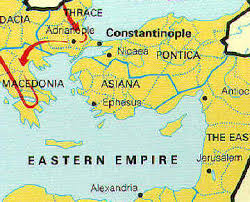
Emperor Constantine was upset by this division so he summoned a conference of all the bishops of the church – but few representatives from the western churches made it to the meeting in Nicaea. There were still around 300 bishops, and the council agreed that Jesus is truly God, so it published a creed stating the Christian faith in a way that condemned Arianism. One account from the meeting is from History of the Church by Socrates Scholasticus (who wrote 100 years after Eusebius). Much of his account consists of direct quotations from Eusebius’s Life of the Constantine and from a letter of the earlier historian – and Eusebius was present at the council. Eusebius, bishop of Nicomedia (not to be confused with Eusebius Pamphilus, Bishop of Caesarea) supported the opinion of Arius. These were opposed by Athanasius, a deacon of the Alexandrian church. This creed was agreed to by 318 members, and there were only five who refused to sign – objecting to the term homoousios, “of the same substance”.  The Emperor sent Arius into exile, along with Eusebius and Theognis and their followers. Eusebius and Theognis, however, wrote a declaration that they had changed their opinion and now agreed that the Son and the Father are of the same substance.

Quotes from old church fathers about the deity of Christ and the trinity

Jesus is not only the son of God, but also GOD IN FLESH.

For OUR GOD JESUS CHRIST, was, according to the appointment of God, conceived in the womb by Mary, of the seed of David, but by the Holy Ghost.” (Epistle of Ignatius to the Ephesians 4:9)

”…GOD HIMSELF appearing in the form of a man, for the renewal of eternal life.” (Epistle of Ignatius to the Ephesians 4:13)

”Continue inseparable from JESUS CHRIST OUR GOD.” (Epistle of Ignatius to the Trallians 2:4)

”For even OUR GOD; JESUS CHRIST, know that He is in the Father”. (Epistle of Ignatius to the Romans 1:13) 

Brethren, WE OUGHT SO TO THINK OF JESUS CHRIST AS OF GOD : as of the judge of the living and the dead”. (2nd Epistle of Clement to the Corinthians 1:1) 

”For Christ is King, and Priest, and GOD and Lord…” (Justin Martyr, Dialogue With Trypho, 34)

”…He preexisted as the Son of the Creator of things, BEING GOD, and that He was born a man by the Virgin.” (Justin Martyr, Dialogue With Trypho, 48)

”Now may the God and Father of our Lord Jesus Christ, and the eternal High Priest Himself, THE GOD JESUS CHRIST, build you up in the faith…” (The Epistle of Polycarp to the Church at Philippi, 12)

”In order that to Christ Jesus, our Lord, and GOD, and Savior, and King…” (Irenaeus Against Heresies, 1.10.1)

”But he Jesus is himself in his own right, beyond all men who ever lived, GOD, Lord, and king eternal, and THE INCARNATE WORD, proclaimed by all the prophets, the apostles …The Scriptures would not have borne witness to these things concerning Him, if, like everyone else, He were mere man.” (Irenaeus Against Heresies 3:19.1-2) 

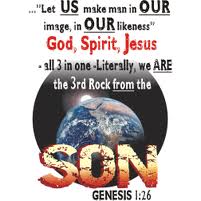
”For with Him were always present the Word and Wisdom, the Son and the Spirit, by whom and in whom, freely and spontaneously, He made all things, to whom also He speaks, saying, ‘Let us make man after our image and likeness’”.(Irenaeus Against Heresies, 4:10)

Irenaeus, 115-190 ”The Church, though dispersed throughout the whole world, even to the ends of the earth, has received from the apostles and their disciples this faith: …one God, the Father Almighty, Maker of heaven, and earth, and the sea, and all things that are in them; and in one Christ Jesus, the Son of God, who became incarnate for our salvation; and in the Holy Spirit, who proclaimed through the prophets the dispensations of God, and the advents, and the birth from a virgin, and the passion, and the resurrection from the dead, and the ascension into heaven in the flesh of the beloved Christ Jesus, our Lord, and His manifestation from heaven in the glory of the Father ‘to gather all things in one,’ and to raise up anew all flesh of the whole human race, in order that to Christ Jesus, our Lord, and GOD, and Savior, and King, according to the will of the invisible Father, ‘every knee should bow, of things in heaven, and things in earth, and things under the earth, and that every tongue should confess; to him, and that He should execute just judgment towards all…’” (Against Heresies X.l)

Tertullian, 160-225 ”We define that there are two, the Father and the Son, and three with the Holy Spirit, and this number is made by the pattern of salvation… [which] brings about unity in trinity, interrelating the three, the Father, the Son, and the Holy Spirit.  They are three, not in dignity, but in degree, not in substance but in form, not in power but in kind.  They are of one substance and power, because there is one God from whom these degrees, forms and kinds devolve in the name of Father, Son and Holy Spirit.” (Adv. Prax. 23; PL 2.156-7).

”We have also as a Physician the Lord OUR GOD JESUS THE CHRIST the only-begotten Son and Word, before time began, but who afterwards became also man, of Mary the virgin.  For ‘the Word was made flesh.’ Being incorporeal, He was in the body; being impassible, He was in a passable body; being immortal, He was in a mortal body; being life, He became subject to corruption, that He might free our souls from death and corruption, and heal them, and might restore them to health, when they were diseased with ungodliness and wicked lusts.” (Alexander Roberts and James Donaldson, eds., The ante-Nicene Fathers, Grand Rapids: Eerdmans, 1975 rpt., Vol. 1, p. 52, Ephesians 7.)

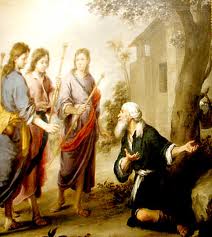
Abraham’s meeting with GOD and two angels

abraham 2Justin Martyr, 100-165 AD

” I [Justin] inquired. And Trypho said, ”Certainly; but you have not proved from this that there is another God besides Him who appeared to Abraham, and who also appeared to the other patriarchs and prophets. YOU HAVE PROVED, however, that we [the Jews] were WRONG in believing that the three who were in the tent with Abraham were all angels.” I [Justin] replied again, ”If I could not have proved to you from the Scriptures that ONE OF THOSE THREE IS GOD, because, as I already said, He brings messages to those to whom God the Maker of all things wishes [messages to be brought], then in regard to Him who appeared to Abraham on earth IN HUMAN FORM IN LIKE MANNER AS THE TWO ANGELS who came with Him, and WHO AS GOD EVEN BEFORE THE CREATION OF THE WORLD, it were reasonable for you to entertain the same belief as is entertained by THE WHOLE OF YOUR NATION.” ”Assuredly,” he said, ”for up to this moment this has been our [the Jews] belief.” … ”And now have you not perceived, my friends, that one of the three, WHO IS BOTH GOD AND LORD, and ministers to Him who is in the heavens, is Lord of the two angels? For when [the angels] proceeded to Sodom, HE REMAINED BEHIND, and COMMUNED WITH ABRAHAMin the words recorded by Moses; and when He departed after the conversation, Abraham went back to his place. And when he came [to Sodom], the two angels no longer conversed with Lot, but Himself, as the Scripture makes evident; and He is the LORD who received commission from the LORD who [remains] in the heavens, i.e., the Maker of all things, to inflict upon Sodom and Gomorrah the [judgments] which the Scripture describes in these terms: ‘The Lord rained down upon Sodom and Gomorrah sulphur and fire from the Lord out of heaven.’ ”(Dialogue of Justin Martyr, with Trypho, a Jew, Chapter LVI.—God Who Appeared to Moses is Distinguished from God the Father.)

Irenaeus,  115-190 AD

”Therefore neither would the Lord, nor the Holy Spirit, nor the apostles, have ever named as God, definitely and absolutely, him who was not God, unless he were truly God; nor would they have named any one in his own person Lord, except God the Father ruling over all, and His Son who has received dominion from His Father over all creation, as this passage has it: ”The LORD said unto my Lord, Sit Thou at my right hand, until I make Thine enemies Thy footstool.” Here the [Scripture] represents to us the Father addressing the Son; He who gave Him the inheritance of the heathen, and subjected to Him all His enemies. Since, therefore, the Father is truly Lord, and the Son truly Lord, the Holy Spirit has fitly designated them by the title of Lord. And again, referring to the destruction of the Sodomites, the Scripture says, ”Then the LORD rained upon Sodom and upon Gomorrah fire and brimstone from the LORD out of heaven.” For it here points out that the Son, who had also been talking with Abraham, had received power to judge the Sodomites for their wickedness. And this [text following] does declare the same truth:”Thy throne, O GOD; is for ever and ever; the scepter of Thy kingdom is a right scepter. Thou hast loved righteousness, and hated iniquity: therefore GOD, Thy God, hath anointed Thee.” Forthe Spirit designates both [of them] BY THE NAME; OF GOD — both Him who is anointed as Son, and Him who does anoint, that is, the Father.” (Irenaeus, Book 3, ch 6)

Tertullian, 160-225 AD

”That is a still grander statement [of Christ’s deity] which you will find expressly made in the Gospel: ”In the beginning was the Word, and the Word was with God, and the Word was God.” There was One ”who was,” and there was another ”with whom” He was. But I find in Scripture the name Lord also applied to them Both: ”The Lord said unto my Lord, Sit Thou on my right hand.” And Isaiah says this: ”Lord, who hath believed our report, and to whom is the arm of the Lord revealed? ” Now he would most certainly have said Thine Arm, if he had not wished us to understand that the Father is Lord, and the Son also is Lord. A much more ancient testimony [of Christ’s deity] we have also in Genesis: ”Then the Lord rained upon Sodom and upon Gomorrah brimstone and fire from the Lord out of heaven.” Now, either deny that this is Scripture; or else (let me ask) what sort of man you are, that you do not think words ought to be taken and understood in the sense in which they are written, especially when they are not expressed in allegories and parables, but in determinate and simple declarations?” (Tertullian, Against Praxeas, Chapter XIII.

 Ignatius, 30-117 AD

”For Moses, the faithful servant of God, when he said, ”The Lord thy God is one Lord,” and thus proclaimed that there was only one God, did yet forthwith confess also our Lord [Jesus] when he said, ”The Lord [Jesus] rained upon Sodom and Gomorrah fire and brimstone from the Lord.” And again [he confessed a second time our Lord Jesus by saying], ”And God said, Let Us make man after our image: and so God made man, after the image of God made He him.”” (The Epistle of Ignatius to the Antiochians, Chapter II.—The True Doctrine Respecting God and Christ.)

Cyprian, 200-258 AD

”In the Gospel according to John: ”The Father judgeth nothing, but hath given all judgment unto the Son, that all may honour the Son as they honour the Father. He who honoureth not the Son, honoureth not the Father who hath sent Him.” Also in the seventy-first Psalm: ”O GOD, give the king Thy judgment, and Thy righteousness to the king’s son, to judge Thy people in righteousness.”Also in Genesis: ”And the LORD rained upon Sodom and Gomorrah sulphur, and fire from heaven from the LORD.”” (The Treatises of Cyprian, Treatise XII. Three Books of Testimonies Against the Jews. Third Book., Testimonies., 33. That the Father judgeth nothing, but the Son; and that the Father is not glorified by him by whom the Son is not glorified.)

Novatian, 200–258 AD

”For who does not acknowledge that the person of the Son is second after the Father, when he reads that it was said by the Father, consequently to the Son, ”Let us make man in our image and OUR likeness; ” and that after this it was related, ”And God made man, in the image of God made He him? ”Or when he holds in his hands: ”The LORD rained upon Sodom and Gomorrah fire and brimstone from the LORD from heaven? ” (A Treatise of Novatian Concerning the Trinity, Chapter XXVI. Argument.—Moreover, Against the Sabellians He Proves that the Father is One, the Son Another.)

”Therefore the Lord overturned Sodom, that is, GOD overturned Sodom; but in the overturning of Sodom, the LORD rained fire from the LORD. And this Lord was the God seen by Abraham; and this God was the guest of Abraham, certainly seen because He was also touched. But although the Father, being invisible, was assuredly not at that time seen, He who was accustomed to be touched and seen was seen and received to hospitality. BUT THIS THE SON OF GOD,”The LORD rained from the LORD upon Sodom and Gomorrha brimstone and fire.”And this is the Word of God. And THE WORD OF GOD WAS MADE FLESH, AND DWLTH AMNG US; AND THIS IS CHRIST. IT WAS NOT THE FATHER, THEN WHO WAS A GUEST WITH ABRAHAM, BUT CHRISTNOR WAS IT THE FATHER WHO WAS SEEN THEN; , BUT THE SON; AND CHRIST WAS SEEN. Rightly, therefore, CHRIST IS BOTH LORD AND GOD, who was not otherwise seen by Abraham, EXCEPT THAT AS GOD THE WORD He was begotten of God the Father before Abraham himself.” (A Treatise of Novatian Concerning the Trinity, Chapter XVIII. Argument.—Moreover Also, from the Fact that He Who Was Seen of Abraham is Called God; Which Cannot Be Understood of the Father, Whom No Man Hath Seen at Any Time; But of the Son in the Likeness of an Angel.)

Constitutions of the Holy Apostles

”To Him did Moses bear witness, and said: ”The LORD received fire from the LORD, and rained it down.” HIM DID JACOB SEE AS A MAN, and said: ”I have seen God face to face, and my soul is preserved.”HIM DID ABRAHAM ENTERTAIN, and acknowledge to be the Judge, and HIS LORD.” (Constitutions of the Holy Apostles, Book V. XX. A Prophetic Prediction Concerning Christ Jesus.)

1 Mos. 1:26 Gud sade: ”Låt oss göra människor till VÅR AVBILD, till att vara lika OSS. De skall råda över fiskarna i havet och över fåglarna under himlen, över boskapsdjuren och över hela jorden och över alla kräldjur som rör sig på jorden.” 27 Och Gud skapade MÄNNISKAN till sin avbild, till GUDS AVBILD skapade han henne, till man och kvinna skapade han dem.image

Epistle of Barnabas, 74 AD

”For the Scripture says concerning US, while He speaks to the SON, ”Let Us make man after Our image, and after Our likeness” (Epistle of Barnabas, Chapter VI.—The Sufferings of Christ, and the New Covenant, Were Announced by the Prophets.)

The Letter of Barnabas 74 AD

”And further, my brethren, if the Lord [Jesus] endured to suffer for our soul, he being the Lord of all the world, to whom God said at the foundation of the world, ‘Let us make man after our image, and after our likeness,’ understand how it was that he endured to suffer at the hand of men” (Letter of Barnabas 5)

Justin Martyr, 100-165 AD

Idén att Moses skulle mena att det var änglar som åsyftades med ”till vår avbild”, är en villolära, säger Justin

”In saying, therefore, ‘as one of us, ‘[Moses] has declared that [there is a certain] number of persons associated with one another, and that they are at least two. For I would not say that the dogma of that heresy which is said to be among you (The Jews had their own heresies which supplied many things to the Christian heresies) is true, or that the teachers of it can prove that [God] spoke to angels, or that the human frame was the workmanship of angels. But this Offspring, which was truly brought forth from the Father, was with the Father before all the creatures.” (Dialogue of Justin Martyr, with Trypho, a Jew: Chapter LXII.—The Words ”Let Us Make Man”)

Irenaeus, 115-190 AD

”It was not angels, therefore, who made us, nor who formed us, neither had angels power to make an image of God, nor any one else, except the Word of the Lord, nor any Power remotely distant from the Father of all things. For God did not stand in need of these [beings], in order to the accomplishing of what He had Himself determined with Himself beforehand should be done, as if He did not possess His own hands. For with Him were always present the Word and Wisdom,the Son and the Spirit, by whom and in whom, freely and spontaneously, He made all things, to whom also He speaks, saying, ”Let Us make man after Our image and likeness; ” [Gen. 1:26]” (Against Heresies 4:20:1).

Tertullian,  160-225 AD

”If the number of the Trinity also offends you, as if it were not connected in the simple Unity, I ask you how it is possible for a Being who is merely and absolutely One and Singular, to speak in plural phrase, saying, ”Let us make man in our own image, and after our own likeness; ” whereas He ought to have said, ”Let me make man in my own image, and after my own likeness,” as being a unique and singular Being?In the following passage, however, ”Behold the man is become as one of us,” He is either deceiving or amusing us in speaking plurally, if He is One only and singular. Or was it to the angels that He spoke, as the Jews interpret the passage, because these also acknowledge not the Son? Or was it because He was at once the Father, the Son, and the Spirit, that He spoke to Himself in plural terms, making Himself plural on that very account? Nay, it was because He had already His Son close at His side, as a second Person, His own Word, and a third Person also, the Spirit in the Word, that He purposely adopted the plural phrase, ”Let us make; ”and, ”in our image; ”and, ”become as one of us.” (Tertullian, Against Praxeas, Chapter XII. Other Quotations from Holy Scripture Adduced in Proof of the Plurality of Persons in the Godhead.)

”Since then he is the image of the Creator (for He, when looking on Christ His Word, who was to become man, said, ”Let us make man in our own image, after our likeness”), how can I possibly have another head but Him whose image I am? For if I am the image of the Creator there is no room in me for another head” (Tertullian, Book V, Elucidations, Chapter VIII.—Man the Image of the Creator, and Christ the Head of the Man.)

”In the first place, because all things were made by the Word of God, and without Him was nothing made. Now the flesh, too, had its existence from the Word of God, because of the principle, that here should be nothing without that Word. ”Let us make man,” said He, before He created him, and added, ”with our hand,” for the sake of his pre-eminence, that so he might not be compared with the rest of creation.” (Tertullian: On the Resurrection of the Flesh, Elucidations, Chapter V.—Some Considerations in Reply Eulogistic of the Flesh. It Was Created by God.)

Origen, 184-254 AD

”it was to Him that God said regarding the creation of man, ”Let Us make man in Our image, after Our likeness.” (Origen Against Celsus, Book V, Chapter XXXVII)

Novatian, 200–258 AD

”For who does not acknowledge that the person of the Son is second after the Father, when he reads that it was said by the Father, consequently to the Son, ”Let us make man in our image and our likeness; ” and that after this it was related, ”And God made man, in the image of God made He him? ”Or when he holds in his hands: ”The Lord rained upon Sodom and Gomorrah fire and brimstone from the Lord from heaven? ” (A Treatise of Novatian Concerning the Trinity, Chapter XXVI. Argument.—Moreover, Against the Sabellians He Proves that the Father is One, the Son Another.)

Constitutions of the Holy Apostles

”the divine Scripture testifies that God said to Christ, His only-begotten, ”Let us make man after our image, and after our likeness. And God made man: after the image of God made He him; male and female made He them.”(Constitutions of the Holy Apostles, Book V., VII)
You can read many more quotes in this article

KRISTI BRUD är det nya Jerusalem, eller Jesus Kristus församling/kropp

brud 2Kristi Brud är inte från Knutby

Upp. 21:2 Och jag såg den heliga staden, det nya Jerusalem, komma ner från himlen, från Gud, redo som en BRUD, som är smyckad för sin brudgum.

Brud är översatt från det grekiska ordet numphé (Strong’s 3565), och förekommer 8 gånger i Bibeln (självfallet i Nya Testamentet). Bl. a i Luk. 12:53, Matt. 10:35 och Upp. 18:23.

Bruden i Uppenbarelseboken handlar inte om en EN speciell individ, utan flera individer – alla de kristna som utgör Kristi församling och som ska ärva Guds rike. Brudgummen ses däremot i ental, och brudgummen är Jesus Kristus. Det nya Jerusalem är visserligen en plats, men även om det handlar om en stad i singular så handlar det ändå om Guds rike och de individer som en dag ska befinna sig i det riket och vara brudgummens BRUD. Jesus är vidare beskriven som huvudet för kroppen, men vi kristna är lemmarna i den kroppen – och lemmarna är i plural.

Det nya Jerusalem liknas vid en vackert utsmyckad brud. Det handlar om en SYN från aposteln Johannes perspektiv, och synen och beskrivningen av bruden slutar inte med att staden kommer ner från himlen, utan vi får en fortsatt beskrivning och förklaring av bruden med hjälp av detaljen att det är tänkt att det ska bo människor i staden. Varken staden eller människorna i Johannes syn finns på plats idag, men inom en snar framtid så blir alltihop en sanning. En stad utan människor är öde även om den är bländande vacker, och en brudgum skulle inte nöja sig med vackra saker – oavsett kvalitet och kvantitet. Om däremot de vackra sakerna finns runtomkring en människa (eller människor som i Jesus fall), så kan det bli en passande brud för en brudgum.

Upp. 21:1 Och jag såg en ny himmel och en ny jord. Ty den första himlen och den första jorden hade försvunnit, och havet fanns inte mer. 2 Och jag såg den heliga staden, det nya Jerusalem, komma ner från himlen, från Gud, redo SOM en brud, som är smyckad för sin brudgum. 3 Och jag hörde en stark röst från tronen säga: “Se, nu står Guds tabernakel bland människorna, och han skall bo hos dem och de skall vara hans folk, och Gud själv skall vara hos dem. 4 Och han skall torka alla tårar från deras ögon. Döden skall inte finnas mer och ingen sorg och ingen gråt och ingen plåga. Ty det som förr var är borta.”5 Han som satt på tronen sade: “Se, jag gör allting nytt.” Och han sade: “Skriv, ty dessa ord är trovärdiga och sanna.” 6 Han sade också till mig: “Det har skett. Jag är A och O, begynnelsen och änden. Åt den som törstar skall jag ge att dricka fritt och för intet ur källan med livets vatten. 7 Den som segrar skall få detta i arv, och jag skall vara hans Gud, och han skall vara min son. 8 Men de fega, de otroende och de skändliga, mördarna, de otuktiga, trollkarlarna, avgudadyrkarna och alla lögnare skall få sin del i sjön som brinner av eld och svavel. Detta är den andra döden.”9 En av de sju änglarna med de sju skålarna, som var fyllda med de sju sista plågorna, kom och talade till mig och sade: “Kom, jag skall visa dig BRUDEN, Lammets hustru.” 10 Och han förde mig i anden upp på ett stort och högt berg och visade mig den heliga staden Jerusalem, som kom ner från himlen, från Gud, 11 och som ägde Guds härlighet. Dess strålglans var som den dyrbaraste ädelsten, som en kristallklar jaspis.  

Om det nya Jerusalem, som Johannes såg komma ner från himlen, var befolkad eller inte  vid just det ögonblicket ändrar inte på det faktum att staden är vad som väntar de kristna efter tidens slut, och den stad där de ska bo i. Det är alltså staden med all dess glans och människornan i den, som är brudgummens brud. Om det endast skulle handla om en häpnadsväckande vacker men tom stad vad gäller människor, så hade staden inte varit en passande brud för Jesus Kristus. Jesus är ju Gud själv och kan få precis vad han vill, så att ärva vackra saker vore inget anmärkningsvärt i sig, för det hade han kunnat skaffa vare sig det funnits människor på jorden eller ej. Om vi däremot tänker oss att själva syftet med det nya Jerusalem är att det ska bebos av de som verkligen valt att älska Jesus av hela sitt hjärta och hela sin själ – inklusive de som blivit martyrer för hans skull – så vet vi också att det är en mycket passande BRUD för brudgummen Jesus. Jesus har visat sin kärlek för sin brud, och bruden har visat sin kärlek till brudgummen. Jesus har visserligen visat sin kärlek och dött för alla människor, men det blir inget bröllop för de som inte är intresserade av att komma till bröllopet och/eller inte gjort sig förberedda med bröllopskläder. Ett bröllop handlar om två parter som älskar varandra, och det finns heller inget tvång vad gäller kärleken i ett sunt äktenskap. Här kommer fortsättningen om det nya Jerusalem och att det är tänkt att bebos:

24 Och folken skall vandra i dess ljus, och jordens kungar skall föra in sin härlighet i den.25 Stadens portar skall aldrig stängas om dagen – natt skall inte finnas där – 26 och folkens härlighet och ära skall föras in i staden. 27 Aldrig någonsin skall något orent komma in i den, och inte heller någon som handlar skändligt och lögnaktigt, utan endast de som är skrivna i livets bok som tillhör Lammet.

Upp. 22:16 Jag, Jesus, har sänt min ängel för att vittna för er om allt detta i församlingarna. Jag är Davids rotskott och hans ättling, den klara morgonstjärnan.”17 Och Anden och BRUDEN säger: “Kom!” Och den som hör det må säga: “Kom!” Och den som törstar må komma. Ja, den som vill, må ta emot livets vatten för intet.

Ett annat ord för “brud” är guné (Strong’s 1135), vilket förekommer 217 gånger i NT. Förutom brud kan det betyda kvinna och fru.

Här nedan handlar bruden om “henne”, men även om det står i singular så läser vi vidare att linnetyget är de heligas (plural) rättfärdighet. “Bruden” är alltså symbol för de kristna som utgör Kristi församling, och återigen är det endast de som får komma till bröllopet.

Upp. 19:6 Och jag hörde liksom rösten från en stor skara, lik bruset av stora vatten och dånet av kraftig åska, och de sade: “Halleluja! Herren vår Gud, den Allsmäktige, har blivit konung. 7 Låt oss vara glada och jubla och ge honom äran. Ty Lammets bröllop har kommit, och hans brud har gjort sig redo. 8 Åt henne har givits att klä sig i skinande, rent linnetyg.” Linnetyget är de heligas rättfärdighet. 9 Och ängeln sade till mig: “Skriv! Saliga är de som är bjudna till Lammets bröllopsmåltid.” Och han tillade: “Dessa Guds ord är sanna.”  

Brudgummen är Jesus

Johannes Döparen kallade sig för “brudgummens vän”, som gläder sig åt att ha hört brudgummens röst (Jesus).

Joh. 3:27 Johannes svarade: “Ingen människa kan ta emot något utan att det ges henne från himlen. 28 Ni kan själva vittna om att jag sade: Jag är inte Messias. Jag är sänd framför honom. 29 Brudgum är den som har BRUDEN. Men brudgummens vän, som står där och hör honom, gläder sig innerligt över brudgummens röst. Den glädjen har jag nu helt och fullt. 30 Han måste bli större och jag mindre.

Matt. 9:14 Sedan kom Johannes lärjungar fram till honom och frågade: “Varför fastar inte dina lärjungar, när både vi och fariseerna fastar?” 15 Jesus svarade dem: “Inte kan väl brudgummens vänner sörja, så länge brudgummen är hos dem? Men det skall komma dagar när brudgummen tas ifrån dem, och då skall de fasta. (se även Mark. 2:19-20, och Lukas 5:34-35)

I liknelsen med de tio jungfrurna så kallas de i och för sig inte “brudar”, men de väntar ändå på BRUDGUMMEN så indirekt är dessa jungfrur ändå tänkta som brudar. Var och en av de tio tjejerna väntade på brudgummen som verkar ha varit deras fokus och stora mål, men endast de som stod färdiga (deras eget ansvar) gick sedan med honom in till bröllopsfesten. De övriga var inte välkomna trots att de hade chansen.

Matt. 25:10 Men när de hade gått för att köpa kom brudgummen. Och de som stod färdiga gick med honom in till bröllopsfesten, och dörren stängdes. 

Även liknelsen med bröllopsfesten för kungens son handlar om att många är kallade (precis som jungfrurna ovan) men få är utvalda. De som är utvalda är de som tackat ja till festen och även gjort sig förberedda. Kallelsen går dock ut till många.

Matt. 22:2 “Himmelriket är likt en kung som höll bröllop för sin son. 3 Han sände ut sina tjänare för att kalla de inbjudna till bröllopet, men de ville inte komma. 3 Han sände ut sina tjänare för att kalla de inbjudna till bröllopet, men de ville inte komma. 4 Då sände han ut andra tjänare och befallde dem att säga till de inbjudna: Jag har gjort i ordning min måltid. Mina oxar och min gödboskap är slaktade och allt är färdigt. Kom till bröllopet! 5 Men de brydde sig inte om det utan gick sin väg, en till sitt jordbruk, en annan till sina affärer. 6 De andra grep hans tjänare och misshandlade och dödade dem. 7 Då blev kungen vred och skickade ut sina trupper och lät döda mördarna och brände ner deras stad. 8 Sedan sade han till sina tjänare: Allt är klart för bröllopet, men de inbjudna var inte värdiga. 9 Gå därför till vägskälen och bjud till bröllopet alla som ni träffar på. 10 Tjänarna gick då ut på vägarna och samlade alla de mötte, både onda och goda, och bröllopssalen fylldes med gäster.11 När kungen kom in för att se sina gäster, lade han märke till en man som inte var klädd i bröllopskläder. 12 Han sade till honom: Min vän, hur har du kommit in utan bröllopskläder? Mannen teg. 13 Då sade kungen till tjänarna: Bind honom till händer och fötter och kasta ut honom i mörkret här utanför! Där skall man gråta och skära tänder. 14 Ty många är kallade, men få är utvalda.”

Att Kristi brud skulle vara EN speciell människa (som den berömda Kristi Brud i Knutby) – som inte ingår i en större grupp – finns det inget som helst stöd för i Bibeln, och en sådan idé är dessutom hädisk. Det skulle leda till att det finns en speciell upphöjd kristen som står över andra kristna, och det kan i sin tur leda till att han/hon blir en slags medlare mellan Gud och människor, samt utgör en stor risk för att bli fokus för tillbedjan och glorifiering/idolskap. Jesus Kristus är den vi ska ha våra blickar på, och den vi ska ära. De kristna – Kristi församling – är systrar och bröder, och ingen stör över den andra.

The IMPUTED righteousness of CHRIST – is not Biblical

And the scripture was fulfilled which saith, Abraham believed God, and it [believing God] was IMPUTED UNTO HIM FOR RIGHTEOUSNESS: and he was called the Friend of God. James. 2:23 

hypocriteThe word “imputed” comes from the Greek word “logizomai” (Strong’s 3049) which could be translated as “reckon, count, charge with; reason, decide, conclude; think or suppose”. Notice that it doesn’t mean “transfer”, but rather “reckoned” or “counted as“.

The word is found 41 times in the New Testament, and 4 of those times the word is translated as “impute” in the KJV.  Rom 4:6-11 and  22-24 have the same Greek word (logizomai) as in James 2:23, and it doesn’t mean “transfer” there either. These verses use the same word even if they are translated differently:

For what saith the scripture? Abraham believed God, and it [believing God] was counted unto him for righteousness. Rom. 4:3

Even as Abraham believed God, and it [believing God] was accounted to him for righteousness. Gal. 3:6

And therefore it [faith] was imputed to him for righteousness. Rom. 4:22

CountedRom 2:26, Rom 4:3, Rom 4:5, Rom 9:8, Reckoned = Luk 22:37, Rom 4:4, Rom 4:9-10 and Rom 6:11, Rom 8:18, Accounted = Rom 8:36, Gal 3:6

We are asked to be righteous just like Jesus is righteous  

This doesn’t mean that the only means to get saved is to have lived a life free of sins just like Jesus did, but neither is the promise“If you only believe in Jesus, he will confirm you as righteous even if you’re not”. First we must be cleansed in the blood of Jesus – upon repentance – and then the idea is to be led by the Spirit and not by the flesh, which no one else will do for us. We are not able to go piggybacking on Jesus.

1 John 3:4 Whosoever committeth sin transgresseth also the law: for sin is the transgression of the law.5 And ye know that he was manifested to take away our sins; and in him is no sin.6 Whosoever abideth in him sinneth not: whosoever sinneth hath not seen him, neither known him.7 Little children, let no man deceive you: HE THAT DOETH RIGHTEOUSNESS IS RIGHTEOUS, EVEN AS HE IS RIGHTEOUS.8 He that committeth sin is of the devil; for the devil sinneth from the beginning. For this purpose the Son of God was manifested, that he might destroy the works of the devil.9 Whosoever is born of God doth not commit sin; for his seed remaineth in him: and he cannot sin, because he is born of God.10 In this the children of God are manifest, and the children of the devil: whosoever doeth not righteousness is not of God, neither he that loveth not his brother.

God’s wrath is still upon us if we sin, and if we are under God’s wrath we are not saved.

John 3:36 He who believes in the Son has eternal life; but he who does not obey the Son will not see life, but the wrath of God abides on him.” (NASB)

Romans 1:18 For the wrath of God is revealed from heaven against all ungodliness and unrighteousness of men, who hold the truth in unrighteousness;

Romans 2:5 But after thy hardness and impenitent heart treasurest up unto thyself wrath against the day of wrath and revelation of the righteous judgment of God;

Jesus righteousness cannot be transferred/injected into us and we are not righteous unless we LIVE righteously

Our righteousness does not depend on being injected another person’s righteousness, but our righteousness depends on how we live our lives.  

Jesus lived a perfect life (always being obedient to God the Father) and died on the cross for us, and in THAT WAY he is our righteousness. Had Jesus not lived an obedient life for us, he could not have been our righteousness, because the atonement wouldn’t have been perfect. He is NOT our righteousness because he has transferred his righteousness into us (and neither did he literally take our sins on himself as in some kind of an exchange) to make us righteous in position despite that we still live in sin. It’s important to understand that Jesus did NOT obey our moral obligations for us and instead of us!  The Bible talks about imputed righteousness but NEVER the imputed righteousness “of Christ.  We can read about the righteousness of GOD throughout the Bible (and that Jesus is righteous), but the idea that God looks upon us and sees the righteousness of Christ in us (or the blood of Jesus) instead of our sin, will result in a license to sin. When God looked at the churches in Revelation, he DID notice their sins and asked them to repent.

We are not justified by the works of the law but by God’s grace, so to say that we need perfect obedience to the Torah to be credited to our account in order to be justified is justification by works instead of justification by grace/mercy. God cannot declare the guilty to be innocent – like in a forensic justification – as that would be a lie, but God can PARDON the guilty and he does so if the guilty person repents from his sins.

Abraham is given as an example when it comes to being righteous/justified through faith, because he was counted as righteous BEFORE the law of Moses started to apply. Not all who have Abraham as a forefather are the children of Abraham and saved, but only those who are spiritually circumcised (in their hearts) and BELIEVE the way he did – and he showed his faith with some amazing deeds (work). Those who WALK as he did and obey God as he did (which is something we DO) are circumcised in heart and the true children of Abraham. We do not deserve salvation by anything we do (or believe) but faith without deeds is dead.  We can read “blessed is the man to whom the Lord will not impute sin”, which shows that all people apparently don’t have sin – namely those whom the Lord do not impute sin. Who are they? They are the ones who have confessed their sins, repented and who walk with Jesus. So when we read “God imputeth righteousness without works”, it means the works of the law (the Torah and the 613 laws in it), and naturally God wouldn’t impute righteousness to Abraham if he only sat under a tree and “believed” without showing his faith by OBEDIENCE. Not obedience to the law of Moses (which didn’t exist at the time) but obedience to GOD.

When it comes to Rom. 4:6, it doesn’t say that a person is especially appreciated and blessed if he doesn’t have any works to show up at all and that he only has “faith alone”. If that were true, it would mean that the less works we have, the more blessed we are and the better it is. No, Paul’s point is to get the jews to understand that they are not saved due to being born Jews and/or for obeying the Torah (613 laws), but a person is blessed/saved if he repents from his sins, believes in Jesus and through this procedure becomes cleansed from his sins. Those are blessed whose trespasses are FORGIVEN, because then God will not impute sin to them. Does this wonderful promise only apply to the Jews? No, Paul wants them to understand that also the uncircumcised (the gentiles) have his promise which is by faith and not by law. Notice how many times we can read about “circumcision“, so this is what is in focus (the ceremonial law) because the Jews were so concerned about it.

Rom. 4:3 For what saith the scripture? Abraham believed God, and it was counted unto him for righteousness.4 Now to him that worketh is the reward not reckoned of grace, but of debt.5 But to him that worketh not, but believeth on him that justifieth the ungodly, his faith is counted for righteousness.6 Even as David also describeth the blessedness of the man, unto whom God imputeth righteousness without works,7 Saying, Blessed are they whose iniquities are forgiven, and whose sins are covered.8 Blessed is the man to whom the Lord will not impute sin.9 Cometh this blessedness then upon the circumcision only, or upon the uncircumcision also? for we say that faith was reckoned to Abraham for righteousness.10 How was it then reckoned? when he was in circumcision, or in uncircumcision? Not in circumcision, but in uncircumcision.11 And he received the sign of circumcision, a seal of the righteousness of the faith which he had yet being uncircumcised: that he might be the father of all them that believe, though they be not circumcised; that righteousness might be imputed unto them also:12 And the father of circumcision to them who are not of the circumcision only, but who also walk in the steps of that faith of our father Abraham, which he had being yet uncircumcised.—20 He staggered not at the promise of God through unbelief; but was strong in faith, giving glory to God;21 And being fully persuaded that, what he had promised, he was able also to perform.22 And therefore it was imputed to him for righteousness.23 Now it was not written for his sake alone, that it was imputed to him;24 But for us also, to whom it shall be imputed, if we believe on him that raised up Jesus our Lord from the dead;

James doesn’t contradict what Paul is saying. James says that Abraham was justified BY WORKS, and not faith alone. Are we perhaps teaching salvation by works if we choose to quote James?

James 2:18 Yea, a man may say, Thou hast faith, and I have works: shew me thy faith without thy works, and I will shew thee my faith by my works.19 Thou believest that there is one God; thou doest well: the devils also believe, and tremble.20 But wilt thou know, O vain man, that faith without works is dead?21 Was not Abraham our father justified by works, when he had offered Isaac his son upon the altar?22 Seest thou how faith wrought with his works, and by works was faith made perfect?23 And the scripture was fulfilled which saith, Abraham believed God, and it was imputed unto him for righteousness: and he was called the Friend of God.24 Ye see then how that by works a man is justified, and not by faith only.25 Likewise also was not Rahab the harlot justified by works, when she had received the messengers, and had sent them out another way?26 For as the body without the spirit is dead, so faith without works is dead also. 

Paul is not disappointed with the Galatians for their suggestion that it’s still necessary to obey the ten commandments faith alone 3

In the letter to the Galatians, the reason for Paul’s objection to Galatians’s attitude is NOT because they wanted to return to silly old laws such as the ten commandments – just like “Do not kill, steal, lie or commit adultery”. Why would he be disappointed or upset about that? Those commandments have been in use ever since the days of Adam, and they never cease to apply. No, Paul was disappointed with their teaching that circumcision – which is a ceremonial law in the Torah – was still necessary for salvation. The ceremonial laws are not necessary for salvation, but the law of love certainly is (and the ten commandments provide details of how the law of love works). Paul makes a different between the works of the law (Torah), and the obedience of the holy Spirit.  The Torah was our  schoolmaster to keep us in order  until the arrival of Jesus – after Jesus death the holy Spirit took over as our guide – and we’re supposed to have the law of love in our hearts. We will never be “free” from the requirement to love God and our neighbor as ourselves, and as long we are slaves to sin (obey sin) we are definitely not free.

Acts. 15:1 And certain men which came down from Judaea taught the brethren, and said, Except ye be circumcised after the manner of Moses, ye cannot be saved.2 When therefore Paul and Barnabas had no small dissension and disputation with them, they determined that Paul and Barnabas, and certain other of them, should go up to Jerusalem unto the apostles and elders about this question.

Gal. 3:5 He therefore that ministereth to you the Spirit, and worketh miracles among you, doeth he it by the works of the law, or by the hearing of faith?6 Even as Abraham believed God, and it was accounted to him for righteousness.7 Know ye therefore that they which are of faith, the same are the children of Abraham.8 And the scripture, foreseeing that God would justify the heathen through faith, preached before the gospel unto Abraham, saying, In thee shall all nations be blessed.9 So then they which be of faith are blessed with faithful Abraham.10 For as many as are of the works of the law are under the curse: for it is written, Cursed is every one that continueth not in all things which are written in the book of the law to do them.11 But that no man is justified by the law in the sight of God, it is evident: for, The just shall live by faith.12 And the law is not of faith: but, The man that doeth them shall live in them.— 19 Wherefore then serveth the law? It was added because of transgressions, till the seed should come to whom the promise was made; and it was ordained by angels in the hand of a mediator.—22 But the scripture hath concluded all under sin, that the promise by faith of Jesus Christ might be given to them that believe.23 But before faith came, we were kept under the law, shut up unto the faith which should afterwards be revealed.24 Wherefore the law was our schoolmaster to bring us unto Christ, that we might be justified by faith.25 But after that faith is come, we are no longer under a schoolmaster.

Paul makes it clear that sinning = spiritual death (also for christians).

Gal. 5:16 This I say then, Walk in the Spirit, and ye shall not fulfil the lust of the flesh.17 For the flesh lusteth against the Spirit, and the Spirit against the flesh: and these are contrary the one to the other: so that ye cannot do the things that ye would.18 But if ye be led of the Spirit, ye are not under the law.19 Now the works of the flesh are manifest, which are these; Adultery, fornication, uncleanness, lasciviousness,20 Idolatry, witchcraft, hatred, variance, emulations, wrath, strife, seditions, heresies,21 Envyings, murders, drunkenness, revellings, and such like: of the which I tell you before, as I have also told you in time past, that they which do such things shall not inherit the kingdom of God.

The significance of having our faith “imputed” as righteousness, is that God forgives us our transgressions and treats us as though we have never sinned. This means that our sins disappears (without taking a detour in the body of Jesus) and God doesn’t have to LIE to declare us not guilty.  We are 100% cleansed when we are forgiven and free from our sins, but it doesn’t say “once cleansed always cleansed”. If we become dirty once again, we’re back at square one.

2 Cor. 5:19 To wit, that God was in Christ, reconciling the world unto himself, not imputing their trespasses unto them; and hath committed unto us the word of reconciliation.filthy pig

2 Pet. 2: 18 For when they speak great swelling words of vanity, they allure through the lusts of the flesh, through much wantonness, those that were clean escaped from them who live in error.19 While they promise them liberty, they themselves are the servants of corruption: for of whom a man is overcome, of the same is he brought in bondage.20 For if after they have escaped the pollutions of the world through the knowledge of the Lord and Saviour Jesus Christ, they are again entangled therein, and overcome, the latter end is worse with them than the beginning.21 For it had been better for them not to have known the way of righteousness, than, after they have known it, to turn from the holy commandment delivered unto them.22 But it is happened unto them according to the true proverb, The dog is turned to his own vomit again; and the sow that was washed to her wallowing in the mire.

Nelson Mandela ingen FÖREBILD eller hjälte

Vi bör inte ta Mandela som förebild i våra liv. Jag tror vilken medelsvensson som helst levt ödmjukare liv än Nelson Mandela under sitt liv. Se min tidigare artikel här. (Artikel i tidningen Dagen härhär , här och här.) Intressant artikel här 

Förutom vikten att motverka apartheid så är det inte många åsikter som jag delar med Mandela. Förhoppningsvis har de flesta människor en slags spärr som gör att de inte mördar och terroriserar, men Mandela verkar inte ha haft en sådan spärr eftersom han erkänt sig skyldig till en lång rad terrordåd där flera oskyldiga barn och vuxna mördats, och han gifte sig t o m med en kvinna som verkar haft en förkärlek till necklacing. Nelson Mandela har gjort mer ont mot sina medmänniskor än de flesta. ANC har ansetts vara en terrororganisation av ett flertal länder, och Mandela startade en sektion inom ANC som speciellt sysslade med terrorverksamhet för kampen mot apartheid. Mandela är värd varje år i fängelse för det han gjort, och från mig får han ingen sympati. I en del andra länder så hade han fått dödsstraff för det som han gjort sig skyldig till, men i Sydafrika så erbjöds han i stället att slippa fängelset (t ex 1985) om han bara bekräftade att han inte längre ämnade syssla med våld och terror. Vårt helgon Mandela vägrade att gå med på detta och fortsatta därför att vistas i fängelse – och massmedia har hela tiden upphöjt honom till skyarna och nästan ställt honom på en plats strax under Jesus. Även kristna har gått på propagandan om helgonet Mandela och sprider den vidare, och de kanske inte ens är medvetna om Mandelas åsikter om abort (ok till v. 20, såvida inte barnet är handikappat då det är ok att avbryta graviditeten när som helst), samkönade äktenskap (Mandela såg till att rätten fördes in i grundlagen), att Israels agerande jämförs med apartheid, etc.

Apartheid är fel, och våld och attacker mot svarta är fel, men visst är det väl precis lika fel att våldta och mörda vita? Precis som i USA är det vanligast att svarta mördar andra svarta, och antal mord som kan härröras till just apartheid/rasism var inte särskilt många i Sydafrika innan 1994 (i jämförelse med det som skulle komma efter 1994), även om varje fall är tragiskt i sig. Så har Mandela lyckats reducera våld och mord? Nej, tvärt om. Statistiken för Sydafrika är bedrövlig och har förvärrats sedan Mandelas styre. Genocide Watch:

 “I would kindly like to inform you about the ongoing white genocide in the Republic of South-Africa. Since 1994, the end of the so-called Apartheid, whites people, especially white farmers, have been subject to extremely brutal and racist murders. About 50 people on average are murdered in South-Africa per day, of which at least 20 of them are whites(95+ % black on white murder rate). Please take into consideration that white people make up only 9% (4 500 000) of the demographics in South-Africa and therefore the white murder rate in South-Africa is quite significant. (read more – warning: contains pictures of violently murdered children and grown-ups)”

Massmedia är förstås ointresserade av att göra artiklar om de vitas fruktansvärda situation i Sydafrika sedan 1994, och att ca 750.000 vita medelklassinvånare flytt landet. Förmodligen för att det skulle rucka på Mandelas gloria.

Mandela har sagt många visa och ödmjuka ord, men det har även Arafat och Castro – som imponerade stort på Mandela.

Mandelas mörka sida om terrorism, support för abort, samkönade äktenskap och palestinsk stat

duvaMandela erbjöds befrielse från fängelse redan 1985 om han bara bekräftade att han inte längre skulle stödja och använda sig av våld för sin sak, men Mandela vägrade och satt ytterligare några år i fängelse (där han en gång hamnade pga inblandning i en lång rad terrorattacker via den organisation som han startade). Lär mer här. Media har under decennier glorifierat Mandela utan att skriva särskilt mycket om hans mörka sidor. Låt oss inte glömma att Mandela hamnade i fängelse pga våld och terror, och visst hör man hemma i ett fängelse om är anhängare av terror?

Mandela ger kvinnor rätt till abort ända till v. 20 – eller längre om det handlar om handikappade barn

(Artiklar i tidningen Dagen om ämnet, här , här och här)

Mandela skapade en lag 1996 där kvinnor tillåts göra aborter fram till vecka 20, pga sociala eller ekonomiska skäl (ett barn kan födas i vecka 21 och fortfarande leva). Om barnet dessutom misstänks vara handikappat så tillåts mamman att göra abort när som helst under graviditeten – ända fram till födseln.

Mandela:  “Women have the right to decide what they want to do with their bodies.” 

Mandela har blivit något av en gay-ikon 

Mandela har alltid varit för homosexuellas rättigheter såsom samkönade äktenskap, och Sydafrika blev det femte landet i världen att legalisera samkönade äktenskap under Mandelas styre.  Läs från christiannews.

Mandela anser att Israel är boven vad gäller problemet i mellanöstern, och palestinierna de förtryckta

Hela brevet från Mandela här nedan kan läsas här.

Mandela jämför Israels styre med apartheid.

You seem to be surprised to hear that there are still problems of 1948 to be solved, the most important component of which is the right to return of Palestinian refugees. The Palestinian-Israeli conflict is not just an issue of military occupation and Israel is not a country that was established “normally” and happened to occupy another country in 1967. Palestinians are not struggling for a “state” but for freedom, liberation and equality, just like we were struggling for freedom in South Africa. In the last few years, and especially during the reign of the Labour Party, Israel showed that it was not even willing to return what it occupied in 1967; that Settlements remain, Jerusalem would be under exclusive Israeli sovereignty, and Palestinians would not have an independent state, but would be under Israeli economic domination with Israeli control of borders, land, air, water and sea.— If you also follow the judicial system in Israel you will see there is discrimination against Palestinians, and if you further consider the 1967 Occupied Territories you will find there are already two judicial systems in operation that represent two different approaches to human life: one for Palestinian life and the other for Jewish life. Additionally there are two different approaches to property and to land. Palestinian property is not recognized as private property because it can be confiscated. The Palestinian state cannot be the by-product of the Jewish state, just in order to keep the Jewish purity of Israel. Israel’s racial discrimination is daily life of most Palestinians. Since Israel is a Jewish state, Israeli Jews are able to accrue special rights which non-Jews cannot do. Palestinian Arabs have no place in a “Jewish” state. Apartheid is a crime against humanity. Israel has deprived millions of Palestinians of their liberty and property.

Mandela hänvisar till Yasser Arafat som “comrade in arms”. År 2000 var det tänkt att den Amerikanska judiska komittén skulle ordna en middag för Mandela vid vilken han skulle föräras ett människorättspris, men tillställningen avbokades några dagar innan. Skälet ska ha varit att Mandela försvarade en spionrättegång i Iran gällande 13 iranska judar,  som Mandela bedömde som “free and fair.”

Kuba

Mandela:

“Long live the Cuban Revolution. Long live comrade Fidel Castro. Cuban internationalists have done so much for African independence, freedom, and justice. We admire the sacrifices of the Cuban people in maintaining their independence and sovereignty in the face of a vicious imperialist campaign designed to destroy the advances of the Cuban revolution. We too want to control our destiny. There can be no surrender. It is a case of freedom or death. The Cuban revolution has been a source of inspiration to all freedom-loving people.

Mandela var medlem i den sydafrikanska kommunistgruppen SACP

Det är ingen synd att vara kommunist, men däremot borde det inte finnas några skäl att ljuga om det. Mandela har under decennier förnekat att han varit medlem i SACP, men det har visat sig vara falsk. Läs mer här.

“Unlike President Obama, who was awarded his Nobel “Peace Prize” before going on a killing spree stretching from Yemen and Libya to Afghanistan and Syria, Mandela was awarded his prize in 1993, well after he helped found and lead a formally designated terrorist group known as Umkhonto we Sizwe, or “Spear of the Nation.” Whether Mandela’s now-officially documented membership and even leadership in the SACP will tarnish his image among die-hard supporters or the increasingly discredited Nobel Committee, however, remains to be seen. “

Mandelas mörka historia

Jag skulle personligen inte ställa upp med att delta i en sång som uppmuntrar till dödande av vita (eller svarta) – och speciellt inte om jag var en politisk ledare – men Mandela valde en annan väg:


Man skulle önska att Nelson Mandela kunde ha gjort ett uttalande där han meddelar att han ångrar delar av sitt förflutna och sitt samröre med den våldsamma sidan av ANC (som flera länder, såsom USA och Storbritannien, listat som en terroristorganisation), men något sådant uttalande har inte gjorts. Kanske för att han helt enkelt inte tar avstånd från våldsamheter och mord så länge som det handlar om en kamp för frihet.

i den här artikeln kan du läsa om Mandelas andra sida – hans mörka sida. Där framkommer att han startade Umkhonto we Sizwe, som är en terrororganisation inom ANC – som ju av många länder räknats som en terrororganisation i sig. Det är skämsigt att Sverige varit med och gett finansiell support för en terrororganisation som ANC (och enligt uppgift som kan det röra sig om minst en biljon kronor!) men på något sätt låter det så typiskt svenskt och naivt. Inte för att Sverige räknas som ett land som vill understödja terrorism, men däremot så kan svenskar vara väldigt blåögda och tro det bästa om folk bara de säger de rätta sakerna. Att arbeta mot apartheid är förstås något fint och en behjärtansvärd sak att kämpa för, och eftersom Sydafrika verkligen står ut angående detta problem så kanske svenska politiker därför är villiga att öppna plånboken och transferera en stor del av svenskarnas skattepengar till en unik organisation som står för de rätta åsikterna. Att de utför sin kamp med hjälp av terror är förstås något man inte gärna vill ta till sig och helst inte tro på. Mandela förnekade under sin livstid att han varit medlem i kommunistpartiet, och det vet vi är en stor lögn.

Exempel från ovan artikel:

“Poverty among Afrikaners has soared in the years since the end of apartheid— South Africa has one of the highest crime rates in the world and is famous for its gated communities and private security companies. —  Afrikaners as a people have been destroyed. The names of Afrikaner heroes have been torn from towns, streets, and public squares, and replaced with those of “anti-apartheid” leaders. The collective white defense forces known as “commandos” have been outlawed, meaning that those unable to afford private security companies are left vulnerable to black violence.—Since Mandela refused any consideration of a Boer homeland, numbers alone ensure that Afrikaners are politically disenfranchised. More than 750,000 whites have left the country, but Boer farmers are trapped. Their wealth—their farmland—is illiquid. If they did try to leave, confiscatory taxation would leave them all but penniless. Mandela’s magnanimity consisted in keeping whites around to pay taxes to keep his one-party ANC dictatorship going, but denying them meaningful representation.”

In 1962, Mandela left South Africa on an international trip to win support for a violent struggle against the South African government. He negotiated for aid for the African National Congress with various anti-Western governments, including East Germany and Communist China.—After this perverse version of international diplomacy, Mandela underwent intensive military training in Ethiopia, where he learned sabotage, bombing, and guerrilla warfare. Upon his return to South Africa, Mandela was arrested for leaving the country without a passport and for inciting a strike. —The government alleged 235 separate acts of sabotage. Mandela was sentenced only to life imprisonment rather than death, even though the government believed it had prevented a bloody civil war . — Mandela did not unleash a campaign of state directed violence against whites. Instead, he largely maintained the economic system for the benefit of those already in power, while systematically dispossessing middle class and working class whites, especially Afrikaners.  —President Mandela and his new regime concentrated on reconciling whites to the new government by means of widely publicized symbolic efforts while stripping them of any collective economic, social, or political identity. Mandela won praise for letting “Afrikaner leaders” such as F.W. De Klerk serve in his government, but this was nothing more than continuing his working relationship with collaborators.”

Mer info på nätet

Mandelas styre skulle ha fått poäng om han kunnat påvisa reducerade mordsiffror, men i stället är sanningen den motsatta. Visst är det väl lika tragiskt om människor dör oavsett om de är vita eller svarta?

1948-1989 = 170 mord per år pga apartheid. Sedan 1994, 24.206 mord per år

“Do we know how many blacks were killed under apartheid? We do, and the source is none other than the Human Right Commission submitted as evidence to the TRC in 1997. The statistics they proffered relate to the number of blacks killed between the years 1948 up to the election in 1994. The total number of blacks killed were 21 000. — The HRC report also makes a distinction between two periods. One from 1948 till 1989 and the next from 1990 to the election in 1994. The number killed for the period from 1948 until 1989 is 7 000. That means the number killed from 1990 to 1994 which is AFTER the unbanning of the ANC and for all intents and purposes apartheid had ended is a whopping 14 000, involving mostly black on black violence between the ANC and the IFP and various other factions! —Of the 14 000 killed during those 4 years, 92% of deaths were caused by blacks killing blacks. Only 5.6% were attributed to the Security Forces at the time and usually in retaliation to attacks initiated by the ANC/UDF that had been unbanned. —What this means is that during the apartheid reign of 41 years, 7 000 blacks died compared to double the amount of dead in just 4 years! Let me break it down yet further, 170 blacks were killed as a result of apartheid ANNUALLY.More blacks then were killed under De Klerk’s ‘new’ anti-apartheid government of 4 years than in 41 years of government under full blown apartheid! —1948 – 1989: 7 000 1990 – 1994: 14 000 (of which 92% as a result of ‘black-on-black’ violence)”

Skolmassaker av barn i skola på SANDY HOOK 2012, förmodligen en BLUFF

Läs mer under fliken “Konspirationer” här ovan på Bloggen! 

Du kan läsa mer om Sandy Hook på denna hemsida som heter Sandyhooktruth.

Bibeln om blodtransfusioner och att äta blod

blod 1Jehovas vittnen brukar likställa blodtransfusioner med synden att ÄTA BLOD, och eftersom det är förbjudet att äta blod (se Apg. 15:28-29) så tror de felaktigt att det även måste vara förbjudet att ge och ta emot blodtransfusioner (vilket även borde inkludera ens egna blod om det tagits från kroppen och sedan injiceras tillbaka igen). Blodtransfusioner leder blodet direkt in i blodcirkulationssystemet (kardiovaskulära systemet, eller hjärt- och kärlsystemet), och det går således aldrig genom matsmältningssystemet på det sättet som MAT gör. Förbudet att inte förtära blod står alltid sammankopplat med MAT eller dryck i Bibeln.

“A blood transfusion is no more eating blood than a skin graft is cannibalism” (James D. BalesJehovah’s Witnesses, p. 30).

Jehovas vittnen brukar vanligtvis medge att vi inte längre lever under gamla testamentets lagar, så därför borde det räcka med att läsa och tolka ovan vers i Apg. i sitt sammanhang för att påvisa felaktigheten med läran att det är en synd att ge och ta emot blodtransfusioner. En gång i tiden så förbjöds även vaccinationer bland Jehovas Vittnen (ända till 1970-talet) och organtransplantationer (ända till 1980-talet), men dessa förbuds revs sedan upp.

Här nedan i Nya Testamentet så ser vi att “avhålla er från blod” handlar om MAT-situationer, och som exempel ges kött som offrats åt avgudar.

Apg. 15:19 Därför anser jag att vi inte skall göra det svårt för de hedningar som vänder sig till Gud 20 utan endast skriva till dem att de skall avhålla sig från sådant som orenats genom avgudadyrkan, från otukt, från köttet av kvävda djur och från blod. 21 Ty Mose har i tidigare släktled haft sina förkunnare i alla städer, då han föreläses i synagogorna varje sabbat.”—28 Den helige Ande och vi har nämligen beslutat att inte lägga någon börda på er förutom följande nödvändiga föreskrifter: 29 Ni skall avhålla er från kött som offrats åt avgudar, från blod, från kött av kvävda djur och från otukt. Ni gör rätt om ni undviker sådant. Allt väl!”

Apg. 21:24 Ta dem med dig och rena dig tillsammans med dem och betala för dem, så att de kan låta raka huvudet. Då kommer alla att förstå att inget av det som de har hört om dig är sant, utan att du själv håller fast vid lagen och lever efter den. 25 Men när det gäller hedningar som har kommit till tro, har vi skrivit och gett dem besked om vårt beslut: De skall avhålla sig från kött som offrats till avgudar, från blod, kött från kvävda djur och otukt.”

Bibeln uppmuntrar oss att rädda liv i Markus 2.23–28, och historien visar att det aldrig var tänkt att låta lagen stå i vägen från självklarheter – såsom att rädda oskyldigt liv där vi har möjlighet till det.

Mark. 2 23 En sabbat gick Jesus genom ett sädesfält, och hans lärjungar började rycka av ax där de gick. 24 Då sade fariseerna till honom: “Varför gör de sådant på sabbaten som inte är tillåtet?” 25 Han svarade: “Har ni aldrig läst vad David gjorde, när han och hans följeslagare var hungriga och inte hade något att äta: 26 hur han gick in i Guds hus, då Abjatar var överstepräst, och åt skådebröden, om endast prästerna fick äta, och hur han även gav till dem som var med honom?” 27 Och Jesus sade till dem: “Sabbaten blev gjord för människan och inte människan för sabbaten. 28 Så är Människosonen Herre också över sabbaten.”

Även Lukas 13.10–17; 14.1–6, och Mattheus 12.9–14 visar att att Gud inte förbjuder oss att rädda liv, utan snarare förväntar sig att vi ska göra vad vi kan för att visa barmhärtighet och empati för människor i nöd. På liknande vis borde det inte vara emot lagen att GE eller TA EMOT blod via blodtransfusioner, eftersom människan själv vinner på detta. Redan idag så rinner ju blod i våra ådror, så vad skulle vara fel om ännu mer människoblod injicerades om behov skulle uppstå? Likaså finns det en nytta för människans hälsa att undvika att äta mat med blod. Gud gör inte bara lagar som är bra för människornas själar, utan även för vår fysiska hälsa.

Om det är ett principfel att acceptera blodtransfusion av människoblod i våra ådror, så borde det även vara fel att ha vårt eget blod i våra ådror. Om det exempelvis inte är fel att mitt blod cirkulerar i mina ådror så borde det inte stöta på något problem om ett av mina barn får ta emot lite av mitt blod (om vi nu skulle tillhöra samma blodgrupp) för att kunna rädda sitt liv i samband med en akut brist på blod. Mitt barn har ju en gång kommit från mig själv och närt sig av min kropp som fungerar tack vare mitt blodsystem. En gravid kvinna föder upp sitt barn i magen via sitt eget blod genom navelsträngen, så det bord rimligtvis inte vara en synd. I stället är det blod i MAT som förbudet i Bibeln handlar om, och det spelar ingen roll vilket landdjur (eller människa) som blodet kommer ifrån eftersom det är en synd att äta kött med blod i oavsett djur. Djurblod passar självfallet inte in i en människas blodsystem, men människoblod passar bra i våra blodsystem, och vi kan dela samma blod med varandra om vi bara tillhör en passande blodgrupp. Ursprungligen så kan vårt blod härröras ända till Adam och Eva, och det paret skapades av Gud som “mycket goda” .

Nu kan vi visserligen inte förvänta oss ett förbud mot blodtransfusioner i Bibeln eftersom begreppet var okänt på Bibelns tid, men eftersom Gud förmodligen visste att det skulle bli en realitet i framtiden – där människor hamnar i fordonsolyckor och riskerar sina LIV om de inte får ta emot blod – så kanske det skulle vara önskvärt om Gud inte ständigt och jämt kopplade ihop förbudet med just MAT. Eller vill Gud förbrylla oss och få oss att känna oss osäkra på vad som gäller? I stället så är det mer logiskt att anta att förbudet alltid står kopplat till att ÄTA blodmat, just för att det är just det som förbudet begränsar sig till. Blod cirkulerar ju i våra kroppar även om vi undviker blodmat, så att ha blod i våra vener kan inte vara ett problem. Skulle Gud vara besviken på oss för att vi vägrar att ta emot blodtransfusioner, trots att vi inte kan hitta något sådant förbud i Bibeln? Synda är väl att gå emot Guds bud, och vad gäller blod så kan vi bara hitta ett förbud att inte ÄTA blod – vilket vi borde lyda.

Gamla Testamentet om att ÄTA blod

Vi lever inte under Gamla Testamentets lagar, och inte heller GT säger någonting annat än att det är synd att ÄTA (eller om man föredrar att kalla det “dricka”) blod. Detta var inte bara en regel för israelerna, utan för alla. Skälet för att vi inte ska äta blod är att SJÄLEN är i blodet, och det är en sanning som givetvis inte bara gällde under det Gamla Testamentet. Om själen var i blodet under det gamla testamentets dagar så gäller det ju fortfarande.

1 Mosebok 9:4 Men kött som har sin själ i sig, nämligen sitt blod, skall ni inte ÄTA,5 och för ert eget blod, som har er själ i sig, skall jag kräva räkenskap. Jag skall utkräva det av alla djur, likaså av människorna. Av var och en som dödar sin broder skall jag utkräva den människans liv.

3 Mosebok 17:10 Och om någon av Israels hus eller av främlingarna som bor bland dem FÖRTÄR något blod, skall jag vända mitt ansikte mot den som ÄTER blodet och utrota honom ur hans folk. 11 Ty kroppens liv är i blodet, och jag har givit er det till altaret, till att bringa försoning för era själar. Det är blodet som bringar försoning genom själen som är i det. 12 Därför säger jag till Israels barn: Ingen av er skall FÖRTÄRA blod. Främlingen som bor ibland er skall inte heller FÖRTÄRA blod.13 Om någon av Israels barn eller av främlingarna som bor bland dem fäller ett villebråd av fyrfotadjur eller en fågel av det slag som får ätas, skall han låta blodet rinna ut och täcka över det med jord. 14 Ty varje kropps liv är dess blod. Därför säger jag till Israels barn: Ni skall inte äta någon kropps blod, ty varje kropps liv är dess blod. Var och en som äter det skall utrotas.

5 Mosebok 12:22 Men du skall äta det så som man äter kött av gasell eller hjort. Både den som är oren och den som är ren får äta av det. 23 Men se till att du inte FÖRTÄR blodet, ty blodet är livet, och du får inte äta livet tillsammans med köttet. 24 Du får inte FÖRTÄRA det. Du skall hälla ut det på marken som vatten. 25 Du får inte FÖRTÄRA det, för att det må gå dig väl, och dina barn efter dig, när du gör det som är rätt i Herrens ögon.

1 Krön. 11:18 Då bröt de tre sig igenom filisteernas läger och hämtade vatten ur brunnen vid Betlehems stadsport och tog det och bar det till David. Men David ville inte dricka det utan hällde ut det som ett drickoffer åt Herren. 19 Han sade: “Må Gud låta det vara fjärran från mig att jag skulle göra detta! Skulle jag dricka dessa mäns blod? De har ju vågat sina liv, ja, med fara för sina liv har de burit hit det.” Och han ville inte dricka det. Sådana bragder hade de tre hjältarna utfört.

1 Sam. 14:31 Men den dagen slog de filisteerna och förföljde dem från Mikmash till Ajalon. Folket var mycket uttröttat. 32 Man kastade sig över bytet och tog får, oxar och kalvar och slaktade dem på marken och åt köttet med blodet i.33 Man berättade detta för Saul och sade: “Se, folket syndar mot Herren genom att ÄTA kött med blodet i.” Då sade han: “Ni har handlat trolöst. Vältra nu fram en stor sten till mig!” 34 Sedan sade Saul: “Gå ut bland folket och säg till dem: Var och en skall föra hit till mig sin oxe och sitt får och slakta dem här och äta. Synda inte mot Herren genom att äta köttet med blodet i!” Under natten förde var och en bland folket själv fram sina oxar och slaktade dem där.

Did God move King David to make a census, or did Satan? Sin or no sin?

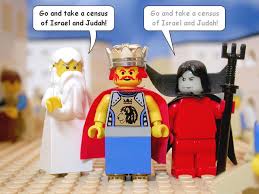
censusIn 2 Sam. 24 it says that God moved David to make a census of Israel’s military power, but in 1 Chron. 21 it says that Satan moved him to do so. Can these two statements be combined, or are they mutually exclusive?

One solution is that it concerns two different kinds of censuses, and another solution is that David did not perform a census the way God had described a proper census as per Ex. 30. A third option is the one described below.

Israel was already under God’s judgment to begin with, so there were no innocent men involved in this particular story. God is angry with Israel and punishes them by allowing Satan to “unleash” David’s illegitimate pride to create a rift between them.

2 Sam. 24:1 And again the ANGER of the Lord was kindled AGAINST ISRAEL, and he moved David AGAINST THEM to say, Go, number Israel and Judah.2 For the king said to Joab the captain of the host, which was with him, Go now through all the tribes of Israel, from Dan even to Beersheba, and number ye the people, that I may know the number of the people.3 And Joab said unto the king, Now the Lord thy God add unto the people, how many soever they be, an hundredfold, and that the eyes of my lord the king may see it: but why doth my lord the king delight in this thing?

1 Chron. 21:1 And Satan stood up against Israel, and provoked David to number Israel.2 And David said to Joab and to the rulers of the people, Go, number Israel from Beersheba even to Dan; and bring the number of them to me, that I may know it.3 And Joab answered, The Lord make his people an hundred times so many more as they be: but, my lord the king, are they not all my lord’s servants? why then doth my lord require this thing? why will he be a cause of trespass to Israel?

God sometimes bestows evil consequences (physical evil, or calamity) upon man’s evil actions (you reap what you sow). He also chooses what kind of evil to bestow, and if he would like to take the chance to bestow evil by means of other people (or Satan) who are already set on doing harm. Satan is often accusing both Israel and believers for various things, and he seeks to get God to punish his people. In 2 Samuel, it says that God was angry with Israel (due to the recent revolt under Sheba in I Chron. 20 and other acts by Amnon and Absalom), and this would be a good reason for God to allow Satan to do what he always wants to do – cause harm!

Here are a couple of examples of when it’s possible to suggest that God and/or Satan perform the evil:

In I Kings 22 (and. 2 Chronicles 18) which you can read about in this article, God decides to kill the evil king Ahab, and asks the heavenly hosts as to how to entice Ahab to enter into a battle in which he will die. A spirit volunteers to be a “lying spirit” in the mouth of Ahab’s false prophets, and God accepts the offer and allows him to do it. Nevertheless, God is not guilty of lying (there is no darkness in God), but merely gives Ahab what he deserves (Jer 24.7).

In I Sam 16, after repeated failures to submit to God’s leadership, Saul is rejected as king. He remains on the throne and continues his non-committed lifestyle and reign – even indulging in sorcery and seances. God punishes him by sending an “unclean spirit” to trouble him.

The motivation to cause calamity is a bit different in the book of Job, but God allows Satan to attack Job and he later confronts Satan with Job’s failure to sin even though we can read “you incited me against him to ruin him”. In other words, Satan was the “ruiner” but God was also a “ruiner” – so sometimes it’s actually not a big difference to suggest that “God moved a person to do this and that” or “Satan moved a person to do this and that”. The idea of God acting through agents -for reasons of judgment, of mercy, of testing, etc – occurs a few times in scripture, but nowhere does it say that God acts in this way ALL THE TIME. When it comes to Joseph and his brothers, there were evil human intentions (Joseph’s brothers sinning by selling their brother), with God’s overarching purpose for good.

1 Sam might be understood in this way:

  • God is angry with Israel’s sin (and David’s handling of the royal family issues).
  • Satan sees his opportunity, accuses them of wrongdoing, and wins approval to inflict David’s and Israel’s wrongdoing back on themselves.
  • God, knowing that the punishment is well deserved, that the example of correction/contrition on David’s part will be recorded in Scripture forever as an example, and that He will be gracious ‘ahead of schedule’ and reveal the site of his temple/crucifixion, agrees to turn David and Israel over to him, for this specific punishment (cf. I Cor 5.5).
  • Satan, with this permission from God, moves David to begin the Census.

Moreover, there was no order from God to David to NOT count the men, and the taking of a census was allowed in the law

Ex. 30:11 And the Lord spake unto Moses, saying,12 When thou takest the sum of the children of Israel after their number, then shall they give every man a ransom for his soul unto the Lord, when thou numberest them; that there be no plague among them, when thou numberest them.13 This they shall give, every one that passeth among them that are numbered, half a shekel after the shekel of the sanctuary: (a shekel is twenty gerahs:) an half shekel shall be the offering of the Lord.14 Every one that passeth among them that are numbered, from twenty years old and above, shall give an offering unto the Lord.15 The rich shall not give more, and the poor shall not give less than half a shekel, when they give an offering unto the Lord, to make an atonement for your souls.16 And thou shalt take the atonement money of the children of Israel, and shalt appoint it for the service of the tabernacle of the congregation; that it may be a memorial unto the children of Israel before the Lord, to make an atonement for your souls.

Had the numbering been done correctly (with the census tax for atonement), then undoubtedly no plague would have been sent, and the people would have benefited from the atonement. The fact that Joab knew that David was doing this out of pride (and even to bolster his military ranks, 1 Chron 27.2,4) instead of out of some religious sentiment, gives an indication of that the religious guidelines were not going to be followed. Joab specifically knew that what he was ordered to do was wrong (1 Chron 21.3), so the issue might not have been the census itself but that it was done without regard to the religious dimension and proper process. The observation made in 1 Chron 27.23-24 about God’s promise to make Israel numerous, could be taken as a reference to the population-reducing judgment of God. Punishing people by giving them over to their own will (see the case with Pharoah and the statements in Romans 1) can sometimes be seen in scripure, but it is never done without plenty of prior opportunity to change and to open up to goodness and truth.

In 2 Sam 24.16 we can read: “When the angel stretched out his hand to destroy Jerusalem, the LORD was grieved because of the calamity…”. God’s justice is always angry at sin, and his love is always grieved over the misery that sin causes.

You can read more in this article from christianthinktank.

God’s EVERLASTING (or eternal) COVENANT with Israel was broken

eternity 2Isaiah 24:5 The earth also is defiled under the inhabitants thereof; because they have transgressed the laws, changed the ordinance, BROKEN THE EVERLASTING COVENANT

The KJV doesn’t describe God’s covenants as “eternal” covenants, but rather as “everlasting” covenants (16 times in KJV), and this is a translation from the Hebrew word “olam”, which apart from “eternal” can mean “forever“, and many compound this with the phrase “throughout their generations”.

With Abraham, the sign of the covenant between him and God was circumcision. Salvation would not continue if at some point men decided they did not need to circumcise their male children.  Under Moses, the sign of the covenant was the Sabbath day, with the 10 commands being the covenant written out and placed in the Ark – representing the presence of God with them. Salvation would not continue if the Israelites broke those important commandments – without repenting or making an animal sacrifice. Water baptism is the sign of the new covenant, and the signs in the old covenants were completed in Christ. We are to be circumcised in heart and our Sabbath rest is in him, but we must hold to the commitment we made in the new covenant. The significance of the water baptism is our agreeing with God to keep the old man buried and to walk in the newness of life. If we still have sin that we are aware of and refuse to deal with, then sins are not taken away at all and we are in trouble. Modern false teachings have removed all fear of God and eternal judgment of those with sin, by teaching a false hope, a false gospel, and a false sense of security for those with unrepentant sins.

Ex. 31:12 And the Lord spake unto Moses, saying,13 Speak thou also unto the children of Israel, saying, Verily my sabbaths ye shall keep: for it is a sign between me and you throughout your generations; that ye may know that I am the Lord that doth sanctify you.14 Ye shall keep the sabbath therefore; for it is holy unto you: every one that defileth it shall surely be put to death: for whosoever doeth any work therein, that soul shall be cut off from among his people.15 Six days may work be done; but in the seventh is the sabbath of rest, holy to the Lord: whosoever doeth any work in the sabbath day, he shall surely be put to death.16 Wherefore the children of Israel shall keep the sabbath, to observe the sabbath throughout their generations, for a perpetual covenant.17 It is a sign between me and the children of Israel for ever: for in six days the Lord made heaven and earth, and on the seventh day he rested, and was refreshed.

An everlasting covenant?

Genesis 17:7 And I will establish my covenant between me and thee and thy seed after thee in their generations for an everlasting covenant, to be a God unto thee, and to thy seed after thee.—13 He that is born in thy house, and he that is bought with thy money, must needs be circumcised: and my covenant shall be in your flesh for an everlasting covenant.19 And God said, Sarah thy wife shall bear thee a son indeed; and thou shalt call his name Isaac: and I will establish my covenant with him for an everlasting covenant, and with his seed after him.

Leviticus 24:8 Every sabbath he shall set it in order before the Lord continually, being taken from the children of Israel by an everlasting covenant

Numbers 25:13 And he shall have it, and his seed after him, even the covenant of an everlasting priesthood; because he was zealous for his God, and made an atonement for the children of Israel

1 Chronicles 16:17 And hath confirmed the same to Jacob for a law, and to Israel for an everlasting covenant,

Isaiah 55:3 Incline your ear, and come unto me: hear, and your soul shall live; and I will make an everlasting covenant with you, even the sure mercies of David.

Isaiah 61:8 For I the Lord love judgment, I hate robbery for burnt offering; and I will direct their work in truth, and I will make an everlasting covenant with them.

Jeremiah 32:40 And I will make an everlasting covenant with them, that I will not turn away from them, to do them good; but I will put my fear in their hearts, that they shall not depart from me.

Ezekiel 16:60 Nevertheless I will remember my covenant with thee in the days of thy youth, and I will establish unto thee an everlasting covenant.

Ezekiel 37:26 Moreover I will make a covenant of peace with them; it shall be an everlasting covenant with them: and I will place them, and multiply them, and will set my sanctuary in the midst of them for evermore.

Hebrews 13:20 Now the God of peace, that brought again from the dead our Lord Jesus, that great shepherd of the sheep, through the blood of the everlasting (aiónios Strong’s 166) covenant (diathéké Strong’s 1242)

Greek Aiónios. Definition: age-long, and therefore practically eternal, unending; partaking of the character of that which lasts for an age, as contrasted with that which is brief and fleeting.

An everlasting covenant can be broken

God’s covenant has shown to be broken through rebellion – contrary to God’s will.

Genesis 17:14 And the uncircumcised man child whose flesh of his foreskin is not circumcised, that soul shall be cut off from his people; he hath broken my covenant.

Leviticus 26:15 And if ye shall despise my statutes, or if your soul abhor my judgments, so that ye will not do all my commandments, but that ye break my covenant:—44 And yet for all that, when they be in the land of their enemies, I will not cast them away, neither will I abhor them, to destroy them utterly, and to break my covenant with them: for I am the Lord their God.

Psalm 55:20 He hath put forth his hands against such as be at peace with him: he hath broken his covenant.

Deuteronomy 31:16 And the Lord said unto Moses, Behold, thou shalt sleep with thy fathers; and this people will rise up, and go a whoring after the gods of the strangers of the land, whither they go to be among them, and will forsake me, and break my covenant which I have made with them.—20 For when I shall have brought them into the land which I sware unto their fathers, that floweth with milk and honey; and they shall have eaten and filled themselves, and waxen fat; then will they turn unto other gods, and serve them, and provoke me, and break my covenant.

Isaiah 33:8 The highways lie waste, the wayfaring man ceaseth: he hath broken the covenant, he hath despised the cities, he regardeth no man.

Jeremiah 11:10 They are turned back to the iniquities of their forefathers, which refused to hear my words; and they went after other gods to serve them: the house of Israel and the house of Judah have broken my covenant which I made with their fathers.

Jeremiah 33:20 Thus saith the Lord; If ye can break my covenant of the day, and my covenant of the night, and that there should not be day and night in their season;21 Then may also my covenant be broken with David my servant, that he should not have a son to reign upon his throne; and with the Levites the priests, my ministers

Ezekiel 16:59 For thus saith the Lord God; I will even deal with thee as thou hast done, which hast despised the oath in breaking the covenant.

Ezekiel 17:15 But he rebelled against him in sending his ambassadors into Egypt, that they might give him horses and much people. Shall he prosper? shall he escape that doeth such things? or shall he break the covenant, and be delivered?—18Seeing he despised the oath by breaking the covenant, when, lo, he had given his hand, and hath done all these things, he shall not escape.19 Therefore thus saith the Lord God; As I live, surely mine oath that he hath despised, and my covenant that he hath broken, even it will I recompense upon his own head.

Ezekiel 44:7 In that ye have brought into my sanctuary strangers, uncircumcised in heart, and uncircumcised in flesh, to be in my sanctuary, to pollute it, even my house, when ye offer my bread, the fat and the blood, and they have broken my covenant because of all your abominations.

Judges 2:1 And an angel of the Lord came up from Gilgal to Bochim, and said, I made you to go up out of Egypt, and have brought you unto the land which I sware unto your fathers; and I said, I will never break my covenant with you.

Zechariah 11:10 And I took my staff, even Beauty, and cut it asunder, that I might break my covenant which I had made with all the people.

The Hebrew Festivals were often referred to as being eternal: The Sabbath is called an “eternal covenant” in Exodus 31:16-17.  Passover is called eternal in Exodus 12:13,17, and 13:10.  Shavuot or “Pentecost” is identified as such in Leviticus 23:21, Yom Kippur (Day of Atonement) in Leviticus 16:29, 31, 34 and 23:31.  And Succot or “booths” is likewise identified as such in Leviticus 23:41. The Levitical Priesthood and sacrificial system is identified as eternal in the Hebrew Scriptures.  The Priesthood itself is described as an eternal covenant in Numbers 25:12,13, see also Exodus 29:9 and 40:15.  Likewise of the Priestly vestments in Exodus 28:29,43.  Regarding Temple vessels we see the basin being commanded forever in Exodus 30:21 the Menorah in Leviticus 24:3 and the trumpets in Numbers 10:8.  The Shewbread is described as eternal in Leviticus 24:8 and scattered indications of eternal sacrifices such as in Leviticus 7:36 (and those sacrifices implicitly included in the festivals).

Lexical/Biblical data concerning OLAM

rainbow

Olam doesn’t mean “continually in force throughout infinite time, no matter what happens to the world” and nor is it irreversible or something God cannot put to an end,  should conditions change as to warrant such a change. Meaning:

“Long duration, antiquity, futurity: a. indefinite futurity , c. prep. for ever , always (= during the lifetime );  slave for ever ;  serve for ever ; redemption at any time; ever pregnant (womb); of persecutors of Jeremiah; always at ease;  may the king live always ; so of the pious;  I will sing for ever (as long as I live); other emotions and activities continuous through life. b. = continuous existence , (1) of things: the earth; other phr., heavens and contents, ruined cities, ruined lands or a witness for ever , in a book; (2) of nations: Babylon, of Judah; (3) families; the dynasty of Saul; house of Eli; (4) national relations: continual enmity ; of exclusion from; various relations;  perpetual reproach , of dynasty of David, families ;  of God’s covenant:  everlasting covenant ; covenant with Noah ; God remembers it; will not break it, e. of God’s laws;temple to bear God’s name; consecrated; its ceremonies; Levit. priesthood; Aaronic priesthood. f. of God’s promises: his word; promised dynasty of David; of holy land; given, inherited; dwelt in; other blessings; Jerus. to abide”  [BDB] 

2 King. 17:37 And the statutes, and the ordinances, and the law, and the commandment, which he wrote for you, ye shall observe to do for evermore; and ye shall not fear other gods.

“For evermore” could be viewed as “every day” or an idiom for eternal/always.

Ps. 112:Wealth and riches shall be in his house: and his righteousness endureth for ever.

That neither the Hebrew nor the Greek word in itself contains the idea of endlessness is shown both by the fact that they sometimes refer to events or conditions that occurred at a definite point in the past, and also by the fact that sometimes it is thought desirable to repeat the word, not merely saying “forever” but “forever and ever”. In Gen 6:4 it points to the time shortly before the flood. None of these past references has in it the idea of endlessness or limitlessness, but each points to a time long before the immediate knowledge of those living. (THAT II, p. 230) J. Barr (Biblical Words for Time (’1969), p. 73) says, “We might therefore best state the “basic meaning” as a kind of range between ‘remotest time’ and ‘perpetuity’”.

The NEW covenant that is prophesied about in Ezekiel, Isaiah and Jeremiah

The New Covenant of Jeremiah 31 was seen as a covenant superseding the Mosaic covenant. The Hebrew Bible sees these two covenants as being in contrast (this New covenant related to the “Old” Covenant of Sinai), and one major difference is that ONLY the Newer Covenant is “olam”. The Mosaic covenant is never called an “olam berith” in the Hebrew Bible (unlike other covenants).

Ezekiel and second Isaiah look forward to an everlasting covenant between God and the nation ( Ezek 16:60 ; Isa 55:3 ; 61:8) which they describe elsewhere as a covenant in which God’s Spirit will indwell the people ( Ezek 36:27–28 ; Isa 59:21 ).  Malachi’s “messenger of the covenant” is cast as a priestly figure ( Mal 3:1 ; cf. 2:1–9 ). Ezekiel 37 again speaks of the great blessings to be enjoyed by the people of God, including cleansing, walking in God’s statutes, recognition as God’s people, and he says of this era of blessings: “I will make a covenant of peace with them; it shall be an everlasting covenant with them” ( v 26). Other important foreshadowings of the new covenant are found in Isa. 54:10 ; 55:3 ; 59:21 ; 61:8 ; Hos. 2:18–23 ; Mal. 3:1–4. Jeremiah’s words imply the receiving of a new heart by the people, as is expressly promised in the parallel prophecy of  Ezek. 11: 19 and 36:26.

The text doesn’t suggest that God will close his eyes and randomly give people a new heart regardless of their own actions, and even if they haven’t even sought him or repented for their sins. Neither does it say that those who are given new hearts will be programmed to do God’s will without any effort of their own and with no failure to do so. It’s rather clear that there are no people living today who are programmed to always do God’s will and who therefore are not affected by any temptations since they are predestined to never sin again. However, if we consider that the holy Spirit is viewed as our guide and Helper, and someone who can lead us on the right path provided that we allow ourselves to be led by Him, then the prophesies in Jeremiah, Ezekiel and Isaiah, about the future everlasting covenant might rather be a reference to the new covenant with Jesus Christ – whose death enabled us to get the holy Spirit as a sign/mark/seal and to be placed within us (which is what Hebr. 8-10 suggests). We will be sealed “unto (FOR) the day of redemption”, so the seal is the initial phase on our journey to finally enter the eternal kingdom of God. A guarantee note or a seal can of course be broken if  the conditions are not met, but if we allow ourselves to walk in the Spirit, we will not fulfill the lust of our flesh. Especially the book of Hebrews talk a lot about the new covenant in Jesus Christ, which concerns the idea that we can have the law in our hearts.
eternity

Romans 8:1 There is therefore now no condemnation to them which are in Christ Jesus, who walk not after the flesh, but after the Spirit.

Galatians 5:16 This I say then, Walk in the Spirit, and ye shall not fulfil the lust of the flesh.

Hebrews 8:8 For finding fault with them, he saith, Behold, the days come, saith the Lord, when I will make a new covenant with the house of Israel and with the house of Judah:9 Not according to the covenant that I made with their fathers in the day when I took them by the hand to lead them out of the land of Egypt; because they continued not in my covenant, and I regarded them not, saith the Lord.10 For this is the covenant that I will make with the house of Israel after those days, saith the Lord; I will put my laws into their mind, and write them in their hearts: and I will be to them a God, and they shall be to me a people

Hebrews 9:8 The Holy Ghost this signifying, that the way into the holiest of all was not yet made manifest, while as the first tabernacle was yet standing: 9 Which was a figure for the time then present, in which were offered both gifts and sacrifices, that could not make him that did the service perfect, as pertaining to the conscience;—11 But Christ being come an high priest of good things to come, by a greater and more perfect tabernacle, not made with hands, that is to say, not of this building;—15 And for this cause he is the mediator of the new testament, that by means of death, for the redemption of the transgressions that were under the first testament, they which are called might receive the promise of eternal inheritance.16 For where a testament is, there must also of necessity be the death of the testator.17 For a testament is of force after men are dead: otherwise it is of no strength at all while the testator liveth. 

Hebrews 10:7 Then said I, Lo, I come (in the volume of the book it is written of me,) to do thy will, O God.—15 Whereof the Holy Ghost also is a witness to us: for after that he had said before,16 This is the covenant that I will make with them after those days, saith the Lord, I will put my laws into their hearts, and in their minds will I write them;—19 Having therefore, brethren, boldness to enter into the holiest by the blood of Jesus,20 By a new and living way, which he hath consecrated for us, through the veil, that is to say, his flesh;21 And having an high priest over the house of God;22 Let us draw near with a true heart in full assurance of faith, having our hearts sprinkled from an evil conscience, and our bodies washed with pure water.-–28 He that despised Moses’ law died without mercy under two or three witnesses:29 Of how much sorer punishment, suppose ye, shall he be thought worthy, who hath trodden under foot the Son of God, and hath counted the blood of the covenant, wherewith he was sanctified, an unholy thing, and hath done despite unto the Spirit of grace?

Read more about the prophesies which are fulfilled by means of Jesus Christ and the holy Ghost.

Isa. 55:Incline your ear, and come unto me: hear, and your soul shall live; and I will make an everlasting covenant with you, even the sure mercies of David. 

Ezek.36:25 Then will I sprinkle clean water upon you, and ye shall be clean: from all your filthiness, and from all your idols, will I cleanse you.26 A new heart also will I give you, and a new spirit will I put within you: and I will take away the stony heart out of your flesh, and I will give you an heart of flesh.27 And I will put my spirit within you, and cause you to walk in my statutes, and ye shall keep my judgments, and do them.

Jeremiah31:31 Behold, the days come, saith the Lord, that I will make a new covenant with the house of Israel, and with the house of Judah:32 Not according to the covenant that I made with their fathers in the day that I took them by the hand to bring them out of the land of Egypt; which my covenant they brake, although I was an husband unto them, saith the Lord:33 But this shall be the covenant that I will make with the house of Israel; After those days, saith the Lord, I will put my law in their inward parts, and write it in their hearts; and will be their God, and they shall be my people.

Jeremiah 50:In those days, and in that time, saith the Lord, the children of Israel shall come, they and the children of Judah together, going and weeping: they shall go, and seek the Lord their God.They shall ask the way to Zion with their faces thitherward, saying, Come, and let us join ourselves to the Lord in a perpetual covenant that shall not be forgotten.My people hath been lost sheep: their shepherds have caused them to go astray, they have turned them away on the mountains: they have gone from mountain to hill, they have forgotten their restingplace.

Ezek 16.57 Before thy wickedness was discovered, as at the time of thy reproach of the daughters of Syria, and all that are round about her, the daughters of the Philistines, which despise thee round about.58 Thou hast borne thy lewdness and thine abominations, saith the Lord.59 For thus saith the Lord God; I will even deal with thee as thou hast done, which hast despised the oath in breaking the covenant.60 Nevertheless I will remember my covenant with thee in the days of thy youth, and I will establish unto thee an everlasting covenant.61 Then thou shalt remember thy ways, and be ashamed, when thou shalt receive thy sisters, thine elder and thy younger: and I will give them unto thee for daughters, but not by thy covenant.62 And I will establish my covenant with thee; and thou shalt know that I am the Lord:63 That thou mayest remember, and be confounded, and never open thy mouth any more because of thy shame, when I am pacified toward thee for all that thou hast done, saith the Lord God.

Isa. 42: I the Lord have called thee in righteousness, and will hold thine hand, and will keep thee, and give thee for a covenant of the people, for a light of the Gentiles;To open the blind eyes, to bring out the prisoners from the prison, and them that sit in darkness out of the prison house.

Jesus applied this to Himself, early in His ministry to Israel.

You can read further in this article from christian thinktank 

Vad säger BIBELN om att bära SMYCKEN och att SMINKA sig?

smycken 3

Bibeln säger inte att det är fel att använda smycken, men däremot ombeds vi att ha ett gott omdöme vad gäller kläder, håruppsättningar, smycken och dekorationer. 

Här nedan ser vi hur Isaks tillkommande fru Rebecka fick en hel del smycken som gåvor via Isaks tjänare – som just var på jakt efter en passande fru åt sin herre. Isak var ju en mycket helig och gudfruktig man enligt Bibeln, och det var förmodligen hans tjänare också. Tjänaren lovprisade Gud som han menade hade lett honom på rätt väg vad gäller hans mål att hitta en passande hustru för Isak, och det vore därför konstigt om smycken vore en oförnuftig gåva när nu tjänaren å Isaks vägnar gav just smycken till Rebecka. Det verkar som Gud var den som ledde dem på rätt väg, tack vare deras ödmjuka och gudfruktiga hjärtan.

1 Mos. 24:15 Och det hände att innan han hade slutat tala, se, då kom Rebecka ut med sin kruka på axeln. Hon var dotter till Betuel som var son till Milka, Abrahams bror Nahors hustru.—21 Mannen iakttog henne under tystnad, för han ville veta om Herren hade gjort hans resa framgångsrik eller inte. 22 När alla kamelerna hade druckit tog mannen fram en näsring av guld som vägde en halv sikel och två guldarmband som vägde tio siklar26 Då böjde mannen sig ner och tillbad Herren 27 och sade: “Lovad vare Herren, min herre Abrahams Gud, som inte har tagit sin nåd och trofasthet från min herre! Herren har lett mig på vägen hem till min herres släkt.” 23 och han frågade: “Vems dotter är du? Säg mig det. Och finns det plats för oss i din fars hus över natten?”—29 Rebecka hade en bror som hette Laban. Han sprang i väg till mannen vid källan. 30 Han hade nämligen sett näsringen och armbanden som hans syster bar, och när han hörde sin syster berätta vad mannen sagt till henne, gav han sig i väg ut till mannen som stod hos kamelerna vid källan.—

47 Jag frågade henne: Vems dotter är du? Hon svarade: Jag är dotter till Betuel, Nahors son, som föddes åt honom av Milka. Då satte jag ringen i hennes näsa och armbanden på hennes armar. 48 Sedan böjde jag mig ner och tillbad Herren och lovade Herren, min herre Abrahams Gud, som hade fört mig på rätt väg, så att jag åt min herres son skulle få en dotter från hans släkt. 49 Om ni vill visa min herre kärlek och trofasthet så säg mig det. Om inte, så säg mig det också, så att jag kan vända mig åt annat håll, till höger eller vänster.”50 Då sade Laban och Betuel: “Detta är från Herren. Vi kan inte säga någonting till dig, vare sig ont eller gott.51 Se, där står Rebecka framför dig. Tag henne och gå, så att hon kan bli hustru åt din herres son, som Herren har sagt.” 52 När Abrahams tjänare hörde detta, föll han ner på marken införHerren. 53 Sedan tog tjänaren fram silversmycken, guldsmycken och kläder och gav till Rebecka. Han gav också hennes bror och mor dyrbara gåvor.

Nu var ju Josef en väldigt speciell person som stod precis under Farao i makt vad gäller Egypten, men hans ring och guldkedja runt halsen kanske ändå kan indikera att det inte var syndigt på något vis att bära smycken. Just nedan tillfälle kanske handlade om ett speciellt högtidligt tillfälle där Josef symboliskt kläddes med smycken och fina kläder, medan han inte gick utsmyckad på det sättet till vardags.

1 Mosebok 41:42 Och farao tog ringen från sin hand och satte den på Josefs hand, och han klädde honom i kläder av fint linne och hängde en kedja av guld kring hans hals.

Amalekiten som dödade Saul överlämnade Sauls diadem och armband – som Saul burit vid dödsögonblicket – till Kung David.

2 Sam. 2: Den unge mannen som hade berättat detta för honom svarade: “Jag kom av en händelse upp på berget Gilboa, och där fick jag se Saul stödja sig mot sitt spjut, och vagnar och ryttare ansatte honom. När han vände sig om och fick se mig, ropade han på mig, och jag svarade: Här är jag. Han frågade mig vem jag var, och jag svarade honom att jag var amalekit. Då sade han till mig: Ställ dig över mig och ge mig dödsstöten. Jag har gripits av dödsångest, för livet är ännu kvar i mig. 10 Jag gick fram till honom och dödade honom, för jag visste ju att han inte skulle kunna överleva sitt fall. Och jag tog diademet som satt på hans huvud, och ett armband som han hade om armen, och jag har tagit med dem hit till min herre.” 

Dom och nåd över Jerusalem enligt profeten Hesekiel. Nu är nedan beskrivning förstås väldigt symbolisk, men det visar ändå att Gud på inga sätt tar avstånd från smycken eftersom han själv illustreras med att smycka Jerusalem. I det här fallet handlar det om armband på armar, kedja om hals, ring i näsa, örhängen i öron och krona (eller diadem) på huvud – så smyckena är alltså tänkta som dekorationer på kroppen (och inte bara värdesaker att ha på en hylla, eller som köpemedel).

Hes. 16:1  Herrens ord kom till mig. Han sade: “Du människobarn, låt Jerusalem förstå vilka vidrigheter hon bedriver,— Jag tvättade dig med vatten och sköljde av dig blodet och smorde dig med olja. 10 Jag klädde på dig brokigt vävda kläder, satte på dig skor av tahasskinn och en huvudbindel av fint linne och en slöja av siden. 11 Jag prydde dig med smycken, satte armband på dina armar och en kedja om din hals. 12 Jag satte en ring i din näsa och örhängen i dina öron och en vacker krona på ditt huvud13 Så blev du prydd med guld och silver, och dina kläder var av finaste linne, av siden och broderat tyg. Fint mjöl, honung och olja fick du att äta. Du blev mycket, mycket vacker och nådde en drottnings värdighet.14 Ryktet om dig gick ut bland folken för din skönhets skull, ty den var fullkomlig genom de härliga prydnader jag hade satt på dig, säger Herren,Herren.15 Men du förlitade dig på din skönhet och använde din ryktbarhet till att bedriva hor. Du slösade din otukt på var och en som gick förbi. De fick allt.16 Dina kläder tog du och gjorde av dem brokiga offerhöjder, där du bedrev hor. Något sådant har aldrig förekommit och skall inte heller mer ske. 17 Du tog dina härliga smycken av mitt guld och silver, som jag hade givit dig och gjorde av dem mansbilder som du bedrev hor med

Hesekiel fortsätter med att berätta en liknande berättelse om dom gentemot folkgrupper som syndat mot Gud.

Hes. 23:40 De sände också bud efter män som skulle komma fjärran ifrån. Budbärare skickades till dem och de kom, och du tvättade dig, sminkade dina ögon och prydde dig med smycken41 Du satt på en härlig bädd med dukat bord framför dig, och där hade du ställt fram min rökelse och min olja. 42 Sorglöst sorl hördes därinne, och till de män ur hopen som var där hämtade man också in dryckesbröder från öknen. Dessa satte armband på kvinnornas armar och praktfulla kronor på deras huvuden43 Då sade jag om henne som var utsliten genom sina äktenskapsbrott: Nu skall de bruka henne som en hora, just henne. 44 Och de gick in till henne som man går in till en hora. Så gick man in till Ohola och till Oholiba, de lösaktiga kvinnorna. 

Det finns flera exempel i Bibeln på människor som klätt sig i säckväv när de varit riktigt olyckliga eller ångerfulla – alternativt rivit sönder sina kläder. Det kan förklara varför israelerna under Exodus valde att inte klä sig med smycken när de uppfattat hur besviken Gud var på dem, eller om det nu var Gud som initierade handlingen. En sådan handling symboliserar djup ånger, omvändelse och hopp om att Gud ska höra deras böner. (Jämför gärna med hur folket i Nineve reagerade på Jonas profetia.)

2 Mos. 33: När folket hörde detta stränga tal blev de sorgsna och ingen tog på sig sina smycken.Och Herren sade till Mose: “Säg till Israels folk: Ni är ett hårdnackat folk. Om jag bara för ett ögonblick gick med dig skulle jag förgöra dig. Men lägg nu av dig dina smycken så skall jag besluta vad jag skall göra med dig.” Folket tog då av sig smyckena och var utan dem alltifrån vistelsen vid berget Horeb.

Det gavs även smycken till uppenbarelsetältet, och om nu smycken är av ondo (kanske för att de var krigsbyten) så skulle de förmodligen inte vara passande i Guds heliga uppenbarelsetält.

2 Mos. 35:20 Israels hela menighet gick då bort ifrån Mose. 21 Sedan kom de tillbaka, var och en som manades till det i sitt hjärta, och var och en som hade en villig ande till detta bar fram en gåva åt Herren till arbetet på uppenbarelsetältet, till tjänsten där och till de heliga kläderna. 22 De kom, både män och kvinnor, och var och en bar med villigt hjärta fram spännen, örhängen, fingerringar och halssmycken, alla slags värdesaker av guld, var och en som kunde offra en gåva av guld åt Herren

4 Mos 31:48 Befälhavarna över härens avdelningar, både överbefälen och underbefälen, trädde fram till Mose 49 och sade till honom: “Dina tjänare har räknat antalet krigsmän som vi har haft under vårt befäl, och ingen man fattas bland oss.50 Därför har nu var och en av oss som en offergåva åt Herren burit fram det som han har kommit över av guldsmycken: armband, ringar, örhängen och halssmycken, detta för att bringa försoning för oss inför Herrens ansikte.51 Mose och prästen Eleasar tog emot guldet från dem, alla slags klenoder.52 Guldet som gavs som gåva åt Herren, från överbefälen och underbefälen, utgjorde sammanlagt 16 750 siklar. 53 Krigsfolket hade tagit byte, var och en för sig. 54 Och Mose och prästen Eleasar tog emot guldet från överbefälen och underbefälen, och bar in det i uppenbarelsetältet, för att det skulle bringa Israels barn i åminnelse inför Herrens ansikte.

Tydligen så var det vanligt att ismaeliter bar guldöronringar, och vi kan läsa att midjanitiska kungar burit både örhängen och halsprydnader. Vidare bar deras kameler guldhalskedjor. Dyrbara smycken kan förstås vara ett tecken på rikedom, och det är inte helt ovanligt att man just vill visa upp rikedom genom att smycka sig själva och sina tillhörigheter. Det låter som både onda och goda bär smycken, men sen är det också en fråga om mängd av smycken på kroppen och också tillfälle.

Domarboken 8: 23 Men Gideon svarade dem: “Jag skall inte härska över er, och min son skall inte heller härska över er, utan Herren skall härska över er.” 24 Gideon sade vidare till dem: “En sak begär jag av er: Att var och en av er ger mig den öronring han har fått som byte.” Fienderna bar nämligen öronringar av guld eftersom de var ismaeliter. 25 De svarade: “Dem ger vi dig gärna.” De bredde ut ett klädesplagg, och var och en kastade där den öronring han hade fått som byte.26 Och guldringarna som han hade begärt vägde 1 700 siklar i guld, detta förutom de halsprydnader, örhängen och de purpurröda kläder som de midjanitiska kungarna hade burit och förutom de kedjor som hade suttit kring halsen på deras kameler27 Gideon lät göra en efod av detta och satte upp den i sin stad Ofra. Hela Israel höll sig trolöst till den, och den blev en snara för Gideon och hans hus.—33 När Gideon var död, var Israels barn trolösa igen och höll sig till baalerna. De gjorde Baal-Berit till gud åt sig. 34 Israels barn tänkte inte på Herren sin Gud, som hade befriat dem från alla deras fienders hand runt omkring. 35 Inte heller visade de Jerubbaals, Gideons, hus någon kärlek i gengäld för allt gott som han hade gjort mot Israel.

Hosea 2:13 Så skall jag straffa henne för hennes baalsdagar, då hon tände rökelse åt baalerna och smyckade sig med ring och bröstspänne och följde efter sina älskare men glömde mig, säger Herren.

Som brud vill man gärna vara extra fin, och klä sig i vackra kläder och smycken.
smycken

Jesaja 61:10 Jag gläder mig storligen i Herren, min själ fröjdar sig i min Gud, ty han har klätt mig i frälsningens klädnad och svept in mig i rättfärdighetens mantel, lik en brudgum med högtidsbindeln på sitt huvud, lik en brud som pryder sig med sina smycken

Jeremia 2:32 Inte glömmer en jungfru sina smycken eller en brud sin utstyrsel? Men mitt folk har i alla tider glömt mig.

Ordspråksboken visar att smycken inte bara finns pga själva värdet (guldet i sig), utan det kan användas till utsmyckning av kroppen.

Ordspråksboken 1:9 Ty sådant är en skön krans för ditt huvud och en vacker kedja kring din hals.

Ordspråksboken 3:22 De skall ge liv åt din själ och bli ett smycke för din hals.

Ordspråksboken 25:12 Som en ring av guld och ett dyrbart smycke är en vis förmanare för ett lyssnande öra.

Höga visan gör en del liknelser med vackra smycken.

Höga Visan 1:10 Dina kinder är så vackra med sina smycken, din hals med sina rader av pärlor.11 Vi vill göra dig smycken av guld med silverkulor på.

Höga Visan 4:9 Du har tagit mitt hjärta, du min syster, min brud. Du har tagit mitt hjärta med en enda blick, med en enda länk av kedjan kring din hals.

Höga Visan 7:1 Hur vackra är inte dina fötter i sandaler, du furstedotter! Dina höfters rundning är som ett bröstspännes kupor, verk av en konstnärs händer.

Nya testamentet

Jesus gav en liknelse där Fadern sätter en ring på hans sons hand – den förlorade sonen. Alltså kan det inte vara en synd att bära ring.

Lukas 15:Medan han ännu var långt borta, fick hans far se honom och förbarmade sig över honom. Fadern skyndade emot honom, föll honom om halsen och kysste honom. 21 Sonen sade till honom: Far, jag har syndat mot himlen och inför dig. Jag är inte längre värd att kallas din son. 22 Men fadern sade till sina tjänare: Skynda er att ta fram den bästa dräkten och klä honom i den och sätt en ring på hans hand och skor på hans fötter!

Här nedan handlar det om föreskrifter för gudstjänsten. Paulus förbjuder inte kvinnor att bära smycken och smink, men han anser att de måste ett gott omdöme när de klär sig. Det viktigaste är att klä sig anständigt, och att inte klä sig utmanande och därmed få män på fall. Kvinnor måste för den saken skulle inte gå klädda i stora heltäckande skynken som det är svårt att röra sig i, men heller inte i korta kjolar och minimala toppar. Om man sammantaget klär sig helt emot Paulus instruktioner så är det risk för att hjärtat inte är på rätta stället, och att man har fel fokus i livet. Det är ju tänkt att vi ska vara bra förebilder både för andra kristna och för utomstående, så därför borde vi göra reklam för Guds rike och inte ge en bild av oss som skulle kunna tyda på att vi inte menar det vi predikar – att leva heligt,  att inte locka andra i frestelse och att vara tacksamma för det vi har. 

1 Tim. 2:På samma sätt skall kvinnorna be och uppträda i anständig klädedräkt, med blygsamhet och gott omdöme, och smycka sig, inte med håruppsättningar, med guld eller pärlor eller dyrbara kläder 10 utan med goda gärningar, så som det anstår kvinnor som bekänner sig till gudsfruktan.

Även Petrus är inne på samma spår. Att använda “fina kläder” är ju ingen synd i sig (det finns massor med verser som visar gudfruktiga människor med fina högtidsdräkter) för det finns inget egenvärde att gå klädd i fula och smutsiga kläder, men dyra fina kläder ihop med mycket annat prål kan ge en helt fel bild av en kristen kvinna (eller man). Jag tror Gud välsignar oss om vi visar ett gott omdöme vad gäller det sätt vi klär oss på, och speciellt om vi beslutar oss för att göra det trots att människor i vår omgivning klär sig i “coola” (men för minimala) kläder – och som leder till att vi ser lite avvikande ut eftersom vi inte visar lika mycket naken hud som de runtomkring oss. På samma sätt kan vi ge en helt fel bild av kristna människor om vi bor i pampiga och påkostade lyxhus, åker i fina bilar, bär dyra märkeskläder och åker eget flyg. Det tar ju dessutom tid att ta hand om stora arealer/boytor och en stor vagnpark, och borde vi inte kunna använda vår tid bättre? Rikedom är dock inte synd i sig – läs gärna denna artikel, och ingenting att skämmas för.

1 Petrus 3:1 På samma sätt skall ni hustrur underordna er era män, så att den man som inte vill tro ordet kan vinnas utan ord genom sin hustrus liv, när han ser hur gudfruktigt och rent hon lever. Er prydnad skall inte vara något yttre: konstfulla håruppsättningar, påhängda guldsmycken eller fina kläder, utan hjärtats dolda människa med den oförgängliga skönheten hos en mild och stilla ande. Det är mycket dyrbart i Guds ögon. Så prydde sig också förr de heliga kvinnor som satte sitt hopp till Gud. De underordnade sig sina män

Vad säger Bibeln om att sminka sig?smycken 4

Det står inte i Bibeln att det är en synd att bättra på sina färger i ansiktet med smink, och ett ansikte kan ofta upplevas som skönast när man inte ens märker att det är sminkat – utan man tänker kanske bara på att kvinnan i fråga ser ut att vara allmänt naturligt vacker. Men sen kan det gå till överdrift när man använder flera lager av ögonskugga, rouge och brunkräm – så att det syns på långt håll och kanske bara upplevs som “billigt”.

Bibeln visar att man kan sminka och smycka sig för att visa rikedom, för att göra sig vacker (exempelvis som brud) och för att vara inbjudande (som en sköka i hopp om att få kunder). Det låter med andra ord precis som läget är nuförtiden.

Jeremia 4:30 Du ödelagda, vad vill du göra? Om du än klär dig i scharlakan och pryder dig med smycken av guld, om du än gör dina ögon stora med smink, så gör du dig vacker förgäves. Dina älskare föraktar dig, de står efter ditt liv.

Hesekiel 23:40 De sände också bud efter män som skulle komma fjärran ifrån. Budbärare skickades till dem och de kom, och du tvättade dig, sminkade dina ögon och prydde dig med smycken.

Här nedan handlar det om den onda kvinnan Isebel.

2 Kon. 9:30 Så kom Jehu till Jisreel. När Isebel fick höra detta, sminkade hon sig kring ögonen och smyckade sitt huvud och såg ut genom fönstret. 31 När Jehu kom in genom porten ropade hon: “Står allt rätt till, du Simri, som har mördat din herre?” 32 Han såg upp mot fönstret och sade: “Vem står på min sida? Vem?” Då tittade två eller tre hovmän ner på honom. 33 Han sade: “Kasta ner henne!” De kastade då ner henne, så att hennes blod stänkte på väggen och på hästarna. Och han körde över henne.34 Därefter gick Jehu in och åt och drack. Sedan sade han: “Tag rätt på henne, den förbannade, och begrav henne. Hon är ju en kungadotter.” 35 Men när de gick för att begrava henne, fann de ingenting annat än huvudskålen, fötterna och händerna kvar av henne. 36 De vände tillbaka och berättade detta för Jehu. Då sade han: “Detta är vad Herren talade genom sin tjänare tisbiten Elia, när han sade: På Jisreels åkerfält skall hundarna äta upp Isebels kött.37 Isebels döda kropp skall ligga som gödsel på marken på Jisreels åkerfält, så att ingen skall kunna säga: Detta är Isebel.”