Säger Bibeln att man får stena och döda olydiga barn / en uppstudsig son?

5 Mos. 21:20-21 är en lag i det Gamla Testamentet

Ok, så lagen ingår i Mose lag och de 613 Mosaiska lagarna gäller inte längre eftersom vi lever under den Nya Testamentet (Jesus har uppfyllt lagen men den moraliska lagen gäller fortsatt), men betyder inte det att en sådan lag ändå en gång i tiden gällde i vår historia med uppmuntran från Gud själv?

Javisst gällde lagen i vårt förflutna för Gamla Testamentets Israel och för alla som valde att ansluta sig till den judiska gemenskapen. Men lagen är inte så galen som en del kritiker vill göra gällande.

5 Mos. 21:18 Om någon har en uppstudsig och trotsig son, som inte lyder sin far eller mor och inte lyssnar på dem trots att de tuktar honom, 19 så skall hans föräldrar ta honom och föra honom till de äldste i staden vid stadens port. 20 Och de skall säga till de äldste i staden: “Den här, vår son, är uppstudsig och trotsig och vill inte lyda oss utan är en frossare och drinkare.” 21 Då skall alla män i staden stena honom till döds. Du skall skaffa bort det onda ifrån dig. Hela Israel skall höra detta och känna fruktan.

Till att börja med kan vi se att det inte handlar om små barn utan en individ som är gammal nog för att vara en frossare och drinkare. Att vara frossare och drinkare tyder på ett invant mönster och ett beteende som pågått under en längre tid. Det innebär att lagen inte ger föräldrar rätt att dra iväg en son till domare för en eller flera enstaka förseelser. Vidare kan vi se att det också krävs tuktan från föräldrarnas sida innan de får gå vidare i fallet, och även det innebär en process som pågått under en längre tid. Lagen ger alltså inte föräldrar rätt att gå vidare i fallet förrän ett stadium nåtts där sonen måste betraktas som en oåterkallelig frossare och drinkare, och där en längre tids tuktan och varningar inte hjälpt.

Lagen ger ingen tvärsäker bild om exakt när detta stadium uppnåtts, vilket förstås ger föräldrarna utrymme att fortsätta att varna och hoppas på att deras alkoholistson till slut ska omvända sig. På det sättet kräver inte lagen att föräldrarna måste agera ens vid upprepade förseelser (om det inte handlar om ett permanent mönster) och vi kan förmodligen vara överens om att det krävs ganska mycket för att föräldrar slutgiltigt ska ge upp sin kamp om sin son. Eftersom föräldrar vanligtvis älskar sina barn så kan man förmoda att de inte skulle åberopa denna lag i första hand, utan göra allt vad de kan för att förmå sonen att lämna frosseri och ondska bakom sig. Det var allså föräldrarna som avgjorde när de varnat sin son tillräckligt och när de ansåg att de måste ge upp sina försök och i stället anmäla sin onda son till de äldste för stening.

Även om det inte är vanligt så kan det förekomma att en son växer upp och lever på ett destruktivt sätt både för sin egen del och för andra i sin omgivning. Han själv kan komma till skada och andra kan komma till skada pga hans fylleri som ofta är kopplat till aggressivitet och våldsbenägenhet. För Israels del var det otrolig viktigt att folket levde moraliskt rätt eftersom de var Guds utvalda folk och eftersom det var tänkt att de skulle vara goda föredömen för andra folk. Att se genom fingrarna vad gäller ondska och destruktivitet skulle därför leda andra på fall, och dessa lagar gällde under en speciellt tid i vår historia tid då det var en direkt teokratisk ledning. Det var alltså Gud själv som styrde, och ett sådant styre har vi inte idag. Med tanke på konsekvenserna så var det alltså bättre med allvarliga lagar än att tillåta allehanda ondska som skulle kunna orsaka förfall och förlorade själar. Om Israels folk skulle vara precis likadana syndare som alla andra, så skulle ingen heller söka sig till just Israels Gud. Av det skälet var det viktigt att ha tydliga restriktioner.

Vad gäller lagarna givna under Exodus så används de i stort också för att begränsa och/eller förhindra människors eventuella iver att döma och bestraffa alldeles för hårt! Genom att beskriva i lag vad som krävs innan straff kan bli aktuellt, så förhindras därmed människor från att straffa för hårt, eller att ta lagen i egna händer. Vidare hade israelerna ingen rätt att börja applicera sina lagar på människor som inte ens tillhörde deras folk.

Det är inte ens känt om några föräldrar under Mose lag ens åberopade denna lag, så kanske lagen i sig självt var tillräcklig för att förmå söner att undvika frosseri och för föräldrar att uppfostra sina söner så att de aldrig skulle komma in på den banan.

Gamla Testamentets ej längre aktuella lagar kan inte jämföras med Koranens alltjämt gällande våldsbejakande lagar

Slutligen kan vi se att ovan lag i 5 Mosebok inte kan jämföras med Islams lagar som fortfarande är precis lika aktuella idag som de alltid varit, och som alla muslimer förväntas lyda utan prut IDAG. Koranen uppmuntrar till våld mot alla otrogna och dessa tydliga suror går inte att komma runt. Av den anledningen är det tyvärr befogat att vara avvaktande vad gäller muslimer, för vi vet ju att deras egna religiösa skrift uppmuntrar till våld mot alla icke-muslimer. Lyckligtvis känner inte alla muslimer till lagarna, och även om de skulle göra det kanske majoriteten föredrar att omtolka dem och/eller helt enkelt vägra lyda dem. De kanske väljer att inte tänka på att Muhammed är ämnad att vara deras ideal och ett mönster att försöka efterlikna. Deras sanna inställning känner vi inte alltid till och därför kan det vara klokt att vara försiktiga. Vi kan bara vara tacksamma över att de flesta muslimer inte är trogna sin religiösa skrift.

“Bekämpa dem som inte tror på Allah eller den sista dagen, eller som inte respekterar det som är förbjudet enligt Allah och hans profet, eller som inte accepterar Sanningens religion ibland Bokens folk (judar och kristna), tills de under frivillig underkastelse betalar jizyah och erkänner sig besegrade” (S. 9:29). + “Döda dem var du än finner dem”.

Muhammad: “Jag har blivit beordrat av Allah att kämpa mot människorna ända till de vittnar om att ingen har rätt att dyrkas förutom Allah och att Muhammad är Allahs budbärare, genomför bönerna med perfektionism och ger den obligatoriska allmosan. (Sahih Bukhari bok 9 1,24.)

Say: can you expect for us (and fate) other than one of two glorious things (martyrdom or victory)? But we can expect for you either that Allah will send his punishment (for not believing in Allah) from Himself, or by our hands. So wait (expectant); we too will wait with you 9:52

Senare suror “abrogerar” (ersätter) tidigare suror om fred och fördrag med andras religioner. Kravet att begära pengar för beskydd enligt Jizyah (liknande maffia-beskydd) har varit mycket vanligt förekommande i de flesta muslimska länder. Vilket alltså är helt naturligt eftersom detta är vad Koranen påbjuder.

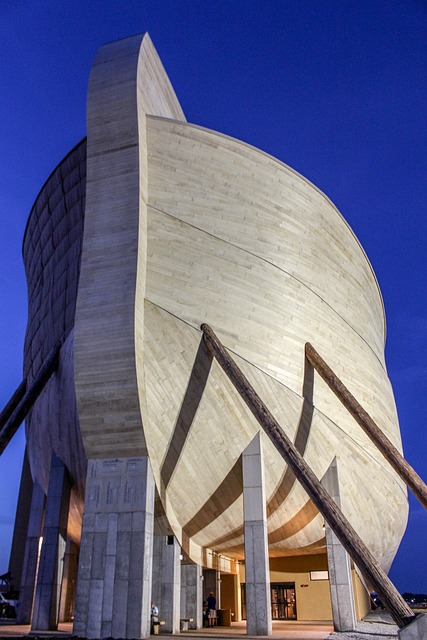
How did Noah get the approx. 16000 animals on board the Ark?

The animals on board the Ark

According to John Woodmorappe’s “Noah’s Ark: A feasibility study”, not a whole lot of animals were required to be on board the Ark in order to get to the animal position where we are today. According to his calculations, there would be enough with about 16,000 animals on the Ark and those animals would be the ancestors to the myriads of animals that we see around us today. We must remember that wolves, dogs, coyotes, dingoes, etc, all belong to the same “animal family” and could have been included in the Biblical “kind”.

The Bible, the book of Enoch, the book of Jasher and the book of Jubilees (to mention a few) all mention the time of the flood and both the antediluvian and postdiluvian periods. As Christians, it is the Bible that we view as the inspired word of God, but it is possible that the book of Enoch and the book of Jasher (both mentioned in the Bible) also contain much truth or even close to the whole truth since they confirm the Bible albeit with some more details. Therefore it is not totally illogical to use such books when speculating on what might have happened on earth about 4,600 years ago.

After the flood on Ararat:

Gen. 9:17 Bring forth with thee every living thing that is with thee, of all flesh, both of fowl, and of cattle, and of every creeping thing that creepeth upon the earth; that they may breed abundantly in the earth, and be fruitful, and multiply upon the earth.

The reason for the global flood

According to many historical sources (including the Jewish historian Josephusgiants were actually born through the marriages between angels and human females. Wickedness escalated to enormous proportions during this time, and eventually every imagination of the thoughts of his heart was only evil continually”. The flesh was corrupt, and that probably did not mean only thoughts and actions but the flesh itself was actually – as the word implies – corrupt. The book of Enoch explains, not only the ungodly mixture of angels and human beings which produced giants, but also the unlawful mixture and experiments between animal groups (and between human beings and animals). You can read the details in the book of Enoch, but here comes the Biblical version:

Gen. 6:1 And it came to pass, when men began to multiply on the face of the earth, and daughters were born unto them,2 That the sons of God saw the daughters of men that they were fair; and they took them wives of all which they chose.3 And the Lord said, My spirit shall not always strive with man, for that he also is flesh: yet his days shall be an hundred and twenty years.4 There were giants in the earth in those days; and also after that, when the sons of God came in unto the daughters of men, and they bare children to them, the same became mighty men which were of old, men of renown.5 And God saw that the wickedness of man was great in the earth, and that every imagination of the thoughts of his heart was only evil continually.6 And it repented the Lord that he had made man on the earth, and it grieved him at his heart.7 And the Lord said, I will destroy man whom I have created from the face of the earth; both man, and beast, and the creeping thing, and the fowls of the air; for it repenteth me that I have made them.—11 The earth also was corrupt before God, and the earth was filled with violence.12 And God looked upon the earth, and, behold, it was corrupt; for all flesh had corrupted his way upon the earth.13 And God said unto Noah, The end of all flesh is come before me; for the earth is filled with violence through them; and, behold, I will destroy them with the earth.

Construction of the Ark

There is information about the construction of the Ark also in the previously mentioned books, but I settle with the Bible.

Gen. 6:14 Make thee an ark of gopher wood; rooms shalt thou make in the ark, and shalt pitch it within and without with pitch.15 And this is the fashion which thou shalt make it of: The length of the ark shall be three hundred cubits, the breadth of it fifty cubits, and the height of it thirty cubits.16 A window shalt thou make to the ark, and in a cubit shalt thou finish it above; and the door of the ark shalt thou set in the side thereof; with lower, second, and third stories shalt thou make it.17 And, behold, I, even I, do bring a flood of waters upon the earth, to destroy all flesh, wherein is the breath of life, from under heaven; and every thing that is in the earth shall die.18 But with thee will I establish my covenant; and thou shalt come into the ark, thou, and thy sons, and thy wife, and thy sons’ wives with thee.

What animals to bring

It is quite possible for God to have given Noah general instructions to start with, and God could have provided Noah with more detailed instructions when it was actually time to gather the animals and eventually get on board the Ark. It is also possible that it is rather the author who first makes a general description (and ends with the information that Noah is always obedient), and proceeds to make a more detailed description when the general outline had been sufficiently covered. (The same goes for the creation story in Gen 1 and 2.) My point is that the none of the instructions are contradictory but rather supplementary.

Gen. 6:19 And of every living thing of all flesh, two of every sort shalt thou bring into the ark, to keep them alive with thee; they shall be male and female.20 Of fowls after their kind, and of cattle after their kind, of every creeping thing of the earth after his kind, two of every sort shall come unto thee, to keep them alive.21 And take thou unto thee of all food that is eaten, and thou shalt gather it to thee; and it shall be for food for thee, and for them.22 Thus did Noah; according to all that God commanded him, so did he.

Gen. 7: 1 And the Lord said unto Noah, Come thou and all thy house into the ark; for thee have I seen righteous before me in this generation.Of every clean beast thou shalt take to thee by sevens, the male and his female: and of beasts that are not clean by two, the male and his female.3 Of fowls also of the air by sevens, the male and the female; to keep seed alive upon the face of all the earth.4 For yet seven days, and I will cause it to rain upon the earth forty days and forty nights; and every living substance that I have made will I destroy from off the face of the earth.5 And Noah did according unto all that the Lord commanded him.6 And Noah was six hundred years old when the flood of waters was upon the earth.7 And Noah went in, and his sons, and his wife, and his sons’ wives with him, into the ark, because of the waters of the flood.Of clean beasts, and of beasts that are not clean, and of fowls, and of every thing that creepeth upon the earth,9 There went in two and two unto Noah into the ark, the male and the female, as God had commanded Noah.10 And it came to pass after seven days, that the waters of the flood were upon the earth.11 In the six hundredth year of Noah’s life, in the second month, the seventeenth day of the month, the same day were all the fountains of the great deep broken up, and the windows of heaven were opened.12 And the rain was upon the earth forty days and forty nights.13 In the selfsame day entered Noah, and Shem, and Ham, and Japheth, the sons of Noah, and Noah’s wife, and the three wives of his sons with them, into the ark;14 They, and every beast after his kind, and all the cattle after their kind, and every creeping thing that creepeth upon the earth after his kind, and every fowl after his kind, every bird of every sort.15 And they went in unto Noah into the ark, two and two of all flesh, wherein is the breath of life.16 And they that went in, went in male and female of all flesh, as God had commanded him: and the Lord shut him in.

After the flood on Ararat:

Gen. 9:19 Every beast, every creeping thing, and every fowl, and whatsoever creepeth upon the earth, after their kinds, went forth out of the ark.20 And Noah builded an altar unto the Lord; and took of every clean beast, and of every clean fowl, and offered burnt offerings on the altar.

The book of Jubilees about Ark:

Ch. 5 And Noah made the ark in all respects as He commanded him, in the twenty-seventh jubilee of years, in the fifth week in the fifth year (on the new moon of the first month). And he entered in the sixth (year) thereof, in the second month, on the new moon of the second month, till the sixteenth; and he entered, and all that we brought to him, into the ark, and the Lord closed it from without on the seventeenth evening. And the Lord opened seven flood-gates of heaven, And the mouths of the fountains of the great deep, seven mouths in number. And the flood-gates began to pour down water from the heaven forty days and forty nights, And the fountains of the deep also sent up waters, until the whole world was full of water. And the waters increased upon the earth: Fifteen cubits did the waters rise above all the high mountains, And the ark was lift up above the earth, And it moved upon the face of the waters.And the water prevailed on the face of the earth five months -one hundred and fifty days. And the ark went and rested on the top of Lubar, one of the mountains of Ararat. 

katt 2Boarding of the animals – and the nature of the animals before and after the flood

Gen. 9:2 And the fear of you and the dread of you shall be upon every beast of the earth, and upon every fowl of the air, upon all that moveth upon the earth, and upon all the fishes of the sea; into your hand are they delivered.Every moving thing that liveth shall be meat for you; even as the green herb have I given you all things.

Based on the Bible, it appears as though the animals’ nature slightly changed after the flood (Gen. 9:2) since they started to fear man. This newly acquired nature became rather useful considering that human beings from this point onward were allowed to kill and eat animals. (At least some people killed and ate animals also before the flood, but not according to God’s commandments.) Based on the book of Jasher, animals also adapted a slightly new nature shortly before great flood commenced! According to this book, the animals were somehow attracted to the Ark (maybe God miraculously arranged so that the Ark had a certain odor attached to it) and they sought to come near it. Some of them behaved in a peculiar way before Noah, and their crouching before him was a signal for him to bring those particular animals on board the Ark. The book of Jasher does not promise that all animals under the sun were around the Ark, but perhaps only those animals that lived relatively close and were able to make it in time. We must also remember that the earth’s landscape could have looked entirely different before the flood, and it is possible that all land masses were connected. 

Gen. 10:25 And unto Eber were born two sons: the name of one was Peleg; for in his days was the earth divided; and his brother’s name was Joktan.

Book of Jasher Ch.10:19 These are the generations of Shem; Shem begat Arpachshad and Arpachshad begat Shelach, and Shelach begat Eber and to Eber were born two children, the name of one was Peleg, for in his days the sons of men were divided, and in the latter days, the earth was divided.

Here is what the book of Jasher says about the boarding of the Ark and the behavior of the animals shortly before the flood:

Ch. 6:1 At that time, after the death of Methuselah, the Lord said to Noah, Go thou with thy household into the ark; behold I will gather to thee all the animals of the earth, the beasts of the field and the fowls of the air, and they shall all come and surround the ark.2 And thou shalt go and seat thyself by the doors of the ark, and all the beasts, the animals, and the fowls, shall assemble and place themselves before thee, and such of them as shall come and crouch before thee, shalt thou take and deliver into the hands of thy sons, who shall bring them to the ark, and all that will stand before thee thou shalt leave.3 And the Lord brought this about on the next day, and animals, beasts and fowls came in great multitudes and surrounded the ark.4 And Noah went and seated himself by the door of the ark, and of all flesh that crouched before him, he brought into the ark, and all that stood before him he left upon earth.

Some of the animals seemed adamant about getting on board the Ark, and they acted according to their new instinct:

Ch. 6:5 And a lioness came, with her two whelps, male and female, and the three crouched before Noah, and the two whelps rose up against the lioness and smote her, and made her flee from her place, and she went away, and they returned to their places, and crouched upon the earth before Noah.6 And the lioness ran away, and stood in the place of the lions.7 And Noah saw this, and wondered greatly, and he rose and took the two whelps, and brought them into the ark.8 And Noah brought into the ark from all living creatures that were upon earth, so that there was none left but which Noah brought into the ark.9 Two and two came to Noah into the ark, but from the clean animals, and clean fowls, he brought seven couples, as God had commanded him.10 And all the animals, and beasts, and fowls, were still there, and they surrounded the ark at every place, and the rain had not descended till seven days after.

Sometimes terrifying things can cause people to reevaluate their bad habits and seek God, but when it comes to the people in the antediluvian world they did not cease to do evil but continued to mock God. Just like the situation in many secular societies today, people before the flood questioned God’s existence! If they did acknowledge his existence, they were angry at him.

Ch. 6:11 And on that day, the Lord caused the whole earth to shake, and the sun darkened, and the foundations of the world raged, and the whole earth was moved violently, and the lightning flashed, and the thunder roared, and all the fountains in the earth were broken up, such as was not known to the inhabitants before; and God did this mighty act, in order to terrify the sons of men, that there might be no more evil upon earth.12 And still the sons of men would not return from their evil ways, and they increased the anger of the Lord at that time, and did not even direct their hearts to all this.13 And at the end of seven days, in the six hundredth year of the life of Noah, the waters of the flood were upon the earth.14 And all the fountains of the deep were broken up, and the windows of heaven were opened, and the rain was upon the earth forty days and forty nights.15 And Noah and his household, and all the living creatures that were with him, came into the ark on account of the waters of the flood, and the Lord shut him in.

It was not until it was too late – when God had already closed the door of the Ark – when people started to approach the Ark wanting to get on board due to the never-ceasing rain. The large amount of desperate people could not come close enough to the Ark due to the animals still surrounding it! Why did so many animals still surround the Ark? Possibly because they still had their animal children on board, and their instinct told them to protect the Ark from intruders who might harm their children. In this way, the animals prevented the crowds from breaking into the Ark because they viewed them as a threat. According to the book of Jasher, it was around 700.000 desperate people who eventually assembled to be close to the only source of salvation that was available – the Ark. Unfortunately they acted too late, and despite their great number they still did not manage to find a way to break into the Ark. The aggressive animals were in the way, the weather condition was chaotic and they might even have lacked proper tools.

Ch. 6:16 And all the sons of men that were left upon the earth, became exhausted through evil on account of the rain, for the waters were coming more violently upon the earth, and the animals and beasts were still surrounding the ark.17 And the sons of men assembled together, about seven hundred thousand men and women, and they came unto Noah to the ark.18 And they called to Noah, saying, Open for us that we may come to thee in the ark–and wherefore shall we die?19 And Noah, with a loud voice, answered them from the ark, saying, Have you not all rebelled against the Lord, and said that he does not exist? and therefore the Lord brought upon you this evil, to destroy and cut you off from the face of the earth.20 Is not this the thing that I spoke to you of one hundred and twenty years back, and you would not hearken to the voice of the Lord, and now do you desire to live upon earth?21 And they said to Noah, We are ready to return to the Lord; only open for us that we may live and not die.22 And Noah answered them, saying, Behold now that you see the trouble of your souls, you wish to return to the Lord; why did you not return during these hundred and twenty years, which the Lord granted you as the determined period?23 But now you come and tell me this on account of the troubles of your souls, now also the Lord will not listen to you, neither will he give ear to you on this day, so that you will not now succeed in your wishes.24 And the sons of men approached in order to break into the ark, to come in on account of the rain, for they could not bear the rain upon them.25 And the Lord sent all the beasts and animals that stood round the ark. And the beasts overpowered them and drove them from that place, and every man went his way and they again scattered themselves upon the face of the earth.26 And the rain was still descending upon the earth, and it descended forty days and forty nights, and the waters prevailed greatly upon the earth; and all flesh that was upon the earth or in the waters died, whether men, animals, beasts, creeping things or birds of the air, and there only remained Noah and those that were with him in the ark.

The purpose of the LAW, and our ability to obey God according to the Bible

sin 4The temporary Mosaic Law does not cancel or detract from the eternal MORAL law of God, which applied/applies both before and after the time of the Mosaic Law

Unlike what is commonly claimed, God appears to believe it has not only been possible for us to obey his commandments throughout history, but it is even required for us to always be faithful to him based on the commandments given. This does not mean that he only provides one single chance for us to do so, but serving two masters nevertheless leads to spiritual death. It is not logical to believe that God would give us laws he knew all along we could never obey. It would be equally illogical to view people as guilty transgressors of his laws, if the same people were incapable of obeying him in the first place. Did God really create mankind too weak to obey him? If we instead prefer to blame Adam because we have inherited his sins, would this really be our fault or something we could do anything about? (Read more about the false doctrine of original sin on my Blog.) If we on the other hand have always been capable of obeying our Lord but chosen not to, then we cannot put the blame on anyone else but ourselves. We are guilty transgressors precisely because we could have obeyed God but chosen not to. One sin is enough to be a sinner and in need to be cleansed and forgiven by someone with proper authority.

It is still possible to say that the Law was never intended to justify, and also that it “cannot” save. Not because God gave us commandments too grievous for us to obey, but rather because he knew that man would eventually choose at least one sin (most of us many more and repeatedly) which would make him in need of God’s mercy rather than being saved for having obeyed the Mosaic Law perfectly. Moreover, babies cannot sin since they are not able to transgress the law, and sinning is transgression of the law.

1 John 3:4 Whosoever committeth sin transgresseth also the law: for sin is the transgression of the law.

The purpose of the law of Moses

A great deal of flexibility is found in the use of the term “law” in the New Testament. Sometimes it refers not only to the five first book in the Torah but to the entire Old Testament, including Psalms and Isaiah (compare for instance John 10:34 and 1 Cor. 14:21). It could also mean the ten commandments as compared with Ex. 20:3-17. The Law could also be a principle or influence for a holy life style (Rom. 7:21-25). In the New Testament we find Paul quite often talking about circumcision (a ceremonial law included in the Mosaic Law) which confused many Jews who had come to Christ. For this reason Paul had a great focus on uplifting the law of Christ rather than the former Mosaic Law. See how Paul is differentiating between the two laws while still not claiming that ALL laws are done away with:

1 Cor. 7:19 Circumcision is nothing, and uncircumcision is nothing, BUT KEEPING OF THE COMMANDMENTS OF GOD.

It is clear that Paul was not of the view that we are no longer bound by ANY law just because we are not bound by the law of Moses. We are not living in lawlessness and there are still divine commandments to follow. We are slaves to the one we obey, so if we obey sin we are slaves to sin and not free. Sin continues to cause spiritual death just like it always has.

Paul does not believe that being faithful to the Lord – by avoiding murder, theft, lies, adultery, etc –  is called “bondage”. When Paul is talking about “turning back”, and “bondage” in Galatians, he has the Mosaic Law in mind and particularly the ceremonial laws such as circumcision. There is no way Paul would be upset with the Galatians if they “turned back” to “silly old laws” such as “Do not murder, steal, lie, commit adultery”, etc. Those type of activities are still sins in the ever existing moral law of God, and they will never be outdated.

Gal. 4:9 But now, after that ye have known God, or rather are known of God, how turn ye again to the weak and beggarly elements, whereunto ye desire again to be in bondage?10 Ye observe days, and months, and times, and years. 21 Tell me, ye that desire to be under the law, do ye not hear the law?

One reason for the implementation of the Mosaic law was to keep the Jews as a distinct people:

Lev. 7:6 For thou art an holy people unto the Lord thy God: the Lord thy God hath chosen thee to be a special people unto himself, above all people that are upon the face of the earth.7 The Lord did not set his love upon you, nor choose you, because ye were more in number than any people; for ye were the fewest of all people:8 But because the Lord loved you, and because he would keep the oath which he had sworn unto your fathers, hath the Lord brought you out with a mighty hand, and redeemed you out of the house of bondmen, from the hand of Pharaoh king of Egypt.9 Know therefore that the Lord thy God, he is God, the faithful God, which keepeth covenant and mercy with them that love him and keep his commandments to a thousand generations

It was also given due to our transgressions, to keep us in place by detailed rules. The law was the Jews’ schoolmaster to bring them to Christ, and when Christ came this schoolmaster was no longer needed. Now our guide is rather the holy Spirit.

Gal. 3:19 Wherefore then serveth the law? It was added because of transgressions, till the seed should come to whom the promise was made; and it was ordained by angels in the hand of a mediator.—23 But before faith came, we were kept under the law, shut up unto the faith which should afterwards be revealed.24 Wherefore the law was our schoolmaster to bring us unto Christ, that we might be justified by faith.25 But after that faith is come, we are no longer under a schoolmaster.

Rom. 7:7 What shall we say then? Is the law sin? God forbid. Nay, I had not knownsin, but by the law: for I had not known lust, except the law had said, Thou shalt not covet.

The law is not made for the righteous man (who comes to the light and acts righteously out of a pure heart), but to the ungodly disobedient man. Paul explains that it is possible to live with a good conscience, but also that it is possible to shipwreck our faith if we for instance blaspheme God.

1 Tim. 1:5 Now the end of the commandment is charity out of a PURE HEART, and of a GOOD CONSCIENCE, and of faith unfeigned:6 From which some having swerved have turned aside unto vain jangling;Knowing this, that the law is not made for a righteous man, but for the lawless and disobedient, for the ungodly and for sinners, for unholy and profane, for murderers of fathers and murderers of mothers, for manslayers, 19 Holding faith, and a good conscience; which some having put away concerning faith have made shipwreck:20 Of whom is Hymenaeus and Alexander; whom I have delivered unto Satan, that they may learn not to blaspheme.

Romans 2:13 (For not the hearers of the law are just before God, but the doers of the law shall be justified.14 For when the Gentiles, which have not the law, do by nature the things contained in the law, these, having not the law, are a law unto themselves:15 Which shew the work of the law written in their hearts, their conscience also bearing witness, and their thoughts the mean while accusing or else excusing one another;)

Rom. 3:19 Now we know that what things soever the law saith, it saith to them who are under the law: that every mouth may be stopped, and all the world may become guilty before God.20 Therefore by the deeds of the law there shall no flesh be justified in his sight: for by the law is the knowledge of sin.21 But now the righteousness of God without the law is manifested, being witnessed by the law and the prophets;22 Even the righteousness of God which is by faith of Jesus Christ unto all and upon all them that believe: for there is no difference:23 For all have sinned, and come short of the glory of God;24 Being justified freely by his grace through the redemption that is in Christ Jesus:25 Whom God hath set forth to be a propitiation through faith in his blood, to declare his righteousness for the remission of sins that are PAST, through the forbearance of God;26 To declare, I say, at this time his righteousness: that he might be just, and the justifier of him which believeth in Jesus.27 Where is boasting then? It is excluded. By what law? of works? Nay: but by the law of faith.28 Therefore we conclude that a man is justified by faith without the deeds of the law.

Ja. 2:If ye fulfil the royal law according to the scripture, Thou shalt love thy neighbour as thyself, ye do well:9 But if ye have respect to persons, ye commit sin, and are convinced of the law as transgressors.10 For whosoever shall keep the whole law, and yet offend in one point, he is guilty of all.11 For he that said, Do not commit adultery, said also, Do not kill. Now if thou commit no adultery, yet if thou kill, thou art become a transgressor of the law.12 So speak ye, and so do, as they that shall be judged by the law of liberty.13 For he shall have judgment without mercy, that hath shewed no mercy; and mercy rejoiceth against judgment.14 What doth it profit, my brethren, though a man say he hath faith, and have not works? can faith save him?

The Old Testament and our ability to obey Godgrace 5
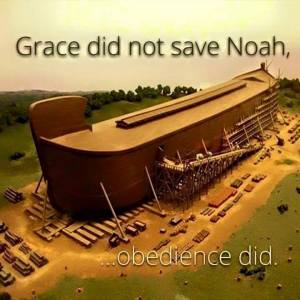
Prior to the time of Moses there were no stone plates with any commandments written on them, but there were nevertheless commandments to obey . other than not eating of the forbidden tree. From the very beginning it has always been considered a sin to murder, steal, lie, commit adultery, etc. God says early on that we should rule over sin. If we do not well, sin lieth at the door…

Gen. 4:7 If thou doest well, shalt thou not be accepted? and if thou doest not well, SIN lieth at the door. And unto thee shall be his desire, and THOU SHALT RULE OVER HIM.

Gen. 26:5 Because that Abraham obeyed my voice, and kept my charge, my commandments, my statutes, and my laws.

God required from the Israelites that they must keep his commandments, and as well as emphasizing that they shall live in them and by them. God even gives a curse on those who do not obey the words of his covenant. He makes clear that “THE WORD is very nigh unto thee, in thy mouth, and IN THY HEART, THAT THOU MAYEST DO IT“, showing that he does not find it impossible for us to obey him at all. He repeatedly says “I COMMAND THEE this day to love the Lord thy God, TO WALK IN HIS WAYS, AND TO KEEP HIS COMMANDMENTS and his statutes and his judgments.”

Deut. 30:8 And thou shalt return and obey the voice of the Lord, and do all his commandments which I command thee this day.9 And the Lord thy God will make thee plenteous in every work of thine hand, in the fruit of thy body, and in the fruit of thy cattle, and in the fruit of thy land, for good: for the Lord will again rejoice over thee for good, as he rejoiced over thy fathers:10 If thou shalt hearken unto the voice of the Lord thy God, TO KEEP HIS COMMANDMENTS and his statutes which are written in this book of the law, and if thou TURN UNTO THE LORD thy God WITH ALL THINE HEART, and with all thy soul.11 For THIS COMMANDMENT which I COMMAND thee this day, it is not hidden from thee, NEITHER IS IT FAR OFF.14 But THE WORD is very nigh unto thee, in thy mouth, and IN THY HEART, THAT THOU MAYEST DO IT.15 See, I have set before thee this day life and good, and death and evil;16 In that I COMMAND THEE this day to love the Lord thy God, TO WALK IN HIS WAYS, AND TO KEEP HIS COMMANDMENTS and his statutes and his judgments, that thou mayest live and multiply: and the Lord thy God shall bless thee in the land whither thou goest to possess it.

Lev. 18:Ye shall do my judgments, and keep mine ordinances, to walk therein: I am the Lord your God.Ye shall therefore keep my statutes, and my judgments: which if a man do, he shall live in them: I am the Lord.

You are to observe my laws and rulings; if a person does them, he will have life through them; I am Adonai. (Complete Jewish Bible)

Ez. 20:11 And I gave them my statutes, and shewed them my judgments, which if a man do, he shall even live in them.13 But the house of Israel rebelled against me in the wilderness: they walked not in my statutes, and they despised my judgments, which if a man do, he shall even live in them; and my sabbaths they greatly polluted: then I said, I would pour out my fury upon them in the wilderness, to consume them.—19 I am the Lord your God; walk in my statutes, and keep my judgments, and do them;—21 Notwithstanding the children rebelled against me: they walked not in my statutes, neither kept my judgments to do them, which if a man do, he shall even live in them; they polluted my sabbaths: then I said, I would pour out my fury upon them, to accomplish my anger against them in the wilderness.

Neh. 9:29 And testifiedst against them, that thou mightest bring them again unto thy law: yet they dealt proudly, and hearkened not unto thy commandments, but sinned against thy judgments, (which if a man do, he shall live in them;) and withdrew the shoulder, and hardened their neck, and would not hear.

Deut. 15:4 Save when there shall be no poor among you; for the Lord shall greatly bless thee in the land which the Lord thy God giveth thee for an inheritance to possess it:Only IF THOU CAREFULLY HEARKEN UNTO THE VOICE OF THE LORD THY GOD, TO OBSERVE TO DO ALL THESE COMMANDMENTS which I COMMAND thee this day.

Deut. 27:1 And Moses with the elders of Israel commanded the people, saying, Keep all the commandments which I command you this day.— 10 Thou shalt therefore obey the voice of the Lord thy God, and do his commandments and his statutes, which I command thee this day.—26 Cursed be he that confirmeth not all the words of this law to do them. And all the people shall say, Amen.

Jer. 11:2 Hear ye the words of this covenant, and speak unto the men of Judah, and to the inhabitants of Jerusalem;3 And say thou unto them, Thus saith the Lord God of Israel; Cursed be the man that obeyeth not the words of this covenant,4 Which I commanded your fathers in the day that I brought them forth out of the land of Egypt, from the iron furnace, saying, Obey my voice, and DO THEM, according to all which I command you: so shall ye be my people, and I will be your God:6 Then the Lord said unto me, Proclaim all these words in the cities of Judah, and in the streets of Jerusalem, saying, Hear ye the words of this covenant, and do them.

Deut. 28:1 And it shall come to pass, if thou shalt hearken diligently unto the voice of the Lord thy God, to observe and to do all his commandments which I command thee this day, that the Lord thy God will set thee on high above all nations of the earth:—13 And the Lord shall make thee the head, and not the tail; and thou shalt be above only, and thou shalt not be beneath; if that thou hearken unto the commandments of the Lord thy God, which I command thee this day, to observe and to do them:14 And thou shalt not go aside from any of the words which I command thee this day, to the right hand, or to the left, to go after other gods to serve them.15 But it shall come to pass, if thou wilt not hearken unto the voice of the Lord thy God, to observe to do all his commandments and his statutes which I command thee this day; that all these curses shall come upon thee, and overtake thee:—45 Moreover all these curses shall come upon thee, and shall pursue thee, and overtake thee, till thou be destroyed; because thou hearkenedst not unto the voice of the Lord thy God, to keep his commandments and his statutes which he commanded thee:—-58 If thou wilt not observe to do all the words of this law that are written in this book, that thou mayest fear this glorious and fearful name, The Lord Thy God;

Deut. 5:12:28 Observe and hear all these words which I command thee, that it may go well with thee, and with thy children after thee for ever, when thou doest that which is good and right in the sight of the Lord thy God.—32 What thing soever I command you, observe to do it: thou shalt not add thereto, nor diminish from it.

1 Pet.Those are righteous who DO righteousness – in both the Old and the New testament

We cannot hide behind another person’s righteousness (like Jesus), but we are responsible to live righteous lives. Only the righteous will be saved.

Ez. 18:18 When the righteous turneth from his righteousness, and committeth iniquity, he shall even die thereby.19 But if the wicked turn from his wickedness, and do that which is lawful and right, he shall live thereby

1 John 3:7 Little children, let no man deceive you: he that doeth righteousness is righteous, even as he is righteous.

Living righteously = LIFE, living in sin = DEATH. Here is the Old Testament verification for that, and Ezekiel explains it best:

Ez. 18:4 Behold, all souls are mine; as the soul of the father, so also the soul of the son is mine: THE SOUL THAT SINNETH, IT SHALL DIE.5 But if a man be just, and do that which is lawful and right, 8 He that hath not given forth upon usury, neither hath taken any increase, that hath withdrawn his hand from iniquity, hath executed true judgment between man and man,9 Hath walked in my statutes, and hath kept my judgments, to deal truly; he is just, HE SHALL SURELY LIVE, saith the Lord God.13 Hath given forth upon usury, and hath taken increase: shall he then live? he shall not live: he hath done all these abominations; he shall surely die; his blood shall be upon him.17 That hath taken off his hand from the poor, that hath not received usury nor increase, hath executed my judgments, hath walked in my statutes; he shall not die for the iniquity of his father, he shall surely live.18 As for his father, because he cruelly oppressed, spoiled his brother by violence, and did that which is not good among his people, lo, even he shall die in his iniquity.19 Yet say ye, Why? doth not the son bear the iniquity of the father? When the son hath done that which is lawful and right, and hath kept all my statutes, and hath done them, he shall surely live.20 The soul that sinneth, it shall die. The son shall not bear the iniquity of the father, neither shall the father bear the iniquity of the son: the righteousness of the righteous shall be upon him, and the wickedness of the wicked shall be upon him.21 But if the wicked will turn from all his sins that he hath committed, and keep all my statutes, and do that which is lawful and right, he shall surely live, he shall not die.22 All his transgressions that he hath committed, they shall not be mentioned unto him: in his righteousness that he hath done he shall live.23 Have I any pleasure at all that the wicked should die? saith the Lord God: and not that he should return from his ways, and live?24 But when the righteous turneth away from his righteousness, and committeth iniquity, and doeth according to all the abominations that the wicked man doeth, shall he live? All his righteousness that he hath done shall not be mentioned: in his trespass that he hath trespassed, and in his sin that he hath sinned, in them shall he die.25 Yet ye say, The way of the Lord is not equal. Hear now, O house of Israel; Is not my way equal? are not your ways unequal?26 When a righteous man turneth away from his righteousness, and committeth iniquity, and dieth in them; for his iniquity that he hath done shall he die.27 Again, when the wicked man turneth away from his wickedness that he hath committed, and doeth that which is lawful and right, he shall save his soul alive.28 Because he considereth, and turneth away from all his transgressions that he hath committed, he shall surely live, he shall not die.29 Yet saith the house of Israel, The way of the Lord is not equal. O house of Israel, are not my ways equal? are not your ways unequal?30 Therefore I will judge you, O house of Israel, every one according to his ways, saith the Lord God. Repent, and turn yourselves from all your transgressions; so iniquity shall not be your ruin.31 Cast away from you all your transgressions, whereby ye have transgressed; and make you a new heart and a new spirit: for why will ye die, O house of Israel?32 For I have no pleasure in the death of him that dieth, saith the Lord God: wherefore turn yourselves, and live ye.

Ez. 33:5 He heard the sound of the trumpet, and took not warning; his blood shall be upon him. But he that taketh warning shall deliver his soul. —-8 When I say unto the wicked, O wicked man, thou shalt surely die; if thou dost not speak to warn the wicked from his way, that wicked man shall die in his iniquity; but his blood will I require at thine hand.9 Nevertheless, if thou warn the wicked of his way to turn from it; if he do not turn from his way, he shall die in his iniquity; but thou hast delivered thy soul.10 Therefore, O thou son of man, speak unto the house of Israel; Thus ye speak, saying, If our transgressions and our sins be upon us, and we pine away in them, how should we then live?11 Say unto them, As I live, saith the Lord God, I have no pleasure in the death of the wicked; but that the wicked turn from his way and live: turn ye, turn ye from your evil ways; for why will ye die, O house of Israel?12 Therefore, thou son of man, say unto the children of thy people, The righteousness of the righteous shall not deliver him in the day of his transgression: as for the wickedness of the wicked, he shall not fall thereby in the day that he turneth from his wickedness; neither shall the righteous be able to live for his righteousness in the day that he sinneth.13 When I shall say to the righteous, that he shall surely live; if he trust to his own righteousness, and commit iniquity, all his righteousnesses shall not be remembered; but for his iniquity that he hath committed, he shall die for it.14 Again, when I say unto the wicked, Thou shalt surely die; if he turn from his sin, and do that which is lawful and right;15 If the wicked restore the pledge, give again that he had robbed, walk in the statutes of life, without committing iniquity; he shall surely live, he shall not die.16 None of his sins that he hath committed shall be mentioned unto him: he hath done that which is lawful and right; he shall surely live.17 Yet the children of thy people say, The way of the Lord is not equal: but as for them, their way is not equal.18 When the righteous turneth from his righteousness, and committeth iniquity, he shall even die thereby.19 But if the wicked turn from his wickedness, and do that which is lawful and right, he shall live thereby.20 Yet ye say, The way of the Lord is not equal. O ye house of Israel, I will judge you every one after his ways.

The New Testament and our capacity to obey 

Jesus repeats the most important commandment in the Old Testament: to love God with all thy heart, and with all thy soul, and with all thy mind, and with all thy strength, as well as Thou shalt love thy neighbour as thyself. He does not seem to believe it is impossible to obey these commandments, nor that they are no longer valid. These commandments sum up the major part of the ten commandments.

Mark 12:29 And Jesus answered him, The first of all the commandments is, Hear, O Israel; The Lord our God is one Lord:30 And thou shalt love the Lord thy God with all thy heart, and with all thy soul, and with all thy mind, and with all thy strength: this is the first commandment.31 And the second is like, namely this, Thou shalt love thy neighbour as thyself. There is none other commandment greater than these.32 And the scribe said unto him, Well, Master, thou hast said the truth: for there is one God; and there is none other but he:33 And to love him with all the heart, and with all the understanding, and with all the soul, and with all the strength, and to love his neighbour as himself, is more than all whole burnt offerings and sacrifices.34 And when Jesus saw that he answered discreetly, he said unto him, Thou art not far from the kingdom of God. And no man after that durst ask him any question.

Jesus says about the commandments “whosoever shall do and teach them…”, indicating that there are people who indeed practice obedience to the commandments, or else he would not have phrased himself quite like that:

Matt. 5:18 For verily I say unto you, Till heaven and earth pass, one jot or one tittle shall in no wise pass from the law, till all be fulfilled.19 Whosoever therefore shall break one of these least commandments, and shall teach men so, he shall be called the least in the kingdom of heaven: but whosoever shall do and teach them, the same shall be called great in the kingdom of heaven.20 For I say unto you, That except your righteousness shall exceed the righteousness of the scribes and Pharisees, ye shall in no case enter into the kingdom of heaven.21 Ye have heard that it was said of them of old time, Thou shalt not kill; and whosoever shall kill shall be in danger of the judgment:22 But I say unto you, That whosoever is angry with his brother without a cause shall be in danger of the judgment: and whosoever shall say to his brother, Raca, shall be in danger of the council: but whosoever shall say, Thou fool, shall be in danger of hell fire.

  • Who will be great in heaven? – Those who DO the commandments and teach others to do the same.
  • Who will be least in heaven? – Those who break one of the least commandments and teach others to do the same.

Note that there is also a risk that some believers will not even make it into the kingdom of God due to their behavior! It is possible that it is particularly breaking of the greater commandments which prevents a person from entering the kingdom of heaven, unless he/she repents of course. Then again one sin – big or small – makes a person a sinner and in need of cleansing and forgiveness. It is best to take interest in walking with God and be led by the Spirit. We should avoid criticizing those who claim we can be successfully faithful to Jesus here and now (Titus 2:11-12) and who live holy lives. After all, Jesus says they are the ones who will be great in heaven (if they “walk the talk” that is). Naturally we have a right to criticize them if they are hypocrites like the pharisees – which means they are not being obedient after all.

We are supposed to be sanctified of the holy Spirit unto obedience, which means we have been given the power to successfully obey. If we are being led by the Spirit we will walk on the road to obedience. If we fail we cannot blame God but ourselves:

1 Pet. 1:2 Elect according to the foreknowledge of God the Father, through sanctification of the Spirit, unto obedience and sprinkling of the blood of Jesus Christ: Grace unto you, and peace, be multiplied.

Peter says that we have purified our souls by being obedient, and also suggests that there will be righteous people who will be  “scarcely saved” (perhaps due to scarce good fruit in the person’s life). It is the ungodly sinner who is in deep trouble:

1 Pet. 1: 22 Seeing ye have purified your souls in obeying the truth through the Spirit unto unfeigned love of the brethren, see that ye love one another with a pure heart fervently:

1 Pet. 4:17 For the time is come that judgment must begin at the house of God: and if it first begin at us, what shall the end be of them that obey not the gospel of God?18 And if the righteous man is scarcely saved, the ungodly and sinner — where shall he appear?19 so that also those suffering according to the will of god, as to a stedfast Creator, let them commit their own souls in good doing.

matt. 12Compare with these verses about a pure heart:

1 Tim. 1:5 Now the end of the commandment is charity out of a pure heart, and of a good conscience, and of faith unfeigned:

1 Tim. 6:13 I give thee charge in the sight of God, who quickeneth all things, and before Christ Jesus, who before Pontius Pilate witnessed a good confession;14 That thou keep this commandment without spot, unrebukable, until the appearing of our Lord Jesus Christ:

2 Tim. 2:21 If a man therefore purge himself from these, he shall be a vessel unto honour, sanctified, and meet for the master’s use, and prepared unto every good work.22 Flee also youthful lusts: but follow righteousness, faith, charity, peace, with them that call on the Lord out of a pure heart.

Acts 8:21 Thou hast neither part nor lot in this matter: for thy heart is not right in the sight of God.22 Repent therefore of this thy wickedness, and pray God, if perhaps the thought of thine heart may be forgiven thee.

Hebr. 10:22 Let us draw near with a true heart in full assurance of faith, having our hearts sprinkled from an evil conscience, and our bodies washed with pure water.

Matt. 5:7 Blessed are the merciful: for they shall obtain mercy.8 Blessed are the pure in heart: for they shall see God.9 Blessed are the peacemakers: for they shall be called the children of God.10 Blessed are they which are persecuted for righteousness’ sake: for theirs is the kingdom of heaven.

Matt. 23:25 Woe unto you, scribes and Pharisees, hypocrites! for ye make clean the outside of the cup and of the platter, but within they are full of extortion and excess.26 Thou blind Pharisee, cleanse first that which is within the cup and platter, that the outside of them may be clean also.

John seems to be saying that we can obey the truth and that is why we come to the light – because we have nothing to hide or be ashamed of. Some translations say that “he that obeys not the son shall not see life…”. 

John 3:20 For every one that DOETH evil hateth the light, neither cometh to the light, lest his deeds should be reproved.21 But he that doeth truth cometh to the light, that his deeds may be made manifest, that they are wrought in God.—36 He that believeth on the Son hath everlasting life: and he that believeth not the Son shall not see life; but the wrath of God abideth on him.

Luke says that the holy Spirit is given to those who obey him.

Acts 5:32 And we are his witnesses of these things; and so is also the Holy Ghost, whom God hath given to them that obey him.

Below in Romans follows Paul’s clarification that we will get eternal life by well-doing and that those who do not obey the truth will be affected by the wrath of God. It is possible to “by nature” do the law because the law can be written in our hearts. We will be judged accordingly and depending on our thoughts and our conscience. Paul explains that a true Jew is actually one who has a circumcised heart rather than circumcised flesh. Paul spends a lot of time in the book of Romans to get the christian Jews to understand their new position in Jesus Christ – in whom the Mosaic Law is fulfilled – and that followers are saved by faith rather than being a Jew under the former law.

Rom. 2:5 But after thy hardness and impenitent heart treasurest up unto thyself wrath against the day of wrath and revelation of the righteous judgment of God;6 Who will render to every man according to his deeds:To them who by patient continuance in well doing seek for glory and honour and immortality, eternal life:8 But unto them that are contentious, and do not obey the truth, but obey unrighteousness, indignation and wrath,9 Tribulation and anguish, upon every soul of man that doeth evil, of the Jew first, and also of the Gentile;10 But glory, honour, and peace, to every man that worketh good, to the Jew first, and also to the Gentile:11 For there is no respect of persons with God.12 For as many as have sinned without law shall also perish without law: and as many as have sinned in the law shall be judged by the law;13 (For not the hearers of the law are just before God, but the doers of the law shall be justified.14 For when the Gentiles, which have not the law, do by nature the things contained in the law, these, having not the law, are a law unto themselves:15 Which shew the work of the law written in their hearts, their conscience also bearing witness, and their thoughts the mean while accusing or else excusing one another;) — 27 And shall not uncircumcision which is by nature, if it fulfil the law, judge thee, who by the letter and circumcision dost transgress the law?28 For he is not a Jew, which is one outwardly; neither is that circumcision, which is outward in the flesh:29 But he is a Jew, which is one inwardly; and circumcision is that of the heart, in the spirit, and not in the letter; whose praise is not of men, but of God.

Paul tells us that “henceforth we should not serve sin”, indicating that we have the ability to do so. He also explains what this means when he says that we should not obey the lust of our mortal body (using our body to sin with), and we are reminded that we are servants to the one we obey – sin unto DEATH or obedience unto righteousness and life. The NKJV explains it with an easier language 12 Therefore do not let sin reign in your mortal body, that you should obey it in its lusts. 13 And do not present your members as instruments of unrighteousness to sin, but present yourselves to God as being alive from the dead, and your members as instruments of righteousness to God. 14 For sin shall not have dominion over you—“. If we obey sin, we die and if we obey the holy Spirit (towards righteousness) we will live. Satan is still wrong with his claim that sinning will not cause death. We have an awesome power to overcome sin thanks to the holy Spirit!

Rom. 6:5 For if we have been planted together in the likeness of his death, we shall be also in the likeness of his resurrection:6 Knowing this, that our old man is crucified with him, that the body of sin might be destroyed, that HENCEFORTH WE SHOULD NOT SERVE SIN. 12 Let not sin therefore reign in your mortal body, THAT YE SHOULD OBEY IT IN THE LUSTS THEREOF.13 Neither yield ye your members as instruments of unrighteousness unto sin: but yield yourselves unto God, as those that are alive from the dead, and your members as instruments of righteousness unto God.16 Know ye not, that to whom ye yield yourselves servants to obey, his servants ye are to whom ye obey; whether of SIN UNTO DEATH, or of obedience unto righteousness?17 But God be thanked, that ye were the servants of sin, but ye have obeyed from the heart that form of doctrine which was delivered you.18 Being then made free from sin, ye became the servants of righteousness.19 I speak after the manner of men because of the infirmity of your flesh: for as ye have yielded your members servants to uncleanness and to iniquity unto iniquity; even so now yield your members servants to righteousness unto holiness.20 For when ye were the servants of sin, ye were free from righteousness.21 What fruit had ye then in those things whereof ye are now ashamed? for THE END OF THOSE THINGS IS DEATH. 22 But now being made free from sin, and become servants to God, ye have your fruit unto holiness, and the end EVERLASTING LIFE 23 For the wages of sin is death; but the gift of God is eternal life through Jesus Christ our Lord.

Read this article about Paul’s expressions in Rom. 7 where he is not talking about his new christian life even though he uses present tense. Below Paul continues to assure us that there is no condemnation for those who walk not after the flesh but after the Spirit He offers no such assurances for those who do NOT walk after the Spirit, and Christians are not exempted from any risks. To be carnally minded is death, according to Paul, so if he would have lived in sin – as some Christians claim he did as per Rom. 7) then Paul would be spiritually dead when he wrote all those letters to us in the New Testament! He would also have been the biggest hypocrite in the New Testament. “If you live after the flesh, you shall die”, is his serious message, but the wonderful promise is that if we are led by the Spirit we are the sons of God and we have tickets to an eternal life in God’s kingdom!

Rom. 8:1 There is therefore now no condemnation to them which are in Christ Jesus, who walk not after the flesh, but AFTER THE SPIRIT.4 That the righteousness of the law might be fulfilled in us, WHO WALK NOT AFTER THE FLESH, BUT AFTER THE SPIRIT. 5 For they that are after the flesh do mind the things of the flesh; but they that are after the Spirit the things of the Spirit.6 For to be carnally minded is DEATH; but to be spiritually minded is LIFE and peace.7 Because the carnal mind is enmity against God: for it is not subject to the law of God, neither indeed can be.8 So then they that are in the flesh cannot please God.9 But ye are not in the flesh, but in the Spirit, if so be that the Spirit of God dwell in you. Now if any man have not the Spirit of Christ, he is none of his.10 And if Christ be in you, the body is dead because of sin; but the Spirit is life because of RIGHTEOUSNESS.12 Therefore, brethren, we are debtors, not to the flesh, to live after the flesh.13 For IF YE LIVE AFTER THE FLESH, YE SHALL DIE: but IF YE THROUGH THE SPIRIT DO MORTIFY THE DEEDS OF THE BODY, YE SHALL LIVE. 14 For as many as are LED BY THE SPIRIT of God, they are the sons of God. 

It is possible to obey Christ out of a pure heart.  memory

Eph. 6:5 Servants, be obedient to them that are your masters according to the flesh, with fear and trembling, in singleness of your heart, as unto Christ;6 Not with eyeservice, as menpleasers; but as the servants of Christ, doing the will of God from the heart;

Hebr. 5:9 And being made perfect, he became the author of eternal salvation unto all them that OBEY HIM

Rev. 12:17 And the dragon was wroth with the woman, and went to make war with the remnant of her seed, which keep the commandments of God, and have the testimony of Jesus Christ.

As I stated above, Paul is not criticizing the Galatians because they reverted back to laws such as “Do not murder, steal, lie or commit adultery”. There would not be any reason at all for Paul to be mightily upset with the Galatians if they were convinced they needed to avoid such sins for salvation’s sake in order to show their true love for God. It was rather the topic of circumcision that Paul was talking about. The Galatians were in liberty from the ceremonial laws, but none of us are in liberty to sin against God. Again, we are slaves to the one we obey, so if we obey sin we are slaves to sin and not free. The “yoke of bondage” that Paul is talking about is not concerning the eternal moral law but the 613 Mosaic laws. If the Galatians wanted to stick with circumcision as requirement for salvation, then picking and choosing among the Mosaic laws would not be satisfactory. If they wanted to stick with circumcision requirement, they had to obey the rest of the laws as well, and Christ would have died for them in vain.

Paul compares their stance with the new testament where we are rather saved by faith (apart from the Mosaic law). Being saved by faith does not mean that we are now able to sin without consequences, because we are never free if we are slaves to sin. “Faith which works by love”, means that we are expected to love God out of a pure heart when we are led by the holy Spirit, rather than multiple written instructions. The Spirit leads us away from a life of sin. Paul does ask the Galatians who hinders them to obey the truth, meaning they are still required to obey, and “A little leaven leaveneth the whole lump” (one sin is enough). Paul says “all the law is fulfilled in one word, even in this; Thou shalt love thy neighbour as thyself”. We are expected to continue loving God with all of our of our heart and our neighbor as ourselves. Paul promises us “Walk in the Spirit, and ye shall not fulfil the lust of the flesh”, and “if ye be led of the Spirit, ye are not under the law”. We are not on the right track unless we are being led by the Spirit. Paul continues by giving examples of the works of the flesh, and assures the christian Galatians that they will not inherit the kingdom of God if they do such things.

Gal. 5:1 Stand fast therefore in the liberty wherewith Christ hath made us free, and be not entangled again with the yoke of bondage.2 Behold, I Paul say unto you, that if ye be circumcised, Christ shall profit you nothing.3 For I testify again to every man that is circumcised, that he is a debtor to do the whole law.4 Christ is become of no effect unto you, whosoever of you are justified by the law; ye are fallen from grace.For we through the Spirit wait for the hope of righteousness by faith.6 For in Jesus Christ neither circumcision availeth any thing, nor uncircumcision; but faith which worketh by love.7 Ye did run well; who did hinder you that ye should not obey the truth?8 This persuasion cometh not of him that calleth you.A little leaven leaveneth the whole lump.—13 For, brethren, ye have been called unto liberty; only use not liberty for an occasion to the flesh, but by love serve one another.14 For all the law is fulfilled in one word, even in this; Thou shalt love thy neighbour as thyself.15 But if ye bite and devour one another, take heed that ye be not consumed one of another.16 This I say then, Walk in the Spirit, and ye shall not fulfil the lust of the flesh.17 For the flesh lusteth against the Spirit, and the Spirit against the flesh: and these are contrary the one to the other: so that ye cannot do the things that ye would.18 But if ye be led of the Spirit, ye are not under the law.19 Now the works of the flesh are manifest, which are these; Adultery, fornication, uncleanness, lasciviousness,20 Idolatry, witchcraft, hatred, variance, emulations, wrath, strife, seditions, heresies,21 Envyings, murders, drunkenness, revellings, and such like: of the which I tell you before, as I have also told you in time past, that they which do such things shall not inherit the kingdom of God.22 But the fruit of the Spirit is love, joy, peace, longsuffering, gentleness, goodness, faith,23 Meekness, temperance: against such there is no law.24 And they that are Christ’s have crucified the flesh with the affections and lusts.25 If we live in the Spirit, let us also walk in the Spirit.

“If you love me, keep my commandments”. That is a rather clear command. Jesus died for all of us due to his love for the whole world (and wanting no one to perish), but in a way God’s love is also conditional. “IF A MAN LOVE ME, HE WILL KEEP MY WORDS: and my Father will love him”. If we truly love our spouse we stay faithful to him/her, and it is the same thing with our love for God.

John 14:15 IF YE LOVE ME, KEEP MY COMMANDMENTS. 21 He that hath my commandments, and keepeth them, he it is that loveth me: and he that loveth me shall be loved of my Father, and I will love him, and will manifest myself to him.23 Jesus answered and said unto him, IF A MAN LOVE ME, HE WILL KEEP MY WORDS: and my Father will love him, and we will come unto him, and make our abode with him.24 He that loveth me not KEEPETH NOT my sayings: and the word which ye hear is not mine, but the Father’s which sent me.

God’s commandments are not grievous. The solution to the sin problem is to repent from our sins and start being led by the Spirit in holiness. The solution is not to hide behind Jesus and pretend that God doesn’t see our sins. He does. How do we know that we love God? If we keep his commandments. All unrighteousness is a sin, and sin continues to separate us from God. We can overcome sin thanks to our Helper!

1 John 5:By this we know that we love the children of God, when we love God, and keep his commandments.3 For THIS IS THE LOVE OF GOD, THAT WE KEEP HIS COMMANDMENTS: AND HIS COMMANDMENTS ARE NOT GRIEVOUS. 4 For whatsoever is born of God overcometh the world: and this is the victory that overcometh the world, even our faith.5 Who is he that overcometh the world, but he that believeth that Jesus is the Son of God?6 This is he that came by water and blood, even Jesus Christ; not by water only, but by water and blood. And it is the Spirit that beareth witness, because the Spirit is truth.17 All unrighteousness is sin: and there is a sin not unto death.18 We know that whosoever is born of God sinneth not; but he that is begotten of God keepeth himself, and that wicked one toucheth him not.

Some Christians use this verse as support for the idea that we are free to sin without serious consequences:

Rom. 3:28 Therefore we conclude that a man is justified by faith without the deeds of the law.

Acts 15However, Paul is still focusing on circumcision and the many ceremonial laws in the Mosaic Law, which is clear if we read the verses before and after. We must never forget Paul’s reason for this emphasis when he tried to reason with some of the christian Jews:

Acts 15:1 And certain men which came down from Judaea taught the brethren, and said, EXCEPT YE BE CIRCUMCISED AFTER THE MANNER OF MOSES; YE CANNOT BE SAVED. 2 When therefore Paul and Barnabas had no small dissension and disputation with them, they determined that Paul and Barnabas, and certain other of them, should go up to Jerusalem unto the apostles and elders about this question.

It was never about a disputation about Jews claiming it is still necessary to be faithful to God and avoid murder, theft, lies and adultery, but about the Mosaic Law. It is still not a sin for a Jew to circumcise his flesh, but it is wrong to teach that this is required for salvation – since it is an unnecessary yoke for Jewish believers.

15 Bible verses Calvinists misinterpret in relation to God’s SOVEREIGN WILL

Ye stiffnecked and uncircumcised in heart and ears, YE DO ALWAYS RESIST THE HOLY GHOST: as your fathers did, so do ye. Acts 7:51 

15 examples of failed attempts to show that God’s will always happens below, but first this…

The best way to avoid misunderstandings, such as the preposterous idea that God decrees absolutely all things, is to read the context! Anyone can take a Bible verse here and there and build any doctrine at all, but it is a lot safer to read the entire chapter to see the intent of the author. It is particularly important to not build a new doctrine based on poetry or proverbs, since such wordings might be vague and oftentimes should not be taken literally. Also books like Job contains large amount of poetic expressions, such as this example:

Job 1:21 And said, Naked came I out of my mother’s womb, and NAKED SHALL I RETURN THITHER: the Lord gave, and the Lord hath taken away; blessed be the name of the Lord.

We might also be able to find intentional hyperboles or intentional exaggerations to make a point:

Matt. 6:6 But thou, when thou prayest, enter into thy closet, and when thou hast shut thy door, pray to thy Father which is in secret; and thy Father which seeth in secret shall reward thee openly.

It is clear that God’s will does not always come about in this world:

1 John 2:16 For all that is in the world, the lust of the flesh, and the lust of the eyes, and the pride of life, IS NOT OF THE FATHER, but is of the world.17 And the world passeth away, and the lust thereof: but HE THAT DOETH THE WILL OF GOD abideth for ever.

Notice that John writes “he that doeth the will of God abideth for ever”. If all people everywhere and at all times did the will of God, then all people would abide for ever. Clearly all people will not be saved, and that is due to their disobedience – due to acting contrary to God’s will.

This is the filter we should use when reading the Bible:

Ja. 1:13 Let no man say when he is tempted, I am tempted of God: for God cannot be tempted with evil, NEITHER TEMPTETH HE ANY MAN:14 But every man is tempted, when he is drawn away of his own lust, and enticed.15 Then when lust hath conceived, it bringeth forth sin: and sin, when it is finished, bringeth forth death.16 Do not err, my beloved brethren.

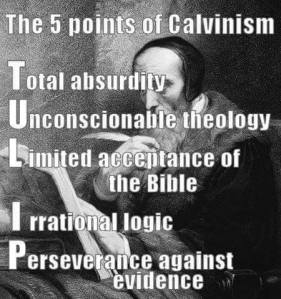
God does not tempt anyone, much less causes people to sin. We should never blame man’s sins on God at any time. In order to be consistent with TULIP, Calvinists must disagree with all verses which tell us that sin happens against God’s will. For example, Calvinist R.C. Sproul says:

“If there is one single molecule in this universe running around loose, totally free of God’s sovereignty, then we have no guarantee that a single promise of God will ever be fulfilled.” (R.C. Sproul, Chosen By God: Know God’s Perfect Plan for His Glory and His Children)

“Sovereign” and “sovereignty” are words not included in the Bible (KJV), which means they must be defined. Free-willers do not have a problem with a sovereign God, but they certainly do not agree with the Calvinistic interpretation of this word. Calvinists normally understand this word to mean something like “God decrees ALL THINGS at all times, resulting in that every single action taken by man always turns out exactly as God wants. He can do anything at all and nothing is too difficult for him – except from creating man with free will”.

Some favorite verses by those who prefer blaming God for man’s sin

Example 1:calvinsm 49

Rom. 9:18 Therefore hath he mercy on whom he will have mercy, and whom he will he hardeneth. 19 Thou wilt say then unto me, Why doth he yet find fault? For who hath resisted his will?

My comment: Has it ever happened throughout history that someone has found fault in God and his actions? Yes, right? The Bible is replete with examples of people who refuse to obey him, rebel against him and cause him to be angry. So this verse is not what man cannot do but should not do. If God’s will is to offer salvation also for the gentiles (showing mercy also to them) and make faith the condition for salvation rather than being born a Jew under the Mosaic law, then who is able to resist this decision? No one. Who can resist his will? The context and the rest of the Bible render it impossible to interpret Rom. 9:18 as “Therefore he makes salvation possible for only some individuals, whereas he blocks the rest from ever being able to seek him or find him.” Such an interpretation would make God alone guilty of man’s unbelief, and hell would be a place where innocent and rejected people would end up who had no chance to be saved (since God successfully prevented them from believing in him). Does that sound like the God of the Bible? You can read more about Romans 9 and Pharao’s heart here, here and here.

Example 2:

Eph. 1:5 Having predestinated us unto the adoption of children by Jesus Christ to himself, according to the good pleasure of his will,— 11 IN HIM also we have obtained an inheritance, being predestined according to the purpose of Him who works all things according to the counsel of His will

My comment: The promises in Eph. 1-2 are tied to those who are IN CHRIST, and being IN HIM is an essential foundation and the condition for salvation. From the creation of the world God knew there would be a “body of Christ” (the church, consisting of believers), and a special place is prepared for them in God’s kingdom where this body of Christ is predestined to go. So the “salvation bus” is certainly going there, but who will be the passengers on the bus and who will endure to the very end? That is up to us. If we are in Christ we know that we are heading for God’s kingdom if we remain in the bus. The “us” spoken about in the verse are true believers and therefore “adopted” as God’s children. (This type of adoption should not be compared to what we call “adoption” today, where parents are being promised a baby who they later legally adopt as their legal child.)

Compare also with this verse:

“John 1:12 But as many as received Him, to them He gave the right to become children of God, to those who believe in His name

So the order of even is 1) receive and believe in him, and then 2) become children of God. You can read more about Eph. 2 here.

Example 3:

Hebrews 12:2 Looking unto Jesus the author and finisher of our faith; who for the joy that was set before him endured the cross, despising the shame, and is set down at the right hand of the throne of God.

My comment: We are totally lost without Jesus who is our Savior, so he is rightfully the author and finisher of our faith. He made the wonderful salvation plan possible for us (he died for us on the cross), and he has promised to never cast us out but rather give us a crown of life if we endure to the end. It is Jesus from start to finish. Hebr. 12:2 should not be interpreted as “Jesus causes certain people to have faith and is responsible for guarding their faith to the very end, whereas the rest are doomed from birth since Jesus never died for them or enabled them to get saved”.  Read more here.

Example 4

Isaiah 46:10 Declaring the end from the beginning, and from ancient times the things that are not yet done, saying, My counsel shall stand, and I will do all my pleasure

My comment:

The verses surrounding the above verse are:

“Isaiah 46:9 Remember the former things of old: for I am God, and there is none else; I am God, and there is none like me, 12 Hearken unto me, ye stouthearted, that are far from righteousness”

Also this passage focuses on God’s mighty power, and that there is no one like him. Knowing things in advance is not the same as predestining things in advance. Calvinists make a hen out of a feather when it comes to the word “declaring”, as though this would mean that God predestines all things. According to v. 12 there are apparently people who are stouthearted and far from righteous, which is normally something God does not approve of. It is a silly idea that God would predestine people to be stouthearted. “My councel shall stand, and I will do all my pleasure”. Does this include creating man with free will and making man responsible for his actions, and sometimes even punish man for his sins?

Example 5:

Dan. 4:35 And all the inhabitants of the earth are reputed as nothing: and he doeth according to his will in the army of heaven, and among the inhabitants of the earth: and none can stay his hand, or say unto him, What doest thou?

Comment:

Yes God does according to this will, and since he is our Creator and knows best. It would not make sense to argue with him or suggest that he should not have done things the way he did. Unfortunately, people have indeed complained to God and continued to question his motives (and sometimes his mere existence), so this verse is not about what man cannot do but should not do. Could it be God’s will to punish the fallen angels (who acted contrary to his will), and to create man with free will? Or is this outside his capabilities?

Example 6:

Job 42:2 I know that thou canst do every thing, and that no thought can be withholden from thee.3 Who is he that hideth counsel without knowledge? therefore have I uttered that I understood not; things too wonderful for me, which I knew not.

Comment: The above verses are from KJV, just like the rest of the verses. There are other Bible versions which Calvinists might prefer because of other expressions, but John 42:2 only confirms that God knows everything there is to know.

Example 7:

Lam. 3:37 Who is he that saith, and it cometh to pass, when the Lord commandeth it not?38 Out of the mouth of the most High proceedeth not evil and good?

Comment: This is also about a general statement about God’s magnificent power rather than a teaching that God predestines all of our steps (including sin). We can continue reading in the same context:

“39 Wherefore doth a living man complain, a man for the punishment of his sins?40 Let us search and try our ways, and turn again to the Lord.41 Let us lift up our heart with our hands unto God in the heavens.42 We have transgressed and have rebelled: thou hast not pardoned.43 Thou hast covered with anger, and persecuted us: thou hast slain, thou hast not pitied.”

Here we read about man complaining about the punishments for his sins (apparently it is possible to complain to God after all), and “sins” would be activities against God’s will. The advice to “turn again to the Lord” means that people previously turned their backs on God. The fact that people “transgressed and have rebelled” yet again means that we are able to act contrary to God’s will. Furthermore, we can read about God being “angry” and have “persecuted” people due to their actions (transgressions and rebellion), which is more evidence of man’s free will.

Example 8:

Exodus 4:11 And the Lord said unto him, Who hath made man’s mouth? or who maketh the dumb, or deaf, or the seeing, or the blind? have not I the Lord?

Comment: The context concerns Moses’ reluctance to becoming Israel’s leader due to his (Moses) shortcomings in relation to his ability to public speaking. Moses said: “O my Lord, I am not eloquent, neither heretofore, nor since thou hast spoken unto thy servant: but I am slow of speech, and of a slow tongue.” God can accomplish things despite our shortcomings, and he can even heal people. If he asks us to do something, we can totally trust that he will help us overcome our weaknesses. That seems to be the gist of what God wanted to express when Moses argued against God about his shortcomings. Moses had to be persuaded, and he finally gave in after a conversation with God. God is not suggesting that he is the one who forces people to be deaf, blind, poor, etc, but he rather explains that he is the author of all Creation and he can be trusted.

Example 9:

1 Sam. 2:6 The Lord killeth, and maketh alive: he bringeth down to the grave, and bringeth up.The Lord maketh poor, and maketh rich: he bringeth low, and lifteth up.

Comment: The surrounding verses are these:

6 The Lord killeth, and maketh alive: he bringeth down to the grave, and bringeth up.— 8 He raiseth up the poor out of the dust, and lifteth up the beggar from the dunghill, to set them among princes, and to make them inherit the throne of glory: for the pillars of the earth are the Lord’s, and he hath set the world upon them.9 He will keep the feet of his saints, and the wicked shall be silent in darkness; for by strength shall no man prevail.”

This is a description with poetic expressions describing God’s power and his future judgment of mankind. Depending on how we choose to live our live, based on our situation and opportunities, we will be punished or rewarded. Read what the author says about the poor. Will God always lift up the beggar and set him among princes here on earth? No, this is not a universal promise for the present dimension but for the future.

calvinism 40Example 10:

Isaiah 45: 7 I form the light, and create darkness: I make peace, and create evil: I the Lord do all these things.

Comment: The above is in the KJV, but in the NKJV and in many other Bible versions it is rather “calamity” instead of “evil”. The Hebrew word could mean both, as well as a few other alternatives. God can indeed cause physical calamity just like he did when he caused a global flood to hit the earth. Physical pain or punishments caused by God does not mean that he causes people to sin. There is no darkness in God.

Example 11:

2 Chron. 25:20 But Amaziah would not hear; for it came of God, that he might deliver them into the hand of their enemies, because they sought after the gods of Edom.

Comment: Apparently the reason that “it came of God” that Amaziah would not hear – resulting in that he and his people were delivered into the hand of their enemies – was because they turned to other gods in Edom. There you have the reason. Did God want them to turn to false gods? Hardly. The most important commandment is to have no other gods but God. Compare with Romans 1 where we can read about God giving up people to a reprobate mind due to their ungodly attitudes. At one point Amaziah followed the Lord, but he later turned away.

“27 Now after the time that Amaziah did turn away from following the Lord they made a conspiracy against him in Jerusalem; and he fled to Lachish: but they sent to Lachish after him, and slew him there.”

Example 12

Jer. 10:23 O Lord, I know that the way of man is not in himself: it is not in man that walketh to DIRECT HIS STEPS

The context is this:

“21 For the pastors are become brutish, and have not sought the Lord: therefore they shall not prosper, and all their flocks shall be scattered.Behold, the noise of the report has come, And a great commotion out of the north country, To make the cities of Judah desolate, a den of jackals.—25 Pour out thy fury upon the heathen that know thee not, and upon the families that call not on thy name: for they have eaten up Jacob, and devoured him, and consumed him, and have made his habitation desolate.”

Comment: Notice above that that there are people who have not sought God, like heathens or families that did not call on the name of the Lord. Clearly this is not according to God’s will. A man is not supposed to turn his back on God by not seeking his guidance, and walk on his own ways. If a man does not seek God, he will not be guided on the right path. Read more here.

Example 13

1 Sam. 2:25 If one man sins against another, God will judge him. But if a man sins against the Lord, who will intercede for him?” Nevertheless they did not heed the voice of their father, because the Lord desired to kill them.

Comment: According to Adam Clarke the particle ki, translated “because”, is better translated “therefore” just like it does in many other parts of the Bible. (Young’s literal translation reads “though”.) This means that God wanted to kill the individuals in the story due to their refusal to listen to their father’s voice. This is a more logical translation than rendering the passage as though God wants to kill certain people for no reason, and manipulates them into not listening to their father and then proceeds to take this as an excuse for killing them. That would be circular reasoning and would turn God into an unrighteous criminal. Sadly many Calvinists would rather turn God into a monster than letting go with their precious philosophy of Calvinism.

Example 14 – Psalms

Psalm 115:3 But our God is in the heavens: he hath done whatsoever he hath pleased.

Psalm 135:6 Whatsoever the Lord pleased, that did he in heaven, and in earth, in the seas, and all deep places.

Psalm 33:10 The Lord bringeth the counsel of the heathen to nought: he maketh the devices of the people of none effect.11 The counsel of the Lord standeth for ever, the thoughts of his heart to all generations.

My comment: Psalms often contain poetry which mirrors the reality in many ways, so we must approach the verses with this in mind. Yes, God has always done whatever he has pleases, but naturally this could include creating man with free will. What the context of these psalms has in common is the declaration that God is the great and magnificent Creator, and that false gods (which are no gods) cannot compete with his wonderful powers.

Psalm 33:15 says “He fashioneth their hearts alike; he considereth all their works”, which is a description of how God has originally made man and also judges their work. It does not say that God micromanages every single step that man takes, nor that man does not have a will of his own. If you think “The Lord bringeth the counsel of the heathen to nought” means that God first manipulates the heathens to come up with various evil schemes, and then turns around and “heroically” halts these plans that he himself initiated, then you are mistaken. It is just a poetic description of God’s power which the heathens cannot interfere with. The verse does not say that God either prevents people from sinning, or predestines their sin. During Jesus’ second coming, he will only have to breathe on the son of perdition to destroy him completely (2 Thess. 2:8), so the power of God is indeed great.

Example 15 – Proverbs

Prov. 16:4 The Lord has made all for Himself, Yes, even the wicked for the day of doom. (NKJV)

Prov. 16:33 The lot is cast into the lap; but the whole disposing thereof is of the Lord.

Prov. 21:1 The king’s heart is in the hand of the Lord, as the rivers of water: he turneth it whithersoever he will.

My comment: Also proverbs contains poetry, so we must keep this in mind. Instead of having to ignore loads of verses which show that God is angry with sin and where he desires all men to obey his commandments, it is better to read the more vague proverbs and psalms in context and not superimpose them over clear verses. The first verse just shows God’s right to handle all judgment of mankind, whether people are righteous or unrighteous. Read more about these verses here. Neither of these verses contains promises that God predestines every all things. That would put all the blame on God.

If God’s will always happens, then why does the Bible say the opposite?

Mark 3:35  For whoever does the will of God, he is my brother and sister and mother.

I thought all people did the will of God? Are all people his brothers, sisters and mothers?

Matt. 7:21 Not every one that saith unto me, Lord, Lord, shall enter into the kingdom of heaven; but HE THAT DOETH THE WILL OF MY FATHER which is in heaven.

”He that doeth the will of my Father”? If everyone would always do the will of God then everyone would enter the kingdom of God.

John 9:31 Now we know that God heareth not sinners: but if any man be a worshipper of God, and DOETH HIS WILL, him he heareth.

”If any man—doeth his will”? Jesus separates those who worship God and obey him (doeth his will) with those who are sinners. This suggests that sinners are not doing the will of God, unless sinning is according to his will.

1 Timothy 2:1 Therefore I exhort first of all that supplications, prayers, intercessions, and giving of thanks be made for all men, 2 for kings and all who are in authority, that we may lead a quiet and peaceable life in all godliness and reverence. 3 For this is good and acceptable in the sight of God our Savior, who desires all men to be saved and to come to the knowledge of the truth.

God desires all men to be saved and come to the knowledge of the truth. Has this so far happened?

Heb. 3:7 Wherefore (as the Holy Ghost saith, To day if ye will hear his voice,8 Harden not your hearts, as in the provocation, in the day of temptation in the wilderness:9 When your fathers tempted me, proved me, and saw my works forty years.10 Wherefore I was grieved with that generation, and said, They do alway err in their heart; and they have not known my ways.11 So I sware in my wrath, They shall not enter into my rest.)12 Take heed, brethren, lest there be in any of you an evil heart of unbelief, in departing from the living God.

Clearly people constantly act against the will of God. Today and in the past.

We are still risking GOD’s WRATH if we sin – penal substitution is wrong


Jesus did satisfy God’s wrath

God is not like an unruly child prone to throw tantrums whenever things do not go his way. The idea that his wrath can be “satisfied” by letting someone else take the blame, for whatever caused his anger, does not make much sense. So God the Father would pour out wrath on his son, and then all things suddenly change for the better and we will never risk his wrath again? No, Jesus died as a sin offering for our sins (compare with the animal sacrifice system in the Old Testament which was also in relation to sin offerings). God would not pour out wrath on an innocent person and pretend that this would somehow fix the guilt of mankind. Jesus shed his blood for us to REMOVE our sins (not to literally take our sins on or in himself) but this will not happen automatically but rather when we REPENT for our sins.

1 John 3:5 And ye know that he was manifested TO TAKE AWAY our sins; and in him is no sin.

John 1:29 The next day John seeth Jesus coming unto him, and saith, Behold the Lamb of God, WHICH TAKETH AWAY THE SIN OF THE WORLD.

Hebr. 9:26 For then must he often have suffered since the foundation of the world: but now once in the end of the world hath he appeared TO PUT AWAY SIN by the sacrifice of himself.—28 So Christ was once offered to bear the sins of many; and unto them that look for him shall he appear the second time without sin unto salvation.

Rom. 11:26 And so all Israel shall be saved: as it is written, There shall come out of Sion the Deliverer, and shall turn away ungodliness from Jacob:27 For this is my covenant unto them, when I SHALL TAKE AWAY their sins.

Ps. 103:12 As far as the east is from the west, so far hath he REMOVED our transgressions from us.

Notice the difference between these two descriptions about the atonement of Christ. The first one can lead to serious misunderstandings:

”Jesus paid for our SINS on the cross and died instead of us and in our place. He also took our punishment instead of us and satisfied God’s wrath”

”Jesus died as a sin offering for all mankind (a high price), and by doing so enabled whosoever to be saved on the condition that they believe and repent”

Examples of God’s wrath till active today and in the future

If Jesus truly ”satisfied God’s wrath” or ”took God’s wrath on himself and instead of us”, then none of us would have to risk being affected by God’s wrath ever again – but that is not the case. The Bible tells us that God will show wrath on those who refuse to believe and/or those who do evil and it does not say that Christians are exempted.

Romans 1:18 For the wrath of God is revealed from heaven AGAINST ALL UNGODLINESS AND UNRIGHTEOUSNESS OF MEN, who hold the truth in unrighteousness

Romans 2:5 But after thy hardness and IMPENITENT HEART treasurest up unto thyself wrath against the day of wrath and revelation of the righteous judgment of God

Romans 13:4 For he is the minister of God to thee for good. But IF THOU DO THAT WHICH IS EVIL, be afraid; for he beareth not the sword in vain: for he is the minister of God, a revenger to EXECUTE WRATH UPON HIM THAT DOETH EVIL

John 3:36 He who believes in the Son has eternal life; but he who does not obey the Son will not see life, but THE WRATH OF GOD ABIDES IN HIM.” (NASB)

“Children of disobedience” are adults who walk according to the course of this world, according to the lusts of their flesh, fulfilling the desires of their flesh and mind, etc. They are certainly not BORN that way but they can start bad habits and thus “by nature” be rebellious and sinful. No one is of course able to fulfill the desires of their flesh and mind before they even have either flesh or minds. This is rather self-evident, but I am saying this due to those who believe that “children of disobedience” are chosen to be exactly that before the world even began and before they are even born. Besides, many of those Christians to whom Paul wrote behaved in the same way, but they did not continue with this lifestyle. Those Christians were evidently not “non-elect” even though they earlier in life behaved just like children of disobedience. Just like the name/term suggests, it is all about disobeying – and Christians do not get a free card if they choose to live in disobedience.

Eph. 2:2 Wherein in time past ye walked according to the course of this world, according to the prince of the power of the air, the spirit that now worketh in the children of disobedience:3 Among whom also we all had our conversation in times past in the lusts of our flesh, fulfilling the desires of the flesh and of the mind; and were by nature the children of wrath, even as others.

Eph. 5:6 Let no man deceive you with vain words: for because of these things cometh the wrath of God upon the children of disobedience.

Col. 3:5 Mortify therefore your members which are upon the earth; fornication, uncleanness, inordinate affection, evil concupiscence, and covetousness, which is idolatry:For which things’ sake the wrath of God cometh on the children of disobedience:7 In the which ye also walked some time, when ye lived in them.8 But now ye also put off all these; anger, wrath, malice, blasphemy, filthy communication out of your mouth.

It is possible also for “sanctified” believers, for whom Jesus died, to be affected by the wrath of God and they will lose their salvation unless they repent:

Hebr. 10:26 For if we sin wilfully after that we have received the knowledge of the truth, there remaineth no more sacrifice for sins,27 But a certain fearful looking for of judgment and fiery indignation, which shall devour the adversaries.28 He that despised Moses’ law died without mercy under two or three witnesses:29 Of how much sorer punishment, suppose ye, shall he be thought worthy, who hath trodden under foot the Son of God, and hath counted the blood of the covenant, wherewith he was sanctified, an unholy thing, and hath done despite unto the Spirit of grace?30 For we know him that hath said, Vengeance belongeth unto me, I will recompense, saith the Lord. And again, The Lord shall judge his people.31 It is a fearful thing to fall into the hands of the living God.

Just like Christians are not exempted from God’s wrath if they no longer live holy lives, also God’s chosen people Israel were in trouble due to disobedience and many of them did not enter the promised land. They were also expected to place trust in God due to his wondrous works, but they disappointed God by being rebellious.

Ps. 78:31 The wrath of God came upon them, and slew the fattest of them, and smote down the chosen men of Israel.32 For all this they sinned still, and believed not for his wondrous works.

He that COMETH to God must BELIEVE that he is – Hebr. 11:16

But without FAITH it is impossible to please him: for he that COMETH to God must believe that he is, and that he is a rewarder of them that diligently seek him. Hebrews 11:6

It is rather clear that God requires us to have faith in him and believe in him before we come to him (we would not come to him unless we believed in him). We must carry faith/belief with us when we come. Calvinists, however, believe in Total inability (as in T in TULIP), so they believe that all people are born with a natural inability to believe in God, and that God consequently must “open their eyes” in order to make them believe. This results in God actually choosing whom to save and whom to damn (before we are even born), because God does not enable all to believe in him. Hebr. 11:6 does not suggest that God starts out making some of us believe. It is rather we who must make sure to believe and come to him. If we do, we have wonderful things in store for us! The Bible does not teach anything close to Calvinism. We are ALL given light when we come into this world and we are requested to believe and to follow him in order to not walk in darkness:

John. 1:4 In him was life; and the life was THE LIGHT OF MEN.—9 That was the true Light, WHICH LIGHTETH EVERY MAN THAT COMETH INTO THE WORLD.10 He was in the world, and the world was made by him, and the world knew him not.11 He came unto his own, and his own received him not.12 But AS MANY AS RECEIVED HIM, TO THEM GAVE HE THE POWER TO BECOME THE SONS OF GODeven to them that BELIEVE on his name

John 9:5 As long as I am in the world, I am THE LIGHT OF THE WORLD.

John 12:46 I am come a light into the world, that WHOSOEVER BELIEVETH ON ME should not abide in darkness.

John 8:12 Then spake Jesus again unto them, saying, I am the light OF THE WORLD: he that FOLLOWETH ME shall not walk in darkness, but shall have the light of life.

John 3:21 But he that DOETH truth cometh to the light, that his deeds may be made manifest, that they are wrought in God.

2 Cor. 4:4 In whom the god of this world hath blinded the minds of them WHICH BELIEVE NOT, lest the light of the glorious gospel of Christ, who is the image of God, should shine unto them.

Notice above that God chooses to blind the minds of them WHICH BELIEVE NOT. That is a similar story as in Rom. 1:18-32, where God in v. 28 is told to give people up to a reprobate mind because of their refusal to retain God in their knowledge.

Pay special attention to John 1:12 which says:

“But AS MANY AS RECEIVED HIM, TO THEM GAVE HE THE POWER TO BECOME THE SONS OF GODeven to them that BELIEVE on his name”

The order of events is 1) believe/receive him, leading to 2) becoming the sons of God. Not the other way around.

People who COME must believe, and they might not always DO the things of God or remain with him

Jesus asks:

Luke 6:46 And why call ye me, Lord, Lord, and DO NOT the things which I say?

According to Calvinism I thought it was not even possible to NOT do the things which the Lord says? So why does Jesus imply that it is possible to act contrary to his requests? He continues:

47 Whosoever cometh to me, and heareth my sayings, and DOETH them, I will shew you to whom he is like: 48 He is like a man which built an house, and digged deep, and laid the foundation on a rock: and when the flood arose, the stream beat vehemently upon that house, and could not shake it: for it was founded upon a rock.49 But he that heareth, and DOETH NOT, is like a man that without a foundation built an house upon the earth; against which the stream did beat vehemently, and immediately it fell; and the ruin of that house was great.

I thought all people everywhere always did the sayings of the Lord? Yet here we can see that some people COME to the Lord, HEAR his sayings and yet choose to NOT do the sayings of the Lord. It certainly does not seem like we always act as God would want us to act. The blame for “not doing” is further on man and not on God. Notice that the parable is about men who builds something – their own houses – which means that their own choice of building construction will depend on

Ja. 1:22 But be ye doers of the word, and not hearers only, deceiving your own selves.

John 6:35 And Jesus said unto them, I am the bread of life: he that cometh to me shall never hunger; and he that believeth on me shall never thirst.–40 And this is the will of him that sent me, that every one which seeth the Son, and BELIEVETH ON HIM, may have everlasting life: and I will raise him up at the last day.—51 I am the living bread which came down from heaven: if ANY MAN EAT of this bread, he shall live for ever: and the bread that I will give is my flesh, which I will give for the life of the world.

Luke 9:23 And he said to them all, If any man will come after me, let him deny himself, and take up his cross daily, and follow me.24 For whosoever will save his life shall lose it: but whosoever will lose his life for my sake, the same shall save it.25 For what is a man advantaged, if he gain the whole world, and lose himself, or be cast away?26 For whosoever shall be ashamed of me and of my words, of him shall the Son of man be ashamed, when he shall come in his own glory, and in his Father’s, and of the holy angels.

Parable of the great banquet – where people are requested to COME and yet they do not

Below we can see that the Master of the house asked his servant to go out and bid many to a great supper. The servant was asked to say to those who were bidden to “COME, for all things are now ready”. The Master in this parable could be likened to God the Father, and as we can see in the parable people who were initially invited to come found excuses for not coming!

The servant was then asked to “bring in hither the poor, and the maimed, and the halt, and the blind”, which is something the servant had already done. It seems like these groups of people (rather unfortunate people here on earth due to their poverty and physical shortcomings) had an advantage here because they were singled out as specifically welcomed, but we are not told that every single one of them chose to come. Just that there was still room left also after these groups had been invited. (The case could also be that people who are poor and maimed have a higher tendency to seek God compared to people who have always lived in comfort and luxury.)

The Master became ANGRY when those who were initially bidden declined to come. The blame for not coming must be placed on them and not on the Master (God) because the Master truly wanted all invited to come – yet they did not. The Master said of those who declined to come: “none of those men which were bidden shall taste of my supper”.

Luke 14:16 Then said he unto him, A certain man made a great supper, and bade many:17 And sent his servant at supper time to say to them that were bidden, Come; for all things are now ready.18 And they all with one consent began to make excuse. The first said unto him, I have bought a piece of ground, and I must needs go and see it: I pray thee have me excused.19 And another said, I have bought five yoke of oxen, and I go to prove them: I pray thee have me excused.20 And another said, I have married a wife, and therefore I cannot come.21 So that servant came, and shewed his lord these things. Then the master of the house being angry said to his servant, Go out quickly into the streets and lanes of the city, and bring in hither the poor, and the maimed, and the halt, and the blind.22 And the servant said, Lord, it is done as thou hast commanded, and yet there is room.23 And the lord said unto the servant, Go out into the highways and hedges, and compel them to come in, that my house may be filled.24 For I say unto you, That none of those men which were bidden shall taste of my supper.

After having told the parable, Jesus continues to explain that if we do come to him we must “hate” our father and mother, which means that we should not act like the unwise people in the parable who offered up various excuses for not coming to the Supper, such as marriage, when they were compelled to come. Nothing should prevent us from coming to God if he calls us! Not even if it is about our father and mother. Naturally marriages,   parents, newly bought land, etc are important matters, but compared to God and his calling we must still prioritize correctly and place all other things in second place. A condition for being a disciple is to bear our cross and follow Jesus. He does not say that he will do this for us and instead of us so that we will not have to.

He goes on to explain that it is our job to count the cost before we choose to come! Do we have sufficient motivation to be his disciples? Will we be able to love God before anything/anyone else and carry our cross? If not, coming to Jesus will not save us if we are not prepared to forsake other things which might be in the way when we become his disciples. We must be eager to follow him and obey his commandments, which will truly show that we love him. It might seem like a difficult task, but we are not asked to cease living in this world or to avoid having families and possessions. We are just asked to be prepared to place God before anything else – and if we love him we obey him. The holy Spirit is our helper! Salt is good but even salt can lose its’ savor, which indicates that we are not unconditionally saved:

26 If any man come to me, and hate not his father, and mother, and wife, and children, and brethren, and sisters, yea, and his own life also, he cannot be my disciple.27 And whosoever doth not bear his cross, and come after me, cannot be my disciple.28 For which of you, intending to build a tower, sitteth not down first, and counteth the cost, whether he have sufficient to finish it?29 Lest haply, after he hath laid the foundation, and is not able to finish it, all that behold it begin to mock him,30 Saying, This man began to build, and was not able to finish.31 Or what king, going to make war against another king, sitteth not down first, and consulteth whether he be able with ten thousand to meet him that cometh against him with twenty thousand?32 Or else, while the other is yet a great way off, he sendeth an ambassage, and desireth conditions of peace.33 So likewise, whosoever he be of you that forsaketh not all that he hath, he cannot be my disciple.34 Salt is good: but if the salt have lost his savour, wherewith shall it be seasoned?35 It is neither fit for the land, nor yet for the dunghill; but men cast it out. He that hath ears to hear, let him hear.

Parable of the wedding banquet – where people on the wedding invitation refuse to come

 There is one verse in the below parable which Calvinists often quote, and that is “For many are called, but few are chosen”. This verse read in a vacuum might sound like God is the one choosing whom to save, but not only does the verse not say this, but the context shows that those who are called “chosen” are those who accept to come to the King’s wedding feast for his son! This means that we can all end up in the great wedding feast if we choose to accept the invitation and also make sure to show up – dressed in proper clothes. It is our responsibility to go to the party that we have been invited to, and if we decline and/or do not show up it is our fault and certainly not God’s fault for not “choosing” us. We can all be among the chosen, and God should not be blamed if we find ourselves on the outside.

Let us also remember that Israel was “chosen”, but not all Israel will be saved. When we read about groups of people or individuals being “chosen”, it does not necessarily mean “chosen to believe”. In fact, there is not one such case in the Bible. This parable clearly shows that many people who had their names on the guest list for the wedding feast chose not to come, even though the King expected them to come and was angry when they gave excuses for not coming! God would want all people to be saved, but man has a free will and is responsible for his own decisions and actions. Good and bad people are invited to come, which means that also unrighteous people have a chance to enter the kingdom of God. The condition, however, is repentance in order to be forgiven and cleansed, and if we repent we will also get the proper wedding garments. 

Matt. 22:1 And Jesus answered and spake unto them again by parables, and said,2 The kingdom of heaven is like unto a certain king, which made a marriage for his son,3 And sent forth his servants to call them that were bidden to the wedding: and THEY WOULD NOT COME.4 Again, he sent forth other servants, saying, Tell them which are bidden, Behold, I have prepared my dinner: my oxen and my fatlings are killed, and all things are ready: come unto the marriage.But they made light of it, and went their ways, one to his farm, another to his merchandise:6 And the remnant took his servants, and entreated them spitefully, and slew them.7 But when the king heard thereof, he was wroth: and he sent forth his armies, and destroyed those murderers, and burned up their city.8 Then saith he to his servants, The wedding is ready, but they which were bidden were not worthy.Go ye therefore into the highways, and as many as ye shall find, bid to the marriage.10 So those servants went out into the highways, and gathered together all as many as they found, both bad and good: and the wedding was furnished with guests.11 And when the king came in to see the guests, he saw there a man which had not on a wedding garment:12 And he saith unto him, Friend, how camest thou in hither not having a wedding garment? And he was speechless.13 Then said the king to the servants, Bind him hand and foot, and take him away, and cast him into outer darkness, there shall be weeping and gnashing of teeth.14 For many are called, but few are chosen.

Sverigedemokraternas historia och bakgrund FRÅN DERAS EGEN KÄLLA!

Att döma slarvigt och sprida förtal – ok om det bara gäller SD?

Vad spelar det för roll om vi överdriver och vinklar information om folk om det bara är sverigedemokrater det handlar om? Då gäller väl inte Guds bud att inte förtala, ljuga, döma orättfärdigt och att använda olika måttstockar när vi dömer? Visst tycker väl Gud om när vi öppet uttrycker att sverigedemokrater förmodligen inte kan vara kristna och att man helst inte bör ha något samröre med dem, eller vara vän med dem, eller ens äta lunch med dem för att tydligt visa hur vi avskärmar oss från “det onda”? För om man är emot massinvandring så är man väl per definition rasist och ser ner på folk med mörk hudfärg?

Ibland verkar det som en del kristna tänker exakt så, samt är övertygade om att de gör något gott för Guds rike när de förtalar, mobbar och orsakar splittring bland kristna baserat på frågan om Sverige behöver massinvandring eller ej. SD blir som ett legitimt mobboffer som det är ok att sparka på, eftersom man bestämt sig för att sverigedemokrater står för en lång rad ondskefulla åsikter.

Det är sorgligt att även kristna faller för frestelsen att döma SD baserat på information från SD:s motståndare, som ju inkluderar gammal-media (och definitivt den kristna tidningen Dagen). Skulle vi själva vilja bli bedömda baserat på åsikter av människor som hatar oss? Visst stämmer citat, men bör vi kristna inte döma RÄTTFÄRDIGT genom att försöka se hela kontexten? Innebär inte det att vi bör försöka efterlikna Jesus och vara varandras försvarsadvokater i stället för åklagare? En duktig försvarsadvokat förnekar inte fakta, men gör vad han/hon kan för att korrigera falska påståenden och lyfta fram förmildrande omständigheter. Om vi dessutom träffar på människor som vi menar är syndare och bör omvända sig, då är det väl bäst att förklara exakt vad synden består av så att personerna vet vad de ska omvända sig ifrån? Att ropa “rasist” hjälper inte om man inte samtidigt bevisar att det är ett sant och passande epitet. (Det har jag aldrig sett Stefan Swärd, Micael Grenholm och deras svans av SD-ogillare lyckas med.) Är det verkligen tänkt att vi ska göra vad vi kan för att hitta fel hos en viss grupp människor medan andra grupper inte har samma strålkastare riktade mot sig? Är det verkligen ett tryggt sätt att döma människor genom att använda sig av avarter som mönster för hela gruppen? Inte skulle väl vi kristna uppskatta om vi blir dömda baserat på udda människor som visserligen kallar sig kristna men som lever helt tvärt emot vad Bibeln lär?

Om SD hade “nazistisk grund” som så många påstår så borde väl detta framkomma i något deras partiprogram eller andra gemensamma centrala dokument? Om det i stället var enskilda personer som hade rasistiska åsikter så är det väl inte samma sak som att hela partiet startades på den grunden och hade nazistiska drivkrafter och mål? Om vi anklagar någon för att vara nazist/fascist/rasist borde vi kristna inte vara otroligt säkra på vår sak innan vi uttrycker en sådan allvarlig dom mot vår nästa, eller räcker det med att säga “Det vet väl alla”, eller “Det har jag läst hos EXPO”? Om nu några medlemmar i historien haft rasistiska åsikter (vilket dagens SD-ledning aldrig förnekat), hur länge ska dagens medlemmar bli straffade för vad som hände i partiets historia i början på 1990-talet då de själva kanske fortfarande var barn/tonåringar? Inte ansluter man väl sig till ett parti baserat på enskilda medlemmars beteenden för 20-25 år sedan, utan man studerar väl snarare SD:s partiprogram och dess ledning? Avarter finns väl i alla partier, så varför ska just SD stå ut?

Nu finns i alla fall chansen att döma på ett rättvisare sätt genom att låta den anklagade själv få chansen att försvara sig, precis som det fungerar i en rättvis domstol. Jag kan rekommendera youtubeklippet här nedan med SD-riksdagsledamoten Mattias Karlsson. Han berättar bl. a om de odemokratiska behandlingarna som de fått utstå genom årens lopp, eftersom de till skillnad från andra partier haft svårigheter att boka lokaler, få sina röstsedlar distribuerade, tala på torg och i skolor, etc. Politikern Richard Jomshof blev vid flera tillfällen av med läraranställningar pga sitt SD-engagemang trots att han var en mycket omtyckt lärare. Många gånger har SD-politiker blivit hotade och fysiskt attackerade (faktiskt nära att bli dödade!), och det är dystert att tänka på att detta har skett och sker i Sverige och inte DDR eller Nordkorea.

De övriga länkarna leder till skriftlig information om SD:s historia. Att gå till källan direkt betyder inte att man lugnt kan luta sig tillbaka och lita på allt som sägs, men det är en chans att låta den som attackerats få försvara sig och det KAN vara så att informationen och faktauppgifterna stämmer helt med verkligheten. Faktauppgifter såsom årtal och innehåll i partiprogram går dessutom att kontrollera. Mattias har ansträngt sig för att undersöka SD:s historia grundligt för att få korrekta uppgifter, men han är ödmjuk nog att förklara att det är historien från hans synvinkel. Andra personer kanske har andra infallsvinklar.

SD-kuriren med Sverigedemokraternas 25 års jubileumsskrift

SD:s hemsida om SD

Stellan Bojeruds kortfattade förklaring om SD:s historia

Exempel på text om JESUS från utombibliska ej kristna källor såsom Josefus, Plinius och Tacitus

Varför inte lita på kristna källor om Kristus?

Tänk om folk inte skulle lita på information om den svenska historien såvida inte historieuppgifterna också är bekräftade även i några andra länder i form av självständiga uppgifter – ej hämtade från just Sverige? Det skulle inte finnas särskilt mycket information kvar att lita på. Det är inte konstigt att just Sverige och svenskarna genom tiderna vet bäst om Sverige och skrivit ner flest uppgifter om landet och dess historia. Det är heller inte märkvärdigt att vi inhämtar bäst information om golf från just golfkretsen som intresserar sig för just golf.

Om vi vill lära oss om inbördeskriget i USA eller om Mayflower, är det verkligen vist att utelämna uppgifter från amerikanskt håll och i stället lägga tilltron till andra länders uppgifter om dessa händelser? Eller kanske välja att inte lita på amerikanska uppgifter såvida de inte också är bekräftade från annat håll? Det vore på samma sätt ologiskt att inte sätta tilltro till uppgifterna om Jesus och hans första anhängare av det enda skälet att uppgifterna nästan bara återfinns i Bibeln och andra kristna källor. Visst kan det vara så att vinnaren skriver historien, men vad gäller Jesus existens så handlar det inte om olika länder eller folkgrupper som kämpar mot varandra i krig och det finns inga skäl att försöka mörka hans existens efter att han gått ur tiden. Jesus lära spred sig snabbt och mest information återfinns självklart från kristna källor (förutom Bibeln) i form av lärljungar till apostlarna, de äldsta kyrkofäderna, etc, men här nedan handlar det källor som inte är kristna.

Josefus  (Josef ben Matitjahu/Flavius Iosephus) – Judisk historiker, ca 37-101 e. Kr.

Josefus nämner Jesus ett par gånger i sin bok Jewish Antiquities. Josefus skriver om en bestraffning av Jakob (James) utmätt av en judisk sanhedrin, och denna Jakob var broder till den så kallade Kristus. Den uppgiften stämmer bra ihop med bl. a Gal. 1:19 där vi kan läsa att Herrens broder är Jakob. Jesus kallas Kristus.

“But the younger Ananus who, as we said, received the high priesthood, was of a bold disposition and exceptionally daring; he followed the party of the Sadducees, who are severe in judgment above all the Jews, as we have already shown. As therefore Ananus was of such a disposition, he thought he had now a good opportunity, as Festus was now dead, and Albinus was still on the road; so he assembled a council of judges, and brought before it the brother of Jesus the so-called Christ, whose name was James, together with some others, and having accused them as law-breakers, he delivered them over to be stoned.” Antiquities 20.9.1

Now there was about this time Jesus, a wise man, if it be lawful to call him a man, for he was a doer of wonderful works, a teacher of such men as receive the truth with pleasure. He drew over to him both many of the Jews, and many of the Gentiles. He was the Christ, and when Pilate, at the suggestion of the principal men among us, had condemned him to the cross, those that loved him at the first did not forsake him; for he appeared to them alive again the third day; as the divine prophets had foretold these and ten thousand other wonderful things concerning him. And the tribe of Christians so named from him are not extinct at this day. Antiquities 18.3.3

Många experter anser att Josefus skrev stommen till detta men att någon kristen person sedan reviderade texten någon gång mellan ca 300-400 e. Kr. De tror detta eftersom Josefus inte var en kristen och det är svårt att tro att någon annan än en kristen person skulle kunna ha gjort ett sådant uttalande. Samma experter betvivlar inte andra avsnitt i Josefus böcker! Det som dessa experter främst menar är förändrat i Josefus text är något som de tror är ett tillägg “if indeed one ought to call him a man”, eftersom det antyder att Jesus var något mer än en människa. Ett annat argument den använder för att texten ändrats (förutom att texten stöder Jesu gudomlighet), är att Josefus inte borde ha kallat Jesus “Kristus” på ett ställe och “så kallad Kristus” på ett annat. Men varför inte? Påståenden talar inte emot varandra på något sätt, och det skulle snarare se konstigt ut om Josefus nämnde Jesus som “så kallad” mer än en gång i stället för varje gång som han talar om honom. I texten ovan talade Josefus även om “kristna”, och då kan det vara lämpligt att skippa “så kallad” och nöja sig med bara “Kristus” som ju kristna anhängare tror på och fått sitt namn efter. Även om vi tar bort det som dessa experter inte gillar så har vi ändå en bild kvar av en vis och ovanlig man som hade många anhängare. Trots att han blev korsfäst (som få experter betvivlar), så fortsatte anhängarna att tro på honom och var t o m villiga att dö för honom. Om man tror att en person är en lögnare och bedragare så är man inte villig att offra sitt liv för en sådan person. Läs mer om Josefus ord om Jesus här.

Publius/Gaius Cornelius Tacitus – romersk historiker och senator, ca 56-117 e. Kr.

Tacitus informerar om kejsar Neros beslut att klandra de kristna för att genom eld ha förstört Rom 64 e. Kr.

“But all human efforts, all the lavish gifts of the emperor, and the propitiations of the gods, did not banish the sinister belief that the conflagration was the result of an order. Consequently, to get rid of the report, Nero fastened the guilt and inflicted the most exquisite tortures on a class hated for their abominations, called Christians by the populace. Christus, from whom the name had its origin, suffered the extreme penalty during the reign of Tiberius at the hands of one of our procurators, Pontius Pilatus, and a most mischievous superstition, thus checked for the moment, again broke out not only in Judaea, the first source of the evil, but even in Rome, where all things hideous and shameful from every part of the world find their centre and become popular. Accordingly, an arrest was first made of all who pleaded guilty; then, upon their information, an immense multitude was convicted, not so much of the crime of firing the city, as of hatred against mankind. Mockery of every sort was added to their deaths. Covered with the skins of beasts, they were torn by dogs and perished, or were nailed to crosses, or were doomed to the flames and burnt, to serve as a nightly illumination, when daylight had expired. Nero offered his gardens for the spectacle, and was exhibiting a show in the circus, while he mingled with the people in the dress of a charioteer or stood aloft on a car. Hence, even for criminals who deserved extreme and exemplary punishment, there arose a feeling of compassion; for it was not, as it seemed, for the public good, but to glut one man’s cruelty, that they were being destroyed.”

Tacitus, Annals 15.44

Tacitus är på det klara med att “kristna” har fått sitt namn efter “Kristus”, som han alltså betraktar som en historisk person. Denne Kristus var enligt uppgift utsatt för extremt straff vilket självfallet kan handla om korsfästelsen som var en romerska straffmetod. Detta sägs ha inträffat under kejsar Tiberius tid och genom Pontius Pilatus inflytande. Allt detta stämmer bra in på det vi lärt oss från Bibeln. Tacitus nämner också att Kristus lära spreds över hela Judeen och ända till Rom. Jesus lära spred sig tydligen snabbt.

Plinius den yngre – romersk guvernör av Bithynia i Mindre Asien, ca 62 – 113 e. Kr.

I ett av breven som Plinius den yngre skrev till kejsar Trajanus så ber han om råd om hur man bäst bör utföra rättsprocessliga åtgärder vad gäller personer anklagade för att vara kristna. Plinius förklarar i sitt brev att han behöver goda råd eftersom en stor mängd människor i alla åldrar, samhällsklasser och kön misstänktes för att vara kristna, vilket kan tyda på att “problemet” var stort med risk att eskalera. Han beskrev de kristna såhär:

“They affirmed, however, that the whole of their guilt, or their error, was, that they were in the habit of meeting on a certain fixed day before it was light, when they sang in alternate verse a hymn to Christ as to a god, and bound themselves to a solemn oath, not to any wicked deeds, but never to commit any fraud, theft, adultery, never to falsify their word, not to deny a trust when they should be called upon to deliver it up.”

(Plinius den yngre, Letters 10.96-97 – to the Emperor Trajan)

Uppenbarligen så möttes de kristna regelbundet en gång i veckan för tillbedjan, och denna tillbedjan var riktad till Kristus “som till en Gud”, vilket visar att de såg Jesus som mer än en människa. Om man skulle påstå att gudstillbedjan av allehanda gudar var vanligt vid denna och att de kristnas gudstillbedjan därför inte var något anmärkningsvärt, så ändrar det inte på att Plinius inte verkar dela denna uppfattning eftersom han bad om råd för att råda bot på problemet. Dessutom ändrar det inte på att dessa kristna faktiskt uppfattade Jesus som en Gud, och denna Jesus var en historisk person. Vidare kan vi se i Plinius brev att de kristna uppenbarligen hade höga etiska krav på sig själva eftersom de tagit ed på att undvika synder. Det låter precis som anhängare som valt att leva efter Jesu bibliska rättfärdighetslära. Plinius kommentar om att de kristna brukar dela måltid med varandra handlar troligtvis om Herrens måltid/kärleksmåltiden.  Kommentaren att det var av en oskyldig variant kanske beror på konspirationsteorinm att de kristna samlades för någon form av rituell kannibalism.

Plinius förklarade att han tvingade de kristna att häda Kristus, vilket en sann kristen person aldrig skulle göra. Han förklarar att det redan tidigare funnits kristna som förnekat Jesus pga hot om dödsstraff:

“Meanwhile, in the case of those who were denounced to me as Christians, I have observed the following procedure: I interrogated these as to whether they were Christians; those who confessed I interrogated a second and a third time, threatening them with punishment; those who persisted I ordered executed. For I had no doubt that, whatever the nature of their creed, stubbornness and inflexible obstinacy surely deserve to be punished. There were others possessed of the same folly; but because they were Roman citizens, I signed an order for them to be transferred to Rome.”

(Plinius den yngre, Letters 10.96-97 – to the Emperor Trajan)

Om Jesus vore en mytisk person så skulle det självfallet vara svårt att hitta människor som var villiga att dö för denne person, och likaså vore det svårt att tänka sig att en riktig person vid namn Jesus skulle ha lärljungar och efterföljare som var villiga att dö för en person som var en vanlig människa och inte levde upp till sina egna profetiska löften.

Babyloniska Talmud (en samling texter från judiska rabbiner från ca 70-500 e. Kr.)

Det finns några referenser till Jesus i Babyloniska Talmud. Ett omnämnade om Jesus inom perioden 70-200 e. Kr är:

On the eve of the Passover Yeshu was hanged. For forty days before the execution took place, a herald … cried, “He is going forth to be stoned because he has practiced sorcery and enticed Israel to apostasy.”

(The Babylonian Talmud, transl. by I. Epstein (London: Soncino, 1935), vol. III, Sanhedrin 43a, 281, citerad av Habermas, “The Historical Jesus”, s. 203.)

“Yeshu” (eller “Yeshua”) är Jesus uttalat på hebreiska. Termen för hängd/upphängd kan fungera som synonym för “korsfäst”. Gal. 3:13 menar att Jesus var upphängd, och Luk. 23:39 använder termen för rövarna som var korsfästa med Jesus. Talmud menar att Jesus var korsfäst/upphängd under påskaftonen. Informationen om att Jesus skulle stenas kan ha varit det som de judiska ledarna ämnade att göra med Jesus i enlighet med lagen om hädelse. Vidare säger texten att Jesus praktiserade trolldom och lockade Israel till avfall. Eftersom denna information kommer från en källa som kanske är avogt inställd till Jesus så kanske det kan förklara varför informationen är vinklad på ett annat sätt än i Nya Testamentet. Men Jesus anklagades mycket riktigt för sådana saker från sina judiska motståndare. Enligt Bibeln så anklagade judar Jesus för samröre med Belsebub när han drev ut demoner, och han anklagades också för att vilseleda hela nationer med sina läror (Luk. 23:5) Även om Bibeln menar att Jesus är oskyldig till anklagelserna så intygar i alla fall Talmud att anklagelserna åtminstone inträffat.

Lucian av Samosata, grekisk satiriker, ca 125 – 180 e. Kr.

Han skrev följande:

“The Christians … worship a man to this day – the distinguished personage who introduced their novel rites, and was crucified on that account…. [It] was impressed on them by their original lawgiver that they are all brothers, from the moment that they are converted, and deny the gods of Greece, and worship the crucified sage, and live after his laws.”

(Lucian, “The Death of Peregrine”, 11-13, in The Works of Lucian of Samosata, transl. by H.W. Fowler and F.G. Fowler, 4 vols. s. 82)

Även om Lucian låter lite nedsättande om de första kristna så framkommer en del information om både dem och den person som de valt att följa. Det handlade tydligen om en man som introducerat helt nya traditioner, vilket ledde till att han blev korsfäst. Enligt Lucian så kallades hans följare för bröder när de konverterat, vilket också innebar förnekelse av de grekiska gudarna, tillbedjan av den korsfäste och efterlevnad av hans lagar. Eftersom de nekade till förekomsten av andra gudar för att kunna tillbe Jesus så ansåg de uppenbarligen att Jesus var en större Gud (den riktiga Guden) än någon av de grekiska gudarna.

Summerat

Baserat på ovan information får vi en bekräftelse även utanför Bibeln att de kristna fått sitt namn efter Kristus, att de tillbad Kristus som till en Gud, att de träffades regelbundet för att tillbe samt äta kärleksmåltiden, att de bestämt sig för att leva utan synd, att de blev förföljda för sin tro men gav ändå inte upp sin tro på den korsfäste och uppståndne Jesus, etc.

En JUNGFRU eller ung kvinna – almah – födde Jesus som ett TECKEN – Jes 7:14

Därför skall Herren själv ge er ETT TECKEN: Se, JUNGFRUN skall bli havande och föda en son och hon skall ge honom namnet IMMANUEL (Jes. 7:14)

Det är inte helt ovanligt att just unga kvinnor föder barn (!), så för att den ovan beskrivna graviditeten och födelsen ska vara ett slags “tecken” (ett slags bevis) så räcker det inte med vardagsfödslar. Om vi däremot accepterar att det handlar om en JUNGFRUFÖDSEL, så kan vi verkligen förstå att det är ett oslagbart tecken eftersom en sådan födelse är gudomlig. Det står vidare “jungfrun” i bestämd form, som om det handlar om en specifik jungfru.

Ordet jungfru är översatt från det hebreiska ordet “almah” (5959 Strong’s) som förutom jungfru kan ha innebörden ung kvinna, ung ogift kvinna, tös, flicka eller ungmö. På engelska är maiden och damsel passande översättningar förutom virgin. Det är givetvis ingen motsättning att unga ogifta kvinnor också kan vara är jungfrur. Om man vill uttrycka “en ung orörd kvinna” (jungfru), så är alltså “almah” ett passande ordval. Inom äldre hebreisk kultur så var i princip alla ogifta kvinnor också orörda jungfrur. Ordet används aldrig för en gift person och faktiskt inte heller för en äldre vuxen kvinna.

Ordet förekommer sju gånger i Gamla Testamentet. Förutom Jes. 7:14:

1 Mos. 24:43 Jag står nu här vid vattenkällan. Om det kommer en ung kvinna för att hämta vatten och jag säger till henne: Låt mig få dricka lite vatten ur din kruka

2 Mos. 2:5 Och faraos dotter kom ner till floden för att bada, och hennes unga hovdamer gick längs floden. När hon fick se korgen i vassen skickade hon dit sin slavinna för att hämta den. — 7 Men hans syster frågade faraos dotter: “Vill du att jag skall gå efter en hebreisk amma som kan amma barnet åt dig?”8 Faraos dotter svarade henne: “Ja, gör det.” Då gick flickan och hämtade barnets mor. 

Ps. 68:25 Man ser, o Gud, ditt högtidståg, min Guds och konungs tåg inne i helgedomen.26 Främst går sångare, harpospelare följer efter mitt ibland jungfrur som slår på pukor.

Ord. 30:18 Tre ting är mig för underbara, ja, fyra kan jag inte förstå: 19 örnens väg på himlen, ormens väg över klippan, skeppets väg mitt i havet och mannens väg hos jungfrun.

Höga Visan 1:3 Ljuv är doften av dina salvor, en utgjuten salva är ditt namn, därför har de unga kvinnorna dig kär.4 Tag mig med dig! Låt oss skynda oss! Konungen har fört mig in i sina kammare.

Höga Visan 6:6 Din kind är lik ett brustet granatäpple, där den skymtar genom din slöja.7 Sextio är drottningarna och åttio bihustrurna och de unga kvinnorna en oräknelig skara.En enda är hon, min duva, min fullkomliga, en enda är hon för sin mor, älskad är hon av henne som fött henne. Flickorna ser henne, de prisar henne lycklig, drottningar och bihustrur lovprisar henne.

Kontexten i Jesaja 7:14 – TECKNET och IMMANUEL

Jes. 7:3 Och Herren sade till Jesaja: “Gå nu med din son Sear-Jasub och möt Ahas vid änden av Övre dammens vattenledning, på vägen till Valkarfältet, 4 och säg till honom: Akta dig och var lugn. Frukta inte och var inte rädd för dessa två rykande brandstumpar, för Resin med arameerna och för Remaljas son, i deras rasande vrede.—7 Men så säger Herren Herren: Det skall inte inträffa, det skall inte ske.8 Ty Damaskus är Arams huvud,och Resin är Damaskus huvud. Inom sextiofem år skall Efraim vara krossat och inte mer vara ett folk.9 Och Samaria är Efraims huvud,och Remaljas son är Samarias huvud. Om ni inte är fasta i tron,har ni inget fäste.1Herren talade åter till Ahas och sade: 11 “Begär ett tecken från Herren, din Gud. Begär det nerifrån djupet eller uppifrån höjden.”—12 Men Ahas svarade: “Jag vill inte begära något, jag vill inte fresta Herren.”13 Då sade Jesaja: “Lyssna nu, ni av Davids hus: Är det inte nog att ni vill trötta ut människor? Vill ni också trötta ut min Gud? 14 Därför skall Herren själv ge er ett tecken: Se, jungfrun skall bli havande och föda en son och hon skall ge honom namnet Immanuel

Profetian säger inte att kungarna Resin och Peka personligen skulle komma att gå under men däremot att de (och deras mannar) inte skulle kunna besegra Juda. Gud uppmanar kung Ahas (kung i Juda) i v. 10-11 att be om ett tecken som skulle kunna konfirmera att Jesajas profetia i v. 4-9 skulle komma att infrias. Det handlar om en profetia som utlovar att de två kungarna inte skulle förmå erövra Jerusalem i Juda. Ahas avstår erbjudandet förmodligen för att han lärt sig att inte fresta Gud genom att be om tecken, men nu var det Gud själv som genom profeten Jesaja uppmanade Ahas att be om ett tecken vilket visar att det var ett helt legitimt förslag. Då Ahas avböjer så bestämmer sig Gud för att själv erbjuda Ahas ett tecken, och det är storslaget! En jungfru ska föda en son och kalla honom Emmanuel som betyder “Gud med oss”! Det låter inte troligt att det mirakulösa tecken som Gud ansåg skulle övertyga Ahas (och andra) endast skulle röra sig om något så ordinärt som en ung kvinnas graviditet med påföljande ordinära födelse!

Profetian i v. 7:7-9 avslutas medOm ni inte är fasta i tron, har ni inget fäste”, vilket skulle kunna tolkas som villkor för delar av löftena i profetian. 

Eftersom tecknet erbjöds Ahas så kanske man kan förvänta sig att detta utlovade tecken skulle komma att visa sig under hans livstid, men i v. 13 kan vi läsa att det inte endast är Ahas som utlovades tecknet utan Davids hus. Profetiorna handlar även om ett straff gentemot Juda, och den sträcker sig delvis för tider nära inpå, men även längre in i framtiden. Jerusalem, Judeen och Davids hus blev utlovade ett bevarande (trots en hel del attacker och svårigheter) tills den dagen kommer då en jungfru föder en son. Då detta inträffar förväntas alltså Davids hus att upphöra (även om det inte utlovas ske över en natt) och inte längre ha några aktiva kopplingar till vare sig Jerusalem eller Judeen (förutom historien). Det betyder att antingen har profetian uppfyllts, eller också har Davids hus fortsatt att bestå även efter denna tidpunkt. Men vi vet att Davids hus är borta och idag kan vi inte ens finna judar som med säkerhet är släkt med David. Ser vi tillbaka i historien så ser vi att Davids hus faktiskt började sitt fall ungefär för 2000 år sedan.

Jesaja 7.15 Gräddmjölk och honung skall han äta till dess han förstår att förkasta det onda och välja det goda. 16 Ty innan pojken förstår att förkasta det onda och välja det goda, skall det land för vars båda kungar du ängslas vara övergivet. 17 Över dig och ditt folk och din fars hus skall Herren genom Assyriens kung låta sådana dagar komma som inte förekommit sedan den tid då Efraim skilde sig från Juda.(SFB)

1917 = “den unga kvinnan”

Gräddmjölk och honung symboliserar produkter som endast går att uppnå i ett land som genomsyras av fred i stället för krig. Framför allt går det inte att påträffa dessa saker i ett övergivet land. När profetian yttrades däremot så var det tider där både gräddmjölk och honung förekom.

Israel och Syrien skulle alltså komma att bli övergivna innan “pojken” nått en ålder då det kan skilja mellan ont och gott. Vem är barnet? Pojken som nämns i v. 3 är Jesajas son Sear-Jasub (som enligt Bible Gateway betyder “En kvarleva skall vända om”) och den profetia som är förknippad med honom sträcker sig t o m v. 9. Med start från v. 10 får vi höra talas om en annan pojke – Immanuel – som är förknippad med löften för framtiden. Denna pojke blir “Gud med oss”, och passar endast in på Jesus Kristus.

Mika fortsätter att spinna vidare på Jesajas profetia:

Mika 1:2 Men du, Betlehem Efrata, som är så liten bland Juda tusenden, från dig skall det åt mig komma en som skall härska i Israel. Hans ursprung är före tiden, från evighetens dagar.3 Därför skall han överge dem fram till den tid då hon som skall föda har fött. Då skall resten av hans bröder få vända tillbaka till Israels barn.4 Han skall träda fram och vara en herde i Herrens kraft, i Herrens, sin Guds, namns höghet. Och de skall ha ro, ty han skall då vara stor intill jordens ändar.5 Och han skall vara vår frid. När Assur stormar in i vårt land och tränger in i våra palats, då kan vi ställa upp mot honom sju herdar, ja, åtta furstar ur folket.

Vem annars skulle profeterna Jesaja och Mika tala om förutom Messias Jesus Kristus dom alltså kallas MÄKTIG GUD?

I nästa kapitel kan vi läsa om ett annat gossebarn än de två tidigare

Ahas kanske var en hygglig prick i grunden, men det verkar som han drog på sig en del olycka vilket kanske i sin tur gjorde en del av de villkorade gudomliga löften i den ursprungliga profetian justerades till hans nackdel, med tanke på att han gjorde ett avtal med kungen av Assyrien i stället för att sätta sin tillit till Gud och hans löften och erbjudanden. Damaskus och Samarien skulle falla i Assyriens händer, men Ahas lade hela sin förtröstan på Assyrien (se  2 Kung 16:7) vilket var olyckligt eftersom Assyrien sedan attackerade Juda. Men de som fortfarande förtröstar på Gud blir tröstade av honom och de blir utlovade Immanuel (Jes. 8:10).

Jes. 8:1 Herren sade till mig: “Tag en stor tavla och skriv på den med tydlig skrift: Maher-salal Has-bas.” 2 Och jag kallade till mig prästen Uria och Sakarja, Jeberekjas son, som pålitliga vittnen.3 Och jag gick in till profetissan och hon blev havande och födde en son. Och Herren sade till mig: “Ge honom namnet Maher-salal Has-bas. 4 Ty innan pojken kan säga far och mor, skall man bära bort Damaskus skatter och bytet från Samaria till kungen i Assyrien.”

18 Se, jag och barnen som Herren har givit mig är tecken och förebilder i Israel från Herren Sebaot, som bor på Sions berg.

Ovan kan vi se att genom Jesaja så blev en profetissa havande och sonen gavs namnet Maher-salal Has-bas (som enligt Bible Gateway betyder “Plundra snabbt, bytet hastar”). Vi kan läsa om en snarlik profetia om denna son jämfört med sonen Immanuel i det föregående kapitlet, och de utgör en intressant parallell eftersom båda födslarna på olika sätt kan kopplas till Jesajas profetior. Resin och Pekas attacker skulle bli stoppade innan dessa småpojkar utvecklat vissa detaljerade förmågor.

Det går inte att dra slutsatsen att profetissans son uppfyller profetian om en jungfru i kap. 7!

Jesajas fru var för gammal för att vara en jungfru och hade redan fött Shear-Jashub (Jes. 7:3). Sönerna bar olika namn med olika betydelser, mödrarna är inte samma person (ena är en okänd jungfru, den andra är Jesajas fru), profetians uppfyllelse kopplad till sönernas framtida förmågor handlar om olika saker (Jes. 7:16 jmf Jes. 8:4) då det ena fallet handlar om kapaciteten att välja det goda i stället för det onda och det andra fallet handlar om möjligheten att säga “far och mor”, Immanuel beskrivs vara av Davids hus medan Maher beskrivs vara en ättling till Jesaja, Immanuel är kopplad till krossandet av ett land medan Maher är kopplat endast till Damaskus och Samarien, det finns inga skäl varför Jesaja vagt skulle kalla sin egen fru för jungfru/ung kvinna men goda skäl att lyfta upp egenskapen att hon är en profetissa. Shear-jashub och Maher-shalal-hash-baz nämns som Jesajas frus barn men aldrig “Immanuel”. Mahers liv verkar vara ganska obetydligt – i alla fall om man jämför med Immanuel som beskrivs med mäktiga titlar och som skulle komma att påverka både människor och länder.

Precis som i 7:17-25 så säger Jesaja att Assyrien skulle komma att besegra Juda.

Jes. 8:5 Herren talade åter till mig. Han sade: 6 “Detta folk föraktar Siloas vatten som flyter så stilla, och jublar över Resin och Remaljas son,7 se, därför skall Herren låta den väldiga flodens vattenmassor komma över dem, nämligen Assyriens kung med all hans härlighet. Den skall stiga över alla sina bräddar och täcka alla sina stränder.8 Den skall tränga in i Juda, svämma över och utbreda sig så att den når ända upp till halsen. Med sina utbredda vingar skall den täcka ditt land i hela dess vidd, Immanuel.9 Rasa, ni folk, ni skall ändå krossas. Lyssna, alla länder i fjärran. Rusta er, ni skall ändå krossas. Ja, rusta er, ni skall ändå krossas.10 Gör upp planer, de går ändå om intet. Avtala vad ni vill, det kommer ändå inte att lyckas. Ty Gud är med oss.

Jes. 8:18 Se, jag och barnen som Herren har givit mig är tecken och förebilder i Israel från Herren Sebaot, som bor på Sions berg. 

Det är värt att notera att det land som ska intas av assyrierna är kopplat till Immanuel som en ägare av landet.

Jesaja 9 – ett barn bli oss fött som ska kallas MÄKTIG GUD och FRIDSFURSTE!

Efter att vi kunnat läsa om denne mäktige Immanuel i Jes. 7-8 så kommer vi vidare till 9, och där fortsätter de Messianska löftena! Immanuel är endast ett av Jesu många namn och titlar. I 2 Sam. 12.25 kan vi se att Salomo får ett annat namn än sitt officiella (Jedidja), och i Jer. 20:3-4 kan vi se hur prästen Pashur får namnet Magor-Missabib av profeten Jeremia. Att Petrus fick namnet Kefas är också bekant.

Jes. 9:2 Det folk som vandrar i mörkret SKALL SE ETT STORT LJUS; ja, över dem som bo i dödsskuggans land skall ETT LJUS SKINA KLART.3 Du skall göra folket talrikt, du skall göra dess GLÄDJE stor; inför dig skola de glädja sig, såsom man glädes under skördetiden, såsom man fröjdar sig, när man utskiftar byte.4 Ty du skall BRYTA SÖNDER DERAS BÖRDORS OK och deras skuldrors gissel och deras plågares stav, likasom i Midjans tid.6 TY ETT BARN VARDER OSS FÖTT, EN SON BLIVER OSS GIVEN, och på hans skuldror skall HERRADÖMET vila; och hans namn skall vara: UNDERBAR i råd, VÄLDIG GUD, EVIG FADER, FRIDSFURSTE.7 Så skall herradömet varda stort och friden utan ände över DAVIDS TRON och över hans rike; så skall det befästas och stödjas med rätt och rättfärdighet, från nu och till EVIG TID. HERREN Sebaots nitälskan skall göra detta.8 Ett ord sänder Herren mot Jakob, och det slår ned i Israel (1917)

Människornas ljus är Jesus Kristus:

Joh. 1:1 I begynnelsen var Ordet, och Ordet var hos Gud, och Ordet var Gud. Han var i begynnelsen hos Gud. 3 Genom honom har allt blivit till, och utan honom har inget blivit till, som är till. 4 I honom var liv, och livet var människornas LJUS. 5 Och LJUSET lyser i mörkret, och mörkret har inte övervunnit det.6 En man trädde fram, sänd av Gud. Hans namn var Johannes. 7 Han kom som ett vittne för att vittna om LJUSET, för att alla skulle komma till tro genom honom. 8 Själv var han inte LJUSET, men han kom för att vittna om LJUSET.DET SANNA LJUSET, SOM GER LJUS ÅT ALLA MÄNNISKOR, skulle nu komma till världen. 10 Han var i världen och världen hade blivit till genom honom, och världen kände honom inte. 11 Han kom till sitt eget, och hans egna tog inte emot honom. 12 Men åt alla som tog emot honom gav han rätt att bli Guds barn, åt dem som tror på hans namn. 13 De är inte födda av blod eller av köttets vilja eller av någon mans vilja utan av Gud.14 Och Ordet blev kött och bodde bland oss, och vi såg hans härlighet, en härlighet som den Enfödde har av Fadern, och han var full av nåd och sanning.

Luk 1:76 Och du, barn, skall kallas den Högstes profet. Ty du skall gå före Herren och bana väg för honom77 och ge hans folk kunskap om frälsning, att deras synder är förlåtna78 för vår Guds innerliga kärleks skull. I kraft av den skall en soluppgång från höjden besöka oss,79 för att LJUS SKALL SKINA ÖVER DEM som sitter i mörker och dödsskugga och styra våra fötter in på fridens väg.”

Om det underbara namnet som tillhör Jesus:

Ords. 30:4 Vem har stigit upp till himlen och kommit ner igen? Vem har samlat vinden i sina händer? Vem har knutit in vattnet i ett kläde? Vem har fastställt jordens alla gränser? VAD HETER HAN, OCH VAD HETER HANS SON – du vet det ju?

Upp. 3:12 Den som segrar skall jag göra till en pelare i min Guds tempel, och han skall aldrig lämna det. På honom skall jag skriva min Guds namn och namnet på min Guds stad, det nya Jerusalem, som kommer ner från himlen, från min Gud, och mitt eget NYA NAMN.

Dom. 13:Då gick hustrun in och berättade detta för sin man och sade: ”En gudsman kom till mig. HAN SÅG UT SOM EN GUDS ÄNGEL, mycket fruktansvärd. Jag frågade honom inte varifrån han var, och HAN LÄT MIG INTE VETA SITT NAMN.16 Men HERRENS ÄNGEL svarade Manoa: ”Om du än håller mig kvar, skall jag inte äta av din mat. Men om du vill tillreda ett brännoffer, så offra det åt Herren.” Manoa förstod nämligen inte att det var HERRENS ÄNGEL.17 Manoa sade till HERRENS ÄNGEL: ”VAD ÄR DITT NAMN? Vi vill ära dig, när det som du har sagt går i uppfyllelse.” 18 HERRENS ÄNGEL sade till honom: ”VARFÖR FRÅGAR DU EFTER MITT NAMN? Mitt namn är UNDERBAR.

Matteus 21:42 Jesus sade till dem: ”Har ni aldrig läst i Skrifterna: Den sten som byggnadsarbetarna kastade bort har blivit en hörnsten. Herren har gjort den till detta, och UNDERBAR är den i våra ögon?

Läs mer om Herrens Ängel (oskapad) som en manifestation av Jesus här.

virginHänvisningar i det Nya Testamentet

Det är troligt att även Matt. 2.23 är kopplat till Jesaja 11, då barnet Immanuel kan vara den säd/avkomma som vi kan läsa om redan i 1 Mos.

1 Mos. 3:15 Jag skall sätta fiendskap mellan dig och kvinnan och mellan din avkomma och hennes avkommaHan skall krossa ditt huvud och du skall hugga honom i hälen.” (SFB)

1917 års översättning: “säd” (avkomma)

Man brukar inte påstå att kvinnor har någon “säd”, men om vi tänker på jungfru Maria så blir det lättare att hänga med eftersom hon som enda kvinna blev gravid pga en annan sorts säd av den helige Ande. Det är Jesus Kristus som krossar Satans huvud i och med korset, uppståndelsen och segern. Pronomet för säd är “han”, så de kommande härskaren förväntas vara en han och inte ett “det”.

Mattheus verkar koppla ihop Jesaja 7:14 med Jesaja 9:1-2 eftersom han nämner båda som att de fått en uppfyllelse i Jesus Kristus. Det senare med hänvisning till hans förkunnelse i Galliléen (Matt. 3:12-16).

Matt. 1:20 Men när han tänkte på detta, se, då visade sig en Herrens ängel för honom i en dröm och sade: “Josef, Davids son, var inte rädd att ta till dig Maria, din hustru, ty barnet i henne har blivit till genom den helige Ande. 21 Hon skall föda en son, och du skall ge honom namnet Jesus, ty han skall frälsa sitt folk från deras synder.” 22 Allt detta skedde, för att det skulle uppfyllas som Herren hade sagt genom profeten: 23 Se, jungfrun skall bli havande och föda en son, och man skall ge honom namnet IMMANUEL det betyder Gud med oss. 

De vise männen (magoi) verkade inse att att det skulle ske en födsel av en fridsfruste, kanske pga stjärnkonstellationen “jungfrun” placerad på ett speciellt sätt på himlen. De hade hört löftena om Messias (4 Mos 24:17) och väntade på Israels Frälsare.

Matt. 2:1 När Jesus var född i Betlehem i Judeen på kung Herodes tid, se, då kom visa män från Östern till Jerusalem 2 och frågade: “Var är judarnas nyfödde konung? Vi har sett hans stjärna gå upp och har kommit för att TILLBE honom.3 När kung Herodes hörde det, blev han förskräckt, och hela Jerusalem med honom. 4 Och han samlade folkets alla överstepräster och skriftlärda och frågade ut dem, var Messias skulle födas. 5 De svarade: “I Betlehem i Judeen, ty så är skrivet genom profeten: 6 Du Betlehem i Juda land, inte är du minst bland Juda furstar, ty från dig skall utgå en FURSTE, som skall vara en herde för mitt folk Israel.” (från Mika 5:2, 2 Sam 5:2, och 1 Krön 11:2, jmf. Joh 7:42.)

Här nedan ser vi att “han som blev uppenbarad i köttet” är Jesus.

1 Tim. 3:15 Men om jag dröjer skall du veta hur man bör förhålla sig i Guds hus, som är den levande Gudens församling, sanningens pelare och grundval. 16 Och erkänt stor är gudsfruktans hemlighet: Han som blev uppenbarad i köttet, bevisad rättfärdig genom Anden, sedd av änglarna, predikad bland folken, trodd i världen, upptagen i härligheten.

Bible Gateway förklarar : “Det är här fråga om en skillnad mellan två grekiska ord som vid det förkortade skrivsätt som användes var mycket lika varandra: “OS” (“Han som”) och “O~S” (“theos”, Gud). I båda dessa varianter förkunnar texten att Jesu gudom är den uppenbarade hemligheten.”

Ordet blev kött och bodde bland oss. Det handlar alltså om GUD MED OSS (Immanuel):

Joh. 1:I begynnelsen var Ordet, och Ordet var hos Gud, och Ordet var Gud. 14 Och Ordet blev kött och bodde bland oss, och vi såg hans härlighet, en härlighet som den Enfödde har av Fadern, och han var full av nåd och sanning. 15 Johannes vittnar om honom och ropar: “Det var om honom jag sade: Han som kommer efter mig är före mig, eftersom han var före mig.”

Många vägrar att tro att Jesus är ordet, Gud som kommit i köttet:

2 Joh. 1:7 Ty många bedragare har gått ut i världen, och de bekänner inte att Jesus är Kristus, som har kommit i köttet. En sådan är Bedragaren, Antikrist.

Jes. 7:11 “Begär ett tecken från Herren, din Gud. Begär det nerifrån djupet eller uppifrån höjden.”

Jesus, född av kvinna och av Davids släkt:

Gal. 4:4 Men när tiden var fullbordad sände Gud sin Son, född av kvinna och ställd under lagen, 5 för att han skulle friköpa dem som stod under lagen, så att vi skulle få söners rätt.

Rom. 1:3 evangeliet om hans Son, som till sin mänskliga natur föddes av Davids släkt 4 och som genom helighetens Ande blev med kraft bevisad vara Guds Son alltifrån uppståndelsen från de döda, evangelium om Jesus Kristus, vår Herre.

Bethulah kan också översättas med “jungfru”

Ordet “betulah” (Strong’s 1330) kan också betyda “jungfru” men är mestadels översatt som “maiden” i NJPSV (judisk översättning av GT) samt i the Stone edition. Här nedan kan vi även se en vers där författaren känner sig manad att förklara att de betulah-flickor som det handlar om inte hade legat med någon man (trots att en sådan extraförklaring inte borde behövas).

Dom. 21:12 Bland invånarna i Jabesh i Gilead fann de 400 unga kvinnor, som var jungfrur och som inte hade legat med någon man. Dessa förde de till lägret i Silo i Kanaans land.

Juda kallas ofta “jungfru”:

Klag. 1:15 Alla de hjältar som fanns hos mig har Herren förkastat. Han kallade samman ett uppbåd mot mig för att krossa mina unga män. Som en vinpress har Herren trampat jungfrun, dottern Juda.

Här nedan ser vi  att “betulah” (översatt till brud) handlar om en änka:

Joel 1:8 Klaga likt en brud som bär sorgdräkt efter sin ungdoms brudgum.

Att “betulah” kan översättas till jungfru motsäger förstås inte att det tecken som det är frågan om ovan handlar om en jungfrufödsel. Det grekiska ordet “parthenos” används i Septuaginta i Jes. 7:14, och det har också helt klart innebörden av jungfru. När Mattheus citerar Jes. 7:14 så används almah i stället för parthenos såsom en synonym (Matt. 1:23).

Arvsynden som inte finns

Till sist vill jag också påpeka att jungfrufödelsen förklaras vara just ett tecken i kombination med att frälsaren av fri vilja valde att födas till jorden i samma kött som oss och för att dö på korset för världens frälsning. Ingenstans i Bibeln kan vi läsa att Jesus föddes av en jungfru för att undgå någon slags smittsam DNA besudlad med “synd”. Maria var lika mycket släkt med Adam som sin man Josef, så OM vi hade ärvt synd av Adam så hade Maria likväl inte kunnat undgå det. Men synd är ingenting man kan ärva utan någon man kan välja att “göra”. Läs gärna min artikel om Rom. 5.

Skapar Gud mörker, ONDSKA och OLYCKA? – Jes. 45:7

Jag danar ljuset och skapar mörkret, jag ger lycka och skapar olycka. Jag, Herren, gör allt detta. (Jes. 45:7)

Gud kan orsaka fysisk olycka/plåga som förstås kan göra “ont”, och detta drabbade exempelvis Israel flera gånger pga deras bångstyrighet. Mörker finns förstås nattetid och behöver inte vara något ont i sig.

Det svenska ordet olycka är här översatt från det hebreiska ordet ra (Strong’s 7451) och är i KJV översatt till: evil,  wickedness, wicked, mischief, hurt, bad, trouble, sore, affliction, ill, adversity, favoured, harm, naught, noisome, grievous, sad och ytterligare några tolkningar.

Gud skulle aldrig orsaka (predestinera) människor att utföra gärningar som Gud hatar (synd), för det hade givetvis gjort honom själv som den enda boven i sammanhanget. Vidare är det är en stor skillnad mellan att tillåta synd och att orsaka synd. Det sistnämnda leder till att Gud är den skyldiga men inte den förstnämnda varianten. Gud frestar ingen och det finns inget mörker i honom.

Jakob 1:13 Ingen som frestas skall säga: “Det är Gud som frestar mig.” Ty Gud frestas inte av det onda och frestar inte heller någon.14 Var och en som frestas, dras och lockas av sitt eget begär. 15 När så begäret har blivit havande föder det synd, och när synden är fullmogen föder den död. 16 Bedra inte er själva, mina älskade bröder.

1 Joh. 1:5 Detta är det budskap som vi har hört från honom och som vi förkunnar för er, att Gud är ljus och att inget mörker finns i honom.

Habakkuk 1:13 Dina ögon är för rena för att se på det ondaDu som inte står ut med att se någon orätt, hur kan du då se på de trolösa och tiga när den ogudaktige slukar den som är mer rättfärdig än han?

Jesaja 5:20 Ve dem som kallar det onda gott och det goda ont, som gör mörker till ljus och ljus till mörker, som gör bittert till sött och sött till bittert!

Psalm 5:5 Du är inte en Gud som älskar ogudaktighet, den som är ond får ej bo hos dig.6 De övermodiga består inte inför dina ögon,dd du hatar alla ogärningsmän.

Hebr. 1:9 Du älskar rättfärdighet och hatar orättfärdighetDärför, Gud, har din Gud smort dig med glädjens olja mer än dina medbröder. (om sonen som också kallas GUD)

Om ett rättfärdigt liv ärar Gud (1 Kor. 6:20), hur skulle då onda gärningar ära Gud? Den kända kalvinisten John Piper menar att Gud orsakar en del människors ondska eftersom det ”can make the glory of Christ shine more brightly”, vilket är en häpnadsväckande dålig tolkning. Sanningen är ju att det är människors heliga och rättfärdiga liv som ärar Gud (Mik 6:8; Rom. 2:7, 10), medan synd och ondska vanärar Gud (John 8:49 och Rom. 2:8-9, 23). En rättfärdig Gud skulle aldrig straffa människor för deras ondska/synd om det är han själv som orsakat denna ondska.

Vi kan läsa, exempelvis i Neh. 13:18, Jer. 21:10, 25:29, Amos 3:6, etc att Gud orsakar olycka i städer som straff för deras synder. Det görs här ingen kontrast mellan ondska och rättfärdighet utan mellan olycka och fred, vilket visar på att människor drabbas av fysisk plåga snarare än moralisk ondska. Däremot kan som sagt deras moraliska ondska leda till Guds straff i form av fysisk plåga:

Amos 3:2 Endast er har jag känt som mitt folk av alla jordens släkter, därför skall jag också straffa er för alla era missgärningar. —6 Stöter man i basun i en stad utan att folket blir förskräckt? Händer det en olycka i en stad utan att Herren har vållat den?—10 De förstår inte att göra det rätta, säger Herren, de som samlar våld och fördärv i sina palats.11 Därför säger Herren, Herren: En fiende skall omringa landet, riva ner ditt starka fäste och plundra dina palats. —14 Den dag då jag straffar Israel för dess överträdelser, skall jag låta straffet komma över Betels altaren, så att  altarhornen huggs av och faller till marken.15 Jag skall slå ner vinterhus och sommarhus. Elfenbenshusen skall bli förstörda och många hus skall sopas bort, säger Herren.

Att människor här inte förstår att göra det rätta innebär att de inte har något intresse av att göra det rätta. Detta kan hända när människor är så uppslukade av sin ondska i sina förhärdade hjärtan att de inte längre har någon vilja att vända om och börja leva rättfärdigt. Gud har all rätt att bestraffa människor fysiskt redan här på jorden, och detta sker ofta pga ett hopp att de ska komma till ny insikt och att de ska förmås omvända sig. Gud tvingar inte fiender att utföra plundring av Israel, men han kan välja att ta bort sin skyddande hand från sitt utvalda folk Israel och låta fienderna göra det som de själva tänkt ut i sina hjärtan. De “tillåts” alltså att orsaka förstörelse och detta kan beskrivas som att det är “Gud” som straffar Israel genom deras fienders händer, trots att det inte är Gud som orsakat vare sig Israels synd eller deras fienders erövringståg.


En del andra verser i Jesaja 45 – kontext

Jes. 45:1 Så säger Herren till sin smorde, till Koresh som jag har fattat vid hans högra hand för att slå ner folken inför honom, lossa bältet från kungars höfter och öppna dörrar för honom, så att inga portar mer är stängda:2 Själv skall jag gå framför dig, höjderna skall jag jämna ut. Kopparportarna skall jag spränga och järnbommarna skall jag bryta sönder.3 Jag skall ge dig skatter som är dolda i mörkret och hemliga rikedomar, för att du skall inse att jag är Herren, som kallar dig vid ditt namn, jag, Israels Gud.

Gud talar med Koresh (genom ett flertal poetiska uttryck) och beskriver framtida händelser. Koresh kommer att lyckas med mycket, men inte nödvändigtvis för att han är en hygglig kille (även om han har chansen att omvända sig vid åsynen av Guds mirakel) utan för att Gud kan tänka sig att använda honom i sina planer att bestraffa Israel (förmodligen med hopp om att Israel ska vända om från sina onda vägar). Gud kan alltså använda sig av människors onda (eller neutrala) planer för att åstadkomma något bland sina egna planer, och detta kan exempelvis möjliggöras genom att han tar bort sin skyddande hand över Israel och/eller hindrar andra från att kunna bjuda på motstånd. Gud skulle även kunna underlätta erövring genom naturen – Gud är ju Herre även över solsken och regn. Observera dock att Gud endast vid några få tillfällen agerat på det sättet, och inte heller är det Gud som sått tanken i någon enda människa att begå synder/ondska! Det är ett kalvinistiskt resonemang att Gud är orsaken till människornas synder.

4 För min tjänare Jakobs skull, för Israels skull, min utvalde, kallade jag dig vid namn. Jag gav dig ett ärenamn, fastän du inte kände mig.

Israel var Guds utvalda folk och tanken var att de alltid skulle vara ett gott mönster för andra folk. Israel (Jakob) var även utvalt att vara den säd som skulle frambringa Messias i sitt släktled. Det handlar alltså inte om att vara utvald till frälsning.

6. —  Jag är Herren och det finns ingen annan.7 Jag danar ljuset och skapar mörkret, jag ger lycka och skapar olycka. Jag, Herren, gör allt detta.8 Låt det drypa från ovan, ni himlar, må rättfärdighet strömma ner från skyarna. Må jorden öppna sig och ge frälsning som frukt, ja, må den låta rättfärdighet växa upp. Jag, Herren, skapar detta.

Det är uppenbart att det handlar om Guds makt här ovan, och att vi inte har något att sätta emot hans skapelsekraft och suveränitet. Förhoppningen sägs här vara att rättfärdighet ska växa upp, vilket talar för att Gud inte skulle orsaka det motsatta – orättfärdighet hos människorna.

9 Ve den som tvistar med sin Skapare, – du, en lerskärva bland jordens lerskärvor! Säger leret till den som formar det:”Vad gör du?”Säger ditt verk: “Han har inga händer”? 10 Ve den som säger till en far:“Vad avlar du?” och till en kvinna: “Vad föder du fram?”

Ve den som tvistar med sin Skapare – men har det hänt att människor gjort det? JA! Ideligen tvistar människor med skaparen och en del lever i total rebelliskhet. Denna vers talar därför inte om vad människor inte kan göra, utan vad de inte bör göra. Det handlar om att Gud har rätt att göra vad han finner bäst och att människor inte kan mästra Gud och mena att han ibland gör fel. Verserna motsäger inte att Gud kan välja att handla beroende på människors agerande. Vi kan se i verserna i denna bloggartikel att Gud ibland väljer att utmäta fysiska straff just pga människors ageranden.

12 Det är jag som har gjort jorden och skapat människorna på den. Det är mina händer som har spänt ut himlen, och hela dess här har jag givit befallning.13 Det är jag som har uppväckt honom och alla hans vägar skall jag göra jämna. Han skall bygga upp min stad och släppa mina fångar fria, men inte för betalning eller mutor, säger Herren Sebaot.

Här fortsätter vi på samma tema – att Gud är den ende skaparen och därför är det heller ingen idé att klaga eller argumentera eftersom vi kan lita på att han vet bäst. Gud lovar att göra vägar jämna, men det står inte att det sker helt kravlöst och utan människornas samarbete.

16 De kommer alla på skam och måste blygas, alla avgudamakarna måste skämmas.

Om avgudamakare måste skämmas så är det helt klart inte Gud som förmått dessa människor att bygga sig avgudar. De har i stället gjort det emot Guds vilja.

20 Samla er då och kom hit, träd fram ni som räddats från folken. De har inget förstånd, de som bär omkring sina träbeläten och ber till en gud som inte kan frälsa.21 Tag till orda och lägg fram er sak! Ja, låt dem tillsammans rådslå. Vem har sedan lång tid låtit er höra detta och för längesedan förkunnat det? Har inte jag, Herren, gjort det? Och det finns ingen Gud utom mig, jag, en rättfärdig Gud som frälsar, ingen utom mig.22 Vänd er till mig och bli frälsta, ni jordens alla ändar, ty jag är Gud och det finns ingen annan.

Vi kan läsa om kritik gentemot dem som ber till falska gudar, trots att Gud vid upprepade tillfällen förkunnat behovet av omvändelse. Uppmaning till omvändelse gäller jordens alla ändar, så frälsningen är ett universellt erbjudande.

Gud orsakar ibland olyckor som straff för att människor agerar emot hans vilja

1 Kung. 2:24 Kungen sade vidare till Simei: “Du känner själv till allt det onda som ditt hjärta vet med sig att du har gjort mot min fader David. Herren skall låta din ondska komma tillbaka över ditt eget huvud.

1 Kung. 9:9 då skall man svara: Därför att de övergav Herren, sin Gud, som hade fört deras fäder ut ur Egyptens land, och höll sig till andra gudar och tillbad och tjänade dem, därför har Herren låtit allt detta onda komma över dem.”

1 Kung. 14:Du har gjort mer ont än alla som har varit före dig. Du har gjort andra gudar åt dig, ja, gjutna avgudabilder för att väcka min vrede, och du har kastat mig bakom din rygg. 10 Därför skall jag låta olycka komma över Jerobeams hus och utrota alla av mankön bland dem, både slavar och fria i Israel. Jag skall sopa bort Jerobeams hus, så som man sopar bort smuts, till dess allt är borta.

2 Kung. 21:11 “Manasse, Juda kung, har begått dessa avskyvärda synder. Han har gjort mer ont än amoreerna före honom, och med sina eländiga avgudar har han fått också Juda att synda. 12 Därför säger Herren, Israels Gud: Se, jag skall låta en sådan olycka komma över Jerusalem och Juda att det skall ljuda i båda öronen på var och en som får höra det.

2 Kung. 22:16 Så säger Herren: Se, över denna plats och över dem som bor här skall jag låta olycka komma, alla de ord som står i den bok som Juda kung har läst. 17 De har övergivit mig och tänt offereld åt andra gudar och väckt min vrede genom alla sina händers verk, och därför är min vrede upptänd mot denna plats och skall inte utsläckas.

2 Krön. 7:21 Hur storslaget detta hus än är, skall var och en som går förbi häpna över det och fråga: Varför har Herren gjort så mot detta land och mot detta hus? 22 Då skall man svara: Därför att de övergav Herren, sina fäders Gud, som hade fört dem ut ur Egyptens land, och höll sig till andra gudar och tillbad och tjänade dem, därför har han låtit allt detta onda komma över dem.”

Jesaja 47:10 Du förtröstade på din ondska och tänkte:“Ingen ser mig.” Det var din vishet och din kunskap som förledde dig, och du sade i ditt hjärta: “Jag och ingen annan.”11 Därför skall olycka komma över digoch du skall inte veta varifrån den kommer. Fördärv skall falla över dig, du skall inte kunna avvärja det.
Plötsligt skall ödeläggelse komma över dig, när du minst anar det.

Jeremia 11:7 Ty från den dag, då jag förde era fäder ut ur Egyptens land och ända till denna dag har jag förmanat dem gång på gång och sagt: Hör min röst! Men de lyssnade inte och vände inte örat till utan följde var och en sitt onda och hårda hjärta. Därför lät jag komma över dem allt vad jag hade sagt i det förbund som jag befallde dem att hålla, men som de inte höll.”10 De har vänt åter till de missgärningar deras fäder begick. De har inte velat höra mina ord utan har följt andra gudar och tjänat dem. Israels och Juda hus har brutit det förbund som jag slöt med deras fäder. 11 Därför sägerHerren så: Se, jag skall låta en olycka drabba dem, som de inte skall kunna komma undan, och när de då ropar till mig skall jag inte höra dem. 12 Då skall Juda städer och Jerusalems invånare gå bort och ropa till de gudar som de brukar tända rökelse åt, men dessa skall inte kunna rädda dem undan olyckan.

Jeremia 32:23 De kom och tog det i besittning, men de lyssnade inte till din röst och vandrade inte efter din lag. De gjorde ingenting av allt det du hade befallt dem att göra. Därför lät du all denna olycka drabba dem.

Joshua 23:15 Men liksom allt det goda som Herren, er Gud, lovade er, har kommit er till del så skall Herren också låta allt det onda komma er till del till dess han har utrotat er ur detta goda land som Herren, er Gud, har gett er. 16 Om ni överträder Herrens, er Guds, förbund, som han har upprättat med er, och går och tjänar andra gudar och tillber dem, då skall Herrens vrede upptändas mot er, och ni skall snabbt bli utrotade ur det goda land som han har gett er.”