Archives

Jesus sheep: I give them eternal life and they shall never perish? – John 10:28

sheepJohn 10:28 And I give unto them eternal life; and they shall never perish, neither shall any man pluck them out of my hand. 29 My Father, which gave them me, is greater than all; and no man is able to pluck them out of my Father’s hand.

Much have been made of John 10:28-29, but verse 27 is not as popular and not always included when people try to make a point out of these verses. That is probably because the CONDITIONS for being a sheep are listed in. v. 27, and if you’re out to prove unconditional eternal security, then you’re out of luck. Verse 27 is the verse that identifies Jesus’ sheep, and we can read that they are the ones who listen to him and follow him. Furthermore, no MAN is able to ”pluck you out from his  hands”, and “pluck out” would be something that someone other than yourself might do to you. You don’t ”pluck yourself” out from someone’s hands, but you can certainly leave Jesus if you really want to since he doesn’t force anyone to either come to him or remain with him.

God could force every single one of us to follow him, but he has chosen to give us free will and being responsible for our own actions. So if we are not his sheep, it’s our own fault and nothing that can be blamed on God. We can further read below in the same chapter that Jesus EXPECTS people to believe in him due to the works that he has done, but the fact is that people still refuse to. If we refuse to come to Jesus and obey him, we are not his sheep but we are actually the devil’s goats. People who are goats wouldn’t want to have anything to do with Jesus, and it’s a bad idea to seek to be a goat. So the context is:

John 10:25Jesus answered them, I told you, and ye believed not: the works that I do in my Father’s name, they bear witness of me. 26But ye believe not, because ye are not of my sheep, as I said unto you. 27My sheep HEAR my voice, and I know them, and they FOLLOW me: 28And I give unto them eternal life; and they shall never perish, neither shall any MAN pluck them out of my hand. 29My Father, which gave them me, is greater than all; and no MAN is able to pluck them out of my Father’s hand.

A few verses later Jesus says ”believe the works: that ye may know, and believe”, and yet some choose to disobey him. Most people in this world refuse to seek Jesus and believe in him, and that means they don’t qualify to be Jesus sheep. Jesus sheep are, again, those who listen to him and follow him.

John 10:37 If I do not the works of my Father, believe me not. 38But if I do, though ye believe not me, BELIEVE THE WORKS: THAT YE MAY KNOW, AND BELIEVE, that the Father is in me, and I in him. 

We can’t sneak into the Kingdom of God but we must go through the door which is Jesus, and Jesus has shown that he is the true shepherd. The gate is narrow, but we can pass through if we let the Holy Spirit guide us, and Jesus says ”if any man enter in, he shall be saved”. We must come to Jesus and remain with him, and if we do and endure to the end, we are saved for eternity! In this life our task is to follow and obey the true shepherd, because the wonderful promises are tied to those who do. We should make absolutely sure to belong to the body of Christ, because the body of Christ IS going to heaven and that is certain. Here is the start of the chapter:

John 10:1 Verily, verily, I say unto you, He that entereth not by the door into the sheepfold, but climbeth up some other way, the same is a thief and a robber. 2But he that entereth in by the door is the shepherd of the sheep. 3To him the porter openeth; and the sheep hear his voice: and he calleth his own sheep by name, and leadeth them out. 4And when he putteth forth his own sheep, he goeth before them, and THE SHEEP FOLLOW HIM: for they know his voice. 5And a stranger will they not follow, but will flee from him: for they know not the voice of strangers. — 7Then said Jesus unto them again, Verily, verily, I say unto you, I am the door of the sheep. 8All that ever came before me are thieves and robbers: but the sheep did not hear them. 9I am the door: by me IF ANY MAN ENTER IN, HE SHALL BE SAVED, and shall go in and out, and find pasture. 10The thief cometh not, but for to steal, and to kill, and to destroy: I am come that they might have life, and that they might have it more abundantly. 11I am the good shepherd: the good shepherd giveth his life for the sheep. 12But he that is an hireling, and not the shepherd, whose own the sheep are not, seeth the wolf coming, and leaveth the sheep, and fleeth: and the wolf catcheth them, and scattereth the sheep. 13The hireling fleeth, because he is an hireling, and careth not for the sheep. 14I am the good shepherd, and know my sheep, and am known of mine. 15As the Father knoweth me, even so know I the Father: and I lay down my life for the sheep. 16And other sheep I have, which are not of this fold: them also I must bring, and they shall hear my voice; and there shall be one fold, and one shepherd.

It does say that Jesus gave his life for the sheep, and that is true because his sheep are part of the world for whom Jesus died. We can also read that Jesus gave his life for PAUL, and also Paul is part of the world for whom Jesus died.

Gal. 2:20 I am crucified with Christ: nevertheless I live; yet not I, but Christ liveth in me: and the life which I now live in the flesh I live by the faith of the Son of God, who loved ME, and GAVE HIMSELF FOR ME.

But doesn’t it say that Jesus gives his sheep eternal life? Doesn’t eternal mean eternal? Yes, of course it does, but “an eternal present” is still eternal even if it’s neglected or thrown away. God’s eternal kingdom is eternal whether we enter it or not, and it would be very strange if the wonderful promise to Jesus followers would only be “temporary life”. We are not offered salvation because we have earned it, but there are still conditions for salvation. A gift is free and it’s nothing that you pay for or earn, BUT it’s still 100% free even if you have a few conditions involved. If you give someone a present that he doesn’t even accept, it’s still a free gift. It’s also a free gift if he must first go to the post office to receive it, and it’s still free even if he throws it away. If you tell your son that he is going to get a new car when he graduates from school, including free gas for as long as he live and all insurance paid, it’s also considered a free gift. But isn’t the requirement that he first graduates from school? Yes, but he doesn’t pay a dime for the car and he doesn’t earn it. Nothing says that a person who graduates from school can expect a car, and no student has the right to ask “I’ve just graduated, so where is my car which I earned and which I expect to get?” No, someone offered this car as a gift, despite that he didn’t have to make such an offer in the first place. It’s also possible that the son takes the car and doesn’t take care of it or even neglects it. Note the conditions for getting eternal life:

John 6:54 Whoso eateth my flesh, and drinketh my blood, hath eternal life; and I will raise him up at the last day.

Romans 2:7 To them who by patient continuance in well doing seek for glory and honour and immortality, eternal life:

Hebr. 5:9 And being made perfect, he became the author of eternal salvation unto all them that OBEY HIM 

What happens if a christian does not obey all this? Still saved? Read more about Jesus sheep in this article.

How can he be clean that is born of a woman?- Job 25:4 + Job 15:14

job

Job 25 (Bildad says…) 4 How then can man be justified with God? or how can he be clean that is born of a woman? 5 Behold even to the moon, and it shineth not; yea, the stars are not pure in his sight. 6 How much less man, that is a worm? and the son of man, which is a worm?

Job 15 (Eliphaz says…)14 What is man, that he should be CLEAN? and he which is born of a woman, that he should be righteous?15 Behold, he putteth no trust in his saints; yea, the heavens are not clean in his sight.16 How much more abominable and filthy is man, which drinketh iniquity like water?

Eliphaz the Temanite, Bildad the Shuhite and Zophar the Naamathite did not always have good advice to give Job. On the contrary, God criticized them for their folly and for not having described him (God) in a correct way. God particularly turns to Eliphaz, but also his friends are included in the criticism. Job, however, is viewed by God as a perfect and upright man who speaks what is right about him, and thanks to Job’s prayers concerning his friends God shows them mercy despite their many trespasses. (It’s important to pray about people because our prayers have great impact!). Fortunately, Job’s friends took the chance to be cleansed and they obeyed God and collected some animals to offer up to him with the aim to be cleansed from their sins. Wherever there is true repentance, there is a chance to be forgiven.

Job 42:7 And it was so, that after the Lord had spoken these words unto Job, the Lord said to Eliphaz the Temanite, My wrath is kindled against thee, and against thy two friends: for ye have not spoken of me the thing that is right, as my servant Job hath.8 Therefore take unto you now seven bullocks and seven rams, and go to my servant Job, and offer up for yourselves a burnt offering; and my servant Job shall pray for you: for him will I accept: lest I deal with you after your folly, in that ye have not spoken of me the thing which is right, like my servant Job.9 So Eliphaz the Temanite and Bildad the Shuhite and Zophar the Naamathite went, and did according as the Lord commanded them: the Lord also accepted Job.10 And the Lord turned the captivity of Job, when he prayed for his friends: also the Lord gave Job twice as much as he had before.

Job 1:1 There was a man in the land of Uz, whose name was Job; and that man was perfect and upright, and one that feared God, and eschewed evil.—8 And the Lord said unto Satan, Hast thou considered my servant Job, that there is none like him in the earth, a perfect and an upright man, one that feareth God, and escheweth evil?

When we read the Bible, it’s important to pay attention to who says what to whom, why and in what circumstances. The questions in the beginning are addressed to Job by his friends, in response to Job’s conviction that he has not been guilty of any trespasses of God’s law. So we can read the views of Job’s friends in our Bible, but their views are of course not the same as God’s views . Also comments from Satan can be read in the Bible, so it’s risky to just take a verse out of context and assume it’s the view of God. We already know that there are several righteous people described in the Bible (Abraham, Lot, Enoch, Noah, Simon, Paul, etc), so Job is certainly not alone.

The great concern among Job’s friends seems to be to convince him of his guilt before God, and that man in general is naturally unrighteous. This is the same story as we often hear today – the claim that we can never be righteous before God, unless he looks at us through Jesus as a filter, and that we can never successfully avoid sins. Below we can read that Job clothed himself with righteousness by helping the poor, the fatherless, the helpless and the widows. He was eyes to the blind, feet to the lame and father to the poor, and he sorted out problems to people he didn’t even know. Job was perfect, upright and righteous because he showed his faith in God by doing good deeds and avoiding sin. He loved his neighbor as himself! No one else was righteous for Job or instead of him, but he himself acted in a righteous way. God would never consider us righteous unless we also lived holy and righteous lives.

Job. 29:12 Because I delivered the poor that cried, and the fatherless, and him that had none to help him.13 The blessing of him that was ready to perish came upon me: and I caused the widow’s heart to sing for joy.14 I put on righteousness, and it clothed me: my judgment was as a robe and a diadem.15 I was eyes to the blind, and feet was I to the lame.16 I was a father to the poor: and the cause which I knew not I searched out.

Job was perhaps not always right in his ponderings about the big questions in life (he repented when he realized that he had strayed in his thoughts and when it dawned on him how mighty God really is, and the magnitude of his wisdom), but it’s not a sin to ask God questions, nor to be sad, puzzled, bewildered and to honestly confess before God that things seem unfair – at least from our own perspective. However, it would be a sin to blame God for the evil things that happen in this world, and for wrongdoings and unrighteousness within man. If there are things we don’t understand and if we feel that we’re in despair, it’s not a sin to express our feelings before God, and neither is it wrong to ask him for advice why things are as they are. It’s good to ask for advice, as long as we don’t blame God for something he is innocent of. Sometimes it’s beneficial for us to face obstacles, because they can often make us seek God more deeply, and there is a lot of truth in the saying ”whom the Lord loveth he chasteneth”.

In the book of Job, God is mostly having a dialogue with Job himself, but God’s criticism concerns man in general. When God explains his magnificent creation, Job is learning and his questions are being answered. He can see things more clearly and he finally understands the big picture and God’s mighty ways. Job says “I have heard of thee by the hearing of the ear but now mine eye seeth thee“. It started with much suffering and pain, but Job ended up having a much greater contact with his Lord. Job also received much blessings and continued to live multiple years on earth, but the most important goal in life is to live a life which is pleasing to God, love others as yourself and make sure your soul is saved.

Job 40:1 Moreover the Lord answered Job, and said,2 Shall he that contendeth with the Almighty instruct him? he that reproveth God, let him answer it.3 Then Job answered the Lord, and said,4 Behold, I am vile; what shall I answer thee? I will lay mine hand upon my mouth.5 Once have I spoken; but I will not answer: yea, twice; but I will proceed no further.

Job 42:1 Then Job answered the Lord, and said,2 I know that thou canst do every thing, and that no thought can be withholden from thee.3 Who is he that hideth counsel without knowledge? therefore have I uttered that I understood not; things too wonderful for me, which I knew not.4 Hear, I beseech thee, and I will speak: I will demand of thee, and declare thou unto me.5 I have heard of thee by the hearing of the ear: but now mine eye seeth thee.6 Wherefore I abhor myself, and repent in dust and ashes.

If none would be born “clean”, that would apply also to Jesus since he too was born by a woman.

Job 14:4 “Who can bring a clean thing out of an unclean? Not one.”

The whole sense of what Job is saying is that no one can bring other than frail and dying offspring from frail and dying parents. If this text teaches that a sinner invariably produces another sinner, then Mary, the mother of our Lord, was also born a sinner. So if Job 14:4 really does teach that a sinner must produce another sinner, there could be no way of escaping the blasphemous conclusion that Jesus also was born a sinner. Also note that not everything you read in Job can be taken literally, since many poetic expressions are used:

Job 1:21 Naked came I out of my mother’s womb, and naked shall I return thither

Do read also this article Rom. 3:10, concerning the righteous man Paul who quotes a few psalms which suggest there is no one righteous…

How do we KNOW that we are the children of God?

child of GodAccording to the Bible, we can actually “know” when we are the children of God  

Believing, obeying and loving God, have lots to do with it.

1 John. 2: 3 And hereby we do know that we know him, IF we keep his commandments.He that saith, I know him, and keepeth not his commandments, is a liar, and the truth is not in him.5 But whoso keepeth his word, in him verily is the love of God perfected: hereby know we that we are in him.

1 John 3:10 In this the children of God are manifest, and the children of the devil: whosoever DOETH NOT RIGHTEOUSNESS is not of God, neither he that loveth not his brother.

1 John 3:18 My little children, let us not love in word, neither in tongue; but in DEED and in truth.19 And hereby we know that we are of the truth, and shall assure our hearts before him.—24 And he that keepeth his commandments dwelleth in him, and he in him. And hereby we know that he abideth in us, by the Spirit which he hath given us.

1 John 5:2 By this we know that we love the children of God, when we love God, and keep his commandments.For this is the love of God, that we keep his commandments: and his commandments are not grievous.—18 We know that whosoever is born of God sinneth not; but he that is begotten of God keepeth himself, and that wicked one toucheth him not.19 And we know that we are of God, and the whole world lieth in wickedness.20 And we know that the Son of God is come, and hath given us an understanding, that we may know him that is true, and we are in him that is true, even in his Son Jesus Christ. This is the true God, and eternal life.

Mark. 12: 30 And thou shalt love the Lord thy God with all thy heart, and with all thy soul, and with all thy mind, and with all thy strength: this is the first commandment. 31 And the second is like, namely  this, Thou shalt love thy neighbour as thyself. There is none other commandment greater than these. 

The word “know” above, and in the verses below, comes from the Greek word ginóskó (Strong’s 1097), and it means to know, especially through personal experience. It’s for example used in Luke 1:34 when it comes to the virgin Mary and the issue of “knowing” someone really close and intimately – which she said she had not done, resulting in her amazement that she would soon be getting a son. It can also mean to just be aware of something. Naturally Jesus had knowledge of sin (he knew the meaning of it), but he never engaged  in sin, and therefore he knew no sin.

2 Cor. 5:21 For he hath made him to be sin for us, who knew no sin; that we might be made the righteousness of God in him.

Jesus knew all men, because he knew what was in man’s heart. You can’t fool God.

John 2:23 Now when he was in Jerusalem at the passover, in the feast day, many believed in his name, when they saw the miracles which he did.24 But Jesus did not commit himself unto them, because he knew all men, 25 And needed not that any should testify of man: for he knew what was in man.

It’s possible  to know God enough to realize his power and to know who he is, but in order to  really know God – as in having a close relationship with him – something more is needed. In order to be his children we also need to  glorify him, be thankful for what he has done, walk in his light, know him as he truly is, worship him, retain him in our knowledge, etc.

Romans 1:21 Because that, when they knew God, they glorified him not as God, neither were thankful; but became vain in their imaginations, and their foolish heart was darkened.22 Professing themselves to be wise, they became fools,—25 Who changed the truth of God into a lie, and worshipped and served the creature more than the Creator, who is blessed for ever. Amen.—28 And even as they did not like to retain God in their knowledge, God gave them over to a reprobate mind, to do those things which are not convenient;

There is a difference between knowing about someone, and knowing someone intimately. We have all been given the light, and we are all able to get know God. The world did not know God intimately, but if we love God and believe in him (and show it by our actions) then we are known by him. If we are not acknowledged by God, we are in big trouble.

John 1:9 That was the true Light, which lighteth every man that cometh into the world.10 He was in the world, and the world was made by him, and the world knew him not.

1 Cor. 1:21 For after that in the wisdom of God the world by wisdom knew not God, it pleased God by the foolishness of preaching to save them that believe.

1 Cor 2:12 Now we have received, not the spirit of the world, but the spirit which is of God; that we might know the things that are freely given to us of God.

1 Cor. 8:3 But if any man love God, the same is known of him.

John 16:3 And these things will they do unto you, because they have not known the Father, nor me.

John 17:3 And this is life eternal, that they might know thee the only true God, and Jesus Christ, whom thou hast sent.—6 I have manifested thy name unto the men which thou gavest me out of the world: thine they were, and thou gavest them me; and they have kept thy word.7 Now they have known that all things whatsoever thou hast given me are of thee.8 For I have given unto them the words which thou gavest me; and they have received them, and have known surely that I came out from thee, and they have believed that thou didst send me.—21 That they all may be one; as thou, Father, art in me, and I in thee, that they also may be one in us: that the world may believe that thou hast sent me.22 And the glory which thou gavest me I have given them; that they may be one, even as we are one:23 I in them, and thou in me, that they may be made perfect in one; and that the world may know that thou hast sent me, and hast loved them, as thou hast loved me.24 Father, I will that they also, whom thou hast given me, be with me where I am; that they may behold my glory, which thou hast given me: for thou lovedst me before the foundation of the world.25 O righteous Father, the world hath not known thee: but I have known thee, and these have known that thou hast sent me.

It’s something positive for us to call on God, to prophesy, to cast out devils and do miracles, but if we mix this with not doing the Father’s will (i. e. being disobedient), then we are not known by God. We are not among his children, because his children are those who “doeth the will of my Father”.

Matt. 7:21 Not every one that saith unto me, Lord, Lord, shall enter into the kingdom of heaven; but he that doeth the will of my Father which is in heaven.22 Many will say to me in that day, Lord, Lord, have we not prophesied in thy name? and in thy name have cast out devils? and in thy name done many wonderful works?23 And then will I profess unto them, I never KNEW you: depart from me, ye that work iniquity.

A person can’t be known by God unless he keeps his commandments, according to what we have learned, and yet it’s possible for such a known person to return to a spiritual place where he is in bondage (like the ceremonial laws).

Gal. 4:9 But now, after that ye have known God, or rather are known of God, how turn ye again to the weak and beggarly elements, whereunto ye desire again to be in bondage?10 Ye observe days, and months, and times, and years.

Jesus knows his sheep, and the sheep know him, so salvation is based on synergism. Jesus sheep can be identified through their hearing of his voice and through their following of him, which is something they do by free will.

John 10: 14 I am the good shepherd, and know my sheep, and am known of mine.15 As the Father knoweth me, even so know I the Father: and I lay down my life for the sheep.16 And other sheep I have, which are not of this fold: them also I must bring, and they shall hear my voice; and there shall be one fold, and one shepherd.—27 My sheep hear my voice, and I know them, and they follow me:—38 But if I do, though ye believe not me, believe the works: that ye may know, and believe, that the Father is in me, and I in him.

2 Tim. 2:19 Nevertheless the foundation of God standeth sure, having this seal, The Lord knoweth them that are his. And, let every one that nameth the name of Christ depart from iniquity.—20 But in a great house there are not only vessels of gold and of silver, but also of wood and of earth; and some to honour, and some to dishonour.21 If a man therefore purge himself from these, he shall be a vessel unto honour, sanctified, and meet for the master’s use, and prepared unto every good work.22 Flee also youthful lusts: but follow righteousness, faith, charity, peace, with them that call on the Lord out of a pure heart.

“He that hath my commandments, and keepeth them, he it is that loveth me: and he that loveth me shall be loved of my Father”

Joh. 14:12 Verily, verily, I say unto you, He that believeth on me, the works that I do shall he do also; and greater works than these shall he do; because I go unto my Father.—20 At that day ye shall know that I am in my Father, and ye in me, and I in you.21 He that hath my commandments, and keepeth them, he it is that loveth me: and he that loveth me shall be loved of my Father, and I will love him, and will manifest myself to him.22 Judas saith unto him, not Iscariot, Lord, how is it that thou wilt manifest thyself unto us, and not unto the world?23 Jesus answered and said unto him, If a man love me, he will keep my words: and my Father will love him, and we will come unto him, and make our abode with him.24 He that loveth me not keepeth not my sayings: and the word which ye hear is not mine, but the Father’s which sent me.

We can know the tree by its fruit, and it’s up to us how we choose to make our tree. The children of God are those who do good – show good fruit.

Matt. 12:33 Either make the tree good, and his fruit good; or else make the tree corrupt, and his fruit corrupt: for the tree is known by his fruit.34 O generation of vipers, how can ye, being evil, speak good things? for out of the abundance of the heart the mouth speaketh.

Luke 6:43 For a good tree bringeth not forth corrupt fruit; neither doth a corrupt tree bring forth good fruit.44 For every tree is known by his own fruit. For of thorns men do not gather figs, nor of a bramble bush gather they grapes.

Peter truly believed Jesus was the son of God. He was sure of it (he knew it).

John 6:68 Then Simon Peter answered him, Lord, to whom shall we go? thou hast the words of eternal life.69 And we believe and are sure that thou art that Christ, the Son of the living God.

“If you CONTINUE in my word, then are ye my disciples.” ” If ye were Abraham’s children, ye would do the works of Abraham.”

John 8:31 Then said Jesus to those Jews which believed on him, If ye continue in my word, then are ye my disciples indeed;32 And ye shall know the truth, and the truth shall make you free.—34 Jesus answered them, Verily, verily, I say unto you, Whosoever committeth sin is the servant of sin.—39 They answered and said unto him, Abraham is our father. Jesus saith unto them, If ye were Abraham’s children, ye would do the works of Abraham.—42 Jesus said unto them, If God were your Father, ye would love me: for I proceeded forth and came from God; neither came I of myself, but he sent me.— 51 Verily, verily, I say unto you, If a man keep my saying, he shall never see death.—55 Yet ye have not known him; but I know him: and if I should say, I know him not, I shall be a liar like unto you: but I know him, and keep his saying. 

We are all expected to know God’s ways.

Hebr 3:8 Harden not your hearts, as in the provocation, in the day of temptation in the wilderness: 9 When your fathers tempted me, proved me, and saw my works forty years.10 Wherefore I was grieved with that generation, and said, They do alway err in their heart; and they have not known my ways.11 So I sware in my wrath, They shall not enter into my rest.)12 Take heed, brethren, lest there be in any of you an evil heart of unbelief, in departing from the living God.13 But exhort one another daily, while it is called To day; lest any of you be hardened through the deceitfulness of sin.14 For we are made partakers of Christ, if we hold the beginning of our confidence stedfast unto the end;15 While it is said, To day if ye will hear his voice, harden not your hearts, as in the provocation.

To know God is also to accept that Jesus is come in the flesh. If Jesus came in the flesh, he did not always in the flesh, and that is also what the Bible says. Jesus has always been together with his Father in the trinity from eternity past. Yet again, we can see that we love God if we show it by our actions.

1 John 4:2 Hereby know ye the Spirit of God: Every spirit that confesseth that Jesus Christ is come in the flesh is of God:—6 We are of God: he that knoweth God heareth us; he that is not of God heareth not us. Hereby know we the spirit of truth, and the spirit of error.7 Beloved, let us love one another: for love is of God; and every one that loveth is born of God, and knoweth God.8 He that loveth not knoweth not God; for God is love.—11 Beloved, if God so loved us, we ought also to love one another.12 No man hath seen God at any time. If we love one another, God dwelleth in us, and his love is perfected in us.13 Hereby know we that we dwell in him, and he in us, because he hath given us of his Spirit.14 And we have seen and do testify that the Father sent the Son to be the Saviour of the world.15 Whosoever shall confess that Jesus is the Son of God, God dwelleth in him, and he in God.16 And we have known and believed the love that God hath to us. God is love; and he that dwelleth in love dwelleth in God, and God in him.—20 If a man say, I love God, and hateth his brother, he is a liar: for he that loveth not his brother whom he hath seen, how can he love God whom he hath not seen?21 And this commandment have we from him, That he who loveth God love his brother also.

And finally, here is 1 John. 2-3 again, with a broader context. alla6

1 John 2:1 My little children, these things write I unto you, that ye sin not. And if any man sin, we have an advocate with the Father, Jesus Christ the righteous:2 And he is the propitiation for our sins: and not for ours only, but also for the sins of the whole world.3 And hereby we do know that we know him, if we keep his commandments.4 He that saith, I know him, and keepeth not his commandments, is a liar, and the truth is not in him.5 But whoso keepeth his word, in him verily is the love of God perfected: hereby know we that we are in him.6 He that saith he abideth in him ought himself also so to walk, even as he walked.— 13 I write unto you, fathers, because ye have known him that is from the beginning. I write unto you, young men, because ye have overcome the wicked one. I write unto you, little children, because ye have known the Father.14 I have written unto you, fathers, because ye have known him that is from the beginning. I have written unto you, young men, because ye are strong, and the word of God abideth in you, and ye have overcome the wicked one.—17 And the world passeth away, and the lust thereof: but he that doeth the will of God abideth for ever.18 Little children, it is the last time: and as ye have heard that antichrist shall come, even now are there many antichrists; whereby we know that it is the last time. —24 Let that therefore abide in you, which ye have heard from the beginning. If that which ye have heard from the beginning shall remain in you, ye also shall continue in the Son, and in the Father. —28 And now, little children, abide in him; that, when he shall appear, we may have confidence, and not be ashamed before him at his coming.29 If ye know that he is righteous, ye know that every one that doeth righteousness is born of him.

1 John 3:1 Behold, what manner of love the Father hath bestowed upon us, that we should be called the sons of God: therefore the world knoweth us not, because it knew him not.2 Beloved, now are we the sons of God, and it doth not yet appear what we shall be: but we know that, when he shall appear, we shall be like him; for we shall see him as he is.—6 Whosoever abideth in him sinneth not: whosoever sinneth hath not seen him, neither known him.7 Little children, let no man deceive you: he that doeth righteousness is righteous, even as he is righteous.8 He that committeth sin is of the devil; for the devil sinneth from the beginning. For this purpose the Son of God was manifested, that he might destroy the works of the devil.9 Whosoever is born of God doth not commit sin; for his seed remaineth in him: and he cannot sin, because he is born of God.10 In this the children of God are manifest, and the children of the devil: whosoever doeth not righteousness is not of God, neither he that loveth not his brother.—14 We know that we have passed from death unto life, because we love the brethren. He that loveth not his brother abideth in death.15 Whosoever hateth his brother is a murderer: and ye know that no murderer hath eternal life abiding in him.16 Hereby perceive we the love of God, because he laid down his life for us: and we ought to lay down our lives for the brethren.17 But whoso hath this world’s good, and seeth his brother have need, and shutteth up his bowels of compassion from him, how dwelleth the love of God in him?18 My little children, let us not love in word, neither in tongue; but in deed and in truth.19 And hereby we know that we are of the truth, and shall assure our hearts before him.20 For if our heart condemn us, God is greater than our heart, and knoweth all things.21 Beloved, if our heart condemn us not, then have we confidence toward God.22 And whatsoever we ask, we receive of him, because we keep his commandments, and do those things that are pleasing in his sight.23 And this is his commandment, That we should believe on the name of his Son Jesus Christ, and love one another, as he gave us commandment.24 And he that keepeth his commandments dwelleth in him, and he in him. And hereby we know that he abideth in us, by the Spirit which he hath given us.

Another form of “know” is the Greek word eidó (Strong’s 1492) with the meaning to know or remember:

Matt. 25:10 And while they went to buy, the bridegroom came; and they that were ready went in with him to the marriage: and the door was shut.11 Afterward came also the other virgins, saying, Lord, Lord, open to us.12 But he answered and said, Verily I say unto you, I know you not.

Is PERFECTION Attainable In This Life? Yes and No – Jesse Morell

OpenAirOutreach.com's avatarBiblical Truth Resources

I got an email from a fellow street preacher who needed some legal help because he had been arrested. After connecting him with a Christian attorney, we began to dialog more through email. He asked a theological question relating to the doctrine of Christian perfection. He wrote to me and said:

I`d like to say that before I began preaching the way that I do today, which was a few years ago, I had a lot of influence from your bold videos. I didn`t really see such boldness until I saw your vids. So thanks for being faithful, lots of seeds you`ve planted and even watered…

(Quick off topic)

I did though, to be honest, back when I was watching a lot of your vids, wasn`t so sure about the `Perfect` Christian to the context that you say. I know the context according to what Paul is saying, and how…

View original post 2,599 more words

Romans 5 – Against Original Sin

“Moreover your little ones, which ye said should be a prey, and your children, which in that day had no knowledge between good and evil, they shall go in thither, and unto them will I give it, and they shall possess it.” Deuteronomy 1:39

″Butter and honey shall he eat, that he may know to refuse the evil, and choose the good. For before the child shall know to refuse the evil, and choose the good, the land that thou abhorrest shall be forsaken of both her kings.” Isaiah 7:15-16

The Pilgrim's avatarThe Pilgrim

Rom. 5:12, 18-19: ”Wherefore, as by one man sin entered into the world, and death by sin; and so death passed upon all men, for that all have sinned…Therefore as by the offense of one judgment came upon all men to condemnation; even so by the righteousness of one the free gift came upon all men unto justification of life. For as by one man’s disobedience many were made sinners, so by the obedience of one shall many be made righteous.”


This passage is supposed to teach that all men are born sinners, and born under the condemnation and wrath of God because of Adam’s transgression.

But this passage does not teach that men are born sinners. It does not teach that they are born under the condemnation and wrath of God. It does not teach that they inherit a sinful nature from Adam. It does not teach that…

View original post 943 more words

CONSTANTINE did not start the TRINITY doctrine at the Council of Nicaea

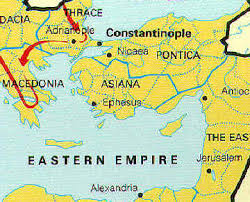
niceaThe First Council of Nicaea was a council of Christian bishops in Nicaea initiated by the Roman Emperor Constantine I in AD 325, and this was the first effort to reach a consensus in the church concerning some of new teachings that had emerged by this time. Its main accomplishments were settlement of the issue of the nature of Jesus Christ and the observance of the date of Easter.

Doctrines and ideas that Constantine did NOT start

Easter, the biblical canon, worship on a Sunday, worshiping of the sun, the trinity…Constantine did not start any new ideas at the council at Nicaea!

When it comes to Easter many get confused due to this English term and fear that this is a pagan holiday. Some even think that Constantine is guilty of introducing this pagan holiday into church, but that is not the case. The English-speaking countries might use the word “Easter” for the holiday which is celebrated right after Good Friday, but other countries rather use the word Passover – or the equivalent in their languages. Passover is certainly not a pagan holiday (and it’s of course not a requirement to celebrate this holiday by decorating the house with chickens, hens, rabbits, eggs, etc), and you can read more about this controversy here. The council at Nicaea was used (among other things) to come to a consensus when it comes to selecting a proper date for the celebration of Easter (Passover), but that is not the same thing as introducing a pagan holiday into church.

There is no record of any discussion of the biblical canon at the council. Constantine commissioned fifty Bibles for the Church of Constantinople the year 331, but it’s not certain whether his request was for fifty copies of the entire Old and New Testaments or not. He did not commission any Bibles at the council itself. No historical evidence points to involvement on his part in selecting books for inclusion in commissioned Bibles. (The books that ended up in the Biblical canon were those who had always been regarded as valid testimonies of Jesus Christ, due to the witnesses that wrote them and due to the time when they were written. So it’s not that a group of people gathered together a few hundred years after the death of Jesus and started the book selection by using a blank sheet of paper and voted about it.)

Constantine cannot be blamed for starting the tradition to celebrate Sabbath on Sunday, since the early christians had already started to do this soon after the death of Jesus. See more here.

Constantine did not introduce the idea to perform sun worship rather than son worship. Sun and son might sound similar in English, but that’s certainly not the case in other languages. Constantine did not even speak English, and the council was not held in English.

The council of Nicaea dealt primarily with the issue of the deity of Christ. Over a century earlier the use of the term “trinity” (Τριάςin Greek; trinitas in Latin) could be found in the writings of Origen (185-254) and Tertullian (160-220), and a general notion of a “divine three” was expressed in the second century writings of Polycarp, Ignatius, and Justin Martyr. See some quotes below. The concept of the deity of Christ and the trinity can be found in numerous places in the Bible, as well as in the writings of the early church fathers – before the council at Nicaea took place.

It’s unfortunate that some christians get the wrong idea that certain doctrines started at Nicaea just because they were discussed there and just because a consensus was reached. If for instance the concept of the trinity (and/or deity of Christ) had its roots in the council at Nicaea, it shouldn’t have been taught prior to it – and particularly not in the Bible – but we can see that the contrary is the case. If both the Bible and the early church fathers (before the council at Nicaea) teach the same thing, it’s good evidence for that it can be trusted. One new idea which was introduced into church several hundred years after the death of Christ (around the time of Augustine), is the doctrine of the original sin – which only the gnostics taught. Augustine made this doctrine popular also in church, despite that the early church fathers before him fought against this gnostic doctrine. The doctrine of the trinity, however, has always been taught in the Bible and among the first church fathers. You can read more about the evidence for the trinity here.

Arianism (with its Trinitarian controversy) must not be looked upon as an isolated theory by its founder Arius 

The council did triumph over Arianism but confusion in theological terminology was the main reasons for a long drawn out battle. Arius  regarded the Logos (word) as no more than a power of the Father, and he believed that before time began the Father had created the Son by the power of the Word to be His agent in creation. The Son was  therefore not to be identified with the Godhead, and he was only God in a derivative sense. Since there was once a time when he did not exist, he could not be eternal, and he was actually neither proper God (since God the Father was before him and created him) nor proper man (since he was above all men due to his direct creation by God). Arius’ views began to spread among the people and Alexander the Bishop called a meeting of his priests and deacons to discuss the matter. The Bishop insisted on the unity of the Godhead, but Arius continued to argue that since the Son was begotten of the Father then at some point he began to exist.  The argument ended up dividing the church. Athanasius and friends insisted that the Son was as truly God as the Father.

Emperor Constantine was upset by this division so he summoned a conference of all the bishops of the church – but few representatives from the western churches made it to the meeting in Nicaea. There were still around 300 bishops, and the council agreed that Jesus is truly God, so it published a creed stating the Christian faith in a way that condemned Arianism. One account from the meeting is from History of the Church by Socrates Scholasticus (who wrote 100 years after Eusebius). Much of his account consists of direct quotations from Eusebius’s Life of the Constantine and from a letter of the earlier historian – and Eusebius was present at the council. Eusebius, bishop of Nicomedia (not to be confused with Eusebius Pamphilus, Bishop of Caesarea) supported the opinion of Arius. These were opposed by Athanasius, a deacon of the Alexandrian church. This creed was agreed to by 318 members, and there were only five who refused to sign – objecting to the term homoousios, “of the same substance”.  The Emperor sent Arius into exile, along with Eusebius and Theognis and their followers. Eusebius and Theognis, however, wrote a declaration that they had changed their opinion and now agreed that the Son and the Father are of the same substance.

Quotes from old church fathers about the deity of Christ and the trinity

Jesus is not only the son of God, but also GOD IN FLESH.

For OUR GOD JESUS CHRIST, was, according to the appointment of God, conceived in the womb by Mary, of the seed of David, but by the Holy Ghost.” (Epistle of Ignatius to the Ephesians 4:9)

”…GOD HIMSELF appearing in the form of a man, for the renewal of eternal life.” (Epistle of Ignatius to the Ephesians 4:13)

”Continue inseparable from JESUS CHRIST OUR GOD.” (Epistle of Ignatius to the Trallians 2:4)

”For even OUR GOD; JESUS CHRIST, know that He is in the Father”. (Epistle of Ignatius to the Romans 1:13) 

Brethren, WE OUGHT SO TO THINK OF JESUS CHRIST AS OF GOD : as of the judge of the living and the dead”. (2nd Epistle of Clement to the Corinthians 1:1) 

”For Christ is King, and Priest, and GOD and Lord…” (Justin Martyr, Dialogue With Trypho, 34)

”…He preexisted as the Son of the Creator of things, BEING GOD, and that He was born a man by the Virgin.” (Justin Martyr, Dialogue With Trypho, 48)

”Now may the God and Father of our Lord Jesus Christ, and the eternal High Priest Himself, THE GOD JESUS CHRIST, build you up in the faith…” (The Epistle of Polycarp to the Church at Philippi, 12)

”In order that to Christ Jesus, our Lord, and GOD, and Savior, and King…” (Irenaeus Against Heresies, 1.10.1)

”But he Jesus is himself in his own right, beyond all men who ever lived, GOD, Lord, and king eternal, and THE INCARNATE WORD, proclaimed by all the prophets, the apostles …The Scriptures would not have borne witness to these things concerning Him, if, like everyone else, He were mere man.” (Irenaeus Against Heresies 3:19.1-2) 

”For with Him were always present the Word and Wisdom, the Son and the Spirit, by whom and in whom, freely and spontaneously, He made all things, to whom also He speaks, saying, ‘Let us make man after our image and likeness’”.(Irenaeus Against Heresies, 4:10)

Irenaeus, 115-190 ”The Church, though dispersed throughout the whole world, even to the ends of the earth, has received from the apostles and their disciples this faith: …one God, the Father Almighty, Maker of heaven, and earth, and the sea, and all things that are in them; and in one Christ Jesus, the Son of God, who became incarnate for our salvation; and in the Holy Spirit, who proclaimed through the prophets the dispensations of God, and the advents, and the birth from a virgin, and the passion, and the resurrection from the dead, and the ascension into heaven in the flesh of the beloved Christ Jesus, our Lord, and His manifestation from heaven in the glory of the Father ‘to gather all things in one,’ and to raise up anew all flesh of the whole human race, in order that to Christ Jesus, our Lord, and GOD, and Savior, and King, according to the will of the invisible Father, ‘every knee should bow, of things in heaven, and things in earth, and things under the earth, and that every tongue should confess; to him, and that He should execute just judgment towards all…’” (Against Heresies X.l)

Tertullian, 160-225 ”We define that there are two, the Father and the Son, and three with the Holy Spirit, and this number is made by the pattern of salvation… [which] brings about unity in trinity, interrelating the three, the Father, the Son, and the Holy Spirit.  They are three, not in dignity, but in degree, not in substance but in form, not in power but in kind.  They are of one substance and power, because there is one God from whom these degrees, forms and kinds devolve in the name of Father, Son and Holy Spirit.” (Adv. Prax. 23; PL 2.156-7).

”We have also as a Physician the Lord OUR GOD JESUS THE CHRIST the only-begotten Son and Word, before time began, but who afterwards became also man, of Mary the virgin.  For ‘the Word was made flesh.’ Being incorporeal, He was in the body; being impassible, He was in a passable body; being immortal, He was in a mortal body; being life, He became subject to corruption, that He might free our souls from death and corruption, and heal them, and might restore them to health, when they were diseased with ungodliness and wicked lusts.” (Alexander Roberts and James Donaldson, eds., The ante-Nicene Fathers, Grand Rapids: Eerdmans, 1975 rpt., Vol. 1, p. 52, Ephesians 7.)

Abraham’s meeting with GOD and two angels
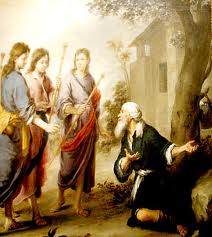
abraham 2Justin Martyr, 100-165 AD

” I [Justin] inquired. And Trypho said, ”Certainly; but you have not proved from this that there is another God besides Him who appeared to Abraham, and who also appeared to the other patriarchs and prophets. YOU HAVE PROVED, however, that we [the Jews] were WRONG in believing that the three who were in the tent with Abraham were all angels.” I [Justin] replied again, ”If I could not have proved to you from the Scriptures that ONE OF THOSE THREE IS GOD, because, as I already said, He brings messages to those to whom God the Maker of all things wishes [messages to be brought], then in regard to Him who appeared to Abraham on earth IN HUMAN FORM IN LIKE MANNER AS THE TWO ANGELS who came with Him, and WHO AS GOD EVEN BEFORE THE CREATION OF THE WORLD, it were reasonable for you to entertain the same belief as is entertained by THE WHOLE OF YOUR NATION.” ”Assuredly,” he said, ”for up to this moment this has been our [the Jews] belief.” … ”And now have you not perceived, my friends, that one of the three, WHO IS BOTH GOD AND LORD, and ministers to Him who is in the heavens, is Lord of the two angels? For when [the angels] proceeded to Sodom, HE REMAINED BEHIND, and COMMUNED WITH ABRAHAMin the words recorded by Moses; and when He departed after the conversation, Abraham went back to his place. And when he came [to Sodom], the two angels no longer conversed with Lot, but Himself, as the Scripture makes evident; and He is the LORD who received commission from the LORD who [remains] in the heavens, i.e., the Maker of all things, to inflict upon Sodom and Gomorrah the [judgments] which the Scripture describes in these terms: ‘The Lord rained down upon Sodom and Gomorrah sulphur and fire from the Lord out of heaven.’ ”(Dialogue of Justin Martyr, with Trypho, a Jew, Chapter LVI.—God Who Appeared to Moses is Distinguished from God the Father.)

Irenaeus,  115-190 AD

”Therefore neither would the Lord, nor the Holy Spirit, nor the apostles, have ever named as God, definitely and absolutely, him who was not God, unless he were truly God; nor would they have named any one in his own person Lord, except God the Father ruling over all, and His Son who has received dominion from His Father over all creation, as this passage has it: ”The LORD said unto my Lord, Sit Thou at my right hand, until I make Thine enemies Thy footstool.” Here the [Scripture] represents to us the Father addressing the Son; He who gave Him the inheritance of the heathen, and subjected to Him all His enemies. Since, therefore, the Father is truly Lord, and the Son truly Lord, the Holy Spirit has fitly designated them by the title of Lord. And again, referring to the destruction of the Sodomites, the Scripture says, ”Then the LORD rained upon Sodom and upon Gomorrah fire and brimstone from the LORD out of heaven.” For it here points out that the Son, who had also been talking with Abraham, had received power to judge the Sodomites for their wickedness. And this [text following] does declare the same truth:”Thy throne, O GOD; is for ever and ever; the scepter of Thy kingdom is a right scepter. Thou hast loved righteousness, and hated iniquity: therefore GOD, Thy God, hath anointed Thee.” Forthe Spirit designates both [of them] BY THE NAME; OF GOD — both Him who is anointed as Son, and Him who does anoint, that is, the Father.” (Irenaeus, Book 3, ch 6)

Tertullian, 160-225 AD

”That is a still grander statement [of Christ’s deity] which you will find expressly made in the Gospel: ”In the beginning was the Word, and the Word was with God, and the Word was God.” There was One ”who was,” and there was another ”with whom” He was. But I find in Scripture the name Lord also applied to them Both: ”The Lord said unto my Lord, Sit Thou on my right hand.” And Isaiah says this: ”Lord, who hath believed our report, and to whom is the arm of the Lord revealed? ” Now he would most certainly have said Thine Arm, if he had not wished us to understand that the Father is Lord, and the Son also is Lord. A much more ancient testimony [of Christ’s deity] we have also in Genesis: ”Then the Lord rained upon Sodom and upon Gomorrah brimstone and fire from the Lord out of heaven.” Now, either deny that this is Scripture; or else (let me ask) what sort of man you are, that you do not think words ought to be taken and understood in the sense in which they are written, especially when they are not expressed in allegories and parables, but in determinate and simple declarations?” (Tertullian, Against Praxeas, Chapter XIII.

 Ignatius, 30-117 AD

”For Moses, the faithful servant of God, when he said, ”The Lord thy God is one Lord,” and thus proclaimed that there was only one God, did yet forthwith confess also our Lord [Jesus] when he said, ”The Lord [Jesus] rained upon Sodom and Gomorrah fire and brimstone from the Lord.” And again [he confessed a second time our Lord Jesus by saying], ”And God said, Let Us make man after our image: and so God made man, after the image of God made He him.”” (The Epistle of Ignatius to the Antiochians, Chapter II.—The True Doctrine Respecting God and Christ.)

Cyprian, 200-258 AD

”In the Gospel according to John: ”The Father judgeth nothing, but hath given all judgment unto the Son, that all may honour the Son as they honour the Father. He who honoureth not the Son, honoureth not the Father who hath sent Him.” Also in the seventy-first Psalm: ”O GOD, give the king Thy judgment, and Thy righteousness to the king’s son, to judge Thy people in righteousness.”Also in Genesis: ”And the LORD rained upon Sodom and Gomorrah sulphur, and fire from heaven from the LORD.”” (The Treatises of Cyprian, Treatise XII. Three Books of Testimonies Against the Jews. Third Book., Testimonies., 33. That the Father judgeth nothing, but the Son; and that the Father is not glorified by him by whom the Son is not glorified.)

Novatian, 200–258 AD

”For who does not acknowledge that the person of the Son is second after the Father, when he reads that it was said by the Father, consequently to the Son, ”Let us make man in our image and OUR likeness; ” and that after this it was related, ”And God made man, in the image of God made He him? ”Or when he holds in his hands: ”The LORD rained upon Sodom and Gomorrah fire and brimstone from the LORD from heaven? ” (A Treatise of Novatian Concerning the Trinity, Chapter XXVI. Argument.—Moreover, Against the Sabellians He Proves that the Father is One, the Son Another.)

”Therefore the Lord overturned Sodom, that is, GOD overturned Sodom; but in the overturning of Sodom, the LORD rained fire from the LORD. And this Lord was the God seen by Abraham; and this God was the guest of Abraham, certainly seen because He was also touched. But although the Father, being invisible, was assuredly not at that time seen, He who was accustomed to be touched and seen was seen and received to hospitality. BUT THIS THE SON OF GOD,”The LORD rained from the LORD upon Sodom and Gomorrha brimstone and fire.”And this is the Word of God. And THE WORD OF GOD WAS MADE FLESH, AND DWLTH AMNG US; AND THIS IS CHRIST. IT WAS NOT THE FATHER, THEN WHO WAS A GUEST WITH ABRAHAM, BUT CHRISTNOR WAS IT THE FATHER WHO WAS SEEN THEN; , BUT THE SON; AND CHRIST WAS SEEN. Rightly, therefore, CHRIST IS BOTH LORD AND GOD, who was not otherwise seen by Abraham, EXCEPT THAT AS GOD THE WORD He was begotten of God the Father before Abraham himself.” (A Treatise of Novatian Concerning the Trinity, Chapter XVIII. Argument.—Moreover Also, from the Fact that He Who Was Seen of Abraham is Called God; Which Cannot Be Understood of the Father, Whom No Man Hath Seen at Any Time; But of the Son in the Likeness of an Angel.)

Constitutions of the Holy Apostles

”To Him did Moses bear witness, and said: ”The LORD received fire from the LORD, and rained it down.” HIM DID JACOB SEE AS A MAN, and said: ”I have seen God face to face, and my soul is preserved.”HIM DID ABRAHAM ENTERTAIN, and acknowledge to be the Judge, and HIS LORD.” (Constitutions of the Holy Apostles, Book V. XX. A Prophetic Prediction Concerning Christ Jesus.)

1 Mos. 1:26 Gud sade: ”Låt oss göra människor till VÅR AVBILD, till att vara lika OSS. De skall råda över fiskarna i havet och över fåglarna under himlen, över boskapsdjuren och över hela jorden och över alla kräldjur som rör sig på jorden.” 27 Och Gud skapade MÄNNISKAN till sin avbild, till GUDS AVBILD skapade han henne, till man och kvinna skapade han dem.image
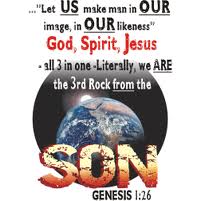
Epistle of Barnabas, 74 AD

”For the Scripture says concerning US, while He speaks to the SON, ”Let Us make man after Our image, and after Our likeness” (Epistle of Barnabas, Chapter VI.—The Sufferings of Christ, and the New Covenant, Were Announced by the Prophets.)

The Letter of Barnabas 74 AD

”And further, my brethren, if the Lord [Jesus] endured to suffer for our soul, he being the Lord of all the world, to whom God said at the foundation of the world, ‘Let us make man after our image, and after our likeness,’ understand how it was that he endured to suffer at the hand of men” (Letter of Barnabas 5)

Justin Martyr, 100-165 AD

Idén att Moses skulle mena att det var änglar som åsyftades med ”till vår avbild”, är en villolära, säger Justin

”In saying, therefore, ‘as one of us, ‘[Moses] has declared that [there is a certain] number of persons associated with one another, and that they are at least two. For I would not say that the dogma of that heresy which is said to be among you (The Jews had their own heresies which supplied many things to the Christian heresies) is true, or that the teachers of it can prove that [God] spoke to angels, or that the human frame was the workmanship of angels. But this Offspring, which was truly brought forth from the Father, was with the Father before all the creatures.” (Dialogue of Justin Martyr, with Trypho, a Jew: Chapter LXII.—The Words ”Let Us Make Man”)

Irenaeus, 115-190 AD

”It was not angels, therefore, who made us, nor who formed us, neither had angels power to make an image of God, nor any one else, except the Word of the Lord, nor any Power remotely distant from the Father of all things. For God did not stand in need of these [beings], in order to the accomplishing of what He had Himself determined with Himself beforehand should be done, as if He did not possess His own hands. For with Him were always present the Word and Wisdom,the Son and the Spirit, by whom and in whom, freely and spontaneously, He made all things, to whom also He speaks, saying, ”Let Us make man after Our image and likeness; ” [Gen. 1:26]” (Against Heresies 4:20:1).

Tertullian,  160-225 AD

”If the number of the Trinity also offends you, as if it were not connected in the simple Unity, I ask you how it is possible for a Being who is merely and absolutely One and Singular, to speak in plural phrase, saying, ”Let us make man in our own image, and after our own likeness; ” whereas He ought to have said, ”Let me make man in my own image, and after my own likeness,” as being a unique and singular Being?In the following passage, however, ”Behold the man is become as one of us,” He is either deceiving or amusing us in speaking plurally, if He is One only and singular. Or was it to the angels that He spoke, as the Jews interpret the passage, because these also acknowledge not the Son? Or was it because He was at once the Father, the Son, and the Spirit, that He spoke to Himself in plural terms, making Himself plural on that very account? Nay, it was because He had already His Son close at His side, as a second Person, His own Word, and a third Person also, the Spirit in the Word, that He purposely adopted the plural phrase, ”Let us make; ”and, ”in our image; ”and, ”become as one of us.” (Tertullian, Against Praxeas, Chapter XII. Other Quotations from Holy Scripture Adduced in Proof of the Plurality of Persons in the Godhead.)

”Since then he is the image of the Creator (for He, when looking on Christ His Word, who was to become man, said, ”Let us make man in our own image, after our likeness”), how can I possibly have another head but Him whose image I am? For if I am the image of the Creator there is no room in me for another head” (Tertullian, Book V, Elucidations, Chapter VIII.—Man the Image of the Creator, and Christ the Head of the Man.)

”In the first place, because all things were made by the Word of God, and without Him was nothing made. Now the flesh, too, had its existence from the Word of God, because of the principle, that here should be nothing without that Word. ”Let us make man,” said He, before He created him, and added, ”with our hand,” for the sake of his pre-eminence, that so he might not be compared with the rest of creation.” (Tertullian: On the Resurrection of the Flesh, Elucidations, Chapter V.—Some Considerations in Reply Eulogistic of the Flesh. It Was Created by God.)

Origen, 184-254 AD

”it was to Him that God said regarding the creation of man, ”Let Us make man in Our image, after Our likeness.” (Origen Against Celsus, Book V, Chapter XXXVII)

Novatian, 200–258 AD

”For who does not acknowledge that the person of the Son is second after the Father, when he reads that it was said by the Father, consequently to the Son, ”Let us make man in our image and our likeness; ” and that after this it was related, ”And God made man, in the image of God made He him? ”Or when he holds in his hands: ”The Lord rained upon Sodom and Gomorrah fire and brimstone from the Lord from heaven? ” (A Treatise of Novatian Concerning the Trinity, Chapter XXVI. Argument.—Moreover, Against the Sabellians He Proves that the Father is One, the Son Another.)

Constitutions of the Holy Apostles

”the divine Scripture testifies that God said to Christ, His only-begotten, ”Let us make man after our image, and after our likeness. And God made man: after the image of God made He him; male and female made He them.”(Constitutions of the Holy Apostles, Book V., VII)

You can read many more quotes in this article

The IMPUTED righteousness of CHRIST – is not Biblical

And the scripture was fulfilled which saith, Abraham believed God, and it [believing God] was IMPUTED UNTO HIM FOR RIGHTEOUSNESS: and he was called the Friend of God. James. 2:23 

hypocriteThe word “imputed” comes from the Greek word “logizomai” (Strong’s 3049) which could be translated as “reckon, count, charge with; reason, decide, conclude; think or suppose”. Notice that it doesn’t mean “transfer”, but rather “reckoned” or “counted as“.

The word is found 41 times in the New Testament, and 4 of those times the word is translated as “impute” in the KJV.  Rom 4:6-11 and  22-24 have the same Greek word (logizomai) as in James 2:23, and it doesn’t mean “transfer” there either. These verses use the same word even if they are translated differently:

For what saith the scripture? Abraham believed God, and it [believing God] was counted unto him for righteousness. Rom. 4:3

Even as Abraham believed God, and it [believing God] was accounted to him for righteousness. Gal. 3:6

And therefore it [faith] was imputed to him for righteousness. Rom. 4:22

CountedRom 2:26, Rom 4:3, Rom 4:5, Rom 9:8, Reckoned = Luk 22:37, Rom 4:4, Rom 4:9-10 and Rom 6:11, Rom 8:18, Accounted = Rom 8:36, Gal 3:6

We are asked to be righteous just like Jesus is righteous  

This doesn’t mean that the only means to get saved is to have lived a life free of sins just like Jesus did, but neither is the promise“If you only believe in Jesus, he will confirm you as righteous even if you’re not”. First we must be cleansed in the blood of Jesus – upon repentance – and then the idea is to be led by the Spirit and not by the flesh, which no one else will do for us. We are not able to go piggybacking on Jesus.

1 John 3:4 Whosoever committeth sin transgresseth also the law: for sin is the transgression of the law.5 And ye know that he was manifested to take away our sins; and in him is no sin.6 Whosoever abideth in him sinneth not: whosoever sinneth hath not seen him, neither known him.7 Little children, let no man deceive you: HE THAT DOETH RIGHTEOUSNESS IS RIGHTEOUS, EVEN AS HE IS RIGHTEOUS.8 He that committeth sin is of the devil; for the devil sinneth from the beginning. For this purpose the Son of God was manifested, that he might destroy the works of the devil.9 Whosoever is born of God doth not commit sin; for his seed remaineth in him: and he cannot sin, because he is born of God.10 In this the children of God are manifest, and the children of the devil: whosoever doeth not righteousness is not of God, neither he that loveth not his brother.

God’s wrath is still upon us if we sin, and if we are under God’s wrath we are not saved.

John 3:36 He who believes in the Son has eternal life; but he who does not obey the Son will not see life, but the wrath of God abides on him.” (NASB)

Romans 1:18 For the wrath of God is revealed from heaven against all ungodliness and unrighteousness of men, who hold the truth in unrighteousness;

Romans 2:5 But after thy hardness and impenitent heart treasurest up unto thyself wrath against the day of wrath and revelation of the righteous judgment of God;

Jesus righteousness cannot be transferred/injected into us and we are not righteous unless we LIVE righteously

Our righteousness does not depend on being injected another person’s righteousness, but our righteousness depends on how we live our lives.  

Jesus lived a perfect life (always being obedient to God the Father) and died on the cross for us, and in THAT WAY he is our righteousness. Had Jesus not lived an obedient life for us, he could not have been our righteousness, because the atonement wouldn’t have been perfect. He is NOT our righteousness because he has transferred his righteousness into us (and neither did he literally take our sins on himself as in some kind of an exchange) to make us righteous in position despite that we still live in sin. It’s important to understand that Jesus did NOT obey our moral obligations for us and instead of us!  The Bible talks about imputed righteousness but NEVER the imputed righteousness “of Christ.  We can read about the righteousness of GOD throughout the Bible (and that Jesus is righteous), but the idea that God looks upon us and sees the righteousness of Christ in us (or the blood of Jesus) instead of our sin, will result in a license to sin. When God looked at the churches in Revelation, he DID notice their sins and asked them to repent.

We are not justified by the works of the law but by God’s grace, so to say that we need perfect obedience to the Torah to be credited to our account in order to be justified is justification by works instead of justification by grace/mercy. God cannot declare the guilty to be innocent – like in a forensic justification – as that would be a lie, but God can PARDON the guilty and he does so if the guilty person repents from his sins.

Abraham is given as an example when it comes to being righteous/justified through faith, because he was counted as righteous BEFORE the law of Moses started to apply. Not all who have Abraham as a forefather are the children of Abraham and saved, but only those who are spiritually circumcised (in their hearts) and BELIEVE the way he did – and he showed his faith with some amazing deeds (work). Those who WALK as he did and obey God as he did (which is something we DO) are circumcised in heart and the true children of Abraham. We do not deserve salvation by anything we do (or believe) but faith without deeds is dead.  We can read “blessed is the man to whom the Lord will not impute sin”, which shows that all people apparently don’t have sin – namely those whom the Lord do not impute sin. Who are they? They are the ones who have confessed their sins, repented and who walk with Jesus. So when we read “God imputeth righteousness without works”, it means the works of the law (the Torah and the 613 laws in it), and naturally God wouldn’t impute righteousness to Abraham if he only sat under a tree and “believed” without showing his faith by OBEDIENCE. Not obedience to the law of Moses (which didn’t exist at the time) but obedience to GOD.

When it comes to Rom. 4:6, it doesn’t say that a person is especially appreciated and blessed if he doesn’t have any works to show up at all and that he only has “faith alone”. If that were true, it would mean that the less works we have, the more blessed we are and the better it is. No, Paul’s point is to get the jews to understand that they are not saved due to being born Jews and/or for obeying the Torah (613 laws), but a person is blessed/saved if he repents from his sins, believes in Jesus and through this procedure becomes cleansed from his sins. Those are blessed whose trespasses are FORGIVEN, because then God will not impute sin to them. Does this wonderful promise only apply to the Jews? No, Paul wants them to understand that also the uncircumcised (the gentiles) have his promise which is by faith and not by law. Notice how many times we can read about “circumcision“, so this is what is in focus (the ceremonial law) because the Jews were so concerned about it.

Rom. 4:3 For what saith the scripture? Abraham believed God, and it was counted unto him for righteousness.4 Now to him that worketh is the reward not reckoned of grace, but of debt.5 But to him that worketh not, but believeth on him that justifieth the ungodly, his faith is counted for righteousness.6 Even as David also describeth the blessedness of the man, unto whom God imputeth righteousness without works,7 Saying, Blessed are they whose iniquities are forgiven, and whose sins are covered.8 Blessed is the man to whom the Lord will not impute sin.9 Cometh this blessedness then upon the circumcision only, or upon the uncircumcision also? for we say that faith was reckoned to Abraham for righteousness.10 How was it then reckoned? when he was in circumcision, or in uncircumcision? Not in circumcision, but in uncircumcision.11 And he received the sign of circumcision, a seal of the righteousness of the faith which he had yet being uncircumcised: that he might be the father of all them that believe, though they be not circumcised; that righteousness might be imputed unto them also:12 And the father of circumcision to them who are not of the circumcision only, but who also walk in the steps of that faith of our father Abraham, which he had being yet uncircumcised.—20 He staggered not at the promise of God through unbelief; but was strong in faith, giving glory to God;21 And being fully persuaded that, what he had promised, he was able also to perform.22 And therefore it was imputed to him for righteousness.23 Now it was not written for his sake alone, that it was imputed to him;24 But for us also, to whom it shall be imputed, if we believe on him that raised up Jesus our Lord from the dead;

James doesn’t contradict what Paul is saying. James says that Abraham was justified BY WORKS, and not faith alone. Are we perhaps teaching salvation by works if we choose to quote James?

James 2:18 Yea, a man may say, Thou hast faith, and I have works: shew me thy faith without thy works, and I will shew thee my faith by my works.19 Thou believest that there is one God; thou doest well: the devils also believe, and tremble.20 But wilt thou know, O vain man, that faith without works is dead?21 Was not Abraham our father justified by works, when he had offered Isaac his son upon the altar?22 Seest thou how faith wrought with his works, and by works was faith made perfect?23 And the scripture was fulfilled which saith, Abraham believed God, and it was imputed unto him for righteousness: and he was called the Friend of God.24 Ye see then how that by works a man is justified, and not by faith only.25 Likewise also was not Rahab the harlot justified by works, when she had received the messengers, and had sent them out another way?26 For as the body without the spirit is dead, so faith without works is dead also. 

Paul is not disappointed with the Galatians for their suggestion that it’s still necessary to obey the ten commandments faith alone 3

In the letter to the Galatians, the reason for Paul’s objection to Galatians’s attitude is NOT because they wanted to return to silly old laws such as the ten commandments – just like “Do not kill, steal, lie or commit adultery”. Why would he be disappointed or upset about that? Those commandments have been in use ever since the days of Adam, and they never cease to apply. No, Paul was disappointed with their teaching that circumcision – which is a ceremonial law in the Torah – was still necessary for salvation. The ceremonial laws are not necessary for salvation, but the law of love certainly is (and the ten commandments provide details of how the law of love works). Paul makes a different between the works of the law (Torah), and the obedience of the holy Spirit.  The Torah was our  schoolmaster to keep us in order  until the arrival of Jesus – after Jesus death the holy Spirit took over as our guide – and we’re supposed to have the law of love in our hearts. We will never be “free” from the requirement to love God and our neighbor as ourselves, and as long we are slaves to sin (obey sin) we are definitely not free.

Acts. 15:1 And certain men which came down from Judaea taught the brethren, and said, Except ye be circumcised after the manner of Moses, ye cannot be saved.2 When therefore Paul and Barnabas had no small dissension and disputation with them, they determined that Paul and Barnabas, and certain other of them, should go up to Jerusalem unto the apostles and elders about this question.

Gal. 3:5 He therefore that ministereth to you the Spirit, and worketh miracles among you, doeth he it by the works of the law, or by the hearing of faith?6 Even as Abraham believed God, and it was accounted to him for righteousness.7 Know ye therefore that they which are of faith, the same are the children of Abraham.8 And the scripture, foreseeing that God would justify the heathen through faith, preached before the gospel unto Abraham, saying, In thee shall all nations be blessed.9 So then they which be of faith are blessed with faithful Abraham.10 For as many as are of the works of the law are under the curse: for it is written, Cursed is every one that continueth not in all things which are written in the book of the law to do them.11 But that no man is justified by the law in the sight of God, it is evident: for, The just shall live by faith.12 And the law is not of faith: but, The man that doeth them shall live in them.— 19 Wherefore then serveth the law? It was added because of transgressions, till the seed should come to whom the promise was made; and it was ordained by angels in the hand of a mediator.—22 But the scripture hath concluded all under sin, that the promise by faith of Jesus Christ might be given to them that believe.23 But before faith came, we were kept under the law, shut up unto the faith which should afterwards be revealed.24 Wherefore the law was our schoolmaster to bring us unto Christ, that we might be justified by faith.25 But after that faith is come, we are no longer under a schoolmaster.

Paul makes it clear that sinning = spiritual death (also for christians).

Gal. 5:16 This I say then, Walk in the Spirit, and ye shall not fulfil the lust of the flesh.17 For the flesh lusteth against the Spirit, and the Spirit against the flesh: and these are contrary the one to the other: so that ye cannot do the things that ye would.18 But if ye be led of the Spirit, ye are not under the law.19 Now the works of the flesh are manifest, which are these; Adultery, fornication, uncleanness, lasciviousness,20 Idolatry, witchcraft, hatred, variance, emulations, wrath, strife, seditions, heresies,21 Envyings, murders, drunkenness, revellings, and such like: of the which I tell you before, as I have also told you in time past, that they which do such things shall not inherit the kingdom of God.

The significance of having our faith “imputed” as righteousness, is that God forgives us our transgressions and treats us as though we have never sinned. This means that our sins disappears (without taking a detour in the body of Jesus) and God doesn’t have to LIE to declare us not guilty.  We are 100% cleansed when we are forgiven and free from our sins, but it doesn’t say “once cleansed always cleansed”. If we become dirty once again, we’re back at square one.

2 Cor. 5:19 To wit, that God was in Christ, reconciling the world unto himself, not imputing their trespasses unto them; and hath committed unto us the word of reconciliation.filthy pig

2 Pet. 2: 18 For when they speak great swelling words of vanity, they allure through the lusts of the flesh, through much wantonness, those that were clean escaped from them who live in error.19 While they promise them liberty, they themselves are the servants of corruption: for of whom a man is overcome, of the same is he brought in bondage.20 For if after they have escaped the pollutions of the world through the knowledge of the Lord and Saviour Jesus Christ, they are again entangled therein, and overcome, the latter end is worse with them than the beginning.21 For it had been better for them not to have known the way of righteousness, than, after they have known it, to turn from the holy commandment delivered unto them.22 But it is happened unto them according to the true proverb, The dog is turned to his own vomit again; and the sow that was washed to her wallowing in the mire.

Did God move King David to make a census, or did Satan? Sin or no sin?

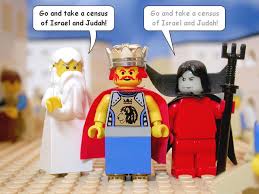
censusIn 2 Sam. 24 it says that God moved David to make a census of Israel’s military power, but in 1 Chron. 21 it says that Satan moved him to do so. Can these two statements be combined, or are they mutually exclusive?

One solution is that it concerns two different kinds of censuses, and another solution is that David did not perform a census the way God had described a proper census as per Ex. 30. A third option is the one described below.

Israel was already under God’s judgment to begin with, so there were no innocent men involved in this particular story. God is angry with Israel and punishes them by allowing Satan to “unleash” David’s illegitimate pride to create a rift between them.

2 Sam. 24:1 And again the ANGER of the Lord was kindled AGAINST ISRAEL, and he moved David AGAINST THEM to say, Go, number Israel and Judah.2 For the king said to Joab the captain of the host, which was with him, Go now through all the tribes of Israel, from Dan even to Beersheba, and number ye the people, that I may know the number of the people.3 And Joab said unto the king, Now the Lord thy God add unto the people, how many soever they be, an hundredfold, and that the eyes of my lord the king may see it: but why doth my lord the king delight in this thing?

1 Chron. 21:1 And Satan stood up against Israel, and provoked David to number Israel.2 And David said to Joab and to the rulers of the people, Go, number Israel from Beersheba even to Dan; and bring the number of them to me, that I may know it.3 And Joab answered, The Lord make his people an hundred times so many more as they be: but, my lord the king, are they not all my lord’s servants? why then doth my lord require this thing? why will he be a cause of trespass to Israel?

God sometimes bestows evil consequences (physical evil, or calamity) upon man’s evil actions (you reap what you sow). He also chooses what kind of evil to bestow, and if he would like to take the chance to bestow evil by means of other people (or Satan) who are already set on doing harm. Satan is often accusing both Israel and believers for various things, and he seeks to get God to punish his people. In 2 Samuel, it says that God was angry with Israel (due to the recent revolt under Sheba in I Chron. 20 and other acts by Amnon and Absalom), and this would be a good reason for God to allow Satan to do what he always wants to do – cause harm!

Here are a couple of examples of when it’s possible to suggest that God and/or Satan perform the evil:

In I Kings 22 (and. 2 Chronicles 18) which you can read about in this article, God decides to kill the evil king Ahab, and asks the heavenly hosts as to how to entice Ahab to enter into a battle in which he will die. A spirit volunteers to be a “lying spirit” in the mouth of Ahab’s false prophets, and God accepts the offer and allows him to do it. Nevertheless, God is not guilty of lying (there is no darkness in God), but merely gives Ahab what he deserves (Jer 24.7).

In I Sam 16, after repeated failures to submit to God’s leadership, Saul is rejected as king. He remains on the throne and continues his non-committed lifestyle and reign – even indulging in sorcery and seances. God punishes him by sending an “unclean spirit” to trouble him.

The motivation to cause calamity is a bit different in the book of Job, but God allows Satan to attack Job and he later confronts Satan with Job’s failure to sin even though we can read “you incited me against him to ruin him”. In other words, Satan was the “ruiner” but God was also a “ruiner” – so sometimes it’s actually not a big difference to suggest that “God moved a person to do this and that” or “Satan moved a person to do this and that”. The idea of God acting through agents -for reasons of judgment, of mercy, of testing, etc – occurs a few times in scripture, but nowhere does it say that God acts in this way ALL THE TIME. When it comes to Joseph and his brothers, there were evil human intentions (Joseph’s brothers sinning by selling their brother), with God’s overarching purpose for good.

1 Sam might be understood in this way:

  • God is angry with Israel’s sin (and David’s handling of the royal family issues).
  • Satan sees his opportunity, accuses them of wrongdoing, and wins approval to inflict David’s and Israel’s wrongdoing back on themselves.
  • God, knowing that the punishment is well deserved, that the example of correction/contrition on David’s part will be recorded in Scripture forever as an example, and that He will be gracious ‘ahead of schedule’ and reveal the site of his temple/crucifixion, agrees to turn David and Israel over to him, for this specific punishment (cf. I Cor 5.5).
  • Satan, with this permission from God, moves David to begin the Census.

Moreover, there was no order from God to David to NOT count the men, and the taking of a census was allowed in the law

Ex. 30:11 And the Lord spake unto Moses, saying,12 When thou takest the sum of the children of Israel after their number, then shall they give every man a ransom for his soul unto the Lord, when thou numberest them; that there be no plague among them, when thou numberest them.13 This they shall give, every one that passeth among them that are numbered, half a shekel after the shekel of the sanctuary: (a shekel is twenty gerahs:) an half shekel shall be the offering of the Lord.14 Every one that passeth among them that are numbered, from twenty years old and above, shall give an offering unto the Lord.15 The rich shall not give more, and the poor shall not give less than half a shekel, when they give an offering unto the Lord, to make an atonement for your souls.16 And thou shalt take the atonement money of the children of Israel, and shalt appoint it for the service of the tabernacle of the congregation; that it may be a memorial unto the children of Israel before the Lord, to make an atonement for your souls.

Had the numbering been done correctly (with the census tax for atonement), then undoubtedly no plague would have been sent, and the people would have benefited from the atonement. The fact that Joab knew that David was doing this out of pride (and even to bolster his military ranks, 1 Chron 27.2,4) instead of out of some religious sentiment, gives an indication of that the religious guidelines were not going to be followed. Joab specifically knew that what he was ordered to do was wrong (1 Chron 21.3), so the issue might not have been the census itself but that it was done without regard to the religious dimension and proper process. The observation made in 1 Chron 27.23-24 about God’s promise to make Israel numerous, could be taken as a reference to the population-reducing judgment of God. Punishing people by giving them over to their own will (see the case with Pharoah and the statements in Romans 1) can sometimes be seen in scripure, but it is never done without plenty of prior opportunity to change and to open up to goodness and truth.

In 2 Sam 24.16 we can read: “When the angel stretched out his hand to destroy Jerusalem, the LORD was grieved because of the calamity…”. God’s justice is always angry at sin, and his love is always grieved over the misery that sin causes.

You can read more in this article from christianthinktank.

God’s EVERLASTING (or eternal) COVENANT with Israel was broken

eternity 2Isaiah 24:5 The earth also is defiled under the inhabitants thereof; because they have transgressed the laws, changed the ordinance, BROKEN THE EVERLASTING COVENANT

The KJV doesn’t describe God’s covenants as “eternal” covenants, but rather as “everlasting” covenants (16 times in KJV), and this is a translation from the Hebrew word “olam”, which apart from “eternal” can mean “forever“, and many compound this with the phrase “throughout their generations”.

With Abraham, the sign of the covenant between him and God was circumcision. Salvation would not continue if at some point men decided they did not need to circumcise their male children.  Under Moses, the sign of the covenant was the Sabbath day, with the 10 commands being the covenant written out and placed in the Ark – representing the presence of God with them. Salvation would not continue if the Israelites broke those important commandments – without repenting or making an animal sacrifice. Water baptism is the sign of the new covenant, and the signs in the old covenants were completed in Christ. We are to be circumcised in heart and our Sabbath rest is in him, but we must hold to the commitment we made in the new covenant. The significance of the water baptism is our agreeing with God to keep the old man buried and to walk in the newness of life. If we still have sin that we are aware of and refuse to deal with, then sins are not taken away at all and we are in trouble. Modern false teachings have removed all fear of God and eternal judgment of those with sin, by teaching a false hope, a false gospel, and a false sense of security for those with unrepentant sins.

Ex. 31:12 And the Lord spake unto Moses, saying,13 Speak thou also unto the children of Israel, saying, Verily my sabbaths ye shall keep: for it is a sign between me and you throughout your generations; that ye may know that I am the Lord that doth sanctify you.14 Ye shall keep the sabbath therefore; for it is holy unto you: every one that defileth it shall surely be put to death: for whosoever doeth any work therein, that soul shall be cut off from among his people.15 Six days may work be done; but in the seventh is the sabbath of rest, holy to the Lord: whosoever doeth any work in the sabbath day, he shall surely be put to death.16 Wherefore the children of Israel shall keep the sabbath, to observe the sabbath throughout their generations, for a perpetual covenant.17 It is a sign between me and the children of Israel for ever: for in six days the Lord made heaven and earth, and on the seventh day he rested, and was refreshed.

An everlasting covenant?

Genesis 17:7 And I will establish my covenant between me and thee and thy seed after thee in their generations for an everlasting covenant, to be a God unto thee, and to thy seed after thee.—13 He that is born in thy house, and he that is bought with thy money, must needs be circumcised: and my covenant shall be in your flesh for an everlasting covenant.19 And God said, Sarah thy wife shall bear thee a son indeed; and thou shalt call his name Isaac: and I will establish my covenant with him for an everlasting covenant, and with his seed after him.

Leviticus 24:8 Every sabbath he shall set it in order before the Lord continually, being taken from the children of Israel by an everlasting covenant

Numbers 25:13 And he shall have it, and his seed after him, even the covenant of an everlasting priesthood; because he was zealous for his God, and made an atonement for the children of Israel

1 Chronicles 16:17 And hath confirmed the same to Jacob for a law, and to Israel for an everlasting covenant,

Isaiah 55:3 Incline your ear, and come unto me: hear, and your soul shall live; and I will make an everlasting covenant with you, even the sure mercies of David.

Isaiah 61:8 For I the Lord love judgment, I hate robbery for burnt offering; and I will direct their work in truth, and I will make an everlasting covenant with them.

Jeremiah 32:40 And I will make an everlasting covenant with them, that I will not turn away from them, to do them good; but I will put my fear in their hearts, that they shall not depart from me.

Ezekiel 16:60 Nevertheless I will remember my covenant with thee in the days of thy youth, and I will establish unto thee an everlasting covenant.

Ezekiel 37:26 Moreover I will make a covenant of peace with them; it shall be an everlasting covenant with them: and I will place them, and multiply them, and will set my sanctuary in the midst of them for evermore.

Hebrews 13:20 Now the God of peace, that brought again from the dead our Lord Jesus, that great shepherd of the sheep, through the blood of the everlasting (aiónios Strong’s 166) covenant (diathéké Strong’s 1242)

Greek Aiónios. Definition: age-long, and therefore practically eternal, unending; partaking of the character of that which lasts for an age, as contrasted with that which is brief and fleeting.

An everlasting covenant can be broken

God’s covenant has shown to be broken through rebellion – contrary to God’s will.

Genesis 17:14 And the uncircumcised man child whose flesh of his foreskin is not circumcised, that soul shall be cut off from his people; he hath broken my covenant.

Leviticus 26:15 And if ye shall despise my statutes, or if your soul abhor my judgments, so that ye will not do all my commandments, but that ye break my covenant:—44 And yet for all that, when they be in the land of their enemies, I will not cast them away, neither will I abhor them, to destroy them utterly, and to break my covenant with them: for I am the Lord their God.

Psalm 55:20 He hath put forth his hands against such as be at peace with him: he hath broken his covenant.

Deuteronomy 31:16 And the Lord said unto Moses, Behold, thou shalt sleep with thy fathers; and this people will rise up, and go a whoring after the gods of the strangers of the land, whither they go to be among them, and will forsake me, and break my covenant which I have made with them.—20 For when I shall have brought them into the land which I sware unto their fathers, that floweth with milk and honey; and they shall have eaten and filled themselves, and waxen fat; then will they turn unto other gods, and serve them, and provoke me, and break my covenant.

Isaiah 33:8 The highways lie waste, the wayfaring man ceaseth: he hath broken the covenant, he hath despised the cities, he regardeth no man.

Jeremiah 11:10 They are turned back to the iniquities of their forefathers, which refused to hear my words; and they went after other gods to serve them: the house of Israel and the house of Judah have broken my covenant which I made with their fathers.

Jeremiah 33:20 Thus saith the Lord; If ye can break my covenant of the day, and my covenant of the night, and that there should not be day and night in their season;21 Then may also my covenant be broken with David my servant, that he should not have a son to reign upon his throne; and with the Levites the priests, my ministers

Ezekiel 16:59 For thus saith the Lord God; I will even deal with thee as thou hast done, which hast despised the oath in breaking the covenant.

Ezekiel 17:15 But he rebelled against him in sending his ambassadors into Egypt, that they might give him horses and much people. Shall he prosper? shall he escape that doeth such things? or shall he break the covenant, and be delivered?—18Seeing he despised the oath by breaking the covenant, when, lo, he had given his hand, and hath done all these things, he shall not escape.19 Therefore thus saith the Lord God; As I live, surely mine oath that he hath despised, and my covenant that he hath broken, even it will I recompense upon his own head.

Ezekiel 44:7 In that ye have brought into my sanctuary strangers, uncircumcised in heart, and uncircumcised in flesh, to be in my sanctuary, to pollute it, even my house, when ye offer my bread, the fat and the blood, and they have broken my covenant because of all your abominations.

Judges 2:1 And an angel of the Lord came up from Gilgal to Bochim, and said, I made you to go up out of Egypt, and have brought you unto the land which I sware unto your fathers; and I said, I will never break my covenant with you.

Zechariah 11:10 And I took my staff, even Beauty, and cut it asunder, that I might break my covenant which I had made with all the people.

The Hebrew Festivals were often referred to as being eternal: The Sabbath is called an “eternal covenant” in Exodus 31:16-17.  Passover is called eternal in Exodus 12:13,17, and 13:10.  Shavuot or “Pentecost” is identified as such in Leviticus 23:21, Yom Kippur (Day of Atonement) in Leviticus 16:29, 31, 34 and 23:31.  And Succot or “booths” is likewise identified as such in Leviticus 23:41. The Levitical Priesthood and sacrificial system is identified as eternal in the Hebrew Scriptures.  The Priesthood itself is described as an eternal covenant in Numbers 25:12,13, see also Exodus 29:9 and 40:15.  Likewise of the Priestly vestments in Exodus 28:29,43.  Regarding Temple vessels we see the basin being commanded forever in Exodus 30:21 the Menorah in Leviticus 24:3 and the trumpets in Numbers 10:8.  The Shewbread is described as eternal in Leviticus 24:8 and scattered indications of eternal sacrifices such as in Leviticus 7:36 (and those sacrifices implicitly included in the festivals).

Lexical/Biblical data concerning OLAM

rainbow

Olam doesn’t mean “continually in force throughout infinite time, no matter what happens to the world” and nor is it irreversible or something God cannot put to an end,  should conditions change as to warrant such a change. Meaning:

“Long duration, antiquity, futurity: a. indefinite futurity , c. prep. for ever , always (= during the lifetime );  slave for ever ;  serve for ever ; redemption at any time; ever pregnant (womb); of persecutors of Jeremiah; always at ease;  may the king live always ; so of the pious;  I will sing for ever (as long as I live); other emotions and activities continuous through life. b. = continuous existence , (1) of things: the earth; other phr., heavens and contents, ruined cities, ruined lands or a witness for ever , in a book; (2) of nations: Babylon, of Judah; (3) families; the dynasty of Saul; house of Eli; (4) national relations: continual enmity ; of exclusion from; various relations;  perpetual reproach , of dynasty of David, families ;  of God’s covenant:  everlasting covenant ; covenant with Noah ; God remembers it; will not break it, e. of God’s laws;temple to bear God’s name; consecrated; its ceremonies; Levit. priesthood; Aaronic priesthood. f. of God’s promises: his word; promised dynasty of David; of holy land; given, inherited; dwelt in; other blessings; Jerus. to abide”  [BDB] 

2 King. 17:37 And the statutes, and the ordinances, and the law, and the commandment, which he wrote for you, ye shall observe to do for evermore; and ye shall not fear other gods.

“For evermore” could be viewed as “every day” or an idiom for eternal/always.

Ps. 112:Wealth and riches shall be in his house: and his righteousness endureth for ever.

That neither the Hebrew nor the Greek word in itself contains the idea of endlessness is shown both by the fact that they sometimes refer to events or conditions that occurred at a definite point in the past, and also by the fact that sometimes it is thought desirable to repeat the word, not merely saying “forever” but “forever and ever”. In Gen 6:4 it points to the time shortly before the flood. None of these past references has in it the idea of endlessness or limitlessness, but each points to a time long before the immediate knowledge of those living. (THAT II, p. 230) J. Barr (Biblical Words for Time (’1969), p. 73) says, “We might therefore best state the “basic meaning” as a kind of range between ‘remotest time’ and ‘perpetuity’”.

The NEW covenant that is prophesied about in Ezekiel, Isaiah and Jeremiah

The New Covenant of Jeremiah 31 was seen as a covenant superseding the Mosaic covenant. The Hebrew Bible sees these two covenants as being in contrast (this New covenant related to the “Old” Covenant of Sinai), and one major difference is that ONLY the Newer Covenant is “olam”. The Mosaic covenant is never called an “olam berith” in the Hebrew Bible (unlike other covenants).

Ezekiel and second Isaiah look forward to an everlasting covenant between God and the nation ( Ezek 16:60 ; Isa 55:3 ; 61:8) which they describe elsewhere as a covenant in which God’s Spirit will indwell the people ( Ezek 36:27–28 ; Isa 59:21 ).  Malachi’s “messenger of the covenant” is cast as a priestly figure ( Mal 3:1 ; cf. 2:1–9 ). Ezekiel 37 again speaks of the great blessings to be enjoyed by the people of God, including cleansing, walking in God’s statutes, recognition as God’s people, and he says of this era of blessings: “I will make a covenant of peace with them; it shall be an everlasting covenant with them” ( v 26). Other important foreshadowings of the new covenant are found in Isa. 54:10 ; 55:3 ; 59:21 ; 61:8 ; Hos. 2:18–23 ; Mal. 3:1–4. Jeremiah’s words imply the receiving of a new heart by the people, as is expressly promised in the parallel prophecy of  Ezek. 11: 19 and 36:26.

The text doesn’t suggest that God will close his eyes and randomly give people a new heart regardless of their own actions, and even if they haven’t even sought him or repented for their sins. Neither does it say that those who are given new hearts will be programmed to do God’s will without any effort of their own and with no failure to do so. It’s rather clear that there are no people living today who are programmed to always do God’s will and who therefore are not affected by any temptations since they are predestined to never sin again. However, if we consider that the holy Spirit is viewed as our guide and Helper, and someone who can lead us on the right path provided that we allow ourselves to be led by Him, then the prophesies in Jeremiah, Ezekiel and Isaiah, about the future everlasting covenant might rather be a reference to the new covenant with Jesus Christ – whose death enabled us to get the holy Spirit as a sign/mark/seal and to be placed within us (which is what Hebr. 8-10 suggests). We will be sealed “unto (FOR) the day of redemption”, so the seal is the initial phase on our journey to finally enter the eternal kingdom of God. A guarantee note or a seal can of course be broken if  the conditions are not met, but if we allow ourselves to walk in the Spirit, we will not fulfill the lust of our flesh. Especially the book of Hebrews talk a lot about the new covenant in Jesus Christ, which concerns the idea that we can have the law in our hearts.
eternity

Romans 8:1 There is therefore now no condemnation to them which are in Christ Jesus, who walk not after the flesh, but after the Spirit.

Galatians 5:16 This I say then, Walk in the Spirit, and ye shall not fulfil the lust of the flesh.

Hebrews 8:8 For finding fault with them, he saith, Behold, the days come, saith the Lord, when I will make a new covenant with the house of Israel and with the house of Judah:9 Not according to the covenant that I made with their fathers in the day when I took them by the hand to lead them out of the land of Egypt; because they continued not in my covenant, and I regarded them not, saith the Lord.10 For this is the covenant that I will make with the house of Israel after those days, saith the Lord; I will put my laws into their mind, and write them in their hearts: and I will be to them a God, and they shall be to me a people

Hebrews 9:8 The Holy Ghost this signifying, that the way into the holiest of all was not yet made manifest, while as the first tabernacle was yet standing: 9 Which was a figure for the time then present, in which were offered both gifts and sacrifices, that could not make him that did the service perfect, as pertaining to the conscience;—11 But Christ being come an high priest of good things to come, by a greater and more perfect tabernacle, not made with hands, that is to say, not of this building;—15 And for this cause he is the mediator of the new testament, that by means of death, for the redemption of the transgressions that were under the first testament, they which are called might receive the promise of eternal inheritance.16 For where a testament is, there must also of necessity be the death of the testator.17 For a testament is of force after men are dead: otherwise it is of no strength at all while the testator liveth. 

Hebrews 10:7 Then said I, Lo, I come (in the volume of the book it is written of me,) to do thy will, O God.—15 Whereof the Holy Ghost also is a witness to us: for after that he had said before,16 This is the covenant that I will make with them after those days, saith the Lord, I will put my laws into their hearts, and in their minds will I write them;—19 Having therefore, brethren, boldness to enter into the holiest by the blood of Jesus,20 By a new and living way, which he hath consecrated for us, through the veil, that is to say, his flesh;21 And having an high priest over the house of God;22 Let us draw near with a true heart in full assurance of faith, having our hearts sprinkled from an evil conscience, and our bodies washed with pure water.-–28 He that despised Moses’ law died without mercy under two or three witnesses:29 Of how much sorer punishment, suppose ye, shall he be thought worthy, who hath trodden under foot the Son of God, and hath counted the blood of the covenant, wherewith he was sanctified, an unholy thing, and hath done despite unto the Spirit of grace?

Read more about the prophesies which are fulfilled by means of Jesus Christ and the holy Ghost.

Isa. 55:Incline your ear, and come unto me: hear, and your soul shall live; and I will make an everlasting covenant with you, even the sure mercies of David. 

Ezek.36:25 Then will I sprinkle clean water upon you, and ye shall be clean: from all your filthiness, and from all your idols, will I cleanse you.26 A new heart also will I give you, and a new spirit will I put within you: and I will take away the stony heart out of your flesh, and I will give you an heart of flesh.27 And I will put my spirit within you, and cause you to walk in my statutes, and ye shall keep my judgments, and do them.

Jeremiah31:31 Behold, the days come, saith the Lord, that I will make a new covenant with the house of Israel, and with the house of Judah:32 Not according to the covenant that I made with their fathers in the day that I took them by the hand to bring them out of the land of Egypt; which my covenant they brake, although I was an husband unto them, saith the Lord:33 But this shall be the covenant that I will make with the house of Israel; After those days, saith the Lord, I will put my law in their inward parts, and write it in their hearts; and will be their God, and they shall be my people.

Jeremiah 50:In those days, and in that time, saith the Lord, the children of Israel shall come, they and the children of Judah together, going and weeping: they shall go, and seek the Lord their God.They shall ask the way to Zion with their faces thitherward, saying, Come, and let us join ourselves to the Lord in a perpetual covenant that shall not be forgotten.My people hath been lost sheep: their shepherds have caused them to go astray, they have turned them away on the mountains: they have gone from mountain to hill, they have forgotten their restingplace.

Ezek 16.57 Before thy wickedness was discovered, as at the time of thy reproach of the daughters of Syria, and all that are round about her, the daughters of the Philistines, which despise thee round about.58 Thou hast borne thy lewdness and thine abominations, saith the Lord.59 For thus saith the Lord God; I will even deal with thee as thou hast done, which hast despised the oath in breaking the covenant.60 Nevertheless I will remember my covenant with thee in the days of thy youth, and I will establish unto thee an everlasting covenant.61 Then thou shalt remember thy ways, and be ashamed, when thou shalt receive thy sisters, thine elder and thy younger: and I will give them unto thee for daughters, but not by thy covenant.62 And I will establish my covenant with thee; and thou shalt know that I am the Lord:63 That thou mayest remember, and be confounded, and never open thy mouth any more because of thy shame, when I am pacified toward thee for all that thou hast done, saith the Lord God.

Isa. 42: I the Lord have called thee in righteousness, and will hold thine hand, and will keep thee, and give thee for a covenant of the people, for a light of the Gentiles;To open the blind eyes, to bring out the prisoners from the prison, and them that sit in darkness out of the prison house.

Jesus applied this to Himself, early in His ministry to Israel.

You can read further in this article from christian thinktank