Tag Archive | elect

Inte UTVALDA TILL FRÄLSNING, men de som tror tillhör de utvalda / EKLEKTOS

Utvald” är ett adjektiv som kommer från det grekiska ordet “eklektos” (Strong’s 1588), och enligt Blueletter Bible så kan det förutom “utvald” ha en betydelse av något av kvalitet och/eller något som är ovanligt, unikt, dyrbart, det bästa av sitt slag och som håller måttet. Om man uppnått frälsning i Jesus Kristus så är man onekligen utvald, unik, speciell och av högt värde, och då har man flera underbara löften som är kopplade just till positionen att tillhöra Jesus Kristus och ingå i hans andliga kropp. Vi kan läsa just om dessa underbara löften i Ef. 1-2, och löftena är alltså endast kopplade till de som är I JESUS KRISTUS.

En del kanske associerar namnet “eklektos” till den grekiska gudinnan Elektra, samt ord som elektricitet, elektrod och Elektrolux. Namnet Elektra (Ήλέκτρην) betyder “ljusspel” och kommer från det indo-europeiska “wlek” (ljus) och “ter” (tre) och kan betyda att överbrygga, bemästra eller klara av (To cross over, pass through, overcome). Namnet har också gett namn åt bärnsten, förmodligen pga det sätt som det transmitterar ljus.  Läs mer om Electra här.

Reformerta vill gärna tolka detta adjektiv “utvalda” som att GUD väljer ut VEM SOM SKA BLI FRÄLST, och att han även gjorde detta val INNAN JORDEN SKAPADES. Det resulterar alltså i att vi människor är födda antingen frälsta/utvalda eller fördöma/ej utvalda. Det leder till en Gud som går hand i hand med djävulen och förvägrar människor möjligheten att bli frälsta. Men även änglar är ju utvalda (samma ord), och om nu änglar är utvalda och om utvalda alltid betyder “Gud har utvalt till frälsning”, hur kommer det sig då att 2/3 av Guds änglar gjorde revolt mot honom och hängde med Lucifer? Även Israel var ju “utvalt” av Gud, men alla judar är inte frälsta.

Redan när vi kommer till Jesus måste vi först TRO:

Hebr. 11:6 Men utan tro är det omöjligt att behaga Gud. Ty den som kommer till Gud måste TRO att han är till och belönar DEM SOM SÖKER HONOM.

Eklektos förekommer 23 gånger i NT, och 3 av de gångerna handlar det om Jesus som utvald (Lukas 23:35, 1 Peter 2:4,6). Var Jesus utvald BLAND ANDRA till någonting?

Verser med “Eklektos”

Matt 22:14 Ty många är kallade, men få är utvalda. (i betydelse “många är kallade, men få håller måttet” )

Det är av yttersta vikt att läsa sammanhanget för denna populära vers, och då ser vi att de som kallas för “utvalda” i liknelsen om Kungens gästabud för sin son, INTE var de individer som ursprungligen var inbjudna och som stod med på gästlistan (och som Fadern själv hade tänkt sig som gäster på sin sons fest) utan det var ANDRA individer som hade gjort det förnuftiga valet att tacka JA till att komma till festen. De valde sedan att också göra slag i saken och faktiskt också anlända när festen började, men en olycksalig person blev sedan utkastad för att Kungen hade lagt märke till att han inte hade bröllopskläder på sig. Det var ett oförnuftigt beslut att inte vara mer förberedd och den personen blev bunden och utkastad i mörkret. Denna liknelse visar att alla har en chans att få komma till bröllopsfesten, samt att vi visserligen inte att kan ordna en bröllopsfest själva MEN att vi kan välja att tacka ja/nej till inbjudan och sedan se till att faktiskt dyka upp på festen – förberedda. (Även Matt. 22:16 innehåller i många översättningar ordet “eklektos”.)

Matt. 24:20 Be att ni inte måste fly under vintern eller på sabbaten. 21 Ty då skall det bli en så stor nöd att något liknande inte förekommit sedan världens begynnelse och aldrig mer skall förekomma.22 Och om inte den tiden förkortades, skulle ingen människa bli frälst. Men för de utvaldas skull kommer den tiden att förkortas.23 Om någon då säger till er: Se här är Messias, eller: Där är han, så tro det inte. 24 Ty falska messiasgestalter och falska profeter skall träda fram och göra stora tecken och under för att om möjligt bedra även de utvalda25 Jag har nu sagt er detta i förväg. 26 Om de alltså säger till er: Han är i öknen, så gå inte dit, eller: Han är i de inre rummen, så tro det inte. —31 Med starkt basunljud skall han sända ut sina änglar, och de skall samla hans utvalda från de fyra väderstrecken, från himlens ena ända till den andra.—42 Var därför vaksamma. Ty ni vet inte vilken dag er Herre kommer. —44 Var därför också ni beredda! Ty i en stund när ni inte väntar det kommer Människosonen.

Markus 13: 20 Om Herren inte förkortade den tiden skulle ingen människa bli frälst. Men för de utvaldas skull har han förkortat den tiden. 21 Om någon då säger till er: Se, här är Messias, eller: Se, där är han, så tro det inte. 22 Falska messiasgestalter och falska profeter skall träda fram och göra tecken och under för att om möjligt leda de utvalda vilse. 23 Men var på er vakt! Jag har sagt er allt i förväg.24 Men i de dagarna, efter denna nöd, skall solen förmörkas, och månen skall inte ge sitt sken.25 Stjärnorna skall falla från himlen, och himlens krafter skall skakas. 26 Då skall man få se Människosonen komma bland molnen med stor makt och härlighet. 27 Och då skall han sända ut änglarna och samla sina utvalda från de fyra väderstrecken, från jordens ända till himlens yttersta gräns.

Om det inte förelåg någon risk för att de utvalda skulle kunna gå förlorade, så skulle Gud inte behöva förkorta slutfasen för vedermödan för deras skull. Men i stället kan vi läsa att det är just det som Gud känner sig manad att göra, för annars skulle ingen människa bli frälst! Uppenbarligen så är människor inte utvalda till frälsning från tidens början, för då skulle de garanterat inte riskera att plötsligt bli “outvalda” oavsett vad som skulle ske. Dessutom så varnar Jesus ideligen sina lärljungar (och oss alla) att vara på vår vakt, gå inte dit, tro det inte, var beredda, etc. Överflödiga varningar för alla som är utvalda till frälsning från tidens början, och övriga kommer förstås att gå förlorade hur som helst eftersom de inte tillhör de lyckligt utlottade.  Även falska profeter ska träda fram för att om möjligt leda de utvalda vilse, vilket betyder att det finns en sådan möjlighet för annars skulle en sådan ansträngning vara helt i onödan.

När det gäller falska lärare så brukar det ofta handla om samma gamla lögn som Satan lurade Eva med i Eden, nämligen “Ingalunda skall du dö” och försök att övertyga människor att de kan vara trygga i sin synd. Falska lärare skulle inte lyckas lura någon om de öppet deklarerade sina farliga läror, så i stället försöker de narra människor genom att för det mesta predika sanning men med många vackra och fluffiga ord, samt varva sanningen med gift. Det kan handla om läror såsom “Jesus är rättfärdig i stället för dig, så du slipper”, “Jesus tog Guds vrede på sig, så nu riskerar du själv aldrig Guds vrede”, “när Gud ser på dig så ser han inte din synd utan endast Jesu blod”, Jesus betalade för dina synder på korset, så dina synder är betalda och förlåtna redan innan du utför dem”, “vi är födda i synd och syndar för att vi är syndare”, “en gång frälst alltid frälst”, etc. 

Luke 18:1 Jesus berättade för dem en liknelse för att visa att de alltid borde be utan att tröttna2 “I en stad fanns en domare som varken fruktade Gud eller hade respekt för människor. 3 I samma stad fanns en änka, som gång på gång kom till honom och sade: Ge mig rätt inför min motpart. 4 Till en tid ville han inte, men sedan sade han till sig själv: Även om jag inte fruktar Gud eller har respekt för någon människa, 5 skall jag ändå ge den här änkan rätt, därför att hon är så besvärlig. Annars kommer hon till sist att pina livet ur mig med sina ständiga besök.”6 Och Herren sade: “Hör vad den orättfärdige domaren säger. 7 Skulle då inte Gud skaffa rätt åt sina utvalda, som ropar till honom dag och natt, då han ju lyssnar tåligt till dem? 8 Jag säger er: Han kommer snart att skaffa dem rätt. Men skall väl Människosonen, när han kommer, finna en sådan tro på jorden?

Jesus berättar liknelsen för att vi borde be utan att tröttna, för våra böner kan nämligen påverka Gud och andemakterna (Satan tycker inte om när vi ber) samt påverka utgången. De utvalda jämförs med änkan som så enträget ber om hjälp och som också får hjälp pga sin egen envishet. Det är klart att hon inte kunde få bukt på sitt problem utan denna Domare, men hon var ändå delaktig i lösningen på problemet tack vare att hon bad on hjälp, och dessutom var ihärdig. De utvalda i liknelsen “ropar till honom dag och natt”, vilket leder till att de därför får hjälp och är av hög kvalitet som utvalda. Men Jesus frågar sig om han verkligen kommer att få se en sådan tro vid sin återkomst? Det är det som är frågan. Om han hade trott att Gud förutbestämt människor till att bli frälsta/ofrälsta redan vid tidens början, så hade han vetat att just de “utvalda” (på det kalvinistiska sättet) förstås kommer att han den tro som krävs, men det verkar inte som Jesus är av den åsikten.

Rom. 8:28 Vi vet att för dem som älskar Gud samverkar allt till det bästa, för dem som är kallade efter hans beslut. — 33 Vem kan anklaga Guds utvalda? Gud är den som frikänner. 34 Vem är den som fördömer? Kristus Jesus är den som har dött, ja, än mer, den som har blivit uppväckt och som sitter på Guds högra sida och ber för oss.

Kravet för att allt ska samverka till det bästa är att vi älskar Gud, och älskar vi Gud över allting annat så lever vi som han lär och tillhör då de utvalda. Om vi blivit frikända av Gud (när vi omvänt oss och blivit förlåtna), vem kan då hitta något att anklaga oss för? Gud är den som frikänner och fördömer. Läs gärna mer om Rom. 28-30 här.

  Rom. 16:13 Hälsa Rufus, som är utvald i Herren, och hans mor, som är en mor också för mig.

Det står inte att Rufus är utvald till frälsning från världens begynnelse, men däremot är han som en troende kristen I HERREN också en Guds medarvinge.

Kol. 3:12 Klä er därför som Guds utvalda, heliga och älskade, i innerlig barmhärtighet, godhet, ödmjukhet, mildhet och tålamod. 13 Ha fördrag med varandra och förlåt varandra, om någon har något att förebrå en annan. Såsom Herren har förlåtit er skall ni förlåta varandra.

Är vi Guds speciella Guds barn så måste vi också se till att vi beter oss som sådana. Vi har förstås en stor hjälp tack vare den helige Ande, men det är tydligt att Paulus inte är tvärsäker på att vi alltid kommer att göra de rätta valen, eftersom han ger så många råd och varningar.

1 Tim. 5:21 Jag uppmanar dig allvarligt inför Gud och Kristus Jesus och de utvalda änglarna att iaktta detta utan någon förutfattad mening och inte handla partiskt.

Även änglar är utvalda, men de är inte utvalda till frälsning. De är utvalda i form av att vara speciella och av dyrbar kvalitet.

2 Tim. 2:10 Därför uthärdar jag allt för de utvaldas skull, för att de skall vinna frälsningen i Kristus Jesus och den eviga härligheten

Om Paulus hade ansett att människor kan vara utvalda till frälsning från världens begynnelse, då hade han knappast haft anledning att uthärda obekväma strapatser för deras skull, för de skulle ju aldrig någonsin kunna förlora sin position som utvalda. Inte heller är övriga människor värda några överdrivna ansträngningar eftersom ju Jesus inte ens dog för dem (om TULIP skulle stämma) och eftersom de aldrig någonsin kan bli utvalda om den en gång blivit valda till outvalda.

Titus 1:1 Från Paulus, Guds tjänare och Jesu Kristi apostel, sänd att leda Guds utvalda till tro och till insikt om den sanning som hör till gudsfruktan2 och som ger hopp om evigt liv. Ja, evigt liv har Gud, som inte kan ljuga, utlovat från evighet.

Titus 1:1 Paul, a servant of God, and an apostle of Jesus Christ, according to the faith of God’s elect, and the acknowledging of the truth which is after godliness;2 In hope of eternal life, which God, that cannot lie, promised before the world began; (KJV)

Löftet är evigt liv som vi alla ska sträva efter, och detta löfte gavs från begynnelsen.  Paulus är utsänd att leda Guds utvalda hela vägen och få dem att komma till insikt om hela sanningen – och de utvalda och speciella är de som valt att ge sina liv till Jesus. De är av hög kvalitet och håller måttet.

1 Petrus 1:1 Från Petrus, Jesu Kristi apostel, till de utvalda som lever kringspridda som främlingar i Pontus, Galatien, Kappadocien, Asien och Bitynien. Ni är av Gud, Fadern, förutbestämda till att helgas genom Anden, så att ni lyder och blir bestänkta med Jesu Kristi blod. Må nåd och frid i allt rikligare mått komma er till del.

1 Peter 1:1 Peter, an apostle of Jesus Christ, to the choice sojourners of the dispersion of Pontus, Galatia, Cappadocia, Asia, and Bithynia, according to a foreknowledge of God the Father, in sanctification of the Spirit, to obedience and sprinkling of the blood of Jesus Christ: Grace to you and peace be multiplied! (Young’s Literal)

(1 Peter, an apostle of Jesus Christ, to the strangers scattered throughout Pontus, Galatia, Cappadocia, Asia, and Bithynia,2 Elect according to the foreknowledge of God the Father, through sanctification of the Spirit, unto obedience and sprinkling of the blood of Jesus Christ: Grace unto you, and peace, be multiplied. KJV)

Vad är det som är förutbestämt? Det är de goda nyheterna om att kunna bli helgade genom Jesu renande blod, och därmed ingå i en löftesrik skara. Löftet att få ta del av den helige Ande som kan leda oss rätt och bort olydnad – på villkor att vi låter oss ledas förstås. Petrus är en utsänd apostel för att sprida evangelium till människor som lever utspridda, för i varje ort så finns det en skara som håller måttet och som därför är utvalda. Kallelsen går ut till alla, och människor måste göra ett avgörande om de ska ta emot det som de hör eller inte. De som väljer att ta emot budskapet är förutbestämda att få vissa välsignelser, eftersom det finns löften som är kopplade till att vara ett Guds barn. Det står inte att folk är utvalda pga predestination och tvång, utan pga “förutkännedom”. Gud ser våra hjärtan. 

1 Peter 2:4 Kom till honom, den levande stenen, som visserligen är förkastad av människor men är utvald och dyrbar inför Gud. 5 Och låt er själva som levande stenar byggas upp till ett andligt hus, ett heligt prästerskap, som skall frambära andliga offer som Gud tack vare Jesus Kristus tar emot med glädje.6 Det står nämligen i Skriften: Se, jag lägger i Sion en utvald, dyrbar hörnsten, och den som tror på den skall aldrig komma på skam.7 För er som tror är den alltså dyrbar, men för dem som inte tror har den sten som byggnadsarbetarna kastade bort, blivit en hörnsten, 8 en stötesten och en klippa till fall.De stöter emot den därför att de inte lyder ordet. Så var också bestämt om dem.9 Men ni är ett utvalt släkte, ett konungsligt prästerskap, ett heligt folk, ett Guds eget folk, för att ni skall förkunna hans härliga gärningar, han som har kallat er från mörkret till sitt underbara ljus

Jesus är inte utvald bland andra frälsare och gudssöner eftersom det endast finns en enda av Jesus Kristus, men han är utvald i form av att vara en mycket värdefull hörnsten som frälsningen är baserad på. För oss som väljer att tro så är stenen dyrbar, men de som stöter sig på den stenen går förlorade för att de valt att inte lyda ordet.

2 Joh. 1:1 Från den gamle till den utvalda frun och hennes barn, som jag älskar i sanningen, och inte bara jag utan alla som har lärt känna sanningen.  2 Vi älskar dem för sanningens skull, som förblir i oss och skall vara med oss i evighet.—13 Din utvalda systers barn hälsar till dig.

Det står inte att frun eller hennes syskonbarn är utvalda till frälsning från världens begynnelse, men däremot är de utvalda i form av att vara speciella och ädla människor om de valt att hålla sig till sanningen i Jesus.

Upp. 17:14 De skall strida mot Lammet, och Lammet skall besegra dem, tillsammans med de kallade, utvalda och troende, eftersom han är herrarnas Herre och konungarnas Konung.”

De utvalda är de troende.

Eklektos” i LXX Septuagint

För att tolka det grekiska ordet “eklektos” rätt i det nya testamentet, så är det en stor hjälp om vi även undersöker vad detta ord har för betydelse i det gamla testamentet, och då är LXX Septuaginta behändig eftersom det är en grekisk översättning av det gamla testamentet (skriven på hebreiska/arameiska) och den skrift som även Jesus Kristus använde sig utav. Ordet eklektos används 82 gångeri GT, och 52 av dessa har betydelsen av “kvalitet”. 23 gånger används ordet elektos i LXX som en översättning av hebreiska ord som INTE översätts med eklektos på många andra ställen i LXX. Det tyder på att LXX-översättarna inte ansåg att dessa hebreiska ord handlade om  något urval, utan snarare om någon/något med en hög kvalitet. Här nedan finns dock en del GT-exempel där LXX-översättarna har valt att översätta hebreiska ord med eklektos.

1 Mos. 41:2 2 Han såg sju kor, vackra och feta, stiga upp ur floden, och de betade i vassen.—Men han somnade igen och såg då i drömmen sju ax, frodiga och vackra, som växte på samma strå.

2 Mos. 14: 7 Han tog sexhundra utvalda vagnar och alla andra vagnar som fanns i Egypten och ledande krigsmän på var och en av dem. 

Hag. 2.8 Jag skall skaka om alla hednafolk och alla folkens skatter skall komma hit. Och jag skall uppfylla detta hus med härlighet, säger Herren Sebaot

Sek. 7:14 “Jag skall skingra dem genom en stormvind bland alla hednafolk som de inte känner.” Så har nu landet blivit öde efter dem, ingen kommer eller går, ty de gjorde det ljuvliga landet till en ödemark.

Jes. 28:16 Därför säger Herren Herren så: Se, jag har lagt en grundsten i Sion, en beprövad sten, en dyrbar hörnsten, en fast grundval. Den som tror på den behöver inte fly.

Jes. 54:12 Jag skall göra dina tinnar av rubiner, dina portar av karbunklar och hela din ringmur av ädla stenar.

Höga Visan 6:9 Vem är hon som blickar fram lik morgonrodnaden, skön som månen, strålande som solen, överväldigande som en härskara? 1 Kung. 4:23 tio gödda oxar, tjugo valloxar och hundra får förutom hjortar, gaseller, dovhjortar och gödda fåglar.

2 Sam. 22:27 Mot den rene visar du dig ren, men mot den falske visar du dig vrång.

2 Mos. 30:23 Tag kryddor av bästa slag: femhundra siklar flytande myrra, hälften så mycket doftande kanel, alltså tvåhundrafemtio siklar, tvåhundrafemtio siklar doftande kalmus,

Om man skulle vilja uttrycka “att välja” (verb) eller “utvald” (adjektiv) på grekiska, vilket ord använder man då? 

Man kan använda sig av eklegó/eklegomai respektive “eklogé”. Eller hairetizó,haireó/haireomai, epilegó, procherizomai, cheirotoneó,procheirotoneó eller stratologeó. Läs gärna mer på http://www.jarom.net.

De tre vanligaste argumenten för att vi är utvalda till frälsning kommer här. 1) 2 Thess. 2:13 “eftersom Gud från begynnelsen har utvalt er till att bli frälsta…

Om vi fortsätter läsa hela versen så ser vi att denna frälsning möjliggörs genom att helgas av Anden, vilket alltså handlar om rening, och att TRO på sanningen. De som Paulus skriver till (vilket angår oss alla) är alltså kristna eftersom de ju omvänt sig från sina synder och eftersom de tror på sanningen – vilket är den frälsningsplan som Gud bestämt från begynnelsen. Vi ska alltså se till att hålla oss till skaran med de rättfärdiga. Vidare kan vi läsa i sammanhanget att Paulus hela tiden varnar sina läsare för att inte låta lura sig och att stå fasta vid den sanna läran. Om människor är utvalda till att bli frälsta vid världens början så hade Paulus förstått att de utvalda aldrig kan gå förlorade, och hans varningar vore därmed helt överflödiga. Dessutom kan de “outvalda” aldrig någonsin hamna i kategorin “utvalda”, och det innebär att Paulus varningar är helt överflödiga vad gäller dem också. Vi kan läsa svart på vitt att människor går förlorade för att de vägrade att ta emot sanningen, och därmed går de förlorade trots att de hade chanse att bli frälsta.

2 Thess. 2:Låt ingen bedra er på något sätt. Ty först måste avfallet komma och laglöshetens människa, fördärvets son, öppet träda fram, —9 Den laglöses ankomst är ett verk av Satan och sker med stor kraft, med lögnens alla tecken och under 10 och med all slags orättfärdighet som bedrar dem som går förlorade, EFTERSOM DE INTE TOG EMOT SANNINGEN OCH ÄLSKADE DEN, SÅ ATT DE KUNDE BLI FRÄLSTA. 11 Därför sänder Gud en kraftig villfarelse över dem så att de tror på lögnen 12 och blir dömda, alla dessa som inte har trott på sanningen utan njutit av orättfärdigheten.13 Men vi är skyldiga att alltid tacka Gud för er bröder, Herrens älskade, eftersom Gud från begynnelsen har utvalt er till att bli frälsta  genom att Anden helgar er och ni tror sanningen. 14 Det är detta som Gud har kallat er till genom vårt evangelium, för att ni skall vinna vår Herre Jesu Kristi härlighet. 15 Stå alltså fasta och håll er till de lärdomar ni har fått, muntligt eller genom brev. 

2) Joh. 15:16 “Ni har inte utvalt mig, utan jag har utvalt er…”

Vem är utvald och till vad? Det står inte att individer är utvalda till frälsning, men det står att Jesus utvalt sina lärljungar till att gå ut och bära frukt – en frukt som består. Gör alla människor alltid det som Gud bestämt om dem att de ska göra? Det verkar inte så, för i samma avsnitt varnar Jesus sina lärljungar att de måste se till att förbli i honom, och att det finns en risk att grenar huggs av vinträdet pga brist på frukt. Jesus uttrycker sig hela tiden med “OM ni förblir i mig…”, vilket betyder att det inte är så säkert att kristna inte alltid väljer den vägen. Grenar utan frukt huggs av och kastas i elden, trots att de en gång satt fast i vinträdet. Villkoret för Jesus att förbli i oss är att vi förblir i honom. Jesus säger att hans Fader förhärligas om vi bär frukt, så varför skulle då Gud komma på tanken att utvälja de flesta människor till att bli syndiga “outvalda”? Då skulle han ju bli mindre förhärligad då dessa inte bär frukt.

Joh. 15:Ni är redan nu rena i kraft av det ord som jag har talat till er. Förbli i mig, så förblir jag i er. Liksom grenen inte kan bära frukt av sig själv, utan endast om den förblir i vinstocken, så kan inte heller ni det, om ni inte förblir i mig. Jag är vinstocken, ni är grenarna. Om någon förblir i mig och jag i honom, bär han rik frukt, ty utan mig kan ni ingenting göra. Om någon inte förblir i mig, kastas han ut som en gren och torkar bort, och man samlar ihop sådana grenar och kastar dem i elden, och de bränns upp. Om ni förblir i mig och mina ord förblir i er, så be om vad ni vill, och ni skall få det. Min Fader förhärligas, när ni bär rik frukt och blir mina lärjungar.Liksom Fadern har älskat mig, så har jag älskat er. Bli kvar i min kärlek. 10 Om ni håller mina bud, förblir ni i min kärlek, liksom jag har hållit min Faders bud och förblir i hans kärlek. — 14 Ni är mina vänner, om ni gör vad jag befaller er15 Jag kallar er inte längre tjänare, eftersom tjänaren inte vet vad hans herre gör. Vänner kallar jag er, ty allt vad jag har hört av min Fader har jag låtit er veta. 16 Ni har inte utvalt mig, utan jag har utvalt er och bestämt om er att ni skall gå ut och bära frukt, sådan frukt som består, för att Fadern må ge er vad ni än ber honom om i mitt namn.

Det var inte Jesu lärljungar som valde Jesus som mästare, utan det var han som valde dem, men det betyder inte att de själva inte hade något val. En av dem valde ju faktiskt att inte följa med på tåget – Judas Iskariot.

Joh. 6:70 Jesus svarade dem: “Har jag inte själv VALT UT er tolv? Och en av er är en djävul!

3) Ef. 1:4 liksom han innan världens grund blev lagd har utvalt oss i honom för att vi skulle vara heliga och fläckfria inför honom

Inte heller här står det att Gud väljer ut individer till att bli frälsta, utan det handlar om att Kristi församling (Kristi kropp) är bestämda sedan urminnes tider att de I JESUS KRISTUS (alltså på villkor att de är i Jesus Kristus) ska få vara heliga och fläckfria, tack vare rening i hans blod, samt att de ska få den helige Ande som ett sigill på att de är Guds barn och arvtagare till hans rike. De som ingår i Kristi församling är de som omvänt sig och tror, och redan från begynnelsen så hade Gud kännedom om att det skulle bli en frälst skara i framtiden som ska få ärva hans rike. De underbara löften är kopplade till denna skara, men det är vårt val om vi vill ansluta till denna löftesrika skara eller ej. De som Paulus skriver till tillhör denna frälsta skara, och det betyder att de har en ljus framtid framför sig som är kopplade till den positionen. Något som är bestämt från början är frälsningsvägen att människor kan bli renade i Jesu blod, och därefter är vi I HONOM. Vägen till rening, himmelrike och välsignelser går alltså VIA HONOM, och detta repeteras genom hela kapitlet.  I honom är vi friköpta, men inte utanför honom! Vårt ansvar är alltså att se till att vi finns med på tåget som är på väg till himlen.

Ef. 1:3 Välsignad är vår Herre Jesu Kristi Gud och Fader, som I KRISTUS har välsignat oss med all den himmelska världens andliga välsignelse, 4 liksom han innan världens grund blev lagd har utvalt oss I HONOM för att vi skulle vara heliga och fläckfria inför honom. 5 I sin kärlek har han GENOM JESUS KRISTUS förutbestämt att vi skulle tas upp som hans barn, enligt sin vilja och sitt beslut, 6 för att den härliga nåd som han har skänkt oss i den Älskade skall prisas. I HONOM är vi friköpta genom hans blod och har förlåtelse för våra synder på grund av den rika nåd 8 som han har låtit flöda över oss, med all vishet och insikt. 9 Han har låtit oss få veta sin viljas hemlighet, enligt det beslut som han hade fattat I KRISTUS10 den plan som skulle genomföras när tiden var fullbordad: att I KRISTUS sammanfatta allt i himlen och på jorden. 11 I HONOM har vi också fått vårt arv, förutbestämda till det av honom som utför allt efter sin vilja och sitt beslut, 12 för att vi som har vårt hopp I KRISTUS skall prisa hans härlighet och ära. 13 I HONOM har också ni, sedan ni hört det sanna budskapet, evangeliet om er frälsning, ja, I HONOM har också ni, sedan ni kommit till tro, tagit emot den utlovade helige Ande som ett sigill. 14 Anden är en handpenning på vårt arv, att hans eget folk skall förlossas, för att hans härlighet skall prisas.1—18 Jag ber att era hjärtan skall upplysas, så att ni förstår vilket hopp han har kallat er till och hur rikt på härlighet hans arv är bland de heliga19 och hur oerhört stor hans makt är i oss som tror, därför att hans väldiga kraft är verksam.20 Med denna kraft verkade han I KRISTUS, när han uppväckte honom från de döda och satte honom på sin högra sida i himlen, —22 Allt lade han under hans fötter, och honom som är huvud över allting gav han åt församlingen23 som är hans kropp, fullheten av honom som uppfyller allt i alla.
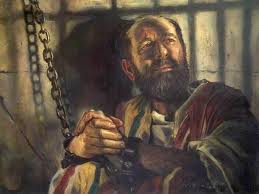
If people were chosen to be non-elect, why did Paul CRY for them?

paulIf TULIP and the Westminster Confession of Faith is true, and the idea that God chose who to save before the foundation of the world (choosing individuals to be either elect and able to believe in him, or non-elect and unable to believe in him), then the apostle Paul’s huge concern (and crying) for unbelievers is a huge mystery.

WCF: ch. III. By the decree of God, for the manifestation of His glory, some men and angels are predestinated unto everlasting life; and others foreordained to everlasting death.

WCF: ch. V. Those of mankind that are predestinated unto lifeGod, before the foundation of the world was laid, according to His eternal and immutable purpose, and the secret counsel and good pleasure of His will, has chosen, in Christ, unto everlasting glory

Why does Paul spend so much time praying and crying about the lost state of people’s souls, and why discussing and pleading with them – for hours at a time? Is it “because God told him to, and because Paul doesn’t know who the elect individuals are”? But that doesn’t solve the puzzle.

  • God didn’t tell him to cry, did he? This seems to be something that Paul himself chose to do.
  • What would be the reason for shedding tears? Doesn’t God’s will always happen? Will the elect not end up in heaven as God has planned, and will the non-elect not end up in hell according to his plans? If all things turn out according to plans, WHY CRY? Why trying to interfere?
  • If the destination of all people is already settled (before the foundation of the world), why would Paul want to thwart God’s plans? Why trying to persuade non-elect to be elect? Is that even possible?
  • Why does Paul preach “repent or perish”, as though he doesn’t know that the elect can’t perish, and the non-elect can’t repent?
  • The L in TULIP means “Limited Atonement”, and that means that Jesus didn’t die for the non-elect, which means that they are not able to be saved and God doesn’t want them to be saved (or else he would arrange so that Jesus would have died for them too). Since it’s not possible to be saved without the blood of Jesus, why would Paul waste his time crying about people who God never intended to save in the first place? And why would he cry for the others – the elect? THEY ARE ALREADY SAVED! And they can never be lost.
  • If Paul instead would save all his tears and only spend 5 minutes a month to evangelize, WHAT WOULD BE THE BIG DIFFERENCE?
  • Why does Paul say: “how shall they believe in him of whom they have not heard? and how shall they hear without a preacher?” (Rom. 10:14). Doesn’t he know that no one needs any preachers or to hear about Jesus Christ, since everyone has been selected for heaven or hell before the foundation of the world?
  • If Paul desires more people than the elect to be saved, doesn’t this mean that Paul has a greater love for lost souls than God? Isn’t it also scary that many atheists would gladly give up their lives for the sake of their children, and that God wouldn’t do the same? Wouldn’t this indicate that many atheists have a greater love for people than God himself? “Greater love hath no man than this, that a man lay down his life for his friends” (John 15:13)
  • Why putting so much effort into something that is a lost course from the start? If God chose people to be non-elect, why not leave it at that?
  • Paul seems to have a huge desire to encourage non-elect to be elect, but he doesn’t have an equal desire to transform the elect into non-elect? Why even picking sides (one over the other) if God is the one who decides who to save and who to damn – not based on anything they have done? Isn’t God’s decision the wisest?
  • Why does Paul try to change the “salvation ratio” that God has already decided upon? If God for instance has decided to save 30% of all people and damn 70%, why does Paul try to amend these numbers which were written in stone before the foundation of the world? Isn’t Paul pleased with the numbers that his Master so carefully has thought out?
  • Wouldn’t Paul’s tears be the same as criticism towards God – who apparently doesn’t want to save as many people as Paul does?

In Acts 20, we can read about Paul preaching for many hours at a time, despite that nothing would change if he only spent 5 minutes. In fact, he spoke for such a long time that one fellow (Eutychus) fell down from a window and died – but Paul prayed for him and he returned back to life. In the same chapter we can read about Paul shedding many tears while he was serving the Lord, and Paul preached repentance and the need for faith toward Jesus Christ – both to jews and gentiles.

Acts. 20:16 For Paul had determined to sail by Ephesus, because he would not spend the time in Asia: for he hasted, if it were possible for him, to be at Jerusalem the day of Pentecost.17 And from Miletus he sent to Ephesus, and called the elders of the church.18 And when they were come to him, he said unto them, Ye know, from the first day that I came into Asia, after what manner I have been with you at all seasons,19 Serving the Lord with all humility of mind, and WITH MANY TEARS, and temptations, which befell me by the lying in wait of the Jews:20 And how I kept back nothing that was profitable unto you, but have shewed you, and have taught you publicly, and from house to house,21 Testifying both to the Jews, and also to the Greeks, repentance toward God, and faith toward our Lord Jesus Christ.

Paul continues to warn people, and ask them to take heed of themselves – as though things might not go according to God’s plans. He also tells them to take heed TO ALL THE FLOCK, which is the same as the church of God which Jesus has purchased with his blood. If the flock could never be lost, it wouldn’t make sense for Paul to warn people to take heed of the flock. Paul knows that not all of the flock of true christians will be spared, because he says that grievous wolves will enter in among them to draw away people, and there will also be false preachers among themselves. Since Paul knows how the devil works, and also how man works – how they “after their own lusts shall they heap to themselves teachers” (2 Tim. 4:3), he also knows that some christians will be walking away from God. Therefore we can read that “BY THE SPACE OF THREE YEARS I CEASED NOT TO WARN EVERY ONE NIGHT AND DAY WITH TEARS”. Paul seems to believe that his warnings and urgent prayers can make a huge difference and change the outcome of things! He doesn’t have the approach “I know that what I do or say won’t change a thing since everything is already written in stone, but I suppose I will pray a few times anyway since God – for some unknown reason – told me to do it”.

Acts. 20:26 Wherefore I take you to record this day, that I am pure from the blood of all men.27 For I have not shunned to declare unto you all the counsel of God.28 Take heed therefore unto yourselves, and to all the flock, over the which the Holy Ghost hath made you overseers, to feed the church of God, which he hath purchased with his own blood.29 For I know this, that after my departing shall grievous wolves enter in among you, not sparing the flock.30 Also of your own selves shall men arise, speaking perverse things, to draw away disciples after them.31 Therefore watch, and remember, that BY THE SPACE OF THREE YEARS I CEASED NOT TO WARN EVERY ONE NIGHT AND DAY WITH TEARS  

2 Tim.4:3 For the time will come when they will not endure sound doctrine; but after their own lusts shall they heap to themselves teachers, having itching ears;

Paul gave the Corinthians advice concerning a certain man who had sinned and been punished. Each time we read a warning and “lest”, it means that the outcome depends on people’s actions. Paul knows that Satan might gain an advantage over us, unless we are obedient to God.

2 Cor. 2:4 For out of much affliction and anguish of heart I wrote unto you with many tears; not that ye should be grieved, but that ye might know the love which I have more abundantly unto you.5 But if any have caused grief, he hath not grieved me, but in part: that I may not overcharge you all.6 Sufficient to such a man is this punishment, which was inflicted of many.7 So that contrariwise ye ought rather to forgive him, and comfort him, lest perhaps such a one should be swallowed up with overmuch sorrow.8 Wherefore I beseech you that ye would confirm your love toward him.9 For to this end also did I write, that I might know the proof of you, whether ye be obedient in all things.10 To whom ye forgive any thing, I forgive also: for if I forgave any thing, to whom I forgave it, for your sakes forgave I it in the person of Christ;11 Lest Satan should get an advantage of us: for we are not ignorant of his devices.

Paul has great concern about people who are enemies of the cross of Christ, and whose end is destruction! Why, if God has closed the door for them and refuses to open their eyes so that they can believe in him and walk in his ways? Maybe because their destination is NOT predestined, and maybe because TULIP is a false philosophy based on a gnostic foundation?

Phil. 3:17 Brethren, join in following my example, and note those who so walk, as you have us for a pattern. 18 For many walk, of whom I have told you often, and now tell you even WEEPING, that they are the enemies of the cross of Christ: 19 whose end is destruction, whose god is their belly, and whose glory is in their shame—who set their mind on earthly things. (NKJV)

Paul doesn’t make any sense at all in Romans 9 (if TULIP is true). Paul is talking about all jews (all of Israel), and he says he wishes that he was accursed and separated from God for their sake – if he could only see them saved. That’s a lot of unselfish love! Why, if God has already arranged the final destination for their souls, and has everything under control? Things couldn’t possibly go wrong, and Paul has no business showing so much love for people who are predestined for hell. Paul says that the right to be adopted as sons belongs to the Israelites (and not only to them), but this doesn’t mean they are automatically saved. Only those who have faith like Abraham, and who have a circumcised heart, will be saved.

Rom.9:1 I am telling the truth in Christ, I am not lying, my conscience testifies with me in the Holy Spirit, 2 that I have great sorrow and unceasing grief in my heart. 3 For I could wish that I myself were accursed, separated from Christ for the sake of my brethren, my kinsmen according to the flesh, 4 who are Israelites, to whom belongs the adoption as sons, and the glory and the covenants and the giving of the Law and the temple service and the promises, 5 whose are the fathers, and from whom is the Christ according to the flesh, who is over all, God blessed forever. Amen. (NASB)

Also many atheists would gladly give up their lives if they could only save their children (whether the children are good or bad), and our Lord wouldn’t do the same for the people of the world? Do atheists have a greater love for their children, than God has for the same children?

Jesus cried as well – doesn’t things go as planned?tears

It wouldn’t make sense for God to predestine things that made Jesus troubled. Jesus was affected by other people’s reactions, and thew news about his friend Lazarus.

John 11:32 Then when Mary was come where Jesus was, and saw him, she fell down at his feet, saying unto him, Lord, if thou hadst been here, my brother had not died.33 When Jesus therefore saw her weeping, and the Jews also weeping which came with her, he groaned in the spirit, and was troubled.

Prophets have been sent out to people by God throughout all ages, but these prophets have not always been treated nicely by others. Things don’t always turn out the way God wants, and that’s due to our free will.

Matt. 23:34 Wherefore, behold, I send unto you prophets, and wise men, and scribes: and some of them ye shall kill and crucify; and some of them shall ye scourge in your synagogues, and persecute them from city to city:35 That upon you may come all the righteous blood shed upon the earth, from the blood of righteous Abel unto the blood of Zacharias son of Barachias, whom ye slew between the temple and the altar.36 Verily I say unto you, All these things shall come upon this generation.37 O Jerusalem, Jerusalem, thou that killest the prophets, and stonest them which are sent unto thee, how often would I have gathered thy children together, even as a hen gathereth her chickens under her wings, and YE WOULD NOT!

Certain women wept when they saw Jesus carrying his cross. Jesus was of course not angry that they wept for him, but he advised them to rather weep for themselves and for future generations, because difficult days would be coming. All that counts is the salvation of people’s souls, and not temporary blessings here on earth.

Luke 23:26 And as they led him away, they laid hold upon one Simon, a Cyrenian, coming out of the country, and on him they laid the cross, that he might bear it after Jesus.27 And there followed him a great company of people, and of women, which also bewailed and lamented him.28 But Jesus turning unto them said, Daughters of Jerusalem, weep not for me, but weep for yourselves, and for your children.29 For, behold, the days are coming, in the which they shall say, Blessed are the barren, and the wombs that never bare, and the paps which never gave suck.

It’s good to know that the Lord will lift us up, under the condition that we humble ourselves before him. If we choose to draw nigh to him, he will draw nigh to us.

James 4:7 Submit yourselves therefore to God. Resist the devil, and he will flee from you.8 Draw nigh to God, and he will draw nigh to you. Cleanse your hands, ye sinners; and purify your hearts, ye double minded.9 Be afflicted, and mourn, and weep: let your laughter be turned to mourning, and your joy to heaviness.10 Humble yourselves in the sight of the Lord, and he shall lift you up.

Through the prophet Jeremiah, we learn that even God himself has much sorrow for those who refuse to hear him

He weeps when he sees his own flock being carried away:

Jeremiah 13:10 This evil people, which refuse to hear my words, which walk in the imagination of their heart, and walk after other gods, to serve them, and to worship them, shall even be as this girdle, which is good for nothing.11 For as the girdle cleaveth to the loins of a man, so have I caused to cleave unto me the whole house of Israel and the whole house of Judah, saith the Lord; that they might be unto me for a people, and for a name, and for a praise, and for a glory: but they would not hear.—16 Give glory to the Lord your God, before he cause darkness, and before your feet stumble upon the dark mountains, and, while ye look for light, he turn it into the shadow of death, and make it gross darkness.17 But if ye will not hear it, MY SOUL SHALL WEEP in secret places for your pride; and MINE EYE SHALL WEEP SORE, AND RUN DOWN WITH TEARS, because the Lord’s flock is carried away captive.

Jeremiah 9:1 Oh that my head were waters, and mine eyes a fountain of tears, that I might weep day and night for the slain of the daughter of my people!2 Oh that I had in the wilderness a lodging place of wayfaring men; that I might leave my people, and go from them! for they be all adulterers, an assembly of treacherous men.3 And they bend their tongues like their bow for lies: but they are not valiant for the truth upon the earth; for they proceed from evil to evil, and they know not me, saith the Lord.—5 And they will deceive every one his neighbour, and will not speak the truth: they have taught their tongue to speak lies, and weary themselves to commit iniquity.6 Thine habitation is in the midst of deceit; through deceit they refuse to know me, saith the Lord.7 Therefore thus saith the Lord of hosts, Behold, I will melt them, and try them; for how shall I do for the daughter of my people?8 Their tongue is as an arrow shot out; it speaketh deceit: one speaketh peaceably to his neighbour with his mouth, but in heart he layeth his wait.9 Shall I not visit them for these things? saith the Lord: shall not my soul be avenged on such a nation as this?10 For the mountains will I take up a weeping and wailing, and for the habitations of the wilderness a lamentation, because they are burned up, so that none can pass through them; neither can men hear the voice of the cattle; both the fowl of the heavens and the beast are fled; they are gone.—13 And the Lord saith, Because they have forsaken my law which I set before them, and have not obeyed my voice, neither walked therein;14 But have walked after the imagination of their own heart, and after Baalim, which their fathers taught them:15 Therefore thus saith the Lord of hosts, the God of Israel; Behold, I will feed them, even this people, with wormwood, and give them water of gall to drink.

Paul spent a lot of time reasoning, arguing and discussing with people

Day and night, month after month. For what reason? An hour each year would be enough, if God decided about our destinies before the foundation of the world.

Acts 17:2 And Paul, as his manner was, went in unto them, and three sabbath days reasoned with them out of the scriptures,3 Opening and alleging, that Christ must needs have suffered, and risen again from the dead; and that this Jesus, whom I preach unto you, is Christ.4 And some of them believed, and consorted with Paul and Silas; and of the devout Greeks a great multitude, and of the chief women not a few.

Acts 17:16 Now while Paul waited for them at Athens, his spirit was stirred in him, when he saw the city wholly given to idolatry.  17Therefore disputed he in the synagogue with the Jews, and with the devout persons, and in the market daily with them that met with him.

Acts 19:8 And he went into the synagogue, and spake boldly for the space of three months, disputing and persuading the things concerning the kingdom of God. 9But when divers were hardened, and believed not, but spake evil of that way before the multitude, he departed from them, and separated the disciples, disputing daily in the school of one Tyrannus. 10And this continued by the space of two years; so that all they which dwelt in Asia heard the word of the Lord Jesus, both Jews and Greeks.

Acts. 28:23 And when they had appointed him a day, there came many to him into his lodging; to whom he expounded and testified the kingdom of God, persuading them concerning Jesus, both out of the law of Moses, and out of the prophets, from morning till evening. 24 And some believed the things which were spoken, and some believed not.

“I will have mercy on who I will have mercy”, but not unconditionally – Rom. 9:15

moses

Rom. 9:15 FOR HE SAITH TO MOSES, I will have mercy on whom I will have mercy, and I will have compassion on whom I will have compassion

This is a very famous and popular verse, and there are some (reformed) christians who translate this verse into “God says to us all; I will elect certain individuals for salvation, and I will place no conditions whatsoever on those that I choose…”. Just because God shows mercy to individuals, groups of people and entire nations, it doesn’t mean that they will be saved, and neither does it say anywhere in Romans. 9:15 that God shows mercy unconditionally. Paul is here making a reference to Exodus 33:19 where God is speaking to Moses, so in order to get Paul’s point we should both read both the context in Romans 9 (which is about God’s right to make the offer of salvation also to the gentiles and under the conditions that he himself chooses) as well as checking the passage that Paul is referring to in order to understand his full point.

Ex 33:2 (God) And I will send an angel before thee; and I will drive out the Canaanite, the Amorite, and the Hittite, and the Perizzite, the Hivite, and the Jebusite:Unto a land flowing with milk and honey: for I will not go up in the midst of thee; for thou art a stiffnecked people: lest I consume thee in the way.And when the people heard these evil tidings, they mourned: and no man did put on him his ornaments.For the Lord had said unto Moses, Say unto the children of Israel, Ye are a stiffnecked people: I will come up into the midst of thee in a moment, and consume thee: therefore now put off thy ornaments from thee, that I may know what to do unto thee.—(Mose starts out)16 For wherein shall it be known here that I and thy people have found grace in thy sight? is it not in that thou goest with us? so shall we be separated, I and thy people, from all the people that are upon the face of the earth.17 And the Lord said unto Moses, I will do this thing also that thou hast spoken: for thou hast found grace in my sight, and I know thee by name.18 And he said, I beseech thee, shew me thy glory.19 And he said, I will make all my goodness pass before thee, and I will proclaim the name of the Lord before thee; and will be gracious to whom I will be gracious, and will shew mercy on whom I will shew mercy.

As we can see, Moses is having a huge problem with the people that he was a leader for, and that’s because they were stiff-necked and rebellious against the God who Moses was a true servant of. Man’s free will is fully displayed in this passage (and throughout the entire Bible) because naturally God doesn’t want people to be disobedient to him and to walk on their own evil ways. The only reason God is threatening to consume them, is due to their sinfulness and stubborn hearts. Moses is pleading with God to show mercy on his people and he is successful because God has indeed seen Moses’ heart and therefore decided to show him grace and listen to his requests.

As we can see, the phrase that he “will shew mercy on whom I will shew mercy” is not in reference to God unconditionally electing people to salvation, and neither can this phrase be understood that way in Romans 9. Moreover, just because God decides to show mercy on a person, it doesn’t mean this person will necessarily be saved because mercy (or kindness or grace) might not even be in relation to the person’s soul. And even if it is in relation to the person’s soul, it doesn’t say “Once God has shown mercy on a person, this person forever remains in his mercy and is forever saved”. Just like we people can choose to be kind or not to others depending on their actions, so can God.

That people are being stiff-necked in the Bible can be seen here with many examples.

Compare with the words of David, who claims that God will be merciful to those who are merciful – which is how God has chosen to treat people:

2 Sam. 22:25 Therefore the Lord hath recompensed me according to my righteousness; according to my cleanness in his eye sight.26 With the merciful thou wilt shew thyself merciful, and with the upright man thou wilt shew thyself upright.27 With the pure thou wilt shew thyself pure; and with the froward thou wilt shew thyself unsavoury.28 And the afflicted people thou wilt save: but thine eyes are upon the haughty, that thou mayest bring them down.

We are told to be merciful as our Father is merciful

If the idea is that God has a certain lucky and elect elite that he has decided to show mercy on while he turns his back on all others, can we act in the same way by showing mercy (being kind) to only SOME? Not according to the Bible that says we are to be good to all. If we show mercy to others, we can be expected to get mercy ourselves, and God expects us to show mercy to others.

Luke:35 But love ye your enemies, and do good, and lend, hoping for nothing again; and your reward shall be great, and ye shall be the children of the Highest: for he is kind unto the unthankful and to the evil.36 Be ye therefore merciful, as your Father also is merciful.

Hosea 4:1 Hear the word of the Lord, ye children of Israel: for the Lord hath a controversy with the inhabitants of the land, because there is no truth, nor mercy, nor knowledge of God in the land.

Hosea 6:6 For I desired mercy, and not sacrifice; and the knowledge of God more than burnt offerings.

Hosea 10:12 Sow to yourselves in righteousness, reap in mercy; break up your fallow ground: for it is time to seek the Lord, till he come and rain righteousness upon you.

Matthew 5:7 Blessed are the merciful: for they shall obtain mercy.

Matthew 9:13 But go ye and learn what that meaneth, I will have mercy, and not sacrifice: for I am not come to call the righteous, but sinners to repentance.

Matthew 23:23 Woe unto you, scribes and Pharisees, hypocrites! for ye pay tithe of mint and anise and cummin, and have omitted the weightier matters of the law, judgment, mercy, and faith: these ought ye to have done, and not to leave the other undone.

1 Timothy 1:13 Who was before a blasphemer, and a persecutor, and injurious: but I obtained mercy, because I did it ignorantly in unbelief.

Ja. 2:12 So speak ye, and so do, as they that shall be judged by the law of liberty.13 For he shall have judgment without mercy, that hath shewed no mercy; and mercy rejoiceth against judgment.14 What doth it profit, my brethren, though a man say he hath faith, and have not works? can faith save him?

Broader context from Romans 9. Read more about Romans 9 in this article.

Rom. 9:14 What shall we say then? Is there unrighteousness with God? God forbid.15 For he saith to Moses, I will have mercy on whom I will have mercy, and I will have compassion on whom I will have compassion.16 So then it is not of him that willeth, nor of him that runneth, but of God that sheweth mercy.17 For the scripture saith unto Pharaoh, Even for this same purpose have I raised thee up, that I might shew my power in thee, and that my name might be declared throughout all the earth.18 Therefore hath he mercy on whom he will have mercy, and whom he will he hardeneth.23And that he might make known the riches of his glory on the vessels of mercy, which he had afore prepared unto glory

Mercy is often in relation to individuals who are being righteous

It makes sense that kind-hearted and obedient people are prone to receive mercy themselves.

Genesis. 19:18 And Lot said unto them, Oh, not so, my Lord:19 Behold now, thy servant hath found grace in thy sight, and thou hast magnified thy mercy, which thou hast shewed unto me in saving my life; and I cannot escape to the mountain, lest some evil take me, and I die:

Genesis 24:27 And he said, Blessed be the Lord God of my master Abrahamwho hath not left destitute my master of his mercy and his truth: I being in the way, the Lord led me to the house of my master’s brethren.

Genesis 39:21 But the Lord was with Joseph, and shewed him mercy, and gave him favour in the sight of the keeper of the prison.

1 Kings 3:6 And Solomon said, Thou hast shewed unto thy servant David my father great mercy, according as he walked before thee in truth, and in righteousness, and in uprightness of heart with thee; and thou hast kept for him this great kindness, that thou hast given him a son to sit on his throne, as it is this day.

Isaiah 14:1 For the Lord will have mercy on Jacob, and will yet choose Israel, and set them in their own land: and the strangers shall be joined with them, and they shall cleave to the house of Jacob.

Conditions that are required for getting mercy, and when God does NOT show mercyKärlek

It looks like God is keen to show mercy on people who LOVE HIM AND KEEP HIS COMMANDMENTS. We can see this requirement throughout the below verses.

Ex. 20:5 Thou shalt not bow down thyself to them, nor serve them: for I the Lord thy God am a jealous God, visiting the iniquity of the fathers upon the children unto the third and fourth generation of them that hate me;And shewing mercy unto thousands of them that love me, and keep my commandments.

Deut. 5:Thou shalt not bow down thyself unto them, nor serve them: for I the Lord thy God am a jealous God, visiting the iniquity of the fathers upon the children unto the third and fourth generation of them that hate me,10 And shewing mercy unto thousands of them that love me and keep my commandments.

Deut. 7:9 Know therefore that the Lord thy God, he is God, the faithful God, which keepeth covenant and mercy with them that love him and keep his commandments to a thousand generations;10 And repayeth them that hate him to their face, to destroy them: he will not be slack to him that hateth him, he will repay him to his face.11 Thou shalt therefore keep the commandments, and the statutes, and the judgments, which I command thee this day, to do them.12 Wherefore it shall come to pass, if ye hearken to these judgments, and keep, and do them, that the Lord thy God shall keep unto thee the covenant and the mercy which he sware unto thy fathers 

1 Kings 8:23 And he said, Lord God of Israel, there is no God like thee, in heaven above, or on earth beneath, who keepest covenant and mercy with thy servants that walk before thee with all their heart

2 Chronicles 6:14 And said, O Lord God of Israel, there is no God like thee in the heaven, nor in the earth; which keepest covenant, and shewest mercy unto thy servants, that walk before thee with all their hearts

Nehemiah 1:5 And said, I beseech thee, O Lord God of heaven, the great and terrible God, that keepeth covenant and mercy for them that love him and observe his commandments:

Isaiah 9:16 For the leaders of this people cause them to err; and they that are led of them are destroyed.17 Therefore the Lord shall have no joy in their young men, neither shall have mercy on their fatherless and widows: for every one is an hypocrite and an evildoer, and every mouth speaketh folly. For all this his anger is not turned away, but his hand is stretched out still.

Isaiah 27:11 When the boughs thereof are withered, they shall be broken off: the women come, and set them on fire: for it is a people of no understanding: therefore he that made them will not have mercy on them, and he that formed them will shew them no favour.

Isaiah 30:18 And therefore will the Lord wait, that he may be gracious unto you, and therefore will he be exalted, that he may have mercy upon you: for the Lord is a God of judgment: blessed are all they that wait for him.

Isaiah 47:6 I was wroth with my people, I have polluted mine inheritance, and given them into thine hand: thou didst shew them no mercy; upon the ancient hast thou very heavily laid thy yoke.

Isaiah 55:7 Let the wicked forsake his way, and the unrighteous man his thoughts: and let him return unto the Lord, and he will have mercy upon him; and to our God, for he will abundantly pardon.

Daniel 9:4 And I prayed unto the Lord my God, and made my confession, and said, O Lord, the great and dreadful God, keeping the covenant and mercy to them that love him, and to them that keep his commandments;

Hosea 2:4 And I will not have mercy upon her children; for they be the children of whoredoms.

Jonah 2:8 They that observe lying vanities forsake their own mercy.

Luke 1:50 And his mercy is on them that fear him from generation to generation.

Luke 10:29 But he, willing to justify himself, said unto Jesus, And who is my neighbour?30 And Jesus answering said, A certain man went down from Jerusalem to Jericho, and fell among thieves, which stripped him of his raiment, and wounded him, and departed, leaving him half dead.31 And by chance there came down a certain priest that way: and when he saw him, he passed by on the other side.32 And likewise a Levite, when he was at the place, came and looked on him, and passed by on the other side.33 But a certain Samaritan, as he journeyed, came where he was: and when he saw him, he had compassion on him,34 And went to him, and bound up his wounds, pouring in oil and wine, and set him on his own beast, and brought him to an inn, and took care of him.35 And on the morrow when he departed, he took out two pence, and gave them to the host, and said unto him, Take care of him; and whatsoever thou spendest more, when I come again, I will repay thee.36 Which now of these three, thinkest thou, was neighbour unto him that fell among the thieves?37 And he said, He that shewed mercy on him. Then said Jesus unto him, Go, and do thou likewise.

Romans 11:32 For God hath concluded them all in unbelief, that he might have mercy upon all.

Gal. 6 15 For in Christ Jesus neither circumcision availeth any thing, nor uncircumcision, but a new creature.16 And as many as walk according to this rule, peace be on them, and mercy, and upon the Israel of God.

Hebrews 4:16 Let us therefore come boldly unto the throne of grace, that we may obtain mercy, and find grace to help in time of need.

Hebrews 10:28 He that despised Moses’ law died without mercy under two or three witnesses:

Jude 1:21 Keep yourselves in the love of God, looking for the mercy of our Lord Jesus Christ unto eternal life.

Psalms and Proverbs about mercy

In Psalms and Proverbs we can see the conditions for getting mercy, and they are the same as above.

Psalm 32:10 Many sorrows shall be to the wicked: but he that trusteth in the Lord, mercy shall compass him about.

Psalm 33:18 Behold, the eye of the Lord is upon them that fear him, upon them that hope in his mercy;

Psalm 37:21 The wicked borroweth, and payeth not again: but the righteous sheweth mercy, and giveth.

Psalm 62:12 Also unto thee, O Lord, belongeth mercy: for thou renderest to every man according to his work

Psalm 86:5 For thou, Lord, art good, and ready to forgive; and plenteous in mercy unto all them that call upon thee.

Psalm 103:11 For as the heaven is high above the earth, so great is his mercy toward them that fear him.

Psalm 103:17 But the mercy of the Lord is from everlasting to everlasting upon them that fear him, and his righteousness unto children’s children;

Psalm 118:4 Let them now that fear the Lord say, that his mercy endureth for ever.

Psalm 130:7 Let Israel hope in the Lord: for with the Lord there is mercy, and with him is plenteous redemption.

Psalm 147:11 The Lord taketh pleasure in them that fear him, in those that hope in his mercy.

Psalm 145:The Lord is gracious, and full of compassion; slow to anger, and of great mercy.The Lord is good to all: and his tender mercies are over all his works.

Proverbs 14:22 Do they not err that devise evil? but mercy and truth shall be to them that devise good.

Proverbs 14:31 He that oppresseth the poor reproacheth his Maker: but he that honoureth him hath mercy on the poor.

Proverbs 16:6 By mercy and truth iniquity is purged: and by the fear of the Lord men depart from evil.

Proverbs 21:21 He that followeth after righteousness and mercy findeth life, righteousness, and honour.

Proverbs 28:13 He that covereth his sins shall not prosper: but whoso confesseth and forsaketh them shall have mercy.

We are not saved because we have always done the right thing, but because we are able to be cleansed in the blood of Jesus upon our repentance and faith in his holy name.

Titus. 3:For we ourselves also WERE sometimes foolish, disobedient, deceived, serving divers lusts and pleasures, living in malice and envy, hateful, and hating one another.But after that the kindness and love of God our Saviour toward man appeared,Not by works of righteousness which we have done, but according to his mercy he saved us, by the washing of regeneration, and renewing of the Holy Ghost

The pharisees REJECTED the counsel of God, and God’s will can be thwarted (Luke 7:30)

eggGod doesn’t want anyone to perish, but people DO perish

God certainly doesn’t want anyone to perish, but things don’t always turn out the way God wants. God COULD of course force every single person to repent and get life in abundance but he preferred to create us as human beings in his own image (he actually said “our” image referring to the trinity) and with a free will which means that we have a personal responsibility for our own actions.

Ez. 18:23 Have I any pleasure at all that the wicked should die? saith the Lord God: and not that he should return from his ways, and live?

Ez. 33:11 Say unto them, As I live, saith the Lord God, I have no pleasure in the death of the wicked; but that the wicked turn from his way and live: turn ye, turn ye from your evil ways; for why will ye die, O house of Israel?

2 Peter 3:The Lord is not slack concerning his promise, as some men count slackness; but is longsuffering to us-ward, not willing that any should perish, but that all should come to repentance.

John 3:16 For God so loved the world, that he gave his only begotten Son, that whosoever believeth in him should not perish, but have everlasting life.

Deuteronomy 8:20 As the nations which the Lord destroyeth before your face, so shall ye perish; BECAUSE ye would not be obedient unto the voice of the Lord your God.

We can REJECT the will of God

Acts 7:51 Ye stiffnecked and uncircumcised in heart and ears, ye do always resist the Holy Ghost: as your fathers did, so do ye.

The pharisees and the layers REJECTED the counsel of God according to Luke.

Luke 7:29 And all the people that heard him, and the publicans, justified God, being baptized with the baptism of John.30 But the Pharisees and lawyers rejected the COUNSEL of God against themselves, being not baptized of him. (KJV)

Luke 7:30 But the Pharisees and lawyers rejected the will of God for themselves, not having been baptized by him. (NKJV)

As you can see NKJV translate the same word with THE WILL of God, and also the KJV translators chose to translate the Greek original word with “the will” in the below verse:

Acts. 13:36 For David, after he had served his own generation by the will of God, fell on sleep, and was laid unto his fathers, and saw corruption: (KJV)

“Counsel” and “will” are here translated from the Greek word boulén as in boulé  (Strongs 1012) from boulomai, and it means counsel, decree, plan, motives, decision and/or purpose.

Below are the cases where this word is used in the KJV, starting with Acts. 20:27–31. Paul warns his disciples, the elders of the church in Ephesus who were naturally christians, that they must TAKE HEED unto themselves and to all the church which God had purchased with his blood. Acts 20:27–31 gives us the following information:

  1. Individuals (the church or the body of Christ consists of individuals) can be lost despite being purchased with the blood of Jesus.
  2. Despite that certain christians have been made overseers of a church by the Holy Ghost (who always leads us on the right path) there is still a risk that the individuals in the church will be lost, indicating that people don’t always adhere to the Holy Spirit.
  3. Grievous wolves shall enter the body of Christ also from among themselves, with the aim to draw away disciples from the true church of God to themselves. This shows that some christians will at one point leave the sound teachings in the church and instead start to speak perverted things and deceive others who might also leave the true church. This is a lot more than a mere risk since Paul says that he KNOWS that this will happen, likely because he knows how man’s heart works.
  4. False preachers who speak perverted things can apparently make christian believe in these twisted claims and some of them will become disciples of these false preachers and hence lose their salvation. The flock shall not be spared even though it was a true flock of God.
  5. By taking heed and be careful we can affect the future and reduce the harm.
  6. If people were chosen for salvation and damnation before the beginning of the world, Paul would be wasting his time by  warning every one for night and day with tears – for three years! Paul should have known that no warnings or tears in the world can change God’s decrees which he made before he even created us, if such decrees were made. If God predestined certain people to be saved and others to be lost, then Paul has no business crying over those who God has chosen to damn, and those who are predestined to be saved will be saved regardless of Paul’s intense efforts. So Paul would actually be guilty of trying to thwart God’s plans by his constant warnings, pleadings and crying for people who already have their future written in stone. This speaks heavily against the reformed type of thinking.
  7. We can affect the future with our prayers.

Acts 20:27 For I have not shunned to declare unto you all the counsel of God.28 Take heed therefore unto yourselves, and to all the flock, over the which the Holy Ghost hath made you overseers, to feed the church of God, which he hath purchased with his own blood.29 For I know this, that after my departing shall grievous wolves enter in among you, not sparing the flock.30 Also of your own selves shall men arise, speaking perverse things, to draw away disciples after them.31 Therefore watch, and remember, that by the space of three years I ceased not to warn every one night and day with tears.

Jesus showed himself to Paul and selected him to be doing his work by spreading the gospel (which Paul accepted), so would Jesus want people to listen to Paul? Yes, of course.  Yes, here is one example among many that a certain centurion did not listen to Paul’s advice, even if what Paul said didn’t concern the gospel but their own physical safety.

Acts 27:11 Nevertheless the centurion believed the master and the owner of the ship, more than those things which were spoken by Paul.12 And because the haven was not commodious to winter in, the more part advised to depart thence also, if by any means they might attain to Phenice, and there to winter; which is an haven of Crete, and lieth toward the south west and north west.—42 And the soldiers’ counsel was to kill the prisoners, lest any of them should swim out, and escape.43 But the centurion, willing to save Paul, kept them from their purpose; and commanded that they which could swim should cast themselves first into the sea, and get to land:

Here is the famous Ephesian 1:11. (See more here.) Paul is writing to the saints in Ephesus, and as saints they of course were IN JESUS and wonderful promises were tied to them since they had obtained an inheritance by choosing to be God’s children. The counsel of God’s own will might here concern his will that those who are in Jesus (naturally by their own choice) and endure to the end shall be adopted as children and inherit his kingdom. The conditions are that we believe, trust in Jesus and remain as saints. If 100% of all things under the sun always happen according to God’s will, then of course every murder, abortion, rape and divorce must also be according to God’s will, and every time people rebel against him. Clearly that is nothing but absurd, and Satan would simply be acting as God’s right arm.

Eph. 1:1 1 Paul, an apostle of Jesus Christ by the will of God, to the saints which are at Ephesus, and to the faithful in Christ Jesus:—11 In whom also we have obtained an inheritance, being predestinated according to the purpose of him who worketh all things after the counsel of his own will:12 That we should be to the praise of his glory, who first trusted in Christ.—18 The eyes of your understanding being enlightened; that ye may know what is the hope of his calling, and what the riches of the glory of his inheritance in the saints,19 And what is the exceeding greatness of his power to us-ward who believe, according to the working of his mighty power

Only God is good, but here is an example of another “good” man (the same word) and that is Joseph. He can’t compare himself with the Creator, but he was still good and just:

Luke 23:50 And, behold, there was a man named Joseph, a counsellor; and he was a good man, and a just:51 (The same had not consented to the counsel and deed of them;) he was of Arimathaea, a city of the Jews: who also himself waited for the kingdom of God.

Jesus was delivered by the counsel and foreknowledge of God. God the Father did not force anyone to betray or kill Jesus, but he knew someone would, and his death was also predestined to happen. There are numerous ways in which Jesus could die for us so Judas betrayal was not necessary at all, but he was first in line. Those hands who crucified Jesus were WICKED, which means that God certainly didn’t approve of what they did, and let’s not forget that it was Satan who entered Judas when Judas rose up to betray Jesus. God allowed it to happen of course, but he didn’t predestine Juda’s betrayal.

Acts 2:22 Ye men of Israel, hear these words; Jesus of Nazareth, a man approved of God among you by miracles and wonders and signs, which God did by him in the midst of you, as ye yourselves also know:23 Him, being delivered by the determinate counsel and foreknowledge of God, ye have taken, and by wicked hands have crucified and slain:

What God determined before to be done was to offer up his son to die for us, and we can also read that Jesus actually gave up his own life and that no one took it from him. He did not determine that Judas must betray him. Read more about Judas severe sin here.

Acts 4:27 For of a truth against thy holy child Jesus, whom thou hast anointed, both Herod, and Pontius Pilate, with the Gentiles, and the people of Israel, were gathered together,28 For to do whatsoever thy hand and thy counsel determined before to be done.

If Jesus is the son of God and the many miracles he performed too, then it would be unwise to try to fight it back, which was the advice of  Gamaliel. A Messiah is a Messiah no matter what we do.

Acts. 5:37 After this man rose up Judas of Galilee in the days of the taxing, and drew away much people after him: he also perished; and all, even as many as obeyed him, were dispersed.38 And now I say unto you, Refrain from these men, and let them alone: for if this counsel or this work be of men, it will come to nought:

And a couple of more examples with boulé

1 Corinthians 4:Therefore judge nothing before the time, until the Lord come, who both will bring to light the hidden things of darkness, and will make manifest the counsels of the hearts: and then shall every man have praise of God.And these things, brethren, I have in a figure transferred to myself and to Apollos for your sakes; that ye might learn in us not to think of men above that which is written, that no one of you be puffed up for one against another.

Hebr. 6:17 Wherein God, willing more abundantly to shew unto the heirs of promise the immutability of his counsel, confirmed it by an oath:18 That by two immutable things, in which it was impossible for God to lie, we might have a strong consolation, who have fled for refuge to lay hold upon the hope set before us

We are being wise if we do the things the Lord says we should do.

Luke: 6:46 And why call ye me, Lord, Lord, and do not the things which I say?

The unbiblical TULIP (five points of calvinism) stands or falls together

Calvinist theology is usually identified with the five points of Calvinism – TULIP, and this concept derived around the year 1619 due to the happenings in the famous Synod of Dort. John Calvin himself died 1564, so long before the “five points of calvinism” started to be used in this way. While not all calvinists necessarily agree with John Calvin to 100%, most of them (if not all) would agree with the five points of TULIP.

If a person chooses to believe in T in TULIP (Total Depravity) then he MUST believe in the rest of the points/letters in TULIP because TULIP stands or falls together. However, it is possible (and common) to believe only in P (which boils down to “unconditional eternal security” or “once saved always saved”) and not in the other points. There are some believers who still SAY they are 2-point/3-point/4-point calvinists but it’s not possible for obvious reasons. I can also say that I’ve encountered NO calvinists who are consistent with their own teachings. They all frequently express themselves as though man has free will to accept/reject God and that we all have an option to get saved, but this is not what their own theology allows.

The doctrines within Calvinism was originally introduced to church by Augustine (who the Roman Catholic Church views as one of their founding fathers) in the fourth century, and he taught that Christ did not die for all men but for a chosen few whom God had chosen and predestined to become His children. John Calvin revived this teaching and continued to spread this idea, and today this dangerous soul-damaging doctrine continues to spread and deceive people. This is why we must not be silent and let it spread in peace, because we are dealing with people’s SOULS here. TULIP is based on the gnostic idea that we are all born with a sinful nature, but do we get this nature according to God’s will or against his will? Calvinists will not tell us.

  • Total Depravity. Also called “total inability” . This doctrine asserts that every person born into the world is enslaved to  sin and not by nature inclined to seek or love God. (Whose fault is that?). This means, that in order to ENABLE people to seek and find God, God must first “wake him up” from his spiritual death (calvinists wrongly use the term “regenerate”). The ones God chooses to wake up are the same as those who will get saved. This doctrine results in that 1)  GOD is the one CHOOSING whom to wake up. 2) The ones he does not wake up have no chance to get saved which God is aware of 3) God does not want all to be saved because then he would have “woken up” more people 4) Most people will remain in their wicked sinful way of living only because God want them to, 4) It wouldn’t make sense for Jesus to die for people who God never intended to save, but for the elect only.
  • Unconditional election. This doctrine asserts that God has chosen from before the foundation of the world those whom he will save, and this choice is not based on anything the individual does or believes (not merit, faith, etc) because it’s unconditional. Rather, this doctrine means that God’s unconditional election causes individuals TO repent and believe in him, and further that the chosen ones WILL end up in the Kingdom of God. This doctrine results in that 1) God has WITHHELD mercy from all the rest and those individuals WILL end up in hell 2) Repentance and faith are not conditions for salvation since God WITHOUT them will choose to whom he will provide the means of repenting and believing, 3) God could save everyone if he wanted but he wanted to save only some, 4) It wouldn’t make sense for Jesus to die for people who God never intended to save.
  • Limited atonement. This doctrine asserts that Jesus’ only died for a few people (the elect) and his death was CERTAIN to bring about salvation for all those he died for. This  doctrine results in that 1) only the sins of the elect were covered through Jesus’ death and not the sins of the whole world, 2) God never had a goal to save “as many as possible” but only the elect, and that’s why the atonement was limited for the elect only, 3) Those who end up in hell do NOT do so for rejecting Jesus sin offering because his sin offering was never meant for them or intended for them. 4) Most individuals are born doomed (even if we can never know exactly who they are) since the atonement was never meant for them.
  • Irresistible grace. This doctrine asserts that God’s desire/decision to save individuals cannot be resisted, but WILL cause them to obey his calling. This means that when God sovereignly purposes to save someone, that individual WILL be saved. The Holy Spirit causes the chosen individuals to cooperate,  repent and believe. This doctrine results in that 1) God chooses who will end up in heaven or hell and we have nothing to do with this choice, 2) It’s not totally fair to say that individuals are saved through “faith” since the truth is that they are saved by ELECTION, 3) Those who are lost were never offered any grace because IF they were offered grace they wouldn’t be able to reject it,4) It’s not fair to say that individuals end up in hell due to their SINS, since they are only doomed because God never enabled them to believe in him, and he never intended to save them in the first place. This choice was made BEFORE they were born and BEFORE they could think about sinning, so sinning has nothing to do with their destiny.
  • Perseverance of the saints. This doctrine asserts that the “saints” (those individuals who God has chosen to save before the foundation of the world) WILL continue in faith until the end. Those who apparently fall away either never had true faith to begin with or will return. This results in that 1) It’s impossible for an individual to at any time know if he is truly saved and “eternally secure” because if he falls away in the latter part of his life this shows “he was never saved to begin with”. 2) Individuals can safely place the responsibility to avoid sinning on GOD since HE is the one who are to “preserve” those he has chosen to save. 3) Christians might easier fall for temptations because they know they will be preserved to the end anyway, if they are among the elect (which all calvinists believe they are). 4) It can bring a false sense of security and that you can be saved in your sins.

P in TULIP is the most dangerous point since the TRUTH is that we cannot serve two masters and be saved in our sins – and Satan knows it. This doctrine might cause people to easier fall for temptations, and then their SOULS are at risk! This is a good reason to highlight the danger of Calvinism/Gnosticism to the world to prevent more people from being deceived.

When exposed to the contradictions within TULIP (which makes God the author of sin), the ordinary excuses are soon to follow:

1) God’s ways are higher than our ways!

2) Who are YOU to question GOD?

3) It’s impossible for our finite minds to fully understand the infinite mind of GOD!

4) This only seems contradictory to us – NOT to God!

5) The potter always forms the clay to what he wants!

6) I believe in paradoxes – so what? The trinity is a paradox…!

7) The Roman Catholic Church teaches like you do!

Any cult in the world can defend any contradiction at all by using the above excuses, resulting in that anything goes even if it’s totally against the Bible and makes no sense whatsoever.

NONE of the early church fathers taught against free will the first 300 years AD (this can easily be proven), and none of them taught that we are born with a sinful nature or that we are unconditionally eternally secure. ONLY the gnostics taught such unbiblical doctrines. Calvinists have no answer for why ALL the church fathers were “wrong” (and the gnostics actually RIGHT) for so many years until Augustine entered the scene and got it “right”. Most will say that it’s the Bible that is important for us and not the views of the church fathers, councils, etc. While it’s of course true that it’s the BIBLE that should correct us, they must still explain why both the Bible AND the early church fathers taught free will, and they must also explain why they put so much emphasis on the events in the Synod of Dort, and the unfair treatment of Pelagius in councils where he was not even present to defend himself. Suddenly councils are very important….

2 Tim. 4:2-3 Preach the word; be instant in season, out of season; reprove, rebuke, exhort with all longsuffering and doctrine. For the time will come when they will not endure sound doctrine; but after their own lusts shall they heap to themselves teachers, having itching ears.

Are some of us CHOSEN to salvation from the beginning? (2 Thess. 2:13)

2 Thess. 2:13 But we are bound to give thanks alway to God for you, brethren beloved of the Lord, because God hath from the beginning chosen you to salvation THROUGH sanctification of the Spirit and belief of the truth

Some people get confused about this verse because if read in a vacuum, it looks like God is choosing certain individuals to believe from the foundation of the world, contrary to what the rest of the Bible says (whosoever can be saved if they choose to believe), but look what happens if we highlight another passage in the verse:

2 Thess. 2:13 But we are bound to give thanks alway to God for you, brethren beloved of the Lord, because God hath from the beginning chosen you to salvation THROUGH sanctification of the Spirit and BELIEF OF THE TRUTH

As you can see the CONDITIONS for being saved can be seen in the verse, and they are the same old conditions which can be seen throughout the whole Bible. We are constantly reminded of that we must REPENT from our sins so that we can be cleansed/righteous/justified/sanctified, and that we must BELIEVE in Jesus Christ. When we are led by the Holy Spirit we can get sanctification, and it’s THROUGH belief in the TRUTH that we are saved. The rest of this chapter confirms our free will.

Let no man deceive you by any means: for that day shall not come, except there come a falling away first, and that man of sin be revealed, the son of perdition;Who opposeth and exalteth himself above all that is called God, or that is worshipped; so that he as God sitteth in the temple of God, shewing himself that he is God.—And then shall that Wicked be revealed, whom the Lord shall consume with the spirit of his mouth, and shall destroy with the brightness of his coming:

Paul is writing to christians and he warns them to not be DECEIVED, which of course would be an unnecessary warning unless it could potentially happen. He is also informing them that there will be a falling away (christians leaving Christ) before the Antichrist will appear (the son of perdition). The Lord will later consume Antichrist with the spirit of his mouth and that will be at his second coming (hence the pretribulation theory could not be true since there will be christians around during the time of Antichrist).

10 And with all deceivableness of unrighteousness in them that perish; because they received not the love of the truth, that they might be saved.

Here Paul confirms that those who perish do so BECAUSE of their unrighteousness and because they received not the love of the truth. Had they done so, this WOULD have saved them! It certainly looks like the same story as in Romans 1, where people hardened their heart to the extent that God gave them over to a reprobate mind.

11 And for this cause God shall send them strong delusion, that they should believe a lie:12 That they all might be damned who believed not the truth, but had pleasure in unrighteousness.

Due to their own refusal to believe the truth and due to their wickedness, God will send them confusion (just like he did in Romans 1), resulting in that they believe in a lie (or rather that they will believe in this lie with even more power than before). This will eventually lead to damnation and that is their own fault because they preferred to live in unrighteousness rather than seeking the only true God who could save them.

13 But we are bound to give thanks alway to God for you, brethren beloved of the Lord, because God hath from the beginning chosen you to salvation through sanctification of the Spirit and belief of the truth:14 Whereunto he called you by our gospel, to the obtaining of the glory of our Lord Jesus Christ.

We are saved through FAITH (belief in the truth) and we get sanctification through the Holy Spirit when we repent and walk in the light. We are called to do so by the gospel (faith comes from hearing the Word) and we obtain all the richness that can be found in our Lord Jesus Christ. When God calls us, the idea is that we accept the calling and come to him in order to get saved.

15 Therefore, brethren, stand fast, and hold the traditions which ye have been taught, whether by word, or our epistle.

Paul tells the christians to STAND FAST and to HOLD the traditions that they have been taught (something THEY must do because God certainly isn’t going to do this for them), implying that they are not predestined to do this by any means. He encourages them to walk this path, knowing there is always a possibility they won’t. Paul wouldn’t spend valuable time encouraging people and warning them about dangerous scenarios unless there was a chance they could stray away.

It’s a choice to be CHILDREN OF WRATH – Ephesians 2

Children of wrath and God’s election in Ephesians 2

There are some who believe that God randomly selects people to be saved and ignore the rest, and they try to use Ephesians 1-2 as support for this theory. The truth is that God wants ALL people to be saved because he IS a merciful God and he wants us to take after HIM when it comes to showing mercy. (We shouldn’t strive to be merciful to SOME and ignore the majority.)

2 Peter 3:The Lord is not slack concerning his promise, as some men count slackness; but is longsuffering to us-ward, not willing that any should perish, but that ALL should come to repentance

Ezekiel 33:11 Say unto them, As I live, saith the Lord GOD, I have no pleasure in the death of the wicked; but that the wicked turn from his way and live: turn ye, turn ye from your evil ways; for why will ye die, O house of Israel?

Luke 6:36 Be ye therefore merciful, as your Father also is merciful.

In Ephesians we can read about a corporate election, and the body of Christ IS indeed chosen to inherit his kingdom. I believe God decided before the world began that true believers shall inherit his kingdom, but the question is if we as individuals would like to join the body of Christ (the Church) or not. IF we so choose, the wonderful promises are also tied to us. “Elect” is about value and can mean precious, and we are indeed precious if we choose to believe in our Savior and live holy and separate. The book of Ephesians concerns what BELIEVERS can look forward to in the future. Pay attention to how many times IN him, THROUGH him, etc, are mentioned in Ephesians 1-2. Being IN HIM is the condition for being one of the elect! Also pay attention to the warnings addressed to christians. Paulus starts out his letter by addressing FAITHFUL CHRISTIANS who therefore are HOLY and very special (elect):

Ephesians 1

When Paul talks about US he refers to both jews and gentiles who believe in Jesus ChristPaul puts a lot of emphasis on trying to get the jews to understand that they are not on the way to heaven just because they are born jews and are his chosen people. It’s through JESUS that we can be saved. It’s through his blood because only his precious blood can cleanse our sins. What God had decided from eternity past is NOT which individuals to provide faith and eventually save, but rather that whoever is IN HIM (“us” v. 4) are ELECT, and chosen to be holy and blameless before God thanks to the blood of Jesus! The condition is therefore that we must be IN HIM in order to reach the state where we have all the mentioned wonderful promises tied to us.  What is foreknown is that those who are IN HIM will through Jesus Christ be taken up as his holy children. Those who are not IN HIM are not forgiven for their sins and redeemed in his blood, resulting in that they are lost. We as believers have redemption through his blood, and that means we are on the safe side. We are therefore adopted as children and can expect an inheritance, but only as long as we’re not getting off the transportation going to heaven. (Let’s not forget that a son can be disinherited though.) Who is Paul addressing when he mentions all the wonderful promises? The saints. To the faithful in Jesus Christ. No one forced them to be saints and faithful, but they chose to be this by themselves. As such, the wonderful promises that Paul talks about, are theirs, provided of course that they continue on that path.

Eph. 1:1 Paul, an apostle of Jesus Christ by the will of God, TO THE SAINTS which are at Ephesus, and TO THE FAITFFUL in Christ Jesus

V. 5 below uses the word “adoption” but this word didn’t mean exactly the same thing 2000 years ago as it does today in our modern world. The Greek word “huiothesia” refers to the standing of someone who is ALREADY a son and Adoption is thus the inheritance or promise that the son can expect to receive as an heir. Huiothesia is not the same as salvation but it is the promise of God received by those who are believers in Christ Jesus (Gal 3:22-27).  The body of Christ is predestined to God’s kingdom and to receive the inheritance, and the question remains who would like to join and who will remain to the end. The body of Christ is heading there, but are YOU? Join the body-of-Christ-bus, but stay on the bus to the end station!

Eph. 1:Blessed be the God and Father of our Lord Jesus Christ, who hath blessed us with all spiritual blessings in heavenly places IN CHRIST:According as he hath chosen us IN HIM before the foundation of the world, that we should be holy and without blame BEFORE HIM in love:Having predestinated us unto the adoption of children by Jesus Christ to himself, according to the good pleasure of his will,To the praise of the glory of his grace, wherein he hath made us accepted IN THE BELOVED.7 IN WHOM we have redemption THROUGH HIS BLOOD, the forgiveness of sins, according to the riches of his grace

The Holy Spirit is like a  deposit for us christians (and all the spiritual gifts will one day pass away when we enter God’s kingdom), but just like in all legal contracts our particular “contract” with God can be broken (just like the old covenant was broken) if either of the party doesn’t follow the agreement. If you take a loan to buy a car and stop paying for this loan, the car will be seized despite that it was once in your possession. It’s also beneficial to keep your “guarantee receipt” because it entitles you (if it hasn’t expired) to certain rights, but if you throw it away or if you lose it, then it won’t do you much good despite all the promises that are listed on it.

Having the Holy Spirit is often likened with being “sealed”. This doesn’t mean anything unbreakable as shown here, but it means that we are “marked” as very special and holy people who can expect a great inheritance. (As long as we remain in Christ of course.) We are separate from all others who do not have this seal, due to their refusal to repent and believe. The sealing occurs AFTER that we believe, and we can read in Acts 5:32 that the Holy Spirit is given to all those who OBEY him, so belief and obedience must come before we get the Holy Spirit.

Acts 5:32 And we are his witnesses of these things; and so is also the Holy Ghost, whom God hath given to them that OBEY him.

We can also read that God works all things after the counsel of his own will. Does this will exclude the possibility that he might want to place conditions for salvation on us? No of course not, because God can do anything he wants and it’s clear that he require US to repent, believe and show good fruit. He is not going to do this for us. The mystery of his will is that he will one day gather all believers together and give them the inheritance – those who are IN CHRIST! And we can read that TRUST plays an important role in order to be one of the elect. God is not “trusting” for us. WE are supposed to trust in him and we can read that Paul says that trust comes AFTER hearing about the gospel of our salvation.

Eph. 1:Having made known unto us the mystery of his will, according to his good pleasure which he hath purposed in himself:10 That in the dispensation of the fulness of times he might gather together in one all things in Christ, both which are in heaven, and which are on earth; even in him:11 In whom also we have obtained an inheritance, being predestinated according to the purpose of him who worketh all things after the counsel of his own will:12 That we should be to the praise of his glory, who first TRUSTED in Christ.13 In whom ye also TRUSTED, after that ye heard the word of truth, the gospel of your salvation: in whom also after that ye BELIEVED, ye were sealed with that holy Spirit of promise,14 Which is the earnest of our inheritance until the redemption of the purchased possession, unto the praise of his glory.

Paul prayed a lot for the Ephesians, indicating that we can absolutely change the outcome of things with our prayers, and in this case Paul prayed for wisdom. Our prayers can influence others to be enlightened and to know what the HOPE is for God’s calling. We can read once again that it’s the SAINTS who get the benefit of the inheritance. We can also read that the CHURCH, which is the body of Christ will ultimately and once for all be under his feet. This is what the beginning of Ephesians is all about. HIS CHURCH – THE BODY OF CHRIST, consisting of BELIEVING SAINTS.

Eph. 1:16 Cease not to give thanks for you, making mention of you in my prayers;17 That the God of our Lord Jesus Christ, the Father of glory, may give unto you the spirit of wisdom and revelation in the knowledge of him:18 The eyes of your understanding being enlightened; that ye may know what is the HOPE of his calling, and what the riches of the glory of his inheritance in the SAINTS,19 And what is the exceeding greatness of his power to us-ward WHO BELIEVE, according to the working of his mighty power,20 Which he wrought in Christ, when he raised him from the dead, and set him at his own right hand in the heavenly places,21 Far above all principality, and power, and might, and dominion, and every name that is named, not only in this world, but also in that which is to come:22 And hath put all things under his feet, and gave him to be the head over all things to the CHURCH,23 Which is his BODY, the fulness of him that filleth all in all.

Ephesians 2

Ephesians 2 starts with Paul telling us that God has quickened us who were dead in trespasses and sins. I can only say that it’s a very bad choice to  be dead in trespasses and sins! When are we spiritually DEAD according to the Bible? That is when we SIN because this separates us from our holy God.

Isaiah 59:2 But your iniquities have separated between you and your God, and your sins have hid his face from you, that he will not hear.

Luke 15:(The prodigal son) 30 But as soon as this thy son was come, which hath devoured thy living with harlots, thou hast killed for him the fatted calf.—32 It was meet that we should make merry, and be glad: for this thy brother was DEAD, and is alive AGAIN; and was LOST, and is found.

Nowhere in the Bible does it suggest that spiritually “dead” people cannot make any good moral decisions or that they are unable to seek God. And nowhere does it say that we are totally depraved (words not even in the Bible), BORN as children of wrath or born with a sinful nature. On the contrary, even evil unbelievers can do much good, as can be seen here. How then do we become quickened/alive from the predicament that our sin has brought us into? We must of course REPENT for our sins and let the blood of Jesus cleanse us so that we can be born again and become righteous! Then we are no longer dead since we are alive in Christ and new persons. He removed all traces of sins on our account and we have left the old man behind. Paul explains that the Ephesians in time PAST walked in sin, but he doesn’t expect them to continue like that. Also note that in order to commit the sins that Paul lists, you must at least be an ADULT first. Babies are not aware of the law and they are unable to:

  • have a need or reason to be “quickened”
  • perform TRESPASSES and SINS and through them be dead
  • walk according to the world
  • walk according to Satan (the prince of the power of the air)
  • be disobedient through following Satan
  • walk in the lusts of their flesh
  • fulfill the desires of their flesh
  • fulfill the desires of their mind

So don’t get confused about the expression “children of wrath” because the description fits only grown ups , and we can be labelled either children of God or children of Satan depending on our life styles. We can also read that the “children of wrath” are also called  “children of disobedience” so it’s clear that in order to fit the bill you must be able to DISOBEY – something that babies cannot do. Does God want people to disobey him? Clearly not! Evidently Eph. 2 doesn’t suggest we are BORN as children of wrath, but it provides details for how we can BECOME children of wrath by the way we live. Even the Ephesians WERE dead due to their choice to sin, but thanks to the blood of Jesus, and through their own repentance of their sins, they were restored. Paul says “hath raised us up together”, but that is a picture of our future with Christ, because he continues the sentence with “in the ages to COME”. We haven’t been elevated yet.

Eph. 2:1 And you hath he quickened, who were dead in trespasses and sins;Wherein in time past ye walked according to the course of this world, according to the prince of the power of the air, the spirit that now worketh in the children of DISOBEDIENCEAmong whom also we all had our conversation in times past in the lusts of our flesh, fulfilling the desires of the flesh and of the mind; and were by nature the children of wrath, even as others.But God, who is rich in mercy, for his great love wherewith he loved us,Even when we WERE dead in sins, hath quickened us together with Christ, (by grace ye are saved;)And hath raised us up together, and made us sit together in heavenly places in Christ Jesus:That in the ages to come he might shew the exceeding riches of his grace in his kindness toward us through Christ Jesus.

And don’t get confused just because it says “by nature”, because 1) it still doesn’t indicate we are BORN that way, 2) we can see below in Rom 2:14 that people can by nature do the things contained in the law, and 3) those who by nature are the children of wrath are those who have made a habit out of sinning and hardened their hearts. (Read more in Romans 1 about how certain men hardened their hearts to the extent that God eventually gave them over to a reprobate mind.) A diligent alcoholic might feel that it’s totally natural for him to get drunk once in a while, and in combination with a refusal to repent his habits might turn him over to become a child of wrath/disobedience. 

Rom. 2:14 For when the Gentiles, which have not the law, do by nature the things contained in the law, these, having not the law, are a law unto themselves:15 Which shew the work of the law written in their hearts, their conscience also bearing witness, and their thoughts the mean while accusing or else excusing one another;)

Eph 2:8-9

Now we have arrived to the famous verses which are likely the most cited verses in the entire Bible. These couple of verses are often used as an attempt to show that we can be saved even if we don’t show any fruit, and even if we SIN. That’s not what the verses are saying though.The gift of God in these sentences is NOT “faith” but that we can be saved. You can read more why the Greek original text makes this clear here. We are either saved by the law OR by grace, and most of us can agree on that we haven’t chosen to obey the law to 100% so the only other option is GRACE (God’s mercy). To suddenly start to make good deeds will never cover for our PAST sins. It’s thanks to the blood of Jesus that we can be cleansed and saved. So does Eph. 2:8-9 suggest that it’s no longer damaging for our souls if we would sin and/or not provide any work? NO! It does not say that! It only informs us that salvation is by grace through FAITH. Nothing we do or believe can ever MERIT salvation, but there are still conditions. We must repent for our sins and believe. Breaking the moral law (the ten commandments) are just as important today as it was during the time of Moses, and as it was during the time of Cain and Abel. Sins always separate us from God whether we live in the old or new testament. Faith without works is dead, and works without faith is also dead.

Eph. 2:For by grace are ye saved THROUGH FAITH; and that not of yourselves: IT is the gift of God: Not of works, lest any man should boast.

Verse 10 is not nearly as popular and it’s rarely cited. This verse tells us that we are supposed to WALK unto good works.  Do you believe that God will accept us the way we are even if we would NOT walk with him and show good works? Hardly!  So this is a warning towards christians. Neither will God do the walking for us, because WE are created to do the walking. However, we can do nothing without Jesus so we have to be IN HIM. 

Eph. 2:10 For we are his workmanship, created in Christ Jesus unto good works, which God hath before ordained that we should walk in them.11 Wherefore remember, that ye being in time past Gentiles in the flesh, who are called Uncircumcision by that which is called the Circumcision in the flesh made by hands12 That at that time ye were without Christ, being aliens from the commonwealth of Israel, and strangers from the covenants of promise, having no hope, and without God in the world:13 But now in Christ Jesus ye who sometimes were far off are made nigh by the blood of Christ.

Paul continues to talk about the good news and what we can accomplish THROUGH Jesus, whether we are jews or gentiles – as long as we are believers. We are united together in one body through the power of the cross. Once again, Ephesians is about the Church and the body of Christ as in God’s family. Are you in or are you out? You decide and you know the conditions.

Eph. 2:14 For he is our peace, who hath made both one, and hath broken down the middle wall of partition between us;15 Having abolished in his flesh the enmity, even the law of commandments contained in ordinances; for to make in himself of twain one new man, so making peace;16 And that he might reconcile both unto God in ONE BODY by the cross, having slain the enmity thereby:17 And came and preached peace to you which were afar off, and to them that were nigh.18 For through him we both have access by one Spirit unto the Father.19 Now therefore ye are no more strangers and foreigners, but fellowcitizens with the saints, and of the household of God;20 And are built upon the foundation of the apostles and prophets, Jesus Christ himself being the chief corner stone;21 In whom all the building fitly framed together groweth unto an holy temple in the Lord:22 In whom ye also are builded together for an habitation of God through the Spirit.

Keep the parable in Matthew 22 in mind where we can read “many are called but few are chosen”. The “chosen” ones are those who freely accepted to go to the party, and who also went.  As opposed to others who were on the guest list and expected to come by the King himself, but who still declined to go. We can place ourselves among the chosen elect if we choose GOD and show it by our actions.

2 Thessalonians 2:10 And with all deceivableness of unrighteousness in them that perish; because they received not the love of the truth, that they might be saved.

Only in union with Christ do we become members of the elect, and God purposed from the creation of the world to form a people through Christ’s redemptive death on the cross. So election is grounded in Christ’s sacrificial death to save us from our sins (and we are only cleansed upon repentance), and election in Christ is primarily corporate (an election of a people). Therefore, election includes individual persons only as they associate themselves with the body of Christ, and there was a similar story for Israel, and those who identified themselves as the children of Abraham by having faith (leading to obedience) just like Abraham. The election to salvation and holiness of the body of Christ is always certain, but the certainty of election for individuals remains conditional on their personal living faith in Jesus Christ and perseverance in union with Him. God’s eternal purpose for the church is that we should be holy and without blame before him, and this refers both to forgiveness of sins and to the church’s purity as the bride of Christ. Fulfillment of this purpose for the corporate church is certain, but the fulfillment of this purpose for individuals is conditional. Christ will “present you holy and unblameable and unreprovable in his sight: IF ye continue in the faith grounded and settled, and be not moved away from the hope of the gospel”. 

At the point of faith, the believer is incorporated into Christ’s elect body by the Holy Spirit and thereby becoming one of the elect. Predestination concerns what will happen to God’s people (all genuine believers in Christ). So the church (of christians) is chosen by God to be his very own vessel, and all who desire to be a part of this elect vessel can do so through a living faith in Christ. As long as they are on the vessel they are among the elect, but if they choose to abandon the vessel, they cease to be part of the elect. because election is always only in union with the captain and his ship. Predestination tells us about the ship’s destination and what God has prepared for those remaining on it. God invites everyone to come aboard the elect ship through faith in Jesus Christ.

See also this article from Jarom.net about the uses for the word ”elect” (eklektos) in the NT (so not the Greek words eklegé, eklegó as per above), where it’s shown to have a meaning of quality, or being precious. If we have chosen to remain IN CHRIST, we are truly precious and of good quality. We are God’s holy and unique people

God does not have a secret will

Is God the author of sin? (Thanks to Britt Williams)

Some may be surprised to learn that Calvinism, by implication, actually makes God the Author of sin. Calvinism (also known as Reformed theology) advocates, among other things, an unscriptural and perverted view of the sovereignty of God, election, and the atonement. It asserts God, as sovereign Ruler of the Universe, either directly or indirectly causes all events, including sin?

“Creatures are so governed by the secret counsel of God, that nothing happens but what he has knowingly and willingly DECREED.” 
John Calvin (Institutes of Christian Religion, Book 1, XVI)

“the counsels and wills of men are so governed as to move exactly in the course which he has DESTINED.” 
John Calvin (Institutes of Christian Religion, Book 1, XVI)

“God is the only proper author and fountain; we only are the proper actors”
Jonathan Edwards

“God controls not only natural events, but he also controls all human affairs and decisions”
Vincent Cheung (The Problem of Evil)

Calvinists also attribute the fall of Adam to God’s decree, teaching that God not only foreknew Adam would sin, but orchestrated it as well. John Calvin affirms this belief in the Institutes of Christian Religion

“God not only foresaw the fall of the first man, and in him the ruin of his posterity; but also at his own pleasure ARRANGED it.” 
John Calvin (Institutes of Christian Religion, Book 3, XXIII)

Some Calvinists teach that God is the originating cause of sin but not the proximate cause of sin. However, if Calvinists consistently follow their theology to its logical end, especially the doctrine of God’s sovereignty and predestination, they must attribute to God every act of sin, including murder, rape, sodomy, incest, child molestation, etc. Calvinists affirm the exhaustive foreknowledge of God, but hold to a determinist view of the future. They believe if the future is known then the future must be determined, thereby denying the possibility of libertarian free will and causing all moral choices, including sin.

“Thieves and murderers, and other evildoers, are instruments of divine providence, being employed by the Lord himself to execute judgments which he has resolved to inflict.” 
John Calvin (Institutes of Christian Religion, Book 1, XVII)

“Whatever things are done wrongly and unjustly by man, these very things are the right and just works of God” 
John Calvin (Concerning the Eternal Predestination of God, p.169)

“But where it is a matter of men’s counsels, wills, endeavours, and exertions, there is greater difficulty in seeing how the providence of God rules here too, so that nothing happens but by His assent and that men can deliberately do nothing unless He inspire it” 
John Calvin (Concerning the Eternal Predestination of God, pp.171-172)

“Does God work in the hearts of men, directing their plans and moving their wills this way and that, so that they do nothing but what He has ordained?” 
John Calvin (Concerning the Eternal Predestination of God, p.174)

“For the man who honestly and soberly reflects on these things, there can be no doubt that the will of God is the chief and principal cause of ALL THINGS” 
John Calvin (Concerning the Eternal Predestination of God, p.177)

“Everything is controlled by God?s secret purpose, and nothing can happen except by his knowledge and will” 
John Calvin (The Institutes of Christian Religion, Bk. 1, Ch. 16, Sect. 3)

“Since, therefore, God moves and does all in all, He necessarily moves and does all in Satan and the wicked man” 
Martin Luther (The Bondage of the Will, Sovereign Grace Publishers, p. 87)

Calvinist theologian James White, in a debate with Hank Hannegraaf and George Bryson, was asked,”When a child is raped, is God responsible and did He decree that rape?” To which Mr. White replied…

“Yes, because if not then it’s meaningless and purposeless and though God knew it was going to happen he created without a purpose and God is responsible for the creation of despair. If [God] didn’t [decree child rape] then that rape is an (sic) element of meaningless evil that has no purpose”
James White.

Hence, since ultimately, all moral choices, past, present, and future, are subject to God’s sovereign dictate, all sin can be traced to God Himself. Some Calvinists, usually referred to as “hard determinists” or “hyper-Calvinists”, will readily admit this, while others often deny it or use theological and philosophical gymnastics (i.e., compatibilism) in an attempt to cloak the implications of their theology. As Vincent Cheung, a popular Calvinist apologist boldly declares?

“God controls everything that is and everything that happens. There is not one thing that happens that he has not actively decreed – not even a single thought in the mind of man. Since this is true, it follows that God has decreed the existence of evil, he has not merely permitted it, as if anything can originate and happen apart from his will and power”
Vincent Cheung (The Problem of Evil)

Ironically, Calvinists tend to theoretically believe concepts they deny in practice. If a child molester boldly proclaimed God caused him to molest little children, Calvinists would rightfully conclude he was a deluded liar and demon possessed. However, when the theologian essentially declares the same concept, they applaud him as orthodox. Such reasoning is not only inconsistent but absurd. According to Calvinists, God commands men to abstain from what He has decreed that they do, causes them to do, yea, in what they have absolutely no choice but to do, and then He utterly condemns them for doing it. This is not the God of the Scriptures.

Behold, God will not cast away a perfect man, neither will he help the evil doers Job 8:20

James 1:13-17 clearly challenges the Calvinist concept of God as the Author of sin

Let no man say when he is tempted, I am tempted of God: for God cannot be tempted with evil, neither tempteth he any man: But every man is tempted, when he is drawn away of his own lust, and enticed. Then when lust hath conceived, it bringeth forth sin: and sin, when it is finished, bringeth forth death. Do not err, my beloved brethren. Every good gift and every perfect gift is from above, and cometh down from the Father of lights, with whom is no variableness, neither shadow of turning. James 1:13-17

If God, being holy, is above tempting men to do evil, who can dare believe He would cause them to do evil? And yet some Calvinists insist James 1:13 is misapplied when used metaphysically.

“James is pointing out what the Christian should consider and address in his struggles as a Christian; he is not dealing with metaphysics”
Vincent Cheung (The Author Of Sin)

Mr. Cheung, of course, is merely offering his biased opinion. We must realize that metaphysics can be very subjective, especially when applied through the presuppositions of our theological bents. In my estimation, James 1:13-17 holds significant and profound metaphysical relevance: “God cannot be tempted with evil, neither tempteth he any man”, offers me two ethical absolutes that undermine the doctrine of determinism as taught by Calvinists.

Indeed, God can, through His providence, turn what men meant for evil for good (Gen 50:20). Likewise, He can use the worst of situations to sovereignly chastise, teach, and conform His people to His Son, Jesus Christ (Rom 8:28), but God never initiates, causes, or otherwise induces sin or evil. God is not the Author of sin. Yet, Calvinists teach that God, in His sovereign plan, introduced evil for His glory and did so ultimately to bring about “good”. However, the Scriptures teach such a concept, for God or man, has never been part of true, Apostolic theology. In fact, such carnal reasoning is condemned as dangerous indeed. The Apostle Paul, inspired by God’s Spirit, declared…

And not rather, (as we be slanderously reported, and as some affirm that we say,) Let us do evil, that good may come? whose damnation is just. Romans 3:8

DID GOD CREATE EVIL?

Some Calvinists even assert God created evil. Calvinists often cite Isaiah 45:7 as a proof text for this false and blasphemous doctrine. Notice how the verse reads?

I form the light, and create darkness: I make peace, and create evil: I the LORD do all these things. Isaiah 45:7

The evil spoken of in this verse is obviously not moral evil, but natural evil. The Hebrew word literally means “calamity”, which is physical evil. Notice, the text in Isaiah 45:7 does not read, “I make righteousness and create evil”. No, the evil spoken of here is contrasted with peace because the evil referred to is calamity. Likewise, there are other Scriptural references pointing to God bringing natural evil or calamity on a nation, city, or people as judgment for sin (Neh. 13:18; Jer. 21:10; 25:29; Amos 3:6). God hates evil (Prov 6:16-19; Isa 61:8; Jer 44:4; Am 5:21; 6:8; Heb 1:9; Rev 2:6, 15), therefore, it is illogical to suggest God is the Author of sin.

True, God created everything in the physical or material world. However, God did not create moral evil. Evil is not material, but volitional. It is a moral disposition of free moral agents and involves, by nature, choice. Thus, evil is merely the absence of conformity to God’s law in moral agents.

“…(even) Augustine maintained that evil was only ‘privatio boni’, or an absence of good, much like darkness is an absence of light. An evil thing can only be referred to as a negative form of a good thing, such as discord, injustice, and loss of life or of liberty.”
Wikipedia (Theodicy)

We cannot deny that God created the potential for evil by creating free-moral agents endowed with a free-will who have the ability to resist God and violate His law. Nevertheless, God did not create moral evil or disobedience. Thus, man, as a free moral agent choosing to reject God and disobey His law, is the source of moral evil (Mark 7:21-23).

CAN THE AUTHOR OF SIN BE EXEMPT FROM MORAL RESPONSIBILITY?

Calvinism, with its skewed view of the sovereignty of God, philosophically funnels everything back to God, even sin itself. Hence, “God is the Author of sin” is an inescapable deduction of Reformed theology. However, the next logical step creates increased philosophical and moral tension: if God causes men to sin is He not then responsible and morally culpable? Not surprisingly, with conscience and reason raging, most Calvinists are uncomfortable making God a “sinner”. Waxing irrational, some Calvinists cling to God as Author of sin while unashamedly attempting to blame man?

“Man is a responsible moral agent, though he is also divinely controlled; man is divinely controlled, though he is also a responsible moral agent.”
J.I. Packer

Mr. Packer’s statement is a glaring theological contradiction. How can God justly hold men accountable for sin He has, either directly or indirectly, decreed they commit?

Others employ theological and philosophical smoke and mirrors seeking to obscure, cloak, and explain away the obvious ethical problems such a hypothesis presents. Mr. Cheung, in his article “The Author of Sin”, bluntly states?

“…if God directly causes you to sin, it does make him the “author”of sin (at least in the sense that people usually use the expression), but the “sinner” or “wrong-doer” is still you. Since sin is the transgression of divine law, for God to be a sinner or wrong-doer in this case, he must decree a moral law that forbids himself to be the Author of sin, and then when he acts as the author of sin anyway, he becomes a sinner or wrong-doer.”
Vincent Cheung (The Author Of Sin)

It is absurd to suggest that God can be cosmically behind all sin and yet be expunged from all moral responsibility for sin. Can the turn-coat FBI agent who masterminds a spy ring actually expose, apprehend, indict, testify against, and help convict spies he facilitated without implicating himself? I think not. Neither can the Calvinist God, who unquestionably governs all the affairs of men, hold men who are predestined to reprobation accountable for their sins without making Himself culpable.

That be far from thee to do after this manner, to slay the righteous with the wicked: and that the righteous should be as the wicked, that be far from thee: Shall not the Judge of all the earth do right? Genesis 18:25

Doth God pervert judgment? or doth the Almighty pervert justice? Job 8:3

Yea, surely God will not do wickedly, neither will the Almighty pervert judgment. Job 34:12

And he shall judge the world in righteousness, he shall minister judgment to the people in uprightness.Psalms 9:8

God forbid: for then how shall God judge the world? Romans 3:6

Moreover, how can men be responsible for actions they do not have the will to perform or ultimately the freedom to resist? If the Scriptures teach that law and the knowledge of the law are both prerequisites for culpability, which it does (Lev 4:13-14; Deut 1:39; Rom 3:20, 4:15), how much more the will and ability to obey the command? Granted, though the Bible teaches men can resist specific acts of sin, no man can fully obey God apart from divine grace (Rom 7:18; Phil 2:13; Heb 13:21). However, from a Calvinistic perspective, men have no real choice in the matter. God governs and controls all. Can we, based on Scripture, logically establish moral “responsibility” apart from “respond-ability”? The answer is a resounding “no”. This is a Scriptural and philosophical absolute. Hence, if God is the author of sin, God is accountable for sin.

Calvinists say those who question God do so because His ways violate their carnal concept of justice. All agree that fallen humanity can have unusual ideas about justice, but God reveals Himself as just and defines His justice via the Scriptures. Calvinists often say that if we understood divine justice, it would no longer be divine, or some similar tautology. What strange reasoning. If we can understand God’s Word will it cease to be God’s Word? Surely, God’s people, filled, led, and taught by God’s Spirit, can comprehend, at least to some degree, God’s justice? Without the revelation of true justice, (which is displayed by God and His Word) men could not walk righteously or fulfill God’s plan in the earth.

Furthermore, for the Calvinist, a theological contradiction arises when God shows indignation toward those who, by living in sin, are only fulfilling their divine destiny inaccordance with God’s predetermined decree?

Let no man deceive you with vain words: for because of these things cometh the wrath of God upon the children of disobedience. Ephesians 5:6

It is amazing that Calvinists vehemently deny that God works at cross purposes with Himself. If reprobates disobey God, harden themselves in sin, and ultimately shun the gospel because God sovereignly predetermined they do so in His secret will, why then does God not agree with what He decreed?

IS GOD CONSISTENT WITH HIS OWN LAW?

for thy truth: for thou hast magnified thy word above all thy name. Psalms 138:2

Amazingly, many Calvinists believe God, as Sovereign Ruler of the Universe, cannot be expected to honor the standard of His own law. Is this true? Calvinist apologist, Vincent Cheung, in his blog article entitled “The Author of Sin”, boldly stated?

“Whether or not God is the author of sin, there is no Biblical or rational problem with Him being the author of sin”

Really, Mr. Cheung? If God is responsible for every act of evil then He has broken His own law. Such an assertion, according to the Word of God, is impossible, not because God is above His own law, but because such behavior is contrary to His holy nature.

Know therefore that the LORD thy God, he is God, the faithful God, which keepeth covenant? Deuteronomy 7:9

He is the Rock, his work is perfect: for all his ways are judgment: a God of truth and without iniquity, just and right is he. Deuteronomy 32:4

Which made heaven, and earth, the sea, and all that therein is: which keepeth truth for ever? Psalms 146:6

I propose that God could never violate His own law nor compel others to do so. I base this absolute on several Biblical principles, namely:

1. God is holy. Holiness, as defined by Scripture, is to be conformed to God’s moral law. Granted, there are some areas where God’s moral law applies only to man, nevertheless, to cause men, in any way, to violate His law is against God’s nature (James 1:13).

2. God and His Word are synonymous. If God cannot deny Himself (2 Tim 2:13) how could He breach His own character by violating His Word or causing men to do so?

3. God the Father and Jesus Christ, both being part of the triune Godhead, are the same in essence (Col 2:9). Jesus Christ, the eternal Son, never broke the law of God but fulfilled the law. This being true, it is reasonable to assume God cannot break His own law.

4. God’s Spirit inspires holiness and conformity to moral law (Rom 8:4; Gal 5:16, 22-23). Would the same Spirit who effectually restrains sin in redeemed man in time inspire sin in our holy God in eternity? Again, I think not.

5. God is love (1 Jn 4:8). Love is conformity to moral law (Rom 13:10). Moreover, God’s character is immutable; He cannot change. Therefore, how could God violate His law and be consistent with His revealed nature?

6. God is not the Author of confusion (1 Cor 14:33). Nothing is more disorderly and confusing than sin. Thus, God cannot be the cause of sin.

Therefore, we conclude that God cannot be the Author of sin and remain true to His revealed nature throughout the Scriptures.

This then is the message which we have heard of him, and declare unto you, that God is light, and in him is no darkness at all. 1 John 1:5

Foreknowledge does not constitute predestination. Case in point:

FIRST: David was being pursued by Saul. So, David asked the Lord that, if he goes down to Keilah, will Saul also come down there, and will they deliver David into Saul’s hand? The Lord answered yes.

So, what did David do? “Then David and his men, which were about six hundred, arose and departed out of Keilah, and went whithersoever they could go..” (1 Sam. 23:13).

So what we find here is that God knew WHAT WOULD happen IF David went to Keilah – he would meet Saul there, for God foreknew that Saul would be there, and that those in Keilah would hand him over to Saul. BUT THIS DID NOT HAPPEN. David left the area of Keilah. God knew WHAT WOULD happen, even that which DID NOT happen. God foreknows future contingencies, and is not directing every event by a strict necessity or predetermined decree.

SECOND: God left a matter in David’s own hands. “And the men of David said unto him, Behold the day of which the LORD said unto thee, ‘Behold, I will deliver thine enemy into thine hand, that thou mayest do to him as it shall seem good unto thee….'” (1 Sam. 24:4).

So, what did David do? He spared Paul’s life. But God PERMITTED David to do whatever he wanted to do. David had more than one option before him. God did not tell David what to do, as though it was already predetermined by decree, but allowed David to choose.

Why did God create us, despite knowing we would mess up?

A parable about a party invitation for ALL

Some christians feel it’s strange that God would let his son die for people He knows ahead of time will never believe in him, and that’s why they prefer to believe that Jesus only died for SOME people who will DEFINITELY be saved because they are specifically PRE-CHOSEN to be the lucky ELECT. But I don’t find dying for ALL people despite knowing the risks/results involved is a paradox at all. What about those who DO choose to believe in him? They will be heirs to the kingdom, and the thing is that ALL are given this opportunity so no one is left out or is unfairly treated. God is totally fair and merciful to all!

Most young couples are aware of the risk that some of their future children might not turn out as obedient and morally upright human beings,  but they are willing to take this risk since children (and not robots) are a great blessing and a good company. Even if a married couple would be told that two of their ten not yet born children will end up as unbelievers, they will likely decide to have their children anyway. At least THEY (the parents) don’t force their children to become unbelievers. They might bring them up in a wonderful christian home and teach them all things about Christ and the Bible and how to be good moral people. If they still one day reject this teaching and become wicked individuals, then THEY (the children) are to be blamed and not the parents.

(We also have “Open theism” as a possible factor, where God indeed knows “all things” but only what is “knowable”. Read more here. )

I’d like to compare God’s salvation offer to everyone with a party invitation even if it’s not a perfect analogy.

Let’s say I decide to have a party in my house. Of course I’m entitled to set up the rules and conditions myself, and I don’t need to ask anyone for advice or permission how to run things since I’m “sovereign” over my own house  (sovereign is a word which is not in the KJV Bible but still…). I decide to invite EVERYONE in my entire neighborhood, and to use a RSVP (respondez s’il vous plait) on my invitation cards. I also PROMOTE my party and tell everyone that they would miss out big time if they will not come. My party is totally free of any costs, but I still have conditions. The following conditions/restrictions apply:

  • Had I not decided to have this party, there would not be a party. I personally initiated a “drawing” or “calling”.
  • All are invited but ONLY those who REPLY as per the RSVP may actually come
  • And out of those who reply affirmatively as per the RVSP, only those who SHOW UP at my party will be let in!
  • And those who have replied affirmatively and showed up must also be acceptably DRESSED to be let in.

(Maybe I could add that they must also BEHAVE during the entire duration of the party so they won’t disturb and ruin the party for the others, but when we will end up at the big wedding party in heaven all troublemakers will already be sorted out. It’s a good thing that “sinners” are not welcomed to the big wedding party or else it would not be a pleasant time for the others.)

Even though I have all those conditions, the party is still totally FREE OF CHARGE. The guests could not do anything themselves to be invited to my party. Nothing we believe or do can ever merit salvation. We don’t deserve to be saved, but our Lord has enabled salvation to all of us in our totally lost state.

I could of course have arranged things differently…

I could make personal  invitations to CERTAIN people in my neighborhood and FORCE them to come to my party which I make MANDATORY for those I invite. I could also REFUSE to allow anyone else to come to my party EVEN THOUGH I have PLENTY OF ROOM, food, beverages, entertainment, etc for EVERYONE in the entire neighborhood.

The thing is though that I PREFER to invite ALL and to let THEM make up their mind if they want to come or not.  That means that whosoever wills can come and it would bring me much happiness to know that people have used their own minds when accepting my invitation. I would not feel good about having people around me who have no other choice but to be there whether they like to or not. God has created us in his image, and we are able to reason and make options depending on various circumstances.  God has also created LIMITATIONS to our free will. We simply can’t fly to March and back just because we have this desire and will. 

Is my party a total failure because all who were invited did not come? Can we say I was totally helpless and in the hands of the people I invited? Did someone make the rules instead of me? Did someone thwart my plans? Did I lose control? Did something happen unexpectedly which I didn’t think of? Did I not calculate the risks properly? Did I treat someone unfairly? Am I a wicked person because I did not force people to come? Should we feel sorry for those who did not come despite that they knew the truth about it? Am I illogical in my behavior? Did I at any time resort to Plan B?

Of course not! We would all have a great time at my party, and I would feel good about knowing that I made sure that ALL had a fair chance to come. I wouldn’t even want people at my party unless THEY had a sincere desire to come and to get to know me.Why is it out of the question that our sovereign Lord created us with the ability to accept/reject him and obey/disobey?

Compare also with the analogy of the wedding party in Matthew 22. Note that those who were bidden to come chose to NOT come, and those who did choose to come were called “chosen”. Notice that no one is forced to do anything. Both good and bad were called but they were all required to wear WEDDING CLOTHES in order to be acceptable to the wedding party. We must repent from our sins and be holy and righteous and dressed in white undefiled garments. 

1. And Jesus answered and spake unto them again by parables, and said,The kingdom of heaven is like unto a certain king, which made a marriage for his son,And sent forth his servants TO CALL THEM THAT WERE BIDDEN to the wedding: and they would not come.Again, he sent forth other servants, saying, Tell them which are bidden, Behold, I have prepared my dinner: my oxen and my fatlings are killed, and all things are ready: come unto the marriage.But they made light of it, and went their ways, one to his farm, another to his merchandise:And the remnant took his servants, and entreated them spitefully, and slew them.But when the king heard thereof, he was wroth: and he sent forth his armies, and destroyed those murderers, and burned up their city.Then saith he to his servants, The wedding is ready, but they which were bidden were not worthy.Go ye therefore into the highways, and as many as ye shall find, bid to the marriage.10 So those servants went out into the highways, and gathered together all as many as they found, both bad and good: and the wedding was furnished with guests.11 And when the king came in to see the guests, he saw there a man which had not on a wedding garment:12 And he saith unto him, Friend, how camest thou in hither not having a wedding garment? And he was speechless.13 Then said the king to the servants, Bind him hand and foot, and take him away, and cast him into outer darkness, there shall be weeping and gnashing of teeth.14 For many are called, but few are chosen.