Archives

Why do calvinists erroneously call all Free-willers ARMINIANS?

All arminians are free-willers, but not all free-willers are arminians

Calvinists often reveal that they have studied too much calvinism and too little from non-calvinists, by making the mistake to automatically call us arminians as soon as we tell them that we are not calvinists (and the next step is to call us semi-pelagians). Since there may be issues within arminianism (which some people call “calvinism light”) that we disagree with, it’s wrong to automatically assume that we are arminians – because that would be like ascribing views to us that we may not have.  It’s wrong to make a person who believes in synergism an arminian by default. Strangely enough, some calvinists are reluctant to rephrase themselves even when corrected!

I still remember the first time I heard the phrase “arminian” (it’s a word not found in the Bible), and it was the first time someone assured me that I was one! (Funny to be an arminian your whole life without even knowing it…) I had not heard of James Arminius (1560-1609) either, and compared with all the books that I’d like to read, I feel no motivation to study up on what this particular person believed and to check whether I agree with him or not. I know loads of christians in real life and online, but I only know a couple who call themselves arminians.  This tells me that arminians are very rare. There are no arminians in Sweden which I’m aware of, but I can certainly see that people constantly make free will choices in the Bible and often act against the will of God, so it’s not hard to find the concept of free will.

I can understand if people would like to call themselves calvinists if they agree with John Calvin and also believe that he was first with his doctrines/theology (even if they don’t necessarily agree with everything he taught). Calvin was the one who started calvinism, even if he got many of his ideas from Augustine. It’s also a good way to show one’s basic principles by saying one single word “calvinist”. Calling oneself an arminian on the other hand, doesn’t make much sense if you have the same views as people who lived several hundred years before he did. (I do respect those who prefer to call themselvesarminians” – maybe for the sake of convenience when having dialogues with calvinists, or for other reasons.)

ALL the early church fathers  the first 300 years AD believed in free will without exception (see quotes here) and none of them taught that man was born with a sinful nature. This means that Mr Arminius was hardly the first person with his theology views, and it would make more sense to call oneself  after Ignatius, Justin Martyr, Clement, Irenaeus, Tertullian, Eusebius, Origen, or some other church father who lived shortly after the death of Jesus.  The disadvantage with calling oneself after a person, is that you are then expected to study the views of this person, in case someone asks you why you call yourself the way you do. If your claim is “I call myself an irenaeusian, because I believe in free will just like he did”, then the follow-up question is why you don’t call yourself after another theologian who also believes the same. This places an unnecessary burden on you to be forced to study books outside the Bible, and it takes valuable time from Bible reading. It’s of great value to study the views from the early church fathers (or reading books from other authors) and it’s sometimes I can recommend, but it’s wrong to make it a requirement.  I personally feel no obligation to study up on what arminians believe due to the expectations from others. 

If I have an uncle who believes in free will, would it make sense to call myself after him, instead of a person who lived in the end of the 1500’s? If I lived prior to the year 1590 (when James Arminius was 30 years old and still sided with the calvininist Theodore Beza) what would I call myself?

If a person doesn’t side with Mr Brown, does it follow that he absolutely HAS TO side with Mr Green? It’s one or the other and no other options?  Let’s say that in the future a Mr White becomes a well-known christian and a man who believes in free will and who also writes famous books about it. Must I know change labels and call myself after HIM? I’m not against the idea to label oneself after a person per se, if the views in question originated with him.   

The Synod of Dort

The synod of Dort was a Dutch regional conference (with a political context) which plays a big role for calvinists, but christians believed in free will long before this local meeting as well as afterwards. This synod was not a council of the Protestant churches of Europe, but a Dutch national synod to which some Reformed theologians were invited from various parts of Europe.  It was not a free assembly for the discussion of the Bible, but a national ecclesiastical court for the trial of alleged heretics. Theodore Beza was John Calvin’s direct successor and he sent his disciple Arminius to Holland in 1589 to put down the arguments against his theology views. Beza believed that if God was absolutely sovereign and man helpless in sin and that men are saved/damned by predestination, then it followed that God causes men to sin just as he causes men to be saved. This position existed also in various degrees in Augustine and Calvin’s theology. The opponents argued that if God causes sin then God is in point of fact the author of sin. Arminius changed his position (against Beza) when starting to research the topic deeper and comparing with the Bible.

Whenever Arminius was given a chance to publicly defend his theology, his sound scholarship won the argument and nobody wanted to publicly debate against him. Nobody suggested that the Remonstrants mishandled Scripture but only that they failed to use Scripture to defend a predetermined position. Ironically nearly all of those who opposed Arminius wanted him to quit preaching the Bible as the final authority, because they felt such a message undermined their own authority. To settle this, Arminius sought after a synod to publicly debate and settle the theological and political rift that had occurred in Holland about these issues but he was denied a synod during his lifetime. Instead a synod was made after his death under conditions all together different from what he and his followers expected.  Free debate was denied and the Remonstrants were treated as criminals. They were present only as defenders, and the calvinists were the accusers, and never the other way around. Four days after the Synod’s closure, those same leaders beheaded Johan van Oldenbarnevelt for the crime of general perturbation (treason) for his support of the Remonstrants. About the synod we can read:

“Whosoever casts his eye over the list of the foreign divines that composed this last of Protestant councils will find scarcely one man who had not distinguished himself by his decided opposition to the doctrine of conditional predestination, and who was not consequently disqualified from acting the part of an impartial judge of the existing religious differences, or that of a peace-maker.”

William Birch: “Arminianism was condemned at the Synod of Dort (1618-19). And what of it? A group of supralapsarian Calvinists joined theological and political forces, calling on foreign political allies, to ruin the reputation, ministry, and systematic theology of some theologians who disagreed with their doctrines on soteriology. And this local phenomenon is supposed to carry weight in thwarting Arminianism? History itself is a witness to the sham of an operation under which the Calvinists instigated the hearings of the Synod of Dort.”

Read more about the unfair and horrible events concerning the Synod of Dort and the aftermath here

Why did God create us, despite knowing we would mess up?

A parable about a party invitation for ALL

Some christians feel it’s strange that God would let his son die for people He knows ahead of time will never believe in him, and that’s why they prefer to believe that Jesus only died for SOME people who will DEFINITELY be saved because they are specifically PRE-CHOSEN to be the lucky ELECT. But I don’t find dying for ALL people despite knowing the risks/results involved is a paradox at all. What about those who DO choose to believe in him? They will be heirs to the kingdom, and the thing is that ALL are given this opportunity so no one is left out or is unfairly treated. God is totally fair and merciful to all!

Most young couples are aware of the risk that some of their future children might not turn out as obedient and morally upright human beings,  but they are willing to take this risk since children (and not robots) are a great blessing and a good company. Even if a married couple would be told that two of their ten not yet born children will end up as unbelievers, they will likely decide to have their children anyway. At least THEY (the parents) don’t force their children to become unbelievers. They might bring them up in a wonderful christian home and teach them all things about Christ and the Bible and how to be good moral people. If they still one day reject this teaching and become wicked individuals, then THEY (the children) are to be blamed and not the parents.

(We also have “Open theism” as a possible factor, where God indeed knows “all things” but only what is “knowable”. Read more here. )

I’d like to compare God’s salvation offer to everyone with a party invitation even if it’s not a perfect analogy.

Let’s say I decide to have a party in my house. Of course I’m entitled to set up the rules and conditions myself, and I don’t need to ask anyone for advice or permission how to run things since I’m “sovereign” over my own house  (sovereign is a word which is not in the KJV Bible but still…). I decide to invite EVERYONE in my entire neighborhood, and to use a RSVP (respondez s’il vous plait) on my invitation cards. I also PROMOTE my party and tell everyone that they would miss out big time if they will not come. My party is totally free of any costs, but I still have conditions. The following conditions/restrictions apply:

  • Had I not decided to have this party, there would not be a party. I personally initiated a “drawing” or “calling”.
  • All are invited but ONLY those who REPLY as per the RSVP may actually come
  • And out of those who reply affirmatively as per the RVSP, only those who SHOW UP at my party will be let in!
  • And those who have replied affirmatively and showed up must also be acceptably DRESSED to be let in.

(Maybe I could add that they must also BEHAVE during the entire duration of the party so they won’t disturb and ruin the party for the others, but when we will end up at the big wedding party in heaven all troublemakers will already be sorted out. It’s a good thing that “sinners” are not welcomed to the big wedding party or else it would not be a pleasant time for the others.)

Even though I have all those conditions, the party is still totally FREE OF CHARGE. The guests could not do anything themselves to be invited to my party. Nothing we believe or do can ever merit salvation. We don’t deserve to be saved, but our Lord has enabled salvation to all of us in our totally lost state.

I could of course have arranged things differently…

I could make personal  invitations to CERTAIN people in my neighborhood and FORCE them to come to my party which I make MANDATORY for those I invite. I could also REFUSE to allow anyone else to come to my party EVEN THOUGH I have PLENTY OF ROOM, food, beverages, entertainment, etc for EVERYONE in the entire neighborhood.

The thing is though that I PREFER to invite ALL and to let THEM make up their mind if they want to come or not.  That means that whosoever wills can come and it would bring me much happiness to know that people have used their own minds when accepting my invitation. I would not feel good about having people around me who have no other choice but to be there whether they like to or not. God has created us in his image, and we are able to reason and make options depending on various circumstances.  God has also created LIMITATIONS to our free will. We simply can’t fly to March and back just because we have this desire and will. 

Is my party a total failure because all who were invited did not come? Can we say I was totally helpless and in the hands of the people I invited? Did someone make the rules instead of me? Did someone thwart my plans? Did I lose control? Did something happen unexpectedly which I didn’t think of? Did I not calculate the risks properly? Did I treat someone unfairly? Am I a wicked person because I did not force people to come? Should we feel sorry for those who did not come despite that they knew the truth about it? Am I illogical in my behavior? Did I at any time resort to Plan B?

Of course not! We would all have a great time at my party, and I would feel good about knowing that I made sure that ALL had a fair chance to come. I wouldn’t even want people at my party unless THEY had a sincere desire to come and to get to know me.Why is it out of the question that our sovereign Lord created us with the ability to accept/reject him and obey/disobey?

Compare also with the analogy of the wedding party in Matthew 22. Note that those who were bidden to come chose to NOT come, and those who did choose to come were called “chosen”. Notice that no one is forced to do anything. Both good and bad were called but they were all required to wear WEDDING CLOTHES in order to be acceptable to the wedding party. We must repent from our sins and be holy and righteous and dressed in white undefiled garments. 

1. And Jesus answered and spake unto them again by parables, and said,The kingdom of heaven is like unto a certain king, which made a marriage for his son,And sent forth his servants TO CALL THEM THAT WERE BIDDEN to the wedding: and they would not come.Again, he sent forth other servants, saying, Tell them which are bidden, Behold, I have prepared my dinner: my oxen and my fatlings are killed, and all things are ready: come unto the marriage.But they made light of it, and went their ways, one to his farm, another to his merchandise:And the remnant took his servants, and entreated them spitefully, and slew them.But when the king heard thereof, he was wroth: and he sent forth his armies, and destroyed those murderers, and burned up their city.Then saith he to his servants, The wedding is ready, but they which were bidden were not worthy.Go ye therefore into the highways, and as many as ye shall find, bid to the marriage.10 So those servants went out into the highways, and gathered together all as many as they found, both bad and good: and the wedding was furnished with guests.11 And when the king came in to see the guests, he saw there a man which had not on a wedding garment:12 And he saith unto him, Friend, how camest thou in hither not having a wedding garment? And he was speechless.13 Then said the king to the servants, Bind him hand and foot, and take him away, and cast him into outer darkness, there shall be weeping and gnashing of teeth.14 For many are called, but few are chosen. 

Quotes from old church fathers, supporting Free will and objecting to the Sinful nature

Church fathers before Augustine entered the scene …

The first 300 years AD we had a complete agreement among the early church fathers that man has a free will, that we are not “once saved always saved” and that we were not born with some kind of sinful nature which is holding us back to depravity and inability to seek and find God. Are we to believe those years were full of darkness before Augustine entered the scene (354 -430 AD) to finally give us light? The only ones who taught against free will were the gnostics.  All of the early church up to the time of Augustine was unanimous in their belief and understanding of the nature of sin being that of choice.

“Gnostics also believed that mankind was wholly evil and some sects even renounced marriage and procreation. They also believed in two gods, one evil god and one good god. Their teachings are believed to have influenced Saint Augustine in the development of his theology of “total depravity” of mankind and concept of God. For nine years St. Augustine adhered to Manichaeism, a Persian philosophy proclaimed in southern Babylonia (Iraq) that taught a doctrine of “total depravity” and the claim that they were the “elect.” He then turned to skepticism. Next, Augustine was attracted to the philosophy of Neoplatonism. He blended these beliefs with his later Gnostic Christian teachings. His teachings were in turn passed on to John Calvin in his extensive study of Augustine’s writings. It is very easy to follow the trail of John Calvin’s theology from the pagan religion of Mani in Babylonia to his writings in France and Geneva”  Read more here

Unfortunately this new teaching (well, not really new since the gnostics taught it before Augustine, and he was a former gnostic) lead to many consequences:

  • If we sin, it’s not our fault because our sin nature made us  do it. We are victims – not guilty.
  • A life change is not essential for salvation.  We are not perfect, just forgiven.
  • Jesus was born without sin and therefore different from us and had an unfair advantage. He couldn’t sin and we can’t help but sin. This minimizes what Jesus did for us.

“I read through most of the early Church writings and gathered the quotes personally – to be sure to understand the context and to no miss things. But it is amazing to me that I seem to find more quotes I did not have all the time. It is amazing how much the Early Church was against TULIP! —they [the reformed] refuse to acknowledge it, or must assume that the Early Church fell from the truth taught to them by the Apostles immediately after the Apostles died.” (Lyndon Conn)

It is of course possible to take quotes out of a context and make them sound like a person has views he in fact does not have, but that would be nothing but deceptive. A more honest approach would be to quote someone’s clear and general views instead of trying to find some odd quotes out of context. With or without a broader context, the old church fathers DID hold to the views the quotes clearly revealed. I have seen some attempts where reformed thinkers have listed quotes from early church fathers with the aim to show that they spoke against free will, but after having read the quotes 1) most often the quotes actually do not say what they claim they say and 2) if the context and other writings from the same person end up with him having contradictory views, something is clearly wrong. 

Tertullian (Quintus Septimius Florens Tertullianus) 160-225 AD

Apologist and a polemicist against heresy. He is perhaps most famous for being the oldest extant Latin writer to use the term TrinityCyprian’s teacher.

I find, then, that man was constituted free by God. He was master of his own will and powerFor a law would not be imposed upon one who did not have it in his power to render that obedience which is due to law. Nor again, would the penalty of death be threatened against sin, if a contempt of the law were impossible to man in the liberty of his will…Man is free, with a will either for obedience of resistance. (c. 207, Vol. 3, pp. 300-301)

No reward can be justly bestowed, no punishment can be justly inflicted, upon him who is good or bad by necessity, and not by his own choice.  (c. 207) (Doctrine of the Will by Asa Mahan, p. 61, published by Truth in Heart)

Some people act as though God were under an obligation to bestow even on the unworthy His intended gift. They turn His liberality into slavery…. For do not many afterwards fall out of grace? Is not this gift taken away from many? (Tertullian On Repentance chap. 6.)

The world returned to sin…and so it is destined to fire. So is the man who after baptism renews his sins.  c.197

However, in the case of little children…Let them “come,” then, while they are growing up; let them “come” while they are learning, whither to come; let them become Christians when they have become able to know Christ. Why does the innocent period of life hasten to the “remission of sins? “…If any understand the weighty import of baptism, they will fear its reception more than its delay.

Irenaeus of Lyons, 120-202 AD

The Apostle John had a disciple named Polycarp, and Polycarp had a disciple named Irenaeus.

Below from (Irenaeus, Against Heresies, book 4, chapter 37, paragraphs 1 – 7)

1. This expression [of our Lord], ‘How often would I have gathered thy children together, and thou wouldest not,’ set forth the ancient law of human liberty, because God made man a free [agent] from the beginning, possessing his own power, even as he does his own soul, to obey the behests (ad utendum sententia) of God voluntarily, and not by compulsion of God. For there is no coercion with God, but a good will [towards us] is present with Him continually. And therefore does He give good counsel to all. And in man, as well as in angels, He has placed the power of choice (for angels are rational beings), so that those who had yielded obedience might justly possess what is good, given indeed by God, but preserved by themselves. On the other hand, they who have not obeyed shall, with justice, be not found in possession of the good, and shall receive condign punishment: for God did kindly bestow on them what was good; but they themselves did not diligently keep it, nor deem it something precious, but poured contempt upon His super-eminent goodness. Rejecting therefore the good, and as it were spewing it out, they shall all deservedly incur the just judgment of God, which also the Apostle Paul testifies in his Epistle to the Romans, where he says, ‘But dost thou despise the riches of His goodness, and patience, and long-suffering, being ignorant that the goodness of God leadeth thee to repentance? But according to thy hardness and impenitent heart, thou treasurest to thyself wrath against the day of wrath, and the revelation of the righteous judgment of God.’ ‘But glory and honour,’ he says, ‘to every one that doeth good.’ God therefore has given that which is good, as the apostle tells us in this Epistle, and they who work it shall receive glory and honour, because they have done that which is good when they had it in their power not to do it; but those who do it not shall receive the just judgment of God, because they did not work good when they had it in their power so to do.

2. But if some had been made by nature bad, and others good, these latter would not be deserving of praise for being good, for such were they created; nor would the former be reprehensible, for thus they were made [originally]. But since all men are of the same nature, able both to hold fast and to do what is good; and, on the other hand, having also the power to cast it from them and not to do it,--some do justly receive praise even among men who are under the control of good laws (and much more from God), and obtain deserved testimony of their choice of good in general, and of persevering therein; but the others are blamed, and receive a just condemnation, because of their rejection of what is fair and good. And therefore the prophets used to exhort men to what was good, to act justly and to work righteousness, as I have so largely demonstrated, because it is in our power so to do, and because by excessive negligence we might become forgetful, and thus stand in need of that good counsel which the good God has given us to know by means of the prophets.

3.  — Blessed is that servant whom his Lord, when He cometh, shall find so doing.’ And  again, ‘The servant who knows his Lord’s will, and does it not, shall be beaten with many stripes.’ And, ‘Why call ye me, Lord, Lord, and do not the things which I say?’ And again, ‘But if the servant say in his heart, The Lord delayeth, and begin to beat his fellow-servants, and to eat, and drink, and to be drunken, his Lord will come in a day on which he does not expect Him, and shall cut him in sunder, and appoint his portion with the hypocrites.’ All such passages demonstrate the independent will of man, and at the same time the counsel which God conveys to him, by which He exhorts us to submit ourselves to Him, and seeks to turn us away from [the sin of] unbelief against Him, without, however, in any way coercing us.

4. No doubt, if any one is unwilling to follow the Gospel itself, it is in his power [to reject it], but it is not expedient. For it is in man’s power to disobey God, and to forfeit what is good; but [such conduct] brings no small amount of injury and mischief. And on this account Paul says, ‘All things are lawful to me, but all things are not expedient;’ referring both to the liberty of man, in which respect ‘all things are lawful,’ God exercising no compulsion in regard to him; and [by the expression] ‘not expedient’ pointing out that we ‘should not use our liberty as a cloak of maliciousness,’ for this is not expedient. And again he says, ‘Speak ye every man truth with his neighbour.’ And, ‘Let no corrupt communication proceed out of your mouth, neither filthiness, nor foolish talking, nor scurrility, which are not convenient, but rather giving of thanks.’ [4406] And, ‘For ye were sometimes darkness, but now are ye light in the Lord; walk honestly as children of the light, not in rioting and drunkenness, not in chambering and wantonness, not in anger and jealousy. And such were some of you; but ye have been washed, but ye have been sanctified in the name of our Lord.’ If then it were not in our power to do or not to do these things, what reason had the apostle, and much more the Lord Himself, to give us counsel to do some things, and to abstain from others? But because man is possessed of free will from the beginning, and God is possessed of free will, in whose likeness man was created, advice is always given to him to keep fast the good, which thing is done by means of obedience to God.

‘5. And not merely in works, but also in faith, has God preserved the will of man free and under his own control, saying, ‘According to thy faith be it unto thee;’ thus showing that there is a faith specially belonging to man, since he has an opinion specially his own. And again, ‘All things are possible to him that believeth;’ and, ‘Go thy way; and as thou hast believed, so be it done unto thee.’ Now all such expressions demonstrate that man is in his own power with respect to faith. And for this reason, ‘he that believeth in Him has eternal life while he who believeth not the Son hath not eternal life, but the wrath of God shall remain upon him.’ In the same manner therefore the Lord, both showing His own goodness, and indicating that man is in his own free will and his own power, said to Jerusalem, ‘How often have I wished to gather thy children together, as a hen [gathereth] her chickens under her wings, and ye would not! Wherefore your house shall be left unto you desolate.’

6. Those, again, who maintain the opposite to these [conclusions], do themselves present the Lord as destitute of power, as if, forsooth, He were unable to accomplish what He willed; or, on the other hand, as being ignorant that they were by nature ‘material,’ as these men express it, and such as cannot receive His immortality. ‘But He should not,’ say they, ‘have created angels of such a nature that they were capable of transgression, nor men who immediately proved ungrateful towards Him; for they were made rational beings, endowed with the power of examining and judging, and were not [formed] as things irrational or of a [merely] animal nature, which can do nothing of their own will, but are drawn by necessity and compulsion to what is good, in which things there is one mind and one usage, working mechanically in one groove (inflexibiles et sine judicio), who are incapable of being anything else except just what they had been created.’ But upon this supposition, neither would what is good be grateful to them, nor communion with God be precious, nor would the good be very much to be sought after, which would present itself without their own proper endeavour, care, or study, but would be implanted of its own accord and without their concern. Thus it would come to pass, that their being good would be of no consequence, because they were so by nature rather than by will, and are possessors of good spontaneously, not by choice; and for this reason they would not understand this fact, that good is a comely thing, nor would they take pleasure in it. For how can those who are ignorant of good enjoy it? Or what credit is it to those who have not aimed at it? And what crown is it to those who have not followed in pursuit of it, like those victorious in the contest?

In short:

This expression, ‘How often would I have gathered thy children together, and thou wouldst not,’ set forth the ancient law of human liberty, because God made man a free (agent) from the beginning, possessing his own soul to obey the behests of God voluntarily, and not by compulsion of God. For there is no coercion with God, but a good will (toward us) is present with Him continually. And therefore does He give good counsel to all. And in man as well as in angels, He has placed the power of choice (for angels are rational beings), so that those who had yielded obedience might justly possess what is good, given indeed by God, but preserved by themselves…  (c. 180, Against Heresies 37; God’s Strategy In Human History, p. 246)

“Let your light so shine before men, that they may see your good deeds”…And “Why call me, Lord, Lord, and do not do the things that I say?’…All such passages demonstrate the independent will of manFor it is in man’s power to disobey God and to forfeit what is good.” (c.180, Vol. 1, p. 519)

Nor, again, does God exercise compulsion upon anyone unwilling to accept the exercise of His skill…. They have been created free agents and possessed of power over themselves. (c. 180, Vol. 1, p. 523)  

Ignatius, 35-107 AD Bishop of Antioch in Syria. Ignatius was a disciple of the Apostle John and appointed as Bishop of Antioch by the Apostle Peter.

And pray ye also without ceasing for the rest of mankind (for there is in them a hope of repentance), that they may find God. Therefore permit them to take lessons at least from your works. (Letter to the Ephesians 10:1)

Do not err, my brothers. Those that corrupt families shall not inherit the kingdom of God. If, then, those who do this in regard to the flesh have suffered death, how much more shall this be the case with anyone who corrupts the faith of God, for which Jesus Christ was crucified, by wicked doctrine? Such a person, becoming defiled, shall go away into everlasting fire and so shall everyone that listens to him. (Letter to the Ephesians 16)

I do not mean to say that there are two different human natures, but all humanity is made the same, sometimes belonging to God and sometimes to the devil. If anyone is truly spiritual they are a person of God; but if they are irreligious and not spiritual then they are a person of the devil, made such not by nature, but by their own choice. Pg.61 vol. 1.

There is set before us life upon our observance [of God’s precepts], but death as the result of disobedience, and every one, according to the choice he makes, shall go to his own place, let us flee from death, and make choice of life. (The epistle of Ignatius, ch. 5, p. 27)

Clement of Alexandria (Titus Flavius Clemens) 150–215 AD

A theologian who taught at the Catechetical School of Alexandria. Among his pupils were Origen and Alexander of Jerusalem.

We…have believed and are saved by voluntary choice (c. 195, Vol. 2, p. 217)

To obey or not is in our own power, provided we do not have the excuse of ignorance (c. 195, Vol. 2, p. 353)

Each one of us who sins with his own free will, chooses punishment. So the blame lies with him who chooses. God is without blame. (c.195, Vol. 2, p. 226)

Neither promises nor apprehensions, rewards, no punishments are just if the soul has not the power of choosing and abstaining; if evil is involuntary. (c. 195, Vol. 2, p.319)

We have heard from the Scriptures that self-determining choice and refusal have been given by the Lord to men. Therefore, we rest in the infallible criterion of faith, manifesting a willing spirit, since we have chosen life. (c. 195, Vol. 2, p. 349)

The Lord clearly shows sins and transgressions to be in our own power, by prescribing modes of cure corresponding to the maladies. (c. 195, Vol. 2, p. 363)

Their estrangement is the result of free choice. (c. 195, Vol. 2, p. 426)

Believing and obeying are in our own power. (c. 195, Vol. 2, p. 527)

Nor will he who is saved be saved against his will, for he is not inanimate. But above all, he will speed to salvation voluntarily and of free choice. (c. 195, Vol. 2, p. 534)

Choice depends on the man as being free. But the gift depended on God as the Lord. And He gives to those who are willing, are exceedingly earnest, and who ask. In this manner, their salvation can become their own. For God does not compel. (c. 195, Vol. 2, p. 593)

Clement, 80-140 AD 

The first Apostolic Father of the Church.  According to Tertullian, Clement was consecrated by Saint Peter. Early church lists place him as the second or third bishop of Rome after Saint Peter. In Philippians 4:3 Clement is mentioned whose name was written “in the book of life”. Although known as 2 Clement, this document is in actuality an anonymous homily of the mid-second century.

Thus although we are born neither good nor bad, we become on or the other and having formed habits, we are with difficulty drawn from them. Pg 273 vol.8

But inasmuch as inborn affection towards God the creator is sufficient for salvation to those who love Him, the enemy tries to pervert this affection in men, and to render them hostile and ungrateful to their Creator…But if mankind would turn their affection towards God, all would doubtless be saved, even if when they have some faults they would be open to correction for righteousness, but now most of mankind have been made enemies of God, their hearts the wicked one has entered, and has turned aside towards himself the affection which God the Creator had implanted in them, which He, God, desires that they might have towards Him. Pg.101 Vol.8

1 Clement 7:4 Let us fix our eyes on the blood of Christ and understand how precious it is unto His Father, because being shed for our salvation it won for the whole world the grace of repentance.

1 Clement 7:5 Let us review all the generations in turn, and learn how from generation to generation the Master hath given a place for repentance unto them that desire to turn to Him.

For, if we do the will of Christ, we shall find rest; but if otherwise, then nothing shall deliver us from eternal punishment, if we should disobey His commandments. 2 Clement 6:7

…with what confidence shall we, if we keep not our baptism pure and undefiled, enter into the kingdom of God? Or who shall be our advocate, unless we be found having holy and righteous works? 2 Clement 6:9

For as concerning them that have not kept the seal, He saith, `Their worm shall not die, and their fire shall not be quenched, and they shall be for a spectacle unto all flesh’. 2 Clement 7:6

So, brothers and sisters, if we have done the will of the Father and have kept the flesh pure and have observed the commandments of the Lord, we will receive eternal life (2 Clement 8:4)

So then He meaneth this, Keep the flesh pure and the seal unstained, to the end that we may receive life. 2 Clement 8:6  

Let us, then, not only call him Lord, for that will not save us. For he says, “Not every one that says to me, ‘Lord, Lord,’ shall be saved, but he that does righteousness.” Therefore, brothers, let us confess him by our works, by loving one another, by not committing adultery, speaking evil of one another, or cherishing envy; but being continent, compassionate, and good. … By such works let us confess him, and not by those that are of an opposite kind. It is not fitting that we should fear men, but rather God. For this reason, if we should do such wicked things, the Lord has said, “Even if you were gathered together to me, into my very bosom, yet if you were not to keep my commandments, I would cast you off and say to you, ‘Depart from me … you workers of iniquity.‘” (2 Clement 4) Hermas, c. A.D. 160

It is therefore in the power of every one, since man has been made possessed of free-will, whether he shall hear us to life, or the demons to destruction. 

He who is good by his own choice is really good; but he who is made good by another under necessity is not really good, because he is not what he is by his own choice… 

For no other reason does God punish the sinner either in the present or in the future world, except because He knows that the sinner was able to conquer but neglected to gain the victory.

Justin Martyr, 110-165 AD

Note that “foreknowing” concerns knowing something ahead of time, rather than predestining/forcing something to occur.

For He foreknows that some are to be saved by repentance, some even that are perhaps not yet born. In the beginning He made the human race with the power of thought and of choosing the truth and doing right, so that all men are without excuse before God; for they have been born rational and contemplative. And if any one disbelieves that God cares for these things, he will thereby either insinuate that God does not exist, or he will assert that though He exists He delights in vice, or exists like a stone, and that neither virtue nor vice are anything, but only in the opinion of men these things are reckoned good or evil. And this is the greatest profanity and wickedness. (Chapter 28 of Justin’s 1st Apology).

For as in the beginning He created us when we were not, so do we consider that, in like manner, those who choose what is pleasing to Him are, on account of their choice, deemed worthy of incorruption and of fellowship with Him. For the coming into being at first was not in our own power; and in order that we may follow those things which please Him, choosing them by means of the rational faculties He has Himself endowed us with, He both persuades us and leads us to faith. (Ante-Nicene Fathers vol.1 pg.165)

In the beginning He made the human race with the power of thought and of choosing the truth and doing right, so that all men are without excuse before God; for they have been born rational and contemplative. (Ante-Nicene Fathers vol.1 pg.172)

Let some suppose, from what has been said by us, that we say that whatever occurs happens by a fatal necessity, because it is foretold as known beforehand, this too we explain. We have learned from the prophets, and we hold it to be true, that punishments, chastisements, and good rewards, are rendered according to THE MERIT OF EACH MAN’S ACTIONS. Now, if this is not so, but all things happen by fate, then neither is anything at all in our own power. For if it is predetermined that this man will be good, and this other man will be evil, neither is the first one meritorious nor the latter man to be blamed. And again, unless the human race has the power of avoiding evil and CHOOSING GOOD BY FREE CHOICE, they are not accountable for their actions (Ante-Nicene Fathers vol.1 pg. 177)

For not like other things, as trees and quadrupeds, which cannot act by choice, did God make man: for neither would he be worthy of reward or praise did he not of himself choose the good, but were created for this end; nor, if he were evil, would he be worthy of punishment, not being evil of himself, but being able to be nothing else than what he was made. (Ante-Nicene Fathers vol.1 pg.177)

But neither do we affirm that it is by fate that men do what they do, or suffer what they suffer, but that each man by free choice acts rightly or sins; and that it is by the influence of the wicked demons that earnest men, such as Socrates and the like, suffer persecution and are in bonds. (Ante-Nicene Fathers vol.1 pg.190)

But since God in the beginning made the race of angels and men with free-will, they will justly suffer in eternal fire the punishment of whatever sins they have committed. And this is the nature of all that is made, to be capable of vice and virtue. For neither would any of them be praiseworthy unless there were power to turn to both [virtue and vice]. (Ante-Nicene Fathers vol.1 pg.190)

For God, wishing both angels and men, who were endowed with freewill, and at their own disposal, to do whatever He had strengthened each to do, made them so, that if they chose the things acceptable to Himself, He would keep them free from death and from punishment; but that if they did evil, He would punish each as He sees fit. (Ante-Nicene Fathers vol.1 pg.243)

Methodius (Bishop of Olympus) 260-312 AD

Now those [pagans] who decide that man is not possessed of free will, and affirm that he is governed by the unavoidable necessities of fate…are guilty of impiety toward God Himself, making Him out to be the cause or author of human evils. (c. 190, The Banquet of the Ten Virgins 16; God’s Strategy In Human History, p. 252)

I say that God – purposing to honor man in this manner and to grant him an understanding of better things – has given man the power of being able to do what he wishes. He commends the use of his power for better things. However, it is not that God deprives man again of free will. Rather, He wishes to point out the better way. For the power is present with man, and he receives the commandment. But God exhorts him to turn his power of choice to better things. (c. 290, Vol. 6, p. 362)

I do not think that God urges man to obey His commandments, but then deprives him of the power to obey or disobey…. He does not give a command in order to take way the power that he has given. Rather, He gives it in order to bestow a better gift…in return for his rendered obedience to God. For man had power to withhold it. I say that man was made with free will. (c. 290, Vol. 6, p. 362)

God is good and wise. He does what is best. Therefore, there is no fixed destiny.” (c. 190, Vol. 6, p.343)

From Methodius writing “Concerning free will”:

For a man is evil in consequence of his actions. For he is said to be evil, because he is the doer of evil. Now what a man does, is not the man himself, but his activity, and it is from his actions that he receives the title of evil. For if we were to say that he is that which he does, and he commits murders, adulteries, and such-like, he will be all these. Now if he is these, then when they are produced he has an existence, but when they are not, he too ceases to be. Now these things are produced by men. Men then will be the authors of them, and the causes of their existing or not existing. But if each man is evil in consequence of what he practises, and what he practises has an origin, he also made a beginning in evil, and evil too had a beginning. Now if this is the case, no one is without a beginning in evil, nor are evil things without an origin.

Because there is nothing evil by nature, but it is by use that evil things become such. So I say, says he, that man was made with a free-will, not as if there were already evil in existence, which he had the power of choosing if he wished, but on account of his capacity of obeying or disobeying God.

For this was the meaning of the gift of Free Will. And man after his creation receives a commandment from God; and from this at once rises evil, for he does not obey the divine command; and this alone is evil, namely, disobedience, which had a beginning.

For man received power, and enslaved himself, not because he was overpowered by the irresistible tendencies of his nature, nor because the capacity with which he was gifted deprived him of what was better for him; for it was for the sake of this that I say he was endowed with it (but he received the power above mentioned), in order that he may obtain an addition to what he already possesses, which accrues to him from the Superior Being in consequence of his obedience, and is demanded as a debt from his Maker. For I say that man was made not for destruction, but for better things. For if he were made as any of the elements, or those things which render a similar service to God, he would cease to receive a reward befitting deliberate choice, and would be like an instrument of the maker; and it would be unreasonable for him to suffer blame for his wrong-doings, for the real author of them is the one by whom he is used. But man did not understand better things, since he did not know the author (of his existence), but only the object for which he was made. I say therefore that God, purposing thus to honour man, and to grant him an understanding of better things, has given him the power of being able to do what he wishes, and commends the employment of his power for better things; not that He deprives him again of free-will, but wishes to deprives him again of free-will, but wishes to point out the better way. For the power is present with him, and he receives the commandment; but God exhorts him to turn his power of choice to better things. For as a father exhorts his son, who has power to learn his lessons, to give more attention to them inasmuch as, while he points out this as the better course, he does not deprive his son of the power which he possessed, even if he be not inclined to learn willingly; so I do not think that God, while He urges on man to obey His commands, deprives him of the power of purposing and withholding obedience. For He points out the cause of His giving this advice, in that He does not deprive him of the power. But He gives commands, in order that man may be able to enjoy better things. For this is the consequence of obeying the commands of God. So that He does not give commands in order to take away the power which He has given, but in order that a better gift may be bestowed, as to one worthy of attaining greater things, in return for his having rendered obedience to God, while he had power to withhold it. I say that man was made with free-will, not as if there were already existing same evil, which he had the power of choosing if he wished, … but that the power of obeying and disobeying God is the only cause. For this was the object to be obtained by free-will. And man after his creation receives a commandment from God, and from this at once rises evil; for he does not obey the divine command, and this alone is evil, namely, disobedience, which had a beginning. For no one has it in his power to say that it is without an origin, when its author had an origin. But you will be sure to ask whence arose this disobedience. It is clearly recorded in Holy Scripture, by which I am enabled to say that man was not made by God in this condition, but that he has come to it by some teaching. For man did not receive such a nature as this. For if it were the case that his nature was such, this would not have come upon him by teaching. Now one says in Holy Writ, that man has learned (evil). Jeremiah 13:23 I say, then, that disobedience to God is taught. For this alone is evil which is produced in opposition to the purpose of God, for man would not learn evil by itself. He, then, who teaches evil is the Serpent.

For my part, I said that the beginning of evil was envy, and that it arose from man’s being distinguished by God with higher honour. Now evil is disobedience to the commandment of God.”.

Arnobius, 297-303 AD

Does He not free all alike who invites all alike? Or does He thrust back or repel any one from the kindness of the supreme, who gives to all alike the power of coming to Him. To all, He says, the fountain of like is open, and no one is kept back or hindered from drinking. If you are so fastidious as to spurn the kindly offered gift… why should he keep on inviting you, while His only duty is to make the enjoyment of His bounty depend on your own free choice. Book 2 ,64

Aristides of Athens (Marcianus Aristides) 134 AD

And when a child has been born to one of them, they give thanks to God, and if furthermore, it happen to die in childhood, they give thanks to God the more, as for one who has passed through the world without sins. Apology to Hadrian

Tatian the Syrian, 110-172 AD

Our free will has destroyed us. We who were free have become slaves. We have been sold through sin. Nothing evil has been created by God. We ourselves have manifested wickedness. But we, who have manifested it, are able to reject it again.” (c. 160, Vol. 2, pp. 69-70)

Each of these two orders of creatures [men and angels] was made free to act as it pleased. They did not have the nature of good, which again is with God alone. However, it is brought to perfection in men through their freedom of choice. In this manner, the bad man can be justly punished, having become depraved through his own fault. Likewise, the just man can be deservedly praised for his virtuous deeds, since in the exercise of his free choice, he refrained from transgressing the will of God. (c. 160, Vol. 2, p. 67)

Lactantius, 260-330 AD

We should be free from vices and sin. For no one is born sinful, but if our affections are given to that direction they can become vices and sinful, but if we use our affections well they become virtues.’ Ch16 bk 4 Divine Inst.

Melito (Bishop of Sardis near Smyrna) 80 AD

There is, therefore, nothing to hinder you from changing your evil manner to life, because you are a free man. (c.170, Vol. 8, p. 754)

St. Cyril of Jerusalem, 312–386 AD

The soul is self-governed: and though the devil can suggest, he has not the power to compel against the will. He pictures to you the thought of fornication: if you will, you accept it; if you will not, you reject. For if you were a fornicator by necessity, then for what cause did God prepare hell?If you were a doer of righteousness by nature and not by will, wherefore did God prepare crowns of ineffable glory? The sheep is gentle, but never was it crowned for its gentleness: since its gentle quality belongs to it not from choice but by nature. (Catechetical Lectures IV)

 Athenagorus, 133-190 AD

Just as with men who have freedom of choice as to bother virtue and vice (for you would not either honor the good or punish the bad; unless vice and virtue were in their own power, and some are diligent in the matters entrusted to them and others faithless), so is it among the angels. (c. 177, Embassy for Christians; God’s Strategy in Human History, p. 247)

Theophilus

If, on the other hand, he would turn to the things of death, disobeying God, he would himself be the cause of death to himself. For God made man free, and with power of himself. (c.180, Vol. 2, p. 105)

Hyppolytus, 170 – 235 AD

God, who created [the world], did not nor does not, make evil….Now, man (who was brought into existence) was a creature endowed with a capacity of self-determination, yet he did not possess a sovereign intellect….Man, from the fact of his possessing a capacity for self-determination, brings forth evil….Since man has free will, a law has been given him by God, for a good purpose. For a law will not be laid down for an animal devoid of reason. Only a bridle and whip will be given it. In contrast, man has been given a commandment to perform, coupled with a penalty.” (c. 225, Vol. 5, p.151)

The Word promulgated the divine commandments by declaring them. He thereby turned man from disobedience. He summoned man to liberty through a choice involving spontaneity – not by bringing him into servitude by force of necessity. (c. 225, Vol. 5, p. 152)

Man is able to both will and not to will. He is endowed with power to do both. (c. 225, Vol. 5, p. 152)

Origen (Adamantius) 184/185 – 253/254 AD

The soul does not incline to either part out of necessity, for then neither vice nor virtue could be ascribed to it; nor would its choice of virtue deserve reward; nor its declination to vice punishment.” Again, “How could God require that of man which he [man] had not power to offer Him?” (Doctrine of the Will by Asa Mahan, p. 62, published by Truth in Heart)

This is also clearly defined in the teaching of the church, that every rational soul has free will and volition….we are not forced by any necessity to act either rightly or wrongly. (c. 225, Vol. 4, p. 240)

It seems a plausible thing that rational natures, from whom the faculty of free will is never taken away, may be again subjected to movements of some kind. (c. 225, Vol. 4, p. 272)

Since those rational creatures themselves… were endowed with the power of free will, this freedom of the will incited each one to either progress (by imitation of God), or else it reduced a person to failure through negligence. (c. 225, Vol. 4, p. 292)

In the preaching of the church, there is included the doctrine concerning a just judgment of God. When this teaching is believed to be true, it incites those who hear it to live virtuously and to shun sin by all means. For they clearly acknowledge that things worthy of praise and blame are within our own power. (c. 225, Vol. 4, p. 302)

Certain ones of those [Gnostic’s] who hold different opinions misuse these passages. They essentially destroy free will by introducing ruined natures incapable of salvation and by introducing others as being saved in such a way that they cannot be lost.

Novatian, 200–258 AD

When he had given man all things for his service, he willed that man alone should be free. And lest an unbounded freedom would lead man into peril, He had laid down a command, in which man was taught that there was no evil in the fruit of the tree. Rather, he was forewarned that evil would arise if man were to exercise his free will in contempt of the law that had been given him….As a result, he could receive either worthy rewards or a just punishment. For he had in his own power that which he might choose to do. (c. 235, Vol. 5, p. 612)

Eusebius (Bishop of Caesarea) 263 – 233 AD

A Roman historian, exegete and Christian polemicist. Together with Pamphilus, he was a scholar of the Biblical canon. Considered the father of “Church History” for his extensive writings in ecclesiastical history.

The Creator of all things has impressed a natural law upon the soul of every man, as an assistant and ally in his conduct, pointing out to him the right way by this law; but, by the free liberty with which he is endowed, making the choice of what is best worthy of praise and acceptance, because he has acted rightly, not by force, but from his own free-will, when he had it in his power to act otherwise, As, again, making him who chooses what is worst, deserving of blame and punishment, as having by his own motion neglected the natural law, and becoming the origin and fountain of wickedness, and misusing himself, not from any extraneous necessity, but from free will and judgment. The fault is in him who chooses, not in God. For God is has not made nature or the substance of the soul bad; for he who is good can make nothing but what is good. Everything is good which is according to nature. Every rational soul has naturally a good free-will, formed for the choice of what is good. But when a man acts wrongly, nature is not to be blamed; for what is wrong, takes place not according to nature, but contrary to nature, it being the work of choice, and not of nature!

The devil in his oracles hangs all things upon fate, and taking away that which is in our power, and arises from self-motion of free will… brings this also into bondage to necessity.

Commodianus, 250 AD

Being a believing man, if you seek to live as the gentiles do, the joys of the world remove you from the grace of Christ c.240

Cyprian, 200-258 AD Bishop of Carthage

The liberty of believing or not believing is placed in free choice. In Deuteronomy, it says, ‘Look! I have set before your face life and death, good and evil. Choose for yourself life, that you may live. (ANF, The fathers from the 3rd century, c. 250, vol. 5. page 547)

It is written, ‘He who endures to the end, the same shall be saved’ [Matt. 10:22]. So whatever precedes the end is only a step by which we ascend to the summit of salvation. It is not the final point wherein we have already gained the full result of the ascent. (Cyprian Unity of the Church sec. 21) 

Shepherd of Hermas, ca 130-140 AD

He that does not know God,” [the angel of repentance] answered, “and practices evil, receives a certain chastisement for his wickedness, but he that has known God ought not to do evil anymore but to do good. If, accordingly, when he ought to do good, he does evil, does he not appear to do greater evil than the one who does not know God? For this reason, those who have not known God and do evil are condemned to death, but those who have known God and have seen his mighty works and still continue in evil shall be chastised doubly and shall die forever. This is the way the Church of God will be purified.” (Shepherd of Hermas III:9:8)

If you do not guard yourself against anger you and your house will lose all hope of salvation. Hermas c.150

The Epistle of the Apostles, 2nd century

A work from the New Testament apocrypha. A complete version in Ethiopic translation was discovered and published in the early twentieth century.

 27 “For to that end went I down unto the place of Lazarus, and preached unto the righteous and the prophets, that they might come out of the rest which is below and come up into that which is above; and I poured out upon them with my right hand the water (?) (baptism, Eth.) of life and forgiveness and salvation from all evil, as I have done unto you and unto them that believe on me. But if any man believe on me and do not my commandments, although he have confessed my name, he hath no profit therefrom but runneth a vain race: for such will find themselves in perdition and destruction, because they have despised my commandments.“28 …Then said he unto us: Verily I say unto you, all that have believed on me and that believe in him that sent me will I take up into the heaven, unto the place which my Father hath prepared for the elect, and I will give you the kingdom, the chosen kingdom, in rest, and everlasting life. 29 But all they that have offended against my commandments and have taught other doctrine, (perverting) the Scripture and adding thereto, striving after their own glory, and that teach with other words them that believe on me in uprightness, if they make them fall thereby, shall receive everlasting punishment. We said unto him: Lord, shall there then be teaching by others, diverse from that which thou hast spoken unto us ? He said unto us: It must needs be, that the evil and the good may be made manifest; and the judgment shall be manifest upon them that do these things, and according to their works shall they be judged and shall be delivered unto death. And we said unto him: Lord, will they that believe be treated like the unbelievers, and wilt thou punish them that have escaped from the pestilence? And he said unto us: If they that believe in my name deal like the sinners, then have they done as though they had not believed. And we said again to him: Lord, have they on whom this lot hath fallen no life? He answered and said unto us: Whoso hath accomplished the praise of my Father, he shall abide in the resting-place of my Father.

Epistle of Barnabas, 70-100 AD

A Greek text preserved complete in the 4th century Codex Sinaiticus where it appears at the end of the New Testament. It is traditionally ascribed to Barnabas who is mentioned in the Acts of the Apostles. It is not to be confused with the Gospel of Barnabas.

The Lord will judge the world without respect… of persons. Each will receive as he has done: if he is righteous, his righteousness will precede him; if he is wicked, the reward of wickedness is before him. Take heed, lest resting at our ease, as those who are the called [of God], we should fall asleep in our sins, and the wicked prince, acquiring power over us, should thrust us away from the kingdom of the Lord. And all the more attend to this, my brethren, when ye reflect and behold, that after so great signs and wonders were wrought in Israel, they were thus [at length] abandoned. Let us beware lest we be found [fulfilling that saying], as it is written, “Many are called, but few are chosen.”

We take earnest heed in these last days, for the whole time of your faith will profit you nothing unless now, in this wicked time, we also withstand coming sources of danger, as befits the sons of God. (Letter of Barnabas 4)

God’s will is not always done – Bible verses

Bible verses which show that God’s will can change depending on man’s actions

Man’s free will is even more obvious in the Bible than the trinity (which is VERY obvious) and we can be read about man’s free will from the first page of the Bible to the last. Below are just a few examples. One would think that the obvious FACT that people so often have hardened their hearts against God and rebelled against Him, would be proof enough that God’s will does not always happen, but strangely enough there are people who don’t feel this is clear at all. Believe it or not, but they believe that God predestines/causes/forces/decrees people to rebel against him! If this is true, then we would just be doing God’s will by being wicked and rebellious, and we really should be rewarded for doing His will instead of getting punished for something which is totally out of our control. The word “sovereign” is not in the Bible (KJV) but isn’t our Lord powerful enough to create man with free will? Or is this too difficult for Him? Wouldn’t God be in control even though man has free will? The Bible is a book FULL of examples of people who are NOT obeying God, resulting in God’s wrath against them! If man does not have free will, then GOD is to be blamed for our actions. If we are born “totally depraved” as some think (another unbiblical expression) then whose fault is that? Are we “totally depraved” according to God’s will or against his will? Where did this depravity come from, if not by God? Please close your “reformed” type of books with all kinds of gnostic claims which deceive you, and open up your Bible and see what it says. If I go for a walk with my dog and decide to let it loose for a  while, can we say that the dog has overpowered me and made me lose control over it against my will? Did the dog remove some of my sovereignty? Did I lose control over the situation even though I’m well aware of the likely behavior of my dog, including the tiny risk that it might find a rabbit and chase it?

New Testament

Matt 11:20 Then began he to upbraid the cities wherein most of his mighty works were done, because they repented not:21Woe unto thee, Chorazin! woe unto thee, Bethsaida! for if the mighty works, which were done in you, had been done in Tyre and Sidon, they would have repented long ago in sackcloth and ashes.

Matt 12:41 The men of Nineveh shall rise in judgment with this generation, and shall condemn it: because they repented at the preaching of Jonas; and, behold, a greater than Jonas is here.

Matt 21:32 For John came unto you in the way of righteousness, and ye believed him not: but the publicans and the harlots believed him: and ye, when ye had seen it, repented not afterward, that ye might believe him.

Matt 17:17 Jesus answered and said, O faithless and perverse generation, how long shall I be with you? how long shall I suffer you?  

Matt 15:6 …And you voided the commandment of God by your tradition.

Matt 23:37.O Jerusalem, Jerusalem, thou that killest the prophets, and stonest them which are sent unto thee, how  often would I have gathered thy children together, even as a hen gathereth her chickens under her wings, and ye would not!

Mark 7:13 making the Word of God of no effect through your tradition which you have delivered. And you do many such things.

Mark 3:35 whosoever shall DO THE WILL OF GOD, the same is my brother, and my sister, and mother.

Luke 7:30 But the Pharisees and lawyers rejected the counsel of God for themselves, not having been baptized by him

Jn. 7:17 Jesus said, If any man will do his will

Acts 7:51 Ye stiffnecked and uncircumcised in heart and ears, ye do always resist the Holy Ghost: as your fathers did, so do ye. 

Acts 8 Repent therefore of this thy wickedness, and pray God, if perhaps the thought of thine heart may be forgiven thee. For I perceive that thou art in the gall of bitterness 

Romans 1:18 For the wrath of God is revealed from heaven against all ungodliness and unrighteousness of men, who hold the truth in unrighteousness; 19Because that which may be known of God is manifest in them; for God hath shewed it unto them. 20For the invisible things of him from the creation of the world are clearly seen, being understood by the things that are made, even his eternal power and Godhead; so that they are without excuse 21Because that, when they knew God, they glorified him not as God, neither were thankful; but became vain in their imaginations, and their foolish heart was darkened. 22Professing themselves to be wise, they became fools,—: 25Who changed the truth of God into a lie, and worshipped and served the creature more than the Creator, who is blessed for ever. Amen.  28And even as they did not like to retain God in their knowledge, God gave them over to a reprobate mind, to do those things which are not convenient; 29Being filled with all unrighteousness, fornication, wickedness, covetousness, maliciousness; full of envy, murder, debate, deceit, malignity; whisperers, 30Backbiters, haters of God, despiteful, proud, boasters, inventors of evil things, disobedient to parents, 31Without understanding, covenantbreakers, without natural affection, implacable, unmerciful: 32Who knowing the judgment of God, that they which commit such things are worthy of death, not only do the same, but have pleasure in them that do them.

1 Tim. 5:12 Having damnation, because they have cast off their first faith.

1 Thess 4 brethren, we urge and exhort in the Lord Jesus that you should abound more and more, just as you received from us how you OUGHT to walk and to PLEASE GOD.. Therefore he who rejects this does not REJECT man, but GOD, who has also given us His Holy Spirit.

1 Peter 4:2 That he no longer should live the rest of his time in the flesh to the lusts of men, BUT to the will of God.

2 Cor 5: 19 God was in Christ reconciling the world to Himself, not imputing their trespasses to them, and has committed to us the word of reconciliation. Now then, we are ambassadors for Christ, as though GOD WERE PLEADING through us: we implore you on Christ’s behalf, BE RECONCILED TO GOD.”

1 John 2:7 And the world passeth away, and the lust thereof: but he that doeth the will of God abideth for ever.

Revelation 2:21 And I gave her space to repent of her fornication; and she repented not.22 Behold, I will cast her into a bed, and them that commit adultery with her into great tribulation, except they repent of their deeds.

Old Testament

Zechariah 7: 11 But they refused to hearken, and pulled away the shoulder, and stopped their ears, that they should not hear. 12Yea, they made their hearts as an adamant stone, lest they should hear the law, and the words which the Lord of hosts hath sent in his spirit by the former prophets: therefore came a great wrath from the Lord of hosts. 13Therefore it is come to pass, that as he cried, and they would not hear; so they cried, and I would not hear, saith the Lord of hosts: 

Exodus 13:17 And it came to pass, when Pharaoh had let the people go, that God led them not through the way of the land of the Philistines, although that was near; for God said, Lest peradventure the people repent when they see war, and they return to Egypt

Numbers 14:27 How long shall I bear with this evil congregation, which murmur against me?

Hos. 4:6 My people are destroyed for lack of knowledge: because thou hast rejected knowledge, I will also reject thee, that thou shalt be no priest to me: seeing thou hast forgotten the law of thy God, I will also forget thy children

Isa. 5:Now will I sing to my wellbeloved a song of my beloved touching his vineyard. My wellbeloved hath a vineyard in a very fruitful hill:And he fenced it, and gathered out the stones thereof, and planted it with the choicest vine, and built a tower in the midst of it, and also made a winepress therein: and he looked that it should bring forth grapes, and it brought forth wild grapes.And now, O inhabitants of Jerusalem, and men of Judah, judge, I pray you, betwixt me and my vineyard.What could have been done more to my vineyard, that I have not done in it? wherefore, when I looked that it should bring forth grapes, brought it forth wild grapes?And now go to; I will tell you what I will do to my vineyard: I will take away the hedge thereof, and it shall be eaten up; and break down the wall thereof, and it shall be trodden down:And I will lay it waste: it shall not be pruned, nor digged; but there shall come up briers and thorns: I will also command the clouds that they rain no rain upon it.For the vineyard of the Lord of hosts is the house of Israel, and the men of Judah his pleasant plant: and he looked for judgment, but behold oppression; for righteousness, but behold a cry.

Isa.1:2 I have nourished and brought up children, and they have rebelled against me?

Isa 1:19 If ye be willing and obedient, ye shall eat the good of the land: But if ye refuse and rebel, ye shall be devoured...

Isa.66:3 Regarding those who would not hearken to the Lord, God said “I gave them up unto their own hearts lust: and they walked in their own counsels

Gen. 6:5 it repented the Lord that he had made man on the earth

Exodus 32:14 And the LORD repented of the evil which he thought to do unto his people

1 Samuel 15:11 It repenteth me that I have set up Saul to be king: for he is turned back from following me, and hath not performed my commandments. And it grieved Samuel; and he cried unto the LORD all night.

Lev 26:23 IF YOU WILL NOT be reformed by me by these things, but will walk contrary unto me; THEN will I also walk contrary unto you.”

Jeremiah 8:5Why then is this people of Jerusalem slidden back by a perpetual backsliding? they hold fast deceit, they refuse to return. 6I hearkened and heard, but they spake not aright: no man repented him of his wickedness, saying, What have I done? every one turned to his course, as the horse rusheth into the battle. — 9The wise men are ashamed, they are dismayed and taken: lo, they have rejected the word of the LORD; and what wisdom is in them? 

Jeremiah 15:6 Thou hast forsaken me, saith the LORD, thou art gone backward: therefore will I stretch out my hand against thee, and destroy thee; I am weary with repenting evil that I thought to do unto them.

Jeremiah 26:3 If so be they will hearken, and turn every man from his evil way, that I may repent me of the evil, which I purpose to do unto them because of the evil of their doings.

Jeremiah 32:35 And they built the high places of Baal, which are in the valley of the son of Hinnom, to cause their sons and their daughters to pass through the fire unto Molech;which I commanded them not, neither came it into my mind, that they should do this abomination, to cause Judah to sin.

Jeremiah 42:10 If ye will still abide in this land, then will I build you, and not pull you down, and I will plant you, and not pluck you up: for I repent me of the evil that I have done unto you.

Eze:33:11-16 As surely as I live, says the Sovereign LORD, I take no pleasure in the death of wicked people. I only want them to turn from their wicked ways so they can live. Turn! Turn from your wickedness, O people of Israel! Why should you die? Son of man, give your people this message: The righteous behavior of righteous people will not save them if they turn to sin, nor will the wicked behavior of wicked people destroy them if they repent and turn from their sins. When I tell righteous people that they will live, but then they sin, expecting their past righteousness to save them, then none of their righteous acts will be remembered. I will destroy them for their sins. And suppose I tell some wicked people that they will surely die, but then THEY turn from their sins and do what is just and right. If the wicked restores the pledge, gives back that which he has stolen, walks in the statutes of life, WITHOUT SINNING; he shall surely live, he shall not die. None of their past sins will be brought up again, for they have done what is just and right, and they will surely live.”

Ezekiel 18:30 Therefore I will judge you, O house of Israel, every one according to his ways, saith the Lord GOD. Repent, and turn yourselves from all your transgressions; so iniquity shall not be your ruin.

Ezekiel 36:32 Not for your sakes do I this, saith the Lord GOD, be it known unto you: BE ASHAMED and confounded FOR YOUR OWN WAYS, O house of Israel.

Jonah 3:10 And God saw their works, that they turned from their evil way; andGod repented of the evil, that he had said that he would do unto them; and he did it not.

Ps. 81:11. Yea, they have chosen their own ways

Ps. 7:9 Oh let the wickedness of the wicked come to an end; but establish the just: for the righteous God trieth the hearts and reins. My defence is of God, which saveth the upright in heartGod judgeth the righteous, and God is angry with the wicked every day.

Ps. 78 That they might set their hope in God, and not forget the works of God, but keep his commandments: And might not be as their fathers, a stubborn and rebellious generation; a generation that set not their heart aright, and whose spirit was not stedfast with God. 

Ecclesiastes 7:29 Lo, this only have I found, that God hath made man upright; but they have sought out many inventions. 

Theological Development Through the Scriptures (from PinPoint Evangelism)

Genesis 2:19
Now the Lord God had formed out of the ground all the beasts of the field and all the birds of the air. He brought them to the man to see what he would name them

From this passage, what was God’s reason to bringing the animals to man? It appears by the language used, God didn’t know what Adam would in fact name each animal; this appears to be the point being made.& is correct, then this could not be the actual reason why God performed this act, and the wording of Scripture becomes vague.

Genesis 18:20-21
The  outcry  against  Sodom  and Gomorrah is so great and their sin  so grievous that  I will  go down and see if what they gave done is as bad as the outcry that has reached me.  If not, I will know.

This verse is truly a stumper if absolute foreknowledge is true. God himself states quite openly that he will do something (go down) in order for him to know something. Now did he know it before he went or not?  How can God use the future tense when addressing his knowledge?  To say that God already knew but the wording is just saying that he will also know in the future does violence to language not to mention that it is stating the obvious. God uses language as we do.  To do anything else would be utter folly. How could God faithfully communicate with man if he pulled a Clinton speak.  If God’s word usage is different that ours is, we  have a communication dilemma of the first order. (The analysis of this story provides wonderful insights into God’s nature and will be the subject of another paper altogether.)

Genesis 22:12
“Do not lay a hand on the boy“, he said. “Do not do anything to him.  Now I know that you fear God, because you have not withheld from me your son, your only son.”

Here again God states that he has just learned something.  Some scholars try to get around this by stating that the angel who delivered this message was interjecting his own opinion. Well if this is the case, then Abraham didn’t withhold his only son from the angel.  This is clearly preposterous, but it shows the length that theologians will go to in order not to change their theology.  God tested Abraham to know what he would do.

Exodus 4:8
Then the Lord said, “If they do not believe you or pay attention to the first miraculous sign, they may believe the second. But if they do not believe these two signs or listen to you, take some water from the Nile and pour it on the dry ground.

They MAY believe!  Why is God giving Moses all of these contingencies?  If God knew exactly how the Egyptians were going to react, then these instructions make little sense. Was he trying to give Moses the false belief that He didn’t know exactly how things were going to turn out? Remember that this is God instructing Moses. This sounds like plan A, B and C.

Exodus 13:17-18
When  Pharaoh let the people  go, God did not lead them  on the road through the Philistine country, though that was  shorter.  For God said, “If they face war, they might change their minds and return to Egypt.”

So God led the people around by the desert road toward the Red Sea. This passage seems to let us in on God’s deliberation of how he is going route the nation of Israel.  It clearly says that the reason God didn’t take the most direct route was that the people “might” turn back. Here we see that God knows and inderstands the people’s hearts and their “probable” reaction to a war at this point, but clearly the outcome is not certain. Remember, this is God speaking as it is in quotation marks. God made the people take the long route through the desert because he was not sure of what the outcome would have been had he not.

Exodus 16:4
In this way I will test them and see whether they will follow my instructions.

Why does God test us?  Theologians say that it is for our sakes and not God’s. This is indeed strange.  Do you learn anything in a test, or does that which is already in you become manifest. Clearly the schoolteacher doesn’t expect a student to learn from a test.  A test is to determine what a student already knows.  Now some may say that we cannot relate a school teacher’s knowledge to that of God, and I would indeed  agree.  However, this Scripture appears to correlate the two.  God tested them in order to find something out. Are we going to say that God already knew, but he wanted to stimulate his sense of vision?

Numbers 14:11-12
The Lord said to Moses, “How long will these people that me with contempt?  How long will they refuse to believe in me, in spite of all the miraculous signs I have performed among them?”  I will strike them down with a plague and destroy them, but I will make you into a nation greater and stronger then they.

Here we see God asking questions of Moses that we can confidently conclude that Moses didn’t have the answers to. Clearly God knew that Moses didn’t have the answers.  Why then was God making these comments?  Could it be to show his breaking heart?  Why would God ask these questions when he already knew the answer?  The final point is even more curious.  God states emphatically that he will do something that he knew that he would never do.  God didn’t strike them down with a plague, and he didn’t make Moses’s descendants greater and stronger than Abraham’s.  So, if God knew that these were all false statements, were does these lead us?  Did God mislead, lie to, and manipulate Moses?  If you cling to absolute foreknowledge, you are in fact leveling this charge whether you want to or not.

Numbers 14:30
Not one of you will enter the land I swore with uplifted hand to make your home, except Caleb son of Jephunneh and Joshua son of Nun.

Here again we see God reneging on a promise.  Now if God knew when he made the promise that he would not keep it, then he lied to the people. He gave them a false hope that he knew he would later dash to pieces. God even swore with an uplifted hand to do something that he knew he wouldn’t ever do. Where does this leave us?  If this is true, can we ever trust in a promise of God?  Does believing God require more stupidity than faith?

Deuteronomy 8:2
Remember how the Lord your God led you all the way in the desert these forty years, to humble you and to test you in order to know what was in you heart, whether or not you would keep his commands.

Here again we bring up the whole testing issue.  This appears to be quite plainly stated.  Does our theology call God a liar?  Why did God humble and test the people?  A forty year long test appears to be a bit over the top if God already knew everything.  If God already knew what was in their heart, then I think God owes the people an apology.

Deuteronomy 13:3
The Lord your God is testing you to find out whether you love him with all your heart and with all your soul.

Ditto.

Judges 2:22
I will use them to test Israel and see whether they will keep the way of the Lord and walk in it as their forefathers did.

Judges 3:4
They were left to test the Israelites to see whether they would obey the Lord’s commands, which he had given their forefathers through Moses.

Does anyone think that this passage is talking about literal sight?  While this test does involve observation, it is not for observation purposed only.  For completeness however, the Judges 3 passage has a dual purpose as stated by God.  The first was to train the Israelites for battle (v2), and the second was to “see” what they would do as far as obeying God’s command (v4).

I Samuel 23:10-13
David said, ”O Lord, God of Israel, your servant has heard DEFINITELY that Saul plans to come to Keilah and destroy the town on account of me.  Will the citizens of Keilah surrender me to  him?   Will  Saul come down  as your servant  has  heard?   O Lord, God  of Israel, tell your servant.”   And  the  Lord said,  “He  will.”  Again  David asked,  “Will  the  citizens  of  Keilah surrender me and my men to Saul?” And the Lord said, “They will.”  So David and his men, about six hundred in number, left Keilah and kept moving from place to place. When Saul was told that David had escaped from Keilah, he did not go there.

Now  what  do  we  have  here? David  asks  God two  very  direct  questions  and got two  direct answers.  David asked would the town be destroyed.  God said ‘Yes’.  David also asked would the  people  of the town  give  him over to Saul.   God again  said  ‘Yes’.  However,  none  of his happened.  Didn’t God know what David was going to do?  Was God misleading David?  Upon hearing this, Saul didn’t even go to the town that God said that he would destroy.  Why didn’t David simply throw up his hands and cry, “Woe is me”, when God told him his future?  Why did God tell David how things would be if he in fact knew that they would never be?  How can God say that Saul will go to the town and not be in error when Saul never goes?  Is God lying to David or just “pulling his leg”?  The obvious answer is that if David stayed there, these things would have happened.  David obviously didn’t believe that God’s knowledge of the future was unalterable or he would have just sat there and succumbed to his fate.   No, David knew what God  said would happen if  he  didn’t  change  something.  He also  knew that if  he  did change something, what God said would not happen and would be invalid.  The future is open!

I Kings 20:42
“This  is  what  the  Lord  says:  ‘You  have  set  free  a  man  that  I  had  determined  should  die, therefore, it is your life for his life, your people for his people.’”

God  determined  something  knowing that there was  no  possible way of it happening?   Also, “therefore” is a contingent word, but if God knew absolutely that he would spare the king, then there is no contingency about this or any other act.  God simple determined that he should die, and made up this scenario to justify his actions.  This is clearly a false statement, but what else could this mean?

II Chronicles 32:31
But when the envoys were sent by the rulers of Babylon to ask him about the miraculous sign that had occurred in the land, God left him to test him and to know everything that was in his heart.

Again, wrongo!  God didn’t leave him to know anything!  What kind of radial theology is this! God already knows everything from eternity, from before the foundations of the world!  We need to rewrite the Bible and take out all of this bad theology and these misleading passages.

Jeremiah 3:7
I thought  that  after  she  had  done  all  this  she  would  return  to  me  but  she  did  not,  and  her unfaithful sister Judah saw it.

This passage appears to have God admitting to a mistake in his knowledge. Was God mistaken? What about absolute foreknowledge of all future events, how could this be?  How can God think one thing  about the  future, be incorrect, and still  have  absolute  foreknowledge of all future events?

Jeremiah 3:19
I thought you would call me ‘Father’ and not turn away from following me.  But like a woman unfaithful to her husband, so you have been unfaithful to me, O house of  Israel, declares the Lord.

What!  We have found another passage that needs to be expunged from the Bible!  Clearly the thought of God being mistaken about the future acts of man cannot be true!  Heresy, I say!

Jeremiah 7:31
They have build the high places of Topheth in the Valley of Ben Hinnom to burn their sons and daughters in the fire – something I did not command, nor did it enter my mind.

Jeremiah 19:5
They  have  built the  high  places  of Baal to  burn their  sons in the fire as offerings to Baal  – something I did not command or mention, nor did it enter my mind.

Jeremiah 32:35
They built high places for Baal in the Valley of Ben Hinnom to sacrifice their sons and daughters to Molech, though  I  never commanded,  nor did it enter my mind, that they  should  do  such  a detestable thing and so make Judah sin.

All of these verses state the same thing.  Now I will be serious for a moment. God states that this thought ever entered his mind.  What can this mean except God did not think that man could stoop to  such  a level as to  do this horrendous thing.  Will you accept what God says about himself in his Word, or will you refuse to believe it, instead clinging on to what man’s tradition has told you is an attribute of God? Remember that the only concept of God that is correct is one that can be determined through the Scriptures.   Omniscience is  not  found in the Bible.  God knowing the future is never directly stated.  Some verses may appear on the surface to imply this attribute, but an implied attribute must square with all Scripture.  If it does not, the implication of God’s  character  or essence  is  incorrect.  If your logical  conclusions derived from selected Scriptures do not harmonize with other Scriptures, then you need to reconsider your theology. Do not wave your hands and try to explain away passages with obvious meanings.

Jeremiah 26:2-3
Tell them everything I command you do not omit a word.  Perhaps they will listen and each one will turn from his evil way.

“Perhaps”,  what  kind  of  word is this  for  God to  be  using?   This passage again  alludes to a contingent event, but our theology states that God knows absolutely what the outcome of the event will be.   To a god with  absolute foreknowledge no event is  contingent all events are absolute.  If this is indeed the case, why does God address man with contingent language?   Is God trying to portray an idea that is false? Would the prophet think that with such language that it was vitally important to not omit a word?  In the end, the people did not listen, so why did God have Jeremiah do this, to justify his own actions, to make the guilty guiltier?

Let me make one additional point here.  God  knows absolute reality.  If to God there are no contingent events (a  mandatory conclusion if absolute foreknowledge is true), the absolute eternal truth is that there are no contingent events.  If you believe that your future is contingent, then you must be deceived. It matters not how God knows the future and who determines it.  If God knows the outcome, then that outcome must occur. Therefore the concept of contingency is lunacy. Everything is  fate.  If  you think that the future is  open, then you cannot believe in absolute foreknowledge.  For centuries,  theologians  have been  arguing  if  we  are  free to determine our future or does God decree it.  This is unimportant for the discussion at hand.  If the future is fixed, then regardless of how it was fixed, it is fixed.  Your future has been determined absolutely,  and  you  have no  other choice except to walk those steps.  Your  future  has  been known, and therefore cannot be altered if God knows it unchangeably.

Ezekiel 20:6 & 15
On that day I swore to them that I would bring them out of Egypt into a land I had searched out for them, a land flowing with milk and honey, the most beautiful of all lands. Also with uplifted hand I swore to them in the desert that I should not bring them into the land I had given them – a land flowing with milk and honey, most beautiful of all lands.

These passages reiterate one listed earlier, but they are listed here for more clarity.  Here God stated he searched out an area for the people knowing before the search which area it would be, and that the people would never see it. Strange actions indeed.  He then swore to them with an uplifted hand that he would so something, and then later  raised his hand again and swore the opposite.  Now did God mean it when he swore the first time or just the second?  How could he be sincere the first time if he knew inevitably that he could never do it?  Do we start to have a credibility problem with God?  How do we know when he tells us something that he will indeed do it and not renege?

Ezekiel 22:30
I looked for a man among them who would build up the wall and stand before me in the gap on behalf of the land so I would not have to destroy it, but I found none.

Did God just have some time to burn off so he performed a useless search?  Was God’s heart in the search since before he commenced searching, he knew what the outcome would be?  Was he constrained to search to prove a point?  The question is: Why does God do futile things?

Ezekiel 33:13
If I tell the righteous man that he will surely live, but then he trusts in his righteousness and does evil, none of the righteous things he has done will be remembered, he will die for the evil he has done.

Again, we have more credibility problems with God.  He states emphatically that someone will live when he knows when he gives the statement that it could be false.  Then if someone takes God at his word (that he will live) and lets his guard down, he then risks death.  What kind of message is this?  If God tells you something, don’t believe it?

Psalms 69:28, Exodus 33:32
May they be blotted out of the book of life and not be listed with the righteous. But now, please forgive their sin – but if not, then blot me out of the book you have written.  The Lord replied to Moses, “Whoever has sinned against me I will blot out of my book.”

In the first verse we see that David has a notion that God will write someone’s name in the book of life, and at some later date, that person might be removed. Now if God knows absolutely who is going to be saved before he created the world, then what is the point of a holy eraser?  Where did David get such an idea?  Well one place might have been Moses.  Somehow, Moses had bad theology.  But wait, it appears that God propagated that bad theology.  God didn’t just let Moses’ theology  stand, but he compounded it even further.   The  fruit of  this theology is found in Revelation 3:5 when John the Apostle reiterated this idea thousands of years later.

Revelation 3:5
He who overcomes will, like them, be dressed in white.   I will never blot out his name from the book of life, but will acknowledge his name before my Father and his angels.

The obvious converse of this passage is that non-overcomers will be blotted out.  Interesting!

What is not meant by the denial of absolute foreknowledge

By denying God knows the future free will choices of man, it is not assumed that God doesn’t know certain future events.  Clearly God has prophesied future events that have come to pass.

These events however could be spoken of as certainties previous to the event, because God has the power to do whatever he so wills.  Nothing can stop his plan.  Therefore, if God decided to have  Jesus  born in Bethlehem,  no force in the  universe  could thwart  his  plan.   He therefore knows the future act absolutely because he has determined to cause the event to occur when the time has been fulfilled.  This is how a Calvinist views every event.  However, I believe Scripture shows that this is the exception and not the rule.

The denial of absolute foreknowledge also does not mean that God does not know everything. Clearly Scripture teaches that God has  full and complete knowledge of everything that exists (I John 3:20).  The question therefore is, does the future exist?  If you decide that the future does in fact exist in some manner as related to God, then it is incumbent on the reader to prove such a position.  This position cannot be simply assumed.  If in fact the future does not exist, then it is not incumbent upon God to know it.

Now this is not to say that God couldn’t have created a world in which he did know the future, but that he did not.  One could ask themselves, if in this world God knows all  future free actions, how would a world where he didn’t know differ from it?  How would the Bible be worded differently?

Paul was not the chief of sinners and holy, righteous and BLAMELESS at the same time

Paul said: 

Romans 7:14 But I am carnal, sold under sin

Romans 8:6 For to be carnally minded is DEATH 

Hmm, was Paul BOTH carnal and not carnal at the same time, or is he saying the he is carnal and therefore spiritually dead OR is he saying that he was FORMERLY carnal and sold under sin? I’d say the latter.  Paul also said:

 I Cor. 15:34 Awake to righteousness, and SIN NOT 

1 Thess. 2:10 Ye are witnesses, and God also, how HOLILY and JUSTLY and UNBLAMEABLY WE BEHAVED OURSELVES among you that believe:11 As ye know how we exhorted and comforted and charged every one of you, as a father doth his children,12 That ye would walk worthy of God, who hath called you unto his kingdom and glory

Romans 6:16 Know ye not, that to whom ye yield yourselves servants to obey, his servants ye are to whom ye obey; whether of SIN UNTO DEATH, or of obedience unto righteousness?

Paul is saying that if you obey sin it leads to DEATH (and naturally spiritual death since all people will die physically whether they sin or not). If Paul was the chief of sinners while writing Romans, it must mean he obeyed SIN and served two masters! The Bible is clear about that  sinning and serving two masters will send a person to hell. So Paul wasn’t saved while writing Romans? How can a person be the chief of sinners and BLAMELESS (which Paul says he is) at the same time? To me that is a Bible contradiction. Paul identified himself as a sinner but the context reveals he was talking about his life BEFORE he came to salvation.

1 Tim. 1:12 And I thank Christ Jesus our Lord, who hath enabled me, for that he counted me faithful, putting me into the ministry;13 Who was before a blasphemer, and a persecutor, and injurious: but I obtained mercy, because I did it ignorantly in unbelief.14 And the grace of our Lord was exceeding abundant with faith and love which is in Christ Jesus.15 This is a faithful saying, and worthy of all acceptation, that Christ Jesus came into the world to save sinners; of whom I am chief.16 Howbeit for this cause I obtained mercy, that in me first Jesus Christ might shew forth all longsuffering, for a pattern to them which should hereafter believe on him to life everlasting. (1 Tim. 1:12-16).

When Paul wrote “I was before a blasphemer and a persecutor” it shows he is writing about the time when he was unsaved in his past. He also said “I acted ignorantly in unbelief”. Paul is not speaking of the normal Christian life and when comparing with context it’s apparent that Paul didn’t keep on doing those sinful things, as he frequently taught against.

Just a few verses later Paul warned Timoty to have a GOOD CONSCIENCE. He said 18This charge I commit unto thee, son Timothy, according to the prophecies which went before on thee, that thou by them mightest war a good warfare;19 Holding faith, and a good conscience; which some having put away concerning faith have made shipwreck”. If Paul was the chief of sinners also as a born again christian, then how could he possibly have a good conscience, and how could he possibly expect Timothy to have a good conscience if he fails himself? Can someone be a chief of sinners with a good conscience before God?

Acts 23:1 And Paul, earnestly beholding the council, said, Men and brethren, I have lived in all good conscience before God until this day.

Acts. 24:16 And herein do I exercise myself, to have always a conscience void to offence toward God, and toward men.

Rom. 9:1 I say the truth in Christ, I lie not, my conscience also bearing me witness in the Holy Ghost

2 Cor. 1:12 For our rejoicing is this, the testimony of our conscience, that in simplicity and godly sincerity, not with fleshly wisdom, but by the grace of God, we have had our conversation in the world, and more abundantly to you-ward.

2 Tim. 1:3 I thank God, whom I serve from my forefathers with pure conscience, that without ceasing I have remembrance of thee in my prayers night and day

Would Paul exhort others to stop sinning when he himself was carnal and sold under sin? Paul says sin dwells in him (Romans 7:17, 20) and he says he is a wretched man (Romans 7:24). Can a person have sin dwelling in him at the same time as he is free of sin? Wouldn’t this be a clear contradiction? Did the chief of sinners write the major part of the NT and ask his readers to stop sinning and to not be hypocrites at the same time as HE was the biggest hypocrite? Paul’s desire is to find someone who can free him from his sins which lead to death (Rom 7:24), and he makes it clear in Rom. 8:2 that the fight he had in the flesh belonged to his former life.  Right after he describes his bondage to sin and the law before he was saved, he says, “There is therefore now no condemnation to them which are in Christ Jesus, who walk not after the flesh, but after the Spirit. For the law of the Spirit of life in Christ Jesus hath made me free from the law of sin and death.” He also said “IF YE LIVE AFTER THE FLESH YE SHALL DIE”. Based on Paul’s own words a person who sins is SPIRITUALLY DEAD, so clearly Paul could not have been the chief of sinners when saying this.

He is speaking in the present tense, but at which present time? Paul is using a mechanism of literature called, Past Perfect with Present Perfect tense. It is when you speak of past events as if it were present tense. There is a transition by first speaking of the past, transferring in present perfect tense, then shifting it back to the actual present.

Rom 6:1 What shall we say then? Shall we continue in sin, that grace may abound?God forbid. How shall we, that are dead to sin, live any longer therein?Knowing this, that our old man is crucified with him, that the body of sin might be destroyed, that henceforth we should not serve sin.

Rom 6:12 Let not sin therefore reign in your mortal body, that ye should obey it in the lusts thereof.13 Neither yield ye your members as instruments of unrighteousness unto sin: but yield yourselves unto God, as those that are alive from the dead, and your members as instruments of righteousness unto God.14 For sin shall not have dominion over you: for ye are not under the law, but under grace.15 What then? shall we sin, because we are not under the law, but under grace? God forbid.16 Know ye not, that to whom ye yield yourselves servants to obey, his servants ye are to whom ye obey; whether of sin unto death, or of obedience unto righteousness?17 But God be thanked, that ye were the servants of sin, but ye have obeyed from the heart that form of doctrine which was delivered you.18 Being then made free from sin, ye became the servants of righteousness.19 I speak after the manner of men because of the infirmity of your flesh: for as ye have yielded your members servants to uncleanness and to iniquity unto iniquity; even so now yield your members servants to righteousness unto holiness.20 For when ye were the servants of sin, ye were free from righteousness.21 What fruit had ye then in those things whereof ye are now ashamed? for the end of those things is death.

Rom 8:1 There is therefore now no condemnation to them which are in Christ Jesus, who walk not after the flesh, but after the Spirit.—:That the righteousness of the law might be fulfilled in us, who walk not after the flesh, but after the Spirit.For they that are after the flesh do mind the things of the flesh; but they that are after the Spirit the things of the Spirit.For to be carnally minded is death; but to be spiritually minded is life and peace.—12 Therefore, brethren, we are debtors, not to the flesh, to live after the flesh.13 For if ye live after the flesh, ye shall die: but if ye through the Spirit do mortify the deeds of the body, ye shall live.14 For as many as are led by the Spirit of God, they are the sons of God.

Paul says that we are either slaves to sin OR slaves to righteousness.  If Paul was a slave to sin (chief of sinners) then he would be spiritually DEAD by his own admission. We can’t serve two masters. So again, Paul was not describing himself from a christian perspective in Romans. 7. Paul’s behavior agreed with what he taught all the churches:

Eph. 5:3 But fornication, and all uncleanness, or covetousness, let it not be once named among you, as becometh saints;Neither filthiness, nor foolish talking, nor jesting, which are not convenient: but rather giving of thanks.For this ye know, that no whoremonger, nor unclean person, nor covetous man, who is an idolater, hath any inheritance in the kingdom of Christ and of God.Let no man deceive you with vain words: for because of these things cometh the wrath of God upon the children of disobedience.Be not ye therefore partakers with them.For ye were sometimes darkness, but now are ye light in the Lord: walk as children of light:(For the fruit of the Spirit is in all goodness and righteousness and truth;)10 Proving what is acceptable unto the Lord.11 And have no fellowship with the unfruitful works of darkness, but rather reprove them.

Col. 3:Mortify therefore your members which are upon the earth; fornication, uncleanness, inordinate affection, evil concupiscence, and covetousness, which is idolatry:For which things’ sake the wrath of God cometh on the children of disobedience:In the which ye also walked some time, when ye lived in them.But now ye also put off all these; anger, wrath, malice, blasphemy, filthy communication out of your mouth.Lie not one to another, seeing that ye have put off the old man with his deeds

1 Thess. 4:For this is the will of God, even your sanctification, that ye should abstain from fornication:That every one of you should know how to possess his vessel in sanctification and honour;Not in the lust of concupiscence, even as the Gentiles which know not God:That no man go beyond and defraud his brother in any matter: because that the Lord is the avenger of all such, as we also have forewarned you and testified.For God hath not called us unto uncleanness, but unto holiness.He therefore that despiseth, despiseth not man, but God, who hath also given unto us his holy Spirit.

1 Cor. 4:17 For this cause have I sent unto you Timotheus, who is my beloved son, and faithful in the Lord, who shall bring you into remembrance of my ways which be in Christ, as I teach every where in every church.

Phil. 4:9Those things, which ye have both learned, and received, and heard, and seen in me, DO: and the God of peace shall be with you.

1 Cor 9:27 But I keep under my body, and bring it into subjection: lest that by any means, when I have preached to others, I myself should be a castaway.

2 Cor 10:5Casting down imaginations, and every high thing that exalteth itself against the knowledge of God, and bringing into captivity every thought to the obedience of Christ 

So in conclusion, either Paul was exactly so holy, blameless, righteous and pure as he claimed to be or he was the biggest hypocrite in the Bible, and maybe in history. Make your choice but you can’t have it both ways.

Paul was also not chosen to believe, and no one is forced to believe and obey God. Paul however did believe and obey God:

So then, King Agrippa, I WAS NOT DISOBEDIENT to the vision from heaven (Acts 26:19)

Neither can we take Phil. 3:12-13 as support for that Paul couldn’t stop sinning. Also v. 10 must be taken into account.

Phil. 3:10 That I may know him, and the power of his resurrection, and the fellowship of his sufferings, being made conformable unto his death;11 If by any means I might attain unto the resurrection of the dead.12 Not as though I had already attained, either were already perfect: but I follow after, if that I may apprehend that for which also I am apprehended of Christ Jesus.13 Brethren, I count not myself to have apprehended: but this one thing I do, forgetting those things which are behind, and reaching forth unto those things which are before—20 For our conversation is in heaven; from whence also we look for the Saviour, the Lord Jesus Christ:21 Who shall change our vile body, that it may be fashioned like unto his glorious body, according to the working whereby he is able even to subdue all things unto himself.

Clearly the above concerns another type of perfection than the moral perfection since it talks about the resurrection when we will get new bodies and become perfect individuals in a physical sense. As long as we live on earth we will have to cope with our fragile bodies which sometimes give us pain. That’s another matter than being able to live obedient to God. Naturally Paul believed it was achievable to reach a moral perfection while on earth, before we die physically. He even speaks about “as many as are perfect” just a couple of verses later:

15 Let us therefore, as many as be perfect, be thus minded: and if in any thing ye be otherwise minded, God shall reveal even this unto you.

Not even Jesus was “perfected” before his resurrection:

Luk 13:32 And he said unto them, Go ye, and tell that fox, Behold, I cast out devils, and I do cures to day and to morrow, and the third day I shall be perfected

Explaining the trinity for muslims

We are told to beware of false prophets

Galatians 1:8-9: But even if we or an angel from heaven should preach a gospel other than the one we preached to you, let him be eternally condemned! As we have already said, so now I say again: If anybody is preaching to you a gospel other than what you accepted, let him be eternally condemned!

Matt. 7:15Beware of false prophets, which come to you in sheep’s clothing, but inwardly they are ravening wolves. 16Ye shall know them by their fruits. Do men gather grapes of thorns, or figs of thistles? 17Even so every good tree bringeth forth good fruit; but a corrupt tree bringeth forth evil fruit.

1 John 4:Beloved, believe not every spirit, but try the spirits whether they are of God: because many false prophets are gone out into the world.Hereby know ye the Spirit of God: Every spirit that confesseth that Jesus Christ is come in the flesh is of God:And every spirit that confesseth not that Jesus Christ is come in the flesh is not of God: and this is that spirit of antichrist, whereof ye have heard that it should come; and even now already is it in the world.

Also after the death of Jesus we can read about prophesies, and we are told that prophesying is a gift of the Holy Spirit which we should all seek to get. Anyone can get this gift. When Luke wrote Acts he used the word “prophet” for someone who made prophesies:

Acts 11:27 And in these days came prophets from Jerusalem unto Antioch.28 And there stood up one of them named Agabus, and signified by the Spirit that there should be great dearth throughout all the world: which came to pass in the days of Claudius Caesar.

Acts 21:10 And as we tarried there many days, there came down from Judaea a certain prophet, named Agabus.11 And when he was come unto us, he took Paul’s girdle, and bound his own hands and feet, and said, Thus saith the Holy Ghost, So shall the Jews at Jerusalem bind the man that owneth this girdle, and shall deliver him into the hands of the Gentiles

Acts 15:32 And Judas and Silas, being prophets also themselves, exhorted the brethren with many words, and confirmed them.

It’s rather likely that these prophets lived also when Jesus and John the Baptist were still alive (John the Baptiste, who was another prophet) and if they had the gift of prophesying they apparently didn’t lose this gift when John and Jesus died since they were still called “prophets” in Acts. Anyone who comes along claiming to be a prophet has to be put to the test. Moreover, it doesn’t make much sense to label a person a “prophet” today when the generation of John and Jesus died out, since we have the Comforter who dwells inside us, which is the Holy Spirit and our GUIDE. We also have the both the old and the new testament to correct us:

John 14:16 And I will pray the Father, and he shall give you another Comforter, that he may abide with you for ever;17 Even the Spirit of truth; whom the world cannot receive, because it seeth him not, neither knoweth him: but ye know him; for he dwelleth with you, and shall be in you. (The comforter is the Holy Spirit who dwells in us.)

Hebr. 1:1 God, who at sundry times and in divers manners spake in time past unto the fathers by the prophets,Hath in these last days spoken unto us by his Son, whom he hath appointed heir of all things, by whom also he made the worlds

3 things can be 1  (trinity)

1) Add 3 piles of sand together. What do you have now? 1 pile of sand, right? And yet the size of the material remains the same.

2) Separate 1) egg-shell, 2) egg white and 3) egg yolk and place them in different locations in your kitchen. You can still call all these 3 units for 1. You can also mix the 3 units together and make 1 egg nog and pour it out in 3 different cups. You can still say that it’s 1 egg.

3) The universe consists of 1) matter, 2) space and 3) time. Remove one of these three, and you don’t have a universe.

4) Watch a pot of boiling water. You can see steam coming out of it, and the hood over the stove might get wet and be covered with small drops. If you would place the wet hood in the freezer, the drops would turn to ice. You have different variations of water which you can keep together or separate, but it’s still water – H2O. If you take the hood out of the freezer and let the ice melt, you can collect the water and pour it back into the pot. So out of 1 unit of H2O you can get 1) liquid, 2) steam and 3) ice.

Also in the Quran we can read that Allah is shown as a fire in the bush, calling for Moses. Apparently also the Quran suggests that Allah shows up in different forms just like the Biblical God. If Allah according to the Quran can appear as a fire and still be considered as ONE God, why is it difficult to accept that the Biblical God can appear as a fire, a son or a spirit and still be ONE God?

1. Allah called to Moses from a bush on the right side of the valley and said, “O Musa, surely I am Allah, the Lord of the worlds. Cast down your staff” (28:30-31). 2. When Moses approached the burning bush he heard a voice say, “Blessed is whoever is in the fire and whatever is around it and glorified be Allah, the Lord of the worlds. O Moses! Lo! It is I, Allah, the mighty, the wise. Throw down your staff” (27:7-10). 3. The voice said, “Moses, I, even I, am your oming so believers must not follow their evil desires or they will be destroyed. What do you have in your hand? Moses replied that he had a rod that he uses to rest on, prepare food for the sheep and other purposes. Allah said, toss it Moses” (20:11,19).

What is the trinity?

When discussing with muslims the arguments are usually the same. “The trinity is not found in the Bible. How can three persons be in one God? Jesus did not really die on the cross. If Jesus died on the cross, then christians must believe that GOD died and God cannot die. God doesn’t have a son. The Bible is corrupt”, etc. Muslims basically trust what they have been told by other muslims and they believe christians are deceived. Many muslims are not that religious, but they would still regard themselves as muslims “by birth”, and therefore expect also christians to be christians “by birth”. If they are not able to answer a certain proposed contradiction, they are convinced that one of their more learned religious leaders WILL be able to, and live on this hope.

Many of them have difficulties grasping the trinity. But ask yourself this: Is God able to be in any shape he wants? If God wants to be a flower, a fire, a square or a trinity, can he do this, or does he have to ask us for permission first? Surely we must accept that a sovereign God can be in any shape he likes, and that being a trinity is NOT too difficult for GOD? He might have god reasons for wanting to be a trinity, and the Bible explains what those reasons are.

Muslims often start out with saying that they DO know what the trinity is, but they soon reveal that they in reality do not. The common mistake is of course that they make efforts to show that Jesus is not the Father, but christians don’t believe Jesus is his own Father. The Bible explains that the trinity consists of three separate persons who are in the same godhead.

The trinity consists of 1) The Father, 2) The son Jesus Christ and 3) The Holy Spirit. Three separate persons but in the same trinity. The Bible is VERY clear that God is ONE. The three persons in the trinity always move to the same direction and have the same mind.

Jesus didn’t come into the world the first time when he was born of Mary. Jesus has always existed with the Father. Both the Father and son call themselves the alpha and the omega, the beginning and the end. The trinity with the three persons has always existed and always will. However, Jesus IN FLESH came through Mary about 2,000 years ago. Jesus was born as a human being with the mission to die for us, and while he lived on earth he showed that he was the promised Messiah. Isaiah said about 800 years before Jesus was born, that “Mighty God” would be born by a virgin. Everything is created by, through and for Jesus, and the Bible says that nothing existed before Jesus. When Jesus died on the cross, God the Father did NOT die. It was the Jesus Christ IN FLESH which “died”, but remember that Death could not keep him! He rose again the third day.

Bible verses – the trinity in the Bible
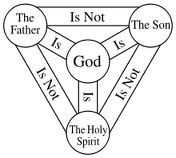
It’s true that the word “trinity” is not in the Bible, but neither is the word “monotheism”. Where does it say the word “trinity” must be found in the Bible before we can accept it as true? Here are SOME verses which show Jesus deity:

Hebrews 1:8, the Father declares of Jesus, “But about the Son He says, ’Your throne, O God, will last forever and ever, and righteousness will be the scepter of your kingdom.’

John 20:24-29 Thomas said to him, ‘My Lord and my God!’ Then Jesus told him, ‘Because you have seen me, you have believed; blessed are those who have not seen and yet have believed.’

Hebrews 2:7 Thou madest him a little lower than the angels; thou crownedst him with glory and honour, and didst set him over the works of thy hands:— 9But we see Jesus, who was made a little lower than the angels for the suffering of death, crowned with glory and honour; that he by the grace of God should taste death for every man.

John 10:30-33 : I and the Father are one.’ Again the Jews picked up stones to stone him, but Jesus said to them, ‘I have shown you many great miracles from the Father. For which of these do you stone me?’ ‘We are not stoning you for any of these,’ replied the Jews, ‘but for blasphemy,because you, a mere man, claim to be God.

Colossians 2:9 In Him dwelleth all the fulness of the Godhead bodily

Romans 9:5 Theirs are the patriarchs, and from them is traced the human ancestry of Christ, who is God over all, forever praised

John 8:40, 58 I tell you the truth, before Abraham was born, I am!

John 1:1, 14 In the beginning was the Word, and the Word was with God, and the Word was God… The Word became flesh and made his dwelling among us. We have seen his glory, the glory of the One and Only, who came from the Father, full of grace and truth.

Isaiah 9:6 For unto us a child is born, unto us a son is given: and the government shallbe upon his shoulder: and his name shall be called Wonderful, Counsellor, The mighty God, The everlasting Father, The Prince of Peace.    

John 9:35-39 “Jesus heard that they had cast him out, and having found him he said, ‘Do you believe in the Son of man?’ He answered, ‘And who is he, sir, that I may believe in him?’ Jesus said to him, ‘You have seen him, and it is he who speaks to you.’ He said, ‘Lord, I believe’; and he WORSHIPED HIM. ” 

Matthew 16:27-28 For the Son of Man is going to come in his Father’s glory with his angels, and then he will reward each person according to what he has done.

Col. 1:14 In whom we have redemption through his blood, even the forgiveness of sins:15 Who is the image of the invisible God, the firstborn of every creature:16 For by him were all things created, that are in heaven, and that are in earth, visible and invisible, whether they be thrones, or dominions, or principalities, or powers: all things were created by him, and for him:17 And he is before all things, and by him all things consist.18 And he is the head of the body, the church: who is the beginning, the firstborn from the dead; that in all things he might have the reeminence.19 For it pleased the Father that in him should all fulness dwell;20 And, having made peace through the blood of his cross, by him to reconcile all things unto himself; by him, I say, whether they be things in earth, or things in heaven.

God is love

The Biblical God tells us to treat others the way we would like to be treated ourselves, and we are asked to pray for our enemies. If your God tells you to harm or kill others for the only reason that they disagree with you, then run for your life to another direction, because you are worshiping a false God.

Turn the other cheek … love your enemies and pray for those who persecute you. (Matthew 5:39, 44)

Put back your sword in its place … for all who draw the sword will die by the sword. (Matthew 26:52)

Mistakes and inconsistencies in the Quran

I’m not going to list all numerous errors and inconsistencies here (just make a search on the net) but here are a couple of examples:

The Samaritans are said to have built the golden calf during the time of Moses, yet at that time there was no place called Samaria or race called Samaritans.

The Quran states that the Blessed Mary, mother of Jesus, was the sister of Aaron, yet the Bible reveals that Miriam was the sister of Aaron and Moses.

The only way out of this dilemma is for Muslims to claim that the Jews and Christians have changed the Bible. But if you ask for examples, they can’t give you any. If you ask WHEN this happened (before or after Muhammed lived) they are not sure of this either. They believe that the Bible has changed, because this is what other muslims have always told them.

Muhammed marrying a 6-year-old girl
The fact that Muhammed married a 6-year-old girl (Aisha) and consummated the marriage when she was 9 is of course troublesome for muslims, but since they are trained to ALWAYS defend Muhammed regardless of what he is guilty of, they will always excuse him. The most common excuse is that girls matured faster during this time, but of course there is NO historical evidence for this and this idea is clearly invented for the only reason to excuse Muhammed. Girls did not mature any faster during Biblical times so why would we believe this changed a few hundred years later, when Muhammed entered the scene? There is NO indication of that girls were mature enough to get married at 6-9 during any time in world’s history. Isn’t this a time when girls should play with dolls? What benefit would a 6-year-old girl get from a marriage? Muhammed is supposed to be perfect in all his ways, and we are to take after him as a role model, so why don’t all muslims take after his practice to marry children? Some muslims DO in fact marry children. Are we to view them as particularly faithful to Muhammed? Had the Quran said that Muhammed married a 4 year old girl, the excuses would be the same,“Girls matured faster in those days”.

According to official Sunni Muslim sources, Muhammad married Aisha when he was around 50 and when she was around 6. Muhammad consummated the marriage to Aisha approximately four years later, or in the second year of his arrival to Medina when the latter was nine years old. In most cases puberty for girls starts at the age of 12, and it is rare for girls to attain puberty prior to that period. There is even data to support the position that specific cultures placed the age of marriage at a little over 12 years of age for this reason. Even if a girl has attained puberty faster does not mean that she is physically ready to consummate a marriage. Moreover, morality does not change over time. Neither should muslims excuse Mohammed by suggesting that “this was the tradition during that time”.  Not only was it NOT a common tradition during this time, but shouldn’t a perfect prophet always be up to date and act correctly no matter which era in lived in? He is supposed to be our example, and now Muhammed is promoting child marriage. When a lawmaker says that killing someone in self-defense is acceptable, the lawmaker must not go out and kill someone in self-defense if his law is to stand. Hence, the argument that Muhammad needed to marry a young girl to establish puberty as the appropriate age for marriage completely fails.

Narrated Ursa:
The Prophet asked Abu Bakr for ‘Aisha’s hand in marriage. Abu Bakr said “But I am your brother.” The Prophet said, “You are my brother in Allah’s religion and His Book, but she (‘Aisha) is lawful for me to marry.” (Sahih al-Bukhari, Volume 7, Book 62, Number 18)

Narrated Hisham’s father:
Khadija died three years before the Prophet departed to Medina. He stayed there for two years or so and then he married ‘Aisha when she was a girl of six years of age, and he consumed that marriage when she was nine years old. (Sahih Al-Bukhari, Volume 5, Book 58, Number 236)

Muhammad died when Aisha was eighteen years old, leaving her a childless widow for the rest of her life. Being childless is regarded as a curse in most cultures. Muhammad also passed on a command forbidding anyone from marrying any of his widows:

Surah 33:53 O ye who believe! Enter not the Prophet’s houses, – until leave is given you, – for a meal, (and then) not (so early as) to wait for its preparation: but when ye are invited, enter; and when ye have taken your meal, disperse, without seeking familiar talk. Such (behaviour) annoys the Prophet: he is ashamed to dismiss you, but God is not ashamed (to tell you) the truth. And when ye ask (his ladies) for anything ye want, ask them from before a screen: that makes for greater purity for your hearts and for theirs.Nor is it right for you that ye should annoy God’s Apostle, or that ye should marry his widows after him at any time. Truly such a thing is in God’s sight an enormity

Other young girls and the “waiting period”

When Muhammad came to Medina in the year 623 AD, a girl named Safiyyah was young: perhaps in her mid to late teens, when Muhammad married her. Muhammad died in 632 AD, or roughly two years after marrying Safiyyah. One Muslim website says that she was seventeen when Muhammad married her, meaning that she was roughly twenty when he died. Muhammed  not only took Safiyyah as his wife after killing her family and husband, but he also left her a young widow for the rest of her life!

The waiting period for divorced women who haven’t yet menstruated is three months. With other words these “women” are in fact young girls who haven’t reached puberty! Thus, Islam permits men to marry prepubescent girls and even divorce them if they so choose! A woman can only be divorced if she is married and had her marriage consummated since the Quran expressly teaches that there is no waiting period for marriages that have not been consummated:

 Surah 65:4 And (as for) those of your women who have despaired of menstruation, if you have a doubt, their prescribed time shall be three months, and of those too who have not had their courses; and (as for) the pregnant women, their prescribed time is that they lay down their burden; and whoever is careful of (his duty to) Allah He will make easy for him his affair.

Surah 33:49 O you who believe: When you marry believing women and then divorce them before you have touched them, no period of idda (waiting) have you to count in respect of them: so give them a present and set them free in a graceful manner. 

And for those who have no courses (i.e. they are still immature). And the ‘Iddat for the girl BEFORE PUBERTY is three months (in the above Verse). (Sahih Al-Bukhari, Volume 7, Book 62, Number 63)

While we were sitting in the company of the Prophet a woman came to him and presented herself (for marriage) to him. The Prophet looked at her, lowering his eyes and raising them, but did not give a reply. One of his companions said, “Marry her to me O Allah’s Apostle!” The Prophet asked (him), “Have you got anything?” He said, “I have got nothing.” The Prophet said, “Not even an iron ring?” He said, “Not even an iron ring, but I will tear my garment into two halves and give her one half and keep the other half.” The Prophet; said, “No. Do you know some of the Quran (by heart)?” He said, “Yes.” The Prophet said, “Go, I have agreed to marry her to you with what you know of the Qur’an  (as her Mahr).”

Upon a divorce, it’s the MAN who decides who the children will belong to. A man is also promised 70 virgins in God’s kingdom. Women are not promised the equivalent, and in islam men and women are not treated equally either on earth or in the next life.

Surah 4:34 Husbands should take full care of their wives, with [the bounties] God has given to some more than others and with what they spend out of their own money. Righteous wives are devout and guard what God would have them guard in the husbands’ absence. If you fear high-handedness from your wives, remind them [of the teaching of God], then ignore them when you go to bed, then hit them. If they obey you, you have no right to act against them. God is most high and great. 

Surah 2:223 Your women are your fields, so go into your fields whichever way you like . . . .

Surah 2:282 The Prophet said, “Isn’t the witness of a woman equal to half of that of a man?” The women said, “Yes.” He said, “This is because of the deficiency of a woman’s mind.” 

Surah 4:24 And forbidden to you are wedded wives of other people except those who have fallen in your hands (as prisoners of war) . . .

Surah 4:3 And if you be apprehensive that you will not be able to do justice to the orphans, you may marry two or three or four women whom you choose. But if you apprehend that you might not be able to do justice to them, then marry only one wife, or marry those who have fallen in your possession. 

Surahs promoting violence
Dr. Muhsin Khan the translator of Sahih Bukhari and the Qur’an into English
writes: “Allah revealed in Sura Bara’at (Repentance, IX) [the order to discard
(all) obligations (covenants, etc), and commanded the Muslims to fight against
all the Pagans as well as against the people of the Scriptures (Jews and
Christians) if they do not embrace Islam, till they pay the Jizia (a tax levied on
the Jews and Christians) with willing submission and feel themselves subdued
(as it is revealed in 9:29). So the Muslims were not permitted to abandon “the
fighting” against them (Pagans, Jews and Christians) and to reconcile with them
and to suspend hostilities against them for an unlimited period while they are
STRONG and have the ability to fight against them. So at first “the fighting” was
forbidden, then it was permitted, and after that it was made obligatory “

How do you distinguish an evil man and a holy man if not by their actions? Jesus warned people of  false prophets and he said you will recognize them by their fruits. Muhammed’s evil actions speak for themselves. Unfortunately, muslims overlook his deeds because they are convinced he was a prophet of God. Are raiding innocent people, massacring unarmed civilians, stealing their belongings, taking their women and children as slaves and raping them a good thing? Muhammed did all those things. He even signed peace treaties, only to break them when he willed.  The sura 9 is called bara’a, precisely because in this sura Allah orders Muhammad to break all his treaties. The non-Muslims had no intentions of waging war against him but he took them by surprise and raided them when they were least expecting. These were shamelessly coward attacks on civilians. Muhammad raped women captured in his raids and allowed his followers to do the same. (Q. 4:24) There was a massacre of the Jewish tribe of Bani Quraiza that has been described in detail in dozens of traditions and books of history written by Muslims themselves. The Quran encourages Muslims to slay the unbelievers wherever they find them (2:191), to not take them as friends and helpers (3:28), fight them and show them harshness (9:123), and smite their heads ( 47:4).

People who call themselves “christians” and who harm and kill others do so AGAINST the Bible, whereas muslims who do the same do so ACCORDING to the Quran.  All the wars and hostilities that Muhammed was engaged in were initiated by himself and his followers just as the Muslims today are the initiators of virtually all hostilities with others. According to the doctrine of abrogation, the later texts supersede the earlier whenever there are inconsistencies. The later suras always abrogate ALL the earlier suras!

Surah 9:29  Fight those who believe not in Allah nor the Last Day, nor hold that forbidden which hath been forbidden by Allah and His Messenger, nor acknowledge the Religion of truth, from among the People of the Book, until they pay the Jizyah with willing submission, and feel themselves subdued 

Surah 48:29 Muhammad is the messenger of Allah; and those who are with him are harsh against unbelievers, (but) compassionate amongst each other?

Surah 5:51 Don’t take Jews and Christians for friends; they are friends of each other; and whoever amongst you takes them for a friend, then surely he is one of them

Surah 2:191 And slay them (the infidels) wherever you catch them, and turn them out from where they have turned you out, for tumult and oppression are worse than slaughter

Surah 2:193 And fight them on until there is no more tumult or oppression, and there prevail justice and Faith in Allah; but if they cease, let there be no hostility except to those who practise oppression. 

Surah 2:216 Fighting is prescribed for you, and you dislike it. But it is possible that you dislike a thing which is good for you, and that you love a thing which is bad for you. But Allah knows, and you know not 

Surah 4:74 Let those fight in the cause of Allah who sell the life of this world for the Hereafter. To him who fighteth in the cause of Allah, whether he is slain or gets victory soon shall we give him a reward of great (value) 

Sura 4:89 Seize them and slay them wherever you find them: and in any case take no friends or helpers from their ranks.

Surah 4:95 Allah has granted a grade higher to those who strive and fight with their goods and persons than to those who sit at home

Surah 9:5 But when the forbidden months are past, then fight and slay the pagans wherever ye find them, and seize them, beleaguer them, and lie in wait for them in every stratagem (of war); but if they repent, and establish regular Prayers and practise regular Charity, then open the way for them: for Allah is Oft-Forgiving, Most Merciful

Surah 9:123 Oh you who believe! Murder those of the disbelievers and let them find harshness in you. 

Surah 9:14 Fight them, and Allah will punish them by your hands, cover them with shame.

Surah 9:66 Make no excuses: you have rejected Faith after you had accepted it. If We pardon some of you, We will punish others amongst you, for that they are in sin. 

From Hadeeth:
Ibn Ishaq and al-Waqidi report that the prophet said the morning after the murder (of Kab Ibn al’Ashraf), “Kill any Jew you can lay your hands on. (El beddayah wa alnihaya – Ibn Katheer – vol. 4 – in the chapter on killing Ka’ab bin al’Ashraf)

Gen. 16:11And the angel of the LORD said unto her, Behold, thou art with child and shalt bear a son, and shalt call his name Ishmael; because the LORD hath heard thy affliction. 12And he will be a wild man; his hand will be against every man, and every man’s hand against him; and he shall dwell in the presence of all his brethren.

Gen. 17: 19And God said, Sarah thy wife shall bear thee a son indeed; and thou shalt call his name Isaac: and I will establish my covenant with him for an everlasting covenant, and with his seed after him.

Gen. 21: 10Wherefore she said unto Abraham, Cast out this bondwoman and her son: for the son of this bondwoman shall not be heir with my son, even with Isaac11And the thing was very grievous in Abraham’s sight because of his son.12And God said unto Abraham, Let it not be grievous in thy sight because of the lad, and because of thy bondwoman; in all that Sarah hath said unto thee, hearken unto her voice; for in Isaac shall thy seed be called. 13And also of the son of the bondwoman will I make a nation, because he is thy seed.

Gen. 22:2And he said, Take now thy son, thine only son Isaacwhom thou lovest, and get thee into the land of Moriah; and offer him there for a burnt offering upon one of the mountains which I will tell thee of.  3And Abraham rose up early in the morning, and saddled his ass, and took two of his young men with him, and Isaac his son, and clave the wood for the burnt offering, and rose up, and went unto the place of which God had told him.— 12And he said, Lay not thine hand upon the lad, neither do thou any thing unto him: for now I know that thou fearest God, seeing thou hast not withheld thy son, thine only son from me.16And said, By myself have I sworn, saith the LORD, for because thou hast done this thing, and hast not withheld thy son, thine only son17That in blessing I will bless thee, and in multiplying I will multiply thy seed as the stars of the heaven, and as the sand which is upon the sea shore; and thy seed shall possess the gate of his enemies; 18And in thy seed shall all the nations of the earth be blessed; because thou hast obeyed my voice.

Jesus is recorded to have performed many miracles in the Bible as well as the Quran, but not so with Muhammed
Muhammed feels that he doesn’t need to prove that he is a prophet in any other way than saying that the Quran was being revealed to him from Allah. Unfortunately, many others make similar claims and we certainly couldn’t believe that all who say they are prophets are true prophets. Jesus warned about false prophets deceiving millions.

Surah 29:48-51 Not before this didst thou recite any Book, or inscribe it with thy right hand, for then those who follow falsehood would have doubted. Nay; rather it is signs, clear signs (ayatun bayyinatun) IN THE BREASTS of those who have been given knowledge; and none denies Our signs but the evildoers. They say, ‘Why have signs (ayatun) not been sent down upon him from his Lord?’ Say: ‘The signs (al-ayatu) are only with God, and I am only a plain warner.’ What, is it not SUFFICIENT for them that We have sent down upon thee the Book that is recited to them? Surely in that is a mercy, and a reminder to a people who believe. 

Apart from the above claim, splitting the moon is the only other option which could serve as a “miracle”. Can you imagine how this earth would look like if it had two moon halves? Splitting the moon is hardly scientific, and it’s hard to see the purpose. People around Muhammed had the right to see some tangible signs/miracles, because we certainly can’t believe every chap who claims to be a prophet. If sura 54:1-2 speaks about an ordinary lunar eclipse, then Muhammed wouldn’t be the source of that.

Sura 54:1-2 The Hour has drawn nigh: the moon is split. Yet if they see a sign they turn away, and they say ‘A continuous sorcery!’ 

Jesus birth was a miracle in itself. Muhammed’s birth was not a miracle. According to the Bible Jesus birth by a virgin was supposed to be a sign for the Messiah (Isaiah 7:14). What would be the reason for a virgin birth according to the Quran?

Surah 19:20-21 She said: “How shall I have a son, seeing that no man has touched me, and I am not unchaste?” He said: “So (it will be): Thy Lord saith, ‘that is easy for Me: and (We wish) to appoint him as a Sign unto men and a Mercy from Us’: It is a matter (so) decreed.”

Surah 21:91 And (remember) her who guarded her chastity: We breathed into her of Our spirit, and We made her and her son a sign for all peoples

According to the Quran, Jesus spoke from the cradle. Muhammad likely copied the miracle of infant Jesus’ speech from an apocryphal writing named “The Arabic Gospel of the Savior” and combined it with the data he had plagiarized from the Gospel of Pseudo-Matthew:

Surah 43:63 When Jesus came with Clear Signs, he said: “Now have I come to you with Wisdom, and in order to make clear to you some of the (points) on which ye dispute: therefore fear God and obey me. 

Surah 5:110 O Jesus, son of Mary! Remember My favour unto thee and unto thy mother; how I strengthened thee with the holy Spirit, so that thou spakest unto mankind in the cradle as in maturity; and how I taught thee the Scripture and Wisdom and the Torah and the Gospel; and how thou didst shape of clay as it were the likeness of a bird by My permission, and didst blow upon it and it was a bird by My permission, and thou didst heal him who was born blind and the leper by My permission; and how thou didst raise the dead, by My permission;…

Two miracles are omitted from this list but found in other places in the Quran: causing a table spread with food to be miraculously lowered from heaven for his disciples (5:112-115), and being able to tell people what they had hidden in their houses (3:49).

The Quran is supposed to confirm the Bible, so the Bible couldn’t have changed before Muhammed’s time

Surah 3:50-52  And (I come) confirming that which was before me of the Torah, and to make lawful some of that which was forbidden unto you. I come unto you with a sign from your Lord, so keep your duty to Allah and obey me. Lo! Allah is my Lord and your Lord, so worship Him. That is a straight path. But when Jesus became conscious of their disbelief, he cried: Who will be my helpers in the cause of Allah? The disciples said: We will be Allah’s helpers. We believe in Allah, and bear thou witness that we have surrendered (unto Him).

Surah 61:6 And when Jesus son of Mary said: O Children of Israel! Lo! I am the messenger of Allah unto you, confirming that which was (revealed) before me in the Torah, and bringing good tidings of a messenger who cometh after me, whose name is the Praised One. Yet when he hath come unto them with clear proofs, they say: This is mere magic. 

Surah 5:46 And We caused Jesus, son of Mary, to follow in their footsteps, confirming that which was (revealed) before him in the Torah, and We bestowed on him the Gospel wherein is guidance and a light, confirming that which was (revealed) before it in the Torah – a guidance and an admonition unto those who ward off (evil).  

Is the Torah true only when it agrees with the Quran, and how can we be certain that this is the correct way to look at it? Maybe it’s not a good idea to trust a weak god (Allah) who is not able to protect the other messages he sent. He already failed three times to protect his messages before the Quran. Proving that the Bible is corrupt does not automatically mean that the Quran is preserved; on the contrary it proves that Allah is not mighty enough to preserve all of his revelations. Why is Allah NOW able to protect the Quran and preserve it? An attack on the Bible is nothing more than an attack on Muhammed, indirectly accusing Muhammad of being a liar or mistaken. The very same passage that speaks of Muhammad receiving revelation like some of the messengers before him, also says that there are many other messengers that are not even mentioned in the Quran!

Surah 4:163-164 We have revealed to thee as We revealed to Noah, and the Prophets after him, and We revealed to Abraham, Ishmael, Isaac, Jacob, and the Tribes, Jesus and Job, Jonah and Aaron and Solomon, and We gave to David Psalms, and Messengers We have already told thee of before, and Messengers We have not told thee of; and unto Moses God spoke directly —

Surah 40:78 We sent Messengers before thee; of some We have related to thee, and some We have not related to thee. It was not for any Messenger to bring a sign, save by God’s leave. When God’s command comes, justly the issue shall be decided; then the vain-doers shall be lost. 

The Quran itself commands Muslims to consult the Holy Bible for evidence and verification ( surahs 10:94; 16:43; 17:101; 21:7.)

Surah 5:47-51 It was We who revealed the Law to Moses, therein was guidance and light … and in their footsteps, We sent Jesus the son of Mary, confirming the Law that had come before him: We sent him the Gospel, therein was guidance and light, and confirmation of the Law that had come before him, a guidance and admonition to those who fear Allah. To thee (Mohammed) We sent the Scripture that came before it, and guarding it in safety.

Surah 45:16-17 We have given the Children of Israel the scripture, wisdom, and prophethood, and provided them with good provisions; we bestowed upon them more blessings than any other people. We have given them herein clear commandments. Ironically, they did not dispute this until the knowledge had come to them. This is due to jealousy on their part. Surely, your Lord will judge them on the Day of Resurrection regarding everything they have disputed. 

Surah 7:157 those who follow the Messenger, ‘the Prophet of the common folk, whom they find written down WITH THEM in the Torah and the Gospel, … 

Surah 48:29 Muhammad is the Messenger of God, and those who are with him are hard against the unbelievers, merciful one to another. Thou seest them bowing, prostrating, seeking bounty from God and good pleasure. Their mark is on their faces, the trace of prostration. That is their likeness in the Torah, and their likeness in the Gospel: as a seed that puts forth its shoot, and strengthens it, and it grows stout and rises straight upon its stalk, pleasing the sowers, that through them He may enrage the unbelievers. God has promised those of them who believe and do deeds of righteousness forgiveness and a mighty wage. 

These verses take for granted that a true, uncorrupt Gospel was available for examination at the time of Muhammed. Some Muslim commentators even suggest that the source for the above parable is actually Mark 4:27-28! How would Christians of the seventh century have understood the Quran’s clear statements that they were to uphold the Gospel which was with them? Would they have assumed that this Gospel was something other than the four canonical Gospels which they had?

Surah 26:196 And it is surely mentioned in the Psalms of the FORMER PEOPLES. 

Addressing the Christians of Muhammad’s time the Quran’s author exhorts them to uphold the Gospel which Jesus received.

Surah 4:54 Or are they jealous of the people for the bounty that God has given them? Yet We gave the people of Abraham the Book and the Wisdom, and We gave them a mighty kingdom. 

The historical evidence shows that the Torah which was in the possession of both the Jews and Christians is actually the first five Books of the Hebrew Bible, and the Gospel of the Christians is the records of Matthew, Mark, Luke and John.  The Quran also refers to the Psalms which were given through David and the other messengers.

Surah 6:73, 84-90 So We were showing Abraham the kingdom of the heavens and earth, that he might be of those having sure faith… And We gave to him Isaac andJacob — each one We guided, And Noah We guided before; and of his seed David and Solomon, Job and Joseph, Moses and Aaron — even so We recompense the good-doers — Zachariah and John, Jesus and Elias; each was of the righteous; Ishmael and Elisha, Jonah and Lot-each one We preferred above all beings; and of their fathers, and of their seed, and of their brethren; and We elected them, and We guided them to a straight path. That is God’s guidance; He guides by it whom He will of His servants; had they been idolaters, it would have failed them, the things they did. THOSE ARE THEY TO WHOM WE GAVE THE BOOK, the Judgment, THE PROPHETHOOD; so if these disbelieve in it, We have already entrusted it to a people who do not disbelieve in it. Those are they whom God has guided; so follow their guidance. Say: ‘I ask of you no wage for it; it is but a reminder unto all beings.’ 

Surah 19:30, 34, 41, 49-58 He said, ‘Lo, I am God’s servant; God has given me the Book, and made me a Prophet… That is Jesus, son of Mary, in word of truth, concerning which they are doubting… And mention in the Book Abraham; surely he was a true man, a Prophet… So, when he went apart from them and that they were serving, apart from God, We gave him Isaac and Jacob, and each We made a Prophet; and We gave them of Our mercy, and We appointed unto them a tongue of truthfulness, sublime. And mention in the Book Moses; he was devoted, and he was a Messenger, a Prophet. We called to him from the right side Of the Mount, and We brought him near in communion. And We gave him his brother Aaron, of Our mercy, a Prophet. And mention in the Book Ishmael; he was true to his promise, and he was a Messenger, a Prophet. He bade his people to pray and to give the alms, and he was pleasing to his Lord. And mention in the Book Idris; he was a true man, a Prophet. We raised him up to a high place. These are they whom God has blessed among the Prophets of the seed of Adam, and of those We bore with Noah, and of the seed of Abraham and Israel, and of those We guided and chose. When the signs of the All-merciful were recited to them, they fell down prostrate, weeping. 

Surah 5:71-72. ‘O, People of the Book! Ye have no ground to stand upon unless ye stand fast by the Law, the Gospel, and all the revelation that has come to you from your Lord.’ It is the revelation that cometh to thee from thy Lord, that increaseth in most of them their obstinate rebellion and blasphemy … those who believe (in the Qur’an), those who follow the Jewish (Scriptures), and the Sabaeans and the Christians – any who believe in Allah and the Last Day, and work righteousness, – on them shall be no fear, nor shall they grieve.  

Surah 5:69 If only they had stood fast by the Law, the Gospel, and all the revelation that was sent to them from their Lord, they would have enjoyed happiness.

Surah 29:45 Dispute not with the People of the Book, save in the fairer manner, except for those of them that do wrong; and say: ‘We believe in what has been sent down to us, and what has been sent down to you; Our God and your God is One and to Him we have surrendered. 

Surah 10:37 This Qur’an could not have been forged apart from God; but it is a confirmation of what is before it …

Surah 46:11 Before it was the Book of Moses for a model and a mercy; and this is a book confirming in Arabic tongue to warn the evil-doers and good tidings to the good-doers.

Surah 6:91 Who sent down the Book that Moses brought as a light and guidance to men? You put it onto parchments, revealing some, and hiding much; and by which you were taught that you knew not, you and your fathers. Say, ‘God”.

Surah 35:31 And what We have revealed to thee of the Book, is the truth, confirming what is before it.

Sura 2:40-42 Children of Israel … believe in that I have sent down, confirming the revelation that is with you and be not the first to disbelieve in it … and do not confound the truth with vanity and do not conceal the truth wittingly (i.e. concealing the truth against better knowledge)

The above texts presuppose that the Torah was available in an unadulterated form during the time of Mohammed.

Surah 2:87 We gave Moses the Book and followed him up with a succession of Apostles. We gave Jesus, son of Mary, clear signs and strengthened (or confirmed) him with the Holy Spirit. 

Surah 2:89 And when there comes to them (the Jews) a Book from Allah, confirming what is with them (the Taurat) … they refused to believe in it.

Surah 3:3 He has sent down upon thee the Book with the truth, confirming what was before it and He sent down Torah and the Gospel afore time, as guidance to the People and He sent down salvation.

At least as early as 350 AD, and long before the time of Mohammed, there was a uniform canon of the Bible and nothing has been changed, adulterated, polluted or perverted since.

Sura 21:7 Before thee (i.e. Mohammed), also, the Apostles we sent were but men … If you realise this not, ASK of THOSE WHO POSSESS THE MESSAGE. 

Sura 4:136 BELIEVE IN Allah and His Messenger and the Scripture which He hath revealed unto his Messenger, and THE SCRIPTURE WHICH HE REVEALED AFORETIME. WHOSO DISBELIEVETH IN Allah and His Angles and the Last Day, he verily hath wandered far astray.

Sura 2:285 Each one believeth in Allah and His Angels and His Scriptures and His Messengers – WE MAKE NO DISTINCTION BETWEEN ANY OF HIS MESSENGERS.

Sura 3:93 Say: Bring you the Torah now and recite (or read) it, if you are men of truth

We see clearly that the accusations against Jews and Christians are not that they have corrupted Scripture, but that they have misinterpreted, concealed or disobeyed it.

Sura 6:34 There is none that can change the Words of Allah. Already hast thou received some account of those Apostles (or: the other Apostles also say so).

Muhammed spoken about in the Bible?
Deuteronomy 18:15 The LORD your God will raise up for you a prophet like me from among your own brothers. You must listen to him.

Muhammed was not a “brother” to the jews. Besides, also other cults (like the mormons) claim that their particular prophet is spoken about in this verse.

ISLAM is much like the story of Emperor’s new clothes. The con artists claimed that if someone wouldn’t detect the beauty of the Emperor’s new clothes they were simply stupid, and who wants to be labeled stupid? So despite the fact that people couldn’t even see any clothes, they overlooked this problem and convinced themselves that the clothes were beautiful and even gave remarks as a confirmation of this. The crowd encouraged each other to believe in a lie, and did so until an honest little boy declared the TRUTH which was apparent to all from the start. Muslims need much prayer and there is much joy in heaven each time a muslim repents from his past and become a Bible believing christian.
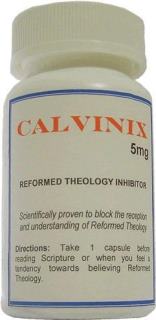
Once saved always saved = the devil’s lie

God told man:

But of the tree of the knowledge of good and evil, thou shalt not eat of it: for in the day that thou eatest thereof thou shalt surely DIE (Gen. 2:17)

Satan said the opposite:

And the serpent said unto the woman, Ye shall NOT surely die (Ge. 3:4)

So God tells us that if we sin we will DIE, and Satan tells us that if we sin we will NOT DIE.  I fear that many people continue to spread the lies of  Satan even today without even realizing it. “Once saved always saved“, is such a lie and it has deceived millions (but there are also other false doctrines which Satan is using to deceive people; like the doctrine of the sinful nature and the doctrine of the imputed righteousness of Jesus). It has been a great hindrance to holiness and it’s undermining the fear of God. The teaching goes that once a person is truly a born again believer, then he will remain saved and can never fall away no matter what he does. Proponents of OSAS might immediately protest and say:

1) But true christians wouldn’t WANT to sin any more! They are born again and have new hearts! Now they are led by the spirit. We are not teaching that people who live in sin are saved. If they live in sin, they show that they were not saved to begin with.

but the same people might ALSO say:

2) We can never stop sinning! Also true christians will sin until they die. It’s just that christians don’t sin habitually, but only OCCASIONALLY, and they don’t commit any severe sins. But they are still saved.

The dilemma is obvious. Also true born again christians might choose to sin, but will such a person automatically repent after his sin? Not necessarily. If not even King David repented until about a year after his sins (adultery and murder) in relation to Bathsheba, why would we believe WE are exempted from this peril? If we can avoid sinning for days and weeks, we can also stop sinning for months and years. Each time we sin, we could have chosen not to sin. King David was a person who cannot be filed under “he wasn’t saved to begin with”  since he was a man of God’s own heart and a true child of God, and yet he fell away due to sin and died spiritually. The Bible is full of warnings to true believers that they might be cut off the vine tree (Jesus) and similar expressions.

We are still warned that sin causes spiritual DEATH

Ezekiel 18:20-24 The soul that sinneth, it shall die. The son shall not bear the iniquity of the father, neither shall the father bear the iniquity of the son: the righteousness of the righteous shall be upon him, and the wickedness of the wicked shall be upon him. But if the wicked will turn from all his sins that he hath committed, and keep all my statutes, and do that which is lawful and right, he shall surely live, he shall not die. All his transgressions that he hath committed, they shall not be mentioned unto him: in his righteousness that he hath done he shall live. Have I any pleasure at all that the wicked should die? saith the Lord GOD: and not that he should return from his ways, and live? But when the righteous turneth away from his righteousness, and committeth iniquity, and doeth according to all the abominations that the wicked man doeth, shall he live? All his righteousness that he hath done shall not be mentioned: in his trespass that he hath trespassed, and in his sin that he hath sinned, in them shall he DIE.

Rom 6:21 What benefit did you reap at that time from the things you are now ashamed of? Those things result in DEATH!

Romans 6:16: Know ye not, that to whom ye yield yourselves servants to obey, his servants ye are to whom ye obey; whether of sin UNTO DEATH, or obedience unto righteousness.

1 Pet 2:11 Dear friends, I urge you, as aliens and strangers in the world, to abstain from sinful desires, which war against your SOUL.

Romans 8: 6For to be carnally minded is DEATH; but to be spiritually minded is life and peace. 7Because the carnal mind is enmity against God: for it is not subject to the law of God, neither indeed can be. 8So then they that are in the flesh cannot please God. —13For if ye live after the flesh, YE SHALL DIE: but if ye through the Spirit do mortify the deeds of the body, YE SHALL LIVE. 

James 5:19Brethren, if any OF YOU do err from the truth, and one convert him; 20Let him know, that he which converteth the sinner from the error of his way shall save a soul from DEATH, and shall hide a multitude of sins.

John 3:36 He who believes in the Son has eternal life; but he who does not obey the Son WILL NOT SEE LIFE, but the wrath of God abides on him.

Mark 9:47.And if your eye causes you to sin, pluck it out. It is better for you to enter the kingdom of God with one eye than to have two eyes and be thrown into HELL

Matt. 7:21 Not everyone who says to me Lord, Lord, will enter the kingdom of heaven, but only he who DOES the will of my Father who is in heaven.

1 Peter 4:18 And if it is with difficulty that the righteous is saved, what will become of the godless man and sinner?

The word of Jesus

Matthew 5:13 Ye are the salt of the earth: but if the salt have lost his savour, wherewith shall it be salted? it is thenceforth good for nothing, but to be cast out, and to be trodden under foot of men.

Matthew 13:21 Yet hath he not root in himself, but dureth for a while: for when tribulation or persecution ariseth because of the word, by and by he is offended…which for a while believe, and in time of temptation fall away.

Luke 8: 13They on the rock are they, which, when they hear, receive the word with joy; and these have no root, which for a while believe, and in time of temptation fall away. 

John 8:31 …IF ye continue in my word, then are ye my disciples indeed.—34-35 Jesus answered them, Verily, verily, I say unto you, Whosoever committeth sin is the servant of sin. And the servant abideth not in the house for ever: but the Son abideth ever.

John 16:1These things have I spoken unto you, that ye should not be offended.

Mat 11:6And blessed is he, whosoever shall NOT be offended in me.

Matt. 24:10And then shall many be offended, and shall betray one another, and shall hate one another. 11And many false prophets shall rise, and shall deceive many. 12And because iniquity shall abound, the love of many shall wax cold. 13But he that shall endure unto the end, the same shall be saved.

Matt 10:32Whosoever therefore shall confess me before men, him will I confess also before my Father which is in heaven. 33But whosoever shall deny me before men, him will I also deny before my Father which is in heaven. —37He that loveth father or mother more than me is not worthy of me: and he that loveth son or daughter more than me is not worthy of me. 38And he that taketh not his cross, and followeth after me, is not worthy of me.

Matt 26:31Then saith Jesus unto them, All ye shall be offended because of me this night: for it is written, I will smite the shepherd, and the sheep of the flock shall be scattered abroad32But after I am risen again, I will go before you into Galilee. 33Peter answered and said unto him, Though all men shall be offended because of thee, yet will I never be offended. 34Jesus said unto him, Verily I say unto thee, That this night, before the cock crow, thou shalt deny me thrice.

Mat 18:33 Shouldest not thou also have had compassion on thy fellowservant, even as I had pity on thee? 34 And his lord was wroth, and delivered him to the tormentors, till he should pay all that was due unto him. 35 So likewise shall my heavenly Father do also unto you, if ye from your hearts forgive not every one his brother their trespasses.

Security comes through faith and obedience to God’s grace, not disobedience

John 151I am the true vine, and my Father is the husbandman. 2Every branch in me that beareth not fruit he taketh away: and every branch that beareth fruit, he purgeth it, that it may bring forth more fruit. 3Now ye are clean through the word which I have spoken unto you. 4Abide in me, and I in you. As the branch cannot bear fruit of itself, except it abide in the vine; no more can ye, except ye abide in me. 5I am the vine, ye are the branches: He that abideth in me, and I in him, the same bringeth forth much fruit: for without me ye can do nothing. 6If a man abide not in me, he is cast forth as a branch, and is withered; and men gather them, and cast them into the fire, and they are burned7If ye abide in me, and my words abide in you, ye shall ask what ye will, and it shall be done unto you. 8Herein is my Father glorified, that ye bear much fruit; so shall ye be my disciples. 9As the Father hath loved me, so have I loved you: continue ye in my love. 10If ye keep my commandments, ye shall abide in my love; even as I have kept my Father’s commandments, and abide in his love. 11These things have I spoken unto you, that my joy might remain in you, and that your joy might be full. 

1. Jesus is speaking to 11 chosen apostles. Judas had already left, and the remaining 11 were chosen and IN Christ.
2. Jesus specifically says “you are already clean” to the apostles.
3. Jesus commands them to ABIDE in Him, because they cannot bear fruit unless they do. It’s not certain they will abide.
4. Jesus warns the chosen apostles that if they do not abide in Him, the Father will cut them off, and the branches will be gathered and cast into the fire.
5. The branches will dry up/wither, indicating that they used to have LIFE
6. Jesus says “IF” you keep my commandments, you “WILL” ABIDE in my love (conditional)

Other verses

1 Cor. 15:2 By which also ye are saved, if ye keep in memory what I preached unto you, unless ye have believed in VAIN

1 Cor 3:16Know ye not that ye are the temple of God, and that the Spirit of God dwelleth in you? 17If any man defile the temple of God, him shall God destroy; for the temple of God is holy, which temple ye are.

2 Cor 13:5  Examine yourselves, whether ye be in the faith; prove your own selves. Know ye not your own selves, how that Jesus Christ is in you, except ye be reprobates?

Heb 3:12 Take heed, brethren, lest there be in any of you an evil heart of unbelief, in departing from the living God.

Hebr 10: 29 How much more severely do you think a man deserves to be punished who has trampled the Son of God under foot, who has treated as an unholy thing the blood of the covenant that sanctified him, and who has insulted the Spirit of grace?

Gal. 1:6I marvel that ye are so soon removed from him that called you into the grace of Christ unto another gospel

Galatians 5:4 Christ is become of no effect unto you, whosoever of you are justified by the law; ye are FALLEN FROM GRACE

Philip. 2:12 Wherefore, my beloved, as ye have always obeyed, not as in my presence only, but now much more in my absence, work out your own salvation with fear and trembling.

1 Thes. 3:8 For now we live, IF ye stand fast in the Lord.

1 Tim. 1:5-6 Now the end of the commandment is charity out of a pure heart, and of a good conscience, and of faith unfeigned: From which some having swerved have turned aside unto vain jangling

1 Tim. 4:1 Now the Spirit speaketh expressly, that in the latter times some shall depart from the faith, giving heed to seducing spirits, and doctrines of devils

1 Tim. 4:16 Take heed unto thyself, and unto the doctrine; continue in them: for in doing this thou shalt both save thyself, and them that hear thee

2 Tim. 2:18 Who concerning the truth have erred, saying that the resurrection is past already; and OVERTHROW THE FAITH OF SOME. There are many, many more scriptures just like these throughout the Bible, due to lack of space I will list them at the end of this study and you may look them up.

Romans 11:20-22 Well; because of unbelief they were broken off, and thou standest by faith. Be not highminded, but fear: For if God spared not the natural branches, take heed lest he also spare not thee. Behold therefore the goodness and severity of God: on them which fell, severity; but toward thee, goodness, if thou continue in his goodness: otherwise thou also shalt be cut off.

James 1:12Blessed is the man that endureth temptation: for when he is tried, he shall receive the crown of life, which the Lord hath promised to them that love him.

2Pe 2:20 For if after they have escaped the pollutions of the world through the knowledge of the Lord and Saviour Jesus Christ, they are again entangled therein, and overcome, the latter end is worse with them than the beginning.21 For it had been better for them not to have known the way of righteousness, than, after they have known it, to turn from the holy commandment delivered unto them. 22 But it is happened unto them according to the true proverb, The dog is turned to his own vomit again; and the sow that was washed to her wallowing in the mire.

2 Peter 3:16As also in all his epistles, speaking in them of these things; in which are some things hard to be understood, which they that are unlearned and unstable wrest, as they do also the other scriptures, unto their own destruction. 17Ye therefore, beloved, seeing ye know these things before, beware lest ye also, being led away with the error of the wicked, fall from your own stedfastness.

1 John 3:7Little CHILDREN, let no man deceive you: he that doeth righteousness is righteous, even as he is righteous. 8He that committeth sin is of the devil; for the devil sinneth from the beginning. For this purpose the Son of God was manifested, that he might destroy the works of the devil.

2 John 1:9Whosoever transgresseth, and abideth not in the doctrine of Christ, hath not God. He that abideth in the doctrine of Christ, he hath both the Father and the Son.

Jude 1:5I will therefore put you in remembrance, though ye once knew this, how that the Lord, having saved the people out of the land of Egypt, afterward destroyed them that believed not. 6And the angels which kept not their first estate, but left their own habitation, he hath reserved in everlasting chains under darkness unto the judgment of the great day

Rev 2:5 Remember therefore from whence thou art fallen, and repent, and do the first works; or else I will come unto thee quickly, and will remove thy candlestick out of his place, except thou REPENT. 

Rev 3: 10Because thou hast kept the word of my patience, I also will keep thee from the hour of temptation, which shall come upon all the world, to try them that dwell upon the earth. 11Behold, I come quickly: hold that fast which thou hast, that no man take thy crown12Him that overcometh will I make a pillar in the temple of my God, and he shall go no more out: and I will write upon him the name of my God, and the name of the city of my God, which is new Jerusalem, which cometh down out of heaven from my God: and I will write upon him my new name

Rev 3:16 So then because thou art lukewarm, and neither cold nor hot, I will spue thee out of my mouth.

Rev 22:19 And if any man shall take away from the words of the book of this prophecy, God shall take away his part out of the book of life, and out of the holy city, and from the things which are written in this book. 

Rev. 3:4Thou hast a few names even in Sardis which have not defiled their garments; and they shall walk with me in white: for they are worthy. 5He that overcometh, the same shall be clothed in white raiment; and I will not blot out his name out of the book of life, but I will confess his name before my Father, and before his angels. 

Jeremiah 15:6-7 Thou hast forsaken me, saith the LORD, thou art gone backward: therefore will I stretch out my hand against thee, and destroy thee; I am weary with repenting. And I will fanthem with a fan in the gates of the land; I will bereave them of children, I will destroy my people, since they return not from their ways.

Psa. 125:5 Those who turn to crooked ways the LORD will banish with the evildoers.

Hosea 9: 15All their wickedness is in Gilgal: for there I hated them: for the wickedness of their doings I will drive them out of mine house, I will love them no more: all their princes are revolters.

Before their sin in Exodus many Israelites were born again (Dt 32:18, Gal 4:28-29), they were redeemed (Ex 15:13, Dt 21:8), they were sanctified (Ex 31:13, Dt 21:8), they were converted (Ps 19:7), they were in grace (Ex 33:12-17, Ps 19:7, Ps 84:11), had their names in the book of life (Ex 32:32-33, Ps 69:25-29), had the same gospel we have (Gal 3:6-14, Heb 4:2), yet when they sinned the were cut off from God and were lost (Ex 32:32-33, 1 Cor 10:1-18, Heb 4:1-7, Jude 1:5).  (Thanks to Britt Williams)

“It is astonishing how people talk about perseverance. As if the doctrine of perseverance were: ‘Once in grace, always in grace’; or , ‘Once converted, sure to go to heaven.’ This is not the idea of perseverance. The true idea is, that if a man is truly converted, he will, as a rule, continue to obey God; and, as a consequence, he will surely go to heaven. But if a person gets the idea that because he is ‘converted,’ therefore he will assuredly go to heaven, that man will almost assuredly go to hell.” //Charles G. Finney

There is only ONE Book of Life, and names can be REMOVED from it

bible 4There is ONE book of life, and that is the book of the lamb

Book” is a translation from the Greek word βίβλῳ (bibliō, Strong’s 976).

Only those who overcome the sins of this world will be clothed in white raiment, and they will not risk getting their names blotted out of  the book of life. It’s in the end of the ages where the Christians will get their new white clothes, and at that point they will no longer risk to get their names removed from the book of life – because they enter the kingdom of God and remain there for ever.

Revelation 3:4 Thou hast a few names even in Sardis which have not defiled their garments; and they shall walk with me in white: for they are worthy.5 He that overcometh, the same shall be clothed in white raiment; and I will not blot out his name out of the book of life, but I will confess his name before my Father, and before his angels.

Some people suggest that there are two books of life, and that the first book is a book into which everyone’s name is supposedly entered by default – the universal book of life. They suggest that the second book – “The Lamb’s Book of Life“- is the book where only the true believers’ names are written and whose names will never be blotted out. The two-book proponents seem to reason that if a particular scripture passage speaks of names being added to the Book of Life, then this must be the Lamb’s Book of Life, but if a passage speaks of names being removed from the Book of Life, then surely it must be referring to the Universal Book of Life. Applying such selective reasoning is dishonest.

If people end up in the Universal Book of Life by default at birth (or at conception?), at which point will they be removed from this Universal Book of Life if they refuse to believe in Jesus Christ throughout their entire lives? Will they be removed as soon as they are adults (and remain unbelievers), and when exactly does this happen? And what if another person starts to believe in Jesus Christ when he is 50 years old. Does this mean he was in the Universal Book of Life the entire time before he turned 50, when he was also added in the Lamb’s Book of life? I suppose the two-book opponents couldn’t believe that a person can be removed from the Universal Book of Life at 15 (if he at this point refuses to accept Jesus as Savior) and then added again when he becomes a christian at age 50?

There is no Biblical evidence for two Books of life

The Bible does talk about books in plural that we will be judged by, but Daniel is referring to the books which record the deeds of every human being who has ever lived. Rev. 20:12 states that the dead are judged on the basis of the things written in the books which include their deeds, so these are not books of names but books of DEEDS, and these books of deeds are distinct from another book (singular) which in the same passage is called the Book of Life. If there are indeed two Books of Life, then it might have been helpful to know which one was being opened here – the book of the true believers, or the universal book of life? In reality, no such distinction needs to be made because there is only one book of life.  

Daniel 7:10 A fiery stream issued and came forth from before him: thousand thousands ministered unto him, and ten thousand times ten thousand stood before him: the judgment was set, and the books were opened. 

Revelation 20:11 And I saw a great white throne, and him that sat on it, from whose face the earth and the heaven fled away; and there was found no place for them.12 And I saw the dead, small and great, stand before God; and the books were opened: AND ANOTHER BOOK was opened, which is the book of life: and the dead were judged out of those things which were written in the books, according to their works. 13And the sea gave up the dead which were in it; and death and hell delivered up the dead which were in them: and they were judged every man according to their works. 14And death and hell were cast into the lake of fire. This is the second death. 15And whosoever was not found written in the BOOK OF LIFE was cast into the lake of fire. 

Also Moses seems to believe there is only one book of life, because he refers to it as “thy book which thou hast written”, and God lets Moses know that each person is responsible for his own entry in that book. God refuses to accept Moses’ “blotting out” as a substitutionary offering for the sin of the people.

Exodus 32:30 And it came to pass on the morrow, that Moses said unto the people, Ye have sinned a great sin: and now I will go up unto the Lord; peradventure I shall make an atonement for your sin.31 And Moses returned unto the Lord, and said, Oh, this people have sinned a great sin, and have made them gods of gold. 32 Yet now, if thou wilt forgive their sin — and if not, blot me, I pray thee, out of thy book which thou hast written. 33 And the LORD said unto Moses, Whosoever hath sinned against me, him will I blot out of my book

If people are automatically included in the universal book of life, it wouldn’t be a big deal if also Clement and Paul’s other coworkers had their names there too along with every one else – so why even mention it?

Philippians 4:2 I beseech Euodias, and beseech Syntyche, that they be of the same mind in the Lord. And I entreat thee also, true yoke-fellow, help those women which labored with me in the gospel, with Clement also, and with other my fellowlabourers, whose names are in the book of life. 

Below is the only place, apart from Rev. 21:27, where the term The Book of Life of the Lamb” appears. It’s rather natural that the book of life belongs to the lamb, so the extra detail “of the lamb” (Jesus Christ) must not be taken as a sign of that it’s a completely different book than the already mentioned “the book of life”.  Jesus Christ is our Lord and Savior, and he will be judging all people according to their deeds. Compare the below passage with Rev. 17:8.

Revelation 13:And it was given unto him to make war with the saints, and to overcome them: and power was given him over all kindreds, and tongues, and nations.8 And all that dwell upon the earth shall worship him, whose names are not written in the book of life of the Lamb slain from the foundation of the world.9 After this I beheld, and, lo, a great multitude, which no man could number, of all nations, and kindreds, and people, and tongues, stood before the throne, and before the Lamb, clothed with white robes, and palms in their hands;10 And cried with a loud voice, saying, Salvation to our God which sitteth upon the throne, and unto the Lamb.

Maybe Rev. 17:8 is the passage that is most commonly used as an attempt to support  a universal book of life, since we can read ”the book of life from the foundation of the world”, but it’s the BOOK that is from the foundation of the world and not necessarily the names in it (before man even started to spread on earth). Word for word from the Greek it’s ”the names in the book of life from foundation of world”. Furthermore, it seems like “the book of life of the lamb” in Rev. 13:8 is the same book as the one below in Rev. 17:8, even if the term there is only “the book of life“, because both places talk about people who are not included in this book, and who are amazed (wonder, marvel) over this beast and even worship it. We can read about  ”the foundation of the world” in both accounts, and even a clarification in Rev. 13:8, that it’s the lamb that is slaughtered from the foundation of the world.

Revelation 17:The beast that thou sawest was, and is not; and shall ascend out of the bottomless pit, and go into perdition: and they that dwell on the earth shall wonder, whose names were not written in the book of life from the foundation of the world, when they behold the beast that was, and is not, and yet is.

If you don’t have your name in the book of life, you will ultimately be thrown in the lake of fire and that is true both when it comes to the book of life as well as the lamb’s book of life. Again, we are likely talking about the same book.

Revelation 20:1515 And whosoever was not found written in the book of life was cast into the lake of fire.

Revelation 21:27 And there shall in no wise enter into it any thing that defileth, neither whatsoever worketh abomination, or maketh a lie: but they which are written in the Lamb’s book of life.  

If a person could never lose his salvation, then he could absolutely afford to both add and delete things from the Book of Life and still get away with it, but clearly that would be a false assurance. A person can be disallowed from getting his promised PART of the Book of Life and OUT OF THE HOLY CITY, despite that he had an opportunity to receive such blessings to start with.

Revelation 22:18For I testify unto every man that heareth the words of the prophecy of this book, If any man shall add unto these things, God shall add unto him the plagues that are written in this book: 19And if any man shall take away from the words of the book of this prophecy, God shall take away his part out of the book of life, and out of the holy city, and from the things which are written in this book. 

Why would God need two books with names, and why would a universal book of life be referred to as the book of life and confuse honest Bible readers? It doesn’t make sense for God to automatically include people in a universal book of life despite knowing that he would he removing some of these names at a later occasion. It makes a lot more sense to have an opportunity to be included in the book of life (through repentance, faith and obedience) and also to risk deletion if we choose to live in sin.

Prophets or blood did not exist from the foundation of the world, even though we can read about them below in relation to their blood shed from the foundation of the world. Most people have no problem accepting this to be true without maintaining that prophets have been around since the very day of creation:

Luke 11:50 That the blood of all the prophets, which was shed FROM THE FOUNDATION OF THE WORLD, may be required of this generation

What about Psalm 69:28?

Ps. 69:28 Let them be blotted out of the book of the living, and not be written with the righteous. 

This verse cannot be compared with the verses of the book of life in Revelations, partly because it is a translation from Hebrew, and partly because we have to take into account that the book of Psalms often contains truths expressed in poetry, songs, parables, hyperboles etc. Still, this psalm confirms the picture of losing previous rights. In psalm 69 we can see David urgently praying for his safety to God, with many “Let them …” and “Let me …”, and he is speaking about his present situation and the distant future. David is concerned about his enemies who are working against everything that is good. He might have the picture of the civil lists of registers of the Jews in mind, and his feeling that his unrighteous enemies should not have the same rights as the righteous (Ez. 13:9, Jer. 22:30). At one point Jewish individuals and families were written in, but they could also be removed which normally occurred when they died. This system was evidently not about eternal souls but concerned the rights among the Jews living on earth. Do read more about the the house of Israel in the Bible.

The tree of life

We can also read about the “tree of life” of course, and that’s the tree that we found in Eden and which we will also find in God’s new Jerusalem.

Revelation 2:7 He that hath an ear, let him hear what the Spirit saith unto the churches; To him that overcometh will I give to eat of the tree of life, which is in the midst of the paradise of God.

Revelation 22:2 In the midst of the street of it, and on either side of the river, was there the tree of life, which bare twelve manner of fruits, and yielded her fruit every month: and the leaves of the tree were for the healing of the nations.—14 Blessed are they that do his commandments, that they may have right to the tree of life, and may enter in through the gates into the city.

Sealed UNTO the day of redemption, but a seal can be broken Eph. 4:30

 And grieve not the holy Spirit of God, whereby ye are sealed UNTO the day of redemption (Eph. 4:30)

Based on the Greek text, the latter part of the above sentence can be translated “by whom you were sealed FOR the day of redemption”. The preposition “for” is a translation from the Greek word εἰς (eis, Strong’s 1519) and apart from “for” it can mean into, in, among and till. The text does not say “sealed and saved unconditionally all the way UNTIL the day of redemption no matter the conduct”. Were sealed” in the verseis a translation from ἐσφραγίσθητε (esphragisthēte, Strong’s 4972).

There is nothing that suggests that a seal can absolutely not be tampered with. When someone places a seal on something – like the one in the picture above to the left – he doesn’t do this with the idea that no one can remove the seal, but rather to show a unique mark and/or ownership of something. The aim might very well be to see the seal untouched until there is a proper time to remove it, but there is no guarantee that it will remain as it is until that day.

The Greek word sphragizó can mean seal, or set a seal upon, or mark with a seal. We are indeed uniquely “marked” when we as christians have the Holy Spirit in our lives, and we are separate and different from those without this mark. The word is from sphragís (a seal) – to seal (affix) with a signet ring or other instrument to stamp (a roller or seal). “Sealing” in the ancient world served as a “legal signature”, and it was sometimes done by the use of religious tattoos – again signifying “belonging to”. The same word is used for the stone which was blocking the grave of Jesus – and which  was later REMOVED.

2 Cor. 122Who hath also SEALED us, and given the earnest of the Spirit in our hearts.

Matt. 27:66So they went, and made the sepulchre sure, SEALING the stone, and setting a watch.

Rev.  10:4And when the seven thunders had uttered their voices, I was about to write: and I heard a voice from heaven saying unto me, Seal up those things which the seven thunders uttered, and write them not.

The book of Ephesians talks about a corporate election and about the promised future for the body of Christ. The CHURCH or the BODY OF CHRIST was predestined, before the creation of the world, to enter the Kingdom of God and inherit the promises. The question is if we as individuals choose to belong or not.

Eph. 1:22And hath put all things under his feet, and gave him to be the head over all things to the CHURCH23Which is his BODY, the fulness of him that filleth all in all.

Eph. 4:4There is one body, and one Spirit, even as ye are called in one hope of your calling;—  16From whom the whole body fitly joined together and compacted by that which every joint supplieth, according to the effectual working in the measure of every part, maketh increase of the body unto the edifying of itself in love.

Eph. 1:13In whom ye also trusted, after that ye heard the word of truth, the gospel of your salvation: in whom also after that ye believed, ye were sealed with that holy Spirit of promise14Which is the earnest of our inheritance until the redemption of the purchased possession, unto the praise of his glory.

or:

In Him, you also, after listening to the message of truth, the gospel of your salvation – having also believed, you were sealed in Him with the Holy Spirit of promise, who is given as a pledge of our inheritance, with a view to the redemption of God’s own possession, to the praise of His glory. Do not grieve the Holy Spirit of God, by whom you were sealed for the day of redemption (Eph. 1:13, 14; 4:30).

Read the many warnings in the same chapter of Ephesians 4. The warnings are addressed to believers. The sealing of the Holy Spirit is conditional since we can “grieve” and eventually “insult” the Spirit of Grace which means total apostasy.

Hebr. 10 29Of how much sorer punishment, suppose ye, shall he be thought worthy, who hath trodden under foot the Son of God, and hath counted the blood of the covenant, wherewith he was sanctified, an unholy thing, and hath done despite unto the Spirit of grace?

Only believers can possess the Holy Spirit and no one can enter the Kingdom of God without the Spirit. He is therefore the guarantee of an inheritance for believers and not unbelievers. Through union with Christ we are “predestined” to adoption and an inheritance as children of God, being “joint heirs” with Christ (Eph. 1:5, 10-11, cf. Rom. 8:17; Gal. 3:29; 4:7). This is what is in view when Paul speaks of being sealed “for the day of redemption”, but we must not assume that this sealing is unbreakable which the text does not claim.

What is a guarantee? Guarantee receipts normally have conditions which you can often read in the “fine print“. If you get a guarantee receipt for a certain product and you would like to make a claim, the store might request that you bring both the product and the receipt before they are willing to look at your claim. They might also request that you do this within a certain time frame and that you state what’s wrong with the product. Another example might be if someone buys you a bus ticket which guarantees that you will get to a certain city PROVIDED that 1) you don’t throw away your ticket, 2) that you embark the right bus on the right time, and 3) that you STAY ON the bus until it arrives at the destination. The BUS will arrive at the destination as promised, but the question is if YOU will choose to be among the bus passengers.

1 Samuel 16:14 But the Spirit of the LORD departed from Saul, and an evil spirit from the LORD troubled him.

Psalm 5:11 Cast me not away from thy presence; and take not thy holy spirit from me

A circumcision was also a “seal” for those under the old covenant.

Rom. 4:11 And he received the sign of circumcision, a SEAL of the righteousness of the faith which he had yet being uncircumcised: that he might be the father of all them that believe, though they be not circumcised; that righteousness might be imputed unto them also

This seal WAS broken and guaranteed nothing when those who were circumcised broke the covenant and were cut off from the people of God.

Rom. 2:25For circumcision verily profiteth, IF thou keep the law:but IF thou be a breaker of the law, thy circumcision is made uncircumcision. 26Therefore if the uncircumcision keep the righteousness of the law, shall not his uncircumcision be counted for circumcision? 27And shall not uncircumcision which is by nature, if it fulfil the law, judge thee, who by the letter and circumcision dost transgress the law?

As you can see, this seal was conditioned on continued faith and obedience. The Holy Spirit marks us as God’s children of the new covenant, but if we would totally abandon the faith and/or live in disobedience with no plan to repent, then the Holy Spirit might no longer have a reason to remain and then we are no longer sealed. Also circumcised (sealed) Jews were broken off through unbelief as Rom. 11 tells us.

Acts. 5:32And we are his witnesses of these things; and so is also the Holy Ghost, whom God hath given to them that obey him.

John 14:15If ye love me, keep my commandments.16And I will pray the Father, and he shall give you another Comforter, that he may abide with you for ever

Rom. 8:9But ye are not in the flesh, but in the Spirit, IF so be that the Spirit of God dwell in you. Now if any man have not the Spirit of Christ, he is none of his. 10And IF Christ be in you, the body is dead because of sin; but the Spirit is life because of righteousness.

Rom. 11:16 For if the firstfruit be holy, the lump is also holy: and if the root be holy, so are the branches.17 And if some of the branches be broken off, and thou, being a wild olive tree, wert grafted in among them, and with them partakest of the root and fatness of the olive tree;18 Boast not against the branches. But if thou boast, thou bearest not the root, but the root thee.19 Thou wilt say then, The branches were broken off, that I might be grafted in.20 Well; because of unbelief they were broken off, and thou standest by faith. Be not highminded, but fear:21 For if God spared not the natural branches, take heed lest he also spare not thee.22 Behold therefore the goodness and severity of God: on them which fell, severity; but toward thee, goodness, if thou continue in his goodness: otherwise thou also shalt be cut off.23 And they also, if they abide not still in unbelief, shall be grafted in: for God is able to graft them in again.

God speaks of the Israelites who “grieved” His Holy Spirit in their rebellion. These Jews were cut off from the promise of entering God’s rest and they became God’s enemies.

Isaiah 6310But they rebelled, and vexed his holy Spirit: THEREFORE he was turned to be their enemy, and he fought against them. — 14As a beast goeth down into the valley, the Spirit of the LORD caused him to rest: so didst thou lead thy people, to make thyself a glorious name.

In the NT the “rest” is the eternal rest that all believers will attain. The book of Hebrews continually speak of the promise of eternal rest, in combination with WARNINGS to believers not to miss out on this promised rest through hardening their hearts in unbelief, just as the Israelites did who rebelled against God during the Exodus.

Hebr. 3:6But Christ as a son over his own house; whose house are we, if we hold fast the confidence and the rejoicing of the hope firm unto the end7Wherefore (as the Holy Ghost saith, To day if ye will hear his voice, 8Harden not your hearts, as in the provocation, in the day of temptation in the wilderness: 9When your fathers tempted me, proved me, and saw my works forty years. 10Wherefore I was grieved with that generation, and said, They do alway err in their heart; and they have not known my ways. 11So I sware in my wrath, They shall not enter into my rest.) 12Take heed, brethren, lest there be in any of you an evil heart of unbelief, in departing from the living God. 13But exhort one another daily, while it is called To day; lest any of you be hardened through the deceitfulness of sin. 14For we are made partakers of Christ, if we hold the beginning of our confidence stedfast unto the end; 15While it is said, To day if ye will hear his voice, harden not your hearts, as in the provocation. 16For some, when they had heard, did provoke: howbeit not all that came out of Egypt by Moses. 17But with whom was he grieved forty years? was it not with them that had sinned, whose carcases fell in the wilderness? 18And to whom sware he that they should not enter into his rest, but to them that believed not? 19So we see that they could not enter in because of unbelief.

Hebr. 4:1Let us therefore fear, lest, a promise being left us of entering into his rest, any of you should seem to come short of it. 2For unto us was the gospel preached, as well as unto them: but the word preached did not profit them, not being mixed with faith in them that heard it. 3For we which have believed do enter into rest, as he said, As I have sworn in my wrath, if they shall enter into my rest: although the works were finished from the foundation of the world. 4For he spake in a certain place of the seventh day on this wise, And God did rest the seventh day from all his works. 5And in this place again, If they shall enter into my rest. 6Seeing therefore it remaineth that some must enter therein, and they to whom it was first preached entered not in because of unbelief: 7Again, he limiteth a certain day, saying in David, To day, after so long a time; as it is said, To day if ye will hear his voice, harden not your hearts. 8For if Jesus had given them rest, then would he not afterward have spoken of another day. 9There remaineth therefore a rest to the people of God. 10For he that is entered into his rest, he also hath ceased from his own works, as God did from his. 11Let us labour therefore to enter into that rest, lest any man fall after the same example of unbelief.

Hebr. 6: 11And we desire that every one of you do shew the same diligence to the full assurance of hope unto the end: 12That ye be not slothful, but followers of them who through faith and patience inherit the promises.

Jude 1:5I will therefore put you in remembrance, though ye once knew this, how that the Lord, having saved the people out of the land of Egypt, afterward destroyed them that believed not

The word “called” below in Gal. 1:6 is the same word as in Rom. 8:30 – καλέω (kaleó Strong’s 2564). Paul marvels at the fact that some Galatians despite being called are deserting Christ and turning to another gospel. Paul noticed that these Galatians were true believers who were apostatizing from the faith. Despite being chosen, called elect they risked falling away. If kaleo refers to the elect in Rom 8:30 then it must also refer to the elect in Gal 1:6.

Galatians 1:6 I marvel that ye are so soon removed from him that CALLED you into the grace of Christ unto another gospel:7 Which is not another; but there be some that trouble you, and would pervert the gospel of Christ.8 But though we, or an angel from heaven, preach any other gospel unto you than that which we have preached unto you, let him be accursed.

If you’re trapped in Calvinism, do read about the contradictions within TULIP here.

Church Fathers

The Shepherd of Hermes 6(72):3 I say unto him, “Sir, now then show me concerning those that have given up their rods, what manner of man each of them is, and their abode, that when they hear this, they that believed and have received the seal and have broken it and did not keep it sound may fully understand what they are doing, and repent, receiving from thee a seal, and may glorify the Lord, that He had compassion upon them and sent thee to renew their spirits.”

Clement 7:6 For as concerning them that have not kept the seal, He saith,`Their worm shall not die, and their fire shall not be quenched, and they shall be for a spectacle unto all flesh’. 

Clement 8:6 So then He meaneth this, Keep the flesh pure and the seal unstained, to the end that we may receive life.

FAITH is not the gift of God in Eph. 2:8-9, but SALVATION is

For by grace are ye saved through faith    

The whole passage is this:

Eph. 2:8 For by grace are ye saved through faith; and that not of yourselves: it is the gift of God:9 Not of works, lest any man should boast.10 For we are his workmanship, created in Christ Jesus unto good works, which God hath before ordained that WE SHOULD WALK in them

The word “it” is a translation from the Greek pronoun tοῦtο, and it is neuter in gender. It refers back to something just mentioned, and pronouns agree with their antecedent in gender and number. This rule argues against the identification of “faith” as being the antecedent because “faith” is a feminine noun.

The logical understanding is therefore that Paul referred to the whole previous clause with “it”, and that it is SALVATION that is the gift of God. It is a gift since we do not earn it but offered to all of us, but it does not say that it is offered without conditions. The Bible makes it very clear that salvation is conditional upon repentance, and repentance requires a change of heart and that we must leave our old sinful life styles behind.

Moreover, if we insist on that it is “faith” that is the gift of God in this verse (rather than salvation), the result might be horrendous. The result would be a tyrannical God choosing to give the ability to believe only to SOME (the lucky elect), while he withholds the same ability for the rest and even condemns people for their refusal to believe in him which he knows they could not do in the first place. The truth is that we are commanded to believe in him (1 John 3:23), and when we choose to come to him we must already believe in him (Hebr. 11:6). In fact, it is impossible to please God unless we have faith in him, so why would a loving God withhold this ability to most people and construct a scenario which he is not pleased about?

Salvation is by grace through faith, and it is the gift of God. Just like other gifts, the gift of God must be personally RECEIVED because God does not force his gifts on anyone (gifts are normally not forced on people). If we choose to accept the gift, we can decide to keep it for ever or throw it away after some time. The latter option would of course be extremely foolish, but it has happened that people have not taken care of God’s gift as they are supposed to. Gifts are normally free and nothing that you earn or pay for yourself. This does not mean that gifts could have no conditions tied to them.

For instance, you might decide that you will not give a gift to someone unless the receiver stretches out his/her hand to receive it and say thank you. If you send a gift to someone, he/she might not get the gift unless he goes to the post office to get it. You might also decide to give a car  to your teenage son when he turns 18, provided that he stretches out his hands to get the keys and promises to obey the traffic rules, etc. He must also pay for gas himself to get his car to run. The teenage son did not do any work to get the car, and he did not pay a dime for it.

The reason why salvation is “not of works” is because we can never cleanse ourselves from our past sins by starting to do good works later in life, and we have no authority to cleanse ourselves from our sins. We are totally dependent on God’s grace to be forgiven for our past. We do not earn our salvation with either works or faith. It takes one sin to be a sinner and in need of cleansing. This means that no matter how much good works we do, we still need to be cleansed from our past sins. This is why salvation cannot ever be by works. The Bible does not say that people are not saved unless they put in a certain amount of labor (like Muslims believe). Note that the verse makes no claim that salvation is unconditional, but only that it is not of works. Most importantly, Paul is often referring to works of the law (the 613 Jewish laws) and warns against Judaism. He is not preaching lawlessness, nor that it is optional to obey God!

Note the often neglected v. 10 which says that WE should walk in the good works that God has put before us, and God will not do the walking for us. We must carry our own cross, and it is not light as a feather. The message in the Bible is that we must repent and be faithful to him.

Paul does not contradict James, and James makes it clear that we are justified BY WORKS and NOT faith alone:

James 2:20 But wilt thou know, O vain man, that faith without works is dead? 21Was not Abraham our father justified BY WORKS, when he had offered Isaac his son upon the altar?—24Ye see then how that by works a man is justified, and not by faith only.

Paul agrees:

Rom. 6:16 Know ye not, that to whom ye yield yourselves servants to obey, his servants ye are to whom ye obey; whether of sin unto death, or of obedience unto righteousness?

Rom. 8:1 There is therefore now no condemnation to them which are in Christ Jesus, who WALK not after the flesh, but after the Spirit.— 13 For if ye live after the flesh, ye shall die: but if ye through the Spirit do mortify the deeds of the body, ye shall live.14 For as many as are led by the Spirit of God, they are the sons of God.

We are created to seek God and believe in him

Since we are created precisely to seek God and to have faith in him, it is possible to say that we all are provided the gift of believing from the very start.

Acts 17:26 And hath made of one blood all nations of men for to dwell on all the face of the earth, and hath determined the times before appointed, and the bounds of their habitation;27 That they should seek the Lord, if haply they might feel after him, and find him, though he be not far from every one of us

Rom. 1:19 Because that which may be known of God is manifest in them; for God hath shewed it unto them.20 For the invisible things of him from the creation of the world are clearly seen, being understood by the things that are made, even his eternal power and Godhead; so that they are without excuse:21 Because that, when they knew God, they glorified him not as God, neither were thankful; but became vain in their imaginations, and their foolish heart was darkened.

No one will ever stand before God and claim that he is condemned because God never gave him/her the gift of faith, because all men are commanded to believe and to repent (1 John 3:23 and Acts 17:30). God says “Look unto Me and be ye saved all the ends of the earth” (Isaiah 45:22). God desires all men to come unto him (1 Tim. 2:4), and men are condemned for their failure to do so because they could (John 8:24; 3:18; etc.).

The Bible says that faith comes through hearing by the word of God, and this would be inaccurate if we are to understand “faith” as a gift of God in Eph. 2:8-9.

Rom. 10:17 So then faith cometh by hearing, and hearing by the word of God.

“Eternal salvation” is indeed eternal, but we have not stepped into God’s eternal Kingdom yet. We could even say that the “eternal gift” will still be eternal even if we throw it away, and then it will continue to be “eternal” somewhere else but not in our possession. Who is eternal salvation given to? Apparently to those who obey God.

Hebr. 5:9And being made perfect, he became the author of eternal salvation unto all them that OBEY HIM

The Philippian jailer asked: “What must I do to be saved?” (Acts 16:30). The response was not “Nothing! You can’t do anything! You are dead and totally unable to respond to God until you are regenerated. You have no part in salvation. God must do it all.” Paul and Silas told the jailer that there was something that he could do and that was to believe in Lord Jesus Christ (Acts 16:31). Compare with how Peter answered a similar question in Acts 2:37-38). God must do the saving (man cannot save himself) but man must do the believing. God does not do the believing for man. We must also remember that if we truly believe in Jesus, which means that we love him, we also obey him – “If ye love me, keep my commandments” (John 14:15).

Did the Israelites have no part in their deliverance from the deadly serpents as per Numbers 21? “It shall come to pass, that every one that is bitten, when he looketh upon it, shall live”. The brazen serpent that God placed on a pole is a picture of Jesus Christ, also raised up on a “pole” to draw people to himself. So what was the Israelites supposed to DO in order to live? They were supposed to look at the serpent of brass and God’s part was to heal them. This means, that if someone did not look at it, he was not healed. The Israelites obviously had no reason to boast even though they were healed, because they had absolutely no way of healing themselves without the mercy of God.

If God is the one who provides faith to certain individuals, why would Jesus be surprised about people’s great faith or lack of faith?

Matt. 8:10When Jesus heard it, he marvelled, and said to them that followed, Verily I say unto you, I have not found so great faith, no, not in Israel.

Matt 14:31 And immediately Jesus stretched forth his hand, and caught him, and said unto him, O thou of little faith, wherefore didst thou doubt?

Matt. 8:26 And he saith unto them, Why are ye fearful, O ye of little faith? Then he arose, and rebuked the winds and the sea; and there was a great calm.

Luke 12:28 If then God so clothe the grass, which is to day in the field, and to morrow is cast into the oven; how much more will he clothe you, O ye of little faith?

Matt. 15:28Then Jesus answered and said unto her, O woman, great is thy faith: be it unto thee even as thou wilt. And her daughter was made whole from that very hour.

John Calvin did not believe that the pronoun touto referred to “faith”, and the same goes for Calvinists today. A Calvinist might urge people to pray that they will be granted the gift of faith, but this would result in prayers being the condition for salvation, and not faith itself. If God predestined people to be elect and non-elect from the foundation of the world, naturally prayers would not make difference.