Does God predestine people to be non-elect, or do people corrupt themselves?

Is God making people wicked, or are they wicked against his will?

This is a hard question to answer for someone who believes that God forces no one to sin while at the same nothing comes to pass against his will.

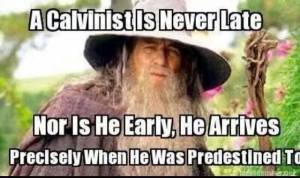
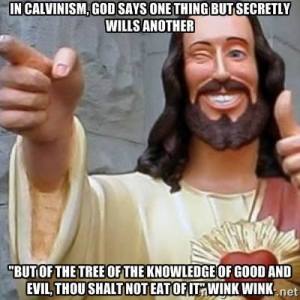
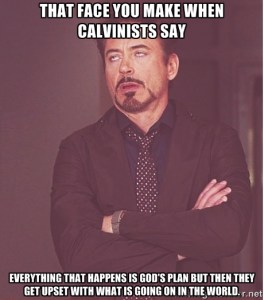
Calvinists often speak from the both side of the mouth when they on the one hand claim that God predestines people to become elect or non-elect from the foundation of the world, and on the other hand claim that God forces no one to be wicked. Sometimes they try to blame Adam for people’s “sinful nature”, but this does not solve the problem since he arrived on the scene after the “foundation of the world” (and the Bible does not claim we have inherited his sin anyway).

So which one is it? Are people wicked against his will or according to his will? (Any of his wills …) Does God force people to be sinners or not?

Calvinists might suggest that God merely “passes over” people and leaves them to their own devices, which means that such people will do what their nature urges them to do – which is performing all sorts of evil (like being wicked by default). Although, what choice do they really have? If only one single choice is available to them, and if God determines  to turn them into non-elect (for no apparent reason), must they therefore not become exactly as God has determined? Surely they could not have become elect if God wanted them to be non-elect? Would it not be surprising if someone who God did NOT want to become elect – but rather non-elect – still ended up as elect? That could not possibly happen, right? Again, I can see no other option but one (1) for the victims that were forced to become non-elect. Is not “forcing” the proper word here?

The Bible tells us that people are separated from him due to their transgression of the law (1 John 3:4). This means that it is when people choose to SIN as they are  spiritually “dead” and therefore also lost (until they repent, if they ever do). Calvinists often make a similar claim, but do they really mean it?

The whole Calvinistic process:

  1. People go to hell due to their sin. (So long it is fine, but it gets worse …)
  2. Why do they sin? Because they are bound by a sinful nature.
  3. Why are they bound by a sinful nature? Because they are wicked non-elect sinners.
  4. Why are they wicked non-elect? Because God created them as such from the foundation of the world – before they even existed, before they were born and long  before they could sin.
  5. This means that people are not dead due to their sins after all, but due to their bad luck of having been chosen by God to be wicked – with no way to escape from this misfortune.

Again, this Calvinistic process means that sin is NOT the reason for their damnation, but GOD’S CHOICE is. So why do Calvinists so often say that people are lost due to their sin if they do not really mean it? (Sinning would just be a consequence of God’s refusal to let people seek him and do good – from the foundation of the world.) Add to this the Calvinistic idea that 1) God is sovereign in such a way that he micro-manages everything, and 2) nothing comes to pass against his will. This means that if we criticize anything or anyone, we are criticizing God himself who caused it all to happen.

Not all Calvinists would agree that this is a proper understanding of their belief system (but many do agree). Still, they cannot escape from the many contradictions resulting from trying to save Calvinism.

calvinism 19 commit sin against their nature

The Bible teaches that sinners do wicked acts against their nature, and not according to their nature:

Rom. 1:24 Wherefore God also gave them up to uncleanness through the lusts of their own hearts, to dishonour their own bodies between themselves:25 Who changed the truth of God into a lie, and worshipped and served the creature more than the Creator, who is blessed for ever. Amen.26 For this cause God gave them up unto vile affections: for even their women did change the natural use into that which is AGAINST NATURE

Once I heard in a podcast where a Calvinist asserted that a person bound by his wicked nature would not choose the right thing (like seeking God). He was then asked by the host “Could he?”. The Calvinist replied “He wouldn’t!”. He was asked “Could he?”. The Calvinist replied “He wouldn’t!” He was again asked: “Could he, though?”, and the Calvinist continued to say “He wouldn’t!”. It is easy to understand why the Calvinist was reluctant to answer the question (which was “could he?” and not “would he?”). If a non-elect person not only would not choose the right thing but neither is capable of it (by no fault of his own), the guilt must be placed on someone else but him. Namely on the one who caused this awful dilemma – namely God.

Fortunately this is not the God of the Bible. If people are wicked, it is their own blame and not God’s. God pleaded with his people Israel to do right, just like he pleads with all of us.

Ex. 18:30 Therefore I will judge you, O house of Israel, every one according to his ways, saith the Lord God. Repent, and turn yourselves from all your transgressions; so iniquity shall not be your ruin.31 Cast away from you all your transgressions, whereby ye have transgressed; and make you a new heart and a new spirit: for why will ye die, O house of Israel?32 For I have no pleasure in the death of him that dieth, saith the Lord God: wherefore turn yourselves, and live ye.

People corrupt themselves

God is not the one corrupting people by determining/orchestrating/choosing/forcing/ordaining/predestining people to become wicked sinners before they are even born. The Bible says that man himself is to be blamed for being corrupt and not God. In order for someone to corrupt himself, he must first exist (and have a heart and a brain) in order to make choices. Man does not corrupt himself until he chooses to make sinful actions. Not a single day before.

Gen. 6:12 And God looked upon the earth, and, behold, it was corrupt; for all flesh had corrupted his way upon the earth.13 And God said unto Noah, The end of all flesh is come before me; for the earth is filled with violence through them; and, behold, I will destroy them with the earth.

Deut. 9:12 And the Lord said unto me, Arise, get thee down quickly from hence; for thy people which thou hast brought forth out of Egypt have corrupted themselves; they are quickly turned aside out of the way which I commanded them; they have made them a molten image.

Deut. 32:5 They have corrupted themselves, their spot is not the spot of his children: they are a perverse and crooked generation.

Judge 2:19 And it came to pass, when the judge was dead, that they returned, and corrupted themselves more than their fathers, in following other gods to serve them, and to bow down unto them; they ceased not from their own doings, nor from their stubborn way.

Hosea 9:9 They have deeply corrupted themselves, as in the days of Gibeah: therefore he will remember their iniquity, he will visit their sins.

2 Pet. 2:19 While they promise them liberty, they themselves are the servants of corruption: for of whom a man is overcome, of the same is he brought in bondage.

2 Pet. 3:16 As also in all his epistles, speaking in them of these things; in which are some things hard to be understood, which they that are unlearned and unstable wrest, as they do also the other scriptures, unto their own destruction.

Jude 1:10 But these speak evil of those things which they know not: but what they know naturally, as brute beasts, in those things they corrupt themselves.

PLANETER i Bibelns skapelseberättelse, irrande stjärnor och fallna änglar – Judas 1:13

“De är vilda havsvågor, som kastar upp sina skändligheters skum, de är IRRANDE STJÄRNOR, åt vilka det svarta mörkret är förvarat för evigt (Judas 13)

This post is written in English here.

”Irrande” är en översättning från det grekiska ordet  πλανήτης (planétés, Strong’s 4107), och används endast en gång i Bibeln, i Judasbrevet 1:13 där vi kan läsa om irrande stjärnor. På svenska skulle man kunna säga att de vandrar “planlöst” omkring ... Enligt Biblehub så kommer ordet ifrån verbet πλανάω (Strong’s 4105) med betydelsen narra, lura, leda någon fel, vandra omkring eller orsaka någon att vandra/irra omkring. Det kan ha betydelsen av en irrande stjärna (vad vi modernt kallar planet) eller bildligt talat en falsk lärare som påverkar vilsna själar att gå vilse.

Det är här som de svenska ordet“planet” kommer ifrån och återfinns hos otaliga andra språk med olika stavningsvariationer.

Upp. 20:8 Och han skall gå ut för att bedra folken vid jordens fyra hörn, Gog och Magog, och samla dem till striden, och deras antal är som sanden i havet.De drog upp över hela jordens VIDD och omringade de heligas läger och den älskade staden. Men eld kom ner från himlen och förtärde dem. 

Ordet VIDD ovan beskriver jordens hela yta och inte delar av jordens yta, vilket skulle vara en illa vald beskrivning om jorden tvärtom skulle vara globformad och så långt från ”platos” som man kan komma. Ordet är översatt från substantivet πλάτος/platos, Strong’s 4114, bredd, något utsträckt och platt, används ibland som motsats till höjd, översätts även ”broad plain” = NASB. Adjektivet är πλατύς Strong’s 4116 som kan användas som beskrivning av en ”gata” som ju är utsträckt och bred. Grunden är verbet πλάσσω/plassó, Strong’s 4111, som kan definieras som”forma/breda ut”. Jämför med svenska ”platt” och  även ”platå” som handlar om ett utbrett flackt område. Definition NE: ”platåʹ (franska plateau, av fornfr. platel ’platt föremål’, ’skål’, ’tallrik’)detsamma. 

Varför är planeter inte omnämnda i Bibeln?

Många har frågat sig varför planeter inte är omnämnda i skapelseberättelsen, utan endast jord, sol och måne. Borde de inte ha omnämnts? Men sanningen är, att om det som vi idag kallar “planeter” handlar om irrande stjärnor (Judas 13) så är de redan omnämnda just som stjärnor.  De flesta stjärnor är visserligen inte alls irrande/planlösa utan har sina fasta positioner i stjärnkonstellationer, men båda varianterna verkar gå under benämningen “stjärnor” oavsett om de är fasta eller irrande.

Om man undantar JORDEN – som av naturliga skäl beskrivs separat eftersom den bebos av Guds skapade djur och människor  – så indikerar Bibeln att de irrande stjärnorna är sju till antalet. Idag kanske vi skulle benämna dessa sju som Merkurius, Venus, Mars, Jupiter, Saturnus, Uranus och Neptunus – som också avspeglar våra sju veckodagar.

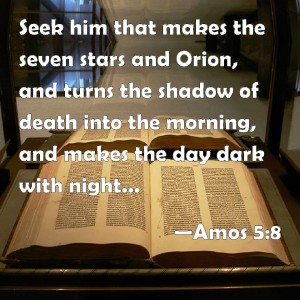
Amos 5:8 Han är den som har gjort Sjustjärnorna och Orion, han som förvandlar djupa mörkret till morgon och gör dagen mörk som natten, han som kallar på havets vatten och häller ut det över jorden – Herren är hans namn.

Ovan sjustjärnor skulle kunna handla om den öppna stjärnhop som kallas Plejaderna (de sju systrarna) i konstellationen Oxen. Det är den stjärnhop som är mest påtaglig på himlavalvet. Orion är, precis som Oxen, en stjärnkonstellation. Kanske det bibliska begreppet sjustjärnor även skulle kunna vara en referens till de sju irrande stjärnorna.

Gen. 1:3 Gud sade: “Varde ljus!” Och det blev ljus. 4 Gud såg att ljuset var gott, och han skilde ljuset från mörkret. 5 Gud kallade ljuset dag, och mörkret kallade han natt. Och det blev afton och det blev morgon. Det var den första dagen.6 Gud sade: “Varde mitt i vattnet ett valv som skiljer vatten från vatten!” 7 Gud gjorde valvet och skilde vattnet under valvet från vattnet ovan valvet. Och det skedde så. Gud kallade valvet himmel. Och det blev afton och det blev morgon. Det var den andra dagen. —-14 Gud sade: “Varde på himlavalvet ljus som skiljer dagen från natten!” De skall vara tecken som utmärker särskilda tider, dagar och år, 15 och de skall vara ljus på himlavalvet som lyser över jorden.” Och det skedde så. 16 Gud gjorde de två stora ljusen, det större att härska över dagen och det mindre att härska över natten, likaså stjärnorna. 17 Han satte dem på himlavalvet till att lysa över jorden, 18 till att härska över dagen och natten och till att skilja ljuset från mörkret. Och Gud såg att det var gott. 

Guds anledning att skapa ljusen på himlavalvet var för att de skulle lysa över JORDEN där ju hans skapade värld befinner sig.

amos 5

Fallna änglar

Bibeln nämner också fallna änglar som lämnat sin “rätta hemvist” och som därför väntar på bestraffningJudas jämför dem med de människor i Sodom och Gomorra som även de lämnat sin naturliga hemvist och engagerade sig i sexuell perversion (homosexualitet). “På samma sätt” som de fallna änglarna så bedrev de alltså otukt och följde onaturliga begär. Se nedan i 1 Mos. 6 där vi kan se hur en del av Guds änglar (Guds söner) bedrev otukt med kvinnor på jorden, vilket förstås är helt onaturligt och emot Guds skapelse.

Juda 1:6 Tänk också på de änglar som inte bevarade sin höga ställning utan övergav sin rätta hemvist. Dem håller han i förvar i mörker med eviga bojor till den stora dagens dom. 7 Så är det med Sodom och Gomorra och städerna däromkring. På samma sätt bedrev de otukt och följde onaturliga begär. De står som ett varnande exempel och får sitt straff i evig eld.14 Om dem har också Hanok i det sjunde släktledet efter Adam profeterat: “Se, Herren kommer med sina mångtusen heliga 15 för att hålla dom över alla och straffa alla för de gudlösa gärningar som de har begått och för alla de hårda ord som dessa gudlösa syndare har talat mot honom.” 

Judas talar om “sjunde släktledet efter Adam”, vilket är en stark indikation på att han ansåg att 1 Mosebok innehåller vår autentiska historia (Enok är den sjunde från Adam). Judas hade ingen anledning att hysa tveksamheter om att 1 Mos är överensstämmande med verkligheten. Avkomman till änglarna och kvinnorna blev giganter (jättar).

Gen. 6:1 När människorna började föröka sig på jorden och döttrar föddes åt dem, 2 såg Guds söner att människornas döttrar var vackra, och de tog till hustrur alla de ville ha. 3 Då sade Herren: “Min Ande skall inte bli kvar i människorna för alltid på grund av deras förvillelse. De är kött och deras tid skall vara etthundratjugo år.”4 Vid denna tid, då Guds söner gick in till människornas döttrar och dessa födde barn åt dem, och även senare, levde våldsverkarna på jorden. Detta var forntidens väldiga män som var så ryktbara.5 Och Herren såg att människornas ondska var stor på jorden och att deras hjärtans alla tankar och avsikter ständigt var alltigenom onda. 6 Då ångrade Herren att han hade gjort människorna på jorden, och han var bedrövad i sitt hjärta.  

Även Enoks bok och the book of Jasher konfirmerar denna historia och ger oss ännu fler detaljer.

Solen (och stjärnorna) behövdes inte för att ge ljus på jorden de första tre dagarna (solen skapades Dag 4) , och vi vet from Johannes Uppenbarelsebok att Guds lamm kommer att ge det nya Jerusalem ljus i framtiden.

Satan, en vacker stjärna 

Satan, en vacker stjärna, kastades ner från himlen till jorden pga sin överträdelse. Sedan dess så vandrar han runt på jorden för att försöka narra människor. En sann “irrande stjärna” som vandrar planlöst omkring för att luras!

Lukas 10:17 De sjuttio kom glada tillbaka och berättade: “Herre, till och med de onda andarna lyder oss i ditt namn.” 18 Han sade till dem: “Jag såg Satan falla ner från himlen som en blixt.1 Peter 5:8 Var nyktra och vaksamma. Er motståndare djävulen går omkring som ett rytande lejon och söker efter vem han skall sluka. 9 Gör motstånd mot honom, orubbliga i tron, och tänk på att era bröder här i världen utstår samma lidanden.Job 1:6 En dag hände det att Guds söner kom och trädde fram inför Herren, och Åklagaren kom också med bland dem. 7 Då frågade Herren Åklagaren: “Varifrån kommer du?” Åklagaren svarade Herren: “Från en färd utöver jorden där jag har VANDRAT OMKRING. (även Job 2:1-2)

Prinsen av Tyrus och prinsen av luftens rike (Satan) visar upp en liknande livsstil, vilka jämförs nedan. Satan var en lysande stjärna, och den stjärna som är kopplad till Satan är VENUS, morgonstjärnan.

Hes. 28:2 “Du människobarn, säg till fursten i Tyrus: Så säger Herren, Herren: Ditt hjärta är högmodigt och du säger: Jag är en gud, jag tronar på en gudatron mitt ute i havet. Ändå är du bara en människa och inte en gud, hur mycket du än i ditt hjärta tycker dig vara en gud.— 12 “Du människobarn, stäm upp en klagosång över kungen i Tyrus och säg till honom: Så säger Herren, Herren: Du var en mönsterbild av fullkomlighet, full av visdom och fullkomlig i skönhet. 13 I Eden, Guds lustgård, var du, höljd i alla slags ädelstenar: karneol, topas och kalcedon, krysolit, onyx och jaspis, safir, karbunkel och smaragd. Med guld var dina tamburiner och flöjter utsmyckade, framställda den dag du skapades. 14 Du var en smord, beskyddande kerub, och jag hade satt dig på Guds heliga berg. Där gick du omkring bland gnistrande stenar.15 Du var fullkomlig på alla dina vägar från den dag då du skapades, till dess att orättfärdighet blev funnen hos dig.16 Genom din stora handel fylldes du med våld, och du syndade. Därför drev jag dig bort från Guds berg och förgjorde dig, du beskyddande kerub mitt bland de gnistrande stenarna. 17 Eftersom ditt hjärta var högmodigt på grund av din skönhet, och du fördärvade din visdom på grund av din prakt, kastade jag ner dig till jorden och utlämnade dig åt kungar till att beskådas.18 Genom dina många missgärningar och din oärliga handel vanhelgade du dina helgedomar. Därför lät jag eld gå ut från dig, och den förtärde dig. Jag gjorde dig till aska på marken inför alla som såg dig.

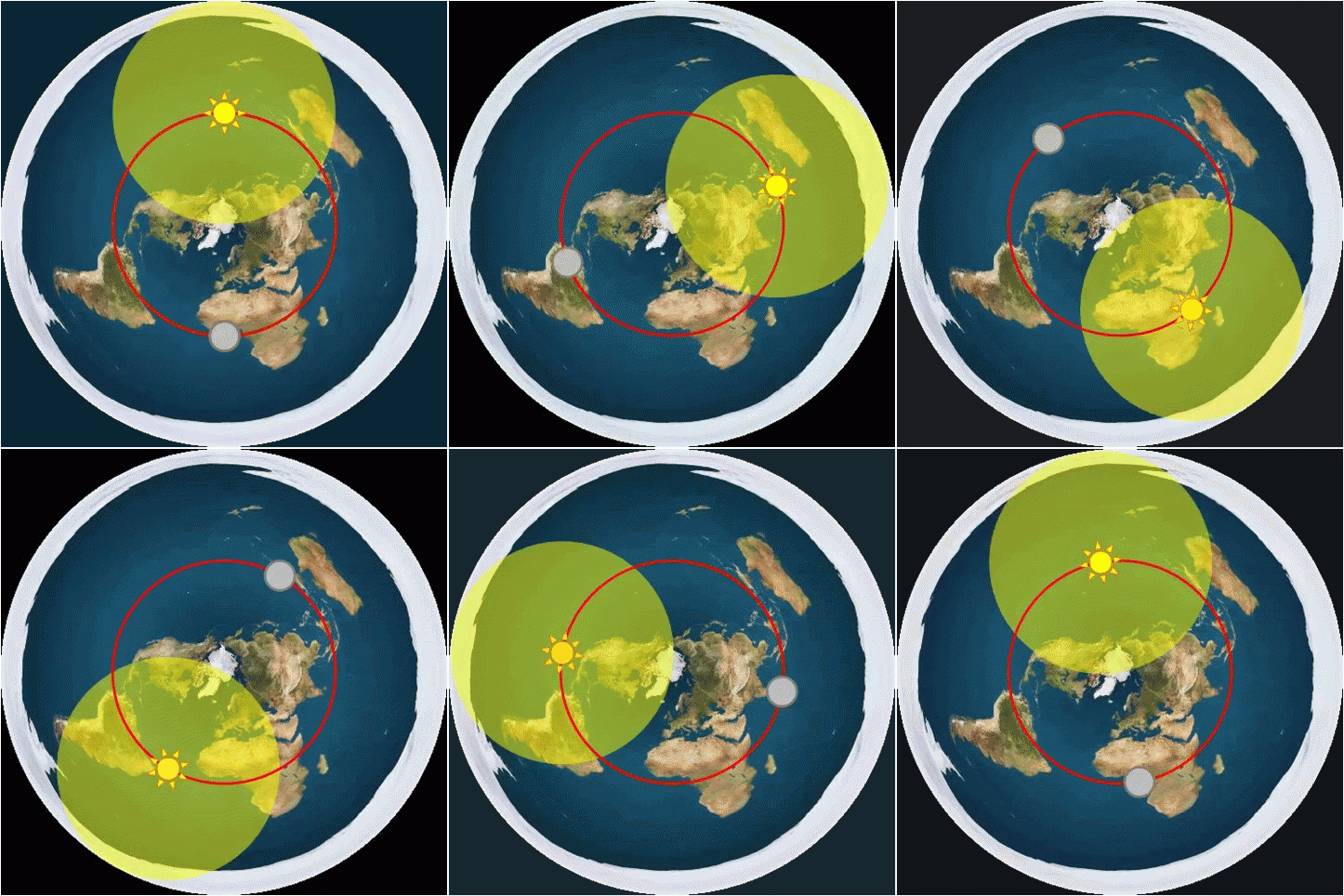
Enligt plattjordanhängare så är stjärnorna radikalt mindre i storlek och närmare jorden än den officiella bilden. Stjärnorna är placerade i himlavalvet (inte ovanför). Om de vore större och på ett större avstånd skulle de inte kunnat “falla ner” på jorden utan de skulle ha orsakat så att jorden brann upp långt innan de närmade sig. De skulle alltså inte ha någon jord att falla ner på. Men Bibeln säger att stjärnorna kastades ner på jorden. 

Upp. 8:10 Den tredje ängeln blåste i sin basun. Då föll en stor stjärna, brinnande som en fackla, ner från himlen, och den föll över en tredjedel av floderna och vattenkällorna. 11 Stjärnans namn är Malört. En tredjedel av vattnen förvandlades då till malört, och många människor dog av vattnen, som hade blivit förgiftade.Upp. 12:4 Hans stjärt drog med sig en tredjedel av himlens stjärnor, och han kastade ner dem PÅ JORDEN. Och draken stod framför kvinnan som skulle föda för att sluka hennes barn, så snart hon hade fött det.Ps. 147:4 Han bestämmer stjärnornas mängd, han nämner dem alla vid namn.

Enoks bok förklarar att sju speciella stjärnor, som var olydiga och rebelliska emot Gud,  måste förvänta sig en mycket allvarlig bestraffning i framtiden. Tills dess är de fastkedjade i mörker (som Judas 13 också säger):

1 Enoch 21:1. And I proceeded to where things were chaotic. 2. And I saw there something horrible: I saw neither a heaven above nor a firmly founded earth, but a place chaotic and horrible. 3. And there I saw seven stars of the heaven bound together in it, like great mountains and burning with fire. 4. Then I said: ‘For what sin are they bound, and on what account have they been cast in hither?’ 5. Then said Uriel, one of the holy angels, who was with me, and was chief over them, and said: ‘Enoch, why dost thou ask, and why art thou eager for the truth? 6. These are of the number of the stars of heaven, which have transgressed the commandment of the Lord, and are bound here till ten thousand years, the time entailed by their sins, are consummated.’ 7. And from thence I went to another place, which was still more horrible than the former, and I saw a horrible thing: a great fire there which burnt and blazed, and the place was cleft as far as the abyss, being full of great descending columns of fire: neither its extent or magnitude could I see, nor could I conjecture. 8. Then I said: ‘How fearful is the place and how terrible to look upon!’ 9. Then Uriel answered me, one of the holy angels who was with me, and said unto me: ‘Enoch, why hast thou such fear and affright?’ And I answered: ‘Because of this fearful place, and because of the spectacle of the pain.’ 10. And he said unto me: ‘This place is the prison of the angels, and here they will be imprisoned for ever.’

Varför blinkar stjärnor? Det ser ut som om de befann sig i en vattenhinna, som kan ses här. (Osäker hur länge länkar såsom denna kommer att hålla eftersom Youtube gärna tar bort filmer som går emot officiella NASA-historier.)

Gud gjorde valvet och skilde vattnet under valvet från vattnet ovan valvet. Och det skedde så.—Gud sade: “Varde himlavalvet ljus som skiljer dagen från natten!” 

Som stjärnor ser ut utan NASA.s CGI:

Andra artiklar om jorden:

God works all things after the counsel of his own will? Eph. 1:11

secret willGod’s will is that man should use his free will and seek him (see Acts 17)

God has a sovereign freedom to accomplish whatever he chooses, like guaranteeing the proper inheritance to the children of God (which are those who are following Jesus). The promise is to those and no one else.

The following verse is a popular Calvinistic proof text, often quoted (by itself) to support the idea that everything under the sun occurs precisely according to God’s plans, down to every single detail:

Eph. 1:11 In whom also we have obtained an inheritance, being predestinated according to the purpose of him who worketh all things after the counsel  of his own will

The verse of course say no such thing (that God’s will always happens), unless we are talking about his will to give man free will and make man responsible for his own actions. Note that it says “works” all things and not “cause” all things … The verse does not say that all thoughts, words and deeds are predestined by God, but it rather explains what God does, in terms of providing wonderful promises through Christ.

Councel in Eph. 1:11 is a translation from the Greek noun βουλή (boulé, Strong’s 1012) and could also be translated deliberate wisdom. This noun derives from the verb βούλομαι (boulomai, Strong’s 1014) and means will, intend, desire or wish. 

Some theologians claim that it is also about God planning and arranging all physical circumstances in order to achieve his exact plans which always take place down to the finest detail. This is something the Bible does not say.

The noun boulé occurs 12 times in the KJV Bible. Examples:

Luke 7:30 But the Pharisees and lawyers rejected the counsel of God against themselves, being not baptized of him.31 And the Lord said, Whereunto then shall I liken the men of this generation? and to what are they like?32 They are like unto children sitting in the marketplace, and calling one to another, and saying, We have piped unto you, and ye have not danced; we have mourned to you, and ye have not wept.

Quite clearly God’s counsel can be rejected.

Acts 2:22 Ye men of Israel, hear these words; Jesus of Nazareth, a man approved of God among you by miracles and wonders and signs, which God did by him in the midst of you, as ye yourselves also know:23 Him, being delivered by the determinate counsel and foreknowledge of God, ye have taken, and by wicked hands have crucified and slain: 

If God caused and scripted Calvary in all details, why does the text not say so? Instead we can read that his foreknowledge was involved. Knowing about future events is not the same as causing future events.

Acts 20:27 For I have not shunned to declare unto you all the counsel of God.28 Take heed therefore unto yourselves, and to all the flock, over the which the Holy Ghost hath made you overseers, to feed the church of God, which he hath purchased with his own blood.29 For I know this, that after my departing shall grievous wolves enter in among you, not sparing the flock.30 Also of your own selves shall men arise, speaking perverse things, to draw away disciples after them.31 Therefore watch, and remember, that by the space of three years I ceased not to warn every one night and day with tears.

Paul is clearly not a Calvinist since he does not relax and trust that God’s will always happens and that the elect will remain elect (and the non-elect remain non-elect). He warns people with tears night and day because disciples will be drawn away from the gospel. Why does he do that if nothing can go wrong but always turn out as God wants? Paul rather believes the scriptures, and understands that prayers can make a difference!

Acts 27:12 And because the haven was not commodious to winter in, the more part advised to depart thence also, if by any means they might attain to Phenice, and there to winter; which is an haven of Crete, and lieth toward the south west and north west. — 41 And falling into a place where two seas met, they ran the ship aground; and the forepart stuck fast, and remained unmoveable, but the hinder part was broken with the violence of the waves.42 And the soldiers’ counsel was to kill the prisoners, lest any of them should swim out, and escape.

1 Cor. 4:5 Therefore judge nothing before the time, until the Lord come, who both will bring to light the hidden things of darkness, and will make manifest the counsels of the hearts: and then shall every man have praise of God.  

Unfortunately Calvinists usually believe that God decrees “whatsover comes to pass” and are keen to interpret “work all things after the counsel of His will” as though everything pans out exactly as God wills it, both good and bad. That would include God deterministically scripting every murder, rape and abortion that will ever take place! The text, however, must not be read in this sweeping and all-inclusive way. The “all things” refers to all things that God accomplishes in Christ (in a general sense) because this is what the previous verses talk about.

Eph. 1:3 Blessed be the God and Father of our Lord Jesus Christ, who hath blessed us with all spiritual blessings in heavenly places in Christ

Paul provides examples of the above mentioned blessings and promises, which are only meant for those who are IN CHRIST which is the condition for salvation. The eternal purpose is that God’s children, his church will be able to look forward to a guaranteed inheritance waiting for them in the heavenly places. Again, the condition is to be IN CHRIST, and if someone does not endure to the end that person is no longer IN CHRIST and the promises are therefore not tied to him. The “salvation bus” is predestined to go to heaven and guaranteed to be blessed, but who is in and who remains to the end? That is totally up to us and we know the conditions which are presented to us. Those who are in Christ are considered to be his holy children. The text does not say that the promises are provided with no conditions.

It might be a help to ask oneself what is predestined according to His purpose. In order to get the answer one must of course go back to the previous verses, because a verse can never be read in a vacuum. The answer is again “the inheritance in Christ! The verse right (v. 12) after says “That we should be to the praise of his glory, who first trusted in Christ”, and v. 13 continues to talk about “trusting” and “believing”. It is possible that Paul includes the very first belivers in this sentence, and we should note that “trusted” is an action that people might choose to do. God will not “trust” for us or instaed of us. It is rather a condition for salvation. V. 19 says “the exceeding greatness of his power to us-ward who believe. The believers are in Christ – again, the condition.

If I would tell someone about my work and say that “all things” worked out perfectly fine – maybe even after the counsel of my will – the listener would not assume that I just claimed that every single thing in the entire world worked out absolutely great, and that I have solved all the world’s problems. Neither would the listener assume that I claimed to be the cause of all things that I said took place.

Compare:

Phil. 4:13 I can do all things through Christ which strengtheneth me.

Paul is here talking about being content no matter what state he is in (in both good and bad circumstances) and to be able to do the good works which God has prepared for us to do (Eph. 2:10). Paul is not including everything under the sun in “all things”, but the term must of course be understood in its context. The verse certainly does not say that byall things” you can do all forms of evil and wickedness through God who strengthens you. Similarly, Eph. 1:11 does not say that the “all things” would include evil and wickedness.

All things work out for good for all people  -more than in a general term?free will 3

Paul promises us in Rom. 8 that all things work out together for good to them that LOVE GOD, which of course is a condition for salvation. If Paul had meant that all things work out for good for all people everywhere, including all details from God’s perspective, then he could have skipped the condition of having to love God.

Rom. 8:28 And we know that all things work together for good to them that love God, to them who are the called according to his purpose. 

In the same chapter Paul explains which conditions that apply for escaping condemnation: 1) You must be IN JESUS, and 2) you must not walk after the flesh but after the Spirit. This is something that WE must make sure to do, and God will not do it for us:

Rom. 8:1 There is therefore now no condemnation to them which are in Christ Jesus, who walk not after the flesh, but after the Spirit. — 4 That the righteousness of the law might be fulfilled in us, who walk not after the flesh, but after the Spirit.

He goes on to explain, that if we live according to the flesh (not an obligation), we cannot please God. The solution to the problem is of course to NOT live according to the flesh but after the Spirit:

Rom. 8:5 For they that are after the flesh do mind the things of the flesh; but they that are after the Spirit the things of the Spirit.6 For to be carnally minded is death; but to be spiritually minded is life and peace.7 Because the carnal mind is enmity against God: for it is not subject to the law of God, neither indeed can be.8 So then they that are in the flesh cannot please God.

Paul explains that we definitely do not have to live after the flesh. The choice is clear; if you live after the flesh you will die, and if you live after the Spirit you will live. Who are the sons of God? Those who have chosen to be led by the Spirit of God. If someone lives after the flesh, he can certainly not blame God for it but only himself. The better option is always to live by the Spirit in order to get life:

Rom. 8:12 Therefore, brethren, we are debtors, not to the flesh, to live after the flesh.13 For if ye live after the flesh, ye shall die: but if ye through the Spirit do mortify the deeds of the body, ye shall live.14 For as many as are led by the Spirit of God, they are the sons of God.

Paul tells us about the same wonderful promises of glorification just as in Eph. 1, but again, only for those who are God’s children who live after the Spirit:

Rom. 8:17 And if children, then heirs; heirs of God, and joint-heirs with Christ; if so be that we suffer with him, that we may be also glorified together.

Paul repeats again that all things work together for good to them that love God. The “calling” is widespread because we know from the parable of the King’s wedding feast (Matt. 22) that many of those who were called to participate in the feast (they were even on the guest list) declined to go. One person who actually did go to the feast was still thrown out because he had neglected to wear appropriate clothes (his own responsibility). We are justified when we are cleansed from our past sins, and after this point our goal is to be conformed into the image of Jesus which is something to look forward to. We have an assurance in the hope of salvation while on earth, as long as we abide in Jesus of course. Rom. 8:29 is referring to those in v. 28, who love God. Do read about Rom 8:28-30 here.

Rom. 8:28 And we know that all things work together for good to them that love God, to them who are the called according to his purpose.

God provides provisions and works all things after the counsel of his will, but he does not cause people to act according to some predestined plans. If God forces people to think and act in a certain way, what is the point of judging them for things they cannot possibly avoid?:

1 Cor.10:13 No temptation has overtaken you but such as is common to man; and God is faithful, who will not allow you to be tempted beyond what you are able, but with the temptation will provide the way of escape also, so that you will be able to endure it.

God does not take pleasure in the death of the wicked. He would prefer that they would repent in order to live:

Ez. 18:23 Have I any pleasure at all that the wicked should die? saith the Lord God: and not that he should return from his ways, and live?

If someone ends up with an interpretation which makes God the greatest culprit and a lover of sin, this is clearly an erroneous understanding. A religion that blames the sin of all mankind on God is clearly incorrect. We should rather use this verse as a filter:

Ja. 1:13 Let no man say when he is tempted, I am tempted of God: for God cannot be tempted with evil, NEITHER TEMPTETH HE ANY MAN 

We are requested to not excuse our sin by suggesting “God made me do it”. God does not tempt anyone, much less causes anyone to sin, but in order to save the philosophy of Calvinism God must be blamed for the sin of all mankind even though it is blasphemy? Calvinists might try to solve the problem with “it’s a miracle” or “God’s ways are higher than our ways”, but in that case anyone can introduce contradictions into the Bible and excuse them by saying “God’s ways are higher than our ways” and “who are we to question God?”. 

It is a lot safer to agree with the Bible which says that God’s will does not always happen. Yet, he is still in control (does not mean micro management) and all things work out wonderfully for those who love him.

Calvinists and their focus on a sovereign God who must submit to Calvinism

calvinism 38God is sovereign, but what does it mean?

Calvinists have a huge focus on God’s sovereignty, which would not be a bad thing had they not interpreted this unbiblical word in a very unfortunate way.

The Calvinist R.C. Sproul for instance wrote:

“If there is one single molecule in this universe running around loose, totally free of God’s sovereignty, then we have no guarantee that a single promise of God will ever be fulfilled. “R.C. Sproul.

Also freewillers believe that God IS sovereign but certainly not with the Calvinistic interpretation. God is so sovereign and powerful that he is able to create us in any way he likes, including creating us with free will where we are responsible for our own actions (rather than blaming our shortcomings on God). Or is this too difficult for him? Must he ask someone for permission before he can create us with free will?

While freewillers also believe that God is sovereign, their main focus is rather on God’s holy character and the fact that he does not tempt anyone, much less causes anyone to sin. This means, that if someone suggests that God directly or indirectly makes people sin (or endorses sin in any shape or form), it is clearly a huge misunderstanding and an attack on God’s character. Many would call it blasphemy. The fact that sin does exist is evidence of that God’s will does not always happen, which is quite clear in the pages of the Bible. God is in control of his creation even though he does not act through micro managing human beings.

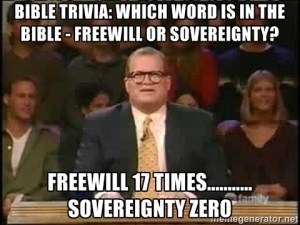
”Sovereignty” and ”sovereign” are words not found in either the KJV nor the NKJV Bible (except for “sovereignty” mentioned once in the NKJV but not in relation to God).  ”Sovereignty” is however found in the NIV in a couple of cases where it does not refer to God (Dan 5:18, Dan 7:27) and ”sovereign” is used multiple times referring both to God and others.

It is therefore not incorrect to say that “sovereignty” and “sovereign” are not Biblical words, if you exclude modern translations which many Christians are reluctant to use. When Calvinists are told about the lack of these words in the Bible, they usually bring up the trinity and say something like “The trinity is not mentioned in the Bible either! Does this mean that it’s false?!”. They neglect to notice that the freewiller does not claim that absence of these words in the Bible automatically means that God is therefore not sovereign. What the freewiller does say is that the word must mean defined before we can conclude if it is a correct description of our holy God or not.

What if I asked a Calvinist if he believes that God is sympathetic. Yes, or no? Is he? The Calvinist might say that yes, “sympathetic” could very well be one of many definitions applicable to God. What if I then said “See?! Therefore God would never send anyone to hell! That would not be sympathetic at all but truly unkind!”. Then the Calvinist might rightly protest and say that this interpretation does not automatically follow. Of course God could still be sympathetic even though he rightly judges people’s hearts and sends some to hell due to their evil actions and refusal to submit under him. So the Calvinist might admit that God is sympathetic but he certainly does not admit to God being the sort of sympathetic that I propose. What right do I have to define the word “sympathetic” in such a way? Therein lies the problem.

Non-biblical words must be defined or else you would not know whether you agree with them or not. Who has the authority to define unbiblical words, add them to the Bible with a strict definition tied to them? It is not always a watertight solution to let theologians define such words (even though they are usually right on target). If we truly want to learn and understand God’s true character, it is a lot safer to pay attention to the descriptions and examples which are used in the Bible. Or else anyone can select various unbiblical words, insist on a preferred meaning and add them to the Bible.

Atheists might suggest that if God is all-powerful and sovereign, he should be able to do absolutely everything, including performing logically contradictory ideas such as creating a square circle or even ceasing to be God. This is what one of my daughter’s  science teachers taught his high school science class, with the summary and conclusion that this is proof for God’s insufficiency and therefore non-existence. (For some reason  schools are supposed to be neutral when it comes to religion, but atheism can freely be taught with no consequences?). Although, the God of the Bible never promised to be this sort of omnipotent being who likes to perform ridiculous things – and by the way “omnipotent” is mentioned once in the KJV Bible (Rev. 19:6) in relation to his reign.

The point is of course that both Calvinist and atheists make the mistake to insist on a certain definition of words which may not even be included in the Bible. They might erroneously assume that everyone sides with their understanding of these words.

Read more about 15 Bible verses Calvinists misinterpret in relation to God’s SOVEREIGN WILL

The heart is deceitful above all things, and desperately wicked? Jer. 17:9

The heart is deceitful above all things, and desperately wicked: who can know it?” Jer. 17:9 KJV

The book of Jeremiah, just like Job, Isaiah, Ezekiel, etc, contains portions of poetic expressions, parables, hyperboles, prophesies, etc, so we must be careful to not read every verse in a literal way. Some Christians often quote Jer. 17:9 in order to support the idea that we are born in sin (which the verse does not say) and that we are constantly sinning in thoughts, words and deeds. Possibly also that God must separately “enable” a person to do good or else he is not able to do so. (Many reformed believers think that God for some reason does not enable all people to repent and do good). Nevertheless, it is rather clear that the same chapter (just like many other chapters in the book of Jeremiah) contains a good portion of poetic expressions. If those should not be read in a literal way, why should Jer. 17:9?

Let us read the rest of the same chapter – Jeremiah 17:

17:1 The sin of Judah is written with a pen of iron, and with the point of a diamond: it is graven upon the table of their heart, and upon the horns of your altars;2 Whilst their children remember their altars and their groves by the green trees upon the high hills.

Is the above literally true? Is the sin of Judah written with a pen of iron and diamond, and literally graven on people’s hearts? Upon the horns of altars?

3 O my mountain in the field, I will give thy substance and all thy treasures to the spoil, and thy high places for sin, throughout all thy borders.4 And thou, even thyself, shalt discontinue from thine heritage that I gave thee; and I will cause thee to serve thine enemies in the land which thou knowest not: for ye have kindled a fire in mine anger, which shall burn for ever.5 Thus saith the Lord; Cursed be the man that trusteth in man, and maketh flesh his arm, and whose heart departeth from the Lord.

Through poetic expressions we can read above that God is angry due to his own people (Judah) departing from him. This is not the first time they do so and seems to be a recurrent problem in the Old Testament (which makes us understand the description of their heart in Jer. 17:9). As a consequence of Judah’s heart departing from him, God will cause thee to serve thine enemies in the land which thou knowest not”. The better option would of course have been to be obedient to God in order to avoid this unfortunate disaster. The chapter continues to explain what a dreadful future those who depart from him will get:

6 For he shall be like the heath in the desert, and shall not see when good cometh; but shall inhabit the parched places in the wilderness, in a salt land and not inhabited.

Notice the poetic language and illustrations which make an important point. The chapter continues to explain why it is a much better option to trust in the Lord.

7 Blessed is the man that trusteth in the Lord, and whose hope the Lord is.8 For he shall be as a tree planted by the waters, and that spreadeth out her roots by the river, and shall not see when heat cometh, but her leaf shall be green; and shall not be careful in the year of drought, neither shall cease from yielding fruit.

Notice the poetic language above. Then comes Jer. 17:9:

9 The heart is deceitful above all things, and desperately wicked: who can know it?10 I the Lord search the heart, I try the reins, even to give every man according to his ways, and according to the fruit of his doings.

The claim that the heart is “deceitful” and “desperately wicked”, is a general claim stated right after explaining how Judah had departed from God yet again. It is not hard to watch the TV news and naturally feel like exclaming that “people are deceitful and desperately wicked”, after seeing constant examples of war, rape, gang rape, pedophilia, Satanism, censorship from the elite, etc. This does not mean that every single person in all parts of the world is always deceitful and wicked – around the clock – and not being able to be anything else but think and do evil.

The answer to the question “who can know it?” (the heart), is God can! Just like James says in Ja. 2:24 – we are justified by works and not by faith alone – God says here that he will give every man according to his ways, and according to the fruit of his doings”. The fruit is important for our salvation. See in John 15 where Jesus explains how important it is to remain in him, as a branch in the vine, in order to provide fruit. If the branch no longer produces fruit, it will be broken off and thrown in the fire. If a person does not produce fruit, it is his own fault and God should not be blamed. 

11 As the partridge sitteth on eggs, and hatcheth them not; so he that getteth riches, and not by right, shall leave them in the midst of his days, and at his end shall be a fool.

Notice the poetic language. A more modern English would be: Like a partridge that hatches eggs it did not lay are those who gain riches by unjust means. When their lives are half gone, their riches will desert them, and in the end they will prove to be fools” (NIV). Naturally God warns against it. Still, people end up as fools (naturally against God’s will) by taking things of value not belong to them. There are consequences for bad behavior. 

12 A glorious high throne from the beginning is the place of our sanctuary.13 O Lord, the hope of Israel, all that forsake thee shall be ashamed, and they that depart from me shall be written in the earth, because they have forsaken the Lord, the fountain of living waters.

Again, we can see here that it is not a good idea to forsake God and depart from him. They shall be ashamed due to their choice to act against God’s will. However, they shall not literally be “written in the earth”. 

14 Heal me, O Lord, and I shall be healed; save me, and I shall be saved: for thou art my praise.15 Behold, they say unto me, Where is the word of the Lord? let it come now.16 As for me, I have not hastened from being a pastor to follow thee: neither have I desired the woeful day; thou knowest: that which came out of my lips was right before thee.17 Be not a terror unto me: thou art my hope in the day of evil.

Jeremiah is saying “I have not run away from being your shepherd” (NIV). Good choice.

18 Let them be confounded that persecute me, but let not me be confounded: let them be dismayed, but let not me be dismayed: bring upon them the day of evil, and destroy them with double destruction.

Since Jeremiah is faithful to God, it is not right for people to persecute him. Yet, some did and Jeremiah is concerned about it and pray to his Lord.

19 Thus said the Lord unto me; Go and stand in the gate of the children of the people, whereby the kings of Judah come in, and by the which they go out, and in all the gates of Jerusalem;20 And say unto them, Hear ye the word of the Lord, ye kings of Judah, and all Judah, and all the inhabitants of Jerusalem, that enter in by these gates:21 Thus saith the Lord; Take heed to yourselves, and bear no burden on the sabbath day, nor bring it in by the gates of Jerusalem;

God gives instructions to Jeremiah and since Jeremiah is a good man, he is likely to obey them. Unlike many of his forefathers!:

22 Neither carry forth a burden out of your houses on the sabbath day, neither do ye any work, but hallow ye the sabbath day, as I commanded your fathers.23 But they obeyed not, neither inclined their ear, but made their neck stiff, that they might not hear, nor receive instruction.

Above we can see how some of Jeremiah’s forefathers did not obey God. “they did not listen or pay attention; they were stiff-necked and would not listen or respond to discipline” (NIV). This is clear proof that God’s will does not always happen, because he prefers to give man free will and thus make him responsible for his own actions. God is not the one making people stiff-necked so that they cannot obey him. They are doing this to themselves, to the dismay of God.

24 And it shall come to pass, if ye diligently hearken unto me, saith the Lord, to bring in no burden through the gates of this city on the sabbath day, but hallow the sabbath day, to do no work therein;

25 Then shall there enter into the gates of this city kings and princes sitting upon the throne of David, riding in chariots and on horses, they, and their princes, the men of Judah, and the inhabitants of Jerusalem: and this city shall remain for ever.26 And they shall come from the cities of Judah, and from the places about Jerusalem, and from the land of Benjamin, and from the plain, and from the mountains, and from the south, bringing burnt offerings, and sacrifices, and meat offerings, and incense, and bringing sacrifices of praise, unto the house of the Lord.

So IF Jeremiah will diligently listen to God, many things will turn to the better for the city. It is up to Jeremiah.

27 But if ye will not hearken unto me to hallow the sabbath day, and not to bear a burden, even entering in at the gates of Jerusalem on the sabbath day; then will I kindle a fire in the gates thereof, and it shall devour the palaces of Jerusalem, and it shall not be quenched.

If Jeremiah will NOT listen to God and obey him (which clearly is an option since God warns against it), then there will be consequences for the city of Jerusalem. Hopefully Jeremiah will make the better choice.

Harden not your hearts!

In the same book – Jeremiah – we can read:

Jer. 4:4 Circumcise YOURSELVES to the LORD, and take away the foreskins of your heart, ye men of Judah and inhabitants of Jerusalem: lest my fury come forth like fire, and burn that none can quench it, because of the evil of your doings.

We should make sure to not harden our hearts:

Hebr. 3:7 Wherefore as the Holy Ghost saith, To day if ye will hear his voice, 8 HARDEN NOT YOUR HEARTS, as in the provocation, in the day of temptation in the wilderness

Pro 28:13He that covereth his sins shall not prosper: but whoso confesseth and forsaketh them shall have mercy.14 Happy is the man that feareth always: but he that hardeneth his heart shall fall into mischief.

2 Chron 36:11 Zedekiah was one and twenty years old when he began to reign, and reigned eleven years in Jerusalem. 12 And he did that which was evil in the sight of the LORD his God, and humbled not himself before Jeremiah the prophet speaking from the mouth of the LORD.13 And he also rebelled against king Nebuchadnezzar, who had made him swear by God: but he stiffened his neck, and hardened his heart from turning unto the LORD God of Israel.

2 Chron. 12:14 And he did evil, because he prepared not his heart to seek the Lord.

We are wonderfully made

It is clear that we are born wonderfully made (see this article), and we are neither born with deceitful hearts or forced to have deceitful/wicked hearts due to any “nature” forced upon us against our will:

Ecclesiastes 7:29 Lo, this only have I found, that GOD HATH MADE MAN UPRIGHT; but THEY they have sought out many inventions.

Isaiah 7:16 For BEFORE THE CHILD SHALL KNOW TO REFUSE THE EVIL, AND CHOOSE THE GOOD, the land that thou abhorrest shall be forsaken of both her kings.

Romans 9:11 (For the children being not yet bornNEITHER HAVING DONE ANY GOOD OR EVIL, that the purpose of God according to election might stand, not of works, but of him that calleth;)

Isaiah 44:24 Thus saith the Lord, thy redeemer, and he that FORMED THEE FROM THE WOMB, I am the Lord that maketh all things; that stretcheth forth the heavens alone; that spreadeth abroad the earth by myself

Zecharia 12:1  The burden of the word of the Lord for Israel, saith the Lord, which stretcheth forth the heavens, and layeth the foundation of the earth, and FORMETH THE SPIRIT OF MAN WITHIN HIM.

Genesis 1:26 And God said, Let us make man in our image, after our likeness27 So God created man in his own image, in the image of God created he him; male and female created he them.—31 And God saw every thing that he had made, and, behold, it was very good.

Vad ska jag GÖRA för gott för att få evigt liv, enligt Jesus egna ord? – Matt. 19:16

Hur fjäderlätt är egentligen det kors vi ska bära?

När Jesus tillfrågades av en ung man vad han måste GÖRA för att få evigt liv, så svarade Jesus inte “Ingenting eftersom lagen i sig är omöjlig att lyda och dessutom är även de goda sakerna som du gör såsom smutsiga trasor inför Gud”, och han svarade heller inte “Tro allena!”. I stället så svarade Jesus med att lista upp vad den ungen mannen förväntades GÖRA. Precis det som mannen efterfrågade.

I princip säger Jesus att vi måste lyda följande bud, förutom att förstås älska Gud över allting annat:

  1. inte döda/mörda
  2. inte begå äktenskapsbrott
  3. inte stjäla
  4. inte ljuga (sprida falskt förtal)  
  5. hedra sin fader och sin moder 
  6. älska sin nästa som sig själv  

Detta kan vi se i Matteus evangelium:  

Matt. 19:16 En man kom fram till Jesus och frågade: “Mästare, vad skall jag göra för gott för att få evigt liv?” 17 Jesus sade till honom: “Varför frågar du mig om det goda? En är den Gode, och vill du gå in i livet, så håll buden.” 18 Han frågade honom: “Vilka?” Jesus svarade: “Du skall inte mörda, Du skall inte begå äktenskapsbrott, Du skall inte stjäla, Du skall inte vittna falskt, 19 Hedra din far och mor och Du skall älska din nästa som dig själv.” 20 Då sade den unge mannen till Jesus: “Allt detta har jag hållit. Vad är det mer som fattas?” 21 Jesus svarade: “Vill du vara fullkomlig, gå och sälj vad du äger och ge åt de fattiga. Då skall du få en skatt i himlen. Och kom sedan och följ mig.” 22 När den unge mannen hörde detta, gick han bedrövad sin väg, ty han ägde mycket.

Enligt Markus evangelium så verkar Jesus utgå ifrån att den unge mannen redan är bekant med buden som bör hållas. “Du skall inte mörda, Du skall inte begå äktenskapsbrott, Du skall inte stjäla, Du skall inte vittna falskt, Du skall inte ta ifrån någon det som är hans, Hedra din far och din mor.”

Mark. 10:17 När Jesus fortsatte sin vandring, sprang en man fram, föll på knä för honom och frågade: “Gode Mästare, vad skall jag göra för att ärva evigt liv?” 18 Jesus sade till honom: “Varför kallar du mig god? Ingen är god utom en, och det är Gud. 19 Buden känner du: Du skall inte mörda, Du skall inte begå äktenskapsbrott, Du skall inte stjäla, Du skall inte vittna falskt, Du skall inte ta ifrån någon det som är hans, Hedra din far och din mor.20 Mannen sade: “Mästare, allt detta har jag hållit sedan jag var ung.”

Enligt Lukas evangelium svarade Jesus den unge mannen att han (den unge mannen) svarade rätt när han listade följande saker som måste göras för att få evigt liv: ”Du skall älska Herren din Gud av hela ditt hjärta och av hela din själ och av hela din kraft och av hela ditt förstånd, och din nästa som dig själv”.

Lukas 10:25 Då kom en laglärd fram och ville snärja honom och frågade: ”Mästare, vad skall jag göra för att få evigt liv?” 26 Jesus sade till honom: ”Vad står skrivet i lagen? Vad läser du där?” 27 Han svarade: ”Du skall älska Herren din Gud av hela ditt hjärta och av hela din själ och av hela din kraft och av hela ditt förstånd, och din nästa som dig själv.” 28 Jesus sade till honom: ”Du svarade rätt. Gör det, så får du leva.

En man i ledarställning (ἄρχων, Strong’s 758) skulle kunna handla om samma unge man, men budskapet är hur som helst detsamma:

Lukas 18:18 En man i hög ställning frågade Jesus: “Gode Mästare, vad skall jag göra för att få evigt liv?” 19 Jesus sade till honom: “Varför kallar du mig god? Ingen är god utom en, och det är Gud. 20 Buden känner du: Du skall inte begå äktenskapsbrott, Du skall inte mörda, Du skall inte stjäla, Du skall inte vittna falskt, Hedra din far och din mor.”  

Den unge mannen skulle kunna ha nöjt sig med svaren och gått därifrån, men i stället stannade han kvar och samtalade vidare med Jesus. Han menade på att han redan följt buden, och Jesus bad denne unge mannen (vi får även reda på att han är rik) att sälja det han äger för att ge till de fattiga. Om han vill vara perfekt vill säga. Det fanns alltså ytterligare saker som han skulle kunna göra, men det handlar inte om ytterligare specifika bud som ska lydas. Jesus säger inget annat än exempelvis Jakob – tro utan gärningar är död. Jesus uppmanar inte alla i hela världen att sälja precis allt de äger till de första fattiga de träffar, utan det var just denne unge man som Jesus hade i tankarna. Inte heller denne unge man förväntades göra sig av med samtliga sina ägodelar, för även Jesus och hans lärljungar ägde saker utan att skämmas. De flesta av oss behöver ägodelar för att utföra arbeten, för att äta, sova, hålla oss varma, transportera oss, etc.

Jesus säger ingenstans att det är omöjligt att vara honom trogen. För en man som lever av världen och är en “naturlig” man är det visserligen omöjligt att tjäna Gud – en person som är mer fäst vid sina ägodelar än kontakten med Gud – men Gud erbjuder oss möjligheten att bli fria från våra synder och bli ledda av den helige Ande.

Älska Gud och sin nästa som sig självseek God

Alla de bud som Jesus listade kan inkluderas i två bud. 1) älska Gud över allting, och 2) älska sin nästa som sig själv. Om vi älskar Gud och vår nästa (så som Gud befaller) så har vi uppfyllt lagen:

Matt.22:36 ”Mästare, vilket är det största budet i lagen?” 37 Han svarade: ”Du skall älska Herren din Gud av hela ditt hjärta och av hela din själ och av hela ditt förstånd.38 Detta är det största och främsta budet. 39 Sedan kommer ett som liknar det: Du skall älska din nästa som dig själv. 40 På dessa två bud hänger hela lagen och profeterna.”

Mark. 12:28 En av de skriftlärda som hörde dem diskutera fann att Jesus hade gett dem ett bra svar. Han kom fram till honom och frågade: “Vilket är det största av alla buden?” 29 Jesus svarade: “Det största är detta: Hör Israel! Herren, vår Gud, Herren är en,30 och du skall älska Herren din Gud av hela ditt hjärta, av hela din själ, av hela ditt förstånd och av hela din kraft. 31 Sedan kommer detta: Du skall älska din nästa som dig själv. Inget annat bud är större än dessa.” 32 Den skriftlärde sade: “Du har rätt, Mästare, det är sant som du säger. Han är en, och det finns ingen annan än han. 33 Och att älska honom av hela sitt hjärta och av hela sitt förstånd och av hela sin kraft och att älska sin nästa som sig själv, det är mer än alla brännoffer och andra offer.” 34 När Jesus hörde att mannen hade svarat förståndigt, sade han till honom: “Du är inte långt från Guds rike.” Sedan vågade ingen fråga honom längre.

3 Mos. 19:18 Du skall inte hämnas och inte hysa agg mot någon av ditt folk, utan du skall älska din nästa som dig själv. Jag är Herren.

Joh. 13:34 Ett nytt bud ger jag er, att ni skall älska varandra. Så som jag har älskat er skall också ni älska varandra.

Joh. 14:15 Om ni älskar mig, håller ni fast vid mina bud

Joh. 15:12 Detta är mitt bud att ni skall älska varandra så som jag har älskat er.

Gal. 5:14 Ty hela lagen är uppfylld i detta enda budord: Du skall älska din nästa som dig själv. —18 Men om ni leds av Anden, står ni inte under lagen.

Rom. 13:8 Stå inte i skuld till någon utom i kärlek tillvarandra. Ty den som älskar sin nästa har uppfyllt lagen.

Jak. 2:8 Om ni uppfyller den konungsliga lagen enligt Skriften: Du skall älska din nästa som dig själv, då handlar ni rätt.

Fler verser om att uppfylla lagen

Många gör misstaget att de gör buden för lätta eller för svåra. Om buden reduceras eller kanske stryks (som när Satan lurar Eva att Guds bud inte behöver hållas) så kan det leda till människor lättare tar steget för att bryta dem för det ändå inte så allvarligt? “Gud älskar dig som du är”, brukar det heta. Om däremot nästan “allting” är synd så kan det leda till att man ger upp och tar steget att utföra verklig synd eftersom det ändå är kört. Men vi har förmågan att leva i seger över synden. Vi har även den helige Ande till hjälp.

Matt. 23:26 Du blinde farisé, GÖR FÖRST INSIDAN AV BÄGAREN REN, så blir också utsidan ren.

Joh. 3:21 Men den som lyder sanningen kommer till ljuset, för att det skall bli uppenbart att hans gärningar är gjorda i Gud.”—36 Den som tror på Sonen har evigt liv. Den som inte lyder Sonen skall inte se livet, utan Guds vrede blir kvar över honom.” 

Mark. 7:Ni upphäver Guds bud och håller er till människors stadgar.”Han sade också till dem: ”Ni upphäver fullkomligt Guds bud för att hålla fast vid era egna stadgar. 10 Mose har sagt: Hedra din far och din mor och: Den som förbannar sin far eller sin mor skall straffas med döden. 11 Men ni påstår att om någon säger till sin far eller mor: Vad du kunde ha fått av mig ger jag i stället som ‘korban’, som offergåva,12 då tillåter ni honom inte längre att göra något för sin far eller mor. 13 Ni upphäver Guds ord genom de stadgar som ni följer och för vidare. Och mycket annat sådant gör ni.”

Missionsbefallningen. Vad ska vi lära folk enligt Jesus? Vem blir störst i himmelriket?:

Matt. 28:19 Gå därför ut och gör alla folk till lärjungar! Döp dem i Faderns och Sonens och den helige Andes namn 20 och lär dem att hålla allt vad jag har befallt er. Och se, jag är med er alla dagar intill tidens slut.”

Matt. 5:17 Tro inte att jag har kommit för att upphäva lagen eller profeterna. Jag har inte kommit för att upphäva utan för att fullborda.18 Amen säger jag er: Innan himmel och jord förgår, skall inte en enda bokstav, inte en prick i lagen förgå, förrän allt har skett.19 Den som därför upphäver ett av dessa minsta bud och lär människorna så, han skall kallas den minste i himmelriket. Men DEN SOM HÅLLER DEM OCH LÄR MÄNNISKORNA DEM, han skall kallas stor i himmelriket. 20 Jag säger er att om er rättfärdighet inte går långt utöver de skriftlärdas och fariseernas, skall ni inte komma in i himmelriket.

Jesus ord om frihet, som inte betyder frihet att synda utan konsekvenser:

Joh 8:31 Jesus sade till de judar som hade satt tro till honom: ”Om ni förblir i mitt ord, är ni verkligen mina lärjungar32 och ni skall förstå sanningen, och sanningen skall göra er fria.” 33 De svarade honom: ”Vi är Abrahams barn och har aldrig varit slavar under någon. Hur kan du säga att vi skall bli fria?” 34 Jesus svarade: ”Amen, amen säger jag er: Var och en som gör synd är syndens slav. 35 Slaven bor inte kvar i huset för alltid, men sonen stannar där för alltid. 36 Om nu Sonen gör er fria, blir ni verkligen fria. 36 Om nu Sonen gör er fria, blir ni verkligen fria. 37 Jag vet att ni är Abrahams barn, men ni vill döda mig därför att ni inte förstår mitt ord.38 Jag talar vad jag har sett hos min Fader. Ni gör vad ni har hört av er fader.”39 De svarade honom: ”Vår fader är Abraham.” Jesus sade: ”Om ni vore Abrahams barn, skulle ni göra Abrahams gärningar.—51 Amen, amen säger jag er: Den som bevarar mitt ord skall aldrig någonsin se döden.”

Tidigare hade judarna 613 tydliga lagar för att hållas i schack och vara goda föredömen. Idag har vi den helige Ande som leder oss rätt, och om vi leds av Anden är vi inte under lagen. Med bara en liten kontakt med Gud blir det därmed svårare att välja den rätta vägen. Johannes och Paulus förklarar vad det innebär att älska Gud:

1 Joh. 2:3 Och av det VET vi att vi känner honom: OM vi håller hans bud. 4. Den som säger: Jag känner honom, och inte håller hans bud, han är en lögnare, och sanningen är inte i honom. 5. Men den som håller hans ord, i honom är sannerligen Guds kärlek fullkomnad. Av det vet vi att vi är i honom. 6. Den som säger sig förbli i honom är också skyldig att vandra så som han vandrade.

1 Joh. 4:7 Mina älskade, låt oss älska varandra, ty kärleken är av Gud, och var och en som älskar är född av Gud och känner Gud.Den som inte älskar har inte lärt känna Gud, ty Gud är kärlek. Så uppenbarades Guds kärlek till oss: han sände sin enfödde Son till världen för att vi skulle leva genom honom. 10 Kärleken består inte i att vi har älskat Gud utan i att han har älskat oss och sänt sin Son till försoning för våra synder.11 Mina älskade,om Gud älskade oss så högt, är också vi skyldiga att älska varandra.12 Ingen har någonsin sett Gud. Om vi älskar varandra förblir Gud i oss, och hans kärlek har nått sitt mål i oss.14 Vi har sett och vittnar om att Fadern har sänt sin Son som världens Frälsare. 15 Den som bekänner att Jesus är Guds Son, i honom förblir Gud och han själv förblir i Gud. 16 Och vi har lärt känna den kärlek som Gud har till oss och tror på den.Gud är kärlek och den som förblir i kärleken förblir i Gud, och Gud förblir i honom.17 I detta har kärleken nått sitt mål hos oss: att vi är frimodiga på domens dag. Ty sådan han är, sådana är också vi i den här världen. 18 Rädsla finns inte i kärleken, utan den fullkomliga kärleken driver ut rädslan. Rädslan hör ju samman med straff, och den som är rädd är inte fullkomnad i kärleken. 19 Vi älskar därför att han först har älskat oss. 20 Om någon säger att han älskar Gud och hatar sin broder, så är han en lögnare. Ty den som inte älskar sin broder som han har sett, kan inte älska Gud som han inte har sett. 21 Och detta är det bud som vi har från honom, att den som älskar Gud också skall älska sin broder. 

1 Joh. 5:När vi älskar Gud och håller hans bud, då vet vi att vi älskar Guds barn. Detta är kärleken till Gud: att vi håller hans bud. Och hans bud är inte tunga. Ty allt som är fött av Gud besegrar världen, och detta är den seger som har besegrat världen: vår tro. Vem kan besegra världen utom den som tror att Jesus är Guds Son? Det är han som kom genom vatten och blod, Jesus Kristus, inte bara genom vattnet, utan genom vattnet och blodet. Och det är Anden som vittnar, eftersom Anden är sanningen.—17 All orättfärdighet är synd, men det finns synd som inte är till döds.18 Vi vet att ingen som är född av Gud syndar. Han som är född av Gud bevarar honom, så att den onde inte kan röra honom.

Gal. 3:19 Varför gavs då lagen? Den blev tillagd för överträdelsernas skull för att gälla tills avkomlingen skulle träda fram, han som löftet gällde. —21 Strider då lagen mot Guds löften? Nej, inte alls. Om vi hade fått en lag som kunde ge liv, då hade verkligen rättfärdigheten kommit av lagen.—23 Innan tron kom hölls vi i fängsligt förvar och var bevakade av lagen, tills tron skulle uppenbaras. 24 Så blev lagen vår övervakare fram till Kristus, för att vi skall förklaras rättfärdiga av tro. 25 Men sedan tron har kommit, står vi inte längre under någon övervakare.

Läs på engelska här.

Biblical examples of bad / unregenerate / spiritually dead people who seek God and do good

We are created to seek and find God

Our reformed friends often claim that we cannot seek God, repent or do good unless God monergistically “regenerates” us, which is a term that they unfortunately interpret as God making us see and enabling us (actually forcing us) to seek him and come to him. The Bible, however, explains that we are all created to seek and find God, and that he is not far away from any of us:

Acts 17:26 And hath made of one blood all nations of men for to dwell on all the face of the earth, and hath determined the times before appointed, and the bounds of their habitation;27 That they should seek the Lord, if haply they might feel after him, and find him, though he be not far from every one of us:28 For in him we live, and move, and have our being; as certain also of your own poets have said, For we are also his offspring.29 Forasmuch then as we are the offspring of God, we ought not to think that the Godhead is like unto gold, or silver, or stone, graven by art and man’s device.30 And the times of this ignorance God winked at; but NOW COMMANDETH ALL MEN EVERY WHERE TO REPENT.  

Every single man (all people) has been given the light, and if we receive him and believe in him, God will give us the power to become the sons of God. It does not say the other way around; that God gives light to some people and gives them power so that they can believe in him.

John 1:9 That was the true Light, WHICH LIGHTETH EVERY MAN THAT COMETH INTO THE WORLD.10 He was in the world, and the world was made by him, and the world knew him not.11 He came unto his own, and his own received him not.12 But as many as received him, to them gave he power to become the sons of God, even to them that believe on his name

Each time an atheist decides to not sin, it is surely a good thing. There are loads of atheists every day who do many good deeds by being helpful to complete strangers without expecting anything in return. This does not mean they are saved, but it shows that we can all do good. Seeking God and repent are good things which bad people are requested to do, and they are created by God to do so. If a person does not repent, the blame must be on him and not on God.

1. The prodigal son

The prodigal son came to his senses while living in deep sin away from his Father. He made a good decision to repent for his sins and return to his Father. He went from being alive, to being dead (due to sin), to being alive again:

Luke 15: 24 For this my son WAS DEAD, and is ALIVE AGAIN; he WAS LOST, and IS FOUND. And they began to be merry.—30 But as soon as this thy son was come, which hath devoured thy living with harlots, thou hast killed for him the fatted calf.—32 It was meet that we should make merry, and be glad: for this thy brother was DEAD, and is ALIVE AGAIN AGAIN; and was LOST, and is FOUND. 

The prodigal son was clearly dead while living with prostitutes (Luke 15:30). The below verse is a good description of his status and (unless he repented), his future would be corruption – which means spiritual death since it is contrasted with everlasting life:

Gal. 6:8 For he that soweth to his flesh shall of the flesh reap corruption; but he that soweth to the Spirit shall of the Spirit reap life everlasting.

2. Rahab, the harlot

Rahab rescued the Joshua’s men, which was a good thing to do. It is quite possible that she decided to rescue these strangers because she was aware of their God who was the God of both heaven and earth – which would include herself. She wanted them to swear by this Lord to return her kindness and letting her and her family stay alive. James says that she was justified by works (she combined faith and good deeds):

Josh. 2:9 And she said unto the men, I know that the Lord hath given you the land, and that your terror is fallen upon us, and that all the inhabitants of the land faint because of you.10 For we have heard how the Lord dried up the water of the Red sea for you, when ye came out of Egypt; and what ye did unto the two kings of the Amorites, that were on the other side Jordan, Sihon and Og, whom ye utterly destroyed.11 And as soon as we had heard these things, our hearts did melt, neither did there remain any more courage in any man, because of you: for the Lord your God, he is God in heaven above, and in earth beneath.12 Now therefore, I pray you, swear unto me by the Lord, since I have shewed you kindness, that ye will also shew kindness unto my father’s house, and give me a true token:13 And that ye will save alive my father, and my mother, and my brethren, and my sisters, and all that they have, and deliver our lives from death.

Josh. 6:17 And the city shall be accursed, even it, and all that are therein, to the Lord: only Rahab the harlot shall live, she and all that are with her in the house, because she hid the messengers that we sent.

Ja 2:25 Likewise also was not Rahab the harlot justified by works, when she had received the messengers, and had sent them out another way?

3. Barbarian islanders of Malta

Barbarian inhabitants of Malta showed much kindness to Paul and his companions, and showed this compassion for them due to troublesome rain and cold. These islanders were not “regenerated” because afterwards they thought that Paul was guilty of murder in his past and that he was justly bitten by a viper as a punishment for his past deeds (Acts 28:4).

Acts 28:1 And when they were escaped, then they knew that the island was called Melita.And the barbarous people shewed us no little kindness: for they kindled a fire, and received us every one, because of the present rain, and because of the cold.

4. Evil fathers

Also evil people can do good to the children (which surely is a good thing), and even give good gifts to them. It is definitely possible to find multiple atheists who are being nothing but kind to their children, and even towards relatives, friends as well as complete strangers. There are even non-believing soldiers at war who have even given their lives for other fighting men.

Luke 11:13 If ye then, being evil, know how to give good gifts unto your children: how much more shall your heavenly Father give the Holy Spirit to them that ask him?

5. Everyone

Peter asks everyone to repent (that would be both good and bad). If they do so, they shall receive the gift of the holy Ghost. It is not the other way around; that God gives the holy Ghost to certain people and in that way they enabling them (and forcing them) to repent.

Acts 2:38  Then Peter said unto them, Repent, and be baptized every one of you in the name of Jesus Christ for the remission of sins, and ye shall receive the gift of the Holy Ghost.

6. Cornelius was not certainly not a bad person, but before he (and his family and friends) received the holy Spirit he had faith and did good

Cornelius with all his house feared God, and he gave much alms to people and constantly prayed to God. His urgent prayers, fasting and alms-giving were noticed by God who sent an angel to him in a vision. Prior to Peter’s visit to his house Cornelius had collected family members and friends who were all waiting for Peter’s arrival. Peter came and explained that he believed that Cornelius (and maybe his company too since Peter addressed them all) already knew the word of God – the gospel about Jesus Christ. “— Jesus Christ: (he is Lord of all:)37 That word, I say, ye know”. This means that they had faith, and consequently had good deeds to go with their faith (faith without works is dead) before any of them had received the holy Ghost. 

Acts 10:1 There was a certain man in Caesarea called Cornelius, a centurion of the band called the Italian band,A devout man, and one that feared God with all his house, which gave much alms to the people, and prayed to God alway.3 He saw in a vision evidently about the ninth hour of the day an angel of God coming in to him, and saying unto him, Cornelius.4 And when he looked on him, he was afraid, and said, What is it, Lord? And he said unto him, Thy prayers and thine alms are come up for a memorial before God. 5 And now send men to Joppa, and call for one Simon, whose surname is Peter:6 He lodgeth with one Simon a tanner, whose house is by the sea side: he shall tell thee what thou oughtest to do.—

22 And they said, Cornelius the centurion, a just man, and one that feareth God, and of good report among all the nation of the Jews, was warned from God by an holy angel to send for thee into his house, and to hear words of thee.—24 And the morrow after they entered into Caesarea. And Cornelius waited for them, and he had called together his kinsmen and near friends.

30 And Cornelius said, Four days ago I was fasting until this hour; and at the ninth hour I prayed in my house, and, behold, a man stood before me in bright clothing,31 And said, Cornelius, thy prayer is heard, and thine alms are had in remembrance in the sight of God.32 Send therefore to Joppa, and call hither Simon, whose surname is Peter; he is lodged in the house of one Simon a tanner by the sea side: who, when he cometh, shall speak unto thee.33 Immediately therefore I sent to thee; and thou hast well done that thou art come. Now therefore are we all here present before God, to hear all things that are commanded thee of God.34 Then Peter opened his mouth, and said, Of a truth I perceive that God is no respecter of persons:35 But in every nation he that feareth him, and worketh righteousness, is accepted with him.36 The word which God sent unto the children of Israel, preaching peace by Jesus Christ: (he is Lord of all:)37 That word, I say, ye know, which was published throughout all Judaea, and began from Galilee, after the baptism which John preached;38 How God anointed Jesus of Nazareth with the Holy Ghost and with power: who went about doing good, and healing all that were oppressed of the devil; for God was with him.— 43 To him give all the prophets witness, that through his name whosoever believeth in him shall receive remission of sins.44 While Peter yet spake these words, the Holy Ghost fell on all them which heard the word.45 And they of the circumcision which believed were astonished, as many as came with Peter, because that on the Gentiles also was poured out the gift of the Holy Ghost.46 For they heard them speak with tongues, and magnify God. Then answered Peter,47 Can any man forbid water, that these should not be baptized, which have received the Holy Ghost as well as we?

8. Saul/Paul

Unlike Cornelius Paul was not a humble person but rather a dangerous pharisee. He saw Jesus in a vision on the way to Damascus, and fortunately he was not disobedient to the call that the vision involved. He obeyed the Lord Jesus and visited Ananias who was a child of God. Not until three days after the vision was Paul filled with the holy Ghost, with Ananias as a tool.

Acts 9:17 And Ananias went his way, and entered into the house; and putting his hands on him said, Brother Saul, the Lord, even Jesus, that appeared unto thee in the way as thou camest, hath sent me, that thou mightest receive thy sight, and be filled with the Holy Ghost.

Acts 26:19 Whereupon, O king Agrippa, I was not disobedient unto the heavenly vision

Other examples

I can also mention Lydia, who was already a God-fearing and worshipping woman when God opened he heart to attend the things spoken by Paul. (It does not say that God selected Lydia and opened her heart to believe.) She obviously already had the right mind and heart to hear and understand the deeper things of God presented by Paul. It is always a good choice to not be “a natural man”. 

Acts 16:14 And a certain woman named Lydia, a seller of purple, of the city of Thyatira, which worshipped God, heard us: whose heart the Lord opened, that she attended unto the things which were spoken of Paul. 

Acts 16:14 and a certain woman, by name Lydia, a seller of purple, of the city of Thyatira, worshipping God, was hearing, whose heart the Lord did open to attend to the things spoken by Paul (YLT)

People can also do bad things even though they are fully capable, and expected, to do good.

God expected Cain to rule over sin and naturally understood that he was created with this capacity. Still, Cain slew his brother against God’s will. Cain was already a sinner before this time, since he did not react well do God’s rejection of his offering (which makes one wonder about the condition the fruit since God rejected it).

Gen. 4:4 And Abel, he also brought of the firstlings of his flock and of the fat thereof. And the Lord had respect unto Abel and to his offering:5 But unto Cain and to his offering he had not respect. And Cain was very wroth, and his countenance fellAnd the Lord said unto Cain, Why art thou wroth? and why is thy countenance fallen?7 If thou doest well, shalt thou not be accepted? and if thou doest not well, sin lieth at the door. And unto thee shall be his desire, and thou shalt rule over him.8 And Cain talked with Abel his brother: and it came to pass, when they were in the field, that Cain rose up against Abel his brother, and slew him.


Do read my article about regeneration not preceding faith here.

Joshuas långa dag och SOLEN – inte jorden – som stod still – Joshua 16:12-14

flat earth 5Solen som stannade upp

I vissa textavsnitt, såsom de poetiska, finns ibland (inte alltid) utrymme för att kunna tolka ord och termer på skiftande sätt beroende på kontext, men detta gäller inte Joshua 16:12-14. Här är det väldigt tydligt att det inte handlar om poesi, liknelser eller hyperbol, utan händelserna beskrivs på ett sådant sätt att läsaren naturligt antar att det handlar om en verklig historia precis som den redogörs i texten.

Joshua 16:11 And it came to pass, as they fled from before Israel, and were in the going down to Bethhoron, that the Lord cast down great stones from heaven upon them unto Azekah, and they died: they were more which died with hailstones than they whom the children of Israel slew with the sword.12 På den dagen då Herren gav amoreerna i israeliternas våld, talade Josua till Herren inför hela Israel:“Du sol, stå stilla i Gibeon, du måne, i Ajalons dal!”13 Och SOLEN stod stilla och MÅNEN blev stående, till dess folket hämnats på sina fiender. Detta står skrivet i “Den redliges bok”. SOLEN blev stående mitt på himlen och gjorde sig ingen brådska att gå ner för att fullborda dagen. 14 Aldrig har någon dag, varken förr eller senare, varit lik denna, då Herren lyssnade till en mans ord. Ty Herren stred för Israel.

Texen förmedlar mycket klart att sol och måne stannade. Hur svårt kan det vara att uttrycka “jorden stod stilla” om detta är vad som åsyftas? Eller finns det någon orsak till att Gud åstadkommer förbryllade Bibelläsare genom att uttrycka händelser som vi inte ska tro på? Finns ytterligare verser som vi inte behöver tro på såsom de beskrivs? Skapelseveckan, t ex? Kanske det bättre alternativet är att vi kan förstå texten precis som den är?

Bibeln är överhuvudtaget en bok som ger stöd åt en platt, rund, stationär jord som står på pelare med ett himlavalv över sig, men det är givetvis inte bevis för att detta är den verkliga modellen – läs mer här. Det är dock det överlägset mest naturliga resultatet av Bibeltexterna. Det är bara om vi ändrar i texterna som vi kan få dem att säga något helt annat, och det är ett mindre bra sätt att läsa Bibeln på.

Vad gäller Joshuas långa dag så finns det ytterligare ett par ställen i Bibeln som verkar intyga att han var med om en historisk händelse och att det var just solen och månen som stod stilla:

Hab. 3:11 The sun and moon stood still in their habitation: at the light of thine arrows they went, and at the shining of thy glittering spear.

Job 9:6 Which shaketh the earth out of her place, and the pillars thereof tremble.Which commandeth the sun, and it riseth not; and sealeth up the stars.8 Which alone spreadeth out the heavens, and treadeth upon the waves of the sea.9 Which maketh Arcturus, Orion, and Pleiades, and the chambers of the south.

Det är alldeles sant att sol och måne inte logiskt kan stå stilla om vi använder en heliocentrisk modell, men däremot skulle det vara fullt möjligt om vi använder en geocentrisk modell.

Om man vill vara absolut ärlig när man läser Joshua 16:12-14 och tror att den helige Ande kan uttrycka det han menar, så finns inget annat sätt att förstå texten än att det just är SOLEN som stod stilla under den speciella dagen, och att MÅNEN blev stående. Eftersom solen i texten sägs stå stilla och månen stående (två olika verb), så kan man anta att de inte betedde sig på exakt samma sätt för då hade det varit mer logiskt att använda samma ord och beskrivning. Kanske det mest naturliga är att se det som att solen verkligen stod helt stilla (som texten säger), samt att månen kort stannade upp och radikalt saktade farten på sin invanda bana rund jorden.

Om man menar att det var JORDEN som stannade (för att försöka anpassa texten till heliocentrism), så läser man inte texten som den står utan har ändrat i skriften för att man så gärna vill att den ska säga något helt annat. Det vanligaste argumentet som presenteras för att det var jorden (och inte solen) som stod still, är att det handlar om människornas perspektiv sett från jorden – alltså hur saker och ting ser ut baserat på vårt synfält. Dessvärre håller inte den förklaringen av flera skäl.

  1. Det Joshua specifikt bad om var att SOLEN skulle stå stilla samt att månen skulle bli stående. Han bad inte om att jorden skulle stå stilla (vilket skulle ha orsakat många negativa konsekvenser).
  2. Texten säger vidare att resultatet blev exakt det som Joshua bad om – solen stod stilla och månen blev stående.
  3. Texten säger även att solen “inte gjorde sig någon brådska att gå ner”, vilket antyder att solen var aktören.
  4. Om det i stället hade varit jorden som stod stilla så hade människorna drabbats hårt av den plötsliga inbromsningen och den förlorade graviteten – enligt heliocentrisk modell.
  5. Hur är det ens möjligt att åstadkomma Joshuas önskvärda scenario (en längre dag) genom att bromsa upp jorden medan solen fortfarande rusar fram i högsta hastighet genom galaxen? Skulle jorden hinna ifatt solen efteråt och tvingas jaga efter den? Hur skulle detta kunna hjälpa Joshua?

Lite fler detaljer:

Om jorden slutade rotera så skulle Newtons rörelselagar inte ha åtföljts eftersom gravitetskraften skulle gå förlorad. Även det magnetiska fältet skulle påverkas negativt, och inte minst skulle ett tvärstopp av en himlakropp som vanligtvis snurrar med en hastighet av 1610 km/timmen orsaka enorm vindturbulens eftersom den tunna atmosfären inte skulle hinna tvärbromsa på samma sätt. Vidare skulle haven översvämma landytorna då graviteten inte längre skulle förmå vattenmassorna att hålla sig kvar på jordytan. Det måste därför anses vara förnuftigt av Joshua att inte be Gud om att stanna jorden med tanke på de allvarliga konsekvenserna som inte bara skulle drabba hans fiender utan alla människor på jorden. Det handlar alltså om att plötsligt stanna av och starta upp en rotationshastighet på 1670 km/timme och en marschhastighet runt solen på 107218 km/timme.

I ärlighetens namn måste vi konstatera att det däremot skulle vara fullt möjligt att låta solen (och månen) stanna upp på sina vanliga banor över en platt och stationär jord, såsom plattjordanhängarna förespråkar. Då skulle Gud inte behöva utföra ytterligare mirakel för att parera bieffekterna, utan det hade räckt med att solen och månen stannade och/eller saktade farten. Inget mer skulle krävas.

Om solen stannar enligt plattjordmodell så måste också månen stanna upp, eller åtminstone sakta farten:

earth.gif

Enligt plattjordmodell så roterar dock sol och måne successivt närmare mitten och sedan utåt igen, och åstadkommer årstider samt nätter/dagar

Vid en geocentrisk modell (som ovan) är det helt logiskt för Joshua att inkludera BÅDE sol och måne i sina böner att de ska stanna, men vad vore motivet för att inkludera månen i sina böner om det var jorden som var tänkt att stanna? Var det jord och måne som stannade? Varför säger då texten att det var sol och måne?

Jasher och Enok

Det finns en hänvisning till the book of Jasher (den redliges bok) i Joshua 10. Även enligt denna bok så intygas att det var solen och månen som stod stilla, samt att detta stillastående uttryckte sig något olika dem emellan (precis som Bibeln säger då olika ord används). Jasher lägger till detaljen att solen stod stilla “six and thirty moments”, och om detta handlar om timmar så hade Joshua och hans mannar onekligen rejält med extratid att slå ner sina fiender.

Vi kan läsa att Joshua specifikt bad om att solen och månen skulle stå stilla (inte jorden), och upprinnelsen till detta verkar handla om konstaterandet att Gud hjälpte israeliterna med att låta det regna ner stenar (eben, Strong’s 68) från himlen, vllket faktiskt var en större hjälp för dem än resultatet av deras eget krigande. Dagsljus verkade denna dag vara av största vikt för Joshua, kanske för att stenraset från himlen skulle upphöra vid kyligare luft, eller pga oförmågan att själva undgå stenarna pga det stundande mörkret, eller pga att alla inblandade skulle tvingas hålla sig borta från området under nattetid (för att inte attackera i blindo) och sedan fortsätta det tröttsamma och riskabla arbetet dagen efter – då kanske Joshua inte skulle ha samma övertag.

Joshua noterade att saker och ting gick hans väg vad gäller kampen mot fienden, och att han hade stora chanser att gå segrande i mål OM att han bara skulle kunna få ytterligare några (ljusa) timmar till förfogande! Dessvärre började solen gå ner (“the day was declining toward evening”) och man kan lättare förstå hans radikala bön om att Gud skulle låta det vara dag ytterligare några timmar genom att låta solen stå still. Om den geocentriska plattjordmodellen stämmer så krävs även att månen står still (eller saktar farten radikalt) för annars skulle nämligen de två himlakropparna krocka på sina banor över jorden! Månen skulle hinna ifatt solen och det skulle bli en katastrof. Om Joshua ansåg att jorden är rund och stationär med solen och månen kretsande i banor runt den, så är det fullt logiskt att be om både solens och månens önskvärda beteenden och inte bara solens. Han bad specifikt om detta inför hela Israel, och att se Gud besvara en sådan mäktig bön kan förstås vara enormt upplyftande! Jag kan tillägga att solen ser ut att “gå ner” både enligt den heliocentriska och den geocentriska modellen. Den förstnämnda då solen fysiskt försvinner ner bakom jordens krökning, och den sistnämnda då solen avlägsnar sig bortåt och därför ser ut att gå “ner” mot horisonten – helt enligt perspektivlagarna.

Jasher 88:61 And whilst they were fleeing, the Lord sent upon them hailstones from heaven, and more of them died by the hailstones, than by the slaughter of the children of Israel.62 And the children of Israel pursued them, and they still smote them in the road, going on and smiting them.63 And when they were smiting, the day was declining toward evening, and Joshua said in the sight of all the people, Sun, stand thou still upon Gibeon, and thou moon in the valley of Ajalon, until the nation shall have revenged itself upon its enemies.64 And the Lord hearkened to the voice of Joshua, and the sun stood still in the midst of the heavens, and it stood still six and thirty moments, and the moon also stood still and hastened not to go down a whole day.65 And there was no day like that, before it or after it, that the Lord hearkened to the voice of a man, for the Lord fought for Israel.

Enok stödjer 1 Moseboks information om att solen och månen ger ljus, men även att dess kretslopp är lika med himlens, samt att storleken på deras omkrets är lika stor:

1 Enoch 78:3. These are the two great luminaries: their circumference is like the circumference of the heaven, and the size of the circumference of both is alike.

1 Enoch 33:1 And from thence I went to the ends of the earth and saw there great beasts, and each differed from the other; and (I saw) birds also differing in appearance and beauty and voice, the one differing from the other. 2. And to the east of those beasts I saw the ends of the earth whereon the heaven rests, and the portals of the heaven open. 3. And I saw how the stars of heaven come forth, and I counted the portals out of which they proceed, and wrote down all their outlets, of each individual star by itself, according to their number and their names, their courses and their positions, and their times and their months, as Uriel the holy angel who was with me showed me. 4. He showed all things to me and wrote them down for me: also their names he wrote for me, and their laws and their companies.

Enoks bok startar med informationen att en framtida generation ska kunna förstå det som Enok för länge sedan betraktade genom en ängels försorg. Kommer kanske vi eller våra barn vara den generationen som återigen ska förstå hur allt hänger samman? Inte bara enstaka individer, utan alla?

1 Enoch 1:1. The words of the blessing of Enoch, wherewith he blessed the elect and righteous, who will be living in the day of tribulation, when all the wicked and godless are to be removed. 2. And he took up his parable and said–Enoch a righteous man, whose eyes were opened by God, saw the vision of the Holy One in the heavens, which the angels showed me, and from them I heard everything, and from them I understood as I saw, but not for this generation, but FOR A REMOTE ONE WHICH IS FOR TO COME 

The circle of the earth

Is. 40:22 It is he who sits above the circle of the earth, and its inhabitants are like grasshoppers; who stretches out the heavens like a curtain, and spreads them like a tent to dwell in (KJV)

Om Jesaja hade velat uttrycka en klotformad jord så hade han kunna använda det hebreiska ordet “dure”, som han använder I Jes. 22:18 när det handlar om att kasta ett bollformad objekt. I stället används ett annat hebreiskt ord som främst betyder “rund” (vilket även en cirkel kan vara).

Matt. 4:8 Again, the devil took him to a very high mountain and showed him all the kingdoms of the world and their glory. 

Om jorden är klotformad så är det omöjligt att kunna se alla jordens kungadömen även om man skulle befinna sig miljontals mil ovanför jordens yta. Om jorden vore platt däremot så skulle det gå att se samtliga kontinenter om man var tillräckligt högt uppe.

Psalm 19:1 För sångmästaren, en psalm av David.2 Himlarna vittnar om Guds härlighet, himlavalvet förkunnar hans händers verk.— 5 De når ut över hela jorden, deras ord når till världens ände. Åt solen har han gjort en hydda i dem,6 den är som en brudgum som går ut ur sin kammare, den gläder sig som en hjälte att löpa sin bana.7 Den går upp VID HIMLENS ENA ÄNDE och GÅR SIN KRETSGÅNG TILL DEN ANDRA. Ingenting undgår dess hetta.

En kombination av Big Bang, evolutionsteorin och heliocentrism måste ses som de faktorer som främst fått människor att vända Gud ryggen och välkomna naturalism och ateism.

Jesaja 38:1 Vid den tiden blev Hiskia dödssjuk. Profeten Jesaja, Amos son, kom till honom och sade: “Så säger Herren: Se om ditt hus, ty du kommer att dö och skall inte tillfriskna.” — 7 Detta skall för dig vara tecknet från Herren på att Herren skall göra vad han har sagt: 8 Se, jag skall låta skuggan på trappstegen gå tillbaka de tio steg som den har flyttat sig på Ahas trappa med solen.” Solen gick då tillbaka tio av de steg på trappan som den redan hade gått.

Behold, I will bring again the shadow of the degrees, which is gone down in the sun dial of Ahaz, ten degrees backward. So the sun returned ten degrees, by which degrees it was gone down. (KJV)

Även här ovan kan vi se att det var solen som agerade och åstadkom att soluret gick tillbaka steg som den redan tillryggalagt. Inte heller detta går att åstadkomma med en heliocentrisk modell, men är fullt möjligt enligt en geocentrisk modell.

En del kanske blir upprörda över att jag inte böjer mig inför utombibliska synsätt vad gäller Joshuas långa dag samt anpassar texten så att den bättre passar in i en önskvärd modell. Men texten säger vad den säger och är inte på minsta vis otydlig. Att läsa bibeltexter på det mest naturliga sättet, precis som det står i sin kontext, är aldrig en synd. Det betyder inte att vi aldrig gör tolkningsmisstag, men om man ska låta sig övertygas om en annan ståndpunkt så bör en bättre tolkning presenteras utan att göra avkall på texten. Om det är Bibeln som ska läsas så bör vi vara texten trogna.

Pray ye that your flight be not in the winter Matt. 24:20

Prayers make a difference

The first time we can read about people praying to God in the Bible (rather than having a conversation with him in person) is in Gen 4:26:

Gen. 4:26 And to Seth, to him also there was born a son; and he called his name Enos: then began men to call upon the name of the Lord.

Reformed Christians might pray just as much as other Christians, but the question is why they make this effort considering that they also believe that we are not able to thwart God’s predestined plans no matter what we do (as per Calvinism). They might reply that they pray because God tells them to do so, but what would be the difference if they did not? If all things pan out exactly as God wants, surely we can afford to be extremely relaxed when it comes to praying?

See the verses below. If we are able to cause the preferred season thanks to our prayers, then maybe we are able to influence people to have an open heart for the gospel as well? (Meaning; people are not predestined to be saved or damned from the foundation of the world.) Apparently God has not yet decided which season of the year the flight in question will take place, because Jesus asks us to pray about it. This is evidence that all things are not written in stone, and that we can affect things with our prayers. If we have an active prayer life, we will be stronger spiritually and will be better equipped to escape (and/or endure) hardship which will come to pass in the future:

Matt. 24:15 When ye therefore shall see the abomination of desolation, spoken of by Daniel the prophet, stand in the holy place, (whoso readeth, let him understand:)16 Then let them which be in Judaea flee into the mountains:—20 But pray ye that your flight be not in the winter, neither on the sabbath day

Luke 21:34 And take heed to yourselves, lest at any time your hearts be overcharged with surfeiting, and drunkenness, and cares of this life, and so that day come upon you unawares.35 For as a snare shall it come on all them that dwell on the face of the whole earth.36 Watch ye therefore, and pray always, that ye may be accounted worthy to escape all these things that shall come to pass, and to stand before the Son of man.

We can pray that we will not enter into temptation, and we will become stronger spiritually if we pray. This is something that we are supposed to do, rather than placing the responsibility on God. Combining prayers with fasting is a good advice, which can also be done alone. However, Paul tells married couples to be united again so that Satan will not be able to tempt them. Again, this is something we are expected to do in order to affect our mind-set and the future.

Matt. 26:41 Watch and pray, that ye enter not into temptation: the spirit indeed is willing, but the flesh is weak.

1 Cor. 7:5 Defraud ye not one the other, except it be with consent for a time, that ye may give yourselves to fasting and prayer; and come together again, that Satan tempt you not for your incontinency.

We can pray that God will send workers for the great harvest, which means that we can influence both people and God with our prayers:

 Matt. 9:37 Then saith he unto his disciples, The harvest truly is plenteous, but the labourers are few;38 Pray ye therefore the Lord of the harvest, that he will send forth labourers into his harvest.

Speaking in tongues is something we should be eager to do (and do not let anyone tell you something else), but it is even better to be able to interpret the tongues. Speaking in tongues is one spiritual gift, and interpreting tongues is another separate one. The best combination is to have both gifts, because then we are able to edify even more people than just ourselves. We can pray about it!:

1 Cor. 14:13 Wherefore let him that speaketh in an unknown tongue pray that he may interpret.

When we pray, it helps if we believe that God can hear our prayers and that we are able to achieve what we pray and strive for (even if other elements are also involved). Our own faith can affect the outcome, and God will hear the prayer of the righteous. If we live in unrepentant sin, however, it is not certain that God will hear our prayers:

Mark. 11:24 Therefore I say unto you, What things soever ye desire, when ye pray, believe that ye receive them, and ye shall have them.25 And when ye stand praying, forgive, if ye have ought against any: that your Father also which is in heaven may forgive you your trespasses.

1 Tim. 2:8 I will therefore that men pray every where, lifting up holy hands, without wrath and doubting.

Mark. 5:33 But the woman fearing and trembling, knowing what was done in her, came and fell down before him, and told him all the truth.34 And he said unto her, Daughter, thy faith hath made thee whole; go in peace, and be whole of thy plague.

Prov. 15:29 The Lord is far from the wicked: but he heareth the prayer of the righteous.

Prov. 28:9 He that turneth away his ear from hearing the law, even his prayer shall be abomination .

Dan. 9:4 And I prayed unto the Lord my God, and made my confession, and said, O Lord, the great and dreadful God, keeping the covenant and mercy to them that love him, and to them that keep his commandments;

When Jesus became man in flesh, he prayed/communicated with his Father God just like we pray to God. Also Jesus can affect things thanks to prayer/communication, which of course is obvious since the whole world was created thanks to the divine words “Let there be light”:

Luke 6:12 And it came to pass in those days, that he went out into a mountain to pray, and continued all night in prayer to God.13 And when it was day, he called unto him his disciples: and of them he chose twelve, whom also he named apostles

Jesus shows through a parable, that we can definitely affect God with our prayers. Even someone who does not fear God might very well adhere to constant pleadings. This does not mean that God will not listen to us the first time but requires constant pleadings before he does, but the point is that even a bad person might eventually give in for constant crying and pleadings, so would not our Father in heaven even more pay attention to his children’s urgent prayers?:

Luke 18:1 And he spake a parable unto them to this end, that men ought always to pray, and not to faint;2 Saying, There was in a city a judge, which feared not God, neither regarded man:3 And there was a widow in that city; and she came unto him, saying, Avenge me of mine adversary.4 And he would not for a while: but afterward he said within himself, Though I fear not God, nor regard man;5 Yet because this widow troubleth me, I will avenge her, lest by her continual coming she weary me.6 And the Lord said, Hear what the unjust judge saith.7 And shall not God avenge his own elect, which cry day and night unto him, though he bear long with them?8 I tell you that he will avenge them speedily. Nevertheless when the Son of man cometh, shall he find faith on the earth?

Jesus taught us how to pray, and he gave us an example. We can pray for the outcome of things, we can give thanks for what we already have (regular food), etc. We can also pray that his will shall be done, which indicates that it is not certain that the best option for all mankind or individuals will always take place. Praying is therefore important tool. Notice the moral sense: If ye then, being evil, know how to give good gifts unto your children: how much more shall your heavenly Father give the Holy Spirit to them that ask him?”

Luke 11:1 And it came to pass, that, as he was praying in a certain place, when he ceased, one of his disciples said unto him, Lord, teach us to pray, as John also taught his disciples.2 And he said unto them, When ye pray, say, Our Father which art in heaven, Hallowed be thy name. Thy kingdom come. Thy will be done, as in heaven, so in earth.3 Give us day by day our daily bread.4 And forgive us our sins; for we also forgive every one that is indebted to us. And lead us not into temptation; but deliver us from evil.5 And he said unto them, Which of you shall have a friend, and shall go unto him at midnight, and say unto him, Friend, lend me three loaves;6 For a friend of mine in his journey is come to me, and I have nothing to set before him?7 And he from within shall answer and say, Trouble me not: the door is now shut, and my children are with me in bed; I cannot rise and give thee.8 I say unto you, Though he will not rise and give him, because he is his friend, yet because of his importunity he will rise and give him as many as he needeth.9 And I say unto you, Ask, and it shall be given you; seek, and ye shall find; knock, and it shall be opened unto you.10 For every one that asketh receiveth; and he that seeketh findeth; and to him that knocketh it shall be opened.11 If a son shall ask bread of any of you that is a father, will he give him a stone? or if he ask a fish, will he for a fish give him a serpent?12 Or if he shall ask an egg, will he offer him a scorpion?13 If ye then, being evil, know how to give good gifts unto your children: how much more shall your heavenly Father give the Holy Spirit to them that ask him?

Paul constantly prayed for others, and wanted to be prayed for himself. This is because he knew that prayers can influence things for the better:

Rom. 1:9 For God is my witness, whom I serve with my spirit in the gospel of his Son, that without ceasing I make mention of you always in my prayers

2 Cor. 13:7 Now I pray to God that ye do no evil; not that we should appear approved, but that ye should do that which is honest, though we be as reprobates.

Rom. 15:30 Now I beseech you, brethren, for the Lord Jesus Christ’s sake, and for the love of the Spirit, that ye strive together with me in your prayers to God for me;31 That I may be delivered from them that do not believe in Judaea; and that my service which I have for Jerusalem may be accepted of the saints;32 That I may come unto you with joy by the will of God, and may with you be refreshed.

Phil. 1:18 What then? notwithstanding, every way, whether in pretence, or in truth, Christ is preached; and I therein do rejoice, yea, and will rejoice.19 For I know that this shall turn to my salvation through your prayer, and the supply of the Spirit of Jesus Christ,

2 Cor. 1:11 Ye also helping together by prayer for us, that for the gift bestowed upon us by the means of many persons thanks may be given by many on our behalf.

2 Thess. 3:1 Finally, brethren, pray for us, that the word of the Lord may have free course, and be glorified, even as it is with you:

Col. 4:Continue in prayer, and watch in the same with thanksgiving;3 Withal praying also for us, that God would open unto us a door of utterance, to speak the mystery of Christ, for which I am also in bonds:— 12 Epaphras, who is one of you, a servant of Christ, saluteth you, always labouring fervently for you in prayers, that ye may stand perfect and complete in all the will of God.

2 Cor. 8:4 Praying us with much intreaty that we would receive the gift, and take upon us the fellowship of the ministering to the saints.

1 Thess. 3:10 Night and day praying exceedingly that we might see your face, and might perfect that which is lacking in your faith?

2 Thess. 1:11 Wherefore also we pray always for you, that our God would count you worthy of this calling, and fulfil all the good pleasure of his goodness, and the work of faith with power:

2 Tim. 4:16 At my first answer no man stood with me, but all men forsook me: I pray God that it may not be laid to their charge.

Philemon 1:22 But withal prepare me also a lodging: for I trust that through your prayers I shall be given unto you.

We can pray that people will receive the Holy Ghost:

Acts 8:14 Now when the apostles which were at Jerusalem heard that Samaria had received the word of God, they sent unto them Peter and John:15 Who, when they were come down, prayed for them, that they might receive the Holy Ghost:

As believers we can pray that people can get healed. All people will not get healed all the time and live forever (Lazarus, who came back to life thanks to Jesus, eventually died), but if you for instance check the mission by TLR and Torben Søndergaard, Christians indeed have been given the power to heal in the name of Jesus:  

Acts 28:8 And it came to pass, that the father of Publius lay sick of a fever and of a bloody flux: to whom Paul entered in, and prayed, and laid his hands on him, and healed him.

Ja. 5:16 Confess your faults one to another, and pray one for another, that ye may be healed. The effectual fervent prayer of a righteous man availeth much.17 Elias was a man subject to like passions as we are, and he prayed earnestly that it might not rain: and it rained not on the earth by the space of three years and six months.

You cannot expect to fall in a miraculous trance or see visions, unless you spend time in prayer (like Peter, John, Daniel, etc):
Acts 22:17 And it came to pass, that, when I was come again to Jerusalem, even while I prayed in the temple, I was in a trance

The prayers from righteous believers can be seen together with the smoke of incense before God:

Rev. 8:3 And another angel came and stood at the altar, having a golden censer; and there was given unto him much incense, that he should offer it with the prayers of all saints upon the golden altar which was before the throne.4 And the smoke of the incense, which came with the prayers of the saints, ascended up before God out of the angel’s hand.5 And the angel took the censer, and filled it with fire of the altar, and cast it into the earth: and there were voices, and thunderings, and lightnings, and an earthquake.

1 Pet. 3:12 For the eyes of the Lord are over the righteous, and his ears are open unto their prayers: but the face of the Lord is against them that do evil.

God heard the prayers of Zacharia:

Luke 1:5 There was in the days of Herod, the king of Judaea, a certain priest named Zacharias, of the course of Abia: and his wife was of the daughters of Aaron, and her name was Elisabeth.6 And they were both righteous before God, walking in all the commandments and ordinances of the Lord blameless.And they had no child, because that Elisabeth was barren, and they both were now well stricken in years.—13 But the angel said unto him, Fear not, Zacharias: for thy prayer is heard; and thy wife Elisabeth shall bear thee a son, and thou shalt call his name John.

Cornelius was a righteous God-fearing man, and before he received the holy Ghost, God heard his prayers and saw his works:

Acts 10:30 And Cornelius said, Four days ago I was fasting until this hour; and at the ninth hour I prayed in my house, and, behold, a man stood before me in bright clothing,31 And said, Cornelius, thy prayer is heard, and thine alms are had in remembrance in the sight of God.

God heard the prayers of Hezekiah and saw his tears. He gave him support and added 15 more years to his life time:

2 King. 20:5 Turn again, and tell Hezekiah the captain of my people, Thus saith the Lord, the God of David thy father, I have heard thy prayer, I have seen thy tears: behold, I will heal thee: on the third day thou shalt go up unto the house of the Lord.6 And I will add unto thy days fifteen years; and I will deliver thee and this city out of the hand of the king of Assyria; and I will defend this city for mine own sake, and for my servant David’s sake.

We can learn a lot from the book of Jonah when it comes to prayer. Even the pagan mariners understood that it was a good idea to pray to God during times of trouble, and  the they and Jonah alike understood that this particular problem occurred due to Jonah’s resistance to God. God has prepared a big fish to swallow up Jonah, but God also heard Jonah’s prayer from the belly of the fish and helped him out. The king of Nineveh also understood the power of prayers, fasting and the importance of a sincere repentance. The attitude of the inhabitants of Nineveh made God change his mind, and he decided to not do what he had previously said he would:

Jonah 1:6 So the shipmaster came to him, and said unto him, What meanest thou, O sleeper? arise, call upon thy God, if so be that God will think upon us, that we perish not.7 And they said every one to his fellow, Come, and let us cast lots, that we may know for whose cause this evil is upon us. So they cast lots, and the lot fell upon Jonah.8 Then said they unto him, Tell us, we pray thee, for whose cause this evil is upon us; What is thine occupation? and whence comest thou? what is thy country? and of what people art thou?9 And he said unto them, I am an Hebrew; and I fear the Lord, the God of heaven, which hath made the sea and the dry land.10 Then were the men exceedingly afraid, and said unto him. Why hast thou done this? For the men knew that he fled from the presence of the Lord, because he had told them.11 Then said they unto him, What shall we do unto thee, that the sea may be calm unto us? for the sea wrought, and was tempestuous.12 And he said unto them, Take me up, and cast me forth into the sea; so shall the sea be calm unto you: for I know that for my sake this great tempest is upon you.13 Nevertheless the men rowed hard to bring it to the land; but they could not: for the sea wrought, and was tempestuous against them.14 Wherefore they cried unto the Lord, and said, We beseech thee, O Lord, we beseech thee, let us not perish for this man’s life, and lay not upon us innocent blood: for thou, O Lord, hast done as it pleased thee.15 So they took up Jonah, and cast him forth into the sea: and the sea ceased from her raging.16 Then the men feared the Lord exceedingly, and offered a sacrifice unto the Lord, and made vows.17 Now the Lord had prepared a great fish to swallow up Jonah. And Jonah was in the belly of the fish three days and three nights.

Jonah 2:1 Then Jonah prayed unto the Lord his God out of the fish’s belly,And said, I cried by reason of mine affliction unto the Lord, and he heard me; out of the belly of hell cried I, and thou heardest my voice.

Jonah 3:6 For word came unto the king of Nineveh, and he arose from his throne, and he laid his robe from him, and covered him with sackcloth, and sat in ashes.7 And he caused it to be proclaimed and published through Nineveh by the decree of the king and his nobles, saying, Let neither man nor beast, herd nor flock, taste any thing: let them not feed, nor drink water:8 But let man and beast be covered with sackcloth, and cry mightily unto God: yea, let them turn every one from his evil way, and from the violence that is in their hands.Who can tell if God will turn and repent, and turn away from his fierce anger, that we perish not?10 And God saw their works, that they turned from their evil way; and God repented of the evil, that he had said that he would do unto them; and he did it not.

Below an important secret is revealed. We are able to take on the full armour of God – praying included – and this will make our spirits stronger. Notice also that Daniel through fasting and prayers received a special revelation, and how the angel explained to him that although his prayers were heard the first day, the prince of Persia (among the rulers of the darkness of this world …) withstood him for some time. This means that we should not give up since we are not wrestling against flesh and blood but against  invisible powers:

Eph. 6:11 Put on the whole armour of God, that ye may be able to stand against the wiles of the devil. 12 For we wrestle not against flesh and blood, but against principalities, against powers, against the rulers of the darkness of this world, against spiritual wickedness in high places.13 Wherefore take unto you the whole armour of God, that ye may be able to withstand in the evil day, and having done all, to stand.14 Stand therefore, having your loins girt about with truth, and having on the breastplate of righteousness;15 And your feet shod with the preparation of the gospel of peace;16 Above all, taking the shield of faith, wherewith ye shall be able to quench all the fiery darts of the wicked.17 And take the helmet of salvation, and the sword of the Spirit, which is the word of God:18 Praying always with all prayer and supplication in the Spirit, and watching thereunto with all perseverance and supplication for all saints;19 And for me, that utterance may be given unto me, that I may open my mouth boldly, to make known the mystery of the gospel

Dan. 10:2 In those days I Daniel was mourning three full weeks.I ate no pleasant bread, neither came flesh nor wine in my mouth, neither did I anoint myself at all, till three whole weeks were fulfilled.—11 And he said unto me, O Daniel, a man greatly beloved, understand the words that I speak unto thee, and stand upright: for unto thee am I now sent. And when he had spoken this word unto me, I stood trembling.12 Then said he unto me, Fear not, Daniel: for from the first day that thou didst set thine heart to understand, and to chasten thyself before thy God, thy words were heard, and I am come for thy words.13 But the prince of the kingdom of Persia withstood me one and twenty days: but, lo, Michael, one of the chief princes, came to help me; and I remained there with the kings of Persia.14 Now I am come to make thee understand what shall befall thy people in the latter days: for yet the vision is for many days

En evighet i brinnande helvete är inte vad Bibeln lär ut

Betydelsen av det grekiska ordet aion

Guds gåva till de rättfärdiga är EVIGT LIV. Syndens lön däremot är EVIG DÖD, som är de orättfärdigas lön. Alternativen handlar alltså om evigt liv vs evig död. Inte om evigt liv vs evig bestraffning i en flammande eld.

När en person dör, som inte velat ha något med Gud att göra och som levt i synd och mörker, så hamnar den personen inte direkt i ett brinnande helvete. Den personen inväntar i stället den yttersta dagen (Jesu återkomst) då han/hon kommer att vakna upp ur graven och få sin helt korrekta dom. Sedan kommer bestraffningen, men Bibeln säger inte att den varar utan slut.

I liknelsen om fåren och getterna i Matt. 25 här nedan så får vi inte bara veta att gärningar är vad som skiljer dessa åt (både fåren och getterna hade nämligen en tro på Gud) och att det vi gör spelar roll för vår frälsning (jämför också Jak. 2:24 som säger att vi är rättfärdiga av gärningar och inte av tro allena), men även att “den eviga elden” är beredd åt djävulen och hans änglar. Det innebär också en risk att de som följer djävulen också följer honom in i elden, men frågan är vad det grekiska ordet för “evig” betyder. Om de som levt rättfärdigt förtjänar att leva för evigt, så borde det betyda att de övriga (de orättfärdiga) förtjänar att INTE leva för evigt utan snarare att dö. Syndens lön är som bekant DÖDEN. Alla ska vi en gång dö, men de som är Guds barn ska en dag ärva Guds rike och få evigt liv.

Matt. 25:41 Sedan skall han säga till dem som står på den vänstra sidan: Gå bort ifrån mig, ni förbannade, till den eviga elden som är beredd åt djävulen och hans änglar42 Ty jag var hungrig och ni gav mig inte att äta. Jag var törstig och ni gav mig inte att dricka. 43 Jag var främling och ni tog inte emot mig, naken och ni klädde mig inte, sjuk och i fängelse och ni besökte mig inte. 44 Då skall de svara: Herre, när såg vi dig hungrig eller törstig eller som främling eller naken eller sjuk eller i fängelse och tjänade dig inte? 45 Då skall han svara dem: Amen säger jag er: Allt vad ni inte har GJORT för en av dessa minsta, det har ni inte heller gjort för mig. 46 Och dessa skall gå bort till evigt straff, men de rättfärdiga till evigt liv.”

“Evig” ovan är översatt från det grekiska adjektivet αἰώνιος (aiónios, Strong’s 166), och kommer från substantivet aiṓn (Strong’s 165). Det kan betyda en lång tid utan slut men det är inte en nödvändigt översättning. Framför allt måste man tänka på att det är skillnad på att bestraffas i en eld för evigt jämfört med att det snarare är straffet (död och separation från Gud) som är evigt utan slut. Bestraffningen/plågan varar inte nödvändigtvis i evighet men däremot straffet.

Liddell and Scott’s Greek lexikon om aion: “1. A space or period of time, especially a lifetime, life. — Also one’s time of life, age: the age of man. — 2. A long space of time, eternity. —3. A space of time clearly defined and marked out, an era, age — this present life, this world.”

Om syndens lön är döden så innebär det att en slutgiltig dödsdom på domedagen (då alla chanser till förbättring är uttömda) innebär ett evigt/oåterkalleligt straff – på så sätt att det handlar om ett slutgiltigt beslut och en tillvaro (nämligen döden) som varar för evigt. Fåren i liknelsen ovan kan se fram emot motsatsen – evigt liv till skillnad från evig död. Att de ogudaktiga hamnar i elden står alltså klart, men det är inte klart att individerna i den fortsätter att leva i evighet utan slut för att de av någon anledning inte brinner upp. Men om fallet skulle vara att de inte brinner upp så har de ju också evigt liv liksom fåren, vilket ju inte var de ogudaktigas straff. Det var ju den slutgiltiga döden som var deras straff, och det handlar om utsläckande av liv. Straffet gäller för evigt eftersom det är oåterkalleligt, men straffandet varar inte för evigt. (På svenska har vi det vanliga korsordsordet “eon”, som handlar om en mycket lång tid.)

Matt 13 .jpeg människor plågas dag och natt i evigheternas evigheter – utan slut?
Om djävulen, vilddjuret och den falske profeten kan vi läsa att de ska plågas “forever and ever” (KJV), eller:

Upp. 20:10 Och djävulen som hade bedragit dem, kastades i sjön av eld och svavel, där också vilddjuret och den falske profeten är. Och de skall plågas dag och natt i evigheternas evigheter.

Dessa “eoners eoner” skulle givetvis kunna handla om tider av plåga som aldrig tar slut, men inte heller detta är säkert trots att vi kan läsa om aion två gånger i rad. Framför allt handlar versen endast om de omnämnda personerna som åstadkommit obeskrivlig plåga för människorna på jorden. Eftersom vi även kan läsa att de ska plågas “dag och natt” kan vi åtminstone vara säkra på att det inte handlar om att kastas i elden och sedan dö inom sekunder/minuter enligt normala omständigheter, utan Gud kommer att se till att plågan för dessa individer i stället sträcker sig ofantligt mycket längre. Det handlar om dagar och nätter under eoners eoner. Svårt att säga hur lång tid detta kan vara, och kanske det heller inte spelar så stor roll för hur vi lever våra liv? Däremot vore det olyckligt att tillskriva den rättfärdige Guden negativa egenskaper och tillvägagångssätt som han inte skulle befatta sig med, om sanningen egentligen är en helt annan.

Enligt Enoks bok så handlar stjärnornas/änglarnas straff om tiotusen år. De stjärnor som åsyftas är här sju specifika stjärnor, och det skulle kunna handla om de stjärnor som Bibeln beskriver som “irrande” stjärnor (till skillnad från de fasta stjärnorna) – som idag kallas “planeter”. Det finns dock en ännu värre framtid för en del andra änglar (förmodligen de som fick barn med kvinnor på jorden), och deras straff sägs vara för evigt (vilket mycket väl bokstavligen skulle kunna vara för evigt utan slut):

1 Enoch 21:1. And I proceeded to where things were chaotic. 2. And I saw there something horrible: I saw neither a heaven above nor a firmly founded earth, but a place chaotic and horrible. 3. And there I saw seven stars of the heaven bound together in it, like great mountains and burning with fire. 4. Then I said: ‘For what sin are they bound, and on what account have they been cast in hither?’ 5. Then said Uriel, one of the holy angels, who was with me, and was chief over them, and said: ‘Enoch, why dost thou ask, and why art thou eager for the truth? 6. These are of the number of the stars of heaven, which have transgressed the commandment of the Lord, and are bound here till ten thousand years, the time entailed by their sins, are consummated.’ 7. And from thence I went to another place, which was still more horrible than the former, and I saw a horrible thing: a great fire there which burnt and blazed, and the place was cleft as far as the abyss, being full of great descending columns of fire: neither its extent or magnitude could I see, nor could I conjecture. 8. Then I said: ‘How fearful is the place and how terrible to look upon!’ 9. Then Uriel answered me, one of the holy angels who was with me, and said unto me: ‘Enoch, why hast thou such fear and affright?’ And I answered: ‘Because of this fearful place, and because of the spectacle of the pain.’ 10. And he said unto me: ‘This place is the prison of the angels, and here they will be imprisoned for ever.’

I nedanstående liknelse kan vi se att ordet aión omöjligt kan betyda en tid utan slut. Här kan vi tvärt om läsa att skördetiden är tidsålderns (aiōnos) slut, vilket i sig betyder att den tidsåldern inte varar för evigt. Efter den tidsåldern tar en annan sorts tidsålder vid då skörden är inbärgad. Då blir det sedan vila från arbetet och de rättfärdiga ska lysa som solen. De ondes barn (djävulens barn) kastas i elden och plågas åtminstone så pass länge att de hinner gråta och skära tänder i eldens hetta.

Matt. 13:30 Låt båda växa tillsammans fram till skörden. Och när skördetiden är inne, skall jag säga till skördemännen: Samla först ihop ogräset och bind det i knippen som skall brännas upp, men vetet skall ni samla in i min loge.”—36 Sedan lämnade Jesus folkskaran och gick hem. Hans lärjungar kom då fram till honom och sade: “Förklara för oss liknelsen om ogräset i åkern.” 37 Han svarade: “Den som sår den goda säden är Människosonen. 38 Åkern är världen. Den goda säden är rikets barn, ogräset är den ondes barn. 39 Ovännen som sådde det är djävulen. Skördetiden är tidsålderns (αἰῶνός), slut och skördemännen är änglar. 40 Som när ogräset samlas ihop och bränns upp i eld, skall det vara vid tidsålderns slut.  41 Människosonen skall sända ut sina änglar, och de skall samla ihop och föra bort ur hans rike alla som blir andra till fall och lever i laglöshet, 42 och de skall kasta dem i den brinnande ugnen. Där skall man gråta och skära tänder. 43 Då skall de rättfärdiga lysa som solen, i sin Faders rike. Hör, du som har öron att höra med!

Sodom och Gomorra sägs i Juda brev ha fått ett straff i EVIG (aiónios) eld. Evig eld? Brinner Sodom och Gomorra fortfarande? Nej, självfallet inte, och Petrus intygar att städerna förvandlats till aska (de finns inte mer) och utgör ett exempel på vad som ska hända de ogudaktiga! Tänk över detta noga! Oomvända syndare (de orättfärdiga) ska alltså förvänta sig ett likadant öde som Sodom och Gomorra om de inte omvänder sig innan frälsningsdörren stängs. Eftersom Sodom och Gomorra förvandlats till aska (de har upphört att existera), så vet vi att de ogudaktiga kan förvänta sig samma öde. Om du hävdar att stycket nedan handlar om de ogudaktigas fysiska kroppar (som blir till aska) och inte deras själar (som skulle plågas i evighet), så blir det Petrus säger obegripligt eftersom han endast ringar in ödet för de ogudaktiga. Han hävdar inte att BÅDE de ogudaktiga och de rättfärdiga ska råka ut för Sodom och Gomorras exempel.

Juda 1:5 Även om ni redan vet allt vill jag påminna er om hur Herren räddade sitt folk ur Egypten och sedan dödade dem som inte trodde6 Tänk också på de änglar som inte bevarade sin höga ställning utan övergav sin rätta hemvist. Dem håller han i förvar i mörker med eviga bojor till den stora dagens dom7 Så är det med Sodom och Gomorra och städerna däromkring. På samma sätt bedrev de otukt och följde onaturliga begär. De står som ett varnande exempel och får sitt straff i EVIG eld.

2 Pet. 2:6 Ty Gud skonade inte de änglar som hade syndat utan kastade dem i avgrunden och överlämnade dem åt mörker och kedjor, för att de skulle hållas i förvar till domen. — 6 Städerna Sodom och Gomorra dömde han till undergång. Han lade dem i aska och gav så ett exempel på vad som skulle hända de ogudaktiga. 

Här finns ytterligare stöd för att en eon inte alltid betyder en ålder utan slut, eftersom vi kan läsa om denna innevarande tidsålder samt en kommande tidsålder:

Ef. 1:20 Med denna kraft verkade han i Kristus, när han uppväckte honom från de döda och satte honom på sin högra sida i himlen, 21 över alla furstar och väldigheter, makter och herradömen, ja, över alla namn som kan nämnas inte bara i denna tidsålder utan också i den kommande. 

Paulus skriver till Filemon angåendet det eventuella återvändandet av hans tjänare Onesimus. Han frågar sig om de två kanske varit separerade en tid för att Filemon sedan skulle få honom tillbaka “för alltid” ( aión) som en älskad broder. Givetvis behåller ingen en tjänare både i denna tid och i nästa tidsålder (i det nya Jerusalem), vilket innebär att  aión här ändå inkluderar ett slut:

Filemon 1:14 Men utan ditt samtycke har jag inte velat göra något, för att det goda som du gör inte skall ske av tvång utan av fri vilja. 15 Kanske blev han skild från dig en tid, för att du skulle få honom tillbaka för alltid, 16 inte längre som en slav utan som något mer: en älskad broder. Det är han i högsta grad för mig, hur mycket mer då inte för dig, både som människa och som broder i Herren.

Paulus talar om “den här världen”aión), med hänvisning till den nuvarande värld som är förgänglig:

2 Tim. 4:10 Ty av kärlek till den här världen har Demas övergett mig och rest till Tessalonika. Krescens har rest till Galatien och Titus till Dalmatien.

Att vara präst “för evigt”aión) nedan innebär innevarande tidsålder som har ett slut. Kristus roll som överstepräst jämförs med Melkisedeks ämbete som inte varade för evigt. Kristus  roll som överstepräst upphör när den här tidsåldern med synd upphör, då en annan tidsålder tar vid. I det nya Jerusalem finns inget behov av överstepräster:

Hebr. 5:6 Och på samma sätt var det med Kristus. Han tog sig inte värdigheten som överstepräst, utan fick den av honom som sade: Du är min Son, jag har i dag fött dig.6 Han säger också på ett annat ställe: Du är präst för evigt, på samma sätt som Melkisedek.7 Medan han levde här i köttet, ropade han högt under tårar när han bad och åkallade den som kunde rädda honom från döden, och han blev bönhörd och tagen ur sin ångest.

Om en hemlighet varit dold i “oändliga tider”, och sedan avslöjats och uppenbarats, så hade dessa oändliga tider ändå ett slut trots allt:

Rom. 16:25 Honom som förmår styrka er genom mitt evangelium, min förkunnelse om Jesus Kristus, enligt den avslöjade hemlighet som under oändliga tider har varit dold 26 men nu har uppenbarats och genom profetiska Skrifter på den evige Gudens befallning gjorts känd, för att alla folk skall föras till trons lydnad  

Den oomvända syndaren går miste om evigt liv – han DÖR

Mördare kommer inte att få evigt liv (vare sig bekvämt eller obekvämt). De har inget evigt liv i sig:

1 Joh. 3:15 Den som hatar sin broder är en mördare, och ni vet att ingen mördare har evigt liv i sig. 

Själva idén med att Jesus dog för världen är för att ge människorna evigt liv, dock inte utan krav. Vi måste tro på honom (och älskar vi honom så lyder vi honom). Övriga är därmed inte utlovade evigt liv utan lever kvar i förbannelsen som säger att syndens lön är döden. För att inte förbli förlorade måste de komma ur knipan genom tro och omvändelse, och det är onekligen stor glädje i himlen över var och en som omvänder sig.

Joh. 3:14 Och liksom Mose upphöjde ormen i öknen, så måste Människosonen bli upphöjd,15 för att var och en som tror på honom skall ha evigt liv. 16 Ty så älskade Gud världen att han utgav sin enfödde Son, för att den som tror på honom inte skall gå förlorad utan ha evigt liv17 Inte sände Gud sin Son till världen för att döma världen utan för att världen skulle bli frälst genom honom. 

Att tro på Jesus och vara Guds barn innebär att man har evigt liv och inte kommer under domen. Gravar ska öppnas och folk ska gå ut ur dem. De som gjort gott skall uppstå till LIV, i kontrast till de som gjort ont som skall uppstå till DOM. Liv är alltså i motsatsförhållande till dom, som innebär en säker själslig död. Det innebär även plåga, men dock inte för evigt utan slut:

Joh 5:24 Amen, amen säger jag er: Den som hör mitt ord och tror på honom som har sänt mig, han har evigt liv och kommer inte under domen utan har övergått från döden till livet. 25 Amen, amen säger jag er: Den stund kommer, ja, den är nu inne, när de döda skall höra Guds Sons röst, och de som hör den skall få liv. 26 Ty liksom Fadern har liv i sig själv, så har han gett åt Sonen att ha liv i sig själv. 27 Och han har gett honom makt att hålla dom, eftersom han är Människoson. 28 Förvåna er inte över detta, ty den stund kommer, då alla som är i gravarna skall höra hans röst 29 och gå ut ur dem. De som har gjort gott skall uppstå till liv, och de som har gjort ont skall uppstå till dom

Rom. 2:6 Han skall ge var och en efter hans gärningar: evigt liv åt dem som uthålligt GÖR det goda och söker härlighet, ära och odödlighet, 8 men vrede och DOM åt dem som söker sitt eget och inte lyder sanningen utan orättfärdigheten.

Hebr. 6:2 med undervisning om reningar och handpåläggning, om de dödas uppståndelse och en evig dom. 

Vi kan visserligen inte frälsa oss själva, men eftersom Gud möjliggjort frälsning för alla så har vi också möjlighet att arbeta för att klara kraven. Det är på den yttersta dagen som vi utlovas att kunna uppstå för att få evigt liv och bli odödliga. Återigen så utlovas inte de förlorade att få evigt liv på ett sämre ställe:

Joh. 6:27 Arbeta inte för den mat som tar slut utan för den mat som varar och ger evigt liv och som Människosonen skall ge er. På honom har Gud, hans Fader, satt sitt sigill.”—- 40 Ty detta är min Faders vilja, att var och en som ser Sonen och tror på honom skall ha evigt liv, och jag skall låta honom uppstå på den yttersta dagen.”—  54 Den som äter mitt kött och dricker mitt blod har evigt liv, och jag skall låta honom uppstå på den yttersta dagen

Det handlar om att vinna evigt liv, eller att förlora sitt liv. Det står inte mellan evigt liv i himlen och evigt liv i helvetet:

Joh. 12:25 Den som älskar sitt liv förlorar det, och den som hatar sitt liv i den här världen, han skall bevara det och vinna evigt liv

Det står mellan antingen fördömelse och död, eller frikännande och liv:

Rom. 5:18 Alltså: liksom en endas fall ledde till fördömelse för alla människor, så har en endas rättfärdighet för alla människor lett till en frikännande dom som leder till liv. —21 för att, liksom synden fick herravälde genom döden, också nåden skulle få herravälde genom rättfärdigheten, som leder till evigt liv genom Jesus Kristus, vår Herre.

Slutet på ett liv där man tjänat synden (utan att omvända sig) är döden. Det står inte att slutet på ett sådant liv är en evighet i brinnande eld. Syndens lön är döden (inte en evighet i en eld), men Guds gåva är evigt liv. Återigen: a) evigt liv, eller b) evig död (vilket handlar om upphörande av liv):

Rom. 6:20 Medan ni var syndens slavar, var ni fria från rättfärdigheten. 21 Men vad skördade ni då för frukt? Jo, det som ni nu skäms för. Slutet på sådant är döden22 Men nu, då ni befriats från synden och blivit Guds slavar, blir frukten att ni helgas och till slut får evigt liv. 23 Ty syndens lön är döden, men Guds gåva är evigt liv i Kristus Jesus, vår Herre.

Synd leder till undergång (död), och rättfärdighet leder till liv. Återigen liv eller död. Inte liv eller evigt lidande:

 Gal. 6:8 Den som sår i sitt kötts åker skall av köttet skörda undergång, men den som sår i Andens åker skall av Anden skörda evigt liv. 

Att få en fällande dom innebär helt klart lidande, men det står inte att det handlar om ett evigt lidande utan slut. Även om inte plågan är evig så är fördärvet evigt och oåterkalleligt. Själslig död handlar om evigt fördärv, vilket innebär en evig separation från Herrens ansikte och slutet på all form av liv. Straffet är slutgiltig död, och inte evig plåga utan slut:

2 Thess. 1:6 Gud är rättfärdig: han vedergäller dem med lidande som plågat er 7 och ger åt er som blir plågade lindring tillsammans med oss. Och det sker när Herren Jesus kommer från himlen och uppenbarar sig med sina mäktiga änglar, 8 i flammande eld och straffar dem som inte vill veta av Gud och dem som inte lyder vår Herre Jesu evangelium. Dessa skall bli straffade med evigt fördärv, bort från Herrens ansikte och hans härlighet och makt 

Old Testament – olam

Hebreiska ordet olam överensstämmer med det grekiska ordet aion, och även här kan vi se att “eviga” tider inte säkert handlar om tider utan slut. Exempelvis så ersattes den “eviga” stadgan om påsken med Jesus offer på korset (Hebr. 9:24-26):

2 Mos. 12:21 Mose kallade till sig alla de äldste i Israel och sade till dem: “Gå och hämta ett lamm för varje hushåll och slakta påskalammet! —24 Detta skall ni hålla. Det skall vara en stadga för dig och dina barn för evigt.  

Aron och hans söner var tänkta att uppbära prästskapet för evigt (1 Krön. 23:13, 2 Mos. 40:15), men detta tog också slut vid Kristi kors (Hebr. 7:11-14).

En tjänare som önskade stanna hos sin Herre skulle stanna för evigt (2 Mos. 21-1-6), vilket förstås inte kan fortsätta in i nästa liv.

De ogudaktiga skall inte brinna i evighet utan slut. De skall snarare brinna upp och inte lämna vare sig rot eller kvist. De skall vara som stoft under de rättfärdigas fötter.

Mal. 4:1 Se, dagen kommer, den brinner som en ugn. Då skall alla högmodiga och alla som handlar ogudaktigt vara som halm. Dagen som kommer skall bränna upp dem, säger Herren Sebaot, den skall lämna kvar varken rot eller kvist.2 Men för er som fruktar mitt namn skall rättfärdighetens sol gå upp med läkedom under sina vingar. Då skall ni komma ut och hoppa likt kalvar som släpps ur sitt bås.3 Ni skall trampa ner de ogudaktiga, ty de skall vara som stoft under era fötter på den dag då jag utför mitt verk, säger Herren Sebaot.

Ps. 68:2 Gud står upp, hans fiender skingras,de som hatar honom flyr för hans ansikte.Som rök drivs bort, fördrivs de av dig, som vaxet smälter av eld, förgås de ogudaktiga inför Gud.

Ps. 68:21 Gud är för oss en Gud som frälsar, hos Herren Herren finns räddning från döden.

Jämför:

Joh. 15:6 Om någon inte förblir i mig, kastas han ut som en gren och torkar bort, och man samlar ihop sådana grenar och kastar dem i elden, och de bränns upp.

Matt. 3:12 12 Han har sin kastskovel i handen och skall rensa sin tröskplats och samla sitt vete i logen, men agnarna skall han bränna upp i en eld som aldrig släcks.”

Till slut så kan man tycka att det också verkar helt logiskt att en kärleksfull Gud inte skulle bestraffa någon genom att låta honom brinna varje sekund, dag och natt, månad efter månad, år efter år i all oändlighet. Det skulle vara svårt att se syftet för ett sådant beslut, men framför allt så lär inte Bibeln att de gudlösa har en sådan bestraffning att vänta.

Exakt hur bestraffningen och belöningen går till vet vi förstås inte, men det vore onödigt att skrämma upp folk om evig plåga i elden om Bibeln inte lär något sådant. Det kan snarare riskera att skrämma dem bort från en Gud som de inte förstår sig på, och/eller  få dem att känna sig olyckliga över nära och kära som kanske inte bekänt sig till Jesus.

Se också min artikel om helvetet, såsom informationen att Hades (helvetet eller graven) en dag ska kastas i Gehenna som är den brinnande sjön.