Calvinistsoften take refuge behind the curtains of “God’s ways are higher than our ways” and “it’s a mystery!” whenever they are faced with Bible contradictions, but if they would just start accepting the fact that man has free will, and that God’s will doesn’t always happen (which doesn’t reduce his sovereignty) then all their contradictions would disappear at once. In order to be consistent with calvinism, one must believe that even evil happens according to Gods will, whereas freewillers believe that evilis merely allowed by God and always happens against his will.
Plainly it was God’s will that sin should enter this world, otherwise it would not have, for nothing happens except what God has eternally decreed. Moreover, there was more than a simple permission, for God only permits things that fulfill his purpose./-A.W. Pink, The Sovereignty of God, 2009, 162
So when I say that everything that exists — including evil — is ordained by an infinitely holy and all-wise God to make the glory of Christ shine more brightly, I mean that, one way or the other, God sees to it that all things serve to glorify his Son.”/ John Piper, Spectacular Sins: And Their Global Purpose in the Glory of Christ, 44
God is able without blameworthy ‘tempting’ to see to it that a person does what God ordains for him to do even if it involves evil./ John Piper, Spectacular Sins: And Their Global Purpose in the Glory of Christ, 24
Moral evil we usually refer to as sin: murder, lying, adultery, stealing, all the ways that people fail to love each other. So what we are considering here is that God rules the world in such a way that all calamities and all sin remain in his ultimate control and therefore within his ultimate DESIGN and PURPOSE. / John Piper on his website 1 July 1998
The death of Jesus offers another example of how God’s sovereign will ORDAINS that a SINFUL ACT COME TO PASS /John Piper on his website 1 July 1998These specific examples (which could be multiplied by many more instances) where God purposefully GOVERNS the sinful choices of people are generalized in several passages. — Therefore I conclude with [Jonathan] Edwards, “God decrees all things, even all sins.” /John Piper
God may hate a thing as it is in itself, and considered simply as evil, and yet . . . it may be his will it should come to pass, considering all consequences. . . . God doesn’t will sin as sin or for the sake of anything evil; though it be his pleasure so to order things, that he permitting, sin will come to pass; for the sake of the great good that by his disposal shall be the consequence. His willing to order things so that evil should come to pass, for the sake of the contrary good, is no argument that he doesn’t hate evil, as evil: and if so, then it is no reason why he may not reasonably forbid evil as evil, and punish it as such. / The Works ofJonathan Edwards, A.M.: With an Essay on His Genius …, Volym 2
So evil is necessary, in order to the highest happiness of the creature, and the completeness of that communication of God, for which he made the world; because the creature’s happiness consists in the knowledge of God, and the sense of his love. And if the knowledge of him be imperfect, the happiness of the creature must be proportionably imperfect. / The Works of Jonathan Edwards, A.M.: With an Essay on His Genius …, Volym 2
We sin out of a kind of MORAL NECESSITY because we act according to our fallen nature./ R.C. Sproul, What is Reformed Theology?: Understanding the Basics
God wills all things that come to pass…God desired for man to fall into sin. I am not accusing God of sinning; I am suggesting that God created sin. / R.C. Sproul, Jr. Almighty Over All
If there is one single molecule in this universe running around loose, totally free of God’s sovereignty, then we have no guarantee that a single promise of God will ever be fulfilled. / R.C. Sproul.
I wish very frankly and pointedly to assert that if a man gets drunk and shoots his family, it was the will of God that he should do it…”+ Let it be unequivocally said that this view certainly makes God the cause of sin… / Gordon Clark, Religion, Reason, and Revelation, (Philadelphia, PA: Presbyterian & Reformed), 1961, 221
Sin is one of the ‘whatsoevers’ that have ‘come to pass’, all of which are ‘ordained’…Nothing comes to pass contrary to His decree. Nothing happens by chance.Even moral evil, which He abhors and forbids, occurs by the determinate counsel and foreknowledge of God… man’s inability to explain how God can make things certain, but not compulsory… is no reason to deny that [God] can do it or that he has done it./ W.G.T.Shedd, Calvinism: Pure and Mixed, 32-33, 38-39
Foreordination means God’s sovereign plan, whereby He decides all that is to happen in the entire universe. Nothing in this world happens by chance. God is in back of everything. He decides and causes all things to happen that do happen. He is not sitting on the sidelines wondering and perhaps fearing what is going to happen next. No, He has foreordained everything ‘after the counsel of his will’ (Eph. 1:11): the moving of a finger, the beating of a heart, the laughter of a girl, the mistake of a typist –even sin…Although sin and unbelief are contrary to what God commands…God has included them in his sovereign decree (ordained them, caused them to certainly come to pass) / Edwin. H. Palmer, The Five Points of Calvinism, 24-25
Yes, someone says, but can’t Christians put themselves outside God’s grace? What about those who commit ABOMINABLE SINS? Don’t they nullify the work of redemption in themselves? Don’t they forfeit the love of God? CERTAINLY NOT …. it’s preposterous to think that we can forfeit it [salvation] BY ANYTHING WE DO / John MacArthur, The God Who Loves: He Will Do Whatever It Takes To Draw Us To Him
God controls everything that is and everything that happens. There is not one thing that happens that he has not actively decreed – not even a single thought in the mind of man. Since this is true, it follows that God has decreed the existence of evil, he has not merely permitted it, as if anything can originate and happen apart from his will and power. Since we have shown that no creature can make completely independent decisions, evil could never have started without God’s active decree, and it cannot continue for one moment longer apart from God’s will.God decreed evil ultimately for his own glory, although it is not necessary to know or to state this reason to defend Christianity from the problem evil. / Vincent Cheung – Problem of evil
Those who see that it is impossible to altogether disassociate God from the origination and continuation of evil nevertheless try to distance God from evil by saying that God merely “permits” evil, and that he does not cause any of it. However, since Scripture itself states that God actively decrees everything, and that nothing can happen apart from his will and power, it makes no sense to say that he merely permits something –nothing happens by God’s mere permission. /Vincent Cheung – Problem of evil
Here they have recourse to the distinction between will and permission. By this they would maintain that the wicked perish because God permits it, not because he so wills. But why shall we say “permission” unless it is because God so wills? Still, it is not in itself likely that man brought destruction upon himself through himself, by God’s mere permission and without any ordaining.As if God did not establish the condition in which he wills the chief of his creatures to be! I shall not hesitate, then, simply to confess with Augustine that “the will of God is the necessity of things,” and that what he has willed will of necessity come to pass. / John Calvin, Calvin’s Institutes (III, xxiii, 8 & II, iv., 3)
James White (in a debate with Hank Hannegraaf and George Bryson) was asked,”When a child is raped, is God responsible and did He decree that rape?” His reply:
“Yes, because if not then it‟s meaningless and purposeless and though God knew it was going to happen he created without a purpose…and God is responsible for the creation of despair. If [God] didn‟t [decree child rape] then that rape is an (sic) element of meaningless evil that has no purpose.”/ James White.
Charles Spurgeon did not believe that Jesus died for all men, or that God even desired to save all men. His words also show what damage the satisfaction theory has done to us, since Spurgeon and others start with this unbiblical falsehood and try to build their case on it – which leads them in the wrong direction. Can a person be saved who is engaged in the most monstrous, horrible and repulsive iniquity, and worse than diabolical deities could think of perform? That is what Spurgeon call those who believe that Jesus died for all:
Once again, if it was Christ’s intention to save all men, how deplorably has He been disappointed, for we have His own testimony that there is a lake which burneth with fire and brimstone, and into that pit of woe have been cast some of the very persons who, according to the theory of universal redemption, were bought with His blood. That seems to me a conception a thousand times more repulsive than any of those consequences which are said to be associated with the Calvinistic and Christian doctrine of special and particular redemption. To think that my Saviour died for men who were or are in hell, seems a supposition too horrible for me to entertain. To imagine for a moment that He was the Substitute for all the sons of men, and that God, having first punished the Substitute, afterwards punished the sinners themselves, seems to conflict with all my ideas of Divine justice. That Christ should offer an atonement and satisfaction for the sins of all men, and that afterwards some of those very men should be punished for the sins for which Christ had already atoned, appears to me to be the most monstrous iniquity that could ever have been imputed to Saturn, to Janus, to the goddess of the Thugs, or to the most diabolical heathen deities. / Charles H. Spurgeon
Can a person be saved if he/she refuses to believe in the true gospel but rather believes in heresies? If Spurgeon is correct here, only calvinists can be saved:
And what is the heresy of Arminianism but the addition of something to the work of the Redeemer? Every heresy, if brought to the touchstone, will discover itself here. I have my own private opinion that there is no such thing as preaching Christ and Him crucified,unless we preach what nowadays is called Calvinism. It is a nickname to call it Calvinism; Calvinism is the gospel, and nothing else / The Autobiography of Charles H. Spurgeon, Curts and Jennings, Cincinnati – Chicago – St. Louis, 1898, Vol. I., Page 172.
“Some of the sermons on sex were R-rated, and we gave warnings to parents and sometimes saw whole visiting youth groups walk out blushing halfway through the sermon. On other occasions, people walked out during the sermon and flipped me off on their way out, a trend that has continued.” /Mark Driscoll (Confessions of a Reformission Rev. p.134)
“Pastor James continues to lead our monthly film and theology class, at which attendance rises to more than two hundred people depending on the film. He continues to show an occasional unedited R-rated movie to train our people to think critically about the themes preached through film, which is the new cultural form of preaching.” / Mark Driscoll (Confessions of a Reformission Rev., p.157)
“This season [at church] was messy and I sinned and cussed a lot, but God somehow drew a straight line with my crooked Philistine stick.” / Mark Driscoll (Confessions of a Reformission Rev p.130)
I do believe God does cause people to think they are saved just to damn them but to call that grace is crazy. / a Calvinist
Also free-willers can of course be in error about sin, even if it’s not built into their doctrine by necessity the way calvinism is (I’m not claiming that calvinists therefore sin more than others, but I’m talking about the necessary outcome of their doctrines IF they want to be consistent with what they teach):
Paul wrote most of his epistles to correct error in the church. But he doesn’t say that even the most carnal Corinthians are not saved. /Dave Hunt The Berean Call, January 2007, p. 5.)
Some of you are weak and sickly and some of you sleep. Some of you died because God just brought judgment upon you for the way you have conducted yourselves … there are some sins that are so heinous … and God takes them home for that./ Dave Hunt
Jer. 10:23 O Lord, I know that the way of man is not in himself: it is not in man that walketh to DIRECT HIS STEPS
Some people seem to believe, that if you manage to find “God directs his steps” in a bible verse or two, then this means that God directs ALL steps of ALL people ALL THE TIME with NO EXCEPTION and with NO involvement by man.
God is in Jer. 10:23 speaking to Israel through the prophet of Jeremiah. God warns the israelites from doing as the heathens (who were acting against the will of God) by not being dismayed by the signs in heaven. Instead of letting the stars direct our steps, we should let God direct our steps – but then we have to seek his will. “The customs of the people are in vain” according to God, and as an example he gives details about the heathens decorating and erecting false idols to worship. This is actually the same verses which some people commonly use to show that it’s a sin to make use of christmas trees, but they fail to see that this is about building false idols.
3 For the customs of the people are vain: for one cutteth a tree out of the forest, the work of the hands of the workman, with the axe.4 They deck it with silver and with gold; they fasten it with nails and with hammers, that it move not.5 They are upright as the palm tree, but speak not: they must needs be borne, because they cannot go. Be not afraid of them; for they cannot do evil, neither also is it in them to do good.
As a contrast to mute and false gods, GOD is a living God! We are also told that his WRATH will cause people to tremble, because apparently people’s behavior sometimes cause God to be angry and to show indignation at their doings. Things definitely don’t always turn out the way God wants, and false gods and other sins always happen against his will.
10 But the Lord is the true God, he is the living God, and an everlasting king: at his wrath the earth shall tremble, and the nations shall not be able to abide his indignation.
Their false gods have certainly not made the heavens and the earth, so they are worshiping them in vain. They are breaking the first commandment, which is to worship God alone.
11 Thus shall ye say unto them, The gods that have not made the heavens and the earth, even they shall perish from the earth, and from under these heavens—14 Every man is brutish in his knowledge: every founder is confounded by the graven image: for his molten image is falsehood, and there is no breath in them.15 They are vanity, and the work of errors: in the time of their visitation they shall perish.
But not all people are wicked heathens who worship false gods. At least they are not supposed to! God seems to fear that the crimes of the heathen will even affect the children of Jacob.
16 The portion of Jacob is not like them: for he is the former of all things; and Israel is the rod of his inheritance: The Lord of hosts is his name.
God’s tabernacle is spoiled, and his children are gone forth of him (even risking to devour the children of Jacob), and God is grieved that they have stopped caring for his tabernacle the way they used to. Even the pastors have become brutish and they have not sought the Lord. For this reason (their refusal to seek the Lord) they shall not prosper, and the consequence will be that their flocks shall be scattered. So not only are the heathens involved in wickedness, but God’s own children are too!
20 My tabernacle is spoiled, and all my cords are broken: my children are gone forth of me, and they are not: there is none to stretch forth my tent any more, and to set up my curtains.21 For the pastors are become brutish, and have not sought the Lord: therefore they shall not prosper, and all their flocks shall be scattered.
It’s in this context that v. 23 comes in. A man is not supposed to turn his back on God by not seeking his guidance, and to drift away in his own ways. Man is not supposed to direct his own steps, but God is supposed to direct his steps – which is impossible if man doesn’t even seek God. Man is supposed to be corrected by God, but the heathens have chosen to not seek God or call on his name. They have eaten up even Jacob! No wonder God is grieved and uses Jeremiah to warn his unruly people.
23 O Lord, I know that the way of man is not in himself: it is not in man that walketh to direct his steps.24 O Lord, correct me, but with judgment; not in thine anger, lest thou bring me to nothing.25Pour out thy fury upon the heathenthat know thee not, and upon the families that call not on thy name: for they have eaten up Jacob, and devoured him, and consumed him, and have made his habitation desolate.
The promise is that if we acknowledge the Lord in all our ways, HE SHALL DIRECT OUR STEPS!
Prov. 1My son, forget not my law; but let thine heart keep my commandments:2 For length of days, and long life, and peace, shall they add to thee.3 Let not mercy and truth forsake thee: bind them about thy neck; write them upon the table of thine heart:4 So shalt thou find favour and good understanding in the sight of God and man.5 Trust in the Lord with all thine heart; and lean not unto thine own understanding.6 In all thy ways acknowledge him, and he shall direct thy paths.7 Be not wise in thine own eyes: fear the Lord, and depart from evil.
You can also read about Proverbs 16:4-9 here and Proverbs 21:1 here.
1 Cor. 15:22 For as in Adam ALL die, even so in Christ shall ALL be made alive.23 But every man in his own order: Christ the firstfruits; afterward they that are Christ’s at his coming.
The context of 1 Cor. 15:22 makes it clear that the subject is the RESURRECTION. If ALL die in Adam, then the very same ALL will be made alive in Christ. However, ALL people will naturally not be saved as in universalism, and that’s why some people prefer to read this verse as though it says “As in Adam ALL die, even so in Christ SOME shall be made alive”. In reality we shouldn’t change the wordings in this verse but keep it just as it is – but instead understand it right. We die physically due to Adam because he brought the very first sin into this world which resulted in the severe consequence that we can’t reach the tree of life due to him. We are related to Adam, we choose to sin like him (but certainly not of necessity) and we are heading for physical death whether we want to or not – and that actually includes Jesus who is also related to Adam. Jesus has the power of the whole Universe, and we will all one day be resurrected and judged before his throne. All people will therefore have to go through physical death due to Adam, regardless of how they have lived their lives, and the same ALL people will have to go through the resurrection and stand before the judgment seat, regardless how they have lived their lives. Only those who have endured to the end, by living in the light of Jesus, will thereafter inherit the kingdom of God and live eternally with the Lamb. The verse says that we die due to Adam, but it certainly doesn’t say that we have inherited his sin or that we are born in sin. I still believe that all who can sin have chosen to sin – just like Adam. That’s why we die spiritually and physically.
Hebr. 5:9 And being made perfect, he became the author of eternal salvationunto all them that obey him
1 Corinthians concerns the resurrection of the BODY, and Paul gives particular details concerning the fate of the believers – because he wants to give them hope and confirmation about what is going to happen in the future.
1 Cor. 15:15 Yea, and we are found false witnesses of God; because we have testified of God that he raised up Christ: whom he raised not up, if so be that the dead rise not.16 For if the dead rise not, then is not Christ raised:17 And if Christ be not raised, your faith is vain; ye are yet in your sins.18 Then they also which are fallen asleep in Christ are perished.19 If in this life only we have hope in Christ, we are of all men most miserable.20 But now is Christ risen from the dead, and become the firstfruits of them that slept.21 For since by man came death, by man came also the resurrection of the dead.22 For as in Adam all die, even so in Christ shall all be made alive.23 But every man in his own order: Christ the firstfruits; afterward they that are Christ’s at his coming.24 Then cometh the end, when he shall have delivered up the kingdom to God, even the Father; when he shall have put down all rule and all authority and power.
The resurrection applies to both good and evil. We shall ALL be resurrected, but the question is if it’s going to be to eternal life or eternal damnation.
2 Cor. 5:10 For we must all appear before the judgment seat of Christ; that every one may receive the things done in his body, according to that he hath done, whether it be good or bad.Acts 24:15 And have hope toward God, which they themselves also allow, that there shall be a resurrection of the dead, both of the just and unjust.Acts 4:2 Being grieved that they taught the people, and preached through Jesus the resurrection from the dead.
The tree that could have sustained us – if we could reach it We don’t have access to the tree of life, and that’s actually something to be pleased about now when Adam opened up the can of worms, because who would like to live eternally on this particular planet which is so much affected by decay and much pain?
Gen. 3:22 And the Lord God said, Behold, the man is become as one of us, to know good and evil: and now, lest he put forth his hand, and take also of the tree of life, and eat, and live for ever:23 Therefore the Lord God sent him forth from the garden of Eden, to till the ground from whence he was taken.24 So he drove out the man; and he placed at the east of the garden of Eden Cherubims, and a flaming sword which turned every way, to keep the way of the tree of life.
Rev. 2:7 He that hath an ear, let him hear what the Spirit saith unto the churches; To him that overcometh will I give to eat of the tree of life, which is in the midst of the paradise of God.
Rev. 22:1 And he shewed me a pure river of water of life, clear as crystal, proceeding out of the throne of God and of the Lamb.2 In the midst of the street of it, and on either side of the river, was there the tree of life, which bare twelve manner of fruits, and yielded her fruit every month: and the leaves of the tree were for the healing of the nations.—14 Blessed are they that do his commandments, that they may have right to the tree of life, and may enter in through the gates into the city.15 For without are dogs, and sorcerers, and whoremongers, and murderers, and idolaters, and whosoever loveth and maketh a lie.—19 And if any man shall take away from the words of the book of this prophecy, God shall take away his part out of the book of life, and out of the holy city, and from the things which are written in this book.
If Adam was created immortal, which means “not subject to death”, there wouldn’t be a need for the tree of life because Adam would have been kept alive anyway – regardless of if he ate from this tree or not. Nevertheless, God created Adam with the idea and hope that he would never be disobedient. If Adam would have walked on the right path at all times, God would have made sure to always give him access to the tree of life and he would have been able to live forever. There wouldn’t be a need to die physically as long as the world is pure and like a paradise, and one day in the future we can experience a true paradise, as long as we make sure to remain children of God. Adam died spiritually when he sinned by eating of the forbidden fruit, and his cells started to go through an aging process. He died physically many years later, and all in all he lived 930 years.
Is. 59:2 But your iniquities have separated between you and your God, and your sins have hid his face from you, that he will not hear.
Eph. 2:1 And you hath he quickened, who were dead in trespasses and sins;2 Wherein in time past ye WALKED according to the course of this world, according to the prince of the power of the air, the spirit that now worketh in the children of disobedience:
Col. 2:13 And you, being dead in your sins and the uncircumcision of your flesh, hath he quickened together with him, having forgiven you all trespasses
Rom. 5:12 Wherefore, as by one man sin entered into the world, and death by sin; and so death passed upon all men, FOR that all have sinned:Rom. 7:9 For I was alive without the law once: but when the commandment came, sin revived, and I died.
God says that he who sins shall die, and he refers to a spiritual death. It’s certain that we are all going to die physically whether we sin or not, so if God would have wanted to express that ALL people will die spiritually (or that they are born spiritually dead), he wouldn’t have to single out the sinners. Those who choose to sin will die (spiritually) but not the others, and not those who repent for their sins and continue to keep themselves spiritually clean. Note that the salvation hinges on our own righteousness and what we DO. Not as though we can earn salvation by anything we do (or believe), and not as though we don’t need to be cleansed for our previous sins by God (later on in the blood of Jesus), but the fact of the matter is still that our behavior shows if we are children of God or not.
Ez.18:20 The soul that sinneth, it shall die. The son shall not bear the iniquity of the father, neither shall the father bear the iniquity of the son: the righteousness of the righteous shall be upon him, and the wickedness of the wicked shall be upon him.21 But if the wicked will turn from all his sins that he hath committed, and keep all my statutes, and do that which is lawful and right, he shall surely live, he shall not die.22 All his transgressions that he hath committed, they shall not be mentioned unto him: in HIS righteousness that HE hath DONE he shall live.
The pre-Nicene church fathers did not believe in the sinful nature
It’s not enough to go back to Luther and Calvin to check the views of the early church, but we must go further back than that. If we do, we will soon notice that Luther and Calvin took impression of Augustine, and Augustine believed the contrary to the early church fathers before him when it comes to the issue of the sinful nature and a number of other subjects. Augustine must be blamed for the new unbiblical teachings which were brought into church due to him, and which today are considered truths in particularly the reformed church. We must therefore go back to the early church fathers before Augustine, and then we can see how their stance lines up perfectly with the Bible.
It’s true that Adam’s sin affected us a great deal, because the ground is cursed due to him and we can’t reach the tree of life due to him, which means that his sin brought physical death on all his posterior (including Jesus before he rose again). We’re bound by weakness, shame, fear, suffering and many natural shortcomings due to being related to Adam, but we certainly didn’t inherit his SIN. Romans 5:12 tells us that DEATH (not SIN) passed upon us BECAUSEall sinned. Not because Adam sinned. The physical death that we get due to Adam is not a punishment, but rather something that we get out of the mercy by the providence of God. The only other alternative would be to continue living on for ever without dying – in this present cursed world. That would be a cruel fate.
Augustine’s views about infants who die without water baptism
Unfortunately, Augustine only knew little Greek (unlike Pelagius who knew both Greek and Hebrew) and seems to have misunderstood the teaching of the Greek Fathers who lived before him, because he reached different conclusions than they did. The Manicheans were a gnostic cult Augustine originally belonged to and which advocated that “the nature of man can be corrupt to the point that his will is powerless to obey God’s commands”. Chadwick p. 228(2)
Some quotes from and about Augustine:
But even the infants, not personally in their own life, but according to the common origin of the human race, have all broken God’s covenant in that on in whom all have sinned…Even the infants are, according to the true belief, born in sin, not actual but original, so that we confess they have need of grace for the remission of sins. (Augustine, City of God bk. 16 ch. 27)
As nothing else is done for children in baptism but their being incorporated into the church, that is, connected with the body and members of Christ, it follows, that when this is not done for them, they belong to perdition. / III. 4
such infants as quit the body without being baptized will be involved in the mildest condemnation of all. That person, therefore, greatly deceives both himself and others, who teaches that they will not be involved in condemnation; whereas the apostle says: ‘Judgment from one offence to condemnation’ (Romans 5:16), and again a little after: ‘By the offence of one upon all persons to condemnation’ (Romans 5:18). / On Merit and the Forgiveness of Sins, and the Baptism of Infants, ; cf. Study by the International Theological Commission
What is plainer than that the ancient divines, for three hundred years after Christ, those at least who flourished before St. Augustine, maintained the liberty of our will, or an indifference to two contrary things, free from all internal and external necessity! / Simon Episcopius (An Equal Check to Pharisaism and Antinomianism by John Fletcher, Volume Two, p. 209, Published by Carlton & Porter)
Augustine himself. (A wonderful saint! As full of pride, passion, bitterness, censoriousness, and as foul-mouthed to all that contradicted him… When Augustine’s passions were heated, his word is not worth a rush. And here is the secret: St. Augustine was angry at Pelagius: Hence he slandered and abused him, (as his manner was,) without either fear or shame. And St. Augustine was then in the Christian world, what Aristotle was afterwards: There needed no other proof of any assertion, than Ipse dixit: “St. Augustine said it.”/ John Wesley
The pre-Nicene church fathers all taught against the gnostic idea that we are born with a sinful nature
You will sometimes see quotes by old church fathers from Calvinists who suggest that they teach original sin, but if you scrutinize those quotes and also read them in context, you will see that they teach no such thing. We also get a clearer picture if we compare with other texts from the same church father, and obviously the church fathers don’t contradict themselves. It’s very common to misunderstand the consequences of Adam’s sin (physical death) thinking it’s about a forced nature. If an original sin is forced upon us, then naturally we would have the best excuse for sin there is, and Jesus (clearly without original sin) would have a great advantage over us.
Ignatius of Antioch, 35-107 AD Bishop of Antioch in Syria. A disciple of the Apostle John and appointed as Bishop of Antioch by the Apostle Peter.
I do not mean to say that there are two different human natures, but all humanity is made the same,sometimes belonging to God and sometimes to the devil. If anyone is truly spiritual they are a person of God; but if they are irreligious and not spiritual then they are a person of the devil, made such NOT by nature, but by their own choice. (The Epistle of Ignatius to the Magnesians chap 5, + Pg.61 vol. 1)
There is set before us life upon our observance [of God’s precepts], but death as the result of disobedience, and every one, according to the choice he makes, shall go to his own place, let us flee from death, and make choice of life. (The Epistle of Ignatius to the Magnesians chap 5)
Irenaeus of Lyon 120-202 AD. The Apostle John had a disciple named Polycarp, who had a disciple named Irenaeus.
Men are possessed with free will, and endowed with the faculty of making a choice. It is not true, therefore, that some are by nature good, and others bad. (Against Heresies, Book IV, Chapter XXXVII)
Man is endowed with the faculty of distinguishing good and evil; so that, without compulsion, he has the power, by his own will and choice, to perform God’s commandments. (Against Heresies, Book IV, Chapter XXXIX)
Those who do not do it [good] will receive the just judgment of God, because they had not worked good when they had it in their power to do so. But if some had been made by nature bad, and others good, these latter would not be deserving of praise for being good, for they were created that way, nor would the former be reprehensible, for that is how they were made. However, all men are of the same nature. They are all able to hold fast and to go what is good. On the other hand, they have the power to cast good from them and not to do it. (Against Heresies (Book IV, Chapter 37)
This expression, ‘How often would I have gathered thy children together, and thou wouldst not,’ set forth the ancient law of human liberty, because God made man a free (agent) from the beginning, possessing his own soul to obey the behests of God voluntarily, and not by compulsion of God. For there is no coercion with God, but a good will (toward us) is present with Him continually. And therefore does He give good counsel to all. And in man as well as in angels, He has placed the power of choice (for angels are rational beings), so that those who had yielded obedience might justly possess what is good, given indeed by God, but preserved by themselves… (c. 180, Against Heresies 37; God’s Strategy In Human History, p. 246)
And to as many as continue in their love towards God, does He grant communion with Him. But communion with God is life and light, and the enjoyment of all the benefits which He has in store. But on as many as, according to their own choice, depart from God. He inflicts that separation from Himself which they have chosen of their own accord. But separation from God is death, and separation from light is darkness; and separation from God consists in the loss of all the benefits which He has in store. Those, therefore, who cast away by apostasy these forementioned things, being in fact destitute of all good, do experience every kind of punishment. God, however, does not punish them immediately of Himself, but that punishment falls upon them because they are destitute of all that is good. (Against Heresies, Book V, XXVII, 2)
Justin Martyr, 110-165 AD
For He fore-knows that some are to be saved by repentance, some even that are perhaps not yet born. In the beginning He made the human race with the power of thought and of choosing the truth and doing right, so that all men are without excuse before God; for they have been born rational and contemplative.And if any one disbelieves that God cares for these things, he will thereby either insinuate that God does not exist, or he will assert that though He exists He delights in vice, or exists like a stone, and that neither virtue nor vice are anything, but only in the opinion of men these things are reckoned good or evil. And this is the greatest profanity and wickedness. (Apology 1, Chapter 28)
But lest some suppose, from what has been said by us, that we say that whatever happens, happens by a fatal necessity, because it is foretold as known beforehand, this too we explain. We have learned from the prophets, and we hold it to be true, that punishments, and chastisements, and good rewards, are rendered according to the merit of each man’s actions. Since if it be not so, but all things happen by fate, neither is anything at all in our own power. For if it be fated that this man, e.g., be good, and this other evil, neither is the former meritorious nor the latter to be blamed. And again, unless the human race have the power of avoiding evil and choosing good by free choice, they are not accountable for their actions, of whatever kind they be. But that it is by free choice they both walk uprightly and stumble, we thus demonstrate. We see the same man making a transition to opposite things. Now, if it had been fated that he were to be either good or bad, he could never have been capable of both the opposites, nor of so many transitions. But not even would some be good and others bad, since we thus make fate the cause of evil, and exhibit her as acting in opposition to herself; or that which has been already stated would seem to be true, that neither virtue nor vice is anything, but that things are only reckoned good or evil by opinion; which, as the true word shows, is the greatest impiety and wickedness. But this we assert is inevitable fate, that they who choose the good have worthy rewards, and they who choose the opposite have their merited awards. For not like other things, as trees and quadrupeds, which cannot act by choice, did God make man: for neither would he be worthy of reward or praise did he not of himself choose the good, but were created for this end; nor, if he were evil, would he be worthy of punishment, not being evil of himself, but being able to be nothing else than what he was made.” (Apology 1, ch. 43)
But neither do we affirm that it is by fate that men do what they do, or suffer what they suffer, but that each man by free choice acts rightly or sins; and that it is by the influence of the wicked demons that earnest men, such as Socrates and the like, suffer persecution and are in bonds, while Sardanapalus, Epicurus, and the like, seem to be blessed in abundance and glory. The Stoics, not observing this, maintained that all things take place according to the necessity of fate. But since God in the beginning made the race of angels and men with free-will, they will justly suffer in eternal fire the punishment of whatever sins they have committed. And this is the nature of all that is made, to be capable of vice and virtue.For neither would any of them be praiseworthy unless there were power to turn to both [virtue and vice]. And this also is shown by those men everywhere who have made laws and philosophized according to right reason, by their prescribing to do some things and refrain from others. Even the Stoic philosophers, in their doctrine of morals, steadily honour the same things, so that it is evident that they are not very felicitous in what they say about principles and incorporeal things. For if they say that human actions come to pass by fate, they will maintain either that God is nothing else than the things which are ever turning, and altering, and dissolving into the same things, and will appear to have had a comprehension only of things that are destructible, and to have looked on God Himself as emerging both in part and in whole in every wickedness; or that neither vice nor virtue is anything; which is contrary to every sound idea, reason, and sense.” /Apology 2 Ch.7 2 (+ The Anti-Nicene Fathers, Vol. I, p.354)
But as my discourse is not intended to touch on this point, but to prove to you that the Holy Ghost reproaches men because they were made like God, free from suffering and death, provided that they kept His commandments, and were deemed deserving of the name of His sons, and yet they, becoming like Adam and Eve, work out death for themselves; let the interpretation of the Psalm be held just as you wish, yet thereby it is demonstrated that all men are deemed worthy of becoming “gods,” and of having power to become sons of the Highest; and shall be each by himself judged and condemned like Adam and Eve. Now I have proved at length that Christ is called God. / Dialogue:124
Now, we know that he did not go to the river because He stood in need of baptism, or of the descent of the Spirit like a dove; even as He submitted to be born and to be crucified, not because He needed such things, but because of the human race, which from Adam had fallen under the power of death and the guile of the serpent, and each one of which had committed personal transgression. For God, wishing both angels and men, who were endowed with freewill, and at their own disposal, to do whatever He had strengthened each to do, made them so, that if they chose the things acceptable to Himself, He would keep them free from death and from punishment; but that if they did evil, He would punish each as He sees fit./ Dialogue: 88
But neither shall the father perish for the son, nor the son for the father; but every one for his own sin, and each shall be saved for his own righteousness.—Furthermore, I have proved in what has preceded,” that those who were foreknown to be unrighteous, whether men or angels, are not made wicked by God’s fault, but each man by his own fault is what he will appear to be./ Dialogue: 140Neither do we maintain that it is by fate that men do what they do, or suffer what they suffer. Rather, we maintain that each man acts rightly or sins BY HIS FREE CHOICE….Since God in the beginning MADE THE RACE OF ANGELS AND MEN WITH FREE WILL, they will justly suffer in eternal fire the punishment of whatever sins they have committed. (c. 160, E), 1:190
God, wishing men and angels to follow His will, resolved to create them free to do righteousness. But if the word of God foretells that some angels and men shall certainly be punished, it did so because it foreknew that they would be unchangeably (wicked), but not because God created them so. So if they repent all who wish for it can obtain mercy from God. / Dialogue cxli
Clement 2nd, 80-140AD. The first Apostolic Father of the Church. (According to Tertullian, Clement was consecrated by Saint Peter. Early church lists place him as the second or third bishop of Rome after Saint Peter. In Philippians 4:3 Clement is mentioned whose name was written “in the book of life”. Although known as 2 Clement, this document is in actuality an anonymous homily of the mid-second century. The author quotes from some document for the sayings of Jesus.)
Thus although we are born neither good nor bad, we become on or the other and having formed habits, we are with difficulty drawn from them. Pg 273 vol.8
He who is good by his own choice is really good; but he who is made good by another under necessity is not really good, because he is not what he is by his own choice…
So, brothers and sisters, if we have done the will of the Father and have kept the flesh pure and have observed the commandments of the Lord, we will receive eternal life (2 Clement 8:4)
Clement of Alexandria (Titus Flavius Clemens) 150–215 AD. A theologian who taught at the Catechetical School of Alexandria. Among his pupils were Origen and Alexander of Jerusalem.
Neither promises nor apprehensions, rewards, no punishments are just if the soul has not the power of choosing and abstaining; if evil is involuntary. (c. 195, Vol. 2, p.319)
Their estrangement is the result of free choice. (c. 195, Vol. 2, p. 426)
Tatian the Assyrian 120–180 AD Theologian
Our free will has destroyed us. We who were free have become slaves. We have been sold through sin. Nothing evil has been created by God. We ourselves have manifested wickedness. But we, who have manifested it, are able to reject it again.” (c. 160, Vol. 2, pp. 69-70)
Each of these two orders of creatures [men and angels] was made free to act as it pleased. They did not have the nature of good, which again is with God alone. However, it is brought to perfection in men through their freedom of choice. In this manner, the bad man can be justly punished, having become depraved through his own fault. Likewise, the just man can be deservedly praised for his virtuous deeds, since in the exercise of his free choice,he refrained from transgressing the will of God. (c. 160, Vol. 2, p. 67)
Tertullian 160-225 AD
I find, then, that man was constituted free by God.He was master of his own will and power…For a law would not be imposed upon one who did not have it in his power to render that obedience which is due to law.Nor again, would the penalty of death be threatened against sin, if a contempt of the law were impossible to man in the liberty of his will…Man is free, with a will either for obedience of resistance. (c. 207, Vol. 3, pp. 300-301)
No reward can be justly bestowed, no punishment can be justly inflicted, upon him who is good or bad by necessity, and not by his own choice. (c. 207) (Doctrine of the Will by Asa Mahan, p. 61, published by Truth in Heart)
Athenagorus of Athens,133-190 AD Apologist
Just as with men who have freedom of choice as to bother virtue and vice (for you would not either honor the good or punish the bad; unless vice and virtue were in their own power, and some are diligent in the matters entrusted to them and others faithless), so is it among the angels. (c. 177, Embassy for Christians; God’s Strategy in Human History, p. 247)
Aristides of Athens, 134 AD(Marcianus Aristides)
Theophilus of Antioch, –185 (Succeeded Eros c. 169)
Neither, then, immortal nor yet mortal did He make him, but, as we have said above, capable of both; so that if he should incline to the things of immortality, keeping the commandment of God, he should receive as reward from Him immortality, and should become God; but If, on the other hand, he would turn to the things of death, disobeying God, he would himself be the cause of death to himself. For God made man free, and with power of himself. (Apology to Autolycus, ch. XXVII.—The nature of man. c.180, Vol. 2, p. 105)
Hyppolytus of Rome, 170 – 235 AD theologian
God, who created [the world], did not nor does not, make evil….Now, man (who was brought into existence) was a creature endowed with a capacity of self-determination, yet he did not possess a sovereign intellect….Man, from the fact of his possessing a capacity for self-determination, brings forth evil….Since man has free will, a law has been given him by God, for a good purpose. For a law will not be laid down for an animal devoid of reason.Only a bridle and whip will be given it. In contrast, man has been given a commandment to perform, coupled with a penalty.” (c. 225, Vol. 5, p.151)
Hoodwinking multitudes, [Marcus, the Gnostic heretic] deceived many persons of this description who had become his disciples. He taught them that they were prone, no doubt, to sin. However, he said that they were beyond the reach of danger because they belonged to the perfect power.—Subsequent to baptism, these [heretics] promise another, which they call Redemption. And by this, they wickedly subvert those who remain with them in expectation of redemption. (Ante Nicene Fathers, Volume 5, pg.92)
Origen (Adamantius) 185 – 253 AD Scholar, theologian
The Scriptures emphasize the freedom of the will. They condemn those who sin, and approve those who do right. We are responsible for being bad and worthy of being cast outside. FOR IT IS NOT THE NATURE IN US THAT IS THE CAUSE OF THE EVIL; rather, it is the VOLUNTARY CHOICE that works evil”(A Dictionary of Early Christian Beliefs by David Bercot, p. 289, Published by Hendrickson Publishers)
the heretics introduce the doctrine of different natures (A Dictionary of Early Christian Beliefs by David Bercot, p. 291, Published by Hendrickson Publishers)
The soul does not incline to either part out of necessity, for then neither vice nor virtue could be ascribed to it; nor would its choice of virtue deserve reward; nor its declination to vice punishment.” Again, “How could God require that of man which he [man] had not power to offer Him?” (Doctrine of the Will by Asa Mahan, p. 62, published by Truth in Heart)
Certain ones of those [Gnostic’s] who hold different opinions misuse these passages.They essentially destroy free will by introducing RUINED NATURES incapable of salvation and by introducing others as being saved in such a way that they cannot be lost. (Ante Nicene Fathers, Volume 3, p. 308)
Cyprian, 200-258 AD Bishop of Carthage
The liberty of believing or not believing is placed in free choice. In Deuteronomy, it says, ‘Look! I have set before your face life and death, good and evil. Choose for yourself life, that you may live. (c. 250, Vol. 5, p. 547)
Novatian, (Novatus) 200–258 AD Scholar, priest, theologian and antipope
When he had given man all things for his service, he willed that man alone should be free. And lest an unbounded freedom would lead man into peril, He had laid down a command, in which man was taught that there was no evil in the fruit of the tree. Rather, he was forewarned that evil would arise if man were to exercise his free will in contempt of the law that had been given him….As a result, he could receive either worthy rewards or a just punishment. For he had in his own power that which he might choose to do. (c. 235, Vol. 5, p. 612)
Lactantius 240-320 AD
We should be free from vices and sin. For no one is born sinful, but if our affections are given to that direction they can become vices and sinful, but if we use our affections well they become virtues. (Ch. 16 bk 4 Divine Inst.)
Eusebius, 263 – 233 AD Bishop of Caesarea
The Creator of all things has impressed a natural law upon the soul of every man, as an assistant and ally in his conduct, pointing out to him the right way by this law; but, by the free liberty with which he is endowed, making the choice of what is best worthy of praise and acceptance, because he has acted rightly, not by force, but from his own free-will,when he had it in his power to act otherwise, As, again,making him who chooses what is worst, deserving of blame and punishment, as having by his own motion neglected the natural law, and becoming the origin and fountain of wickedness, and misusing himself, not from any extraneous necessity, but from free will and judgment. The fault is in him who chooses, not in God. For God is has not made nature or the substance of the soul bad; for he who is good can make nothing but what is good. Everything is good which is according to nature. Every rational soul has naturally a good free-will, formed for the choice of what is good. But when a man acts wrongly, nature is not to be blamed; for what is wrong, takes place not according to nature, but contrary to nature, it being the work of choice, and not of nature! / The Christian Examiner, Volume One, Published by James Miller, 1824 Edition, p. 66)
Methodius, 260-312 AD Bishop of Olympus
Now those [pagans] who decide that man is not possessed of free will, and affirm that he is governed by the unavoidable necessities of fate…are guilty of impiety toward God Himself, making Him out to be the cause or author of human evils. (c. 190, The Banquet of the Ten Virgins 16; God’s Strategy In Human History, p. 252)
There is nothing evil by nature, but it is by use that evil things become such. So I say, says he, that man was made with free-will, not as if there were already evil in existence, which he had the power of choosing if he wished, but on account of his capacity of obeying or disobeying God. For this was the meaning of the gift of free will? and this alone is evil, namely, disobedience./ The Sacred Writings of Saint Methodius
For man received power, and enslaved himself, not because he was overpowered by irresistible tendencies of his nature, nor because the capacity with which he was gifted deprived him of what was better for him…I say therefore, that God purposing thus to honor man…has given him the power of being able to do what he wishes,and commends the employment of his power for better things; not that he deprives him again of free will, but wishes to point out the better way. For the power is present with him and he receives the commandment; but God exhorts him to turn his power of choice to better things./The Sacred Writings of Saint Methodius + The Ante-Nicene Fathers, Volume Six, Published by BRCCD, p. 746
I say that God – purposing to honor man in this manner and to grant him an understanding of better things has given man the power of being able to do what he wishes. He commends the use of his power for better things. However, it is not that God deprives man again of free will. Rather, He wishes to point out the better way. For the power is present with man, and he receives the commandment. But God exhorts him to turn his power of choice to better things. (c. 290, Vol. 6, p. 362)
I do not think that God urges man to obey His commandments, but then deprives him of the power to obey or disobey…. He does not give a command in order to take way the power that he has given. Rather, He gives it in order to bestow a better gift…in return for his rendered obedience to God. For man had power to withhold it. I say that man was made with free will. (c. 290, Vol. 6, p. 362)
If then, any are evil, they are evil in accordance with the wants and desires of their minds, and not by necessity. They perish self-destroyed, by their own fault.’For a man is not spoken of as ‘murderer’ but by committing it he receives the derived name of murderer. Evil is not a substance, but by practicing any evil it can be called evil…for a man is evil only in consequences of his actions. For he is said to be evil because he is a doer of evil. It is a persons actions that gives them the title of evil. Men produce the evil and are the authors of them. It is through actions that evil exists. Each man is evil in consequences of what they practice. It all has a beginning./ The Sacred Writings of Saint Methodius
The Divine Being is not by nature implicated in evils. Therefore our birth is not the cause of these things. (The Ante-Nicene Fathers, Volume Six, Published by BRCCD, p. 696)
Arnobiusof Sicca, –330 AD
Does He not free all alike who invites all alike? Or does He thrust back or repel any one from the kindness of the supreme, who gives to all alike the power of coming to Him. To all, He says, the fountain of like is open, and no one is kept back or hindered from drinking. If you are so fastidious as to spurn the kindly offered gift… why should he keep on inviting you, while His only duty is to make the enjoyment of His bounty depend on your own free choice. Book 2 ,64
Cyril of Jerusalem, 312-386
Lecture IV 18″Know also that thou hast a soul self governed, the noblest work of God, made after the image of its Creator, immortal because of God that gives it immortality, a living being rational, imperishable, because of Him that bestowed these gifts: having free power to do what it willeth.”20″There is not a class of souls sinning by nature and a class of souls practising righteousness by nature; but both act from choice, the substance of their souls being of one kind only and alike in all.”21″The soul is self-governed: and though the Devil can suggest, he has not the power to compel against the will. He pictures to thee the thought of fornication: if thou wilt, thou rejectest. For if thou wert a fornicator of necessity then for what cause did God prepare hell? If thou wert a doer of righteousness by nature and not by will, wherefore did God prepare crowns of ineffable glory?The sheep is gentle, but never was it crowned for its gentleness; since its gentle quality belongs to it not from choice but by nature.”/ Lecture IV 18, God’s Strategy in Human History by Roger T Forster & V Paul Marston
Learn this also, that before it came into this world, your soul had committed no sin, but we come into the world unblemished, and, being here, sin of our own choice. Do not listen, I say, to anyone who expounds ‘If then I do that which I would not’ in the wrong sense, but remember who says, ‘If ye be willing and obedient, ye shall eat of the good land; but if ye refuse and rebel, ye shall be devoured with the sword,’ and what follows.” (Catechetical Lectures IV . 19)
And you must know your soul to be endowed with free-will, and to be God’s fairest work in the image of himself. It is immortal in as far as God grants it immortality. It is a rational living creature not subject to decay, because these qualities have been bestowed by God upon it. And it has the power to do what it chooses. For you do not sin because you were born that way, nor if you fornicate is it by chance. And do not take any notice of what some people say, that the conjunctions of the stars compel you to fall into unclean living. Why should you avoid acknowledging that you have done wrong by blaming it onto the stars that had nothing to do with it? (Catechetical Lectures IV . 18 (109)
John Crysostom, 347-407 AD Archbishop of Constantinople
All is in God’s power, but so that our free-will is not lost . . . It depends therefore on us and on Him. We must first choose the good, and then He adds what belongs to Him. He does not precede our willing, that our free-will may not suffer. But when we have chosen, then He affords us much help . . . It is ours to choose beforehand and to will, but God’s to perfect and bring to the end./On Hebrews, Homily 12, God’s Strategy in Human History by Roger T Forster & V Paul Marston
God has bestowed us with free will. We are not necessarily drawn either to virtue or vice. For when necessity rules, there is no room left either for damnation or the crown (Doctrine of the Will by Asa Mahan, p. 62, published by Truth in Heart)
Pelagius, 360 – 420, British monk and theologian (with knowledge in Greek, unlike Augustine). Notice below how he is in agreement with all the early church fathers about man’s free will and that we have not inherited Adam’s sin. Pelagius wrote “On Nature” and “Defense Of The Freedom Of The Will”, and in these he suggests that Augustine has been affected by Manicheanism (Augustine was a former gnostic) by mixing christianity with pagan fatalism. Manicheanism teaches that the spirit is God-created, while the flesh is corrupt since it had not been created directly by God. Augustine is the great heretic and has brought in many heresies into church, and Pelagius continues to be wrongly attacked by christians, despite that he was both Biblical and taught the same things as all the church fathers before him.
Whenever I have to speak on the subject of moral instruction and conduct of a holy life, it is my practice first to demonstrate the power and quality of human nature and to show what it is capable of achieving, and then to go on to encourage the mind of my listener to consider the idea of different kinds of virtues, in case it may be of little or no profit to him to be summoned to pursue ends which he has perhaps assumed hitherto to be beyond his reach; for we can never end upon the path of virtue unless we have hope as our guide and compassion…any good of which human nature is capable has to be revealed, since what is shown to be practicable must be put into practice. (The Letters of Pelagius and his Followers by B. R. Rees, pg 36-37, published by The Boydell Press)
It was because God wished to bestow on the rational creature the gift of doing good of his own free will and the capacity to exercise free choice, by implanting in man the possibility of choosing either alternative...he could do either quite naturally and then bend his will in the other direction too. He could not claim to possess the good of his own volition, unless he was the kind of creature that could also have possessed evil. Our most excellent creature wished us to be able to do either but actually to do only one, that is, good,which he also commanded, giving us the capacity to do evil only so that we might do His will by exercising our own. That being so, this very capacity to do evil is also good – good, I say, because it makes the good part better by making it voluntary and independent, not bound by necessity but free to decide for itself. (The Letters of Pelagius and his Followers by B. R. Rees, pg 38, published by The Boydell Press)
Those who are unwilling to correct their own way of life appear to want to correct nature itself instead. (The Letters of Pelagius and his Followers by B. R. Rees, pg 39, published by The Boydell Press)
And lest, on the other hand, it should be thought to be nature’s fault that some have been unrighteous, I shall use the evidence of the scripture, which everywhere lay upon sinners the heavy weight of the charge of having used their own will and do not excuse them for having acted only under constraint of nature. (The Letters of Pelagius and his Followers by B. R. Rees, pg 43, published by The Boydell Press)
Yet we do not defend the good of nature to such an extent that we claim that it cannot do evil, since we undoubtedly declare also that it is capable of good and evil; we merely try to protect it from an unjust charge, so that we may not seem to be forced to do evil through a fault of our nature,when, in fact, we do neither good nor evil without the exercise of our will and always have the freedom to do one of the two, being always able to do either. (The Letters of Pelagius and his Followers by B. R. Rees, pg 43, published by The Boydell Press)
Nothing impossible has been commanded by the God of justice and majesty…Why do we indulge in pointless evasions, advancing the frailty of our own nature as an objection to the one who commands us? No one knows better the true measure of our strength than he who has given it to us nor does anyone understand better how much we are able to do than he who has given us this very capacity of ours to be able; nor has he who is just wished to command anything impossible or he who is good intended to condemn a man for doing what he could not avoid doing. (The Letters of Pelagius and his Followers by B. R. Rees, pg 53-54, published by The Boydell Press)
Grace indeed freely discharges sins, but with the consent and choice of the believer. (The Letters of Pelagius and his Followers by B. R. Rees, pg 92, published by The Boydell Press)
Obedience results from a decision of the mind, not the substance of the body. (The Letters of Pelagius and his Followers by B. R. Rees, pg 90, published by The Boydell Press)
I verily believe, the real heresy of Pelagius was neither more nor less than this: The holding that Christians may, by the grace of God, (not without it; that I take to be a mere slander,) ‘go on to perfection;’ or, in other words, ‘fulfill the law of Christ.’ John Wesley
Here is a good video when it comes to the topic of Augustine’s corruption of the church:
If TULIP and the Westminster Confession of Faith is true, and the idea that God chose who to save before the foundation of the world (choosing individuals to be either elect and able to believe in him, or non-elect and unable to believe in him), then the apostle Paul’s huge concern (and crying) for unbelievers is a huge mystery.
WCF: ch. III.By the decree of God, for the manifestation of His glory, some men and angels are predestinated unto everlasting life; and others foreordained to everlasting death.
WCF: ch. V. Those of mankind that are predestinated unto life, God, before the foundation of the world was laid, according to His eternal and immutable purpose, and the secret counsel and good pleasure of His will, has chosen, in Christ, unto everlasting glory—
Why does Paul spend so much timepraying and crying about the lost state of people’s souls, and why discussing and pleading with them – for hours at a time? Is it “because God told him to, and because Paul doesn’t know who the elect individuals are”? But that doesn’t solve the puzzle.
God didn’t tell him to cry, did he? This seems to be something that Paul himself chose to do.
What would be the reason for shedding tears? Doesn’t God’s will always happen? Will the elect not end up in heaven as God has planned, and will the non-elect not end up in hell according to his plans? If all things turn out according to plans, WHY CRY? Why trying to interfere?
If the destination of all people is already settled (before the foundation of the world), why would Paul want to thwart God’s plans? Why trying to persuade non-elect to be elect? Is that even possible?
Why does Paul preach “repent or perish”, as though he doesn’t know that the elect can’t perish, and the non-elect can’t repent?
The L in TULIP means “Limited Atonement”, and that means that Jesus didn’t die for the non-elect, which means that they are not able to be saved and God doesn’t want them to be saved (or else he would arrange so that Jesus would have died for them too). Since it’s not possible to be saved without the blood of Jesus, why would Paul waste his time crying about people who God never intended to save in the first place? And why would he cry for the others – the elect? THEY ARE ALREADY SAVED! And they can never be lost.
If Paul instead would save all his tears and only spend 5 minutes a month to evangelize, WHAT WOULD BE THE BIG DIFFERENCE?
Why does Paul say: “how shall they believe in him of whom they have not heard? and how shall they hear without a preacher?” (Rom. 10:14). Doesn’t he know that no one needs any preachers or to hear about Jesus Christ, since everyone has been selected for heaven or hell before the foundation of the world?
If Paul desires more people than the elect to be saved, doesn’t this mean that Paul has a greater love for lost souls than God? Isn’t it also scary that many atheists would gladly give up their lives for the sake of their children, and that God wouldn’t do the same? Wouldn’t this indicate that many atheists have a greater love for people than God himself? “Greater love hath no man than this, that a man lay down his life for his friends” (John 15:13)
Why putting so much effort into something that is a lost course from the start? If God chose people to be non-elect, why not leave it at that?
Paul seems to have a huge desire to encourage non-elect to be elect, but he doesn’t have an equal desire to transform the elect into non-elect? Why even picking sides (one over the other) if God is the one who decides who to save and who to damn – not based on anything they have done? Isn’t God’s decision the wisest?
Why does Paul try to change the “salvation ratio” that God has already decided upon? If God for instance has decided to save 30% of all people and damn 70%, why does Paul try to amend these numbers which were written in stone before the foundation of the world? Isn’t Paul pleased with the numbers that his Master so carefully has thought out?
Wouldn’t Paul’s tears be the same as criticism towards God – who apparently doesn’t want to save as many people as Paul does?
In Acts 20, we can read about Paul preaching for many hours at a time, despite that nothing would change if he only spent 5 minutes. In fact, he spoke for such a long time that one fellow (Eutychus) fell down from a window and died – but Paul prayed for him and he returned back to life. In the same chapter we can read about Paul shedding many tears while he was serving the Lord, and Paul preached repentance and the need for faith toward Jesus Christ – both to jews and gentiles.
Acts. 20:16 For Paul had determined to sail by Ephesus, because he would not spend the time in Asia: for he hasted, if it were possible for him, to be at Jerusalem the day of Pentecost.17 And from Miletus he sent to Ephesus, and called the elders of the church.18 And when they were come to him, he said unto them, Ye know, from the first day that I came into Asia, after what manner I have been with you at all seasons,19 Serving the Lord with all humility of mind, and WITH MANY TEARS, and temptations, which befell me by the lying in wait of the Jews:20 And how I kept back nothing that was profitable unto you, but have shewed you, and have taught you publicly, and from house to house,21 Testifying both to the Jews, and also to the Greeks, repentance toward God, and faith toward our Lord Jesus Christ.
Paul continues to warn people, and ask them to take heed of themselves – as though things might not go according to God’s plans. He also tells them to take heed TO ALL THE FLOCK, which is the same as the church of God which Jesus has purchased with his blood. If the flock could never be lost, it wouldn’t make sense for Paul to warn people to take heed of the flock. Paul knows that not all of the flock of true christians will be spared, because he says that grievous wolves will enter in among them to draw away people, and there will also be false preachers among themselves. Since Paul knows how the devil works, and also how man works – how they “after their own lusts shall they heap to themselves teachers” (2 Tim. 4:3), he also knows that some christians will be walking away from God. Therefore we can read that “BY THE SPACE OF THREE YEARS I CEASED NOT TO WARN EVERY ONE NIGHT AND DAY WITH TEARS”. Paul seems to believe that his warnings and urgent prayers can make a huge difference and change the outcome of things! He doesn’t have the approach “I know that what I do or say won’t change a thing since everything is already written in stone, but I suppose I will pray a few times anyway since God – for some unknown reason – told me to do it”.
Acts. 20:26 Wherefore I take you to record this day, that I am pure from the blood of all men.27 For I have not shunned to declare unto you all the counsel of God.28 Take heed therefore unto yourselves, and to all the flock, over the which the Holy Ghost hath made you overseers, to feed the church of God, which he hath purchased with his own blood.29 For I know this, that after my departing shall grievous wolves enter in among you, not sparing the flock.30 Also of your own selves shall men arise, speaking perverse things, to draw away disciples after them.31 Therefore watch, and remember, that BY THE SPACE OF THREE YEARS I CEASED NOT TO WARN EVERY ONE NIGHT AND DAY WITH TEARS
2 Tim.4:3 For the time will come when they will not endure sound doctrine; but after their own lusts shall they heap to themselves teachers, having itching ears;
Paul gave the Corinthians advice concerning a certain man who had sinned and been punished. Each time we read a warning and “lest”, it means that the outcome depends on people’s actions. Paul knows that Satan might gain an advantage over us, unless we are obedient to God.
2 Cor. 2:4 For out of much affliction and anguish of heart I wrote unto you with many tears; not that ye should be grieved, but that ye might know the love which I have more abundantly unto you.5 But if any have caused grief, he hath not grieved me, but in part: that I may not overcharge you all.6 Sufficient to such a man is this punishment, which was inflicted of many.7 So that contrariwise ye ought rather to forgive him, and comfort him, lest perhaps such a one should be swallowed up with overmuch sorrow.8 Wherefore I beseech you that ye would confirm your love toward him.9 For to this end also did I write, that I might know the proof of you, whether ye be obedient in all things.10 To whom ye forgive any thing, I forgive also: for if I forgave any thing, to whom I forgave it, for your sakes forgave I it in the person of Christ;11 Lest Satan should get an advantage of us: for we are not ignorant of his devices.
Paul has great concern about people who are enemies of the cross of Christ, and whose end is destruction! Why, if God has closed the door for them and refuses to open their eyes so that they can believe in him and walk in his ways? Maybe because their destination is NOT predestined, and maybe because TULIP is a false philosophy based on a gnostic foundation?
Phil. 3:17 Brethren, join in following my example, and note those who so walk, as you have us for a pattern. 18 For many walk, of whom I have told you often, and now tell you even WEEPING,that they are the enemies of the cross of Christ: 19 whose end is destruction, whose god is their belly, and whose glory is in their shame—who set their mind on earthly things. (NKJV)
Paul doesn’t make any sense at all in Romans 9 (if TULIP is true). Paul is talking about all jews (all of Israel), and he says he wishes that he was accursed and separated from God for their sake – if he could only see them saved. That’s a lot of unselfish love! Why, if God has already arranged the final destination for their souls, and has everything under control? Things couldn’t possibly go wrong, and Paul has no business showing so much love for people who are predestined for hell. Paul says that the right to be adopted as sons belongs to the Israelites (and not only to them), but this doesn’t mean they are automatically saved. Only those who have faith like Abraham, and who have a circumcised heart, will be saved.
Rom.9:1 I am telling the truth in Christ, I am not lying, my conscience testifies with me in the Holy Spirit, 2 that I have great sorrow and unceasing grief in my heart. 3 For I could wish that I myself were accursed, separated from Christ for the sake of my brethren, my kinsmen according to the flesh, 4 who are Israelites, to whom belongs the adoption as sons, and the glory and the covenants and the giving of the Law and the temple service and the promises, 5 whose are the fathers, and from whom is the Christ according to the flesh, who is over all, God blessed forever. Amen. (NASB)
Also many atheists would gladly give up their lives if they could only save their children (whether the children are good or bad), and our Lord wouldn’t do the same for the people of the world? Do atheists have a greater love for their children, than God has for the same children?
Jesus cried as well – doesn’t things go as planned?
It wouldn’t make sense for God to predestine things that made Jesus troubled. Jesus was affected by other people’s reactions, and thew news about his friend Lazarus.
John 11:32 Then when Mary was come where Jesus was, and saw him, she fell down at his feet, saying unto him, Lord, if thou hadst been here, my brother had not died.33 When Jesus therefore saw her weeping, and the Jews also weeping which came with her, he groaned in the spirit, and was troubled.
Prophets have been sent out to people by God throughout all ages, but these prophets have not always been treated nicely by others. Things don’t always turn out the way God wants, and that’s due to our free will.
Matt. 23:34 Wherefore, behold, I send unto you prophets, and wise men, and scribes: and some of them ye shall kill and crucify; and some of them shall ye scourge in your synagogues, and persecute them from city to city:35 That upon you may come all the righteous blood shed upon the earth, from the blood of righteous Abel unto the blood of Zacharias son of Barachias, whom ye slew between the temple and the altar.36 Verily I say unto you, All these things shall come upon this generation.37 O Jerusalem, Jerusalem, thou that killest the prophets, and stonest them which are sent unto thee, how often would I have gathered thy children together, even as a hen gathereth her chickens under her wings, and YE WOULD NOT!
Certain women wept when they saw Jesus carrying his cross. Jesus was of course not angry that they wept for him, but he advised them to rather weep for themselves and for future generations, because difficult days would be coming. All that counts is the salvation of people’s souls, and not temporary blessings here on earth.
Luke 23:26 And as they led him away, they laid hold upon one Simon, a Cyrenian, coming out of the country, and on him they laid the cross, that he might bear it after Jesus.27 And there followed him a great company of people, and of women, which also bewailed and lamented him.28 But Jesus turning unto them said, Daughters of Jerusalem, weep not for me, but weep for yourselves, and for your children.29 For, behold, the days are coming, in the which they shall say, Blessed are the barren, and the wombs that never bare, and the paps which never gave suck.
It’s good to know that the Lord will lift us up, under the condition that we humble ourselves before him. If we choose to draw nigh to him, he will draw nigh to us.
James 4:7 Submit yourselves therefore to God. Resist the devil, and he will flee from you.8 Draw nigh to God, and he will draw nigh to you. Cleanse your hands, ye sinners; and purify your hearts, ye double minded.9 Be afflicted, and mourn, and weep: let your laughter be turned to mourning, and your joy to heaviness.10 Humble yourselves in the sight of the Lord, and he shall lift you up.
Through the prophet Jeremiah, we learn that even God himself has much sorrow for those who refuse to hear him
He weeps when he sees his own flock being carried away:
Jeremiah 13:10 This evil people, which refuse to hear my words, which walk in the imagination of their heart, and walk after other gods, to serve them, and to worship them, shall even be as this girdle, which is good for nothing.11 For as the girdle cleaveth to the loins of a man, so have I caused to cleave unto me the whole house of Israel and the whole house of Judah, saith the Lord; that they might be unto me for a people, and for a name, and for a praise, and for a glory: but they would not hear.—16 Give glory to the Lord your God, before he cause darkness, and before your feet stumble upon the dark mountains, and, while ye look for light, he turn it into the shadow of death, and make it gross darkness.17 But if ye will not hear it, MY SOUL SHALL WEEP in secret places for your pride; and MINE EYE SHALL WEEP SORE, AND RUN DOWN WITH TEARS, because the Lord’s flock is carried away captive.
Jeremiah 9:1 Oh that my head were waters, and mine eyes a fountain of tears, that I might weep day and night for the slain of the daughter of my people!2 Oh that I had in the wilderness a lodging place of wayfaring men; that I might leave my people, and go from them! for they be all adulterers, an assembly of treacherous men.3 And they bend their tongues like their bow for lies: but they are not valiant for the truth upon the earth; for they proceed from evil to evil, and they know not me, saith the Lord.—5 And they will deceive every one his neighbour, and will not speak the truth: they have taught their tongue to speak lies, and weary themselves to commit iniquity.6 Thine habitation is in the midst of deceit; through deceit they refuse to know me, saith the Lord.7 Therefore thus saith the Lord of hosts, Behold, I will melt them, and try them; for how shall I do for the daughter of my people?8 Their tongue is as an arrow shot out; it speaketh deceit: one speaketh peaceably to his neighbour with his mouth, but in heart he layeth his wait.9 Shall I not visit them for these things? saith the Lord: shall not my soul be avenged on such a nation as this?10 For the mountains will I take up a weeping and wailing, and for the habitations of the wilderness a lamentation, because they are burned up, so that none can pass through them; neither can men hear the voice of the cattle; both the fowl of the heavens and the beast are fled; they are gone.—13 And the Lord saith, Because they have forsaken my law which I set before them, and have not obeyed my voice, neither walked therein;14 But have walked after the imagination of their own heart, and after Baalim, which their fathers taught them:15 Therefore thus saith the Lord of hosts, the God of Israel; Behold, I will feed them, even this people, with wormwood, and give them water of gall to drink.
Paul spent a lot of time reasoning, arguing and discussing with people
Day and night, month after month. For what reason? An hour each year would be enough, if God decided about our destinies before the foundation of the world.
Acts 17:2 And Paul, as his manner was, went in unto them, and three sabbath days reasoned with them out of the scriptures,3 Opening and alleging, that Christ must needs have suffered, and risen again from the dead; and that this Jesus, whom I preach unto you, is Christ.4 And some of them believed, and consorted with Paul and Silas; and of the devout Greeks a great multitude, and of the chief women not a few.
Acts 17:16 Now while Paul waited for them at Athens, his spirit was stirred in him, when he saw the city wholly given to idolatry. 17Therefore disputed he in the synagogue with the Jews, and with the devout persons, and in the market daily with them that met with him.
Acts 19:8 And he went into the synagogue, and spake boldly for the space of three months, disputing and persuading the things concerning the kingdom of God. 9But when divers were hardened, and believed not, but spake evil of that way before the multitude, he departed from them, and separated the disciples, disputing daily in the school of one Tyrannus. 10And this continued by the space of two years; so that all they which dwelt in Asia heard the word of the Lord Jesus, both Jews and Greeks.
Acts. 28:23 And when they had appointed him a day, there came many to him into his lodging; to whom he expounded and testified the kingdom of God, persuading them concerning Jesus, both out of the law of Moses, and out of the prophets, from morning till evening. 24 And some believed the things which were spoken, and some believed not.
The Septuagint is a Greek version of the Old Testament, and the Old Testament was originally written in Hebrew (and small parts in Aramaic). The Septuagint had already existed before Jesus Christ was born, and it was the translation that Jesus himself used when he walked as a man on earth. Therefore it’s very interesting to see how the holy Spirit has rendered the translation of God’s word in the Septuagint. See for instance biblehub.com.
Exodus 3:14: And God said unto Moses, I AM THAT I AM: and he said, Thus shalt thou say unto the children of Israel, I AM hath sent me unto you.
John 8:58 Jesus said unto them, Verily, verily, I say unto you, Before Abraham was, I AM 59 Then took they up stones to cast at him: but Jesus hid himself, and went out of the temple, going through the midst of them, and so passed by.
John 10:33 The Jews answered him, saying, For a good work we stone thee not; but for BLASPHEMY; and because that thou, being a man, MAKEST THYSELF GOD.
The main claim by those who deny the Deity of Jesus (such as muslims and Jehova’s witnesses), is that since the Greek translation is “ho on”, then John 8:58 doesn’t prove that Jesus is God because of the slightly different wording of that verse compared with Ex. 3:14 (in Hebrew). The Hebrew word ehyeh derives from the verb root hayah meaning “to be”, and the Septuagint translates ehyeh asher ehyeh of Exodus 3:14 into Greek as “ego eimi ho on” (compare with John 8:58). This earliest of all translations thus associates Exodus 3:14 with the concept of absolute existence. The Septuagint translation can of course not be an exact rendering of the Hebrew.
Translating ehyeh as “I am” presents a interpretational difficulty since the word is not followed by WHAT he is, but the same difficulty applies when translating it as “I will be”. Will be what? The crucial difference between the two options is that whereas the words “I am” standing alone can be understood as God’s self-designation, the “I will be” cannot. When it comes to the Jewish Bible translations produced during the last 2300 years, there has been no consensus as to how the Exodus 3:14 should be translated, but fortunately we do have the Septuagint – translated by holy men of God. Moreover, it was not only God who spoke in the bush but the angel of the Lord, and the angel of the Lord is likely JESUS CHRIST – or else we are stuck with numerous Bible contradictions. (Note, that the angel of the Lord is not a created angel.)
Just because the two expressions are different, it doesn’t mean that they are different in meaning, and both expressions are basically synonymous in meaning since they point to the timeless existence of the Lord Jesus Christ. Why couldn’t for instance “the eternal God, the alpha and the omega” and “the alpha and the omega, the beginning and the end”, be about the same person even though the words are slightly different? Had Jesus wished to say that he merely existed for a long time before Abraham—he could have said so by using the imperfect tense emen instead of the present tense eimi, and thus be saying “Before Abraham came into existence, I was”, but he didn’t say that.
If you find different renderings of John 8:58, it’s due to translators’ attempts to best express the Greek construction into the other language. We should be careful to not claim that a translation is “wrong” if there are different ways to convey the original meaning. Should the interpreter translate an expression by using a word for word translation (with the risk to confuse the reader), or should he instead try to convey the true meaning? If you’re unsure of the translation, then go to the original languages (Hebrew or Greek), to see the original expressions used, and also make a comparison with the Septuagint. However, no one should be required to study a foreign language in order to understand the Bible – which contains God’s simple words for his people. Exodus 3:14 is hardly the only Biblical reference to Jesus as God.
The Septuagint (the OT in Greek) equals “ego eimi” with God the Creator
Deut. 32:39 See now that I, EVEN I, AM HE(ego eimi LXX), and there is no god with me: I kill, and I make alive; I wound, and I heal: neither is there any that can deliver out of my hand.40 For I lift up my hand to heaven, and say, I live for ever.
Isaiah 41:4 Who hath wrought and done it, calling the generations from the beginning? I the Lord, the first, and with the last; I am he (ego eimi LXX).—10 Fear thou not; for I am with thee: be not dismayed; for I am thy God: I will strengthen thee; yea, I will help thee; yea, I will uphold thee with the right hand of my righteousness.—13 For I the Lord thy God will hold thy right hand, saying unto thee, Fear not; I will help thee.
Isaiah 43:10 Ye are my witnesses, saith the Lord, and my servant whom I have chosen: that ye may know and believe me, and understand that I AM HE (ego eimi LXX)(ego eimi ego eimi – I AM I AM LXX) that blotteth out thy transgressions for mine own sake, and will not remember thy sins.
Isaiah 46:4 And even to your old age I am he (ego eimi LXX); and even to hoar hairs will I carry you: I have made, and I will bear; even I will carry, and will deliver you.5 To whom will ye liken me, and make me equal, and compare me, that we may be like?
Isaiah 48:12 Hearken unto me, O Jacob and Israel, my called; I am he; I am the first, I also am the last.13 Mine hand also hath laid the foundation of the earth, and my right hand hath spanned the heavens: when I call unto them, they stand up together.—15 I, even I, have spoken; yea, I have called him: I have brought him, and he shall make his way prosperous.16 Come ye near unto me, hear ye this; I have not spoken in secret from the beginning; from the time that it was, there am I: and now the Lord God, and his Spirit, hath sent me.17 Thus saith the Lord, thy Redeemer, the Holy One of Israel; I am the Lord thy God which teacheth thee to profit, which leadeth thee by the way that thou shouldest go.
Isaiah 51:12 I, even I, am he(ego eimi ego eimi – I AM I AM LXX) that comforteth you: who art thou, that thou shouldest be afraid of a man that shall die, and of the son of man which shall be made as grass;
Isaiah 52:6 Therefore my people shall know my name: therefore they shall know in that day that I am he(ego eimi LXX) hat doth speak: behold, it is I.
According to these passages Yahweh can say that he is the I AM because:
He gives life
He sustains and delivers
No one can deliver out of his hands
He is from ancient of days
He forgives and blots out sins
He alone declares the future and brings it to pass
He comforts his people
Compare his claims with the claims of the Jesus
He gives eternal life
He raises the dead
He sustains and delivers
He is able to prevent anyone from delivering out of his hands
He preserves believers from perishing
He came down from heaven, i.e is from ancient of days
He predicts the future and has it come to pass
He forgives and blots out sins
He gives comfort to his people
John. 6:16 And when even was now come, his disciples went down unto the sea,17And entered into a ship, and went over the sea toward Capernaum. And it was now dark, and Jesus was not come to them.18 And the sea arose by reason of a great wind that blew.19 So when they had rowed about five and twenty or thirty furlongs, they see Jesus walking on the sea, and drawing nigh unto the ship: and they were afraid.20 But he saith unto them, It is I (ego eimi); be not afraid.21 Then they willingly received him into the ship: and immediately the ship was at the land whither they went.
Matt. 8:24 And, behold, there arose a great tempest in the sea, insomuch that the ship was covered with the waves: but he was asleep.25 And his disciples came to him, and awoke him, saying, Lord, save us: we perish.26 And he saith unto them, Why are ye fearful, O ye of little faith? Then he arose, and rebuked the winds and the sea; and there was a great calm.27 But the men marvelled, saying, What manner of man is this, that even the winds and the sea obey him!
Ps. 107:24 These see the works of the Lord, and his wonders in the deep.25 For he commandeth, and raiseth the stormy wind, which lifteth up the waves thereof.26 They mount up to the heaven, they go down again to the depths: their soul is melted because of trouble.27 They reel to and fro, and stagger like a drunken man, and are at their wit’s end.28 Then they cry unto the Lord in their trouble, and he bringeth them out of their distresses.29 He maketh the storm a calm, so that the waves thereof are still.30 Then are they glad because they be quiet; so he bringeth them unto their desired haven.31 Oh that men would praise the Lord for his goodness, and for his wonderful works to the children of men!
Matt. 14:24 But the ship was now in the midst of the sea, tossed with waves: for the wind was contrary.25 And in the fourth watch of the night Jesus went unto them, walking on the sea.26 And when the disciples saw him walking on the sea, they were troubled, saying, It is a spirit; and they cried out for fear.27 But straightway Jesus spake unto them, saying, Be of good cheer; it is I; be not afraid.(not known KJV)
John 8:23 And he said unto them, Ye are from beneath; I am from above: ye are of this world; I am not of this world.24 I said therefore unto you, that ye shall die in your sins: for if ye believe not that I am he(ego eimi), ye shall die in your sins.25 Then said they unto him, Who art thou? And Jesus saith unto them, Even the same that I said unto you from the beginning.—28 So Jesus said, When you have lifted up the Son of Man, then you will know that I AM and that I do nothing on my own but speak just what the Father has taught me.
John 13:18 I speak not of you all: I know whom I have chosen: but that the scripture may be fulfilled, He that eateth bread with me hath lifted up his heel against me.19 Now I tell you before it come, that, when it is come to pass, ye may believe that I am he(ego eimi).20 Verily, verily, I say unto you, He that receiveth whomsoever I send receiveth me; and he that receiveth me receiveth him that sent me.
The 10 times “ego eimi” is used without a predicate in John
John 4:26 Jesus said to her “I who speak to you am He [ego eimi].”
John 6:20 But He said to them, “It is I [ego eimi]; do not be afraid.”
John 8:24 “I said therefore to you, that you shall die in your sins; for unless you believe that I am [ego eimi], you shall die in your sins.”
John 8:28 Jesus therefore said, “When you lift up the Son of Man, then you will know that I am [ego eimi]”
John 8:58 Jesus said to them, “Truly, truly, I say to you, before Abraham was born, I am. [ego eimi]”
John 9:9 He kept saying, “I am [ego eimi] the one.”
John 13:19 “From now on I am telling you before it comes to pass, so that when it does occur, you may believe that I am” [ego eimi].
John 18:5 They answered Him, “Jesus the Nazarene.” He *said to them, “I am [ego eimi].” And Judas also who was betraying Him, was standing with them.
John 18:6 When therefore He said to them, “I am,” [ego eimi] they drew back, and fell to the ground.
John 18:8 Jesus answered, “I told you that I am [ego eimi]; if therefore you seek Me, let these go their way,”
Lightfoot (see Biblehub) suggests that the occurrences of the absolute “ego eimi” in John 8 and 13.19 should be translated “I am”, since the two words in the Greek are the same as those of the LXX in certain OT passages, like Deut. 32.39 and Is. 46.4 where God is the speaker, and thus confirms his Godhead.
Do read this article about the pre-existence of Jesus before the creation of the world.
In Exodus it is the Angel who is identified as Yahweh and the great I AM
Deut. 33:13 And of Joseph he said, Blessed of the Lord be his land, for the precious things of heaven, for the dew, and for the deep that coucheth beneath,—16 And for the precious things of the earth and fulness thereof, and for the good will of him that dwelt in the bush: let the blessing come upon the head of Joseph, and upon the top of the head of him that was separated from his brethren.
Malachi 3:1 states that the temple belongs to the Angel of the covenant, i.e. “the Lord who you are seeking will come to his temple.” This again proves that the Angel is Yahweh. Malachi also calls this Angel “the Lord” which in Hebrew is Ha Adon, and this is never used for anyone other than Yahweh. The fact that Malachi had no problem applying this title to the Angel demonstrates that Malachi believed that this Angel was God. There are even some Jewish sources that link Malachi 3:1 to Exodus 23:20-23:
“BEHOLD, I SEND AN ANGEL. The Holy One, blessed be He, said to Moses: ‘He who guarded the patriarchs will also guard the children’; for so you find in the case of Abraham that when he blessed his son Isaac, he said: The L-rd, the G-d of heaven … He will send His angel before thee (Gen. xxiv, 7). And what did Jacob say to his children? ‘The angel who hath redeemed me from all evil, etc. (ibid. xlviii, 16). He hath redeemed me from the hand of Esau, from Laban, and he it was who fed and sustained me during the years of famine’ (referring all this to an angel – one sent by G-d for that particular purpose). G-d said to Moses: ‘Now also, He who guarded the fathers will protect the children,’ as it says, BEHOLD, I SEND AN ANGEL. Wherever the angel appeared, the Shechinah appeared, as it says, And the angel of the L-rd appeared unto him in a flame of fire. (Ex. iii, 2), and immediately after, it says, G-d called unto him (ibid., 4). Moreover, salvation cometh to Israel wherever they cry unto Him (whenever Israel cries unto G-d and the angel appears, he is a herald of salvation); at the thorn-bush – Behold, the cry of the children of Israel is come unto Me (ibid. 9); in the case of Gideon – And the angel of the L-rd came … and the angel of the L-rd appeared … and the L-rd … said: Go in this thy might, and save Israel (Judg. vi, 11-14). In the millennium, likewise, when he (the angel; he will be the herald announcing the coming of the L-rd and of true salvation) will reveal himself, salvation will come to Israel, as it says,Behold, I send My messenger, and he shall clear the way before Me (Mal. iii, i).” (Rabbi Dr. S.M. Lehrman, Midrash Rabbah: Volume III: Exodus [London: The Soncino Press, 1983], pp. 412-13)
Jewish Tradition viewed Malachi 3:1 as a prophecy of the Messiah:
The Lord is the King Messiah; He is also the Angel of the Covenant. Rabbi David Kimchi
The Lord is both the Divine Majesty, and the Angel of the Covenant, for the sentence is doubled. Aben Ezra
The Lord may be explained of the King Messiah. Mashmiah Jeshua, fol.76
For those who cannot look upon the Son Himself, behold Him in His reflected light, even thus do they regard THE IMAGE OF GOD, WHO IS HIS ANGEL, THE WORD [Logos], as God Himself. (De Plant Noe) Philo Judaeus
I AM in different languages – Ex. 3:14
Is it likely that all Hebrew and Theology scholars across the globe, all made a huge translation error?
2 Mos. 3:14 Gud sade till Mose: “Jag är den Jag Är.” Och han sade vidare: “Så skall du säga till Israels barn: Jag Är har sänt mig till er.” (SFB)
14 Gud sade till Mose: »Jag är den jag är.» Och han sade vidare: »Så skall du säga till Israels barn: ‘Jag är’ har sänt mig till eder. (1917)
14 Og Gud sa til Moses: Jeg er den jeg er ; og han sa: Så skal du si til Israels barn: “Jeg er” har sendt mig til eder. (Det norsk bibelselskap 1930)
14 Þá sagði Guð við Móse: “Ég er sá, sem ég er.” Og hann sagði: “Svo skalt þú segja Ísraelsmönnum: ,Ég er` sendi mig til yðar.” Icelandic Bible
14 Alors Dieu dit à Moïse:—Je suis celui qui est. Puis il ajouta: Voici ce que tu diras aux Israélites: Je suis m’a envoyé vers vous. (La Bible du Semeur)
14 Dieu dit à Moïse: Je suis celui qui suis. Et il ajouta: C’est ainsi que tu répondras aux enfants d’Israël: Celui qui s’appelle «Je suis» m’a envoyé vers vous. Nouvelle Edition de Genève – NEG1979
14 Y respondió Dios a Moisés: YO SOY EL QUE SOY. Y dijo: Así dirás a los hijos de Israel: YO SOY me envió a vosotros. Reina-Valera 1960
14 Dios dijo a Moisés:— Soy el que soy.Y añadió:— Esto responderás a los israelitas: “Yo soy” me envía a ustedes. La Palabra (Hispanoamérica)
14 Gud svarede Moses: “Jeg er den, jeg er!” Og han sagde: “Således skal du sige til Israeliterne: JEG ER har sendt mig til eder!” (Dette er Biblen på dansk)
14 Dio disse a Mosè: «Io sono colui che sono!». Poi disse: «Dirai agli Israeliti: Io-Sono mi ha mandato a voi». (Conferenza Episcopale Italiana)
14 God said to Moses, “I am who I am.”And he said, “Say this to the people of Israel, ‘I am has sent me to you.’” (ESV)
14 And God answered Moses, I AM THAT I AM. Also he said, Thus shalt thou say unto the children of Israel, I AM hath sent me unto you. (Geneva Bible)
14 And God said unto Moses, I Am That I Am: and he said, Thus shalt thou say unto the children of Israel, I Am hath sent me unto you. (KJV)
14 God said to Moses, “I AM WHO I AM”; and He said, “Thus you shall say to the sons of Israel, ‘[c]I AM has sent me to you.’” (NASB)
14 And Elohim said unto Moshe, Eh-heh-yeh ashair Ehheh- yeh (I AM WHO I AM); and He said, Thus shalt thou say unto the Bnei Yisroel, EHHEH-YEH (I AM) hath sent me unto you. (Orthodox Jewish Bible)
14 God said to Moses, “I am who I am.This is what you are to say to the Israelites: ‘I am has sent me to you.’” (NIV)
14 Gott sprach zu Mose: “Ich bin, der ich bin!“ Und er sprach: So sollst du zu den Kindern Israel sagen:“Ich bin“, der hat mich zu euch gesandt. (Schlachter 1951)
14 “Zijn naam is: Ik ben Die Ik ben“, was het antwoord. “Zeg maar tegen hen: ‘Ik Ben’ heeft mij gestuurd! (Het Boek, NL)
14 Respondeu Deus a Moisés: EU SOU O QUE SOU. Disse mais: Assim dirás aos olhos de Israel: EU SOU me enviou a vós. (João Ferreira de Almeida Atualizada)
14 God said to Moshe, “Ehyeh Asher Ehyeh [I am/will be what I am/will be],” and added, “Here is what to say to the people of Isra’el: ‘Ehyeh [I Am or I Will Be] has sent me to you.’ (Complete Jewish Bible)
Church fathers believed that Jesus is the I AM and God
THE FIRST APOLOGY OF JUSTIN MARTYR
CHAPTER LXII – Its Imitation By Demons
And the devils, indeed, having heard this washing published by the prophet, instigated those who enter their temples, and are about to approach them with libations and burnt-offerings, also to sprinkle themselves; and they cause them also to wash themselves entirely, as they depart [from the sacrifice], before they enter into the shrines in which their images are set. And the command, too, given by the priests to those who enter and worship in the temples, that they take off their shoes, the devils, learning what happened to the above-mentioned prophet Moses, have given in imitation of these things. For at that juncture, when Moses was ordered to go down into Egypt and lead out the people of the Israelites who were there, and while he was tending the flocks of his maternal uncle(1) in the land of Arabia, our Christ conversed with him under the appearance of fire from a bush, and said, “Put off thy shoes, and draw near and hear.” And he, when he had put off his shoes and drawn near, heard that he was to go down into Egypt and lead out the people of the Israelites there; and he received mighty power from Christ, who spoke to him in the appearance of fire, and went down and led out the people, having done great and marvelous things; which, if you desire to know, you will learn them accurately from his writings.’
CHAPTER LXIII – How God Appeared To Moses
And all the Jews even now teach that the nameless God spake to Moses; whence the Spirit of prophecy, accusing them by Isaiah the prophet mentioned above, said ‘The ox knoweth his owner, and the ass his master’s crib; but israel doth not know Me, and My people do not understand.'(2) And Jesus the Christ, because the Jews knew not what the Father was, and what the Son, in like manner accused them; and Himself said, ‘No one knoweth the Father, but the Son; nor the Son, but the Father, and they to whom the Son revealeth Him.'(3) Now the Word of God is His Son, as we have before said. And He is called Angel and Apostle; for He declares whatever we ought to know, and is sent forth to declare whatever is revealed; as our Lord Himself says, ‘He that heareth Me, heareth Him that sent Me.'(4) From the writings of Moses also this will be manifest; for thus it is written in them, And the Angel of God spake to Moses, in a flame of fire out of the bush, and said, I am that I am, the God of Abraham, the God of Isaac, the God of Jacob, the God of thy fathers; go down into Egypt, and bring forth My people.'(5) And if you wish to learn what follows, you can do so from the same writings; for it is impossible to relate the whole here. But so much is written for the sake of proving that Jesus the Christ is the Son of God and His Apostle, being of old the Word, and appearing sometimes in the form of fire, and sometimes in the likeness of angels; but now, by the will of God, having become man for the human race, He endured all the sufferings which the devils instigated the senseless Jews to inflict upon Him; who, though they have it expressly affirmed in the writings of Moses, ‘And the angel of God spake to Moses in a flame of fire in a bush, and said, I am that I am, the God of Abraham, and the God of Isaac, and the God of Jacob,’ yet maintain that He who said this was the Father and Creator of the universe. Whence also the Spirit of prophecy rebukes them, and says, ‘Israel doth not know Me, my people have not understood Me.'(6) And again, Jesus, as we have already shown, while He was with them, said, ‘No one knoweth the Father, but the Son; nor the Son but the Father, and those to whom the Son will reveal Him.'(7) The Jews, accordingly, being throughout of opinion that it was the Father of the universe who spake to Moses, though He who spake to him was indeed the Son of God, who is called both Angel and Apostle, are justly charged, both by the Spirit of prophecy and by Christ Himself, with knowing neither the Father nor the Son. For they who affirm that the Son is the Father, are proved neither to have become acquainted with the Father, nor to know that the Father of the universe has a Son; who also, being the first-begotten Word of God, is even God.And of old He appeared in the shape of fire and in the likeness of an angel to Moses and to the other prophets; but now in the times of your reign,(8) having, as we before said, become Man by a virgin, according to the counsel of the Father, for the salvation of those who believe on Him, He endured both to be set at nought and to suffer, that by dying and rising again He might conquer death. And that which was said out of the bush to Moses, ‘I am that I am, the God of Abraham, and the God of Isaac, and the God of Jacob, and the God of your fathers,'(9) this signified that they, even though dead, are let in existence, and are men belonging to Christ Himself. For they were the first of all men to busy themselves in the search after God; Abraham being the father of Isaac, and Isaac of Jacob, as Moses wrote.
DIALOGUE WITH TRYPHO
CHAPTER XXXIV – Nor Does Psalm LXXII Apply to Solomon, Whose Faults Christians Shudder at.
Further, to persuade you that you have not understood anything of the Scriptures, I will remind you of another psalm, dictated to David by the Holy Spirit, which you say refers to Solomon, who was also your king. But it refers also to our Christ. But you deceive yourselves by the ambiguous forms of speech. For where it is said, `The law of the Lord is perfect, ‘you do not understand it of the law which was to be after Moses, but of the law which was given by Moses, although God declared that He would establish a new law and a new covenant. And where it has been said, `O God, give Thy judgment to the king, ‘since Solomon was king, you say that the Psalm refers to him, although the words of the Psalm expressly proclaim that reference is made to the everlasting King, i.e., to Christ. For Christ is King, and Priest, AND GOD, AND LORD, AND ANGEL, and man, and captain, and stone, and a Son born, and first made subject to suffering, then returning to heaven, and again coming with glory, and He is preached as having the everlasting kingdom: so I prove from all the Scriptures.
Phil. 3:12 Not as though I had already attained, either were already PERFECT: but I follow after, if that I may apprehend that for which also I am apprehended of Christ Jesus.
The context for this verse is the RESURRECTION of our bodies, and that’s important to keep in mind. If we don’t understand that it’s about the resurrection, there is a risk we might misunderstand Paul and believe that he is talking about a moral perfection and that he has failed to live morally upright here on earth. Paul doesn’t talk about moral perfection but about a bodily perfection, because as long as we remain in our earthly bodies we must accept that we are not physically perfect but actually rather weak and fragile. Our goal is to one day enter the kingdom of God, and get new glorified bodies. Jesus asked us to be perfect (which you can read more about here), and naturally Paul wouldn’t argue against his Master.
Phil. 3:2 For we are the circumcision, which worship God in the spirit, and rejoice in Christ Jesus, and have no confidence in the flesh.
Those who are the circumcision (of the heart) are those who worship God in spirit, and that is in contrast to those who obey their flesh. Only those who worship God in spirit will one day inherit the kingdom of God, so this is a condition for salvation.
Phil. 3:6 Concerning zeal, persecuting the church; touching the righteousness which is in the law, BLAMELESS (“found blameless”, NASB). 7 But what things were gain to me, those I counted loss for Christ.
The problem with the pharisees was that they were not clean on the inside but only on the outside, and Paul counted himself as a pharisee who was eager to obey God and his laws (as he understood them). Even if Paul was a learned man with a good reputation, he feels that such worldly glory isn’t worth anything in comparison to what he has found in Jesus Christ. We are told to not love the world or anything in it, but we are supposed to live our lives for Christ and his kingdom. Naturally Paul doesn’t suggest that it’s now less important to be faithful to God compared with before.
Phil. 3:8 Yea doubtless, and I count all things but loss for the excellency of the knowledge of Christ Jesus my Lord: for whom I have suffered the loss of all things, and do count them but dung, that I may win Christ,9 And be found in him, not having mine own righteousness, which is of the law, but that which is through the faith of Christ, the righteousness which is of God by faith:
Paul’s aim is to win Christ and be found in him, and that means that he has to move forward and leave the Jewish ceremonial laws behind him and put his faith in Jesus Christ. The eternal life that Jesus offers is by faith (evidenced by obedience from the heart) and one is not saved only because he is born a jew and circumcised. Paul says again, in Phil. 3:2, that those are circumcised who worship God in spirit, and who rejoice in him. If we have sinned (and we have), we are not able to be cleansed and righteous in ourselves but we rely on righteous blood shed for our sake. We can be righteous if we confess our sins and repent, because then we become cleansed from our sins in the precious blood of Jesus. Paul makes a difference between works of the law (the entire Torah with its 613 laws) and obedience to God.
Phil. 3:10 That I may know him, and the power of his resurrection, and the fellowship of his sufferings, being made conformable unto his death;11 If by any means I might attain unto the resurrection of the dead.12 Not as though I had already attained, either were already perfect: but I follow after, if that I may apprehend that for which also I am apprehended of Christ Jesus.13 Brethren, I count not myself to have apprehended: but this one thing I do, forgetting those things which are behind, and reaching forth unto those things which are before,14 I press toward the mark for the prize of the high calling of God in Christ Jesus.
Above is the direct context to v. 12. It’s about the resurrection of the dead, which is the goal for Paul, and when he writes to the Philippians he hasn’t reached this goal yet. Paul presses forward towards the prize, but he still calls himself PERFECT, and shows that he isn’t the only one being perfect.
Phil. 3:15 Let us therefore, AS MANY AS BE PERFECT, be thus minded: and if in any thing ye be otherwise minded, God shall reveal even this unto you.16 Nevertheless, whereto we have already attained, let us walk by the same rule, let us mind the same thing.
Paul isn’t physically perfect, but he is morally and spiritually perfect. He asks us to walk by the same rule, based on perfection.
Phil. 3:17 Brethren, join in following my example, and observe those who walk according to the pattern you have in us.(NASB)18 (For many walk, of whom I have told you often, and now tell you even weeping, that they are the enemies of the cross of Christ:19 Whose end is destruction, whose God is their belly, and whose glory is in their shame, who mind earthly things.)
Paul – who calls himself holy, righteous and blameless – asks others to follow his example. If he would be mixing good deeds with bad deeds (sin), he wouldn’t be a very good example for us, but he would be a big hypocrite and someone to stay away from. Paul weeps about those who are not walking with him on the narrow path to God, and he calls them enemies of Christ. Their end is destruction! That’s because they have their mind on earthly things instead of focusing on God.
Phil. 3:20 For our conversation is in heaven; from whence also we look for the Saviour, the Lord Jesus Christ:21 Who shall change our vile body, that it may be fashioned like unto his glorious body, according to the working whereby he is able even to subdue all things unto himself.
Paul continues to talk about the resurrection in heaven, and the new glorified bodies. He doesn’t say that he isn’t able to fight his flesh successfully unless he first gets a new glorified body. We don’t have to wait until we die before we can be faithful to God, but we can live holy lives here and now. Not even Jesus was “perfected” until the third day in his resurrection, so it’s about the physical body.
Luke. 13:32 And he said unto them, Go ye, and tell that fox, Behold, I cast out devils, and I do cures to day and to morrow, and the third day I shall be perfected.
Paul about himself:
1 Thess 2:10 Ye are witnesses, and God also, how holily and justly and unblameably we behaved ourselves among you that believe:—12 That ye would walk worthy of God, who hath called you unto his kingdom and glory.
Acts 23:1 And Paul, earnestly beholding the council, said, Men and brethren, I have lived in all good conscience before God until this day.
1 Cor. 4:4 My conscience is clear, but that does not make me innocent. It is the Lord who judges me. (NIV)
Rom. 6:5 For if we have been planted together in the likeness of his death, we shall be also in the likeness of his resurrection:6 Knowing this, that our old man is crucified with him, that the body of sin might be destroyed, that henceforth we should not serve sin.–12 Let not sin therefore reign in your mortal body, that ye should obey it in the lusts thereof.13 Neither yield ye your members as instruments of unrighteousness unto sin: but yield yourselves unto God, as those that are alive from the dead, and your members as instruments of righteousness unto God.—16 Know ye not, that to whom ye yield yourselves servants to obey, his servants ye are to whom ye obey; whether of sin unto death, or of obedience unto righteousness?17 But God be thanked, that ye were the servants of sin, but ye have obeyed from the heart that form of doctrine which was delivered you.
1 Cor. 9:24 Know ye not that they which run in a race run all, but one receiveth the prize? So run, that ye may obtain.25 And every man that striveth for the mastery is temperate in all things. Now they do it to obtain a corruptible crown; but we an incorruptible.26 I therefore so run, not as uncertainly; so fight I, not as one that beateth the air:27 But I keep under my body, and bring it into subjection: lest that by any means, when I have preached to others, I myself should be a castaway.
We can be upright, perfect, just, holy, blameless and RIGHTEOUS in this present world
The above terms do not necessarily equal ”to never have been guilty of any sins”. All sinners have been given the opportunity to repent for their sins – to become holy, righteous and blameless – and when Jesus cleanses us from our sins we are completely clean because our old sins have been removed. We do not have to wait until we die before we can honor God by living holy and righteous lives and be faithful to him (Titus 2:11-12). On the other hand, we can not always expect to have perfect and complete physical bodies in this life, which includes Jesus as well. There is a difference between moral perfection and physical perfection.
Eccl.7:29 Lo, this only have I found, that God hath made man upright; but they have sought out many inventions.
The below terms can be translated just, perfect, upright, unblameable, etc
The Hebrew word tsaddiq (Strong’s 6662)
The Greek word dikaios (Strong’s 1342)
The Greek word teleios (Strong’s 5046)
Examples of Biblical individuals who were righteous due to living righteous lives
I have used the three colors as per above to illustrate the meaning of the original words below. Simple black text means that the person’s righteousness is described without using any of the words above. The Bible certainly has no shortage of people who have lived holy and righteous lives. They may have sinned at least once, but they have repented for those sins and restored their salvation. If the same individuals would have mixed their righteous lives with sin, they would not have been considered righteous before God. A righteous person is someone who lives upright, after first having been cleansed from his former sins – which occurs upon repentance.
Noah
Gen. 6:9 These are the generations of Noah: Noah was a just man and perfect in his generations, and Noah walked with God.
Gen. 7:1 And the Lord said unto Noah, Come thou and all thy house into the ark; for thee have I seen righteous before me in this generation.
Abraham
Ja. 2:21 Was not Abraham our father justified by works, when he had offered Isaac his son upon the altar?22 Seest thou how faith wrought with his works, and by works was faith made perfect? 23 And the scripture was fulfilled which saith, Abraham believed God, and it was imputed unto him for righteousness: and he was called the Friend of God. 24 Ye see then how that by works a man is justified, and not by faith only. 25 Likewise also was not Rahab the harlot justified by works, when she had received the messengers, and had sent them out another way?26 For as the body without the spirit is dead, so faith without works is dead also.
Lot
Gen. 18:23 And Abraham drew near, and said, Wilt thou also destroy the righteous with the wicked 24 Peradventure there be fifty righteous within the city: wilt thou also destroy and not spare the place for the fifty righteous that are therein?
Gen. 19:15 And when the morning arose, then the angels hastened Lot, saying, Arise, take thy wife, and thy two daughters, which are here; lest thou be consumed in the iniquity of the city.
2 Pet 2:7 And delivered just Lot, vexed with the filthy conversation of the wicked: 8 (For that righteous man dwelling among them, in seeing and hearing, vexed his righteous soul from day to day with their unlawful deeds;) 9 The Lord knoweth how to deliver the godly out of temptations, and to reserve the unjust unto the day of judgment to be punished: 10 But chiefly them that walk after the flesh in the lust of uncleanness, and despise government. Presumptuous are they, selfwilled, they are not afraid to speak evil of dignities.
Job
Job 1:8 And the Lord said unto Satan, Hast thou considered my servant Job, that there is none like him in the earth, a perfect (Strong’s 8535) and an upright (Strong’s 3477) man, one that feareth God, and escheweth evil?
Job. 32:1 So these three men ceased to answer Job, because he was righteous in his own eyes.—Job 42:7 And it was so, that after the Lord had spoken these words unto Job, the Lord said to Eliphaz the Temanite, My wrath is kindled against thee, and against thy two friends: for ye have not spoken of me the thing that is right, as my servant Job hath.8 Therefore take unto you now seven bullocks and seven rams, and go to my servant Job, and offer up for yourselves a burnt offering; and my servant Job shall pray for you: for him will I accept: lest I deal with you after your folly, in that ye have not spoken of me the thing which is right, like my servant Job.
King David
Ps. 7:10 My defence is of God, which saveth the upright in heart.11 God judgeth the righteous, and God is angry with the wicked every day.12 If he turn not, he will whet his sword; he hath bent his bow, and made it ready.
Ps. 18:20 The Lord rewarded me according to MY righteousness; according to the cleanness of my hands hath he recompensed me.21 For I have kept the ways of the Lord, and have not wickedly departed from my God.22 For all his judgments were before me, and I did not put away his statutes from me.23 I was also upright before him, and I kept myself from mine iniquity.24 Therefore hath the Lord recompensed me according to MY righteousness, according to the cleanness of my hands in his eyesight.25 With the merciful thou wilt shew thyself merciful; with an upright man thou wilt shew thyself upright;26 With the pure thou wilt shew thyself pure; and with the froward thou wilt shew thyself froward.
2 Samuel 22:21 The Lord rewarded me according to my righteousness: according to the cleanness of my hands hath he recompensed me.22 For I have kept the ways of the Lord, and have not wickedly departed from my God.23 For all his judgments were before me: and as for his statutes,I did not depart from them. 24 I was also upright (Strong’s 8549) before him, and have kept myself from mine iniquity.25 Therefore the Lord hath recompensed me according to my righteousness; according to my cleanness in his eye sight.26 With the merciful thou wilt shew thyself merciful, and with the upright (Strong’s 8549) man thou wilt shew thyself upright.27 With the pure thou wilt shew thyself pure; and with the froward thou wilt shew thyself unsavoury.
1 King. 14:8 And rent the kingdom away from the house of David, and gave it thee: and yet thou hast not been as my servant David, who kept my commandments, and who followed me with all his heart, to do that only which was right in mine eyes;
1 King. 15:5 Because David did that which was right in the eyes of the Lord, and turned not aside from any thing that he commanded him all the days of his life, save only in the matter of Uriah the Hittite.
2 King. 14:3 And he did that which was right in the sight of the Lord, yet not like David his father: he did according to all things as Joash his father did.
Acts 13:22 And when he had removed him, he raised up unto them David to be their king; to whom also he gave their testimony, and said, I have found David the son of Jesse, a man after mine own heart, which shall fulfil all my will.
King Asa
1 King. 15:11 And Asa did that which was right in the eyes of the Lord, as did David his father.—14 But the high places were not removed: nevertheless Asa’s heart was perfect (Strong’s 8003) with the Lord all his days.
2 Chron. 14:2 And Asa did that which was good and right in the eyes of the Lord his God:3 For he took away the altars of the strange gods, and the high places, and brake down the images, and cut down the groves:4 And commanded Judah to seek the Lord God of their fathers, and to do the law and the commandment.
King Hezekiah
2 King. 18:1 Now it came to pass in the third year of Hoshea son of Elah king of Israel, that Hezekiah the son of Ahaz king of Judah began to reign.—3 And he did that which was right in the sight of the Lord, according to all that David his father did.4 He removed the high places, and brake the images, and cut down the groves, and brake in pieces the brasen serpent that Moses had made: for unto those days the children of Israel did burn incense to it: and he called it Nehushtan.5 He trusted in the Lord God of Israel; so that after him was none like him among all the kings of Judah, nor any that were before him.6 For he clave to the Lord, and departed not from following him, but KEPT HIS COMMANDMENTS, WHICH THE LORD COMMANDED MOSES.
King Josiah
2 King. 22:1 Josiah was eight years old when he began to reign, and he reigned thirty and one years in Jerusalem. And his mother’s name was Jedidah, the daughter of Adaiah of Boscath.2 And he did that which was right in the sight of the Lord, and walked in all the way of David his father, and turned not aside to the right hand or to the left.
2 King. 23:25 And like unto him was there no king before him, that turned to the Lord with all his heart, and with all his soul, and with all his might, according to all the law of Moses; neither after him arose there any like him.
2 Chron. 34:1 Josiah was eight years old when he began to reign, and he reigned in Jerusalem one and thirty years.2 And he did that which was right in the sight of the Lord, and walked in the ways of David his father, and declined neither to the right hand, nor to the left.
Enoch
Hebr. 11:5 By faith Enoch was translated that he should not see death; and was not found, because God had translated him: for before his translation he had this testimony, that he pleased God.
Moses and all of Israel were told to be perfect (which means they could)
Deut.18:13 Thou shalt be perfect (Strong’s 8549) with the Lord thy God.
Satan
Ezekiel 28:15 Thou wast perfect (Strong’s 8549) in thy ways from the day that thou wast created, till iniquity was found in thee.
Abel and Zacharias
Matt. 23:35 That upon you may come all the righteous blood shed upon the earth, from the blood of righteous Abel unto the blood of Zacharias son of Barachias, whom ye slew between the temple and the altar.
Hebr. 11:4 By faith Abel offered unto God a more excellent sacrifice than Cain, by which he obtained witness that he was righteous, God testifying of his gifts: and by it he being dead yet speaketh.
1 John 3:7 Little children, let no man deceive you: he that doeth righteousness is righteous, even as he is righteous.8 He that committeth sin is of the devil; for the devil sinneth from the beginning. For this purpose the Son of God was manifested, that he might destroy the works of the devil.9 Whosoever is born of God doth not commit sin; for his seed remaineth in him: and he cannot sin, because he is born of God.10 In this the children of God are manifest, and the children of the devil: whosoever doeth not righteousness is not of God, neither he that loveth not his brother.11 For this is the message that ye heard from the beginning, that we should love one another.12 Not as Cain, who was of that wicked one, and slew his brother. And wherefore slew he him? Because his own works were evil, and his brother’s righteous.
Joseph, Mary’s husband
Matt. 1:19 Then Joseph her husband, being a just man, and not willing to make her a public example, was minded to put her away privily.
Joseph, the counsellor
Luk. 23:50 And, behold, there was a man named Joseph, a counsellor; and he was a good man, and a just:
Cornelius
Acts 10:1 There was a certain man in Caesarea called Cornelius, a centurion of the band called the Italian band,2 A devout man, and one that feared God with all his house, which gave much alms to the people, and prayed to God alway. —22 And they said, Cornelius the centurion, a just man, and one that feareth God, and of good report among all the nation of the Jews, was warned from God by an holy angel to send for thee into his house, and to hear words of thee.
John the Baptist
Mark. 6:20 For Herod feared John, knowing that he was a just man and an holy, and observed him; and when he heard him, he did many things, and heard him gladly.
Luke 1:17 And he shall go before him in the spirit and power of Elias, to turn the hearts of the fathers to the children, and the disobedient to the wisdom of the just; to make ready a people prepared for the Lord.
Simeon
Luke 2:25 And, behold, there was a man in Jerusalem, whose name was Simeon; and the same man was just and devout, waiting for the consolation of Israel: and the Holy Ghost was upon him.
The Apostle Paul (after his conversion)
1 Thess. 2:10 Ye are witnesses, and God also, how holily and justly and unblameably we behaved ourselves among you that believe:
Acts 23:1 And Paul, earnestly beholding the council, said, Men and brethren, I have lived in all good conscience before God until this day.
The priest Zacharias and his wife Elisabeth
Luke 1:5 There was in the days of Herod, the king of Judaea, a certain priest named Zacharias, of the course of Abia: and his wife was of the daughters of Aaron, and her name was Elisabeth.6 And they were both righteous before God, walking in all the commandments and ordinances of the Lord blameless.
Various verses concerning righteous people
Below you can read about the contrast between the unrighteous and the righteous, and the issue is obedience to God. You can also read here how we can know if we are the children of God.
Old testament
2 Sam. 4:(Is-Boset)11 How much more, when wicked men have slain a righteous person in his own house upon his bed? shall I not therefore now require his blood of your hand, and take you away from the earth?
1 King. 8:31 If any man trespass against his neighbour, and an oath be laid upon him to cause him to swear, and the oath come before thine altar in this house:32 Then hear thou in heaven, and do, and judge thy servants, condemning the wicked, to bring his way upon his head; and justifying the righteous, to give him according to his righteousness.(2 Chron. 6:23)
Ps. 1:1 Blessed is the man that walketh not in the counsel of the ungodly, nor standeth in the way of sinners, nor sitteth in the seat of the scornful.—5 Therefore the ungodly shall not stand in the judgment, nor sinners in the congregation of the righteous.6 For the Lord knoweth the way of the righteous: but the way of the ungodly shall perish.
Proverbs 3:32 For the froward is abomination to the Lord: but his secret is with the righteous.33 The curse of the Lord is in the house of the wicked: but he blesseth the habitation of the just.
Proverbs 10:11 The mouth of a righteous man is a well of life: but violence covereth the mouth of the wicked.—16 The labour of the righteous tendeth to life: the fruit of the wicked to sin.—20 The tongue of the just is as choice silver: the heart of the wicked is little worth.21 The lips of the righteous feed many: but fools die for want of wisdom.—24 The fear of the wicked, it shall come upon him: but the desire of the righteous shall be granted.25 As the whirlwind passeth, so is the wicked no more: but the righteous is an everlasting foundation.—28 The hope of the righteous shall be gladness: but the expectation of the wicked shall perish.29 The way of the Lord is strength to the upright: but destruction shall be to the workers of iniquity.30 The righteous shall never be removed: but the wicked shall not inhabit the earth.31 The mouth of the just bringeth forth wisdom: but the froward tongue shall be cut out.32 The lips of the righteous know what is acceptable: but the mouth of the wicked speaketh frowardness.
Proverbs 11:3 The integrity of the upright shall guide them: but the perverseness of transgressors shall destroy them.4 Riches profit not in the day of wrath: but righteousness delivereth from death.5 The righteousness of the perfect shall direct his way: but the wicked shall fall by his own wickedness.6 The righteousness of the upright shall deliver them: but transgressors shall be taken in their own naughtiness.7 When a wicked man dieth, his expectation shall perish: and the hope of unjust men perisheth.8 The righteous is delivered out of trouble, and the wicked cometh in his stead.9 An hypocrite with his mouth destroyeth his neighbour: but through knowledge shall the just be delivered.—18 The wicked worketh a deceitful work: but to him that soweth righteousness shall be a sure reward.19 As righteousness tendeth to life: so he that pursueth evil pursueth it to his own death.20 They that are of a froward heart are abomination to the Lord: but such as are upright in their way are his delight.—23 The desire of the righteous is only good: but the expectation of the wicked is wrath.—27 He that diligently seeketh good procureth favour: but he that seeketh mischief, it shall come unto him.—30 The fruit of the righteous is a tree of life; and he that winneth souls is wise.31 Behold, the righteous shall be recompensed in the earth: much more the wicked and the sinner.
Proverbs 12:1 Whoso loveth instruction loveth knowledge: but he that hateth reproof is brutish.2 A good man obtaineth favour of the Lord: but a man of wicked devices will he condemn.3 A man shall not be established by wickedness: but the root of the righteous shall not be moved.––5 The thoughts of the righteous are right: but the counsels of the wicked are deceit.6 The words of the wicked are to lie in wait for blood: but the mouth of the upright shall deliver them.7 The wicked are overthrown, and are not: but the house of the righteous shall stand.8 A man shall be commended according to his wisdom: but he that is of a perverse heart shall be despised.—10 A righteous man regardeth the life of his beast: but the tender mercies of the wicked are cruel. —.13 The wicked is snared by the transgression of his lips: but the just shall come out of trouble.14 A man shall be satisfied with good by the fruit of his mouth: and the recompence of a man’s hands shall be rendered unto him.15 The way of a fool is right in his own eyes: but he that hearkeneth unto counsel is wise.—20 Deceit is in the heart of them that imagine evil: but to the counsellors of peace is joy.—.22 Lying lips are abomination to the Lord: but they that deal truly are his delight.—26 The righteous is more excellent than his neighbour: but the way of the wicked seduceth them.—.28 In the way of righteousness is life: and in the pathway thereof there is no death.
Proverbs 13:1 A wise son heareth his father’s instruction: but a scorner heareth not rebuke.—3 He that keepeth his mouth keepeth his life: but he that openeth wide his lips shall have destruction.—5 A righteous man hateth lying: but a wicked man is loathsome, and cometh to shame.6 Righteousness keepeth him that is upright in the way: but wickedness overthroweth the sinner.—9 The light of the righteous rejoiceth: but the lamp of the wicked shall be put out.—13 Whoso despiseth the word shall be destroyed: but he that feareth the commandment shall be rewarded.14 The law of the wise is a fountain of life, to depart from the snares of death.—18 Poverty and shame shall be to him that refuseth instruction: but he that regardeth reproof shall be honoured.
Proverbs 14:32 The wicked is driven away in his wickedness: but the righteous hath hope in his death.33 Wisdom resteth in the heart of him that hath understanding: but that which is in the midst of fools is made known.34 Righteousness exalteth a nation: but sin is a reproach to any people.
Proverbs 15:24 The way of life is above to the wise, that he may depart from hell beneath.—26 The thoughts of the wicked are an abomination to the Lord: but the words of the pure are pleasant words.27 He that is greedy of gain troubleth his own house; but he that hateth gifts shall live.28 The heart of the righteous studieth to answer: but the mouth of the wicked poureth out evil things.29 The Lord is far from the wicked: but he heareth the prayer of the righteous.30 The light of the eyes rejoiceth the heart: and a good report maketh the bones fat.31 The ear that heareth the reproof of life abideth among the wise.32 He that refuseth instruction despiseth his own soul: but he that heareth reproof getteth understanding.
Proverbs 18:10 The name of the Lord is a strong tower: the righteous runneth into it, and is safe.
Proverbs 20:7 The just man walketh in his integrity: his children are blessed after him.
Proverbs 21:3 To do justice and judgment is more acceptable to the Lord than sacrifice.—6 The getting of treasures by a lying tongue is a vanity tossed to and fro of them that seek death.7 The robbery of the wicked shall destroy them; because they refuse to do judgment.8 The way of man is froward and strange: but as for the pure, his work is right..—10 The soul of the wicked desireth evil: his neighbour findeth no favour in his eyes.—16 The man that wandereth out of the way of understanding shall remain in the congregation of the dead.—21 He that followeth after righteousness and mercy findeth life, righteousness, and honour.
Ezekiel 3:18 When I say unto the wicked, Thou shalt surely die; and thou givest him not warning, nor speakest to warn the wicked from his wicked way, to save his life; the same wicked man shall die in his iniquity; but his blood will I require at thine hand.19 Yet if thou warn the wicked, and he turn not from his wickedness, nor from his wicked way, he shall die in his iniquity; but thou hast delivered thy soul.20 Again, When a righteous man doth turn from his righteousness, and commit iniquity, and I lay a stumbling-block before him, he shall die: because thou hast not given him warning, he shall die in his sin, and his righteousness which he hath done shall not be remembered; but his blood will I require at thine hand.21 Nevertheless if thou warn the righteous man, that the righteous sin not, and he doth not sin, he shall surely live, because he is warned; also thou hast delivered thy soul.
New Testament:
Matt. 10:41 He that receiveth a prophet in the name of a prophet shall receive a prophet’s reward; and he that receiveth a righteous man in the name of a righteous man shall receive a righteous man’s reward.
Matt. 13:17 For verily I say unto you, That many prophets and righteous men have desired to see those things which ye see, and have not seen them; and to hear those things which ye hear, and have not heard them.
Matt. 25:23 His lord said unto him, Well done, good and faithful servant; thou hast been faithful over a few things, I will make thee ruler over many things: enter thou into the joy of thy lord. —37 Then shall the righteous answer him, saying, Lord, when saw we thee an hungred, and fed thee? or thirsty, and gave thee drink?—40 And the King shall answer and say unto them, Verily I say unto you, Inasmuch as ye have done it unto one of the least of these my brethren, ye have done it unto me.41 Then shall he say also unto them on the left hand, Depart from me, ye cursed, into everlasting fire, prepared for the devil and his angels: 42 For I was an hungred, and ye gave me no meat: I was thirsty, and ye gave me no drink:.—45 Then shall he answer them, saying, Verily I say unto you, Inasmuch as ye did it not to one of the least of these, ye did it not to me.46 And these shall go away into everlasting punishment: but the righteous into life eternal.
Matt. 13:49 So shall it be at the end of the world: the angels shall come forth, and sever the wicked from among the just,
Luke 15:7 I say unto you, that likewise joy shall be in heaven over one sinner that repenteth, more than over ninety and nine just persons, which need no repentance.
1 Peter 3:12 For the eyes of the Lord are over the righteous, and his ears are open unto their prayers: but the face of the Lord is against them that do evil.
1 Peter. 4:17 For the time is come that judgment must begin at the house of God: and if it first begin at us, what shall the end be of them that obey not the gospel of God?18 And if the righteous scarcely be saved, where shall the ungodly and the sinner appear?19 Wherefore let them that suffer according to the will of God commit the keeping of their souls to him in well doing, as unto a faithful Creator.
1 John 2:29 If ye know that he is righteous, ye know that every one that doeth righteousness is born of him.
Rom. 2:13 (For not the hearers of the law are just before God, but the doers of the law shall be justified.14 For when the Gentiles, which have not the law, do by nature the things contained in the law, these, having not the law, are a law unto themselves:15 Which shew the work of the law written in their hearts, their conscience also bearing witness, and their thoughts the mean while accusing or else excusing one another;)
Titus 1:7 For a bishop must be blameless, as the steward of God; not selfwilled, not soon angry, not given to wine, no striker, not given to filthy lucre;8 But a lover of hospitality, a lover of good men, sober, just, holy, temperate;
Hebr. 10:38 Now the just shall live by faith: but if any man draw back, my soul shall have no pleasure in him.39 But we are not of them who draw back unto perdition; but of them that believe to the saving of the soul.
Matt. 5:48 Be ye therefore perfect, even as your Father which is in heaven is perfect.
1 Cor. 2:6 Howbeit we speak wisdom among them that are perfect: yet not the wisdom of this world, nor of the princes of this world, that come to nought:
Phil 3:15 Let us therefore, as many as be perfect, be thus minded: and if in any thing ye be otherwise minded, God shall reveal even this unto you.
Ja. 1:4 But let patience have her perfect work, that ye may be perfect and entire, wanting nothing.
You can read here about John 15 and the risk for a branch to be cut off the vine due to lack of fruit. God expects us to live righteous lives.
I am giving away a free copy of the classic book, “Objections to Calvinism As It Is” by Randolph Foster! I pray that this blesses your life.
You’ll also receive in the same email two other theological books that I won’t name, just to spark your curiosity some more.
And lastly, you’ll also be subscribed to our free email newsletter and will receive biblical articles and great content from time to time.
JESSE MORRELL DEBATES SYE TEN BURGGENCATE On Calvinism, Sovereignty, Abortion, Open Theism, etc.
It seems that I continue to rattle the devil’s nest as the attacks from Calvinists continue to come against me. (For those of you who don’t know, Calvinism is a teaching that says Jesus did not die for everyone, God does not want everyone to repent and be saved, etc. It claims to be ‘the Gospel’ but is really an utter denial of the Gospel. It…
WhenAdam sinned, he caused physical death on all his posterity
Both Adam and Eve transgressed God’s law, but their sins were still a bit different from each other. Eve was deceived by the serpent (1 Tim. 2:14) which resulted in her transgression of the law, but Adam sinned for other reasons and he is viewed as the head of his household and also regarded as the forefather of all inhabitants of the earth. That’s why the focus is much more on Adam’s sin than on Eve’s sin, and why we often say that Adam brought sin into the world. Adam also means “man” or “human being”.
When Adam sinned he died spiritually since death is the wages of sin, and if a person dies spiritually he must also die physically – a living soul must continue to have a body to live in. It’s actually a good deal to die physically once stuck in a sinful world, because living for eternity in this type of world is nothing to look forward to. God has a much greater plan in mind, and he was prepared with his salvation offer from the start – knowing there would be a chance that Adam might choose to sin. So physical death is required whenever there is spiritual death, but it’s also possible to die physically even though you haven’t sinned. Jesus Christ is a good example of this, and innocent babies is another. Adam and Eve were evicted from the garden of Eden, and they could no longer reach the tree of life which previously sustained them. Eating from the tree of life was needed in order to not let their bodies start decaying (eating other things will only sustain your bodies for an extended period of time), but since they were evicted from the garden they slowly started to die physically and Adam’s future posterity couldn’t reach the tree of life either.
So in a way we die physically due to Adam, but even if Adam had not sinned it’s possible that WE would still sin, and then we would be the ones causing physical death upon ourselves. Most importantly, we cause spiritual death upon ourselves if we sin (and we have), and this can never be blamed on Adam. Sinning is something we might choose to DO, and it can’t be inherited. Adam’s nature was not affected through his sin, but we are told that Adam would have to work from the sweat of his brow for his bread, and till the ground to produce crop. Eve would greatly multiply her pain in childbearing. Those “curses” from God affected all of us. So Adam opened up a can of worms, that God never intended for him to open. God promised that Adam and Eve (clean people) would DIE if they sinned, and the serpent said the exact opposite – that Eve would NOT die if she sinned. The serpent’s lie seems to be an easy lie to expose, and yet many churches today teach the same Satanic message: “Oh, you’re sinning? Just do your best, and remember that God loves you as you are. Faith alone will save you, and Jesus imputed his righteousness into you and took both your sins and your punishment, so now you’re totally free. Death no longer has any hold on you, and you’re unconditionally eternally secure”.
Gen. 2:17 But of the tree of the knowledge of good and evil, thou shalt not eat of it: for in the DAY (then when, or whenever…) that thou eatest thereof thou shalt surely die (dying thou shalt die)
Gen. 3:4 And the serpent said unto the woman, Ye shall not surely die
In Romans 5 Paul is talking about a spiritual death, a separation from God when a person sins. It’s about condemnation and justification, and the condemnation is referring to spiritual death, not physical, for those who are justified still die physically. Notice that death spread to all men (not sin), and that the reason for this is because they sinned (and not because Adam sinned on their part).
Rom. 5:12 Therefore, just as through one man sin entered the world, and death through sin, and thus death spread to all men, because all sinned
Paul says that some sinned NOT according to the “likeness” of Adam’s original transgression (Rom. 5:14), and it’s true that we sinned in different ways (but it’s still sin). Adam broke a command that he personally received straight from God, which isn’t the case with us. Sin is not a physical substance that is inbred in our flesh, but sinfulness is rather connected to an individual’s conduct. The Bible doesn’t teach that all men are automatically made righteous by Christ apart from repenting and believing, and neither that all men are automatically made sinners by Adam apart from their choice to sin.
Deuteronomy 24:16 Fathers shall NOT be put to death for their children, nor children for their fathers…every man shall be put to death for his own sin
Ezekiel 18:4 All souls are mine; as the soul of the father, so also the soul of the son is mine; the soul that sins, it shall die.
1 Cor. 15:21-22 is often quoted “For as in Adam all die…”, but this passage is strictly speaking of physical death because the context is the physical resurrection of the dead. Death is a consequence springing from the man Adam, just as a glorified body shall come in the future through the man Jesus Christ.
1 Co. 15:21-22.For since by man came death, by Man also came the resurrection of the dead. For as in Adam all die, even so in Christ all shall be made alive
It is YOUR iniquities and YOUR sins that separates you from God, and not someone else’s sin.
Why did God create a tree which is forbidden to eat from?
I believe the tree was there for our benefit – like all things from God. Each time Adam and Eve passed the tree of knowledge of good and evil, they would have to make an active decision whether to obey God – by avoid eating from the tree – or disobey him. Having a good contact with our Creator, and adhering to his commands are of great importance for our own well-being. We need his wisdom and his guidance.
Lucifer fell AFTER the Creation
God’s angels were probably created BEFORE or perhaps DURING the creation of the earth, because when God laid the corner-stone of the earth, the morning stars sang together and the sons of God shouted for joy (those are two categories of angels). Also Satan was an angel, and this means that he too must have been created before the creation of the earth.
Job 38:4 Where wast thou when I laid the foundations of the earth? declare, if thou hast understanding.5 Who hath laid the measures thereof, if thou knowest? or who hath stretched the line upon it?6 Whereupon are the foundations thereof fastened? or who laid the corner stone thereof;7 When the morning stars sang together, and all the sons of God shouted for joy?
We also know that Satan must have rebelled against God AFTER the completion of the creation week, because we can read that the created week was “Very Good”. Is it possible to label a scenario where you have a proud angel who rebels against his Maker for “Very Good”? Hardly. Neither is it “Very Good” that 1/3 of the angels chose to side with Satan and fell together with him.
Gen.1:31 And God saw every thing that he had made, and, behold, it was VERY GOOD. And the evening and the morning were the sixth day.
Rev. 12:4 And his tail drew the third part of the stars of heaven, and did cast them to the earth: and the dragon stood before the woman which was ready to be delivered, for to devour her child as soon as it was born.—7 And there was war in heaven: Michael and his angels fought against the dragon; and the dragon fought and his angels,8 And prevailed not; neither was their place found any more in heaven.9 And the great dragon was cast out, that old serpent, called the Devil, and Satan, which deceiveth the whole world: he was cast out into the earth, and his angels were cast out with him.
We can learn from Ezekiel that the same day as Satan was created, he was covered with precious stones, and that he had this appearance in the garden of Eden (which was also created at this point).Satan was perfect from the day of his creation until iniquity was found in him, and we can read that the reason for Satan being cast out of the mountain of God, was due to his pride and violence which sprung from his beauty. The garden of Eden, the mountain of God, the beautiful stones, they were all there before Satan sinned, so it could not have been before day 6th of the creation week.
Ezekiel 28:13 Thou hast been in Eden the garden of God; every precious stone was thy covering, the sardius, topaz, and the diamond, the beryl, the onyx, and the jasper, the sapphire, the emerald, and the carbuncle, and gold: the workmanship of thy tabrets and of thy pipes was prepared in thee in the day that thou wast created.14 Thou art the anointed cherub that covereth; and I have set thee so: thou wast upon the holy mountain of God; thou hast walked up and down in the midst of the stones of fire.15 Thou wast perfect in thy ways from the day that thou wast created, till iniquity was found in thee.16 By the multitude of thy merchandise they have filled the midst of thee with violence, and thou hast sinned: therefore I will cast thee as profane out of the mountain of God: and I will destroy thee, O covering cherub, from the midst of the stones of fire.17 Thine heart was lifted up because of thy beauty, thou hast corrupted thy wisdom by reason of thy brightness: I will cast thee to the ground, I will lay thee before kings, that they may behold thee.18 Thou hast defiled thy sanctuaries by the multitude of thine iniquities, by the iniquity of thy traffick; therefore will I bring forth a fire from the midst of thee, it shall devour thee, and I will bring thee to ashes upon the earth in the sight of all them that behold thee.
We can trust the Biblical information that the earth was very good when God said it was, but things probably started to go downhill very fast…
We are not certain of when Cain was conceived, but some people believe it must have been after the fall IF the concept of inherited sin is valid. They reason that Cain couldn’t have been born in sin (inherited his father’s sin) if he was conceived before the fall, and that might be true if it was possible to inherit sin, but the fact is that it’s not. Sinning is something we might choose to DO, and nothing that can be inherited through the DNA. So we can’t be certain if Eve was pregnant or not when the serpent deceived her, but we do know that God asked Adam and Eve to be fruitful, to multiply and to replenish the earth. This command was given on the 6th day, which is the same day as their creation. If two “very good” and healthy human beings are commanded to be fruitful, there is a good chance that they didn’t wait for days and weeks before they decided to obey their Lord. God’s view is that we can rule over sin and avoid sinning (if we inherited sin, it wouldn’t be possible to avoid), but if we always choose to obey this command is another matter.
Genesis 4:7 If thou doest well, shalt thou not be accepted? and if thou doest not well, sin lieth at the door. And unto thee shall be his desire, and thou shalt rule over him.
Read more about God’s equal ways, and that a son shall not inherit sin from his father:
Ez. 18: 4 Behold, all souls are mine; as the soul of the father, so also the soul of the son is mine: the soul that sinneth, it shall die.—8 He that hath not given forth upon usury, neither hath taken any increase, that hath withdrawn his hand from iniquity, hath executed true judgment between man and man,9 Hath walked in my statutes, and hath kept my judgments, to deal truly; he is just, he shall surely live, saith the Lord God.—14 Now, lo, if he beget a son, that seeth all his father’s sins which he hath done, and considereth, and doeth not such like,—17 — hath walked in my statutes; he shall not die for the iniquity of his father, he shall surely live.—19 Yet say ye, Why? doth not the son bear the iniquity of the father? When the son hath done that which is lawful and right, and hath kept all my statutes, and hath done them, he shall surely live.20 The soul that sinneth, it shall die. The son shall not bear the iniquity of the father, neither shall the father bear the iniquity of the son: the righteousness of the righteous shall be upon him, and the wickedness of the wicked shall be upon him.21 But if the wicked will turn from all his sins that he hath committed, and keep all my statutes, and do that which is lawful and right, he shall surely live, he shall not die.22 All his transgressions that he hath committed, they shall not be mentioned unto him: in his righteousness that he hath done he shall live.23 Have I any pleasure at all that the wicked should die? saith the Lord God: and not that he should return from his ways, and live?24 But when the righteous turneth away from his righteousness, and committeth iniquity, and doeth according to all the abominations that the wicked man doeth, shall he live? All his righteousness that he hath done shall not be mentioned: in his trespass that he hath trespassed, and in his sin that he hath sinned, in them shall he die.25 Yet ye say, The way of the Lord is not equal. Hear now, O house of Israel; Is not my way equal? are not your ways unequal?
There are not two different creation accounts, but there is only one creation account described from two different perspectives. In Genesis 2 we can read the details from man’s perspective in Eden, after that Adam and Eve had been created. Genesis 1 contains the general description of the entire creation.
The world is created BY Jesus own hands (and Jesus is God)
Colossians 1:14 In whom we have redemption through his blood, even the forgiveness of sins:15 Who is the image of the invisible God, the firstborn of every creature:16 For by him were all things created, that are in heaven, and that are in earth, visible and invisible, whether they be thrones, or dominions, or principalities, or powers: all things were created by him, and for him:17 And he is before all things, and by him all things consist.18 And he is the head of the body, the church: who is the beginning, the firstborn from the dead; that in all things he might have the preeminence.19 For it pleased the Father that in him should all fulness dwell;
Hebr. 1:8 But unto the Son he saith, Thy throne, O God, is for ever and ever: a sceptre of righteousness is the sceptre of thy kingdom.9 Thou hast loved righteousness, and hated iniquity; therefore God, even thy God, hath anointed thee with the oil of gladness above thy fellows.10 And, Thou, Lord, in the beginning hast laid the foundation of the earth; and the heavens are the works of thine hands:
The Gap theory and the age of the earth
It’s common to try to add millions of years between Gen. 1:1 and Gen. 1:2 (the gap theory) but the question is WHY there is such a need to squeeze in extra time into these verses when the Bible itself doesn’t mention it? What do we gain by doing so and who does it benefit? Is it possible that it has something to do with the Evolution theory and its urgent need of lots of time to make it plausible? There is absolutely no need to put out the red carpet for this theory, because it’s a fairy tale for grown ups, and compromising with Scripture leads to Bible contradictions. Some christians claim that they don’t believe in the Evolution theory, but only the millions/billions of years, but from where do they get this idea that the earth must be so old? Isn’t it from Evolutionists? There are scientists with PhD exams (from secular schools) who are young earth creationists, so it’s possible to be a scientist without making use of long ages. The long ages didn’t derive from objective science but from the subjective evolution theory, and that’s not the same thing. It’s of course possible to leave the Bible out of science (you can’t prove or disprove God by using science), but we still find evidence for a young earth by studying facts in our nature. We can also read the Bible and see what it says, and it suggests that the earth was created in six days:
Exodus 20:8 Remember the sabbath day, to keep it holy.9 Six days shalt thou labour, and do all thy work:10 But the seventh day is the sabbath of the Lord thy God: in it thou shalt not do any work, thou, nor thy son, nor thy daughter, thy manservant, nor thy maidservant, nor thy cattle, nor thy stranger that is within thy gates:11 For in six days the Lord made heaven and earth, the sea, and all that in them is, and rested the seventh day: wherefore the Lord blessed the sabbath day, and hallowed it.
Gen.1:31 And God saw every thing that he had made, and, behold, it was VERY GOOD. And the evening and the morning were the sixth day.
God could have created the heavens and the earth in 5 seconds, 5000 years or millions of years, but God had a reason for creating everything in 6 ordinary days. It was because he wanted to make a pattern for our lives – to encourage us to work for 6 days and rest 1 day, which seems to be a good life rhythm for man. During these 6 days God created “heaven and earth, the sea and all that is in them”, and that covers pretty much everything. God didn’t create the earth to be void but to be inhabited, so why would God first create the earth and then sit around waiting for millions of years until he proceeded to create the rest of the stuff that he had already planned to fill his creation with? If someone suggests that it didn’t take millions of years from GOD’s point of view but only from our point of view, then why even give us the details about the six days? If it says “six days”, isn’t it a risk that we believe it took six ordinary days? God is not the God of confusion, and he is able to express himself in a way that we understand.
Isaiah 45: 18 For thus saith the Lord that created the heavens; God himself that formed the earth and made it; he hath established it, he created it not in vain, he formed it to be inhabited: I am the Lord; and there is none else.—21 Tell ye, and bring them near; yea, let them take counsel together: who hath declared this from ancient time? who hath told it from that time? have not I the Lord? and there is no God else beside me; a just God and a Saviour; there is none beside me.22 Look unto me, and be ye saved, all the ends of the earth: for I am God, and there is none else.
The classical concept of “Big Bang” can’t be true at the same time as the Biblical explanation is true since they are mutually exclusive. It’s one or the other. According to the Bible the earth was created Day 1 before the sun, the moon and the stars (which were created Day 4), but not so according to the Big Bang theory. According to the Bible the first land animals were created Day 6th (after the birds), which was the same day as man was created, but not so according to the Evolution theory where land animals lived millions of years before man evolved. The Evolution theory also places dinosaurs (land animals) before birds, but it’s the other way around according to the Bible.
Some christians try to squeeze the millions of years into the creation week by adding some of them each day. However, if the duration of the nights were thousands/millions of years, the vegetation would die, and animals wouldn’t get any food. If the days were longer, vegetation would get the much-needed light but too much of it, and the ecological chain would still be interrupted . We all need both light and darkness, regularly and in perfect proportions, or else we will die due to lack of food.
If God didn’t create in six days as he said he did, then he has completely failed to convey for us how long it really took, despite that the Bible is meant for us to understand. It would have been better to not give us any indications of time at all, instead of saying first day, second, day, six days, etc, and not mean a thing with such misleading details which only confuse honest people who would like to read the Bible as it says. Furthermore, it’s not possible to squeeze thousands of years in between the generations that we can read about in Genesis and in the book of Luke, because no generation is missing. Enoch is even mentioned as the 7th from Adam (Jude 1:14), but perhaps this information can’t be trusted either, despite that it can be read in the New Testament? If we can’t trust the information concerning time in Genesis, when can we start to trust it? We can read that God created Adam and Eve in the BEGINNING OF THE CREATION, but if we squeeze in millions of years somewhere in the creation week, Adam and Eve will be placed in the very END of the creation week which is the opposite of what Mark says.
Mark 10:6 But from the BEGINNING OF THE CREATION God made them male and female.7 For this cause shall a man leave his father and mother, and cleave to his wife
Adam, Eve, Cain, Abel, Enoch and Noah were real people to whom we are related
We can trust that Genesis means what it says, and that it should not be read as poetry or allegories, but as our real history.
Oxford Hebrew scholar and Professor James Barr:
“… probably, so far as I know, there is no professor of Hebrew or Old Testament at any world-class university who does not believe that the writer(s) of Genesis 1–11 intended to convey to their readers the ideas that:
a) creation took place in a series of six days which were the same as the days of 24 hours we now experience
b) the figures contained in the Genesis genealogies provided by simple addition a chronology from the beginning of the world up to later stages in the biblical story
c) Noah’s flood was understood to be world-wide and extinguish all human and animal life except for those in the ark.’
If the below verses should not be read as real history, the Bible ends up being a very confusing book and it’s hard to know what can be trusted or not.
Genesis 3:20 And Adam called his wife’s name Eve; because she was the mother of all living.21 Unto Adam also and to his wife did the Lord God make coats of skins, and clothed them.22 And the Lord God said, Behold, the man is become as one of us, to know good and evil: and now, lest he put forth his hand, and take also of the tree of life, and eat, and live for ever:
Genesis 5:2 Male and female created he them; and blessed them, and called their name Adam, in the day when they were created.3 And Adam lived an hundred and thirty years, and begat a son in his own likeness, and after his image; and called his name Seth:4 And the days of Adam after he had begotten Seth were eight hundred years: and he begat sons and daughters:5 And all the days that Adam lived were nine hundred and thirty years: and he died.
1 Chron. 1:1 Adam, Sheth, Enosh,2 Kenan, Mahalaleel, Jered,3 Henoch, Methuselah, Lamech,4 Noah, Shem, Ham, and Japheth.5 The sons of Japheth; Gomer, and Magog, and Madai, and Javan, and Tubal, and Meshech, and Tiras.6 And the sons of Gomer; Ashchenaz, and Riphath, and Togarmah.7 And the sons of Javan; Elishah, and Tarshish, Kittim, and Dodanim (see also Gen. 10: 1-2)
Deut. 32:7 Remember the days of old, consider the years of many generations: ask thy father, and he will shew thee; thy elders, and they will tell thee.8 When the Most High divided to the nations their inheritance, when he separated the sons of Adam, he set the bounds of the people according to the number of the children of Israel.
Job 31:33 If I covered my transgressions as Adam, by hiding mine iniquity in my bosom
Hosea 6.7 But they like men (“Adam”, Strong’s H120) have transgressed the covenant: there have they dealt treacherously against me.
Luke 3:37 Which was the son of Mathusala, which was the son of Enoch, which was the son of Jared, which was the son of Maleleel, which was the son of Cainan,38 Which was the son of Enos, which was the son of Seth, which was the son of Adam, which was the son of God.
Romans 5:12 Wherefore, as by one man sin entered into the world, and death by sin; and so death (notice that it doesn’t say SIN) passed upon all men, for that all have sinned:13 (For until the law sin was in the world: but sin is not imputed when there is no law.14 Nevertheless death reigned from Adam to Moses, even over them that had not sinned after the similitude of Adam’s transgression, who is the figure of him that was to come.—18 Therefore as by the offence of one judgment came upon all men to condemnation; even so by the righteousness of one the free gift came upon all men unto justification of life.19 For as by one man’s disobedience many were made sinners, so by the obedience of one shall many be made righteous.
1 Tim 2:13 For Adam was first formed, then Eve.14 And Adam was not deceived, but the woman being deceived was in the transgression.
1 Cor. 15:22 (About the physical resurrection) For as in Adam all die, even so in Christ shall all be made alive. —45 And so it is written, The first man Adam was made a living soul; the last Adam was made a quickening spirit.
1 Cor. 11:8 For the man is not of the woman: but the woman of the man.9 Neither was the man created for the woman; but the woman for the man.10 For this cause ought the woman to have power on her head because of the angels.
Acts 17:26 And hath made of one blood all nations of men for to dwell on all the face of the earth, and hath determined the times before appointed, and the bounds of their habitation;27 That they should seek the Lord, if haply they might feel after him, and find him, though he be not far from every one of us:
More verses which show that Genesis is valid as our true history
Jude 1:6 And the angels which kept not their first estate, but left their own habitation, he hath reserved in everlasting chains under darkness unto the judgment of the great day. —11 Woe unto them! for they have gone in the way of Cain, and ran greedily after the error of Balaam for reward, and perished in the gainsaying of Core.—14 And Enoch also, the seventh from Adam, prophesied of these, saying, Behold, the Lord cometh with ten thousands of his saints,
Matteus 23:35 That upon you may come all the righteous blood shed upon the earth, from the blood of righteous Abel unto the blood of Zacharias son of Barachias, whom ye slew between the temple and the altar.
Luke 11:51 From the blood of Abel unto the blood of Zacharias which perished between the altar and the temple: verily I say unto you, It shall be required of this generation.
Hebr.12:24 And to Jesus the mediator of the new covenant, and to the blood of sprinkling, that speaketh better things than that of Abel.
Hebr. 11:1 Now faith is the substance of things hoped for, the evidence of things not seen.2 For by it the elders obtained a good report.3 Through faith we understand that the worlds were framed by the word of God, so that things which are seen were not made of things which do appear.4 By faith Abel offered unto God a more excellent sacrifice than Cain, by which he obtained witness that he was righteous, God testifying of his gifts: and by it he being dead yet speaketh.5 By faith Enoch was translated that he should not see death; and was not found, because God had translated him: for before his translation he had this testimony, that he pleased God.
1 John. 3:12 Not as Cain, who was of that wicked one, and slew his brother. And wherefore slew he him? Because his own works were evil, and his brother’s righteous.
Death is an enemy
1 Cor. 15:26 The last enemy that shall be destroyed is death.
God’s original intention could never have been that an ENEMY would roam around freely on earth, because an enemy is an intruder. Physical death is something hurtful both for man and animal, considering all the emotions and pain that are often involved. Getting old, sick and eventually die is usually connected with lots of tears and a number of people missing the deceased person. God’s idea of “very good” doesn’t involve any pain, tears and longing for friends or family members. Vegetation and insects, on the other hand, do not have such negative feelings (and probably not fish either) so they could still have been planned to die all along . They are most likely created to be included in the natural biological cycle where they die (or wither away), and they feel no discomfort when they go through that process. It was never the intention for man to be meat eater, but of course God was prepared for that sin would arise which would lead to death, and if animals would start to die why not eating them? So the fact that we have pain and suffering in this world is due to the fall, and God certainly didn’t plan the fall.
God commanded man and animals to eat various herbs:
Man: every herb bearing seed, and every tree, in the which is the fruit of a tree yielding seed; to you it shall be for meat (Gen. 1:29)
Every beast, fowl of the air, and every thing that creepeth: (all that includes “nephesh chayyah”): every green herb for meat (Gen. 1:30)
Man and land animals are referred to as ”creature that hath life” or “living creature” which is ”nephesh” in Hebrew. See Gen. 1:20, 21, 24, and also Gen. 2:7 where Adam becomes “a living soul” (nephesh chayyah). The expression shows that it concerns a certain category of living creatures that can breathe, and maybe with other characteristics – such as containing blood. Plants and flowers do not have such awareness or ability to breathe and feel pain, and they are not included in ”nephesh”. We can also read that “the life of the flesh is in the blood” (nephesh)3 Mos. 17:11, 1 Mos. 9:4. Adam’s job to give name to all animals also gives us further clues to what kind of animals are included in ”nephesh cayyah”. He gave name of every living creature – every beast of the field, and every fowl of the air – (nephesh chayyah) in Gen. 2:19. After the fall, people were still not commanded to change their food sources. Meat was not allowed until Noah disembarked the Ark at Ararat, but it’s very possible that man still ate meat prior to this day.
Rom. 8:19 For the earnest expectation of the creature waiteth for the manifestation of the sons of God.20 For the creature was made subject to vanity, not willingly, but by reason of him who hath subjected the same in hope,21 Because the creature itself also shall be delivered from the bondage of corruption into the glorious liberty of the children of God.22 For we know that the whole creation groaneth and travaileth in pain together until now.
1 John 5: 19 And we know that we are of God, and the whole world lieth in wickedness.
 Calvinists often take refuge behind the curtains of “God’s ways are higher than our ways” and “it’s a mystery!” whenever they are faced with Bible contradictions, but if they would just start accepting the fact that man has free will, and that God’s will doesn’t always happen (which doesn’t reduce his sovereignty) then all their contradictions would disappear at once. In order to be consistent with calvinism, one must believe that even evil happens according to Gods will, whereas freewillers believe that evil is merely allowed by God and always happens against his will.





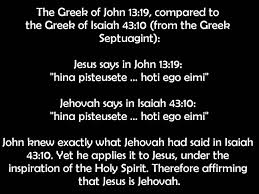
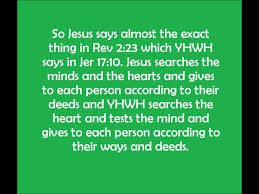


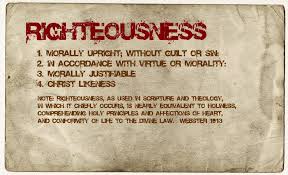


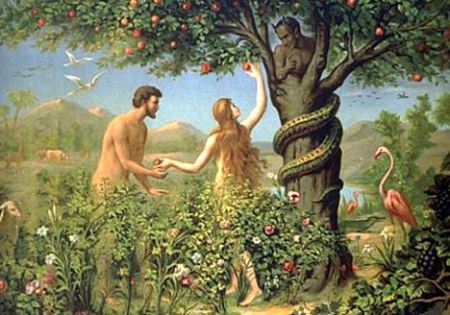

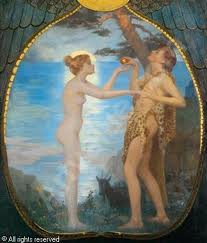
 Bjorkbloggen