Tag Archive | saved

The Apostle JUDAS was probably once SAVED

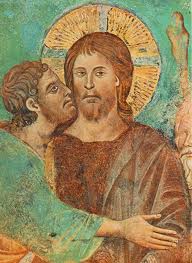
judasJudas Iscariot  was one of Jesus’ disciples and a chosen APOSTLE. In order to be qualified for a position like this there are certain conditions that apply and that Judas apparently met (Mat 12:49-50, Lukas 14:26-27). Jesus gave many warnings to his twelve disciples that they must live holy lives, and he also gave them many wonderful promises both when it concerns their lives on earth and the next life – and Judas Iscariot was one of those disciples which Jesus addressed. It would have been an extreme paradox if a disciple which was not of God but of Satan, would have the capability to heal the sick, raise people from the dead and cast out demons, because a “son of Satan” cannot cast out demons from himself.

Mark 3:22 And the scribes which came down from Jerusalem said, He hath Beelzebub, and by the prince of the devils casteth he out devils.23 And he called them unto him, and said unto them in parables, How can Satan cast out Satan?24 And if a kingdom be divided against itself, that kingdom cannot stand.25 And if a house be divided against itself, that house cannot stand.26 And if Satan rise up against himself, and be divided, he cannot stand, but hath an end.

If Judas just hanged around with the other eleven disciples without performing any miracles, the other disciples would surely have noticed something and would wonder why everyone apart from Judas managed to heal the sick and cast out demons. When Jesus later on explained for his disciples that one of them would betray him, they all looked at each other in amazement and wondered to themselves who on earth this could be (Joh 13:22). They seemed to have no clue about the darkness in Judas and that he was a likely suspect, so apparently he had given them no sign of any particular bad fruit in his life. It therefore seems like Judas lived his life just like the others – at least as far as they knew. We know of course that Judas was a thief since he stole from the money bag that he was responsible for, but this wouldn’t be anything that he would tell others about, so as far as they knew Judas was just one of them and performed the same powerful miracles as they did. A person who is guilty of theft and who has not repented from this can of course not be saved, but we don’t if Judas repented or not. We DO know that also the other disciples had been guilty of sin as well and Peter is a good example of this. After that Judas had betrayed Jesus, Peter also sinned by denying Jesus three times and this is a sin which clearly leads to death (which all sins do) since Jesus clearly said so. If we deny him before men, he will deny us. ( Peter later repented.) If Judas would have failed when it comes to healing the sick and casting out demons, this would have been detected by the others because Jesus did not send out his disciples to work alone but at least two and two.

Matt. 10:1 And when he had called unto him his twelve disciples, he gave them power against unclean spirits, to cast them out, and to heal all manner of sickness and all manner of disease. Now the names of the twelve apostles are these; The first, Simon, who is called Peter, and Andrew his brother; James the son of Zebedee, and John his brother; —Simon the Canaanite, and Judas Iscariot, who also betrayed him.These twelve Jesus sent forth, and commanded them, saying, Go not into the way of the Gentiles, and into any city of the Samaritans enter ye not: —Heal the sick, cleanse the lepers, raise the dead, cast out devils: freely ye have received, freely give.

Jesus explains that they don’t have to worry about what to say because the spirit of God will speak IN them. Judas was given this promise as well.

Matt. 10:19 But when they deliver you up, take no thought how or what ye shall speak: for it shall be given you in that same hour what ye shall speak.20 For it is not ye that speak, but the Spirit of your Father which speaketh in you.— 25 It is enough for the disciple that he be as his master, and the servant as his lord. If they have called the master of the house Beelzebub, how much more shall they call them of his household?—40 He that receiveth you receiveth me, and he that receiveth me receiveth him that sent me

We can read that Judas (by transgression) fell from his ministry and apostleship. The Greek word that is translated “fell” is parebé that is from parabainó that means transgress, violate, depart or desert. Matthias took the place that Judas used to have. Also Matthias passed the requirements to be in this important position.

Apg. 1:24 And they prayed, and said, Thou, Lord, which knowest the hearts of all men, shew whether of these two thou hast chosen,25 That he may take part of this ministry and apostleship, from which Judas by transgression fell, that he might go to his own place.26 And they gave forth their lots; and the lot fell upon Matthias; and he was numbered with the eleven apostles.

Judas seemed to be a friend that Jesus could trust. If this psalm is not about Judas, who is it about?

Psaltaren 41:All that hate me whisper together against me: against me do they devise my hurt.Yea, mine own familiar friend, in whom I trusted, which did eat of my bread, hath lifted up his heel against me.10 But thou, O Lord, be merciful unto me, and raise me up, that I may requite them.

Judas was promised a throne in heaven together with the other apostles where they were to judge the tribes of Israel. Jesus PROMISED his twelve disciples  – where Judas was included – that they would be getting a throne each. Sadly Judas caused this promise to not be fulfilled.

Matt 19:28 And Jesus said unto them, Verily I say unto you, That ye which have followed me, in the regeneration when the Son of man shall sit in the throne of his glory, ye also shall sit upon twelve thrones, judging the twelve tribes of Israel.

Despite those wonderful promises he ended up in hell. It would have been better if he had not been born.

Lukas 22:And the chief priests and scribes sought how they might kill him; for they feared the people.Then entered Satan into Judas surnamed Iscariot, being of the number of the twelve.And he went his way, and communed with the chief priests and captains, how he might betray him unto them.

Joh. 13:And supper being ended, the devil having now put into the heart of Judas Iscariot, Simon’s son, to betray him ;

John 17:12 While I was with them in the world, I kept them in thy name: those that thou gavest me I have kept, and none of them is lost, but the son of perdition; that the scripture might be fulfilled.

 Matt 26:24 The Son of man goeth as it is written of him: but woe unto that man by whom the Son of man is betrayed! it had been good for that man if he had not been born

There were many who stood in line to kill Jesus but his Father protected him until it was time to meet the death for the sins of all mankind. Jesus’ death was planned, but there are many ways in which he could have chosen to die so Judas did not have to be the one to betray him at all. The evilness of Judas was in this unique case used for something good, namely the death of Jesus on the cross. God has in a few cases used man’s evil schemes for something good, but it’s never God’s intention or desire that anyone should ever sin. There is no darkness in God and he doesn’t tempt anyone, much less make anyone sin. The Father knew what Judas was up to and Judas will be punished for having acted against the will of God. Do read more about this in this blog article. 

I can add that no one is actually finally saved until he enters the kingdom of God. It does look like Judas was “spiritually alive” at one point in his life.

Here are the views from Gordon Olson, from The Truth Shall Make You Free

p. Judas was chosen to be one of the twelve apostles to serve God and be a witness to the Gospel and revealed truth. He obviously was partaking of this truth, but rebelled and became an apostate—thus frustrating the loving plans of his Master: Acts 1:25; Mt. 10:2-4; Lk. 6:12-13; Mk. 3:14-15. The reasons why the Twelve were chosen are given below. If the Lord Jesus chose to bestow extended labor of preparation upon one whom He certainly foresaw would fall of the intended mission, it would appear that an unwise and inconsistent choice was made. Judas had no authority, he merely “became a guide to those who arrested Jesus” (Acts 1:16). 

1) The Lord Jesus chose the Twelve from His disciples after an all-night of prayer to the Father: Lk. 6:12-13. 

2) The threefold purpose in calling the Twelve is plainly declared: Mk. 3:14-15. 

3) Judas was in a state of salvation when chosen and sent forth to represent Christ: Lk. 9:1-2; Mt. 10:8 (12:25-26); 10:16, 20 (Jn. 8:44); Mk. 6:7, 12; Lk. 9:6; Jn. 13:20. 

4) Judas rebelled against his Master (Jn. 6:64, 70-71), joined himself to Satan (Lk. 22:3; Jn. 13:2, 27), and thus fell from his “ministry and apostleship” (Acts 1:17, 25). 

5) It does not appear that the treachery of Judas was specifically prophesied in the Old Testament, nor that the Lord Jesus expected his apostasy until He perceived its development in his mind. If our Lord expected it all the time, why was He “troubled in spirit” or heart stricken at its development (Jn. 13:21)? It is obviously presented as a tragic surprise. The following are the passages involved and suggested literal translations for careful study: Jn. 6:64 “But there are some of you who are not believing. For Jesus was knowing from the beginning who they are who are not believing and who it is who would deliver Him up.” “From the beginning” most likely refers to their unbelief or turning of heart, which Jesus was observing (Jn. 2:24-25). See Mt. 19:4, 8; Jn. 15:27; 16:4; Acts 11:15; 26:4; Phil. 4:15—”from the beginning” of the thing spoken of. 

Jn. 6:70—”Did not I choose out for Myself you the twelve, and out of you one a devil is?” This strongly implies that he was not such originally, but became so (Lk. 22:3; Jn. 13:2, 21). 

Jn. 6:71—”For this one was about to be delivering Him up, one out of the twelve.” Nothing is prophetic here, merely stating his purpose. 

Jn. 13:11—”For He was knowing him who was delivering Him up, therefore He said, Ye are not all clean.” Here was a present activity. 

Jn. 13:18—”Not concerning all of you am I speaking; I Myself am knowing the ones I did choose out for Myself; but thus is the Scripture fulfilled (or again illustrated): He who is eating My bread did lift up against Me his heel.” Our Lord is referring back to a purely historical event in the life of David, where his counselor Ahithophel betrayed him and joined Absalom’s rebellion (Ps. 41:9, see II Sam. 15:12; 16:23), which was similar to His sad experience. Since David wrote of “my close friend, in whom I trusted,” the Lord Jesus in applying this passage must have felt similarly and had trusted Judas. 

In Jn. 13:18 and 17:12 we have the conjunction “hina” with a verb “to fulfill,” which may be translated either “in order that might be fulfilled,” as in the case of a specific prophecy, or “so that was fulfilled” indicating a re-fulfillment or an application of an Old Testament historical situation or declaration. 

Jn. 17:12—”While I was with them I Myself was keeping them in Thy name whom Thou didst give Me, and I guarded (them), and no one out of them perished (or did destroy himself), except the son of perdition, so that the Scripture was fulfilled.” What Scripture our Lord had in mind is not known, perhaps Ps. 41:9, as above. 

Acts 1:16-17, 20—”Men, brethren, the Scripture, which the Holy Spirit did speak beforehand through David’s mouth, must have been fulfilled in the case of Judas, who became a guide to those who took Jesus. For that having been numbered with (us), he was among us and did receive the allotted portion of this ministry . . . For it has been written in the Book of Psalms, ‘Let his habitation become desolate and let no one dwell in it, and his office let another take.'”

Reference is back to Ps. 69:25, where we notice a plural pronoun used, not a singular pronoun which would be the case if this had been a specific prophecy to Judas. 

The other reference is to Ps. 109:8, where the words, “let another take his office.” are a part of a context extending from verse 6 to verse 19. This whole passage is a pronouncement against “adversaries from the Lord” (20). Since only one small part of this passage is referred to, it would appear that the brief quotation in Acts 1:20 is intended as an application of a previously pronounced judgment upon a typical enemy of God. Obviously, if this had been a specific prophecy of Judas, the whole passage would have been referred to and not just five words. Peter’s reference to the Holy Spirit speaking “through David’s mouth” must relate to his lifetime inspiration in his writings (II Sam. 23:2), and not to any specific prophecy concerning Judas, as the Lord Jesus spoke of (Mk. 12:36).


Descent into error (about division among christians due to doctrines)

Thanks to blog.savetheperishing.com

This is the true story of a witnessing team’s birth and its subsequent fall into the errors of Calvinism by some of its members. I decided to write this as a warning to others who may be involved with Calvinists who evangelize or who may be on the verge of embracing the doctrine.  Looking back on my experience I am amazed at the subtle shift in behavior, doctrine, interpretation, attitude and mindset of the group due to Calvinism.  Its interesting to see how a doctrine like this can change humble, smart, loving people into prideful, contradictory, unthinking, unloving people.  It wasn’t one thing per se that caused problems nor was it one person but an accumulation of events with many people over a few years.  It took me a several years of prayer and bible study to come to the conclusions I am writing about in these posts.

Way of the Master Radio

One day in 2006 I heard on the radio that Kirk Cameron, the actor, had his own Christian ministry.  I decided to do a google search on him.  The Way of the Master website popped up and I started reading its material and watching the witnessing videos.  They also had a radio show where they record themselves witnessing to others.  I decided to share this with my friends.

What started out as a mere curiosity turned into a full-blown ministry.  Some of my friends and I took Way of the Master classes, read their books, and studied the bible to see if this method of evangelism were true.  It seemed to be so we started witnessing to the lost using this method.

For the first two years it was great.  We would go to the bus stops or the Sprint Center downtown, perhaps to a festival, we had the ministry listed in our church’s bulletin so we could have others join us if they wanted to, we could see God moving in the conversations we had with the lost.

Along the way we had others join our group and 4 of them were Calvinists.  We didn’t have Calvinists in our group before and at the time I was undecided on the doctrine but was leaning away from it.  Months later I started to notice some disturbing trends emerging in the witnessing group.

Shift of Interpretations

I was at my friends house before a bible study and there were four us standing in the kitchen.  We were talking about the lost and then the verse from  1 Corinthians 1:18 came up, “the preaching of the gospel is foolishness to those who are perishing.”   Up to this point we had understood this mean’t the gospel is foolishness to those who have pride and think they are good.  This is the context of Corinthians and was in fact taught this way by Ray Comfort on the Way of the Master Training Course.  In other words, “Why would you preach the gospel to me?  I’m not a sinner!  I’m a good person!  Go preach to a sinner.”  The preaching of the cross is foolishness to someone with… pride.

While I was standing in the kitchen I was amazed to hear the reason why the “preaching of the cross is foolishness” is because sinners are “totally depraved” and unable to believe.  When I objected to that interpretation another verse was used, taken out of context, to further demonstrate how total depravity is true.  While it is true “totally depraved” sinners have pride it is also true Christians have pride, so I can’t say the reason why people have pride is because they are totally depraved.  Besides, the chapter in Corinthians we were discussing has nothing to do with total depravity.  It has to do with the pride of man and how God uses the weak things of the world to confound the wise.

What in the world was going on?

The Gospel Tract Enigma

When we witnessed we mainly gave out million dollar bill tracks.  They look like a real million dollar bill even though there is no such thing as a million dollar bill.  Several times after an evening of witnessing we would either have dinner or meet afterwards for fellowship.  Some questions would arise in the minds of my friends who later became Calvinists.  “Why do certain people take the tracks we give out and others don’t?  Its a mystery they say.  Twenty people don’t take a tract and then a bunch of people do.”  Some concluded this MUST MEAN God is drawing only those people who took the tract.

There are many reasons people don’t take tracts:

1) They think its a political ad because there is a president on it.

2) They think we are selling something and aren’t interested in buying.  This is a normal reaction.  People rarely give away material to people without selling something.

4) People in the back who see people in the front reject the tract also reject it.  “If the person ahead of me didn’t take it than I probably don’t want it either.”

5) Maybe they are upset, or tired, or who knows how many other reasons for avoiding taking a leaflet from a stranger.

There are many reasons for people taking tracts as well:

1) They are curious about what it is.

2) They like political ads.

3) They don’t want to be in an awkward situation where they must reject what someone is freely giving them so they take it.

4) People in front of them grab one so they grab one.

5) God is drawing them.

Calvinists attribute everything that happens to God.  While Calvinists vary in their opinion as to the amount of control God has on His creation many believe natural disasters, and even sin as something God has ordained, so its not a surprise the people in the witnessing group are focusing on why certain people take a gospel tract.

When I mentioned to them the different reasons why people may grab or not grab a tract it went in one ear and out the other.  Suggesting these ideas makes their exciting discovery that God controls everything not so exciting.

Popular Preachers and Popery

My friends in the group spent a great deal of time listening to Calvinist preachers such as Paul Washer, Alestair Begg, John MacArthur, James White, RC Sproul, and John Piper to name a few.  If you spend all your time listening to Calvinists preachers you will eventually be… a Calvinist.  Particularly if you spend more time listening to them than reading the bible for yourself allowing the Holy Spirit to interpret the Word.  Every Calvinist I have known or debated with spend far more time reading reformed titles, or listening to popular reformed preachers than they do reading the bible.

After they do this they believe Calvinism and then later tell me how “God opened my eyes to this truth.”  How deceived they must be to think “God opened my eyes” when in reality they spent more time reading theinterpretations of men rather than the words of God.  They have not learned the “deeper things” of God but rather what someone else thinks the bible says.  How can they possibly say “God opened my eyes” when in fact they are being told what to believe by human fallible preachers?  Are they confusing a preacher as God Himself?  Is this the Catholic church with a magisterium who speaks infallibly for God?  It seems so.

This is called indoctrination and thats what happened to the witnessing group over time.  They were becoming indoctrinated right before my eyes.

I used to be a Catholic and after that I was in the occult for several years.  Its not difficult to be indoctrinated, all you have to do is keep on listening, and believing it little by little until eventually it will take hold.  Before I was a Christian I was on the brink of worshiping the Earth due the shamanistic teachings I was studying.  I had the sudden realization that the next step in my learning was to worship the earth.  It made sense because of what I learned and knew.  Once I realized I was about to do this I stopped myself because deep down I knew it was wrong.  As a side note how would I know it was wrong?  I was “totally” depraved!  Perhaps the concept of total depravity is wrong, but thats another topic for another post.

Listening to the same preachers over and over again amounts to a type of popery similiar to the Catholic church.  Instead of one person as a pope there are several that teach the same things.  These people cannot be questioned because they are “Godly” men who preach hard on sin.  They couldn’t possibly be wrong about this doctrine!  They spend all their time studying this and are smarter than us, they know Greek and use fancy theological terms such as “doctrines of grace.”  Who am I to question them?

Oh what an insult to Christ!  The Holy Spirit, through His Word, is “unable” to teach believers better than men!

Don’t get me wrong, I’m not saying to forsake all preachers…I’m saying their interpretations are not the final word.  If you spend more time listening to other human beings than reading God’s Word you do indeed have a Pope, whether its in the form of one preacher or many.  If someone asks you “What do you believe about election” and your answer is “Read this book by James White” or “Here is an article on this by John Piper” or “Here is a sermon from RC Sproul” or “Here are some commentaries on this” you may possibly have a “pope” in your life telling you what to believe.

An objection to what I just wrote might be “I don’t have time to write a full answer to your questions, its easier to show you what <insert preachers name> believes.”  Yes I know.  You have spent so much time studying the interpretations of others you know what these other preachers believe.  Thats my point!  Do you honestly think you can listen to preachers everyday in podcasts or on the radio and not be influenced by them?  The reason you are listening to them is because you WANT to be influenced by them.  Perhaps its true you don’t have enough time to study.  Maybe your job forces you to drive frequently or you have many family responsibilities.  If thats true, why not listen to the bible on CD instead of a preacher most of the time?  Are you confident enough in the abilities of the Holy Spirit to teach you directly through His Word?

Furthermore if you know words like “monogerism” or  “synergism” or if you automatically think since I am not a Calvinist that makes me an “Arminian” or I’m a “free-willer” you spend way too much time studying the writings of men rather than the word of God.

The extent to which this idea of popery was entrenched in the witnessing group was made evident one day.  Tony Miano, a well known Calvinist who evangelizes, was saying some things to sinners on video which were questionable and confusing.  When someone in the witnessing group was asked to reexamine what Tony said he refused to do it.  He felt examining Tony would make him “sick” because he is after all a “Godly” man who apparently cannot be questioned.  Accusing Tony of teaching questionable doctrines would definitely disrupt the peace among the group and we can’t have that!

This is a far cry from the Bereans who examined what the Apostle Paul had to say to see if what he said was true.

It seems the witnessing group is not so interested in truth after all.

Cont.:

Descent Into Error Part 2 – Mottos to live by?
“Descent Into Error” Part 3 – Judgement Without Discernment
“Descent Into Error” Part 4 – Love waxes cold to the unsaved
“Descent Into Error” Part 5 – The Bible as a spell-casting device

FAITH is not the gift of God in Eph. 2:8-9, but SALVATION is

For by grace are ye saved through faith    

The whole passage is this:

Eph. 2:8 For by grace are ye saved through faith; and that not of yourselves: it is the gift of God:9 Not of works, lest any man should boast.10 For we are his workmanship, created in Christ Jesus unto good works, which God hath before ordained that WE SHOULD WALK in them

The word “it” is a translation from the Greek pronoun tοῦtο, and it is neuter in gender. It refers back to something just mentioned, and pronouns agree with their antecedent in gender and number. This rule argues against the identification of “faith” as being the antecedent because “faith” is a feminine noun.

The logical understanding is therefore that Paul referred to the whole previous clause with “it”, and that it is SALVATION that is the gift of God. It is a gift since we do not earn it but offered to all of us, but it does not say that it is offered without conditions. The Bible makes it very clear that salvation is conditional upon repentance, and repentance requires a change of heart and that we must leave our old sinful life styles behind.

Moreover, if we insist on that it is “faith” that is the gift of God in this verse (rather than salvation), the result might be horrendous. The result would be a tyrannical God choosing to give the ability to believe only to SOME (the lucky elect), while he withholds the same ability for the rest and even condemns people for their refusal to believe in him which he knows they could not do in the first place. The truth is that we are commanded to believe in him (1 John 3:23), and when we choose to come to him we must already believe in him (Hebr. 11:6). In fact, it is impossible to please God unless we have faith in him, so why would a loving God withhold this ability to most people and construct a scenario which he is not pleased about?

Salvation is by grace through faith, and it is the gift of God. Just like other gifts, the gift of God must be personally RECEIVED because God does not force his gifts on anyone (gifts are normally not forced on people). If we choose to accept the gift, we can decide to keep it for ever or throw it away after some time. The latter option would of course be extremely foolish, but it has happened that people have not taken care of God’s gift as they are supposed to. Gifts are normally free and nothing that you earn or pay for yourself. This does not mean that gifts could have no conditions tied to them.

For instance, you might decide that you will not give a gift to someone unless the receiver stretches out his/her hand to receive it and say thank you. If you send a gift to someone, he/she might not get the gift unless he goes to the post office to get it. You might also decide to give a car  to your teenage son when he turns 18, provided that he stretches out his hands to get the keys and promises to obey the traffic rules, etc. He must also pay for gas himself to get his car to run. The teenage son did not do any work to get the car, and he did not pay a dime for it.

The reason why salvation is “not of works” is because we can never cleanse ourselves from our past sins by starting to do good works later in life, and we have no authority to cleanse ourselves from our sins. We are totally dependent on God’s grace to be forgiven for our past. We do not earn our salvation with either works or faith. It takes one sin to be a sinner and in need of cleansing. This means that no matter how much good works we do, we still need to be cleansed from our past sins. This is why salvation cannot ever be by works. The Bible does not say that people are not saved unless they put in a certain amount of labor (like Muslims believe). Note that the verse makes no claim that salvation is unconditional, but only that it is not of works. Most importantly, Paul is often referring to works of the law (the 613 Jewish laws) and warns against Judaism. He is not preaching lawlessness, nor that it is optional to obey God!

Note the often neglected v. 10 which says that WE should walk in the good works that God has put before us, and God will not do the walking for us. We must carry our own cross, and it is not light as a feather. The message in the Bible is that we must repent and be faithful to him.

Paul does not contradict James, and James makes it clear that we are justified BY WORKS and NOT faith alone:

James 2:20 But wilt thou know, O vain man, that faith without works is dead? 21Was not Abraham our father justified BY WORKS, when he had offered Isaac his son upon the altar?—24Ye see then how that by works a man is justified, and not by faith only.

Paul agrees:

Rom. 6:16 Know ye not, that to whom ye yield yourselves servants to obey, his servants ye are to whom ye obey; whether of sin unto death, or of obedience unto righteousness?

Rom. 8:1 There is therefore now no condemnation to them which are in Christ Jesus, who WALK not after the flesh, but after the Spirit.— 13 For if ye live after the flesh, ye shall die: but if ye through the Spirit do mortify the deeds of the body, ye shall live.14 For as many as are led by the Spirit of God, they are the sons of God.

We are created to seek God and believe in him

Since we are created precisely to seek God and to have faith in him, it is possible to say that we all are provided the gift of believing from the very start.

Acts 17:26 And hath made of one blood all nations of men for to dwell on all the face of the earth, and hath determined the times before appointed, and the bounds of their habitation;27 That they should seek the Lord, if haply they might feel after him, and find him, though he be not far from every one of us

Rom. 1:19 Because that which may be known of God is manifest in them; for God hath shewed it unto them.20 For the invisible things of him from the creation of the world are clearly seen, being understood by the things that are made, even his eternal power and Godhead; so that they are without excuse:21 Because that, when they knew God, they glorified him not as God, neither were thankful; but became vain in their imaginations, and their foolish heart was darkened.

No one will ever stand before God and claim that he is condemned because God never gave him/her the gift of faith, because all men are commanded to believe and to repent (1 John 3:23 and Acts 17:30). God says “Look unto Me and be ye saved all the ends of the earth” (Isaiah 45:22). God desires all men to come unto him (1 Tim. 2:4), and men are condemned for their failure to do so because they could (John 8:24; 3:18; etc.).

The Bible says that faith comes through hearing by the word of God, and this would be inaccurate if we are to understand “faith” as a gift of God in Eph. 2:8-9.

Rom. 10:17 So then faith cometh by hearing, and hearing by the word of God.

“Eternal salvation” is indeed eternal, but we have not stepped into God’s eternal Kingdom yet. We could even say that the “eternal gift” will still be eternal even if we throw it away, and then it will continue to be “eternal” somewhere else but not in our possession. Who is eternal salvation given to? Apparently to those who obey God.

Hebr. 5:9And being made perfect, he became the author of eternal salvation unto all them that OBEY HIM

The Philippian jailer asked: “What must I do to be saved?” (Acts 16:30). The response was not “Nothing! You can’t do anything! You are dead and totally unable to respond to God until you are regenerated. You have no part in salvation. God must do it all.” Paul and Silas told the jailer that there was something that he could do and that was to believe in Lord Jesus Christ (Acts 16:31). Compare with how Peter answered a similar question in Acts 2:37-38). God must do the saving (man cannot save himself) but man must do the believing. God does not do the believing for man. We must also remember that if we truly believe in Jesus, which means that we love him, we also obey him – “If ye love me, keep my commandments” (John 14:15).

Did the Israelites have no part in their deliverance from the deadly serpents as per Numbers 21? “It shall come to pass, that every one that is bitten, when he looketh upon it, shall live”. The brazen serpent that God placed on a pole is a picture of Jesus Christ, also raised up on a “pole” to draw people to himself. So what was the Israelites supposed to DO in order to live? They were supposed to look at the serpent of brass and God’s part was to heal them. This means, that if someone did not look at it, he was not healed. The Israelites obviously had no reason to boast even though they were healed, because they had absolutely no way of healing themselves without the mercy of God.

If God is the one who provides faith to certain individuals, why would Jesus be surprised about people’s great faith or lack of faith?

Matt. 8:10When Jesus heard it, he marvelled, and said to them that followed, Verily I say unto you, I have not found so great faith, no, not in Israel.

Matt 14:31 And immediately Jesus stretched forth his hand, and caught him, and said unto him, O thou of little faith, wherefore didst thou doubt?

Matt. 8:26 And he saith unto them, Why are ye fearful, O ye of little faith? Then he arose, and rebuked the winds and the sea; and there was a great calm.

Luke 12:28 If then God so clothe the grass, which is to day in the field, and to morrow is cast into the oven; how much more will he clothe you, O ye of little faith?

Matt. 15:28Then Jesus answered and said unto her, O woman, great is thy faith: be it unto thee even as thou wilt. And her daughter was made whole from that very hour.

John Calvin did not believe that the pronoun touto referred to “faith”, and the same goes for Calvinists today. A Calvinist might urge people to pray that they will be granted the gift of faith, but this would result in prayers being the condition for salvation, and not faith itself. If God predestined people to be elect and non-elect from the foundation of the world, naturally prayers would not make difference.

We are saved IF! There are conditions

We are saved IF!

If we are unconditionally eternally secure as long as we at one point in history have been born again, then none of the below “if:s” make any sense. They are are words which apply to all of us. The Bible clearly tells us there are conditions involved to get salvation, and one is that we must make sure to endure to the end.

2 Tim. 2:20But in a great house there are not only vessels of gold and of silver, but also of wood and of earth; and some to honour, and some to dishonour. 21IF IF IF a man therefore purge himself from these, he shall be a vessel unto honour, sanctified, and meet for the master’s use, and prepared unto every good work.

1 John 1:6 If we say that we have fellowship with him, and walk in darkness, we lie, and do not the truth: 7But IF IF IF we walk in the light, as he is in the light, we have fellowship one with another, and the blood of Jesus Christ his Son cleanseth us from all sin.I

Romans 8:10And if Christ be in you, the body is dead because of sin; but the Spirit is life because of righteousness. 11But IF IF IF the Spirit of him that raised up Jesus from the dead dwell in you, he that raised up Christ from the dead shall also quicken your mortal bodies by his Spirit that dwelleth in you. 12Therefore, brethren, we are debtors, not to the flesh, to live after the flesh. 13For IF IF IF ye live after the flesh, ye shall die: but IF IF IF ye through the Spirit do mortify the deeds of the body, ye shall live.

1 John 2:24 Let that therefore abide in you, which ye have heard from the beginning. IF IF IF that which ye have heard from the beginning shall remain in you, ye also shall continue in the Son, and in the Father.

John 15:6IF IF IF a man abide not in me, he is cast forth as a branch, and is withered; and men gather them, and cast them into the fire, and they are burned. 7IF IF IF ye abide in me, and my words abide in you, ye shall ask what ye will, and it shall be done unto you.—10IF IF IF ye keep my commandments, ye shall abide in my love; even as I have kept my Father’s commandments, and abide in his love.— 14Ye are my friends, IF IF IF ye do whatsoever I command you.

1 John 2:3And hereby we do know that we know him, IF IF IF we keep his commandments. 

Gal. 6:9And let us not be weary in well doing: for in due season we shall reap, IF IF IF we faint not.

Hebr. 3: 6But Christ as a son over his own house; whose house are we, IF IF IF we hold fast the confidence and the rejoicing of the hope firm unto the end. —14For we are made partakers of Christ, IF IF IF we hold the beginning of our confidence stedfast unto the end; 15While it is said, To day IF IF IF ye will hear his voice, harden not your hearts, as in the provocation.

2 Pet. 1:7And to godliness brotherly kindness; and to brotherly kindness charity. 8For IF IF IF these things be in you, and abound, they make you that ye shall neither be barren nor unfruitful in the knowledge of our Lord Jesus Christ.9But he that lacketh these things is blind, and cannot see afar off, and hath forgotten that he was purged from his old sins. 10Wherefore the rather, brethren, give diligence to make your calling and election sure: for IF IF IF ye do these things, ye shall never fall:

Col. 1: 22In the body of his flesh through death, to present you holy and unblameable and unreproveable in his sight: 23IF IF IF ye continue in the faith grounded and settled, and be not moved away from the hope of the gospel, which ye have heard, and which was preached to every creature which is under heaven; whereof I Paul am made a minister;

2 Chron. 15:2And he went out to meet Asa, and said unto him, Hear ye me, Asa, and all Judah and Benjamin; The LORD is with you, while ye be with him; and IF IF IF ye seek him, he will be found of you; but IF IF IF ye forsake him, he will forsake you.

John 8:51Verily, verily, I say unto you, IF IF IF a man keep my saying, he shall never see death. 

1 John 3:20For IF IF IF our heart condemn us, God is greater than our heart, and knoweth all things. 21Beloved, if our heart condemn us not, then have we confidence toward God.

John 14: 15IF IF IF ye love me, keep my commandments.— 23Jesus answered and said unto him, IF IF IF a man love me, he will keep my words: and my Father will love him, and we will come unto him, and make our abode with him.

1 Cor. 15:2 By which also ye are saved, IF IF IF ye keep in memory what I preached unto you, unless ye have believed in vain.

Hebr. 12:7 IF IF IF ye endure chastening, God dealeth with you as with sons; for what son is he whom the father chasteneth not?

Psalm 132:12 IF IF IF thy children will keep my covenant and my testimony that I shall teach them, their children shall also sit upon thy throne for evermore.

Ezekiel 18:21 But IF IF IF the wicked will turn from all his sins that he hath committed, and keep all my statutes, and do that which is lawful and right, he shall surely live, he shall not die.

Matt. 19:17 And he said unto him, Why callest thou me good? there is none good but one, that is, God: but IF IF IF thou wilt enter into life, keep the commandments.

We are no longer under the Law (torah) but we are still under the moral law

The Early Church had a controversy with a group called “the Judaizers” who were teaching justification by works of the law.

And certain men which came down from Judaea taught the brethren, and said, except ye be circumcised after themanner of Moses, ye cannot be saved. (Acts 15:1)

In other words, they taught that Gentiles need to obey the law (the Torah) and perform the works of the law (circumcision) in order to be justified. Since Paul’s ministry was to the Gentiles, he dedicated a large portion of his writings in Romans and Galatians, which were to Gentile Churches, to write against the Judaizers.

You will notice that Paul continually mentioned circumcision when discussing justification by works of the law in both Romans and Galatians.

Therefore we conclude that a man is justified by faith without the deeds of the law. Is he the God of the Jews only? (Those who had the Torah) Is he not also of the Gentiles? (Those who did not have the Torah) Yes, of the Gentiles also. Seeing it is one God, which shall justify the circumcision by faith, and the uncircumcision through faith. (Rom. 3:28-30)

Cometh this blessedness then upon the circumcision only or upon the uncircumcision also? For we say that faith was reckoned to Abraham for righteousness. How was it then reckoned? When he was in the circumcision, or in uncircumcision? Not in circumcision, but in uncircumcision. (Rom. 4:9-10)

Paul is arguing that Abraham was justified before circumcision, before the law of circumcision was given, and therefore the Gentiles too can be justified by faith without the work of the law of circumcision.

For in Christ Jesus neither circumcision availeth any thing, nor uncircumcision, but a new creature. (Gal. 6:15)

For in Jesus Christ neither circumcision availeth anything, nor uncircumcision; but faith which worketh by love. (Gal. 5:6)

Circumcision is nothing and uncircumcision is nothing, but the keeping of the commandments of God (1 Cor. 7:19).

Paul continually and repeated referred to circumcision when discussing justification “by works of the law” and said that circumcision does not “availeth anything” and is “nothing” but what matters is “a new creature” “faith which worketh by love” and “keeping of the commandments”.

It needs to be understood that Paul was not coming against the preaching of repentance in his epistles when he discussed justification by works of the law. In Galatia the Judaizers came and convinced the Gentile Church there that they needed to be circumcised in order to be saved. Paul wrote his epistle to the Galatians to correct this error of the Judaizers. It was not that the Galatians were repenting of their sins and Paul thought, “I better put a stop to this”. Paul certainly would not have any problem with Gentiles repenting of their sins since his God given ministry was to bring the Gentiles to repentance (Acts 26:20). When Paul preached to the Gentiles in Athens, he told them that God was calling all of them to repent (Acts 17:30). Paul said that we needed to be circumcised, not in our flesh, but in our hearts (Rom. 2:28-29). The circumcision of the heart is putting off your sins (Col. 2:11). Paul bemoaned those Gentiles in Corinth who had not repented of their uncleanness and fornication (2 Cor. 12:21). Paul explicitly said that we should not continue in our sins (Rom. 6:1-2) but that we should awake to righteousness and stop sinning (1 Cor. 15:34). Paul even warned the Galatians that if they lived sinful lives, they would not inherit the kingdom of God (Gal. 5:19-21). It was the Apostle Paul who said “after thy hardness and impenitent heart treasurest up unto thyself wrath” (Rom. 2:5), and that “repentance” leads “to salvation” (2 Cor. 7:10). Clearly Paul would not have had any problems with Gentiles repenting of their sins. Rather, Paul was upset that the Gentile Church in Galatia started to believe falsehoods from the Judaizers about how to be saved.

A good example of how Gentiles find the forgiveness of sins is the story of Nineveh. The narrative records that the people believed God (Jonah 3:5) and turned from their sins (Jonah 3:8). When God saw this, He changed His plans and decided not to destroy them as He said He would (Jonah 3:10). These Gentiles did not need to adopt the Jewish customs, obey the Torah, or be circumcised in order to be pardoned. They were saved, or found the mercy of God, through simple repentance from sin and faith in God. Jesus even said that sinners will be condemned if they do not repent the way Nineveh did (Matt. 12:41). Therefore the way that Gentiles were saved through repentance and faith in the Old Testament is the same way that they are saved in the New Testament, according to Jesus. Repenting of sin is required in both the Old and New Testament as Jesus said and therefore repentance is not the works of the law Paul preached against.

We know that Jesus Christ taught repentance (Lk. 13:3) and Paul certainly would not have contradicted Jesus Christ since Paul was an Apostle of Jesus Christ (Eph. 1:1; Col. 1:1). Paul explicitly said that men ought to listen to the wholesome words of Jesus (1 Tim. 6:3). Paul was by no means attacking the preaching of repentance when he wrote against justification by works of the law. Paul was attacking the Judaizers and their false gospel that Gentiles must convert to Judaism, be circumcised, and obey the Torah.

Thanks to Jesse Morell

Is there a difference between sinning and PRACTICING sin? 1 John 3:9

Some people suggest that christians are safe and will not lose their souls as long as they don’t PRACTICE sin – as in “habitually”. They might also suggest that true born-again christians do not practice sin but they do sin occasionally and they can never stop sinning. This is just another attempt to excuse sinning.

How many sins must a person commit to be considered “practicing” sin? One single murder or bank robbery in a life time would not be considered to sin habitually, but we know that one single sin made a huge difference for Adam and Eve. Perhaps being unfaithful every other year wouldn’t be considered practicing sin either? Where do we draw the line? The Bible says that nothing impure shall enter the new Jerusalem:

Rev. 21:27 And there shall in no wise enter into it any thing that defileth, neither whatsoever worketh abomination, or maketh a lie: but they which are written in the Lamb’s book of life.

True repentance (along with our faith) is the only thing that can save us.

The Greek word used for “to commit” is in itself proof that “commit” does not mean “practice”.  In the Greek NT there are two words that are commonly used to express the idea of doing something. The first is “poieo”, the second is “prasso”, according to Blueletter Bible.

4160 poieo, appear. to make or do (in a very wide application)

4238 prasso, to “practice”, i.e. perform repeatedly or habitually (thus differing from poieo which refers to a single act); to execute, accomplish, fare, commit, deeds, do, keep, require, use arts.

When the Apostle John wrote “Whosoever is born of God doth not COMMIT sin” he used the word “poieo” (to make or do sin with the idea of a single act), and if he wanted to communicate the concept of “practicing” sin he could have used “prasso”.

John Wesley says:

“But some men will say, ‘True: whosoever is born of God doth not commit sin habitually.’ Habitually! Whence is that? I read it not. It is not written in the Book. God plainly saith, ‘He doth not commit sin’; and thou addest, habitually! Who art thou that mendest the oracles of God?-that ‘addest to the words of this book’? Beware I beseech thee, lest God “add to thee all the plagues that are written therein’!” / John Wesley’s Fifty Three Sermons “The Marks of the New Birth” April 3, 1741

1 John 3:9 mostly applies to Jesus because he is certainly “born of God” and his seed remains in God (the Father), but in a way it also applies to us who are in the son. Jesus actually had the capacity to sin or else he would not be tempted in all things just like us, like the Bible says he was. He rather chose to live a sinless life for our sake. We too obviously have the capacity to sin, but if we are led by the holy Spirit, we do not sin. The term “seed” above is generally understood to mean “God’s word” and seed is often typical of the Word of God (for example, Luke 8:11; 1 Peter 1:23) but we know that believers are also referred to as “seed” (Rom 9:8; Gal 3:16, 19, 29)

“Whosoever is born of God doth not commit sin; for his seed (the believer) remaineth in him (Jesus): and he (the believer) cannot sin, because he is born of God (which is to abide in Jesus).” 1 John 3:9

This is confirmed in 1 John 3:6

“Whosoever abideth in him sinneth not: whosoever sinneth hath not seen him, neither known him.” 1 John 3:6

It is not impossible for a believer to sin but rather, it is impossible for a believer to sin as long as he abides in Jesus (which is a condition to remain a believer). The chapter does not teach that it is impossible for a christian to sin but that it is possible that he, through God’s grace, avoids it. No believer has to sin (Titus 2:11-12, 1 Cor 10:13) and the Bible does not say that we are off the hook if we only transgress the law just once in a while instead of several times. Repentance is the only cure. If we mix sin and “sorries” on a daily basis, we have not truly repented.

1 John 3:4 Whosoever committeth sin transgresseth also the law: for sin is the transgression of the law.

1 Joh. 3:8 He that committeth sin is of the devil; for the devil sinneth from the beginning. For this purpose the Son of God was manifested, that he might destroy the works of the devil.—10 In this the children of God are manifest, and the children of the devil: whosoever doeth not righteousness is not of God, neither he that loveth not his brother.

We are told to not hate anyone because hating is like being a murderer. If we are to believe that our souls are not in danger as long as we do not habitually sin, does this mean we can perhaps get away with hating one single brother? Of course not, because no murderer has eternal life abiding in him.

1 Joh. 3.15 Whosoever hateth his brother is a murderer: and ye know that no murderer hath eternal life abiding in him.

We can also see that the condition for having confidence toward God is that our heart does not condemn us. If the case is that our conscience tells us that we have acted wickedly (our heart condemns us) then God is merciful and will forgive us IF we confess our sins and truly repent. If we harden our hearts and pursue in the sin we know is wrong, then our souls are in danger. If you have a chance, do read the article about our faith as “filthy rags”.

1 Joh. 3:19 And hereby we know that we are of the truth, and shall assure our hearts before him.20 For if our heart condemn us, God is greater than our heart, and knoweth all things.21 Beloved, if our heart condemn us not, then have we confidence toward God.

Other mentions of “committing”  sin outside of 1 John 3

John 8:34 Jesus answered them, Verily, verily, I say unto you, Whosoever committeth sin is the servant of sin.

1 Corinthians 6:18 Flee fornication. Every sin that a man doeth is without the body; but he that committeth fornication sinneth against his own body.

2 Corinthians 12:21 And lest, when I come again, my God will humble me among you, and that I shall bewail many which have sinned already, and have not repented of the uncleanness and fornication and lasciviousness which they have committed.

James 2:9 But if ye have respect to persons, ye commit sin, and are convinced of the law as transgressors.

James 5:15 And the prayer of faith shall save the sick, and the Lord shall raise him up; and if he have committed sins, they shall be forgiven him.