Tag Archive | jesus

Var verkligen Jesus syndarnas VÄN?

En del säger att Jesus var syndarnas vän och baserar det framför allt på denna vers:

Matt. 11:18 Johannes kom, och han varken äter eller dricker,och man säger: Han är besatt. 19 Människosonen kom, och han äter och dricker, och då säger man: Se, vilken frossare och drinkare, en vän till publikaner och syndare! Men Visheten har fått rätt av sina barn.”

Notera dock att påståendena i versen inte är vad Jesus säger om sig själv utan vad andra säger om honom. Samma personer som säger att han är vän till publikaner och syndare säger också att Jesus är frossare och drinkare. Det sistnämnda är inte sant så då kanske det förstnämnda inte heller är sant.

Gud Fader älskar förstås hela världen på ett sätt, eftersom han sände sin enda son för att dö för oss och ge oss liv, och Jesus kom för att kalla SYNDARE till frälsning. Men han frälser förstås inte någon om de inte först OMVÄNDER sig.

Lukas 5:32 Jag har inte kommit för att kalla rättfärdiga till omvändelse utan syndare.”

Lukas 15:7 Jag säger er: På samma sätt blir det glädje i himlen över en enda syndare som omvänder sig – inte över nittionio rättfärdiga som ingen omvändelse behöver.

Marksu 2:17 Jesus hörde det och sade till dem: “Det är inte de friska som behöver läkare utan de sjuka. Jag har inte kommit för att kalla rättfärdiga utan syndare.

I meningen precis efter påståendet att Jesus skulle vara vän med publikaner och syndare kan vi läsa:

Matt. 11:20 Sedan började Jesus gå till rätta med de städer där han hade utfört sina många kraftgärningar och förebrå dem att de inte hade omvänt sig.

Läs även:

Psalm 7:12 Gud är en rättfärdig domare, en Gud som dagligen visar sin vrede.13 Om någon inte vill omvända sig slipar han sitt svärd, sin båge spänner han och gör den redo.

3 Mosebok 19:17 Du skall inte hata din broder i ditt hjärta, men du skall tillrättavisa din nästa, så att du inte för hans skull kommer att bära påsynd.

Jesus var inte ute efter att få bra kontakt med människor genom att akta sig för att stöta sig med dem, och han umgicks inte med syndare för att vara vän med dem, utan med hopp att de skulle OMVÄNDA sig. (Inte heller bannade Jesus fariséer för att vara alltför rättfärdiga.) Syndare är ju fiender till Gud, så på det sättet kan inte Jesus vara vän med dem.

Hebr. 7:26 En sådan överstepräst var det vi också behövde, en som är helig, oskyldig, obefläckad, skild från syndare och upphöjd över himlarna.

Jakob 4:Ni trolösa, vet ni inte att vänskap med världen är fiendskap mot Gud? Den som vill vara världens vän blir Guds fiende. 

Johannes 7: Världen kan inte hata er, men mig hatar den, därför att jag vittnar om att dess gärningar är onda.

Jesus kanske kallas syndarnas vän för att han ÅT med dem, men Jesus åt även tillsammans med fariséer och dem var han ju inte “vän” med.

Lukas 11:37 När Jesus hade talat, bjöd en farisé honom hem till sig, och han gick in och lade sig till bords.38 Farisén blev förvånad när han såg att Jesus inte tvättade sig före måltiden.

Syftet var inte att ha en trevlig och gemytlig samvaro där man endast diskuterar minsta gemensamma nämnare, utan syftet var att se människor gå från att vara syndare till rättfärdiga. Resten av middagen fortlöpte såhär:

Lukas 11:39 Men Herren sade till honom: “Ni fariseer rengör utsidan av bägare och fat, men ert inre är fullt av girighet och ondska. 40 Ni dårar, har inte han som gjorde utsidan också gjort insidan? 41 Ge därför ert inre som gåva, så blir allting rent för er.42 Ve er, ni fariseer! Ni ger tionde av mynta, ruta och alla slags grönsaker men bryr er inte om rätten och kärleken till Gud. Det ena borde ni göra utan att försumma det andra.43 Ve er, fariseer! Ni älskar den främsta platsen i synagogorna och tycker om att bli hälsade på torgen. 44 Ve er, ni liknar gravar som man inte ser och som folk trampar på utan att veta om det.”45 En av de laglärda sade då till honom: “Mästare, när du säger så, förolämpar du även oss.” 46 Han svarade: “Ja, ve också över er, ni laglärda! Ni lägger på människorna bördor som är svåra att bära, men själva rör ni inte ett finger för att lätta dem.47 Ve er! Ni bygger gravvårdar över profeterna som era fäder mördade. 48 Ni är alltså vittnen till vad era fäder gjorde och samtycker till det. De dödade profeterna och ni bygger gravvårdar över dem. 49 Därför har också Guds vishet sagt: Jag skall sända till dem profeter och apostlar, och en del av dem skall de mörda och förfölja. 50 Så skall av detta släkte utkrävas alla profeters blod, som har utgjutits från världens begynnelse, 51 från Abels blod ända till Sakarjas blod, som utgöts mellan altaret och templet. Ja, jag säger er: Det skall utkrävas av detta släkte.52 Ve er, ni laglärda! Ni har tagit bort nyckeln till kunskapen. Själva har ni inte kommit in, och dem som är på väg in har ni hindrat.53 När han gick därifrån, började de skriftlärda och fariseerna angripa honom häftigt och ställa många frågor till honom. 54 De vaktade på honom för att fälla honom genom något som han sade.

Jesus var verkligen inte rädd för att “stöta sig” med människor. Jesus visste förstås att hans direkta sätt skulle leda till gruff och osämja, men det hade varit värre för honom och hans rykte om han inte passade på att reagera på hyckleri och oegentligheter, och endast tillbringade tiden med att “hänga omkring” med syndare med risken att andra skulle börja tro att Jesus var “en i gänget” och precis likadan som de han umgicks med. Det behöver å andra sidan inte vara en synd i sig själv att ÄTA med människor även om de är syndare – beroende på sammanhanget. Vi äter mat i skolor och på arbeten med alla sorters människor, och privat har vi kanske familj, släktingar och grannar som vi umgås och äter med trots att alla inte är kristna. Om vi däremot privat skulle ses på en pub tillsammans med andra människor som dricker , röker och svär så skulle det ge en felaktig bild av oss. Andra skulle lätt kunna tolka det som att vi är en i det gäng där vi sitter, trots att vi själva inte deltar i deras synd. Sen finns det kristna som tillbringar tid i och utanför pubar och nattklubbar för att evangelisera, men då är detta mer tydligt och behöver inte missförstås.

Vid ett annat tillfälle så kritiserade Jesus sin värd ganska kraftigt:
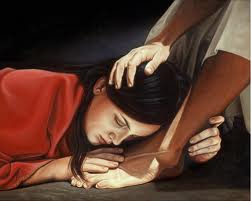
Lukas 7:36 En av fariseerna bjöd hem Jesus på en måltid, och han gick till honom och lade sig till bords. 37 Nu fanns i staden en kvinna som var en synderska. När hon fick veta att han låg till bords i fariséns hus, kom hon dit med en alabasterflaska med olja 38 och ställde sig bakom honom vid hans fötter och grät. Med sina tårar började hon väta hans fötter och torkade dem med sitt hår. Och hon kysste hans fötter och smorde dem med oljan.39 Farisén som hade inbjudit honom såg det och tänkte: “Om den mannen vore en profet skulle han känna till vad det är för slags kvinna som rör vid honom, att hon är en synderska.40 Då sade Jesus till honom: “Simon, jag har något att säga dig.”Simon svarade: “Mästare, säg det.” – 41 “Två män stod i skuld hos en penningutlånare. Den ene var skyldig femhundra denarer, den andre femtio. 42 Eftersom de inte kunde betala, efterskänkte han skulden för dem båda. Vilken av dem kommer nu att älska honom mest?”43 Simon svarade: “Den som fick mest efterskänkt, skulle jag tro.” Jesus sade: “Du har rätt.” 44 Sedan vände han sig mot kvinnan och sade till Simon: “Ser du den här kvinnan? När jag kom in i ditt hus, gav du mig inget vatten till mina fötter. Men hon har vätt mina fötter med sina tårar och torkat dem med sitt hår. 45 Du gav mig inte någon hälsningskyss, men sedan jag kom in har hon inte upphört att kyssa mina fötter. 46 Du smorde inte mitt huvud med olja, men hon har smort mina fötter med balsam. 47 Därför säger jag dig: Hon har fått förlåtelse för sina många synder. Det är därför hon visar så stor kärlek. Men den som har fått litet förlåtet älskar litet.” 48 Sedan sade han till henne: “Dina synder är förlåtna.” 49 Då började de andra bordsgästerna fråga sig: “Vem är den här mannen, som till och med förlåter synder?” 50 Men Jesus sade till kvinnan: “Din tro har frälst dig. Gå i frid.

Paulus säger att vi inte ens ska äta tillsammans med syndare, men han förklarar också vad han menar med det. Om vi aldrig skulle kunna umgås med  syndare så skulle vi ha svårt att leva i den här världen som just är full av syndare. Det är inte Paulus syfte, utan poängen är att vi inte ska umgås med den som KALLAR SIG BRODER (eller syster förstås) OCH som lever i synd. Broder/syster är alltså en person som säger sig vara kristen. Sammanhanget i 1 Kor. 5 är för övrigt en situation där just en BRODER lever i grov synd och ändå befinner sig kvar mitt i ett sällskap med andra kristna. Detta ger helt fel signaler både vad gäller medkristna och utomstående. Andra kristna i församlingen kan få för sig att synd inte är så farligt eftersom “den här brodern lever ju i en grov synd och är fortfarande en utav oss, så varför skulle mina små synder vara ett problem för mig eller andra?“. Utomstående riskerar att tro att synd är någonting helt normalt i en kristen församling och att kristna lever precis likadant som alla andra. Kristna kan också ses som en samling hycklare, och detta vore förstås ingen bra reklam för kristendomen.  Framför allt så hjälper en accepterande attityd inte syndaren själv! I stället för lugnande dunk i ryggen kanske han behöver mer spark i baken eftersom det handlar om hans SJÄL.

1 Kor. 5:I mitt brev till er skrev jag att ni inte skulle ha något att göra med otuktiga människor10 Jag menade inte alla otuktiga här i världen, inte alla giriga och utsugare och avgudadyrkare. Då måste ni ju lämna världen. 11 Jag skriver nu till er att ni inte skall umgås med någon som kallas broder, om han är otuktig, girig eller avgudadyrkare, förtalare, drinkare eller utsugare. Inte heller skall ni äta tillsammans med en sådan. 12 Hur kan det vara min sak att döma dem som står utanför?Är det inte dem som står innanför ni skall döma? 13 Dem som står utanför skall Gud döma. Driv ut ifrån er den som är ond!

Sen ska vi ju inte hamna i det andra diket och tro att det är fritt fram att sprida fördömande och hårda ord till olyckliga människor bara för att Jesus vid några tillfällen uttryckte sig med skärpa.  Jesus valde garanterat de rätta tillfällena för sina ve-rop. Vi andra kanske har svårare att göra de rätta bedömningarna när det är motiverat med starka ord, så vi ska tänka oss för innan vi använder ett hårt ordval som kan orsaka smärta. Det kan vara befogat eller totalt obefogat…

Ords. 15:1 Ett mjukt svar stillar vrede, ord som sårar väcker harm

Repentance is a condition for salvation

EXCEPT YE REPENT ye shall all likewise PERISH (Luke 13:3)

“Repent” is a translation from the Greek word metanoeó (Strong’s 3340) and means to repent, to change one’s mind or to change the inner man. From metá and noiéo.

Repenting doesn’t mean just saying “I’m sorry” or “I’m sorry that I got caught”, or something that we do on a daily basis. Repenting means to raise a white flag and making a decision to make the utmost to not repeat the sins again. It doesn’t mean we need to sign a legal document where we take an oath to never sin ever again as long as we live, but the aim should be to avoid sinning. If we sin, repent, sin, repent, sin, repent, it shows that we have not truly repented in the first place.

Repentance is a CONDITION for being cleansed from our sins and thus saved, so it’s important that the churches preach repentance and not only ”God loves you as you are”, or else they have missed to inform the hearers about something that is essential for our salvation . We really deserve to be punished for transgressing the law, but God is willing to pardon us, albeit not unconditionally. In order to be cleansed from our sins we must first confess our sins and repent. Not until then can we be cleansed in the blood of Jesus, and that is through the grace of God and through his mercy towards us. God would never lie and suggest that we are cleansed and forgiven if we still live in sin. Sins make us filthy and always separate us from God who is holy. Repentance always comes before cleansing and forgiveness, and not the other way around. John says that IF we sin (not WHEN we sin) we have an advocate with the Father:

John 2:1My little children, these things write I unto you, THAT YE SIN NOT. And IF any man sin, we have an advocate with the Father, Jesus Christ the righteous 

Both John the Baptist and Jesus Christ started out preaching about REPENTANCE

Matthew 31In those days came John the Baptist, preaching in the wilderness of Judaea,:2 And saying, Repent ye: for the kingdom of heaven is at hand.— 6And were baptized of him in Jordan, confessing their sins. 7But when he saw many of the Pharisees and Sadducees come to his baptism, he said unto them, O generation of vipers, who hath warned you to flee from the wrath to come? 8Bring forth therefore fruits meet for repentance

Matthew 4:17 From that time Jesus began to preach and to say “Repent for the kingdom of heaven is at hand”

Repentance means that our PAST sins are forgiven, and obviously not our present and/or future sins

2 Pet 1:9 But if anyone does not have them, he is nearsighted and blind, and has forgotten that he has been CLEANSED FROM HIS PAST SINS. 

Romans 3:24, 25 Being justified freely by his grace through the redemption that is in Christ Jesus: Whom God hath set forth to be a propitiation through faith in his blood, to declare his righteousness FOR THE REMISSION OF SINS THAT ARE PAST, through the forbearance of God.

2 Cor 7:9 Now I rejoice, not that you were made sorry, but that your sorrow led to repentance. For you were made sorry in a godly manner, that you might suffer loss from us in nothing. 10 For godly sorrow produces repentance LEADING TO salvation, not to be regretted; but the sorrow of the world produces death. 11 For observe this very thing, that you sorrowed in a godly manner: What diligence it produced in you, what clearing of yourselves, what indignation, what fear, what vehement desire, what zeal, what vindication! In all things you proved yourselves to be clear in this matter.

1 John 1:9 IF we confess our sins, He is faithful and just to forgive us our sins, and to cleanse us from all unrighteousness

Isaiah 55:7 Let the wicked forsake his way, and the unrighteous man his thoughts: and let him return unto the Lord, and he will have mercy upon him; and to our God, for he will abundantly pardon.

Proverbs 28:13 He that covereth his sins shall not prosper: but whoso confesseth and forsaketh them shall have mercy

Mat 6:14,15 For if you forgive men when they sin against you, your heavenly Father will also forgive you. But if you do not forgive men their sins, your Father will not forgive your sins. 

2 Chron. 15:2 The LORD is with you when you are with him. If you seek him, he will be found by you, but if you forsake him, he will forsake you.

Luke 9:23-26 If anyone is ashamed of me and my words, the Son of Man will be ashamed of him when he comes in his glory and in the glory of the Father and of the holy angels

Mat 10:33 But whoever disowns me before men, I will disown him before my Father in heaven.–Mat 26:69-75Then Peter remembered the word Jesus had spoken: “Before the rooster crows, you will disown me three times.”

Mat 18:32-35 Then the master called the servant in. You wicked servant, he said, I canceled all that debt of yours because you begged me to. Shouldn’t you have had mercy on your fellow servant just as I had on you? In anger his master turned him over to the jailers to be tortured, until he should pay back all he owed. —This is how my heavenly Father will treat each of you unless you forgive your brother from your heart. 

Other verses about repentance

Matthew 11:20 Then began he to upbraid the cities wherein most of his mighty works were done because they repented not. 21 Woe unto thee Chorazin woe unto thee Bethsaida for if the mighty works which were done in you had been done in Tyre and Sidon they would have repented long ago in sackcloth and ashes (+ Luke 10:13)

Matthew 12:41 The men of Nineveh shall rise in judgement with this generation and shall condemn it because they repented at the preaching of Jonas and behold a greater than Jonas is here (+ Luke 11:32)

Mark 1:15 And saying The time is fulfilled and the kingdom of God is at hand repent ye and believe the gospel

Mark 6:12 And they went out and preached that men should repent

Luke 13:3 + 5 I tell you Nay but EXCEPT YE REPENT ye shall all likewise PERISH

Luke 15:7 I say unto you that “likewise joy shall be in heaven over one sinner that repenteth more than over ninety and nine just persons which need no repentance“—10 Likewise I say unto you there is joy in the presence of the angels of God over one sinner that repenteth

Luke 16:30 And he said Nay father Abraham but if one went unto them from the dead they will repent

Luke 17:3 Take heed to yourselves If thy brother trespass against thee rebuke him and if he repent forgive him 4 And if he trespass against thee seven times in a day and seven times in a day turn again to thee saying I repent thou shalt forgive him

Acts 2:38 Then Peter said unto them Repent and be baptized every one of you in the name of Jesus Christ FOR THE REMISSION OF SINS and ye shall receive the gift of the Holy Ghost

Acts 3:19 Repent ye therefore and be converted THAT YOUR SINS MAY BE BLOTTED OUT when the times of refreshing shall come from the presence of the Lord

Acts 8:22 Repent therefore of this thy wickedness and pray God if perhaps the thought of thine heart may be forgiven thee

Acts 17:30 And the times of this ignorance God winked at but now COMMANDETH ALL MEN EVERY WHERE to repent

Acts 26:20 But shewed first unto them of Damascus and at Jerusalem and throughout all the coasts of Judaea and then to the Gentiles that they should REPENT AND TURN TO GOD AND DO WORKS meet for repentance

2 Cor. 12:21 And lest when I come again my God will humble me among you and that I shall bewail many which have sinned already and have not repented of the uncleanness and fornication and lasciviousness which they have committed

Rev. 2:5 Remember therefore from whence thou art fallen and repent and do the first WORKS or else I will come unto thee quickly and will REMOVE thy candlestick out of his place except thou repent

Rev. 2:21 And I gave her space to repent of her fornication and she repented not. 22 Behold I will cast her into a bed and them that commit adultery with her into great tribulation except they repent of their DEEDS

Rev. 3:3 Remember therefore how thou hast received and heard and hold fast and REPENT. If therefore thou shalt not watch I will come on thee as a thief and thou shalt not know what hour I will come upon thee

Rev 3:19 As many as __ I love I rebuke and chasten be zealous therefore and repent

Rev. 9:20 And the rest of the men which were not killed by these plagues yet REPENTED NOT of the works of their hands that they should not worship devils and idols of gold and silverand brass and stone and of wood which neither can see nor hear nor walk. 21 Neither REPENTED THEY of their murders nor of their sorceries nor of their fornication nor of their thefts

Rev. 16:9 And men were scorched with great heat, and blasphemed the name of God, which hath power over these plagues: and they repented not to give him glory. 10And the fifth angel poured out his vial upon the seat of the beast; and his kingdom was full of darkness; and they gnawed their tongues for pain, 11And blasphemed the God of heaven because of their pains and their sores, and repented not of their DEEDS.

Rev. 2:16 REPENT or else I will come unto thee quickly and will fight against them with the sword of my mouth

Acts 11:18 When they heard these things, they held their peace, and glorified God, saying, Then hath God also to the Gentiles granted repentance unto life.

Here are verses from one of the early church fathers:

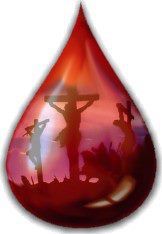
1 Clement 7:4 Let us fix our eyes on the blood of Christ and understand how precious it is unto His Father, because being shed for our salvation it won for the whole world the grace of repentance.

1 Clement 7:5 Let us review all the generations in turn, and learn how from generation to generation the Master hath given a place for repentance unto them that desire to turn to Him.

Chapter 28 “For He fore-knows that some are to be saved by repentance, some even that are perhaps not yet born. In the beginning He made the human race with the power of thought and of choosing the truth and doing right, so that all men are without excuse before God; for they have been born rational and contemplative.” Justin Martyr

If God no longer draws/calls people due to their choice to harden their hearts and turn their backs on him, then they will not be granted repentance.

Repentance is granted and commanded by God to ALL men everywhere. Telling God that we feel bad about what we have done is not good enough if we make no plans to stop. Also many atheists might feel extremely bad about  sins they have committed. Repentance is to cast out all filth IN ORDER to make our temples clean for the reception of the Holy Spirit (Matt. 12:43-45; Lk. 11:24-26; Acts 5:32). Repentance is a change of mind, inclinations and desires, which translates into a total change in conduct. It’s initiated by God through a crisis of conviction leading to a godly sorrow for sin and it means to  forsake our wickedness, purge our hearts of evil and to seek the mercy of God.  The passions and desires of the flesh are crucified (Ro. 6:6; Gal. 5:24) and this happens in repentance and not successively afterwards.  Old things pass away and all things become new. If a husband is cheating on his wife, the wife would expect the husband to stop sleeping with another woman. What would she think if he said, “I really love you, honey, and I am *willing* to stop sleeping with the other woman, but it may take some time.” We would not accept such excuse from our partner. Why do people expect that of God?

Be ye therefore PERFECT, even as your Father which is in heaven is perfect Matt.5:48

Be ye therefore PERFECT, even as your Father which is in heaven is perfect (Matt. 5:48)

The Greek definition of  “perfect” is teleios.

Definition: perfect, (a) complete in all its parts, (b) full grown, of full age, (c) specially of the completeness of Christian character.

We are told to be perfect as our Father in heaven is perfect and that means we CAN since we can trust the word of Jesus. It doesn’t say that God can be perfect for us, or that we should only STRIVE to be perfect but we are told to BE perfect. So to start off  it’s clear that we CAN become perfect but the question is what that means? Evidently it could not mean to have lived a completely sinless life, because Jesus told people who have sinned to be perfect, and they of course couldn’t be required to change their past in order to obey Jesus. The best way to find the meaning of to “be prefect” is to find similar examples of the same word in Greek – see below. When we are cleansed from our sins in the blood of Jesus we are indeed perfect and complete. God looks at us as though we have never sinned and we ARE free of sins thanks to being forgiven. But this does not mean that we are still fine even if we would continue to get filthy, because that will only get us dirty once more and again in need of cleansing. If we live in sin, we are neither perfect or complete. So a christian who sins is not perfect, but a christian who is cleansed and walk in the light is perfect. God doesn’t ask for anything impossible from us. Can we be as merciful as our Father is merciful?  Jesus says we can, and Zacharias and Elisabeth are examples of this:

Luke 6:35But love ye your enemies, and do good, and lend, hoping for nothing again; and your reward shall be great, and ye shall be the children of the Highest: for he is kind unto the unthankful and to the evil.36Be ye therefore merciful, as your Father also is merciful.

Luke 1:There was in the days of Herod, the king of Judaea, a certain priest named Zacharias, of the course of Abia: and his wife was of the daughters of Aaron, and her name was Elisabeth.And they were both righteous before God, walking in all the commandments and ordinances of the Lord blameless.

If you don’t believe we can be either perfect or merciful as our Father, what other verses don’t you trust in the Bible?  Can we argue that the the following commands are impossible to obey?

Luke 17:4 And if he trespass against thee seven times in a day, and seven times in a day turn again to thee, saying, I repent; thou shalt forgive him.

Matt. 28:19Go ye therefore, and teach all nations, baptizing them in the name of the Father, and of the Son, and of the Holy Ghost

The OT shows that people can be perfect as well (read my post about numerous righteous people who lived in the OT):

1 Ki 11:4 For it came to pass, when Solomon was old, that his wives turned away his heart after other gods: and his heart was not PERFECT with the LORD his God, AS WAS THE HEART OF DAVID his father. 

Examples of verses where “teleios” is used:

1 John 4:18There is no fear in love; but PERFECT love casteth out fear: because fear hath torment. He that feareth is not made PERFECT in love.

1 Corinthians 14:20Brethren, be not children in understanding: howbeit in malice be ye children, but in understanding be men.

Philippians 3: 15Let us therefore, as many as be PERFECT, be thus minded: and if in any thing ye be otherwise minded, God shall reveal even this unto you. 16Nevertheless, whereto we have already attained, let us walk by the same rule, let us mind the same thing.

Colossians 4:12Epaphras, who is one of you, a servant of Christ, saluteth you, always labouring fervently for you in prayers, that ye may stand PERFECT and complete in all the will of God.

James 1:4 Let endurance have its PERFECT work, that you may be PERFECT and complete, lacking in nothing.

1 Corinthians 2:6Howbeit we speak wisdom among them that are PERFECT: yet not the wisdom of this world, nor of the princes of this world, that come to nought

Romans 12:2 Don’t be conformed to this world, but be transformed by the renewing of your mind, so that you may prove what is the good, well-pleasing, and PERFECT will of God.

1 Corinthians 13:10But when that which is PERFECT is come, then that which is in part shall be done away.

Ephesians 4:13Till we all come in the unity of the faith, and of the knowledge of the Son of God, unto a PERFECT man, unto the measure of the stature of the fulness of Christ:

Colossians 1:28 whom we proclaim, admonishing every man and teaching every man in all wisdom, that we may present every man PERFECT in Christ Jesus;

James 1:17Every good gift and every PERFECT gift is from above, and cometh down from the Father of lights, with whom is no variableness, neither shadow of turning.

James 1:25But whoso looketh into the PERFECT law of liberty, and continueth therein, he being not a forgetful hearer, but a doer of the work, this man shall be blessed in his deed.

Matthew 19:21 Jesus said to him, “If you want to be PERFECT, go, sell what you have, and give to the poor, and you will have treasure in heaven; and come, follow me.”

James 3:2 For in many things we all stumble. If anyone doesn’t stumble in word, the same is a PERFECT man, able to bridle the whole body also.

Hebrews 9:11 But Christ having come as a high priest of the coming good things, through the greater and more PERFECT tabernacle, not made with hands, that is to say, not of this creation,

Hebrews 5:14But strong meat belongeth to them that are of FULL AGE, even those who by reason of use have their senses exercised to discern both good and evil.

Examples of people who were perfect in the Old Testament

Gen. 6:These are the generations of Noah: Noah was a just man and perfect in his generations, and Noah walked with God.

1 Kings. 15:14 But the high places were not removed: nevertheless Asa’s heart was perfect with the Lord all his days.

Job 1:And the Lord said unto Satan, Hast thou considered my servant Job, that there is none like him in the earth, a perfect and an upright man, one that feareth God, and escheweth evil?

2 Kings 23:25 And like unto him was there no king before him, that turned to the Lord with all his heart, and with all his soul, and with all his might, according to all the law of Moses; neither after him arose there any like him.

Hebrews 11:5 By faith Enoch was translated that he should not see death; and was not found, because God had translated him: for before his translation he had this testimony, that he pleased God.

Jesus paid a high price as a sin offering for us, but he did not PAY for our SINS

In the parable in Matthew 18:23–35, we can see that the servant who had a debt (sin) to the King was LOOSED and FORGIVEN for it. The debt was REMOVED. TAKEN AWAY. No one offered to pay the debt for this servant but it was simply ERASED due to his pleadings. However, when the same servant later refused to forgive another person, then the same debt was back on the table yet again! Had the debt been paid for originally, then the King couldn’t request for yet another payment of a debt which is already paid and settled, regardless of any bad  behavior of the guilty servant. But we know that when we ask for forgiveness and repent, it’s our PAST sins that are forgiven and removed. Not our FUTURE sins. If Jesus had PAID for all our sins on the cross, then we would be BORN forgiven and saved. If we would sin, we could always suggest that we’re still safe since Jesus has already PAID for our transgressions, and this means we don’t have to. We could also suggest that we can actually serve two masters and still be saved, because our sins are already forgiven. We would actually be off the hook and free from punishment no matter what we did. Clearly this is not the true scenario. This is the parable:

Matt 18:23Therefore is the kingdom of heaven likened unto a certain king, which would take account of his servants. 24And when he had begun to reckon, one was brought unto him, which owed him ten thousand talents. 25But forasmuch as he had not to pay, his lord commanded him to be sold, and his wife, and children, and all that he had, and payment to be made. 26The servant therefore fell down, and worshipped him, saying, Lord, have patience with me, and I will pay thee all. 27Then the lord of that servant was moved with compassion, and LOOSED him, and FORGAVE him the debt. 28But the same servant went out, and found one of his fellowservants, which owed him an hundred pence: and he laid hands on him, and took him by the throat, saying, Pay me that thou owest. 29And his fellowservant fell down at his feet, and besought him, saying, Have patience with me, and I will pay thee all. 30And he would not: but went and cast him into prison, till he should pay the debt. 31So when his fellowservants saw what was done, they were very sorry, and came and told unto their lord all that was done. 32Then his lord, after that he had called him, said unto him, O thou wicked servant, I forgave thee all that debt, because thou desiredst me: 33Shouldest not thou also have had compassion on thy fellowservant, even as I had pity on thee? 34And his lord was wroth, and delivered him to the tormentors, till he should pay all that was due unto him. 35So likewise shall my heavenly Father do also unto you, if ye from your hearts forgive not every one his brother their trespasses.

When it comes to the animal sacrifice system in the OT, there are no verses which say anything close to “sins were transferred to the animal”. Was the animal sacrificed OR punished? The animal certainly suffered and died as a result of the sin of man, but never did the animal become posessed by sin and die for those sins. This would imply guilt and that the animal was being punished for sins it did not commit. In the same way Jesus suffered and died because of man’s sin. He did not die because sin was transferred to Him, otherwise it would not be an adequate sacrifice. Rather than being an offering for sin and suffering an unjust death, he would have been punished for our sin which we know was not the case since He was without sin.

2 Cor. 5:21 For he hath made him [to be] sin for us, who knew no sin

Hebrews 10:8 — saying above, Sacrifices and offerings and whole burnt offerings and [sacrifices] for sin thou wouldst not, neither hadst pleasure therein.

It is not uncommon to the Scriptures to use the word “sin” to refer to a “sin offering” as the word “sin” is translated “sin offering” in numerous places throughout Exodus, Leviticus, Numbers, Chronicles, Nehemiah, and Ezekiel, because the context of such passages is clearly referring to a sin offering and not an act of sin. In Leviticus alone, it is rightly translated as sin-offering over 50 times! The same is true in Hebrews 10:6-8 which is a quotation from Psalm 40:6. In the Psalm, the Septuagint also does not have the word “sacrifice” in the text. Albert Barnes said To be sin – The words “to be” are not in the original. Literally, it is, “he has made him sin, or a sin-offering”Even a footnote in the ASV gives sin-sacrifice as the meaning, as do other translations. This view of the atonement, that Christ suffered our penalty and took our punishment, has inevitably lead to the errors of universalism, limited atonement, unconditional salvation, and once saved always saved. These conclusions cannot be logically denied if the premise is accepted that Jesus Christ took our punishment or suffered the penalty for our sins.

Gal. 3:13Christ hath redeemed us from the curse of the law, being made a curse for us: for it is written, Cursed is every one that hangeth on a tree

What is the curse of the law? Did the law of God ever demand for sinners to be crucified? No. In the civil government of Israel, the severest punishment of the law was stoning. Crucifixion was sanctioned by Roman law, but it was not sanctioned by Jewish law. Under the moral government of God, the severe punishment of the law is eternal hell. That is why the text says that Jesus suffer “a curse” not sufferedthe curse of the law”. The curse of the law is what we are saved FROM; a curse is what he ENDURED. The curse of the law was SUBSTITUTED with a curse.”

Jesus Christ shed his blood “for the remission of sins” (Matt. 26:28), but the Bible says that even after the atonement that sinners must still repent “for the remission of sins” (Acts 2:38)

Jesus died to reconcile God and man (Rom. 5:10; Col. 1:21) but after the atonement we have the “ministry of reconciliation” (2 Cor. 5:18) and after the atonement we are to tell men “be ye reconciled unto God“(2 Cor. 5:20)

If Christ bore the sinner’s punishment as a Substitute, then the sinner is unconditionally free from it, for both the sinner and the Substitute cannot be justly punished for the same offence. The theory, therefore, leads necessarily to either universalism on the one hand, or unconditional election on the other. The truth is though that Jesus died on my behalf but did not take MY place on the cross.

The animal for a sin-offering had to be absolutely pure, without a blemish, all of which Jesus was. For Him to have become “sin” in the sense of disobedience to God, He would have become a blemished sacrifice. The priests making an offering under the Law also had to be as spotless as the sacrifice they offered. Just so, Jesus as High Priest was “holy, guileless, undefiled, separated from sinners, and made higher than the heaven … when he offered up himself,” Hebrews 7:26-27. Leviticus 16:22 says the scapegoat will “bear … unto a land” the sins of the people. This was figurative, meaning to “take away” sins, remove sins as is the likely definition of “azazel.” The scapegoat symbolized the removal of sins. This is exactly the meaning to be attached to Jesus’ “bearing our sins“.

Isaiah 53:4, 11-12.Surely he hath borne (nasa) our griefs, and carried (sabal) our sorrows … for he shall bear (sabal) their iniquities … and he bare (nasa) the sin of many, and made intercession for the transgressors.

Notice that the two words are used interchangeably.

Matthew 8:16-17And when even was come, they brought unto him many possessed with demons: and he cast out the spirits with a word, and healed all that were sick: that it might be fulfilled which was spoken through Isaiah the prophet, saying, Himself took our infirmities, and bare our diseases.

What Jesus performed in healing the physical diseases was the fulfillment of Isaiah 53:4, specifically that He bore (nasa) our griefs and carried (sabal) our sorrows. But, their diseases were not transferred to Jesus so that he then became a leper, demon possessed, blind, etc. Yet, he “bore” their diseases in fulfillment of Isaiah 53:4 and he took away their diseases! The Greek word for “bare” in Matthew 8:17 is bastazo, which is the inspired translation of nasa. Bastazo may mean to take up, to transport, to carry, to take away or to remove. In this figurative use, the emphasis is on the taking away, removal. The word for “took” in this passage is lambano. It’s obvious in Matthew 8:17 that bastazo and lambano are synonyms and mean to remove.

Matthew 3:11 I indeed baptize you in water unto repentance: but he that cometh after me is mightier than I, whose shoes I am not worthy to bear (bastazo).

Seeing that the Holy Spirit gives us the meaning of nasa and sabal in Isaiah 53:4, why should we understand these words to mean any differently in Isaiah 53:11-12 when it says He “bare their iniquities” or “bare the sins of many?” This only tells us that He “took away” the sins and iniquities, not that the sins and iniquities were transferred to him or imputed to him.

 Hebrews 9:26 …else must he often have suffered since the foundation of the world: but now once at the end of the ages hath he been manifested to put away sin by the sacrifice of himself … so Christ also, having been once offered to bear the sins of many, shall appear a second time, apart from sin, to them that wait for him, unto salvation,” , 28.

Verse 28 repeats the subject of verse 26 with a slight change of words. “Put away” in verse 26 becomes “bear” in verse 28. “Sacrifice” in verse 26, becomes “offered” in verse 28. Jesus bore our sins in that He took them away.

I Peter 2:24″—who his own self bare (anaphero) our sins in his body upon the tree, that we, having died unto sins, might live unto righteousness; by whose stripes ye were healed.

In this passage, the “cross” replaces the altar as the place of sacrifice. The body of Jesus was offered up on an altar, an offering to God. The last sentein the Septuagint by anaphero. He “shall bear (sabal/anaphero) their iniquities” and “he bare (nasa/anaphero) the sin of many”. We have seen the meaning of nasa and sabal to be to take away. The same is true in an offering up of a sacrifice.

Isaiah 53:6 All we like sheep have gone astray; we have turned every one to his own way; and the Lord hath laid on (paga) him the iniquity of us all

Paga is found in Isaiah 53:12 “made intercession for the transgressors”. So, even in the context of verse 6, the same verb is used to mean “intercession.” The Hebrew scholars who translated Isaiah 53:6 into Greek “and the Lord gave him up for our sins”. The verb paredoken, from paradidomi, means to deliver up or intercede. Paradidomi is in the following two N.T. passages,

Romans 8:32 He that spared not his own Son, but delivered him up for us all, how shall he not also with him freely give us all things?

John 1:29 On the morrow he seeth Jesus coming unto him, and saith, Behold, the Lamb of God, that taketh away the sin of the world! 

 I Peter 2:24…who his own self bare (removed) our own sins in his body upon the tree

The fact that Jesus “bore” our sins and iniquities does not mean our sins, guilt and punishment were transferred (imputed) to him. His death actually occurred but the terms used to describe what it accomplished are used figuratively.

1 Cor. 7:23 Ye are bought with a price; be not ye the servants of men.

Jesus indeed paid a high price for us because he gave up his LIFE for us! The price he bought us with was his life. It doesn’t say we are purchased unconditionally though. In the same breath Paul tells us to NOT be servants of men. What would happen if we disobeyed him and became servants of men (as in living for people instead of God)?

Partly from Jesse Morell and Mike DeSario

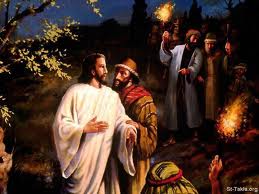
Judas was not predestined to betray Jesus, Acts 4:28

Judas acted against God’s will when he betrayed Jesus

The kings of the earth stood up, and the rulers were gathered together against the Lord, and against his Christ. For of a truth against thy holy child Jesus, whom thou hast anointed, both Herod, and Pontius Pilate, with the Gentiles, and the people of Israel, were gathered together, For to do whatsoever thy hand and thy counsel DETERMINED BEFORE to be done. (Acts 4:26-28)

The above are words from a prayer by Peter and John, and these verses are sometimes used as an attempt to support the idea that God predestines all things, including predestination of individuals to do “evil” (and that this in effect doesn’t make it “evil” since God is always good). The sacrifice of Christ is a holy and acceptable offering to God and he didn’t force anyone to kill Jesus. This unique event cannot be used as a blanket statement throughout the entire scriptures to show that God causes people to do whatever they are busy doing including SINNING.

What was “determined before” to be done? It was the death of Jesus (the Lamb slain from the foundation of the world)! However, it does not say that God predestined anyone to make this goal come true. Peter and John expressed in their prayer that people came to do what was determined, but  it doesn’t say that God predestined/caused/forced anyone to betray and kill Jesus, because then God would be the only reason for their sin.  (You’re not guilty of something if God is the one who made you do it.) Jesus is said to have laid down his own life and we can trust his words. There was certainly no shortage of people who wanted to kill Jesus, so God did not have to bother about predestining anyone to harm him. They went after Jesus on their own accord, and this was known from the foundation of the world. It wouldn’t be hard for the Father to remove his protective hands over Jesus and let someone with the desire to kill him be successful in his attempt, and Judas was  apparently first in line to betray him which eventually lead to his death. If Judas was predestined to betray Jesus, he would end up in heaven and not hell.

 John 10:17 Therefore doth my Father love me, because I lay down my life, that I might take it again18No man taketh it from me, but I lay it down of myself. I have power to lay it down, and I have power to take it again. This commandment have I received of my Father.

We can read that what happened was FOREKNOWN by God, but foreknowledge is not predestination. We can read that WICKED HANDS had crucified and slayed Jesus. If God predestined people to slay Jesus, then it would have been GODLY hands who slayed him. Those are wicked who do things contrary to God’s will.  By using an event for something good doesn’t mean that God caused it to happen.

 Acts 2:23 Him, being delivered by the determinate counsel and FOREKNOWLEDGE of God, YE have taken, and BY WICKED HANDS have crucified and slain? 

We can see that it was not GOD who placed the desire to harm Jesus inside Judas but SATAN.

Joh. 13:And supper being ended, the devil having now put into the heart of Judas Iscariot, Simon’s son, to betray him 

Jesus asked his Father to forgive those who harmed him, but if they were predestined to do so, then what is there to forgive? Why asking the Father to forgive people for doing exactly what he caused them to do?! If Judas OBEYED the Father by betraying Jesus which he was CAUSED to do, then shouldn’t Judas be rewarded instead of punished for what he did? Instead we can read that it would have been better for Judas had he never been born.

Luke 23:34 Then said Jesus, Fatherforgive them; for they know not what they do. And they parted his raiment, and cast lots

Jesus was delivered into the hands of SINFUL men, so we are not talking about innocent people who only did what they were predestined to do by God. THEY chose to sin, and we know that God doesn’t even TEMPT people. Much less force people to sin.  There is no darkness in God.

Lukas 24:7Saying, The Son of man must be delivered into the hands of sinful men, and be crucified, and the third day rise again.

The Apostle Paul “determined to sail by Ephesus” (Acts 20:16). Does that mean that the sailors on the vessel that he determined to sail on were acting under Paul’s compulsion or control? No. Paul determined to sail on a certain vessel to a certain location, but that does not mean that the vessel he determined to sail on was under his causation. When Paul sailed to Ephesus, he could say that what occurred was what was “determined before to be done” instead of something which occurred by surprise or accident. But the occurrence of what was determined before to be done did not exclude the freedom of those who participated in its occurrence. In the same way, God determined the crucifixion of Christ, but that does not mean that those who participated in His crucifixion and contributed to it were not free in what they did. What they did to Christ was not a surprise to God. What they did was what God had “determined before to be done”. In order to accomplish His purpose of slaying the Lord, God delivered Christ into the hands of those who already wanted to kill him by their free choice.

There certainly was no shortage of people who wanted to kill Jesus because of the way that He preached. Jesus said that “the world” “hateth” him, “because I testify of it, that the works thereof are EVIL” (Jn. 7:7). But the enemies of Christ were unable to kill him as long as the Father was protecting him (Matt. 4:6; Lk. 4:11; Jn. 7:30; 10:31; 10:39). The Bible says “Then they sought to take him: but no man laid hands on him, because his hour was not yet come” (Jn. 7:30).

God determined to deliver Jesus unto wicked men and God foreknew what they would do to Jesus if He did. This is because the Father knew the hostility and hatred that was already freely in their hearts. God was able to incorporate their voluntary wickedness into His plans and even turn it around and use it for good. This, it seems, God also did with Joseph’s brothers (Gen. 50:20). But this does not mean that God caused their wickedness. It is one thing to say that God “worketh all things after the counsel of his own will” (Eph. 1:11), and it is quite another thing to say, “God CAUSES all things after the counsel of his own will”. God can work with the free will choices of men to accomplish His purposes without causing all the choices of men.

Pilate said, “I have power to crucify thee, and have power to release thee” (Jn. 19:10). Pilate certainly was conscious of possessing free will. He was aware of the fact that what he was doing, he was doing by his own free volition. Responsibility or accountability presupposes free will. Men will be judged according to the free choices of their wills. Since these men were responsible for taking Jesus and for killing him, though God had determined that Jesus should be delivered unto them and slain, they still took Him and killed him by their own free choice. The Bible goes on to say

“Therefore let all the house of Israel know assuredly, that God hath made that same Jesus, whom ye have crucified, both Lord and Christ. Now when they heard this, they were pricked in their hearts, and said unto Peter and to the rest of the apostles, men and brethren, what shall we do? (Acts 2:36-37)

Apparently, Peter’s audience had not taken his previous words about the determinate counsel of God to mean that they had no free will in the matter or that they were only acting under the control of God. Otherwise, they could not have been pricked in their hearts for their action or have seen any reason why they needed to be saved for acting in such a way. But they were pricked in their hearts and sought for a way of salvation because they internally knew that what they had done was caused freely by their own wills and, therefore, they were rightly responsible and accountable for it.

Guds vrede drabbade inte Jesus på korset, och vi kan fortfarande drabbas av den

Vår Fader har ingen anledning att låta sin son drabbas av något vredesutbrott, och framför allt inget som VI orsakat. Guds vrede drabbar oss fortfarande om vi är olydiga, och det gäller även vi som är födda på nytt.

Matt. 3:7 Men när han såg att många fariseer och sadduceer kom för att bli döpta av honom, sade han till dem: “Ni huggormsyngel, vem har fått er att tro att ni kan fly undan den kommande vredesdomen?

Joh. 3:36 Den som tror på Sonen har evigt liv. Den som inte lyder Sonen skall inte se livet, utan Guds vrede blir kvar över honom.”

Rom. 2:Menar du att du skall komma undan Guds dom, du människa, när du dömer dem som handlar så, och själv gör på samma sätt? Genom ditt hårda och obotfärdiga hjärta samlar du på dig vrede till vredens dag, när Guds rättfärdiga dom uppenbaras.Han skall ge var och en efter hans gärningar: evigt liv åt dem som uthålligt gör det goda och söker härlighet, ära och odödlighet, men vrede och dom åt dem som söker sitt eget och inte lyder sanningen utan orättfärdigheten. 

Rom. 1:18 Guds vrede uppenbaras från himlen över all ogudaktighet och orättfärdighet hos människor som i orättfärdighet undertrycker sanningen.

Rom. 3:Men om vår orättfärdighet visar Guds rättfärdighet, vad skall vi då säga? Inte kan väl Gud, som straffar i sin vrede, vara orättfärdig – jag talar som människor tänker? 

När vi erkänner våra synder och omvänder oss så blir vi frälsta från vredesdomen, men det är inte ovillkorligt. Löftet gäller så länge som vi fortsätter att hålla oss rena och vandrar i rättfärdighet.

Rom. 4:15 Lagen åstadkommer ju vrede. Men där ingen lag finns, där finns inte heller någon överträdelse

Rom. 5:9 När vi nu står som rättfärdiga genom hans blod, hur mycket säkrare skall vi då inte genom honom bli frälsta från vredesdomen.

Rom. 9:22 Men om nu Gud, fastän han ville visa sin vrede och göra sin makt känd, ändå med stort tålamod hade haft fördrag med vredens kärl, som var färdiga att förstöras, vad har du då att säga?

När vi tar för vana att lyda köttet i stället för anden så blir vi till slut “olydnadens barn”. 

Ef. 2:3 Bland dem var vi alla en gång, när vi följde våra syndiga begär och gjorde vad köttet och sinnet ville. Av naturen var vi vredens barn, vi liksom de andra.

Ef. 5:6 Låt ingen bedra er med tomt prat. Allt sådant nedkallar Guds vrede över olydnadens barn.

Kol. 3:Döda därför era begär som hör jorden till: otukt, orenhet, lidelse, lusta, och girigheten som är avgudadyrkan.6 Allt sådant nedkallar Guds vrede över olydnadens barn

1 Tess. 5:Låt oss därför inte sova som de andra utan hålla oss vakna och nyktra.Ty de som sover, de sover om natten, och de som berusar sig är berusade om natten.Men vi som hör dagen till, låt oss vara nyktra, iförda tron och kärleken som pansar och hoppet om frälsning som hjälm. 9 Ty Gud har inte bestämt oss till att drabbas av vredesdomen utan till att vinna frälsning genom vår Herre Jesus Kristus.

Hebreerbrevet talar om Guds vila, och trots att Gud först räddade sitt folk från Egypten så klarade sig inte alla till det förlovade landet eftersom de var olydiga. Guds vrede drabbade dem, och likadant kan det gå för oss om vi inte är lydiga och vandrar i rättfärdighet.

Hebr. 3:Därför säger den helige Ande:I dag, om ni hör hans röst,8  så förhärda inte era hjärtan, som när era fäder väckte min förbittring på frestelsens dag i öknen. Där frestade de mig och satte mig på prov, fastän de såg mina gärningar under fyrtio år. 10 Därför blev jag vred på detta släkte och sade:Alltid far de vilse i sina hjärtan. De vill inte veta av mina vägar. 11 Då svor jag i min vrede: De skall aldrig komma in i min vila.

Hebr. 4: 1  Låt oss därför med fruktan se till att ingen av er visar sig bli efter på vägen, när nu ett löfte att komma in i hans vila står kvar. Ty evangeliet har predikats för oss liksom för dem. Men för dem blev ordet som de hörde inte till någon nytta, eftersom det inte genom tron hade smält samman med dem som hörde det. Det är vi som tror som går in i vilan. Herren säger: Då svor jag i min vrede: De skall aldrig komma in i min vila och det fastän hans verk stod färdiga sedan världens grund blev lagd.

De sista dagarna blir det svårt för de som vänt Gud ryggen och vägrar att omvända sig.

Upp 6:16 och de sade till bergen och klipporna: “Fall över oss och göm oss för hans ansikte som sitter på tronen och för Lammets vrede.

Slutligen liknelsen om himmelriket i Matt. 18. Lägg märke till att Kungen först förlåter sin tjänare (stryker hans skuld) men sedan drabbas tjänaren av HANS VREDE i alla fall, på grund av sina dåliga gärningar och att han vägrade att förlåta en annan människa.

Matt. 18: 23 Därför är himmelriket likt en kung som ville ha redovisning av sina tjänare. 24 När han började granskningen, förde man fram till honom en som var skyldig tio tusen talenter.[d] 25 Eftersom han inte kunde betala, befallde hans herre att han och hans hustru och barn och allt vad han ägde skulle säljas och skulden betalas. 26 Tjänaren föll ner för honom och bad: Ha tålamod med mig, så skall jag betala dig alltsammans. 27 Då förbarmade sig tjänarens herre över honom och gav honom fri och efterskänkte hans skuld.28 Men när tjänaren kom ut, träffade han en av sina medtjänare, som var skyldig honom hundra denarer. Han tog fast honom och ville strypa honom och sade: Betala, vad du är skyldig! 29 Hans medtjänare föll då ner och bad honom: Ha tålamod med mig, så skall jag betala dig. 30 Men han gick inte med på det utan gick och lät sätta honom i fängelse, tills han hade betalat vad han var skyldig. 31 När hans medtjänare såg vad som hände, blev de mycket upprörda och gick och talade om alltsammans för sin herre. 32 Då kallade hans herre honom till sig och sade: Du onde tjänare! Hela skulden efterskänkte jag dig, därför att du bad mig. 33 Borde inte du också ha förbarmat dig över din medtjänare, liksom jag förbarmade mig över dig? 34 Och i sin vrede överlämnade hans herre honom till fångvaktarna, tills han hade betalt allt vad han var skyldig35 Så skall också min himmelske Fader göra med er, om ni inte var och en av hjärtat förlåter sin broder.”

Jesus is the LIGHT which has come into the world to give us LIFE

Jesus is the light and the life!

Gen.1:1In the beginning God created the heaven and the earth. 2And the earth was without form, and void; and darkness was upon the face of the deep. And the Spirit of God moved upon the face of the waters. 3And God said, Let there be light: and there was light. 4And God saw the light, that it was good: and God divided the light from the darkness. 5And God called the light Day, and the darkness he called Night. And the evening and the morning were the first day.

The LIGHT was before the sun, moon and the stars that were created on Day 4, and in the new Kingdom we won’t need a sun to give us light, and there will be no nights and no darkness.

Rev. 21:23And the city had no need of the sun, neither of the moon, to shine in it: for the glory of God did lighten it, and the Lamb is the light thereof. 24And the nations of them which are saved shall walk in the light of it: and the kings of the earth do bring their glory and honour into it. 25And the gates of it shall not be shut at all by day: for there shall be no night there.

How did it start?

John 1:1In the beginning was the Word, and the Word was with God, and the Word was God. 2The same was in the beginning with God. 3All things were made by him; and without him was not any thing made that was made. 4In him was life; and the life was the light of men. 5And the light shineth in darkness; and the darkness comprehended it not. 6There was a man sent from God, whose name was John. 7The same came for a witness, to bear witness of the Light, that all men through him might believe. 8He was not that Light, but was sent to bear witness of that Light. 9That was the true Light, which lighteth every man that cometh into the world. 10He was in the world, and the world was made by him, and the world knew him not. 11He came unto his own, and his own received him not. 12But as many as received him, to them gave he power to become the sons of God, even to them that believe on his name:

Jesus is the light! He is our lamb! He offered his life for us!

Matthew 3:16 And Jesus, when he was baptized, went up straightway out of the water: and, lo, the heavens were opened unto him, and he saw the Spirit of God descending like a dove, and lighting upon him:

Matthew 17:2And was transfigured before them: and his face did shine as the sun, and his raiment was white as the light. (Peter)

Rev. 1:16 And he had in his right hand seven stars: and out of his mouth went a sharp twoedged sword: and his countenance was as the sun shineth in his strength.17And when I saw him, I fell at his feet as dead. And he laid his right hand upon me, saying unto me, Fear not; I am the first and the last (John)

John and Peter above, and also Paul saw his light. The angel of the Lord spreads the light of God.

Acts 9:3 And as he journeyed, he came near Damascus: and suddenly there shined round about him a light from heaven:

Acts 12:7 And, behold, the angel of the Lord came upon him, and a light shined in the prison: and he smote Peter on the side, and raised him up, saying, Arise up quickly. And his chains fell off from his hands.

Moses had a unique experience with the glorious LIGHT of God. During the first meeting with God face to face God apparently had his face covered because no one can see his face and live:

Exodus 33:11 And the LORD spake unto Moses face to face, as a man speaketh unto his friend. And he turned again into the camp: but his servant Joshua, the son of Nun, a young man, departed not out of the tabernacle.

Exodus 33: 20And he said, Thou canst not see my face: for there shall no man see me, and live21And the LORD said, Behold, there is a place by me, and thou shalt stand upon a rock: 22And it shall come to pass, while my glory passeth by, that I will put thee in a clift of the rock, and will cover thee with my hand while I pass by: 23And I will take away mine hand, and thou shalt see my back parts: but my face shall not be seen.

Exodus 34:29And it came to pass, when Moses came down from mount Sinai with the two tables of testimony in Moses’ hand, when he came down from the mount, that Moses wist not that the skin of his face shone while he talked with him.30And when Aaron and all the children of Israel saw Moses, behold, the skin of his face shone; and they were afraid to come nigh him. 31And Moses called unto them; and Aaron and all the rulers of the congregation returned unto him: and Moses talked with them. 32And afterward all the children of Israel came nigh: and he gave them in commandment all that the LORD had spoken with him in mount Sinai. 33And till Moses had done speaking with them, he put a vail on his face. 34But when Moses went in before the LORD to speak with him, he took the vail off, until he came out. And he came out, and spake unto the children of Israel that which he was commanded. 35And the children of Israel saw the face of Moses, that the skin of Moses’ face shone: and Moses put the vail upon his face again, until he went in to speak with him.

2 Cor. 3:7But if the ministration of death, written and engraven in stones, was glorious, so that the children of Israel could not stedfastly behold the face of Moses for the glory of his countenance; which glory was to be done away: 8How shall not the ministration of the spirit be rather glorious?12Seeing then that we have such hope, we use great plainness of speech: 13And not as Moses, which put a veil over his face, that the children of Israel could not stedfastly look to the end of that which is abolished14But their minds were blinded: for until this day remaineth the same vail untaken away in the reading of the old testament; which vail is done away in Christ15But even unto this day, when Moses is read, the vail is upon their heart. 16Nevertheless when it shall turn to the Lord, the vail shall be taken away.

Jesus, son of God and God in flesh, came to earth just to die for us and offer us salvation! His birth was prophesied about 800 years before he was born.

Is. 9:2The people that walked in darkness have seen a great light: they that dwell in the land of the shadow of death, upon them hath the light shined.

Is. 9:6For unto us a child is born, unto us a son is given: and the government shall be upon his shoulder: and his name shall be called Wonderful, Counsellor, The mighty God, The everlasting Father, The Prince of Peace. 7Of the increase of his government and peace there shall be no end, upon the throne of David, and upon his kingdom, to order it, and to establish it with judgment and with justice from henceforth even for ever. The zeal of the LORD of hosts will perform this. 8The Lord sent a word into Jacob, and it hath LIGHTED upon Israel.

Isaiah 42:16And I will bring the blind by a way that they knew not; I will lead them in paths that they have not known: I will make darkness light before them, and crooked things straight. These things will I do unto them, and not forsake them.

Psalm 50:2 Out of Zion, the perfection of beauty, God hath shined.

Isaiah 60:1 Arise, shine; for thy light is come, and the glory of the LORD is risen upon thee.2For, behold, the darkness shall cover the earth, and gross darkness the people: but the LORD shall arise upon thee, and his glory shall be seen upon thee. 3And the Gentiles shall come to thy light, and kings to the brightness of thy rising.

The Lord is the LIGHT that guides us!

Micah 7:8 Rejoice not against me, O mine enemy: when I fall, I shall arise; when I sit in darkness, the LORD shall be a light unto me.9 I will bear the indignation of the LORD, because I have sinned against him, until he plead my cause, and execute judgment for me: he will bring me forth to the light, and I shall behold his righteousness.

Psalm 56:13 For thou hast delivered my soul from death: wilt not thou deliver my feet from falling, that I may walk before God in the light of the living?

Isaiah 2:5 O house of Jacob, come ye, and let us walk in the light of the LORD.

Sinners don’t want to come to the light to get their lives exposed, but those who choose to come to the light will get LIFE. If we walk in the light, we won’t stumble. The LIGHT will divide us. We are either in the light and walk in it, or we are in darkness.

John 3:18He that believeth on him is not condemned: but he that believeth not is condemned already, because he hath not believed in the name of the only begotten Son of God. 19And this is the condemnation, that light is come into the world, and men loved darkness rather than light, because their deeds were evil. 20For every one that doeth evil hateth the light, neither cometh to the light, lest his deeds should be reproved. 21But he that doeth truth cometh to the light, that his deeds may be made manifest, that they are wrought in God.

John 8:12Then spake Jesus again unto them, saying, I am the light of the world: he that followeth me shall not walk in darkness, but shall have the light of life. 13The Pharisees therefore said unto him, Thou bearest record of thyself; thy record is not true. 14Jesus answered and said unto them, Though I bear record of myself, yet my record is true: for I know whence I came, and whither I go; but ye cannot tell whence I come, and whither I go.

John 11:9Jesus answered, Are there not twelve hours in the day? If any man walk in the day, he stumbleth not, because he seeth the light of this world.10But if a man walk in the night, he stumbleth, because there is no light in him.

John 12: 35Then Jesus said unto them, Yet a little while is the light with you. Walk while ye have the light, lest darkness come upon you: for he that walketh in darkness knoweth not whither he goeth. 36While ye have light, believe in the light, that ye may be the children of light. These things spake Jesus, and departed, and did hide himself from them. 37But though he had done so many miracles before them, yet they believed not on him:

John 12:46 I am come a light into the world, that whosoever believeth on me should not abide in darkness.

2 Cor. 4:3But if our gospel be hid, it is hid to them that are lost: 4In whom the god of this world hath blinded the minds of them which believe not, lest the light of the glorious gospel of Christ, who is the image of God, should shine unto them. 5For we preach not ourselves, but Christ Jesus the Lord; and ourselves your servants for Jesus’ sake. 6For God, who commanded the light to shine out of darkness, hath shined in our hearts, to give the light of the knowledge of the glory of God in the face of Jesus Christ.

We must continue to live in the world, and we will be around both believers and unbelievers, but we are not to be unequally joked with the darkness

2 Corinthians 6:14 Be ye not unequally yoked together with unbelievers: for what fellowship hath righteousness with unrighteousness? and what communion hath light with darkness?

Ephesians 5:8For ye were sometimes darkness, but now are ye light in the Lord: walk as children of light9(For the fruit of the Spirit is in all goodness and righteousness and truth;) 10Proving what is acceptable unto the Lord. 11And have no fellowship with the unfruitful works of darkness, but rather reprove them. 12For it is a shame even to speak of those things which are done of them in secret. 13But all things that are reproved are made manifest by the light: for whatsoever doth make manifest is light14Wherefore he saith, Awake thou that sleepest, and arise from the dead, and Christ shall give thee light

We are told to BE LIGHT in this world and to WALK in the light

1 Thessalonians 5:4 But ye, brethren, are not in darkness, that that day should overtake you as a thief. 5Ye are all the children of light, and the children of the day: we are not of the night, nor of darkness. 6Therefore let us not sleep, as do others; but let us watch and be sober. 7For they that sleep sleep in the night; and they that be drunken are drunken in the night. 8But let us, who are of the day, be sober, putting on the breastplate of faith and love; and for an helmet, the hope of salvation.

Luke 11:35 Take heed therefore that the light which is in thee be not darkness.

1 John 1: 5This then is the message which we have heard of him, and declare unto you, that God is light, and in him is no darkness at all. 6If we say that we have fellowship with him, and walk in darkness, we lie, and do not the truth: 7But if we walk in the light, as he is in the light, we have fellowship one with another, and the blood of Jesus Christ his Son cleanseth us from all sin.

1 John 2:8Again, a new commandment I write unto you, which thing is true in him and in you: because the darkness is past, and the true light now shineth. 9He that saith he is in the light, and hateth his brother, is in darkness even until now. 10He that loveth his brother abideth in the light, and there is none occasion of stumbling in him. 11But he that hateth his brother is in darkness, and walketh in darkness, and knoweth not whither he goeth, because that darkness hath blinded his eyes.

Matt. 5:14Ye are the light of the world. A city that is set on an hill cannot be hid. 15Neither do men light a candle, and put it under a bushel, but on a candlestick; and it giveth light unto all that are in the house. 16Let your light so shine before men, that they may see your good works, and glorify your Father which is in heaven.

Philippians 2:15 That ye may be blameless and harmless, the sons of God, without rebuke, in the midst of a crooked and perverse nation, among whom ye shine as lights in the world;

2 Peter 1:19 We have also a more sure word of prophecy; whereunto ye do well that ye take heed, as unto a light that shineth in a dark place, until the day dawn, and the day star arise in your hearts:

Matthew 13:43 Then shall the righteous shine forth as the sun in the kingdom of their Father. Who hath ears to hear, let him hear.

When he returns to earth lightening will shine

Luke 17:24 For as the lightning, that lighteneth out of the one part under heaven, shineth unto the other part under heaven; so shall also the Son of man be in his day.

15 verses about law and grace you didn’t know were in the Bible

15 verses about law and grace you didn’t know were in the Bible

1) Romans 3:25 Whom God hath set forth to be a propitiation through faith in his blood, to declare his righteousness for the remission OF SINS THAT ARE PAST, through the forbearance of God;

2) James 2:24 Ye see then how that BY WORKS A MAN IS JUSTIFIED, and NOT by faith only.

3) Phil 2:12 Wherefore, my beloved, as ye have always obeyed, not as in my presence only, but now much more in my absence, WORK OUT YOUR OWN SALVATION WITH FEAR AND TREMBLING

4) Rom 2:13 For not the hearers of the law are just before God, but THE DOERS OF THE LAW SHALL BE JUSTIFIED

5) 1 John 3:6. WHOSOEVER ABIDETH IN HIM SINNETH NOT: whosoever sinneth hath not seen him, neither known him.

6) Matt 5:19 Whosoever therefore shall break one of these least commandments, AND SHALL TEACH MEN SO, he shall be called THE LEAST in the kingdom of heaven: butwhosoever shall do and teach them, the same shall be called GREAT in the kingdom of heaven.

7) Titus 2:12 (God’s grace) TEACHING US that, DENYING UNGODLINESS and worldly lusts, we should live soberly, righteously, and godly, IN THIS PRESENT WORLD;

 8) Acts 5:32 And we are his witnesses of these things; and so is also THE HOLY GHOST, WHOM GOD HATH GIVEN TO THEM THAT OBEY HIM

9) James 4:6 But he giveth more grace. Wherefore he saith, God resisteth the proud, but GIVETH GRACE TO THE HUMBLE (a condition)

10) John 15:10. IF YE KEEP MY COMMANDMENTS, YE SHALL ABIDE IN MY LOVE; even as I have kept my Father’s commandments, and abide in his love.

11) 1 Cor 7:19 Circumcision is nothing, and uncircumcision is nothing, BUT THE KEEPING OF THE COMMANDMENTS OF GOD

12) Rom. 3:31 Do we then make void the law through faith? God forbid: yea, WE ESTABLISH THE LAW

13) James 2:21 Was not Abraham our father JUSTIFIED BY WORKS, when he had offered Isaac his son upon the altar?

14) Hebr. 10:29 Of how much sorer punishment, suppose ye, shall he be thought worthy, who hath TRODDEN UNDER FOOT THE SON OF GOD, and hath counted the blood of the covenant, WHEREWITH HE WAS SANCTIFIED, an unholy thing, and hath done despite unto the Spirit of grace?

15) Rom 8:1 There is therefore now no condemnation to them which are in Christ Jesus,  WHO WALK NOT AFTER THE FLESH , BUT AFTER THE SPIRIT

15 verses/claims you thought were in the Bible

1) All men are born with a sinful nature since we have inherited Adam’s sin

2) Once saved always saved

3) God loves us unconditionally

4) Jesus righteousness has been transferred to us, so the Father can’t see our sins but only the blood of Jesus

5) When we repent our past, present and future sins are forgiven

6) Do not judge! – any one at any time!

7) FAITH ALONE is what saves us, and works have nothing to do with our salvation

8) We are no longer under the Law, so obeying the ten commandments is no longer necessary even if they are good to obey so we don’t get reduced gifts in heaven

9) We all sin constantly in thoughts, words and deeds

10) The grace of God is free, unmerited and can’t be forfeited

11) If you could stop sinning you wouldn’t need Jesus

12) The problem with the pharisees was that they focused too much on the Law and obeyed it too much

13) Jesus paid for our sins, took our sins on himself and became sinful on the cross, hence the wrath of the God the Father was upon him

14) He sinned quite severely? Then “he wasn’t saved to begin with”

15) Christians are taken out of the world before the great tribulation   

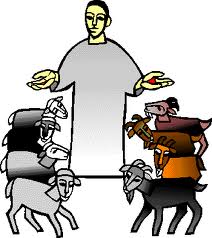
The difference between the Sheep and the Goats in the parable, is what they DID and DIDN’T DO

Jesus says in John 5:29 that at the resurrection those who have done good will get LIFE and those who have done evil will get damnation. James, Paul, John and Peter say the same thing.

John. 5:28 Marvel not at this: for the hour is coming, in the which all that are in the graves shall hear his voice, 29And shall come forth; they that have done good, unto the resurrection of life; and they that have done evil, unto the resurrection of damnation.

James. 2:13 For he shall have judgment without mercy, that hath shewed no mercy; and mercy rejoiceth against judgment.

Rom 8:13 For if ye live after the flesh, ye shall die: but if ye through the Spirit do mortify the deeds of the body, ye shall live.

John 14:23 Jesus answered and said unto him, If a man love me, he will keep my words: and my Father will love him, and we will come unto him, and make our abode with him 24 He that loveth me not keepeth not my sayings: and the word which ye hear is not mine, but the Father’s which sent me.

1 Pet 2:11 Dearly beloved, I beseech you as strangers and pilgrims, abstain from fleshly lusts, which war against the SOUL;

What we DO makes the difference whether we will be able to enter God’s kingdom or not (even if we of course must believe that Jesus is God who has come in the flesh and that he has died as a sin offering and cleansed us from our sins with his blood). The Bible is filled with commands that we must DO things to be saved (not lose salt, go through the narrow gate, endure to the end, carry our cross daily, etc) and this might be surprising for us in Scandinavia, because we have been influenced by Martin Luther to a great deal. He was a person who didn’t take much delight in the book of James (according to his own words) where he could read things such as:

James. 2:20But wilt thou know, O vain man, that faith without works is dead? 21Was not Abraham our fathered by faith alone” even though the Bible says we’re not saved by faith alone. 

We tend to believe that if we must DO anything at all to be saved, then it is “works salvation” and the biggest theological error under the sun (and a sin). Naturally we can’t save ourselves, because we are all in need of cleansing in the blood of Jesus, and we can’t earn our salvation by anything we do or believe, but there are still conditions for our salvation and that is to believe, repent and obey God. This is something that we must DO. Matthew 25 contains three parables that all have the point that what we DO affect our final destination – heaven or hell. This might be referred to as heresy in the Church today, but the Bible disagrees. Read the parable between the sheep and the goats. Both the sheep and the goats believed in the one they communicated with – Jesus – and also demons accept that Jesus is the son of God and even confess this out loud! This won’t save them, which is James’ point. (Not that demons are angels and can’t be saved, because the subject in James 2 is “Deeds”.) Faith without deeds is dead. 

The final judgment 

Matthew 25:31When the Son of man shall come in his glory, and all the holy angels with him, then shall he sit upon the throne of his glory: 32And before him shall be gathered all nations: and he shall separate them one from another, as a shepherd divideth his sheep from the goats: 33And he shall set the sheep on his right hand, but the goats on the left. 34Then shall the King say unto them on his right hand, Come, ye blessed of my Father, inherit the kingdom prepared for you from the foundation of the world: 35For I was an hungred, and ye gave me meat: I was thirsty, and ye gave me drink: I was a stranger, and ye took me in: 36Naked, and ye clothed me: I was sick, and ye visited me: I was in prison, and ye came unto me. 37Then shall the righteous answer him, saying, Lord, when saw we thee an hungred, and fed thee? or thirsty, and gave thee drink? 38When saw we thee a stranger, and took thee in? or naked, and clothed thee? 39Or when saw we thee sick, or in prison, and came unto thee? 40And the King shall answer and say unto them, Verily I say unto you, Inasmuch as ye have done it unto one of the least of these my brethren, ye have done it unto me.

41Then shall he say also unto them on the left hand, Depart from me, ye cursed, into everlasting fire, prepared for the devil and his angels: 42For I was an hungred, andye gave me no meat: I was thirsty, and ye gave me no drink: 43I was a stranger, andye took me not in: naked, and ye clothed me not: sick, and in prison, and ye visited me not. 44Then shall they also answer him, saying, Lord, when saw we thee an hungred, or athirst, or a stranger, or naked, or sick, or in prison, and did not minister unto thee? 45Then shall he answer them, saying, Verily I say unto you, Inasmuch as ye did it not to one of the least of these, ye did it not to me. 46And these shall go away into everlasting punishment: but the righteous into life eternal. 

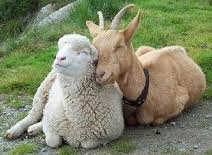
The difference between the sheep and the goats is therefore what they DO. The sheep end up on the right side, and they are the ones that have done something good (righteousness), and the goats end up on the left side, and they are the ones that have neglected to do something good. They have NOT shown compassion and mercy. Lack of fruit can hinder us from entering the kingdom of God. We can read this in John 15 where the branches are cut off and thrown in the fire due to lack of fruit. We are not  saved by merely believing in a “package”. We could compare with the angels in the beginning of the creation. I don’t believe they had a problem to “believe in God”, or to accept him as their Creator. Still, we can read that 1/3 of them fell when they followed Lucifer on his wicked ways. It was once again what they DID which affected the continuation of the story – in the future they will be thrown in the lake of fire which was prepared for them from the beginning of the world, due to their deeds.

The other parables in Matthew 25 are the well known parables of the ten virgins and the one about the talents. All the ten virgins “believed” in the bride groom and waited for his arrival. What they DID and DIDN’T DO made all the difference for what happened next. They all had lamps, but half of the girls had chosen to not bring any extra oil even though this might be needed. We can see that it probably concerned spare oil since the foolish girls said the lamps are “gone out”. This means the lamps had previously given light, but they did not endure to the end due to lack of oil. We are told by Jesus that we must endure to the end to be saved! The wise girls had chosen to bring some spare oil with them which was a good choice. Our choices make the difference! Also the parable with the Talents shows that our choices and our actions affect the outcome of things, and also here we can see that it concerns eternal life (with various rewards) or eternal damnation.

I know that I write a lot about repentance and righteousness in my blog, and that is because these topics are neither that common, nor popular, despite that they are very important subjects because they concern our SOULS. The devil’s only goal is to make us SIN so that we won’t be able to enter God’s kingdom. He tempts us and tries to provide us with excuses to sin. I believe the devil wants to reassure us that we can be saved by faith alone with no deeds, and that sin will not separate us from God. Wouldn’t it be horrible if he managed to deceive us into thinking “What a relief that God loves me just the way I am, and that he views me as righteous despite that I live unrighteously at times, and that it’s enough to BELIEVE in him to be saved” IF this is not true? Just imagine if we on Judgment Day would have to say…“Oops!”

1 Peter 4:18 And if the righteous scarcely be saved, where shall the ungodly and the sinner appear?

Att frukta Gud är någonting positivt

Därför, mina älskade, såsom I alltid förut haven varit lydiga, så mån I också nu med FRUKTAN OCH BÄVAN arbeta på eder frälsning, och det icke allenast såsom I gjorden, då jag var närvarande, utan ännu mycket mer nu, då jag är frånvarande Fil. 2:12

Fruktan = phobos på grekiska

Det är skillnad på fruktan och fruktan beroende på vad vi vill säga med just det ordet. Att känna fruktan för “vad folk ska säga” är inte alltid så bra, men att känna fruktan inför GUD är något helt annat och något som är till vår fördel. Det betyder inte att vi ständigt ska gå runt och oroa oss för vardagliga saker, eftersom vi också är tillsagda att INTE känna någon oro eller fruktan. Vi ska ha tillit till Gud och vad han förmår göra. Dessa verser kanske känns igen när det handlar om att INTE känna fruktan:

Rom. 8:15 I haven ju icke fått en träldomens ande, så att I åter skullen känna fruktan; I haven fått en barnaskapets ande, i vilken vi ropa: »Abba! Fader!»

Rom. 13:3 Ty de som hava väldet äro till skräck, icke för dem som göra vad gott är, utan för dem som göra vad ont är. Vill du vara utan fruktan för överheten, så gör vad gott är; du skall då bliva prisad av den,

1 Korinthierbrevet 16:10 Men när Timoteus kommer, så sen till, att han utan fruktan må kunna vistas hos eder. Han utför ju Herrens verk, han såväl som jag;

1 Pet. 3:13 Och vem är den som kan göra eder något ont, om I nitälsken för det som är gott? 14Skullen I än få lida för rättfärdighets skull, så ären I dock saliga. »Hysen ingen fruktan för dem, och låten eder icke förskräckas; 15nej, Herren, Kristus, skolen I hålla helig i edra hjärtan.» Och I skolen alltid vara redo att svara var och en som av eder begär skäl för det hopp som är i eder, dock med saktmod och i fruktan

1 John 4:18 Räddhåga finnes icke i kärleken, utan fullkomlig kärlek driver ut räddhågan, ty i räddhågan ligger tanke på straff, och den som rädes är icke fullkomnad i kärleken.

Det handlar alltså om att förlita sig på Gud. Känner vi fruktan och tveksamheter över om Gud kan höra våra böner, om han kan besvara dem, om han har fullständig kontroll och om han kan hjälpa oss i utsatta situationer, så är detta inte någonting positivt. Vi är uppmuntrade att INTE känna en sådan fruktan. Men NT talar bra mycket mer om att vi BÖR känna fruktan! Fruktan kan leda till att vi ger Gud mer uppmärksamhet och att vi får mer iver i vårt böneliv. Fruktan kan också leda oss till att göra allt vi kan för att undvika synd, eftersom vi inser vilka konsekvenser det innebär att inte leva i rättfärdighet. Fruktan för död och straff kan vara av godo, men vi bör ha en “sund” fruktan och inte låta den förlama oss. Så en sund fruktan och respekt för Gud är receptet, samtidigt som vi också ska ha tillit till honom och inse att ALLT är möjligt i den Helige Andes kraft. Gud vill inte stjälpa oss utan HJÄLPA oss. Han har gett oss en enastående resurs i den Heliga Ande som vill och kan vägleda oss rätt. Tack vare fruktan för Gud så kan vi lägga ner en helt annan kraft på andra människors frälsning, liksom vår egen.

Apg 2:41 De som då togo emot hans ort läto döpa sig; och så ökades församlingen på den dagen med vid pass tre tusen personer. 42Och dessa höllo fast vid apostlarnas undervisning och brödragemenskapen, vid brödsbrytelsen och bönerna. 43Och FRUKTAN kom över var och en; och många under och tecken gjordes genom apostlarna.

Apg 5:3 Då sade Petrus: »Ananias, varför har Satan fått uppfylla ditt hjärta, så att du har velat bedraga den helige Ande och taga undan något av betalningen för jordstycket? 4Detta var ju din egendom, medan du hade det kvar; och när det var sålt, voro ju penningarna i din makt. Huru kunde du få något sådant i sinnet? Du har ljugit, icke för människor, utan för Gud.»  5När Ananias hörde dessa ord, föll han ned och gav upp andan. Och stor fruktan kom över alla som hörde detta.

Apg 9:31 Så hade nu församlingen frid i hela Judeen och Galileen och Samarien; och den blev uppbyggd och vandrade i Herrens fruktan och växte till genom den helige Andes tröst och förmaning.

Apg 19:16 Och mannen som var besatt av den onde anden störtade sig på dem och övermannade både den ene och den andre; han betedde sig så våldsamt mot dem, att de måste fly ut ur huset, nakna och sargade. 17Och detta blev bekant för alla Efesus’ invånare, både judar och greker, och fruktan föll över dem alla, och Herren Jesu namn blev storligen prisat. 18Och många av dem som hade kommit till tro trädde fram och bekände sin synd och omtalade vad de hade gjort.

Rom 3:16 Förödelse och elände är på deras vägar,17och fridens väg känna de icke.  18Guds fruktan är icke för deras ögon.»

1 Korinthierbrevet 2:3 Och jag uppträdde hos eder i svaghet och med fruktan och mycken bävan.

2 Korinthierbrevet 7:1 Då vi nu hava dessa löften, mina älskade, så låtom oss rena oss från allt som befläckar vare sig kött eller ande, i det vi fullborda vår helgelse i Guds fruktan.

2 Korinthierbrevet 7:11 Se, just detta, att I bleven bedrövade efter Guds sinne, huru mycket nit har det icke framkallat hos eder, ja, huru många ursäkter, huru stor förtrytelse, huru mycken fruktan, huru mycken längtan, huru mycken iver, huru många bestraffningar! På allt sätt haven I bevisat att I viljen vara rena i den sak det här gäller. —

2 Korinthierbrevet 7:15 Och hans hjärta överflödar ännu mer av kärlek till eder, då han nu påminner sig allas eder lydnad, huru I villigt togen emot honom, med fruktan och bävan.

Efesierbrevet 5:21 Underordnen eder varandra i Kristi fruktan.

1 Timotheosbrevet 5:20 Men begår någon en synd, så skall du inför alla förehålla honom den, så att också de andra känna fruktan.

Hebr. 2:14 Då nu barnen hade blivit delaktiga av kött och blod, blev ock han på ett liknande sätt delaktig därav, för att han genom sin död skulle göra dens makt om intet, som hade döden i sitt våld, det är djävulen, 15och göra alla dem fria, som av fruktan för döden hela sitt liv igenom hade varit hemfallna till träldom. 16Ty det är ju icke änglar som han tager sig an; det är Abrahams säd som han tager sig an.

1 Petrusbrevet 1:17 Och om I såsom Fader åkallen honom som utan anseende till personen dömer var och en efter hans gärningar, så vandren ock i fruktan under denna edert främlingsskaps tid.

1 Petrusbrevet 3:2 när de skåda den rena vandel som I fören i fruktan.

1 Petrusbrevet 3:15 nej, Herren, Kristus, skolen I hålla helig i edra hjärtan.» Och I skolen alltid vara redo att svara var och en som av eder begär skäl för det hopp som är i eder, dock med saktmod och i fruktan

Judasbrevet 1:23 och frälsa dem genom att rycka dem ur elden; mot de andra mån I också vara barmhärtiga, dock med fruktan, så att I avskyn till och med deras livklädnad, den av köttet befläckade.

Fruktan även inför andra än Gud

Rom. 13:7 Så given åt alla vad I ären dem skyldiga; skatt åt den som skatt tillkommer, tull åt den som tull tillkommer, fruktan åt den som fruktan tillkommer, heder åt den som heder tillkommer.

Efesierbrevet 6:5 I tjänare, varen edra jordiska herrar lydiga, med fruktan och bävan, av uppriktigt hjärta, såsom gällde det Kristus;

1 Petrusbrevet 2:18 I tjänare, underordnen eder edra herrar med all fruktan, icke allenast de goda och milda, utan också de obilliga.

Psalmer och Ordspråk

Psaltaren 2:11 Tjänen HERREN med fruktan, och fröjden eder med bävan.

Psaltaren 19:10 HERRENS fruktan är ren och består evinnerligen; HERRENS rätter äro sanning, allasammans rättfärdiga.

Psaltaren 34:12 Kommen, barn, hören mig; jag skall lära eder HERRENS fruktan.

Psaltaren 36:2I mitt hjärta betänker jag vad synden säger till den ogudaktige, till den för vilkens ögon Guds fruktan ej finnes.

Psaltaren 56:4 Men när fruktan kommer över mig, sätter jag min förtröstan på dig.

Psaltaren 111:10 HERRENS fruktan är vishetens begynnelse, ett gott förstånd få alla de som göra därefter. Hans lov förbliver evinnerligen.

Psaltaren 119:38 Uppfyll på din tjänare ditt tal, ty det leder till din fruktan.

Psaltaren 119:120 Av fruktan för dig ryser mitt kött, och jag rädes för dina domar.

Ordspråksboken 1:7 HERRENS fruktan är begynnelsen till kunskap; vishet och tuktan föraktas av oförnuftiga.

Ordspråksboken 1:29 Därför att de hatade kunskap och icke funno behag i HERRENS fruktan,

Ordspråksboken 2:5 då skall du förstå HERRENS fruktan, och Guds kunskap skall du då finna.

Ordspråksboken 9:10 HERRENS fruktan är vishetens begynnelse, och att känna den Helige är förstånd.)

Ordspråksboken 10:27 HERRENS fruktan förlänger livet men de ogudaktigas år varda förkortade.

Ordspråksboken 14:27 I HERRENS fruktan är en livets källa genom dem undviker man dödens snaror

Ordspråksboken 15:16 Bättre är något litet med HERRENS fruktan än en stor skatt med oro.

Ordspråksboken 15:33 HERRENS fruktan är en tuktan till vishet, och ödmjukhet går före ära.

Ordspråksboken 16:6 Genom barmhärtighet och trofasthet försonas missgärning, och genom HERRENS fruktan undflyr man det onda.

Ordspråksboken 19:23 HERRENS fruktan för till liv; så får man vila mätt och hemsökes icke av något ont.

Ordspråksboken 22:4 Ödmjukhet har sin lön i HERRENS fruktan, i rikedom, ära och liv.

Ordspråksboken 23:17 Låt icke ditt hjärta avundas syndare, men nitälska för HERRENS fruktan beständigt.