Archives

Quotes from the old church fathers where they deny original sin / sinful nature

The pre-Nicene church fathers did not believe in the sinful nature

It’s not enough to go back to Luther and Calvin to check the views of the early church, but we must go further back than that. If we do, we will soon notice that Luther and Calvin took impression of Augustine, and Augustine believed the contrary to the early church fathers before him when it comes to the issue of the sinful nature and a number of other subjects. Augustine must be blamed for the new unbiblical teachings which were brought into church due to him, and which today are considered truths in particularly the reformed church. We must therefore go back to the early church fathers before Augustine, and then we can see how their stance lines up perfectly with the Bible.

It’s true that Adam’s sin affected us a great deal, because the ground is cursed due to him and we can’t reach the tree of life due to him, which means that his sin brought physical death on all his posterior (including Jesus before he rose again). We’re bound by weakness, shame, fear, suffering and many natural shortcomings due to being related to Adam, but we certainly didn’t inherit his SIN. Romans 5:12 tells us that DEATH (not SIN) passed upon us BECAUSE all sinned. Not because Adam sinned. The physical death that we get due to Adam is not a punishment, but rather something that we get out of the mercy by the providence of God. The only other alternative would be to continue living on for ever without dying – in this present cursed world. That would be a cruel fate.

Augustine’s views about infants who die without water baptism

Unfortunately, Augustine only knew little Greek (unlike Pelagius who knew both Greek and Hebrew) and seems to have misunderstood the teaching of the Greek Fathers who lived before him, because he reached different conclusions than they did. The Manicheans were a gnostic cult Augustine originally belonged to and which advocated that the nature of man can be corrupt to the point that his will is powerless to obey God’s commands”. Chadwick p. 228(2)

Some quotes from and about Augustine:

But even the infants, not personally in their own life, but according to the common origin of the human race, have all broken God’s covenant in that on in whom all have sinned…Even the infants are, according to the true belief, born in sin, not actual but original, so that we confess they have need of grace for the remission of sins. (Augustine, City of God bk. 16 ch. 27)

As nothing else is done for children in baptism but their being incorporated into the church, that is, connected with the body and members of Christ, it follows, that when this is not done for them, they belong to perdition. / III. 4

such infants as quit the body without being baptized will be involved in the mildest condemnation of all. That person, therefore, greatly deceives both himself and others, who teaches that they will not be involved in condemnation; whereas the apostle says: ‘Judgment from one offence to condemnation’ (Romans 5:16), and again a little after: ‘By the offence of one upon all persons to condemnation’ (Romans 5:18). / On Merit and the Forgiveness of Sins, and the Baptism of Infants, ; cf. Study by the International Theological Commission

What is plainer than that the ancient divines, for three hundred years after Christ, those at least who flourished before St. Augustine, maintained the liberty of our will, or an indifference to two contrary things, free from all internal and external necessity! / Simon Episcopius (An Equal Check to Pharisaism and Antinomianism by John Fletcher, Volume Two, p. 209, Published by Carlton & Porter)

Augustine himself. (A wonderful saint! As full of pride, passion, bitterness, censoriousness, and as foul-mouthed to all that contradicted him… When Augustine’s passions were heated, his word is not worth a rush. And here is the secret: St. Augustine was angry at Pelagius: Hence he slandered and abused him, (as his manner was,) without either fear or shame. And St. Augustine was then in the Christian world, what Aristotle was afterwards: There needed no other proof of any assertion, than Ipse dixit: “St. Augustine said it.”/ John Wesley

The pre-Nicene church fathers all taught against the gnostic idea that we are born with a sinful nature

You will sometimes see quotes by old church fathers from Calvinists who suggest that they teach original sin, but if you scrutinize those quotes and also read them in context, you will see that they teach no such thing. We also get a clearer picture if we compare with other texts from the same church father, and obviously the church fathers don’t contradict themselves. It’s very common to misunderstand the consequences of Adam’s sin (physical death) thinking it’s about a forced nature. If an original sin is forced upon us, then naturally we would have the best excuse for sin there is, and Jesus (clearly without original sin) would have a great advantage over us.

Ignatius of Antioch, 35-107 AD Bishop of Antioch in Syria. A disciple of the Apostle John and appointed as Bishop of Antioch by the Apostle Peter.


I do not mean to say that there are two different human natures, but all humanity is made the same, sometimes belonging to God and sometimes to the devil. If anyone is truly spiritual they are a person of God; but if they are irreligious and not spiritual then they are a person of the devil, made such NOT by nature, but by their own choice. (The Epistle of Ignatius to the Magnesians chap 5, + Pg.61 vol. 1)

There is set before us life upon our observance [of God’s precepts], but death as the result of disobedience, and every one, according to the choice he makes, shall go to his own place, let us flee from death, and make choice of life. (The Epistle of Ignatius to the Magnesians chap 5)

Irenaeus of Lyon 120-202 AD. The Apostle John had a disciple named Polycarp, who had a disciple named Irenaeus.

Men are possessed with free will, and endowed with the faculty of making a choice. It is not true, therefore, that some are by nature good, and others bad. (Against Heresies, Book IV, Chapter XXXVII)

Man is endowed with the faculty of distinguishing good and evil; so that, without compulsion, he has the power, by his own will and choice, to perform God’s commandments. (Against Heresies, Book IV, Chapter XXXIX)

Those who do not do it [good] will receive the just judgment of God, because they had not worked good when they had it in their power to do so. But if some had been made by nature bad, and others good, these latter would not be deserving of praise for being good, for they were created that way, nor would the former be reprehensible, for that is how they were made. However, all men are of the same nature. They are all able to hold fast and to go what is good. On the other hand, they have the power to cast good from them and not to do it. (Against Heresies (Book IV, Chapter 37)

This expression, ‘How often would I have gathered thy children together, and thou wouldst not,’ set forth the ancient law of human liberty, because God made man a free (agent) from the beginning, possessing his own soul to obey the behests of God voluntarily, and not by compulsion of God. For there is no coercion with God, but a good will (toward us) is present with Him continually. And therefore does He give good counsel to all. And in man as well as in angels, He has placed the power of choice (for angels are rational beings), so that those who had yielded obedience might justly possess what is good, given indeed by God, but preserved by themselves…  (c. 180, Against Heresies 37; God’s Strategy In Human History, p. 246)

And to as many as continue in their love towards God, does He grant communion with Him. But communion with God is life and light, and the enjoyment of all the benefits which He has in store. But on as many as, according to their own choice, depart from God. He inflicts that separation from Himself which they have chosen of their own accord. But separation from God is death, and separation from light is darkness; and separation from God consists in the loss of all the benefits which He has in store. Those, therefore, who cast away by apostasy these forementioned things, being in fact destitute of all good, do experience every kind of punishment. God, however, does not punish them immediately of Himself, but that punishment falls upon them because they are destitute of all that is good. (Against Heresies, Book V, XXVII, 2)

Justin Martyr, 110-165 AD

For He fore-knows that some are to be saved by repentance, some even that are perhaps not yet born. In the beginning He made the human race with the power of thought and of choosing the truth and doing right, so that all men are without excuse before God; for they have been born rational and contemplative.And if any one disbelieves that God cares for these things, he will thereby either insinuate that God does not exist, or he will assert that though He exists He delights in vice, or exists like a stone, and that neither virtue nor vice are anything, but only in the opinion of men these things are reckoned good or evil. And this is the greatest profanity and wickedness. (Apology 1, Chapter 28)

But lest some suppose, from what has been said by us, that we say that whatever happens, happens by a fatal necessity, because it is foretold as known beforehand, this too we explain. We have learned from the prophets, and we hold it to be true, that punishments, and chastisements, and good rewards, are rendered according to the merit of each man’s actions. Since if it be not so, but all things happen by fate, neither is anything at all in our own power. For if it be fated that this man, e.g., be good, and this other evil, neither is the former meritorious nor the latter to be blamed. And again, unless the human race have the power of avoiding evil and choosing good by free choice, they are not accountable for their actions, of whatever kind they be. But that it is by free choice they both walk uprightly and stumble, we thus demonstrate. We see the same man making a transition to opposite things. Now, if it had been fated that he were to be either good or bad, he could never have been capable of both the opposites, nor of so many transitions. But not even would some be good and others bad, since we thus make fate the cause of evil, and exhibit her as acting in opposition to herself; or that which has been already stated would seem to be true, that neither virtue nor vice is anything, but that things are only reckoned good or evil by opinion; which, as the true word shows, is the greatest impiety and wickedness. But this we assert is inevitable fate, that they who choose the good have worthy rewards, and they who choose the opposite have their merited awards. For not like other things, as trees and quadrupeds, which cannot act by choice, did God make man: for neither would he be worthy of reward or praise did he not of himself choose the good, but were created for this end; nor, if he were evil, would he be worthy of punishment, not being evil of himself, but being able to be nothing else than what he was made.” (Apology 1, ch. 43)

But neither do we affirm that it is by fate that men do what they do, or suffer what they suffer, but that each man by free choice acts rightly or sins; and that it is by the influence of the wicked demons that earnest men, such as Socrates and the like, suffer persecution and are in bonds, while Sardanapalus, Epicurus, and the like, seem to be blessed in abundance and glory. The Stoics, not observing this, maintained that all things take place according to the necessity of fate. But since God in the beginning made the race of angels and men with free-will, they will justly suffer in eternal fire the punishment of whatever sins they have committed. And this is the nature of all that is made, to be capable of vice and virtue. For neither would any of them be praiseworthy unless there were power to turn to both [virtue and vice]. And this also is shown by those men everywhere who have made laws and philosophized according to right reason, by their prescribing to do some things and refrain from others. Even the Stoic philosophers, in their doctrine of morals, steadily honour the same things, so that it is evident that they are not very felicitous in what they say about principles and incorporeal things. For if they say that human actions come to pass by fate, they will maintain either that God is nothing else than the things which are ever turning, and altering, and dissolving into the same things, and will appear to have had a comprehension only of things that are destructible, and to have looked on God Himself as emerging both in part and in whole in every wickedness; or that neither vice nor virtue is anything; which is contrary to every sound idea, reason, and sense.” /Apology 2 Ch.7 2 (+ The Anti-Nicene Fathers, Vol. I, p.354)

But as my discourse is not intended to touch on this point, but to prove to you that the Holy Ghost reproaches men because they were made like God, free from suffering and death, provided that they kept His commandments, and were deemed deserving of the name of His sons, and yet they, becoming like Adam and Eve, work out death for themselves; let the interpretation of the Psalm be held just as you wish, yet thereby it is demonstrated that all men are deemed worthy of becoming “gods,” and of having power to become sons of the Highest; and shall be each by himself judged and condemned like Adam and Eve. Now I have proved at length that Christ is called God. / Dialogue:124

Now, we know that he did not go to the river because He stood in need of baptism, or of the descent of the Spirit like a dove; even as He submitted to be born and to be crucified, not because He needed such things, but because of the human race, which from Adam had fallen under the power of death and the guile of the serpent, and each one of which had committed personal transgression. For God, wishing both angels and men, who were endowed with freewill, and at their own disposal, to do whatever He had strengthened each to do, made them so, that if they chose the things acceptable to Himself, He would keep them free from death and from punishment; but that if they did evil, He would punish each as He sees fit./ Dialogue: 88

But neither shall the father perish for the son, nor the son for the father; but every one for his own sin, and each shall be saved for his own righteousness.—Furthermore, I have proved in what has preceded,” that those who were foreknown to be unrighteous, whether men or angels, are not made wicked by God’s fault, but each man by his own fault is what he will appear to be./ Dialogue: 140Neither do we maintain that it is by fate that men do what they do, or suffer what they suffer. Rather, we maintain that each man acts rightly or sins BY HIS FREE CHOICE….Since God in the beginning MADE THE RACE OF ANGELS AND MEN WITH FREE WILL, they will justly suffer in eternal fire the punishment of whatever sins they have committed. (c. 160, E), 1:190

God, wishing men and angels to follow His will, resolved to create them free to do righteousness. But if the word of God foretells that some angels and men shall certainly be punished, it did so because it foreknew that they would be unchangeably (wicked), but not because God created them so. So if they repent all who wish for it can obtain mercy from God. / Dialogue cxli

Clement 2nd, 80-140 ADThe first Apostolic Father of the Church. (According to Tertullian, Clement was consecrated by Saint Peter. Early church lists place him as the second or third bishop of Rome after Saint Peter. In Philippians 4:3 Clement is mentioned whose name was written “in the book of life”. Although known as 2 Clement, this document is in actuality an anonymous homily of the mid-second century. The author quotes from some document for the sayings of Jesus.)

Thus although we are born neither good nor bad, we become on or the other and having formed habits, we are with difficulty drawn from them. Pg 273 vol.8

He who is good by his own choice is really good; but he who is made good by another under necessity is not really good, because he is not what he is by his own choice… 

So, brothers and sisters, if we have done the will of the Father and have kept the flesh pure and have observed the commandments of the Lord, we will receive eternal life (2 Clement 8:4)

Clement of Alexandria (Titus Flavius Clemens) 150–215 AD. A theologian who taught at the Catechetical School of Alexandria. Among his pupils were Origen and Alexander of Jerusalem.

Neither promises nor apprehensions, rewards, no punishments are just if the soul has not the power of choosing and abstaining; if evil is involuntary. (c. 195, Vol. 2, p.319)

Their estrangement is the result of free choice. (c. 195, Vol. 2, p. 426)

Tatian the Assyrian 120–180 AD Theologian

Our free will has destroyed us. We who were free have become slaves. We have been sold through sin. Nothing evil has been created by God. We ourselves have manifested wickedness. But we, who have manifested it, are able to reject it again.” (c. 160, Vol. 2, pp. 69-70)

Each of these two orders of creatures [men and angels] was made free to act as it pleased. They did not have the nature of good, which again is with God alone. However, it is brought to perfection in men through their freedom of choice. In this manner, the bad man can be justly punished, having become depraved through his own fault. Likewise, the just man can be deservedly praised for his virtuous deeds, since in the exercise of his free choice, he refrained from transgressing the will of God. (c. 160, Vol. 2, p. 67)

Tertullian 160-225 AD

I find, then, that man was constituted free by God. He was master of his own will and powerFor a law would not be imposed upon one who did not have it in his power to render that obedience which is due to law. Nor again, would the penalty of death be threatened against sin, if a contempt of the law were impossible to man in the liberty of his will…Man is free, with a will either for obedience of resistance. (c. 207, Vol. 3, pp. 300-301)

No reward can be justly bestowed, no punishment can be justly inflicted, upon him who is good or bad by necessity, and not by his own choice.  (c. 207) (Doctrine of the Will by Asa Mahan, p. 61, published by Truth in Heart)

Athenagorus of Athens, 133-190 AD Apologist

Just as with men who have freedom of choice as to bother virtue and vice (for you would not either honor the good or punish the bad; unless vice and virtue were in their own power, and some are diligent in the matters entrusted to them and others faithless), so is it among the angels. (c. 177, Embassy for Christians; God’s Strategy in Human History, p. 247)

Aristides of Athens, 134 AD (Marcianus Aristides)


Theophilus of Antioch, –185 (Succeeded Eros c. 169)

Neither, then, immortal nor yet mortal did He make him, but, as we have said above, capable of both; so that if he should incline to the things of immortality, keeping the commandment of God, he should receive as reward from Him immortality, and should become God; but If, on the other hand, he would turn to the things of death, disobeying God, he would himself be the cause of death to himself. For God made man free, and with power of himself. (Apology to Autolycus, ch. XXVII.—The nature of man. c.180, Vol. 2, p. 105)

Hyppolytus of Rome, 170 – 235 AD theologian

God, who created [the world], did not nor does not, make evil….Now, man (who was brought into existence) was a creature endowed with a capacity of self-determination, yet he did not possess a sovereign intellect….Man, from the fact of his possessing a capacity for self-determination, brings forth evil….Since man has free will, a law has been given him by God, for a good purpose. For a law will not be laid down for an animal devoid of reason.Only a bridle and whip will be given it. In contrast, man has been given a commandment to perform, coupled with a penalty.” (c. 225, Vol. 5, p.151)

Hoodwinking multitudes, [Marcus, the Gnostic heretic] deceived many persons of this description who had become his disciples. He taught them that they were prone, no doubt, to sin. However, he said that they were beyond the reach of danger because they belonged to the perfect power.—Subsequent to baptism, these [heretics] promise another, which they call Redemption. And by this, they wickedly subvert those who remain with them in expectation of redemption. (Ante Nicene Fathers, Volume 5, pg.92)

Origen (Adamantius) 185 – 253 AD Scholar, theologian

The Scriptures emphasize the freedom of the will. They condemn those who sin, and approve those who do right. We are responsible for being bad and worthy of being cast outside. FOR IT IS NOT THE NATURE IN US THAT IS THE CAUSE OF THE EVIL; rather, it is the VOLUNTARY CHOICE that works evil” (A Dictionary of Early Christian Beliefs by David Bercot, p. 289, Published by Hendrickson Publishers)

the heretics introduce the doctrine of different natures (A Dictionary of Early Christian Beliefs by David Bercot, p. 291, Published by Hendrickson Publishers)

The soul does not incline to either part out of necessity, for then neither vice nor virtue could be ascribed to it; nor would its choice of virtue deserve reward; nor its declination to vice punishment.” Again, “How could God require that of man which he [man] had not power to offer Him?” (Doctrine of the Will by Asa Mahan, p. 62, published by Truth in Heart)

Certain ones of those [Gnostic’s] who hold different opinions misuse these passages.They essentially destroy free will by introducing RUINED NATURES incapable of salvation and by introducing others as being saved in such a way that they cannot be lost. (Ante Nicene Fathers, Volume 3, p. 308)

Cyprian, 200-258 AD Bishop of Carthage

The liberty of believing or not believing is placed in free choice. In Deuteronomy, it says, ‘Look! I have set before your face life and death, good and evil. Choose for yourself life, that you may live. (c. 250, Vol. 5, p. 547)

Novatian, (Novatus) 200–258 AD Scholar, priest, theologian and antipope

When he had given man all things for his service, he willed that man alone should be free. And lest an unbounded freedom would lead man into peril, He had laid down a command, in which man was taught that there was no evil in the fruit of the tree. Rather, he was forewarned that evil would arise if man were to exercise his free will in contempt of the law that had been given him….As a result, he could receive either worthy rewards or a just punishment. For he had in his own power that which he might choose to do. (c. 235, Vol. 5, p. 612)

Lactantius 240-320 AD

We should be free from vices and sin. For no one is born sinful, but if our affections are given to that direction they can become vices and sinful, but if we use our affections well they become virtues. (Ch. 16 bk 4 Divine Inst.)

Eusebius, 263 – 233 AD Bishop of Caesarea

The Creator of all things has impressed a natural law upon the soul of every man, as an assistant and ally in his conduct, pointing out to him the right way by this law; but, by the free liberty with which he is endowed, making the choice of what is best worthy of praise and acceptance, because he has acted rightly, not by force, but from his own free-will, when he had it in his power to act otherwise, As, again,making him who chooses what is worst, deserving of blame and punishment, as having by his own motion neglected the natural law, and becoming the origin and fountain of wickedness, and misusing himself, not from any extraneous necessity, but from free will and judgment. The fault is in him who chooses, not in God. For God is has not made nature or the substance of the soul bad; for he who is good can make nothing but what is good. Everything is good which is according to nature. Every rational soul has naturally a good free-will, formed for the choice of what is good. But when a man acts wrongly, nature is not to be blamed; for what is wrong, takes place not according to nature, but contrary to nature, it being the work of choice, and not of nature! / The Christian Examiner, Volume One, Published by James Miller, 1824 Edition, p. 66)

Methodius, 260-312 AD Bishop of Olympus

Now those [pagans] who decide that man is not possessed of free will, and affirm that he is governed by the unavoidable necessities of fate…are guilty of impiety toward God Himself, making Him out to be the cause or author of human evils. (c. 190, The Banquet of the Ten Virgins 16; God’s Strategy In Human History, p. 252)

There is nothing evil by nature, but it is by use that evil things become such. So I say, says he, that man was made with free-will, not as if there were already evil in existence, which he had the power of choosing if he wished, but on account of his capacity of obeying or disobeying God. For this was the meaning of the gift of free will? and this alone is evil, namely, disobedience./ The Sacred Writings of Saint Methodius

For man received power, and enslaved himselfnot because he was overpowered by irresistible tendencies of his nature, nor because the capacity with which he was gifted deprived him of what was better for him…I say therefore, that God purposing thus to honor man…has given him the power of being able to do what he wishes,and commends the employment of his power for better things; not that he deprives him again of free will, but wishes to point out the better way. For the power is present with him and he receives the commandment; but God exhorts him to turn his power of choice to better things./ The Sacred Writings of Saint Methodius + The Ante-Nicene Fathers, Volume Six, Published by BRCCD, p. 746

I say that God – purposing to honor man in this manner and to grant him an understanding of better things has given man the power of being able to do what he wishes. He commends the use of his power for better things. However, it is not that God deprives man again of free will. Rather, He wishes to point out the better way. For the power is present with man, and he receives the commandment. But God exhorts him to turn his power of choice to better things. (c. 290, Vol. 6, p. 362)

I do not think that God urges man to obey His commandments, but then deprives him of the power to obey or disobey…. He does not give a command in order to take way the power that he has given. Rather, He gives it in order to bestow a better gift…in return for his rendered obedience to God. For man had power to withhold it. I say that man was made with free will. (c. 290, Vol. 6, p. 362)

If then, any are evil, they are evil in accordance with the wants and desires of their minds, and not by necessity. They perish self-destroyed, by their own fault.’For a man is not spoken of as ‘murderer’ but by committing it he receives the derived name of murderer. Evil is not a substance, but by practicing any evil it can be called evil…for a man is evil only in consequences of his actions. For he is said to be evil because he is a doer of evil. It is a persons actions that gives them the title of evil. Men produce the evil and are the authors of them. It is through actions that evil exists. Each man is evil in consequences of what they practice. It all has a beginning.The Sacred Writings of Saint Methodius

The Divine Being is not by nature implicated in evils. Therefore our birth is not the cause of these things. (The Ante-Nicene Fathers, Volume Six, Published by BRCCD, p. 696)

Arnobius of Sicca, –330 AD

Does He not free all alike who invites all alike? Or does He thrust back or repel any one from the kindness of the supreme, who gives to all alike the power of coming to Him. To all, He says, the fountain of like is open, and no one is kept back or hindered from drinking. If you are so fastidious as to spurn the kindly offered gift… why should he keep on inviting you, while His only duty is to make the enjoyment of His bounty depend on your own free choice. Book 2 ,64

Cyril of Jerusalem, 312-386

Lecture IV 18″Know also that thou hast a soul self governed, the noblest work of God, made after the image of its Creator, immortal because of God that gives it immortality, a living being rational, imperishable, because of Him that bestowed these gifts: having free power to do what it willeth.”20″There is not a class of souls sinning by nature and a class of souls practising righteousness by nature; but both act from choice, the substance of their souls being of one kind only and alike in all.”21″The soul is self-governed: and though the Devil can suggest, he has not the power to compel against the will. He pictures to thee the thought of fornication: if thou wilt, thou rejectest. For if thou wert a fornicator of necessity then for what cause did God prepare hell? If thou wert a doer of righteousness by nature and not by will, wherefore did God prepare crowns of ineffable glory? The sheep is gentle, but never was it crowned for its gentleness; since its gentle quality belongs to it not from choice but by nature.” / Lecture IV 18, God’s Strategy in Human History by Roger T Forster & V Paul Marston

Learn this also, that before it came into this world, your soul had committed no sin, but we come into the world unblemished, and, being here, sin of our own choice. Do not listen, I say, to anyone who expounds ‘If then I do that which I would not’ in the wrong sense, but remember who says, ‘If ye be willing and obedient, ye shall eat of the good land; but if ye refuse and rebel, ye shall be devoured with the sword,’ and what follows.” (Catechetical Lectures IV . 19)

And you must know your soul to be endowed with free-will, and to be God’s fairest work in the image of himself. It is immortal in as far as God grants it immortality. It is a rational living creature not subject to decay, because these qualities have been bestowed by God upon it. And it has the power to do what it chooses. For you do not sin because you were born that way, nor if you fornicate is it by chance. And do not take any notice of what some people say, that the conjunctions of the stars compel you to fall into unclean living. Why should you avoid acknowledging that you have done wrong by blaming it onto the stars that had nothing to do with it? (Catechetical Lectures IV . 18 (109)

John Crysostom, 347-407 AD Archbishop of Constantinople

All is in God’s power, but so that our free-will is not lost . . . It depends therefore on us and on Him. We must first choose the good, and then He adds what belongs to Him. He does not precede our willing, that our free-will may not suffer. But when we have chosen, then He affords us much help . . . It is ours to choose beforehand and to will, but God’s to perfect and bring to the end./On Hebrews, Homily 12, God’s Strategy in Human History by Roger T Forster & V Paul Marston

Jerome, 347 – 420 AD, Priest, historian, theologian

God has bestowed us with free will. We are not necessarily drawn either to virtue or vice. For when necessity rules, there is no room left either for damnation or the crown (Doctrine of the Will by Asa Mahan, p. 62, published by Truth in Heart)

Pelagius, 360 – 420, British monk and theologian (with knowledge in Greek, unlike Augustine). Notice below how he is in agreement with all the early church fathers about man’s free will and that we have not inherited Adam’s sin. Pelagius wrote “On Nature” and “Defense Of The Freedom Of The Will”, and in these he suggests that Augustine has been affected by Manicheanism (Augustine was a former gnostic) by mixing christianity with pagan fatalism. Manicheanism teaches that the spirit is God-created, while the flesh is corrupt since it had not been created directly by God. Augustine is the great heretic and has brought in many heresies into church, and Pelagius continues to be wrongly attacked by christians, despite that he was both Biblical and taught the same things as all the church fathers before him.

Whenever I have to speak on the subject of moral instruction and conduct of a holy life, it is my practice first to demonstrate the power and quality of human nature and to show what it is capable of achieving, and then to go on to encourage the mind of my listener to consider the idea of different kinds of virtues, in case it may be of little or no profit to him to be summoned to pursue ends which he has perhaps assumed hitherto to be beyond his reach; for we can never end upon the path of virtue unless we have hope as our guide and compassion…any good of which human nature is capable has to be revealed, since what is shown to be practicable must be put into practice. (The Letters of Pelagius and his Followers by B. R. Rees, pg 36-37, published by The Boydell Press)

It was because God wished to bestow on the rational creature the gift of doing good of his own free will and the capacity to exercise free choice, by implanting in man the possibility of choosing either alternative...he could do either quite naturally and then bend his will in the other direction too. He could not claim to possess the good of his own volition, unless he was the kind of creature that could also have possessed evil. Our most excellent creature wished us to be able to do either but actually to do only one, that is, good, which he also commanded, giving us the capacity to do evil only so that we might do His will by exercising our own. That being so, this very capacity to do evil is also good – good, I say, because it makes the good part better by making it voluntary and independent, not bound by necessity but free to decide for itself. (The Letters of Pelagius and his Followers by B. R. Rees, pg 38, published by The Boydell Press)

Those who are unwilling to correct their own way of life appear to want to correct nature itself instead. (The Letters of Pelagius and his Followers by B. R. Rees, pg 39, published by The Boydell Press)

And lest, on the other hand, it should be thought to be nature’s fault that some have been unrighteous, I shall use the evidence of the scripture, which everywhere lay upon sinners the heavy weight of the charge of having used their own will and do not excuse them for having acted only under constraint of nature. (The Letters of Pelagius and his Followers by B. R. Rees, pg 43, published by The Boydell Press)

Yet we do not defend the good of nature to such an extent that we claim that it cannot do evil, since we undoubtedly declare also that it is capable of good and evil; we merely try to protect it from an unjust charge, so that we may not seem to be forced to do evil through a fault of our nature, when, in fact, we do neither good nor evil without the exercise of our will and always have the freedom to do one of the two, being always able to do either. (The Letters of Pelagius and his Followers by B. R. Rees, pg 43, published by The Boydell Press)

Nothing impossible has been commanded by the God of justice and majesty…Why do we indulge in pointless evasions, advancing the frailty of our own nature as an objection to the one who commands us? No one knows better the true measure of our strength than he who has given it to us nor does anyone understand better how much we are able to do than he who has given us this very capacity of ours to be able; nor has he who is just wished to command anything impossible or he who is good intended to condemn a man for doing what he could not avoid doing. (The Letters of Pelagius and his Followers by B. R. Rees, pg 53-54, published by The Boydell Press)

Grace indeed freely discharges sins, but with the consent and choice of the believer. (The Letters of Pelagius and his Followers by B. R. Rees, pg 92, published by The Boydell Press)

Obedience results from a decision of the mind, not the substance of the body. (The Letters of Pelagius and his Followers by B. R. Rees, pg 90, published by The Boydell Press)

I verily believe, the real heresy of Pelagius was neither more nor less than this: The holding that Christians may, by the grace of God, (not without it; that I take to be a mere slander,) ‘go on to perfection;’ or, in other words, ‘fulfill the law of Christ.’ John Wesley

Here is a good video when it comes to the topic of Augustine’s corruption of the church:
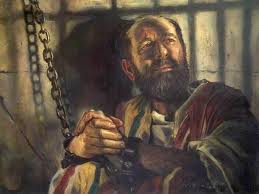
If people were chosen to be non-elect, why did Paul CRY for them?

paulIf TULIP and the Westminster Confession of Faith is true, and the idea that God chose who to save before the foundation of the world (choosing individuals to be either elect and able to believe in him, or non-elect and unable to believe in him), then the apostle Paul’s huge concern (and crying) for unbelievers is a huge mystery.

WCF: ch. III. By the decree of God, for the manifestation of His glory, some men and angels are predestinated unto everlasting life; and others foreordained to everlasting death.

WCF: ch. V. Those of mankind that are predestinated unto lifeGod, before the foundation of the world was laid, according to His eternal and immutable purpose, and the secret counsel and good pleasure of His will, has chosen, in Christ, unto everlasting glory

Why does Paul spend so much time praying and crying about the lost state of people’s souls, and why discussing and pleading with them – for hours at a time? Is it “because God told him to, and because Paul doesn’t know who the elect individuals are”? But that doesn’t solve the puzzle.

  • God didn’t tell him to cry, did he? This seems to be something that Paul himself chose to do.
  • What would be the reason for shedding tears? Doesn’t God’s will always happen? Will the elect not end up in heaven as God has planned, and will the non-elect not end up in hell according to his plans? If all things turn out according to plans, WHY CRY? Why trying to interfere?
  • If the destination of all people is already settled (before the foundation of the world), why would Paul want to thwart God’s plans? Why trying to persuade non-elect to be elect? Is that even possible?
  • Why does Paul preach “repent or perish”, as though he doesn’t know that the elect can’t perish, and the non-elect can’t repent?
  • The L in TULIP means “Limited Atonement”, and that means that Jesus didn’t die for the non-elect, which means that they are not able to be saved and God doesn’t want them to be saved (or else he would arrange so that Jesus would have died for them too). Since it’s not possible to be saved without the blood of Jesus, why would Paul waste his time crying about people who God never intended to save in the first place? And why would he cry for the others – the elect? THEY ARE ALREADY SAVED! And they can never be lost.
  • If Paul instead would save all his tears and only spend 5 minutes a month to evangelize, WHAT WOULD BE THE BIG DIFFERENCE?
  • Why does Paul say: “how shall they believe in him of whom they have not heard? and how shall they hear without a preacher?” (Rom. 10:14). Doesn’t he know that no one needs any preachers or to hear about Jesus Christ, since everyone has been selected for heaven or hell before the foundation of the world?
  • If Paul desires more people than the elect to be saved, doesn’t this mean that Paul has a greater love for lost souls than God? Isn’t it also scary that many atheists would gladly give up their lives for the sake of their children, and that God wouldn’t do the same? Wouldn’t this indicate that many atheists have a greater love for people than God himself? “Greater love hath no man than this, that a man lay down his life for his friends” (John 15:13)
  • Why putting so much effort into something that is a lost course from the start? If God chose people to be non-elect, why not leave it at that?
  • Paul seems to have a huge desire to encourage non-elect to be elect, but he doesn’t have an equal desire to transform the elect into non-elect? Why even picking sides (one over the other) if God is the one who decides who to save and who to damn – not based on anything they have done? Isn’t God’s decision the wisest?
  • Why does Paul try to change the “salvation ratio” that God has already decided upon? If God for instance has decided to save 30% of all people and damn 70%, why does Paul try to amend these numbers which were written in stone before the foundation of the world? Isn’t Paul pleased with the numbers that his Master so carefully has thought out?
  • Wouldn’t Paul’s tears be the same as criticism towards God – who apparently doesn’t want to save as many people as Paul does?

In Acts 20, we can read about Paul preaching for many hours at a time, despite that nothing would change if he only spent 5 minutes. In fact, he spoke for such a long time that one fellow (Eutychus) fell down from a window and died – but Paul prayed for him and he returned back to life. In the same chapter we can read about Paul shedding many tears while he was serving the Lord, and Paul preached repentance and the need for faith toward Jesus Christ – both to jews and gentiles.

Acts. 20:16 For Paul had determined to sail by Ephesus, because he would not spend the time in Asia: for he hasted, if it were possible for him, to be at Jerusalem the day of Pentecost.17 And from Miletus he sent to Ephesus, and called the elders of the church.18 And when they were come to him, he said unto them, Ye know, from the first day that I came into Asia, after what manner I have been with you at all seasons,19 Serving the Lord with all humility of mind, and WITH MANY TEARS, and temptations, which befell me by the lying in wait of the Jews:20 And how I kept back nothing that was profitable unto you, but have shewed you, and have taught you publicly, and from house to house,21 Testifying both to the Jews, and also to the Greeks, repentance toward God, and faith toward our Lord Jesus Christ.

Paul continues to warn people, and ask them to take heed of themselves – as though things might not go according to God’s plans. He also tells them to take heed TO ALL THE FLOCK, which is the same as the church of God which Jesus has purchased with his blood. If the flock could never be lost, it wouldn’t make sense for Paul to warn people to take heed of the flock. Paul knows that not all of the flock of true christians will be spared, because he says that grievous wolves will enter in among them to draw away people, and there will also be false preachers among themselves. Since Paul knows how the devil works, and also how man works – how they “after their own lusts shall they heap to themselves teachers” (2 Tim. 4:3), he also knows that some christians will be walking away from God. Therefore we can read that “BY THE SPACE OF THREE YEARS I CEASED NOT TO WARN EVERY ONE NIGHT AND DAY WITH TEARS”. Paul seems to believe that his warnings and urgent prayers can make a huge difference and change the outcome of things! He doesn’t have the approach “I know that what I do or say won’t change a thing since everything is already written in stone, but I suppose I will pray a few times anyway since God – for some unknown reason – told me to do it”.

Acts. 20:26 Wherefore I take you to record this day, that I am pure from the blood of all men.27 For I have not shunned to declare unto you all the counsel of God.28 Take heed therefore unto yourselves, and to all the flock, over the which the Holy Ghost hath made you overseers, to feed the church of God, which he hath purchased with his own blood.29 For I know this, that after my departing shall grievous wolves enter in among you, not sparing the flock.30 Also of your own selves shall men arise, speaking perverse things, to draw away disciples after them.31 Therefore watch, and remember, that BY THE SPACE OF THREE YEARS I CEASED NOT TO WARN EVERY ONE NIGHT AND DAY WITH TEARS  

2 Tim.4:3 For the time will come when they will not endure sound doctrine; but after their own lusts shall they heap to themselves teachers, having itching ears;

Paul gave the Corinthians advice concerning a certain man who had sinned and been punished. Each time we read a warning and “lest”, it means that the outcome depends on people’s actions. Paul knows that Satan might gain an advantage over us, unless we are obedient to God.

2 Cor. 2:4 For out of much affliction and anguish of heart I wrote unto you with many tears; not that ye should be grieved, but that ye might know the love which I have more abundantly unto you.5 But if any have caused grief, he hath not grieved me, but in part: that I may not overcharge you all.6 Sufficient to such a man is this punishment, which was inflicted of many.7 So that contrariwise ye ought rather to forgive him, and comfort him, lest perhaps such a one should be swallowed up with overmuch sorrow.8 Wherefore I beseech you that ye would confirm your love toward him.9 For to this end also did I write, that I might know the proof of you, whether ye be obedient in all things.10 To whom ye forgive any thing, I forgive also: for if I forgave any thing, to whom I forgave it, for your sakes forgave I it in the person of Christ;11 Lest Satan should get an advantage of us: for we are not ignorant of his devices.

Paul has great concern about people who are enemies of the cross of Christ, and whose end is destruction! Why, if God has closed the door for them and refuses to open their eyes so that they can believe in him and walk in his ways? Maybe because their destination is NOT predestined, and maybe because TULIP is a false philosophy based on a gnostic foundation?

Phil. 3:17 Brethren, join in following my example, and note those who so walk, as you have us for a pattern. 18 For many walk, of whom I have told you often, and now tell you even WEEPING, that they are the enemies of the cross of Christ: 19 whose end is destruction, whose god is their belly, and whose glory is in their shame—who set their mind on earthly things. (NKJV)

Paul doesn’t make any sense at all in Romans 9 (if TULIP is true). Paul is talking about all jews (all of Israel), and he says he wishes that he was accursed and separated from God for their sake – if he could only see them saved. That’s a lot of unselfish love! Why, if God has already arranged the final destination for their souls, and has everything under control? Things couldn’t possibly go wrong, and Paul has no business showing so much love for people who are predestined for hell. Paul says that the right to be adopted as sons belongs to the Israelites (and not only to them), but this doesn’t mean they are automatically saved. Only those who have faith like Abraham, and who have a circumcised heart, will be saved.

Rom.9:1 I am telling the truth in Christ, I am not lying, my conscience testifies with me in the Holy Spirit, 2 that I have great sorrow and unceasing grief in my heart. 3 For I could wish that I myself were accursed, separated from Christ for the sake of my brethren, my kinsmen according to the flesh, 4 who are Israelites, to whom belongs the adoption as sons, and the glory and the covenants and the giving of the Law and the temple service and the promises, 5 whose are the fathers, and from whom is the Christ according to the flesh, who is over all, God blessed forever. Amen. (NASB)

Also many atheists would gladly give up their lives if they could only save their children (whether the children are good or bad), and our Lord wouldn’t do the same for the people of the world? Do atheists have a greater love for their children, than God has for the same children?

Jesus cried as well – doesn’t things go as planned?tears

It wouldn’t make sense for God to predestine things that made Jesus troubled. Jesus was affected by other people’s reactions, and thew news about his friend Lazarus.

John 11:32 Then when Mary was come where Jesus was, and saw him, she fell down at his feet, saying unto him, Lord, if thou hadst been here, my brother had not died.33 When Jesus therefore saw her weeping, and the Jews also weeping which came with her, he groaned in the spirit, and was troubled.

Prophets have been sent out to people by God throughout all ages, but these prophets have not always been treated nicely by others. Things don’t always turn out the way God wants, and that’s due to our free will.

Matt. 23:34 Wherefore, behold, I send unto you prophets, and wise men, and scribes: and some of them ye shall kill and crucify; and some of them shall ye scourge in your synagogues, and persecute them from city to city:35 That upon you may come all the righteous blood shed upon the earth, from the blood of righteous Abel unto the blood of Zacharias son of Barachias, whom ye slew between the temple and the altar.36 Verily I say unto you, All these things shall come upon this generation.37 O Jerusalem, Jerusalem, thou that killest the prophets, and stonest them which are sent unto thee, how often would I have gathered thy children together, even as a hen gathereth her chickens under her wings, and YE WOULD NOT!

Certain women wept when they saw Jesus carrying his cross. Jesus was of course not angry that they wept for him, but he advised them to rather weep for themselves and for future generations, because difficult days would be coming. All that counts is the salvation of people’s souls, and not temporary blessings here on earth.

Luke 23:26 And as they led him away, they laid hold upon one Simon, a Cyrenian, coming out of the country, and on him they laid the cross, that he might bear it after Jesus.27 And there followed him a great company of people, and of women, which also bewailed and lamented him.28 But Jesus turning unto them said, Daughters of Jerusalem, weep not for me, but weep for yourselves, and for your children.29 For, behold, the days are coming, in the which they shall say, Blessed are the barren, and the wombs that never bare, and the paps which never gave suck.

It’s good to know that the Lord will lift us up, under the condition that we humble ourselves before him. If we choose to draw nigh to him, he will draw nigh to us.

James 4:7 Submit yourselves therefore to God. Resist the devil, and he will flee from you.8 Draw nigh to God, and he will draw nigh to you. Cleanse your hands, ye sinners; and purify your hearts, ye double minded.9 Be afflicted, and mourn, and weep: let your laughter be turned to mourning, and your joy to heaviness.10 Humble yourselves in the sight of the Lord, and he shall lift you up.

Through the prophet Jeremiah, we learn that even God himself has much sorrow for those who refuse to hear him

He weeps when he sees his own flock being carried away:

Jeremiah 13:10 This evil people, which refuse to hear my words, which walk in the imagination of their heart, and walk after other gods, to serve them, and to worship them, shall even be as this girdle, which is good for nothing.11 For as the girdle cleaveth to the loins of a man, so have I caused to cleave unto me the whole house of Israel and the whole house of Judah, saith the Lord; that they might be unto me for a people, and for a name, and for a praise, and for a glory: but they would not hear.—16 Give glory to the Lord your God, before he cause darkness, and before your feet stumble upon the dark mountains, and, while ye look for light, he turn it into the shadow of death, and make it gross darkness.17 But if ye will not hear it, MY SOUL SHALL WEEP in secret places for your pride; and MINE EYE SHALL WEEP SORE, AND RUN DOWN WITH TEARS, because the Lord’s flock is carried away captive.

Jeremiah 9:1 Oh that my head were waters, and mine eyes a fountain of tears, that I might weep day and night for the slain of the daughter of my people!2 Oh that I had in the wilderness a lodging place of wayfaring men; that I might leave my people, and go from them! for they be all adulterers, an assembly of treacherous men.3 And they bend their tongues like their bow for lies: but they are not valiant for the truth upon the earth; for they proceed from evil to evil, and they know not me, saith the Lord.—5 And they will deceive every one his neighbour, and will not speak the truth: they have taught their tongue to speak lies, and weary themselves to commit iniquity.6 Thine habitation is in the midst of deceit; through deceit they refuse to know me, saith the Lord.7 Therefore thus saith the Lord of hosts, Behold, I will melt them, and try them; for how shall I do for the daughter of my people?8 Their tongue is as an arrow shot out; it speaketh deceit: one speaketh peaceably to his neighbour with his mouth, but in heart he layeth his wait.9 Shall I not visit them for these things? saith the Lord: shall not my soul be avenged on such a nation as this?10 For the mountains will I take up a weeping and wailing, and for the habitations of the wilderness a lamentation, because they are burned up, so that none can pass through them; neither can men hear the voice of the cattle; both the fowl of the heavens and the beast are fled; they are gone.—13 And the Lord saith, Because they have forsaken my law which I set before them, and have not obeyed my voice, neither walked therein;14 But have walked after the imagination of their own heart, and after Baalim, which their fathers taught them:15 Therefore thus saith the Lord of hosts, the God of Israel; Behold, I will feed them, even this people, with wormwood, and give them water of gall to drink.

Paul spent a lot of time reasoning, arguing and discussing with people

Day and night, month after month. For what reason? An hour each year would be enough, if God decided about our destinies before the foundation of the world.

Acts 17:2 And Paul, as his manner was, went in unto them, and three sabbath days reasoned with them out of the scriptures,3 Opening and alleging, that Christ must needs have suffered, and risen again from the dead; and that this Jesus, whom I preach unto you, is Christ.4 And some of them believed, and consorted with Paul and Silas; and of the devout Greeks a great multitude, and of the chief women not a few.

Acts 17:16 Now while Paul waited for them at Athens, his spirit was stirred in him, when he saw the city wholly given to idolatry.  17Therefore disputed he in the synagogue with the Jews, and with the devout persons, and in the market daily with them that met with him.

Acts 19:8 And he went into the synagogue, and spake boldly for the space of three months, disputing and persuading the things concerning the kingdom of God. 9But when divers were hardened, and believed not, but spake evil of that way before the multitude, he departed from them, and separated the disciples, disputing daily in the school of one Tyrannus. 10And this continued by the space of two years; so that all they which dwelt in Asia heard the word of the Lord Jesus, both Jews and Greeks.

Acts. 28:23 And when they had appointed him a day, there came many to him into his lodging; to whom he expounded and testified the kingdom of God, persuading them concerning Jesus, both out of the law of Moses, and out of the prophets, from morning till evening. 24 And some believed the things which were spoken, and some believed not.

Jesse Morrell Debates Sye Ten Bruggencate on Calvinism, Sovereignty, Abortion, Open Theism

If you want to see Jesse’s debate with Matt Slick, you can check this link.


Sye Ten Bruggencate said: “Nothing happens outside of God’s plan Jesse, nothing.”

Hugh McBryde said: “Yes. Abortion is God’s plan Jesse Morrell. If the book of our days is written, that is also.”

“So given Sye’s premise that all abortions, rapes, murders, molestations, genocides, etc, are God’s plan:

1. Calvinists are upset with God’s plan.

2. Calvinists are upset with God’s plan because God decreed that they would be.

3. God hates His own plan.

4. Calvinists pray for the abortion of babies when they pray “thy will be done.”

5. Sin is better than righteousness in all instances of its occurrence.

6. God prefers sin over holiness in every instance that it occurs.

7. God prefers the slaughter of millions of babies in abortion over saving their lives.

8. Nothing is better than the slaughter of millions of babies in abortion whenever it occurs.

It doesn’t take a genius to see that Calvinism is reduced to absurdity, blasphemy on God’s character, and worthy of all mockery, ridicule and scorn.  

OpenAirOutreach.com's avatarBiblical Truth Resources

56423944

FREE BOOK

objectionstocalvinismfrontcover-2

I am giving away a free copy of the classic book, “Objections to Calvinism As It Is” by Randolph Foster! I pray that this blesses your life.

You’ll also receive in the same email two other theological books that I won’t name, just to spark your curiosity some more.

And lastly, you’ll also be subscribed to our free email newsletter and will receive biblical articles and great content from time to time.

JESSE MORRELL DEBATES SYE TEN BURGGENCATE
On Calvinism, Sovereignty, Abortion, Open Theism, etc.

It seems that I continue to rattle the devil’s nest as the attacks from Calvinists continue to come against me. (For those of you who don’t know, Calvinism is a teaching that says Jesus did not die for everyone, God does not want everyone to repent and be saved, etc. It claims to be ‘the Gospel’ but is really an utter denial of the Gospel. It…

View original post 8,119 more words

How can he be clean that is born of a woman?- Job 25:4 + Job 15:14

job

Job 25 (Bildad says…) 4 How then can man be justified with God? or how can he be clean that is born of a woman? 5 Behold even to the moon, and it shineth not; yea, the stars are not pure in his sight. 6 How much less man, that is a worm? and the son of man, which is a worm?

Job 15 (Eliphaz says…)14 What is man, that he should be CLEAN? and he which is born of a woman, that he should be righteous?15 Behold, he putteth no trust in his saints; yea, the heavens are not clean in his sight.16 How much more abominable and filthy is man, which drinketh iniquity like water?

Eliphaz the Temanite, Bildad the Shuhite and Zophar the Naamathite did not always have good advice to give Job. On the contrary, God criticized them for their folly and for not having described him (God) in a correct way. God particularly turns to Eliphaz, but also his friends are included in the criticism. Job, however, is viewed by God as a perfect and upright man who speaks what is right about him, and thanks to Job’s prayers concerning his friends God shows them mercy despite their many trespasses. (It’s important to pray about people because our prayers have great impact!). Fortunately, Job’s friends took the chance to be cleansed and they obeyed God and collected some animals to offer up to him with the aim to be cleansed from their sins. Wherever there is true repentance, there is a chance to be forgiven.

Job 42:7 And it was so, that after the Lord had spoken these words unto Job, the Lord said to Eliphaz the Temanite, My wrath is kindled against thee, and against thy two friends: for ye have not spoken of me the thing that is right, as my servant Job hath.8 Therefore take unto you now seven bullocks and seven rams, and go to my servant Job, and offer up for yourselves a burnt offering; and my servant Job shall pray for you: for him will I accept: lest I deal with you after your folly, in that ye have not spoken of me the thing which is right, like my servant Job.9 So Eliphaz the Temanite and Bildad the Shuhite and Zophar the Naamathite went, and did according as the Lord commanded them: the Lord also accepted Job.10 And the Lord turned the captivity of Job, when he prayed for his friends: also the Lord gave Job twice as much as he had before.

Job 1:1 There was a man in the land of Uz, whose name was Job; and that man was perfect and upright, and one that feared God, and eschewed evil.—8 And the Lord said unto Satan, Hast thou considered my servant Job, that there is none like him in the earth, a perfect and an upright man, one that feareth God, and escheweth evil?

When we read the Bible, it’s important to pay attention to who says what to whom, why and in what circumstances. The questions in the beginning are addressed to Job by his friends, in response to Job’s conviction that he has not been guilty of any trespasses of God’s law. So we can read the views of Job’s friends in our Bible, but their views are of course not the same as God’s views . Also comments from Satan can be read in the Bible, so it’s risky to just take a verse out of context and assume it’s the view of God. We already know that there are several righteous people described in the Bible (Abraham, Lot, Enoch, Noah, Simon, Paul, etc), so Job is certainly not alone.

The great concern among Job’s friends seems to be to convince him of his guilt before God, and that man in general is naturally unrighteous. This is the same story as we often hear today – the claim that we can never be righteous before God, unless he looks at us through Jesus as a filter, and that we can never successfully avoid sins. Below we can read that Job clothed himself with righteousness by helping the poor, the fatherless, the helpless and the widows. He was eyes to the blind, feet to the lame and father to the poor, and he sorted out problems to people he didn’t even know. Job was perfect, upright and righteous because he showed his faith in God by doing good deeds and avoiding sin. He loved his neighbor as himself! No one else was righteous for Job or instead of him, but he himself acted in a righteous way. God would never consider us righteous unless we also lived holy and righteous lives.

Job. 29:12 Because I delivered the poor that cried, and the fatherless, and him that had none to help him.13 The blessing of him that was ready to perish came upon me: and I caused the widow’s heart to sing for joy.14 I put on righteousness, and it clothed me: my judgment was as a robe and a diadem.15 I was eyes to the blind, and feet was I to the lame.16 I was a father to the poor: and the cause which I knew not I searched out.

Job was perhaps not always right in his ponderings about the big questions in life (he repented when he realized that he had strayed in his thoughts and when it dawned on him how mighty God really is, and the magnitude of his wisdom), but it’s not a sin to ask God questions, nor to be sad, puzzled, bewildered and to honestly confess before God that things seem unfair – at least from our own perspective. However, it would be a sin to blame God for the evil things that happen in this world, and for wrongdoings and unrighteousness within man. If there are things we don’t understand and if we feel that we’re in despair, it’s not a sin to express our feelings before God, and neither is it wrong to ask him for advice why things are as they are. It’s good to ask for advice, as long as we don’t blame God for something he is innocent of. Sometimes it’s beneficial for us to face obstacles, because they can often make us seek God more deeply, and there is a lot of truth in the saying ”whom the Lord loveth he chasteneth”.

In the book of Job, God is mostly having a dialogue with Job himself, but God’s criticism concerns man in general. When God explains his magnificent creation, Job is learning and his questions are being answered. He can see things more clearly and he finally understands the big picture and God’s mighty ways. Job says “I have heard of thee by the hearing of the ear but now mine eye seeth thee“. It started with much suffering and pain, but Job ended up having a much greater contact with his Lord. Job also received much blessings and continued to live multiple years on earth, but the most important goal in life is to live a life which is pleasing to God, love others as yourself and make sure your soul is saved.

Job 40:1 Moreover the Lord answered Job, and said,2 Shall he that contendeth with the Almighty instruct him? he that reproveth God, let him answer it.3 Then Job answered the Lord, and said,4 Behold, I am vile; what shall I answer thee? I will lay mine hand upon my mouth.5 Once have I spoken; but I will not answer: yea, twice; but I will proceed no further.

Job 42:1 Then Job answered the Lord, and said,2 I know that thou canst do every thing, and that no thought can be withholden from thee.3 Who is he that hideth counsel without knowledge? therefore have I uttered that I understood not; things too wonderful for me, which I knew not.4 Hear, I beseech thee, and I will speak: I will demand of thee, and declare thou unto me.5 I have heard of thee by the hearing of the ear: but now mine eye seeth thee.6 Wherefore I abhor myself, and repent in dust and ashes.

If none would be born “clean”, that would apply also to Jesus since he too was born by a woman.

Job 14:4 “Who can bring a clean thing out of an unclean? Not one.”

The whole sense of what Job is saying is that no one can bring other than frail and dying offspring from frail and dying parents. If this text teaches that a sinner invariably produces another sinner, then Mary, the mother of our Lord, was also born a sinner. So if Job 14:4 really does teach that a sinner must produce another sinner, there could be no way of escaping the blasphemous conclusion that Jesus also was born a sinner. Also note that not everything you read in Job can be taken literally, since many poetic expressions are used:

Job 1:21 Naked came I out of my mother’s womb, and naked shall I return thither

Do read also this article Rom. 3:10, concerning the righteous man Paul who quotes a few psalms which suggest there is no one righteous…

Romans 5 – Against Original Sin

“Moreover your little ones, which ye said should be a prey, and your children, which in that day had no knowledge between good and evil, they shall go in thither, and unto them will I give it, and they shall possess it.” Deuteronomy 1:39

″Butter and honey shall he eat, that he may know to refuse the evil, and choose the good. For before the child shall know to refuse the evil, and choose the good, the land that thou abhorrest shall be forsaken of both her kings.” Isaiah 7:15-16

The Pilgrim's avatarThe Pilgrim

Rom. 5:12, 18-19: ”Wherefore, as by one man sin entered into the world, and death by sin; and so death passed upon all men, for that all have sinned…Therefore as by the offense of one judgment came upon all men to condemnation; even so by the righteousness of one the free gift came upon all men unto justification of life. For as by one man’s disobedience many were made sinners, so by the obedience of one shall many be made righteous.”


This passage is supposed to teach that all men are born sinners, and born under the condemnation and wrath of God because of Adam’s transgression.

But this passage does not teach that men are born sinners. It does not teach that they are born under the condemnation and wrath of God. It does not teach that they inherit a sinful nature from Adam. It does not teach that…

View original post 943 more words

Westminster Confession of Faith 1647, and related contradictions

calvinism 5Westminster Confession of Faith from the year 1647 – which many calvinists adhere to

Claiming that “God authors everything but not sin” simply doesn’t make it so – not even if you use fancy words in a document and spread it around throughout a large christian community – because it doesn’t make the obvious contradiction go away. Neither would it make sense to say “I believe in the trinity but I don’t believe that Jesus is God, and not the holy Spirit either for that matter“, or “God predestines every thought and every step of the entire humanity, but we are still responsible for our actions”. It’s one or the other, and you can’t have the cookie and eat it too. If God ordains whatsoever comes to pass and if nothing happens against his will, then this by necessity must include sin! It doesn’t help to blame “second causes” because if you push another person who hits another, then you’re still the cause for the whole chain of actions.

If God ordains whatsoever comes to pass, then this must include also second causes, and if it’s impossible to act against God’s will, then also sin must be according to God’s will. If God is the one who decides who to save based on nothing that we believe or do, and who to give the ability to seek him, believe, repent and obey, then the only outcome is that he didn’t want the rest (the non-elect) to seek him, believe, repent or obey. Many calvinists admit that they believe that God is the author of sin and that he delights in people who sin (since he predestined them to be wicked sinners), but other calvinists protest and argue against their own doctrines. My view is of course that it’s better to avoid adding calvinism into the Bible in the first place, because that will result in 1) no Bible contradictions, 2) no unanswered questions, puzzles or unsolved mysteries, 3) we suddenly understand why Jesus Christ had to die on the cross – because something went WRONG and didn’t go as God planned, and 4) God and Satan can be totally separated (instead of working as a team) leaving God as a righteous and holy God who has no darkness within him and who doesn’t tempt anyone or delights in anyone’s sin.

God from all eternity, did, by the most wise and holy counsel of His own will, freely, and unchangeably ORDAIN WHATSOEVER COMES TO PASS: yet so, as thereby neither is God the author of sin, nor is violence offered to the will of the creatures; nor is the liberty or contingency of second causes taken away, but rather established. (WCF)

Long texts with lots of fluff and fancy words might help the author to hide obvious contradictions for the readers, but if we remove the fluff and make the statement shorter and only keep the necessary outline, the contradictions will be more obvious. It’s of course easier to detect the contradiction if we only stick with the main idea with the statement, which is “God ordains whatever events come to pass, but not in such a way so that God ordains the sinful events that come to pass”.

“The [Calvinist] doctrine is, that God decreed, from eternity, whatsoever comes to pass in time — and that according to his own good pleasure — every particular thing, event, and act. I must insist, according to this [Calvinist doctrine], that he decreed the sin of every sinful man — nay, each particular sin of each particular man, and all the sins of all men, long before the human race was created.”

Hence, the Westminster Confession contains a palpable contradiction namely, that God did cause all things, sin included, yet in such a way that He did not cause sin.” Randolph Foster – Objections to Calvinism 

To reconcile the obvious, the Calvinist simply waves his hand and says God is not the author of sin. Double talk.

The following section is from Daniel Gracely

This sentence is a contradiction because it involves two ideas in which each idea makes it impossible for the other idea to be true. Yet under the Westminster Confessions these two opposing propositions form a ’system’ (or synthesis) that is nevertheless held to be true. Let me give another example of a contradiction to make this clearer. Suppose I packed nothing but one apple and one orange for lunch. I might make the following statement:

“Today I ate the apple before I ate the orange so I wouldn’t get sick, yet not in such a way so that the orange was eaten last, which would have made me sick.”

Me: I feel sick.

You: Apparently you got sick by eating the orange first. Whydidn’t you eat the apple first?

Me: did eat the apple first. Don’t you remember what I said? I ate the apple before I ate the orange so I wouldn’t get sick.”

You: Then why are you sick?

Me: I believe I told you why. I said I didn’t eat the orange last, which is why I feel sick.

YouI’m a little confused—which fruit did you eat first?

MeI’ll repeat myself entirely: “Today I ate the apple before I ate the orange so I wouldn’t get sick, yet not in such a way so that the orange was eaten last, which would have made me sick.”

YouBut you’re sick—is that right?

MeNot at all. I said a bit earlier that “I ate the apple before I ate the orange so I wouldn’t get sick.”

As long as I respond with this “logic” you cannot come to any conclusions about what I said. You cannot know whether I am sick or well, which fruit I ate first, or even if I ate at all. You cannot know what events happened because I affirmed everything, and yet denied everything. Consequently, all the statements you heard are inconclusive. In effect, I used language to say nothing. You could not even determine properly if I was actually describing myself in the above events, since nothing was being said about ‘me.’ I created this confusion by upholding two ideas that were in contradiction to each other, but which I claimed were simultaneously true.

God’s Eternal Decree – to save some and to damn some – despite that both categories are obedient to God calvinism 8

iii. By the decree of God, for the manifestation of His glory, some men and angels are predestinated unto everlasting life, and others foreordained to everlasting death. 

John 1:12  But as many as received Him, to them He gave the right to become children of God, to those who believe in His name

vi. As God hath appointed the elect unto glory, so hath He, by the eternal and most free purpose of His will, foreordained all the means thereunto. Wherefore, they who are elected being fallen in Adam, are redeemed by Christ; are effectually called unto faith in Christ by His Spirit working in due season; are justified, adopted, sanctified, and kept by His power, through faith, unto salvation. Neither are any other redeemed by Christ, effectually called, justified, adopted, sanctified, and saved, but the elect only.

John 3:17 For God sent not his Son into the world to condemn the world; but that the world through him might be saved.18 He that believeth on him is not condemned: but he that believeth not is condemned already, because he hath not believed in the name of the only begotten Son of God.19 And this is the condemnation, that light is come into the world, and men loved darkness rather than light, because their deeds were evil.20 For every one that doeth evil hateth the light, neither cometh to the light, lest his deeds should be reproved.21 But he that doeth truth cometh to the light, that his deeds may be made manifest, that they are wrought in God.

vii. The rest of mankind, God was pleased, according to the unsearchable counsel of His own will, whereby He extendeth or withholdeth mercy, as He pleaseth, for the glory of His sovereign power over His creatures, to pass by, and to ordain them to dishonour and wrath for their sin, to the praise of His glorious justice. 

Eze 33:11  Say to them: ‘As I live,’ says the Lord GOD, ‘I have no pleasure in the death of the wicked, but that the wicked turn from his way and live. Turn, turn from your evil ways! For why should you die, O house of Israel?’

1Ti 2:3-4  For this is good and acceptable in the sight of God our Savior, who desires all men to be saved and to come to the knowledge of the truth.  

viii. The doctrine of this high mystery of predestination is to be handled with special prudence and care, that men, attending the will of God revealed in His Word, and yielding obedience thereunto, may, from the certainty of their effectual vocation, be assured of their eternal election. So shall this doctrine afford matter of praise, reverence, and admiration of God, and of humility, diligence, and abundant consolation, to all that sincerely obey the Gospel.

Deu 29:29  “The secret things belong to the LORD our God, but those things which are revealed belong to us and to our children forever, that we may do all the words of this law.

Calvinist want you to believe that God has revealed the mysteries to them and no one else, and this could be a good ground for boasting.

We are wonderfully made by God who fashioned us – so not born sinful

alla6

We are WONDERFULLY MADE!

It certainly looks like the idea that we are born with a sinful nature is a hoax, and you can read more about it here and here.  IF we were born with an original sin, then we would have great excuses for our trespasses before the Lord, but the Bible says that we will have none.

Sinning is something we DO and nothing that we can INHERIT, so babies are totally innocent since they are not aware of the law and unable to break it.

Zecharia 12:1 The burden of the word of the Lord for Israel, saith the Lord, which stretcheth forth the heavens, and layeth the foundation of the earth, and FORMETH THE SPIRIT OF MAN WITHIN HIM. 

Romans 9:11 (For the children being not yet born, NEITHER HAVING DONE ANY GOOD OR EVIL, that the purpose of God according to election might stand, not of works, but of him that calleth;)

Mark 10:14 But when Jesus saw it, he was much displeased, and said unto them, Suffer the little children to come unto me, and forbid them not: for of such is the kingdom of God.15 Verily I say unto you, Whosoever shall not receive the kingdom of God AS A LITTLE CHILD, he shall not enter therein.

Isaiah 7:16 For BEFORE THE CHILD SHALL KNOW TO REFUSE THE EVIL, AND CHOOSE THE GOOD, the land that thou abhorrest shall be forsaken of both her kings.

Isaiah 44:24 Thus saith the Lord, thy redeemer, and he that FORMED THEE FROM THE WOMB, I am the Lord that maketh all things; that stretcheth forth the heavens alone; that spreadeth abroad the earth by myself

Isaiah 42:Thus saith God the Lord, he that created the heavens, and stretched them out; he that spread forth the earth, and that which cometh out of it; he that giveth breath unto the people upon it, and SPIRIT to them that walk therein

Job. 31:14 What then shall I do when God riseth up? and when he visiteth, what shall I answer him?15 Did not HE THAT MADE ME IN THE WOMB make him? and DID NOT ONE FASHION US IN THE WOMB?

Ps. 100:Know ye that the Lord he is God: IT IS HE THAT HATH MADE US, and not we ourselves; we are his people, and the sheep of his pasture.

Ps. 139:13 For thou hast possessed my reins: thou hast covered me in my mother’s womb.14 I will praise thee; for I AM FEARFULLY AND WONDERFULLY MADE: marvellous are thy works; and that my soul knoweth right well.15 My substance was not hid from thee, when I was made in secret, and curiously wrought in the lowest parts of the earth.16 Thine eyes did see my substance, yet being unperfect; and in thy book all my members were written, which in continuance were fashioned, when as yet there was none of them.

Ps. 119:73 Thy hands have made me and FASHIONED ME: give me understanding, that I may learn thy commandments.

1 Cor. 11:For a man indeed ought not to cover his head, forasmuch as HE IS THE IMAGE AND GLORY OF GOD: but the woman is the glory of the man.

Ja. 3:Therewith bless we God, even the Father; and therewith curse we men, WHICH ARE MADE AFTER THE SIMILTUDE OF GOD.  

Ecclesiastes 7:29 Lo, this only have I found, that GOD HATH MADE MAN UPRIGHT; but THEY they have sought out many inventions.

Acts 17:29 Forasmuch then as WE ARE THE OFFSPRING OF GOD, we ought not to think that the Godhead is like unto gold, or silver, or stone, graven by art and man’s device.

Rom. 2:12 For as many as have sinned without law shall also perish without law: and as many as have sinned in the law shall be judged by the law;13 (For not the hearers of the law are just before God, but the doers of the law shall be justified.)14 For when the Gentiles, which have not the law, DO BY NATURE THE THINGS CONTAINED IN THE LAW, these, having not the law, are a law unto themselves:15 Which shew the work of the law written in their hearts, their conscience also bearing witness, and their thoughts the mean while accusing or else excusing one another😉16 In the day when God shall judge the secrets of men by Jesus Christ according to my gospel.

The Bible does not teach that we are born DEAD in trespasses and sins

grav2To base an entire philosophy/theological doctrine on the idea that man is born naturally depraved and unable to seek God or make morally good decisions, is risky to say the least. If we are BORN dead and depraved, then this should have been stated in the Bible, and in a very clear language, but we find the opposite to be true.

The words “depraved” and “depravity” are not even Biblical words (KJV) so we must first figure out what reformed believers might mean with those words when they claim we all start out naturally depraved, and we must also figure out if we have an obligation to side with their particular interpretation. Note that I’m not saying that something cannot be true only because the words are not present in the Bible, but if neither the words nor the concept can be found in the Bible, then it’s likely not something we must believe is true. Maybe it’s better to focus on the word “dead” since we can find this word in the Bible, and in that way get a clue what it means to be spiritually dead.

Reformed believers often say we can’t do ANYTHING if we are dead, because “dead is dead” and “dead and not wounded”, but a physically dead person can’t do anything bad either. He is dead! If a spiritually dead person can’t do anything at all, then he wouldn’t be able to sin either but for some reason the “reformed” God allows all people (or rather predestines them) to be born into sin and bound by darkness, whereas he only enables some of them to escape this darkness and do good. This doesn’t make any sense at all. Why would a loving God who hates sin prevent most people from seeking him and be morally upright individuals? (And why would he turn around and show wrath towards those who remain in their sins, when he is well aware of that they have no other option?)

Lazarus – a spiritually alive man who died

It’s very common to make a comparison with Jesus’ friend Lazarus’ resurrection that is described in John 11, and suggest that he is a good example of that a dead person must get divine help to come alive and do good. However, if this incident is supposed to show that spiritually dead people can’t do anything at all (and particularly not any good things) then we must ask ourselves why such a good man like Lazarus is selected to be an example, considering that he wasn’t spiritually dead at all but spiritually alive, and a close friend of  Jesus and much loved by him. Also his sisters Martha and Mary were believers of Jesus, which they showed both in words and in actions. It’s interesting that Jesus claims that Lazarus, despite being dead, is only sleeping (v. 11).

John 11:11 These things said he: and after that he saith unto them, Our friend Lazarus sleepeth; but I go, that I may awake him out of sleep.

John 11:15 And I am glad for your sakes that I was not thereTHAT YOU MAY BELIEVE. Nevertheless let us go to him.” (NKJV)

John 11:40 Jesus saith unto her, Said I not unto thee, that, if thou wouldest believe, thou shouldest see the glory of God?

John 11:42 And I knew that thou hearest me always: but because of the people which stand by I said it, THAT THEY MAY BELIEVE THAT THOU HAST SENT ME .43 And when he thus had spoken, he cried with a loud voice, Lazarus, come forth.

John 11:45 Then many of the Jews which came to Mary, and HAD SEEN THE THINGS WHICH JESUS DID, believed on him.

John 11:48 If we let him thus alone, all men will believe on him: and the Romans shall come and take away both our place and nation.

John 11:53 Then from that day forth they took counsel together for to put him to death.54 Jesus THEREFORE walked no more openly among the Jews; but went thence unto a country near to the wilderness, into a city called Ephraim, and there continued with his disciples.

Jesus acted (as per v. 40) as though he expected Martha to believe and understand ALL the things that Jesus had previously explained to her, and not only the fact that Jesus is the Messiah and divinely sent by God. However, it looks like Martha had misunderstood certain things that Jesus had told her. Moreover, if people were predestined to believe/not believe (resulting in heaven or hell) before the beginning of the world, then nothing that Jesus would have chosen to say or not say would change the outcome of what is already determined to occur. Yet, we can read that one reason for bringing Lazarus back to life is so that people may BELIEVE in him (Jesus), which turned out to be a successful procedure because many jews did end up believing in Jesus – precisely due to what they SAW with their own eyes. It doesn’t say they started to believe due to having been chosen to believe. Nevertheless, other jews plotted to kill Jesus and THEREFORE Jesus no longer walked openly among them. However, if people are predestined to always act according to God’s will, then there wouldn’t be any reason to take such measures to avoid the jews because it’s not possible to thwart God’s plans in a world where “predestination” is a rule. If God would have predestined someone to kill Jesus, then this would be the result whether Jesus walked openly among the jews or not.

Dead in trespasses and sins?

It’s always a bad idea to sin and thus be dead in trespasses and sins. Satan LIED and said that sinning will NOT cause spiritual death (which he said to Eve in Eden), but the truth is that trespassing the law – which is sinning – WILL separate us from God and cause spiritual death. We have the opportunity to repent of course.

Sin is the transgression of the law, John says, so that means we are not sinners due to having the nerve to be born but rather the moment we choose to break the law and SIN. If we are sinners already from birth, then John must be incorrect for suggesting that we are not sinners until we break the law of God, and the law of God doesn’t say that it’s a sin to be conceived or to be born into this world. It’s hardly our choice to be born, and why would that be a sin or against God’s will?

1 John 3:4 Whosoever committeth sin transgresseth also the law: for sin is the transgression of the law.

Some christians suggest that we are BORN “dead in trespasses and sins“, but that is not what the Bible says.

Ephesians 2:1: And you hath he quickened, who were dead in trespasses and sins; Wherein in time past ye walked according to the course of this world, according to the prince of the power of the air, the spirit that now worketh in the children of disobedience:Among whom also we all had our conversation in times past in the lusts of our flesh, fulfilling the desires of the flesh and of the mind; and were by nature the children of wrath, even as others.But God, who is rich in mercy, for his great love wherewith he loved us,Even when we were dead in sins, hath quickened us together with Christ, (by grace ye are saved;)

Paul explains that the Ephesians in time PAST walked in sin, but he doesn’t expect them to continue like that. Also note that in order to commit the sins that Paul lists, you must at least be an ADULT. Babies are not aware of the law and they are unable to:

  • have a need or reason to be ”quickened”
  • perform TRESPASSES and SINS and through them be dead
  • walk according to the world
  • walk according to Satan (the prince of the power of the air)
  • be disobedient through following Satan
  • walk in the lusts of their flesh
  • fulfill the desires of their flesh
  • fulfill the desires of their mind

We can be labelled either children of God or children of Satan depending on our life styles. We can also read that the ”children of wrath” are also called ”children of disobedience” so it’s clear that in order to fit the bill you must be able to DISOBEY – which is something that babies cannot do. Eph. 2 doesn’t suggest we are BORN as children of wrath, but it provides details for how we can BECOME children of wrath by the way we live. Even the Ephesians WERE dead due to their choice to sin, but thanks to the blood of Jesus, and through their own repentance of their sins, they were restored. Paul says”hath raised us up together”, but that is a picture of our future with Christ, because he continues the sentence with ”in the ages to COME”. We haven’t been elevated yet. Moreover, in Romans 2 we can read about people who obey the law “by nature”, so apparently we are not born with a sinful nature. You can read more about the gnostic idea of the sinful nature in this blog article.

Col. 2:And this I say, lest any man should beguile you with enticing words.Beware lest any man spoil you through philosophy and vain deceit, after the tradition of men, after the rudiments of the world, and not after Christ.—13 And you, being dead in your sins and the uncircumcision of your flesh, hath he quickened together with him, having forgiven you all trespasses;14 Blotting out the handwriting of ordinances that was against us, which was contrary to us, and took it out of the way, nailing it to his cross

Paul warns the Colossians (and all of us) extensively because there is always a huge risk that we will fall from our salvation due to sin. If we could never risk to go from being spiritually alive to being spiritually dead, then there wouldn’t be any reason to warn true believers the way Paul does. We can become cleansed, regenerated and righteous by confessing our sins and repenting, because then our sins will be blotted out.

Sins/iniquities/transgression of God’s law (same things) have always separated us from God ever since Adam, and continue to do sodeath3

If we sin, we are dead (in trespasses and sins), and then we must seek God, come to him, confess our sins and repent in order to be cleansed and regenerated. Then we become “born again”, because we are no more spiritually dead.

Daniel 9:11 Yea, all Israel have transgressed thy law, even by departing, that they might not obey thy voice; therefore the curse is poured upon us, and the oath that is written in the law of Moses the servant of God, because we have sinned against him

Isaiah 59:2 But your iniquities have separated between you and your God, and your sins have hid his face from you, that he will not hear.

Gal. 6:Be not deceived; God is not mocked: for whatsoever a man soweth, that shall he also reap.For he that soweth to his flesh shall of the flesh reap corruption; but he that soweth to the Spirit shall of the Spirit reap life everlasting.And let us not be weary in well doing: for in due season we shall reap, IF we faint not.

The prodigal son is an excellent example of a person who was LOST and DEAD (according to the words of his own Father who is a picture of God the Father), and still capable of making an excellent decision to repent, return to his Father and confess his sins before him. Loads of people say “but he never ceased to be a son!”, but what does it matter to be a physical son of someone when he is still LOST and DEAD? And quite obviously a person who lives together with prostitutes in unrepentant sin is (during this time) nothing but 100% lost and dead, unless we must believe that heaven will be a place full of unrepentant sinners.

Luke 15: 24 For this my son WAS DEAD, and is ALIVE AGAIN; he WAS LOST, and IS FOUND. And they began to be merry.—30 But as soon as this thy son was come, which hath devoured thy living with harlots, thou hast killed for him the fatted calf.—32 It was meet that we should make merry, and be glad: for this thy brother was DEAD, and is ALIVE AGAIN AGAIN; and was LOST, and is FOUND.

Again, to base an entire doctrine on something that the Bible doesn’t say is extremely unwise, and especially if this false doctrine necessitates that we erect other false doctrines to save that first one, and which in the end makes God to be the author of sin and very illogical. Are we born depraved and with a sinful nature that makes us sin ACCORDING to God’s will or AGAINST his will?

God is GLORIFIED if we praise him and obey him, so contrary actions are AGAINST HIS WILL

glory of god 3

It should be rather self-evident that God gets the most GLORY if we praise him, worship him, obey him and tell the world about him, but strangely enough there are christians who force themselves to believe that God also gets glory if we transgress the law and sin! I of course think about our calvinistic friends here, because they have chosen to believe in TULIP (which you can read more about here), and the idea that nothing that comes to pass happens against the will of God. Some of them will protest and say that they do NOT at all believe that God is glorified when people sin against him, but if they insist on believing in TULIP and in calvinism, that is the only outcome of their doctrines. They frequently phrase themselves as though they believe that all men have the ability to repent, avoid sin and freely decide to become good citizens, but then they are not consistent with calvinism that instead presents a closed-door for most people – namely all those who Jesus didn’t even die for according to L in TULIP. They will be left in the darkness only because their God doesn’t want them to be saved (or else he would save them).

“God NOT ONLY foresaw the FALL of the first man, and in him the RUIN of his posterity; but also at his own pleasure ARRANGED it” .(John Calvin (Institutes of Christian Religion, Book 3, XXIII)

“The first man fell because the Lord deemed it meet that he should.” (John Calvin, Institutes of Christian Religion, Book 3, Chapter 23, Paragraph 8)

“So my aim in this second message is to commend to you this absolute sovereign control of God over all things, including evil, because it is Biblical, and because it will help you become stable and deep and God-entranced and God-glorifying in all you think and feel and do”.”God may hate a thing as it is in itself, and considered simply as evil, and yet . . . it may be his will it should come to passconsidering all consequences. . . . God doesn’t will sin as sin or for the sake of anything evil; though it be his pleasure so to order things, that he permitting, sin will come to pass; for the sake of the great good that by his disposal shall be the consequence.” “Therefore I conclude with Jonathan Edwards, ‘God decrees all things, even all sins.’ Or, as Paul says in Ephesians 1:11, “He works all things after the counsel of His will.’”/John Piper

“If there is one single molecule in this universe running around loose, totally free of God’s sovereignty, then we have no guarantee that a single promise of God will ever be fulfilled.”/R C Sproul

Examples of how we can glorify Jesus, as per the New Testament

John 15:7 If ye abide in me, and my words abide in you, ye shall ask what ye will, and it shall be done unto you.8 Herein is my Father glorified, that ye bear much fruit; so shall ye be my disciples.

Jesus explains that his Father is glorified IF WE BEAR MUCH FRUIT. With other words we do NOT glorify him if we do NOT bear fruit, and this must mean that all those individuals who do not show good fruit are acting against God’s will. Jesus is warning his own spiritually alive disciples – and all of us – that we must make sure to abide in him, or else we will be cut off the vine (Jesus) and thrown in the fire. (Jesus doesn’t say that he is glorified if the elect bear fruit and the non-elect do not bear fruit.)

Rom. 1:18 For the wrath of God is revealed from heaven against all ungodliness and unrighteousness of men, who hold the truth in unrighteousness;19 Because that which may be known of God is manifest in them; for God hath shewed it unto them.20 For the invisible things of him from the creation of the world are clearly seen, being understood by the things that are made, even his eternal power and Godhead; so that they are without excuse:21 Because that, when they knew God, they glorified him not as God, neither were thankful; but became vain in their imaginations, and their foolish heart was darkened.22 Professing themselves to be wise, they became fools,23 And changed the glory of the uncorruptible God into an image made like to corruptible man, and to birds, and fourfooted beasts, and creeping things

There wouldn’t be any reason for God to show any wrath against a people who always did his will, but if we do NOT do his will it makes perfect sense that we can be affected by his wrath whether we are non-christians or not. We can read that “ungodliness and unrighteousness” are two things that God is angry about, and consequently showing such attributes would not be according to his plans. The people spoken of did NOT glorify God, and neither were they thankful and instead became vain individuals with darkened hearts. They changed the glory of God into something sinister and started to idolize elements in God’s creation instead of God himself. Clearly all those things are against the will of God, because he is certainly not glorified by people who are rebellious and worship false gods.

Rom. 3:23 For all have sinned, and come short of the glory of God

If all have sinned and for this reason fallen SHORT of the glory of God, this must surely indicate something didn’t go as God intended. If ALL sinned, it must mean that both elect and non-elect have sinned and we already know from the verses above that God is glorified if we live holy lives and show good fruit. So if we live in the opposite way, we do not glorify God and consequently act against his will.

Matthew 5:16 Let your light so shine before men, that they may see your good works, and glorify your Father which is in heaven. 

Rom. 15:Wherefore receive ye one another, as Christ also received us to the glory of God.Now I say that Jesus Christ was a minister of the circumcision for the truth of God, to confirm the promises made unto the fathers:And that the Gentiles might glorify God for his mercy; as it is written, For this cause I will confess to thee among the Gentiles, and sing unto thy name.

1 Peter 2:11 Dearly beloved, I beseech you as strangers and pilgrims, abstain from fleshly lusts, which war against the soul;12 Having your conversation honest among the Gentiles: that, whereas they speak against you as evildoers, they may by your good works, which they shall behold, glorify God in the day of visitation.

Above are a few verses about spreading the gospel also to the gentiles. From these passages we understand that they can be influenced to glorify the Lord if they see the jews doing good works, and of course by hearing the gospel. All gentiles will obviously not be saved but only those who repent for their sins. Evangelizing, praying and showing good fruit are some things that we can do to influence others to seek the only true God, and if someone ends up glorifying God thanks to our witnessing and behavior, something good has been accomplished and there is much joy in heaven.

1 Peter 4:11 If any man speak, let him speak as the oracles of God; if any man minister, let him do it as of the ability which God giveth: that God in all things may be glorified through Jesus Christ, to whom be praise and dominion for ever and ever. Amen.12 Beloved, think it not strange concerning the fiery trial which is to try you, as though some strange thing happened unto you:13 But rejoice, inasmuch as ye are partakers of Christ’s sufferings; that, when his glory shall be revealed, ye may be glad also with exceeding joy.14 If ye be reproached for the name of Christ, happy are ye; for the spirit of glory and of God resteth upon you: on their part he is evil spoken of, but on your part he is glorified.

“On their part he is evil spoken of (or “blasphemed”), but on your part he is glorified”. Apparently some people will cause God to be glorified and those in opposition will cause God to be blasphemed. Which option do you think will glorify God the most? There is no need to even answer this question due to the obvious answer, and we can only remain puzzled as to why some people still insist on that God can somehow be glorified by people who speak evil against him and his followers.

Phil. 1:And this I pray, that your love may abound yet more and more in knowledge and in all judgment;10 That ye may approve things that are excellent; that ye may be sincere and without offence till the day of Christ.11 Being filled with the fruits of righteousness, which are by Jesus Christ, unto the glory and praise of God.

Above we can see that we are giving glory to God if we are being filled with the fruits of righteousness and living without offence till the day of Christ. Each time we deviate from this road, would consequently be against the will of God. 

Phil. 2:Wherefore God also hath highly exalted him, and given him a name which is above every name:10 That at the name of Jesus every knee should bow, of things in heaven, and things in earth, and things under the earth;11 And that every tongue should confess that Jesus Christ is Lord, to the glory of God the Father.

If it gives glory to God if every knee should bow down to him and every tongue should confess him, it would be strange indeed if someone would be prevented from doing just that. If such things give glory to God, then it would make more sense if he enabled everyone to perform such signs of adoration. To force people to bow down and confess him, on the other hand, wouldn’t be true worship or love.

Glorifying God in the Old Testament

glory of god 4

Also here we can see that God is glorified if he is praised and worshiped. Daniel explains that Belshazzar did NOT glorify God by not being the humble man he could have been. Instead Belshazzar rebelled against God by praising false gods and doing other evil deeds.

Isaiah 61:3 To appoint unto them that mourn in Zion, to give unto them beauty for ashes, the oil of joy for mourning, the
garment of praise for the spirit of heaviness; that they might be called trees of righteousness, the planting of the Lord, that he might be glorified.

Daniel 5:22 And thou his son, O Belshazzar, hast not humbled thine heart, though thou knewest all this;23 But hast lifted up thyself against the Lord of heaven; and they have brought the vessels of his house before thee, and thou, and thy lords, thy wives, and thy concubines, have drunk wine in them; and thou hast praised the gods of silver, and gold, of brass, iron, wood, and stone, which see not, nor hear, nor know: and the God in whose hand thy breath is, and whose are all thy ways, hast thou not glorified

Psalm 50:23 Whoso offereth praise glorifieth me: and to him that ordereth his conversation aright will I shew the salvation of God.

If God is glorified by people on the earth praising him and worshiping him, then all those who reject him are walking on their own ways away from God and contrary to his plans.