Archives

Zipporah: “A bloody husband thou art, because of the circumcision” – Ex. 4:24-26

“Then Zipporah took a sharp stone, and cut off the foreskin of her son, and cast it at his feet, and said, Surely a bloody husband art thou to me” (Ex. 4:25)

What is this all about? The textual context is a great help and also a corresponding passage in The book of Jasher – which is Jewish secular history, not claimed to be the inspired word of God but the text can nevertheless provide some light.

Exodus 4:19 And the Lord said unto Moses in Midian, Go, return into Egypt: for all the men are dead which sought thy life.20 And Moses took his wife and his sons, and set them upon an ass, and he returned to the land of Egypt: and Moses took the rod of God in his hand.22 And thou shalt say unto Pharaoh, Thus saith the Lord, Israel is my son, even my firstborn:23 And I say unto thee, Let my son go, that he may serve me: and if thou refuse to let him go, behold, I will slay thy son, even thy firstborn.

There seems to be a link between God’s speech about Israel being the firstborn son (in a figurative sense) and the verses which immediately follow (see below) – about Moses’ first born son. We have to remember that an important covenant had been established between God and Israel, through Abraham, Isaac and Jacob, and a covenant is supposed to be respected by both parties. God had promised the patriarchs and their offspring protection and the land of Canaan under the condition that they stayed faithful to him. The law of Moses was still in the future at this point in history, but in order to reach to that stage faithfulness from Moses and the Israelites was required. A circumcision was an outward sign of being a follower of the one true God and a crystal clear divine commandment which was not optional. Moses was of course well aware of this commandment from God, yet he still neglected to obey him apparently due to fear of man – his father-in-law. That is like saying “I respect you God and you have done so much for me and my people, showing us miracles, etc, but there are limits for how much I can obey you. I prefer to obey my father-in-law in this matter so that I can be on a good standing with him. That is more important than having a good relationship with you or being able to save the people of Israel”. Here is the rest of the story:

24 And it came to pass by the way in the inn, that the Lord met him, and sought to kill him.25 Then Zipporah took a sharp stone, and cut off the foreskin of her son, and cast it at his feet, and said, Surely a bloody husband art thou to me.26 So he let him go: then she said, A bloody husband thou art, because of the circumcision. 27 And the Lord said to Aaron, Go into the wilderness to meet Moses. And he went, and met him in the mount of God, and kissed him.28 And Moses told Aaron all the words of the Lord who had sent him, and all the signs which he had commanded him.29 And Moses and Aaron went and gathered together all the elders of the children of Israel:30 And Aaron spake all the words which the Lord had spoken unto Moses, and did the signs in the sight of the people.31 And the people believed: and when they heard that the Lord had visited the children of Israel, and that he had looked upon their affliction, then they bowed their heads and worshipped.

If Moses and the Israel would be faithful to God and stay away from sin (like murdering, stealing, lying, adultery, witchcraft, etc), it would mean that Israel would indeed be a “peculiar” people who would be able to show other people that they (the Israelites) were a morally upright people who lived for the Lord. God is just but he also requires obedience from his people. If the Israelites were just like anyone else, God’s reputation would consequently also be attacked and other people would see no reason to seek the God of Israel nor improve their pagan life styles. Therefore it is not a light matter to choose to disobey God despite having seen divine miracles and despite knowing that breaking the covenant would risk the safety of his own family and many other Israelite families.

Ex. 19:5 Now therefore, if ye will obey my voice indeed, and keep my covenant, then ye shall be a peculiar treasure unto me above all people: for all the earth is mine:

Below we can read the same story from the book of Jasher’s point of view. God really wanted to save his people from their Egyptian yoke. He was “jealous of his people and his inheritance”.

Jasher 78:8 And Zipporah walked in the ways of the daughters of Jacob, she was nothing short of the righteousness of Sarah, Rebecca, Rachel and Leah.9 And Zipporah conceived and bare a son and he called his name Gershom, for he said, I was a stranger in a foreign land; but he circumcised not his foreskin, at the command of Reuel his father-in-law.10 And she conceived again and bare a son, but circumcised his foreskin, and called his name Eliezer, for Moses said, Because the God of my fathers was my help, and delivered me from the sword of Pharaoh.11 And Pharaoh king of Egypt greatly increased the labor of the children of Israel in those days, and continued to make his yoke heavier upon the children of Israel.–16 And the Lord was jealous of his people and his inheritance, and heard their voice, and he resolved to take them out of the affliction of Egypt, to give them the land of Canaan for a possession.

Jasher 79:5 And the Lord said unto Moses, Go, return to Egypt, for all those men who sought thy life are dead, and thou shalt speak unto Pharaoh to send forth the children of Israel from his land.6 And the Lord showed him to do signs and wonders in Egypt before the eyes of Pharaoh and the eyes of his subjects, in order that they might believe that the Lord had sent him.7 And Moses hearkened to all that the Lord had commanded him, and he returned to his father-in-law and told him the thing, and Reuel said to him, Go in peace.8 And Moses rose up to go to Egypt, and he took his wife and sons with him, and he was at an inn in the road, and an angel of God came down, and sought an occasion against him.9 And he wished to kill him on account of his first born son, because he had not circumcised him, and had transgressed the covenant which the Lord had made with Abraham.10 For Moses had hearkened to the words of his father-in-law which he had spoken to him, not to circumcise his first born son, therefore he circumcised him not.11 And Zipporah saw the angel of the Lord seeking an occasion against Moses, and she knew that this thing was owing to his not having circumcised her son Gershom.12 And Zipporah hastened and took of the sharp rock stones that were there, and she circumcised her son, and delivered her husband and her son from the hand of the angel of the Lord.

“The Angel of the Lord” is not a created angel, but as you can see in this article it seems to be none other than a form of God and likely therefore a form av Jesus (who was with his Father from the beginning). Zipporah knew that the angel of God visited them due to Moses’ neglect to obey God when it comes to their first-born son’s circumcision, and maybe this was also according to the plans of the angel. If it was a tangible reaction that the angel was after, he certainly got one when their son Gershom eventually was circumcised – and Moses was thereafter delivered from the hand of the angel of the Lord. If a person neglects to obey God when it comes to simple matters due to fear of man, he might not be ready for greater matters like saving his people from Egypt. The presence of the angel of the Lord sorted it out, and he continued to hold his protective hand over Moses, his family and Israel.

Paul said that he counted old “things” loss for Christ, and rubbish or dung – Phil. 3:7-8


What things were gain to me, those I counted loss for Christ – for whom I have suffered the loss of all things, and count them as RUBBISH / Phil. 3:7-8, KJV

In order to understand which “things” he was talking about, we must of course read the context. The subject of this chapter concerns the issue of Jewish circumcision which is an example of a ceremonial law within the Law of Moses. The Bible tells us that the Law of Moses started with the time of Moses and it lasted until the time of Jesus (Gal. 3:19). Before and after this period man on earth was certainly not supposed to be lawless, and even today we are expected to live according to the Spirit instead of the flesh. Paul tells us in Romans 6 and 8 that if we live according to the flesh we will die and if we live according to the Spirit we will live. That is a condition for salvation – that we must make sure to abide in Christ.

In Phil. 3 Paul is giving serious instructions to the Philippians. He also explains that those who are the “circumcision” (being circumcised in heart) are those who worship God in the Spirit. (I’ve chosen NKJV here in order to use a more simple language.):

Beware of dogs, beware of evil workers, beware of the mutilation! 3 For we are the circumcision, who worship God in the Spirit, rejoice in Christ Jesus, and have no confidence in the flesh, (NKJV)

Paul further explains that he himself has a background as a Jew under the law, and he thoroughly believed in the idea of circumcision in order to be obedient to the Law of Moses. He is talking about the circumcision which is in the flesh, rather than in the heart. When it comes to the law of Moses, Paul considered himself blameless – as in doing everything to keep all the multiple regulations down to the smallest detail and MORE.

4 though I also might have confidence in the flesh. If anyone else thinks he may have confidence in the flesh, I more so: circumcised the eighth day, of the stock of Israel, of the tribe of Benjamin, a Hebrew of the Hebrews; concerning the law, a Pharisee; 6 concerning zeal, persecuting the church; concerning the righteousness which is in the law, blameless.

However, Jesus explained that the problem with the pharisees was that they were hypocrites and that they did NOT have a clean INSIDE despite their zeal to be obedient to their scriptures. In fact, they lived in lawlessness because they had unclean hearts! We are not under the law if we are led by the Spirit:

Matt. 5:20 For I say unto you, That except your righteousness shall exceed the righteousness of the scribes and Pharisees, ye shall in no case enter into the kingdom of heaven. (KJV)

Matt. 23:3 Therefore whatever they tell you to observe that observe and do, but do not do according to their works; for they say, and do not do.4 For they bind heavy burdens, hard to bear, and lay them on men’s shoulders; but they themselves will not move them with one of their fingers.—13 “But woe to you, scribes and Pharisees, hypocrites! For you shut up the kingdom of heaven against men; for you neither go in yourselves, nor do you allow those who are entering to go in.—  —25 “Woe to you, scribes and Pharisees, hypocrites! For you cleanse the outside of the cup and dish, but inside they are full of extortion and self-indulgence.26 Blind Pharisee, first cleanse the inside of the cup and dish, that the outside of them may be clean also.27 “Woe to you, scribes and Pharisees, hypocrites! For you are like whitewashed tombs which indeed appear beautiful outwardly, but inside are full of dead men’s bones and all uncleanness. 28 Even so you also outwardly appear righteous to men, but inside you are full of hypocrisy and lawlessness.

Gal. 5:18 But if you are led by the Spirit, you are not under the law.

Paul compares the status he had as a pharisee under the law of Moses, and which often included works “to be seen by men”, with the new life in Christ which is not about being seen by men at all but about having a pure heart and by loving our neighbor as yourself. (We are not able to have a pure heart if we still sin. ) Paul gave up his own esteemed life (in the eyes of men) in order to be a servant of Christ, and that means that he also gave up earthly power and instead became an often despised christian. He thought his new life as a christian was well worth it, and he compared his old life – as a highly regarded pharisee – as nothing but dung. “Loss of all things” could also include other worldly things, which amount to nothing in comparison with the pearl he found in Jesus:

7 But what things were gain to me, these I have counted loss for Christ. 8 Yet indeed I also count all things loss for the excellence of the knowledge of Christ Jesus my Lord, for whom I have suffered the loss of all things, and count them as rubbish, that I may gain Christ

Naturally it was not the Law of Moses that was considered rubbish because God wouldn’t make any bad laws for us during any time. Being obedient to God is never considered rubbish! As a pharisee, Paul didn’t realize that the Law of Moses would pass away, to be replaced with an era where the Holy Spirit is our ruler and Jesus Christ the King. Paul discovered that the new life in Christ was not about obeying the ceremonial Jewish laws any more (as before) but about having faith in Jesus! The righteousness which is from God includes the possibility to be cleansed from our sins in the blood of Jesus who died for our sins, and that happens upon our repentance and our FAITH in Jesus Christ. Repentance means that we confess our sins and make a decision to be servants of Jesus, leading to our new birth. Paul is clear that we are not able to serve two masters and still be saved. The Law of Moses is in our past, but this doesn’t mean that we have no laws to follow. It’s still a sin to murder, steal, commit adultery and lie. It’s still a sin to deny Jesus, to refuse to forgive a brother and to take the mark of the beast. We still risk the wrath of God if we combine obedience with disobedience and refuse to repent. :

 9 and be found in Him, not having my own righteousness, which is from the law, but that which is through faith in Christ, the righteousness which is from God by faith; 10 that I may know Him and the power of His resurrection, and the fellowship of His sufferings, being conformed to His death,

The subject concerns the resurrection from the death, and that is what Paul has in mind when he says that he is not already “perfected”. Not even Jesus Christ was “perfected” until after his glorification. We are able to live morally perfect here on earth, but the truth is of course that we have often chosen to be disobedient to God. Paul presses forward in holiness to reach the prize.

11 if, by any means, I may attain to the resurrection from the dead.12 Not that I have already attained, or am already perfected (“perfect”, KJV); but I press on, that I may lay hold of that for which Christ Jesus has also laid hold of me. 13 Brethren, I do not count myself to have apprehended; but one thing I do, forgetting those things which are behind and reaching forward to those things which are ahead, 14 I press toward the goal for the prize of the upward call of God in Christ Jesus.

Paul refers to “us, as many as are perfect”, and he encourages the Philippians to walk by the same rule and being of the same mind.

15 Therefore let us, as many as are mature (“perfect”, KJV), have this mind; and if in anything you think otherwise, God will reveal even this to you. 16 Nevertheless, to the degree that we have already attained, let us walk by the same rule, let us be of the same mind.17 Brethren, join in following my example, and note those who so walk, as you have us for a pattern. 18 For many walk, of whom I have told you often, and now tell you even weeping, that they are the enemies of the cross of Christ: 19 whose end is destruction, whose god is their belly, and whose glory is in their shame—who set their mind on earthly things. 20 For our citizenship is in heaven, from which we also eagerly wait for the Savior, the Lord Jesus Christ, 21 who will transform our lowly body that it may be conformed to His glorious body, according to the working by which He is able even to subdue all things to Himself.

Paul also said:

Phil 1:21 For to me to live is Christ, and to die is gain

and Paul made it very clear to the Galatians that it was nothing but wrong to suggest that circumcision (or other ceremonial laws) is a requirement for salvation. Paul was certainly not angry at the Galatians because they continued to teach the importance of avoiding murder, adultery, theft and lies, but about reverting back to the Law of Moses with the ceremonial laws. Being obedient to God by treating our neighbors as we would like to be treated ourselves, is not a sin and nothing to be mad about. If the Galatians were under the impression that circumcision still applied, then also the rest of the 613 still applied. If that is the case, Jesus Christ died in vain. We are saved by faith and not by the Law of Moses. The Law of Moses was to apply until the seed would come which is Jesus, but this doesn’t mean that we have no sets of laws to follow today. We are expected to live according to the Spirit, and if we believe in Jesus Christ, we love him and obey him.

Gal. 3:1  O foolish Galatians, who hath bewitched you, that ye should not obey the truth, before whose eyes Jesus Christ hath been evidently set forth, crucified among you?2 This only would I learn of you, Received ye the Spirit by the works of the law, or by the hearing of faith?3 Are ye so foolish? having begun in the Spirit, are ye now made perfect by the flesh?4 Have ye suffered so many things in vain? if it be yet in vain.—7 Know ye therefore that they which are of faith, the same are the children of Abraham.— 19 Wherefore then serveth the law? It was added because of transgressions, till the seed should come to whom the promise was made; and it was ordained by angels in the hand of a mediator.20 Now a mediator is not a mediator of one, but God is one.21 Is the law then against the promises of God? God forbid: for if there had been a law given which could have given life, verily righteousness should have been by the law.22 But the scripture hath concluded all under sin, that the promise by faith of Jesus Christ might be given to them that believe.23 But before faith came, we were kept under the law, shut up unto the faith which should afterwards be revealed.24 Wherefore the law was our schoolmaster to bring us unto Christ, that we might be justified by faith.25 But after that faith is come, we are no longer under a schoolmaster.26 For ye are all the children of God by faith in Christ Jesus.27 For as many of you as have been baptized into Christ have put on Christ.28 There is neither Jew nor Greek, there is neither bond nor free, there is neither male nor female: for ye are all one in Christ Jesus.29 And if ye be Christ’s, then are ye Abraham’s seed, and heirs according to the promise.

Who is he that saith, and IT COMETH TO PASS, when the Lord commandeth it not? Lam. 3:37

Who is he who speaks and it comes to pass, When the Lord has not commanded it?Is it not from the mouth of the Most High That WOE and well-being proceed? Lam 3:37-38 NKJV

The Book of Lamentations  in the Bible is a collection of poetic laments for the destruction of Jerusalem, and it  consists of five distinct poems divided into five chapters. It’s not known if the author is Jeremiah, or maybe one or more other authors. The first four poems are written as acrostics – chapters 1, 2, and 4 have 22 verses each, corresponding to the 22 letters of the Hebrew alphabet, where the first lines begin with the first letter of the alphabet, the second with the second letter, etc. The fifth poem is not acrostic but still has 22 lines. According to wikipedia an acrostic can be used as means to aid memory, and a famous acrostic was made in Greek for the saying “JESUS CHRIST, SON OF GOD, SAVIOUR” (Ιησούς Χριστός, Θεού Υιός, Σωτήρ; Iesous CHristos, THeou Yios, Soter—ch and th being each one letter in Greek). The initials spell ICHTHYS (ΙΧΘΥΣ) which is Greek for fish.

It’s evident that we shouldn’t make doctrines out of poems, since poems normally mirror the truth in a poetic way. Poems must be read through the filter of more clear non-poetic texts.

What else does the same chapter say?

My flesh and my skin hath he made old; he hath broken my bones.—12 He hath bent his bow, and set me as a mark for the arrow.13 He hath caused the arrows of his quiver to enter into my reins.—16 He hath also broken my teeth with gravel stones, he hath covered me with ashes. (KJV)

Hardly something we should understand literally.

21 This I recall to my mind, therefore have I hope.22 It is of the Lord‘s mercies that we are not consumed, because his compassions fail not.

The jews in exile could very well have been consumed by their enemies, but God is full of grace and listens to earnest prayers. Since God is compassionate, he is hardly the guy who predestines people (before the creation of the world) to be tortured in hell for the only reason that they ended up as the non-elect group of people that God had always wanted them to be (if we should try to be consistent with TULIP).

25 The Lord is good unto them that wait for him, to the soul that seeketh him.

It doesn’t say here that God decides to be good to only SOME random people, and that he makes them wait for him and seek him. No, it says that God is good unto those who wait for him and seek him, and the normal reading would be that people use their own free will to make this choice to wait for him and seek him.

29 He putteth his mouth in the dust; if so be there may be hope.

Another example of something that can’t be understood literally.

32 But though he cause grief, yet will he have compassion according to the multitude of his mercies.33 For he doth not afflict willingly nor grieve the children of men. 34 To crush under his feet all the prisoners of the earth.

God doesn’t literally crush under his feet all the prisoners of the earth, but he does allow afflictions to occur (sometimes he even causes them directly, as he did with the global flood) and mostly due to the need to punish his people (Israel) for their rebellion and wickedness. It’s not always pleasant for a Father to discipline his children, but sometimes it’s necessary, and hopefully (albeit not certain) it might produce something good – depending on how those affected will react. God is always willing to forgive a truly repentant heart.

35 To turn aside the right of a man before the face of the most High,36 To subvert a man in his cause, the Lord approveth not.

God does not approve of people who turn aside the right of a man and who subvert his cause. This means that neither would God deny anyone the chance to be ELECT and saved (which those are who believe in Christ), and to be able to seek him and repent for past sins that have been committed. A God who does not subvert a man’s cause would not predestine him to be a wicked non-elect, and send him to hell for being this wicked non-elect person. That would be contrary to being a just and compassionate God, who makes sure that each person has a chance to get his soul saved.

37 Who is he that saith, and IT cometh to pass, when the Lord commandeth it not?38 Out of the mouth of the most High proceedeth not evil and good?39 Wherefore doth a living man complain, a man for the punishment of his sins?

(v. 38 Is it not from the mouth of the Most High That woe and well-being proceed? NKJV)

V. 37 is a common “proof text verse”, because taken out of context (and ignoring the fact that it’s from a poetic book), it might sound as though nothing happens that God hasn’t approved of and even predestined. It’s important to understand what “it” refers to in relation to “who is he that has said”. The verses right before speak about being fair and to not subvert a man’s cause, and the verses right after talk about God’s PUNISHMENT FOR SINS. There wouldn’t be a need for God to punish people for doing his exact will, so the only reason for punishing people would be because they acted against his will. If they acted according to his will (by rebelling against him and by worshiping false gods), they would rather deserve rewards and much praise. Out of the mouth of God proceeds both woe (calamity) and well-being, and that means that God is able to show mercy and to answer earnest prayers, just as he is able to punish people for being rebellious. It’s on judgment day when we are really supposed to be judged based on our deeds, and receive both punishments and rewards, but God can also interfere here on earth. Not as in predestining people to sin (God doesn’t even tempt anyone, much less cause anyone to sin) but as in allowing things to take place which could be used for discipline in relation to his chosen people Israel. Sinners ALWAYS act against the will of God with no exception, and that would even include Judas Iscariot.

40 Let us search and try our ways, and turn again to the Lord.41 Let us lift up our heart with our hands unto God in the heavens.42 We have transgressed and have rebelled: thou hast not pardoned.—47 Fear and a snare is come upon us, desolation and destructions of those that rose up against me, and their device against me all the day.

The text doesn’t suggest that we should search and try GOD and the manner that he has predestined us and our ways. If God has predestined each one of our steps, then there is no need to investigate the way he has ordained things because we can always trust that he has done a proper job. In reality God has not at all predestined our actions, and that’s why it makes sense to be asked to search and try our ways – if perhaps we have sins to confess and if we can amend our ways. The author admits that they (the Israelites) indeed have transgressed and rebelled against God, and he also feels that God has not pardoned (due to the physical pain that had affected them in such a severe way). However, in other verses in the same chapter, the author still feels there is much hope and that God eventually will listen to their earnest prayers and come to their aid.

61 Thou hast heard their reproach, O Lord, and all their imaginations against me; 62 The lips of my enemies And their whispering against me all the day. 64 Repay them, O LordAccording to the work of their hands.

Notice that the author feels that it’s about their reproach, their imaginations, they who rise up against him and their device against him. He feels it’s the lips of his enemies which are at fault, and hopes that God will repay them according to the work of their hands. If God is the one who has merely used Israel’s enemy as a tool in his hands and caused them to act the way they did, it wouldn’t make sense to turn around and repay them for those exact deeds.

Common proof texts: PROVERBS 16:9, 16:33, 19:21, 20:24 – about God directing our steps

Proverbs contain many poetical expressions that mirror the truth, and that’s why we must be careful to not lift out verses out of Proverbs (or Psalms), and make doctrines out of them. That could take us into all sorts of strange directions.

A couple of  guide lines to think about when reading Proverbs and Psalms, would be to 1) Make sure to not interpret the verses in such a way that we make God to be the author of sin, and 2) Make sure to not interpret the verses in such a way that they result in contradictions when compared with other more clear, non-poetic verses.

Proverbs 1:To understand a proverb, and the interpretation; the words of the wise, and their dark sayings.The fear of the Lord is the beginning of knowledge: but fools despise wisdom and instruction.

You will find many GENERAL instructions and promises in Proverbs, and below you will find some examples of this, with evidence of that the promises involved couldn’t possibly be understood as 100% valid for all people under the sun with no exception. When a person submits their plans to God, the Lord is faithful to ensure  that  his purpose will stand in his/her life – however, there is still a risk for physical pain even for true believers.

Proverbs 20

Proverbs 20:24 Man’s goings are of the Lord; how can a man then understand his own way?

The above verse doesn’t need not be interpreted in such a way so that God causes men to be wicked sinners. If every person’s steps are ultimately due to God’s predestination, then what do we do with the multitudes of verses that advise people from departing from the path of evil? Man’s life here on this planet might be beyond our grasp, and even if we believe we have a great understanding and know it all, we will still not see things as clearly as God does. What else is Proverbs 20 saying?

The fear of a king is as the roaring of a lion: whoso provoketh him to anger sinneth against his own soul.

So we’re sinning against our SOULS if we would happen to provoke a mere man – which a king is?

The just man walketh in his integrity: his children are blessed after him.

Is it always true that children are blessed if their father walks in integrity? Has there never been one exception in our life time?

A king that sitteth in the throne of judgment scattereth away all evil with his eyes.

Is this always true with no exception?

Who can say, I have made my heart clean, I am pure from my sin?

Do we always sin? Is there not one minute during a day when we don’t sin? Do we sin even one minute after that we have repented for our sins? If that is so, what is the point with repenting?

10 Divers weights, and divers measures, both of them are alike abomination to the Lord.

If God predestines all things, why does he cause abominations to occur? Does God want people to do abominable things since he forces them to do them?

13 Love not sleep, lest thou come to poverty; open thine eyes, and thou shalt be satisfied with bread.

Is it always certain that people will end up in poverty if they like to sleep a lot? Is there not one single exception under the sun?

17 Bread of deceit is sweet to a man; but afterwards his mouth shall be filled with gravel.

Boy would it be strange if this was taken literally.

23 Divers weights are an abomination unto the Lord; and a false balance is not good.

Again, if things exist which are abominations before the Lord, is it according to his will?

25 It is a snare to the man who devoureth that which is holy, and after vows to make enquiry.

Would God predestine people to devour what is holy? What would be his reasons for doing that?

26 A wise king scattereth the wicked, and bringeth the wheel over them.

Is this always true, with no exception?

Proverbs 19

Proverbs 19:21 does not say that all the plans in the mind of a man are always predestined by God, but rather that when there is a confrontation between man’s plans and God having purposed something else, God’s way will always win.

Proverbs 19:21 There are many devices in a man’s heart; nevertheless the counsel of the Lord, that shall stand.

God can sometimes exploit even evil choices that people make, but this doesn’t mean he does this all the time or even often. I’d rather believe he does this very rarely, because he has set a time in the FUTURE to judge man’s heart, and to both punish individuals and give rewards to others.  What else is Proverbs 19 saying?

2 Also, that the soul be without knowledge, it is not good; and he that hasteth with his feet sinneth.

So it’s a SIN to hurry? Is it also a sin to run? No exception?

4 Wealth maketh many friends; but the poor is separated from his neighbour.

Is it always true that the poor is separated from his neighbor? No exception?

6 Many will intreat the favour of the prince: and every man is a friend to him that giveth gifts.

Is every man a friend to him who gives gifts? No exception?

7 All the brethren of the poor do hate him: how much more do his friends go far from him? he pursueth them with words, yet they are wanting to him.

Do all the brethren of the poor always hate him? No exception? And do his friends also go far from him – always with no exception?

15 Slothfulness casteth into a deep sleep; and an idle soul shall suffer hunger.

Is it always true that an idel soul shall suffer hunger? No exception?

16 He that keepeth the commandment keepeth his own soul; but he that despiseth his ways shall die.

It looks like it’s a choice to keep the commandments in order for us to keep our souls, unless we choose to despise God’s ways and therefore die.

18 Chasten thy son while there is hope, and let not thy soul spare for his crying.

Do you always beat your son physically, and do you always make sure to keep on doing so even if he cries and beg for mercy? No exception? This is what righteous people always do with no exception?

20 Hear counsel, and receive instruction, that thou mayest be wise in thy latter end.

Sounds like there is an option to hear and receive instructions, and that it always leads to being wise.

23 The fear of the Lord tendeth to life: and he that hath it shall abide satisfied; he shall not be visited with evil.

Is is always true that the fear of the Lord prevents evil from happening to him? No exception under the sun?

24 A slothful man hideth his hand in his bosom, and will not so much as bring it to his mouth again.

Is this to be taken literally?

Proverbs 16 – 16:33 and 16:9 (See Proverbs 16:4 in separate article)

Proverbs 16:33

Proverbs 16:33 The lot is cast into the lap; but the whole disposing thereof is of the Lord.

God is capable of determining the outcome of any casted lot, but this doesn’t mean God predestines every single throw of a dice under the sun in every single monopoly game. Many scholars think that the Ephod, Urim and Thummim were objects of divination like flat coins or dice in which the priest or king prayed for God manipulate the objects to reveal his will, but this doesn’t mean that every roll of the dice and every lot cast in every gambling game are manipulated and determined by God. God has an ability to intervene into random lots cast (or in man’s life in general) but such intervention is connected to situations where God has a specific course in mind.

Proverbs 16:9

Proverbs 16:9 A man’s heart deviseth his way: but the Lord directeth his steps.

Compare with this verse which is prior to v. 9 and which contains an important CONDITION for the general promise::

Proverbs 16:3 COMMIT THY WORKS UNTO THE LORD, and thy thoughts shall be established.

Compare also with these verses which show conditions for being helped on the true path:

Proverbs 3:Trust in the Lord with all thine heart; and lean not unto thine own understanding.6 IN ALL THY WAYS ACKNOWLEDGE HIM, and he shall direct thy paths.Be not wise in thine own eyes: fear the Lord, and DEPART FROM EVIL.

Proverbs 4:10 Hear, O my son, and receive my sayings; and the years of thy life shall be many.11 I have taught thee in the way of wisdom; I have led thee in right paths.12 When thou goest, thy steps shall not be straitened; and when thou runnest, thou shalt not stumble.13 TAKE FAST HOLD OF INSTRUCTION ; let her not go: keep her; for she is thy life.14 Enter not into the path of the wicked, and go not in the way of evil men.15 Avoid it, pass not by it, turn from it, and pass away.

Psalms 37:23 The steps of a GOOD MAN are ordered by the Lord: and he delighteth in his way.—30 The mouth of the righteous speaketh wisdom, and his tongue talketh of judgment.31 The law of his God is in his heart; none of his steps shall slide. 

Man has desires and can plan the means to achieve them, but we are dependent on God. We should seek him so he can lead us right. We can’t take Proverbs 16:9 to mean that God dictates each of our actions, because that would make him the author of sin. We would then be able to blame each of our sins on GOD ALONE. That is not the God of the Bible. Abraham devised a way to seek a wife for Isaac, and the servant met Rebekah. Jacob devised a way to flee from Esau, and the Lord blessed him to become rich with a large family. Joseph chose to be righteous, and the Lord directed his steps to Egypt’s throne. Jesse devised a way to send food to his sons in the army, by his youngest son David, not knowing that God was directing David’s steps for a showdown with Goliath.

The fact that God can direct our steps, doesn’t mean that we don’t have a free will. The fact that God is always in control, doesn’t mean that he doesn’t allow us the freedom to accept/reject and obey/disobey.  This is applicable also for Proverbs 16:33. We simply should not take a poetic verse out of context and make a doctrine out of it, contrary to the rest of the Scripture. God does not predestine us to sin, and that’s that.

Prov. 16:12 It is an abomination to kings to commit wickedness: for the throne is established by righteousness. 13Righteous lips are the delight of kings; and they love him that speaketh right. — 17The highway of the upright is to depart from evil: he that keepeth his way preserveth his soul. 18Pride goeth before destruction, and an haughty spirit before a fall. — 20He that handleth a matter wisely shall find good: and whoso trusteth in the LORD, happy is he.— 23The heart of the wise teacheth his mouth, and addeth learning to his lips. —25There is a way that seemeth right unto a man, but the end thereof are the ways of death.— 27An ungodly man diggeth up evil: and in his lips there is as a burning fire. 28A froward man soweth strife: and a whisperer separateth chief friends. 29A violent man enticeth his neighbour, and leadeth him into the way that is not good. 30He shutteth his eyes to devise froward things: moving his lips he bringeth evil to pass.— 32He that is slow to anger is better than the mighty; and he that ruleth his spirit than he that taketh a city. 33The lot is cast into the lap; but the whole disposing thereof is of the LORD.

What else is Proverbs 16 saying?

5 Every one that is proud in heart is an abomination to the Lord: though hand join in hand, he shall not be unpunished.

If all thing are predestined by God, why would he predestine something that is an abomination before him? And why punish a person who is engaged in an abomination, if it’s caused by God only because he wanted it to happen?

6 By mercy and truth iniquity is purged: and by the fear of the Lord men depart from evil.

It looks like fear of the Lord can make a person depart from evil, rather than being predestined by God to be a non-elect before the creation of the world.

7 When a man’s ways please the Lord, he maketh even his enemies to be at peace with him.

Is it always true that walking in the light will make even his enemies to be at peace with him?

12 It is an abomination to kings to commit wickedness: for the throne is established by righteousness.

Why would God predestine wickedness and abominations? Surely they happen against his will? Is it always true that kings reach their thrones due to being righteous?

17 The highway of the upright is to depart from evil: he that keepeth his way preserveth his soul.

It looks like it’s in our hands to preserve our souls, by means of living righteously.

18 Pride goeth before destruction, and an haughty spirit before a fall.

Would God predestine people to be proud and to have haughty spirits? What would be his reasons?

19 Better it is to be of an humble spirit with the lowly, than to divide the spoil with the proud.

If something is considered “better” than surely God would enable this “better” to happen, rather than closing the door for it?

26 He that laboureth laboureth for himself; for his mouth craveth it of him.

Is it always true that we work for ourselves? No exception?

28 A froward man soweth strife: and a whisperer separateth chief friends.

Is it always true that whisper separate chief friends? Is the solution to never ever whisper?

29 A violent man enticeth his neighbour, and leadeth him into the way that is not good.

Is it always true that a violent man entices his neighbor and leads him into bad ways? No exceptions?

You can read more about Proverbs 16 here.

A very popular Calvinist proof text is Proverbs 21:1 about the king whose heart is moved like the waters. Read my blog post about it here.

More examples of Proverbs which are only GENERALLY true, but not without plenty of exceptions

Proverbs 1:17 Surely in vain the net is spread in the sight of any bird.18 And they lay wait for their own blood; they lurk privily for their own lives.19 So are the ways of every one that is greedy of gain; which taketh away the life of the owners thereof.

It’s not always true that such is the way of those who are greedy. Loads of people are greedy and also prosperous.

Proverbs 1:32 For the turning away of the simple shall slay them, and the prosperity of fools shall destroy them.33 But whoso hearkeneth unto me shall dwell safely, and shall be quiet from fear of evil.

It’s not always true that he who listens to God and walk in his ways will always dwell safely and see no evil. On the contrary, many christians are persecuted for their faith and they risk death where they live.

Proverbs 3:1 My son, forget not my law; but let thine heart keep my commandments:For length of days, and long life, and peace, shall they add to thee.

It’s not always true that keeping God’s commandment is certain to produce long life on earth.

Proverbs 9:10 The fear of the Lord is the beginning of wisdom: and the knowledge of the holy is understanding.11 For by me thy days shall be multiplied, and the years of thy life shall be increased.

It’s not always certain that a wise and pure soul will have his days multiplied and live for a long time. On the contrary, many christians are being persecuted and killed due to their faith.

Proverbs 10:The Lord will not suffer the soul of the righteous to famish: but he casteth away the substance of the wicked.

It’s not always certain that a righteous soul will never go hungry.

Proverbs 15:1 A soft answer turneth away wrath: but grievous words stir up anger.

A soft answer does not always turn away wrath

Proverbs 22:Train up a child in the way he should go: and when he is old, he will not depart from it.

Training up a child in the way of the Lord does not guarantee that he won’t depart from it. For instance; Salomon’s own son departed from the right way.

Proverbs. 22:11 He that loveth pureness of heart, for the grace of his lips the king shall be his friend.

It’s not certain that the King will be his friend despite having a pure heart.

Proverbs 22:29 Seest thou a man diligent in his business? he shall stand before kings; he shall not stand before mean men.

Not all pure and hard working men will stand before kings, and not before evil men.

Alvin Plantinga:

“Now God can create free creatures, but He can’t cause or determine them to do only what is right. For if He does so, then they aren’t significantly free after all; they do not do what is right freely. To create creatures capable of moral good, therefore, He must create creatures capable of moral evil; and He can’t give these creatures the freedom to perform evil and at the same time prevent them from doing so…The fact that free creatures sometimes go wrong, however, counts neither against God’s omnipotence nor against His goodness; for He could have forestalled the occurrence of moral evil only by removing the possibility of moral good.” (God, Freedom and Evil, p.30)

Poetry reflects the truth and should not always be understood literally

Psalms and proverbs often contain poetry, songs and hyperboles, so we should be careful to not use various statements as  universal truths applicable for all people everywhere at all times. It’s better to read the verses as general principles described poetically. Do you believe the following information can be applied universally? Can we really say that the below ALWAYS happens at all times with no exception?

Proverbs 13:21Evil pursueth sinners: but to the righteous good shall be repayed.22Agood man leaveth an inheritance to his children’s children: and the wealth of the sinner is laid up for the just.—25The righteous eateth to the satisfying of his soul: but the belly of the wicked shall want. 

Proverbs 22:6 Train up a child in the way he should go: and when he is old, he will not depart from it.

It is not in man that walketh to direct his steps? – Jer. 10:23

Jer. 10:23 Lord, I know that the way of man is not in himself: it is not in man that walketh to DIRECT HIS STEPS

Some people seem to believe, that if you manage to find “God directs his steps” in a bible verse or two, then this means that God directs ALL steps of ALL people ALL THE TIME with NO EXCEPTION and with NO involvement by man.

God is in Jer. 10:23 speaking to Israel through the prophet of Jeremiah. God warns the israelites from doing as the heathens (who were acting against the will of God) by not being dismayed by the signs in heaven. Instead of letting the stars direct our steps, we should let God direct our steps – but then we have to seek his will. “The customs of the people are in vain” according to God, and as an example he gives details about the heathens decorating and erecting false idols to worship. This is actually the same verses which some people commonly use to show that it’s a sin to make use of christmas trees, but they fail to see that this is about building false idols.

For the customs of the people are vain: for one cutteth a tree out of the forest, the work of the hands of the workman, with the axe.They deck it with silver and with gold; they fasten it with nails and with hammers, that it move not.They are upright as the palm tree, but speak not: they must needs be borne, because they cannot go. Be not afraid of them; for they cannot do evil, neither also is it in them to do good.

As a contrast to mute and false gods, GOD is a living God! We are also told that his WRATH will cause people to tremble, because apparently people’s behavior sometimes cause God to be angry and to show indignation at their doings. Things definitely don’t always turn out the way God wants, and false gods and other sins always happen against his will.

10 But the Lord is the true God, he is the living God, and an everlasting king: at his wrath the earth shall tremble, and the nations shall not be able to abide his indignation.

Their false gods have certainly not made the heavens and the earth, so they are worshiping them in vain. They are breaking the first commandment, which is to worship God alone.

11 Thus shall ye say unto them, The gods that have not made the heavens and the earth, even they shall perish from the earth, and from under these heavens—14 Every man is brutish in his knowledge: every founder is confounded by the graven image: for his molten image is falsehood, and there is no breath in them.15 They are vanity, and the work of errors: in the time of their visitation they shall perish.

But not all people are wicked heathens who worship false gods. At least they are not supposed to! God seems to fear that the crimes of the heathen will even affect the children of Jacob.

16 The portion of Jacob is not like them: for he is the former of all things; and Israel is the rod of his inheritance: The Lord of hosts is his name.

God’s tabernacle is spoiled, and his children are gone forth of him (even risking to devour the children of Jacob), and God is grieved that they have stopped caring for his tabernacle the way they used to. Even the pastors have become brutish and they have not sought the Lord. For this reason (their refusal to seek the Lord) they shall not prosper, and the consequence will be that their flocks shall be scattered. So not only are the heathens involved in wickedness, but God’s own children are too!

20 My tabernacle is spoiled, and all my cords are broken: my children are gone forth of me, and they are not: there is none to stretch forth my tent any more, and to set up my curtains.21 For the pastors are become brutish, and have not sought the Lord: therefore they shall not prosper, and all their flocks shall be scattered.

It’s in this context that v. 23 comes in. A man is not supposed to turn his back on God by not seeking his guidance, and to drift away in his own ways. Man is not supposed to direct his own steps, but God is supposed to direct his steps – which is impossible if man doesn’t even seek God. Man is supposed to be corrected by God, but the heathens have chosen to not seek God or call on his name. They have eaten up even Jacob! No wonder God is grieved and uses Jeremiah to warn his unruly people.

23 Lord, I know that the way of man is not in himself: it is not in man that walketh to direct his steps.24 Lord, correct me, but with judgment; not in thine anger, lest thou bring me to nothing.25 Pour out thy fury upon the heathen that know thee not, and upon the families that call not on thy name: for they have eaten up Jacob, and devoured him, and consumed him, and have made his habitation desolate.

The promise is that if we acknowledge the Lord in all our ways, HE SHALL DIRECT OUR STEPS!

Prov. 1 My son, forget not my law; but let thine heart keep my commandments:For length of days, and long life, and peace, shall they add to thee.Let not mercy and truth forsake thee: bind them about thy neck; write them upon the table of thine heart:So shalt thou find favour and good understanding in the sight of God and man.Trust in the Lord with all thine heart; and lean not unto thine own understanding.In all thy ways acknowledge him, and he shall direct thy paths.Be not wise in thine own eyes: fear the Lord, and depart from evil.

You can also read about Proverbs 16:4-9 here and Proverbs 21:1 here.

Was Paul not yet morally perfect according to Phil. 3:12?

goalPhil. 3:12 Not as though I had already attained, either were already PERFECT: but I follow after, if that I may apprehend that for which also I am apprehended of Christ Jesus. 

The context for this verse is the RESURRECTION of our bodies, and that’s important to keep in mind. If we don’t understand that it’s about the resurrection, there is a risk we might misunderstand Paul and believe that he is talking about a moral perfection and that he has failed to live morally upright here on earth. Paul doesn’t talk about moral perfection but about a bodily perfection, because as long as we remain in our earthly bodies we must accept that we are not physically perfect but actually rather weak and fragile. Our goal is to one day enter the kingdom of God, and get new glorified bodies. Jesus asked us to be perfect (which you can read more about here), and naturally Paul wouldn’t argue against his Master.

Phil. 3:2 For we are the circumcision, which worship God in the spirit, and rejoice in Christ Jesus, and have no confidence in the flesh. 

Those who are the circumcision (of the heart) are those who worship God in spirit, and that is in contrast to those who obey their flesh. Only those who worship God in spirit will one day inherit the kingdom of God, so this is a condition for salvation.

Phil. 3:6 Concerning zeal, persecuting the church; touching the righteousness which is in the law, BLAMELESS (“found blameless”, NASB). 7 But what things were gain to me, those I counted loss for Christ.

The problem with the pharisees was that they were not clean on the inside but only on the outside, and Paul counted himself as a pharisee who was eager to obey God and his laws (as he understood them).  Even if Paul was a learned man with a good reputation, he feels that  such worldly glory isn’t worth anything in comparison to what he has found in Jesus Christ. We are told to not love the world or anything in it, but we are supposed to live our lives for Christ and his kingdom. Naturally Paul doesn’t suggest that it’s now less important to be faithful to God compared with before.

Phil. 3:8 Yea doubtless, and I count all things but loss for the excellency of the knowledge of Christ Jesus my Lord: for whom I have suffered the loss of all things, and do count them but dung, that I may win Christ,9 And be found in him, not having mine own righteousness, which is of the law, but that which is through the faith of Christ, the righteousness which is of God by faith:

Paul’s aim is to win Christ and be found in him, and that means that he has to move forward and leave the   Jewish ceremonial laws behind him and put his faith in Jesus Christ. The eternal life that Jesus offers is by faith   (evidenced by obedience from the heart) and one is not saved only because he is born a jew and circumcised. Paul says again, in Phil. 3:2, that those are circumcised who worship God in spirit, and who rejoice in him. If we have sinned (and we have), we are not able to be cleansed and righteous in ourselves but we rely on righteous blood shed for our sake. We can be righteous if we confess our sins and repent, because then we become cleansed from our sins in the precious blood of Jesus. Paul makes a difference between works of the law (the entire Torah with its 613 laws) and obedience to God.

Phil. 3:10 That I may know him, and the power of his resurrection, and the fellowship of his sufferings, being made conformable unto his death;11 If by any means I might attain unto the resurrection of the dead.12 Not as though I had already attained, either were already perfect: but I follow after, if that I may apprehend that for which also I am apprehended of Christ Jesus.13 Brethren, I count not myself to have apprehended: but this one thing I do, forgetting those things which are behind, and reaching forth unto those things which are before,14 I press toward the mark for the prize of the high calling of God in Christ Jesus.

Above is the direct context to v. 12. It’s about the resurrection of the dead, which is the goal for Paul, and when he writes to the Philippians he hasn’t reached this goal yet. Paul presses forward towards the prize, but he still calls himself PERFECT, and shows that he isn’t the only one being perfect.

Phil. 3:15 Let us therefore, AS MANY AS BE PERFECT, be thus minded: and if in any thing ye be otherwise minded, God shall reveal even this unto you.16 Nevertheless, whereto we have already attained, let us walk by the same rule, let us mind the same thing.

Paul isn’t physically perfect, but he is morally and spiritually perfect.  He asks us to walk by the same rule, based on  perfection.

Phil. 3:17 Brethren, join in following my example, and observe those who walk according to the pattern you have in us.(NASB)18 (For many walk, of whom I have told you often, and now tell you even weeping, that they are the enemies of the cross of Christ:19 Whose end is destruction, whose God is their belly, and whose glory is in their shame, who mind earthly things.)

Paul – who calls himself holy, righteous and blameless  – asks others to follow his example. If he would be mixing good deeds with bad deeds (sin), he wouldn’t be a very good example for us, but he would be a big hypocrite and someone to stay away from.  Paul weeps about those who are not walking with him on the narrow path to God, and he calls them enemies of Christ. Their end is destruction! That’s because they have their mind on earthly things instead of focusing on God.

Phil. 3:20 For our conversation is in heaven; from whence also we look for the Saviour, the Lord Jesus Christ:21 Who shall change our vile body, that it may be fashioned like unto his glorious body, according to the working whereby he is able even to subdue all things unto himself.

Paul continues to talk about the resurrection in heaven, and the new glorified bodies. He doesn’t say that he isn’t able to fight his flesh successfully unless he first gets a new glorified body. We don’t have to wait until we die before we can be faithful to God, but we can live holy lives here and now. Not even Jesus was “perfected” until the third day in his resurrection, so it’s about the physical body.

Luke. 13:32 And he said unto them, Go ye, and tell that fox, Behold, I cast out devils, and I do cures to day and to morrow, and the third day I shall be perfected.

Paul about himself:

1 Thess 2:10 Ye are witnesses, and God also, how holily and justly and unblameably we behaved ourselves among you that believe:—12 That ye would walk worthy of God, who hath called you unto his kingdom and glory.

Acts 23:1 And Paul, earnestly beholding the council, said, Men and brethren, I have lived in all good conscience before God until this day.

1 Cor. 4:4 My conscience is clear, but that does not make me innocent. It is the Lord who judges me. (NIV)

Rom. 6:5 For if we have been planted together in the likeness of his death, we shall be also in the likeness of his resurrection:6 Knowing this, that our old man is crucified with him, that the body of sin might be destroyed, that henceforth we should not serve sin.–12 Let not sin therefore reign in your mortal body, that ye should obey it in the lusts thereof.13 Neither yield ye your members as instruments of unrighteousness unto sin: but yield yourselves unto God, as those that are alive from the dead, and your members as instruments of righteousness unto God.—16 Know ye not, that to whom ye yield yourselves servants to obey, his servants ye are to whom ye obey; whether of sin unto death, or of obedience unto righteousness?17 But God be thanked, that ye were the servants of sin, but ye have obeyed from the heart that form of doctrine which was delivered you. 

1 Cor. 9:24 Know ye not that they which run in a race run all, but one receiveth the prize? So run, that ye may obtain.25 And every man that striveth for the mastery is temperate in all things. Now they do it to obtain a corruptible crown; but we an incorruptible.26 I therefore so run, not as uncertainly; so fight I, not as one that beateth the air:27 But I keep under my body, and bring it into subjection: lest that by any means, when I have preached to others, I myself should be a castaway.

Jesus sheep: I give them eternal life and they shall never perish? – John 10:28

sheepJohn 10:28 And I give unto them eternal life; and they shall never perish, neither shall any man pluck them out of my hand. 29 My Father, which gave them me, is greater than all; and no man is able to pluck them out of my Father’s hand.

Much have been made of John 10:28-29, but verse 27 is not as popular and not always included when people try to make a point out of these verses. That is probably because the CONDITIONS for being a sheep are listed in. v. 27, and if you’re out to prove unconditional eternal security, then you’re out of luck. Verse 27 is the verse that identifies Jesus’ sheep, and we can read that they are the ones who listen to him and follow him. Furthermore, no MAN is able to ”pluck you out from his  hands”, and “pluck out” would be something that someone other than yourself might do to you. You don’t ”pluck yourself” out from someone’s hands, but you can certainly leave Jesus if you really want to since he doesn’t force anyone to either come to him or remain with him.

God could force every single one of us to follow him, but he has chosen to give us free will and being responsible for our own actions. So if we are not his sheep, it’s our own fault and nothing that can be blamed on God. We can further read below in the same chapter that Jesus EXPECTS people to believe in him due to the works that he has done, but the fact is that people still refuse to. If we refuse to come to Jesus and obey him, we are not his sheep but we are actually the devil’s goats. People who are goats wouldn’t want to have anything to do with Jesus, and it’s a bad idea to seek to be a goat. So the context is:

John 10:25Jesus answered them, I told you, and ye believed not: the works that I do in my Father’s name, they bear witness of me. 26But ye believe not, because ye are not of my sheep, as I said unto you. 27My sheep HEAR my voice, and I know them, and they FOLLOW me: 28And I give unto them eternal life; and they shall never perish, neither shall any MAN pluck them out of my hand. 29My Father, which gave them me, is greater than all; and no MAN is able to pluck them out of my Father’s hand.

A few verses later Jesus says ”believe the works: that ye may know, and believe”, and yet some choose to disobey him. Most people in this world refuse to seek Jesus and believe in him, and that means they don’t qualify to be Jesus sheep. Jesus sheep are, again, those who listen to him and follow him.

John 10:37 If I do not the works of my Father, believe me not. 38But if I do, though ye believe not me, BELIEVE THE WORKS: THAT YE MAY KNOW, AND BELIEVE, that the Father is in me, and I in him. 

We can’t sneak into the Kingdom of God but we must go through the door which is Jesus, and Jesus has shown that he is the true shepherd. The gate is narrow, but we can pass through if we let the Holy Spirit guide us, and Jesus says ”if any man enter in, he shall be saved”. We must come to Jesus and remain with him, and if we do and endure to the end, we are saved for eternity! In this life our task is to follow and obey the true shepherd, because the wonderful promises are tied to those who do. We should make absolutely sure to belong to the body of Christ, because the body of Christ IS going to heaven and that is certain. Here is the start of the chapter:

John 10:1 Verily, verily, I say unto you, He that entereth not by the door into the sheepfold, but climbeth up some other way, the same is a thief and a robber. 2But he that entereth in by the door is the shepherd of the sheep. 3To him the porter openeth; and the sheep hear his voice: and he calleth his own sheep by name, and leadeth them out. 4And when he putteth forth his own sheep, he goeth before them, and THE SHEEP FOLLOW HIM: for they know his voice. 5And a stranger will they not follow, but will flee from him: for they know not the voice of strangers. — 7Then said Jesus unto them again, Verily, verily, I say unto you, I am the door of the sheep. 8All that ever came before me are thieves and robbers: but the sheep did not hear them. 9I am the door: by me IF ANY MAN ENTER IN, HE SHALL BE SAVED, and shall go in and out, and find pasture. 10The thief cometh not, but for to steal, and to kill, and to destroy: I am come that they might have life, and that they might have it more abundantly. 11I am the good shepherd: the good shepherd giveth his life for the sheep. 12But he that is an hireling, and not the shepherd, whose own the sheep are not, seeth the wolf coming, and leaveth the sheep, and fleeth: and the wolf catcheth them, and scattereth the sheep. 13The hireling fleeth, because he is an hireling, and careth not for the sheep. 14I am the good shepherd, and know my sheep, and am known of mine. 15As the Father knoweth me, even so know I the Father: and I lay down my life for the sheep. 16And other sheep I have, which are not of this fold: them also I must bring, and they shall hear my voice; and there shall be one fold, and one shepherd.

It does say that Jesus gave his life for the sheep, and that is true because his sheep are part of the world for whom Jesus died. We can also read that Jesus gave his life for PAUL, and also Paul is part of the world for whom Jesus died.

Gal. 2:20 I am crucified with Christ: nevertheless I live; yet not I, but Christ liveth in me: and the life which I now live in the flesh I live by the faith of the Son of God, who loved ME, and GAVE HIMSELF FOR ME.

But doesn’t it say that Jesus gives his sheep eternal life? Doesn’t eternal mean eternal? Yes, of course it does, but “an eternal present” is still eternal even if it’s neglected or thrown away. God’s eternal kingdom is eternal whether we enter it or not, and it would be very strange if the wonderful promise to Jesus followers would only be “temporary life”. We are not offered salvation because we have earned it, but there are still conditions for salvation. A gift is free and it’s nothing that you pay for or earn, BUT it’s still 100% free even if you have a few conditions involved. If you give someone a present that he doesn’t even accept, it’s still a free gift. It’s also a free gift if he must first go to the post office to receive it, and it’s still free even if he throws it away. If you tell your son that he is going to get a new car when he graduates from school, including free gas for as long as he live and all insurance paid, it’s also considered a free gift. But isn’t the requirement that he first graduates from school? Yes, but he doesn’t pay a dime for the car and he doesn’t earn it. Nothing says that a person who graduates from school can expect a car, and no student has the right to ask “I’ve just graduated, so where is my car which I earned and which I expect to get?” No, someone offered this car as a gift, despite that he didn’t have to make such an offer in the first place. It’s also possible that the son takes the car and doesn’t take care of it or even neglects it. Note the conditions for getting eternal life:

John 6:54 Whoso eateth my flesh, and drinketh my blood, hath eternal life; and I will raise him up at the last day.

Romans 2:7 To them who by patient continuance in well doing seek for glory and honour and immortality, eternal life:

Hebr. 5:9 And being made perfect, he became the author of eternal salvation unto all them that OBEY HIM 

What happens if a christian does not obey all this? Still saved? Read more about Jesus sheep in this article.

Romans 5 – Against Original Sin

“Moreover your little ones, which ye said should be a prey, and your children, which in that day had no knowledge between good and evil, they shall go in thither, and unto them will I give it, and they shall possess it.” Deuteronomy 1:39

″Butter and honey shall he eat, that he may know to refuse the evil, and choose the good. For before the child shall know to refuse the evil, and choose the good, the land that thou abhorrest shall be forsaken of both her kings.” Isaiah 7:15-16

The Pilgrim's avatarThe Pilgrim

Rom. 5:12, 18-19: ”Wherefore, as by one man sin entered into the world, and death by sin; and so death passed upon all men, for that all have sinned…Therefore as by the offense of one judgment came upon all men to condemnation; even so by the righteousness of one the free gift came upon all men unto justification of life. For as by one man’s disobedience many were made sinners, so by the obedience of one shall many be made righteous.”


This passage is supposed to teach that all men are born sinners, and born under the condemnation and wrath of God because of Adam’s transgression.

But this passage does not teach that men are born sinners. It does not teach that they are born under the condemnation and wrath of God. It does not teach that they inherit a sinful nature from Adam. It does not teach that…

View original post 943 more words

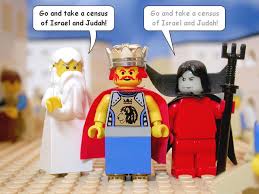
Did God move King David to make a census, or did Satan? Sin or no sin?

censusIn 2 Sam. 24 it says that God moved David to make a census of Israel’s military power, but in 1 Chron. 21 it says that Satan moved him to do so. Can these two statements be combined, or are they mutually exclusive?

One solution is that it concerns two different kinds of censuses, and another solution is that David did not perform a census the way God had described a proper census as per Ex. 30. A third option is the one described below.

Israel was already under God’s judgment to begin with, so there were no innocent men involved in this particular story. God is angry with Israel and punishes them by allowing Satan to “unleash” David’s illegitimate pride to create a rift between them.

2 Sam. 24:1 And again the ANGER of the Lord was kindled AGAINST ISRAEL, and he moved David AGAINST THEM to say, Go, number Israel and Judah.2 For the king said to Joab the captain of the host, which was with him, Go now through all the tribes of Israel, from Dan even to Beersheba, and number ye the people, that I may know the number of the people.3 And Joab said unto the king, Now the Lord thy God add unto the people, how many soever they be, an hundredfold, and that the eyes of my lord the king may see it: but why doth my lord the king delight in this thing?

1 Chron. 21:1 And Satan stood up against Israel, and provoked David to number Israel.2 And David said to Joab and to the rulers of the people, Go, number Israel from Beersheba even to Dan; and bring the number of them to me, that I may know it.3 And Joab answered, The Lord make his people an hundred times so many more as they be: but, my lord the king, are they not all my lord’s servants? why then doth my lord require this thing? why will he be a cause of trespass to Israel?

God sometimes bestows evil consequences (physical evil, or calamity) upon man’s evil actions (you reap what you sow). He also chooses what kind of evil to bestow, and if he would like to take the chance to bestow evil by means of other people (or Satan) who are already set on doing harm. Satan is often accusing both Israel and believers for various things, and he seeks to get God to punish his people. In 2 Samuel, it says that God was angry with Israel (due to the recent revolt under Sheba in I Chron. 20 and other acts by Amnon and Absalom), and this would be a good reason for God to allow Satan to do what he always wants to do – cause harm!

Here are a couple of examples of when it’s possible to suggest that God and/or Satan perform the evil:

In I Kings 22 (and. 2 Chronicles 18) which you can read about in this article, God decides to kill the evil king Ahab, and asks the heavenly hosts as to how to entice Ahab to enter into a battle in which he will die. A spirit volunteers to be a “lying spirit” in the mouth of Ahab’s false prophets, and God accepts the offer and allows him to do it. Nevertheless, God is not guilty of lying (there is no darkness in God), but merely gives Ahab what he deserves (Jer 24.7).

In I Sam 16, after repeated failures to submit to God’s leadership, Saul is rejected as king. He remains on the throne and continues his non-committed lifestyle and reign – even indulging in sorcery and seances. God punishes him by sending an “unclean spirit” to trouble him.

The motivation to cause calamity is a bit different in the book of Job, but God allows Satan to attack Job and he later confronts Satan with Job’s failure to sin even though we can read “you incited me against him to ruin him”. In other words, Satan was the “ruiner” but God was also a “ruiner” – so sometimes it’s actually not a big difference to suggest that “God moved a person to do this and that” or “Satan moved a person to do this and that”. The idea of God acting through agents -for reasons of judgment, of mercy, of testing, etc – occurs a few times in scripture, but nowhere does it say that God acts in this way ALL THE TIME. When it comes to Joseph and his brothers, there were evil human intentions (Joseph’s brothers sinning by selling their brother), with God’s overarching purpose for good.

1 Sam might be understood in this way:

  • God is angry with Israel’s sin (and David’s handling of the royal family issues).
  • Satan sees his opportunity, accuses them of wrongdoing, and wins approval to inflict David’s and Israel’s wrongdoing back on themselves.
  • God, knowing that the punishment is well deserved, that the example of correction/contrition on David’s part will be recorded in Scripture forever as an example, and that He will be gracious ‘ahead of schedule’ and reveal the site of his temple/crucifixion, agrees to turn David and Israel over to him, for this specific punishment (cf. I Cor 5.5).
  • Satan, with this permission from God, moves David to begin the Census.

Moreover, there was no order from God to David to NOT count the men, and the taking of a census was allowed in the law

Ex. 30:11 And the Lord spake unto Moses, saying,12 When thou takest the sum of the children of Israel after their number, then shall they give every man a ransom for his soul unto the Lord, when thou numberest them; that there be no plague among them, when thou numberest them.13 This they shall give, every one that passeth among them that are numbered, half a shekel after the shekel of the sanctuary: (a shekel is twenty gerahs:) an half shekel shall be the offering of the Lord.14 Every one that passeth among them that are numbered, from twenty years old and above, shall give an offering unto the Lord.15 The rich shall not give more, and the poor shall not give less than half a shekel, when they give an offering unto the Lord, to make an atonement for your souls.16 And thou shalt take the atonement money of the children of Israel, and shalt appoint it for the service of the tabernacle of the congregation; that it may be a memorial unto the children of Israel before the Lord, to make an atonement for your souls.

Had the numbering been done correctly (with the census tax for atonement), then undoubtedly no plague would have been sent, and the people would have benefited from the atonement. The fact that Joab knew that David was doing this out of pride (and even to bolster his military ranks, 1 Chron 27.2,4) instead of out of some religious sentiment, gives an indication of that the religious guidelines were not going to be followed. Joab specifically knew that what he was ordered to do was wrong (1 Chron 21.3), so the issue might not have been the census itself but that it was done without regard to the religious dimension and proper process. The observation made in 1 Chron 27.23-24 about God’s promise to make Israel numerous, could be taken as a reference to the population-reducing judgment of God. Punishing people by giving them over to their own will (see the case with Pharoah and the statements in Romans 1) can sometimes be seen in scripure, but it is never done without plenty of prior opportunity to change and to open up to goodness and truth.

In 2 Sam 24.16 we can read: “When the angel stretched out his hand to destroy Jerusalem, the LORD was grieved because of the calamity…”. God’s justice is always angry at sin, and his love is always grieved over the misery that sin causes.

You can read more in this article from christianthinktank.

Proverbs 21:1 The king’s heart is turned wherever God wants?

king's heart2Proverbs 21:1 The king’s heart is in the hand of the Lord, as the rivers of water: he turneth it whithersoever he will

It’s never a good idea to use a psalm or a proverb as a filter to read the rest of the Bible through, because poetic text might obviously not always be the literal truth. It’s shaky to start a new doctrine based on poetry and analogies, and you can reach almost any conclusion you want if you single out a verse out of context in Psalms or Proverbs (or anywhere) and use it as a foundation for a certain theology view.

The above verse is sometimes used by our reformed friends (calvinists) as an attempt to support the idea that God has an exhaustive control over all decisions of men – i.e. God predestines every step that a man makes and nothing happens against the will of God. There may be calvinists who disagree with this view, but then they are not consistent with their own doctrines – as in TULIP

It’s true that God may occasionally and in rare situations choose to override the will of man, but calvinists believe God acts in such way at all times and that he constantly steers our steps and wills so that we will always act and think according to his exact will with no exception. They believe that God is no longer sovereign if man has any independent control separate from his own will. Sovereign and sovereignty are not Biblical words (KJV), but also freewillers believe God is “sovereign”, but obviously not the way calvinists understand this term. A sovereign and an all powerful God is mighty enough to create man with a free will and to be responsible for his (not God’s) own actions. If God is the one who causes us to think and act the way he wants, then of course he is the one to be responsible for our thoughts and actions, but that is not the God of the Bible because it would make him the author of sin.

Prior to the flood the people were purely evil (with an exception of Noah and his family):

Gen. 5:And God saw that the wickedness of man was great in the earth, and that every imagination of the thoughts of his heart was only evil continually.And it repented the Lord that he had made man on the earth, and it grieved him at his heart.And the Lord said, I will destroy man whom I have created from the face of the earth; both man, and beast, and the creeping thing, and the fowls of the air; for it repenteth me that I have made them.

It wouldn’t make any sense at all if God first caused people to have wicked thoughts and constantly perform evil, and then bring a global flood on everyone due to their wickedness that he himself predestined. The wickedness culminated after the nephilim were being born by the sons of God (fallen angels, as per other Bible verses) and female human beings, and wickedness is always against God’s will.

Proverbs 21:1  doesn’t speak about all the people in the whole world but about “the king”,  and this verse might have been written by King Solomon concerning himself. The passage also doesn’t tell us that God controls the king’s heart irresistibly. It’s possible that Solomon is proclaiming that he is fulfilling his appointed role by allowing God to control his decision-making so that his decisions would essentially be the decisions of God, and it is not a statement that God is irresistibly controlling his heart but that the king has fully surrendered his heart and will to the will of God.

A good king was to represent God to his people in his judgments and decisions, and we can see this in Psalm 82 quoted by Jesus to the Pharisees in John 10:34-38.  In the psalm, the rulers of the people were called “gods” because they were to represent God to His people in their leadership and judgments.  In Psalm 82 God is seen to stand in judgment of the judges and rebuke them for their failure to represent God as they were called by God to do. If the Scripture could call wicked judges “gods”, how much more does Jesus deserve to be equated with God since He is sent into the world by God himself?

The wicked make plans and those plans seldom include their own destruction or judgment nor the many calamities that might result from their rebellion, but such is their future according to the Lord. Nothing can ultimately thwart God’s overall sovereign plan, and his ultimate control over the universe is in no way threatened by the free will decisions of his creatures. That is the gist of Proverbs 21.

What else does Proverbs 21 say?
king's heart

21:Every way of a man is right in his own eyes: but the Lord pondereth the hearts.3 To do justice and judgment is more acceptable to the Lord than sacrifice.

It wouldn’t make sense if God irresistibly controls the heart at the same time as he ponders/weighs/judges the heart that he alone controls with no interference or involvement by man. Solomon is concerned about pleasing the Lord in righteousness and justice, and a sacrifice is usually made when a person has transgressed the law of God and needs to be forgiven through the blood of an animal sacrifice. Of course it’s better to be obedient to start with because then a sacrifice isn’t even needed, and we can read that this option is more acceptable to God. Solomon contrasts the desires and actions of men surrendered to God with those who are in rebellion to God and refusing to submit to Him. Solomon himself fell away from the Lord in his later years but when he wrote this Proverb Solomon was committed to the Lord.

21:4 An high look, and a proud heart, and the plowing of the wicked, is sin.

Is it really possible that God would want people to have a high look, a proud heart and being wicked sinners? It’s absurd to suggest that God could cause people to be evil because in God there is no darkness at all and he doesn’t even tempt anyone – much less cause anyone to sin.

21:The thoughts of the diligent tend only to plenteousness; but of every one that is hasty only to want.The getting of treasures by a lying tongue is a vanity tossed to and fro of them that seek death.7 The robbery of the wicked shall destroy them; because they refuse to do judgment.

A lying tongue would also be something that God doesn’t want anyone to have, and we can read that the robbery of the wicked shall destroy them because they REFUSE to do judgment. It’s not God who leads them in that direction, but they do it to themselves.

21:The way of man is froward and strange: but as for the pure, his work is right.It is better to dwell in a corner of the housetop, than with a brawling woman in a wide house.10 The soul of the wicked desireth evil: his neighbour findeth no favour in his eyes.

Solomon compares “man” with “the pure”. The work of the pure is RIGHT unlike the way of man, and this must mean that some people do NOT do what is right before God since all men are not pure. The soul of the wicked desire EVIL, and does it sound plausible that God causes certain men to be wicked and evil?

21:11 When the scorner is punished, the simple is made wise: and when the wise is instructed, he receiveth knowledge.12 The righteous man wisely considereth the house of the wicked: but God overthroweth the wicked for their wickedness.

A scorner is not showing a good conduct and that’s why he is punished. The righteous man is contrasted with the wicked man, and we can read that God overthrows the wicked for the reason that he is performing wickedness. Why would God overthrow and punish people for the reason that they are being wicked, if he himself caused them to be wicked in the first place? Instead of being punished they should get praise and applauds for doing the will of God – by being evildoers – if this is what God truly wanted them to be.

21:13 Whoso stoppeth his ears at the cry of the poor, he also shall cry himself, but shall not be heard.14 A gift in secret pacifieth anger: and a reward in the bosom strong wrath.15 It is joy to the just to do judgment: but destruction shall be to the workers of iniquity.

Does God want people to “stop their ears” at the cry of the poor? Surely not, since God repeatedly tells us to be merciful and help those in need. Whosoever is a worker of iniquity must surely be acting against God’s will? The Bible says that God hates the workers of iniquity (psalm 5:5) so it wouldn’t make sense if he would be causing people to be just that, and then turn around and pretend to be angry at the same workers of iniquity.

21:16 The man that wandereth out of the way of understanding shall remain in the congregation of the dead.17 He that loveth pleasure shall be a poor man: he that loveth wine and oil shall not be rich.18 The wicked shall be a ransom for the righteous, and the transgressor for the upright.

Here we can read about man wandering out-of-the-way of understanding. It doesn’t say God pushed him out-of-the-way of understanding or prevented him in any way to reach a better understanding, but that the man himself is guilty of this – and the dire consequence for this unfortunate choice is death. Does God want people to love pleasure and wine, and does he want them to be wicked transgressors? Again, I hope all will say NO WAY. Sinning is always against God’s will.

21:19 It is better to dwell in the wilderness, than with a contentious and an angry woman.20 There is treasure to be desired and oil in the dwelling of the wise; but a foolish man spendeth it up.21 He that followeth after righteousness and mercy findeth life, righteousness, and honour.22 A wise man scaleth the city of the mighty, and casteth down the strength of the confidence thereof.23 Whoso keepeth his mouth and his tongue keepeth his soul from troubles.

God surely wouldn’t cause people to be foolish and waste expensive oil. The wise man is again contrasted with the foolish man, and it’s up to us to follow after righteousness in order to find life and honor, and it’s up to us to keep our tongue to save our SOUL from trouble.

24 Proud and haughty scorner is his name, who dealeth in proud wrath.25 The desire of the slothful killeth him; for his hands refuse to labour.26 He coveteth greedily all the day long: but the righteous giveth and spareth not.27 The sacrifice of the wicked is abomination: how much more, when he bringeth it with a wicked mind?28 A false witness shall perish: but the man that heareth speaketh constantly.29 A wicked man hardeneth his face: but as for the upright, he directeth his way.30 There is no wisdom nor understanding nor counsel against the Lord.31 The horse is prepared against the day of battle: but safety is of the Lord.

Read this passage again about proud, haughty scorners who refuse to labor and who are greedy and covet things that don’t belong to them. The sacrifice of the wicked is an ABOMINATION before God, and the only reason they would even think about doing something like that would be due to a wicked mind. Would God cause people to be wicked and act in such a way? God directs the way of the upright, but the wicked hardens himself. Bad choice on their part.

Proverbs 15:26 The thoughts of the wicked are an abomination to the Lord: but the words of the pure are pleasant words.—28 The heart of the righteous studieth to answer: but the mouth of the wicked poureth out evil things.29 The Lord is far from the wicked: but he heareth the prayer of the righteous.

The thoughts of the wicked are an ABOMINATION to the Lord, and he is far from the wicked. Would God cause people to be so wicked that they were an abomination before him? That would not be the God of the Bible, but this type of God can unfortunately be seen in books authored by calvinists. Flee to another direction.