Tag Archive | law

15 verses about law and grace you didn’t know were in the Bible

15 verses about law and grace you didn’t know were in the Bible

1) Romans 3:25 Whom God hath set forth to be a propitiation through faith in his blood, to declare his righteousness for the remission OF SINS THAT ARE PAST, through the forbearance of God;

2) James 2:24 Ye see then how that BY WORKS A MAN IS JUSTIFIED, and NOT by faith only.

3) Phil 2:12 Wherefore, my beloved, as ye have always obeyed, not as in my presence only, but now much more in my absence, WORK OUT YOUR OWN SALVATION WITH FEAR AND TREMBLING

4) Rom 2:13 For not the hearers of the law are just before God, but THE DOERS OF THE LAW SHALL BE JUSTIFIED

5) 1 John 3:6. WHOSOEVER ABIDETH IN HIM SINNETH NOT: whosoever sinneth hath not seen him, neither known him.

6) Matt 5:19 Whosoever therefore shall break one of these least commandments, AND SHALL TEACH MEN SO, he shall be called THE LEAST in the kingdom of heaven: butwhosoever shall do and teach them, the same shall be called GREAT in the kingdom of heaven.

7) Titus 2:12 (God’s grace) TEACHING US that, DENYING UNGODLINESS and worldly lusts, we should live soberly, righteously, and godly, IN THIS PRESENT WORLD;

 8) Acts 5:32 And we are his witnesses of these things; and so is also THE HOLY GHOST, WHOM GOD HATH GIVEN TO THEM THAT OBEY HIM

9) James 4:6 But he giveth more grace. Wherefore he saith, God resisteth the proud, but GIVETH GRACE TO THE HUMBLE (a condition)

10) John 15:10. IF YE KEEP MY COMMANDMENTS, YE SHALL ABIDE IN MY LOVE; even as I have kept my Father’s commandments, and abide in his love.

11) 1 Cor 7:19 Circumcision is nothing, and uncircumcision is nothing, BUT THE KEEPING OF THE COMMANDMENTS OF GOD

12) Rom. 3:31 Do we then make void the law through faith? God forbid: yea, WE ESTABLISH THE LAW

13) James 2:21 Was not Abraham our father JUSTIFIED BY WORKS, when he had offered Isaac his son upon the altar?

14) Hebr. 10:29 Of how much sorer punishment, suppose ye, shall he be thought worthy, who hath TRODDEN UNDER FOOT THE SON OF GOD, and hath counted the blood of the covenant, WHEREWITH HE WAS SANCTIFIED, an unholy thing, and hath done despite unto the Spirit of grace?

15) Rom 8:1 There is therefore now no condemnation to them which are in Christ Jesus,  WHO WALK NOT AFTER THE FLESH , BUT AFTER THE SPIRIT

15 verses/claims you thought were in the Bible

1) All men are born with a sinful nature since we have inherited Adam’s sin

2) Once saved always saved

3) God loves us unconditionally

4) Jesus righteousness has been transferred to us, so the Father can’t see our sins but only the blood of Jesus

5) When we repent our past, present and future sins are forgiven

6) Do not judge! – any one at any time!

7) FAITH ALONE is what saves us, and works have nothing to do with our salvation

8) We are no longer under the Law, so obeying the ten commandments is no longer necessary even if they are good to obey so we don’t get reduced gifts in heaven

9) We all sin constantly in thoughts, words and deeds

10) The grace of God is free, unmerited and can’t be forfeited

11) If you could stop sinning you wouldn’t need Jesus

12) The problem with the pharisees was that they focused too much on the Law and obeyed it too much

13) Jesus paid for our sins, took our sins on himself and became sinful on the cross, hence the wrath of the God the Father was upon him

14) He sinned quite severely? Then “he wasn’t saved to begin with”

15) Christians are taken out of the world before the great tribulation   

The fear of the Lord and holy living

Our unpopular message for the day
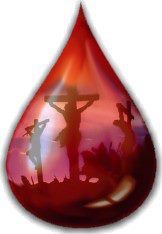
So many Christians are compromising these days! It is not very popular to make a stand for holy living. You become “self righteous” to many by doing so. It is a sad fact that many are falling while truly believing everything is just fine, because they hold a knowledge of God within them.

“Therefore come out from them and be separate, says the Lord. Touch no unclean thing, and I will receive you.” 2 Corinthians 6:17

Unfortunately, too many people have been deceived to think they can have their sin and be a Christian at the same time. These lack wisdom! And the Bible tells us in Proverbs 9:10 “The fear of the LORD is the beginning of wisdom …” And that is just it. People do not fear God, and therefore they have no wisdom to lead them. So they naturally turn to fleshly pleasures while trying to convince everyone that they are Christians.

2 Timothy 3:1-5
1This know also, that in the last days perilous times shall come.
2For men shall be lovers of their own selves, covetous, boasters, proud, blasphemers, disobedient to parents, unthankful, unholy,
3Without natural affection, trucebreakers, false accusers, incontinent, fierce, despisers of those that are good,
4Traitors, heady, highminded, lovers of pleasures more than lovers of God;
5Having a form of godliness, but denying the power thereof: from such turn away.

Do you allow sin in your life while trying to convince everyone that it isn’t all that bad? Do you claim to be a Christian because of a knowledge of the truth, with a form of godliness, but denying the power of it to free you completely from this world and its sins? The good news is that Jesus can set you free! There is great joy in separating ourselves from this world! It can only come by the Holy Spirit as He fills us and transforms us, making us new creatures that are set apart from the rest of this world. If you look like the world; talk like the world; act like the world; and live like the world; then you are of the world and cannot be of Christ – no matter how much you may think you are. The form of godliness is a great deception of these last days! So many believe they are right with God, but are not! The Bible says in Isaiah 5:20

Woe to those who call evil good and good evil, who put darkness for light and light for darkness, who put bitter for sweet and sweet for bitter.”

This is exactly what so many “Christians” are doing today. They will go out drinking, smoking, partying like the world, and then claim they do it in moderation. Many will cuss up a storm, get involved in bitter arguments, gossip, slander of others, and act lie the world in every way – never living according the the fruit of the spirit. When confronted about there sinful living, they will accuse the righteous person of being full of pride, self righteous, and judgmental. Some will go as far as to think they are more spiritual in their drinking and smoking, as they are more tolerable of sinners, and they are not so “self-righteous”. They are more mature Christians and able to handle doing those things. Hogwash! It is time to rise up people of God! It is time to stand for what is right! Start with your own life. Start with your family. Be an example for others to follow. Share the love of God and the good life He offers through holy living. Otherwise, sin lies at your door – Genesis 4:7.

We are in a spiritual warfare! This is a war that is unseen in the natural, so that those who drift away from Christ cannot even see it is happening all around them. All the while thinking they are right with God because of what they once had, they slip away into the darkness of the enemy. Don’t ever think you are so spiritual you cannot be overtaken! Our ONLY hope is in Christ jesus alone. Look to Him and search your own heart in humility.

“The fear of the LORD teaches a man wisdom, and humility comes before honor.” Proverbs 15:33

Many Christians today are not necessarily sinning, but they are playing with a strange fire, and then offering it up to the Lord. What do we offer to Him? Is it holy or strange? Paul said that we need to examine ourselves whether we be in the Lord. Never assume it! But let us examine our own hearts as we look for the deception in our own minds that has been planted by the enemy.

Righteousness is not a gift, nor is it something we work for. It is a choice. A choice to walk in what he has provided for us. But we have a choice set before us, as it says in Deuteronomy 30:19, “This day I call heaven and earth as witnesses against you that I have set before you life and death, blessings and curses. Now choose life, so that you and your children may live”.
John dealt with the issue of sin and said in 1 John 5:18, “We know that no one who is born of God sins; but He who was born of God keeps him, and the evil one does not touch him.” Then in 1 john 3:3-10

3 Everyone who has this hope in him purifies himself, just as he is pure.
4 Everyone who sins breaks the law; in fact, sin is lawlessness. 
5 But you know that he appeared so that he might take away our sins. And in him is no sin.
6 No one who lives in him keeps on sinning. No one who continues to sin has either seen him or known him.
7 Dear children, do not let anyone lead you astray. He who does what is right is righteous, just as he is righteous. 
8 He who does what is sinful is of the devil, because the devil has been sinning from the beginning. The reason the Son of God appeared was to destroy the devil’s work. 
9 No one who is born of God will continue to sin, because God’s seed remains in him; he cannot go on sinning, because he has been born of God. 
10 This is how we know who the children of God are and who the children of the devil are: Anyone who does not do what is right is not a child of God; nor is anyone who does not love his brother.

So, I am not talking about new converts who have not yet been sanctified. I am talking about seasoned Christians who after years of living holy lives slowly begin to turn back to sinful living while claiming to be saved. This is very dangerous territory!

When Jesus said, “It is finished”, He was not saying that sin no longer had any power to condemn. Obviously many sinners are still going to hell. Paul’s said in Romans 6:23 that the wages of sin is death. Nothing changes this. Not even the work of Christ. The gift of God that is eternal life is through Christ Jesus. To be IN Christ is to walk in the spirit and not fulfill the lusts of the flesh. Paul said that if we sow to the flesh, we will reap of the flesh corruption. He also said that if we defile the temple of God, which we are, then such people will God destroy. Many, many more warnings are given to Christians all throughout the scriptures to be careful and always check our hearts, lest will fall. In Romans 11:21 Paul said, “For if God spared not the natural branches, take heed lest he also spare not thee.” Obviously, we are not in the clear just because Jesus died for our sins and we are presently saved.

We cannot miss the good news in this message, which is that God will cast our sins as far as the east is from the west and remember them no more. But we need to understand that this ONLY refers to past sins that have been confessed through repentance, and not to present or future sins. No scripture says anything close to the idea of future sins being cover under our first repentance. It is not an issue of being completely sinless. We know that is not possible. It is an issue of not committing sins we know are wrong, and thus being in rebellion to God – which the bible says is as the sin of witchcraft. And we know that no witch will be saved. But as we turn to Him after we have examined our lives and allow Him to purify our lives, we will be transformed, becoming new creatures. And such a creature will hate sin as much as God does and will want nothing to do with it. 

James spoke of a sin unto death and a sin not unto death. The sin not unto death are those little things that we are not aware of that are buried deep within and only pop up on certain occasions. These are a part of our spiritual growth. A sin unto death is a sin of rebellion, when we do something we know is wrong but just don’t care. We can try to justify and deceive ourselves, and then our conscience can be seared – causing us to think all is fine, when in fact we are backslidden in heart.

Jesus will take us just the way we are – no doubt! But He will not keep us the way were are. This is what being “born again” is all about. We start a new life in christ and we are transformed as it says in 2 Corinthians 5:17. The old is passed away, and all becomes new.

What married couple will say that because they are married they do not need to work on their relationship, but that their married alone makes the relationship? This kind of marriage is one that winds up in divorce. Their is always work involved in a relationship. a relations takes two parties both working together to make it work. We know God is always faithful to do His part in this. His part is never in question! It is our part that has to be questioned. Are we talking to Him? Are we listening to Him? Are we submitting to Him? Or are we doing our own thing and then calling it a relationship?

Any person who allows sin in their life needs to fell bad, low, and unworthy. This is called conviction. This is not condemnation. However, the bible does that that those who live in sin are condemned already. The great hope is that Jesus came to set men free. And He who the Son sets free is free indeed! He came to take away the guilt, to lift up our spirits, and to make us worthy! It is only in Him that we can have all of these things. If we turn to sin, we are not turning to Him. And if we are not turning to Him, then we cannot have what He offers – which is freedom from sin. This is not a superficial freedom, and a real life changing freedom. How we live our lives is a direct expression of what Christ has done and is doing in our lives. And this is something He has put in our own power to receive and walk in, or to reject and walk away from.

The original lie of Satan was to tell Eve, “You shall not surely die as God has said”.
The same lie exists in the Church today as many will teach that you shall not surely die (spiritually) as God has said. That sin has completely lost its power to damn the soul of the Christian to hell. Sin has not lost its power! Sin still brings death! But the gift of God is eternal life through CHRIST JESUS. Not a one-time confession, but a daily confession through an obedient walk in the spirit.

There is plenty of good news to put behind this entire message. But it is all in Christ Jesus alone! It is not in a doctrine. It is not in a one-time confession of sins. It is not in a previous relationship with Him. It is in a continued walk with Him, in obedience to His commands, as we are “free indeed” from sin and the walk of the flesh. He is ever present to make intercession for us. But we must be willing to confess our sins so He can do that.

In Romans Paul makes it clear that if it had not been for the law then we would not know right and wrong. Jesus said that He did not come to destroy the law, but to fulfill it. It is in Christ that we receive power of sin and to live holy lives. Law is fulfilled in us as we walk in the spirit and do not fulfill the lists of the flesh.

Jesus took away the burden of animal sacrifice and penalty for sins in this life. Now, through Him, we have access to the throne of grace, whereby we may receive forgiveness of sins. But forgiveness can only come through repentance. We know that true repentance means to turn ourback on our past sins. This is a choice we have to make. And as we make the choice, God gives us the ability to overcome. Repentance of sins is first of all an act of obedience. And Jesus said, “if you love me, keep my commandments”. Jesus has done the work! But He leaves the choice up to men whether they will follow and obey His commandments. If we do not obey His commandments then we are denying Him. We are saying we do not trust Him or believe in what He said in His Word. And if we deny Him, He will deny us before His father in heaven. Our lives must be a walk of faith or we cannot please Him.

 ‎[Live] as children of obedience [to God]; do not conform yourselves to the evil desires [that governed you] in your former ignorance [when you did not know the requirements of the Gospel]. 1 Peter 1: 14

If anyone serves Me, he must continue to follow Me [to cleave steadfastly to Me, conform wholly to My example in living and, if need be, in dying] and wherever I am, there will My servant be also. If anyone serves Me, the Father will honor him. John 12: 26

It is through Him that we have received grace and [our] apostleship to promote obedience to the faith and make disciples for His name’s sake among all the nations. Romans 1: 5

Do you not know that if you continually surrender yourselves to anyone to do his will, you are the slaves of him whom you obey, whether that be to sin, which leads to death, or to obedience which leads to righteousness (right doing and right standing with God)? Romans 6: 16

If you keep My commandments [if you continue to obey My instructions], you will abide in My love and live on in it, just as I have obeyed My Father’s commandments and live on in His love. John 15: 10

But He said, Blessed (happy and to be envied) rather are those who hear the Word of God and obey and practice it! Luke 11: 28

For as the human body apart from the spirit is lifeless, so faith apart from [its] works of obedience is also dead. James 2: 26

But now we are discharged from the Law and have terminated all intercourse with it, having died to what once restrained and held us captive. So now we serve not under [obedience to] the old code of written regulations, but [under obedience to the promptings] of the Spirit in newness [of life]. Romans 7: 6
For the time [has arrived] for judgment to begin with the household of God; and if it begins with us, what will [be] the end of those who do not respect or believe or obey the good news (the Gospel) of God? 1 Peter 4: 17

And we receive from Him whatever we ask, because we [watchfully] obey His orders [observe His suggestions and injunctions, follow His plan for us] and [habitually] practice what is pleasing to Him. 1 John 3: 22

Whoever says, I know Him [I perceive, recognize, understand, and am acquainted with Him] but fails to keep and obey His commandments (teachings) is a liar, and the Truth [of the Gospel] is not in him.
1 John 2: 4

[Live] as children of obedience [to God]; do not conform yourselves to the evil desires [that governed you] in your former ignorance [when you did not know the requirements of the Gospel]. 1 Peter 1: 14

The wise in heart will accept and obey commandments, but the foolish of lips will fall headlong. Proverbs 10: 8

Since by your obedience to the Truth through the [Holy ] Spirit you have purified your hearts for the sincere affection of the brethren, [see that you] love one another fervently from a pure heart. 1 Peter 1: 22

Jesus said that no man can serve two masters. The devil is a thief who has come to steal, kill, and destroy. He cannot steal what one does not have. Sinners have nothing he wants to take or end in their lives. It is Christians he is after. He wants to steal our peace and joy and the abundant life we have in Christ; he wants to kill us spiritually; and then it is his final hope to destroy our souls in hell if he can. Many have been deceived into thinking they can serve two masters and still be okay. If this was an easy thing to see, then it would not be a deception. People who call themselves Christians and even go to Church every week are perishing in the pews of the Church. This is because they live like the world during the week, and with this deception have come to believe that they are saved all along.

As much as we would like to strip satan of all his power, and claim that he has be completely defeated by the work of Christ, this simply is not at all what the scriptures teach us. He is only defeated for those who abide in Christ, walk in the spirit, and obey Him daily as they take up their cross and follow Him. But satan is hard at work for a few different reasons. One, because he knows he only has a short time to get his job done. Second, it the fact that he knows he is able to deceive even Christians and pull them away from a walk with Christ. Otherwise he would be totally wasting his time and efforts to no avail.

Not too many Christians are going to take the bait of blatant heresy and lies. If they knew they were lies then they would turn away immediately! But satan is very slick at what he does. He will make sin appear to be “not so bad”, as it sucks the spiritual life out of people without them even realizing it. This is why Jesus told us to be watchful, be on the guard, to beware, and to diligently seek Him. The bible says that satan walks about as a roaring lion seeking whom he may devour. Obviously this is not referring to sinners. He already has them. It is Christians he is after. He is looking for those who have put their guard down; who have lain down their spiritual armor. This is why we need to go thru our spiritual armor check list and make sure we have it and keep it on all the time. Satan is looking for the one he can catch off guard. And then he will come in subtly so that we do not even realize it is him.

This is why Paul said that when you think that you stand, take heed, lest you fall. An overconfidence in the work of Christ without doing our part will lead to spiritual death. We can believe we are saved all we want. But faith without works is dead! We can have COMPLETE confidence in the work of Christ – as long as we walk in obedience to His will and commands. But if we allow sin to creep in, then death lies at the door. Faith then becomes nothing more than a presumption, without any true power to save. And just as the devils in hell believe and cannot be saved, so it is with those who claim Christ and willfully and in rebellion live in sin.

All the promises we have are “in Christ”. We must understand what it means to be in Christ. It is not a one time prayer that magically transfers us from death to life without any further conditions. It is a transformed life! The old is passed away, and all is become new. So as John said, we no long live in sin, but we walk in the spirit and by true faith thru obedience.

Through Jesus Christ we are no longer under the condemnation of the law?

Let’s not forget one major thing here. We must be “in Christ” in order to be free from these things. The devil is given back his rights the moment we give in to willful sin and do not repent. The cross DID NOT disarm him! It is only through our faith in the cross that he can be disarmed. And just as we can have faith, we can lose faith. This is a fact that has be proven to be true with many backsliders.

The Bible does not teach a sin debt. It teaches “wages of sin”. Wages are earnings, not a debt. We have earned death for our sin. Christ came to die as the atoning sacrifice for our sins. But not as a literal payment. This term should only be understood as a figurative term to say that Christ took care of the sin issue on our behalf. The literal understanding of what Christ did can only be properly understood as a provision for forgiveness. When John saw Jesus coming to be baptized, he announced, “Behold, the lamb of God who takes away the sins of the world”. Now we know that Jesus has not literally taken away the sins of all men. Otherwise all men would be saved already without any conditions. This actually points back to the Levitical sacrifices for the sins of Israel, as two goats were brought. One was just a sacrifice unto the Lord, while the other was the one who had sins confessed over it and it was released into the wilderness. Some believe it was led to a cliff to fall to its death. But either way it was not punished for sins, nor did it “pay” for sins. What this was is a picture of the true atonement that was to come through Christ as men are being born again through faith in the sacrifice of Christ. Then as Paul said, the old is passed away and all things become new. When we are transformed in such a supernatural way, our old life of sin passes away, and we enter into a new life of faith and holiness in Christ. If we sin, we deny this power to free us from sin, and thus deny Christ.

Sin really is not the issue at all. It is only the symptom. The root of the problem is never the sin, but a matter of our faith. If we truly walk by faith, then we will be walking in the spirit, and we will not fulfill the lusts of the flesh.

James, in the first chapter says this: 14. But every man is tempted, when he is drawn away of his own lust, and enticed.
15. Then when lust has conceived, it brings forth sin: and sin, when it is finished, brings forth death.

You see, sin still brings death. Only a true Christian who walks by faith can later be “drawn away and enticed”. The end result of sin is and always will be death. The wages of sin IS death, and always will be. So it is our responsibility to discipline our own lives to make sure we make wise decisions and do not give in to the lusts of the flesh – as they can and will bring death.
There is no doubt that Satan will bring condemnation upon us for past sins that we have been forgiven of. It is at this time that we need to realize he is a liar and all that is under the blood of Jesus and cast away. But present and future sins are a completely different issue. No sin is automatically forgiven just because we are Christians.

In Hebrews 10:26 we are told, “For if we sin willfully after we have received the knowledge of the truth, there remains no more sacrifice for sins.”

So obviously sin still has the power to harm the Christian. “No more sacrifice” here does not mean that there can be no future forgiveness, or that the sacrifice of Christ is not sufficient. This means that the confession of a past sin in which we trusted in the sacrifice of Christ cannot cover future sins committed – without another act of repentance on our part. The work of Christ is finished! But it does not cover unrepented sins, or else the entire world would be saved. Sin is only the symptom of a much deeper issue taking place in a persons heart. And if it goes undealt with, then their soul is in danger just like the rest of the world who is in their sins. And If Christ conquered sin in the way you are saying, then sinners should not need to repent to be saved. Since sin has lost its power, all they need to do is believe in Him and believe they are save, and they can continue in their sins. All is good.

Christianity is done done done, not do do do?

What Christ did for us is only on the sacrificial and provision part. It is man’s part to believe, continue, abide, follow, trust, walk in the spirit, etc. So many commands are given it is incredible. This is not about “works salvation” as many like to try to make it. This is about truly trusting in His work. A true faith will have a direct affect on the way we will our lives every day. But we are able to lose that faith through lust, which leads to sin. This is why we are told we must take up our cross and follow Him daily, crucify the old man, and walk in the spirit so we will not fulfill the lusts of the flesh. Such instruction is given because of the absolute certain possibility or probability of falling from Grace and forfeiting the life we once had in Christ.

We are not talking about working on our own. We are talking about having true faith in His work, which leads to holiness and a separation from sin. Sin is only the works of the flesh that show where we are spiritually. Just as the fruit of the spirit shows where we are spiritually. Jesus said, “You shall know them by their fruit”. How a person lives shows where their heart really is. And if it is after sin, the father of sin is then their master. As the scripture says in Romans 6:16, “Don’t you know that when you offer yourselves to someone as obedient slaves, you are slaves of the one you obey-either of sin, which leads to death, or of obedience, which leads to righteousness?”

Any person who turns to sin is doing what the devil wants, and he becomes their master. I am not talking about sins we commit now and then, and then repent. I am talking about habitual sins that people try to justify. And notice the word “Obey” here? We are only considered the servant of God if we obey Him!

Romans 3:25, “Whom God hath set forth to be an atoning sacrifice through faith in his blood, to declare his righteousness for the remission of sins that are past, through the forbearance of God.”

Only past sins can be forgiven. Present sins have not godly sorrow if they remain. And future sins – lets get real. If I slug a brother in the face and I say I am sorry and ask him to forgive me – does that mean that if I do the same thing every now and then that he should automatically forgive me each time without me ever being truly sorry? Or if I punch him today, but tomorrow I steal from him, should my stealing be forgiven because I asked for forgiveness for punching him? Yet this is what this idea says of God and salvation. Sin has offended God. He is holy and He cannot be in the presence of sin. If men want to abide in His presence, then they have to separate themselves from sin. The work of Christ in no way changes who God is. He is the same yesterday, today and forever. And He see’s sin in the same way as always. Having law or doing away with it changed nothing. Men sinned and offended God long before the law came. God judged Cain, He flooded the earth in Noah’s day, He destroyed Sodom and Gomorrah, and so much more before the law ever came along. So after law we cannot expect Him to have any different of an attitude towards sin. Sin is not covered up. It MUST be removed from us through the work of Christ, and by repentance. If it isn’t it will damn the soul. This is just a simple Biblical fact. It was taught by the early Church very boldly for hundreds of years – before the corruption by the Catholic Church. It is a truth that we must take heed to today. This is why Paul said that when you stand, take heed lest you fall. Sin still has the power to destroy the soul. We are completely safe “In Christ”. But if we step across the line into sin, we give up our protection.

“John 1:29 29 The next day John saw Jesus coming toward him, and said, “Behold! The Lamb of God who takes away the sin of the world! that word sin is a noun ( person place thing), John knew that Jesus came to take sin the whole thing from the world, it doesnt say who comes to take away the past sin of the world, current sin of the world, but “SIN of the world” What a waste of time it would have been to have God send His only Son Jesus to do a work like that,”

As already mentioned, atonement is a provision, not a literal payment. And sin is not a substance that can be literally removed. It is an issue of heart that has to be changed. The figurative always leads to a literal meaning different than the figure itself. This is why we must be “born again”, which we know is not a literal entering back into the womb, but a new life in Christ that starts as we are changed – transformed. So of course not part of the sin of the world is taken away – because it is not talking about a substance of sin, but an issue of heart that is changed when a person puts their faith in Jesus. And this can only happen when there is faith in Christ. The sins of millions will take them to hell still, regardless the work of Christ. So did Christ’s work fail or fall short? Of course not. It is men who failed to not put their faith in Him. Jesus dies for ALL sins, past, present and future. But forgiveness of these sins can ONLY come through repentance of them. And until there is repentance, there is not forgiveness or taking away of sins – since the heart of the person has not been change when they continue to sin.

“He who the son sets free is free indeed”

Absolutely! But what is freedom? It is not freedom in sin, but freedom FROM sin. Huge difference here. There is not “freedom” in sin. That is called bondage. The word “indeed” is like an exclamation point on the “free”. This shows it to not be a superficial freedom from the power of sin to condemn while still committing sin, but a real and complete freedom from both sins power, effect, and existence in our lives. In Romans 6 Paul made it clear that sin will no longer have dominion over those who are in Christ and remain in Him. A true freedom from sin is the completely changed life where sin no longer has any controlling power. If we do sin, we will confess that sin. But we will not live under it.

I wrote a book called, “Faith without Works” years ago that is full of hundreds of scriptures against this doctrine. Since then I had studied and read through the early Church writings that had proven what they really believed on the issue, confirming everything I am saying here. Then after that I did an in-depth study and research on the Levitical sacrificial system and how it pointed to the work of Christ. It is from false ideas of atonement that so many false teachings arise. But this work shows through the sacrificial system how sin has always been the issue with God, and that Christ took care of it in the provisional sense – but not as a payment as so many assume. The Bible does not teach a payment in the literal sense at all. The fact that WE are bought does not speak of sin, and it is figurative – as no money was exchanged or deal made between Satan our old master and Jesus our Atonement. It is through the OT that the NT is revealed. Yet so many try to teach atonement from the NT perspective without understand the OT system. When we really look into the OT, then we can see what atonement is really all about in Christ. And now, it is by faith that we are able to obtain Grace, as we confess Him and our sins in repentance as the people were told by Peter in Acts 2:38. A one-time repentance can never cover future sins! This is been show by scripture and simple logic.

Thanks to LYNDON CONN 

Free will is Biblical, and the same as moral ability

MAN’S MORAL ABILITY AND THE RELATION IT HAS TO THE MORAL LAW
By Jesse Morrell (A section from the booklet “Free Will & Conscience”)

Moral ability and free will are synonymous terms, being identical in nature and meaning. Inability and free will are antonymous terms, being contrary in nature and meaning. Free will is the power of contrary choice. A man is able to do only what a man is free to do; and a man is free to do only what a man is able to do. Freedom speaks of the contingent, not of the necessitated, of that which was voluntarily chosen under liberty, and not that forced by necessity. A freewill choice is a choice that did not have to be chosen, but that was voluntarily chosen when the person could have chosen the opposite.

To be required or obligated to do better, and to be accountable or judged for failure to do better, one must be capable of doing better. To be capable of doing better, one must be free, or able, to do better. What a man is free to do, a man is capable, or able, of doing. If a man is not capable, then a man is not able or free, and if a man is not a free agent, then he is a necessitated agent who can no more have moral character than a puppet or a machine can have moral character. Moral character relates to voluntary or intentional choices commanded or condemned by the God-given intelligence, knowledge, revelation, or conscience, and moral accountability relates to moral character. Therefore, what a man is accountable for, he must not have been necessitated to do, but must have voluntarily committed.

A man is responsible only for that which he is intentionally the cause of, and a man is only the intentional cause of that which is voluntary, since what is voluntary is intentional, and what is intentional is voluntary. And since moral character consists only in free, voluntary, intentional choices, and moral accountability is according to moral character, a man is only accountable for his free, voluntary, intentional choices.

Thomas Chalmers said, “The morality of any act is with its willfulness.” And then again, “That an action then be the rightful object, either of moral censure, or approval, it must have had the consent of the will to go along with it. It must be the fruit of volition – else it is utterly beyond the scope, either of praise for its virtuousness or of blame for its criminality. If an action be involuntary, it is as unfit a subject for any moral reckoning, as are the pulsations of the wrist.”1

Respecting the moral government of God (Isa. 9:6-7), or the ruling and reigning of God in the realm of morality over moral agents (Lk. 17:21), in which God is the Governor (Matt. 2:6), the moral commandments of God never exceed the moral ability of men. The commands of God are directed to the ability of man, being instructions as to how a man is to use the liberty of his will, or how a man is to properly use his ability.

Since God’s moral commandments are directions for man’s moral ability, as to how to use this God-given ability, God’s moral requirements never exceed this God-given moral 3ability. Since God’s Moral Government is the governing of man’s moral agency (through persuasion and influence, not through force or necessity), God’s moral commandments never can, never do, and never will exceed man’s moral ability or moral agency. Because God’s commandments are directions to man, as to how a man is to use his ability, God’s commandments are in fact a declaration or a revelation of what man can do and what man should do.

The moral law of God’s Moral Government is: “Thou shalt love the Lord thy God with all thy heart, and with all thy soul, and with all thy mind” (Matt. 22:37) and “love thy neighbor as thyself” (Matt. 22:39). The moral law of God, in essence, is the law of love, love being the total and complete fulfillment of the whole of the law (Rom. 13:8, 10; Gal. 5:14; Jas. 2:8).

The law of love, or the life of love, is commanded, and the law of selfishness, or the life of selfishness, is condemned. Love is not an involuntary emotion or feeling, but it is a voluntary, impartial committal of the will towards the highest well-being of all (Jn. 3:16; 15:13); it is the intention of the heart, and is synonymous with “good will” (Lk.2:14; Eph. 6:7; Php. 1:15), and is the same as benevolence.

If love is truly love, it must of necessity manifest itself into action and conduct whenever possible and whenever necessary, performing the required means to secure the end of the well-being of others. The “readiness to will” results in the performance” or in the “doing” (2 Cor. 8:11). If the inside of the cup (inward intention) is first clean, then the outside of the cup (outward actions) will be clean as well (Matt. 23:26), because what is inside will manifest in what is outside whenever possible. A good tree can only produce good fruit, while a bad tree can only produce bad fruit (Matt. 7:17), because the heart, or intention, determines the outward life (Matt. 12:35; Lk. 6:45).

Love, good will, or benevolence satisfies the whole of the law (Rom. 13:8, 10; Gal. 5:14; Jas. 2:8), but selfishness or self-centeredness is a total and complete violation of the whole of the law (Jas. 2:10). To break one letter of the law is to break the whole spirit of the law; which the entire letter of the law is derived from. The letter of the law is derived from the spirit of the law; therefore, to break one letter of the law is to break the whole spirit of the law. He that breaks the one breaks the whole. Therefore, to “offend in one point” is to be “guilty of all” (Jas. 2:10).

Notice that God does not command that we love Him with faculties that we do not possess, but rather that we love Him with all that we currently possess, “with all thy,” as opposed to with that which is not currently yours. The commandments are  directions to man as to how he is to use his ability. The commandments of God are not impossible, demanding that we love Him with a heart, soul, mind and strength that we do not have. Rather, it is possible to keep the law of God, which demands that we love Him with all of what we do have, with all that we are capable of, to the very highest of our ability, no more and no less. It is possible to keep the law because we are capable, and we are capable because it is possible to keep the law; our God-given commandments and our God-given ability directly correspond with each other. The command of God is that we 4love to the very highest of our ability, no more and no less, and therefore we are able to keep the law of love; we are able to keep the commandments of Jesus (1 Jn. 2:3; 3:22; 5:2-3; Rev. 12:17; 14:12; 22:14). Obedience is always possible, and disobedience is never necessary or unavoidable. The highest that our ability is capable of is all that the law of God commands, no more and no less. The law of God is the law of our ability, to love Him supremely and our neighbor equally, according to our ability, with all of our ability, “with all thy.”

Clemens of Alexandrinus said that the call of “the Divine word – requireth but that which is according to the ability and strength of every one.”2 Gordon Olson said, “The words -all thy’ express our obligation. It is the exertion of -thy’ personality and ability that is required – all’ this ability.”3 Charles Finney said, “Entire obedience is the entire consecration of the powers, as they are, to God. It does not imply any change in them, but simply the right use of them.”4 Again Finney said that the law “simply requires us to use what strength we have. They very wording of the law is proof conclusive, that it extents its demands only to the full amount of what strength we have. And this is true of every moral being, however great or small.”5 And Asa Mahan said, “the law, addressing men -requires them to love God with all their – mind and strength,’ that is -with the power they now actually possess.”6

God commands that you use “thy heart” and “thy soul” and “thy mind.” Clement of Alexandria said, “What the commandments direct are in our own power”7 The command of God is directed towards our current faculties, and it does not exceed the limits of those faculties. We are to love him with “all” of these faculties, not with less or with more than those faculties are capable of. Man is not responsible for more than he can perform, and so man is not accountable for more than he can perform. Man’s responsibility is in accordance with all of his ability, and man’s accountability is according to his responsibility. Therefore, man will not be accountable for that which was beyond his power because man is not accountable beyond his responsibility, and his responsibility is never beyond his ability.

Man’s moral ability is naturally and obviously limited by moral possibilities; therefore, God’s moral commandments never require moral impossibilities, for that which is morally impossible cannot be morally commanded. God cannot morally demand a moral impossibility. Augustine said, “God does not demand impossibilities.”8  Charles Finney said, “The law of God requires nothing more of any human being, than that which he is at present naturally able to perform, under the present circumstances of his being.”9

The extent of God’s commandments is the exact extent of man’s ability, and the extent of man’s ability is the extent of God’s commandments; each one establishes and determines the limitations and boundaries of the other, and since man will be judged by the commandments, the extent of man’s accountability will be the extent of man’s ability. A man will not be accountable for that which he was not capable of; he will not be judged for that which was outside of the realm of his control. 5

The law of God is therefore the law of our ability: to love Him supremely and our neighbor equally, according to our ability, with all of our ability, to the highest of our ability, no more and no less. There is, then, no inability in which a sinner can hide behind as an excuse, no commandment that a sinner can point to as tyrannical, since all the commandments of God can be kept, without exception.

All sin is, therefore, inexcusable since all sin is voluntary and avoidable; that which brings moral guilt is always voluntary and avoidable. What is unavoidable is excusable, but what is inexcusable must be avoidable. What is punishable must voluntary, and what is voluntary must be avoidable. What is punishable must be vice, and what is vice must be voluntary. Only sin can be punishable, and only what is voluntary and avoidable can be sin. Therefore, sin is inexcusable and punishable because sin is voluntary and avoidable, and it is voluntary and avoidable because God has given man free will.

Justin the Martyr said, “We have learned from the prophets, and we hold it to be true, that punishment, chastisement, and rewards are rendered according to the merit of each man’s actions. Otherwise, if all things happen by fate, then nothing is ur own power. For if it is predestined that one man be good and another man evil, then the first is not deserving of praise and the other to be blamed. Unless humans have the power of avoiding evil and choosing good by free choice, they are not accountable for their actions – whatever they may be – for neither would a man be worthy of praise if he did not himself choose the good, but was merely created for that end. Likewise, if a man were evil, he would not deserve punishment, since he was not evil of himself, being unable to do anything else than what he was made for.”10

Charles Finney said, “Moral agency implies the possession of free-will. By freewill it is intended the power of choosing or refusing to choose, in every instance, in compliance with moral obligation. Free-will implies the power of originating and
deciding our own choices, and of exercising our own sovereignty, in every instance of choice upon moral questions, of deciding or choosing in conformity with duty or otherwise in all cases of moral obligation . . . unless the will is free, man has no freedom; and if he has no freedom he is not a moral agent, that is, he is incapable of moral action and also of moral character. Free-will then, in the above defined sense, must be a condition of moral agency, and, of course, of moral obligation.”11

Miner Raymond said, “It is axiomatic that that for which any agent is morally responsible must be within his control. If man be responsible for obedience or disobedience to the divine commands, then obedience and disobedience are both equally
within his power. Which of them shall result is not determined by any thing external to him. His own power of choice selects the one, it being at the same time a power equally adequate to select the other. That for which an agent is morally responsible must be an election; that is, a selection with an alternative.”12 L. D. McCabe said, “Accountability necessitates the origination of choice between obedience and disobedience.”13 And again, “A free, original, independent, conscious choice between good and evil, is the sine qua non [condition] of every act that involves morality.”14

A man is only accountable for his moral character. His moral character is his heart or intention (which necessarily manifests into action whenever possible). A man’s intention is within the realm of his control (or else it cannot be his). Intention must be voluntary, and what is voluntary must be avoidable.  Therefore, a man is only accountable for his intentional, voluntary, avoidable choices or intentions.

God holds men accountable to their responsibility. What God requires of man God expects from men, what God expects from men is possible for men, and what is possible for men is the same as what men are capable of. Accountability implies requirement, requirement implies expectation, expectation implies possibility, and possibility implies capability. Man is accountable for choosing sin only because he is capable of choosing righteousness over sin. A man is accountable for choosing darkness over the light onlybecause he is capable of choosing the light over darkness. A man is accountable for disobedience because he is capable of choosing obedience over disobedience.

A man is accountable for rejecting Jesus only because he is capable of following Jesus. A man is responsible and accountable according to that which is within his realm of control, according to that which is within his power. A man will be judged by his ability, no more and no less, since the commands of God require nothing more then that which is within man’s moral ability, that which is within the realm of moral possibilities.

Consider the great disappointment of God over mankind (Gen. 6:5-6, Ps. 81:13, Eze. 6:9). Now consider the logical implications of disappointment. Disappointment requires expectation, and reasonable expectation requires capabilities or potential.
Disappointment arises when failed expectations, which were based upon potential possibilities, occur. God’s great  disappointment with mankind is rooted in mankind’s great potential, moral capabilities, or open possibilities, which were given to mankind by God Himself. And if God’s disappointment comes from God’s expectations, and if God legislates according to His expectations, that is, if God’s requirements are the same thing as His expectations, then all of God’s requirements are perfectly matched by mankind’s capabilities or potential because God’s expectations are according to man’s capabilities or potential. Once again we clearly see that God’s requirements never exceed man’s capabilities. What God genuinely requires God must genuinely desire. And if God genuinely desires it, then God will enable man to do it.

Irenaeus said, “God made man free from the beginning, possessing his own power, even as he does his own soul, to obey the commandments of God voluntarily.”15 If God does not grant man the genuine ability to obey it must be because God does not
genuinely want man to obey. But if God genuinely wants to be obeyed it must be understood that God grants man the ability to genuinely obey. If God wants man to voluntarily obey, God must make it possible for man to voluntarily obey since it is in His
power to make this ability available to man. That which He requires He supplies the ability to achieve. If God commands the parting of the red sea, God will supply the power to do it (Ex. 14:26-27). If God commands moral perfection of heart from men (Gen. 17:1, 7Deut. 18:13, Matt. 5:48) God supplies the ability for it to be achieved (1 Cor. 10:13). Those whom God holds morally responsible and morally accountable are those whom God has made or created morally free, morally capable, or morally able with open possibilities and natural potential.

So man has a free will because man was made with one, because man was made in the image of God. Winkie Pratney said, “Free choice is a reality with man because it is a reality in God.”16 Gordon Olson said, “God designed man’s constitution, with its
profound abilities and reactions, to enable him to achieve great heights of comprehension and moral nobility in the imitation of his Creator.”17

*1 Thomas Chalmers; The Bridgewater Treatise by T. Chalmers, 1835 Edition, p. 272,
273, published by Corie, Lea, & Blanchard
*2 Clemens of Alexandrinus; An Equal Check to Pharisaism and Antinomianism by John
Fletcher, Volume Two, p. 204, published by Carlton & Porter
*3 Gordon Olson; The Kindness of God Our Savior, p. 10, published by Revival
Theology Promotion
*4 Charles Finney; Finney’s Systematic Theology, 1878 Edition, p. 129, published by
Bethany House
*5 Charles Finney; Finney’s Systematic Theology, 1878 Edition, p. 134, published by
Bethany House
*6 Asa Mahan; The Doctrine of the Will by Asa Mahan, p. 118, published by Truth in
Heart
*7 Clement of Alexandria; A Dictionary of Early Christian Beliefs by David Bercot, p.
295, published by Hendrickson Publishers
*8 Augustine; Joy and Strength, 1929 Edition, p. 192, published by Grosset & Dunlap
*9 Charles G. Finney; Lectures on Systematic Theology, 1851 Edition, p. 35
*10 Justin the Martyr, First Apology Chap. 43
*11 Charles G. Finney; Lectures on Systematic Theology, 1851 Edition, p. 46-47
*12 Miner Raymond; Systematic Theology, Volume One, 1877 Edition, p. 520-521,
published by Granston & Stowe
*13 L. D. McCabe; Divine Nescience of Future Contingencies a Necessity, p. 67
*14 L. D. McCabe; Divine Nescience of Future Contingencies a Necessity, p. 74
*15 Irenaeus; A Dictionary of Early Christian Beliefs by David Bercot, p. 286, published
by Hendrickson Publishers
*16 Winkie Pratney; The Nature and Character of God, 1988, p. 205, Bethany House
Publishing
17 Gordon Olson; The Kindness of God Our Savior, p. 61, published by Revival
Theology Promotion


Can the leopard change his spots? Not if it has no desire to change

Can the Ethiopian change his skin, or the leopard his spots? then may ye also do good, that are accustomed to do evil (Jeremiah 13:23)

Jeremiah 2::32 asks “Can a maid forget her ornaments, or a bride her attire? Well, no – what bride would forget her wedding attire? That is simply out of the question, so the answer should then be “NO WAY” and yet we read on:

“—yet my people have forgotten me days without number”.

So the answer is YES after all. Jeremiah 13:23 is a question and not a statement, and it’s like God wants to show Israel how difficult it is for people who are accustomed to do evil and who have hardened their hearts, to change their behavior. But we can be delivered from our sins and spots. We must choose to come to God so he can change us and help us to change our bad habits. If any man be in Christ, he is a new creature: old things are passed away; behold, all things are become new. What else does Jeremiah 13 tell us? We can read about a group of evil people who refuses to obey God, which is very disturbing to him. Due to their rebellion and their refusal to listen and obey, God will punish them. We can read about a people who have forgotten about God and trusted in FALSEHOOD. Does God want his chosen people to trust in falsehood? Clearly not. We can read that it’s due to their wickedness that God will put them to open shame. It’s due to their own actions which they themselves are responsible for, because God certainly didn’t cause them to perform adulteries, neighings, lewdness of whoredom and other abominations that we can read about. God is mighty upset with his peoole for constantly acting against his will. See for yourself:

10This evil people, which refuse to hear my words, which walk in the imagination of their heart, and walk after other gods, to serve them, and to worship them, shall even be as this girdle, which is good for nothing.11For as the girdle cleaveth to the loins of a man, so have I caused to cleave unto me the whole house of Israel and the whole house of Judah, saith the LORD; that they might be unto me for a people, and for a name, and for a praise, and for a glory: but they would not hear.

16Give glory to the LORD your God, before he cause darkness, and before your feet stumble upon the dark mountains, and, while ye look for light, he turn it into the shadow of death, and make it gross darkness. 17But if ye will not hear it, my soul shall weep in secret places for your pride; and mine eye shall weep sore, and run down with tears, because the LORD’s flock is carried away captive.

22And if thou say in thine heart, Wherefore come these things upon me? For the greatness of thine iniquity are thy skirts discovered, and thy heels made bare.

23Can the Ethiopian change his skin, or the leopard his spots? then may ye also do good, that are accustomed to do evil.

24Therefore will I scatter them as the stubble that passeth away by the wind of the wilderness. 25This is thy lot, the portion of thy measures from me, saith the LORD; because thou hast forgotten me, and trusted in falsehood. 26Therefore will I discover thy skirts upon thy face, that thy shame may appear27I have seen thine adulteries, and thy neighings, the lewdness of thy whoredom, and thine abominations on the hills in the fields. Woe unto thee, O Jerusalem! wilt thou not be made clean? when shall it once be? 

We are told we can keep ourselves unspotted from the world

James 1:27 Pure religion and undefiled before God and the Father is this, To visit the fatherless and widows in their affliction, and to keep himself unspotted from the world.

1 Timothy 6:14 That thou keep this commandment without spot, unrebukeable, until the appearing of our Lord Jesus Christ:

2 Peter 3:14 Wherefore, beloved, seeing that ye look for such things, be diligent that ye may be found of him in peace, without spot, and blameless.

Why would God take the time and give so many warning to Israel in Jeremiah (and elsewhere) not to do evil if He knew they were destined to do evil because their nature was evil? A change requires serious effort because of being accustomed to do evil. Jeremiah tells the people to correct their behavior. How can man correct his behavior if he can’t change it and doesn’t have a choice? Man defiles himself by sinning.

Mark 7:20And he said, That which cometh out of the man, that defileth the man.21For from within, out of the heart of men, proceed evil thoughts, adulteries, fornications, murders,22Thefts, covetousness, wickedness, deceit, lasciviousness, an evil eye, blasphemy, pride, foolishness:23All these evil things come from within, and defile the man.

Rom. 2:13(For not the hearers of the law are just before God, but the doers of the law shall be justified.14For when the Gentiles, which have not the law, do by nature the things contained in the law, these, having not the law, are a law unto themselves: 15Which shew the work of the law written in their hearts, their conscience also bearing witness, and their thoughts the mean while accusing or else excusing one another;)

Rom 1:19Because that which may be known of God is manifest in them; for God hath shewed it unto them. 20For the invisible things of him from the creation of the world are clearly seen, being understood by the things that are made, even his eternal power and Godhead; so that they are without excuse21Because that, when they knew God, they glorified him not as God, neither were thankful; but became vain in their imaginations, and their foolish heart was darkened.

What is The Law of Christ?

Paul said,  “Bear one another’s burden, and so fulfill the law of Christ.  (Gal. 6:2)

What is the law of Christ?  The law of Christ is the body of commands and teachings He taught to His disciples and they in turn were to teach every new disciple.  (Matt. 28:20)

Paul equated Christ’s law to God’s law.  (1 Cor. 9:21)

“To them that are without law, as without law, (being not without law to God, but under the law to Christ,) that I might gain them that are without law.”

Paul told the Christians in Galatia to carry each other’s burdens, and in doing so they would fulfill the law of Christ.  (Gal. 6:2)

Paul also said such things as “Let the word of Christ dwell in you richly in all wisdom; teaching and admonishing one another in psalms and hymns and spiritual songs, singing with grace in your hearts to the Lord.”  (Col. 3:16)

What is the word of Christ?  

It has to do with everything Jesus taught and commanded! I have heard people try to get away with what Jesus taught by claiming it belongs to another dispensation in the future; that what Christ taught cannot be applied doctrinally to the Christians in the Church Age.

The word “doctrine” simply means “teaching or instruction.”  It is not some mystical word that is hard to grasp.  Whatever Jesus taught applied to the apostles, to those at that time, and to us!  If one does not abide in the doctrine of Christ, he does not have God.

2 John 1:9 says,
“Whoever transgresses and does not abide in the doctrine of Christ does not have God. He who abides in the doctrine of Christ has both the Father and the Son.”

As one author has well stated,

“It seems strange that men should forbid Jesus the privilege of teaching, during His earthly ministry, and great principles governing man’s relation to God – not only during the few remaining days of His brief earthly ministry, but throughout the age to follow, for which He was even then preparing His disciples.  It seems even stranger that men who so easily reject much of our Lord’s later teaching as ‘not applicable to the present dispensation’ do not hesitate to accept much of His earliest teaching (to Nicodemus, for example) as being fully applicable to the present age.  (One friend, in conversation with the author, even denied that our Lord’s words in John 15 have any bearing on the question of our relation to Christ today, since they were spoken ‘before Calvary’ – a few hours!  What delicate, fragile hairs skilled ‘rightly dividers’ can sometimes neatly split with one swift, sure stroke of their hermeneutical broadaxe!)

It is true that Jesus made reference to certain legal and ceremonial aspects of the Mosaic economy which are not applicable today.  But it is also true that He enunciated cardinal principles governing man’s spiritual relation to God which are as valid today as the moment of utterance.  One of these principles, according to His teaching in the Parable of the Law of Forgiveness, is that true repentance toward God is inseparably associated with our attitude toward our fellow men and cannot exist apart from a charitable, forgiving spirit toward others.

Such true repentance, like sincere faith and the faithful retention of the saving word of the Gospel, is necessary, not merely for a fleeting moment at the occasion of one’s conversion, but continually and habitually, as an essential condition of forgiveness and salvation.  ‘So likewise shall my heavenly Father do also unto you,’ warned Jesus, ‘if ye from your hearts forgive not every one his brother their trespasses.’  It is possible, warned Jesus, that Peter and others who have known the forgiving grace of God might forfeit that forgiveness.  The forgiving grace of God cannot dwell in bitter, unforgiving hearts.  He who refuses to forgive his brother has no real sense of need for the forgiveness of God and no just claim on His gracious forgiveness.  ‘Forgive us our debts, as we forgive our debtors.’”

What does Jesus expect from us? 

Jesus expects us to obey Him.  He was not suggesting it, nor did He say it was for another dispensation.  Jesus said true believers are those who obey Him.  Jesus said if you love Him, keep His commandments (John 14:15).

We are to abide in the doctrine of Christ.  When we abide in the doctrine of Christ, we are fulfilling the law of Christ and it shows that we have both the Father and the Son.   (2 John 1:9)

God’s will is expressed in the Law of Christ. 

The law of Christ is anything Jesus taught in Matthew, Mark, Luke, and John, and is considered the will of the Father.  (Matt. 12:50)

Jesus said whoever hears these sayings (of Jesus), and DOES THEM, is likened to a wise man who built his house on the rock. (Matt. 7:24)

The teachings of Jesus come from the Father. 

Jesus said His teaching were not His own, but came from the Father.  (John 7:16-17)  Everything Jesus taught and commanded came from God. (John 8:28; John 12:49-50; John 14:10; John 14:24; John 14:31)  Jesus obeyed the Father perfectly. Everything Jesus did was the will of God.

Jesus said to His disciples, “Teach them to obey all that I commanded you”.  By teaching others to obey all that Jesus commanded, is teaching the will of God.

The law of Christ is a law of the heart and mind. 

When one starts talking about how we should obey Jesus, immediately the cry is, “You are teaching a works salvation!”  Nothing could be further from the truth.  The Bible never says one can earn his salvation, but what the Bible does say iS to WORK OUT your own salvation (Php. 2:12).  You can’t work out what you don’t have!  On the other hand, all they teach is that one can’t help but sin every single day in thought, word, and deed.  Throughout both Testaments God wants people to forsake wickedness.  Jesus told people to “go and sin no more,” and Paul said, “Awake to righteouness and sin not!”  But on every side we are attacked by Satan’s followers who say you can keep sinning and never die (the same lie from the Garden).  Just listen to this clip ”Today’s Gospel”  of what is being taught out there, and hear how God’s word refutes them!

The secret to living a holy life, free from the bondage of sin, is LOVE.  The purity of your actions is not only from the mind, but from the heart. What is in your heart will fill your mind as well. Jesus called the teachers of the law and Pharisees hypocrites.  They were beautiful on the outside, but inside were full of dead men’s bones.  People, from the outside, can appear as righteous but inside are full of hypocrisy and wickedness. (Matt. 23:28)  It is from out of the heart that proceed evil thoughts, murders, adulteries, fornication, thefts, false witness, blasphemies (Matt. 15:19).  Jesus is not looking just for external actions to be pure, but his desire is for us to be pure in heart and mind as well.

 Will the Holy Spirit be given to those who do not obey Jesus – who claim to continually sin everyday in thought, word, and deed?

Jesus said the Holy Spirit will only be given to those who obey Him.

If you love Me, keep My commandments. And I will pray the Father, and He will give you another Helper, that He may abide with you forever.”  (John 14:15-16)

This is corroborated by Peter.

And we are His witnesses to these things, and so also is the Holy Spirit whom God has given to those who obey Him.”  (Acts 5:32) 

John tells us,

“And he that keepeth his commandments dwelleth in him, and he in him.  And hereby we know that he abideth in us, by the Spirit which he hath given us.” (1 John 3:24)

The Holy Spirit whom God has given abides in those who keep the commandments of Jesus!  For those who claim to sin everyday in thought, word, and deed cannot have the Holy Spirit, for they do not obey God.  They even write off what Jesus said as for another dispensation and therefore it doesn’t apply to them doctrinally!  Why?  Because it will knock down the wall of a false teaching called Unconditional Eternal Security!  When you listen to all these false teachers, and get rid of all the fluff in their sermons, it all boils down to one thing…..you can keep on sinning and you won’t die!  It’s the same lie the Serpent told Eve in the Garden.

The Bible is clear that if you don’t obey and abide in the doctrine of Christ, you do not belong to Christ, nor do you have the Holy Spirit. (2 John 1:9; Rom. 8:9)

Jesus said whoever obeys His commands, he is the one who loves Him.  And He who loves Jesus loves the Father.  Again, if anyone loves Jesus, he will obey His teachings. (John 14:21; John 14:23)

The reverse side is true just as well.  Jesus said those who do not love him do not keep His words. (John 14:24)

Jesus’ love is conditional as long as we continue to obey. 

Jesus’ love is NOT unconditional.  Note the condition in the words of Jesus,

If ye keep my commandments, ye shall abide in my love; even as I have kept my Father’s commandments, and abide in his love.   (John 15:10)

Being friends with Jesus is also conditioned upon our obedience.

“Ye are my friends, if ye do whatsoever I command you.”  (John 15:14)

If we hold to the teachings of Christ, we are the real disciples of His. 

“Then Jesus said to those Jews who believed Him, “If you abide in My word, you are My disciples indeed.  And you shall know the truth, and the truth shall make you free.” (John 8:31-32)

We are assured by Jesus we will never see death if we keep His word.

“Most assuredly, I say to you, if anyone keeps My word he shall never see death.” (John 8:51)

It is obedience to the teachings (keeping His word) that causes the blessings.  Just as blessings were promised for obedience to the law of Moses, so are the blessings promised to us based on our obedience to Christ.

One cannot have salvation without repentance followed with obedience.

The Scripture says,

“And having been perfected, He (Jesus) became the author of eternal salvation to all who obey Him,”  (Heb. 5:9)

It doesn’t say salvation is given to those who sin every day in thought, word, and deed.  God does not want people to sin.  He tells people to forsake their sins and follow Him.  Jesus commanded that all men to repent, but modern man will tell you repentance is not part of the Gospel. It’s a lie.  God wants repentance preached (Luke 5:32; Luke 24:47; Acts 20:21, etc. etc.).

There is a “godly sorrow.”  “For godly sorrow worketh repentance TO SALVATION not to be repented of;”  (2 Cor. 7:10)

Jesus said of the Holy Spirit,

“And when he is come, he will reprove the world of sin, and of righteousness, and of judgment:” (John 16:8)

And as we read above, God gives the Holy Spirit to those who obey Him. (Acts 5:32)  When a person feels the conviction of the Holy Spirit about his sinful condition, he can shrug it off, or he’ll come to God to forgive him of such a sinful life style.  He will want pardon through the mercy of God.  He knows his only hope is through Jesus who provided a way for his salvation and freedom from sin.  He will hate his sin because he can see what it has done to him and where it will send him.  He will not have a desire to do it anymore.  At that point of repentance, he wants to give up sin and not do it again.  Some people may be bothered for weeks under the conviction of the Holy Spirit, some may be a few days, and for some it may be on the very day (process of repentance).  He will not have rest until he comes to that crucial point of “godly sorrow” that leads to salvation.  He has to believe (faith) that God is able to forgive him of all the sins he has committed up to that point in his life, and his heart must be dead set against sinning again, which it would be if he is truly under godly sorrow.  Jesus came to set us free from sin, that it no longer has to have dominion over us.  His repentance will be proven by his deeds (Acts 20:26).  One’s deeds (obedience – NOT disobedience) will prove his repentance!  God will give that person strength if he will obey Him.  He gives the Holy Spirit to those who obey Him.  From there, as he reads the Scriptures (needs to grow in the faith), he will be warned not to go back to the way he once walked.  He can quench the Holy Spirit (1 Thess. 5:19).  The Scripture shows us certain sins will not let one inherit the kingdom of God, but instead lead one to eternal doom (Gal.5:19-21; 1 Cor. 6:9-10; Eph. 5:3-6; Rev. 21:8, etc.).  The Bible doesn’t say we work FOR our salvation, but it does say to WORK OUT our own salvation, and that with fear and trembling! (Php. 2:12).

Salvation is conditional upon the fact that we continue to abide in Jesus.  One who abides in Jesus will not sin.  Remember, Jesus said if you love Him you will obey Him and His teachings.  The Scriptures tell us,

“For this is the love of God, that we keep His commandments.  And His commandments are not burdensome.”  (1 John 5:3)

The Scriptures also say,

“He that saith, I know him, and keepeth not his commandments, is a liar, and the truth is not in him.” (1 John 2:4)”

In flaming fire taking vengeance on them that know not God, and that obey not the gospel of our Lord Jesus Christ:”  (2 Thess. 1:8) 

And you want to claim that you SIN everyday in thought, word and deed? This is simply being disobedient!

Which one is it – believing or obeying? 

Some Scripture passages say salvation is a result of obedience while other texts say salvation is through faith.  Is this a contradiction?  No.  Paul said,

“By whom we have received grace and apostleship, for obedience to the faith among all nations, for his name:  (Rom. 1:5)

“For by grace you have been saved through faith, and that not of yourselves; it is the gift of God,” (Eph. 2:8)

Faith comes first and obedience is the evidence of the faith.  The Gospel is to be obeyed for salvation sake.

“In flaming fire taking vengeance on them that know not God, and that obey not the gospel of our Lord Jesus Christ:”  (2 Thess. 1:8)

Disobedience is manifested in unbelief.

“He that believeth on the Son hath everlasting life: and he that believeth not the Son shall not see life; but the wrath of God abideth on him.” (John 3:36)

“And to whom sware he that they should not enter into his rest, but to them thatbelieved not?  So we see that they could not enter in because of unbelief. (Heb. 3:18-19)

So if you are disobedient, sinning everyday in thought, word, and deed, you are walking in unbelief. Among the sins that will send one into the Lake of Fire, the “unbelieving” is one of them.

“But the fearful, and unbelieving, and the abominable, and murderers, and whoremongers, and sorcerers, and idolaters, and all liars, shall have their part in the lake which burneth with fire and brimstone: which is the second death.”
(Rev. 21:8)

The Bible is clear that a past moment of acceptance of Christ does not guarantee anyone eternal salvation regardless how they live afterward.  If they don’t continue in the faith they will suffer the consequences in Hell for all eternity.

Scriptures say that there will be Christians who will depart from the faith (departing from the faith doesn’t happen to lost people!) (1 Tim. 4:1).  The widows turned from Christ and started following Satan (1 Tim. 5:11-15). Demas is another example. He was a traveling companion of Paul (Col. 4:14; Phm. 1:24). They worked together and endured various troubles and persecutions preaching the kingdom of God. But what happened to Demas? Paul said, “For Demas hath forsaken me, having loved this present world, and is departed unto Thessalonica;…”  (2 Tim. 4:10). Demas, a saved man, fell away and went back to loving this present world.  He loved the world more than God. The god of this world is Satan! (2 Cor. 4:4). Demas got deceived and it affected his behavior. In his unrepentant state, he lost his salvation for he did not endure! (1 John 2:15; James 4:4)

Those who obey Jesus’s commands live in him.  Paul said to examine yourselves to see whether you are in the faith (2 Cor. 13:5).  John corroborates Paul by saying, “And he that keepeth his commandments dwelleth in him, and he in him. And hereby we know that he abideth in us, by the Spirit which he hath given us.” (1 John 3:24)

Those who have a true saving faith in Christ will obey His teachings and commands.  Obedience is natural evidence of saving faith.  Those who are disobedient display their lack of saving faith.  Jesus NEVER asks us to do something we cannot do. If you love Jesus, you will obey Him, and to obey Him is fulfilling the law of Christ.

(Thanks to Sandra)

We are no longer under the Law (torah) but we are still under the moral law

The Early Church had a controversy with a group called “the Judaizers” who were teaching justification by works of the law.

And certain men which came down from Judaea taught the brethren, and said, except ye be circumcised after themanner of Moses, ye cannot be saved. (Acts 15:1)

In other words, they taught that Gentiles need to obey the law (the Torah) and perform the works of the law (circumcision) in order to be justified. Since Paul’s ministry was to the Gentiles, he dedicated a large portion of his writings in Romans and Galatians, which were to Gentile Churches, to write against the Judaizers.

You will notice that Paul continually mentioned circumcision when discussing justification by works of the law in both Romans and Galatians.

Therefore we conclude that a man is justified by faith without the deeds of the law. Is he the God of the Jews only? (Those who had the Torah) Is he not also of the Gentiles? (Those who did not have the Torah) Yes, of the Gentiles also. Seeing it is one God, which shall justify the circumcision by faith, and the uncircumcision through faith. (Rom. 3:28-30)

Cometh this blessedness then upon the circumcision only or upon the uncircumcision also? For we say that faith was reckoned to Abraham for righteousness. How was it then reckoned? When he was in the circumcision, or in uncircumcision? Not in circumcision, but in uncircumcision. (Rom. 4:9-10)

Paul is arguing that Abraham was justified before circumcision, before the law of circumcision was given, and therefore the Gentiles too can be justified by faith without the work of the law of circumcision.

For in Christ Jesus neither circumcision availeth any thing, nor uncircumcision, but a new creature. (Gal. 6:15)

For in Jesus Christ neither circumcision availeth anything, nor uncircumcision; but faith which worketh by love. (Gal. 5:6)

Circumcision is nothing and uncircumcision is nothing, but the keeping of the commandments of God (1 Cor. 7:19).

Paul continually and repeated referred to circumcision when discussing justification “by works of the law” and said that circumcision does not “availeth anything” and is “nothing” but what matters is “a new creature” “faith which worketh by love” and “keeping of the commandments”.

It needs to be understood that Paul was not coming against the preaching of repentance in his epistles when he discussed justification by works of the law. In Galatia the Judaizers came and convinced the Gentile Church there that they needed to be circumcised in order to be saved. Paul wrote his epistle to the Galatians to correct this error of the Judaizers. It was not that the Galatians were repenting of their sins and Paul thought, “I better put a stop to this”. Paul certainly would not have any problem with Gentiles repenting of their sins since his God given ministry was to bring the Gentiles to repentance (Acts 26:20). When Paul preached to the Gentiles in Athens, he told them that God was calling all of them to repent (Acts 17:30). Paul said that we needed to be circumcised, not in our flesh, but in our hearts (Rom. 2:28-29). The circumcision of the heart is putting off your sins (Col. 2:11). Paul bemoaned those Gentiles in Corinth who had not repented of their uncleanness and fornication (2 Cor. 12:21). Paul explicitly said that we should not continue in our sins (Rom. 6:1-2) but that we should awake to righteousness and stop sinning (1 Cor. 15:34). Paul even warned the Galatians that if they lived sinful lives, they would not inherit the kingdom of God (Gal. 5:19-21). It was the Apostle Paul who said “after thy hardness and impenitent heart treasurest up unto thyself wrath” (Rom. 2:5), and that “repentance” leads “to salvation” (2 Cor. 7:10). Clearly Paul would not have had any problems with Gentiles repenting of their sins. Rather, Paul was upset that the Gentile Church in Galatia started to believe falsehoods from the Judaizers about how to be saved.

A good example of how Gentiles find the forgiveness of sins is the story of Nineveh. The narrative records that the people believed God (Jonah 3:5) and turned from their sins (Jonah 3:8). When God saw this, He changed His plans and decided not to destroy them as He said He would (Jonah 3:10). These Gentiles did not need to adopt the Jewish customs, obey the Torah, or be circumcised in order to be pardoned. They were saved, or found the mercy of God, through simple repentance from sin and faith in God. Jesus even said that sinners will be condemned if they do not repent the way Nineveh did (Matt. 12:41). Therefore the way that Gentiles were saved through repentance and faith in the Old Testament is the same way that they are saved in the New Testament, according to Jesus. Repenting of sin is required in both the Old and New Testament as Jesus said and therefore repentance is not the works of the law Paul preached against.

We know that Jesus Christ taught repentance (Lk. 13:3) and Paul certainly would not have contradicted Jesus Christ since Paul was an Apostle of Jesus Christ (Eph. 1:1; Col. 1:1). Paul explicitly said that men ought to listen to the wholesome words of Jesus (1 Tim. 6:3). Paul was by no means attacking the preaching of repentance when he wrote against justification by works of the law. Paul was attacking the Judaizers and their false gospel that Gentiles must convert to Judaism, be circumcised, and obey the Torah.

Thanks to Jesse Morell

The moral law is still valid today and is NOT optional to obey

We are no longer under the Jewish ceremonial law concerning clothes, food, etc BUT the moral law has always been valid ever since Adam and Eve and it’s still applicable for us today. It has ALWAYS been prohibited to murder, steal, lie and commit adultery.  These laws did not start with Moses even if he wrote down also these very foundational laws on stone tables. We can never EARN our salvation by keeping the law and be good (because then we must keep it to 100% which no one has chosen to do) but this does NOT mean that it’s ok to continue to break the law and believe that grace will always cover our sins. If we are cleansed from our sins in the blood of Jesus, it does NOT make sense to return back to breaking the law and become filthy once again. Sins will ALWAYS separate us from God. Obeying the law won’t save you but breaking it will send you to hell. Repentance is the only cure, but if we sin, repent, sin, repent, then we have not truly repented. 

Here are some verses which show that the moral law is still in force:

1 Cor.7:19Circumcision is nothing, and uncircumcision is nothing, BUT KEEPING THE COMMANDMENTS of God.

Gal.5:18BUT IF YE BE LED OF THE SPIRIT , YE ARE NOT UNDER THE LAW. 19Now the works of the flesh are manifest, which are these; Adultery, fornication, uncleanness, lasciviousness, 20Idolatry, witchcraft, hatred, variance, emulations, wrath, strife, seditions, heresies, 21Envyings, murders, drunkenness, revellings, and such like: of the which I tell you before, as I have also told you in time past, that they which do such things shall not inherit the kingdom of God.

Matt. 22:37Jesus said unto him, Thou shalt love the Lord thy God with all thy heart, and with all thy soul, and with all thy mind.38This is the first and great commandment.39And the second is like unto it, Thou shalt love thy neighbour as thyself.40On these two commandments hang all the law and the prophets.

Rom.3:30Seeing it is one God, which shall justify the circumcision by faith, and uncircumcision through faith.31Do we then make void the law through faith? God forbid: yea, We ESTABLISH THE LAW.

Matt.5:17Think not that I am come to destroy the law, or the prophets: I am NOT come to destroy, but to fulfil18For verily I say unto you, Till heaven and earth pass, one jot or one tittle shall in no wise pass from the law, till all be fulfilled. 19Whosoever therefore shall break one of these least commandments, AND SHALL TEACH MEN SO, he shall be called the least in the kingdom of heaven: but whosoever shall do and teach them, the same shall be called great in the kingdom of heaven.

Hebr.10:16This is the covenant that I will make with them after those days, saith the Lord,I WILL PUT MY LAWS INTO THEIR HEARTS, and in their minds will I write them;

Romans 2:12For as many as have sinned without law shall also perish without law: and as many as have sinned in the law shall be judged by the law;13(For not the hearers of the law are just before God, but the doers of the law shall be justified.14For when the Gentiles, which have not the law, do by nature the things contained in the law, these, having not the law, are a law unto themselves:15Which shew the work of the law written in their hearts, their conscience also bearing witness, and their thoughts the mean while accusing or else excusing one another;)

A SINLESS PERFECTIONIST because you say you can obey Jesus?

Ever been accused for believing in SINLESS PERFECTIONISM when you say you can obey Jesus?

When we say that it is possible to live a life free of sin, as Jesus commands, the cry is that we are teaching“sinless perfectionism.” What is ironic is that these people who cry this false charge do not discern that they are teaching the very thing they condemn!

They make the false assumption that when a soul is converted, he will NEVER, ever sin again. After convincing you of this false assumption, they then try to disprove the claim, which we never made in the first place!  Then they will quote such passages as Heb. 12:6. They like the “chastise” passage, for this is their ‘proof’ that if a child of God never sins after being born again, then they can’t be chastised.  They like to talk about sin, being saved in sin, stay in sin, and defend sin.  They hope that you, the reader, will fall for their assumptions, and then try to convince you that you can’t be anything but a low down sinner for the rest of your life.

Now, let’s see who is really teaching ‘sinless perfectionism’.  By pronouncing condemnation on us (claiming what we do not teach), they reprobate themselves.  According to them:

  1. When you ‘accept’ Jesus, you are justified (forgiven).
  2. There was a magnificent transfer that took place, meaning Christ becomes your perfection because his ‘obedience’ was ‘transferred’ to you by faith.
  3. Because of number 2, your past, present AND ‘future’ sins are all covered once and for all.
  4. Because Jesus’ tract record is imputed to you, God is now blind to your conduct because of the blood of Christ.  God can no longer see you who sins.
  5. All this is ‘positional,’ NEVER  ’practical.’

It is interesting that Christ’s righteousness (“obedience imputed to you,” which the Bible does NOT teach) was magically transferred to you once you trusted in Him.  You are now considered ‘sinless’ because all your past, present, and FUTURE sins are all forgiven. This means that your sins, even future ones you have not yet committed, can NEVER be charged against you no matter what your conduct afterwards.

PROBLEM 1: If this were true, THERE IS NO NEED FOR CHASTISEMENT!  How can you be chastised over sins that the blood was supposed to have covered and God became morally blind to your conduct and future conduct when you accepted His Son?  If all your FUTURE sins are already forgiven, what purpose would there be in any type of correction since God does not see you anymore, just His Son Jesus?  Remember?  God can’t see you sinning, He only sees Jesus!  How can they accuse us of teaching ‘sinless perfectionism” since Christ is their PROXY? Does their teaching not EQUATE TO SINLESS PERFECTION?  Isn’t this calling the kettle black?

These people teach that you sin every day in thought, word, and deed! They even go so far to say that temptation is sin to make sure you get it – that you were saved from nothing. What they are really telling you is that sinning is proof that you are saved and in the faith! How ludicrous! This kind of Gospel is nothing but a hoax coming from frauds and liars.

Let’s clear some things up.  Those who believe we can live holy lives, as God commands, have never said:

1.  That a Christian never sinned in his life time (“For all have sinned”:)
2.  That a Christian doesn’t have the ability to sin after he is saved.
3.  And that once a person is converted that he will be forced not to sin.

What is taught is that a person cannot have salvation without repentance (forsaking all sins).  2 Cor. 7:10-11.

Scripture also says,

“No one who abides in him [Jesus] keeps on sinning; no one who keeps on sinning has either seen him or known him.”  1 John 3:6

We are also told how we can know who is a child of God and who is a child of the devil.

“In this the children of God are manifest, and the children of the devil: whosoever doeth not righteousness is not of God, neither he that loveth not his brother.In this the children of God are manifest, and the children of the devil: whosoever doeth not righteousness is not of God, neither he that loveth not his brother.” 1 John 3:10

A ‘saint’ is characterized by walking a life of holiness.  A ‘child of the devil’ is characterized by walking a life of sin.

IF a child of God should give into temptation and act upon it (sin), God’s word tells us we have an Advocate with the Father (1 John 2:1).  Notice it says IF.  Sinning is not a foregone conclusion in John’s mind, nor was it in Jesus’ mind as well. (“Go and sin no more”).  Paul says, “Awake to righteousness and sin not.”  

PROBLEM 2:  NOWHERE is Jesus said to be our PROXY.  Where it concerns righteousness, we are told NOT TO BE DECEIVED in this matter.

“Little children, let no man deceive you: he that doeth righteousness is righteous, even as he [Jesus] is righteous.” 1 John 3:7

So much for the fake proxy.  One is considered righteous WHEN he does what is right, and when he does, he is considered righteous as Jesus is righteous.  There was no magical transfer that took place.

The false gospel preached today is missing the element of REPENTANCE. Jesus told the disciples to preach REPENTANCE.  Some would go so far to say that repentance is not part of the gospel!  Jesus said,

“And that repentance and remission of sins should be preached in his name among ALL nations, beginning at Jerusalem.” Luke 24:47

Repentance is commanded by God to ALL men everywhere. (Acts 5:31; 11:18; 17:30-31; 20:21; 26:20; Ro. 2:4; 2 Ti. 2:25; 2 Pet. 3:9). (Repentance is NOT an apology for being sinful, nor being born with a ‘sinful nature,’ as they falsely teach!)  What is repentance? Repentance is to sweep, scrape, scrub and cast out of doors all defilement of the heart IN ORDER to make it clean for the reception of the holy Spirit. (Matt. 12:43-45; Lk. 11:24-26; Acts 5:32).  The holy Spirit is only given to those whoobey Him (Acts 5:32), not to those who continue in sin and hope God cleans them up later (as some suggest), which later never seems to come about until the day of physical death!  Repentance can take a process of time (a season of “godly sorrow” until there is full repentance) or instantaneously.  Repentance is not sorrow alone, it also involves a change of mind, inclinations and desires, which translates into a total change in character and conduct. (Mt. 3:8; Mk. 4:12; Lk. 8:15; Jn. 8:34; 8:36; Lk. 19:1-10; Acts 26:20; 2 Co. 6:1; 5:17; 1 Thess. 1:9; 2 Tim. 2:19; Titus. 2:11-12).

Repentance that is genuine is initiated by God through a crisis of conviction leading to a season of godly sorrow for sin. (Jn. 16:8; Acts 2:37; 4:8-10; 5:31; 11:18; 2 Co. 7:10). Biblical repentance from Genesis to Revelation is to “forsake” our wickedness, “purge” our heart of evil and SEEK the mercy of God. (Isa. 55:7; Jer. 26:13; Pro. 28:13; Jon. 3:8-10; Matt. 12:41; Lk. 15:11-32; Acts 3:19; 2 Co. 7:10-11; 2 Tim. 2:19; Jas. 3:7-10; 1 Pe. 4:1; Rev. 2:5; 2:16; 2:20-22; 3:3; 3:19)!

To dismiss repentance as not part of the gospel is very serious, for it nullifies reconciliation with God, and thus no conversion and no forgiveness. (Lk. 13:3; 24:47; Mk. 4:12; Acts 3:19; 2 Co. 7:10).

True repentance is a condition for salvation. (Mk. 1:15; Lk. 13:3; Acts 5:31; 11:18; 17:30; 20:21; Ro. 2:4; 2 Co. 7:10; 2 Pe. 3:9).

(Thanks to Sandra)