Tag Archive | Free will

Being confident that he which has begun a good work will perform it to the end (Phil. 1:6)

phil. 1Being confident of this very thing, that he which hath begun a good work in you will perform it until the day of Jesus Christ. (Phil. 1:6)

There are loads of things we can say we are confident” about, due to past experiences and based on what we could reasonably expect to happen. I’m confident that I will get at least 250 hits on my blog today, because that’s the least amount of hits I normally get. I’m also confident that certain friends will continue to remain christians and work for the Lord throughout their lives, because they have shown enough good fruit to make me believe that. However, even if I’m confident about these things, there is no guarantee that what I’m confident about will absolutely take place.

Paul is addressing a certain group of believers in Philippi,  and not all christians in the whole world. He doesn’t know all christians under the sun intimately enough to make estimations about their future, but he was well acquainted with these particular believers in Philippi. Due to his past experiences and what he had witnessed, he feels confident that he which began a good work in them will perform it to the end. The verse doesn’t say that God, regardless of people’s own free will, predestines them to do good work (forcing them to do good works), because had it been up to God to make sure there is good works in us then of course God would make sure to do accomplish this at all times without failing even once.

Eph. 2:10 For we are his workmanship, created in Christ Jesus unto good works, which God hath before ordained that we should walk in them.

What will happen if we choose to not walk in them? Still on the right track and saved?

2 Tim. 2: 21 If a man therefore purge himself from these, he shall be a vessel unto honour, sanctified, and meet for the master’s use, and prepared unto every good work.

We are asked to purge/cleanse ourselves from vessels of dishonor (sin), in order to be of use for God and prepared unto every good work. It’s about our willingness to obey the holy Spirit who leads us away from sin and into a world where we can be useful tools for God.

1 Tim. 6:17 Command those who are rich in this present age not to be haughty, nor to trust in uncertain riches but in the living God, who gives us richly all things to enjoy. 18 Let them do good, that they be rich in good works, ready to give, willing to share, 19 storing up for themselves a good foundation for the time to come, that they may lay hold on eternal life. (NKJV)

Above we can see that good works can actually lead to eternal life. (Faith without works is dead.) It’s about giving God the honor because we are building good on him.

1 Cor. 3:6 I have planted, Apollos watered; but God gave the increase.7 So then neither is he that planteth any thing, neither he that watereth; but God that giveth the increase.8 Now he that planteth and he that watereth are one: and every man shall receive his own reward according to his own labour.9 For we are labourers together with God: ye are God’s husbandry, ye are God’s building.

This is the whole context of Phil. 1:

Phil. 1:1 Paul and Timotheus, the servants of Jesus Christ, to all the saints in Christ Jesus which are at Philippi, with the bishops and deacons: —3I thank my God upon every remembrance of you, 4Always in every prayer of mine for you all making request with joy, 5For your fellowship in the gospel from the first day until now; 6Being confident of this very thing, that he which hath begun a good work in you will perform it until the day of Jesus Christ: 7Even as it is meet for me to think this of you all, because I have you in my heart; inasmuch as both in my bonds, and in the defence and confirmation of the gospel, ye all are partakers of my grace. 8For God is my record, how greatly I long after you all in the bowels of Jesus Christ. 9And this I pray, that your love may abound yet more and more in knowledge and in all judgment; 10That ye may approve things that are excellent; that ye may be sincere and without offence till the day of Christ.

The reason Paul feels confident about this group of christians is because he has witnessed their godly lives and noticed that they have proved to be trustworthy workers. ”For your fellowship in the gospel from the first day until now”. That’s why Paul is convinced that God will continue to bless them and let the holy Spirit be a big part of their work. Paul will also continue to pray for them and keep them in his heart, which will also affect the outcome.  Praying for people will help influence them to know what is right and in the end to be without blemish until the day of Christ. With other words, there is no guarantee that born again christians will be without blemish on judgment day, because it depends on if they endure to the end or not – by living righteous lives. However, we know that we are in the vine if we follow the Spirit instead of our flesh.

The chapter mentions ”confident” yet again (actually twice…)

14And many of the brethren in the Lord, waxing confident by my bonds, are much more bold to speak the word without fear.15Some indeed preach Christ even of envy and strife; and some also of good will: 16The one preach Christ of contention, not sincerely, supposing to add affliction to my bonds: 17But the other of love, knowing that I am set for the defence of the gospel.

Paul suggests that his own imprisonment actually brings the good result that many brothers feel confident in God, perhaps due to Paul’s impeccable confidence. They are being helped to preach the word of God with no fear, albeit not everyone because Paul mentions that there are christians who preach about Jesus of contention and not through sincere concern for the lost. Maybe they were out to tear down what Paul had built up by introducing false doctrines that cause division among believers. Paul also warned about this precise situation:

Acts 20:28 Take heed therefore unto yourselves, and to all the flock, over the which the Holy Ghost hath made you overseers, to feed the church of God, which he hath purchased with his own blood.29 For I know this, that after my departing shall grievous wolves enter in among you, not sparing the flock.30 Also of your own selves shall men arise, speaking perverse things, to draw away disciples after them.31 Therefore watch, and remember, that by the space of three years I ceased not to warn every one night and day with tears.

Paul encourages his christian friends to continue to pray for him, and he says that their prayers and the supply of the Spirit will lead to his salvation. Naturally Paul’s own willingness to obey the holy Spirit is fundamental.

19For I know that this shall turn to my salvation through your prayer, and the supply of the Spirit of Jesus Christ,

Paul has the confidence that it’s best for him  to remain with them for yet a little time. He continues to encourage and warn his fellow christians to be strong in their faith and to strive together for the gospel.

25And having this confidence, I know that I shall abide and continue with you all for your furtherance and joy of faith;26That your rejoicing may be more abundant in Jesus Christ for me by my coming to you again.27Only let your conversation be as it becometh the gospel of Christ: that whether I come and see you, or else be absent, I may hear of your affairs, that ye stand fast in one spirit, with one mind striving together for the faith of the gospel;

In Phil. 2:12 below we can see that these believers are those who have “always obeyed.” This is more revelation as to why Paul was so confident about the christian Philippians.

Phil. 2:12 Wherefore, my beloved, as ye have always obeyed, not as in my presence only, but now much more in my absence, work out your own salvation with fear and trembling.13 For it is God which worketh in you both to will and to do of his good pleasure.14 Do all things without murmurings and disputings:15 That ye may be blameless and harmless, the sons of God, without rebuke, in the midst of a crooked and perverse nation, among whom ye shine as lights in the world;16 Holding forth the word of life; that I may rejoice in the day of Christ, that I have not run in vain, neither laboured in vain.

Paul reveals that these christians helped him financially (Phil. 4:10-19), which is yet another example of good fruit. There is no biblical promise of security given to those who are not grounded in Jesus, but throughout the New Testament Paul gives true believers many warnings, that they must not shipwreck their faith.

1 Tim. 41 Tim. 4: 16 Take heed unto thyself, and unto the doctrine; continue in them: for in doing this thou shalt both save thyself, and them that hear thee.

2 Tim. 2:15 Study to shew thyself approved unto God, a workman that needeth not to be ashamed, rightly dividing the word of truth.16 But shun profane and vain babblings: for they will increase unto more ungodliness.17 And their word will eat as doth a canker: of whom is Hymenaeus and Philetus;18 Who concerning the truth have erred, saying that the resurrection is past already; and overthrow the faith of some.19 Nevertheless the foundation of God standeth sure, having this seal, The Lord knoweth them that are his. And, let every one that nameth the name of Christ depart from iniquity.

Titus 2:6 Likewise, exhort the young men to be sober-minded, 7 in all things showing yourself to be a pattern of good works; in doctrine showing integrity, reverence, incorruptibility, 8 sound speech that cannot be condemned, that one who is an opponent may be ashamed, having nothing evil to say of you.—11 For the grace of God that brings salvation has appeared to all men, 12 teaching us that, denying ungodliness and worldly lusts, we should live soberly, righteously, and godly in the present age,13 looking for the blessed hope and glorious appearing of our great God and Savior Jesus Christ,14 who gave Himself for us, that He might redeem us from every lawless deed and purify for Himself His own special people, zealous for good works. (NKJV)
Free will is Biblical, and the same as moral ability

MAN’S MORAL ABILITY AND THE RELATION IT HAS TO THE MORAL LAW
By Jesse Morrell (A section from the booklet “Free Will & Conscience”)

Moral ability and free will are synonymous terms, being identical in nature and meaning. Inability and free will are antonymous terms, being contrary in nature and meaning. Free will is the power of contrary choice. A man is able to do only what a man is free to do; and a man is free to do only what a man is able to do. Freedom speaks of the contingent, not of the necessitated, of that which was voluntarily chosen under liberty, and not that forced by necessity. A freewill choice is a choice that did not have to be chosen, but that was voluntarily chosen when the person could have chosen the opposite.

To be required or obligated to do better, and to be accountable or judged for failure to do better, one must be capable of doing better. To be capable of doing better, one must be free, or able, to do better. What a man is free to do, a man is capable, or able, of doing. If a man is not capable, then a man is not able or free, and if a man is not a free agent, then he is a necessitated agent who can no more have moral character than a puppet or a machine can have moral character. Moral character relates to voluntary or intentional choices commanded or condemned by the God-given intelligence, knowledge, revelation, or conscience, and moral accountability relates to moral character. Therefore, what a man is accountable for, he must not have been necessitated to do, but must have voluntarily committed.

A man is responsible only for that which he is intentionally the cause of, and a man is only the intentional cause of that which is voluntary, since what is voluntary is intentional, and what is intentional is voluntary. And since moral character consists only in free, voluntary, intentional choices, and moral accountability is according to moral character, a man is only accountable for his free, voluntary, intentional choices.

Thomas Chalmers said, “The morality of any act is with its willfulness.” And then again, “That an action then be the rightful object, either of moral censure, or approval, it must have had the consent of the will to go along with it. It must be the fruit of volition – else it is utterly beyond the scope, either of praise for its virtuousness or of blame for its criminality. If an action be involuntary, it is as unfit a subject for any moral reckoning, as are the pulsations of the wrist.”1

Respecting the moral government of God (Isa. 9:6-7), or the ruling and reigning of God in the realm of morality over moral agents (Lk. 17:21), in which God is the Governor (Matt. 2:6), the moral commandments of God never exceed the moral ability of men. The commands of God are directed to the ability of man, being instructions as to how a man is to use the liberty of his will, or how a man is to properly use his ability.

Since God’s moral commandments are directions for man’s moral ability, as to how to use this God-given ability, God’s moral requirements never exceed this God-given moral 3ability. Since God’s Moral Government is the governing of man’s moral agency (through persuasion and influence, not through force or necessity), God’s moral commandments never can, never do, and never will exceed man’s moral ability or moral agency. Because God’s commandments are directions to man, as to how a man is to use his ability, God’s commandments are in fact a declaration or a revelation of what man can do and what man should do.

The moral law of God’s Moral Government is: “Thou shalt love the Lord thy God with all thy heart, and with all thy soul, and with all thy mind” (Matt. 22:37) and “love thy neighbor as thyself” (Matt. 22:39). The moral law of God, in essence, is the law of love, love being the total and complete fulfillment of the whole of the law (Rom. 13:8, 10; Gal. 5:14; Jas. 2:8).

The law of love, or the life of love, is commanded, and the law of selfishness, or the life of selfishness, is condemned. Love is not an involuntary emotion or feeling, but it is a voluntary, impartial committal of the will towards the highest well-being of all (Jn. 3:16; 15:13); it is the intention of the heart, and is synonymous with “good will” (Lk.2:14; Eph. 6:7; Php. 1:15), and is the same as benevolence.

If love is truly love, it must of necessity manifest itself into action and conduct whenever possible and whenever necessary, performing the required means to secure the end of the well-being of others. The “readiness to will” results in the performance” or in the “doing” (2 Cor. 8:11). If the inside of the cup (inward intention) is first clean, then the outside of the cup (outward actions) will be clean as well (Matt. 23:26), because what is inside will manifest in what is outside whenever possible. A good tree can only produce good fruit, while a bad tree can only produce bad fruit (Matt. 7:17), because the heart, or intention, determines the outward life (Matt. 12:35; Lk. 6:45).

Love, good will, or benevolence satisfies the whole of the law (Rom. 13:8, 10; Gal. 5:14; Jas. 2:8), but selfishness or self-centeredness is a total and complete violation of the whole of the law (Jas. 2:10). To break one letter of the law is to break the whole spirit of the law; which the entire letter of the law is derived from. The letter of the law is derived from the spirit of the law; therefore, to break one letter of the law is to break the whole spirit of the law. He that breaks the one breaks the whole. Therefore, to “offend in one point” is to be “guilty of all” (Jas. 2:10).

Notice that God does not command that we love Him with faculties that we do not possess, but rather that we love Him with all that we currently possess, “with all thy,” as opposed to with that which is not currently yours. The commandments are  directions to man as to how he is to use his ability. The commandments of God are not impossible, demanding that we love Him with a heart, soul, mind and strength that we do not have. Rather, it is possible to keep the law of God, which demands that we love Him with all of what we do have, with all that we are capable of, to the very highest of our ability, no more and no less. It is possible to keep the law because we are capable, and we are capable because it is possible to keep the law; our God-given commandments and our God-given ability directly correspond with each other. The command of God is that we 4love to the very highest of our ability, no more and no less, and therefore we are able to keep the law of love; we are able to keep the commandments of Jesus (1 Jn. 2:3; 3:22; 5:2-3; Rev. 12:17; 14:12; 22:14). Obedience is always possible, and disobedience is never necessary or unavoidable. The highest that our ability is capable of is all that the law of God commands, no more and no less. The law of God is the law of our ability, to love Him supremely and our neighbor equally, according to our ability, with all of our ability, “with all thy.”

Clemens of Alexandrinus said that the call of “the Divine word – requireth but that which is according to the ability and strength of every one.”2 Gordon Olson said, “The words -all thy’ express our obligation. It is the exertion of -thy’ personality and ability that is required – all’ this ability.”3 Charles Finney said, “Entire obedience is the entire consecration of the powers, as they are, to God. It does not imply any change in them, but simply the right use of them.”4 Again Finney said that the law “simply requires us to use what strength we have. They very wording of the law is proof conclusive, that it extents its demands only to the full amount of what strength we have. And this is true of every moral being, however great or small.”5 And Asa Mahan said, “the law, addressing men -requires them to love God with all their – mind and strength,’ that is -with the power they now actually possess.”6

God commands that you use “thy heart” and “thy soul” and “thy mind.” Clement of Alexandria said, “What the commandments direct are in our own power”7 The command of God is directed towards our current faculties, and it does not exceed the limits of those faculties. We are to love him with “all” of these faculties, not with less or with more than those faculties are capable of. Man is not responsible for more than he can perform, and so man is not accountable for more than he can perform. Man’s responsibility is in accordance with all of his ability, and man’s accountability is according to his responsibility. Therefore, man will not be accountable for that which was beyond his power because man is not accountable beyond his responsibility, and his responsibility is never beyond his ability.

Man’s moral ability is naturally and obviously limited by moral possibilities; therefore, God’s moral commandments never require moral impossibilities, for that which is morally impossible cannot be morally commanded. God cannot morally demand a moral impossibility. Augustine said, “God does not demand impossibilities.”8  Charles Finney said, “The law of God requires nothing more of any human being, than that which he is at present naturally able to perform, under the present circumstances of his being.”9

The extent of God’s commandments is the exact extent of man’s ability, and the extent of man’s ability is the extent of God’s commandments; each one establishes and determines the limitations and boundaries of the other, and since man will be judged by the commandments, the extent of man’s accountability will be the extent of man’s ability. A man will not be accountable for that which he was not capable of; he will not be judged for that which was outside of the realm of his control. 5

The law of God is therefore the law of our ability: to love Him supremely and our neighbor equally, according to our ability, with all of our ability, to the highest of our ability, no more and no less. There is, then, no inability in which a sinner can hide behind as an excuse, no commandment that a sinner can point to as tyrannical, since all the commandments of God can be kept, without exception.

All sin is, therefore, inexcusable since all sin is voluntary and avoidable; that which brings moral guilt is always voluntary and avoidable. What is unavoidable is excusable, but what is inexcusable must be avoidable. What is punishable must voluntary, and what is voluntary must be avoidable. What is punishable must be vice, and what is vice must be voluntary. Only sin can be punishable, and only what is voluntary and avoidable can be sin. Therefore, sin is inexcusable and punishable because sin is voluntary and avoidable, and it is voluntary and avoidable because God has given man free will.

Justin the Martyr said, “We have learned from the prophets, and we hold it to be true, that punishment, chastisement, and rewards are rendered according to the merit of each man’s actions. Otherwise, if all things happen by fate, then nothing is ur own power. For if it is predestined that one man be good and another man evil, then the first is not deserving of praise and the other to be blamed. Unless humans have the power of avoiding evil and choosing good by free choice, they are not accountable for their actions – whatever they may be – for neither would a man be worthy of praise if he did not himself choose the good, but was merely created for that end. Likewise, if a man were evil, he would not deserve punishment, since he was not evil of himself, being unable to do anything else than what he was made for.”10

Charles Finney said, “Moral agency implies the possession of free-will. By freewill it is intended the power of choosing or refusing to choose, in every instance, in compliance with moral obligation. Free-will implies the power of originating and
deciding our own choices, and of exercising our own sovereignty, in every instance of choice upon moral questions, of deciding or choosing in conformity with duty or otherwise in all cases of moral obligation . . . unless the will is free, man has no freedom; and if he has no freedom he is not a moral agent, that is, he is incapable of moral action and also of moral character. Free-will then, in the above defined sense, must be a condition of moral agency, and, of course, of moral obligation.”11

Miner Raymond said, “It is axiomatic that that for which any agent is morally responsible must be within his control. If man be responsible for obedience or disobedience to the divine commands, then obedience and disobedience are both equally
within his power. Which of them shall result is not determined by any thing external to him. His own power of choice selects the one, it being at the same time a power equally adequate to select the other. That for which an agent is morally responsible must be an election; that is, a selection with an alternative.”12 L. D. McCabe said, “Accountability necessitates the origination of choice between obedience and disobedience.”13 And again, “A free, original, independent, conscious choice between good and evil, is the sine qua non [condition] of every act that involves morality.”14

A man is only accountable for his moral character. His moral character is his heart or intention (which necessarily manifests into action whenever possible). A man’s intention is within the realm of his control (or else it cannot be his). Intention must be voluntary, and what is voluntary must be avoidable.  Therefore, a man is only accountable for his intentional, voluntary, avoidable choices or intentions.

God holds men accountable to their responsibility. What God requires of man God expects from men, what God expects from men is possible for men, and what is possible for men is the same as what men are capable of. Accountability implies requirement, requirement implies expectation, expectation implies possibility, and possibility implies capability. Man is accountable for choosing sin only because he is capable of choosing righteousness over sin. A man is accountable for choosing darkness over the light onlybecause he is capable of choosing the light over darkness. A man is accountable for disobedience because he is capable of choosing obedience over disobedience.

A man is accountable for rejecting Jesus only because he is capable of following Jesus. A man is responsible and accountable according to that which is within his realm of control, according to that which is within his power. A man will be judged by his ability, no more and no less, since the commands of God require nothing more then that which is within man’s moral ability, that which is within the realm of moral possibilities.

Consider the great disappointment of God over mankind (Gen. 6:5-6, Ps. 81:13, Eze. 6:9). Now consider the logical implications of disappointment. Disappointment requires expectation, and reasonable expectation requires capabilities or potential.
Disappointment arises when failed expectations, which were based upon potential possibilities, occur. God’s great  disappointment with mankind is rooted in mankind’s great potential, moral capabilities, or open possibilities, which were given to mankind by God Himself. And if God’s disappointment comes from God’s expectations, and if God legislates according to His expectations, that is, if God’s requirements are the same thing as His expectations, then all of God’s requirements are perfectly matched by mankind’s capabilities or potential because God’s expectations are according to man’s capabilities or potential. Once again we clearly see that God’s requirements never exceed man’s capabilities. What God genuinely requires God must genuinely desire. And if God genuinely desires it, then God will enable man to do it.

Irenaeus said, “God made man free from the beginning, possessing his own power, even as he does his own soul, to obey the commandments of God voluntarily.”15 If God does not grant man the genuine ability to obey it must be because God does not
genuinely want man to obey. But if God genuinely wants to be obeyed it must be understood that God grants man the ability to genuinely obey. If God wants man to voluntarily obey, God must make it possible for man to voluntarily obey since it is in His
power to make this ability available to man. That which He requires He supplies the ability to achieve. If God commands the parting of the red sea, God will supply the power to do it (Ex. 14:26-27). If God commands moral perfection of heart from men (Gen. 17:1, 7Deut. 18:13, Matt. 5:48) God supplies the ability for it to be achieved (1 Cor. 10:13). Those whom God holds morally responsible and morally accountable are those whom God has made or created morally free, morally capable, or morally able with open possibilities and natural potential.

So man has a free will because man was made with one, because man was made in the image of God. Winkie Pratney said, “Free choice is a reality with man because it is a reality in God.”16 Gordon Olson said, “God designed man’s constitution, with its
profound abilities and reactions, to enable him to achieve great heights of comprehension and moral nobility in the imitation of his Creator.”17

*1 Thomas Chalmers; The Bridgewater Treatise by T. Chalmers, 1835 Edition, p. 272,
273, published by Corie, Lea, & Blanchard
*2 Clemens of Alexandrinus; An Equal Check to Pharisaism and Antinomianism by John
Fletcher, Volume Two, p. 204, published by Carlton & Porter
*3 Gordon Olson; The Kindness of God Our Savior, p. 10, published by Revival
Theology Promotion
*4 Charles Finney; Finney’s Systematic Theology, 1878 Edition, p. 129, published by
Bethany House
*5 Charles Finney; Finney’s Systematic Theology, 1878 Edition, p. 134, published by
Bethany House
*6 Asa Mahan; The Doctrine of the Will by Asa Mahan, p. 118, published by Truth in
Heart
*7 Clement of Alexandria; A Dictionary of Early Christian Beliefs by David Bercot, p.
295, published by Hendrickson Publishers
*8 Augustine; Joy and Strength, 1929 Edition, p. 192, published by Grosset & Dunlap
*9 Charles G. Finney; Lectures on Systematic Theology, 1851 Edition, p. 35
*10 Justin the Martyr, First Apology Chap. 43
*11 Charles G. Finney; Lectures on Systematic Theology, 1851 Edition, p. 46-47
*12 Miner Raymond; Systematic Theology, Volume One, 1877 Edition, p. 520-521,
published by Granston & Stowe
*13 L. D. McCabe; Divine Nescience of Future Contingencies a Necessity, p. 67
*14 L. D. McCabe; Divine Nescience of Future Contingencies a Necessity, p. 74
*15 Irenaeus; A Dictionary of Early Christian Beliefs by David Bercot, p. 286, published
by Hendrickson Publishers
*16 Winkie Pratney; The Nature and Character of God, 1988, p. 205, Bethany House
Publishing
17 Gordon Olson; The Kindness of God Our Savior, p. 61, published by Revival
Theology Promotion


Who are Jesus sheep, and who are the goats? – Matt. 25 parable

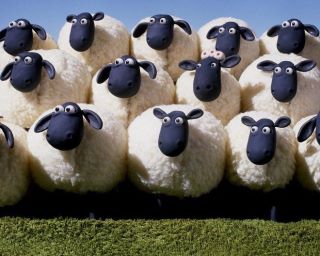
We have a choice whether we would like to be a Jesus SHEEP or not, and we also have a choice whether we would like to remain his sheep to the very end. At no point do we lose our free will. Let’s see what the Bible says about sheep.

Joshua was supposed to be like a shepherd to israel, but we know that despite of this important task directly from God, all israel did not obey Joshua or God’s commandments:

Numbers 27:14For ye rebelled against My commandment in the Desert of Zin, in the strife of the congregation, to sanctify Me at the water before their eyes.” (That is, the water of Meribah in Kadesh in the Wilderness of Zin.) 15And Moses spoke unto the LORD, saying, 16″Let the LORD, the God of the spirits of all flesh, set a man over the congregation, 17who may go out before them and who may go in before them and who may lead them out and who may bring them in, that the congregation of the LORD be not as sheep which have no shepherd.” 18And the LORD said unto Moses, “Take thee Joshua the son of Nun, a man in whom is the Spirit, and lay thine hand upon him; 19and set him before Eleazar the priest and before all the congregation, and give him a charge in their sight. 20And thou shalt put some of thine honor upon him, that all the congregation of the children of Israel may be obedient.

Despite of being God’s sheep, israel could cause God to anger due to their rebellion, and they were told to not harden their hearts. We can read that God was GRIEVED when they provoced him, tempted him and erred in their own hearts. We all make God grieve when we walk our own ways instead of his way.

Psalm 74:1 O God, why hast thou cast us off for ever? why doth thine anger smoke against the sheep of thy pasture?

Psalm 95:6O come, let us worship and bow down: let us kneel before the LORD our maker. 7For he is our God; and we are the people of his pasture, and the sheep of his hand. To day if ye will hear his voice, 8Harden not your heart, as in the provocation, and as in the day of temptation in the wilderness: 9When your fathers tempted me, proved me, and saw my work. 10Forty years long was I grieved with this generation, and said, It is a people that do err in their heart, and they have not known my ways: 11Unto whom I sware in my wrath that they should not enter into my rest.

We can read also in Isaiah that God has reasons to be angry and to show his wrath against a wicked people, who show much evil, arrogancy, pride and haughtiness – totally against his will. Sheep are compared with people who walk their own ways. Sheep often go astray but that is never the purpose of the shepherd. The shepherd would prefer that his sheep were always close by to pay attention to him and obey him.

Isaiah 13:11And I will punish the world for their evil, and the wicked for their iniquity; and I will cause the arrogancy of the proud to cease, and will lay low the haughtiness of the terrible. 12I will make a man more precious than fine gold; even a man than the golden wedge of Ophir. 13Therefore I will shake the heavens, and the earth shall remove out of her place, in the wrath of the LORD of hosts, and in the day of his fierce anger. 14And it shall be as the chased roe, and as a sheep that no man taketh up: they shall every man turn to his own people, and flee every one into his own land.

Isaiah 53:6 All we like sheep have gone astray; we have turned every one to his own way; and the LORD hath laid on him the iniquity of us all.

Matthew 26:31 Then saith Jesus unto them, All ye shall be offended because of me this night: for it is written, I will smite the shepherd, and the sheep of the flock shall be scattered abroad.

Jeremiah tells us about God’s people – his sheep israel – who unfortunately have been scattered due to false shepherds who have caused them to go astray. They have turned away and forgotten their restingplace. There is always a risk that “wolves in sheep’s clothing” can cause sheep to go astray, and sometimes these wolves don’t even need sheep’s clothing to cause people to err. The risk of being lost applies even if the sheep belong to God himself. God is powerful enough to “keep” his sheep, and God could easily cause all sheep (people) in the whole world to be his for good, but that would interfere with our free will which God prefers that we have. WE are responsible for making sure to abide to the true shepherd, and we are warned about false pastors which could cause us to go astray if we are not on our guard.

Jeremiah 23:1 Woe be unto the pastors that destroy and scatter the sheep of my pasture! saith the LORD.

Jeremiah 50:6 My people hath been lost sheep: their shepherds have caused them to go astray, they have turned them away on the mountains: they have gone from mountain to hill, they have forgotten their restingplace.

Jeremiah 50:17 Israel is a scattered sheep; the lions have driven him away: first the king of Assyria hath devoured him; and last this Nebuchadrezzar king of Babylon hath broken his bones.

Ezekiel makes an interesting prophesy about shepherds (and God’s own shepherds!) who have not been doing their job to take care of the sheep as God expects them to do, but instead they have kept feeding themselves. Ezekiel lists several things which these shepherds have failed to do, with the result that the sheep have become prey and scattered all over the earth. But God promises to step in sometime in the future, and take over. God will JUDGE the shepherds, because they have acted against God’s will and they are responsible for their neglect to take care of the flock. God will also judge between the flock itself, because not only are shepherds responsible for taking care of their sheep, but the sheep are responsible for listening to the shepherds.

Ezekiel 34:2—Thus saith the Lord GOD unto the shepherds; Woe be to the shepherds of Israel that do feed themselves! should not the shepherds feed the flocks? 3Ye eat the fat, and ye clothe you with the wool, ye kill them that are fed: but ye feed not the flock. 4The diseased have ye not strengthened, neither have ye healed that which was sick, neither have ye bound up that which was broken, neither have ye brought again that which was driven away, neither have ye sought that which was lost; but with force and with cruelty have ye ruled them. 5And they were scattered, because there is no shepherd: and they became meat to all the beasts of the field, when they were scattered. 6My sheep wandered through all the mountains, and upon every high hill: yea, my flock was scattered upon all the face of the earth, and none did search or seek after them. 7Therefore, ye shepherds, hear the word of the LORD; 8As I live, saith the Lord GOD, surely because my flock became a prey, and my flock became meat to every beast of the field, because there was no shepherd, neither did my shepherds search for my flock, but the shepherds fed themselves, and fed not my flock; 9Therefore, O ye shepherds, hear the word of the LORD; 10Thus saith the Lord GOD; Behold, I am against the shepherds; and I will require my flock at their hand, and cause them to cease from feeding the flock; neither shall the shepherds feed themselves any more; for I will deliver my flock from their mouth, that they may not be meat for them. 11For thus saith the Lord GOD; Behold, I, even I, will both search my sheep, and seek them out. 12As a shepherd seeketh out his flock in the day that he is among his sheep that are scattered; so will I seek out my sheep, and will deliver them out of all places where they have been scattered in the cloudy and dark day. 13And I will bring them out from the people, and gather them from the countries, and will bring them to their own land, and feed them upon the mountains of Israel by the rivers, and in all the inhabited places of the country. —16I will seek that which was lost, and bring again that which was driven away, and will bind up that which was broken, and will strengthen that which was sick: but I will destroy the fat and the strong; I will feed them with judgment. 17And as for you, O my flock, thus saith the Lord GOD; Behold, I judge between cattle and cattle, between the rams and the he goats. 18Seemeth it a small thing unto you to have eaten up the good pasture, but ye must tread down with your feet the residue of your pastures? and to have drunk of the deep waters, but ye must foul the residue with your feet? 19And as for my flock, they eat that which ye have trodden with your feet; and they drink that which ye have fouled with your feet. 20Therefore thus saith the Lord GOD unto them; Behold, I, even I, will judge between the fat cattle and between the lean cattle.21Because ye have thrust with side and with shoulder, and pushed all the diseased with your horns, till ye have scattered them abroad

Jesus tells his disciples that he will be sending them as sheep among wolves, and warns them therefore that they must be wise. They are warned they must beware of men, because they could certainly interfere and harm them. Jesus tells his own believing disciples that they will be hated for his name’s sake but he that endures to the end shall be saved. Jesus didn’t give his sheep fake and meaningless warnings but in Matt 10:16–22 he explains to his disciples that they must be on their guard because of a real danger that lies ahead of them. If they don’t stay strong, they risk going astray and become lost. This is the opposite from saying “you will be safe no matter what because you’re my sheep”. There is no reason to tell people to beware of false prophets if they can never go astray.

Matthew 10:16Behold, I send you forth as sheep in the midst of wolves: be ye therefore wise as serpents, and harmless as doves. 17But beware of men: for they will deliver you up to the councils, and they will scourge you in their synagogues;— 22And ye shall be hated of all men for my name’s sake: but he that endureth to the end shall be saved.

Matthew 7:15 Beware of false prophets, which come to you in sheep’s clothing, but inwardly they are ravening wolves.

In Luke we can read:

Luke 15:4 What man of you, having an hundred sheep, if he lose one of them, doth not leave the ninety and nine in the wilderness, and go after that which is lost, until he find it?

But this doesn’t mean the man absolutely WILL find the sheep. It just means that he will never give up as long as their is a hope, just like a mother who will never give up on her lost child. The Father of the prodigal son never gave up on his lost son, but he didnt go out and force him to return. In Matthew we can read the same parable, but here we can read “IF so be that he finds it”, meaning that it’s not certain. IF a person repents from his sins, there will be lots of joy in heaven! We can read that the Father does not want ONE of those little one to perish. Jesus also gives very serious warnings concerning sins. He says that it’s better to pluck our eye out if it causes us to sin, so that we can escape HELL. He doesn’t say born again christians are excempted from this danger but he actually addresses his disciples, and all of us. Jesus came to save that which is LOST which would be all who have been guilty of sin, which are all who are aware of the law. Also read the parable which Matthew 18 ends with. A servant is cleansed from his debt (sins) and should have been a forever “forgiven sheep” of this King, but later the same already forgiven debt is put back on his shoulders once again when he (the servant) refuses to forgive another servant. The parable ends with declaring “35So likewise shall my heavenly Father do also unto you, if ye from your hearts forgive not every one his brother their trespasses”. This again, is a warning to all of us. God’s born again sheep are not excempted from this danger, but there is a risk that we refuse to forgive another person and thus jeopardize our salvation.

Matthew 18:9And if thine eye offend thee, pluck it out, and cast it from thee: it is better for thee to enter into life with one eye, rather than having two eyes to be cast into hell fire. 10Take heed that ye despise not one of these little ones; for I say unto you, That in heaven their angels do always behold the face of my Father which is in heaven. 11For the Son of man is come to save that which was lost. 12How think ye? if a man have an hundred sheep, and one of them be gone astray, doth he not leave the ninety and nine, and goeth into the mountains, and seeketh that which is gone astray? 13And if so be that he find it, verily I say unto you, he rejoiceth more of that sheep, than of the ninety and nine which went not astray. 14Even so it is not the will of your Father which is in heaven, that one of these little ones should perish..

Matthew 25 tells us about 5 foolish maids/virgins who forgot to bring enough oil with them to their lamps while waiting for the bride groom. This was their own responsibility, and had they acted like the other 5 virgins who brought enough oil with them, they would have been “sheep”, and they would not have been lost. We can also read about another parable about various amounts of talents, and about our own responsibility to make a high profit to present to the Owner. The rest of Matthew 25 tells us who the sheep are, as compared with the goats. The Bible doesn’t say “once sheep, always sheep”, but if we endure to the end we will be among the saved. Matthew 25 makes it clear that God’s sheep are those who DO GOOD. Many of us have been indoctrinated to believe that doing something (works) has nothing to do with our salvation, but it certainly does according to the Bible. We can forfeit our salvation if we refuse to show compassion with people around us, and neglect to DO GOOD towards them. This is again a serious warning to all of us. Some might suggest that sheep will naturally always do good, and goats will not, but this is certainly not always the case. It’s true that doing good should come very natural for a sheep, but unfortunately this is not always true. The sheep and the goats are not divided between those who believe in Jesus and those who do not, but among those who do good and those who do not. This is about fruit. YOU decide whether you are a sheep or a goat, and you show this with what you do. Sins will always place you among the goats, unless you repent. Stay strong and don’t let Satan win in your life. The Holy Spirit is your Helper and He can guide you. James says in James 2 that faith without works is dead so make sure you’re not only “praying” (which is a good thing) but also DOING something for the kingdom of God. Spreading his word and doing good to others.

Matthew 25:31 When the Son of man shall come in his glory, and all the holy angels with him, then shall he sit upon the throne of his glory: 32And before him shall be gathered all nations: and he shall separate them one from another, as a shepherd divideth his sheep from the goats: 33And he shall set the sheep on his right hand, but the goats on the left. 34Then shall the King say unto them on his right hand, Come, ye blessed of my Father, inherit the kingdom prepared for you from the foundation of the world: 35For I was an hungred, and ye gave me meat: I was thirsty, and ye gave me drink: I was a stranger, and ye took me in: 36Naked, and ye clothed me: I was sick, and ye visited me: I was in prison, and ye came unto me. 37Then shall the righteous answer him, saying, Lord, when saw we thee an hungred, and fed thee? or thirsty, and gave thee drink? 38When saw we thee a stranger, and took thee in? or naked, and clothed thee? 39Or when saw we thee sick, or in prison, and came unto thee? 40And the King shall answer and say unto them, Verily I say unto you, Inasmuch as ye have done it unto one of the least of these my brethren, ye have done it unto me. 41Then shall he say also unto them on the left hand, Depart from me, ye cursed, into everlasting fire, prepared for the devil and his angels: 42For I was an hungred, and ye gave me no meat: I was thirsty, and ye gave me no drink: 43I was a stranger, and ye took me not in: naked, and ye clothed me not: sick, and in prison, and ye visited me not. 44Then shall they also answer him, saying, Lord, when saw we thee an hungred, or athirst, or a stranger, or naked, or sick, or in prison, and did not minister unto thee? 45Then shall he answer them, saying, Verily I say unto you, Inasmuch as ye did it not to one of the least of these, ye did it not to me. 46And these shall go away into everlasting punishment: but the righteous into life eternal.

Jesus is our teacher, and the light of our lives

Mark 6:34 And Jesus, when he came out, saw much people, and was moved with compassion toward them, because they were as sheep not having a shepherd: and he began to teach them many things.   

Do read this article about John 10:28, and particularly verse 27 which identifies the sheep. Jesus sheep are those who LISTEN to him and FOLLOW him, so as long as we do this (Greek continuous tense), we are totally safe. Jesus is not going to put us away, but of course he doesn’t force us to remain with him – due to our free will.


“The wind bloweth where it listeth” in John 3:8, doesn’t mean God randomly regenerating people

The wind bloweth where it listeth, and thou hearest the sound thereof, but canst not tell whence it cometh, and whither it goeth: so is every one that is born of the Spirit (John 3:8) KJV

The wind blows where it wishes, and you hear the sound of it, but cannot tell where it comes from and where it goes. So is everyone who is born of the Spirit. (John 3:8) NKJV

This verse is about the wind and not about us. The verse suggests that the process of spiritual rebirth is an unseen thing which is related to God who is unseen – so that those watching cannot see the origin of the Spirit and the change wrought in the man.  The invisible God is naturally the source of spiritual rebirth – but he has set the criteria for when the spiritual rebirth occurs. Being born of God comes as a result of the spiritual rebirth, and the Bible says that when we come to God we must believe that our seeking will result in the encounter we seek – a close relationship with Jesus Christ and a transformed life – which is an unseen process LIKE THE WIND! We can’t see the wind directly, but indirectly we can see what the wind can do – when it blows through trees/bushes and when it moves loose objects on the ground.

Hebr. 11:6 But without faith it is impossible to please him: for he that cometh to God must believe that he is, and that he is a rewarder of them that diligently seek him.

This does not indicate that the spiritual rebirth happens out of the blue disconnected to any seeking on the part of the new Christian.  Calvinism, on the other hand, reverses the process of rebirth which is fatal, because it exempts human beings from the responsibility to seek and find God – since God does all this for them (if they are elect). God, in his kindness, responds to honest humble seeking on the part of a broken man, and he calls the lost for repentance. Those who are NOT lost don’t need to repent (the case could be that they have already repented for their sins), and again Jesus did not call that category –  the “non-lost” christians – to repentance but only the lost individuals! This totally refutes the calvinistic idea that Jesus died only for the elect, because the true christians here must surely be those that have repented for their sins and become cleansed in the blood of Jesus, and we can read in these verses that Jesus did not call them for repentance, but all OTHERS. The reason why he call all others for repentance, is because the others are already on safe ground.

Luke 15:7 I say unto you, that likewise joy shall be in heaven over one sinner that repenteth, more than over ninety and nine just persons, which need no repentance.

Matt. 9:13 But go ye and learn what that meaneth, I will have mercy, and not sacrifice: for I am not come to call the righteous, but sinners to repentance.

Man cannot find God without him  first having revealed himself to man, and he certainly has.

John 1:4 In him was life; and the life was the light of men.—8 He was not that Light, but was sent to bear witness of that Light.9 That was the true Light, which lighteth every man that cometh into the world.

Romans 1:20 For the invisible things of him from the creation of the world are clearly seen, being understood by the things that are made, even his eternal power and Godhead; so that they are without excuse:21 Because that, when they knew God, they glorified him not as God, neither were thankful; but became vain in their imaginations, and their foolish heart was darkened.22 Professing themselves to be wise, they became fools,23 And changed the glory of the uncorruptible God into an image made like to corruptible man, and to birds, and fourfooted beasts, and creeping things. 

Acts 17:26 And hath made of one blood all nations of men for to dwell on all the face of the earth, and hath determined the times before appointed, and the bounds of their habitation;27 That they should seek the Lord, if haply they might feel after him, and find him, though he be not far from every one of us:

It’s certainly true that we can’t enter the kingdom of God unless we are born again (from God who is above), and that’s why we should seek God, repent for our sins in order to be cleansed and become new persons. God did not send his son to condemn the world, but to SAVE the world, and he doesn’t want anyone to perish. However, he is not going to force us to confess our sins and repent, but he influences us by sending out prophets (as in the old testament) and his WORD in the gospel, with the hope that as many as possible will choose to come to him to get life. The context:

John 3:5Jesus answered, Verily, verily, I say unto thee, Except a man be born of water and of the Spirit, he cannot enter into the kingdom of God6That which is born of the flesh is flesh; and that which is born of the Spirit is spirit. 7Marvel not that I said unto thee, Ye must be born again. 8The wind bloweth where it listeth, and thou hearest the sound thereof, but canst not tell whence it cometh, and whither it goeth: so is every one that is born of the Spirit. 9Nicodemus answered and said unto him, How can these things be? 10Jesus answered and said unto him, Art thou a master of Israel, and knowest not these things? 11Verily, verily, I say unto thee, We speak that we do know, and testify that we have seen; and ye receive not our witness. 12If I have told you earthly things, and ye believe not, how shall ye believe, if I tell you of heavenly things? 13And no man hath ascended up to heaven, but he that came down from heaven, even the Son of man which is in heaven. 14And as Moses lifted up the serpent in the wilderness, even so must the Son of man be lifted up: 15That whosoever believeth in him should not perish, but have eternal life. 16For God so loved the world, that he gave his only begotten Son, that whosoever believeth in him should not perish, but have everlasting life17For God sent not his Son into the world to condemn the world; but that the world through him might be saved. 

Pelagius has been falsely judged by his critics

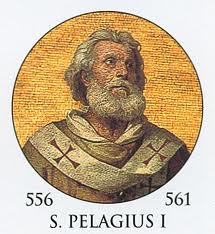
Unlike Augustine, Pelagius knew Greek. Pelagius did not teach that man can save himself. He only taught that a man can live a righteous life via free will choice. The idea that man can save himself is what came from Augustine’s accusations against him, as Calvinists do with Arminians today when they accuse them of teaching “works salvation”. True Pelagianism is truth according to what the early Church taught, not as Augustine described it. What Augustine described is without a doubt heresy, but it’s not what Pelagius actually taught. This is evident in the writings of Pelagius, as well as in the fact that the councils could find no fault in his teachings 2 times that he appeared before them in his own defense. When he was finally marked as a heretic the third time around, it was when he could not be present to defend himself (in Tunisia where Augustine resided) and Augustine and Jerome were present to misrepresent his position.

Most of the information we have about Pelagius rests in the hands of his enemies. That is not enough for a righteous judgment. If God judged us by the words of our enemies, we would be outraged at the injustice. It is unfair for us to condemn a man based on the evidence presented by his enemies, and not from the man himself. We would also be guilty of slander if we continue to claim that an innocent person is an “heretic” even though he might not be. Let’s be careful so God won’t judge us one day for slander, false accusations and causing division.

Pelagianism teaches only that man can choose to do right and choose not to sin. It does not teach that a person can be holy without God or His grace. This is a lie given through the heretic Augustine. Augustine was a liar seeking to have him condemned, as he was offended by his preaching against his teachings to the people. Augustine was teaching a “sinning religion”, and people were following it and living it. Pelagius could not stand for this heresy, so he began to teach against it. In his efforts he brought out the a man CAN choose to not sin, because he is not so spiritually dead that he could not make such a choice. Augustine turned this around with false accusations against him, misrepresenting him as if he was teaching that man could save himself. This is not what he was teaching at all. And his own writings prove it – which were not even discovered until this past century. Augustine tried to make sure of that by having them burned or destroyed, but a few slipped through the cracks. Now Augustine is exposed for the liar and gospel pervert that he is.

Calvinism began with Gnosticism – which is very clearly shown by many quotes given by the early Church. Tertullian and Hippolytus and Irenaeus all wrote extensively against the Gnostic groups, telling of the things they believed and how the Church has always disagreed with them, calling them heretics. Augustine was infested with Gnosticism, which Calvin also adopted.

Here is a quote from an article below on the Letter to Demetrius:

“The moral life of purity, for Pelagius, can only be achieved by drawing upon both “the good of nature and the good of grace” (9:1); this will be the dominant theme of his exhortation. Pelagius’s reflections on the human person are not unlike those of the Eastern Fathers. They share the same starting point of moral reflection, that is, the innate goodness of man because God has created him in His image and likeness. Pelagius writes, “you ought to measure the good of human nature by reference to its Creator” (2:2).”

The above quote shows the balanced thought of Pelagius teaching. His accusers only point out that he taught “the good of nature” and the “innate goodness of man”, and completely leave out the blanche of his teaching that tells of the “good of grace” and “because GOD has created him in His image and likeness”. Pelagius thought was in giving glory to God in His creation, in that men have a mind and free will to choose that has been given by the creator, which makes them able to choose to do right. Of course man has to know right and wrong first, but the ability is with him once he knows the difference.

Prior to Pelagius being ‘found’ guilty of heresy, he was cleared by two synods of bishops. These synods were provoked by Augustine’s influence. Then the council of Carthage, where Augustine was bishop, declared Pelgius a heretic. A few years later, Augustine and two others brought heresy charges against Pelagius to the bishop of Rome. Pelagius was cleared again, a third time. The bishop of Rome declared Pelagius a heretic a few years later under pressure from Imperial Rome and not before that time. It was perceived that the effects of Pelagius’ doctrine would undermine Imperial rule and so political pressure was then applied and the bishop of Rome declared Pelagius a heretic. Another interesting note is that Pelagius was well received and there was generally no problem with his teaching. The charges against him only arose when some one else, Caelestius, who was building on Pelagian teaching denounced infant baptism. Then and only then the problem arose. Infant baptism was under assault – if they were not born guilty and therefore did not need to be baptized to be saved then ecclesiastical power structure was going to be undermined. That kick started the whole controversy against Pelagius: they synods and councils did not occur until the implications of his teaching threatened infant baptism. See Peter Brown’s “Augustine of Hippo” there are 3 chapters that deal with Augustine-Pelagian controversy that document everything posted.

Pelagius is often ascribed views he doesn’t have

From Jesse Morell:

Matt Slick of CARM wrote that “Pelagianism…. taught that people had the ability to fulfill the commands of God by exercising the freedom of human will apart from the grace of God.  In other words, a person’s free will is totally capable of choosing God and/or to do good or bad without the aid of Divine intervention.”[29] This is an example, not of Pelagian heresy, but of Pelagian hearsay.

I would suspect that Matt Slick learned about Pelagianism from its opponents, and not from actually reading the writings of the Pelagians. This is a common practice for Calvinists, but what if that is how their doctrine was treated? What if someone stated what Calvinism teaches, by stating the opponents? Augustine accused Pelagius of denying the grace of God, but this was an accusation not a fact.

Had Matt Slick actually read some of the few writings that still exist today from the original Pelagians, he would have read in Julian of Eclanum’s Pelagian Statement of Faith: “We [Pelagians] maintain that men are the work of God, and that no one is forced unwillingly by His power either into evil or good, but that man does either good or ill of his own will; but that in a good work he is always assisted by God’s grace, while in evil he is incited by the suggestions of the devil.”[30]

Pelagius himself said, “I anathematize the man who either thinks or says that the grace of God, whereby ‘Christ Jesus came into the world to save sinners,’ is not necessary not only for ever hour and for every moment, but also for every act of our lives: and those who endeavor to dis-annul it deserve everlasting punishment.”[31]

Pelagius said, “This grace we do not allow to consist only in the law but also in the help of God. God helps us through His teaching and revelation by opening the eyes of our heart, by pointing out to us the future so that we may not be preoccupied with the present, by uncovering the snares of the devil, by enlightening us with the manifold and ineffable gift of heavenly grace.”[32]

Pelagius said, “God always aids by the help of his grace. God aids us by his doctrine and revelation, while he opens the eyes of our heart; while he shows us the future, that we may not be engrossed with the present; while he discloses the snares of the devil; while he illuminates us by the multiform and ineffable gift of heavenly grace. Does he who says this, appear to you to deny grace? Or does he appear to confess both divine grace and the freewill of man?”[33]

Pelagius said in a letter to Innocent, “Behold, before your blessedness, this epistle clears me, in which we directly and simply say, that we have entire freewill to sin and not to sin, which, in all good works, is always assisted by divine aid. Let them read the letter which we wrote to that holy man, bishop Paulinus, nearly twelve years ago, which perhaps in three hundred lines supports nothing else but the grace and aid of God, and that we can do nothing at all of good without God. Let them also read the one we wrote to that sacred virgin of Christ, Demetrias, in the east, and they will find us so praising the nature of man, as that we may always add the aid of God’s grace. Let them likewise read my recent tract which we were lately compelled to put forth on freewill, and they will see how unjustly they glory in defaming us for denial of grace, who, through nearly the whole text of that work, perfectly and entirely profess both free will and grace.”[34]

Pelagius taught that the freedom of the human will was not lost by the original sin of Adam, but that grace was necessary for man to rightly use his free will. He also taught that free will itself was a gracious gift given to us at Creation. He did not deny grace as necessary or as an aid for free will. The only grace he denied was Augustinian grace, which said that free will was lost by original sin and therefore man’s ability to obey needed to be restored by grace. However, one of the best Greek-English Lexicons, Thayer’s, defined grace as “divine influence upon the heart” which is precisely how Pelagius viewed grace in contradiction to Augustine.

It was Augustine’s view of grace that was inconsistent with free will, not Pelagius’. As Augustine said, “I have tried hard to maintain the free choice of the human will, but the grace of God prevailed.”[35] Pelagius affirmed both the freedom of the will and the necessity for the grace of God, while Augustine denied the freedom of the will because of His mistaken view of grace.

This is why John Wesley said, “I verily believe, the real heresy of Pelagius was neither more nor less than this: The holding that Christians may, by the grace of God, (not without it; that I take to be a mere slander,) ‘go on to perfection;’ or, in other words, ‘fulfill the law of Christ.’”[36] And also “Who was Pelagius? By all I can pick up from ancient authors, I guess he was both a wise and a holy man.”[37]

John Wesley said, “Augustine himself. (A wonderful saint! As full of pride, passion, bitterness, censoriousness, and as foul-mouthed to all that contradicted him… When Augustine’s passions were heated, his word is not worth a rush. And here is the secret: St. Augustine was angry at Pelagius: Hence he slandered and abused him, (as his manner was,) without either fear or shame. And St. Augustine was then in the Christian world, what Aristotle was afterwards: There needed no other proof of any assertion, than Ipse dixit: “St. Augustine said it.”[38]

On the issue of the freedom of the will, Pelagius was in perfect agreement with the Early Church while Augustine was in agreement with the heretical Gnostics:

Dr Wiggers said, “All the fathers…agreed with the Pelagians, in attributing freedom of will to man in his present state.”[39]

Episcopius said, “What is plainer than that the ancient divines, for three hundred years after Christ, those at least who flourished before St. Augustine, maintained the liberty of our will, or an indifference to two contrary things, free from all internal and external necessity!”[40]

Catholic councils that calvinists appeal to

There were three councils that condemned Pelagianism; the Council of Ephesus in the year 431; the Council of Carthage in the year 418; and the Council of Orange in the year 529. This is because Pelagius was not invited nor present to defend himself but his opponents and adversaries stated his doctrine for him. When Pelagius was able to defend himself, the Council of Diospolis in 415 declared Pelagius orthodox. And Pope Zosimus also declared Pelagius’ orthodoxy in 417. He was always acquitted when present to clarify and defend his views. If these are our authorities to determine orthodoxy, do we accept the ones in favor of Pelagius or the ones against him?

In addition, the Council of Orange and the Council of Carthage were not ecumenical councils. They did not consist of Bishops from the entire church, which mean that the rulings of the Councils were not universally affirmed by the Eastern and Western churches.

If heresy is heresy because a council says so, or because of majority vote, Calvinism must be more heretical than Pelagianism was because there were more councils that condemned Calvinism than condemned Pelagianism. The Calvinist doctrines of predestination, limited atonement, and irresistible grace were condemned throughout history. Lucidus was condemned by the Council of Oral in 473, Council of Arles in 475, and Council of Orange in 529. And Gottschalk (Gotteschalcus) was condemned by the Council at Mentz in 848 and the Council of Chiersey (Quiercy) in 849. And what do Calvinists think of the Council of Constance in 1414 for John Huss, or the Council of Worms in 1521 for Martin Luther, or the Council of Trent in 1561 for the Protestants? Are these Councils not the voice of Orthodoxy as Ephesus and Carthage supposedly were?

In fact, the Council of Orange that condemned Pelagianism also condemned the doctrines of Calvinism. If the council is authoritative in the former case, it must be equally authoritative in the latter as well. But if it was mistaken in the latter case, maybe it was mistaken in the former as well. Tony Miano essential condemns his own theology by appealing to church councils and assuming their authority.

Many thanks to Lyndon Conn, Joshua Harris and Jesse Morell

God did not hate Esau before he was born – Romans 9:13

As it is written, Jacob have I loved, but Esau have I hated (Rom 9:13)

The question then becomes, did Esau behave the way he did because God hated him, or did God hate him because of the way Esau chose to behave?

Jacob and Esau are not only individuals but they are also PEOPLE and/or NATIONS. This is important to remember in order to not read things into Romans 9 which are not stated. Romans 9 is not about individuals being elected TO BELIEVE, but it’s about a people who has sprung up from individuals, and it’s the line of Jacob which is chosen (for good reasons) to bring forth the Messiah. Most importantly it’s about a person who rejected his birthright and still expected to get it when it was time to receive the blessing. Paul made the comparison with the jews – which Romans 9 is about – who expected to inherit the Kingdom because they are born jews. We can also read from the context that God did NOT arbitrarily hate one of the twin brothers for no reason at all.

The LORD said to her, “Two nations are in your womb, and two peoples from within you will be separated; one people will be stronger than the other, and the older will serve the younger.” (Gen. 25:23)

There is no indication of anything good or bad about either of the children at this point. The nations arising from each will be separated, and one of these nations will be stronger than the other. The nation arising from the older of the two children will at some point end up serving the nation arising from the younger. The individual Esau never served the younger. Also note that God did not hate Esau before he was born, or while he was a child. Children are neutral and they can’t choose between good and bad. Paul says that they are not all Israel which are Israel, and by that he means that children of Abraham are those who BELIEVE like he did and who don’t live as the children of the flesh, and it was also the seed of Abraham which would bring forth the Messiah through Isaac. A person is not saved just because he is born a jew and has the law, but due to his choice to trust God and show fruit.

Rom 9:6Not as though the word of God hath taken none effect. For they are not all Israel, which are of Israel: 7Neither, because they are the seed of Abraham, are they all children: but, In Isaac shall thy seed be called. 8That is, They which are the children of the flesh, these are not the children of God: but the children of the promise are counted for the seed.

According to Paul, babies are neutral and can’t do either good or bad, and Paul speaks about “election” (which is not an election “to believe”) and highlights that the jews should not believe that the law (works) can save them since they in that case must never break one single commandment. It’s accepting the call of God that saves a person.

Rom 9:11(For the children being not yet born, neither having done any good or evil, that the purpose of God according to election might stand, not of works, but of him that calleth;) 12It was said unto her, The elder shall serve the younger.

Gen. 25:27 And the boys grew: and Esau was a cunning hunter, a man of the field; and Jacob was a plain man, dwelling in tents. 28 And Isaac loved Esau, because he did eat of his venison: but Rebekah loved Jacob.

Hebrews 12 15Looking diligently lest any man fail of the grace of God; lest any root of bitterness springing up trouble you, and thereby many be defiled; 16Lest there be any fornicator, or profane person, as Esau, who for one morsel of meat sold his birthright17For ye know how that afterward, when he would have inherited the blessing, he was rejected: for he found no place of repentance, though he sought it carefully with tears.

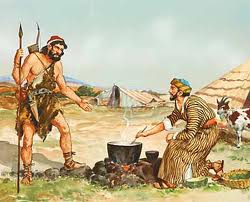
Above in Hebrews we can see that Paul is warning people for not making the right decision when it comes to their lives styles, LEST they might fail of the grace of God, LEST they might be defiled and LEST they might end up like Esau who made a VERY bad choice to, among other things sold his birthright for a meal. We can see why Esau was rejected, and that is because “he found no place of repentance”, indicating that something wasn’t right in his heart, and maybe he didn’t regret his choice to sell his birthright until he realized what was at stake and that it would slip out of his hands. Esau knew better than that but he had to accept the consequences of his actions. Esau was also known as Edom. There is a book called Obadiah and the focus of Obadiah is on Edom/Esau, and the reason God hated Esau is stated here:

Pride of heart, v. 3
Because of the violence against Jacob, v. 10
For not intervening on behalf of Jacob when that people was under attack, v. 11
For looking down on his brother in the day of his misfortune, v. 12
For entering the destroyed city and participating in the ransacking, v. 13
For ambushing their fugitives, v. 14

Obadiah 1: 8Shall I not in that day, saith the LORD, even destroy the wise men out of Edom, and understanding out of the mount of Esau? 9And thy mighty men, O Teman, shall be dismayed, to the end that every one of the mount of Esau may be cut off by slaughter. 10For thy violence against thy brother Jacob shame shall cover thee, and thou shalt be cut off for ever.

Romans 9:13 refers back to Malachi and there we can read:

Mal 1:2I have loved you, saith the LORD. Yet ye say, Wherein hast thou loved us? Was not Esau Jacob’s brother? saith the LORD: yet I loved Jacob, 3And I hated Esau, and laid his mountains and his heritage waste for the dragons of the wilderness. 4Whereas Edom saith, We are impoverished, but we will return and build the desolate places; thus saith the LORD of hosts, They shall build, but I will throw down; and they shall call them, The border of wickedness, and, The people against whom the LORD hath indignation for ever.5And your eyes shall see, and ye shall say, The LORD will be magnified from the border of Israel.

“They”. The entire people that came from Esau are being spoken of as being hated. Thus, when Paul quotes Malachi in Romans 9, he is referring to what happened to the people, not to the individual sons. The quote “Jacob I have loved but Esau have I hated” has to do with the nations that came from the brothers. In Obadiah, the reasons for this hatred from God are clearly shown. Did God hate Esau personally? He very well may have, and the despising of the birthright is used in Hebrews as evidence of his godlessness. This godlessness, and his marriage to pagan wives, would have affected not only his children, but their children and the children after them as well, in agreement with what we read in

Ex. 20:5 Thou shalt not bow down thyself to them [idols], nor serve them: for I the Lord thy God am a jealous God, visiting the iniquity of the fathers upon the children unto the third and fourth generation of them that hate me

Amos 6:8 The Lord GOD has sworn by himself, says the LORD the God of hosts, I abhor the excellency of Jacob, and hate his palaces: therefore will I deliver up the city with all that is in it.