Tag Archive | Free will

God’s will is not always done – Bible verses

Bible verses which show that God’s will can change depending on man’s actions

Man’s free will is even more obvious in the Bible than the trinity (which is VERY obvious) and we can be read about man’s free will from the first page of the Bible to the last. Below are just a few examples. One would think that the obvious FACT that people so often have hardened their hearts against God and rebelled against Him, would be proof enough that God’s will does not always happen, but strangely enough there are people who don’t feel this is clear at all. Believe it or not, but they believe that God predestines/causes/forces/decrees people to rebel against him! If this is true, then we would just be doing God’s will by being wicked and rebellious, and we really should be rewarded for doing His will instead of getting punished for something which is totally out of our control. The word “sovereign” is not in the Bible (KJV) but isn’t our Lord powerful enough to create man with free will? Or is this too difficult for Him? Wouldn’t God be in control even though man has free will? The Bible is a book FULL of examples of people who are NOT obeying God, resulting in God’s wrath against them! If man does not have free will, then GOD is to be blamed for our actions. If we are born “totally depraved” as some think (another unbiblical expression) then whose fault is that? Are we “totally depraved” according to God’s will or against his will? Where did this depravity come from, if not by God? Please close your “reformed” type of books with all kinds of gnostic claims which deceive you, and open up your Bible and see what it says. If I go for a walk with my dog and decide to let it loose for a  while, can we say that the dog has overpowered me and made me lose control over it against my will? Did the dog remove some of my sovereignty? Did I lose control over the situation even though I’m well aware of the likely behavior of my dog, including the tiny risk that it might find a rabbit and chase it?

New Testament

Matt 11:20 Then began he to upbraid the cities wherein most of his mighty works were done, because they repented not:21Woe unto thee, Chorazin! woe unto thee, Bethsaida! for if the mighty works, which were done in you, had been done in Tyre and Sidon, they would have repented long ago in sackcloth and ashes.

Matt 12:41 The men of Nineveh shall rise in judgment with this generation, and shall condemn it: because they repented at the preaching of Jonas; and, behold, a greater than Jonas is here.

Matt 21:32 For John came unto you in the way of righteousness, and ye believed him not: but the publicans and the harlots believed him: and ye, when ye had seen it, repented not afterward, that ye might believe him.

Matt 17:17 Jesus answered and said, O faithless and perverse generation, how long shall I be with you? how long shall I suffer you?  

Matt 15:6 …And you voided the commandment of God by your tradition.

Matt 23:37.O Jerusalem, Jerusalem, thou that killest the prophets, and stonest them which are sent unto thee, how  often would I have gathered thy children together, even as a hen gathereth her chickens under her wings, and ye would not!

Mark 7:13 making the Word of God of no effect through your tradition which you have delivered. And you do many such things.

Mark 3:35 whosoever shall DO THE WILL OF GOD, the same is my brother, and my sister, and mother.

Luke 7:30 But the Pharisees and lawyers rejected the counsel of God for themselves, not having been baptized by him

Jn. 7:17 Jesus said, If any man will do his will

Acts 7:51 Ye stiffnecked and uncircumcised in heart and ears, ye do always resist the Holy Ghost: as your fathers did, so do ye. 

Acts 8 Repent therefore of this thy wickedness, and pray God, if perhaps the thought of thine heart may be forgiven thee. For I perceive that thou art in the gall of bitterness 

Romans 1:18 For the wrath of God is revealed from heaven against all ungodliness and unrighteousness of men, who hold the truth in unrighteousness; 19Because that which may be known of God is manifest in them; for God hath shewed it unto them. 20For the invisible things of him from the creation of the world are clearly seen, being understood by the things that are made, even his eternal power and Godhead; so that they are without excuse 21Because that, when they knew God, they glorified him not as God, neither were thankful; but became vain in their imaginations, and their foolish heart was darkened. 22Professing themselves to be wise, they became fools,—: 25Who changed the truth of God into a lie, and worshipped and served the creature more than the Creator, who is blessed for ever. Amen.  28And even as they did not like to retain God in their knowledge, God gave them over to a reprobate mind, to do those things which are not convenient; 29Being filled with all unrighteousness, fornication, wickedness, covetousness, maliciousness; full of envy, murder, debate, deceit, malignity; whisperers, 30Backbiters, haters of God, despiteful, proud, boasters, inventors of evil things, disobedient to parents, 31Without understanding, covenantbreakers, without natural affection, implacable, unmerciful: 32Who knowing the judgment of God, that they which commit such things are worthy of death, not only do the same, but have pleasure in them that do them.

1 Tim. 5:12 Having damnation, because they have cast off their first faith.

1 Thess 4 brethren, we urge and exhort in the Lord Jesus that you should abound more and more, just as you received from us how you OUGHT to walk and to PLEASE GOD.. Therefore he who rejects this does not REJECT man, but GOD, who has also given us His Holy Spirit.

1 Peter 4:2 That he no longer should live the rest of his time in the flesh to the lusts of men, BUT to the will of God.

2 Cor 5: 19 God was in Christ reconciling the world to Himself, not imputing their trespasses to them, and has committed to us the word of reconciliation. Now then, we are ambassadors for Christ, as though GOD WERE PLEADING through us: we implore you on Christ’s behalf, BE RECONCILED TO GOD.”

1 John 2:7 And the world passeth away, and the lust thereof: but he that doeth the will of God abideth for ever.

Revelation 2:21 And I gave her space to repent of her fornication; and she repented not.22 Behold, I will cast her into a bed, and them that commit adultery with her into great tribulation, except they repent of their deeds.

Old Testament

Zechariah 7: 11 But they refused to hearken, and pulled away the shoulder, and stopped their ears, that they should not hear. 12Yea, they made their hearts as an adamant stone, lest they should hear the law, and the words which the Lord of hosts hath sent in his spirit by the former prophets: therefore came a great wrath from the Lord of hosts. 13Therefore it is come to pass, that as he cried, and they would not hear; so they cried, and I would not hear, saith the Lord of hosts: 

Exodus 13:17 And it came to pass, when Pharaoh had let the people go, that God led them not through the way of the land of the Philistines, although that was near; for God said, Lest peradventure the people repent when they see war, and they return to Egypt

Numbers 14:27 How long shall I bear with this evil congregation, which murmur against me?

Hos. 4:6 My people are destroyed for lack of knowledge: because thou hast rejected knowledge, I will also reject thee, that thou shalt be no priest to me: seeing thou hast forgotten the law of thy God, I will also forget thy children

Isa. 5:Now will I sing to my wellbeloved a song of my beloved touching his vineyard. My wellbeloved hath a vineyard in a very fruitful hill:And he fenced it, and gathered out the stones thereof, and planted it with the choicest vine, and built a tower in the midst of it, and also made a winepress therein: and he looked that it should bring forth grapes, and it brought forth wild grapes.And now, O inhabitants of Jerusalem, and men of Judah, judge, I pray you, betwixt me and my vineyard.What could have been done more to my vineyard, that I have not done in it? wherefore, when I looked that it should bring forth grapes, brought it forth wild grapes?And now go to; I will tell you what I will do to my vineyard: I will take away the hedge thereof, and it shall be eaten up; and break down the wall thereof, and it shall be trodden down:And I will lay it waste: it shall not be pruned, nor digged; but there shall come up briers and thorns: I will also command the clouds that they rain no rain upon it.For the vineyard of the Lord of hosts is the house of Israel, and the men of Judah his pleasant plant: and he looked for judgment, but behold oppression; for righteousness, but behold a cry.

Isa.1:2 I have nourished and brought up children, and they have rebelled against me?

Isa 1:19 If ye be willing and obedient, ye shall eat the good of the land: But if ye refuse and rebel, ye shall be devoured...

Isa.66:3 Regarding those who would not hearken to the Lord, God said “I gave them up unto their own hearts lust: and they walked in their own counsels

Gen. 6:5 it repented the Lord that he had made man on the earth

Exodus 32:14 And the LORD repented of the evil which he thought to do unto his people

1 Samuel 15:11 It repenteth me that I have set up Saul to be king: for he is turned back from following me, and hath not performed my commandments. And it grieved Samuel; and he cried unto the LORD all night.

Lev 26:23 IF YOU WILL NOT be reformed by me by these things, but will walk contrary unto me; THEN will I also walk contrary unto you.”

Jeremiah 8:5Why then is this people of Jerusalem slidden back by a perpetual backsliding? they hold fast deceit, they refuse to return. 6I hearkened and heard, but they spake not aright: no man repented him of his wickedness, saying, What have I done? every one turned to his course, as the horse rusheth into the battle. — 9The wise men are ashamed, they are dismayed and taken: lo, they have rejected the word of the LORD; and what wisdom is in them? 

Jeremiah 15:6 Thou hast forsaken me, saith the LORD, thou art gone backward: therefore will I stretch out my hand against thee, and destroy thee; I am weary with repenting evil that I thought to do unto them.

Jeremiah 26:3 If so be they will hearken, and turn every man from his evil way, that I may repent me of the evil, which I purpose to do unto them because of the evil of their doings.

Jeremiah 32:35 And they built the high places of Baal, which are in the valley of the son of Hinnom, to cause their sons and their daughters to pass through the fire unto Molech;which I commanded them not, neither came it into my mind, that they should do this abomination, to cause Judah to sin.

Jeremiah 42:10 If ye will still abide in this land, then will I build you, and not pull you down, and I will plant you, and not pluck you up: for I repent me of the evil that I have done unto you.

Eze:33:11-16 As surely as I live, says the Sovereign LORD, I take no pleasure in the death of wicked people. I only want them to turn from their wicked ways so they can live. Turn! Turn from your wickedness, O people of Israel! Why should you die? Son of man, give your people this message: The righteous behavior of righteous people will not save them if they turn to sin, nor will the wicked behavior of wicked people destroy them if they repent and turn from their sins. When I tell righteous people that they will live, but then they sin, expecting their past righteousness to save them, then none of their righteous acts will be remembered. I will destroy them for their sins. And suppose I tell some wicked people that they will surely die, but then THEY turn from their sins and do what is just and right. If the wicked restores the pledge, gives back that which he has stolen, walks in the statutes of life, WITHOUT SINNING; he shall surely live, he shall not die. None of their past sins will be brought up again, for they have done what is just and right, and they will surely live.”

Ezekiel 18:30 Therefore I will judge you, O house of Israel, every one according to his ways, saith the Lord GOD. Repent, and turn yourselves from all your transgressions; so iniquity shall not be your ruin.

Ezekiel 36:32 Not for your sakes do I this, saith the Lord GOD, be it known unto you: BE ASHAMED and confounded FOR YOUR OWN WAYS, O house of Israel.

Jonah 3:10 And God saw their works, that they turned from their evil way; andGod repented of the evil, that he had said that he would do unto them; and he did it not.

Ps. 81:11. Yea, they have chosen their own ways

Ps. 7:9 Oh let the wickedness of the wicked come to an end; but establish the just: for the righteous God trieth the hearts and reins. My defence is of God, which saveth the upright in heartGod judgeth the righteous, and God is angry with the wicked every day.

Ps. 78 That they might set their hope in God, and not forget the works of God, but keep his commandments: And might not be as their fathers, a stubborn and rebellious generation; a generation that set not their heart aright, and whose spirit was not stedfast with God. 

Ecclesiastes 7:29 Lo, this only have I found, that God hath made man upright; but they have sought out many inventions. 

Theological Development Through the Scriptures (from PinPoint Evangelism)

Genesis 2:19
Now the Lord God had formed out of the ground all the beasts of the field and all the birds of the air. He brought them to the man to see what he would name them

From this passage, what was God’s reason to bringing the animals to man? It appears by the language used, God didn’t know what Adam would in fact name each animal; this appears to be the point being made.& is correct, then this could not be the actual reason why God performed this act, and the wording of Scripture becomes vague.

Genesis 18:20-21
The  outcry  against  Sodom  and Gomorrah is so great and their sin  so grievous that  I will  go down and see if what they gave done is as bad as the outcry that has reached me.  If not, I will know.

This verse is truly a stumper if absolute foreknowledge is true. God himself states quite openly that he will do something (go down) in order for him to know something. Now did he know it before he went or not?  How can God use the future tense when addressing his knowledge?  To say that God already knew but the wording is just saying that he will also know in the future does violence to language not to mention that it is stating the obvious. God uses language as we do.  To do anything else would be utter folly. How could God faithfully communicate with man if he pulled a Clinton speak.  If God’s word usage is different that ours is, we  have a communication dilemma of the first order. (The analysis of this story provides wonderful insights into God’s nature and will be the subject of another paper altogether.)

Genesis 22:12
“Do not lay a hand on the boy“, he said. “Do not do anything to him.  Now I know that you fear God, because you have not withheld from me your son, your only son.”

Here again God states that he has just learned something.  Some scholars try to get around this by stating that the angel who delivered this message was interjecting his own opinion. Well if this is the case, then Abraham didn’t withhold his only son from the angel.  This is clearly preposterous, but it shows the length that theologians will go to in order not to change their theology.  God tested Abraham to know what he would do.

Exodus 4:8
Then the Lord said, “If they do not believe you or pay attention to the first miraculous sign, they may believe the second. But if they do not believe these two signs or listen to you, take some water from the Nile and pour it on the dry ground.

They MAY believe!  Why is God giving Moses all of these contingencies?  If God knew exactly how the Egyptians were going to react, then these instructions make little sense. Was he trying to give Moses the false belief that He didn’t know exactly how things were going to turn out? Remember that this is God instructing Moses. This sounds like plan A, B and C.

Exodus 13:17-18
When  Pharaoh let the people  go, God did not lead them  on the road through the Philistine country, though that was  shorter.  For God said, “If they face war, they might change their minds and return to Egypt.”

So God led the people around by the desert road toward the Red Sea. This passage seems to let us in on God’s deliberation of how he is going route the nation of Israel.  It clearly says that the reason God didn’t take the most direct route was that the people “might” turn back. Here we see that God knows and inderstands the people’s hearts and their “probable” reaction to a war at this point, but clearly the outcome is not certain. Remember, this is God speaking as it is in quotation marks. God made the people take the long route through the desert because he was not sure of what the outcome would have been had he not.

Exodus 16:4
In this way I will test them and see whether they will follow my instructions.

Why does God test us?  Theologians say that it is for our sakes and not God’s. This is indeed strange.  Do you learn anything in a test, or does that which is already in you become manifest. Clearly the schoolteacher doesn’t expect a student to learn from a test.  A test is to determine what a student already knows.  Now some may say that we cannot relate a school teacher’s knowledge to that of God, and I would indeed  agree.  However, this Scripture appears to correlate the two.  God tested them in order to find something out. Are we going to say that God already knew, but he wanted to stimulate his sense of vision?

Numbers 14:11-12
The Lord said to Moses, “How long will these people that me with contempt?  How long will they refuse to believe in me, in spite of all the miraculous signs I have performed among them?”  I will strike them down with a plague and destroy them, but I will make you into a nation greater and stronger then they.

Here we see God asking questions of Moses that we can confidently conclude that Moses didn’t have the answers to. Clearly God knew that Moses didn’t have the answers.  Why then was God making these comments?  Could it be to show his breaking heart?  Why would God ask these questions when he already knew the answer?  The final point is even more curious.  God states emphatically that he will do something that he knew that he would never do.  God didn’t strike them down with a plague, and he didn’t make Moses’s descendants greater and stronger than Abraham’s.  So, if God knew that these were all false statements, were does these lead us?  Did God mislead, lie to, and manipulate Moses?  If you cling to absolute foreknowledge, you are in fact leveling this charge whether you want to or not.

Numbers 14:30
Not one of you will enter the land I swore with uplifted hand to make your home, except Caleb son of Jephunneh and Joshua son of Nun.

Here again we see God reneging on a promise.  Now if God knew when he made the promise that he would not keep it, then he lied to the people. He gave them a false hope that he knew he would later dash to pieces. God even swore with an uplifted hand to do something that he knew he wouldn’t ever do. Where does this leave us?  If this is true, can we ever trust in a promise of God?  Does believing God require more stupidity than faith?

Deuteronomy 8:2
Remember how the Lord your God led you all the way in the desert these forty years, to humble you and to test you in order to know what was in you heart, whether or not you would keep his commands.

Here again we bring up the whole testing issue.  This appears to be quite plainly stated.  Does our theology call God a liar?  Why did God humble and test the people?  A forty year long test appears to be a bit over the top if God already knew everything.  If God already knew what was in their heart, then I think God owes the people an apology.

Deuteronomy 13:3
The Lord your God is testing you to find out whether you love him with all your heart and with all your soul.

Ditto.
Judges 2:22
I will use them to test Israel and see whether they will keep the way of the Lord and walk in it as their forefathers did.

Judges 3:4
They were left to test the Israelites to see whether they would obey the Lord’s commands, which he had given their forefathers through Moses.

Does anyone think that this passage is talking about literal sight?  While this test does involve observation, it is not for observation purposed only.  For completeness however, the Judges 3 passage has a dual purpose as stated by God.  The first was to train the Israelites for battle (v2), and the second was to “see” what they would do as far as obeying God’s command (v4).

I Samuel 23:10-13
David said, ”O Lord, God of Israel, your servant has heard DEFINITELY that Saul plans to come to Keilah and destroy the town on account of me.  Will the citizens of Keilah surrender me to  him?   Will  Saul come down  as your servant  has  heard?   O Lord, God  of Israel, tell your servant.”   And  the  Lord said,  “He  will.”  Again  David asked,  “Will  the  citizens  of  Keilah surrender me and my men to Saul?” And the Lord said, “They will.”  So David and his men, about six hundred in number, left Keilah and kept moving from place to place. When Saul was told that David had escaped from Keilah, he did not go there.

Now  what  do  we  have  here? David  asks  God two  very  direct  questions  and got two  direct answers.  David asked would the town be destroyed.  God said ‘Yes’.  David also asked would the  people  of the town  give  him over to Saul.   God again  said  ‘Yes’.  However,  none  of his happened.  Didn’t God know what David was going to do?  Was God misleading David?  Upon hearing this, Saul didn’t even go to the town that God said that he would destroy.  Why didn’t David simply throw up his hands and cry, “Woe is me”, when God told him his future?  Why did God tell David how things would be if he in fact knew that they would never be?  How can God say that Saul will go to the town and not be in error when Saul never goes?  Is God lying to David or just “pulling his leg”?  The obvious answer is that if David stayed there, these things would have happened.  David obviously didn’t believe that God’s knowledge of the future was unalterable or he would have just sat there and succumbed to his fate.   No, David knew what God  said would happen if  he  didn’t  change  something.  He also  knew that if  he  did change something, what God said would not happen and would be invalid.  The future is open!

I Kings 20:42
“This  is  what  the  Lord  says:  ‘You  have  set  free  a  man  that  I  had  determined  should  die, therefore, it is your life for his life, your people for his people.’”

God  determined  something  knowing that there was  no  possible way of it happening?   Also, “therefore” is a contingent word, but if God knew absolutely that he would spare the king, then there is no contingency about this or any other act.  God simple determined that he should die, and made up this scenario to justify his actions.  This is clearly a false statement, but what else could this mean?

II Chronicles 32:31
But when the envoys were sent by the rulers of Babylon to ask him about the miraculous sign that had occurred in the land, God left him to test him and to know everything that was in his heart.

Again, wrongo!  God didn’t leave him to know anything!  What kind of radial theology is this! God already knows everything from eternity, from before the foundations of the world!  We need to rewrite the Bible and take out all of this bad theology and these misleading passages.

Jeremiah 3:7
I thought  that  after  she  had  done  all  this  she  would  return  to  me  but  she  did  not,  and  her unfaithful sister Judah saw it.

This passage appears to have God admitting to a mistake in his knowledge. Was God mistaken? What about absolute foreknowledge of all future events, how could this be?  How can God think one thing  about the  future, be incorrect, and still  have  absolute  foreknowledge of all future events?

Jeremiah 3:19
I thought you would call me ‘Father’ and not turn away from following me.  But like a woman unfaithful to her husband, so you have been unfaithful to me, O house of  Israel, declares the Lord.

What!  We have found another passage that needs to be expunged from the Bible!  Clearly the thought of God being mistaken about the future acts of man cannot be true!  Heresy, I say!

Jeremiah 7:31
They have build the high places of Topheth in the Valley of Ben Hinnom to burn their sons and daughters in the fire – something I did not command, nor did it enter my mind.

Jeremiah 19:5
They  have  built the  high  places  of Baal to  burn their  sons in the fire as offerings to Baal  – something I did not command or mention, nor did it enter my mind.

Jeremiah 32:35
They built high places for Baal in the Valley of Ben Hinnom to sacrifice their sons and daughters to Molech, though  I  never commanded,  nor did it enter my mind, that they  should  do  such  a detestable thing and so make Judah sin.

All of these verses state the same thing.  Now I will be serious for a moment. God states that this thought ever entered his mind.  What can this mean except God did not think that man could stoop to  such  a level as to  do this horrendous thing.  Will you accept what God says about himself in his Word, or will you refuse to believe it, instead clinging on to what man’s tradition has told you is an attribute of God? Remember that the only concept of God that is correct is one that can be determined through the Scriptures.   Omniscience is  not  found in the Bible.  God knowing the future is never directly stated.  Some verses may appear on the surface to imply this attribute, but an implied attribute must square with all Scripture.  If it does not, the implication of God’s  character  or essence  is  incorrect.  If your logical  conclusions derived from selected Scriptures do not harmonize with other Scriptures, then you need to reconsider your theology. Do not wave your hands and try to explain away passages with obvious meanings.

Jeremiah 26:2-3
Tell them everything I command you do not omit a word.  Perhaps they will listen and each one will turn from his evil way.

“Perhaps”,  what  kind  of  word is this  for  God to  be  using?   This passage again  alludes to a contingent event, but our theology states that God knows absolutely what the outcome of the event will be.   To a god with  absolute foreknowledge no event is  contingent all events are absolute.  If this is indeed the case, why does God address man with contingent language?   Is God trying to portray an idea that is false? Would the prophet think that with such language that it was vitally important to not omit a word?  In the end, the people did not listen, so why did God have Jeremiah do this, to justify his own actions, to make the guilty guiltier?

Let me make one additional point here.  God  knows absolute reality.  If to God there are no contingent events (a  mandatory conclusion if absolute foreknowledge is true), the absolute eternal truth is that there are no contingent events.  If you believe that your future is contingent, then you must be deceived. It matters not how God knows the future and who determines it.  If God knows the outcome, then that outcome must occur. Therefore the concept of contingency is lunacy. Everything is  fate.  If  you think that the future is  open, then you cannot believe in absolute foreknowledge.  For centuries,  theologians  have been  arguing  if  we  are  free to determine our future or does God decree it.  This is unimportant for the discussion at hand.  If the future is fixed, then regardless of how it was fixed, it is fixed.  Your future has been determined absolutely,  and  you  have no  other choice except to walk those steps.  Your  future  has  been known, and therefore cannot be altered if God knows it unchangeably.

Ezekiel 20:6 & 15
On that day I swore to them that I would bring them out of Egypt into a land I had searched out for them, a land flowing with milk and honey, the most beautiful of all lands. Also with uplifted hand I swore to them in the desert that I should not bring them into the land I had given them – a land flowing with milk and honey, most beautiful of all lands.

These passages reiterate one listed earlier, but they are listed here for more clarity.  Here God stated he searched out an area for the people knowing before the search which area it would be, and that the people would never see it. Strange actions indeed.  He then swore to them with an uplifted hand that he would so something, and then later  raised his hand again and swore the opposite.  Now did God mean it when he swore the first time or just the second?  How could he be sincere the first time if he knew inevitably that he could never do it?  Do we start to have a credibility problem with God?  How do we know when he tells us something that he will indeed do it and not renege?

Ezekiel 22:30
I looked for a man among them who would build up the wall and stand before me in the gap on behalf of the land so I would not have to destroy it, but I found none.

Did God just have some time to burn off so he performed a useless search?  Was God’s heart in the search since before he commenced searching, he knew what the outcome would be?  Was he constrained to search to prove a point?  The question is: Why does God do futile things?

Ezekiel 33:13
If I tell the righteous man that he will surely live, but then he trusts in his righteousness and does evil, none of the righteous things he has done will be remembered, he will die for the evil he has done.

Again, we have more credibility problems with God.  He states emphatically that someone will live when he knows when he gives the statement that it could be false.  Then if someone takes God at his word (that he will live) and lets his guard down, he then risks death.  What kind of message is this?  If God tells you something, don’t believe it?

Psalms 69:28, Exodus 33:32
May they be blotted out of the book of life and not be listed with the righteous. But now, please forgive their sin – but if not, then blot me out of the book you have written.  The Lord replied to Moses, “Whoever has sinned against me I will blot out of my book.”

In the first verse we see that David has a notion that God will write someone’s name in the book of life, and at some later date, that person might be removed. Now if God knows absolutely who is going to be saved before he created the world, then what is the point of a holy eraser?  Where did David get such an idea?  Well one place might have been Moses.  Somehow, Moses had bad theology.  But wait, it appears that God propagated that bad theology.  God didn’t just let Moses’ theology  stand, but he compounded it even further.   The  fruit of  this theology is found in Revelation 3:5 when John the Apostle reiterated this idea thousands of years later.

Revelation 3:5
He who overcomes will, like them, be dressed in white.   I will never blot out his name from the book of life, but will acknowledge his name before my Father and his angels.

The obvious converse of this passage is that non-overcomers will be blotted out.  Interesting!

What is not meant by the denial of absolute foreknowledge

By denying God knows the future free will choices of man, it is not assumed that God doesn’t know certain future events.  Clearly God has prophesied future events that have come to pass.

These events however could be spoken of as certainties previous to the event, because God has the power to do whatever he so wills.  Nothing can stop his plan.  Therefore, if God decided to have  Jesus  born in Bethlehem,  no force in the  universe  could thwart  his  plan.   He therefore knows the future act absolutely because he has determined to cause the event to occur when the time has been fulfilled.  This is how a Calvinist views every event.  However, I believe Scripture shows that this is the exception and not the rule.

The denial of absolute foreknowledge also does not mean that God does not know everything. Clearly Scripture teaches that God has  full and complete knowledge of everything that exists (I John 3:20).  The question therefore is, does the future exist?  If you decide that the future does in fact exist in some manner as related to God, then it is incumbent on the reader to prove such a position.  This position cannot be simply assumed.  If in fact the future does not exist, then it is not incumbent upon God to know it.

Now this is not to say that God couldn’t have created a world in which he did know the future, but that he did not.  One could ask themselves, if in this world God knows all  future free actions, how would a world where he didn’t know differ from it?  How would the Bible be worded differently?

Sealed UNTO the day of redemption, but a seal can be broken Eph. 4:30

 And grieve not the holy Spirit of God, whereby ye are sealed UNTO the day of redemption (Eph. 4:30)

Based on the Greek text, the latter part of the above sentence can be translated “by whom you were sealed FOR the day of redemption”. The preposition “for” is a translation from the Greek word εἰς (eis, Strong’s 1519) and apart from “for” it can mean into, in, among and till. The text does not say “sealed and saved unconditionally all the way UNTIL the day of redemption no matter the conduct”. Were sealed” in the verseis a translation from ἐσφραγίσθητε (esphragisthēte, Strong’s 4972).

There is nothing that suggests that a seal can absolutely not be tampered with. When someone places a seal on something – like the one in the picture above to the left – he doesn’t do this with the idea that no one can remove the seal, but rather to show a unique mark and/or ownership of something. The aim might very well be to see the seal untouched until there is a proper time to remove it, but there is no guarantee that it will remain as it is until that day.

The Greek word sphragizó can mean seal, or set a seal upon, or mark with a seal. We are indeed uniquely “marked” when we as christians have the Holy Spirit in our lives, and we are separate and different from those without this mark. The word is from sphragís (a seal) – to seal (affix) with a signet ring or other instrument to stamp (a roller or seal). “Sealing” in the ancient world served as a “legal signature”, and it was sometimes done by the use of religious tattoos – again signifying “belonging to”. The same word is used for the stone which was blocking the grave of Jesus – and which  was later REMOVED.

2 Cor. 122Who hath also SEALED us, and given the earnest of the Spirit in our hearts.

Matt. 27:66So they went, and made the sepulchre sure, SEALING the stone, and setting a watch.

Rev.  10:4And when the seven thunders had uttered their voices, I was about to write: and I heard a voice from heaven saying unto me, Seal up those things which the seven thunders uttered, and write them not.

The book of Ephesians talks about a corporate election and about the promised future for the body of Christ. The CHURCH or the BODY OF CHRIST was predestined, before the creation of the world, to enter the Kingdom of God and inherit the promises. The question is if we as individuals choose to belong or not.

Eph. 1:22And hath put all things under his feet, and gave him to be the head over all things to the CHURCH23Which is his BODY, the fulness of him that filleth all in all.

Eph. 4:4There is one body, and one Spirit, even as ye are called in one hope of your calling;—  16From whom the whole body fitly joined together and compacted by that which every joint supplieth, according to the effectual working in the measure of every part, maketh increase of the body unto the edifying of itself in love.

Eph. 1:13In whom ye also trusted, after that ye heard the word of truth, the gospel of your salvation: in whom also after that ye believed, ye were sealed with that holy Spirit of promise14Which is the earnest of our inheritance until the redemption of the purchased possession, unto the praise of his glory.

or:

In Him, you also, after listening to the message of truth, the gospel of your salvation – having also believed, you were sealed in Him with the Holy Spirit of promise, who is given as a pledge of our inheritance, with a view to the redemption of God’s own possession, to the praise of His glory. Do not grieve the Holy Spirit of God, by whom you were sealed for the day of redemption (Eph. 1:13, 14; 4:30).

Read the many warnings in the same chapter of Ephesians 4. The warnings are addressed to believers. The sealing of the Holy Spirit is conditional since we can “grieve” and eventually “insult” the Spirit of Grace which means total apostasy.

Hebr. 10 29Of how much sorer punishment, suppose ye, shall he be thought worthy, who hath trodden under foot the Son of God, and hath counted the blood of the covenant, wherewith he was sanctified, an unholy thing, and hath done despite unto the Spirit of grace?

Only believers can possess the Holy Spirit and no one can enter the Kingdom of God without the Spirit. He is therefore the guarantee of an inheritance for believers and not unbelievers. Through union with Christ we are “predestined” to adoption and an inheritance as children of God, being “joint heirs” with Christ (Eph. 1:5, 10-11, cf. Rom. 8:17; Gal. 3:29; 4:7). This is what is in view when Paul speaks of being sealed “for the day of redemption”, but we must not assume that this sealing is unbreakable which the text does not claim.

What is a guarantee? Guarantee receipts normally have conditions which you can often read in the “fine print“. If you get a guarantee receipt for a certain product and you would like to make a claim, the store might request that you bring both the product and the receipt before they are willing to look at your claim. They might also request that you do this within a certain time frame and that you state what’s wrong with the product. Another example might be if someone buys you a bus ticket which guarantees that you will get to a certain city PROVIDED that 1) you don’t throw away your ticket, 2) that you embark the right bus on the right time, and 3) that you STAY ON the bus until it arrives at the destination. The BUS will arrive at the destination as promised, but the question is if YOU will choose to be among the bus passengers.

1 Samuel 16:14 But the Spirit of the LORD departed from Saul, and an evil spirit from the LORD troubled him.

Psalm 5:11 Cast me not away from thy presence; and take not thy holy spirit from me

A circumcision was also a “seal” for those under the old covenant.

Rom. 4:11 And he received the sign of circumcision, a SEAL of the righteousness of the faith which he had yet being uncircumcised: that he might be the father of all them that believe, though they be not circumcised; that righteousness might be imputed unto them also

This seal WAS broken and guaranteed nothing when those who were circumcised broke the covenant and were cut off from the people of God.

Rom. 2:25For circumcision verily profiteth, IF thou keep the law:but IF thou be a breaker of the law, thy circumcision is made uncircumcision. 26Therefore if the uncircumcision keep the righteousness of the law, shall not his uncircumcision be counted for circumcision? 27And shall not uncircumcision which is by nature, if it fulfil the law, judge thee, who by the letter and circumcision dost transgress the law?

As you can see, this seal was conditioned on continued faith and obedience. The Holy Spirit marks us as God’s children of the new covenant, but if we would totally abandon the faith and/or live in disobedience with no plan to repent, then the Holy Spirit might no longer have a reason to remain and then we are no longer sealed. Also circumcised (sealed) Jews were broken off through unbelief as Rom. 11 tells us.

Acts. 5:32And we are his witnesses of these things; and so is also the Holy Ghost, whom God hath given to them that obey him.

John 14:15If ye love me, keep my commandments.16And I will pray the Father, and he shall give you another Comforter, that he may abide with you for ever

Rom. 8:9But ye are not in the flesh, but in the Spirit, IF so be that the Spirit of God dwell in you. Now if any man have not the Spirit of Christ, he is none of his. 10And IF Christ be in you, the body is dead because of sin; but the Spirit is life because of righteousness.

Rom. 11:16 For if the firstfruit be holy, the lump is also holy: and if the root be holy, so are the branches.17 And if some of the branches be broken off, and thou, being a wild olive tree, wert grafted in among them, and with them partakest of the root and fatness of the olive tree;18 Boast not against the branches. But if thou boast, thou bearest not the root, but the root thee.19 Thou wilt say then, The branches were broken off, that I might be grafted in.20 Well; because of unbelief they were broken off, and thou standest by faith. Be not highminded, but fear:21 For if God spared not the natural branches, take heed lest he also spare not thee.22 Behold therefore the goodness and severity of God: on them which fell, severity; but toward thee, goodness, if thou continue in his goodness: otherwise thou also shalt be cut off.23 And they also, if they abide not still in unbelief, shall be grafted in: for God is able to graft them in again.

God speaks of the Israelites who “grieved” His Holy Spirit in their rebellion. These Jews were cut off from the promise of entering God’s rest and they became God’s enemies.

Isaiah 6310But they rebelled, and vexed his holy Spirit: THEREFORE he was turned to be their enemy, and he fought against them. — 14As a beast goeth down into the valley, the Spirit of the LORD caused him to rest: so didst thou lead thy people, to make thyself a glorious name.

In the NT the “rest” is the eternal rest that all believers will attain. The book of Hebrews continually speak of the promise of eternal rest, in combination with WARNINGS to believers not to miss out on this promised rest through hardening their hearts in unbelief, just as the Israelites did who rebelled against God during the Exodus.

Hebr. 3:6But Christ as a son over his own house; whose house are we, if we hold fast the confidence and the rejoicing of the hope firm unto the end7Wherefore (as the Holy Ghost saith, To day if ye will hear his voice, 8Harden not your hearts, as in the provocation, in the day of temptation in the wilderness: 9When your fathers tempted me, proved me, and saw my works forty years. 10Wherefore I was grieved with that generation, and said, They do alway err in their heart; and they have not known my ways. 11So I sware in my wrath, They shall not enter into my rest.) 12Take heed, brethren, lest there be in any of you an evil heart of unbelief, in departing from the living God. 13But exhort one another daily, while it is called To day; lest any of you be hardened through the deceitfulness of sin. 14For we are made partakers of Christ, if we hold the beginning of our confidence stedfast unto the end; 15While it is said, To day if ye will hear his voice, harden not your hearts, as in the provocation. 16For some, when they had heard, did provoke: howbeit not all that came out of Egypt by Moses. 17But with whom was he grieved forty years? was it not with them that had sinned, whose carcases fell in the wilderness? 18And to whom sware he that they should not enter into his rest, but to them that believed not? 19So we see that they could not enter in because of unbelief.

Hebr. 4:1Let us therefore fear, lest, a promise being left us of entering into his rest, any of you should seem to come short of it. 2For unto us was the gospel preached, as well as unto them: but the word preached did not profit them, not being mixed with faith in them that heard it. 3For we which have believed do enter into rest, as he said, As I have sworn in my wrath, if they shall enter into my rest: although the works were finished from the foundation of the world. 4For he spake in a certain place of the seventh day on this wise, And God did rest the seventh day from all his works. 5And in this place again, If they shall enter into my rest. 6Seeing therefore it remaineth that some must enter therein, and they to whom it was first preached entered not in because of unbelief: 7Again, he limiteth a certain day, saying in David, To day, after so long a time; as it is said, To day if ye will hear his voice, harden not your hearts. 8For if Jesus had given them rest, then would he not afterward have spoken of another day. 9There remaineth therefore a rest to the people of God. 10For he that is entered into his rest, he also hath ceased from his own works, as God did from his. 11Let us labour therefore to enter into that rest, lest any man fall after the same example of unbelief.

Hebr. 6: 11And we desire that every one of you do shew the same diligence to the full assurance of hope unto the end: 12That ye be not slothful, but followers of them who through faith and patience inherit the promises.

Jude 1:5I will therefore put you in remembrance, though ye once knew this, how that the Lord, having saved the people out of the land of Egypt, afterward destroyed them that believed not

The word “called” below in Gal. 1:6 is the same word as in Rom. 8:30 – καλέω (kaleó Strong’s 2564). Paul marvels at the fact that some Galatians despite being called are deserting Christ and turning to another gospel. Paul noticed that these Galatians were true believers who were apostatizing from the faith. Despite being chosen, called elect they risked falling away. If kaleo refers to the elect in Rom 8:30 then it must also refer to the elect in Gal 1:6.

Galatians 1:6 I marvel that ye are so soon removed from him that CALLED you into the grace of Christ unto another gospel:7 Which is not another; but there be some that trouble you, and would pervert the gospel of Christ.8 But though we, or an angel from heaven, preach any other gospel unto you than that which we have preached unto you, let him be accursed.

If you’re trapped in Calvinism, do read about the contradictions within TULIP here.

Church Fathers

The Shepherd of Hermes 6(72):3 I say unto him, “Sir, now then show me concerning those that have given up their rods, what manner of man each of them is, and their abode, that when they hear this, they that believed and have received the seal and have broken it and did not keep it sound may fully understand what they are doing, and repent, receiving from thee a seal, and may glorify the Lord, that He had compassion upon them and sent thee to renew their spirits.”

Clement 7:6 For as concerning them that have not kept the seal, He saith,`Their worm shall not die, and their fire shall not be quenched, and they shall be for a spectacle unto all flesh’. 

Clement 8:6 So then He meaneth this, Keep the flesh pure and the seal unstained, to the end that we may receive life.

Also Romans 9 shows man’s free will

Romans 9 – the calvinists´favorite

Let’s go through the whole chapter.

1I say the truth in Christ, I lie not, my conscience also bearing me witness in the Holy Ghost, 2That I have great heaviness and continual sorrow in my heart. 3For I could wish that myself were accursed from Christ for my brethren, my kinsmen according to the flesh:4Who are Israelites; to whom pertaineth the adoption, and the glory, and the covenants, and the giving of the law, and the service of God, and the promises;  5Whose are the fathers, and of whom as concerning the flesh Christ came, who is over all, God blessed for ever. Amen. 

Paul apparently doesn’t believe that God has predestined some for heaven and some for hell, because he says he wish he were accursed for the sake of his kinsmen (the jews) even though not all of them have faith in Jesus as the Messiah. If God the Father didn’t intend for Jesus to die for ALL people but only SOME (the lucky elect) then why would Paul desire to die for people who are not christians? It wouldn’t make sense for Paul to be willing to die for people who Jesus would not be willing to die for. Paul also seems  to be unaware of that (if he were a calvinist) that things turn out exactly as God has planned from before the creation of the world, so to have “heaviness” and “continual sorrow” would be puzzling emotions. Why feeling sorry for people who will end up (heaven or hell) exactly where God wants them to end up? Paul has no business feeling sorry for people who God doesn’t feel sorry for.  Then again, limited atonement is not Biblical!

 6Not as though the word of God hath taken none effect. For they are not all Israel, which are of Israel: 7Neither, because they are the seed of Abraham, are they all children: but, In Isaac shall thy seed be called. 8That is, They which are the children of the flesh, these are not the children of God: but the children of the promise are counted for the seed 9For this is the word of promise, At this time will I come, and Sarah shall have a son.

Not all jews are the children of Abraham even though they are related to him through his blood. Only those who are of the “promise” are counted for the seed, and they are of FAITH. Abraham himself showed his faith through his deeds, and he was considered righteous for this reason. The promised Messiah came through his bloodline and through Sarah who was the free woman (and not through Hagar who was a servant and not free).

Gal. 3:7 Know ye therefore thatthey which are of FAITH, the same are the children of Abraham. And the scripture, foreseeing that God would justify the heathen through faith, preached before the gospel unto Abraham, saying, In thee shall all nations be blessed.So then they which be of FAITH are blessed with faithful Abraham.

10And not only this; but when Rebecca also had conceived by one, even by our father Isaac; 11(For the children being not yet born, neither having done any good or evil, that the purpose of God according to election might stand, not of works, but of him that calleth;)

The fact that children who are still in the womb have not done any good or evil, implies that the sinful nature is not true since babies are viewed as neutral. We can read about “election” here, but note that it’s not about electing individuals TO BELIEVE. The children in question are Jacob and Esau and they are not only individuals but also NATIONS and PEOPLE. God chose the seed of Jacob to bring forth the Messiah. Esau rejected his birthright (which is usually given to the first born) but still expected to maintain it when it was time to get the blessing from his Father, whereas Jacob took actions to lay hold of the birthright. A parallel can be made with the jews who expected to inherit the Kingdom just because they were born as jews and “God’s chosen people“. Paul tells them that salvation doesn’t work that way, but that we are rather saved by FAITH (proven by deeds) and this promise is also for the gentiles.

12It was said unto her, The elder shall serve the younger. 13As it is written, Jacob have I loved, but Esau have I hated.

Did the person Esau ever serve the younger person Jacob? No, not at any point in his life did he serve him. However, the PEOPLE who came forth from Esau did serve the people who came forth from Jacob. God had good reasons to hate Esau, both as an individual and as a people. Read more about Jacob and Esau here.

14What shall we say then? Is there unrighteousness with God? God forbid. 15For he saith to Moses, I will have mercy on whom I will have mercy, and I will have compassion on whom I will have compassion. 16So then it is not of him that willeth, nor of him that runneth, but of God that sheweth mercy.

The point here is that it’s God’s prerogative to arrange his salvation plan in any way he wants, and he certainly doesn’t need to ask man for permission to do it. The jews might feel that they should have an advantage since they are the chosen ones who the Law was given to and since they are of the seed of Abraham and Jacob, but Paul explains that this is not so. The salvation offer is also given to the gentiles, and we are not saved by being born a jew or by obeying the jewish ceremonial Law, but by faith in Jesus Christ who died for the world. Notice also that it doesn’t say that God doesn’t want to show mercy on all. What it does say is that GOD decides on whom he will show mercy. Does God have the right to show mercy based on CONDITIONS? Yes absolutely,  and the text doesn’t say that he provides mercy on individuals UNCONDITIONALLY. We know from elsewhere in Romans and in the rest of the Bible that we are saved upon conditions, and those conditions are faith and repentance. If God wants to show mercy and compassion on those who have repentant hearts –  and not on those with unrepentant hearts – then he may do so, and he would not be unrighteous for doing so. We can read that God uttered those words (about mercy) to Moses, and we know that God had conditions on the Israelites and chose to not show mercy on those who rebelled against him.

17For the scripture saith unto Pharaoh, Even for this same purpose have I raised thee up, that I might shew my power in thee, and that my name might be declared throughout all the earth. 18Therefore hath he mercy on whom he will have mercy, and whom he will he hardeneth.

Pharao hardened his heart several times before God did. God has the right to harden hearts that are unwilling to conform to him (harden even more). See my blog post about Pharao here.

19Thou wilt say then unto me, Why doth he yet find fault? For who hath resisted his will? 20Nay but, O man, who art thou that repliest against God? Shall the thing formed say to him that formed it, Why hast thou made me thus?

“Who are thou that repliest against God?” we are asked. This means we should NOT reply against God and argue with him, right? Has it ever happened in history that people still HAVE replied against him? YES! There are numerous examples of this in the Bible, and not only that – but there are angels and human beings who have even REBELLED against him! Does God want people to rebel against him? Of course not! Each time people reply against God and rebel against him it’s AGAINST his will. We are being disobedient to God by rebelling against him. So this text is not what people cannot do, but what they SHOULD NOT do. And let’s not forget that the context is still that GOD alone has the right to bring about his salvation plan in any way he wants. The text doesn’t say that God always directs our steps and forces us (predestines us) to walk his way.

Isa 45:9 Woe unto him that striveth with his Maker! Let the potsherd strive with the potsherds of the earth. Shall the clay say to him that fashioneth it, What makest thou? or thy work, He hath no hands?

Yes, woe unto him because he acts against the will of God by striving with his maker which he is not supposed to do.

21Hath not the potter power over the clay, of the same lump to make one vessel unto honour, and another unto dishonour? 22What if God, willing to shew his wrath, and to make his power known, endured with much longsuffering the vessels of wrath fitted to destruction: 23And that he might make known the riches of his glory on the vessels of mercy, which he had afore prepared unto glory, 24Even us, whom he hath called, not of the Jews only, but also of the Gentiles?

The context is still that the salvation offer is also given to the gentiles. We can read that God could have chosen to “endure with much longsuffering” the vessels of wrath fitted to destruction. Why would we read terms such as “endure” and “longsuffering” as though the vessels had a will of their own and put up a resistance against God? If God predestines all things that come to pass, then surely he is able to bring them to pass without struggle, and with no need to “endure” with “much longsuffering”? We can also read below that we are expected to purge ourselves, and if we choose to do so then we will be a vessel unto HONOR! If we struggle against God and make it hard for him to conform us to what he wants, then we are fitted for destruction (we have fitted ourselves for destruction) and our right place is on the scrap heap, BUT for our sake he might choose to endure with much long-suffering. Which vessels are the ones made unto honor? Could it be those who have repentant hearts and who are willing to conform? Which  vessels are the ones unto dishonor? Could it be those with rebellious hearts and who are unwilling to conform? The vessels who choose to conform are the same as the vessels of mercy, and they are the ones which are prepared beforehand to enter the Kingdom of God. Now, it’s up to us to purge ourselves so that we can become vessels of mercy, and the wonderful promises will then apply to us.

2 Tim 2:20 But in a great house there are not only vessels of gold and of silver, but also of wood and of earth; and some to honour, and some to dishonour. 21 If a man therefore PURGES HIMSELF from these, he shall be a vessel unto HONOUR,sanctified, and meet for the master’s use, and prepared unto every good work

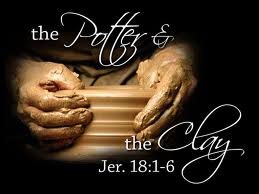
Jer 18:3Then I went down to the potter’s house, and, behold, he wrought a work on the wheels. 4And the vessel that he made of clay WAS MARRED in the hand of the potter: so he made it again ANOTHER VESSEL, as seemed good to the potter to make it.

Read my blog post about the potter and the clay here.

25As he saith also in Osee, I will call them my people, which were not my people; and her beloved, which was not beloved. 26And it shall come to pass, that in the place where it was said unto them, Ye are not my people; there shall they be called the children of the living God. 27Esaias also crieth concerning Israel, Though the number of the children of Israel be as the sand of the sea, a remnant shall be saved: 28For he will finish the work, and cut it short in righteousness: because a short work will the Lord make upon the earth. 29And as Esaias said before, Except the Lord of Sabaoth had left us a seed, we had been as Sodoma, and been made like unto Gomorrha. 30What shall we say then? That the Gentiles, which followed not after righteousness, have attained to righteousness, even the righteousness which is of faith. 31But Israel, which followed after the law of righteousness, hath not attained to the law of righteousness. 32Wherefore? Because they sought it not by faith, but as it were by the works of the law. For they stumbled at that stumblingstone; 33As it is written, Behold, I lay in Sion a stumblingstone and rock of offence: and whosoever believeth on him shall not be ashamed.

Here we can see the crux of the problem spelled out. The stumblingstone which the jews stumbled upon and which can separate them from God is JESUS CHRIST. The jews were at risk to miss God’s salvation plan by continuing to reject the Messiah and that’s what Paul is so grieved about.  The condition for salvation is faith in Jesus and that might very well, to the jews’ surprise, exclude the jews and include the gentiles. The Jews assumed they were God’s chosen people and that salvation was limited to them. Above we can see that faith must precede in salvation and it’s the condition for salvation.  The Jews, who were God’s elect,  sought to reach salvation through keeping the law rather than by faith.  Nothing is said here about God’s choice in salvation but ONLY about “men” having faith – NOT God giving faith to individuals. It doesn’t matter if you’re a Jew or Gentile, because God has sovereignly chosen to save all those who trust in Jesus for salvation.  

Romans 10:12-13 For there is no difference between the Jew and the Greek: for the same Lord over all is rich unto all that call upon him. For whosoever shall call upon the name of the Lord shall be saved.  

Romans 11:32 For God hath concluded them all in unbelief, that He might have mercy upon all.

Origen: “Therefore has He mercy on whom He will have mercy, and whom He will He hardens.” And certain of those who hold different opinions misuse these passages, themselves also almost destroying free-will by introducing ruined natures incapable of salvation, and others saved which it is impossible can be lost”

Before I formed you in the belly I knew you, says God to Jeremiah, Jer. 1:5

MageBefore I formed thee in the belly I knew thee; and before thou camest forth out of the womb I sanctified thee, and I ordained thee a prophet unto the nations (Jeremiah 1:5)

This verse shows God’s plans for Jeremiah before he was born, and it doesn’t imply that Jeremiah could not have resisted God’s purpose for him. The case could also be that God foreknew that Jeremiah would accept the ordination, and therefore expressed himself the way he did. Also Paul was appointed for a certain service, and he chose to not be disobedient to it.

Acts 26: 19Whereupon, O king Agrippa, I was not disobedient unto the heavenly vision20But shewed first unto them of Damascus, and at Jerusalem, and throughout all the coasts of Judaea, and then to the Gentiles, that they should repent and turn to God, and do works meet for repentance.

There are other verses in the book of Jeremiah that show that people can act in total contrast to God’s will.

Jeremiah 7:31 And they have built the high places of Tophet, which is in the valley of the son of Hinnom, to burn their sons and their daughters in the fire; which I commanded them not, NEITHER CAME IT INTO MY HEART.

Jeremiah 19:5 They have built also the high places of Baal, to burn their sons with fire for burnt offerings unto Baal, which I commanded not, nor spake it, NEITHER CAME IT INTO MY MIND.

The book of Jeremiah also contains many poetic and prophetic descriptions and analogies. There are many verses we can’t take literally. Just look at the rest of the text in the very same chapter; Jeremiah 1.

6Then said I, Ah, Lord GOD! behold, I cannot speak: for I am a child.

But children CAN speak if they are old enough, and surely Jeremiah wasn’t a child when he spoke to God?

8Be not afraid of their faces: for I am with thee to deliver thee, saith the LORD.

If God predestines everything that comes to pass, then God should really have said “I will make sure you will not be afraid of their faces” instead of warning/advising Jeremiah for not being afraid of their faces.

9Then the LORD put forth his hand, and touched my mouth. And the LORD said unto me, Behold, I have put my words in thy mouth.

Surely God didn’t literally use his hand of flesh and blood to touch Jeremiah’s mouth.

10See, I have this day set thee over the nations and over the kingdoms, to root out, and to pull down, and to destroy, and to throw down, to build, and to plant.

Is the idea that Jeremiah was supposed to literally do all those things, as in literally build something (buildings?) and PLANT something (seeds?) I don’t believe God’s words are hard to understand as long as we recognize the poetic and prophetic descriptions involved.

15For, lo, I will call all the families of the kingdoms of the north, saith the LORD; and they shall come, and they shall set every one his throne at the entering of the gates of Jerusalem, and against all the walls thereof round about, and against all the cities of Judah.

Are we supposed to believe that ALL families (100%) of the kingdoms of the north will come and set their thrones (literally?) at the entering of the gates of Jerusalem?

16And I will utter my judgments against them touching all their wickedness, who have forsaken me, and have burned incense unto other gods, and worshipped the works of their own hands.

Here we can read that God will judge those who have FORSAKEN him, burned incense to other gods and worshiped the works of their hands. Did God WANT them to forsake him, burn incense to other gods and worship the created things instead of their true Creator? Clearly not! Those things are nothing but SINS and God doesn’t want us to sin but to OBEY him. Since the people spoken of were disobedient, it shows man’s free will in action.

17Thou therefore gird up thy loins, and arise, and speak unto them all that I command thee: be not dismayed at their faces, lest I confound thee before them.

“Gird up thy loins” is a well-known idiom, and once more we can read here that God advises Jeremiah to NOT be dismayed at their faces. IF he would still choose to do this (LEST) God would in his turn confound Jeremiah before them. So whether God would confound Jeremiah or not depended on Jeremiah’s actions.

18For, behold, I have made thee this day a defenced city, and an iron pillar, and brasen walls against the whole land, against the kings of Judah, against the princes thereof, against the priests thereof, and against the people of the land.

God didn’t literally do all those things that particular day.

19And they shall fight against thee; but they shall not prevail against thee; for I am with thee, saith the LORD, to deliver thee.2Go and cry in the ears of Jerusalem, saying, Thus saith the LORD; I remember thee, the kindness of thy youth, the love of thine espousals, when thou wentest after me in the wilderness, in a land that was not sown.

In the next chapter Jeremiah 2, we can see more evidence of people acting against the will of God. 

5Thus saith the LORD, What iniquity have your fathers found in me, that they are gone far from me, and have walked after vanity, and are become vain?6Neither said they, Where is the LORD that brought us up out of the land of Egypt—7And I brought you into a plentiful country, to eat the fruit thereof and the goodness thereof; but when ye entered, ye defiled my land, and made mine heritage an abomination. 8The priests said not, Where is the LORD? and they that handle the law knew me not: the pastors also transgressed against me, and the prophets prophesied by Baal, and walked after things that do not profit.9Wherefore I will yet plead with you, saith the LORD, and with your children’s children will I plead.10For pass over the isles of Chittim, and see; and send unto Kedar, and consider diligently, and see if there be such a thing.11Hath a nation changed their gods, which are yet no gods? but my people have changed their glory for that which doth not profit.12Be astonished, O ye heavens, at this, and be horribly afraid, be ye very desolate, saith the LORD.13For my people have committed two evils; they have forsaken me the fountain of living waters, and hewed them out cisterns, broken cisterns, that can hold no water.—16Also the children of Noph and Tahapanes have broken the crown of thy head.17Hast thou not procured this unto thyself, in that thou hast forsaken the LORD thy God, when he led thee by the way?19Thine own wickedness shall correct thee, and thy backslidings shall reprove thee: know therefore and see that it is an evil thing and bitter, that thou hast forsaken the LORD thy God, and that my fear is not in thee, saith the Lord GOD of hosts.20For of old time I have broken thy yoke, and burst thy bands; and thou saidst, I will not transgress; when upon every high hill and under every green tree thou wanderest, playing the harlot.21Yet I had planted thee a noble vine, wholly a right seed: how then art thou turned into the degenerate plant of a strange vine unto me?22For though thou wash thee with nitre, and take thee much soap, yet thine iniquity is marked before me, saith the Lord GOD.23How canst thou say, I am not polluted, I have not gone after Baalim? see thy way in the valley, know what thou hast done: thou art a swift dromedary traversing her ways;—27Saying to a stock, Thou art my father; and to a stone, Thou hast brought me forth: for they have turned their back unto me, and not their face: but in the time of their trouble they will say, Arise, and save us.28But where are thy gods that thou hast made thee? let them arise, if they can save thee in the time of thy trouble: for according to the number of thy cities are thy gods, O Judah.29Wherefore will ye plead with me? ye all have transgressed against me, saith the LORD.30In vain have I smitten your children; they received no correction: your own sword hath devoured your prophets, like a destroying lion.31O generation, see ye the word of the LORD. Have I been a wilderness unto Israel? a land of darkness? wherefore say my people, We are lords; we will come no more unto thee? 32Can a maid forget her ornaments, or a bride her attire? yet my people have forgotten me days without number.—35Yet thou sayest, Because I am innocent, surely his anger shall turn from me. Behold, I will plead with thee, because thou sayest, I have not sinned.

It’s rather silly to ignore all the above examples of man thwarting God’s hopes and plans, as well as God pleading with man  (just like the rest of Jeremiah, and the rest of the BIBLE) and select one verse out of context just to support a certain doctrine. God could have created us with NO free will if he wanted, but seeing this would make us into robots, he apparently created us with Free Will and THAT would be a godly decision we could NOT change even if we wanted.

As many as were ordained to eternal life believed, but they were not FORCED Acts 13:48


ArkenAnd when the Gentiles heard this, they were glad, and glorified the word of the Lord: and as many as were ordained to eternal life believed (Acts 13:48)
This verse alone  doesn’t mention the criteria for God’s choice to ordain individuals, unlike many other verses which clarify that it’s our FAITH that is the criteria – which is something that is requested from us. Neither does this verse suggest that God’s appointing is the CAUSE for people’s faith. IF God is the one who chooses who will believe, then he is also the one we should blame each time a person does NOT believe – because lack of faith wouldn’t be anyone’s fault but God’s. If people are not able to believe unless God makes them believe, then God is guilty of preventing people from believing, and also for being in the same team as the devil – who is overjoyed when people don’t believe in God.

The word “ordain” is a translation from the Greek verb tasso (Strong’s 5021) – and the middle voice of this word is tetagmenoi (it’s not necessary to view this word as a perfect passive participle) – and “includes no idea of preordination or predestination of any kind” according to Adam Clark (Commentary on Acts 13:48). The word simply means “disposed” (to set in position), and therefore the verse could be translated “as many as were disposed (or who set themselves in such a disposition)to eternal life believed”.  Their disposition to receive the gospel is contrasted with the disposition of the Jews just two verse before, and the Jews had chosen another path.

Acts 13:46Then Paul and Barnabas waxed bold, and said, It was necessary that the word of God should first have been spoken to you: but seeing ye put it from you, and judge yourselves unworthy of everlasting life, lo, we turn to the Gentiles.

So those who judge themselves unworthy of everlasting life did not believe, but those who disposed themselves to eternal life believed, and whether they believed or not depended on whether their heart rejected or accepted the Gospel which was preached to them. Those who hardened their hearts did not believe, but those who softened their hearts did believe, and what made the difference was the disposition which they choose to have to the good tidings. If we won’t accept the offer of salvation, we are sending ourselves to hell and that is of course a very bad choice. God himself doesn’t want anyone to perish and he would like that we ALL should repent. This is the same story that we can read in Romans 1 and in the rest of the Bible.

Below we can read about a sorcerer who WITHSTOOD Paul and Barnabas and who apparently perverted the right ways of the Lord. With other words; God’s will doesn’t always happen.  

Acts 13:8But Elyma the sorcerer (for so is his name by interpretation) withstood them, seeking to turn away the deputy from the faith. 9Then Saul, (who also is called Paul,) filled with the Holy Ghost, set his eyes on him. 10And said, O full of all subtilty and all mischief, thou child of the devil, thou enemy of all righteousness, wilt thou not cease to pervert the right ways of the Lord?— 12Then the deputy, when he saw what was done, believed, being astonished at the doctrine of the Lord.

What would have happened if Paul and Barnabas would not be present to prevent the sorcerer from perverting God’s ways? Paul’s statements make is sound like this wasn’t the first time this sorcerer had perverted the right ways of the Lord. We can also read that the deputy started to believe due to what he saw. If men are elected to believe before the creation of the world, why did the deputy’s faith coincide with what he heard and saw? The Bible says faith comes from hearing the Word of God and we are expected to believe – particularly if we can see God’s works in actions.

Joh. 14:11Believe me that I am in the Father, and the Father in me: or else believe me for the very works’ sake.

We can read that the Word is sent to men and brethren, children of the stock of Abraham., and we can read that the Word is sent to “WHOSOEVER among you feareth God”. To fear is something we do and if God would have chosen a lucky few to believe in him, wouldn’t we rather be reading something like “And God will make sure he places godly fear in you so that you can believe”?

Acts 13:26Men and brethren, children of the stock of Abraham, and whosoever among you feareth God, to you is the word of this salvation sent.

GLAD TIDINGS are declared “unto you” and why would not “you” be those mentioned in the verse above and in the rest of verses in the same chapter?

Acts 13:32And we declare unto you glad tidings, how that the promise which was made unto the fathers33God hath fulfilled the same unto us their children, in that he hath raised up Jesus again; as it is also written in the second psalm, Thou art my Son, this day have I begotten thee.

Paul continues to address “men and brethren” and that the forgiveness of sins is preached unto them. We can also read that “ALL THAT BELIEVE are justified from all things”. This is an offer to all who believe. We are also warned “BEWARE THEREFORE, lest that come UPON YOU, which is spoken of in the prophets”. So even if Paul is making a wonderful promise to his listeners, there is also a condition for this promise because the risk is always that we can fall away if we don’t walk in the light:

Acts 13:38Be it known unto you therefore, men and brethren, that through this man is preached unto you the forgiveness of sins:39And by him all that believe are justified from all things, from which ye could not be justified by the law of Moses. 40Beware therefore, lest that come upon you, which is spoken of in the prophets;

Paul is telling us about despisers, who are those that perish. Does God want people to despise Him and to NOT believe in Him? No of course God wouldn’t want anyone to reject him or rebel against Him.  Moreover, we can read about further warnings from Paul and Barnabas who persuaded people to CONTINUE in the grace of God, which is not so certain they will:

Acts 13:41Behold, ye despisers, and wonder, and perish: for I work a work in your days, a work which ye shall in no wise believe, though a man declare it unto you.—43Now when the congregation was broken up, many of the Jews and religious proselytes followed Paul and Barnabas: who, speaking to them, persuaded them to continue in the grace of God.

Here again we can read that salvation is offered also to the gentiles and unto the ends of the earth. Not just a limited amount of people:

Acts 13:47For so hath the Lord commanded us, saying, I have set thee to be a light of the Gentiles, that thou shouldest be for salvation unto the ends of the earth.

Comments from various Bible scholars/teachers

The phrase “as many as were ordained to eternal life believed “can be compared with a statement such as “As many as were set for the test passed it”.  Friberg’s lexicon suggests it could mean “as many as had become disposed toward eternal life” , and Max Zerwick  “who had been set (in the way)” in Zerwick and Grosvenor’s  A Grammatical Analysis of the Greek New Testament. The NT lexicon BDAG suggests it means “to put in place”, and Henry Alford suggests it means “as many as were disposed” in  The Greek Testament. Thayer’s and Strong’s defines “τάσσω” as determined or disposed and not predetermined or predisposed.  Also John Wesley agrees with this idea.

Adam Clarke:calvinism2

“Acts 13:48: As many as were ordained to eternal life believed – This text has been most pitifully misunderstood. Many suppose that it simply means that those in that assembly who were fore-ordained; or predestinated by God’s decree, to eternal life, believed under the influence of that decree. Now, we should be careful to examine what a word means, before we attempt to fix its meaning. Whatever τεταγμενοι may mean, which is the word we translate ordained, it is neither προτεταγμενοι nor προορισμενοι which the apostle uses, but simply τεταγμενοι, which includes no idea of pre-ordination or pre-destination of any kind. And if it even did, it would be rather hazardous to say that all those who believed at this time were such as actually persevered unto the end, and were saved unto eternal life. But, leaving all these precarious matters, what does the word τεταγμενος mean? The verb ταττω or τασσω signifies to place, set, order, appoint, dispose; hence it has been considered here as implying the disposition or readiness of mind of several persons in the congregation, such as the religious proselytes mentioned Acts 13:43, who possessed the reverse of the disposition of those Jews who spake against those things, contradicting and blaspheming, Acts 13:45. Though the word in this place has been variously translated, yet, of all the meanings ever put on it, none agrees worse with its nature and known signification than that which represents it as intending those who were predestinated to eternal life: this is no meaning of the term, and should never be applied to it. Let us, without prejudice, consider the scope of the place: the Jews contradicted and blasphemed; the religious proselytes heard attentively, and received the word of life: the one party were utterly indisposed, through their own stubbornness, to receive the Gospel; the others, destitute of prejudice and prepossession, were glad to hear that, in the order of God, the Gentiles were included in the covenant of salvation through Christ Jesus; they, therefore, in this good state and order of mind, believed. Those who seek for the plain meaning of the word will find it here: those who wish to make out a sense, not from the Greek word, its use among the best Greek writers, and the obvious sense of the evangelist, but from their own creed, may continue to puzzle themselves and others; kindle their own fire, compass themselves with sparks, and walk in the light of their own fire, and of the sparks which they have kindled; and, in consequence, lie down in sorrow, having bidden adieu to the true meaning of a passage so very simple, taken in its connection, that one must wonder how it ever came to be misunderstood and misapplied. Those who wish to see more on this verse may consult Hammond, Whitby, Schoettgen, Rosenmuller, Pearce, Sir Norton Knatchbull, and Dodd.”

A list of reasons why calvinism is not what is taught in the Bible

Biblical reasons why Calvinism is not Biblical Christianity

Thanks to Stephen Thomas for this list!

1. “For the Grace of God that bringeth Salvation hath appeared to ALL MEN” [Titus 2:11]

2. “And ye know that he was manifested to take away our sins; and in him is no sin… He that committeth sin is of the devil; for the devil sinneth from the beginning. For this purpose the Son of God was manifested, that he might destroy the works of the devil.” [1 John 3:5-8]

3. “I call heaven and earth to record this day against you, that I have set before you life and death, blessing and cursing: therefore choose life, that both thou and thy seed may live” [Deuteronomy 30]

4. “But if they had stood in my counsel, and had caused my people to hear my words, then they should have turned them from their evil way, and from the evil of their doings.” [Jeremiah 23:22]

5. “O Jerusalem, wash thine heart from wickedness, that thou mayest be saved. How long shall thy vain thoughts lodge within thee?” [Jeremiah 4:14]

6. “They that observe lying vanities forsake their own mercy” [Jonah]

7. “[Christ] was the true Light, which lights EVERY man that comes into the world.” [John 1:9]

8. “Ye stiffnecked and uncircumcised in heart and ears, ye do always resist the Holy Ghost: as your fathers did, so do ye.” [Acts 7:51]

9. “Having damnation, because they have cast off their first faith.” [1 Tim 5:12]

10. “…’Sirs, what must I do to be saved?’ And they said, Believe on the Lord Jesus Christ, and thou shalt be saved..” [Acts 16]

11. “And he is the propitiation for our sins: and not for our’s only, but also for the sins of the whole world.” [1 John 2:2]

12. “For God so loved the world, that he gave his only begotten Son, that whosoever believeth in him should not perish, but have everlasting life. For God sent not his Son into the world to condemn the world; but that the world through him might be saved.” [John 3:16]

13. “O Jerusalem, Jerusalem, which killest the prophets, and stonest them that are sent unto thee; how often WOULD I HAVE gathered thy children together, as a hen doth gather her brood under her wings, and YE WOULD NOT [you were not willing]!” [Luke 13] (exclamation mark in the text.) 

14. “Repent, and turn yourselves from all your transgressions; so iniquity shall not be your ruin. Cast away from you all your transgressions, whereby you have transgressed; and make you a new heart and a new spirit: for why will you die, O house of Israel? For I have no pleasure in the death of him that dies, says the Lord GOD: wherefore turn yourselves, and live.” [Ezekiel 18]

15. “The Lord is not slack concerning his promise, as some men count slackness; but is longsuffering to us-ward, not willing that any should perish, but that all should come to repentance..” [2 Peter 3:9]

16. “God was in Christ reconciling the world to Himself, not imputing their trespasses to them, and has committed to us the word of reconciliation. Now then, we are ambassadors for Christ, as though GOD WERE PLEADING through us: we implore you on Christ’s behalf, BE RECONCILED TO GOD.” [2 Cor 5:19]

17. “Because that which may be known of GOD IS MANIFEST IN THEM; for God has showed it unto them. For the invisible things of him from the creation of the world are clearly seen, being understood by the things that are made, even his eternal power and Godhead; so that they are without excuse: Because that, when THEY KNEW GOD, they glorified him not as God…” [Romans 1]

18. “[God] has made of one blood all nations of men for to dwell on all the face of the earth, and hath determined the times before appointed, and the bounds of their habitation; That they should seek the Lord, [in the hope that] they might feel after him, and find him, though he be not far from EVERY ONE OF US: For in him we live, and move, and have our being… For we are also his offspring…now commandeth all men every where to repent. ” [Acts 17] [spoken to a city full of pagan heathens]

19. “And whatsoever we ask, we receive of him, BECAUSE we keep his commandments, and do those things that are pleasing in his sight.” [1 Jn 3:2]

20. “God; Who will render to every man according to his deeds: To them who by patient continuance in WELL-DOING seek for glory and honour and immortality, eternal life...” [Rom 2:6]

21. “brethren, give diligence to make your calling and election sure: for IF YE DO these things, ye shall never fall: For so an entrance shall be ministered unto you abundantly into the everlasting kingdom of our Lord and Saviour Jesus Christ.” [2 Peter 1:9]

22. “And if you will not be reformed by me by these things, but will walk *contrary* unto me [resisting the Spirit of Grace (as per Hebrews 10:29 / Acts 7:51)]; Then will I also walk contrary unto you.. And if you will not for all this hearken unto me, but walk contrary unto me; Then I will walk contrary unto you… if then their uncircumcised hearts be humbled, and they then accept of the punishment of their iniquity: Then will I remember my covenant with Jacob, ” [Lev 26]

23. “Lot, vexed with the filthy conversation of the wicked: (For that RIGHTEOUS MAN dwelling among them, in seeing and hearing, vexed his RIGHTEOUS SOUL from day to day with their unlawful deeds;) The Lord knoweth how to deliver the godly out of temptations, and to reserve the unjust unto the day of judgment to be punished.” [2 Peter 2:7]

24. “Though these three men, Noah, Daniel, and Job, were in it, they should deliver but their own souls by THEIR RIGHTEOUSNESS, saith the Lord GOD.” [Ezekiel 14:14]

25. “And [Jesus] marvelled because of their unbelief” [Mark 6:6]

26. “Then Peter opened his mouth, and said, Of a truth I perceive that God is no respecter of persons: But in every nation he that feareth him, and worketh righteousness, is accepted with him.” [Acts 10:24]

27. “Let no man say when he is tempted, I am tempted of God: for God cannot be tempted with evil, neither tempteth he any man:” [James 1:13]

28. “Repent therefore of this thy wickedness, and pray God, if perhaps the thought of thine heart may be forgiven thee. For I perceive that thou art in the gall of bitterness” [Acts 8]

29. “And I, if I be lifted up from the earth, will draw ALL MEN unto me. This [Jesus] said, signifying what death he should die.” [John 12:32]

30. “And now, O inhabitants of Jerusalem, and men of Judah, judge, I pray you, between me and my vineyard. What could have been done more to my vineyard, that I have not done in it? [Why] then, when I looked that it should bring forth grapes, brought it forth wild grapes?…” [Isaiah 5]

31. “But in a great house there are not only vessels of gold and of silver, but also of wood and of earth; and some to honour, and some to dishonour. If a man therefore PURGE HIMSELF from these [sins], he shall be a vessel unto honour, sanctified, and [useful] for the master, and prepared unto every good work.” [2 Tim 2:20]

32. “Pure religion and undefiled before God and the Father is this, ..to KEEP HIMSELF unspotted from the world.” [Jas 1:27]

33. “But let every man prove[test/examine] HIS OWN WORK, and then shall he have REJOICING IN HIMSELF alone, and not in another.” [Gal 6:4]

34. “He came unto his own, and his own received him not. But *as many as received him*, to them gave he power to BECOME the sons of God, even to them that believe on his name:” [John 1:12] (i.e. receive Christ, THEN become a son of God by regeneration.)

35. “brethren, we urge and exhort in the Lord Jesus that you should abound more and more, just as you received from us how you OUGHT to walk and to PLEASE GOD.. Therefore he who rejects this does not REJECT man, but GOD, who has also given us His Holy Spirit”. [1 Thess 4]

36. Seek ye the LORD while he may be found, call ye upon him while he is near: Let the wicked forsake his way, and the unrighteous man his thoughts: and let him return unto the LORD [Man’s initiative / responsibility], and he will have mercy upon him; and to our God, for he will abundantly pardon. [God’s response]” [Isaiah 55:6-7]

37. “Enoch…had this testimony, that he pleased God. But without faith it is impossible to please him: for he that cometh to God must believe that he is, and that he is a rewarder of them that diligently seek him.” [Hebrews 11:5-6]

38. “he that hath suffered in the flesh hath ceased from sin; That he no longer should live the rest of his time in the flesh to the 1.) lusts of men, but to the 2.) will of God. For the time past of our life may suffice us to have wrought the 1.) will of the Gentiles, when we walked in lasciviousness, lusts, excess of wine, revellings, banquetings, and abominable idolatries…” [1 Peter 4:2-3]

39. “For all that is 1.) in the world, the lust of the flesh, and the lust of the eyes, and the pride of life, is NOT OF THE FATHER, but is of the world. And the world passeth away, and the lust thereof: but he that doeth 2.) THE WILL OF GOD abideth for ever.” [1 John 2:16-17]

40. “When the wicked man turneth away from his wickedness that he hath committed, and doeth that which is lawful and right, he shall save his soul alive. Because he considereth, and turneth away from all his transgressions that he hath committed, he shall surely live, he shall not die.” [Ezekiel 18:27]

41. “For this is good and acceptable in the sight of God our Saviour; Who will have all men to be saved, and to come unto the knowledge of the truth.” [1 Tim 2:3]

42. “Bless, LORD, his substance, and accept the work of his hands; smite through the loins of them that rise against him, and of them that hate him, that they rise not again.” [Deut 33:!1]

43. “The works of his hands are verity and judgment; all his commandments are sure. They stand fast for ever and ever, and are done in truth and uprightness.” [Psalm 111:7]

44. “How long shall I bear with this evil congregation, which murmur against me?” [Numbers 14:27]

45. “And account that the longsuffering of our Lord is salvation” [2 Peter 3:15]

46. “Jesus answered and said, O faithless and perverse generation, how long shall I be with you? how long shall I suffer you? ” [Matt 17:17]

47. “Which sometime were disobedient, when once the longsuffering of God waited in the days of Noah” [1 Peter 3:20]

48. “and they sent forth Barnabas, that he should go as far as Antioch. Who, when he came, and had seen the grace of God, was glad, and exhorted them all, that with purpose of heart they would cleave unto the Lord. For he was a good man…” [Acts 11:22]

49. “Then said one unto him, Lord, are there few that be saved? And he said unto them, **Strive to enter in** at the strait gate: for many, I say unto you, will seek to enter in, and shall not be able.” [Luke 13:23-24] [Strive = Agōnizesthe = Struggle with antagonistic difficulties and dangers, Agonise, Endeavour with strenuous zeal, labour, contend earnestly (as in an athletic contest, or warfare

50. “Then hear thou in heaven, and do, and judge thy servants, condemning the wicked, to bring his way upon his head; and justifying the righteous, to give him according to HIS righteousness.” [1 Kings 8:32]

51. “Enoch was translated that he should not see death; and was not found, because God had translated him: for before his translation he had this testimony, that he pleased God.” [Hebrews 11:5] 

52. “Seest thou how faith wrought with his works, and by works was faith made perfect? And the scripture was fulfilled which saith, Abraham believed God, and it was imputed unto him for righteousness: and he was called the Friend of God. Ye see then how that by works a man is justified, and not by faith only. Likewise also was not Rahab the harlot justified by works, when she had received the messengers” [James 2:”2]

53. “Noah was a just man and perfect in his generations, and Noah walked with God.” [Genesis 6:9] 

54. “just Lot, vexed with the filthy conversation of the wicked: (For that righteous man dwelling among them, in seeing and hearing, vexed his righteous soul from day to day with their unlawful deeds;) The Lord knoweth how to deliver the godly out of temptations” [2 Peter 2:7]

55. “as David thy father walked, in integrity of heart, and in uprightness, to do according to all that I have commanded thee, and wilt keep my statutes and my judgments:” [1 Kings 9:4]

56. “LORD rewarded me according to MY righteousness: according to the cleanness of my hands hath he recompensed me. For I have kept the ways of the LORD, and have not wickedly departed from my God. For all his judgments were before me: and as for his statutes, I did not depart from them. I was also upright before him, and have kept myself from mine iniquity. Therefore the LORD hath recompensed me according to MY righteousness; according to my cleanness in his eye sight. With the merciful thou wilt shew thyself merciful, and with the upright man thou wilt shew thyself upright. With the pure thou wilt shew thyself pure..” [2 Samuel 22:21]

57. “There was a man in the land of Uz, whose name was Job; and that man was perfect and upright, and one that feared God, and eschewed evil.” [Job 1:1] 

58. “Oh let the wickedness of the wicked come to an end; but establish the just: for the righteous God trieth the hearts and reins. My defence is of God, which saveth the upright in heart. God judgeth the righteous, and God is angry with the wicked every day.” [Psalm 7:9]

59. “Lo, this only have I found, that God hath made man upright; but they have sought out many inventions.” [Ecclesiastes 7:29]

60. “the stranger which flattereth with her words; Which forsaketh the guide of her youth, and *forgetteth the covenant of her God*. For her house inclineth unto death, and her paths unto the dead. None that go unto her return again, neither take they hold of the paths of life. That thou mayest walk in the way of *good men*, and keep the paths of *the righteous*. For *the upright* shall dwell in the land, and *the perfect* shall remain in it. But the wicked shall be cut off from the earth, and the transgressors shall be rooted out of it.” [Proverbs 2:16-22]

61. “That they might set their hope in God, and not forget the works of God, but keep his commandments: And might not be as their fathers, a stubborn and rebellious generation; a generation that set not their heart aright, and whose spirit was not stedfast with God.” [Psalm 78]

62. “If ye be willing and obedient, ye shall eat the good of the land: But if ye refuse and rebel, ye shall be devoured...” [Isaiah 1:19]

63. ” Little children, let no man deceive you: he that doeth righteousness is righteous, even as he is righteous.” [1 John 3:7]

64. “Let not sin therefore reign in your mortal body, that ye should obey it in the lusts thereof. Neither yield ye your members as instruments of unrighteousness unto sin: but yield yourselves unto God, as those that are alive from the dead, and your members as instruments of righteousness unto God..” [Romans 6:12]

65. “And Jesus answering said unto them, Suppose ye that these Galilaeans were sinners above all the Galilaeans, because they suffered such things? I tell you, Nay: but, except ye repent, ye shall all likewise perish. Or those eighteen, upon whom the tower in Siloam fell, and slew them, think ye that they were sinners above all men that dwelt in Jerusalem? I tell you, Nay: but, except ye repent, ye shall all likewise perish. He spake also this parable; A certain man had a fig tree planted in his vineyard; and he came and sought fruit thereon, and found none. Then said he unto the dresser of his vineyard, Behold, these three years I come seeking fruit on this fig tree, and find none: cut it down; why cumbereth it the ground? And he answering said unto him, Lord, let it alone this year also, till I shall dig about it, and dung it: And IF it bear fruit, well: and if not, then after that thou shalt cut it down.” [Luke 13:2-9] 

66. “It may be that the house of Judah will hear all the evil which I purpose to do unto them; that they may return every man from his evil way; that I may forgive their iniquity and their sin.” [Jer 36:3]

Judas was not predestined to betray Jesus, Acts 4:28

Judas acted against God’s will when he betrayed Jesus

The kings of the earth stood up, and the rulers were gathered together against the Lord, and against his Christ. For of a truth against thy holy child Jesus, whom thou hast anointed, both Herod, and Pontius Pilate, with the Gentiles, and the people of Israel, were gathered together, For to do whatsoever thy hand and thy counsel DETERMINED BEFORE to be done. (Acts 4:26-28)

The above are words from a prayer by Peter and John, and these verses are sometimes used as an attempt to support the idea that God predestines all things, including predestination of individuals to do “evil” (and that this in effect doesn’t make it “evil” since God is always good). The sacrifice of Christ is a holy and acceptable offering to God and he didn’t force anyone to kill Jesus. This unique event cannot be used as a blanket statement throughout the entire scriptures to show that God causes people to do whatever they are busy doing including SINNING.

What was “determined before” to be done? It was the death of Jesus (the Lamb slain from the foundation of the world)! However, it does not say that God predestined anyone to make this goal come true. Peter and John expressed in their prayer that people came to do what was determined, but  it doesn’t say that God predestined/caused/forced anyone to betray and kill Jesus, because then God would be the only reason for their sin.  (You’re not guilty of something if God is the one who made you do it.) Jesus is said to have laid down his own life and we can trust his words. There was certainly no shortage of people who wanted to kill Jesus, so God did not have to bother about predestining anyone to harm him. They went after Jesus on their own accord, and this was known from the foundation of the world. It wouldn’t be hard for the Father to remove his protective hands over Jesus and let someone with the desire to kill him be successful in his attempt, and Judas was  apparently first in line to betray him which eventually lead to his death. If Judas was predestined to betray Jesus, he would end up in heaven and not hell.

 John 10:17 Therefore doth my Father love me, because I lay down my life, that I might take it again18No man taketh it from me, but I lay it down of myself. I have power to lay it down, and I have power to take it again. This commandment have I received of my Father.

We can read that what happened was FOREKNOWN by God, but foreknowledge is not predestination. We can read that WICKED HANDS had crucified and slayed Jesus. If God predestined people to slay Jesus, then it would have been GODLY hands who slayed him. Those are wicked who do things contrary to God’s will.  By using an event for something good doesn’t mean that God caused it to happen.

 Acts 2:23 Him, being delivered by the determinate counsel and FOREKNOWLEDGE of God, YE have taken, and BY WICKED HANDS have crucified and slain? 

We can see that it was not GOD who placed the desire to harm Jesus inside Judas but SATAN.

Joh. 13:And supper being ended, the devil having now put into the heart of Judas Iscariot, Simon’s son, to betray him 

Jesus asked his Father to forgive those who harmed him, but if they were predestined to do so, then what is there to forgive? Why asking the Father to forgive people for doing exactly what he caused them to do?! If Judas OBEYED the Father by betraying Jesus which he was CAUSED to do, then shouldn’t Judas be rewarded instead of punished for what he did? Instead we can read that it would have been better for Judas had he never been born.

Luke 23:34 Then said Jesus, Fatherforgive them; for they know not what they do. And they parted his raiment, and cast lots

Jesus was delivered into the hands of SINFUL men, so we are not talking about innocent people who only did what they were predestined to do by God. THEY chose to sin, and we know that God doesn’t even TEMPT people. Much less force people to sin.  There is no darkness in God.

Lukas 24:7Saying, The Son of man must be delivered into the hands of sinful men, and be crucified, and the third day rise again.

The Apostle Paul “determined to sail by Ephesus” (Acts 20:16). Does that mean that the sailors on the vessel that he determined to sail on were acting under Paul’s compulsion or control? No. Paul determined to sail on a certain vessel to a certain location, but that does not mean that the vessel he determined to sail on was under his causation. When Paul sailed to Ephesus, he could say that what occurred was what was “determined before to be done” instead of something which occurred by surprise or accident. But the occurrence of what was determined before to be done did not exclude the freedom of those who participated in its occurrence. In the same way, God determined the crucifixion of Christ, but that does not mean that those who participated in His crucifixion and contributed to it were not free in what they did. What they did to Christ was not a surprise to God. What they did was what God had “determined before to be done”. In order to accomplish His purpose of slaying the Lord, God delivered Christ into the hands of those who already wanted to kill him by their free choice.

There certainly was no shortage of people who wanted to kill Jesus because of the way that He preached. Jesus said that “the world” “hateth” him, “because I testify of it, that the works thereof are EVIL” (Jn. 7:7). But the enemies of Christ were unable to kill him as long as the Father was protecting him (Matt. 4:6; Lk. 4:11; Jn. 7:30; 10:31; 10:39). The Bible says “Then they sought to take him: but no man laid hands on him, because his hour was not yet come” (Jn. 7:30).

God determined to deliver Jesus unto wicked men and God foreknew what they would do to Jesus if He did. This is because the Father knew the hostility and hatred that was already freely in their hearts. God was able to incorporate their voluntary wickedness into His plans and even turn it around and use it for good. This, it seems, God also did with Joseph’s brothers (Gen. 50:20). But this does not mean that God caused their wickedness. It is one thing to say that God “worketh all things after the counsel of his own will” (Eph. 1:11), and it is quite another thing to say, “God CAUSES all things after the counsel of his own will”. God can work with the free will choices of men to accomplish His purposes without causing all the choices of men.

Pilate said, “I have power to crucify thee, and have power to release thee” (Jn. 19:10). Pilate certainly was conscious of possessing free will. He was aware of the fact that what he was doing, he was doing by his own free volition. Responsibility or accountability presupposes free will. Men will be judged according to the free choices of their wills. Since these men were responsible for taking Jesus and for killing him, though God had determined that Jesus should be delivered unto them and slain, they still took Him and killed him by their own free choice. The Bible goes on to say

“Therefore let all the house of Israel know assuredly, that God hath made that same Jesus, whom ye have crucified, both Lord and Christ. Now when they heard this, they were pricked in their hearts, and said unto Peter and to the rest of the apostles, men and brethren, what shall we do? (Acts 2:36-37)

Apparently, Peter’s audience had not taken his previous words about the determinate counsel of God to mean that they had no free will in the matter or that they were only acting under the control of God. Otherwise, they could not have been pricked in their hearts for their action or have seen any reason why they needed to be saved for acting in such a way. But they were pricked in their hearts and sought for a way of salvation because they internally knew that what they had done was caused freely by their own wills and, therefore, they were rightly responsible and accountable for it.

The LORD makes even the wicked for the day of atonement? – Proverbs 16:4

The LORD hath made all things for himself: yea, even the wicked for the day of evil (Prov. 16:4)

Some Christians (reformed belivers) actually think that God created wickedness, and that he has made some people into sinners just so he can punish them on the day of evil. That is not the God of the Bible. The NKJV renders it:

Prov. 16:4 The Lord has made all for Himself, Yes, even the wicked for the day of
doom. (NKJV)

At first glance perhaps this verse seem to contradict other verses:

The LORD is good to all: and his tender mercies are over all his works. Psalms 145:9

For God so loved the world, that he gave his only begotten Son, that whosoever believeth in him should not perish, but have everlasting life. John 3:16

The Lord is not slack concerning his promise, as some men count slackness; but is longsuffering to us-ward, not willing that any should perish, but that all should come to repentance. 2 Peter 3:9

In Proverbs 16:4 the phrase, “things for Himself” is a translation from the Hebrew word maaneh which means “to answer to“, or “to give a reply to”, and what is being said in this verse is, “The Lord hath made all things to answer or give an account unto him”.   Sinners eventually reap what they sow.

This makes more sense and goes together well with the rest of the Bible where we can see that God EXPECTS us to be obedient to His commands. We would end up with huge contradiction if we read Proverbs 16:4 as though God creates people to be wicked.

The day of evil  

“The day of evil” is indeed the day of doom. That is when all must give account onto God.

Deut. 31:29 For I know that after my death ye will utterly corrupt yourselves, and turn aside from the way which I have commanded you; and evil will befall you in the latter days; because ye will do evil in the sight of the Lord, to provoke him to anger through the work of your hands.

2 Sam. 3:39 And I am this day weak, though anointed king; and these men the sons  of Zeruiah be too hard for me: the Lord shall reward the doer of evil according to his wickedness.

Jer. 17:18 Let them be confounded that persecute me, but let not me be confounded: let them be dismayed, but let not me be dismayed: bring upon them the day of evil, and destroy them with double destruction.

More verses from Proverbs 16

The context of Proverbs 16:4 is here below and we can read that a proud heart is an ABOMINATION to God, so clearly He wouldn’t predestine people to be wicked. Why would God even consider forcing us to perform abominable things before His eyes and then turn around and punish us for it?

Proverbs 16:2 All the ways of a man are clean in his own eyes; but the LORD weigheth the spirits.3 Commit thy works unto the LORD, and thy thoughts shall be established. [The LORD hath made all things to give account unto Him: yea, even the wicked, who think they are off His hook, have to give an account unto Him on the day of judgment.]5 Every one that is proud in heart is an abomination to the LORD: though hand join in hand, he shall not be unpunished.6By mercy and truth iniquity is purged: and by the fear of the LORD men depart from evil.

The text tells us that people can depart from evil if they FEAR God, which is something THEY must do. God created all things to give an account unto Him, even those who think they are getting away with their sins now. God sets up His creation where good is (eventually) rewarded, and evil is (eventually) punished. In this sense the “purpose” for the wicked is found in the “day of trouble” that shall come upon them. The verb translated in the NRSV as “made” (paw-al’) can be translated as “works out”.

Our righteousness is like filthy rags due to our INIQUITIES – Isaiah 64:6

But we are all as an unclean thing, and all our righteousnesses are as filthy rags; and we all do fade as a leaf; and our iniquities, like the wind, have taken us away (Isaiah 64:6)

This is the famous “filthy rags” verse that sometimes is used as an attempt to support the idea that whatever we do – whether we are agnostics or christians – our best deeds are still viewed as filthy and unclean before God. But this is not what the verse is saying – particularly not if we view it in context. We can read that there are indeed people who wait for God and remember Him, and we can read about people who work righteousness. We can read about the REASON why certain people’s righteousness is like filthy rags before God and that it’s DUE TO INIQUITY. Sins always separate us from our Holy God. This is the entire context:

Isaiah 64:4For since the beginning of the world men have not heard, nor perceived by the ear, neither hath the eye seen, O God, beside thee, what he hath prepared for him that WAITETH for him5Thou meetest him that rejoiceth and WORKETH RIGHTEOUSNESS, those that REMEMBER thee in thy ways: behold, thou art wroth; for we have sinned: in those is continuance, and we shall be saved. 6But we are all as an unclean thing, and all our righteousnesses are as filthy rags; and we all do fade as a leaf; and our INIQUITIES, like the wind, HAVE TAKEN US AWAY. 7And there is none that calleth upon thy name, that stirreth up himself to take hold of thee: for thou hast hid thy face from us, and hast consumed us, BECAUSE OF OUR INIQUITIES. 8But now, O LORD, thou art our father; we are the clay, and thou our potter; and we all are the work of thy hand. 9Be not wroth very sore, O LORD, neither remember iniquity for ever: behold, see, we beseech thee, we are all thy people.

In the next chapter we can see more evidence of that it’s iniquities that cause God to view also our righteousness as filthy rags. There is no obligation to commit iniquities. God doesn’t want people to be rebellious and walk in a way that is unholy to him. We can read below that people walk after their own thoughts, provoke him to anger, offer sacrifices to false gods, make abominable things, blaspheme him, forsake him, refuse to answer him, refuse to hear him, make evil things before his eyes, do things he does not delight in, etc. People couldn’t possibly be predestined to “choose” something that God does not take delight in, so this must mean that people have a free will to obey or disobey God. The next chapter says:

Isaiah 65: 2I have spread out my hands all the day unto a REBELLIOUS people, which walketh in a way that was not good, AFTER THEIR OWN THOUGHTS; 3A people that PROVOKETH me to anger continually to my face; that sacrificeth in gardens, and burneth incense upon altars of brick; 4Which remain among the graves, and lodge in the monuments, which eat swine’s flesh, and broth of ABOMINABLE THINGS is in their vessels;— 7Your INIQUITIES, and the iniquities of your fathers together, saith the LORD, which have burned incense upon the mountains, and BLASPHEMING ME upon the hills: therefore will I measure their former work into their bosom.—11But ye are they that FORSAKE the LORD, that FORGET my holy mountain, that prepare a table for that troop, and that furnish the drink offering unto that number. 12THEREFORE will I number you to the sword, and ye shall all bow down to the slaughter: BECAUSE WHEN I CALLED, YE DID NOT ANSWER; when I spake, ye did not hear; but did EVIL BEFORE MY EYES, and did CHOOSE THAT WHEREIN I DELIGHTED NOT13Therefore thus saith the Lord GOD, Behold, my servants shall eat, but ye shall be hungry: behold, my servants shall drink, but ye shall be thirsty: behold, my servants shall rejoice, but ye shall be ashamed:

It also makes perfect sense that God isn’t impressed even with our good deeds if we at the same time perform shameful things in other areas of our lives. (And as we know obedience is better than offerings.) If we confess our sins and REPENT on the other hand, then we are CLEANSED and regarded as righteous before God since we have no sins on our account any more. But we will never be considered “righteous” as long as we live unrighteous lives. 

Our good works CAN please God IF we live righteously, and then they are NOT viewed as “filthy rags”:

Matthew 25:21His lord said unto him, Well done, thou good and faithful servant: thou hast been faithful over a few things, I will make thee ruler over many things: enter thou into the joy of thy lord.

Acts 10:34 Then Peter opened his mouth, and said, Of a truth I perceive that God is no respecter of persons: 35But in every nation he that feareth him, and WORKETH RIGHTEOUSNESS, is accepted with him.

2 Pet 2:7 And delivered just Lot, vexed with the filthy conversation of the wicked: 8(For that righteous man dwelling among them, in seeing and hearing, vexed HIS righteous soul from day to day with their unlawful deeds)

Rom. 2:Who will render to every man according to his deeds: 7To them who by patient continuance in well doing seek for glory and honour and immortality, eternal life:

Luke 6:45A good manout of the good treasure of his heart bringeth forth that which is good; and an evil man out of the evil treasure of his heart bringeth forth that which is evil: for of the abundance of the heart his mouth speaketh.

The better option is to live holy lives, because then we don’t provide “filthy rags” before God.

The potter acts depending on the clay – we have a free will – Romans 9

Hath not the POTTER power over the clay, of the same lump to make one vessel unto honour, and another unto dishonour? Rom. 9:21

We are often told that we are like clay in a potter’s hand, as though we have no free will of our own but turn out exactly as the potter (God) wants us to turn out. IF that idea is true, then we can only blame GOD ALONE if we turn out as murderers and thieves. We would be poor victims in the hands of the evil potter since WE didn’t ask to become murderers and thieves, and we apparently have no say in the matter if the case is that the potter alone makes the decisions and also implements them.  CLEARLY this is not the picture the Bible gives us, since all of us are expected to obey God’s commandments which are NOT too grievous for us to keep, and WE are responsible for each one of our transgressions. If God is the one who decides how we will turn out, why doesn’t he make us ALL vessels unto honor? What interest would he possibly have to purposely make some of us into bad vessels? Doesn’t God want us to be obedient and godly human beings? Of course he does. The vessels of mercy are “afore prepared“, and the vessels of wrath are “fitted/prepared” for destruction (two different Greek words), which means that the verse doesn’t tell us that God prepared beforehand to destroy a certain amount of people – unless of course they themselves sinned and caused their own demise. People who have chosen to be wicked are those who are fitted for destruction, and hell awaits them for their unfortunate choice to be wicked.

2 Tim. 2:21 tells us that MAN is expected to PURGE HIMSELF from the vessels of dishonor, and if he does he will be a vessel unto HONOR. Man is expected to recover himself out of the snare of the devil, and he can do this through obeying the instructions we can read about below:

2 Tim 2:20 But in a great house there are not only vessels of gold and of silver, but also of wood and of earth; and some to honour, and some to dishonour. 21 If a man therefore PURGES HIMSELF from these, he shall be a vessel unto HONOUR, sanctified, and meet for the master’s use, and prepared unto every good work.22Flee also youthful lusts: but follow righteousness, faith, charity, peace, with them that call on the Lord out of a pure heart. 23But foolish and unlearned questions avoid, knowing that they do gender strifes. 24And the servant of the Lord must not strive; but be gentle unto all men, apt to teach, patient, 25In meekness instructing those that oppose themselves; if God peradventure will give them repentance to the acknowledging of the truth; 26And that they may recover themselves out of the snare of the devil, who are taken captive by him at his will. 

So man is asked to 1) purge himself from the vessels of dishonour, 2) flee from youthful lusts, 3) follow righteousness, faith, charity, peace, etc, 4) avoid foolish and unlearned questions, 5) instruct in meekness those who oppose themselves, 6) leading to that they will recover themselves out of the snare of the devil by doing so. Lots for us to DO.

Read also below in Jeremiah 18 that the vessel that the potter made of clay was MARRED in his hands. Is it likely that a potter wants the clay he is working with to be MARRED? Clearly not. A potter hopes the clay will cooperate and turn out as planned. If the clay doesn’t cooperate and refuses to turn out as hoped, then the only rightful place for the clay is on the scrap heap. All useless clay has fitted themselves for destruction, just like a murderer’s proper place is in jail (or in the electric chair). This however doesn’t mean we want clay to be useless or people to turn out as murderers. Read also the many IF:s involved in the text. God reacts depending on OUR actions:

Jeremiah 18
1The word which came to Jeremiah from the LORD, saying, 2Arise, and go down to the potter’s house, and there I will cause thee to hear my words. 3Then I went down to the potter’s house, and, behold, he wrought a work on the wheels. 4And the vessel that he made of clay WAS MARRED in the hand of the potter: so he made it again ANOTHER VESSEL, as seemed good to the potter to make it. 5Then the word of the LORD came to me, saying, 6O house of Israel, cannot I do with you as this potter? saith the LORD. Behold, as the clay is in the potter’s hand, so are ye in mine hand, O house of Israel.  7At what instant I shall speak concerning a nation, and concerning a kingdom, to pluck up, and to pull down, and to destroy it;  8IF that nation, against whom I have pronounced, turn from their evil, I WILL REPENT of the evil that I thought to do unto them.  9And at what instant I shall speak concerning a nation, and concerning a kingdom, to build and to plant it; 10If it do evil in my sight, that it obey not my voice, then I WILL REPENT of the good, wherewith I said I would benefit them. 11Now therefore go to, speak to the men of Judah, and to the inhabitants of Jerusalem, saying, Thus saith the LORD; Behold, I frame evil against you, and devise a device against you: return ye now every one from his evil way, and make your ways and your doings good.12And they said, There is no hope: but we will walk after our own devices, and we will every one do the imagination of his evil heart.

Below is more information about the clay and the potter, and we can read that men have “removed” their hearts from God. Bad choice on their part. They will have to take the consequences for their actions. 

Is. 29:13 Wherefore the Lord said, Forasmuch as this people draw near me with their mouth, and with their lips do honour me, but have removed their heart far from me, and their fear toward me is taught by the precept of men: 14Therefore behold, I will proceed to do a marvelous work among this people, even a marvelous work and a wonder: for the wisdom of their wise men shall perish, and the understanding of their prudent men shall be hid. 15Woe unto them that seek deep to hide their counsel from the Lord, and their works are in the dark, and they say, Who seeth us? and who knoweth us? 16Surely your turning of things upside down shall be esteemed as the potter’s clay: for shall the work say of him that made it, He made me not? or shall the thing framed say of him that framed it, He had no understanding?

The rhetorical question asked of the prophet is not whether the clay can talk back to the potter, but whether it ought to talk back to him. Surely we must agree on that people HAVE spoken back to God numerous times in history? Both angels and men have even rebelled against God on several occasions, so we CAN indeed speak back against God. The point is that we shouldn’t and WE must then take the consequences for not conforming to God’s will. Romans 9 is about God’s right to bring about his plan of salvation in the way he wants, which means to open up also for gentiles to be saved, upon the condition of FAITH and not the ceremonial law. God therefore has his full right to reject those with no faith and/or bad fruit, and welcome those who have faith and show good fruit. That is his prerogative. We wouldn’t read words such as “endured with much longsuffering” in this text unless there is synergism involved.

Romans 9:20Nay but, O man, who art thou that repliest against God? Shall the thing formed say to him that formed it, Why hast thou made me thus?21Hath not the potter power over the clay, of the same lump to make one vessel unto honour, and another unto dishonour?22What if God, willing to shew his wrath, and to make his power known, endured with much longsuffering the vessels of wrath fitted to destruction:23And that he might make known the riches of his glory on the vessels of mercy, which he had afore prepared unto glory,24Even us, whom he hath called, not of the Jews only, but also of the Gentiles?25As he saith also in Osee, I will call them my people, which were not my people; and her beloved, which was not beloved. 26And it shall come to pass, that in the place where it was said unto them, Ye are not my people; there shall they be called the children of the living God.

It doesn’t say in Rom. 9:22 that GOD is the one who “fitted” people for destruction. Some people are in fact heading for hell due to their destructive way of living, and they are then fitted (prepared) for destruction, and that’s their own doing. God hopes that they will repent for their sins and live, so he shows much long-suffering for such sinners, fitted for destruction, not wanting anyone to perish The verse should read: “What if God…who endured with much patience vessels of wrath which fitted themselves for destruction…

Ez. 18:31 Cast away from you all your transgressions, whereby ye have transgressed; and make you a new heart and a new spirit: for  why will ye die, O house of Israel? 

Ez.33:11 Say unto them, As I live, saith the Lord God, I have no pleasure in the death of the wicked; but that the wicked turn from his way and live: turn ye, turn ye from your evil ways; for why will ye die, O house of Israel?