Tag Archive | Free will

Interesting calvinistic contradictions and paradoxes

CALVINISM and its contradictions and paradoxes

If you engage yourself in discussions with calvinists you must be prepared for that they will contradict themselves and express themselves with lots of “theological fog” and paradoxes. It’s like they believe many fancy words will cover up for their contradictory claims and poor doctrines, and there are sadly listeners out there who are not able to look through their smoke screens but instead swallow what they have to say. But there is no way that they can ever solve the many problems that are hidden in the TULIP, and they are not able to clear the name of their God who they make to be the author of sin – which is the only logical conclusion of their doctrines. Here they might protest and tell you they do NOT make God the author of sin! But don’t they believe that nothing happens against the will of God? Don’t they believe that man must act according to whatever nature he was created with? Don’t they believe man certainly cannot be totally depraved against God’s will? They must respond in the affirmative to all those questions in order to be consistent with their own doctrines, and that means their God IS the author of sin after all. They believe God predestines man to sin, at the same time as man is responsible for his own sins and for some reason should have acted otherwise – despite that he was forced by God to act the way he did. The same man will also be punished and sent to hell – for committing the sin that God caused him to do. (With other words – people who do the will of God will be sent to hell for doing the will of God). Anyway, below is a list of some contradictions that I stole from my friend William Hughes. I saved the best ones to make the list shorter 🙂

Reformed contradiction #3

From an email on facebook I received:

Calvinist: “any time you say Calvinism is not true I will rebuke you extremely severely in the name of Jesus Christ! Calvinism is the gospel, you heretic! I read your stupid post even though you are not on my friends list.”

Me: “I am unable to believe in Calvinism because God has decided I don’t believe it. Why are you getting mad at me? I cannot help it.”

Calvinist: “you are blinded by the devil. Do not blame God for your inability to believe the gospel.”

Me: “Are the unelect ‘unable’ to believe the truth?”

Calvinist: “No one is able to believe the truth unless God opens their eyes…”

Blaming me for not believing in Calvinism is like blaming a mentally handicapped person for not thinking.

Reformed contradiction #4

Tony Miano is witnessing to someone on video. During the conversation a Christian named Marco walked up to Tony and said he was being too hard and needed to teach more on God’s love. Tony then berated him and said, “So if me in my flesh can push people away from God then you believe in a weak God.” Tony then accused this Christian of “blaspheming God” because “Marcos, you think the gospel needs our help…You don’t believe the gospel is sufficient, Marco.”

Later in the video Tony explained the “correct” gospel to Marco by witnessing to Marco!

Why is Tony showing Marco the “correct” way when he just finshed telling Marco “you think the gospel needs our help?”

Apparently Tony’s god is “weak” too since he needs Tony to correct Marco.

Reformed Contradiction #5

Tony Miano is preaching to a crowd and tells them to repent and believe. A few minutes later Tony says “God is a God of love and if He CAUSES you to be born again, THEN you can repent and THEN you can believe.”

I thought he told the crowd “they” must repent and believe and now he is saying GOD MUST DO IT…very confusing to unbelievers….and everyone else.

Reformed contradiction #6

“God is sovereign in all things. If you don’t believe God gave you the faith to believe you are going against Gods sovereignty!”

But if I can go against Gods sovereignty than God isn’t sovereign in all things.

Reformed contradiction #7

“God does not predestine people for heaven and hell. He simply passes over those people not saving them”

“Don’t Calvinists believe God hated Esau before he did anything good or bad?”

“Yes.”

Sounds like God predestines people for heaven or hell.

Calvinist contradiction #8

“God isn’t obligated to respond to a person’s faith. God is completely sovereign and isn’t controlled by what people do.”

“Does God get angry at a sinners sin?”

“Yes.”

Then I guess God is controlled by what men do.

Calvinist contradiction #9

I decided to take a systematic theology class at my old church which was taught by a 5 point Calvinist named — this time in my life I believed what Calvinists told me, that Calvinism is not an essential issue. In the very first class we listened to a sermon on God’s sovereignty and in that sermon the speaker said If I didn’t believe in God’s sovereignty (as he was defining it by Calvinism) I’m an idolater.

But I thought Calvinism is not an essential issue?—, who is leading the class told me Calvinism is not an essential issue, then why is he showing the class a sermon that says the opposite?Answer: Because he really believes Calvinism is essential.

Calvinist contradiction #10

“Calvinism is not an essential issue. The essentials are the Trinity, the deity of Christ, Christ’s physical resurrection, salvation by grace through faith.”

Later in the conversation…”If you believe people can respond to the gospel using their free will you are a heretic.”

Calvinist contradiction #11

“Unbelievers are blinded by total depravity, they are unable to believe.”

Then why did God blind some of the Jews from believing if they are already blinded?

Calvinist contradiction #12

“Christ saved His own at the cross.”

But wouldn’t that mean when you were born you were saved?

Calvinist contradiction #13

“What do you think God does with mentally handicapped people who might be unable to believe in Christ?”

Calvinist: “God is merciful and would choose them for salvation”

“What do you think God does with other people who are unable to believe in Christ because they are totally depraved?”

Calvinist: “God sends them to hell.”

Calvinist contradiction #14

“The word ‘chosen’ means chosen for salvation”

“You mean like this?”

John 6:70 Jesus answered them, Have not I chosen you twelve, and one of you is a devil?

Calvinist contradiction #15

Calvinist: “The bible says to rightly divide the word of truth so any contradictions should be studied until they are no longer contradictions.”

“What about the contradiction between God’s sovereignty and man’s responsibility?”

Calvinist: “Thats ok if we don’t understand that…that’s a mystery.”

Why are contradictions in other ministries exposed by Calvinists but not the ones in their own doctrine which are accepted as “mysteries?”

Calvinist contradiction #16

Calvinist: “Do not add or take away from God’s Word.”

“The bible says Christ died for the world, for whosoever, for any, for all of mankind.”

Calvinist: “No it doesn’t! ‘World’ doesn’t mean all and ‘all’ doesn’t mean ‘all.’

Calvinist contradiction #17

Calvinist: “God showed me the truth of Calvinism through the bible.”

“What did God show you?”

Calvinist: “If you read <insert reformed teachers name here> book that sums up my beliefs.”

Are you sure you got this new doctrine from God?

Calvinist contradiction #20

Calvinist: “People go to hell because they reject the gospel.”

“I thought you said the unsaved were people whom Christ never died for?”

Calvinist: “Yes thats true.”

“So the unsaved are going to hell for rejecting a salvation that isn’t mean’t for them? Isn’t that like saying I’ll get mad at you for not coming to my party when I never invited you and don’t want you at my party?”

Calvinist contradiction #21

Calvinist preaching to a crowd: “God is not willing that any should perish but that all should come to repentance. God wants all to come to a knowledge of the truth.”

Wait, you don’t believe that, you believe God is not willing that the elect should perish and God only wants some people to come to a knowledge of the truth, so why are you lying to the crowd?

Calvinist contradiction #22

“If a body builder grabbed your arm, put a gun in your hand, and forced you to shoot someone are you responsible for it?”

Calvinist: “No, because the body builder forced me to do it.”

“Was Judas forced by God to betray Christ?”

Calvinist: “Yes.”

“Then how is Judas responsible for betraying Christ if God forced him to do it?”Answer: God didn’t force Judas to betray Christ.

Calvinist contradiction #23

Calvinist: “While witnessing I would never tell a sinner God loves them because I wouldn’t want to give them a false hope.”

“What happens when the sinner is concerned about going to hell?”

Calvinist: “I would share with them the good news that Christ died for their sins on the cross.”

“Why would Christ die for their sins?”

Calvinist: “Because…um…He…loves them.”

Calvinist contradiction #24

Calvinist: “In John 17:9 Christ prays only for believers in the Gospel of John which proves He doesn’t love unbelievers.”

“Have you ever prayed for your children?”

Calvinist: “Yes.”

“Does this imply you love them and no one else in the world?”

Calvinist: <Silence>”Christ prayed ‘Forgive them Father for they know not what they do.’ Sounds like Christ is praying for unbelievers.”

Calvinist contradiction #25

Calvinist 1: “I believe <insert doctrine here>”

Later that day talking to another Calvinist…

Calvinist 2: “Your misrepresenting Calvinism! We don’t believe <insert doctrine from Calvinist 1 here>.”

Calvinist contradiction #26

Calvinist: “I like Calvinism because I don’t have to worry about whether I spoke incorrectly to a sinner while witnessing. God does it all.”

“Is there a wrong way and a right way to preaching the gospel?”

Calvinist: “Oh yes! The gospel must be presented accurately.”

Then I guess you better be careful how you speak.

Calvinist contradiction #27

Calvinist: “<insert false teacher here> is teaching <insert false doctrine here>!”

“You sound concerned. Can someone predestined for heaven go to hell?”

Calvinist: “No.”

“Can someone predestined for hell go to heaven?”

Calvinist: “No.””Then why are you concerned?”Calvinist: “Because God uses the gospel to save people and false teachers are preventing that.”False teachers are more sovereign than God

Calvinist contradiction #28

Calvinist: “Sinners cannot respond to the gospel without the Spirit in them (1 Corinthians 2:14).”

“The Apostle Paul believed without the Spirit in Him until days later.”

Calvinist contradiction #30

Calvinist: “The bible says unbelievers cannot do anything good. Romans 8:7 says unbelievers cannot obey God’s law.”

“Does the bible say the conscience is God’s law written on the hearts of everyone?”

Calvinist: “Yes.”

“When you were an unbeliever did you ever obey your conscience, even once?”

Calvinist: “um…well…yes.”

Apparently Romans 8:7 is not teaching unbelievers are not able to do “anything good”.

Calvinist contradiction #31

Calvinist: “Calvinists are the most humble of Christians since we believe God does everything and we can do nothing.”

“You sound proud of your humility.”

Calvinist contradiction #34

Calvinist: “Jesus said anyone who does the will of the Father goes to heaven. The unelect do not do God’s will.”

“Did God predestine the unelect for damnation?”

Calvinist: “Yes.”

“Then they are doing God’s will.”

Calvinist contradiction #38

“Take a classroom of say 20 people and put earplugs in their ears. Now give them some instructions. Then take their earplugs out. Will they obey your instructions?”

Calvinist: “No, they couldn’t hear me.”

“Are you angry at them for disobeying your instructions??”

Calvinist: “Why would I be angry, they can’t hear me! It wouldn’t be right for me to get angry.”

“Then why is God angry with sinners in the same condition?”

Calvinist: “Because the bible says so!”

“You might want to reinterpret the verses you hold to, your ideas don’t make sense and you are confusing people about who God is and what He wants.”

Here is another good analogy by William

Lets say I have a time travel DVR and I record a football game before it happens. I can fast forward the game, play it slow motion, reverse it, fly around the stadium in 3D (that would be cool!). No matter how many times I do this the outcome is the same.  Now lets say that you can also see yourself in this video and the choices you make that affect others. You can see how your actions affect others. Are the players using their free will in response to you? Yes. Are events in the game predetermined? Yes, because you know the outcome. Events are both predetermined (because God knows how humans will use their freedom to respond to Him) and freely chosen. What about Judas?

1) God knows all things.
2) Whatever God foreknows must come to pass (i.e., is determined). If it did not come to pass, then God would have been wrong in what He foreknew. But an all-knowing [omniscient] God cannot be wrong in what He knows.)
3) God knew Judas would betray Christ.
4) Therefore, it HAD TO COME TO PASS (i.e, was determined) that Judas would betray Christ.
5) These events are predetermined and freely chosen at the same time.

Shipwreck example Acts 27

Paul assured his fellow travelers in advance that “not one of you will be lost; only the ship will be destroyed” (v 22). Yet a few verses later he warned them, “Unless these men stay with the ship, you cannot be saved” (v. 31). Both are true. God knew in advance and had revealed to Paul that none would drown (v.23), But He also knew it would be through their free choice to stay on the ship that this would be accomplished.

The unbiblical TULIP (five points of calvinism) stands or falls together

Calvinist theology is usually identified with the five points of Calvinism – TULIP, and this concept derived around the year 1619 due to the happenings in the famous Synod of Dort. John Calvin himself died 1564, so long before the “five points of calvinism” started to be used in this way. While not all calvinists necessarily agree with John Calvin to 100%, most of them (if not all) would agree with the five points of TULIP.

If a person chooses to believe in T in TULIP (Total Depravity) then he MUST believe in the rest of the points/letters in TULIP because TULIP stands or falls together. However, it is possible (and common) to believe only in P (which boils down to “unconditional eternal security” or “once saved always saved”) and not in the other points. There are some believers who still SAY they are 2-point/3-point/4-point calvinists but it’s not possible for obvious reasons. I can also say that I’ve encountered NO calvinists who are consistent with their own teachings. They all frequently express themselves as though man has free will to accept/reject God and that we all have an option to get saved, but this is not what their own theology allows.

The doctrines within Calvinism was originally introduced to church by Augustine (who the Roman Catholic Church views as one of their founding fathers) in the fourth century, and he taught that Christ did not die for all men but for a chosen few whom God had chosen and predestined to become His children. John Calvin revived this teaching and continued to spread this idea, and today this dangerous soul-damaging doctrine continues to spread and deceive people. This is why we must not be silent and let it spread in peace, because we are dealing with people’s SOULS here. TULIP is based on the gnostic idea that we are all born with a sinful nature, but do we get this nature according to God’s will or against his will? Calvinists will not tell us.

  • Total Depravity. Also called “total inability” . This doctrine asserts that every person born into the world is enslaved to  sin and not by nature inclined to seek or love God. (Whose fault is that?). This means, that in order to ENABLE people to seek and find God, God must first “wake him up” from his spiritual death (calvinists wrongly use the term “regenerate”). The ones God chooses to wake up are the same as those who will get saved. This doctrine results in that 1)  GOD is the one CHOOSING whom to wake up. 2) The ones he does not wake up have no chance to get saved which God is aware of 3) God does not want all to be saved because then he would have “woken up” more people 4) Most people will remain in their wicked sinful way of living only because God want them to, 4) It wouldn’t make sense for Jesus to die for people who God never intended to save, but for the elect only.
  • Unconditional election. This doctrine asserts that God has chosen from before the foundation of the world those whom he will save, and this choice is not based on anything the individual does or believes (not merit, faith, etc) because it’s unconditional. Rather, this doctrine means that God’s unconditional election causes individuals TO repent and believe in him, and further that the chosen ones WILL end up in the Kingdom of God. This doctrine results in that 1) God has WITHHELD mercy from all the rest and those individuals WILL end up in hell 2) Repentance and faith are not conditions for salvation since God WITHOUT them will choose to whom he will provide the means of repenting and believing, 3) God could save everyone if he wanted but he wanted to save only some, 4) It wouldn’t make sense for Jesus to die for people who God never intended to save.
  • Limited atonement. This doctrine asserts that Jesus’ only died for a few people (the elect) and his death was CERTAIN to bring about salvation for all those he died for. This  doctrine results in that 1) only the sins of the elect were covered through Jesus’ death and not the sins of the whole world, 2) God never had a goal to save “as many as possible” but only the elect, and that’s why the atonement was limited for the elect only, 3) Those who end up in hell do NOT do so for rejecting Jesus sin offering because his sin offering was never meant for them or intended for them. 4) Most individuals are born doomed (even if we can never know exactly who they are) since the atonement was never meant for them.
  • Irresistible grace. This doctrine asserts that God’s desire/decision to save individuals cannot be resisted, but WILL cause them to obey his calling. This means that when God sovereignly purposes to save someone, that individual WILL be saved. The Holy Spirit causes the chosen individuals to cooperate,  repent and believe. This doctrine results in that 1) God chooses who will end up in heaven or hell and we have nothing to do with this choice, 2) It’s not totally fair to say that individuals are saved through “faith” since the truth is that they are saved by ELECTION, 3) Those who are lost were never offered any grace because IF they were offered grace they wouldn’t be able to reject it,4) It’s not fair to say that individuals end up in hell due to their SINS, since they are only doomed because God never enabled them to believe in him, and he never intended to save them in the first place. This choice was made BEFORE they were born and BEFORE they could think about sinning, so sinning has nothing to do with their destiny.
  • Perseverance of the saints. This doctrine asserts that the “saints” (those individuals who God has chosen to save before the foundation of the world) WILL continue in faith until the end. Those who apparently fall away either never had true faith to begin with or will return. This results in that 1) It’s impossible for an individual to at any time know if he is truly saved and “eternally secure” because if he falls away in the latter part of his life this shows “he was never saved to begin with”. 2) Individuals can safely place the responsibility to avoid sinning on GOD since HE is the one who are to “preserve” those he has chosen to save. 3) Christians might easier fall for temptations because they know they will be preserved to the end anyway, if they are among the elect (which all calvinists believe they are). 4) It can bring a false sense of security and that you can be saved in your sins.

P in TULIP is the most dangerous point since the TRUTH is that we cannot serve two masters and be saved in our sins – and Satan knows it. This doctrine might cause people to easier fall for temptations, and then their SOULS are at risk! This is a good reason to highlight the danger of Calvinism/Gnosticism to the world to prevent more people from being deceived.

When exposed to the contradictions within TULIP (which makes God the author of sin), the ordinary excuses are soon to follow:

1) God’s ways are higher than our ways!

2) Who are YOU to question GOD?

3) It’s impossible for our finite minds to fully understand the infinite mind of GOD!

4) This only seems contradictory to us – NOT to God!

5) The potter always forms the clay to what he wants!

6) I believe in paradoxes – so what? The trinity is a paradox…!

7) The Roman Catholic Church teaches like you do!

Any cult in the world can defend any contradiction at all by using the above excuses, resulting in that anything goes even if it’s totally against the Bible and makes no sense whatsoever.

NONE of the early church fathers taught against free will the first 300 years AD (this can easily be proven), and none of them taught that we are born with a sinful nature or that we are unconditionally eternally secure. ONLY the gnostics taught such unbiblical doctrines. Calvinists have no answer for why ALL the church fathers were “wrong” (and the gnostics actually RIGHT) for so many years until Augustine entered the scene and got it “right”. Most will say that it’s the Bible that is important for us and not the views of the church fathers, councils, etc. While it’s of course true that it’s the BIBLE that should correct us, they must still explain why both the Bible AND the early church fathers taught free will, and they must also explain why they put so much emphasis on the events in the Synod of Dort, and the unfair treatment of Pelagius in councils where he was not even present to defend himself. Suddenly councils are very important….

2 Tim. 4:2-3 Preach the word; be instant in season, out of season; reprove, rebuke, exhort with all longsuffering and doctrine. For the time will come when they will not endure sound doctrine; but after their own lusts shall they heap to themselves teachers, having itching ears.

Are some of us CHOSEN to salvation from the beginning? (2 Thess. 2:13)

2 Thess. 2:13 But we are bound to give thanks alway to God for you, brethren beloved of the Lord, because God hath from the beginning chosen you to salvation THROUGH sanctification of the Spirit and belief of the truth

Some people get confused about this verse because if read in a vacuum, it looks like God is choosing certain individuals to believe from the foundation of the world, contrary to what the rest of the Bible says (whosoever can be saved if they choose to believe), but look what happens if we highlight another passage in the verse:

2 Thess. 2:13 But we are bound to give thanks alway to God for you, brethren beloved of the Lord, because God hath from the beginning chosen you to salvation THROUGH sanctification of the Spirit and BELIEF OF THE TRUTH

As you can see the CONDITIONS for being saved can be seen in the verse, and they are the same old conditions which can be seen throughout the whole Bible. We are constantly reminded of that we must REPENT from our sins so that we can be cleansed/righteous/justified/sanctified, and that we must BELIEVE in Jesus Christ. When we are led by the Holy Spirit we can get sanctification, and it’s THROUGH belief in the TRUTH that we are saved. The rest of this chapter confirms our free will.

Let no man deceive you by any means: for that day shall not come, except there come a falling away first, and that man of sin be revealed, the son of perdition;Who opposeth and exalteth himself above all that is called God, or that is worshipped; so that he as God sitteth in the temple of God, shewing himself that he is God.—And then shall that Wicked be revealed, whom the Lord shall consume with the spirit of his mouth, and shall destroy with the brightness of his coming:

Paul is writing to christians and he warns them to not be DECEIVED, which of course would be an unnecessary warning unless it could potentially happen. He is also informing them that there will be a falling away (christians leaving Christ) before the Antichrist will appear (the son of perdition). The Lord will later consume Antichrist with the spirit of his mouth and that will be at his second coming (hence the pretribulation theory could not be true since there will be christians around during the time of Antichrist).

10 And with all deceivableness of unrighteousness in them that perish; because they received not the love of the truth, that they might be saved.

Here Paul confirms that those who perish do so BECAUSE of their unrighteousness and because they received not the love of the truth. Had they done so, this WOULD have saved them! It certainly looks like the same story as in Romans 1, where people hardened their heart to the extent that God gave them over to a reprobate mind.

11 And for this cause God shall send them strong delusion, that they should believe a lie:12 That they all might be damned who believed not the truth, but had pleasure in unrighteousness.

Due to their own refusal to believe the truth and due to their wickedness, God will send them confusion (just like he did in Romans 1), resulting in that they believe in a lie (or rather that they will believe in this lie with even more power than before). This will eventually lead to damnation and that is their own fault because they preferred to live in unrighteousness rather than seeking the only true God who could save them.

13 But we are bound to give thanks alway to God for you, brethren beloved of the Lord, because God hath from the beginning chosen you to salvation through sanctification of the Spirit and belief of the truth:14 Whereunto he called you by our gospel, to the obtaining of the glory of our Lord Jesus Christ.

We are saved through FAITH (belief in the truth) and we get sanctification through the Holy Spirit when we repent and walk in the light. We are called to do so by the gospel (faith comes from hearing the Word) and we obtain all the richness that can be found in our Lord Jesus Christ. When God calls us, the idea is that we accept the calling and come to him in order to get saved.

15 Therefore, brethren, stand fast, and hold the traditions which ye have been taught, whether by word, or our epistle.

Paul tells the christians to STAND FAST and to HOLD the traditions that they have been taught (something THEY must do because God certainly isn’t going to do this for them), implying that they are not predestined to do this by any means. He encourages them to walk this path, knowing there is always a possibility they won’t. Paul wouldn’t spend valuable time encouraging people and warning them about dangerous scenarios unless there was a chance they could stray away.

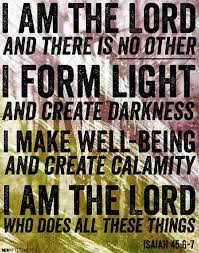
“I form the light and create darkness, I make peace, and create EVIL”? (Isaiah 45:7)


Is. 45Isaiah 45:7 I form the light, and create darkness: I make peace, and create EVIL: I the Lord do all these things (KJV)

Isaiah 45:7 I form the light and create darkness,
I make peace and create CALAMITYI, the Lord, do all these things.’ (NKJV)

God was causing physical CALAMITY on Israel due to their disobedience. God cannot even tempt anyone much less causing people to SIN, and the “evil” he caused was in the form of calamity due to people who rebelled against him contrary to his will. We can read throughout the Bible that God HATES SIN, and that he PUNISHES sinner. Clearly then God is NOT causing people to commit evil acts, because he would never ordain people to do something that he hates – which is SIN.

The word “evil” is a translation from the Hebrew word ra (Strong’s 7451) and is in KJV translated as: evil,  wickedness, wicked, mischief, hurt, bad, trouble, sore, affliction, ill, adversity, favoured, harm, naught, noisome, grievous, sad, etc.  

James 1:13 Let no man say when he is tempted, I am tempted of God: for God cannot be tempted with evil, neither tempteth he any man:

1 John 1:5 This then is the message which we have heard of him, and declare unto you, that God is light, and in him is no darkness at all.

Habakkuk 1:13 Thou art of purer eyes than to behold evil, and canst not look on iniquity: wherefore lookest thou upon them that deal treacherously, and holdest thy tongue when the wicked devoureth the man that is more righteous than he?

Isaiah 5:20 Woe unto them that call evil good, and good evil; that put darkness for light, and light for darkness; that put bitter for sweet, and sweet for bitter!

Psalm 5:5 The foolish shall not stand in thy sight: thou hatest all workers of iniquity.

Hebrews 1:9 Thou hast loved righteousness, and hated iniquity; therefore God, even thy God, hath anointed thee with the oil of gladness above thy fellows.

If a righteous life glorifies God (1 Cor. 6:20), how could evil acts also glorify God?  The calvinist John Piper suggests that God forordains evil because it can “make the glory of Christ shine more brightly”, but that does not make any sense at all. The truth is that goodness and righteousness glorifies God (Micah 6:8, Rom. 2:7, 10), and evil/sin dishonors God (John 8:49, Rom. 2:8-9, 23). If anyone claims that he commits an evil act for the glory of God, then we know that person is not speaking Biblical truths.

God talks about bringing “evil” (as in calamity) to a city to punish their sins (Neh. 13:18; Jer. 21:10; 25:29; Amos 3:6). Evil i not contrasted with righteousness but with peace. Let’s check a couple of verses which talk about God causing EVIL (when a more appropriate word could have been “calamity”).

Amos 3:You only have I known of all the families of the earth: therefore I will punish you for all your iniquities.Shall a trumpet be blown in the city, and the people not be afraid? shall there be EVIL in a city, and the Lord hath not done it? Surely the Lord God will do nothing, but he revealeth his secret unto his servants the prophets.—10 For they know not to do right, saith the Lord, who store up violence and robbery in their palaces.11 Therefore thus saith the Lord God; An adversary there shall be even round about the land; and he shall bring down thy strength from thee, and thy palaces shall be spoiled.

If God is the one ordaining sin/evil, why is there a need to punish people for doing the iniquities that God has caused/ordained/predestined/forced them to do? A just God would never punish anyone for doing his will (or for doing what he caused them to do). That people know not to do right means that they have no intention or willingness to do what is right. This often happens when people have been so accustomed to do evil and hardened their heart to such an extent that they no longer know to do right. God has the right to enforce physical judgments and punishments, and he often does this with the hope of seeing people converted.

12 Thus saith the Lord; As the shepherd taketh out of the mouth of the lion two legs, or a piece of an ear; so shall the children of Israel be taken out that dwell in Samaria in the corner of a bed, and in Damascus in a couch.14 That in the day that I shall visit the transgressions of Israel upon him I will also visit the altars of Bethel: and the horns of the altar shall be cut off, and fall to the ground.15 And I will smite the winter house with the summer house; and the houses of ivory shall perish, and the great houses shall have an end, saith the Lord.

More examples of horrible calamity that awaits those who sins against God. God will visit Israel due to its transgressions, he will smite and he will make their important possessions perish. A better choice would of course had been to be obedient to God in order to prevent all the calamity from happening.

The context of Isaiah 45

Isaiah 45:1 Thus saith the Lord to his anointed, to CYRUS, whose right hand I have holden, to subdue nations before him; and I will loose the loins of kings, to open before him the two leaved gates; and the gates shall not be shut;—And I will give thee the treasures of darkness, and hidden riches of secret places, that thou mayest know that I, the Lord, which call thee by thy name, am the God of Israel.

God is addressing Cyrus about what is about to happen in the near future involving himself. Cyrus will be able to achieve much, but not necessarily because he is such a great guy but because God might want to use Cyrus’ plans to punish Israel, maybe with the hope that his people will repent. With other words, God can make use man’s evil plans (or neutral plans) and make them very prosperous by preventing others from interfering with them. This doesn’t mean it’s God’s idea to make people start unholy wars and harm others, but it’s rather his idea to make use of such plans for something good in SOME occasions. God very rarely act in this way but there are a few occasions in the Bible where we can see this happening, and the death of Jesus Christ is of course a famous example of this which you can read about here. (Judas certainly wasn’t forced to betray Jesus in any way.)

For Jacob my servant’s sake, and Israel mine elect, I have even called thee by thy name: I have surnamed thee, though thou hast not known me.

Jacob was chosen to be the seed which would bring forth God’s own people, and therefore elect in that respect. The fact that Israel was “elect” doesn’t mean that all Israel will be saved. Israel was singled out for a reason, and the idea was that this nation would bring light to the rest of the world.

Drop down, ye heavens, from above, and let the skies pour down righteousness: let the earth open, and let them bring forth salvation, and let righteousness spring up together; I  the Lord have created it.

Here is a focus on that God created the heavens and the earth, and the hope is that God’s creation and righteousness would be obvious for all to see and to bring forth salvation.

Woe unto him that striveth with his Maker! Let the potsherd strive with the potsherds of the earth. Shall the clay say to him that fashioneth it, What makest thou? or thy work, He hath no hands?

According to this verse there is a risk that people will strive with God, since we can read a severe warning about it. That people strive with God, argue with him and rebel against him shouldn’t really surprise us because the Bible is full of examples to this effect, and of course the same thing can be seen today. Christians certainly don’t act properly all the time and some even blame God for their misfortunes. This verse doesn’t say that the clay CANNOT answer back and strive with the potter, but that he SHOULD not. Each time a person sins, it’s always against the will of God.

10 Woe unto him that saith unto his father, What begettest thou? or to the woman, What hast thou brought forth?

Here is another warning needed to be disclosed, due to the risk for that people might act in the opposite way.

12 I have made the earth, and created MAN upon it: I, even my hands, have stretched out the heavens, and all their host have I commanded.13 I have raised HIM up in RIGHTEOUSNESS, and I will direct all his ways: he shall build my city, and he shall let go my captives, not for price nor reward, saith the Lord of hosts.

Here God is pointing out that he is the Creator of all things, and he is speaking about MAN and that he has raised him up in RIGHTEOUSNESS. Despite that man is brought up in righteousness, he hasn’t always remained on that road but walked his own ways. We have all been given the light, but we must make sure to keep walking in the light,. God will apparently also direct all his ways but this doesn’t mean man will always be cooperative.

16 They shall be ashamed, and also confounded, all of them: they shall go to confusion together that are makers of idols.

If people are making idols they are naturally being disobedient to God, and particularly his first commandment to have no other God beside HIM. If someone is told to be ashamed of himself for something he did, he has clearly acted against God’s will or else he shouldn’t be told to be ashamed of himself but rather be praised. If people are transgressing his laws, there will be confusion among them.

20 Assemble yourselves and come; draw near together, ye that are escaped of the nations: they have no knowledge that set up the wood of their graven image, and pray unto a god that cannot save.21 Tell ye, and bring them near; yea, let them take counsel together: who hath declared this from ancient time? who hath told it from that time? have not I the Lord? and there is no God else beside me; a just God and a Saviour; there is none beside me.

We can read that God is a JUST God (so clearly not a God who predestines people to sin and then turns around and punishes them for it), and a SAVIOR. He asks the Israelites to bring all those idol worshipers near and let them be counselled.

22 Look unto me, and be ye saved, all the ends of the earth: for I am God, and there is none else.

Here is a clear universal offer of salvation. All the ends of the earth can be saved, under the condition that they LOOK UNTO GOD. This sounds just like the ordeal with the fiery serpent in the desert which people were asked to look at it in order to be free from their snake wounds.

23 I have sworn by myself, the word is gone out of my mouth in righteousness, and shall not return, That unto me every knee shall bow, every tongue shall swear.24 Surely, shall one say, in the Lord have I righteousness and strength: even to him shall men come; and all that are incensed against him shall be ashamed.

Apparently people can act against God since we can read that “all that are incensed against him shall be ashamed”. Surely this couldn’t be something that God predestined them to do. Why would he cause people to work against him?

God sometimes causes “evil” (or calamity) as a punishment on people who act against his will

Jeremiah 32:23 And they came in, and possessed it; but they obeyed not thy voice, neither walked in thy law; they have done nothing of all that thou commandedst them to do: THEREFORE thou hast caused all this evil to come upon them

1 Kings 9:9 And they shall answer, Because they forsook the LORD their God, who brought forth their fathers out of the land of Egypt, and have taken hold upon other gods, and have worshipped them, and served them: THEREFORE hath the LORD brought upon them all this evil.

1 Kings. 14:But hast done evil above all that were before thee: for thou hast gone and made thee other gods, and molten images, to provoke me to anger, and hast cast me behind thy back:10 THEREFORE, behold, I will bring evil upon the house of Jeroboam, and will cut off from Jeroboam him that pisseth against the wall, and him that is shut up and left in Israel, and will take away the remnant of the house of Jeroboam, as a man taketh away dung, till it be all gone.

2 Kings. 21:11 Because Manasseh king of Judah hath done these abominations, and hath done wickedly above all that the Amorites did, which were before him, and hath made Judah also to sin with his idols:12 THEREFORE thus saith the Lord God of Israel, Behold, I am bringing such evil upon Jerusalem and Judah, that whosoever heareth of it, both his ears shall tingle.

2 Kings. 22:16 Thus saith the Lord, Behold, I will bring evil upon this place, and upon the inhabitants thereof, even all the words of the book which the king of Judah hath read:17 Because they have forsaken me, and have burned incense unto other gods, that they might provoke me to anger with all the works of their hands; THEREFORE my wrath shall be kindled against this place, and shall not be quenched.

2 Chronicles 7:22 And it shall be answered, Because they forsook the LORD God of their fathers, which brought them forth out of the land of Egypt, and laid hold on other gods, and worshipped them, and served them: THEREFORE hath he brought all this evil upon them.

Isaiah 47:10 For thou hast trusted in thy wickedness: thou hast said, None seeth me. Thy wisdom and thy knowledge, it hath perverted thee; and thou hast said in thine heart, I am, and none else beside me.11 THEREFORE shall evil come upon thee; thou shalt not know from whence it riseth: and mischief shall fall upon thee; thou shalt not be able to put it off: and desolation shall come upon thee suddenly, which thou shalt not know.

Jeremiah 11:8 Yet they obeyed not, nor inclined their ear, but walked every one in the imagination of their evil heart:THEREFORE I will bring upon them all the words of this covenant, which I commanded them to do: but they did them not.—11 THEREFORE thus saith the LORD, Behold, I will bring evil upon them, which they shall not be able to escape; and though they shall cry unto me, I will not hearken unto them

Joshua 23:15 THEREFORE it shall come to pass, that as all good things are come upon you, which the Lord your God promised you; so shall the Lord bring upon you all evil things, until he have destroyed you from off this good land which the Lord your God hath given you.16 When ye have transgressed the covenant of the Lord your God, which he commanded you, and have gone and served other gods, and bowed yourselves to them; then shall the anger of the Lord be kindled against you, and ye shall perish quickly from off the good land which he hath given unto you.

It’s a choice to be CHILDREN OF WRATH – Ephesians 2

Children of wrath and God’s election in Ephesians 2

There are some who believe that God randomly selects people to be saved and ignore the rest, and they try to use Ephesians 1-2 as support for this theory. The truth is that God wants ALL people to be saved because he IS a merciful God and he wants us to take after HIM when it comes to showing mercy. (We shouldn’t strive to be merciful to SOME and ignore the majority.)

2 Peter 3:The Lord is not slack concerning his promise, as some men count slackness; but is longsuffering to us-ward, not willing that any should perish, but that ALL should come to repentance

Ezekiel 33:11 Say unto them, As I live, saith the Lord GOD, I have no pleasure in the death of the wicked; but that the wicked turn from his way and live: turn ye, turn ye from your evil ways; for why will ye die, O house of Israel?

Luke 6:36 Be ye therefore merciful, as your Father also is merciful.

In Ephesians we can read about a corporate election, and the body of Christ IS indeed chosen to inherit his kingdom. I believe God decided before the world began that true believers shall inherit his kingdom, but the question is if we as individuals would like to join the body of Christ (the Church) or not. IF we so choose, the wonderful promises are also tied to us. “Elect” is about value and can mean precious, and we are indeed precious if we choose to believe in our Savior and live holy and separate. The book of Ephesians concerns what BELIEVERS can look forward to in the future. Pay attention to how many times IN him, THROUGH him, etc, are mentioned in Ephesians 1-2. Being IN HIM is the condition for being one of the elect! Also pay attention to the warnings addressed to christians. Paulus starts out his letter by addressing FAITHFUL CHRISTIANS who therefore are HOLY and very special (elect):

Ephesians 1

When Paul talks about US he refers to both jews and gentiles who believe in Jesus ChristPaul puts a lot of emphasis on trying to get the jews to understand that they are not on the way to heaven just because they are born jews and are his chosen people. It’s through JESUS that we can be saved. It’s through his blood because only his precious blood can cleanse our sins. What God had decided from eternity past is NOT which individuals to provide faith and eventually save, but rather that whoever is IN HIM (“us” v. 4) are ELECT, and chosen to be holy and blameless before God thanks to the blood of Jesus! The condition is therefore that we must be IN HIM in order to reach the state where we have all the mentioned wonderful promises tied to us.  What is foreknown is that those who are IN HIM will through Jesus Christ be taken up as his holy children. Those who are not IN HIM are not forgiven for their sins and redeemed in his blood, resulting in that they are lost. We as believers have redemption through his blood, and that means we are on the safe side. We are therefore adopted as children and can expect an inheritance, but only as long as we’re not getting off the transportation going to heaven. (Let’s not forget that a son can be disinherited though.) Who is Paul addressing when he mentions all the wonderful promises? The saints. To the faithful in Jesus Christ. No one forced them to be saints and faithful, but they chose to be this by themselves. As such, the wonderful promises that Paul talks about, are theirs, provided of course that they continue on that path.

Eph. 1:1 Paul, an apostle of Jesus Christ by the will of God, TO THE SAINTS which are at Ephesus, and TO THE FAITFFUL in Christ Jesus

V. 5 below uses the word “adoption” but this word didn’t mean exactly the same thing 2000 years ago as it does today in our modern world. The Greek word “huiothesia” refers to the standing of someone who is ALREADY a son and Adoption is thus the inheritance or promise that the son can expect to receive as an heir. Huiothesia is not the same as salvation but it is the promise of God received by those who are believers in Christ Jesus (Gal 3:22-27).  The body of Christ is predestined to God’s kingdom and to receive the inheritance, and the question remains who would like to join and who will remain to the end. The body of Christ is heading there, but are YOU? Join the body-of-Christ-bus, but stay on the bus to the end station!

Eph. 1:Blessed be the God and Father of our Lord Jesus Christ, who hath blessed us with all spiritual blessings in heavenly places IN CHRIST:According as he hath chosen us IN HIM before the foundation of the world, that we should be holy and without blame BEFORE HIM in love:Having predestinated us unto the adoption of children by Jesus Christ to himself, according to the good pleasure of his will,To the praise of the glory of his grace, wherein he hath made us accepted IN THE BELOVED.7 IN WHOM we have redemption THROUGH HIS BLOOD, the forgiveness of sins, according to the riches of his grace

The Holy Spirit is like a  deposit for us christians (and all the spiritual gifts will one day pass away when we enter God’s kingdom), but just like in all legal contracts our particular “contract” with God can be broken (just like the old covenant was broken) if either of the party doesn’t follow the agreement. If you take a loan to buy a car and stop paying for this loan, the car will be seized despite that it was once in your possession. It’s also beneficial to keep your “guarantee receipt” because it entitles you (if it hasn’t expired) to certain rights, but if you throw it away or if you lose it, then it won’t do you much good despite all the promises that are listed on it.

Having the Holy Spirit is often likened with being “sealed”. This doesn’t mean anything unbreakable as shown here, but it means that we are “marked” as very special and holy people who can expect a great inheritance. (As long as we remain in Christ of course.) We are separate from all others who do not have this seal, due to their refusal to repent and believe. The sealing occurs AFTER that we believe, and we can read in Acts 5:32 that the Holy Spirit is given to all those who OBEY him, so belief and obedience must come before we get the Holy Spirit.

Acts 5:32 And we are his witnesses of these things; and so is also the Holy Ghost, whom God hath given to them that OBEY him.

We can also read that God works all things after the counsel of his own will. Does this will exclude the possibility that he might want to place conditions for salvation on us? No of course not, because God can do anything he wants and it’s clear that he require US to repent, believe and show good fruit. He is not going to do this for us. The mystery of his will is that he will one day gather all believers together and give them the inheritance – those who are IN CHRIST! And we can read that TRUST plays an important role in order to be one of the elect. God is not “trusting” for us. WE are supposed to trust in him and we can read that Paul says that trust comes AFTER hearing about the gospel of our salvation.

Eph. 1:Having made known unto us the mystery of his will, according to his good pleasure which he hath purposed in himself:10 That in the dispensation of the fulness of times he might gather together in one all things in Christ, both which are in heaven, and which are on earth; even in him:11 In whom also we have obtained an inheritance, being predestinated according to the purpose of him who worketh all things after the counsel of his own will:12 That we should be to the praise of his glory, who first TRUSTED in Christ.13 In whom ye also TRUSTED, after that ye heard the word of truth, the gospel of your salvation: in whom also after that ye BELIEVED, ye were sealed with that holy Spirit of promise,14 Which is the earnest of our inheritance until the redemption of the purchased possession, unto the praise of his glory.

Paul prayed a lot for the Ephesians, indicating that we can absolutely change the outcome of things with our prayers, and in this case Paul prayed for wisdom. Our prayers can influence others to be enlightened and to know what the HOPE is for God’s calling. We can read once again that it’s the SAINTS who get the benefit of the inheritance. We can also read that the CHURCH, which is the body of Christ will ultimately and once for all be under his feet. This is what the beginning of Ephesians is all about. HIS CHURCH – THE BODY OF CHRIST, consisting of BELIEVING SAINTS.

Eph. 1:16 Cease not to give thanks for you, making mention of you in my prayers;17 That the God of our Lord Jesus Christ, the Father of glory, may give unto you the spirit of wisdom and revelation in the knowledge of him:18 The eyes of your understanding being enlightened; that ye may know what is the HOPE of his calling, and what the riches of the glory of his inheritance in the SAINTS,19 And what is the exceeding greatness of his power to us-ward WHO BELIEVE, according to the working of his mighty power,20 Which he wrought in Christ, when he raised him from the dead, and set him at his own right hand in the heavenly places,21 Far above all principality, and power, and might, and dominion, and every name that is named, not only in this world, but also in that which is to come:22 And hath put all things under his feet, and gave him to be the head over all things to the CHURCH,23 Which is his BODY, the fulness of him that filleth all in all.

Ephesians 2

Ephesians 2 starts with Paul telling us that God has quickened us who were dead in trespasses and sins. I can only say that it’s a very bad choice to  be dead in trespasses and sins! When are we spiritually DEAD according to the Bible? That is when we SIN because this separates us from our holy God.

Isaiah 59:2 But your iniquities have separated between you and your God, and your sins have hid his face from you, that he will not hear.

Luke 15:(The prodigal son) 30 But as soon as this thy son was come, which hath devoured thy living with harlots, thou hast killed for him the fatted calf.—32 It was meet that we should make merry, and be glad: for this thy brother was DEAD, and is alive AGAIN; and was LOST, and is found.

Nowhere in the Bible does it suggest that spiritually “dead” people cannot make any good moral decisions or that they are unable to seek God. And nowhere does it say that we are totally depraved (words not even in the Bible), BORN as children of wrath or born with a sinful nature. On the contrary, even evil unbelievers can do much good, as can be seen here. How then do we become quickened/alive from the predicament that our sin has brought us into? We must of course REPENT for our sins and let the blood of Jesus cleanse us so that we can be born again and become righteous! Then we are no longer dead since we are alive in Christ and new persons. He removed all traces of sins on our account and we have left the old man behind. Paul explains that the Ephesians in time PAST walked in sin, but he doesn’t expect them to continue like that. Also note that in order to commit the sins that Paul lists, you must at least be an ADULT first. Babies are not aware of the law and they are unable to:

  • have a need or reason to be “quickened”
  • perform TRESPASSES and SINS and through them be dead
  • walk according to the world
  • walk according to Satan (the prince of the power of the air)
  • be disobedient through following Satan
  • walk in the lusts of their flesh
  • fulfill the desires of their flesh
  • fulfill the desires of their mind

So don’t get confused about the expression “children of wrath” because the description fits only grown ups , and we can be labelled either children of God or children of Satan depending on our life styles. We can also read that the “children of wrath” are also called  “children of disobedience” so it’s clear that in order to fit the bill you must be able to DISOBEY – something that babies cannot do. Does God want people to disobey him? Clearly not! Evidently Eph. 2 doesn’t suggest we are BORN as children of wrath, but it provides details for how we can BECOME children of wrath by the way we live. Even the Ephesians WERE dead due to their choice to sin, but thanks to the blood of Jesus, and through their own repentance of their sins, they were restored. Paul says “hath raised us up together”, but that is a picture of our future with Christ, because he continues the sentence with “in the ages to COME”. We haven’t been elevated yet.

Eph. 2:1 And you hath he quickened, who were dead in trespasses and sins;Wherein in time past ye walked according to the course of this world, according to the prince of the power of the air, the spirit that now worketh in the children of DISOBEDIENCEAmong whom also we all had our conversation in times past in the lusts of our flesh, fulfilling the desires of the flesh and of the mind; and were by nature the children of wrath, even as others.But God, who is rich in mercy, for his great love wherewith he loved us,Even when we WERE dead in sins, hath quickened us together with Christ, (by grace ye are saved;)And hath raised us up together, and made us sit together in heavenly places in Christ Jesus:That in the ages to come he might shew the exceeding riches of his grace in his kindness toward us through Christ Jesus.

And don’t get confused just because it says “by nature”, because 1) it still doesn’t indicate we are BORN that way, 2) we can see below in Rom 2:14 that people can by nature do the things contained in the law, and 3) those who by nature are the children of wrath are those who have made a habit out of sinning and hardened their hearts. (Read more in Romans 1 about how certain men hardened their hearts to the extent that God eventually gave them over to a reprobate mind.) A diligent alcoholic might feel that it’s totally natural for him to get drunk once in a while, and in combination with a refusal to repent his habits might turn him over to become a child of wrath/disobedience. 

Rom. 2:14 For when the Gentiles, which have not the law, do by nature the things contained in the law, these, having not the law, are a law unto themselves:15 Which shew the work of the law written in their hearts, their conscience also bearing witness, and their thoughts the mean while accusing or else excusing one another;)

Eph 2:8-9

Now we have arrived to the famous verses which are likely the most cited verses in the entire Bible. These couple of verses are often used as an attempt to show that we can be saved even if we don’t show any fruit, and even if we SIN. That’s not what the verses are saying though.The gift of God in these sentences is NOT “faith” but that we can be saved. You can read more why the Greek original text makes this clear here. We are either saved by the law OR by grace, and most of us can agree on that we haven’t chosen to obey the law to 100% so the only other option is GRACE (God’s mercy). To suddenly start to make good deeds will never cover for our PAST sins. It’s thanks to the blood of Jesus that we can be cleansed and saved. So does Eph. 2:8-9 suggest that it’s no longer damaging for our souls if we would sin and/or not provide any work? NO! It does not say that! It only informs us that salvation is by grace through FAITH. Nothing we do or believe can ever MERIT salvation, but there are still conditions. We must repent for our sins and believe. Breaking the moral law (the ten commandments) are just as important today as it was during the time of Moses, and as it was during the time of Cain and Abel. Sins always separate us from God whether we live in the old or new testament. Faith without works is dead, and works without faith is also dead.

Eph. 2:For by grace are ye saved THROUGH FAITH; and that not of yourselves: IT is the gift of God: Not of works, lest any man should boast.

Verse 10 is not nearly as popular and it’s rarely cited. This verse tells us that we are supposed to WALK unto good works.  Do you believe that God will accept us the way we are even if we would NOT walk with him and show good works? Hardly!  So this is a warning towards christians. Neither will God do the walking for us, because WE are created to do the walking. However, we can do nothing without Jesus so we have to be IN HIM. 

Eph. 2:10 For we are his workmanship, created in Christ Jesus unto good works, which God hath before ordained that we should walk in them.11 Wherefore remember, that ye being in time past Gentiles in the flesh, who are called Uncircumcision by that which is called the Circumcision in the flesh made by hands12 That at that time ye were without Christ, being aliens from the commonwealth of Israel, and strangers from the covenants of promise, having no hope, and without God in the world:13 But now in Christ Jesus ye who sometimes were far off are made nigh by the blood of Christ.

Paul continues to talk about the good news and what we can accomplish THROUGH Jesus, whether we are jews or gentiles – as long as we are believers. We are united together in one body through the power of the cross. Once again, Ephesians is about the Church and the body of Christ as in God’s family. Are you in or are you out? You decide and you know the conditions.

Eph. 2:14 For he is our peace, who hath made both one, and hath broken down the middle wall of partition between us;15 Having abolished in his flesh the enmity, even the law of commandments contained in ordinances; for to make in himself of twain one new man, so making peace;16 And that he might reconcile both unto God in ONE BODY by the cross, having slain the enmity thereby:17 And came and preached peace to you which were afar off, and to them that were nigh.18 For through him we both have access by one Spirit unto the Father.19 Now therefore ye are no more strangers and foreigners, but fellowcitizens with the saints, and of the household of God;20 And are built upon the foundation of the apostles and prophets, Jesus Christ himself being the chief corner stone;21 In whom all the building fitly framed together groweth unto an holy temple in the Lord:22 In whom ye also are builded together for an habitation of God through the Spirit.

Keep the parable in Matthew 22 in mind where we can read “many are called but few are chosen”. The “chosen” ones are those who freely accepted to go to the party, and who also went.  As opposed to others who were on the guest list and expected to come by the King himself, but who still declined to go. We can place ourselves among the chosen elect if we choose GOD and show it by our actions.

2 Thessalonians 2:10 And with all deceivableness of unrighteousness in them that perish; because they received not the love of the truth, that they might be saved.

Only in union with Christ do we become members of the elect, and God purposed from the creation of the world to form a people through Christ’s redemptive death on the cross. So election is grounded in Christ’s sacrificial death to save us from our sins (and we are only cleansed upon repentance), and election in Christ is primarily corporate (an election of a people). Therefore, election includes individual persons only as they associate themselves with the body of Christ, and there was a similar story for Israel, and those who identified themselves as the children of Abraham by having faith (leading to obedience) just like Abraham. The election to salvation and holiness of the body of Christ is always certain, but the certainty of election for individuals remains conditional on their personal living faith in Jesus Christ and perseverance in union with Him. God’s eternal purpose for the church is that we should be holy and without blame before him, and this refers both to forgiveness of sins and to the church’s purity as the bride of Christ. Fulfillment of this purpose for the corporate church is certain, but the fulfillment of this purpose for individuals is conditional. Christ will “present you holy and unblameable and unreprovable in his sight: IF ye continue in the faith grounded and settled, and be not moved away from the hope of the gospel”. 

At the point of faith, the believer is incorporated into Christ’s elect body by the Holy Spirit and thereby becoming one of the elect. Predestination concerns what will happen to God’s people (all genuine believers in Christ). So the church (of christians) is chosen by God to be his very own vessel, and all who desire to be a part of this elect vessel can do so through a living faith in Christ. As long as they are on the vessel they are among the elect, but if they choose to abandon the vessel, they cease to be part of the elect. because election is always only in union with the captain and his ship. Predestination tells us about the ship’s destination and what God has prepared for those remaining on it. God invites everyone to come aboard the elect ship through faith in Jesus Christ.

See also this article from Jarom.net about the uses for the word ”elect” (eklektos) in the NT (so not the Greek words eklegé, eklegó as per above), where it’s shown to have a meaning of quality, or being precious. If we have chosen to remain IN CHRIST, we are truly precious and of good quality. We are God’s holy and unique people

People hearkened NOT unto God but closed their ears

The word “hearken” is not commonly used today, but it’s an oft mentioned word in the Old Testament. It means: To listen attentively; to give heed, to give attention to what is said, to listen, or to hear in order to obey or comply. Below are some Biblical examples of people who did NOT choose to hearken to God or his prophets (contrary to God’s will) and they mainly concern his own people – the Israelites. Note that there are of course many more instances where we can read about people who refuse to listen to God or obey him, where the word “hearken” is not used. Did God want people to hearken to him? Of course he did! Why pleading with people and attempting to get their attention if he wouldn’t want them to listen to him and obey in the first place? This means God’s will doesn’t always happen, but he is still in control. God can be sovereign and in control even though he doesn’t direct each of our steps. The Bible is a book filled with examples of individuals and large groups of people who disobey God and refuse to listen to him, and we can take these instances as warnings for ourselves.

Let’s ask ourselves, does God want us to rebel against him, to sin, to harden our hearts, to provoke him, to be evil, to not believe him, to gather together against him, to tempt him, to worship idols, to disobey his commandments, to forsake him, to be wicked, to cause him to anger, to go a whoring, to corrupt our ways, to transgress his covenant, to be stubborn, to harden our necks, to despise him, to be proud, to dishonor him, to reject his law, to refuse to repent, to speak lying words, to kill his prophets, to be deceived, to not receive correction, to do worse than our fathers, to not incline our ears to him, to not serve him, to turn our backs on him, to cause others to sin, to commit villany, to defile his house, to make abominations, to do something that he hates, to not turn to him, etc? I hope you say with emphasis that God of course does NOT want us to behave in such a way. Yet this is what we can read happened, and his own people reacted wickedly. To deny man’s free will is to deny major parts of the Bible, resulting in a Book that doesn’t make much sense.

Exodus 8:15 But when Pharaoh saw that there was respite, he hardened his heart, and hearkened not unto them; as the LORD had said.

Exodus 16:20 Notwithstanding they hearkened not unto Moses; but some of them left of it until the morning, and it bred worms, and stank: and Moses was wroth with them.

Numbers 14:11 And the Lord said unto Moses, How long will this people provoke me? and how long will it be ere they believe me, for all the signs which I have shewed among them?—22 Because all those men which have seen my glory, and my miracles, which I did in Egypt and in the wilderness, and have tempted me now these ten times, and have not hearkened to my voice;23 Surely they shall not see the land which I sware unto their fathers, neither shall any of them that provoked me see it:—35 I the Lord have said, I will surely do it unto all this evil congregation, that are gathered together against me: in this wilderness they shall be consumed, and there they shall die

Deutoronomy 1814 For these nations, which thou shalt possess, hearkened unto observers of times, and unto diviners: but as for thee, the Lord thy God hath not suffered thee so to do18 I will raise them up a Prophet from among their brethren, like unto thee, and will put my words in his mouth; and he shall speak unto them all that I shall command him.19 And it shall come to pass, that whosoever will not hearken unto my words which he shall speak in my name, I will require it of him.20 But the prophet, which shall presume to speak a word in my name, which I have not commanded him to speak, or that shall speak in the name of other gods, even that prophet shall die.—

Deutoronomy 28:1And it shall come to pass, IF thou shalt hearken diligently unto the voice of the Lord thy God, to observe and to do all his commandments which I command thee this day, that the Lord thy God will set thee on high above all nations of the earth:And all these blessings shall come on thee, and overtake thee, IF thou shalt hearken unto the voice of the Lord thy GodThe Lord shall establish thee an holy people unto himself, as he hath sworn unto thee, if thou shalt keep the commandments of the Lord thy God, and walk in his ways—15 But it shall come to pass, if thou wilt not hearken unto the voice of the Lord thy God, to observe to do all his commandments and his statutes which I command thee this day; that all these curses shall come upon thee, and overtake thee:—20 The Lord shall send upon thee cursing, vexation, and rebuke, in all that thou settest thine hand unto for to do, until thou be destroyed, and until thou perish quickly; because of the wickedness of thy doings, whereby thou hast forsaken me.-45 Moreover all these curses shall come upon thee, and shall pursue thee, and overtake thee, till thou be destroyed; because thou hearkenedst not unto the voice of the Lord thy God, to keep his commandments and his statutes which he commanded thee–62 And ye shall be left few in number, whereas ye were as the stars of heaven for multitude; because thou wouldest not obey the voice of the Lord thy God.

Judges 2:2 And an angel of the Lord came up from Gilgal to Bochim, and said, I made you to go up out of Egypt, and have brought you unto the land which I sware unto your fathers; and I said, I will never break my covenant with you.And ye shall make no league with the inhabitants of this land; ye shall throw down their altars: but ye have not obeyed my voice: why have ye done this?11 And the children of Israel did evil in the sight of the Lord, and served Baalim:—12 And they forsook the Lord God of their fathers, which brought them out of the land of Egypt, and followed other gods, of the gods of the people that were round about them, and bowed themselves unto them, and provoked the Lord to anger.13 And they forsook the Lord, and served Baal and Ashtaroth.14 And the anger of the Lord was hot against Israel, and he delivered them into the hands of spoilers that spoiled them, and he sold them into the hands of their enemies round about, so that they could not any longer stand before their enemies.—16 Nevertheless the Lord raised up judges, which delivered them out of the hand of those that spoiled them.17 And yet they would not hearken unto their judges, but they went a whoring after other gods, and bowed themselves unto them: they turned quickly out of the way which their fathers walked in, obeying the commandments of the Lord; but they did not so.18 And when the Lord raised them up judges, then the Lord was with the judge, and delivered them out of the hand of their enemies all the days of the judge: for it repented the Lord because of their groanings by reason of them that oppressed them and vexed them.19 And it came to pass, when the judge was dead, that they returned, and corrupted themselves more than their fathers, in following other gods to serve them, and to bow down unto them; they ceased not from their own doings, nor from their stubborn way.20 And the anger of the Lord was hot against Israel; and he said, Because that this people hath transgressed my covenant which I commanded their fathers, and have not hearkened unto my voice;

1 Sam 2:17 Wherefore the sin of the young men was very great before the Lord: for men abhorred the offering of the Lord.30 Wherefore the Lord God of Israel saith, I said indeed that thy house, and the house of thy father, should walk before me for ever: but now the Lord saith, Be it far from me; for them that honour me I will honour, and they that despise me shall be lightly esteemed.24 Nay, my sons; for it is no good report that I hear: ye make the Lord’s people to transgress.25 If one man sin against another, the judge shall judge him: but if a man sin against the Lord, who shall intreat for him? Notwithstanding they hearkened not unto the voice of their father, because the Lord would slay them.26 And the child Samuel grew on, and was in favour both with the Lord, and also with men.

2 Kings 22:13 Go ye, enquire of the LORD for me, and for the people, and for all Judah, concerning the words of this book that is found: for great is the wrath of the LORD that is kindled against us, because our fathers have not hearkened unto the words of this book, to do according unto all that which is written concerning us

Nehemiah 9:15 And gavest them bread from heaven for their hunger, and broughtest forth water for them out of the rock for their thirst, and promisedst them that they should go in to possess the land which thou hadst sworn to give them.16 But they and our fathers dealt proudly, and hardened their necks, and hearkened not to thy commandments,17 And refused to obey, neither were mindful of thy wonders that thou didst among them; but hardened their necks, and in their rebellion appointed a captain to return to their bondage: but thou art a God ready to pardon, gracious and merciful, slow to anger, and of great kindness, and forsookest them not.—26 Nevertheless they were disobedient, and rebelled against thee, and cast thy law behind their backs, and slew thy prophets which testified against them to turn them to thee, and they wrought great provocations.27 Therefore thou deliveredst them into the hand of their enemies, who vexed them: and in the time of their trouble, when they cried unto thee, thou heardest them from heaven; and according to thy manifold mercies thou gavest them saviours, who saved them out of the hand of their enemies.28 But after they had rest, they did evil again before thee: therefore leftest thou them in the land of their enemies, so that they had the dominion over them: yet when they returned, and cried unto thee, thou heardest them from heaven; and many times didst thou deliver them according to thy mercies;29 And testifiedst against them, that thou mightest bring them again unto thy law: yet they dealt proudly, and hearkened not unto thy commandments, but sinned against thy judgments, (which if a man do, he shall live in them;) and withdrew the shoulder, and hardened their neck, and would not hear.30 Yet many years didst thou forbear them, and testifiedst against them by thy spirit in thy prophets: yet would they not give ear: therefore gavest thou them into the hand of the people of the lands.—34 Neither have our kings, our princes, our priests, nor our fathers, kept thy law, nor hearkened unto thy commandments and thy testimonies, wherewith thou didst testify against them.—35 For they have not served thee in their kingdom, and in thy great goodness that thou gavest them, and in the large and fat land which thou gavest before them, neither turned they from their wicked works.

Psalm 81:11 But my people would not hearken to my voice; and Israel would none of me

Psalm 106:13 They soon forgat his works; they waited not for his counsel:14 But lusted exceedingly in the wilderness, and tempted God in the desert.21 They forgat God their saviour, which had done great things in Egypt;—23 Therefore he said that he would destroy them, had not Moses his chosen stood before him in the breach, to turn away his wrath, lest he should destroy them.24 Yea, they despised the pleasant land, they believed not his word:25 But murmured in their tents, and hearkened not unto the voice of the Lord.34 They did not destroy the nations, concerning whom the Lordcommanded them:35 But were mingled among the heathen, and learned their works.—39 Thus were they defiled with their own works, and went a whoring with their own inventions.40 Therefore was the wrath of the Lord kindled against his people, insomuch that he abhorred his own inheritance.—43 Many times did he deliver them; but they provoked him with their counsel, and were brought low for their iniquity.44 Nevertheless he regarded their affliction, when he heard their cry:45 And he remembered for them his covenant, and repented according to the multitude of his mercies.

Jeremiah 6:Be thou instructed, O Jerusalem, lest my soul depart from thee; lest I make thee desolate, a land not inhabited.—10 To whom shall I speak, and give warning, that they may hear? behold, their ear is uncircumcised, and they cannot hearken: behold, the word of the Lord is unto them a reproach; they have no delight in it.11 Therefore I am full of the fury of the Lord;—16 Thus saith the Lord, Stand ye in the ways, and see, and ask for the old paths, where is the good way, and walk therein, and ye shall find rest for your souls. But they said, We will not walk therein.17 Also I set watchmen over you, saying, Hearken to the sound of the trumpet. But they said, We will not hearken.18 Therefore hear, ye nations, and know, O congregation, what is among them.19 Hear, O earth: behold, I will bring evil upon this people, even the fruit of their thoughts, because they have not hearkened unto my words, nor to my law, but rejected it.

Jeremiah 7:For if ye throughly amend your ways and your doings; if ye throughly execute judgment between a man and his neighbour;6 If ye oppress not the stranger, the fatherless, and the widow, and shed not innocent blood in this place, neither walk after other gods to your hurt:Then will I cause you to dwell in this place, in the land that I gave to your fathers, for ever and ever.—12 But go ye now unto my place which was in Shiloh, where I set my name at the first, and see what I did to it for the wickedness of my people Israel.13 And now, because ye have done all these works, saith the Lord, and I spake unto you, rising up early and speaking, but ye heard not; and I called you, but ye answered not;16 Therefore pray not thou for this people, neither lift up cry nor prayer for them, neither make intercession to me: for I will not hear thee.—23 But this thing commanded I them, saying, Obey my voice, and I will be your God, and ye shall be my people: and walk ye in all the ways that I have commanded you, that it may be well unto you.24 But they hearkened not, nor inclined their ear, but walked in the counsels and in the imagination of their evil heart, and went backward, and not forward.25 Since the day that your fathers came forth out of the land of Egypt unto this day I have even sent unto you all my servants the prophets, daily rising up early and sending them:26 Yet they hearkened not unto me, nor inclined their ear, but hardened their neck: they did worse than their fathers.28 But thou shalt say unto them, This is a nation that obeyeth not the voice of the Lord their God, nor receiveth correction: truth is perished, and is cut off from their mouth.—31 And they have built the high places of Tophet, which is in the valley of the son of Hinnom, to burn their sons and their daughters in the fire; which I commanded them not, neither came it into my heart.

Jeremiah 16:12 And ye have done worse than your fathers; for, behold, ye walk every one after the imagination of his evil heart, that they may not hearken unto me:

Jeremiah 17:27 But if ye will not hearken unto me to hallow the sabbath day, and not to bear a burden, even entering in at the gates of Jerusalem on the sabbath day; then will I kindle a fire in the gates thereof, and it shall devour the palaces of Jerusalem, and it shall not be quenched.

Jeremia 25:From the thirteenth year of Josiah the son of Amon king of Judah, even unto this day, that is the three and twentieth year, the word of the Lord hath come unto me, and I have spoken unto you, rising early and speaking; but ye have not hearkened.And the Lord hath sent unto you all his servants the prophets, rising early and sending them; but ye have not hearkened, nor inclined your ear to hear.They said, Turn ye again now every one from his evil way, and from the evil of your doings, and dwell in the land that theLord hath given unto you and to your fathers for ever and ever:And go not after other gods to serve them, and to worship them, and provoke me not to anger with the works of your hands; and I will do you no hurt.7 Yet ye have not hearkened unto me, saith the Lord; that ye might provoke me to anger with the works of your hands to your own hurt. –Therefore thus saith the Lord of hosts; Because ye have not heard my words,Behold, I will send and take all the families of the north, saith the Lord—

Jeremia 26 Thus saith the Lord; Stand in the court of the Lord’s house, and speak unto all the cities of Judah, which come to worship in the Lord’s house, all the words that I command thee to speak unto them; diminish not a word:3 If so be they will hearken, and turn every man from his evil way, that I may repent me of the evil, which I purpose to do unto them because of the evil of their doings.And thou shalt say unto them, Thus saith the Lord; If ye will not hearken to me, to walk in my law, which I have set before you,5 To hearken to the words of my servants the prophets, whom I sent unto you, both rising up early, and sending them, but ye have not hearkened;13 Therefore now amend your ways and your doings, and obey the voice of the Lord your God; and the Lord will repent him of the evil that he hath pronounced against you.

Jeremiah 29:For thus saith the Lord of hosts, the God of Israel; Let not your prophets and your diviners, that be in the midst of you, deceive you, neither hearken to your dreams which ye cause to be dreamed.—19 Because they have not hearkened to my words, saith theLord, which I sent unto them by my servants the prophets, rising up early and sending them; but ye would not hear, saith the Lord.—23 Because they have committed villany in Israel, and have committed adultery with their neighbours’ wives, and have spoken lying words in my name, which I have not commanded them; even I know, and am a witness, saith the Lord—31 Send to all them of the captivity, saying, Thus saith the Lord concerning Shemaiah the Nehelamite; Because that Shemaiah hath prophesied unto you, and I sent him not, and he caused you to trust in a lie:32 Therefore thus saith the Lord; Behold, I will punish Shemaiah the Nehelamite, and his seed: he shall not have a man to dwell among this people; neither shall he behold the good that I will do for my people, saith the Lord; because he hath taught rebellion against the Lord.

Jeremiah 32: 23 And they came in, and possessed it; but they obeyed not thy voice, neither walked in thy law; they have done nothing of all that thou commandedst them to do: therefore thou hast caused all this evil to come upon them:—30 For the children of Israel and the children of Judah have only done evil before me from their youth: for the children of Israel have only provoked me to anger with the work of their hands, saith the Lord.-33 And they have turned unto me the back, and not the face: though I taught them, rising up early and teaching them, yet they have not hearkened to receive instruction.34 But they set their abominations in the house, which is called by my name, to defile it.35 And they built the high places of Baal, which are in the valley of the son of Hinnom, to cause their sons and their daughters to pass through the fire unto Molech; which I commanded them not, neither came it into my mind, that they should do this abomination, to cause Judah to sin.

Jeremiah 34:13 Thus saith the Lord, the God of Israel; I made a covenant with your fathers in the day that I brought them forth out of the land of Egypt, out of the house of bondmen, saying,14 At the end of seven years let ye go every man his brother an Hebrew, which hath been sold unto thee; and when he hath served thee six years, thou shalt let him go free from thee: but your fathers hearkened not unto me, neither inclined their ear.15 And ye were now turned, and had done right in my sight, in proclaiming liberty every man to his neighbour; and ye had made a covenant before me in the house which is called by my name:16 But ye turned and polluted my name, and caused every man his servant, and every man his handmaid, whom he had set at liberty at their pleasure, to return, and brought them into subjection, to be unto you for servants and for handmaids.17 Therefore thus saith the Lord; Ye have not hearkened unto me, in proclaiming liberty, every one to his brother, and every man to his neighbour: behold, I proclaim a liberty for you, saith the Lord, to the sword, to the pestilence, and to the famine; and I will make you to be removed into all the kingdoms of the earth.18 And I will give the men that have transgressed my covenant, which have not performed the words of the covenant which they had made before me, when they cut the calf in twain, and passed between the parts thereof—

Jeremiah 35:12 Then came the word of the Lord unto Jeremiah, saying,13 Thus saith the Lord of hosts, the God of Israel; Go and tell the men of Judah and the inhabitants of Jerusalem, Will ye not receive instruction to hearken to my words? saith the Lord.14 The words of Jonadab the son of Rechab, that he commanded his sons not to drink wine, are performed; for unto this day they drink none, but obey their father’s commandment: notwithstanding I have spoken unto you, rising early and speaking; but ye hearkened not unto me.15 I have sent also unto you all my servants the prophets, rising up early and sending them, saying, Return ye now every man from his evil way, and amend your doings, and go not after other gods to serve them, and ye shall dwell in the land which I have given to you and to your fathers: but ye have not inclined your ear, nor hearkened unto me.16 Because the sons of Jonadab the son of Rechab have performed the commandment of their father, which he commanded them; but this people hath not hearkened unto me:17 Therefore thus saith the Lord God of hosts, the God of Israel; Behold, I will bring upon Judah and upon all the inhabitants of Jerusalem all the evil that I have pronounced against them: because I have spoken unto them, but they have not heard; and I have called unto them, but they have not answered.

Jeremiah 36:It may be they will present their supplication before the Lord, and will return every one from his evil way: for great is the anger and the fury that the Lord hath pronounced against this people.31 And I will punish him and his seed and his servants for their iniquity; and I will bring upon them, and upon the inhabitants of Jerusalem, and upon the men of Judah, all the evil that I have pronounced against them; but they hearkened not.

Jeremiah 44: Because of their wickedness which they have committed to provoke me to anger, in that they went to burn incense, and to serve other gods, whom they knew not, neither they, ye, nor your fathers.—Howbeit I sent unto you all my servants the prophets, rising early and sending them, saying, Oh, do not this abominable thing that I hate.But they hearkened not, nor inclined their ear to turn from their wickedness, to burn no incense unto other gods.Wherefore my fury and mine anger was poured forth, and was kindled in the cities of Judah and in the streets of Jerusalem; and they are wasted and desolate, as at this day.Therefore now thus saith the Lord, the God of hosts, the God of Israel; Wherefore commit ye this great evil against your souls, to cut off from you man and woman, child and suckling, out of Judah, to leave you none to remain;—15 Then all the men which knew that their wives had burned incense unto other gods, and all the women that stood by, a great multitude, even all the people that dwelt in the land of Egypt, in Pathros, answered Jeremiah, saying,16 As for the word that thou hast spoken unto us in the name of the Lord, we will not hearken unto thee.—22 So that the Lord could no longer bear, because of the evil of your doings, and because of the abominations which ye have committed; therefore is your land a desolation, and an astonishment, and a curse, without an inhabitant, as at this day.23 Because ye have burned incense, and because ye have sinned against the Lord, and have not obeyed the voice of the Lord, nor walked in his law, nor in his statutes, nor in his testimonies; therefore this evil is happened unto you, as at this day.

Ezekiel 3:But the house of Israel will not hearken unto thee; for they will not hearken unto me: for all the house of Israel are impudent and hardhearted.—As an adamant harder than flint have I made thy forehead: fear them not, neither be dismayed at their looks, though they be a rebellious house.—20 Again, When a righteous man doth turn from his righteousness, and commit iniquity, and I lay a stumbling-block before him, he shall die: because thou hast not given him warning, he shall die in his sin, and his righteousness which he hath done shall not be remembered; but his blood will I require at thine hand—27 But when I speak with thee, I will open thy mouth, and thou shalt say unto them, Thus saith the Lord God; He that heareth, let him hear; and he that forbeareth, let him forbear: for they are a rebellious house.

Ezekiel 20:Then said I unto them, Cast ye away every man the abominations of his eyes, and defile not yourselves with the idols of Egypt: I am the Lord your God.But they rebelled against me, and would not hearken unto me: they did not every man cast away the abominations of their eyes, neither did they forsake the idols of Egypt: then I said, I will pour out my fury upon them, to accomplish my anger against them in the midst of the land of Egypt.—13 But the house of Israel rebelled against me in the wilderness: they walked not in my statutes, and they despised my judgments, which if a man do, he shall even live in them; and my sabbaths they greatly polluted: then I said, I would pour out my fury upon them in the wilderness, to consume them.—18 But I said unto their children in the wilderness, Walk ye not in the statutes of your fathers, neither observe their judgments, nor defile yourselves with their idols:19 I am the Lord your God; walk in my statutes, and keep my judgments, and do them;20 And hallow my sabbaths; and they shall be a sign between me and you, that ye may know that I am the Lord your God.21 Notwithstanding the children rebelled against me: they walked not in my statutes, neither kept my judgments to do them, which if a man do, he shall even live in them; they polluted my sabbaths: then I said, I would pour out my fury upon them, to accomplish my anger against them in the wilderness.—30 Wherefore say unto the house of Israel, Thus saith the Lord God; Are ye polluted after the manner of your fathers? and commit ye whoredom after their abominations?31 For when ye offer your gifts, when ye make your sons to pass through the fire, ye pollute yourselves with all your idols, even unto this day: and shall I be enquired of by you, O house of Israel? As I live, saith the Lord God, I will not be enquired of by you.—39 As for you, O house of Israel, thus saith the Lord God; Go ye, serve ye every one his idols, and hereafter also, if ye will not hearken unto me: but pollute ye my holy name no more with your gifts, and with your idols.43 And there shall ye remember your ways, and all your doings, wherein ye have been defiled; and ye shall lothe yourselves in your own sight for all your evils that ye have committed.

Hosea 9:1  Rejoice not, O Israel, for joy, as other people: for thou hast gone a whoring from thy God, thou hast loved a reward upon every cornfloor.—They shall not offer wine offerings to the Lord, neither shall they be pleasing unto him: their sacrifices shall be unto them as the bread of mourners; all that eat thereof shall be polluted: for their bread for their soul shall not come into the house of the Lord.—9 They have deeply corrupted themselves, as in the days of Gibeah: therefore he will remember their iniquity, he will visit their sins.—15 All their wickedness is in Gilgal: for there I hated them: for the wickedness of their doings I will drive them out of mine house, I will love them no more: all their princes are revolters—17 My God will cast them away, because they did not hearken unto him: and they shall be wanderers among the nations.

Zechariah 1:The Lord hath been sore displeased with your fathers.—Therefore say thou unto them, Thus saith the Lord of hosts; Turn ye unto me, saith the Lord of hosts, and I will turn unto you, saith the Lord of hosts.Be ye not as your fathers, unto whom the former prophets have cried, saying, Thus saith the Lord of hosts; Turn ye now from your evil ways, and from your evil doings: but they did not hear, nor hearken unto me, saith the Lord.

Zechariah 7:Thus speaketh the Lord of hosts, saying, Execute true judgment, and shew mercy and compassions every man to his brother:10 And oppress not the widow, nor the fatherless, the stranger, nor the poor; and let none of you imagine evil against his brother in your heart.11 But they refused to hearken, and pulled away the shoulder, and stopped their ears, that they should not hear.12 Yea, they made their hearts as an adamant stone, lest they should hear the law, and the words which the Lord of hosts hath sent in his spirit by the former prophets: therefore came a great wrath from the Lord of hosts.13 Therefore it is come to pass, that as he cried, and they would not hear; so they cried, and I would not hear, saith the Lord of hosts:

God does not have a secret will

Is God the author of sin? (Thanks to Britt Williams)

Some may be surprised to learn that Calvinism, by implication, actually makes God the Author of sin. Calvinism (also known as Reformed theology) advocates, among other things, an unscriptural and perverted view of the sovereignty of God, election, and the atonement. It asserts God, as sovereign Ruler of the Universe, either directly or indirectly causes all events, including sin?

“Creatures are so governed by the secret counsel of God, that nothing happens but what he has knowingly and willingly DECREED.” 
John Calvin (Institutes of Christian Religion, Book 1, XVI)

“the counsels and wills of men are so governed as to move exactly in the course which he has DESTINED.” 
John Calvin (Institutes of Christian Religion, Book 1, XVI)

“God is the only proper author and fountain; we only are the proper actors”
Jonathan Edwards

“God controls not only natural events, but he also controls all human affairs and decisions”
Vincent Cheung (The Problem of Evil)

Calvinists also attribute the fall of Adam to God’s decree, teaching that God not only foreknew Adam would sin, but orchestrated it as well. John Calvin affirms this belief in the Institutes of Christian Religion

“God not only foresaw the fall of the first man, and in him the ruin of his posterity; but also at his own pleasure ARRANGED it.” 
John Calvin (Institutes of Christian Religion, Book 3, XXIII)

Some Calvinists teach that God is the originating cause of sin but not the proximate cause of sin. However, if Calvinists consistently follow their theology to its logical end, especially the doctrine of God’s sovereignty and predestination, they must attribute to God every act of sin, including murder, rape, sodomy, incest, child molestation, etc. Calvinists affirm the exhaustive foreknowledge of God, but hold to a determinist view of the future. They believe if the future is known then the future must be determined, thereby denying the possibility of libertarian free will and causing all moral choices, including sin.

“Thieves and murderers, and other evildoers, are instruments of divine providence, being employed by the Lord himself to execute judgments which he has resolved to inflict.” 
John Calvin (Institutes of Christian Religion, Book 1, XVII)

“Whatever things are done wrongly and unjustly by man, these very things are the right and just works of God” 
John Calvin (Concerning the Eternal Predestination of God, p.169)

“But where it is a matter of men’s counsels, wills, endeavours, and exertions, there is greater difficulty in seeing how the providence of God rules here too, so that nothing happens but by His assent and that men can deliberately do nothing unless He inspire it” 
John Calvin (Concerning the Eternal Predestination of God, pp.171-172)

“Does God work in the hearts of men, directing their plans and moving their wills this way and that, so that they do nothing but what He has ordained?” 
John Calvin (Concerning the Eternal Predestination of God, p.174)

“For the man who honestly and soberly reflects on these things, there can be no doubt that the will of God is the chief and principal cause of ALL THINGS” 
John Calvin (Concerning the Eternal Predestination of God, p.177)

“Everything is controlled by God?s secret purpose, and nothing can happen except by his knowledge and will” 
John Calvin (The Institutes of Christian Religion, Bk. 1, Ch. 16, Sect. 3)

“Since, therefore, God moves and does all in all, He necessarily moves and does all in Satan and the wicked man” 
Martin Luther (The Bondage of the Will, Sovereign Grace Publishers, p. 87)

Calvinist theologian James White, in a debate with Hank Hannegraaf and George Bryson, was asked,”When a child is raped, is God responsible and did He decree that rape?” To which Mr. White replied…

“Yes, because if not then it’s meaningless and purposeless and though God knew it was going to happen he created without a purpose and God is responsible for the creation of despair. If [God] didn’t [decree child rape] then that rape is an (sic) element of meaningless evil that has no purpose”
James White.

Hence, since ultimately, all moral choices, past, present, and future, are subject to God’s sovereign dictate, all sin can be traced to God Himself. Some Calvinists, usually referred to as “hard determinists” or “hyper-Calvinists”, will readily admit this, while others often deny it or use theological and philosophical gymnastics (i.e., compatibilism) in an attempt to cloak the implications of their theology. As Vincent Cheung, a popular Calvinist apologist boldly declares?

“God controls everything that is and everything that happens. There is not one thing that happens that he has not actively decreed – not even a single thought in the mind of man. Since this is true, it follows that God has decreed the existence of evil, he has not merely permitted it, as if anything can originate and happen apart from his will and power”
Vincent Cheung (The Problem of Evil)

Ironically, Calvinists tend to theoretically believe concepts they deny in practice. If a child molester boldly proclaimed God caused him to molest little children, Calvinists would rightfully conclude he was a deluded liar and demon possessed. However, when the theologian essentially declares the same concept, they applaud him as orthodox. Such reasoning is not only inconsistent but absurd. According to Calvinists, God commands men to abstain from what He has decreed that they do, causes them to do, yea, in what they have absolutely no choice but to do, and then He utterly condemns them for doing it. This is not the God of the Scriptures.

Behold, God will not cast away a perfect man, neither will he help the evil doers Job 8:20

James 1:13-17 clearly challenges the Calvinist concept of God as the Author of sin

Let no man say when he is tempted, I am tempted of God: for God cannot be tempted with evil, neither tempteth he any man: But every man is tempted, when he is drawn away of his own lust, and enticed. Then when lust hath conceived, it bringeth forth sin: and sin, when it is finished, bringeth forth death. Do not err, my beloved brethren. Every good gift and every perfect gift is from above, and cometh down from the Father of lights, with whom is no variableness, neither shadow of turning. James 1:13-17

If God, being holy, is above tempting men to do evil, who can dare believe He would cause them to do evil? And yet some Calvinists insist James 1:13 is misapplied when used metaphysically.

“James is pointing out what the Christian should consider and address in his struggles as a Christian; he is not dealing with metaphysics”
Vincent Cheung (The Author Of Sin)

Mr. Cheung, of course, is merely offering his biased opinion. We must realize that metaphysics can be very subjective, especially when applied through the presuppositions of our theological bents. In my estimation, James 1:13-17 holds significant and profound metaphysical relevance: “God cannot be tempted with evil, neither tempteth he any man”, offers me two ethical absolutes that undermine the doctrine of determinism as taught by Calvinists.

Indeed, God can, through His providence, turn what men meant for evil for good (Gen 50:20). Likewise, He can use the worst of situations to sovereignly chastise, teach, and conform His people to His Son, Jesus Christ (Rom 8:28), but God never initiates, causes, or otherwise induces sin or evil. God is not the Author of sin. Yet, Calvinists teach that God, in His sovereign plan, introduced evil for His glory and did so ultimately to bring about “good”. However, the Scriptures teach such a concept, for God or man, has never been part of true, Apostolic theology. In fact, such carnal reasoning is condemned as dangerous indeed. The Apostle Paul, inspired by God’s Spirit, declared…

And not rather, (as we be slanderously reported, and as some affirm that we say,) Let us do evil, that good may come? whose damnation is just. Romans 3:8

DID GOD CREATE EVIL?

Some Calvinists even assert God created evil. Calvinists often cite Isaiah 45:7 as a proof text for this false and blasphemous doctrine. Notice how the verse reads?

I form the light, and create darkness: I make peace, and create evil: I the LORD do all these things. Isaiah 45:7

The evil spoken of in this verse is obviously not moral evil, but natural evil. The Hebrew word literally means “calamity”, which is physical evil. Notice, the text in Isaiah 45:7 does not read, “I make righteousness and create evil”. No, the evil spoken of here is contrasted with peace because the evil referred to is calamity. Likewise, there are other Scriptural references pointing to God bringing natural evil or calamity on a nation, city, or people as judgment for sin (Neh. 13:18; Jer. 21:10; 25:29; Amos 3:6). God hates evil (Prov 6:16-19; Isa 61:8; Jer 44:4; Am 5:21; 6:8; Heb 1:9; Rev 2:6, 15), therefore, it is illogical to suggest God is the Author of sin.

True, God created everything in the physical or material world. However, God did not create moral evil. Evil is not material, but volitional. It is a moral disposition of free moral agents and involves, by nature, choice. Thus, evil is merely the absence of conformity to God’s law in moral agents.

“…(even) Augustine maintained that evil was only ‘privatio boni’, or an absence of good, much like darkness is an absence of light. An evil thing can only be referred to as a negative form of a good thing, such as discord, injustice, and loss of life or of liberty.”
Wikipedia (Theodicy)

We cannot deny that God created the potential for evil by creating free-moral agents endowed with a free-will who have the ability to resist God and violate His law. Nevertheless, God did not create moral evil or disobedience. Thus, man, as a free moral agent choosing to reject God and disobey His law, is the source of moral evil (Mark 7:21-23).

CAN THE AUTHOR OF SIN BE EXEMPT FROM MORAL RESPONSIBILITY?

Calvinism, with its skewed view of the sovereignty of God, philosophically funnels everything back to God, even sin itself. Hence, “God is the Author of sin” is an inescapable deduction of Reformed theology. However, the next logical step creates increased philosophical and moral tension: if God causes men to sin is He not then responsible and morally culpable? Not surprisingly, with conscience and reason raging, most Calvinists are uncomfortable making God a “sinner”. Waxing irrational, some Calvinists cling to God as Author of sin while unashamedly attempting to blame man?

“Man is a responsible moral agent, though he is also divinely controlled; man is divinely controlled, though he is also a responsible moral agent.”
J.I. Packer

Mr. Packer’s statement is a glaring theological contradiction. How can God justly hold men accountable for sin He has, either directly or indirectly, decreed they commit?

Others employ theological and philosophical smoke and mirrors seeking to obscure, cloak, and explain away the obvious ethical problems such a hypothesis presents. Mr. Cheung, in his article “The Author of Sin”, bluntly states?

“…if God directly causes you to sin, it does make him the “author”of sin (at least in the sense that people usually use the expression), but the “sinner” or “wrong-doer” is still you. Since sin is the transgression of divine law, for God to be a sinner or wrong-doer in this case, he must decree a moral law that forbids himself to be the Author of sin, and then when he acts as the author of sin anyway, he becomes a sinner or wrong-doer.”
Vincent Cheung (The Author Of Sin)

It is absurd to suggest that God can be cosmically behind all sin and yet be expunged from all moral responsibility for sin. Can the turn-coat FBI agent who masterminds a spy ring actually expose, apprehend, indict, testify against, and help convict spies he facilitated without implicating himself? I think not. Neither can the Calvinist God, who unquestionably governs all the affairs of men, hold men who are predestined to reprobation accountable for their sins without making Himself culpable.

That be far from thee to do after this manner, to slay the righteous with the wicked: and that the righteous should be as the wicked, that be far from thee: Shall not the Judge of all the earth do right? Genesis 18:25

Doth God pervert judgment? or doth the Almighty pervert justice? Job 8:3

Yea, surely God will not do wickedly, neither will the Almighty pervert judgment. Job 34:12

And he shall judge the world in righteousness, he shall minister judgment to the people in uprightness.Psalms 9:8

God forbid: for then how shall God judge the world? Romans 3:6

Moreover, how can men be responsible for actions they do not have the will to perform or ultimately the freedom to resist? If the Scriptures teach that law and the knowledge of the law are both prerequisites for culpability, which it does (Lev 4:13-14; Deut 1:39; Rom 3:20, 4:15), how much more the will and ability to obey the command? Granted, though the Bible teaches men can resist specific acts of sin, no man can fully obey God apart from divine grace (Rom 7:18; Phil 2:13; Heb 13:21). However, from a Calvinistic perspective, men have no real choice in the matter. God governs and controls all. Can we, based on Scripture, logically establish moral “responsibility” apart from “respond-ability”? The answer is a resounding “no”. This is a Scriptural and philosophical absolute. Hence, if God is the author of sin, God is accountable for sin.

Calvinists say those who question God do so because His ways violate their carnal concept of justice. All agree that fallen humanity can have unusual ideas about justice, but God reveals Himself as just and defines His justice via the Scriptures. Calvinists often say that if we understood divine justice, it would no longer be divine, or some similar tautology. What strange reasoning. If we can understand God’s Word will it cease to be God’s Word? Surely, God’s people, filled, led, and taught by God’s Spirit, can comprehend, at least to some degree, God’s justice? Without the revelation of true justice, (which is displayed by God and His Word) men could not walk righteously or fulfill God’s plan in the earth.

Furthermore, for the Calvinist, a theological contradiction arises when God shows indignation toward those who, by living in sin, are only fulfilling their divine destiny inaccordance with God’s predetermined decree?

Let no man deceive you with vain words: for because of these things cometh the wrath of God upon the children of disobedience. Ephesians 5:6

It is amazing that Calvinists vehemently deny that God works at cross purposes with Himself. If reprobates disobey God, harden themselves in sin, and ultimately shun the gospel because God sovereignly predetermined they do so in His secret will, why then does God not agree with what He decreed?

IS GOD CONSISTENT WITH HIS OWN LAW?

for thy truth: for thou hast magnified thy word above all thy name. Psalms 138:2

Amazingly, many Calvinists believe God, as Sovereign Ruler of the Universe, cannot be expected to honor the standard of His own law. Is this true? Calvinist apologist, Vincent Cheung, in his blog article entitled “The Author of Sin”, boldly stated?

“Whether or not God is the author of sin, there is no Biblical or rational problem with Him being the author of sin”

Really, Mr. Cheung? If God is responsible for every act of evil then He has broken His own law. Such an assertion, according to the Word of God, is impossible, not because God is above His own law, but because such behavior is contrary to His holy nature.

Know therefore that the LORD thy God, he is God, the faithful God, which keepeth covenant? Deuteronomy 7:9

He is the Rock, his work is perfect: for all his ways are judgment: a God of truth and without iniquity, just and right is he. Deuteronomy 32:4

Which made heaven, and earth, the sea, and all that therein is: which keepeth truth for ever? Psalms 146:6

I propose that God could never violate His own law nor compel others to do so. I base this absolute on several Biblical principles, namely:

1. God is holy. Holiness, as defined by Scripture, is to be conformed to God’s moral law. Granted, there are some areas where God’s moral law applies only to man, nevertheless, to cause men, in any way, to violate His law is against God’s nature (James 1:13).

2. God and His Word are synonymous. If God cannot deny Himself (2 Tim 2:13) how could He breach His own character by violating His Word or causing men to do so?

3. God the Father and Jesus Christ, both being part of the triune Godhead, are the same in essence (Col 2:9). Jesus Christ, the eternal Son, never broke the law of God but fulfilled the law. This being true, it is reasonable to assume God cannot break His own law.

4. God’s Spirit inspires holiness and conformity to moral law (Rom 8:4; Gal 5:16, 22-23). Would the same Spirit who effectually restrains sin in redeemed man in time inspire sin in our holy God in eternity? Again, I think not.

5. God is love (1 Jn 4:8). Love is conformity to moral law (Rom 13:10). Moreover, God’s character is immutable; He cannot change. Therefore, how could God violate His law and be consistent with His revealed nature?

6. God is not the Author of confusion (1 Cor 14:33). Nothing is more disorderly and confusing than sin. Thus, God cannot be the cause of sin.

Therefore, we conclude that God cannot be the Author of sin and remain true to His revealed nature throughout the Scriptures.

This then is the message which we have heard of him, and declare unto you, that God is light, and in him is no darkness at all. 1 John 1:5

Foreknowledge does not constitute predestination. Case in point:

FIRST: David was being pursued by Saul. So, David asked the Lord that, if he goes down to Keilah, will Saul also come down there, and will they deliver David into Saul’s hand? The Lord answered yes.

So, what did David do? “Then David and his men, which were about six hundred, arose and departed out of Keilah, and went whithersoever they could go..” (1 Sam. 23:13).

So what we find here is that God knew WHAT WOULD happen IF David went to Keilah – he would meet Saul there, for God foreknew that Saul would be there, and that those in Keilah would hand him over to Saul. BUT THIS DID NOT HAPPEN. David left the area of Keilah. God knew WHAT WOULD happen, even that which DID NOT happen. God foreknows future contingencies, and is not directing every event by a strict necessity or predetermined decree.

SECOND: God left a matter in David’s own hands. “And the men of David said unto him, Behold the day of which the LORD said unto thee, ‘Behold, I will deliver thine enemy into thine hand, that thou mayest do to him as it shall seem good unto thee….'” (1 Sam. 24:4).

So, what did David do? He spared Paul’s life. But God PERMITTED David to do whatever he wanted to do. David had more than one option before him. God did not tell David what to do, as though it was already predetermined by decree, but allowed David to choose.

Why do calvinists erroneously call all Free-willers ARMINIANS?

All arminians are free-willers, but not all free-willers are arminians

Calvinists often reveal that they have studied too much calvinism and too little from non-calvinists, by making the mistake to automatically call us arminians as soon as we tell them that we are not calvinists (and the next step is to call us semi-pelagians). Since there may be issues within arminianism (which some people call “calvinism light”) that we disagree with, it’s wrong to automatically assume that we are arminians – because that would be like ascribing views to us that we may not have.  It’s wrong to make a person who believes in synergism an arminian by default. Strangely enough, some calvinists are reluctant to rephrase themselves even when corrected!

I still remember the first time I heard the phrase “arminian” (it’s a word not found in the Bible), and it was the first time someone assured me that I was one! (Funny to be an arminian your whole life without even knowing it…) I had not heard of James Arminius (1560-1609) either, and compared with all the books that I’d like to read, I feel no motivation to study up on what this particular person believed and to check whether I agree with him or not. I know loads of christians in real life and online, but I only know a couple who call themselves arminians.  This tells me that arminians are very rare. There are no arminians in Sweden which I’m aware of, but I can certainly see that people constantly make free will choices in the Bible and often act against the will of God, so it’s not hard to find the concept of free will.

I can understand if people would like to call themselves calvinists if they agree with John Calvin and also believe that he was first with his doctrines/theology (even if they don’t necessarily agree with everything he taught). Calvin was the one who started calvinism, even if he got many of his ideas from Augustine. It’s also a good way to show one’s basic principles by saying one single word “calvinist”. Calling oneself an arminian on the other hand, doesn’t make much sense if you have the same views as people who lived several hundred years before he did. (I do respect those who prefer to call themselvesarminians” – maybe for the sake of convenience when having dialogues with calvinists, or for other reasons.)

ALL the early church fathers  the first 300 years AD believed in free will without exception (see quotes here) and none of them taught that man was born with a sinful nature. This means that Mr Arminius was hardly the first person with his theology views, and it would make more sense to call oneself  after Ignatius, Justin Martyr, Clement, Irenaeus, Tertullian, Eusebius, Origen, or some other church father who lived shortly after the death of Jesus.  The disadvantage with calling oneself after a person, is that you are then expected to study the views of this person, in case someone asks you why you call yourself the way you do. If your claim is “I call myself an irenaeusian, because I believe in free will just like he did”, then the follow-up question is why you don’t call yourself after another theologian who also believes the same. This places an unnecessary burden on you to be forced to study books outside the Bible, and it takes valuable time from Bible reading. It’s of great value to study the views from the early church fathers (or reading books from other authors) and it’s sometimes I can recommend, but it’s wrong to make it a requirement.  I personally feel no obligation to study up on what arminians believe due to the expectations from others. 

If I have an uncle who believes in free will, would it make sense to call myself after him, instead of a person who lived in the end of the 1500’s? If I lived prior to the year 1590 (when James Arminius was 30 years old and still sided with the calvininist Theodore Beza) what would I call myself?

If a person doesn’t side with Mr Brown, does it follow that he absolutely HAS TO side with Mr Green? It’s one or the other and no other options?  Let’s say that in the future a Mr White becomes a well-known christian and a man who believes in free will and who also writes famous books about it. Must I know change labels and call myself after HIM? I’m not against the idea to label oneself after a person per se, if the views in question originated with him.   

The Synod of Dort

The synod of Dort was a Dutch regional conference (with a political context) which plays a big role for calvinists, but christians believed in free will long before this local meeting as well as afterwards. This synod was not a council of the Protestant churches of Europe, but a Dutch national synod to which some Reformed theologians were invited from various parts of Europe.  It was not a free assembly for the discussion of the Bible, but a national ecclesiastical court for the trial of alleged heretics. Theodore Beza was John Calvin’s direct successor and he sent his disciple Arminius to Holland in 1589 to put down the arguments against his theology views. Beza believed that if God was absolutely sovereign and man helpless in sin and that men are saved/damned by predestination, then it followed that God causes men to sin just as he causes men to be saved. This position existed also in various degrees in Augustine and Calvin’s theology. The opponents argued that if God causes sin then God is in point of fact the author of sin. Arminius changed his position (against Beza) when starting to research the topic deeper and comparing with the Bible.

Whenever Arminius was given a chance to publicly defend his theology, his sound scholarship won the argument and nobody wanted to publicly debate against him. Nobody suggested that the Remonstrants mishandled Scripture but only that they failed to use Scripture to defend a predetermined position. Ironically nearly all of those who opposed Arminius wanted him to quit preaching the Bible as the final authority, because they felt such a message undermined their own authority. To settle this, Arminius sought after a synod to publicly debate and settle the theological and political rift that had occurred in Holland about these issues but he was denied a synod during his lifetime. Instead a synod was made after his death under conditions all together different from what he and his followers expected.  Free debate was denied and the Remonstrants were treated as criminals. They were present only as defenders, and the calvinists were the accusers, and never the other way around. Four days after the Synod’s closure, those same leaders beheaded Johan van Oldenbarnevelt for the crime of general perturbation (treason) for his support of the Remonstrants. About the synod we can read:

“Whosoever casts his eye over the list of the foreign divines that composed this last of Protestant councils will find scarcely one man who had not distinguished himself by his decided opposition to the doctrine of conditional predestination, and who was not consequently disqualified from acting the part of an impartial judge of the existing religious differences, or that of a peace-maker.”

William Birch: “Arminianism was condemned at the Synod of Dort (1618-19). And what of it? A group of supralapsarian Calvinists joined theological and political forces, calling on foreign political allies, to ruin the reputation, ministry, and systematic theology of some theologians who disagreed with their doctrines on soteriology. And this local phenomenon is supposed to carry weight in thwarting Arminianism? History itself is a witness to the sham of an operation under which the Calvinists instigated the hearings of the Synod of Dort.”

Read more about the unfair and horrible events concerning the Synod of Dort and the aftermath here

Why did God create us, despite knowing we would mess up?

A parable about a party invitation for ALL

Some christians feel it’s strange that God would let his son die for people He knows ahead of time will never believe in him, and that’s why they prefer to believe that Jesus only died for SOME people who will DEFINITELY be saved because they are specifically PRE-CHOSEN to be the lucky ELECT. But I don’t find dying for ALL people despite knowing the risks/results involved is a paradox at all. What about those who DO choose to believe in him? They will be heirs to the kingdom, and the thing is that ALL are given this opportunity so no one is left out or is unfairly treated. God is totally fair and merciful to all!

Most young couples are aware of the risk that some of their future children might not turn out as obedient and morally upright human beings,  but they are willing to take this risk since children (and not robots) are a great blessing and a good company. Even if a married couple would be told that two of their ten not yet born children will end up as unbelievers, they will likely decide to have their children anyway. At least THEY (the parents) don’t force their children to become unbelievers. They might bring them up in a wonderful christian home and teach them all things about Christ and the Bible and how to be good moral people. If they still one day reject this teaching and become wicked individuals, then THEY (the children) are to be blamed and not the parents.

(We also have “Open theism” as a possible factor, where God indeed knows “all things” but only what is “knowable”. Read more here. )

I’d like to compare God’s salvation offer to everyone with a party invitation even if it’s not a perfect analogy.

Let’s say I decide to have a party in my house. Of course I’m entitled to set up the rules and conditions myself, and I don’t need to ask anyone for advice or permission how to run things since I’m “sovereign” over my own house  (sovereign is a word which is not in the KJV Bible but still…). I decide to invite EVERYONE in my entire neighborhood, and to use a RSVP (respondez s’il vous plait) on my invitation cards. I also PROMOTE my party and tell everyone that they would miss out big time if they will not come. My party is totally free of any costs, but I still have conditions. The following conditions/restrictions apply:

  • Had I not decided to have this party, there would not be a party. I personally initiated a “drawing” or “calling”.
  • All are invited but ONLY those who REPLY as per the RSVP may actually come
  • And out of those who reply affirmatively as per the RVSP, only those who SHOW UP at my party will be let in!
  • And those who have replied affirmatively and showed up must also be acceptably DRESSED to be let in.

(Maybe I could add that they must also BEHAVE during the entire duration of the party so they won’t disturb and ruin the party for the others, but when we will end up at the big wedding party in heaven all troublemakers will already be sorted out. It’s a good thing that “sinners” are not welcomed to the big wedding party or else it would not be a pleasant time for the others.)

Even though I have all those conditions, the party is still totally FREE OF CHARGE. The guests could not do anything themselves to be invited to my party. Nothing we believe or do can ever merit salvation. We don’t deserve to be saved, but our Lord has enabled salvation to all of us in our totally lost state.

I could of course have arranged things differently…

I could make personal  invitations to CERTAIN people in my neighborhood and FORCE them to come to my party which I make MANDATORY for those I invite. I could also REFUSE to allow anyone else to come to my party EVEN THOUGH I have PLENTY OF ROOM, food, beverages, entertainment, etc for EVERYONE in the entire neighborhood.

The thing is though that I PREFER to invite ALL and to let THEM make up their mind if they want to come or not.  That means that whosoever wills can come and it would bring me much happiness to know that people have used their own minds when accepting my invitation. I would not feel good about having people around me who have no other choice but to be there whether they like to or not. God has created us in his image, and we are able to reason and make options depending on various circumstances.  God has also created LIMITATIONS to our free will. We simply can’t fly to March and back just because we have this desire and will. 

Is my party a total failure because all who were invited did not come? Can we say I was totally helpless and in the hands of the people I invited? Did someone make the rules instead of me? Did someone thwart my plans? Did I lose control? Did something happen unexpectedly which I didn’t think of? Did I not calculate the risks properly? Did I treat someone unfairly? Am I a wicked person because I did not force people to come? Should we feel sorry for those who did not come despite that they knew the truth about it? Am I illogical in my behavior? Did I at any time resort to Plan B?

Of course not! We would all have a great time at my party, and I would feel good about knowing that I made sure that ALL had a fair chance to come. I wouldn’t even want people at my party unless THEY had a sincere desire to come and to get to know me.Why is it out of the question that our sovereign Lord created us with the ability to accept/reject him and obey/disobey?

Compare also with the analogy of the wedding party in Matthew 22. Note that those who were bidden to come chose to NOT come, and those who did choose to come were called “chosen”. Notice that no one is forced to do anything. Both good and bad were called but they were all required to wear WEDDING CLOTHES in order to be acceptable to the wedding party. We must repent from our sins and be holy and righteous and dressed in white undefiled garments. 

1. And Jesus answered and spake unto them again by parables, and said,The kingdom of heaven is like unto a certain king, which made a marriage for his son,And sent forth his servants TO CALL THEM THAT WERE BIDDEN to the wedding: and they would not come.Again, he sent forth other servants, saying, Tell them which are bidden, Behold, I have prepared my dinner: my oxen and my fatlings are killed, and all things are ready: come unto the marriage.But they made light of it, and went their ways, one to his farm, another to his merchandise:And the remnant took his servants, and entreated them spitefully, and slew them.But when the king heard thereof, he was wroth: and he sent forth his armies, and destroyed those murderers, and burned up their city.Then saith he to his servants, The wedding is ready, but they which were bidden were not worthy.Go ye therefore into the highways, and as many as ye shall find, bid to the marriage.10 So those servants went out into the highways, and gathered together all as many as they found, both bad and good: and the wedding was furnished with guests.11 And when the king came in to see the guests, he saw there a man which had not on a wedding garment:12 And he saith unto him, Friend, how camest thou in hither not having a wedding garment? And he was speechless.13 Then said the king to the servants, Bind him hand and foot, and take him away, and cast him into outer darkness, there shall be weeping and gnashing of teeth.14 For many are called, but few are chosen. 

Quotes from old church fathers, supporting Free will and objecting to the Sinful nature

Church fathers before Augustine entered the scene …

The first 300 years AD we had a complete agreement among the early church fathers that man has a free will, that we are not “once saved always saved” and that we were not born with some kind of sinful nature which is holding us back to depravity and inability to seek and find God. Are we to believe those years were full of darkness before Augustine entered the scene (354 -430 AD) to finally give us light? The only ones who taught against free will were the gnostics.  All of the early church up to the time of Augustine was unanimous in their belief and understanding of the nature of sin being that of choice.

“Gnostics also believed that mankind was wholly evil and some sects even renounced marriage and procreation. They also believed in two gods, one evil god and one good god. Their teachings are believed to have influenced Saint Augustine in the development of his theology of “total depravity” of mankind and concept of God. For nine years St. Augustine adhered to Manichaeism, a Persian philosophy proclaimed in southern Babylonia (Iraq) that taught a doctrine of “total depravity” and the claim that they were the “elect.” He then turned to skepticism. Next, Augustine was attracted to the philosophy of Neoplatonism. He blended these beliefs with his later Gnostic Christian teachings. His teachings were in turn passed on to John Calvin in his extensive study of Augustine’s writings. It is very easy to follow the trail of John Calvin’s theology from the pagan religion of Mani in Babylonia to his writings in France and Geneva”  Read more here

Unfortunately this new teaching (well, not really new since the gnostics taught it before Augustine, and he was a former gnostic) lead to many consequences:

  • If we sin, it’s not our fault because our sin nature made us  do it. We are victims – not guilty.
  • A life change is not essential for salvation.  We are not perfect, just forgiven.
  • Jesus was born without sin and therefore different from us and had an unfair advantage. He couldn’t sin and we can’t help but sin. This minimizes what Jesus did for us.

“I read through most of the early Church writings and gathered the quotes personally – to be sure to understand the context and to no miss things. But it is amazing to me that I seem to find more quotes I did not have all the time. It is amazing how much the Early Church was against TULIP! —they [the reformed] refuse to acknowledge it, or must assume that the Early Church fell from the truth taught to them by the Apostles immediately after the Apostles died.” (Lyndon Conn)

It is of course possible to take quotes out of a context and make them sound like a person has views he in fact does not have, but that would be nothing but deceptive. A more honest approach would be to quote someone’s clear and general views instead of trying to find some odd quotes out of context. With or without a broader context, the old church fathers DID hold to the views the quotes clearly revealed. I have seen some attempts where reformed thinkers have listed quotes from early church fathers with the aim to show that they spoke against free will, but after having read the quotes 1) most often the quotes actually do not say what they claim they say and 2) if the context and other writings from the same person end up with him having contradictory views, something is clearly wrong. 

Tertullian (Quintus Septimius Florens Tertullianus) 160-225 AD

Apologist and a polemicist against heresy. He is perhaps most famous for being the oldest extant Latin writer to use the term TrinityCyprian’s teacher.

I find, then, that man was constituted free by God. He was master of his own will and powerFor a law would not be imposed upon one who did not have it in his power to render that obedience which is due to law. Nor again, would the penalty of death be threatened against sin, if a contempt of the law were impossible to man in the liberty of his will…Man is free, with a will either for obedience of resistance. (c. 207, Vol. 3, pp. 300-301)

No reward can be justly bestowed, no punishment can be justly inflicted, upon him who is good or bad by necessity, and not by his own choice.  (c. 207) (Doctrine of the Will by Asa Mahan, p. 61, published by Truth in Heart)

Some people act as though God were under an obligation to bestow even on the unworthy His intended gift. They turn His liberality into slavery…. For do not many afterwards fall out of grace? Is not this gift taken away from many? (Tertullian On Repentance chap. 6.)

The world returned to sin…and so it is destined to fire. So is the man who after baptism renews his sins.  c.197

However, in the case of little children…Let them “come,” then, while they are growing up; let them “come” while they are learning, whither to come; let them become Christians when they have become able to know Christ. Why does the innocent period of life hasten to the “remission of sins? “…If any understand the weighty import of baptism, they will fear its reception more than its delay.

Irenaeus of Lyons, 120-202 AD

The Apostle John had a disciple named Polycarp, and Polycarp had a disciple named Irenaeus.

Below from (Irenaeus, Against Heresies, book 4, chapter 37, paragraphs 1 – 7)

1. This expression [of our Lord], ‘How often would I have gathered thy children together, and thou wouldest not,’ set forth the ancient law of human liberty, because God made man a free [agent] from the beginning, possessing his own power, even as he does his own soul, to obey the behests (ad utendum sententia) of God voluntarily, and not by compulsion of God. For there is no coercion with God, but a good will [towards us] is present with Him continually. And therefore does He give good counsel to all. And in man, as well as in angels, He has placed the power of choice (for angels are rational beings), so that those who had yielded obedience might justly possess what is good, given indeed by God, but preserved by themselves. On the other hand, they who have not obeyed shall, with justice, be not found in possession of the good, and shall receive condign punishment: for God did kindly bestow on them what was good; but they themselves did not diligently keep it, nor deem it something precious, but poured contempt upon His super-eminent goodness. Rejecting therefore the good, and as it were spewing it out, they shall all deservedly incur the just judgment of God, which also the Apostle Paul testifies in his Epistle to the Romans, where he says, ‘But dost thou despise the riches of His goodness, and patience, and long-suffering, being ignorant that the goodness of God leadeth thee to repentance? But according to thy hardness and impenitent heart, thou treasurest to thyself wrath against the day of wrath, and the revelation of the righteous judgment of God.’ ‘But glory and honour,’ he says, ‘to every one that doeth good.’ God therefore has given that which is good, as the apostle tells us in this Epistle, and they who work it shall receive glory and honour, because they have done that which is good when they had it in their power not to do it; but those who do it not shall receive the just judgment of God, because they did not work good when they had it in their power so to do.

2. But if some had been made by nature bad, and others good, these latter would not be deserving of praise for being good, for such were they created; nor would the former be reprehensible, for thus they were made [originally]. But since all men are of the same nature, able both to hold fast and to do what is good; and, on the other hand, having also the power to cast it from them and not to do it,--some do justly receive praise even among men who are under the control of good laws (and much more from God), and obtain deserved testimony of their choice of good in general, and of persevering therein; but the others are blamed, and receive a just condemnation, because of their rejection of what is fair and good. And therefore the prophets used to exhort men to what was good, to act justly and to work righteousness, as I have so largely demonstrated, because it is in our power so to do, and because by excessive negligence we might become forgetful, and thus stand in need of that good counsel which the good God has given us to know by means of the prophets.

3.  — Blessed is that servant whom his Lord, when He cometh, shall find so doing.’ And  again, ‘The servant who knows his Lord’s will, and does it not, shall be beaten with many stripes.’ And, ‘Why call ye me, Lord, Lord, and do not the things which I say?’ And again, ‘But if the servant say in his heart, The Lord delayeth, and begin to beat his fellow-servants, and to eat, and drink, and to be drunken, his Lord will come in a day on which he does not expect Him, and shall cut him in sunder, and appoint his portion with the hypocrites.’ All such passages demonstrate the independent will of man, and at the same time the counsel which God conveys to him, by which He exhorts us to submit ourselves to Him, and seeks to turn us away from [the sin of] unbelief against Him, without, however, in any way coercing us.

4. No doubt, if any one is unwilling to follow the Gospel itself, it is in his power [to reject it], but it is not expedient. For it is in man’s power to disobey God, and to forfeit what is good; but [such conduct] brings no small amount of injury and mischief. And on this account Paul says, ‘All things are lawful to me, but all things are not expedient;’ referring both to the liberty of man, in which respect ‘all things are lawful,’ God exercising no compulsion in regard to him; and [by the expression] ‘not expedient’ pointing out that we ‘should not use our liberty as a cloak of maliciousness,’ for this is not expedient. And again he says, ‘Speak ye every man truth with his neighbour.’ And, ‘Let no corrupt communication proceed out of your mouth, neither filthiness, nor foolish talking, nor scurrility, which are not convenient, but rather giving of thanks.’ [4406] And, ‘For ye were sometimes darkness, but now are ye light in the Lord; walk honestly as children of the light, not in rioting and drunkenness, not in chambering and wantonness, not in anger and jealousy. And such were some of you; but ye have been washed, but ye have been sanctified in the name of our Lord.’ If then it were not in our power to do or not to do these things, what reason had the apostle, and much more the Lord Himself, to give us counsel to do some things, and to abstain from others? But because man is possessed of free will from the beginning, and God is possessed of free will, in whose likeness man was created, advice is always given to him to keep fast the good, which thing is done by means of obedience to God.

‘5. And not merely in works, but also in faith, has God preserved the will of man free and under his own control, saying, ‘According to thy faith be it unto thee;’ thus showing that there is a faith specially belonging to man, since he has an opinion specially his own. And again, ‘All things are possible to him that believeth;’ and, ‘Go thy way; and as thou hast believed, so be it done unto thee.’ Now all such expressions demonstrate that man is in his own power with respect to faith. And for this reason, ‘he that believeth in Him has eternal life while he who believeth not the Son hath not eternal life, but the wrath of God shall remain upon him.’ In the same manner therefore the Lord, both showing His own goodness, and indicating that man is in his own free will and his own power, said to Jerusalem, ‘How often have I wished to gather thy children together, as a hen [gathereth] her chickens under her wings, and ye would not! Wherefore your house shall be left unto you desolate.’

6. Those, again, who maintain the opposite to these [conclusions], do themselves present the Lord as destitute of power, as if, forsooth, He were unable to accomplish what He willed; or, on the other hand, as being ignorant that they were by nature ‘material,’ as these men express it, and such as cannot receive His immortality. ‘But He should not,’ say they, ‘have created angels of such a nature that they were capable of transgression, nor men who immediately proved ungrateful towards Him; for they were made rational beings, endowed with the power of examining and judging, and were not [formed] as things irrational or of a [merely] animal nature, which can do nothing of their own will, but are drawn by necessity and compulsion to what is good, in which things there is one mind and one usage, working mechanically in one groove (inflexibiles et sine judicio), who are incapable of being anything else except just what they had been created.’ But upon this supposition, neither would what is good be grateful to them, nor communion with God be precious, nor would the good be very much to be sought after, which would present itself without their own proper endeavour, care, or study, but would be implanted of its own accord and without their concern. Thus it would come to pass, that their being good would be of no consequence, because they were so by nature rather than by will, and are possessors of good spontaneously, not by choice; and for this reason they would not understand this fact, that good is a comely thing, nor would they take pleasure in it. For how can those who are ignorant of good enjoy it? Or what credit is it to those who have not aimed at it? And what crown is it to those who have not followed in pursuit of it, like those victorious in the contest?

In short:

This expression, ‘How often would I have gathered thy children together, and thou wouldst not,’ set forth the ancient law of human liberty, because God made man a free (agent) from the beginning, possessing his own soul to obey the behests of God voluntarily, and not by compulsion of God. For there is no coercion with God, but a good will (toward us) is present with Him continually. And therefore does He give good counsel to all. And in man as well as in angels, He has placed the power of choice (for angels are rational beings), so that those who had yielded obedience might justly possess what is good, given indeed by God, but preserved by themselves…  (c. 180, Against Heresies 37; God’s Strategy In Human History, p. 246)

“Let your light so shine before men, that they may see your good deeds”…And “Why call me, Lord, Lord, and do not do the things that I say?’…All such passages demonstrate the independent will of manFor it is in man’s power to disobey God and to forfeit what is good.” (c.180, Vol. 1, p. 519)

Nor, again, does God exercise compulsion upon anyone unwilling to accept the exercise of His skill…. They have been created free agents and possessed of power over themselves. (c. 180, Vol. 1, p. 523)  

Ignatius, 35-107 AD Bishop of Antioch in Syria. Ignatius was a disciple of the Apostle John and appointed as Bishop of Antioch by the Apostle Peter.

And pray ye also without ceasing for the rest of mankind (for there is in them a hope of repentance), that they may find God. Therefore permit them to take lessons at least from your works. (Letter to the Ephesians 10:1)

Do not err, my brothers. Those that corrupt families shall not inherit the kingdom of God. If, then, those who do this in regard to the flesh have suffered death, how much more shall this be the case with anyone who corrupts the faith of God, for which Jesus Christ was crucified, by wicked doctrine? Such a person, becoming defiled, shall go away into everlasting fire and so shall everyone that listens to him. (Letter to the Ephesians 16)

I do not mean to say that there are two different human natures, but all humanity is made the same, sometimes belonging to God and sometimes to the devil. If anyone is truly spiritual they are a person of God; but if they are irreligious and not spiritual then they are a person of the devil, made such not by nature, but by their own choice. Pg.61 vol. 1.

There is set before us life upon our observance [of God’s precepts], but death as the result of disobedience, and every one, according to the choice he makes, shall go to his own place, let us flee from death, and make choice of life. (The epistle of Ignatius, ch. 5, p. 27)

Clement of Alexandria (Titus Flavius Clemens) 150–215 AD

A theologian who taught at the Catechetical School of Alexandria. Among his pupils were Origen and Alexander of Jerusalem.

We…have believed and are saved by voluntary choice (c. 195, Vol. 2, p. 217)

To obey or not is in our own power, provided we do not have the excuse of ignorance (c. 195, Vol. 2, p. 353)

Each one of us who sins with his own free will, chooses punishment. So the blame lies with him who chooses. God is without blame. (c.195, Vol. 2, p. 226)

Neither promises nor apprehensions, rewards, no punishments are just if the soul has not the power of choosing and abstaining; if evil is involuntary. (c. 195, Vol. 2, p.319)

We have heard from the Scriptures that self-determining choice and refusal have been given by the Lord to men. Therefore, we rest in the infallible criterion of faith, manifesting a willing spirit, since we have chosen life. (c. 195, Vol. 2, p. 349)

The Lord clearly shows sins and transgressions to be in our own power, by prescribing modes of cure corresponding to the maladies. (c. 195, Vol. 2, p. 363)

Their estrangement is the result of free choice. (c. 195, Vol. 2, p. 426)

Believing and obeying are in our own power. (c. 195, Vol. 2, p. 527)

Nor will he who is saved be saved against his will, for he is not inanimate. But above all, he will speed to salvation voluntarily and of free choice. (c. 195, Vol. 2, p. 534)

Choice depends on the man as being free. But the gift depended on God as the Lord. And He gives to those who are willing, are exceedingly earnest, and who ask. In this manner, their salvation can become their own. For God does not compel. (c. 195, Vol. 2, p. 593)

Clement, 80-140 AD 

The first Apostolic Father of the Church.  According to Tertullian, Clement was consecrated by Saint Peter. Early church lists place him as the second or third bishop of Rome after Saint Peter. In Philippians 4:3 Clement is mentioned whose name was written “in the book of life”. Although known as 2 Clement, this document is in actuality an anonymous homily of the mid-second century.

Thus although we are born neither good nor bad, we become on or the other and having formed habits, we are with difficulty drawn from them. Pg 273 vol.8

But inasmuch as inborn affection towards God the creator is sufficient for salvation to those who love Him, the enemy tries to pervert this affection in men, and to render them hostile and ungrateful to their Creator…But if mankind would turn their affection towards God, all would doubtless be saved, even if when they have some faults they would be open to correction for righteousness, but now most of mankind have been made enemies of God, their hearts the wicked one has entered, and has turned aside towards himself the affection which God the Creator had implanted in them, which He, God, desires that they might have towards Him. Pg.101 Vol.8

1 Clement 7:4 Let us fix our eyes on the blood of Christ and understand how precious it is unto His Father, because being shed for our salvation it won for the whole world the grace of repentance.

1 Clement 7:5 Let us review all the generations in turn, and learn how from generation to generation the Master hath given a place for repentance unto them that desire to turn to Him.

For, if we do the will of Christ, we shall find rest; but if otherwise, then nothing shall deliver us from eternal punishment, if we should disobey His commandments. 2 Clement 6:7

…with what confidence shall we, if we keep not our baptism pure and undefiled, enter into the kingdom of God? Or who shall be our advocate, unless we be found having holy and righteous works? 2 Clement 6:9

For as concerning them that have not kept the seal, He saith, `Their worm shall not die, and their fire shall not be quenched, and they shall be for a spectacle unto all flesh’. 2 Clement 7:6

So, brothers and sisters, if we have done the will of the Father and have kept the flesh pure and have observed the commandments of the Lord, we will receive eternal life (2 Clement 8:4)

So then He meaneth this, Keep the flesh pure and the seal unstained, to the end that we may receive life. 2 Clement 8:6  

Let us, then, not only call him Lord, for that will not save us. For he says, “Not every one that says to me, ‘Lord, Lord,’ shall be saved, but he that does righteousness.” Therefore, brothers, let us confess him by our works, by loving one another, by not committing adultery, speaking evil of one another, or cherishing envy; but being continent, compassionate, and good. … By such works let us confess him, and not by those that are of an opposite kind. It is not fitting that we should fear men, but rather God. For this reason, if we should do such wicked things, the Lord has said, “Even if you were gathered together to me, into my very bosom, yet if you were not to keep my commandments, I would cast you off and say to you, ‘Depart from me … you workers of iniquity.‘” (2 Clement 4) Hermas, c. A.D. 160

It is therefore in the power of every one, since man has been made possessed of free-will, whether he shall hear us to life, or the demons to destruction. 

He who is good by his own choice is really good; but he who is made good by another under necessity is not really good, because he is not what he is by his own choice… 

For no other reason does God punish the sinner either in the present or in the future world, except because He knows that the sinner was able to conquer but neglected to gain the victory.

Justin Martyr, 110-165 AD

Note that “foreknowing” concerns knowing something ahead of time, rather than predestining/forcing something to occur.

For He foreknows that some are to be saved by repentance, some even that are perhaps not yet born. In the beginning He made the human race with the power of thought and of choosing the truth and doing right, so that all men are without excuse before God; for they have been born rational and contemplative. And if any one disbelieves that God cares for these things, he will thereby either insinuate that God does not exist, or he will assert that though He exists He delights in vice, or exists like a stone, and that neither virtue nor vice are anything, but only in the opinion of men these things are reckoned good or evil. And this is the greatest profanity and wickedness. (Chapter 28 of Justin’s 1st Apology).

For as in the beginning He created us when we were not, so do we consider that, in like manner, those who choose what is pleasing to Him are, on account of their choice, deemed worthy of incorruption and of fellowship with Him. For the coming into being at first was not in our own power; and in order that we may follow those things which please Him, choosing them by means of the rational faculties He has Himself endowed us with, He both persuades us and leads us to faith. (Ante-Nicene Fathers vol.1 pg.165)

In the beginning He made the human race with the power of thought and of choosing the truth and doing right, so that all men are without excuse before God; for they have been born rational and contemplative. (Ante-Nicene Fathers vol.1 pg.172)

Let some suppose, from what has been said by us, that we say that whatever occurs happens by a fatal necessity, because it is foretold as known beforehand, this too we explain. We have learned from the prophets, and we hold it to be true, that punishments, chastisements, and good rewards, are rendered according to THE MERIT OF EACH MAN’S ACTIONS. Now, if this is not so, but all things happen by fate, then neither is anything at all in our own power. For if it is predetermined that this man will be good, and this other man will be evil, neither is the first one meritorious nor the latter man to be blamed. And again, unless the human race has the power of avoiding evil and CHOOSING GOOD BY FREE CHOICE, they are not accountable for their actions (Ante-Nicene Fathers vol.1 pg. 177)

For not like other things, as trees and quadrupeds, which cannot act by choice, did God make man: for neither would he be worthy of reward or praise did he not of himself choose the good, but were created for this end; nor, if he were evil, would he be worthy of punishment, not being evil of himself, but being able to be nothing else than what he was made. (Ante-Nicene Fathers vol.1 pg.177)

But neither do we affirm that it is by fate that men do what they do, or suffer what they suffer, but that each man by free choice acts rightly or sins; and that it is by the influence of the wicked demons that earnest men, such as Socrates and the like, suffer persecution and are in bonds. (Ante-Nicene Fathers vol.1 pg.190)

But since God in the beginning made the race of angels and men with free-will, they will justly suffer in eternal fire the punishment of whatever sins they have committed. And this is the nature of all that is made, to be capable of vice and virtue. For neither would any of them be praiseworthy unless there were power to turn to both [virtue and vice]. (Ante-Nicene Fathers vol.1 pg.190)

For God, wishing both angels and men, who were endowed with freewill, and at their own disposal, to do whatever He had strengthened each to do, made them so, that if they chose the things acceptable to Himself, He would keep them free from death and from punishment; but that if they did evil, He would punish each as He sees fit. (Ante-Nicene Fathers vol.1 pg.243)

Methodius (Bishop of Olympus) 260-312 AD

Now those [pagans] who decide that man is not possessed of free will, and affirm that he is governed by the unavoidable necessities of fate…are guilty of impiety toward God Himself, making Him out to be the cause or author of human evils. (c. 190, The Banquet of the Ten Virgins 16; God’s Strategy In Human History, p. 252)

I say that God – purposing to honor man in this manner and to grant him an understanding of better things – has given man the power of being able to do what he wishes. He commends the use of his power for better things. However, it is not that God deprives man again of free will. Rather, He wishes to point out the better way. For the power is present with man, and he receives the commandment. But God exhorts him to turn his power of choice to better things. (c. 290, Vol. 6, p. 362)

I do not think that God urges man to obey His commandments, but then deprives him of the power to obey or disobey…. He does not give a command in order to take way the power that he has given. Rather, He gives it in order to bestow a better gift…in return for his rendered obedience to God. For man had power to withhold it. I say that man was made with free will. (c. 290, Vol. 6, p. 362)

God is good and wise. He does what is best. Therefore, there is no fixed destiny.” (c. 190, Vol. 6, p.343)

From Methodius writing “Concerning free will”:

For a man is evil in consequence of his actions. For he is said to be evil, because he is the doer of evil. Now what a man does, is not the man himself, but his activity, and it is from his actions that he receives the title of evil. For if we were to say that he is that which he does, and he commits murders, adulteries, and such-like, he will be all these. Now if he is these, then when they are produced he has an existence, but when they are not, he too ceases to be. Now these things are produced by men. Men then will be the authors of them, and the causes of their existing or not existing. But if each man is evil in consequence of what he practises, and what he practises has an origin, he also made a beginning in evil, and evil too had a beginning. Now if this is the case, no one is without a beginning in evil, nor are evil things without an origin.

Because there is nothing evil by nature, but it is by use that evil things become such. So I say, says he, that man was made with a free-will, not as if there were already evil in existence, which he had the power of choosing if he wished, but on account of his capacity of obeying or disobeying God.

For this was the meaning of the gift of Free Will. And man after his creation receives a commandment from God; and from this at once rises evil, for he does not obey the divine command; and this alone is evil, namely, disobedience, which had a beginning.

For man received power, and enslaved himself, not because he was overpowered by the irresistible tendencies of his nature, nor because the capacity with which he was gifted deprived him of what was better for him; for it was for the sake of this that I say he was endowed with it (but he received the power above mentioned), in order that he may obtain an addition to what he already possesses, which accrues to him from the Superior Being in consequence of his obedience, and is demanded as a debt from his Maker. For I say that man was made not for destruction, but for better things. For if he were made as any of the elements, or those things which render a similar service to God, he would cease to receive a reward befitting deliberate choice, and would be like an instrument of the maker; and it would be unreasonable for him to suffer blame for his wrong-doings, for the real author of them is the one by whom he is used. But man did not understand better things, since he did not know the author (of his existence), but only the object for which he was made. I say therefore that God, purposing thus to honour man, and to grant him an understanding of better things, has given him the power of being able to do what he wishes, and commends the employment of his power for better things; not that He deprives him again of free-will, but wishes to deprives him again of free-will, but wishes to point out the better way. For the power is present with him, and he receives the commandment; but God exhorts him to turn his power of choice to better things. For as a father exhorts his son, who has power to learn his lessons, to give more attention to them inasmuch as, while he points out this as the better course, he does not deprive his son of the power which he possessed, even if he be not inclined to learn willingly; so I do not think that God, while He urges on man to obey His commands, deprives him of the power of purposing and withholding obedience. For He points out the cause of His giving this advice, in that He does not deprive him of the power. But He gives commands, in order that man may be able to enjoy better things. For this is the consequence of obeying the commands of God. So that He does not give commands in order to take away the power which He has given, but in order that a better gift may be bestowed, as to one worthy of attaining greater things, in return for his having rendered obedience to God, while he had power to withhold it. I say that man was made with free-will, not as if there were already existing same evil, which he had the power of choosing if he wished, … but that the power of obeying and disobeying God is the only cause. For this was the object to be obtained by free-will. And man after his creation receives a commandment from God, and from this at once rises evil; for he does not obey the divine command, and this alone is evil, namely, disobedience, which had a beginning. For no one has it in his power to say that it is without an origin, when its author had an origin. But you will be sure to ask whence arose this disobedience. It is clearly recorded in Holy Scripture, by which I am enabled to say that man was not made by God in this condition, but that he has come to it by some teaching. For man did not receive such a nature as this. For if it were the case that his nature was such, this would not have come upon him by teaching. Now one says in Holy Writ, that man has learned (evil). Jeremiah 13:23 I say, then, that disobedience to God is taught. For this alone is evil which is produced in opposition to the purpose of God, for man would not learn evil by itself. He, then, who teaches evil is the Serpent.

For my part, I said that the beginning of evil was envy, and that it arose from man’s being distinguished by God with higher honour. Now evil is disobedience to the commandment of God.”.

Arnobius, 297-303 AD

Does He not free all alike who invites all alike? Or does He thrust back or repel any one from the kindness of the supreme, who gives to all alike the power of coming to Him. To all, He says, the fountain of like is open, and no one is kept back or hindered from drinking. If you are so fastidious as to spurn the kindly offered gift… why should he keep on inviting you, while His only duty is to make the enjoyment of His bounty depend on your own free choice. Book 2 ,64

Aristides of Athens (Marcianus Aristides) 134 AD

And when a child has been born to one of them, they give thanks to God, and if furthermore, it happen to die in childhood, they give thanks to God the more, as for one who has passed through the world without sins. Apology to Hadrian

Tatian the Syrian, 110-172 AD

Our free will has destroyed us. We who were free have become slaves. We have been sold through sin. Nothing evil has been created by God. We ourselves have manifested wickedness. But we, who have manifested it, are able to reject it again.” (c. 160, Vol. 2, pp. 69-70)

Each of these two orders of creatures [men and angels] was made free to act as it pleased. They did not have the nature of good, which again is with God alone. However, it is brought to perfection in men through their freedom of choice. In this manner, the bad man can be justly punished, having become depraved through his own fault. Likewise, the just man can be deservedly praised for his virtuous deeds, since in the exercise of his free choice, he refrained from transgressing the will of God. (c. 160, Vol. 2, p. 67)

Lactantius, 260-330 AD

We should be free from vices and sin. For no one is born sinful, but if our affections are given to that direction they can become vices and sinful, but if we use our affections well they become virtues.’ Ch16 bk 4 Divine Inst.

Melito (Bishop of Sardis near Smyrna) 80 AD

There is, therefore, nothing to hinder you from changing your evil manner to life, because you are a free man. (c.170, Vol. 8, p. 754)

St. Cyril of Jerusalem, 312–386 AD

The soul is self-governed: and though the devil can suggest, he has not the power to compel against the will. He pictures to you the thought of fornication: if you will, you accept it; if you will not, you reject. For if you were a fornicator by necessity, then for what cause did God prepare hell?If you were a doer of righteousness by nature and not by will, wherefore did God prepare crowns of ineffable glory? The sheep is gentle, but never was it crowned for its gentleness: since its gentle quality belongs to it not from choice but by nature. (Catechetical Lectures IV)

 Athenagorus, 133-190 AD

Just as with men who have freedom of choice as to bother virtue and vice (for you would not either honor the good or punish the bad; unless vice and virtue were in their own power, and some are diligent in the matters entrusted to them and others faithless), so is it among the angels. (c. 177, Embassy for Christians; God’s Strategy in Human History, p. 247)

Theophilus

If, on the other hand, he would turn to the things of death, disobeying God, he would himself be the cause of death to himself. For God made man free, and with power of himself. (c.180, Vol. 2, p. 105)

Hyppolytus, 170 – 235 AD

God, who created [the world], did not nor does not, make evil….Now, man (who was brought into existence) was a creature endowed with a capacity of self-determination, yet he did not possess a sovereign intellect….Man, from the fact of his possessing a capacity for self-determination, brings forth evil….Since man has free will, a law has been given him by God, for a good purpose. For a law will not be laid down for an animal devoid of reason. Only a bridle and whip will be given it. In contrast, man has been given a commandment to perform, coupled with a penalty.” (c. 225, Vol. 5, p.151)

The Word promulgated the divine commandments by declaring them. He thereby turned man from disobedience. He summoned man to liberty through a choice involving spontaneity – not by bringing him into servitude by force of necessity. (c. 225, Vol. 5, p. 152)

Man is able to both will and not to will. He is endowed with power to do both. (c. 225, Vol. 5, p. 152)

Origen (Adamantius) 184/185 – 253/254 AD

The soul does not incline to either part out of necessity, for then neither vice nor virtue could be ascribed to it; nor would its choice of virtue deserve reward; nor its declination to vice punishment.” Again, “How could God require that of man which he [man] had not power to offer Him?” (Doctrine of the Will by Asa Mahan, p. 62, published by Truth in Heart)

This is also clearly defined in the teaching of the church, that every rational soul has free will and volition….we are not forced by any necessity to act either rightly or wrongly. (c. 225, Vol. 4, p. 240)

It seems a plausible thing that rational natures, from whom the faculty of free will is never taken away, may be again subjected to movements of some kind. (c. 225, Vol. 4, p. 272)

Since those rational creatures themselves… were endowed with the power of free will, this freedom of the will incited each one to either progress (by imitation of God), or else it reduced a person to failure through negligence. (c. 225, Vol. 4, p. 292)

In the preaching of the church, there is included the doctrine concerning a just judgment of God. When this teaching is believed to be true, it incites those who hear it to live virtuously and to shun sin by all means. For they clearly acknowledge that things worthy of praise and blame are within our own power. (c. 225, Vol. 4, p. 302)

Certain ones of those [Gnostic’s] who hold different opinions misuse these passages. They essentially destroy free will by introducing ruined natures incapable of salvation and by introducing others as being saved in such a way that they cannot be lost.

Novatian, 200–258 AD

When he had given man all things for his service, he willed that man alone should be free. And lest an unbounded freedom would lead man into peril, He had laid down a command, in which man was taught that there was no evil in the fruit of the tree. Rather, he was forewarned that evil would arise if man were to exercise his free will in contempt of the law that had been given him….As a result, he could receive either worthy rewards or a just punishment. For he had in his own power that which he might choose to do. (c. 235, Vol. 5, p. 612)

Eusebius (Bishop of Caesarea) 263 – 233 AD

A Roman historian, exegete and Christian polemicist. Together with Pamphilus, he was a scholar of the Biblical canon. Considered the father of “Church History” for his extensive writings in ecclesiastical history.

The Creator of all things has impressed a natural law upon the soul of every man, as an assistant and ally in his conduct, pointing out to him the right way by this law; but, by the free liberty with which he is endowed, making the choice of what is best worthy of praise and acceptance, because he has acted rightly, not by force, but from his own free-will, when he had it in his power to act otherwise, As, again, making him who chooses what is worst, deserving of blame and punishment, as having by his own motion neglected the natural law, and becoming the origin and fountain of wickedness, and misusing himself, not from any extraneous necessity, but from free will and judgment. The fault is in him who chooses, not in God. For God is has not made nature or the substance of the soul bad; for he who is good can make nothing but what is good. Everything is good which is according to nature. Every rational soul has naturally a good free-will, formed for the choice of what is good. But when a man acts wrongly, nature is not to be blamed; for what is wrong, takes place not according to nature, but contrary to nature, it being the work of choice, and not of nature!

The devil in his oracles hangs all things upon fate, and taking away that which is in our power, and arises from self-motion of free will… brings this also into bondage to necessity.

Commodianus, 250 AD

Being a believing man, if you seek to live as the gentiles do, the joys of the world remove you from the grace of Christ c.240

Cyprian, 200-258 AD Bishop of Carthage

The liberty of believing or not believing is placed in free choice. In Deuteronomy, it says, ‘Look! I have set before your face life and death, good and evil. Choose for yourself life, that you may live. (ANF, The fathers from the 3rd century, c. 250, vol. 5. page 547)

It is written, ‘He who endures to the end, the same shall be saved’ [Matt. 10:22]. So whatever precedes the end is only a step by which we ascend to the summit of salvation. It is not the final point wherein we have already gained the full result of the ascent. (Cyprian Unity of the Church sec. 21) 

Shepherd of Hermas, ca 130-140 AD

He that does not know God,” [the angel of repentance] answered, “and practices evil, receives a certain chastisement for his wickedness, but he that has known God ought not to do evil anymore but to do good. If, accordingly, when he ought to do good, he does evil, does he not appear to do greater evil than the one who does not know God? For this reason, those who have not known God and do evil are condemned to death, but those who have known God and have seen his mighty works and still continue in evil shall be chastised doubly and shall die forever. This is the way the Church of God will be purified.” (Shepherd of Hermas III:9:8)

If you do not guard yourself against anger you and your house will lose all hope of salvation. Hermas c.150

The Epistle of the Apostles, 2nd century
A work from the New Testament apocrypha. A complete version in Ethiopic translation was discovered and published in the early twentieth century.

 27 “For to that end went I down unto the place of Lazarus, and preached unto the righteous and the prophets, that they might come out of the rest which is below and come up into that which is above; and I poured out upon them with my right hand the water (?) (baptism, Eth.) of life and forgiveness and salvation from all evil, as I have done unto you and unto them that believe on me. But if any man believe on me and do not my commandments, although he have confessed my name, he hath no profit therefrom but runneth a vain race: for such will find themselves in perdition and destruction, because they have despised my commandments.“28 …Then said he unto us: Verily I say unto you, all that have believed on me and that believe in him that sent me will I take up into the heaven, unto the place which my Father hath prepared for the elect, and I will give you the kingdom, the chosen kingdom, in rest, and everlasting life. 29 But all they that have offended against my commandments and have taught other doctrine, (perverting) the Scripture and adding thereto, striving after their own glory, and that teach with other words them that believe on me in uprightness, if they make them fall thereby, shall receive everlasting punishment. We said unto him: Lord, shall there then be teaching by others, diverse from that which thou hast spoken unto us ? He said unto us: It must needs be, that the evil and the good may be made manifest; and the judgment shall be manifest upon them that do these things, and according to their works shall they be judged and shall be delivered unto death. And we said unto him: Lord, will they that believe be treated like the unbelievers, and wilt thou punish them that have escaped from the pestilence? And he said unto us: If they that believe in my name deal like the sinners, then have they done as though they had not believed. And we said again to him: Lord, have they on whom this lot hath fallen no life? He answered and said unto us: Whoso hath accomplished the praise of my Father, he shall abide in the resting-place of my Father.

Epistle of Barnabas, 70-100 AD

A Greek text preserved complete in the 4th century Codex Sinaiticus where it appears at the end of the New Testament. It is traditionally ascribed to Barnabas who is mentioned in the Acts of the Apostles. It is not to be confused with the Gospel of Barnabas.

The Lord will judge the world without respect… of persons. Each will receive as he has done: if he is righteous, his righteousness will precede him; if he is wicked, the reward of wickedness is before him. Take heed, lest resting at our ease, as those who are the called [of God], we should fall asleep in our sins, and the wicked prince, acquiring power over us, should thrust us away from the kingdom of the Lord. And all the more attend to this, my brethren, when ye reflect and behold, that after so great signs and wonders were wrought in Israel, they were thus [at length] abandoned. Let us beware lest we be found [fulfilling that saying], as it is written, “Many are called, but few are chosen.”

We take earnest heed in these last days, for the whole time of your faith will profit you nothing unless now, in this wicked time, we also withstand coming sources of danger, as befits the sons of God. (Letter of Barnabas 4)