 Unlike Augustine, Pelagius knew Greek. Pelagius did not teach that man can save himself. He only taught that a man can live a righteous life via free will choice. The idea that man can save himself is what came from Augustine’s accusations against him, as Calvinists do with Arminians today when they accuse them of teaching “works salvation”. True Pelagianism is truth according to what the early Church taught, not as Augustine described it. What Augustine described is without a doubt heresy, but it’s not what Pelagius actually taught. This is evident in the writings of Pelagius, as well as in the fact that the councils could find no fault in his teachings 2 times that he appeared before them in his own defense. When he was finally marked as a heretic the third time around, it was when he could not be present to defend himself (in Tunisia where Augustine resided) and Augustine and Jerome were present to misrepresent his position.
Most of the information we have about Pelagius rests in the hands of his enemies. That is not enough for a righteous judgment. If God judged us by the words of our enemies, we would be outraged at the injustice. It is unfair for us to condemn a man based on the evidence presented by his enemies, and not from the man himself. We would also be guilty of slander if we continue to claim that an innocent person is an “heretic” even though he might not be. Let’s be careful so God won’t judge us one day for slander, false accusations and causing division.
Pelagianism teaches only that man can choose to do right and choose not to sin. It does not teach that a person can be holy without God or His grace. This is a lie given through the heretic Augustine. Augustine was a liar seeking to have him condemned, as he was offended by his preaching against his teachings to the people. Augustine was teaching a “sinning religion”, and people were following it and living it. Pelagius could not stand for this heresy, so he began to teach against it. In his efforts he brought out the a man CAN choose to not sin, because he is not so spiritually dead that he could not make such a choice. Augustine turned this around with false accusations against him, misrepresenting him as if he was teaching that man could save himself. This is not what he was teaching at all. And his own writings prove it – which were not even discovered until this past century. Augustine tried to make sure of that by having them burned or destroyed, but a few slipped through the cracks. Now Augustine is exposed for the liar and gospel pervert that he is.
Calvinism began with Gnosticism – which is very clearly shown by many quotes given by the early Church. Tertullian and Hippolytus and Irenaeus all wrote extensively against the Gnostic groups, telling of the things they believed and how the Church has always disagreed with them, calling them heretics. Augustine was infested with Gnosticism, which Calvin also adopted.
Here is a quote from an article below on the Letter to Demetrius:
“The moral life of purity, for Pelagius, can only be achieved by drawing upon both “the good of nature and the good of grace” (9:1); this will be the dominant theme of his exhortation. Pelagius’s reflections on the human person are not unlike those of the Eastern Fathers. They share the same starting point of moral reflection, that is, the innate goodness of man because God has created him in His image and likeness. Pelagius writes, “you ought to measure the good of human nature by reference to its Creator” (2:2).”
The above quote shows the balanced thought of Pelagius teaching. His accusers only point out that he taught “the good of nature” and the “innate goodness of man”, and completely leave out the blanche of his teaching that tells of the “good of grace” and “because GOD has created him in His image and likeness”. Pelagius thought was in giving glory to God in His creation, in that men have a mind and free will to choose that has been given by the creator, which makes them able to choose to do right. Of course man has to know right and wrong first, but the ability is with him once he knows the difference.
Prior to Pelagius being ‘found’ guilty of heresy, he was cleared by two synods of bishops. These synods were provoked by Augustine’s influence. Then the council of Carthage, where Augustine was bishop, declared Pelgius a heretic. A few years later, Augustine and two others brought heresy charges against Pelagius to the bishop of Rome. Pelagius was cleared again, a third time. The bishop of Rome declared Pelagius a heretic a few years later under pressure from Imperial Rome and not before that time. It was perceived that the effects of Pelagius’ doctrine would undermine Imperial rule and so political pressure was then applied and the bishop of Rome declared Pelagius a heretic. Another interesting note is that Pelagius was well received and there was generally no problem with his teaching. The charges against him only arose when some one else, Caelestius, who was building on Pelagian teaching denounced infant baptism. Then and only then the problem arose. Infant baptism was under assault – if they were not born guilty and therefore did not need to be baptized to be saved then ecclesiastical power structure was going to be undermined. That kick started the whole controversy against Pelagius: they synods and councils did not occur until the implications of his teaching threatened infant baptism. See Peter Brown’s “Augustine of Hippo” there are 3 chapters that deal with Augustine-Pelagian controversy that document everything posted.
Pelagius is often ascribed views he doesn’t have
From Jesse Morell:
Matt Slick of CARM wrote that “Pelagianism…. taught that people had the ability to fulfill the commands of God by exercising the freedom of human will apart from the grace of God. In other words, a person’s free will is totally capable of choosing God and/or to do good or bad without the aid of Divine intervention.”[29] This is an example, not of Pelagian heresy, but of Pelagian hearsay.
I would suspect that Matt Slick learned about Pelagianism from its opponents, and not from actually reading the writings of the Pelagians. This is a common practice for Calvinists, but what if that is how their doctrine was treated? What if someone stated what Calvinism teaches, by stating the opponents? Augustine accused Pelagius of denying the grace of God, but this was an accusation not a fact.
Had Matt Slick actually read some of the few writings that still exist today from the original Pelagians, he would have read in Julian of Eclanum’s Pelagian Statement of Faith: “We [Pelagians] maintain that men are the work of God, and that no one is forced unwillingly by His power either into evil or good, but that man does either good or ill of his own will; but that in a good work he is always assisted by God’s grace, while in evil he is incited by the suggestions of the devil.”[30]
Pelagius himself said, “I anathematize the man who either thinks or says that the grace of God, whereby ‘Christ Jesus came into the world to save sinners,’ is not necessary not only for ever hour and for every moment, but also for every act of our lives: and those who endeavor to dis-annul it deserve everlasting punishment.”[31]
Pelagius said, “This grace we do not allow to consist only in the law but also in the help of God. God helps us through His teaching and revelation by opening the eyes of our heart, by pointing out to us the future so that we may not be preoccupied with the present, by uncovering the snares of the devil, by enlightening us with the manifold and ineffable gift of heavenly grace.”[32]
Pelagius said, “God always aids by the help of his grace. God aids us by his doctrine and revelation, while he opens the eyes of our heart; while he shows us the future, that we may not be engrossed with the present; while he discloses the snares of the devil; while he illuminates us by the multiform and ineffable gift of heavenly grace. Does he who says this, appear to you to deny grace? Or does he appear to confess both divine grace and the freewill of man?”[33]
Pelagius said in a letter to Innocent, “Behold, before your blessedness, this epistle clears me, in which we directly and simply say, that we have entire freewill to sin and not to sin, which, in all good works, is always assisted by divine aid. Let them read the letter which we wrote to that holy man, bishop Paulinus, nearly twelve years ago, which perhaps in three hundred lines supports nothing else but the grace and aid of God, and that we can do nothing at all of good without God. Let them also read the one we wrote to that sacred virgin of Christ, Demetrias, in the east, and they will find us so praising the nature of man, as that we may always add the aid of God’s grace. Let them likewise read my recent tract which we were lately compelled to put forth on freewill, and they will see how unjustly they glory in defaming us for denial of grace, who, through nearly the whole text of that work, perfectly and entirely profess both free will and grace.”[34]
Pelagius taught that the freedom of the human will was not lost by the original sin of Adam, but that grace was necessary for man to rightly use his free will. He also taught that free will itself was a gracious gift given to us at Creation. He did not deny grace as necessary or as an aid for free will. The only grace he denied was Augustinian grace, which said that free will was lost by original sin and therefore man’s ability to obey needed to be restored by grace. However, one of the best Greek-English Lexicons, Thayer’s, defined grace as “divine influence upon the heart” which is precisely how Pelagius viewed grace in contradiction to Augustine.
It was Augustine’s view of grace that was inconsistent with free will, not Pelagius’. As Augustine said, “I have tried hard to maintain the free choice of the human will, but the grace of God prevailed.”[35] Pelagius affirmed both the freedom of the will and the necessity for the grace of God, while Augustine denied the freedom of the will because of His mistaken view of grace.
This is why John Wesley said, “I verily believe, the real heresy of Pelagius was neither more nor less than this: The holding that Christians may, by the grace of God, (not without it; that I take to be a mere slander,) ‘go on to perfection;’ or, in other words, ‘fulfill the law of Christ.’”[36] And also “Who was Pelagius? By all I can pick up from ancient authors, I guess he was both a wise and a holy man.”[37]
John Wesley said, “Augustine himself. (A wonderful saint! As full of pride, passion, bitterness, censoriousness, and as foul-mouthed to all that contradicted him… When Augustine’s passions were heated, his word is not worth a rush. And here is the secret: St. Augustine was angry at Pelagius: Hence he slandered and abused him, (as his manner was,) without either fear or shame. And St. Augustine was then in the Christian world, what Aristotle was afterwards: There needed no other proof of any assertion, than Ipse dixit: “St. Augustine said it.”[38]
On the issue of the freedom of the will, Pelagius was in perfect agreement with the Early Church while Augustine was in agreement with the heretical Gnostics:
Dr Wiggers said, “All the fathers…agreed with the Pelagians, in attributing freedom of will to man in his present state.”[39]
Episcopius said, “What is plainer than that the ancient divines, for three hundred years after Christ, those at least who flourished before St. Augustine, maintained the liberty of our will, or an indifference to two contrary things, free from all internal and external necessity!”[40]
Catholic councils that calvinists appeal to
There were three councils that condemned Pelagianism; the Council of Ephesus in the year 431; the Council of Carthage in the year 418; and the Council of Orange in the year 529. This is because Pelagius was not invited nor present to defend himself but his opponents and adversaries stated his doctrine for him. When Pelagius was able to defend himself, the Council of Diospolis in 415 declared Pelagius orthodox. And Pope Zosimus also declared Pelagius’ orthodoxy in 417. He was always acquitted when present to clarify and defend his views. If these are our authorities to determine orthodoxy, do we accept the ones in favor of Pelagius or the ones against him?
In addition, the Council of Orange and the Council of Carthage were not ecumenical councils. They did not consist of Bishops from the entire church, which mean that the rulings of the Councils were not universally affirmed by the Eastern and Western churches.
If heresy is heresy because a council says so, or because of majority vote, Calvinism must be more heretical than Pelagianism was because there were more councils that condemned Calvinism than condemned Pelagianism. The Calvinist doctrines of predestination, limited atonement, and irresistible grace were condemned throughout history. Lucidus was condemned by the Council of Oral in 473, Council of Arles in 475, and Council of Orange in 529. And Gottschalk (Gotteschalcus) was condemned by the Council at Mentz in 848 and the Council of Chiersey (Quiercy) in 849. And what do Calvinists think of the Council of Constance in 1414 for John Huss, or the Council of Worms in 1521 for Martin Luther, or the Council of Trent in 1561 for the Protestants? Are these Councils not the voice of Orthodoxy as Ephesus and Carthage supposedly were?
In fact, the Council of Orange that condemned Pelagianism also condemned the doctrines of Calvinism. If the council is authoritative in the former case, it must be equally authoritative in the latter as well. But if it was mistaken in the latter case, maybe it was mistaken in the former as well. Tony Miano essential condemns his own theology by appealing to church councils and assuming their authority.
Many thanks to Lyndon Conn, Joshua Harris and Jesse Morell
 The wind bloweth where it listeth, and thou hearest the sound thereof, but canst not tell whence it cometh, and whither it goeth: so is every one that is born of the Spirit (John 3:8) KJV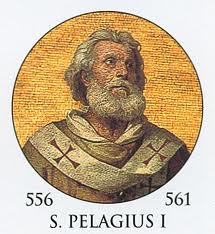


 Bjorkbloggen