Tag Archive | calvinism

Can the leopard change his spots? Not if it has no desire to change

Can the Ethiopian change his skin, or the leopard his spots? then may ye also do good, that are accustomed to do evil (Jeremiah 13:23)

Jeremiah 2::32 asks “Can a maid forget her ornaments, or a bride her attire? Well, no – what bride would forget her wedding attire? That is simply out of the question, so the answer should then be “NO WAY” and yet we read on:

“—yet my people have forgotten me days without number”.

So the answer is YES after all. Jeremiah 13:23 is a question and not a statement, and it’s like God wants to show Israel how difficult it is for people who are accustomed to do evil and who have hardened their hearts, to change their behavior. But we can be delivered from our sins and spots. We must choose to come to God so he can change us and help us to change our bad habits. If any man be in Christ, he is a new creature: old things are passed away; behold, all things are become new. What else does Jeremiah 13 tell us? We can read about a group of evil people who refuses to obey God, which is very disturbing to him. Due to their rebellion and their refusal to listen and obey, God will punish them. We can read about a people who have forgotten about God and trusted in FALSEHOOD. Does God want his chosen people to trust in falsehood? Clearly not. We can read that it’s due to their wickedness that God will put them to open shame. It’s due to their own actions which they themselves are responsible for, because God certainly didn’t cause them to perform adulteries, neighings, lewdness of whoredom and other abominations that we can read about. God is mighty upset with his peoole for constantly acting against his will. See for yourself:

10This evil people, which refuse to hear my words, which walk in the imagination of their heart, and walk after other gods, to serve them, and to worship them, shall even be as this girdle, which is good for nothing.11For as the girdle cleaveth to the loins of a man, so have I caused to cleave unto me the whole house of Israel and the whole house of Judah, saith the LORD; that they might be unto me for a people, and for a name, and for a praise, and for a glory: but they would not hear.

16Give glory to the LORD your God, before he cause darkness, and before your feet stumble upon the dark mountains, and, while ye look for light, he turn it into the shadow of death, and make it gross darkness. 17But if ye will not hear it, my soul shall weep in secret places for your pride; and mine eye shall weep sore, and run down with tears, because the LORD’s flock is carried away captive.

22And if thou say in thine heart, Wherefore come these things upon me? For the greatness of thine iniquity are thy skirts discovered, and thy heels made bare.

23Can the Ethiopian change his skin, or the leopard his spots? then may ye also do good, that are accustomed to do evil.

24Therefore will I scatter them as the stubble that passeth away by the wind of the wilderness. 25This is thy lot, the portion of thy measures from me, saith the LORD; because thou hast forgotten me, and trusted in falsehood. 26Therefore will I discover thy skirts upon thy face, that thy shame may appear27I have seen thine adulteries, and thy neighings, the lewdness of thy whoredom, and thine abominations on the hills in the fields. Woe unto thee, O Jerusalem! wilt thou not be made clean? when shall it once be? 

We are told we can keep ourselves unspotted from the world

James 1:27 Pure religion and undefiled before God and the Father is this, To visit the fatherless and widows in their affliction, and to keep himself unspotted from the world.

1 Timothy 6:14 That thou keep this commandment without spot, unrebukeable, until the appearing of our Lord Jesus Christ:

2 Peter 3:14 Wherefore, beloved, seeing that ye look for such things, be diligent that ye may be found of him in peace, without spot, and blameless.

Why would God take the time and give so many warning to Israel in Jeremiah (and elsewhere) not to do evil if He knew they were destined to do evil because their nature was evil? A change requires serious effort because of being accustomed to do evil. Jeremiah tells the people to correct their behavior. How can man correct his behavior if he can’t change it and doesn’t have a choice? Man defiles himself by sinning.

Mark 7:20And he said, That which cometh out of the man, that defileth the man.21For from within, out of the heart of men, proceed evil thoughts, adulteries, fornications, murders,22Thefts, covetousness, wickedness, deceit, lasciviousness, an evil eye, blasphemy, pride, foolishness:23All these evil things come from within, and defile the man.

Rom. 2:13(For not the hearers of the law are just before God, but the doers of the law shall be justified.14For when the Gentiles, which have not the law, do by nature the things contained in the law, these, having not the law, are a law unto themselves: 15Which shew the work of the law written in their hearts, their conscience also bearing witness, and their thoughts the mean while accusing or else excusing one another;)

Rom 1:19Because that which may be known of God is manifest in them; for God hath shewed it unto them. 20For the invisible things of him from the creation of the world are clearly seen, being understood by the things that are made, even his eternal power and Godhead; so that they are without excuse21Because that, when they knew God, they glorified him not as God, neither were thankful; but became vain in their imaginations, and their foolish heart was darkened.

God works in you both to WILL and to DO as per Phil 2:13?

For it is God which worketh in you both to will and to do of his good pleasure (Phil 2:13)

Some people rip this sentence out of the context in order to show that God is the one doing everything for you, maneuvering every step you take. They believe that he believes for you, repents for you and even do the good works for you. If God is the one responsible for doing the good works in us, how come we sometimes mess up and end up in sin, and how come we sometimes don’t show any good fruit? Can we then blame God and assume that he simply doesn’t want us to show good fruit at all times, because then he would surely have arranged it that way? If the responsibility is God’s, then he either fails miserably with us at times or he wants us to be sinning. Let’s say that you didn’t become born again until you were 40. Does this mean God didn’t “will” that you became a christian at an earlier point? Are you telling me that God wants people to be sinners for a few years before he intervenes and finally makes them good and fruit bearing christians?

Jesus says in John 15 that we can’t do anything without him and that a branch must be in the vine. He WARNS us about this (most importantly his own believing disciples) and tells them that THEY must make sure to abide in him. He is not going to do this for them. Paul basically says the same thing in Phil 2:13 – that without Jesus you can do nothing. We must be IN HIM in order to accomplish good fruit, so we must seek him and let the Holy Spirit guide us.  Jesus says “IF ye abide in me”, and he also says “Continue ye in my love”, so he is NOT saying that he is the one responsible for doing this but WE are. Read the below and read the many IF:s and warnings:

John 15:4 Abide in me, and I in you. As the branch cannot bear fruit of itself, except it abide in the vine; no more can ye, except ye abide in me.5I am the vine, ye are the branches: He that abideth in me, and I in him, the same bringeth forth much fruit: for without me ye can do nothing. 6If a man abide not in me, he is cast forth as a branch, and is withered; and men gather them, and cast them into the fire, and they are burned7If ye abide in me, and my words abide in you, ye shall ask what ye will, and it shall be done unto you. 8Herein is my Father glorified, that ye bear much fruit; so shall ye be my disciples. 9As the Father hath loved me, so have I loved you: continue ye in my love.

The context of Philippians 2:13

The verse prior to 2:13 says that we should work out our own salvation with fear and trembling:

12Wherefore, my beloved, as ye have always obeyed, not as in my presence only, but now much more in my absence, WORK OUT YOUR OWN SALVATION WITH FEAR AND TREMBLING.

Why the need for fear and trembling if we can sit back and relax while God is the one doing the will and the work for us? Why does it say that WE must work, if God is doing all the work? That is because WE must make sure to abide in Jesus so that he can use us for what he has intended, and WE must be eager to know and to do his will and OBEY.

2Fulfil ye my joy, that ye be likeminded, having the same love, being of one accord, of one mind.3Let nothing be done through strife or vain glory; but in lowliness of mind let each esteem other better than themselves. 4Look not every man on his own things, but every man also on the things of others. 5Let this mind be in you, which was also in Christ Jesus:

14Do all things without murmurings and disputings:15THAT ye may be blameless and harmless, the sons of God, without rebuke, in the midst of a crooked and perverse nation, among whom ye shine as lights in the world;16Holding forth the word of life; that I may rejoice in the day of Christ, that I have not run in vain, neither laboured in vain.

Notice that Paul says there is a risk that he has run in VAIN and labored in VAIN, and this wouldn’t make sense if GOD is the one responsible for doing the good fruit for us. The chapter is filled with Paul’s warnings and suggestions about actions that WE must take in order to be able to stand blameless before God one day. The reason why we can stand blameless before him, is because he is able to cleanse us from our sins which we certainly couldn’t do ourselves. We are also able to continue in that blameless state if we remain clean and obey the holy Spirit, and we are promised that we can stand blameless before him if we “do all things without murmurings and disputings”. Clearly Paul doesn’t expect God to do this for us, but WE must be willing servants and perform the work that God wants us to do. He is not going to force us, and one day we will also be rewarded for our DEEDS if we don’t give up. If God is doing the work for us, then he is the only one that should be rewarded since we are just puppets in his hands, and we could blame our shortcomings on him.

What is The Law of Christ?

Paul said,  “Bear one another’s burden, and so fulfill the law of Christ.  (Gal. 6:2)

What is the law of Christ?  The law of Christ is the body of commands and teachings He taught to His disciples and they in turn were to teach every new disciple.  (Matt. 28:20)

Paul equated Christ’s law to God’s law.  (1 Cor. 9:21)

“To them that are without law, as without law, (being not without law to God, but under the law to Christ,) that I might gain them that are without law.”

Paul told the Christians in Galatia to carry each other’s burdens, and in doing so they would fulfill the law of Christ.  (Gal. 6:2)

Paul also said such things as “Let the word of Christ dwell in you richly in all wisdom; teaching and admonishing one another in psalms and hymns and spiritual songs, singing with grace in your hearts to the Lord.”  (Col. 3:16)

What is the word of Christ?  

It has to do with everything Jesus taught and commanded! I have heard people try to get away with what Jesus taught by claiming it belongs to another dispensation in the future; that what Christ taught cannot be applied doctrinally to the Christians in the Church Age.

The word “doctrine” simply means “teaching or instruction.”  It is not some mystical word that is hard to grasp.  Whatever Jesus taught applied to the apostles, to those at that time, and to us!  If one does not abide in the doctrine of Christ, he does not have God.

2 John 1:9 says,
“Whoever transgresses and does not abide in the doctrine of Christ does not have God. He who abides in the doctrine of Christ has both the Father and the Son.”

As one author has well stated,

“It seems strange that men should forbid Jesus the privilege of teaching, during His earthly ministry, and great principles governing man’s relation to God – not only during the few remaining days of His brief earthly ministry, but throughout the age to follow, for which He was even then preparing His disciples.  It seems even stranger that men who so easily reject much of our Lord’s later teaching as ‘not applicable to the present dispensation’ do not hesitate to accept much of His earliest teaching (to Nicodemus, for example) as being fully applicable to the present age.  (One friend, in conversation with the author, even denied that our Lord’s words in John 15 have any bearing on the question of our relation to Christ today, since they were spoken ‘before Calvary’ – a few hours!  What delicate, fragile hairs skilled ‘rightly dividers’ can sometimes neatly split with one swift, sure stroke of their hermeneutical broadaxe!)

It is true that Jesus made reference to certain legal and ceremonial aspects of the Mosaic economy which are not applicable today.  But it is also true that He enunciated cardinal principles governing man’s spiritual relation to God which are as valid today as the moment of utterance.  One of these principles, according to His teaching in the Parable of the Law of Forgiveness, is that true repentance toward God is inseparably associated with our attitude toward our fellow men and cannot exist apart from a charitable, forgiving spirit toward others.

Such true repentance, like sincere faith and the faithful retention of the saving word of the Gospel, is necessary, not merely for a fleeting moment at the occasion of one’s conversion, but continually and habitually, as an essential condition of forgiveness and salvation.  ‘So likewise shall my heavenly Father do also unto you,’ warned Jesus, ‘if ye from your hearts forgive not every one his brother their trespasses.’  It is possible, warned Jesus, that Peter and others who have known the forgiving grace of God might forfeit that forgiveness.  The forgiving grace of God cannot dwell in bitter, unforgiving hearts.  He who refuses to forgive his brother has no real sense of need for the forgiveness of God and no just claim on His gracious forgiveness.  ‘Forgive us our debts, as we forgive our debtors.’”

What does Jesus expect from us? 

Jesus expects us to obey Him.  He was not suggesting it, nor did He say it was for another dispensation.  Jesus said true believers are those who obey Him.  Jesus said if you love Him, keep His commandments (John 14:15).

We are to abide in the doctrine of Christ.  When we abide in the doctrine of Christ, we are fulfilling the law of Christ and it shows that we have both the Father and the Son.   (2 John 1:9)

God’s will is expressed in the Law of Christ. 

The law of Christ is anything Jesus taught in Matthew, Mark, Luke, and John, and is considered the will of the Father.  (Matt. 12:50)

Jesus said whoever hears these sayings (of Jesus), and DOES THEM, is likened to a wise man who built his house on the rock. (Matt. 7:24)

The teachings of Jesus come from the Father. 

Jesus said His teaching were not His own, but came from the Father.  (John 7:16-17)  Everything Jesus taught and commanded came from God. (John 8:28; John 12:49-50; John 14:10; John 14:24; John 14:31)  Jesus obeyed the Father perfectly. Everything Jesus did was the will of God.

Jesus said to His disciples, “Teach them to obey all that I commanded you”.  By teaching others to obey all that Jesus commanded, is teaching the will of God.

The law of Christ is a law of the heart and mind. 

When one starts talking about how we should obey Jesus, immediately the cry is, “You are teaching a works salvation!”  Nothing could be further from the truth.  The Bible never says one can earn his salvation, but what the Bible does say iS to WORK OUT your own salvation (Php. 2:12).  You can’t work out what you don’t have!  On the other hand, all they teach is that one can’t help but sin every single day in thought, word, and deed.  Throughout both Testaments God wants people to forsake wickedness.  Jesus told people to “go and sin no more,” and Paul said, “Awake to righteouness and sin not!”  But on every side we are attacked by Satan’s followers who say you can keep sinning and never die (the same lie from the Garden).  Just listen to this clip ”Today’s Gospel”  of what is being taught out there, and hear how God’s word refutes them!

The secret to living a holy life, free from the bondage of sin, is LOVE.  The purity of your actions is not only from the mind, but from the heart. What is in your heart will fill your mind as well. Jesus called the teachers of the law and Pharisees hypocrites.  They were beautiful on the outside, but inside were full of dead men’s bones.  People, from the outside, can appear as righteous but inside are full of hypocrisy and wickedness. (Matt. 23:28)  It is from out of the heart that proceed evil thoughts, murders, adulteries, fornication, thefts, false witness, blasphemies (Matt. 15:19).  Jesus is not looking just for external actions to be pure, but his desire is for us to be pure in heart and mind as well.

 Will the Holy Spirit be given to those who do not obey Jesus – who claim to continually sin everyday in thought, word, and deed?

Jesus said the Holy Spirit will only be given to those who obey Him.

If you love Me, keep My commandments. And I will pray the Father, and He will give you another Helper, that He may abide with you forever.”  (John 14:15-16)

This is corroborated by Peter.

And we are His witnesses to these things, and so also is the Holy Spirit whom God has given to those who obey Him.”  (Acts 5:32) 

John tells us,

“And he that keepeth his commandments dwelleth in him, and he in him.  And hereby we know that he abideth in us, by the Spirit which he hath given us.” (1 John 3:24)

The Holy Spirit whom God has given abides in those who keep the commandments of Jesus!  For those who claim to sin everyday in thought, word, and deed cannot have the Holy Spirit, for they do not obey God.  They even write off what Jesus said as for another dispensation and therefore it doesn’t apply to them doctrinally!  Why?  Because it will knock down the wall of a false teaching called Unconditional Eternal Security!  When you listen to all these false teachers, and get rid of all the fluff in their sermons, it all boils down to one thing…..you can keep on sinning and you won’t die!  It’s the same lie the Serpent told Eve in the Garden.

The Bible is clear that if you don’t obey and abide in the doctrine of Christ, you do not belong to Christ, nor do you have the Holy Spirit. (2 John 1:9; Rom. 8:9)

Jesus said whoever obeys His commands, he is the one who loves Him.  And He who loves Jesus loves the Father.  Again, if anyone loves Jesus, he will obey His teachings. (John 14:21; John 14:23)

The reverse side is true just as well.  Jesus said those who do not love him do not keep His words. (John 14:24)

Jesus’ love is conditional as long as we continue to obey. 

Jesus’ love is NOT unconditional.  Note the condition in the words of Jesus,

If ye keep my commandments, ye shall abide in my love; even as I have kept my Father’s commandments, and abide in his love.   (John 15:10)

Being friends with Jesus is also conditioned upon our obedience.

“Ye are my friends, if ye do whatsoever I command you.”  (John 15:14)

If we hold to the teachings of Christ, we are the real disciples of His. 

“Then Jesus said to those Jews who believed Him, “If you abide in My word, you are My disciples indeed.  And you shall know the truth, and the truth shall make you free.” (John 8:31-32)

We are assured by Jesus we will never see death if we keep His word.

“Most assuredly, I say to you, if anyone keeps My word he shall never see death.” (John 8:51)

It is obedience to the teachings (keeping His word) that causes the blessings.  Just as blessings were promised for obedience to the law of Moses, so are the blessings promised to us based on our obedience to Christ.

One cannot have salvation without repentance followed with obedience.

The Scripture says,

“And having been perfected, He (Jesus) became the author of eternal salvation to all who obey Him,”  (Heb. 5:9)

It doesn’t say salvation is given to those who sin every day in thought, word, and deed.  God does not want people to sin.  He tells people to forsake their sins and follow Him.  Jesus commanded that all men to repent, but modern man will tell you repentance is not part of the Gospel. It’s a lie.  God wants repentance preached (Luke 5:32; Luke 24:47; Acts 20:21, etc. etc.).

There is a “godly sorrow.”  “For godly sorrow worketh repentance TO SALVATION not to be repented of;”  (2 Cor. 7:10)

Jesus said of the Holy Spirit,

“And when he is come, he will reprove the world of sin, and of righteousness, and of judgment:” (John 16:8)

And as we read above, God gives the Holy Spirit to those who obey Him. (Acts 5:32)  When a person feels the conviction of the Holy Spirit about his sinful condition, he can shrug it off, or he’ll come to God to forgive him of such a sinful life style.  He will want pardon through the mercy of God.  He knows his only hope is through Jesus who provided a way for his salvation and freedom from sin.  He will hate his sin because he can see what it has done to him and where it will send him.  He will not have a desire to do it anymore.  At that point of repentance, he wants to give up sin and not do it again.  Some people may be bothered for weeks under the conviction of the Holy Spirit, some may be a few days, and for some it may be on the very day (process of repentance).  He will not have rest until he comes to that crucial point of “godly sorrow” that leads to salvation.  He has to believe (faith) that God is able to forgive him of all the sins he has committed up to that point in his life, and his heart must be dead set against sinning again, which it would be if he is truly under godly sorrow.  Jesus came to set us free from sin, that it no longer has to have dominion over us.  His repentance will be proven by his deeds (Acts 20:26).  One’s deeds (obedience – NOT disobedience) will prove his repentance!  God will give that person strength if he will obey Him.  He gives the Holy Spirit to those who obey Him.  From there, as he reads the Scriptures (needs to grow in the faith), he will be warned not to go back to the way he once walked.  He can quench the Holy Spirit (1 Thess. 5:19).  The Scripture shows us certain sins will not let one inherit the kingdom of God, but instead lead one to eternal doom (Gal.5:19-21; 1 Cor. 6:9-10; Eph. 5:3-6; Rev. 21:8, etc.).  The Bible doesn’t say we work FOR our salvation, but it does say to WORK OUT our own salvation, and that with fear and trembling! (Php. 2:12).

Salvation is conditional upon the fact that we continue to abide in Jesus.  One who abides in Jesus will not sin.  Remember, Jesus said if you love Him you will obey Him and His teachings.  The Scriptures tell us,

“For this is the love of God, that we keep His commandments.  And His commandments are not burdensome.”  (1 John 5:3)

The Scriptures also say,

“He that saith, I know him, and keepeth not his commandments, is a liar, and the truth is not in him.” (1 John 2:4)”

In flaming fire taking vengeance on them that know not God, and that obey not the gospel of our Lord Jesus Christ:”  (2 Thess. 1:8) 
And you want to claim that you SIN everyday in thought, word and deed? This is simply being disobedient!

Which one is it – believing or obeying? 

Some Scripture passages say salvation is a result of obedience while other texts say salvation is through faith.  Is this a contradiction?  No.  Paul said,

“By whom we have received grace and apostleship, for obedience to the faith among all nations, for his name:  (Rom. 1:5)

“For by grace you have been saved through faith, and that not of yourselves; it is the gift of God,” (Eph. 2:8)

Faith comes first and obedience is the evidence of the faith.  The Gospel is to be obeyed for salvation sake.

“In flaming fire taking vengeance on them that know not God, and that obey not the gospel of our Lord Jesus Christ:”  (2 Thess. 1:8)

Disobedience is manifested in unbelief.

“He that believeth on the Son hath everlasting life: and he that believeth not the Son shall not see life; but the wrath of God abideth on him.” (John 3:36)

“And to whom sware he that they should not enter into his rest, but to them thatbelieved not?  So we see that they could not enter in because of unbelief. (Heb. 3:18-19)

So if you are disobedient, sinning everyday in thought, word, and deed, you are walking in unbelief. Among the sins that will send one into the Lake of Fire, the “unbelieving” is one of them.

“But the fearful, and unbelieving, and the abominable, and murderers, and whoremongers, and sorcerers, and idolaters, and all liars, shall have their part in the lake which burneth with fire and brimstone: which is the second death.”
(Rev. 21:8)

The Bible is clear that a past moment of acceptance of Christ does not guarantee anyone eternal salvation regardless how they live afterward.  If they don’t continue in the faith they will suffer the consequences in Hell for all eternity.

Scriptures say that there will be Christians who will depart from the faith (departing from the faith doesn’t happen to lost people!) (1 Tim. 4:1).  The widows turned from Christ and started following Satan (1 Tim. 5:11-15). Demas is another example. He was a traveling companion of Paul (Col. 4:14; Phm. 1:24). They worked together and endured various troubles and persecutions preaching the kingdom of God. But what happened to Demas? Paul said, “For Demas hath forsaken me, having loved this present world, and is departed unto Thessalonica;…”  (2 Tim. 4:10). Demas, a saved man, fell away and went back to loving this present world.  He loved the world more than God. The god of this world is Satan! (2 Cor. 4:4). Demas got deceived and it affected his behavior. In his unrepentant state, he lost his salvation for he did not endure! (1 John 2:15; James 4:4)

Those who obey Jesus’s commands live in him.  Paul said to examine yourselves to see whether you are in the faith (2 Cor. 13:5).  John corroborates Paul by saying, “And he that keepeth his commandments dwelleth in him, and he in him. And hereby we know that he abideth in us, by the Spirit which he hath given us.” (1 John 3:24)

Those who have a true saving faith in Christ will obey His teachings and commands.  Obedience is natural evidence of saving faith.  Those who are disobedient display their lack of saving faith.  Jesus NEVER asks us to do something we cannot do. If you love Jesus, you will obey Him, and to obey Him is fulfilling the law of Christ.

(Thanks to Sandra)

A question that calvinists cannot answer – because it’s a paradox

CHALLENGE to CALVINISTS to please explain the contradiction of Westminster Confession of Faith 3.1:

A Calvinist writes:  “[God] does not actively work unbelief into the non-elect. All are already under sin. God is not responsible for the sin of Adam, or the fall of mankind. God is not the author of evil. “

Q. Who then *is* the author of evil? Who did work unbelief into the heart of men? If all men are under sin, what was God doing when it happened – did it occur behind his back / outside his sovereign causality? Calvin wrote: (quote): 

“..the will of God is the supreme and primary cause of everything…” (The Institutes of Christian Religion, Book I, Ch. 16, Sect.

 “We also note that we should consider the creation of the world so that we may realise that everything is subject to God and ruled by his will and that when the world has done what it may, nothing happens other than what God decrees.” (Acts: Calvin, The Crossway Classic Commentaries, p.66)

“…the devil and all the ungodly are reined in by God, so that they cannot conceive, plan or carry out any crime, unless God allows it, indeed commands it. They are not only in bondage to him, but are forced to serve him. It is the Lord’s prerogative to enable the enemy’s rage and to control it at will, and it is in his power to decide how far and how long it may last, so that wicked men cannot break free and do exactly what they want….” (The Institutes of Christian Religion, Book I, Ch.17, Sect. 10)

= And again. WCF3.1 says God ordains EVERYTHING that happens.

Q. How then, having asserted this position, can Calvinism claim God is not authoring these things – THAT’S WHAT AUTHORING MEANS – (to conceive a plot, and via third parties cause a narrative to come into being, and then to publish it via secondary agents, for the world to experience it’s reality.) i.e. by the normal definition of the words, Authoring IS ordaining / decreeing / causing / predetermining, by creative design.

I really hope you guys can take this challenge on – because it lies at the heart of Calvinism’s claims of sovereignty. These are not complex questions, and are based on what Calvinism clearly states. I’m not pulling a clever trick on you here, but asking how you reconcile this contradiction: To quote Calvin again:

“First, it must be observed that the will of God is the cause of all things that happen in the world; and yet God is not the author of evil.” (Concerning the Eternal Predestination of God, p.169)

“Whatever things are done wrongly and unjustly by man, these very things are the right and just works of God. This may seem paradoxical at first sight to some….” (Concerning the Eternal Predestination of God, p.169)

Too right it seems paradoxical!….. It IS. Again. My questions have not been answered -I’ve received lots of references to God being “passive” while people go do things that God is not *actively* in control of, whilst simultaneously claiming God is in control of everything.

PROBLEM 1.) If God stands back and lets a man do something that God himself has not actively caused to be, then you are opening up space *outside his sovereign will* by claiming he stands by and lets things happen he did not cause.

PROBLEM 2.) Calvinists seem to also be claiming God IS in fact in TOTAL control of every atom in this universe etc. Thus you cannot claim God is in total control and at the same time shelve the effective causailty onto someone else… This question is normally responded to by Calvinists by stating “you do not understand Calvinism – go back and relearn”. I am – I have – I am taking you at your word and asking questions about it – please dont refer to charts or other material – I need to know how you square this circle personally. Or do you switch your mind off and accept mutually exclusive opposites as compatible truth… ie ‘A = NotA’

Sovereignty = total control / causality (predestination = ordination).
Soveriengty = active causality to salvation
Sovereignty does not = active causality to sin
Sovereignty does not = total control / causality

(Thanks to Stephen Thomas. Also read his long list of verses which show that TULIP is incorrect here)

Regeneration does not precede faith, and about DEPRAVITY

Regeneration in the Bible

“Regenerate” and regenerated” are not found in the KJV Bible. Not in the NIV either for that matter. Neither is “regeneration” found in the NIV but it’s found twice in the KJV.

Regeneration” is a translation from the Greek noun παλινγενεσίᾳ  (palingenesia Strong’s 3824) and can also mean new birth, renewal, restoration, etc. When we are forgiven and cleansed from our sins we are washed, born again and a child of God. Regenerated! God wants us all to repent from our sins and come to him so that we can be regenerated and born again. Here is the first verse:

Matthew 19:28 And Jesus said unto them, Verily I say unto you, That ye which have followed me, in the regeneration when the Son of man shall sit in the throne of his glory, ye also shall sit upon twelve thrones, judging the twelve tribes of Israel.

The second instance is this one below (in the genitive form), and some reformed believers build a whole new doctrine on this verse alone:

Titus 3:5 Not by works of righteousness which we have done, but according to his mercy he saved us, by the washing of REGENERATION, and renewing of the Holy Ghost;

This verse does not say that a person must be “regenerated” in order to seek and find God, but it’s clear that we cannot cleanse our own sins by suddenly doing good things. Our PAST sins must be dealt with first. We can only be cleansed and declared righteous thanks to the blood of Jesus , and this happens when we ask for forgiveness for our sins, repent and start living in the light. If we break the Law even once, we are in need of a Savior and we are saved thanks to God’s MERCY.

When we are born again we have been moved from death to life and we are washed, regenerated and renewed of the Holy Ghost. We are all asked to come to God in order to be born again, and we learn that regeneration comes AFTER that a person has repented for his sins and been cleansed from them. Only THEN is he a new regenerated person and the old things have passed away. Let’s also remember that the prodigal son was spiritually DEAD and yet he took a personal decision to return to his Father and ask for forgiveness. No one else persuaded him or forced him.

If conversion occurs at some point after regeneration, then we have a person who is regenerated but not yet converted, and therefore a person who is regenerated but not yet saved. A person is not saved when he receives the ability to repent and believe, but when he is actually cleansed/regenerated. The very moment that a sinner is regenerated he is saved because regeneration is not distinct or difference from conversion.

Verses that show that faith comes before regeneration/rebirth

Heb. 11 he that cometh to God must believe that he is, and that he is a rewarder of them that diligently SEEK him.

John 1:12 But as many as RECEIVED him, to THEM gave he power to become the sons of God, even to them that believe on his name

Acts 17:24 God that made the world and all things therein, seeing that he is Lord of heaven and earth, dwelleth not in temples made with hands;—26 And hath made of one blood all nations of men for to dwell on all the face of the earth, and hath determined the times before appointed, and the bounds of their habitation;27 That they should seek the Lord, if haply they might feel after him, and find him, though he be not far from every one of us:28 For in him we live, and move, and have our being; as certain also of your own poets have said, For we are also his offspring.

Acts 3:19 Repent ye therefore and be converted that your sins may be blotted out when the times of refreshing shall come from the presence of the Lord

Acts 8:22 Repent therefore of this thy wickedness and pray God if perhaps the thought of thine heart may be forgiven thee

2 Cr 7:10 For godly sorrow produces repentance leading to salvation, not to be regretted; but the sorrow of the world produces death

1 John 1:9 IF we confess our sins, He is faithful and just to forgive us our sins, and to cleanse us from all unrighteousness

Rev. 2:21 And I gave her SPACE TO REPENT of her fornication and she repented not. 22 Behold I will cast her into a bed and them that commit adultery with her into great tribulation except they repent of their DEEDS

2 Tim 2:20 But in a great house there are not only vessels of gold and of silver, but also of wood and of earth; and some to honour, and some to dishonour.21 IF a man thereforepurges himself from these, he shall be a vessel unto honour, sanctified, and meet for the master’s use, and prepared unto every good work.

2 Chron. 15:2 The LORD is with you when you are with him. IF you seek him, he will be found by you, but IF you forsake him, he will FORSAKE you.

Romans 12:2And be not conformed to this world: but be ye transformed by the renewing of your mind, that ye may prove what is that good, and acceptable, and perfect, will of God.

Isaiah 55:7 Let the wicked forsake his way, and the unrighteous man his thoughts: and let him return unto the Lord, and he will have mercy upon him; and to our God, for he will abundantly pardon.

James 4:8 Draw nigh to God, and he will draw nigh to you. Cleanse your hands, ye sinners; and purify your hearts, ye double minded

Jeremiah 4:14 Wash thine heart from wickedness, that thou mayest be saved

Ezekiel 18:31 Make you a new heart and a new spirit: for why will ye die… 

Mat 6:14,15 For if you forgive men when they sin against you, your heavenly Father will also forgive you. But if you do not forgive men their sins, your Father will not forgive your sins.

The whole point of seeking God is to find him and become regenerated/cleansed

Until we find God we are not forgiven nor regenerated. Reformed type of thinking reverses the sequence by which God works and shuts up the Kingdom of Heaven against men, claiming specialness for themselves and barring for the vast bulk of humanity. God instructs men to seek God, and in fact, we are told that nobody can come to God UNLESS they seek him. Acts 17 states clearly that God created all men in the hope that they would SEEK HIM AND FIND HIM,and that he is not far from any one as in him we all live and move and have our being. Then he determines the way to find him – he commands all men everywhere to repent. Being born of God comes as a result of, or at the same time as, finding God.

Man cannot find God before God reveals himself to man, and he has! This is the good news! He has enlightened all men born into this world – Jn 1:9 and Romans 1 – and he has shown all men within themselves his eternal power and godhood – this is quite comprehensive revelation. So that they know the truth about God and they have no excuse…(Romans 1:19-21).

Regeneration means redemption in the blood of Jesus, which is forgiveness of sins at the new birth. Regeneration is a result of repentance and consequently does not occur before repentance. 

There is one verse that describes regeneration in Titus:. “according to his mercy he saved us, by the WASHING OF REGENERATION, and renewing of the Holy Ghost;” (Titus 3:5).

Here we see that regeneration = the washing.

Revelation 1:5 tells us what this washing is: “from Jesus Christ, who is the faithful witness, and the first begotten of the dead, and the prince of the kings of the earth. Unto him that loved us, and washed us from our SINS in his own blood

Colossians 1:14 “In whom we have REDEMPTION through his blood, even the forgiveness of sins:”

This happens consequent upon REPENTANCE: “Him hath God exalted with his right hand to be a Prince and a Saviour, for to give repentance to Israel, and forgiveness of sins” (Acts 5:31)

So first; we receive, repent, seek, return to, etc and THEREAFTER God cleanses, pardons and makes us the sons of God.

DEPRAVED and DEPRAVITY words not found in the BIBLE!

Depraved” and “depravity” are words not to be found in the KJV Bible, but 6 times in the NIV where the meaning is never that a person is 100% dead and unable to make good moral decisions without the awakening of God. It’s also interesting to see that the words

Reformed believers usually base their whole philosophy on the idea that man is “depraved” and they repeatedly use this word, which they have their own interpretation of.  I checked the words DEPRAVE, DEPRAVED and DEPRAVITY in the entire NIV and none of the six places indicate a person is depraved out of his/her own control. It’s always a BAD CHOICE to be depraved:

Ezekiel 16:47 You not only followed their ways and copied their detestable practices, but in all your ways you soon became more depraved than they.

Comment: Here we can read about people choosing to FOLLOW bad ways, and these ways are DETESTABLE according to God. We can read that they became MORE depraved than others due to this unfortunate selecting of ways to follow.

Ezekiel 23:11 Her sister Oholibah saw this, yet in her lust and prostitution she was more depraved than her sister.

Comment: Here we can read the reason why Oholibah was MORE depraved than her sister. It was due to her lust and prostitution. There is no obligation to live like that.

Romans 1:28 Furthermore, just as they did not think it worthwhile to retain the knowledge of God, so God gave them over to a depraved mind, so that they do what ought not to be done.

Comment: Here we can read the REASON why God gave people over to depraved minds. It was due to their choice to not seek it worthwhile to retain the knowledge of God. We can read that they do what OUGHT NOT to be done which is a good indication of that they had an option to live in another way. This is a good example of something happening against God’s will. It was God who gave them over to a depraved mind, but 1) it was due to their own rejection of him and 2) apparently they did not have a depraved mind to start with. The rest of Romans 1 makes is clear that people have no excuse for not coming to God and for acting wickedly.

2 Timothy 3:8 Just as Jannes and Jambres opposed Moses, so also these teachers oppose the truth. They are men of depraved minds, who, as far as the faith is concerned, are rejected.

Comment: Here again we can read about people who OPPOSE the truth. God naturally did not want them to oppose the truth. IF God wanted them to reject the truth and thus force them to reject the truth, then they shouldn’t be held accountable for it. They wouldn’t have any choice but to act just like God made them act, so they would actually be “obeying God” by rejecting the truth. God wants us all to accept the truth and we can all do this if we so choose.

2 Peter 2:2 Many will follow their depraved conduct and will bring the way of truth into disrepute.

Comment: Here again we read about people who choose to FOLLOW their depraved conducts, and by doing so they will bring the way of truth into disrepute. Bad choice on their part!

2 Peter 2:7 and if he rescued Lot, a righteous man, who was distressed by the depraved conduct of the lawless

Comment: Lot was a righteous man among loads of depraved people. Naturally God didn’t want those people to be depraved but they ended up in that way against God’s will and according to their own free will. Again, if God wanted them to be depraved then they would be innocent victims for God’s ruling, which they had no choice but to obey. Just the fact that Lot was called righteous and the others depraved shows the distinction between obeying God and not obeying God.

Romans 1:29 They have become filled with every kind of wickedness, evil, greed and depravity. They are full of envy, murder, strife, deceit and malice. They are gossips.

Comment: These are examples of wicked behavior and since God is not the author of sin, naturally we can’t blame God for filling these people with all kinds of wickedness. Since they have “become” filled with evil, it makes us understand that this was not always the case in their lives. The better option would have been to live in the light.

2 Peter 2:19 They promise them freedom, while they themselves are slaves of depravity for people are slaves to whatever has mastered them.

Comment: We can read in KJV Rom. 6:16:“Don’t you know that when you offer yourselves tosomeone as obedient slaves, you are slaves of the one you obey whether you are slaves to sin, which leads todeath, or to obedience, which leads to righteousness?”

WE are the ones doing the choosing to whom we should obey. God is the one to whom we owe our worship and obedience, so if we obey someone else it’s always against his will. Both Peter and Paul are warning us to not obey the wrong master. We are told to be obedient and continue to be righteous.

Sovereignty

“Sovereignty” and “sovereign” are words not found in the KJV Bible. “Sovereignty” is found in the NIV in a couple of cases where it does not refer to God (Dan 5:18, Dan 7:27) and “sovereign” is used several times in the NIV. The lack of this word in the KJV is also quite interesting since many calvinists claim that Free willers have changed the meaning of “sovereign” – when we suggest that a sovereign God can create man with Free will – eventhough this word is not even present in the Bible. Naturally God IS sovereign but there is no obligation to understand the nature of God the way calvinists prefer to view him. God is so sovereign that he is able to create us with free will. That is how powerful he is!

Total inability

Not found in the KJV or NIV.

“The wind bloweth where it listeth” in John 3:8, doesn’t mean God randomly regenerating people

The wind bloweth where it listeth, and thou hearest the sound thereof, but canst not tell whence it cometh, and whither it goeth: so is every one that is born of the Spirit (John 3:8) KJV

The wind blows where it wishes, and you hear the sound of it, but cannot tell where it comes from and where it goes. So is everyone who is born of the Spirit. (John 3:8) NKJV

This verse is about the wind and not about us. The verse suggests that the process of spiritual rebirth is an unseen thing which is related to God who is unseen – so that those watching cannot see the origin of the Spirit and the change wrought in the man.  The invisible God is naturally the source of spiritual rebirth – but he has set the criteria for when the spiritual rebirth occurs. Being born of God comes as a result of the spiritual rebirth, and the Bible says that when we come to God we must believe that our seeking will result in the encounter we seek – a close relationship with Jesus Christ and a transformed life – which is an unseen process LIKE THE WIND! We can’t see the wind directly, but indirectly we can see what the wind can do – when it blows through trees/bushes and when it moves loose objects on the ground.

Hebr. 11:6 But without faith it is impossible to please him: for he that cometh to God must believe that he is, and that he is a rewarder of them that diligently seek him.

This does not indicate that the spiritual rebirth happens out of the blue disconnected to any seeking on the part of the new Christian.  Calvinism, on the other hand, reverses the process of rebirth which is fatal, because it exempts human beings from the responsibility to seek and find God – since God does all this for them (if they are elect). God, in his kindness, responds to honest humble seeking on the part of a broken man, and he calls the lost for repentance. Those who are NOT lost don’t need to repent (the case could be that they have already repented for their sins), and again Jesus did not call that category –  the “non-lost” christians – to repentance but only the lost individuals! This totally refutes the calvinistic idea that Jesus died only for the elect, because the true christians here must surely be those that have repented for their sins and become cleansed in the blood of Jesus, and we can read in these verses that Jesus did not call them for repentance, but all OTHERS. The reason why he call all others for repentance, is because the others are already on safe ground.

Luke 15:7 I say unto you, that likewise joy shall be in heaven over one sinner that repenteth, more than over ninety and nine just persons, which need no repentance.

Matt. 9:13 But go ye and learn what that meaneth, I will have mercy, and not sacrifice: for I am not come to call the righteous, but sinners to repentance.

Man cannot find God without him  first having revealed himself to man, and he certainly has.

John 1:4 In him was life; and the life was the light of men.—8 He was not that Light, but was sent to bear witness of that Light.9 That was the true Light, which lighteth every man that cometh into the world.

Romans 1:20 For the invisible things of him from the creation of the world are clearly seen, being understood by the things that are made, even his eternal power and Godhead; so that they are without excuse:21 Because that, when they knew God, they glorified him not as God, neither were thankful; but became vain in their imaginations, and their foolish heart was darkened.22 Professing themselves to be wise, they became fools,23 And changed the glory of the uncorruptible God into an image made like to corruptible man, and to birds, and fourfooted beasts, and creeping things. 

Acts 17:26 And hath made of one blood all nations of men for to dwell on all the face of the earth, and hath determined the times before appointed, and the bounds of their habitation;27 That they should seek the Lord, if haply they might feel after him, and find him, though he be not far from every one of us:

It’s certainly true that we can’t enter the kingdom of God unless we are born again (from God who is above), and that’s why we should seek God, repent for our sins in order to be cleansed and become new persons. God did not send his son to condemn the world, but to SAVE the world, and he doesn’t want anyone to perish. However, he is not going to force us to confess our sins and repent, but he influences us by sending out prophets (as in the old testament) and his WORD in the gospel, with the hope that as many as possible will choose to come to him to get life. The context:

John 3:5Jesus answered, Verily, verily, I say unto thee, Except a man be born of water and of the Spirit, he cannot enter into the kingdom of God6That which is born of the flesh is flesh; and that which is born of the Spirit is spirit. 7Marvel not that I said unto thee, Ye must be born again. 8The wind bloweth where it listeth, and thou hearest the sound thereof, but canst not tell whence it cometh, and whither it goeth: so is every one that is born of the Spirit. 9Nicodemus answered and said unto him, How can these things be? 10Jesus answered and said unto him, Art thou a master of Israel, and knowest not these things? 11Verily, verily, I say unto thee, We speak that we do know, and testify that we have seen; and ye receive not our witness. 12If I have told you earthly things, and ye believe not, how shall ye believe, if I tell you of heavenly things? 13And no man hath ascended up to heaven, but he that came down from heaven, even the Son of man which is in heaven. 14And as Moses lifted up the serpent in the wilderness, even so must the Son of man be lifted up: 15That whosoever believeth in him should not perish, but have eternal life. 16For God so loved the world, that he gave his only begotten Son, that whosoever believeth in him should not perish, but have everlasting life17For God sent not his Son into the world to condemn the world; but that the world through him might be saved. 

We are no longer under the Law (torah) but we are still under the moral law

The Early Church had a controversy with a group called “the Judaizers” who were teaching justification by works of the law.

And certain men which came down from Judaea taught the brethren, and said, except ye be circumcised after themanner of Moses, ye cannot be saved. (Acts 15:1)

In other words, they taught that Gentiles need to obey the law (the Torah) and perform the works of the law (circumcision) in order to be justified. Since Paul’s ministry was to the Gentiles, he dedicated a large portion of his writings in Romans and Galatians, which were to Gentile Churches, to write against the Judaizers.

You will notice that Paul continually mentioned circumcision when discussing justification by works of the law in both Romans and Galatians.

Therefore we conclude that a man is justified by faith without the deeds of the law. Is he the God of the Jews only? (Those who had the Torah) Is he not also of the Gentiles? (Those who did not have the Torah) Yes, of the Gentiles also. Seeing it is one God, which shall justify the circumcision by faith, and the uncircumcision through faith. (Rom. 3:28-30)

Cometh this blessedness then upon the circumcision only or upon the uncircumcision also? For we say that faith was reckoned to Abraham for righteousness. How was it then reckoned? When he was in the circumcision, or in uncircumcision? Not in circumcision, but in uncircumcision. (Rom. 4:9-10)

Paul is arguing that Abraham was justified before circumcision, before the law of circumcision was given, and therefore the Gentiles too can be justified by faith without the work of the law of circumcision.

For in Christ Jesus neither circumcision availeth any thing, nor uncircumcision, but a new creature. (Gal. 6:15)

For in Jesus Christ neither circumcision availeth anything, nor uncircumcision; but faith which worketh by love. (Gal. 5:6)

Circumcision is nothing and uncircumcision is nothing, but the keeping of the commandments of God (1 Cor. 7:19).

Paul continually and repeated referred to circumcision when discussing justification “by works of the law” and said that circumcision does not “availeth anything” and is “nothing” but what matters is “a new creature” “faith which worketh by love” and “keeping of the commandments”.

It needs to be understood that Paul was not coming against the preaching of repentance in his epistles when he discussed justification by works of the law. In Galatia the Judaizers came and convinced the Gentile Church there that they needed to be circumcised in order to be saved. Paul wrote his epistle to the Galatians to correct this error of the Judaizers. It was not that the Galatians were repenting of their sins and Paul thought, “I better put a stop to this”. Paul certainly would not have any problem with Gentiles repenting of their sins since his God given ministry was to bring the Gentiles to repentance (Acts 26:20). When Paul preached to the Gentiles in Athens, he told them that God was calling all of them to repent (Acts 17:30). Paul said that we needed to be circumcised, not in our flesh, but in our hearts (Rom. 2:28-29). The circumcision of the heart is putting off your sins (Col. 2:11). Paul bemoaned those Gentiles in Corinth who had not repented of their uncleanness and fornication (2 Cor. 12:21). Paul explicitly said that we should not continue in our sins (Rom. 6:1-2) but that we should awake to righteousness and stop sinning (1 Cor. 15:34). Paul even warned the Galatians that if they lived sinful lives, they would not inherit the kingdom of God (Gal. 5:19-21). It was the Apostle Paul who said “after thy hardness and impenitent heart treasurest up unto thyself wrath” (Rom. 2:5), and that “repentance” leads “to salvation” (2 Cor. 7:10). Clearly Paul would not have had any problems with Gentiles repenting of their sins. Rather, Paul was upset that the Gentile Church in Galatia started to believe falsehoods from the Judaizers about how to be saved.

A good example of how Gentiles find the forgiveness of sins is the story of Nineveh. The narrative records that the people believed God (Jonah 3:5) and turned from their sins (Jonah 3:8). When God saw this, He changed His plans and decided not to destroy them as He said He would (Jonah 3:10). These Gentiles did not need to adopt the Jewish customs, obey the Torah, or be circumcised in order to be pardoned. They were saved, or found the mercy of God, through simple repentance from sin and faith in God. Jesus even said that sinners will be condemned if they do not repent the way Nineveh did (Matt. 12:41). Therefore the way that Gentiles were saved through repentance and faith in the Old Testament is the same way that they are saved in the New Testament, according to Jesus. Repenting of sin is required in both the Old and New Testament as Jesus said and therefore repentance is not the works of the law Paul preached against.

We know that Jesus Christ taught repentance (Lk. 13:3) and Paul certainly would not have contradicted Jesus Christ since Paul was an Apostle of Jesus Christ (Eph. 1:1; Col. 1:1). Paul explicitly said that men ought to listen to the wholesome words of Jesus (1 Tim. 6:3). Paul was by no means attacking the preaching of repentance when he wrote against justification by works of the law. Paul was attacking the Judaizers and their false gospel that Gentiles must convert to Judaism, be circumcised, and obey the Torah.

Thanks to Jesse Morell

Is there a difference between sinning and PRACTICING sin? 1 John 3:9

Some people suggest that christians are safe and will not lose their souls as long as they don’t PRACTICE sin – as in “habitually”. They might also suggest that true born-again christians do not practice sin but they do sin occasionally and they can never stop sinning. This is just another attempt to excuse sinning.

How many sins must a person commit to be considered “practicing” sin? One single murder or bank robbery in a life time would not be considered to sin habitually, but we know that one single sin made a huge difference for Adam and Eve. Perhaps being unfaithful every other year wouldn’t be considered practicing sin either? Where do we draw the line? The Bible says that nothing impure shall enter the new Jerusalem:

Rev. 21:27 And there shall in no wise enter into it any thing that defileth, neither whatsoever worketh abomination, or maketh a lie: but they which are written in the Lamb’s book of life.

True repentance (along with our faith) is the only thing that can save us.

The Greek word used for “to commit” is in itself proof that “commit” does not mean “practice”.  In the Greek NT there are two words that are commonly used to express the idea of doing something. The first is “poieo”, the second is “prasso”, according to Blueletter Bible.

4160 poieo, appear. to make or do (in a very wide application)

4238 prasso, to “practice”, i.e. perform repeatedly or habitually (thus differing from poieo which refers to a single act); to execute, accomplish, fare, commit, deeds, do, keep, require, use arts.

When the Apostle John wrote “Whosoever is born of God doth not COMMIT sin” he used the word “poieo” (to make or do sin with the idea of a single act), and if he wanted to communicate the concept of “practicing” sin he could have used “prasso”.

John Wesley says:

“But some men will say, ‘True: whosoever is born of God doth not commit sin habitually.’ Habitually! Whence is that? I read it not. It is not written in the Book. God plainly saith, ‘He doth not commit sin’; and thou addest, habitually! Who art thou that mendest the oracles of God?-that ‘addest to the words of this book’? Beware I beseech thee, lest God “add to thee all the plagues that are written therein’!” / John Wesley’s Fifty Three Sermons “The Marks of the New Birth” April 3, 1741

1 John 3:9 mostly applies to Jesus because he is certainly “born of God” and his seed remains in God (the Father), but in a way it also applies to us who are in the son. Jesus actually had the capacity to sin or else he would not be tempted in all things just like us, like the Bible says he was. He rather chose to live a sinless life for our sake. We too obviously have the capacity to sin, but if we are led by the holy Spirit, we do not sin. The term “seed” above is generally understood to mean “God’s word” and seed is often typical of the Word of God (for example, Luke 8:11; 1 Peter 1:23) but we know that believers are also referred to as “seed” (Rom 9:8; Gal 3:16, 19, 29)

“Whosoever is born of God doth not commit sin; for his seed (the believer) remaineth in him (Jesus): and he (the believer) cannot sin, because he is born of God (which is to abide in Jesus).” 1 John 3:9

This is confirmed in 1 John 3:6

“Whosoever abideth in him sinneth not: whosoever sinneth hath not seen him, neither known him.” 1 John 3:6

It is not impossible for a believer to sin but rather, it is impossible for a believer to sin as long as he abides in Jesus (which is a condition to remain a believer). The chapter does not teach that it is impossible for a christian to sin but that it is possible that he, through God’s grace, avoids it. No believer has to sin (Titus 2:11-12, 1 Cor 10:13) and the Bible does not say that we are off the hook if we only transgress the law just once in a while instead of several times. Repentance is the only cure. If we mix sin and “sorries” on a daily basis, we have not truly repented.

1 John 3:4 Whosoever committeth sin transgresseth also the law: for sin is the transgression of the law.

1 Joh. 3:8 He that committeth sin is of the devil; for the devil sinneth from the beginning. For this purpose the Son of God was manifested, that he might destroy the works of the devil.—10 In this the children of God are manifest, and the children of the devil: whosoever doeth not righteousness is not of God, neither he that loveth not his brother.

We are told to not hate anyone because hating is like being a murderer. If we are to believe that our souls are not in danger as long as we do not habitually sin, does this mean we can perhaps get away with hating one single brother? Of course not, because no murderer has eternal life abiding in him.

1 Joh. 3.15 Whosoever hateth his brother is a murderer: and ye know that no murderer hath eternal life abiding in him.

We can also see that the condition for having confidence toward God is that our heart does not condemn us. If the case is that our conscience tells us that we have acted wickedly (our heart condemns us) then God is merciful and will forgive us IF we confess our sins and truly repent. If we harden our hearts and pursue in the sin we know is wrong, then our souls are in danger. If you have a chance, do read the article about our faith as “filthy rags”.

1 Joh. 3:19 And hereby we know that we are of the truth, and shall assure our hearts before him.20 For if our heart condemn us, God is greater than our heart, and knoweth all things.21 Beloved, if our heart condemn us not, then have we confidence toward God.

Other mentions of “committing”  sin outside of 1 John 3

John 8:34 Jesus answered them, Verily, verily, I say unto you, Whosoever committeth sin is the servant of sin.

1 Corinthians 6:18 Flee fornication. Every sin that a man doeth is without the body; but he that committeth fornication sinneth against his own body.

2 Corinthians 12:21 And lest, when I come again, my God will humble me among you, and that I shall bewail many which have sinned already, and have not repented of the uncleanness and fornication and lasciviousness which they have committed.

James 2:9 But if ye have respect to persons, ye commit sin, and are convinced of the law as transgressors.

James 5:15 And the prayer of faith shall save the sick, and the Lord shall raise him up; and if he have committed sins, they shall be forgiven him.

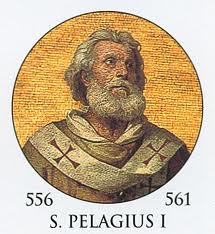
Pelagius has been falsely judged by his critics

Unlike Augustine, Pelagius knew Greek. Pelagius did not teach that man can save himself. He only taught that a man can live a righteous life via free will choice. The idea that man can save himself is what came from Augustine’s accusations against him, as Calvinists do with Arminians today when they accuse them of teaching “works salvation”. True Pelagianism is truth according to what the early Church taught, not as Augustine described it. What Augustine described is without a doubt heresy, but it’s not what Pelagius actually taught. This is evident in the writings of Pelagius, as well as in the fact that the councils could find no fault in his teachings 2 times that he appeared before them in his own defense. When he was finally marked as a heretic the third time around, it was when he could not be present to defend himself (in Tunisia where Augustine resided) and Augustine and Jerome were present to misrepresent his position.

Most of the information we have about Pelagius rests in the hands of his enemies. That is not enough for a righteous judgment. If God judged us by the words of our enemies, we would be outraged at the injustice. It is unfair for us to condemn a man based on the evidence presented by his enemies, and not from the man himself. We would also be guilty of slander if we continue to claim that an innocent person is an “heretic” even though he might not be. Let’s be careful so God won’t judge us one day for slander, false accusations and causing division.

Pelagianism teaches only that man can choose to do right and choose not to sin. It does not teach that a person can be holy without God or His grace. This is a lie given through the heretic Augustine. Augustine was a liar seeking to have him condemned, as he was offended by his preaching against his teachings to the people. Augustine was teaching a “sinning religion”, and people were following it and living it. Pelagius could not stand for this heresy, so he began to teach against it. In his efforts he brought out the a man CAN choose to not sin, because he is not so spiritually dead that he could not make such a choice. Augustine turned this around with false accusations against him, misrepresenting him as if he was teaching that man could save himself. This is not what he was teaching at all. And his own writings prove it – which were not even discovered until this past century. Augustine tried to make sure of that by having them burned or destroyed, but a few slipped through the cracks. Now Augustine is exposed for the liar and gospel pervert that he is.

Calvinism began with Gnosticism – which is very clearly shown by many quotes given by the early Church. Tertullian and Hippolytus and Irenaeus all wrote extensively against the Gnostic groups, telling of the things they believed and how the Church has always disagreed with them, calling them heretics. Augustine was infested with Gnosticism, which Calvin also adopted.

Here is a quote from an article below on the Letter to Demetrius:

“The moral life of purity, for Pelagius, can only be achieved by drawing upon both “the good of nature and the good of grace” (9:1); this will be the dominant theme of his exhortation. Pelagius’s reflections on the human person are not unlike those of the Eastern Fathers. They share the same starting point of moral reflection, that is, the innate goodness of man because God has created him in His image and likeness. Pelagius writes, “you ought to measure the good of human nature by reference to its Creator” (2:2).”

The above quote shows the balanced thought of Pelagius teaching. His accusers only point out that he taught “the good of nature” and the “innate goodness of man”, and completely leave out the blanche of his teaching that tells of the “good of grace” and “because GOD has created him in His image and likeness”. Pelagius thought was in giving glory to God in His creation, in that men have a mind and free will to choose that has been given by the creator, which makes them able to choose to do right. Of course man has to know right and wrong first, but the ability is with him once he knows the difference.

Prior to Pelagius being ‘found’ guilty of heresy, he was cleared by two synods of bishops. These synods were provoked by Augustine’s influence. Then the council of Carthage, where Augustine was bishop, declared Pelgius a heretic. A few years later, Augustine and two others brought heresy charges against Pelagius to the bishop of Rome. Pelagius was cleared again, a third time. The bishop of Rome declared Pelagius a heretic a few years later under pressure from Imperial Rome and not before that time. It was perceived that the effects of Pelagius’ doctrine would undermine Imperial rule and so political pressure was then applied and the bishop of Rome declared Pelagius a heretic. Another interesting note is that Pelagius was well received and there was generally no problem with his teaching. The charges against him only arose when some one else, Caelestius, who was building on Pelagian teaching denounced infant baptism. Then and only then the problem arose. Infant baptism was under assault – if they were not born guilty and therefore did not need to be baptized to be saved then ecclesiastical power structure was going to be undermined. That kick started the whole controversy against Pelagius: they synods and councils did not occur until the implications of his teaching threatened infant baptism. See Peter Brown’s “Augustine of Hippo” there are 3 chapters that deal with Augustine-Pelagian controversy that document everything posted.

Pelagius is often ascribed views he doesn’t have

From Jesse Morell:

Matt Slick of CARM wrote that “Pelagianism…. taught that people had the ability to fulfill the commands of God by exercising the freedom of human will apart from the grace of God.  In other words, a person’s free will is totally capable of choosing God and/or to do good or bad without the aid of Divine intervention.”[29] This is an example, not of Pelagian heresy, but of Pelagian hearsay.

I would suspect that Matt Slick learned about Pelagianism from its opponents, and not from actually reading the writings of the Pelagians. This is a common practice for Calvinists, but what if that is how their doctrine was treated? What if someone stated what Calvinism teaches, by stating the opponents? Augustine accused Pelagius of denying the grace of God, but this was an accusation not a fact.

Had Matt Slick actually read some of the few writings that still exist today from the original Pelagians, he would have read in Julian of Eclanum’s Pelagian Statement of Faith: “We [Pelagians] maintain that men are the work of God, and that no one is forced unwillingly by His power either into evil or good, but that man does either good or ill of his own will; but that in a good work he is always assisted by God’s grace, while in evil he is incited by the suggestions of the devil.”[30]

Pelagius himself said, “I anathematize the man who either thinks or says that the grace of God, whereby ‘Christ Jesus came into the world to save sinners,’ is not necessary not only for ever hour and for every moment, but also for every act of our lives: and those who endeavor to dis-annul it deserve everlasting punishment.”[31]

Pelagius said, “This grace we do not allow to consist only in the law but also in the help of God. God helps us through His teaching and revelation by opening the eyes of our heart, by pointing out to us the future so that we may not be preoccupied with the present, by uncovering the snares of the devil, by enlightening us with the manifold and ineffable gift of heavenly grace.”[32]

Pelagius said, “God always aids by the help of his grace. God aids us by his doctrine and revelation, while he opens the eyes of our heart; while he shows us the future, that we may not be engrossed with the present; while he discloses the snares of the devil; while he illuminates us by the multiform and ineffable gift of heavenly grace. Does he who says this, appear to you to deny grace? Or does he appear to confess both divine grace and the freewill of man?”[33]

Pelagius said in a letter to Innocent, “Behold, before your blessedness, this epistle clears me, in which we directly and simply say, that we have entire freewill to sin and not to sin, which, in all good works, is always assisted by divine aid. Let them read the letter which we wrote to that holy man, bishop Paulinus, nearly twelve years ago, which perhaps in three hundred lines supports nothing else but the grace and aid of God, and that we can do nothing at all of good without God. Let them also read the one we wrote to that sacred virgin of Christ, Demetrias, in the east, and they will find us so praising the nature of man, as that we may always add the aid of God’s grace. Let them likewise read my recent tract which we were lately compelled to put forth on freewill, and they will see how unjustly they glory in defaming us for denial of grace, who, through nearly the whole text of that work, perfectly and entirely profess both free will and grace.”[34]

Pelagius taught that the freedom of the human will was not lost by the original sin of Adam, but that grace was necessary for man to rightly use his free will. He also taught that free will itself was a gracious gift given to us at Creation. He did not deny grace as necessary or as an aid for free will. The only grace he denied was Augustinian grace, which said that free will was lost by original sin and therefore man’s ability to obey needed to be restored by grace. However, one of the best Greek-English Lexicons, Thayer’s, defined grace as “divine influence upon the heart” which is precisely how Pelagius viewed grace in contradiction to Augustine.

It was Augustine’s view of grace that was inconsistent with free will, not Pelagius’. As Augustine said, “I have tried hard to maintain the free choice of the human will, but the grace of God prevailed.”[35] Pelagius affirmed both the freedom of the will and the necessity for the grace of God, while Augustine denied the freedom of the will because of His mistaken view of grace.

This is why John Wesley said, “I verily believe, the real heresy of Pelagius was neither more nor less than this: The holding that Christians may, by the grace of God, (not without it; that I take to be a mere slander,) ‘go on to perfection;’ or, in other words, ‘fulfill the law of Christ.’”[36] And also “Who was Pelagius? By all I can pick up from ancient authors, I guess he was both a wise and a holy man.”[37]

John Wesley said, “Augustine himself. (A wonderful saint! As full of pride, passion, bitterness, censoriousness, and as foul-mouthed to all that contradicted him… When Augustine’s passions were heated, his word is not worth a rush. And here is the secret: St. Augustine was angry at Pelagius: Hence he slandered and abused him, (as his manner was,) without either fear or shame. And St. Augustine was then in the Christian world, what Aristotle was afterwards: There needed no other proof of any assertion, than Ipse dixit: “St. Augustine said it.”[38]

On the issue of the freedom of the will, Pelagius was in perfect agreement with the Early Church while Augustine was in agreement with the heretical Gnostics:

Dr Wiggers said, “All the fathers…agreed with the Pelagians, in attributing freedom of will to man in his present state.”[39]

Episcopius said, “What is plainer than that the ancient divines, for three hundred years after Christ, those at least who flourished before St. Augustine, maintained the liberty of our will, or an indifference to two contrary things, free from all internal and external necessity!”[40]

Catholic councils that calvinists appeal to

There were three councils that condemned Pelagianism; the Council of Ephesus in the year 431; the Council of Carthage in the year 418; and the Council of Orange in the year 529. This is because Pelagius was not invited nor present to defend himself but his opponents and adversaries stated his doctrine for him. When Pelagius was able to defend himself, the Council of Diospolis in 415 declared Pelagius orthodox. And Pope Zosimus also declared Pelagius’ orthodoxy in 417. He was always acquitted when present to clarify and defend his views. If these are our authorities to determine orthodoxy, do we accept the ones in favor of Pelagius or the ones against him?

In addition, the Council of Orange and the Council of Carthage were not ecumenical councils. They did not consist of Bishops from the entire church, which mean that the rulings of the Councils were not universally affirmed by the Eastern and Western churches.

If heresy is heresy because a council says so, or because of majority vote, Calvinism must be more heretical than Pelagianism was because there were more councils that condemned Calvinism than condemned Pelagianism. The Calvinist doctrines of predestination, limited atonement, and irresistible grace were condemned throughout history. Lucidus was condemned by the Council of Oral in 473, Council of Arles in 475, and Council of Orange in 529. And Gottschalk (Gotteschalcus) was condemned by the Council at Mentz in 848 and the Council of Chiersey (Quiercy) in 849. And what do Calvinists think of the Council of Constance in 1414 for John Huss, or the Council of Worms in 1521 for Martin Luther, or the Council of Trent in 1561 for the Protestants? Are these Councils not the voice of Orthodoxy as Ephesus and Carthage supposedly were?

In fact, the Council of Orange that condemned Pelagianism also condemned the doctrines of Calvinism. If the council is authoritative in the former case, it must be equally authoritative in the latter as well. But if it was mistaken in the latter case, maybe it was mistaken in the former as well. Tony Miano essential condemns his own theology by appealing to church councils and assuming their authority.

Many thanks to Lyndon Conn, Joshua Harris and Jesse Morell

We all stumble in many ways + No man can tame his tongue? (James 3:8)

We all stumble in many ways + No man can tame his tongue? (James 3:2 NIV + James 3:8)

Some people who are searching through the Bible in order to find verses which support sinning sometimes try to use the half verse in James 3:2 to persuade themselves and others that no one can ever stop sinning and/or that it’s not that serious if we fall.

It’s interesting that many of them despise the NIV version and vehemently explain what a terrible translation it is and yet they prefer to use NIV in THIS particular case since they prefer the word “stumble” before “offend” which the KJV uses. The rest of the passage in James 3:2 offers a solution to the problem, that if any man offend NOT in word then he is also able to bridle his whole body – which seems like a good idea. James doesn’t say this is impossible but compares with other situations where man has successfully made horses and even large ships obey him.

James 3:2 For in many things we OFFEND all. If any man offend not in word, the same is a perfect man, and able also to bridle the whole body. (KJV)

What does “offend all” mean? The transliteration is “ptaiomen”/”ptaió” which indeed means “to cause to stumble” or “stumble”. The only passages in the Bible where this word is used are in the following verses, apart from James 3:2:

  1. James 2:10 For whoever keeps the whole law, and yet stumbles in one point, he has become guilty of all.
  2. Romans 11:11 I ask then, did they stumble that they might fall? May it never be! But by their fall salvation has come to the Gentiles, to provoke them to jealousy.
  3. 2 Peter 1:10 Therefore, brothers, be more diligent to make your calling and election sure. For if you do these things, you will never stumble.
  4. James 3:2 For in many things we OFFEND all. If any man offend not in word, the same is a perfect man, and able also to bridle the whole body. (KJV)

There are other Greek words that are translated as “sinning” and/or “falling away” such as “pipto” and “ekpipto” but they are not used here. Another significant word is “skandalizo”, which is often translated as “fall away” and “stumble” and this is used when Jesus tells his disciples “You will all fall away because of me this night” (Matthew 26:31 NAS). Skandalizo also is the word used in Mathew 24:10, where Jesus talks about a “falling away” in the end times maybe due to persecutions. “Skandalizo” is also used in Mark 4:17, where Jesus tells a parable about seed falling on rocky soil to describe believers who “fall away” in times of trials. In Luke’s parallel passage the Greek word behind “fall away” is “aphistemi” – the root from which the Greek word for apostasy is drawn. So there are words that contain a much more serious risk for a christian than the Greek word that is translated as “stumble” in James 3:2.

So let’s remember that when Jesus said “Sin no more” he uses a different Greek word than in James 3:2, and the same goes for other places in the Bible when we are told to avoid sinning such as when Paul said “Awake to righteousness and SIN NOT”. Stumbling doesn’t seem to be as serious as sinning or falling away.

Revelation 2:Remember therefore from whence thou art fallen, and repent, and do the first works; or else I will come unto thee quickly, and will remove thy candlestick out of his place, except thou repent.

Jude 1:24 Now unto him that is able to keep you from falling, and to present you faultless before the presence of his glory with exceeding joy,

No man can tame his tongue

Another verse that is often used to support sinning is “No man can tame his tongue” which is also mentioned by James. He explains that animals have indeed been tamed by man and man can even make horses obey and large ships, but when it comes to the tongue it seems generally impossible for man to tame it. But he doesn’t conclude that this is therefore normal behaviour and totally acceptable for a christian in any way. He says that the tongue boasts, that it can lit a fire, is a world of INIQUITY, DEFILES the body and it is set on fire of  HELL. Would James ever claim that this is a totally acceptable for true christians? Of course not! He says “Out of the same mouth proceedeth blessing and cursing. My brethren, THESE THINGS OUGHT NOT TO BE“. Of course James would never say that something that causes INIQUITY and defiles the body is accepted and normal. Iniquities always separate us from God!

If “no man can tame his tongue” means that it’s never possible to avoid lies and slander, then James is in contradiction with himself. He says a few verses later:

14But if ye have bitter envying and strife in your hearts, glory not, and LIE NOT against the truth”

Lie not? Didn’t James know that no man can tame his tongue and must always lie? Obviously James is not saying that it’s acceptable to not tame his tongue even if it seems generally impossible. He is saying that we should, because these things should NOT be so, and he says departing from the truth (which lying and slandering is) is DEVILISH, and not taming a tongue would result in envying and strife which is in turn the foundation of EVERY EVIL WORK. There is a famous commandment which says “You shall not LIE”. Is James saying that we can just as well forget about this commandment because no man can tame his tongue? Of course not. James says:

1:26″If any man among you seem to be religious, and BRIDLETH NOT HIS TONGUE, but deceiveth his own heart, this man’s religion is vain”.

The entire context from James 3:

2For in many things we offend all. If any man offend not in word, the same is a perfect man, and able also to bridle the whole body3Behold, we put bits in the horses’ mouths, that they may obey us; and we turn about their whole body. 4Behold also the ships, which though they be so great, and are driven of fierce winds, yet are they turned about with a very small helm, whithersoever the governor listeth. 5Even so the tongue is a little member, and boasteth great things. Behold, how great a matter a little fire kindleth! 6And the tongue is a fire, a world of iniquity: so is the tongue among our members, that it defileth the whole body, and setteth on fire the course of nature; and it is set on fire of hell. 7For every kind of beasts, and of birds, and of serpents, and of things in the sea, is tamed, and hath been tamed of mankind: 8But the tongue can no man tame; it is an unruly evil, full of deadly poison. 9Therewith bless we God, even the Father; and therewith curse we men, which are made after the similitude of God. 10Out of the same mouth proceedeth blessing and cursing. My brethren, THESE THINGS OUGHT NOT SO TO BE. 11Doth a fountain send forth at the same place sweet water and bitter? 12Can the fig tree, my brethren, bear olive berries? either a vine, figs? so can no fountain both yield salt water and fresh. 13Who is a wise man and endued with knowledge among you? let him shew out of a good conversation his works with meekness of wisdom. 14But if ye have bitter envying and strife in your hearts, glory not, and LIE NOT against the truth. 15This wisdom descendeth not from above, but is earthly, sensual, DEVILISH16For where envying and strife is, there is confusion and EVERY EVIL WORK17But the wisdom that is from above is first pure, then peaceable, gentle, and easy to be intreated, full of mercy and good fruits, without partiality, and without hypocrisy.