Tag Archive | bible

Make yourself a new heart, for why will ye die? (Ez. 18:31)

love3God can clean us up and give us a new heart, but in order for him to do this we must choose to repent, come to him and place him as No 1 in our lives. WE are actually asked to cleanse, purify and circumcise our own hearts (which we can if we cast away our sins). 

Ezekiel 18:31 Cast away from you all your transgressions, whereby ye have transgressed; and make you a new heart and a new spirit: for why will ye die, O house of Israel?

Psalm 119:9 Wherewithal shall a young man cleanse his way? by taking heed thereto according to thy word.

Isaiah 1:16 Wash you, make you clean; put away the evil of your doings from before mine eyes; cease to do evil;

Jeremiah 4:4 Circumcise yourselves to the Lord, and take away the foreskins of your heart, ye men of Judah and inhabitants of Jerusalem: lest my fury come forth like fire, and burn that none can quench it, because of the evil of your doings.

Jeremiah 4:14 O Jerusalem, wash thine heart from wickedness, that thou mayest be saved. How long shall thy vain thoughts lodge within thee?

Amos 4:6 And I also have given you cleanness of teeth in all your cities, and want of bread in all your places: yet have ye not returned unto me, saith the Lord.

Ezekiel 24:13 In thy filthiness is lewdness: because I have purged thee, and thou wast not purged, thou shalt not be purged from thy filthiness any more, till I have caused my fury to rest upon thee.

Deutoronomy 10:16 Circumcise therefore the foreskin of your heart, and be no more stiffnecked.

Acts 7:51 Ye stiffnecked and uncircumcised in heart and ears, ye do always resist the Holy Ghost: as your fathers did, so do ye.

Matt. 23:26 Thou blind Pharisee, cleanse first that which is within the cup and platter, that the outside of them may be clean also.

James 4:8 Draw nigh to God, and he will draw nigh to you. Cleanse your hands, ye sinners; and purify your hearts, ye double minded.

2 Timothy 2:21 If a man therefore purge himself from these, he shall be a vessel unto honour, sanctified, and meet for the master’s use, and prepared unto every good work.

To be regenerated is to be cleansed. We are not clean before we come to Jesus and repent for our sins, and we can’t get the Holy Spirit unless we are born again and have purged hearts. We must choose to come to Jesus to be born again and leave our old man behind. John the Baptist preached about repentance for the remission of sins, and Jesus picked up after him and did the same – by preaching about repentance and faith in him as the promised Messiah and son of God. Jesus work was to call sinners to repentance so that they could get life and he taught his disciples – and all of us – to continue preaching this gospel throughout the whole world. The path that you should walk is 1) come to Jesus and believe in him and his work on the cross 2) confess your sins and repent 3) you’re now cleansed, purged, regenerated and born again 4) you’re given the Holy Spirit as a Helper. A person can never be considered clean as long as his sins are not washed away, and the Bible doesn’t teach “once cleansed, always cleansed”. We must endure to the end to be saved.

Mark 1:4 John did baptize in the wilderness, and preach the baptism of repentance for the remission of sins.

Mark 1:14 Now after that John was put in prison, Jesus came into Galilee, preaching the gospel of the kingdom of God,15 And saying, The time is fulfilled, and the kingdom of God is at hand: repent ye, and believe the gospel.

Matthew 9:13 But go ye and learn what that meaneth, I will have mercy, and not sacrifice: for I am not come to call the righteous, but sinners to repentance.

Luke 15:7 I say unto you, that likewise joy shall be in heaven over one sinner that repenteth, more than over ninety and nine just persons, which need no repentance.

Luke 24:46 And said unto them, Thus it is written, and thus it behooved Christ to suffer, and to rise from the dead the third day:47 And that repentance and remission of sins should be preached in his name among all nations, beginning at Jerusalem.48 And ye are witnesses of these things.49 And, behold, I send the promise of my Father upon you: but tarry ye in the city of Jerusalem, until ye be endued with power from on high.

Matt. 28:19 Go ye therefore, and teach all nations, baptizing them in the name of the Father, and of the Son, and of the Holy Ghost:20 Teaching them to observe all things whatsoever I have commanded you: and, lo, I am with you always, even unto the end of the world. Amen.

Acts 2:38 Then Peter said unto them, Repent, and be baptized every one of you in the name of Jesus Christ for the remission of sins, and ye shall receive the gift of the Holy Ghost.

Acts 3:19 Repent ye therefore, and be converted, that your sins may be blotted out, when the times of refreshing shall come from the presence of the Lord.

Thanks to Jesse Morell for the below concerning regeneration after faithheart3

Regeneration requires consent and cooperation. A man’s free will must be synergistically involved in his regeneration. God cannot change a man’s character without the cooperation of the man himself. That is why God said, “I have purged thee, and thou wast not purged” (Eze. 24:13). This is because unless a man is willing to have his moral character changed, it will and cannot be changed. It is impossible for Omnipotence to change a man’s moral character without the consent of his will because this would involve an intrinsic contradiction. Therefore, God and man both have an active role in regeneration. This is why the Bible says that God gives us a new heart (Eze. 11:19; 36:26), while also saying that men should make for themselves a new heart (Eze. 18:31). When a sinner’s will is changed from being disobedient to obedient, both God and the sinner have an active role in bringing about that change. God’s role is His gracious influence upon our will. Man’s role is the yielding of and obedience of his will.

Jesus said, “Cleanse first that which is within the cup and platter, that the outside of them may be clean also” (Matt. 23:26). For Jesus to tell men to clean themselves on the inside (change their intention), takes for granted that it is their choice and that they can do this. Jesus was actually filled “with anger, being grieved, for the hardness of their hearts” (Mk. 3:5). This indicates that the state of man’s heart is man’s own fault, that the state of his heart is something which he causes and which he has control over.

The Bible even commands men to make unto themselves a new heart. God said, “make you a new heart and a new spirit: for why will ye die…” (Ezekiel 18:31). “Wash thine heart from wickedness, that thou mayest be saved” (Jeremiah 4:14). “Draw nigh to God, and he will draw nigh to you. Cleanse your hands, ye sinners; and purify your hearts, ye double minded” (James 4:8).

What does it mean to change your heart? To change your heart is to change your intention. It is to change the motives for all your actions. It means that you are no longer living for yourself or have a selfish motive but are now living for God and the well-being of His universe, thus having benevolent motives.

Men are even commanded to circumcise their own hearts (Deut. 10:16; Jer. 4:4). Since they are commanded to do so, this means that it is their own responsibility and choice. To circumcise your heart means to repent or put off your sins (Col. 2:11). Therefore, to circumcise your heart means to repent of your sins but to have an uncircumcised heart is to have an impenitent heart.

When Stephen was open air preaching, he said to the crowd “Ye stiffnecked and uncircumcised in heart and ears, ye do always resist the Holy Spirit: as your fathers did, so do ye” (Acts 7:51). Stephen was rebuking them for disobeying a specific commandment, “Circumcise therefore the foreskin of your heart, and be no more stiffnecked” (Deut. 10:16).

Why would Stephen rebuke them for being uncircumcised in their heart unless they were capable of circumcising their hearts? Why rebuke them for breaking a commandment unless they were capable of obeying the commandment? Why rebuke them for having uncircumcised hearts unless having such hearts was their own free choice? Why would he rebuke them for resisting the Holy Spirit unless they were capable of yielding to the Holy Spirit? Unless they were capable of doing these things, why rebuke them for not doing these things?

Stephen seemed to take for granted or assume the ability of his audience. He blamed them for their impenitent which must mean that their impenitent was their own free choice. You cannot rebuke a man for something which is not his choice. A man cannot be blamed for that which is beyond his control or for what he cannot help.

A film with students mocking a preacher of God on college campus

Wow what patience Jesse Morell (the preacher) has! Students are shouting, showing filthy signs and purposely standing in his way on the sidewalk. A guy proudly starts ripping his motor cycle as soon as Jesse speaks.  If these individuals won’t repent, I fear for what is awaiting them on judgment day.

Matthew 5:10 Blessed are they which are persecuted for righteousness’ sake: for theirs is the kingdom of heaven.11 Blessed are ye, when men shall revile you, and persecute you, and shall say all manner of evil against you falsely, for my sake12 Rejoice, and be exceeding glad: for great is your reward in heaven: for so persecuted they the prophets which were before you.

Proverbs 14:9 Fools make a mock at sin: but among the righteous there is favour.

Jude 1:18 How that they told you there should be mockers in the last time, who should walk after their own ungodly lusts.

95 Open Theism verses

christopher fisher's avatarreality is not optional

This is worth reproducing in whole. From ApologeticJedi from TheologyOnline:

1. God worked in six day-divided time spans, but rested on the seventh day (Gen 2:1-2)
2. God brought the animals before Adam to see what he would call them. (Gen 2:19)
3. God is uncertain whether they will eat of the Tree of Life after the fall. (Gen 3:22)
4. God repents that he made man. (Gen 6:6)
5. God must patiently wait while the ark is being built (1 Pet 3:20)
6. Satan is willing to wager with God over how the future will turn out. (Job 1:11-12)
7. Abraham challenges God over his promise, and lives! (Gen 15:2-3, 6)
8. God is prevailed upon by Abraham over whether to spare Sodom. (Gen 18:23-33)
9. The angels of God argue with Lot about sleeping in the square (Gen 19:2-4)
10. God learns that Abraham would go to…

View original post 1,102 more words

The Bible shows that christians are not exempted from the great TRIBULATION

tribulation“Rapture” is a word which is not in the Bible, but the word tribulation can be found several times and is translated from the Greek word thlipsis (2347 Strongs), and can mean tribulation, persecution, affliction, trouble and/or distress. Below you can find each case where this word is used in the New Testament, and note that there is no mention anywhere that born again christians will be exempted from any tribulations. On the contrary, christians have always been the target of various persecutions throughout history and there is no reason to why we should be exempted from any future tribulations – especially if you think about that christians are constantly warned in the Bible about future persecutions.

The pretribulation rapture is actually a very modern idea and was not taught before 1830 AD. We can blame Edward Irving and John Nelson Darby for the advent of this false teaching, and later on also Scofield. See more here. Today most churches have sadly been deceived to believe in the pretrib rapture, and preachers continue to keep listeners in a steady grip in this area. Yet, the Bible is very clear that Jesus will not return until the Antichrist has places himself on the throne, and the elect will be gathered AFTER that the sun and moon have been darkened. We are exempted from the wrath of God and the tribulations related to it, but not from other tribulations which occur before then. God is not the God of confusion. If all christians will be exempted from the tribulation, this could easily have been stated somewhere in the Bible, but it’s not.

Matthew 24:29 IMMEDIATELY AFTER the tribulation of those days shall the sun be darkened, and the moon shall not give her light, —: 30And THEN shall appear the sign of the Son of man in heaven: — 31And he shall send his angels with a great sound of a trumpet, and they shall gather together his elect from the four winds, from one end of heaven to the other.

1 Cor. 15:52 In a moment, in the twinkling of an eye, at the last trump: for the trumpet shall sound, and the dead shall be raised incorruptible, and we shall be changed.

2 Thessalonians 2:1 Now we beseech you, brethren, by the  coming of our Lord Jesus Christ, and by our gathering together unto him, 2 That ye be not soon shaken in mind, or be troubled, neither by spirit, nor by word, nor by letter as from us, as that the day of Christ is at hand.3 Let no man deceive you by any means: for that day shall not come, except there come a falling away FIRST, and that man of sin be revealed, the son of perdition4 Who opposeth and exalteth himself above all that is called God, or that is worshipped; so that he as God sitteth in the temple of God, shewing himself that he is God.

1 Thessalonians 4:16 For the Lord himself shall descend from heaven with a shout, with the voice of the archangel, and with the trump of God: and the dead in Christ shall rise first:17THEN we which are ALIVE and REMAIN  shall be caught up together with them in the clouds, to meet the Lord in the air: and so shall we ever be with the Lord.

Revelation 20:4 And I saw thrones, and they sat upon them, and judgment was given unto them: and I saw the souls of them that were beheaded for the witness of Jesus, and for the word of God, and which had not worshipped the beast, neither his image, neither had received his mark upon their foreheads, or in their hands; and they lived and reigned with Christ a thousand years.

Here are the Biblical cases with the word thlipsis

It’s true that we don’t know the day of the hour of the return of Jesus, but we can still see some signs when it’s getting close and which events that must precede this event. For those who are not prepared, the day will come as a thief in the night. Also born again christians are warned that they must endure tribulations, meaning it’s a risk some won’t. The Bible says the second coming will be as in the days of Noah, and the people who lived during that time had all chances to get saved along with Noah and his family if they only adhered to his preaching and believed him, which they didn’t. For them the end came very sudden and unexpected.

tribulation2

Matt. 13:20 But he that received the seed into stony places, the same is he that heareth the word, and anon with joy receiveth it;21 Yet hath he not root in himself, but dureth for a while: for when TRIBULATION or persecution ariseth because of the word, by and by he is offended.

Matt. 24:And as he sat upon the mount of Olives, the disciples came unto him privately, saying, Tell us, when shall these things be? and what shall be the sign of thy coming, and of the end of the world?And Jesus answered and said unto them, Take heed that no man deceive you.For many shall come in my name, saying, I am Christ; and shall deceive many.And ye shall hear of wars and rumours of wars: see that ye be not troubled: for all these things must come to pass, but the end is not yet.For nation shall rise against nation, and kingdom against kingdom: and there shall be famines, and pestilences, and earthquakes, in divers places.All these are the beginning of sorrows.Then shall they deliver you up to be AFFLICTED, and shall kill you: and ye shall be hated of all nations for my name’s sake.10 And then shall many be offended, and shall betray one another, and shall hate one another.11 And many false prophets shall rise, and shall deceive many.12 And because iniquity shall abound, the love of many shall wax cold.13 But he that shall endure unto the end, the same shall be saved.14 And this gospel of the kingdom shall be preached in all the world for a witness unto all nations; and then shall the end come.15 When ye therefore shall see the abomination of desolation, spoken of by Daniel the prophet, stand in the holy place, (whoso readeth, let him understand:)16 Then let them which be in Judaea flee into the mountains:—20 But pray ye that your flight be not in the winter, neither on the sabbath day:21 For then shall be great TRIBULATION, such as was not since the beginning of the world to this time, no, nor ever shall be.22 And except those days should be shortened, there should no flesh be saved: but for the elect’s sake those days shall be shortened.23 Then if any man shall say unto you, Lo, here is Christ, or there; believe it not.24 For there shall arise false Christs, and false prophets, and shall shew great signs and wonders; insomuch that, if it were possible, they shall deceive the very elect.27 For as the lightning cometh out of the east, and shineth even unto the west; so shall also the coming of the Son of man be.28 For wheresoever the carcase is, there will the eagles be gathered together.29 IMMEDIATELY AFTER THE TRIBULATION of those days shall the sun be darkened, and the moon shall not give her light, and the stars shall fall from heaven, and the powers of the heavens shall be shaken:30 And THEN shall appear the sign of the Son of man in heaven: and then shall all the tribes of the earth mourn, and they shall see the Son of man coming in the clouds of heaven with power and great glory.31 And he shall send his angels with a great sound of a trumpet, and they shall gather together his elect from the four winds, from one end of heaven to the other.32 Now learn a parable of the fig tree; When his branch is yet tender, and putteth forth leaves, ye know that summer is nigh:33 So likewise ye, when ye shall see all these things, know that it is near, even at the doors.34 Verily I say unto you, This generation shall not pass, till all these things be fulfilled.35 Heaven and earth shall pass away, but my words shall not pass away.36 But of that day and hour knoweth no man, no, not the angels of heaven, but my Father only.37 But as the days of Noah were, so shall also the coming of the Son of man be.38 For as in the days that were before the flood they were eating and drinking, marrying and giving in marriage, until the day that Noe entered into the ark,39 And knew not until the flood came, and took them all away; so shall also the coming of the Son of man be.40 Then shall two be in the field; the one shall be taken, and the other left.41 Two women shall be grinding at the mill; the one shall be taken, and the other left.42 Watch therefore: for ye know not what hour your Lord doth come.43 But know this, that if the goodman of the house had known in what watch the thief would come, he would have watched, and would not have suffered his house to be broken up.44 Therefore be ye also ready: for in such an hour as ye think not the Son of man cometh.45 Who then is a faithful and wise servant, whom his lord hath made ruler over his household, to give them meat in due season?46 Blessed is that servant, whom his lord when he cometh shall find so doing.

Mark 4:16 And these are they likewise which are sown on stony ground; who, when they have heard the word, immediately receive it with gladness;17 And have no root in themselves, and so endure but for a time: afterward, when AFFLICTION or persecution ariseth for the word’s sake, immediately they are offended.

Mark 13:13 And ye shall be hated of all men for my name’s sake: but he that shall endure unto the end, the same shall be saved.14 But when ye shall see the abomination of desolation, spoken of by Daniel the prophet, standing where it ought not, (let him that readeth understand,) then let them that be in Judaea flee to the mountains:—19 For in those days shall be AFFLICTION, such as was not from the beginning of the creation which God created unto this time, neither shall be.20 And except that the Lord had shortened those days, no flesh should be saved: but for the elect’s sake, whom he hath chosen, he hath shortened the days.21 And then if any man shall say to you, Lo, here is Christ; or, lo, he is there; believe him not:22 For false Christs and false prophets shall rise, and shall shew signs and wonders, to seduce, if it were possible, even the elect.23 But take ye heed: behold, I have foretold you all things.24 But in those days, AFTER THE TRIBULATION, the sun shall be darkened, and the moon shall not give her light,25 And the stars of heaven shall fall, and the powers that are in heaven shall be shaken.26 And THEN shall they see the Son of man coming in the clouds with great power and glory.27 And then shall he send his angels, and shall gather together his elect from the four winds, from the uttermost part of the earth to the uttermost part of heaven.

John 16:21 A woman when she is in travail hath sorrow, because her hour is come: but as soon as she is delivered of the child, she remembereth no more the anguish, for joy that a man is born into the world.21 A woman when she is in travail hath sorrow, because her hour is come: but as soon as she is delivered of the child, she remembereth no more the ANGUISH, for joy that a man is born into the world.—31 Jesus answered them, Do ye now believe?32 Behold, the hour cometh, yea, is now come, that ye shall be scattered, every man to his own, and shall leave me alone: and yet I am not alone, because the Father is with me.33 These things I have spoken unto you, that in me ye might have peace. In the world ye shall have TRIBULATION: but be of good cheer; I have overcome the world.

Acts 7:10 And delivered him out of all his AFFLICTIONS, and gave him favour and wisdom in the sight of Pharaoh king of Egypt; and he made him governor over Egypt and all his house.11 Now there came a dearth over all the land of Egypt and Chanaan, and great AFFLICTION: and our fathers found no sustenance.

Acts 11:19 Now they which were scattered abroad upon the PERSECUTION that arose about Stephen travelled as far as Phenice, and Cyprus, and Antioch, preaching the word to none but unto the Jews only.

Acts 14:22 Confirming the souls of the disciples, and exhorting them to continue in the faith, and that we must through much TRIBULATION enter into the kingdom of God.

Acts 20:22 And now, behold, I go bound in the spirit unto Jerusalem, not knowing the things that shall befall me there:23 Save that the Holy Ghost witnesseth in every city, saying that bonds and AFFLICTIONS abide me.

Rom. 2:But after thy hardness and impenitent heart treasurest up unto thyself wrath against the day of wrath and revelation of the righteous judgment of God;Who will render to every man according to his deeds:To them who by patient continuance in well doing seek for glory and honour and immortality, eternal life:But unto them that are contentious, and do not obey the truth, but obey unrighteousness, indignation and wrath,TRIBULATION and anguish, upon every soul of man that doeth evil, of the Jew first, and also of the Gentile;10 But glory, honour, and peace, to every man that worketh good, to the Jew first, and also to the Gentile

Romans 5:3 And not only so, but we glory in TRIBULATIONS also: knowing that TRIBULATION worketh patience

Rom. 8:8 There is therefore now no condemnation to them which are in Christ Jesus, who walk not after the flesh, but after the Spirit.—35 Who shall separate us from the love of Christ? shall TRIBULATION, or distress, or persecution, or famine, or nakedness, or peril, or sword?

Romans 12:12 Rejoicing in hope; patient in TRIBULATION; continuing instant in prayer;

2 Corinthians 1:4 Who comforteth us in all our TRIBULATION, that we may be able to comfort them which are in any TROUBLE, by the comfort wherewith we ourselves are comforted of God.—And our hope of you is stedfast, knowing, that as ye are partakers of the sufferings, so shall ye be also of the consolation.For we would not, brethren, have you ignorant of our trouble which came to us in Asia, that we were pressed out of measure, above strength, insomuch that we despaired even of life:

1 Cor. 7:28 But and if thou marry, thou hast not sinned; and if a virgin marry, she hath not sinned. Nevertheless such shall have TROUBLE in the flesh: but I spare you.

2 Cor. 2:For out of much AFFLICTION and anguish of heart I wrote unto you with many tears; not that ye should be grieved, but that ye might know the love which I have more abundantly unto you.

2 Cor. 4:17 For our light AFFLICTION, which is but for a moment, worketh for us a far more exceeding and eternal weight of glory

2 Cor. 6:But in all things approving ourselves as the ministers of God, in much patience, in AFFLICTIONS, in necessities, in distresses,In stripes, in imprisonments, in tumults, in labours, in watchings, in fastings;

2 Cor. 7:Great is my boldness of speech toward you, great is my glorying of you: I am filled with comfort, I am exceeding joyful in all our TRIBULATION.

2 Cor. 8:1  Moreover, brethren, we do you to wit of the grace of God bestowed on the churches of Macedonia;How that in a great trial of AFFLICTION the abundance of their joy and their deep poverty abounded unto the riches of their liberality—13 For I mean not that other men be eased, and ye BURDENED:

Ephesians 3:13 Wherefore I desire that ye faint not at my TRIBULATIONS for you, which is your glory.

Phil 1:17 (word not in the KJV)

Phil 4:13 I can do all things through Christ which strengtheneth me.14 Notwithstanding ye have well done, that ye did communicate with my AFFLICTION.

Col. 1:24 Who now rejoice in my sufferings for you, and fill up that which is behind of the AFFLICTIONS of Christ in my flesh for his body’s sake, which is the church:

1 Thess. 1:And ye became followers of us, and of the Lord, having received the word in much AFFLICTION, with joy of the Holy Ghost.

1 Thess. 3:That no man should be moved by these AFFLICTIONS: for yourselves know that we are appointed thereunto.For verily, when we were with you, we told you before that we should suffer tribulation; even as it came to pass, and ye know.—Therefore, brethren, we were comforted over you in all our AFFLICTION and distress by your faith:

2 Thessalonians 1:4 So that we ourselves glory in you in the churches of God for your patience and faith in all your persecutions and TRIBULATIONS that ye endure:—6 Seeing it is a righteous thing with God to recompense TRIBULATION to them that trouble you;

Hebr. 10:32 But call to remembrance the former days, in which, after ye were illuminated, ye endured a great fight of afflictions;33 Partly, whilst ye were made a gazingstock both by reproaches and AFFLICTIONS; and partly, whilst ye became companions of them that were so used.

James 1:27 Pure religion and undefiled before God and the Father is this, To visit the fatherless and widows in their AFFLICTION, and to keep himself unspotted from the world.

Revelation 1:9 I John, who also am your brother, and companion in TRIBULATION, and in the kingdom and patience of Jesus Christ, was in the isle that is called Patmos, for the word of God, and for the testimony of Jesus Christ.

Revelation 2:9 I know thy works, and TRIBULATION, and poverty, (but thou art rich) and I know the blasphemy of them which say they are Jews, and are not, but are the synagogue of Satan.

Revelation 2:10 Fear none of those things which thou shalt suffer: behold, the devil shall cast some of you into prison, that ye may be tried; and ye shall have TRIBULATION ten days: be thou faithful unto death, and I will give thee a crown of life. —22 Behold, I will cast her into a bed, and them that commit adultery with her into great TRIBULATION, except they repent of their deeds.

Rev. 7:13 And one of the elders answered, saying unto me, What are these which are arrayed in white robes? and whence came they?14 And I said unto him, Sir, thou knowest. And he said to me, These are they which came out of GREAT TRIBULATION, and have washed their robes, and made them white in the blood of the Lamb. 

SPANKING KIDS with a rod – supported in the Bible?

spank kidDo you spank your kids thinking “science” and the Bible support this kind of treatment? Science investigations are at best “inconclusive” whether spanking will increase good behavior in a child (apart from an immediate obedience) and at worst it can affect the child in a very destructive way and harm him for life. The problem with having no laws against spanking kids, is that parents could get away with beating their kids really hard by suggesting in court that “I only meant to spank him softly but ended up spanking him harder than I intended”, and they could win the case despite severe bruises and even injuries on the child. Having laws against spanking doesn’t mean you can’t even touch the child or grab him hard around the arm and pull him away from some activity. There are also other ways to discipline a child than physical abuse.

Does the Bible say anything about giving a child a little spank on his behind by using a hand? No, IF you would like to obey Proverbs literally you should beat him with a ROD and not stop even if he cries! Do you?

We can read about disciplining a child (or rather a youngster) physically in Proverbs, and Proverbs is a book well-known for its poetry, similes, metaphors and hyperboles. So how can we be certain of that those few cases should be read literally? Do you obey these verses literally if this is your true aim? Proverbs doesn’t say anything about spanking a child gently (or not gently) on his behind but that you should BEAT HIM WITH A ROD! Do you also believe that it’s OK to not stop beating the child even if he is crying (as in “let not thy soul spare for his crying“) and do you also do this to a five-year old child? Do you also do this even if the child doesn’t deserve to be beaten, only because you’re afraid of disobeying the words “Thou shalt beat him with the rod, and shalt deliver his soul from hell“? Meaning that if you realize that your child is approaching his/her teenage years and you have so far not found any reason to beat your child, you must hurry up to do this for no reason at all in order to be obedient to this verse in Proverbs that you understand as literal – just to be on the safe side. All this because you interpret a verse to say that the child can risk hell if you don’t?

If we don’t pay attention to words, context and in which book in the Bible we are reading, things can go very wrong. The truth is that a good shepherd does not beat his sheep with his rod. He uses his rod to show authority over his sheep and his aim is to keep them safe and sound. This goes together well with the saying “Thy rod and thy staff they comfort me“. The fright of sudden noise can induce a shock in the sheep that suppresses fertility, so beating sheep with a rod wouldn’t serve any purpose. Dog experts advise against beating dogs for very good reasons, and they can become very aggressive if treated in the wrong way. Can we really say that it’s improper to beat sheep and dogs but perfectly fine to beat children? A rod could be as symbol for authority and correction. We can read in James that we put bits in the horses mouths so that they may obey us, and no mentioning of using physical punishment to make horses obey us. A shepherd could use a rod/crook to move a sheep should it be necessary, and something like this could be used for horses as well – but not as in a punishment but as in steering the animal and making him move.

James 3:For in many things we offend all. If any man offend not in word, the same is a perfect man, and able also to bridle the whole body.Behold, we put bits in the horses’ mouths, that they may obey us; and we turn about their whole body.Behold also the ships, which though they be so great, and are driven of fierce winds, yet are they turned about with a very small helm, whithersoever the governor listeth.Even so the tongue is a little member, and boasteth great things. Behold, how great a matter a little fire kindleth!

What the Bible says about spanking

Proverbs says we should use a ROD, which would be a shebet, which during this time could be a large walking stick, a shepherd’s crook or a king’s scepter. So it does not say that a parent should use his HAND but a ROD, as in a stick, bat or cane. If you want to take these verses literally, then you should not give yourself the right to switch the rod to a little twig, wooden spoon or your hand. If you can amend the verses to make them say “spank with your hand” instead of “beat with a rod“, then perhaps it’s an even better alternative to NOT change the verses but to understand them metaphorically as in “discipline your kids and don’t spoil them”. Even if we don’t want to spank or beat our children, it’s oftentimes necessary to take hold of an arm and say “NO, be careful!” or similar. Not being allowed to spank your children doesn’t mean you can’t touch them! To grab an arm can also be felt physically and it gives less humiliation than spanking the kid on his behind.

Here are the verses in Proverbs that speak about chastening youth. We should absolutely use discipline as a method to bring the children up, and “rod of correction” could simply be symbolism for correction made by an authority. If you have found no reason to beat you kid, simply because he has done nothing to deserve it, does this mean you hate him? Must you then hurry up to beat him just to show that you don’t hate him?

Prov 22:15: Foolishness is bound in the heart of a child; but the rod of correction shall drive it far from him.

Prov. 29:15: The rod and reproof give wisdom: but a child left to himself bringeth his mother to shame.

Prov 19:18: Chasten thy son while there is hope, and let not thy soul spare for his crying 

Prov 13:24: He that spareth his rod hateth his son: but he that loveth him chasteneth him betimes (diligently).

Prov. 23:12 Apply thine heart unto instruction, and thine ears to the words of knowledge.13 Withhold not correction from the child: for if thou beatest him with the rod, he shall not die.14 Thou shalt beat him with the rod, and shalt deliver his soul from hell.15 My son, if thine heart be wise, my heart shall rejoice, even mine.

“Chastening” doesn’t have to mean a physical punishment, and if we also understand the “the rod of correction” and “the rod of reproof” to be a figure of speech, we actually don’t have many verses left in Proverbs which might encourage literal spanking/beating children with a real rod. We only have one passage left that could possibly be used as support and that is Proverbs 23:13-14 above (highlighted with purple) where we can read that we should BEAT a son with the rod, and also a promise that he will not die from it. A sad fact is that children indeed have been killed by parents beating them to death with a rod, and it’s actually enough to beat a child a couple of times in the wrong place and too hard, and he can die from it. Could the “the rod” spoken about in Prov. 23:12-14 (and also in Proverbs 13:24 and all other verses) be the same type of rod spoken about earlier – the rod of correction? This term could be figure of speech for correction, chastening and discipline, something that children will indeed NOT die from (unless we’re talking about a physical punishment) and it could also place him on the right path away from hell.

These passages presumably reflect Solomo’s parenting beliefs with respect to his son, Rehoboam. Solomo says:

Prov. 22:Train up a child in the way he should go: and when he is old, he will not depart from it.

The problem is that Solomo, in all his wisdom and knowledge about how to bring up a child, ended up getting a son who became a very hated ruler due to his evil deeds. This shows that Proverbs cannot always be taken literally but oftentimes as a “general” truth and at other times as metaphors or hyperboles. The Father of the prodigal son is considered to be a wise Father (and he is compared with God), but this still doesn’t mean that there were no risks involved for getting a rebellious son, which he ended up getting. So Prov. 22:6 is clearly not true in all cases. As an adult, Rehoboam was vicious, inconsiderate to his subjects, had no regard for human rights, and was widely hated. He barely escaped assassination at the hands of his own people.

1 Kings 12:12 So Jeroboam and all the people came to Rehoboam the third day, as the king had appointed, saying, Come to me again the third day.13 And the king answered the people roughly, and forsook the old men’s counsel that they gave him;14 And spake to them after the counsel of the young men, saying, My father made your yoke heavy, and I will add to your yoke: my father also chastised you with whips, but I will chastise you with scorpions.

There is a mention here that Solomo whipped his servants (and his son did this even more), so is this too a procedure that you would like to use on your employees? I’d rather believe that both “chastised you with whips” and “chastise you with scorpions” are just metaphors or figure of speech and that there were no actual whips or scorpions involved – and no literal yokes either for that matter.

God explained to King David that his son Solomon would be chastened by him (God) by using the rod of men and with the stripes of the children of men. Did God do this literally? No, he never used a literal rod against him but he did chasten him in various other ways. 

2 Samuel 7:13 He shall build an house for my name, and I will stablish the throne of his kingdom for ever.14 I will be his father, and he shall be my son. If he commit iniquity, I will chasten him with the rod of men, and with the stripes of the children of men

Proverbs also mentions some other things that we would hesitate to understand literally:

Proverbs 22:He that soweth iniquity shall reap vanity: and the rod of his anger shall fail.He that hath a bountiful eye shall be blessed; for he giveth of his bread to the poor.10 Cast out the scorner, and contention shall go out; yea, strife and reproach shall cease.

Is this always true? And here too we can read “rod of his anger“, as in a figure of speech.

Proverbs. 23:1 When thou sittest to eat with a ruler, consider diligently what is before thee:And put a knife to thy throat, if thou be a man given to appetite.—Labour not to be rich: cease from thine own wisdom.For as he thinketh in his heart, so is he: Eat and drink, saith he to thee; but his heart is not with thee.The morsel which thou hast eaten shalt thou vomit up, and lose thy sweet words.

This is a command to not eat too much and not to slit your throat. Likewise, when reading that you should beat your child with a rod, it could be a command to discipline and have authority over your child.

The Hebrew word Naár can mean  youth (young and unmarried), or literally he who shakes off or shakes himself free. Not necessarily a child under 12. But baby Moses was also described as naár and baby Samuel when weaned and taken to the temple – so as in the meaning of “shaken off”. The word for beat is the same as for “the sun beat down on Jonah“, as in a constant presence. We should have a constant presence of authority in our children’s lives.

If it was so important to beat a child (rather than using other forms of discipline), wouldn’t it be a good idea to state this in the law of Moses or elsewhere, instead of a book well-known for its poetry? Instead we can read instructions how to handle a son who does not “obey the VOICE of his father or mother“, and what to do with a rebellious son with no hope for improvement (that you actually wouldn’t risk getting in the first place if Prov. 22:6 was literally true). There is no mention of beating or spanking children in the Mosaic law, but we can read about VOICE of the parents, which could make the reader believe that we ought to discuss and reason with our children and to apply various means of chastisement, but this doesn’t have to mean a physical punishment. We can read that if the rebellious son despite much chastening from his parents still refuses to obey and hearken (to their voices) THEN his parents may lay hold of him and bring him to the elders of the city. A valid reason for taking this route would be if their son was a glutton and a drunkard – so clearly not a young child but rather a teenager/youth – and it’s of course up to the parents to decide when there is no hope to ever get their son back on track. The punishment was then stoning. There is no known recording of parents who have ever taken this severe step, and that’s rather understandable knowing the outcome would be a sure DEATH for their own loved child.

Deut. 21:18 If a man have a stubborn and rebellious son, which will not obey the voice of his father, or the voice of his mother, and that, when they have chastened him, will not hearken unto them:19 Then shall his father and his mother lay hold on him, and bring him out unto the elders of his city, and unto the gate of his place;20 And they shall say unto the elders of his city, This our son is stubborn and rebellious, he will not obey our voice; he is a glutton, and a drunkard.21 And all the men of his city shall stone him with stones, that he die: so shalt thou put evil away from among you; and all Israel shall hear, and fear.

In the New Testament there is no mention of spanking or beating children, but we can read about chastening and disciplining them. The point being made is that we should not question chastening from our Lord because this is a sign of love and not hate. Normally fathers chasten their sons in one way or the other – because of love for them.

Hebrews 12:6-7: “…the Lord disciplines those he loves, and he punishes everyone he accepts as a son. Endure hardship as discipline; God is treating you as sons. For what son is not disciplined by his father?”

Moreover, Paul tells us that children must obey their parents in ALL THINGS. What about parents who teach their children to participate in theft, drug use and bullying? Clearly Paul is speaking about a situation where both parties – parents and children – obey his recommendations, and maybe that is why he says “parents IN THE LORD“. Paul is also asking Fathers to not provoke their children to anger, and it’s common that children who get spanked/beaten feel anger and resentment, and an urge to make a revenge towards someone. Children who get beaten, often end up beating their own children when they grow up.

Col. 3:20 Children, obey your parents in all things: for this is well pleasing unto the Lord.21 Fathers, provoke not your children to anger, lest they be discouraged.

Eph. 6:1 Children, obey your parents in the Lord: for this is right.Honour thy father and mother; which is the first commandment with promise;That it may be well with thee, and thou mayest live long on the earth.And, ye fathers, provoke not your children to wrath: but bring them up in the nurture and admonition of the Lord.

According to science, spanking/beating children can cause many negative side effectsspank kid2
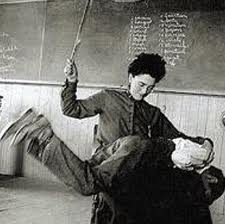
That spanking/beating children is not a good idea can be seen in this document from “phoenoixchildrens.com”

meta study from 2002 with an analysis of 60 years of scientific studies about spanking/beating children draws the conclusion that such treatments are correlated to several disadvantages and give no advantages other than an immediate obedience in the situation at hand. The experience of getting spanked/beaten could be very traumatic  for the child and something that he will never forget. It’s absolutely possible that he will not repeat the particular offence that he was spanked/beaten for, but it could lead to that he will hold a grudge against his parents for a very long time which would affect the relationship negatively in the long run, and it’s a risk that he will subconsciously like to make a revenge by pouring out his anger and feeling of humiliation on others (siblings or friends).

It’s not possible to make a law where parents must sit down to discuss and reason with their children in love, but it IS possible to make a law where spanking/beating children is prohibited. This is done in many countries and means that parents are at risk of getting reported by others if they are detected to transgress the law. In Sweden there is an organization that encourages children, through ads in media and in schools, to call them if their parents spank/beat them.

If you compare Sweden with a country where spanking/beating children is NOT prohibited, do you think that perhaps people tend to REPORT spanking/beating to a greater degree in Sweden than in this other country?

I would think that you would say YES to this question! Why would anyone bother report spanking/beating children in a country where this is legal? And who would you report this legal procedure to in the first place? Yes, ABUSE is hopefully illegal also in countries where spanking is legal, but you would still find a LESS degree of reports of “spanking/beating children” in a country where it’s a legal method. Would you therefore be surprised if you found out that Sweden has a higher degree of reported cases of “spanking/beating children” (which based on Swedish terms would be filed under CHILD ABUSE) than in for instance the USA?

I ask this since this entire blog post is written under the inspiration of a podcast sermon that I listened to the other day, where an American pastor claimed before his congregation and for his listeners, that science supports that spanking kids was a good way to treat children and that it was likewise bad to NOT spank children. The truth is that science does NOT say that at all. Moreover, he claimed that crime reports among the youth increased with 430% (I think he said) in Sweden the year after Sweden made it unlawful to spank/beat children. THAT IS A FALSE CLAIM! Of course I don’t believe that this pastor purposely lied, because I prefer to believe that he read this claim somewhere and chose to believe it (perhaps because it went well with his own belief) without checking the source. Sometimes we simply don’t have time to check sources but we must try to be as truthful as we can we retell stories, and particularly if we stand behind a pulpit in a church. Anyone can make a mistake, but try to place yourself in my shoes. I wouldn’t mind if I someone claimed that Sweden is the country where the inhabitants are most negative towards Israel among all the countries in Europe, because that is the truth according to a major poll! Certainly not a fact that I’m proud of but it’s nevertheless a true statement. European countries have always considered to be negative towards Israel (unlike the US who has a much better approach), but Sweden takes the prize, which isn’t that surprising considering how Swedish mainstream media has chosen to display the conflict in the Middle East. But it’s annoying to listen to a sermon where the pastor makes such a tremendous incorrect statement about the country I live in, and it makes me wonder what else he is wrong about when he speaks? There are so many sermon podcasts to listen to so I can listen to someone else. It would also be correct to say that children/teenagers are not disciplined in Sweden, because that’s often the case. I oftentimes find that children show no respect for their parents. I don’t believe this is due to the lack of spanking, but due to that atheism is such a leading star and that discipline and correction are simply lacking. Sadly this is not a problem only for Sweden.

There is actually a DUTY to report violation of the law of child abuse (which spanking/beating children is considered to be) in Sweden and since also children are encouraged to call in if their children are abusive, this will NATURALLY be seen in statistics! Based on this self-evident fact, an honest person therefore do not draw the conclusion that there must be more child abuse in Sweden than in other countries, and neither that the law against child abuse which came 1979 (Sweden was first in the world to prohibit spanking/beating children) has been seen to increase child abuse and violence among youth, because this simply is not true.

“Children have the right to proper care, a safe environment and a good upbringing. A child must be treated with respect for his/her person and may not be affected by physical punishment or other types of humiliating treatments. ” (Sweden 1979)

The good thing with this law is that it will prevent a parent to use the excuse “I didn’t mean to spank my kid so hard, but it ended up being much more severe than I intended“, whereupon his defense attorney could use this argument as an attempt to show the prosecutor that the parent didn’t have bad intentions and didn’t purposely harm the child – meaning the parent might get away with it. With this law the truth is that the parent shouldn’t spank/beat the child at all, so no excuses are valid. Pulling a child abruptly in his arm/ shirt, grabbing his arm, or pulling him back from a situation where he harms someone/something is not considered “physical abuse“, unless you do this with such force that he gets harmed.

According to a study by the UN, 80 % of the children of the world have at one point been affected by spanking/beating. The USA is the only country in the world – among all the members of UN – together with Somalia and South Sudan that has not ratified the Convention on the rights of the child from 1989. (USA has signed it but not ratified it.) Somalia has plans to be a party of this treaty, leaving only the USA and South Sudan as the only countries that are not party of this treaty!

The following are excerpts from a study from 2011 and can be found in this article from Karlstad Universityspank kid3 

The 2011 national Swedish studies on corporal punishment and other humiliating behavior towards children are a follow-up of earlier studies performed in 1980, 2000 and 2006. The purpose of the studies is to describe the current situation for Swedish children and trends over time concerning various forms of humiliation, with special emphasis on events at home, but also those occurring at school.

A number of smaller investigations concerning child abuse have been performed in Sweden since the 1960s, but the first representative national investigation was carried out in 1980, the year after corporal punishment was banned through the Swedish Parental Act of 1979. The investigation in 1980 was an interview of 1105 families, where the parents responded to questions about their upbringing practices with respect to a specific child during the past year

National Swedish parental studies using the same methodology have been performed in 1980, 2000, 2006 and 2011 (current study). In 1980 and 2000 the studies were performed through telephone interviews, but in 2006 and 2011 postal questionnaires were used, mainly for economic reasons .

To our knowledge no other country had been able to perform regular national studies of this kind, where both parental behavior and children’s experiences of punishment have been recorded. For this reason the studies have been of interest not only in Sweden but also at an international level.

Since the mid-1980s, suspicion of child abuse has gradually become more frequently reported to the police forces in Sweden. Due to the substantial increase in reports during the 1990s the Governmental Committee on Child Abuse and Related Issues commissioned BRÅ to study this in detail. It was shown that the increase depended on a greater tendency to report abuse and there were no indications whatsoever that severe abuse of children had increased in Sweden. 

After the great decrease from fifty percent in 1980 to twelve percent I 2000 with respect to pushing and shaking children it has gradually increased to twenty six percent in 2006 and to thirty percent in 2011. This behavior is most prominent towards children between two and nine years of age. No parent admitted to have shaken an infant. This may hopefully be a result of the intense information campaign against shaking small children carried out in the interim since the 2006 year study.

Parents born abroad state that they have beaten their child more often. Since the very substantial decrease of parents beating their children (during the preceding year) from 1980 (28 %) to 2000 (1.1 %), there has been a slight and gradual increase to three percent in 2011. It should be noted in this context that the study in 2000 was performed using interviews and that the studies in 2006 and 2011 were performed using non-identifiable postal questionnaires

Children born abroad, particularly boys, state that they have been beaten more frequently.

The outstanding risk factor for corporal punishment is, however, violence between the adults in the family. This gives a ten-fold risk increase compared to families where there is no inter-adult violence. This risk decreases insignificantly when adjusted for other risk factors such as single parenthood, weak family economy or immigrant status. If parents were affected by alcohol or drugs when the conflict with the child occurred, there was a significant risk (60 %) that the child was beaten.

As in the former studies in 2000 and 2006, children with chronic diseases and disabilities state that they have been beaten twice as often as the healthy children. They also live to a greater extent in families where family violence occurs.

Beaten children have a much greater tendency to be involved in bullying than other children. They perform less well at school, have substantially more physical and psychological symptoms and have been involved in accidents more often. There have been speculations that Swedish parents, who no longer beat their children, instead are insulting them. The statements from the pupils point to the contrary. There is indeed a very strong connection between humiliation and corporal punishment.

Parents who claimed to have spanked/beaten their children were reduced from 28% 1980 to about 1 % the year 2000. Since then there has been a slight increase to 2,4% the year 2006 and 2,9% 2011 (figure 5.1. Brottsförebyggande rådet). (Compare this with the number for “suspicion of spanking/beating a child”.)

Brottsförebyggande rådet says that two well-known MYTHS that are common in other countries are that “Swedish prisons are filled with parents who have spanked their kids” and “The juvenile crime rate in Sweden sky-rocketed immediately after the law against physical punishment started to be in force 1979”. It’s particularly common to hear these myths in countries such as the USA where spanking is allowed and where individuals seek to find support for that laws against physical punishment of children are bad. This misunderstanding has been sorted out in the scientific world thanks to international cooperations between Swedish scientists and other scientists (Gilbert et al. 2009). Studies show that the rate for child abuse and violent death among children is considerably lower in Sweden than in other countries. There has always been a great focus on Sweden due to the law against physical punishment which was enforced 1979, as first in the world, and the duty to report evident child abuse. The development in Sweden has been described in detail in other international literature (Janson, Långberg & Svensson 2011) and Sweden can lean on all the national studies that have been made in Sweden ever since 1980. There are no similar studies made in other countries and that is one of the reason that Sweden has been so much in focus. Literature from Regeringskansliet, Rädda Barnen and Allmänna Barnhuset (Regeringskansliet 2010) have been of great value and translated into many languages.  More countries have enforced laws against physical punishment. Most children live outside of Europe and that means that 95% of the children of the world are not protected by any such laws.

Just like when it comes to gun control, it’s a risk that people read and accept articles/film clips if they happen to say what fits a certain agenda. You can read my views about gun control here. (I have no reason to mistrust all world charts that show that countries with gun control also have a low homicide rate.)

I’ve been spanked and it did me much good?

Other children have said the contrary, and some can never forget the humiliation they had to go through. Children of course handle physical punishments to various degrees. For some children it’s enough to realize they are doing something unwise if a parent only raises an eye brow, whereas it takes a lot more than that to change the behavior in other children.

Once when my son was about 7 and playing with a friend, he had apparently driven a toy car too close to her so that she got hurt – which he didn’t do with purpose but he was nevertheless not cautious. I know that his friend was a rather “confident” little girl (for instance she didn’t feel too concerned at one time when I made it known to her that I didn’t approve of her taking one of my skirts to smear in an expensive face cream into a mirror in our house) and it’s possible that her Father expected my son to be just as “unconcerned” whenever he gets criticized. That could be why he upbraided him just as severely as he would do his own daughter. This father was rather surprised when I later told him that the very first thing that my son said when he came back home was  “Mom, I’m dumb!“. I asked my son what he meant and if he felt that he had been dumb with purpose, and he said this wasn’t the case but continued to say he was dumb because this is what he had been told. He eventually explained that he had hurt his friend during the play with those toy cars. He is not normally clumsy at all and treats his friends with care, so I said that I hoped he said “I’m sorry“, and if this is what he did he wasn’t dumb at all but just had to be more careful as he normally is. The girl’s father probably didn’t realize just how much his words affected my son, and was very surprised that my son commented on this situation as soon as he stepped into the door. Had he known this he would of course have used another tone, and he was probably just used to his own daughter who might just have shrugged her shoulders and move on right away. It’s quite possible that my son didn’t enjoy the rest of the stay with his friend at all but just longed to go back home. 

This story has of course nothing to do with the question of parents’ right to spank their children, but my point was only to show that children have various degrees of sensitivity towards punishment. For some “No!” is enough whereas other children wouldn’t even stay corrected even if spanked. I wouldn’t be surprised if Solomo’s son was a pain in the neck as a child, because he grew up to be a very cruel leader for his people, with no regard for their well-being. Maybe this is why Solomon expressed the need to use the rod of correction (as in using authority and not necessarily spanking his son) instead of spoiling his son, because this could lead to that the son will perish in the end.

The problem with allowing parents to spank their children is that they might not always combine this with explanations and good reasons, but rather with verbal abuse. They might just lose their temper and start to spank their children and if this is not prohibited no one can do anything about it. If you say that you spank your children and they love you anyway, it’s actually not a good argument. I saw a documentary where a girl expressly said that she loved her father even though he had done despicable things to her. Children tend to love their parents.

While I’m at it, I think I will take the chance to write down a couple of other examples in my own life.spank kid4

Once when I was very little, perhaps 3 1/2, I was with my older brothers who were throwing small pebbles on my grandfather’s car. He saw it and came running towards us and we all got scared and started to run – including myself who did not participate. My oldest brother run passed by a shed, and my other brother and I ran into the shed where my brother squeezed himself through an opening in the window where the window pane was gone. He was quick but not quick enough to give me the time to do the same, and the only one that my grandfather therefore managed to get hold of was me and he gave me a physical punishment. Maybe he just pulled my hair or something together with shouting and verbal abuse, but enough to make me sad and deeply upset. I don’t have that many memories from this early age in my life but I do remember this episode because it affected me very much, and I wonder if I would have let my anger spill over on a younger sibling if I had one. I can easily understand that children who get physically punished start to build up a stock of “anger” and irritation that they consciously or subconsciously pour out on younger siblings. This could in turn cause the younger siblings to give revenge on others that they have power over, and if parents detect this they might react with yet more spanking. A vicious circle. Anyway, many years later my grandmother reminded me of what happened afterwards and it was something that surprised her and my mother. Later that evening when I met my grandfather again for a meal in our kitchen, I told him “Grandfather, it’s time for a talk“, and I pursued to tell him how unfair I felt that he treated me. I don’t remember exactly what he replied back, but I seem to recall it was something like “How could I have known that you didn’t participate in that mischief?” as though it wasn’t his fault,

That would have been a similar response as the one I received from my other grandfather about the year after. I’ve had a couple of  similar encounters with him too.

Once when I was close to 5 years old I was staying in my grandparents’ house and I wanted to go to their neighbors to play with their kids. My grandparents said that it was fine but instructed me to not go anywhere because we were later going away somewhere and they made plans to pick me up at our neighbors’ house when it was time. So the last thing they reminded me of was to not go anywhere but to remain in the house with my friends. I didn’t think that would be hard to obey at all because each time I had gone over to their place, someone had always been at home and I certainly didn’t expect to go anywhere else. When I got there they were all making themselves ready to go for a walk and they asked me to join them. I told them that I was not allowed to go anywhere but to remain in their house. Unfortunately I was not wise enough to tell them WHY I had to remain in their house, and if  I had explained the reason to them, they would surely have either asked me to go back home or they would have waited with their walk until I had left. Instead they told me “But you can join us because we will only go for a little walk near our house. We won’t be long at all”. I once again told them “But they told me to not leave the house“, and was again assured that they would take care of me and that we wouldn’t be long at all and that there was not necessary for me to go back to my grandparents because they liked my visit. I was not mature enough and old enough to realize that I could have made a better decision, and I felt uncomfortable arguing with adults. So I felt there was no better alternative for me but to do as they said, but it was rather hard to know which adult to obey. So we left, and it didn’t take long before we saw my grandfather’s dark car on the dirt road behind us. As soon as he stepped out of the car he went straight up to me and pulled my hair, and he said something like “Did I not tell you to not go anywhere?!“. His angry words were worse than his treatment of me, and I was told to sit back in the car. I was humiliated and I cried, maybe all the way into town. I’m sure none of my grandparents could ever understand how I could be so disobedient and unable to obey a simple rule, and I had no good answer.

At another time when I was about 4 years old I was in my grandparents house together with my brothers. They were investigating a large lamp (rather carelessly if you ask me) and I think they were among other things trying to see how they could turn the light on. I don’t remember if I joined them by free will to see if I could find the button, or if they tricked me to join them and purposely asked me to press a certain button instead of them so that I would take the blame if something went wrong. There was a button that caught my attention and it certainly looked like it could be the right one. Pressing it didn’t work, but I tried to turn it and that made the whole lamp head sink down half a meter because I had reached a button that adjusted the length of the lamp pole. I didn’t destroy the lamp in any way, but of course one should be more careful when adjusting a large lamp. As soon as this happened by brothers ran as fast as they could down the stairs in order to tell my grandfather what happened, and I remember hearing one of them whining when he realized that he wouldn’t be the first to disclose the news, for our grandfather, that would definitely get me in trouble. My oldest brother won the competition down the stairs and was the first to tell my grandfather that I had played with the lamp and damaged it (but I don’t think it was damaged), whereupon my grandfather became very angry and irritated. He found me wherever I was hiding and pulled my hair and told me some angry comments about disobedient children who played with his lamp with the risk of ruining it. I could not defend myself because I knew I was the one who had turned the button.

At another occasion, my grandparents asked me who I liked the most of the two of them, and I refused to answer. I didn’t feel it would be polite if I would favor one over the other. But they insisted, and I therefore felt forced to answer, and I of course said “grandmother”. They wanted to know why, and I said that it’s because my grandfather had pulled my hair unlike my grandmother. They explained that this is needed when a child is disobedient. It’s possible that I responded here that there had been occasions where I’ve been innocent, and that the response to this comment from my grandfather was “I couldn’t possibly have known that you were not involved“, or similar. It’s a good chance it’s true because I regret that I didn’t respond “But shouldn’t you have made sure I’m guilty before you punish me?”.

I’m NOT saying here that it’s always bad to pull a child’s hair or grab a child’s arm, and I don’t think anyone would report a parent who did. My point is that angry words are often (but not always) more than enough for a child to understand, and spanking would do no good.

Maybe many who are for the right to spank their kids feel it’s fine because they follow a perfect “dream scenario” where the child is first warned, and if no progress the child is spanked a little in his behind together with a clear explanation about what transgression he is guilty of, and when it’s all sorted out the parent and the child part with a hug. The problem is that this is just that; a dream scenario which sadly is hard to force parents to follow. It’s a LOT more likely that a child is just spanked in the heat of the situation and perhaps doesn’t even realize what he did wrong. He will then inadvertently be taught “When a person gets irritated it’s fine to lose the temper and spank another person”. 

I’ve heard Americans say that “It’s none people’s business if I spank my kids, or how much I spank my kids”. A Swede would normally not reason like that! I feel the responsibility to react if I saw someone spanking a DOG. Luckily I’ve never seen this happening, but I do react if I’m in a country where dogs are running around loose. A normal Swedish reaction would be to either find a home for the dogs, or shoot them! Anything but to let them running around on the streets with no food. I would also feel the obligation to report a farmer who mistreats his animals, or if I have found evidence for that someone has loads of cats which are not treated well. If we would do this when it comes to mistreatment of animals, of course we would react if we saw someone spanking/beating a child.

The Apostle JUDAS was probably once SAVED

judasJudas Iscariot  was one of Jesus’ disciples and a chosen APOSTLE. In order to be qualified for a position like this there are certain conditions that apply and that Judas apparently met (Mat 12:49-50, Lukas 14:26-27). Jesus gave many warnings to his twelve disciples that they must live holy lives, and he also gave them many wonderful promises both when it concerns their lives on earth and the next life – and Judas Iscariot was one of those disciples which Jesus addressed. It would have been an extreme paradox if a disciple which was not of God but of Satan, would have the capability to heal the sick, raise people from the dead and cast out demons, because a “son of Satan” cannot cast out demons from himself.

Mark 3:22 And the scribes which came down from Jerusalem said, He hath Beelzebub, and by the prince of the devils casteth he out devils.23 And he called them unto him, and said unto them in parables, How can Satan cast out Satan?24 And if a kingdom be divided against itself, that kingdom cannot stand.25 And if a house be divided against itself, that house cannot stand.26 And if Satan rise up against himself, and be divided, he cannot stand, but hath an end.

If Judas just hanged around with the other eleven disciples without performing any miracles, the other disciples would surely have noticed something and would wonder why everyone apart from Judas managed to heal the sick and cast out demons. When Jesus later on explained for his disciples that one of them would betray him, they all looked at each other in amazement and wondered to themselves who on earth this could be (Joh 13:22). They seemed to have no clue about the darkness in Judas and that he was a likely suspect, so apparently he had given them no sign of any particular bad fruit in his life. It therefore seems like Judas lived his life just like the others – at least as far as they knew. We know of course that Judas was a thief since he stole from the money bag that he was responsible for, but this wouldn’t be anything that he would tell others about, so as far as they knew Judas was just one of them and performed the same powerful miracles as they did. A person who is guilty of theft and who has not repented from this can of course not be saved, but we don’t if Judas repented or not. We DO know that also the other disciples had been guilty of sin as well and Peter is a good example of this. After that Judas had betrayed Jesus, Peter also sinned by denying Jesus three times and this is a sin which clearly leads to death (which all sins do) since Jesus clearly said so. If we deny him before men, he will deny us. ( Peter later repented.) If Judas would have failed when it comes to healing the sick and casting out demons, this would have been detected by the others because Jesus did not send out his disciples to work alone but at least two and two.

Matt. 10:1 And when he had called unto him his twelve disciples, he gave them power against unclean spirits, to cast them out, and to heal all manner of sickness and all manner of disease. Now the names of the twelve apostles are these; The first, Simon, who is called Peter, and Andrew his brother; James the son of Zebedee, and John his brother; —Simon the Canaanite, and Judas Iscariot, who also betrayed him.These twelve Jesus sent forth, and commanded them, saying, Go not into the way of the Gentiles, and into any city of the Samaritans enter ye not: —Heal the sick, cleanse the lepers, raise the dead, cast out devils: freely ye have received, freely give.

Jesus explains that they don’t have to worry about what to say because the spirit of God will speak IN them. Judas was given this promise as well.

Matt. 10:19 But when they deliver you up, take no thought how or what ye shall speak: for it shall be given you in that same hour what ye shall speak.20 For it is not ye that speak, but the Spirit of your Father which speaketh in you.— 25 It is enough for the disciple that he be as his master, and the servant as his lord. If they have called the master of the house Beelzebub, how much more shall they call them of his household?—40 He that receiveth you receiveth me, and he that receiveth me receiveth him that sent me

We can read that Judas (by transgression) fell from his ministry and apostleship. The Greek word that is translated “fell” is parebé that is from parabainó that means transgress, violate, depart or desert. Matthias took the place that Judas used to have. Also Matthias passed the requirements to be in this important position.

Apg. 1:24 And they prayed, and said, Thou, Lord, which knowest the hearts of all men, shew whether of these two thou hast chosen,25 That he may take part of this ministry and apostleship, from which Judas by transgression fell, that he might go to his own place.26 And they gave forth their lots; and the lot fell upon Matthias; and he was numbered with the eleven apostles.

Judas seemed to be a friend that Jesus could trust. If this psalm is not about Judas, who is it about?

Psaltaren 41:All that hate me whisper together against me: against me do they devise my hurt.Yea, mine own familiar friend, in whom I trusted, which did eat of my bread, hath lifted up his heel against me.10 But thou, O Lord, be merciful unto me, and raise me up, that I may requite them.

Judas was promised a throne in heaven together with the other apostles where they were to judge the tribes of Israel. Jesus PROMISED his twelve disciples  – where Judas was included – that they would be getting a throne each. Sadly Judas caused this promise to not be fulfilled.

Matt 19:28 And Jesus said unto them, Verily I say unto you, That ye which have followed me, in the regeneration when the Son of man shall sit in the throne of his glory, ye also shall sit upon twelve thrones, judging the twelve tribes of Israel.

Despite those wonderful promises he ended up in hell. It would have been better if he had not been born.

Lukas 22:And the chief priests and scribes sought how they might kill him; for they feared the people.Then entered Satan into Judas surnamed Iscariot, being of the number of the twelve.And he went his way, and communed with the chief priests and captains, how he might betray him unto them.

Joh. 13:And supper being ended, the devil having now put into the heart of Judas Iscariot, Simon’s son, to betray him ;

John 17:12 While I was with them in the world, I kept them in thy name: those that thou gavest me I have kept, and none of them is lost, but the son of perdition; that the scripture might be fulfilled.

 Matt 26:24 The Son of man goeth as it is written of him: but woe unto that man by whom the Son of man is betrayed! it had been good for that man if he had not been born

There were many who stood in line to kill Jesus but his Father protected him until it was time to meet the death for the sins of all mankind. Jesus’ death was planned, but there are many ways in which he could have chosen to die so Judas did not have to be the one to betray him at all. The evilness of Judas was in this unique case used for something good, namely the death of Jesus on the cross. God has in a few cases used man’s evil schemes for something good, but it’s never God’s intention or desire that anyone should ever sin. There is no darkness in God and he doesn’t tempt anyone, much less make anyone sin. The Father knew what Judas was up to and Judas will be punished for having acted against the will of God. Do read more about this in this blog article. 

I can add that no one is actually finally saved until he enters the kingdom of God. It does look like Judas was “spiritually alive” at one point in his life.

Here are the views from Gordon Olson, from The Truth Shall Make You Free

p. Judas was chosen to be one of the twelve apostles to serve God and be a witness to the Gospel and revealed truth. He obviously was partaking of this truth, but rebelled and became an apostate—thus frustrating the loving plans of his Master: Acts 1:25; Mt. 10:2-4; Lk. 6:12-13; Mk. 3:14-15. The reasons why the Twelve were chosen are given below. If the Lord Jesus chose to bestow extended labor of preparation upon one whom He certainly foresaw would fall of the intended mission, it would appear that an unwise and inconsistent choice was made. Judas had no authority, he merely “became a guide to those who arrested Jesus” (Acts 1:16). 

1) The Lord Jesus chose the Twelve from His disciples after an all-night of prayer to the Father: Lk. 6:12-13. 

2) The threefold purpose in calling the Twelve is plainly declared: Mk. 3:14-15. 

3) Judas was in a state of salvation when chosen and sent forth to represent Christ: Lk. 9:1-2; Mt. 10:8 (12:25-26); 10:16, 20 (Jn. 8:44); Mk. 6:7, 12; Lk. 9:6; Jn. 13:20. 

4) Judas rebelled against his Master (Jn. 6:64, 70-71), joined himself to Satan (Lk. 22:3; Jn. 13:2, 27), and thus fell from his “ministry and apostleship” (Acts 1:17, 25). 

5) It does not appear that the treachery of Judas was specifically prophesied in the Old Testament, nor that the Lord Jesus expected his apostasy until He perceived its development in his mind. If our Lord expected it all the time, why was He “troubled in spirit” or heart stricken at its development (Jn. 13:21)? It is obviously presented as a tragic surprise. The following are the passages involved and suggested literal translations for careful study: Jn. 6:64 “But there are some of you who are not believing. For Jesus was knowing from the beginning who they are who are not believing and who it is who would deliver Him up.” “From the beginning” most likely refers to their unbelief or turning of heart, which Jesus was observing (Jn. 2:24-25). See Mt. 19:4, 8; Jn. 15:27; 16:4; Acts 11:15; 26:4; Phil. 4:15—”from the beginning” of the thing spoken of. 

Jn. 6:70—”Did not I choose out for Myself you the twelve, and out of you one a devil is?” This strongly implies that he was not such originally, but became so (Lk. 22:3; Jn. 13:2, 21). 

Jn. 6:71—”For this one was about to be delivering Him up, one out of the twelve.” Nothing is prophetic here, merely stating his purpose. 

Jn. 13:11—”For He was knowing him who was delivering Him up, therefore He said, Ye are not all clean.” Here was a present activity. 

Jn. 13:18—”Not concerning all of you am I speaking; I Myself am knowing the ones I did choose out for Myself; but thus is the Scripture fulfilled (or again illustrated): He who is eating My bread did lift up against Me his heel.” Our Lord is referring back to a purely historical event in the life of David, where his counselor Ahithophel betrayed him and joined Absalom’s rebellion (Ps. 41:9, see II Sam. 15:12; 16:23), which was similar to His sad experience. Since David wrote of “my close friend, in whom I trusted,” the Lord Jesus in applying this passage must have felt similarly and had trusted Judas. 

In Jn. 13:18 and 17:12 we have the conjunction “hina” with a verb “to fulfill,” which may be translated either “in order that might be fulfilled,” as in the case of a specific prophecy, or “so that was fulfilled” indicating a re-fulfillment or an application of an Old Testament historical situation or declaration. 

Jn. 17:12—”While I was with them I Myself was keeping them in Thy name whom Thou didst give Me, and I guarded (them), and no one out of them perished (or did destroy himself), except the son of perdition, so that the Scripture was fulfilled.” What Scripture our Lord had in mind is not known, perhaps Ps. 41:9, as above. 

Acts 1:16-17, 20—”Men, brethren, the Scripture, which the Holy Spirit did speak beforehand through David’s mouth, must have been fulfilled in the case of Judas, who became a guide to those who took Jesus. For that having been numbered with (us), he was among us and did receive the allotted portion of this ministry . . . For it has been written in the Book of Psalms, ‘Let his habitation become desolate and let no one dwell in it, and his office let another take.'”

Reference is back to Ps. 69:25, where we notice a plural pronoun used, not a singular pronoun which would be the case if this had been a specific prophecy to Judas. 

The other reference is to Ps. 109:8, where the words, “let another take his office.” are a part of a context extending from verse 6 to verse 19. This whole passage is a pronouncement against “adversaries from the Lord” (20). Since only one small part of this passage is referred to, it would appear that the brief quotation in Acts 1:20 is intended as an application of a previously pronounced judgment upon a typical enemy of God. Obviously, if this had been a specific prophecy of Judas, the whole passage would have been referred to and not just five words. Peter’s reference to the Holy Spirit speaking “through David’s mouth” must relate to his lifetime inspiration in his writings (II Sam. 23:2), and not to any specific prophecy concerning Judas, as the Lord Jesus spoke of (Mk. 12:36).

The Sacred Name Movement and its concern about the names YAHSHUA and YAHWEH

sacred nameThe big presupposition in the Sacred Name Movement is that the original documents underlying the New Testament were written in Aramaic (not Greek) and used the Sacred Names. These documents are supposed to have been destroyed by unnamed conspirators and substituted with Greek manuscripts using pagan names such as Jesus and God. If this is correct, then all of the early church fathers must also have been victims of this unfortunate conspiracy which have fooled most of the christian world (except for the believers of the SNM) because they all used the “forbidden pagan” names such as Jesus and Lord. The fact is that people have called out to the name of Jesus Christ for almost 2000 years now and they have been wonderfully saved when the Lord answered their prayers which they have raised up to him with earnest and repentant hearts. Our relationship with the Lord depends upon the intent of our heart and not phonetics.

A short note about KJV. KJV translates the Hebrew name Yahweh with “LORD” (capitals). ”Adonai” is translated with “Lord” (capital L), and ”Elohim” is translated”God”. Example in Deut. 4:35 the phrase is ”The LORD he is God”, i e ”Jehovah, he is Elohim”. In the cases where Adonai is used together with Jehovah, the last word becomes ”GOD”. So the double name ”Lord GOD”  is translated from ”Adonai Jehovah”. There is a difference between Lord and lord in KJV. Early in history the israelites started to say “Adonai” instead of  Yahweh.

Thanks to John McGlone for the following

The Sacred Name Movement (SNM) is a movement in Christianity that seeks to conform Christianity to its Hebrew Roots in practice, belief and worship. The best known distinction of the SNM is its belief in the use of a singular proper name for the God of Israel (YHVH/Yahweh) based upon the Tetragrammaton and the use of the Hebrew name they believe is the true Hebrew name of Jesus (Yahshua). They believe the Messiah’s name is YHWH pronounced, Yahwah.  Mainstream Christians and Hebrew scholars agree that Jesus’ real name was actually Yeshua. SNM believers also generally keep many of the Old Testament laws and ceremonies such as the Torah festivals and keeping kosher food laws. However, not every Sacred Name’ Group adheres to Old Testament festivals, dietary laws and other commands. The term “sacred name” is not exclusive to this movement but is a general theological term in Christianity – a translation of the Latin nomen sacrum.

Some definitions to help clarify the issue.

Vowel points – It is widely recognized by Bible scholars that vowel points were not used in the ancient Hebrew. That leaves the consonants of YHWH alone which then makes the personal Name of God unspeakable in any tongue. This was the tradition of the Hebrews who revered God’s Name so much they chose not to speak it, thinking they may be using it in a blasphemous way. Where did vowel points come from then? The Jews themselves applied vowel points to make words like Adonai, etc. Translators through the centuries have applied a myriad of principles to numerous and complicated to describe here to apply different vowel points which have led to different renderings of Names of God in the Bible.

The ‘name’ – Gr. word onomo translated into English means ‘name’: the name is used for everything which the name covers, everything the thought or feeling of which is aroused in the mind by mentioning, hearing, remembering, the name, i.e. for one’s rank, authority, interests, pleasure, command, excellences, deeds etc. persons reckoned up by name the cause or reason named.

Sacred name believers hold that verses like Matt 28:19, require you to hold to a singular, sacred name, ie YHWH, Jehovah, Yehoshua to be a true believer. For example:

Go therefore and make disciples of all the nations, baptizing them in the name of the [YHWH] Father and of the [YHWH] Son and of the [YHWH] Holy Spirit,

Bracketed [YHWH] are obvious insertions and are for illustration only. If you were previously baptized the way Jesus instructed in this verse then according to their view you must be baptized again with the sacred name to be truly saved.
Another verse they like to use a lot Acts 4:12. Unfortunately, they ignore vs 13 which gives the context of this verse.

Acts 4:12 Nor is there salvation in any other, for there is no other name under heaven given among men by which we must be saved.

So by their teachings they will insert, YHWH, Jehovah, etc -ONLY concept into the text, thus nullifying what God has communicated. The conclusion of the matter rests with the proper definition of the word, onomo. We can easily see that it also means, ‘authority’ and in that context it would make sense for Jesus to instruct us to be baptized in the authority of the Father, Son, and the Holy Spirit. We would not need a personal pronoun here considering the other definitions of the word, ‘name’. Likewise, it would also make sense that there is no other authority by which we could be saved other than God himself.

Faith or Doubt?

YHWH only believers are not putting faith in God’s Word, but calling it corrupted causing doubt and distrust.  Scripture can be shown to be reliable over and again when compared to earlier manuscript copies. Also, much of the corruption the emperor Constantine brought in led to the establishment of the Roman Catholic church and authorities to rule over the people vice serving the people as our Master has commanded. They tell us that the New Testament is corrupt wherever it speaks of Jesus, Lord, or God. They contend the name YHWH should be there instead. They will not agree that the Living God of the Bible could deliver His Word intact to today that we may understand what we should believe. Some concepts we must trust by faith and prove with evidence:

a. God has delivered His Word intact and understandable in almost every language in the world. b. The Holy Spirit teaches us all things. c. The corruption and hypocrisy in the visible church led many people away from the truth of the Bible. d. The Name of the Messiah is delivered into many hundreds of languages and God is able to communicate who that Person was and is. Lastly, we should not trust the teachings of men that cause us to doubt or negate God’s Word. We should rightly divide the Word of God that we may be led by the Holy Spirit into all truth.

2 Tim 2:15 Be diligent to present yourself approved to God

The Pharisee’s who accused Jesus would have never used the personal pronoun of YHWH while he was being plotted against or interrogated prior to his crucifixion.

Matt 26:3-5 Then the chief priests, the scribes, and the elders of the people assembled at the palace of the high priest, who was called Caiaphas, and plotted to take Jesus by trickery and kill Him. But they said, “Not during the feast, lest there be an uproar among the people.

Matt 26:62-63 And the high priest arose and said to Him, “Do You answer nothing? What is it these men testify against You?” But Jesus kept silent. And the high priest answered and said to Him, “I put You under oath by the living God: Tell us if You are the Christ, the Son of God!”

The three major languages of Jesus’ time was Aramaic, Latin, and Greek and not ancient Hebrew. Probably most people read the Septuagint as scripture vs. ancient Hebrew. This would make Jesus’ scriptural references accurate vs. the slight differences we see in the ancient Hebrew.

What’s in a Name?

According to the ENCYCLOPEDIA BRITANNICA, the name Ieusus (Jesus) is a combination of 2 mythical deities, IEU and SUS (ZEUS, a Greek god).” – (www.wwyd.org). I went to the link they recommended and I tracked this down to an obvious skeptic of Christianity who wrote a book called, “Dictionary of Christian Lore and Legend” by J.C.J. Metford. It is no surprise to me that those who do such unscholarly work would quote a secular biased book as a source document for their views. Incredibly, the original quotation does not even line up with the final source reference which claims that Iesous means, ‘worship Zeus’.

The “correct name” idea is refuted by the fact that three languages were being used in Israel at the time of Christ. A form of Hebrew (Aramaic), Greek and Latin were all being used. It was not usual for someone to translate something into all these languages including names. For instance, the inscription on the cross of Christ read in all three languages. Therefore this inscription many of the Jews read, for the place where Jesus was crucified was near the city; and it was written in Hebrew, Latin, and in Greek.

John 19:20 Here is the proper definition:

Ἰησοῦς Iesous G2424 Jesus = “Jehovah is salvation”

1) Jesus, the Son of God, the Saviour of mankind, God incarnate

2) Jesus Barabbas was the captive robber whom the Jews begged Pilate to release instead of Christ

3) Joshua was the famous captain of the Israelites, Moses’ successor (Ac. 7:45, Heb. 4:8)

4) Jesus, son of Eliezer, one of the ancestors of Christ (Lu. 3:29)

5) Jesus, surnamed Justus, a Jewish Christian, an associate with Paul in the preaching of the gospel (Col. 4:11)

Χριστός pronounced Kristos G5547 Christ = “anointed”1) the Messiah, the Son of God 2) anointed

Dr. Brown is a PhD in Semitic languages which includes Hebrew and Aramaic, a Jew by birth, and a follower of the Messiah. He is a worldwide recognized authority on this subject. The following is a partial excerpt from Dr. Brown’s response to the aforesaid Britannica article.

“The response to this statement (which has as much support as the latest Elvis sightings) is quite simple: We know where the name I­­esous came from: the Jewish Septuagint! In other words, this was not some later, pagan corruption of the Savior’s name; rather, it was the natural Greek way of rendering the Hebrew/Aramaic name Yeshua at least two centuries before His birth, and it is the form of the name found in more than 5,000 Greek manuscripts of the New Testament. This is saying something! The name I­­esous is also found in Greek writings outside the New Testament and dating to that same general time frame. Although it is claimed that the Encyclopedia Britannica says that “the name Ieusus (Jesus) is a combination of 2 mythical deities, IEU and SUS (ZEUS, a Greek god)” it actually says no such thing. This is a complete fabrication, intentional or not. In short, as one Jewish believer once stated, “Jesus is as much related to Zeus as Moses is to mice.” Unfortunately, some popular teachers continue to espouse the Jesus-Zeus connection, and many believers follow the pseudo- scholarship in these fringe, “new revelation” teachings. Not only are these teachings and practices filled with error, but they do not profit in the least. So, to every English-speaking believer I say: Do not be ashamed to use the name JESUS! That is the proper way to say his name in English—just as Michael is the correct English way to say the Hebrew name mi-kha-el and Moses is the correct English way to say the Hebrew name mo-sheh. Pray in Jesus’ name, worship in Jesus’ name, and witness in Jesus’ name. And for those who want to relate to our Messiah’s Jewishness, then refer to him by His original name Yeshua—not Yahshua and not Yahushua—remembering that the power of the name is not in its pronunciation but in the person to whom it refers, our Lord and Redeemer and King.”

There must be some understanding of transliteration and translation as the Bible has been translated into thousands of languages but must on occasion where there are words that do not exist from one language to the other a transliteration must be made of that word. In that case, letter by letter the corresponding word is formed into the new language making a new word in that language that did not exist before. One example I will use is the Yehovah – Jehovah problem which sacred name believers use to point out the ‘errors’ of the Bible. In Latin Yehovah is translated as Jehovah but they will use that and say, ‘Look there was no ‘J’s in the Hebrew language so Jehovah and Jesus could not be true.’ The problem with that is of course there are J’s authorized for use in Latin and English.

Conflicts in the argumentssacred name2

From the YHWH point of view the Messianic prophecies in Isaiah 7:14 and Matt 1:22-24 must be corrupted. We can see that this brings conflicts between the scriptures which must be explained away by this system of unbelief. The book of Isaiah was written approx 700 B.C. This is an awesome fulfillment of God’s Word from the OT to the NT providing evidence of our faith to believers and skeptics alike.

Is 7:14 Therefore the Lord Himself will give you a sign: Behold, the virgin shall conceive and bear a Son, and shall call His name Immanuel. [meaning God with us]

Matt 1:22-24 So all this was done that it might be fulfilled which was spoken by the Lord through the prophet, saying: 23 “Behold, the virgin shall be with child, and bear a Son, and they shall call His name Immanuel”, which is translated, “God with us.”

These prophecies fulfilled reveal the errors of sacred name theology.

Is 9:6For unto us a Child is born, Unto us a Son is given; And the government will be upon His shoulder. And His name will be called Wonderful, Counselor, Mighty God, Everlasting Father, Prince of Peace.

In this passage we see a multitude of names listed and the passage actually calls it, ‘His name’. Notice that His name WILL BE…that is future tense, which they refuse to acknowledge. The defenders of this doctrine will say those are just titles, but why doesn’t the Bible say, ‘And His titles will be called…’ They will often use this passage as the bulwark for their belief, inserting YHWH into this verse.

Is 42:8 I [am] the LORD, that [is] My name; And My glory I will not give to another, Nor My praise to carved images.

LXX Is 42:8 ἐγὼ κύριος ὁ θεός τοῦτό μού ἐστιν τὸ ὄνομα τὴν δόξαν μου ἑτέρῳ οὐ δώσω οὐδὲ τὰς ἀρετάς μου τοῖς γλυπτοῖς

In this passage, we see in the Hebrew transliterated Yehovah which we see has great similarity to YHWH. Sacred name proponents will insert YHWH into this text. But you can see by the Greek Septuagint written 250 B.C. the word is κύριος, which means Lord. How could the Septuagint have a name in the text 250 BC when the “corruption” did not happen until 325 AD according to the SNM view? That is an incredible 575 years of difference.

Exodus 3:13-15 And Moses said unto God, Behold, when I come unto the children of Israel, and shall say unto them, The God of your fathers hath sent me unto you; and they shall say to me, What is his name? what shall I say unto them? And God said unto Moses, I AM THAT I AM: and he said, Thus shalt thou say unto the children of Israel, I AM hath sent me unto you. And God said moreover unto Moses, Thus shalt thou say unto the children of Israel, the LORD God of your fathers, the God of Abraham, the God of Isaac, and the God of Jacob, hath sent me unto you: this is my name for ever, and this is my memorial unto all generations.

In this passage God is calling Himself in the Hebrew: H1961 hayah hayah הָיָה. This is a personal pronoun defined as, always existing being. This word also matches the definition of Jehovah or Yehovah as always existent One. So there is no problem with either the words or the definitions. Logically, we can see that though they are different languages or translations they have the same meaning, thus the same name. How can any finite creature of God name the one who is eternal? Essentially, most of these ‘names’ given in the Bible are descriptions of God. When He is named it is by His hand within the Bible not ours.

Rev 19:12-13 His eyes were like a flame of fire, and on His head were many crowns. He had a name written that no one knew except Himself. He was clothed with a robe dipped in blood, and His name is called The Word of God.

Here we see that God has an unknown Name and another name called the Word of God. Which in the G3004 λόγος and is defined as Logos : denoting the essential Word of God – Jesus Christ. We see this personal pronoun for Jesus again in John 1:1. Just these two verses should be enough to convince anyone that YHWH only is inconsistent with the Bible. The answer they will always give when faced with such evidence from the Bible is these verses were corrupted by Constantine. We have already proven is a false presumption. This of course refers to this system of doubt of God’s Word instead of faith or trust in the same.

Rev 19:16 And He has on [His] robe and on His thigh a name written: KING OF KINGS AND LORD OF LORDS.

Here the word King is Baseloose G935 βασιλεύς and means prince, leader of the people, commander, lord of the land. The word LORD G2962 (all caps) is Koorios κύριος and means:

1) he to whom a person or thing belongs, about which he has power of deciding; master, lord a) the possessor and disposer of a thing 1) the owner; one who has control of the person, the master. 2) in the state: the sovereign, prince, chief, the Roman emperor b) is a title of honour expressive of respect and reverence, with which servants greet their master c) this title is given to: God, the Messiah.

The obvious deduction here must be that God has used many names throughout the history and languages of mankind. After all, God created language and He confused languages at the tower of Babel. He also gives us the intelligence to translate/transliterate between languages that we may have the understanding in communication. The teaching of a particular ancient Hebrew ‘sacred’ name as the only way to pronounce and believe upon His name is false as we have shown and contradicts the Bible in many places. This causes a stumbling block for both believers and unbelievers alike.

Lastly, I would say that it is not a problem if a believer desires to use the Name of YHWH. It becomes problematic and unbiblical when someone says that this is the only authorized name for the Father, the Son, and the Holy Spirit.

Born not of blood but OF GOD, and not unconditionally (John 1:13)

välja liv

John. 1:13 Which were born, not of blood, nor of the will of the flesh, nor of the will of man, but OF GOD

This emphasizes God’s role in our spiritual rebirth and it does not say that God unconditionally makes a person born again without this person’s consent and neither does it show man’s inability to seek and find God. We can only speculate what those things mean that we are NOT born of. “Blood” could mean human ancestry (such as being jews) or it could refer to the blood atonement of animals that became history due to the advent of Christ. “The will of the flesh and the will of man” could mean that it’s not in human physical power, nor by enough works effort, nor by man’s desirous intent, nor by wishful thinking that we are able to be born of God and end up as his children – and eventually inherit his kingdom. If we remove what man is not “born of” according to this verse, what is left? We remove “blood”“the will of the flesh” and “the will of man”, and then we have “which were born OF GOD”. The Bible says elsewhere that we must be born again (which can only happen thanks to God) in order to have life:

John 3:3 Jesus answered and said unto him, Verily, verily, I say unto thee, Except a man be born again, he cannot see the kingdom of God

MAN cannot make his past sins go away and be cleansed and born again by himself, but GOD can accomplish this  – but under certain conditions.  How do we get born again? Example in short:

  • We seek God and come to him to get life
  • We acknowledge that we deserve death due to our sins, and that we are completely lost without Jesus
  • We confess our known sins
  • We repent from our old sinful life style
  • We make a decision to from now on walk in obedience with Christ, with the AIM to be faithful
  • THEN we are cleansed from our old sins by the mercy of God!
  • We are now righteous, justified and born again and completely new persons!
  • We acknowledge that God does not promise us “once cleansed always cleansed”

So WE cannot make ourselves become born again and new persons – no matter our will – because we simply don’t have the power to cleanse ourselves and be free from our old sin debt. Only GOD can help us with this, so we must come to him to make this happen. Even if we would live the rest of our lives without sin, we could still not arrange so that our past sins were removed. Thanks to the blood of Jesus that he shed for us the cross, we can be made righteous! Peter says that in obeying the truth we have purified our souls and, as previously mentioned, we can only do this by coming to God to be cleansed. This is how we get eternal life!

1 Peter 1:22 Seeing YE have purified your souls in OBEYING the truth through the Spirit unto unfeigned love of the brethren, see that ye love one another with a pure heart fervently:23 Being born again, not of corruptible seed, but of incorruptible, by the word of God, which liveth and abideth for ever.

In the immediate context prior to John 1:13, we can read that those who had the right to become the children of God were selected on the basis of who “received” and “believed” Christ. Is God forcing man or is man accepting in this verse?

John. 1:11 He came to His own, and His own did not receive Him. 12 But as many as received Him, to them He gave the right to become children of God, to those who believe in His name 

We can also read about Jesus 9 That was the true Light, which lighteth every man that cometh into the world.

Everyone has been given enough light to be able to believe in Jesus

Finally, we can read in another place in the NT where it’s actually possible to be born “after the flesh”, and this concerns the bondmaid Hagar who got a planned child together with Abraham (Ishmael). The birth of Isaac (Abraham’s and Sara’s child) is in contrast to the previous birth and is stated to be “by promise“.

Gal. 4:22 For it is written, that Abraham had two sons, the one by a bondmaid, the other by a freewoman.23 But he who was of the bondwoman was born after the flesh; but he of the freewoman was by promise.

Interesting calvinistic contradictions and paradoxes

CALVINISM and its contradictions and paradoxes

If you engage yourself in discussions with calvinists you must be prepared for that they will contradict themselves and express themselves with lots of “theological fog” and paradoxes. It’s like they believe many fancy words will cover up for their contradictory claims and poor doctrines, and there are sadly listeners out there who are not able to look through their smoke screens but instead swallow what they have to say. But there is no way that they can ever solve the many problems that are hidden in the TULIP, and they are not able to clear the name of their God who they make to be the author of sin – which is the only logical conclusion of their doctrines. Here they might protest and tell you they do NOT make God the author of sin! But don’t they believe that nothing happens against the will of God? Don’t they believe that man must act according to whatever nature he was created with? Don’t they believe man certainly cannot be totally depraved against God’s will? They must respond in the affirmative to all those questions in order to be consistent with their own doctrines, and that means their God IS the author of sin after all. They believe God predestines man to sin, at the same time as man is responsible for his own sins and for some reason should have acted otherwise – despite that he was forced by God to act the way he did. The same man will also be punished and sent to hell – for committing the sin that God caused him to do. (With other words – people who do the will of God will be sent to hell for doing the will of God). Anyway, below is a list of some contradictions that I stole from my friend William Hughes. I saved the best ones to make the list shorter 🙂

Reformed contradiction #3

From an email on facebook I received:

Calvinist: “any time you say Calvinism is not true I will rebuke you extremely severely in the name of Jesus Christ! Calvinism is the gospel, you heretic! I read your stupid post even though you are not on my friends list.”

Me: “I am unable to believe in Calvinism because God has decided I don’t believe it. Why are you getting mad at me? I cannot help it.”

Calvinist: “you are blinded by the devil. Do not blame God for your inability to believe the gospel.”

Me: “Are the unelect ‘unable’ to believe the truth?”

Calvinist: “No one is able to believe the truth unless God opens their eyes…”

Blaming me for not believing in Calvinism is like blaming a mentally handicapped person for not thinking.

Reformed contradiction #4

Tony Miano is witnessing to someone on video. During the conversation a Christian named Marco walked up to Tony and said he was being too hard and needed to teach more on God’s love. Tony then berated him and said, “So if me in my flesh can push people away from God then you believe in a weak God.” Tony then accused this Christian of “blaspheming God” because “Marcos, you think the gospel needs our help…You don’t believe the gospel is sufficient, Marco.”

Later in the video Tony explained the “correct” gospel to Marco by witnessing to Marco!

Why is Tony showing Marco the “correct” way when he just finshed telling Marco “you think the gospel needs our help?”

Apparently Tony’s god is “weak” too since he needs Tony to correct Marco.

Reformed Contradiction #5

Tony Miano is preaching to a crowd and tells them to repent and believe. A few minutes later Tony says “God is a God of love and if He CAUSES you to be born again, THEN you can repent and THEN you can believe.”

I thought he told the crowd “they” must repent and believe and now he is saying GOD MUST DO IT…very confusing to unbelievers….and everyone else.

Reformed contradiction #6

“God is sovereign in all things. If you don’t believe God gave you the faith to believe you are going against Gods sovereignty!”

But if I can go against Gods sovereignty than God isn’t sovereign in all things.

Reformed contradiction #7

“God does not predestine people for heaven and hell. He simply passes over those people not saving them”

“Don’t Calvinists believe God hated Esau before he did anything good or bad?”

“Yes.”

Sounds like God predestines people for heaven or hell.

Calvinist contradiction #8

“God isn’t obligated to respond to a person’s faith. God is completely sovereign and isn’t controlled by what people do.”

“Does God get angry at a sinners sin?”

“Yes.”

Then I guess God is controlled by what men do.

Calvinist contradiction #9

I decided to take a systematic theology class at my old church which was taught by a 5 point Calvinist named — this time in my life I believed what Calvinists told me, that Calvinism is not an essential issue. In the very first class we listened to a sermon on God’s sovereignty and in that sermon the speaker said If I didn’t believe in God’s sovereignty (as he was defining it by Calvinism) I’m an idolater.

But I thought Calvinism is not an essential issue?—, who is leading the class told me Calvinism is not an essential issue, then why is he showing the class a sermon that says the opposite?Answer: Because he really believes Calvinism is essential.

Calvinist contradiction #10

“Calvinism is not an essential issue. The essentials are the Trinity, the deity of Christ, Christ’s physical resurrection, salvation by grace through faith.”

Later in the conversation…”If you believe people can respond to the gospel using their free will you are a heretic.”

Calvinist contradiction #11

“Unbelievers are blinded by total depravity, they are unable to believe.”

Then why did God blind some of the Jews from believing if they are already blinded?

Calvinist contradiction #12

“Christ saved His own at the cross.”

But wouldn’t that mean when you were born you were saved?

Calvinist contradiction #13

“What do you think God does with mentally handicapped people who might be unable to believe in Christ?”

Calvinist: “God is merciful and would choose them for salvation”

“What do you think God does with other people who are unable to believe in Christ because they are totally depraved?”

Calvinist: “God sends them to hell.”

Calvinist contradiction #14

“The word ‘chosen’ means chosen for salvation”

“You mean like this?”

John 6:70 Jesus answered them, Have not I chosen you twelve, and one of you is a devil?

Calvinist contradiction #15

Calvinist: “The bible says to rightly divide the word of truth so any contradictions should be studied until they are no longer contradictions.”

“What about the contradiction between God’s sovereignty and man’s responsibility?”

Calvinist: “Thats ok if we don’t understand that…that’s a mystery.”

Why are contradictions in other ministries exposed by Calvinists but not the ones in their own doctrine which are accepted as “mysteries?”

Calvinist contradiction #16

Calvinist: “Do not add or take away from God’s Word.”

“The bible says Christ died for the world, for whosoever, for any, for all of mankind.”

Calvinist: “No it doesn’t! ‘World’ doesn’t mean all and ‘all’ doesn’t mean ‘all.’

Calvinist contradiction #17

Calvinist: “God showed me the truth of Calvinism through the bible.”

“What did God show you?”

Calvinist: “If you read <insert reformed teachers name here> book that sums up my beliefs.”

Are you sure you got this new doctrine from God?

Calvinist contradiction #20

Calvinist: “People go to hell because they reject the gospel.”

“I thought you said the unsaved were people whom Christ never died for?”

Calvinist: “Yes thats true.”

“So the unsaved are going to hell for rejecting a salvation that isn’t mean’t for them? Isn’t that like saying I’ll get mad at you for not coming to my party when I never invited you and don’t want you at my party?”

Calvinist contradiction #21

Calvinist preaching to a crowd: “God is not willing that any should perish but that all should come to repentance. God wants all to come to a knowledge of the truth.”

Wait, you don’t believe that, you believe God is not willing that the elect should perish and God only wants some people to come to a knowledge of the truth, so why are you lying to the crowd?

Calvinist contradiction #22

“If a body builder grabbed your arm, put a gun in your hand, and forced you to shoot someone are you responsible for it?”

Calvinist: “No, because the body builder forced me to do it.”

“Was Judas forced by God to betray Christ?”

Calvinist: “Yes.”

“Then how is Judas responsible for betraying Christ if God forced him to do it?”Answer: God didn’t force Judas to betray Christ.

Calvinist contradiction #23

Calvinist: “While witnessing I would never tell a sinner God loves them because I wouldn’t want to give them a false hope.”

“What happens when the sinner is concerned about going to hell?”

Calvinist: “I would share with them the good news that Christ died for their sins on the cross.”

“Why would Christ die for their sins?”

Calvinist: “Because…um…He…loves them.”

Calvinist contradiction #24

Calvinist: “In John 17:9 Christ prays only for believers in the Gospel of John which proves He doesn’t love unbelievers.”

“Have you ever prayed for your children?”

Calvinist: “Yes.”

“Does this imply you love them and no one else in the world?”

Calvinist: <Silence>”Christ prayed ‘Forgive them Father for they know not what they do.’ Sounds like Christ is praying for unbelievers.”

Calvinist contradiction #25

Calvinist 1: “I believe <insert doctrine here>”

Later that day talking to another Calvinist…

Calvinist 2: “Your misrepresenting Calvinism! We don’t believe <insert doctrine from Calvinist 1 here>.”

Calvinist contradiction #26

Calvinist: “I like Calvinism because I don’t have to worry about whether I spoke incorrectly to a sinner while witnessing. God does it all.”

“Is there a wrong way and a right way to preaching the gospel?”

Calvinist: “Oh yes! The gospel must be presented accurately.”

Then I guess you better be careful how you speak.

Calvinist contradiction #27

Calvinist: “<insert false teacher here> is teaching <insert false doctrine here>!”

“You sound concerned. Can someone predestined for heaven go to hell?”

Calvinist: “No.”

“Can someone predestined for hell go to heaven?”

Calvinist: “No.””Then why are you concerned?”Calvinist: “Because God uses the gospel to save people and false teachers are preventing that.”False teachers are more sovereign than God

Calvinist contradiction #28

Calvinist: “Sinners cannot respond to the gospel without the Spirit in them (1 Corinthians 2:14).”

“The Apostle Paul believed without the Spirit in Him until days later.”

Calvinist contradiction #30

Calvinist: “The bible says unbelievers cannot do anything good. Romans 8:7 says unbelievers cannot obey God’s law.”

“Does the bible say the conscience is God’s law written on the hearts of everyone?”

Calvinist: “Yes.”

“When you were an unbeliever did you ever obey your conscience, even once?”

Calvinist: “um…well…yes.”

Apparently Romans 8:7 is not teaching unbelievers are not able to do “anything good”.

Calvinist contradiction #31

Calvinist: “Calvinists are the most humble of Christians since we believe God does everything and we can do nothing.”

“You sound proud of your humility.”

Calvinist contradiction #34

Calvinist: “Jesus said anyone who does the will of the Father goes to heaven. The unelect do not do God’s will.”

“Did God predestine the unelect for damnation?”

Calvinist: “Yes.”

“Then they are doing God’s will.”

Calvinist contradiction #38

“Take a classroom of say 20 people and put earplugs in their ears. Now give them some instructions. Then take their earplugs out. Will they obey your instructions?”

Calvinist: “No, they couldn’t hear me.”

“Are you angry at them for disobeying your instructions??”

Calvinist: “Why would I be angry, they can’t hear me! It wouldn’t be right for me to get angry.”

“Then why is God angry with sinners in the same condition?”

Calvinist: “Because the bible says so!”

“You might want to reinterpret the verses you hold to, your ideas don’t make sense and you are confusing people about who God is and what He wants.”

Here is another good analogy by William

Lets say I have a time travel DVR and I record a football game before it happens. I can fast forward the game, play it slow motion, reverse it, fly around the stadium in 3D (that would be cool!). No matter how many times I do this the outcome is the same.  Now lets say that you can also see yourself in this video and the choices you make that affect others. You can see how your actions affect others. Are the players using their free will in response to you? Yes. Are events in the game predetermined? Yes, because you know the outcome. Events are both predetermined (because God knows how humans will use their freedom to respond to Him) and freely chosen. What about Judas?

1) God knows all things.
2) Whatever God foreknows must come to pass (i.e., is determined). If it did not come to pass, then God would have been wrong in what He foreknew. But an all-knowing [omniscient] God cannot be wrong in what He knows.)
3) God knew Judas would betray Christ.
4) Therefore, it HAD TO COME TO PASS (i.e, was determined) that Judas would betray Christ.
5) These events are predetermined and freely chosen at the same time.

Shipwreck example Acts 27

Paul assured his fellow travelers in advance that “not one of you will be lost; only the ship will be destroyed” (v 22). Yet a few verses later he warned them, “Unless these men stay with the ship, you cannot be saved” (v. 31). Both are true. God knew in advance and had revealed to Paul that none would drown (v.23), But He also knew it would be through their free choice to stay on the ship that this would be accomplished.

Biblical examples of individuals who lost their salvation

Satan’s favorite teaching: “once saved always saved”

We don’t get ultimately “saved” until we have completed all of our days on earth and entered into the kingdom of God, but we can still express ourselves as being “saved” when we are presently “spiritually alive”. 

Either Christians can lose their salvation, or they have a license to sin. Remember Satan’s lie in the garden of Eden when he successfully made Eve believe that she could afford to sin (disobey God) and still not die. HE LIED! The opposite is true – sinning will make true believers (just like Eve) be separated from God and lose their salvation. Not necessarily for eternity since we have the opportunity to repent, but if we spend our days sinning and “repenting” we have not truly repented. Unfortunately you will hear the false tune of Satan in many churches today when pastors teach that you can never lose your salvation once you have been born again. Be careful with such churches and websites that side with Satan’s false teaching of “once saved always saved”, because this false teaching could very well tempt weak Christians to be comfortable in their sins while believing they have a fire insurance. We cannot fool God and we cannot serve two masters and still be saved. Remember always the lie:

Gen. 3:4 And the serpent said unto the woman, Ye shall not surely die

Do read the rest of my articles about the erroneous teaching of “once saved always saved” and the urgent need to live righteous lives. If you run into a website which teach you that you do not have to be righteous in order to be saved, and that it is enough to “feel sorry” and pretend that God does not see your sins but only the blood of Jesus, then you know you are in the wrong place.

1 John 3:7 Little children, let no man deceive you: he that DOETH RIGHTEOUSNESS IS RIGHTEOUS, even as he is righteous.

EXAMPLES OF PEOPLE IN THE BIBLE WHO LOST THEIR SALVATION

If Christians sin they might repent immediately, but they might also repent after a while (days, or years) or they might never repent. What if they die while living in the midst of adultery and lies? A Christian who serves two masters (mixes holiness and sin) is not saved. The cross we have to carry is not light as a feather. Some of those who lost their salvation (below) repented and returned back to God.

1) KING  SOLOMON

Many wonderful promises were made to Solomon, but he ruined it.

1 Chr. 22:Behold, a son shall be born to thee, who shall be a man of rest; and I will give him rest from all his enemies round about: for his name shall be Solomon, and I will give peace and quietness unto Israel in his days.10 He shall build an house for my name; and he shall be my son, and I will be his father; and I will establish the throne of his kingdom over Israel for ever.

1 Chr. 28:And thou, Solomon my son, know thou the God of thy father, and serve him with a perfect heart and with a willing mind: for the Lord searcheth all hearts, and understandeth all the imaginations of the thoughts: if thou seek him, he will be found of thee; but if thou forsake him, he will cast thee off for ever.

1 King. 11:1 But king Solomon loved many strange women, together with the daughter of Pharaoh, women of the Moabites, Ammonites, Edomites, Zidonians, and Hittites:Of the nations concerning which the Lord said unto the children of Israel, Ye shall not go in to them, neither shall they come in unto you: for surely they will turn away your heart after their gods: Solomon clave unto these in love.And he had seven hundred wives, princesses, and three hundred concubines: and his wives turned away his heart.For it came to pass, when Solomon was old, that his wives turned away his heart after other gods: and his heart was not perfect with the Lord his God, as was the heart of David his father.For Solomon went after Ashtoreth the goddess of the Zidonians, and after Milcom the abomination of the Ammonites.And Solomon did evil in the sight of the Lord, and went not fully after the Lord, as did David his father.Then did Solomon build an high place for Chemosh, the abomination of Moab, in the hill that is before Jerusalem, and for Molech, the abomination of the children of Ammon.And likewise did he for all his strange wives, which burnt incense and sacrificed unto their gods.And the Lord was angry with Solomon, because his heart was turned from the Lord God of Israel, which had appeared unto him twice,10 And had commanded him concerning this thing, that he should not go after other gods: but he kept not that which the Lord commanded.11 Wherefore the Lord said unto Solomon, Forasmuch as this is done of thee, and thou hast not kept my covenant and my statutes, which I have commanded thee, I will surely rend the kingdom from thee, and will give it to thy servant.

Solomon aspired to kill Jeroboam, but Jeroboam fled to King Shishak in Egypt and stayed there until Solomon died. Seems to be a wise choice to stay away from someone who wants to kill you.

1 King. 11:40 Solomon sought therefore to kill Jeroboam. And Jeroboam arose, and fled into Egypt, unto Shishak king of Egypt, and was in Egypt until the death of Solomon.

There are many verses which tell us about all the wicked acts he did as an old man, but there are no verses that suggest that he ever repented. One would think that such an important piece of information as his repentance would be recorded somewhere if that is what he did. Even if he did repent, it still wouldn’t change the fact that he went from being righteous to being unrighteous. Had he died during his time in wickedness, he would have been spiritually lost for ever.

2) KING SAUL

It started out good for Saul, but eventually he ended up as God’s enemy. Here is the story in some Bible verses in chronological order.

1 Sam. 9:15 Now the Lord had told Samuel in his ear a day before Saul came, saying,16 To morrow about this time I will send thee a man out of the land of Benjamin, and thou shalt anoint him to be captain over my people Israel, that he may save my people out of the hand of the Philistines: for I have looked upon my people, because their cry is come unto me.

1 Sam. 11:And the Spirit of God came upon Saul when he heard those tidings, and his anger was kindled greatly.And he took a yoke of oxen, and hewed them in pieces, and sent them throughout all the coasts of Israel by the hands of messengers, saying, Whosoever cometh not forth after Saul and after Samuel, so shall it be done unto his oxen. And the fear of the Lord fell on the people, and they came out with one consent.

1 Sam. 13:13 And Samuel said to Saul, Thou hast done foolishly: thou hast not kept the commandment of the Lord thy God, which he commanded thee: for now would the Lord have established thy kingdom upon Israel for ever.14 But now thy kingdom shall not continue: the Lord hath sought him a man after his own heart, and the Lord hath commanded him to be captain over his people, because thou hast not kept that which the Lord commanded thee.

1 Sam. 15:11 It repenteth me that I have set up Saul to be king: for he is turned back from following me, and hath not performed my commandments. And it grieved Samuel; and he cried unto the Lord all night.

1 Sam. 16:14 But the Spirit of the LORD departed from Saul, and an evil spirit from the LORD troubled him.

1 Sam. 18: And Saul was very wroth, and the saying displeased him; and he said, They have ascribed unto David ten thousands, and to me they have ascribed but thousands: and what can he have more but the kingdom?9 And Saul eyed David from that day and forward

1 Sam. 22:18 And the king said to Doeg, Turn thou, and fall upon the priests. And Doeg the Edomite turned, and he fell upon the priests, and slew on that day fourscore and five persons that did wear a linen ephod.19 And Nob, the city of the priests, smote he with the edge of the sword, both men and women, children and sucklings, and oxen, and asses, and sheep, with the edge of the sword.

So Saul was a murderer, and when Saul only had one day to live Samuel confirmed that the Lord has departed from him and became his enemy.

1 Sam. 28:16 Then said Samuel, Wherefore then dost thou ask of me, seeing the Lord is departed from thee, and is become thine enemy?

3) KING DAVID

2 Sam. 12:9 Why did you despise the word of the Lord by doing what is EVIL in his eyes? You struck down Uriah the Hittite with the sword and took his wife to be your own. You KILLED him with the sword of the Ammonites. 10 Now, therefore, the sword will never depart from your house, because you despised me and took the wife of Uriah the Hittite to be your own. 

1 Kings 15:5 Because David did that which was right in the eyes of the LORD, and turned not aside from any thing that he commanded him all the days of his life, SAVE ONLY in the matter of Uriah the Hittite

King David lived under the Old Testament, but murderers were considered evil also during this time. What did Ezekiel say about righteous people (much like David) who chose to sin? They would DIE for it (spiritually)! The Bible means what it says.

Ezek 18:20The soul that sinneth, it shall die. The son shall not bear the iniquity of the father, neither shall the father bear the iniquity of the son: the righteousness of the righteous shall be upon him, and the wickedness of the wicked shall be upon him.21But if the wicked will turn from all his sins that he hath committed, and keep all my statutes, and do that which is lawful and right, he shall surely live, he shall not die.22All his transgressions that he hath committed, they shall not be mentioned unto him: in his righteousness that he hath done he shall live.23 Have I any pleasure at all that the wicked should die? saith the Lord GOD: and not that he should return from his ways, and live?24But when the righteous turneth away from his righteousness, and committeth iniquity, and doeth according to all the abominations that the wicked man doeth, shall he live? All his righteousness that he hath done shall not be mentioned: in his trespass that he hath trespassed, and in his sin that he hath sinned, in them shall he die. 25Yet ye say, The way of the LORD is not equal. Hear now, O house of Israel; Is not my way equal? are not your ways unequal?26When a righteous man turneth away from his righteousness, and committeth iniquity, and dieth in them; for his iniquity that he hath done shall he die.27Again, when the wicked man turneth away from his wickedness that he hath committed, and doeth that which is lawful and right, he shall save his soul alive.28Because he considereth, and turneth away from all his transgressions that he hath committed, he shall surely live, he shall not die. 

Luckily King David REPENTED and restored his salvation. However, it took him about a year – the entire duration of Bathsheba’s pregnancy. Can unrepentant murderers enter the Kingdom of God? Not a chance. Heaven is not a place full of unrepentant sinners.

1 John 3:15 Whosoever hateth his brother is a murderer: and ye know that NO MURDERER HATH ETERNAL LIFE ABIDING IN HIM  

Read more in blog article here

4) THE APOSTLE PETER

Peter assured Jesus that he (Peter) would never fall away but Jesus responded that he would deny him three times. If we deny Jesus, he will deny us. Unless we repent of course. Jesus was not lying to Peter when he said “whosoever shall deny me before men, him will I also deny before my Father which is in heaven”. Peter DID deny him.

Matt. 10:32 Whosoever therefore shall confess me before men, him will I confess also before my Father which is in heaven.33 But whosoever shall deny me before men, him will I also deny before my Father which is in heaven.—38 And he that taketh not his cross, and followeth after me, is not worthy of me.

Matt. 26:31 Then saith Jesus unto them, All ye shall be offended because of me this night: for it is written, I will smite the shepherd, and the sheep of the flock shall be scattered abroad.*) 32 But after I am risen again, I will go before you into Galilee.33 Peter answered and said unto him, Though all men shall be offended because of thee, yet will I never be offended.34 Jesus said unto him, Verily I say unto thee, That this night, before the cock crow, thou shalt deny me thrice.

*) Zakaria 13:Awake, O sword, against my shepherd, and against the man that is my fellow, saith the Lord of hosts: smite the shepherd, and the sheep shall be scattered: and I will turn mine hand upon the little ones.

Matt. 26:69 Now Peter sat without in the palace: and a damsel came unto him, saying, Thou also wast with Jesus of Galilee.70 But he denied before them all, saying, I know not what thou sayest.71 And when he was gone out into the porch, another maid saw him, and said unto them that were there, This fellow was also with Jesus of Nazareth.72 And again he denied with an oath, I do not know the man.73 And after a while came unto him they that stood by, and said to Peter, Surely thou also art one of them; for thy speech bewrayeth thee.74 Then began he to curse and to swear, saying, I know not the man. And immediately the cock crew.75 And Peter remembered the word of Jesus, which said unto him, Before the cock crow, thou shalt deny me thrice. And he went out, and wept bitterly.

5) JUDAS ISCARIOT

Judas was a disciple and also a chosen apostle of Jesus, and in order to get such a position there are certain qualifications that one needs to reach.  (Matt. 12:49-50, Luke 14:26-27.)

Jesus informed his twelve disciples (including Judas) what kind of power he had given them prior to sending them out to spread the gospel. Among other things they would be able to heal the sick and cast out unclean spirits. It’s not possible to cast out unclean spirits if you are a child of Satan yourself, since he doesn’t cast out demons from his own premises.  If Judas hanged around with the other eleven disciples without performing any miracles, then SURELY the other guys would have NOTICED this at some point. But they didn’t seem to suspect that he was not like them at all, because later when Jesus explained that one of them would betray him, they just looked at each other and had no clue about who it might be (Joh 13:22). They had not seen any signs of Judas’ hostility.

Matt 10:1 And when he had called unto him his twelve disciples, he gave them power against unclean spirits, to cast them out, and to heal all manner of sickness and all manner of disease.Simon the Canaanite, and Judas Iscariot, who also betrayed him.These twelve Jesus sent forth, and commanded them, saying, Go not into the way of the Gentiles, and into any city of the Samaritans enter ye not:—Heal the sick, cleanse the lepers, raise the dead, cast out devils: freely ye have received, freely give.—16 Behold, I send you forth as SHEEP in the midst of wolves: be ye therefore wise as serpents, and harmless as doves. —19 But when they deliver you up, take no thought how or what ye shall speak: for it shall be given you in that same hour what ye shall speak.20 For it is not ye that speak, but the Spirit of your Father which speaketh in you.—22 And ye shall be hated of all men for my name’s sake: but he that endureth to the end shall be saved.—25 It is enough for the disciple that he be as his master, and the servant as his lord. If they have called the master of the house Beelzebub, how much more shall they call them of his household?—40 He that receiveth you receiveth me, and he that receiveth me receiveth him that sent me.

We can also read that also Judas had a ministry and apostleship, but that he fell away from them.

Acts 1:24 And they prayed, and said, Thou, Lord, which knowest the hearts of all men, shew whether of these two thou hast chosen,25 That he may take part of this ministry and apostleship, from which Judas by transgression fell, that he might go to his own place.

Judas was a friend who Jesus trusted.

Ps. 41:An evil disease, say they, cleaveth fast unto him: and now that he lieth he shall rise up no more.Yea, mine own familiar FRIEND, IN WHO I TRUSTED, which did eat of my BREAD, hath lifted up his heel against me.

Matt. 26: 50 And Jesus said unto him, Friend, wherefore art thou come? Then came they, and laid hands on Jesus and took him.

He was promised a throne in heaven together with the other apostles.

Matt. 19:28 And Jesus said unto them, Verily I say unto you, That ye which have followed me, in the regeneration when the Son of man shall sit in the throne of his glory, ye also shall sit upon twelve thrones, judging the twelve tribes of Israel.

His life ended in misery and it would have been better had he not been born. Of course, if Judas was predestined to betray Jesus, then he should have received a MEDAL instead of hell. What Judas did was nothing but wicked.

Luke 22:And the chief priests and scribes sought how they might kill him; for they feared the people.3 Then entered Satan into Judas surnamed Iscariot, being of the number of the twelve.And he went his way, and communed with the chief priests and captains, how he might betray him unto them.

Matt 26:24 The Son of man goeth as it is written of him: but woe unto that man by whom the Son of man is betrayed! it had been good for that man if he had not been born.

6) DEMAS

We can know a person by his fruit, and Paul would of course have selected a coworker who showed lots of it. Paul instructed Timothy and Titus how to go about when appointing elders (by making sure the selected persons were truly qualified and had a high level of morality), so we can only expect that Paul obeyed his own instructions. In Acts 15:37 we can for instance read about when Paul rejected John Mark as a coworker due to his past. Demas started out as a coworker to Paul but forsook him later on.

2 Tim 4:10 For Demas hath forsaken me, having loved this present world, and is departed unto Thessalonica; Crescens to Galatia, Titus unto Dalmatia.

To live in the world means to live in sin:

1 John 2:15 Love not the world, neither the things that are in the world. If any man love the world, the love of the Father is not in him.16 For all that is in the world, the lust of the flesh, and the lust of the eyes, and the pride of life, is not of the Father, but is of the world.17 And the world passeth away, and the lust thereof: but he that doeth the will of God abideth for ever

James 4:Ye adulterers and adulteresses, know ye not that the friendship of the world is enmity with God? whosoever therefore will be a friend of the world is the enemy of God.

7) SIMON, the sorcerer

Acts 8:12 But when they believed Philip preaching the things concerning the kingdom of God, and the name of Jesus Christ, they were baptized, both men and women.13 Then SIMON HIMSELF BELIEVED ALSO: and when he was BAPTIZED, he continued with Philip, and wondered, beholding the miracles and signs which were done.14 Now when the apostles which were at Jerusalem heard that Samaria had received the word of God, they sent unto them Peter and John

The information above, which Luke writes down for us in Acts, is that Simon BELIEVED and GOT BAPTIZED. That will absolutely make the reader understand Simon was SAVED. Or else Luke would have totally confused us with his information about Simon.

Mark 16:16 He that believeth and is baptized shall be saved; but he that believeth not shall be damned.

But how did the story end? Peter tells him that he is on the way to perdition and that he needs to repent so that God PERHAPS will forgive him for his wicked acts. Peter tells Simon that his heart is NOT RIGHT, and of course that means he couldn’t have been “saved” (spiritually alive) during this particular time.

Acts 8:20 But Peter said unto him, Thy money perish with thee, because thou hast thought that the gift of God may be purchased with money.21 Thou hast neither part nor lot in this matter: for thy heart is not right in the sight of God.22 Repent therefore of this thy wickedness, and pray God, if perhaps the thought of thine heart may be forgiven thee.23 For I perceive that thou art in the gall of bitterness, and in the bond of iniquity.24 Then answered Simon, and said, Pray ye to the Lord for me, that none of these things which ye have spoken come upon me.

8) HYMENAEUS AND PHILETOS + other christians in danger

1 Tim 1:18 This charge I commit unto thee, son Timothy, according to the prophecies which went before on thee, that thou by them mightest war a good warfare;19 Holding faith, and a good conscience; which some having put away concerning faith have made SHIPWRECK:20 Of whom is Hymenaeus and Alexander; whom I have delivered unto Satan, that they may learn not to blaspheme.

2 Tim 2:16 But shun profane and vain babblings: for they will increase unto more ungodliness.17 And their word will eat as doth a canker: of whom is Hymenaeus and Philetus;18 Who concerning the truth have erred, saying that the resurrection is past already; and OVERTHROW THE FAITH OF SOME.19 Nevertheless the foundation of God standeth sure, having this seal, The Lord knoweth them that are his. And, let every one that nameth the name of Christ depart from iniquity.

9) CERTAIN DISCIPLES

John. 6:66 From that time many of his disciples went back, and walked no more with him.

10) YOUNG CHRISTIAN WIDOWS

1 Tim 5:11 But the younger widows refuse: for when they have BEGUN TO WAX WANTON AGAINST CHRIST, they will marry;12 Having damnation, because THEY HAVE CAST OFF THEIR FIRST FAITH.13 And withal they learn to be idle, wandering about from house to house; and not only idle, but tattlers also and busybodies, speaking things which they ought not.14 I will therefore that the younger women marry, bear children, guide the house, give none occasion to the adversary to speak reproachfully.15 For some are already TURNED ASIDE AFTER SATAN

11) BELIEVERS WHO LOVED MONEY TOO MUCH

1 Tim. 6:10 For the love of money is the root of all evil: which while some coveted after, THEY HAVE ERRED FROM THE FAITH, and pierced themselves through with many sorrows.11 But thou, O man of God, flee these things; and follow after righteousness, godliness, faith, love, patience, meekness.

James 5:20 Let him know, that he which converteth the sinner from the error of his way shall save a soul from death, and shall hide a multitude of sins.

Proverbs 30:Remove far from me vanity and lies: give me neither poverty nor riches; feed me with food convenient for me:Lest I be full, and deny thee, and say, Who is the Lord? or lest I be poor, and steal, and take the name of my God in vain.

12) WEAK CHRISTIANS – when it comes to eating meat

1 Cor. 8:But take heed lest by any means this liberty of yours become a stumblingblock to them that are weak.10 For if any man see thee which hast knowledge sit at meat in the idol’s temple, shall not the conscience of him which is weak be emboldened to eat those things which are offered to idols;11 And through thy knowledge SHALL THE WEAK BROTHER PERISH, for whom Christ died?12 But when ye sin so against the brethren, and wound their weak conscience, ye sin against Christ.13 Wherefore, if meat make my brother to offend, I will eat no flesh while the world standeth, lest I make my brother to offend.

13) BISHOPS WHO ARE NOVICES

1 Tim 3:A bishop then must be blameless, the husband of one wife, vigilant, sober, of good behaviour, given to hospitality, apt to teach;—Not a novice, LEST being lifted up with pride HE FALL INTO THE CONDEMNATION OF THE DEVIL.Moreover he must have a good report of them which are without; LEST HE FALL INTO REPROACH AND THE SNARE OF THE DEVIL.

14) CHRISTIAN GALATIANS AND HEBREWS

Gal 1:6 I marvel that ye are so soon REMOVED from him that called you into the grace of Christ unto another gospel:Which is not another; but there be some that trouble you, and would pervert the gospel of Christ.

Hebr. 6:For it is impossible for those who were once enlightened, and have tasted of the heavenly gift, and were made partakers of the Holy Ghost,And have tasted the good word of God, and the powers of the world to come,[If ]they shall fall away, to renew them again unto repentance; seeing they crucify to themselves the Son of God afresh, and put him to an open shame. (The word IF is not in the original text.).

15) SANCTIFIED CHRISTIANS WHO SIN WILFULLY, DESPISE THE SON OF GOD 

Hebr 10:26 For if we sin wilfully after that we have received the knowledge of the truth, there remaineth no more sacrifice for sins,27 But a certain fearful looking for of judgment and fiery indignation, which shall devour the adversaries.28 He that despised Moses’ law died without mercy under two or three witnesses:29 Of how much sorer punishment, suppose ye, shall he be thought worthy, who hath trodden under foot the Son of God, and hath counted the blood of the covenant, wherewith he was sanctified, an unholy thing, and hath done despite unto the Spirit of grace?

16) THE PRODIGAL SON

Read more about him in this article.

Luke 15:24 For this my son WAS DEAD, and is ALIVE AGAIN; he WAS LOST, and IS FOUND. And they began to be merry.

Luke 15:32 It was meet that we should make merry, and be glad: for this thy brother was dead, and is ALIVE AGAIN; and was lost, and is found.

17) THE WICKED SERVANT

Matt. 18:32 Then his lord, after that he had called him, said unto him, O thou wicked servant, I forgave thee all that debt, because thou desiredst me:33 Shouldest not thou also have had compassion on thy fellowservant, even as I had pity on thee?34 And his lord was wroth, and delivered him to the tormentors, till he should pay all that was due unto him.35 So likewise shall my heavenly Father do also unto you, if ye from your hearts forgive not every one his brother their trespasses.

18) THE SEED ON STONY GROUND

Mark 4:16-17 These likewise are the ones sown on stony ground who,  when they hear the word, immediately RECEIVE it with gladness; and they have no root in themselves, and so ENDURE only FOR A TIME. Afterward, when tribulation or persecution arises for the word’s sake, immediately they STUMBLE (skandalizontai).

Luke 8:6And some fell upon a rock; and as soon as it was sprung up, it WITHERED away, because it lacked moisture.

Do read my blog article about branches that risk to be cut off the vine (Jesus) despite once being in the vine. Either we risk losing our salvation (i.e. becoming spiritually dead), or Christians can afford to serve two masters without having to worry about any troubling consequences. Do not let Satan fool you. He is the one with the famous lie about not dying even if we sin.