Tag Archive | law

Which laws / commandments must we obey according to Jesus / New Testament?

We are not supposed to live in lawlessness

There have always been commandments to obey:

  • Between the time – from Adam and Moses
  • Between the time – from Moses to Jesus (the Jewish law)
  • Between the time – from Jesus to present

The moral laws which applied from the very beginning still apply – maybe apart from the commandment to not eat of the forbidden fruit, something we cannot even do due to no access. Nevertheless, numerous Christians tend to believe we are somehow free from the burden of having to obey God because Jesus died on the cross and resurrected, and because of the idea that he “took our sins on himself” and died instead of us. The Bible however tells us that we are slaves to the one we obey, so if we obey sin we are slaves to sin and not free at all. We are still risking God’s wrath.

What does Jesus say?

In the gospel of Matthew, Jesus lists the following things which we must do to get eternal life:

  1. not murder
  2. not commit adultery
  3. not steal
  4. not bear false witness 
  5. honour your father and mother
  6. love your neighbour as yourself

Matt. 19:16 And, behold, one came and said unto him, Good Master, what good thing shall I do, that I may have eternal life?17 And he said unto him, Why callest thou me good? there is none good but one, that is, God: but if thou wilt enter into life, keep the commandments.18 He saith unto him, Which? Jesus said, Thou shalt do no murder, Thou shalt not commit adultery, Thou shalt not steal, Thou shalt not bear false witness,19 Honour thy father and thy mother: and, Thou shalt love thy neighbour as thyself.

In the gospel of Mark he has a slightly different order, and he adds “defraud not”, and skips “love your neighbour as yourself”.  This of course does not mean that the authors are in disagreement even if they highlight different things. To love God and our neighbor as ourselves is self-evident and the foundation of the Jewish faith. In the gospel of Luke, we can again see the same five commandments (similar as in Matthew and Mark), but also Luke seems to assume that loving God and our neighbor is self-evident for a Jew and this foundation does not even need to be mentioned.

We also know from the rest of the story that the young man continued talking to Jesus, and claimed he had kept all those commandments from youth (true or false?). What else did he lack? Well, Jesus said that if he wanted to be “perfect”, then he should sell all that he had and give to the poor, which would give him a treasure in heaven. He also said to the young man to follow him. We cannot be sure what sort of “perfect” Jesus is talking about here. In Matt. 5:48 we are requested to be perfect as our Father in heaven is perfect, but it is also possible to be perfect in other ways, such as physically perfect (which evidently Matt. 5:48 does not refer to). If the young ruler would accomplish the perfection that Jesus was talking about here, he could expect “a treasure in heaven”. Is obeying the mentioned commandments necessary to “get eternal life” while getting rid of the other obstacle (selling possessions which distract from God) necessary if we want to be perfect and get an extra treasure in heaven? Jesus does indicate that it is very hard for rich people to enter the kingdom of God, so if possessions hinder us to focus on God then they might also hinder us to get eternal life. It is safe to assume that Jesus could not have meant that the young man must get rid of 100% of all his belongings, because not even Jesus and his disciples accomplished that. We know of great many people in the Bible who also had many possessions, but who were also fully committed to God. Jesus probably sensed that this young man had many possessions enticing him, and therefore phrased himself the way he did. For this man the many possessions seemed to be holding him back, and he likely placed his possessions before God.

In the gospel of Mark the story is similar, but it adds the information that Jesus loved this young man. Jesus felt that this young man lacked one thing, and again it was the many possessions which were in the way. Jesus did not say it was impossible for the young man to be saved, but for many rich people it seems a lot harder.

Mark. 10:17 And when he was gone forth into the way, there came one running, and kneeled to him, and asked him, Good Master, what shall I do that I may inherit eternal life?18 And Jesus said unto him, Why callest thou me good? there is none good but one, that is, God.19 Thou knowest the commandments, Do not commit adultery, Do not kill, Do not steal, Do not bear false witness, Defraud not, Honour thy father and mother.

According to Luke (assuming it is the same young man), we get the information that he is a ruler (ἄρχων, Strong’s 758)

Luke 18:18 And a certain ruler asked him, saying, Good Master, what shall I do to inherit eternal life?19 And Jesus said unto him, Why callest thou me good? none is good, save one, that is, God.20 Thou knowest the commandments, Do not commit adultery, Do not kill, Do not steal, Do not bear false witness, Honour thy father and thy mother.21 And he said, All these have I kept from my youth up.22 Now when Jesus heard these things, he said unto him, Yet lackest thou one thing: sell all that thou hast, and distribute unto the poor, and thou shalt have treasure in heaven: and come, follow me.23 And when he heard this, he was very sorrowful: for he was very rich.

Some might say Jesus mentioned the above commandments while the Mosaic law (as per the old testament) still applied since he had not yet died on the cross and resurrected, but again the moral laws still apply. Sin will continue to separate us from God, and Satan will always be wrong for suggesting the opposite (that sin will not lead to death).
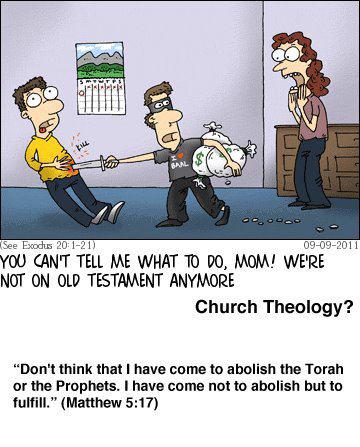
law commandment covers all of the commandments

Jesus of course mentions other examples of things we must “do” to get eternal life, but those things can all be wrapped up in “Love God before everything else, and love one another”. If we obey this one commandment, we automatically obey all the rest.

Luke 10:25 And, behold, a certain lawyer stood up, and tempted him, saying, Master, what shall I do to inherit eternal life?26 He said unto him, What is written in the law? how readest thou?27 And he answering said, Thou shalt love the Lord thy God with all thy heart, and with all thy soul, and with all thy strength, and with all thy mind; and thy neighbour as thyself.28 And he said unto him, Thou hast answered right: this do, and thou shalt live.

Matt. 22:36 Master, which is the great commandment in the law?37 Jesus said unto him, Thou shalt love the Lord thy God with all thy heart, and with all thy soul, and with all thy mind.38 This is the first and great commandment.39 And the second is like unto it, Thou shalt love thy neighbour as thyself.40 On these two commandments hang all the law and the prophets.

Mark. 12:28 And one of the scribes came, and having heard them reasoning together, and perceiving that he had answered them well, asked him, Which is the first commandment of all?29 And Jesus answered him, The first of all the commandments is, Hear, O Israel; The Lord our God is one Lord:30 And thou shalt love the Lord thy God with all thy heart, and with all thy soul, and with all thy mind, and with all thy strength: this is the first commandment.31 And the second is like, namely this, Thou shalt love thy neighbour as thyself. There is none other commandment greater than these.32 And the scribe said unto him, Well, Master, thou hast said the truth: for there is one God; and there is none other but he:33 And to love him with all the heart, and with all the understanding, and with all the soul, and with all the strength, and to love his neighbour as himself, is more than all whole burnt offerings and sacrifices.34 And when Jesus saw that he answered discreetly, he said unto him, Thou art not far from the kingdom of God. And no man after that durst ask him any question.

Rom. 13:8 Owe no man any thing, but to love one another: for he that loveth another hath fulfilled the law.

Ja. 2:8 If ye fulfil the royal law according to the scripture, Thou shalt love thy neighbour as thyself, ye do well

Jesus specifically tells his disciples (and all of us) to go out and teach all nations to observe all things whatsoever he has commanded them. 

Matt. 28:19 Go ye therefore, and teach all nations, baptizing them in the name of the Father, and of the Son, and of the Holy Ghost:20 Teaching them to observe all things whatsoever I have commanded you: and, lo, I am with you always, even unto the end of the world. Amen.

James advice about which laws gentiles should obey

Below we can read that James does not feel that they should trouble the gentiles when it comes to which laws which should apply for them when it comes to the Jewish law, except that they should abstain from things polluted by idols, from sexual immorality, from things strangled, and from blood. “Immorality” (πορνείας/porneias, Strong’s 4202) can also have the meaning of “fornication”. (According to Thayer’s Greek Lexicon πορνεία can be used metaphorically referring to the worship of idols and/or the defilement of idolatry as incurred by eating the sacrifices offered to idols).

Clearly James, Paul and the other disciples did not claim that gentiles are exempted from obeying any commandments at all. They are specifically talking about the Jewish law in relation to new gentile Christians. Apart from the moral law (the commandments which have always applied ever since Adam, and which Jesus repeats above), James proposes that the only Mosaic laws which they should also obey are to abstain from things offered to idols, from blood, from things strangled, and from fornication (probably with the meaning as per the Greek lexicon above). They do not list murder, adultery, theft, etc, because they are included in the moral commandments and it is self-evident that Jews and gentiles alike must continue to avoid such things until the end of times.

Acts 15:13 And after they had become silent, James answered, saying, “Men and brethren, listen to me: 14 Simon has declared how God at the first visited the Gentiles to take out of them a people for His name. 15 And with this the words of the prophets agree, just as it is written:16 ‘After this I will return And will rebuild the tabernacle of David, which has fallen down;I will rebuild its ruins,And I will set it up;17 So that the rest of mankind may seek the Lord, Even all the Gentiles who are called by My name, Says the Lord who does all these things.’18 “Known to God from eternity are all His works.19 Therefore I judge that we should NOT TROUBLE those from among the Gentiles who are turning to God, 20 but that we write to them to abstain from things polluted by idols, from sexual immorality*, from things strangled, and from blood. 21 For Moses has had throughout many generations those who preach him in every city, being read in the synagogues every Sabbath.” (NKJV)

Acts 21:18 On the following day Paul went in with us to James, and all the elders were present. — 20 And when they heard it, they glorified the Lord. And they said to him, “You see, brother, how many myriads of Jews there are who have believed, and they are all zealous for the law; 21 but they have been informed about you that you teach all the Jews who are among the Gentiles to forsake Moses, saying that they ought not to circumcise their children nor to walk according to the customs.—   24 Take them and be purified with them, and pay their expenses so that they may shave their heads, and that all may know that those things of which they were informed concerning you are nothing, but that you yourself also walk orderly and keep the law. 25 But concerning the Gentiles who believe, we have written and decided that they should observe no such thing, EXCEPT that they should keep themselves from things offered to idols, from blood, from things strangled, and from sexual immorality.” (NKJV)


Jesus is our ADVOCATE, so we do not have to worry about punishment for SIN?

The idea that we can take cover behind Jesus and hide our sin from God the Father

Some Christians not only believe that we sin daily “in thoughts, words and deeds”, but also that we do not have to worry about the consequences for our sins since Jesus is our permanent advocate who always walks behind us to sweep up and erase our sins as soon as we commit them. With other words, these people are convinced that we can have our sins and our salvation too, and that the cross we must carry is light as a feather since we are always walking under a cloud of forgiveness. However, I am not saying that Christians with this view automatically take the chance to sin just because they can. They might just be deceived into believing they could get away with it if they only wanted, but still choose to obey the holy Spirit and therefore avoid sinning. It is never too late for Christians who are deceived to overcome their deception and see things clearly.

An “advocate” is not the same as a “judge” though, since an advocate is someone who pleads another one’s cause before a judge. An advocate might be one who presents his client’s interest in court by trying to highlight the advantages and extenuating circumstances for the crimes committed. An advocate is also expected to sympathize with the client. In a worldly court, a person cannot be sure of a favorable verdict just because he has an advocate. In the Biblical sense, the word is usually translated as “Comforter” rather than advocate, and this Comforter is the holy Spirit. Having the holy Spirit in our lives does not mean that we are forever exempted from guilty verdicts no matter how we live. It is true though, that a person with the holy Spirit has previously gone through a major spiritual transformation and is therefore well equipped to obey the commandments of God. This does not happen automatically but certainly IF we are led by the holy Spirit. In order to get the holy Spirit in the first place we must first meet the conditions – first we must believe, repent and obey. IF we are led by the Spirit (if we obey him), we are not under the law and therefore free. Here is where the “advocate” part comes in! We would be totally lost if Jesus had not not have died for us, and sealed us (marked us) with the holy Spirit.

Acts 5:32 And we are his witnesses of these things; and so is also the Holy Ghost, whom God hath given to them that obey him.

Gal. 5:16 This I say then, Walk in the Spirit, and ye shall not fulfil the lust of the flesh. —18 But IF ye be led of the Spirit, ye are not under the law.

The word advocate is a translation from the Greek noun παράκλητος (paraklētos, Strong’s 3875) and is usually translated as Comforter in the KJV. It can also mean an intercessor, a consoler, a helper and someone who pleads our cause before someone with authority. Here are the five cases where the word is used:

1 John 2:1 My little children, these things write I unto you, THAT YE SIN NOT. And if any man sin, we have an advocate with the Father, Jesus Christ the righteous

John 14:16 And I will pray the Father, and he shall give you another Comforter, that he may abide with you for ever;

John 14:26 But the Comforter, which is the Holy Ghost, whom the Father will send in my name, he shall teach you all things, and bring all things to your remembrance, whatsoever I have said unto you.

John 15:26 But when the Comforter is come, whom I will send unto you from the Father, even the Spirit of truth, which proceedeth from the Father, he shall testify of me

John 16:7 Nevertheless I tell you the truth; It is expedient for you that I go away: for if I go not away, the Comforter will not come unto you; but if I depart, I will send him unto you.

So John writes in 1 John 2:1 to the recipients of the letter in order that they “sin NOT”. If no one can avoid sinning for an extended period of time, then John would be in error for believing that his words could make a difference. He continues his letter by saying “IF any man sin…” (not “when” he sins) we have an advocate with the Father”, etc. This does not mean our sins are therefore always excused and that we always have a right standing before God no matter how we live. He is only saying we have an advocate/comforter, provided that we have confessed our sins, truly repented and turned away from them! How do we know that? Because of John’s own words. He is very clear about that we cannot be saved sinners, and also that we will be cut off the vine if we do not show any fruit. We know that we know him IF we keep his commandments:

1 John 2:3 And HEREBY WE DO KNOW THAT WE KNOW HIM, IF WE KEEP HIS COMMANDMENTS. He that saith, I know him, and keepeth not his commandments, is a liar, and the truth is not in him.5 But whoso keepeth his word, in him verily is the love of God perfected: hereby know we that we are in him.6 He that saith he abideth in him ought himself also so to walk, even as he walked

What else did John say?

1 John 3:Whosoever abideth in him sinneth not: whosoever sinneth hath not seen him, neither known him.Little children, let no man deceive you: he that DOETH righteousness is righteous, even as he is righteous.He that committeth sin is of the devil; for the devil sinneth from the beginning. For this purpose the Son of God was manifested, that he might destroy the works of the devil.Whosoever is born of God doth not commit sin; for his seed remaineth in him: and he cannot sin, because he is born of God.10 In this the children of God are manifest, and the children of the devil: WHOSOEVER DOETH NOT RIGHTEOUSNESS IS NOT OF GOD, neither he that loveth not his brother.—22 And whatsoever we ask, we receive of him, because we keep his commandments, and do those things that are pleasing in his sight.23 And this is his commandment, That we should believe on the name of his Son Jesus Christ, and love one another, as he gave us commandment.24 And he that keepeth his commandments dwelleth in him, and he in him. And hereby we know that he abideth in us, by the Spirit which he hath given us.

1 John. 5:2 By this we know that we love the children of God, when we love God, and keep his commandments.For this is the love of God, that we keep his commandments: and his commandments are not grievous.4 For whatsoever is born of God overcometh the world: and this is the victory that overcometh the world, even our faith.

2 John. 1:6 And this is love, that we walk after his commandments. This is the commandment, That, as ye have heard from the beginning, ye should walk in it.

3 John 1:11 Beloved, follow not that which is evil, but that which is good. HE THAT DOETH GOOD IS OF GOD: but he that doeth evil hath not seen God.

John 14:21 He that hath my commandments, and keepeth them, he it is that loveth me: and he that loveth me shall be loved of my Father, and I will love him, and will manifest myself to him.23 Jesus answered and said unto him, IF A MAN LOVE ME, HE WILL KEEP MY WORDS: and my Father will love him, and we will come unto him, and make our abode with him.24 He that loveth me not keepeth not my sayings: and the word which ye hear is not mine, but the Father’s which sent me.

John 15:2 Every branch in me that beareth not fruit he taketh away: and every branch that beareth fruit, he purgeth it, that it may bring forth more fruit.—If a man abide not in me, he is cast forth as a branch, and is withered; and men gather them, and cast them into the fire, and they are burned.If ye abide in me, and my words abide in you, ye shall ask what ye will, and it shall be done unto you.8 Herein is my Father glorified, that ye bear much fruit; so shall ye be my disciples.9 As the Father hath loved me, so have I loved you: continue ye in my love.10 IF YE KEEP MY COMMANDMENTS, YE SHALL ABIDE IN MY LOVE; even as I have kept my Father’s commandments, and abide in his love.

Do read about the holy Spirit raising us up from the dead in this blog article.

Paul said that he counted old “things” loss for Christ, and rubbish or dung – Phil. 3:7-8


What things were gain to me, those I counted loss for Christ – for whom I have suffered the loss of all things, and count them as RUBBISH / Phil. 3:7-8, KJV

In order to understand which “things” he was talking about, we must of course read the context. The subject of this chapter concerns the issue of Jewish circumcision which is an example of a ceremonial law within the Law of Moses. The Bible tells us that the Law of Moses started with the time of Moses and it lasted until the time of Jesus (Gal. 3:19). Before and after this period man on earth was certainly not supposed to be lawless, and even today we are expected to live according to the Spirit instead of the flesh. Paul tells us in Romans 6 and 8 that if we live according to the flesh we will die and if we live according to the Spirit we will live. That is a condition for salvation – that we must make sure to abide in Christ.

In Phil. 3 Paul is giving serious instructions to the Philippians. He also explains that those who are the “circumcision” (being circumcised in heart) are those who worship God in the Spirit. (I’ve chosen NKJV here in order to use a more simple language.):

Beware of dogs, beware of evil workers, beware of the mutilation! 3 For we are the circumcision, who worship God in the Spirit, rejoice in Christ Jesus, and have no confidence in the flesh, (NKJV)

Paul further explains that he himself has a background as a Jew under the law, and he thoroughly believed in the idea of circumcision in order to be obedient to the Law of Moses. He is talking about the circumcision which is in the flesh, rather than in the heart. When it comes to the law of Moses, Paul considered himself blameless – as in doing everything to keep all the multiple regulations down to the smallest detail and MORE.

4 though I also might have confidence in the flesh. If anyone else thinks he may have confidence in the flesh, I more so: circumcised the eighth day, of the stock of Israel, of the tribe of Benjamin, a Hebrew of the Hebrews; concerning the law, a Pharisee; 6 concerning zeal, persecuting the church; concerning the righteousness which is in the law, blameless.

However, Jesus explained that the problem with the pharisees was that they were hypocrites and that they did NOT have a clean INSIDE despite their zeal to be obedient to their scriptures. In fact, they lived in lawlessness because they had unclean hearts! We are not under the law if we are led by the Spirit:

Matt. 5:20 For I say unto you, That except your righteousness shall exceed the righteousness of the scribes and Pharisees, ye shall in no case enter into the kingdom of heaven. (KJV)

Matt. 23:3 Therefore whatever they tell you to observe that observe and do, but do not do according to their works; for they say, and do not do.4 For they bind heavy burdens, hard to bear, and lay them on men’s shoulders; but they themselves will not move them with one of their fingers.—13 “But woe to you, scribes and Pharisees, hypocrites! For you shut up the kingdom of heaven against men; for you neither go in yourselves, nor do you allow those who are entering to go in.—  —25 “Woe to you, scribes and Pharisees, hypocrites! For you cleanse the outside of the cup and dish, but inside they are full of extortion and self-indulgence.26 Blind Pharisee, first cleanse the inside of the cup and dish, that the outside of them may be clean also.27 “Woe to you, scribes and Pharisees, hypocrites! For you are like whitewashed tombs which indeed appear beautiful outwardly, but inside are full of dead men’s bones and all uncleanness. 28 Even so you also outwardly appear righteous to men, but inside you are full of hypocrisy and lawlessness.

Gal. 5:18 But if you are led by the Spirit, you are not under the law.

Paul compares the status he had as a pharisee under the law of Moses, and which often included works “to be seen by men”, with the new life in Christ which is not about being seen by men at all but about having a pure heart and by loving our neighbor as yourself. (We are not able to have a pure heart if we still sin. ) Paul gave up his own esteemed life (in the eyes of men) in order to be a servant of Christ, and that means that he also gave up earthly power and instead became an often despised christian. He thought his new life as a christian was well worth it, and he compared his old life – as a highly regarded pharisee – as nothing but dung. “Loss of all things” could also include other worldly things, which amount to nothing in comparison with the pearl he found in Jesus:

7 But what things were gain to me, these I have counted loss for Christ. 8 Yet indeed I also count all things loss for the excellence of the knowledge of Christ Jesus my Lord, for whom I have suffered the loss of all things, and count them as rubbish, that I may gain Christ

Naturally it was not the Law of Moses that was considered rubbish because God wouldn’t make any bad laws for us during any time. Being obedient to God is never considered rubbish! As a pharisee, Paul didn’t realize that the Law of Moses would pass away, to be replaced with an era where the Holy Spirit is our ruler and Jesus Christ the King. Paul discovered that the new life in Christ was not about obeying the ceremonial Jewish laws any more (as before) but about having faith in Jesus! The righteousness which is from God includes the possibility to be cleansed from our sins in the blood of Jesus who died for our sins, and that happens upon our repentance and our FAITH in Jesus Christ. Repentance means that we confess our sins and make a decision to be servants of Jesus, leading to our new birth. Paul is clear that we are not able to serve two masters and still be saved. The Law of Moses is in our past, but this doesn’t mean that we have no laws to follow. It’s still a sin to murder, steal, commit adultery and lie. It’s still a sin to deny Jesus, to refuse to forgive a brother and to take the mark of the beast. We still risk the wrath of God if we combine obedience with disobedience and refuse to repent. :

 9 and be found in Him, not having my own righteousness, which is from the law, but that which is through faith in Christ, the righteousness which is from God by faith; 10 that I may know Him and the power of His resurrection, and the fellowship of His sufferings, being conformed to His death,

The subject concerns the resurrection from the death, and that is what Paul has in mind when he says that he is not already “perfected”. Not even Jesus Christ was “perfected” until after his glorification. We are able to live morally perfect here on earth, but the truth is of course that we have often chosen to be disobedient to God. Paul presses forward in holiness to reach the prize.

11 if, by any means, I may attain to the resurrection from the dead.12 Not that I have already attained, or am already perfected (“perfect”, KJV); but I press on, that I may lay hold of that for which Christ Jesus has also laid hold of me. 13 Brethren, I do not count myself to have apprehended; but one thing I do, forgetting those things which are behind and reaching forward to those things which are ahead, 14 I press toward the goal for the prize of the upward call of God in Christ Jesus.

Paul refers to “us, as many as are perfect”, and he encourages the Philippians to walk by the same rule and being of the same mind.

15 Therefore let us, as many as are mature (“perfect”, KJV), have this mind; and if in anything you think otherwise, God will reveal even this to you. 16 Nevertheless, to the degree that we have already attained, let us walk by the same rule, let us be of the same mind.17 Brethren, join in following my example, and note those who so walk, as you have us for a pattern. 18 For many walk, of whom I have told you often, and now tell you even weeping, that they are the enemies of the cross of Christ: 19 whose end is destruction, whose god is their belly, and whose glory is in their shame—who set their mind on earthly things. 20 For our citizenship is in heaven, from which we also eagerly wait for the Savior, the Lord Jesus Christ, 21 who will transform our lowly body that it may be conformed to His glorious body, according to the working by which He is able even to subdue all things to Himself.

Paul also said:

Phil 1:21 For to me to live is Christ, and to die is gain

and Paul made it very clear to the Galatians that it was nothing but wrong to suggest that circumcision (or other ceremonial laws) is a requirement for salvation. Paul was certainly not angry at the Galatians because they continued to teach the importance of avoiding murder, adultery, theft and lies, but about reverting back to the Law of Moses with the ceremonial laws. Being obedient to God by treating our neighbors as we would like to be treated ourselves, is not a sin and nothing to be mad about. If the Galatians were under the impression that circumcision still applied, then also the rest of the 613 still applied. If that is the case, Jesus Christ died in vain. We are saved by faith and not by the Law of Moses. The Law of Moses was to apply until the seed would come which is Jesus, but this doesn’t mean that we have no sets of laws to follow today. We are expected to live according to the Spirit, and if we believe in Jesus Christ, we love him and obey him.

Gal. 3:1  O foolish Galatians, who hath bewitched you, that ye should not obey the truth, before whose eyes Jesus Christ hath been evidently set forth, crucified among you?2 This only would I learn of you, Received ye the Spirit by the works of the law, or by the hearing of faith?3 Are ye so foolish? having begun in the Spirit, are ye now made perfect by the flesh?4 Have ye suffered so many things in vain? if it be yet in vain.—7 Know ye therefore that they which are of faith, the same are the children of Abraham.— 19 Wherefore then serveth the law? It was added because of transgressions, till the seed should come to whom the promise was made; and it was ordained by angels in the hand of a mediator.20 Now a mediator is not a mediator of one, but God is one.21 Is the law then against the promises of God? God forbid: for if there had been a law given which could have given life, verily righteousness should have been by the law.22 But the scripture hath concluded all under sin, that the promise by faith of Jesus Christ might be given to them that believe.23 But before faith came, we were kept under the law, shut up unto the faith which should afterwards be revealed.24 Wherefore the law was our schoolmaster to bring us unto Christ, that we might be justified by faith.25 But after that faith is come, we are no longer under a schoolmaster.26 For ye are all the children of God by faith in Christ Jesus.27 For as many of you as have been baptized into Christ have put on Christ.28 There is neither Jew nor Greek, there is neither bond nor free, there is neither male nor female: for ye are all one in Christ Jesus.29 And if ye be Christ’s, then are ye Abraham’s seed, and heirs according to the promise.

Was Paul not yet morally perfect according to Phil. 3:12?

goalPhil. 3:12 Not as though I had already attained, either were already PERFECT: but I follow after, if that I may apprehend that for which also I am apprehended of Christ Jesus. 

The context for this verse is the RESURRECTION of our bodies, and that’s important to keep in mind. If we don’t understand that it’s about the resurrection, there is a risk we might misunderstand Paul and believe that he is talking about a moral perfection and that he has failed to live morally upright here on earth. Paul doesn’t talk about moral perfection but about a bodily perfection, because as long as we remain in our earthly bodies we must accept that we are not physically perfect but actually rather weak and fragile. Our goal is to one day enter the kingdom of God, and get new glorified bodies. Jesus asked us to be perfect (which you can read more about here), and naturally Paul wouldn’t argue against his Master.

Phil. 3:2 For we are the circumcision, which worship God in the spirit, and rejoice in Christ Jesus, and have no confidence in the flesh. 

Those who are the circumcision (of the heart) are those who worship God in spirit, and that is in contrast to those who obey their flesh. Only those who worship God in spirit will one day inherit the kingdom of God, so this is a condition for salvation.

Phil. 3:6 Concerning zeal, persecuting the church; touching the righteousness which is in the law, BLAMELESS (“found blameless”, NASB). 7 But what things were gain to me, those I counted loss for Christ.

The problem with the pharisees was that they were not clean on the inside but only on the outside, and Paul counted himself as a pharisee who was eager to obey God and his laws (as he understood them).  Even if Paul was a learned man with a good reputation, he feels that  such worldly glory isn’t worth anything in comparison to what he has found in Jesus Christ. We are told to not love the world or anything in it, but we are supposed to live our lives for Christ and his kingdom. Naturally Paul doesn’t suggest that it’s now less important to be faithful to God compared with before.

Phil. 3:8 Yea doubtless, and I count all things but loss for the excellency of the knowledge of Christ Jesus my Lord: for whom I have suffered the loss of all things, and do count them but dung, that I may win Christ,9 And be found in him, not having mine own righteousness, which is of the law, but that which is through the faith of Christ, the righteousness which is of God by faith:

Paul’s aim is to win Christ and be found in him, and that means that he has to move forward and leave the   Jewish ceremonial laws behind him and put his faith in Jesus Christ. The eternal life that Jesus offers is by faith   (evidenced by obedience from the heart) and one is not saved only because he is born a jew and circumcised. Paul says again, in Phil. 3:2, that those are circumcised who worship God in spirit, and who rejoice in him. If we have sinned (and we have), we are not able to be cleansed and righteous in ourselves but we rely on righteous blood shed for our sake. We can be righteous if we confess our sins and repent, because then we become cleansed from our sins in the precious blood of Jesus. Paul makes a difference between works of the law (the entire Torah with its 613 laws) and obedience to God.

Phil. 3:10 That I may know him, and the power of his resurrection, and the fellowship of his sufferings, being made conformable unto his death;11 If by any means I might attain unto the resurrection of the dead.12 Not as though I had already attained, either were already perfect: but I follow after, if that I may apprehend that for which also I am apprehended of Christ Jesus.13 Brethren, I count not myself to have apprehended: but this one thing I do, forgetting those things which are behind, and reaching forth unto those things which are before,14 I press toward the mark for the prize of the high calling of God in Christ Jesus.

Above is the direct context to v. 12. It’s about the resurrection of the dead, which is the goal for Paul, and when he writes to the Philippians he hasn’t reached this goal yet. Paul presses forward towards the prize, but he still calls himself PERFECT, and shows that he isn’t the only one being perfect.

Phil. 3:15 Let us therefore, AS MANY AS BE PERFECT, be thus minded: and if in any thing ye be otherwise minded, God shall reveal even this unto you.16 Nevertheless, whereto we have already attained, let us walk by the same rule, let us mind the same thing.

Paul isn’t physically perfect, but he is morally and spiritually perfect.  He asks us to walk by the same rule, based on  perfection.

Phil. 3:17 Brethren, join in following my example, and observe those who walk according to the pattern you have in us.(NASB)18 (For many walk, of whom I have told you often, and now tell you even weeping, that they are the enemies of the cross of Christ:19 Whose end is destruction, whose God is their belly, and whose glory is in their shame, who mind earthly things.)

Paul – who calls himself holy, righteous and blameless  – asks others to follow his example. If he would be mixing good deeds with bad deeds (sin), he wouldn’t be a very good example for us, but he would be a big hypocrite and someone to stay away from.  Paul weeps about those who are not walking with him on the narrow path to God, and he calls them enemies of Christ. Their end is destruction! That’s because they have their mind on earthly things instead of focusing on God.

Phil. 3:20 For our conversation is in heaven; from whence also we look for the Saviour, the Lord Jesus Christ:21 Who shall change our vile body, that it may be fashioned like unto his glorious body, according to the working whereby he is able even to subdue all things unto himself.

Paul continues to talk about the resurrection in heaven, and the new glorified bodies. He doesn’t say that he isn’t able to fight his flesh successfully unless he first gets a new glorified body. We don’t have to wait until we die before we can be faithful to God, but we can live holy lives here and now. Not even Jesus was “perfected” until the third day in his resurrection, so it’s about the physical body.

Luke. 13:32 And he said unto them, Go ye, and tell that fox, Behold, I cast out devils, and I do cures to day and to morrow, and the third day I shall be perfected.

Paul about himself:

1 Thess 2:10 Ye are witnesses, and God also, how holily and justly and unblameably we behaved ourselves among you that believe:—12 That ye would walk worthy of God, who hath called you unto his kingdom and glory.

Acts 23:1 And Paul, earnestly beholding the council, said, Men and brethren, I have lived in all good conscience before God until this day.

1 Cor. 4:4 My conscience is clear, but that does not make me innocent. It is the Lord who judges me. (NIV)

Rom. 6:5 For if we have been planted together in the likeness of his death, we shall be also in the likeness of his resurrection:6 Knowing this, that our old man is crucified with him, that the body of sin might be destroyed, that henceforth we should not serve sin.–12 Let not sin therefore reign in your mortal body, that ye should obey it in the lusts thereof.13 Neither yield ye your members as instruments of unrighteousness unto sin: but yield yourselves unto God, as those that are alive from the dead, and your members as instruments of righteousness unto God.—16 Know ye not, that to whom ye yield yourselves servants to obey, his servants ye are to whom ye obey; whether of sin unto death, or of obedience unto righteousness?17 But God be thanked, that ye were the servants of sin, but ye have obeyed from the heart that form of doctrine which was delivered you. 

1 Cor. 9:24 Know ye not that they which run in a race run all, but one receiveth the prize? So run, that ye may obtain.25 And every man that striveth for the mastery is temperate in all things. Now they do it to obtain a corruptible crown; but we an incorruptible.26 I therefore so run, not as uncertainly; so fight I, not as one that beateth the air:27 But I keep under my body, and bring it into subjection: lest that by any means, when I have preached to others, I myself should be a castaway.

Examples of righteous and holy people in the Bible

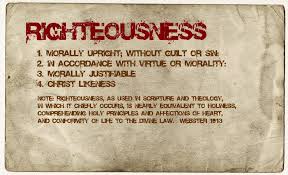
rättfärdig 3We can be upright, perfect, just, holy, blameless and RIGHTEOUS in this present world 

The above terms do not necessarily equal ”to never have been guilty of any sins”. All sinners have been given the opportunity to repent for their sins – to become holy, righteous and blameless – and when Jesus cleanses us from our sins we are completely clean because our old sins have been removed. We do not have to wait until we die before we can honor God by living holy and righteous lives and be faithful to him (Titus 2:11-12). On the other hand, we can not always expect to have perfect and complete physical bodies in this life, which includes Jesus as well. There is a difference between moral perfection and physical perfection.

Eccl.7:29 Lo, this only have I found, that God hath made man upright; but they have sought out many inventions.

The below terms can be translated just, perfect, upright, unblameable, etc

The Hebrew word tsaddiq (Strong’s 6662)

The Greek word dikaios (Strong’s 1342) 

The Greek word teleios (Strong’s 5046) 

Examples of Biblical individuals who were righteous due to living righteous lives

I have used the three colors as per above to illustrate the meaning of the original words below. Simple black text means that the person’s righteousness is described without using any of the words above. The Bible certainly has no shortage of people who have lived holy and righteous lives. They may have sinned at least once, but they have repented for those sins and restored their salvation. If the same individuals would have mixed their righteous lives with sin, they would not have been considered righteous before God. A righteous person is someone who lives upright, after first having been cleansed from his former sins – which occurs upon repentance.

Noah

Gen. 6:9 These are the generations of Noah: Noah was a just man and perfect in his generations, and Noah walked with God.

Gen. 7:1 And the Lord said unto Noah, Come thou and all thy house into the ark; for thee have I seen righteous before me in this generation. 

Abraham

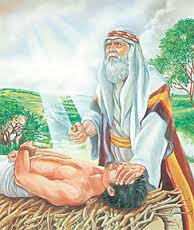
Ja. 2:21 Was not Abraham our father justified by works, when he had offered Isaac his son upon the altar?22 Seest thou how faith wrought with his works, and by works was faith made perfect? 23 And the scripture was fulfilled which saith, Abraham believed God, and it was imputed unto him for righteousness: and he was called the Friend of God. 24 Ye see then how that by works a man is justified, and not by faith only. 25 Likewise also was not Rahab the harlot justified by works, when she had received the messengers, and had sent them out another way?26 For as the body without the spirit is dead, so faith without works is dead also.

Lot

Gen. 18:23 And Abraham drew near, and said, Wilt thou also destroy the righteous with the wicked 24 Peradventure there be fifty righteous within the city: wilt thou also destroy and not spare the place for the fifty righteous that are therein?

Gen. 19:15 And when the morning arose, then the angels hastened Lot, saying, Arise, take thy wife, and thy two daughters, which are here; lest thou be consumed in the iniquity of the city.

2 Pet 2:7 And delivered just Lot, vexed with the filthy conversation of the wicked: 8 (For that righteous man dwelling among them, in seeing and hearing, vexed his righteous soul from day to day with their unlawful deeds;) 9 The Lord knoweth how to deliver the godly out of temptations, and to reserve the unjust unto the day of judgment to be punished: 10 But chiefly them that walk after the flesh in the lust of uncleanness, and despise government. Presumptuous are they, selfwilled, they are not afraid to speak evil of dignities.

Job

Job 1:8 And the Lord said unto Satan, Hast thou considered my servant Job, that there is none like him in the earth, a perfect (Strong’s 8535) and an upright (Strong’s 3477) man, one that feareth God, and escheweth evil? 

Job. 32:1 So these three men ceased to answer Job, because he was righteous in his own eyes.—Job 42:7 And it was so, that after the Lord had spoken these words unto Job, the Lord said to Eliphaz the Temanite, My wrath is kindled against thee, and against thy two friends: for ye have not spoken of me the thing that is right, as my servant Job hath.8 Therefore take unto you now seven bullocks and seven rams, and go to my servant Job, and offer up for yourselves a burnt offering; and my servant Job shall pray for you: for him will I accept: lest I deal with you after your folly, in that ye have not spoken of me the thing which is right, like my servant Job.

King David

Ps. 7:10 My defence is of God, which saveth the upright in heart.11 God judgeth the righteous, and God is angry with the wicked every day.12 If he turn not, he will whet his sword; he hath bent his bow, and made it ready. 

Ps. 18:20 The Lord rewarded me according to MY righteousness; according to the cleanness of my hands hath he recompensed me.21 For I have kept the ways of the Lord, and have not wickedly departed from my God.22 For all his judgments were before me, and I did not put away his statutes from me.23 I was also upright before him, and I kept myself from mine iniquity.24 Therefore hath the Lord recompensed me according to MY righteousness, according to the cleanness of my hands in his eyesight.25 With the merciful thou wilt shew thyself merciful; with an upright man thou wilt shew thyself upright;26 With the pure thou wilt shew thyself pure; and with the froward thou wilt shew thyself froward.

2 Samuel 22:21 The Lord rewarded me according to my righteousness: according to the cleanness of my hands hath he recompensed me.22 For I have kept the ways of the Lord, and have not wickedly departed from my God.23 For all his judgments were before me: and as for his statutes, I did not depart from them. 24 I was also upright (Strong’s 8549) before him, and have kept myself from mine iniquity.25 Therefore the Lord hath recompensed me according to my righteousness; according to my cleanness in his eye sight.26 With the merciful thou wilt shew thyself merciful, and with the upright (Strong’s 8549) man thou wilt shew thyself upright.27 With the pure thou wilt shew thyself pure; and with the froward thou wilt shew thyself unsavoury.

1 King. 14:8 And rent the kingdom away from the house of David, and gave it thee: and yet thou hast not been as my servant David, who kept my commandments, and who followed me with all his heart, to do that only which was right in mine eyes;

1 King. 15:5 Because David did that which was right in the eyes of the Lord, and turned not aside from any thing that he commanded him all the days of his life, save only in the matter of Uriah the Hittite.

2 King. 14:3 And he did that which was right in the sight of the Lord, yet not like David his father: he did according to all things as Joash his father did.

Acts 13:22 And when he had removed him, he raised up unto them David to be their king; to whom also he gave their testimony, and said, I have found David the son of Jesse, a man after mine own heart, which shall fulfil all my will.

King Asa

1 King. 15:11 And Asa did that which was right in the eyes of the Lord, as did David his father.—14 But the high places were not removed: nevertheless Asa’s heart was perfect (Strong’s 8003) with the Lord all his days. 

2 Chron. 14:2 And Asa did that which was good and right in the eyes of the Lord his God:3 For he took away the altars of the strange gods, and the high places, and brake down the images, and cut down the groves:4 And commanded Judah to seek the Lord God of their fathers, and to do the law and the commandment.

King Hezekiah

2 King. 18:1 Now it came to pass in the third year of Hoshea son of Elah king of Israel, that Hezekiah the son of Ahaz king of Judah began to reign.—3 And he did that which was right in the sight of the Lord, according to all that David his father did.4 He removed the high places, and brake the images, and cut down the groves, and brake in pieces the brasen serpent that Moses had made: for unto those days the children of Israel did burn incense to it: and he called it Nehushtan.5 He trusted in the Lord God of Israel; so that after him was none like him among all the kings of Judah, nor any that were before him.6 For he clave to the Lord, and departed not from following him, but KEPT HIS COMMANDMENTS, WHICH THE LORD COMMANDED MOSES.

King Josiah

2 King. 22:1 Josiah was eight years old when he began to reign, and he reigned thirty and one years in Jerusalem. And his mother’s name was Jedidah, the daughter of Adaiah of Boscath.2 And he did that which was right in the sight of the Lord, and walked in all the way of David his father, and turned not aside to the right hand or to the left.

2 King. 23:25 And like unto him was there no king before him, that turned to the Lord with all his heart, and with all his soul, and with all his might, according to all the law of Moses; neither after him arose there any like him.

2 Chron. 34:1 Josiah was eight years old when he began to reign, and he reigned in Jerusalem one and thirty years.2 And he did that which was right in the sight of the Lord, and walked in the ways of David his father, and declined neither to the right hand, nor to the left.

Enoch

Hebr. 11:5 By faith Enoch was translated that he should not see death; and was not found, because God had translated him: for before his translation he had this testimony, that he pleased God.

Moses and all of Israel were told to be perfect (which means they could)

Deut.18:13 Thou shalt be perfect (Strong’s 8549) with the Lord thy God.

Satan

Ezekiel 28:15 Thou wast perfect (Strong’s 8549) in thy ways from the day that thou wast created, till iniquity was found in thee.

Abel and Zacharias

Matt. 23:35 That upon you may come all the righteous blood shed upon the earth, from the blood of righteous Abel unto the blood of Zacharias son of Barachias, whom ye slew between the temple and the altar.

Hebr. 11:4 By faith Abel offered unto God a more excellent sacrifice than Cain, by which he obtained witness that he was righteous, God testifying of his gifts: and by it he being dead yet speaketh.

1 John 3:7 Little children, let no man deceive you: he that doeth righteousness is righteous, even as he is righteous.8 He that committeth sin is of the devil; for the devil sinneth from the beginning. For this purpose the Son of God was manifested, that he might destroy the works of the devil.9 Whosoever is born of God doth not commit sin; for his seed remaineth in him: and he cannot sin, because he is born of God.10 In this the children of God are manifest, and the children of the devil: whosoever doeth not righteousness is not of God, neither he that loveth not his brother.11 For this is the message that ye heard from the beginning, that we should love one another.12 Not as Cain, who was of that wicked one, and slew his brother. And wherefore slew he him? Because his own works were evil, and his brother’s righteous.

Joseph, Mary’s husband

Matt. 1:19 Then Joseph her husband, being a just man, and not willing to make her a public example, was minded to put her away privily.

Joseph, the counsellor

Luk. 23:50 And, behold, there was a man named Joseph, a counsellor; and he was a good man, and a just: 

Cornelius

Acts 10:1 There was a certain man in Caesarea called Cornelius, a centurion of the band called the Italian band,A devout man, and one that feared God with all his house, which gave much alms to the people, and prayed to God alway. —22 And they said, Cornelius the centurion, a just man, and one that feareth God, and of good report among all the nation of the Jews, was warned from God by an holy angel to send for thee into his house, and to hear words of thee.

John the Baptist

Mark. 6:20 For Herod feared John, knowing that he was a just man and an holy, and observed him; and when he heard him, he did many things, and heard him gladly.

Luke 1:17 And he shall go before him in the spirit and power of Elias, to turn the hearts of the fathers to the children, and the disobedient to the wisdom of the just; to make ready a people prepared for the Lord.

Simeon

Luke 2:25 And, behold, there was a man in Jerusalem, whose name was Simeon; and the same man was just and devout, waiting for the consolation of Israel: and the Holy Ghost was upon him.

The Apostle Paul (after his conversion)

1 Thess. 2:10 Ye are witnesses, and God also, how holily and justly and unblameably we behaved ourselves among you that believe:

Acts 23:1 And Paul, earnestly beholding the council, said, Men and brethren, I have lived in all good conscience before God until this day.

The priest Zacharias and his wife Elisabeth

Luke 1:5 There was in the days of Herod, the king of Judaea, a certain priest named Zacharias, of the course of Abia: and his wife was of the daughters of Aaron, and her name was Elisabeth.6 And they were both righteous before God, walking in all the commandments and ordinances of the Lord blameless.

Various verses concerning righteous people rättfärdig 2

Below you can read about the contrast between the unrighteous and the righteous, and the issue is obedience to God. You can also read here how we can know if we are the children of God.

Old testament

2 Sam. 4:(Is-Boset)11 How much more, when wicked men have slain a righteous person in his own house upon his bed? shall I not therefore now require his blood of your hand, and take you away from the earth?

1 King. 8:31 If any man trespass against his neighbour, and an oath be laid upon him to cause him to swear, and the oath come before thine altar in this house:32 Then hear thou in heaven, and do, and judge thy servants, condemning the wicked, to bring his way upon his head; and justifying the righteous, to give him according to his righteousness. (2 Chron. 6:23)

Ps. 1:1 Blessed is the man that walketh not in the counsel of the ungodly, nor standeth in the way of sinners, nor sitteth in the seat of the scornful.—5 Therefore the ungodly shall not stand in the judgment, nor sinners in the congregation of the righteous.6 For the Lord knoweth the way of the righteous: but the way of the ungodly shall perish.

Proverbs 3:32 For the froward is abomination to the Lord: but his secret is with the righteous.33 The curse of the Lord is in the house of the wicked: but he blesseth the habitation of the just.

Proverbs 10:11 The mouth of a righteous man is a well of life: but violence covereth the mouth of the wicked.—16 The labour of the righteous tendeth to life: the fruit of the wicked to sin.—20 The tongue of the just is as choice silver: the heart of the wicked is little worth.21 The lips of the righteous feed many: but fools die for want of wisdom.—24 The fear of the wicked, it shall come upon him: but the desire of the righteous shall be granted.25 As the whirlwind passeth, so is the wicked no more: but the righteous is an everlasting foundation.—28 The hope of the righteous shall be gladness: but the expectation of the wicked shall perish.29 The way of the Lord is strength to the upright: but destruction shall be to the workers of iniquity.30 The righteous shall never be removed: but the wicked shall not inhabit the earth.31 The mouth of the just bringeth forth wisdom: but the froward tongue shall be cut out.32 The lips of the righteous know what is acceptable: but the mouth of the wicked speaketh frowardness.

Proverbs 11:3 The integrity of the upright shall guide them: but the perverseness of transgressors shall destroy them.4 Riches profit not in the day of wrath: but righteousness delivereth from death.5 The righteousness of the perfect shall direct his way: but the wicked shall fall by his own wickedness.6 The righteousness of the upright shall deliver them: but transgressors shall be taken in their own naughtiness.7 When a wicked man dieth, his expectation shall perish: and the hope of unjust men perisheth.8 The righteous is delivered out of trouble, and the wicked cometh in his stead.9 An hypocrite with his mouth destroyeth his neighbour: but through knowledge shall the just be delivered.—18 The wicked worketh a deceitful work: but to him that soweth righteousness shall be a sure reward.19 As righteousness tendeth to life: so he that pursueth evil pursueth it to his own death.20 They that are of a froward heart are abomination to the Lord: but such as are upright in their way are his delight.23 The desire of the righteous is only good: but the expectation of the wicked is wrath.—27 He that diligently seeketh good procureth favour: but he that seeketh mischief, it shall come unto him.—30 The fruit of the righteous is a tree of life; and he that winneth souls is wise.31 Behold, the righteous shall be recompensed in the earth: much more the wicked and the sinner.

Proverbs 12:1 Whoso loveth instruction loveth knowledge: but he that hateth reproof is brutish.2 A good man obtaineth favour of the Lord: but a man of wicked devices will he condemn.3 A man shall not be established by wickedness: but the root of the righteous shall not be moved.–5 The thoughts of the righteous are right: but the counsels of the wicked are deceit.6 The words of the wicked are to lie in wait for blood: but the mouth of the upright shall deliver them.7 The wicked are overthrown, and are not: but the house of the righteous shall stand.8 A man shall be commended according to his wisdom: but he that is of a perverse heart shall be despised.—10 A righteous man regardeth the life of his beast: but the tender mercies of the wicked are cruel. —.13 The wicked is snared by the transgression of his lips: but the just shall come out of trouble.14 A man shall be satisfied with good by the fruit of his mouth: and the recompence of a man’s hands shall be rendered unto him.15 The way of a fool is right in his own eyes: but he that hearkeneth unto counsel is wise.—20 Deceit is in the heart of them that imagine evil: but to the counsellors of peace is joy.—.22 Lying lips are abomination to the Lord: but they that deal truly are his delight.—26 The righteous is more excellent than his neighbour: but the way of the wicked seduceth them.—.28 In the way of righteousness is life: and in the pathway thereof there is no death.

Proverbs 13:1 A wise son heareth his father’s instruction: but a scorner heareth not rebuke.—3 He that keepeth his mouth keepeth his life: but he that openeth wide his lips shall have destruction.—5 A righteous man hateth lying: but a wicked man is loathsome, and cometh to shame.6 Righteousness keepeth him that is upright in the way: but wickedness overthroweth the sinner.—9 The light of the righteous rejoiceth: but the lamp of the wicked shall be put out.—13 Whoso despiseth the word shall be destroyed: but he that feareth the commandment shall be rewarded.14 The law of the wise is a fountain of life, to depart from the snares of death.—18 Poverty and shame shall be to him that refuseth instruction: but he that regardeth reproof shall be honoured. 

Proverbs 14:32 The wicked is driven away in his wickedness: but the righteous hath hope in his death.33 Wisdom resteth in the heart of him that hath understanding: but that which is in the midst of fools is made known.34 Righteousness exalteth a nation: but sin is a reproach to any people.

Proverbs 15:24 The way of life is above to the wise, that he may depart from hell beneath.—26 The thoughts of the wicked are an abomination to the Lord: but the words of the pure are pleasant words.27 He that is greedy of gain troubleth his own house; but he that hateth gifts shall live.28 The heart of the righteous studieth to answer: but the mouth of the wicked poureth out evil things.29 The Lord is far from the wicked: but he heareth the prayer of the righteous.30 The light of the eyes rejoiceth the heart: and a good report maketh the bones fat.31 The ear that heareth the reproof of life abideth among the wise.32 He that refuseth instruction despiseth his own soul: but he that heareth reproof getteth understanding.

Proverbs 18:10 The name of the Lord is a strong tower: the righteous runneth into it, and is safe.

Proverbs 20:7 The just man walketh in his integrity: his children are blessed after him.

Proverbs 21:3 To do justice and judgment is more acceptable to the Lord than sacrifice.—6 The getting of treasures by a lying tongue is a vanity tossed to and fro of them that seek death.7 The robbery of the wicked shall destroy them; because they refuse to do judgment.8 The way of man is froward and strange: but as for the pure, his work is right..—10 The soul of the wicked desireth evil: his neighbour findeth no favour in his eyes.—16 The man that wandereth out of the way of understanding shall remain in the congregation of the dead.—21 He that followeth after righteousness and mercy findeth life, righteousness, and honour.

Ezekiel 3:18 When I say unto the wicked, Thou shalt surely die; and thou givest him not warning, nor speakest to warn the wicked from his wicked way, to save his life; the same wicked man shall die in his iniquity; but his blood will I require at thine hand.19 Yet if thou warn the wicked, and he turn not from his wickedness, nor from his wicked way, he shall die in his iniquity; but thou hast delivered thy soul.20 Again, When a righteous man doth turn from his righteousness, and commit iniquity, and I lay a stumbling-block before him, he shall die: because thou hast not given him warning, he shall die in his sin, and his righteousness which he hath done shall not be remembered; but his blood will I require at thine hand.21 Nevertheless if thou warn the righteous man, that the righteous sin not, and he doth not sin, he shall surely live, because he is warned; also thou hast delivered thy soul.

New Testament:rättfärdig

Matt. 10:41 He that receiveth a prophet in the name of a prophet shall receive a prophet’s reward; and he that receiveth a righteous man in the name of a righteous man shall receive a righteous man’s reward.

Matt. 13:17 For verily I say unto you, That many prophets and righteous men have desired to see those things which ye see, and have not seen them; and to hear those things which ye hear, and have not heard them.

Matt. 25:23 His lord said unto him, Well done, good and faithful servant; thou hast been faithful over a few things, I will make thee ruler over many things: enter thou into the joy of thy lord. —37 Then shall the righteous answer him, saying, Lord, when saw we thee an hungred, and fed thee? or thirsty, and gave thee drink?—40 And the King shall answer and say unto them, Verily I say unto you, Inasmuch as ye have done it unto one of the least of these my brethren, ye have done it unto me.41 Then shall he say also unto them on the left hand, Depart from me, ye cursed, into everlasting fire, prepared for the devil and his angels: 42 For I was an hungred, and ye gave me no meat: I was thirsty, and ye gave me no drink:.—45 Then shall he answer them, saying, Verily I say unto you, Inasmuch as ye did it not to one of the least of these, ye did it not to me.46 And these shall go away into everlasting punishment: but the righteous into life eternal.

Matt. 13:49 So shall it be at the end of the world: the angels shall come forth, and sever the wicked from among the just,

Luke 15:7 I say unto you, that likewise joy shall be in heaven over one sinner that repenteth, more than over ninety and nine just persons, which need no repentance.

1 Peter 3:12 For the eyes of the Lord are over the righteous, and his ears are open unto their prayers: but the face of the Lord is against them that do evil.

1 Peter. 4:17 For the time is come that judgment must begin at the house of God: and if it first begin at us, what shall the end be of them that obey not the gospel of God?18 And if the righteous scarcely be saved, where shall the ungodly and the sinner appear?19 Wherefore let them that suffer according to the will of God commit the keeping of their souls to him in well doing, as unto a faithful Creator.

1 John 2:29 If ye know that he is righteous, ye know that every one that doeth righteousness is born of him.

Rom. 2:13 (For not the hearers of the law are just before God, but the doers of the law shall be justified.14 For when the Gentiles, which have not the law, do by nature the things contained in the law, these, having not the law, are a law unto themselves:15 Which shew the work of the law written in their hearts, their conscience also bearing witness, and their thoughts the mean while accusing or else excusing one another;)

Titus 1:7 For a bishop must be blameless, as the steward of God; not selfwilled, not soon angry, not given to wine, no striker, not given to filthy lucre;8 But a lover of hospitality, a lover of good men, sober, just, holy, temperate;

Hebr. 10:38 Now the just shall live by faith: but if any man draw back, my soul shall have no pleasure in him.39 But we are not of them who draw back unto perdition; but of them that believe to the saving of the soul.

Matt. 5:48 Be ye therefore perfect, even as your Father which is in heaven is perfect.

1 Cor. 2:6 Howbeit we speak wisdom among them that are perfect: yet not the wisdom of this world, nor of the princes of this world, that come to nought:

Phil 3:15 Let us therefore, as many as be perfect, be thus minded: and if in any thing ye be otherwise minded, God shall reveal even this unto you.

Ja. 1:4 But let patience have her perfect work, that ye may be perfect and entire, wanting nothing.

You can read here about John 15 and the risk for a branch to be cut off the vine due to lack of fruit. God expects us to live righteous lives. 

The IMPUTED righteousness of CHRIST – is not Biblical

And the scripture was fulfilled which saith, Abraham believed God, and it [believing God] was IMPUTED UNTO HIM FOR RIGHTEOUSNESS: and he was called the Friend of God. James. 2:23 

hypocriteThe word “imputed” comes from the Greek word “logizomai” (Strong’s 3049) which could be translated as “reckon, count, charge with; reason, decide, conclude; think or suppose”. Notice that it doesn’t mean “transfer”, but rather “reckoned” or “counted as“.

The word is found 41 times in the New Testament, and 4 of those times the word is translated as “impute” in the KJV.  Rom 4:6-11 and  22-24 have the same Greek word (logizomai) as in James 2:23, and it doesn’t mean “transfer” there either. These verses use the same word even if they are translated differently:

For what saith the scripture? Abraham believed God, and it [believing God] was counted unto him for righteousness. Rom. 4:3

Even as Abraham believed God, and it [believing God] was accounted to him for righteousness. Gal. 3:6

And therefore it [faith] was imputed to him for righteousness. Rom. 4:22

CountedRom 2:26, Rom 4:3, Rom 4:5, Rom 9:8, Reckoned = Luk 22:37, Rom 4:4, Rom 4:9-10 and Rom 6:11, Rom 8:18, Accounted = Rom 8:36, Gal 3:6

We are asked to be righteous just like Jesus is righteous  

This doesn’t mean that the only means to get saved is to have lived a life free of sins just like Jesus did, but neither is the promise“If you only believe in Jesus, he will confirm you as righteous even if you’re not”. First we must be cleansed in the blood of Jesus – upon repentance – and then the idea is to be led by the Spirit and not by the flesh, which no one else will do for us. We are not able to go piggybacking on Jesus.

1 John 3:4 Whosoever committeth sin transgresseth also the law: for sin is the transgression of the law.5 And ye know that he was manifested to take away our sins; and in him is no sin.6 Whosoever abideth in him sinneth not: whosoever sinneth hath not seen him, neither known him.7 Little children, let no man deceive you: HE THAT DOETH RIGHTEOUSNESS IS RIGHTEOUS, EVEN AS HE IS RIGHTEOUS.8 He that committeth sin is of the devil; for the devil sinneth from the beginning. For this purpose the Son of God was manifested, that he might destroy the works of the devil.9 Whosoever is born of God doth not commit sin; for his seed remaineth in him: and he cannot sin, because he is born of God.10 In this the children of God are manifest, and the children of the devil: whosoever doeth not righteousness is not of God, neither he that loveth not his brother.

God’s wrath is still upon us if we sin, and if we are under God’s wrath we are not saved.

John 3:36 He who believes in the Son has eternal life; but he who does not obey the Son will not see life, but the wrath of God abides on him.” (NASB)

Romans 1:18 For the wrath of God is revealed from heaven against all ungodliness and unrighteousness of men, who hold the truth in unrighteousness;

Romans 2:5 But after thy hardness and impenitent heart treasurest up unto thyself wrath against the day of wrath and revelation of the righteous judgment of God;

Jesus righteousness cannot be transferred/injected into us and we are not righteous unless we LIVE righteously

Our righteousness does not depend on being injected another person’s righteousness, but our righteousness depends on how we live our lives.  

Jesus lived a perfect life (always being obedient to God the Father) and died on the cross for us, and in THAT WAY he is our righteousness. Had Jesus not lived an obedient life for us, he could not have been our righteousness, because the atonement wouldn’t have been perfect. He is NOT our righteousness because he has transferred his righteousness into us (and neither did he literally take our sins on himself as in some kind of an exchange) to make us righteous in position despite that we still live in sin. It’s important to understand that Jesus did NOT obey our moral obligations for us and instead of us!  The Bible talks about imputed righteousness but NEVER the imputed righteousness “of Christ.  We can read about the righteousness of GOD throughout the Bible (and that Jesus is righteous), but the idea that God looks upon us and sees the righteousness of Christ in us (or the blood of Jesus) instead of our sin, will result in a license to sin. When God looked at the churches in Revelation, he DID notice their sins and asked them to repent.

We are not justified by the works of the law but by God’s grace, so to say that we need perfect obedience to the Torah to be credited to our account in order to be justified is justification by works instead of justification by grace/mercy. God cannot declare the guilty to be innocent – like in a forensic justification – as that would be a lie, but God can PARDON the guilty and he does so if the guilty person repents from his sins.

Abraham is given as an example when it comes to being righteous/justified through faith, because he was counted as righteous BEFORE the law of Moses started to apply. Not all who have Abraham as a forefather are the children of Abraham and saved, but only those who are spiritually circumcised (in their hearts) and BELIEVE the way he did – and he showed his faith with some amazing deeds (work). Those who WALK as he did and obey God as he did (which is something we DO) are circumcised in heart and the true children of Abraham. We do not deserve salvation by anything we do (or believe) but faith without deeds is dead.  We can read “blessed is the man to whom the Lord will not impute sin”, which shows that all people apparently don’t have sin – namely those whom the Lord do not impute sin. Who are they? They are the ones who have confessed their sins, repented and who walk with Jesus. So when we read “God imputeth righteousness without works”, it means the works of the law (the Torah and the 613 laws in it), and naturally God wouldn’t impute righteousness to Abraham if he only sat under a tree and “believed” without showing his faith by OBEDIENCE. Not obedience to the law of Moses (which didn’t exist at the time) but obedience to GOD.

When it comes to Rom. 4:6, it doesn’t say that a person is especially appreciated and blessed if he doesn’t have any works to show up at all and that he only has “faith alone”. If that were true, it would mean that the less works we have, the more blessed we are and the better it is. No, Paul’s point is to get the jews to understand that they are not saved due to being born Jews and/or for obeying the Torah (613 laws), but a person is blessed/saved if he repents from his sins, believes in Jesus and through this procedure becomes cleansed from his sins. Those are blessed whose trespasses are FORGIVEN, because then God will not impute sin to them. Does this wonderful promise only apply to the Jews? No, Paul wants them to understand that also the uncircumcised (the gentiles) have his promise which is by faith and not by law. Notice how many times we can read about “circumcision“, so this is what is in focus (the ceremonial law) because the Jews were so concerned about it.

Rom. 4:3 For what saith the scripture? Abraham believed God, and it was counted unto him for righteousness.4 Now to him that worketh is the reward not reckoned of grace, but of debt.5 But to him that worketh not, but believeth on him that justifieth the ungodly, his faith is counted for righteousness.6 Even as David also describeth the blessedness of the man, unto whom God imputeth righteousness without works,7 Saying, Blessed are they whose iniquities are forgiven, and whose sins are covered.8 Blessed is the man to whom the Lord will not impute sin.9 Cometh this blessedness then upon the circumcision only, or upon the uncircumcision also? for we say that faith was reckoned to Abraham for righteousness.10 How was it then reckoned? when he was in circumcision, or in uncircumcision? Not in circumcision, but in uncircumcision.11 And he received the sign of circumcision, a seal of the righteousness of the faith which he had yet being uncircumcised: that he might be the father of all them that believe, though they be not circumcised; that righteousness might be imputed unto them also:12 And the father of circumcision to them who are not of the circumcision only, but who also walk in the steps of that faith of our father Abraham, which he had being yet uncircumcised.—20 He staggered not at the promise of God through unbelief; but was strong in faith, giving glory to God;21 And being fully persuaded that, what he had promised, he was able also to perform.22 And therefore it was imputed to him for righteousness.23 Now it was not written for his sake alone, that it was imputed to him;24 But for us also, to whom it shall be imputed, if we believe on him that raised up Jesus our Lord from the dead;

James doesn’t contradict what Paul is saying. James says that Abraham was justified BY WORKS, and not faith alone. Are we perhaps teaching salvation by works if we choose to quote James?

James 2:18 Yea, a man may say, Thou hast faith, and I have works: shew me thy faith without thy works, and I will shew thee my faith by my works.19 Thou believest that there is one God; thou doest well: the devils also believe, and tremble.20 But wilt thou know, O vain man, that faith without works is dead?21 Was not Abraham our father justified by works, when he had offered Isaac his son upon the altar?22 Seest thou how faith wrought with his works, and by works was faith made perfect?23 And the scripture was fulfilled which saith, Abraham believed God, and it was imputed unto him for righteousness: and he was called the Friend of God.24 Ye see then how that by works a man is justified, and not by faith only.25 Likewise also was not Rahab the harlot justified by works, when she had received the messengers, and had sent them out another way?26 For as the body without the spirit is dead, so faith without works is dead also. 

Paul is not disappointed with the Galatians for their suggestion that it’s still necessary to obey the ten commandments faith alone 3

In the letter to the Galatians, the reason for Paul’s objection to Galatians’s attitude is NOT because they wanted to return to silly old laws such as the ten commandments – just like “Do not kill, steal, lie or commit adultery”. Why would he be disappointed or upset about that? Those commandments have been in use ever since the days of Adam, and they never cease to apply. No, Paul was disappointed with their teaching that circumcision – which is a ceremonial law in the Torah – was still necessary for salvation. The ceremonial laws are not necessary for salvation, but the law of love certainly is (and the ten commandments provide details of how the law of love works). Paul makes a different between the works of the law (Torah), and the obedience of the holy Spirit.  The Torah was our  schoolmaster to keep us in order  until the arrival of Jesus – after Jesus death the holy Spirit took over as our guide – and we’re supposed to have the law of love in our hearts. We will never be “free” from the requirement to love God and our neighbor as ourselves, and as long we are slaves to sin (obey sin) we are definitely not free.

Acts. 15:1 And certain men which came down from Judaea taught the brethren, and said, Except ye be circumcised after the manner of Moses, ye cannot be saved.2 When therefore Paul and Barnabas had no small dissension and disputation with them, they determined that Paul and Barnabas, and certain other of them, should go up to Jerusalem unto the apostles and elders about this question.

Gal. 3:5 He therefore that ministereth to you the Spirit, and worketh miracles among you, doeth he it by the works of the law, or by the hearing of faith?6 Even as Abraham believed God, and it was accounted to him for righteousness.7 Know ye therefore that they which are of faith, the same are the children of Abraham.8 And the scripture, foreseeing that God would justify the heathen through faith, preached before the gospel unto Abraham, saying, In thee shall all nations be blessed.9 So then they which be of faith are blessed with faithful Abraham.10 For as many as are of the works of the law are under the curse: for it is written, Cursed is every one that continueth not in all things which are written in the book of the law to do them.11 But that no man is justified by the law in the sight of God, it is evident: for, The just shall live by faith.12 And the law is not of faith: but, The man that doeth them shall live in them.— 19 Wherefore then serveth the law? It was added because of transgressions, till the seed should come to whom the promise was made; and it was ordained by angels in the hand of a mediator.—22 But the scripture hath concluded all under sin, that the promise by faith of Jesus Christ might be given to them that believe.23 But before faith came, we were kept under the law, shut up unto the faith which should afterwards be revealed.24 Wherefore the law was our schoolmaster to bring us unto Christ, that we might be justified by faith.25 But after that faith is come, we are no longer under a schoolmaster.

Paul makes it clear that sinning = spiritual death (also for christians).

Gal. 5:16 This I say then, Walk in the Spirit, and ye shall not fulfil the lust of the flesh.17 For the flesh lusteth against the Spirit, and the Spirit against the flesh: and these are contrary the one to the other: so that ye cannot do the things that ye would.18 But if ye be led of the Spirit, ye are not under the law.19 Now the works of the flesh are manifest, which are these; Adultery, fornication, uncleanness, lasciviousness,20 Idolatry, witchcraft, hatred, variance, emulations, wrath, strife, seditions, heresies,21 Envyings, murders, drunkenness, revellings, and such like: of the which I tell you before, as I have also told you in time past, that they which do such things shall not inherit the kingdom of God.

The significance of having our faith “imputed” as righteousness, is that God forgives us our transgressions and treats us as though we have never sinned. This means that our sins disappears (without taking a detour in the body of Jesus) and God doesn’t have to LIE to declare us not guilty.  We are 100% cleansed when we are forgiven and free from our sins, but it doesn’t say “once cleansed always cleansed”. If we become dirty once again, we’re back at square one.

2 Cor. 5:19 To wit, that God was in Christ, reconciling the world unto himself, not imputing their trespasses unto them; and hath committed unto us the word of reconciliation.filthy pig

2 Pet. 2: 18 For when they speak great swelling words of vanity, they allure through the lusts of the flesh, through much wantonness, those that were clean escaped from them who live in error.19 While they promise them liberty, they themselves are the servants of corruption: for of whom a man is overcome, of the same is he brought in bondage.20 For if after they have escaped the pollutions of the world through the knowledge of the Lord and Saviour Jesus Christ, they are again entangled therein, and overcome, the latter end is worse with them than the beginning.21 For it had been better for them not to have known the way of righteousness, than, after they have known it, to turn from the holy commandment delivered unto them.22 But it is happened unto them according to the true proverb, The dog is turned to his own vomit again; and the sow that was washed to her wallowing in the mire.

God’s EVERLASTING (or eternal) COVENANT with Israel was broken

eternity 2Isaiah 24:5 The earth also is defiled under the inhabitants thereof; because they have transgressed the laws, changed the ordinance, BROKEN THE EVERLASTING COVENANT

The KJV doesn’t describe God’s covenants as “eternal” covenants, but rather as “everlasting” covenants (16 times in KJV), and this is a translation from the Hebrew word “olam”, which apart from “eternal” can mean “forever“, and many compound this with the phrase “throughout their generations”.

With Abraham, the sign of the covenant between him and God was circumcision. Salvation would not continue if at some point men decided they did not need to circumcise their male children.  Under Moses, the sign of the covenant was the Sabbath day, with the 10 commands being the covenant written out and placed in the Ark – representing the presence of God with them. Salvation would not continue if the Israelites broke those important commandments – without repenting or making an animal sacrifice. Water baptism is the sign of the new covenant, and the signs in the old covenants were completed in Christ. We are to be circumcised in heart and our Sabbath rest is in him, but we must hold to the commitment we made in the new covenant. The significance of the water baptism is our agreeing with God to keep the old man buried and to walk in the newness of life. If we still have sin that we are aware of and refuse to deal with, then sins are not taken away at all and we are in trouble. Modern false teachings have removed all fear of God and eternal judgment of those with sin, by teaching a false hope, a false gospel, and a false sense of security for those with unrepentant sins.

Ex. 31:12 And the Lord spake unto Moses, saying,13 Speak thou also unto the children of Israel, saying, Verily my sabbaths ye shall keep: for it is a sign between me and you throughout your generations; that ye may know that I am the Lord that doth sanctify you.14 Ye shall keep the sabbath therefore; for it is holy unto you: every one that defileth it shall surely be put to death: for whosoever doeth any work therein, that soul shall be cut off from among his people.15 Six days may work be done; but in the seventh is the sabbath of rest, holy to the Lord: whosoever doeth any work in the sabbath day, he shall surely be put to death.16 Wherefore the children of Israel shall keep the sabbath, to observe the sabbath throughout their generations, for a perpetual covenant.17 It is a sign between me and the children of Israel for ever: for in six days the Lord made heaven and earth, and on the seventh day he rested, and was refreshed.

An everlasting covenant?

Genesis 17:7 And I will establish my covenant between me and thee and thy seed after thee in their generations for an everlasting covenant, to be a God unto thee, and to thy seed after thee.—13 He that is born in thy house, and he that is bought with thy money, must needs be circumcised: and my covenant shall be in your flesh for an everlasting covenant.19 And God said, Sarah thy wife shall bear thee a son indeed; and thou shalt call his name Isaac: and I will establish my covenant with him for an everlasting covenant, and with his seed after him.

Leviticus 24:8 Every sabbath he shall set it in order before the Lord continually, being taken from the children of Israel by an everlasting covenant

Numbers 25:13 And he shall have it, and his seed after him, even the covenant of an everlasting priesthood; because he was zealous for his God, and made an atonement for the children of Israel

1 Chronicles 16:17 And hath confirmed the same to Jacob for a law, and to Israel for an everlasting covenant,

Isaiah 55:3 Incline your ear, and come unto me: hear, and your soul shall live; and I will make an everlasting covenant with you, even the sure mercies of David.

Isaiah 61:8 For I the Lord love judgment, I hate robbery for burnt offering; and I will direct their work in truth, and I will make an everlasting covenant with them.

Jeremiah 32:40 And I will make an everlasting covenant with them, that I will not turn away from them, to do them good; but I will put my fear in their hearts, that they shall not depart from me.

Ezekiel 16:60 Nevertheless I will remember my covenant with thee in the days of thy youth, and I will establish unto thee an everlasting covenant.

Ezekiel 37:26 Moreover I will make a covenant of peace with them; it shall be an everlasting covenant with them: and I will place them, and multiply them, and will set my sanctuary in the midst of them for evermore.

Hebrews 13:20 Now the God of peace, that brought again from the dead our Lord Jesus, that great shepherd of the sheep, through the blood of the everlasting (aiónios Strong’s 166) covenant (diathéké Strong’s 1242)

Greek Aiónios. Definition: age-long, and therefore practically eternal, unending; partaking of the character of that which lasts for an age, as contrasted with that which is brief and fleeting.

An everlasting covenant can be broken

God’s covenant has shown to be broken through rebellion – contrary to God’s will.

Genesis 17:14 And the uncircumcised man child whose flesh of his foreskin is not circumcised, that soul shall be cut off from his people; he hath broken my covenant.

Leviticus 26:15 And if ye shall despise my statutes, or if your soul abhor my judgments, so that ye will not do all my commandments, but that ye break my covenant:—44 And yet for all that, when they be in the land of their enemies, I will not cast them away, neither will I abhor them, to destroy them utterly, and to break my covenant with them: for I am the Lord their God.

Psalm 55:20 He hath put forth his hands against such as be at peace with him: he hath broken his covenant.

Deuteronomy 31:16 And the Lord said unto Moses, Behold, thou shalt sleep with thy fathers; and this people will rise up, and go a whoring after the gods of the strangers of the land, whither they go to be among them, and will forsake me, and break my covenant which I have made with them.—20 For when I shall have brought them into the land which I sware unto their fathers, that floweth with milk and honey; and they shall have eaten and filled themselves, and waxen fat; then will they turn unto other gods, and serve them, and provoke me, and break my covenant.

Isaiah 33:8 The highways lie waste, the wayfaring man ceaseth: he hath broken the covenant, he hath despised the cities, he regardeth no man.

Jeremiah 11:10 They are turned back to the iniquities of their forefathers, which refused to hear my words; and they went after other gods to serve them: the house of Israel and the house of Judah have broken my covenant which I made with their fathers.

Jeremiah 33:20 Thus saith the Lord; If ye can break my covenant of the day, and my covenant of the night, and that there should not be day and night in their season;21 Then may also my covenant be broken with David my servant, that he should not have a son to reign upon his throne; and with the Levites the priests, my ministers

Ezekiel 16:59 For thus saith the Lord God; I will even deal with thee as thou hast done, which hast despised the oath in breaking the covenant.

Ezekiel 17:15 But he rebelled against him in sending his ambassadors into Egypt, that they might give him horses and much people. Shall he prosper? shall he escape that doeth such things? or shall he break the covenant, and be delivered?—18Seeing he despised the oath by breaking the covenant, when, lo, he had given his hand, and hath done all these things, he shall not escape.19 Therefore thus saith the Lord God; As I live, surely mine oath that he hath despised, and my covenant that he hath broken, even it will I recompense upon his own head.

Ezekiel 44:7 In that ye have brought into my sanctuary strangers, uncircumcised in heart, and uncircumcised in flesh, to be in my sanctuary, to pollute it, even my house, when ye offer my bread, the fat and the blood, and they have broken my covenant because of all your abominations.

Judges 2:1 And an angel of the Lord came up from Gilgal to Bochim, and said, I made you to go up out of Egypt, and have brought you unto the land which I sware unto your fathers; and I said, I will never break my covenant with you.

Zechariah 11:10 And I took my staff, even Beauty, and cut it asunder, that I might break my covenant which I had made with all the people.

The Hebrew Festivals were often referred to as being eternal: The Sabbath is called an “eternal covenant” in Exodus 31:16-17.  Passover is called eternal in Exodus 12:13,17, and 13:10.  Shavuot or “Pentecost” is identified as such in Leviticus 23:21, Yom Kippur (Day of Atonement) in Leviticus 16:29, 31, 34 and 23:31.  And Succot or “booths” is likewise identified as such in Leviticus 23:41. The Levitical Priesthood and sacrificial system is identified as eternal in the Hebrew Scriptures.  The Priesthood itself is described as an eternal covenant in Numbers 25:12,13, see also Exodus 29:9 and 40:15.  Likewise of the Priestly vestments in Exodus 28:29,43.  Regarding Temple vessels we see the basin being commanded forever in Exodus 30:21 the Menorah in Leviticus 24:3 and the trumpets in Numbers 10:8.  The Shewbread is described as eternal in Leviticus 24:8 and scattered indications of eternal sacrifices such as in Leviticus 7:36 (and those sacrifices implicitly included in the festivals).

Lexical/Biblical data concerning OLAM

rainbow

Olam doesn’t mean “continually in force throughout infinite time, no matter what happens to the world” and nor is it irreversible or something God cannot put to an end,  should conditions change as to warrant such a change. Meaning:

“Long duration, antiquity, futurity: a. indefinite futurity , c. prep. for ever , always (= during the lifetime );  slave for ever ;  serve for ever ; redemption at any time; ever pregnant (womb); of persecutors of Jeremiah; always at ease;  may the king live always ; so of the pious;  I will sing for ever (as long as I live); other emotions and activities continuous through life. b. = continuous existence , (1) of things: the earth; other phr., heavens and contents, ruined cities, ruined lands or a witness for ever , in a book; (2) of nations: Babylon, of Judah; (3) families; the dynasty of Saul; house of Eli; (4) national relations: continual enmity ; of exclusion from; various relations;  perpetual reproach , of dynasty of David, families ;  of God’s covenant:  everlasting covenant ; covenant with Noah ; God remembers it; will not break it, e. of God’s laws;temple to bear God’s name; consecrated; its ceremonies; Levit. priesthood; Aaronic priesthood. f. of God’s promises: his word; promised dynasty of David; of holy land; given, inherited; dwelt in; other blessings; Jerus. to abide”  [BDB] 

2 King. 17:37 And the statutes, and the ordinances, and the law, and the commandment, which he wrote for you, ye shall observe to do for evermore; and ye shall not fear other gods.

“For evermore” could be viewed as “every day” or an idiom for eternal/always.

Ps. 112:Wealth and riches shall be in his house: and his righteousness endureth for ever.

That neither the Hebrew nor the Greek word in itself contains the idea of endlessness is shown both by the fact that they sometimes refer to events or conditions that occurred at a definite point in the past, and also by the fact that sometimes it is thought desirable to repeat the word, not merely saying “forever” but “forever and ever”. In Gen 6:4 it points to the time shortly before the flood. None of these past references has in it the idea of endlessness or limitlessness, but each points to a time long before the immediate knowledge of those living. (THAT II, p. 230) J. Barr (Biblical Words for Time (’1969), p. 73) says, “We might therefore best state the “basic meaning” as a kind of range between ‘remotest time’ and ‘perpetuity’”.

The NEW covenant that is prophesied about in Ezekiel, Isaiah and Jeremiah

The New Covenant of Jeremiah 31 was seen as a covenant superseding the Mosaic covenant. The Hebrew Bible sees these two covenants as being in contrast (this New covenant related to the “Old” Covenant of Sinai), and one major difference is that ONLY the Newer Covenant is “olam”. The Mosaic covenant is never called an “olam berith” in the Hebrew Bible (unlike other covenants).

Ezekiel and second Isaiah look forward to an everlasting covenant between God and the nation ( Ezek 16:60 ; Isa 55:3 ; 61:8) which they describe elsewhere as a covenant in which God’s Spirit will indwell the people ( Ezek 36:27–28 ; Isa 59:21 ).  Malachi’s “messenger of the covenant” is cast as a priestly figure ( Mal 3:1 ; cf. 2:1–9 ). Ezekiel 37 again speaks of the great blessings to be enjoyed by the people of God, including cleansing, walking in God’s statutes, recognition as God’s people, and he says of this era of blessings: “I will make a covenant of peace with them; it shall be an everlasting covenant with them” ( v 26). Other important foreshadowings of the new covenant are found in Isa. 54:10 ; 55:3 ; 59:21 ; 61:8 ; Hos. 2:18–23 ; Mal. 3:1–4. Jeremiah’s words imply the receiving of a new heart by the people, as is expressly promised in the parallel prophecy of  Ezek. 11: 19 and 36:26.

The text doesn’t suggest that God will close his eyes and randomly give people a new heart regardless of their own actions, and even if they haven’t even sought him or repented for their sins. Neither does it say that those who are given new hearts will be programmed to do God’s will without any effort of their own and with no failure to do so. It’s rather clear that there are no people living today who are programmed to always do God’s will and who therefore are not affected by any temptations since they are predestined to never sin again. However, if we consider that the holy Spirit is viewed as our guide and Helper, and someone who can lead us on the right path provided that we allow ourselves to be led by Him, then the prophesies in Jeremiah, Ezekiel and Isaiah, about the future everlasting covenant might rather be a reference to the new covenant with Jesus Christ – whose death enabled us to get the holy Spirit as a sign/mark/seal and to be placed within us (which is what Hebr. 8-10 suggests). We will be sealed “unto (FOR) the day of redemption”, so the seal is the initial phase on our journey to finally enter the eternal kingdom of God. A guarantee note or a seal can of course be broken if  the conditions are not met, but if we allow ourselves to walk in the Spirit, we will not fulfill the lust of our flesh. Especially the book of Hebrews talk a lot about the new covenant in Jesus Christ, which concerns the idea that we can have the law in our hearts.
eternity

Romans 8:1 There is therefore now no condemnation to them which are in Christ Jesus, who walk not after the flesh, but after the Spirit.

Galatians 5:16 This I say then, Walk in the Spirit, and ye shall not fulfil the lust of the flesh.

Hebrews 8:8 For finding fault with them, he saith, Behold, the days come, saith the Lord, when I will make a new covenant with the house of Israel and with the house of Judah:9 Not according to the covenant that I made with their fathers in the day when I took them by the hand to lead them out of the land of Egypt; because they continued not in my covenant, and I regarded them not, saith the Lord.10 For this is the covenant that I will make with the house of Israel after those days, saith the Lord; I will put my laws into their mind, and write them in their hearts: and I will be to them a God, and they shall be to me a people

Hebrews 9:8 The Holy Ghost this signifying, that the way into the holiest of all was not yet made manifest, while as the first tabernacle was yet standing: 9 Which was a figure for the time then present, in which were offered both gifts and sacrifices, that could not make him that did the service perfect, as pertaining to the conscience;—11 But Christ being come an high priest of good things to come, by a greater and more perfect tabernacle, not made with hands, that is to say, not of this building;—15 And for this cause he is the mediator of the new testament, that by means of death, for the redemption of the transgressions that were under the first testament, they which are called might receive the promise of eternal inheritance.16 For where a testament is, there must also of necessity be the death of the testator.17 For a testament is of force after men are dead: otherwise it is of no strength at all while the testator liveth. 

Hebrews 10:7 Then said I, Lo, I come (in the volume of the book it is written of me,) to do thy will, O God.—15 Whereof the Holy Ghost also is a witness to us: for after that he had said before,16 This is the covenant that I will make with them after those days, saith the Lord, I will put my laws into their hearts, and in their minds will I write them;—19 Having therefore, brethren, boldness to enter into the holiest by the blood of Jesus,20 By a new and living way, which he hath consecrated for us, through the veil, that is to say, his flesh;21 And having an high priest over the house of God;22 Let us draw near with a true heart in full assurance of faith, having our hearts sprinkled from an evil conscience, and our bodies washed with pure water.-–28 He that despised Moses’ law died without mercy under two or three witnesses:29 Of how much sorer punishment, suppose ye, shall he be thought worthy, who hath trodden under foot the Son of God, and hath counted the blood of the covenant, wherewith he was sanctified, an unholy thing, and hath done despite unto the Spirit of grace?

Read more about the prophesies which are fulfilled by means of Jesus Christ and the holy Ghost.

Isa. 55:Incline your ear, and come unto me: hear, and your soul shall live; and I will make an everlasting covenant with you, even the sure mercies of David. 

Ezek.36:25 Then will I sprinkle clean water upon you, and ye shall be clean: from all your filthiness, and from all your idols, will I cleanse you.26 A new heart also will I give you, and a new spirit will I put within you: and I will take away the stony heart out of your flesh, and I will give you an heart of flesh.27 And I will put my spirit within you, and cause you to walk in my statutes, and ye shall keep my judgments, and do them.

Jeremiah31:31 Behold, the days come, saith the Lord, that I will make a new covenant with the house of Israel, and with the house of Judah:32 Not according to the covenant that I made with their fathers in the day that I took them by the hand to bring them out of the land of Egypt; which my covenant they brake, although I was an husband unto them, saith the Lord:33 But this shall be the covenant that I will make with the house of Israel; After those days, saith the Lord, I will put my law in their inward parts, and write it in their hearts; and will be their God, and they shall be my people.

Jeremiah 50:In those days, and in that time, saith the Lord, the children of Israel shall come, they and the children of Judah together, going and weeping: they shall go, and seek the Lord their God.They shall ask the way to Zion with their faces thitherward, saying, Come, and let us join ourselves to the Lord in a perpetual covenant that shall not be forgotten.My people hath been lost sheep: their shepherds have caused them to go astray, they have turned them away on the mountains: they have gone from mountain to hill, they have forgotten their restingplace.

Ezek 16.57 Before thy wickedness was discovered, as at the time of thy reproach of the daughters of Syria, and all that are round about her, the daughters of the Philistines, which despise thee round about.58 Thou hast borne thy lewdness and thine abominations, saith the Lord.59 For thus saith the Lord God; I will even deal with thee as thou hast done, which hast despised the oath in breaking the covenant.60 Nevertheless I will remember my covenant with thee in the days of thy youth, and I will establish unto thee an everlasting covenant.61 Then thou shalt remember thy ways, and be ashamed, when thou shalt receive thy sisters, thine elder and thy younger: and I will give them unto thee for daughters, but not by thy covenant.62 And I will establish my covenant with thee; and thou shalt know that I am the Lord:63 That thou mayest remember, and be confounded, and never open thy mouth any more because of thy shame, when I am pacified toward thee for all that thou hast done, saith the Lord God.

Isa. 42: I the Lord have called thee in righteousness, and will hold thine hand, and will keep thee, and give thee for a covenant of the people, for a light of the Gentiles;To open the blind eyes, to bring out the prisoners from the prison, and them that sit in darkness out of the prison house.

Jesus applied this to Himself, early in His ministry to Israel.

You can read further in this article from christian thinktank 

Abraham showed his faith by obedience and was therefore righteous

(An excerpt from Jesse Morell’s upcoming book, “The Vicarious Atonement of Christ.”

abrahamThere was a problem in Israel of thinking that righteousness consisted in external works of the law, which notion Paul needed to confront. There were Israelites who thought that they were righteous before God as long as they obeyed the Torah, even while sinning in their hearts. Jesus said our righteousness needed to exceed that of the Pharisees who obeyed the outward requirements of the Torah but were sinful inwardly. In context Jesus expounded upon the sins of the heart and not mere outward action, in regards to our righteousness exceeding that of the Pharisees.

Paul argued for a circumcision of the heart by faith in order to be righteous. Paul argued that Abraham was righteous and justified before the Torah was given through Moses, so that the external works of the law that the Torah demanded cannot possibly be what true righteousness consisted of. It could not be the means through which we are made righteous or justified in character. Paul argued that by faith in God Abraham was righteous and consequently justified, and so that is how Gentile believers are made righteous and are justified too.

In his heart Abraham trusted God so that in his life Abraham obeyed God. Faith of the heart was the seed to real obedience of life, so God imputed (reckoned or considered) Abraham’s faith as righteousness, as that was what it really was. A heart of faith is a righteous heart. Faith, which results in obedience, is what real righteousness is. Righteousness is not merely being circumcised or keeping the dietary requirements of the Torah. It is what comes out of the mouth that defiles a man, not what goes into it. It is not by obeying the external requirements of the Torah and having outward works, even with selfish motives to be praised by men, which makes a man righteous before God.Real righteousness is not a work of the law at all, but is faith in God.

However, there is a problem in the church today just like there was in Israel. That is a problem of thinking that righteousness consists in works of the law or obedience to the Torah. Like the Pharisees who thought that they were righteous on a technicality, by observing the outward requirements of the Torah while still sinning in their hearts, the Theologians of today are teaching that you can be righteous before God on the same technicality as well. They teach that Christ obeyed the Torah or the law for us on our behalf as our substitute, so that His works of the law are imputed to us. In light of Christ’s works of the Torah being imputed to our account, they say, we are made righteous in the eyes of God and are consequently justified even though we are still sinful in heart and character. This is identical to the problem Paul had to confront when he argued that we are not righteous or justified by the works of the law but by a faith in Christ that purifies the heart. Paul was confronting this Pharisaical notion of being technically righteous before God by outward obedience to the Torah while still sinning inwardly in your heart.

The Pharisees and reformed theologians are both wrong in assuming that righteousness does not consist in works of the law, either performed by the individual or performed by a substitute on their behalf and imputed to them. There is no righteousness by works while still sinning in heart. It is a faith in Christ, a trusting of the heart that results in obedience of life, that is real righteousness in the eyes of God. When a man is sinning in his heart, he is not trusting God in his heart. But when a man is trusting God in his heart, he will not be sinning in his heart or life, and so God will impute or consider his faith as righteousness. It is by faith that our heart is purified so it is by faith that we are made righteousness.

Are you stiff-necked and resist the Holy Ghost against the will of God? – Acts 7:51

stiff-necked

Acts 7:51 Ye STIFFNECKED and uncircumcised in heart and ears, ye do always RESIST THE HOLY GHOST: as your fathers did, so do ye.

sklérotrachélos (Greek): stiff-necked, stubborn, obstinate (Strong’s 4644)

oreph (Hebrew): back of the neck, neck (Strong’s 6203)

It’s apparent that we can resist the Holy Ghost by being stiff-necked and walking our own way, and if we take this route it’s obviously against God’s will. Still, there are some of our reformed friends who feel the need to stick to the notion that “nothing that comes to pass happens against the will of God” so they are reluctant to accept the clear meaning of Acts 7:51 and prefer to believe that God has either predestined people to be stiff-necked and/or suggest they are born stiff-necked and will continue to be so until God perhaps decides to open their eyes to bring them out of this spell. If the idea is that nothing happens against God’s will, then people who are born stiff-necked are born that way according to God’s will, but then we are no longer talking about the God of the Bible. 

Stephen (who is talking in Acts 7) is making a reference to the fathers of the pharisees and claimed they too were stiff-necked and resisted the Holy Ghost, and we can see in the verses below how painfully true this statement has proven to be. The Bible is a book that describes how people throughout all of our history have turned their backs on God. Not every single individual of course, because there are also examples of some very righteous and just people who have lived in obedience to God, like Enoch, Noah, Abraham, Lot and Job.

Most cases in the Bible where “stiff-necked” people are mentioned can be seen below.

Examples of stiff-necked people during the Exodus

People even made a golden calf to worship and this provoked God to anger, naturally because it was against his will. Israel didn’t get the promised land because they were particularly good people, but rather because the inhabitants were very evil, and because of the promise that God had given to Abraham before them.

Ex. 32:They have turned aside quickly out of the way which I commanded them: they have made them a molten calf, and have worshipped it, and have sacrificed thereunto, and said, These be thy gods, O Israel, which have brought thee up out of the land of Egypt.And the Lord said unto Moses, I have seen this people, and, behold, it is a stiffnecked people:10 Now therefore let me alone, that my wrath may wax hot against them, and that I may consume them: and I will make of thee a great nation

Ex. 33:1 And the Lord said unto Moses, Depart, and go up hence, thou and the people which thou hast brought up out of the land of Egypt, unto the land which I sware unto Abraham, to Isaac, and to Jacob, saying, Unto thy seed will I give it:Unto a land flowing with milk and honey: for I will not go up in the midst of thee; for thou art a stiffnecked people: lest I consume thee in the way.For the Lord had said unto Moses, Say unto the children of Israel, Ye are a stiffnecked people: I will come up into the midst of thee in a moment, and consume thee: therefore now put off thy ornaments from thee, that I may know what to do unto thee.

Ex. 34:And Moses made haste, and bowed his head toward the earth, and worshipped.And he said, If now I have found grace in thy sight, O Lord, let my Lord, I pray thee, go among us; for it is a stiffnecked people; and pardon our iniquity and our sin, and take us for thine inheritance.

Deuteronomy 9:Not for thy righteousness, or for the uprightness of thine heart, dost thou go to possess their land: but for the wickedness of these nations the Lord thy God doth drive them out from before thee, and that he may perform the word which the Lord sware unto thy fathers, Abraham, Isaac, and Jacob.Understand therefore, that the Lord thy God giveth thee not this good land to possess it for thy righteousness; for thou art a stiffnecked people.Remember, and forget not, how thou provokedst the Lord thy God to wrath in the wilderness: from the day that thou didst depart out of the land of Egypt, until ye came unto this place, ye have been rebellious against the Lord.Also in Horeb ye provoked the Lord to wrath, so that the Lord was angry with you to have destroyed you.

2 Kings 17:12 For they served idols, whereof the Lord had said unto them, Ye shall not do this thing.13 Yet the Lord testified against Israel, and against Judah, by all the prophets, and by all the seers, saying, Turn ye from your evil ways, and keep my commandments and my statutes, according to all the law which I commanded your fathers, and which I sent to you by my servants the prophets.14 Notwithstanding they would not hear, but hardened their necks, like to the neck of their fathers, that did not believe in the Lord their God.15 And they rejected his statutes, and his covenant that he made with their fathers, and his testimonies which he testified against them; and they followed vanity, and became vain, and went after the heathen that were round about them, concerning whom the Lord had charged them, that they should not do like them.16 And they left all the commandments of the Lord their God, and made them molten images, even two calves, and made a grove, and worshipped all the host of heaven, and served Baal.17 And they caused their sons and their daughters to pass through the fire, and used divination and enchantments, and sold themselves to do evil in the sight of the Lord, to provoke him to anger.

Neh. 15 And gavest them bread from heaven for their hunger, and broughtest forth water for them out of the rock for their thirst, and promisedst them that they should go in to possess the land which thou hadst sworn to give them.16 But they and our fathers dealt proudly, and hardened their necks, and hearkened not to thy commandments,17 And refused to obey, neither were mindful of thy wonders that thou didst among them; but hardened their necks, and in their rebellion appointed a captain to return to their bondage: but thou art a God ready to pardon, gracious and merciful, slow to anger, and of great kindness, and forsookest them not.18 Yea, when they had made them a molten calf, and said, This is thy God that brought thee up out of Egypt, and had wrought great provocations

Jer. 7:22 For I spake not unto your fathers, nor commanded them in the day that I brought them out of the land of Egypt, concerning burnt offerings or sacrifices:23 But this thing commanded I them, saying, Obey my voice, and I will be your God, and ye shall be my people: and walk ye in all the ways that I have commanded you, that it may be well unto you.24 But they hearkened not, nor inclined their ear, but walked in the counsels and in the imagination of their evil heart, and went backward, and not forward.25 Since the day that your fathers came forth out of the land of Egypt unto this day I have even sent unto you all my servants the prophets, daily rising up early and sending them:26 Yet they hearkened not unto me, nor inclined their ear, but hardened their neck: they did worse than their fathers.27 Therefore thou shalt speak all these words unto them; but they will not hearken to thee: thou shalt also call unto them; but they will not answer thee.28 But thou shalt say unto them, This is a nation that obeyeth not the voice of the Lord their God, nor receiveth correction: truth is perished, and is cut off from their mouth.

Being stiff-necked is something negative, and God tells his people to cease being stiff-neckedstiff-necked2

Clearly God wouldn’t want his people (or anyone) to rebel against him, refuse to hearken to him, turn their backs on him, transgress his laws, do evil, become corrupted, provoke him to anger, worship idols, harden their hearts, neglect to receive corrections, etc, but this is exactly what his people often did due to their stubborn and evil hearts. God’s will does not always happen and that is because he has given us free will – resulting in that we are responsible for our own actions and will be judged accordingly.

Deuteronomy 10:16 Circumcise therefore the foreskin of your heart, and be no more stiffnecked.

Deut. 31:27 For I know thy rebellion, and thy stiff neck: behold, while I am yet alive with you this day, ye have been rebellious against the Lord; and how much more after my death?28 Gather unto me all the elders of your tribes, and your officers, that I may speak these words in their ears, and call heaven and earth to record against them.29 For I know that after my death ye will utterly corrupt yourselves, and turn aside from the way which I have commanded you; and evil will befall you in the latter days; because ye will do evil in the sight of the Lord, to provoke him to anger through the work of your hands.

Isaiah. 48:I have declared the former things from the beginning; and they went forth out of my mouth, and I shewed them; I did them suddenly, and they came to pass.4 Because I knew that thou art obstinate, and thy neck is an iron sinew, and thy brow brass;I have even from the beginning declared it to thee; before it came to pass I shewed it thee: lest thou shouldest say, Mine idol hath done them, and my graven image, and my molten image, hath commanded them.

2 Chronicles 29:And said unto them, Hear me, ye Levites, sanctify now yourselves, and sanctify the house of the Lord God of your fathers, and carry forth the filthiness out of the holy place.For our fathers have trespassed, and done that which was evil in the eyes of the Lord our God, and have forsaken him, and have turned away their faces from the habitation of the Lord, and turned their backs.—.Wherefore the wrath of the Lord was upon Judah and Jerusalem, and he hath delivered them to trouble, to astonishment, and to hissing, as ye see with your eyes.

2 Chronicles 30:8 Now be ye not stiffnecked, as your fathers were, but yield yourselves unto the Lord, and enter into his sanctuary, which he hath sanctified for ever: and serve the Lord your God, that the fierceness of his wrath may turn away from you.

2 Chronicles 36:11 Zedekiah was one and twenty years old when he began to reign, and reigned eleven years in Jerusalem.12 And he did that which was evil in the sight of the Lord his God, and humbled not himself before Jeremiah the prophet speaking from the mouth of the Lord.13 And he also rebelled against king Nebuchadnezzar, who had made him swear by God: but he stiffened his neck, and hardened his heart from turning unto the Lord God of Israel.14 Moreover all the chief of the priests, and the people, transgressed very much after all the abominations of the heathen; and polluted the house of the Lord which he had hallowed in Jerusalem.

Neh. 9:28 But after they had rest, they did evil again before thee: therefore leftest thou them in the land of their enemies, so that they had the dominion over them: yet when they returned, and cried unto thee, thou heardest them from heaven; and many times didst thou deliver them according to thy mercies;29 And testifiedst against them, that thou mightest bring them again unto thy law: yet they dealt proudly, and hearkened not unto thy commandments, but sinned against thy judgments, (which if a man do, he shall live in them;) and withdrew the shoulder, and hardened their neck, and would not hear.30 Yet many years didst thou forbear them, and testifiedst against them by thy spirit in thy prophets: yet would they not give ear: therefore gavest thou them into the hand of the people of the lands.31 Nevertheless for thy great mercies’ sake thou didst not utterly consume them, nor forsake them; for thou art a gracious and merciful God.

Jer. 2:26 As the thief is ashamed when he is found, so is the house of Israel ashamed; they, their kings, their princes, and their priests, and their prophets.27 Saying to a stock, Thou art my father; and to a stone, Thou hast brought me forth: for they have turned their back unto me, and not their face: but in the time of their trouble they will say, Arise, and save us.28 But where are thy gods that thou hast made thee? let them arise, if they can save thee in the time of thy trouble: for according to the number of thy cities are thy gods, O Judah.29 Wherefore will ye plead with me? ye all have transgressed against me, saith the Lord.30 In vain have I smitten your children; they received no correction: your own sword hath devoured your prophets, like a destroying lion.

Jer. 17:22 Neither carry forth a burden out of your houses on the sabbath day, neither do ye any work, but hallow ye the sabbath day, as I commanded your fathers.23 But they obeyed not, neither inclined their ear, but made their neck stiff, that they might not hear, nor receive instruction.24 And it shall come to pass, if ye diligently hearken unto me, saith the Lord, to bring in no burden through the gates of this city on the sabbath day, but hallow the sabbath day, to do no work therein

Jer. 19:15 Thus saith the Lord of hosts, the God of Israel; Behold, I will bring upon this city and upon all her towns all the evil that I have pronounced against it, because they have hardened their necks, that they might not hear my words.

Jer. 32:31 For this city hath been to me as a provocation of mine anger and of my fury from the day that they built it even unto this day; that I should remove it from before my face,32 Because of all the evil of the children of Israel and of the children of Judah, which they have done to provoke me to anger, they, their kings, their princes, their priests, and their prophets, and the men of Judah, and the inhabitants of Jerusalem.33 And they have turned unto me the back, and not the face: though I taught them, rising up early and teaching them, yet they have not hearkened to receive instruction.34 But they set their abominations in the house, which is called by my name, to defile it.35 And they built the high places of Baal, which are in the valley of the son of Hinnom, to cause their sons and their daughters to pass through the fire unto Molech; which I commanded them not, neither came it into my mind, that they should do this abomination, to cause Judah to sin.

Proverbs. 29:1 He, that being often reproved hardeneth his neck, shall suddenly be destroyed, and that without remedy.When the righteous are in authority, the people rejoice: but when the wicked beareth rule, the people mourn.

Read, Isaiah 5:1-7, Isaiah 63:10, Matthew 23:37, Luke 13:34, Romans 13:2 and Ephesians 4:30, for further examples of people who are stiff-necked and act against the will of God. 

Psalm 119 about undefiled believers who obeyed the law of God

law of GodWhen you read the below psalm 119 (also called Alfa-Beta), do you get the impression that the writer feels that he cannot completely obey the law of  God and that he has been unsuccessful in seeking God with all his heart? I get the exact opposite picture; that he is confident of that he has obeyed every single commandment that God has given him. Maybe he doesn’t claim to have done this his entire life but at least for a very long time, and he also appears rather confident of that he can continue to be faithful to God for the rest of his life.  The secret is to be near God (through prayers, songs, Bible reading and testimonies) and to let his law be in our hearts.

This psalm is believed to have been written by King David (starts with Aleph which is the first letter in the Hebrew alphabet), and it’s actually the longest chapter in the whole Bible with 176 verses. The torah is referred to throughout the chapter and also some synonyms for the torah (such as dabar for “word, promise” and mishpatim for “rulings“). Those are blessed who are undefiled and who walk in the law of God, and they are not non-existent since the writer speaks about them as a reality.

Psalm 119Blessed are the undefiled in the way, who walk in the law of the Lord.Blessed are they that keep His testimonies and that seek Him with the whole heart.They also do no iniquity; they walk in His ways.Thou hast COMMANDED us to keep Thy precepts diligently;.I will keep Thy statutes; O forsake me not utterly!How shall a young man cleanse his way? By taking heed thereto according to Thy word.10 With my whole heart have I sought Thee; O let me not wander from Thy commandments!11 Thy word have I hid in mine heart, that I might not sin against Thee.—21 Thou hast rebuked the proud that are cursed, that err from Thy commandments.22 Remove from me reproach and contempt, for I have kept Thy testimonies.—.30 I have chosen the way of truth; Thy judgments have I laid before me.32 I will run in the way of Thy commandments, when Thou shalt enlarge my heart.33 Teach me, O Lord, the way of Thy statutes, and I shall keep it unto the end.34 Give me understanding and I shall keep Thy law; yea, I shall observe it with my whole heart.35 Make me to go in the path of Thy commandments, for therein do I delight.36 Incline my heart unto Thy testimonies, and not to covetousness;.44 So shall I keep Thy law continually, for ever and ever.45 And I will walk in liberty, for I seek Thy precepts.—.51 The proud have held me greatly in derision, yet have I not departed from Thy law.53 Horror hath taken hold upon me, because of the wicked that forsake Thy law.54 Thy statutes have been my songs in the house of my pilgrimage.55 I have remembered Thy name, O Lord, in the night and have kept Thy law.56 This I had, because I kept Thy precepts.57 Thou art my portion, O Lord; I have said that I would keep Thy words.58 I entreated Thy favor with my whole heart; be merciful unto me according to Thy word.59 I thought on my ways, and turned my feet unto Thy testimonies.60 I made haste, and delayed not to keep Thy commandments.63 I am a companion of all them that fear Thee, and of them that keep Thy precepts.67 Before I was afflicted I went astray, but now have I kept Thy word.68 Thou art good, and doest good; teach me Thy statutes.69 The proud have forged a lie against me, but I will keep Thy precepts with my whole heart.73 Thy hands have made me and fashioned me; give me understanding, that I may learn Thy commandments.—101 I have restrained my feet from every evil way, that I might keep Thy word.—112 I have inclined mine heart to perform Thy statutes alway, even unto the end.—115 Depart from me, ye evildoers, for I will keep the commandments of my God.—

Also God seems to believe that we can be successful in obeying his commandments.

Deut. 30:10 IF thou shalt hearken unto the voice of the LORD thy God, to keep his commandments and his statutes which are written in this book of the law, and IF thou turn unto the LORD thy God with all thine heart, and with all thy soul. 11For this commandment which I command thee this day, it is not hidden from thee, neither is it far off. —14But the word is VERY NIGH unto thee, in thy mouth, and in thy heart, THAT THOU MAYEST DO IT. 15See, I have set before thee this day life and good, and death and evil; 16In that I command thee this day to love the LORD thy God, to walk in his ways, and TO KEEP HIS COMMANDMENTS and his statutes and his judgments, that thou mayest live and multiply: and the LORD thy God shall bless thee in the land whither thou goest to possess it. 17But IF thine heart turn away, so that thou wilt not hear, but shalt be drawn away, and worship other gods, and serve them; 18I denounce unto you this day, that ye shall surely perish, and that ye shall not prolong your days upon the land, whither thou passest over Jordan to go to possess it. 19I call heaven and earth to record this day against you, that I have set before you life and death, blessing and cursing: therefore choose life, that both thou and thy seed may live: