Tag Archive | elect

Also Romans 9 shows man’s free will

Romans 9 – the calvinists´favorite

Let’s go through the whole chapter.

1I say the truth in Christ, I lie not, my conscience also bearing me witness in the Holy Ghost, 2That I have great heaviness and continual sorrow in my heart. 3For I could wish that myself were accursed from Christ for my brethren, my kinsmen according to the flesh:4Who are Israelites; to whom pertaineth the adoption, and the glory, and the covenants, and the giving of the law, and the service of God, and the promises;  5Whose are the fathers, and of whom as concerning the flesh Christ came, who is over all, God blessed for ever. Amen. 

Paul apparently doesn’t believe that God has predestined some for heaven and some for hell, because he says he wish he were accursed for the sake of his kinsmen (the jews) even though not all of them have faith in Jesus as the Messiah. If God the Father didn’t intend for Jesus to die for ALL people but only SOME (the lucky elect) then why would Paul desire to die for people who are not christians? It wouldn’t make sense for Paul to be willing to die for people who Jesus would not be willing to die for. Paul also seems  to be unaware of that (if he were a calvinist) that things turn out exactly as God has planned from before the creation of the world, so to have “heaviness” and “continual sorrow” would be puzzling emotions. Why feeling sorry for people who will end up (heaven or hell) exactly where God wants them to end up? Paul has no business feeling sorry for people who God doesn’t feel sorry for.  Then again, limited atonement is not Biblical!

 6Not as though the word of God hath taken none effect. For they are not all Israel, which are of Israel: 7Neither, because they are the seed of Abraham, are they all children: but, In Isaac shall thy seed be called. 8That is, They which are the children of the flesh, these are not the children of God: but the children of the promise are counted for the seed 9For this is the word of promise, At this time will I come, and Sarah shall have a son.

Not all jews are the children of Abraham even though they are related to him through his blood. Only those who are of the “promise” are counted for the seed, and they are of FAITH. Abraham himself showed his faith through his deeds, and he was considered righteous for this reason. The promised Messiah came through his bloodline and through Sarah who was the free woman (and not through Hagar who was a servant and not free).

Gal. 3:7 Know ye therefore thatthey which are of FAITH, the same are the children of Abraham. And the scripture, foreseeing that God would justify the heathen through faith, preached before the gospel unto Abraham, saying, In thee shall all nations be blessed.So then they which be of FAITH are blessed with faithful Abraham.

10And not only this; but when Rebecca also had conceived by one, even by our father Isaac; 11(For the children being not yet born, neither having done any good or evil, that the purpose of God according to election might stand, not of works, but of him that calleth;)

The fact that children who are still in the womb have not done any good or evil, implies that the sinful nature is not true since babies are viewed as neutral. We can read about “election” here, but note that it’s not about electing individuals TO BELIEVE. The children in question are Jacob and Esau and they are not only individuals but also NATIONS and PEOPLE. God chose the seed of Jacob to bring forth the Messiah. Esau rejected his birthright (which is usually given to the first born) but still expected to maintain it when it was time to get the blessing from his Father, whereas Jacob took actions to lay hold of the birthright. A parallel can be made with the jews who expected to inherit the Kingdom just because they were born as jews and “God’s chosen people“. Paul tells them that salvation doesn’t work that way, but that we are rather saved by FAITH (proven by deeds) and this promise is also for the gentiles.

12It was said unto her, The elder shall serve the younger. 13As it is written, Jacob have I loved, but Esau have I hated.

Did the person Esau ever serve the younger person Jacob? No, not at any point in his life did he serve him. However, the PEOPLE who came forth from Esau did serve the people who came forth from Jacob. God had good reasons to hate Esau, both as an individual and as a people. Read more about Jacob and Esau here.

14What shall we say then? Is there unrighteousness with God? God forbid. 15For he saith to Moses, I will have mercy on whom I will have mercy, and I will have compassion on whom I will have compassion. 16So then it is not of him that willeth, nor of him that runneth, but of God that sheweth mercy.

The point here is that it’s God’s prerogative to arrange his salvation plan in any way he wants, and he certainly doesn’t need to ask man for permission to do it. The jews might feel that they should have an advantage since they are the chosen ones who the Law was given to and since they are of the seed of Abraham and Jacob, but Paul explains that this is not so. The salvation offer is also given to the gentiles, and we are not saved by being born a jew or by obeying the jewish ceremonial Law, but by faith in Jesus Christ who died for the world. Notice also that it doesn’t say that God doesn’t want to show mercy on all. What it does say is that GOD decides on whom he will show mercy. Does God have the right to show mercy based on CONDITIONS? Yes absolutely,  and the text doesn’t say that he provides mercy on individuals UNCONDITIONALLY. We know from elsewhere in Romans and in the rest of the Bible that we are saved upon conditions, and those conditions are faith and repentance. If God wants to show mercy and compassion on those who have repentant hearts –  and not on those with unrepentant hearts – then he may do so, and he would not be unrighteous for doing so. We can read that God uttered those words (about mercy) to Moses, and we know that God had conditions on the Israelites and chose to not show mercy on those who rebelled against him.

17For the scripture saith unto Pharaoh, Even for this same purpose have I raised thee up, that I might shew my power in thee, and that my name might be declared throughout all the earth. 18Therefore hath he mercy on whom he will have mercy, and whom he will he hardeneth.

Pharao hardened his heart several times before God did. God has the right to harden hearts that are unwilling to conform to him (harden even more). See my blog post about Pharao here.

19Thou wilt say then unto me, Why doth he yet find fault? For who hath resisted his will? 20Nay but, O man, who art thou that repliest against God? Shall the thing formed say to him that formed it, Why hast thou made me thus?

“Who are thou that repliest against God?” we are asked. This means we should NOT reply against God and argue with him, right? Has it ever happened in history that people still HAVE replied against him? YES! There are numerous examples of this in the Bible, and not only that – but there are angels and human beings who have even REBELLED against him! Does God want people to rebel against him? Of course not! Each time people reply against God and rebel against him it’s AGAINST his will. We are being disobedient to God by rebelling against him. So this text is not what people cannot do, but what they SHOULD NOT do. And let’s not forget that the context is still that GOD alone has the right to bring about his salvation plan in any way he wants. The text doesn’t say that God always directs our steps and forces us (predestines us) to walk his way.

Isa 45:9 Woe unto him that striveth with his Maker! Let the potsherd strive with the potsherds of the earth. Shall the clay say to him that fashioneth it, What makest thou? or thy work, He hath no hands?

Yes, woe unto him because he acts against the will of God by striving with his maker which he is not supposed to do.

21Hath not the potter power over the clay, of the same lump to make one vessel unto honour, and another unto dishonour? 22What if God, willing to shew his wrath, and to make his power known, endured with much longsuffering the vessels of wrath fitted to destruction: 23And that he might make known the riches of his glory on the vessels of mercy, which he had afore prepared unto glory, 24Even us, whom he hath called, not of the Jews only, but also of the Gentiles?

The context is still that the salvation offer is also given to the gentiles. We can read that God could have chosen to “endure with much longsuffering” the vessels of wrath fitted to destruction. Why would we read terms such as “endure” and “longsuffering” as though the vessels had a will of their own and put up a resistance against God? If God predestines all things that come to pass, then surely he is able to bring them to pass without struggle, and with no need to “endure” with “much longsuffering”? We can also read below that we are expected to purge ourselves, and if we choose to do so then we will be a vessel unto HONOR! If we struggle against God and make it hard for him to conform us to what he wants, then we are fitted for destruction (we have fitted ourselves for destruction) and our right place is on the scrap heap, BUT for our sake he might choose to endure with much long-suffering. Which vessels are the ones made unto honor? Could it be those who have repentant hearts and who are willing to conform? Which  vessels are the ones unto dishonor? Could it be those with rebellious hearts and who are unwilling to conform? The vessels who choose to conform are the same as the vessels of mercy, and they are the ones which are prepared beforehand to enter the Kingdom of God. Now, it’s up to us to purge ourselves so that we can become vessels of mercy, and the wonderful promises will then apply to us.

2 Tim 2:20 But in a great house there are not only vessels of gold and of silver, but also of wood and of earth; and some to honour, and some to dishonour. 21 If a man therefore PURGES HIMSELF from these, he shall be a vessel unto HONOUR,sanctified, and meet for the master’s use, and prepared unto every good work

Jer 18:3Then I went down to the potter’s house, and, behold, he wrought a work on the wheels. 4And the vessel that he made of clay WAS MARRED in the hand of the potter: so he made it again ANOTHER VESSEL, as seemed good to the potter to make it.

Read my blog post about the potter and the clay here.

25As he saith also in Osee, I will call them my people, which were not my people; and her beloved, which was not beloved. 26And it shall come to pass, that in the place where it was said unto them, Ye are not my people; there shall they be called the children of the living God. 27Esaias also crieth concerning Israel, Though the number of the children of Israel be as the sand of the sea, a remnant shall be saved: 28For he will finish the work, and cut it short in righteousness: because a short work will the Lord make upon the earth. 29And as Esaias said before, Except the Lord of Sabaoth had left us a seed, we had been as Sodoma, and been made like unto Gomorrha. 30What shall we say then? That the Gentiles, which followed not after righteousness, have attained to righteousness, even the righteousness which is of faith. 31But Israel, which followed after the law of righteousness, hath not attained to the law of righteousness. 32Wherefore? Because they sought it not by faith, but as it were by the works of the law. For they stumbled at that stumblingstone; 33As it is written, Behold, I lay in Sion a stumblingstone and rock of offence: and whosoever believeth on him shall not be ashamed.

Here we can see the crux of the problem spelled out. The stumblingstone which the jews stumbled upon and which can separate them from God is JESUS CHRIST. The jews were at risk to miss God’s salvation plan by continuing to reject the Messiah and that’s what Paul is so grieved about.  The condition for salvation is faith in Jesus and that might very well, to the jews’ surprise, exclude the jews and include the gentiles. The Jews assumed they were God’s chosen people and that salvation was limited to them. Above we can see that faith must precede in salvation and it’s the condition for salvation.  The Jews, who were God’s elect,  sought to reach salvation through keeping the law rather than by faith.  Nothing is said here about God’s choice in salvation but ONLY about “men” having faith – NOT God giving faith to individuals. It doesn’t matter if you’re a Jew or Gentile, because God has sovereignly chosen to save all those who trust in Jesus for salvation.  

Romans 10:12-13 For there is no difference between the Jew and the Greek: for the same Lord over all is rich unto all that call upon him. For whosoever shall call upon the name of the Lord shall be saved.  

Romans 11:32 For God hath concluded them all in unbelief, that He might have mercy upon all.

Origen: “Therefore has He mercy on whom He will have mercy, and whom He will He hardens.” And certain of those who hold different opinions misuse these passages, themselves also almost destroying free-will by introducing ruined natures incapable of salvation, and others saved which it is impossible can be lost”
Whom he did predestinate, them he also called and justified and glorified – Rom. 8:29-30

Moreover whom he did predestinate, them he also called: and whom he called, them he also justified: and whom he justified, them he also glorified. (Rom. 8:30)

Let’s go through the whole chapter from the start, based on KJV.

1There is therefore now no condemnation to them which are in Christ Jesus, who walk not after the flesh, but after the Spirit.

Notice the condition involved. There is no condemnation for those who WALK NOT AFTER THE FLESH BUT AFTER THE SPIRIT. Are we still exempted from being condemned even if we would choose to live according to the flesh? No way. Then we would be in deep trouble.

2For the law of the Spirit of life in Christ Jesus hath made me free from the law of sin and death. 3For what the law could not do, in that it was weak through the flesh, God sending his own Son in the likeness of sinful flesh, and for sin, condemned sin in the flesh: 4That the righteousness of the law might be fulfilled in us, who walk not after the flesh, but after the Spirit.

The same condition once again.  Thanks to Jesus sin offering we can be cleansed from our past sins, but the idea is to not get dirty once again. These verses don’t say that we are only free from the PUNISHMENT of the law while we continue to BREAK it. No, we are free from the law IF we live by the spirit. It’s the same thing as Paul says elsewhere:

Gal. 5: 16This I say then, Walk in the Spirit, and ye shall NOT fulfil the lust of the flesh.17For the flesh lusteth against the Spirit, and the Spirit against the flesh: and these are contrary the one to the other: so that ye cannot do the things that ye would. 18But IF YE BE LED OF THE SPIRIT; YE ARE NOT UNDER THE LAW.

5For they that are after the flesh do mind the things of the flesh; but they that are after the Spirit the things of the Spirit. 6For to be carnally minded is death; but to be spiritually minded is life and peace. 7Because the carnal mind is enmity against God: for it is not subject to the law of God, neither indeed can be. 8So then they that are in the flesh cannot please God. 9But ye are not in the flesh, but in the Spirit, if so be that the Spirit of God dwell in you. Now if any man have not the Spirit of Christ, he is none of his.

Paul is clear about that being carnally minded is DEATH. So to obey the flesh ( i e to sin) is to be “carnally minded”.

10And if Christ be in you, the body is dead because of sin; but the Spirit is life because of righteousness11But if the Spirit of him that raised up Jesus from the dead dwell in you, he that raised up Christ from the dead shall also quicken your mortal bodies by his Spirit that dwelleth in you.12Therefore, brethren, we are debtors, not to the flesh, to live after the flesh.13For if ye live after the flesh, ye shall die: but if ye through the Spirit do mortify the deeds of the body, ye shall live.14For as many as are led by the Spirit of God, they are the sons of God.

Paul says that we indeed have the power to overcome our fleshly desires and that is when we obey the spirit. IF we live after the flesh we shall die, but IF we live by the spirit we shall live. It’s one or the other and we can’t serve two masters. We are able to know WHO the “sons of God” are and they are the ones who are led by the spirit of God. The spirit of God would never lead us into sin but AWAY from sin, so we know we are God’s children if we obey Jesus! As christians we must be careful since the devil walks about like a roaring lion, trying to tempt us and make us fall. Thankfully, God has promised us a way out. IF we fall, we must repent…

15For ye have not received the spirit of bondage again to fear; but ye have received the Spirit of adoption, whereby we cry, Abba, Father.16The Spirit itself beareth witness with our spirit, that we are the children of God:17And if children, then heirs; heirs of God, and joint-heirs with Christ; if so be that we suffer with him, that we may be also glorified together.

We are in bondage as long as we live after the flesh and we have no reason to fear for the eternity ahead of us since we can KNOW that we are the children of God. IF we are his children (this could change from one day to another if we choose to live after the flesh) then we are also heirs of God, and we have something wonderful to look forward to. The children of God are promised a place in God’s kingdom. In fact, we are guaranteed a place in the kingdom, provided of course that we remain “sons of God”. If we suffer with Jesus, carry our cross daily and endure to the end despite persecutions, then we will also be glorified with him.

18For I reckon that the sufferings of this present time are not worthy to be compared with the glory which shall be revealed in us.19For the earnest expectation of the creature waiteth for the manifestation of the sons of God.20For the creature was made subject to vanity, not willingly, but by reason of him who hath subjected the same in hope,21Because the creature itself also shall be delivered from the bondage of corruption into the glorious liberty of the children of God.22For we know that the whole creation groaneth and travaileth in pain together until now.

We live in a world which is in bondage of corruption and the whole creation groans. This is clearly not what God had intended when he created it.  However, we shall be delivered!

23And not only they, but ourselves also, which have the firstfruits of the Spirit, even we ourselves groan within ourselves, waiting for the adoption, to wit, the redemption of our body.24For we are saved by hope: but hope that is seen is not hope: for what a man seeth, why doth he yet hope for?25But if we hope for that we see not, then do we with patience wait for it.

As children of God, we can continue to live on the hope that we will get new glorified bodies, which we are indeed guaranteed if we endure to the end. We must remind ourselves that a few years in a painful and corrupted world is nothing compared to what is in store ahead of us. There will be no more tears, no more pain, no more agony!

26Likewise the Spirit also helpeth our infirmities: for we know not what we should pray for as we ought: but the Spirit itself maketh intercession for us with groanings which cannot be uttered.27And he that searcheth the hearts knoweth what is the mind of the Spirit, because he maketh intercession for the saints according to the will of God.

Our prayers have a great impact on things, and that’s why it’s so important to pray. We can change the outcome of the future. Paul tells us in his letters to the Corinthians that we should pray in two ways; 1) with our spirit and 2) with our minds. The first option means that we do NOT pray with our minds since we can’t understand what we are praying. That would be speaking in tongues.

28And we know that all things work together for good to them that love God, to them who are the called according to [his] purpose.

The word “HIS” is NOT in the Greek. And notice the condition again. Things work out well TO THEM THAT LOVE GOD, which is the condition for a good outcome. If we love God, it also means we have reacted upon and accepted Jesus sin offering for us. The Bible says that if we love God we OBEY him, and that’s how we know we are the children of God. As children of God we are then CHOSEN, SPECIAL, PRECIOUS  and ELECT. As children of God we can look forward to a wonderful inheritance which we are guaranteed – as long as the condition is met of course.

In the parable in Matthew about the King who prepared a wedding feast for his son, we can read “For many are called, but few are chosen. The ones who were called “chosen” were the ones who accepted to come (and also went) to the wedding feast and who made sure to dress up in wedding clothes. One fellow neglected to do this and was thrown out.  WE must keep in mind to wear the wedding clothes because that is our responsibility.  God will certainly not pick and choose who will enter his Kingdom, but he welcomes whosoever wills. And we know the conditions…

29 For whom he did FOREKNOW, he also did predestinate to be conformed to the image of his Son, that he might be the firstborn among many brethren.30Moreover whom he did predestinate, them he also called: and whom he called, them he also justified: and whom he justified, them he also glorified.

This is about a corporate election. Those who are predestined are those who will have persevered and God foreknows who those will be. We are justified when we are cleansed from our past sins, and after that our goal is to be conformed into the image of Jesus. We have assurance in the hope of salvation while on earth, as long as we abide in Jesus of course.

Rom. 8:29 is referring to those WHO LOVE GOD, stated in vs 28. The promises are tied to THEM and no others. Also in 1 Peter 1:1 the elect are chosen according to God’s foreknowledge. Paul affirms that the body of Christ is foreknown, predestined and elect in the eternal plan of God and will persevere to final glorification. Individuals can take comfort in the promises, but only as they are identified as members of the Christian community.  A person who is not part of this community has no claim to the promises. What is predestined is not who will be in or out, but what will happen to all who are in. They will eventually be conformed to the image of Jesus Christ and glorified. God predestines the consequence of the choice to be in Christ or not, but he doesn’t predestine the choice itself.

The word called in v.30 is a translation from the Greek word kaleo, and it’s the same Greek word found in Gal 1:6. In this verse we can read that the called Galatians were still risking to desert Christ by turning to another gospel. This means that called people have no unconditional assurance of salvation, unless of course they stick to Jesus Christ.

31What shall we then say to these things? If God be for us, who can be against us?32He that spared not his own Son, but delivered him up for us all, how shall he not with him also freely give us all things?33Who shall lay any thing to the charge of God’s elect? It is God that justifieth.34Who is he that condemneth? It is Christ that died, yea rather, that is risen again, who is even at the right hand of God, who also maketh intercession for us.

There are some who take the “if God be for us, who can be against us” to mean that there are no worries as long as we have faith in God. While that is partly true, the conditions must still be met. If we make sure to belong to Christ, the enemy can’t harm our souls but only our bodies. If Jesus has cleansed us from our sins, and we have continued to kept us clean (and/or repented for any new sins we have committed) then there is no one who can charge us for any transgressions. We have been justified because Jesus had made us clean! However, Jesus is not automatically making intercessions for us. To be forgiven we must confess our sins and repent. Only THEN will Jesus make intercessions for us.

35Who shall separate us from the love of Christ? shall tribulation, or distress, or persecution, or famine, or nakedness, or peril, or sword?36As it is written, For thy sake we are killed all the day long; we are accounted as sheep for the slaughter.37Nay, in all these things we are more than conquerors through him that loved us.38For I am persuaded, that neither death, nor life, nor angels, nor principalities, nor powers, nor things present, nor things to come,39Nor height, nor depth, nor any other creature, shall be able to separate us from the love of God, which is in Christ Jesus our Lord.

God will never cease to “love the world” in such a way that he is hoping that as many people in the world as possible will turn to him and LIVE, but we also know there are conditions for God’s love and acceptance. If we love him and show it through our obedience, then nothing will separate us from his love.

Ps. 145:20 The LORD preserveth all them that LOVE HIM: but all the wicked will he destroy.

John 14:21 He that hath my commandments, and keepeth them, he it is that loveth me: and he that loveth me shall be loved of my Father, and I will love him, and will manifest myself to him.

Origen:

“that those whom God foreknew would become the kind to conform themselves to Christ by their sufferings, he even predestined them to be conformed and similar to his image and glory. Therefore there precedes a foreknowledge of them, through which is known what effort and virtue they will possess in themselves, and thus predestination follows, yet foreknowledge should not be considered the cause of predestination.”

Did God cause an Assyrian King to do evil and SIN in Isaiah 10:6?

I will send him against an hypocritical NATION, and against the people of my wrath will I give him a charge, to take the spoil, and to take the prey, and to tread them down like the mire of the streets. (Isaiah 10:6)

God had an agenda that was carried out and he used the plans of evil men to do it. His plans were ADDED to by men. Consider what God said of the Assyrian king whom He used to destroy sinful Israel in Isaiah 10:5-15.

Isaiah 10:7Howbeit he meaneth not so, neither doth his heart think so; BUT IT IS IN HIS HEART TO DESTROY and cut off NATIONS not a few

Note that God’s instruction was concerning a “nation”, but here we can see that the Assyrian had in his heart to destroy NATIONS, in plural. God had told the Assyrian king to go against Israel, not Jerusalem, but the king’s motive was different than God’s. The king merely wanted to plunder the nation of Israel for his own personal gain and without divine permission. Therefore God says he will judge the Assyrian king for his pride. This is similar to the crucifixion of Christ. The death of Christ at the hands of sinners need not to have been attended with any more feeling of maliciousness than Abraham had toward Isaac. (See my blog post about this.)

Isaiah 10 starts out with a WOE to them that decree unrighteous decrees.  If God caused the Assyrian King to do evil, then this woe would fall back on God himself. 

1WOE unto them that decree unrighteous decrees, and that write grievousness which they have prescribed—  4Without me they shall bow down under the prisoners, and they shall fall under the slain. For all this his anger is not turned away, but his hand is stretched out still.

Does God want people to decree unrighteous decrees? Clearly not. This shows that people can indeed decree unrighteous decrees against his will, and do other evil things. As a consequence, this could lead to being without the protection of God and end up in trouble. Without God’s divine protection it will be so much easier for the enemy to gain victory. When God stretches out his hand against Israel, the Assyrians will be more successful.

Isaiah 10:11Shall I not, as I have done unto Samaria and her idols, so do to Jerusalem and her idols? 12Wherefore it shall come to pass, that when the Lord hath performed his whole work upon mount Zion and on Jerusalem, I will punish the fruit of THE STOUT HEART OF THE KING OF ASSYRIA, and the glory of his high looks. 

It’s a sin to worship idols, and it’s a sin to have a stout heart. Clearly the Assyrian King acted against the will of God. God will punish the King for his actions, since they were done without his divine permission.

13For he saith, By the strength of my hand I have done it, and by my wisdom; for I am prudent: and I have removed the bounds of the people, and have robbed their treasures, and I have put down the inhabitants like a valiant man:  —

The King forgets that he may not have been so successful had not God allowed destruction to come upon Israel. God used the King’s evil scheme to accomplish something he had in mind, and that’s why the King felt things went rather smoothly for him.

  24Therefore thus saith the Lord GOD of hosts, O my people that dwellest in Zion, be not afraid of the Assyrian: he shall smite thee with a rod, and shall lift up his staff against thee, after the manner of Egypt.

The same message is found in Isaiah 9

9And all the people shall know, even Ephraim and the inhabitant of Samaria, that say in the pride and stoutness of heart,— 11Therefore the LORD shall set up the adversaries of Rezin against him, and join his enemies together; 12The Syrians before, and the Philistines behind; and they shall devour Israel with open mouth. For all this his anger is not turned away, but his hand is stretched out still.

Pride and stoutness can cause God’s wrath, and here he  stretched out his hand against Israel.

13For the people turneth not unto him that smiteth them, neither do they seek the LORD of hosts.

Bad idea to not seek the Lord of hosts. God would have preferred if they did.

 14Therefore the LORD will cut off from Israel head and tail, branch and rush, in one day. 15The ancient and honourable, he is the head; and the prophet that teacheth lies, he is the tail. 16For the leaders of this people cause them to err; and they that are led of them are destroyed.

The reason why God allows Israel to be destroyed is due to their own actions. God is not the one who predestines people to err, but we can read that it’s LEADERS who cause people to err. When people make the bad choice to trust in evil leaders, they will have to take the consequences, and they will be lead astray.

17Therefore the LORD shall have no joy in their young men, neither shall have mercy on their fatherless and widows: for every one is an hypocrite and an evildoer, and every mouth speaketh folly. For all this his anger is not turned away, but his hand is stretched out still.

God has no joy in their young men. Would God predestine men to behave in a way that is not pleasing to God? We can read that “every one is an hypocrite and an evildoer, and that every mouth speaketh folly”. Does God want people to be and behave in that sinful way? Clearly not. People constantly act against the will of God and DUE to their sinful actions, God will turn away and stretch out his hand against them in anger.

 18For wickedness burneth as the fire: it shall devour the briers and thorns, and shall kindle in the thickets of the forest, and they shall mount up like the lifting up of smoke. 19Through the wrath of the LORD of hosts is the land darkened, and the people shall be as the fuel of the fire: no man shall spare his brother.— 21Manasseh, Ephraim; and Ephraim, Manasseh: and they together shall be against Judah. For all this his anger is not turned away, but his hand is stretched out still.

The trouble is due to man’s wicked actions.

Before I formed you in the belly I knew you, says God to Jeremiah, Jer. 1:5

MageBefore I formed thee in the belly I knew thee; and before thou camest forth out of the womb I sanctified thee, and I ordained thee a prophet unto the nations (Jeremiah 1:5)

This verse shows God’s plans for Jeremiah before he was born, and it doesn’t imply that Jeremiah could not have resisted God’s purpose for him. The case could also be that God foreknew that Jeremiah would accept the ordination, and therefore expressed himself the way he did. Also Paul was appointed for a certain service, and he chose to not be disobedient to it.

Acts 26: 19Whereupon, O king Agrippa, I was not disobedient unto the heavenly vision20But shewed first unto them of Damascus, and at Jerusalem, and throughout all the coasts of Judaea, and then to the Gentiles, that they should repent and turn to God, and do works meet for repentance.

There are other verses in the book of Jeremiah that show that people can act in total contrast to God’s will.

Jeremiah 7:31 And they have built the high places of Tophet, which is in the valley of the son of Hinnom, to burn their sons and their daughters in the fire; which I commanded them not, NEITHER CAME IT INTO MY HEART.

Jeremiah 19:5 They have built also the high places of Baal, to burn their sons with fire for burnt offerings unto Baal, which I commanded not, nor spake it, NEITHER CAME IT INTO MY MIND.

The book of Jeremiah also contains many poetic and prophetic descriptions and analogies. There are many verses we can’t take literally. Just look at the rest of the text in the very same chapter; Jeremiah 1.

6Then said I, Ah, Lord GOD! behold, I cannot speak: for I am a child.

But children CAN speak if they are old enough, and surely Jeremiah wasn’t a child when he spoke to God?

8Be not afraid of their faces: for I am with thee to deliver thee, saith the LORD.

If God predestines everything that comes to pass, then God should really have said “I will make sure you will not be afraid of their faces” instead of warning/advising Jeremiah for not being afraid of their faces.

9Then the LORD put forth his hand, and touched my mouth. And the LORD said unto me, Behold, I have put my words in thy mouth.

Surely God didn’t literally use his hand of flesh and blood to touch Jeremiah’s mouth.

10See, I have this day set thee over the nations and over the kingdoms, to root out, and to pull down, and to destroy, and to throw down, to build, and to plant.

Is the idea that Jeremiah was supposed to literally do all those things, as in literally build something (buildings?) and PLANT something (seeds?) I don’t believe God’s words are hard to understand as long as we recognize the poetic and prophetic descriptions involved.

15For, lo, I will call all the families of the kingdoms of the north, saith the LORD; and they shall come, and they shall set every one his throne at the entering of the gates of Jerusalem, and against all the walls thereof round about, and against all the cities of Judah.

Are we supposed to believe that ALL families (100%) of the kingdoms of the north will come and set their thrones (literally?) at the entering of the gates of Jerusalem?

16And I will utter my judgments against them touching all their wickedness, who have forsaken me, and have burned incense unto other gods, and worshipped the works of their own hands.

Here we can read that God will judge those who have FORSAKEN him, burned incense to other gods and worshiped the works of their hands. Did God WANT them to forsake him, burn incense to other gods and worship the created things instead of their true Creator? Clearly not! Those things are nothing but SINS and God doesn’t want us to sin but to OBEY him. Since the people spoken of were disobedient, it shows man’s free will in action.

17Thou therefore gird up thy loins, and arise, and speak unto them all that I command thee: be not dismayed at their faces, lest I confound thee before them.

“Gird up thy loins” is a well-known idiom, and once more we can read here that God advises Jeremiah to NOT be dismayed at their faces. IF he would still choose to do this (LEST) God would in his turn confound Jeremiah before them. So whether God would confound Jeremiah or not depended on Jeremiah’s actions.

18For, behold, I have made thee this day a defenced city, and an iron pillar, and brasen walls against the whole land, against the kings of Judah, against the princes thereof, against the priests thereof, and against the people of the land.

God didn’t literally do all those things that particular day.

19And they shall fight against thee; but they shall not prevail against thee; for I am with thee, saith the LORD, to deliver thee.2Go and cry in the ears of Jerusalem, saying, Thus saith the LORD; I remember thee, the kindness of thy youth, the love of thine espousals, when thou wentest after me in the wilderness, in a land that was not sown.

In the next chapter Jeremiah 2, we can see more evidence of people acting against the will of God. 

5Thus saith the LORD, What iniquity have your fathers found in me, that they are gone far from me, and have walked after vanity, and are become vain?6Neither said they, Where is the LORD that brought us up out of the land of Egypt—7And I brought you into a plentiful country, to eat the fruit thereof and the goodness thereof; but when ye entered, ye defiled my land, and made mine heritage an abomination. 8The priests said not, Where is the LORD? and they that handle the law knew me not: the pastors also transgressed against me, and the prophets prophesied by Baal, and walked after things that do not profit.9Wherefore I will yet plead with you, saith the LORD, and with your children’s children will I plead.10For pass over the isles of Chittim, and see; and send unto Kedar, and consider diligently, and see if there be such a thing.11Hath a nation changed their gods, which are yet no gods? but my people have changed their glory for that which doth not profit.12Be astonished, O ye heavens, at this, and be horribly afraid, be ye very desolate, saith the LORD.13For my people have committed two evils; they have forsaken me the fountain of living waters, and hewed them out cisterns, broken cisterns, that can hold no water.—16Also the children of Noph and Tahapanes have broken the crown of thy head.17Hast thou not procured this unto thyself, in that thou hast forsaken the LORD thy God, when he led thee by the way?19Thine own wickedness shall correct thee, and thy backslidings shall reprove thee: know therefore and see that it is an evil thing and bitter, that thou hast forsaken the LORD thy God, and that my fear is not in thee, saith the Lord GOD of hosts.20For of old time I have broken thy yoke, and burst thy bands; and thou saidst, I will not transgress; when upon every high hill and under every green tree thou wanderest, playing the harlot.21Yet I had planted thee a noble vine, wholly a right seed: how then art thou turned into the degenerate plant of a strange vine unto me?22For though thou wash thee with nitre, and take thee much soap, yet thine iniquity is marked before me, saith the Lord GOD.23How canst thou say, I am not polluted, I have not gone after Baalim? see thy way in the valley, know what thou hast done: thou art a swift dromedary traversing her ways;—27Saying to a stock, Thou art my father; and to a stone, Thou hast brought me forth: for they have turned their back unto me, and not their face: but in the time of their trouble they will say, Arise, and save us.28But where are thy gods that thou hast made thee? let them arise, if they can save thee in the time of thy trouble: for according to the number of thy cities are thy gods, O Judah.29Wherefore will ye plead with me? ye all have transgressed against me, saith the LORD.30In vain have I smitten your children; they received no correction: your own sword hath devoured your prophets, like a destroying lion.31O generation, see ye the word of the LORD. Have I been a wilderness unto Israel? a land of darkness? wherefore say my people, We are lords; we will come no more unto thee? 32Can a maid forget her ornaments, or a bride her attire? yet my people have forgotten me days without number.—35Yet thou sayest, Because I am innocent, surely his anger shall turn from me. Behold, I will plead with thee, because thou sayest, I have not sinned.

It’s rather silly to ignore all the above examples of man thwarting God’s hopes and plans, as well as God pleading with man  (just like the rest of Jeremiah, and the rest of the BIBLE) and select one verse out of context just to support a certain doctrine. God could have created us with NO free will if he wanted, but seeing this would make us into robots, he apparently created us with Free Will and THAT would be a godly decision we could NOT change even if we wanted.

As many as were ordained to eternal life believed, but they were not FORCED Acts 13:48


ArkenAnd when the Gentiles heard this, they were glad, and glorified the word of the Lord: and as many as were ordained to eternal life believed (Acts 13:48)
This verse alone  doesn’t mention the criteria for God’s choice to ordain individuals, unlike many other verses which clarify that it’s our FAITH that is the criteria – which is something that is requested from us. Neither does this verse suggest that God’s appointing is the CAUSE for people’s faith. IF God is the one who chooses who will believe, then he is also the one we should blame each time a person does NOT believe – because lack of faith wouldn’t be anyone’s fault but God’s. If people are not able to believe unless God makes them believe, then God is guilty of preventing people from believing, and also for being in the same team as the devil – who is overjoyed when people don’t believe in God.

The word “ordain” is a translation from the Greek verb tasso (Strong’s 5021) – and the middle voice of this word is tetagmenoi (it’s not necessary to view this word as a perfect passive participle) – and “includes no idea of preordination or predestination of any kind” according to Adam Clark (Commentary on Acts 13:48). The word simply means “disposed” (to set in position), and therefore the verse could be translated “as many as were disposed (or who set themselves in such a disposition)to eternal life believed”.  Their disposition to receive the gospel is contrasted with the disposition of the Jews just two verse before, and the Jews had chosen another path.

Acts 13:46Then Paul and Barnabas waxed bold, and said, It was necessary that the word of God should first have been spoken to you: but seeing ye put it from you, and judge yourselves unworthy of everlasting life, lo, we turn to the Gentiles.

So those who judge themselves unworthy of everlasting life did not believe, but those who disposed themselves to eternal life believed, and whether they believed or not depended on whether their heart rejected or accepted the Gospel which was preached to them. Those who hardened their hearts did not believe, but those who softened their hearts did believe, and what made the difference was the disposition which they choose to have to the good tidings. If we won’t accept the offer of salvation, we are sending ourselves to hell and that is of course a very bad choice. God himself doesn’t want anyone to perish and he would like that we ALL should repent. This is the same story that we can read in Romans 1 and in the rest of the Bible.

Below we can read about a sorcerer who WITHSTOOD Paul and Barnabas and who apparently perverted the right ways of the Lord. With other words; God’s will doesn’t always happen.  

Acts 13:8But Elyma the sorcerer (for so is his name by interpretation) withstood them, seeking to turn away the deputy from the faith. 9Then Saul, (who also is called Paul,) filled with the Holy Ghost, set his eyes on him. 10And said, O full of all subtilty and all mischief, thou child of the devil, thou enemy of all righteousness, wilt thou not cease to pervert the right ways of the Lord?— 12Then the deputy, when he saw what was done, believed, being astonished at the doctrine of the Lord.

What would have happened if Paul and Barnabas would not be present to prevent the sorcerer from perverting God’s ways? Paul’s statements make is sound like this wasn’t the first time this sorcerer had perverted the right ways of the Lord. We can also read that the deputy started to believe due to what he saw. If men are elected to believe before the creation of the world, why did the deputy’s faith coincide with what he heard and saw? The Bible says faith comes from hearing the Word of God and we are expected to believe – particularly if we can see God’s works in actions.

Joh. 14:11Believe me that I am in the Father, and the Father in me: or else believe me for the very works’ sake.

We can read that the Word is sent to men and brethren, children of the stock of Abraham., and we can read that the Word is sent to “WHOSOEVER among you feareth God”. To fear is something we do and if God would have chosen a lucky few to believe in him, wouldn’t we rather be reading something like “And God will make sure he places godly fear in you so that you can believe”?

Acts 13:26Men and brethren, children of the stock of Abraham, and whosoever among you feareth God, to you is the word of this salvation sent.

GLAD TIDINGS are declared “unto you” and why would not “you” be those mentioned in the verse above and in the rest of verses in the same chapter?

Acts 13:32And we declare unto you glad tidings, how that the promise which was made unto the fathers33God hath fulfilled the same unto us their children, in that he hath raised up Jesus again; as it is also written in the second psalm, Thou art my Son, this day have I begotten thee.

Paul continues to address “men and brethren” and that the forgiveness of sins is preached unto them. We can also read that “ALL THAT BELIEVE are justified from all things”. This is an offer to all who believe. We are also warned “BEWARE THEREFORE, lest that come UPON YOU, which is spoken of in the prophets”. So even if Paul is making a wonderful promise to his listeners, there is also a condition for this promise because the risk is always that we can fall away if we don’t walk in the light:

Acts 13:38Be it known unto you therefore, men and brethren, that through this man is preached unto you the forgiveness of sins:39And by him all that believe are justified from all things, from which ye could not be justified by the law of Moses. 40Beware therefore, lest that come upon you, which is spoken of in the prophets;

Paul is telling us about despisers, who are those that perish. Does God want people to despise Him and to NOT believe in Him? No of course God wouldn’t want anyone to reject him or rebel against Him.  Moreover, we can read about further warnings from Paul and Barnabas who persuaded people to CONTINUE in the grace of God, which is not so certain they will:

Acts 13:41Behold, ye despisers, and wonder, and perish: for I work a work in your days, a work which ye shall in no wise believe, though a man declare it unto you.—43Now when the congregation was broken up, many of the Jews and religious proselytes followed Paul and Barnabas: who, speaking to them, persuaded them to continue in the grace of God.

Here again we can read that salvation is offered also to the gentiles and unto the ends of the earth. Not just a limited amount of people:

Acts 13:47For so hath the Lord commanded us, saying, I have set thee to be a light of the Gentiles, that thou shouldest be for salvation unto the ends of the earth.

Comments from various Bible scholars/teachers

The phrase “as many as were ordained to eternal life believed “can be compared with a statement such as “As many as were set for the test passed it”.  Friberg’s lexicon suggests it could mean “as many as had become disposed toward eternal life” , and Max Zerwick  “who had been set (in the way)” in Zerwick and Grosvenor’s  A Grammatical Analysis of the Greek New Testament. The NT lexicon BDAG suggests it means “to put in place”, and Henry Alford suggests it means “as many as were disposed” in  The Greek Testament. Thayer’s and Strong’s defines “τάσσω” as determined or disposed and not predetermined or predisposed.  Also John Wesley agrees with this idea.

Adam Clarke:calvinism2

“Acts 13:48: As many as were ordained to eternal life believed – This text has been most pitifully misunderstood. Many suppose that it simply means that those in that assembly who were fore-ordained; or predestinated by God’s decree, to eternal life, believed under the influence of that decree. Now, we should be careful to examine what a word means, before we attempt to fix its meaning. Whatever τεταγμενοι may mean, which is the word we translate ordained, it is neither προτεταγμενοι nor προορισμενοι which the apostle uses, but simply τεταγμενοι, which includes no idea of pre-ordination or pre-destination of any kind. And if it even did, it would be rather hazardous to say that all those who believed at this time were such as actually persevered unto the end, and were saved unto eternal life. But, leaving all these precarious matters, what does the word τεταγμενος mean? The verb ταττω or τασσω signifies to place, set, order, appoint, dispose; hence it has been considered here as implying the disposition or readiness of mind of several persons in the congregation, such as the religious proselytes mentioned Acts 13:43, who possessed the reverse of the disposition of those Jews who spake against those things, contradicting and blaspheming, Acts 13:45. Though the word in this place has been variously translated, yet, of all the meanings ever put on it, none agrees worse with its nature and known signification than that which represents it as intending those who were predestinated to eternal life: this is no meaning of the term, and should never be applied to it. Let us, without prejudice, consider the scope of the place: the Jews contradicted and blasphemed; the religious proselytes heard attentively, and received the word of life: the one party were utterly indisposed, through their own stubbornness, to receive the Gospel; the others, destitute of prejudice and prepossession, were glad to hear that, in the order of God, the Gentiles were included in the covenant of salvation through Christ Jesus; they, therefore, in this good state and order of mind, believed. Those who seek for the plain meaning of the word will find it here: those who wish to make out a sense, not from the Greek word, its use among the best Greek writers, and the obvious sense of the evangelist, but from their own creed, may continue to puzzle themselves and others; kindle their own fire, compass themselves with sparks, and walk in the light of their own fire, and of the sparks which they have kindled; and, in consequence, lie down in sorrow, having bidden adieu to the true meaning of a passage so very simple, taken in its connection, that one must wonder how it ever came to be misunderstood and misapplied. Those who wish to see more on this verse may consult Hammond, Whitby, Schoettgen, Rosenmuller, Pearce, Sir Norton Knatchbull, and Dodd.”

Jesus is the author and finisher of our faith but he doesn’t choose who will be saved Hebr. 12:2

Looking unto Jesus the author and finisher of our faith; who for the joy that was set before him endured the cross, despising the shame, and is set down at the right hand of the throne of God (Hebr. 12:2)

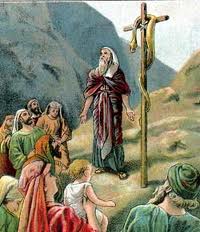
What does the expression “author and finisher of our faith” really mean? It means that there is no other name given under heaven whereby men can be saved (Acts 4:12). He is “the Alpha and Omega, the Beginning and the End”. We can read “Looking unto Jesus the author and finisher of our faith” or “let’s fix our eyes on Jesus” in another translation. That is a beautiful comparison with the brazen serpent in the desert, where the Israelites walked up to the serpent and LOOKED UP TO IT. They were not forced to  approach it and to behold it, but they used their own feet and their own free will to do it. What happens if we do NOT fix our eyes on Jesus? That would mean we have not fully abided in him, and then we will not bear fruit. This means we are risking our salvation.  Let’s view the rest of the context in the same chapter. The verse before lists a few things we ought to do in our race towards the goal:

Hebr. 12:1 Wherefore seeing we also are compassed about with so great a cloud of witnesses, let us lay aside every weight, and the sin which doth so easily beset us, and let us run with patience the race that is set before us

“Let us lay aside—the sin”. What happens if we choose to NOT adhere to this command and refuse to lay aside our sin? Will we be saved anyway? No, we must have our eyes fixed on Jesus and endure to the end. Read more about the IF:s:

Hebr. 12:5 And ye have forgotten the exhortation which speaketh unto you as unto children, My son, despise not thou the chastening of the Lord, nor faint when thou art rebuked of him—IF ye endure chastening, God dealeth with you as with sons; for what son is he whom the father chasteneth not? 8But IF ye be without chastisement, whereof all are partakers, then are ye bastards, and not sons.

Despise not”? “IF ye endure”?? What happens if we do despise Him and his chastening, and why are there IF’s involved if salvation is a done deal? Clearly there are conditions that are required for us to keep. We must abide in Christ and we are warned if we don’t.

Hebr.12:13 And make straight paths for your feet, LEST that which is lame be turned out of the way; but let it rather be healed.

“Lest”? Another warning!

Hebr. 12:4 Follow peace with all men, and holiness, without which no man shall see the Lord15Looking diligently lest any man fail of the grace of God; lest any root of bitterness springing up trouble you, and thereby many be defiled

“Lest” and “lest” again. We are warned that we must FOLLOW peace, and that we must have holiness, without which no man shall see the Lord. We are too look diligently LEST any man fail of the GRACE of God, LEST any root of bitterness might spring up, etc. Sins would DEFILE us, and can defiled men see the Lord? No, we just read that holiness is required, and it does not say that we can hide behind the blood of Jesus and still be saved in our sins. We are not righteous unless we act righteously.

Hebr.12:25 See that ye refuse not him that speaketh. For IF they escaped not who refused him that spake on earth, much more shall not we escape, if we turn away from him that speaketh from heaven

We are warned that we must not refuse him, for IF we do, and IF we turn away from him, we shall not escape. It’s all in our hands and God has made salvation possible for all of us.

God is not willing that any should perish 1 Peter 3:9

2 pet. 3The Lord is not slack concerning his promise, as some men count slackness; but is longsuffering to us-ward, not willing that any should perish, but that ALL should come to repentance (2 Pet. 3:9)

In order to get around the notion that God would want all to be saved, Calvinists suggest that the pronoun us in the phrase “to us-ward” refers to the elect only, since Peter’s greeting at the beginning of his epistle is addressed to the saints. However, most letters in the New Testament are addressed to saints and it does not follow that we can therefore interpret pronouns in such a restrictive way. Moreover, if Peter would be speaking only of those already saved, why all the warnings and why does Peter express his hope for that they should come to the knowledge of the truth? If Calvinism is right, the elect are by definition those who have already come to the knowledge of true salvation. It is clear that Peter believes that they have already come to the knowledge of the truth and that they must still be aware in order to not be led away on wicked ways and fall from their steadfastness.

2 Cor. 3:17 Ye therefore, beloved, seeing ye know these things before, beware lest ye also, being led away with the error of the wicked, fall from your own stedfastness.

When it comes to verses such as Rom 3:23 where it says that “all have sinned”, then Calvinists believe it literally means every single human being (apart from Jesus), but when it comes to verses such as 2 Cor. 5:14-15, where we can read “–that if one died for all, then were all dead: And that he died for all, that they which live should not henceforth live unto themselves, but unto him which died for them, and rose again”, then Calvinists choose to interpret “all” as the elect only, just like they do with 2 Pet. 3:9 and whichever other verse that suggests that God really does not want anyone to perish.

Ez. 18:23 Have I any pleasure at all that the wicked should die? saith the Lord God: and not that he should return from his ways, and live?

Ez. 33:11 Say unto them, As I live, saith the Lord God, I have no pleasure in the death of the wicked; but that the wicked turn from his way and live: turn ye, turn ye from your evil ways; for why will ye die, O house of Israel?

Peter tells us that some people are willfully ignorant of God’s coming judgment, and they are scoffers who walk after their own lusts – something that definitely would be against God’s will.

2 Pet. 3:5 For this they willingly are ignorant of, that by the word of God the heavens were of old, and the earth standing out of the water and in the water:

In v. 7 we can read that such people will perish when it is time for the judgment – due to their ungodliness (something against God’s will). Peter urges his readers to not be ignorant of such serious warnings, and he comments that some people twist the scriptures to their own destruction. (It does not seem they were chosen to be non-elect before the creation of the world, but they actually cause their own destruction just like the Bible says.)

2 Pet 3:15 And account that the longsuffering of our Lord is salvation; even as our beloved brother Paul also according to the wisdom given unto him hath written unto you;16 As also in all his epistles, speaking in them of these things; in which are some things hard to be understood, which they that are unlearned and unstable wrest, as they do also the other scriptures, unto their own destruction.

Note Paul’s statement about longsuffering in Romans 9:

Rom. 9:22 What if God, willing to shew his wrath, and to make his power known, endured with much longsuffering the vessels of wrath fitted to destruction:23 And that he might make known the riches of his glory on the vessels of mercy, which he had afore prepared unto glory,24 Even us, whom he hath called, not of the Jews only, but also of the Gentiles?

God is longsuffering with those who disbelieve, but some vessels are fitting themselves to destruction. Clay has a will of its own, but there is a proper place for clay that is eventually rendered totally useless and that is on the scrap heap. Clay can be marred in the potter’s hands (Jer. 18), and what potter wants his clay to be marred? If the potter would be the one causing his own clay to be destroyed, the word “longsuffering” would be very much out-of-place. “Longsuffering” rather indicates that the potter is very patient with the clay, and strongly desire for it to be useful in one way or the other. However, there are limits for how many attempts the potter can handle, and one day the clay will finally end up where it belongs – due to its own actions. It has caused its own destruction despite many chances to become something useful that could please his maker.

2 Tim. 2:19 Nevertheless the foundation of God standeth sure, having this seal, The Lord knoweth them that are his. And, let every one that nameth the name of Christ depart from iniquity.20 But in a great house there are not only vessels of gold and of silver, but also of wood and of earth; and some to honour, and some to dishonour.21 If a man therefore PURGE HIMSELF FROM THESE, he shall be a vessel unto HONOUR, sanctified, and meet for the master’s use, and prepared unto every good work.22 Flee also youthful lusts: but follow righteousness, faith, charity, peace, with them that call on the Lord out of a pure heart.

Preachers might express themselves with the pronoun “us” in their sermons before a group of Christians in a church, and still include a larger part of people other than those present in the church.

Romans 4:24 But for us also, to whom it shall be imputed, IF we believe on him that raised up Jesus our Lord from the dead. 

Eyes that should not see and ears that should not hear Romans 11:8

According as it is written, God hath given them the spirit of slumber, eyes that they should not see, and ears that they should not hear (Rom. 11:8)

God does not arbitrarily cause certain unfortunate people to be spiritually blind and deaf and neither does he turn around and punish them for not seeking him – which he prevented them to do in the first place. However, if PEOPLE reject him and rebel against him, he can give them over to a reprobate mind. IF God would be the one to  make people spiritually blind and deaf (for no reason at all), it must mean that they were NOT blind and deaf from the start – despite that they were adults and had been around for a while. (Something for reformed thinkers to think about, because they believe we were all blind and deaf before we are regenerated and able to believe and do good.)

When we check the passages in the Bible where we can read about God giving people over to blindness and deafness, we can see that this is their own fault due to hardening of their own hearts. We can also see that God EXPECTED Israel to see and hear due to the many miracles that he did before them, and he always has great anger towards people who refuse to give up their idols and other sins. In Romans 11:7-11 Paul is referring to Isaiah, so it’s essential that we study the context in Isaiah to understand why people’s eyes and ears have been shut.

Rom 11:What then? Israel hath not obtained that which he seeketh for; but the election hath obtained it, and the rest were blinded. 8(According as it is written, God hath given them the spirit of slumber, eyes that they should not see, and ears that they should not hear;) unto this day.9And David saith, Let their table be made a snare, and a trap, and a stumbling block, and a recompence unto them: 10Let their eyes be darkened, that they may not see, and bow down their back alway. 11I say then, Have they stumbled that they should fall? God forbid: but rather through their fall salvation is come unto the Gentiles, for to provoke them to jealousy.

Isaiah 29:Stay yourselves, and wonder; cry ye out, and cry: they are drunken, but not with wine; they stagger, but not with strong drink.10 For the Lord hath poured out upon you the spirit of deep sleep, and hath closed your eyes: the prophets and your rulers, the seers hath he covered.11 And the vision of all is become unto you as the words of a book that is sealed, which men deliver to one that is learned, saying, Read this, I pray thee: and he saith, I cannot; for it is sealed:12 And the book is delivered to him that is not learned, saying, Read this, I pray thee: and he saith, I am not learned.13 Wherefore the Lord said, Forasmuch as this people draw near me with their mouth, and with their lips do honour me, but have removed their heart far from me, and their fear toward me is taught by the precept of men:14 Therefore, behold, I will proceed to do a marvellous work among this people, even a marvellous work and a wonder: for the wisdom of their wise men shall perish, and the understanding of their prudent men shall be hid.15 Woe unto them that seek deep to hide their counsel from the Lord, and their works are in the dark, and they say, Who seeth us? and who knoweth us?

Isaiah 44:9They that make a graven image are all of them vanity; and their delectable things shall not profit; and they are their own witnesses; they see not, nor know; that they may be ashamed.—17And the residue thereof  he maketh a god, even his graven image: he falleth down unto it, and worshippeth it, and prayeth unto it, and saith, Deliver me; for thou art my god.18They have not known nor understood: for he hath shut their eyes, that they cannot see; and their hearts, that they cannot understand.  19 And none considereth in his heart, neither is there knowledge nor understanding to say, I have burned part of it in the fire; yea, also I have baked bread upon the coals thereof; I have roasted flesh, and eaten it: and shall I make the residue thereof an abomination? shall I fall down to the stock of a tree?20 He feedeth on ashes: a deceived heart hath turned him aside, that he cannot deliver his soul, nor say, Is there not a lie in my right hand?

Ps. 69:22 Let their table become a snare before them: and that which should have been for their welfare, let it become a trap.23 Let their eyes be darkened, that they see not; and make their loins continually to shake.24 Pour out thine indignation upon them, and let thy wrathful anger take hold of them.

Jesus encourages us to walk in the light, LEST darkness will come upon us. and IF we choose to believe in the light, we can become children of light. Despite that Jesus did many miracles, the pharisees still did not believe in him and that is because they had purposed in their hearts to not come to the light. A person who hates the light remains in darkness, and he is spiritually blind.

John 12:35 Then Jesus said unto them, Yet a little while is the light with you. Walk while ye have the light, lest darkness come upon you: for he that walketh in darkness knoweth not whither he goeth.36 While ye have light, believe in the light, that ye may be the children of light. These things spake Jesus, and departed, and did hide himself from them.37 But though he had done so many miracles before them, yet they believed not on him:38 That the saying of Esaias the prophet might be fulfilled, which he spake, Lord, who hath believed our report? and to whom hath the arm of the Lord been revealed?39 Therefore they could not believe, because that Esaias said again,40 He hath blinded their eyes, and hardened their heart; that they should not see with their eyes, nor understand with their heart, and be converted, and I should heal them.

John. 3:19 And this is the condemnation, that light is come into the world, and men loved darkness rather than light, because their deeds were evil.20 For every one that doeth evil hateth the light, neither cometh to the light, lest his deeds should be reproved.21 But he that doeth truth cometh to the light, that his deeds may be made manifest, that they are wrought in God.

John. 12:38 is a quote from this passage in the old testament:

Jesaja 6:And he said, Go, and tell this people, Hear ye indeed, but understand not; and see ye indeed, but perceive not.10 Make the heart of this people fat, and make their ears heavy, and shut their eyes; lest they see with their eyes, and hear with their ears, and understand with their heart, and convert, and be healed.11 Then said I, Lord, how long? And he answered, Until the cities be wasted without inhabitant, and the houses without man, and the land be utterly desolate,12 And the Lord have removed men far away, and there be a great forsaking in the midst of the land.

Compare with this passage where we can see that Paul is blaming people for not being able to see or hear. Paul did his utmost to persuade people to believe in Jesus, but if God is the one to make people spiritually blind and death, Paul would be wasting his time:

 Acts 28:23 And when they had appointed him a day, there came many to him into his lodging; to whom he expounded and testified the kingdom of God, persuading them concerning Jesus, both out of the law of Moses, and out of the prophets, from morning till evening.24 And some believed the things which were spoken, and some believed not.25And when they agreed not among themselves, they departed, after that Paul had spoken one word, Well spake the Holy Ghost by Esaias the prophet unto our fathers, 26Saying, Go unto this people, and say, Hearing ye shall hear, and shall not understand; and seeing ye shall see, and not perceive: 27For the heart of this people is waxed gross, and their ears are dull of hearing, and their eyes have THEY closed; lest they should see with their eyes, and hear with their ears, and understand with their heart, and should be converted, and I should heal them. 28Be it known therefore unto you, that the salvation of God is sent unto the Gentiles, and that they will hear it.

Other verses in the same chapter (John 12) show man’s free will and responsibility to seek and come to God. Clearly God would not predestine people to NOT believe in him, follow him, confess him, receive him, abide in him, etc. God would not close the door for people, only to ask the same people why they have not seeked him. We can see that there is an option to reject Jesus, and that is of course against God’s will.

John 12:25 He that loveth his life shall lose it; and he that hateth his life in this world shall keep it unto life eternal.26 If any man serve me, let him follow me; and where I am, there shall also my servant be: if any man serve me, him will my Father honour.42 Nevertheless among the chief rulers also many believed on him; but because of the Pharisees they did not confess him, lest they should be put out of the synagogue:43 For they loved the praise of men more than the praise of God.-46 I am come a light into the world, that whosoever believeth on me should not abide in darkness.—-48 He that rejecteth me, and receiveth not my words, hath one that judgeth him: the word that I have spoken, the same shall judge him in the last day.

Below we can read about people who forsake God and who have eyes that don’t see and ears that don’t hear, and they are considered foolish by God. Naturally he wouldn’t create people to revolt against him and to have rebellious hearts. We can read that it’s their INIQUITIES which have caused themselves to be withheld from the good things of God:

Jer 5:19And it shall come to pass, when ye shall say, Wherefore doeth the LORD our God all these things unto us? then shalt thou answer them, Like as ye have forsaken me, and served strange gods in your land, so shall ye serve strangers in a land that is not your’s. 20Declare this in the house of Jacob, and publish it in Judah, saying, 21Hear now this, O foolish people, and without understanding; which have eyes, and see not; which have ears, and hear not: —23But this people hath a revolting and a rebellious heart; they are revolted and gone. 24Neither say they in their heart, Let us now fear the LORD our God, that giveth rain, both the former and the latter, in his season: he reserveth unto us the appointed weeks of the harvest. 25Your iniquities have turned away these things, and your sins have withholden good things from you26For among my people are found wicked men: they lay wait, as he that setteth snares; they set a trap, they catch men. 27As a cage is full of birds, so are their houses full of deceit: therefore they are become great, and waxen rich. 28They are waxen fat, they shine: yea, they overpass the deeds of the wicked: they judge not the cause, the cause of the fatherless, yet they prosper; and the right of the needy do they not judge. 29Shall I not visit for these things? saith the LORD: shall not my soul be avenged on such a nation as this30A wonderful and horrible thing is committed in the land; 31The prophets prophesy falsely, and the priests bear rule by their means; and my people love to have it so: and what will ye do in the end thereof?

Other verses which show that people have eyes that do not see and ears that do not hear – due to their own doingsöga2

Hes. 12:Son of man, thou dwellest in the midst of a rebellious house, which have eyes to see, and see not; they have ears to hear, and hear not: for they are a rebellious house3Therefore, thou son of man, prepare thee stuff for removing, and remove by day in their sight; and thou shalt remove from thy place to another place in their sight: it may be they will consider, though they be a rebellious house.

Zechariah 7:10 And oppress not the widow, nor the fatherless, the stranger, nor the poor; and let none of you imagine evil against his brother in your heart.11 But they refused to hearken, and pulled away the shoulder, and stopped their ears, that they should not hear.12 Yea, they made their hearts as an adamant stone, lest they should hear the law, and the words which the Lord of hosts hath sent in his spirit by the former prophets: therefore came a great wrath from the Lord of hosts.13 Therefore it is come to pass, that as he cried, and they would not hear; so they cried, and I would not hear, saith the Lord of hosts:

Ps 135:15 The idols of the heathen are silver and gold, the work of men’s hands16They have mouths, but they speak not; eyes have they, but they see not; 17They have ears, but they hear not; neither is there any breath in their mouths. 18They that make them are like unto them: so is every one that trusteth in them.

Deut.29:2And Moses called unto all Israel, and said unto them, Ye have seen all that the LORD did before your eyes in the land of Egypt unto Pharaoh, and unto all his servants, and unto all his land; 3The great temptations which thine eyes have seen,the signs, and those great miracles: 4Yet the LORD hath not given you an heart to perceive, and eyes to see, and ears to hear, unto this day.-–20 The LORD will not spare him, but then the anger of the LORD and his jealousy shall smoke against that man, and all the curses that are written in this book shall lie upon him, and the LORD shall blot out his name from under heaven.— 24Even all nations shall say, Wherefore hath the LORD done thus unto this land? what meaneth the heat of thisgreat anger? 25Then men shall say, Because they have forsaken the covenant of the LORD God of their fathers, which he made with them when he brought them forth out of the land of Egypt: 26For they went and served other gods, and worshipped them, gods whom they knew not, and whom he had not given unto them:

Mark 8:17And when Jesus knew it, he saith unto them, Why reason ye, because ye have no bread? perceive ye not yet, neither understand? have ye your heart yet hardened? 18Having eyes, see ye not? and having ears, hear ye not? and do ye not remember? 19When I brake the five loaves among five thousand, how many baskets full of fragments took ye up? They say unto him, Twelve.

Verses that show that people can and should seek God in order to find him and get life

Jeremiah 29:13 And ye shall seek me, and find me, when ye shall search for me with all your heart.

Isaiah 55:Seek ye the Lord while he may be found, call ye upon him while he is near:Let the wicked forsake his way, and the unrighteous man his thoughts: and let him return unto the Lord, and he will have mercy upon him; and to our God, for he will abundantly pardon.

1 Chronicles 28:And thou, Solomon my son, know thou the God of thy father, and serve him with a perfect heart and with a willing mind: for the Lord searcheth all hearts, and understandeth all the imaginations of the thoughts: if thou seek him, he will be found of thee; but if thou forsake him, he will cast thee off for ever.

2 Chronicles 15:And he went out to meet Asa, and said unto him, Hear ye me, Asa, and all Judah and Benjamin; The Lord is with you, while ye be with him; and if ye seek him, he will be found of you; but if ye forsake him, he will forsake you.

Romans 10:16 But they have not all obeyed the gospel. For Esaias saith, Lord, who hath believed our report?17 So then faith cometh by hearing, and hearing by the word of God.18 But I say, Have they not heard? Yes verily, their sound went into all the earth, and their words unto the ends of the world.19 But I say, Did not Israel know? First Moses saith, I will provoke you to jealousy by them that are no people, and by a foolish nation I will anger you.20 But Esaias is very bold, and saith, I was found of them that sought me not; I was made manifest unto them that asked not after me.21 But to Israel he saith, All day long I have stretched forth my hands unto a disobedient and gainsaying people.

Isaiah 65:1 I am sought of them that asked not for me; I am found of them that sought me not: I said, Behold me, behold me, unto a nation that was not called by my name.2 I have spread out my hands all the day unto a rebellious people, which walketh in a way that was not good, after their own thoughts;A people that provoketh me to anger continually to my face; that sacrificeth in gardens, and burneth incense upon altars of brick

Isaiah 45:19 I have not spoken in secret, in a dark place of the earth: I said not unto the seed of Jacob, Seek ye me in vain: I the Lord speak righteousness, I declare things that are right.

It doesn’t say anywhere that God randomly selects people who he will cause to not see or hear. The reason why the farisees did not see or hear is that they chose not to follow Jesus to listen to his teaching and to get edified. Instead they came to him in order to mock him and/or find faults – if they even came to him at all. If people were chosen to be elect/non-elect before the world began, then of course Jesus wouldn’t have to speak in parables in order to hide his message, because the non-elect would be blind and deaf regardless.

Luke 8:10 — Unto you it is given to know the mysteries of the kingdom of God: but to others in parables; that seeing they might not see, and hearing they might not understand

Jesus warns his disciples in the same chapter that they must HEAR in the right way and also DO it, which shows there is a risk they won’t.

Luke 8:18Take heed therefore how ye hear: for whosoever hath, to him shall be given; and whosoever hath not, from him shall be taken even that which he seemeth to have. —21And he answered and said unto them, My mother and my brethren are these which hear the word of God, and do it.

The Bible doesn’t anywhere that we first must be “regenerated” before we can seek God. God calls us and we must respond, and if we do come to him we must believe that he is, and if we are willing to get to know him we will be revealed the DEEP things of God.

Hebr. 11:6 But without faith it is impossible to please him: for he that cometh to God MUST BELIEVE THAT HE IS, and that he is a rewarder of them that diligently SEEK him.

1 Corinthians 2:10 But God hath revealed them unto us by his Spirit: for the Spirit searcheth all things, yea, the DEEP things of God

Romans 1

There is no better passage than Romans 1:18-32 to show the reality of when people reject God even though they know better and have the opportunity to seek him and find him. For this reason God gives them over to reprobation.

Romans 1:18 For the wrath of God is revealed from heaven against all ungodliness and unrighteousness of men, who hold the truth in unrighteousness;19 Because that which may be known of God is manifest in them; for God hath shewed it unto them.20 For the invisible things of him from the creation of the world are clearly seen, being understood by the things that are made, even his eternal power and Godhead; so that they are without excuse:21 Because that, when they knew God, they glorified him not as God, neither were thankful; but became vain in their imaginations, and their foolish heart was darkened.22 Professing themselves to be wise, they became fools,23 And changed the glory of the uncorruptible God into an image made like to corruptible man, and to birds, and fourfooted beasts, and creeping things.24 Wherefore God also gave them up to uncleanness through the lusts of their own hearts, to dishonour their own bodies between themselves:25 Who changed the truth of God into a lie, and worshipped and served the creature more than the Creator, who is blessed for ever. Amen.26 For this cause God gave them up unto vile affections: for even their women did change the natural use into that which is against nature:27 And likewise also the men, leaving the natural use of the woman, burned in their lust one toward another; men with men working that which is unseemly, and receiving in themselves that recompence of their error which was meet.28 And even as they did not like to retain God in their knowledge, God gave them over to a reprobate mind, to do those things which are not convenient;29 Being filled with all unrighteousness, fornication, wickedness, covetousness, maliciousness; full of envy, murder, debate, deceit, malignity; whisperers,30 Backbiters, haters of God, despiteful, proud, boasters, inventors of evil things, disobedient to parents,31 Without understanding, covenantbreakers, without natural affection, implacable, unmerciful:32 Who knowing the judgment of God, that they which commit such things are worthy of death, not only do the same, but have pleasure in them that do them.

What is The Law of Christ?

Paul said,  “Bear one another’s burden, and so fulfill the law of Christ.  (Gal. 6:2)

What is the law of Christ?  The law of Christ is the body of commands and teachings He taught to His disciples and they in turn were to teach every new disciple.  (Matt. 28:20)

Paul equated Christ’s law to God’s law.  (1 Cor. 9:21)

“To them that are without law, as without law, (being not without law to God, but under the law to Christ,) that I might gain them that are without law.”

Paul told the Christians in Galatia to carry each other’s burdens, and in doing so they would fulfill the law of Christ.  (Gal. 6:2)

Paul also said such things as “Let the word of Christ dwell in you richly in all wisdom; teaching and admonishing one another in psalms and hymns and spiritual songs, singing with grace in your hearts to the Lord.”  (Col. 3:16)

What is the word of Christ?  

It has to do with everything Jesus taught and commanded! I have heard people try to get away with what Jesus taught by claiming it belongs to another dispensation in the future; that what Christ taught cannot be applied doctrinally to the Christians in the Church Age.

The word “doctrine” simply means “teaching or instruction.”  It is not some mystical word that is hard to grasp.  Whatever Jesus taught applied to the apostles, to those at that time, and to us!  If one does not abide in the doctrine of Christ, he does not have God.

2 John 1:9 says,
“Whoever transgresses and does not abide in the doctrine of Christ does not have God. He who abides in the doctrine of Christ has both the Father and the Son.”

As one author has well stated,

“It seems strange that men should forbid Jesus the privilege of teaching, during His earthly ministry, and great principles governing man’s relation to God – not only during the few remaining days of His brief earthly ministry, but throughout the age to follow, for which He was even then preparing His disciples.  It seems even stranger that men who so easily reject much of our Lord’s later teaching as ‘not applicable to the present dispensation’ do not hesitate to accept much of His earliest teaching (to Nicodemus, for example) as being fully applicable to the present age.  (One friend, in conversation with the author, even denied that our Lord’s words in John 15 have any bearing on the question of our relation to Christ today, since they were spoken ‘before Calvary’ – a few hours!  What delicate, fragile hairs skilled ‘rightly dividers’ can sometimes neatly split with one swift, sure stroke of their hermeneutical broadaxe!)

It is true that Jesus made reference to certain legal and ceremonial aspects of the Mosaic economy which are not applicable today.  But it is also true that He enunciated cardinal principles governing man’s spiritual relation to God which are as valid today as the moment of utterance.  One of these principles, according to His teaching in the Parable of the Law of Forgiveness, is that true repentance toward God is inseparably associated with our attitude toward our fellow men and cannot exist apart from a charitable, forgiving spirit toward others.

Such true repentance, like sincere faith and the faithful retention of the saving word of the Gospel, is necessary, not merely for a fleeting moment at the occasion of one’s conversion, but continually and habitually, as an essential condition of forgiveness and salvation.  ‘So likewise shall my heavenly Father do also unto you,’ warned Jesus, ‘if ye from your hearts forgive not every one his brother their trespasses.’  It is possible, warned Jesus, that Peter and others who have known the forgiving grace of God might forfeit that forgiveness.  The forgiving grace of God cannot dwell in bitter, unforgiving hearts.  He who refuses to forgive his brother has no real sense of need for the forgiveness of God and no just claim on His gracious forgiveness.  ‘Forgive us our debts, as we forgive our debtors.’”

What does Jesus expect from us? 

Jesus expects us to obey Him.  He was not suggesting it, nor did He say it was for another dispensation.  Jesus said true believers are those who obey Him.  Jesus said if you love Him, keep His commandments (John 14:15).

We are to abide in the doctrine of Christ.  When we abide in the doctrine of Christ, we are fulfilling the law of Christ and it shows that we have both the Father and the Son.   (2 John 1:9)

God’s will is expressed in the Law of Christ. 

The law of Christ is anything Jesus taught in Matthew, Mark, Luke, and John, and is considered the will of the Father.  (Matt. 12:50)

Jesus said whoever hears these sayings (of Jesus), and DOES THEM, is likened to a wise man who built his house on the rock. (Matt. 7:24)

The teachings of Jesus come from the Father. 

Jesus said His teaching were not His own, but came from the Father.  (John 7:16-17)  Everything Jesus taught and commanded came from God. (John 8:28; John 12:49-50; John 14:10; John 14:24; John 14:31)  Jesus obeyed the Father perfectly. Everything Jesus did was the will of God.

Jesus said to His disciples, “Teach them to obey all that I commanded you”.  By teaching others to obey all that Jesus commanded, is teaching the will of God.

The law of Christ is a law of the heart and mind. 

When one starts talking about how we should obey Jesus, immediately the cry is, “You are teaching a works salvation!”  Nothing could be further from the truth.  The Bible never says one can earn his salvation, but what the Bible does say iS to WORK OUT your own salvation (Php. 2:12).  You can’t work out what you don’t have!  On the other hand, all they teach is that one can’t help but sin every single day in thought, word, and deed.  Throughout both Testaments God wants people to forsake wickedness.  Jesus told people to “go and sin no more,” and Paul said, “Awake to righteouness and sin not!”  But on every side we are attacked by Satan’s followers who say you can keep sinning and never die (the same lie from the Garden).  Just listen to this clip ”Today’s Gospel”  of what is being taught out there, and hear how God’s word refutes them!

The secret to living a holy life, free from the bondage of sin, is LOVE.  The purity of your actions is not only from the mind, but from the heart. What is in your heart will fill your mind as well. Jesus called the teachers of the law and Pharisees hypocrites.  They were beautiful on the outside, but inside were full of dead men’s bones.  People, from the outside, can appear as righteous but inside are full of hypocrisy and wickedness. (Matt. 23:28)  It is from out of the heart that proceed evil thoughts, murders, adulteries, fornication, thefts, false witness, blasphemies (Matt. 15:19).  Jesus is not looking just for external actions to be pure, but his desire is for us to be pure in heart and mind as well.

 Will the Holy Spirit be given to those who do not obey Jesus – who claim to continually sin everyday in thought, word, and deed?

Jesus said the Holy Spirit will only be given to those who obey Him.

If you love Me, keep My commandments. And I will pray the Father, and He will give you another Helper, that He may abide with you forever.”  (John 14:15-16)

This is corroborated by Peter.

And we are His witnesses to these things, and so also is the Holy Spirit whom God has given to those who obey Him.”  (Acts 5:32) 

John tells us,

“And he that keepeth his commandments dwelleth in him, and he in him.  And hereby we know that he abideth in us, by the Spirit which he hath given us.” (1 John 3:24)

The Holy Spirit whom God has given abides in those who keep the commandments of Jesus!  For those who claim to sin everyday in thought, word, and deed cannot have the Holy Spirit, for they do not obey God.  They even write off what Jesus said as for another dispensation and therefore it doesn’t apply to them doctrinally!  Why?  Because it will knock down the wall of a false teaching called Unconditional Eternal Security!  When you listen to all these false teachers, and get rid of all the fluff in their sermons, it all boils down to one thing…..you can keep on sinning and you won’t die!  It’s the same lie the Serpent told Eve in the Garden.

The Bible is clear that if you don’t obey and abide in the doctrine of Christ, you do not belong to Christ, nor do you have the Holy Spirit. (2 John 1:9; Rom. 8:9)

Jesus said whoever obeys His commands, he is the one who loves Him.  And He who loves Jesus loves the Father.  Again, if anyone loves Jesus, he will obey His teachings. (John 14:21; John 14:23)

The reverse side is true just as well.  Jesus said those who do not love him do not keep His words. (John 14:24)

Jesus’ love is conditional as long as we continue to obey. 

Jesus’ love is NOT unconditional.  Note the condition in the words of Jesus,

If ye keep my commandments, ye shall abide in my love; even as I have kept my Father’s commandments, and abide in his love.   (John 15:10)

Being friends with Jesus is also conditioned upon our obedience.

“Ye are my friends, if ye do whatsoever I command you.”  (John 15:14)

If we hold to the teachings of Christ, we are the real disciples of His. 

“Then Jesus said to those Jews who believed Him, “If you abide in My word, you are My disciples indeed.  And you shall know the truth, and the truth shall make you free.” (John 8:31-32)

We are assured by Jesus we will never see death if we keep His word.

“Most assuredly, I say to you, if anyone keeps My word he shall never see death.” (John 8:51)

It is obedience to the teachings (keeping His word) that causes the blessings.  Just as blessings were promised for obedience to the law of Moses, so are the blessings promised to us based on our obedience to Christ.

One cannot have salvation without repentance followed with obedience.

The Scripture says,

“And having been perfected, He (Jesus) became the author of eternal salvation to all who obey Him,”  (Heb. 5:9)

It doesn’t say salvation is given to those who sin every day in thought, word, and deed.  God does not want people to sin.  He tells people to forsake their sins and follow Him.  Jesus commanded that all men to repent, but modern man will tell you repentance is not part of the Gospel. It’s a lie.  God wants repentance preached (Luke 5:32; Luke 24:47; Acts 20:21, etc. etc.).

There is a “godly sorrow.”  “For godly sorrow worketh repentance TO SALVATION not to be repented of;”  (2 Cor. 7:10)

Jesus said of the Holy Spirit,

“And when he is come, he will reprove the world of sin, and of righteousness, and of judgment:” (John 16:8)

And as we read above, God gives the Holy Spirit to those who obey Him. (Acts 5:32)  When a person feels the conviction of the Holy Spirit about his sinful condition, he can shrug it off, or he’ll come to God to forgive him of such a sinful life style.  He will want pardon through the mercy of God.  He knows his only hope is through Jesus who provided a way for his salvation and freedom from sin.  He will hate his sin because he can see what it has done to him and where it will send him.  He will not have a desire to do it anymore.  At that point of repentance, he wants to give up sin and not do it again.  Some people may be bothered for weeks under the conviction of the Holy Spirit, some may be a few days, and for some it may be on the very day (process of repentance).  He will not have rest until he comes to that crucial point of “godly sorrow” that leads to salvation.  He has to believe (faith) that God is able to forgive him of all the sins he has committed up to that point in his life, and his heart must be dead set against sinning again, which it would be if he is truly under godly sorrow.  Jesus came to set us free from sin, that it no longer has to have dominion over us.  His repentance will be proven by his deeds (Acts 20:26).  One’s deeds (obedience – NOT disobedience) will prove his repentance!  God will give that person strength if he will obey Him.  He gives the Holy Spirit to those who obey Him.  From there, as he reads the Scriptures (needs to grow in the faith), he will be warned not to go back to the way he once walked.  He can quench the Holy Spirit (1 Thess. 5:19).  The Scripture shows us certain sins will not let one inherit the kingdom of God, but instead lead one to eternal doom (Gal.5:19-21; 1 Cor. 6:9-10; Eph. 5:3-6; Rev. 21:8, etc.).  The Bible doesn’t say we work FOR our salvation, but it does say to WORK OUT our own salvation, and that with fear and trembling! (Php. 2:12).

Salvation is conditional upon the fact that we continue to abide in Jesus.  One who abides in Jesus will not sin.  Remember, Jesus said if you love Him you will obey Him and His teachings.  The Scriptures tell us,

“For this is the love of God, that we keep His commandments.  And His commandments are not burdensome.”  (1 John 5:3)

The Scriptures also say,

“He that saith, I know him, and keepeth not his commandments, is a liar, and the truth is not in him.” (1 John 2:4)”

In flaming fire taking vengeance on them that know not God, and that obey not the gospel of our Lord Jesus Christ:”  (2 Thess. 1:8) 

And you want to claim that you SIN everyday in thought, word and deed? This is simply being disobedient!

Which one is it – believing or obeying? 

Some Scripture passages say salvation is a result of obedience while other texts say salvation is through faith.  Is this a contradiction?  No.  Paul said,

“By whom we have received grace and apostleship, for obedience to the faith among all nations, for his name:  (Rom. 1:5)

“For by grace you have been saved through faith, and that not of yourselves; it is the gift of God,” (Eph. 2:8)

Faith comes first and obedience is the evidence of the faith.  The Gospel is to be obeyed for salvation sake.

“In flaming fire taking vengeance on them that know not God, and that obey not the gospel of our Lord Jesus Christ:”  (2 Thess. 1:8)

Disobedience is manifested in unbelief.

“He that believeth on the Son hath everlasting life: and he that believeth not the Son shall not see life; but the wrath of God abideth on him.” (John 3:36)

“And to whom sware he that they should not enter into his rest, but to them thatbelieved not?  So we see that they could not enter in because of unbelief. (Heb. 3:18-19)

So if you are disobedient, sinning everyday in thought, word, and deed, you are walking in unbelief. Among the sins that will send one into the Lake of Fire, the “unbelieving” is one of them.

“But the fearful, and unbelieving, and the abominable, and murderers, and whoremongers, and sorcerers, and idolaters, and all liars, shall have their part in the lake which burneth with fire and brimstone: which is the second death.”
(Rev. 21:8)

The Bible is clear that a past moment of acceptance of Christ does not guarantee anyone eternal salvation regardless how they live afterward.  If they don’t continue in the faith they will suffer the consequences in Hell for all eternity.

Scriptures say that there will be Christians who will depart from the faith (departing from the faith doesn’t happen to lost people!) (1 Tim. 4:1).  The widows turned from Christ and started following Satan (1 Tim. 5:11-15). Demas is another example. He was a traveling companion of Paul (Col. 4:14; Phm. 1:24). They worked together and endured various troubles and persecutions preaching the kingdom of God. But what happened to Demas? Paul said, “For Demas hath forsaken me, having loved this present world, and is departed unto Thessalonica;…”  (2 Tim. 4:10). Demas, a saved man, fell away and went back to loving this present world.  He loved the world more than God. The god of this world is Satan! (2 Cor. 4:4). Demas got deceived and it affected his behavior. In his unrepentant state, he lost his salvation for he did not endure! (1 John 2:15; James 4:4)

Those who obey Jesus’s commands live in him.  Paul said to examine yourselves to see whether you are in the faith (2 Cor. 13:5).  John corroborates Paul by saying, “And he that keepeth his commandments dwelleth in him, and he in him. And hereby we know that he abideth in us, by the Spirit which he hath given us.” (1 John 3:24)

Those who have a true saving faith in Christ will obey His teachings and commands.  Obedience is natural evidence of saving faith.  Those who are disobedient display their lack of saving faith.  Jesus NEVER asks us to do something we cannot do. If you love Jesus, you will obey Him, and to obey Him is fulfilling the law of Christ.

(Thanks to Sandra)

A question that calvinists cannot answer – because it’s a paradox

CHALLENGE to CALVINISTS to please explain the contradiction of Westminster Confession of Faith 3.1:

A Calvinist writes:  “[God] does not actively work unbelief into the non-elect. All are already under sin. God is not responsible for the sin of Adam, or the fall of mankind. God is not the author of evil. “

Q. Who then *is* the author of evil? Who did work unbelief into the heart of men? If all men are under sin, what was God doing when it happened – did it occur behind his back / outside his sovereign causality? Calvin wrote: (quote): 

“..the will of God is the supreme and primary cause of everything…” (The Institutes of Christian Religion, Book I, Ch. 16, Sect.

 “We also note that we should consider the creation of the world so that we may realise that everything is subject to God and ruled by his will and that when the world has done what it may, nothing happens other than what God decrees.” (Acts: Calvin, The Crossway Classic Commentaries, p.66)

“…the devil and all the ungodly are reined in by God, so that they cannot conceive, plan or carry out any crime, unless God allows it, indeed commands it. They are not only in bondage to him, but are forced to serve him. It is the Lord’s prerogative to enable the enemy’s rage and to control it at will, and it is in his power to decide how far and how long it may last, so that wicked men cannot break free and do exactly what they want….” (The Institutes of Christian Religion, Book I, Ch.17, Sect. 10)

= And again. WCF3.1 says God ordains EVERYTHING that happens.

Q. How then, having asserted this position, can Calvinism claim God is not authoring these things – THAT’S WHAT AUTHORING MEANS – (to conceive a plot, and via third parties cause a narrative to come into being, and then to publish it via secondary agents, for the world to experience it’s reality.) i.e. by the normal definition of the words, Authoring IS ordaining / decreeing / causing / predetermining, by creative design.

I really hope you guys can take this challenge on – because it lies at the heart of Calvinism’s claims of sovereignty. These are not complex questions, and are based on what Calvinism clearly states. I’m not pulling a clever trick on you here, but asking how you reconcile this contradiction: To quote Calvin again:

“First, it must be observed that the will of God is the cause of all things that happen in the world; and yet God is not the author of evil.” (Concerning the Eternal Predestination of God, p.169)

“Whatever things are done wrongly and unjustly by man, these very things are the right and just works of God. This may seem paradoxical at first sight to some….” (Concerning the Eternal Predestination of God, p.169)

Too right it seems paradoxical!….. It IS. Again. My questions have not been answered -I’ve received lots of references to God being “passive” while people go do things that God is not *actively* in control of, whilst simultaneously claiming God is in control of everything.

PROBLEM 1.) If God stands back and lets a man do something that God himself has not actively caused to be, then you are opening up space *outside his sovereign will* by claiming he stands by and lets things happen he did not cause.

PROBLEM 2.) Calvinists seem to also be claiming God IS in fact in TOTAL control of every atom in this universe etc. Thus you cannot claim God is in total control and at the same time shelve the effective causailty onto someone else… This question is normally responded to by Calvinists by stating “you do not understand Calvinism – go back and relearn”. I am – I have – I am taking you at your word and asking questions about it – please dont refer to charts or other material – I need to know how you square this circle personally. Or do you switch your mind off and accept mutually exclusive opposites as compatible truth… ie ‘A = NotA’

Sovereignty = total control / causality (predestination = ordination).
Soveriengty = active causality to salvation
Sovereignty does not = active causality to sin
Sovereignty does not = total control / causality

(Thanks to Stephen Thomas. Also read his long list of verses which show that TULIP is incorrect here)