Tag Archive | depravity

We are no longer under the Law (torah) but we are still under the moral law

The Early Church had a controversy with a group called “the Judaizers” who were teaching justification by works of the law.

And certain men which came down from Judaea taught the brethren, and said, except ye be circumcised after themanner of Moses, ye cannot be saved. (Acts 15:1)

In other words, they taught that Gentiles need to obey the law (the Torah) and perform the works of the law (circumcision) in order to be justified. Since Paul’s ministry was to the Gentiles, he dedicated a large portion of his writings in Romans and Galatians, which were to Gentile Churches, to write against the Judaizers.

You will notice that Paul continually mentioned circumcision when discussing justification by works of the law in both Romans and Galatians.

Therefore we conclude that a man is justified by faith without the deeds of the law. Is he the God of the Jews only? (Those who had the Torah) Is he not also of the Gentiles? (Those who did not have the Torah) Yes, of the Gentiles also. Seeing it is one God, which shall justify the circumcision by faith, and the uncircumcision through faith. (Rom. 3:28-30)

Cometh this blessedness then upon the circumcision only or upon the uncircumcision also? For we say that faith was reckoned to Abraham for righteousness. How was it then reckoned? When he was in the circumcision, or in uncircumcision? Not in circumcision, but in uncircumcision. (Rom. 4:9-10)

Paul is arguing that Abraham was justified before circumcision, before the law of circumcision was given, and therefore the Gentiles too can be justified by faith without the work of the law of circumcision.

For in Christ Jesus neither circumcision availeth any thing, nor uncircumcision, but a new creature. (Gal. 6:15)

For in Jesus Christ neither circumcision availeth anything, nor uncircumcision; but faith which worketh by love. (Gal. 5:6)

Circumcision is nothing and uncircumcision is nothing, but the keeping of the commandments of God (1 Cor. 7:19).

Paul continually and repeated referred to circumcision when discussing justification “by works of the law” and said that circumcision does not “availeth anything” and is “nothing” but what matters is “a new creature” “faith which worketh by love” and “keeping of the commandments”.

It needs to be understood that Paul was not coming against the preaching of repentance in his epistles when he discussed justification by works of the law. In Galatia the Judaizers came and convinced the Gentile Church there that they needed to be circumcised in order to be saved. Paul wrote his epistle to the Galatians to correct this error of the Judaizers. It was not that the Galatians were repenting of their sins and Paul thought, “I better put a stop to this”. Paul certainly would not have any problem with Gentiles repenting of their sins since his God given ministry was to bring the Gentiles to repentance (Acts 26:20). When Paul preached to the Gentiles in Athens, he told them that God was calling all of them to repent (Acts 17:30). Paul said that we needed to be circumcised, not in our flesh, but in our hearts (Rom. 2:28-29). The circumcision of the heart is putting off your sins (Col. 2:11). Paul bemoaned those Gentiles in Corinth who had not repented of their uncleanness and fornication (2 Cor. 12:21). Paul explicitly said that we should not continue in our sins (Rom. 6:1-2) but that we should awake to righteousness and stop sinning (1 Cor. 15:34). Paul even warned the Galatians that if they lived sinful lives, they would not inherit the kingdom of God (Gal. 5:19-21). It was the Apostle Paul who said “after thy hardness and impenitent heart treasurest up unto thyself wrath” (Rom. 2:5), and that “repentance” leads “to salvation” (2 Cor. 7:10). Clearly Paul would not have had any problems with Gentiles repenting of their sins. Rather, Paul was upset that the Gentile Church in Galatia started to believe falsehoods from the Judaizers about how to be saved.

A good example of how Gentiles find the forgiveness of sins is the story of Nineveh. The narrative records that the people believed God (Jonah 3:5) and turned from their sins (Jonah 3:8). When God saw this, He changed His plans and decided not to destroy them as He said He would (Jonah 3:10). These Gentiles did not need to adopt the Jewish customs, obey the Torah, or be circumcised in order to be pardoned. They were saved, or found the mercy of God, through simple repentance from sin and faith in God. Jesus even said that sinners will be condemned if they do not repent the way Nineveh did (Matt. 12:41). Therefore the way that Gentiles were saved through repentance and faith in the Old Testament is the same way that they are saved in the New Testament, according to Jesus. Repenting of sin is required in both the Old and New Testament as Jesus said and therefore repentance is not the works of the law Paul preached against.

We know that Jesus Christ taught repentance (Lk. 13:3) and Paul certainly would not have contradicted Jesus Christ since Paul was an Apostle of Jesus Christ (Eph. 1:1; Col. 1:1). Paul explicitly said that men ought to listen to the wholesome words of Jesus (1 Tim. 6:3). Paul was by no means attacking the preaching of repentance when he wrote against justification by works of the law. Paul was attacking the Judaizers and their false gospel that Gentiles must convert to Judaism, be circumcised, and obey the Torah.

Thanks to Jesse Morell

Is there a difference between sinning and PRACTICING sin? 1 John 3:9

Some people suggest that christians are safe and will not lose their souls as long as they don’t PRACTICE sin – as in “habitually”. They might also suggest that true born-again christians do not practice sin but they do sin occasionally and they can never stop sinning. This is just another attempt to excuse sinning.

How many sins must a person commit to be considered “practicing” sin? One single murder or bank robbery in a life time would not be considered to sin habitually, but we know that one single sin made a huge difference for Adam and Eve. Perhaps being unfaithful every other year wouldn’t be considered practicing sin either? Where do we draw the line? The Bible says that nothing impure shall enter the new Jerusalem:

Rev. 21:27 And there shall in no wise enter into it any thing that defileth, neither whatsoever worketh abomination, or maketh a lie: but they which are written in the Lamb’s book of life.

True repentance (along with our faith) is the only thing that can save us.

The Greek word used for “to commit” is in itself proof that “commit” does not mean “practice”.  In the Greek NT there are two words that are commonly used to express the idea of doing something. The first is “poieo”, the second is “prasso”, according to Blueletter Bible.

4160 poieo, appear. to make or do (in a very wide application)

4238 prasso, to “practice”, i.e. perform repeatedly or habitually (thus differing from poieo which refers to a single act); to execute, accomplish, fare, commit, deeds, do, keep, require, use arts.

When the Apostle John wrote “Whosoever is born of God doth not COMMIT sin” he used the word “poieo” (to make or do sin with the idea of a single act), and if he wanted to communicate the concept of “practicing” sin he could have used “prasso”.

John Wesley says:

“But some men will say, ‘True: whosoever is born of God doth not commit sin habitually.’ Habitually! Whence is that? I read it not. It is not written in the Book. God plainly saith, ‘He doth not commit sin’; and thou addest, habitually! Who art thou that mendest the oracles of God?-that ‘addest to the words of this book’? Beware I beseech thee, lest God “add to thee all the plagues that are written therein’!” / John Wesley’s Fifty Three Sermons “The Marks of the New Birth” April 3, 1741

1 John 3:9 mostly applies to Jesus because he is certainly “born of God” and his seed remains in God (the Father), but in a way it also applies to us who are in the son. Jesus actually had the capacity to sin or else he would not be tempted in all things just like us, like the Bible says he was. He rather chose to live a sinless life for our sake. We too obviously have the capacity to sin, but if we are led by the holy Spirit, we do not sin. The term “seed” above is generally understood to mean “God’s word” and seed is often typical of the Word of God (for example, Luke 8:11; 1 Peter 1:23) but we know that believers are also referred to as “seed” (Rom 9:8; Gal 3:16, 19, 29)

“Whosoever is born of God doth not commit sin; for his seed (the believer) remaineth in him (Jesus): and he (the believer) cannot sin, because he is born of God (which is to abide in Jesus).” 1 John 3:9

This is confirmed in 1 John 3:6

“Whosoever abideth in him sinneth not: whosoever sinneth hath not seen him, neither known him.” 1 John 3:6

It is not impossible for a believer to sin but rather, it is impossible for a believer to sin as long as he abides in Jesus (which is a condition to remain a believer). The chapter does not teach that it is impossible for a christian to sin but that it is possible that he, through God’s grace, avoids it. No believer has to sin (Titus 2:11-12, 1 Cor 10:13) and the Bible does not say that we are off the hook if we only transgress the law just once in a while instead of several times. Repentance is the only cure. If we mix sin and “sorries” on a daily basis, we have not truly repented.

1 John 3:4 Whosoever committeth sin transgresseth also the law: for sin is the transgression of the law.

1 Joh. 3:8 He that committeth sin is of the devil; for the devil sinneth from the beginning. For this purpose the Son of God was manifested, that he might destroy the works of the devil.—10 In this the children of God are manifest, and the children of the devil: whosoever doeth not righteousness is not of God, neither he that loveth not his brother.

We are told to not hate anyone because hating is like being a murderer. If we are to believe that our souls are not in danger as long as we do not habitually sin, does this mean we can perhaps get away with hating one single brother? Of course not, because no murderer has eternal life abiding in him.

1 Joh. 3.15 Whosoever hateth his brother is a murderer: and ye know that no murderer hath eternal life abiding in him.

We can also see that the condition for having confidence toward God is that our heart does not condemn us. If the case is that our conscience tells us that we have acted wickedly (our heart condemns us) then God is merciful and will forgive us IF we confess our sins and truly repent. If we harden our hearts and pursue in the sin we know is wrong, then our souls are in danger. If you have a chance, do read the article about our faith as “filthy rags”.

1 Joh. 3:19 And hereby we know that we are of the truth, and shall assure our hearts before him.20 For if our heart condemn us, God is greater than our heart, and knoweth all things.21 Beloved, if our heart condemn us not, then have we confidence toward God.

Other mentions of “committing”  sin outside of 1 John 3

John 8:34 Jesus answered them, Verily, verily, I say unto you, Whosoever committeth sin is the servant of sin.

1 Corinthians 6:18 Flee fornication. Every sin that a man doeth is without the body; but he that committeth fornication sinneth against his own body.

2 Corinthians 12:21 And lest, when I come again, my God will humble me among you, and that I shall bewail many which have sinned already, and have not repented of the uncleanness and fornication and lasciviousness which they have committed.

James 2:9 But if ye have respect to persons, ye commit sin, and are convinced of the law as transgressors.

James 5:15 And the prayer of faith shall save the sick, and the Lord shall raise him up; and if he have committed sins, they shall be forgiven him.

The moral law is still valid today and is NOT optional to obey

We are no longer under the Jewish ceremonial law concerning clothes, food, etc BUT the moral law has always been valid ever since Adam and Eve and it’s still applicable for us today. It has ALWAYS been prohibited to murder, steal, lie and commit adultery.  These laws did not start with Moses even if he wrote down also these very foundational laws on stone tables. We can never EARN our salvation by keeping the law and be good (because then we must keep it to 100% which no one has chosen to do) but this does NOT mean that it’s ok to continue to break the law and believe that grace will always cover our sins. If we are cleansed from our sins in the blood of Jesus, it does NOT make sense to return back to breaking the law and become filthy once again. Sins will ALWAYS separate us from God. Obeying the law won’t save you but breaking it will send you to hell. Repentance is the only cure, but if we sin, repent, sin, repent, then we have not truly repented. 

Here are some verses which show that the moral law is still in force:

1 Cor.7:19Circumcision is nothing, and uncircumcision is nothing, BUT KEEPING THE COMMANDMENTS of God.

Gal.5:18BUT IF YE BE LED OF THE SPIRIT , YE ARE NOT UNDER THE LAW. 19Now the works of the flesh are manifest, which are these; Adultery, fornication, uncleanness, lasciviousness, 20Idolatry, witchcraft, hatred, variance, emulations, wrath, strife, seditions, heresies, 21Envyings, murders, drunkenness, revellings, and such like: of the which I tell you before, as I have also told you in time past, that they which do such things shall not inherit the kingdom of God.

Matt. 22:37Jesus said unto him, Thou shalt love the Lord thy God with all thy heart, and with all thy soul, and with all thy mind.38This is the first and great commandment.39And the second is like unto it, Thou shalt love thy neighbour as thyself.40On these two commandments hang all the law and the prophets.

Rom.3:30Seeing it is one God, which shall justify the circumcision by faith, and uncircumcision through faith.31Do we then make void the law through faith? God forbid: yea, We ESTABLISH THE LAW.

Matt.5:17Think not that I am come to destroy the law, or the prophets: I am NOT come to destroy, but to fulfil18For verily I say unto you, Till heaven and earth pass, one jot or one tittle shall in no wise pass from the law, till all be fulfilled. 19Whosoever therefore shall break one of these least commandments, AND SHALL TEACH MEN SO, he shall be called the least in the kingdom of heaven: but whosoever shall do and teach them, the same shall be called great in the kingdom of heaven.

Hebr.10:16This is the covenant that I will make with them after those days, saith the Lord,I WILL PUT MY LAWS INTO THEIR HEARTS, and in their minds will I write them;

Romans 2:12For as many as have sinned without law shall also perish without law: and as many as have sinned in the law shall be judged by the law;13(For not the hearers of the law are just before God, but the doers of the law shall be justified.14For when the Gentiles, which have not the law, do by nature the things contained in the law, these, having not the law, are a law unto themselves:15Which shew the work of the law written in their hearts, their conscience also bearing witness, and their thoughts the mean while accusing or else excusing one another;)

Can a person regret anything in hell if CALVINISM is true?

If calvinism is true, no one who ends up in hell has any reasons to regret anything about his previous life on earth. How could he? God predestined him to be non-elect before the world began (according to calvinism) and that means he had no option but to BE a non-elect and thereby doing the will of God by being exactly what God intended him to be. And how does a non-elect person behave? Well, among other things he rejects God, he is rebellious and he is a non-repentant sinner. So this means that God WANTS him to have these attributes. Most calvinists believe that “God predestines whatever comes to pass” so to be consistent this must include predestining people to sin. Yes, many calvinists say that “God predestines everything, but man is still responsible for his sins”, but this is an oxymoron. And when they are told they believe in an oxymoron they say “God’s ways are higher than our ways” or similar. If I say that I believe in the trinity but not that Jesus is God, this too is an oxymoron.

If calvinism is true, then SIN has nothing to do with why a person ends up in hell. Always remember that a person (if calvinism is true) is predestined to be elect/non-elect before the world began, and before he was even born. So by the time he gets born he is already doomed and he WILL grow up to be elect OR non-elect depending on whatever God chooses, and he WILL act accordingly. Calvinists often say “No, God didn’t predestine them to be do evil, because left to themselves they would never choose him anyway and they would only want to do evil”,but is this the whole truth? WHY don’t they want to choose him and why do they only desire to do evil? That’s because they are non-elect, right? And who chooses that they shall be non-elect? GOD does, according to them! Those who are not chosen to be elect are by default chosen to be non-elect. Man himself is therefore totally innocent for his actions in my view, and some are just unfortunate enough to be chosen to be non-elect which inevidably will lead them to be and to do evil.

If calvinism is true, then Jesus did not even die for some people but their God will apparently send them to hell just the same, due to that they reject Jesus. (Or was it because he predestined them to be non-elect and Jesus-deniars before the world began?) Why is it a sin to deny that Jesus died for you if Jesus did not die for you?!

The Bible is loaded with examples of people rebelling against God and suppressing the truth. Do they do this out of their own choice OR according to the will of God? It’s one or the other. The most obvious answer should be that people have the choice to obey but sometimes choose to disobey. God doesn’t want people to disobey and rebel against him, but due to his decision to create man with free will, we are able to make our own choices. Most importantly we will be judged based on our decisions and actions since we are response-able. If God predestines people to rebel against him and to suppress the truth, it wouldn’t make sense for Him to punish them for doing what he forces them to do.

A SINLESS PERFECTIONIST because you say you can obey Jesus?

Ever been accused for believing in SINLESS PERFECTIONISM when you say you can obey Jesus?

When we say that it is possible to live a life free of sin, as Jesus commands, the cry is that we are teaching“sinless perfectionism.” What is ironic is that these people who cry this false charge do not discern that they are teaching the very thing they condemn!

They make the false assumption that when a soul is converted, he will NEVER, ever sin again. After convincing you of this false assumption, they then try to disprove the claim, which we never made in the first place!  Then they will quote such passages as Heb. 12:6. They like the “chastise” passage, for this is their ‘proof’ that if a child of God never sins after being born again, then they can’t be chastised.  They like to talk about sin, being saved in sin, stay in sin, and defend sin.  They hope that you, the reader, will fall for their assumptions, and then try to convince you that you can’t be anything but a low down sinner for the rest of your life.

Now, let’s see who is really teaching ‘sinless perfectionism’.  By pronouncing condemnation on us (claiming what we do not teach), they reprobate themselves.  According to them:

  1. When you ‘accept’ Jesus, you are justified (forgiven).
  2. There was a magnificent transfer that took place, meaning Christ becomes your perfection because his ‘obedience’ was ‘transferred’ to you by faith.
  3. Because of number 2, your past, present AND ‘future’ sins are all covered once and for all.
  4. Because Jesus’ tract record is imputed to you, God is now blind to your conduct because of the blood of Christ.  God can no longer see you who sins.
  5. All this is ‘positional,’ NEVER  ’practical.’

It is interesting that Christ’s righteousness (“obedience imputed to you,” which the Bible does NOT teach) was magically transferred to you once you trusted in Him.  You are now considered ‘sinless’ because all your past, present, and FUTURE sins are all forgiven. This means that your sins, even future ones you have not yet committed, can NEVER be charged against you no matter what your conduct afterwards.

PROBLEM 1: If this were true, THERE IS NO NEED FOR CHASTISEMENT!  How can you be chastised over sins that the blood was supposed to have covered and God became morally blind to your conduct and future conduct when you accepted His Son?  If all your FUTURE sins are already forgiven, what purpose would there be in any type of correction since God does not see you anymore, just His Son Jesus?  Remember?  God can’t see you sinning, He only sees Jesus!  How can they accuse us of teaching ‘sinless perfectionism” since Christ is their PROXY? Does their teaching not EQUATE TO SINLESS PERFECTION?  Isn’t this calling the kettle black?

These people teach that you sin every day in thought, word, and deed! They even go so far to say that temptation is sin to make sure you get it – that you were saved from nothing. What they are really telling you is that sinning is proof that you are saved and in the faith! How ludicrous! This kind of Gospel is nothing but a hoax coming from frauds and liars.

Let’s clear some things up.  Those who believe we can live holy lives, as God commands, have never said:

1.  That a Christian never sinned in his life time (“For all have sinned”:)
2.  That a Christian doesn’t have the ability to sin after he is saved.
3.  And that once a person is converted that he will be forced not to sin.

What is taught is that a person cannot have salvation without repentance (forsaking all sins).  2 Cor. 7:10-11.

Scripture also says,

“No one who abides in him [Jesus] keeps on sinning; no one who keeps on sinning has either seen him or known him.”  1 John 3:6

We are also told how we can know who is a child of God and who is a child of the devil.

“In this the children of God are manifest, and the children of the devil: whosoever doeth not righteousness is not of God, neither he that loveth not his brother.In this the children of God are manifest, and the children of the devil: whosoever doeth not righteousness is not of God, neither he that loveth not his brother.” 1 John 3:10

A ‘saint’ is characterized by walking a life of holiness.  A ‘child of the devil’ is characterized by walking a life of sin.

IF a child of God should give into temptation and act upon it (sin), God’s word tells us we have an Advocate with the Father (1 John 2:1).  Notice it says IF.  Sinning is not a foregone conclusion in John’s mind, nor was it in Jesus’ mind as well. (“Go and sin no more”).  Paul says, “Awake to righteousness and sin not.”  

PROBLEM 2:  NOWHERE is Jesus said to be our PROXY.  Where it concerns righteousness, we are told NOT TO BE DECEIVED in this matter.

“Little children, let no man deceive you: he that doeth righteousness is righteous, even as he [Jesus] is righteous.” 1 John 3:7

So much for the fake proxy.  One is considered righteous WHEN he does what is right, and when he does, he is considered righteous as Jesus is righteous.  There was no magical transfer that took place.

The false gospel preached today is missing the element of REPENTANCE. Jesus told the disciples to preach REPENTANCE.  Some would go so far to say that repentance is not part of the gospel!  Jesus said,

“And that repentance and remission of sins should be preached in his name among ALL nations, beginning at Jerusalem.” Luke 24:47

Repentance is commanded by God to ALL men everywhere. (Acts 5:31; 11:18; 17:30-31; 20:21; 26:20; Ro. 2:4; 2 Ti. 2:25; 2 Pet. 3:9). (Repentance is NOT an apology for being sinful, nor being born with a ‘sinful nature,’ as they falsely teach!)  What is repentance? Repentance is to sweep, scrape, scrub and cast out of doors all defilement of the heart IN ORDER to make it clean for the reception of the holy Spirit. (Matt. 12:43-45; Lk. 11:24-26; Acts 5:32).  The holy Spirit is only given to those whoobey Him (Acts 5:32), not to those who continue in sin and hope God cleans them up later (as some suggest), which later never seems to come about until the day of physical death!  Repentance can take a process of time (a season of “godly sorrow” until there is full repentance) or instantaneously.  Repentance is not sorrow alone, it also involves a change of mind, inclinations and desires, which translates into a total change in character and conduct. (Mt. 3:8; Mk. 4:12; Lk. 8:15; Jn. 8:34; 8:36; Lk. 19:1-10; Acts 26:20; 2 Co. 6:1; 5:17; 1 Thess. 1:9; 2 Tim. 2:19; Titus. 2:11-12).

Repentance that is genuine is initiated by God through a crisis of conviction leading to a season of godly sorrow for sin. (Jn. 16:8; Acts 2:37; 4:8-10; 5:31; 11:18; 2 Co. 7:10). Biblical repentance from Genesis to Revelation is to “forsake” our wickedness, “purge” our heart of evil and SEEK the mercy of God. (Isa. 55:7; Jer. 26:13; Pro. 28:13; Jon. 3:8-10; Matt. 12:41; Lk. 15:11-32; Acts 3:19; 2 Co. 7:10-11; 2 Tim. 2:19; Jas. 3:7-10; 1 Pe. 4:1; Rev. 2:5; 2:16; 2:20-22; 3:3; 3:19)!

To dismiss repentance as not part of the gospel is very serious, for it nullifies reconciliation with God, and thus no conversion and no forgiveness. (Lk. 13:3; 24:47; Mk. 4:12; Acts 3:19; 2 Co. 7:10).

True repentance is a condition for salvation. (Mk. 1:15; Lk. 13:3; Acts 5:31; 11:18; 17:30; 20:21; Ro. 2:4; 2 Co. 7:10; 2 Pe. 3:9).

(Thanks to Sandra)

God did not hate Esau before he was born – Romans 9:13

As it is written, Jacob have I loved, but Esau have I hated (Rom 9:13)

The question then becomes, did Esau behave the way he did because God hated him, or did God hate him because of the way Esau chose to behave?

Jacob and Esau are not only individuals but they are also PEOPLE and/or NATIONS. This is important to remember in order to not read things into Romans 9 which are not stated. Romans 9 is not about individuals being elected TO BELIEVE, but it’s about a people who has sprung up from individuals, and it’s the line of Jacob which is chosen (for good reasons) to bring forth the Messiah. Most importantly it’s about a person who rejected his birthright and still expected to get it when it was time to receive the blessing. Paul made the comparison with the jews – which Romans 9 is about – who expected to inherit the Kingdom because they are born jews. We can also read from the context that God did NOT arbitrarily hate one of the twin brothers for no reason at all.

The LORD said to her, “Two nations are in your womb, and two peoples from within you will be separated; one people will be stronger than the other, and the older will serve the younger.” (Gen. 25:23)

There is no indication of anything good or bad about either of the children at this point. The nations arising from each will be separated, and one of these nations will be stronger than the other. The nation arising from the older of the two children will at some point end up serving the nation arising from the younger. The individual Esau never served the younger. Also note that God did not hate Esau before he was born, or while he was a child. Children are neutral and they can’t choose between good and bad. Paul says that they are not all Israel which are Israel, and by that he means that children of Abraham are those who BELIEVE like he did and who don’t live as the children of the flesh, and it was also the seed of Abraham which would bring forth the Messiah through Isaac. A person is not saved just because he is born a jew and has the law, but due to his choice to trust God and show fruit.

Rom 9:6Not as though the word of God hath taken none effect. For they are not all Israel, which are of Israel: 7Neither, because they are the seed of Abraham, are they all children: but, In Isaac shall thy seed be called. 8That is, They which are the children of the flesh, these are not the children of God: but the children of the promise are counted for the seed.

According to Paul, babies are neutral and can’t do either good or bad, and Paul speaks about “election” (which is not an election “to believe”) and highlights that the jews should not believe that the law (works) can save them since they in that case must never break one single commandment. It’s accepting the call of God that saves a person.

Rom 9:11(For the children being not yet born, neither having done any good or evil, that the purpose of God according to election might stand, not of works, but of him that calleth;) 12It was said unto her, The elder shall serve the younger.

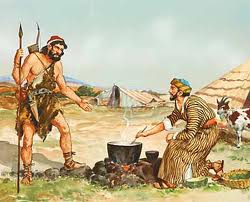
Gen. 25:27 And the boys grew: and Esau was a cunning hunter, a man of the field; and Jacob was a plain man, dwelling in tents. 28 And Isaac loved Esau, because he did eat of his venison: but Rebekah loved Jacob.

Hebrews 12 15Looking diligently lest any man fail of the grace of God; lest any root of bitterness springing up trouble you, and thereby many be defiled; 16Lest there be any fornicator, or profane person, as Esau, who for one morsel of meat sold his birthright17For ye know how that afterward, when he would have inherited the blessing, he was rejected: for he found no place of repentance, though he sought it carefully with tears.

Above in Hebrews we can see that Paul is warning people for not making the right decision when it comes to their lives styles, LEST they might fail of the grace of God, LEST they might be defiled and LEST they might end up like Esau who made a VERY bad choice to, among other things sold his birthright for a meal. We can see why Esau was rejected, and that is because “he found no place of repentance”, indicating that something wasn’t right in his heart, and maybe he didn’t regret his choice to sell his birthright until he realized what was at stake and that it would slip out of his hands. Esau knew better than that but he had to accept the consequences of his actions. Esau was also known as Edom. There is a book called Obadiah and the focus of Obadiah is on Edom/Esau, and the reason God hated Esau is stated here:

Pride of heart, v. 3
Because of the violence against Jacob, v. 10
For not intervening on behalf of Jacob when that people was under attack, v. 11
For looking down on his brother in the day of his misfortune, v. 12
For entering the destroyed city and participating in the ransacking, v. 13
For ambushing their fugitives, v. 14

Obadiah 1: 8Shall I not in that day, saith the LORD, even destroy the wise men out of Edom, and understanding out of the mount of Esau? 9And thy mighty men, O Teman, shall be dismayed, to the end that every one of the mount of Esau may be cut off by slaughter. 10For thy violence against thy brother Jacob shame shall cover thee, and thou shalt be cut off for ever.

Romans 9:13 refers back to Malachi and there we can read:

Mal 1:2I have loved you, saith the LORD. Yet ye say, Wherein hast thou loved us? Was not Esau Jacob’s brother? saith the LORD: yet I loved Jacob, 3And I hated Esau, and laid his mountains and his heritage waste for the dragons of the wilderness. 4Whereas Edom saith, We are impoverished, but we will return and build the desolate places; thus saith the LORD of hosts, They shall build, but I will throw down; and they shall call them, The border of wickedness, and, The people against whom the LORD hath indignation for ever.5And your eyes shall see, and ye shall say, The LORD will be magnified from the border of Israel.

“They”. The entire people that came from Esau are being spoken of as being hated. Thus, when Paul quotes Malachi in Romans 9, he is referring to what happened to the people, not to the individual sons. The quote “Jacob I have loved but Esau have I hated” has to do with the nations that came from the brothers. In Obadiah, the reasons for this hatred from God are clearly shown. Did God hate Esau personally? He very well may have, and the despising of the birthright is used in Hebrews as evidence of his godlessness. This godlessness, and his marriage to pagan wives, would have affected not only his children, but their children and the children after them as well, in agreement with what we read in

Ex. 20:5 Thou shalt not bow down thyself to them [idols], nor serve them: for I the Lord thy God am a jealous God, visiting the iniquity of the fathers upon the children unto the third and fourth generation of them that hate me

Amos 6:8 The Lord GOD has sworn by himself, says the LORD the God of hosts, I abhor the excellency of Jacob, and hate his palaces: therefore will I deliver up the city with all that is in it.