Tag Archive | cross

Jesus paid a high price as a sin offering for us, but he did not PAY for our SINS

In the parable in Matthew 18:23–35, we can see that the servant who had a debt (sin) to the King was LOOSED and FORGIVEN for it. The debt was REMOVED. TAKEN AWAY. No one offered to pay the debt for this servant but it was simply ERASED due to his pleadings. However, when the same servant later refused to forgive another person, then the same debt was back on the table yet again! Had the debt been paid for originally, then the King couldn’t request for yet another payment of a debt which is already paid and settled, regardless of any bad  behavior of the guilty servant. But we know that when we ask for forgiveness and repent, it’s our PAST sins that are forgiven and removed. Not our FUTURE sins. If Jesus had PAID for all our sins on the cross, then we would be BORN forgiven and saved. If we would sin, we could always suggest that we’re still safe since Jesus has already PAID for our transgressions, and this means we don’t have to. We could also suggest that we can actually serve two masters and still be saved, because our sins are already forgiven. We would actually be off the hook and free from punishment no matter what we did. Clearly this is not the true scenario. This is the parable:

Matt 18:23Therefore is the kingdom of heaven likened unto a certain king, which would take account of his servants. 24And when he had begun to reckon, one was brought unto him, which owed him ten thousand talents. 25But forasmuch as he had not to pay, his lord commanded him to be sold, and his wife, and children, and all that he had, and payment to be made. 26The servant therefore fell down, and worshipped him, saying, Lord, have patience with me, and I will pay thee all. 27Then the lord of that servant was moved with compassion, and LOOSED him, and FORGAVE him the debt. 28But the same servant went out, and found one of his fellowservants, which owed him an hundred pence: and he laid hands on him, and took him by the throat, saying, Pay me that thou owest. 29And his fellowservant fell down at his feet, and besought him, saying, Have patience with me, and I will pay thee all. 30And he would not: but went and cast him into prison, till he should pay the debt. 31So when his fellowservants saw what was done, they were very sorry, and came and told unto their lord all that was done. 32Then his lord, after that he had called him, said unto him, O thou wicked servant, I forgave thee all that debt, because thou desiredst me: 33Shouldest not thou also have had compassion on thy fellowservant, even as I had pity on thee? 34And his lord was wroth, and delivered him to the tormentors, till he should pay all that was due unto him. 35So likewise shall my heavenly Father do also unto you, if ye from your hearts forgive not every one his brother their trespasses.

When it comes to the animal sacrifice system in the OT, there are no verses which say anything close to “sins were transferred to the animal”. Was the animal sacrificed OR punished? The animal certainly suffered and died as a result of the sin of man, but never did the animal become posessed by sin and die for those sins. This would imply guilt and that the animal was being punished for sins it did not commit. In the same way Jesus suffered and died because of man’s sin. He did not die because sin was transferred to Him, otherwise it would not be an adequate sacrifice. Rather than being an offering for sin and suffering an unjust death, he would have been punished for our sin which we know was not the case since He was without sin.

2 Cor. 5:21 For he hath made him [to be] sin for us, who knew no sin

Hebrews 10:8 — saying above, Sacrifices and offerings and whole burnt offerings and [sacrifices] for sin thou wouldst not, neither hadst pleasure therein.

It is not uncommon to the Scriptures to use the word “sin” to refer to a “sin offering” as the word “sin” is translated “sin offering” in numerous places throughout Exodus, Leviticus, Numbers, Chronicles, Nehemiah, and Ezekiel, because the context of such passages is clearly referring to a sin offering and not an act of sin. In Leviticus alone, it is rightly translated as sin-offering over 50 times! The same is true in Hebrews 10:6-8 which is a quotation from Psalm 40:6. In the Psalm, the Septuagint also does not have the word “sacrifice” in the text. Albert Barnes said To be sin – The words “to be” are not in the original. Literally, it is, “he has made him sin, or a sin-offering”Even a footnote in the ASV gives sin-sacrifice as the meaning, as do other translations. This view of the atonement, that Christ suffered our penalty and took our punishment, has inevitably lead to the errors of universalism, limited atonement, unconditional salvation, and once saved always saved. These conclusions cannot be logically denied if the premise is accepted that Jesus Christ took our punishment or suffered the penalty for our sins.

Gal. 3:13Christ hath redeemed us from the curse of the law, being made a curse for us: for it is written, Cursed is every one that hangeth on a tree

What is the curse of the law? Did the law of God ever demand for sinners to be crucified? No. In the civil government of Israel, the severest punishment of the law was stoning. Crucifixion was sanctioned by Roman law, but it was not sanctioned by Jewish law. Under the moral government of God, the severe punishment of the law is eternal hell. That is why the text says that Jesus suffer “a curse” not sufferedthe curse of the law”. The curse of the law is what we are saved FROM; a curse is what he ENDURED. The curse of the law was SUBSTITUTED with a curse.”

Jesus Christ shed his blood “for the remission of sins” (Matt. 26:28), but the Bible says that even after the atonement that sinners must still repent “for the remission of sins” (Acts 2:38)

Jesus died to reconcile God and man (Rom. 5:10; Col. 1:21) but after the atonement we have the “ministry of reconciliation” (2 Cor. 5:18) and after the atonement we are to tell men “be ye reconciled unto God“(2 Cor. 5:20)

If Christ bore the sinner’s punishment as a Substitute, then the sinner is unconditionally free from it, for both the sinner and the Substitute cannot be justly punished for the same offence. The theory, therefore, leads necessarily to either universalism on the one hand, or unconditional election on the other. The truth is though that Jesus died on my behalf but did not take MY place on the cross.

The animal for a sin-offering had to be absolutely pure, without a blemish, all of which Jesus was. For Him to have become “sin” in the sense of disobedience to God, He would have become a blemished sacrifice. The priests making an offering under the Law also had to be as spotless as the sacrifice they offered. Just so, Jesus as High Priest was “holy, guileless, undefiled, separated from sinners, and made higher than the heaven … when he offered up himself,” Hebrews 7:26-27. Leviticus 16:22 says the scapegoat will “bear … unto a land” the sins of the people. This was figurative, meaning to “take away” sins, remove sins as is the likely definition of “azazel.” The scapegoat symbolized the removal of sins. This is exactly the meaning to be attached to Jesus’ “bearing our sins“.

Isaiah 53:4, 11-12.Surely he hath borne (nasa) our griefs, and carried (sabal) our sorrows … for he shall bear (sabal) their iniquities … and he bare (nasa) the sin of many, and made intercession for the transgressors.

Notice that the two words are used interchangeably.

Matthew 8:16-17And when even was come, they brought unto him many possessed with demons: and he cast out the spirits with a word, and healed all that were sick: that it might be fulfilled which was spoken through Isaiah the prophet, saying, Himself took our infirmities, and bare our diseases.

What Jesus performed in healing the physical diseases was the fulfillment of Isaiah 53:4, specifically that He bore (nasa) our griefs and carried (sabal) our sorrows. But, their diseases were not transferred to Jesus so that he then became a leper, demon possessed, blind, etc. Yet, he “bore” their diseases in fulfillment of Isaiah 53:4 and he took away their diseases! The Greek word for “bare” in Matthew 8:17 is bastazo, which is the inspired translation of nasa. Bastazo may mean to take up, to transport, to carry, to take away or to remove. In this figurative use, the emphasis is on the taking away, removal. The word for “took” in this passage is lambano. It’s obvious in Matthew 8:17 that bastazo and lambano are synonyms and mean to remove.

Matthew 3:11 I indeed baptize you in water unto repentance: but he that cometh after me is mightier than I, whose shoes I am not worthy to bear (bastazo).

Seeing that the Holy Spirit gives us the meaning of nasa and sabal in Isaiah 53:4, why should we understand these words to mean any differently in Isaiah 53:11-12 when it says He “bare their iniquities” or “bare the sins of many?” This only tells us that He “took away” the sins and iniquities, not that the sins and iniquities were transferred to him or imputed to him.

 Hebrews 9:26 …else must he often have suffered since the foundation of the world: but now once at the end of the ages hath he been manifested to put away sin by the sacrifice of himself … so Christ also, having been once offered to bear the sins of many, shall appear a second time, apart from sin, to them that wait for him, unto salvation,” , 28.

Verse 28 repeats the subject of verse 26 with a slight change of words. “Put away” in verse 26 becomes “bear” in verse 28. “Sacrifice” in verse 26, becomes “offered” in verse 28. Jesus bore our sins in that He took them away.

I Peter 2:24″—who his own self bare (anaphero) our sins in his body upon the tree, that we, having died unto sins, might live unto righteousness; by whose stripes ye were healed.

In this passage, the “cross” replaces the altar as the place of sacrifice. The body of Jesus was offered up on an altar, an offering to God. The last sentein the Septuagint by anaphero. He “shall bear (sabal/anaphero) their iniquities” and “he bare (nasa/anaphero) the sin of many”. We have seen the meaning of nasa and sabal to be to take away. The same is true in an offering up of a sacrifice.

Isaiah 53:6 All we like sheep have gone astray; we have turned every one to his own way; and the Lord hath laid on (paga) him the iniquity of us all

Paga is found in Isaiah 53:12 “made intercession for the transgressors”. So, even in the context of verse 6, the same verb is used to mean “intercession.” The Hebrew scholars who translated Isaiah 53:6 into Greek “and the Lord gave him up for our sins”. The verb paredoken, from paradidomi, means to deliver up or intercede. Paradidomi is in the following two N.T. passages,

Romans 8:32 He that spared not his own Son, but delivered him up for us all, how shall he not also with him freely give us all things?

John 1:29 On the morrow he seeth Jesus coming unto him, and saith, Behold, the Lamb of God, that taketh away the sin of the world! 

 I Peter 2:24…who his own self bare (removed) our own sins in his body upon the tree

The fact that Jesus “bore” our sins and iniquities does not mean our sins, guilt and punishment were transferred (imputed) to him. His death actually occurred but the terms used to describe what it accomplished are used figuratively.

1 Cor. 7:23 Ye are bought with a price; be not ye the servants of men.

Jesus indeed paid a high price for us because he gave up his LIFE for us! The price he bought us with was his life. It doesn’t say we are purchased unconditionally though. In the same breath Paul tells us to NOT be servants of men. What would happen if we disobeyed him and became servants of men (as in living for people instead of God)?

Partly from Jesse Morell and Mike DeSario

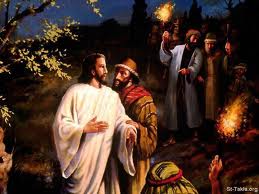
Judas was not predestined to betray Jesus, Acts 4:28

Judas acted against God’s will when he betrayed Jesus

The kings of the earth stood up, and the rulers were gathered together against the Lord, and against his Christ. For of a truth against thy holy child Jesus, whom thou hast anointed, both Herod, and Pontius Pilate, with the Gentiles, and the people of Israel, were gathered together, For to do whatsoever thy hand and thy counsel DETERMINED BEFORE to be done. (Acts 4:26-28)

The above are words from a prayer by Peter and John, and these verses are sometimes used as an attempt to support the idea that God predestines all things, including predestination of individuals to do “evil” (and that this in effect doesn’t make it “evil” since God is always good). The sacrifice of Christ is a holy and acceptable offering to God and he didn’t force anyone to kill Jesus. This unique event cannot be used as a blanket statement throughout the entire scriptures to show that God causes people to do whatever they are busy doing including SINNING.

What was “determined before” to be done? It was the death of Jesus (the Lamb slain from the foundation of the world)! However, it does not say that God predestined anyone to make this goal come true. Peter and John expressed in their prayer that people came to do what was determined, but  it doesn’t say that God predestined/caused/forced anyone to betray and kill Jesus, because then God would be the only reason for their sin.  (You’re not guilty of something if God is the one who made you do it.) Jesus is said to have laid down his own life and we can trust his words. There was certainly no shortage of people who wanted to kill Jesus, so God did not have to bother about predestining anyone to harm him. They went after Jesus on their own accord, and this was known from the foundation of the world. It wouldn’t be hard for the Father to remove his protective hands over Jesus and let someone with the desire to kill him be successful in his attempt, and Judas was  apparently first in line to betray him which eventually lead to his death. If Judas was predestined to betray Jesus, he would end up in heaven and not hell.

 John 10:17 Therefore doth my Father love me, because I lay down my life, that I might take it again18No man taketh it from me, but I lay it down of myself. I have power to lay it down, and I have power to take it again. This commandment have I received of my Father.

We can read that what happened was FOREKNOWN by God, but foreknowledge is not predestination. We can read that WICKED HANDS had crucified and slayed Jesus. If God predestined people to slay Jesus, then it would have been GODLY hands who slayed him. Those are wicked who do things contrary to God’s will.  By using an event for something good doesn’t mean that God caused it to happen.

 Acts 2:23 Him, being delivered by the determinate counsel and FOREKNOWLEDGE of God, YE have taken, and BY WICKED HANDS have crucified and slain? 

We can see that it was not GOD who placed the desire to harm Jesus inside Judas but SATAN.

Joh. 13:And supper being ended, the devil having now put into the heart of Judas Iscariot, Simon’s son, to betray him 

Jesus asked his Father to forgive those who harmed him, but if they were predestined to do so, then what is there to forgive? Why asking the Father to forgive people for doing exactly what he caused them to do?! If Judas OBEYED the Father by betraying Jesus which he was CAUSED to do, then shouldn’t Judas be rewarded instead of punished for what he did? Instead we can read that it would have been better for Judas had he never been born.

Luke 23:34 Then said Jesus, Fatherforgive them; for they know not what they do. And they parted his raiment, and cast lots

Jesus was delivered into the hands of SINFUL men, so we are not talking about innocent people who only did what they were predestined to do by God. THEY chose to sin, and we know that God doesn’t even TEMPT people. Much less force people to sin.  There is no darkness in God.

Lukas 24:7Saying, The Son of man must be delivered into the hands of sinful men, and be crucified, and the third day rise again.

The Apostle Paul “determined to sail by Ephesus” (Acts 20:16). Does that mean that the sailors on the vessel that he determined to sail on were acting under Paul’s compulsion or control? No. Paul determined to sail on a certain vessel to a certain location, but that does not mean that the vessel he determined to sail on was under his causation. When Paul sailed to Ephesus, he could say that what occurred was what was “determined before to be done” instead of something which occurred by surprise or accident. But the occurrence of what was determined before to be done did not exclude the freedom of those who participated in its occurrence. In the same way, God determined the crucifixion of Christ, but that does not mean that those who participated in His crucifixion and contributed to it were not free in what they did. What they did to Christ was not a surprise to God. What they did was what God had “determined before to be done”. In order to accomplish His purpose of slaying the Lord, God delivered Christ into the hands of those who already wanted to kill him by their free choice.

There certainly was no shortage of people who wanted to kill Jesus because of the way that He preached. Jesus said that “the world” “hateth” him, “because I testify of it, that the works thereof are EVIL” (Jn. 7:7). But the enemies of Christ were unable to kill him as long as the Father was protecting him (Matt. 4:6; Lk. 4:11; Jn. 7:30; 10:31; 10:39). The Bible says “Then they sought to take him: but no man laid hands on him, because his hour was not yet come” (Jn. 7:30).

God determined to deliver Jesus unto wicked men and God foreknew what they would do to Jesus if He did. This is because the Father knew the hostility and hatred that was already freely in their hearts. God was able to incorporate their voluntary wickedness into His plans and even turn it around and use it for good. This, it seems, God also did with Joseph’s brothers (Gen. 50:20). But this does not mean that God caused their wickedness. It is one thing to say that God “worketh all things after the counsel of his own will” (Eph. 1:11), and it is quite another thing to say, “God CAUSES all things after the counsel of his own will”. God can work with the free will choices of men to accomplish His purposes without causing all the choices of men.

Pilate said, “I have power to crucify thee, and have power to release thee” (Jn. 19:10). Pilate certainly was conscious of possessing free will. He was aware of the fact that what he was doing, he was doing by his own free volition. Responsibility or accountability presupposes free will. Men will be judged according to the free choices of their wills. Since these men were responsible for taking Jesus and for killing him, though God had determined that Jesus should be delivered unto them and slain, they still took Him and killed him by their own free choice. The Bible goes on to say

“Therefore let all the house of Israel know assuredly, that God hath made that same Jesus, whom ye have crucified, both Lord and Christ. Now when they heard this, they were pricked in their hearts, and said unto Peter and to the rest of the apostles, men and brethren, what shall we do? (Acts 2:36-37)

Apparently, Peter’s audience had not taken his previous words about the determinate counsel of God to mean that they had no free will in the matter or that they were only acting under the control of God. Otherwise, they could not have been pricked in their hearts for their action or have seen any reason why they needed to be saved for acting in such a way. But they were pricked in their hearts and sought for a way of salvation because they internally knew that what they had done was caused freely by their own wills and, therefore, they were rightly responsible and accountable for it.

Jesus is the author and finisher of our faith but he doesn’t choose who will be saved Hebr. 12:2

Looking unto Jesus the author and finisher of our faith; who for the joy that was set before him endured the cross, despising the shame, and is set down at the right hand of the throne of God (Hebr. 12:2)

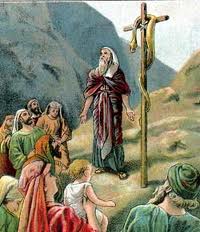
What does the expression “author and finisher of our faith” really mean? It means that there is no other name given under heaven whereby men can be saved (Acts 4:12). He is “the Alpha and Omega, the Beginning and the End”. We can read “Looking unto Jesus the author and finisher of our faith” or “let’s fix our eyes on Jesus” in another translation. That is a beautiful comparison with the brazen serpent in the desert, where the Israelites walked up to the serpent and LOOKED UP TO IT. They were not forced to  approach it and to behold it, but they used their own feet and their own free will to do it. What happens if we do NOT fix our eyes on Jesus? That would mean we have not fully abided in him, and then we will not bear fruit. This means we are risking our salvation.  Let’s view the rest of the context in the same chapter. The verse before lists a few things we ought to do in our race towards the goal:

Hebr. 12:1 Wherefore seeing we also are compassed about with so great a cloud of witnesses, let us lay aside every weight, and the sin which doth so easily beset us, and let us run with patience the race that is set before us

“Let us lay aside—the sin”. What happens if we choose to NOT adhere to this command and refuse to lay aside our sin? Will we be saved anyway? No, we must have our eyes fixed on Jesus and endure to the end. Read more about the IF:s:

Hebr. 12:5 And ye have forgotten the exhortation which speaketh unto you as unto children, My son, despise not thou the chastening of the Lord, nor faint when thou art rebuked of him—IF ye endure chastening, God dealeth with you as with sons; for what son is he whom the father chasteneth not? 8But IF ye be without chastisement, whereof all are partakers, then are ye bastards, and not sons.

Despise not”? “IF ye endure”?? What happens if we do despise Him and his chastening, and why are there IF’s involved if salvation is a done deal? Clearly there are conditions that are required for us to keep. We must abide in Christ and we are warned if we don’t.

Hebr.12:13 And make straight paths for your feet, LEST that which is lame be turned out of the way; but let it rather be healed.

“Lest”? Another warning!

Hebr. 12:4 Follow peace with all men, and holiness, without which no man shall see the Lord15Looking diligently lest any man fail of the grace of God; lest any root of bitterness springing up trouble you, and thereby many be defiled

“Lest” and “lest” again. We are warned that we must FOLLOW peace, and that we must have holiness, without which no man shall see the Lord. We are too look diligently LEST any man fail of the GRACE of God, LEST any root of bitterness might spring up, etc. Sins would DEFILE us, and can defiled men see the Lord? No, we just read that holiness is required, and it does not say that we can hide behind the blood of Jesus and still be saved in our sins. We are not righteous unless we act righteously.

Hebr.12:25 See that ye refuse not him that speaketh. For IF they escaped not who refused him that spake on earth, much more shall not we escape, if we turn away from him that speaketh from heaven

We are warned that we must not refuse him, for IF we do, and IF we turn away from him, we shall not escape. It’s all in our hands and God has made salvation possible for all of us.

The fear of the Lord and holy living

Our unpopular message for the day
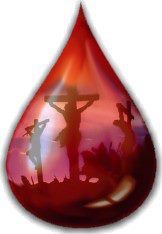
So many Christians are compromising these days! It is not very popular to make a stand for holy living. You become “self righteous” to many by doing so. It is a sad fact that many are falling while truly believing everything is just fine, because they hold a knowledge of God within them.

“Therefore come out from them and be separate, says the Lord. Touch no unclean thing, and I will receive you.” 2 Corinthians 6:17

Unfortunately, too many people have been deceived to think they can have their sin and be a Christian at the same time. These lack wisdom! And the Bible tells us in Proverbs 9:10 “The fear of the LORD is the beginning of wisdom …” And that is just it. People do not fear God, and therefore they have no wisdom to lead them. So they naturally turn to fleshly pleasures while trying to convince everyone that they are Christians.

2 Timothy 3:1-5
1This know also, that in the last days perilous times shall come.
2For men shall be lovers of their own selves, covetous, boasters, proud, blasphemers, disobedient to parents, unthankful, unholy,
3Without natural affection, trucebreakers, false accusers, incontinent, fierce, despisers of those that are good,
4Traitors, heady, highminded, lovers of pleasures more than lovers of God;
5Having a form of godliness, but denying the power thereof: from such turn away.

Do you allow sin in your life while trying to convince everyone that it isn’t all that bad? Do you claim to be a Christian because of a knowledge of the truth, with a form of godliness, but denying the power of it to free you completely from this world and its sins? The good news is that Jesus can set you free! There is great joy in separating ourselves from this world! It can only come by the Holy Spirit as He fills us and transforms us, making us new creatures that are set apart from the rest of this world. If you look like the world; talk like the world; act like the world; and live like the world; then you are of the world and cannot be of Christ – no matter how much you may think you are. The form of godliness is a great deception of these last days! So many believe they are right with God, but are not! The Bible says in Isaiah 5:20

Woe to those who call evil good and good evil, who put darkness for light and light for darkness, who put bitter for sweet and sweet for bitter.”

This is exactly what so many “Christians” are doing today. They will go out drinking, smoking, partying like the world, and then claim they do it in moderation. Many will cuss up a storm, get involved in bitter arguments, gossip, slander of others, and act lie the world in every way – never living according the the fruit of the spirit. When confronted about there sinful living, they will accuse the righteous person of being full of pride, self righteous, and judgmental. Some will go as far as to think they are more spiritual in their drinking and smoking, as they are more tolerable of sinners, and they are not so “self-righteous”. They are more mature Christians and able to handle doing those things. Hogwash! It is time to rise up people of God! It is time to stand for what is right! Start with your own life. Start with your family. Be an example for others to follow. Share the love of God and the good life He offers through holy living. Otherwise, sin lies at your door – Genesis 4:7.

We are in a spiritual warfare! This is a war that is unseen in the natural, so that those who drift away from Christ cannot even see it is happening all around them. All the while thinking they are right with God because of what they once had, they slip away into the darkness of the enemy. Don’t ever think you are so spiritual you cannot be overtaken! Our ONLY hope is in Christ jesus alone. Look to Him and search your own heart in humility.

“The fear of the LORD teaches a man wisdom, and humility comes before honor.” Proverbs 15:33

Many Christians today are not necessarily sinning, but they are playing with a strange fire, and then offering it up to the Lord. What do we offer to Him? Is it holy or strange? Paul said that we need to examine ourselves whether we be in the Lord. Never assume it! But let us examine our own hearts as we look for the deception in our own minds that has been planted by the enemy.

Righteousness is not a gift, nor is it something we work for. It is a choice. A choice to walk in what he has provided for us. But we have a choice set before us, as it says in Deuteronomy 30:19, “This day I call heaven and earth as witnesses against you that I have set before you life and death, blessings and curses. Now choose life, so that you and your children may live”.
John dealt with the issue of sin and said in 1 John 5:18, “We know that no one who is born of God sins; but He who was born of God keeps him, and the evil one does not touch him.” Then in 1 john 3:3-10

3 Everyone who has this hope in him purifies himself, just as he is pure.
4 Everyone who sins breaks the law; in fact, sin is lawlessness. 
5 But you know that he appeared so that he might take away our sins. And in him is no sin.
6 No one who lives in him keeps on sinning. No one who continues to sin has either seen him or known him.
7 Dear children, do not let anyone lead you astray. He who does what is right is righteous, just as he is righteous. 
8 He who does what is sinful is of the devil, because the devil has been sinning from the beginning. The reason the Son of God appeared was to destroy the devil’s work. 
9 No one who is born of God will continue to sin, because God’s seed remains in him; he cannot go on sinning, because he has been born of God. 
10 This is how we know who the children of God are and who the children of the devil are: Anyone who does not do what is right is not a child of God; nor is anyone who does not love his brother.

So, I am not talking about new converts who have not yet been sanctified. I am talking about seasoned Christians who after years of living holy lives slowly begin to turn back to sinful living while claiming to be saved. This is very dangerous territory!

When Jesus said, “It is finished”, He was not saying that sin no longer had any power to condemn. Obviously many sinners are still going to hell. Paul’s said in Romans 6:23 that the wages of sin is death. Nothing changes this. Not even the work of Christ. The gift of God that is eternal life is through Christ Jesus. To be IN Christ is to walk in the spirit and not fulfill the lusts of the flesh. Paul said that if we sow to the flesh, we will reap of the flesh corruption. He also said that if we defile the temple of God, which we are, then such people will God destroy. Many, many more warnings are given to Christians all throughout the scriptures to be careful and always check our hearts, lest will fall. In Romans 11:21 Paul said, “For if God spared not the natural branches, take heed lest he also spare not thee.” Obviously, we are not in the clear just because Jesus died for our sins and we are presently saved.

We cannot miss the good news in this message, which is that God will cast our sins as far as the east is from the west and remember them no more. But we need to understand that this ONLY refers to past sins that have been confessed through repentance, and not to present or future sins. No scripture says anything close to the idea of future sins being cover under our first repentance. It is not an issue of being completely sinless. We know that is not possible. It is an issue of not committing sins we know are wrong, and thus being in rebellion to God – which the bible says is as the sin of witchcraft. And we know that no witch will be saved. But as we turn to Him after we have examined our lives and allow Him to purify our lives, we will be transformed, becoming new creatures. And such a creature will hate sin as much as God does and will want nothing to do with it. 

James spoke of a sin unto death and a sin not unto death. The sin not unto death are those little things that we are not aware of that are buried deep within and only pop up on certain occasions. These are a part of our spiritual growth. A sin unto death is a sin of rebellion, when we do something we know is wrong but just don’t care. We can try to justify and deceive ourselves, and then our conscience can be seared – causing us to think all is fine, when in fact we are backslidden in heart.

Jesus will take us just the way we are – no doubt! But He will not keep us the way were are. This is what being “born again” is all about. We start a new life in christ and we are transformed as it says in 2 Corinthians 5:17. The old is passed away, and all becomes new.

What married couple will say that because they are married they do not need to work on their relationship, but that their married alone makes the relationship? This kind of marriage is one that winds up in divorce. Their is always work involved in a relationship. a relations takes two parties both working together to make it work. We know God is always faithful to do His part in this. His part is never in question! It is our part that has to be questioned. Are we talking to Him? Are we listening to Him? Are we submitting to Him? Or are we doing our own thing and then calling it a relationship?

Any person who allows sin in their life needs to fell bad, low, and unworthy. This is called conviction. This is not condemnation. However, the bible does that that those who live in sin are condemned already. The great hope is that Jesus came to set men free. And He who the Son sets free is free indeed! He came to take away the guilt, to lift up our spirits, and to make us worthy! It is only in Him that we can have all of these things. If we turn to sin, we are not turning to Him. And if we are not turning to Him, then we cannot have what He offers – which is freedom from sin. This is not a superficial freedom, and a real life changing freedom. How we live our lives is a direct expression of what Christ has done and is doing in our lives. And this is something He has put in our own power to receive and walk in, or to reject and walk away from.

The original lie of Satan was to tell Eve, “You shall not surely die as God has said”.
The same lie exists in the Church today as many will teach that you shall not surely die (spiritually) as God has said. That sin has completely lost its power to damn the soul of the Christian to hell. Sin has not lost its power! Sin still brings death! But the gift of God is eternal life through CHRIST JESUS. Not a one-time confession, but a daily confession through an obedient walk in the spirit.

There is plenty of good news to put behind this entire message. But it is all in Christ Jesus alone! It is not in a doctrine. It is not in a one-time confession of sins. It is not in a previous relationship with Him. It is in a continued walk with Him, in obedience to His commands, as we are “free indeed” from sin and the walk of the flesh. He is ever present to make intercession for us. But we must be willing to confess our sins so He can do that.

In Romans Paul makes it clear that if it had not been for the law then we would not know right and wrong. Jesus said that He did not come to destroy the law, but to fulfill it. It is in Christ that we receive power of sin and to live holy lives. Law is fulfilled in us as we walk in the spirit and do not fulfill the lists of the flesh.

Jesus took away the burden of animal sacrifice and penalty for sins in this life. Now, through Him, we have access to the throne of grace, whereby we may receive forgiveness of sins. But forgiveness can only come through repentance. We know that true repentance means to turn ourback on our past sins. This is a choice we have to make. And as we make the choice, God gives us the ability to overcome. Repentance of sins is first of all an act of obedience. And Jesus said, “if you love me, keep my commandments”. Jesus has done the work! But He leaves the choice up to men whether they will follow and obey His commandments. If we do not obey His commandments then we are denying Him. We are saying we do not trust Him or believe in what He said in His Word. And if we deny Him, He will deny us before His father in heaven. Our lives must be a walk of faith or we cannot please Him.

 ‎[Live] as children of obedience [to God]; do not conform yourselves to the evil desires [that governed you] in your former ignorance [when you did not know the requirements of the Gospel]. 1 Peter 1: 14

If anyone serves Me, he must continue to follow Me [to cleave steadfastly to Me, conform wholly to My example in living and, if need be, in dying] and wherever I am, there will My servant be also. If anyone serves Me, the Father will honor him. John 12: 26

It is through Him that we have received grace and [our] apostleship to promote obedience to the faith and make disciples for His name’s sake among all the nations. Romans 1: 5

Do you not know that if you continually surrender yourselves to anyone to do his will, you are the slaves of him whom you obey, whether that be to sin, which leads to death, or to obedience which leads to righteousness (right doing and right standing with God)? Romans 6: 16

If you keep My commandments [if you continue to obey My instructions], you will abide in My love and live on in it, just as I have obeyed My Father’s commandments and live on in His love. John 15: 10

But He said, Blessed (happy and to be envied) rather are those who hear the Word of God and obey and practice it! Luke 11: 28

For as the human body apart from the spirit is lifeless, so faith apart from [its] works of obedience is also dead. James 2: 26

But now we are discharged from the Law and have terminated all intercourse with it, having died to what once restrained and held us captive. So now we serve not under [obedience to] the old code of written regulations, but [under obedience to the promptings] of the Spirit in newness [of life]. Romans 7: 6
For the time [has arrived] for judgment to begin with the household of God; and if it begins with us, what will [be] the end of those who do not respect or believe or obey the good news (the Gospel) of God? 1 Peter 4: 17

And we receive from Him whatever we ask, because we [watchfully] obey His orders [observe His suggestions and injunctions, follow His plan for us] and [habitually] practice what is pleasing to Him. 1 John 3: 22

Whoever says, I know Him [I perceive, recognize, understand, and am acquainted with Him] but fails to keep and obey His commandments (teachings) is a liar, and the Truth [of the Gospel] is not in him.
1 John 2: 4

[Live] as children of obedience [to God]; do not conform yourselves to the evil desires [that governed you] in your former ignorance [when you did not know the requirements of the Gospel]. 1 Peter 1: 14

The wise in heart will accept and obey commandments, but the foolish of lips will fall headlong. Proverbs 10: 8

Since by your obedience to the Truth through the [Holy ] Spirit you have purified your hearts for the sincere affection of the brethren, [see that you] love one another fervently from a pure heart. 1 Peter 1: 22

Jesus said that no man can serve two masters. The devil is a thief who has come to steal, kill, and destroy. He cannot steal what one does not have. Sinners have nothing he wants to take or end in their lives. It is Christians he is after. He wants to steal our peace and joy and the abundant life we have in Christ; he wants to kill us spiritually; and then it is his final hope to destroy our souls in hell if he can. Many have been deceived into thinking they can serve two masters and still be okay. If this was an easy thing to see, then it would not be a deception. People who call themselves Christians and even go to Church every week are perishing in the pews of the Church. This is because they live like the world during the week, and with this deception have come to believe that they are saved all along.

As much as we would like to strip satan of all his power, and claim that he has be completely defeated by the work of Christ, this simply is not at all what the scriptures teach us. He is only defeated for those who abide in Christ, walk in the spirit, and obey Him daily as they take up their cross and follow Him. But satan is hard at work for a few different reasons. One, because he knows he only has a short time to get his job done. Second, it the fact that he knows he is able to deceive even Christians and pull them away from a walk with Christ. Otherwise he would be totally wasting his time and efforts to no avail.

Not too many Christians are going to take the bait of blatant heresy and lies. If they knew they were lies then they would turn away immediately! But satan is very slick at what he does. He will make sin appear to be “not so bad”, as it sucks the spiritual life out of people without them even realizing it. This is why Jesus told us to be watchful, be on the guard, to beware, and to diligently seek Him. The bible says that satan walks about as a roaring lion seeking whom he may devour. Obviously this is not referring to sinners. He already has them. It is Christians he is after. He is looking for those who have put their guard down; who have lain down their spiritual armor. This is why we need to go thru our spiritual armor check list and make sure we have it and keep it on all the time. Satan is looking for the one he can catch off guard. And then he will come in subtly so that we do not even realize it is him.

This is why Paul said that when you think that you stand, take heed, lest you fall. An overconfidence in the work of Christ without doing our part will lead to spiritual death. We can believe we are saved all we want. But faith without works is dead! We can have COMPLETE confidence in the work of Christ – as long as we walk in obedience to His will and commands. But if we allow sin to creep in, then death lies at the door. Faith then becomes nothing more than a presumption, without any true power to save. And just as the devils in hell believe and cannot be saved, so it is with those who claim Christ and willfully and in rebellion live in sin.

All the promises we have are “in Christ”. We must understand what it means to be in Christ. It is not a one time prayer that magically transfers us from death to life without any further conditions. It is a transformed life! The old is passed away, and all is become new. So as John said, we no long live in sin, but we walk in the spirit and by true faith thru obedience.

Through Jesus Christ we are no longer under the condemnation of the law?

Let’s not forget one major thing here. We must be “in Christ” in order to be free from these things. The devil is given back his rights the moment we give in to willful sin and do not repent. The cross DID NOT disarm him! It is only through our faith in the cross that he can be disarmed. And just as we can have faith, we can lose faith. This is a fact that has be proven to be true with many backsliders.

The Bible does not teach a sin debt. It teaches “wages of sin”. Wages are earnings, not a debt. We have earned death for our sin. Christ came to die as the atoning sacrifice for our sins. But not as a literal payment. This term should only be understood as a figurative term to say that Christ took care of the sin issue on our behalf. The literal understanding of what Christ did can only be properly understood as a provision for forgiveness. When John saw Jesus coming to be baptized, he announced, “Behold, the lamb of God who takes away the sins of the world”. Now we know that Jesus has not literally taken away the sins of all men. Otherwise all men would be saved already without any conditions. This actually points back to the Levitical sacrifices for the sins of Israel, as two goats were brought. One was just a sacrifice unto the Lord, while the other was the one who had sins confessed over it and it was released into the wilderness. Some believe it was led to a cliff to fall to its death. But either way it was not punished for sins, nor did it “pay” for sins. What this was is a picture of the true atonement that was to come through Christ as men are being born again through faith in the sacrifice of Christ. Then as Paul said, the old is passed away and all things become new. When we are transformed in such a supernatural way, our old life of sin passes away, and we enter into a new life of faith and holiness in Christ. If we sin, we deny this power to free us from sin, and thus deny Christ.

Sin really is not the issue at all. It is only the symptom. The root of the problem is never the sin, but a matter of our faith. If we truly walk by faith, then we will be walking in the spirit, and we will not fulfill the lusts of the flesh.

James, in the first chapter says this: 14. But every man is tempted, when he is drawn away of his own lust, and enticed.
15. Then when lust has conceived, it brings forth sin: and sin, when it is finished, brings forth death.

You see, sin still brings death. Only a true Christian who walks by faith can later be “drawn away and enticed”. The end result of sin is and always will be death. The wages of sin IS death, and always will be. So it is our responsibility to discipline our own lives to make sure we make wise decisions and do not give in to the lusts of the flesh – as they can and will bring death.
There is no doubt that Satan will bring condemnation upon us for past sins that we have been forgiven of. It is at this time that we need to realize he is a liar and all that is under the blood of Jesus and cast away. But present and future sins are a completely different issue. No sin is automatically forgiven just because we are Christians.

In Hebrews 10:26 we are told, “For if we sin willfully after we have received the knowledge of the truth, there remains no more sacrifice for sins.”

So obviously sin still has the power to harm the Christian. “No more sacrifice” here does not mean that there can be no future forgiveness, or that the sacrifice of Christ is not sufficient. This means that the confession of a past sin in which we trusted in the sacrifice of Christ cannot cover future sins committed – without another act of repentance on our part. The work of Christ is finished! But it does not cover unrepented sins, or else the entire world would be saved. Sin is only the symptom of a much deeper issue taking place in a persons heart. And if it goes undealt with, then their soul is in danger just like the rest of the world who is in their sins. And If Christ conquered sin in the way you are saying, then sinners should not need to repent to be saved. Since sin has lost its power, all they need to do is believe in Him and believe they are save, and they can continue in their sins. All is good.

Christianity is done done done, not do do do?

What Christ did for us is only on the sacrificial and provision part. It is man’s part to believe, continue, abide, follow, trust, walk in the spirit, etc. So many commands are given it is incredible. This is not about “works salvation” as many like to try to make it. This is about truly trusting in His work. A true faith will have a direct affect on the way we will our lives every day. But we are able to lose that faith through lust, which leads to sin. This is why we are told we must take up our cross and follow Him daily, crucify the old man, and walk in the spirit so we will not fulfill the lusts of the flesh. Such instruction is given because of the absolute certain possibility or probability of falling from Grace and forfeiting the life we once had in Christ.

We are not talking about working on our own. We are talking about having true faith in His work, which leads to holiness and a separation from sin. Sin is only the works of the flesh that show where we are spiritually. Just as the fruit of the spirit shows where we are spiritually. Jesus said, “You shall know them by their fruit”. How a person lives shows where their heart really is. And if it is after sin, the father of sin is then their master. As the scripture says in Romans 6:16, “Don’t you know that when you offer yourselves to someone as obedient slaves, you are slaves of the one you obey-either of sin, which leads to death, or of obedience, which leads to righteousness?”

Any person who turns to sin is doing what the devil wants, and he becomes their master. I am not talking about sins we commit now and then, and then repent. I am talking about habitual sins that people try to justify. And notice the word “Obey” here? We are only considered the servant of God if we obey Him!

Romans 3:25, “Whom God hath set forth to be an atoning sacrifice through faith in his blood, to declare his righteousness for the remission of sins that are past, through the forbearance of God.”

Only past sins can be forgiven. Present sins have not godly sorrow if they remain. And future sins – lets get real. If I slug a brother in the face and I say I am sorry and ask him to forgive me – does that mean that if I do the same thing every now and then that he should automatically forgive me each time without me ever being truly sorry? Or if I punch him today, but tomorrow I steal from him, should my stealing be forgiven because I asked for forgiveness for punching him? Yet this is what this idea says of God and salvation. Sin has offended God. He is holy and He cannot be in the presence of sin. If men want to abide in His presence, then they have to separate themselves from sin. The work of Christ in no way changes who God is. He is the same yesterday, today and forever. And He see’s sin in the same way as always. Having law or doing away with it changed nothing. Men sinned and offended God long before the law came. God judged Cain, He flooded the earth in Noah’s day, He destroyed Sodom and Gomorrah, and so much more before the law ever came along. So after law we cannot expect Him to have any different of an attitude towards sin. Sin is not covered up. It MUST be removed from us through the work of Christ, and by repentance. If it isn’t it will damn the soul. This is just a simple Biblical fact. It was taught by the early Church very boldly for hundreds of years – before the corruption by the Catholic Church. It is a truth that we must take heed to today. This is why Paul said that when you stand, take heed lest you fall. Sin still has the power to destroy the soul. We are completely safe “In Christ”. But if we step across the line into sin, we give up our protection.

“John 1:29 29 The next day John saw Jesus coming toward him, and said, “Behold! The Lamb of God who takes away the sin of the world! that word sin is a noun ( person place thing), John knew that Jesus came to take sin the whole thing from the world, it doesnt say who comes to take away the past sin of the world, current sin of the world, but “SIN of the world” What a waste of time it would have been to have God send His only Son Jesus to do a work like that,”

As already mentioned, atonement is a provision, not a literal payment. And sin is not a substance that can be literally removed. It is an issue of heart that has to be changed. The figurative always leads to a literal meaning different than the figure itself. This is why we must be “born again”, which we know is not a literal entering back into the womb, but a new life in Christ that starts as we are changed – transformed. So of course not part of the sin of the world is taken away – because it is not talking about a substance of sin, but an issue of heart that is changed when a person puts their faith in Jesus. And this can only happen when there is faith in Christ. The sins of millions will take them to hell still, regardless the work of Christ. So did Christ’s work fail or fall short? Of course not. It is men who failed to not put their faith in Him. Jesus dies for ALL sins, past, present and future. But forgiveness of these sins can ONLY come through repentance of them. And until there is repentance, there is not forgiveness or taking away of sins – since the heart of the person has not been change when they continue to sin.

“He who the son sets free is free indeed”

Absolutely! But what is freedom? It is not freedom in sin, but freedom FROM sin. Huge difference here. There is not “freedom” in sin. That is called bondage. The word “indeed” is like an exclamation point on the “free”. This shows it to not be a superficial freedom from the power of sin to condemn while still committing sin, but a real and complete freedom from both sins power, effect, and existence in our lives. In Romans 6 Paul made it clear that sin will no longer have dominion over those who are in Christ and remain in Him. A true freedom from sin is the completely changed life where sin no longer has any controlling power. If we do sin, we will confess that sin. But we will not live under it.

I wrote a book called, “Faith without Works” years ago that is full of hundreds of scriptures against this doctrine. Since then I had studied and read through the early Church writings that had proven what they really believed on the issue, confirming everything I am saying here. Then after that I did an in-depth study and research on the Levitical sacrificial system and how it pointed to the work of Christ. It is from false ideas of atonement that so many false teachings arise. But this work shows through the sacrificial system how sin has always been the issue with God, and that Christ took care of it in the provisional sense – but not as a payment as so many assume. The Bible does not teach a payment in the literal sense at all. The fact that WE are bought does not speak of sin, and it is figurative – as no money was exchanged or deal made between Satan our old master and Jesus our Atonement. It is through the OT that the NT is revealed. Yet so many try to teach atonement from the NT perspective without understand the OT system. When we really look into the OT, then we can see what atonement is really all about in Christ. And now, it is by faith that we are able to obtain Grace, as we confess Him and our sins in repentance as the people were told by Peter in Acts 2:38. A one-time repentance can never cover future sins! This is been show by scripture and simple logic.

Thanks to LYNDON CONN 
Jesus Christ died for the whole WORLD and God doesn’t want anyone to perish

“Have I any pleasure at all that the wicked should die? saith the Lord God: and not that he should return from his ways, and live?” Ez. 18:23

In 1, 2 and 3 Book of John the word “world” is used liberally and it is not used only for believers but for the whole world and/or all people who live in the world.

1 John 4:9 In this was manifested the love of God toward us, because that God sent his only begotten Son into the world, that we might live through him. 

Jesus is the bread of the world and if ANY MAN (anyone) eats of it, he shall live for ever.

John 6:51 I am the living bread which came down from heaven: if any man eat of this bread, he shall live for ever: and the bread that I will give is my flesh, which I will give for the life of the world.

John 8:45 They shall be ALL taught of God. Every man therefore that hath heard, and hath learned of the Father cometh unto me. 

It is just like in a classroom where everyone is taught the same thing, but not everyone pays attention and learns. It is our responsibility to listen and learn. If Jesus did not enable all to get life through his death and his blood on the cross then the only alternative would be that God does not want all people to be saved. Some people would then be doomed from the start because Jesus did not die for them. The good news is that God is totally fair and the son of man died for everyone. In a way the atonement is still limited, because only those who repent for their sins and walk in the light with Jesus will get saved.

Below you can see some verses (but far from all that are available) where we can clearly see that Jesus died for all people in the whole world and also that God does not want anyone to perish. Either we can believe this clear description (which also results in a fair and loving God) or we can believe the opposite which makes our Lord and Creator a God of confusion, rather than fair and logical.

Rom. 11:32 For God hath concluded them all in unbelief, that he might have mercy upon all 

Acts 17:30 And the times of this ignorance God winked at; but now commandeth all men every where to repent:31Because he hath appointed a day, in the which he will judge the world in righteousness by that man whom he hath ordained; whereof he hath given assurance unto all men, in that he hath raised him from the dead.

2 Pet. 3:9 The Lord is not slack concerning his promise, as some men count slackness; but is longsuffering to us-ward, not willing that any should perish, but that all should come to repentance.

1 Tim. 2:For this is good and acceptable in the sight of God our Saviour;Who will have all men to be saved, and to come unto the knowledge of the truth.For there is one God, and one mediator between God and men, the man Christ Jesus;6 Who gave himself a ransom for all, to be testified in due time.

1 Tim 4:10 For therefore we both labour and suffer reproach, because we trust in the living God, who is the Saviour of all men, specially of those that believe.

John 1:9 That was the true light which lighteth every man that cometh into the world

Luke 19:10 For the Son of man is come to seek and to save that which was lost

Rom. 5:6 For when we were yet without strength, in due time Christ died for the ungodly.7For scarcely for a righteous man will one die: yet peradventure for a good man some would even dare to die. 8But God commendeth his love toward us, in that, while we were yet sinners, Christ died for us.

John 12:46 I am come a light into the world, that whosoever believeth on me should not abide in darkness.47And if any man hear my words, and believe not, I judge him not: for I came not to judge the world, but to save the world48He that rejecteth me, and receiveth not my words, hath one that judgeth him: the word that I have spoken, the same shall judge him in the last day.

John 3:14 And as Moses lifted up the serpent in the wilderness, even so must the Son of man be lifted up:15 That whosoever believeth in him should not perish, but have eternal life.16 For God so loved the world, that he gave his only begotten Son, that whosoever believeth in him should not perish, but have everlasting life.17 For God sent not his Son into the world to condemn the world; but that the world through him might be saved.18 He that believeth on him is not condemned: but he that believeth not is condemned already, because he hath not believed in the name of the only begotten Son of God.

1 John 2:2 He is the propitiation for our sins, and not for ours only but also for the sins of the whole world.

John 12:32 And I, if I be lifted up from the earth, will draw all men unto me.

Rom 1:19 Because that which may be known of God is manifest in them; for God hath shewed it unto them20For the invisible things of him from the creation of the world are clearly seen, being understood by the things that are made, even his eternal power and Godhead; so that they are without excuse:

John 6:33 For the bread of God is he which cometh down from heaven, and giveth life unto the world. 35And Jesus said unto them, I am the bread of life: he that cometh to me shall never hunger; and he that believeth on me shall never thirst.—   40And this is the will of him that sent me, that every one which seeth the Son, and believeth on him, may have everlasting life: and I will raise him up at the last day— 51I am the living bread which came down from heaven: if any man eat of this bread, he shall live for ever: and the bread that I will give is my flesh, which I will give for the life of the world.

John 10:49 And one of them, named Caiaphas, being the high priest that same year, said unto them, Ye know nothing at all,50 Nor consider that it is expedient for us, that one man should die for the people, and that the whole nation perish not.51 And this spake he not of himself: but being high priest that year, he prophesied that Jesus should die for that nation

Is. 53:6 All of us like sheep have wandered, Each to his own way we have turned, And Jehovah hath caused to meet on him, The punishment of us all. (Young’s literal – compare also with NASB)

2 Cor. 5:14 For the love of Christ constraineth us; because we thus judge, that if one died for all, then were all dead:15 And that he died for all, that they which live should not henceforth live unto themselves, but unto him which died for them, and rose again.

Heb. 2:But we see Jesus, who was made a little lower than the angels for the suffering of death, crowned with glory and honour; that he by the grace of God should taste death for every man.

Ez. 18:32 For I have no pleasure in the death of him that dieth, saith the Lord God: wherefore turn yourselves, and live ye.

He died for ALL (1 Tim. 2:6).
He died for ALL MEN (Rom. 5:18; 1 Tim. 4:10).
He died for US ALL, for ALL OF US (Isa. 53:6).
He died for the UNGODLY (Rom. 5:6).
He died for CHRIST-DENIERS (2 Peter 2:1).
He died for SINNERS (Rom. 5:8).
He died for EVERY MAN (Heb. 2:9).
He died for MANY (Matthew 20:28).
He died for the WORLD (John 6:33,51; John 1:29 and John 3:16).
He died for the WHOLE WORLD (1 John 2:2).
He died for the WHOLE NATION of Israel (John 11:50-51).
He died for the CHURCH (Eph. 5:25).
He died for His SHEEP (John 10:11).
He died for ME (Gal. 2:20)

We are no longer under the Law (torah) but we are still under the moral law

The Early Church had a controversy with a group called “the Judaizers” who were teaching justification by works of the law.

And certain men which came down from Judaea taught the brethren, and said, except ye be circumcised after themanner of Moses, ye cannot be saved. (Acts 15:1)

In other words, they taught that Gentiles need to obey the law (the Torah) and perform the works of the law (circumcision) in order to be justified. Since Paul’s ministry was to the Gentiles, he dedicated a large portion of his writings in Romans and Galatians, which were to Gentile Churches, to write against the Judaizers.

You will notice that Paul continually mentioned circumcision when discussing justification by works of the law in both Romans and Galatians.

Therefore we conclude that a man is justified by faith without the deeds of the law. Is he the God of the Jews only? (Those who had the Torah) Is he not also of the Gentiles? (Those who did not have the Torah) Yes, of the Gentiles also. Seeing it is one God, which shall justify the circumcision by faith, and the uncircumcision through faith. (Rom. 3:28-30)

Cometh this blessedness then upon the circumcision only or upon the uncircumcision also? For we say that faith was reckoned to Abraham for righteousness. How was it then reckoned? When he was in the circumcision, or in uncircumcision? Not in circumcision, but in uncircumcision. (Rom. 4:9-10)

Paul is arguing that Abraham was justified before circumcision, before the law of circumcision was given, and therefore the Gentiles too can be justified by faith without the work of the law of circumcision.

For in Christ Jesus neither circumcision availeth any thing, nor uncircumcision, but a new creature. (Gal. 6:15)

For in Jesus Christ neither circumcision availeth anything, nor uncircumcision; but faith which worketh by love. (Gal. 5:6)

Circumcision is nothing and uncircumcision is nothing, but the keeping of the commandments of God (1 Cor. 7:19).

Paul continually and repeated referred to circumcision when discussing justification “by works of the law” and said that circumcision does not “availeth anything” and is “nothing” but what matters is “a new creature” “faith which worketh by love” and “keeping of the commandments”.

It needs to be understood that Paul was not coming against the preaching of repentance in his epistles when he discussed justification by works of the law. In Galatia the Judaizers came and convinced the Gentile Church there that they needed to be circumcised in order to be saved. Paul wrote his epistle to the Galatians to correct this error of the Judaizers. It was not that the Galatians were repenting of their sins and Paul thought, “I better put a stop to this”. Paul certainly would not have any problem with Gentiles repenting of their sins since his God given ministry was to bring the Gentiles to repentance (Acts 26:20). When Paul preached to the Gentiles in Athens, he told them that God was calling all of them to repent (Acts 17:30). Paul said that we needed to be circumcised, not in our flesh, but in our hearts (Rom. 2:28-29). The circumcision of the heart is putting off your sins (Col. 2:11). Paul bemoaned those Gentiles in Corinth who had not repented of their uncleanness and fornication (2 Cor. 12:21). Paul explicitly said that we should not continue in our sins (Rom. 6:1-2) but that we should awake to righteousness and stop sinning (1 Cor. 15:34). Paul even warned the Galatians that if they lived sinful lives, they would not inherit the kingdom of God (Gal. 5:19-21). It was the Apostle Paul who said “after thy hardness and impenitent heart treasurest up unto thyself wrath” (Rom. 2:5), and that “repentance” leads “to salvation” (2 Cor. 7:10). Clearly Paul would not have had any problems with Gentiles repenting of their sins. Rather, Paul was upset that the Gentile Church in Galatia started to believe falsehoods from the Judaizers about how to be saved.

A good example of how Gentiles find the forgiveness of sins is the story of Nineveh. The narrative records that the people believed God (Jonah 3:5) and turned from their sins (Jonah 3:8). When God saw this, He changed His plans and decided not to destroy them as He said He would (Jonah 3:10). These Gentiles did not need to adopt the Jewish customs, obey the Torah, or be circumcised in order to be pardoned. They were saved, or found the mercy of God, through simple repentance from sin and faith in God. Jesus even said that sinners will be condemned if they do not repent the way Nineveh did (Matt. 12:41). Therefore the way that Gentiles were saved through repentance and faith in the Old Testament is the same way that they are saved in the New Testament, according to Jesus. Repenting of sin is required in both the Old and New Testament as Jesus said and therefore repentance is not the works of the law Paul preached against.

We know that Jesus Christ taught repentance (Lk. 13:3) and Paul certainly would not have contradicted Jesus Christ since Paul was an Apostle of Jesus Christ (Eph. 1:1; Col. 1:1). Paul explicitly said that men ought to listen to the wholesome words of Jesus (1 Tim. 6:3). Paul was by no means attacking the preaching of repentance when he wrote against justification by works of the law. Paul was attacking the Judaizers and their false gospel that Gentiles must convert to Judaism, be circumcised, and obey the Torah.

Thanks to Jesse Morell