Archives

Hitler was no big fan of gun control in nazi Germany

guns3

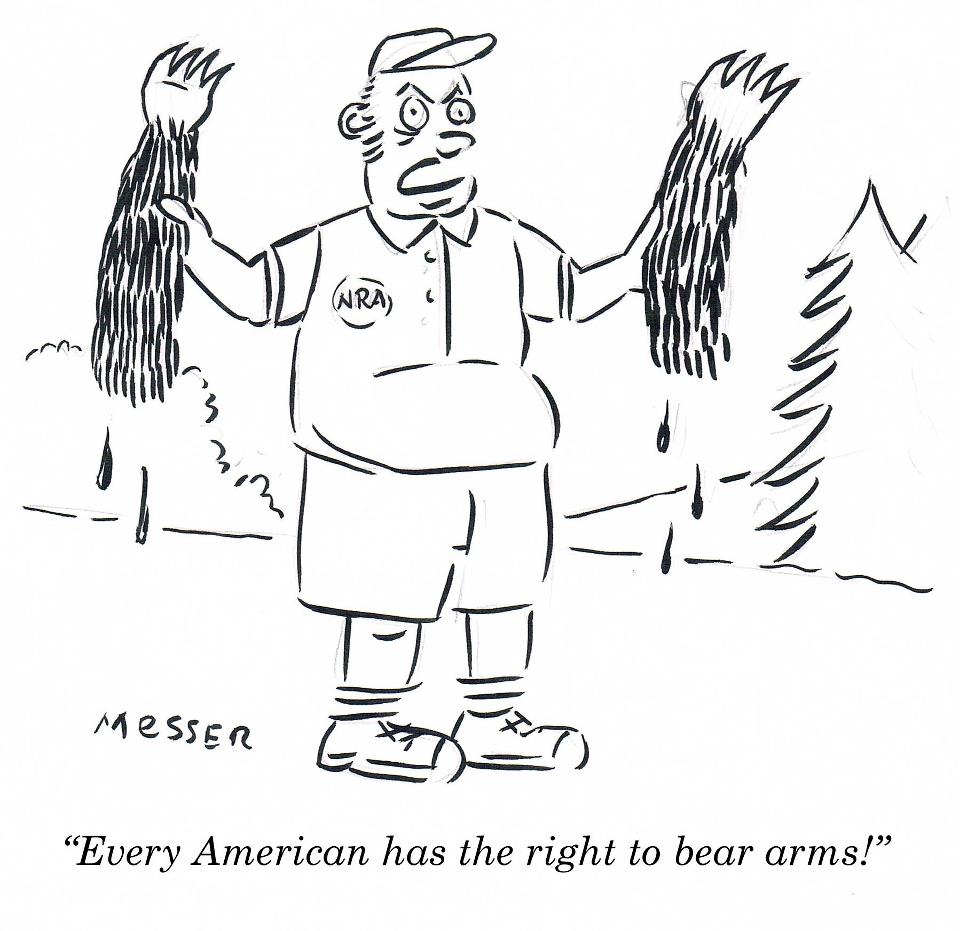
It’s naive to believe that a few, or a lot of  weapons in some private homes could prevent dictators such as Hitler and Stalin from doing harm, with entire armies (with tanks) at their hands. Instead of living under the paranoia that the government might turn nazi, and/or that politicians might come after you and your family, it’s way more likely that liberal gun laws will enable criminals to form gangs and use mafia methods. This is particularly a big risk in certain countries where people from different ethnic groups and cultures live side by side with a hard time to get along. Add poverty and drug problems to the picture and you  might have total anarchy in certain areas where criminals terrorize people who might not even dare to go out when it’s getting dark in the evenings.  Is that an environment we would like to live in and should strive for? Is that really FREEDOM? I don’t want to live in chains, so I’m FOR gun control in my country.

There will be an Antichrist in the future, and our private guns won’t prevent him from ruling the world. Until he shows up on the scene, we could try to eliminate criminals from getting hold of guns and in that way protect our loved ones. With liberal gun laws criminals can easily get hold of guns, which means they can point them at YOU and your family.

Below is excerpt from this article in Huffington Post/Walker Bragman:

“But Hitler and Stalin took away the guns and look what happened!”

This argument is historically inaccurate. University of Chicago law professor Bernard Harcourt explained in his 2004 paperWeimar Germany had tougher gun laws than Nazi Germany. Hitler expanded private gun ownership. It is true that Gypsies and Jews were not permitted to own guns, but there is no basis for the belief that these two groups would have stopped the Holocaust had they been armed. If anything, it would have “hastened their demise” according to Robert Spitzer, Chair of SUNY-Cortland’s political science department. Hitler was extremely popular among the German people and throughout the world. To suggest that the only thing keeping Hitler in power was control of guns exonerates the many who supported him. The same is true of the Bolsheviks in Soviet Russia: the idea that an armed populace would have stopped Stalin is a fantasy. Like Hitler, Stalin was extremely popular.

Below text can be found in full in this article from Mother Jones

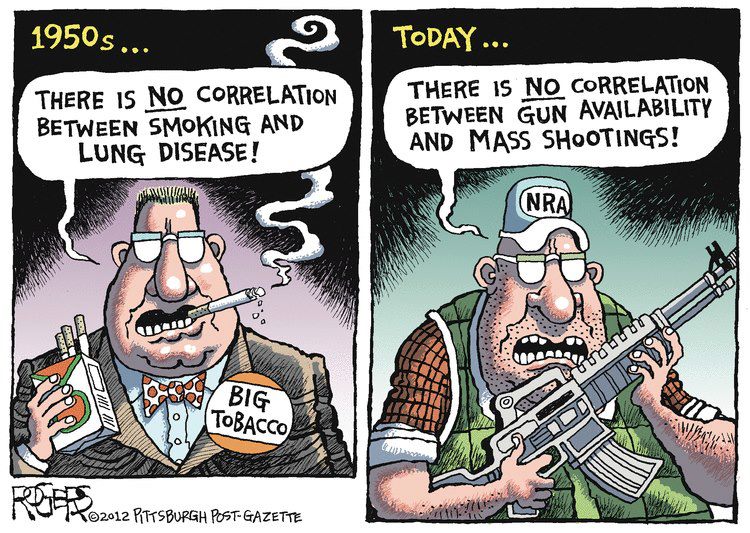
Of course, attempts to equate gun control with fascism are bogus. But the “Hitler took the guns” argument has long had a prominent and fairly effective role in America’s gun control debate despite its obvious reductionism.

In 1989, a new pro-gun group called Jews for the Preservation of Firearms Ownership began arguing that the 1968 federal gun control bill once favored by the NRA’s old guard “was lifted, almost in its entirety, from Nazi legislation.” (That false claim is still being repeated.)

In 1994, JPFO founder Aaron Zelman implored the NRA’s board to seize on the alleged Nazi connection:

Some of you may even have figured out that unless the NRA changes its strategy, the law abiding firearm owner in America will go the way of the Jews in Nazi occupied Europe: extermination…The choice is yours; you can turn your back on a failed strategy—one of compromise with evil-doers—and attack the concept of “gun control” by exposing the Nazi roots of “gun-control” in America. Or, you can persist in a failed strategy, and accept your own extinction.

Whether or not the NRA was influenced by his advice, that same year its CEO, Wayne LaPierre, published Guns, Crime, and Freedom, in which he claimed, “In Germany, firearm registration helped lead to the holocaust,” leaving citizens “defenseless against tyranny and the wanton slaughter of a whole segment of its population.” The following year, President George H.W. Bush famously resigned from the NRA after LaPierre attacked federal law enforcement officials as “jack-booted government thugs” who wore “Nazi bucket helmets and black storm trooper uniforms.” More recently, Stephen Halbrook, a lawyer who has represented the NRAargued (PDF) that “if the Nazi experience teaches anything, it teaches that totalitarian governments will attempt to disarm their subjects so as to extinguish any ability to resist crimes against humanity.”

So did Hitler and the Nazis really take away Germans’ guns, making the Holocaust unavoidable? This argument is superficially true at best, as University of Chicago law professor Bernard Harcourt explained in a 2004 paper (PDF) on Nazi Germany’s impact on the American culture wars. As World War I drew to a close, the new Weimar Republic government banned nearly all private gun ownership to comply with the Treaty of Versailles and mandated that all guns and ammunition “be surrendered immediately.” The law was loosened in 1928, and gun permits were granted to citizens “of undoubted reliability” (in the law’s words) but not “persons who are itinerant like Gypsies.” In 1938, under Nazi rule, gun laws became significantly more relaxed. Rifle and shotgun possession were deregulated, and gun access for hunters, Nazi Party members, and government officials was expanded. The legal age to own a gun was lowered. Jews, however, were prohibited from owning firearms and other dangerous weapons.

“But guns didn’t play a particularly important part in any event,” says Robert Spitzer, who chairs SUNY-Cortland’s political science department and has extensively researchedgun control politics. Gun ownership in Germany after World War I, even among Nazi Party members, was never widespread enough for a serious civilian resistance to the Nazis to have been anything more than a Tarantino revenge fantasy. If Jews had been better armed, Spitzer says, it would only have hastened their demise. Gun policy “wasn’t the defining moment that marked the beginning of the end for Jewish people in Germany. It was because they were persecuted, were deprived of all of their rights, and they were a minority group.

Gun enthusiasts often mention that the Soviet Union restricted access to guns in 1929 after Joseph Stalin rose to power. But to suggest that a better armed Russian populace would have overthrown the Bolsheviks is also too simplistic, says Spitzer. “To answer the question of the relationship between guns and the revolutions in those nations is to study the comparative politics and comparative history of those nations,” he explains. “It takes some analysis to break this down and explain it, and that’s often not amenable to a sound bite or a headline.”

(Ironically, pro-gun white nationalists have tried to stand the “Hitler took the guns” idea on its head by arguing that he was in fact a staunch supporter of the right to bear arms—for Aryans.

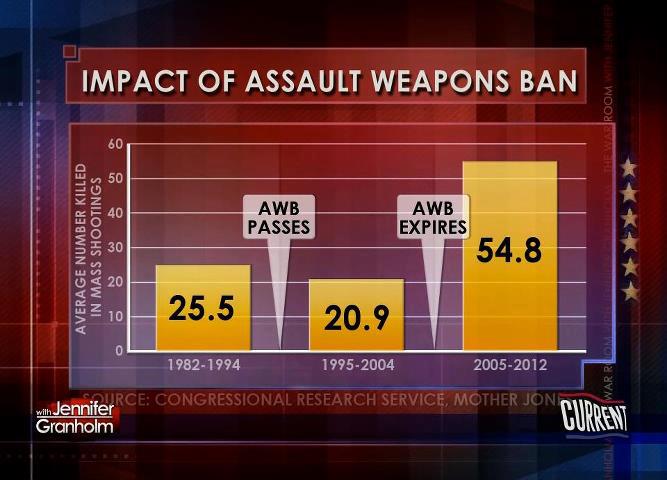
Even if President Obama suddenly unleashes his inner totalitarian, there’s no chance he could successfully round up all of America’s 300 million-plus firearms. Such an idea is practically and politically impossible. A tough assault weapons ban like one Democrats are currently proposing would affect just a fraction of the total privately owned firearms in the country. Yet by invoking the historical threat of disarmament, Spitzer says, “the gun lobby has worked to throw a scare into gun owners in order to rally them to the side of the NRA.”

Below is from this article in Somaliland Sun
guns13

University of Chicago law professor Bernard Harcourt explored this myth in depth in a 2004 article published in the Fordham Law Review. As it turns out, the Weimar Republic, the German government that immediately preceded Hitler’s, actually had tougher gun laws than the Nazi regime. After its defeat in World War I, and agreeing to the harsh surrender terms laid out in the Treaty of Versailles, the German legislature in 1919 passed a law that effectively banned all private firearm possession, leading the government to confiscate guns already in circulation. In 1928, the Reichstag relaxed the regulation a bit, but put in place a strict registration regime that required citizens to acquire separate permits to own guns, sell them or carry them.

The 1938 law signed by Hitler that LaPierre mentions in his book basically does the opposite of what he says it did. “The 1938 revisions completely deregulated the acquisition and transfer of rifles and shotguns, as well as ammunition,” Harcourt wrote. Meanwhile, many more categories of people, including Nazi party members, were exempted from gun ownership regulations altogether, while the legal age of purchase was lowered from 20 to 18, and permit lengths were extended from one year to three years.

The law did prohibit Jews and other persecuted classes from owning guns, but this should not be an indictment of gun control in general. Does the fact that Nazis forced Jews into horrendous ghettos indict urban planning? Should we eliminate all police officers because the Nazis used police officers to oppress and kill the Jews? What about public works — Hitler loved public works projects? Of course not. These are merely implements that can be used for good or ill, much as gun advocates like to argue about guns themselves. If guns don’t kill people, then neither does gun control cause genocide (genocidal regimes cause genocide).

Besides, Omer Bartov, a historian at Brown University who studies the Third Reich, notes that the Jews probably wouldn’t have had much success fighting back. “Just imagine the Jews of Germany exercising the right to bear arms and fighting the SA, SS and the Wehrmacht. The [Russian] Red Army lost 7 million men fighting the Wehrmacht, despite its tanks and planes and artillery. The Jews with pistols and shotguns would have done better?” he told Salon.

Proponents of the theory sometimes point to the 1943 Warsaw Ghetto Uprising as evidence that, as Fox News’ Judge Andrew Napolitano put it, “those able to hold onto their arms and their basic right to self-defense were much more successful in resisting the Nazi genocide.” But as the Tablet’s Michael Moynihan points out, Napolitano’s history (curiously based on a citation of work by French Holocaust denier Robert Faurisson) is a bit off. In reality, only about 20 Germans were killed, while some 13,000 Jews were massacred. The remaining 50,000 who survived were promptly sent off to concentration camps.

Robert Spitzer, a political scientist who studies gun politics and chairs the political science department at SUNY Cortland, told Mother Jones’ Gavin Aronsen that the prohibition on Jewish gun ownership was merely a symptom, not the problem itself. “[It] wasn’t the defining moment that marked the beginning of the end for Jewish people in Germany. It was because they were persecuted, were deprived of all of their rights, and they were a minority group,” he explained.

Meanwhile, much of the Hitler myth is based on an infamous quote falsely attributed to the Fuhrer, which extols the virtue of gun control:

This year will go down in history! For the first time, a civilized nation has full gun registration! Our streets will be safer, our police more efficient, and the world will follow our lead into the future!

The quote has been widely reproduced in blog posts and opinion columns about gun control, but it’s “probably a fraud and was likely never uttered,” according to Harcourt. “This quotation, often seen without any date or citation at all, suffers from several credibility problems, the most significant of which is that the date often given [1935] has no correlation with any legislative effort by the Nazis for gun registration, nor would there have been any need for the Nazis to pass such a law, since gun registration laws passed by the Weimar government were already in effect,” researchers at the useful website GunCite note.

“As for Stalin,” Bartov continued, “the very idea of either gun control or the freedom to bear arms would have been absurd to him. His regime used violence on a vast scale, provided arms to thugs of all descriptions, and stripped not guns but any human image from those it declared to be its enemies. And then, when it needed them, as in WWII, it took millions of men out of the Gulags, trained and armed them and sent them to fight Hitler, only to send back the few survivors into the camps if they uttered any criticism of the regime.”

Bartov added that this misreading of history is not only intellectually dishonest, but also dangerous. “I happen to have been a combat soldier and officer in the Israeli Defense Forces and I know what these assault rifles can do,” he said in an email.

He continued: “Their assertion that they need these guns to protect themselves from the government — as supposedly the Jews would have done against the Hitler regime — means not only that they are innocent of any knowledge and understanding of the past, but also that they are consciously or not imbued with the type of fascist or Bolshevik thinking that they can turn against a democratically elected government, indeed turn their guns on it, just because they don’t like its policies, its ideology, or the color, race and origin of its leaders.”
Easter is not pagan, and it’s PASSOVER in most countries

carry crossGood Friday (“Långfredag” in Swedish = “Long Friday”) is connected to EASTER, but just because we choose to call one day of the week FRIDAY and the particular Friday connected to Easter “Good Friday”,  it doesn’t mean that we  celebrate or worship the Norse god Freya by doing so. I feel so much joy to think about EASTER (and Christmas, and Pentecost), and the fact that so many secular countries still maintain an Easter celebration with so much focus on Jesus Christ, despite that our Lord is very much removed from secular homes most of the time. Easter provides a great opportunity to make even atheists think about Jesus Christ – who died on the cross one day for about 2000 years ago – because he is the reason for this particular day whether they like it or not.

After Good Friday we celebrate Påsk which is “Easter” in English, and Påsk derives from the Hebrew name Pesach (in Greek it’s called Pascha) which means Passover. PASSOVER is something which is Biblical, is it not? Surely then, it’s not a sin to commemorate Jesus Christ through the Passover? The first Passover concerned the passover LAMB which had to shed its blood for the Israelites (who applied the blood on the door post) prior to the departure to the promised land – and it’s a picture/prophesy of Jesus Christ.

Ex. 12:3 Speak ye unto all the congregation of Israel, saying, In the tenth day of this month they shall take to them every man a lamb, according to the house of their fathers, a lamb for an house:4 And if the household be too little for the lamb, let him and his neighbour next unto his house take it according to the number of the souls; every man according to his eating shall make your count for the lamb.Your lamb shall be without blemish, a male of the first year: ye shall take it out from the sheep, or from the goats:6 And ye shall keep it up until the fourteenth day of the same month: and the whole assembly of the congregation of Israel shall kill it in the evening.7 And they shall take of the blood, and strike it on the two side posts and on the upper door post of the houses, wherein they shall eat it.9 Eat not of it raw, nor sodden at all with water, but roast with fire; his head with his legs, and with the purtenance thereof.10 And ye shall let nothing of it remain until the morning; and that which remaineth of it until the morning ye shall burn with fire.11 And thus shall ye eat it; with your loins girded, your shoes on your feet, and your staff in your hand; and ye shall eat it in haste: it is the Lord’s passover.12 For I will pass through the land of Egypt this night, and will smite all the firstborn in the land of Egypt, both man and beast; and against all the gods of Egypt I will execute judgment: I am the Lord.13 And the blood shall be to you for a token upon the houses where ye are: and when I see the blood, I will pass over you, and the plague shall not be upon you to destroy you, when I smite the land of Egypt.14 And this day shall be unto you for a MEMORIAL; and ye shall keep it a feast to the Lord throughout your generations; ye shall keep it a feast by an ordinance for ever. 

John 13:1 Now before the feast of the passover, when Jesus knew that his hour was come that he should depart out of this world unto the Father, having loved his own which were in the world, he loved them unto the end.

John 18:39 But ye have a custom, that I should release unto you one at the passover: will ye therefore that I release unto you the King of the Jews?

1 Cor. 5:7 Purge out therefore the old leaven, that ye may be a new lump, as ye are unleavened. For even Christ our passover is sacrificed for us:

Hebr. 11:28 Through faith he kept the passover, and the sprinkling of blood, lest he that destroyed the firstborn should touch them.

Every year there will be thousands of children asking their parents questions such as “Why do we call this day Långfredag?” “Why do we celebrate Påsk?” “Why did this Jesus have to die for us on the cross?”, and their parents will try to answer their questions even if they are agnostics! What an excellent way to bring Jesus into our homes! You can even see Jesus-films on TV, and if you listen to the radio you will sooner or later hear someone talking about Påsk and why we celebrate it. This is actually free “evangelism”poured out right into people’s living rooms, and to me it’s a puzzle why some christians would like to stop all this from happening.

Maybe this is not a big deal in countries like America where it’s still common to be confessing christians and where you talk about Jesus in Church or at home, but over here this particular holiday weekend (together with Christmas and Pentecost) might be the only chance some families have to hear about the gospel.

Every year there will be some well-meaning christians who warn others about Easter because it’s supposedly pagan, but they are confused about the name “Easter” (it’s not called Easter in most countries) and they don’t seem to think about the negative outcome related to their fight to eliminate Påsk/Passover from people’s homes. Remove this Easter holiday (and Christmas and Pentecost), and Jesus will soon be a very forgotten person for even more people. Is this really what we want? Instead of spending time warning about Easter, try to spend your time spreading the gospel about Jesus Christ! It’s of course no obligation to celebrate Påsk together with decorations of chickens, hens, rabbits, eggs, or whatever the man-made traditions might be.

Easter is allegedly derived from the Babylonian goddess Astarte (equivalent to the Assyrian goddess Ishtar), and this idea comes from an oft-cited 19th-century book, The Two Babylons, by the Scots reverend Alexander Hislop. However, “Easter” doesn’t derive from paganism.

Do read this article from Christianity Today about the background of Easter and this article from Jonathan Sarfati about yet more details concerning Easter.

Excerpts from the links:

Hislop’s research is very shoddy in many places (Hislop is refuted in A Case Study in Poor Methodology). He tries to see paganism everywhere, on even the flimsiest grounds. In this case, he imagines a connection between Easter and Astarte purely on the basis of sound similarity, with not the slightest trace of linguistic connection or any borrowing. By this spurious method, one could connect the Potomac river with the Greek ποταμός (potamos), although there is no connection between the native American and Greek words. In reality, the word Easter is really Anglo-Saxon (sometimes Ester), not Babylonian. It was the common word for both Passover and Easter.

An example of the word meaning the Jewish Passover comes from a 1563 homily: ‘Easter, a great, and solemne feast among the Jewes.’ Anglo-Saxon itself is a Germanic language, and this is the genuine origin of the term Easter. Germans likewise used the word Oster or Ostern for both Passover and our Easter. E.g. when the Reformer Martin Luther (1483–1546) first translated the Bible into German (1545), he used a number of German words relating to this, such as Osterfest (Passover/Easter), Osterlamm (Passover lamb). E.g. compare Luke 22:1, 7. Even in modern German, the ‘das jüdische Osterfest’ means the Jewish Passover. In turn, this word comes from Ost, or the sunrising, i.e. East. In turn, this is likely to come from the old German word auferstehen / auferstanden / Auferstehung meaning rising from the dead/resurrection. Luther used these words as well, e.g. throughout 1 Corinthians 15. So the pagan derivation of Easter is conspiratorial fantasy. The word is Anglo-Saxon, and derived from the Germanic Oster meaning Passover, and is related to the words for Resurrection.

Tyndale was also responsible for introducing the word ‘Ester’ into the English Bible. John Wycliffe, who produced the first English Bible in 1382, had translated from the Latin, and left the word pascha basically untranslated and called it pask or paske. Luther occasionally did likewise, using the transliterated form passah. For example, in Lev. 23:5, he rendered ‘the LORD’s Passover’ as ‘des Herrn Passah’, and in Ex. 12:27, ‘It is the Passover sacrifice to the Lord’ was ‘Es ist das Passahopfer des Herrn’. But when Tyndale prepared the new Testament, he followed Luther’s more common practice and used the most common word in his native language. That is, while Luther most often used Oster and its cognates, Tyndale used Ester and its cognates. Note, if the Hislop pagan derivation theory were correct, it would imply that the godly Tyndale and Luther before him were really calling Jesus the ‘Astarte Lamb’ or ‘Ishtar Lamb’.

But when Tyndale translated the Old Testament, he thought that it was anachronistic to use the word Easter for the Jewish feast. This is because, as above, the derivation of Easter comes from the resurrection, which had yet to happen. So Tyndale went back to the root of pesach, i.e. pasach, meaning ‘to pass over’, and coined the new term Passover.

So it is due to Tyndale, not to paganism, that some English Bibles have two different words, Easter and Passover, to translate a single Hebrew/Greek term. As the KJV was essentially the 5th revision of the Tyndale Bible, and retains about 90% of its wording, it keeps this feature. But it more consistently applied Tyndale’s logic to retain Easter only for Acts 12:4, where the Christian resurrection celebration was in view not just the Jewish feast. For all other occurrences, the KJV translators used Tyndale’s new word ‘passover’. But this obscured the traditional meaning of Easter that included the Jewish Passover. Modern translations generally use only one word, Passover, to translate pesach/pascha.

ALL doesn’t ALWAYS mean ALL in the Bible, but we don’t get to choose when it doesn’t

alla4It’s absolutely true that the word ALL in the Bible doesn’t always mean ALL as in the entire world and 100% of the population even if it says ALL MEN, but it’s equally true that we don’t get to choose whether or not the word really means ALL ourselves. Sometimes ALL actually means ALL and the entire world and it’s the context that decides which one it is and not our own personal preferences. Maybe this is rather-self-evident but there are some people seem to reason:

“Since I can prove that ALL and ALL MEN do not always mean the whole world or all of the population of the earth, then I get to choose when ALL means ALL myself and I can do this as I see fit”.

They might not be aware of that they are reasoning in this way, but it’s common that especially reformed believers try to refute the verses which say that Jesus died for ALL (which is painfully clear in the Bible), by suggesting that “all doesn’t always mean all“, and this shows that they feel they can save their doctrine of Limited Atonement by narrowing down the word ALL to a certain group of people even though the context itself doesn’t call for this procedure. Yes, sometimes ALL means a certain group of people but not always, and again, we cannot determine this simply by resorting to personal preferences. That would be nothing else but picking and choosing, and you would end up with the invisible rule “ALL means ALL except when it doesn’t fit the reformed doctrine because then it means ALL of a certain group”. 

The saying among reformed believers is that when Jesus died for ALL it means “Jesus died for some of every kind of people from ALL  tribes, languages, people and nations”. And/or that it refers to ALL classes and conditions of people, and to all sorts of human beings without any distinction or exception. That is a convenient understanding if one wants to maintain that TULIP (calvinism) is what the Bible teaches, but if they get to choose this translation of the word ALL,  do I get to do the same whenever I don’t like that ALL means ALL as in every individual? What if I for instance don’t like that ALL people have sinned as Romans 3:23 seems to suggest.

Romans 3:23 For ALL have sinned, and come short of the glory of God

Do I get to interpret the above verse as “some  from all tribes, languages, people and nations have sinned”? No, because then reformed believers might say “NO! It says ALL, and ALL means ALL! Don’t twist the verse and make it say something it doesn’t say! ALL is what it is!” It’s rather unfair that only the reformed believers get to use the “some out of every tribe-idea” but no others.

Rom. 5:12 Wherefore, as by one man sin entered into the world, and DEATH by sin; and so death passed upon all men, FOR that all have sinned

My claim is that babies cannot sin and Rom 5:12 doesn’t say that all people who have ever lived have sinned (which you can read more about in this blog article). We already know that Jesus has not sinned so this means that ALL couldn’t possibly mean the entire world with him included. (Jesus mother Mary was related to Adam and Eve just like the rest of us and she would have given Jesus a piece of her nature as well.) What qualifies “all men” can be read in the context, and Paul is talking about individuals who have become enemies of God (v. 10) but how could babies possibly be enemies of God? Especially babies who are unborn? That is impossible, and Paul’s aim is not to convey that babies can be guilty of sin and rebellion. He is talking about “men”, and that could mean 1) men 2) men and women, or 3) all mankind. We can’t decide to jump to No 3 and suggest it must mean every individual, at the same time as we refuse to do this in other verses which very clearly show that it means exactly that. That, again, is picking and choosing depending on our own preferences. All people who have the ability to sin have chosen to sin, except Jesus.

Romans 5:18 Therefore as by the offence of one judgment came upon all men to condemnation; even so by the righteousness of one the free gift came upon all men unto justification of life.

The above verse is interesting because here reformed readers would like to interpret the first “all men” as ALL individuals who have ever lived (so ALL means ALL), but the second “all men” they prefer to interpret as “SOME men” namely the elect – despite that the verse contains a clear parallel where Adam is compared with Jesus and where the two “all men” MUST be understood in the same way. You can’t understand it one way in the first half of the sentence and in another way in the second half! Moreover, if ALL are automatically condemned through Adam then ALL must be automatically justified through Jesus, but that would lead to universalism which we know is not true. So the condemnation and the justification could not come about automatically, but they are dependant on whether a person disobeys or obeys, as the next verse says:

19 For as by one man‘s disobedience many were made sinners, so by the obedience of one shall many be made righteous.

Reformed believers often read the above verse as though it says  “ALL were made sinners” by one man and “MANY be made righteous“, but it says MANY in BOTH cases.

Examples where ALL couldn’t possibly mean the entire world

If a child comes home to his mother and says “I had my sweater on backwards in school today, and everyone laughed at me”, then his mother  obviously wouldn’t ask her son “Do you mean to tell me that everyone in the entire world laughed at you?” Clearly the mother would understand who “everyone” is in this case, and we usually have no problem at all to understand who ALL and EVERYONE are when we speak to people on a daily basis or when we read the newspaper. Why then is there such a risk for misunderstandings when we read the Bible? Is the Bible not clear enough and is God the author of confusion? There will be a platform for misunderstandings if we insist on reading the Bible through a doctrine-filter that we have made up ourselves, and if we really want to avoid the notion that Jesus died for all as in every individual who has ever lived, then we might subconsciously try to change verses which declare that this is exactly what Jesus has done for us, in a way that suit our own theology. It’s almost like some christians believe they can escape the “horrible” idea that Jesus actually laid down his life for every single person if they can only find examples where ALL doesn’t mean ALL. Anyway, here are some examples where ALL doesn’t mean “every single person”, but it’s also rather obvious by the context so not confusing at all.

Mark 1:And there went out unto him ALL the land of Judaea, and they of Jerusalem, and were ALL baptized of him in the river of Jordan, confessing their sins.

John 8:And early in the morning he came again into the temple, and ALL the people came unto him; and he sat down, and taught them.

Acts 22:15 For thou [Paul] shalt be his witness unto ALL MEN of what thou hast seen and heard.

Matthew 10:22 And ye shall be hated of ALL MEN for my name’s sake: but he that endureth to the end shall be saved.

John 3:26 And they came unto John, and said unto him, Rabbi, he that was with thee beyond Jordan, to whom thou barest witness, behold, the same baptizeth, and ALL MEN come to him.

Matthew 21:26 But if we shall say, Of men; we fear the people; for ALL hold John as a prophet.

2 Corinthians 3:2 Ye are our epistle written in our hearts, known and read of  ALL MEN

Romans 12:17 Recompense to no man evil for evil. Provide things honest in the sight of ALL MEN.18 If it be possible, as much as lieth in you, live peaceably with ALL MEN.

Romans 16:19 For your obedience is come abroad unto ALL MEN. I am glad therefore on your behalf: but yet I would have you wise unto that which is good, and simple concerning evil.

Acts 21:28 Crying out, Men of Israel, help: This is the man, that teacheth ALL MEN EVERY WHERE against the people, and the law, and this place: and further brought Greeks also into the temple, and hath polluted this holy place.

2 Timothy 3:9 But they shall proceed no further: for their folly shall be manifest unto ALL MEN, as their’s also was.

2 Timothy 4:16 At my first answer no man stood with me, but ALL MEN forsook me: I pray God that it may not be laid to their charge.

1 Timothy 2:1 I exhort therefore, that, first of all, supplications, prayers, intercessions, and giving of thanks, be made for ALL MEN

3 John 1:12 Demetrius hath good report of ALL MEN, and of the truth itself: yea, and we also bear record; and ye know that our record is true.

Acts 4:21 So when they had further threatened them, they let them go, finding nothing how they might punish them, because of the people: for ALL MEN glorified God for that which was done.

Acts 2:45 And sold their possessions and goods, and parted them to ALL MEN, as every man had need.

John 11:48 If we let him thus alone, ALL MEN will believe on him: and the Romans shall come and take away both our place and nation.

Examples where ALL must mean ALL – as in every individualalla

There ARE cases where ALL means every single person, and this is also rather clear in the Bible.

Hebrews 12:23 To the general assembly and church of the firstborn, which are written in heaven, and to God the Judge of ALL, and to the spirits of just men made perfect

Acts 17:25 Neither is worshipped with men’s hands, as though he needed any thing, seeing he giveth to ALL life, and breath, and all things 26 And hath made of one blood ALL nations of men for to dwell on all the face of the earth, and hath determined the times before appointed, and the bounds of their habitation

Acts 1:24 And they prayed, and said, Thou, Lord, which knowest the hearts of ALL MEN, shew whether of these two thou hast chosen,

John 2:24 But Jesus did not commit himself unto them, because he knew ALL MEN

1 Corinthians 7:7 For I would that ALL MEN were even as I myself. But every man hath his proper gift of God, one after this manner, and another after that.

Should we be kind and honor ALL MEN (everyone) or just some? Perhaps we should be kind and gentle only to those we like? I vote for that we should be pleasant to ALL men – whoever we might encounter.

1 Peter 2:17 Honour ALL MEN. Love the brotherhood. Fear God. Honour the king.

Hebrews 12:14 Follow peace with ALL MEN, and holiness, without which no man shall see the Lord:

Titus 3:2 To speak evil of no man, to be no brawlers, but gentle, shewing all meekness unto ALL MEN.

Galatians 6:10 As we have therefore opportunity, let us do good unto ALL MEN, especially unto them who are of the household of faith.

2 Timothy 2:24 And the servant of the Lord must not strive; but be gentle unto ALL MEN, apt to teach, patient,

1 Thessalonians 3:12 And the Lord make you to increase and abound in love one toward another, and toward ALL MEN, even as we do toward you

1 Thessalonians 5:14 Now we exhort you, brethren, warn them that are unruly, comfort the feebleminded, support the weak, be patient toward ALL MEN.15 See that none render evil for evil unto any man; but ever follow that which is good, both among yourselves, and to ALL MEN.

So if people agree with me that the Paul and Peter above try to convey that we should be kind and gentle to everyone, then this section can remain under the topic ALL means ALL – as in every individual

Verses which are in dispute by those who don’t accept that Jesus died for everyone (leading to that reformed believers feel they get to use the “died for some out of every tribe-card” for these verses)

Did Jesus die for ALL? The Bible is clear that he did this in numerous ways:

He died for ALL (1 Tim. 2:6).
He died for ALL MEN (Rom. 5:18; 1 Tim. 4:10).
He died for US ALL, for ALL OF US (Isa. 53:6).
He died for the UNGODLY (Rom. 5:6).
He died for CHRIST-DENIERS (2 Peter 2:1).
He died for SINNERS (Rom. 5:8).
He died for EVERY MAN (Heb. 2:9).
He died for MANY (Matthew 20:28).
He died for the WORLD (John 6:33,51; John 1:29 and John 3:16).
He died for the WHOLE WORLD (1 John 2:2).
He died for the WHOLE NATION of Israel (John 11:50-51).
He died for the CHURCH (Eph. 5:25).
He died for His SHEEP (John 10:11).
He died for ME (Gal. 2:20)

Here are some examples where we can read that Jesus died for ALL – or ALL MEN.

James 1:5 If any of you lack wisdom, let him ask of God, that giveth to ALL MEN liberally, and upbraideth not; and it shall be given him.

2 Peter 3:9 The Lord is not slack concerning his promise, as some men count slackness; but is longsuffering to us-ward, not willing that ANY should perish, but that ALL should come to repentance.

Acts 17:30 And the times of this ignorance God winked at; but now commandeth ALL MEN EVERY WHERE to repent:31 Because he hath appointed a day, in the which he will judge the WORLD in righteousness by that man whom he hath ordained; whereof he hath given assurance unto ALL MEN, in that he hath raised him from the dead.

Titus 2:11 For the grace of God that bringeth salvation hath appeared to ALL MEN,

John 1:7 The same came for a witness, to bear witness of the Light, that ALL MEN through him might believe.

1 Timothy 4:10 For therefore we both labour and suffer reproach, because we trust in the living God, who is the Saviour of ALL MEN, specially of those that believe.

1 Timothy 2:4 Who will have ALL MEN to be saved, and to come unto the knowledge of the truth.

Philippians 4:5 Let your moderation be known unto ALL MEN. The Lord is at hand.

Ephesians 3:Unto me, who am less than the least of all saints, is this grace given, that I should preach among the Gentiles the unsearchable riches of Christ;9 And to make ALL MEN see what is the fellowship of the mystery, which from the beginning of the world hath been hid in God, who created all things by Jesus Christ:

John 12:32 And I, if I be lifted up from the earth, will draw ALL MEN unto me.

John 5:22 For the Father judgeth no man, but hath committed all judgment unto the Son:23 That ALL MEN should honour the Son, even as they honour the Father. He that honoureth not the Son honoureth not the Father which hath sent him.alla5

Paul seems to believe that he (Paul) can save some people (naturally through Jesus) if he becomes weak for the weak. If Paul was reformed he would know that he can’t change the outcome of anything for anyone and that all things were written in stone before the foundation of the world.

1 Corinthians 9:22 To the weak became I as weak, that I might gain the weak: I am made all things to all men, that I might by all means save some

We have a big King with a big heart, and Jesus Christ did not shut the door for anyone but died for the whole world. Why then are not all saved? Because some refuse to seek God and come to him to get life. God’s will does not always happen.

John 5:40 And ye will not come to me, that ye might have life.

When I have a convenient time I will call for you, said Felix to the Preacher – Acts 24:25

pearl2Is there anything more foolish than rejecting the word of God, and to decline to hear more about the Creator who can save your soul? This happens frequently when christians go out in the world to tell others about Jesus Christ, when those who are approached feel they can afford to say “no thanks”, or at best “I will think about it. Maybe in the future” . That is also what Felix the governor did when he had the chance to listen to the apostle Paul when he (Paul) explained how  to enter the kingdom of God and get eternal life. Felix likely felt that he was a much luckier guy than Paul, because Paul was only a poor and despised prisoner while Felix was a powerful governor with few things to worry about in this world – as long as he sided with the right kind of people.

Felix actually had some knowledge about the Way, and learned even more about God through Paul’s initial talk. Yet, he cut it short by adjourning the meeting, and it’s possible that he was too afraid to make a decision himself about Paul’s future (in combination with that he also hoped to get bribed by Paul or his friends). (From NKJV because I had a hard time understanding this section in KJV):

Acts. 24:22 But when Felix heard these things, having more accurate knowledge of the Way, he adjourned the proceedings and said, “When Lysias the commander comes down, I will make a decision on your case.” 

Maybe it was his conscience that told him that it was a good idea to give Paul some liberty while he was in custody, because Paul was a kind man who did not harm anyone:

23 So he commanded the centurion to keep Paul and to let him have liberty, and told him not to forbid any of his friends to provide for or visit him.

Felix wife Drusilla (daughter of Herodes Agrippa I) seemed to be curious about Paul and his teaching and likely wanted to hear more about it, and also see this man who everyone was talking about. Felix called for Paul when Drusilla was with him, and Paul lost no chance to spread the word of God to all who wanted to hear:

24 And after some days, when Felix came with his wife Drusilla, who was Jewish, he sent for Paul and heard him concerning the faith in Christ.

But when Paul told Felix about the conditions for salvation, and that one must be self-controlled in order to be righteous in the eyes of God, and that there is a judgment day ahead of us where the almighty God will judge each one of us for what we have done and not done, and such things, Felix became AFRAID and didn’t want to hear any more. That is often the case when people start to realize the seriousness of sin, and that there actually is a Creator out there who has opinions about the way we live our lives. Some people therefore reason that it’s better to put the lid on in order to not disturb their bad consciences even more, because it’s a scary thing to know that you’re actually heading for eternal damnation. Felix then tells Paul to leave, and explains to him that he will call for him when he has a convenient time! That is such a bitter comment because here is a man of God – the apostle Paul – who has met Jesus in person on the way to Damascus and who knows exactly what is required to get eternal life in heaven, and yet Felix doesn’t take the chance to learn more about how to save his SOUL from HELL. A more convenient time? YOU CAN DIE TOMORROW! If you hear the word of God today, then don’t wait for tomorrow because tomorrow might never come:

25 Now as he reasoned about righteousness, self-control, and the judgment to come, Felix was afraid and answered, “Go away for now; WHEN I HAVE A CONVENIENT TIME I WILL CALL FOR YOU.

Not only did Felix miss a great opportunity to hear more about how to get this great PEARL in the form of Jesus Christ when Paul was telling him about him and how to reach salvation, but he also hoped to get bribed by Paul, which conveys his worldly outlook on things. For this reason he checked on Paul once in a while and talked to him with the hope that some extra money would be coming his way, because that would certainly be a bonus. On top of this he chose not to release Paul prior to being succeeded by Festus, and thus he left the destiny of Paul’s future in another person’s hands despite that he had the power to release Paul himself. Felix reason for doing so was so that he could make the jews a favor. I don’t believe Felix himself was concerned about whether Paul spread the gospel in the synagogues and in markets or not, but he made whatever decision that was the most advantageous for himself, and not to be fair to others. It’s possible that he felt a bit bad about keeping a nice person like Paul in custody, but he eased his conscience by giving him some liberty…

Jude 1:16 These are grumblers, complainers, walking according to their own lusts; and they mouth great swelling words, flattering people to gain advantage. (NKJV)

As long as Paul was in his custody, there was always a chance that he could be bribed, and at the same time he scored points among the jews who liked the fact that Paul was locked up and no longer could spread his words about Jesus among them. Releasing Paul, on the other hand, would give Felix no benefit at all, so he found no reason to do it now when he didn’t have to. Felix believed he was a smart guy, and yet he was guilty of sin and he let a great opportunity to get saved slip through his hands:

26 Meanwhile he also hoped that money would be given him by Paul, that he might release him. Therefore he sent for him more often and conversed with him.27 But after two years Porcius Festus succeeded Felix; and Felix, wanting to do the Jews a favor, left Paul bound. (NKJV)

Friend, if you have not given your life to Jesus today, do it now before it’s too late! All other things can wait while you make this most important decision in your whole life. You are never certain of that you will get a “tomorrow”, so priority No 1 must be to make sure your soul is saved before you do anything else. It’s not a difficult decision unless you make it that way. You must first start to realize that you are separated from God due to your sins, but if you confess your sins and repent God will forgive you if you truly mean your repentance! God loves you and he hopes that you will come to him to get LIFE, and it will be a decision you will never regret. Spend your time in prayer and by reading his Word in the Bible, and you will get to know him more and more. You will be given the Holy Spirit as a Helper in your life. Don’t uphold your decision for another day!

Matthew 16:26 For what is a man profited, if he shall gain the whole world, and lose his own soul? or what shall a man give in exchange for his soul?

Luke 12:16 And he spake a parable unto them, saying, The ground of a certain rich man brought forth plentifully:17 And he thought within himself, saying, What shall I do, because I have no room where to bestow my fruits?18 And he said, This will I do: I will pull down my barns, and build greater; and there will I bestow all my fruits and my goods.19 And I will say to my soul, Soul, thou hast much goods laid up for many years; take thine ease, eat, drink, and be merry.20 But God said unto him, Thou fool, this night thy soul shall be required of thee: then whose shall those things be, which thou hast provided?21 So is he that layeth up treasure for himself, and is not rich toward God.


The penal substitution theory is not Biblical – youtube film about the atonement of Christ

Do check Jesse Morell’s film about “The vicarious atonement”, and do read the text under it. The penal substitution theory is not what the Bible describes and it’s actually a rather modern theory since it was birthed by Anselm of Canterbury (1033-1109) AD). It’s better to say “Jesus died as a sin offering for the remission of sins”, instead of  “Jesus paid four our sins, was punished instead of us and took the wrath of God instead of us”. The last suggestion might lead to a reformed (calvinistic) type of  thinking in order to save this unbiblical doctrine.

“Paul said, “God, who is the Saviour of all men, specially of those that believe” (1 Tim. 4:10). “For unto us was the gospel preached, as well as unto them: but the word preached did not profit them, not being mixed with faith in them that heard it” (Heb. 4:2). The atonement does not automatically or unconditionally save anyone; rather, it saves those who meet the conditions of repentance and faith. “

“The fallaciousness of such a statement would be repeated if a person said, “Public schools do not exist to make education available to the public, but to actually educate students.” The truth is that public schools exist to do both. They exist to make education available to all while making it actual for those who have enrolled. In fact, education could not become actual unless it was first made available.”

“In the same way, Christ came to make salvation available to all, but salvation only becomes actual for those who are converted.”   

“The Penal Substitutionary atonement does ultimately necessitate either universalism or limited atonement.”

“If Jesus took the penalty that our sins deserved, it would be unjust for us to be punished. But then we are saved by justice, not grace. We could demand salvation instead of beg for it. If Jesus paid our debt, there is nothing left for God to forgive. So salvation would be void of any forgiveness. But the Bible says that Jesus died for the forgiveness of sins, that through His atonement there is forgiveness. His death, therefore, could not have been the punishment of our sins. Jesus taught us to pray for God to forgive us our debt. His death therefore could not have been the payment of our debt. This is why Calvinists like Albert Barnes and Jonathan Edwards rejected the Penal view of the atonement because it is void of any grace or forgiveness in our justification.”

“The Bible says without the shedding of blood there is no remission of sins. The Greek word remission means to remit penalty. That means through the atonement our penalty is remitted. The atonement itself, therefore, could not have been the penalty that we deserved. The penalty that we deserve is eternal hell, that is the penalty of the law, not crucifixion or physical death. Jesus did not suffer eternal hell, therefore He did not take our literal penalty.” 

“In forgiveness, God turns from His wrath. Forgiveness is not the satisfaction of His wrath. “

SIN is what you DO, and not what you ARE!

We are NOT born with a sinful nature, and we are not born depraved and unable to do good

We don’t have to sin

We are guilty because we could obey God but chose not to

There is no such thing as “once righteous always righteous”

We are NOT saved by faith alone

We must repent and DO righteousness

1 John 3:7 Little children, let no man deceive you: he that doeth righteousness is righteous, even as he is righteous.

1 John 3:10 In this the children of God are manifest, and the children of the devil: whosoever doeth not righteousness is not of God, neither he that loveth not his brother.

Mike Desario makes an excellent explanation how christians are watering down the gospel by teaching that no one can ever stop sinning, and that we must sin until we die. Being tempted is not a sin.

The pharisees REJECTED the counsel of God, and God’s will can be thwarted (Luke 7:30)

eggGod doesn’t want anyone to perish, but people DO perish

God certainly doesn’t want anyone to perish, but things don’t always turn out the way God wants. God COULD of course force every single person to repent and get life in abundance but he preferred to create us as human beings in his own image (he actually said “our” image referring to the trinity) and with a free will which means that we have a personal responsibility for our own actions.

Ez. 18:23 Have I any pleasure at all that the wicked should die? saith the Lord God: and not that he should return from his ways, and live?

Ez. 33:11 Say unto them, As I live, saith the Lord God, I have no pleasure in the death of the wicked; but that the wicked turn from his way and live: turn ye, turn ye from your evil ways; for why will ye die, O house of Israel?

2 Peter 3:The Lord is not slack concerning his promise, as some men count slackness; but is longsuffering to us-ward, not willing that any should perish, but that all should come to repentance.

John 3:16 For God so loved the world, that he gave his only begotten Son, that whosoever believeth in him should not perish, but have everlasting life.

Deuteronomy 8:20 As the nations which the Lord destroyeth before your face, so shall ye perish; BECAUSE ye would not be obedient unto the voice of the Lord your God.

We can REJECT the will of God

Acts 7:51 Ye stiffnecked and uncircumcised in heart and ears, ye do always resist the Holy Ghost: as your fathers did, so do ye.

The pharisees and the layers REJECTED the counsel of God according to Luke.

Luke 7:29 And all the people that heard him, and the publicans, justified God, being baptized with the baptism of John.30 But the Pharisees and lawyers rejected the COUNSEL of God against themselves, being not baptized of him. (KJV)

Luke 7:30 But the Pharisees and lawyers rejected the will of God for themselves, not having been baptized by him. (NKJV)

As you can see NKJV translate the same word with THE WILL of God, and also the KJV translators chose to translate the Greek original word with “the will” in the below verse:

Acts. 13:36 For David, after he had served his own generation by the will of God, fell on sleep, and was laid unto his fathers, and saw corruption: (KJV)

“Counsel” and “will” are here translated from the Greek word boulén as in boulé  (Strongs 1012) from boulomai, and it means counsel, decree, plan, motives, decision and/or purpose.

Below are the cases where this word is used in the KJV, starting with Acts. 20:27–31. Paul warns his disciples, the elders of the church in Ephesus who were naturally christians, that they must TAKE HEED unto themselves and to all the church which God had purchased with his blood. Acts 20:27–31 gives us the following information:

  1. Individuals (the church or the body of Christ consists of individuals) can be lost despite being purchased with the blood of Jesus.
  2. Despite that certain christians have been made overseers of a church by the Holy Ghost (who always leads us on the right path) there is still a risk that the individuals in the church will be lost, indicating that people don’t always adhere to the Holy Spirit.
  3. Grievous wolves shall enter the body of Christ also from among themselves, with the aim to draw away disciples from the true church of God to themselves. This shows that some christians will at one point leave the sound teachings in the church and instead start to speak perverted things and deceive others who might also leave the true church. This is a lot more than a mere risk since Paul says that he KNOWS that this will happen, likely because he knows how man’s heart works.
  4. False preachers who speak perverted things can apparently make christian believe in these twisted claims and some of them will become disciples of these false preachers and hence lose their salvation. The flock shall not be spared even though it was a true flock of God.
  5. By taking heed and be careful we can affect the future and reduce the harm.
  6. If people were chosen for salvation and damnation before the beginning of the world, Paul would be wasting his time by  warning every one for night and day with tears – for three years! Paul should have known that no warnings or tears in the world can change God’s decrees which he made before he even created us, if such decrees were made. If God predestined certain people to be saved and others to be lost, then Paul has no business crying over those who God has chosen to damn, and those who are predestined to be saved will be saved regardless of Paul’s intense efforts. So Paul would actually be guilty of trying to thwart God’s plans by his constant warnings, pleadings and crying for people who already have their future written in stone. This speaks heavily against the reformed type of thinking.
  7. We can affect the future with our prayers.

Acts 20:27 For I have not shunned to declare unto you all the counsel of God.28 Take heed therefore unto yourselves, and to all the flock, over the which the Holy Ghost hath made you overseers, to feed the church of God, which he hath purchased with his own blood.29 For I know this, that after my departing shall grievous wolves enter in among you, not sparing the flock.30 Also of your own selves shall men arise, speaking perverse things, to draw away disciples after them.31 Therefore watch, and remember, that by the space of three years I ceased not to warn every one night and day with tears.

Jesus showed himself to Paul and selected him to be doing his work by spreading the gospel (which Paul accepted), so would Jesus want people to listen to Paul? Yes, of course.  Yes, here is one example among many that a certain centurion did not listen to Paul’s advice, even if what Paul said didn’t concern the gospel but their own physical safety.

Acts 27:11 Nevertheless the centurion believed the master and the owner of the ship, more than those things which were spoken by Paul.12 And because the haven was not commodious to winter in, the more part advised to depart thence also, if by any means they might attain to Phenice, and there to winter; which is an haven of Crete, and lieth toward the south west and north west.—42 And the soldiers’ counsel was to kill the prisoners, lest any of them should swim out, and escape.43 But the centurion, willing to save Paul, kept them from their purpose; and commanded that they which could swim should cast themselves first into the sea, and get to land:

Here is the famous Ephesian 1:11. (See more here.) Paul is writing to the saints in Ephesus, and as saints they of course were IN JESUS and wonderful promises were tied to them since they had obtained an inheritance by choosing to be God’s children. The counsel of God’s own will might here concern his will that those who are in Jesus (naturally by their own choice) and endure to the end shall be adopted as children and inherit his kingdom. The conditions are that we believe, trust in Jesus and remain as saints. If 100% of all things under the sun always happen according to God’s will, then of course every murder, abortion, rape and divorce must also be according to God’s will, and every time people rebel against him. Clearly that is nothing but absurd, and Satan would simply be acting as God’s right arm.

Eph. 1:1 1 Paul, an apostle of Jesus Christ by the will of God, to the saints which are at Ephesus, and to the faithful in Christ Jesus:—11 In whom also we have obtained an inheritance, being predestinated according to the purpose of him who worketh all things after the counsel of his own will:12 That we should be to the praise of his glory, who first trusted in Christ.—18 The eyes of your understanding being enlightened; that ye may know what is the hope of his calling, and what the riches of the glory of his inheritance in the saints,19 And what is the exceeding greatness of his power to us-ward who believe, according to the working of his mighty power

Only God is good, but here is an example of another “good” man (the same word) and that is Joseph. He can’t compare himself with the Creator, but he was still good and just:

Luke 23:50 And, behold, there was a man named Joseph, a counsellor; and he was a good man, and a just:51 (The same had not consented to the counsel and deed of them;) he was of Arimathaea, a city of the Jews: who also himself waited for the kingdom of God.

Jesus was delivered by the counsel and foreknowledge of God. God the Father did not force anyone to betray or kill Jesus, but he knew someone would, and his death was also predestined to happen. There are numerous ways in which Jesus could die for us so Judas betrayal was not necessary at all, but he was first in line. Those hands who crucified Jesus were WICKED, which means that God certainly didn’t approve of what they did, and let’s not forget that it was Satan who entered Judas when Judas rose up to betray Jesus. God allowed it to happen of course, but he didn’t predestine Juda’s betrayal.

Acts 2:22 Ye men of Israel, hear these words; Jesus of Nazareth, a man approved of God among you by miracles and wonders and signs, which God did by him in the midst of you, as ye yourselves also know:23 Him, being delivered by the determinate counsel and foreknowledge of God, ye have taken, and by wicked hands have crucified and slain:

What God determined before to be done was to offer up his son to die for us, and we can also read that Jesus actually gave up his own life and that no one took it from him. He did not determine that Judas must betray him. Read more about Judas severe sin here.

Acts 4:27 For of a truth against thy holy child Jesus, whom thou hast anointed, both Herod, and Pontius Pilate, with the Gentiles, and the people of Israel, were gathered together,28 For to do whatsoever thy hand and thy counsel determined before to be done.

If Jesus is the son of God and the many miracles he performed too, then it would be unwise to try to fight it back, which was the advice of  Gamaliel. A Messiah is a Messiah no matter what we do.

Acts. 5:37 After this man rose up Judas of Galilee in the days of the taxing, and drew away much people after him: he also perished; and all, even as many as obeyed him, were dispersed.38 And now I say unto you, Refrain from these men, and let them alone: for if this counsel or this work be of men, it will come to nought:

And a couple of more examples with boulé

1 Corinthians 4:Therefore judge nothing before the time, until the Lord come, who both will bring to light the hidden things of darkness, and will make manifest the counsels of the hearts: and then shall every man have praise of God.And these things, brethren, I have in a figure transferred to myself and to Apollos for your sakes; that ye might learn in us not to think of men above that which is written, that no one of you be puffed up for one against another.

Hebr. 6:17 Wherein God, willing more abundantly to shew unto the heirs of promise the immutability of his counsel, confirmed it by an oath:18 That by two immutable things, in which it was impossible for God to lie, we might have a strong consolation, who have fled for refuge to lay hold upon the hope set before us

We are being wise if we do the things the Lord says we should do.

Luke: 6:46 And why call ye me, Lord, Lord, and do not the things which I say?

Gun control has helped the UK to have one of the lowest homicide rates in the world

guns8

Homicide rates for the USA, and for the UK (info for 2011 not available for the UK)

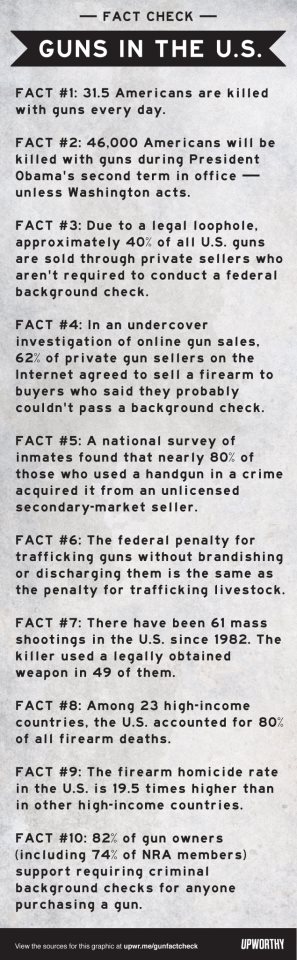
The homicide rate 2011 for the USA was 5,1 (by any method) and 3,6 (by gun) per 100.000 population (10,3 for ALL gun deaths 2011)

The homicide rate 2009 for the USA was 5,48 (by any method) and 2,98 (by gun) per 100.000 population

The homicide rate 2009 for the entire UK was 1,2 (by any method) and 0,22 (by gun) per 100.000 population (0,25 for ALL gun deaths 2010)

The homicide rate 2009 for Scotland was 1,9 (by any method) and 0,04 (by gun) per 100.000 population

From gunpolicy.org.  Chart with comparison between the USA and the UK here.


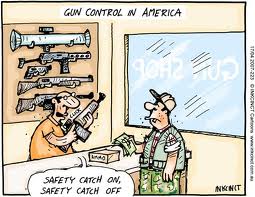
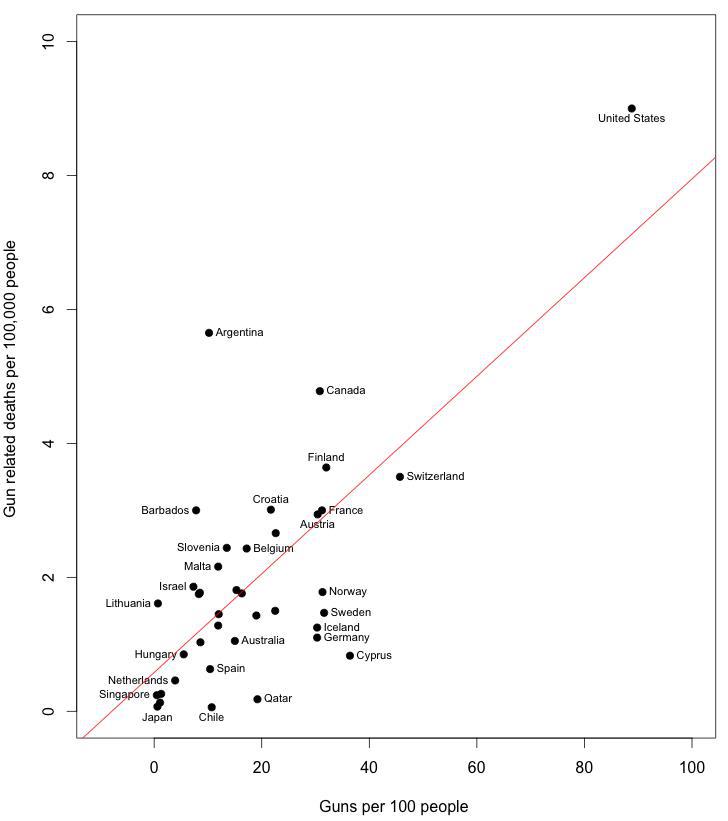
I try to not engage too much in American gun laws discussions even though I often see rude comments where some people demonize those with opposing views (those for strict gun control laws) and equate them with “leftists” (I’m not), but when incorrect claims about gun laws in Europe are in focus I’d like to say something. I’m certainly not a fan of all laws in Europe (and they are vastly different from country to country) and we should be able to handle the subject of gun control without talking about politics in general. Where I live ALL are for gun control (left to right) because we all share the same goal to NOT place guns in the hands of criminals, and the only way is to do this is to prohibit ALL to buy guns for protection. This has led to the pleasant fact that we don’t need guns for protection since there is no threat. If you’re a criminal it’s a different matter, because criminals tend to want to harm each other.

Britain – a country with one of the lowest homicide rates in the world

It happens time and again that people against gun control (usually either Americans or criminals) falsely claim that the violent crime rate in the UK has “sky rocketed” ever since the country started to apply gun control, but that is an exaggeration and doesn’t change the fact that the homicide rate in the UK is one of the lowest in the world and VERY much lower than the rate in the USA. It’s also common that the same people are not interested in facts that speak against their desired scenario, so they either continue spreading the incorrect statements as though they haven’t heard, or they go elsewhere in their hunt to find support for their idea that low murder rates are not correlated to strict gun control. When being presented to world-wide statistics that show homicide rates listed per country – indicating that the US homicide rate is enormously high compared to other western countries – they usually say “you can show anything with statistics!” and immediately brush it off. Instead they find youtube clips or Facebook posts with pictures with claims such as “Australia’s homicide rate sky rocketed ever since the gun control laws, bla bla” and choose to trust these figures thoroughly! Then the song isn’t “statistics can show anything” any more.

USA compared to other western countries (the most fair way to compare)

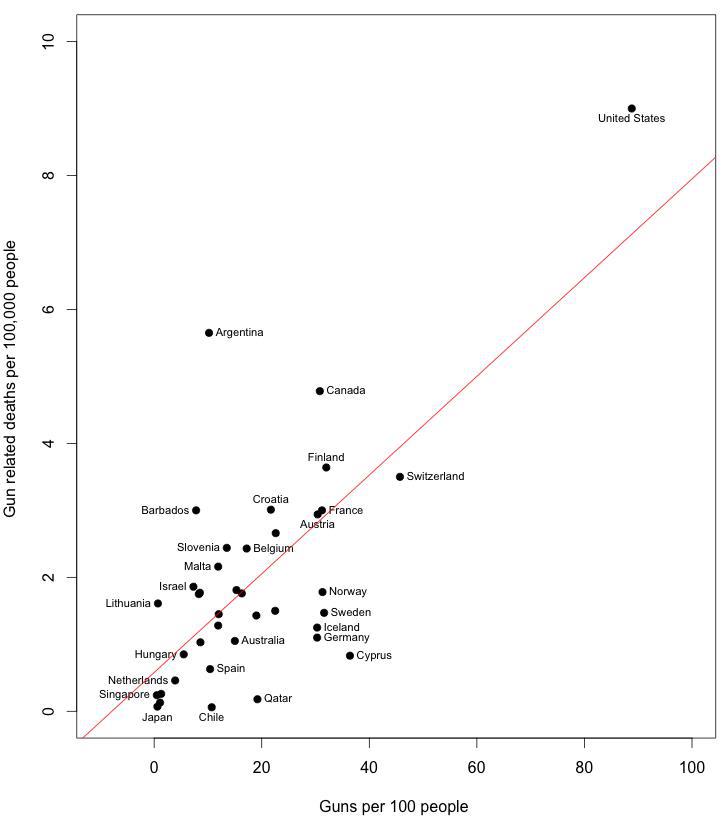
Comparing an American state with other American states is of course not an honest way to make a proper analysis, since it’s not impossible to take guns across the boarders or get hold of guns in other ways. Guns used for crimes in NY and other cities can in some cases be traced back to states with more liberal gun laws. In order to appear in a better light when it comes to the comparison with other nations, it’s common that Americans against gun control would like to be compared with countries with even higher homicide rates, and that’s why they must go to infamous countries like Colombia, Venezuela and South Africa to look better. However, a more honest approach is of course to compare with those countries which are closest in culture, wealth, politics, etc. That’s why a comparison with Canada is interesting (but not perfect since it’s possible to take guns across the boarders there too), and other western countries. The below information is from Politifact Virginia, and the text is actually an attempt to HELP the US to appear in a better light! Still, the outcome is devastating for the USA and liberal gun laws.

The U.S. gun homicide rate is 20 times the combined rate of other western nations“. The number is based on a study of the homicide rates of wealthy nations in 2003, conducted by the UCLA School of Public Health. The report, published in 2010, uses data from the World Health Organization to compare gun-related homicide, gun-related suicide and unintentional and undetermined gun deaths for all ages and both sexes. Vital statistics from the U.S. were compared to those from 22 other high-income countries with populations over 1 million people who reported causes of mortality to WHO for 2003. Researchers relied on The World Bank’s definition of a high income  nation. In addition to the U.S., the study included Australia, Austria, Canada, Czech Republic, Finland, France, Germany, Hungary, Iceland, Italy, Japan, Luxembourg, Netherlands, New Zealand, Norway, Portugal, Slovakia, Spain, Sweden, United Kingdom (England and Wales), United Kingdom (Northern Ireland) and United Kingdom (Scotland). The rate of homicides with guns in the U.S. was 4.1 per 100,000 people; the same rate combining the 22 other countries was 0.2 per 100,000 in 2003. The rate of homicides using guns in the U.S. was 19.5 times the rate of the other countries.

Below is an attempt by the writers to change these stats to improve the scenario for the US, and they took the most favorable and updated stats for the US but not so with the other countries with stats mostly from 2009. They also chose to compare with NATO countries, and  by doing so they would also include countries that are NOT considered wealthy but actually rather poor (such as Bulgaria, Albania, Romania, etc) and by doing so of course the stats will improve.  But is it an honest comparison? For instance, in Bulgaria (in the east block of Europe) middle class people can’t afford to have the electricity on all day so it’s not in the same wealth bracket as western countries. Despite the attempt to improve the scenario for the US, the conclusion is still that the homicide rate in the USA TOWERS over other wealthy European nations: 

The most recent gun-related homicide rate for the U.S. was 3.0 per 100,000 compared to an 0.3 for the rest of the NATO nations. If you compare the most recent data on the same group of nations, mostly based on 2009 statistics, the U.S. gun homicide rate is 15 times higher than the other countries. The number fell to 10 times as high when we defined the inexact term of “western nations” as countries belonging to NATO. However, that gun homicide rates in the U.S. tower over those of other wealthy  European nations — holds up.

Wikipedia – Britainguns0

People who are desperate to find statistics that show that gun control doesn’t work search high and low, and lately the crime statistics in Britain have been in focus. Those against gun control certainly can’t use the charts for homicide rates as a basis of their reasoning (since those all speak heavily against them) so they have to look for other columns (not homicide). So they found poor Britain, but is it an honest approach make a fair comparison and judgment?

The UK and the USA actually have very close figures when it comes to “violent crime” rates, with the number for the UK slightly higher. The difference is of course that the UK has a considerably lower homicide rate than the USA, and the difference is HUGE! When studying statistics for Britain or any country, it’s important to understand what is behind the numbers. An affray is considered a violent crime in the UK, while in some other countries it will only be logged as such if a person is physically injured. While the UK ranks above South Africa for all violent crime, South Africans suffer more than 20,000 murders each year – compared with Britain’s 921 in 2007! Some crime cases are not reported at all in certain countries and not only the “poor” ones. For example, I saw an American documentary about a murder in Philadelphia where a man had raped several women and ended up also murdering one. The investigators discovered that the first rape was not reported due to the aim to improve the statistics for this particular police department, and it was very unfortunate since the follow-up rapes in the same area would have been easier to pin down to the rapist a lot sooner, and before he ended up murdering someone. It’s impossible to know how many other such cases there are for the USA and for other countries. That’s why the HOMICIDE RATE (rather than crime rates) is the best crime to compare with since this is the crime that countries are most likely to report. 

Below is what wikipedia says about the gun situation in the UK and since the data shows that gun control has done the UK a lot of good  (having one of the lowest homicide rates in the world is surely good) it’s a risk that pro-gunners will immediately scream that wikipedia is not a trustworthy source. But they think various youtube clips and information in cute Facebook pictures are reliable sources? Wikipedia might not always be correct whenever “opinions” are involved, but more trustworthy when it comes to boring facts with proper sources listed. That’s why it’s interesting reading. Interestingly Northern Ireland is the only part of the UK where owning firearms for protection is allowed, and it’s also the part with the highest homicide rate in the UK.

In the United Kingdom, firearms are tightly controlled by law—The United Kingdom has one of the lowest rates of gun homicides in the world. There were 0.07 recorded intentional homicides committed with a firearm per 100,000 inhabitants in 2010, compared to the 3.0 in the United States (over 40 times higher) and 0.21 in Germany (3 times higher).

Northern Ireland has a very high rate of gun ownership, one of the highest in the world. In contrast England and Wales have considerably lower rates and Scotland has the lowest in the United Kingdom. The gun crime rate rose between 1997 and 2004 but has since slightly receded, while the number of murders from gun crime has largely remained static over the past decade. Northern Ireland: Under the new law, first-time buyers will be required to demonstrate they can be trusted with the firearm. —  Northern Ireland is the only part of the United Kingdom where personal protection is accepted as a legitimate reason to obtain and own a firearm and is the only part of the United Kingdom where handguns and semi-automatic firearms are permitted. Also, carrying a firearm in plain view in a public place is allowed without a permit. However a firearm certificate for a personal protection weapon will only be authorised where the Police Service of Northern Ireland deems there is a ‘verifiable specific risk’ to the life of an individual and that the possession of a firearm is a reasonable, proportionate and necessary measure to protect their life.

A Home Office study published in 2007 reported that gun crime in England and Wales remained a relatively rare event. Firearms (including air guns) were used in 21,521 recorded crimes. It said that injury caused during a firearm offence was rare, with fewer than 3% of offences resulting in a serious or fatal injury.

For 2010/11, police in England and Wales recorded 648 offences as homicide, of which 58 (9%) involved the use of firearms — a rate of 0.1 illegal gun deaths per 100,000 of population. The number of homicides per year committed with firearms in England and Wales remained between 39 and 81 in the nine years to 2010/11, with an average of 58.3 per year. During the same time period, there were three fatal shootings of police officers in England and Wales, and 149 non-fatal shootings, an average of 16.5 per year. The overall homicide rates per 100,000 (regardless of weapon type) reported by the United Nations for 1999 were 4.55 for the U.S. and 1.45 in England and Wales. The homicide rate in England and Wales at the end of the 1990s was below the EU average, but the rates in Northern Ireland and Scotland were above the EU average.

Britain has had few firearms rampage incidents in modern times. During the latter half of the 20th century there were only two incidents in which people holding licensed firearms went on shooting sprees and killed on a large scale

A legislation was introduced in 1997 to prohibit “Small firearms” with a barrel length of less than 30 cm or an overall length of less than 60 cm. Whilst intentional firearm homicides did in fact eventually decline —homicides involving the class of firearms prohibited initially increased in the early years following the legislative change before commencing a downward trend in 2008. With an alternative view, in 2012 the Home Office reported that, “in 2010/11, firearms were involved in 11,227 recorded offences in England and Wales, the seventh consecutive annual fall”. Firearms statistics in England and Wales include airguns and imitation guns, which make up a high proportion of these recorded offences.

Fully automatic (submachine-guns, etc.) are totally prohibited from private ownership and self-loading (semi-automatic) weapons, including shotguns and .22 calibre pistols, are totally banned other than in Northern Ireland. Shotgun possession and use is controlled, and even low-power air rifles and pistols, while permitted, are controlled to some extent. A firearms certificate issued by the police is required for all weapons and ammunition except air weapons of modest power (of muzzle energy not over 12 ft·lbf for rifles, and 6 ft·lbf for pistols).

Any person who has been sentenced to three years or more in prison is automatically banned for life from obtaining a firearms licence.[35] Similarly, persons applying for licences with recent, serious mental health issues will also be refused a certificate. Any person holding a Firearm or Shotgun Certificate must comply with strict conditions regarding such things as safe storage. These storage arrangements are checked by the police before a licence is first granted, and on every renewal of the licence. A local police force may impose additional conditions on possession, over and above those set out by law. The penalty for possession of a prohibited firearm (section 5) without a certificate is a maximum of ten years in prison and an unlimited fine.  

From the 6 April 2007 the sale and transfer of “air weapons” by mail order became an offence (they may still be purchased in person), as well as the sale of primers, and realistic imitation firearms (RIFs).

While the number of crimes involving firearms in England and Wales increased from 13,874 in 1998/99 to 24,070 in 2002/03, they remained relatively static at 24,094 in 2003/04, and fell to 21,521 in 2005/06. The latter includes 3,275 crimes involving imitation firearms and 10,437 involving air weapons, compared to 566 and 8,665 respectively in 1998/99. Only those “firearms” positively identified as being imitations or air weapons (e.g., by being recovered by the police or by being fired) are classed as such, so the actual numbers are likely significantly higher. In 2005/06, 8,978 of the total of 21,521 firearms crimes (42%) were for criminal damage.

Most of the rise in injuries were in the category slight injuries from the non-air weapons. “Slight” in this context means an injury that was not classified as “serious” (i.e., did not require detention in hospital, did not involve fractures, concussion, severe general shock, penetration by a bullet or multiple shot wounds). In 2005/06, 87% of such injuries were defined as “slight,” which includes the use of firearms as a threat only.

In 2008 The Independent reported that there were 42 gun-related deaths in Great Britain, a 20-year low. However, in late 2009 The Telegraph reported that gun crime had doubled in the last 10 years, with an increase in both firearms offences and deaths. A government spokesman said this increase was a result of a change in reporting practices in 2001 and that gun crime had actually fallen since 2005.—A 2006 statistical analysis found no measurable effect detectable from the 1997 firearms legislation.

In the year Apr 2010 to Mar 2011 there were 11,227 recorded offences involving firearms, broken down as follows.

  • Long-barrelled shotgun = 406
  • Sawn-off shotgun = 202
  • Handgun = 3,105
  • Rifle = 74
  • Imitation firearm = 1,610
  • Unidentified firearm = 957
  • Other firearm = 670
  • Air weapons = 4,203

Only those items proven to be “imitations” (which includes BB/soft air types) or air weapons are classed as such, otherwise they are placed by default in the main “live” categories, e.g. an imitation pistol not proven to be such would be counted as a live “handgun.” “Other firearm” includes CS gas (223 crimes), pepper spray (118), and stun guns (149).

Gun comic 4

Make yourself a new heart, for why will ye die? (Ez. 18:31)

love3God can clean us up and give us a new heart, but in order for him to do this we must choose to repent, come to him and place him as No 1 in our lives. WE are actually asked to cleanse, purify and circumcise our own hearts (which we can if we cast away our sins). 

Ezekiel 18:31 Cast away from you all your transgressions, whereby ye have transgressed; and make you a new heart and a new spirit: for why will ye die, O house of Israel?

Psalm 119:9 Wherewithal shall a young man cleanse his way? by taking heed thereto according to thy word.

Isaiah 1:16 Wash you, make you clean; put away the evil of your doings from before mine eyes; cease to do evil;

Jeremiah 4:4 Circumcise yourselves to the Lord, and take away the foreskins of your heart, ye men of Judah and inhabitants of Jerusalem: lest my fury come forth like fire, and burn that none can quench it, because of the evil of your doings.

Jeremiah 4:14 O Jerusalem, wash thine heart from wickedness, that thou mayest be saved. How long shall thy vain thoughts lodge within thee?

Amos 4:6 And I also have given you cleanness of teeth in all your cities, and want of bread in all your places: yet have ye not returned unto me, saith the Lord.

Ezekiel 24:13 In thy filthiness is lewdness: because I have purged thee, and thou wast not purged, thou shalt not be purged from thy filthiness any more, till I have caused my fury to rest upon thee.

Deutoronomy 10:16 Circumcise therefore the foreskin of your heart, and be no more stiffnecked.

Acts 7:51 Ye stiffnecked and uncircumcised in heart and ears, ye do always resist the Holy Ghost: as your fathers did, so do ye.

Matt. 23:26 Thou blind Pharisee, cleanse first that which is within the cup and platter, that the outside of them may be clean also.

James 4:8 Draw nigh to God, and he will draw nigh to you. Cleanse your hands, ye sinners; and purify your hearts, ye double minded.

2 Timothy 2:21 If a man therefore purge himself from these, he shall be a vessel unto honour, sanctified, and meet for the master’s use, and prepared unto every good work.

To be regenerated is to be cleansed. We are not clean before we come to Jesus and repent for our sins, and we can’t get the Holy Spirit unless we are born again and have purged hearts. We must choose to come to Jesus to be born again and leave our old man behind. John the Baptist preached about repentance for the remission of sins, and Jesus picked up after him and did the same – by preaching about repentance and faith in him as the promised Messiah and son of God. Jesus work was to call sinners to repentance so that they could get life and he taught his disciples – and all of us – to continue preaching this gospel throughout the whole world. The path that you should walk is 1) come to Jesus and believe in him and his work on the cross 2) confess your sins and repent 3) you’re now cleansed, purged, regenerated and born again 4) you’re given the Holy Spirit as a Helper. A person can never be considered clean as long as his sins are not washed away, and the Bible doesn’t teach “once cleansed, always cleansed”. We must endure to the end to be saved.

Mark 1:4 John did baptize in the wilderness, and preach the baptism of repentance for the remission of sins.

Mark 1:14 Now after that John was put in prison, Jesus came into Galilee, preaching the gospel of the kingdom of God,15 And saying, The time is fulfilled, and the kingdom of God is at hand: repent ye, and believe the gospel.

Matthew 9:13 But go ye and learn what that meaneth, I will have mercy, and not sacrifice: for I am not come to call the righteous, but sinners to repentance.

Luke 15:7 I say unto you, that likewise joy shall be in heaven over one sinner that repenteth, more than over ninety and nine just persons, which need no repentance.

Luke 24:46 And said unto them, Thus it is written, and thus it behooved Christ to suffer, and to rise from the dead the third day:47 And that repentance and remission of sins should be preached in his name among all nations, beginning at Jerusalem.48 And ye are witnesses of these things.49 And, behold, I send the promise of my Father upon you: but tarry ye in the city of Jerusalem, until ye be endued with power from on high.

Matt. 28:19 Go ye therefore, and teach all nations, baptizing them in the name of the Father, and of the Son, and of the Holy Ghost:20 Teaching them to observe all things whatsoever I have commanded you: and, lo, I am with you always, even unto the end of the world. Amen.

Acts 2:38 Then Peter said unto them, Repent, and be baptized every one of you in the name of Jesus Christ for the remission of sins, and ye shall receive the gift of the Holy Ghost.

Acts 3:19 Repent ye therefore, and be converted, that your sins may be blotted out, when the times of refreshing shall come from the presence of the Lord.

Thanks to Jesse Morell for the below concerning regeneration after faithheart3

Regeneration requires consent and cooperation. A man’s free will must be synergistically involved in his regeneration. God cannot change a man’s character without the cooperation of the man himself. That is why God said, “I have purged thee, and thou wast not purged” (Eze. 24:13). This is because unless a man is willing to have his moral character changed, it will and cannot be changed. It is impossible for Omnipotence to change a man’s moral character without the consent of his will because this would involve an intrinsic contradiction. Therefore, God and man both have an active role in regeneration. This is why the Bible says that God gives us a new heart (Eze. 11:19; 36:26), while also saying that men should make for themselves a new heart (Eze. 18:31). When a sinner’s will is changed from being disobedient to obedient, both God and the sinner have an active role in bringing about that change. God’s role is His gracious influence upon our will. Man’s role is the yielding of and obedience of his will.

Jesus said, “Cleanse first that which is within the cup and platter, that the outside of them may be clean also” (Matt. 23:26). For Jesus to tell men to clean themselves on the inside (change their intention), takes for granted that it is their choice and that they can do this. Jesus was actually filled “with anger, being grieved, for the hardness of their hearts” (Mk. 3:5). This indicates that the state of man’s heart is man’s own fault, that the state of his heart is something which he causes and which he has control over.

The Bible even commands men to make unto themselves a new heart. God said, “make you a new heart and a new spirit: for why will ye die…” (Ezekiel 18:31). “Wash thine heart from wickedness, that thou mayest be saved” (Jeremiah 4:14). “Draw nigh to God, and he will draw nigh to you. Cleanse your hands, ye sinners; and purify your hearts, ye double minded” (James 4:8).

What does it mean to change your heart? To change your heart is to change your intention. It is to change the motives for all your actions. It means that you are no longer living for yourself or have a selfish motive but are now living for God and the well-being of His universe, thus having benevolent motives.

Men are even commanded to circumcise their own hearts (Deut. 10:16; Jer. 4:4). Since they are commanded to do so, this means that it is their own responsibility and choice. To circumcise your heart means to repent or put off your sins (Col. 2:11). Therefore, to circumcise your heart means to repent of your sins but to have an uncircumcised heart is to have an impenitent heart.

When Stephen was open air preaching, he said to the crowd “Ye stiffnecked and uncircumcised in heart and ears, ye do always resist the Holy Spirit: as your fathers did, so do ye” (Acts 7:51). Stephen was rebuking them for disobeying a specific commandment, “Circumcise therefore the foreskin of your heart, and be no more stiffnecked” (Deut. 10:16).

Why would Stephen rebuke them for being uncircumcised in their heart unless they were capable of circumcising their hearts? Why rebuke them for breaking a commandment unless they were capable of obeying the commandment? Why rebuke them for having uncircumcised hearts unless having such hearts was their own free choice? Why would he rebuke them for resisting the Holy Spirit unless they were capable of yielding to the Holy Spirit? Unless they were capable of doing these things, why rebuke them for not doing these things?

Stephen seemed to take for granted or assume the ability of his audience. He blamed them for their impenitent which must mean that their impenitent was their own free choice. You cannot rebuke a man for something which is not his choice. A man cannot be blamed for that which is beyond his control or for what he cannot help.