Tag Archive | calvinist

Interesting calvinistic contradictions and paradoxes

CALVINISM and its contradictions and paradoxes

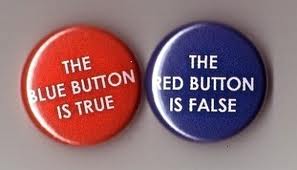
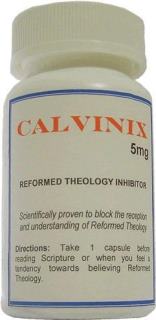
If you engage yourself in discussions with calvinists you must be prepared for that they will contradict themselves and express themselves with lots of “theological fog” and paradoxes. It’s like they believe many fancy words will cover up for their contradictory claims and poor doctrines, and there are sadly listeners out there who are not able to look through their smoke screens but instead swallow what they have to say. But there is no way that they can ever solve the many problems that are hidden in the TULIP, and they are not able to clear the name of their God who they make to be the author of sin – which is the only logical conclusion of their doctrines. Here they might protest and tell you they do NOT make God the author of sin! But don’t they believe that nothing happens against the will of God? Don’t they believe that man must act according to whatever nature he was created with? Don’t they believe man certainly cannot be totally depraved against God’s will? They must respond in the affirmative to all those questions in order to be consistent with their own doctrines, and that means their God IS the author of sin after all. They believe God predestines man to sin, at the same time as man is responsible for his own sins and for some reason should have acted otherwise – despite that he was forced by God to act the way he did. The same man will also be punished and sent to hell – for committing the sin that God caused him to do. (With other words – people who do the will of God will be sent to hell for doing the will of God). Anyway, below is a list of some contradictions that I stole from my friend William Hughes. I saved the best ones to make the list shorter 🙂

Reformed contradiction #3

From an email on facebook I received:

Calvinist: “any time you say Calvinism is not true I will rebuke you extremely severely in the name of Jesus Christ! Calvinism is the gospel, you heretic! I read your stupid post even though you are not on my friends list.”

Me: “I am unable to believe in Calvinism because God has decided I don’t believe it. Why are you getting mad at me? I cannot help it.”

Calvinist: “you are blinded by the devil. Do not blame God for your inability to believe the gospel.”

Me: “Are the unelect ‘unable’ to believe the truth?”

Calvinist: “No one is able to believe the truth unless God opens their eyes…”

Blaming me for not believing in Calvinism is like blaming a mentally handicapped person for not thinking.

Reformed contradiction #4

Tony Miano is witnessing to someone on video. During the conversation a Christian named Marco walked up to Tony and said he was being too hard and needed to teach more on God’s love. Tony then berated him and said, “So if me in my flesh can push people away from God then you believe in a weak God.” Tony then accused this Christian of “blaspheming God” because “Marcos, you think the gospel needs our help…You don’t believe the gospel is sufficient, Marco.”

Later in the video Tony explained the “correct” gospel to Marco by witnessing to Marco!

Why is Tony showing Marco the “correct” way when he just finshed telling Marco “you think the gospel needs our help?”

Apparently Tony’s god is “weak” too since he needs Tony to correct Marco.

Reformed Contradiction #5

Tony Miano is preaching to a crowd and tells them to repent and believe. A few minutes later Tony says “God is a God of love and if He CAUSES you to be born again, THEN you can repent and THEN you can believe.”

I thought he told the crowd “they” must repent and believe and now he is saying GOD MUST DO IT…very confusing to unbelievers….and everyone else.

Reformed contradiction #6

“God is sovereign in all things. If you don’t believe God gave you the faith to believe you are going against Gods sovereignty!”

But if I can go against Gods sovereignty than God isn’t sovereign in all things.

Reformed contradiction #7

“God does not predestine people for heaven and hell. He simply passes over those people not saving them”

“Don’t Calvinists believe God hated Esau before he did anything good or bad?”

“Yes.”

Sounds like God predestines people for heaven or hell.

Calvinist contradiction #8

“God isn’t obligated to respond to a person’s faith. God is completely sovereign and isn’t controlled by what people do.”

“Does God get angry at a sinners sin?”

“Yes.”

Then I guess God is controlled by what men do.

Calvinist contradiction #9

I decided to take a systematic theology class at my old church which was taught by a 5 point Calvinist named — this time in my life I believed what Calvinists told me, that Calvinism is not an essential issue. In the very first class we listened to a sermon on God’s sovereignty and in that sermon the speaker said If I didn’t believe in God’s sovereignty (as he was defining it by Calvinism) I’m an idolater.

But I thought Calvinism is not an essential issue?—, who is leading the class told me Calvinism is not an essential issue, then why is he showing the class a sermon that says the opposite?Answer: Because he really believes Calvinism is essential.

Calvinist contradiction #10

“Calvinism is not an essential issue. The essentials are the Trinity, the deity of Christ, Christ’s physical resurrection, salvation by grace through faith.”

Later in the conversation…”If you believe people can respond to the gospel using their free will you are a heretic.”

Calvinist contradiction #11

“Unbelievers are blinded by total depravity, they are unable to believe.”

Then why did God blind some of the Jews from believing if they are already blinded?

Calvinist contradiction #12

“Christ saved His own at the cross.”

But wouldn’t that mean when you were born you were saved?

Calvinist contradiction #13

“What do you think God does with mentally handicapped people who might be unable to believe in Christ?”

Calvinist: “God is merciful and would choose them for salvation”

“What do you think God does with other people who are unable to believe in Christ because they are totally depraved?”

Calvinist: “God sends them to hell.”

Calvinist contradiction #14

“The word ‘chosen’ means chosen for salvation”

“You mean like this?”

John 6:70 Jesus answered them, Have not I chosen you twelve, and one of you is a devil?

Calvinist contradiction #15

Calvinist: “The bible says to rightly divide the word of truth so any contradictions should be studied until they are no longer contradictions.”

“What about the contradiction between God’s sovereignty and man’s responsibility?”

Calvinist: “Thats ok if we don’t understand that…that’s a mystery.”

Why are contradictions in other ministries exposed by Calvinists but not the ones in their own doctrine which are accepted as “mysteries?”

Calvinist contradiction #16

Calvinist: “Do not add or take away from God’s Word.”

“The bible says Christ died for the world, for whosoever, for any, for all of mankind.”

Calvinist: “No it doesn’t! ‘World’ doesn’t mean all and ‘all’ doesn’t mean ‘all.’

Calvinist contradiction #17

Calvinist: “God showed me the truth of Calvinism through the bible.”

“What did God show you?”

Calvinist: “If you read <insert reformed teachers name here> book that sums up my beliefs.”

Are you sure you got this new doctrine from God?

Calvinist contradiction #20

Calvinist: “People go to hell because they reject the gospel.”

“I thought you said the unsaved were people whom Christ never died for?”

Calvinist: “Yes thats true.”

“So the unsaved are going to hell for rejecting a salvation that isn’t mean’t for them? Isn’t that like saying I’ll get mad at you for not coming to my party when I never invited you and don’t want you at my party?”

Calvinist contradiction #21

Calvinist preaching to a crowd: “God is not willing that any should perish but that all should come to repentance. God wants all to come to a knowledge of the truth.”

Wait, you don’t believe that, you believe God is not willing that the elect should perish and God only wants some people to come to a knowledge of the truth, so why are you lying to the crowd?

Calvinist contradiction #22

“If a body builder grabbed your arm, put a gun in your hand, and forced you to shoot someone are you responsible for it?”

Calvinist: “No, because the body builder forced me to do it.”

“Was Judas forced by God to betray Christ?”

Calvinist: “Yes.”

“Then how is Judas responsible for betraying Christ if God forced him to do it?”Answer: God didn’t force Judas to betray Christ.

Calvinist contradiction #23

Calvinist: “While witnessing I would never tell a sinner God loves them because I wouldn’t want to give them a false hope.”

“What happens when the sinner is concerned about going to hell?”

Calvinist: “I would share with them the good news that Christ died for their sins on the cross.”

“Why would Christ die for their sins?”

Calvinist: “Because…um…He…loves them.”

Calvinist contradiction #24

Calvinist: “In John 17:9 Christ prays only for believers in the Gospel of John which proves He doesn’t love unbelievers.”

“Have you ever prayed for your children?”

Calvinist: “Yes.”

“Does this imply you love them and no one else in the world?”

Calvinist: <Silence>”Christ prayed ‘Forgive them Father for they know not what they do.’ Sounds like Christ is praying for unbelievers.”

Calvinist contradiction #25

Calvinist 1: “I believe <insert doctrine here>”

Later that day talking to another Calvinist…

Calvinist 2: “Your misrepresenting Calvinism! We don’t believe <insert doctrine from Calvinist 1 here>.”

Calvinist contradiction #26

Calvinist: “I like Calvinism because I don’t have to worry about whether I spoke incorrectly to a sinner while witnessing. God does it all.”

“Is there a wrong way and a right way to preaching the gospel?”

Calvinist: “Oh yes! The gospel must be presented accurately.”

Then I guess you better be careful how you speak.

Calvinist contradiction #27

Calvinist: “<insert false teacher here> is teaching <insert false doctrine here>!”

“You sound concerned. Can someone predestined for heaven go to hell?”

Calvinist: “No.”

“Can someone predestined for hell go to heaven?”

Calvinist: “No.””Then why are you concerned?”Calvinist: “Because God uses the gospel to save people and false teachers are preventing that.”False teachers are more sovereign than God

Calvinist contradiction #28

Calvinist: “Sinners cannot respond to the gospel without the Spirit in them (1 Corinthians 2:14).”

“The Apostle Paul believed without the Spirit in Him until days later.”

Calvinist contradiction #30

Calvinist: “The bible says unbelievers cannot do anything good. Romans 8:7 says unbelievers cannot obey God’s law.”

“Does the bible say the conscience is God’s law written on the hearts of everyone?”

Calvinist: “Yes.”

“When you were an unbeliever did you ever obey your conscience, even once?”

Calvinist: “um…well…yes.”

Apparently Romans 8:7 is not teaching unbelievers are not able to do “anything good”.

Calvinist contradiction #31

Calvinist: “Calvinists are the most humble of Christians since we believe God does everything and we can do nothing.”

“You sound proud of your humility.”

Calvinist contradiction #34

Calvinist: “Jesus said anyone who does the will of the Father goes to heaven. The unelect do not do God’s will.”

“Did God predestine the unelect for damnation?”

Calvinist: “Yes.”

“Then they are doing God’s will.”

Calvinist contradiction #38

“Take a classroom of say 20 people and put earplugs in their ears. Now give them some instructions. Then take their earplugs out. Will they obey your instructions?”

Calvinist: “No, they couldn’t hear me.”

“Are you angry at them for disobeying your instructions??”

Calvinist: “Why would I be angry, they can’t hear me! It wouldn’t be right for me to get angry.”

“Then why is God angry with sinners in the same condition?”

Calvinist: “Because the bible says so!”

“You might want to reinterpret the verses you hold to, your ideas don’t make sense and you are confusing people about who God is and what He wants.”

Here is another good analogy by William
Lets say I have a time travel DVR and I record a football game before it happens. I can fast forward the game, play it slow motion, reverse it, fly around the stadium in 3D (that would be cool!). No matter how many times I do this the outcome is the same.  Now lets say that you can also see yourself in this video and the choices you make that affect others. You can see how your actions affect others. Are the players using their free will in response to you? Yes. Are events in the game predetermined? Yes, because you know the outcome. Events are both predetermined (because God knows how humans will use their freedom to respond to Him) and freely chosen. What about Judas?

1) God knows all things.
2) Whatever God foreknows must come to pass (i.e., is determined). If it did not come to pass, then God would have been wrong in what He foreknew. But an all-knowing [omniscient] God cannot be wrong in what He knows.)
3) God knew Judas would betray Christ.
4) Therefore, it HAD TO COME TO PASS (i.e, was determined) that Judas would betray Christ.
5) These events are predetermined and freely chosen at the same time.

Shipwreck example Acts 27

Paul assured his fellow travelers in advance that “not one of you will be lost; only the ship will be destroyed” (v 22). Yet a few verses later he warned them, “Unless these men stay with the ship, you cannot be saved” (v. 31). Both are true. God knew in advance and had revealed to Paul that none would drown (v.23), But He also knew it would be through their free choice to stay on the ship that this would be accomplished.

Response to Tony Miano’s Article at Carm.org about Mark Cahill

Response to Tony Miano’s Article at Carm.org on Mark Cahill (CALVINISM) – Kerrigan Skelly

The unchristian attack by Tony Miano against some innocent christian brothers was so nasty and hypocritical, so I’d like to take the opportunity to display the rebuttal/defense also here on my Blog. Also check the article here by Jesse Morell in the same matter.

I’d also like to warn others from the website http://www.carm.org where the article was found. The website contains lots of truths, but sadly mixed with heresy since the founder Matt Slick promotes calvinism here and there. Calvinism is based on TULIP and you can read more about what TULIP stands for here. TULIP maligns the character of God by directly or indirectly making him the author of sin. I write this warning because I love calvinists and I hope they will turn away from their gnostic teachings and find the one true God whose son died for ALL. We will never know how many people have been absorbed by carm.org and and lost their ways into the false doctrine of calvinism.

From pinpointevangelism:

Why do calvinists erroneously call all Free-willers ARMINIANS?

All arminians are free-willers, but not all free-willers are arminians

Calvinists often reveal that they have studied too much calvinism and too little from non-calvinists, by making the mistake to automatically call us arminians as soon as we tell them that we are not calvinists (and the next step is to call us semi-pelagians). Since there may be issues within arminianism (which some people call “calvinism light”) that we disagree with, it’s wrong to automatically assume that we are arminians – because that would be like ascribing views to us that we may not have.  It’s wrong to make a person who believes in synergism an arminian by default. Strangely enough, some calvinists are reluctant to rephrase themselves even when corrected!

I still remember the first time I heard the phrase “arminian” (it’s a word not found in the Bible), and it was the first time someone assured me that I was one! (Funny to be an arminian your whole life without even knowing it…) I had not heard of James Arminius (1560-1609) either, and compared with all the books that I’d like to read, I feel no motivation to study up on what this particular person believed and to check whether I agree with him or not. I know loads of christians in real life and online, but I only know a couple who call themselves arminians.  This tells me that arminians are very rare. There are no arminians in Sweden which I’m aware of, but I can certainly see that people constantly make free will choices in the Bible and often act against the will of God, so it’s not hard to find the concept of free will.

I can understand if people would like to call themselves calvinists if they agree with John Calvin and also believe that he was first with his doctrines/theology (even if they don’t necessarily agree with everything he taught). Calvin was the one who started calvinism, even if he got many of his ideas from Augustine. It’s also a good way to show one’s basic principles by saying one single word “calvinist”. Calling oneself an arminian on the other hand, doesn’t make much sense if you have the same views as people who lived several hundred years before he did. (I do respect those who prefer to call themselvesarminians” – maybe for the sake of convenience when having dialogues with calvinists, or for other reasons.)

ALL the early church fathers  the first 300 years AD believed in free will without exception (see quotes here) and none of them taught that man was born with a sinful nature. This means that Mr Arminius was hardly the first person with his theology views, and it would make more sense to call oneself  after Ignatius, Justin Martyr, Clement, Irenaeus, Tertullian, Eusebius, Origen, or some other church father who lived shortly after the death of Jesus.  The disadvantage with calling oneself after a person, is that you are then expected to study the views of this person, in case someone asks you why you call yourself the way you do. If your claim is “I call myself an irenaeusian, because I believe in free will just like he did”, then the follow-up question is why you don’t call yourself after another theologian who also believes the same. This places an unnecessary burden on you to be forced to study books outside the Bible, and it takes valuable time from Bible reading. It’s of great value to study the views from the early church fathers (or reading books from other authors) and it’s sometimes I can recommend, but it’s wrong to make it a requirement.  I personally feel no obligation to study up on what arminians believe due to the expectations from others. 

If I have an uncle who believes in free will, would it make sense to call myself after him, instead of a person who lived in the end of the 1500’s? If I lived prior to the year 1590 (when James Arminius was 30 years old and still sided with the calvininist Theodore Beza) what would I call myself?

If a person doesn’t side with Mr Brown, does it follow that he absolutely HAS TO side with Mr Green? It’s one or the other and no other options?  Let’s say that in the future a Mr White becomes a well-known christian and a man who believes in free will and who also writes famous books about it. Must I know change labels and call myself after HIM? I’m not against the idea to label oneself after a person per se, if the views in question originated with him.   

The Synod of Dort

The synod of Dort was a Dutch regional conference (with a political context) which plays a big role for calvinists, but christians believed in free will long before this local meeting as well as afterwards. This synod was not a council of the Protestant churches of Europe, but a Dutch national synod to which some Reformed theologians were invited from various parts of Europe.  It was not a free assembly for the discussion of the Bible, but a national ecclesiastical court for the trial of alleged heretics. Theodore Beza was John Calvin’s direct successor and he sent his disciple Arminius to Holland in 1589 to put down the arguments against his theology views. Beza believed that if God was absolutely sovereign and man helpless in sin and that men are saved/damned by predestination, then it followed that God causes men to sin just as he causes men to be saved. This position existed also in various degrees in Augustine and Calvin’s theology. The opponents argued that if God causes sin then God is in point of fact the author of sin. Arminius changed his position (against Beza) when starting to research the topic deeper and comparing with the Bible.

Whenever Arminius was given a chance to publicly defend his theology, his sound scholarship won the argument and nobody wanted to publicly debate against him. Nobody suggested that the Remonstrants mishandled Scripture but only that they failed to use Scripture to defend a predetermined position. Ironically nearly all of those who opposed Arminius wanted him to quit preaching the Bible as the final authority, because they felt such a message undermined their own authority. To settle this, Arminius sought after a synod to publicly debate and settle the theological and political rift that had occurred in Holland about these issues but he was denied a synod during his lifetime. Instead a synod was made after his death under conditions all together different from what he and his followers expected.  Free debate was denied and the Remonstrants were treated as criminals. They were present only as defenders, and the calvinists were the accusers, and never the other way around. Four days after the Synod’s closure, those same leaders beheaded Johan van Oldenbarnevelt for the crime of general perturbation (treason) for his support of the Remonstrants. About the synod we can read:

“Whosoever casts his eye over the list of the foreign divines that composed this last of Protestant councils will find scarcely one man who had not distinguished himself by his decided opposition to the doctrine of conditional predestination, and who was not consequently disqualified from acting the part of an impartial judge of the existing religious differences, or that of a peace-maker.”

William Birch: “Arminianism was condemned at the Synod of Dort (1618-19). And what of it? A group of supralapsarian Calvinists joined theological and political forces, calling on foreign political allies, to ruin the reputation, ministry, and systematic theology of some theologians who disagreed with their doctrines on soteriology. And this local phenomenon is supposed to carry weight in thwarting Arminianism? History itself is a witness to the sham of an operation under which the Calvinists instigated the hearings of the Synod of Dort.”

Read more about the unfair and horrible events concerning the Synod of Dort and the aftermath here

Why did God create us, despite knowing we would mess up?

A parable about a party invitation for ALL

Some christians feel it’s strange that God would let his son die for people He knows ahead of time will never believe in him, and that’s why they prefer to believe that Jesus only died for SOME people who will DEFINITELY be saved because they are specifically PRE-CHOSEN to be the lucky ELECT. But I don’t find dying for ALL people despite knowing the risks/results involved is a paradox at all. What about those who DO choose to believe in him? They will be heirs to the kingdom, and the thing is that ALL are given this opportunity so no one is left out or is unfairly treated. God is totally fair and merciful to all!

Most young couples are aware of the risk that some of their future children might not turn out as obedient and morally upright human beings,  but they are willing to take this risk since children (and not robots) are a great blessing and a good company. Even if a married couple would be told that two of their ten not yet born children will end up as unbelievers, they will likely decide to have their children anyway. At least THEY (the parents) don’t force their children to become unbelievers. They might bring them up in a wonderful christian home and teach them all things about Christ and the Bible and how to be good moral people. If they still one day reject this teaching and become wicked individuals, then THEY (the children) are to be blamed and not the parents.

(We also have “Open theism” as a possible factor, where God indeed knows “all things” but only what is “knowable”. Read more here. )

I’d like to compare God’s salvation offer to everyone with a party invitation even if it’s not a perfect analogy.

Let’s say I decide to have a party in my house. Of course I’m entitled to set up the rules and conditions myself, and I don’t need to ask anyone for advice or permission how to run things since I’m “sovereign” over my own house  (sovereign is a word which is not in the KJV Bible but still…). I decide to invite EVERYONE in my entire neighborhood, and to use a RSVP (respondez s’il vous plait) on my invitation cards. I also PROMOTE my party and tell everyone that they would miss out big time if they will not come. My party is totally free of any costs, but I still have conditions. The following conditions/restrictions apply:

  • Had I not decided to have this party, there would not be a party. I personally initiated a “drawing” or “calling”.
  • All are invited but ONLY those who REPLY as per the RSVP may actually come
  • And out of those who reply affirmatively as per the RVSP, only those who SHOW UP at my party will be let in!
  • And those who have replied affirmatively and showed up must also be acceptably DRESSED to be let in.

(Maybe I could add that they must also BEHAVE during the entire duration of the party so they won’t disturb and ruin the party for the others, but when we will end up at the big wedding party in heaven all troublemakers will already be sorted out. It’s a good thing that “sinners” are not welcomed to the big wedding party or else it would not be a pleasant time for the others.)

Even though I have all those conditions, the party is still totally FREE OF CHARGE. The guests could not do anything themselves to be invited to my party. Nothing we believe or do can ever merit salvation. We don’t deserve to be saved, but our Lord has enabled salvation to all of us in our totally lost state.

I could of course have arranged things differently…

I could make personal  invitations to CERTAIN people in my neighborhood and FORCE them to come to my party which I make MANDATORY for those I invite. I could also REFUSE to allow anyone else to come to my party EVEN THOUGH I have PLENTY OF ROOM, food, beverages, entertainment, etc for EVERYONE in the entire neighborhood.

The thing is though that I PREFER to invite ALL and to let THEM make up their mind if they want to come or not.  That means that whosoever wills can come and it would bring me much happiness to know that people have used their own minds when accepting my invitation. I would not feel good about having people around me who have no other choice but to be there whether they like to or not. God has created us in his image, and we are able to reason and make options depending on various circumstances.  God has also created LIMITATIONS to our free will. We simply can’t fly to March and back just because we have this desire and will. 

Is my party a total failure because all who were invited did not come? Can we say I was totally helpless and in the hands of the people I invited? Did someone make the rules instead of me? Did someone thwart my plans? Did I lose control? Did something happen unexpectedly which I didn’t think of? Did I not calculate the risks properly? Did I treat someone unfairly? Am I a wicked person because I did not force people to come? Should we feel sorry for those who did not come despite that they knew the truth about it? Am I illogical in my behavior? Did I at any time resort to Plan B?

Of course not! We would all have a great time at my party, and I would feel good about knowing that I made sure that ALL had a fair chance to come. I wouldn’t even want people at my party unless THEY had a sincere desire to come and to get to know me.Why is it out of the question that our sovereign Lord created us with the ability to accept/reject him and obey/disobey?

Compare also with the analogy of the wedding party in Matthew 22. Note that those who were bidden to come chose to NOT come, and those who did choose to come were called “chosen”. Notice that no one is forced to do anything. Both good and bad were called but they were all required to wear WEDDING CLOTHES in order to be acceptable to the wedding party. We must repent from our sins and be holy and righteous and dressed in white undefiled garments. 

1. And Jesus answered and spake unto them again by parables, and said,The kingdom of heaven is like unto a certain king, which made a marriage for his son,And sent forth his servants TO CALL THEM THAT WERE BIDDEN to the wedding: and they would not come.Again, he sent forth other servants, saying, Tell them which are bidden, Behold, I have prepared my dinner: my oxen and my fatlings are killed, and all things are ready: come unto the marriage.But they made light of it, and went their ways, one to his farm, another to his merchandise:And the remnant took his servants, and entreated them spitefully, and slew them.But when the king heard thereof, he was wroth: and he sent forth his armies, and destroyed those murderers, and burned up their city.Then saith he to his servants, The wedding is ready, but they which were bidden were not worthy.Go ye therefore into the highways, and as many as ye shall find, bid to the marriage.10 So those servants went out into the highways, and gathered together all as many as they found, both bad and good: and the wedding was furnished with guests.11 And when the king came in to see the guests, he saw there a man which had not on a wedding garment:12 And he saith unto him, Friend, how camest thou in hither not having a wedding garment? And he was speechless.13 Then said the king to the servants, Bind him hand and foot, and take him away, and cast him into outer darkness, there shall be weeping and gnashing of teeth.14 For many are called, but few are chosen. 

Also Romans 9 shows man’s free will

Romans 9 – the calvinists´favorite

Let’s go through the whole chapter.

1I say the truth in Christ, I lie not, my conscience also bearing me witness in the Holy Ghost, 2That I have great heaviness and continual sorrow in my heart. 3For I could wish that myself were accursed from Christ for my brethren, my kinsmen according to the flesh:4Who are Israelites; to whom pertaineth the adoption, and the glory, and the covenants, and the giving of the law, and the service of God, and the promises;  5Whose are the fathers, and of whom as concerning the flesh Christ came, who is over all, God blessed for ever. Amen. 

Paul apparently doesn’t believe that God has predestined some for heaven and some for hell, because he says he wish he were accursed for the sake of his kinsmen (the jews) even though not all of them have faith in Jesus as the Messiah. If God the Father didn’t intend for Jesus to die for ALL people but only SOME (the lucky elect) then why would Paul desire to die for people who are not christians? It wouldn’t make sense for Paul to be willing to die for people who Jesus would not be willing to die for. Paul also seems  to be unaware of that (if he were a calvinist) that things turn out exactly as God has planned from before the creation of the world, so to have “heaviness” and “continual sorrow” would be puzzling emotions. Why feeling sorry for people who will end up (heaven or hell) exactly where God wants them to end up? Paul has no business feeling sorry for people who God doesn’t feel sorry for.  Then again, limited atonement is not Biblical!

 6Not as though the word of God hath taken none effect. For they are not all Israel, which are of Israel: 7Neither, because they are the seed of Abraham, are they all children: but, In Isaac shall thy seed be called. 8That is, They which are the children of the flesh, these are not the children of God: but the children of the promise are counted for the seed 9For this is the word of promise, At this time will I come, and Sarah shall have a son.

Not all jews are the children of Abraham even though they are related to him through his blood. Only those who are of the “promise” are counted for the seed, and they are of FAITH. Abraham himself showed his faith through his deeds, and he was considered righteous for this reason. The promised Messiah came through his bloodline and through Sarah who was the free woman (and not through Hagar who was a servant and not free).

Gal. 3:7 Know ye therefore thatthey which are of FAITH, the same are the children of Abraham. And the scripture, foreseeing that God would justify the heathen through faith, preached before the gospel unto Abraham, saying, In thee shall all nations be blessed.So then they which be of FAITH are blessed with faithful Abraham.

10And not only this; but when Rebecca also had conceived by one, even by our father Isaac; 11(For the children being not yet born, neither having done any good or evil, that the purpose of God according to election might stand, not of works, but of him that calleth;)

The fact that children who are still in the womb have not done any good or evil, implies that the sinful nature is not true since babies are viewed as neutral. We can read about “election” here, but note that it’s not about electing individuals TO BELIEVE. The children in question are Jacob and Esau and they are not only individuals but also NATIONS and PEOPLE. God chose the seed of Jacob to bring forth the Messiah. Esau rejected his birthright (which is usually given to the first born) but still expected to maintain it when it was time to get the blessing from his Father, whereas Jacob took actions to lay hold of the birthright. A parallel can be made with the jews who expected to inherit the Kingdom just because they were born as jews and “God’s chosen people“. Paul tells them that salvation doesn’t work that way, but that we are rather saved by FAITH (proven by deeds) and this promise is also for the gentiles.

12It was said unto her, The elder shall serve the younger. 13As it is written, Jacob have I loved, but Esau have I hated.

Did the person Esau ever serve the younger person Jacob? No, not at any point in his life did he serve him. However, the PEOPLE who came forth from Esau did serve the people who came forth from Jacob. God had good reasons to hate Esau, both as an individual and as a people. Read more about Jacob and Esau here.

14What shall we say then? Is there unrighteousness with God? God forbid. 15For he saith to Moses, I will have mercy on whom I will have mercy, and I will have compassion on whom I will have compassion. 16So then it is not of him that willeth, nor of him that runneth, but of God that sheweth mercy.

The point here is that it’s God’s prerogative to arrange his salvation plan in any way he wants, and he certainly doesn’t need to ask man for permission to do it. The jews might feel that they should have an advantage since they are the chosen ones who the Law was given to and since they are of the seed of Abraham and Jacob, but Paul explains that this is not so. The salvation offer is also given to the gentiles, and we are not saved by being born a jew or by obeying the jewish ceremonial Law, but by faith in Jesus Christ who died for the world. Notice also that it doesn’t say that God doesn’t want to show mercy on all. What it does say is that GOD decides on whom he will show mercy. Does God have the right to show mercy based on CONDITIONS? Yes absolutely,  and the text doesn’t say that he provides mercy on individuals UNCONDITIONALLY. We know from elsewhere in Romans and in the rest of the Bible that we are saved upon conditions, and those conditions are faith and repentance. If God wants to show mercy and compassion on those who have repentant hearts –  and not on those with unrepentant hearts – then he may do so, and he would not be unrighteous for doing so. We can read that God uttered those words (about mercy) to Moses, and we know that God had conditions on the Israelites and chose to not show mercy on those who rebelled against him.

17For the scripture saith unto Pharaoh, Even for this same purpose have I raised thee up, that I might shew my power in thee, and that my name might be declared throughout all the earth. 18Therefore hath he mercy on whom he will have mercy, and whom he will he hardeneth.

Pharao hardened his heart several times before God did. God has the right to harden hearts that are unwilling to conform to him (harden even more). See my blog post about Pharao here.

19Thou wilt say then unto me, Why doth he yet find fault? For who hath resisted his will? 20Nay but, O man, who art thou that repliest against God? Shall the thing formed say to him that formed it, Why hast thou made me thus?

“Who are thou that repliest against God?” we are asked. This means we should NOT reply against God and argue with him, right? Has it ever happened in history that people still HAVE replied against him? YES! There are numerous examples of this in the Bible, and not only that – but there are angels and human beings who have even REBELLED against him! Does God want people to rebel against him? Of course not! Each time people reply against God and rebel against him it’s AGAINST his will. We are being disobedient to God by rebelling against him. So this text is not what people cannot do, but what they SHOULD NOT do. And let’s not forget that the context is still that GOD alone has the right to bring about his salvation plan in any way he wants. The text doesn’t say that God always directs our steps and forces us (predestines us) to walk his way.

Isa 45:9 Woe unto him that striveth with his Maker! Let the potsherd strive with the potsherds of the earth. Shall the clay say to him that fashioneth it, What makest thou? or thy work, He hath no hands?

Yes, woe unto him because he acts against the will of God by striving with his maker which he is not supposed to do.

21Hath not the potter power over the clay, of the same lump to make one vessel unto honour, and another unto dishonour? 22What if God, willing to shew his wrath, and to make his power known, endured with much longsuffering the vessels of wrath fitted to destruction: 23And that he might make known the riches of his glory on the vessels of mercy, which he had afore prepared unto glory, 24Even us, whom he hath called, not of the Jews only, but also of the Gentiles?

The context is still that the salvation offer is also given to the gentiles. We can read that God could have chosen to “endure with much longsuffering” the vessels of wrath fitted to destruction. Why would we read terms such as “endure” and “longsuffering” as though the vessels had a will of their own and put up a resistance against God? If God predestines all things that come to pass, then surely he is able to bring them to pass without struggle, and with no need to “endure” with “much longsuffering”? We can also read below that we are expected to purge ourselves, and if we choose to do so then we will be a vessel unto HONOR! If we struggle against God and make it hard for him to conform us to what he wants, then we are fitted for destruction (we have fitted ourselves for destruction) and our right place is on the scrap heap, BUT for our sake he might choose to endure with much long-suffering. Which vessels are the ones made unto honor? Could it be those who have repentant hearts and who are willing to conform? Which  vessels are the ones unto dishonor? Could it be those with rebellious hearts and who are unwilling to conform? The vessels who choose to conform are the same as the vessels of mercy, and they are the ones which are prepared beforehand to enter the Kingdom of God. Now, it’s up to us to purge ourselves so that we can become vessels of mercy, and the wonderful promises will then apply to us.

2 Tim 2:20 But in a great house there are not only vessels of gold and of silver, but also of wood and of earth; and some to honour, and some to dishonour. 21 If a man therefore PURGES HIMSELF from these, he shall be a vessel unto HONOUR,sanctified, and meet for the master’s use, and prepared unto every good work

Jer 18:3Then I went down to the potter’s house, and, behold, he wrought a work on the wheels. 4And the vessel that he made of clay WAS MARRED in the hand of the potter: so he made it again ANOTHER VESSEL, as seemed good to the potter to make it.

Read my blog post about the potter and the clay here.

25As he saith also in Osee, I will call them my people, which were not my people; and her beloved, which was not beloved. 26And it shall come to pass, that in the place where it was said unto them, Ye are not my people; there shall they be called the children of the living God. 27Esaias also crieth concerning Israel, Though the number of the children of Israel be as the sand of the sea, a remnant shall be saved: 28For he will finish the work, and cut it short in righteousness: because a short work will the Lord make upon the earth. 29And as Esaias said before, Except the Lord of Sabaoth had left us a seed, we had been as Sodoma, and been made like unto Gomorrha. 30What shall we say then? That the Gentiles, which followed not after righteousness, have attained to righteousness, even the righteousness which is of faith. 31But Israel, which followed after the law of righteousness, hath not attained to the law of righteousness. 32Wherefore? Because they sought it not by faith, but as it were by the works of the law. For they stumbled at that stumblingstone; 33As it is written, Behold, I lay in Sion a stumblingstone and rock of offence: and whosoever believeth on him shall not be ashamed.

Here we can see the crux of the problem spelled out. The stumblingstone which the jews stumbled upon and which can separate them from God is JESUS CHRIST. The jews were at risk to miss God’s salvation plan by continuing to reject the Messiah and that’s what Paul is so grieved about.  The condition for salvation is faith in Jesus and that might very well, to the jews’ surprise, exclude the jews and include the gentiles. The Jews assumed they were God’s chosen people and that salvation was limited to them. Above we can see that faith must precede in salvation and it’s the condition for salvation.  The Jews, who were God’s elect,  sought to reach salvation through keeping the law rather than by faith.  Nothing is said here about God’s choice in salvation but ONLY about “men” having faith – NOT God giving faith to individuals. It doesn’t matter if you’re a Jew or Gentile, because God has sovereignly chosen to save all those who trust in Jesus for salvation.  

Romans 10:12-13 For there is no difference between the Jew and the Greek: for the same Lord over all is rich unto all that call upon him. For whosoever shall call upon the name of the Lord shall be saved.  

Romans 11:32 For God hath concluded them all in unbelief, that He might have mercy upon all.

Origen: “Therefore has He mercy on whom He will have mercy, and whom He will He hardens.” And certain of those who hold different opinions misuse these passages, themselves also almost destroying free-will by introducing ruined natures incapable of salvation, and others saved which it is impossible can be lost”

A question that calvinists cannot answer – because it’s a paradox

CHALLENGE to CALVINISTS to please explain the contradiction of Westminster Confession of Faith 3.1:

A Calvinist writes:  “[God] does not actively work unbelief into the non-elect. All are already under sin. God is not responsible for the sin of Adam, or the fall of mankind. God is not the author of evil. “

Q. Who then *is* the author of evil? Who did work unbelief into the heart of men? If all men are under sin, what was God doing when it happened – did it occur behind his back / outside his sovereign causality? Calvin wrote: (quote): 

“..the will of God is the supreme and primary cause of everything…” (The Institutes of Christian Religion, Book I, Ch. 16, Sect.

 “We also note that we should consider the creation of the world so that we may realise that everything is subject to God and ruled by his will and that when the world has done what it may, nothing happens other than what God decrees.” (Acts: Calvin, The Crossway Classic Commentaries, p.66)

“…the devil and all the ungodly are reined in by God, so that they cannot conceive, plan or carry out any crime, unless God allows it, indeed commands it. They are not only in bondage to him, but are forced to serve him. It is the Lord’s prerogative to enable the enemy’s rage and to control it at will, and it is in his power to decide how far and how long it may last, so that wicked men cannot break free and do exactly what they want….” (The Institutes of Christian Religion, Book I, Ch.17, Sect. 10)

= And again. WCF3.1 says God ordains EVERYTHING that happens.

Q. How then, having asserted this position, can Calvinism claim God is not authoring these things – THAT’S WHAT AUTHORING MEANS – (to conceive a plot, and via third parties cause a narrative to come into being, and then to publish it via secondary agents, for the world to experience it’s reality.) i.e. by the normal definition of the words, Authoring IS ordaining / decreeing / causing / predetermining, by creative design.

I really hope you guys can take this challenge on – because it lies at the heart of Calvinism’s claims of sovereignty. These are not complex questions, and are based on what Calvinism clearly states. I’m not pulling a clever trick on you here, but asking how you reconcile this contradiction: To quote Calvin again:

“First, it must be observed that the will of God is the cause of all things that happen in the world; and yet God is not the author of evil.” (Concerning the Eternal Predestination of God, p.169)

“Whatever things are done wrongly and unjustly by man, these very things are the right and just works of God. This may seem paradoxical at first sight to some….” (Concerning the Eternal Predestination of God, p.169)

Too right it seems paradoxical!….. It IS. Again. My questions have not been answered -I’ve received lots of references to God being “passive” while people go do things that God is not *actively* in control of, whilst simultaneously claiming God is in control of everything.

PROBLEM 1.) If God stands back and lets a man do something that God himself has not actively caused to be, then you are opening up space *outside his sovereign will* by claiming he stands by and lets things happen he did not cause.

PROBLEM 2.) Calvinists seem to also be claiming God IS in fact in TOTAL control of every atom in this universe etc. Thus you cannot claim God is in total control and at the same time shelve the effective causailty onto someone else… This question is normally responded to by Calvinists by stating “you do not understand Calvinism – go back and relearn”. I am – I have – I am taking you at your word and asking questions about it – please dont refer to charts or other material – I need to know how you square this circle personally. Or do you switch your mind off and accept mutually exclusive opposites as compatible truth… ie ‘A = NotA’

Sovereignty = total control / causality (predestination = ordination).
Soveriengty = active causality to salvation
Sovereignty does not = active causality to sin
Sovereignty does not = total control / causality

(Thanks to Stephen Thomas. Also read his long list of verses which show that TULIP is incorrect here)