Why not loving only SOME people if our God only loves SOME people?
We are told to love one another because God loved us and to be merciful as him, but if the truth is rather that God only loved SOME of us – his elect – then why would it be wrong for us to act in a similar way by loving and being merciful to only a select few?
1 John 4:7 Beloved, let us love one another: for love is of God; and every one that loveth is born of God, and knoweth God—11 Beloved, if God so loved us, we ought also to love one another.
Luke 6:36 Be ye therefore merciful, as your Father also is merciful.
The calvinistic view is that God chose some to be elect and others to be non-elect (ending up to be wicked sinners unwilling to repent) from the creation of the world, and surely it wouldn’t be accurate to say that God “loved” the non-elect since he predestined them to be damned? Some calvinists might insist on that “he maketh his sun to rise on the evil and on the good, and sendeth rain on the just and on the unjust” (Matt. 5:45) means that God pours out his love and blessings also on the non-elect. However, that’s like saying it’s true “love” to invite someone out for a delightful picnic with lots of wonderful treats, just to push the same person off a cliff when the dinner is over. (It’s a better choice to trust the Bible which says that God doesn’t want anyone to perish and whose only son died for everyone.)
The Bible says that “IF God so loved us, we ought to love each other”, but what if he did not love us? Wouldn’t this give us a logical reason to not love everyone? It certainly sounds as though we are only expected to love God if he loves us, and if God fails to do his part (loving us) then we are not bound to do our part either (loving one another). So the point remains the same however you turn it. If it’s “love” for God to show mercy and good intentions only on some people (creating most people for hell), then why would it be wrong for us humans to act in a similar way by being selective about which ones to love?
Calvinists might protest and say that unlike God we don’t know who is elect or non-elect and therefore we should be merciful and loving to everyone, but wouldn’t this at least show that you would not be speaking the truth if you told non-christians that you (or God) love them? There is a huge risk that they might remain non-christians throughout their lives, and if they died as non-believers it would prove (if we want to be consistent with the “God-loves-some-doctrine”) that God in fact did not love them but predestined them to be fuel in the fire. So why would you have concern for their souls and love them if God doesn’t love them? Do you have a greater heart than God?
The Bible tells us that there will be few people who find the narrow way that leads to life (Matt. 7:14), and that means that there is a greater chance that God does not love a person than that he loves him/her (again, if we want to be consistent with this doctrine). The Bible however, tells us repeatedly that God “loves” Israel, despite that some Israelites were later destroyed by God due to being disobedient. Apparently it’s possible to love people who will later perish.
What if we truly behaved just like the calvinistic God – and showed the same kind of “love” and “mercy” as he does – and selected some unfortunate individuals to torture and even kill. We would still not reach the same horrible type of love and mercy as the calvinistic God, because he turns people in to non-elect sinners (with no choice whatsoever) and sends them to suffer for eternity. Note, that they won’t suffer due to their sins, but due to having the nerve to be born as the non-elect wicked sinners as God predestined them to be.
Greater love has no man than the one who lays down his life for his friends says John. 15:13, and there are even agnostic/atheistic soldiers who have done this both for friends and for others despite not really knowing them well at all. Many atheists would gladly die for anyone of their children, regardless if the children were good kids or not. Do agnostics have a greater love than Jesus who apparently didn’t lay down his life for all people even though he could? What if a father treated some of his children really well and left the rest to suffer, and defended his case with “I’m just showing the same type of love as God does”?
The question is; if God can be selective about the ones he decides to love and be merciful to (by making a certain amount of people elect and much-loved), then why can’t we do the same? Why would it be wrong for us to select certain individuals that we decide to pour out our love on, while turning our backs on the rest? Are we not told to be merciful as God, to be perfect like him, and to love one another just the way God does?
Some verses to study
1 John 3:16 Hereby perceive we the love of God, because he laid down his life for us: and we ought to lay down our lives for the brethren.
John 15:13 Greater love hath no man than this, that a man lay down his life for his friends.
Suffice to say that the loving and merciful God of the Bible is completely different from the made-up calvinistic God, whose “love” is both frightful and harmful.
Mark 12:31 And the second is like, namely this, Thou shalt love thy neighbour as thyself. There is none other commandment greater than these.—33 And to love him with all the heart, and with all the understanding, and with all the soul, and with all the strength,
Our neighbors might be both believers or unbelievers, but Jesus tells us to love them period.
Ezek. 18:23 Have I any pleasure at all that the wicked should die? saith the Lord God: and not that he should return from his ways, and live?—32 For I have no pleasure in the death of him that dieth, saith the Lord God: wherefore turn yourselves, and live ye.
Matt. 5:48 Be ye therefore perfect, even as your Father which is in heaven is perfect.
John 14:15 If ye love me, keep my commandments.—21 He that hath my commandments, and keepeth them, he it is that loveth me: and he that loveth me shall be loved of my Father, and I will love him, and will manifest myself to him.22 Judas saith unto him, not Iscariot, Lord, how is it that thou wilt manifest thyself unto us, and not unto the world?23 Jesus answered and said unto him, If a man love me, he will keep my words: and my Father will love him, and we will come unto him, and make our abode with him.24 He that loveth me not keepeth not my sayings: and the word which ye hear is not mine, but the Father’s which sent me.
1 John 2:5 But whoso keepeth his word, in him verily is the love of God perfected: hereby know we that we are in him.6 He that saith he abideth in him ought himself also so to walk, even as he walked.
1 John 3:17 But whoso hath this world’s good, and seeth his brother have need, and shutteth up his bowels of compassion from him, how dwelleth the love of God in him?
1 John 4:7 Beloved, let us love one another: for love is of God; and every one that loveth is born of God, and knoweth God.8 He that loveth not knoweth not God; for God is love.—11 Beloved, if God so loved us, we ought also to love one another.12 No man hath seen God at any time. If we love one another, God dwelleth in us, and his love is perfected in us.—18 There is no fear in love; but perfect love casteth out fear: because fear hath torment. He that feareth is not made perfect in love.19 We love him, because he first loved us.20 If a man say, I love God, and hateth his brother, he is a liar: for he that loveth not his brother whom he hath seen, how can he love God whom he hath not seen?
Jude 20 But ye, beloved, building up yourselves on your most holy faith, praying in the Holy Ghost,21 Keep yourselves in the love of God, looking for the mercy of our Lord Jesus Christ unto eternal life.
1 King. 10:9 Blessed be the Lord thy God, which delighted in thee, to set thee on the throne of Israel: because the Lordloved Israel for ever, therefore made he thee king, to do judgment and justice.
1 Chron. 28:9 And thou, Solomon my son, know thou the God of thy father, and serve him with a perfect heart and with a willing mind: for the Lord searcheth all hearts, and understandeth all the imaginations of the thoughts: if thou seek him, he will be found of thee; but if thou forsake him, he will cast thee off for ever.
“Apostle” comes from the greek word “apostolos” (Strong’s 652) and means one that is sent forth (with orders or a mission), like a messenger.
The very first apostles were the same as Jesus first disciples.
Matt. 10:2 Now the names of the twelve apostles are these; The first, Simon, who is called Peter, and Andrew his brother; James the son of Zebedee, and John his brother;3 Philip, and Bartholomew; Thomas, and Matthew the publican; James the son of Alphaeus, and Lebbaeus, whose surname was Thaddaeus;4 Simon the Canaanite, and Judas Iscariot, who also betrayed him.
Luke 6:13 And when it was day, he called unto him his disciples: and of them he chose twelve, whom also he named apostles;
When Judas Iscariot fell away, Matthias was appointed in his stead.
Acts 2:23 And they appointed two, Joseph called Barsabas, who was surnamed Justus, and Matthias.24 And they prayed, and said, Thou, Lord, which knowest the hearts of all men, shew whether of these two thou hast chosen,25 That he may take part of this ministry and apostleship, from which Judas by transgression fell, that he might go to his own place.26 And they gave forth their lots; and the lot fell upon Matthias; and he was numbered with the eleven apostles.
Also Paul was called by God to be an apostle.
Corinthians 1:1 Paul called to be an apostle of Jesus Christ through the will of God, and Sosthenes our brother (Rom. 1:1, 11:13, 1 Cor. 1:1, 9:1-2, 1 Cor. 15:9, 2 Cor. 1:1, Gal. 1:1, Eph. 1:1, Col. 1:1, 1 Tim. 1:1, 1 Tim. 2:7, 2 Tim. 1:1, 1:11, Titus 1:1)
Barnabas was called an apostle according to Luke, and it’s possible that also Timothy, Judas Barsabas and Silvanus (probably the same as Silas) were considered apostles as well. They were certainly called, and sent forth by Paul to spread the gospel and to perform miracles.
Acts 13:1 Now there were in the church that was at Antioch certain prophets and teachers; as Barnabas, and Simeon that was called Niger, and Lucius of Cyrene, and Manaen, which had been brought up with Herod the tetrarch, and Saul.2 As they ministered to the Lord, and fasted, the Holy Ghost said, Separate me BARNBABAS and Saul for the work whereunto I have called them.3 And when they had fasted and prayed, and laid their hands on them, they sent them away.
Acts 14:13 Then the priest of Jupiter, which was before their city, brought oxen and garlands unto the gates, and would have done sacrifice with the people.14 Which when the apostles, BARNABAS and Paul, heard of, they rent their clothes, and ran in among the people, crying out
Act 15:22 Then pleased it the apostles and elders with the whole church, to send chosen men of their own company to Antioch with Paul and Barnabas; namely, Judas surnamed BARSABAS and SILAS, chief men among the brethren
70 other individuals sent out to spread the gospel and to heal the sick
Apart from the first 12, and apart from Paul and Barnabas, we can read from Luke that 70 other individuals were sent forth to spread the gospel and to perform miracles.
Luke 10:1 After these things the Lord appointed other seventy also, and sent them two and two before his face into every city and place, whither he himself would come.2 Therefore said he unto them, The harvest truly is great, but the labourers are few: pray ye therefore the Lord of the harvest, that he would send forth labourers into his harvest.—9 And heal the sick that are therein, and say unto them, The kingdom of God is come nigh unto you.—13 Woe unto thee, Chorazin! woe unto thee, Bethsaida! for if the mighty works had been done in Tyre and Sidon, which have been done in you, they had a great while ago repented, sitting in sackcloth and ashes.—16 He that heareth you heareth me; and he that despiseth you despiseth me; and he that despiseth me despiseth him that sent me.17 And the seventy returned again with joy, saying, Lord, even the devils are subject unto us through thy name.18 And he said unto them, I beheld Satan as lightning fall from heaven.19 Behold, I give unto you power to tread on serpents and scorpions, and over all the power of the enemy: and nothing shall by any means hurt you.20 Notwithstanding in this rejoice not, that the spirits are subject unto you; but rather rejoice, because your names are written in heaven.
In the above verses it’s clear that these 70 individuals were given much divine power. Not only does Jesus separate people between those who listen to these 70 and those who despite them, but the 70 are also given power to do mighty work like healing the sick. They were more powerful than the enemy – including the spirits from the enemy. With other words, there were no one else who had greater power apart from God and the other 12 apostles, and Jesus told these 70 individuals to pray that the Lord would send forth laborers into his harvest. This seems to be exactly what Jesus had done to these 70 at one point, because he had sent them forth to do mighty work.
The commands for the initial 12 apostles were similar as for the 70:
Matt. 28:1 And when he had called unto him his twelve disciples, he gave them power against unclean spirits, to cast them out, and to heal all manner of sickness and all manner of disease.—7 And as ye go, preach, saying, The kingdom of heaven is at hand.8 Heal the sick, cleanse the lepers, raise the dead, cast out devils: freely ye have received, freely give.
In order to not confuse the first 12 apostles with the above 70 individuals (all of them called to spread the gospel by Jesus Christ), it makes sense that “the apostles” refers only to the original apostles, including either Judas Iscariot or later on Matthias. Also Jesus Christ could actually be called an apostle, because he was also sent forth by his Father to share the gospel with the people on earth. Neither Jesus would be included whenever the Bible uses the term “the apostles”.
Hebr. 3:1 Wherefore, holy brethren, partakers of the heavenly calling, consider the Apostle and High Priest of our profession, Christ Jesus;
John 13:16 Verily, verily, I say unto you, The servant is not greater than his lord; neither he that is sent greater than he that sent him.
Even if the 70 individuals mentioned in Luke 10 had similar tasks as the 12 apostles, it’s only the 12 apostles that will be given one foundation each in the new Jerusalem. The 12 are likely viewed in highest regard because they were the first disciples who remained with him (unlike other disciples as those mentioned in John 6:66), who were taught by him, dined with him, were his close friends, etc. It’s difficult to have 12 + 70 very close and intimate friends, but it’s possible to select 12 individuals and be both a close friend as well as being their master. They in turn could do the same – gather a few people and making them into disciples.
Rev. 21:14 And the wall of the city had twelve foundations, and in them the names of the twelve apostles of the Lamb.
Eph. 2:20 And are built upon the foundation of the apostles and prophets, Jesus Christ himself being the chief corner stone;
Acts 16:4 And as they went through the cities, they delivered them the decrees for to keep, that were ordained of the apostles and elders which were at Jerusalem.
2 Peter 3:2 That ye may be mindful of the words which were spoken before by the holy prophets, and of the commandment of us the apostles of the Lord and Saviour:
Jude 1:3 Beloved, when I gave all diligence to write unto you of the common salvation, it was needful for me to write unto you, and exhort you that ye should earnestly contend for the faith which was once delivered unto the saints.—17 But, beloved, remember ye the words which were spoken before of the apostles of our Lord Jesus Christ;
Luke 11:47 Woe unto you! for ye build the sepulchres of the prophets, and your fathers killed them.48 Truly ye bear witness that ye allow the deeds of your fathers: for they indeed killed them, and ye build their sepulchres.49 Therefore also said the wisdom of God, I will send them prophets and apostles, and some of them they shall slay and persecute:50 That the blood of all the prophets, which was shed from the foundation of the world, may be required of this generation
Jesus is naturally the one with all the wisdom in the world, but since the first apostles were sent out from him they are also very trustworthy. Jude is therefore in Jude 1:3 exhorting christians “to contend earnestly for the faith which was once for all delivered to the saints“. The saints were the first christians, and the very first christians were the apostles. If the apostles make sure to adhere to Jesus teaching, and if these apostles make sure to only appoint qualified men to be apostles and pastors, then all would be well in church. Unfortunately Paul (and Peter, John, Jude, etc) also knew that wolves in sheep’s clothing would be entering the church soon after their own departure. In 1 Tim. 5:22 we can read Paul’s warning to Timothy “Do not lay hands on anyone hastily” (which is the way one officially appoints a presbytery/pastor), because he knew the order of events.
Junia is a female name, but rather than being named an apostle it’s more likely that the below verse should be read as though the apostles viewed both Andronicus and Junia as godly individuals of highest regard.
Rom. 16:7 Salute Andronicus and Junia, my kinsmen, and my fellow-prisoners, who are of note among the apostles, who also were in Christ before me.
Apostles are supposed to be in the church, along with prophets, evangelists, pastors and teachers
If teachers, evangelists and pastors are still active in church today, then so are apostles and prophets since they are all listed together in the below verses. Paul is explaining the church order for the Corinthians and the Ephesians (and for all of us), and it would be strange if he asked “are all apostles, are all teachers, are all workers of miracles?”, if these functions would soon cease and lose their significance. If apostles would soon be irrelevant in church within one generation, it would be better for Paul to end all confusion by explaining that only the twelve could be considered apostles and that therefore false apostles could easily be detected.
1 Cor. 12:28 And God hath set some in the church, first apostles, secondarily prophets, thirdly teachers, after that miracles, then gifts of healings, helps, governments, diversities of tongues.29 Are all apostles? are all prophets? are all teachers? are all workers of miracles?
Eph. 4:11 And he gave some, apostles; and some, prophets; and some, evangelists; and some, pastors and teachers;12 For the perfecting of the saints, for the work of the ministry, for the edifying of the body of Christ:13 Till we all come in the unity of the faith, and of the knowledge of the Son of God, unto a perfect man, unto the measure of the stature of the fulness of Christ:
Based on the above, the order of authority seems to be: God almighty, Jesus Christ his son (Jesus is of course also God, but he is also the son who is sent out), the 12 apostles, other apostles, prophets, teachers, miracles, gifts of healing, helps, governments and diversities of tongues.
We are warned about false apostles
If the case would be that only the initial 12 disciples could ever be considered true apostles, it would be a breeze to figure out which ones the false apostles are. Anyone claiming to be an apostle and not being among the first dozen or more, would by definition be a false prophet. Yet, the Bible doesn’t make this particular distinction between true apostles and false apostles, but it’s rather about being qualified and showing good fruit. We are warned about both false apostles and false prophets – and supposed to look out.
2 Cor. 11:13 For such are false apostles, deceitful workers, transforming themselves into the apostles of Christ.14 And no marvel; for Satan himself is transformed into an angel of light.
Rev. 2:2 I know thy works, and thy labour, and thy patience, and how thou canst not bear them which are evil: and thou hast tried them which say they are apostles, and are not, and hast found them liars:
2 Cor. 12:12 Truly the signs of an apostle were wrought among you in all patience, in signs, and wonders, and mighty deeds.
A true Biblical apostle would also be able to show signs, perform wonders and mighty deeds. Both Philip and Stephen did great miracles (Acts 8:6 and 6:8).
The holy Spirit and the ability to speak in tongues can be received by laying on of hands
Some christians suggest that the holy Spirit and miracles can only come from the hands of the apostles, but the Bible doesn’t narrow it down in that way. The first christians (normally the apostles) had this power, but the amount of christians increased and the holy Spirit could also be received in other ways (by listening to the gospel and having a repentant heart).
Acts 8:18 And when Simon saw that through laying on of theapostles’ hands the Holy Ghost was given, he offered them money
Acts. 2:38 Then Peter said unto them, Repent, and be baptized every one of you in the name of Jesus Christ for the remission of sins, and ye shall receive the gift of the Holy Ghost.
Acts 9:17 And Ananias went his way, and entered into the house; and putting his hands on him said, Brother Saul, the Lord, even Jesus, that appeared unto thee in the way as thou camest, hath sent me, that thou mightest receive thy sight, and be filled with the Holy Ghost.18 And immediately there fell from his eyes as it had been scales: and he received sight forthwith, and arose, and was baptized.
Acts 10:44 While Peter was still speaking these words, the Holy Spirit fell upon all those who heard the word. 45 And those of the circumcision who believed were astonished, as many as came with Peter, because the gift of the Holy Spirit had been poured out on the Gentiles also. 46 For they heard them speak with tongues and magnify God.Then Peter answered, 47 “Can anyone forbid water, that these should not be baptized who have received the Holy Spirit just as we have?”
In meekness instructing those that oppose themselves; if God peradventure will give them REPENTANCE to the acknowledging of the truth. 2 Tim. 2:25 (KJV)
The word “repent” is used multiple times throughout the Bible, but it’s the above verse that is the most popular one among the reformed believers since it might sound like we don’t have to do anything at all but just sit around and wait for GOD to perhaps inject us with a shot of “repentance”. If the reformed position is true, it would be God’s fault that not everyone repents because apparently he doesn’t give everyone the possibility to do so. Only those he gives repentance can apparently repent…? This begs the question: Why does the Biblical teach “repent or perish” if the elect can’t perish, and the non-elect can’t repent?
The Bible, however, tells us that God commands ALL MEN EVERY WHERE to repent (Acts 17:30), and not just “the elect”.
Titus 2:11 For the grace of God that bringeth salvation hath appeared to ALL MEN,12 Teaching us that, denying ungodliness and worldly lusts, we should live soberly, righteously, and godly, in this present world
Here is the verse in NKJV:
25 in humility correcting those who are in opposition, if God perhaps will GRANT them repentance, so that they may know the truth (NKJV)
If God predestined people to be elect/non-elect from the creation of the world as calvinists teach, he would not place the elect among “those who are in opposition”, but he would rather place the non-elect in the rebellious group. Yet we are told that it’s those in opposition who will perhaps be granted repentance. The uncertainty (the “perhaps“) depends on if they have truly fled from iniquity or not. Apparently the others – those who in humility correct those who are in opposition – are already among Jesus’ sheep. This means that the winning team can expand even further if more people stay corrected. The verses prior to this verse explain what one must do to be among those who will have the chance to be granted repentance. Apart from purging oneself from sin, one is requested to: “Flee also youthful lusts; but pursue righteousness, faith, love, peace with those who call on the Lord out of “a pure heart”. It’s the pure heart that God looks after, and which is judged when it comes to granting repentance or not.
To GRANT someone repentance
The word that NKJV and many other Bible versions translate as “grant” is a translation from the Greek word δίδωμι (didōmi Strong’s 1325), and apart from grant it can also mean give, permit, bestow, let have, extend, furnish, entrust, etc. Here are some examples where didōmi is translated “grant”:
Acts 11:17 Forasmuch then as God gave them the like gift as he did unto us, who believed on the Lord Jesus Christ; what was I, that I could withstand God?18 When they heard these things, they held their peace, and glorified God, saying, Then hath God also to the Gentiles GRANTED repentance unto life.
Above we can read that “gentiles” are granted repentance unto life. We know that not all gentiles will be saved, but if we understand “granting repentance” to mean what it says – as in granting, offering, extending repentance – then we avoid making this verse collide with many other verses which show us that we are all requested to repent. The verse suggests that all the gentiles will be granted (as in offered) the repentance that is unto life, but naturally only those who truly repent and truly love Jesus Christ will be forgiven.
We can compare it with the parable about the wedding banquet for the King’s son, which was offered to everyone. Those who were on the initial guest list chose not to come, but the invitation was extended to others and some of them chose to accept the invitation and arrived at the banquet. Those who chose to go to the banquet with proper wedding clothes were called “chosen” – they are the special elect. We should not reinterpret the above verse to say “giving repentance to the gentiles by force regardless of their behavior, and not giving them any opportunity to say no”.
Mark 10:37 They said unto him, GRANT unto us that we may sit, one on thy right hand, and the other on thy left hand, in thy glory.
The disciples requested to get seats next to Jesus in his kingdom, and asked Jesus to grant them what they wished for. He replied that he had no authority to promise such a thing.
Rev. 3:20 Behold, I stand at the door, and knock: if any man hear my voice, and open the door, I will come in to him, and will sup with him, and he with me.21 TO HIM THAT OVERCOMETH will I GRANT to sit with me in my throne, even as I also overcame, and am set down with my Father in his throne.
IF any man opens the door when Jesus knocks on the door… This clearly shows that it’s up to us to listen to Jesus and open the door for him. IF we choose to do so, he will come in and eat with us. Here we can see that the condition for sitting with Jesus on his throne is to OVERCOME, just like Jesus overcame by accomplishing his mission on earth and held out to the end. “And ye shall be hated of all men for my name’s sake: but he that endureth to the end shall be saved“, Matt. 10:22.
Acts 4:29 And now, Lord, behold their threatenings: and GRANT unto thy servants, that with all boldness they may speak thy word,30 By stretching forth thine hand to heal; and that signs and wonders may be done by the name of thy holy child Jesus.
The above is from a prayer by Peter and other disciples, and it’s not uncommon for christians to ask God in a prayer to grant them various benefits which could aid them in their daily lives or in their pursuit to spread the gospel. Praying in itself is of course useless in a world that God has predestined and orchestrated, but that would not be the God of the Bible.
Acts 14:3 Long time therefore abode they speaking boldly in the Lord, which gave testimony unto the word of his grace, and GRANTED signs and wonders to be done by their hands.4 But the multitude of the city was divided: and part held with the Jews, and part with the apostles.
God “granted” them signs and wonders to be done by their hands. This doesn’t mean that he forced/predestined people to place their hands on people to heal and cast demons out of them, but he enabled them to have this power. We can read that part of the city was divided, because not all of them were on the apostles’ side. Clearly that would be against God’s will, because he would want everyone to be on the apostles’ side.
See also Rev. 19:8, 2 Ti 1:18, Eph. 3:16, Rom. 15:5 and Luke 1:74
If God no longer draws/calls people due to their choice to harden their hearts and turn their backs on him, then they will not be granted repentance. Repentance is commanded by God to ALL men everywhere, and it will be granted to truly repentant hearts (Acts 5:31; 11:18; 17:30-31; 20:21; 26:20; Rom. 2:4; 2 Ti. 2:25; 2 Pe. 3:9).
I can grant someone permission to come to my house, and I can also require that certain conditions must be met before a person can actually enter my house. I might suggest that the person must first tell me if he/she is actually coming, and I might also require a certain dress code. Granting someone the permission to come doesn’t mean that there are no conditions involved. It only means that had it not been for my offer, the person would not have been able to come.
The rest of the same chapter – 2 Tim. 2 according to NKJV
2 Tim. 2:5 And also if anyone competes in athletics, he is not crowned unless he competes according to the rules.
The word competing (“strive for masteries” in KJV) suggests that there is something that we must DO, and that we are also requested to work hard to achieve something that we won’t get unless we strive. We are also warned that we won’t get our crown unless we compete according to the RULES. This suggests that there is a condition that must be met before we can get our promised crown, and that is to make sure to work according to the set rules. Paul doesn’t simply inform Timothy (and the rest of us) that we are all predestined to always obey the rules, because if that were the case his serious warnings would be a waste of time.
7 Consider what I say, and may the Lord give you understanding in all things.—
Paul’s admonishments indicate that he hopes to direct Timothy on the straight path, which further means that Paul’s eager warnings might make a difference for Timothy’s life and that all things are not predestined to happen beforehand. We can still change the outcome by prayers and sincere warnings.
10 Therefore I endure all things for the sake of the elect, that they also may obtain the salvation which is in Christ Jesus with eternal glory.—
If people were predestined to be elect from the creation of the world, Paul should know that it’s not really immensely important for him to “endure all things” for their sake, since absolutely nothing will make them lose their status as chosen elect that will never lose their salvation no matter what.
12 If we endure, We shall also reign with Him. If we deny Him, He also will deny us.13 If we are faithless, He remains faithful; He cannot deny Himself.
IF we endure? Yes, we are promised to reign with him IF IF IF we endure, and IF we deny him he will also deny us. It doesn’t say that he will deny us and therefore we have no other choice but to deny him since we are predestined to be among the non-elect who by nature always deny him. God is true to his words (including promises of judgments) because he cannot deny himself.
14 Remind them of these things, charging them before the Lord not to strive about words to no profit, to the ruin of the hearers.
Apparently hearers are not chosen to be elect/non-elect from the creation of the world, since our unwise talk can affect people to the extent that they can be totally ruined.
15 Be diligent to present yourself approved to God, a worker who does not need to be ashamed, rightly dividing the word of truth.
If we are not able to be approved of God, we are doomed. That’s why we should be diligent to present ourselves approved before God. WE are the ones that must do this. Jesus won’t do the job for us. We are not told here that we WILL be approved by God no matter what, but we are told “BE DILIGENT…“.
16 But shun profane and idle babblings, for they will increase to more ungodliness. 17 And their message will spread like cancer. Hymenaeus and Philetus are of this sort, 18 who have strayed concerning the truth, saying that the resurrection is already past; and they overthrow the faith of some.
Hymenaeus and Philetus were two men who were overthrowing the faith of certain people due to the way they preached. This is evidence of that God in no way decided whom to save and whom to damn from the creation of the world, because then no one would be able to overthrow anyone’s faith in God. For the same reason, this verse is also evidence of that unconditional eternal salvation is not true.
19 Nevertheless the solid foundation of God stands, having this seal: “The Lord knows those who are His,” and, “Let everyone who names the name of Christ depart from iniquity.”
We know that a seal can be broken (like the stone that was “sealed” before Jesus’ grave), and the “seal” spoken about here is the assurance that God knows those who are his (and his sheep are those who decide to follow Jesus), and that those who mention Christ’s name should depart from iniquity. Being engaged in iniquity is always against God’s will.
20 But in a great house there are not only vessels of gold and silver, but also of wood and clay, some for honor and some for dishonor. 21 Therefore IF ANYONE CLEANSES HIMSELF from the latter, he will be a vessel for HONOR, sanctified and useful for the Master, prepared for every good work. 22 Flee also youthful lusts; but pursue righteousness, faith, love, peace with those who call on the Lord out of a pure heart.
Above we can see that we are asked to cleanse ourselves (from iniquity), and if we do we will be vessels of honor. This is an opportunity for all of us. Naturally we don’t have the authority to forgive ourselves our sins, but the request to cleanse ourselves means that we must confess our sins, repent from an earnest heart and thus be cleansed/regenerated by God. We are the ones who get the ball rolling. IF we “cleanse ourselves” we will be sanctified, useful and prepared for every good work. We are requested to pursue righteousness, which means that we are not simply promised that we will be injected with some of Jesus’ righteousness, but we are actually asked to flee “youthful lusts” and live righteous lives ourselves. WE are requested to have a pure heart, because we can’t hide behind Jesus.
25 in humility correcting those who are in opposition, if God perhaps will grant them repentance, so that they may know the truth, 26 and that they may come to their senses and escape the snare of the devil, having been taken captive by him to do his will.
We have already covered v. 25. Young’s Literal says in v. 26 “having been caught by him at his will”. This means that Satan’s will is a force to count on, and Paul also says elsewhere that we are slaves to the one we obey. If we obey sin, we actually obey Satan because he is the one who wants us to feel comfortable in our sins. This again shows that God’s will doesn’t always happen, unless we believe that Satan and God work together to ensnare people in sin. Fortunately, we are told that we can escape the snare of the devil, and we have the chance to be granted repentance – if we let ourselves be corrected, if we truly “cleanse ourselves” and if we call on God from a “pure heart”, as per the verses just before.
Repentance means that our PAST sins are forgiven, and obviously not our present and/or future sins
2 Pet 1:9 But if anyone does not have them, he is nearsighted and blind, and has forgotten that he has been CLEANSED FROM HIS PAST SINS.
Romans 3:24, 25 Being justified freely by his grace through the redemption that is in Christ Jesus: Whom God hath set forth to be a propitiation through faith in his blood, to declare his righteousness FOR THE REMISSION OF SINS THAT ARE PAST, through the forbearance of God.
We are asked to repent (and be baptized) for the remission of sins and AFTER that we will be given the Holy Spirit
Acts 2:38 Then Peter said unto them Repent and be baptized every one of you in the name of Jesus Christ FOR THE REMISSION OF SINS and ye shall receive the gift of the Holy Ghost
True repentance is a way to get SALVATION
Our own godly sorrow might lead to repentance:
2 Cor 7:9 Now I rejoice, not that you were made sorry, but that your sorrow led to repentance. For you were made sorry in a godly manner, that you might suffer loss from us in nothing. 10 For godly sorrow produces repentance LEADING TO salvation, not to be regretted; but the sorrow of the world produces DEATH. 11 For observe this very thing, that you sorrowed in a godly manner: What diligence it produced in you, what clearing of yourselves, what indignation, what fear, what vehement desire, what zeal, what vindication! In all things you proved yourselves to be clear in this matter.
Also christians might choose to sin and even choose to not forgive a brother. If he/she does and refuses to repent, our Father in heaven will not forgive them:
Mat 6:14,15 For if you forgive men when they sin against you, your heavenly Father will also forgive you. But IF you do not forgive men their sins, YOUR FATHER WILL NOT FORGIVE YOUR SINS.
Mat 18:32-35 Then the master called the servant in. You wicked servant, he said, I canceled all that debt of yours because you begged me to. Shouldn’t you have had mercy on your fellow servant just as I had on you? In anger his master turned him over to the jailers to be tortured, until he should pay back all he owed. —This is how my heavenly Father will treat each of you unless you forgive your brother from your heart.
Also christians might choose to disown Jesus before men, and if they refuse to repent they will be disowned by their Father in heaven. If a person naturally disowns Jesus, it might be an indication of that this person has not repented since he isn’t able to endure hardship. We are not able to be Jesus disciples unless we take up our cross and carry it, and disowning Jesus means that we don’t carry our cross.
Mat 10:33 But whoever disowns me before men, I WILL DISOWN HIM before my Father in heaven.–Mat 26:69-75Then Peter remembered the word Jesus had spoken: “Before the rooster crows, you will disown me three times.”
2 Chron. 15:2 The LORD is with you when you are with him. If you seek him, he will be found by you, but if you forsake him, HE WILL FORSAKE YOU.
Jesus started out to preach the necessity to 1) repent, and 2) believe the gospel. He also told his disciples to preach the same thing. Why? So people would heed the warnings and not PERISH!
Mark 1:15 And saying The time is fulfilled and the kingdom of God is at hand REPENT ye and believe the gospel
Luke 13:3 + 5 I tell you Nay but EXCEPT YE REPENT ye shall all likewise PERISH
Mark 6:12 And they went out and preached that men should REPENT
Acts 20:19 Serving the Lord with all humility of mind, and with many tears, and temptations, which befell me by the lying in wait of the Jews:—21 Testifying both to the Jews, and also to the Greeks, REPENTANCE TOWARD GOD, and faith toward our Lord Jesus Christ.
Acts 26:15 — I am Jesus whom thou persecutest.16 But rise, and stand upon thy feet: for I have appeared unto thee for this purpose, to make thee a minister and a witness both of these things which thou hast seen, and of those things in the which I will appear unto thee;17 Delivering thee from the people, and from the Gentiles, unto whom now I send thee,18 To open their eyes, and to turn them from darkness to light, and from the power of Satan unto God, that they may receive forgiveness of sins, and inheritance among them which are sanctified by faith that is in me.19 Whereupon, O king Agrippa, I was not disobedient unto the heavenly vision:20 But shewed first unto them of Damascus, and at Jerusalem, and throughout all the coasts of Judaea, and then to the Gentiles, THAT THEY SHOULD REPENT AND TURN TO GOD, AND DO WORKS MEET FOR REPENTANCE.
If we are not forgiven we are not saved. We need to be repent in order to get our sins blotted out and be FORGIVEN
Apparently the rich man who said this had NOT repented before he ended up in hell:
Luke 16:30 And he said Nay father Abraham but if one went unto them from the dead they will repent
Acts 3:19 Repent ye therefore and be converted THAT YOUR SINS MAY BE BLOTTED OUT when the times of refreshing shall come from the presence of the Lorddd
Acts 8:22 Repent therefore of this thy wickedness and pray God if perhaps the thought of thine heart may be forgiven thee
1 John 1:9 IF we confess our sins, He is faithful and just to forgive us OUR SINS, and to cleanse us from all unrighteousness
Isaiah 55:7 LET THE WICKED FORSAKE HIS WAY, and the unrighteous man his thoughts: and let him RETURN unto the Lord, and he will have mercy upon him; and to our God, for he will abundantly pardon.
Proverbs 28:13 He that covereth his sins shall not prosper: but whoso confesseth and FORSAKETH them shall have mercy
Luke 17:3 Take heed to yourselves If thy brother trespass against thee rebuke him and if he repent forgive him 4 And if he trespass against thee seven times in a day and seven times in a day turn again to thee saying I repent thou shalt forgive him
2 Cor. 12:21 And lest when I come again my God will humble me among you and that I shall bewail many which have sinned already and have not repented of the uncleanness and fornication and lasciviousness which they have committed
Luke 15:7 I say unto you that ”likewise joy shall be in heaven over one sinner that repenteth more than over ninety and nine just persons which need no repentance”—10 Likewise I say unto you there is joy in the presence of the angels of God over one sinner that repenteth—32It was meet that we should make merry, and be glad: for this thy brother was dead, and is alive again; and was lost, and is found.
Rev. 2:5 Remember therefore from whence thou art fallen and repent and do the first WORKS or else I will come unto thee quickly and will REMOVE thy candlestick out of his place except thou repent
Rev. 2:21 And I gave her space to repent of her fornication and she repented not. 22 Behold I will cast her into a bed and them that commit adultery with her into great tribulation except they repent of their DEEDS
Rev. 3:3 Remember therefore how thou hast received and heard and hold fast and REPENT. If therefore thou shalt not watch I will come on thee as a thief and thou shalt not know what hour I will come upon thee
Rev 3:19 As many as __ I love I rebuke and chasten BE ZEALOUS THEREFORE AND REPENT.
Rev. 16:9 And men were scorched with great heat, and blasphemed the name of God, which hath power over these plagues: and they repented not to give him glory. 10And the fifth angel poured out his vial upon the seat of the beast; and his kingdom was full of darkness; and they gnawed their tongues for pain, 11And blasphemed the God of heaven because of their pains and their sores, and repented not of their DEEDS.
Rev. 2:16 REPENT or else I will come unto thee quickly and will fight against them with the sword of my mouth
Early church fathers
1 Clement 7:5 Let us review all the generations in turn, and learn how from generation to generation the Master hath given a place for repentance unto them that desire to turn to Him.
Justin Martyr, The first apology, Chapter 28 For He fore-knows that some are to be saved by repentance, some even that are perhaps not yet born. In the beginning He made the human race with the power of thought and of choosing the truth and doing right, so that all men are without excuse before God; for they have been born rational and contemplative.
I believe that we all have a chance to be saved, including those who have never had a chance to hear about Jesus Christ – like the oft-mentioned jungle people. The Bible teaches us that we will be judged based on what we know, and also IF we are striving to get more knowledge about our Creator, his mighty deeds and his eternal power. We are encouraged to believe the truth (and to DO the truth) and to come to the light.
John 3:16 For God so loved the world, that he gave his only begotten Son, that whosoever believeth in him should not perish, but have everlasting life.17 For God sent not his Son into the world to condemn the world; but that the world through him might be saved.18 He that believeth on him is not condemned: but he that believeth not is condemned already, because he hath not believed in the name of the only begotten Son of God.19 And this is the condemnation, that light is come into the world, and men loved darkness rather than light, because their deeds were evil.20 For every one that doeth evil hateth the light, neither cometh to the light, lest his deeds should be reproved.21 But he that doeth truth cometh to the light, that his deeds may be made manifest, that they are wrought in God.
We are not able to choose between believe or believe not unless we have reached a certain mature age, which means that babies and small children are not able to make such a decision. Babies (whether born or unborn), are not able to lose their souls because they are not aware of the law and they have no ability to sin. Hell is for unrepentant sinners, and not for innocent blood.
Deut. 1:39 Moreover your little ones, which ye said should be a prey, and your children, which in that day had no knowledge between good and evil, they shall go in thither, and unto them will I give it, and they shall possess it.
Rom. 9:11 (For the children being not yet born, neither having done any good or evil, that the purpose of God according to election might stand, not of works, but of him that calleth;)
Luke 18:16 But Jesus called them unto him, and said, Suffer littlechildren to come unto me, and forbid them not: for of such is the kingdom of God.
Those who lived during the old testament were not able to believe in a person who had not appeared in the flesh yet (Jesus Christ), but they were of course able to believe in GOD (which Jesus Christ also is) and to get to know his will. In the old testament it was faith in God and living holy lives which could save a person, and just like in the new testament, people were able to REPENT and be restored back to life again. God is merciful!
Is. 18:4 Behold, all souls are mine; as the soul of the father, so also the soul of the son is mine: the soul that sinneth, it shall die.5 But if a man be just, and do that which is lawful and right,—7 And hath not oppressed any, but hath restored to the debtor his pledge, hath spoiled none by violence, hath given his bread to the hungry, and hath covered the naked with a garment;8 He that hath not given forth upon usury, neither hath taken any increase, that hath withdrawn his hand from iniquity, hath executed true judgment between man and man,9 Hath walked in my statutes, and hath kept my judgments, to deal truly; he is just, he shall surely live, saith the Lord God.—18 As for his father, because he cruelly oppressed, spoiled his brother by violence, and did that which is not good among his people, lo, even he shall die in his iniquity.—20 The soul that sinneth, it shall die. The son shall not bear the iniquity of the father, neither shall the father bear the iniquity of the son: the righteousness of the righteous shall be upon him, and the wickedness of the wicked shall be upon him.21 But if the wicked will turn from all his sins that he hath committed, and keep all my statutes, and do that which is lawful and right, he shall surely live, he shall not die.22 All his transgressions that he hath committed, they shall not be mentioned unto him: in his righteousness that he hath done he shall live.23 Have I any pleasure at all that the wicked should die? saith the Lord God: and not that he should return from his ways, and live?24 But when the righteous turneth away from his righteousness, and committeth iniquity, and doeth according to all the abominations that the wicked man doeth, shall he live? All his righteousness that he hath done shall not be mentioned: in his trespass that he hath trespassed, and in his sin that he hath sinned, in them shall he die.—26 When a righteous man turneth away from his righteousness, and committeth iniquity, and dieth in them; for his iniquity that he hath done shall he die.27 Again, when the wicked man turneth away from his wickedness that he hath committed, and doeth that which is lawful and right, he shall save his soul alive.28 Because he considereth, and turneth away from all his transgressions that he hath committed, he shall surely live, he shall not die.29 Yet saith the house of Israel, The way of the Lord is not equal. O house of Israel, are not my ways equal? are not your ways unequal?30 Therefore I will judge you, O house of Israel, every one according to his ways, saith the Lord God. Repent, and turn yourselves from all your transgressions; so iniquity shall not be your ruin.31 Cast away from you all your transgressions, whereby ye have transgressed; and make you a new heart and a new spirit: for why will ye die, O house of Israel?32 For I have no pleasure in the death of him that dieth, saith the Lord God: wherefore turn yourselves, and live ye.
Isaiah continues on the same note a few chapters later:
Is. 33:5 He heard the sound of the trumpet, and took not warning; his blood shall be upon him. But he that taketh warning shall deliver his soul. —8 When I say unto the wicked, O wicked man, thou shalt surely die; if thou dost not speak to warn the wicked from his way, that wicked man shall die in his iniquity; but his blood will I require at thine hand.—10 Therefore, O thou son of man, speak unto the house of Israel; Thus ye speak, saying, If our transgressions and our sins be upon us, and we pine away in them, how should we then live?11 Say unto them, As I live, saith the Lord God, I have no pleasure in the death of the wicked; but that the wicked turn from his way and live: turn ye, turn ye from your evil ways; for why will ye die, O house of Israel?12 Therefore, thou son of man, say unto the children of thy people, The righteousness of the righteous shall not deliver him in the day of his transgression: as for the wickedness of the wicked, he shall not fall thereby in the day that he turneth from his wickedness; neither shall the righteous be able to live for his righteousness in the day that he sinneth.13 When I shall say to the righteous, that he shall surely live; if he trust to his own righteousness, and commit iniquity, all his righteousnesses shall not be remembered; but for his iniquity that he hath committed, he shall die for it.14 Again, when I say unto the wicked, Thou shalt surely die; if he turn from his sin, and do that which is lawful and right;15 If the wicked restore the pledge, give again that he had robbed, walk in the statutes of life, without committing iniquity; he shall surely live, he shall not die.16 None of his sins that he hath committed shall be mentioned unto him: he hath done that which is lawful and right; he shall surely live.17 Yet the children of thy people say, The way of the Lord is not equal: but as for them, their way is not equal.18 When the righteous turneth from his righteousness, and committeth iniquity, he shall even die thereby.19 But if the wicked turn from his wickedness, and do that which is lawful and right, he shall live thereby.-–31 And they come unto thee as the people cometh, and they sit before thee as my people, and they hear thy words, but they will not do them: for with their mouth they shew much love, but their heart goeth after their covetousness.
Our conscience bears witness of what is in our hearts, and we will be judged accordingly
Paul warns us about ungodliness and unrighteousness of men, but in order to act in a wicked way we must first be old enough to be aware of the law and choosing to be disobedient (despite that we could have chosen to be obedient). We will be judged according to our choices and actions, but babies are not able to make any choices whether good or bad. If we repent for our sins, ALL our transgressions will be forgiven and we are completely cleansed!
Romans 1:18 For the wrath of God is revealed from heaven against all ungodliness and unrighteousness of men, who hold the truth in unrighteousness;19 Because that which may be known of God is manifest in them; for God hath shewed it unto them.20 For the invisible things of him from the creation of the world are clearly seen, being understood by the things that are made, even his eternal power and Godhead; so that they are without excuse:21 Because that, when they knew God, they glorified him not as God, neither were thankful; but became vain in their imaginations, and their foolish heart was darkened.22 Professing themselves to be wise, they became fools,23 And changed the glory of the uncorruptible God into an image made like to corruptible man, and to birds, and fourfooted beasts, and creeping things.24 Wherefore God also gave them up to uncleanness through the lusts of their own hearts, to dishonour their own bodies between themselves:25 Who changed the truth of God into a lie, and worshipped and served the creature more than the Creator, who is blessed for ever. Amen.26 For this cause God gave them up unto vile affections: for even their women did change the natural use into that which is against nature:—28 And even as they did not like to retain God in their knowledge, God gave them over to a reprobate mind, to do those things which are not convenient;—:32 Who knowing the judgment of God, that they which commit such things are worthy of death, not only do the same, but have pleasure in them that do them.
It’s possible to by nature DO the things in the law, even if we do not have the law. This is revealed by the law written in our hearts, and what our conscience and thoughts reveal about us.
Romans 2:5 But after thy hardness and impenitent heart treasurest up unto thyself wrath against the day of wrath and revelation of the righteous judgment of God;6 Who will render to every man according to his deeds:7 To them who by patient continuance in well doing seek for glory and honour and immortality, eternal life:8 But unto them that are contentious, and do not obey the truth, but obey unrighteousness, indignation and wrath,9 Tribulation and anguish, upon every soul of man that doeth evil, of the Jew first, and also of the Gentile;10 But glory, honour, and peace, to every man that worketh good, to the Jew first, and also to the Gentile:11 For there is no respect of persons with God.12 For as many as have sinned without law shall also perish without law: and as many as have sinned in the law shall be judged by the law;13 (For not the hearers of the law are just before God, but the doers of the law shall be justified.14 For when the Gentiles, which have not the law, do by nature the things contained in the law, these, having not the law, are a law unto themselves:15 Which shew the work of the law written in their hearts, their conscience also bearing witness, and their thoughts the mean while accusing or else excusing one another😉
We will be judged based on what we know, what we don’t know, and our willingness to get to know God and his ways. If we are blessed with lots of knowledge and abilities, much is also required from us.
Luke 12:47 And that servant, which knew his lord’s will, and prepared not himself, NEITHER DID ACCORDING TO HIS WILL, shall be beaten with many stripes.48 But he that KNEW NOT, and did commit things worthy of stripes, shall be beaten with few stripes. For unto whomsoever much is given, of him shall be much required: and to whom men have committed much, of him they will ask the more.
If we are able to see mighty works of God, God expects more from us.
Matt. 11:21 Woe unto thee, Chorazin! woe unto thee, Bethsaida! for if the mighty works, which were done in you, had been done in Tyre and Sidon, THEY WOULD HAVE REPENTED long ago in sackcloth and ashes.22 But I say unto you, It shall be more tolerable for Tyre and Sidon at the day of judgment, than for you.23 And thou, Capernaum, which art exalted unto heaven, shalt be brought down to hell: for if the mighty works, which have been done in thee, had been done in Sodom, it would have remained until this day.24 But I say unto you, That it shall be more tolerable for the land of Sodom in the day of judgment, than for thee.
The parable about the servants who were given different amounts of talents. It shows us that we might start out in a way that might not seem equal, but we will be judged based on what we do with what we have. Our permanent life is not spent on this planet, but in the afterlife.
Matt. 25:14 For the kingdom of heaven is as a man travelling into a far country, who called his own servants, and delivered unto them his goods.15 And unto one he gave five talents, to another two, and to another one; to every man according to his several ability; and straightway took his journey.16 Then he that had received the five talents went and traded with the same, and made them other five talents.17 And likewise he that had received two, he also gained other two.18 But he that had received one went and digged in the earth, and hid his lord’s money.19 After a long time the lord of those servants cometh, and reckoneth with them.20 And so he that had received five talents came and brought other five talents, saying, Lord, thou deliveredst unto me five talents: behold, I have gained beside them five talents more.21 His lord said unto him, Well done, thou good and faithful servant: thou hast been faithful over a few things, I will make thee ruler over many things: enter thou into the joy of thy lord.22 He also that had received two talents came and said, Lord, thou deliveredst unto me two talents: behold, I have gained two other talents beside them.23 His lord said unto him, Well done, good and faithful servant; thou hast been faithful over a few things, I will make thee ruler over many things: enter thou into the joy of thy lord.24 Then he which had received the one talent came and said, Lord, I knew thee that thou art an hard man, reaping where thou hast not sown, and gathering where thou hast not strawed:25 And I was afraid, and went and hid thy talent in the earth: lo, there thou hast that is thine.26 His lord answered and said unto him, Thou wicked and slothful servant, thou knewest that I reap where I sowed not, and gather where I have not strawed:27 Thou oughtest therefore to have put my money to the exchangers, and then at my coming I should have received mine own with usury.28 Take therefore the talent from him, and give it unto him which hath ten talents.29 For unto every one that hath shall be given, and he shall have abundance: but from him that hath not shall be taken away even that which he hath.30 And cast ye the unprofitable servant into outer darkness: there shall be weeping and gnashing of teeth.
You would have no sin if…
John. 9:39 And Jesus said, For judgment I am come into this world, that they which see not might see; and that they which see might be made blind.40 And some of the Pharisees which were with him heard these words, and said unto him, Are we blind also?41 Jesus said unto them, If ye were blind, ye should have no sin: but now ye say, We see; therefore your sin remaineth.
John 15:22 If I had not come and spoken unto them, they had not had sin: but now they have no cloak for their sin.23 He that hateth me hateth my Father also.24 If I had not done among them the works which none other man did, they had not had sin: but now have they both seen and hated both me and my Father.25 But this cometh to pass, that the word might be fulfilled that is written in their law, They hated me without a cause.
Not everyone is doing the will of God
John 9:31 Now we know that God heareth not sinners: but if any man be a worshipper of God, and doeth his will, him he heareth.
1 John. 2:17 And the world passeth away, and the lust thereof: but he that doeth the will of God abideth for ever.
1 Cor. 7:6 But if any man thinks he is behaving improperly toward his virgin, if she is past the flower of youth, and thus it must be, let him do what he wishes. He does not sin; let them marry. 37 Nevertheless he who stands steadfast in his heart, having no necessity, but has power over his own will, and has so determined in his heart that he will keep his virgin,[b] does well. 38 So then he who gives her in marriage does well, but he who does not give her in marriage does better. (NKJV)
Matt. 7:21 Not every one that saith unto me, Lord, Lord, shall enter into the kingdom of heaven; but he that doeth the will of my Father which is in heaven.
Do we seek knowledge or do we refuse to fear the Lord?
Prov. 1:7 The fear of the Lord is the beginning of knowledge: but fools despise wisdom and instruction.—22 How long, ye simple ones, will ye love simplicity? and the scorners delight in their scorning, and fools hate knowledge?23 Turn you at my reproof: behold, I will pour out my spirit unto you, I will make known my words unto you.24 Because I have called, and ye refused; I have stretched out my hand, and no man regarded;25 But ye have set at nought all my counsel, and would none of my reproof:26 I also will laugh at your calamity; I will mock when your fear cometh;27 When your fear cometh as desolation, and your destruction cometh as a whirlwind; when distress and anguish cometh upon you.28 Then shall they call upon me, but I will not answer; they shall seek me early, but they shall not find me:29 For that they hated knowledge, and did not choose the fear of the Lord:30 They would none of my counsel: they despised all my reproof.31 Therefore shall they eat of the fruit of their own way, and be filled with their own devices.32 For the turning away of the simple shall slay them, and the prosperity of fools shall destroy them.33 But whoso hearkeneth unto me shall dwell safely, and shall be quiet from fear of evil.
Prov. 2:5 Yea, if thou criest after knowledge, and liftest up thy voice for understanding;6 For the Lord giveth wisdom: out of his mouth cometh knowledge and understanding.
It’s a better option to say that Jesus died as a “sin offering” for us, instead of saying that Jesus was madeSIN for us, because the latter option might make it sound like Jesus as some point became sinful and filthy. Yet, the offer Jesus made for us was sweet-smelling before his Father and nothing was filthy about it.
Eph. 5:2 And walk in love, as Christ also hath loved us, and hath given himself for us an offering and a sacrifice to God fora sweetsmelling savour.
1 John 3:5 And ye know that he was manifested to take away our sins; and IN HIM IS NO SIN.
But what about 2 Cor. 5:21?
2 Cor. 5:21 For he hath made him [to be] sin for us, who knew no sin
Sin is translated from the Greek word hamartia (Strong’s 266). The above phrase can also be translated as ”to be a SIN OFFERING for us” (or “an offering for sin”), just like the below verse indicates.
Hebr. 10:8 Above when he said, Sacrifice and offering and burnt offerings and [offering] for SIN thou wouldest not, neither hadst pleasure therein; which are offered by the law
Notice that the words in italics are not present in the original Greek language but are inserted in English. It’s not unusual to translate the original word for ”sin” as ”sin offering” and the same is true in Hebrews 10:8 above, which is a quotation from Psalm 40:6 below. In this Psalm the Septuagint (a Greek translation of the Hebrew text) also does not have the word ”offering” (sacrifice) in the text, despite that we can see this word in English.
Ps.40:6 Sacrifice and offering thou didst not desire; mine ears hast thou opened: burnt offering and SIN offering hast thou not required.
The Hebrew word for “sin” above is chata’ahStrong’s 2401 and can be translated as “sin” or “sin offering”.
Also the Hebrew wordchatta’ath Strong’s 2403, can be translated as either “sin” or “sin offering”. The KJV translates 2403 in the following manner: sin (182x), sin offering (116x), punishment (3x), purification for sin (2x), purifying (1x), sinful (1x),sinner (1x). Examples of “sin offering”:
Ex. 29:36 And thou shalt offer every day a bullock for a sin offering for atonement: and thou shalt cleanse the altar, when thou hast made an atonement for it, and thou shalt anoint it, to sanctify it.
Lev. 5:12 Then shall he bring it to the priest, and the priest shall take his handful of it, even a memorial thereof, and burn it on the altar, according to the offerings made by fire unto the Lord: it is a sin offering.
You can read more about the meaning of the verb “bear” (as in “bear our sins”)in this article. (It can actually be translated as “remove our sins”, which other verses show). God the Father did not forsake Jesus on the cross which you can read about here.
Our sins are REMOVED! Our sins did not take a detour inside Jesus body before they were removed!
What would be the reason for making our sins first make a detour inside Jesus before they are finally removed? When Jesus removed sickness and demons from people, this is also a picture of Jesus removing sin, as per Matt. 8:17. The illnesses and the demons didn’t first end up inside Jesus before they finally disappeared. Let’s not believe in the penal substitution theory (satisfaction theory).
Jesus died as a sin offering for us on the cross.
Jesus did not become sin, and he did not literally bear our sins.
Jesus did not “pay for our sins”, but he did pay a big price for us since he gave his only life. (Compare with the statement to the right.)
John 1:29 The next day John seeth Jesus coming unto him, and saith, Behold the Lamb of God, which taketh away the sin of the world.
Hebr. 9:26 For then must he often have suffered since the foundation of the world: but now once in the end of the world hath he appeared to put away sin by the sacrifice of himself.—28 So Christ was once offered to bear the sins of many; and unto them that look for him shall he appear the second time without sin unto salvation.
1 John 3:5 And ye know that he was manifested to take away our sins; and in him is no sin.
Rom. 11:26 And so all Israel shall be saved: as it is written, There shall come out of Sion the Deliverer, and shall turn away ungodliness from Jacob:27 For this is my covenant unto them, when I shall take away their sins.
Matt. 18:26 The servant therefore fell down, and worshipped him, saying, Lord, have patience with me, and I will pay thee all.27 Then the lord of that servant was moved with compassion, and loosed him, and forgave him the debt.
The holy Spirit in the New Testament is a translation of hagios pneuma (Strong’s 40 and 4151, respectively), and He is sent to us by the Father and the son, to be our Helper and to reprove the world of sin. He dwells in the hearts of christians, and he is also big help for us to live holy lives and gives us wisdom and strength. He helps us to understand the scriptures and the deeper things of God, and also gives us spiritual gifts so that we can edify each other in the body of Christ. The holy Spirit is described as someone who has emotions, wisdom and who has a will of his own which he uses to do the will of God the Father. He is referred to as “he” (and not “it“), he can hear and speak and he has fellowship with us. The Bible came about when holy men of God wrote down their texts under the inspiration of the holy Spirit.
We receive the holy Spirit when we come to God and repent for our sins.
Acts. 2:38 Then Peter said unto them, Repent, and be baptized every one of you in the name of Jesus Christ for the remission of sins, and ye shall receive the gift of the Holy Ghost.39 For the promise is unto you, and to your children, and to all that are afar off, even as many as the Lord our God shall call.
It’s not necessary to declare that we believe in a Trinity in order to be saved because it’s not a Biblical word, but it seems to be of great importance to at least accept that Jesus is the IAM (the Creator God) based on John 8:24. According to the scriptures, we also learn that the spirit of God is divine, and I personally believe that we are risking our souls if we deny this fact – IF we have the chance to reach this kind of knowledge. This means that children or people who don’t have much access to a Bible, might not be able to understand all the details about the Godhead, and I believe that God will judge them accordingly. In a similar way it’s not necessary to understand how a car engine works in order to drive a car, but of course it’s of great help to know the basics so that we know how to maintain the engine the best way, and so that we learn the signs of malfunctions.
There is a theory, with support from the apocrypha,that suggests that demons/evil spirits have their original source in the fallen angels that we can read about in Genesis (the sons of God), who came down to earth and had children – the gigantic nephilim – together with human females. These fallen angels finally died, but the evil spirits continued to cause mayhem when they entered willing human hearts. If this is true, and if the holy Spirit functions in a similar way – but naturally having a source in God – it might explain why Jesus had to be glorified and depart from earth before the holy Spirit could make an entrance in another form than Jesus. If demons/evil spirits can be called Satan because of their source in him, then maybe the holy Spirit can be called God because he is God and has his source in the Godhead. These are of course only speculations about the spiritual world, and it’s not a salvation matter – as long as we understand which God we are worshiping.
If Jesus and the holy Spirit would be one and the same person, it’s difficult to understand the need for Jesus’ departure before the holy Spirit could make an entrance. The holy Spirit is also said to come to glorify JESUS, and if Jesus isn’t God it would make more sense if the holy Spirit came to glorify GOD and no one else. Especially considering that God doesn’t share his glory with anyone (Is. 42:8). The holy Spirit speaks what he hears, which is an indication of that he has a free will and is separate from the one that he listens to:
John 16:5 But now I go my way to him that sent me; and none of you asketh me, Whither goest thou?6 But because I have said these things unto you, sorrow hath filled your heart.7 Nevertheless I tell you the truth; It is expedient for you that I go away: for if I go not away, the Comforter will not come unto you; but if I depart, I will send him unto you.8 And when he is come, he will reprove the world of sin, and of righteousness, and of judgment:9 Of sin, because they believe not on me;10 Of righteousness, because I go to my Father, and ye see me no more;11 Of judgment, because the prince of this world is judged.12 I have yet many things to say unto you, but ye cannot bear them now.13 Howbeit when he, the Spirit of truth, is come, he will guide you into all truth: for he shall not speak of himself; but whatsoever he shall hear, that shall he speak: and he will shew you things to come.14 He shall glorify me: for he shall receive of mine, and shall shew it unto you.15 All things that the Father hath are mine: therefore said I, that he shall take of mine, and shall shew it unto you.
John 15:26 But when the Comforter is come, whom I will send unto you from the Father, even the Spirit of truth, which proceedeth from the Father, he shall testify of me:
Acts 1: 1 The former treatise have I made, O Theophilus, of all that Jesus began both to do and teach,2 Until the day in which he was taken up, after that he through the Holy Ghost had given commandments unto the apostles whom he had chosen:3 To whom also he shewed himself alive after his passion by many infallible proofs, being seen of them forty days, and speaking of the things pertaining to the kingdom of God:4 And, being assembled together with them, commanded them that they should not depart from Jerusalem, but wait for the promise of the Father, which, saith he, ye have heard of me.5 For John truly baptized with water; but ye shall be baptized with the Holy Ghost not many days hence.—8 But ye shall receive power, after that the Holy Ghost is come upon you: and ye shall be witnesses unto me both in Jerusalem, and in all Judaea, and in Samaria, and unto the uttermost part of the earth.
GOD created the heavens and the earth, but the SPIRIT OF GOD moved upon the face of the waters. The spirit of God seems to be more than just a thought or a power, because he moved over the waters – and water is something physical. God and the spirit of God seem to be separate:
Gen 1:1 In the beginning God created the heaven and the earth.2 And the earth was without form, and void; and darkness was upon the face of the deep. And the Spirit of God moved upon the face of the waters.
We are to have fellowship with the Father and the son, but also with the Spirit:
1 John 1:3 That which we have seen and heard declare we unto you, that ye also may have fellowship with us: and truly our fellowship is with the Father, and with his Son Jesus Christ.
Phil. 2:1 If there be therefore any consolation in Christ, if any comfort of love, if any fellowship of the Spirit, if any bowels and mercies, 2 Fulfil ye my joy, that ye be likeminded, having the same love, being of one accord, of one mind.
If the holy Spirit is just some kind of a force or if he is the same as the Father or the son, then it doesn’t make sense that he can be offended more than them. Neither does it make sense that speaking against Jesus is a much less serious crime compared to blaspheming the holy Spirit – where the latter offence will lead to the inability of being forgiven:
Luk. 12:10 And whosoever shall speak a word against the Son of man, it shall be forgiven him: but unto him that blasphemeth against the Holy Ghost it shall not be forgiven.
Mark 3:28 Verily I say unto you, All sins shall be forgiven unto the sons of men, and blasphemies wherewith soever they shall blaspheme:29 But he that shall blaspheme against the Holy Ghost hath never forgiveness, but is in danger of eternal damnation.
Eph. 4:29 Let no corrupt communication proceed out of your mouth, but that which is good to the use of edifying, that it may minister grace unto the hearers.30 And grieve not the holy Spirit of God, whereby ye are sealed unto the day of redemption.
Isaiah 63:10 But they rebelled, and vexed his holy Spirit: therefore he was turned to be their enemy, and he fought against them.
When Jesus got baptized, also the Father and the holy Spirit were present – all three of them together. The voice came from God the Father in heaven, and the holy Spirit descended upon Jesus like a dove. Right after this moment, the holy Spirit drove Jesus off to the wilderness – showing they were separate :
Mark 1:9 And it came to pass in those days, that Jesus came from Nazareth of Galilee, and was baptized of John in Jordan.10 And straightway coming up out of the water, he saw the heavens opened, and the Spirit like a dove descending upon him:11 And there came a voice from heaven, saying, Thou art my beloved Son, in whom I am well pleased.12 And immediately the spirit driveth him into the wilderness.
The holy Spirit bears witness with our spirit that we are the children of God. Just like Jesus, the Spirit chooses to do the will of God (God is often the same as God the Father). If the Spirit can choose to obey someone, it shows that he is separate from the one he obeys – since one is obeying the other. If the reality is that only God the Father, or Jesus are in action, why isn’t Paul simply saying so?:
Rom. 8:16 The Spirit itself beareth witness with our spirit, that we are the children of God:
Rom. 8:26 Likewise the Spirit also helpeth our infirmities: for we know not what we should pray for as we ought: but the Spirit itself maketh intercession for us with groanings which cannot be uttered.27 And he that searcheth the hearts knoweth what is the mind of the Spirit, because he maketh intercession for the saints according to the will of God.
Below we can see further evidence of that the holy Spirit is the same as the Spirit of God, but yet separate from God the Father since we can all get the holy Spirit inside us as our Helper. At the same time, God the Father can still remain in his heaven or in other places:
1 Cor. 2:8 Which none of the princes of this world knew: for had they known it, they would not have crucified the Lord of glory.9 But as it is written, Eye hath not seen, nor ear heard, neither have entered into the heart of man, the things which God hath prepared for them that love him.10 But God hath revealed them unto us by his Spirit: for the Spirit searcheth all things, yea, the deep things of God.11 For what man knoweth the things of a man, save the spirit of man which is in him? even so the things of God knoweth no man, but the Spirit of God.12 Now we have received, not the spirit of the world, but the spirit which is of God; that we might know the things that are freely given to us of God.13 Which things also we speak, not in the words which man’s wisdom teacheth, but which the Holy Ghost teacheth; comparing spiritual things with spiritual.14 But the natural man receiveth not the things of the Spirit of God: for they are foolishness unto him: neither can he know them, because they are spiritually discerned.
The Lord is that Spirit, says Paul, and both God the Father and the son are called the Lord of Lords:
2 Cor. 3:17 Now the Lord is that Spirit: and where the Spirit of the Lord is, there is liberty.18 But we all, with open face beholding as in a glass the glory of the Lord, are changed into the same image from glory to glory, even as by the Spirit of the Lord.
The holy Spirit is the one who brings us spiritual gifts, and enables us to speak in tongues and to heal people. If it’s rather God the Father or Jesus who are doing this, why is not Paul simply saying so? “By one Spirit are we all baptized into one body” = there is only one Spirit of God, which is the holy Spirit:
Acts 2:3 And there appeared unto them cloven tongues like as of fire, and it sat upon each of them.4 And they were all filled with the Holy Ghost, and began to speak with other tongues, as the Spirit gave them utterance.
1 Cor. 12:3 Wherefore I give you to understand, that no man speaking by the Spirit of God calleth Jesus accursed: and that no man can say that Jesus is the Lord, but by the Holy Ghost.4 Now there are diversities of gifts, but the same Spirit.5 And there are differences of administrations, but the same Lord.6 And there are diversities of operations, but it is the same God which worketh all in all.7 But the manifestation of the Spirit is given to every man to profit withal.8 For to one is given by the Spirit the word of wisdom; to another the word of knowledge by the same Spirit;9 To another faith by the same Spirit; to another the gifts of healing by the same Spirit;10 To another the working of miracles; to another prophecy; to another discerning of spirits; to another divers kinds of tongues; to another the interpretation of tongues:11 But all these worketh that one and the selfsame Spirit, dividing to every man severally as he will.12 For as the body is one, and hath many members, and all the members of that one body, being many, are one body: so also is Christ.13 For by one Spirit are we all baptized into one body, whether we be Jews or Gentiles, whether we be bond or free; and have been all made to drink into one Spirit.14 For the body is not one member, but many.
Ananias and his wife chose to let Satan fill their hearts, resulting in that they TEMPTED the holy Spirit, and lied to him – which is the same as lying to GOD. If there would only be one side of God with no other dimensions, perhaps it would be more clear to simply say that they lied to God with no further mention of the holy Spirit?:
Acts 5:3 But Peter said, Ananias, why hath Satan filled thine heart to lie to the Holy Ghost, and to keep back part of the price of the land?4 Whiles it remained, was it not thine own? and after it was sold, was it not in thine own power? why hast thou conceived this thing in thine heart? thou hast not lied unto men, but unto GOD.—9 Then Peter said unto her, How is it that ye have agreed together to tempt the Spirit of the Lord? behold, the feet of them which have buried thy husband are at the door, and shall carry thee out.
Peter says that it’s the holy Spirit who moved holy men to speak out divine prophesies, and Paul says that all scripture is given by the inspiration of God. They seem to be talking about separate persons and yet the same:
2 Peter 1:21 For the prophecy came not in old time by the will of man: but holy men of God spake as they were moved by the Holy Ghost.
2 Tim. 3:16 All scripture is given by inspiration of God, and is profitable for doctrine, for reproof, for correction, for instruction in righteousness:
The holy Spirit can also speak and give instructions. Again, if it’s God and/or Jesus who are the ones doing this, why doesn’t it say so?:
Acts 8:29 Then the Spirit said unto Philip, Go near, and join thyself to this chariot.
Acts 11:11 And, behold, immediately there were three men already come unto the house where I was, sent from Caesarea unto me.12 And the Spirit bade me go with them, nothing doubting. Moreover these six brethren accompanied me, and we entered into the man’s house:
Acts 13:2 As they ministered to the Lord, and fasted, the Holy Ghost said, Separate me Barnabas and Saul for the work whereunto I have called them.
We have a free will and we are not forced to obey the holy Spirit, but the better choice is to not resist him and to pay attention to where and how he wants to direct us. This is hard to do if we don’t spend time with prayers to God.
Acts 7:51 Ye stiffnecked and uncircumcised in heart and ears, ye do always resist the Holy Ghost: as your fathers did, so do ye.
Acts 16:6 Now when they had gone throughout Phrygia and the region of Galatia, and were forbidden of the Holy Ghost to preach the word in Asia
Apparently, we are to baptize each other in three names (not one or two), and what would be the reason for this if there is only one person in the Godhead?
Matt. 28:19 Go ye therefore, and teach all nations, baptizing them in the name of the Father, and of the Son, and of the Holy Ghost:20 Teaching them to observe all things whatsoever I have commanded you: and, lo, I am with you always, even unto the end of the world. Amen.
1 John 5:6 This is he that came by water and blood, even Jesus Christ; not by water only, but by water and blood. And it is the Spirit that beareth witness, because the Spirit is truth.7 For there are three that bear record in heaven, the Father, the Word, and the Holy Ghost: and these three are one.8 And there are three that bear witness in earth, the Spirit, and the water, and the blood: and these three agree in one.
The Godhead – Strong’s 2320 theotés
Col. 2:8 Beware lest any man spoil you through philosophy and vain deceit, after the tradition of men, after the rudiments of the world, and not after Christ.9 For in him dwelleth all the fulness of the GODHEAD bodily.
(Acts 17:29 and Rom. 1:20 make use of other Greek words – Strong’s 2304 and 2305)
Below we can see the same situation in three different versions from Mark, Matthew and Luke, and it will be the following person who will speak through us in times of distress and trouble in the future – depending on which version we are referring to: 1) the holy Spirit/Ghost, 2) the spirit of the Father, 3) JESUS. So which one is it? Since it concerns the same account, it seems like these persons can be used somewhat interchangeably because they each represent the Godhead.
Markus 13:11 But when they shall lead you, and deliver you up, take no thought beforehand what ye shall speak, neither do ye premeditate: but whatsoever shall be given you in that hour, that speak ye: for it is not ye that speak, but THE HOLY GHOST.
Matt. 10:19 But when they deliver you up, take no thought how or what ye shall speak: for it shall be given you in that same hour what ye shall speak.20 For it is not ye that speak, but THE SPIRIT OF YOUR FATHER which speaketh in you.
Lukas 21:14 Settle it therefore in your hearts, not to meditate before what ye shall answer:15 For I WILL give you a mouth and wisdom, which all your adversaries shall not be able to gainsay nor resist.
The holy Spirit, the Spirit of God or the Spirit of Christ? – How many divine Spirits are there?
Each person has a spirit and even Antichrist has a spirit, but when we are talking about the holy Spirit which is promised to us as the Comforter, surely there is only one? We can see from 1 Cor. 3:16 and 1 Tim. 1:14 that the Spirit of God and the holy Spirit/Ghost are the same person/entity, but it also seems like the Spirit of Christ is also this same person. 2 Cor. 3:17 says that Jesus Christ is that Spirit (the Spirit of the Lord). God is in three persons, and these three persons form one Godhead…
Since each person has a spirit and Jesus Christ lived as a man like us, it follows that he too had a spirit, but it doesn’t end there. The Bible tells us that the Spirit of Christ is what we should have inside us today, or else we are not one of his. Things can go well for us thanks to prayers and the supply of the Spirit of Christ. Jesus says ” I will not leave you comfortless: I will come to you”, to his disciples, when he promises them the Comforter.
It seems like the Comforter that dwells in us, can be stated as the holy Spirit, God or Jesus Christ.
According to John 14:23, we are to keep the word of Jesus and if we do, the Father and the son will come to us and make their abode with us. If we get filled with the holy Spirit, we are being filled with GOD.
Eph. 5:17 Wherefore be ye not unwise, but understanding what the will of the Lord is.18 And be not drunk with wine, wherein is excess; but be filled with the Spirit;
1 Cor. 6:19 What? know ye not that your body is the temple of the Holy Ghost which is in you, which ye have of God, and ye are not your own?20 For ye are bought with a price: therefore glorify God in your body, and in your spirit, which are God’s.
Rom. 8:9 But ye are not in the flesh, but in the Spirit, if so be that the Spirit of God dwell in you. Now if any man have not the Spirit of Christ, he is none of his.10 And if Christ be in you, the body is dead because of sin; but the Spirit is life because of righteousness.11 But if the Spiritof him that raised up Jesus from the dead dwell in you, he that raised up Christ from the dead shall also quicken your mortal bodies by his Spirit that dwelleth in you.
Phil. 1:19 For I know that this shall turn to my salvation through your prayer, and the supply of the Spirit of Jesus Christ,20 According to my earnest expectation and my hope, that in nothing I shall be ashamed, but that with all boldness, as always, so now also Christ shall be magnified in my body, whether it be by life, or by death.
2 Cor. 3:3 Forasmuch as ye are manifestly declared to be the epistle of Christ ministered by us, written not with ink, but with the Spirit of the living God; not in tables of stone, but in fleshy tables of the heart.
2 Cor. 3:15 But even unto this day, when Moses is read, the vail is upon their heart.16 Nevertheless when it shall turn to the Lord, the vail shall be taken away.17 Now THE LORD IS THAT SPIRIT: and where the Spirit of the Lord is, there is liberty.18 But we all, with open face beholding as in a glass the glory of the Lord, are changed into the same image from glory to glory, even as by the Spirit of the Lord.
Hebr. 9:14 How much more shall the blood of Christ,who through the eternal Spirit offered himself without spot to God, purge your conscience from dead works to serve the living God?
1 Pet. 1:10 Of which salvation the prophets have enquired and searched diligently, who prophesied of the grace that should come unto you:11 Searching what, or what manner of time the Spirit of Christ (pneuma Christos) which was in them did signify, when it testified beforehand the sufferings of Christ, and the glory that should follow.12 Unto whom it was revealed, that not unto themselves, but unto us they did minister the things, which are now reported unto you by them that have preached the gospel unto you with the Holy Ghost (hagios pneuma) sent down from heaven; which things the angels desire to look into.
1 Pet. 4:14 If ye be reproached for the name of Christ, happy are ye; for the spirit of glory and of God resteth upon you: on their part he is evil spoken of, but on your part he is glorified.
1 John 4:2 Hereby know ye the Spirit of God: Every spirit that confesseth that Jesus Christ is come in the flesh is of God:3 And every spirit that confesseth not that Jesus Christ is come in the flesh is not of God: and this is that spirit of antichrist, whereof ye have heard that it should come; and even now already is it in the world.
Col. 3:16 Let the word of Christ DWELL in you richly in all wisdom; teaching and admonishing one another in psalms and hymns and spiritual songs, singing with grace in your hearts to the Lord.
1 Cor.3:16 Know ye not that ye are the temple of God, and that the Spirit of GodDWELLETH in you?
2 Tim. 1:14 That good thing which was committed unto thee keep by the Holy Ghost (hagios pneuma)which DWELLETH in us.
John 14:13 And whatsoever ye shall ask in my name, that will I do, that the Father may be glorified in the Son.14 If ye shall ask any thing in my name, I will do it.15 If ye love me, keep my commandments.16 And I will pray the Father, and he shall give you another Comforter, that he may abide with you for ever;17 Even the Spirit of truth; whom the world cannot receive, because it seeth him not, neither knoweth him: but ye know him; for he DWELLETH with you, and shall be in you.18 I will not leave you comfortless: I will come to you.19 Yet a little while, and the world seeth me no more; but ye see me: because I live, ye shall live also.— 23 Jesus answered and said unto him, If a man love me, he will keep my words: and my Father will love him, and we will come unto him, and make our abode with him.
1 John 4:12 No man hath seen God at any time. If we love one another, God DWELLETH in us, and his love is perfected in us.13 Hereby know we that we dwell in him, and he in us, because he hath given us of his Spirit.
Eph. 3:14 For this cause I bow my knees unto the Father of our Lord Jesus Christ,—16 That he would grant you, according to the riches of his glory, to be strengthened with might by his Spirit in the inner man;17 THAT CHRIST MAY DWELL in your hearts by faith; that ye, being rooted and grounded in love,18 May be able to comprehend with all saints what is the breadth, and length, and depth, and height;19 And to know the love of Christ, which passeth knowledge, that ye might be filled with all the fulness of God.20 Now unto him that is able to do exceeding abundantly above all that we ask or think, according to the power that worketh in us,21 Unto him be glory in the church by Christ Jesus throughout all ages, world without end. Amen.
1 Cor. 10:4 And did all drink the same spiritual drink: for they drank of that spiritual Rock that followed them: and that Rock was Christ.
The pre-Nicene church fathers did not believe in the sinful nature
It’s not enough to go back to Luther and Calvin to check the views of the early church, but we must go further back than that. If we do, we will soon notice that Luther and Calvin took impression of Augustine, and Augustine believed the contrary to the early church fathers before him when it comes to the issue of the sinful nature and a number of other subjects. Augustine must be blamed for the new unbiblical teachings which were brought into church due to him, and which today are considered truths in particularly the reformed church. We must therefore go back to the early church fathers before Augustine, and then we can see how their stance lines up perfectly with the Bible.
It’s true that Adam’s sin affected us a great deal, because the ground is cursed due to him and we can’t reach the tree of life due to him, which means that his sin brought physical death on all his posterior (including Jesus before he rose again). We’re bound by weakness, shame, fear, suffering and many natural shortcomings due to being related to Adam, but we certainly didn’t inherit his SIN. Romans 5:12 tells us that DEATH (not SIN) passed upon us BECAUSEall sinned. Not because Adam sinned. The physical death that we get due to Adam is not a punishment, but rather something that we get out of the mercy by the providence of God. The only other alternative would be to continue living on for ever without dying – in this present cursed world. That would be a cruel fate.
Augustine’s views about infants who die without water baptism
Unfortunately, Augustine only knew little Greek (unlike Pelagius who knew both Greek and Hebrew) and seems to have misunderstood the teaching of the Greek Fathers who lived before him, because he reached different conclusions than they did. The Manicheans were a gnostic cult Augustine originally belonged to and which advocated that “the nature of man can be corrupt to the point that his will is powerless to obey God’s commands”. Chadwick p. 228(2)
Some quotes from and about Augustine:
But even the infants, not personally in their own life, but according to the common origin of the human race, have all broken God’s covenant in that on in whom all have sinned…Even the infants are, according to the true belief, born in sin, not actual but original, so that we confess they have need of grace for the remission of sins. (Augustine, City of God bk. 16 ch. 27)
As nothing else is done for children in baptism but their being incorporated into the church, that is, connected with the body and members of Christ, it follows, that when this is not done for them, they belong to perdition. / III. 4
such infants as quit the body without being baptized will be involved in the mildest condemnation of all. That person, therefore, greatly deceives both himself and others, who teaches that they will not be involved in condemnation; whereas the apostle says: ‘Judgment from one offence to condemnation’ (Romans 5:16), and again a little after: ‘By the offence of one upon all persons to condemnation’ (Romans 5:18). / On Merit and the Forgiveness of Sins, and the Baptism of Infants, ; cf. Study by the International Theological Commission
What is plainer than that the ancient divines, for three hundred years after Christ, those at least who flourished before St. Augustine, maintained the liberty of our will, or an indifference to two contrary things, free from all internal and external necessity! / Simon Episcopius (An Equal Check to Pharisaism and Antinomianism by John Fletcher, Volume Two, p. 209, Published by Carlton & Porter)
Augustine himself. (A wonderful saint! As full of pride, passion, bitterness, censoriousness, and as foul-mouthed to all that contradicted him… When Augustine’s passions were heated, his word is not worth a rush. And here is the secret: St. Augustine was angry at Pelagius: Hence he slandered and abused him, (as his manner was,) without either fear or shame. And St. Augustine was then in the Christian world, what Aristotle was afterwards: There needed no other proof of any assertion, than Ipse dixit: “St. Augustine said it.”/ John Wesley
The pre-Nicene church fathers all taught against the gnostic idea that we are born with a sinful nature
You will sometimes see quotes by old church fathers from Calvinists who suggest that they teach original sin, but if you scrutinize those quotes and also read them in context, you will see that they teach no such thing. We also get a clearer picture if we compare with other texts from the same church father, and obviously the church fathers don’t contradict themselves. It’s very common to misunderstand the consequences of Adam’s sin (physical death) thinking it’s about a forced nature. If an original sin is forced upon us, then naturally we would have the best excuse for sin there is, and Jesus (clearly without original sin) would have a great advantage over us.
Ignatius of Antioch, 35-107 AD Bishop of Antioch in Syria. A disciple of the Apostle John and appointed as Bishop of Antioch by the Apostle Peter.
I do not mean to say that there are two different human natures, but all humanity is made the same,sometimes belonging to God and sometimes to the devil. If anyone is truly spiritual they are a person of God; but if they are irreligious and not spiritual then they are a person of the devil, made such NOT by nature, but by their own choice. (The Epistle of Ignatius to the Magnesians chap 5, + Pg.61 vol. 1)
There is set before us life upon our observance [of God’s precepts], but death as the result of disobedience, and every one, according to the choice he makes, shall go to his own place, let us flee from death, and make choice of life. (The Epistle of Ignatius to the Magnesians chap 5)
Irenaeus of Lyon 120-202 AD. The Apostle John had a disciple named Polycarp, who had a disciple named Irenaeus.
Men are possessed with free will, and endowed with the faculty of making a choice. It is not true, therefore, that some are by nature good, and others bad. (Against Heresies, Book IV, Chapter XXXVII)
Man is endowed with the faculty of distinguishing good and evil; so that, without compulsion, he has the power, by his own will and choice, to perform God’s commandments. (Against Heresies, Book IV, Chapter XXXIX)
Those who do not do it [good] will receive the just judgment of God, because they had not worked good when they had it in their power to do so. But if some had been made by nature bad, and others good, these latter would not be deserving of praise for being good, for they were created that way, nor would the former be reprehensible, for that is how they were made. However, all men are of the same nature. They are all able to hold fast and to go what is good. On the other hand, they have the power to cast good from them and not to do it. (Against Heresies (Book IV, Chapter 37)
This expression, ‘How often would I have gathered thy children together, and thou wouldst not,’ set forth the ancient law of human liberty, because God made man a free (agent) from the beginning, possessing his own soul to obey the behests of God voluntarily, and not by compulsion of God. For there is no coercion with God, but a good will (toward us) is present with Him continually. And therefore does He give good counsel to all. And in man as well as in angels, He has placed the power of choice (for angels are rational beings), so that those who had yielded obedience might justly possess what is good, given indeed by God, but preserved by themselves… (c. 180, Against Heresies 37; God’s Strategy In Human History, p. 246)
And to as many as continue in their love towards God, does He grant communion with Him. But communion with God is life and light, and the enjoyment of all the benefits which He has in store. But on as many as, according to their own choice, depart from God. He inflicts that separation from Himself which they have chosen of their own accord. But separation from God is death, and separation from light is darkness; and separation from God consists in the loss of all the benefits which He has in store. Those, therefore, who cast away by apostasy these forementioned things, being in fact destitute of all good, do experience every kind of punishment. God, however, does not punish them immediately of Himself, but that punishment falls upon them because they are destitute of all that is good. (Against Heresies, Book V, XXVII, 2)
Justin Martyr, 110-165 AD
For He fore-knows that some are to be saved by repentance, some even that are perhaps not yet born. In the beginning He made the human race with the power of thought and of choosing the truth and doing right, so that all men are without excuse before God; for they have been born rational and contemplative.And if any one disbelieves that God cares for these things, he will thereby either insinuate that God does not exist, or he will assert that though He exists He delights in vice, or exists like a stone, and that neither virtue nor vice are anything, but only in the opinion of men these things are reckoned good or evil. And this is the greatest profanity and wickedness. (Apology 1, Chapter 28)
But lest some suppose, from what has been said by us, that we say that whatever happens, happens by a fatal necessity, because it is foretold as known beforehand, this too we explain. We have learned from the prophets, and we hold it to be true, that punishments, and chastisements, and good rewards, are rendered according to the merit of each man’s actions. Since if it be not so, but all things happen by fate, neither is anything at all in our own power. For if it be fated that this man, e.g., be good, and this other evil, neither is the former meritorious nor the latter to be blamed. And again, unless the human race have the power of avoiding evil and choosing good by free choice, they are not accountable for their actions, of whatever kind they be. But that it is by free choice they both walk uprightly and stumble, we thus demonstrate. We see the same man making a transition to opposite things. Now, if it had been fated that he were to be either good or bad, he could never have been capable of both the opposites, nor of so many transitions. But not even would some be good and others bad, since we thus make fate the cause of evil, and exhibit her as acting in opposition to herself; or that which has been already stated would seem to be true, that neither virtue nor vice is anything, but that things are only reckoned good or evil by opinion; which, as the true word shows, is the greatest impiety and wickedness. But this we assert is inevitable fate, that they who choose the good have worthy rewards, and they who choose the opposite have their merited awards. For not like other things, as trees and quadrupeds, which cannot act by choice, did God make man: for neither would he be worthy of reward or praise did he not of himself choose the good, but were created for this end; nor, if he were evil, would he be worthy of punishment, not being evil of himself, but being able to be nothing else than what he was made.” (Apology 1, ch. 43)
But neither do we affirm that it is by fate that men do what they do, or suffer what they suffer, but that each man by free choice acts rightly or sins; and that it is by the influence of the wicked demons that earnest men, such as Socrates and the like, suffer persecution and are in bonds, while Sardanapalus, Epicurus, and the like, seem to be blessed in abundance and glory. The Stoics, not observing this, maintained that all things take place according to the necessity of fate. But since God in the beginning made the race of angels and men with free-will, they will justly suffer in eternal fire the punishment of whatever sins they have committed. And this is the nature of all that is made, to be capable of vice and virtue.For neither would any of them be praiseworthy unless there were power to turn to both [virtue and vice]. And this also is shown by those men everywhere who have made laws and philosophized according to right reason, by their prescribing to do some things and refrain from others. Even the Stoic philosophers, in their doctrine of morals, steadily honour the same things, so that it is evident that they are not very felicitous in what they say about principles and incorporeal things. For if they say that human actions come to pass by fate, they will maintain either that God is nothing else than the things which are ever turning, and altering, and dissolving into the same things, and will appear to have had a comprehension only of things that are destructible, and to have looked on God Himself as emerging both in part and in whole in every wickedness; or that neither vice nor virtue is anything; which is contrary to every sound idea, reason, and sense.” /Apology 2 Ch.7 2 (+ The Anti-Nicene Fathers, Vol. I, p.354)
But as my discourse is not intended to touch on this point, but to prove to you that the Holy Ghost reproaches men because they were made like God, free from suffering and death, provided that they kept His commandments, and were deemed deserving of the name of His sons, and yet they, becoming like Adam and Eve, work out death for themselves; let the interpretation of the Psalm be held just as you wish, yet thereby it is demonstrated that all men are deemed worthy of becoming “gods,” and of having power to become sons of the Highest; and shall be each by himself judged and condemned like Adam and Eve. Now I have proved at length that Christ is called God. / Dialogue:124
Now, we know that he did not go to the river because He stood in need of baptism, or of the descent of the Spirit like a dove; even as He submitted to be born and to be crucified, not because He needed such things, but because of the human race, which from Adam had fallen under the power of death and the guile of the serpent, and each one of which had committed personal transgression. For God, wishing both angels and men, who were endowed with freewill, and at their own disposal, to do whatever He had strengthened each to do, made them so, that if they chose the things acceptable to Himself, He would keep them free from death and from punishment; but that if they did evil, He would punish each as He sees fit./ Dialogue: 88
But neither shall the father perish for the son, nor the son for the father; but every one for his own sin, and each shall be saved for his own righteousness.—Furthermore, I have proved in what has preceded,” that those who were foreknown to be unrighteous, whether men or angels, are not made wicked by God’s fault, but each man by his own fault is what he will appear to be./ Dialogue: 140Neither do we maintain that it is by fate that men do what they do, or suffer what they suffer. Rather, we maintain that each man acts rightly or sins BY HIS FREE CHOICE….Since God in the beginning MADE THE RACE OF ANGELS AND MEN WITH FREE WILL, they will justly suffer in eternal fire the punishment of whatever sins they have committed. (c. 160, E), 1:190
God, wishing men and angels to follow His will, resolved to create them free to do righteousness. But if the word of God foretells that some angels and men shall certainly be punished, it did so because it foreknew that they would be unchangeably (wicked), but not because God created them so. So if they repent all who wish for it can obtain mercy from God. / Dialogue cxli
Clement 2nd, 80-140AD. The first Apostolic Father of the Church. (According to Tertullian, Clement was consecrated by Saint Peter. Early church lists place him as the second or third bishop of Rome after Saint Peter. In Philippians 4:3 Clement is mentioned whose name was written “in the book of life”. Although known as 2 Clement, this document is in actuality an anonymous homily of the mid-second century. The author quotes from some document for the sayings of Jesus.)
Thus although we are born neither good nor bad, we become on or the other and having formed habits, we are with difficulty drawn from them. Pg 273 vol.8
He who is good by his own choice is really good; but he who is made good by another under necessity is not really good, because he is not what he is by his own choice…
So, brothers and sisters, if we have done the will of the Father and have kept the flesh pure and have observed the commandments of the Lord, we will receive eternal life (2 Clement 8:4)
Clement of Alexandria (Titus Flavius Clemens) 150–215 AD. A theologian who taught at the Catechetical School of Alexandria. Among his pupils were Origen and Alexander of Jerusalem.
Neither promises nor apprehensions, rewards, no punishments are just if the soul has not the power of choosing and abstaining; if evil is involuntary. (c. 195, Vol. 2, p.319)
Their estrangement is the result of free choice. (c. 195, Vol. 2, p. 426)
Tatian the Assyrian 120–180 AD Theologian
Our free will has destroyed us. We who were free have become slaves. We have been sold through sin. Nothing evil has been created by God. We ourselves have manifested wickedness. But we, who have manifested it, are able to reject it again.” (c. 160, Vol. 2, pp. 69-70)
Each of these two orders of creatures [men and angels] was made free to act as it pleased. They did not have the nature of good, which again is with God alone. However, it is brought to perfection in men through their freedom of choice. In this manner, the bad man can be justly punished, having become depraved through his own fault. Likewise, the just man can be deservedly praised for his virtuous deeds, since in the exercise of his free choice,he refrained from transgressing the will of God. (c. 160, Vol. 2, p. 67)
Tertullian 160-225 AD
I find, then, that man was constituted free by God.He was master of his own will and power…For a law would not be imposed upon one who did not have it in his power to render that obedience which is due to law.Nor again, would the penalty of death be threatened against sin, if a contempt of the law were impossible to man in the liberty of his will…Man is free, with a will either for obedience of resistance. (c. 207, Vol. 3, pp. 300-301)
No reward can be justly bestowed, no punishment can be justly inflicted, upon him who is good or bad by necessity, and not by his own choice. (c. 207) (Doctrine of the Will by Asa Mahan, p. 61, published by Truth in Heart)
Athenagorus of Athens,133-190 AD Apologist
Just as with men who have freedom of choice as to bother virtue and vice (for you would not either honor the good or punish the bad; unless vice and virtue were in their own power, and some are diligent in the matters entrusted to them and others faithless), so is it among the angels. (c. 177, Embassy for Christians; God’s Strategy in Human History, p. 247)
Aristides of Athens, 134 AD(Marcianus Aristides)
Theophilus of Antioch, –185 (Succeeded Eros c. 169)
Neither, then, immortal nor yet mortal did He make him, but, as we have said above, capable of both; so that if he should incline to the things of immortality, keeping the commandment of God, he should receive as reward from Him immortality, and should become God; but If, on the other hand, he would turn to the things of death, disobeying God, he would himself be the cause of death to himself. For God made man free, and with power of himself. (Apology to Autolycus, ch. XXVII.—The nature of man. c.180, Vol. 2, p. 105)
Hyppolytus of Rome, 170 – 235 AD theologian
God, who created [the world], did not nor does not, make evil….Now, man (who was brought into existence) was a creature endowed with a capacity of self-determination, yet he did not possess a sovereign intellect….Man, from the fact of his possessing a capacity for self-determination, brings forth evil….Since man has free will, a law has been given him by God, for a good purpose. For a law will not be laid down for an animal devoid of reason.Only a bridle and whip will be given it. In contrast, man has been given a commandment to perform, coupled with a penalty.” (c. 225, Vol. 5, p.151)
Hoodwinking multitudes, [Marcus, the Gnostic heretic] deceived many persons of this description who had become his disciples. He taught them that they were prone, no doubt, to sin. However, he said that they were beyond the reach of danger because they belonged to the perfect power.—Subsequent to baptism, these [heretics] promise another, which they call Redemption. And by this, they wickedly subvert those who remain with them in expectation of redemption. (Ante Nicene Fathers, Volume 5, pg.92)
Origen (Adamantius) 185 – 253 AD Scholar, theologian
The Scriptures emphasize the freedom of the will. They condemn those who sin, and approve those who do right. We are responsible for being bad and worthy of being cast outside. FOR IT IS NOT THE NATURE IN US THAT IS THE CAUSE OF THE EVIL; rather, it is the VOLUNTARY CHOICE that works evil”(A Dictionary of Early Christian Beliefs by David Bercot, p. 289, Published by Hendrickson Publishers)
the heretics introduce the doctrine of different natures (A Dictionary of Early Christian Beliefs by David Bercot, p. 291, Published by Hendrickson Publishers)
The soul does not incline to either part out of necessity, for then neither vice nor virtue could be ascribed to it; nor would its choice of virtue deserve reward; nor its declination to vice punishment.” Again, “How could God require that of man which he [man] had not power to offer Him?” (Doctrine of the Will by Asa Mahan, p. 62, published by Truth in Heart)
Certain ones of those [Gnostic’s] who hold different opinions misuse these passages.They essentially destroy free will by introducing RUINED NATURES incapable of salvation and by introducing others as being saved in such a way that they cannot be lost. (Ante Nicene Fathers, Volume 3, p. 308)
Cyprian, 200-258 AD Bishop of Carthage
The liberty of believing or not believing is placed in free choice. In Deuteronomy, it says, ‘Look! I have set before your face life and death, good and evil. Choose for yourself life, that you may live. (c. 250, Vol. 5, p. 547)
Novatian, (Novatus) 200–258 AD Scholar, priest, theologian and antipope
When he had given man all things for his service, he willed that man alone should be free. And lest an unbounded freedom would lead man into peril, He had laid down a command, in which man was taught that there was no evil in the fruit of the tree. Rather, he was forewarned that evil would arise if man were to exercise his free will in contempt of the law that had been given him….As a result, he could receive either worthy rewards or a just punishment. For he had in his own power that which he might choose to do. (c. 235, Vol. 5, p. 612)
Lactantius 240-320 AD
We should be free from vices and sin. For no one is born sinful, but if our affections are given to that direction they can become vices and sinful, but if we use our affections well they become virtues. (Ch. 16 bk 4 Divine Inst.)
Eusebius, 263 – 233 AD Bishop of Caesarea
The Creator of all things has impressed a natural law upon the soul of every man, as an assistant and ally in his conduct, pointing out to him the right way by this law; but, by the free liberty with which he is endowed, making the choice of what is best worthy of praise and acceptance, because he has acted rightly, not by force, but from his own free-will,when he had it in his power to act otherwise, As, again,making him who chooses what is worst, deserving of blame and punishment, as having by his own motion neglected the natural law, and becoming the origin and fountain of wickedness, and misusing himself, not from any extraneous necessity, but from free will and judgment. The fault is in him who chooses, not in God. For God is has not made nature or the substance of the soul bad; for he who is good can make nothing but what is good. Everything is good which is according to nature. Every rational soul has naturally a good free-will, formed for the choice of what is good. But when a man acts wrongly, nature is not to be blamed; for what is wrong, takes place not according to nature, but contrary to nature, it being the work of choice, and not of nature! / The Christian Examiner, Volume One, Published by James Miller, 1824 Edition, p. 66)
Methodius, 260-312 AD Bishop of Olympus
Now those [pagans] who decide that man is not possessed of free will, and affirm that he is governed by the unavoidable necessities of fate…are guilty of impiety toward God Himself, making Him out to be the cause or author of human evils. (c. 190, The Banquet of the Ten Virgins 16; God’s Strategy In Human History, p. 252)
There is nothing evil by nature, but it is by use that evil things become such. So I say, says he, that man was made with free-will, not as if there were already evil in existence, which he had the power of choosing if he wished, but on account of his capacity of obeying or disobeying God. For this was the meaning of the gift of free will? and this alone is evil, namely, disobedience./ The Sacred Writings of Saint Methodius
For man received power, and enslaved himself, not because he was overpowered by irresistible tendencies of his nature, nor because the capacity with which he was gifted deprived him of what was better for him…I say therefore, that God purposing thus to honor man…has given him the power of being able to do what he wishes,and commends the employment of his power for better things; not that he deprives him again of free will, but wishes to point out the better way. For the power is present with him and he receives the commandment; but God exhorts him to turn his power of choice to better things./The Sacred Writings of Saint Methodius + The Ante-Nicene Fathers, Volume Six, Published by BRCCD, p. 746
I say that God – purposing to honor man in this manner and to grant him an understanding of better things has given man the power of being able to do what he wishes. He commends the use of his power for better things. However, it is not that God deprives man again of free will. Rather, He wishes to point out the better way. For the power is present with man, and he receives the commandment. But God exhorts him to turn his power of choice to better things. (c. 290, Vol. 6, p. 362)
I do not think that God urges man to obey His commandments, but then deprives him of the power to obey or disobey…. He does not give a command in order to take way the power that he has given. Rather, He gives it in order to bestow a better gift…in return for his rendered obedience to God. For man had power to withhold it. I say that man was made with free will. (c. 290, Vol. 6, p. 362)
If then, any are evil, they are evil in accordance with the wants and desires of their minds, and not by necessity. They perish self-destroyed, by their own fault.’For a man is not spoken of as ‘murderer’ but by committing it he receives the derived name of murderer. Evil is not a substance, but by practicing any evil it can be called evil…for a man is evil only in consequences of his actions. For he is said to be evil because he is a doer of evil. It is a persons actions that gives them the title of evil. Men produce the evil and are the authors of them. It is through actions that evil exists. Each man is evil in consequences of what they practice. It all has a beginning./ The Sacred Writings of Saint Methodius
The Divine Being is not by nature implicated in evils. Therefore our birth is not the cause of these things. (The Ante-Nicene Fathers, Volume Six, Published by BRCCD, p. 696)
Arnobiusof Sicca, –330 AD
Does He not free all alike who invites all alike? Or does He thrust back or repel any one from the kindness of the supreme, who gives to all alike the power of coming to Him. To all, He says, the fountain of like is open, and no one is kept back or hindered from drinking. If you are so fastidious as to spurn the kindly offered gift… why should he keep on inviting you, while His only duty is to make the enjoyment of His bounty depend on your own free choice. Book 2 ,64
Cyril of Jerusalem, 312-386
Lecture IV 18″Know also that thou hast a soul self governed, the noblest work of God, made after the image of its Creator, immortal because of God that gives it immortality, a living being rational, imperishable, because of Him that bestowed these gifts: having free power to do what it willeth.”20″There is not a class of souls sinning by nature and a class of souls practising righteousness by nature; but both act from choice, the substance of their souls being of one kind only and alike in all.”21″The soul is self-governed: and though the Devil can suggest, he has not the power to compel against the will. He pictures to thee the thought of fornication: if thou wilt, thou rejectest. For if thou wert a fornicator of necessity then for what cause did God prepare hell? If thou wert a doer of righteousness by nature and not by will, wherefore did God prepare crowns of ineffable glory?The sheep is gentle, but never was it crowned for its gentleness; since its gentle quality belongs to it not from choice but by nature.”/ Lecture IV 18, God’s Strategy in Human History by Roger T Forster & V Paul Marston
Learn this also, that before it came into this world, your soul had committed no sin, but we come into the world unblemished, and, being here, sin of our own choice. Do not listen, I say, to anyone who expounds ‘If then I do that which I would not’ in the wrong sense, but remember who says, ‘If ye be willing and obedient, ye shall eat of the good land; but if ye refuse and rebel, ye shall be devoured with the sword,’ and what follows.” (Catechetical Lectures IV . 19)
And you must know your soul to be endowed with free-will, and to be God’s fairest work in the image of himself. It is immortal in as far as God grants it immortality. It is a rational living creature not subject to decay, because these qualities have been bestowed by God upon it. And it has the power to do what it chooses. For you do not sin because you were born that way, nor if you fornicate is it by chance. And do not take any notice of what some people say, that the conjunctions of the stars compel you to fall into unclean living. Why should you avoid acknowledging that you have done wrong by blaming it onto the stars that had nothing to do with it? (Catechetical Lectures IV . 18 (109)
John Crysostom, 347-407 AD Archbishop of Constantinople
All is in God’s power, but so that our free-will is not lost . . . It depends therefore on us and on Him. We must first choose the good, and then He adds what belongs to Him. He does not precede our willing, that our free-will may not suffer. But when we have chosen, then He affords us much help . . . It is ours to choose beforehand and to will, but God’s to perfect and bring to the end./On Hebrews, Homily 12, God’s Strategy in Human History by Roger T Forster & V Paul Marston
God has bestowed us with free will. We are not necessarily drawn either to virtue or vice. For when necessity rules, there is no room left either for damnation or the crown (Doctrine of the Will by Asa Mahan, p. 62, published by Truth in Heart)
Pelagius, 360 – 420, British monk and theologian (with knowledge in Greek, unlike Augustine). Notice below how he is in agreement with all the early church fathers about man’s free will and that we have not inherited Adam’s sin. Pelagius wrote “On Nature” and “Defense Of The Freedom Of The Will”, and in these he suggests that Augustine has been affected by Manicheanism (Augustine was a former gnostic) by mixing christianity with pagan fatalism. Manicheanism teaches that the spirit is God-created, while the flesh is corrupt since it had not been created directly by God. Augustine is the great heretic and has brought in many heresies into church, and Pelagius continues to be wrongly attacked by christians, despite that he was both Biblical and taught the same things as all the church fathers before him.
Whenever I have to speak on the subject of moral instruction and conduct of a holy life, it is my practice first to demonstrate the power and quality of human nature and to show what it is capable of achieving, and then to go on to encourage the mind of my listener to consider the idea of different kinds of virtues, in case it may be of little or no profit to him to be summoned to pursue ends which he has perhaps assumed hitherto to be beyond his reach; for we can never end upon the path of virtue unless we have hope as our guide and compassion…any good of which human nature is capable has to be revealed, since what is shown to be practicable must be put into practice. (The Letters of Pelagius and his Followers by B. R. Rees, pg 36-37, published by The Boydell Press)
It was because God wished to bestow on the rational creature the gift of doing good of his own free will and the capacity to exercise free choice, by implanting in man the possibility of choosing either alternative...he could do either quite naturally and then bend his will in the other direction too. He could not claim to possess the good of his own volition, unless he was the kind of creature that could also have possessed evil. Our most excellent creature wished us to be able to do either but actually to do only one, that is, good,which he also commanded, giving us the capacity to do evil only so that we might do His will by exercising our own. That being so, this very capacity to do evil is also good – good, I say, because it makes the good part better by making it voluntary and independent, not bound by necessity but free to decide for itself. (The Letters of Pelagius and his Followers by B. R. Rees, pg 38, published by The Boydell Press)
Those who are unwilling to correct their own way of life appear to want to correct nature itself instead. (The Letters of Pelagius and his Followers by B. R. Rees, pg 39, published by The Boydell Press)
And lest, on the other hand, it should be thought to be nature’s fault that some have been unrighteous, I shall use the evidence of the scripture, which everywhere lay upon sinners the heavy weight of the charge of having used their own will and do not excuse them for having acted only under constraint of nature. (The Letters of Pelagius and his Followers by B. R. Rees, pg 43, published by The Boydell Press)
Yet we do not defend the good of nature to such an extent that we claim that it cannot do evil, since we undoubtedly declare also that it is capable of good and evil; we merely try to protect it from an unjust charge, so that we may not seem to be forced to do evil through a fault of our nature,when, in fact, we do neither good nor evil without the exercise of our will and always have the freedom to do one of the two, being always able to do either. (The Letters of Pelagius and his Followers by B. R. Rees, pg 43, published by The Boydell Press)
Nothing impossible has been commanded by the God of justice and majesty…Why do we indulge in pointless evasions, advancing the frailty of our own nature as an objection to the one who commands us? No one knows better the true measure of our strength than he who has given it to us nor does anyone understand better how much we are able to do than he who has given us this very capacity of ours to be able; nor has he who is just wished to command anything impossible or he who is good intended to condemn a man for doing what he could not avoid doing. (The Letters of Pelagius and his Followers by B. R. Rees, pg 53-54, published by The Boydell Press)
Grace indeed freely discharges sins, but with the consent and choice of the believer. (The Letters of Pelagius and his Followers by B. R. Rees, pg 92, published by The Boydell Press)
Obedience results from a decision of the mind, not the substance of the body. (The Letters of Pelagius and his Followers by B. R. Rees, pg 90, published by The Boydell Press)
I verily believe, the real heresy of Pelagius was neither more nor less than this: The holding that Christians may, by the grace of God, (not without it; that I take to be a mere slander,) ‘go on to perfection;’ or, in other words, ‘fulfill the law of Christ.’ John Wesley
Here is a good video when it comes to the topic of Augustine’s corruption of the church:
We can be upright, perfect, just, holy, blameless and RIGHTEOUS in this present world
The above terms do not necessarily equal ”to never have been guilty of any sins”. All sinners have been given the opportunity to repent for their sins – to become holy, righteous and blameless – and when Jesus cleanses us from our sins we are completely clean because our old sins have been removed. We do not have to wait until we die before we can honor God by living holy and righteous lives and be faithful to him (Titus 2:11-12). On the other hand, we can not always expect to have perfect and complete physical bodies in this life, which includes Jesus as well. There is a difference between moral perfection and physical perfection.
Eccl.7:29 Lo, this only have I found, that God hath made man upright; but they have sought out many inventions.
The below terms can be translated just, perfect, upright, unblameable, etc
The Hebrew word tsaddiq (Strong’s 6662)
The Greek word dikaios (Strong’s 1342)
The Greek word teleios (Strong’s 5046)
Examples of Biblical individuals who were righteous due to living righteous lives
I have used the three colors as per above to illustrate the meaning of the original words below. Simple black text means that the person’s righteousness is described without using any of the words above. The Bible certainly has no shortage of people who have lived holy and righteous lives. They may have sinned at least once, but they have repented for those sins and restored their salvation. If the same individuals would have mixed their righteous lives with sin, they would not have been considered righteous before God. A righteous person is someone who lives upright, after first having been cleansed from his former sins – which occurs upon repentance.
Noah
Gen. 6:9 These are the generations of Noah: Noah was a just man and perfect in his generations, and Noah walked with God.
Gen. 7:1 And the Lord said unto Noah, Come thou and all thy house into the ark; for thee have I seen righteous before me in this generation.
Abraham
Ja. 2:21 Was not Abraham our father justified by works, when he had offered Isaac his son upon the altar?22 Seest thou how faith wrought with his works, and by works was faith made perfect? 23 And the scripture was fulfilled which saith, Abraham believed God, and it was imputed unto him for righteousness: and he was called the Friend of God. 24 Ye see then how that by works a man is justified, and not by faith only. 25 Likewise also was not Rahab the harlot justified by works, when she had received the messengers, and had sent them out another way?26 For as the body without the spirit is dead, so faith without works is dead also.
Lot
Gen. 18:23 And Abraham drew near, and said, Wilt thou also destroy the righteous with the wicked 24 Peradventure there be fifty righteous within the city: wilt thou also destroy and not spare the place for the fifty righteous that are therein?
Gen. 19:15 And when the morning arose, then the angels hastened Lot, saying, Arise, take thy wife, and thy two daughters, which are here; lest thou be consumed in the iniquity of the city.
2 Pet 2:7 And delivered just Lot, vexed with the filthy conversation of the wicked: 8 (For that righteous man dwelling among them, in seeing and hearing, vexed his righteous soul from day to day with their unlawful deeds;) 9 The Lord knoweth how to deliver the godly out of temptations, and to reserve the unjust unto the day of judgment to be punished: 10 But chiefly them that walk after the flesh in the lust of uncleanness, and despise government. Presumptuous are they, selfwilled, they are not afraid to speak evil of dignities.
Job
Job 1:8 And the Lord said unto Satan, Hast thou considered my servant Job, that there is none like him in the earth, a perfect (Strong’s 8535) and an upright (Strong’s 3477) man, one that feareth God, and escheweth evil?
Job. 32:1 So these three men ceased to answer Job, because he was righteous in his own eyes.—Job 42:7 And it was so, that after the Lord had spoken these words unto Job, the Lord said to Eliphaz the Temanite, My wrath is kindled against thee, and against thy two friends: for ye have not spoken of me the thing that is right, as my servant Job hath.8 Therefore take unto you now seven bullocks and seven rams, and go to my servant Job, and offer up for yourselves a burnt offering; and my servant Job shall pray for you: for him will I accept: lest I deal with you after your folly, in that ye have not spoken of me the thing which is right, like my servant Job.
King David
Ps. 7:10 My defence is of God, which saveth the upright in heart.11 God judgeth the righteous, and God is angry with the wicked every day.12 If he turn not, he will whet his sword; he hath bent his bow, and made it ready.
Ps. 18:20 The Lord rewarded me according to MY righteousness; according to the cleanness of my hands hath he recompensed me.21 For I have kept the ways of the Lord, and have not wickedly departed from my God.22 For all his judgments were before me, and I did not put away his statutes from me.23 I was also upright before him, and I kept myself from mine iniquity.24 Therefore hath the Lord recompensed me according to MY righteousness, according to the cleanness of my hands in his eyesight.25 With the merciful thou wilt shew thyself merciful; with an upright man thou wilt shew thyself upright;26 With the pure thou wilt shew thyself pure; and with the froward thou wilt shew thyself froward.
2 Samuel 22:21 The Lord rewarded me according to my righteousness: according to the cleanness of my hands hath he recompensed me.22 For I have kept the ways of the Lord, and have not wickedly departed from my God.23 For all his judgments were before me: and as for his statutes,I did not depart from them. 24 I was also upright (Strong’s 8549) before him, and have kept myself from mine iniquity.25 Therefore the Lord hath recompensed me according to my righteousness; according to my cleanness in his eye sight.26 With the merciful thou wilt shew thyself merciful, and with the upright (Strong’s 8549) man thou wilt shew thyself upright.27 With the pure thou wilt shew thyself pure; and with the froward thou wilt shew thyself unsavoury.
1 King. 14:8 And rent the kingdom away from the house of David, and gave it thee: and yet thou hast not been as my servant David, who kept my commandments, and who followed me with all his heart, to do that only which was right in mine eyes;
1 King. 15:5 Because David did that which was right in the eyes of the Lord, and turned not aside from any thing that he commanded him all the days of his life, save only in the matter of Uriah the Hittite.
2 King. 14:3 And he did that which was right in the sight of the Lord, yet not like David his father: he did according to all things as Joash his father did.
Acts 13:22 And when he had removed him, he raised up unto them David to be their king; to whom also he gave their testimony, and said, I have found David the son of Jesse, a man after mine own heart, which shall fulfil all my will.
King Asa
1 King. 15:11 And Asa did that which was right in the eyes of the Lord, as did David his father.—14 But the high places were not removed: nevertheless Asa’s heart was perfect (Strong’s 8003) with the Lord all his days.
2 Chron. 14:2 And Asa did that which was good and right in the eyes of the Lord his God:3 For he took away the altars of the strange gods, and the high places, and brake down the images, and cut down the groves:4 And commanded Judah to seek the Lord God of their fathers, and to do the law and the commandment.
King Hezekiah
2 King. 18:1 Now it came to pass in the third year of Hoshea son of Elah king of Israel, that Hezekiah the son of Ahaz king of Judah began to reign.—3 And he did that which was right in the sight of the Lord, according to all that David his father did.4 He removed the high places, and brake the images, and cut down the groves, and brake in pieces the brasen serpent that Moses had made: for unto those days the children of Israel did burn incense to it: and he called it Nehushtan.5 He trusted in the Lord God of Israel; so that after him was none like him among all the kings of Judah, nor any that were before him.6 For he clave to the Lord, and departed not from following him, but KEPT HIS COMMANDMENTS, WHICH THE LORD COMMANDED MOSES.
King Josiah
2 King. 22:1 Josiah was eight years old when he began to reign, and he reigned thirty and one years in Jerusalem. And his mother’s name was Jedidah, the daughter of Adaiah of Boscath.2 And he did that which was right in the sight of the Lord, and walked in all the way of David his father, and turned not aside to the right hand or to the left.
2 King. 23:25 And like unto him was there no king before him, that turned to the Lord with all his heart, and with all his soul, and with all his might, according to all the law of Moses; neither after him arose there any like him.
2 Chron. 34:1 Josiah was eight years old when he began to reign, and he reigned in Jerusalem one and thirty years.2 And he did that which was right in the sight of the Lord, and walked in the ways of David his father, and declined neither to the right hand, nor to the left.
Enoch
Hebr. 11:5 By faith Enoch was translated that he should not see death; and was not found, because God had translated him: for before his translation he had this testimony, that he pleased God.
Moses and all of Israel were told to be perfect (which means they could)
Deut.18:13 Thou shalt be perfect (Strong’s 8549) with the Lord thy God.
Satan
Ezekiel 28:15 Thou wast perfect (Strong’s 8549) in thy ways from the day that thou wast created, till iniquity was found in thee.
Abel and Zacharias
Matt. 23:35 That upon you may come all the righteous blood shed upon the earth, from the blood of righteous Abel unto the blood of Zacharias son of Barachias, whom ye slew between the temple and the altar.
Hebr. 11:4 By faith Abel offered unto God a more excellent sacrifice than Cain, by which he obtained witness that he was righteous, God testifying of his gifts: and by it he being dead yet speaketh.
1 John 3:7 Little children, let no man deceive you: he that doeth righteousness is righteous, even as he is righteous.8 He that committeth sin is of the devil; for the devil sinneth from the beginning. For this purpose the Son of God was manifested, that he might destroy the works of the devil.9 Whosoever is born of God doth not commit sin; for his seed remaineth in him: and he cannot sin, because he is born of God.10 In this the children of God are manifest, and the children of the devil: whosoever doeth not righteousness is not of God, neither he that loveth not his brother.11 For this is the message that ye heard from the beginning, that we should love one another.12 Not as Cain, who was of that wicked one, and slew his brother. And wherefore slew he him? Because his own works were evil, and his brother’s righteous.
Joseph, Mary’s husband
Matt. 1:19 Then Joseph her husband, being a just man, and not willing to make her a public example, was minded to put her away privily.
Joseph, the counsellor
Luk. 23:50 And, behold, there was a man named Joseph, a counsellor; and he was a good man, and a just:
Cornelius
Acts 10:1 There was a certain man in Caesarea called Cornelius, a centurion of the band called the Italian band,2 A devout man, and one that feared God with all his house, which gave much alms to the people, and prayed to God alway. —22 And they said, Cornelius the centurion, a just man, and one that feareth God, and of good report among all the nation of the Jews, was warned from God by an holy angel to send for thee into his house, and to hear words of thee.
John the Baptist
Mark. 6:20 For Herod feared John, knowing that he was a just man and an holy, and observed him; and when he heard him, he did many things, and heard him gladly.
Luke 1:17 And he shall go before him in the spirit and power of Elias, to turn the hearts of the fathers to the children, and the disobedient to the wisdom of the just; to make ready a people prepared for the Lord.
Simeon
Luke 2:25 And, behold, there was a man in Jerusalem, whose name was Simeon; and the same man was just and devout, waiting for the consolation of Israel: and the Holy Ghost was upon him.
The Apostle Paul (after his conversion)
1 Thess. 2:10 Ye are witnesses, and God also, how holily and justly and unblameably we behaved ourselves among you that believe:
Acts 23:1 And Paul, earnestly beholding the council, said, Men and brethren, I have lived in all good conscience before God until this day.
The priest Zacharias and his wife Elisabeth
Luke 1:5 There was in the days of Herod, the king of Judaea, a certain priest named Zacharias, of the course of Abia: and his wife was of the daughters of Aaron, and her name was Elisabeth.6 And they were both righteous before God, walking in all the commandments and ordinances of the Lord blameless.
Various verses concerning righteous people
Below you can read about the contrast between the unrighteous and the righteous, and the issue is obedience to God. You can also read here how we can know if we are the children of God.
Old testament
2 Sam. 4:(Is-Boset)11 How much more, when wicked men have slain a righteous person in his own house upon his bed? shall I not therefore now require his blood of your hand, and take you away from the earth?
1 King. 8:31 If any man trespass against his neighbour, and an oath be laid upon him to cause him to swear, and the oath come before thine altar in this house:32 Then hear thou in heaven, and do, and judge thy servants, condemning the wicked, to bring his way upon his head; and justifying the righteous, to give him according to his righteousness.(2 Chron. 6:23)
Ps. 1:1 Blessed is the man that walketh not in the counsel of the ungodly, nor standeth in the way of sinners, nor sitteth in the seat of the scornful.—5 Therefore the ungodly shall not stand in the judgment, nor sinners in the congregation of the righteous.6 For the Lord knoweth the way of the righteous: but the way of the ungodly shall perish.
Proverbs 3:32 For the froward is abomination to the Lord: but his secret is with the righteous.33 The curse of the Lord is in the house of the wicked: but he blesseth the habitation of the just.
Proverbs 10:11 The mouth of a righteous man is a well of life: but violence covereth the mouth of the wicked.—16 The labour of the righteous tendeth to life: the fruit of the wicked to sin.—20 The tongue of the just is as choice silver: the heart of the wicked is little worth.21 The lips of the righteous feed many: but fools die for want of wisdom.—24 The fear of the wicked, it shall come upon him: but the desire of the righteous shall be granted.25 As the whirlwind passeth, so is the wicked no more: but the righteous is an everlasting foundation.—28 The hope of the righteous shall be gladness: but the expectation of the wicked shall perish.29 The way of the Lord is strength to the upright: but destruction shall be to the workers of iniquity.30 The righteous shall never be removed: but the wicked shall not inhabit the earth.31 The mouth of the just bringeth forth wisdom: but the froward tongue shall be cut out.32 The lips of the righteous know what is acceptable: but the mouth of the wicked speaketh frowardness.
Proverbs 11:3 The integrity of the upright shall guide them: but the perverseness of transgressors shall destroy them.4 Riches profit not in the day of wrath: but righteousness delivereth from death.5 The righteousness of the perfect shall direct his way: but the wicked shall fall by his own wickedness.6 The righteousness of the upright shall deliver them: but transgressors shall be taken in their own naughtiness.7 When a wicked man dieth, his expectation shall perish: and the hope of unjust men perisheth.8 The righteous is delivered out of trouble, and the wicked cometh in his stead.9 An hypocrite with his mouth destroyeth his neighbour: but through knowledge shall the just be delivered.—18 The wicked worketh a deceitful work: but to him that soweth righteousness shall be a sure reward.19 As righteousness tendeth to life: so he that pursueth evil pursueth it to his own death.20 They that are of a froward heart are abomination to the Lord: but such as are upright in their way are his delight.—23 The desire of the righteous is only good: but the expectation of the wicked is wrath.—27 He that diligently seeketh good procureth favour: but he that seeketh mischief, it shall come unto him.—30 The fruit of the righteous is a tree of life; and he that winneth souls is wise.31 Behold, the righteous shall be recompensed in the earth: much more the wicked and the sinner.
Proverbs 12:1 Whoso loveth instruction loveth knowledge: but he that hateth reproof is brutish.2 A good man obtaineth favour of the Lord: but a man of wicked devices will he condemn.3 A man shall not be established by wickedness: but the root of the righteous shall not be moved.––5 The thoughts of the righteous are right: but the counsels of the wicked are deceit.6 The words of the wicked are to lie in wait for blood: but the mouth of the upright shall deliver them.7 The wicked are overthrown, and are not: but the house of the righteous shall stand.8 A man shall be commended according to his wisdom: but he that is of a perverse heart shall be despised.—10 A righteous man regardeth the life of his beast: but the tender mercies of the wicked are cruel. —.13 The wicked is snared by the transgression of his lips: but the just shall come out of trouble.14 A man shall be satisfied with good by the fruit of his mouth: and the recompence of a man’s hands shall be rendered unto him.15 The way of a fool is right in his own eyes: but he that hearkeneth unto counsel is wise.—20 Deceit is in the heart of them that imagine evil: but to the counsellors of peace is joy.—.22 Lying lips are abomination to the Lord: but they that deal truly are his delight.—26 The righteous is more excellent than his neighbour: but the way of the wicked seduceth them.—.28 In the way of righteousness is life: and in the pathway thereof there is no death.
Proverbs 13:1 A wise son heareth his father’s instruction: but a scorner heareth not rebuke.—3 He that keepeth his mouth keepeth his life: but he that openeth wide his lips shall have destruction.—5 A righteous man hateth lying: but a wicked man is loathsome, and cometh to shame.6 Righteousness keepeth him that is upright in the way: but wickedness overthroweth the sinner.—9 The light of the righteous rejoiceth: but the lamp of the wicked shall be put out.—13 Whoso despiseth the word shall be destroyed: but he that feareth the commandment shall be rewarded.14 The law of the wise is a fountain of life, to depart from the snares of death.—18 Poverty and shame shall be to him that refuseth instruction: but he that regardeth reproof shall be honoured.
Proverbs 14:32 The wicked is driven away in his wickedness: but the righteous hath hope in his death.33 Wisdom resteth in the heart of him that hath understanding: but that which is in the midst of fools is made known.34 Righteousness exalteth a nation: but sin is a reproach to any people.
Proverbs 15:24 The way of life is above to the wise, that he may depart from hell beneath.—26 The thoughts of the wicked are an abomination to the Lord: but the words of the pure are pleasant words.27 He that is greedy of gain troubleth his own house; but he that hateth gifts shall live.28 The heart of the righteous studieth to answer: but the mouth of the wicked poureth out evil things.29 The Lord is far from the wicked: but he heareth the prayer of the righteous.30 The light of the eyes rejoiceth the heart: and a good report maketh the bones fat.31 The ear that heareth the reproof of life abideth among the wise.32 He that refuseth instruction despiseth his own soul: but he that heareth reproof getteth understanding.
Proverbs 18:10 The name of the Lord is a strong tower: the righteous runneth into it, and is safe.
Proverbs 20:7 The just man walketh in his integrity: his children are blessed after him.
Proverbs 21:3 To do justice and judgment is more acceptable to the Lord than sacrifice.—6 The getting of treasures by a lying tongue is a vanity tossed to and fro of them that seek death.7 The robbery of the wicked shall destroy them; because they refuse to do judgment.8 The way of man is froward and strange: but as for the pure, his work is right..—10 The soul of the wicked desireth evil: his neighbour findeth no favour in his eyes.—16 The man that wandereth out of the way of understanding shall remain in the congregation of the dead.—21 He that followeth after righteousness and mercy findeth life, righteousness, and honour.
Ezekiel 3:18 When I say unto the wicked, Thou shalt surely die; and thou givest him not warning, nor speakest to warn the wicked from his wicked way, to save his life; the same wicked man shall die in his iniquity; but his blood will I require at thine hand.19 Yet if thou warn the wicked, and he turn not from his wickedness, nor from his wicked way, he shall die in his iniquity; but thou hast delivered thy soul.20 Again, When a righteous man doth turn from his righteousness, and commit iniquity, and I lay a stumbling-block before him, he shall die: because thou hast not given him warning, he shall die in his sin, and his righteousness which he hath done shall not be remembered; but his blood will I require at thine hand.21 Nevertheless if thou warn the righteous man, that the righteous sin not, and he doth not sin, he shall surely live, because he is warned; also thou hast delivered thy soul.
New Testament:
Matt. 10:41 He that receiveth a prophet in the name of a prophet shall receive a prophet’s reward; and he that receiveth a righteous man in the name of a righteous man shall receive a righteous man’s reward.
Matt. 13:17 For verily I say unto you, That many prophets and righteous men have desired to see those things which ye see, and have not seen them; and to hear those things which ye hear, and have not heard them.
Matt. 25:23 His lord said unto him, Well done, good and faithful servant; thou hast been faithful over a few things, I will make thee ruler over many things: enter thou into the joy of thy lord. —37 Then shall the righteous answer him, saying, Lord, when saw we thee an hungred, and fed thee? or thirsty, and gave thee drink?—40 And the King shall answer and say unto them, Verily I say unto you, Inasmuch as ye have done it unto one of the least of these my brethren, ye have done it unto me.41 Then shall he say also unto them on the left hand, Depart from me, ye cursed, into everlasting fire, prepared for the devil and his angels: 42 For I was an hungred, and ye gave me no meat: I was thirsty, and ye gave me no drink:.—45 Then shall he answer them, saying, Verily I say unto you, Inasmuch as ye did it not to one of the least of these, ye did it not to me.46 And these shall go away into everlasting punishment: but the righteous into life eternal.
Matt. 13:49 So shall it be at the end of the world: the angels shall come forth, and sever the wicked from among the just,
Luke 15:7 I say unto you, that likewise joy shall be in heaven over one sinner that repenteth, more than over ninety and nine just persons, which need no repentance.
1 Peter 3:12 For the eyes of the Lord are over the righteous, and his ears are open unto their prayers: but the face of the Lord is against them that do evil.
1 Peter. 4:17 For the time is come that judgment must begin at the house of God: and if it first begin at us, what shall the end be of them that obey not the gospel of God?18 And if the righteous scarcely be saved, where shall the ungodly and the sinner appear?19 Wherefore let them that suffer according to the will of God commit the keeping of their souls to him in well doing, as unto a faithful Creator.
1 John 2:29 If ye know that he is righteous, ye know that every one that doeth righteousness is born of him.
Rom. 2:13 (For not the hearers of the law are just before God, but the doers of the law shall be justified.14 For when the Gentiles, which have not the law, do by nature the things contained in the law, these, having not the law, are a law unto themselves:15 Which shew the work of the law written in their hearts, their conscience also bearing witness, and their thoughts the mean while accusing or else excusing one another;)
Titus 1:7 For a bishop must be blameless, as the steward of God; not selfwilled, not soon angry, not given to wine, no striker, not given to filthy lucre;8 But a lover of hospitality, a lover of good men, sober, just, holy, temperate;
Hebr. 10:38 Now the just shall live by faith: but if any man draw back, my soul shall have no pleasure in him.39 But we are not of them who draw back unto perdition; but of them that believe to the saving of the soul.
Matt. 5:48 Be ye therefore perfect, even as your Father which is in heaven is perfect.
1 Cor. 2:6 Howbeit we speak wisdom among them that are perfect: yet not the wisdom of this world, nor of the princes of this world, that come to nought:
Phil 3:15 Let us therefore, as many as be perfect, be thus minded: and if in any thing ye be otherwise minded, God shall reveal even this unto you.
Ja. 1:4 But let patience have her perfect work, that ye may be perfect and entire, wanting nothing.
You can read here about John 15 and the risk for a branch to be cut off the vine due to lack of fruit. God expects us to live righteous lives.
According to the Bible, we can actually “know” when we are the children of God
Believing, obeying and loving God, have lots to do with it.
1 John. 2: 3 And hereby we do know that we know him, IF we keep his commandments.4 He that saith, I know him, and keepeth not his commandments, is a liar, and the truth is not in him.5 But whoso keepeth his word, in him verily is the love of God perfected: hereby know we that we are in him.
1 John 3:10 In this the children of God are manifest, and the children of the devil: whosoever DOETH NOT RIGHTEOUSNESS is not of God, neither he that loveth not his brother.
1 John 3:18 My little children, let us not love in word, neither in tongue; but in DEED and in truth.19 And hereby we know that we are of the truth, and shall assure our hearts before him.—24 And he that keepeth his commandments dwelleth in him, and he in him. And hereby we know that he abideth in us, by the Spirit which he hath given us.
1 John 5:2 By this we know that we lovethe children of God,when we love God, and keep his commandments.3 For this is the love of God, that we keep his commandments: and his commandments are not grievous.—18 We know that whosoever is born of God sinneth not; but he that is begotten of God keepeth himself, and that wicked one toucheth him not.19 And we know that we are of God, and the whole world lieth in wickedness.20 And we know that the Son of God is come, and hath given us an understanding, that we may know him that is true, and we are in him that is true, even in his Son Jesus Christ. This is the true God, and eternal life.
Mark. 12: 30 And thou shalt love the Lord thy God with all thy heart, and with all thy soul, and with all thy mind, and with all thy strength: this is the first commandment. 31 And the second is like, namely this, Thou shalt love thy neighbour as thyself. There is none other commandment greater than these.
The word “know” above, and in the verses below, comes from the Greek word ginóskó (Strong’s 1097), and it means to know, especially through personal experience. It’s for example used inLuke 1:34 when it comes to the virgin Mary and the issue of “knowing” someone really close and intimately – which she said she had not done, resulting in her amazement that she would soon be getting a son. It can also mean to just be aware of something. Naturally Jesus had knowledge of sin (he knew the meaning of it), but he never engaged in sin, and therefore he knew no sin.
2 Cor. 5:21 For he hath made him to be sin for us, who knew no sin; that we might be made the righteousness of God in him.
Jesus knew all men, because he knew what was in man’s heart. You can’t fool God.
John 2:23 Now when he was in Jerusalem at the passover, in the feast day, many believed in his name, when they saw the miracles which he did.24 But Jesus did not commit himself unto them, because he knew all men, 25 And needed not that any should testify of man: for he knew what was in man.
It’s possible to know God enough to realize his power and to know who he is, but in order to really know God – as in having a close relationship with him – something more is needed. In order to be his children we also need to glorify him, be thankful for what he has done, walk in his light, know him as he truly is, worship him, retain him in our knowledge, etc.
Romans 1:21 Because that, when they knew God, they glorified him not as God, neither were thankful; but became vain in their imaginations, and their foolish heart was darkened.22 Professing themselves to be wise, they became fools,—25 Who changed the truth of God into a lie, and worshipped and served the creature more than the Creator, who is blessed for ever. Amen.—28 And even as they did not like to retain God in their knowledge, God gave them over to a reprobate mind, to do those things which are not convenient;
There is a difference between knowing about someone, and knowing someone intimately. We have all been given the light, and we are all able to get know God. The world did not know God intimately, but if we love God and believe in him (and show it by our actions) then we are known by him. If we are not acknowledged by God, we are in big trouble.
John 1:9 That was the true Light, which lighteth every man that cometh into the world.10 He was in the world, and the world was made by him, and the world knew him not.
1 Cor. 1:21 For after that in the wisdom of God the world by wisdom knew not God, it pleased God by the foolishness of preaching to save them that believe.
1 Cor 2:12 Now we have received, not the spirit of the world, but the spirit which is of God; that we might know the things that are freely given to us of God.
1 Cor. 8:3 But if any man love God, the same is known of him.
John 16:3 And these things will they do unto you, because they have not known the Father, nor me.
John 17:3 And this is life eternal, that they might know thee the only true God, and Jesus Christ, whom thou hast sent.—6 I have manifested thy name unto the men which thou gavest me out of the world: thine they were, and thou gavest them me; and they have kept thy word.7 Now they have known that all things whatsoever thou hast given me are of thee.8 For I have given unto them the words which thou gavest me; and they have received them, and have known surely that I came out from thee, and they have believed that thou didst send me.—21 That they all may be one; as thou, Father, art in me, and I in thee, that they also may be one in us: that the world may believe that thou hast sent me.22 And the glory which thou gavest me I have given them; that they may be one, even as we are one:23 I in them, and thou in me, that they may be made perfect in one; and that the world may know that thou hast sent me, and hast loved them, as thou hast loved me.24 Father, I will that they also, whom thou hast given me, be with me where I am; that they may behold my glory, which thou hast given me: for thou lovedst me before the foundation of the world.25 O righteous Father, the world hath not known thee: but I have known thee, and these have known that thou hast sent me.
It’s something positive for us to call on God, to prophesy, to cast out devils and do miracles, but if we mix this with not doing the Father’s will (i. e. being disobedient), then we are not known by God. We are not among his children, because his children are those who “doeth the will of my Father”.
Matt. 7:21 Not every one that saith unto me, Lord, Lord, shall enter into the kingdom of heaven; but he that doeth the will of my Father which is in heaven.22 Many will say to me in that day, Lord, Lord, have we not prophesied in thy name? and in thy name have cast out devils? and in thy name done many wonderful works?23 And then will I profess unto them, I never KNEW you: depart from me, ye that work iniquity.
A person can’t be known by God unless he keeps his commandments, according to what we have learned, and yet it’s possible for such a known person to return to a spiritual place where he is in bondage (like the ceremonial laws).
Gal. 4:9 But now, after that ye have known God, or rather are known of God, how turn ye again to the weak and beggarly elements, whereunto ye desire again to be in bondage?10 Ye observe days, and months, and times, and years.
Jesus knows his sheep, and the sheep know him, so salvation is based on synergism. Jesus sheep can be identified through their hearing of his voice and through their following of him, which is something they do by free will.
John 10: 14 I am the good shepherd, and know my sheep, and am known of mine.15 As the Father knoweth me, even so know I the Father: and I lay down my life for the sheep.16 And other sheep I have, which are not of this fold: them also I must bring, and they shall hear my voice; and there shall be one fold, and one shepherd.—27 My sheep hear my voice, and I know them, and they follow me:—38 But if I do, though ye believe not me, believe the works: that ye may know, and believe, that the Father is in me, and I in him.
2 Tim. 2:19 Nevertheless the foundation of God standeth sure, having this seal, The Lord knoweth them that are his. And, let every one that nameth the name of Christ depart from iniquity.—20 But in a great house there are not only vessels of gold and of silver, but also of wood and of earth; and some to honour, and some to dishonour.21 If a man therefore purge himself from these, he shall be a vessel unto honour, sanctified, and meet for the master’s use, and prepared unto every good work.22 Flee also youthful lusts: but follow righteousness, faith, charity, peace, with them that call on the Lord out of a pure heart.
“He that hath my commandments, and keepeth them, he it is that loveth me: and he that loveth me shall be loved of my Father”
Joh. 14:12 Verily, verily, I say unto you, He that believeth on me, the works that I do shall he do also; and greater works than these shall he do; because I go unto my Father.—20 At that day ye shall know that I am in my Father, and ye in me, and I in you.21 He that hath my commandments, and keepeth them, he it is that loveth me: and he that loveth me shall be loved of my Father, and I will love him, and will manifest myself to him.22 Judas saith unto him, not Iscariot, Lord, how is it that thou wilt manifest thyself unto us, and not unto the world?23 Jesus answered and said unto him, If a man love me, he will keep my words: and my Father will love him, and we will come unto him, and make our abode with him.24 He that loveth me not keepeth not my sayings: and the word which ye hear is not mine, but the Father’s which sent me.
We can know the tree by its fruit, and it’s up to us how we choose to make our tree. The children of God are those who do good – show good fruit.
Matt. 12:33 Either make the tree good, and his fruit good; or else make the tree corrupt, and his fruit corrupt: for the tree is known by his fruit.34 O generation of vipers, how can ye, being evil, speak good things? for out of the abundance of the heart the mouth speaketh.
Luke 6:43 For a good tree bringeth not forth corrupt fruit; neither doth a corrupt tree bring forth good fruit.44 For every tree is known by his own fruit. For of thorns men do not gather figs, nor of a bramble bush gather they grapes.
Peter truly believed Jesus was the son of God. He was sure of it (he knew it).
John 6:68 Then Simon Peter answered him, Lord, to whom shall we go? thou hast the words of eternal life.69 And we believe and are sure that thou art that Christ, the Son of the living God.
“If you CONTINUE in my word, then are ye my disciples.” ” If ye were Abraham’s children, ye would do the works of Abraham.”
John 8:31 Then said Jesus to those Jews which believed on him, If ye continue in my word, then are ye my disciples indeed;32 And ye shall know the truth, and the truth shall make you free.—34 Jesus answered them, Verily, verily, I say unto you, Whosoever committeth sin is the servant of sin.—39 They answered and said unto him, Abraham is our father. Jesus saith unto them, If ye were Abraham’s children, ye would do the works of Abraham.—42 Jesus said unto them, If God were your Father, ye would love me: for I proceeded forth and came from God; neither came I of myself, but he sent me.— 51 Verily, verily, I say unto you, If a man keep my saying, he shall never see death.—55 Yet ye have not known him; but I know him: and if I should say, I know him not, I shall be a liar like unto you: but I know him, and keep his saying.
We are all expected to know God’s ways.
Hebr 3:8 Harden not your hearts, as in the provocation, in the day of temptation in the wilderness: 9 When your fathers tempted me, proved me, and saw my works forty years.10 Wherefore I was grieved with that generation, and said, They do alway err in their heart; and they have not known my ways.11 So I sware in my wrath, They shall not enter into my rest.)12 Take heed, brethren, lest there be in any of you an evil heart of unbelief, in departing from the living God.13 But exhort one another daily, while it is called To day; lest any of you be hardened through the deceitfulness of sin.14 For we are made partakers of Christ, if we hold the beginning of our confidence stedfast unto the end;15 While it is said, To day if ye will hear his voice, harden not your hearts, as in the provocation.
To know God is also to accept that Jesus is come in the flesh. If Jesus came in the flesh, he did not always in the flesh, and that is also what the Bible says. Jesus has always been together with his Father in the trinity from eternity past. Yet again, we can see that we love God if we show it by our actions.
1 John 4:2 Hereby know ye the Spirit of God: Every spirit that confesseth that Jesus Christ is come in the flesh is of God:—6 We are of God: he that knoweth God heareth us; he that is not of God heareth not us. Hereby know we the spirit of truth, and the spirit of error.7 Beloved, let us love one another: for love is of God; and every one that loveth is born of God, and knoweth God.8 He that loveth not knoweth not God; for God is love.—11 Beloved, if God so loved us, we ought also to love one another.12 No man hath seen God at any time. If we love one another, God dwelleth in us, and his love is perfected in us.13 Hereby know we that we dwell in him, and he in us, because he hath given us of his Spirit.14 And we have seen and do testify that the Father sent the Son to be the Saviour of the world.15 Whosoever shall confess that Jesus is the Son of God, God dwelleth in him, and he in God.16 And we have known and believed the love that God hath to us. God is love; and he that dwelleth in love dwelleth in God, and God in him.—20 If a man say, I love God, and hateth his brother, he is a liar: for he that loveth not his brother whom he hath seen, how can he love God whom he hath not seen?21 And this commandment have we from him, That he who loveth God love his brother also.
And finally, here is 1 John. 2-3 again, with a broader context.
1 John 2:1 My little children, these things write I unto you, that ye sin not. And if any man sin, we have an advocate with the Father, Jesus Christ the righteous:2 And he is the propitiation for our sins: and not for ours only, but also for the sins of the whole world.3 And hereby we do know that we know him, if we keep his commandments.4 He that saith, I know him, and keepeth not his commandments, is a liar, and the truth is not in him.5 But whoso keepeth his word, in him verily is the love of God perfected: hereby know we that we are in him.6 He that saith he abideth in him ought himself also so to walk, even as he walked.— 13 I write unto you, fathers, because ye have known him that is from the beginning. I write unto you, young men, because ye have overcome the wicked one. I write unto you, little children, because ye have known the Father.14 I have written unto you, fathers, because ye have known him that is from the beginning. I have written unto you, young men, because ye are strong, and the word of God abideth in you, and ye have overcome the wicked one.—17 And the world passeth away, and the lust thereof: but he that doeth the will of God abideth for ever.18 Little children, it is the last time: and as ye have heard that antichrist shall come, even now are there many antichrists; whereby we know that it is the last time. —24 Let that therefore abide in you, which ye have heard from the beginning. If that which ye have heard from the beginning shall remain in you, ye also shall continue in the Son, and in the Father. —28 And now, little children, abide in him; that, when he shall appear, we may have confidence, and not be ashamed before him at his coming.29 If ye know that he is righteous, ye know that every one that doeth righteousness is born of him.
1 John 3:1 Behold, what manner of love the Father hath bestowed upon us, that we should be called the sons of God: therefore the world knoweth us not, because it knew him not.2 Beloved, now are we the sons of God, and it doth not yet appear what we shall be: but we know that, when he shall appear, we shall be like him; for we shall see him as he is.—6 Whosoever abideth in him sinneth not: whosoever sinneth hath not seen him, neither known him.7 Little children, let no man deceive you: he that doeth righteousness is righteous, even as he is righteous.8 He that committeth sin is of the devil; for the devil sinneth from the beginning. For this purpose the Son of God was manifested, that he might destroy the works of the devil.9 Whosoever is born of God doth not commit sin; for his seed remaineth in him: and he cannot sin, because he is born of God.10 In this the children of God are manifest, and the children of the devil: whosoever doeth not righteousness is not of God, neither he that loveth not his brother.—14 We know that we have passed from death unto life, because we love the brethren. He that loveth not his brother abideth in death.15 Whosoever hateth his brother is a murderer: and ye know that no murderer hath eternal life abiding in him.16 Hereby perceive we the love of God, because he laid down his life for us: and we ought to lay down our lives for the brethren.17 But whoso hath this world’s good, and seeth his brother have need, and shutteth up his bowels of compassion from him, how dwelleth the love of God in him?18 My little children, let us not love in word, neither in tongue; but in deed and in truth.19 And hereby we know that we are of the truth, and shall assure our hearts before him.20 For if our heart condemn us, God is greater than our heart, and knoweth all things.21 Beloved, if our heart condemn us not, then have we confidence toward God.22 And whatsoever we ask, we receive of him, because we keep his commandments, and do those things that are pleasing in his sight.23 And this is his commandment, That we should believe on the name of his Son Jesus Christ, and love one another, as he gave us commandment.24 And he that keepeth his commandments dwelleth in him, and he in him. And hereby we know that he abideth in us, by the Spirit which he hath given us.
Another form of “know” is the Greek word eidó (Strong’s 1492) with the meaning to know or remember:
Matt. 25:10 And while they went to buy, the bridegroom came; and they that were ready went in with him to the marriage: and the door was shut.11 Afterward came also the other virgins, saying, Lord, Lord, open to us.12 But he answered and said, Verily I say unto you, I know you not.
“Moreover your little ones, which ye said should be a prey, and your children, which in that day had no knowledge between good and evil, they shall go in thither, and unto them will I give it, and they shall possess it.” Deuteronomy 1:39
″Butter and honey shall he eat, that he may know to refuse the evil, and choose the good. For before the child shall know to refuse the evil, and choose the good, the land that thou abhorrest shall be forsaken of both her kings.” Isaiah 7:15-16
Rom. 5:12, 18-19: ”Wherefore, as by one man sin entered into the world, and death by sin; and so death passed upon all men, for that all have sinned…Therefore as by the offense of one judgment came upon all men to condemnation; even so by the righteousness of one the free gift came upon all men unto justification of life. For as by one man’s disobedience many were made sinners, so by the obedience of one shall many be made righteous.”
This passage is supposed to teach that all men are born sinners, and born under the condemnation and wrath of God because of Adam’s transgression.
But this passage does not teach that men are born sinners. It does not teach that they are born under the condemnation and wrath of God. It does not teach that they inherit a sinful nature from Adam. It does not teach that…
 Why not loving only SOME people if our God only loves SOME people?










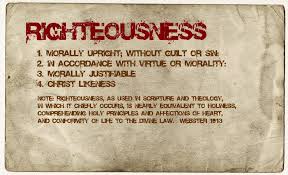


 Bjorkbloggen