The LORD makes even the wicked for the day of atonement? – Proverbs 16:4

The LORD hath made all things for himself: yea, even the wicked for the day of evil (Prov. 16:4)

Some Christians (reformed belivers) actually think that God created wickedness, and that he has made some people into sinners just so he can punish them on the day of evil. That is not the God of the Bible. The NKJV renders it:

Prov. 16:4 The Lord has made all for Himself, Yes, even the wicked for the day of
doom. (NKJV)

At first glance perhaps this verse seem to contradict other verses:

The LORD is good to all: and his tender mercies are over all his works. Psalms 145:9

For God so loved the world, that he gave his only begotten Son, that whosoever believeth in him should not perish, but have everlasting life. John 3:16

The Lord is not slack concerning his promise, as some men count slackness; but is longsuffering to us-ward, not willing that any should perish, but that all should come to repentance. 2 Peter 3:9

In Proverbs 16:4 the phrase, “things for Himself” is a translation from the Hebrew word maaneh which means “to answer to“, or “to give a reply to”, and what is being said in this verse is, “The Lord hath made all things to answer or give an account unto him”.   Sinners eventually reap what they sow.

This makes more sense and goes together well with the rest of the Bible where we can see that God EXPECTS us to be obedient to His commands. We would end up with huge contradiction if we read Proverbs 16:4 as though God creates people to be wicked.

The day of evil  

“The day of evil” is indeed the day of doom. That is when all must give account onto God.

Deut. 31:29 For I know that after my death ye will utterly corrupt yourselves, and turn aside from the way which I have commanded you; and evil will befall you in the latter days; because ye will do evil in the sight of the Lord, to provoke him to anger through the work of your hands.

2 Sam. 3:39 And I am this day weak, though anointed king; and these men the sons  of Zeruiah be too hard for me: the Lord shall reward the doer of evil according to his wickedness.

Jer. 17:18 Let them be confounded that persecute me, but let not me be confounded: let them be dismayed, but let not me be dismayed: bring upon them the day of evil, and destroy them with double destruction.

More verses from Proverbs 16

The context of Proverbs 16:4 is here below and we can read that a proud heart is an ABOMINATION to God, so clearly He wouldn’t predestine people to be wicked. Why would God even consider forcing us to perform abominable things before His eyes and then turn around and punish us for it?

Proverbs 16:2 All the ways of a man are clean in his own eyes; but the LORD weigheth the spirits.3 Commit thy works unto the LORD, and thy thoughts shall be established. [The LORD hath made all things to give account unto Him: yea, even the wicked, who think they are off His hook, have to give an account unto Him on the day of judgment.]5 Every one that is proud in heart is an abomination to the LORD: though hand join in hand, he shall not be unpunished.6By mercy and truth iniquity is purged: and by the fear of the LORD men depart from evil.

The text tells us that people can depart from evil if they FEAR God, which is something THEY must do. God created all things to give an account unto Him, even those who think they are getting away with their sins now. God sets up His creation where good is (eventually) rewarded, and evil is (eventually) punished. In this sense the “purpose” for the wicked is found in the “day of trouble” that shall come upon them. The verb translated in the NRSV as “made” (paw-al’) can be translated as “works out”.

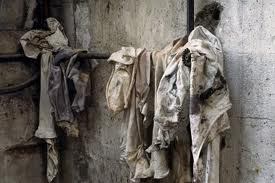
Our righteousness is like filthy rags due to our INIQUITIES – Isaiah 64:6

But we are all as an unclean thing, and all our righteousnesses are as filthy rags; and we all do fade as a leaf; and our iniquities, like the wind, have taken us away (Isaiah 64:6)

This is the famous “filthy rags” verse that sometimes is used as an attempt to support the idea that whatever we do – whether we are agnostics or christians – our best deeds are still viewed as filthy and unclean before God. But this is not what the verse is saying – particularly not if we view it in context. We can read that there are indeed people who wait for God and remember Him, and we can read about people who work righteousness. We can read about the REASON why certain people’s righteousness is like filthy rags before God and that it’s DUE TO INIQUITY. Sins always separate us from our Holy God. This is the entire context:

Isaiah 64:4For since the beginning of the world men have not heard, nor perceived by the ear, neither hath the eye seen, O God, beside thee, what he hath prepared for him that WAITETH for him5Thou meetest him that rejoiceth and WORKETH RIGHTEOUSNESS, those that REMEMBER thee in thy ways: behold, thou art wroth; for we have sinned: in those is continuance, and we shall be saved. 6But we are all as an unclean thing, and all our righteousnesses are as filthy rags; and we all do fade as a leaf; and our INIQUITIES, like the wind, HAVE TAKEN US AWAY. 7And there is none that calleth upon thy name, that stirreth up himself to take hold of thee: for thou hast hid thy face from us, and hast consumed us, BECAUSE OF OUR INIQUITIES. 8But now, O LORD, thou art our father; we are the clay, and thou our potter; and we all are the work of thy hand. 9Be not wroth very sore, O LORD, neither remember iniquity for ever: behold, see, we beseech thee, we are all thy people.

In the next chapter we can see more evidence of that it’s iniquities that cause God to view also our righteousness as filthy rags. There is no obligation to commit iniquities. God doesn’t want people to be rebellious and walk in a way that is unholy to him. We can read below that people walk after their own thoughts, provoke him to anger, offer sacrifices to false gods, make abominable things, blaspheme him, forsake him, refuse to answer him, refuse to hear him, make evil things before his eyes, do things he does not delight in, etc. People couldn’t possibly be predestined to “choose” something that God does not take delight in, so this must mean that people have a free will to obey or disobey God. The next chapter says:

Isaiah 65: 2I have spread out my hands all the day unto a REBELLIOUS people, which walketh in a way that was not good, AFTER THEIR OWN THOUGHTS; 3A people that PROVOKETH me to anger continually to my face; that sacrificeth in gardens, and burneth incense upon altars of brick; 4Which remain among the graves, and lodge in the monuments, which eat swine’s flesh, and broth of ABOMINABLE THINGS is in their vessels;— 7Your INIQUITIES, and the iniquities of your fathers together, saith the LORD, which have burned incense upon the mountains, and BLASPHEMING ME upon the hills: therefore will I measure their former work into their bosom.—11But ye are they that FORSAKE the LORD, that FORGET my holy mountain, that prepare a table for that troop, and that furnish the drink offering unto that number. 12THEREFORE will I number you to the sword, and ye shall all bow down to the slaughter: BECAUSE WHEN I CALLED, YE DID NOT ANSWER; when I spake, ye did not hear; but did EVIL BEFORE MY EYES, and did CHOOSE THAT WHEREIN I DELIGHTED NOT13Therefore thus saith the Lord GOD, Behold, my servants shall eat, but ye shall be hungry: behold, my servants shall drink, but ye shall be thirsty: behold, my servants shall rejoice, but ye shall be ashamed:

It also makes perfect sense that God isn’t impressed even with our good deeds if we at the same time perform shameful things in other areas of our lives. (And as we know obedience is better than offerings.) If we confess our sins and REPENT on the other hand, then we are CLEANSED and regarded as righteous before God since we have no sins on our account any more. But we will never be considered “righteous” as long as we live unrighteous lives. 

Our good works CAN please God IF we live righteously, and then they are NOT viewed as “filthy rags”:

Matthew 25:21His lord said unto him, Well done, thou good and faithful servant: thou hast been faithful over a few things, I will make thee ruler over many things: enter thou into the joy of thy lord.

Acts 10:34 Then Peter opened his mouth, and said, Of a truth I perceive that God is no respecter of persons: 35But in every nation he that feareth him, and WORKETH RIGHTEOUSNESS, is accepted with him.

2 Pet 2:7 And delivered just Lot, vexed with the filthy conversation of the wicked: 8(For that righteous man dwelling among them, in seeing and hearing, vexed HIS righteous soul from day to day with their unlawful deeds)

Rom. 2:Who will render to every man according to his deeds: 7To them who by patient continuance in well doing seek for glory and honour and immortality, eternal life:

Luke 6:45A good manout of the good treasure of his heart bringeth forth that which is good; and an evil man out of the evil treasure of his heart bringeth forth that which is evil: for of the abundance of the heart his mouth speaketh.

The better option is to live holy lives, because then we don’t provide “filthy rags” before God.

King David said “In sin did my MOTHER conceive me”, but it’s no support for a sinful nature Ps. 51:5

Behold, I was shapen in iniquity, and in sin did my mother conceive me (Ps. 51:5)

This verse concerns two people – King David and his mother*). No one else is spoken about so we can’t assume that all the people in the world are referred to here. The event spoken of is the conception of David and not the birth of David, and David is not saying that he was born as a sinner but possibly that his mother was in sin when she got pregnant. It could very well be that she was sinning when she conceived him, and a case could be made that this verse is talking about the defilement of David’s mother – because she was previously the wife (or concubine) of a heathen king.

The book of psalms is a poetic book and this means that it can be taken literally or figuratively depending on the context, so we must therefore be careful so we won’t end up starting a new doctrine based on pure poetry. It’s never a good idea to take a verse from Psalms, Proverbs or other poetic texts, to make a doctrine out of it which is contrary to other more clear verses in the Bible. We can reach all kinds of crazy conclusions with such methods. This particular verse in Psalms has often been used as an attempt to prove that David and ALL people under the sun are born in sin, but it fails miserably.

Some facts concerning David and his mother

David had two half-sisters (1 Chron. 2:13-16), and their father was not Jesse but Nahash (2 Sam. 17:25) who was an Ammonite king (1 Sam. 11:1). David’s mother might have been a second wife of Jesse. Perhaps the first wife of Jesse was considered superior to his second wife, because this would explain why David’s half brothers viewed themselves as superior to David and why David was not called before Samuel among the other sons – as he was possibly viewed as an illegitimate child (1 Sam. 16:11). We can speculate further that perhaps David’s mother was not married to Jesse when she became pregnant, or maybe she was still the concubine of, or married to Nahash when she conceived David. Moreover, we can’t rule out that it might be as per this story, reminding us about Jacob and Leah + her sister Rachel. If this story is applicable, then Jesse is indeed David’s father without even knowing it due to a sneaky plan carried out by his wife, and David’s brothers would regard him as an illegitimate and hated son of their mother. Either way, this poetic psalm simply cannot be used as support for that man is born with a sinful nature.

Psalm 69:8 I am become a stranger unto my brethren, and an alien unto my mother’s children.— 19 Thou hast known my reproach, and my shame, and my dishonour: mine adversaries are all before thee.—21 They gave me also gall for my meat; and in my thirst they gave me vinegar to drink.22 Let their table become a snare before them: and that which should have been for their welfare, let it become a trap.

David was not blaming his sin on his birth, but he was simply stating that even the circumstances related to his birth were surrounded by sin, and he also says that he was “wonderfully” and “marvelously” made by God in the womb (Ps. 139:13-14). David is in Psalms 51 speaking to the Lord but he is not trying to ask God for forgiveness for that he (David) had the nerve to be born with a sinful nature – because that would hardly be David’s fault. On the contrary, sin at birth would be something that he could blame God for IF it were true – which it isn’t.

Psalms 51 starts out saying

Psalm 51:1 Have mercy upon me, O God, according to thy lovingkindness: according unto the multitude of thy tender mercies blot out MY transgressions.2 Wash me throughly from MINE iniquity, and cleanse me from MY sin.3 For I acknowledge MY transgressions: and MY sin is ever before me. Against thee, thee only, have I sinned, and done this evil in thy sight: that thou mightest be justified when thou speakest, and be clear when thou judgest.

If a person has an intimate relationship and conceives against the law of God, whose sin is it? The person who conceives or the baby that is conceived? Clearly it’s the former since the one being conceived doesn’t have any choice in the matter – which our righteous God is well aware of. We are sinners when we break the law of God, and it’s not a sin to be conceived or to be born into this world – neither is it evil.

Psalms 51 goes on to say:

Psalm 51:7 Purge me with hyssop, and I shall be clean: wash me, and I shall be whiter than snow. 8Make me to hear joy and gladness; that the bones which thou hast broken may rejoice…

Few would read this in a LITERAL sense. Can hyssop really make our sins go away, and can broken bones rejoice? Poetry might speak the whole truth or it might mirror the truth poetically. David was in jeopardy of losing the Spirit, because God had broken the covenant with him:.

Psalm 51:11 “Cast me not away from thy presence; AND TAKE NOT THY HOLY SPIRIT FROM ME.” 

In Ps. 51:14 David is talking about “bloodguiltyness”, and it’s possible that he compares himself with his mother who also sinned in a similar way during his conception. This could explain his comparison with his mother in the previous verses.

Also compare with these verses:

Psalm 22:But thou art he that took me out of the womb: thou didst make me hope when I was upon my mother’s breasts.10 I was cast upon thee from the womb: thou art my God from my mother’s belly.

Psalm 139:14 I will praise thee; for I am fearfully and wonderfully made: marvellous are thy works; and that my soul knoweth right well.

None of the early church fathers the first 250+ years AD (with no exception) taught that man is born with a sinful nature (which you can read in this article with quotes from Ignatius, Irenaeus, etc) and the popularity of the idea of original sin can actually be traced back to Augustine (a former gnostic) and blamed on him. If neither the Bible nor the old church fathers taught original sin, but the contrary, we know we are on the wrong path if we still teach it.

Do read my blog post about Romans 5 (and the non-existent sinful nature) in this article

*) According to Midrashim, King David’s mother was Nitzebet.

The prodigal son went from being alive, to lost, to alive again – Luke 15

Some suggest that since the prodigal son never stopped being the son of his Father, this  means that his life was never in real danger. But is this true? There are parents who have indeed disinherited a child for various reasons. Maybe there are parents out there, hoping their son will return back to them and ask for forgiveness for having rejected them, but if not they might decide to disinherit him. Some also suggest that this parable is about jews/gentiles, but parables can have double meanings. We can learn a lot by this parable:

  • The prodigal son was spiritually DEAD during his absence, but he still made a good moral decision to return to his Father. No one forced the son to return, but he made this own decision.

  • The prodigal son REPENTED and this is what the parable is all about. He realized he had sinned and planned what he would say to his Father when he returned back home, which he also effectuated. His Father accepted his excuse and forgave him which he was always prepared to do. Even if our sins are red as crimson they can be white as snow. Just before the long parable about the prodigal son, we can see the two previous parables ending with:

     7I say unto you, that likewise joy shall be in heaven over one sinner that repenteth, more than over ninety and nine just persons, which need no repentance.

  • 10Likewise, I say unto you, there is joy in the presence of the angels of God over one sinner that repenteth.

  • The prodigal son went from being 1) alive, to 2) dead, to 3) alive again since we can read: “for this thy brother was dead, and is alive AGAIN; and was lost, and is found”. His own Father declared his son lost and DEAD while he was away living in sin, so it didn’t help this son at all to still be the physical son of his Father when he was still lost and dead while away.

  • Naturally a person who lives in unrepentant sin, such as fornication and idolatry, can’t be on his way to heaven. The prodigal son obeyed sin, which means he was a slave to sin and thus a SINNER. We are slaves to whom we obey and nothing impure shall enter heaven. Sinning will always separate us from God and the only solution is repentance.

  • The Father didn’t travel around to look for his son or forced him to come back. He stayed at home, hoping he would return. The son was the one who took the initiative to return and not the Father, but when the son did return the Father rushed out to meet him. There is joy in the presence of the angels of God over one sinner that repenteth!

  • The other brother didn’t lose anything financially by the return of his brother, because everything that his Father owned was already his. He could have taken the chance to be joyful about the return of his brother and that he came back to life.

  • Surely we must agree on that the prodigal son is a good example of a person who was sowing to his flesh while he was away living in sin with prostitutes? What does the Bible say about the spiritual state of such a sinner? :


Galatians 6:8For he that soweth to his flesh shall of the flesh reap CORRUPTION; but he that soweth to the Spirit shall of the Spirit reap LIFE EVERLASTING. 

Corruption is contrary to life everlasting so we should not deceive ourselves into thinking that we are still saved even though we live according to the flesh. The prodigal son sinned together with harlots, so if he had died while still being unrepentant he would never have made it to heaven. Unless you believe unrepentant sinners can enter the Kingdom of God.

The entire parable

24For this my son WAS DEAD, and is ALIVE AGAIN; he WAS LOST, and is FOUND. And they began to be merry. 

 32 It was meet that we should make merry, and be glad: for this thy brother WAS DEAD, and is ALIVE AGAIN; and WAS LOST, and IS FOUND.

Luke 15:10Likewise, I say unto you, there is joy in the presence of the angels of God over one sinner that repenteth.11And he said, A certain man had two sons: 12And the younger of them said to his father, Father, give me the portion of goods that falleth to me. And he divided unto them his living. 13And not many days after the younger son gathered all together, and took his journey into a far country, and there wasted his substance with riotous living. 14And when he had spent all, there arose a mighty famine in that land; and he began to be in want. 15And he went and joined himself to a citizen of that country; and he sent him into his fields to feed swine. 16And he would fain have filled his belly with the husks that the swine did eat: and no man gave unto him. 17And when he came to himself, he said, How many hired servants of my father’s have bread enough and to spare, and I perish with hunger! 18I will arise and go to my father, and will say unto him, Father, I have sinned against heaven, and before thee, 19And am no more worthy to be called thy son: make me as one of thy hired servants. 20And he arose, and came to his father. But when he was yet a great way off, his father saw him, and had compassion, and ran, and fell on his neck, and kissed him. 21And the son said unto him, Father, I have sinned against heaven, and in thy sight, and am no more worthy to be called thy son. 22But the father said to his servants, Bring forth the best robe, and put it on him; and put a ring on his hand, and shoes on his feet: 23And bring hither the fatted calf, and kill it; and let us eat, and be merry: 24For this my son was dead, and is alive again; he was lost, and is found. And they began to be merry. 25Now his elder son was in the field: and as he came and drew nigh to the house, he heard musick and dancing. 26And he called one of the servants, and asked what these things meant. 27And he said unto him, Thy brother is come; and thy father hath killed the fatted calf, because he hath received him safe and sound. 28And he was angry, and would not go in: therefore came his father out, and intreated him. 29And he answering said to his father, Lo, these many years do I serve thee, neither transgressed I at any time thy commandment: and yet thou never gavest me a kid, that I might make merry with my friends: 30But as soon as this thy son was come, which hath devoured thy living with harlots, thou hast killed for him the fatted calf. 31And he said unto him, Son, thou art ever with me, and all that I have is thine. 32It was meet that we should make merry, and be glad: for this thy brother was dead, and is alive again; and was lost, and is found.

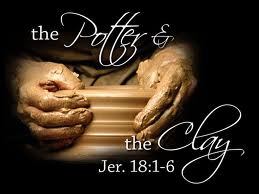
The potter acts depending on the clay – we have a free will – Romans 9

Hath not the POTTER power over the clay, of the same lump to make one vessel unto honour, and another unto dishonour? Rom. 9:21

We are often told that we are like clay in a potter’s hand, as though we have no free will of our own but turn out exactly as the potter (God) wants us to turn out. IF that idea is true, then we can only blame GOD ALONE if we turn out as murderers and thieves. We would be poor victims in the hands of the evil potter since WE didn’t ask to become murderers and thieves, and we apparently have no say in the matter if the case is that the potter alone makes the decisions and also implements them.  CLEARLY this is not the picture the Bible gives us, since all of us are expected to obey God’s commandments which are NOT too grievous for us to keep, and WE are responsible for each one of our transgressions. If God is the one who decides how we will turn out, why doesn’t he make us ALL vessels unto honor? What interest would he possibly have to purposely make some of us into bad vessels? Doesn’t God want us to be obedient and godly human beings? Of course he does. The vessels of mercy are “afore prepared“, and the vessels of wrath are “fitted/prepared” for destruction (two different Greek words), which means that the verse doesn’t tell us that God prepared beforehand to destroy a certain amount of people – unless of course they themselves sinned and caused their own demise. People who have chosen to be wicked are those who are fitted for destruction, and hell awaits them for their unfortunate choice to be wicked.

2 Tim. 2:21 tells us that MAN is expected to PURGE HIMSELF from the vessels of dishonor, and if he does he will be a vessel unto HONOR. Man is expected to recover himself out of the snare of the devil, and he can do this through obeying the instructions we can read about below:

2 Tim 2:20 But in a great house there are not only vessels of gold and of silver, but also of wood and of earth; and some to honour, and some to dishonour. 21 If a man therefore PURGES HIMSELF from these, he shall be a vessel unto HONOUR, sanctified, and meet for the master’s use, and prepared unto every good work.22Flee also youthful lusts: but follow righteousness, faith, charity, peace, with them that call on the Lord out of a pure heart. 23But foolish and unlearned questions avoid, knowing that they do gender strifes. 24And the servant of the Lord must not strive; but be gentle unto all men, apt to teach, patient, 25In meekness instructing those that oppose themselves; if God peradventure will give them repentance to the acknowledging of the truth; 26And that they may recover themselves out of the snare of the devil, who are taken captive by him at his will. 

So man is asked to 1) purge himself from the vessels of dishonour, 2) flee from youthful lusts, 3) follow righteousness, faith, charity, peace, etc, 4) avoid foolish and unlearned questions, 5) instruct in meekness those who oppose themselves, 6) leading to that they will recover themselves out of the snare of the devil by doing so. Lots for us to DO.

Read also below in Jeremiah 18 that the vessel that the potter made of clay was MARRED in his hands. Is it likely that a potter wants the clay he is working with to be MARRED? Clearly not. A potter hopes the clay will cooperate and turn out as planned. If the clay doesn’t cooperate and refuses to turn out as hoped, then the only rightful place for the clay is on the scrap heap. All useless clay has fitted themselves for destruction, just like a murderer’s proper place is in jail (or in the electric chair). This however doesn’t mean we want clay to be useless or people to turn out as murderers. Read also the many IF:s involved in the text. God reacts depending on OUR actions:

Jeremiah 18
1The word which came to Jeremiah from the LORD, saying, 2Arise, and go down to the potter’s house, and there I will cause thee to hear my words. 3Then I went down to the potter’s house, and, behold, he wrought a work on the wheels. 4And the vessel that he made of clay WAS MARRED in the hand of the potter: so he made it again ANOTHER VESSEL, as seemed good to the potter to make it. 5Then the word of the LORD came to me, saying, 6O house of Israel, cannot I do with you as this potter? saith the LORD. Behold, as the clay is in the potter’s hand, so are ye in mine hand, O house of Israel.  7At what instant I shall speak concerning a nation, and concerning a kingdom, to pluck up, and to pull down, and to destroy it;  8IF that nation, against whom I have pronounced, turn from their evil, I WILL REPENT of the evil that I thought to do unto them.  9And at what instant I shall speak concerning a nation, and concerning a kingdom, to build and to plant it; 10If it do evil in my sight, that it obey not my voice, then I WILL REPENT of the good, wherewith I said I would benefit them. 11Now therefore go to, speak to the men of Judah, and to the inhabitants of Jerusalem, saying, Thus saith the LORD; Behold, I frame evil against you, and devise a device against you: return ye now every one from his evil way, and make your ways and your doings good.12And they said, There is no hope: but we will walk after our own devices, and we will every one do the imagination of his evil heart.

Below is more information about the clay and the potter, and we can read that men have “removed” their hearts from God. Bad choice on their part. They will have to take the consequences for their actions. 

Is. 29:13 Wherefore the Lord said, Forasmuch as this people draw near me with their mouth, and with their lips do honour me, but have removed their heart far from me, and their fear toward me is taught by the precept of men: 14Therefore behold, I will proceed to do a marvelous work among this people, even a marvelous work and a wonder: for the wisdom of their wise men shall perish, and the understanding of their prudent men shall be hid. 15Woe unto them that seek deep to hide their counsel from the Lord, and their works are in the dark, and they say, Who seeth us? and who knoweth us? 16Surely your turning of things upside down shall be esteemed as the potter’s clay: for shall the work say of him that made it, He made me not? or shall the thing framed say of him that framed it, He had no understanding?

The rhetorical question asked of the prophet is not whether the clay can talk back to the potter, but whether it ought to talk back to him. Surely we must agree on that people HAVE spoken back to God numerous times in history? Both angels and men have even rebelled against God on several occasions, so we CAN indeed speak back against God. The point is that we shouldn’t and WE must then take the consequences for not conforming to God’s will. Romans 9 is about God’s right to bring about his plan of salvation in the way he wants, which means to open up also for gentiles to be saved, upon the condition of FAITH and not the ceremonial law. God therefore has his full right to reject those with no faith and/or bad fruit, and welcome those who have faith and show good fruit. That is his prerogative. We wouldn’t read words such as “endured with much longsuffering” in this text unless there is synergism involved.

Romans 9:20Nay but, O man, who art thou that repliest against God? Shall the thing formed say to him that formed it, Why hast thou made me thus?21Hath not the potter power over the clay, of the same lump to make one vessel unto honour, and another unto dishonour?22What if God, willing to shew his wrath, and to make his power known, endured with much longsuffering the vessels of wrath fitted to destruction:23And that he might make known the riches of his glory on the vessels of mercy, which he had afore prepared unto glory,24Even us, whom he hath called, not of the Jews only, but also of the Gentiles?25As he saith also in Osee, I will call them my people, which were not my people; and her beloved, which was not beloved. 26And it shall come to pass, that in the place where it was said unto them, Ye are not my people; there shall they be called the children of the living God.

It doesn’t say in Rom. 9:22 that GOD is the one who “fitted” people for destruction. Some people are in fact heading for hell due to their destructive way of living, and they are then fitted (prepared) for destruction, and that’s their own doing. God hopes that they will repent for their sins and live, so he shows much long-suffering for such sinners, fitted for destruction, not wanting anyone to perish The verse should read: “What if God…who endured with much patience vessels of wrath which fitted themselves for destruction…

Ez. 18:31 Cast away from you all your transgressions, whereby ye have transgressed; and make you a new heart and a new spirit: for  why will ye die, O house of Israel? 

Ez.33:11 Say unto them, As I live, saith the Lord God, I have no pleasure in the death of the wicked; but that the wicked turn from his way and live: turn ye, turn ye from your evil ways; for why will ye die, O house of Israel?

The seed on stony ground which produces LIFE – Mark 4:16

True believers can believe for a while and fall away  

“Fall away” is a translation from the Greek word “skandalizo”. 

Mark 4:16-17 These likewise are the ones sown on stony ground who,  when they hear the word, immediately RECEIVE it with gladness; and they have no root in themselves, and so ENDURE only FOR A TIME. Afterward, when tribulation or persecution arises for the word’s sake, immediately they STUMBLE (skandalizontai).

The Greek word translated as “receive” is the same Greek word below, also translated as “receive”.

John 1:12 But as many as RECEIVED Him, to them He gave the right to become “children of God… 

John 13:20 Most certainly I tell you, he who receives whomever I send, receives me; and he who receives me, receives him who sent me.” 

Rom 5:11 Not only so, but we also rejoice in God through our Lord Jesus Christ, through whom we have now received the reconciliation. 

1 Cor 2:12 But we received, not the spirit of the world, but the Spirit which is from God, that we might know the things that were freely given to us by God.

The stony ground hearers were children of God as they endured for a time. The Greek word translated as “stumble” could also be translated as “fall away”. How can the stony ground hearers fall away from something they were never in? We see that these people heard the word, received the word and endured for a time, so these were genuine converts who stumbled due to persecution. Also below verses talk about a “falling away” based on “skandalizo”. 

 Matthew 24:9Then shall they deliver you up to be afflicted, and shall kill you: and ye shall be hated of all nations for my name’s sake. 10And then shall many be offended, and shall betray one another, and shall hate one another.

Matt. 5:29And if thy right eye offend thee, pluck it out, and cast it from thee: for it is profitable for thee that one of thy members should perish, and not that thy whole body should be cast into hell. 30And if thy right hand offend thee, cut it off, and cast it from thee: for it is profitable for thee that one of thy members should perish, and not that thy whole body should be cast into hell.

Matt 26: 31Then saith Jesus unto them, All ye shall be offended because of me this night: for it is written, I will smite the shepherd, and the sheep of the flock shall be scattered abroad. 32But after I am risen again, I will go before you into Galilee. 33Peter answered and said unto him, Though all men shall be offended because of thee, yet will I never be offended. 34Jesus said unto him, Verily I say unto thee, That this night, before the cock crow, thou shalt deny me thrice. 35Peter said unto him, Though I should die with thee, yet will I not deny thee. Likewise also said all the disciples.

1 Cor. 8:11And through thy knowledge shall the weak brother perish, for whom Christ died? 12But when ye sin so against the brethren, and wound their weak conscience, ye sin against Christ. 13Wherefore, if meat make my brother to offend, I will eat no flesh while the world standeth, lest I make my brother to offend.

We can get confirmation from yet other verses that there will indeed be people who will end up in apostasy (apostasia) in the end of times:

2 Thess. 2:3Let no man deceive you by any means: for that day shall not come, except there come a falling away first, and that man of sin be revealed, the son of perdition;

1 Tim. 4:1Now the Spirit speaketh expressly, that in the latter times some shall depart from the faith, giving heed to seducing spirits, and doctrines of devils;

The same parable is very similar in Luke and Matthew:

Luke 8:6And some fell upon a rock; and as soon as it was sprung up, it withered away, because it lacked moisture.

Luke 8:13They on the rock are they, which, when they hear, receive the word with joy; and these have no root, which for a while BELIEVE, and in time of temptation fall away.

Matt. 13: 20But he that received the seed into stony places, the same is he that heareth the word, and anon with joy receiveth it; 21Yet hath he not root in himself, but dureth for a while: for when tribulation or persecution ariseth because of the word, by and by he is offended.

Since the seed sprung up it shows it produced a plant (life) and we can read that the hearer believed for a while. Something can’t “wither” unless it had life to start with. The word for BELIEVE is pisteuó and is also used in many other verses, such as these:

John 3:18  For God so loved the world, that he gave his one and only Son, that whoever believes in him should not perish, but have eternal life.

John 3:36: One who believes in the Son has eternal life, but one who disobeys the Son won’t see life, but the wrath of God remains on him.

John 5:24 Most certainly I tell you, he who hears my word, and believes him who sent me, has eternal life, and doesn’t come into judgment, but has passed out of death into life.

John 6:35 Jesus said to them, “I am the bread of life. He who comes to me will not be hungry, and he who believes in me will never be thirsty.”

John 6:40 This is the will of the one who sent me, that everyone who sees the Son, and believes in him, should have eternal life; and I will raise him up at the last day.

John 7:38 He who believes in me, as the Scripture has said, from within him will flow rivers of living water.

John 11:25 Jesus said to her, “I am the resurrection and the life. He who believes in me will still live, even if he dies.”

John 12: 46 I have come as a light into the world, that whoever believes in me may not remain in the darkness.

John 14:12 Most certainly I tell you, he who believes in me, the works that I do, he will do also; and he will do greater works than these, because I am going to my Father.

Jesus is the author and finisher of our faith but he doesn’t choose who will be saved Hebr. 12:2

Looking unto Jesus the author and finisher of our faith; who for the joy that was set before him endured the cross, despising the shame, and is set down at the right hand of the throne of God (Hebr. 12:2)

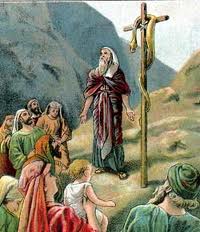
What does the expression “author and finisher of our faith” really mean? It means that there is no other name given under heaven whereby men can be saved (Acts 4:12). He is “the Alpha and Omega, the Beginning and the End”. We can read “Looking unto Jesus the author and finisher of our faith” or “let’s fix our eyes on Jesus” in another translation. That is a beautiful comparison with the brazen serpent in the desert, where the Israelites walked up to the serpent and LOOKED UP TO IT. They were not forced to  approach it and to behold it, but they used their own feet and their own free will to do it. What happens if we do NOT fix our eyes on Jesus? That would mean we have not fully abided in him, and then we will not bear fruit. This means we are risking our salvation.  Let’s view the rest of the context in the same chapter. The verse before lists a few things we ought to do in our race towards the goal:

Hebr. 12:1 Wherefore seeing we also are compassed about with so great a cloud of witnesses, let us lay aside every weight, and the sin which doth so easily beset us, and let us run with patience the race that is set before us

“Let us lay aside—the sin”. What happens if we choose to NOT adhere to this command and refuse to lay aside our sin? Will we be saved anyway? No, we must have our eyes fixed on Jesus and endure to the end. Read more about the IF:s:

Hebr. 12:5 And ye have forgotten the exhortation which speaketh unto you as unto children, My son, despise not thou the chastening of the Lord, nor faint when thou art rebuked of him—IF ye endure chastening, God dealeth with you as with sons; for what son is he whom the father chasteneth not? 8But IF ye be without chastisement, whereof all are partakers, then are ye bastards, and not sons.

Despise not”? “IF ye endure”?? What happens if we do despise Him and his chastening, and why are there IF’s involved if salvation is a done deal? Clearly there are conditions that are required for us to keep. We must abide in Christ and we are warned if we don’t.

Hebr.12:13 And make straight paths for your feet, LEST that which is lame be turned out of the way; but let it rather be healed.

“Lest”? Another warning!

Hebr. 12:4 Follow peace with all men, and holiness, without which no man shall see the Lord15Looking diligently lest any man fail of the grace of God; lest any root of bitterness springing up trouble you, and thereby many be defiled

“Lest” and “lest” again. We are warned that we must FOLLOW peace, and that we must have holiness, without which no man shall see the Lord. We are too look diligently LEST any man fail of the GRACE of God, LEST any root of bitterness might spring up, etc. Sins would DEFILE us, and can defiled men see the Lord? No, we just read that holiness is required, and it does not say that we can hide behind the blood of Jesus and still be saved in our sins. We are not righteous unless we act righteously.

Hebr.12:25 See that ye refuse not him that speaketh. For IF they escaped not who refused him that spake on earth, much more shall not we escape, if we turn away from him that speaketh from heaven

We are warned that we must not refuse him, for IF we do, and IF we turn away from him, we shall not escape. It’s all in our hands and God has made salvation possible for all of us.

If they shall fall away, to renew them again is impossible Hebr. 6:6

[If] they shall fall away, to renew them again unto repentance; seeing they crucify to themselves the Son of God afresh, and put him to an open shame (Hebr. 6:6)

The people spoken of are christians. They:

  • have once been enlightened
  • have tasted of the heavenly gift
  • have been made partakers of the Holy Spirit
  • have tasted the good word of God
  • tasted the powers of the age to come

The whole context is:

Hebr. 6:4For it is impossible for those who were once enlightened, and have tasted of the heavenly gift, and were made partakers of the Holy Ghost, 5And have tasted the good word of God, and the powers of the world to come, 6If they shall fall away, to renew them again unto repentance; seeing they crucify to themselves the Son of God afresh, and put him to an open shame. 

The word IF is not in the Greek in verse 6!:

(IF) they shall fall away, to renew them again unto repentance; seeing they crucify to themselves the Son of God afresh, and put him to an open shame” 

Consider what Adam Clarke wrote about this and the aorist tense:

“And having fallen away” I can express my own mind on this translation nearly in the words of Dr. Macknight: ‘The participles who were enlightened, have tasted, and were made partakers, being aorists, are properly rendered by our translators in the past time; wherefore parapesontas, being an aorist, ought likewise to have been translated in the past time, “HAVE fallen away”. Never­theless, our translators, following Beza*, who with­out any authority from ancient MSS. has inserted in his version the word “if” have rendered this clause, IF they fall away, that this text might not appear to contradict the doctrine of the perse­verance of the saints. But as no translator should take upon him to add to or alter the Scriptures, for the sake of any favourite doctrine, I have trans­lated parapesontas in the past time, “have fallen away” according to the true import of the word, as standing in connection with the other aorists in the preceding verses.

*) Theodore Beza was John Calvin’s successor 

Young’s literal translation reads: “And having fallen away, again to renew them to reformation, having crucified gain to themselves the Son of God, and exposed to public shame” (v. 6).

(I can add that the word IF is not present in the common Swedish Bibles so I didn’t have to write all this stuff  about the added word IF when I wrote the equivalent post in Swedish.)

There are a couple of suggestions why the christians in Hebr. 6:6 could not be restored to salvation even though the rest of the Bible provides examples of people who have repented and were brought back to life (for example when Peter sinned by denying Jesus).

1) They might have ended up with a reprobate mind, as in Romans 1 

Rom. 1:21 Because that, when they knew God, they glorified him not as God, neither were thankful; but became vain in their imaginations, and their foolish heart was darkened.—24 Wherefore God also gave them up to uncleanness through the lusts of their own hearts, to dishonour their own bodies between themselves:—26 For this cause God gave them up unto vile affections: for even their women did change the natural use into that which is against nature:—28 And even as they did not like to retain God in their knowledge, GOD GAVE THEM OVER TO A REPROBATE MIND, to do those things which are not convenient

The above concerns people who have no excuse for rejecting God since he has clearly been seen and understood by them through his creation. Because they refused to glorify God and instead pursued sin, God gave them over to a reprobate mind and then they were totally absorbed in their vain life styles and were totally lost. People can harden their hearts to the extent that there is no return.

Acts 17:30 And the times of this ignorance God winked at; but now commandeth all men every where to repent

Acts 11:18 When they heard these things, they held their peace, and glorified God, saying, Then hath God also to the Gentiles granted repentance unto life.

If God no longer calls/draws people through the Holy Spirit, and no longer grants people repentance, then people will be for ever separated from God.

2) It could be the unpardonable sin that is spoken about

Those addressed were Hebrew Christians, who were tempted to return to Juda­ism.

Hebr. 10:28 He that despised Moses’ law died without mercy under two or three witnesses:29 Of how much sorer punishment, suppose ye, shall he be thought worthy, who hath trodden under foot the Son of God, and hath counted the blood of the covenant, wherewith he was sanctified, an unholy thing, and hath done despite unto the Spirit of grace?

Mark 3:22 And the scribes which came down from Jerusalem said, He hath Beelzebub, and by the prince of the devils casteth he out devils23 And he called them unto him, and said unto them in parables, How can Satan cast out Satan?—28 Verily I say unto you, All sins shall be forgiven unto the sons of men, and blasphemies wherewith soever they shall blaspheme29 But he that shall blaspheme against the Holy Ghost hath never forgiveness, but is in danger of eternal damnation.

Before being received again into the synagogue they would have to announce publicly that Jesus was not the Son of God; that His blood would not be able to save anyone; and that His miracles were done by the power of the devil. Before their con­version they had belonged to the nation which had crucified Christ; to return to the synagogue would be to crucify to themselves the Son of God afresh and put Him to an open shame; it would be the awful sin of apostasy.

If one accepts this interpretation then he can better understand why those in Heb. 6:4-6 who fell away (parapesontas) could not be renewed by repentance unto salvation as they were enemies of God (10:29), but others, like Peter, who didn’t sin to that degree, could be renewed. The word in this verse translated fall away (parapesontas) is found only once in the NT and that is here!

Moreover, Peter and the other apostles fell away (skandalizo) (Mt. 26:31,33) and perhaps multitudes like them throughout the centuries, but it is not the same Greek wordJesus taught that blasphemy against the Holy Spirit is directly related to saying that the Lord had an evil spirit by which he was driving out demons. Hence, a link seems to exist between eternal sin and openly insulting the Spirit of grace (Hebr. 10:29). This could possibly explain why the ones referred to in 6:6 could not be renewed unto salvation.

We already know from numerous examples in the Bible that a sinner CAN be renewed and cleansed from his sins, if he confesses his sins and repents, but no one can be forgiven for the unpardonable sin.

For whom the Lord loves he chastens Hebr. 12:6

Chastening does not always lead to repentance

It is clear from the Bible that chastening does not always equal repentance and improvement, but this is still the aim with the chastening. We are warned that we must hearken to the chastening and to not despise it. This is what the KJV says about “chastening” and “chasten”:

Deuteronomy 21:18 If a man have a stubborn and rebellious son, which will not obey the voice of his father, or the voice of his mother, and that, when they have chastened him, will not hearken unto them:19Then shall his father and his mother lay hold on him, and bring him out unto the elders of his city, and unto the gate of his place

Job 5:17 Behold, happy is the man whom God correcteth: therefore despise not thou the chastening of the Almighty:

Proverbs 3:11 My son, despise not the chastening of the LORD; neither be weary of his correction:

Hebrews 12:5 And ye have forgotten the exhortation which speaketh unto you as unto children, My son, despise not thou the chastening of the Lord, nor faint when thou art rebuked of him:

Hebrews 12:6 For whom the Lord loveth he chasteneth, and scourgeth every son whom he receiveth. 7 IF ye endure chastening, God dealeth with you as with sons; for what son is he whom the father chasteneth not?—10 For they verily for a few days chastened us after their own pleasure; but he for our profit, that we might be partakers of his holiness. 11 Now no chastening for the present seemeth to be joyous, but grievous: nevertheless afterward it yieldeth the peaceable fruit of righteousness unto them which are exercised thereby.

Revelation 3:19 As many as I love, I rebuke and chasten: be zealous therefore, and REPENT.

AND

Deuteronomy 8:5 Thou shalt also consider in thine heart, that, as a man chasteneth his son, so the LORD thy God chasteneth thee.

2 Samuel 7:14 I will be his father, and he shall be my son. If he commit iniquity, I will chasten him with the rod of men, and with the stripes of the children of men:

Job 33:19 He is chastened also with pain upon his bed, and the multitude of his bones with strong pain:

Psalm 6:1O LORD, rebuke me not in thine anger, neither chasten me in thy hot displeasure.

Psalm 38:1O Lord, rebuke me not in thy wrath: neither chasten me in thy hot displeasure.

Psalm 69:10 When I wept, and chastened my soul with fasting, that was to my reproach.

Psalm 73:14 For all the day long have I been plagued, and chastened every morning.

Psalm 94:12 Blessed is the man whom thou chastenest, O LORD, and teachest him out of thy law;

Psalm 118:18 The LORD hath chastened me sore: but he hath not given me over unto death.

Proverbs 13:24 He that spareth his rod hateth his son: but he that loveth him chasteneth him betimes.

Proverbs 19:18 Chasten thy son while there is hope, and let not thy soul spare for his crying.

Daniel 10:12 Then said he unto me, Fear not, Daniel: for from the first day that thou didst set thine heart to understand, and to chasten thyself before thy God, thy words were heard, and I am come for thy words.

Isaiah 26:16 LORD, in trouble have they visited thee, they poured out a prayer when thy chastening was upon them.

1 Corinthians 11:32 But when we are judged, we are chastened of the Lord, that we should not be condemned with the world.

2 Corinthians 6:9 As unknown, and yet well known; as dying, and, behold, we live; aschastened, and not killed

Augustine, the former gnostic, and his many heretical views

Augustine, a former gnostic, lived between 354 and 430 AD, and introduced the following heretical views into church and made them popular

1. Absolute predestination (God decides who will be saved/doomed)
2. Impossibility of falling away or apostasy (Eternal Security)
3. Man has no free will (monergism)
4. One cannot know if he/she is saved (since also those who are carnal minded might be saved)
5. God commands impossibilities (God requesting man to stop sinning which he cannot do)
6. The supreme authority of the Roman church
7. Purgatory
8. Prayers for the dead
9. The damnation of unbaptized infants and adults
10. Sex is sinful also within a marriage because depravity is inherited (hence the rise of monasteries)
11. Mary never committed sin, and we do well to worship her/pray to/through her
12. The gifts of healing, prophecy and tongues have ceased
13. Apocrypha is included in the Scriptures
14. Eucharist is necessary for salvation
15. Giving people the official “saint” title

Unlike Pelagius, Augustine didn’t understand much Greek. The historian Neander observed that Augustine’s teaching “contains the germ of the whole system of spiritual despotism, intolerance, and persecution, even to the court of the Inquisition”. He instigated bitter persecutions against the Bible-believing Donatists who were striving to maintain pure churches after the apostolic faith.

Augustine interpreted Bible prophecy allegorically; among other things teaching that the Catholic Church is the kingdom of God.

Augustine was one of the fathers of the heresy of infant baptism, claiming that unbaptized infants were lost, and calling all who rejected infant baptism “infidels” and “cursed”.

Augustine exalted church tradition above the Bible and said,”I should not believe the gospel unless I were moved to do so by the authority of the Catholic Church”. 

He was among the first who taught a-millennialism and that the nephilim were descendents of Cain instead of (as the Bible says) a mixture of angels and female human beings.

Augustine said:

“By Adam’s transgression, the freedom of’ the human will has been completely lost.”

“By the greatness of the first sin, we have lost the freewill to love God.”

“By subverting the rectitude in which he was created, he is followed with the punishment of not being able to do right” and “the freedom to abstain from sin has been lost as a punishment of sin.”

According to Wikipedia we can learn: 

He was contemporary with Jerome and Ambrosius. In his early years he was heavily influenced by Manichaeism and afterward by the Neo-Platonism. Although he later abandoned Neoplatonism some ideas are still visible in his early writings. After his conversion to Christianity, Augustine developed his own approach to philosophy and theology, accommodating a variety of methods and different perspectives. He believed that the grace of Christ was indispensable to human freedom, and he framed the concepts of original sin and just war.

When the Western Roman Empire was starting to disintegrate, Augustine developed the concept of the Catholic Church as a spiritual City of God (in a book with the same name). The Catholic Church and the Anglican Communion view him as an pre-eminent Doctor of the Church, and the patron of the Augustinian religious order. Many Protestants, especially Calvinists, consider him to be one of the theological fathers of Reformation.   Much of Augustine’s later life was recorded by his friend Possidius, bishop of Calama (present-day Guelma, Algeria), in his Sancti Augustini Vita. Possidius admired Augustine as a man of powerful intellect and a stirring orator who took every opportunity to defend Christianity against its detractors. Reformed theologians such as Martin Luther and John Calvin would look back to him as their inspiration.

Compared with Augustine,  Pelagius was way more consistent with the Bible and shared the same Bible interpretation as the church fathers before him. (Read more about him in another blog post in the same Category.)