Archives

The IRS in the USA is using mafia methods

Lois Lerner at IRS hearing

The way that the Obama administration has chosen to run the country is frightening and the IRS scandal is unfortunately one in a row of unfortunate things that have unfolded while Obama has been in rule. (There are even concerns about how clean the president election really was due to many charges of voter frauds.) Either he doesn’t know much about what’s happening all around him and in his own administration, or he does know but doesn’t care – and we can speculate if he might even be in charge of it. Either option is devastating for him, and America deserves a better situation than this.

Article by Jay Sekulow May. 23, 2013 is found here Letters of Intimidation to Tea Party Groups from Lois Lerner – IRS Director of Exempt Organizations.

Isaiah 53:4 Jesus did not literally BEAR our sins on himself and in his body

kors 7Jesus did not literally BEAR our sins on himself or in his body

Isaiah 53:Surely he hath borne our griefs, and carried our sorrows: yet WE did esteem him stricken, smitten of God, and afflicted.

This is a prophesy about Jesus Christ, and it was made by the prophet Isaiah about 800 years before Jesus was even born. When you read this verse which event do you think it concerns and which prophesy in the New Testament do you believe has come true through this old prophesy? Do you believe it’s Jesus death on the cross – because that’s where he died for the sins of the world? This is only true in part. Jesus did literally bear the cross he was about to be nailed upon – a symbol for getting us cleansed and saved – but if we should go by the Bible text this is actually not what Matthew had in mind with the expression ”he hath borne our griefs, and carried our sorrows”. Believe it or not, but Matthew suggests that this particular prophesy was fulfilled even before the suffering on cross, specifically when Jesus was still living and walked around among people to cast out evil spirits and heal the sick!

Matt 8:16 When the even was come, they brought unto him many that were possessed with devils: and he cast out the spirits with his word, and healed all that were sick:17 THAT IT MIGHT BE FULFILLED WHICH WAS SPOKEN BY ESAIAS THE PROPHET, saying, Himself . Isa. 53:4

As you can see, it’s the concept of casting out evil spirits and healing the sick that is considered being the fulfillment by Isaiah 53:4. There is an interesting comparison between Jesus getting people free by casting out demons from them and healing them from illnesses, AND dying as a sin offering for the people of the world in order to make them free from their sins which they are chained by. When Jesus walked around among people and healed them from their illnesses, he did NOT take their sins in his body, and neither did he bear people’s sins  in him or on him in any way. He did not even briefly take their illnesses in his body prior to removing them completely, because he simply REMOVED the illnesses without having the sins making a detour in his body before he did so. The Bible is clear that Jesus died to REMOVE THE SINS OF THE WORLD – and naturally not without conditions, or else everyone would be saved.

So when we read in Isaiah 53:4 that Jesus BORE our illnesses, Matthew equals this information with that he REMOVED them and that is the way that Jesus handles our sins. He makes an arrangement to simply have them REMOVED under certain conditions. Jesus only bore our sins symbolically, in the same sense that the  the sacrificed animals in the old testament bore the sins of the people. The animals didn’t become sinful (as some of the proponents of the penal substitution believe) but they were simply offered as perfect sin offerings and died FOR the sins of the people. The animals were sweet-smelling, just like the offer of the son before his Father, and if something is labelled as sweet smelling you don’t turn away from it but you fully embrace it. The death of the son was planned long before it happened so it would have been rather cowardly for a Father to turn his back on his son when he needed him the most. Read more about this issue in this article.

John 1:29The next day John seeth Jesus coming unto him, and saith, Behold the Lamb of God, which taketh away the sin of the world.

Hebr. 9:26 For then must he often have suffered since the foundation of the world: but now once in the end of the world hath he appeared to put away sin by the sacrifice of himself.28 So Christ was once offered to bear the sins of many; and unto them that look for him shall he appear the second time without sin unto salvation.

Eph. 5:And walk in love, as Christ also hath loved us, and hath given himself for us an offering and a sacrifice to God for a sweetsmelling savour.

Here are some different translations of  Isaiah 53:5:

But he was wounded for our transgressions, he was bruised for our iniquities: the chastisement of our peace was upon him; and with his stripes we are healed. (KJV)

The chastisement FOR our peace was upon Him (NKJV)

Upon him was the chastisement that brought us peace (ESV)

Here are some different translations of Isaiah 53:6 (“to fall” comes closer to the Hebrew):

All we like sheep have gone astray; we have turned every one to his own way; and the Lord hath laid on him the iniquity of us all. (KJV)

—And Jehovah hath caused to meet on him, The punishment of us all (Young’s literal)

— But the Lord has caused the iniquity of us all To fall on Him. (NASB)

Also Peter uses Isaiah’s choice of words and it’s true that Jesus symbolically bore our sins in his body (as in “bearing” the burden/responsibility or similar) and died for us. Jesus body suffered for our sake, so we can say that he symbolically “bore” our sins in his aching body, or “on his shoulders”. He wouldn’t have to suffer had it not been for our sins. Peter doesn’t argue against the interpretation of Matthew:

1 Pet 2:24 Who his own self bare our sins in his own body on the tree, that we, being dead to sins, should live unto righteousness: by whose stripes ye were healed.25 For ye were as sheep going astray; but are now returned unto the Shepherd and Bishop of your souls.

In the same chapter we can read that Jesus “bore” the sins of many, and if this word means “remove” earlier in the chapter – as Matthew claims – then it should mean the same thing here. In Isaiah 53:11-12 the Hebrew words sabal and nasa are translated in the Septuagint with anaphero”Is. 53:11 He  shall bear (sabal/anaphero) their iniquities”. ”Anaphero” is translated ”remove” in other places, and it makes perfect sense that Jesus REMOVE sins.

Isaiah: 53:11 He shall see of the travail of his soul, and shall be satisfied: by his knowledge shall my righteous servant justify many; for he shall bear their iniquities.12 Therefore will I divide him a portion with the great, and he shall divide the spoil with the strong; because he hath poured out his soul unto death: and he was numbered with the transgressors; and he bare the sin of many, and made intercession for the transgressors.

God the Father never punished Jesus, and Jesus didn’t take our punishment instead of us or God’s wrath instead of us!straffa

Notice that it says in Is. 53:4 that WE did esteem him stricken, smitten of God, and afflicted”. So in OUR view (not necessarily in God’s view) that is what it appeared to us, and it’s not hard to get this exact picture if we look up to Jesus on the cross to see him hanging there in distress, with much blood, bruises, sweat and with facial expressions revealing excruciating pain for our sake. The soldiers under the cross might even have suggested that God had punished Jesus for making himself equal with Him. God the Father of course has no reason to PUNISH Jesus for doing his exact will by dying for mankind, which was the plan all along! Nevertheless, Jesus suffered greatly on the cross but not because his Father sadistically wanted to harm him but because wicked hands caused the pain. God allowed it to happen because of the aim to have his son offering up his life for us, and this is tied to a high price which includes much suffering, stress and agony. Only in that sense can we say that “it pleased God to bruise him”, even if the Father was not a cause of it. Nowhere in the Bible can we read that Jesus was PUNISHED for our sins, even if it is an oft-mentioned claim.

Jesus did not die “instead of us” because if that were true then WE wouldn’t have to die, which we know is not true. Jesus died for ALL but he clearly didn’t die instead of ALL because then ALL would be free from the risk of ever having to die. But we are all going to die physically, and some of those people who Jesus died for will also die spiritually. (The KJV Bible offers a good translation when it comes to the Greek word ”huper”, because it’s translated with “for” when it comes to the atonement on the cross and not “instead of”.)  Neither did Jesus die “in our place”. Was our place ever supposed to be on the cross? Of course not. And if  Jesus death on the cross means that he took the punishment “instead of us”, then those people who Jesus died for (every single one) would be forever free from any punishment no matter how they lived their lives. We would all be born saved and our sins would be forgiven before they were even committed because Jesus has already paid for them and he has taken the punishment for those sins on himself and “instead of us”. Clearly that will turn into an unbiblical theology. If anyone does something “instead of” someone else, then it doesn’t make sense that BOTH  still end up doing the task in question. If a prisoner at war is told that he must be executed, and someone else steps forward and makes an offer to take this punishment in the other person’s stead (instead of him) and the offer is accepted, then it doesn’t make sense if BOTH will be executed!

Right terminology please!

Maybe you feel that it’s splitting hairs to even discuss if it’s better to say “instead of” or “for“, but it’s helpful to sort this out to get a better understanding of these things in order to not risk ending up with false doctrines. It’s not a salvation matter BUT false terms can be the reason why much heresy is creeping into our churches, and one false doctrine can easily lead to another false doctrine. That’s also exact what has happened in many of our churches today, and we have various degrees of gnosticism among us without even being aware of it.

Let’s say that you’ve been guilty of speeding way too fast in your car, and a police man stops you and writes you a ticket. Your kind FRIEND then offers to pay for it and he does so right away!  Wouldn’t you be quite surprised if you still received a reminder in your mailbox, to pay for this exact ticket that is supposed to have been PAID IN FULL! Was the ticket paid in full or not? Did Jesus pay for our sins or not? PAID IS PAID! IF Jesus paid for our sins (which the Bible doesn’t say), then you should be completely off the hook, and no one has any right to demand anything else from you since Jesus paid for your sins – which means that your sins should have been paid for and forgiven before you even committed them. We know that this is not the case though, and that’s why it’s better to phrase ourselves in a more Biblical way. IF you insist on using the word “pay” (I wouldn’t advise it, and it’s better to say “Jesus died FOR our sins“, then it’s better to say:

Jesus paid a big price for us, since he gave his own life

instead of:

Jesus paid for our sins

The punishment that we deserve is an eternity in Hell, is it not? Did Jesus take that punishment upon himself and instead of us? Of course not. Neither does God the Father have a need to pour out wrath on someone for no reason, and naturally he wouldn’t even think about pouring out wrath on his son who was obedient unto death. If Jesus “satisfied God’s wrath” or “took God’s wrath on himself and instead of us“, then none of us would have to risk being affected by God’s wrath even if we sinned all day long. If Jesus took this wrath on himself, then we shouldn’t have to do this as well, but the Biblical truth is that God will show wrath on those who refuse to believe and/or those who do evil and that includes also christians. This means Jesus didn’t satisfy God’s wrath. 

John 3:36 He that believeth on the Son hath everlasting life: and he that believeth not the Son shall not see life; but the wrath of God abideth on him.

Romans 1:18 For the wrath of God is revealed from heaven against all ungodliness and unrighteousness of men, who hold the truth in unrighteousness;

Romans 2:5 But after thy hardness and impenitent heart treasurest up unto thyself wrath against the day of wrath and revelation of the righteous judgment of God

Romans 13:4 For he is the minister of God to thee for good. But if thou do that which is evil, be afraid; for he beareth not the sword in vain: for he is the minister of God, a revenger to execute wrath upon him that doeth evil.

Ephesians 5:6 Let no man deceive you with vain words: for because of these things cometh the wrath ofGod upon the children of disobedience.

It’s a huge difference between these two claims (the first being the best):

“Jesus died as a sin offering for all mankind (a high price), and by doing so enabled whosoever to be saved on the condition that they believe and repent”

“Jesus paid for our SINS on the cross and died instead of us and in our place. He also took our punishment instead of us and satisfied God’s wrath”

As we can see below, our sins are not actually removed until we REPENT. It’s also interesting to see that also Luke (or rather Peter who Luke is talking about) connects the power to heal the sick with the majestic power which derives from Jesus sin offering on the cross and faith in him.

Acts 3:11 And as the lame man which was healed held Peter and John, all the people ran together unto them in the porch that is called Solomon’s, greatly wondering.12 And when Peter saw it, he answered unto the people, Ye men of Israel, why marvel ye at this? or why look ye so earnestly on us, as though by our own power or holiness we had made this man to walk?13 The God of Abraham, and of Isaac, and of Jacob, the God of our fathers, hath glorified his Son Jesus; whom ye delivered up, and denied him in the presence of Pilate, when he was determined to let him go.14 But ye denied the Holy One and the Just, and desired a murderer to be granted unto you;15 And killed the Prince of life, whom God hath raised from the dead; whereof we are witnesses.16 And his name through faith in his name HATH MADE THIS MAN STRONG, whom ye see and know: yea, the faith which is by him hath given him this PERFECT SOUNDNESS in the presence of you all.17 And now, brethren, I wot that through ignorance ye did it, as did also your rulers.18 But those things, which God before had shewed BY THE MOUTH OF ALL HIS PROPHETS, that Christ should suffer, he hath so fulfilled.19 REPENT ye therefore, and be converted, THAT YOUR SINS MAY BE BLOTTED OUT, when the times of refreshing shall come from the presence of the Lord.

1 John 1:If we confess our sins, he is faithful and just to forgive us our sins, and to cleanse us from all unrighteousness.

If we would evangelize to others by saying:sök

”Good news! Jesus took your place on the cross, he took your punishment instead of you , he took the wrath of God instead of you, your sins are fully PAID and forgiven, it’s finished and there is nothing you can do, etc”

then the people who are listening (believers or non-believers) might think:

”Well, that’s good. Then I was born saved and I won’t risk losing my salvation no matter how I choose to live my life because all my sins were paid for and forgiven even before I commit them. No one can require to get paid for an invoice or a debt twice. Paid is paid! And Jesus took my punishment instead of me on the cross, and that means that I don’t have to fear for any future punishments because JESUS took those punishments on himself. Jesus did it all and I can relax and I can afford to do nothing!.”

Jesus is said to be the ”propitiation” for our sins and this English word is originally from latin and means “favorable, gracious, kind” or “render favorable.” This latin word is used to translate the Greek word hilasterion which is used 22 times in the Septuagint. Hilasterion is used in the Septuagint to translate the Hebrew term for ”covering” or ”mercy-seat“, which is the cover of the Ark where the blood from offerings was placed to give ”atonement” for the sins of the people.

2 Cor. 5:21 For he hath made him [to be] sin for us, who knew no sin

The above can also be translated as “to be a SIN OFFERING for us”, just like the below verse indicates.

Hebrews 10:8 — saying above, Sacrifices and offerings and whole burnt offerings and [sacrifices] for sin thou wouldst not, neither hadst pleasure therein.

It is not uncommon to translate the original word for ”sin” as ”sin offering” and the same is true in Hebrews 10:6-8 which is a quotation from Psalm 40:6. In this Psalm the Septuagint (a Greek translation of the Hebrew text) also does not have the word ”sacrifice” in the text.

Read more in this blog article

Psalm 119 about undefiled believers who obeyed the law of God

law of GodWhen you read the below psalm 119 (also called Alfa-Beta), do you get the impression that the writer feels that he cannot completely obey the law of  God and that he has been unsuccessful in seeking God with all his heart? I get the exact opposite picture; that he is confident of that he has obeyed every single commandment that God has given him. Maybe he doesn’t claim to have done this his entire life but at least for a very long time, and he also appears rather confident of that he can continue to be faithful to God for the rest of his life.  The secret is to be near God (through prayers, songs, Bible reading and testimonies) and to let his law be in our hearts.

This psalm is believed to have been written by King David (starts with Aleph which is the first letter in the Hebrew alphabet), and it’s actually the longest chapter in the whole Bible with 176 verses. The torah is referred to throughout the chapter and also some synonyms for the torah (such as dabar for “word, promise” and mishpatim for “rulings“). Those are blessed who are undefiled and who walk in the law of God, and they are not non-existent since the writer speaks about them as a reality.

Psalm 119Blessed are the undefiled in the way, who walk in the law of the Lord.Blessed are they that keep His testimonies and that seek Him with the whole heart.They also do no iniquity; they walk in His ways.Thou hast COMMANDED us to keep Thy precepts diligently;.I will keep Thy statutes; O forsake me not utterly!How shall a young man cleanse his way? By taking heed thereto according to Thy word.10 With my whole heart have I sought Thee; O let me not wander from Thy commandments!11 Thy word have I hid in mine heart, that I might not sin against Thee.—21 Thou hast rebuked the proud that are cursed, that err from Thy commandments.22 Remove from me reproach and contempt, for I have kept Thy testimonies.—.30 I have chosen the way of truth; Thy judgments have I laid before me.32 I will run in the way of Thy commandments, when Thou shalt enlarge my heart.33 Teach me, O Lord, the way of Thy statutes, and I shall keep it unto the end.34 Give me understanding and I shall keep Thy law; yea, I shall observe it with my whole heart.35 Make me to go in the path of Thy commandments, for therein do I delight.36 Incline my heart unto Thy testimonies, and not to covetousness;.44 So shall I keep Thy law continually, for ever and ever.45 And I will walk in liberty, for I seek Thy precepts.—.51 The proud have held me greatly in derision, yet have I not departed from Thy law.53 Horror hath taken hold upon me, because of the wicked that forsake Thy law.54 Thy statutes have been my songs in the house of my pilgrimage.55 I have remembered Thy name, O Lord, in the night and have kept Thy law.56 This I had, because I kept Thy precepts.57 Thou art my portion, O Lord; I have said that I would keep Thy words.58 I entreated Thy favor with my whole heart; be merciful unto me according to Thy word.59 I thought on my ways, and turned my feet unto Thy testimonies.60 I made haste, and delayed not to keep Thy commandments.63 I am a companion of all them that fear Thee, and of them that keep Thy precepts.67 Before I was afflicted I went astray, but now have I kept Thy word.68 Thou art good, and doest good; teach me Thy statutes.69 The proud have forged a lie against me, but I will keep Thy precepts with my whole heart.73 Thy hands have made me and fashioned me; give me understanding, that I may learn Thy commandments.—101 I have restrained my feet from every evil way, that I might keep Thy word.—112 I have inclined mine heart to perform Thy statutes alway, even unto the end.—115 Depart from me, ye evildoers, for I will keep the commandments of my God.—

Also God seems to believe that we can be successful in obeying his commandments.

Deut. 30:10 IF thou shalt hearken unto the voice of the LORD thy God, to keep his commandments and his statutes which are written in this book of the law, and IF thou turn unto the LORD thy God with all thine heart, and with all thy soul. 11For this commandment which I command thee this day, it is not hidden from thee, neither is it far off. —14But the word is VERY NIGH unto thee, in thy mouth, and in thy heart, THAT THOU MAYEST DO IT. 15See, I have set before thee this day life and good, and death and evil; 16In that I command thee this day to love the LORD thy God, to walk in his ways, and TO KEEP HIS COMMANDMENTS and his statutes and his judgments, that thou mayest live and multiply: and the LORD thy God shall bless thee in the land whither thou goest to possess it. 17But IF thine heart turn away, so that thou wilt not hear, but shalt be drawn away, and worship other gods, and serve them; 18I denounce unto you this day, that ye shall surely perish, and that ye shall not prolong your days upon the land, whither thou passest over Jordan to go to possess it. 19I call heaven and earth to record this day against you, that I have set before you life and death, blessing and cursing: therefore choose life, that both thou and thy seed may live: 

CALVINISM – the teaching that God is the author of sin and that even babies are sinners

babyCalvinism makes God to be the author of sin, if the calvinist would like to be consistent with his own doctrines. Some in fact do try to be consistent and claim that the most hideous deeds you could ever think of are still predestined by God because “nothing happens against the will of God”. To be consistent they must also believe that 1 month old babies can sin, and even unborn babies!

Thanks to Jesse Morell for the below

Calvinism grieves my heart and it disturbs me to see so many Calvinistic posts on Facebook and Calvinistic materials and preachers being so popular in our day. Scriptural problems I have with Calvinism:

1. Calvinism says that God decreed all sin when the Bible says sin breaks the heart of God and wills holiness and obedience from His subjects.

2. Calvinism says that men are under the wrath of God for the sin of Adam when the Bible says that the son does not bear the iniquity of the father and we will all give an account for our own deeds.

3. Calvinism says that man’s free will was lost by Adam’s original sin when the Bible never says this but instead continues to appeal to man’s free moral agency after Adam’s fall.

4. Calvinism says that all men inherit a sinful nature from Adam when the Bible never even says that Adam’s nature was sinful but instead asserts that God forms our nature in the womb.

5. Calvinism says that all events are the eternal will of God when the Bible represents God as grieved, disappointed, and surprised over many events that have occurred.

6. Calvinism says that God has irresistibly decreed all events from eternity past, when the Bible says that God has canceled and reversed some of His own prophecies and teaches that the future is not yet entirely fixed and settled.

7. Calvinism says that God has given man a moral law which He is incapable of keeping when the Bible says that God is just, never allows us to be tempted above our ability, and only obligates us to love Him with all of our ability.

8. Calvinism says that Jesus Christ came and took our punishment when the Bible says that our punishment is eternal hell.

9. Calvinism says that Jesus Christ came and paid our debt when the Bible says that God forgives us our debt.

10. Calvinism says that Jesus Christ took the punishment of our sins when the Bible says that God forgives us our sins.

11. Calvinism says that Jesus Christ came and took the wrath of God when the Bible says that God still has wrath after the atonement, that sinners are not saved from God’s wrath until conversion, that the atonement was instead a justification of His mercy, and that believers who return to their sins return to the wrath of God.

12. Calvinism says that Jesus Christ became sinful and guilty on the cross when the Bible says He died the just for the unjust and offered Himself without spot or blemish to God.

13. Calvinism says that those for whom Christ died can never perish when the Bible warns that those for whom Christ died can perish.

14. Calvinism says that Christ only died for a few elect when the Bible says that Jesus died for the world and all men.

15. Calvinism says that God wants most sinners to remain in their sins and die and go to hell, to somehow glorify His justice, when the Bible says God wants all men to repent and be saved.

16. Calvinism says that men cannot repent and believe when the Bible commands men to repent and believe and blames them if they do not.

17. Calvinism says that men cannot repent and believe because they are born spiritually dead because of Adam when the Bible says that men are dead or alienated from God because of their own trespasses and sins and says the prodigal son was able to return to the father even though he was dead to the father.

18. Calvinism says that God predestined individuals for heaven or hell when the Bible says that God has chosen to offer salvation to the Jews and the Gentiles, grafting in some and cutting off others based upon their faith or unbelief.

19. Calvinism says that God predestined some for Heaven and most for hell according to the pleasure of His will, when the Bible says that God sent Jesus to die for all, commands all men to repent and believe, is drawing all men unto Himself, is not willing that any should perish, and takes no pleasure in the death of the wicked.

20. Calvinism says that the righteousness of Christ is imputed to believers when the Bible says that our faith is imputed as righteousness.

21. Calvinism says that God doesn’t see believers if they sin, but see’s imputed righteousness instead, when the Bible says God is omniscient and nothing is hide from His eyes.

22. Calvinism says that true believers will persevere unto the end when the Bible exhorts believers to persevere, warns of damnation if they do not, and speaks of some who have departed from the faith.

My list can go on and on but these are just some of the major points.

Do read this article how calvinism can creep into our church unnoticed

The only true God in John 17:3 does not exclude Jesus

kors 7And this is life eternal, that they might know thee the only true God, and Jesus Christ, whom thou hast sent (John 17:3)

If Jesus must be excluded if God is “the only true…God”, then why is not Jesus excluded elsewhere where God is said to be “the only” something? And why is GOD not excluded when JESUS is said to be “the only....” something? If you check the verses below you will see examples of where either God or Jesus is called “the only”, and yet most antitrinitarians have no problem including the other one. It’s only when it comes to John 17:3 where they for some reason do NOT want to include Jesus, and we already know the reason. If they did, they have to let go of a beloved verse which they have always viewed as proof for that Jesus isn’t God, and now they are left with nothing.

God…

  • Is the only one who is God – John 17:3, Is. 43:10, Is. 45:18, Ps. 86:10 (yet JESUS is too 1 Hebr. 1:8, 1 John 5:20, John 20:28)
  • Is the only one who is Lord (despotes, Strong’s 1203) – Jude 4 (yet JESUS is too 2 Pet. 2:1)
  • Is the only one who is King of Kings – 1 Tim. 6.15 (yet JESUS is too Rev. 17:14, Rev. 19.16)
  • Is the only one who is  Lord of Lords – 1 Tim. 6.15 (yet JESUS is too Rev. 17:14, Rev. 19.16)
  • Is the only one to be exalted on that day – Is. 2:11, 17 compare also with Ps. 118:16 (yet JESUS is too  Acts. 2:33, Acts 5:31, Phil 2:9)
  • Is the only one who is immortal – 1 Tim. 6.16 (yet JESUS is too Hebr. 1:8-12)
  • Is the only one who is Savior – Is. 43:11, Is. 45:21-22 (yet JESUS is too Titus 2:13, 2 Pet. 1:1, Acts. 13:23, Acts. 4:12, 1 Tim. 1:15)
  • Is the only one who make wonders/miracles – Ps. 72:18, Ps. 136:4 (yet JESUS too Matt. 4:23, 8:27, Acts. 4:10)
  • Is the only Creator and NO ONE was with him – Is. 25:24, Neh. 9:6 (yet JESUS is too Hebr. 1:10, Col 1:16-17)
  • Is the only one who we should worship – Rev. 14:7, Matt. 4:10, Neh. 9:6 (yet JESUS too Matt. 28:9, 28:17)
  • Is the only one who has Glory and who doesn’t share his glory with anyone – Is. 42:8, Is. 48:11 (yet JESUS too Phil. 2:9-13)

Jesus…

  • Is the only one who is Lord – 1 Cor. 8:6 (yet GOD too Deut. 10:17, Is. 42:8)
  • Is the only one who is Holy – Rev. 15:3-4 (yet GOD too Ex. 5:11, Is. 57:15)

The fear of accepting that Jesus is GOD in flesh

Antitrinitarians often cite John. 17:3 as an attempt to deny the deity of Jesus, by suggesting that Jesus would never call his Father “the only true God” had he been God himself because there is only ONE God. It’s absolutely true that God is ONE, but why not ONE Godhead? Why cannot three persons be in the same trinity? Can God not be in any way he wants? Can God not be in a burning bush at the same time as he is in heaven, and at the same time as he oversees every single step that all people on earth make during the same second? Can he not be on every continent at the same time? Jesus can be on the right side of God, just like he is in the midst of a group who gathers together in his name.

Matthew 18:19 Again I say unto you, That if two of you shall agree on earth as touching any thing that they shall ask, it shall be done for them of my Father which is in heaven.20 For where two or three are gathered together in my name, there am I in the midst of them.

I’d like to believe that Jesus is present in our midst (albeit not in flesh) when two or more are gathered together in his name. Does this mean that he is unable to also be in the midst of other groups of people who gather together in his name somewhere else on earth – if they happen to gather together at the same time? Must we sit there with the hope that he is not already fully booked and unable to attend our meetings because his schedule is full and he is busy elsewhere? I’d like to believe that none of the persons in the Godhead have any problems at all to be in several places at the same time, and consequently Jesus doesn’t have any problems with sitting at the right hand side of God (the Father) despite being God himself. One pile of sand can be divided into three piles of sand, and our Lord can likewise be split apart should he want to. The persons in the Godhead are not divided in essence but they can split apart and act independently, but in unity, within the trinity.

Gal. 4:But when the fulness of the time was come, God sent forth his Son, made of a woman, made under the law,To redeem them that were under the law, that we might receive the adoption of sons.

What would be a better way for Jesus to phrase himself? Should he have said:  “…that they might know thee the only true God, and myself Jesus Christ – the second only true God”? That would make it sound there were several true Gods, and there would be a risk that the people around him would misunderstand him, be confused and even enraged – way too soon in history because it wasn’t time for his death just yet. Jesus only wanted to show them that there is indeed ONE true God, and that is the one that he communicates with just like the people around him. Did he communicate with himself? No, he communicated with another person in the same Godhead. Jesus constantly prayed to God the Father (often called just GOD), and the last time was when he was on the cross. As God in FLESH Jesus communicated with God the Father in the same way as all other people – by praying –  but he of course has a very special relationship since he shares the same Godhead. When Jesus was not in flesh (Jesus has always been with the Father from eternity past) but in spirit, he didn’t communicate through prayers. Since Jesus is both God and man, he would properly say that his Father is the only true God. Are there other true Gods? Of course not. There is only ONE. He was not denying His own divinity but affirming the truth that God is one, as the scriptures properly say.

“But Jesus is speaking about this “only true God” in third person and that should mean that Jesus himself couldn’t be God“? It’s true that he referred to God in third person but he also refers to himself in third person! If Jesus cannot be God due to referring to God in third person, then neither can he be Jesus Christ by the same logic.

Jesus is not only God, but the son of God. He isn’t Joseph’s true son, so he must be someone else’s true son, and he is God the Father’s son (or sprung from the trinity). But it was also Jesus own decision to be born on earth, as he has always been a part of the trinity. I personally believe that when Jesus was born on earth, he behaved just like all other babies, and I don’t believe he had wisdom enough to know he was God at the age of 3 weeks, 3 months, etc. I don’t believe he knew he was God as a baby, because he was just a baby and behaved like babies normally do. As soon as he grew up and had the capacity to reason, he knew he was divine, and again, it was his own decision to be born as a man (first baby) on earth for our sake. His mission was to spread the gospel and die as a sin offering for all mankind, and he is also called son of man. As a man on earth, he too communicated with God (the Father). Jesus was also one of us.

Phil. 2:Let this mind be in you, which was also in Christ Jesus:Who, being in the form of God, thought it not robbery to be equal with God:But made himself of no reputation, and took upon him the form of a servant, and was made in the likeness of men:And being found in fashion as a man, he humbled himself, and became obedient unto death, even the death of the cross.Wherefore God also hath highly exalted him, and given him a name which is above every name:10 That at the name of Jesus every knee should bow, of things in heaven, and things in earth, and things under the earth;11 And that every tongue should confess that Jesus Christ is Lord, to the glory of God the Father.

GOD is the true Godthe first and the last
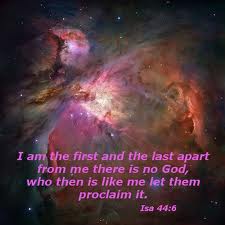
Jer. 10:10 But the Lord is the true God, he is the living God, and an everlasting king: at his wrath the earth shall tremble, and the nations shall not be able to abide his indignation.

God the Father is the one true God

Joh. 17:3 And this is life eternal, that they might know thee the only true God, and Jesus Christ, whom thou hast sent 

Jesus Christ is the true God – 1 John 5:20

1 John 5:19 And we know that we are of God, and the whole world lieth in wickedness.20 And we know that the Son of God is come, and hath given us an understanding, that we may know him that is true, and we are in him that is true, even in his Son Jesus Christ. This is the true God, and eternal life.

The most natural way to read “this” or “this one” above (or in similar statements) is to make it refer to the most previous person mentioned, which would here be Jeus Kristus. Or else John should have clarified exactly who he was referring to, if the most natural way of reading his text is supposed to be avoided. God is not a God of confusion. Take note of  John’s way of starting out his letter in  1 John 1:1, where he states that the eternal life (Jesus) was with the Father – which is repeated in 1 John 15:19-20.  Jesus is also the true light. It doesn’t make sense, if monotheism is true, to have two separate persons/Gods who both are called the eternal life, the true light, IAM, alpha and omega, the Lord of Lords, Savior, Creator, etc, and who on top of all are being worshiped. Either Jesus is God, or we have a God Senior and a God Junior, which is polytheism.

Ps. 27:1 The Lord is my light and my salvation; whom shall I fear? the Lord is the strength of my life; of whom shall I be afraid?

1 Joh. 1:1 That which was from the beginning, which we have heard, which we have seen with our eyes, which we have looked upon, and our hands have handled, of the Word of life;2 (For the life was manifested, and we have seen it, and bear witness, and shew unto you that eternal life, which was with the Father, and was manifested unto us;)

1 Joh. 2:Again, a new commandment I write unto you, which thing is true in him and in you: because the darkness is past, and the true light now shineth.—22 Who is a liar but he that denieth that Jesus is the Christ? He is antichrist, that denieth the Father and the Son.23 Whosoever denieth the Son, the same hath not the Father: he that acknowledgeth the Son hath the Father also.24 Let that therefore abide in you, which ye have heard from the beginning. If that which ye have heard from the beginning shall remain in you, ye also shall continue in the Son, and in the Father.25 And this is the promise that he hath promised us, even eternal life.

1 John 5:11 And this is the record, that God hath given to us eternal life, and this life is in his Son.12 He that hath the Son hath life; and he that hath not the Son of God hath not life.

John 1:1 In the beginning was the Word, and the Word was with God, and the Word was God.2 The same was in the beginning with God.3 All things were made by him; and without him was not any thing made that was made.4 In him was life; and the life was the light of men.5 And the light shineth in darkness; and the darkness comprehended it not.6 There was a man sent from God, whose name was John.7 The same came for a witness, to bear witness of the Light, that all men through him might believe.8 He was not that Light, but was sent to bear witness of that Light.That was the true Light, which lighteth every man that cometh into the world.10 He was in the world, and the world was made by him, and the world knew him not.11 He came unto his own, and his own received him not.12 But as many as received him, to them gave he power to become the sons of God, even to them that believe on his name:

John. 6:68 Then Simon Peter answered him, Lord, to whom shall we go? thou hast the words of eternal life.

Joh. 11:25 Jesus said unto her, I am the resurrection, and the life: he that believeth in me, though he were dead, yet shall he live:26 And whosoever liveth and believeth in me shall never die. Believest thou this?27 She saith unto him, Yea, Lord: I believe that thou art the Christ, the Son of God, which should come into the world.

Joh. 20:31 But these are written, that ye might believe that Jesus is the Christ, the Son of God; and that believing ye might have life through his name.

Evangelical scholar Robert M. Bowman Jr. about John. 5:20:

Three considerations favor the Son. First, the closest antecedent for “this one” is Jesus Christ (“in his Son Jesus Christ. This one…”). Second, in 1:2 the “eternal life” is Jesus Christ (who was “with the Father”), an apparent example ofinclusio (repetition of a theme or idea at the beginning and end of a text). Third, the confession form “This one is…” (houtos estin) strongly favors Jesus Christ, rather than the Father, as the subject, since John uses this language repeatedly with regard to Christ (John 1:30, 33, 34; 4:29, 42; 6:14, 42, 50, 58; 7:18, 25, 26, 40, 41; 1 John 5:6; of the man born blind, John 9:8, 9, 19, 20; of the disciple, John 21:24; of the anti-Christ, 1 John 2:22; 2 John 1:7), but not once for the Father. John has just used this formula for Christ earlier in the same chapter (1 John 5:6). (Robert M. Bowman, The Biblical Basis of the Doctrine of the Trinity: An Outline StudyPart IV. The Son, Jesus Christ, Is God*)

Dr. Robert A. Morey:

“That there may be a few rare exceptions to a general rule does not mean that one should approach a text of Scripture with the a priori assumption that it will be an exception to the normal rules of grammar.Instead, we should approach a text with the a priori assumption that the normal rules of grammar and syntax will apply unless there are cleargrammatical reasons to depart from those rules. “Please notice that we said ‘grammatical’–not ‘theological’–reasons. Just because the grammar of a text leads to an idea which contradicts what you believe, this does not give you the right to throw grammar to the wind. Theology cannot overthrow or ignore the grammar of the sacred text. It can only bow before it…”

“The Greek text of 1 John 5:20 is simple and straightforward. John used houtos fifty-five times in his writings. Thus, we are not talking about a rare usage of a rare word. There are plenty of places in John’s writings where houtos was used in the same kind of construction as found in 1 John 5:20 and no one has any problem with houtos referring back to the antecedent… Why then all the hysteria over whether houtos refers to Jesus in 1 John 5:20? Obviously, it is not the grammar or syntax of the Greek that causes people to question whether houtos refers to Jesus Christ per se. It is that it refers to Him as God. That is the real issue. “If the text read, ‘Iesou Christo. houtos estin zoe Aionios (‘Jesus Christ. This is Eternal Life’), there would be no controversy whatsoever.Houtos would be seen as referring to ‘Iesou Christo. But once you add ho alethinos theos to the phrase, then the controversy begins.”

“The evidence for Jesus being called ‘the true God’ and ‘Eternal Life’ is quite strong:

1. The general rule on pronouns is that it modifies the immediate antecedent. This means Jesus Christ…

2) While John elsewhere refers to Jesus as ‘Eternal Life’ (1 John 1:2), the Father is never called ‘Eternal Life.’ More importantly, in the immediate context, since Jesus is ‘eternal life,’ then to have Him in your heart is to have eternal life (1 John 5:11-12). In John’s writings, refers to zoe Aionios ‘Eternal Life’ Jesus.

3) John applies the adjective alethinos ‘true’ to Jesus many times…

4) That the Father is called ‘true God’ in John 17:3 and the Son is called ‘true God’ in 1 John 5:20 is no more a contradiction than the fact that they are both called the ‘true One’ (1 John 5:20; cf. Rev. 3:7).

5) The interpretation that ‘the true God’ refers to the Father leads to a meaningless tautology. Lenski explains: In the first place, if houtos has as its antecedent ‘the real God’ (the Father), then the statement is a tautology; John would say: ‘This real God is the real God.’ He would say it after having twice said: we know the real God and are in the real God.” (Morey, The Trinity: Evidence and Issues [World Bible Publishers, Inc., Iowa Falls, IA 1996], Part IV: The New Testament Evidence, Chapt. 17. God the Son, pp. 354-357) ”

A common objection to the most obvious understanding of 1 Joh. 5:20 – where houtos refers to the last person spoken of – is to present a verse where it’s NOT possible to read the verse in such a way. If such a verse could be found, the idea is that we are then exempt from reading ANY verse in the Bible according to the ordinary pattern if we don’t really want to – and particularly John 5:20 which is the “problematic verse” that must be “solved”. Such verses are not easy to find, but 1 John 2:22 is at least one example, and voilá – this discovery is used to find legitimate reasons to override the implications of John 5:20. So instead this verse is read in such a way that it agrees with the preferred doctrine, which is “there is no way that Jesus is God”. Not due to grammatical reasons, but due to one’s own personal views (just like Dr. Robert A. Morey warns about). This is not an honest way to read the Bible, and it’s nothing but cherry-picking. 

On top of this, there is a major difference between the two verses. Houtos must not refer to the last person spoken about but then this must be made clear in the context! To clarify who is the Antichrist, John adds the information (in caps below) that he who denies the Father and the Son is the Antichrist. No matter what language we speak, we would normally want listeners/readers to understand what we say, and if there is a chance that someone might misunderstand us we would rather want to express ourselves in such a way that misunderstandings can be avoided. If we want to deviate from the most common way to use houtos, extra clarification is needed. 

1 John 2:22 Who is a liar but he that denieth that Jesus is the Christ? He [houtos] is antichrist, THAT DENIETH THE FATHER AND THE SON.

Jesus is covered in GLORY and yet the Bible says God doesn’t share his glory with anyone…ljus

Isaiah 42:I am the Lord: that is my name: and my glory will I not give to another, neither my praise to graven images.

Also Jesus is called true God and Lord

1 John 5:20 And we know that the Son of God is come, and hath given us an understanding, that we may know him that is true, and we are in him that is true, even in his Son Jesus Christ. This is the TRUE GOD, and eternal life. (more literally:…he is the true God)

Jude 4:For certain people have crept in unnoticed who long ago were designated for this condemnation, ungodly people, who pervert the grace of our God into sensuality and deny our ONLY Master and Lord, Jesus Christ. (ESV)

Rom. 9:of whom are the fathers and from whom, according to the flesh, Christ came, who is over allthe eternally blessed GOD. Amen. (NKJV)

Hebr. 1:But unto the Son he saith, Thy throne, O God, is for ever and ever: a sceptre of righteousness is the sceptre of thy kingdom.Thou hast loved righteousness, and hated iniquity; therefore God, even thy God, hath anointed thee with the oil of gladness above thy fellows.

John. 20:27 Then saith he to Thomas, Reach hither thy finger, and behold my hands; and reach hither thy hand, and thrust it into my side: and be not faithless, but believing.28 And Thomas answered and said unto him, My Lord and MY GOD.29 Jesus saith unto him, Thomas, because thou hast seen me, thou hast believed: blessed are they that have not seen, and yet have believed.

Lord of Lords – there is only ONE – and yet both God the Father and Jesus Christ are called Lord of Lords

Other lords but God are mentioned in the Bible (like 26:13) and it’s not uncommon for a servant to call his master “lord”, but the Bible also says there is one particular LORD who is LORD OF LORDS, and he ALONE is LORD.

Isaiah 37:20 Now therefore, O Lord our God, save us from his hand, that all the kingdoms of the earth may know that thou art the Lord, even thou ONLY.

Deuteronomy 10:17 For the Lord your God is God of gods, and Lord of lords, a great God, a mighty, and a terrible, which regardeth not persons, nor taketh reward:

Psalm 136:3 O give thanks to the Lord of lords: for his mercy endureth for ever.

1 Tim. 6:14 That thou keep this commandment without spot, unrebukable, until the appearing of our Lord Jesus Christ:15 Which in his times he shall shew, who is the blessed and only Potentate, the King of kings, and Lord of lords;16 Who only hath immortality, dwelling in the light which no man can approach unto; whom no man hath seen, nor can see: to whom be honour and power everlasting. Amen.

Revelation 17:14 These shall make war with the Lamb, and the Lamb shall overcome them: for he is Lord of lords, and King of kings: and they that are with him are called, and chosen, and faithful.

Revelation 19:11 And I saw heaven opened, and behold a white horse; and he that sat upon him was called Faithful and True, and in righteousness he doth judge and make war.12 His eyes were as a flame of fire, and on his head were many crowns; and he had a name written, that no man knew, but he himself.13 And he was clothed with a vesture dipped in blood: and his name is called The Word of God.14 And the armies which were in heaven followed him upon white horses, clothed in fine linen, white and clean.15 And out of his mouth goeth a sharp sword, that with it he should smite the nations: and he shall rule them with a rod of iron: and he treadeth the winepress of the fierceness and wrath of Almighty God.16 And he hath on his vesture and on his thigh a name written, King Of Kings, And Lord Of Lords.

Matt. 22:42 Saying, What think ye of Christ? whose son is he? They say unto him, The son of David.43 He saith unto them, How then doth David in spirit call him Lord, saying,44 The Lord said unto my Lord, Sit thou on my right hand, till I make thine enemies thy footstool?45 If David then call him Lord, how is he his son?46 And no man was able to answer him a word, neither durst any man from that day forth ask him any more questions.

God the Father is the ONLY savior, and Jesus Christ as well, and both created the earth – ALONE

Creation

Isaiah 43:11 I, even I, am the Lord; and beside me there is no saviour.

Titus. 2:13 Looking for that blessed hope, and the glorious appearing of the great God and our SAVIOUR Jesus Christ;14 Who gave himself for us, that he might redeem us from all iniquity, and purify unto himself a peculiar people, zealous of good works.

Isaiah 44:24 Thus saith the Lord, thy redeemer, and he that formed thee from the womb, I am the Lord that maketh all things; that stretcheth forth the heavens alone; that spreadeth abroad the earth by myself;

According to John 1:3 and Col. 1:16-17 Jesus made all things, and absolutely NOTHING was before him. So God the Father could not have been before him since he is definitely something! Is God a liar?

Col. 1:16 For by him were all things created, that are in heaven, and that are in earth, visible and invisible, whether they be thrones, or dominions, or principalities, or powers: all things were created by him, and for him:17 And he is before all things, and by him all things consist.

Col. 2:Beware lest any man spoil you through philosophy and vain deceit, after the tradition of men, after the rudiments of the world, and not after Christ.For in him dwelleth all the fulness of the Godhead bodily.10 And ye are complete in him, which is the head of all principality and power:

There is only ONE God hat we shall worship, and JESUS allowed himself to be worshiped

It would have been so easy to quench the idea that Jesus is not God by showing Jesus correcting those who worshiped him, but not once did he do that. To Jesus will every knee bow and every tongue confess:

Isaiah 45:21 Tell ye, and bring them near; yea, let them take counsel together: who hath declared this from ancient time? who hath told it from that time? have not I the Lord? and there is no God else beside me; a just God and a Saviour; there is none beside me.22 Look unto me, and be ye saved, all the ends of the earth: for I am God, and there is none else.23 I have sworn by myself, the word is gone out of my mouth in righteousness, and shall not return, That unto me every knee shall bow, every tongue shall swear.

Zech. 12:10 And I will pour upon the house of David, and upon the inhabitants of Jerusalem, the spirit of grace and of supplications: and they shall look upon ME WHOM THEY HAVE PIERCED, and they shall mourn for him, as one mourneth for his only son, and shall be in bitterness for him, as one that is in bitterness for his firstborn.”

Matthew 4:10 Then saith Jesus unto him, Get thee hence, Satan: for it is written, Thou shalt worship the Lord thy God, and him only shalt thou serve.

Acts. 4:10 Be it known unto you all, and to all the people of Israel, that by the name of Jesus Christ of Nazareth, whom ye crucified, whom God raised from the dead, even by him doth this man stand here before you whole.11 This is the stone which was set at nought of you builders, which is become the head of the corner.12 Neither is there salvation in any other: for there is none other name under heaven given among men, whereby we must be saved.

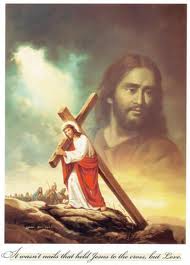
Saved as by fire as per 1 Cor. 3:15? Yes, but NOT if we sin!

eldIf any man’s work shall be burned, he shall suffer loss: but he himself shall be saved; yet so as by fire. (1 Cor 3:15)

This verse does not say that we can be saved in our sins, and notice that sins are not even mentioned in the context. This is a warning to christians (not sinners) who might not always build their lives on a proper foundation, and sometimes also lack the proper motivation for doing good works.

There are christians who are satisfied by with having a “fire insurance” – an insurance that gives them the right to at least be exempted from hell, as long as they believe in Jesus Christ. They are content with this type of  insurance because this means they can still get away with sinning once in a while, and the only thing they would ever risk amounts to reduced rewards in heaven. They might think it’s worth it because heaven is always heaven, and with this type of insurance they can both have their sins and their salvation too. You might exclaim that “true christians wouldn’t reason in that way!”, but isn’t it true that also christians can choose to sin? And isn’t it likely that they might give in for sins more readily if they are being told they won’t end up in hell for it? The tragic thing is that we do NOT have an unconditional fire insurance. We risk to be cut off the vine and thrown in the fire if we lack fruit (John. 15), and we will not reap eternal life in heaven if we break the commandments and sin. If we love Jesus, we obey him (John. 14:15).

The context in 1 Cor. 3:15 shows that it concerns believing christians and their building material and building methods. Sin is nowhere mentioned, and it’s not even needed to be mentioned since we already know from the rest of the Bible that sins separate us from God unless we repent. Nothing unholy shall enter heaven, and sins evidently make us unholy.  We can read that the foundation that we build upon must be JESUS CHRIST (and not ourselves, a philosophy, a pastor, a church, a dear friend, money, high status, tradition or someone/something else).  It’s the motives in our hearts that will be judged by God. He can see what ground we are building on, and the reasoning in our hearts.  Our motive should be to spread the gospel about Jesus Christ in order to see people saved.

Paul is addressing “brethren”, but he is warning these brethren. He also lists a few sins that would make us carnal, and if we are carnal we are not saved:

1 C0r. 3:For ye are yet carnal: for whereas there is among you envying, and strife, and divisions, are ye not carnal, and walk as men?

Rom. 8:6 For to be carnally minded is death; but to be spiritually minded is life and peace.

Speaking about christians, Paul says that they shall receive “his own reward” according to their LABOR. This indicates these christians at least do some work, which means they produce some good fruit. That is a good thing because we know that lukewarm christians are not saved. We will reap the reward of eternal life if we show our faith with good works, and we will also be rewarded individually depending on our works.

1 Cor. Now he that planteth and he that watereth are one: and every man shall receive his own reward according to his own labour.For we are labourers together with God: ye are God’s husbandry, ye are God’s building.

Revelation 3:16 So then because thou art lukewarm, and neither cold nor hot, I will spue thee out of my mouth.

Galatians 6:8 For he that soweth to his flesh shall of the flesh reap corruption; but he that soweth to the Spirit shall of the Spirit reap life everlasting.

Rom. 6:16 Know ye not, that to whom ye yield yourselves servants to obey, his servants ye are to whom ye obey; whether of sin unto death, or of obedience unto righteousness?

Paul warns christians that they must take heed on the way they build their lives, and every man’s work shall one day be made manifest. Do we work in order to get a popular position in the society, or because we want to go with the flow? What are our true reasons?

1 Cor.3:10 According to the grace of God which is given unto me, as a wise masterbuilder, I have laid the foundation, and another buildeth thereon. But let every man take heed how he buildeth thereupon.11 For other foundation can no man lay than that is laid, which is Jesus Christ.12 Now if any man build upon this foundation gold, silver, precious stones, wood, hay, stubble;13 Every man’s work shall be made manifest: for the day shall declare it, because it shall be revealed by fire; and the fire shall try every man’s work of what sort it is.

Paul says “IF any man’s work abide“, meaning it’s not certain it will. It’s still “work”, but will it abide? It depends on the motives. If it abides, the man shall receive both eternal life and individual gratification, but if the work does not abide but burned he will be saved but as by fire. If the man would be sinning on the other hand, he would not even be saved as through fire, but he wouldn’t even be able to enter the kingdom at all. This story is about christians who WORK, in combination with their motives for doing so. Paul ends with a warning to christians that if they defile the temple of God, which they all are, they will be DESTROYED.

1 Cor. 3:14 IF any man’s work abide which he hath built thereupon, he shall receive a reward.15 IF any man’s work shall be burned, he shall suffer loss: but he himself shall be saved; yet so as by fire.16 Know ye not that ye are the temple of God, and that the Spirit of God dwelleth in you?17 If any man defile the temple of God, him shall God destroy; for the temple of God is holy, which temple ye are.

Read also the next chapter which is also about the intent of the heart.

1 Cor. 4:Therefore judge nothing before the time, until the Lord come, who both will bring to light the hidden things of darkness, and will make manifest the counsels of the hearts: and then shall every man have praise of God.And these things, brethren, I have in a figure transferred to myself and to Apollos for your sakes; that ye might learn in us not to think of men above that which is written, that no one of you be puffed up for one against another.

Three chapters later Paul lists sins that will prevent us from entering the kingdom of God, and christians are not exempted:

1 Kor. 6:Know ye not that the unrighteous shall not inherit the kingdom of God? Be not deceived: neither fornicators, nor idolaters, nor adulterers, nor effeminate, nor abusers of themselves with mankind,10 Nor thieves, nor covetous, nor drunkards, nor revilers, nor extortioners, shall inherit the kingdom of God.

We can unfortunately be the cause for that a brother stumbles/falls/is offended, by the way we are living our lives:

1 Kor. 8:12 But when ye sin so against the brethren, and wound their weak conscience, ye sin against Christ.13 Wherefore, if meat make my brother to offend, I will eat no flesh while the world standeth, lest I make my brother to offend. (“stumble” NKJV)

Did God cause a lying spirit to entice Ahab? – 1 Kings 22 and 2 Chr. 18

sin

God does not tempt anyone, nor does he cause people to sin

Is God pleased to put humans into impossible predicaments which he himself decrees and in which there is no escape? Only to turn around and send those poor people to hell for doing his exact will (by sinning)? How does that line up with:

Psalm 5:4 For thou art not a God that hath pleasure in wickedness: neither shall evil dwell with thee.

Ezekiel 18:32 For I have no pleasure in the death of him that dieth, saith the Lord God: wherefore turn yourselves, and live ye.

Ezekiel 33:11 Say unto them, As I live, saith the Lord God, I have no pleasure in the death of the wicked; but that the wicked turn from his way and live: turn ye, turn ye from your evil ways; for why will ye die, O house of Israel?

1 John 1:5 This then is the message which we have heard of him, and declare unto you, that God is light, and in him is no darkness at all.6 If we say that we have fellowship with him, and walk in darkness, we lie, and do not the truth:

The Bible says that God doesn’t even TEMPT anyone, so how could anyone possibly suggest that God plays the role of Satan and causes people to sin, and even worse; pretend to be angry at the sin that he himself caused? Between Genesis and Revelations we cannot find one single case where God in any way causes/forces anyone to sin. IF 2 Chronicles 18 would tell us that God caused someone to sin (which it doesn’t) would this mean that God is the one who causes all people to sin at all times? Can every single sin under the sun be traced back to GOD? So every time we see people refusing to hearken to God and when they rebel against him, it’s really GOD who caused them to do this all along? So our Lord wants people to rebel against him? You must be joking…

James. 1:12 Blessed is the man that endureth temptation: for when he is tried, he shall receive the crown of life, which the Lord hath promised to them that love him.13 Let no man say when he is tempted, I am tempted of God: for God cannot be tempted with evil, neither tempteth he any man:14 But every man is tempted, when he is drawn away of his own lust, and enticed.15 Then when lust hath conceived, it bringeth forth sin: and sin, when it is finished, bringeth forth death.16 Do not err, my beloved brethren.

Matthew 26:41 Watch and pray, that ye enter not into temptation: the spirit indeed is willing, but the flesh is weak.

Numbers 14:22 Because all those men which have seen my glory, and my miracles, which I did in Egypt and in the wilderness, and have tempted me now these ten times, and have NOT hearkened to my voice;

There are a few occasions where God allows a group of evil people to be victorious over his chosen people Israel, and we can see Israel’s enemy gain the Lord’s reluctant permission (2 Sam. 24 and 1 Chr. 21) to go through with their desire to cause calamity. Israel’s enemy was of course set on destroying Israel from the start, so it wasn’t a desire that God planted in them.

Saul and evil spirits

God can absolutely send “evil spirits” (or rather allow Satan certain power) just like he did with Saul, but note that God doesn’t do this randomly to people for no reason at all. God chose Saul to be king but Saul ended up being selfish and wicked which resulted in that God repented of having chosen him. Due to Saul’s evil approach, God sent him an evil spirit – or rather allowed Satan to torture him through evil spirits, which boils down to the same thing. The reason for the presence of this evil spirit is therefore Saul’s, and not God’s.

1 Samuel 15:35 And Samuel came no more to see Saul until the day of his death: nevertheless Samuel mourned for Saul: and the Lord repented that he had made Saul king over Israel.

1 Sam. 16:1 And the Lord said unto Samuel, How long wilt thou mourn for Saul, seeing I have rejected him from reigning over Israel? fill thine horn with oil, and go, I will send thee to Jesse the Bethlehemite: for I have provided me a king among his sons.—14 But the Spirit of the Lord departed from Saul, and an evil spirit from the Lord troubled him.15 And Saul’s servants said unto him, Behold now, an evil spirit from God troubleth thee.16 Let our lord now command thy servants, which are before thee, to seek out a man, who is a cunning player on an harp: and it shall come to pass, when the evil spirit from God is upon thee, that he shall play with his hand, and thou shalt be well.—23 And it came to pass, when the evil spirit from God was upon Saul, that David took an harp, and played with his hand: so Saul was refreshed, and was well, and the evil spirit departed from him.

1 Samuel 18:10 And it came to pass on the morrow, that the evil spirit from God came upon Saul, and he prophesied in the midst of the house: and David played with his hand, as at other times: and there was a javelin in Saul’s hand.

1 Samuel 19:9 And the evil spirit from the Lord was upon Saul, as he sat in his house with his javelin in his hand: and David played with his hand.

There is a difference between God ruling over the activity of demons and God ruling the activity of demons. God is of course more powerful than Satan and his demons. God can (albeit oftentimes reluctantly) allow demons to afflict men for various reasons, which is not to be compared with the idea that God plays dice and commands demons to torture people for no reason at all – or just because he can.

2 Chron. 18 and 1 Kings. 22 – and God trying to persuade Ahab to accept his warningsspirit2

1 Kings 22 below shows that God simply allowed King Ahab to do what he already wanted and had set his mind to – i.e., to listen to his false prophets. King Ahab of Israel twice complained to King Jehoshaphat of Judah that the Lord’s prophet Micaiah never says anything good about him but only speaks calamity. Ahab was not thankful for God’s warning to him which he chose to reject, and he was resentful once Micaiah gave him the word of the Lord. God extended even more patience toward Ahab by having Micaiah tell the king exactly what evil spirits had been doing to plot his downfall, but Ahab rejected this further warning as well. If God’s intent was to command demons to lie and deceive Ahab, why would He bother warning Ahab about it? What would be the point with trying to warn Ahab against the very disaster to which he was trying to entice him?!

When we read only certain phrases in 1 Kings 22 it may sound as though God is the direct causal agent to what happened, but if we are honest and read the whole context we get another picture. Micaiah says to Ahab: “Now therefore behold, the Lord hath put a lying spirit in the mouth of all these thy prophets, and the Lord hath spoken evil concerning thee.” The word for “evil” in Hebrew may also be translated as disaster or calamity, and it’s not uncommon at all to see God punishing Israel (for their rebellion against him) by causing calamity to happen. This can easily be done by taking away his protective hand over Israel and by doing so allow the enemy to be victorious in their desire to conquer Israel – which their hearts are set upon. God is described by Micaiah as someone who has put a lying spirit in the mouth of the false prophets, while the context shows that God is doing this by permission and not by a commandment, and he even warns Ahab in the process. It’s an idiomatic way of speaking which the entire context of 1 Kings 22 demonstrates. “The Lord hath sent a lying spirit” is a stronger way of including God’s overall power than merely stating “God has allowed a lying spirit”.  The lying spirit helps the false prophets to speak lies to Ahab about all that the king himself wants to believe about his future. God is not sending Ahab what He (God) wants but rather what Ahab wants! Certainly a bad choice by Ahab.

2 Chron. 18:18 Again he said, Therefore hear the word of the Lord; I saw the Lord sitting upon his throne, and all the host of heaven standing on his right hand and on his left.19 And the Lord said, Who shall entice Ahab king of Israel, that he may go up and fall at Ramothgilead? And one spake saying after this manner, and another saying after that manner.20 Then there came out a spirit, and stood before the Lord, and said, I will entice him. And the Lord said unto him, Wherewith?21 And he said, I will go out, and be a lying spirit in the mouth of all his prophets. And the Lord said, Thou shalt entice him, and thou shalt also prevail: go out, and do even so.22 Now therefore, behold, the Lord hath put a lying spirit in the mouth of these thy prophets, and the Lord hath spoken evil against thee.

Same story, but in Kings:

1 King. 22:19 And he said, Hear thou therefore the word of the Lord: I saw the Lord sitting on his throne, and all the host of heaven standing by him on his right hand and on his left.20 And the Lord said, Who shall persuade Ahab, that he may go up and fall at Ramothgilead? And one said on this manner, and another said on that manner.21 And there came forth a spirit, and stood before the Lord, and said, I will persuade him.22 And the Lord said unto him, Wherewith? And he said, I will go forth, and I will be a lying spirit in the mouth of all his prophets. And he said, Thou shalt persuade him, and prevail also: go forth, and do so.23 Now therefore, behold, the Lord hath put a lying spirit in the mouth of all these thy prophets, and the Lord hath spoken evil concerning thee.

Note that God is asking who shall entice Ahab?” and “wherewith?” when a certain spirit volunteered to do it and explained how he intended to do it. God did not take the other route by selecting a spirit and telling him “This is what I will cause you to do through predestination”, but instead he allowed/granted the spirit to do what he proposed to do which was what Ahab in fact asked for.

We can compare this with what happened to Job, and it’s clear from context of Job 2 that God merely allowed events to happen.

Job. 2:And the Lord said unto Satan, Hast thou considered my servant Job, that there is none like him in the earth, a perfect and an upright man, one that feareth God, and escheweth evil? and still he holdeth fast his integrity, although thou movedst me against him, to destroy him without cause.

God desired to allow Satan to have certain power, but it’s not certain that God wanted him to use the power the way he did.  When God says that he ruined Job he speaks idiomatically as though he were the causal agent, despite that the context shows he was not. There is a “lost book” called “The testimony of Job”, and even if it’s not a canonical book and therefore cannot be totally trusted, it still provides a reasonable answer to why Job was even selected to go through all this pain at all (he more or less opened up for it himself). We know that Job’s life started out being very blessed just as the end of his life. His painful time happened somewhere in the middle and it was a parentheses in his life time.

God the Father did not FORSAKE Jesus on the cross – Matt. 27:46

cross8

Matthew 27:46 And about the ninth hour Jesus cried with a loud voice, saying, Eli, Eli, lama sabachthani? that is to say, My God, my God, why hast thou forsaken me?

Did God the Father really separate himself from Jesus and abandoned him on the cross? Is it true that the Father could not even look at Jesus due to the sins of the world that Jesus literally bore in his body? Did God the Father PUNISH Jesus on the cross?

No these ideas derived rather late in our history (we can blame Anselm of Canterbury for most of them even if they were later established by the reformers), and God the Father did NOT abandon Jesus on the cross in any way. Wasn’t the plan and God’s own idea that Jesus would die for mankind? Why then would he abandon his son on the cross when Jesus was nothing but faithful and obedient UNTO DEATH? No, God did not contradict himself by first giving up his son to die for the world, only to cowardly look away when his son needed him the most. The Bible is clear that Jesus was NOT a sinner on the cross in any way, but he was totally clean and undefiled. Jesus was NOT punished by the Father and he did NOT literally bear our sins in his body. (See more in this article.)

Eph. 5:And walk in love, as Christ also hath loved us, and hath given himself for us an offering and a sacrifice to God for a sweetsmelling savour.

Hebr. 7: 26 For such an high priest became us, who is holy, harmless, undefiled, separate from sinners, and made higher than the heavens;27 Who needeth not daily, as those high priests, to offer up sacrifice, first for his own sins, and then for the people’s: for this he did once, when he offered up himself.

2 Cor 1:15 For we are unto God a sweet savour of Christ, in them that are saved, and in them that perish:

Acts 2:23 Him, being delivered by the determinate counsel and foreknowledge of God, ye have taken, and by wicked hands have crucified and slain 

In Matt. 27:64 it doesn’t say that the Father abandoned Jesus, but Jesus does ask a question in relation to being abandoned, and this question could of course be heard by those who stood near the cross. They could therefore hear yet another prophesy about the Messiah even if they didn’t quite realize it at that moment. There were many prophesies which came true in Jesus Christ and that includes this many faceted question that Jesus shouted out, because it’s a quote from one of King David’s psalms which actually relates to himself (Jesus). The psalm in question is about David’s call for God and his (David’s) initial pondering if his prayers are even heard. Nevertheless, David continues by declaring that God indeed is the one who listens, answers, helps and liberates people when they have a true heart and seek him. The case could be that Jesus’s feelings on the cross were overwhelming and that he shared some of David’s feelings those last horrible moments on the cross when he alone took his last painful breaths. He died for the sins of the world but it must have felt as though the whole world was against him. Jesus is God, but he is also a human being with feelings just like ours. Quoting this psalm was perfect, because it has given us a chance to go back to it and read about both King David and Jesus, and we get many details about what transpired on the cross despite that this psalm was written long before Jesus was even born. Just like King David’s own conclusions, Jesus knew that God DOES listen and answer even in our toughest moments.

Ps. 22:1 My God, my God, why hast thou forsaken me? why art thou so far from helping me, and from the words of my roaring?O my God, I cry in the day time, but thou hearest not; and in the night season, and am not silent.—5 They cried unto thee, and were delivered: they trusted in thee, and were NOT confounded.6 But I am a worm, and no man; a reproach of men, and despised of the people.7 All they that see me laugh me to scorn: they shoot out the lip, they shake the head, saying,8 He trusted on the Lord that he would deliver him: let him deliver him, seeing he delighted in him.—11 Be not far from me; for trouble is near; for there is none to help.—14 I am poured out like water, and all my bones are out of joint: my heart is like wax; it is melted in the midst of my bowels.15 My strength is dried up like a potsherd; and my tongue cleaveth to my jaws; and thou hast brought me into the dust of death.16 For dogs have compassed me: the assembly of the wicked have inclosed me: they pierced my hands and my feet.17 I may tell all my bones: they look and stare upon me.18 They part my garments among them, and cast lots upon my vesture.—24 For he hath not despised nor abhorred the affliction of the afflicted; NEITHER HATH HE HID HIS FACE FROM HIM, BUT WHEN HE CRIED UNTO HIM; HE HEARD.

The next psalm is the famous Ps. 23 which starts with “The Lord is my shepherd, I shall not want”. Would a true shepherd really abandon his own sheep and purposely turn his back on it?

Ps. 23:1 The Lord is my shepherd; I shall not want.He maketh me to lie down in green pastures: he leadeth me beside the still waters.

Isaiah 49:14 But Zion said, The Lord hath forsaken me, and my Lord hath forgotten me.15 Can a woman forget her sucking child, that she should not have compassion on the son of her womb? yea, they may forget, yet will I not forget thee.

Jesus is the Messiah who the Scriptures and the Prophets write about – God in flesh

Jesus birthJesus Christ is the Messiah 

Messiah is a translation from the Greek word Χριστός (Christos) Strong’s 5547, and is used 538 times in the Bible, and it can also be translated as ”the annointed”. So Jesus Christ means Jesus the Messiah

Jesus is identified as the Messiah several times in the Bible, so we can’t get around the fact that the son of Joseph and Mary was the promised Messiah that the Old Testament so often is speaking about through prophets and psalms.

Matt. 1:16 And Jacob begat Joseph the husband of Mary, of whom was born Jesus, who is called Christ.17 So all the generations from Abraham to David are fourteen generations; and from David until the carrying away into Babylon are fourteen generations; and from the carrying away into Babylon unto Christ are fourteen generations.18 Now the birth of Jesus Christ was on this wise: When as his mother Mary was espoused to Joseph, before they came together, she was found with child of the Holy Ghost.

The well-known story about the wise men who looked for the star of Bethlehem, shows that they knew that the Messiah would be born there just as promised in the Scriptures. They expected the Messiah in form of a ”King” and a “governor“, which is a shepherd, and that’s exactly what Jesus was called several times. The Messiah was supposed to be come from the tribe of Judah – which is the tribe that Jesus came from.

Matt. 2: 1 Now when Jesus was born in Bethlehem of Judaea in the days of Herod the king, behold, there came wise men from the east to Jerusalem,Saying, Where is he that is born King of the Jews? for we have seen his star in the east, and are come to worship him.When Herod the king had heard these things, he was troubled, and all Jerusalem with him.And when he had gathered all the chief priests and scribes of the people together, he demanded of them where Christ should be born.And they said unto him, In Bethlehem of Judaea: for thus it is written by the prophet,And thou Bethlehem, in the land of Juda, art not the least among the princes of Juda: for out of thee shall come a Governor, that shall rule my people Israel. (Mika 5:2,  2 Sam 5:2, 1 Chr 11:2,  John 7:42).

The people understood that the son of man is the same as the Messiah, and they asked Jesus how come he says that the son of man must be lifted up when the Scriptures say that the Messiah shall abide for ever. Jesus then tells them that he is the light that they must believe in, in order to be children of light and also that he will continue to be a light for them for a little while more.

John. 12:34 The people answered him, We have heard out of the law that Christ abideth for ever: and how sayest thou, The Son of man must be lifted up? who is this Son of man?35 Then Jesus said unto them, Yet a little while is the light with you. Walk while ye have the light, lest darkness come upon you: for he that walketh in darkness knoweth not whither he goeth.36 While ye have light, believe in the light, that ye may be the children of light. These things spake Jesus, and departed, and did hide himself from them.

Jesus equals the Messiah with the son of man, and when he speaks about his return to earth he warns us and tells us not to be deceived about who the Messiah really is, since it will be clear for everyone. If we feel any kind of uncertainty in this respect, it’s not the Messiah because his return will be like the lightning before all people.

Matt. 24:And Jesus answered and said unto them, Take heed that no man deceive you.For many shall come in my name, saying, I am Christ; and shall deceive many.—23 Then if any man shall say unto you, Lo, here is Christ, or there; believe it not.24 For there shall arise false Christs, and false prophets, and shall shew great signs and wonders; insomuch that, if it were possible, they shall deceive the very elect.25 Behold, I have told you before.26 Wherefore if they shall say unto you, Behold, he is in the desert; go not forth: behold, he is in the secret chambers; believe it not.27 For as the lightning cometh out of the east, and shineth even unto the west; so shall also the coming of the Son of man be.

If only God the Father is God and the only one to be given glory, then the holy Spirit should testify only of HIM (God the Father), but Jesus suggests that the holy Spirit testifies of HIM (Jesus).

John 15:26 But when the Comforter is come, whom I will send unto you from the Father, even the Spirit of truth, which proceedeth from the Father, he shall testify of ME

Jesus Christ was crucified for the reason that he claimed to be the son of God, the Messiah and God in flesh. Jesus constantly connected the God name “I AM” to himself, which he does also in the below verses when he responds to the questions from the high priest. If Jesus wouldn’t be the Messiah, then a more truthful answer would be a “NO WAY! It would be blasphemy to call oneself for the son of God so of course I don’t do this!”, but that was not the response that Jesus gave, but rather ”I AM“. The high priest understood immediately that Jesus was guilty of blasphemy and rent his clothes, and the jews around him viewed him as guilty. Guilty of what? Blasphemy! To make oneself equal with God.

Mark 14:60 And the high priest stood up in the midst, and asked Jesus, saying, Answerest thou nothing? what is it which these witness against thee?61 But he held his peace, and answered nothing. Again the high priest asked him, and said unto him, Art thou the Christ, the Son of the Blessed?62 And Jesus said, I am: and ye shall see the Son of man sitting on the right hand of power, and coming in the clouds of heaven.63 Then the high priest rent his clothes, and saith, What need we any further witnesses?64 Ye have heard the blasphemy: what think ye? And they all condemned him to be guilty of death.

Also Paul equals Christ with Jesus – the one who God rose up from the dead and placed on his right hand side – just like the prophesies say in Scriptures. King David described it as ”The Lord said unto my Lord, Sit thou on my right hand”, despite that the Bible makes it clear that there is only ONE Lord and ONE God. The trinity solves this problem beautifully. Both God the Father and Jesus Christ is Lord of Lords.

Acts 2: 31 He seeing this before spake of the resurrection of Christ, that his soul was not left in hell, neither his flesh did see corruption.32 This Jesus hath God raised up, whereof we all are witnesses.33 Therefore being by the right hand of God exalted, and having received of the Father the promise of the Holy Ghost, he hath shed forth this, which ye now see and hear.34 For David is not ascended into the heavens: but he saith himself, The Lord said unto my Lord, Sit thou on my right hand,35 Until I make thy foes thy footstool. (Ps. 110:1)

Acts 18:And when Silas and Timotheus were come from Macedonia, Paul was pressed in the spirit, and testified to the Jews that Jesus was Christ.

John the Baptist calls Jesus for the lamb of God, and Andrew says to his brother that they have found the Messiah, and he leads Peter to Jesus.

John 1:35 Again the next day after John stood, and two of his disciples;36 And looking upon Jesus as he walked, he saith, Behold the Lamb of God!37 And the two disciples heard him speak, and they followed Jesus.38 Then Jesus turned, and saw them following, and saith unto them, What seek ye? They said unto him, Rabbi, (which is to say, being interpreted, Master,) where dwellest thou?39 He saith unto them, Come and see. They came and saw where he dwelt, and abode with him that day: for it was about the tenth hour.40 One of the two which heard John speak, and followed him, was Andrew, Simon Peter’s brother.41 He first findeth his own brother Simon, and saith unto him, We have found the Messias, which is, being interpreted, the Christ.42 And he brought him to Jesus. And when Jesus beheld him, he said, Thou art Simon the son of Jona: thou shalt be called Cephas, which is by interpretation, A stone.

We can read about the lamb of God in Revelations, and we can read about people who sing to the lamb and also call him Lord God almighty, and King of saints. They say that he alone is holy, for all nations shall come and worship him. But God the Father is of course HOLY too, and that means again that they share the same godhead. Each person in a godhead can be holy.

Rev. 15:And I saw as it were a sea of glass mingled with fire: and them that had gotten the victory over the beast, and over his image, and over his mark, and over the number of his name, stand on the sea of glass, having the harps of God.And they sing the song of Moses the servant of God, and the song of the Lamb, saying, Great and marvellous are thy works, Lord God Almighty; just and true are thy ways, thou King of saints.Who shall not fear thee, O Lord, and glorify thy name? for thou only art holy: for all nations shall come and worship before thee; for thy judgments are made manifest.

The Scriptures speak about Jesus Christjesus12

Peter speaks about Jesus Christ and says that peace is given by him who is Lord of all.  Jesus is the one who God ordained to be the judge of the living and the dead, and Peter says that all the prophets witness about him and explains that whosoever believes in him shall receive remission of sins.

Acts. 10:36 The word which God sent unto the children of Israel, preaching peace by Jesus Christ: (he is Lord of all:)—39 And we are witnesses of all things which he did both in the land of the Jews, and in Jerusalem; whom they slew and hanged on a tree:—42 And he commanded us to preach unto the people, and to testify that it is he which was ordained of God to be the Judge of quick and dead.43 To him give all the prophets witness, that through his name whosoever believeth in him shall receive remission of sins.

If we don’t believe in the one who the Father has sent, we are in big trouble. Jesus says that the Scriptures (that is the old testament) testify of him, and that Moses wrote about him. The jews who Jesus was talking to refused to believe that Jesus was sent by God and that means that they did not have his word abiding in them. If they truly believed Moses, they would also believe that Jesus is the one who he says he is. Even today there are many cults that refuse to believe that Jesus is the Messiah and coequal with God the Father.

John. 5:37 And the Father himself, which hath sent me, hath borne witness of me. Ye have neither heard his voice at any time, nor seen his shape.38 And ye have not his word abiding in you: for whom he hath sent, him ye believe not.39 Search the scriptures; for in them ye think ye have eternal life: and they are they which testify of me.-46 For had ye believed Moses, ye would have believed me; for he wrote of me.47 But if ye believe not his writings, how shall ye believe my words?

Paulus says that the law and the prophets are witnessing about a righteousness that can be given through faith in Jesus Christ.

Rom. 3:21 But now the righteousness of God without the law is manifested, being witnessed by the law and the prophets;22 Even the righteousness of God which is by faith of Jesus Christ unto all and upon all them that believe: for there is no difference:

Jesus says here again that the prophets are writing about him, and he shows that the suffering that the Scriptures say awaits the Messiah is tied to him (Jesus) because he IS the promised Messiah, and he DID suffer for mankind on the cross. Moses, the prophets and psalms testify of Jesus, so when we read in these old books in the old testament we can see stories about Jesus Christ who – from their point of view – is yet to come in the future in the form of flesh. When we read the complete Bible today, including the new testament, this event has of course already happened.

Luke 24:13 And, behold, two of them went that same day to a village called Emmaus, which was from Jerusalem about threescore furlongs.14 And they talked together of all these things which had happened.15 And it came to pass, that, while they communed together and reasoned, Jesus himself drew near, and went with them.—21 But we trusted that it had been he which should have redeemed Israel: and beside all this, to day is the third day since these things were done.—24 And certain of them which were with us went to the sepulchre, and found it even so as the women had said: but him they saw not.25 Then he said unto them, O fools, and slow of heart to believe all that the prophets have spoken:26 Ought not Christ to have suffered these things, and to enter into his glory?27 And beginning at Moses and all the prophets, he expounded unto them in all the scriptures the things concerning himself.—44 And he said unto them, These are the words which I spake unto you, while I was yet with you, that all things must be fulfilled, which were written in the law of Moses, and in the prophets, and in the psalms, concerning me.45 Then opened he their understanding, that they might understand the scriptures,46 And said unto them, Thus it is written, and thus it behooved Christ to suffer, and to rise from the dead the third day:47 And that repentance and remission of sins should be preached in his name among all nations, beginning at Jerusalem.

Jesus reads from the Scriptures in his home town, and says that what can be read in Isaiah 61 is about himself.

Luke 4:16 And he came to Nazareth, where he had been brought up: and, as his custom was, he went into the synagogue on the sabbath day, and stood up for to read.17 And there was delivered unto him the book of the prophet Esaias. And when he had opened the book, he found the place where it was written,18 The Spirit of the Lord is upon me, because he hath anointed me to preach the gospel to the poor; he hath sent me to heal the brokenhearted, to preach deliverance to the captives, and recovering of sight to the blind, to set at liberty them that are bruised,19 To preach the acceptable year of the Lord.20 And he closed the book, and he gave it again to the minister, and sat down. And the eyes of all them that were in the synagogue were fastened on him.21 And he began to say unto them, This day is this scripture fulfilled in your ears.22 And all bare him witness, and wondered at the gracious words which proceeded out of his mouth. And they said, Is not this Joseph’s son?

Isaiah 61:1 The Spirit of the Lord God is upon me; because the Lord hath anointed me to preach good tidings unto the meek; he hath sent me to bind up the brokenhearted, to proclaim liberty to the captives, and the opening of the prison to them that are bound;–For I the Lord love judgment, I hate robbery for burnt offering; and I will direct their work in truth, and I will make an everlasting covenant with them.—10 I will greatly rejoice in the Lord, my soul shall be joyful in my God; for he hath clothed me with the garments of salvation, he hath covered me with the robe of righteousness, as a bridegroom decketh himself with ornaments, and as a bride adorneth herself with her jewels.11 For as the earth bringeth forth her bud, and as the garden causeth the things that are sown in it to spring forth; so the Lord God will cause righteousness and praise to spring forth before all the nations.

Paul explains that Jesus is the stumbling stone for the jews, or actually for anyone who refuses to believe that Jesus is the promised Messiah, God’s son and God with us. Many cults are interested in raising up stumblingstones for us, and they are eager to teach that Jesus is not God in flesh.

Rom. 9:32 Wherefore? Because they sought it not by faith, but as it were by the works of the law. For they stumbled at that stumblingstone;33 As it is written, Behold, I lay in Sion a stumblingstone and rock of offence: and whosoever believeth on him shall not be ashamed. (Isaiah 10:21-22)

Isaiah 8:13 Sanctify the Lord of hosts himself; and let him be your fear, and let him be your dread.14 And he shall be for a sanctuary; but for a stone of stumbling and for a rock of offence to both the houses of Israel, for a gin and for a snare to the inhabitants of Jerusalem.15 And many among them shall stumble, and fall, and be broken, and be snared, and be taken.16 Bind up the testimony, seal the law among my disciples.17 And I will wait upon the Lord, that hideth his face from the house of Jacob, and I will look for him.18 Behold, I and the children whom the Lord hath given me are for signs and for wonders in Israel from the Lord of hosts, which dwelleth in mount Zion.

Isaiah 28:16 Therefore thus saith the Lord God, Behold, I lay in Zion for a foundation a stone, a tried stone, a precious corner stone, a sure foundation: he that believeth shall not make haste.

Paul reasoned with people and explained to them that the Scriptures speak about Jesus and that he must suffer as the Messiah, but also rise again. There is a division between those who believe in Jesus as the promised Messiah and those who don’t.

Acts. 17:And Paul, as his manner was, went in unto them, and three sabbath days reasoned with them out of the scriptures,Opening and alleging, that Christ must needs have suffered, and risen again from the dead; and that this Jesus, whom I preach unto you, is Christ.And some of them believed, and consorted with Paul and Silas; and of the devout Greeks a great multitude, and of the chief women not a few.

Below we can read in multiple places that the Scriptures speak about Jesus Christ as the holy one – the Messiah. God gives Jesus Christ GLORY – despite that we can also read in the Scriptures that God doesn’t share his glory with anyone. (This means Jesus must be God.) Moses explained that God would send a prophet “like unto me” (as a leader for Israel and for all people who would unite with them) and that it’s of great importance that we listen to this prophet who is the Prince of life, and who has the power to bring either life or judgment. Since eternal life is given through faith and obedience in Jesus Christ (Hebr. 5:9), which includes the acceptance that Jesus has come in the flesh (1 John. 4:2), some religious cults do what they can to teach the opposite message – that Jesus is NOT the Messiah nor God in flesh.

Acts 3:13 The God of Abraham, and of Isaac, and of Jacob, the God of our fathers, hath glorified his Son Jesus; whom ye delivered up, and denied him in the presence of Pilate, when he was determined to let him go.14 But ye denied the Holy One and the Just, and desired a murderer to be granted unto you;15 And killed the Prince of life, whom God hath raised from the dead; whereof we are witnesses.16 And his name through faith in his name hath made this man strong, whom ye see and know: yea, the faith which is by him hath given him this perfect soundness in the presence of you all.17 And now, brethren, I wot that through ignorance ye did it, as did also your rulers.18 But those things, which God before had shewed by the mouth of all his prophets, that Christ should suffer, he hath so fulfilled.19 Repent ye therefore, and be converted, that your sins may be blotted out, when the times of refreshing shall come from the presence of the Lord.20 And he shall send Jesus Christ, which before was preached unto you:21 Whom the heaven must receive until the times of restitution of all things, which God hath spoken by the mouth of all his holy prophets since the world began.22 For Moses truly said unto the fathers, A prophet shall the Lord your God raise up unto you of your brethren, like unto me; him shall ye hear in all things whatsoever he shall say unto you.23 And it shall come to pass, that every soul, which will not hear that prophet, shall be destroyed from among the people.24 Yea, and all the prophets from Samuel and those that follow after, as many as have spoken, have likewise foretold of these days.25 Ye are the children of the prophets, and of the covenant which God made with our fathers, saying unto Abraham, And in thy seed shall all the kindreds of the earth be blessed.26 Unto you first God, having raised up his Son Jesus, sent him to bless you, in turning away every one of you from his iniquities.

Jesus was together with the israelites during Exodusjesus13

Jesus is the ROCK that followed the israelites during Exodus.

1 Cor. 10:1 Moreover, brethren, I would not that ye should be ignorant, how that all our fathers were under the cloud, and all passed through the sea;And were all baptized unto Moses in the cloud and in the sea;And did all eat the same spiritual meat;And did all drink the same spiritual drink: for they drank of that spiritual Rock that followed them: and that Rock was Christ.But with many of them God was not well pleased: for they were overthrown in the wilderness.Now these things were our examples, to the intent we should not lust after evil things, as they also lusted.Neither be ye idolaters, as were some of them; as it is written, The people sat down to eat and drink, and rose up to play.Neither let us commit fornication, as some of them committed, and fell in one day three and twenty thousand.Neither let us tempt Christ, as some of them also tempted, and were destroyed of serpents.

Jude 1:For there are certain men crept in unawares, who were before of old ordained to this condemnation, ungodly men, turning the grace of our God into lasciviousness, and denying the only Lord God, and our Lord Jesus Christ.I will therefore put you in remembrance, though ye once knew this, how that the Lord, having saved the people out of the land of Egypt, afterward destroyed them that believed not.

The second amendment was established 1791 when they had no assault weapons

The Second Amendment to the United States Constitution is the part of the United States Bill of Rights that protects the right for American citizens to bear arms, and it was adopted on December 15, 1791, along with the rest of the Bill of Rights. Clearly there were other kind of weapons in use 1791 compared with today (2013). Can we be certain of that the founding fathers would have included also assault weapons in the Second Amendment if such weapons should exist during this time? We can’t be certain of that at all, and we must conclude that they wrote this amendment based on the situation that applied during a certain time over 220 years ago. We can only speculate how they would have phrased themselves today, if they would have written such a document.

Some suggest they also had cannons during this time, but even if they are powerful cannon and cannon balls are hard to maneuver, and nothing that you can carry around in your handbag to protect yourself with.

Americans have good reasons to be proud of their country, but  when it comes to the subject of gun control the rest of the world is likely not impressed when an American says “There is no other country in the world that has something similar as the Second Amendment in their own constitution”. Just as though they expect Europeans to ENVY America’s huge homicide rate which is 20 times higher than other western countries (based on 100.000 inhabitants) – see this article. No, you can have your Second Amendment, but don’t bring it over here! We want to keep our low homicide rate, and we want to continue being free without having to fear criminal gangs with weapons and without risking to end up in areas with anarchy and mafia cartels. The good thing about having a gun control is that criminals have a hard time getting hold of guns, and that is the whole idea. That will lead to that citizens in their turn have no need to protect themselves, and that is the situation for most Europeans.

Sure, the Obama administration might do something very sinister to the American people in the future, and one can only wonder why he is buying and storing up so many weapons and ammunition – see this article . Obama said that as president he would create “a civilian national security force that’s just as powerful, just as strong, just as well-funded” as the U.S. military, to advance his “objectives” for America. This astonishing announcement was made July 2, 2008, to an audience in Colorado Springs, but it was ignored by virtually the entire media – except WND. Nobody bothered to ask Obama specifically what he meant, or how he could possibly assemble and fund such a massive civilian army, or why – and he never spoke of it again.

So, unlike the situation in Europe, there are certainly reasons to fear what your president might do to you in the future, but if he manages to get an entire civilian army to do his errands, including the possibility to direct drones towards American people, then some private guns won’t do much good anyway. America needs to change its entire political system which opens up for corruption and a constant hunt for money to even think about winning a presidential race. A presidential candidate who isn’t rich (or with little support from rich people and organisations) can forget about becoming a president no matter how skilled he is to run the country. The American mainstream media isn’t doing its job to investigate in certain matters and instead they are keeping quiet or cover things up. That’s not the situation in every single country.

This film can make us ponder about the outcome, should the man have another form of weapon in his hands.