Archives

There is none righteous who seeks after God as per Romans 3:10?

Rom. 3:10 As it is written, There is none righteous, no, not one: 11 There is none that understandeth, there is none that seeketh after God.

Paul, who made the above statement that no one is righteous, called HIMSELF righteous, along with Silas and Timothy, and he constantly requested that people should avoid obeying their flesh.

1 Thess. 2:10 Ye are witnesses, and God also, how holily and justly and UNNBLAMEABLY we behaved ourselves among you that believe 

Acts. 23:1 And Paul, earnestly beholding the council, said, Men and brethren, I have lived in all good conscience before God until this day. (NASB: “perfectly good conscience”)

To make Romans 3:10-11 a blanket statement about all mankind in all ages is to make the Scriptures to be in contradiction. The Bible says that we are created precisely TO SEEK GOD.

Acts 17:26 And hath made of one blood all nations of men for to dwell on all the face of the earth, and hath determined the times before appointed, and the bounds of their habitation;27 THAT THEY SHOULD SEEK THE LORD, if haply they might feel after him, and find him, THOUGH HE BE NOT FAR FROM EVERY ONE OF US.  

Jer. 29:13 And ye shall seek me, and find me, when ye shall search for me with all your heart 

Matt. 6:33 But SEEK YE FIRST THE KINGDOM OF GOD, and his righteousness; and all these things shall be added unto you

Romans 3:10-11 is a reference to a few psalms, and they must be read in context. In those psalms you will find references of people who are righteous, as a contrast to those who are not (the foolish ones). Below is what Paul says in Romans 3, and note that he says “as it is written”, which means that we should check “what is written” so that we will understand his reason for quoting these psalms in that particular moment.

Rom. 3:What then? are we better than they? No, in no wise: for we have before proved both Jews and Gentiles, that they are all under sin; 10As it is written, There is none righteous, no, not one: 11There is none that understandeth, there is none that seeketh after God. 12They are all gone out of the way, they are together become unprofitable; there is none that doeth good, no, not one. 13Their throat is an open sepulchre; with their tongues they have used deceit; the poison of asps is under their lips: 14Whose mouth is full of cursing and bitterness: 15Their feet are swift to shed blood: 16Destruction and misery are in their ways: 17And the way of peace have they not known: 18There is no fear of God before their eyes.

With his comments Paul is referring to something that is written in the scriptures and below are the psalms he is quoting from. Notice that it is the FOOL who says in his heart that there is no God, and THEY (the fools) are corrupt. We can also read about RIGHTEOUS people, and they are the ones who use God as their refuge, who worship him and who desire to be led by him:

Psalm 14:THE FOOL hath said in his heart, There is no God. THEY are corrupt, THEY have done abominable works, there is none that doeth good2The LORD looked down from heaven upon the children of men, to see if there were any that did understand, and seek God. 3They are all gone aside, they are all together become filthy: there is none that doeth good, no, not one. 4Have all the workers of iniquity no knowledge? who eat up my people as they eat bread, and call not upon the LORD5There were they in great fear: for God is in the generation of the RIGHTEOUS. 6Ye have shamed the counsel of the poor, because the LORD is his refuge7Oh that the salvation of Israel were come out of Zion! when the LORD bringeth back the captivity of his people, Jacob shall rejoice, and Israel shall be glad. (See also Psalm 53)

Psalm 53:1 The fool hath said in his heart, There is no God. Corrupt are they, and have done abominable iniquity: there is none that doeth good.2 God looked down from heaven upon the children of men, to see if there were any that did understand, that did seek God.3 Every one of them is gone back: they are altogether become filthy; there is none that doeth good, no, not one.Have the workers of iniquity no knowledge? who eat up my people as they eat bread: they have not called upon God.5 There were they in great fear, where no fear was: for God hath scattered the bones of him that encampeth against thee: thou hast put them to shame, because God hath despised them. 

Another psalm of interest:

Psalm 5:For thou art not a God that hath pleasure in wickedness: neither shall evil dwell with thee. 5THE FOOLISH shall not stand in thy sight: thou hatest all WORKERS OF INIQUITY. 6Thou shalt destroy them that speak leasing: the LORD will abhor the bloody and deceitful man. 7But as for me, I will come into thy house in the multitude of thy mercy: and in thy fear will I worship toward thy holy temple8Lead me, O LORD, in thy righteousness because of mine enemies; make thy way straight before my face. 9For there is no faithfulness in their mouth; their inward part is very wickedness; their throat is an open sepulchre; they flatter with their tongue. 10Destroy thou them, O God; let them fall by their own counsels; cast them out in the multitude of their transgressions; for they have rebelled against thee11But let all THOSE THAT PUT THEIR TRUST IN THEE rejoice: let them ever shout for joy, because thou defendest them: let them also that love thy name be joyful in thee. 12For thou, LORD, wilt bless the RIGHTEOUS; with favour wilt thou compass him as with a shield.  

Examples of some righteous people, who were righteous because they showed their faith by their DEEDS

Gen 6:9 This is the account of Noah. Noah was a RIGHTEOUS man, blameless among the people of his time, and he walked with God

Hebr. 11:By faith Noah, being warned of God of things not seen as yet, moved with fear, prepared an ark to the saving of his house; by the which he condemned the world, and became heir of the righteousness which is by faith.

Ja. 2:21 Was not Abraham our father justified by works, when he had offered Isaac his son upon the altar?

Hebr. 7:By faith Abraham, when he was called to go out into a place which he should after receive for an inheritance, obeyed; and he went out, not knowing whither he went.

2 Peter 2:And delivered just Lot, vexed with the filthy conversation of the wicked:(For that righteous man dwelling among them, in seeing and hearing, vexed his righteous soul from day to day with their unlawful deeds;) 

Matt. 1:19 Because Joseph her husband was a RIGHTEOUS man and did not want to expose her to public disgrace, he had in mind to divorce her quietly.

Luke 2:25 Now there was a man in Jerusalem called Simeon, who was RIGHTEOUS and devout. He was waiting for the consolation of Israel, and the Holy Spirit was upon him.  

Matt. 23:35 And so upon you will come all the righteous blood that has been shed on earth, from the blood of RIGHTEOUS Abel to the blood of Zechariah son of Berekiah, whom you murdered between the temple and the altar.

Job 1:1 There was a man in the land of Uz, whose name was Job; and that man was perfect and upright, and one that feared God, and eschewed evil.

Unbelievers can DO good and are requested to BE good

Every time someone decides to not murder or steal, it is surely a good thing before the Lord. The Prodigal son was spiritually lost and DEAD, and yet he could still choose to act wisely, and he made a good moral decision to repent and to return to his Father.

Matt. 7:11 If ye then, being EVIL, know how to give GOOD gifts unto your children, how much more shall your Father which is in heaven give good things to them that ask him? 

Acts 28:And when they were escaped, then they knew that the island was called Melita.And the BARBAROUS PEOPLE shewed us no little kindness: for they kindled a fire, and received us every one, because of the present rain, and because of the cold.

1 Cor. 14:24 But if an UNBELIEVER or someone who does not understand comes in while everybody is prophesying, he will be convinced by all that he is a sinner and will be judged by all, 25and the secrets of his heart will be laid bare. So he will fall down and worship God, exclaiming,“GOD IS REALLY AMONG YOU!”

Ja. 4:17 Therefore to him that KNOWETH to do good, and doeth it not, to him it is sin.

Rom. 2:14 For when the Gentiles, which have not the law, do by nature the things contained in the law, these, having not the law, are a law unto themselves: 15Which shew the work of the law written in their hearts, their conscience also bearing witness, and their thoughts the mean while accusing or else excusing one another) 

The Bible is loaded with verses which show that we are expected to seek God

Deuteronomy 4:29 But if from thence thou shalt seek the LORD thy God, thou shalt find him, if thou seek him with all thy heart and with all thy soul.

1 Chronicles 22:19 Now set your heart and your soul to seek the LORD your God; arise therefore, and build ye the sanctuary of the LORD God, to bring the ark of the covenant of the LORD, and the holy vessels of God, into the house that is to be built to the name of the LORD.

1 Chronicles 28:9 And thou, Solomon my son, know thou the God of thy father, and serve him with a perfect heart and with a willing mind: for the LORD searcheth all hearts, and understandeth all the imaginations of the thoughts: if thou seek him, he will be found of thee; but if thou forsake him, he will cast thee off for ever.

2 Chronicles 11:16 And after them out of all the tribes of Israel such as set their hearts to seek the LORD God of Israel came to Jerusalem, to sacrifice unto the LORD God of their fathers.

2 Chronicles 14:4 And commanded Judah to seek the LORD God of their fathers, and to do the law and the commandment

2 Chronicles 15:4 But when they in their trouble did turn unto the LORD God of Israel, and sought him, he was found of them.

2 Chronicles 15:12-13 12 And they entered into a covenant to seek the LORD God of their fathers with all their heart and with all their soul; 13 That whosoever would not seek the LORD God of Israel should be put to death, whether small or great, whether man or woman.

2 Chronicles 19:3 Nevertheless there are good things found in thee, in that thou hast taken away the groves out of the land, and hast prepared thine heart to seek God.

2 Chronicles 30:19 That prepareth his heart to seek God, the LORD God of his fathers, though he be not cleansed according to the purification of the sanctuary.

2 Chronicles 31:21 And in every work that he began in the service of the house of God, and in the law, and in the commandments, to seek his God, he did it with all his heart, and prospered.

2 Chronicles 34:3 For in the eighth year of his reign, while he was yet young, he began to seek after the God of David his father: and in the twelfth year he began to purge Judah and Jerusalem from the high places, and the groves, and the carved images, and the molten images.

Ezra 6:21 And the children of Israel, which were come again out of captivity, and all such as had separated themselves unto them from the filthiness of the heathen of the land, to seek the LORD God of Israel, did eat,

Ezra 8:21-22 21 Then I proclaimed a fast there, at the river of Ahava, that we might afflict ourselves before our God, to seek of him a right way for us, and for our little ones, and for all our substance. 22 For I was ashamed to require of the king a band of soldiers and horsemen to help us against the enemy in the way: because we had spoken unto the king, saying, The hand of our God is upon all them for good that seek him; but his power and his wrath is against all them that forsake him.

Psalm 10:4 The WICKED, through the pride of his countenance, will not seek after God: God is not in all his thoughts.

Psalm 63:1 O God, thou art my God; early will I seek thee: my soul thirsteth for thee, my flesh longeth for thee in a dry and thirsty land, where no water is;

Psalm 69:6 Let not them that wait on thee, O Lord GOD of hosts, be ashamed for my sake: let not those that seek thee be confounded for my sake, O God of Israel.

Psalm 70:4 Let all those that seek thee rejoice and be glad in thee: and let such as love thy salvation say continually, LetGod be magnified.

Isaiah 55:6 Seek ye the LORD while he may be found, call ye upon him while he is near: Let the wicked forsake his way, and the unrighteous man his thoughts.

Isaiah 58:2 Yet they seek me daily, and delight to know my ways, as a nation that did righteousness, and forsook not the ordinance of their God: they ask of me the ordinances of justice; they take delight in approaching to God.

Daniel 9:3 And I set my face unto the Lord God, to seek by prayer and supplications, with fasting, and sackcloth, and ashes:

Hosea 3:5 Afterward shall the children of Israel return, and seek the LORD their God, and David their king; and shall fear the LORD and his goodness in the latter days.

Amos 5:14 Seek good, and not evil, that ye may live: and so the LORD, the God of hosts, shall be with you, as ye have spoken.

Hebrews 11:6 But without faith it is impossible to please him: for he that cometh to God must believe that he is, and that he is a rewarder of them that diligently seek him. 

Warnings, conditions and commands that we must cleanse ourselves

Jeremiah 4:14 Wash thine heart from wickedness, that thou mayest be saved

Ezekiel 18:31 Make you a new heart and a new spirit: for why will ye die… 

James 4:8 Draw nigh to God, and he will draw nigh to you. Cleanse your hands, ye sinners; and purify your hearts, ye double minded

Romans 12:And be not conformed to this world: but be ye transformed by the renewing of your mind, that ye may prove what is that good, and acceptable, and perfect, will of God.

Luke 12:35 Be dressed ready for service and keep your lamps burning

Hebrews 3:13 But exhort one another daily, while it is called To day; lest any of you be hardened through the deceitfulness of sin. Make every effort to live in peace with all men and to be holy; without HOLINESS no one will see the Lord

Philippians 2:12  Wherefore, my beloved, as ye have always obeyed, not as in my presence only, but now much more in my absence, work out your own salvation with fear and trembling. 

2 Peter 1:5And beside this, giving all diligence, add to your faith virtue; and to virtue knowledge6And to knowledge temperance; and to temperance patience; and to patience godliness; 7And to godliness brotherly kindness; and to brotherly kindness charity. 8For if these things be in you, and abound, they make you that ye shall neither be barren nor unfruitful in the knowledge of our Lord Jesus Christ. 9But he that lacketh these things is blind, and cannot see afar off, and hath forgotten that he was purged from his old sins. 10Wherefore the rather, brethren, give diligence to make your calling and election sure: for if ye do these things, ye shall never fall: 11For so an entrance shall be ministered unto you abundantly into the everlasting kingdom of our Lord and Saviour Jesus Christ. 

Matthew 16:24 Then Jesus said to his disciples, “If anyone would come after me, he must deny himself and take up his cross and FOLLOW me.”    

No man can come except the Father draws him, John 6:44?

drag 2No man can come to me, except the Father which hath sent me DRAW him: and I will raise him up at the last day (John 6:44)

If there are Bible verses that mention conditions for salvation and other verses that do not, then it is not fair to ignore the verses with conditions. John. 6:40 clarifies which conditions that apply for being raised up and that is that we SEE and BELIEVE. We must have these conditions in mind when we proceed to v. 44 above. Verses should never be read in a vacuum, separated from the information before and after.

Only those who come to God are raised up (not those who do not choose to come) and those who are drawn can (dynamai) come, but not necessarily do come. Other verses in the Bible show that ALL men are given enough light to believe in God, and in the rest of John 6 we can read that the conditions for salvation are that we BELIEVE, COME, SEE, REPENT, EAT HIS BREAD, etc. We can also read that Jesus draws ALL men elsewhere in the book of John:

John 12:32 And I, if I be lifted up from the earth, will DRAW ALL MEN unto me.

John 1:9 That was the true Light, which lighteth every man that cometh into the world.—11He came unto his own, and his own received him not.12But AS MANY AS RECEIVED HIM, TO THEM GAVE HE POWER TO BECOME THE SONS OF GOD, even to them that believe on his name:

John 3:17 For God sent not his Son into the world to condemn the world; but that the world through him might be saved.18 He that believeth on him is not condemned: but he that believeth not is condemned already, because he hath not believed in the name of the only begotten Son of God.19 And this is the condemnation, that light is come into the world, and men loved darkness rather than light, because their deeds were evil.20 For every one that doeth evil hateth the light, neither cometh to the light, lest his deeds should be reproved.21 But he that doeth truth cometh to the light, that his deeds may be made manifest, that they are wrought in God.

Ask yourself if you truly believe that our Lord prevents people from coming to him and believing in him, and if he also sends people to eternal hell for not believing in him. If God truly wants people to seek him and believe in him, why would be cause so many unfortunate people to be “non-elect” from the creation of the world and cause them to be damned before they are even born? Would it not be better to read John 6 in context in order to not end up with a position where God walks hand in hand with the devil?

John 6:27 Labour not for the meat which perisheth, but for that meat which endureth unto everlasting life, which the Son of man shall give unto you: for him hath God the Father sealed.28Then said they unto him, What shall we do, that we might work the works of God? 29Jesus answered and said unto them, This is the work of God, that ye believe on him whom he hath sent.

Jesus asks his disciples to not labor for meat which can perish but for meat which lasts for ever, indicating that there was a risk for that his disciples would select the wrong kind of meat. This shows man’s free will and the need for warnings. Moreover, God is not doing the laboring for them. The text does not say that God does the work of causing man’s believing. When the disciples ask what the work is that God wants them to do Jesus does not answer “You can do NOTHING, since God does everything for you and salvation is all of God”, but he explains what they must do which is that ye believe on him whom he hath sent“. The Greek makes it clear that the work of God is TO BELIEVE. Thus, Jesus is specifically answering that in order for one to do the work of God, one must believe.

We can also read that Jesus, the bread of life, has given life unto the WORLD and not just a select few. We can read the  conditions for never being hungry/thirsty, and that is that we must COME and BELIEVE, and that is in Greek continuous tense:

John 6:33For the bread of God is he which cometh down from heaven, and GIVETH LIFE UNTO THE WORLD. —35And Jesus said unto them, I am the bread of life: HE THAT COMETH to me shall never hunger; and he that BELIEVETH on me shall never thirst. 37All that the Father giveth me shall come to me; and him that cometh to me I will in no wise cast out.

We are assured that if we choose to COME to him, we will not be cast out. The question is of course if we will choose to come and also if we will choose to STAY. I believe God the Father knows who will be the ones who will endure to the end, and those are likely the ones that he “gives” to Jesus. Jesus must have known that his death would be beneficial for those who choose to accept his offer and believe in him. If they endure to the end they will be in the final edition of the book of life and they will be the ones coming to God as per his foreknowledge. We can read that Jesus knew that some indeed would refuse to believe. He said:

John 6:64 “But there are some of you that believe not”. FOR JESUS KNEW FROM THE BEGINNING WHO THEY WERE THAT BELIEVED NOT,  and who should betray him.

John 6:39 below is usually more popular to quote than the verse right after which is John 6:40 since the “inconvenient” CONDITIONS for salvation are listed in v.40 which explains v.39 in more detail:

6:39And this is the Father’s will which hath sent me, that of all which he hath given me I should lose nothing, but should raise it up again at the last day.

6:40And this is the will of him that sent me, that every one which SEETH the Son, and BELIEVETH on him, may have everlasting life: and I will raise him up at the last day.

“this is the will of Him who sent me, that every one who IS BEHOLDING the Son, and IS BELIEVING in him, may have life age-during, and I will raise him up in the last day.” (Young’s Literal Translation).

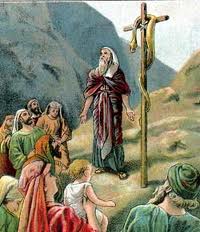
The conditions for salvation are thus that we SEE the son and BELIEVE in him, just like the requirements for the Israelites in Exodus to walk up to the brazen serpent to behold it in order to be cleansed. They were not dragged to the serpent and forced to behold it! THEY themselves had to do it. It’s also the Father’s WILL that no one shall perish. Does anyone perish? Yes, so this means God’s will is not even always done.

I have learned that the purpose of the subjunctive mood (as in “should lose nothing”) is usually to imply some uncertainty and “generally represents the verbal action as uncertain but probable”. “I should raise him up at the last day” is a statement of intent or purpose. The Father’s desire is that Jesus would eventually raise up all who saw him and believed on him. These verses do not state what absolutely will occur. Another example can be found in John 1:6-7

“There was a man sent from God, whose name was John. This man came for a witness, to bear witness of the Light, that all through him might believe.

The context indicates that God’s intent for sending John was so that all through him might believe”. Yet, not all did believe but actually only a minority did, and “all” here could not mean only the elect because we read “That was the true light which gives light to every man coming into the world (v. 8-9).

Right after v. 44 we can read that those who come are those who have HEARD and LEARNED of the Father. It is up to us to listen carefully to the gospel message and seek wisdom. Two persons can listen to the same message, and yet one might choose to close his ears and the other one might take what he hears into his heart:hearken4

6:45It is written in the prophets, And they shall be ALL taught of God. EVERY MAN therefore that hath heard, and hath LEARNED of the Father, COMETH unto me.— 47Verily, verily, I say unto you, He that believeth on me hath everlasting life. –51I am the living bread which came down from heaven: if any man eat of this bread, he shall live for ever: and the bread that I will give is my flesh, which I will give for the life of THE WORLD.53Then Jesus said unto them, Verily, verily, I say unto you, Except ye eat the flesh of the Son of man, and drink his blood, ye have no life in you. 54WHOSO eateth my flesh, and drinketh my blood, hath eternal life; and I will raise him up at the last day.

Learning, eating, drinking, believing, seeing and coming are things WE must do. God is not going to do this for us but he has promised to not cast us out if we do accept to learn from him and come to him. We can read that “WHOSO eateth” shall be saved. That is an offer to all, and we already know that Jesus died for the WORLD. Naturally we are also free to leave if we are free to come, and we are not promised that God will prevent us from sinning ever again. We must take all the context into consideration and not just select exactly those verses where the conditions are not listed and ignore those verses where they ARE listed. All men are taught, but it is only those who go on to hear and learn who come/are drawn.

John. 6:56 He that eateth my flesh, and drinketh my blood, dwelleth in me, and I in him.57 As the living Father hath sent me, and I live by the Father: so he that eateth me, even he shall live by me.58 This is that bread which came down from heaven: not as your fathers did eat manna, and are dead: he that eateth of this bread shall live for ever

Note the conditions again: 56He that eateth my flesh, and drinketh my blood, dwelleth in me, and I in him. God is not going to eat and drink for us. 

John. 6:64 But there are some of you that believe not. For Jesus knew from the beginning who they were that believed not, and who should betray him.65 And he said, Therefore said I unto you, that no man can come unto me, except it were given unto him of my Father.66 From that time many of his disciples went back, and walked no more with him.

6:70Jesus answered them, Have not I chosen you twelve, and one of you is a devil?

Here we can read that “chosen” ones does not equate to being saved. People can be chosen for a service and they can also reject their task either from the start or later on. Israel was once chosen, and of course not all Israel is saved.

Gal 1:6 I marvel that you are so soon REMOVED FROM HIM that CALLED YOU into the grace of Christ.

Compare the above with the parable about the King who made a marriage banquet for his son in Matt. 22  

People who were on the guest list still chose to decline the invitation, and yet others who were randomly invited instead of them accepted to come (and they all took on wedding clothes apart from a certain fellow who was thrown out despite his arrival), and the latter were called CHOSEN due to their own wise decision to show up at the wedding

Matt 22: 3And sent forth his servants to call them that were bidden to the wedding: and they would not come4Again, he sent forth other servants, saying, Tell them which are bidden, Behold, I have prepared my dinner: my oxen and my fatlings are killed, and all things are ready: come unto the marriage.   8Then saith he to his servants, The wedding is ready, but they which were bidden were not worthy. 9Go ye therefore into the highways, and as many as ye shall find, bid to the marriage10So those servants went out into the highways, and gathered together all as many as they found, both bad and good: and the wedding was furnished with guests.  —12And he saith unto him, Friend, how camest thou in hither not having a wedding garment? And he was speechless. 13Then said the king to the servants, Bind him hand and foot, and take him away, and cast him into outer darkness, there shall be weeping and gnashing of teeth.14For many are called, but few are chosen.

Here are a couple of other examples of that God’s will does not always happen. Paul recognized that some Christians could reject the “will of God,” and that God’s will for them could be thwarted by their disobedience despite the convicting power of the Holy Spirit:

1 Thess. 4:3-8 For this is the will of God, your sanctification: that you should abstain from sexual immorality; that each of you should know how to possess his own vessel in sanctification and honor, not in passion of lust, like the Gentiles who do not know God; that no one should take advantage of and defraud his brother in this matter, because the Lord is the avenger of all such, as we also forewarned you and testified. For God did not call us to uncleanness, but in holiness. Therefore he who rejects this does not reject man, but God, who has also given us His Holy Spirit

1 Tim. 2:For this is good and acceptable in the sight of God our Saviour;Who will have ALL MEN to be saved, and to come unto the knowledge of the truth.

2 Peter 3:The Lord is not slack concerning his promise, as some men count slackness; but is longsuffering to us-ward, not willing that any should perish, but that all should come to repentance

Acts. 17:30 And the times of this ignorance God winked at; but now commandeth all men every where to repent

Mark 3:35 For whosoever shall do the will of God, the same is my brother, and my sister, and mother.

Eph. 6:Not with eyeservice, as menpleasers; but as the servants of Christ, doing the will of God from the heart

Hebr. 10:36 For ye have need of patience, that, after ye have done the will of God, ye might receive the promise

1 Peter 4:1Forasmuch then as Christ hath suffered for us in the flesh, arm yourselves likewise with the same mind: for he that hath suffered in the flesh hath ceased from sin;2 That he no longer should live the rest of his time in the flesh to the lusts of men, but to the will of God.For the time past of our life may suffice us to have wrought the will of the Gentiles, when we walked in lasciviousness, lusts, excess of wine, revellings, banquetings, and abominable idolatries:

1 John 2:17 And the world passeth away, and the lust thereof: but he that doeth the will of God abideth for ever.

1 Peter 5:2 Feed the flock of God which is among you, taking the oversight thereof, not by constraint, but willingly; not for filthy lucre, but of a ready mind

In summary

A resistible drawing agrees with John 3 “As Moses lifted up the serpent in the wilderness, even so must the Son of Man be lifted up”, i.e., so that whosoever believeth i him should not perish. Nowhere must we take the word helko (draw) to mean something irresistible.  The Father does not drag a man irresistibly in some spiritual sense. The passage does not say that the drawing guarantees the “coming”. All it says is that no one can come unless drawn, and it then says that the one who comes (as a result of this drawing) will be raised up. It nowhere says that all who are drawn also come, but the one who is “raised up” is the one who is both drawn and comes.

Jam. 4:10 Humble yourselves in the sight of the Lord, and he shall lift you up.

The LORD makes even the wicked for the day of atonement? – Proverbs 16:4

The LORD hath made all things for himself: yea, even the wicked for the day of evil (Prov. 16:4)

Some Christians (reformed belivers) actually think that God created wickedness, and that he has made some people into sinners just so he can punish them on the day of evil. That is not the God of the Bible. The NKJV renders it:

Prov. 16:4 The Lord has made all for Himself, Yes, even the wicked for the day of
doom. (NKJV)

At first glance perhaps this verse seem to contradict other verses:

The LORD is good to all: and his tender mercies are over all his works. Psalms 145:9

For God so loved the world, that he gave his only begotten Son, that whosoever believeth in him should not perish, but have everlasting life. John 3:16

The Lord is not slack concerning his promise, as some men count slackness; but is longsuffering to us-ward, not willing that any should perish, but that all should come to repentance. 2 Peter 3:9

In Proverbs 16:4 the phrase, “things for Himself” is a translation from the Hebrew word maaneh which means “to answer to“, or “to give a reply to”, and what is being said in this verse is, “The Lord hath made all things to answer or give an account unto him”.   Sinners eventually reap what they sow.

This makes more sense and goes together well with the rest of the Bible where we can see that God EXPECTS us to be obedient to His commands. We would end up with huge contradiction if we read Proverbs 16:4 as though God creates people to be wicked.

The day of evil  

“The day of evil” is indeed the day of doom. That is when all must give account onto God.

Deut. 31:29 For I know that after my death ye will utterly corrupt yourselves, and turn aside from the way which I have commanded you; and evil will befall you in the latter days; because ye will do evil in the sight of the Lord, to provoke him to anger through the work of your hands.

2 Sam. 3:39 And I am this day weak, though anointed king; and these men the sons  of Zeruiah be too hard for me: the Lord shall reward the doer of evil according to his wickedness.

Jer. 17:18 Let them be confounded that persecute me, but let not me be confounded: let them be dismayed, but let not me be dismayed: bring upon them the day of evil, and destroy them with double destruction.

More verses from Proverbs 16

The context of Proverbs 16:4 is here below and we can read that a proud heart is an ABOMINATION to God, so clearly He wouldn’t predestine people to be wicked. Why would God even consider forcing us to perform abominable things before His eyes and then turn around and punish us for it?

Proverbs 16:2 All the ways of a man are clean in his own eyes; but the LORD weigheth the spirits.3 Commit thy works unto the LORD, and thy thoughts shall be established. [The LORD hath made all things to give account unto Him: yea, even the wicked, who think they are off His hook, have to give an account unto Him on the day of judgment.]5 Every one that is proud in heart is an abomination to the LORD: though hand join in hand, he shall not be unpunished.6By mercy and truth iniquity is purged: and by the fear of the LORD men depart from evil.

The text tells us that people can depart from evil if they FEAR God, which is something THEY must do. God created all things to give an account unto Him, even those who think they are getting away with their sins now. God sets up His creation where good is (eventually) rewarded, and evil is (eventually) punished. In this sense the “purpose” for the wicked is found in the “day of trouble” that shall come upon them. The verb translated in the NRSV as “made” (paw-al’) can be translated as “works out”.

The potter acts depending on the clay – we have a free will – Romans 9

Hath not the POTTER power over the clay, of the same lump to make one vessel unto honour, and another unto dishonour? Rom. 9:21

We are often told that we are like clay in a potter’s hand, as though we have no free will of our own but turn out exactly as the potter (God) wants us to turn out. IF that idea is true, then we can only blame GOD ALONE if we turn out as murderers and thieves. We would be poor victims in the hands of the evil potter since WE didn’t ask to become murderers and thieves, and we apparently have no say in the matter if the case is that the potter alone makes the decisions and also implements them.  CLEARLY this is not the picture the Bible gives us, since all of us are expected to obey God’s commandments which are NOT too grievous for us to keep, and WE are responsible for each one of our transgressions. If God is the one who decides how we will turn out, why doesn’t he make us ALL vessels unto honor? What interest would he possibly have to purposely make some of us into bad vessels? Doesn’t God want us to be obedient and godly human beings? Of course he does. The vessels of mercy are “afore prepared“, and the vessels of wrath are “fitted/prepared” for destruction (two different Greek words), which means that the verse doesn’t tell us that God prepared beforehand to destroy a certain amount of people – unless of course they themselves sinned and caused their own demise. People who have chosen to be wicked are those who are fitted for destruction, and hell awaits them for their unfortunate choice to be wicked.

2 Tim. 2:21 tells us that MAN is expected to PURGE HIMSELF from the vessels of dishonor, and if he does he will be a vessel unto HONOR. Man is expected to recover himself out of the snare of the devil, and he can do this through obeying the instructions we can read about below:

2 Tim 2:20 But in a great house there are not only vessels of gold and of silver, but also of wood and of earth; and some to honour, and some to dishonour. 21 If a man therefore PURGES HIMSELF from these, he shall be a vessel unto HONOUR, sanctified, and meet for the master’s use, and prepared unto every good work.22Flee also youthful lusts: but follow righteousness, faith, charity, peace, with them that call on the Lord out of a pure heart. 23But foolish and unlearned questions avoid, knowing that they do gender strifes. 24And the servant of the Lord must not strive; but be gentle unto all men, apt to teach, patient, 25In meekness instructing those that oppose themselves; if God peradventure will give them repentance to the acknowledging of the truth; 26And that they may recover themselves out of the snare of the devil, who are taken captive by him at his will. 

So man is asked to 1) purge himself from the vessels of dishonour, 2) flee from youthful lusts, 3) follow righteousness, faith, charity, peace, etc, 4) avoid foolish and unlearned questions, 5) instruct in meekness those who oppose themselves, 6) leading to that they will recover themselves out of the snare of the devil by doing so. Lots for us to DO.

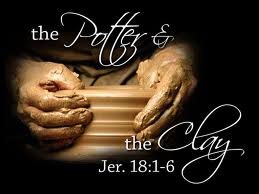
Read also below in Jeremiah 18 that the vessel that the potter made of clay was MARRED in his hands. Is it likely that a potter wants the clay he is working with to be MARRED? Clearly not. A potter hopes the clay will cooperate and turn out as planned. If the clay doesn’t cooperate and refuses to turn out as hoped, then the only rightful place for the clay is on the scrap heap. All useless clay has fitted themselves for destruction, just like a murderer’s proper place is in jail (or in the electric chair). This however doesn’t mean we want clay to be useless or people to turn out as murderers. Read also the many IF:s involved in the text. God reacts depending on OUR actions:

Jeremiah 18
1The word which came to Jeremiah from the LORD, saying, 2Arise, and go down to the potter’s house, and there I will cause thee to hear my words. 3Then I went down to the potter’s house, and, behold, he wrought a work on the wheels. 4And the vessel that he made of clay WAS MARRED in the hand of the potter: so he made it again ANOTHER VESSEL, as seemed good to the potter to make it. 5Then the word of the LORD came to me, saying, 6O house of Israel, cannot I do with you as this potter? saith the LORD. Behold, as the clay is in the potter’s hand, so are ye in mine hand, O house of Israel.  7At what instant I shall speak concerning a nation, and concerning a kingdom, to pluck up, and to pull down, and to destroy it;  8IF that nation, against whom I have pronounced, turn from their evil, I WILL REPENT of the evil that I thought to do unto them.  9And at what instant I shall speak concerning a nation, and concerning a kingdom, to build and to plant it; 10If it do evil in my sight, that it obey not my voice, then I WILL REPENT of the good, wherewith I said I would benefit them. 11Now therefore go to, speak to the men of Judah, and to the inhabitants of Jerusalem, saying, Thus saith the LORD; Behold, I frame evil against you, and devise a device against you: return ye now every one from his evil way, and make your ways and your doings good.12And they said, There is no hope: but we will walk after our own devices, and we will every one do the imagination of his evil heart.

Below is more information about the clay and the potter, and we can read that men have “removed” their hearts from God. Bad choice on their part. They will have to take the consequences for their actions. 

Is. 29:13 Wherefore the Lord said, Forasmuch as this people draw near me with their mouth, and with their lips do honour me, but have removed their heart far from me, and their fear toward me is taught by the precept of men: 14Therefore behold, I will proceed to do a marvelous work among this people, even a marvelous work and a wonder: for the wisdom of their wise men shall perish, and the understanding of their prudent men shall be hid. 15Woe unto them that seek deep to hide their counsel from the Lord, and their works are in the dark, and they say, Who seeth us? and who knoweth us? 16Surely your turning of things upside down shall be esteemed as the potter’s clay: for shall the work say of him that made it, He made me not? or shall the thing framed say of him that framed it, He had no understanding?

The rhetorical question asked of the prophet is not whether the clay can talk back to the potter, but whether it ought to talk back to him. Surely we must agree on that people HAVE spoken back to God numerous times in history? Both angels and men have even rebelled against God on several occasions, so we CAN indeed speak back against God. The point is that we shouldn’t and WE must then take the consequences for not conforming to God’s will. Romans 9 is about God’s right to bring about his plan of salvation in the way he wants, which means to open up also for gentiles to be saved, upon the condition of FAITH and not the ceremonial law. God therefore has his full right to reject those with no faith and/or bad fruit, and welcome those who have faith and show good fruit. That is his prerogative. We wouldn’t read words such as “endured with much longsuffering” in this text unless there is synergism involved.

Romans 9:20Nay but, O man, who art thou that repliest against God? Shall the thing formed say to him that formed it, Why hast thou made me thus?21Hath not the potter power over the clay, of the same lump to make one vessel unto honour, and another unto dishonour?22What if God, willing to shew his wrath, and to make his power known, endured with much longsuffering the vessels of wrath fitted to destruction:23And that he might make known the riches of his glory on the vessels of mercy, which he had afore prepared unto glory,24Even us, whom he hath called, not of the Jews only, but also of the Gentiles?25As he saith also in Osee, I will call them my people, which were not my people; and her beloved, which was not beloved. 26And it shall come to pass, that in the place where it was said unto them, Ye are not my people; there shall they be called the children of the living God.

It doesn’t say in Rom. 9:22 that GOD is the one who “fitted” people for destruction. Some people are in fact heading for hell due to their destructive way of living, and they are then fitted (prepared) for destruction, and that’s their own doing. God hopes that they will repent for their sins and live, so he shows much long-suffering for such sinners, fitted for destruction, not wanting anyone to perish The verse should read: “What if God…who endured with much patience vessels of wrath which fitted themselves for destruction…

Ez. 18:31 Cast away from you all your transgressions, whereby ye have transgressed; and make you a new heart and a new spirit: for  why will ye die, O house of Israel? 

Ez.33:11 Say unto them, As I live, saith the Lord God, I have no pleasure in the death of the wicked; but that the wicked turn from his way and live: turn ye, turn ye from your evil ways; for why will ye die, O house of Israel?

Jesus is the author and finisher of our faith but he doesn’t choose who will be saved Hebr. 12:2

Looking unto Jesus the author and finisher of our faith; who for the joy that was set before him endured the cross, despising the shame, and is set down at the right hand of the throne of God (Hebr. 12:2)

What does the expression “author and finisher of our faith” really mean? It means that there is no other name given under heaven whereby men can be saved (Acts 4:12). He is “the Alpha and Omega, the Beginning and the End”. We can read “Looking unto Jesus the author and finisher of our faith” or “let’s fix our eyes on Jesus” in another translation. That is a beautiful comparison with the brazen serpent in the desert, where the Israelites walked up to the serpent and LOOKED UP TO IT. They were not forced to  approach it and to behold it, but they used their own feet and their own free will to do it. What happens if we do NOT fix our eyes on Jesus? That would mean we have not fully abided in him, and then we will not bear fruit. This means we are risking our salvation.  Let’s view the rest of the context in the same chapter. The verse before lists a few things we ought to do in our race towards the goal:

Hebr. 12:1 Wherefore seeing we also are compassed about with so great a cloud of witnesses, let us lay aside every weight, and the sin which doth so easily beset us, and let us run with patience the race that is set before us

“Let us lay aside—the sin”. What happens if we choose to NOT adhere to this command and refuse to lay aside our sin? Will we be saved anyway? No, we must have our eyes fixed on Jesus and endure to the end. Read more about the IF:s:

Hebr. 12:5 And ye have forgotten the exhortation which speaketh unto you as unto children, My son, despise not thou the chastening of the Lord, nor faint when thou art rebuked of him—IF ye endure chastening, God dealeth with you as with sons; for what son is he whom the father chasteneth not? 8But IF ye be without chastisement, whereof all are partakers, then are ye bastards, and not sons.

Despise not”? “IF ye endure”?? What happens if we do despise Him and his chastening, and why are there IF’s involved if salvation is a done deal? Clearly there are conditions that are required for us to keep. We must abide in Christ and we are warned if we don’t.

Hebr.12:13 And make straight paths for your feet, LEST that which is lame be turned out of the way; but let it rather be healed.

“Lest”? Another warning!

Hebr. 12:4 Follow peace with all men, and holiness, without which no man shall see the Lord15Looking diligently lest any man fail of the grace of God; lest any root of bitterness springing up trouble you, and thereby many be defiled

“Lest” and “lest” again. We are warned that we must FOLLOW peace, and that we must have holiness, without which no man shall see the Lord. We are too look diligently LEST any man fail of the GRACE of God, LEST any root of bitterness might spring up, etc. Sins would DEFILE us, and can defiled men see the Lord? No, we just read that holiness is required, and it does not say that we can hide behind the blood of Jesus and still be saved in our sins. We are not righteous unless we act righteously.

Hebr.12:25 See that ye refuse not him that speaketh. For IF they escaped not who refused him that spake on earth, much more shall not we escape, if we turn away from him that speaketh from heaven

We are warned that we must not refuse him, for IF we do, and IF we turn away from him, we shall not escape. It’s all in our hands and God has made salvation possible for all of us.

If they shall fall away, to renew them again is impossible Hebr. 6:6

[If] they shall fall away, to renew them again unto repentance; seeing they crucify to themselves the Son of God afresh, and put him to an open shame (Hebr. 6:6)

The people spoken of are christians. They:

  • have once been enlightened
  • have tasted of the heavenly gift
  • have been made partakers of the Holy Spirit
  • have tasted the good word of God
  • tasted the powers of the age to come

The whole context is:

Hebr. 6:4For it is impossible for those who were once enlightened, and have tasted of the heavenly gift, and were made partakers of the Holy Ghost, 5And have tasted the good word of God, and the powers of the world to come, 6If they shall fall away, to renew them again unto repentance; seeing they crucify to themselves the Son of God afresh, and put him to an open shame. 

The word IF is not in the Greek in verse 6!:

(IF) they shall fall away, to renew them again unto repentance; seeing they crucify to themselves the Son of God afresh, and put him to an open shame” 

Consider what Adam Clarke wrote about this and the aorist tense:

“And having fallen away” I can express my own mind on this translation nearly in the words of Dr. Macknight: ‘The participles who were enlightened, have tasted, and were made partakers, being aorists, are properly rendered by our translators in the past time; wherefore parapesontas, being an aorist, ought likewise to have been translated in the past time, “HAVE fallen away”. Never­theless, our translators, following Beza*, who with­out any authority from ancient MSS. has inserted in his version the word “if” have rendered this clause, IF they fall away, that this text might not appear to contradict the doctrine of the perse­verance of the saints. But as no translator should take upon him to add to or alter the Scriptures, for the sake of any favourite doctrine, I have trans­lated parapesontas in the past time, “have fallen away” according to the true import of the word, as standing in connection with the other aorists in the preceding verses.

*) Theodore Beza was John Calvin’s successor 

Young’s literal translation reads: “And having fallen away, again to renew them to reformation, having crucified gain to themselves the Son of God, and exposed to public shame” (v. 6).

(I can add that the word IF is not present in the common Swedish Bibles so I didn’t have to write all this stuff  about the added word IF when I wrote the equivalent post in Swedish.)

There are a couple of suggestions why the christians in Hebr. 6:6 could not be restored to salvation even though the rest of the Bible provides examples of people who have repented and were brought back to life (for example when Peter sinned by denying Jesus).

1) They might have ended up with a reprobate mind, as in Romans 1 

Rom. 1:21 Because that, when they knew God, they glorified him not as God, neither were thankful; but became vain in their imaginations, and their foolish heart was darkened.—24 Wherefore God also gave them up to uncleanness through the lusts of their own hearts, to dishonour their own bodies between themselves:—26 For this cause God gave them up unto vile affections: for even their women did change the natural use into that which is against nature:—28 And even as they did not like to retain God in their knowledge, GOD GAVE THEM OVER TO A REPROBATE MIND, to do those things which are not convenient

The above concerns people who have no excuse for rejecting God since he has clearly been seen and understood by them through his creation. Because they refused to glorify God and instead pursued sin, God gave them over to a reprobate mind and then they were totally absorbed in their vain life styles and were totally lost. People can harden their hearts to the extent that there is no return.

Acts 17:30 And the times of this ignorance God winked at; but now commandeth all men every where to repent

Acts 11:18 When they heard these things, they held their peace, and glorified God, saying, Then hath God also to the Gentiles granted repentance unto life.

If God no longer calls/draws people through the Holy Spirit, and no longer grants people repentance, then people will be for ever separated from God.

2) It could be the unpardonable sin that is spoken about

Those addressed were Hebrew Christians, who were tempted to return to Juda­ism.

Hebr. 10:28 He that despised Moses’ law died without mercy under two or three witnesses:29 Of how much sorer punishment, suppose ye, shall he be thought worthy, who hath trodden under foot the Son of God, and hath counted the blood of the covenant, wherewith he was sanctified, an unholy thing, and hath done despite unto the Spirit of grace?

Mark 3:22 And the scribes which came down from Jerusalem said, He hath Beelzebub, and by the prince of the devils casteth he out devils23 And he called them unto him, and said unto them in parables, How can Satan cast out Satan?—28 Verily I say unto you, All sins shall be forgiven unto the sons of men, and blasphemies wherewith soever they shall blaspheme29 But he that shall blaspheme against the Holy Ghost hath never forgiveness, but is in danger of eternal damnation.

Before being received again into the synagogue they would have to announce publicly that Jesus was not the Son of God; that His blood would not be able to save anyone; and that His miracles were done by the power of the devil. Before their con­version they had belonged to the nation which had crucified Christ; to return to the synagogue would be to crucify to themselves the Son of God afresh and put Him to an open shame; it would be the awful sin of apostasy.

If one accepts this interpretation then he can better understand why those in Heb. 6:4-6 who fell away (parapesontas) could not be renewed by repentance unto salvation as they were enemies of God (10:29), but others, like Peter, who didn’t sin to that degree, could be renewed. The word in this verse translated fall away (parapesontas) is found only once in the NT and that is here!

Moreover, Peter and the other apostles fell away (skandalizo) (Mt. 26:31,33) and perhaps multitudes like them throughout the centuries, but it is not the same Greek wordJesus taught that blasphemy against the Holy Spirit is directly related to saying that the Lord had an evil spirit by which he was driving out demons. Hence, a link seems to exist between eternal sin and openly insulting the Spirit of grace (Hebr. 10:29). This could possibly explain why the ones referred to in 6:6 could not be renewed unto salvation.

We already know from numerous examples in the Bible that a sinner CAN be renewed and cleansed from his sins, if he confesses his sins and repents, but no one can be forgiven for the unpardonable sin.

God is not willing that any should perish 1 Peter 3:9

2 pet. 3The Lord is not slack concerning his promise, as some men count slackness; but is longsuffering to us-ward, not willing that any should perish, but that ALL should come to repentance (2 Pet. 3:9)


In order to get around the notion that God would want all to be saved, Calvinists suggest that the pronoun us in the phrase “to us-ward” refers to the elect only, since Peter’s greeting at the beginning of his epistle is addressed to the saints. However, most letters in the New Testament are addressed to saints and it does not follow that we can therefore interpret pronouns in such a restrictive way. Moreover, if Peter would be speaking only of those already saved, why all the warnings and why does Peter express his hope for that they should come to the knowledge of the truth? If Calvinism is right, the elect are by definition those who have already come to the knowledge of true salvation. It is clear that Peter believes that they have already come to the knowledge of the truth and that they must still be aware in order to not be led away on wicked ways and fall from their steadfastness.

2 Cor. 3:17 Ye therefore, beloved, seeing ye know these things before, beware lest ye also, being led away with the error of the wicked, fall from your own stedfastness.

When it comes to verses such as Rom 3:23 where it says that “all have sinned”, then Calvinists believe it literally means every single human being (apart from Jesus), but when it comes to verses such as 2 Cor. 5:14-15, where we can read “–that if one died for all, then were all dead: And that he died for all, that they which live should not henceforth live unto themselves, but unto him which died for them, and rose again”, then Calvinists choose to interpret “all” as the elect only, just like they do with 2 Pet. 3:9 and whichever other verse that suggests that God really does not want anyone to perish.

Ez. 18:23 Have I any pleasure at all that the wicked should die? saith the Lord God: and not that he should return from his ways, and live?

Ez. 33:11 Say unto them, As I live, saith the Lord God, I have no pleasure in the death of the wicked; but that the wicked turn from his way and live: turn ye, turn ye from your evil ways; for why will ye die, O house of Israel?

Peter tells us that some people are willfully ignorant of God’s coming judgment, and they are scoffers who walk after their own lusts – something that definitely would be against God’s will.

2 Pet. 3:5 For this they willingly are ignorant of, that by the word of God the heavens were of old, and the earth standing out of the water and in the water:

In v. 7 we can read that such people will perish when it is time for the judgment – due to their ungodliness (something against God’s will). Peter urges his readers to not be ignorant of such serious warnings, and he comments that some people twist the scriptures to their own destruction. (It does not seem they were chosen to be non-elect before the creation of the world, but they actually cause their own destruction just like the Bible says.)

2 Pet 3:15 And account that the longsuffering of our Lord is salvation; even as our beloved brother Paul also according to the wisdom given unto him hath written unto you;16 As also in all his epistles, speaking in them of these things; in which are some things hard to be understood, which they that are unlearned and unstable wrest, as they do also the other scriptures, unto their own destruction.

Note Paul’s statement about longsuffering in Romans 9:

Rom. 9:22 What if God, willing to shew his wrath, and to make his power known, endured with much longsuffering the vessels of wrath fitted to destruction:23 And that he might make known the riches of his glory on the vessels of mercy, which he had afore prepared unto glory,24 Even us, whom he hath called, not of the Jews only, but also of the Gentiles?

God is longsuffering with those who disbelieve, but some vessels are fitting themselves to destruction. Clay has a will of its own, but there is a proper place for clay that is eventually rendered totally useless and that is on the scrap heap. Clay can be marred in the potter’s hands (Jer. 18), and what potter wants his clay to be marred? If the potter would be the one causing his own clay to be destroyed, the word “longsuffering” would be very much out-of-place. “Longsuffering” rather indicates that the potter is very patient with the clay, and strongly desire for it to be useful in one way or the other. However, there are limits for how many attempts the potter can handle, and one day the clay will finally end up where it belongs – due to its own actions. It has caused its own destruction despite many chances to become something useful that could please his maker.

2 Tim. 2:19 Nevertheless the foundation of God standeth sure, having this seal, The Lord knoweth them that are his. And, let every one that nameth the name of Christ depart from iniquity.20 But in a great house there are not only vessels of gold and of silver, but also of wood and of earth; and some to honour, and some to dishonour.21 If a man therefore PURGE HIMSELF FROM THESE, he shall be a vessel unto HONOUR, sanctified, and meet for the master’s use, and prepared unto every good work.22 Flee also youthful lusts: but follow righteousness, faith, charity, peace, with them that call on the Lord out of a pure heart.

Preachers might express themselves with the pronoun “us” in their sermons before a group of Christians in a church, and still include a larger part of people other than those present in the church.

Romans 4:24 But for us also, to whom it shall be imputed, IF we believe on him that raised up Jesus our Lord from the dead. 

They went out from us, but they were not of us 1 John 2:19 – about ANTICHRISTS

They went out from us, but they were not of us; for if they had been of us, they would no doubt have continued with us: but they went out, that they might be made manifest that they were not all of us. (1 John 2:19)

It’s common to use the above verse as an attempt to support that true christians can never fall away from their faith. Since we can read about the people in this verse that they were “not all of us” this is used as a blanket statement throughout scriptures for that those who seem to have fallen away were automatically then “not all of us”. They fail to see the following:

1) The people spoken about were “antichrists”, which the verse just before explains, and we are not told if they might have been this all along or when this started to happen. The text is silent about this. That they left might indicate why they didn’t fit in and why they were not “all of us”.

2) This verse provides ONE case only with a rather unique situation with no indication that this rule applies each time people fall away and leave an assembly.

3) Only 5 verses later we can read about a CONDITIONAL eternal security in this verse:

24Let that therefore ABIDE in you, which ye have heard from the beginning. IF IF IF that which ye have heard from the beginning shall remain in you, ye also shall continue in the Son, and in the Father.

Here we can read that it’s not so sure that what we have heard from the beginning will remain in us since we can read “IF that which ye have heard from the beginning shall remain in you”. What if we choose NOT to abide and what if the word does NOT remain in us? Are we still saved?

4) We can read other conditions and warnings from John in the very same chapter, and that it’s not self-evident that we will always choose to abide:

3And hereby we do know that we know him, IF IF IF we keep his commandments. 4He that saith, I know him, and keepeth not his commandments, is a liar, and the truth is not in him.5But whoso KEEPETH his word, in him verily is the love of God perfected: hereby know we that we are in him.6He that saith he abidethin him ought himself also so to walk, even as he walked.10He that loveth his brother abideth in the light, and there is none occasion of stumbling in him. 15Love not the world, neither the things that are in the world. If any man love the world, the love of the Father is not in him.17And the world passeth away, and the lust thereof: but HE THAT DOETH THE WILL OF GOD abideth for ever.26These things have I written unto you concerning them that SEDUCE you.28And now, little children, abide in him; that, when he shall appear, we may have confidence, and not be ashamed before him at his coming.

5) Neither 1 John 2:19 or other verses in the Bible say anything close to “if a person falls away and loses his faith then he wasn’t saved to begin with”.  This is something we must add to scriptures.

We can gather from this that unless we keep on abiding in Jesus and obey the commandments we are on a very shaky ground and we are not assured a place in the new Kingdom. I can add, that if it’s always true that a person who leaves his faith (and/or combines his faith with living in sin) was “not truly of us” and “not saved to begin with” then we will NEVER know who is saved or on the way to heaven in this life. Because if he later on in his life falls away, then we must at once assume that he was not saved earlier in his life eventhough he showed good fruit to go with his faith.

Being confident that he which has begun a good work will perform it to the end (Phil. 1:6)

phil. 1Being confident of this very thing, that he which hath begun a good work in you will perform it until the day of Jesus Christ. (Phil. 1:6)

There are loads of things we can say we are confident” about, due to past experiences and based on what we could reasonably expect to happen. I’m confident that I will get at least 250 hits on my blog today, because that’s the least amount of hits I normally get. I’m also confident that certain friends will continue to remain christians and work for the Lord throughout their lives, because they have shown enough good fruit to make me believe that. However, even if I’m confident about these things, there is no guarantee that what I’m confident about will absolutely take place.

Paul is addressing a certain group of believers in Philippi,  and not all christians in the whole world. He doesn’t know all christians under the sun intimately enough to make estimations about their future, but he was well acquainted with these particular believers in Philippi. Due to his past experiences and what he had witnessed, he feels confident that he which began a good work in them will perform it to the end. The verse doesn’t say that God, regardless of people’s own free will, predestines them to do good work (forcing them to do good works), because had it been up to God to make sure there is good works in us then of course God would make sure to do accomplish this at all times without failing even once.

Eph. 2:10 For we are his workmanship, created in Christ Jesus unto good works, which God hath before ordained that we should walk in them.

What will happen if we choose to not walk in them? Still on the right track and saved?

2 Tim. 2: 21 If a man therefore purge himself from these, he shall be a vessel unto honour, sanctified, and meet for the master’s use, and prepared unto every good work.

We are asked to purge/cleanse ourselves from vessels of dishonor (sin), in order to be of use for God and prepared unto every good work. It’s about our willingness to obey the holy Spirit who leads us away from sin and into a world where we can be useful tools for God.

1 Tim. 6:17 Command those who are rich in this present age not to be haughty, nor to trust in uncertain riches but in the living God, who gives us richly all things to enjoy. 18 Let them do good, that they be rich in good works, ready to give, willing to share, 19 storing up for themselves a good foundation for the time to come, that they may lay hold on eternal life. (NKJV)

Above we can see that good works can actually lead to eternal life. (Faith without works is dead.) It’s about giving God the honor because we are building good on him.

1 Cor. 3:6 I have planted, Apollos watered; but God gave the increase.7 So then neither is he that planteth any thing, neither he that watereth; but God that giveth the increase.8 Now he that planteth and he that watereth are one: and every man shall receive his own reward according to his own labour.9 For we are labourers together with God: ye are God’s husbandry, ye are God’s building.

This is the whole context of Phil. 1:

Phil. 1:1 Paul and Timotheus, the servants of Jesus Christ, to all the saints in Christ Jesus which are at Philippi, with the bishops and deacons: —3I thank my God upon every remembrance of you, 4Always in every prayer of mine for you all making request with joy, 5For your fellowship in the gospel from the first day until now; 6Being confident of this very thing, that he which hath begun a good work in you will perform it until the day of Jesus Christ: 7Even as it is meet for me to think this of you all, because I have you in my heart; inasmuch as both in my bonds, and in the defence and confirmation of the gospel, ye all are partakers of my grace. 8For God is my record, how greatly I long after you all in the bowels of Jesus Christ. 9And this I pray, that your love may abound yet more and more in knowledge and in all judgment; 10That ye may approve things that are excellent; that ye may be sincere and without offence till the day of Christ.

The reason Paul feels confident about this group of christians is because he has witnessed their godly lives and noticed that they have proved to be trustworthy workers. ”For your fellowship in the gospel from the first day until now”. That’s why Paul is convinced that God will continue to bless them and let the holy Spirit be a big part of their work. Paul will also continue to pray for them and keep them in his heart, which will also affect the outcome.  Praying for people will help influence them to know what is right and in the end to be without blemish until the day of Christ. With other words, there is no guarantee that born again christians will be without blemish on judgment day, because it depends on if they endure to the end or not – by living righteous lives. However, we know that we are in the vine if we follow the Spirit instead of our flesh.

The chapter mentions ”confident” yet again (actually twice…)

14And many of the brethren in the Lord, waxing confident by my bonds, are much more bold to speak the word without fear.15Some indeed preach Christ even of envy and strife; and some also of good will: 16The one preach Christ of contention, not sincerely, supposing to add affliction to my bonds: 17But the other of love, knowing that I am set for the defence of the gospel.

Paul suggests that his own imprisonment actually brings the good result that many brothers feel confident in God, perhaps due to Paul’s impeccable confidence. They are being helped to preach the word of God with no fear, albeit not everyone because Paul mentions that there are christians who preach about Jesus of contention and not through sincere concern for the lost. Maybe they were out to tear down what Paul had built up by introducing false doctrines that cause division among believers. Paul also warned about this precise situation:

Acts 20:28 Take heed therefore unto yourselves, and to all the flock, over the which the Holy Ghost hath made you overseers, to feed the church of God, which he hath purchased with his own blood.29 For I know this, that after my departing shall grievous wolves enter in among you, not sparing the flock.30 Also of your own selves shall men arise, speaking perverse things, to draw away disciples after them.31 Therefore watch, and remember, that by the space of three years I ceased not to warn every one night and day with tears.

Paul encourages his christian friends to continue to pray for him, and he says that their prayers and the supply of the Spirit will lead to his salvation. Naturally Paul’s own willingness to obey the holy Spirit is fundamental.

19For I know that this shall turn to my salvation through your prayer, and the supply of the Spirit of Jesus Christ,

Paul has the confidence that it’s best for him  to remain with them for yet a little time. He continues to encourage and warn his fellow christians to be strong in their faith and to strive together for the gospel.

25And having this confidence, I know that I shall abide and continue with you all for your furtherance and joy of faith;26That your rejoicing may be more abundant in Jesus Christ for me by my coming to you again.27Only let your conversation be as it becometh the gospel of Christ: that whether I come and see you, or else be absent, I may hear of your affairs, that ye stand fast in one spirit, with one mind striving together for the faith of the gospel;

In Phil. 2:12 below we can see that these believers are those who have “always obeyed.” This is more revelation as to why Paul was so confident about the christian Philippians.

Phil. 2:12 Wherefore, my beloved, as ye have always obeyed, not as in my presence only, but now much more in my absence, work out your own salvation with fear and trembling.13 For it is God which worketh in you both to will and to do of his good pleasure.14 Do all things without murmurings and disputings:15 That ye may be blameless and harmless, the sons of God, without rebuke, in the midst of a crooked and perverse nation, among whom ye shine as lights in the world;16 Holding forth the word of life; that I may rejoice in the day of Christ, that I have not run in vain, neither laboured in vain.

Paul reveals that these christians helped him financially (Phil. 4:10-19), which is yet another example of good fruit. There is no biblical promise of security given to those who are not grounded in Jesus, but throughout the New Testament Paul gives true believers many warnings, that they must not shipwreck their faith.

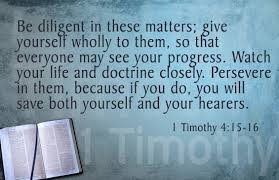
1 Tim. 41 Tim. 4: 16 Take heed unto thyself, and unto the doctrine; continue in them: for in doing this thou shalt both save thyself, and them that hear thee.

2 Tim. 2:15 Study to shew thyself approved unto God, a workman that needeth not to be ashamed, rightly dividing the word of truth.16 But shun profane and vain babblings: for they will increase unto more ungodliness.17 And their word will eat as doth a canker: of whom is Hymenaeus and Philetus;18 Who concerning the truth have erred, saying that the resurrection is past already; and overthrow the faith of some.19 Nevertheless the foundation of God standeth sure, having this seal, The Lord knoweth them that are his. And, let every one that nameth the name of Christ depart from iniquity.

Titus 2:6 Likewise, exhort the young men to be sober-minded, 7 in all things showing yourself to be a pattern of good works; in doctrine showing integrity, reverence, incorruptibility, 8 sound speech that cannot be condemned, that one who is an opponent may be ashamed, having nothing evil to say of you.—11 For the grace of God that brings salvation has appeared to all men, 12 teaching us that, denying ungodliness and worldly lusts, we should live soberly, righteously, and godly in the present age,13 looking for the blessed hope and glorious appearing of our great God and Savior Jesus Christ,14 who gave Himself for us, that He might redeem us from every lawless deed and purify for Himself His own special people, zealous for good works. (NKJV)

Deliver someone unto Satan for destruction of the flesh 1 Cor. 5:5

Deliver such an one unto Satan for the destruction of the flesh, that the spirit MAY be saved (1 Cor.5:5)

There are some who believe that the wicked man spoken about in this passage did not lose his salvation even though he was a fornicator who committed a horrific crime. Some of course will say that “he wasn’t saved to begin with” but this man was a member of this particular church and a brother, so it’s more likely that he at one point was a true christian. When we read that this man was to be delivered to Satan so that his spirit MAY be saved, it doesn’t say that this procedure definitely WILL succeed. This however was an attempt to save his soul. IF the man was already saved (as some suggest) then why can we read that he was to be delivered to Satan so that he may be saved, if he already was? Paul criticized the leaders of the church for not having reacted concerning this man and his grievous sin, and put him away from among them. To say that this man was saved despite his fornication, is to say that unrepentant sinners are welcomed into the kingdom of God.

1 Cor. 1It is reported commonly that there is fornication among you, and such fornication as is not so much as named among the Gentiles, that one should have his father’s wife. 2And ye are puffed up, and have not rather mourned, that he that hath done this deed might be taken away from among you3For I verily, as absent in body, but present in spirit, have judged already, as though I were present, concerning him that hath so done this deed4In the name of our Lord Jesus Christ, when ye are gathered together, and my spirit, with the power of our Lord Jesus Christ, 5To deliver such an one unto Satan for the destruction of the flesh, that the spirit MAY be saved in the day of the Lord Jesus.6Your glorying is not good. Know ye not that a little leaven leaveneth the whole lump—11But now I have written unto you not to keep company, if any man that is called a brother be a fornicator, or covetous, or an idolator, or a railer, or a drunkard, or an extortioner; with such an one no not to eat. 2For what have I to do to judge them also that are without? do not ye judge them that are within? 13But them that are without God judgeth. Therefore put away from among yourselves that wicked person.

The same Greek word translated wicked in that verse is also found in Mt. 13:49,50:

This is how it will be at the end of the age. The angels will come and separate the wicked from the righteous and throw them into the fiery furnace, where there will be weeping and gnashing of teeth.

Also, the same word translated fornication in 1 Cor. 5:1 is found in Gal. 5:19-21:

19Now the works of the flesh are manifest, which are these; Adultery, fornication, uncleanness, lasciviousness, 20Idolatry, witchcraft, hatred, variance, emulations, wrath, strife, seditions, heresies, 21Envyings, murders, drunkenness, revellings, and such like: of the which I tell you before, as I have also told you in time past, that they which do such things shall not inherit the kingdom of God.

It looks like the same man is spoken about yet again in 2 Cor.2:

1But I determined this with myself, that I would not come again to you in heaviness. 2For if I make you sorry, who is he then that maketh me glad, but the same which is made sorry by me? .5But if any have caused grief, he hath not grieved me, but in part: that I may not overcharge you all. 6Sufficient to such a man is this punishment, which was inflicted of many. 7So that contrariwise ye ought rather to forgive him, and comfort him, lest perhaps such a one should be swallowed up with overmuch sorrow. 8Wherefore I beseech you that ye would confirm your love toward him. 9For to this end also did I write, that I might know the proof of you, whether ye be obedient in all things.